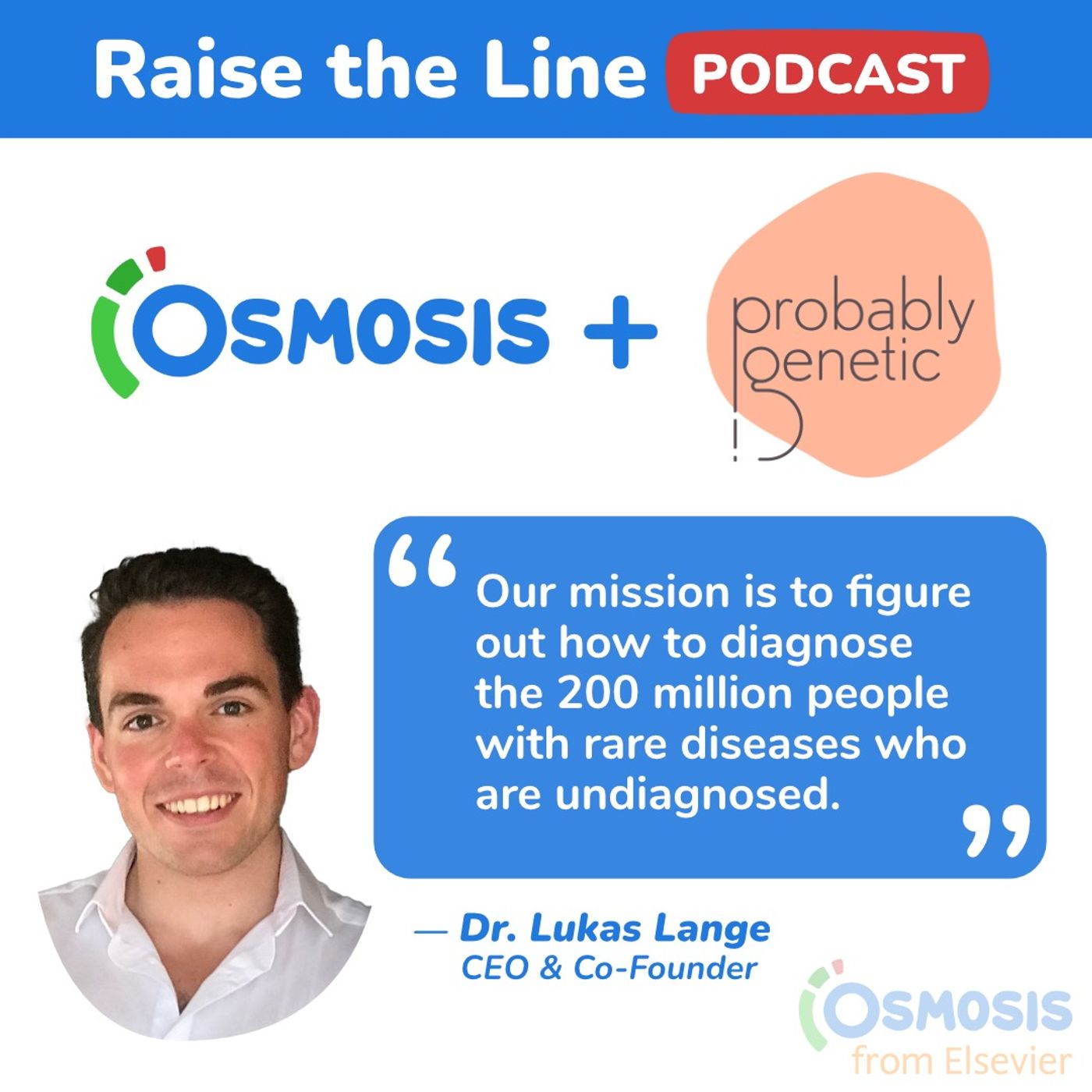
Empowering Patients and Their Families to Solve Rare Disease Mysteries: Dr. Lukas Lange, CEO & Co-Founder of Probably Genetic
As we’ve learned on previous episodes of Raise the Line, people dealing with rare diseases usually wait 4-7 years before receiving a diagnosis, during which time their condition can deteriorate significantly. Shortening this “diagnostic odyssey” is the mission of today’s guest, Lukas Lange, and in an interesting twist, he’s doing it by involving the patients themselves. The company he co-founded, Probably Genetic, has developed a system that starts with rare disease patients, or the parents of children with rare conditions, describing the symptoms involved on a website. “We run algorithms on that data in real time as you're on the website and if the algorithms think that this person might have a specific genetic disease, then we have a whole telemedicine system built in the background where we process that information and you get your test kit within about 48 hours of being on the website,” he explains to host Hillary Acer. Once the at-home test results are processed, a genetic counseling session is conducted via telemedicine. Tune in to find out why Lange believes having this knowledge is powerful for patients even if there may be no treatment available yet for their condition, and how it may be useful down the road with clinical trial recruitment, real world evidence tracking, and even early stage R&D for treatments. Mentioned in this episode: https://www.probablygenetic.com/
Raise the Line · Lukas Lange, Hillary Acer
Audio is streamed directly from the publisher (cdn.simplecast.com) as published in their RSS feed. Play Podcasts does not host this file. Rights-holders can request removal through the copyright & takedown page.
Show Notes
As we’ve learned on previous episodes of Raise the Line, people dealing with rare diseases usually wait 4-7 years before receiving a diagnosis, during which time their condition can deteriorate significantly. Shortening this “diagnostic odyssey” is the mission of today’s guest, Lukas Lange, and in an interesting twist, he’s doing it by involving the patients themselves. The company he co-founded, Probably Genetic, has developed a system that starts with rare disease patients, or the parents of children with rare conditions, describing the symptoms involved on a website. “We run algorithms on that data in real time as you're on the website and if the algorithms think that this person might have a specific genetic disease, then we have a whole telemedicine system built in the background where we process that information and you get your test kit within about 48 hours of being on the website,” he explains to host Hillary Acer. Once the at-home test results are processed, a genetic counseling session is conducted via telemedicine. Tune in to find out why Lange believes having this knowledge is powerful for patients even if there may be no treatment available yet for their condition, and how it may be useful down the road with clinical trial recruitment, real world evidence tracking, and even early stage R&D for treatments.
Mentioned in this episode: https://www.probablygenetic.com/
If you like this podcast, please share it on your social channels. You can also subscribe to the series and check out all of our episodes at www.osmosis.org/podcast