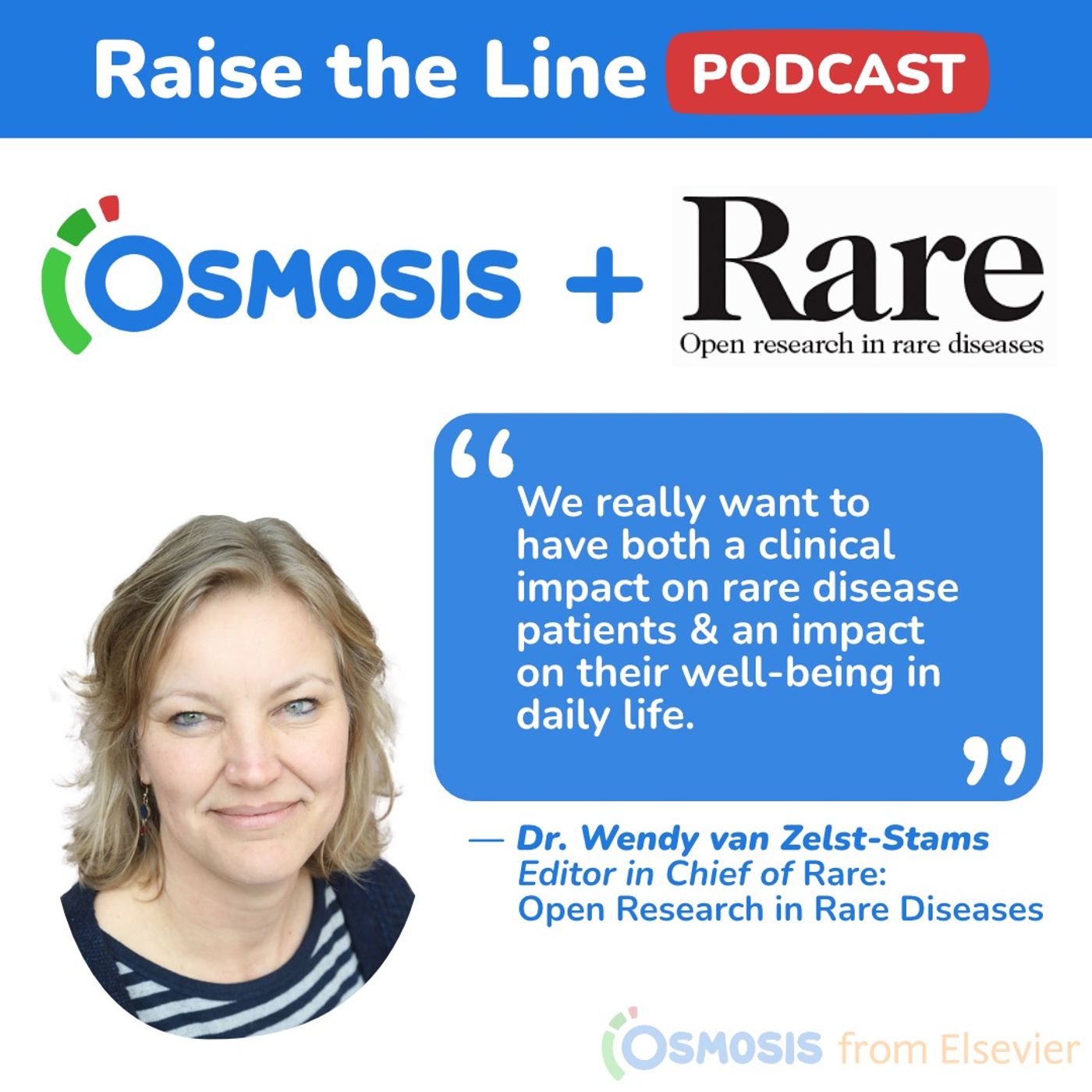
Including the Patient Voice in Rare Disease Research - Dr. Wendy van Zelst-Stams, Editor-in-Chief of the Journal Rare
Raise the Line · Dr. Wendy van Zelst-Stams, Shiv Gaglani
Audio is streamed directly from the publisher (cdn.simplecast.com) as published in their RSS feed. Play Podcasts does not host this file. Rights-holders can request removal through the copyright & takedown page.
Show Notes
Perhaps the most noteworthy element of Osmosis from Elsevier’s Year of the Zebra educational initiative is the new, open-access, peer-reviewed journal Rare. Open Research in Rare Diseases.It joins Elsevier's leading collection of 2,500 publications in science and medicine. Rare is an open journal in multiple senses because, in an unusual step, contributions are being welcomed from patients as well as scientists. “We need the patient's voice to find out what their needs and challenges are every day,” says editor-in-chief, Dr. Wendy van Zelst-Stams. “We really want to have both a clinical impact on rare disease patients and an impact on their well-being in daily life.” Dr. van Zelst-Stams is taking on this new role in addition to her work leading the Clinical Genetics Section in the Department of Human Genetics of the Radboud University Medical Center and the Dutch Society of Clinical Genetics. In this enlightening conversation with host Shiv Gaglani, you’ll learn about Europe’s efforts to improve care for rare disease patients, the “DNA-first” approach her program takes to reduce the diagnostic odyssey, and the types of content that will be featured in this multidisciplinary scientific journal.
Mentioned in this episode: https://www.sciencedirect.com/journal/rare
If you like this podcast, please share it on your social channels. You can also subscribe to the series and check out all of our episodes at www.osmosis.org/podcast