
Radiolab
674 episodes — Page 6 of 14

Ep 435The 11th: A Letter From George
Last week, Lulu heard an interview that trapped her in her car. She decided to play it for Latif. The interview – originally from a podcast called The Relentless Picnic, but presented by one of Lulu’s current podcast faves, The 11th – is part of an episode of mini pep talks designed to help us all get through this cold, dark, second-pandemic-winter-in-a-row. But the segment that Lulu brings Latif is about someone trying to get through something arguably much more difficult, something a pep talk can’t solve, but that a couple friends — and one very generous stranger — might be able to help make a little more bearable. The episode of The 11th this comes from is “I’m Here to Pep You Up.” The Relentless Picnic is currently running a series of episodes called CABIN, an audio exploration of isolation, which you can listen to here. The organization where Matt volunteers as a counselor is called SUDEP. The Lu Olkowski story Lulu recommends at the end of the episode is “Grandpa,” and the lobster story Latif recommends is “The Luckiest Lobster.” Special Thanks: Eric Mennel, senior producer at The 11th, and host of the podcast Stay Away from Matthew Magill.Lu Olkowski, voracious listener, super reporter, and host of the podcast Love Me.Radiolab is on YouTube! Catch up with new episodes and hear classics from our archive. Plus, find other cool things we did in the past — like miniseries, music videos, short films and animations, behind-the-scenes features, Radiolab live shows, and more. Take a look, explore and subscribe! Support Radiolab by becoming a member today at Radiolab.org/donate.

Ep 434Darkode
It would seem that hackers today can do just about anything they want - from turning on the cellphone in your pocket to holding your life's work hostage. Cyber criminals today have more sophisticated tools, have learned to work collaboratively around the world and have found innovative ways to remain deep undercover in the internet's shadows. This episode, we shine a light into those shadows to see the world from the perspectives of both cybercrime victims and perpetrators. First we meet mother-daughter duo Alina and Inna Simone, who tell us about being held hostage by criminals who have burrowed into their lives from half a world away. Along the way we learn about the legally sticky spot that unwitting accomplices like Will Wheeler find themselves in. Then reporter and author Joseph Menn tells us about the surprisingly lucrative professional hacker structure in places throughout the former Soviet Union. Finally, the co-creator of one of the most notorious online marketplaces to ever exist speaks to us and NPR cyber-crime expert Dina Temple-Raston about how a young suburban Boy Scout can turn into a world renowned black hat hacker. Support Radiolab by becoming a member today at Radiolab.org/donate.Radiolab is on YouTube! Catch up with new episodes and hear classics from our archive. Plus, find other cool things we did in the past — like miniseries, music videos, short films and animations, behind-the-scenes features, Radiolab live shows, and more. Take a look, explore and subscribe!

Ep 433Worst. Year. Ever.
What was the worst year to be alive on planet Earth? We make the case for 536 AD, which set off a cascade of catastrophes that is almost too horrible to imagine. A supervolcano. The disappearance of shadows. A failure of bread. Plague rats. Using evidence painstakingly gathered around the world - from Mongolian tree rings to Greenlandic ice cores to Mayan artifacts - we paint a portrait of what scientists and historians think went wrong, and what we think it felt like to be there in real time. (Spoiler: not so hot.) We hear a hymn for the dead from the ancient kingdom of Axum, the closest we can get to the sound of grief from a millennium and a half ago. The horrors of 536 make us wonder about the parallels and perpendiculars with our own time: does it make you feel any better knowing that your suffering is part of a global crisis? Or does it just make things worse?"Thanks to reporter Ann Gibbons whose Science article "Eruption made 536 ‘the worst year to be alive" got us interested in the first place. In case you want to learn more about 536, here are some other sources: Timothy P. Newfield, “The Climate Downturn of 536-50” in the Palgrave Handbook on Climate HistoryDallas Abbott et al., “What caused terrestrial dust loading and climate downturns between A.D. 533 and 540?”Joel Gunn and Alesio Ciarini (editors), “The A.D. 536 Crisis: A 21st Century Perspective”Antti Arjava, “The Mystery Cloud of 536 CE in the Mediterranean Sources” And for more on the composer Yared, watch Meklit Hadero’s TED talk “The Unexpected Beauty of Everyday Sounds” Credits: This episode was reported by Latif Nasser and Lulu Miller, and produced by Simon Adler. With sound and music from Simon Adler and Jeremy Bloom. Special Thanks: Thanks to Joel Gunn, Dallas Abbott, Mathias Nordvig, Emma Rigby, Robert Dull, Daniel Yacob, Kay Shelemey, Jacke Phillips, Meklit Hadero, and Joan Aruz. Support Radiolab by becoming a member today at Radiolab.org/donate. Radiolab is on YouTube! Catch up with new episodes and hear classics from our archive. Plus, find other cool things we did in the past — like miniseries, music videos, short films and animations, behind-the-scenes features, Radiolab live shows, and more. Take a look, explore and subscribe!

Ep 432Flop Off
This past year was a flop. From questionable blockbuster reboots to supply chain shenanigans to worst of all, omnipresent COVID variants. But, in a last ditch effort to flip the flop, we at Radiolab have dredged up the most mortifying, most cringeworthy, most gravity-defying flops we could find. From flops at a community pool to flops at the White House, from a flop that derails a career to flops that give NBA players a sneaky edge, from flops that’ll send you seeking medical advice to THE flopped flop that in a way enabled us all. Take a break from all the disappointment and flop around with us. Special Thanks to: Kaitlin Murphy, Dana Stevens, David Novak, Pablo Pinero Stillman Support Radiolab by becoming a member today at Radiolab.org/donate.

Ep 431Vanishing Words
When Alana Casanova-Burgess set out to make a podcast series about Puerto Rico, she struggled with what to call it. Until one word came to mind, a word that captures a certain essence of life in Puerto Rico, but eludes easy translation into English. We talk to Alana about her series, and that particular word, then turn to an old story about treating words as signals of something happening just beneath the surface. Agatha Christie's clever detective novels may reveal more about the inner workings of the human mind than she intended. According to Dr. Ian Lancashire at the University of Toronto, the Queen of Crime left behind hidden clues to the real-life mysteries of human aging in her writing. Meanwhile, Dr. Kelvin Lim and Dr. Serguei Pakhomov from the University of Minnesota add to the intrigue with the story of an unexpected find in a convent archive that could someday help pinpoint very early warning signs for Alzheimer's disease and dementia. Sister Alberta Sheridan, a 94-year-old Nun Study participant, reads an essay she wrote more than 70 years ago. La Brega update was produced by Maria Paz Gutierrez

Ep 430Return of Alpha Gal
Tuck your napkin under your chin. We’re about to serve up a tale of love, loss, and lamb chops - with a side of genetic modification. Several years ago we told a story about Amy Pearl. For as long as she could remember, Amy loved meat in all its glorious cuts and marbled flavors. And then one day, for seemingly no reason, her body wouldn’t tolerate it. No steaks. No brisket. No weenies. It made no sense: why couldn’t she eat something that she had routinely enjoyed for decades? It turned out Amy was not alone. And the answer to her mysterious allergy involved maps, a dancing lone star tick, and a very particular sugar called Alpha Gal. In this update, we discover that our troubles with Alpha Gal go way beyond food. We go to NYU Langone Health hospital to see the second ever transplant of a kidney from a pig into a human, talk to some people at Revivicor, the company that bred the pig in question, and go back to Amy to find out what she thinks about this brave new world. The original episode was reported by Latif Nasser, and produced by Annie McEwen and Matt Kielty. Sound design and scoring from Dylan Keefe, Annie McEwen, and Matt Kielty. Mix by Dylan Keefe with Arianne Wack. The update was reported and produced by Sarah Qari. It was sound designed, scored, and mixed by Jeremy Bloom. Support Radiolab by becoming a member today at Radiolab.org/donate.

Ep 429Animal Minds
In this hour of Radiolab, stories of cross-species communication. When we gaze into the eyes of a wild animal, or even a beloved pet, can we ever really know what they might be thinking? Is it naive to assume they're experiencing something close to human emotions? Or is it ridiculous to assume that they AREN'T feeling something like that? We get the story of a rescued whale that may have found a way to say thanks, ask whether dogs feel guilt, and wonder if a successful predator may have fallen in love with a photographer.

Ep 428Mixtape: Help?
In tape five, three stories: first, a tale of how the cassette tape supercharged the self-help industry. Second, cassettes filled with history make an epic journey across Africa with a group of Lost Boys. And finally, Simon meets up with fellow Radiolabber David Gebel to dig through an old box of mixtapes and rediscover the unique power of these bygone love letters. Mixtape was reported, produced, scored and sound designed by me, Simon Adler, with music throughout by me. Unending reporting and production assistance was provided by Eli Cohen. Special Thanks to: Shad Helmstetter, Vic Conan, Glenna Salisbury, Jerry Rosen, Richard Petty, Sharon Arkin, Angela Impey, William Mulwill for sharing his cassettes with me, and to the British library for sharing some of their recordings from their South Sudan collection, which is housed at the British Library Sound Archive. Support Radiolab by becoming a member today at Radiolab.org/donate.

Ep 427Mixtape: Cassetternet
In 1983, Simon Goodwin had a strange thought. Would it be possible to broadcast computer software over the radio? If so, could listeners record it off the air and onto a cassette tape? This experiment and dozens of others in the early 80s created a series of cassette fueled, analog internets. They copied and moved information like never before, upended power structures and created a poisonous social network that brought down a regime. In tape four of Mixtape, we examine how these early internet came about, and how the societal and cultural impacts of these analog information networks can still be felt today. Mixtape is reported, produced, scored and sound designed by Simon Adler with original music throughout by Simon. Top tier reporting and production assistance was provided by Eli Cohen. Special thanks to: Alex Sayf Cummings, Martin Maly, Piotr Gawrysiak, Joe Tozer, James Gleick, Jason Rezaian, Gholam Khiabany and Mo Jazi. And to Arash Aziz for helping us every step of the way with our story about Khomeini. And Simon Goodwin for making us that secret code. And to Micah Loewinger to tipping me off to these software radio broadcasts. Support Radiolab by becoming a member today at Radiolab.org/donate.

Ep 426Mixtape: The Wandering Soul
As the Vietnam war dragged on, the US military began desperately searching for any vulnerability in their North Vietnamese enemy. In 1964, they found it. It was an old Vietnamese folktale involving a ghost, eternal damnation and fear - a tailor made weaponizable myth. And so, armed with tape recorders and microphones, the military set out to win the war by bringing this ghost story to life. Today, the story of these efforts and their ghosts that still haunt us today. Mixtape is reported, produced, scored and sound designed by Simon Adler with original music throughout by Simon. Indispensable reporting and production assistance was provided by Eli Cohen. This episode was produced by Annie McEwen, with original music by Annie. Original reporting was contributed by Trung Dung Vo and Nguyễn Vân Hà. Special thanks to: Allison Boccia, Jared Tracy and Herb Friedman. And to Mathew Campbell for introducing me to the Wandering Soul tape to begin with. And to Erik Villard for all his help pulling those tapes and voices for us. Support Radiolab by becoming a member today at Radiolab.org/donate.

Ep 425Mixtape: Jack and Bing
In 1946 Bing Crosby was the king of media. He was the movie star, the pop star and his radio show was reaching a third of American living rooms each week. But then, it all started to fall apart. His ratings were plummeting and his fans were fleeing. Bing however, was not going down without a fight. Today, the story of how Bing Crosby and some stolen Nazi technology won his audience back, changed media forever and accidentally broke reality along the way. Mixtape is reported, produced, scored and sound designed by Simon Adler with original music throughout by Simon Adler. Invaluable reporting and production assistance was provided by Eli Cohen. Special thanks to: Michele Hilmes, Pete Hammer, Rich Flores, Mara Mills, Jonathan Sterne, Claudia Mewes. Though their voices weren’t in the piece, input certainly was. And to Mary Crosby and Robert Bader, for opening up Bing’s archive for us, and enabling us to fill this episode with so much of Bing’s music. Support Radiolab by becoming a member today at Radiolab.org/donate.

Ep 424Mixtape: Dakou
Through the 1980s, the vast majority of people in China had never heard western music, save for John Denver, the Carpenters, and a few other artists included on the hand-picked list of songs sanctioned by the Communist Party. But in the late 90s, a mysterious man named Professor Ye made a discovery at a plastic recycling center in Heping.In episode 1 of Mixtape, we talk to Chinese historians, music critics, and the musicians who took the damaged plastic scraps of western music, changed the musical landscape of China, and reimagined rock and roll in ways we never could’ve imagined. Mixtape is reported, produced, scored and sound designed by Simon Adler with original music throughout by Simon. Invaluable reporting and production assistance was provided by Eli Cohen. Additional reporting by Noriko Ishigaki, Rebecca Kanthor and our amazing anonymous Chinese reporter. Special thanks to: Paul de Gay, Juliette Kristensen, Rebecca Tuhus-Dubrow, Nick Lyons, Michael Bull, Jiro Ishikawa, Hayley Zhao, Megan Smalley and Deanne Totto. This episode would not have happened without each and every one of them. Support Radiolab by becoming a member today at Radiolab.org/donate.

Ep 423Of Bombs and Butterflies
Ecologist Nick Haddad was sitting in his new office at North Carolina State University when the phone rang. On the other end of the line was... The U.S. Army. The Army folks told him, “Look, there’s this endangered butterfly on our base at Fort Bragg, and it’s the only place in the world that it exists. But it’s about to go extinct. And we need your help to save it.” Nick had never even heard of the butterfly. In fact, he barely knew much about butterflies in general. Nonetheless, he said yes to Uncle Sam. “How hard could it be?” he wondered. Turns out, pretty hard. He'd have to trick beavers, dodge bombs, and rethink the fundamental nature of life and death in order to rescue this butterfly before it disappeared forever. **CORRECTION: An earlier version of this story incorrectly stated that the Army moved a beaver; in truth, they killed it. We also overstated the current tally of St Francis Satyrs off range; they are around 200, not 800. The audio has been adjusted to reflect these changes.**This episode was reported by Latif Nasser, and produced by Rachael Cusick. Original music by Jeremy Bloom. Mixing by Arianne Wack. Special thanks to: Snooki Puli, Cita Escalano, Jeffrey Glassberg, Margot Williams, Mark Romyn, Elizabeth Long, Laura Verhegge, the Public Affairs and Endangered Species Branches at Fort Bragg. Want to learn more? you can ...... read Nick Haddad’s book The Last Butterflies: A Scientist’s Quest to Save a Rare and Vanishing Creature... take a peek at Thomas Kral’s original 1989 paper about the Saint Francis Satyr... visit Fort Bragg's webpage about the Saint Francis Satyr Support Radiolab by becoming a member today at Radiolab.org/donate.

Ep 422Oliver Sipple
One morning, Oliver Sipple went out for a walk. A couple hours later, to his own surprise, he saved the life of the President of the United States. But in the days that followed, Sipple’s split-second act of heroism turned into a rationale for making his personal life into political opportunity. What happens next makes us wonder what a moment, or a movement, or a whole society can demand of one person. And how much is too much? Through newly unearthed archival tape, we hear Sipple himself grapple with some of the most vexing topics of his day and ours - privacy, identity, the freedom of the press - not to mention the bonds of family and friendship. Reported by Latif Nasser and Tracie Hunte. Produced by Matt Kielty, Annie McEwen, Latif Nasser and Tracie Hunte. Special thanks to Jerry Pritikin, Michael Yamashita, Stan Smith, Duffy Jennings; Ann Dolan, Megan Filly and Ginale Harris at the Superior Court of San Francisco; Leah Gracik, Karyn Hunt, Jesse Hamlin, The San Francisco Bay Area Television Archive, Mike Amico, Jennifer Vanasco and Joey Plaster. Support Radiolab today at Radiolab.org/donate. Episode originally published 09/21/2017

Ep 421HEAVY METAL
Today we have a story about the sometimes obvious but sometimes sneaky effects of the way that we humans rearrange the elemental stuff around us. Reporter Avir Mitra and science journalist Lydia Denworth bring us a story about how one man’s relentless pursuit of a deep truth about the Earth led to an obsession that really changed the very air we breathe. This episode was reported by Avir Mitra, and produced by Matt Kielty, Becca Bressler, Rachael Cusick, and Maria Paz Gutiérrez. Special thanks to Cliff Davidson, Paul M. Sutter, Denton Ebel, and Sam Kean. Support Radiolab by becoming a member of The Lab today. Radiolab is on YouTube! Catch up with new episodes and hear classics from our archive. Plus, find other cool things we did in the past — like miniseries, music videos, short films and animations, behind-the-scenes features, Radiolab live shows, and more. Take a look, explore and subscribe!

Ep 420In the Running
Diane Van Deren is one of the best ultra-runners in the world, and it all started with a seizure. In this short, Diane tells us how her disability gave rise to an extraordinary ability.

Ep 41960 Words, 20 Years
It has now been 20 years since September 11th, 2001. So we’re bringing you a Peabody Award-winning story from our archives about one sentence, written in the hours after the attacks, that has led to the longest war in U.S. history. We examine how just 60 words of legal language have blurred the line between war and peace. In the hours after the attacks of Sept. 11, 2001, a lawyer sat down in front of a computer and started writing a legal justification for taking action against those responsible. The language that he drafted and that President George W. Bush signed into law - called the Authorization for Use of Military Force (AUMF) - has at its heart one single sentence, 60 words long. Over the last decade, those 60 words have become the legal foundation for the "war on terror." In this collaboration with BuzzFeed, reporter Gregory Johnsen tells us the story of how this has come to be one of the most important, confusing, troubling sentences of the last two decades. We go into the meetings that took place in the chaotic days just after 9/11, speak with Congresswoman Barbara Lee and former Congressman Ron Dellums about the vote on the AUMF. We hear from former White House and State Department lawyers John Bellinger & Harold Koh. We learn how this legal language unleashed Guantanamo, Navy Seal raids and drone strikes. And we speak with journalist Daniel Klaidman, legal expert Benjamin Wittes and Virginia Senator Tim Kaine about how these words came to be interpreted, and what they mean for the future of war and peace. Finally, we check back in with Congresswoman Lee, and talk to Yale law professor and national security expert Oona Hathaway, about how to move on from the original sixty words. Original episode produced by Matt Kielty and Kelsey Padgett with original music by Dylan Keefe. Update reported and produced by Sarah Qari and Soren Wheeler. Special thanks to Brian Finucane. Support Radiolab by becoming a member today at Radiolab.org/donate.

Ep 418The Unsilencing
Multiple sclerosis, lupus, rheumatoid arthritis, even psoriasis — these are diseases in which the body begins to attack itself, and they all have one thing in common: they affect women more than men. Most autoimmune disorders do. And not just by a little bit, often by a lot; in some cases, as much as sixteen times more. But why? On today’s episode, we talk to scientists trying to answer that question. We go back 100 million years, to when our placenta first evolved and consider how it might have shaped our immune system. We dive deep into the genome, to stare at one of the most famous chromosomes: the X. And we also try to unravel a mystery — why is it that for some females, autoimmune disorders seemingly disappear during pregnancy? This episode was reported by Molly Webster, and produced by Sindhu Gnanasambandan and Molly Webster. The Gonads theme song was written, performed, and produced by Majel Connery and Alex Overington. Looking for something else to listen to? We suggest pairing “The Unsilencing” with “Everybody’s Got One,” an episode about an unknown super-organ that nobody on the planet would be here without: the placenta. Want to learn more? You can …...check out a Montserrat Anguera XX study,...read Melissa Wilson’s placental, pregnancy hypothesis,…and get a primer on Rhonda Voskuhl’s estriol & Multiple Sclerosis work. Support Radiolab by becoming a member of The Lab today.

Ep 417Everybody’s Got One
We all think we know the story of pregnancy. Sperm meets egg, followed by nine months of nurturing, nesting, and quiet incubation. But this story isn’t the nursery rhyme we think it is. In a way, it’s a struggle, almost like a tiny war. And right on the front lines of that battle is another major player on the stage of pregnancy that not a single person on the planet would be here without. An entirely new organ: the placenta. In this episode we take you on a journey through the 270-day life of this weird, squishy, gelatinous orb, and discover that it is so much more than an organ. It’s a foreign invader. A piece of meat. A friend and parent. And it’s perhaps the most essential piece in the survival of our kind. This episode was reported by Heather Radke and Becca Bressler, and produced by Becca Bressler and Pat Walters, with help from Matt Kielty and Maria Paz Gutierrez. Additional reporting by Molly Webster. Special thanks to Diana Bianchi, Julia Katz, Sam Behjati, Celia Bardwell-Jones, Mathilde Cohen, Hannah Ingraham, Pip Lipkin, and Molly Fassler. Support Radiolab by becoming a member today at Radiolab.org/donate. For cool new research on the placenta: Check out Harvey’s latest paper published with Julia Katz. Sam Behjati's latest paper on the placenta as a "genetic dumping ground".

Ep 416Gonads: Dutee
In 2014, India’s Dutee Chand was a rising female track and field star, crushing national records. But then, that summer, something unexpected happened: she failed a gender test. And was banned from the sport. Before she knew it, Dutee was thrown into the middle of a controversy that started long before her, and continues on today: how to separate males and females in sport. First aired in 2018, Dutee and the story of female athletes in sport are back in the spotlight this week, at the Tokyo Olympics. Join us for an update on Dutee’s second Olympic games, and the continued role testosterone has in shaping who is on the track, and who is off. This story was originally released as part of Gonads, a six-part series on the parts of us that make more of us. It is a companion piece to Gonads, episode 5: Dana. This update was reported by Molly Webster, with reporting and producing by Sarah Qari. "Dutee" was reported by Molly Webster, with co-reporting and translation by Sarah Qari. It was produced by Pat Walters, with production help from Jad Abumrad and Rachael Cusick. The Gonads theme was written, performed, and produced by Majel Connery and Alex Overington. Special thanks to Geertje Mak, Maayan Sudai, Andrea Dunaif, Bhrikuti Rai, Joe Osmundson, and Payoshni Mitra. Plus, former Olympic runner Madeleine Pape, who is currently studying regulations around female, transgender, and intersex individuals in sport. Radiolab is supported in part by Science Sandbox, a Simons Foundation initiative dedicated to engaging everyone with the process of science. And the Alfred P. Sloan Foundation, enhancing public understanding of science and technology in the modern world. More information about Sloan at www.sloan.org. Support Radiolab today at Radiolab.org/donate.

Ep 415The Queen of Dying
If you’ve ever lost someone, or watched a medical drama in the last 15 years, you’ve probably heard of The Five Stages of Grief. They’re sort of the world’s worst consolation prize for loss. But last year, we began wondering… Where did these stages come from in the first place? Turns out, Elisabeth Kübler-Ross. But the story is much, much more complicated than that. Those stages of grieving? They actually started as stages of dying. After learning that, producer Rachael Cusick tumbled into a year-long journey through the life and work of the incredibly complicated and misunderstood woman who single-handedly changed the way all of us face dying, and the way we deal with being left behind. Special Note: Our friends over at Death Sex and Money have put together a very special companion to this story, featuring Rachael talking about this story with her grandmother. Check it out here. This episode was reported and produced by Rachael Cusick, with production help from Carin Leong. This story wouldn’t have been possible without the folks you heard from in the episode, and the many, many people who touched this story, including: Anne Adams, Andrew Aronson, Audrey Gordon, Barbara Hogenson, Basit Qari, Bill Weese, Bob McGan, Carey Gauzens, Clifford Edwards, Cristina McGinniss, Dorothy Holinger, Frank Ostaseski, Ira Byock, Jamie Munson, Jessica Weisberg, Jillian Tullis, Joanna Treichler, Jonathan Green, Ken Bridbord, Ladybird Morgan, Laurel Braitman, Lawrence Lincoln, Leah Siegel, Liese Groot, Linda Mount, Lyn Frumkin, Mark Kuczewski, Martha Twaddle, Peter Nevraumont, Rosalie Roder, Sala Hilaire, Stefan Haupt, Stephanie Riley, Stephen Connor, and Tracie Hunte. Special thanks to all the folks who shared music for this episode, including: Lisa Stoll, who shared her Alpine horn music with us for this episode. You can hear more of her music here. Cliff Edwards, who shared original music from Deanna Edwards. The Martin Hayes Quartet, who shared the last bit of music you hear in the piece that somehow puts a world of emotion into one beautiful tune. And an extra special thank you to the folks over at Stanford University - Ben Stone, David Magnus, Karl Lorenz, Maren Monsen - the caretakers of Elisabeth’s archival collection who made it possible to rummage through their library from halfway across the country. You can read more about the collection here. To learn more about Elisabeth and the folks who are furthering her work, you can visit the Elisabeth Kübler-Ross Foundation website here. Support Radiolab by becoming a member today at Radiolab.org/donate.

Ep 414Breaking News about The Other Latif
A major development in the case of Guantanamo detainee Abdul Latif Nasser. To listen to our series about him, go to theotherlatif.org.

Ep 413G: Unfit
In the past few weeks, most people have probably seen Britney Spears' name or face everywhere. When she stood in front of a judge (virtually) and protested the conservatorship she's been living under for the past 13 years, one harrowing detail in particular stood out. She told the judge, "I was told right now in the conservatorship, I'm not able to get married or have a baby." Today, we look back at an old episode where we explore why it is that hundreds of thousands of people can have their reproductive rights denied...and spoiler: it goes back to Darwin. When a law student named Mark Bold came across a Supreme Court decision from the 1920s that allowed for the forced sterilization of people deemed “unfit,” he was shocked to discover that it had never been overturned. His law professors told him the case, Buck v Bell, was nothing to worry about, that the ruling was in a kind of legal limbo and could never be used against people. But he didn’t buy it. In this episode we follow Mark on a journey to one of the darkest consequences of humanity’s attempts to measure the human mind and put people in boxes, following him through history, science fiction and a version of eugenics that’s still very much alive today, and watch as he crusades to restore a dash of moral order to the universe. This episode was produced by Matt Kielty, Lulu Miller and Pat Walters. Special thanks to Sara Luterman, Lynn Rainville, Alex Minna Stern, Steve Silberman and Lydia X.Z. Brown. Radiolab’s “G” is supported in part by Science Sandbox, a Simons Foundation initiative dedicated to engaging everyone with the process of science. Support Radiolab today at Radiolab.org/donate.

Ep 412The Vanishing of Harry Pace: Episode 6
Lift Every Voice: Episode Six from The Vanishing of Harry Pace, a six-part series created by Jad Abumrad and Shima Oliaee. Black Swan Records was first to record the anthem Lift Every Voice and Sing. From a family's Thanksgiving dinner, we portal through to the song's past, present, and future.

Ep 411The Vanishing of Harry Pace: Episode 5
Roland Hayes and the Lost Generation: Episode Five from The Vanishing of Harry Pace, a six-part series created by Jad Abumrad and Shima Oliaee. Here’s the extraordinary story of Roland Hayes, another great (and largely forgotten) creator of new cosmologies.

Ep 410The Vanishing of Harry Pace: Episode 4
Our Harlem Moon: Episode Four from The Vanishing of Harry Pace, a six-part series created by Jad Abumrad and Shima Oliaee. In this spin-off tale, Ethel Waters hijacks a degrading song and makes the music her own.

Ep 409The Vanishing of Harry Pace: Episode 3
Black No More, White No More: Episode Three from The Vanishing of Harry Pace, a six-part series created by Jad Abumrad and Shima Oliaee. We follow Harry's grandkids and great grandkids as they grapple with his legacy in their own lives.

Ep 408The Vanishing of Harry Pace: Episode 2
Dreams Deferred: Episode Two from The Vanishing of Harry Pace, a six-part series created by Jad Abumrad and Shima Oliaee. The story of the post Black Swan years. We follow Harry’s Supreme Court battle to desegregate the South Side of Chicago, and then the mysterious decision which forces him into seclusion, before his untimely death.

Ep 407The Vanishing of Harry Pace: Episode 1
The Rise and Fall of Black Swan: Episode One from The Vanishing of Harry Pace, a six-part series created by Jad Abumrad and Shima Oliaee. Harry Pace founded Black Swan Records exactly 100 years ago. Pace launched the career of Ethel Waters, inadvertently invented the term rock n roll, played an important role in W.C. Handy becoming "Father of the Blues," inspired Ebony and Jet magazines, and helped desegregate the South Side of Chicago in an epic Supreme Court battle. Then, he disappeared. The Vanishing of Harry Pace is a series about the phenomenal but forgotten man who changed the American music scene. It's a story about betrayal, family, hidden identities, and a time like no other. This series was produced in collaboration with author Kiese Laymon, scholar Imani Perry, screenwriter Cord Jefferson, and WQXR’s Terrance McKnight. Jami Floyd is our consulting producer; our fact checker is Natalie Meade. Peter Pace lent his voice for our readings. Based on the book Black Swan Blues: the Hard Rise and Brutal Fall of America’s First Black Owned Record Label by Paul Slade. The series features interviews with Pace's descendants and over forty musicians, historians, writers, and musicologists, all of whom grapple with Pace’s enduring legacy.

Ep 406Breath
We’ve just barely made it to the other side of a year that took our collective breaths away. So more than ever we felt that this was the time to go deep on life’s rhythmic dance partner. Today we huff and we puff through a whole stack of stories about breath. We talk to scientists, musicians, activists, and breath mint experts, and try to climb into the very center of this thing we all do, are all doing right now, and now, and now. This episode was reported and produced by Annie McEwen, Matt Kielty, and Molly Webster. Support Radiolab by becoming a member today at Radiolab.org/donate. Further reading: Alice Wong’s book Disability Visibility: First-Person Stories From the 21st Century Here’s a speech Alice gave when first referring to her body as an oracle. And for more on ventilator allocation in NY State, check out this article by the Gothamist.

Ep 405The Rhino Hunter
Back in 2014, Corey Knowlton paid $350,000 for a hunting trip to Namibia to shoot and kill an endangered species. He’s a professional hunter, who guides hunts all around the world, so going to Africa would be nothing new. The target on the other hand would be. And so too, he quickly found, would be the attention. This episode, producer Simon Adler follows Corey as he dodges death threats and prepares to pull the trigger. Along the way we stop to talk with Namibian hunters and government officials, American activists, and someone who's been here before - Kenya’s former Director of Wildlife, Richard Leakey. All the while, we try to uncover what conservation really means in the 21st century. Reported & produced by Simon Adler with production help from Matthew Kielty. Special thanks to Chris Weaver, Ian Wallace, Mark Barrow, the Lindstrom family, and everyone at the Aru Game Lodge in Namibia. Thanks also to Sarah Fogel, Ray Crow, Barbara Clucus, and Diogo Veríssimo. Support Radiolab by becoming a member today at Radiolab.org/donate.

Ep 404The Dirty Drug and the Ice Cream Tub
This episode, a tale of a wonder drug that will make you wonder about way more than just drugs. Doctor-reporter Avir Mitra follows the epic and fantastical journey of a molecule dug out of a distant patch of dirt that would go on to make billions of dollars, prolong millions of lives, and teach us something fundamental we didn’t know about ourselves. Along the way, he meets a geriatric mouse named Ike, an immigrant dad who’s a little bit cool sometimes, a prophetic dream that prompts a thousand-mile journey, an ice cream container that may or may not be an accessory to international drug smuggling, and - most important of all - an obscure protein that’s calling the shots in every one of your cells RIGHT NOW. This episode was reported by Avir Mitra and was produced by Sarah Qari, Pat Walters, Suzie Lechtenberg, with help from Carin Leong and Rachael Cusick. Special thanks to Richard Miller, Stuart Schreiber, Joanne Van Tilburg, and Bethany Halford. Support Radiolab by becoming a member today at Radiolab.org/donate. **This episode was taped prior to the news that David Sabatini was fired from The Howard Hughes Medical Institute and prior to his resignation from the Whitehead Institute. More information about Sabatini’s alleged misconduct and the investigation into his behavior can be found here.

Ep 403Brown Box
You order some stuff on the Internet and it shows up three hours later. How could all the things that need to happen to make that happen happen so fast?

Ep 402Kleptotherms
In this episode, we break the thermometer watch the mercury spill out as we discover temperature is far stranger than it seems. Five stories that run the gamut from snakes to stars. We start out underwater, with a snake that has evolved a devious trick for keeping warm. Then we hear the tale of a young man whose seemingly simple method of warming up might be the very thing making him cold. And Senior Correspondent Molly Webster blows the lid off the idea that 98.6 degrees Farenheight is a sound marker of health. This episode was reported by Lulu Miller and Molly Webster and was produced by Lulu Miller, Molly Webster, and Becca Bressler. Support Radiolab by becoming a member today at Radiolab.org/donate.

Ep 401Deep Cuts
Today, Lulu and Latif talk about some of their favorite episodes from Radiolab’s past that hold new power today. Lulu points to an episode from 2008: Imagine that you're a composer. Imagine getting the commission to write a song that will allow family members to face the death of a loved one. Well, composer David Lang had to do just that when a hospital in Garches, France, asked him to write music for their morgue, or 'Salle Des Departs.' What do you do? This piece was produced by Jocelyn Gonzales. And Latif talks about an episode Jad made in 2009. Here’s how we described it back then: Jad--a brand new father--wonders what's going on inside the head of his baby Amil. (And don't worry, you don't need kids to enjoy this podcast.) The questions here are big: what is it like to be so brand new to the world? None of us have memories from this time, so how could we possibly ever know? Is it just chaos? Or, is there something more, some understanding from the very beginning? Jad found a development psychologist named Charles Fernyhough to explore some of his questions. Support Radiolab by becoming a member today at Radiolab.org/donate.

Ep 400The Septendecennial Sing-Along
While most of us hear a wall of white noise, squeaks, and squawks....David Rothenberg hears a symphony. He's trained his ear to listen for the music of animals, and he's always looking for chances to join in, with everything from lonely birds to giant whales to swarming cicadas. In this podcast, David explains his urge to connect and sing along, and helps break down the mysterious life cycle and mating rituals of the periodical cicadas into something we can all relate to. Support Radiolab by becoming a member today at Radiolab.org/donate.

Ep 399What Up Holmes?
Love it or hate it, the freedom to say obnoxious and subversive things is the quintessence of what makes America America. But our say-almost-anything approach to free speech is actually relatively recent, and you can trace it back to one guy: a Supreme Court justice named Oliver Wendell Holmes. Even weirder, you can trace it back to one seemingly ordinary 8-month period in Holmes’s life when he seems to have done a logical U-turn on what should be say-able. Why he changed his mind during those 8 months is one of the greatest mysteries in the history of the Supreme Court. (Spoiler: the answer involves anarchists, a house of truth, and a cry for help from a dear friend.) Join us as we investigate why he changed his mind, how that made the country change its mind, and whether it’s now time to change our minds again. This episode was reported by Latif Nasser and was produced by Sarah Qari. Special thanks to Jenny Lawton, Soren Shade, Kelsey Padgett, Mahyad Tousi and Soroush Vosughi. Support Radiolab by becoming a member today at Radiolab.org/donate. further reading: Thomas Healy’s book The Great Dissent: How Oliver Wendell Holmes CHanged His Mind - And Changed the History of Free Speech In America (the inspiration for this episode) plus his latest book Soul City: Race, Equality and the Lost Dream of an American Utopia. The Science article that Sinan Aral wrote in 2018, along with Soroush Vosughi and Deb Roy: “The Spread of True and False News Online” Sinan Aral’s recent book The Hype Machine: How Social Media Disrupts Our Elections, Our Economy and our Health - And How We Must Adapt Zeynep Tufekci’s newsletter “The Insight” plus her book Twitter and Teargas: The Power and Fragility of Networked Protest Nabiha Syed’s news website The Markup Trailer for “The Magnificent Yankee,” a 1950 biopic of Oliver Wendell Holmes Anthony Lewis, Freedom for the Thought that We Hate: A Biography of the First Amendment

Ep 398Elements
Scientists took about 300 years to lay out the Periodic Table into neat rows and columns. In one hour, we’re going to mess it all up. This episode, we enlist journalists, poets, musicians, and even a physicist to help us tell stories of matter that matters. You’ll never look at that chart the same way again. Special thanks to Emotive Fruition for organizing poetry performances and to the mighty Sylvan Esso for composing 'Jaime's Song', both inspired by this episode. Thanks also to Sam Kean, Chris Howk, Brian Fields and to Paul Dresher and Ned Rothenberg for the use of their song "Untold Story:The Edge of Sleep". Check out Jaime Lowe's book Mental: Lithium, Love and Losing My Mind Support Radiolab by becoming a member today at Radiolab.org/donate.

Ep 397Escapescape
As we hit the one year mark since the first U.S. state (California) issued a stay-at-home order to prevent the spread of COVID-19, we put out a call to see if any of you would take us to your secret escape spot and record audio there. And you astounded us with what you brought in. In this soundrich, kaleidoscopic episode, we journey around the planet and then, quite literally, beyond it. Listen only if you want a boatload of fresh air, fields of wildflowers, stars, birds, frogs, and a riveting tale involving Isaac Newton and a calm beyond any calm you knew could exist. This episode was produced by Matt Kielty and Lulu Miller, with production support from Jonny Moens and Suzie Lechtenberg. Special thanks to: Lynn Levy, who went on to host the space-a-licious series, The Habitat, and edit (among other things) the powerful and beautiful new podcast Resistance. Merav Opher, an astronomy professor at BU, who now directs the SHIELD DRIVE Science Center which is studying the data collected by the Voyagers at the edge of the heavens, or--err, the “heliosphere” as the scientists call it. Edward Dolnick, The Clockwork Universe: Isaac Newton, the Royal Society, and the Birth of the Modern World Ann Druyan, one of the creators of the 1977 Golden Album traveling on the Voyager probe, has recently released a new series on National Geographic, “Cosmos: Possible Worlds” A.J. Dungo, who submitted a postcard while surfing, is author of the mesmerizing graphic novel, In Waves, a memoir about surfing and grief. Support Radiolab by becoming a member today at Radiolab.org/donate.

Ep 396Dispatch 14: Covid Crystal Ball
Last summer, at a hospital in England, a man in his 70s being treated for complications with cancer tested positive for covid-19. He had lymphoma, and the disease plus his drugs weakened his immune system, making him particularly susceptible to the virus. He wasn’t too bad off, considering, and was sent home. That was Day 1. This is the story of what the doctors witnessed, over the course of his illness: the evolution of covid-19 inside his body. Before their eyes, they get a hint of what might be to come in the pandemic. This episode was reported by Molly Webster. Special thanks to Ravindra Gupta, Jonathan Li. Support Radiolab by becoming a member today at Radiolab.org/donate. Want to learn more about some of the covid case studies? Here are a couple papers to get you started:The “U.K. Paper”, co-authored by Ravi Gupta, one of our sources for the episode: https://www.nature.com/articles/s41586-021-03291-y A case study out of Boston, co-authored by Dr. Jonathan Li, one of our sources for the episode: https://www.nejm.org/doi/full/10.1056/NEJMc2031364 For more on immune suppression and covid-19, check out this amazing Scientific American article: https://www.scientificamerican.com/article/covid-variants-may-arise-in-people-with-compromised-immune-systems/

Ep 395The Ceremony
In November of 2016, journalist Morgen Peck showed up at her friend Molly Webster's apartment in Brooklyn, told her to take her battery out of her phone, and began to tell her about The Ceremony, a moment last fall when a group of, well, let's just call them wizards, came together in an undisclosed location to launch a new currency. It's an undertaking that involves some of the most elaborate security and cryptography ever done (so we've been told). And math. Lots of math. It was all going great until, in the middle of it, something started to behave a little...strangely. Reported by Molly Webster. Produced by Matt Kielty and Molly Webster. Denver Ceremony station recordings were created by media maker Nathaniel Kramer, with help from Daniel Cooper. Support Radiolab by becoming a member today at Radiolab.org/donate.

Ep 394Red Herring
It was the early 80s, the height of the Cold War, when something strange began happening off the coast of Sweden. The navy reported a mysterious sound deep below the surface of the ocean. Again, and again, and again they would hear it near their secret military bases, in their harbors, and up and down the Swedish coastline. After thorough analysis the navy was certain. The sound was an invasion into their waters, an act of war, the opening salvos of a possible nuclear annihilation. Or was it? Today, Annie McEwen pulls us down into a deep-sea mystery, one of international intrigue that asks you to consider the possibility that maybe, just maybe, your deepest beliefs could be as solid as...air. This episode was reported by Annie McEwen and produced by Annie McEwen, Matt Kielty, and Sarah Qari, with sound design by Jeremy Bloom. Special thanks to Bosse Lindquist. Support Radiolab by becoming a member today at Radiolab.org/donate.

Ep 393Facebook's Supreme Court
Since its inception, the perennial thorn in Facebook’s side has been content moderation. That is, deciding what you and I are allowed to post on the site and what we’re not. Missteps by Facebook in this area have fueled everything from a genocide in Myanmar to viral disinformation surrounding politics and the coronavirus. However, just this past year, conceding their failings, Facebook shifted its approach. They erected an independent body of twenty jurors that will make the final call on many of Facebook’s thorniest decisions. This body has been called: Facebook’s Supreme Court. So today, in collaboration with the New Yorker magazine and the New Yorker Radio Hour, we explore how this body came to be, what power it really has and how the consequences of its decisions will be nothing short of life or death. This episode was reported and produced by Simon Adler. To hear more about the court's origin, their rulings so far, and their upcoming docket, check out David Remnick and reporter Kate Klonick’s conversation in the New Yorker Radio Hour podcast feed. Support Radiolab by becoming a member today at Radiolab.org/donate.

Ep 392Smile My Ass
Candid Camera is one of the most original – and one of the most mischievous – TV shows of all time. Admirers hailed its creator Allen Funt as a poet of the everyday. Critics denounced him as a Peeping Tom. Funt sought to capture people at their most unguarded, their most spontaneous, their most natural. And he did. But as the show succeeded, it started to change the way we thought not only of reality television, but also of reality itself. Looking back at the show now, a half century later, it’s hard NOT to see so many of our preoccupations – privacy, propriety, publicity, authenticity – through a funhouse mirror, darkly. This episode was reported by Latif Nasser and produced by Matt Kielty. Special Thanks to: Bertram van Munster, Fred Nadis, Alexa Conway, the Eastern Airlines Employee Association and Eastern Airlines Radio, Rebecca Lemov, Anna McCarthy, Jill Lepore, Cullie Bogacki Willis III, Barbara Titus and the Funt family. Support Radiolab by becoming a member today at Radiolab.org/donate.

Ep 391Post Reports: Four Hours of Insurrection
We’re all still processing what happened on January 6th. Despite the hours and hours of video circulating online, we still didn’t feel like we had a visceral, on-the-ground sense of what happened that day. Until we heard the piece we’re featuring today. The Washington Post’s daily podcast Post Reports built a minute-by-minute replay of that day, from the rally, to the invasion, to the aftermath, told through the voices of people who were in the building that day -- reporters, photojournalists, Congresspeople, police officers and more. It’s some of the most visceral reporting we’ve heard anywhere on this historic moment. Listen to their full episode here.

Ep 390More Money Less Problems
Back in March 2020, when the COVID-19 pandemic was just beginning and the shelter-in-place orders brought the economy to a screeching halt, a quirky-but-clever idea to save the economy made its way up to some of the highest levels of government. Congresswoman Rashida Tlaib proposed an ambitious relief bill to keep the country’s metaphorical lights on: recurring payments to people to help them stay afloat during the crisis. And the way Congress would pay for it? By minting two platinum $1 trillion coins. (You read that right). In this episode, we take a jaunt through the evolution of our currency, from the gold-backed bills of the 19th century, to the most powerful computer at the Federal Reserve. And we chase an idea that torpedoes what we thought was a fundamental law of economics. Can we actually just print more money? This episode was reported by Becca Bressler and was produced by Becca Bressler and Simon Adler. Special thanks to Carlos Mucha, Warren Mosler, David Cay Johnston, Alex Goldmark, Bryant Urstadt, and Amanda Aronczyk. To learn more about these ideas check out: Stephanie Kelton's book The Deficit Myth Jacob Goldstein's book Money: The True Story of a Made-Up Thing and the Planet Money podcast Betsey Stevenson's podcast Think Like an Economist This website for more about #MintTheCoin And for a fun quick read, check out this WIRED article about the surprising origin of the trillion dollar coin.
Ep 389Sight Unseen
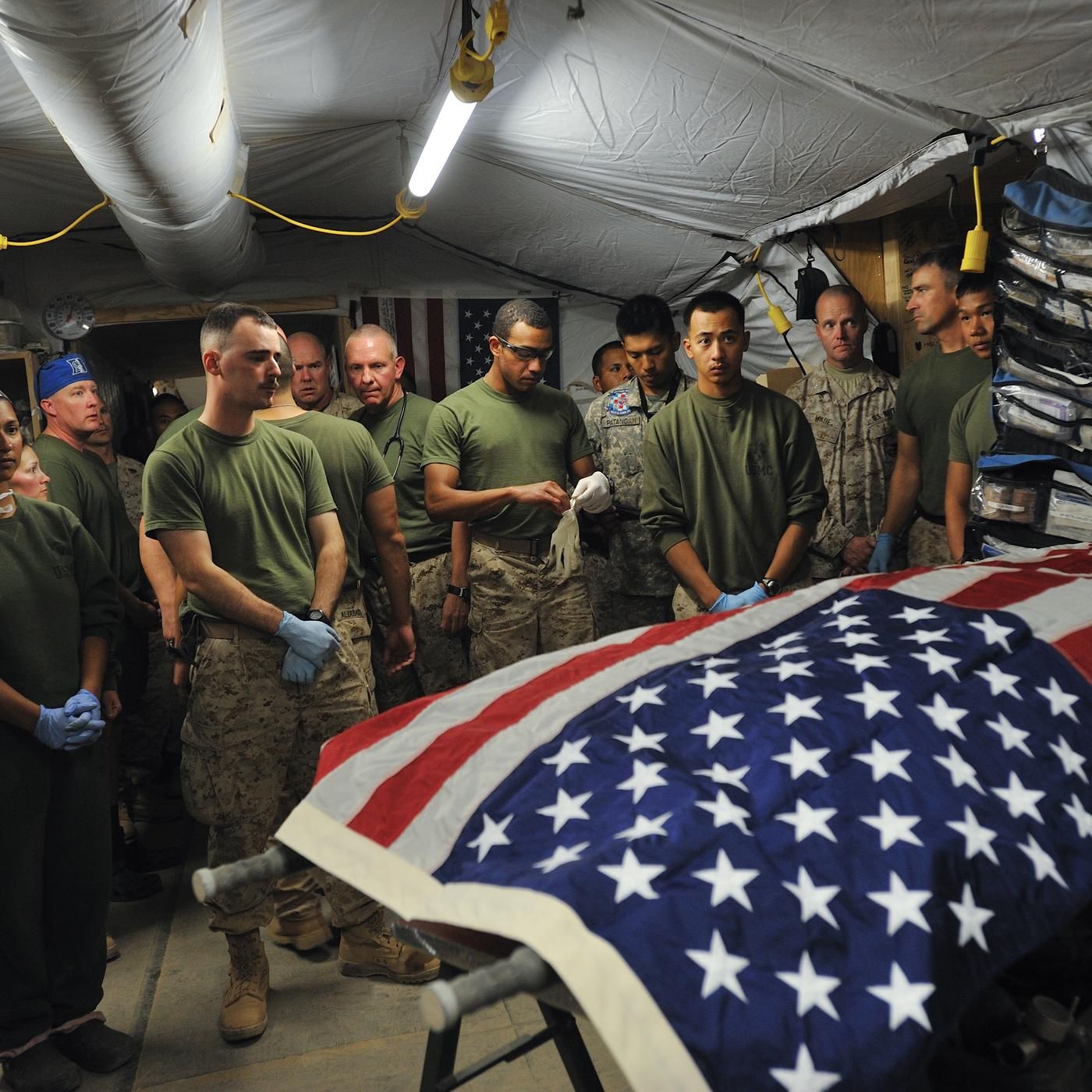
As the attacks were unfolding on the Capitol, a steady stream of images poured onto our screens. Photo editor Kainaz Amaria tells us what she was looking for--and seeing--that afternoon. And she runs into a dilemma we've talked about before. In December of 2009, photojournalist Lynsey Addario, in was embedded with a medevac team in Afghanistan. After days of waiting, one night they got the call - a marine was gravely wounded. What happened next happens all the time. But this time it was captured, picture by picture, in excruciating detail. Horrible, difficult, and at times strikingly beautiful, those photos raise some questions: Who should see them, who gets to decide who should see them, and what can pictures like that do, to those of us far away from the horrors of war and those of us who are all too close to it? Episode Notes: To hear Kainaz Amaria talk more about the filter, check out: this post on ethical questions to consider around the sharing of images of police brutality and her interview on On The Media about the double-standard in many U.S. newsrooms when it comes to posting graphic images. Special thanks to Chris Hughes and Helium Records for the use of Shift Part IV from the album Shift Support Radiolab by becoming a member today at Radiolab.org/donate.

Ep 387A Terrible Covid Christmas Special
This year was the worst. And as our staff tried to figure out what to do for our last episode of 2020, co-host Latif Nasser thought, what if we stare straight into the darkness … and make a damn Christmas special about it. Latif begins with a story about Santa, and a back-room deal he made with the Trump administration to jump to the front of the vaccine line, a tale that travels from an absurd quid-pro-quo to a deep question: who really is an essential worker? From there, we take a whistle-stop tour through the numbers that scientists say you need to know as you wind your way (or preferably, don’t wind your way) through our COVID-infested world. Producer Sarah Qari brings us her version of the Christmas classic nobody ever dreamt they’d want to hear: The Twelve Numbers of COVID. You can check out Martin Bazant’s COVID “calculator” here. This episode was reported by Latif Nasser and Sarah Qari, and was produced by Matt Kielty, Sarah Qari, and Pat Walters. Special thanks to Anna Weggel and Brant Miller, Catherine, Rohan, and Finn Munro, Noam Osband, Amber D’Souza, Chris Zangmeister, John Volckens, Joshua Santarpia, Laurel Bristow, Michael Mina, Mohammad Sajadi, James V. Grimaldi, Stephanie Armour, Joshuah Bearman, Brendan Nyhan And for more on the proposed Santa vaccine deal, see Julie Wernau and her colleagues' reporting at the Wall Street Journal here. Original art for this episode by Zara Stasi. Check out her work at: www.goodforthebees.com. Support Radiolab by becoming a member today at Radiolab.org/donate.
Ep 386The Ashes on the Lawn
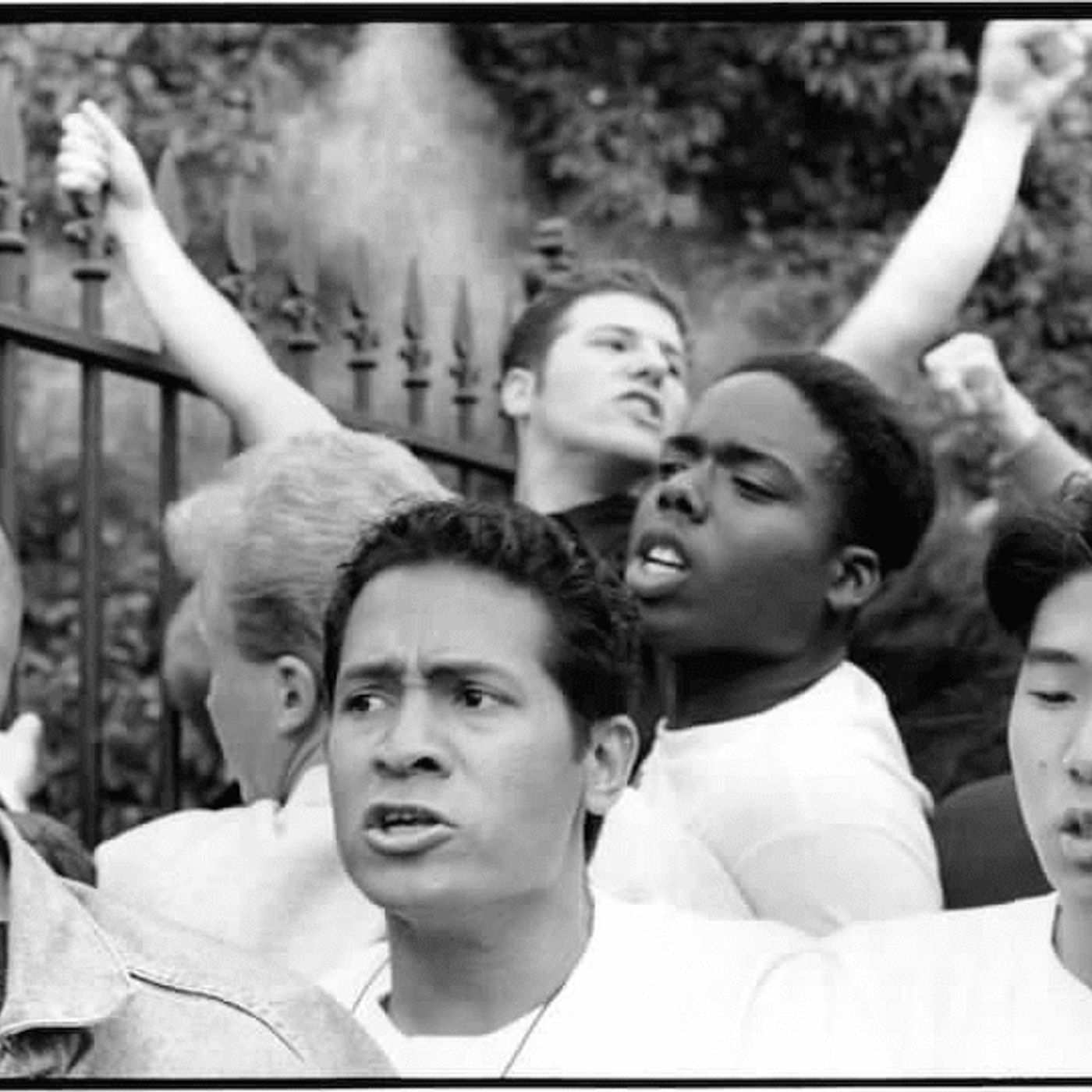
A global pandemic. An afflicted, angry group. A seemingly indifferent government. Reporter Tracie Hunte wanted to understand this moment of pain and confusion by looking back 30 years, and she found a complicated answer to a simple question: When nothing seems to work, how do you make change? This episode was reported by Tracie Hunte, and produced by Annie McEwen and Tobin Low. Fact-checking by Diane Kelly. Support Radiolab by becoming a member today at Radiolab.org/donate.
Ep 385Enemy of Mankind
Should the U.S. Supreme Court be the court of the world? In the 18th century, two feuding Frenchmen inspired a one-sentence law that helped launch American human rights litigation into the 20th century. The Alien Tort Statute allowed a Paraguayan woman to find justice for a terrible crime committed in her homeland. But as America reached further and further out into the world, the court was forced to confront the contradictions in our country’s ideology: sympathy vs. sovereignty. Earlier this month, the Supreme Court heard arguments in Jesner v. Arab Bank, a case that could reshape the way America responds to human rights abuses abroad. Does the A.T.S. secure human rights or is it a dangerous overreach? Additional music for this episode by Nicolas Carter. Special thanks to William J. Aceves, William Baude, Diego Calles, Alana Casanova-Burgess, William Dodge, Susan Farbstein, Jeffery Fisher, Joanne Freeman, Julian Ku, Nicholas Rosenkranz, Susan Simpson, Emily Vinson, Benjamin Wittes and Jamison York. Ken Saro-Wiwa Jr., who appears in this episode, passed away in October 2016. Supreme Court archival audio comes from Oyez®, a free law project in collaboration with the Legal Information Institute at Cornell. Support Radiolab by becoming a member today at Radiolab.org/donate.