Radiolab
674 episodes — Page 3 of 14

Ep 619Probing Where the Sun Does Shine: A Holiday Special
This holiday season, we want to take you on a trip around the heavens.First, co-host Latif Nasser, with the help of Nour Raouafi, of NASA, and an edge-cutting piece of equipment, explain how we may finally be making good on Icarus’s promise. Then, co-host Lulu Miller and Ada Limón talk about how a poet laureate goes about writing an ode to one of Jupiter’s moons.And one more thing! It is almost your last chance to make your mark on the heavens. Radiolab and The International Astronomical Union’s Quasi Moon Naming Vote comes to an end on January 1st. Learn more and pick your favorite name here: https://radiolab.org/moonEPISODE CREDITS: Reported by - Latif Nasser, Lulu MillerProduced by - Matt Kielty, Ana GonzalezFact-checking by - Diane KellySignup for our newsletter!! It includes short essays, recommendations, and details about other ways to interact with the show. Sign up (https://radiolab.org/newsletter)!Radiolab is supported by listeners like you. Support Radiolab by becoming a member of The Lab (https://members.radiolab.org/) today.Follow our show on Instagram, Twitter and Facebook @radiolab, and share your thoughts with us by emailing [email protected] support for Radiolab’s science programming is provided by the Gordon and Betty Moore Foundation, Science Sandbox, a Simons Foundation Initiative, and the John Templeton Foundation. Foundational support for Radiolab was provided by the Alfred P. Sloan Foundation.

Ep 618Curiosity Killed the Adage
The early bird gets the worm. What goes around, comes around. It’s always darkest just before dawn. We carry these little nuggets of wisdom—these adages—with us, deep in our psyche. But recently we started wondering: are they true? Like, objectively, scientifically, provably true?So we picked a few and set out to fact check them. We talked to psychologists, neuroscientists, runners, a real estate agent, skateboarders, an ornithologist, a sociologist and an astrophysicist, among others, and we learned that these seemingly simple, clear-cut statements about us and our world, contain whole universes of beautiful, vexing complexity and deeper, stranger bits of wisdom than we ever imagined.Special thanks to Pamela D’Arc, Daniela Murcillo, Amanda Breen, Akmal Tajihan, Patrick Keene, Stephanie Leschek and Alexandria Iona from the Upright Citizens Brigade, We Run Uptown, Coaches Reph and Patty from Circa ‘95, Julia Lucas and Coffey from the Noname marathon training program.We have some exciting news! In the “Zoozve” episode, Radiolab named its first-ever quasi-moon, and now it's your turn! Radiolab has teamed up with The International Astronomical Union to launch a global naming contest for one of Earth’s quasi-moons. This is your chance to make your mark on the heavens. Submit your name ideas now through September, or vote on your favorites here: https://radiolab.org/moonEPISODE CREDITS: Reported by - Alex Neason, Simon Adler, Sindhu Gnanasambandan, Annie McEwen, Maria Paz Gutierrez, and W. Harry FortunaProduced by - Simon Adler, Matt Kielty, Annie McEwen, Maria Paz Gutierrez, and Sindhu GnanasambandanOriginal music and sound design contributed by - Jeremy BloomFact-checking by - Emily Krieger and Diane A. Kellyand Edited by - Pat Walters and Alex NeasonSign-up for our newsletter comes out every Wednesday. It includes short essays, recommendations, and details about other ways to interact with the show. Sign up (https://radiolab.org/newsletter)!Radiolab is supported by listeners like you. Support Radiolab by becoming a member of The Lab (https://members.radiolab.org/) today.Follow our show on Instagram, Twitter and Facebook @radiolab, and share your thoughts with us by emailing [email protected] support for Radiolab’s science programming is provided by the Gordon and Betty Moore Foundation, Science Sandbox, a Simons Foundation Initiative, and the John Templeton Foundation. Foundational support for Radiolab was provided by the Alfred P. Sloan Foundation.

Ep 617Dark Side of the Earth
Back in 2012, when we were putting together our live show In the Dark, Jad and Robert called up Dave Wolf to ask him if he had any stories about darkness. And boy, did he. Dave told us two stories that became the finale of our show.Back in late 1997, Dave Wolf was on his first spacewalk, to perform work on the Mir (the photo to the right was taken during that mission, courtesy of NASA.). Dave wasn't alone -- with him was veteran Russian cosmonaut Anatoly Solovyev. (That's a picture of Dave giving Anatoly a hug on board the Mir, also courtesy of NASA).Out in blackness of space, the contrast between light and dark is almost unimaginably extreme -- every 45 minutes, you plunge between absolute darkness on the night-side of Earth, and blazing light as the sun screams into view. Dave and Anatoly were tethered to the spacecraft, traveling 5 miles per second. That's 16 times faster than we travel on Earth's surface as it rotates -- so as they orbited, they experienced 16 nights and 16 days for every Earth day.Dave's description of his first spacewalk was all we could've asked for, and more. But what happened next ... well, it's just one of those stories that you always hope an astronaut will tell. Dave and Anatoly were ready to call it a job and head back into the Mir when something went wrong with the airlock. They couldn't get it to re-pressurize. In other words, they were locked out. After hours of trying to fix the airlock, they were running out of the resources that kept them alive in their space suits and facing a grisly death. So, they unhooked their tethers, and tried one last desperate move.In the end, they made it through, and Dave went on to perform dozens more spacewalks in the years to come, but he never again experienced anything like those harrowing minutes trying to improvise his way back into the Mir.After that terrifying tale, Dave told us about another moment he and Anatoly shared, floating high above Earth, staring out into the universe ... a moment so beautiful, and peaceful, we decided to use the audience recreate it, as best we could, for the final act of our live show.We have some exciting news! In the “Zoozve” episode, Radiolab named its first-ever quasi-moon, and now it's your turn! Radiolab has teamed up with The International Astronomical Union to launch a global naming contest for one of Earth’s quasi-moons. This is your chance to make your mark on the heavens. Vote on your favorites, here: https://radiolab.org/moonSignup for our newsletter!!. It includes short essays, recommendations, and details about other ways to interact with the show. Sign up (https://radiolab.org/newsletter)!Radiolab is supported by listeners like you. Support Radiolab by becoming a member of The Lab (https://members.radiolab.org/) today.Follow our show on Instagram, Twitter and Facebook @radiolab, and share your thoughts with us by emailing [email protected] support for Radiolab’s science programming is provided by the Gordon and Betty Moore Foundation, Science Sandbox, a Simons Foundation Initiative, and the John Templeton Foundation. Foundational support for Radiolab was provided by the Alfred P. Sloan Foundation.

Ep 616How Stockholm Stuck
In August of 1973, Jan-Erik Olsson walked into the lobby of a bank in central Stockholm. He fired his submachine gun at the ceiling and yelled “The party starts now!” Then he started taking hostages. For the next six days, Swedish police and international media would tie themselves in knots trying to understand what seemed to them a sordid attachment between captor and captives. And this fixation, later pathologized as “Stockholm Syndrome,” would soon spread across the globe, becoming an easy, often flippant explanation for why people—especially women—in crisis behave in ways outsiders can’t understand. But what if we got the origin story wrong?Today on Radiolab, we reexamine that week in 1973 and the earworm heard ‘round the world. Is “Stockholm Syndrome” just pop psychology built on a pile of lies? Or does it hold some kernel of truth that could help all of us better understand inexplicable trauma?Special thanks to David Mandel, Ruth Reymundo Mandel, Frank Ochberg, Terence Mickey, Cara Pellegrini, Kathy Yuen, Mimi Wilcox and Jani Pellikka."We have some exciting news! In the “Zoozve” episode, Radiolab named its first-ever quasi-moon, and now it's your turn! Radiolab teamed up with The International Astronomical Union to launch a global naming contest for one of Earth’s quasi-moons. Now is you chance to make your mark on the heavens. You can now vote on your favorites, here: https://radiolab.org/moon"EPISODE CREDITS: Reported by - Sarah Qariwith help from - Alice Edwards (also contributed research and translation)Produced by - Sarah Qariwith help from - Rebecca LaksOriginal music and sound design contributed by - Jeremy BloomAdditional Field Recording by - Albert Murillo (CC-BY)with mixing help from - Jeremy BloomFact-checking by - Natalie Middletonand Edited by - Alex NeasonEPISODE CITATIONS:Please put any supporting materials you think our audience would find interesting or useful below in the appropriate broad categories.Videos/Documentaries: Bad Hostage by Mimi WilcoxStolen Youth: Inside The Cult at Sarah LawrencePodcasts:The Memory Motel Episode #13: The Ideal Hostage, hosted by Terence MickeyWhy She Stayed, hosted by Grace StuartTalk to Me, The True Story of The World’s First Hostage Negotiation Team, hosted by Edward ConlonPartnered with a Survivor with David Mandel and Ruth Reymundo MandelSocial Media:Grace Stuart on TiktokBooks: Six Days in August: The Story of Stockholm Syndrome by David KingSee What You Made Me Do: Power, Control, and Domestic Abuse by Jess HillSlonim Woods 9, a memoir by Daniel Barban LevinOur newsletter comes out every Wednesday. It includes short essays, recommendations, and details about other ways to interact with the show. Sign up (https://radiolab.org/newsletter)!Radiolab is supported by listeners like you. Support Radiolab by becoming a member of The Lab (https://members.radiolab.org/) today.Follow our show on Instagram, Twitter and Facebook @radiolab, and share your thoughts with us by emailing [email protected] support for Radiolab’s science programming is provided by the Gordon and Betty Moore Foundation, Science Sandbox, a Simons Foundation Initiative, and the John Templeton Foundation. Foundational support for Radiolab was provided by the Alfred P. Sloan Foundation.

Ep 615Less Than Kilogram
In today’s story, which originally aired in 2014, we meet a very special cylinder. It's the gold standard (or, in this case, the platinum-iridium standard) for measuring mass. For decades it's been coddled and cared for and treated like a tiny king. But, as we learn from writer Andrew Marantz, things change—even things that were specifically designed to stay the same.Special thanks to Ken Alder, Ari Adland, Eric Perlmutter, Terry Quinn and Richard Davis.And to the musical group, His Majestys Sagbutts & Cornetts, for the use of their song “Horses and Hounds.”We have some exciting news! In the “Zoozve” episode, Radiolab named its first-ever quasi-moon, and now it's your turn! Radiolab has teamed up with The International Astronomical Union to launch a global naming contest for one of Earth’s quasi-moons. This is your chance to make your mark on the heavens. Vote on your favorites soon, check here for details: https://radiolab.org/moonSign-up for our newsletter!! It includes short essays, recommendations, and details about other ways to interact with the show. Sign up (https://radiolab.org/newsletter)!Radiolab is supported by listeners like you. Support Radiolab by becoming a member of The Lab (https://members.radiolab.org/) today.Follow our show on Instagram, Twitter and Facebook @radiolab, and share your thoughts with us by emailing [email protected] support for Radiolab’s science programming is provided by the Gordon and Betty Moore Foundation, Science Sandbox, a Simons Foundation Initiative, and the John Templeton Foundation. Foundational support for Radiolab was provided by the Alfred P. Sloan Foundation.

Ep 614Science Vs: The Funniest Joke in the World
When he rounded them up, he had a 100.A few months ago, Wendy Zukerman invited our own Latif Nasser to come on her show, and, of course, he jumped at the chance. Laughter ensued, as they set off to find the "The Funniest Joke in the World." When you just Google something like that, the internet might serve you, "What has many keys but can't open a single lock??” (Answer: A piano). So they had to dig deeper. According to science. And for this quest they interviewed a bunch of amazing comics including Tig Notaro, Adam Conover, Dr Jason Leong, Loni Love, and, of course, some scientists: Neuroscientist Professor Sophie Scott and Psychologist Professor Richard Wiseman. Which Joke Will Win???Special thanks to Wendy Zuckerman and the entire team over at Science VsWe have some exciting news! In the “Zoozve” episode, Radiolab named its first-ever quasi-moon, and now it's your turn! Radiolab has teamed up with The International Astronomical Union to launch a global naming contest for one of Earth’s quasi-moons. This is your chance to make your mark on the heavens. Vote on your favorites soon, check here for details: https://radiolab.org/moonSupport Radiolab by becoming a member of The Lab today.Signup for our newsletter. It includes short essays, recommendations, and details about other ways to interact with the show. Sign up (https://radiolab.org/newsletter)!Radiolab is supported by listeners like you. Support Radiolab by becoming a member of The Lab (https://members.radiolab.org/) today.Follow our show on Instagram, Twitter and Facebook @radiolab, and share your thoughts with us by emailing [email protected] support for Radiolab’s science programming is provided by the Gordon and Betty Moore Foundation, Science Sandbox, a Simons Foundation Initiative, and the John Templeton Foundation. Foundational support for Radiolab was provided by the Alfred P. Sloan Foundation.

Ep 613Hello
It's hard to start a conversation with a stranger—especially when that stranger is, well, different. He doesn't share your customs, celebrate your holidays, watch your TV shows, or even speak your language. Plus he has a blowhole.In this episode, which originally aired in the summer of 2014, we try to make contact with some of the strangest strangers on our little planet: dolphins. Producer Lynn Levy eavesdrops on some human-dolphin conversations, from a studio apartment in the Virgin Islands to a research vessel in the Bermuda Triangle.We have some exciting news! In the “Zoozve” episode, Radiolab named its first-ever quasi-moon, and now it's your turn! Radiolab has teamed up with The International Astronomical Union to launch a global naming contest for one of Earth’s quasi-moons. This is your chance to make your mark on the heavens. Vote on your favorites starting in November: https://radiolab.org/moonSupport Radiolab by becoming a member of The Lab today.Signup for our newsletter. It includes short essays, recommendations, and details about other ways to interact with the show. Sign up (https://radiolab.org/newsletter)!Radiolab is supported by listeners like you. Support Radiolab by becoming a member of The Lab (https://members.radiolab.org/) today.Follow our show on Instagram, Twitter and Facebook @radiolab, and share your thoughts with us by emailing [email protected] support for Radiolab’s science programming is provided by the Gordon and Betty Moore Foundation, Science Sandbox, a Simons Foundation Initiative, and the John Templeton Foundation. Foundational support for Radiolab was provided by the Alfred P. Sloan Foundation.

Ep 612The Ecstasy of an Open Brain
As we grow up, there are little windows of time when we can learn very, very fast, and very, very deeply. Scientists call these moments, critical periods. Real, neurological, biological states when our brain can soak up information like a sponge. Then, these windows of learning close. Locking us in to certain behaviors and skills for the rest of our lives. But … what if we could reopen them? Today, we consider a series of discoveries that are reshaping our understanding of when and how we can learn. And what that could mean for things like PTSD, brain disease, or strokes. And cuddle puddles. It’s a mind-bending discussion. Literally and figuratively.This is the second episode in an ongoing series hosted by Molly Webster, in conversation with scientists and science-y people, doing work at the furthest edges of what we know. More to come! Previous episodes in the series:Up in Smoke (https://zpr.io/zrN5fgZwiWiR)Special thanks to Gül Dölen, at the University of California, Berkeley, along with researcher Romain Nardou. Plus, Charles Philipp and David Herman.We have some exciting news! In the “Zoozve” episode, Radiolab named its first-ever quasi-moon, and now it's your turn! Radiolab has teamed up with The International Astronomical Union to launch a global naming contest for one of Earth’s quasi-moons. This is your chance to make your mark on the heavens. Vote on your favorites starting in November: https://radiolab.org/moonEPISODE CREDITS: Hosted by - Molly WebsterReported by - Molly WebsterProduced by -Sindhu Gnanasambandan with help from - Timmy Broderick and Molly WebsterOriginal music and sound design contributed by - Dylan Keefewith mixing help from - Jeremy BloomFact-checking by - Emily Kriegerand Edited by - Soren WheelerEPISODE CITATIONS:Science Articles -Gul’s 2019 paper: Oxytocin-dependent reopening of a social reward learning critical period with MDMA (https://zpr.io/wfQjeA6PGCBv) on the feel-good brain chemical oxytocin, and how it reopens social reward learning when combined with MDMA.Gul’s 2023 paper: Psychedelics reopen the social reward learning critical period (https://zpr.io/TKDKEwiLwGRN) on the role of psychedelics in social reward learning. Sign-up for our newsletter. It includes short essays, recommendations, and details about other ways to interact with the show. Sign up (https://radiolab.org/newsletter)!Radiolab is supported by listeners like you. Support Radiolab by becoming a member of The Lab (https://members.radiolab.org/) today.Follow our show on Instagram, Twitter and Facebook @radiolab, and share your thoughts with us by emailing [email protected] support for Radiolab’s science programming is provided by the Gordon and Betty Moore Foundation, Science Sandbox, a Simons Foundation Initiative, and the John Templeton Foundation. Foundational support for Radiolab was provided by the Alfred P. Sloan Foundation.

Ep 611Haunted
In an episode we first aired in 2014, we meet a man named Dennis Conrow, who was stuck. After a brief stint at college, he’d spent most of his 20’s back home with his parents, sleeping in his childhood room. And just when he finally struck out on his own, fate intervened. He lost both his parents to cancer. So Dennis was left, back in the house, alone. Until one night when a group of paranormal investigators showed up at his door and made him realize what it really means for a house, or a man, to be haunted. We have some exciting news! In the “Zoozve” episode, Radiolab named its first-ever quasi-moon, and now it's your turn! Radiolab has teamed up with The International Astronomical Union to launch a global naming contest for one of Earth’s quasi-moons. This is your chance to make your mark on the heavens. Vote on your favorites starting in November: https://radiolab.org/moonEPISODE CREDITS: Reported by Matt Kieltywith help from Andy MillsProduced by Matt Kieltywith help from - Maria Paz GutiérrezOriginal music and sound design contributed by - Matt KieltySignup for our newsletter!! It includes short essays, recommendations, and details about other ways to interact with the show. Sign up (https://radiolab.org/newsletter)!Radiolab is supported by listeners like you. Support Radiolab by becoming a member of The Lab (https://members.radiolab.org/) today.Follow our show on Instagram, Twitter and Facebook @radiolab, and share your thoughts with us by emailing [email protected] support for Radiolab’s science programming is provided by the Gordon and Betty Moore Foundation, Science Sandbox, a Simons Foundation Initiative, and the John Templeton Foundation. Foundational support for Radiolab was provided by the Alfred P. Sloan Foundation.

Ep 610The Unpopular Vote
As the US Presidential Election nears, Radiolab covers the closest we ever came to abolishing the Electoral College.In the 1960s, then-President Lyndon Johnson approached an ambitious young Senator known as the Kennedy of the Midwest to tweak the way Americans elect their President. The more Senator Birch Bayh looked into the electoral college the more he believed it was a ticking time bomb hidden in the constitution, that someone needed to defuse. With overwhelming support in Congress, the endorsement of multiple Presidents, and polling showing that over 80% of the American public supported abolishing it, it looked like he might just pull it off. So why do we still have the electoral college? And will we actually ever get rid of it?Special thanks to Jesse Wegman, the University of Virginia’s Miller Center, Sarah Steinkamp at DePauw University, Sara Stefani at Indiana University Libraries, Olivia-Britain-Toole at Clemson University Special Collections, Tim Groeling at UCLA, Samuel Wang, Philip Stark, Walter Mebane, Laura Beth Schnitker at University of Maryland Special Collections, Hunter Estes at the Ethics and Public Policy Center, and the folks at Common Cause.We have some exciting news! In the “Zoozve” episode, Radiolab named its first-ever quasi-moon, and now it's your turn! Radiolab has teamed up with The International Astronomical Union to launch a global naming contest for one of Earth’s quasi-moons. This is your chance to make your mark on the heavens. Vote on your favorites starting in November: https://radiolab.org/moon EPISODE CREDITS: Reported by - Latif Nasser and Matt KieltyProduced by - Matt Kielty and Simon AdlerOriginal music and sound design contributed by - Matt Kielty, Simon Adler, and Jeremy Bloom Mixed by - Jeremy BloomFact-checking by - Diane Kellyand Edited by - Becca Bressler and Pat Walters EPISODE CITATIONS:Articles - Harry Roth, “Civil Rights Icon Defended the Electoral College Forty Years Ago” (https://zpr.io/jmS5buEGxBzU)Frederick Williams, “The Late Senator Birch Bayh: Best Friend of Black America,”(https://zpr.io/NDiAgcK5UPhX)Christopher DeMuth, “The Man Who Saved the Electoral College” (https://zpr.io/PgneafdmWBVA)Books - Jill Lepore, These Truths: A History of the United States (https://zpr.io/FyzMJAY8G7qe)Robert Blaemire, Birch Bayh: Making A Difference (https://www.blaemire.us/)Alex Keyssar, Why Do We Still Have the Electoral College? (https://zpr.io/kSf9uBQ7FHwa) Let The People Pick the President: The Case for Abolishing The Electoral College (https://zpr.io/mug4xcMqeZCw) by Jesse Wegman Videos:CGP Grey series on The Electoral College (https://www.cgpgrey.com/the-electoral-college)Birch Bayh speech about the Electoral College (https://www.youtube.com/watch?v=VrAZVx7tekU) (from Ball State University Library which has many more Birch Bayh archival clips) Birch Bayh’s campaign jingle: https://www.youtube.com/watch?v=EcvnS5zaxC4Signup for our newsletter!! It includes short essays, recommendations, and details about other ways to interact with the show. Sign up (https://radiolab.org/newsletter)!Radiolab is supported by listeners like you. Support Radiolab by becoming a member of The Lab (https://members.radiolab.org/) today.Follow our show on Instagram, Twitter and Facebook @radiolab, and share your thoughts with us by emailing [email protected] support for Radiolab’s science programming is provided by the Gordon and Betty Moore Foundation, Science Sandbox, a Simons Foundation Initiative, and the John Templeton Foundation. Foundational support for Radiolab was provided by the Alfred P. Sloan Foundation.

Ep 608Tweak the Vote
Back in 2018, when this episode first aired, there was a feeling that democracy was on the ropes. In the United States and abroad, citizens of democracies are feeling increasingly alienated, disaffected, and powerless. Some are even asking themselves a question that feels almost too dangerous to say out loud: is democracy fundamentally broken? Today on Radiolab, we ask a different question: how do we fix it? We scrutinize one proposed tweak to the way we vote that could make politics in this country more representative, more moderate, and most shocking of all, more civil. Could this one surprisingly do-able mathematical fix really turn political campaigning from a rude bloodsport to a campfire singalong? And even if we could do that, would we want to?Special thanks to Rob Richie (and everyone else at Fairvote), Don Saari, Diana Leygerman, Caroline Tolbert, Bobby Agee, Edward Still, Jim Blacksher, Allen Caton, Nikolas Bowie, John Hale, and Anna Luhrmann and the rest of the team at the Varieties of Democracy Institute in Sweden.And a very special thanks to Rick Pickren, for allowing us to use his rendition of State of Maine, Maine’s state anthem. Check that out, and all his other state anthems on Spotify or Youtube.EPISODE CREDITS: Reported by - Latif Nasser, Simon Adler, Sarah Qari, Suzie Lechtenberg and Tracie HunteProduced by - Simon Adler, Matt Kielty, Sarah Qari, and Suzie LechtenbergOriginal music and sound design contributed by - Simon AdlerOur newsletter comes out every Wednesday. It includes short essays, recommendations, and details about other ways to interact with the show. Sign up (https://radiolab.org/newsletter)!Radiolab is supported by listeners like you. Support Radiolab by becoming a member of The Lab (https://members.radiolab.org/) today.Follow our show on Instagram, Twitter and Facebook @radiolab, and share your thoughts with us by emailing [email protected] support for Radiolab’s science programming is provided by the Gordon and Betty Moore Foundation, Science Sandbox, a Simons Foundation Initiative, and the John Templeton Foundation. Foundational support for Radiolab was provided by the Alfred P. Sloan Foundation.

Ep 607Why Don't Sex Scandals Matter Anymore?
In 1987, Gary Hart was a young charismatic Democrat, poised to win his party’s nomination and possibly the presidency. Many of us know the story of what happened next, and even if you don’t, it’s a familiar tale. Back in 2016, we examined how, when this happened, politicians and political reporters found themselves in uncharted territory. And with help from author Matt Bai, we looked at how the events of that May shaped the way we cover politics, and expanded our sense of what's appropriate when it comes to judging a candidate.In the wake of the 2016 election, and in the throes of our current political moment, it would seem we’ve come full circle in the weirdest way. So we sat down with Brooke Gladstone, co-host of our sister show here at WNYC, On the Media, to talk about why sex scandals don’t matter anymore. We have some exciting news! In the “Zoozve” episode, Radiolab named its first-ever quasi-moon, and now it's your turn! Radiolab has teamed up with The International Astronomical Union to launch a global naming contest for one of Earth’s quasi-moons. This is your chance to make your mark on the heavens. Submit your name ideas now through September, or vote on your favorites starting in November: https://radiolab.org/moonEPISODE CREDITS: Reported by - Simon Adlerwith help from - Jamie YorkProduced by - Simon AdlerUpdate produced by Rebecca LaksSignup for our newsletter!! It includes short essays, recommendations, and details about other ways to interact with the show. Sign up (https://radiolab.org/newsletter)!Radiolab is supported by listeners like you. Support Radiolab by becoming a member of The Lab (https://members.radiolab.org/) today.Follow our show on Instagram, Twitter and Facebook @radiolab, and share your thoughts with us by emailing [email protected] support for Radiolab’s science programming is provided by the Gordon and Betty Moore Foundation, Science Sandbox, a Simons Foundation Initiative, and the John Templeton Foundation. Foundational support for Radiolab was provided by the Alfred P. Sloan Foundation.

Ep 606Terrestrials: Stumpisode
As dead as they seem, tree stumps are hubs of life and relationships. Co-host Lulu Miller is back with another season of her hit spinoff show Terrestrials, and to celebrate, we’re sharing the first episode with you. From stumps to snags, dead wood provides habitat for rodents, falcons, insects, and even humans. Stumps hold together the forest floor, give hunting perches to birds of prey in flatlands, prevent erosion and the encroachment of invasive species, usher in sunlight, provide nutrients, store renewable fuel, and hold onto stories human beings might have forgotten. Without these ghosts of trees past, nothing would be the same. Scottish author, artist and lover of tree stumps, Dr. Amanda Thomson, leads Lulu on a “tour de stumps,” a journey across space and time to learn about some of the most magical stumps on the planet.We have some exciting news! In the “Zoozve” episode, Radiolab named its first-ever quasi-moon, and now it's your turn! Radiolab has teamed up with The International Astronomical Union to launch a global naming contest for one of Earth’s quasi-moons. This is your chance to make your mark on the heavens. Vote on your favorite names starting in November at https://radiolab.org/moonVisit the Terrestrials website (https://www.wnycstudios.org/podcasts/radiolab-kids/projects/terrestrials) to learn more about the show, meet our team, listen to the songs and discover fun activities, drawing prompts, music how-tos and games that educators, parents and families might enjoy together.If you’d like to “badger” a future expert, suggest story ideas or feedback, email us at [email protected] to just the songs (https://www.wnycstudios.org/podcasts/radiolab-kids/just-the-songs) from Terrestrials.EPISODE CREDITS: Reported by - Ana González and Lulu Millerwith help from - Alan Goffinski Produced by - Ana GonzálezOriginal music from - Alan GoffinskiSound design by - Mira Burt-WintonickMixing by - Joe PlourdeFact-checking by - Natalie Middletonand Edited by - Mira Burt-WintonickSignup for our newsletter!! It includes short essays, recommendations, and details about other ways to interact with the show. Sign up (https://radiolab.org/newsletter)!Radiolab is supported by listeners like you. Support Radiolab by becoming a member of The Lab (https://members.radiolab.org/) today.Follow our show on Instagram, Twitter and Facebook @radiolab, and share your thoughts with us by emailing [email protected] support for Radiolab’s science programming is provided by the Gordon and Betty Moore Foundation, Science Sandbox, a Simons Foundation Initiative, and the John Templeton Foundation. Foundational support for Radiolab was provided by the Alfred P. Sloan Foundation.
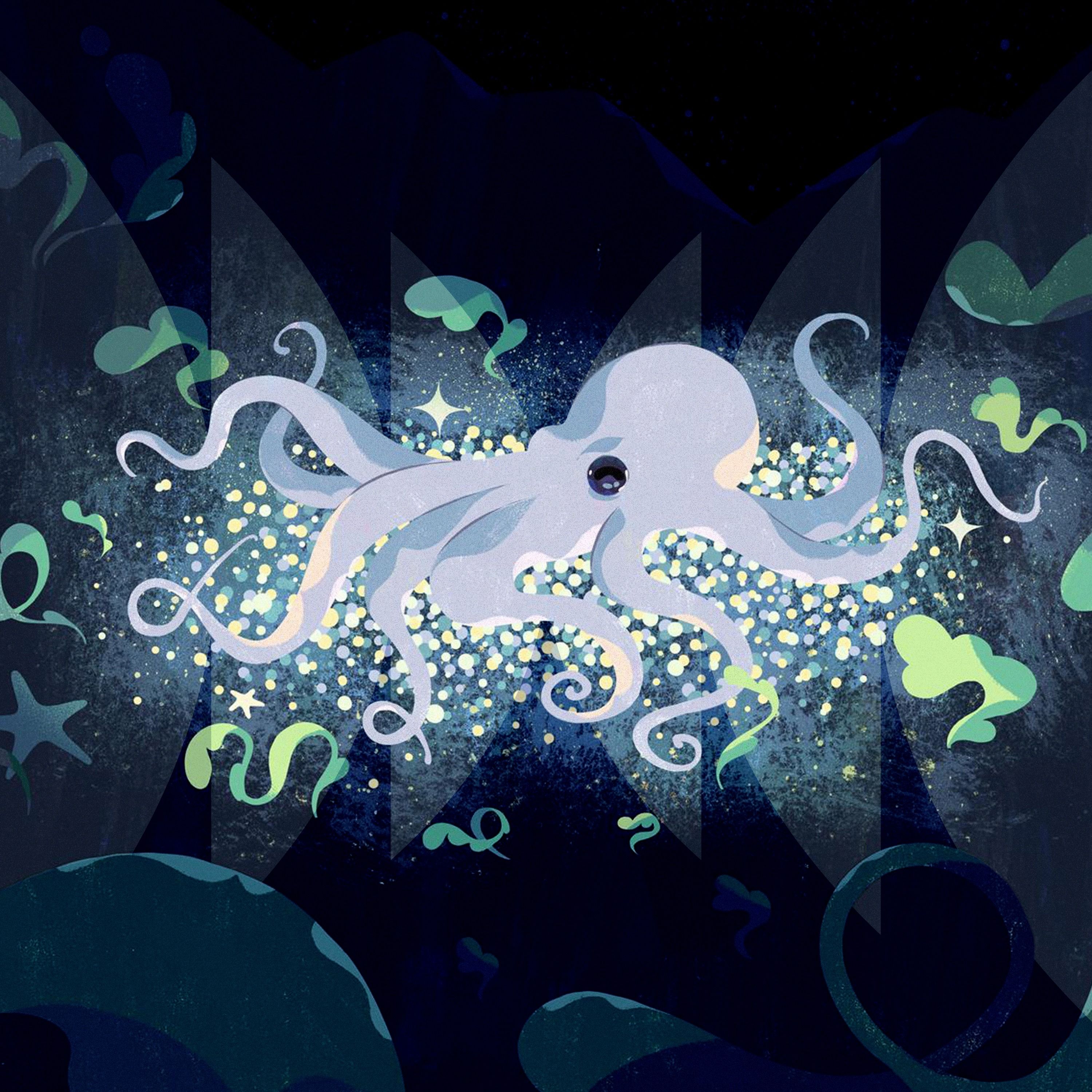
Ep 604Octomom
A mile under the ocean, we get to watch an octopus perform a heroic act of heart and determination.First aired back in 2020, this episode follows the story of an octopus living one mile under the ocean as she performs a heroic act of heart and determination.In 2007, Bruce Robison’s robot submarine stumbled across an octopus settling in to brood her eggs. It seemed like a small moment. But as he went back to visit her, month after month, what began as a simple act of motherhood became a heroic feat that has never been equaled by any known species on Earth. This episode was reported and produced by Annie McEwen. Special thanks to Kim Fulton-Bennett and Rob Sherlock at the Monterey Bay Aquarium Research Institute. Support Radiolab today at Radiolab.org/donate. If you need more ocean in your life, check out the incredible Monterey Bay Aquarium live cams (especially the jellies!): www.montereybayaquarium.org/animals/live-camsHere’s a pic of Octomom sitting on her eggs (© 2007 MBARI), Nov. 1, 2007. We have some exciting news! In the “Zoozve” episode, Radiolab named its first-ever quasi-moon, and now it's your turn! Radiolab has teamed up with The International Astronomical Union to launch a global naming contest for one of Earth’s quasi-moons. This is your chance to make your mark on the heavens. Submit your name ideas now through September, or vote on your favorites starting in November: https://radiolab.org/moonSign-up for our newsletter!! It includes short essays, recommendations, and details about other ways to interact with the show. Sign up (https://radiolab.org/newsletter)!Radiolab is supported by listeners like you. Support Radiolab by becoming a member of The Lab (https://members.radiolab.org/) today.Follow our show on Instagram, Twitter and Facebook @radiolab, and share your thoughts with us by emailing [email protected] support for Radiolab’s science programming is provided by the Gordon and Betty Moore Foundation, Science Sandbox, a Simons Foundation Initiative, and the John Templeton Foundation. Foundational support for Radiolab was provided by the Alfred P. Sloan Foundation.

Ep 603A Little Pompeiian Fish Sauce Goes a Long Way
Today we follow a sleuth who has spent over a decade working to solve an epic mystery hiding in plain historical sight: did anyone survive the eruption of Mount Vesuvius in 79AD? Tired of hearing the conventional narrative that every Pompeiian perished without any evidence to back it up, Classicist Steven Tuck decides to look into it himself. Although he is nearly two millennia late to ground zero, he uses all the available evidence to reimagine the disaster from the perspective of the people on the ground. Could anyone have survived the volcano? If they did, could they have survived what came after that: earthquakes, tsunamis, pumice stones hurtling like missiles from the sky? If someone did survive, what happened to them after that??! To find out we have to think, feel and possibly even eat like Ancient Romans. An against-all-odds story of a disaster without warning, a mass disappearance without a trace, and oddly, a particularly stinky fish sauce, care of special guest Chef Samin Nosrat. We have some exciting news! In the “Zoozve” episode, Radiolab named its first-ever quasi-moon, and now it's your turn! Radiolab has teamed up with The International Astronomical Union to launch a global naming contest for one of Earth’s quasi-moons. This is your chance to make your mark on the heavens. Submit your name ideas now through September, or vote on your favorites starting in November: https://radiolab.org/moonEPISODE CREDITS: Reported by - Latif Nasserwith help from - Annie McEwen and Ekedi Fausther-KeysProduced by - Annie McEwenRecording help from - Adam HowellVoice acting by - Brandon DaltonOriginal music and sound design contributed by - Jeremy Bloom and Annie McEwenwith mixing help from - Arianne Wackand Hosting Helo from - Sarah QariFact-checking by - Emily Kriegerand Edited by - Pat WaltersEPISODE CITATIONS:Recipes -Ancient Roman recipe for garum (https://zpr.io/gMNmXcNZUhZg).Read more about garum here (https://zpr.io/4gh939TxCRpZ) or in Sally Grainger’s book The Story of Garum: Fermented Fish Sauce and Salted Fish in the Ancient WorldArticles -On Pliny's letters and the eruption including a reanalysis of the date of the eruption, Pedar Foss, Pliny and the Eruption of Vesuvius (https://zpr.io/kQH49ttRawNZ) Documentaries - A recent PBS documentary, Pompeii: The New Dig (https://zpr.io/LV9sWKc4vbQ8) including segments on Steven Tuck’s work.Photos and Maps - To trace building locations or names of home owners as well as photos of every square inch of Pompeii: https://pompeiiinpictures.com/pompeiiinpictures/From Steven Tuck: “If someone has an otherwise unbeatable case of insomnia, my preliminary publication of findings is in Reflections: Harbour City Deathscapes in Roman Italy and Beyond” (https://zpr.io/3pETS53A9CtF)Brief description of the casts and casting process of the remains found at Pompeii: https://pompeiisites.org/en/pompeii-map/analysis/the-casts/Maps of the Ancient Roman world that you can use to trace some of the land and sea routes discussed in the episode: https://orbis.stanford.eduSignup for our newsletter! It includes short essays, recommendations, and details about other ways to interact with the show. Sign up (https://radiolab.org/newsletter)!Radiolab is supported by listeners like you. Support Radiolab by becoming a member of The Lab (https://members.radiolab.org/) today.Follow our show on Instagram, X, formerly Twitter and Facebook @radiolab, and share your thoughts with us by emailing [email protected] support for Radiolab’s science programming is provided by the Gordon and Betty Moore Foundation, Science Sandbox, a Simons Foundation Initiative, and the John Templeton Foundation. Foundational support for Radiolab was provided by the Alfred P. Sloan Foundation.

Ep 601The Times They Are a-Changin'
This episode first aired back in December of 2013, and at the start of that new year, the team was cracking open fossils, peering back into ancient seas, and looking up at lunar skies only to find that a year is not quite as fixed as we thought it was.With the help of paleontologist Neil Shubin, reporter Emily Graslie and the Field Museum's Paul Mayer we discover that our world is full of ancient coral calendars. Each one of these sea skeletons reveals that once upon a very-long-time-ago, years were shorter by over forty days. And astrophysicist Chis Impey helps us comprehend how the change is all to be blamed on a celestial slow dance with the moon. Plus, Robert indulges his curiosity about stopping time and counteracting the spinning of the spheres by taking astrophysicist Neil deGrasse Tyson on a (theoretical) trip to Venus with a rooster and sprinter Usain Bolt.We have some exciting news! In the “Zoozve” episode, Radiolab named its first-ever quasi-moon, and now it's your turn! Radiolab has teamed up with The International Astronomical Union to launch a global naming contest for one of Earth’s quasi-moons. This is your chance to make your mark on the heavens. Submit your name ideas now through September, or vote on your favorites starting in November: https://radiolab.org/moonSignup for our newsletter!! It includes short essays, recommendations, and details about other ways to interact with the show. Sign up (https://radiolab.org/newsletter)!Radiolab is supported by listeners like you. Support Radiolab by becoming a member of The Lab (https://members.radiolab.org/) today.Follow our show on Instagram,X (formerly Twitter) and Facebook @radiolab, and share your thoughts with us by emailing [email protected] support for Radiolab’s science programming is provided by the Gordon and Betty Moore Foundation, Science Sandbox, a Simons Foundation Initiative, and the John Templeton Foundation. Foundational support for Radiolab was provided by the Alfred P. Sloan Foundation.

Ep 600Shell Game
One man secretly hands off more and more of his life to an AI voice clone.Today, we feature veteran journalist Evan Ratliff who - for his new podcast Shell Game - decided to slowly replace himself bit by bit with an AI voice clone, to see how far he could actually take it. Could it do the mundane phone calls he’d prefer to skip? Could it get legal advice for him? Could it go to therapy for him? Could it parent his kids? Evan feeds his bot the most intimate details about his life, and lets the bot loose in high-stakes situations at home and at work. Which bizarro version of him will show up? The desperately-agreeable conversationalist, the crank-yanking prank caller, the glitched out stranger who sounds like he’s in the middle of a mental breakdown, or someone else entirely? Will people believe it’s really him? And how will they act if they don’t? A gonzo journalistic experiment for the age of AI, that’s funny and eerie all at the same time.We have some exciting news! In the “Zoozve” episode, Radiolab named its first-ever quasi-moon, and now it's your turn! Radiolab has teamed up with The International Astronomical Union to launch a global naming contest for one of Earth’s quasi-moons. This is your chance to make your mark on the heavens. Submit your name ideas now through September, or vote on your favorites starting in November: https://radiolab.org/moonEPISODE CREDITS: Reported by - Evan RatliffProduced by - Sophie Bridges and Simon AdlerWith help from - Evan RatliffFact-checking by - Emily KriegerEPISODE CITATIONS:Audio:If you want to listen to more of Evan’s Shell Game, you can do so here, https://www.shellgame.co/ Sign up for our newsletter!! It includes short essays, recommendations, and details about other ways to interact with the show. Sign up (https://radiolab.org/newsletter)!Radiolab is supported by listeners like you. Support Radiolab by becoming a member of The Lab (https://members.radiolab.org/) today.Follow our show on Instagram, Twitter and Facebook @radiolab, and share your thoughts with us by emailing [email protected] support for Radiolab’s science programming is provided by the Gordon and Betty Moore Foundation, Science Sandbox, a Simons Foundation Initiative, and the John Templeton Foundation. Foundational support for Radiolab was provided by the Alfred P. Sloan Foundation.

Ep 599Big Little Questions
First aired back in 2017, here’s a show of questions and, sometimes, answers. Cause, we get a lot of questions. Like, A LOT of questions. Tiny questions, big questions, short questions, long questions. Weird questions. Poop questions. We get them all.And over the years, as more and more of these questions arrived in our inbox, what happened was, guiltily, we put them off to the side, in a bucket of sorts, where they just sat around, unanswered. But now, we’re dumping the bucket out.Today, our producers pick up a few of the questions that spilled out of that bucket, and venture out into the great unknown to find answers to some of life's greatest mysteries: coincidences; miracles; life; death; fate; will; and, of course, poop.We have some exciting news! In the “Zoozve” episode, Radiolab named its first-ever quasi-moon, and now it's your turn! Radiolab has teamed up with The International Astronomical Union to launch a global naming contest for one of Earth’s quasi-moons. This is your chance to make your mark on the heavens. Submit your name ideas now through September, or vote on your favorites starting in November: https://radiolab.org/moonSignup for our newsletter!! It includes short essays, recommendations, and details about other ways to interact with the show. Sign up (https://radiolab.org/newsletter)!Radiolab is supported by listeners like you. Support Radiolab by becoming a member of The Lab (https://members.radiolab.org/) today.Follow our show on Instagram, Twitter and Facebook @radiolab, and share your thoughts with us by emailing [email protected] support for Radiolab’s science programming is provided by the Gordon and Betty Moore Foundation, Science Sandbox, a Simons Foundation Initiative, and the John Templeton Foundation. Foundational support for Radiolab was provided by the Alfred P. Sloan Foundation.

Ep 597Uneasy as ABC
February 1976. A flight out of California turned catastrophic when it crashed into a farm in rural Nebraska. What happened that night at the local hospital, and crucially, what went wrong, would inspire a global sea-change in how emergency rooms operate and fundamentally alter the way doctors think in a crisis.Special thanks to Jody and Jay Upright, Heather Talbott, Dr. Ron Simon, Dr. John Sutyak, Dr. Paul Collicott, Irvene Hughe, Maimonides Medical Center, Karl Sukhia and Vanya Zvonar.We have some exciting news! In the “Zoozve” episode, Radiolab named its first-ever quasi-moon, and now it's your turn! Radiolab has teamed up with The International Astronomical Union to launch a global naming contest for one of Earth’s quasi-moons. This is your chance to make your mark on the heavens. Submit your name ideas now through September, or vote on your favorites starting in November: https://radiolab.org/moonEPISODE CREDITS: Reported by - Avir Mitrawith help from - Maria Paz Gutierrez, Sarah Qari, Becca Bressler, Suzie Lechtenberg, Heather Radke and Ana GonzalezProduced by - Maria Paz Gutierrez, Becca Bressler and Pat Walterswith help from - Ana GonzalezOriginal music and sound design contributed by - Maria Paz Gutierrez and Jeremy Bloomwith mixing help from - Jeremy bloomFact-checking by - Diane Kellyand Edited by - Becca Bressler and Pat WaltersSign up for our newsletter!! It includes short essays, recommendations, and details about other ways to interact with the show. Sign up (https://radiolab.org/newsletter)!Radiolab is supported by listeners like you. Support Radiolab by becoming a member of The Lab (https://members.radiolab.org/) today.Follow our show on Instagram, Twitter and Facebook @radiolab, and share your thoughts with us by emailing [email protected] support for Radiolab’s science programming is provided by the Gordon and Betty Moore Foundation, Science Sandbox, a Simons Foundation Initiative, and the John Templeton Foundation. Foundational support for Radiolab was provided by the Alfred P. Sloan Foundation.

Ep 595More Perfect: The Gun Show
Given that we’re all gearing up for the Presidential race, and how gun rights and regulations are almost always centerstage during these times. Today, we’re re-releasing a More Perfect episode that aired just after the October 2017 Las Vegas shooting. It is an episode that attempts to make sense of our country’s fraught relationship with the Second Amendment.For nearly 200 years of our nation’s history, the Second Amendment was an all-but-forgotten rule about the importance of militias. But in the 1960s and 70s, a movement emerged — led by Black Panthers and a recently-repositioned NRA — that insisted owning a firearm was the right of each and every American. So began a constitutional debate that only the Supreme Court could solve. That didn’t happen until 2008, when a Washington, D.C. security guard named Dick Heller made a compelling case.We have some exciting news! In the “Zoozve” episode, Radiolab named its first-ever quasi-moon, and now it's your turn! Radiolab has teamed up with The International Astronomical Union to launch a global naming contest for one of Earth’s quasi-moons. This is your chance to make your mark on the heavens. Submit your name ideas now through September, or vote on your favorites starting in November: https://radiolab.org/moon.Sign up for our newsletter!! It includes short essays, recommendations, and details about other ways to interact with the show. Sign up (https://radiolab.org/newsletter)!Radiolab is supported by listeners like you. Support Radiolab by becoming a member of The Lab (https://members.radiolab.org/) today.Follow our show on Instagram, Twitter and Facebook @radiolab, and share your thoughts with us by emailing [email protected] support for Radiolab’s science programming is provided by the Gordon and Betty Moore Foundation, Science Sandbox, a Simons Foundation Initiative, and the John Templeton Foundation. Foundational support for Radiolab was provided by the Alfred P. Sloan Foundation.

Ep 594Up in Smoke
Two scenes. In the first, a doctor gets a call — the hospital she works at is having an outbreak of unknown origin, in the middle of the worst wildfire season on record. In the second, an ecologist stands in a forest, watching it burn. Through very different circumstances, they both find themselves asking the same question: is there something in the smoke? This question will bring them together, and reveal – to all of us – a world we never saw before. This is the first episode in an ongoing series hosted by Molly Webster, in conversation with scientists and science-y people, doing work at the furthest edges of what we know. More to come! Special thanks to Leda Kobziar, at the University of Idaho, and Naomi Hauser, at the University of California, Davis. Plus, James and Shelby Kaemmerer, and Paula and John Troche.We have some exciting news! In the “Zoozve” episode, Radiolab named its first-ever quasi-moon, and now it's your turn! Radiolab has teamed up with The International Astronomical Union to launch a global naming contest for one of Earth’s quasi-moons. This is your chance to make your mark on the heavens. Submit your name ideas now through September, or vote on your favorites starting in November: https://radiolab.org/moonEPISODE CREDITS: Hosted and Reported by - Molly WebsterProduced by - Sindhu GnanasambandanFact-checking by - Diane A. Kellyand Edited by - Pat WaltersEPISODE CITATIONS:Articles - And lastly, wanna learn more about bacteria in snow-making machines – check out this New York Times article (https://zpr.io/t6HKi7HMuHMZ), or this science-explainer (https://zpr.io/VygRVBb5vspq)! Scientific Papers - Read Leda’s paper on microbes in smoke (https://zpr.io/d3JVm7gEf2dc)!For more details on the outbreak at Naomi’s hospital, you can check out this abstract of her findings (https://zpr.io/DGgS9UCFicpJ). Leda was inspired to stick petri dishes into smoke after reading a science research paper written by a father-daughter team, as part of a high school science project in Texas. Go read it (https://zpr.io/D3LVMy2raLr9)! Audio - For further fungal listening, Radiolab and Molly have covered fungus and hospital outbreaks (https://radiolab.org/podcast/fungus-amungus) before (plus: dinosuars!), in our episode Fungus Amungus.You can also listen to Super Cool (https://radiolab.org/podcast/super-cool-2017), a Radiolab episode about wild horses, microbes, and things freezing instantaneously. (It’s seriously one of Molly’s favorite Radiolab episodes and it has a moment of such SPONTANEOUS joy, she re-plays it at least once a year to smile.)Signup for our newsletter!! It includes short essays, recommendations, and details about other ways to interact with the show. Sign up (https://radiolab.org/newsletter)!Radiolab is supported by listeners like you. Support Radiolab by becoming a member of The Lab (https://members.radiolab.org/) today.Follow our show on Instagram, Twitter and Facebook @radiolab, and share your thoughts with us by emailing [email protected] support for Radiolab’s science programming is provided by the Gordon and Betty Moore Foundation, Science Sandbox, a Simons Foundation Initiative, and the John Templeton Foundation. Foundational support for Radiolab was provided by the Alfred P. Sloan Foundation.

Ep 591Sleep
We had a question back in 2007, about a thing every creature on the planet does--from giant humpback whales to teeny fruit flies. Why do we all sleep? What does it do for us, and what happens when we go without? We take a peek at iguanas sleeping with one eye open, get in bed with a pair of sleep-deprived new parents, and eavesdrop on the uneasy dreams of rats. We have some exciting news! In the “Zoozve” episode, Radiolab named its first-ever quasi-moon, and now it's your turn! Radiolab has teamed up with The International Astronomical Union to launch a global naming contest for one of Earth’s quasi-moons. This is your chance to make your mark on the heavens. Submit your name ideas now through September, or vote on your favorites starting in November: https://radiolab.org/moonSign up for our newsletter!! It includes short essays, recommendations, and details about other ways to interact with the show. Sign up (https://radiolab.org/newsletter)!Radiolab is supported by listeners like you. Support Radiolab by becoming a member of The Lab (https://members.radiolab.org/) today.Follow our show on Instagram, Twitter and Facebook @radiolab, and share your thoughts with us by emailing [email protected] support for Radiolab’s science programming is provided by the Gordon and Betty Moore Foundation, Science Sandbox, a Simons Foundation Initiative, and the John Templeton Foundation. Foundational support for Radiolab was provided by the Alfred P. Sloan Foundation.

Ep 589Terrestrials: The Trio
High above the banks of the Mississippi river, a nest holds the secret life of one of America’s most patriotic creatures. Their story puzzles scientists, reinforces indigenous wisdom, and wows audiences, all thanks to a park ranger named Ed, and a well-placed webcam. If you want to spoil the mystery, here ya go: it’s a bald eagle. Actually, it’s three bald eagles. A mama bird and daddies make a home together for over a decade and give new meaning to our national symbol. Learn about the storytellers, listen to music, and dig deeper into the stories you hear on Terrestrials with activities you can do at home or in the classroom on our website, Terrestrialspodcast.org. Watch “I Wanna Hear the Eagle” and find even MORE original Terrestrials fun on our Youtube.And badger us on Social Media: @radiolab and #TerrestrialsPodcast.Special thanks to Abigail Miller, Laurel Braitman, Stan Bousson, Molly Webster, and Maria Paz Gutierrez.We have some exciting news! In the “Zoozve” episode, Radiolab named its first-ever quasi-moon, and now it's your turn! Radiolab has teamed up with The International Astronomical Union to launch a global naming contest for one of Earth’s quasi-moons. This is your chance to make your mark on the heavens. Submit your name ideas now through September, or vote on your favorites starting in November: https://radiolab.org/moonEPISODE CREDITS: Reported by - Ana González and Lulu Millerwith help from - Alan GoffinskiProduced by - Ana González, Alan Goffinski, and Lulu Millerwith help from - Suzie Lechtenberg, Sarah Sandbach, Natalia Ramirez, and Sarita BhattOriginal music and sound design contributed by - Alan Goffinski and Mira Burt-Wintonickwith mixing help from - Joe Plourde and Jeremy BloomFact-checking by - Diane Kelleyand Edited by - Mira Burt-WintonickEPISODE CITATIONS:Videos -Check out The Trio Bald Eagle Nest Cam yourself!Did you know it’s illegal to keep a bald eagle feather? Learn more in this AWESOME short video about the National Eagle Repository.Articles - An interview with Nataanii Means in Native Maxx MagazineThe funny history of how the bald eagle became America’s national symbolAn article called “Dirty Birds” about what it’s actually like to live with America’s national symbol. Sign up for our newsletter!! It includes short essays, recommendations, and details about other ways to interact with the show. Sign up (https://radiolab.org/newsletter)!Radiolab is supported by listeners like you. Support Radiolab by becoming a member of The Lab (https://members.radiolab.org/) today.Follow our show on Instagram, Twitter and Facebook @radiolab, and share your thoughts with us by emailing [email protected]:Journey up into the clouds like an eagle with a special drawing prompt made by artist Wendy Mac and the DrawTogether team that will get you thinking about the weather (both inside and out).Play 🎶:Learn how to play the chords to the song “I WANT TO HEAR THE EAGLE.”Do:Get crafty with a fun activity sheet! This week’s storytellers are Ed Britton and Nataanii Means.Our advisors are Theanne Griffith, Aliyah Elijah, Dominique Shabazz, Liza Steinberg-Demby, and Tara Welty.Leadership support for Radiolab’s science programming is provided by the Gordon and Betty Moore Foundation, Science Sandbox, a Simons Foundation Initiative, and the John Templeton Foundation. Foundational support for Radiolab was provided by the Alfred P. Sloan Foundation.

Ep 588Lose Lose
To celebrate the imminent start of the Summer Olympic Games in Paris, France we have an episode originally reported in 2016. No matter what sport you play, the object of the game is to win. And that’s hard enough to do. But we found a match where four top athletes had to do the opposite in one of the most high profile matches of their careers. Thanks to a quirk in the tournament rules, their best shot at winning was … to lose. This week, in honor of the 2024 Summer Olympics, we are rerunning a story from 2016 in which we scrutinize the most paradoxical and upside down badminton match of all time. A match that dumbfounded spectators, officials, and even the players themselves. And it got us to wondering … what would sports look like if everyone played to lose?Special thanks to Aparna Nancherla, Mark Phelan, Yuni Kartika, Greysia Polii, Joy Le Li, Mikyoung Kim, Stan Bischof, Vincent Liew, Kota Morikowa, Christ de Roij and Haeryun Kang.We have some exciting news! In the “Zoozve” episode, Radiolab named its first-ever quasi-moon, and now it's your turn! Radiolab has teamed up with The International Astronomical Union to launch a global naming contest for one of Earth’s quasi-moons. This is your chance to make your mark on the heavens. Submit your name ideas now through September, or vote on your favorites starting in November: https://radiolab.org/moonOur newsletter comes out every Wednesday. It includes short essays, recommendations, and details about other ways to interact with the show. Sign up (https://radiolab.org/newsletter)!Radiolab is supported by listeners like you. Support Radiolab by becoming a member of The Lab (https://members.radiolab.org/) today.Follow our show on Instagram, Twitter and Facebook @radiolab, and share your thoughts with us by emailing [email protected] support for Radiolab’s science programming is provided by the Gordon and Betty Moore Foundation, Science Sandbox, a Simons Foundation Initiative, and the John Templeton Foundation. Foundational support for Radiolab was provided by the Alfred P. Sloan Foundation.

Ep 587How to Save a Life
We get it… the world feels too bleak and too big for you to make a difference. But there is one thing - one simple tangible thing - you can do to make all the difference in the world to someone, possibly even a loved one, at arguably the worst moment of their life.Statistics show that 1 out of every 5 people on earth will die of heart failure. Cardiac arrests can happen anywhere, anytime - in your bed, on the street, on your honeymoon. And every minute that passes after your heart stops beating, your chances of surviving drop dramatically. For all the strides modern medicine has made in treating heart conditions, the ambulance still doesn’t always make it in time. The only person who can keep you alive during those crucial first few minutes is a stranger, a neighbor, your partner, anyone nearby willing to perform CPR. Yet most of us don’t do anything.Join Radiolab host Latif Nasser, ER doctor and Radiolab contributor Avir Mitra, and TikTok stars Dr. and Lady Glaucomflecken, as we discover the fascinating science of cardiac arrest, hear a true and harrowing story of a near-death experience, and hunt down the best place to die (hint… it’s not a hospital). Plus, with the help of the American Red Cross and the Bee Gees, you, yes you, will learn how to do hands-only CPR!Special thanks to Will and Kristin Flannery of course..Check out the Glaucomflekens own podcast “Knock Knock, Hi!” (KKH Pod), the Greene Space here at WNYC’s home in NYC… first of all Jennifer Sendrow, who really made it happened and helped us make it work at basically every stage of the process .. and the rest of the Greene Space crew: Carlos Cruz Figueroa, Chase Culpon, Ricardo Fernández, Jessica Lowery, Skye Pallo Ross, Eric Weber, Ryan Andrew Wilde, and Andrew Yanchyshyn.Also, thank you to the Red Cross for helping us make this happen and providing the CPR dummies, and all the people we had there doing the training: Ashley London, Jeanette Nicosia, Charlene Yung, Jacob Stebel, Tye Morales, Anna Stacy. Aditya Shekhar.We have some exciting news! In the “Zoozve” episode, Radiolab named its first-ever quasi-moon, and now it's your turn! Radiolab has teamed up with The International Astronomical Union to launch a global naming contest for one of Earth’s quasi-moons. This is your chance to make your mark on the heavens. Submit your name ideas now through September, or vote on your favorites starting in November: https://radiolab.org/moonEPISODE CREDITS: Reported by - Avir Mitrawith mixing help from - Jeremy BloomAnd Fact-checking by - Natalie MiddletonCITATIONS:Please put any supporting materials you think our audience would find interesting or useful below in the appropriate broad categories.Videos:Check out the whole show in its full glory at the website for WNYC’s Greene Space: https://www.thegreenespace.org/Will Flannery’s Youtube channel, Dr. Glaucomflecken: https://www.youtube.com/@DGlaucomfleckenMusic:The perfect playlist for a CPR EmergencyClasses:If you’d like to sign up to learn CPR, and get certified, the Red Cross provides classes all across the country and online, just go to https://www.redcross.org/take-a-class, to learn moreOur newsletter comes out every Wednesday. It includes short essays, recommendations, and details about other ways to interact with the show. Sign up (https://radiolab.org/newsletter)!Radiolab is supported by listeners like you. Support Radiolab by becoming a member of The Lab (https://members.radiolab.org/) today.Follow our show on Instagram, Twitter and Facebook @radiolab, and share your thoughts with us by emailing [email protected] support for Radiolab’s science programming is provided by the Gordon and Betty Moore Foundation, Science Sandbox, a Simons Foundation Initiative, and the John Templeton Foundation. Foundational support for Radiolab was provided by the Alfred P. Sloan Foundation.

Ep 586Happy Birthday, Good Dr. Sacks
First aired back in 2013, we originally released this episode to celebrate the 80th birthday of one of our favorite human beings, Oliver Sacks. To celebrate, his good friend, and our former co-host Rober Krulwich, asks the good doctor to look back, and explain how thousands of worms and a motorbike accident led to a brilliant writing career.We have some exciting news! In the “Zoozve” episode, Radiolab named its first-ever quasi-moon, and now it's your turn! Radiolab has teamed up with The International Astronomical Union to launch a global naming contest for one of Earth’s quasi-moons. This is your chance to make your mark on the heavens. Submit your name ideas now through September, or vote on your favorites starting in November: https://radiolab.org/moon.Our newsletter comes out every Wednesday. It includes short essays, recommendations, and details about other ways to interact with the show. Sign up (https://radiolab.org/newsletter)!Radiolab is supported by listeners like you. Support Radiolab by becoming a member of The Lab (https://members.radiolab.org/) today.Follow our show on Instagram, Twitter and Facebook @radiolab, and share your thoughts with us by emailing [email protected] support for Radiolab’s science programming is provided by the Gordon and Betty Moore Foundation, Science Sandbox, a Simons Foundation Initiative, and the John Templeton Foundation. Foundational support for Radiolab was provided by the Alfred P. Sloan Foundation.

Ep 585The Alford Plea
In 1995, a tragic fire in Pittsburgh set off a decades-long investigation that sent Greg Brown Jr. to prison. But, after a series of remarkable twists, Brown found himself contemplating a path to freedom that involved a paradoxical plea deal—one that peels back the curtain on the criminal justice system and reveals it doesn’t work the way we think it does. Special thanks to John Lentini, Amanda Gillooly, Fred Buckner, Debbie Steinmeyer, Marissa Bluestine, Jason Hazlewood, Meredith Kennedy, Kristen Vermilya, Joshua Ceballos and Lauren Cooperman.We have some exciting news! In the “Zoozve” episode, Radiolab named its first-ever quasi-moon, and now it's your turn! Radiolab has teamed up with The International Astronomical Union to launch a global naming contest for one of Earth’s quasi-moons. This is your chance to make your mark on the heavens. Submit your name ideas now through September, or vote on your favorites starting in November: https://radiolab.org/moonEPISODE CREDITS:Reported by - Peter Smith and Matt Kielty Produced by - Matt Kielty Original music and sound design contributed by - contributed by Matt Kieltywith mixing help from - Arianne WackFact-checking by - Emily Kriegerand Edited by - Becca BresslerEPISODE CITATIONS:Magazine Articles -More work by Peter Andrey Smith (https://zpr.io/wXfYn5GMM7dN) for Undark Magazine The Sniff Test (https://zpr.io/xkDzHsrrpFeR) for Science by Peter Andrey SmithBooks -"Why the Innocent Plead Guilty and the Guilty Go Free" (https://zpr.io/wF8KtSFKTmwi), by Judge Jed S Rakoff“Smoke but No Fire” (https://zpr.io/C3NceBFmhJk4) by Jessica S. Henry“Punishment Without Trial” (https://zpr.io/AbqT5u5eqSy5) by Carissa Byrne Hessick ** The transcript of Greg Brown Jr.’s plea from 2022 has yet to be made public. Signup for the Radiolab Newsletter!! It includes short essays, recommendations, and details about other ways to interact with the show. Sign up (https://radiolab.org/newsletter)!Radiolab is supported by listeners like you. Support Radiolab by becoming a member of The Lab (https://members.radiolab.org/) today.Follow our show on Instagram, X (formerly Twitter) and Facebook @radiolab, and share your thoughts with us by emailing [email protected] support for Radiolab’s science programming is provided by the Gordon and Betty Moore Foundation, Science Sandbox, a Simons Foundation Initiative, and the John Templeton Foundation. Foundational support for Radiolab was provided by the Alfred P. Sloan Foundation.

Ep 584Birdie in the Cage
People have been doing the square dance since before the Declaration of Independence. But does that mean it should be THE American folk dance? That question took us on a journey from Appalachian front porches, to dance classes across our nation, to the halls of Congress, and finally a Kansas City convention center. And along the way, we uncovered a secret history of square dancing that made us see how much of our national identity we could stuff into that square, and what it means for a dance to be of the people, by the people, and for the people.Special thanks to Jim Mayo, Claude Fowler, Paul Gifford, Jim Maczko, Jim Davis, Paul Moore, Jack Pladdys, Mary Jane Wegener, Kinsey Brooke and Connie Keener.We have some exciting news! In this “Zoozve” episode, Radiolab named its first-ever quasi-moon, and now it's your turn! Radiolab has teamed up with The International Astronomical Union to launch a global naming contest for one of Earth’s quasi-moons. This is your chance to make your mark on the heavens. Submit your name ideas now through September, or vote on your favorites starting in November: https://radiolab.org/moonSubscribe to our newsletter!! It includes short essays, recommendations, and details about other ways to interact with the show. Sign up (https://radiolab.org/newsletter)!Radiolab is supported by listeners like you. Support Radiolab by becoming a member of The Lab (https://members.radiolab.org/) today.Follow our show on Instagram, Twitter and Facebook @radiolab, and share your thoughts with us by emailing [email protected] support for Radiolab’s science programming is provided by the Gordon and Betty Moore Foundation, Science Sandbox, a Simons Foundation Initiative, and the John Templeton Foundation. Foundational support for Radiolab was provided by the Alfred P. Sloan Foundation.

Ep 583Aphantasia
Close your eyes and imagine a red apple. What do you see? Turns out there’s a whole spectrum of answers to that question and Producer Sindhu Gnanasambandan is on one far end. In this episode, she explores what it means to see – and not see – in your mind.Special thanks to Kim Nederveen Pieterse, Nathan Peereboom, Lizzie Peabody, Kristin Lin, Jo Eidman, Mark Nakhla, Andrew Leland, Brian Radcliffe, Adam Zeman, John Green, Craig Venter, Dustin Grinnell, and Soraya Shockley.We have some exciting news! In this “Zoozve” episode, Radiolab named its first-ever quasi-moon, and now it's your turn! Radiolab has teamed up with The International Astronomical Union to launch a global naming contest for one of Earth’s quasi-moons. This is your chance to make your mark on the heavens. Submit your name ideas now through September, or vote on your favorites starting in November: https://radiolab.org/moonEPISODE CREDITS: Reported by - Sindhu GnanasambandanProduced by - Sindhu Gnanasambandanwith help from - Annie McEwenOriginal music and sound design contributed by - Dylan Keefewith mixing help from - Jeremy Bloom and Arianne WackFact-checking by - Natalie Middletonand Edited by - Pat WaltersSign up for our newsletter!! It includes short essays, recommendations, and details about other ways to interact with the show. Sign up (https://radiolab.org/newsletter)!Radiolab is supported by listeners like you. Support Radiolab by becoming a member of The Lab (https://members.radiolab.org/) today.Follow our show on Instagram, Twitter and Facebook @radiolab, and share your thoughts with us by emailing [email protected] support for Radiolab’s science programming is provided by the Gordon and Betty Moore Foundation, Science Sandbox, a Simons Foundation Initiative, and the John Templeton Foundation. Foundational support for Radiolab was provided by the Alfred P. Sloan Foundation.

Ep 582Argentine Invasion
From a suburban sidewalk in southern California, Jad and Robert witness the carnage of a gruesome turf war. Though the tiny warriors doing battle clock in at just a fraction of an inch, they have evolved a surprising, successful, and rather unsettling strategy of ironclad loyalty, absolute intolerance, and brutal violence.David Holway, an ecologist and evolutionary biologist from UC San Diego, takes us to a driveway in Escondido, California where a grisly battle rages. In this quiet suburban spot, two groups of ants are putting on a chilling display of dismemberment and death. According to David, this battle line marks the edge of an enormous super-colony of Argentine ants. Think of that anthill in your backyard, and stretch it out across five continents.Argentine ants are not good neighbors. When they meet ants from another colony, any other colony, they fight to the death, and tear the other ants to pieces. While other kinds of ants sometimes take slaves or even have sex with ants from different colonies, the Argentine ants don’t fool around. If you’re not part of the colony, you’re dead.According to evolutionary biologist Neil Tsutsui and ecologist Mark Moffett, the flood plains of northern Argentina offer a clue as to how these ants came to dominate the planet. Because of the frequent flooding, the homeland of Linepithema humile is basically a bootcamp for badass ants. One day, a couple ants from one of these families of Argentine ants made their way onto a boat and landed in New Orleans in the late 1800s. Over the last century, these Argentine ants wreaked havoc across the southern U.S. and a significant chunk of coastal California.In fact, Melissa Thomas, an Australian entomologist, reveals that these Argentine ants are even more well-heeled than we expected - they've made to every continent except Antarctica. No matter how many thousands of miles separate individual ants, when researchers place two of them together - whether they're plucked from Australia, Japan, Hawaii ... even Easter Island - they recognize each other as belonging to the same super-colony.But the really mind-blowing thing about these little guys is the surprising success of their us-versus-them death-dealing. Jad and Robert wrestle with what to make of this ant regime, whether it will last, and what, if anything, it might mean for other warlike organisms with global ambitions.We have some exciting news! In this “Zoozve” episode, Radiolab named its first-ever quasi-moon, and now it's your turn! Radiolab has teamed up with The International Astronomical Union to launch a global naming contest for one of Earth’s quasi-moons. This is your chance to make your mark on the heavens. Submit your name ideas now through September, or vote on your favorites starting in November: https://radiolab.org/moonSign up for our newsletter. It includes short essays, recommendations, and details about other ways to interact with the show. Sign up (https://radiolab.org/newsletter)!Radiolab is supported by listeners like you. Support Radiolab by becoming a member of The Lab (https://members.radiolab.org/) today.Follow our show on Instagram, Twitter, and, Facebook @radiolab, and share your thoughts with us by emailing [email protected] support for Radiolab’s science programming is provided by the Gordon and Betty Moore Foundation, Science Sandbox, a Simons Foundation Initiative, and the John Templeton Foundation. Foundational support for Radiolab was provided by the Alfred P. Sloan Foundation.

Ep 581Mixtapes to the Moon
They promised to change you. They ended up changing all of us. On July 20, 1969 humanity watched as Neil Armstrong stepped foot on the moon. It was the dazzling culmination of a decade of teamwork, a collective global experience unlike anything before or since, a singular moment in which every human being was invited to feel part of something larger than themself. There was however, one man who was left out. This week on Radiolab we explore what it means to be together and - of course - the cassette tapes that changed it. Special thanks to WBUR and the team at City Space for having us and recording this event, all the other folks and venues that hosted us on tour, Sarah Rose Leonard and Lance Gardner at KQED for developing this show with us and Alex Overington for musically bringing it to life. EPISODE CREDITS:Reported by - Simon AdlerProduced by - Simon AdlerOriginal music and sound design contributed by - Alex OveringtonFact-checking by - Emily Kriegerand Edited by - Soren WheelerEPISODE CITATIONS:Videos - Check out Zack Taylor’s beautiful documentary CASSETTE: A Documentary Mixtape (https://vimeo.com/127216590)Mall videos referenced in the episode - https://youtu.be/bPrZOk1DgGY?si=l8dE8_GUxHznuqHLOur newsletter comes out every Wednesday. It includes short essays, recommendations, and details about other ways to interact with the show. Sign up (https://radiolab.org/newsletter)!Radiolab is supported by listeners like you. Support Radiolab by becoming a member of The Lab (https://members.radiolab.org/) today.Follow our show on Instagram, X (Twitter) and Facebook @radiolab, and share your thoughts with us by emailing [email protected] support for Radiolab’s science programming is provided by the Gordon and Betty Moore Foundation, Science Sandbox, a Simons Foundation Initiative, and the John Templeton Foundation. Foundational support for Radiolab was provided by the Alfred P. Sloan Foundation.

Ep 580Lucy
Chimps. Bonobos. Humans. We're all great apes, but that doesn’t mean we’re one happy family.This episode, a mashup of content stretching all the way back to 2010, asks the question, is cross-species co-habitation an utterly stupid idea? Or might it be our one last hope as more and more humans fill up the planet? A chimp named Lucy teaches us the ups and downs of growing up human, and a visit to The Great Ape Trust in Des Moines, Iowa highlights some of the basics of bonobo culture (be careful, they bite).EPISODE CITATIONS -Photos:Photo of Lucy and Janis hugging. (https://zpr.io/U7qRdYDqxbGj)Videos:Lucy throughout the years (https://vimeo.com/9377513)Slideshow produced by Sharon Shattuck.Our newsletter comes out every Wednesday. It includes short essays, recommendations, and details about other ways to interact with the show. Sign up (https://radiolab.org/newsletter)!Radiolab is supported by listeners like you. Support Radiolab by becoming a member of The Lab (https://members.radiolab.org/) today.Follow our show on Instagram, Twitter and Facebook @radiolab, and share your thoughts with us by emailing [email protected] support for Radiolab’s science programming is provided by the Gordon and Betty Moore Foundation, Science Sandbox, a Simons Foundation Initiative, and the John Templeton Foundation. Foundational support for Radiolab was provided by the Alfred P. Sloan Foundation.

Ep 579Selected Shorts
EA selection of short flights of fact and fancy performed live on stage.Usually we tell true stories at this show, but earlier this spring we were invited to guest host a live show called Selected Shorts, a New York City institution that presents short fiction performed on stage by great actors (you’ll often find Tony, Emmy and Oscars winners on their stage). We treated the evening a bit like a Radiolab episode, selecting a theme, and choosing several stories related to that theme. The stories we picked were all about “flight” in one way or another, and came from great writers like Brian Doyle, Miranda July, Don Shea and Margaret Atwood. As we traveled from the flight of a hummingbird, to an airplane seat beside a celebrity, to the mind of a bat, we found these stories pushing us past the edge of what we thought we could know, in the way that all truly great writing does.Special thanks to Abubakr Ali, Becca Blackwell, Molly Bernard, Zach Grenier, Drew Richardson, Jennifer Brennan and the whole team at Selected Shorts and Symphony Space.EPISODE CREDITS: Produced by - Maria Paz GutierrezFact-checking by - Natalie Middletonand Edited by - Pat WaltersOur newsletter comes out every Wednesday. It includes short essays, recommendations, and details about other ways to interact with the show. Sign up (https://radiolab.org/newsletter)!Radiolab is supported by listeners like you. Support Radiolab by becoming a member of The Lab (https://members.radiolab.org/) today.Follow our show on Instagram, Twitter and Facebook @radiolab, and share your thoughts with us by emailing [email protected] support for Radiolab’s science programming is provided by the Gordon and Betty Moore Foundation, Science Sandbox, a Simons Foundation Initiative, and the John Templeton Foundation. Foundational support for Radiolab was provided by the Alfred P. Sloan Foundation.

Ep 578Memory and Forgetting
Remembering is a tricky, unstable business. This hour: a look behind the curtain of how memories are made...and forgotten. The act of recalling in our minds something that happened in the past is an unstable and profoundly unreliable process--it’s easy come, easy go as we learn how true memories can be obliterated, and false ones added. Then, Oliver Sacks joins us to tell the story of an amnesiac whose love for his wife and music transcend his 7-second memory.Our newsletter comes out every Wednesday. It includes short essays, recommendations, and details about other ways to interact with the show. Sign up (https://radiolab.org/newsletter)!Radiolab is supported by listeners like you. Support Radiolab by becoming a member of The Lab (https://members.radiolab.org/) today.Follow our show on Instagram, Twitter and Facebook @radiolab, and share your thoughts with us by emailing [email protected] support for Radiolab’s science programming is provided by the Gordon and Betty Moore Foundation, Science Sandbox, a Simons Foundation Initiative, and the John Templeton Foundation. Foundational support for Radiolab was provided by the Alfred P. Sloan Foundation.

Ep 576Small Potatoes
An ode to the small, the banal, the overlooked things that make up the fabric of our lives.Most of our stories are about the big stuff: Important or dramatic events, big ideas that transform the world around us or inspire conflict and struggle and change. But most of our lives, day by day or hour by hour, are made up of … not that stuff. Most of our lives are what we sometimes dismissively call “small potatoes.” This week on Radiolab, Heather Radke challenges to focus on the small, the overlook, the everyday … and find out what happens when you take a good hard look at the things we all usually overlook.Special thanks to Moeko Fujii, Kelley Conway, Robin Kelley, Jason Isaacs, and Andrew SemansEPISODE CREDITS: Reported by - Heather Radke, Rachael Cusick, and Matt Kieltywith help from - Erica HeilmanProduced by - Annie McEwen and Matt KieltyOriginal music and sound design contributed by - Annie McEwen, Matt Kielty, and Jeremy BloomFact-checking by - Emily Krieger and Diane Kellyand Edited by - Alex NeasonEPISODE CITATIONS:Audio -Check out Ian Chillag’s podcast, Everything is Alive, from Radiotopia.Museums -Learn more about The Museum of Everyday Life, located in Glover, Vermont, here.Newsletter - Heather Radke has a newsletter all about small potatoes. It’s called Petite Patate and you can subscribe at HeatherRadke.substack.com.Our newsletter comes out every Wednesday. It includes short essays, recommendations, and details about other ways to interact with the show. Sign up (https://radiolab.org/newsletter)!Radiolab is supported by listeners like you. Support Radiolab by becoming a member of The Lab (https://members.radiolab.org/) today.Follow our show on Instagram, Twitter and Facebook @radiolab, and share your thoughts with us by emailing [email protected] support for Radiolab’s science programming is provided by the Gordon and Betty Moore Foundation, Science Sandbox, a Simons Foundation Initiative, and the John Templeton Foundation. Foundational support for Radiolab was provided by the Alfred P. Sloan Foundation.

Ep 575The Distance of the Moon
In an episode we last featured on our Radiolab for Kids Feed back in 2020, and in honor of its blocking out the Sun for a bit of us for a bit last week, in this episode, we’re gonna talk more about the moon. According to one theory, (psst listen to The Moon Itself if you want to know more) the moon formed when a Mars-sized chunk of rock collided with Earth, the moon coalesced out of the debris from that impact. And it was MUCH closer to Earth than it is today. This idea is taken to its fanciful limit in Italo Calvino's story "The Distance of the Moon" (from his collection Cosmicomics, translated by William Weaver). Read by Liev Schreiber, the story is narrated by a character with the impossible-to-pronounce name Qfwfq, and tells of a strange crew who jump between Earth and moon, and sometimes hover in the nether reaches of gravity between the two.This reading was part of a live event hosted by Radiolab and Selected Shorts, and it originally aired on WNYC’s and PRI’s SELECTED SHORTS, hosted by BD Wong and paired with a Ray Bradbury classic, “All Summer in a Day,” read by musical theater star Michael Cerveris.Our newsletter comes out every Wednesday. It includes short essays, recommendations, and details about other ways to interact with the show. Sign up (https://radiolab.org/newsletter)!Radiolab is supported by listeners like you. Support Radiolab by becoming a member of The Lab (https://members.radiolab.org/) today.Follow our show on Instagram, Twitter and Facebook @radiolab, and share your thoughts with us by emailing [email protected] support for Radiolab’s science programming is provided by the Gordon and Betty Moore Foundation, Science Sandbox, a Simons Foundation Initiative, and the John Templeton Foundation. Foundational support for Radiolab was provided by the Alfred P. Sloan Foundation.

Ep 573The Moon Itself
There’s a total solar eclipse coming. On Monday, April 8, for a large swath of North America, the sun will disappear, in the middle of the day. Everywhere you look, people are talking about it. What will it feel like when the sun goes away? What will the blocked-out sun look like? But all this talk of the sun got us thinking: wait, what about the moon? The only reason this whole solar eclipse thing is happening is because the moon is stepping in front of the sun. So in today’s episode, we stop treating the moon like a bit player in this epic cosmic event, and place it centerstage. We get to know the moon, itself — from birth, to middle age, to … death.This episode was reported by Molly Webster, Pat Walters, Becca Bressler, Alan Goffinski, Maria Paz Guttierez, Sarah Qari, Simon Adler and Alex Neason, and produced by Matt Kielty, Becca Bressler, Pat Walters, Maria Paz Guttierrez, Alan Goffinski and Simon Adler. It was edited by Becca Bressler and Pat Walters. Fact-checked by Diane Kelly and Natalie A Middleton. Original Music and sound design by Matt Kielty, Jeremy Bloom, and Simon Adler. Mixing help from Arianne Wack.Special thanks to Rebecca Boyle, Patrick Leverone and Daryl Pitts at the Maine Gem and Mineral Museum in Bethel Maine, Renee Weber, Paul M. Sutter, Matt Siegler, Sarah Noble, and Chucky P.EPISODE CREDITS: Reported by - Molly Webster, Pat Walters, Becca Bressler, Alan Goffinski, Maria Paz Guttierez, Sarah Qari, Simon Adler and Alex NeasonProduced by -Matt Kielty, Becca Bressler, Pat Walters, Maria Paz Guttierrez, Alan Goffinski and Simon AdlerOriginal music and sound design contributed by - Matt Kielty, Jeremy Bloom and Simon Adlerwith mixing help from - Arianne WackFact-checking by - Natalie Middleton and Diane Kelleyand Edited by - Pat Walters and Becca BresslerEPISODE CITATIONS:Books - Rebecca Boyle’s book, Our Moon: How the Earth’s Celestial Companion Transformed the Planet, Guided Evolution and Made Us Who We Are.PEOPLE IN NORTH AMERICA, HERE'S HOW TO RECYCLE YOUR USED ECLIPSE GLASSES (https://zpr.io/D6wB7dA4Sb3m)*unless you want to hold onto them till the next one on August 23rd, 2044Our newsletter comes out every Wednesday. It includes short essays, recommendations, and details about other ways to interact with the show. Sign up (https://radiolab.org/newsletter)!Radiolab is supported by listeners like you. Support Radiolab by becoming a member of The Lab (https://members.radiolab.org/) today.Follow our show on Instagram, Twitter and Facebook @radiolab, and share your thoughts with us by emailing [email protected] support for Radiolab’s science programming is provided by the Gordon and Betty Moore Foundation, Science Sandbox, a Simons Foundation Initiative, and the John Templeton Foundation. Foundational support for Radiolab was provided by the Alfred P. Sloan Foundation.

Ep 572Short Cuts: Drawn Onward
As a treat for the first palindrome date of the calendar year 2024, 4/2/24, (for those who use U.S. formatting of dates anyway), we are releasing a special audio palindrome. A piece that plays the same forward and backward. It’s called “Drawn Onward” and it comes from the producers Alan Goffinski and Sarita Bhatt. It originally aired on the wonderful BBC show Short Cuts which curates fresh, experimental, adventurous audio journeys. Special thanks to Alan Goffinski, Sarita Bhatt, Josie Long, Eleanor McDowall, BBC Short CutsEPISODE CREDITS: Reported by - Alan Goffinski, Sarita BhattProduced by - Axel Kacoutiéwith help from - Alan Goffinski, Sarita BhattOriginal music and sound design contributed by - Alan GoffinskiMixed by - Axel KacoutiéEPISODE CITATIONS:Articles - BBC Short Cuts full episode: Meeting Myself Coming BackOur newsletter comes out every Wednesday. It includes short essays, recommendations, and details about other ways to interact with the show. Sign up (https://radiolab.org/newsletter)!Radiolab is supported by listeners like you. Support Radiolab by becoming a member of The Lab (https://members.radiolab.org/) today.Follow our show on Instagram, Twitter and Facebook @radiolab, and share your thoughts with us by emailing [email protected] support for Radiolab’s science programming is provided by the Gordon and Betty Moore Foundation, Science Sandbox, a Simons Foundation Initiative, and the John Templeton Foundation. Foundational support for Radiolab was provided by the Alfred P. Sloan Foundation.

Ep 571Finding Emilie
This is a segment we first aired back in 2011. In it, we hear a story of a very different kind of lost and found. Alan Lundgard, a college art student, fell in love with a fellow art student, Emilie Gossiaux. Nine months after Alan and Emilie made it official, Emilie's mom, Susan Gossiaux, received a terrible phone call from Alan. Together, Susan and Alan tell Jad and Robert about the devastating fork in the road that left Emilie lost in a netherworld, and how Alan found her again.Then, at the end of the episode, and a full decade later, we catch up with Emilie and talk about her art, her heart, a dog named London, and the movie The Fifth Element. EPISODE CITATIONS -Exhibitions: Emilie L. Gossiaux - Other-Worlding (https://queensmuseum.org/exhibition/other-worlding/) at the Queen’s County Museum, through April, 7th, 2024. Video: A video of Emilie Gossiaux painting with the BrainPort (https://youtu.be/1xYi9oZMVWI?si=kDBtRlVE62g9AI0V) Our newsletter comes out every Wednesday. It includes short essays, recommendations, and details about other ways to interact with the show. Sign up (https://radiolab.org/newsletter)!Radiolab is supported by listeners like you. Support Radiolab by becoming a member of The Lab (https://members.radiolab.org/) today.Follow our show on Instagram, Twitter and Facebook @radiolab, and share your thoughts with us by emailing [email protected] support for Radiolab’s science programming is provided by the Gordon and Betty Moore Foundation, Science Sandbox, a Simons Foundation Initiative, and the John Templeton Foundation. Foundational support for Radiolab was provided by the Alfred P. Sloan Foundation.

Ep 570Throughline: Dare to Dissent
On today’s show, we’re excited to share an episode from our friends at the podcast Throughline. Sometimes, the most dangerous and powerful thing a person can do is to stand up not against their enemies, but against their friends. As the United States heads into what will likely be another bitter and divided election year, there will be more and more pressure to stand with our in-groups rather than our consciences.So the Throughline team decided to tell some of the stories of people who have stood up to that kind of pressure. Some are names we know; others we likely never will. What those people did, what it cost them, and why they did it anyway.Check out the full version of “Dare to Dissent” here: https://www.npr.org/2023/11/30/1198908264/dare-to-dissent EPISODE CITATIONS:Books -Defying Hitler: the White Rose Pamphlet (https://zpr.io/wAXJuTzqFBvw), by Alexandra Lloyd, fellow by special election in German at the University of Oxford.King: A Life (https://zpr.io/iGAEggJJnFNE), by Johnathan Eig. Our newsletter comes out every Wednesday. It includes short essays, recommendations, and details about other ways to interact with the show. Sign up (https://radiolab.org/newsletter)!Radiolab is supported by listeners like you. Support Radiolab by becoming a member of The Lab (https://members.radiolab.org/) today.Follow our show on Instagram, Twitter and Facebook @radiolab, and share your thoughts with us by emailing [email protected] support for Radiolab’s science programming is provided by the Gordon and Betty Moore Foundation, Science Sandbox, a Simons Foundation Initiative, and the John Templeton Foundation. Foundational support for Radiolab was provided by the Alfred P. Sloan Foundation.

Ep 568Staph Retreat
What happens when you combine an axe-wielding microbiologist and a disease-obsessed historian? A strange brew that's hard to resist, even for a modern day microbe.In the war on devilish microbes, our weapons are starting to fail us. The antibiotics we once wielded like miraculous flaming swords seem more like lukewarm butter knives.But today we follow an odd couple to a storied land of elves and dragons. There, they uncover a 1000-year-old secret that makes us reconsider our most basic assumptions about human progress and wonder: What if the only way forward is backward?Reported by Latif Nasser. Produced by Matt Kielty and Soren Wheeler.Special thanks to Steve Diggle, Professor Roberta Frank, Alexandra Reider and Justin Park (our Old English readers), Gene Murrow from Gotham Early Music Scene, Marcia Young for her performance on the medieval harp and Collin Monro of Tadcaster and the rest of the Barony of Iron Bog.Our newsletter comes out every Wednesday. It includes short essays, recommendations, and details about other ways to interact with the show. Sign up (https://radiolab.org/newsletter)!Radiolab is supported by listeners like you. Support Radiolab by becoming a member of The Lab (https://members.radiolab.org/) today.Follow our show on Instagram, Twitter and Facebook @radiolab, and share your thoughts with us by emailing [email protected] support for Radiolab’s science programming is provided by the Gordon and Betty Moore Foundation, Science Sandbox, a Simons Foundation Initiative, and the John Templeton Foundation. Foundational support for Radiolab was provided by the Alfred P. Sloan Foundation.

Ep 567Hold On
Two years ago, the United States did something amazing. In response to the mental health crisis the federal government launched 988 - a nationwide, easy to remember phone number that anyone can call anytime and talk to a counselor. It was 911 but for mental health and they hoped that it would save lives. However, if you call 988 today the first thing you hear isn’t a sympathetic counselor. What you hear is hold music.Today, the story of the highest stakes hold music in the universe, the three men who created suicide prevention and the two women trying to fix it. Special thanks to Dr. Matt Wray, Sherbert Willows, Dani Bennett & Monica Johnson, Shari Sinwelski & the folks at Didi Hirsch, David Green, Jay Kennedy S. Carey & JagJaguwar Records, and George Colt for sharing his cassette taped interviews of Ed Schneidman with us.EPISODE CREDITS: Reported by - Simon AdlerProduced by - Simon AdlerFact-checking by - Natalie Middletonand Edited by - Pat WaltersOur newsletter comes out every Wednesday. It includes short essays, recommendations, and details about other ways to interact with the show. Sign up (https://radiolab.org/newsletter)!Radiolab is supported by listeners like you. Support Radiolab by becoming a member of The Lab (https://members.radiolab.org/) today.Follow our show on Instagram, Twitter and Facebook @radiolab, and share your thoughts with us by emailing [email protected] support for Radiolab’s science programming is provided by the Gordon and Betty Moore Foundation, Science Sandbox, a Simons Foundation Initiative, and the John Templeton Foundation. Foundational support for Radiolab was provided by the Alfred P. Sloan Foundation.

Ep 566G: The World's Smartest Animal
This episode begins with a rant. This rant, in particular, comes from Dan Engber - a science writer who loves animals but despises animal intelligence research. Dan told us that so much of the way we study animals involves tests that we think show a human is smart ... not the animals we intend to study. Dan’s rant got us thinking: What is the smartest animal in the world? And if we threw out our human intelligence rubric, is there a fair way to figure it out?Obviously, there is. And it’s a live game show, judged by Jad, Robert … and a dog.The last episode of G, our series on intelligence, was recorded as a live show back in May 2019 at the Greene Space in New York City and now we’re sharing that game show with you, again. Two science writers, Dan Engber and Laurel Braitman, and two comedians, Tracy Clayton and Jordan Mendoza, compete against one another to find the world’s smartest animal. They treated us to a series of funny, delightful stories about unexpectedly smart animals and helped us shift the way we think about intelligence across all the animals - including us.Special thanks to Bill Berloni and Macy (the dog) and everyone at The Greene Space.EPISODE CITATIONS:Podcasts:If you want to listen to more of the RADIOLAB G SERIES, CLICK HERE (https://radiolab.org/series/radiolab-presents-g). Videos:Check out the video of our live event here! (https://fb.watch/qczu3n1ooA/) Our newsletter comes out every Wednesday. It includes short essays, recommendations, and details about other ways to interact with the show. Sign up (https://radiolab.org/newsletter)!Radiolab is supported by listeners like you. Support Radiolab by becoming a member of The Lab (https://members.radiolab.org/) today.Follow our show on Instagram, Twitter and Facebook @radiolab, and share your thoughts with us by emailing [email protected] support for Radiolab’s science programming is provided by the Gordon and Betty Moore Foundation, Science Sandbox, a Simons Foundation Initiative, and the John Templeton Foundation. Foundational support for Radiolab was provided by the Alfred P. Sloan Foundation.

Ep 565Cheating Death
EIn this episode, Maria Paz Gutiérrez does battle against the one absolute truth of human existence and all life… death. After getting a team of scientists to stand in for death (the grim reaper wasn’t available), we parry and thrust our way through the myriad ways that death comes for us - from falling pianos to evolution’s disinterest in longevity. In the process, we see if we can find a satisfying answer to the question “why do we have to die” and find ourselves face to face with the bitter end of everything that ever existed.Special thanks to Wayne Coyne of the Flaming Lips, Steven Nadler, Beth Jarosz, Anjana Badrinarayanan, Shaon Chakrabarti, Bob Horvitz, John K. Davis, Jessica Brand, Chandan K. Sen, Cole Imperi, Carl Bergstrom, Erin Gentry -Lam, and Jared Silvia. This episode was made in loving memory of Dali Rodriguez.EPISODE CREDITS - Reported by - Maria Paz GutiérrezProduced by - Maria Paz Gutiérrezwith help from - Alyssa Jeong Perry and Timmy BroderickOriginal music and sound design contributed by - Maria Paz Gutiérrez and Jeremy Bloomwith mixing help from - Arianne WackFact-checking by - Emily KriegerOur newsletter comes out every Wednesday. It includes short essays, recommendations, and details about other ways to interact with the show. Sign up (https://radiolab.org/newsletter)!Radiolab is supported by listeners like you. Support Radiolab by becoming a member of The Lab (https://members.radiolab.org/) today.Follow our show on Instagram, Twitter and Facebook @radiolab, and share your thoughts with us by emailing [email protected] support for Radiolab’s science programming is provided by the Gordon and Betty Moore Foundation, Science Sandbox, a Simons Foundation Initiative, and the John Templeton Foundation. Foundational support for Radiolab was provided by the Alfred P. Sloan Foundation.

Ep 562G: Relative Genius
Albert Einstein asked that when he died, his body be cremated and his ashes be scattered in a secret location. He didn’t want his grave, or his body, becoming a shrine to his genius. When he passed away in the early morning hours of April, 18, 1955, his family knew his wishes. There was only one problem: the pathologist who did the autopsy had different plans.In the third episode of “G”, Radiolab’s miniseries on intelligence, first aired back in 2019 we go on one of the strangest scavenger hunts for genius the world has ever seen. We follow Einstein’s stolen brain from that Princeton autopsy table, to a cider box in Wichita, Kansas, to labs all across the country. And eventually, beyond the brain itself entirely. All the while wondering, where exactly is the genius of a man who changed the way we view the world? Special thanks to: Elanor Taylor, Claudia Kalb, Dustin O’Halloran, Deborah Lee and Tim Huson. If you want to listen to more of BLINDSPOT: THE PLAGUE IN THE SHADOWS, SUBSCRIBE HERE (https://link.chtbl.com/blindspotpodcast?sid=radiolab). New episodes come out on Thursdays. EPISODE CITATIONSPodcasts:If you want to listen to more of the RADIOLAB G SERIES, CLICK HERE (https://radiolab.org/series/radiolab-presents-g). Websites:The Einstein Papers Project: https://www.einstein.caltech.edu/Radiolab is supported by listeners like you. Support Radiolab by becoming a member of The Lab (https://members.radiolab.org/) today.Follow our show on Instagram, Twitter and Facebook @radiolab, and share your thoughts with us by emailing [email protected] support for Radiolab’s science programming is provided by the Gordon and Betty Moore Foundation, Science Sandbox, a Simons Foundation Initiative, and the John Templeton Foundation. Foundational support for Radiolab was provided by the Alfred P. Sloan Foundation.

Ep 560Zoozve
As co-host Latif Nasser was putting his kid to bed one night, he noticed something weird on a solar system poster up on the wall: Venus had a moon called … Zoozve. But when he called NASA to ask them about it, they had never heard of Zoozve, and besides that, they insisted that Venus doesn’t have any moons. So begins a tiny mystery that leads to a newly discovered kind of object in our solar system, one that is simultaneously a moon, but also not a moon, and one that waltzes its way into asking one of the most profound questions about our universe: How predictable is it, really? And what does that mean for our place in it?We have some exciting news! In this “Zoozve” episode, Radiolab named its first-ever quasi-moon, and now it's your turn! Radiolab has teamed up with @The International Astronomical Union to launch a global naming contest for one of Earth’s quasi-moons. This is your chance to make your mark on the heavens. Submit your name ideas now through September, or vote on your favorites starting in November: https://radiolab.org/moon (edited) Special Thanks to Larry Wasserman and everyone else at the Lowell Observatory, Rich Kremer and Marcelo Gleiser of Dartmouth College, Benjamin Sharkey at the University of Maryland. Thanks to the IAU and their Working Group for Small Bodies Nomenclature, as well as to the Bamboo Forest class of kindergarteners and first graders. EPISODE CREDITS -Reported by - Latif Nasserwith help from - Ekedi Fausther-Keeys and Alyssa Jeong PerryProduced by - Sarah Qariwith help from - Alyssa Jeong PerryOriginal music and sound design contributed by - Sarah Qari and Jeremy Bloomwith mixing help from - Arianne WackFact-checking by - Diane Kellyand Edited by - Becca BresslerEPISODE CITATIONS - Articles:Check out the paper by Seppo Mikkola, Paul Wiegert (whose voices are in the episode) along with colleagues Kimmo Innanen and Ramon Brasser describing this new type of object here (https://zpr.io/Ci4B3sGWZ3xi).The Official Rules and Guidelines for Naming Non-Cometary Small Solar-System Bodies from the IAU Working Group on Small Body Nomenclature can be found here (https://zpr.io/kuBJYQAiCy7s).All the specs on our strange friend can be found here (https://zpr.io/Tzg2sHhAp2kb).Check out Liz Landau’s work at NASA's Curious Universe podcast https://zpr.io/QRbgZbMU2gWW) as well as lizlandau.comVideos:Fascinating little animation of a horseshoe orbit (https://zpr.io/A9y6qHhzZtpA), a tadpole orbit (https://zpr.io/4qBDbgumhLf2), and a quasi-moon orbit (https://zpr.io/xtLhwQFGZ4Eh). Posters:If you’d like to buy (or even just look at) Alex Foster’s Solar System poster (featuring Zoozve of course), check it out here (https://zpr.io/dcqVEgHP43SJ). First 75 new annual sign-ups to our membership program The Lab get one free, autographed by Alex! Existing members of The Lab, look out for a discount code!Sign-up for our newsletter. It includes short essays, recommendations, and details about other ways to interact with the show. Sign up (https://radiolab.org/newsletter)!Radiolab is supported by listeners like you. Support Radiolab by becoming a member of The Lab (https://members.radiolab.org/) today.Follow our show on Instagram, Twitter and Facebook @radiolab, and share your thoughts with us by emailing [email protected] support for Radiolab’s science programming is provided by the Gordon and Betty Moore Foundation, Science Sandbox, a Simons Foundation Initiative, and the John Templeton Foundation. Foundational support for Radiolab was provided by the Alfred P. Sloan Foundation.

Ep 559The Living Room
We're thrilled to present a piece from one of our favorite podcasts, Love + Radio (Nick van der Kolk and Brendan Baker). Producer Briana Breen brings us the story: Diane’s new neighbors across the way never shut their curtains, and that was the beginning of an intimate, but very one-sided relationship. Please listen to as much of Love + Radio as you can (loveandradio.org). And, if you are in Seattle Area, or plan to be on Feb 15th, 2024 come check out Radiolab Live! and in person (https://zpr.io/fCDUTEYju76h). Our newsletter comes out every Wednesday. It includes short essays, recommendations, and details about other ways to interact with the show. Sign up (https://radiolab.org/newsletter)!Radiolab is supported by listeners like you. Support Radiolab by becoming a member of The Lab (https://members.radiolab.org/) today.Follow our show on Instagram, Twitter and Facebook @radiolab, and share your thoughts with us by emailing [email protected]. Leadership support for Radiolab’s science programming is provided by the Gordon and Betty Moore Foundation, Science Sandbox, a Simons Foundation Initiative, and the John Templeton Foundation. Foundational support for Radiolab was provided by the Alfred P. Sloan Foundation.

Ep 558Our Little Stupid Bodies
Sometimes a seemingly silly question gets stuck in your craw and you can’t shake the feeling that something big lies behind it. We are constantly collecting these kinds of questions from our listeners, not to mention piling up a storehouse of our own “stupid” questions, as we lovingly call them. And a little while back, we noticed a little cluster of questions that seemed to have a shared edgy energy, and all led us to the same place: Our own bodies. So, today on Radiolab, we go down our throats and get under our skin, we take on evolution and anatomy and molecular cosmetics, to discover some very not-stupid answers to our seemingly stupid questions. Special thanks to Mark Krasnow, Sachi Mulkey, Kari Leibowitz, Andrea Evers, Dr. Mona Amin, Benjamin Ungar, Praby Singh, Brye and Rachel Adler EPISODE CREDITS: Reported by - Molly Webster, Becca Bressler, Latif Nasser, and Alan Goffinskiwith help from Ekedi Fausther-KeeysProduced by - Sindhu Gnanasambandan, Becca Bressler, Alyssa Jeong Perry, Molly Webster with help from - Matt KieltyOriginal music and sound design contributed by - Jeremy Bloom with mixing help from - Arianne WackFact-checking by - Diane Kelley, Emily Kriegerand edited by - Pat Walters and Alex Neason Our newsletter comes out every Wednesday. It includes short essays, recommendations, and details about other ways to interact with the show. Sign up (https://radiolab.org/newsletter)! Radiolab is supported by listeners like you. Support Radiolab by becoming a member of The Lab (https://members.radiolab.org/) today. Follow our show on Instagram, Twitter and Facebook @radiolab, and share your thoughts with us by emailing [email protected]. Leadership support for Radiolab’s science programming is provided by the Gordon and Betty Moore Foundation, Science Sandbox, a Simons Foundation Initiative, and the John Templeton Foundation. Foundational support for Radiolab was provided by the Alfred P. Sloan Foundation.

Ep 557Stochasticity
First aired way back in 2009, this episode is all about a wonderfully slippery and smarty-pants word for randomness, Stochasticity, and how it may be at the very foundation of our lives. Along the way, we talk to a woman suddenly consumed by a frenzied gambling addiction, hear from two friends whose meeting seems to defy pure chance, and take a close look at some very noisy bacteria. EPISODE CITATIONS: Videos - Stochasticity Music Video (https://zpr.io/uZiH9j9ZU6be) Our newsletter comes out every Wednesday. It includes short essays, recommendations, and details about other ways to interact with the show. Sign up (https://radiolab.org/newsletter)! Radiolab is supported by listeners like you. Support Radiolab by becoming a member of The Lab (https://members.radiolab.org/) today. Follow our show on Instagram, Twitter and Facebook @radiolab, and share your thoughts with us by emailing [email protected]. Leadership support for Radiolab’s science programming is provided by the Gordon and Betty Moore Foundation, Science Sandbox, a Simons Foundation Initiative, and the John Templeton Foundation. Foundational support for Radiolab was provided by the Alfred P. Sloan Foundation.

Ep 556Zeroworld
Karim Ani dedicated his life to math. He studied it in school, got a degree in math education, even founded Citizen Math to teach it to kids in a whole new way. But, this whole time, his whole life, almost, he had this question nagging at him. The question came in the form of a rule in math, NEVER divide by zero. But, why not? Cornell mathematician, and friend of the show, Steve Strogatz, chimes in with the historical context, citing examples of previous provocateurs looking to break the rules of math. And he offers Karim a warning, “In math we have creative freedom, we can do anything we want, as long as it’s logical.”Listen along as Karim’s thought exercise becomes an existential quest, taking us with him, as he delves deeper, and deeper, into Zeroworld. EPISODE CREDITS: Reported by - Lulu MillerProduced by - Matthew Kieltywith help from - Ekedi Fausther-Keeys, Alyssa Jeong PerryOriginal music and sound design contributed by - Matthew Kieltywith mixing help from - Arianne WackFact-checking by - Diane Kellyand Edited by - Pat Walters Our newsletter comes out every Wednesday. It includes short essays, recommendations, and details about other ways to interact with the show. Sign up! Radiolab is supported by listeners like you. Support Radiolab by becoming a member of The Lab today. Follow our show on Instagram, Twitter and Facebook @radiolab, and share your thoughts with us by emailing [email protected]. Leadership support for Radiolab’s science programming is provided by the Gordon and Betty Moore Foundation, Science Sandbox, a Simons Foundation Initiative, and the John Templeton Foundation. Foundational support for Radiolab was provided by the Alfred P. Sloan Foundation.