Radiolab
674 episodes — Page 5 of 14
Ep 486Universe In Verse
For a special New Year’s treat, we take a tour through the history of the universe with the help of… poets. Our guide is Maria Popova, who writes the popular blog The Marginalian (formerly Brain Pickings), and the poetry is from her project, “The Universe in Verse” — an annual event where poets read poems about science, space, and the natural world. Special thanks to all of our poets, musicians, and performers: Marie Howe, Tracy K. Smith, Rebecca Elson, Joan As Police Woman, Patti Smith, Gautam Srikishan, Zoe Keating, and Emily Dickinson. EPISODE CREDITS: Reported by - Lulu Millerwith help from - Maria PopovaProduced by - Sindhu Gnanasambandanwith mixing help from - Jeremy BloomFact-checking by - Natalie A. Middletonand Edited by - Pat Walters FURTHER READING AND RESEARCH:To dig deeper on this one, we recommendBooks: - Tracy K Smith’s “Life On Mars” (https://zpr.io/weTzGTbZyVDT)- Marie Howe’s “The Kingdom Of Ordinary Times” (https://zpr.io/Tj9cWTsQxHG3)- Rebecca Elson’s “A Responsiblity To Awe” (https://zpr.io/PLR3KL8SfuPR)- Patti Smith’s “Just Kids” (https://zpr.io/zM47P5KqqKZx)Music:- Joan As Policewoman (https://joanaspolicewoman.com/)- Gautam Srikishan (https://www.floatingfast.com/)- Zoe Keating (https://www.zoekeating.com/) Internet:- The Marginalian blog post (https://zpr.io/abTuDFH9pfwu) about Vera Rubin- Check out photos of Emily Dickinson’s Herbarium (https://zpr.io/XkgTscKBfem6), a book of 424 flowers she picked and pressed and identified while studying the wild botany of Massachusetts.Tracy K. Smith, “My God, It’s Full of Stars” from Such Color: New and Selected Poems. Copyright © 2011 by Tracy K. Smith. Read by the author and used with the permission of The Permissions Company, LLC on behalf of Graywolf Press, Minneapolis, Minnesota, www.graywolfpress.org.Fun fact: This episode was inspired by the fact that many Navy ships record the first log entry of the New Year in verse! To see some of this year's poems and learn about the history of the tradition, check out this post by the Naval History and Heritage Command. And, if you want to read a bit from Lulu's interview with sailor poet Lt. Ian McConnaughey, subscribe to our newsletter. Our newsletter comes out every Wednesday. It includes short essays, recommendations, and details about other ways to interact with the show. Sign up (https://radiolab.org/newsletter)! Radiolab is supported by listeners like you. Support Radiolab by becoming a member of The Lab (https://members.radiolab.org/) today. Follow our show on Instagram, Twitter and Facebook @radiolab, and share your thoughts with us by emailing [email protected]. Leadership support for Radiolab’s science programming is provided by the Gordon and Betty Moore Foundation, Science Sandbox, a Simons Foundation Initiative, and the John Templeton Foundation. Foundational support for Radiolab was provided by the Alfred P. Sloan Foundation.
Ep 485New Normal
This episode —first released in 2009 and then again in 2015, with an update — asks, what is “normal”? Maybe it exists, maybe not. We examine peace-loving baboons with Stanford neuroscientist Robert Sapolsky, talk to Stu Rasmussen, whose preferred pronouns were he/him (https://zpr.io/nUdsZawNmhwt), and his neighbors in Silverton, Oregon about how a town chooses its community over outsider opinions. And lastly, we speak with an evolutionary anthropologist, Duke University’s own Brian Hare, and an evolutionary biologist Tecumseh Fitch, then at the University of St. Andrews, Scotland, now at the University of Vienna, Austria, about foxes who love to snuggle.And what we find is that normal — maybe the only normal — is change. EPISODE CREDITS Reported by - Aaron CohenProduced by - Soren Wheelerwith help from - Annie McEwenCITATIONSArticles -Stu Rasmussen’s NYT Obituary (https://zpr.io/nUdsZawNmhwt). Theater - Andrew Russel’s “Stu for Silverton” (https://zpr.io/Jn5JP276pwhj) the play based on Stu Rasmussen’s life. Our newsletter comes out every Wednesday. It includes short essays, recommendations, and details about other ways to interact with the show. Sign up (https://radiolab.org/newsletter)! Radiolab is supported by listeners like you. Support Radiolab by becoming a member of The Lab (https://members.radiolab.org/) today.Follow our show on Instagram, Twitter and Facebook @radiolab, and share your thoughts with us by emailing [email protected] Leadership support for Radiolab’s science programming is provided by the Gordon and Betty Moore Foundation, Science Sandbox, a Simons Foundation Initiative, and the John Templeton Foundation. Foundational support for Radiolab was provided by the Alfred P. Sloan Foundation.

Ep 484The Flight Before Christmas
At any given moment, nearly 500,000 people are crammed together in a metal tube, hurtling through the air. In this episode, we look at the strange human experiment that is flying together. Special thanks to Natalie Compton, Julia Longoria, Mike Arnot, and everyone at Gate Gourmet.EPISODE CREDITS: Reported by - Matt Kielty, Simon Adler and Rachael CusickProduced by - Matt Kielty, Simon Adler and Rachael CusickWith Production help from - Sindhu GnanasambandanOriginal music and sound design contributed by - Jeremy Bloomand mixing help from - Arianne WackFact-checking by - Natalie A. MiddletonEdited by - Pat Walters CITATIONS: Videos Lou Boyer, the animal-flying pilot from our episode, has a great plane-forward Instagram account (https://www.instagram.com/loub747/). As well as a whole YouTube channel (https://www.youtube.com/@loub747/videos) dedicated to snakes and planes. (Luckily, not both at the same time.) Books Richard Foss's Food in the Air and Space: The Surprising History of Food and Drink in the Skies (https://zpr.io/KZyTPJkSENVq) Michael Heller's and James Salzman's Mine: How the Hidden Rules of Ownership Control our Lives (https://www.minethebook.com/)CHECK OUT:The Death, Sex and Money series Estrangement (https://www.wnycstudios.org/podcasts/deathsexmoney/projects/estrangement)Our newsletter comes out every Wednesday. It includes short essays, recommendations, and details about other ways to interact with the show. Sign up (https://radiolab.org/newsletter)! Radiolab is supported by listeners like you. Support Radiolab by becoming a member of The Lab (https://members.radiolab.org/) today. Follow our show on Instagram, Twitter and Facebook @radiolab, and share your thoughts with us by emailing [email protected]. Leadership support for Radiolab’s science programming is provided by the Gordon and Betty Moore Foundation, Science Sandbox, a Simons Foundation Initiative, and the John Templeton Foundation. Foundational support for Radiolab was provided by the Alfred P. Sloan Foundation.

Ep 483Null and Void
This episode, first aired in 2017, has Reporter Tracie Hunte and Editor Soren Wheeler exploring a hidden power in the U.S. Court System that is either the cornerstone of our democracy or a trapdoor to anarchy. Should a juror be able to ignore the law? From a Quaker prayer meeting in the streets of London to riots in the streets of Los Angeles, we trace the history of a quiet act of rebellion and struggle with how much power “We the People” should really have.Special thanks to Darryl K. Brown, professor of law at the University of Virginia, Andrew Leipold, professor of law at the University of Illinois, at Urbana-Champaign, Nancy King, professor of law at Vanderbilt University, Buzz Scherr law professor at University of New Hampshire, Eric Verlo and attorneys David Lane, Mark Sisto, David Kallman and Paul Grant. Episode Credits:Reported by Tracie HunteProduced by Matt Kielty Citations:Media: You can hear the whole On the Media series, The Divided Dial, and many of their other great work by following this link(https://zpr.io/hbkfxQDKdHz8). Our newsletter comes out every Wednesday. It includes short essays, recommendations, and details about other ways to interact with the show. Sign up (https://radiolab.org/newsletter)! Radiolab is supported by listeners like you. Support Radiolab by becoming a member of The Lab (https://members.radiolab.org/) today. Follow our show on Instagram, Twitter and Facebook @radiolab, and share your thoughts with us by emailing [email protected] Leadership support for Radiolab’s science programming is provided by the Gordon and Betty Moore Foundation, Science Sandbox, a Simons Foundation Initiative, and the John Templeton Foundation. Foundational support for Radiolab was provided by the Alfred P. Sloan Foundation.
Ep 482The Middle of Everything Ever
After graduating from high school, without a clear plan for what to do next, Laura Andrews started asking herself a lot of questions. A spiral of big philosophical thoughts that led her to sit down and write to us with a question that was… oddly mathematical. What is the most average size thing, if you take into account everything in the universe. So, along with mathematician Steven Strogatz, we decided to see if we could sit down and, in a friendly throwdown of guesstimates and quick calculations, rough out an answer. Special thanks to all the listeners who sent in their responses to this question. Episode Credits:Reported by - Soren Wheeler and Alex NeasonProduced by - Annie McEwenwith mixing help from - Arianne WackFact-checking by - Natalie A. Middletonand Edited by - Alex Neason Citations: BooksYou can find links to many books by Steven Strogatz here: https://www.stevenstrogatz.com/all-books MediaAnd the podcast he does for Quanta Magazine, The Joy of Why, here: https://www.quantamagazine.org/tag/the-joy-of-why/ Our newsletter comes out every Wednesday. It includes short essays, recommendations, and details about other ways to interact with the show. Sign up (https://radiolab.org/newsletter)!Radiolab is supported by listeners like you. Support Radiolab by becoming a member of The Lab (https://members.radiolab.org/) today.Follow our show on Instagram, Twitter and Facebook @radiolab, and share your thoughts with us by emailing [email protected]. Leadership support for Radiolab’s science programming is provided by the Gordon and Betty Moore Foundation, Science Sandbox, a Simons Foundation Initiative, and the John Templeton Foundation. Foundational support for Radiolab was provided by the Alfred P. Sloan Foundation.
Ep 481The Ashes on the Lawn
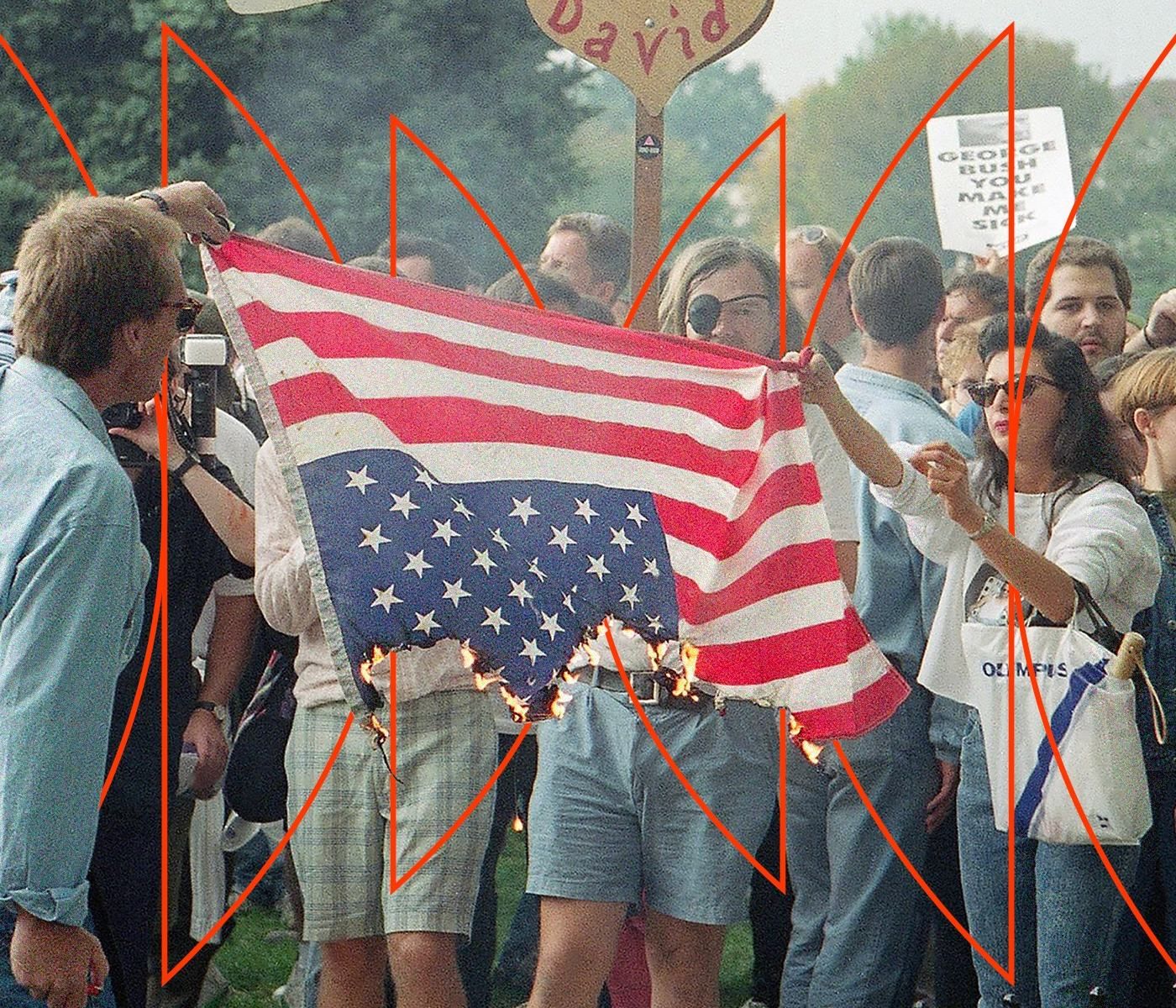
A global pandemic. Thousands dying. A passive government. An afflicted group fueled by grief and anger. In this episode, first aired in 2020, Reporter Tracie Hunte wanted to understand this moment of pain and confusion. As she looked back three decades, she found a complicated answer to a simple question: when nothing seems to work, how do you make change? Special thanks to Dr. Anthony Fauci. Episode Credits: Reported by Tracie HuntProduced by Matt Kielty Our newsletter comes out every Wednesday. It includes short essays, recommendations, and details about other ways to interact with the show. Sign up (https://radiolab.org/newsletter)! Radiolab is supported by listeners like you. Support Radiolab by becoming a member of The Lab (https://members.radiolab.org/) today. Follow our show on Instagram, Twitter and Facebook @radiolab, and share your thoughts with us by emailing [email protected] Leadership support for Radiolab’s science programming is provided by the Gordon and Betty Moore Foundation, Science Sandbox, a Simons Foundation Initiative, and the John Templeton Foundation. Foundational support for Radiolab was provided by the Alfred P. Sloan Foundation.
Ep 480More Perfect: The Political Thicket
When U.S. Supreme Court Chief Justice Earl Warren was asked at the end of his career, “What was the most important case of your tenure?”, there were a lot of answers he could have given. He had presided over some of the most important decisions in the court’s history — cases that dealt with segregation in schools, the right to an attorney, the right to remain silent, just to name a few. But his answer was a surprise: he said “Baker v. Carr,” a 1962 redistricting case. On this 2016 episode, part of our series More Perfect, we talk about why this case was so important. Important enough that it pushed one Supreme Court justice to a nervous breakdown, brought a boiling feud to a head, gave another justice a stroke, and changed the course of the Supreme Court — and the nation — forever.This episode is the one of the few times you can hear the voice of our Executive Producer Suzie Lechtenberg. After years of leading the team, Suzie will leave WNYC to start her new adventure. Suzie: re-publishing this episode is our way of saying thank you for all you’ve done — for the show and for each of us. Team Radiolab wishes you nothing but success and so much happiness in the next stage of your career. Episode Credits:Reported by Suzie LechtenbergProduced by Suzie Lechtenberg Our newsletter comes out every Wednesday. It includes short essays, recommendations, and details about other ways to interact with the show. Sign up (https://radiolab.org/newsletter)! Radiolab is supported by listeners like you. Support Radiolab by becoming a member of The Lab (https://members.radiolab.org/) today.Follow our show on Instagram, Twitter and Facebook @radiolab, and share your thoughts with us by emailing [email protected]. Leadership support for Radiolab’s science programming is provided by the Gordon and Betty Moore Foundation, Science Sandbox, a Simons Foundation Initiative, and the John Templeton Foundation. Foundational support for Radiolab was provided by the Alfred P. Sloan Foundation.

Ep 479What's Up Doc?
Mel Blanc was known as “the man of 1,000 voices,” but, to hear his son tell it, the actual number was closer to 1,500. Bugs Bunny, Porky Pig, Daffy Duck, Tweety, Barney Rubble, Woody Woodpecker, Sylvester, Foghorn Leghorn — all Mel. These characters made him one of the most beloved men in the United States. In this episode from 2012, Mel Blanc’s son Noel tells Producer Sean Cole how his father’s entire body would transform to bring life to these characters. But on a fateful day of 1961, after a crash left Mel in a lengthy coma, it was the characters who brought life to him.Episode Credits:Reported by Sean Cole Our newsletter comes out every Wednesday. It includes short essays, recommendations, and details about other ways to interact with the show. Sign up (https://radiolab.org/newsletter)! Radiolab is supported by listeners like you. Support Radiolab by becoming a member of The Lab (https://members.radiolab.org/) today.Follow our show on Instagram, Twitter and Facebook @radiolab, and share your thoughts with us by emailing [email protected] Leadership support for Radiolab’s science programming is provided by the Gordon and Betty Moore Foundation, Science Sandbox, a Simons Foundation Initiative, and the John Templeton Foundation. Foundational support for Radiolab was provided by the Alfred P. Sloan Foundation.

Ep 478Butt Stuff
Why do we have a butt? Well, it’s not just for the convenience of a portable seat cushion. This week, we have a conversation with our Contributing Editor Heather Radke, who has spent the last several years going deep on one of our most noticeable surface features. She’s been working on a book called Butts, a Backstory and in this episode, she tells us about a fascinating history she uncovered that takes us from a eugenicist’s attempt in the late 1930s to concretize the most average human, to the rise of the garment industry, and the pain and shame we often feel today when we go looking for a pair of pants that actually fit. Special thanks to Alexandra Primiani and Jordan Rodman Episode Credits:Reported by Heather RadkeProduced by Matt KieltyOriginal music and sound design contributed by Matt Kielty and Jeremy BloomMixing by Jeremy BloomFact-checking by Emily Krieger Citations:You can Pre-order Heather’s book “Butts: A Backstory” here (https://zpr.io/QVFVLTTW9vpN) Our newsletter comes out every Wednesday. It includes short essays, recommendations, and details about other ways to interact with the show. Sign up (https://radiolab.org/newsletter)! Radiolab is supported by listeners like you. Support Radiolab by becoming a member of The Lab (https://members.radiolab.org/) today. Follow our show on Instagram, Twitter and Facebook @radiolab, and share your thoughts with us by emailing [email protected]. Leadership support for Radiolab’s science programming is provided by the Gordon and Betty Moore Foundation, Science Sandbox, a Simons Foundation Initiative, and the John Templeton Foundation. Foundational support for Radiolab was provided by the Alfred P. Sloan Foundation.
Ep 477Guts
This hour, we dive into the messy mystery in the middle of us. What's going on down there? And what can the rumblings deep in our bellies tell us about ourselves? We join author Mary Roach and reach inside a live cow's stomach. Talk with writer Frederick Kaufman about our first peek into the wonderful world of human digestion that came about thanks to a hunting accident. And explore with show regular, science writer, and fellow water drinker, Carl Zimmer, about the trillions of microscopic creatures that keep us regulated, physically, but also, maybe, emotionally and spiritually. Our newsletter comes out every Wednesday. It includes short essays, recommendations, and details about other ways to interact with the show. Sign up (https://radiolab.org/newsletter)!Radiolab is supported by listeners like you. Support Radiolab by becoming a member of The Lab (https://members.radiolab.org/) today.Follow our show on Instagram, Twitter and Facebook @radiolab, and share your thoughts with us by emailing [email protected]. Leadership support for Radiolab’s science programming is provided by the Gordon and Betty Moore Foundation, Science Sandbox, a Simons Foundation Initiative, and the John Templeton Foundation. Foundational support for Radiolab was provided by the Alfred P. Sloan Foundation.

Ep 476The Weather Report
Meteorologists are as common as the clouds these days. Rolling onto the airwaves at morning, noon and night they tell us what to wear and where to plan our picnics. They’re local celebrities with an outsized influence. But in the 1940s, there was really only one of them: Irving P. Krick. He was suave and dapper, with the charm of a sunbeam and the boldness of a thunderclap. He was a salesman who turned the weather into a product. Today, listen to the story of Krick and his descendants, a crew of profit prophets who have found fame and fortune staring at the sky and seeing the future. We follow them from the bloody beaches of World War II to the climate changed coasts of today, exploring their impact and predicting what they’ll mean in our wackier weather world. Special Thanks:Special thanks to Xandra Clark, Homa Sarabi, Santi Dharmawan, Francisco Alvarez, Maureen O’Leary and everyone at NOAA, Shimon Elkabetz, Jack Neff, Joe Pennington, Brad Colman, Morgan Yarker, Megan Walker, Eric Bramford, Jay Cohen and Irving Krick Jr for supplying us with tons of great archival footage and audio. Episode Credits: Reported by Simon Adler and Annie McEwenProduced by Annie McEwen and Simon AdlerSound & Music by Simon Adler and Annie McEwen and Jeremy BloomMixing help from Arianne WackFact-checking by Diane KellyEdited by Soren Wheeler Citations: Books: If you’re curious to know more about the history of weather forecasting, go check out Kris Harper’s book Weather by the Numbers. Video: We also asked Illustrator and Animator Sophia Twigt to make a little video explaining how the U.S. government agency NOAA collects and treats weather data to make weather forecasts. Here it is, narrated by Simon Adler. We hope you enjoy it: Our newsletter comes out every Wednesday. It includes short essays, recommendations, and details about other ways to interact with the show. Sign up (https://radiolab.org/newsletter)! Radiolab is supported by listeners like you. Support Radiolab by becoming a member of The Lab (https://members.radiolab.org/) today. Follow our show on Instagram, Twitter and Facebook @radiolab, and share your thoughts with us by emailing [email protected]. Leadership support for Radiolab’s science programming is provided by the Gordon and Betty Moore Foundation, Science Sandbox, a Simons Foundation Initiative, and the John Templeton Foundation. Foundational support for Radiolab was provided by the Alfred P. Sloan Foundation.

Ep 475Black Box
In this episode, first aired in 2014, we examine three very different kinds of black boxes — spaces where we know what’s going in, we know what’s coming out, but can’t see what happens in that in-between space. From the darkest parts of metamorphosis to a sixty-year-old secret among magicians, and the nature of consciousness itself, we shine some light on three questions. But for each, we contend with an answerless space, leaving just enough room for the mystery and magic… always wondering what’s inside the Black Box. Episode credits:Reported by Tim Howard and Molly WebsterProduced by Tim Howard and Molly WebsterCitations:Radio Show: ABC's Keep Them Guessing (https://tinyurl.com/9r9zmftr) Our newsletter comes out every Wednesday. It includes short essays, recommendations, and details about other ways to interact with the show. Sign up (https://radiolab.org/newsletter)! Radiolab is supported by listeners like you. Support Radiolab by becoming a member of The Lab (https://members.radiolab.org/) today. Follow our show on Instagram, Twitter and Facebook @radiolab, and share your thoughts with us by emailing [email protected]. Leadership support for Radiolab’s science programming is provided by the Gordon and Betty Moore Foundation, Science Sandbox, a Simons Foundation Initiative, and the John Templeton Foundation. Foundational support for Radiolab was provided by the Alfred P. Sloan Foundation.

Ep 474No-Touch Abortion
When the Dobbs decision went down, ER doctor Avir Mitra started to prepare for the worst — botched, at-home abortions that would land pregnant people in the emergency room. To prepare himself and his colleagues for the patients they might see, and to think through how best to treat them, Avir asked Laura MacIsaac, one of New York City’s leading gynecologists and abortion experts, to come talk to his ER department. But what Dr. MacIsaac had to say in her lecture wasn’t what Avir expected: she didn’t talk about how we’re going back in time and the horrors of self-harm as a means to an abortion. Instead, she painted a picture of progress — how in the last 40 years, through private practice and clinical trials all around the world, the process and science of providing and having an abortion has changed dramatically, mostly because of two types of pills: misoprostol and mifepristone. On this episode, Avir and Senior Correspondent Molly Webster visit Dr. MacIsaac to hear more, and also learn about a new study that indicates the process of abortion is on the precipice of even further change. Special thanks to Mariana Prandini Assis and Pam Belluck. Episode Credits:Reported by Avir Mitra and Molly WebsterProduced by Sarah QariMixing help from Arianne WackFact-checking by Diane KellyEdited by Becca Bressler Our newsletter comes out every Wednesday. It includes short essays, recommendations, and details about other ways to interact with the show. Sign up (https://radiolab.org/newsletter)! Radiolab is supported by listeners like you. Support Radiolab by becoming a member of The Lab (https://members.radiolab.org/) today. Follow our show on Instagram, Twitter and Facebook @radiolab, and share your thoughts with us by emailing [email protected]. Leadership support for Radiolab’s science programming is provided by the Gordon and Betty Moore Foundation, Science Sandbox, a Simons Foundation Initiative, and the John Templeton Foundation. Foundational support for Radiolab was provided by the Alfred P. Sloan Foundation.
Ep 473The Theater of David Byrne's Mind
It all started when the rockstar David Byrne did a Freaky-Friday-like body-swap with a Barbie Doll. That’s what inspired him — along with his collaborator Mala Gaonkar — to transform a 15,000 square-foot warehouse in Denver, Colorado into a brainy funhouse known as the Theater of the Mind. This episode, co-Host Latif Nasser moderates a live conversation between Byrne and Neuroscientist Thalia Wheatley at the Denver Center for the Performing Arts. The trio talk about how we don’t see what we think we see, don’t hear what we think we hear, and don’t know what we think we know, but also how all that… might actually be a good thing. Special thanks to Charlie Miller and everyone else at the Denver Center for the Performing Arts, Emily Simoness and everyone else at the Arbutus Foundation, Boen Wang, and Heather Radke. Episode Credits: Produced by Suzie Lechtenberg CITATIONS Theater of the mind website: https://theateroftheminddenver.com/ Our newsletter comes out every Wednesday. It includes short essays, recommendations, and details about other ways to interact with the show. Sign up (https://radiolab.org/newsletter)!Radiolab is supported by listeners like you. Support Radiolab by becoming a member of The Lab(https://members.radiolab.org/) today.Follow our show on Instagram, Twitter and Facebook @radiolab, and share your thoughts with us by emailing [email protected]. Leadership support for Radiolab’s science programming is provided by the Gordon and Betty Moore Foundation, Science Sandbox, a Simons Foundation Initiative, and the John Templeton Foundation. Foundational support for Radiolab was provided by the Alfred P. Sloan Foundation.

Ep 472Playing God
When people are dying and you can only save some, how do you choose? Maybe you save the youngest. Or the sickest. Maybe you even just put all the names in a hat and pick at random. Would your answer change if a sick person was right in front of you? In this episode, first aired back in 2016, we follow New York Times reporter Sheri Fink as she searches for the answer. In a warzone, a hurricane, a church basement, and an earthquake, the question remains the same. What happens, what should happen, when humans are forced to play God? Very special thanks to Lilly Sullivan. Special thanks also to: Pat Walters and Jim McCutcheon and Todd Menesses from WWL in New Orleans, the researchers for the allocation of scarce resources project in Maryland - Dr. Lee Daugherty Biddison from Johns Hopkins University School of Medicine, Howie Gwon from the Johns Hopkins Medicine Office of Emergency Management, Alan Regenberg of the Berman Institute of Bioethics and Dr. Eric Toner of the UPMC Center for Health Security. Episode Credits: Reported by - Reported by Sheri Fink.Produced by - Produced by Simon Adler and Annie McEwen. Citations: Articles:You can find more about the work going on in Maryland at: www.nytimes.com/triageBooks: The book that inspired this episode about what transpired at Memorial Hospital during Hurricane Katrina, Sheri Fink’s exhaustively reported Five Days at Memorial, now a series on Apple TV+. Our newsletter comes out every Wednesday. It includes short essays, recommendations, and details about other ways to interact with the show. Sign up (https://radiolab.org/newsletter)! Radiolab is supported by listeners like you. Support Radiolab by becoming a member of The Lab (https://members.radiolab.org/) today. Follow our show on Instagram, Twitter and Facebook @radiolab, and share your thoughts with us by emailing [email protected]. Leadership support for Radiolab’s science programming is provided by the Gordon and Betty Moore Foundation, Science Sandbox, a Simons Foundation Initiative, and the John Templeton Foundation. Foundational support for Radiolab was provided by the Alfred P. Sloan Foundation.

Ep 471Terrestrials: The Mastermind
Lulu Miller, intrepid host and fearless mother of two, went off on her own and put together a little something for kids. All kids: hers, yours, and the one still living inside us all. Radiolab for Kids Presents: Terrestrials And it’s spellbinding. So much so, that we wanted to put this audio goodness in front of as many ears as possible. Which is why we’re running the first episode of that series here for you today. It’s called The Mastermind. In it, Sy Montgomery, an author and naturalist, shares the story of a color-changing creature many people assumed to be brainless who outsmarts his human captors. If you want a SPOILER of what the creature is, read on: It’s an octopus. We hear the story of one particularly devious octopus who lost a limb, was captured by humans, and then managed to make an escape from its aquarium tank—back into the ocean! The tale of “Inky” the octopus calls into question who we think of as intelligent (and kissable) in the animal kingdom. Learn about the storytellers, listen to music, and dig deeper into the stories you hear on Terrestrials with activities you can do at home or in the classroom on our website, Terrestrialspodcast.org Find MORE original Terrestrials fun on Youtube.And badger us on Social Media: @radiolab and #TerrestrialsPodcast And if your little ones or you want to hear more of Team Terrestrials amazing work on this series, please search for Radiolab for Kids Presents: The Mastermind, wherever you get podcasts or subscribe here. Terrestrials is a production of WNYC Studios, created by Lulu Miller. This episode is produced by Ana González, Alan Goffinski and Lulu Miller. Original Music by Alan Goffinski. Help from Suzie Lechtenberg, Sarah Sandbach, Natalia Ramirez, and Sarita Bhatt. Fact-checking by Diane Kelley. Sound design by Mira Burt-Wintonick with additional engineering by Joe Plourde. Our storyteller this week is Sy Montgomery. Transcription by Caleb Codding. Our advisors are Theanne Griffith, Aliyah Elijah, Dominique Shabazz, John Green, Liza Steinberg-Demby, Tara Welty, and Alice Wong. Our newsletter comes out every Wednesday. It includes short essays, recommendations, and details about other ways to interact with the show. Sign up (https://radiolab.org/newsletter)!Radiolab is supported by listeners like you. Support Radiolab by becoming a member of The Lab (https://members.radiolab.org/) today. Leadership support for Radiolab’s science programming is provided by the Gordon and Betty Moore Foundation, Science Sandbox, a Simons Foundation Initiative, and the John Templeton Foundation. Foundational support for Radiolab was provided by the Alfred P. Sloan Foundation.

Ep 470Quicksaaaand!
For many of us, quicksand was once a real fear — it held a vise grip on our imaginations, from childish sandbox games to grown-up anxieties about venturing into unknown lands. But these days, quicksand can't even scare an 8-year-old. In this short, we try to find out why. Then-Producer Soren Wheeler introduces us to Dan Engber, writer and columnist for Slate, now with The Atlantic. Dan became obsessed with quicksand after happening upon a strange fact: kids are no longer afraid of it. In this episode, Dan recounts for Soren and Robert Krulwich the story of his obsession. He immersed himself in research, compiled mountains of data, met with quicksand fetishists and, in the end, formulated a theory about why the terror of his childhood seems to have lost its menacing allure. Then Carlton Cuse, who at the time we first aired this episode was best-known as the writer and executive producer of Lost, helps us think about whether giant pits of hero-swallowing mud might one day creep back into the spotlight.And, as this episode first aired in 2013, we can see if we were right. Episode Credits:Reported and produced by Soren Wheeler Our newsletter comes out every Wednesday. It includes short essays, recommendations, and details about other ways to interact with the show. Sign up (https://radiolab.org/newsletter)! Radiolab is supported by listeners like you. Support Radiolab by becoming a member of The Lab (https://members.radiolab.org/) today. Follow our show on Instagram, Twitter and Facebook @radiolab, and share your thoughts with us by emailing [email protected]. Leadership support for Radiolab’s science programming is provided by the Gordon and Betty Moore Foundation, Science Sandbox, a Simons Foundation Initiative, and the John Templeton Foundation. Foundational support for Radiolab was provided by the Alfred P. Sloan Foundation.

Ep 46940,000 Recipes for Murder
Two scientists realize that the very same AI technology they have developed to discover medicines for rare diseases can also discover the most potent chemical weapons known to humankind. Inadvertently opening the Pandora’s Box of WMDs. What should they do now? Special thanks to, Xander Davies, Timnit Gebru, Jessica Fjeld, Bert Gambini and Charlotte HsuEpisode Credits: Reported by Latif NasserProduced by Matt KieltyOriginal music and sound design contributed by Matt KieltyMixing help from Arianne WackFact-checking by Emily KriegerCITATIONS:Articles:Read the Sean and Fabio’s paper here. Get Yan Liu’s book Healing with Poisons: Potent Medicines in Medieval China here. Yan is now Assistant Professor of History at the University at Buffalo.Our newsletter comes out every Wednesday. It includes short essays, recommendations, and details about other ways to interact with the show. Sign up (https://radiolab.org/newsletter)!Radiolab is supported by listeners like you. Support Radiolab by becoming a member of The Lab (https://members.radiolab.org/) today.Follow our show on Instagram, Twitter and Facebook @radiolab, and share your thoughts with us by emailing [email protected]. Leadership support for Radiolab’s science programming is provided by the Gordon and Betty Moore Foundation, Science Sandbox, a Simons Foundation Initiative, and the John Templeton Foundation. Foundational support for Radiolab was provided by the Alfred P. Sloan Foundation.

Ep 468Rodney v. Death
In the fall of 2004, Jeanna Giese checked into the Children's Hospital of Wisconsin with a set of puzzling symptoms... and her condition was deteriorating fast. By the time Dr. Rodney Willoughby saw her, he only knew one thing for sure: if Jeanna's disturbing breakdown turned out to be rabies, she was doomed to die. What happened next seemed like a medical impossibility. In this episode, originally aired in 2013, Producer Tim Howard tells Jeanna's story and talks to authors Monica Murphy and Bill Wasik, and scientists Amy Gilbert and Sergio Recuenco, while trying to unravel the mystery of an unusual patient and the doctor who dared to take on certain death. Episode credits: Reported and produced by Tim Howard CITATIONS: Articles:"Undead: The Rabies Virus Remains a Medical Mystery," Wired article by Monica Murphy and Bill Wasik "Bats Incredible: The Mystery of Rabies Survivorship Deepens," Wired article by Monica Murphy and Bill Wasik "Study Detects Rabies Immune Response in Amazon Populations," the CDC's page on Amy Gilbert and Sergio Recuenco's work (inc. photos from Peru) "Selection Criteria for Milwaukee Protocol," when to try the Milwaukee Protocol Books:Rabid: A Cultural History of the World's Most Diabolical Virus, by Bill Wasik and Monica MurphyOur newsletter comes out every Wednesday. It includes short essays, recommendations, and details about other ways to interact with the show. Sign up (https://radiolab.org/newsletter)! Radiolab is supported by listeners like you. Support Radiolab by becoming a member of The Lab (https://members.radiolab.org/) today. Follow our show on Instagram, Twitter and Facebook @radiolab, and share your thoughts with us by emailing [email protected].

Ep 467Gigaverse
A pizzeria owner in Kansas realizes that DoorDash is hijacking his pizzas. A Lyft driver conquers the streets of San Francisco until he unwittingly puts his family in danger. A Shipt shopper in Denton, Texas tries to crack the code of the delivery app that is slashing his pay. This week, Host Latif Nasser, Producer Becca Bressler, and Philosophy Professor Barry Lam dive into the ins and outs of a new and growing part of our world: the gig economy. Special thanks to, Julie Wernau, Drew Ambrogi, David Condos, David Pickerell, Cory Doctorow, Katherine Mangu-Ward, Coby McDonald, Bret Jaspers, Peter Haden, Bill Pollock, Tanya Chawla, and Mateo Schimpf. Episode Credits: Reported by Becca Bressler, Latif Nasser, and Barry LamProduced by Becca Bressler, Eli Cohen, and Sindhu Gnanasambandan.Original music and sound design contributed by Jeremy Bloom and Becca Bressler.Mixing help from Arianne Wack Fact-checking by Natalie Middleton Edited by Pat Walters CITATIONSArticles:Subscribe to Ranjan Roy's newsletter, Margins, here. Jeffrey’s story was originally reported by Lauren Smiley for WIRED. Check out her piece for an even more in-depth look at his life as a gig driver. Audio:Check out Barry Lam’s podcast Hi-Phi Nation, a show about philosophy that turns stories into ideas. Our newsletter comes out every Wednesday. It includes short essays, recommendations, and details about other ways to interact with the show. Sign up (https://radiolab.org/newsletter)!Radiolab is supported by listeners like you. Support Radiolab by becoming a member of The Lab (https://members.radiolab.org/) today.Follow our show on Instagram, Twitter and Facebook @radiolab, and share your thoughts with us by emailing [email protected]. Leadership support for Radiolab’s science programming is provided by the Gordon and Betty Moore Foundation, Science Sandbox, a Simons Foundation Initiative, and the John Templeton Foundation. Foundational support for Radiolab was provided by the Alfred P. Sloan Foundation.

Ep 4669-Volt Nirvana
Learn a new language faster than ever! Leave doubt in the dust! Be a better sniper! Could you do all that and more with just a zap to the noggin? Maybe. Back in the early 2010s, Sally Adee, then an editor at New Scientist Magazine, went to a DARPA (Defense Advanced Research Projects Agency) conference and heard about a way to speed up learning with something called trans-cranial direct current stimulation (tDCS). A couple of years later, Sally found herself wielding an M4 assault rifle to pick off simulated enemy combatants with a battery wired to her temple. But that got then-producer Soren Wheeler thinking about this burgeoning world of electroceuticals, and if real, what limits will it reach. For this episode, first aired back in 2014, we brought in Michael Weisend, then a neuroscientist at Wright State Research Institute, to tell us how it works (Bonus: you get to hear Jad get his brain zapped). And sat down with Peter Reiner and Nick Fitz, then at the University of British Columbia, to help us think through the consequences of a world where anyone with 20 dollars and access to a circuit board and a soldering iron, can make their own brain zapper. And then checked-in again to hear about the unexpected after-effects a day of super-charged sniper training can have on one mild-mannered science journalist. Episode credits: Reported by Sally Adee and Soren WheelerOriginal music by Brian Carpenter's Ghost Train Orchestra Our newsletter comes out every Wednesday. It includes short essays, recommendations, and details about other ways to interact with the show. Sign up (https://radiolab.org/newsletter)! Radiolab is supported by listeners like you. Support Radiolab by becoming a member of The Lab (https://members.radiolab.org/) today.Follow our show on Instagram, Twitter and Facebook @radiolab, and share your thoughts with us by emailing [email protected]. Leadership support for Radiolab’s science programming is provided by the Gordon and Betty Moore Foundation, Science Sandbox, a Simons Foundation Initiative, and the John Templeton Foundation. Foundational support for Radiolab was provided by the Alfred P. Sloan Foundation.

Ep 465Infinities
In August 2018, Boen Wang was at a work retreat for a new job. Surrounded by mosquitoes and swampland in a tiny campsite in West Virginia, Boen’s mind underwent a sudden, dramatic transformation that would have profound consequences—for his work, his colleagues, and himself. Special thanks to Grace Gilbert for voice acting and episode art, and to Professors Erin Anderson and Maggie Jones for editorial support. Episode credits: Reported and produced by Boen WangOriginal Music provided by Alex Zhang HungtaiFact-checking by Diane KellyEdited by Pat Walters Our newsletter comes out every Wednesday. It includes short essays, recommendations, and details about other ways to interact with the show. Sign up (https://radiolab.org/newsletter)!Radiolab is supported by listeners like you. Support Radiolab by becoming a member of The Lab (https://members.radiolab.org/) today.Follow our show on Instagram, Twitter and Facebook @radiolab, and share your thoughts with us by emailing [email protected]. Leadership support for Radiolab’s science programming is provided by the Gordon and Betty Moore Foundation, Science Sandbox, a Simons Foundation Initiative, and the John Templeton Foundation. Foundational support for Radiolab was provided by the Alfred P. Sloan Foundation.

Ep 464Escape
This episode originally aired in 2012. An all-star lineup of producers — Pat Walters, Lynn Levy, and Sean Cole — bring you stories about traps, getaways, perpetual cycles, and staggering breakthroughs. We kick things off with a true escape artist — a man who’s broken out of jail more times than anyone alive. Why does he keep running... and will he ever stop? Next, the ingeniously simple question that led Isaac Newton to an enormous intellectual breakthrough: why doesn’t the moon fall out of the sky? In the wake of Newton's new idea, we find ourselves in a strange space at the edge of the solar system, about to cross a boundary beyond which we know nothing. Finally, we hear the story of a blind kid who freed himself from an unhappy childhood by climbing into the telephone system, and bending it to his will. Now sit back, relax and enjoy what we hope will prove to be a welcomed Escape.Episode Credits:Reported and produced by Pat Walters, Lynn Levy, and Sean Cole Leadership support for Radiolab’s science programming is provided by the Gordon and Betty Moore Foundation, Science Sandbox, a Simons Foundation Initiative, and the John Templeton Foundation. Foundational support for Radiolab was provided by the Alfred P. Sloan Foundation.

Ep 463The Humpback and the Killer
Killer whales — orcas — eat all sorts of animals, including humpback calves. But one day, biologists saw a group of humpback whales trying to stop some killer whales from eating… a seal. And then it happened again. And again. It turns out, all across the oceans, humpback whales are swimming around stopping killer whales from hunting all kinds of animals — from seals to gray whales to sunfish. And of course while many scientists explain this behavior as the result of blind instincts that are ultimately selfish, much of the world celebrates humpbacks as superhero vigilantes of the sea. But when Annie McEwen dug into what was really going on between humpbacks and killer whales, she found a set of stories that refused to fit in either of those two ways of seeing the world.Special thanks to Eric J. Gleske and Brendan Brucker at Media Services, Oregon State University as well as Colleen Talty at Monterey Bay Whale Watch and California Killer Whale Project. Special thanks also to Doug McKnight and Giuliana Mayo. Episode Credits:Reported and produced by Annie McEwenOriginal music and sound design by Annie McEwenMixing help from Arianne WackFact-checking by Diane KellyEdited by Becca Bressler Our newsletter comes out every Wednesday. It includes short essays, recommendations, and details about other ways to interact with the show. Sign up (https://radiolab.org/newsletter)! Radiolab is supported by listeners like you. Support Radiolab by becoming a member of The Lab (https://members.radiolab.org/) today. Follow our show on Instagram, Twitter and Facebook @radiolab, and share your thoughts with us by emailing [email protected]. CITATIONS: Videos:Alisa Schulman-Janiger took this video (https://zpr.io/5mYNTWpxs5GV) of the humpbacks defending the gray whale calf’s carcass from the killer whales. Articles:Read Robert Pitman’s (et al) paper (https://zpr.io/iU9shuNW9tAj) about the humpbacks saving the seal and a review of the 115 interactions they collected between humpbacks and killer whales. Books:The World in the Whale (https://zpr.io/2BHBermJJfKj). If you are interested in whales, you are going to love this book. Leadership support for Radiolab’s science programming is provided by the Gordon and Betty Moore Foundation, Science Sandbox, a Simons Foundation Initiative, and the John Templeton Foundation. Foundational support for Radiolab was provided by the Alfred P. Sloan Foundation.

Ep 462You v. You
This episode, originally aired more than a decade ago, attempts to answer one question: how do you win against your worst impulses? Zelda Gamson tried for decades to stop smoking, but the part of her that wanted to quit couldn’t beat the part of her that refused to let go. Adam Davidson, a co-founder of the NPR podcast Planet Money, talked to one of the greatest negotiators of all time, Nobel Prize-winning Economist Thomas Schelling, whose tactical skills saw him through high-stakes conflicts during the Cold War but fell apart when he tried them on himself in his battle to quit smoking. And a baby Pat Walters complicates things — in a good way — with the story of two brothers, Dennis and Kai Woo, who forged a deal with each other that wound up determining both of their futures. Our newsletter comes out every Wednesday. It includes short essays, recommendations, and details about other ways to interact with the show. Sign up (https://radiolab.org/newsletter)! Radiolab is supported by listeners like you. Support Radiolab by becoming a member of The Lab (https://members.radiolab.org/) today. Follow our show on Instagram, Twitter and Facebook @radiolab, and share your thoughts with us by emailing [email protected].

Ep 461The Gatekeeper
This week, Reporter Peter Smith and Senior Producer Matt Kielty tell the story of the U.S. Supreme Court decision that set the standard for scientific expertise in a courtroom, i.e., whether an expert can testify in a lawsuit. They also tell the story of the Daubert family — yes, the Dauberts of “Daubert v Merrell Dow” — whose win before the nine justices translated into a deeper loss. Special thanks to Leah Litman, Rachel Rebouche, Jennifer Mnookin, David Savitz, Brooke Borel, and Tom Zeller Jr. Credits: Reporting by Peter Andrey Smith. Produced by Matt Kielty. Reporting and production assistance from Sarah Qari. Fact-checking by Natalie A. Middleton. Editing by Pat Walters. Sound Design by Matt Kielty. Mixing help from Arianne Wack. Citations: If you're interested in reading more from Peter Smith, check out his work over at Undark.org Our newsletter comes out every Wednesday. It includes short essays, recommendations, and details about other ways to interact with the show. Sign up (https://radiolab.org/newsletter)! Radiolab is supported by listeners like you. Support Radiolab by becoming a member of The Lab (https://members.radiolab.org/) today. Follow our show on Instagram, Twitter and Facebook @radiolab, and share your thoughts with us by emailing [email protected], by the way, Radiolab is looking for a remote intern! If you happen to be a creative, science-obsessed nerd who is interested in learning how to make longform radio… Apply before July 20, 2022! We would LOVE to work with you. You can find more info at wnyc.org/careers.

Ep 460Baby Blue Blood Drive
This is an episode that first aired in 2018 and then again in the thick of the pandemic in 2020. Why? Because though Horseshoe crabs are not much to look at, beneath their unassuming catcher’s-mitt shell, they harbor a half-billion-year-old secret: a superpower that helped them outlive the dinosaurs, survive all the Earth’s mass extinctions, and was essential in the development of the COVID vaccines. And what is that secret superpower? Their blood. Their baby blue blood. And it’s so miraculous that for decades, it hasn’t just been saving their butts, it’s been saving ours too. But that all might be about to change. Follow us as we follow these ancient critters - from a raunchy beach orgy to a marine blood drive to the most secluded waterslide - and learn a thing or two from them about how much we depend on nature and how much it depends on us. Radiolab is supported by listeners like you. Support Radiolab by becoming a member of The Lab (https://members.radiolab.org/) today. Our newsletter comes out every Wednesday. It includes short essays, recommendations, and details about special events. Sign up (https://radiolab.org/newsletter)! Follow our show on Instagram, Twitter and Facebook @radiolab, and share your thoughts with us by emailing [email protected]. And, by the way, Radiolab is looking for a remote intern! If you happen to be a creative, science-obsessed nerd who is interested in learning how to make longform radio… Apply! We would LOVE to work with you. You can find more info at wnyc.org/careers. Citations: Alexis Madrigal, "The Blood Harvest" in The Atlantic, and Sarah Zhang's recent follow up in The Atlantic, "The Last Days of the Blue Blood Harvest" Deborah Cramer, The Narrow Edge Deborah Cramer, "Inside the Biomedical Revolution to Save Horseshoe Crabs" in Audubon Magazine Richard Fortey, Horseshoe Crabs and Velvet Worms Ian Frazier, "Blue Bloods" in The New Yorker Lulu Miller's short story, "Me and Jane" in Catapult Magazine Jerry Gault, "The Most Noble Fishing There Is" in Charles River's Eureka Magazine or check out Glenn Gauvry's horseshoe crab research database

Ep 459My Thymus, Myself
Today, we go to a spot that may be one of the most philosophical places in the universe: the thymus, an organ that knows what is you, and what is not you. Its mood may be existential, but its role is practical — the thymus is the biological training ground where the body learns to protect itself from outside invaders (think: bacteria, coronaviruses). But this training is not the humdrum bit of science you might expect. It’s a magical shadowland with dire consequences. Then, we’ll leave the thymus to visit a team of doctors who are using this organ that protects you as a way to protect someone… else. Their work could change everything. Special Thanks: One thousand thanks to Hannah Meyer, Salomé Carcy, Josh Torres, and Cold Spring Harbor Laboratory for showing us a real-life (mouse) thymus for this episode. Special thanks also go to Diane Mathis and Kate Webb. Further reading: Wanna do a little light reading? Here’s the immunology textbook Jenni Punt and Sharon Stranford helped write, including a whole section on that funny little thing called AIRE! Kuby Immunology The science paper that first described what happens inside the thymus as an, “immunological self shadow”. Radiolab is supported by listeners like you. Support Radiolab by becoming a member of The Lab (https://members.radiolab.org/) today. Our newsletter comes out every Wednesday. It includes short essays, recommendations, and details about special events. Sign up (https://radiolab.org/newsletter)! Follow our show on Instagram, Twitter and Facebook @radiolab, and share your thoughts with us by emailing [email protected]. And, by the way, Radiolab is looking for a remote intern! If you happen to be a creative, science-obsessed nerd who is interested in learning how to make longform radio… Apply! We would LOVE to work with you. You can find more info at wnyc.org/careers.

Ep 458Galápagos
As our co-Hosts Lulu Miller and Latif Nasser are out this week, we are re-sharing the perfect episode to start the summer season! This one, which first aired in 2014, tells the strange story of a small group of islands that keeps us wondering: will our most sacred natural landscapes inevitably get swallowed up by humans? How far are we willing to go to stop that from happening? This hour is about the Galápagos archipelago, which inspired Darwin’s theory of evolution and natural selection. Nearly 200 years later, the Galápagos are undergoing rapid changes that continue to pose — and perhaps answer — critical questions about the fragility and resilience of life on Earth. Episode Credits:Reported and produced by Tim Howard. Radiolab is supported by listeners like you. Support Radiolab by becoming a member of The Lab (https://members.radiolab.org/) today. Our newsletter comes out every Wednesday. It includes short essays, recommendations, and details about special events. Sign up (https://radiolab.org/newsletter)! Follow our show on Instagram, Twitter and Facebook @radiolab, and share your thoughts with us by emailing [email protected].

Ep 457No Special Duty
Since the massacre that took the lives of 19 schoolchildren in Uvalde, Texas, people across the world began to ask versions of one question: why did police wait outside the door instead of protecting the kids? It's not the first time this question has come up. Two years ago, as she watched police respond to the protests that followed the death of George Floyd, Producer B.A. Parker wondered: what are police for? With the help of our Producer Sarah Qari, she found that the United States’ Supreme Court had given this a most consequential and bewildering answer. We decided to re-air this episode to shed light on how a case from 2005 upended our assumptions about the role police are meant to play in our lives. Support Radiolab by becoming a member of The Lab (https://members.radiolab.org/) today. Radiolab is on YouTube! (https://zpr.io/MTSFMLXQWDkE) Catch up with new episodes and hear classics from our archive. Plus, find other cool things we did in the past — like miniseries, music videos, short films and animations, behind-the-scenes features, Radiolab live shows, and more. Take a look, explore and subscribe!

Ep 456Neanderthal's Revenge
A few months ago, co-Host Latif Nasser, who was otherwise healthy, saw blood in his poop. It was the start of a medical journey that made him not only question what was going on in his body, but also dig into the secret genetic story of how we became human. Curled up in a hospital bathroom, Latif tries to sort out whether his ordeal is the result of a long-lost sibling knifing him in the gut or, on the contrary, a long-forgotten kindness shared between two human-ish travelers. Special thanks to Azra Premiji, Avir Mitra, Suzanne Lehrer, David Reich, Sriram Sankararaman, Ainara Sistiaga, Carl Zimmer, Carly Mensch, Nihal Kaur, Charlotte Hsu and Bert Gambini at the University at Buffalo Media Relations, and Latif's GI Doctor Florence Damilola Odufalu and her entire team, as well as all the staff at LA County-USC Medical Center and Keck USC hospitals who looked after Latif during his hospitalization. Support Radiolab by becoming a member of The Lab today. Radiolab is on YouTube! Catch up with new episodes and hear classics from our archive. Plus, find other cool things we did in the past — like miniseries, music videos, short films and animations, behind-the-scenes features, Radiolab live shows, and more. Take a look, explore and subscribe!Editorial Note: This podcast was amended after initial release to change the way we refer to those afflicted by addiction.

Ep 455Origin Stories
We’re all in a tizzy here at Radiolab on account of our 20-year anniversary. And, as one does upon passing a milestone, we’ve been looking back in all kinds of ways. Two weeks ago, we went out over the airwaves, “Live on your FM dial,” a callback to our origins as a radio show. We revamped our logo and redid our website (get your Freq on, people!). More recently, Lulu's and Latif’s first stories came up in a meeting. They weren’t always the intrepid hosts of our collective journey in wonder. Soren Wheeler, our editor, thought it would be fun to highlight those firsts for you. So here they are, baby Latif and Lulu, doing their darndest to make audio magic. Support Radiolab by becoming a member of The Lab today. Radiolab is on YouTube! Catch up with new episodes and hear classics from our archive. Plus, find other cool things we did in the past — like miniseries, music videos, short films and animations, behind-the-scenes features, Radiolab live shows, and more. Take a look, explore and subscribe!

Ep 454Radiolab After Dark
Back in 2002, Jad Abumrad started Radiolab as a live radio show. He DJ’d out into the ether and 20 years later we do the same. To commemorate the 20-year anniversary of the show, the Radiolab team went old school and took over WNYC Radio, live on the FM band. We answered the phones, played some wonderfully weird audio, including one piece where Kurt Vonnegut—yes, that Kurt Vonnegut—interviews the dead, took part in some games and tomfoolery, and did everything we could to have and to share in our good time.

Ep 453La Mancha Screwjob
All the world’s a stage. Or, sometimes it feels that way, especially these days. In this episode, originally aired in 2015, we push through the fourth wall, pierce the spandex-ed heart of professional wrestling, and travel 400 years into the past to unmask our obsession with authenticity and our desire to walk the line between reality and fantasy. Thanks to Nick Hakim for the use of his song "The Light". Support Radiolab by becoming a member of The Lab today. Radiolab is on YouTube! Catch up with new episodes and hear classics from our archive. Plus, find other cool things we did in the past — like miniseries, music videos, short films and animations, behind-the-scenes features, Radiolab live shows, and more. Take a look, explore and subscribe!

Ep 452Frailmales
This week, we bring you two stories about little guys trying to do big big things. First, self-proclaimed animal grinch producer Becca Bressler introduces us to perhaps the one creature that has warmed her heart: a cricket. And more specifically, a male cricket. This is a tale about a tiny Romeo insect trying to find a mate, and the ingenious lengths he’ll go to have his beckoning heard. The hero of our story And second, producer Annie McEwen journeys through perhaps the zaniest game of football that has ever been played. When a ragtag group of players take on the top team, will it be an underdog tale for the ages or an absolute disaster? Special thanks to Stephen Spann and Joshua Baxter at the Doris and Harry Vice University Library at Cumberland University as well as Alison Reynolds at Georgia Tech Library. Thanks also to Rick Bell, and to Scott Larson who wrote a book all about this game called Cumberland: The True Story of the Highest Scoring Football Game in History. And finally, thanks so much to our tape syncer Ambriehl Crutchfield for her help with this episode. If you’re still interested in learning more about this epic football game, be sure to check out this brilliant and hilarious video by sportswriter Jon Bois. Lastly, don't forget to check out Death Sex and Money. We recommend episode titled Hard, which is deep dive into our relationship with erectile dysfunction, and the drugs developed to treat it. Support Radiolab by becoming a member of The Lab today. Radiolab is on YouTube! Catch up with new episodes and hear classics from our archive. Plus, find other cool things we did in the past — like miniseries, music videos, short films and animations, behind-the-scenes features, Radiolab live shows, and more. Take a look, explore and subscribe! DOWNLOAD BRAILLE READY FILE HERE (https://zpr.io/YPQjmqjec5g7)

Ep 451Debatable
In competitive debate future presidents, supreme court justices, and titans of industry pummel each other with logic and rhetoric. Unclasp your briefcase. It’s time for a showdown. Looking back on an episode originally aired in 2016, we take a good long look at the world of competitive college debate. This is Ryan Wash's story. He's a queer, Black, first-generation college student from Kansas City, Missouri who joined the debate team at Emporia State University on a whim. When he started going up against fast-talking, well-funded, “name-brand” teams, from places like Northwestern and Harvard, it was clear he wasn’t in Kansas anymore. So Ryan became the vanguard of a movement that made everything about debate debatable. In the end, he made himself a home in a strange and hostile land. Whether he was able to change what counts as rigorous academic argument … well, that’s still up for debate. Special thanks to Will Baker, Myra Milam, John Dellamore, Sam Mauer, Tiffany Dillard Knox, Mary Mudd, Darren "Chief" Elliot, Jodee Hobbs, Rashad Evans and Luke Hill. Special thanks also to Torgeir Kinne Solsvik for use of the song h-lydisk / B Lydian from the album Geirr Tveitt Piano Works and Songs Support Radiolab by becoming a member of The Lab today. Radiolab is on YouTube! Catch up with new episodes and hear classics from our archive. Plus, find other cool things we did in the past — like miniseries, music videos, short films and animations, behind-the-scenes features, Radiolab live shows, and more. Take a look, explore and subscribe!

Ep 450Hello, My Name Is
As a species, we’re obsessed with names. They’re one of the first labels we get as kids. We name and rename absolutely everything around us. And these names carry our histories, they can open and close our eyes to the world around us, and they drag the weight of expectation and even irony along with them. This week on Radiolab, we’ve got six stories all about names. Horse names, the names of diseases, names for the beginning, and names for the end. Listen to “Hello, My Name Is” on Radiolab, wherever you find podcasts. Special thanks to Jim Wright, author of “The Real James Bond”, Tad Davis, Cole delCharco, Peter Frick-Wright, Alexa Rose Miller, Katherine De La Cruz, and Fahima Haque.Members of The Lab, watch for an audio extra on your exclusive feeds, a poem written and read by Mary Szybist, whom Molly Webster interviewed for her story in this episode about endlings. It is titled “We Think We Do Not Have Medieval Eyes.” If you are not yet a member and would like to listen to it, you can join here. Radiolab is on YouTube! Catch up with new episodes and hear classics from our archive. Plus, find other cool things we did in the past — like miniseries, music videos, short films and animations, behind-the-scenes features, Radiolab live shows, and more. Take a look, explore and subscribe! DOWNLOAD BRAILLE READY FILE HERE (https://zpr.io/BmPeeLvvRDrD) Citations: The Emperor of All Maladies by Siddhartha Mukherjee Warhorse: Cavalry in Ancient Warfare by Philip SidnellCheck out ArtsPractica.com, a site focused on medical uncertainty. Alexa Rose Miller.

Ep 449The Other Latif: Cuba-ish
Almost exactly twenty years ago, detainee 244 got transferred to Guantanamo Bay. Captured by American forces at the battle Tora Bora five months previous, Abdul Latif Nasser was shaved, hooded, shackled, diapered, and flown halfway across the world. The Radiolab special series, The Other Latif, kicked off when one of our hosts, Latif Nasser, made a bizarre and shocking discovery. He shares his name with detainee 244. A man the U.S. government paints a terrifying picture of as Al-Qaeda’s top explosives expert, and one of the most important advisors to Osama bin Laden. Nasser’s lawyer claims, on the other hand, that he was at the wrong place at the wrong time, and that he was never even in Al-Qaeda. This clash launched our Latif into a years-long investigation, picking apart evidence, attempting to separate fact from fiction, and trying to uncover what the man with whom he shares a name actually did or didn’t do. Along the way, Radiolab’s Latif reflects on American values and his own religious past, and wonders how a fellow nerdy, suburban Muslim kid, may have gone down such a strikingly different path. Episode 5: Cuba-ish To mark the solemn occasion of the other Latif's transfer to, "the legal equivalent of outer space," we thought we'd replay Cuba-ish, the fifth episode of our special series which first aired back in 2020. In this episode, our Latif heads to Guantanamo Bay to try to speak to his namesake. Before he gets there, he dives deep, seeking the answer to what seems like a simple question: why Cuba? Why in the world did the United States pick this sleepy military base in the Caribbean to house “the worst of the worst”? Support Radiolab by becoming a member of The Lab today. Radiolab is on YouTube! Catch up with new episodes and hear classics from our archive. Plus, find other cool things we did in the past — like miniseries, music videos, short films and animations, behind-the-scenes features, Radiolab live shows, and more. Take a look, explore and subscribe!

Ep 448NULL
A one-word magical spell. Several years back, that’s exactly what Joseph Tartaro thought he’d discovered. It was a spell that, if used properly, promised to make one’s problems disappear. And so he crossed his fingers, uttered the word and cast the enchantment on himself. The result, however, was anything but magical. Unbeknownst to Joseph, by unleashing this spell, he’d earned a lifetime membership into a cursed community. A clan made up of folks who, through no fault of their own, had become nameless and invisible. Today, the story of these unfortunate souls, the dark digital arts that took so much from them and the wizardry needed to give them new life. Special thanks to Sarah Chasins, Tony Hoare, Brian Kernighan and to Patrick McKenzie for writing that wonderful list of assumptions programmers believe about names. And also to all the folks who spoke to us and emailed us with stories of their own ‘problematic’ names. DOWNLOAD BRAILLE READY FILE HERE Support Radiolab by becoming a member of The Lab today. Radiolab is on YouTube! Catch up with new episodes and hear classics from our archive. Plus, find other cool things we did in the past — like miniseries, music videos, short films and animations, behind-the-scenes features, Radiolab live shows, and more. Take a look, explore and subscribe!

Ep 447In the Dust of This Planet
Horror, fashion, and the end of the world … In this episode, first aired in 2014, but maybe even more relevant today, things get weird as we explore the undercurrents of thought that link nihilists, beard-stroking philosophers, Jay-Z, and True Detective. Today on Radiolab, a puzzle. Jad’s brother-in-law wrote a book called 'In The Dust of This Planet'. It’s an academic treatise about the horror humanity feels as we realize that we are nothing but a speck in the universe. For a few years nobody read it. But then … It seemed to show up on True Detective. Then in a fashion magazine. And then on Jay-Z's back. How? We talk nihilism with Eugene Thacker & Simon Critchley, leather jackets with June Ambrose, climate change with David Victor, and hope with the father of Transcendental Black Metal - Hunter Hunt Hendrix of the band Liturgy. Also, check out WNYC Studio's On the Media episode Staring into the Abyss, in it Brooke Gladstone and Jad Abumrad continue their discussion of nihilism and its place in history. You can find Eugene Thacker's 'In The Dust Of the Planet' at Zero Books Support Radiolab by becoming a member of The Lab today. Radiolab is on YouTube! Catch up with new episodes and hear classics from our archive. Plus, find other cool things we did in the past — like miniseries, music videos, short films and animations, behind-the-scenes features, Radiolab live shows, and more. Take a look, explore and subscribe!

Ep 446Inheritance
Once a kid is born, their genetic fate is pretty much sealed. Or is it? In this episode, originally aired in 2012, we put nature and nurture on a collision course and discover how outside forces can find a way inside us, and change not just our hearts and minds, but the basic biological blueprint that we pass on to future generations.Support Radiolab by becoming a member of The Lab today. Radiolab is on YouTube! Catch up with new episodes and hear classics from our archive. Plus, find other cool things we did in the past — like miniseries, music videos, short films and animations, behind-the-scenes features, Radiolab live shows, and more. Take a look, explore and subscribe!

Ep 445The Right Stuff
Since the beginning of the space program, we’ve always expected astronauts to be fully abled athletic overachievers who are one-part science-geek, two-parts triathlete – a mix the writer Tom Wolfe famously called “the right stuff.” But what if, this whole time, we’ve had it all wrong? In this episode, reporter Andrew Leland joins a blind linguistics professor named Sheri Wells-Jensen and a crew of eleven other disabled people on a mission to prove that disabled people have what it takes to go to space. And not only that, but that they may have an edge over non-disabled people. We follow the Mission AstroAccess crew members to Long Beach, California, where they hop on an airplane to take an electrifying flight that simulates zero-gravity – a method used by NASA to train astronauts – and afterwards learn that the biggest challenges to a future where space is accessible to all people may not be where they expected to find them. And our reporter Andrew, who is legally blind himself, confronts some unexpected conclusions of his own.This episode was reported by Andrew Leland and produced by Maria Paz Gutierrez, Matt Kielty and Pat Walters. Jeremy Bloom contributed music and sound design. Production sound recording by Dan McCoy.Special thanks to William Pomerantz, Sheyna Gifford, Jim Vanderploeg, Tim Bailey, and Bill Barry Support Radiolab by becoming a member of The Lab today. Radiolab is on YouTube! Catch up with new episodes and hear classics from our archive. Plus, find other cool things we did in the past — like miniseries, music videos, short films and animations, behind-the-scenes features, Radiolab live shows, and more. Take a look, explore and subscribe! DOWNLOAD BRAILLE READY FILE HERE (https://zpr.io/vWtJYGLn6UXm) Citations in this episode Multimedia:Sheri Wells-Jensen’s SETI Institute presentationLearn more about Mission AstroAccessOther work by Andrew Leland Articles:Sheri Wells-Jensen’s, “The Case for Disabled Astronauts,” Scientific American

Ep 444Stress
Stress can give your body a boost - raising adrenaline levels, pumping blood to the muscles, heightening our senses. And those sudden superpowers can be a boon when you’re running from a lion. But repeatedly dipping into that well can make you sick, even kill you. Since it feels like there’s been an extra bit of stress going around lately, we decided to replay this episode, originally aired back in 2005, which takes a long hard look at the body's system for getting out of trouble. And how in our modern, hyper-connected world, that system misfires and takes us from the frying pan, right into another, albeit entirely different, frying pan. Stanford University neurologist (and part-time "baboonologist") Dr. Robert Sapolsky takes us through what happens on our insides when we stand in the wrong line at the supermarket, and offers a few coping strategies: gnawing on wood, beating the crap out of somebody, and having friends. Plus: the story of a singer who lost her voice, and an author stuck in a body that never grew up. Support Radiolab by becoming a member of The Lab today. Radiolab is on YouTube! Catch up with new episodes and hear classics from our archive. Plus, find other cool things we did in the past — like miniseries, music videos, short films and animations, behind-the-scenes features, Radiolab live shows, and more. Take a look, explore and subscribe!

Ep 443The Helen Keller Exorcism
Fantasy writer Elsa Sjunneson has been haunted by Helen Keller for nearly her entire life. Like Helen, Elsa is Deafblind, and growing up she was constantly compared to her. But for a million different reasons she hated that, because she felt different from her in a million different ways. Then, a year ago, an online conspiracy theory claiming Helen was a fraud exploded on TikTok, and suddenly Elsa found herself drawing her sword and jumping to Helen’s defense, setting off a chain of events that would bring her closer to the disability icon than she ever dreamt. For over a year, Elsa, Lulu and the Radiolab team dug through primary sources, talked to experts, even visited Helen’s birthplace Ivy Green, and discovered the real story of Helen Keller is far more complicated, mysterious and confounding than the simple myth of a young Deafblind girl rescued by her teacher Annie Sullivan. It’s a story of ghosts, surprises, a few tears, a bit of romance, some hard conversations, and a possibly psychic dog.This episode was reported by Elsa Sjunneson and Lulu Miller. It was produced by Sindhu Gnanasambandan and Rachel Cusick, with help from Sarah Qari, Tanya Chawla, and Carolyn McClusker. Jeremy Bloom contributed music and sound design. Additional Mixing by Arianne Wack. Special thanks to Georgina Kleege, Julia Bascom, Desiree Kocis, Peter C. Kunze, Andrew Leland, Sara Luterman, Alexander Richey, Will Healy, Nate Jones, Nate Peereboom, and Pamela Sabaugh (who was our voice of Helen Keller).ASL TRANSCRIPTION Support Radiolab by becoming a member of The Lab today. Radiolab is on YouTube! Catch up with new episodes and hear classics from our archive. Plus, find other cool things we did in the past — like miniseries, music videos, short films and animations, behind-the-scenes features, Radiolab live shows, and more. Take a look, explore and subscribe!DOWNLOAD BRAILLE READY FILE HERE (https://zpr.io/s23JtuYxyrNA)Citations in this episodeBooks:Elsa Sjunneson, Being SeenKim Nielsen, The Radical Lives of Helen KellerGeorgina Kleege, Blind Rage: Letters to Helen KellerKatie Booth, The Invention of Miracles: language, power, and Alexander Graham Bell’s quest to end deafnessHaben Girma, Haben: The Deafblind Woman Who Conquered Harvard LawArticles:Susan Crutchfield, “Play[ing] her part correctly: Helen Keller as Vaudevillian Freak,” Disability Studies Quarterly.Desiree Kocis, “Did Helen Keller Fly A Plane?” (she did), Plane & Pilot Magazine.Peter C. Kunze, “What We Talk about When We Talk about Helen Keller,” Children’s Literature Association QuarterlyThe archives of the American Foundation for the Blind (AFB)

Ep 442Life in a Barrel
This week, we flip the Disney story of life on its head thanks to a barrel of seawater, a 1970s era computer, and underwater geysers. It’s the chaos of life. Latif, Lulu, and our Senior Producer Matt Kielty were all sitting on their own little stories until they got thrown into the studio, and had their cherished beliefs about the shape of life put on a collision course. From an accidental study of sea creatures, to the ambitions of Stephen J Gould, to an undercooked theory that captured the world’s imagination, we undo the seeming order of the living world and try to make some music out of the wreckage. (Bonus: Learn how Francis Crick really thought life got started on this planet). This episode was reported by Latif Nasser, Matt Kielty, Heather Radke, Lulu Miller and Candice Wang. It was produced by Matt Kielty and Simon Adler. Sound and music from Matt Kielty, Simon Adler, and Jeremy Bloom, and dialogue mix by Arianne Wack.Special thanks to Alan and Alida Goffinski for giving our chaos musical life in the song at the end of the episode. Radiolab is on YouTube! Catch up with new episodes and hear classics from our archive. Plus, find other cool things we did in the past — like miniseries, music videos, short films and animations, behind-the-scenes features, Radiolab live shows, and more. Take a look, explore and subscribe! Support Radiolab by becoming a member of The Lab today. Citations in this episodeScientific Papers:Elisa Beninca, Reinhard Heerkloss, et al, “Chaos in a long-term experiment with a plankton community” Nature (2008)Hendrik Schubert, Reinhard Heerkloss, et al, “Chaos theory discloses triggers and drivers of plankton dynamics in a stable environment” Scientific Reports (2019) Books:Nick Lane, The Vital Question: Energy, Evolution, and the Origins of Complex LifeFrancis Crick, Life Itself: Its Origin and NatureStephen Jay Gould: Full House: The Spread of Excellence from Plato to Darwin, and The Mismeasure of ManDavid M. Raup, Extinction: Bad Genes or Bad Luck?David Sepkoski, Rereading the Fossil Record: The Growth of Paleobiology as an Evolutionary Discipline

Ep 441Speed
We live our lives at human speed, we experience and interact with the world on a human time scale. In this episode, which first aired in its entirety in the winter of 2013, we put ourselves through the paces. We examine a material that exists between two states of matter, take a ride on the death-defying roller coaster that is the stock market, open up our internal clocks of thought, and achieve mastery over the fastest thing in the universe. Support Radiolab by becoming a member of The Lab today. Radiolab is on YouTube! Catch up with new episodes and hear classics from our archive. Plus, find other cool things we did in the past — like miniseries, music videos, short films and animations, behind-the-scenes features, Radiolab live shows, and more. Take a look, explore and subscribe!

Ep 440The Wordless Place
This week, we turn to an expert who tromps the wilds of wordlessness. Lulu’s young son. In this essay, originally published for The Paris Review under the title “The Eleventh Word,” Lulu explores what is lost with the gaining of language. And how, in a very odd way, a fear of confusion and the unknown may begin with the advent of words. The Radiolab sound team brings this piece to life with original music, and at one point the words melt right out of the air. Support Radiolab by becoming a member of The Lab today. Radiolab is on YouTube! Catch up with new episodes and hear classics from our archive. Plus, find other cool things we did in the past — like miniseries, music videos, short films and animations, behind-the-scenes features, Radiolab live shows, and more. Take a look, explore and subscribe!

Ep 439Hello
It's hard to start a conversation with a stranger—especially when that stranger is, well, different. He doesn't share your customs, celebrate your holidays, watch your TV shows, or even speak your language. Plus he has a blowhole. In this episode, which originally aired in the summer of 2014, we try to make contact with some of the strangest strangers on our little planet: dolphins. Producer Lynn Levy eavesdrops on some human-dolphin conversations, from a studio apartment in the Virgin Islands to a research vessel in the Bermuda Triangle. Support Radiolab by becoming a member of The Lab today. Radiolab is on YouTube! Catch up with new episodes and hear classics from our archive. Plus, find other cool things we did in the past — like miniseries, music videos, short films and animations, behind-the-scenes features, Radiolab live shows, and more. Take a look, explore and subscribe!

Ep 438Forests on Forests
For much of history, tree canopies were pretty much completely ignored by science. It was as if researchers said collectively, "It's just going to be empty up there, and we've got our hands full studying the trees down here! So why bother?!" But then, around the mid-1980s, a few ecologists around the world got curious and started making their way up into the treetops using any means necessary (ropes, cranes, hot air dirigibles) to document all they could find. It didn't take long for them to realize not only was the forest canopy not empty, it was absolutely filled to the brim with life. You've heard of treehouses? How about tree gardens?! This week we journey up into the sky and discover Forests above the forest. We learn about the secret powers of these sky gardens from ecologist Korena Mafune, and we follow Nalini Nadkarni as she makes a ground-breaking discovery that changes how we understand what trees are capable of. P.S. This episode is a layer cake of arboreal surprises (including the reappearance of a certain retired host). A few visual tre(e)ats: We first learned about the magical world of the canopy from this beautiful video from Michael Werner, Joe Hanson, and the PBS Overview team. It features Korena Mafune’s research up in the treetops, as well as the people who have dedicated their lives to saving what’s left of the old growth forests. We highly recommend checking it out! And, if you’re hankering to go climb a tree after this episode, you might enjoy browsing Hallie Bateman’s wonderfully illustrated guide to the best climbing trees in NYC for a little inspiration.Support Radiolab by becoming a member today at Radiolab.org/donate.Radiolab is on YouTube! Catch up with new episodes and hear classics from our archive. Plus, find other cool things we did in the past — like miniseries, music videos, short films and animations, behind-the-scenes features, Radiolab live shows, and more. Take a look, explore and subscribe!

Ep 437The First Radiolab
Jad started Radiolab roughly 20 years ago. And now he is stepping aside from hosting and producing the show to replenish, to think, to rock in his chair and be with his kids and wife, and maybe make some music. The news has been all over twitter and there’s a letter from Jad and our hosts Latif and Lulu on the website. But in this episode, Jad talks through his decision to leave and the future of the show with Lulu and Latif. And then, as a parting gift, we play him the very first episode of Radiolab (“The Radio Lab” as he called it then). He tells us about biking the CDs over the Brooklyn bridge just before the show was supposed to air, reading the news and weather between segments, and then we just sit back together and listen to where it all began. Jad, for those of us who have been radically changed by the thing you put out into the world, we are both sad to lose you in our ears and endlessly grateful for what you’ve given us.