OviCast
331 episodes — Page 4 of 7
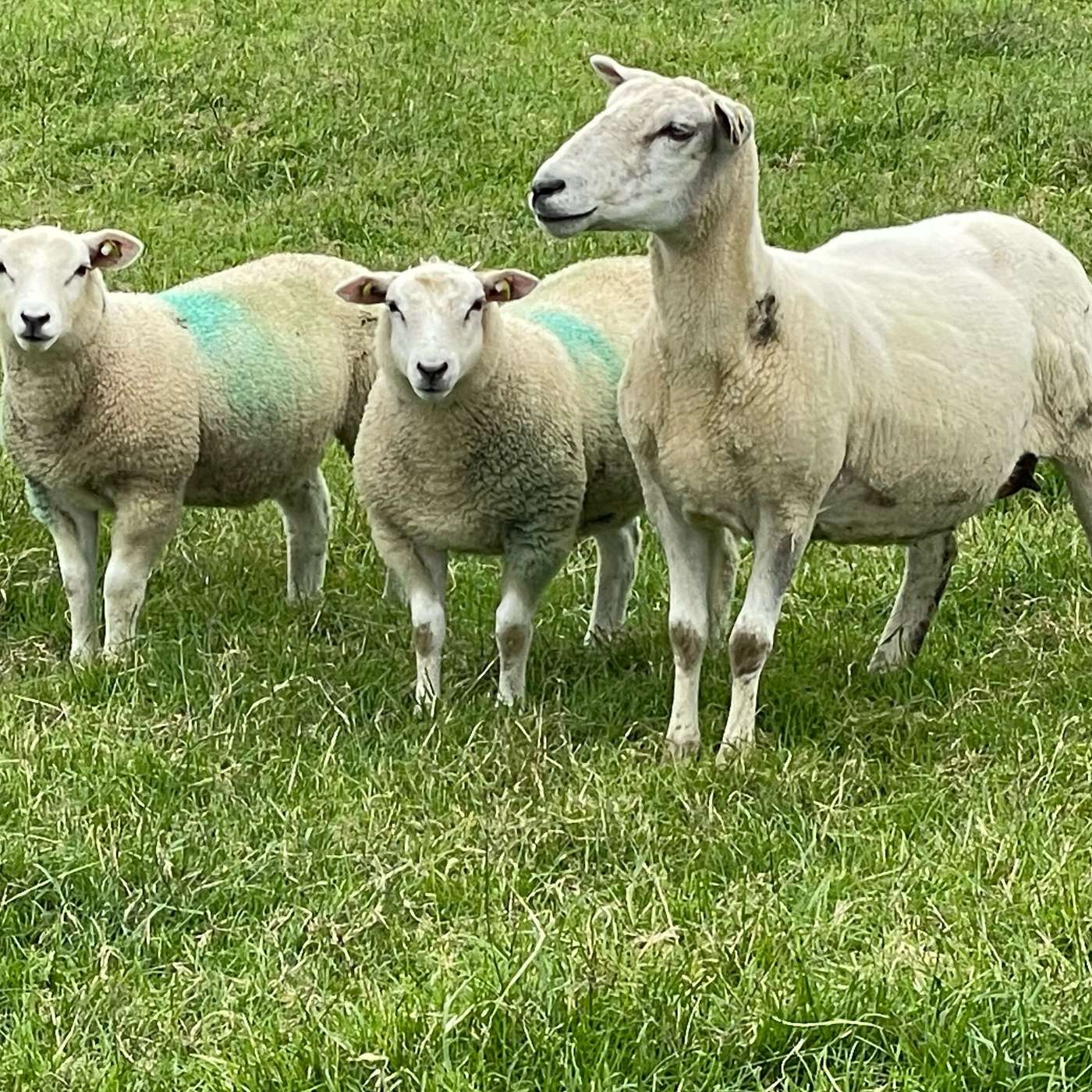
Ep 181What was the impact of the difficult spring on lamb performance?
On this week’s OviCast, we talk to Dr. Frank Campion about the impact this spring has had on lamb performance. Frank gives us an update of the lamb growth rate on the BETTER farms and we talk about the variation among the flocks and how the performance compares to previous years. Frank discusses some of the reasons for this and how the difficult conditions following turnout made this worse. We finish up discussing what impact this will have on lamb sales this year as well as some of the steps farmers are taking to mitigate this. For more episodes from the OviCast podcast, visit the show page at:https://www.teagasc.ie/animals/sheep/ovicast-sheep-podcast
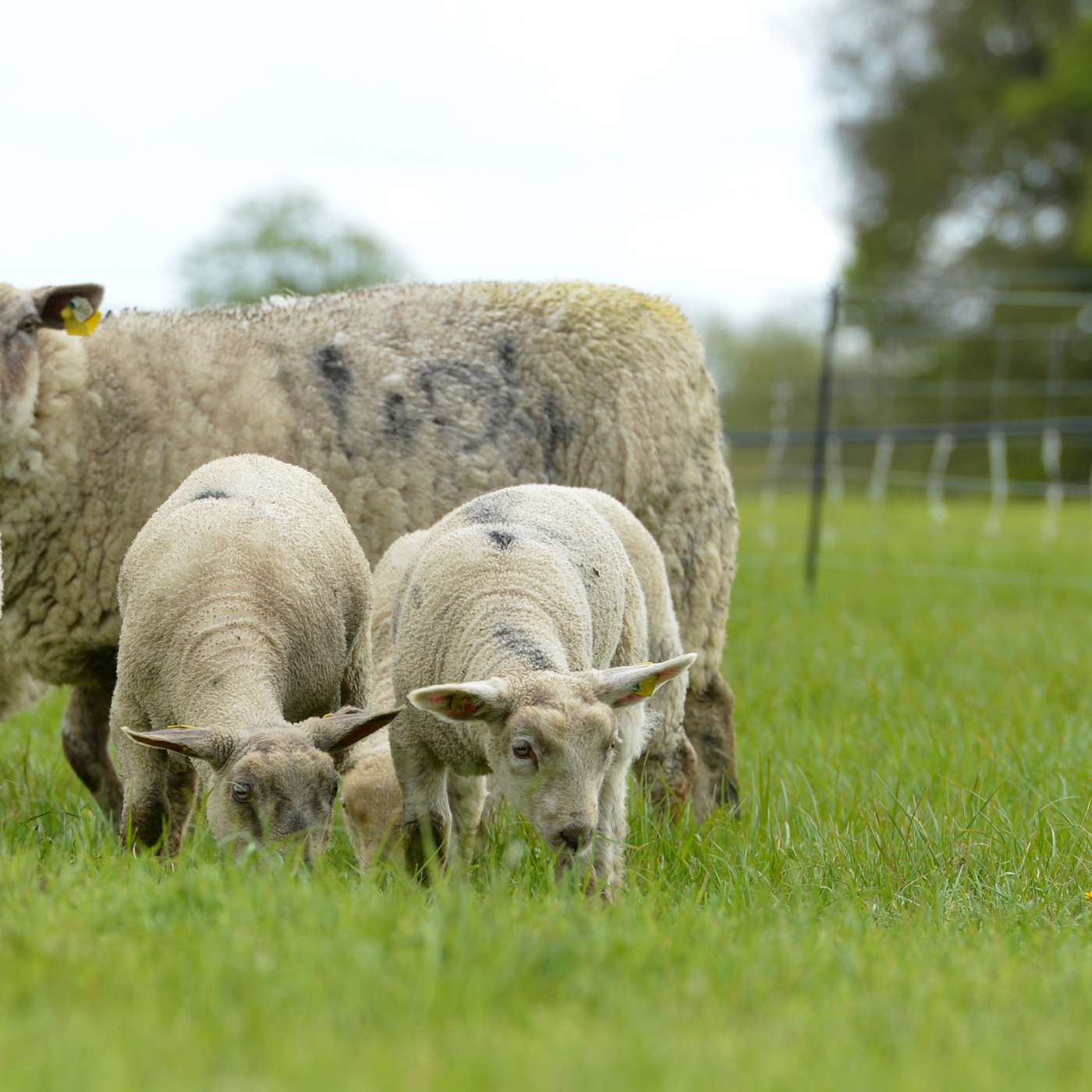
Ep 180Weighing up early weaning
For this week’s OviCast episode, Ciarán Lynch caught up with Prof. Paul Keynon, Head of School, School of Agriculture & Environment/Professor in Sheep Husbandry at Massey University in New Zealand to discuss the option of early weaning as a management tool for certain sheep systems. Paul defines what early weaning is and at what age and weight lambs need to be for it to be considered. They discuss when and where it could be considered an option for flocks and what impact it can have on their system and Paul talks about post weaning management, highlighting the need to ensure high quality feed is available to ensure these weaned lambs perform. For more episodes from the OviCast podcast, visit the show page at:https://www.teagasc.ie/animals/sheep/ovicast-sheep-podcast
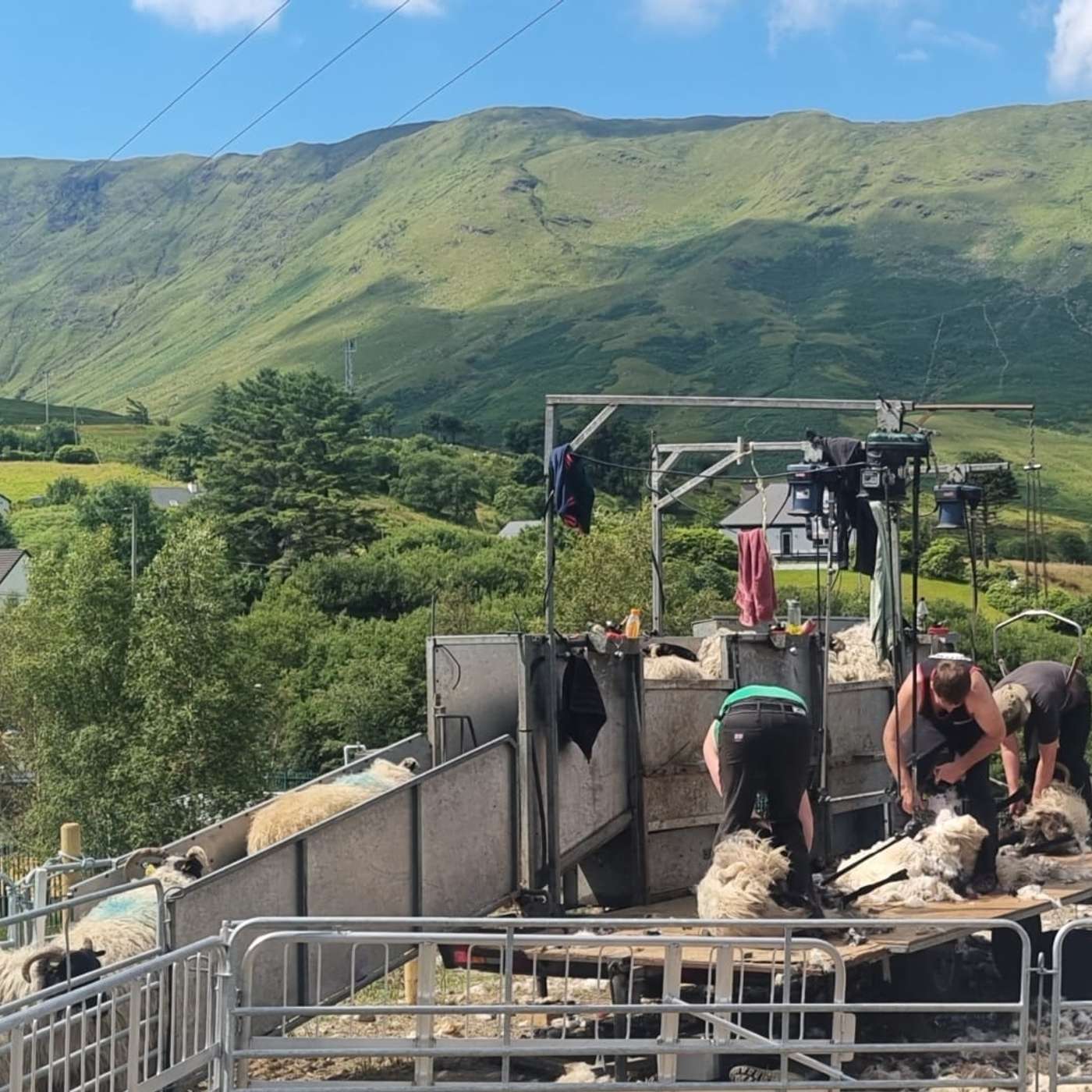
Ep 179Shearing, training courses and wool challenges
With the shearing season underway, for this week’s episode we chat to shearer and Mayo native David Heraty. First David describes a typical shearing season for him and how this year has started off. David tells us how he got started and built up his shearing contracting business over the past decade. We discuss the importance of shearing courses to equip farmers with this skill and the challenge of getting the next generation involved. We also talk about the preparation on the day of shearing to make the job that bit easier on all involved. David who is the Irish Sheep Shearer’s Association representative on the newly formed wool council talks about its aims and what they hope to achieve over the coming years. We finish up the episode talking about the challenge of improving wool presentation and what steps farmers can take. For more episodes from the OviCast podcast, visit the show page at:https://www.teagasc.ie/animals/sheep/ovicast-sheep-podcast
Ep 178Establishing and managing companion forages in a sheep sward
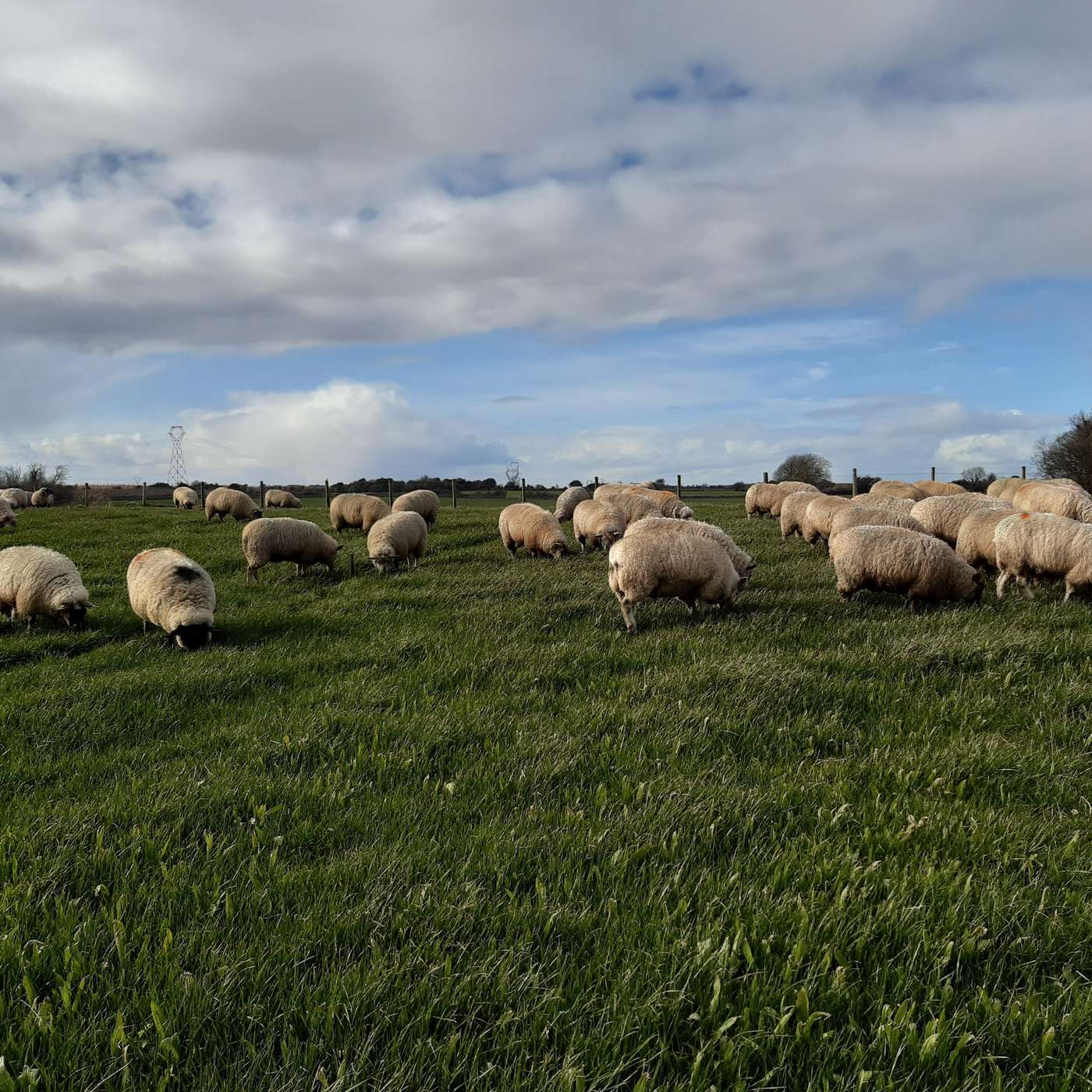
For this week’s OviCast, we chat to post-graduate student, Lisa McGrane, about some of the factors influencing the establishment and persistency of companion herb and legume forages in sheep swards. Lisa discusses some of the work they have undertaken in the area, examining the impact of herbs (chicory & plantain) and legumes (white and red clover) on performance and productivity. We discuss the impact of various establishment methods on sward content of companion herbs and legumes, issues around their persistency and challenges associated with re-establishing them in sheep swards. We also discuss the impact of seeding rate at establishment and type of ryegrass used in the mix has on both the content and persistency in a sward. As with all reseeds, post-sowing grazing management has an impact and Lisa discusses what they have found by altering the post-grazing sward height on these different forages. Finally we finish up the episode with Lisa offering some advice for those sowing it this year on targeting finishing lambs and getting the grazing infrastructure right to get the best out of their reseed. To find out more about the work Lisa has been undertaking you can watch her presentation from this year’s National Sheep conference at: https://youtu.be/eNdAmoM9Nik For more episodes from the OviCast podcast, visit the show page at:https://www.teagasc.ie/animals/sheep/ovicast-sheep-podcast
Ep 177Farmer Focus: Aidan & Eddie Connell from Co. Offaly
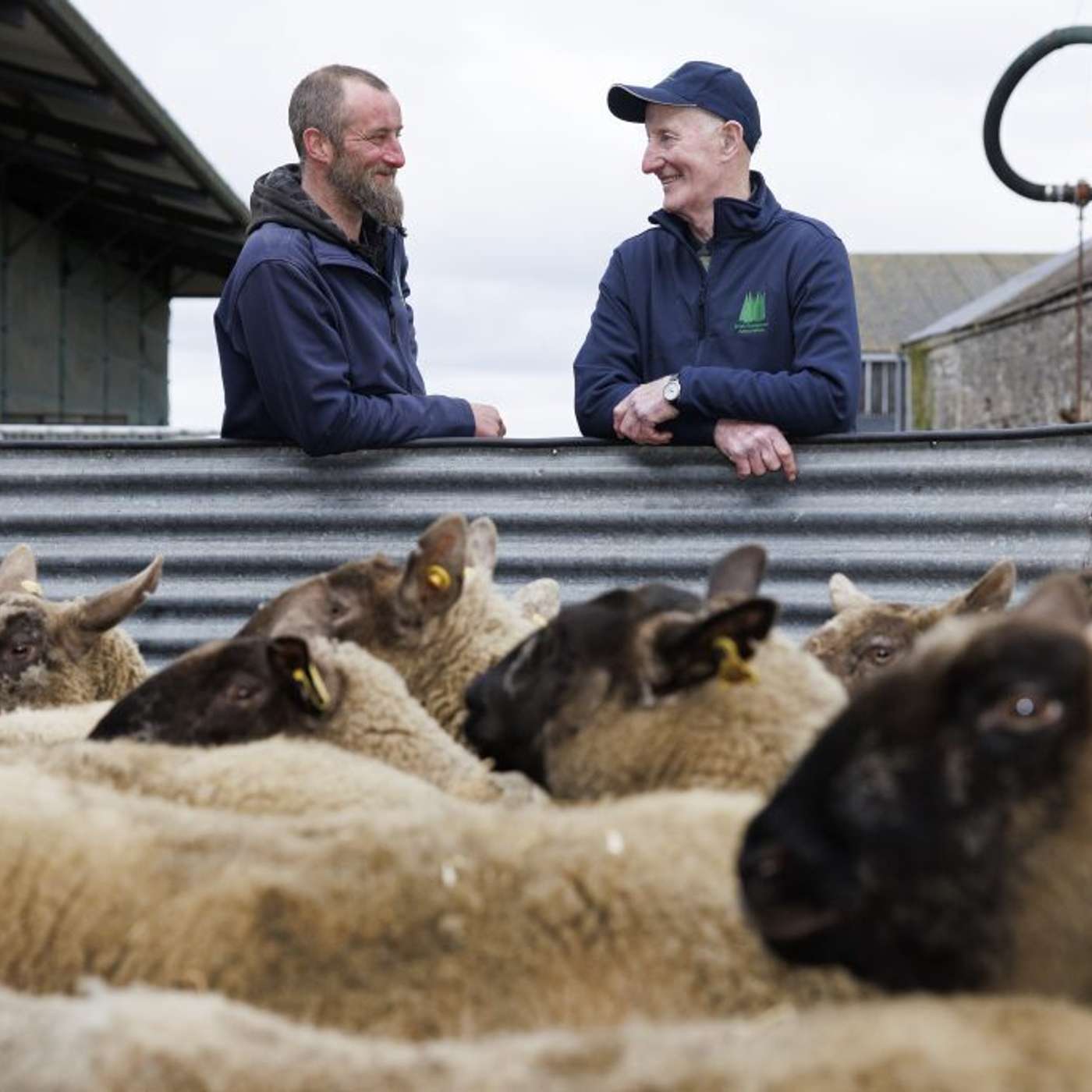
This week on OviCast, I got the opportunity to sit down with father and son duo, Eddie and Aidan Connell, who farm at Clonbullogue, Co Offaly, and who are hosting this year’s Irish Grassland sheep event. The father and son partnership are running a 400 ewe mid-season flock, finishing upwards of 150 bulls and grow winter barley and maize for their own use. Eddie and Aidan talk about how each of the enterprises operate and the integrated nature of the farm. We discuss some of the challenges this spring and the carry-over impacts of last year’s drought on flock productivity. We discuss grassland management, paddock setup and silage and the impact on lamb performance. With a lot of stock purchased on the farm each year, Eddie talks about the importance of a good vaccination programme for the purchased ewes and weanlings each autumn. Managing the workload on the farm is also important and Aidan talks about the sheep shed they constructed in 2018, some of the key adaptions made to it as well as upgrades made to their handling system to improve overall labour efficiency on the farm. For more details of Irish grassland Association sheep event go to:https://www.irishgrassland.ie/event-detail/sheep-event/ For more episodes from the OviCast podcast, visit the show page at:https://www.teagasc.ie/animals/sheep/ovicast-sheep-podcast
Ep 176Sheep 2023 Preview – the largest dedicated sheep industry event of 2023
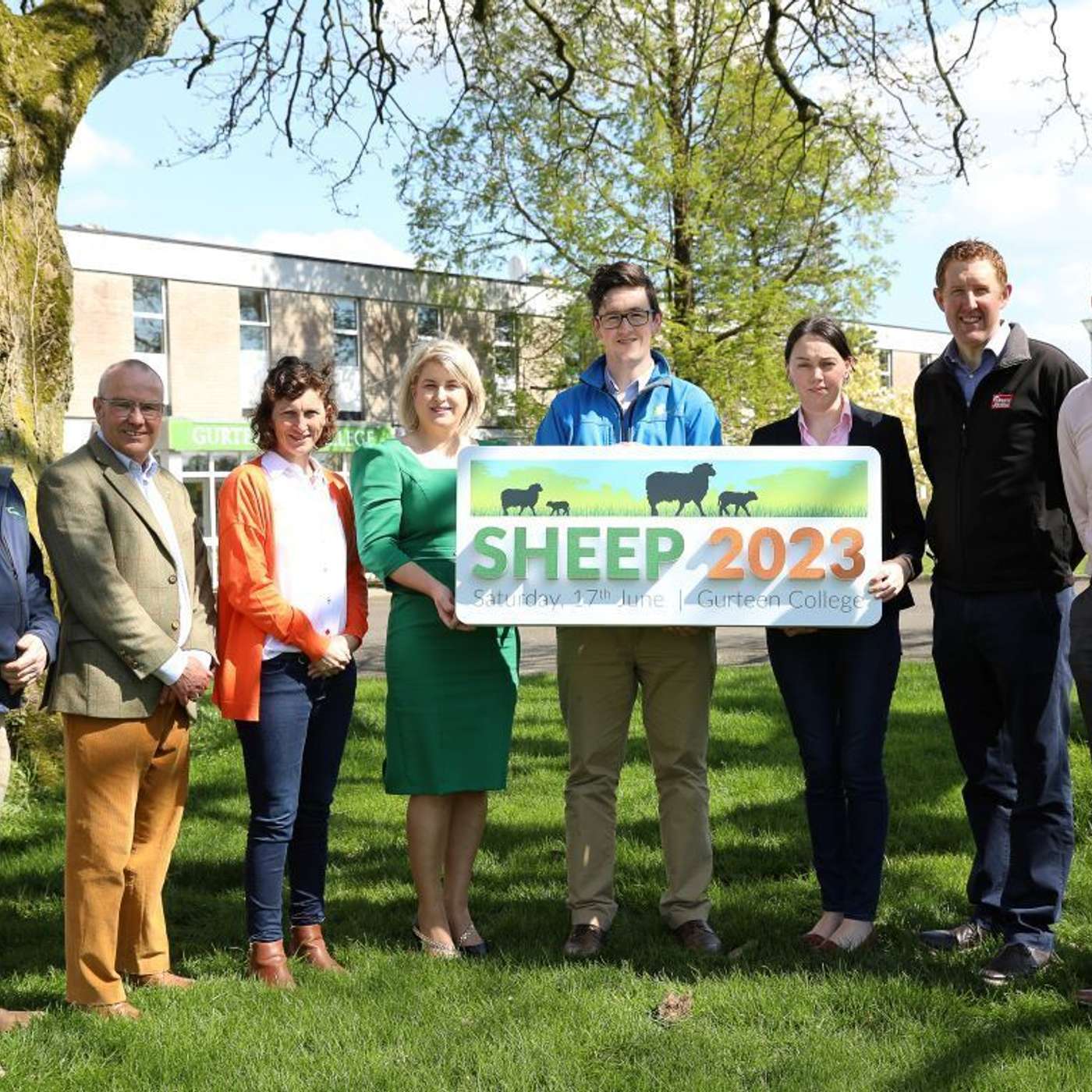
Darren Carty, sheep and schemes editor from the Irish Farmers Journal is on this week’s OviCast to talk about the Sheep 2023 industry event which takes place in Gurteen Agricultural College on June 18th. Darren explains where this year’s event is happening and the background to it and previous events. He discusses the broad range of activities that are on display from sheep shows and breed exhibits to trade stands and the host of technical workshops that will be there on the day. Darren highlights how this focused sheep event provides a shop window for exhibitors and attendees to interact and see what’s new in the industry. He talks about the various demonstrations that will run throughout the day from butchery and cooking through to shearing and sheep dog training demonstrations. Darren also describes the host of other activates that are on display on the day including the keenly contested Young Shepherd competition. Sheep breed societies, and for those interested in taking a trade stand at the event can make a booking through an online booking portal at: bit.ly/SHEEP2023Form Or email [email protected] For more episodes from the OviCast podcast, visit the show page at:https://www.teagasc.ie/animals/sheep/ovicast-sheep-podcast
Ep 175Getting clover into the grazing sward
On this week’s OviCast, I’m joined by Catherine Egan host of the Teagasc Beef Edge podcast for a joint episode to discuss all things clover with Dr. Mike Egan, Teagasc researcher. Mike starts by highlighting the potential role of clover in drystock systems, how it works and the potential cost savings. We discuss the impact of soil fertility and weed control has on successful establishment and Mike talks about the impact of timing, sowing rate and varieties selection and over-sowing methods of incorporating clover in to sward. Post-sowing management can have a big impact on establishment and Mike brings us through grazing management from establishment to closing up at the end of the grazing season as well as offering some tips on minimising the risk of bloat. Finally, Mike highlights the suite of resources available for farmers to find out more about clover. For more information go to:https://www.teagasc.ie/media/website/publications/2022/Clover-Management-2022.pdf For more episodes from the OviCast podcast, visit the show page at:https://www.teagasc.ie/animals/sheep/ovicast-sheep-podcast
Ep 174Grazing: getting back on track
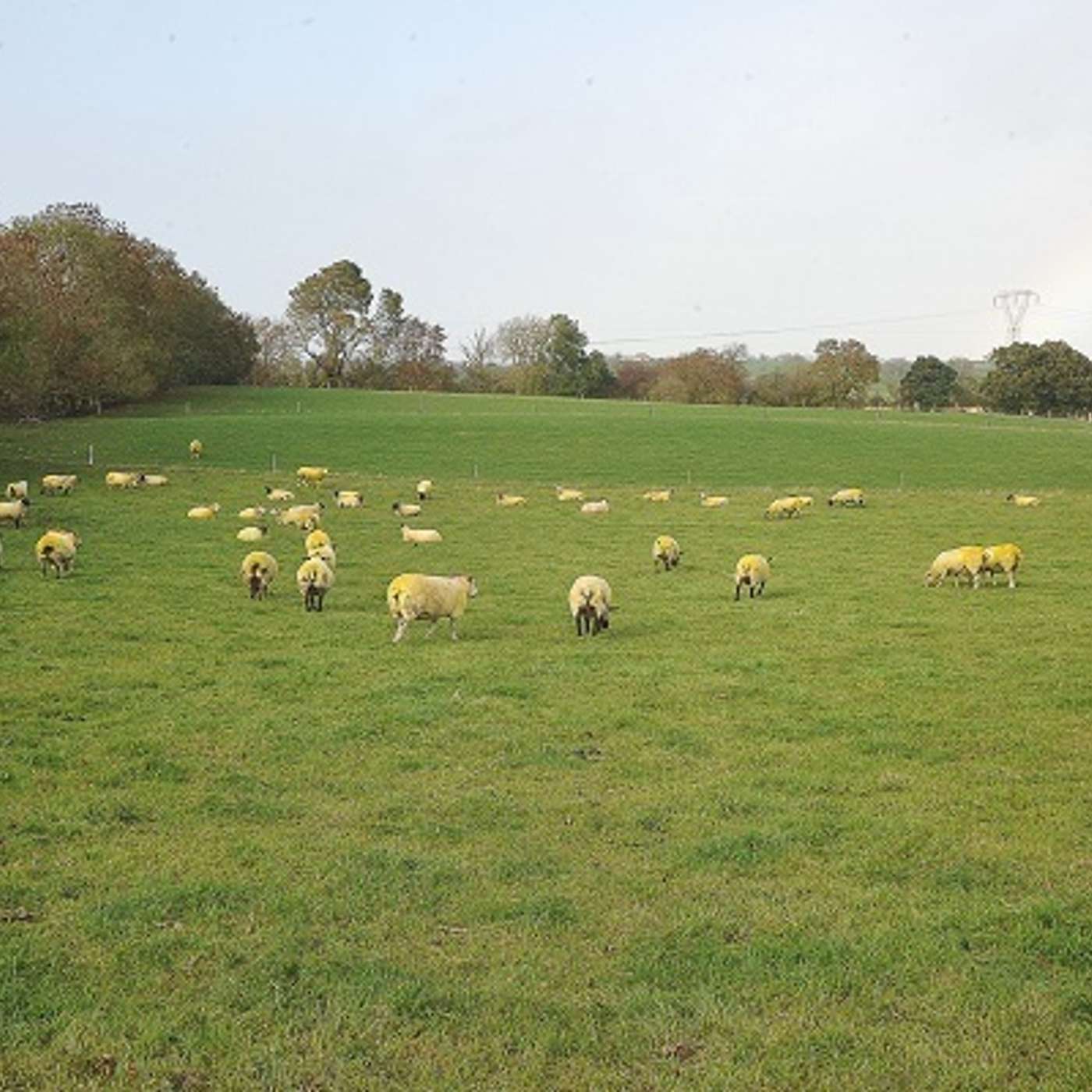
After a difficult number of weeks, conditions appear to be turning the corner providing an opportunity to get grazing back on track, and on this week’s OviCast, we’re joined by Dr Philip Creighton to discuss some of the steps needed over the coming weeks. Philip starts by discussing the impact recent conditions have had on sheep systems. He discusses grazing targets, fertiliser type and application rates for the coming weeks, emphasising the need to boost supplies during a period of high demand. Philip highlights need to plan for making a proportion of high quality silage and replenishing stocks that were depleted this spring. Finally, he discusses grazing groups, batching up and residence periods in grazing paddocks. For more episodes from the OviCast podcast, visit the show page at:https://www.teagasc.ie/animals/sheep/ovicast-sheep-podcast
Ep 173Nematodirus challenge in lambs
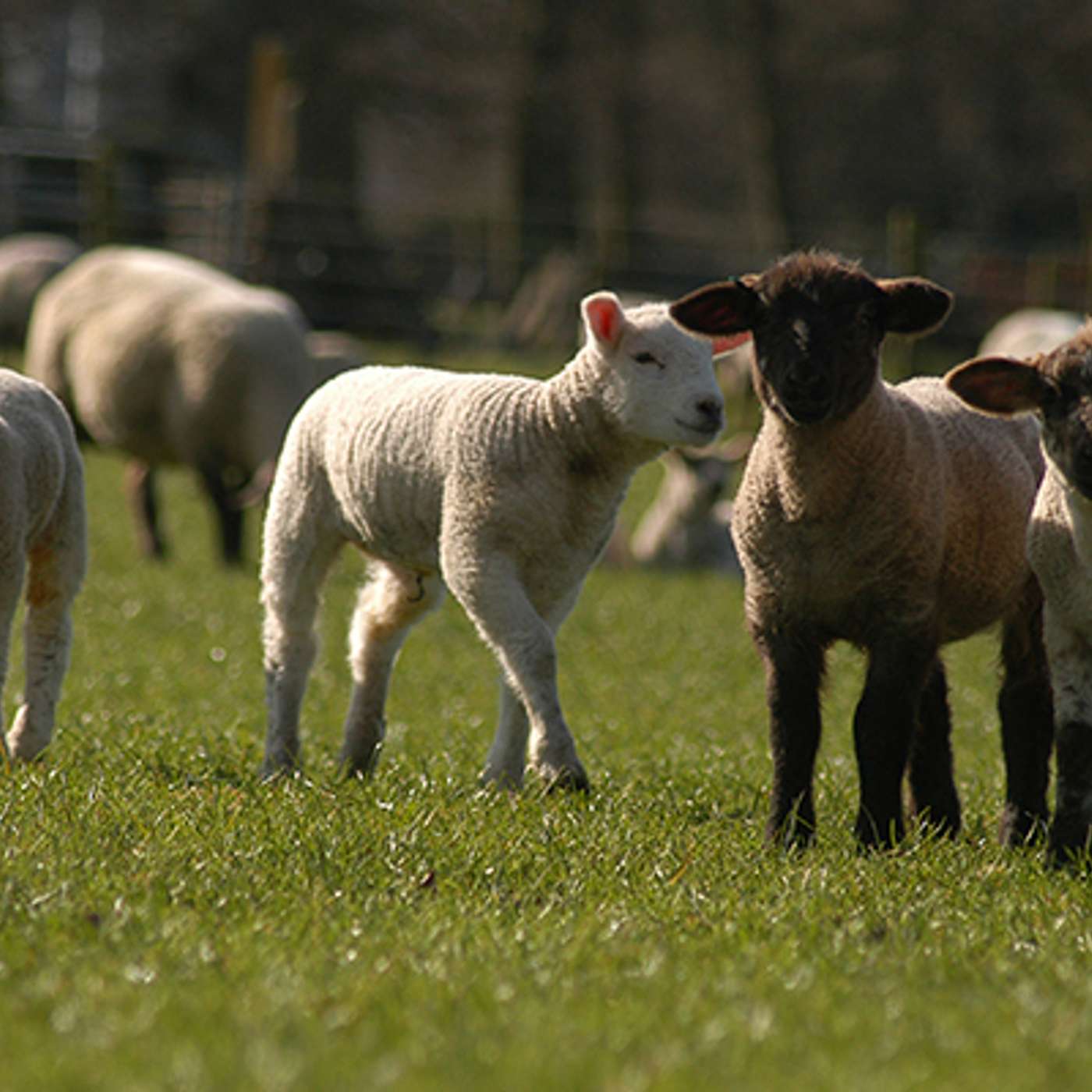
Dr. Orla Keane is on this week’s OviCast podcast to discuss the challenge of Nematodirus in lambs this spring. Orla first explains how the Nematodirus challenge can carry over on farms from year to year. She highlights the Department of Agriculture Nematodirus forecast and the implications for farmers. Orla explains what age it affects lambs, the clinical signs, as well as the risk for young calves. She also discusses the possibility of co-infection with Coccidia and explains the treatment options and best practice when administering doses to young lambs. Here is the link to the Department of Agriculture Nematodirus forecast for 2023: https://bit.ly/Nematodirus_Forecast_23 For more episodes from the OviCast podcast, visit the show page at:https://www.teagasc.ie/animals/sheep/ovicast-sheep-podcast
Ep 172New study aims to get to grips with lameness
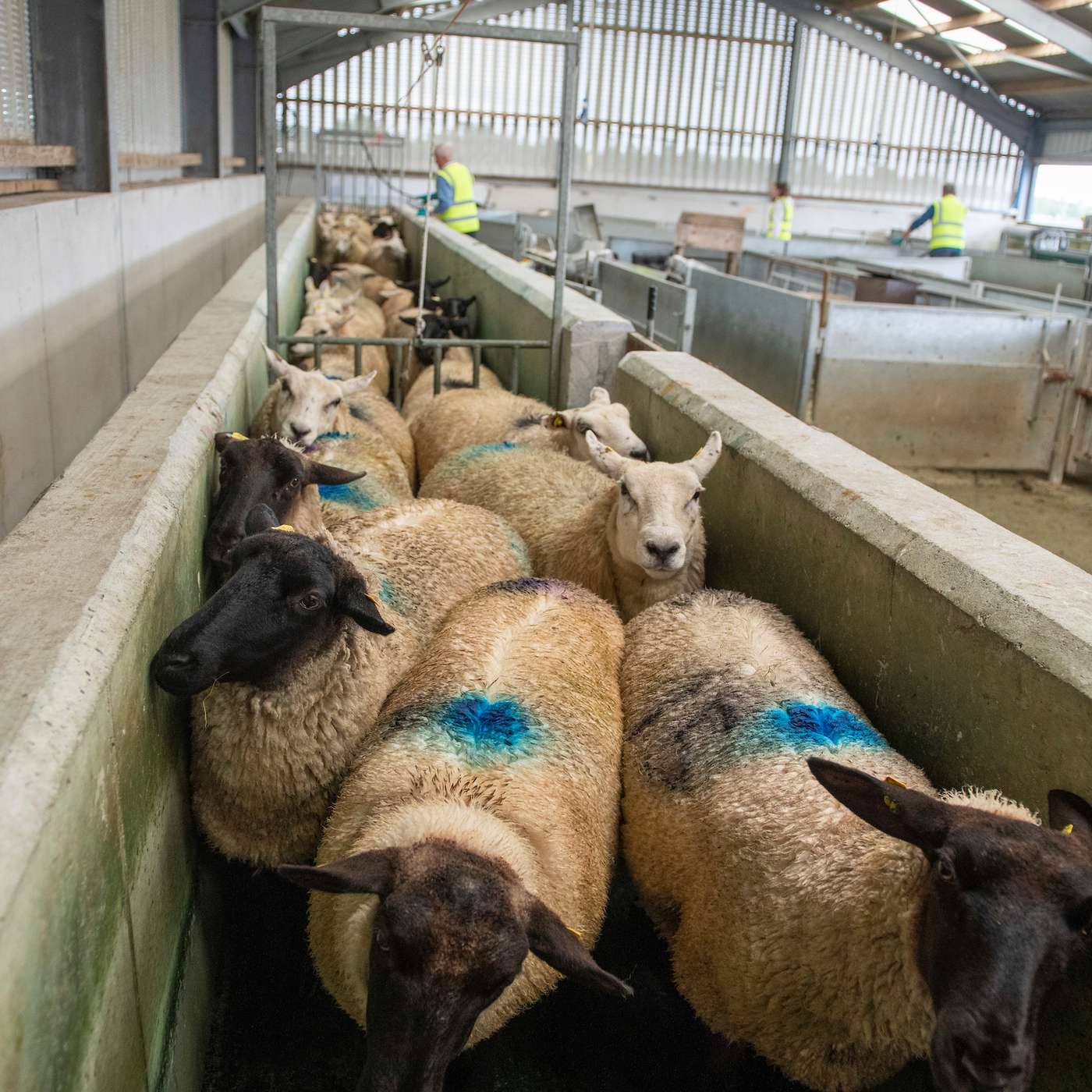
On this week’s OviCast podcast, we’re joined by postgraduate student, Jake Delaney, and Teagasc Researcher, Dr Frank Campion, to discuss a new project that aims to examine lameness and associated issues on Irish farms. Jake first outlines the common causes and issues around lameness, while Frank discusses the impact it has on performance and some of the practical control issues that occur at farm level. Jake explains what they will be examining in the study and highlights an online survey that is currently available and that he encourages farmers to complete. The survey can be accessed here:https://bit.ly/Lameness23 For more episodes from the OviCast podcast, visit the show page at:https://www.teagasc.ie/animals/sheep/ovicast-sheep-podcast
Ep 171Dealing with the current adverse weather conditions
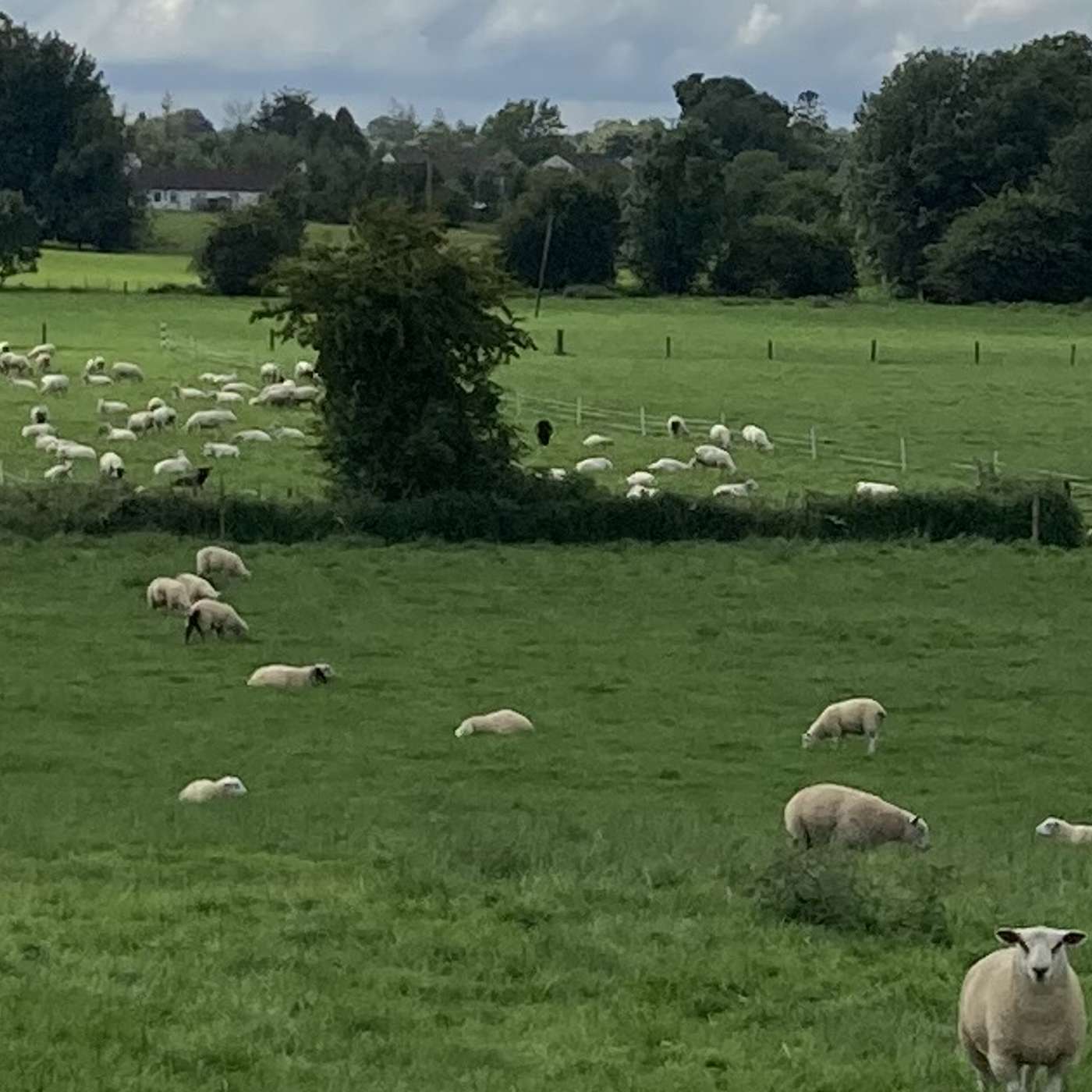
Conditions during March have been difficult and has thrown up many challenges for farmers. On this week's OviCast podcast, we’re joined by Teagasc’s Head of Sheep, Michael Gottstein, to discuss this in more detail and offer some advice on how to manage things through this period for those at different stages - from those lambed in early March, to those currently lambing and with outdoor lambing flocks. We discuss various aspects of management, grazing, nutrition and hygiene and highlight some of the disease risks during the period with Michael offering some useful tips and advice on each. For more episodes from the OviCast podcast, visit the show page at:https://www.teagasc.ie/animals/sheep/ovicast-sheep-podcast
Ep 170Hot water systems for farmyards
Having access to some source of hot water in the farmyard is essential, especially in spring. For some farms however, there is a requirement to supply larger volumes either for artificial rearing of lambs or calves or for general farm use. So what are the options and which suits best? This week’s OviCast is joined by Teagasc Researcher, Dr John Upton, to shed some light on this topic. John first outlines the various heat sources that are available and emphasises the importance of knowing what the individual demand is on the farm. He discusses the capacity, energy efficiency and running costs of the various heating systems before offering some tips on the maintenance of these systems and highlighting some factors that will influence their longevity on farms. For more episodes from the OviCast podcast, visit the show page at:https://www.teagasc.ie/animals/sheep/ovicast-sheep-podcast
Ep 169Treating hypothermia in lambs and use of the glucose/intra-peritoneal injection
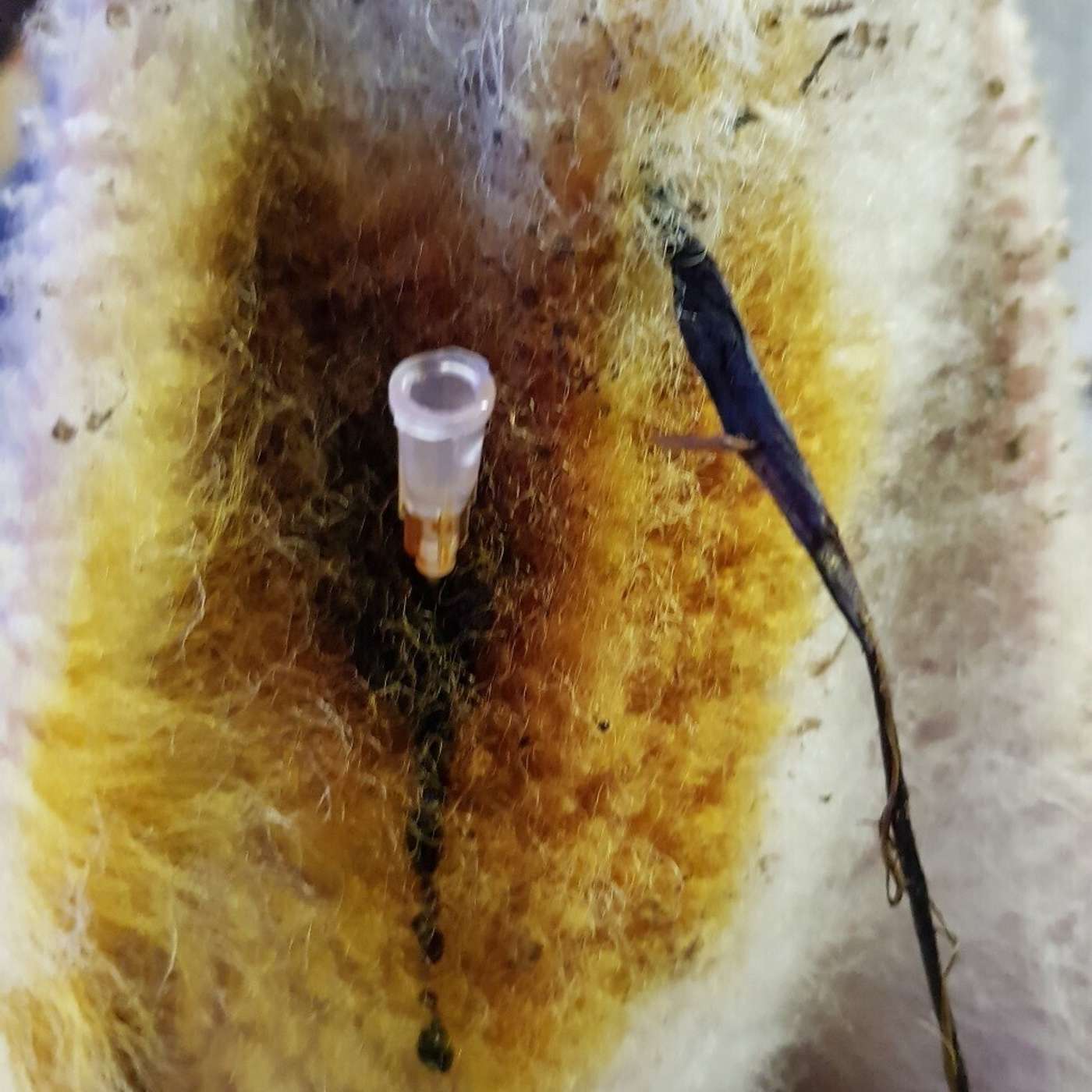
Sheep specialist, Michael Gottstein, is on this week’s OviCast podcast to talk about diagnosing and treating hypothermia in lambs. Michael explains what hypothermia is, the symptoms and predisposing factors. They discuss steps involved to warm these lambs up to normal body temperature based on age, severity and the type of energy source required. Michael explains why and how to use the glucose/intra-peritoneal injection, describing the technique, how to make up the glucose solution and why it’s a vital lifesaving technique that farmers can use. Here also is a link to a recent Let’s Talk Sheep webinar covering this and other lambing related topics: https://bit.ly/Letstalksheep_Mar23 For more episodes from the OviCast podcast, visit the show page at:https://www.teagasc.ie/animals/sheep/ovicast-sheep-podcast
Ep 168Colostrum: what to know about collection, storage and thawing
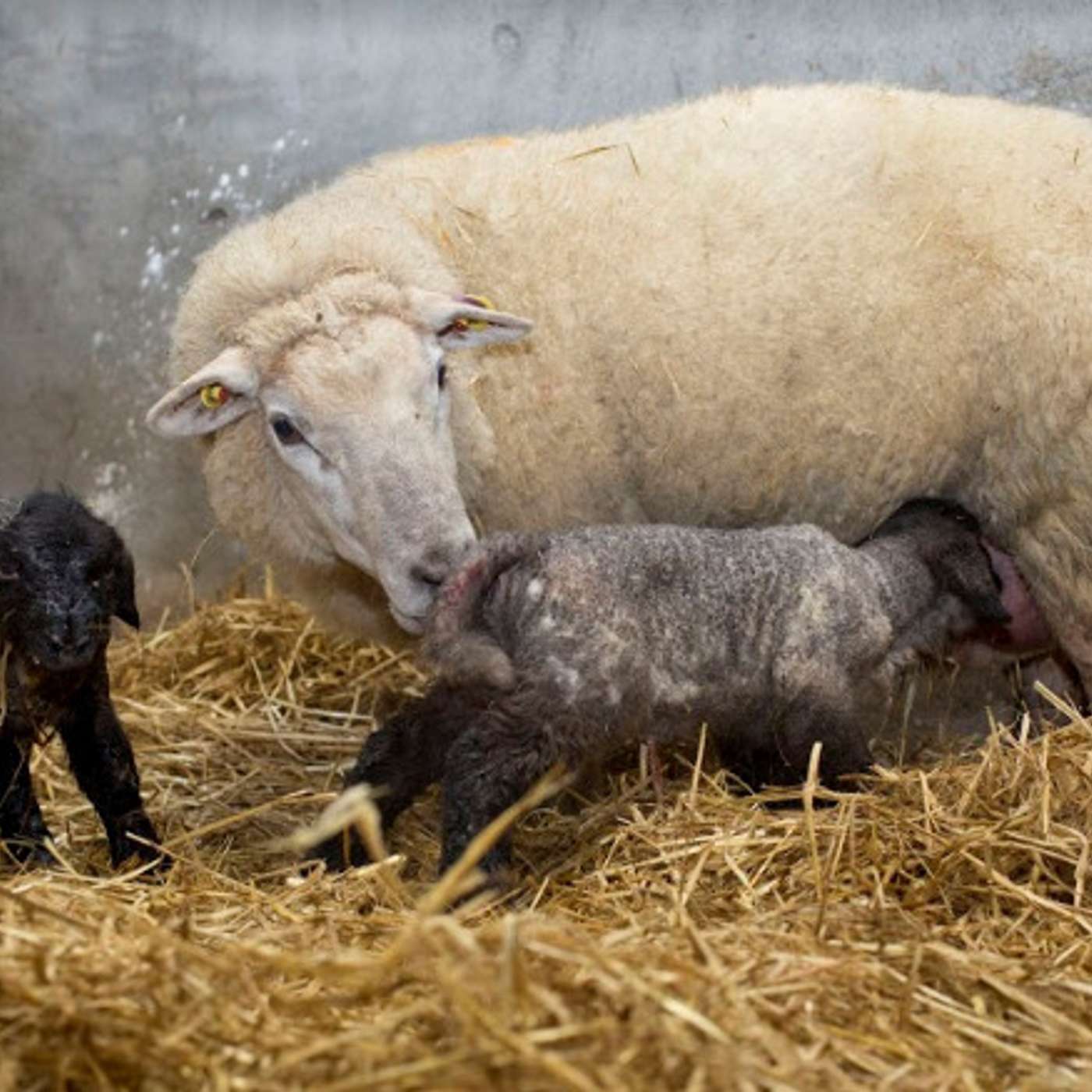
Dr Emer Kennedy joins Ciarán Lynch on this latest OviCast podcast to talk about some key aspects of colostrum management on farms. Emer explains the importance of colostrum in newborn ruminants and discusses the importance of hygiene during the collection process, storage both fresh and frozen of the colostrum, as well as the correct thawing procedure. Emer highlights the impact management has on colostrum quality during each of these tasks and offers some useful practical tips that farmers can implement this spring. For more episodes from the OviCast podcast, visit the show page at:https://www.teagasc.ie/animals/sheep/ovicast-sheep-podcast
Ep 167Tackling sheep scab in Northern Ireland
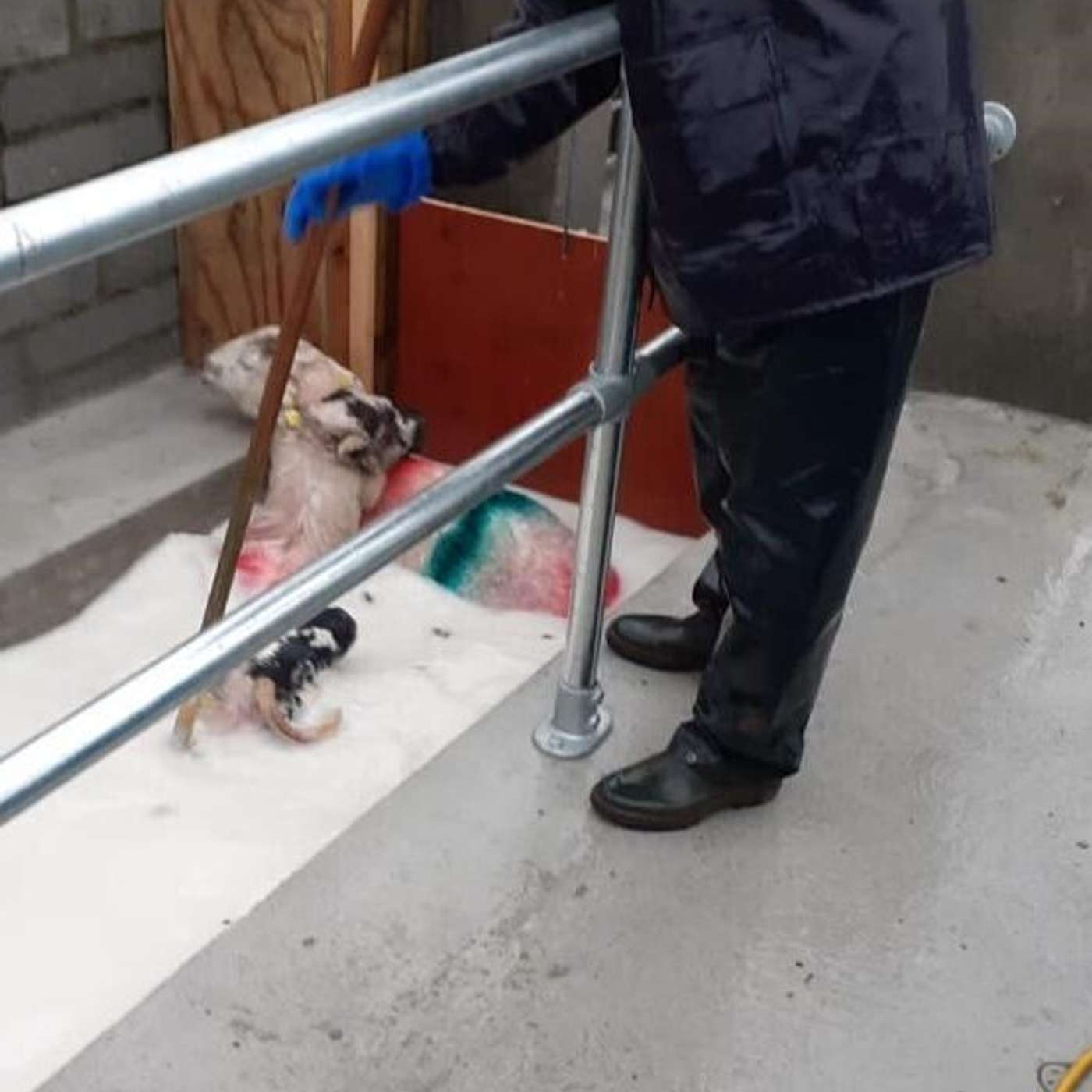
County Antrim veterinarian and sheep farmer, Paul Crawford, who is also the chairman of the Northern Ireland Sheep Scab Group joins us on the latest OviCast podcast to discuss sheep scab. Paul starts by explaining what causes sheep scab, the clinical symptoms and how to diagnose it in flocks. We discuss the routes of transmission and risk factors for the spread of mites before Paul takes us through the treatment options and the challenge of developing resistance to some of these, highlighting the importance of best practice. We discuss some of the findings from his Ph.D. studies on the numbers of outbreaks, disease awareness and treatment in practice in Northern Irish flocks. Finally, Paul highlights a new project that launched last year to tackle the issue on farms. For more episodes from the OviCast podcast, visit the show page at:https://www.teagasc.ie/animals/sheep/ovicast-sheep-podcast
Ep 166Clostridial disease prevention protocols
In this bonus episode from a recent Let’s Talk Sheep webinar, you'll hear from veterinarian Charles Chavasse who is the Area Veterinary Manager with Zoetis. Charles describes what the different clostridial diseases are and how they affect the animal. He goes on to explain the vaccination process adding some useful tips and highlights some common pitfalls. Charles also takes questions submitted by the audience on the night and a full recording of the webinar will be available on the Teagasc YouTube channel at: https://www.youtube.com/user/TeagascMedia For more episodes from the OviCast podcast, visit the show page at:https://www.teagasc.ie/animals/sheep/ovicast-sheep-podcast
Ep 165Flock health
This week’s OviCast podcast is from a recent Let’s Talk Sheep webinar with Maresa Sheehan who is based in the DAFM RVL in county Kilkenny. Maresa talks about the flock health issues that they observe in the lab each spring, what causes them and explains what approach to take when issues occur. She goes on to discuss the thin ewe survey which is a new project being run by the RVLs across the country this year. Maresa also takes questions submitted by the audience on the night and a full recording of the webinar will be available on the Teagasc YouTube channel at:https://www.youtube.com/user/TeagascMedia For more episodes from the OviCast podcast, visit the show page at:https://www.teagasc.ie/animals/sheep/ovicast-sheep-podcast
Ep 164Spring fertiliser planning
Teagasc Soil & Plant Nutrition Specialist, Mark Plunkett, joins Ciarán Lynch on this week’s OviCast podcast to discuss fertiliser planning this spring. With fertiliser costs remaining high, Mark starts by explaining timing, location and rate of nitrogen application this spring with Mark highlighting the crops’ requirements at present. He discusses the P & K requirements and how this could be supplied to grazing ground and the silage crop with Mark emphasising the importance of slurry use and alternative strategies where this is not available. He then discusses the impact of correcting soil pH has on productivity and N use efficiency and why more farmers need to consider spreading lime where needed. Finally, Mark highlights the importance of fertiliser spreader calibration this spring. For more info: https://www.teagasc.ie/crops/soil--soil-fertility/ For more episodes from the OviCast podcast, visit the show page at:https://www.teagasc.ie/animals/sheep/ovicast-sheep-podcast
Ep 163Late pregnancy nutrition: energy demand, ration composition & protein source
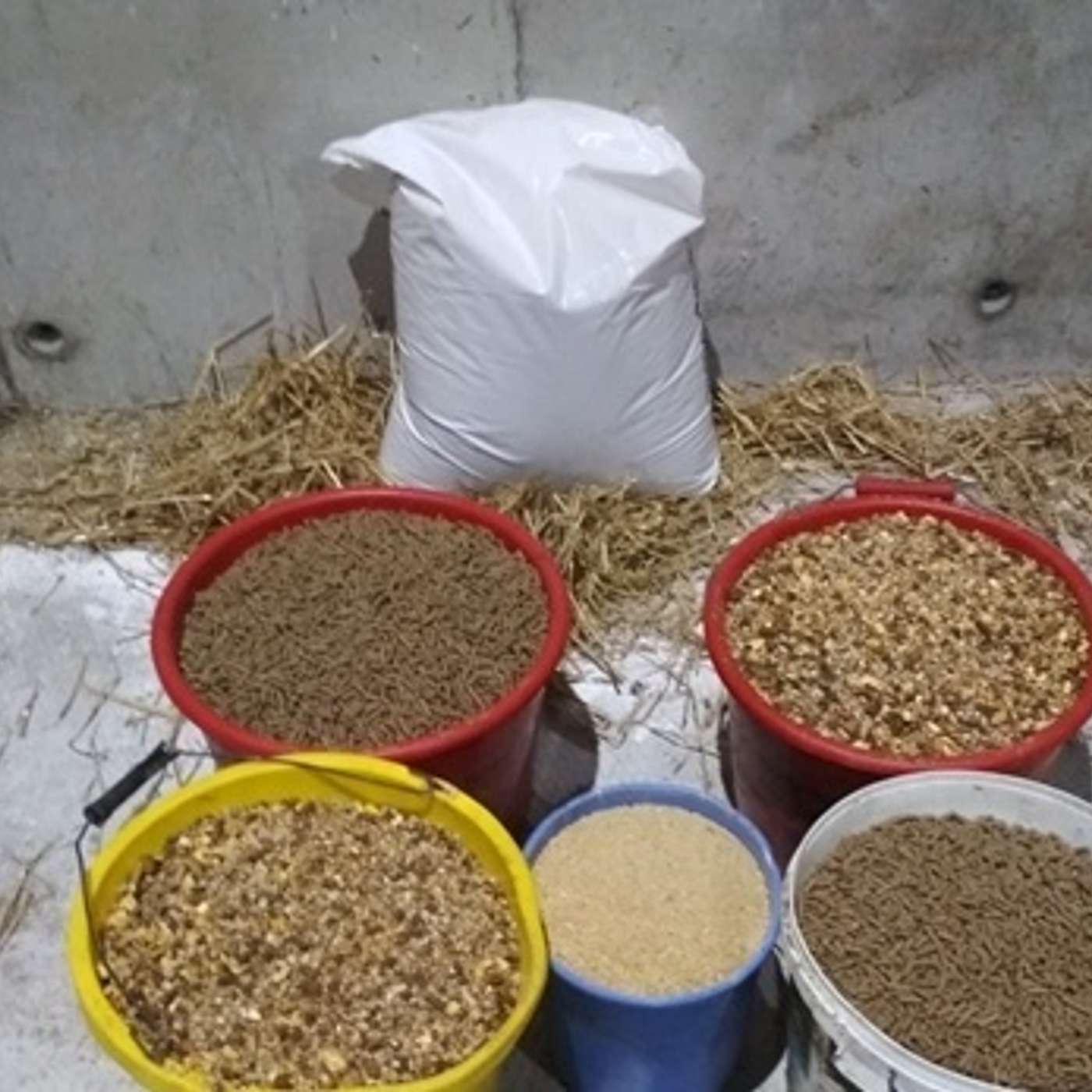
For the latest OviCast podcast, Ciarán Lynch discusses late pregnancy nutrition with Dr Tim Keady. Tim discusses the impact of nutrition on performance in the weeks before lambing and Tim explains the increase in foetal growth that occurs during these final weeks of gestation and the impact this has on the ewe’s energy demand and intake. He discusses concentrate price and why it’s essential to examine ration composition when purchasing. Tim expands on this point giving his pick of energy, fibre and protein sources he would include in a ration. The discussion moves on to the impact of protein source on performance with Tim discussing the results of trials comparing soya bean meal to alternative protein sources. Finally, Tim explains target feeding rates and what influences this. For more episodes from the OviCast podcast, visit the show page at:https://www.teagasc.ie/animals/sheep/ovicast-sheep-podcast
Ep 162The impact of dosing adult ewes for worms has on the development of resistance
On this week’s OviCast podcast Ciarán Lynch caught up with Dr Dave Leathwick following this year’s National Sheep Conference. Dave, who is principal scientist in parasitology at the Pastoral Agricultural Research Centre in New Zealand, has for almost 35 years been researching nematode parasites of grazing livestock, with a focus on their biology and control, and the development and management of anthelmintic resistance. Dave discusses the challenge posed by anthelminthic resistance in New Zealand and the factors contributing to its development. In a wide ranging discussion Dave explains in detail the impact of dosing adult ewes for worms has on the development of resistance. He finishes up discussing how worm control will require a change in mind-set going forward to maintain a susceptible worm population on farms. Read Dave’s paper from the National Sheep Conference here: https://www.teagasc.ie/media/website/publications/2023/National-Sheep-Conferences-2023.pdfFor more episodes from the OviCast podcast, visit the show page at:https://www.teagasc.ie/animals/sheep/ovicast-sheep-podcast
Ep 161Market Trends 2023: Throughput, current challenges & demand for the coming months
Seamus McMenamin, Sector Manager with Bord Bia, joins Ciarán Lynch on this week’s OviCast podcast with an update on the current market trends. Seamus first discusses the throughput in the back end of 2022 and the carryover of lambs into this year before moving on to some of the challenges seen in the current trade and lamb consumption figures in our main markets as well as the domestic trade. Seamus also highlights the current lamb supply and demand on the global market and what the prospects are for the coming months. Finally, Seamus explains the growth seen in export markets during 2022 and new markets for this season. For more episodes from the OviCast podcast, visit the show page at:https://www.teagasc.ie/animals/sheep/ovicast-sheep-podcast
Ep 160Managing ewe lamb replacements – does it influence their performance as ewes?
Dr Tim Keady joins Ciarán Lynch on this week’s OviCast podcast to discuss managing ewe lamb replacements and the influence that has on their subsequent productivity. Tim first outlines the various sources of replacements in the national flocks. With the majority of these replacements not entering flocks until 18-19 months of age, he discusses the various factors during the rearing phase that influence their subsequent productivity. Tim breaks down the rearing phase into winter and summer management and explains their impacts. He then discusses the target weights at the various stages and how these might be achieved. Finally, Tim highlights the importance of replacement ewe lambs management and why it’s an investment in the future productivity of the flock. For more episodes from the OviCast podcast, visit the show page at:https://www.teagasc.ie/animals/sheep/ovicast-sheep-podcast
Ep 159Farmer Focus: Leitrim farmer John O’Connell on managing ewes this winter, scanning & setting the flock up for lambing
For the latest OviCast podcast, Ciarán Lynch is joined by county Leitrim farmer, John O’Connell, who is a participant in the Teagasc Signpost programme. John discusses what’s been happening on the farm in the past few weeks as he has housed the ewe flock. He also talks about grazing management this autumn and some of the challenges and benefits of winter grazing off farm. John explain maintaining ewe condition and the move to winter shearing ewes in recent seasons as well as why he has moved to precision chop silage to feed to ewes on slats. Finally, he discusses the scan results this year and his feeding plans this spring, plus the importance of getting the basics right now as he prepares for lambing. For more episodes from the OviCast podcast, visit the show page at:https://www.teagasc.ie/animals/sheep/ovicast-sheep-podcast
Ep 158Dealing with the challenges during 2022 & the key tasks to start 2023
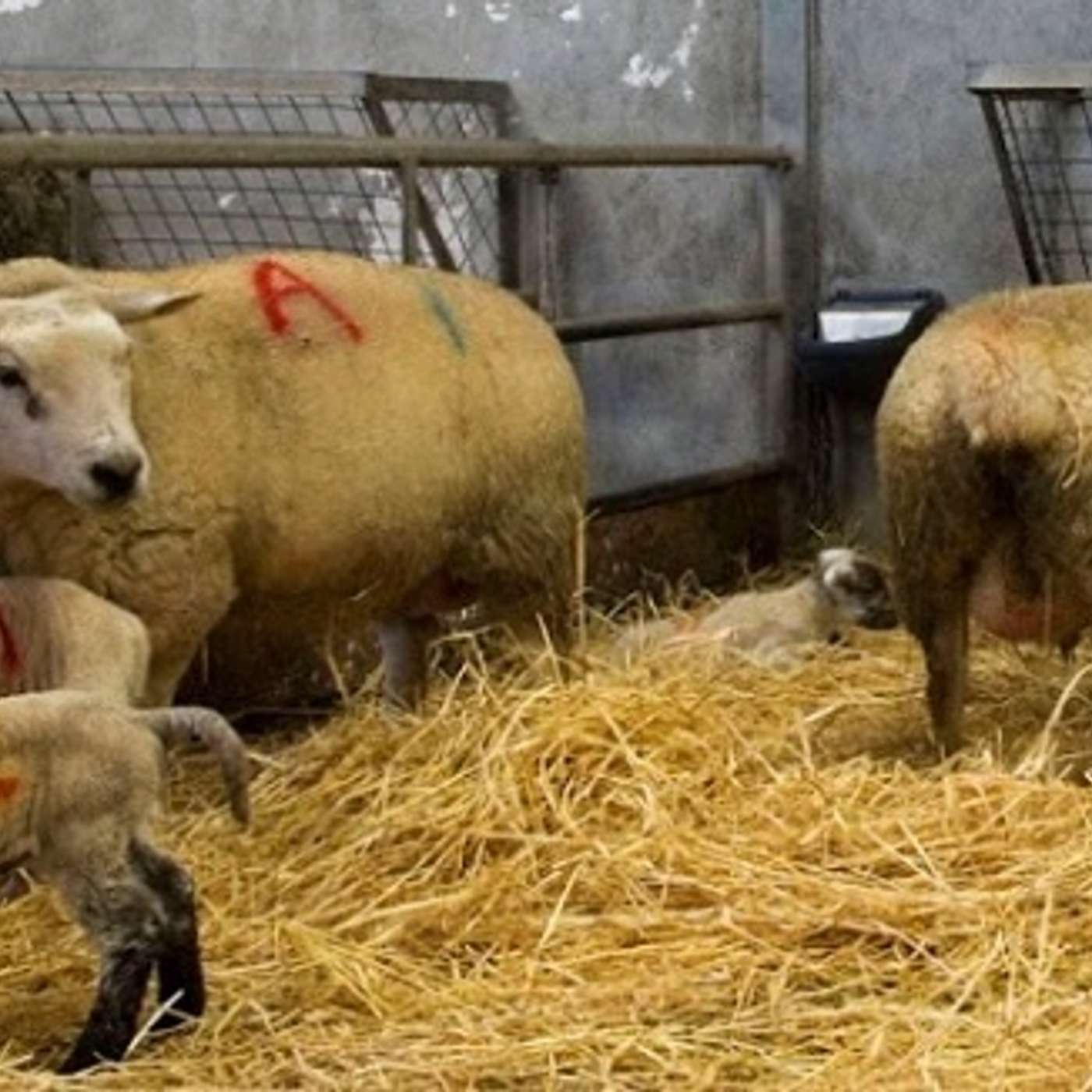
Sheep Specialists, Michael Gottstein and Damian Costello, join Ciarán Lynch on the latest OviCast podcast to discuss the sheep farming year and look ahead to what’s in store for 2023. Michael first looks back at 2022 and some of the challenges it posed discussing how some farms were better able to adapt to these challenges and what made their systems more resilient. Damian discusses some key tasks that need to be completed early in the New Year to set farms up for 2023. Both Michael and Damian finish up encouraging producers to seek out advice where needed to help their farm business during 2023. For more episodes from the OviCast podcast, visit the show page at:https://www.teagasc.ie/animals/sheep/ovicast-sheep-podcast
Ep 157Update on the forage crop study: performance to date & managing during the cold snap
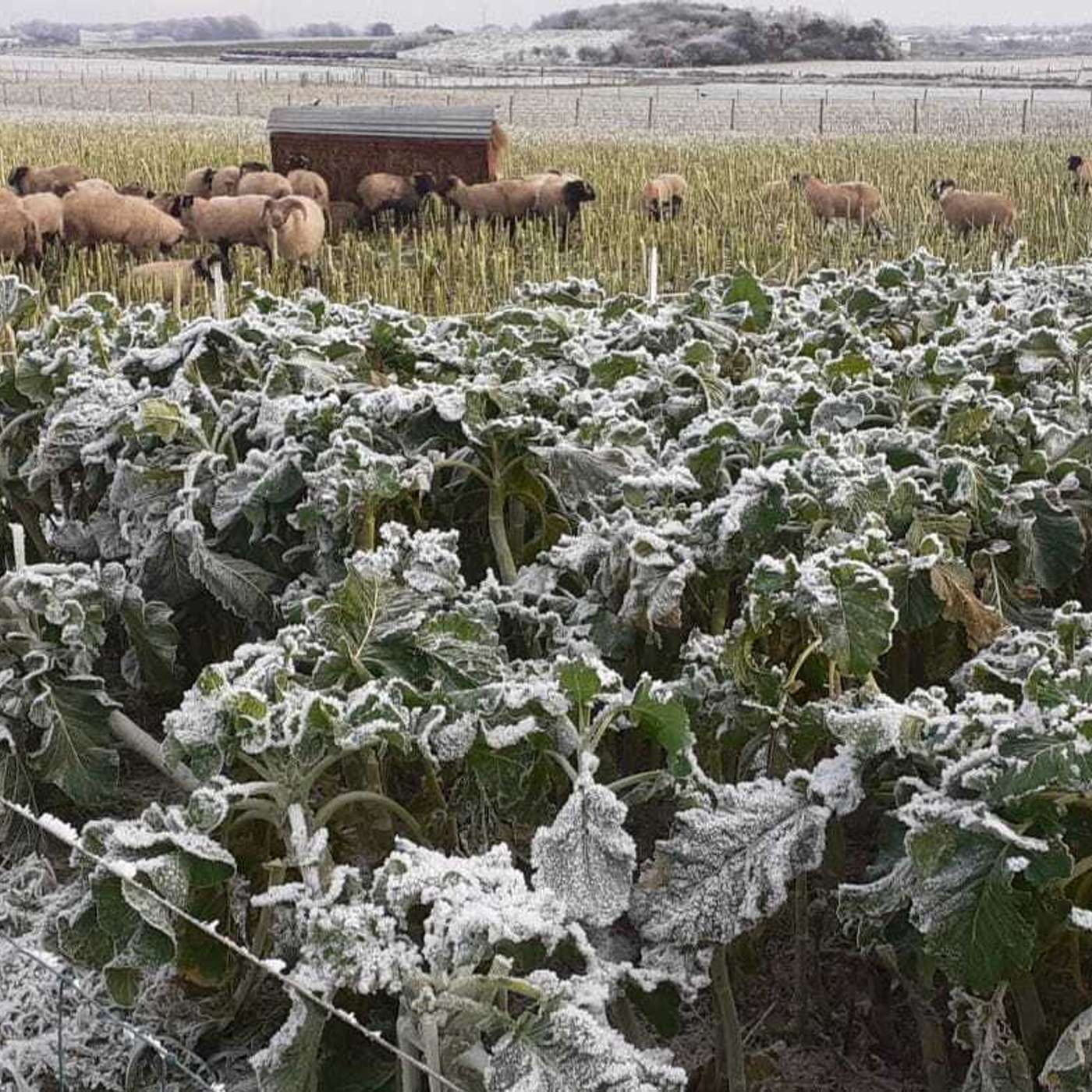
Dr. Frank Campion and postgraduate student, Mark Dolan, join Ciarán Lynch on the latest OviCast podcast with an update on the ongoing work examining finishing hill-bred lambs on a range of forage crops. Mark first gives the background to the project and what crops they are grazing, followed by an update on crop yield and utilisation this year and the reason for some of the differences observed. They also discuss lamb performance across the different crops and how they have been managed up to this point. The recent cold snap has posed challenges and Frank and Mark discuss managing the crops during this period and what lasting impact the severe frosts have had on the crops themselves. Finally, they highlight the suitability of this system to finish lighter lambs and what carcass weights have been achieved.For more episodes from the OviCast podcast, visit the show page at:https://www.teagasc.ie/animals/sheep/ovicast-sheep-podcast
Ep 156Farm Safety this Winter
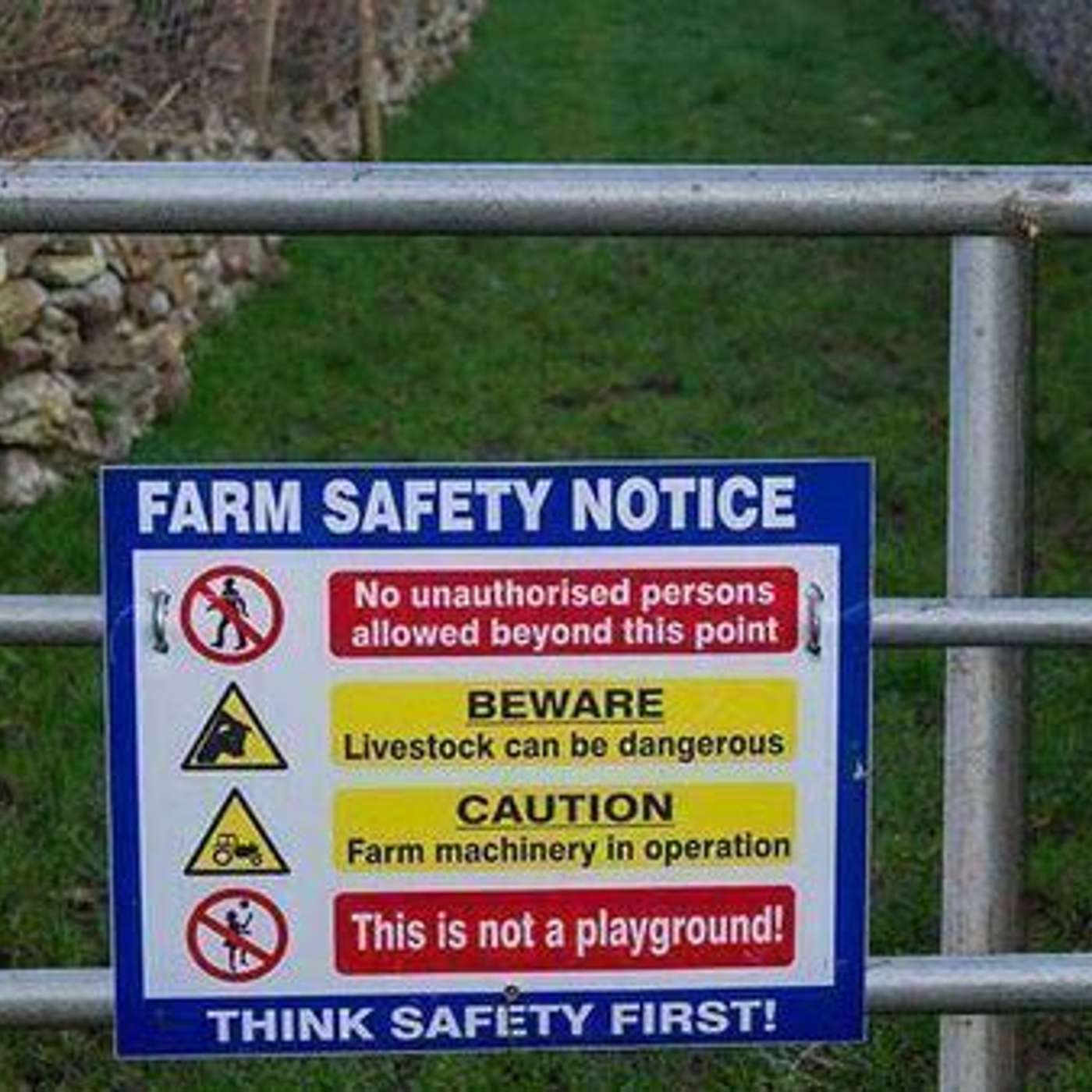
Teagasc Advisor, Serena Gibbons, is on this week’s OviCast podcast to discuss farm safety this winter. Serena first discusses the recent data from the Teagasc National Farm Survey (NFS) highlighting the number and location of accidents on farms. She highlights the extra challenges the recent cold snap poses and has some practical tips to deal with it as well as the need for some caution around routine tasks. With a lot of work conducted in the evenings in farm yards, Serena details the importance of good yard lighting and why some jobs are better suited to daylight hours. Serena also talks about the need for added safety around machinery during the winter period both for the operator and other individuals on the farm, with Serena highlighting some safety aspects in relation to road use that are particularly important at this stage of the year. Finally, Serena explains the importance of having your mobile phone on you and making others aware of where you will be while working alone should anything go wrong. For more information and useful links please visit: https://www.teagasc.ie/rural-economy/farm-management/farm-health--safety/For more episodes from the OviCast podcast, visit the show page at:https://www.teagasc.ie/animals/sheep/ovicast-sheep-podcast
Ep 155What you need to know about the new Sheep Improvement Scheme
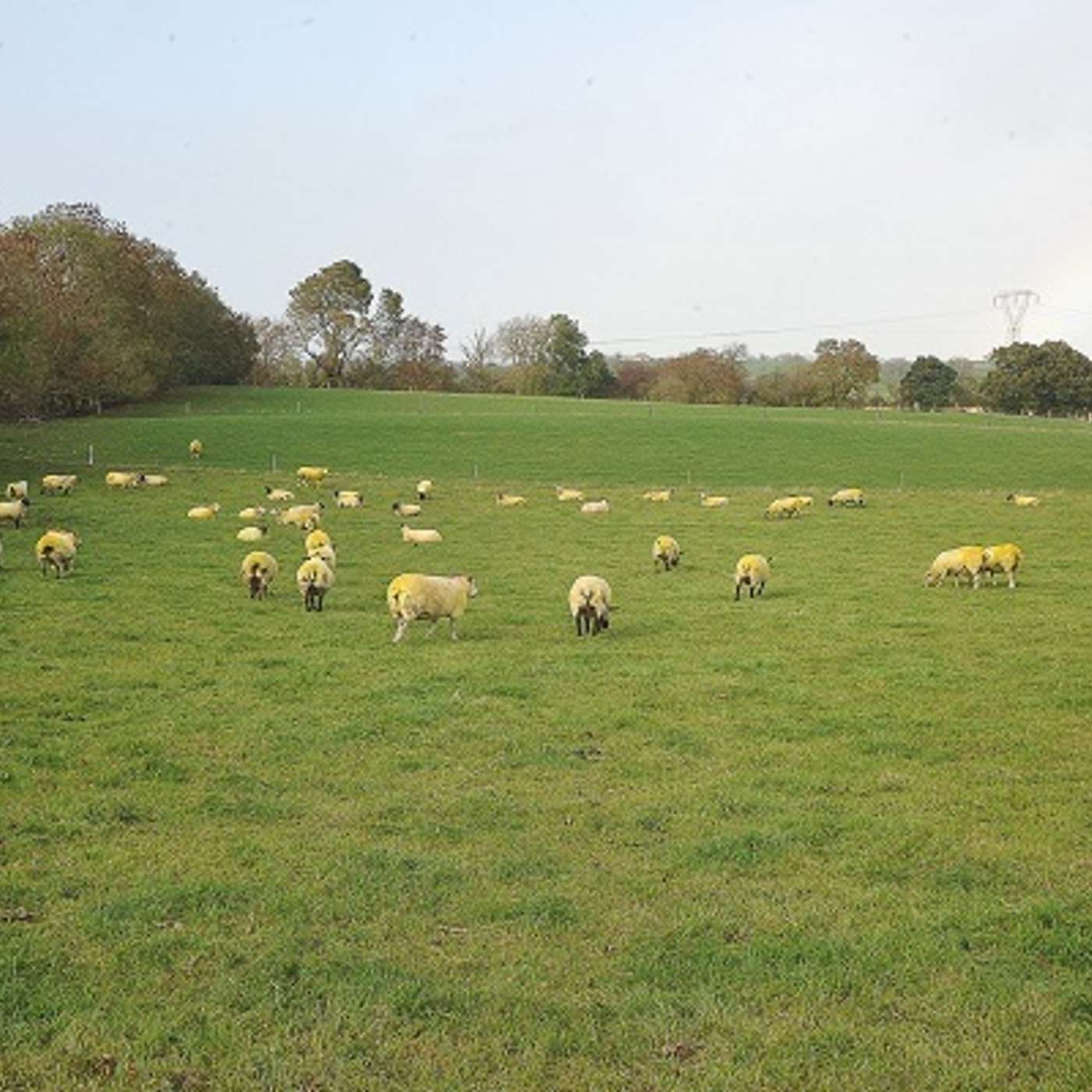
Michael Gottstein, Teagasc's Head of Sheep, joins Ciarán Lynch on this week’s OviCast podcast to discuss the new Sheep Improvement Scheme launched by the Department of Agriculture, Food and the Marine. Michael starts by outlining the timeframe for the scheme and the payments available. He discusses how to apply for the scheme and the options for new entrants. He explains how the reference number is calculated for each flock and discusses the tasks involved for both lowland and hill farmers, detailing the new genotyped ram task and how this will operate. Finally, Michael reminds producers about the application process and to apply in time before the closing date. For further information: https://www.gov.ie/en/service/98a53-sheep-improvement-scheme/ For more episodes from the OviCast podcast, visit the show page at: https://www.teagasc.ie/animals/sheep/ovicast-sheep-podcast
Ep 154Assessing the fluke risk this winter
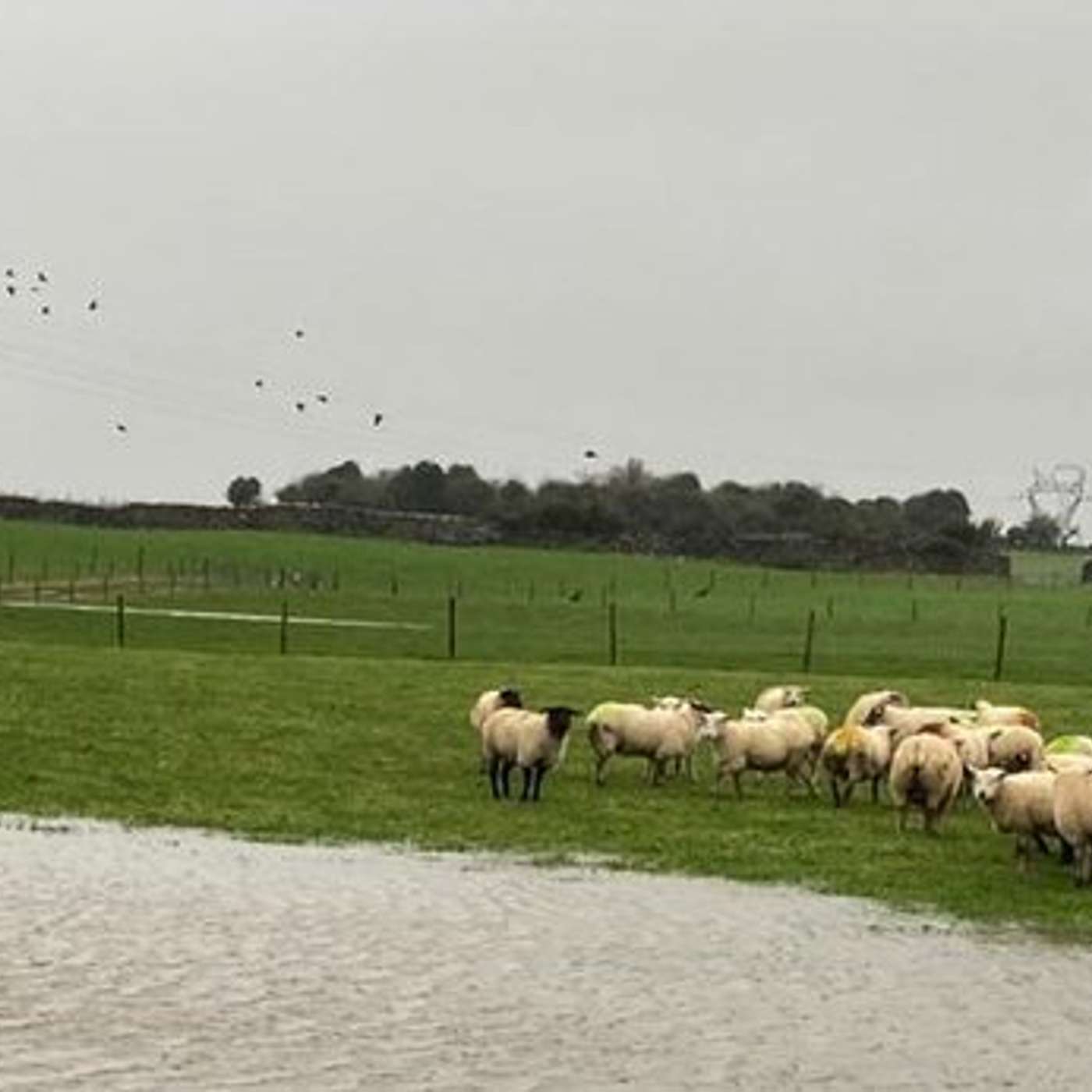
Dr. James O’Shaughnessy from the Dept. of Agriculture Central Veterinary Research Laboratory in Backweston joins Ciarán Lynch on this week’s OviCast podcast for a broad discussion on the risk fluke poses this winter. James describes the impact it has on animal health from acute to chronic infection and discusses the forecasted fluke risk for this winter and how that can vary across the country and amongst farms with James explaining detection, sources of information and the importance of farm history. Treatment options and the importance of choosing an appropriate flukicide for this point of the season are highlighted before finishing up discussing rumen fluke with James explaining the risk it can pose. For further information: https://animalhealthireland.ie/resources/?resource_type[]=documents&resource-tag[]=faecal-sampling For more episodes from the OviCast podcast, visit the show page at:https://www.teagasc.ie/animals/sheep/ovicast-sheep-podcast
Ep 153Finishing lambs: the impact of diet & management
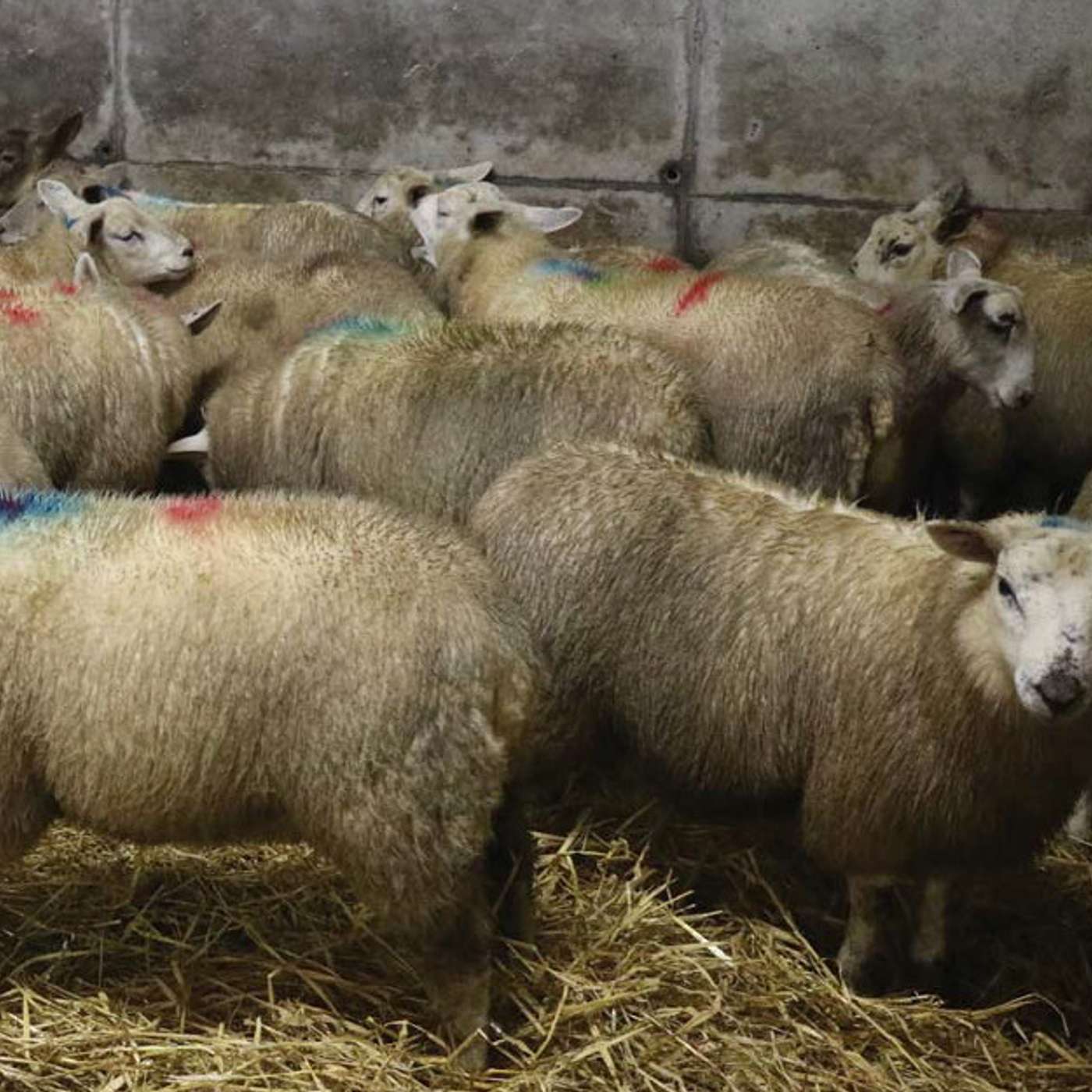
Dr Tim Keady is on this week’s OviCast podcast to discuss some key aspects of finishing lambs in the latter half of the season. Tim gives some context on the numbers finished in the latter half of the season and the levels of performance achieved at grass in late autumn along with the impact of concentrate supplementation. He also discusses indoor finishing systems and some of the key considerations from expected finish date to facilities available. With high concentrate prices, producers will be looking at some alternatives diets and Tim explains the impact of forage inclusion in the finishing diet by comparison to ad-lib concentrate finishing systems in terms of growth rate, carcass gain and kill-out %. He explains the margin over feed in these systems and the impact increased carcass or concentrate prices has on profit. Finally, Tim discuss the impact of shearing at housing and other management practices has on the productivity of these indoor finishing systems. For more episodes from the OviCast podcast, visit the show page at:https://www.teagasc.ie/animals/sheep/ovicast-sheep-podcast
Ep 152Genotyping Rams
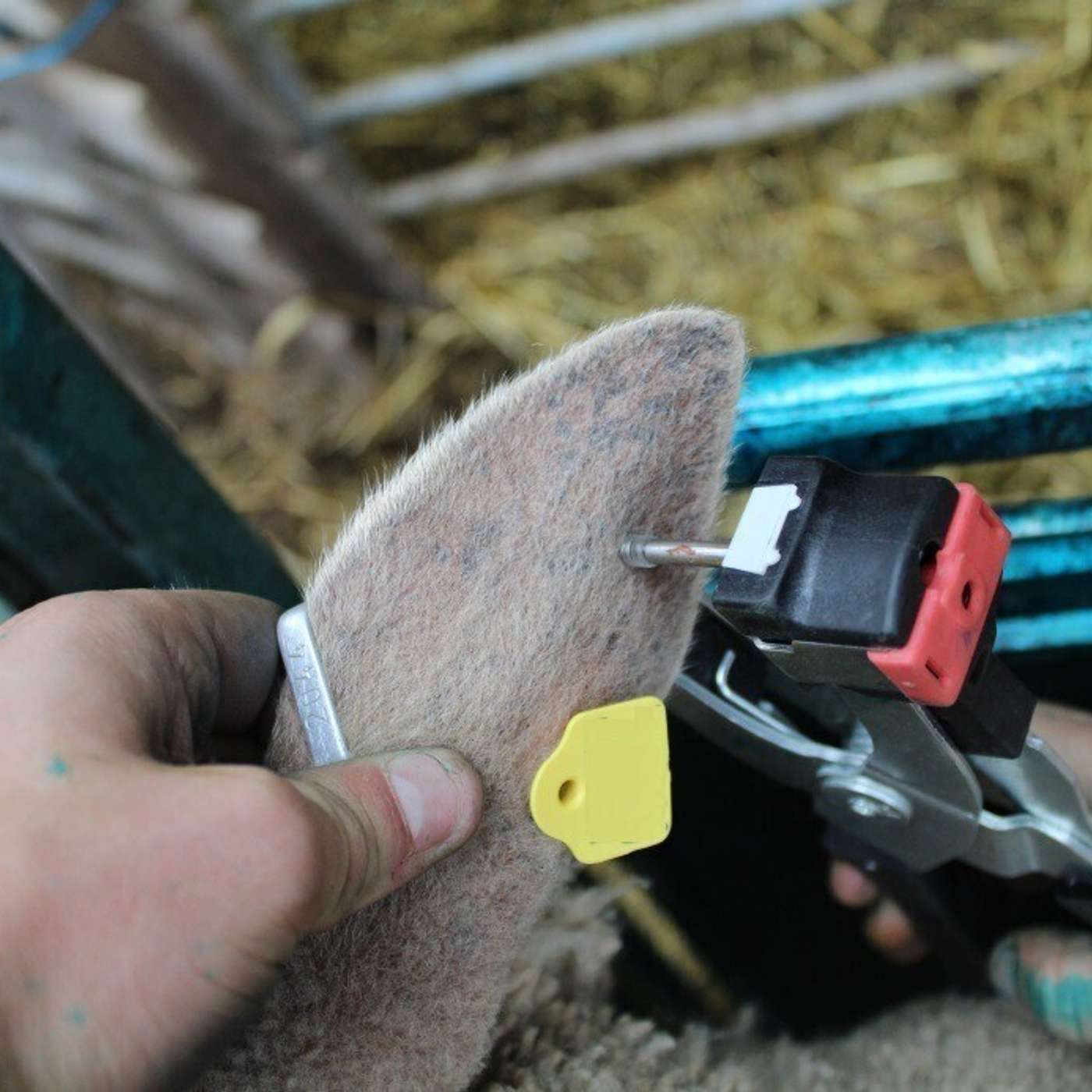
David Coen from Sheep Ireland joins Ciarán Lynch on this week’s OviCast to explain genotyping rams. David outlines the benefits of genotyping rams and the kind of information it can provide from scrapie genotypes to parentage verification to genomic evaluations. David and Ciarán also discuss the processes and costs involved for producers. David then explains the ram genotype task in the Proposed DAFM Sheep Improvement Scheme highlighting the criteria for both lowland and hill flocks. Finally, in relation to hill flocks, David discusses how genotyping could lay the foundation for breed improvement programmes within hill breeds. For more episodes from the OviCast podcast, visit the show page at:https://www.teagasc.ie/animals/sheep/ovicast-sheep-podcast
Ep 151Managing breeding ram lambs as the season draws to a close
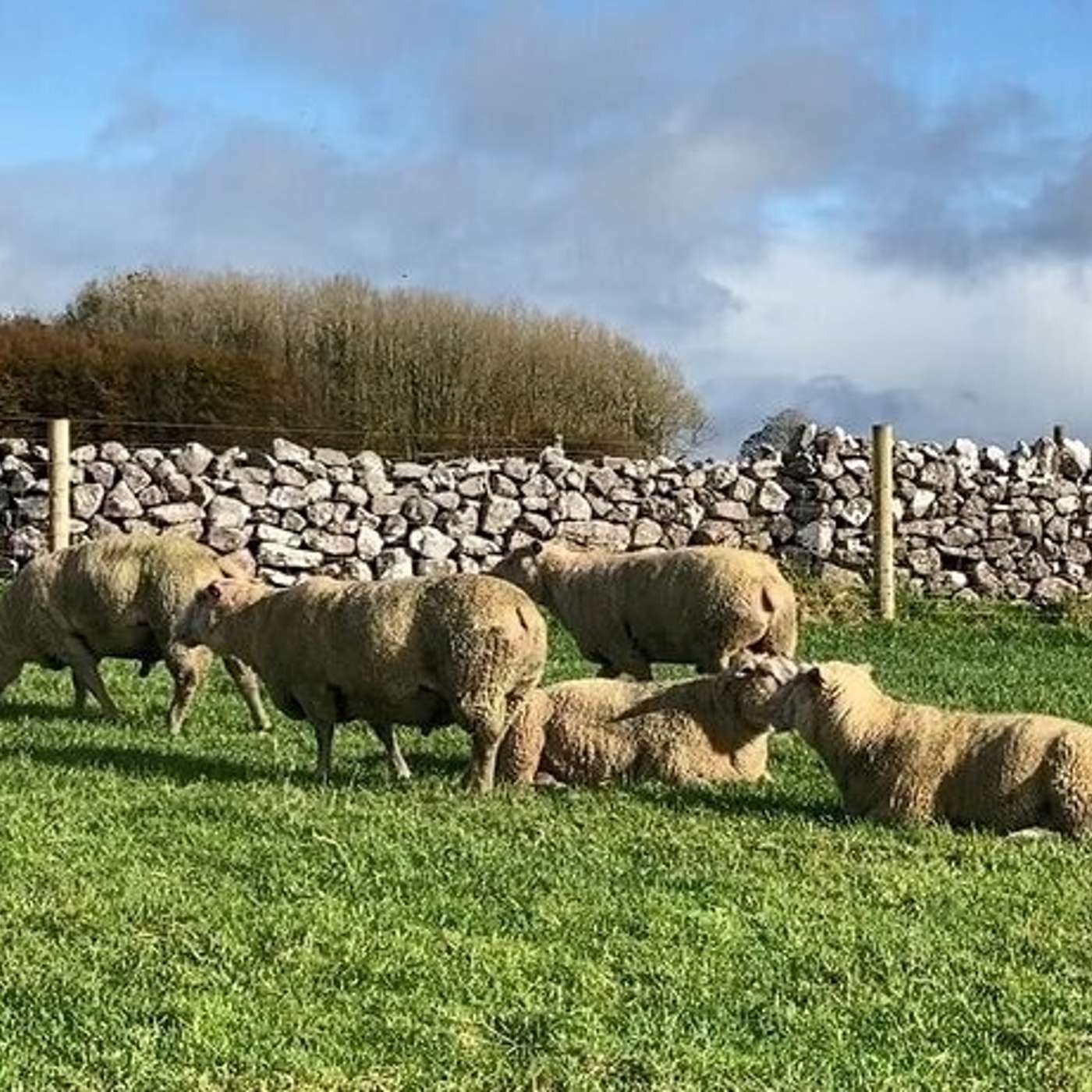
Teagasc advisor, David Argue, joins Ciarán Lynch on this week’s OviCast podcast to discuss some important aspects of ram lamb management as the breeding season draws to a close. Management during the first season can have an impact on ram longevity, David begins by emphasising the importance of having rams acclimatised prior to turnout. He discusses management of ram lambs during the breeding season and in particular the duration of the joining period. David also highlights the importance of meeting their nutritional needs during the post mating period to allow them to regain condition and he offers his tips on minimising the risk of rams fighting when grouped up or removed from the ewes. Finally, David explains some of the key health areas that need to be addressed as the season draws to a close. For more episodes from the OviCast podcast, visit the show page at:https://www.teagasc.ie/animals/sheep/ovicast-sheep-podcast
Ep 150Update from the Central Progeny Testing flocks’ improving margins
Sean Godfrey from Sheep Ireland is on this week’s OviCast podcast with an update on what’s happening in the Central Progeny Test (CPT) farms. Sean first explains the role of the CPT flocks and the other sources of commercial data that goes into the evaluations. He discusses the number of ewes and rams involved, plus the mating strategy on the farms from the use of cervical AI to mob mating and the role of genotyping to identify parentage. With a lot of traits being measured on the farm Sean takes us through some of the key measurements and why they’re an invaluable source of maternal data. Finally, Sean discusses performance recording, highlighting the benefits of signing up for LambPlus for pedigree and commercial breeders alike. Find our more information on Sheep Ireland’s website: https://www.sheep.ie/ For more episodes from the OviCast podcast, visit the show page at:https://www.teagasc.ie/animals/sheep/ovicast-sheep-podcast
Ep 149The 12 steps to reduce gaseous emissions on sheep farm whilst improving margins
As part of Sustainability Week, Teagasc advisor Tom Coll joins Ciarán Lynch on this week’s OviCast podcast to discuss the 12 steps from the Teagasc Signpost team to reduce gaseous emissions on sheep farms. Tom starts by highlighting how some of these steps will require a change of mindset, others are common practice on sheep farms which will not only have environmental benefits but will also result in better welfare and profitability on farms. Tom breaks down the 12 steps into 3 key sections: land, livestock and inputs. He explains each of these individually detailing how the changes required might be implemented, what’s involved and the benefits it has for the environment and the farmer. Finally, Tom encourages farmers to consider what steps they are already implementing and what additional areas they could focus on for the coming seasons. For more information on the 12 Steps: https://www.teagasc.ie/media/website/environment/climate-change/signpost-programme/12-Steps-to-Reduce-Gaseous-Emissions-on-Sheep-Farms.pdf And to find out about the Signpost programme go to: https://www.teagasc.ie/environment/climate-change--air-quality/signpost-programme/ For more episodes from the OviCast podcast, visit the show page at:https://www.teagasc.ie/animals/sheep/ovicast-sheep-podcast
Ep 148Mating advice - reducing the risk posed by an infertile ram
Teagasc sheep specialist, Damian Costello, joins Ciarán Lynch on this week’s OviCast with key tips around ram management during the mating period. Firstly, Damian emphasises the need to make sure the ram is physically sound and any aliments are addressed prior to turnout and how this could impact ram fertility. Damian talks about the use of raddle and the need to observe mating activity and in particular repeats during the mating period. He discusses dealing with injured rams and why it’s a good idea to check rams during the mating period, plus Damian explains why group mating with three or more rams reduces the risk of using an infertile ram and the advantages of mopping up ewes after the first cycle. Finally, Damian advises not to over-use ram lambs or over-rely on older rams with ailments as the mating season progresses. Podcast SurveyIn order to understand the aspects of podcasts which are most appealing and beneficial to you the listener, it would be appreciated if you could take 3-4 minutes to complete the following survey to give your feedback: https://forms.office.com/r/mDZTE9zPy4 For more episodes from the OviCast podcast, visit the show page at:https://www.teagasc.ie/animals/sheep/ovicast-sheep-podcast
Ep 147Planning the autumn grazing rotation
Dr Philip Creighton is on this week’s OviCast to discuss some key aspects of grazing management this autumn. Philip first talks about current grazing conditions and supply on farms as well as some of the challenges this autumn. He then discusses the closing plan and how this may need to be modified on farms where supplies are tight. Philip explains how clover or multi species swards may have to be managed slightly differently at closing to get the best out of these swards. Finally, Philip encourages farmers to review fertiliser and management strategies this year and assess what worked well or needs changing for the coming season. Autumn closing planner: https://www.teagasc.ie/media/website/animals/sheep/Sheep-Autumn-Closing-Planner.pdf Podcast SurveyIn order to understand the aspects of podcasts which are most appealing and beneficial to you the listener, it would be appreciated if you could take 3-4 minutes to complete the following survey to give your feedback: https://forms.office.com/r/mDZTE9zPy4 For more episodes from the OviCast podcast, visit the show page at:https://www.teagasc.ie/animals/sheep/ovicast-sheep-podcast
Ep 146Farmer Focus: Drafting, breeding ewe lambs and grassland management in Co. Roscommon
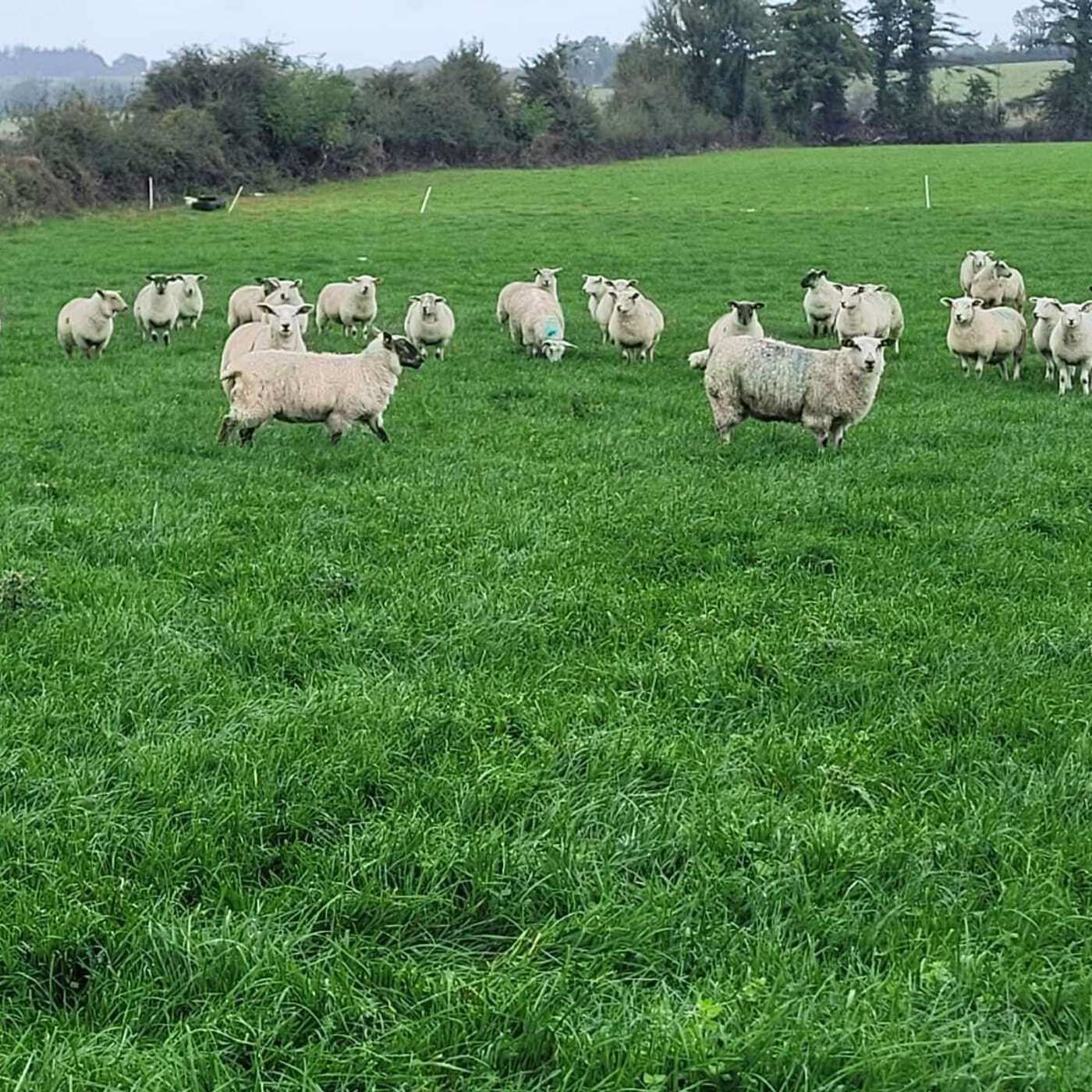
Shane Moore, BETTER Farm Participant who is farming just outside Athleague in county Roscommon, joins Ciarán Lynch on this week’s OviCast to talk about lamb performance and drafting. With the breeding season around the corner, he discusses breeding ewe lambs and how this year’s cohort are shaping up. Shane also discusses grassland management, overall production this year and how he has made some changes to his management from using protected urea to using a dribble bar for slurry to establishing clover based swards in response to increased input costs. Shane then explains the autumn grazing plan on the farm and finishes up highlighting the upcoming open day on the 6th of October at 6:30pm. Details of the farm walk can be found here: https://www.teagasc.ie/news--events/national-events/events/gfoty-shanemoore.php Podcast SurveyIn order to understand the aspects of podcasts which are most appealing and beneficial to you the listener, it would be appreciated if you could take 3-4 minutes to complete the following survey to give your feedback: https://forms.office.com/r/mDZTE9zPy4 For more episodes from the OviCast podcast, visit the show page at:https://www.teagasc.ie/animals/sheep/ovicast-sheep-podcast
Ep 145Getting a handle on lamb drafting
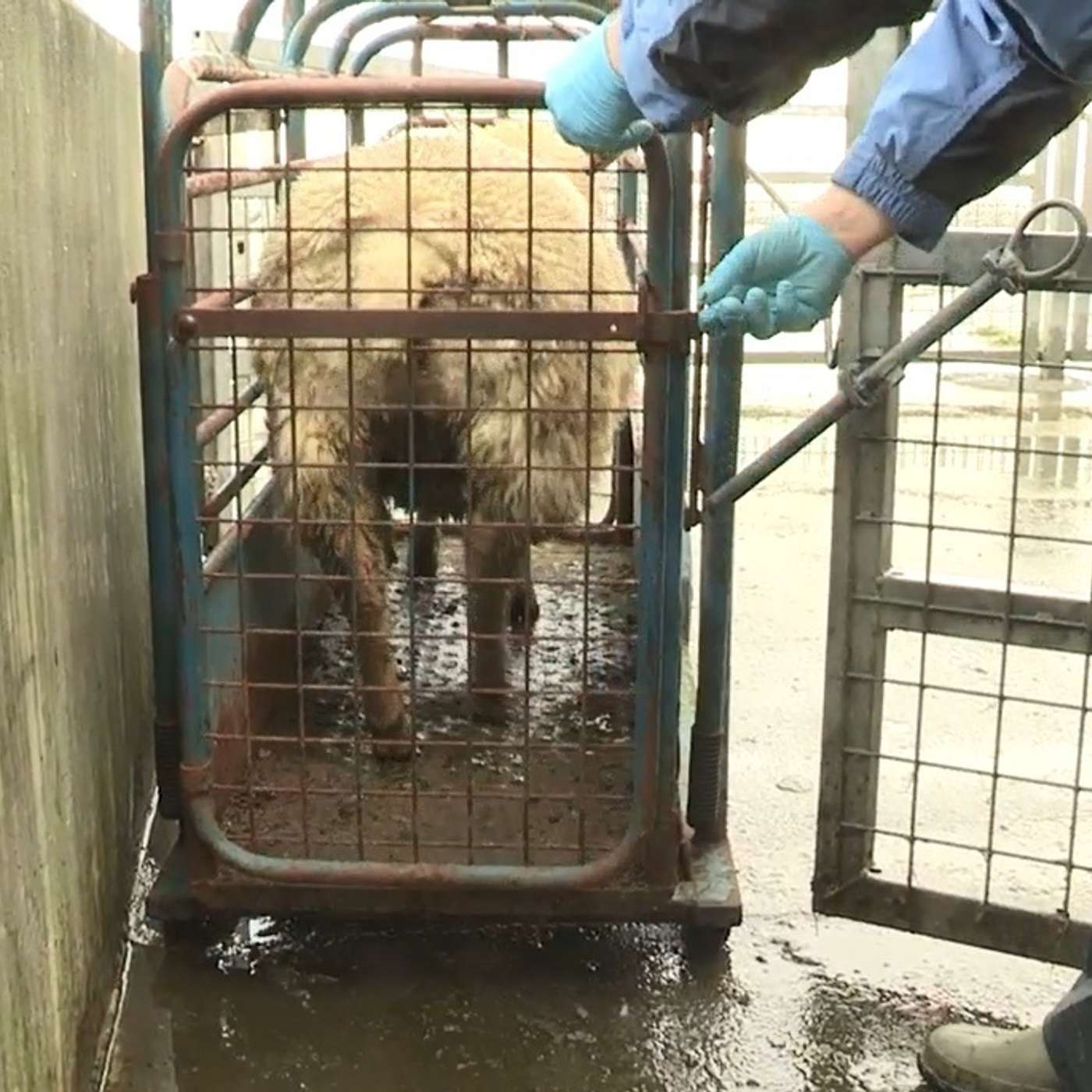
Sheep Specialist, Michael Gottstein, joins Ciarán Lynch on this week’s OviCast to discuss some important aspects of lamb drafting at this point in the season. Michael discusses the national kill and type of carcass being supplied and he discusses the expected kill out percentage in lambs and what can influence it. He also explains the issues with under-fleshed carcasses, both in terms of delivering returns to the producer and the type of carcass they produce. Michael then highlights the key areas to focus on for lamb finishing and how to trouble shoot some of the problems. Finally, Michael emphasises the importance of not only drafting at the correct weight but also ensuring there is adequate cover when drafting lambs. For more episodes from the OviCast podcast, visit the show page at:https://www.teagasc.ie/animals/sheep/ovicast-sheep-podcast
Ep 144Gearing up for another year in Kildalton Agricultural College
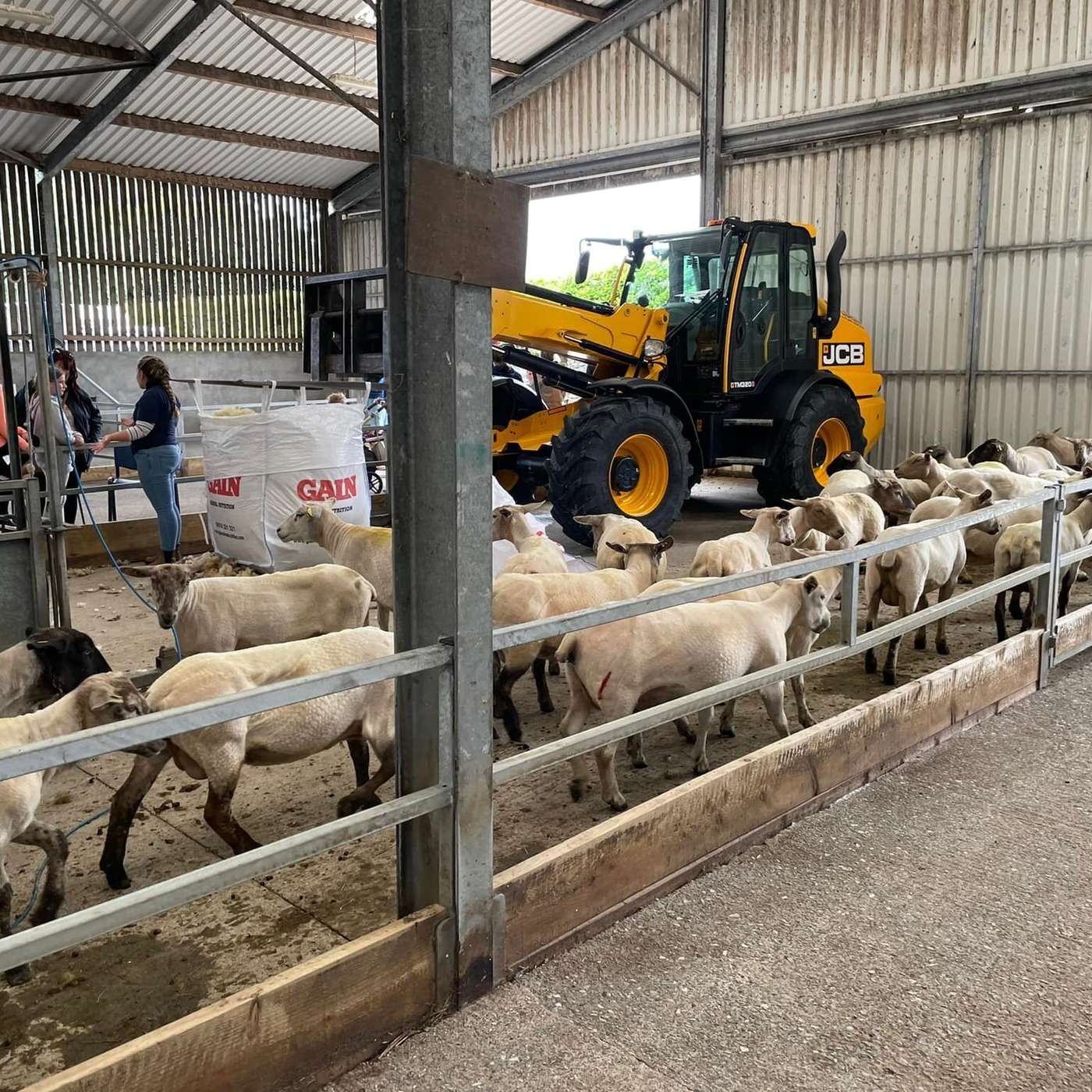
With another college year starting off, Emma Tobin from Kildalton Agricultural College joins Ciarán Lynch on this week’s OviCast to highlight the different full time and part time courses that are available. Emma discusses the blended approach to learning from the classroom to the practical side of flock management as well as some of the newer technologies they use. She also discusses the college sheep flock and its management and how it forms a vital part of student education before finishing up to explain the role of on-farm placement and how it provides students with an excellent opportunity to gain first-hand experience. You can find out more about Teagasc Kildalton here: https://www.teagasc.ie/education/teagasc-colleges/kildalton/ For more episodes from the OviCast podcast, visit the show page at:https://www.teagasc.ie/animals/sheep/ovicast-sheep-podcast
Ep 143Haemonchus contortus: a parasite challenge to be aware of in sheep
Séamus Fagan from the Department of Agriculture’s Regional Veterinary Lab in Athlone joins Ciarán Lynch on this week’s OviCast podcast to discuss Haemonchus contortus infection in sheep. Séamus explains how this parasite is sometimes referred to as the barber’s pole and how it affects sheep. With some cases appearing around the country this year, he discusses the symptoms, transmission and control options as well as diagnosis in flocks. Finally, Séamus encourages farmers to be vigilant when it comes to flock health issues, investigate further and seek advice where needed. For more episodes from the OviCast podcast, visit the show page at:https://www.teagasc.ie/animals/sheep/ovicast-sheep-podcast
Ep 142Farmer Focus: Francis Gonley in Co Sligo & his plans for lamb finishing
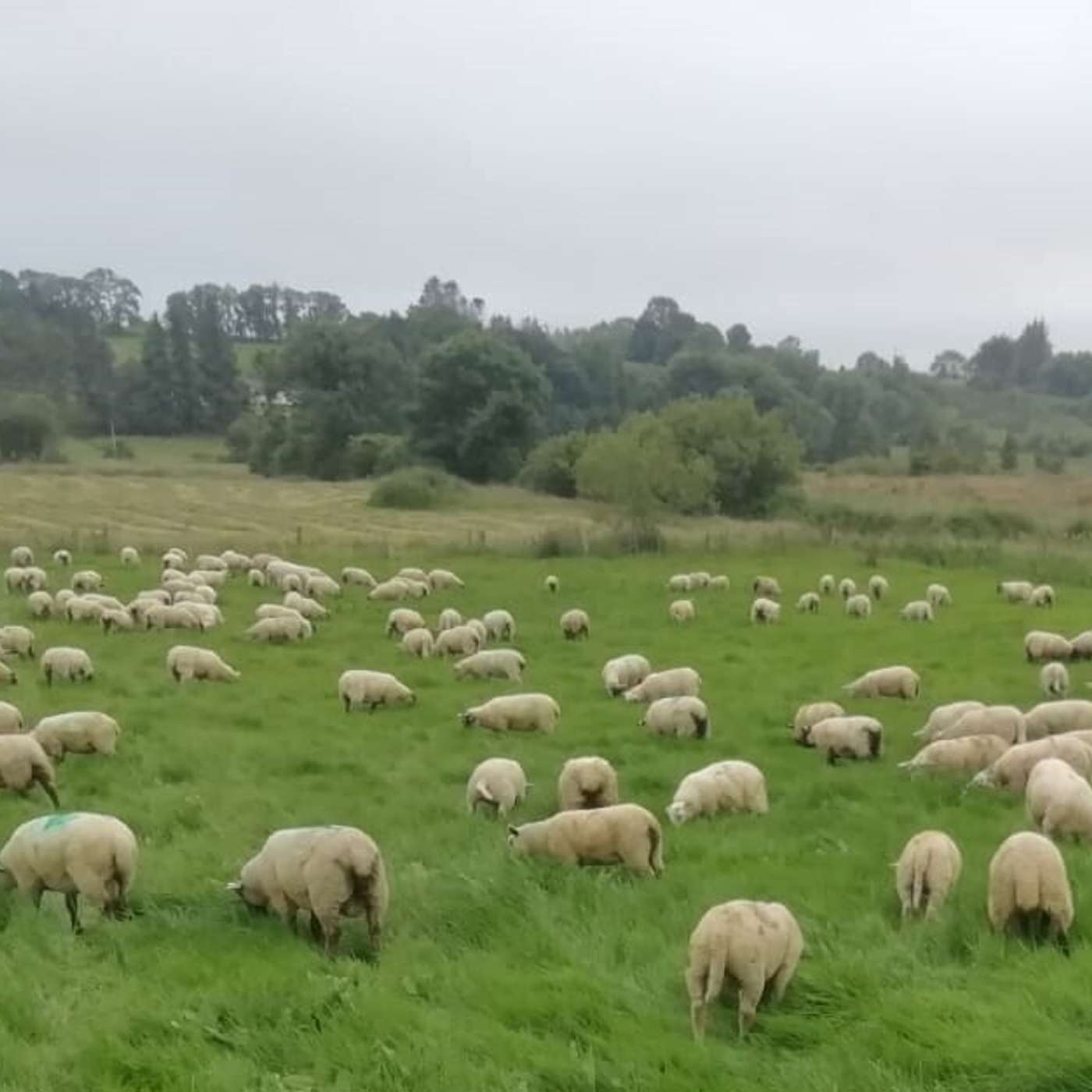
BETTER Farm participant, Francis Gonley, and programme manager, Dr. Frank Campion, are on this week’s OviCast podcast to chat about Francis’ system and lamb finishing this autumn. Francis starts off explaining his lowland and hill system, grass growth and how the lambs have performed this season. He discusses his reasons for selling off the lighter lambs from both flocks as stores, while Frank discusses the level of performance of the long keep lambs and how they don’t suit every system. Francis details his options for selling and finishing the remaining lambs on the farm this autumn. Finally, Francis and Frank highlight the upcoming open day on the farm and what topics will be covered and for more information on the event, go to:https://www.teagasc.ie/news--events/national-events/events/bettersheepwalksligo.php For more episodes from the OviCast podcast, visit the show page at: https://www.teagasc.ie/animals/sheep/ovicast-sheep-podcast
Ep 141Farmer Focus: Brian Keane on his mixed enterprise, dealing with drought & sowing cover crops for the winter
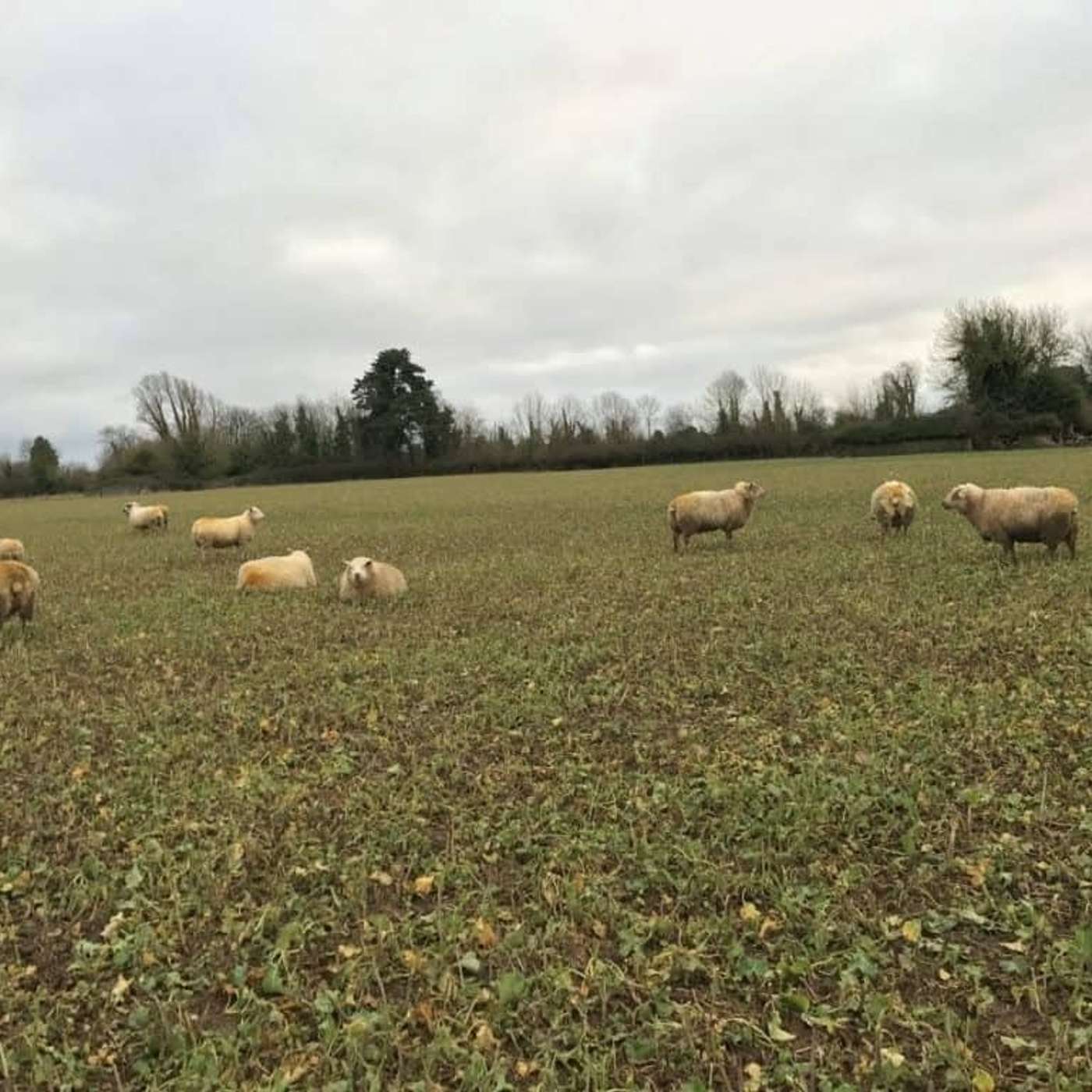
Sheep BETTER Farm Programme participant, Brian Keane, and his Teagasc Advisor, James Doran, join Ciarán Lynch on this week’s OviCast to get an insight into the system he is operating and how he is managing this season. Brian, who is farming near Enniscorthy in Co Wexford, first gives some background to his farming enterprise which comprises of sheep suckers and tillage. He discusses how the dry spell has affected his farm over the past few weeks and James highlights what steps Brian has taken to manage through the dry spell. Brian explains what cover crops he has put in for the winter and their potential to finish lambs with James also offering some tips on best management. For more episodes from the OviCast podcast, visit the show page at: https://www.teagasc.ie/animals/sheep/ovicast-sheep-podcast
Ep 140Sheep Market Update
Seamus McMenamin, Sheep Sector Manager with Bord Bia, is on this week’s OviCast podcast to discuss current trends and the outlook for the sheep market in the coming months. Seamus begins by discussing current trade and throughput this year to date. Since spring, Seamus explains the impact reopening has had on lamb consumption both on the domestic and international market as well as the trends in international trade. He then discusses the prospects for the lambs and ewe trade over the coming weeks and months. Finally, Seamus highlights the potential market for organic lamb and some of the challenges both the organic and conventional lamb trade could face going forwards. For more episodes from the OviCast podcast, visit the show page at: https://www.teagasc.ie/animals/sheep/ovicast-sheep-podcast
Ep 139Tackling Ovine Pulmonary Adenocarcinoma (OPA) in a hill flock
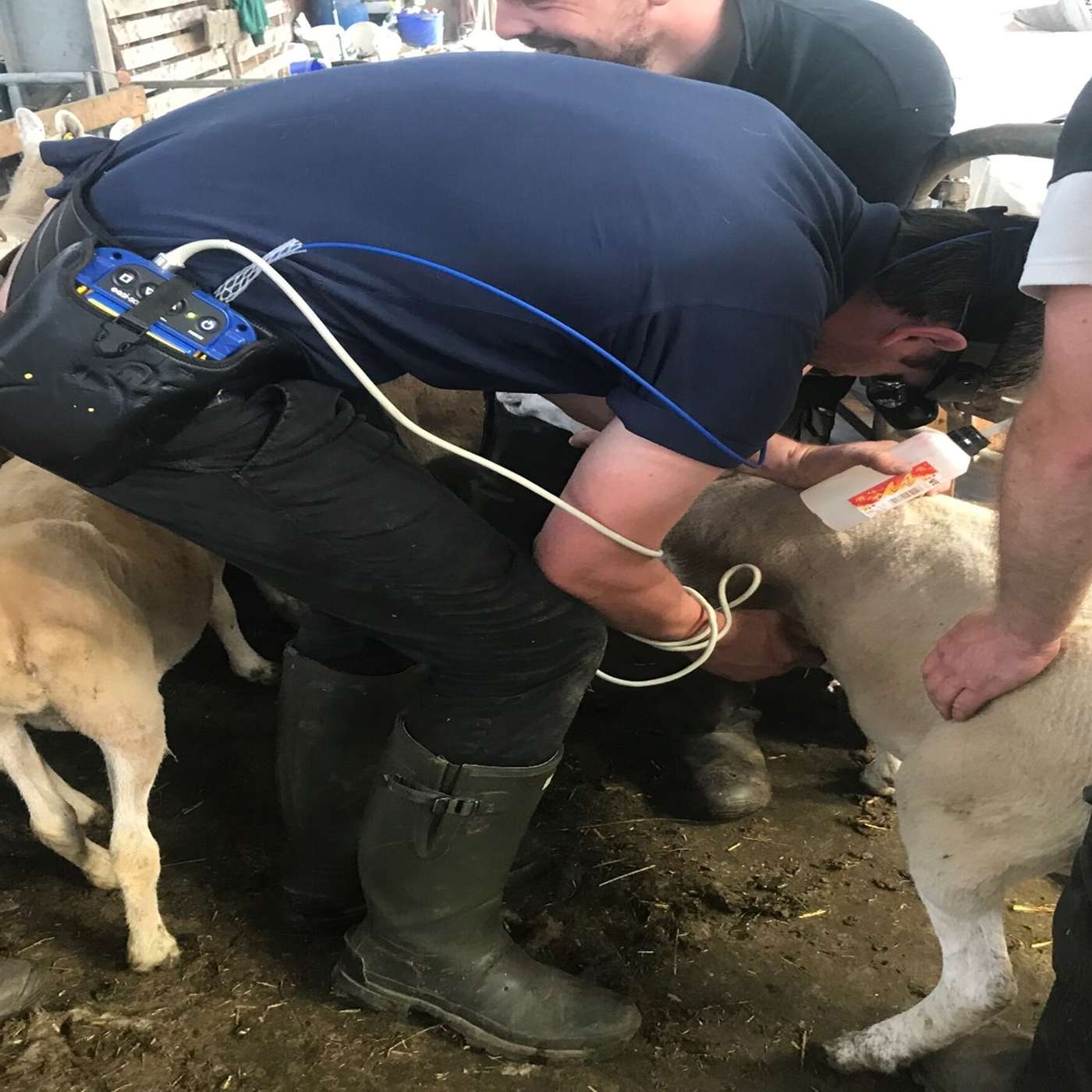
Patrick Dunne, who is a participant in the Teagasc BETTER Farm Sheep programme, is on this week’s OviCast to discuss the impact of OPA on his flock and how he has addressed the issue over the past number of years. Patrick goes back a number of years to explain how it was impacting the flock and the lack of awareness of what was causing it. He discusses how he went about getting a diagnosis and how he enlisted the services of Vet Patrick Grant to screen the flock via ultrasound scanning to detect infected ewes at an earlier stage. Using this information, he was able to reduce the level of OPA in the flock and the impact that has had in subsequent years on the health and productivity of the flock. He discusses OPA, or to give it its full title Ovine Pulmonary Adenocarcinoma, which is also referred to as Jaggsiekete or more commonly wheelbarrow disease, and it is an infectious cancerous tumour that affects the lungs of sheep. The disease is spread through the inhalation of the virus from respiratory secretions, it is production limiting and as the condition progresses, the virus leads to the development of multiple tumours in the lungs which lead to the overproduction of fluid in the lungs and is nearly always fatal. Early detection relies on the use of ultrasound to detect tumours in the lungs at an early stage thereby for culling of these infected animals at an early stage and limit the spread and incidence in a flock. For more episodes from the OviCast podcast, visit the show page at: https://www.teagasc.ie/animals/sheep/ovicast-sheep-podcast
Ep 138Grassland management focus
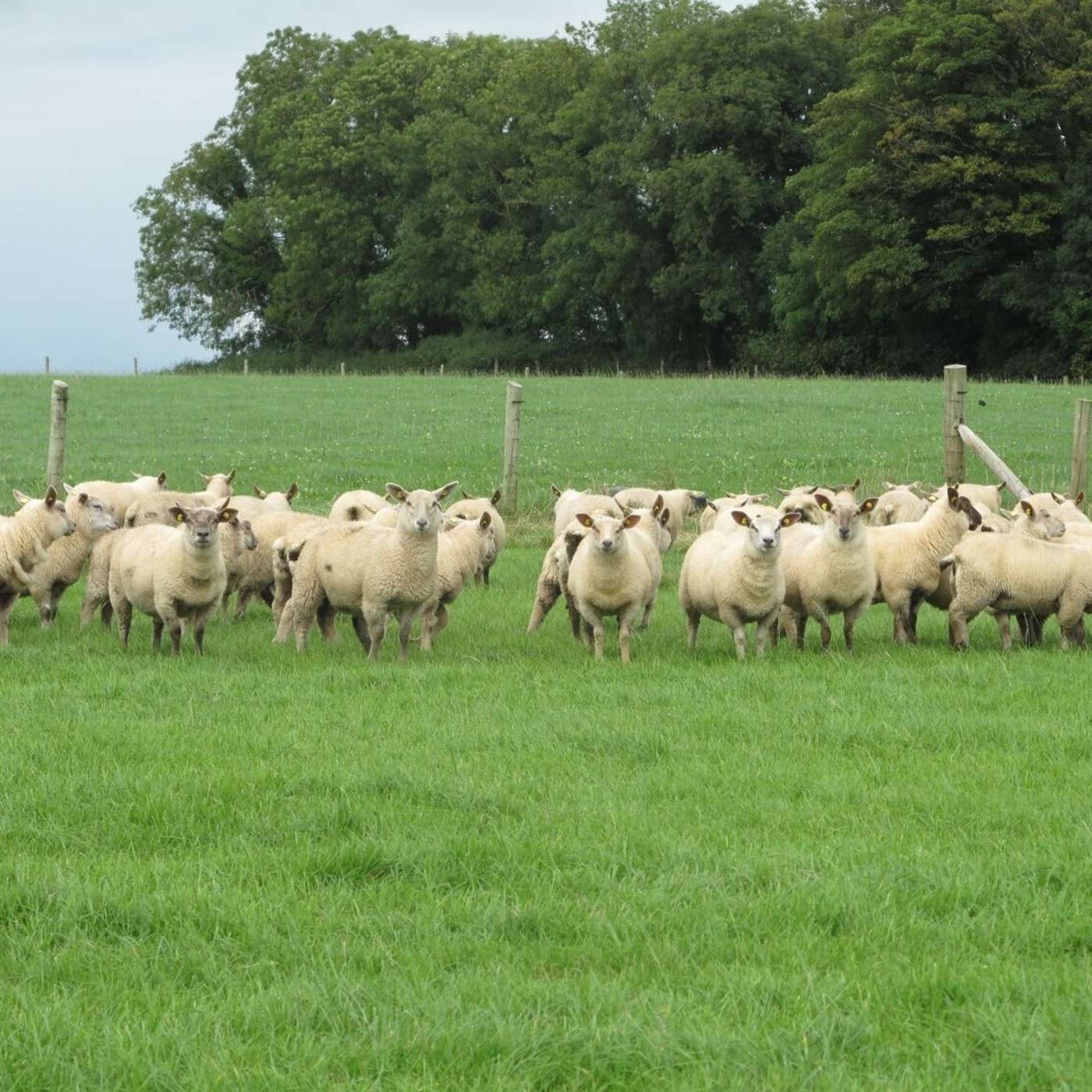
Dr Philip Creighton joins Ciarán Lynch on this week’s OviCast to discuss grazing management as we head into the autumn. Philip starts off by discussing grass supply and demand across the country and the need to take stock of these for the coming weeks and months. He goes on to outline the grazing targets for the coming weeks. He discusses August fertiliser applications, the importance of targeting P & K and lime applications at key areas before finishing up with some grazing tips for newly established clover swards and explaining the impact this has on a successful establishment. For more episodes from the OviCast podcast, visit the show page at: https://www.teagasc.ie/animals/sheep/ovicast-sheep-podcast
Ep 137Buying a ram? Make use of the genetic information
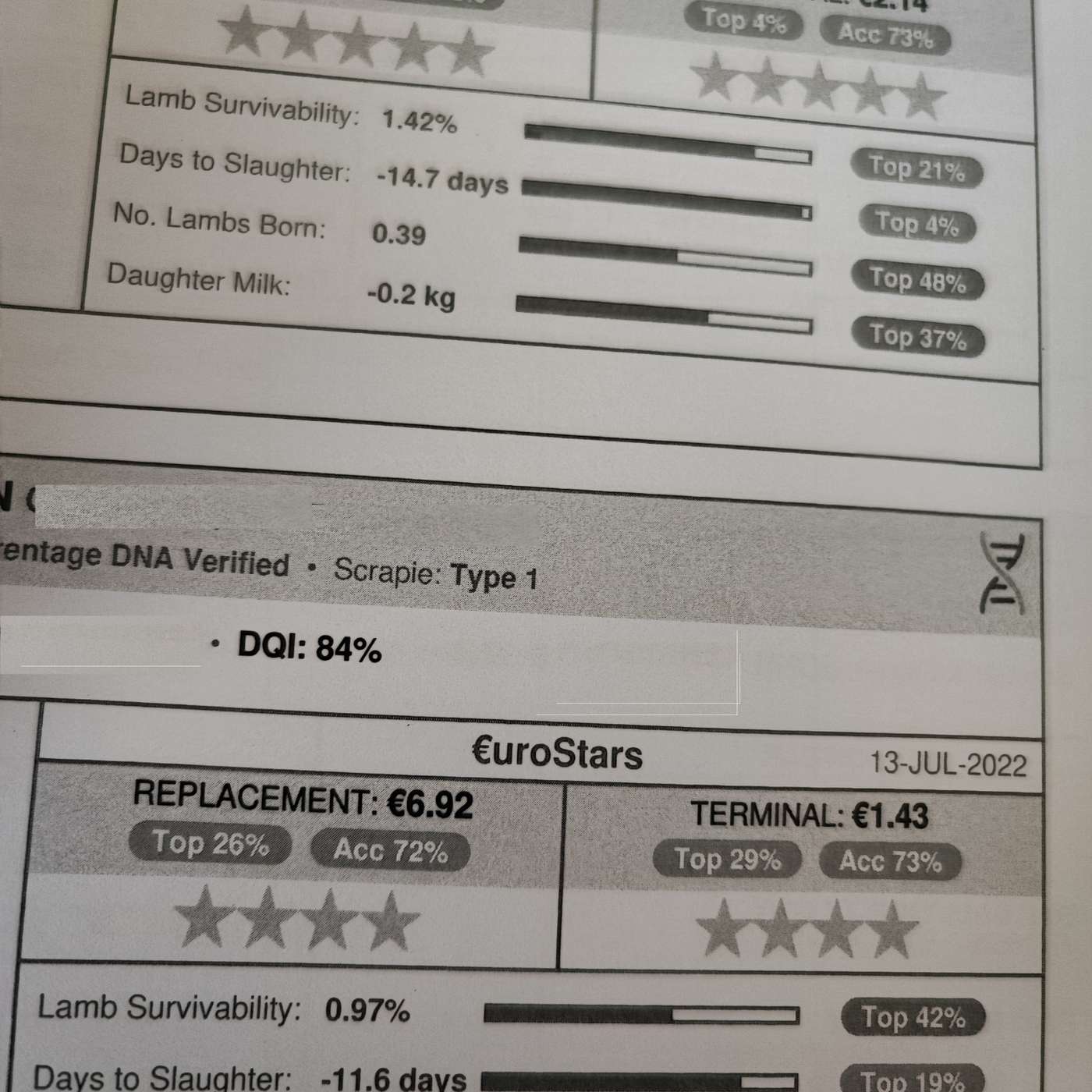
With ram sales in full swing, Kevin Mc Dermott, Sheep Ireland Manager, joins Ciarán Lynch on this week’s OviCast to discuss using genetic information when making your purchasing decisions. First, Kevin highlights the benefits genetic improvement has in a flock as he discusses the results from on-farm validations. There is a discussion on what information is available for recorded rams in sales catalogues with Kevin highlighting and explaining the key areas to focus on. With over 1000 pedigree breeders recorded in LambPlus, Kevin explains the online ram search tool and how it can be used to identify rams right across the country. Finally, Kevin discusses this year’s sheep Ireland multibreed rams sale. For more episodes from the OviCast podcast, visit the show page at: https://www.teagasc.ie/animals/sheep/ovicast-sheep-podcast
Ep 136Do companion forages influence intake, digestibility and methane production in sheep?
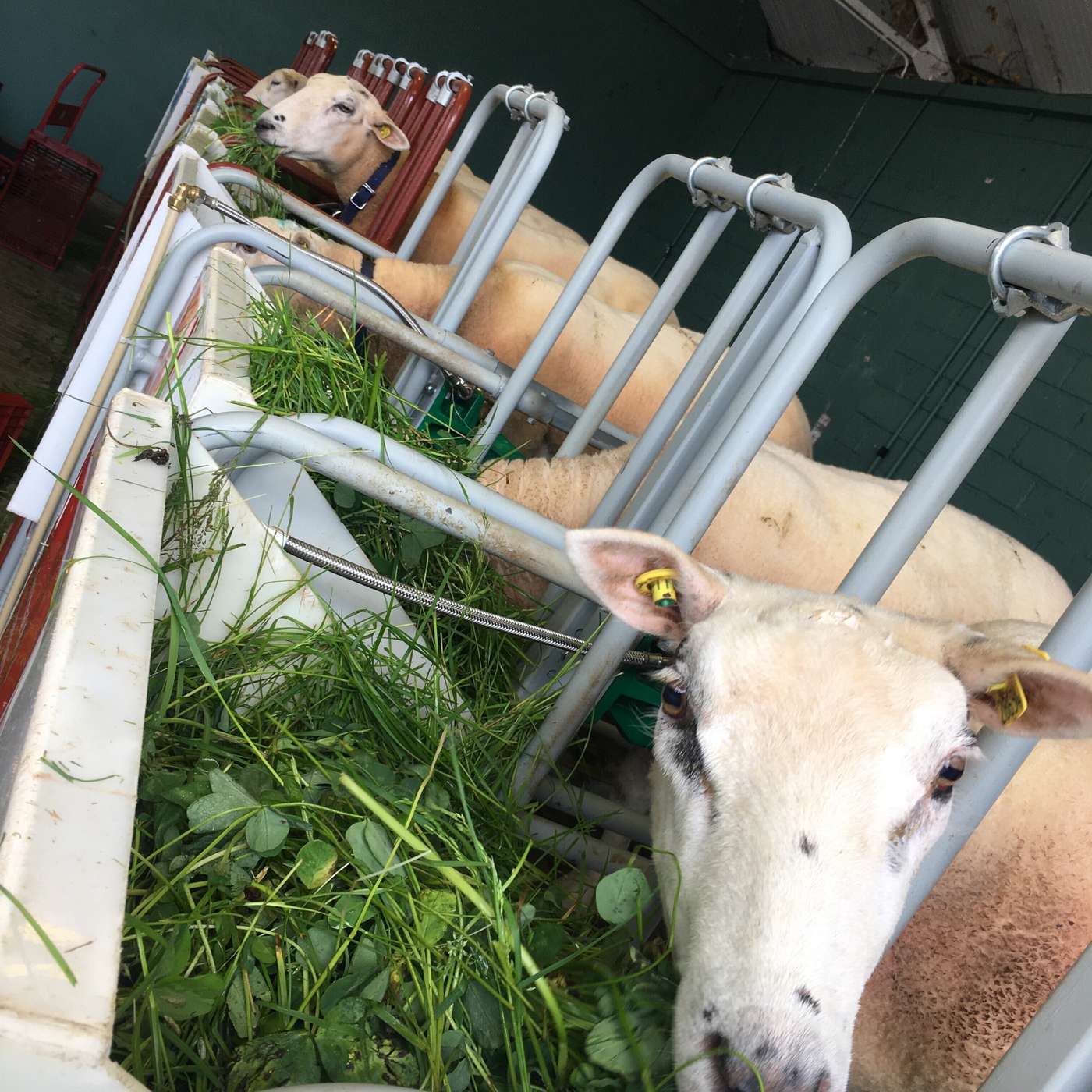
Post-graduate student, Sarah Woodmartin, and Dr Fiona McGovern join Ciarán Lynch on the latest OviCast podcast to discuss ongoing work examining the effect of companion forages influence intake, digestibility and methane production in sheep as part of a wider Grass2Gas project. Sarah first gives a bit of background to the project before discussing what is being examined, some of the preliminary results and their implications as well as future areas of interest. For more episodes from the OviCast podcast, visit the show page at: https://www.teagasc.ie/animals/sheep/ovicast-sheep-podcast
Ep 135The weights are in – BETTER farm update
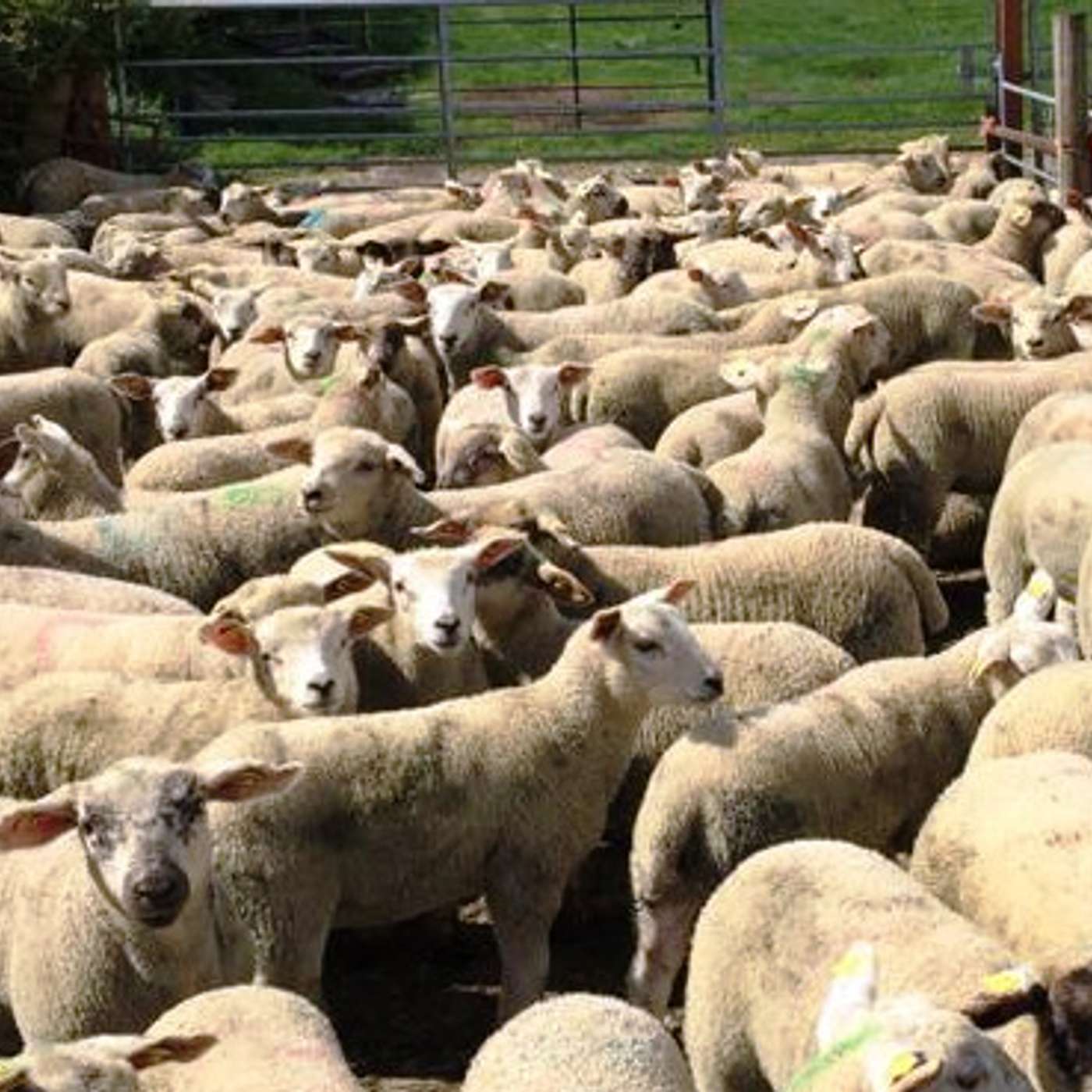
Dr Frank Campion joins Ciarán Lynch for this episode of OviCast with an update of how performance has stacked up on the lowland flocks at weaning. He discusses lamb performance and its implications for sales, feeding and finishing strategies on the farms. Frank emphasises the importance of assessing the weight of lambs and their expected finish time at this stage of the season. Finally, Frank highlights the importance of internal parasite control and monitoring worm burdens as the season progresses. For more episodes from the OviCast podcast, visit the show page at: https://www.teagasc.ie/animals/sheep/ovicast-sheep-podcast
Ep 134Time to check and cull for mastitis
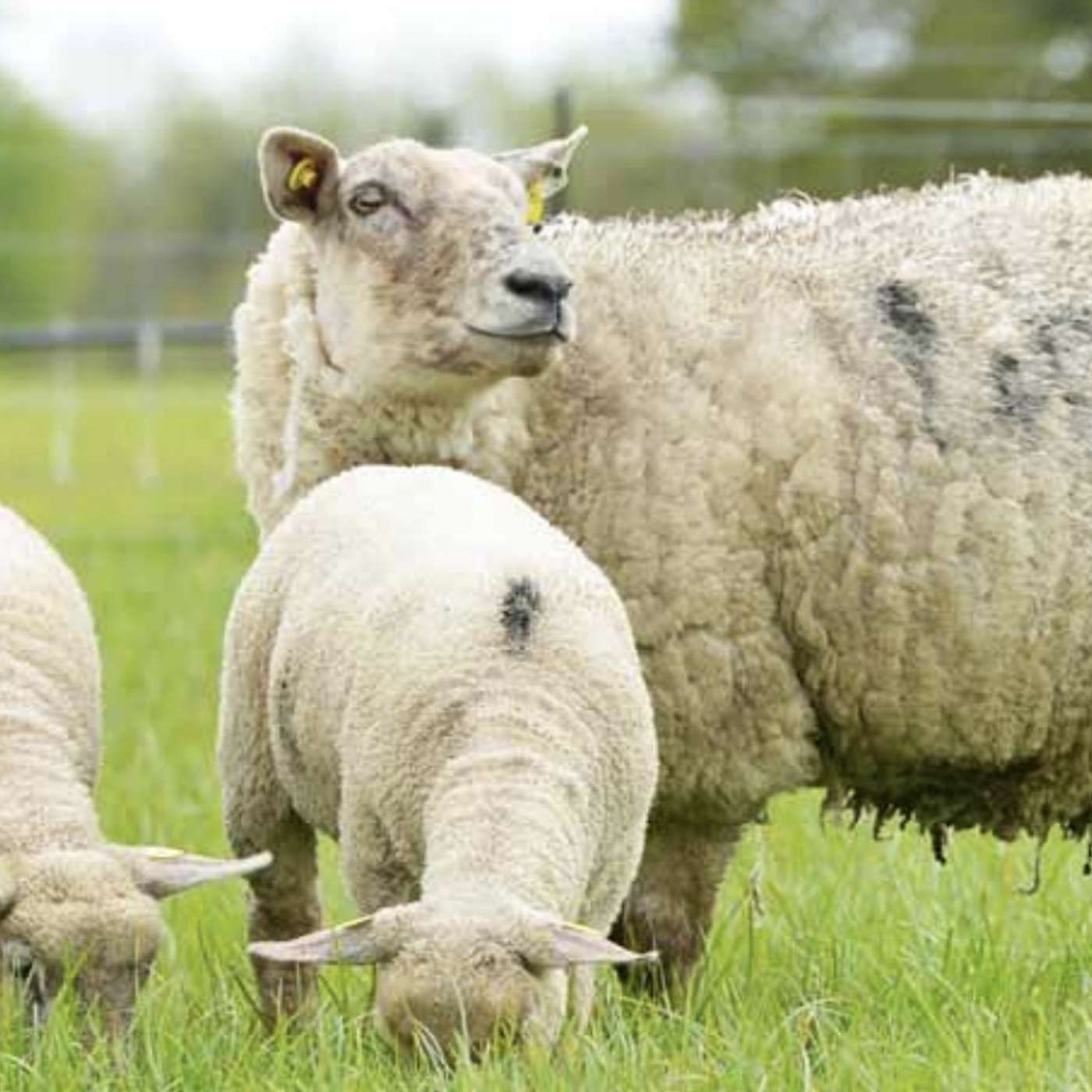
With ewes being weaned across the country it provides farmers with an opportunity to check udders for mastitis and other issues and remove these problem ewes from the flock. Ryan Duffy, Technical Vet with HIPRA, joins Ciarán Lynch on the latest OviCast podcast to discuss the implications of mastitis in ewes and offers some practical advice on the topic. Ryan explains the different types of mastitis that occurs, the need to cull ewes exhibiting any signs of infection, as well as the impact of udder and teat structure. He also discusses the drying off process and the impact that can have before moving on to discuss mastitis that can occur in the dry period. Finally, Ryan offers his advice for flocks that encounter a high incidence of mastitis annually. For more episodes from the OviCast podcast, visit the show page at: https://www.teagasc.ie/animals/sheep/ovicast-sheep-podcast
Ep 133Weaning - management tasks and performance checks
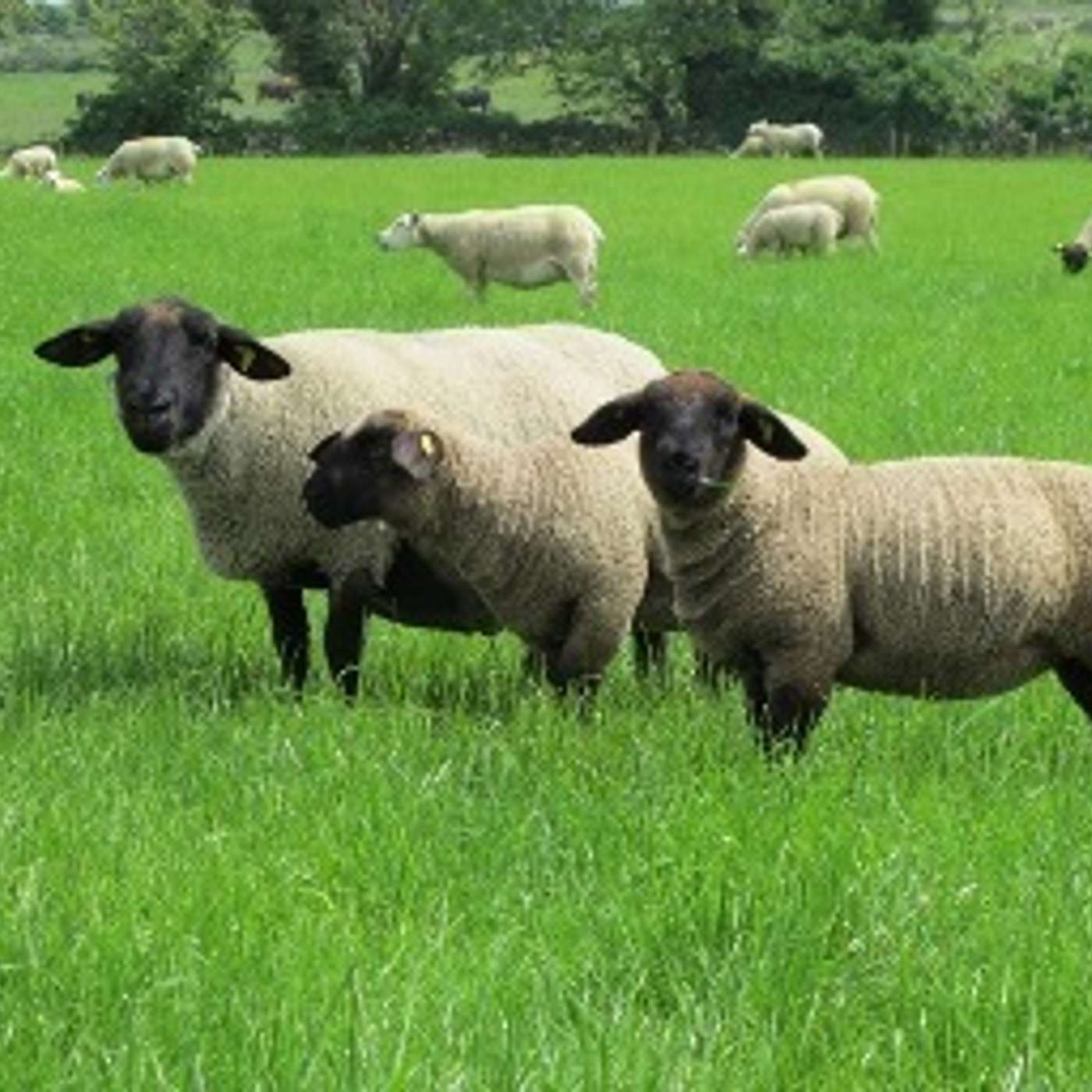
With weaning occurring around the country, sheep specialist Michael Gottstein joins Ciarán Lynch on this week’s OviCast to discuss some of the key management tasks over the coming weeks and the opportunity it presents to benchmark performance. They discuss various aspects of flock performance from ewe output to lamb performance to reasons for culling. Michael advises as to why it’s a good opportunity to assess lamb weights, batch lambs accordingly and establish finishing lamb group early and plan ahead. They discuss culling and taking advantage of the high cull ewe priced this season to tidy up flock performance. Finally, Michael encourages producers to examine how their flock has performed and think about what changes could be made to improve for next season. For more episodes from the OviCast podcast, visit the show page at: https://www.teagasc.ie/animals/sheep/ovicast-sheep-podcast
Ep 132What you need to know about the Fodder Support Scheme
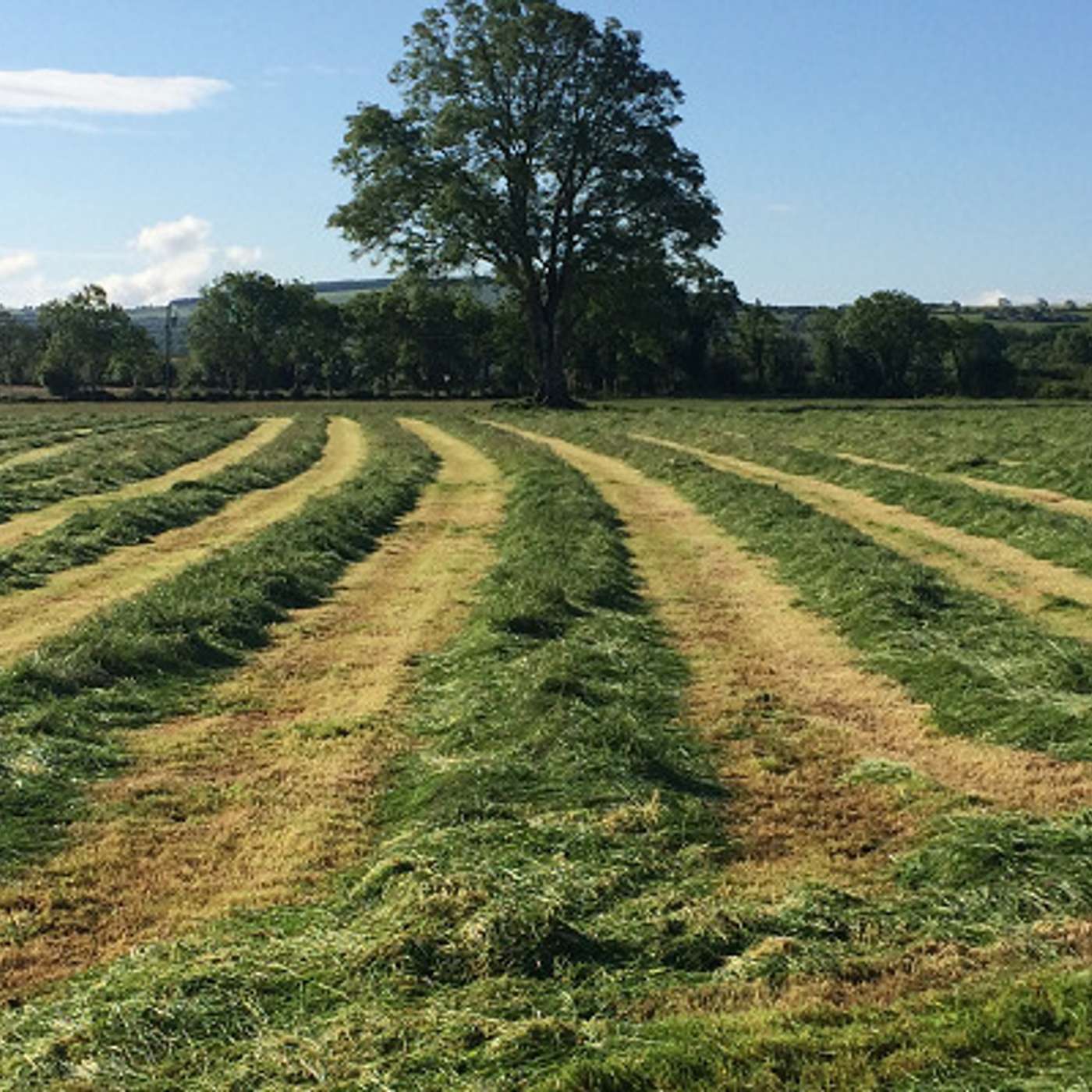
The Fodder Support Scheme opened for applications this week and sheep specialist Damian Costello joins Ciarán Lynch on this week’s OviCast to explain more about it. Damian outlines the focus of the scheme and the potential payment and key dates involved. He discusses eligibility criteria and maximum payable area plus explains how you can submit an application under agfood.ie and when payments are expected to be made. For more episodes from the OviCast podcast, visit the show page at: https://www.teagasc.ie/animals/sheep/ovicast-sheep-podcast