My Worst Investment Ever Podcast
917 episodes — Page 8 of 19

Ron Baker – Have Your Skin in the Game
BIO: Ron Baker is the founder of VeraSage Institute—the leading think tank dedicated to educating professionals internationally. He’s also a radio talk-show host of The Soul of Enterprise: Business in the Knowledge Economy on Voice America.STORY: Ron partnered with a group of friends and invested $70,000 to start a software company. All the partners had no experience or skills to run the business leading to its failure.LEARNING: Seek out successful people and try to learn from them. Learn from your losses. “When it comes to business, you’ve got to have your total skin in the game.”Ron Baker Guest profileRon Baker started his CPA career in 1984 with KPMG’s Private Business Advisory Services in San Francisco. Today, he is the founder of VeraSage Institute—the leading think tank dedicated to educating professionals internationally—a radio talk-show host on Voice America; the show is The Soul of Enterprise: Business in the Knowledge Economy.Ron has authored seven best-selling books, including The Firm of the Future; Pricing on Purpose; Measure What Matters to Customers; and Implementing Value Pricing. His forthcoming book, Time’s Up!: The Subscription Business Model for Professional Firms, will be published in November 2022.Worst investment everRon partnered with a couple of friends and started a software company. He invested about $70,000 into the company. The group wanted to write a software program to help firms value price. They hired a software engineer and spent a lot of money to get the program going.They were all delusional and believed they were sitting on top of something radical and innovative. Their most significant setback was their lack of skills and experience in building a software company. All the partners also had other jobs and were treating business as a side-hustle, not paying it the full attention it needed. Needless to say, the business wasn’t successful.Lessons learnedSeek out people who are successful and try to learn from them.Make sure that you have partners who have skin in the game.Andrew’s takeawaysLearn from your losses. If you lose money, at least make sure you gain knowledge from the experience.Never overlook the randomness of success and failure.Focus more on avoiding loss by reducing your risk as much as you focus on growth and success.Actionable adviceDon’t be delusional and go into business just to confirm your biases. Keep in mind that business is much more complicated than most people think.Ron’s recommended resourcesImplementing Value Pricing for anyone who wants to learn more about pricing.Time’s Up!: The Subscription Business Model for Professional Firms for anyone who wants to understand the subscription model. Ron believes that in five years, we’ll have the option to subscribe to everything, so now is the time to perfect your subscription business.No.1 goal for the next 12 monthsRon’s next project is to get his upcoming book Time’s Up!: The Subscription Business Model for Professional Firms published and then go and speak and evangelize about it. [spp-transcript] Connect with Ron BakerLinkedInTwitterFacebookPodcastBooksAndrew’s booksHow to Start Building Your Wealth Investing in the Stock MarketMy Worst Investment Ever9 Valuation Mistakes and How to Avoid ThemTransform Your Business with Dr.Deming’s 14 PointsAndrew’s online programsValuation Master ClassThe Become a Better Investor CommunityHow to Start Building Your Wealth Investing in the Stock MarketFinance Made Ridiculously SimpleBest Business Book ClubBecome a Great Presenter and Increase Your InfluenceTransform Your Business with Dr. Deming’s 14 PointsConnect with Andrew Stotz:astotz.comLinkedInFacebookInstagramTwitterYouTubeMy Worst Investment Ever Podcast

Andrew Stotz – 12 Barriers to Financial Independence
12 Barriers to Financial IndependenceDownload the 12 Barriers to Financial Independence cheat sheet.In this episode, Andrew Stotz explains the 12 barriers to financial independence.1. Have no written financial plan2. Allow others to complicate your investing3. Think short term; start too late4. Want to get rich quick in the market5. Rely on others too much6. Make big mistakes early in life7. Do not save enough money8. Underestimate the impact of fees9. Take too much risk10. Ignore bonds in favor of stocks11. Trade too much12. Try to time the market Andrew’s booksHow to Start Building Your Wealth Investing in the Stock MarketMy Worst Investment Ever9 Valuation Mistakes and How to Avoid ThemTransform Your Business with Dr.Deming’s 14 PointsAndrew’s online programsValuation Master ClassThe Become a Better Investor CommunityHow to Start Building Your Wealth Investing in the Stock MarketFinance Made Ridiculously SimpleBest Business Book ClubBecome a Great Presenter and Increase Your InfluenceTransform Your Business with Dr. Deming’s 14 PointsConnect with Andrew Stotz:astotz.comLinkedInFacebookInstagramTwitterYouTubeMy Worst Investment Ever Podcast

Andrew Stotz – 10 Harsh Realities Shaping Our Future
10 Harsh Realities Shaping Our FutureDownload the 10 Harsh Realities cheat sheet.In this episode, Andrew Stotz identifies and explains 10 harsh realities shaping our future.Politicians created the mess we are inThe Fed is going to crash the marketEurope (esp. Germany) is destroying itselfIt’s a US-Russia, not a Russia-Ukraine showdownGov’ts pushed 100m people into poverty and starvationAmerica openly states that China is enemy #1The US, not China, is the biggest global threatWorld leaders are not nearly as wise as they may appearMass refugee influx is being used as a political tool to cause social disruptionGermany is rearming 77 years after WWII1. Politicians created the mess we are inThey kept interest rates too low for too long. They shut down global economies, destroying supply chains and reducing the supply of goods. They borrowed to finance massive spending, and they produced unparalleled money printing. They bailed out the bond market in 2020. They allowed the war in Ukraine to escalate, causing food shortages. 2. The Fed is going to crash the marketThe Fed pumped up the stock market with a decade of ultra-low interest rates. This low-interest rate policy incentivized borrowing, leading to corporate malinvestment. Now the Fed is raising rates into what looks to be a recession. 3. Europe (esp. Germany) is destroying itselfGermany and Europe had no reason to stop oil and gas from Russia. They had been improving commercial relationships (Remember: Trade brings peace). Germany’s transition to green energy didn’t produce the energy needed to replace its fossil fuel and nuclear power wind-down. Rising energy prices are crippling German industry and consumers. 4. It’s a US-Russia, not a Russia-Ukraine showdownThe US sees Russia as its arch-enemy and has been closing in on it since the 1991 break up of the Soviet Union. Since 2008, the US, through its proxy, NATO, has been trying to get on Russia’s borders by bringing Georgia and Ukraine into NATO. Don’t be deceived by US concern for Ukraine. Ukraine is just a means for the US to get at Russia.3 April 2008: Bucharest Summit Declaration, Paragraph 23: “NATO welcomes Ukraine’s and Georgia’s Euro-Atlantic aspirations for membership in NATO…Today we make clear that we support these countries’ applications for Membership Action Plan.” 5. Governments pushed 100 million people into poverty and starvationGlobal economy lockdowns were estimated to have pushed 100 million people into poverty. As many as 70 million of them are in India. Instead of negotiating peace, experts expect that the continued war in Ukraine will push 100 million people into starvation, most of them in Africa.All the while, the rich get richer at a faster pace. According to The Guardian, “The 400 richest Americans added $4.5tn to their wealth last year [2020], a 40% rise….” 6. America openly states that China is enemy #1China had considerable respect for America and US capitalism and benefits from being a friend, not an enemy of the US. The US Department of Defense now openly states that China is America’s #1 enemy, and you can expect the US to pursue this policy until it provokes a war with China.“The Department will act urgently to sustain and strengthen deterrence, with the People’s Republic of China (PRC) as our most consequential strategic competitor….” – US Department of Defense 7. The US, not China, is the biggest global threatUS gov’t recognizes Taiwan as part of China. In January 1979, the US recognized the PRC as the sole legal gov’t of China and acknowledged, but did not endorse, that Taiwan is part of China.Hong Kong was forcibly taken and established as a colony of the British Empire in 1841 and eventually handed back to China.Since 1986, the US has participated and interfered in the replacement of foreign governments, e.g., Afghanistan, Bolivia, Bosnia, Croatia, Haiti, Honduras, Iran, Iraq, Kyrgyzstan, Liberia, Libya, Macedonia, Palestine, Panama, Paraguay, Philippines, Somalia, Sudan, Syria, Ukraine, Yugoslavia, and Zaire (Congo). 8. World leaders are not nearly as wise as they may appearThe Greens of Germany got it wrong.US pharmaceutical regulators may have put the companies they regulate above the people they represent. Big Pharma spends massively on lobbying politicians and media. The regulators are captured; in Australia 96% of the regulator’s budgets are paid by Pharma, in Europe the number is 89%, in the UK 86%, in Japan 85%, and in the US 65%. The industry has been fined US$87bn since 2000.Fed officials aren’t as smart as they appear. Yellen and Powell both said inflation is transitory and now say that a recession isn’t coming. Econ 101 tells us that a reduction in the supply of goods and an increase in money supply both cause inflation. 9. Mass refugee influx is being used as a political tool to cause social disruptionEurope (mainly Germany) has been absorbing refugees fleeing mostly US conflicts. US Democrats are allowing massive mi

Richard Moran – Common Sense in the Workplace
BIO: Richard Moran is a Silicon Valley investment and operations veteran. He is General Partner at Tonic BioVentures, an early-stage life sciences venture firm.STORY: Richard was impressed by the success record of a young man, so much so that he got his company to invest $6 million to build a business. A few months later, the young man misbehaved in front of customers. Richard reprimanded him, but he did the same thing again and had to be fired. Richard’s company lost $6 million.LEARNING: Pay proper attention to the findings of the due diligence. Don’t be distracted by past track records. Be careful of key man risk where the success of your investment is hinged on one person. “Sometimes past performance is not an indicator of future performance in investing.”Richard Moran Guest profileRichard Moran is a Silicon Valley veteran in both investing and operations. He is General Partner at Tonic BioVentures, an early-stage life sciences venture firm. Previously, he was the President of Menlo College. His background includes serving as a Partner at Venrock, CEO at Accretive Solutions, Chairman of Portal Software, and a Managing Partner at Accenture. His track record includes successful exits in software, gaming, food, and life sciences. He is a best-selling author with ten books to his credit.His latest book is Never Say Whatever to be published by McGraw-Hill. He has a syndicated show, “In the Workplace” on CBS Radio, and is an “Influencer” on LinkedIn where he is a regular contributor but never reads the comments.Worst investment everA young man, who had been very successful, wanted to start a new company and needed $6 million to start it. Richard was blinded by his success story and immediately got his company to invest in him. They gave the young man the $6 million he needed to build this company. The success of that company was all hinged on him because he was its core.A couple of months later, the young man behaved inappropriately at a trade show. The partners went to Richard about what to do. According to Richard, the partners had two options. One was to fire him, in which case, they’d lose $6 million. The second option was to coach him; in this case, he might change or ignore it; if he ignored it, no one would want to be involved in his company.Richard didn’t want to lose the $6 million, but he also didn’t want to keep him on. So he brought him into his office, yelled at him, and warned that he’d fire him if it happened again. The young man did something similar again. So he was fired, and Richard’s company lost $6 million.The sad part is that there were hints of the young man’s bad behavior during due diligence before Richard made the first investment. But he ignored it.Lessons learnedPay proper attention to the findings of the due diligence. Don’t be distracted by past track records.Sometimes past performance is not an indicator of future performance in investing.Whatever you do, know you’ll always get caught.Stay current.Andrew’s takeawaysBe careful of key man risk where the success of your investment is hinged on one person.Remember to talk to people who don’t like that company or have had a bad experience when you do your due diligence.Actionable adviceDon’t go after the shiny objects that everybody wants. When doing your due diligence, it’s not just about the person or the company but also about the market. Find out what’s happening in that category.No.1 goal for the next 12 monthsRichard’s goal for the next 12 months is to stay healthy and continue to be an evangelist of common sense in the workplace.Parting words “Common sense in the workplace.”Richard Moran [spp-transcript] Connect with Richard MoranLinkedInTwitterFacebookBlogWebsiteBooksAndrew’s booksHow to Start Building Your Wealth Investing in the Stock MarketMy Worst Investment Ever9 Valuation Mistakes and How to Avoid ThemTransform Your Business with Dr.Deming’s 14 PointsAndrew’s online programsValuation Master ClassHow to Start Building Your Wealth Investing in the Stock MarketFinance Made Ridiculously SimpleBecome a Great Presenter and Increase Your InfluenceTransform Your Business with Dr. Deming’s 14 PointsConnect with Andrew Stotz:astotz.comLinkedInFacebookInstagramTwitterYouTubeMy Worst Investment Ever Podcast

Amelia Sordell – Selfishly Invest in Yourself Before Everyone
BIO: Amelia Sordell is a speaker, content creator, and Founder of Klowt, the first-of-its-kind personal brand marketing agency.STORY: Amelia lived all her life seeking external validation, and instead of making her happy, it left her very empty. She eventually decided to invest in herself and now is thriving.LEARNING: Selfishly invest in yourself before everyone. Always ask yourself if what you’re spending time on has any ROI. “You can’t serve people in the way that you’re meant to if you’re not first looking after yourself.”Amelia Sordell Guest profileAmelia Sordell is a speaker, content creator, and Founder of Klowt, the first-of-its-kind personal brand marketing agency.Her desire to oversee her career and live by her own rules led to launching her first business, a clothing brand, at the age of just 21. After the business failed, Amelia’s resilient attitude meant she pivoted her career to become a Tech Headhunter, where she quickly discovered the reach and positive power that an individual personal brand can have on the overall company.It wasn’t long before people outside the organization began to contact Amelia for her help in building their brands online. Now 31, Amelia has built a 6-figure personal branding agency - Klowt with a team of 7 during the middle of a pandemic, all off the back of her own personal brand.With a strong following on LinkedIn and with views of 40 million, Amelia and the agency have worked with Tech Startup Founders to FTSE Leadership teams, such as The National Lottery, on building personal brands that deliver actual results so they can scale their lead pipeline, generate more referrals to position themselves as an authority and accelerate their businesses growth.A strong leader and public speaker, Amelia also often comments on discussions around fairness, equal opportunities and pay, hiring and retaining great talent, the realities of running a startup, and women’s issues online.Worst investment everAs a 13-year-old girl, an incident happened, and Amelia suffered tremendous trauma. As a result, she constantly sought external validation from others, particularly men, in relationships, friendships, and online. Amelia was obsessed with how people perceived her looks to the point of losing a lot of weight and ended up with a bad case of bulimia. Amelia believed that if she could control the external narrative she was telling people, she wouldn’t have to deal with her internal feelings about how she felt herself. She just wanted people to like her.Amelia lived like this through to her 30s, and it affected her actions, behaviors, friendships, relationships, the jobs she took, etc. She finally got to a point where she realized she wasn’t happy. Not in her marriage, her home, her job, everything. She found herself constantly wondering what she was doing with her life.Amelia checked all the things she was spending her time on and realized she didn’t enjoy any of them. She loved her kids and loved spending time with them. But that was about it. There was nothing else in her life that was making her feel happy. She was at a harrowing point in her life. Amelia decided to look inward and invest in herself. She filed for divorce, quit her job, and started a business.Lessons learnedSelfishly invest in yourself before everyone.Always ask yourself if what you’re spending time on has any ROI. ROI doesn’t need to be cash. It could be happiness, fitness, good health, the overall sense of well-being, etc.You can’t serve people how you’re meant to serve them if you’re not first looking after yourself.Andrew’s takeawaysYou have a right and the ability to have everything in this life. But you’ve got to make a choice.Actionable adviceWrite down a list of the things that trigger you to feel unhappy, depressed, or trapped. Underneath that, you write down what makes you feel calm and happy. And then underneath that, write down a routine explicitly built around the things that make you feel good and completely ignore the things that trigger you.No.1 goal for the next 12 monthsAmelia’s goal for the next 12 months is, first of all, to be the best mom she can be. The second goal is to grow her business to be known synonymously with personal branding. She wants Klowt to be known as THE (not a) personal branding agency in the world.Parting words “You’re the only person in your life that will be there for you unconditionally. So protect yourself at all costs.”Amelia Sordell [spp-transcript] Connect with Amelia SordelLinkedInTwitterInstagramBlogWebsitePodcastAndrew’s booksHow to Start Building Your Wealth Investing in the Stock MarketMy Worst Investment Ever9 Valuation Mistakes and How to Avoid ThemTransform Your Business with Dr.Deming’s 14 PointsAndrew’s online programsValuation Master ClassHow to Start Building Your Wealth Investing in the Stock MarketFinance Made Ridiculously SimpleBecome a Great Presenter and Increase Your InfluenceTransform Your Business with Dr. Deming’s 14 PointsC

Ana Melikian – Marketing Is Essential, but Not Enough to Get the Client
BIO: Ana Melikian, Ph.D., is an optimist who had to overcome two bouts with cancer to learn that pursuing happiness is a fallacy.STORY: When Ana started her online coach business, she was looking for the quickest way to find clients. This hunger made her fall for two marketing strategies that never worked. The first was a search engine that promised to be better than Google, and the other was publishing a chapter in a book.LEARNING: Marketing does not get you clients; building relationships does. Have both sales and marketing departments. “Marketing will not get you the client. Building relationships will.”Ana Melikian Guest profileAna Melikian, Ph.D., is an optimist who had to overcome two bouts with cancer to learn that pursuing happiness is a fallacy. To choose happiness is a much more powerful strategy to tap into our highest human potential.Either by working with leaders and their teams, or other coaches and consultants, Ana supports her clients to break through their mindset limitations and upgrade their psychological operating systems so that they achieve better results than ever in work and life while enjoying the process.Worst investment everWhen Ana moved to the United States from Portugal, she had to reinvent herself professionally. She decided to be an online coach, so she built a website hoping that people would find it. A salesperson contacted her and told her about this search engine that was going to be the next Google.The salesperson showed Ana these really cool and well-done features on the search engine. They did a demo for Ana and convinced her that if she invested in the search engine, she’d secure a permanent placement on page one of search results. Ana signed up believing she’d get more clients than she could handle. She didn’t get a single client.The same thing happened to Ana again. Someone else contacted her online with an idea to write and publish a book that would position her as an expert and get clients quickly. The company would just interview Ana, put everything together, and then publish a chapter in a book with her photo. Ana thought, okay, why not? So she put more money into it, and they fulfilled their promise and published her in an excellent chapter.But when Ana received the book, she realized that the other people featured were not the kind of people she wanted to be associated with. So the books stayed in a box somewhere in storage in Ana’s house.Lessons learnedMarketing does not get you clients. It’s a way of creating awareness.Focus on building relationships if you want to get clients.You need both marketing and sales departments.Andrew’s takeawaysYou will fail if you think that just doing marketing will bring you clients.The sales process (guiding a customer through the buying process) is different from marketing.Actionable adviceDon’t wait for people to come and work with you. Create opportunities to have conversations and build relationships.Ana’s recommended resourcesThe Mindset Zone Podcast is an excellent way of expanding your possibilities.No.1 goal for the next 12 monthsAna’s goal for the next 12 months is to create a plan to market and sell the book.Parting words “Be gentle with yourself and keep moving forward.”Ana Melikian [spp-transcript] Connect with Ana MelikianLinkedInFacebookTwitterInstagramYouTubeWebsitePodcastAndrew’s booksHow to Start Building Your Wealth Investing in the Stock MarketMy Worst Investment Ever9 Valuation Mistakes and How to Avoid ThemTransform Your Business with Dr.Deming’s 14 PointsAndrew’s online programsValuation Master ClassHow to Start Building Your Wealth Investing in the Stock MarketFinance Made Ridiculously SimpleBecome a Great Presenter and Increase Your InfluenceTransform Your Business with Dr. Deming’s 14 PointsConnect with Andrew Stotz:astotz.comLinkedInFacebookInstagramTwitterYouTubeMy Worst Investment Ever Podcast

Justin Cunningham – Face Your Fears and Show Up
BIO: Justin Cunningham helps thought-leader business owners make simple changes to radically grow profits through standing out, creating transformative content and offers, and optimizing effectiveness.STORY: Justin overworked himself while planning an event in Los Angeles so much that he was out of his depth during the event.LEARNING: Face your fears and show up. Stay true to your passion. Your outcomes do not define you. “Luck is when passion meets opportunity.”Justin Cunningham Guest profileJustin Cunningham helps thought-leader business owners make simple changes to radically grow profits through standing out, creating transformative content and offers, and optimizing effectiveness.Justin is a former international music performer, designer, event producer, and editor of NZ Entrepreneur magazine.His business career as a global sales trainer, accelerated results educator, and the founder of the SHIFT agent movement and the celebrated ‘SHIFT Your results’ system.Justin is best known for his fast results recipes for time-poor businesses and his ability to simplify the complexity of standing out and being rewarded in saturated markets.In short - Justin helps frustrated business rockstars go BIG!Take The ‘Shift Your Results’ - Business Owner Quiz reveals the unconscious ways we are blocking our goals and results and how to overcome that.Worst investment everJustin wanted to go to Los Angeles and create an event called Creative supernova. He intended to support creative entrepreneurs. He was motivated, pumped, and fired up to host the event. Justin had a business partner helping him with the finances, and she also had a lot of relationships in Los Angeles.Promotions for the event started, but nothing was happening. No tickets were being sold at this stage. He’d already spent about $30,000. Justin went to LA, and even though he didn’t have any support structure there, he stayed seven weeks on the ground hustling. He managed to get about 90 people to sign up for the event.Justin’s biggest mistake was doing so much by himself to make the vent happen. He spent so much time hustling and getting it ready. He was also dealing with the grief of losing his dog and stepfather. This left him so burned out that when he went on stage during the event, he was out of his depth despite being a successful sales trainer.Lessons learnedFace your fears and show up.Stay true to your passion.Your outcomes do not define you.Where your attention goes, your energy flows.Andrew’s takeawaysBurnout is real.Don’t try to do too much at once. This could break you.Actionable adviceYou can be afraid or excited about what the future holds. Either way, the future is going to come. So make your choice and go forward because taking action will always get you closer to whatever you want to be. You might not always get what you want. But you may get more than you expected.No.1 goal for the next 12 monthsJustin’s goal for the next 12 months is to be consistent and persistent.Parting words “You’ve got one choice; go big.”Justin Cunningham [spp-transcript] Connect with Justin CunninghamLinkedInFacebookWebsiteAndrew’s booksHow to Start Building Your Wealth Investing in the Stock MarketMy Worst Investment Ever9 Valuation Mistakes and How to Avoid ThemTransform Your Business with Dr.Deming’s 14 PointsAndrew’s online programsValuation Master ClassHow to Start Building Your Wealth Investing in the Stock MarketFinance Made Ridiculously SimpleBecome a Great Presenter and Increase Your InfluenceTransform Your Business with Dr. Deming’s 14 PointsConnect with Andrew Stotz:astotz.comLinkedInFacebookInstagramTwitterYouTubeMy Worst Investment Ever PodcastFurther reading mentionedEvan Carmichael (December 2016), Your One Word: The Powerful Secret to Creating a Business and Life That Matter.

Mohammed Aneez – Learn Leadership Qualities and Build the Right Team
BIO: Mohammed Aneez is a multidisciplinary designer and has been Co-founder and Design Director at Emnicent Designs.STORY: Mohammed co-founded a design studio with three friends from college. Even though the company was profitable, the co-founders didn’t have enough entrepreneurial experience to scale the business according to their goals.LEARNING: Focus on good leadership. Learn from other leaders. “Good leadership will build you a profitable company.”Mohammed Aneez Guest profileMohammed Aneez is a multidisciplinary designer and has been Co-founder and Design Director at Emnicent Designs. His expertise lies in product design for enterprise solutions, digital transformation, and usability design for business-to-business (SaaS) products across domains. With cross-domain experience and a veteran of design methodologies, Aneez leads multiple teams in-house and at client locations. He also provides free design consultations for various startups from India.He believes that creativity and entrepreneurship are skills that are innate in every human being and must be embraced. He likes to indulge in design practices that are experimental.Worst investment everAfter college, Mohammed and his three friends started a design studio. The four were good designers, but none had business experience. However, they succeeded in running a profitable company. The company was cash-flow positive in under a year and had many projects coming in. Their problem was high demand and low supply at the end of the first year. They didn’t have sufficient designers for the demand.Due to a lack of entrepreneurial experience, the four were just going by the gist of it. They had zero structure for handling sales, marketing, finance, hiring, etc.By the end of the first year, one of Mohammed’s co-founders had a family emergency, and he felt getting a job would be better. He was not into the entrepreneurial spirit, so he left the company. At the end of the second year, another co-founder left because he felt the company was more focused on making profits than the initial goal. When the co-founders came together, their goal was to do much more research and drive the design community forward. Now the company was just a design studio that provided services to different companies.After the second guy left, Mohammed started to think about why he had launched the business. He realized that his lack of leadership skills had made the co-founders and the business generally stray from its initial goal.Lessons learnedLearn leadership qualities and how to ensure that it’s imbibed in the company culture.Learn from other leaders. Get to know how they keep the ball rolling and become great.Focus on building the right team.Andrew’s takeawaysScaling is very crucial for a company to continue running.No.1 goal for the next 12 monthsMohammed’s goal for the next 12 months is to learn to be a better leader.Parting words “You don’t need a lot of people to trust and be around you. Just find that one person who is ready to listen and talk.”Mohammed Aneez [spp-transcript] Connect with Mohammed AneezLinkedInWebsiteAndrew’s booksHow to Start Building Your Wealth Investing in the Stock MarketMy Worst Investment Ever9 Valuation Mistakes and How to Avoid ThemTransform Your Business with Dr.Deming’s 14 PointsAndrew’s online programsValuation Master ClassHow to Start Building Your Wealth Investing in the Stock MarketFinance Made Ridiculously SimpleBecome a Great Presenter and Increase Your InfluenceTransform Your Business with Dr. Deming’s 14 PointsConnect with Andrew Stotz:astotz.comLinkedInFacebookInstagramTwitterYouTubeMy Worst Investment Ever Podcast

Cory Warfield – Generating Revenue Is Better Than Raising Capital
BIO: Tech founder, LinkedIn influencer, Metaverse architect, community builder, advisor and consultant to web3 and blockchain projects, philanthropist, and lover of dogs - it’s LinkedIn’s (beloved) “Crytpo Guy” Cory Warfield!STORY: Cory spent so much time and emotions trying to raise capital for his company instead of focusing on generating revenue from a product that was already selling.LEARNING: Focus on producing revenue, and investors will come knocking. “If you ask for money, you get advice. But if you ask for advice, you get money.”Cory Warfield Guest profileTech founder, LinkedIn influencer, Metaverse architect, community builder, advisor and consultant to web3 and blockchain projects, philanthropist, and lover of dogs - it’s LinkedIn’s (beloved) “Crytpo Guy” Cory Warfield!Worst investment everCory’s made his worst investment ever as a first-time founder trying to raise capital. Raising about $800,000 for his company caused the demise of the company. Cory spent so much time and emotion creating pitch decks trying to raise money.After he raised the capital, the funders came in and hired all sorts of unnecessary staff. They also scrapped Cory’s MVP, which was earning revenue, and instead spent a lot of money launching an inferior product.Cory believes that had he instead spent that time trying to find ways to increase revenue, the company could have raised that $800,000 quicker. The company would have had enough capital to scale the way he had wanted it to. Now Cory bootstraps every venture he’s part of.Lessons learnedThe best investment that an early-stage company can get is revenue. When you have customers putting their money into your product, you’ll have enough validation, and investors will throw money at you.In addition to revenue, building a community is even more important. And if you offer value to that community, you can monetize it.Andrew’s takeawaysFocus on sales and generating profit so that you can bootstrap your start-up instead of just raising capital to run it.Actionable adviceIf you are pursuing investment capital, don’t appease or kiss investors’ butts. Just act like they’re no big deal. Psychologically, it makes them start to bid on you in their own mind. It makes them want that deal.No.1 goal for the next 12 monthsCory’s goal for the next 12 months is to help as many people as possible get into the metaverse. He wants to help them create their own meta worlds, communities, and other metaverses and environments. He wants to see more people embrace this new world happening in real-time.Parting words “If you’re wondering whether or not you should go for it. I think the answer is always very simple: go for it.”Cory Warfield [spp-transcript] Connect with Cory WarfieldLinkedInAndrew’s booksHow to Start Building Your Wealth Investing in the Stock MarketMy Worst Investment Ever9 Valuation Mistakes and How to Avoid ThemTransform Your Business with Dr.Deming’s 14 PointsAndrew’s online programsValuation Master ClassHow to Start Building Your Wealth Investing in the Stock MarketFinance Made Ridiculously SimpleBecome a Great Presenter and Increase Your InfluenceTransform Your Business with Dr. Deming’s 14 PointsConnect with Andrew Stotz:astotz.comLinkedInFacebookInstagramTwitterYouTubeMy Worst Investment Ever Podcast
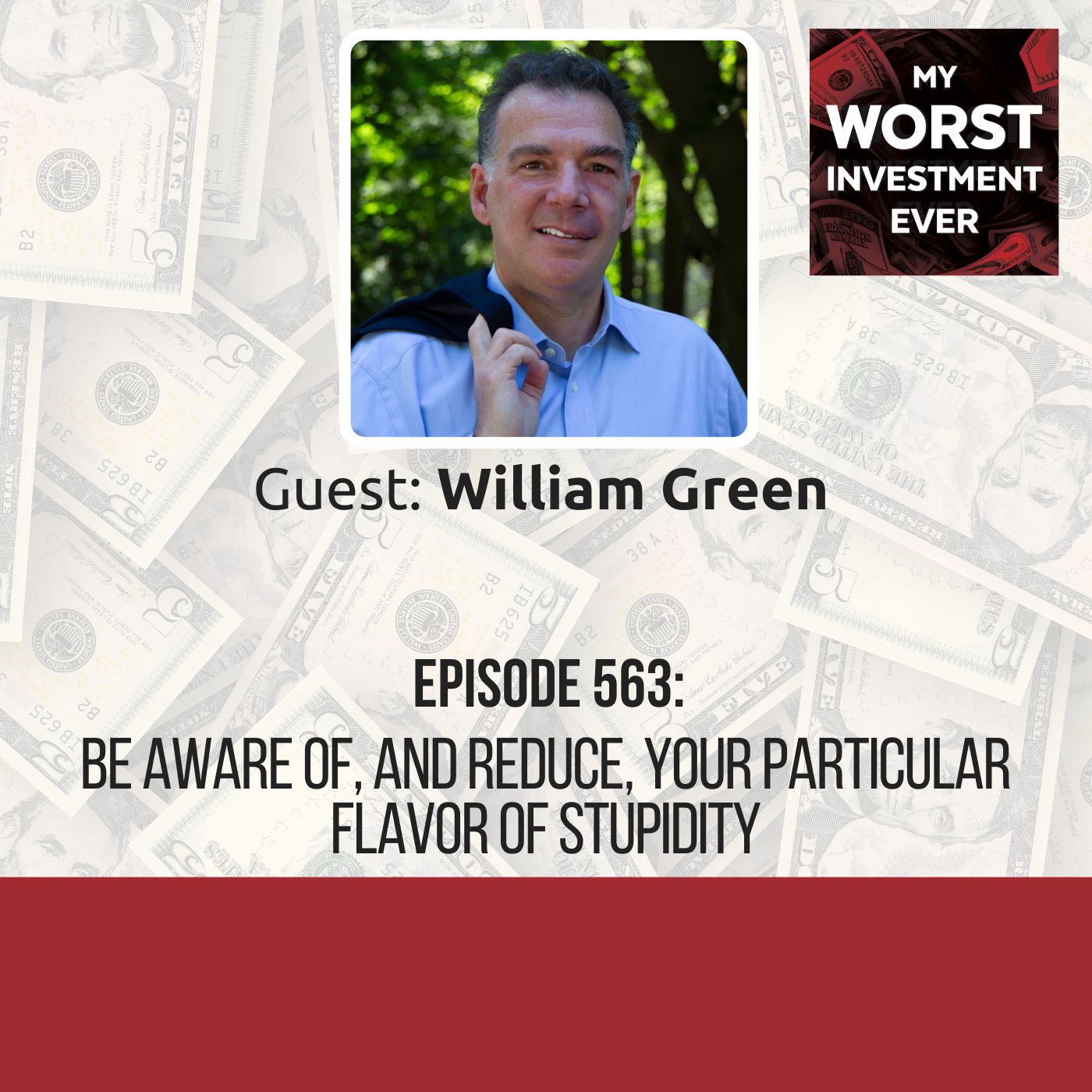
William Green – Be Aware of, and Reduce, Your Particular Flavor of Stupidity
BIO: William Green is the author of “Richer, Wiser, Happier: How the World’s Greatest Investors Win in Markets and Life.” The book is based on hundreds of hours of interviews that he’s conducted with many legendary investors over the past quarter of a century.STORY: We look at some of the many lessons William learned from spending hundreds of hours interviewing some of our greatest investors.LEARNING: Be aware of your flaws and frailties. Avoid standard stupidities. Be authentic and true to who you are. “I’m very vulnerable to my flaws and frailties. I think it’s a valuable thing to be aware of your particular flavor of stupidity.”William Green Guest profileWilliam Green is the author of a book titled “Richer, Wiser, Happier: How the World’s Greatest Investors Win in Markets and Life.” The book is based on hundreds of hours of interviews that he’s conducted with many legendary investors over the last quarter of a century. Published in 2021, the book is being translated into about 22 languages.William is also the host of the “Richer, Wiser, Happier” podcast, in which he interviews famous investors like Howard Marks, Joel Greenblatt, and Ray Dalio.William has written for many leading publications, including The New Yorker, Time, Fortune, Forbes, Barron’s, and The Economist. He also edited Time magazine’s European, Middle Eastern, African, and Asian editions.Having interviewed extraordinary people like Jack Bogle, who founded Vanguard, Peter Lynch, the legendary investor of fidelity, and Sir John Templeton, who was probably the greatest international investor of the 20th century, among others, William Green has learned many lessons about investing and life in general.Today, we go straight to some of the profound lessons he’s learned.Lessons learnedSelf-awareness is critical in investing successfullyOne of William’s most essential lessons from spending hundreds of hours interviewing great investors is that he’s not one of them. He doesn’t have the temperament that they have or the intellectual firepower that most of them have. He’s not as calm, patient, or rational as they are or has an obsessive fascination with sitting around analyzing business models and looking at financial statements. However, this realization is not a bad thing. In fact, it’s incredibly liberating. William realized that once he was self-aware, he could stop playing against people better equipped to win than he was.Charlie Munger taught him it’s best to play games that you can winThis incredible revelation came particularly from Charlie Munger, Buffett’s polymath genius partner at Berkshire Hathaway. Munger taught William that it’s best to play games that you can win. Now William is aware of his strengths and thus takes on opportunities in life that harness those strengths. When it comes to investing, the lesson here is that people should avoid buying individual stocks if they don’t know how to value a business and, therefore, are not equipped to understand the individual stocks that are winners.Arnold Van Den Berg taught him the value of controlling your inner landscapeAnother lesson William took away from his interviews came from Arnold Van Den Berg. He was born just before World War II, and during the Holocaust, he went into hiding as a Jew. Van Den Berg was a guy who was least likely to succeed. He barely made it through high school and had internalized the idea that he was stupid and brain-damaged. Yet, he had this incredibly successful investment career that he built by turning around his life and controlling his inner self. Whenever William is anxious, sad, self-loathing, or feeling like his life is going in the wrong direction, he thinks of Van Den Berg’s journey. If Van Den Berg could turn his life around, he could also achieve what he wanted if William just took control of his inner landscape.Money is important to reduce everyday stressBy interviewing the greats, William learned that people want to be heard and understood. They will tell you what you want to know if you’re captivated, empathetic, honest, and authentic with them.William advises people to take their money and financial security seriously. This is because it’s really stressful not to know if you can pay your bills and take care of your family. Don’t let anyone convince you that money is not important. It is.Avoid what Charlie Munger calls standard stupiditiesLuck may have played a big part in the success of great investors, but a lot depended on tilting the odds in their favor. One of the things that the most successful investors like Charlie Munger do is try to avoid what he calls “standard stupidities.” When you behave stupidly in the short run, you can get away with it. But if you do that consistently or regularly over 10 to 20 years, your luck runs out at some point. Thus, the advice from Munger is to avoid things with a catastrophic downside and limited upside to increase your likelihood of staying in the game.William says one form of standard stupidi
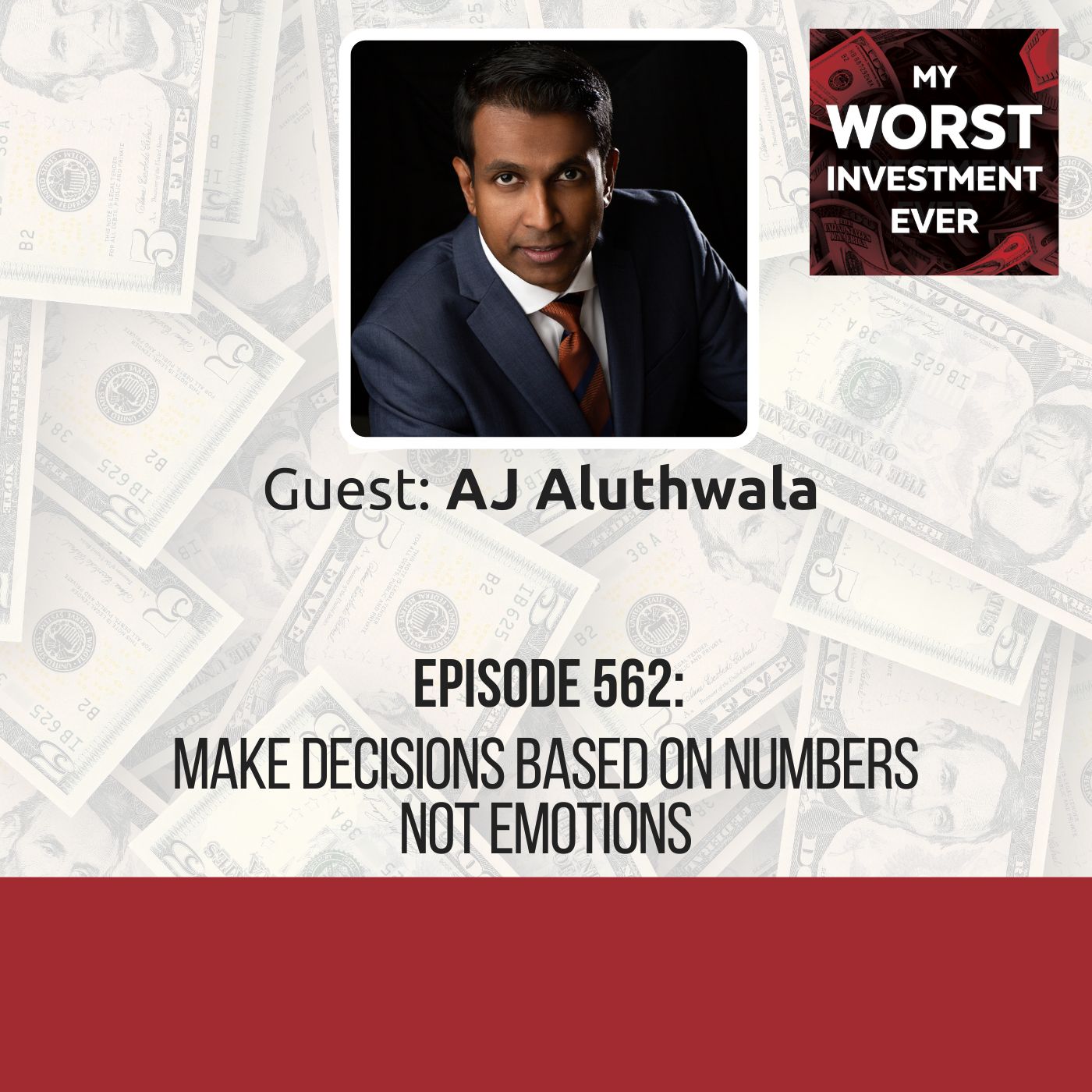
AJ Aluthwala – Make Decisions Based on Numbers Not Emotions
BIO: AJ Aluthwala is a specialist in discovering, planning, and executing customized online marketing strategies for businesses to attract massive amounts of online traffic and convert that traffic into sales.STORY: AJ and his business partner agreed to get into an unprofitable business only to help a friend. They lost a ton of money, and the friendship failed too.LEARNING: Don’t partner with anybody, especially friends, based on emotion. Always know your numbers. Review your financial statements monthly. “Always know your numbers.”AJ Aluthwala Guest profileAJ Aluthwala is a specialist in discovering, planning, and executing customized online marketing strategies for businesses to attract massive amounts of online traffic and convert that traffic into sales.He also helps companies develop their own proprietary apps to help them improve customer experience and increase the value of their business.He has worked with over 200 companies around the US and worldwide.AJ has lived and worked in Asia, Europe, and North America and has visited over 15 countries worldwide. AJ and his family moved to sunny Florida in 2014.He is offering listeners a free white paper on “5 Things to Look for When Selecting a Mobile App Developer’ which you can download at ElleApps.Worst investment everIn 2013, AJ and a partner were running a wholesale business. They did not want to get into the retail side at all because they knew it was cutthroat. However, they had a friend who begged to get involved in their business. His idea was to take the wholesale business to retailers for better profit and more significant margins.To help out this friend, the two partners accepted his idea and got into the retail side. They acquired property, vehicles, and other things to run the business. However, the company was losing around $5,000 a month, which was excruciatingly painful. AJ had to borrow $10,000 from his wife to keep the business afloat.Eventually, they had to close everything up in a few months. The partners didn’t part ways on good terms, and the friendships fell apart. So AJ not only lost money in this investment but a friend too.Lessons learnedDon’t partner with anybody based on emotion.Before starting a business, do your research and look at numbers; if numbers make sense, you can start the business.Be careful when getting into business with friends.Andrew’s takeawaysStay open to new ideas, but don’t get distracted from your vision.Create, or hire someone to draw financial statements and then review them monthly.Actionable adviceMake sure you run the numbers, then make decisions based on the numbers, not on emotions.AJ’s recommended resourcesThe 5 Things to Look for When Selecting a Mobile App Developer whitepaper.No.1 goal for the next 12 monthsAJ’s goal for the next 12 months is to expand and build an A-grade team to handle a couple of new projects starting up. [spp-transcript] Connect with AJ AluthwalaLinkedInFacebookInstagramYouTubeWebsiteAndrew’s booksHow to Start Building Your Wealth Investing in the Stock MarketMy Worst Investment Ever9 Valuation Mistakes and How to Avoid ThemTransform Your Business with Dr.Deming’s 14 PointsAndrew’s online programsValuation Master ClassHow to Start Building Your Wealth Investing in the Stock MarketFinance Made Ridiculously SimpleBecome a Great Presenter and Increase Your InfluenceTransform Your Business with Dr. Deming’s 14 PointsConnect with Andrew Stotz:astotz.comLinkedInFacebookInstagramTwitterYouTubeMy Worst Investment Ever Podcast
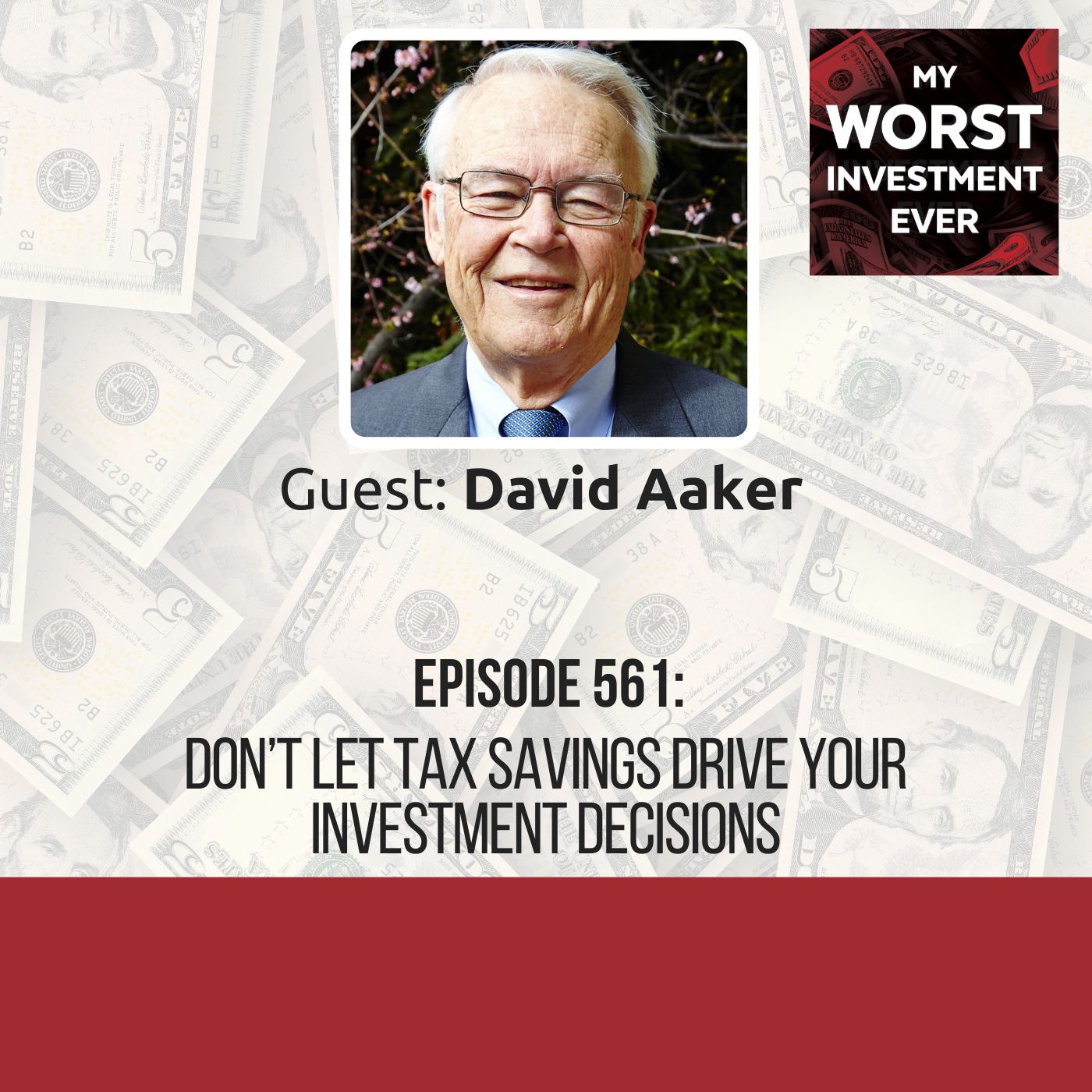
David Aaker – Don’t Let Tax Savings Drive Your Investment Decisions
BIO: David Aaker, sometimes called the Father of Modern Branding, is the author of 18 books on branding and related topics. He is the vice-chair of Prophet, a global branding, growth, and transformation consultancy.STORY: David was an advisor to a software company acquired by Microsoft in the 80s. He had stock in the company but decided to sell it to save on taxes. The stock would now be worth millions of dollars.LEARNING: Don’t let saving taxes drive your investment decisions. Keep your money in the market for as long as possible. “Don’t sell your stocks to save on taxes.”David Aaker Guest profileDavid Aaker, sometimes called the Father of Modern Branding, is the author of 18 books on branding and related topics. The last three are Aaker on Branding, Creating Signature Stories, and Owning Game-Changing Subcategories. He is the vice-chair of Prophet, a global branding, growth, and transformation consultancy.Worst investment everDavid was an advisor to a software company that was a competitor to Windows in the 80s. The company was better than Windows but couldn’t get any of the big computer companies to adopt it. And so they sold to Microsoft. David had stock in this company that he wanted to keep for his daughters. He later decided to sell his stocks to avoid income tax. Had David kept the stocks, his daughter would have millions of dollars today.Lessons learnedDon’t let saving taxes drive your investment decisions.Andrew’s takeawaysThe real long game in building a portfolio is letting time work its magic. So keep your money in the market for as long as possible.No.1 goal for the next 12 monthsDavid’s goal for the next 12 months is to help people understand how to build brand assets and emphasize structures and financials in their strategic thinking.Parting words “People should manage their charitable giving portfolio as they do their stock portfolio.”David Aaker [spp-transcript] Connect with David AakerLinkedInFacebookTwitterWebsiteBooksAndrew’s booksHow to Start Building Your Wealth Investing in the Stock MarketMy Worst Investment Ever9 Valuation Mistakes and How to Avoid ThemTransform Your Business with Dr.Deming’s 14 PointsAndrew’s online programsValuation Master ClassHow to Start Building Your Wealth Investing in the Stock MarketFinance Made Ridiculously SimpleBecome a Great Presenter and Increase Your InfluenceTransform Your Business with Dr. Deming’s 14 PointsConnect with Andrew Stotz:astotz.comLinkedInFacebookInstagramTwitterYouTubeMy Worst Investment Ever Podcast

Mahesh Murthy – Trust but Verify Startup Founders
BIO: Mahesh Murthy has helped launch Amazon, over 60 startups, a few hundred brands, and a few satellites. He’s a marketer, entrepreneur, and investor.STORY: Mahesh invested close to $400,000 into a startup only to discover that one of the founders was siphoning money via his sister and mother.LEARNING: Verify startup founders before investing in them. Hire someone to monitor your investments if you cannot do it yourself. Invest in a minimum of 10 startups instead of just one. “Never give your entire investment to one person.”Mahesh Murthy Guest profileMahesh Murthy has helped launch Amazon, over 60 startups, a few hundred brands, and a few satellites. He’s a marketer, entrepreneur, and investor.As a marketer he:Worked on Amazon, Pepsi, and NikeHelped launch MTV and its rival Channel V.Founded ad firm Pinstorm.Wrote ads, including ‘Asia’s best ad of the decade.”As an entrepreneur he:Failed in his first three ventures.Is taking a company public soonHas taken another into space: Asia’s first private firm to launch satellitesAs an investor he:Has run three venture fundsWas voted India’s “Best VC of the Year.” Twice.Worst investment everMahesh was lucky to be in the US at the start of the Dotcom revolution working at one of the early digital advertising firms in Silicon Valley. He read about a small startup in Seattle that wanted to sell stuff online.Mahesh went to his boss and told him about the startup, but he dismissed him. But he prevailed, and finally, the boss allowed him to meet the startup’s founders. The startup was Amazon. Mahesh started working with Amazon, and in the process, he learned a lot from Jeff Bezos.After a few years, Mahesh decided to return to India and take his e-commerce knowledge there. He also started doing a lot of angel investing. Through this, he met two founders who wanted to teach students outside India online.Mahesh was very excited about the idea and was ready to invest. The two founders hired teachers, and the teaching started. Mahesh was pretty much hands-off and would write a check every three months. The founders would update him on the progress and insist they had everything under control.Soon, Mahesh noticed the company was spending so much money renting computers and an office space bigger than necessary. He kept asking why the founders were doing this instead of buying the computers and renting a smaller space. The founders insisted that they just wanted to be flexible and not invest in assets they knew nothing about. Mahesh just bought into all this.Finally, after about two years of pumping so much money into the company without much progress, Mahesh decided to look deeper into how things were running. He went to the office, and while looking at the financial books, he noticed that the people renting out the computers and the space were related. He dug a little deeper, did a few Google searches, then figured out that the computers belonged to one of the founder’s sisters and the space belonged to his mother. This partner was taking a chunk of money from the company and putting it into his own pocket through his mother and sister. Mahesh was incensed. When he asked the founder about it, he exited the company. When the second founder heard about it, he also left the company.Now Mahesh had very little money left, a company with no leadership, about 25 staff, and no customers. He and his partner jumped in and did what they could to find some customers, paid the teachers full pay, and slowly let them off.About two years later, they sold the company to another company building an education giant and got some shares in it. Up to that point, Mahesh had invested close to $400,000, and he only managed to get about $40,000 back when the new owners took the company public.Lessons learnedNobody’s a good judge of character, so don’t trust people blindly.Being hands-off may be easy and fantastic, but it won’t help your investments.Ensure all the paperwork is correct and your tax is done correctly.Hire somebody who will track and monitor your investments if you cannot be hands-on.Andrew’s takeawaysIf you’re going to invest in startups, invest in 10 startups, not just one.Monitor your investment regularly.Get your complete financial statements, balance sheet, and income statement monthly and hold a monthly meeting to review them.Actionable adviceIf you’re investing in a startup, hire a chartered accountant who will look deep into the books on your behalf. Additionally, put the systems in place to monitor your investments so you don’t get scammed.No.1 goal for the next 12 monthsMahesh Murthy’s goal for the next 12 months is to launch more satellites and segments.Parting words “Trust but verify.”Mahesh Murthy [spp-transcript] Connect with Mahesh MurthyLinkedInFacebookTwitterInstagramWebsiteAndrew’s booksHow to Start Building Your Wealth Investing in the Stock MarketMy Worst Investment Ever9 Valuation Mistakes and How to Avoid ThemTransform Your Business with Dr.D
Joseph Hogue – Never Ignore the Debt to Equity Ratio
BIO: Joseph Hogue graduated from Iowa State University after serving in the Marine Corps. He worked in corporate finance and real estate before starting a career in investment analysis. He has appeared on Bloomberg and CNBC and led a team of equity analysts for a venture capital research firm.STORY: Joseph bought stocks in an energy company at a time when industry prices were low with the hope that the company would outperform the market, but it didn’t. He lost $30,000 in the investment.LEARNING: Always look at debt-to-equity ratios, especially in a down market. Set percentage caps on the stocks in your portfolio. “Bad things happen to good companies.”Joseph Hogue Guest profileBorn and raised in Iowa, Joseph Hogue graduated from Iowa State University after serving in the Marine Corps. He worked in corporate finance and real estate before starting a career in investment analysis. Joseph has appeared on Bloomberg and CNBC and led a team of equity analysts for a venture capital research firm. He holds a master’s degree in business and the Chartered Financial Analyst (CFA) designation.Joseph left the corporate world in 2014 to build his online businesses, first through creating websites and later through his YouTube channel, Let’s Talk Money. He’s since grown the community to over 500,000 and reaches more than 1.8 million people a month through his blogs, YouTube channel, and a weekly market newsletter.Subscribe to Joseph’s free weekly market newsletter to get an update on all the news, trends, and what he’s watching in the week ahead for stocks!Worst investment everIn 2014/15, high debt and low energy prices knocked the entire coal industry down. Regulators were circling, trying to limit the coal generation capacity in the United States. But still, a third of the US energy grid was generated by coal, so this was still a viable resource that people were using. The stocks in the energy industry were down by almost half.Joseph was fully aware of what was happening in the industry. He decided to do a bottom-up analysis of the stocks. He found Peabody Energy, the world’s largest private-sector coal producer at the time. The company had a solid market share and relatively good fundamentals relative to many other stocks in that sector.He started buying Peabody Energy stocks in 2015. At the time, the stock was already 50% lower from its peak just a couple of years ago. The stock kept falling, and he kept buying. Like many investors, Joseph fell into the gamblers’ trap. Eventually, he was just praying to get even.Peabody Energy ended up filing for bankruptcy in 2016, and in the process, Joseph lost about $30,000. This loss embarrassed him because he had already worked in the industry for about four years and had passed all three levels of the CFA in 2011. He was a charterholder and had worked with venture capital and private wealth management.Still, Joseph just ignored the basics of investing. He thought he had a strong investment case in that coal was still something the US would need to generate electricity. The world was not about to get rid of it overnight. A lot of these stocks seemed to be trading at a discount. Joseph picked the one stock he thought had the financial size and scope to survive, supposedly, but it didn’t survive.Lessons learnedWhen buying a specific industry is down, always consider the debt-to-equity ratios. This will help you know if the company can survive this period of market weakness.Just because you think a company or even an entire industry is indispensable doesn’t mean that that specific company can’t file for bankruptcy or that it can’t wipe out its shareholders.Don’t think any companies or investors are sacrosanct.Set percentage caps on the stocks in your portfolio.Bad things happen to good companies.Andrew’s takeawaysDebt is the number one risk that companies face.Understand how bankruptcy can affect your portfolio and what to do when a company you’ve invested in files for bankruptcy.Actionable adviceDon’t put more than 10% of your money in a single stock. Do your rebalancing on the asset level, from stocks to bonds, commodities, or other assets. Suppose you’re trading in a particular industry or even a sector doing well. In that case, you can always reallocate some of that money into the competitors doing well, so you still have that industry exposure that’s doing so well but not necessarily that one individual company.Joseph’s recommended resourcesHis Let’s Talk Money YouTube channel, where he explains investing in straightforward and easy-to-understand ways.Sectorspdr.com, where you can see how the 11 stock sectors of the economy and the S&P 500 companies have done over specific periods like one day, five days, up to five years. The analysis gives you an idea of what the market is doing in those 11 sectors. You get to know which sectors are performing well and which ones are lagging.FactSet Earnings Insight is excellent for people who want to do a deeper analysis of th

Priya Kumar – Don’t Trust Somebody With Your Money Blindly
BIO: Priya Kumar is an internationally acclaimed motivational speaker, bestselling author, and now screenwriter. She has written 15 inspirational books that have won 42 international awards.STORY: Priya ignored the need to learn basic accounting and instead left her money matters in the hands of her accountant. The accountant took advantage of her ignorance and swindled all her money.LEARNING: Learn basic accounts and finance. Analyze your profit and loss statement and balance sheet every month. “Learn accounts so that you’re always aware of where your money is going.”Priya Kumar Guest profilePriya Kumar is an internationally acclaimed motivational speaker, bestselling author, and screenwriter. She has written 15 inspirational books that have won 42 international awards. She has worked with over 2000 multi-national corporates across 47 countries and has touched over 3 million people through her workshops and books.Priya has written over 700 columns for national and international publications. The media have extensively featured her work in India and abroad, and she has been invited as a celebrity guest on several business, entertainment & reality shows.Priya was awarded the Times of India, Speaking Tree, and Good Karma Award as India’s most Inspirational Author.Known as The Biography Specialist, Priya is currently penning the official biography of Mr. Pullela Gopichand, the Olympics Badminton Coach. Priya wrote the biography of Late Shri O.P. Munjal, the founder of the Hero Group, and Subhashish Chakraborty, the founder of DTDC, which made it to the most famous biography of 2015 on Amazon.Worst investment everPriya didn’t know anything about finance or accounting, so she hired an accountant to manage her money. She didn’t know that he was stealing her money through forgery and deceit to the point that Priya had no money in the bank. The theft went on for a year and a half.Circumstances aligned, and it came to Priya’s notice through her bank that she had issued some checks, which she hadn’t. She reported the whole thing to the police, and the accountant was caught. However, there was no way to bring the money back. It’s been six years, and the case is still in court. Priya is yet to get any money back.Lessons learnedWhen you delegate your accounts to somebody, put systems around it.Learn finances and accounting so that you’re always aware of where your money is going.Andrew’s takeawaysMake sure you get your profit and loss statement and your balance sheet every month.Reconcile your accounts at the end of every month.You don’t need to become a financial or accounting specialist. Just learn the basics.Actionable adviceIf you want to be wealthy and protected, invest in learning finance basics.No.1 goal for the next 12 monthsPriya’s goal for the next 12 months is to be centered and solid and do whatever it takes for her to find herself.Parting words “Be responsible. Whatever happens, it is your doing and your creation.”Priya Kumar [spp-transcript] Connect with Priya KumarLinkedInFacebookTwitterInstagramYouTubeWebsiteBooksAndrew’s booksHow to Start Building Your Wealth Investing in the Stock MarketMy Worst Investment Ever9 Valuation Mistakes and How to Avoid ThemTransform Your Business with Dr.Deming’s 14 PointsAndrew’s online programsValuation Master ClassHow to Start Building Your Wealth Investing in the Stock MarketFinance Made Ridiculously SimpleBecome a Great Presenter and Increase Your InfluenceTransform Your Business with Dr. Deming’s 14 PointsConnect with Andrew Stotz:astotz.comLinkedInFacebookInstagramTwitterYouTubeMy Worst Investment Ever Podcast

Mario Bekes – You Don’t Know Everything, So Keep Learning
BIO: Mario Bekes began his career with the Department of Defence Republic of Croatia in Military Police/Security Services for seven years. In 1998 he worked for the Department of Foreign Affairs Republic of Croatia in Security Intelligence Services, secondment in Republic of Croatia Consulate General in Sydney for five years before founding Insight Intelligence in 2003.STORY: Mario allowed his ego to make him believe that he knew everything there is to know about running his business, and so he failed to invest in learning.LEARNING: Be open to continuous learning because you can never know everything. “Foundations are critical in business, but you can only establish them when you work on yourself.”Mario Bekes Guest profileMario Bekes began his career with the Department of Defence Republic of Croatia in Military Police/Security Services for seven years. In 1998 he worked for the Department of Foreign Affairs Republic of Croatia in Security Intelligence Services, secondment in Republic of Croatia Consulate General in Sydney for five years before founding Insight Intelligence in 2003.Mario is proficient in 3 languages (English, Croatian and Russian). He has published five books, including “Corporate and Workplace Investigations,” published in August 2018, and his latest best-seller on Amazon, “The Blood Soaked Soil,” published in September 2021.He is also the designer of software programs (Intelligent Risk Manager, Intelligent HR Recruiter, and Online Task Manager) and pioneering and architecting the application of psychology in the corporate environment as a tool for preventing fraud and increasing the success rate in investigations.Mario conducted numerous internal and external investigations in corporate and government sectors in Australia and overseas, particularly in human intelligence and competitive business intelligence.If you’re happy to be interviewed on his radio show “Life: The Battlefield” and share your knowledge, experience, and how to deal with obstacles in life, business contact Mario on any of the platforms shared below and quote “A. Stotz Academy.”Worst investment everMario believed that the world owed him and that nobody knew more than he did. With these beliefs, Mario saw no need to learn new things. His worst investment was not listening to the business environment and absorbing from the experts. Mario instead invested in his alter ego, which drove him into insanity.His ego made him believe that having beautiful business cards, a beautiful desk, and everything else would make him a successful businessman. So he refused to learn how to run his business. The result was two years of struggling to understand the business and losing money.Lessons learnedBe open to continuous learning because you can never know everything.Associate yourself with experts to enhance your understanding of the business environment.Andrew’s takeawaysDesign your product and service in a way that it can be scaled.Actionable adviceInvest in proper planning and proper financial structure as you build your business. Also, invest in people such as CFOs, and CEOs who can help you to run that business.No.1 goal for the next 12 monthsMario’s goal for the next 12 months is to reduce internal test fraud and criminal activity for all his clients, current and future ones.Parting words “Please listen to this podcast.”Mario Bekes [spp-transcript] Connect with Mario BekesLinkedInFacebookTwitterInstagramYouTubeWebsiteBooksPodcastAndrew’s booksHow to Start Building Your Wealth Investing in the Stock MarketMy Worst Investment Ever9 Valuation Mistakes and How to Avoid ThemTransform Your Business with Dr.Deming’s 14 PointsAndrew’s online programsValuation Master ClassHow to Start Building Your Wealth Investing in the Stock MarketFinance Made Ridiculously SimpleBecome a Great Presenter and Increase Your InfluenceTransform Your Business with Dr. Deming’s 14 PointsConnect with Andrew Stotz:astotz.comLinkedInFacebookInstagramTwitterYouTubeMy Worst Investment Ever PodcastFurther reading mentionedMichael Gerber (2009), The E Myth Revisited: Why Most Businesses Don’t Work and What to Do About It.

Toni McLelland – An Influencer Isn’t Always a Specialist
BIO: Toni McLelland MSc resides in London, England, UK, and spends time in Wales. She is a critical friend, business mentor, and founder of The Compassionate Business Model.STORY: Toni hired someone on social media she thought would help her in an area she was interested in. The individual was an influencer and not an expert in the area.LEARNING: Do your homework and due diligence. Excellent professionals should have no problem providing you with recommendations. “Watch for commitment and consistency from professional service providers.”Toni McLelland Guest profileToni McLelland MSc resides in London, England, UK, and spends time in Wales. She is a critical friend, business mentor, and founder of The Compassionate Business Model.Toni is an inspirational people leader who is passionate about navigating C Suite and board members through the world of business, crisis, and change management in her work around organizational culture.Specializing in Social Impact, Social Justice, and Social Mobility business, she works with leading established organizations and brings the learning back to start-ups serving vulnerable groups.A previous Central Government employee, she brings a wealth of experience. She is adept at contingency, regulation safeguarding, and compliance in business while showing business leaders how to be compassionate and profitable.Toni holds weekly LinkedIn live shows - Mondays at 1.30 pm BST, Audio rooms -Wednesdays at 6.30 pm BST & Fridays at 1.30 pm BST.Lastly, she sprinkles around her own much-needed #TonisFairyDust. Get her Complimentary consultation book here.Worst investment everToni was on a social media platform and had been watching this person for a very long time. They had a vast following and a lot of engagement. Toni thought that they knew what they were talking about.She needed some help in that area, so she reached out to the person and invested in her services. Toni was sure that she would get specialist help. In reality, she found herself working with an influencer who had no expertise in the industry she worked in.Lessons learnedDo your homework and due diligence.When engaging someone online for professional help, ensure that they understand what you need and not just spend their time as an influencer.Always get a recommendation and check out testimonials about the professional whose services you’re interested in hiring to confirm there are any guarantees with what they’re saying they’re capable of delivering.Andrew’s takeawaysExcellent professionals should have no problem providing you with recommendations.Actionable adviceListen to that inner voice telling you something’s not right.No.1 goal for the next 12 monthsToni’s goal for the next 12 months is to touch as many people as possible with her learning.Parting words “When you stop learning, you stop growing.”Toni McLelland [spp-transcript] Connect with Toni McLellandLinkedInFacebookTwitterYouTubeWebsiteAndrew’s booksHow to Start Building Your Wealth Investing in the Stock MarketMy Worst Investment Ever9 Valuation Mistakes and How to Avoid ThemTransform Your Business with Dr.Deming’s 14 PointsAndrew’s online programsValuation Master ClassHow to Start Building Your Wealth Investing in the Stock MarketFinance Made Ridiculously SimpleBecome a Great Presenter and Increase Your InfluenceTransform Your Business with Dr. Deming’s 14 PointsConnect with Andrew Stotz:astotz.comLinkedInFacebookInstagramTwitterYouTubeMy Worst Investment Ever Podcast

Michelle Hon – Don’t Build a Business Only to Boost Your Ego
BIO: Michelle Hon is the author of The Chill Mom, founder, and business coach for moms at MomBoss Academy.STORY: Michelle spent half of her life savings on a soup and salad bar that she had to close down after a month due to the wrong location.LEARNING: Don’t build a business for yourself or boost your ego. Build a business because it fills a market gap. Build systems and frameworks that enable you to implement and replicate your business ideas. “Swallow that humble pie and ask for help from experts.”Michelle Hon Guest profileMichelle Hon is the author of The Chill Mom, founder, and business coach for moms at MomBoss Academy.She was named by Zine as one of the “Top 10 Mommy Influencers in the World,” and she’s been featured regularly on Channel News Asia, The Asian Entrepreneurs, Lifetime Asia, Asian Money Guide, SmartParents, and many other publications.Worst investment everIn 2010, Michelle decided to open a soup and salad bar after working in employment since age 16. She spent almost a year researching and coming up with a thick business plan. She got a space, renovated it, formulated the recipe, and was ready to open the doors.Within the first month of business, she knew the company would not work because it was in the wrong location.Lessons learnedDon’t build a business for yourself or just to boost your ego. Build a business because it fills a market gap.Get advice from someone in the same business space.Borrow from systems and frameworks that successful people or businesses are using instead of trying to build new ones.Andrew’s takeawaysBuild systems and frameworks that enable you to implement and replicate your business ideas.Don’t get so excited about your idea and forget to focus on how to implement it.Actionable adviceSlow down and find people who have done this before and ask them about their systems and the critical things that have gotten them to where they are today.No.1 goal for the next 12 monthsMichelle’s goal for the next 12 months is to take her family on holiday.Parting words “Just go for it. We have this one sweet life. Whatever you want to do, just go for it. You never know where it will take you.”Michelle Hon [spp-transcript] Connect with Michelle HonLinkedInInstagramTwitterPodcastWebsiteBookAndrew’s booksHow to Start Building Your Wealth Investing in the Stock MarketMy Worst Investment Ever9 Valuation Mistakes and How to Avoid ThemTransform Your Business with Dr.Deming’s 14 PointsAndrew’s online programsValuation Master ClassHow to Start Building Your Wealth Investing in the Stock MarketFinance Made Ridiculously SimpleBecome a Great Presenter and Increase Your InfluenceTransform Your Business with Dr. Deming’s 14 PointsConnect with Andrew Stotz:astotz.comLinkedInFacebookInstagramTwitterYouTubeMy Worst Investment Ever Podcast

Leonard Kim – Avoid Investing in Pink Sheets Stocks
BIO: Leonard Kim is the worst investor you will ever meet and has made countless mistakes.STORY: Leonard invested over $6,000 in penny stocks and preferred shares whose value went to less than a penny.LEARNING: Avoid stocks on the OTCBB; trade in the NASDAQ shares instead. Focus on the company’s ability to make profits instead of the stock price. “Don’t invest in stocks that are at the sub-penny level.”Leonard Kim Guest profileLeonard Kim is the worst investor you will ever meet. He’s made countless mistakes like investing in stocks on the Pink Sheets, OTC Bulletin Board (OTCBB), and companies bound for bankruptcy like MoviePass. He’s bought preferred shares from public companies that have gone bust and invested in private companies that have failed.On the contrary, he’s an extraordinary marketer who has won countless awards and been recognized as a top marketer by Forbes, Brand 24, MadCon, and more.He’s also done an internationally recognized TEDx Talk and is the author of Ditch the Act, a book on personal branding and humanizing your company with McGraw Hill business.Worst investment everLeonard put money in a penny stock that he thought had the potential to go up, and it did. It hit $7, but it quickly went down to 50 cents, so Leonard lost his money.Leonard also invested $6,000 in a company whose stock was listed in the OTCBB and sold for around 50 cents. The company sold series B preferred shares with a one-year hold where you couldn’t sell them. After a year, the stock was trading at less than a penny, and it’s still at that value to date.Lessons learnedAvoid stocks on the OTCBB; trade in the NASDAQ shares instead.Don’t invest in stocks that are at the sub-penny level.Handle your investments by yourself.Invest in stable investments like oil.Andrew’s takeawaysFocus on the company’s ability to make profits instead of the stock price.Avoid investing with friends.Actionable adviceBuild a conservative investment profile and figure out how to invest more.No.1 goal for the next 12 monthsLeonard’s goal for the next 12 months is to continue creating value through his content.Parting words “The secret to marketing yourself is to differentiate yourself.”Leonard Kim [spp-transcript] Connect with Leonard KimLinkedInInstagramTwitterPodcastBookAndrew’s booksHow to Start Building Your Wealth Investing in the Stock MarketMy Worst Investment Ever9 Valuation Mistakes and How to Avoid ThemTransform Your Business with Dr.Deming’s 14 PointsAndrew’s online programsValuation Master ClassHow to Start Building Your Wealth Investing in the Stock MarketFinance Made Ridiculously SimpleBecome a Great Presenter and Increase Your InfluenceTransform Your Business with Dr. Deming’s 14 PointsConnect with Andrew Stotz:astotz.comLinkedInFacebookInstagramTwitterYouTubeMy Worst Investment Ever Podcast

Vanessa Ho – Dig Deep Into the Business Model
BIO: Vanessa Ho built a student-alumni-run angel investment network and educates students and fresh graduates on startup and private sector investments.STORY: Vanessa invested blindly in a startup she was introduced to by an angel investor. She never did any research. There was no market for the company’s product, so it never made any returns.LEARNING: Dig deep into the business model and ensure the startup has a product that the market needs. Don’t invest in a company just because it’s popular and others do it. “Learn the fundamentals of angel investing.”Vanessa Ho Guest profileVanessa Ho built a student-alumni-run angel investment network and educates students and fresh graduates on startup and private sector investments.Formerly she was a venture capital analyst and a social media content creator and host. Currently, she is in a socialfi startup called So-Col doing business development and marketing.Worst investment everAn angel investor introduced Vanessa to a company dealing with paywalls for media outlets. The company looked good on paper, and Vanessa trusted the angel investor, so she didn’t do a lot of due diligence. She simply put money into the company blindly. She didn’t even read the investment contract.Three months later, the company hadn’t made any progress, and the owners were getting worried about sustainability. Vanessa kept checking the news, and many months later, she realized that the company wasn’t going anywhere. She decided to write it off.Lessons learnedDon’t be swayed by big founder names and glamorous titles. Dig deep into the business model and ensure the startup has a product that the market needs.Do your due diligence even if other angel investors are backing up the startup you want to invest in.Andrew’s takeawaysDon’t invest in a company just because it’s popular and others do it.Don’t invest in a startup if you don’t have enough money to risk or if you’re new to investing.Weigh your risk before you invest in a startup.Invest in 10 startups, never in just one.Actionable adviceLearn the fundamentals of angel investing before putting your money into it.No.1 goal for the next 12 monthsVanessa’s goal for the next 12 months is to build a syndicated fund to bring value to private sector investing. [spp-transcript] Connect with Vanessa HoLinkedInWebsiteAndrew’s booksHow to Start Building Your Wealth Investing in the Stock MarketMy Worst Investment Ever9 Valuation Mistakes and How to Avoid ThemTransform Your Business with Dr.Deming’s 14 PointsAndrew’s online programsValuation Master ClassHow to Start Building Your Wealth Investing in the Stock MarketFinance Made Ridiculously SimpleBecome a Great Presenter and Increase Your InfluenceTransform Your Business with Dr. Deming’s 14 PointsConnect with Andrew Stotz:astotz.comLinkedInFacebookInstagramTwitterYouTubeMy Worst Investment Ever Podcast

Jitender Girdhar – Question Opinions and Beliefs
BIO: Jitender Girdhar is a best-selling author, TEDx speaker, entrepreneur, Op-Ed writer at The Times of India, mentor, and NLP professional.STORY: Jitender’s worst investment ever was not investing in growing his mind when he was younger. This saw him make poor investments.LEARNING: Your beliefs and opinions become your identity. Leave past knowledge and beliefs behind and be curious to learn new things. “The action everybody needs to take is to question their strong belief. Questioning is the beginning of intelligence.”Jitender Girdhar Guest profileJitender Girdhar is a best-selling author, TEDx speaker, entrepreneur, Op-Ed writer at The Times of India, mentor, and NLP professional.He is best known for his articles on Mind & Body, Human Behavior, and Cricket, and for his thought-provoking book Think EPIC, which became a #1 international bestseller in just a few months and got success in various countries.His contributions to multiple disciplines broadly address the narratives of human behavior.He has a great following on LinkedIn and is an ardent reader and a sports fanatic.Worst investment everJitender’s worst investment ever was not working on growing his mind after completing his education. Instead, he spent all his energies working to rise through the ranks. He ended up making wrong investments and lost money by ignoring his mind. He wishes he had spent more energy when he was younger to improve his mind.Lessons learnedStop living a mechanical life. You won’t get much out of it.To create something new and see things from a fresh perspective, you need to leave past knowledge and memory behind.Your beliefs and opinions become your identity.Andrew’s takeawaysStart safe, then start thinking freely as you grow older.Actionable adviceQuestion opinions and beliefs, and be curious.No.1 goal for the next 12 monthsJitender’s goal for the next 12 months is to keep learning and sharing.Parting words “Stay hungry for learning. Stay foolish, and when somebody says something against your opinion, you won’t get hurt.”Jitender Girdhar [spp-transcript] Connect with Jitender GirdharLinkedInTwitterFacebookInstagramWebsiteBookAndrew’s booksHow to Start Building Your Wealth Investing in the Stock MarketMy Worst Investment Ever9 Valuation Mistakes and How to Avoid ThemTransform Your Business with Dr.Deming’s 14 PointsAndrew’s online programsValuation Master ClassHow to Start Building Your Wealth Investing in the Stock MarketFinance Made Ridiculously SimpleBecome a Great Presenter and Increase Your InfluenceTransform Your Business with Dr. Deming’s 14 PointsConnect with Andrew Stotz:astotz.comLinkedInFacebookInstagramTwitterYouTubeMy Worst Investment Ever Podcast

Anthony Milewski – Do You Understand the Country Risk?
BIO: Anthony Milewski is an investing veteran and Chairman of Nickel 28 – a battery metals-focused investment company focusing on metal streaming and royalty agreements.STORY: Anthony and a friend partnered to drill oil in Indonesia. They pooled $10 million and hit the ground running. After facing one disaster after another, the partners gave up on the venture, having spent all the money, and not a single well was dug.LEARNING: Understand the context of the foreign country you’re investing in—research both the expected return and expected risk. “Why are you investing? Do you need to do this? What’s the alternative?”Anthony Milewski Guest profileAnthony Milewski is an investing veteran and Chairman of Nickel 28 – a battery metals-focused investment company with a focus on metal streaming and royalty agreements. The company trades on the Toronto stock exchange.Anthony has been active in the battery metals industry, including investing in cobalt and actively trading physical cobalt. Previously, he was a member of the investment team at Pala Investments Limited, a leading venture capital firm.Worst investment everA former partner and friend in Australia shared an idea with Anthony about these oil drilling blocks coming up for auction in Indonesia. Anthony figured it was a good idea, and so the two partnered and raised roughly $10 million. They were awarded a block.The two partners thought they were to drill a couple of wells and become oilmen. It never happened.They faced one disaster after another, from corruption locally to landowners fighting them to the inability to mobilize because they were being held to ransom by locals. Ultimately, they spent all the money they had raised but never drilled a well.The partners’ undoing was their naivety to how complicated it would be to do an oil and gas deal with local landowners without a strong local partner.Lessons learnedUnderstand the context of the foreign country you’re investing in.If a return feels out of whack, even if experts are right, always make sure that you understand the risk.When you see a return that looks like an outsize return, ask why? Then identify what the why is because that is the risk.Andrew’s takeawaysSplit your research between the expected return and expected risk.Reducing risk reduces the expected return.Understand your investment environment.Actionable adviceBe thoughtful when investing in places where you don’t know anything about. Work with a management team that has an edge in that place. And if you don’t trust that investment, buy something else.No.1 goal for the next 12 monthsAnthony’s goal for the next 12 months is to do a triathlon. [spp-transcript] Connect with Anthony MilewskiLinkedInTwitterWebsiteAndrew’s booksHow to Start Building Your Wealth Investing in the Stock MarketMy Worst Investment Ever9 Valuation Mistakes and How to Avoid ThemTransform Your Business with Dr.Deming’s 14 PointsAndrew’s online programsValuation Master ClassHow to Start Building Your Wealth Investing in the Stock MarketFinance Made Ridiculously SimpleBecome a Great Presenter and Increase Your InfluenceTransform Your Business with Dr. Deming’s 14 PointsConnect with Andrew Stotz:astotz.comLinkedInFacebookInstagramTwitterYouTubeMy Worst Investment Ever Podcast

John Spence – Don’t Let Material Things Define You
BIO: John Spence is an author, international executive coach, professional development educator, virtual trainer, strategic planning facilitator, keynote speaker, and developer of online learning programs.STORY: When John was a young CEO of one of the Rockefeller Foundations, he invested in the trappings of a CEO, such as big houses, boats, wines, artwork, etc., all in the name of impressing people. All these things were lost in days when Hurricane Andrew hit Miami.LEARNING: Don’t let material things define you. The ultimate freedom is the freedom of mind. The accumulation of things is uncorrelated to happiness. “Be grateful for everything you have now.”John Spence Guest profileJohn Spence is an author, international executive coach, professional development educator, virtual trainer, strategic planning facilitator, keynote speaker, and developer of online learning programs.John is recognized as one of the top business thought leaders and leadership development experts in the world and was named by the American Management Association as one of America’s Top 50 Leaders to Watch, along with Sergey Brin and Larry Page of Google and Jeff Bezos of Amazon.As a consultant and coach to organizations worldwide, from startups to the Fortune 10, John is dedicated to helping people and businesses be more successful by “Making the Very Complex… Awesomely Simple.”Worst investment everJohn became the CEO of one of the Rockefeller Foundations when he was 26 years old. This saw him earn a significant salary. John decided to use his earnings to invest in houses, boats, artwork, wine collections, and everything else that were the trappings of being the CEO of a multinational company. At a young age, John thought that those were the things that would impress other people.In 1989, Hurricane Andrew hit Miami and destroyed everything John owned. In just a matter of days, all his properties and belongings were gone. John had invested so much time, energy, effort, and ego in all that stuff, and it was all taken away in one day.Lessons learnedEven when you suffer a significant loss, stay focused on your values and remember that others have been through worse.Material things are lovely, but they don’t define you.You’re stronger than you think you are.Be grateful for everything you have now.Andrew’s takeawaysThe ultimate freedom is the freedom of mind—the freedom to think and detach.The accumulation of things is uncorrelated to happiness.Actionable adviceLook at the things that are truly important and valuable in your life.No.1 goal for the next 12 monthsJohn’s goal for the next 12 months is to learn more and meet more people.Parting words “Just live by your values, treat other people with love and have fun.”John Spence [spp-transcript] Connect with John SpenceLinkedInTwitterFacebookInstagramYouTubeWebsiteBooksAndrew’s booksHow to Start Building Your Wealth Investing in the Stock MarketMy Worst Investment Ever9 Valuation Mistakes and How to Avoid ThemTransform Your Business with Dr.Deming’s 14 PointsAndrew’s online programsValuation Master ClassHow to Start Building Your Wealth Investing in the Stock MarketFinance Made Ridiculously SimpleBecome a Great Presenter and Increase Your InfluenceTransform Your Business with Dr. Deming’s 14 PointsConnect with Andrew Stotz:astotz.comLinkedInFacebookInstagramTwitterYouTubeMy Worst Investment Ever Podcast

Brian Golod – There Isn’t an Overnight Success
BIO: Brian Golod was born and raised in Buenos Aires, Argentina. His parents asked him what he wanted to do for a living when he was 13 years old, and somehow he knew, at least for the following 21 years.STORY: Brian invested $25,000 in a new company belonging to a man he’d known for just a few days.LEARNING: Don’t trust blindly; ask questions. Be careful of the appeal to authority fallacy. “Pace yourself. There’s nothing like an overnight success.”Brian Golod Guest profileBrian Golod was born and raised in Buenos Aires, Argentina. His parents asked him what he wanted to do for a living when he was 13 years old, and somehow he knew... at least for the following 21 years.He studied Computer Science at the number one middle and high school in Argentina and got an early start. Before turning 20 years old, his family immigrated to Canada. After working for the Government of Canada twice, tech multinationals, startups, and everything in between, he realized he was able to help professionals get back on their feet and advance in their careers. He started doing this on the side for free, just trying to give back to society, and eventually realized he couldn’t live the rest of his life without pursuing his purpose, what he was born for. He says it’s impossible to describe how he feels every time someone gets the job they want with his help.Worst investment everBrian was working as a production support developer for a multinational in Toronto when he was introduced to a family. He was invited to their place for dinner and got to know the family. There was immediate trust, especially because of the person who introduced him to the family. Brian learned that the man of the family wanted to branch out of where he was working as CFO and start something very similar to what he was doing.The man mentioned this to Brian, and because of his title, his responsibility at the organization where he was working, and the size of that organization, Brian believed the man must know what he was doing. Brian told him that he’d be the first one to support him right off the bat. He invested $25,000 in the man’s business. Additionally, Brian was convinced to quit his job and join the new company full time.The mistake the man made was buying a lot of inventory and having no clients. So all the money that he had raised, not just from Brian but from many others, about $300,000, went to inventory, yet there was no cash flow. The product just sat in a container in one of those storage rooms.The duo couldn’t sell for different reasons, so the company tanked.Lessons learnedDon’t trust blindly. If you’re going to put money towards something, ask a billion questions.Just because someone has the title and has been doing this somewhere else doesn’t mean that they actually know how to do it all from scratch.Don’t be greedy or invest more than you can afford to lose.Communication is very important. Communicate with the people that you work with and with your suppliers.Make sure that everything is written, especially when working with suppliers.Pace yourself. There’s nothing like an overnight success.Andrew’s takeawaysTrust takes timeBe careful of the appeal to authority fallacy.The first job of a business is to try to get the cash flowing.Preserve relationships.Actionable advicePause and listen to someone else’s perspective. If you have a significant other or someone you trust who has your best interests at heart, and can potentially be affected by your decision, seek their full support.No.1 goal for the next 12 monthsBrian’s goal for the next 12 months is to scale his service to serve as many people as possible, build partnerships and reach every professional who needs this solution.Parting words “If you’re not feeling excited, you’re not jumping out of bed to do what you do. Please don’t settle for less. We’re given this one life. Just make the most out of it.”Brian Golod [spp-transcript] Connect with Brian GolodLinkedInFacebookInstagramTwitterAndrew’s booksHow to Start Building Your Wealth Investing in the Stock MarketMy Worst Investment Ever9 Valuation Mistakes and How to Avoid ThemTransform Your Business with Dr.Deming’s 14 PointsAndrew’s online programsValuation Master ClassHow to Start Building Your Wealth Investing in the Stock MarketFinance Made Ridiculously SimpleBecome a Great Presenter and Increase Your InfluenceTransform Your Business with Dr. Deming’s 14 PointsConnect with Andrew Stotz:astotz.comLinkedInFacebookInstagramTwitterYouTubeMy Worst Investment Ever Podcast

Nat Berman – You’re Smart Enough to Invest on Your Own
BIO: 15 years of experience running his own business, more than enough money, time, and freedom; now Nat Berman teaches the practical steps he’s taken to achieve these results in what now takes only 3-4 hours a day.STORY: Nat got wind of a stock that Jim Cramer would tout on his show and invest in. Nat decided to invest $30,000 in the stock without further research. He lost the money in a short period.LEARNING: Do your research. Never buy a stock that somebody tells you about. “Pause. Read. Invest.”Nat Berman Guest profileAfter fifteen years of experience running his own business, more than enough money, time, and freedom, now Nat Berman teaches the practical steps he’s taken to achieve these results in what now takes only 3-4 hours a day.Worst investment everNat knew a guy that worked for Jim Cramer directly. He got wind of the stock that Cramer was going to tout on his show and would put in his charitable trust. Nat put in $30,000. He lost a lot of it in a short amount of time.Lessons learnedDo your own research, assess your risk, and understand what you’re comfortable losing.Everybody is smart enough to make their own investments.Andrew’s takeawaysInvest in the S&P 500 or an index fund if you’re learning how to invest.Never, ever buy a stock that somebody tells you about. Make your decision that this is the stock that you want to own for a particular reason.Build a portfolio of about 10 stocks to diversify your risk.Actionable adviceWhenever someone tells you about an amazing stock, pause, read about it, and see what kind of news there is about it. Check out the financials too. Just don’t do anything for at least 24 hours to a week.No.1 goal for the next 12 monthsNat’s goal for the next 12 months is to be proud of himself and be able to look into the mirror every day and know that he’s satisfied and comfortable with where he is.Parting words “Stay focused.”Nat Berman [spp-transcript] Connect with Nat BermanLinkedInFacebookInstagramTikTokYouTubeWebsiteAndrew’s booksHow to Start Building Your Wealth Investing in the Stock MarketMy Worst Investment Ever9 Valuation Mistakes and How to Avoid ThemTransform Your Business with Dr.Deming’s 14 PointsAndrew’s online programsValuation Master ClassHow to Start Building Your Wealth Investing in the Stock MarketFinance Made Ridiculously SimpleBecome a Great Presenter and Increase Your InfluenceTransform Your Business with Dr. Deming’s 14 PointsConnect with Andrew Stotz:astotz.comLinkedInFacebookInstagramTwitterYouTubeMy Worst Investment Ever Podcast

Dave Buck – Have a Purpose for Your Investments
BIO: Dave Buck is fascinated by the concept of time and how it is applied in everyday life. It is one of the main reasons he started Kairos Management Solutions.STORY: Dave was a very disciplined saver and investor from the time he got his first job when he was 16. The only mistake he made was not managing his portfolio according to the lifestyle he wanted to live in retirement.LEARNING: Start to save for the future today. Have goals for your savings. “Manage your portfolio to match the desired lifestyle you want to have.”Dave Buck Guest profileDave Buck is fascinated by the concept of time and how it is applied in everyday life. It is one of the main reasons he started Kairos Management Solutions. Kairos is one of the Greek words for time, tied to accomplishing a crucial action or performing in a decisive moment. Through his company, Dave offers a variety of services from individual and corporate time management, leadership management, retirement and lifestyle time management, and sales productivity enhancement. The corporate mission of Kairos Management Solutions and Dave is to help people move their time from finite to infinite.Worst investment everDave got his first job when he was 16, and from then, he started to save diligently until he was in his 50s. When he approached retirement age, he realized that he didn’t know what he wanted to do with the funds he’d been saving for years. He had not aligned his investments with the retirement lifestyle he wanted, and now he wasn’t sure if the funds were even enough to lead the life he wanted.Lessons learnedStart to save for the future today.Adopt a broader strategy of the purpose of the funds you’re saving and how that purpose aligns with your lifestyle.Start by saving a small amount, even if it’s just 5% of your income, and be consistent.Andrew’s takeawaysHave goals for your savings. Are you saving for the sake of saving?What is the purpose of the funds you save?Be frugal, be careful with your money, but stay focused on saving it.Actionable adviceGet started with saving, be disciplined and keep at it. It’s okay to pause due to various factors. Just don’t stop forever. Your portfolio can grow if you’re not contributing to it but get back to contributing for as long as you possibly can.No.1 goal for the next 12 monthsDave’s goal for the next 12 months is to implement his initial business strategy to such a point that he doesn’t have to draw on his current savings plan.Parting words “As you plan projects, invest your time as you look to how you manage it. Take what you do and add 20% to it. It’s always going to take longer than what you anticipate.”Dave Buck [spp-transcript] Connect with Dave BuckLinkedInYouTubeWebsiteAndrew’s booksHow to Start Building Your Wealth Investing in the Stock MarketMy Worst Investment Ever9 Valuation Mistakes and How to Avoid ThemTransform Your Business with Dr.Deming’s 14 PointsAndrew’s online programsValuation Master ClassHow to Start Building Your Wealth Investing in the Stock MarketFinance Made Ridiculously SimpleBecome a Great Presenter and Increase Your InfluenceTransform Your Business with Dr. Deming’s 14 PointsConnect with Andrew Stotz:astotz.comLinkedInFacebookInstagramTwitterYouTubeMy Worst Investment Ever Podcast

Akshat Malik – Don’t Get Too Invested in Just One Partner or Brand
BIO: Akshat Malik, a serial entrepreneur, a risk-taker during the week, and a happy dog dad on Sundays, has undoubtedly had his good and bad investments.STORY: Akshat’s company partnered with a brand and focused on helping it grow. The brand grew 100x, which was good for the company. But, the brand started partnering with other people, which led to Akshat’s company losing its market share and revenue.LEARNING: Don’t get too invested in just one partner or brand. Keep your debt down as low as possible. “Never hesitate to speak about what’s on your mind.”Akshat Malik Guest profileAkshat Malik, a serial entrepreneur, a risk-taker during the week, and a happy dog dad on Sundays, has certainly had his shares of good and bad investments! He started his entrepreneurial tryst early on in the times when e-commerce and e-services were just seeping in, trying to get a foot-holding in India.Fast-forwarding to today, he has revolutionized and enhanced the health and wellness industry by reshaping the niche in the cosmeceutical, derma, and nutraceutical sectors. He is the founder and CEO of ClickOnCare Retail Private Ltd.Worst investment everAkshat’s company engaged a particular brand to help build their entire segment and grow within the nutraceutical market. This partnership helped the company immensely as the brand grew 100x.But then, the brand had its own intentions of partnering with other people in the segment. Akshat’s company had placed all its focus on this one brand, and due to the new partnerships, the company started losing its market share, and its revenues got hit.Lessons learnedDon’t get too invested in just one partner or brand.Know your limits and your boundaries.Andrew’s takeawaysKeep your debt down as low as possible.Don’t have all of your revenue concentrated in just one or a small number of clients. If something happens to them, you’re going to be in trouble.Don’t allow any of the resources you have to be used in a way that doesn’t generate revenue.Actionable adviceNever hesitate to speak up.No.1 goal for the next 12 monthsAkshat’s goal for the next 12 months is to add a line of products that will help add brand value to the organization. [spp-transcript] Connect with Akshat MalikLinkedInTwitterFacebookInstagramYouTubeWebsiteAndrew’s booksHow to Start Building Your Wealth Investing in the Stock MarketMy Worst Investment Ever9 Valuation Mistakes and How to Avoid ThemTransform Your Business with Dr.Deming’s 14 PointsAndrew’s online programsValuation Master ClassHow to Start Building Your Wealth Investing in the Stock MarketFinance Made Ridiculously SimpleBecome a Great Presenter and Increase Your InfluenceTransform Your Business with Dr. Deming’s 14 PointsConnect with Andrew Stotz:astotz.comLinkedInFacebookInstagramTwitterYouTubeMy Worst Investment Ever Podcast
Gary Belsky – Long-Term Patience Is the Key to Success in Investing
BIO: Gary Belsky is co-author of Why Smart People Make Big Money Mistakes—And How To Correct Them: Lessons from the Life-Changing Science of Behavioral Economics and the former editor in chief of ESPN The Magazine and ESPN Insider.com.STORY: Gary waited for seven years to invest in the Berkshire Hathaway stock hoping the price per share would drop. He missed out on the compounding for the seven years and earned a 14% return instead of 18%.LEARNING: A stock isn’t cheap because it’s $5. A stock is cheap if the Price-to-Earnings ratio is low. “In the short run, people regret actions, but in the long run, they regret inactions.”Gary Belsky Guest profileGary Belsky is co-author of Why Smart People Make Big Money Mistakes—And How To Correct Them: Lessons from the Life-Changing Science of Behavioral Economics. The former editor in chief of ESPN The Magazine and ESPN Insider.com, Belsky is president of Elland Road Partners, a storytelling consulting firm based in New York City.Worst investment everGary was working for Money Magazine when he got assigned to write a story about Warren Buffett in 1992. As he researched the story, Gary got convinced that Buffett was an investing genius. This convinced him to invest in the Berkshire Hathaway stock. However, the stock was selling at $8,000 a share at the time. Gary decided to wait for the stock price to go down. He invested in the stock in 1999.Had Gary invested in the stock in 1992, he would have had an average annual return of about 18%. But since he waited until 2009, he only got a 14% average annual return. Over that period, the market was up by about 9%. So he still outperformed the market, but he also missed the compounding between 1992 and 2009.Lessons learnedA stock isn’t cheap because it’s $5. A stock is cheap if the Price-to-Earnings ratio is low.The way people lose money in the stock market is not nearly so much about making bad investments. It’s about trading too often.Long-term patience is the key to success in the stock market.Andrew’s takeawaysTake advantage of the compounding effect because even if you’re an average stock picker, you’ll still have a massive amount of return if you invest for the long term.When you learn something, write it down, internalize it and implement it. You’ll be amazed at what you’ll have achieved when you look back 10 years later.Bring people into your decision. Even if it’s just one other person, you’re almost assured the decision will become better.As a startup, produce a monthly financial statement of your P&L, balance sheet, and cash flow, and talk to your management team about it once a month.Actionable adviceAsk yourself who’s the person that is most likely to annoy you if you asked them what they think about something and then ask them.No.1 goal for the next 12 monthsBrent’s goal for the next 12 months is to finish a project he’s working on. [spp-transcript] Connect with Brent KochubaLinkedInTwitterWebsiteAndrew’s booksHow to Start Building Your Wealth Investing in the Stock MarketMy Worst Investment Ever9 Valuation Mistakes and How to Avoid ThemTransform Your Business with Dr.Deming’s 14 PointsAndrew’s online programsValuation Master ClassHow to Start Building Your Wealth Investing in the Stock MarketFinance Made Ridiculously SimpleBecome a Great Presenter and Increase Your InfluenceTransform Your Business with Dr. Deming’s 14 PointsConnect with Andrew Stotz:astotz.comLinkedInFacebookInstagramTwitterYouTubeMy Worst Investment Ever Podcast
Brent Kochuba – Know Who You’re Dealing With
BIO: Brent Kochuba is the Founder of SpotGamma, a financial insights company that applies its proprietary methodology toward modeling index and equity options and then provides unique content to its subscribers.STORY: Brent joined a former client as a trader in his fund. Five days after he started working at the fund, the market opened a limit down and halted trading. The fund lost so much money, and the only way out was to liquidate and shut down.LEARNING: Know whom you’re dealing with. Speak up and ask for clarification when things don’t make sense. “If you’re in a position that is going to make you a lot of money, the risk is likely to be high too.”Brent Kochuba Guest profileBrent Kochuba is the Founder of SpotGamma, a financial insights company, which applies its proprietary methodology toward modeling index and equity options and then provides unique content to its subscribers. SpotGamma has thousands of members and has been featured in publications such as The Wall Street Journal and Bloomberg Markets.Worst investment everBrent had been in the institutional broker space for about 15 years when one of his clients—whom he knew reasonably well—decided to start his own fund. Brent chose to leave his then employer to work for this gentleman at this fund. This was in August of 2015. At the time, the gentleman ran a small account. He would short put options—insurance contracts that people often buy to protect themselves if the market declines.Brent was a trader, and the gentleman was the portfolio manager. Brent had been on the trading desk with the gentleman for five days, and on the third Friday of August, massive trades suddenly started to go off right at the close of trading. Two days later, the market opened a limit down and halted trading. The fund was losing money because the market was dropping. Frantically, they tried to hedge their portfolio but couldn’t and were forced to liquidate and shut down.Lessons learnedKnow whom you’re dealing with.Speak up and ask for clarification when things don’t make sense.The more money you stand to make from a position, the higher the risk.Andrew’s takeawaysBanks will always take away the umbrella just when it starts raining.Actionable adviceUnderstand what it is you’re involved in. Instead of looking for the shortcut, go with the tried and true ways of succeeding.No.1 goal for the next 12 monthsBrent’s company is part of a documentary coming out on MSNBC and Peacock. His goal for the next 12 months is to use this platform to educate people on the power of options and investing in the market. [spp-transcript] Connect with Brent KochubaLinkedInYouTubeWebsiteAndrew’s booksHow to Start Building Your Wealth Investing in the Stock MarketMy Worst Investment Ever9 Valuation Mistakes and How to Avoid ThemTransform Your Business with Dr.Deming’s 14 PointsAndrew’s online programsValuation Master ClassHow to Start Building Your Wealth Investing in the Stock MarketFinance Made Ridiculously SimpleBecome a Great Presenter and Increase Your InfluenceTransform Your Business with Dr. Deming’s 14 PointsConnect with Andrew Stotz:astotz.comLinkedInFacebookInstagramTwitterYouTubeMy Worst Investment Ever Podcast

Sourabh Goyal – Make Yourself a Priority in Your 20s
BIO: Sourabh Goyal is the Founder of SuccessBrew (a growth marketing company) and The Goalchy Club community that is focused on the personal and professional growth of people.STORY: Sourabh studied engineering, not out of choice, but because it’s what was expected of him. He hated it and believes he should have invested the four years of college in a much better way of knowing himself.LEARNING: Make yourself a priority in your 20s and build yourself in the manner that makes you happy. “Experiment with life instead of going with the society-created life structure.”Sourabh Goyal Guest profileSourabh Goyal is the Founder of SuccessBrew (a growth marketing company) and The Goalchy Club community that is focused on the personal and professional growth of people. A LinkedIn influencer by accident and content creator with the intent of sharing his life experiences. Trained over 10k people across 7 countries on subjects like Goal Setting, Personal Branding, and Organic Social Media Strategies.Sourabh is also the Co-Author and Associate partner of the internationally bestselling and Golden Books of World Record holding The Growth Hacking Book #2.Worst investment everSourabh’s worst investment ever was studying engineering, not out of choice, but because it’s what society expected of him. Sourabh started college during the 2007/08 recession. When he finished college in 2011, there were no jobs.Sourabh believes he should have invested the four years of college in a much better way of knowing himself.Lessons learnedTake a pause, shut out all influence, think about what is best for you and jot down whatever comes to mind.If you go to college, go for your happiness, not to show people that you went to an Ivy League college.Make yourself a priority in your 20s. Build yourself, your joy, your learning, your career, and your growth, irrespective of what somebody else is doing.Andrew’s takeawaysThe foundation that we get from our parents is the foundation that we carry throughout our lives.Build a trusting family because that’s the ultimate strength to take you through life.Actionable adviceGrowth = mindset + skill set + tools.No.1 goal for the next 12 monthsSourabh’s goal for the next 12 months is to scale his community. He plans to hold many meetups and meet with at least 10,000 people across Dubai, the UK, the US, and Asia to bring them together and build a support system for each other. [spp-transcript] Connect with Sourabh GoyalLinkedInInstagramTwitterFacebookBookAndrew’s booksHow to Start Building Your Wealth Investing in the Stock MarketMy Worst Investment Ever9 Valuation Mistakes and How to Avoid ThemTransform Your Business with Dr.Deming’s 14 PointsAndrew’s online programsValuation Master ClassHow to Start Building Your Wealth Investing in the Stock MarketFinance Made Ridiculously SimpleBecome a Great Presenter and Increase Your InfluenceTransform Your Business with Dr. Deming’s 14 PointsConnect with Andrew Stotz:astotz.comLinkedInFacebookInstagramTwitterYouTubeMy Worst Investment Ever Podcast

Corina Burton – Learn to Trust Your Intuition
BIO: Corina Burton is the co-founder and co-owner of CPR Construction Cleaning, CPR Productions, and host of the Unstoppable podcast.STORY: Corina returned to an old job and gave up a good salary even though her gut told her not to. The old employer could not pay her, causing her to hit a financial rock bottom.LEARNING: Listen to your intuition. “Business is not linear. Learn to pair your analytical and spiritual self.”Corina Burton Guest profileCorina Burton is the co-founder and co-owner of CPR Construction Cleaning, CPR Productions, and host of the Unstoppable podcast.She is a mother of 4, serial entrepreneur, brand builder, marketing expert, and industry/generational disrupter. She has over 15 years of industry expertise in business-to-business authentic marketing, sales and brand building.Corina is an industry leader driven by her passion and skills in negotiating contracts, multi-seven-figure sales, business development, customer relationship management, event management, and brand recognition creator.As a mindset coach and marketing expert, Corina lives her life believing and knowing she is truly Unstoppable.Worst investment everCorina had been a stay-at-home mom for years. When she suddenly became a single parent, she decided to look for a job. Corina got employed in the construction industry, and she thrived. But soon, she felt like she had hit a glass ceiling. Corina decided to try something new when a recruiter in a different industry headhunted her and offered her a fantastic salary.After a while, Corina’s old employer approached her and asked her to go back. Even though her gut told her to say no, she returned to her old job. The company started struggling in just a few months and couldn’t pay her. In about eight months, Corina had run out of her savings.She was conflicted about what to do. If she walked away, she would lose everything and would never be able to recoup what her employer owed her. She would lose out on the time she spent and start over with another job. Eventually, after a year and a half, she decided to quit.Lessons learnedListen to your intuition.Andrew’s takeawaysHave intuition awareness.Don’t be asset-rich and cash poor. If you don’t have the cash you need when you need it, you’re facing a liquidity crunch.Beware of the physical warning signs.When you invest in a business, make sure you have monthly complete financial statements (a balance sheet, income statement, and cash flow statement). Close the books every single month.Actionable adviceNot everything analytically correct on paper is going to work. So pair logical and analytical. Write it down and make sure it makes sense.No.1 goal for the next 12 monthsCorina’s goal for the next 12 months is to have a stronger outreach. She’s focusing on the Unstoppable brand so that she can reach more people.Parting words “Your circumstances don’t define you; your choices do 100%.”Corina Burton [spp-transcript] Connect with Corina BurtonLinkedInInstagramYouTubeWebsiteBlogPodcastAndrew’s booksHow to Start Building Your Wealth Investing in the Stock MarketMy Worst Investment Ever9 Valuation Mistakes and How to Avoid ThemTransform Your Business with Dr.Deming’s 14 PointsAndrew’s online programsValuation Master ClassHow to Start Building Your Wealth Investing in the Stock MarketFinance Made Ridiculously SimpleBecome a Great Presenter and Increase Your InfluenceTransform Your Business with Dr. Deming’s 14 PointsConnect with Andrew Stotz:astotz.comLinkedInFacebookInstagramTwitterYouTubeMy Worst Investment Ever Podcast

MJ DeMarco – Do Not Sign an Earnout When Selling Your Business
BIO: MJ DeMarco is the international best-selling author of The Millionaire Fastlane, Unscripted, and the Great Rat Race Escape. He’s also the founder of Viperion Publishing and the Fastlane Business Forum.STORY: MJ sold his business in 2000 for $1.2 million. Of this, $700,000 was held in an earnout. Because of the recession, the buyer paid MJ $500,000. He put the money in tech stocks, but they imploded in just a few months. MJ lost everything he had invested.LEARNING: Never accept an earnout. “Don’t let the stock market control your wealth.”MJ DeMarco Guest profileMJ DeMarco is the international best-selling author of The Millionaire Fastlane, Unscripted, and the Great Rat Race Escape. His books have been translated in over 25 languages worldwide and he’s the founder of Viperion Publishing, and the Fastlane Business Forum, a global business and entrepreneurial community with over 70,000 users and nearly 1,000,000 contributions.Worst investment everIn 2000 MJ decided to sell his business for $1.2 million. $700,000 of this amount was held in an earnout. This was at a period when the tech stocks were booming. A few months later, there was a recession, and MJ got $500,000 of the $700,000 owed.MJ put the entire $500,000 in tech stocks, and a few months later, the stocks imploded. He lost most of the money, and because he had not paid tax on this money, he owed almost as much as was left. MJ had to liquidate, and he had virtually nothing left of the $500,000.Lessons learnedDon’t tie all your wealth to the stock markets.Don’t accept an earnout when selling your business.Andrew’s takeawaysAlternatives to an earnout you should consider:Build a business with robust systems.Take a lower priceBe an advisor and get paid for it.When building your business, always ask yourself if you’re overexposed to the market.No.1 goal for the next 12 monthsMJ’s goal for the next 12 months is to write another book related to goal setting and productivity.Parting words “You only live once, so go after your dream, whatever it is, and do not live in fear.”MJ DeMarco [spp-transcript] Connect with MJ DeMarcoLinkedInTwitterFacebookInstagramYouTubeWebsiteBooksAndrew’s booksHow to Start Building Your Wealth Investing in the Stock MarketMy Worst Investment Ever9 Valuation Mistakes and How to Avoid ThemTransform Your Business with Dr.Deming’s 14 PointsAndrew’s online programsValuation Master ClassHow to Start Building Your Wealth Investing in the Stock MarketFinance Made Ridiculously SimpleBecome a Great Presenter and Increase Your InfluenceTransform Your Business with Dr. Deming’s 14 PointsConnect with Andrew Stotz:astotz.comLinkedInFacebookInstagramTwitterYouTubeMy Worst Investment Ever Podcast

Shane Senior – Do Your Due Diligence Before Buying an ICO
BIO: Shane Senior is a British actor who started his acting career as a motivational public speaker. After losing a large sum of money in the cryptocurrency market, he changed his career into acting.STORY: Shane invested in cryptocurrency in 2017, and the investment was growing. He got greedy, took out the money from the currencies, and invested £500,000 in ICOs. Within as little as 18 months, he had zero money left.LEARNING: Don’t just jump on the bandwagon; do your due diligence. When you fail, learn lessons from your mistakes and move on. “Do your due diligence and stick with what you know works, not what possibly will work.”Shane Senior Guest profileShane Senior is a British actor who started his acting career as a motivational public speaker, who by chance happened to fall in love with the art of character building. He has experience on set of a vast range of productions and he specializes in action acting, who is stage combat trained and an ex-serviceman with martial arts experience. Shane is also an author and motivational speaker who changed his career into acting after losing a large sum of money in the cryptocurrency market. Life changed for the better!Worst investment everShane started a law enforcement business, working on behalf of the magistrate’s court in the UK, conducting enforcement warrants. Surprisingly, the company turned out to be very successful, and Shane earned around half a million British pounds.This success made Shane get interested in investing. He started looking at various investment opportunities, including property. Shane even looked at buying multiple businesses and acquisitions. At one point, he got close to buying a taxi rank. However, he skipped those opportunities and joined the 2017/18 cryptocurrency bubble. Shane invested in Bitcoin and Ethereum—the two most prominent cryptocurrencies.The currencies were doing well. Unfortunately, Shane got greedy, and instead of waiting a little longer, he took his proceeds and invested about £500,000 in ICOs (initial coin offerings). He split the money into about 20 different companies. And within as little as 18 months, Shane had zero money left. Had Shane kept his money in Bitcoin and Ethereum for just two years, he’d now be sitting on 5-10 million pounds.Lessons learnedAlways do your checks on every part of that investment you’re involved with.It doesn’t matter if an investment fails. Don’t let it stop you from future ventures—simply learn the lessons from these mistakes.Andrew’s takeawaysDon’t just jump on the bandwagon because of the excitement; do your research first.ICOs, unlike IPOs, are tricky because they’re all about raising capital before the business idea has been put into action.Actionable adviceDo your due diligence and stick with what you know works, not what possibly will work.No.1 goal for the next 12 monthsShane’s goal for the next 12 months is to get the funding for a film he’s just pitched to Netflix and make that film a reality.Parting words “For every outcome, there is a positive to it.”Shane Senior [spp-transcript] Connect with Shane SeniorLinkedInTwitterFacebookInstagramBooksAndrew’s booksHow to Start Building Your Wealth Investing in the Stock MarketMy Worst Investment Ever9 Valuation Mistakes and How to Avoid ThemTransform Your Business with Dr.Deming’s 14 PointsAndrew’s online programsValuation Master ClassHow to Start Building Your Wealth Investing in the Stock MarketFinance Made Ridiculously SimpleBecome a Great Presenter and Increase Your InfluenceTransform Your Business with Dr. Deming’s 14 PointsConnect with Andrew Stotz:astotz.comLinkedInFacebookInstagramTwitterYouTubeMy Worst Investment Ever Podcast

Gisela Hausmann – The Story of How Jeff Bezos’ Amazon Considered My Suggestions
BIO: Gisela Hausmann is one of a dying breed of adventurers – she digs in and researches topics of interest from the ground up, then tells things as she sees them.STORY: Gisela published a book about her time working at Amazon. In the book, she suggested what Amazon should do to improve working conditions. Amazon implemented these suggestions.LEARNING: Know who your friend is and who is not. Look at criticism as an opportunity. “If you just get going and try to do your thing, you’re probably gonna get it.”Gisela Hausmann Guest profileGisela Hausmann graduated with a master’s degree in film & mass media from the University of Vienna, the oldest university in the German-speaking world.She is one of a dying breed of adventurers – she digs in and researches topics of interest from the ground up, then tells things as she sees them.An author of two dozen books, her work has been featured in regional, national, and international publications, including GeekWire, Inc, Success (print magazine), Entrepreneur, and Bloomberg’s podcast ‘Decrypted.’ She is also the winner of the 2016 Sparky Award “Best Subject Line.”Born to be an adventurer, she hiked in the Himalayas and the Gobi Desert, crossed Russia on the Trans-Siberian Railway twice, and meditated in the Dalai Lama’s private room at the Potala Palace in Lhasa, Tibet.Her motto is: “Don’t wait. The time will never be just right.” – Napoleon HillWorst investment everGisela has written very many books throughout her career as an author. Her books have won various recognitions, including Kindle book review awards, and have been featured on Success Magazine and Bloomberg podcast.At some point in Gisela’s career, many of the cheaters came in and made her life miserable on Amazon. So she decided to have a downtime phase and went to work in Amazon’s logistics department.While working at Amazon, Gisela found out that all the many principles that the company preaches did not happen there. She even wanted to quit at some point because she was miserable there. Then came COVID, and Gisela was now stuck where she didn’t want to be.Gisela then came up with a great idea to write a book about her experience at Amazon and published the book. She thought the journalists who constantly investigated everything about Amazon would be thrilled to finally hear from a logistics professional about what needed to be done. But they were not interested in her book.When Gisela submitted her book on Amazon, it took 104 hours for it to be put online. In most cases, it takes a maximum of 72 hours for a book to be approved. Gisela would soon learn why her book took so long to be published on Amazon. Amazon’s legal department forked over this book in every little detail. Then they literally went ahead and took many of the changes Gisela suggested in her book and implemented them. Amazon is now doing what Gisela wrote.Lessons learnedThink through in a creative way who is your friend and who is not worth anything.Andrew’s takeawaysLook at criticism as an opportunity.Actionable adviceIf you’re an author and want to contact reviewers, read one of Gisela’s audiobooks. If you run a business and sell on Amazon, read Gisela’s book Naked Truth About Getting Book Reviews, and you’ll find seven tips to boost sales. Another great book everyone should read is Naked Determination, 41 Stories About Overcoming Fear.No.1 goal for the next 12 monthsGisela Hausmann’s goal for the next 12 months is to refocus and do more for the environment. She wants to write a serial fable in the style of Animal Farm, a standard book that can be read by everybody.Parting words “Do it. You don’t know if the opportunities are gonna be there tomorrow. So focus on it; it can be done.”Gisela Hausmann [spp-transcript] Connect with Gisela HausmannLinkedInTwitterBooksAndrew’s booksHow to Start Building Your Wealth Investing in the Stock MarketMy Worst Investment Ever9 Valuation Mistakes and How to Avoid ThemTransform Your Business with Dr.Deming’s 14 PointsAndrew’s online programsValuation Master ClassHow to Start Building Your Wealth Investing in the Stock MarketFinance Made Ridiculously SimpleBecome a Great Presenter and Increase Your InfluenceTransform Your Business with Dr. Deming’s 14 PointsConnect with Andrew Stotz:astotz.comLinkedInFacebookInstagramTwitterYouTubeMy Worst Investment Ever Podcast

Rick Gilbert – Most Likely Nobody Will Buy Your Book
BIO: Rick is an author of several books and performs one-man shows, bringing alive the stories in his books.STORY: Rick spent $22,000 to produce his first audiobook and made just $500 in sales.LEARNING: Accept that there’s most likely nobody who will buy your book. Figure out how to get your product to the market. “The chances of you doing your memoir and anybody cares about it are almost zero.”Rick Gilbert Guest profileRick Gilbert is the retired founder of PowerSpeaking, Inc, one of Silicon Valley’s most successful communication and training companies. Before founding PSI in 1985, Rick was a psychologist and held management positions at HP and Amdahl. Rick is an author of several books and performs One-Man shows, bringing alive the stories in his books. His latest book is an audiobook, Sharing Our Stories, featuring interviews with 65 people, including Gloria Steinem, Daniel Ellsberg, Chris Brubeck, Anna Eshoo, and Don Garlits.Worst investment everIt took Rick about a year and a half to put his audiobook together. Because he didn’t understand the technology of audiobooks, he hired people, including lots of editors, to help him with it. Rick ended up spending $22,000 on that book. Over six months, Rick sold 50 copies, only selling at $10 each. So for his $22,000 investment, he made 500 bucks.Lessons learnedIf you still want to write your book, accept that there’s most likely nobody who will buy it.Andrew’s takeawaysYou may have a great idea, but it remains a hobby, interest, and passion if you haven’t figured out a way to get it to the market. You’ve got to figure out how to get it to the market to sell that idea.Start bringing your product to the market now. Write a chapter, share it, see what happens, and you’ll grab the marketplace before you make the entire investment.Actionable adviceDo your homework so that you’re aware of what you’re getting yourself into.No.1 goal for the next 12 monthsRick’s goal for the next 12 months is to stop worrying about the future and live in the moment. [spp-transcript] Connect with Rick GilbertFacebookYouTubeWebsiteBookAndrew’s booksHow to Start Building Your Wealth Investing in the Stock MarketMy Worst Investment Ever9 Valuation Mistakes and How to Avoid ThemTransform Your Business with Dr.Deming’s 14 PointsAndrew’s online programsValuation Master ClassHow to Start Building Your Wealth Investing in the Stock MarketFinance Made Ridiculously SimpleBecome a Great Presenter and Increase Your InfluenceTransform Your Business with Dr. Deming’s 14 PointsConnect with Andrew Stotz:astotz.comLinkedInFacebookInstagramTwitterYouTubeMy Worst Investment Ever PodcastFurther reading mentionedMichael Gerber (October 1988), The E Myth: Why Most Businesses Don’t Work and What to Do About It.Eric Ries (September 2011), The Lean Startup: How Today’s Entrepreneurs Use Continuous Innovation to Create Radically Successful Businesses.Adele M. Scheele (September 1996), Skills for Success.Ulysses S. Grant (October 2009), The Complete Personal Memoirs of Ulysses S. Grant.

Kanit Nimmalairat – Don’t Go All-in on a Stock
BIO: Kanit Nimmalairat is the owner of the YouTube channel and Facebook Naiwaen Investment, with over 200,000 followers.STORY: When Kanit started investing, he made his worst investment ever when he went all-in on one commodity stock. The stock was selling at 34 baht, but the price plummeted to 7 baht. Kanit made a 100% loss on that investment.LEARNING: Educate yourself on value investing. Have an investment principle. Consider a stop-loss, especially if you’re new to investing. “Don’t go all in. Instead, build your investment position as you get better at investing.”Kanit Nimmalairat Guest profileKanit Nimmalairat or นายแว่นลงทุน (Nai-waen-long-thun/investment) is the owner of the YouTube channel and Facebook page นายแว่น ลงทุน - Naiwaen Investment with over 200,000 followers. He is also a full-time investor who is a master of investing in VI stocks and has various online courses on how to invest and gain financial freedom.Worst investment everWhen Kanit started investing, he made his worst investment ever when he went all-in on one commodity stock. The stock was selling at 34 baht, but the price plummeted to 7 baht. Needless to say, Kanit made a massive loss on that investment.Lessons learnedEducate yourself on value investing and have an investment principle before entering any investment.Don’t go all-in on a stock.Andrew’s takeawaysCommodities are very volatile, and only consider investing in them when you’re in an inflationary environment for that particular product or commodities in general.Never invest in commodities for long-term gain.Consider a stop-loss, especially if you’re new to investing.Actionable adviceBuild a valuable investment principle. Don’t go all in; instead, build your position as you get better at investing.No.1 goal for the next 12 monthsKanit’s goal for the next 12 months is to grow his investment portfolio and also increase his Facebook and YouTube followers.Parting words “You can build your financial independence by 2030.”Kanit Nimmalairat [spp-transcript] Connect with Kanit NimmalairatFacebookYouTubeAndrew’s booksHow to Start Building Your Wealth Investing in the Stock MarketMy Worst Investment Ever9 Valuation Mistakes and How to Avoid ThemTransform Your Business with Dr.Deming’s 14 PointsAndrew’s online programsValuation Master ClassHow to Start Building Your Wealth Investing in the Stock MarketFinance Made Ridiculously SimpleBecome a Great Presenter and Increase Your InfluenceTransform Your Business with Dr. Deming’s 14 PointsConnect with Andrew Stotz:astotz.comLinkedInFacebookInstagramTwitterYouTubeMy Worst Investment Ever Podcast
Allan Dib – Make Your 1-Page Marketing Plan
BIO: Allan Dib is a serial entrepreneur, rebellious marketer, and #1 bestselling author.STORY: Allan lost a decade and thousands of dollars trying to figure out marketing for his business all by himself, yet he had no expertise in the field.LEARNING: Find experts to help you with the things you don’t have expertise in. You’re not always going to be the person to solve all your problems. “When we’ve got problems, we often try to figure out the how instead of the who.”Allan Dib Guest profileAllan Dib is a serial entrepreneur, rebellious marketer, and #1 bestselling author. His book The 1-Page Marketing Plan has been an international bestseller for the last four years. Allan helps businesses worldwide develop and improve their marketing capabilities using the 1-Page Marketing Plan (1PMP) framework. Download The 1-Page Marketing Plan Canvas for Free.Worst investment everWhen Allan started his IT business, he decided to try and figure out the marketing game. He had a very slow uptake because he had no idea how it was supposed to be done. Trying to figure it all out by himself cost Allan a decade in terms of time which is very expensive. Allan also spent thousands of dollars on trial and error. He could have shortcutted that process to maybe a year or six months had he got the right mentors, coaching, and people to walk him through the process.Lessons learnedWhen facing problems in your business, start by figuring out the who, not the how.Find experts to help you out with the things you don’t have expertise in.Andrew’s takeawaysAccept that you’re not going to be the one that’s going to solve every problem you face in your business.Actionable adviceIf you’ve got no budget, one thing that you can do immediately is to create a marketing plan. If you have a bit of funding, don’t try to figure it all out yourself. Hire someone to do it for you.No.1 goal for the next 12 monthsAllan’s goal for the next 12 months is to get his next book out and launch a podcast.Parting words “Get better at marketing because the best marketer wins every time.”Allan Dib [spp-transcript] Connect with Allan DibLinkedInFacebookInstagramYouTubeWebsitePodcastBookAndrew’s booksHow to Start Building Your Wealth Investing in the Stock MarketMy Worst Investment Ever9 Valuation Mistakes and How to Avoid ThemTransform Your Business with Dr.Deming’s 14 PointsAndrew’s online programsValuation Master ClassHow to Start Building Your Wealth Investing in the Stock MarketFinance Made Ridiculously SimpleBecome a Great Presenter and Increase Your InfluenceTransform Your Business with Dr. Deming’s 14 PointsConnect with Andrew Stotz:astotz.comLinkedInFacebookInstagramTwitterYouTubeMy Worst Investment Ever Podcast

Nidhi Mohan Kamal – Happiness Is an Inner Game, Love Yourself
BIO: Nidhi Mohan Kamal is the director of NidSun Wellness, a chain of weight loss clinics with branches in Delhi and two other cities in India.STORY: Nidhi’s worst investment ever was looking for superficial qualities in the people she got into relationships with. This left her with a string of failed relationships until she figured out the fundamental qualities she needed to focus on.LEARNING: Look for fulfillment inward, not from other people. Be assertive with your truth. “Have intentional love for yourself.”Nidhi Mohan Kamal Guest profileNidhi Mohan Kamal is the director of NidSun Wellness, a chain of weight loss clinics with branches in Delhi and two other cities in India.She’s a Food Scientist with a Food and Chemical engineering degree and a specialization in nutrition and sports-specific nutrition. She is also a Certified Ashtanga Vinyasa Yoga Trainer. And a certified Strength Fitness trainer with a specialization in Rehab and Resistance.You can find her writing and videos on blogs about food, fitness, and nutrition. She’s the brand ambassador of Puma Do You in India and was part of the Guinness World Record plank.Worst investment everNidhi’s worst investment was in the type of relationships she got in. Whenever she was picking a partner, she’d look at surface qualities that were relatively superficial such as hobbies and interests.Years later, Nidhi realized that she was delusional about what she thought she needed from relationships. She didn’t consider essential things such as consistency, kindness, gratitude, a willingness to stick around, etc.Lessons learnedNever look for fulfillment from other people; it has to come inwardly, from you.Fill yourself up with love, affection, and compassion first so that you can give the same to your partner.Be assertive with your truth.Always ask yourself if your intention of going into a relationship is good or are you coming from a place of ego and selfishness.Andrew’s takeawaysStay true to your mandate.Physical health and happiness depend significantly on your outer and inner journey.Actionable adviceSlow is fast. Take relationships slowly, and always remember that love is intentional. It’s not about the spark or what you felt the first day. It’s about the bigger things in life. Can they invest in you consistently and let the compounding work for them?No.1 goal for the next 12 monthsNidhi’s goal for the next 12 months is to find balance after a few roller coaster years.Parting words “Invest in yourself, your knowledge, spirituality, and health. The biggest investment you will make in your life is not your bank account. It’s you.”Nidhi Mohan Kamal [spp-transcript] Connect with Nidhi Mohan KamalLinkedInInstagramWebsiteAndrew’s booksHow to Start Building Your Wealth Investing in the Stock MarketMy Worst Investment Ever9 Valuation Mistakes and How to Avoid ThemTransform Your Business with Dr.Deming’s 14 PointsAndrew’s online programsValuation Master ClassHow to Start Building Your Wealth Investing in the Stock MarketFinance Made Ridiculously SimpleBecome a Great Presenter and Increase Your InfluenceTransform Your Business with Dr. Deming’s 14 PointsConnect with Andrew Stotz:astotz.comLinkedInFacebookInstagramTwitterYouTubeMy Worst Investment Ever Podcast

Brett King – Prepare for Bad Outcomes to Avoid Them
BIO: Brett King is an Amazon bestselling author, a renowned commentator, and a globally respected speaker on the future of business.STORY: Brett got into a partnership offering a five-day executive program in Dubai. The business was doing well until the global financial crisis hit in 2008. His business partner took over the company, but he had no experience in training, so it died in just a few months.LEARNING: Have an advisory board for conflict resolution. Have an exit plan. Always have a shareholders’ agreement. “Sometimes, the best thing you can do is to walk away.”Brett King Guest profileBrett King is an Amazon bestselling author, a renowned commentator, and a globally respected speaker on the future of business. He has spoken in over 40 countries, to half a million people, on how technology is disrupting business, changing behavior, and influencing society.Worst investment everBrett was teaching MBA in Hong Kong in 1999, and he got in touch with this gentleman running a trade association in the US for E-commerce specialists. The qualification he issued was the certified e-commerce consultant. He also ran a trade association or professional association for finance, and the certificate he issued was very successful when attached to the MBA program.Brett started a mini MBA five-day executive program called the American Academy of financial management in Dubai. The program exploded within a few years, and the business was doing 3 to 4 million dollars a year in revenue. Brett relocated his family to Dubai and set up the international operation of this business in the free zone. But, to some extent, he ran the business in Dubai quite separately from the US business. But he had a contractual relationship with the US business as a licensed training organization. Within a couple of years of being in Dubai, Brett’s business represented about 95% of the total revenue of this new professional association.Then the global financial crisis of 2008/2009 hit. His business partner in the trade association in the US got into financial trouble and decided that he would take over the operation in Dubai. He sent out legal notices to all the companies Brett was working with, notifying them they could only buy their certificates directly from him and not Brett. The partner didn’t understand the business, and when he took over, the company collapsed overnight.Brett had put almost 10 years of his life into that business. Based on Brett’s trajectory, if the company had survived the financial crisis, it would be a $300 million business today.Lessons learnedIf you’re going to work with someone in a business, make sure that you’re both on the same page in terms of the business strategy.Think about the divorce implications for a business. Also, if you decide to exit the company, have clear guidelines on what happens to the IP, how you deal with the employees and other elements as part of the business’s closure or evolution.Use an advisory board to help deal with disputes between the partners.Andrew’s takeawaysHave a trusted intermediary in your business partnership.Always have a shareholders’ agreement before the partners start working together.Actionable adviceGet an excellent structural contract lawyer to help you put together the shareholders’ agreement and those initial structural elements of the business. Also, prepare yourself for the event that the company may not work, and you need to walk away from it.No.1 goal for the next 12 monthsBrett’s goal for the next 12 months is to get his finances back in order after a couple of years of disruption.Parting words “Whatever you’re going to do, do it so that it makes life better for fellow humans.”Brett King [spp-transcript] Connect with Brett KingLinkedInFacebookTwitterBookAndrew’s booksHow to Start Building Your Wealth Investing in the Stock MarketMy Worst Investment Ever9 Valuation Mistakes and How to Avoid ThemTransform Your Business with Dr.Deming’s 14 PointsAndrew’s online programsValuation Master ClassHow to Start Building Your Wealth Investing in the Stock MarketFinance Made Ridiculously SimpleBecome a Great Presenter and Increase Your InfluenceTransform Your Business with Dr. Deming’s 14 PointsConnect with Andrew Stotz:astotz.comLinkedInFacebookInstagramTwitterYouTubeMy Worst Investment Ever Podcast

Mohan Belani – Fail Fast and Move On Even Faster
BIO: Mohan Belani is the Co-founder and CEO of e27, a startup and tech ecosystem platform focused on helping startup founders build and grow their companies.STORY: Between 2013 to 2015, Mohan was mentally and emotionally satisfied with the status quo and never invested in himself, his capabilities, and his mindset to go to the next level.LEARNING: Don’t avoid failure. Just learn to deal with it and handle it better. “The true currency of life is time.”Mohan Belani Guest profileMohan Belani is the Co-founder and CEO of e27, a startup and tech ecosystem platform focused on helping startup founders build and grow their companies. He believes that startups can make the world a better place, and in order for Southeast Asia’s tech ecosystem to be relevant, it needs to be driven by sustainable and impactful companies solving problems at scale. He’s invested in over 25 early-stage funds and startups across APAC and US and enjoys working with founders and helping them alleviate the challenges of building great companies, specifically around the areas of talent, funding, and market access.Worst investment everMohan’s worst investment ever was not evolving his psyche and mental state in a manner that would allow him to go forward, grow, and be where he needed to be. Between 2013 to 2015, Mohan was mentally and emotionally satisfied with the status quo and never invested in himself, his capabilities, and his mindset to go to the next level.Lessons learnedSurround yourself with the right people who can help you grow to the next level.Sometimes you need a bit of a jolt and external feedback to get you moving.If you want to remain relevant and continue to grow, you need to adapt and evolve constantly.It’s one thing to desire to change or do something positive, but it’s another to build the systems and processes to support that.Andrew’s takeawaysTake care of yourself and be aware of what’s going on with your ego and your drive.Actionable adviceSometimes you have to go through the downs to appreciate the ups. Don’t avoid failure. Just learn to deal with it and handle it better. If you fail, it’s better that it happens quicker, and you realize it faster, and then figure a way out around it.No.1 goal for the next 12 monthsMohan’s goal for the next 12 months is to start doing new things to change the dynamic of his company and push it forward.Parting words “The faster you realize that time is the ultimate currency and everyone has the same amount, the better quality of life you’ll lead.”Mohan Belani [spp-transcript] Connect with Mohan BelaniLinkedInWebsiteAndrew’s booksHow to Start Building Your Wealth Investing in the Stock MarketMy Worst Investment Ever9 Valuation Mistakes and How to Avoid ThemTransform Your Business with Dr.Deming’s 14 PointsAndrew’s online programsValuation Master ClassHow to Start Building Your Wealth Investing in the Stock MarketFinance Made Ridiculously SimpleBecome a Great Presenter and Increase Your InfluenceTransform Your Business with Dr. Deming’s 14 PointsConnect with Andrew Stotz:astotz.comLinkedInFacebookInstagramTwitterYouTubeMy Worst Investment Ever PodcastFurther reading mentionedAllen Carr (January 1999), Easy Way to Stop Smoking

Mariah & Byron Edgington – When You Face Challenges, Reach Out
BIO: Mariah Edgington BSN, RN is a retired critical care nurse who integrated holistic practices into her practice. Byron Edgington ATP, CRMI is retired military and commercial helicopter pilot, Vietnam veteran, award-winning author, speaker, and contributor.STORY: Byron lost his pilot job in Kauai due to a minor medical difficulty. This brought the couple’s dream life on the island to an end. Desperate and lost, Byron invested blindly into real estate and made no money. He didn’t know that he’d have benefitted from disability insurance had he claimed it.LEARNING: Don’t make decisions when you’re at your lowest point. Seek help from people you trust. “Seeking a community that can help you is by far the best thing you can do for yourself.”Mariah & Byron Edgington Guest profileMariah Edgington BSN, RN is a retired critical care nurse who integrated holistic practices into her practice. Mariah found these tools so effective that after retirement, she integrated them into a mindset coaching practice. She is a soon-to-be New Your Times Best Selling author, speaker, and contributor to BizCatalyst360.Byron Edgington ATP, CRMI is a retired military and commercial helicopter pilot, Vietnam veteran, award-winning author, speaker, and contributor to BizCatalyst360, and TravelAwaits Magazine.Mariah and Byron co-authored the first in a series of books, Journey Well, You Are More Than Enough: (Re)Discover Your Passion, Purpose, & Love of Yourself & Life. Their book, guidebook, and online course will be available will be soon.Worst investment everByron and Mariah lived on the island of Kauai, where Byron worked as a nurse while flying tourists around the island all day long. The couple loved everything about living in this piece of heaven. Their life in paradise was short-lived. Byron lost his clearance to fly because he couldn’t get medical approval because of some minor medical difficulty.Byron and Mariah were devastated. They packed their bags and left Kauai. Lost in the unfortunate turn of events, Byron forgot to follow up on disability insurance. His only concern was to move forward. In the process, Byron took the first way out he came across. He went into real estate because somebody suggested it. Byron put a lot of money into real estate, and it didn’t go well. Within a year or two, Byron was out of real estate without making anything out of the investment.Lessons learnedWhenever you’re feeling lost, don’t do anything for a while until you have a better idea of who you are, what you’ve lost, and what you would like to do going forward.Join mastermind groups with people who can help expand your thought.Andrew’s takeawaysBe aware of what’s going on in your life and what’s available to you. Don’t be afraid to take benefit of what’s available to you.When you’re struggling with an issue, one of the best solutions is to talk to people you trust about it.Actionable adviceWait and seek help.No.1 goal for the next 12 monthsMariah & Byron’s goal for the next 12 months is to publish their book Journey Well, You Are More Than Enough: (Re)Discover Your Passion, Purpose, & Love of Yourself & Life. Following that, the couple will publish a book for mothers and daughters to rediscover that relationship and then for couples as well. [spp-transcript] Connect with Mariah & Byron EdgingtonLinkedIn (Mariah)LinkedIn (Byron)InstagramFacebookBookAndrew’s booksHow to Start Building Your Wealth Investing in the Stock MarketMy Worst Investment Ever9 Valuation Mistakes and How to Avoid ThemTransform Your Business with Dr.Deming’s 14 PointsAndrew’s online programsValuation Master ClassHow to Start Building Your Wealth Investing in the Stock MarketFinance Made Ridiculously SimpleBecome a Great Presenter and Increase Your InfluenceTransform Your Business with Dr. Deming’s 14 PointsConnect with Andrew Stotz:astotz.comLinkedInFacebookInstagramTwitterYouTubeMy Worst Investment Ever Podcast

Alistair Croll – To Scale, You Have to Get People to Care
BIO: Alistair Croll is an entrepreneur, author, and conference organizer. His book Lean Analytics has been translated into eight languages and is considered mandatory reading for startup founders.STORY: Alistair needed to raise capital for his startup. He received a series A investment of $20 million and gave up 50% equity in his company.LEARNING: Don’t scale prematurely. Capture your market’s attention first. “Risk is a necessary component of progress.”Alistair Croll Guest profileAlistair Croll is an entrepreneur, author, and conference organizer. His book Lean Analytics has been translated into eight languages and is considered mandatory reading for startup founders. He helped create the Data Science and Critical Thinking course at Harvard Business School and founded web performance pioneer Coradiant. He’s chaired some of the world’s leading tech events, including Strata and Cloud Connect, and is the co-founder of Forward50, the world’s biggest conference on digital government. He’s joining us from Montreal, Canada, where he’s hard at work on a new book Just Evil Enough, a still-stealthy mobile startup called Stroll, and launching the 2022 edition of Startupfest, Canada’s original startup conference.Worst investment everAlistair started a startup in the business of running websites for people. So instead of having to buy dedicated hardware, web server, firewall, and so on to run your website, the company could have that stuff and let customers use a slice of it.The company got a Series A investment of $20 million. In return, Alistair and his partners gave up half of the company. Alistair didn’t anticipate that this trend he’d foreseen was just the start of a much longer trend that led to modern-day cloud computing.Alistair’s worst investment ever was receiving funding and giving up 50% equity in the company long before he had adequately understood the trend he was capitalizing on.Lessons learnedDon’t scale prematurely. Capture your market’s attention first.When pitching an idea, always ask yourself if you can change the behavior of a lucrative target market sustainably.Andrew’s takeawaysYour startup is not successful until you can sustainably keep people’s attention and focus on what you’re doing.Actionable adviceDe-risk the highest and most uncertain thing first.No.1 goal for the next 12 monthsAlistair’s goal for the next 12 months is to market his new book Just Evil Enough.Parting words “We move the world forward by taking risks. So figure out what risks are worth it and then plunge headlong into them and don’t pull your punches.”Alistair Croll [spp-transcript] Connect with Alistair CrollLinkedInTwitterWebsiteBookAndrew’s booksHow to Start Building Your Wealth Investing in the Stock MarketMy Worst Investment Ever9 Valuation Mistakes and How to Avoid ThemTransform Your Business with Dr.Deming’s 14 PointsAndrew’s online programsValuation Master ClassHow to Start Building Your Wealth Investing in the Stock MarketFinance Made Ridiculously SimpleBecome a Great Presenter and Increase Your InfluenceTransform Your Business with Dr. Deming’s 14 PointsConnect with Andrew Stotz:astotz.comLinkedInFacebookInstagramTwitterYouTubeMy Worst Investment Ever Podcast
Ash Maurya – Focus On Customer Development Before Product Development
BIO: Ash Maurya is the author of two bestselling books, “Running Lean” and “Scaling Lean,” and is also the creator of the top-rated one-page business modeling tool “Lean Canvas.”STORY: Ash had this social networking idea that he thought was unique, so he kept it to himself as he built on it. He never tested the market until he launched, and the network was a flop. Ash kept building the network in isolation until seven years later when he realized he was supposed to be building a customer base, not the perfect product.LEARNING: Take at least 90 days to test a new idea before launching it. You need customers for your business to survive. “You can actually sell before you build.”Ash Maurya Guest profileAsh Maurya is the author of two bestselling books, “Running Lean” and “Scaling Lean,” and is also the creator of the top-rated one-page business modeling tool “Lean Canvas.”Ash is praised for offering some of the best and most practical advice for entrepreneurs and intrapreneurs worldwide. Driven by the search for better and faster ways for building successful products, Ash has developed a continuous innovation framework that synthesizes concepts from Lean Startup, business model design, jobs-to-be-done, and design thinking.Ash is also a leading business blogger, and his posts and advice have been featured in Inc. Magazine, Forbes, and Fortune. He regularly hosts sold-out workshops worldwide and serves as a mentor to several accelerators, including TechStars, MaRS, Capital Factory, and guest lecturers at several universities, including MIT, Harvard, and UT Austin. Ash serves on the advisory board of several startups and has consulted with new and established companies.Worst investment everIn 2011, Ash came up with a social networking idea that he believed was so good that he couldn’t tell anyone. The friends he told, he swore them into secrecy. They all convinced him that this would be a perfect idea.Ash took all the money he had, got a small team together, and spent a year building the network. He never talked to anyone about his idea during the building period. Nine months into that journey, he heard about Friendster, the first social network launched. Someone had beat him to it. However, Ash was still convinced his idea was unique, so he continued to build on it.Ash finally launched his network and spent another year trying to get everything right, but it didn’t work. Then he took a hard pivot and had a lucky break when another company that liked the technology he was using licensed it for a little while. But it was still not Ash’s big outcome story. His co-founders lost interest in the network and walked away. Ash kept plugging along and bootstrapped until the five-year mark, building his product.After about seven years, Ash realized that he had been looking at all his ideas from the inside out. He concentrated on building a product for himself instead of creating a customer base first.Lessons learnedWhen building a business, focus more on purpose and meaning. Ask yourself if you’re creating what the customers needs.Give yourself 90 days to test the market and demonstrate traction if you have a new idea.If your customers aren’t paying attention to your idea, building a product will not make a difference.Andrew’s takeawaysTo turn great ideas into great products, the people around you should always be confident that you can implement them.Decide the minimum number of customers you need to stay in business and when. Be as specific as possible.Actionable adviceSet a goal and a deadline or a timeline. Then ask yourself what’s the smallest outcome that would deem this project a success.No.1 goal for the next 12 monthsAsh’s goal for the next 12 months is to get from 1 million people on his platform to 10 million or at least within the next three years.Parting words “Look for problems worth solving.”Ash Maurya [spp-transcript] Connect with Ash MauryaLinkedInTwitterBookAndrew’s booksHow to Start Building Your Wealth Investing in the Stock MarketMy Worst Investment Ever9 Valuation Mistakes and How to Avoid ThemTransform Your Business with Dr.Deming’s 14 PointsAndrew’s online programsValuation Master ClassHow to Start Building Your Wealth Investing in the Stock MarketFinance Made Ridiculously SimpleBecome a Great Presenter and Increase Your InfluenceTransform Your Business with Dr. Deming’s 14 PointsConnect with Andrew Stotz:astotz.comLinkedInFacebookInstagramTwitterYouTubeMy Worst Investment Ever Podcast

Edward Zia – Question, Push Back, and Get Help to Avoid Homelessness
BIO: Edward Zia is a Marketing Mentor, Certified Practicing Marketer (CPM), and International Master Coach. He has mentored thousands of winners globally to help them get more clients, win top positions and become leading personal brands.STORY: When Edward left the army, he immersed himself in his job. He put his employer ahead of himself. This left him stressed and burnt out, and he made poor decisions that left him homeless.LEARNING: Question everything you hear, don’t just go on autopilot. When faced with problems, don’t just sit there and hope it will get better; do something about it. “Be a critical thinker and question what you hear. Don’t believe what people or the media tell you.”Edward Zia Guest profileEdward Zia is a Marketing Mentor, Certified Practicing Marketer (CPM), and International Master Coach and has mentored thousands of winners globally to help them get more clients, win top positions and become leading personal brands.As Master Grade Coach, Edward has exceeded the 10,000+ Personal Coaching hours threshold, making him a leader in his field. He’s helped individuals generate millions and millions of dollars and loves it so much.He’s a proud veteran who started in the Australian army as a Combat Engineer and was honored to be invited to work in the Federal Government on Drug Enforcement & Organised Crime taskforces.Today, Edward works with his clients and works directly with key organizations such as Microsoft, Teachable, Meetup, LinkedIn, Business Australia, the Australian Government, and more to get the latest knowledge and support great people.Worst investment everWhen Edward started working after leaving the army, he would work night and day, seven days a week. He’d often work through lunch. He suffered from stress and burnout and made a series of bad decisions that left him a homeless veteran.Lessons learnedQuestion everything you hear, don’t just go on autopilot.Push back when situations aren’t going your way. Don’t just sit there and hope it will get better, do something about it.Get some help. Whatever the problem you’re facing, find an expert who understands that problem well to help you out.Andrew’s takeawaysThere are forces of good and evil behind everything. Just look for it.Think for yourself and then make your conclusions.Actionable adviceStop for a moment and think about what you’re doing and where you’re going.No.1 goal for the next 12 monthsEdward’s goal for the next 12 months is to upscale what he has instead of doing new stuff.Parting words “Even Elon Musk was homeless. Just remember that.”Edward Zia [spp-transcript] Connect with Edward ZiaLinkedInTwitterFacebookBookAndrew’s booksHow to Start Building Your Wealth Investing in the Stock MarketMy Worst Investment Ever9 Valuation Mistakes and How to Avoid ThemTransform Your Business with Dr.Deming’s 14 PointsAndrew’s online programsValuation Master ClassHow to Start Building Your Wealth Investing in the Stock MarketFinance Made Ridiculously SimpleBecome a Great Presenter and Increase Your InfluenceTransform Your Business with Dr. Deming’s 14 PointsConnect with Andrew Stotz:astotz.comLinkedInFacebookInstagramTwitterYouTubeMy Worst Investment Ever Podcast

Izabela Lundberg – Show Up, You Will Figure It Out
BIO: Izabela Lundberg is a people champion who transforms organizations, their teams, and their talents and turns them into high performers.STORY: In 2019, Izabela invested her money and time into film production. She was sure this would be the project that would allow her to retire early. Unfortunately, the pandemic hit in 2020 and shut down everything. Izabela’s investment went down the drain.LEARNING: Difficult moments are temporary. You can survive any trauma. “You’re going to be okay. You’re much stronger and more capable than you give yourself credit.”Izabela Lundberg Guest profileIzabela Lundberg is a people champion who transforms organizations, their teams, and their talents and turns them into high performers.Izabela established Legacy Leaders Institute, a premier platform developed for Executive and Organizational Advisory, Consulting, and Training through a ‘High-Performance Impact Method’ framework comprised of extensive research, data, and analytics of human dynamics and behaviors in business and sports.She has a dynamic worldview after living in six countries, speaking six languages, and traveling to over 50 countries while working with diverse teams from over 120 countries. Izabela is a recognized catalyst of sustainable solutions for global leaders and their most pressing challenges.Listen to her Legacy Leaders Show, a top-rated global business and entrepreneurship podcast offering real and raw business, sport, and life lessons with practical advice for current and upcoming leaders.Worst investment everIn 2019, Izabela converted full-time attention to becoming an executive producer and producer. She invested in film and film production and started working on a film. According to her projections, this was going to be a moneymaker project.Come 2020, the pandemic shut off the entire world. Izabela’s project came to a halt. All the finance, profit margin, and risk projections went down the drain in a split second. What was supposed to be the opportunity to enable her to retire early became her worst investment ever.Lessons learnedWhen going through moments of devastation, it’s essential to take those moments one day at a time and stay calm and grounded so that you don’t make haste decisions or overreact.Even when things look so bleak, and you feel like you have no point of return, know that it will all change with time. Your situation will start getting smaller and smaller, and eventually, you’ll put it behind you.Andrew’s takeawaysYou can survive any trauma. Just tap into your inner strength to pull yourself back.Timing is crucial in business.Actionable adviceFace what happened with honesty, examine it from different angles, and learn from it. Ask yourself what you can do differently. Did you do the best you could with what you knew or made a hasty decision?No.1 goal for the next 12 monthsIzabela’s goal for the next 12 months is to continue serving and give her talents and skills back into her documentary and film production journey.Parting words “Consider every failure or loss as a stepping stone to your success. Failure and loss will help you build the tremendous human being you’re meant to be.”Izabela Lundberg [spp-transcript] Connect with Izabela LundbergLinkedInFacebookInstagramYouTubeWebsitePodcastAndrew’s booksHow to Start Building Your Wealth Investing in the Stock MarketMy Worst Investment Ever9 Valuation Mistakes and How to Avoid ThemTransform Your Business with Dr.Deming’s 14 PointsAndrew’s online programsValuation Master ClassHow to Start Building Your Wealth Investing in the Stock MarketFinance Made Ridiculously SimpleBecome a Great Presenter and Increase Your InfluenceTransform Your Business with Dr. Deming’s 14 PointsConnect with Andrew Stotz:astotz.comLinkedInFacebookInstagramTwitterYouTubeMy Worst Investment Ever Podcast

Martyn Terpilowski – Separate Your Investment Risk
BIO: Martyn Terpilowski has spent over 20 years in Asia, where he lived for the majority in Tokyo and Hong Kong and was working in finance.STORY: Martyn wanted to buy a property in London, but since he was living in Singapore, he decided to get a loan from a Singaporean bank. The mistake he made was taking the loan in Swiss francs. He ended up losing over 1.5 million pounds to the bank.LEARNING: Don’t be greedy when investing. Always do your due diligence. “Don’t mix property investments with currency investments.”Martyn Terpilowski Guest profileMartyn Terpilowski has spent over 20 years in Asia, where he lived for the majority in Tokyo and Hong Kong and was working in finance. In 2018 he moved to Indonesia and was the Angel Investor and Founder of technology company Bhumi Varta Technology (BVT). The company now has over 150 staff and is growing rapidly. They provide location analytics and big data platform to help large international and local companies make better data-driven decisions. BVT will be one of the leading deep tech companies in Southeast Asia in the next 3 years, with plans to launch a successful IPO.Worst investment everMartyn made the mistake of taking a mixed currency loan on a property he wanted to invest in. The property was in London, and at the time, he was living in Singapore. Martyn took a 3 million pounds loan through a bank in Singapore.To save himself some interest and earn some extra, he decided to borrow the money in Swiss francs. At the time, this seemed like a safe bet. Then, along came the financial crisis in 2008 and the Swiss franc strengthened against the Sterling by 50%. Martyn lost about 1.5 million pounds to the bank.Lessons learnedDon’t be greedy when investing.Always do your due diligence.Andrew’s takeawaysUnderstand where you’re investing, where you’re speculating, and where you’re hedging your position.Consider investing in a natural hedge where your assets match your liabilities in that currency.Actionable adviceDon’t mix low-risk property investments with high-risk currency investments.No.1 goal for the next 12 monthsMark’s goal for the next 12 months is to continue growing his company’s revenue.Parting words “Just be careful. If it sounds too good to be true, it probably is and certainly needs proper evaluation.”Martyn Terpilowski [spp-transcript] Connect with Mark McNallyLinkedInInstagramYouTubeWebsiteAndrew’s booksHow to Start Building Your Wealth Investing in the Stock MarketMy Worst Investment Ever9 Valuation Mistakes and How to Avoid ThemTransform Your Business with Dr.Deming’s 14 PointsAndrew’s online programsValuation Master ClassHow to Start Building Your Wealth Investing in the Stock MarketFinance Made Ridiculously SimpleBecome a Great Presenter and Increase Your InfluenceTransform Your Business with Dr. Deming’s 14 PointsConnect with Andrew Stotz:astotz.comLinkedInFacebookInstagramTwitterYouTubeMy Worst Investment Ever Podcast

Mark McNally – Take Some Money off the Table
BIO: Mark McNally is a serial entrepreneur with broad experience scaling companies from startups to multinational establishments. A passionate product and marketing strategist, Mark is one of the original innovators in the e-commerce space, rapidly expanding online buying internationally since the ’90s.STORY: Mark lost almost his entire net worth when a startup he had invested in his mid-twenties experienced a 94% stock price drop.LEARNING: Don’t confuse a person’s financial scorecard for who they are as a human being. Trust only happens over time as you see people’s reactions to serious adverse events. “Upside return is only realized investment if you take money off the table.”Mark McNally Guest profileMark McNally is a serial entrepreneur with broad experience scaling companies from startups to multinational establishments. A passionate product and marketing strategist, Mark is one of the original innovators in the e-commerce space, rapidly expanding online buying internationally since the ’90s.Mark’s journey has crossed 14 startups that have raised over $300 million and have seen over $5 billion in exits. These startups pioneered their days from machine learning and e-commerce to healthcare and consumer products.He continues in that spirit as the Founder and Chief Nobody at Nobody Studios, founded in 2020.Worst investment everMark got involved in his first startup when he came out of the military. A couple of guys had this idea that they could connect buyers and suppliers on this new thing called the internet. This was back in 1996. Mark was in the upper five executives of the company when it went public on the NASDAQ in 1999.The startup got to almost a $5 billion market cap, and Mark was living his dreams. A couple of years later, the market corrected itself, and the company’s stock fell 94%. Mark lost almost his entire net worth, which was at eight figures.Lessons learnedBe very careful of dealing with manipulative type personalities.Don’t confuse a person’s financial scorecard for who they are as a human being.The sky is the limit if you get the why and the execution right.Andrew’s takeawaysTrust only happens over time as you see people’s reactions to serious adverse events.Don’t think that the people behind the scenes are wise guys thinking things through. They’re going on a roller coaster ride and often believe that they’re doing the right thing by bringing you along.Actionable adviceWhen running a business, put rules in place to take the emotions out of it as much as possible.No.1 goal for the next 12 monthsMark’s goal for the next 12 months is to continue building his core team and getting funding to launch 15 companies. [spp-transcript] Connect with Mark McNallyLinkedInFacebookTwitterYouTubeWebsiteAndrew’s booksHow to Start Building Your Wealth Investing in the Stock MarketMy Worst Investment Ever9 Valuation Mistakes and How to Avoid ThemTransform Your Business with Dr.Deming’s 14 PointsAndrew’s online programsValuation Master ClassHow to Start Building Your Wealth Investing in the Stock MarketFinance Made Ridiculously SimpleBecome a Great Presenter and Increase Your InfluenceTransform Your Business with Dr. Deming’s 14 PointsConnect with Andrew Stotz:astotz.comLinkedInFacebookInstagramTwitterYouTubeMy Worst Investment Ever Podcast

Toni Lontis – Start Investing in Yourself in Your 20s
BIO: International Radio and TV host, bestselling co-author, author, speaker, and visionary Toni Lontis quietly entered the entrepreneurial world in 2019, post-publication of her memoir, Resilience, about her healing and self-discovery journey from dysfunction and trauma to helping heal others through her words.STORY: Toni was born with a preauricular sinus, and she let this condition hold her back for years. She regrets waiting until she was in her 50s to start investing in herself.LEARNING: Start investing in yourself now. Overcome fear through little consistent actions. “Embrace who you are because you are uniquely you with your own sets of dreams, values, and inspirations.”Toni Lontis Guest profileInternational Radio and TV host, bestselling co-author, author, speaker, and visionary Toni Lontis quietly entered the entrepreneurial world in 2019, post-publication of her memoir, Resilience, about her healing and self-discovery journey from dysfunction and trauma to helping heal others through her words.A “chance” conversation led to a meeting with an American Media company, and Radio Toni was born. Toni now has multiple live streaming TV shows and a series of co-hosted business shows on different platforms based in the US and broadcasting to the world.2022 sees her launching Everyday Women’s Network (Netflix for women), a global TV network led by women, for women everywhere.Worst investment everToni was born with a preauricular sinus, a congenital facial defect, and after the three surgeries, she was left with left-sided facial palsy. So in her younger life, she couldn’t smile, eat properly, or close her mouth correctly.Toni carried the shame of this defect until much later in life. She never invested in herself, her growth, or her healing until midlife. For Toni, her worst investment was waiting until her 50s to discover who she was and what she had to offer the world.Lessons learnedLearn to support yourself in terms of your emotional needs and believe in yourself.You can do and create anything that you set your mind to.Learn that you are a unique creative being, and you’ll do amazing, phenomenal, and immense things across your life.Fear is only a thought and a feeling. It’s not an actual thing and only takes root if we allow it to.Andrew’s takeawaysOvercome fear through little consistent actions.Start now, start today.Don’t compare your insides to other people’s outsides.Actionable adviceBelieve in yourself even when no one else believes in you or feels like you don’t have support. You’re a unique and valuable human being who has been given extraordinary dreams, values, and thoughts. So start believing in yourself and keep going one step at a time, even when in the depths of the worst, darkest, most horrible period of your life.No.1 goal for the next 12 monthsToni’s goal for the next 12 months is to launch Everyday Women’s Network, which will be a network for women and the men that support them. Underneath the network will be fantastic channels filled with information that will inspire and empower, educate and help its audiences. She also hopes to have 25,000 subscribers on the network by the end of 2022. [spp-transcript] Connect with Toni LontisLinkedInFacebookTwitterInstagramPodcastYouTubeBlogBookAndrew’s booksHow to Start Building Your Wealth Investing in the Stock MarketMy Worst Investment Ever9 Valuation Mistakes and How to Avoid ThemTransform Your Business with Dr.Deming’s 14 PointsAndrew’s online programsValuation Master ClassHow to Start Building Your Wealth Investing in the Stock MarketFinance Made Ridiculously SimpleBecome a Great Presenter and Increase Your InfluenceTransform Your Business with Dr. Deming’s 14 PointsConnect with Andrew Stotz:astotz.comLinkedInFacebookInstagramTwitterYouTubeMy Worst Investment Ever PodcastFurther reading mentionedEckhart Tolle (September 2001) Practicing the Power of Now: Essential Teachings, Meditations, and Exercises From The Power of Now

Barry O’Reilly – Keep Improving Your Investment System
BIO: Barry O’Reilly is an entrepreneur, business advisor, and author who has pioneered the intersection of business model innovation, product development, organizational design, and culture transformation.STORY: One of Barry’s oldest friends sent him a video about investing in Ethereum. He watched the video but didn’t understand it, so he didn’t invest. The investment turned out to be a success, and Barry missed out on the opportunity.LEARNING: Trust your curiosity, especially in venture building. Don’t focus too much on that missed opportunity. Learn from it. “Keep improving your system. Identify the things that went the way you hoped and mitigate the ones that didn’t.” Guest profileBarry O’Reilly is an entrepreneur, business advisor, and author who has pioneered the intersection of business model innovation, product development, organizational design, and culture transformation.Barry is the co-founder of Nobody Studios, a crowd-infused, high-velocity venture studio with the mission to create 100 compelling companies over the next 5 years.Barry is the author of two international bestsellers, Lean Enterprise and Unlearn.Worst investment everIn 2015, one of Barry’s oldest best friends sent him a video he was convinced he had to watch and was going to change his life. The video was of a young guy talking about an idea called Ethereum. This unique technology was going to transform the way people interact and transact.Barry watched the video seven times, and he didn’t get it every single time. So he didn’t invest. His friend invested and made millions from the investment.Lessons learnedTrust your curiosity, especially in venture building.Take small steps to get started and learn your way through new ideas.Be very conscious about how you invest your energy, capacity, and focus.Andrew’s takeawaysDon’t focus too much on that missed opportunity. Learn from it.Start small and build up your investment portfolio as you gain more experience.When you’re investing in startups, invest in many, knowing that some of them will fail, some will succeed, but you’re going to learn from all of them.Actionable adviceKeep improving your system. Identify the things that went the way you hoped and mitigate those that didn’t.No.1 goal for the next 12 monthsBarry’s goal for the next 12 months is to be the first venture to ever offer equity crowdfunding.Parting words “Just keep up the great work Andrew.”Barry O’Reilly [spp-transcript] Connect with Barry O’ReillyLinkedInFacebookTwitterYouTubeBooksPodcastBlogWebsiteAndrew’s booksHow to Start Building Your Wealth Investing in the Stock MarketMy Worst Investment Ever9 Valuation Mistakes and How to Avoid ThemTransform Your Business with Dr.Deming’s 14 PointsAndrew’s online programsValuation Master ClassHow to Start Building Your Wealth Investing in the Stock MarketFinance Made Ridiculously SimpleBecome a Great Presenter and Increase Your InfluenceTransform Your Business with Dr. Deming’s 14 PointsConnect with Andrew Stotz:astotz.comLinkedInFacebookInstagramTwitterYouTubeMy Worst Investment Ever Podcast

Panu Boonsombat – Get Business Wisdom from Your Elders
BIO: Dr. Panu Boonsombat is a personal branding professional and the owner of Dr. Oppa Facebook page, Instagram page, and TikTok account with almost 300,000 followers, 52 million views (without dancing or wearing a bikini), and over 3 million likes.STORY: Panu built an airport hotel with rental space despite elderly locals warning him that this location was not ideal for business. He is still struggling to make the retail space work over 10 years later.LEARNING: Listen to the wisdom of your elders. “That one little thing you don’t think it’s going to be a big deal could be the reason why things don’t go according to plan.”Panu Boonsombat Guest profileDr. Panu Boonsombat is a personal branding professional and the owner of Dr. Oppa Facebook page, Instagram page, and TikTok account with almost 300,000 followers, 52 million views (without dancing or wearing a bikini), and over 3 million likes.Worst investment everPanu purchased a piece of land in 2010 near the Suvarnabhumi airport in Bangkok, Thailand, and built a hotel with retail space for restaurants, cafes, and other social amenities for tourists using the airport.The people who were native to that particular area warned Panu that the zone was not lucrative for the kind of business he was trying to do. They told him they’d been here for about three generations already, and no hotel owner had succeeded there. Panu ignored their advice since they were not property experts.Once the premises opened shop, Panu noticed immediately that the foot traffic seemed to be a bit off. The hotel did okay, but the retail space couldn’t survive. He’s still having problems filling up the retail space.Lessons learnedListen to the elders; they have a lot of wisdom from their experiences.Don’t be overconfident in your investments.Andrew’s takeawaysStatistics is just one way of getting the information we need to decide; it’s not the only way.Actionable adviceSeek advice from neutral people who will direct you using facts and not emotions.No.1 goal for the next 12 monthsPanu’s goal for the next 12 months is to try to get to his hotel to full capacity. Connect with Panu BoonsombatLinkedInFacebookTikTokInstagramAndrew’s booksHow to Start Building Your Wealth Investing in the Stock MarketMy Worst Investment Ever9 Valuation Mistakes and How to Avoid ThemTransform Your Business with Dr.Deming’s 14 PointsAndrew’s online programsValuation Master ClassHow to Start Building Your Wealth Investing in the Stock MarketFinance Made Ridiculously SimpleBecome a Great Presenter and Increase Your InfluenceTransform Your Business with Dr. Deming’s 14 PointsConnect with Andrew Stotz:astotz.comLinkedInFacebookInstagramTwitterYouTubeMy Worst Investment Ever Podcast