My Worst Investment Ever Podcast
917 episodes — Page 5 of 19

Shawn O'Malley – Geopolitics Can Take Your Investment to Zero
BIO: Shawn O’Malley is the chief editor and writer of the We Study Markets newsletter from The Investor’s Podcast Network, the world’s largest stock-investing podcast with over 110 million downloads.STORY: Shawn wanted to hedge inflation during the COVID pandemic, so he invested in the Russian ETF at the end of 2021. The ETF performed well, and Shawn was happy. Then rumors of Russia invading Ukraine started. The invasion happened in February, and the Russian ETF stopped trading, taking Shawn’s investment to zero.LEARNING: Understand how geopolitical events and domestic politics affect investments. You won’t be compensated for lack of knowledge. “Investing is all about continuous learning and getting comfortable with the risks that we take.”Shawn O’Malley Guest profileShawn O’Malley is the chief editor and writer of the We Study Markets newsletter from The Investor’s Podcast Network, which is the world’s largest stock-investing podcast with over 110 million downloads.He writes for an audience of over 30,000 readers daily, breaking down the most important stories in financial markets with longer write-ups exploring financial history, the economics behind everyday life, and insights from legendary investors.Shawn hopes to help keep people informed about current news while adding the perspective of a long-term investor.Worst investment everIn April 2020, Shawn was sent home from school because of the COVID lockdowns. He was a junior in college at the time. He spent a few weeks doing nothing productive but soon realized this would be an extended lockdown. Shawn decided to find valuable ways to manage his time. He started taking long walks while listening to the We Study Billionaires podcast, which interested him in value investing.At the time, oil prices were negative. Shawn didn’t understand the futures market or know anything about oil. Still, it felt like an opportunity since he believed oil prices wouldn’t stay negative forever. Shawn bought into some oil and gas stocks and held them.Over the next year or so, Shawn developed this sort of outlook that some of the inflationary pressures of the lockdown would eventually manifest. So he started thinking more about how to hedge inflation to have exposure to energy prices. Shawn naively started looking for the most undervalued energy stocks in Russia. At the end of 2021, he bought into the Russia ETF as a creative and cheap way to play this inflation and energy price spike he was trying to foresee.Shawn held that investment for a year, and things were looking good. The inflation manifested, and the energy stocks started to rally. At this point, Shawn thought he was pretty clever. In January 2022, all these rumors about Russian troops gathering around Ukraine for an invasion started. Shawn believed it was just a conspiracy theory. He played down the risk and held down his investment. The attack happened in February, and the Russian ETF stopped trading, taking Shawn’s investment to zero.Lessons learnedUnderstand how geopolitical events and domestic politics affect investments.Andrew’s takeawaysIt takes time to become aware that risks are everywhere, and your first job is to understand them.You won’t be compensated for lack of knowledge.When you build a portfolio of international stocks, you’re not investing in global stocks but in a currency. So you have to at least understand the currency impact.Actionable adviceYou have to learn investment lessons for yourself. But, there are a lot of investment mistake stories from investing legends such as Warren Buffett. Read those archives, and you’ll learn a lot about investing mistakes, how to run or find great businesses, excellent management, compounding goodwill, and treating people well.No.1 goal for the next 12 monthsShawn’s goal for the next 12 months is to hit 100,000 subscribers for the We Study Markets newsletter and make financial markets understandable to as many people as possible.Parting words “Thank you for having me on the show. I hope I can count on your listeners as readers of my newsletter one day.”Shawn O’Malley [spp-transcript] Connect with Shawn O'MalleyLinkedInTwitterYouTubePodcastWebsiteAndrew’s booksHow to Start Building Your Wealth Investing in the Stock MarketMy Worst Investment Ever9 Valuation Mistakes and How to Avoid ThemTransform Your Business with Dr.Deming’s 14 PointsAndrew’s online programsValuation Master ClassThe Become a Better Investor CommunityHow to Start Building Your Wealth Investing in the Stock MarketFinance Made Ridiculously SimpleFVMR Investing: Quantamental Investing Across the WorldBecome a Great Presenter and Increase Your InfluenceTransform Your Business with Dr. Deming’s 14 PointsAchieve Your GoalsConnect with Andrew Stotz:astotz.comLinkedInFacebookInstagramTwitterYouTubeMy Worst Investment Ever PodcastFurther reading mentionedJeremy J. Siegel (September 2022), Stocks for the Long Run: The Definitive Guide to Financial Market Returns & Long-Term I

Peter Saddington – I Got Fired From My Own Company
BIO: Peter Saddington is a software developer, a multi-founder, an author, and a VC. He founded a $2.5M BTC mining fund, a $10M IoT fund, and a$50M Web3 fund in 2022.STORY: Peter hired an engineer who had impeccable technical skills. Peter was so impressed by the guy that he decided to make him the CEO of his startup. Six months later, the guy fired Peter from his own company.LEARNING: It takes more than technical skills to be a leader. A leader needs to be a person that can be led and can lead others. “The number one most important skill, I believe, in any type of investment, is are you willing to ask every single question possible?”Peter Saddington Guest profilePeter Saddington is a software developer, a multi-founder, an author, and a VC. He founded a $2.5M BTC mining fund, a $10M IoT fund, and a$50M Web3 fund in 2022. He published three books - Scrum, Agile, and PersonalBranding. He writes “The Agile VC” newsletter, which covers Inside Startups, Venture Capital, and life!Worst investment everOver a decade ago, Peter built a great startup and bootstrapped it out of his garage. This was a passion project of his. At the time, the digital currencies were growing. Interestingly, there were all these silos of exchanges and no ability to create arbitrage opportunities between multiple exchanges. As an engineer, Peter thought this was an absolutely fantastic proposition of becoming a middleware solution provider so that traders and investors could trade across platforms and multiple exchanges and find opportunities for liquidity.Peter started building it. He put together a team and bootstrapped it with his own money. Eventually, over many validations, his community and user groups said this was amazing and should be scaled. Peter raised $4.8 million for this venture. Everything was great, and it seemed like there was no possibility that this thing could ever go off the rails. His global community of cryptocurrency and digital currency enthusiasts grew and had almost 78% daily active users.Peter had hired an engineer in whom he saw an amazing ability to take the company to great heights. Peter was so enamored by this engineer’s communication ability that he decided to mentor him. Peter was really impressed by his technical prowess. In his naivety, he believed this was the primary value that the engineer could bring to his company. Peter elevated the engineer to CEO. Big mistake! Six months later, the engineer fired Peter from his passion project.Lessons learnedWhen promoting an employee, you must understand the individual deeper than just what they bring to the table.When choosing a leader, they need to be a person that can be led and can lead others.Spend enough time with people before you promote them to truly understand their depth, morality, ethics, and, most importantly, integrity.Andrew’s takeawaysWhen hiring a prospective leader, analyze everything that person can bring to the table, not just the skills.Leaders need to be multifaceted and able to rise when things are tough.The key to asking questions is listening; the key to listening is taking notes.Actionable adviceAsk more questions. Reach for questions that avail emergent opportunities in emergent contexts and conversation. Be situationally aware enough to listen actively and ask pertinent and essential questions that give you context for informed decision-making.No.1 goal for the next 12 monthsPeter’s goal for the next 12 months is to launch a startup that intertwines his top passions; blockchain, cars, racing, and family.Parting words “Stay positive, and understand, as the stoics used to say, that the only thing that you ever have in your control is your own reasoned choice and how you’re going to respond to the situation at hand.”Peter Saddington [spp-transcript] Connect with Peter SaddingtonLinkedInTwitterInstagramYouTubePodcastBlogBookAndrew’s booksHow to Start Building Your Wealth Investing in the Stock MarketMy Worst Investment Ever9 Valuation Mistakes and How to Avoid ThemTransform Your Business with Dr.Deming’s 14 PointsAndrew’s online programsValuation Master ClassThe Become a Better Investor CommunityHow to Start Building Your Wealth Investing in the Stock MarketFinance Made Ridiculously SimpleFVMR Investing: Quantamental Investing Across the WorldBecome a Great Presenter and Increase Your InfluenceTransform Your Business with Dr. Deming’s 14 PointsAchieve Your GoalsConnect with Andrew Stotz:astotz.comLinkedInFacebookInstagramTwitterYouTubeMy Worst Investment Ever Podcast

Neville Medhora – Hot Stock Tips Are Generally Unreliable
BIO: Neville Medhora has been starting businesses and side projects since high school and has learned a bunch about what works and what doesn’t work. He is an advisor to numerous software companies and teaches copywriting at his business, CopywritingCourse.com.STORY: Neville started day trading in college and would try to get inside scoops to find cheap stocks that would explode. None of the scoops he ever got worked. Neville only made 5% return on his investment after a year of trading.LEARNING: 99% of the inside scoop is unreliable secondhand information. Do your due diligence. It’s important to know when to sell. “I realized that hot stock tips are terrible; none of them ever panned out. It’s when I did my due diligence that my investment worked out really well.”Neville Medhora Guest profileNeville Medhora has been starting businesses and side projects since high school and has learned a bunch about what works and what DOESN’T work. He is an advisor to numerous software companies and teaches copywriting at his business, CopywritingCourse.com.You can find him at “Neville Medhora” across all socials.Worst investment everNeville was fortunate to have a little extra cash in college because he had started several businesses before. He started day trading stocks, and his plan was to pick a stock when it was cheap and then sell it when the price went up.Neville would try all sorts of things to find cheap stocks about to go up. He’d wake up in the morning to catch the bell ringing and start talking to people about stocks just to get the inside scoop, but none of his tactics worked.After a year of all the stress of trying to beat the market, Neville made just 5% gains on his investments.Lessons learnedIt’s important to know when to sell.The market is crazy and erratic and doesn’t obey timelines.Buying a good business is better than trying to beat the stock market.Andrew’s takeaways99% of the inside scoop is unreliable secondhand information.Always do your due diligence before you invest.Actionable adviceDon’t get caught up in buying something because it’s cheap. Instead, read the company statements and learn how to analyze a company.Neville’s recommendationsNeville recommends following him on social media, where you’ll find much of the stuff he teaches. He also recommends joining his newsletter to get helpful marketing tips every Friday.No.1 goal for the next 12 monthsNeville’s goal for the next 12 months is to make sure that he is set up well to retire at 50.Parting words “Be well and prosper. Don’t make stupid mistakes, but when you do, learn from them.”Neville Medhora [spp-transcript] Connect with Neville MedhoraLinkedInTwitterFacebookYouTubePodcastBookConnect with Jack FarleyLinkedInTwitterYouTubePodcastAndrew’s booksHow to Start Building Your Wealth Investing in the Stock MarketMy Worst Investment Ever9 Valuation Mistakes and How to Avoid ThemTransform Your Business with Dr.Deming’s 14 PointsAndrew’s online programsValuation Master ClassThe Become a Better Investor CommunityHow to Start Building Your Wealth Investing in the Stock MarketFinance Made Ridiculously SimpleFVMR Investing: Quantamental Investing Across the WorldBecome a Great Presenter and Increase Your InfluenceTransform Your Business with Dr. Deming’s 14 PointsAchieve Your GoalsConnect with Andrew Stotz:astotz.comLinkedInFacebookInstagramTwitterYouTubeMy Worst Investment Ever Podcast

Jack Farley – Don’t Play in Markets You Don’t Know
BIO: Jack Farley is the host of the Forward Guidance podcast. He is interested in all things liquidity, macro, and central banking.STORY: Jack bought a lot of put options on the markets and individual stocks, notably Tesla, in February 2020 when the market was bearish. When the market crashed in March 2020, Jack made so much money. But, soon, the market started going up, and his position dropped to zero.LEARNING: Don’t view the market as a place to create wealth; view it as a place to grow it. Don’t confuse being lucky with being an intelligent investor. “When you get a windfall, realize those gains, and at the very least, trim the position down.”Jack Farley Guest profileJack Farley is the host of the Forward Guidance podcast. He is interested in all things liquidity, macro, and central banking. Jack graduated from Brown University with a degree in Economics and has done nearly 500 long-form interviews on investing and macroeconomics.Worst investment everJack had gotten quite bearish on the market in January and February 2020. So he bought a lot of put options on the markets and individual stocks, notably Tesla. All individual stocks crashed throughout early March 2020. Jack made so much more money than he ever thought was possible.He continued consuming this bearish macro content from CNBC, Bloomberg, and the Wall Street Journal. When the stock market rallied from March 23 to April 1, Jack was told it was just a bear market rally and believed it. But the market continued to grind higher, and Jack’s position kept falling until it reached zero.Lessons learnedKnow the difference between winning because you were smart and made the right decision and when you were lucky.It’s really tough to beat the market.The ultimate hack is to beat the stock market and then invest in the S&P 500 for the rest of your life.When you get a windfall, and you’re lucky enough to win the day, don’t assume it’s because you’re so smart because, most likely, you’re not.Andrew’s takeawaysSet up your wealth creation engine. That’s either your business or your salary.Don’t view the market as a place to create wealth; view it as a place to grow it.Actionable adviceDon’t play in markets where you don’t know what you’re doing.Jack’s recommendationsJack recommends listening to his podcast for a deep-dive conversation on finance. The talks are associated with what’s going on now.No.1 goal for the next 12 monthsJack’s goal for the next 12 months is to create kickass content for his podcast and grow the show.Parting words “I feel like a winner for having been on the show.”Jack Farley [spp-transcript] Connect with Jack FarleyLinkedInTwitterYouTubePodcastAndrew’s booksHow to Start Building Your Wealth Investing in the Stock MarketMy Worst Investment Ever9 Valuation Mistakes and How to Avoid ThemTransform Your Business with Dr.Deming’s 14 PointsAndrew’s online programsValuation Master ClassThe Become a Better Investor CommunityHow to Start Building Your Wealth Investing in the Stock MarketFinance Made Ridiculously SimpleFVMR Investing: Quantamental Investing Across the WorldBecome a Great Presenter and Increase Your InfluenceTransform Your Business with Dr. Deming’s 14 PointsAchieve Your GoalsConnect with Andrew Stotz:astotz.comLinkedInFacebookInstagramTwitterYouTubeMy Worst Investment Ever Podcast

Carter Malloy – Valuation Is Not a Reason to Invest
BIO: AcreTrader’s CEO, Carter Malloy, grew up in an Arkansas farming family and has had a lifelong passion for agriculture and investing. Before founding AcreTrader, he spent five years as part of the founding team of a successful global equity investment firm.STORY: Carter was super impressed by a healthcare software company whose stock was really expensive, and the valuation was crazy high. Carter decided to short the company’s stock. However, he lost most of his money because the stock almost doubled on him.LEARNING: Valuation is not a reason to invest. Don’t bet against really good management teams. “Valuation should inform your position size. However, look at it across a large spectrum of metrics and measurements to help you determine whether you have a thesis or not.”Carter Malloy Guest profileAcreTrader’s CEO, Carter Malloy, grew up in an Arkansas farming family and has had a lifelong passion for agriculture and investing. Before founding AcreTrader, he spent five years as part of the founding team of a successful global equity investment firm.Before joining in 2013, Carter was a Managing Director with Stephens Inc., a large private investment bank, where he was an equity research analyst.At AcreTrader, Carter has successfully raised over $60 million in Series B funding and grown from 20 employees to 120 employees across the company’s two business divisions, which include AcreTrader, the farmland investing platform, and Acres, a land research platform.Worst investment everAs an equity investor, Carter would generally chase okay businesses valued as great ones. One particular company, a healthcare software business, caught Carter’s attention. He had a thesis around the macro developments—both cyclical and secular headwinds—that this company faced. He realized there were these real pressures on that business that the rest of Wall Street and the investment world was seeing. The stock was really expensive, and the valuation was crazy high.Carter started digging into the company. He met with the company CEO, and this guy was unbelievably impressive. Carter dug deeper into the company culture and the people who worked there, concluding that this was a well-run business. Carter decided to invest in the company. However, he lost most of the principal because the stock almost halved on him.Lessons learnedValuation is an essential part of your research. It can support an investment decision but is not a reason to invest.Don’t bet against excellent management teams because they can absolutely—and often do—determine the outcome.Valuation should inform your position size.Andrew’s takeawaysValuation will be a tool if you don’t have any other fundamental things driving your investment decision.Actionable adviceDon’t invest in single securities. Instead, invest in ETFs.Carter’s recommendationsIf you want to be a good investor, understand what CFAs read and then take the Kaplan Schweser CFA Level One course.No.1 goal for the next 12 monthsCarter’s goal for the next 12 months is to spend more time with his children.Parting words “This has been fantastic. I sincerely appreciate you.”Carter Malloy [spp-transcript] Connect with Carter MalloyLinkedInTwitterFacebookInstagramYouTubeWebsiteAndrew’s booksHow to Start Building Your Wealth Investing in the Stock MarketMy Worst Investment Ever9 Valuation Mistakes and How to Avoid ThemTransform Your Business with Dr.Deming’s 14 PointsAndrew’s online programsValuation Master ClassThe Become a Better Investor CommunityHow to Start Building Your Wealth Investing in the Stock MarketFinance Made Ridiculously SimpleFVMR Investing: Quantamental Investing Across the WorldBecome a Great Presenter and Increase Your InfluenceTransform Your Business with Dr. Deming’s 14 PointsAchieve Your GoalsConnect with Andrew Stotz:astotz.comLinkedInFacebookInstagramTwitterYouTubeMy Worst Investment Ever Podcast

ISMS 24: Larry Swedroe – Confusing Skill and Luck Can Stop You From Investing Wisely
In this episode of Investment Strategy Made Simple (ISMS), Andrew and Larry discuss two chapters of Larry’s book Investment Mistakes Even Smart Investors Make and How to Avoid Them. In this fourth episode, they talk about mistake number 7: Do you confuse skill and luck? And mistake number 8: Do you avoid passive investing because you sense a loss of control?LEARNING: When gauging a fund manager’s performance, consider risk-adjusted performance. If you’re a passive investor and use a systematic strategy, you’re 100% in control. “You have to accept that you can only control what you can control; you can’t control the unpredictable things that happen.”Larry Swedroe In today’s episode, Andrew continues his discussion with Larry Swedroe, head of financial and economic research at Buckingham Wealth Partners. You can learn more about Larry’s Worst Investment Ever story on Ep645: Beware of Idiosyncratic Risks.Larry deeply understands the world of academic research and investing, especially risk. Today Andrew and Larry discuss a chapter of Larry’s book Investment Mistakes Even Smart Investors Make and How to Avoid Them. In this fifth series, they talk about mistake number seven: Do you confuse skill and luck? And mistake number eight: Do you avoid passive investing because you sense a loss of control?Missed out on previous mistakes? Check them out:ISMS 8: Larry Swedroe – Are You Overconfident in Your Skills?ISMS 17: Larry Swedroe – Do You Project Recent Trends Indefinitely Into the Future?ISMS 20: Larry Swedroe – Do You Extrapolate From Small Samples and Trust Your Intuition?ISMS 23: Larry Swedroe – Do You Allow Yourself to Be Influenced by Your Ego and Herd Mentality?Mistake number 7: Do you confuse skill and luck?According to Larry, investors don’t know statistics well enough to differentiate skill from luck. To understand if an outperformer is outperforming because of skill and not luck, look at risk-adjusted performance. So, for example, over the very long term, value stocks have outperformed growth stocks, and small stocks have outperformed large stocks. So somebody who outperforms simply because they owned lots of small and value stocks more than the market isn’t outperforming on a properly adjusted basis. Other factors than size and value, such as momentum, profitability, or quality, can also drive the return. Larry recommends Portfolio Visualizer, a tool that shows how much exposure an active fund has to those factors. It also reveals the alpha or the remaining performance that cannot be explained.The second thing you need to consider is whether the fund’s assets are growing. If they’ve grown, the odds are pretty good that that outperformance will disappear. The other thing you can look at is the metrics of the stocks they’re holding. If they’re invested in hot stocks and their values have gone up, that’s a sign not to chase the outperformance.If you want to outperform by picking managers, Larry advises choosing the largest pension plans because they hire great consultants. They also have the best databases and do thousands of interviews yearly, so you can be sure they’ve asked every question you can think of while doing their due diligence. But still, evidence shows their ability to predict future winners doesn’t exist.Mistake number 8: Do you avoid passive investing because you sense a loss of control?In active investing, individuals perform stock selection and/or market timing. Passive investing doesn’t involve any of that. It defines its universe and then buys and holds all the securities that meet that definition.With passive investing, the problem comes in when the markets are experiencing uncertainties like the Ukrainian war, the COVID-19 pandemic, etc. The investor wants to be in control but with an index fund, the markets are in control. So many people consider active management a way of giving them control. They’re either in control of buying individual stocks, choosing the fund manager, and when they go in and out of the market. The problem is all the evidence shows that control costs you money, and you’re more likely to make mistakes and end up underperforming.Larry also advises investors to understand that when you’re passive and use a systematic strategy, you’re 100% in control. But you have to accept that you can only control what you can; you can’t control the unpredictable things that happen. Make sure your portfolio design doesn’t take more risks than you have the ability, willingness, and need to take. You should also be hyper-diversified to withstand the shocks that happen to every asset class.About Larry SwedroeLarry Swedroe is head of financial and economic research at Buckingham Wealth Partners. Since joining the firm in 1996, Larry has spent his time, talent, and energy educating investors on the benefits of evidence-based investing with an enthusiasm few can match.Larry was among the first authors to publish a book that explained the science of investing in layman’s terms,

Gisela Hausmann – Encourage and Appreciate Your Employees’ Creativity
BIO: Gisela Hausmann graduated with a master’s degree in film & mass media from the University of Vienna. She’s one of a dying breed of adventurers – she digs in and researches topics of interest from the ground up, then tells things as she sees them.STORY: Gisela joins the podcast again, discussing her new book Winning @ Amazon. Today she shares advice on how employees can allocate their creativity in a way that’s appreciated. She also talks about why employees need to start thinking outside the box and focus on problem-solving and innovation instead of feeling sorry for themselves and staying stuck where they’re not appreciated.LEARNING: Encourage and appreciate your employees’ creativity. “Appreciated creativity creates more creativity.”Gisela Hausmann Guest profileGisela Hausmann graduated with a master’s degree in film & mass media from the University of Vienna, the oldest university in the German-speaking world.She is one of a dying breed of adventurers – she digs in and researches topics of interest from the ground up, then tells things as she sees them.An author of two dozen books, her work has been featured in regional, national, and international publications, including GeekWire, Inc, Success (print magazine), Entrepreneur, and Bloomberg’s podcast ‘Decrypted.’ She is also the winner of the 2016 Sparky Award “Best Subject Line.”Born to be an adventurer, she hiked in the Himalayas and the Gobi Desert, crossed Russia on the Trans-Siberian Railway twice, and meditated in the Dalai Lama’s private room at the Potala Palace in Lhasa, Tibet.Her motto is: “Don’t wait. The time will never be just right.” – Napoleon HillEncourage employee creativityGisela Hausmann first appeared on the podcast in episode 539, where she narrated how Amazon implemented suggestions she’d made in her book Inside Amazon: My Story. Gisela is back with a new book Winning @ Amazon. Today she shares advice on how employees can allocate their creativity in a way that’s appreciated. She also talks about why employees need to start thinking outside the box and focus on problem-solving and innovation instead of feeling sorry for themselves and staying stuck where they’re not appreciated.According to Gisela, companies consistently ignore the input from clever, hardworking, dedicated people and—seemingly—perceive them as “irrelevant little cogwheels in a big machine.” Senior management is often threatened by subordinates who seem more innovative than them, and it’s no wonder they ignore their creative suggestions. This has led to employees choosing to keep suggestions to themselves, and this is killing most organizations, especially the big ones.Gisela advises organizations that want to encourage employee creativity to make a written plan. Define how employees who come up with ideas implemented in the company will be rewarded. Ensure that your rewards are something better than an in-house product. It should be something special that makes the employee feel appreciated. Gisela insists on the written plan because if you don’t encourage creativity in black and white, it won’t happen.You create positive energy in your business by acknowledging that you need creative ideas from your people and encouraging them. When you create positive energy, everybody wants to stay with you, and they carry this energy into the rest of the world.Parting words “If your employees carry forward who you are, they will bring the people to you.”Gisela Hausmann [spp-transcript] Connect with Gisela HausmannLinkedInTwitterBooksAndrew’s booksHow to Start Building Your Wealth Investing in the Stock MarketMy Worst Investment Ever9 Valuation Mistakes and How to Avoid ThemTransform Your Business with Dr.Deming’s 14 PointsAndrew’s online programsValuation Master ClassThe Become a Better Investor CommunityHow to Start Building Your Wealth Investing in the Stock MarketFinance Made Ridiculously SimpleFVMR Investing: Quantamental Investing Across the WorldBecome a Great Presenter and Increase Your InfluenceTransform Your Business with Dr. Deming’s 14 PointsAchieve Your GoalsConnect with Andrew Stotz:astotz.comLinkedInFacebookInstagramTwitterYouTubeMy Worst Investment Ever Podcast

Connor Steinbrook – Do Due Diligence Before Visiting a Real Estate Property
BIO: Connor Steinbrook is the Founder of the EXP realty Wolfpack Revenue Share Organization, with more than 2,700 agents operating in all 50 states and 12 countries. The group closed almost 10,000 houses and 3.5 billion in sales in 2022.STORY: Connor came across a house in a high-priced area that was being sold for dirt cheap. It caught his attention, and he decided to buy it. It turns out the person who sold the house to Connor had killed the homeowner and stolen his identity.LEARNING: Always be careful when going into properties to meet strangers. Before you go to view a property, ask the right questions and do due diligence. “Just because you wouldn’t do something or you wouldn’t think that this could happen doesn’t mean that people think the way you do and that they’re not setting you up.”Connor Steinbrook Guest profileConnor Steinbrook is the Founder of the EXP realty Wolfpack Revenue Share Organization, which has more than 2,700 agents operating in all 50 states and 12 different countries. The group closed almost 10,000 houses and 3.5 billion in sales in 2022.Worst investment everWhen Connor started in real estate, he got a regular appointment to check a property out. The property was an old house that looked like a single-family house but was built in a duplex-type way. The property was in a high price point area, and the owner asked for a very low amount that didn’t make sense. The owner was not there, and after waiting for a while, Connor decided to go home. After about 15 minutes on the highway, the owner called him, and since the numbers looked so good, he decided to go back.Connor found the door open, and when he went in, he couldn’t believe his eyes. It was quite a rundown house. While doing a tour of the place, he had this strong intuition that there was something off about it. But he shook off the feeling and went ahead and bought the property.About six weeks later, Connor got a phone call from a detective of a famous murder detective show in Dallas. The detective informed Connor that a resident had found a dead body at one of his properties, and he needed him for questioning.It turns out the guy Connor had bought the rundown house from was not the actual owner. The guy had murdered the homeowner, buried him in the backyard, and stolen his identity to sell the house.Lessons learnedAlways be careful when going into properties to meet strangers.Andrew’s takeawaysThings happen when you’re least prepared and least expecting it.Actionable adviceBefore you go to view a property, ask the right questions and do due diligence. When you go for the viewing, take another person with you.Connor’s recommendationsConnor recommends several books for self-education and development:Think and Grow RichOutwitting the Devil: The Secrets to Freedom and SuccessAs A Man ThinkethThe Richest Man in BabylonNo.1 goal for the next 12 monthsConnor’s number one goal for the next 12 months is to get his EXP organization to 10,000 agents. He also wants to develop properties in North Dallas as a long-term investment plan. Connor also wants to get his new YouTube channel to 10,000 subscribers this year.Parting words “Believe in yourself and never stop trying. In the end, it will all work out for you.”Connor Steinbrook Connect with Connor SteinbrookLinkedInFacebookInstagramYouTubeAndrew’s booksHow to Start Building Your Wealth Investing in the Stock MarketMy Worst Investment Ever9 Valuation Mistakes and How to Avoid ThemTransform Your Business with Dr.Deming’s 14 PointsAndrew’s online programsValuation Master ClassThe Become a Better Investor CommunityHow to Start Building Your Wealth Investing in the Stock MarketFinance Made Ridiculously SimpleFVMR Investing: Quantamental Investing Across the WorldBecome a Great Presenter and Increase Your InfluenceTransform Your Business with Dr. Deming’s 14 PointsAchieve Your GoalsConnect with Andrew Stotz:astotz.comLinkedInFacebookInstagramTwitterYouTubeMy Worst Investment Ever Podcast

Zachary Resnick – Invest in People Not Just Ideas
BIO: In 2013, Zachary Resnick began to make a living from playing poker cash games and investing in other poker players, providing a unique understanding of risk management that is largely shaped through leveraging volatility to outperform others in the high-risk, high-reward situations of poker.STORY: Zach invested in two founders with a brilliant idea and overlooked the fact that they were not A+ founders. He ended up riding the company down by more than 80%.LEARNING: Back people that completely blow you away. People are super important, especially at the earlier stage of the business that you invest in. “When investing in early-stage companies, the qualities of the founders are paramount and almost inarguably the most important thing for that company.”Zachary Resnick Guest profileIn 2013 Zachary Resnick began to make a living from playing cash games and investing in other poker players, providing a unique understanding of risk management that is largely shaped through leveraging volatility to outperform others in the high-risk, high-reward situations of poker.In 2016 he made his first personal investment in Bitcoin and, by 2017, was focused on investing and trading crypto full-time.In 2018 he founded Unbounded Capital, an early-stage venture capital firm focused on payment infrastructure.He is also the founder of FlyFlat - a luxury concierge service that specializes in last-minute, heavily discounted business and first-class air travel.Worst investment everZach’s company invested in these two founders, who loved the company’s media content on the blockchain world. The founders were building a solution that Zach believed was A+. It would be a 100x improvement to existing solutions. There was one problem, though; the founders were not A+ founders. This became the first startup Zach’s company rode down by more than 80% since he started the investment firm.Lessons learnedBack people that completely blow you away.People are super important, especially at the earlier stage of the business that you invest in.Know your investing style.Andrew’s takeawaysWhen investing in a startup, you’ve got to trust the founders, believe in the idea, have a ready market and ensure the startup has the muscle to execute the vision.Actionable adviceIf you’re in the startup investing business, especially in the early stage, meet with founders in-person before investing.Zachary’s recommendationsFor frequent, flexible travelers who fly business class and want to save money, Zach recommends checking out Fly Flat.To enhance deeper thinking, Zach recommends reading great books such as The Elephant in the Brain: Hidden Motives in Everyday Life and Thinking Fast and Slow.Zach recommends reading his first e-book, How A Scalable Blockchain Will Win, to learn more about how scalable and efficient blockchains will transform the internet and how data and payments operate worldwide.No.1 goal for the next 12 monthsZachary’s number one goal for the next 12 months is to have more spaciousness in his life so he can spend more quality time with his amazing partner. Zach is now focused on working smarter and a little less hard.Parting words “Thank you for having me today, Andrew. I’ve learned a lot today.”Zachary Resnick [spp-transcript] Connect with Zachary ResnickLinkedInTwitterInstagramYouTubeBlogPodcastBookAndrew’s booksHow to Start Building Your Wealth Investing in the Stock MarketMy Worst Investment Ever9 Valuation Mistakes and How to Avoid ThemTransform Your Business with Dr.Deming’s 14 PointsAndrew’s online programsValuation Master ClassThe Become a Better Investor CommunityHow to Start Building Your Wealth Investing in the Stock MarketFinance Made Ridiculously SimpleFVMR Investing: Quantamental Investing Across the WorldBecome a Great Presenter and Increase Your InfluenceTransform Your Business with Dr. Deming’s 14 PointsAchieve Your GoalsConnect with Andrew Stotz:astotz.comLinkedInFacebookInstagramTwitterYouTubeMy Worst Investment Ever Podcast

Chris Mamula – Take Responsibility for Your Financial Situation
BIO: After poor experiences with the financial industry early in his professional life, Chris Mamula educated himself in investing and tax planning.STORY: Because Chris trusted his parents, he also blindly trusted their financial advisor. It was only after he stumbled upon better financial advice that Chris realized he’d wasted well over $100,000 in fees and another $100,000 in taxes.LEARNING: Gain financial literacy and take responsibility for your financial situation. Don’t trust financial advisors blindly. “The less money you spend on your financial advice and financial products, the more money you’ll have to invest.”Chris Mamula Guest profileAfter poor experiences with the financial industry early in his professional life, Chris Mamula educated himself in investing and tax planning.He now draws on his experiences to write and speak about wealth building, investing, financial planning, financial independence and early retirement (FIRE), and lifestyle design at the blog “Can I Retire Yet?”.Chris is also the primary author of the book ChooseFI: Your Blueprint to Financial Independence.In addition, he works one-on-one with those looking to improve their finances and use them to create a better lifestyle as an advice-only financial planner with Abundo Wealth.Worst investment everChris was a college graduate with a master’s degree starting to learn how to make and spend money. Like many people, he was overwhelmed and intimidated by the technical parts of finance, investing, and tax planning. The advice Chris would hear everywhere was; if you need help, seek a recommendation from someone you trust. So he went to his parents, whom he trusted more than anyone else. Chris’s parents were generally decent with their money as far as stretching a paycheck, managing a budget, and taking care of their children’s needs.Chris didn’t realize that his parents used a financial advisor because they had no idea what they were doing. And because Chris trusted them so much, he started using the same advisor and blindly trusted everything he told him—no questions asked.After a decade of this, Chris finally stumbled into some better investment advice and found out all the mistakes he had made. He realized that over a decade, he had wasted well over $100,000 in fees and another $100,000 in taxes. Because he’d started it so early in life, it could easily be a million-dollar mistake when you compound it over time.Lessons learnedSo many conflicts with financial advice exist, so you can’t blindly trust anyone.When looking for an advisor, ask as many questions as possible. What does this person know well? Is there a conflict between your interest and theirs? Are you getting the best advice?Gain financial literacy and take responsibility for your financial situation.Andrew’s takeawaysInvesting is actually quite simple, but financial professionals often make it complicated.Never invest in anything that somebody calls you about.A piece of advice could work for someone but not necessarily for you.You have the right to ask for further clarification if you don’t understand the fees you’re being charged.Actionable adviceBe widely diversified and focus on the things you can control. You can’t control what market returns you’ll get or the sequence they’ll come in. But you absolutely can manage your own personal finances. So build your savings, put more money into the market, and draw down at low rates.Chris’s recommendationsChris recommends reading his book ChooseFI: Your Blueprint to Financial Independence. The book has taken many different stories and distilled them down into common principles that you can use to create your own adventure and story.He also recommends The Simple Path to Wealth: Your road map to financial independence and a rich, free life and any book by John Bogle to learn about tax efficiency, limiting your trading, locating your assets, being widely diversified, and more.No.1 goal for the next 12 monthsChris’s number one goal for the next 12 months is not to have a goal. He simply wants to decompress, refine his life, and return to a normal lifestyle. Chris wants to enjoy life over the next year.Parting words “It’s really not that hard. If you just take a little bit of time to educate yourself and find that confidence, you’re going to be very grateful in the long run.”Chris Mamula [spp-transcript] Connect with Chris MamulaLinkedInTwitterBlogWebsiteBookConnect with Michael HowellLinkedInTwitterWebsiteBookAndrew’s booksHow to Start Building Your Wealth Investing in the Stock MarketMy Worst Investment Ever9 Valuation Mistakes and How to Avoid ThemTransform Your Business with Dr.Deming’s 14 PointsAndrew’s online programsValuation Master ClassThe Become a Better Investor CommunityHow to Start Building Your Wealth Investing in the Stock MarketFinance Made Ridiculously SimpleFVMR Investing: Quantamental Investing Across the WorldBecome a Great Presenter and Increase Your InfluenceTransform Your Business wi

Michael Howell – Liquidity Is the Main Driver of Asset Markets
BIO: Michael Howell is CEO of CrossBorder Capital, a London-based FCA-registered, independent research and investment company he founded in 1996.STORY: Michael was once in a meeting with the governor of the Bank of Thailand, who told him they would cut interest rates the following week. Even though all possible data showed this would be a wrong move, Micahel believed him. The bank didn’t lower the rates; instead, it increased them.LEARNING: Don’t listen to what people say, particularly central bankers; watch what they do. When participating in macro investing, understand where you are on the liquidity cycle and where investors are positioned. “Don’t buy a market with a low PE because you think it’s cheap. It actually tells you a lot more about the liquidity background or about the investors’ positioning, which may be structural features of the markets.”Michael Howell Guest profileMichael Howell is CEO of CrossBorder Capital, a London-based FCA-registered, independent research and investment company that he founded in 1996. The firm provides asset allocation and capital markets advice to institutional investors and manages US$1 billion of assets.Worst investment everIn the mid-1990s, when Michael was working at ING Barings, there was evidence of some economies beginning to overheat. Michael had a lot of discussions with central bankers, and one of those meetings in early 1995 was with the governor of the Bank of Thailand. Michael remembers the governor saying that the bank would cut interest rates. Michael assumed that the governor wanted to inform people, so it’s not a shock that interest rates will be cut.In context, that was a crazy decision to make because Thailand was already overheating. The Chinese had previously overvalued the renminbi by about 30%, and the Japanese yen was beginning to strengthen significantly.The governor wasn’t honest because the Bank of Thailand raised interest rates instead of cutting them. This taught Michael never to listen to what central bankers are saying. Instead, he now looks at the numbers and the underlying backdrop.Lessons learnedWhen participating in macro investing, understand where you are on the liquidity cycle and where investors are positioned.Equity markets are best valued against inflation, not against bonds.From a global perspective, liquidity will likely be the primary driver of asset markets.Big currency appreciations destroy earnings, and currency devaluations boost earnings.PE multiples work very well at the individual stock level but certainly don’t work at the macro level.Andrew’s takeawaysDon’t listen to what people say, particularly central bankers; watch what they do.PE multiples are not a great measure when looking at the overall macro picture.No.1 goal for the next 12 monthsMichael’s number one goal for the next 12 months is to get more people to understand that liquidity is the key thing going forward.Parting words “Just watch the markets and understand what’s going on. Look at the data. Don’t read the central bankers’ lips; watch their hands.”Michael Howell [spp-transcript] Connect with Michael HowellLinkedInTwitterWebsiteBookAndrew’s booksHow to Start Building Your Wealth Investing in the Stock MarketMy Worst Investment Ever9 Valuation Mistakes and How to Avoid ThemTransform Your Business with Dr.Deming’s 14 PointsAndrew’s online programsValuation Master ClassThe Become a Better Investor CommunityHow to Start Building Your Wealth Investing in the Stock MarketFinance Made Ridiculously SimpleFVMR Investing: Quantamental Investing Across the WorldBecome a Great Presenter and Increase Your InfluenceTransform Your Business with Dr. Deming’s 14 PointsAchieve Your GoalsConnect with Andrew Stotz:astotz.comLinkedInFacebookInstagramTwitterYouTubeMy Worst Investment Ever PodcastFurther reading mentionedBenjamin Graham (September 2008) Security Analysis: Sixth Edition, Foreword by Warren Buffett (Security Analysis Prior Editions)
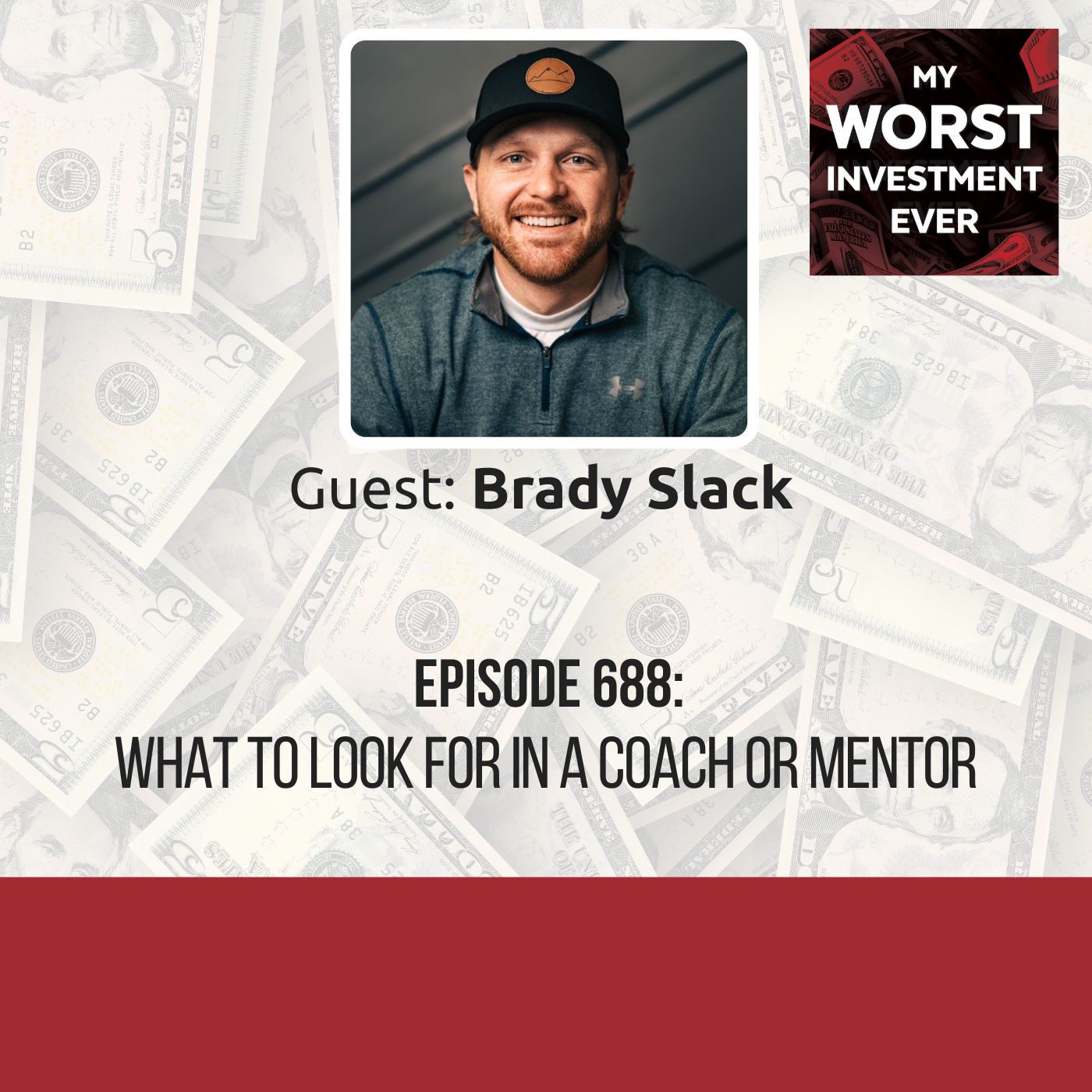
Brady Slack – What to Look For in a Coach or Mentor
BIO: Brady Slack is the owner of High Country Finance, LLC, a full-service tax and accounting firm based in Utah in the US. His purpose is to be a resource that helps everyone experience wealth while paying the fewest taxes possible.STORY: Brady came across a coaching group on Facebook that was good at marketing its coaching package. He was fascinated by the package and bought it for $50,000. While it was a good package, it wasn’t a good fit for him as it didn’t align with his business goals.LEARNING: Vet the mentor, coach, or advisor before you engage with them. Pick a mentor or a coach who embodies what you want to be. Don’t decide out of desperation or pressure. “If you’re going to make a decision or buy something, or spend money, go to bed first. If you still feel the same in the morning, do it. But if anything’s changed, rethink it.”Brady Slack Guest profileBrady Slack is the owner of High Country Finance, LLC, a full-service tax and accounting firm based in Utah in the US. His purpose is to be a resource that helps everyone experience wealth, all while paying the fewest taxes possible.Worst investment everWhen Brady turned 23, he quit his job at an accounting firm and started a business. He didn’t have the expertise or the experience to create an accounting firm, but he decided to do it anyway. A close friend, a successful businessman, told Brady that the quickest way to learn and grow is to hire someone. So Brady started seeking out mentors, coaches, and development opportunities.Brady connected with a group on social media that asked him to speak at their event. He felt this would be an excellent way to reach more people and boost his business. He later found out the group had an offer attached to the back end of the speaking engagement, including some coaching, marketing and advertising, and websites. This was an even better deal for Brady. This all came as a coaching package that cost over $50,000. Brady purchased it.While the coaching program was great, Brady soon realized that it didn’t necessarily align with where he wanted to go with his business. It just wasn’t the right fit for him.Lessons learnedIf you need more financial resources to pay for an opportunity, wait until you have it.Vet the mentor, coach, or advisor before you engage with them.Before you pick a mentor or coach, define your goals, your intentions, and what you want your outcome to be.Andrew’s takeawaysPick a mentor or a coach who embodies what you want to be.You may get less value from a generalist, so go for a specialist in your interests.Avoid getting sucked into the flashy coaches on your Facebook feed because those guys are great at selling but not necessarily great at coaching.Don’t decide out of desperation or pressure.Actionable adviceTake time to define what you want out of your venture clearly, and then look for someone who has already done that and reach out to them to mentor or coach you.Brady’s recommendationsBrady recommends getting as much information and education as possible from the numerous free online resources. Further, vet someone who can accelerate the growth within your venture and ask them to mentor you.No.1 goal for the next 12 monthsBrady’s number one goal for the next 12 months is to get his newly launched software to a point where it pays all its capital back and is profitable.Parting words “Just keep going. The road to entrepreneurship or becoming successful is 75% hard work, grit, and determination. The other 25% is just a little bit of luck.”Brady Slack [spp-transcript] Connect with Brady SlackLinkedInTwitterInstagramYouTubeWebsitePodcastAndrew’s booksHow to Start Building Your Wealth Investing in the Stock MarketMy Worst Investment Ever9 Valuation Mistakes and How to Avoid ThemTransform Your Business with Dr.Deming’s 14 PointsAndrew’s online programsValuation Master ClassThe Become a Better Investor CommunityHow to Start Building Your Wealth Investing in the Stock MarketFinance Made Ridiculously SimpleFVMR Investing: Quantamental Investing Across the WorldBecome a Great Presenter and Increase Your InfluenceTransform Your Business with Dr. Deming’s 14 PointsAchieve Your GoalsConnect with Andrew Stotz:astotz.comLinkedInFacebookInstagramTwitterYouTubeMy Worst Investment Ever Podcast

Richard Lawrence – Avoid the Stock That’s the Hype of the Day
BIO: Richard H. Lawrence, Jr., is the Founder and Executive Chairman of Overlook Investments Group, an independent fund management company established in Hong Kong in 1991.STORY: Richard invested heavily in a successful Korean company that brought him great returns until the founder died. The son took over and brought the stock to its demise.LEARNING: If it’s not working, get out. Invest in a company with no or minimal debt. Operating return is the purest way to measure profitability. “I’m a big believer in modest self-financed growth.”Richard Lawrence Guest profileRichard H. Lawrence, Jr., is the Founder and Executive Chairman of Overlook Investments Group, an independent fund management company established in Hong Kong in 1991. Overlook invests US$6 billion in a concentrated portfolio of public equities throughout Asia, excluding Japan.Richard and his wife, Dee, have founded several non-profit organizations; he’s a philanthropist who is devoted to climate change. He has two grown kids and lives in San Francisco, California.Worst investment everIn 1992, Richard discovered that stocks in Korea were incredibly cheap. He owned everything at 2-4x earnings. Richard owned a hair dye company and all kinds of oddball companies. Within that mix, there was one company that stood out. Korea, at the time, had massive debt. But this one company didn’t have any debt, so Richard was immediately attracted to it.Richard purchased shares in the company initially in 1992. At the time, the company was the largest synthetic fiber producer in South Korea, making spandex. It was a formidable company going from strength to strength. It became among Richard’s most significant holdings, the strongest of this cohort of Korean companies he owned.The company was founded by one of the greatest titans of the Asian textile industry. The founder was Korean and a larger-than-life figure in a manner unlike any other business leader in Korea in the lead-up to the Asian financial crisis when Korea went burst. He was a nonconformist in a culture that admired conformity. That was one of the reasons his company had no debt. He had the confidence and independence of someone who knew how to run a company for cash flow. Just as he disliked debt, he also disliked paying taxes. He was the most aggressive executive Richard had ever encountered in Asia or anywhere else. In one instance, he built a US$400 million facility, depreciated it over two and a half years, then revalued it and depreciated it a second time. By doing so, the founder minimized reported profits to minimize taxes and used cash savings to avoid debt. Richard liked this business model, so he invested heavily in it.The company did very well in the start-up years until the founder died. His son took over, but he struggled to fit into his father’s giant shoes. Richard thought he could help him be successful and worked on it from 1997 to 2000 during and after the Asian financial crisis. Richard gave him all the advice he could, but he was ignored. By 2000, with no concrete action taken by management, and no upward movement in the sock, Richard’s patience wore thin. Then the new leader crossed a red line and blatantly undertook an unfair related party transaction that effectively bailed out an insurance company owned by the family with cash from the spandex company.Richard, at that time, requested a reversal of the acquisition. He asked management to initiate paying cash dividends, execute a series of share splits, establish an IR department, and appoint additional directors that are at least partially independent. The largest internationally managed Korean fund cast the deciding vote against Richard ending the investment in a huge loss.Lessons learnedBeing an activist publicly doesn’t help.If it’s not working, get out.Invest in a company with no or minimal debt.Avoid the stock that’s the hype of the day.Operating return is the purest way to measure profitability and should be high. The higher it is, the better it is.Andrew’s takeawaysAn activist type of shareholder has its limits.There’s value in owning a diversified portfolio of stocks over a long period.Actionable adviceGo for companies with modest growth, don’t look for something off the charts. Build a portfolio of roughly 12 companies that can deliver a good operating return and rebalance it regularly.Richard’s recommendationsRichard recommends reading a lot of investing books. You can start with Buffett’s letters and then go to John Train’s books as you grow your library.Parting words “Beginners in this industry can learn from the tough lessons that we all went through.”Richard Lawrence [spp-transcript] Connect with Richard LawrenceLinkedInWebsiteBooksAndrew’s booksHow to Start Building Your Wealth Investing in the Stock MarketMy Worst Investment Ever9 Valuation Mistakes and How to Avoid ThemTransform Your Business with Dr.Deming’s 14 PointsAndrew’s online programsValuation Master ClassThe Become a Better Inv

Vineer Bhansali – You Create Real Value by Being Different
BIO: Vineer Bhansali is the CIO of LongTail Alpha. The firm was founded in 2015 to help provide risk mitigation strategies.STORY: In early 1993, most investors held a significant long position on the Eurodollar futures contract, betting that interest rates would go down. Vineer decided to follow the herd. The Fed increased rates, and Vineer kept buying until he lost his investment.LEARNING: Don’t follow the herd blindly. Success in the markets is all about timing. Have an investment framework within which you operate. “You’ve got to be very humble and disciplined with your loss thresholds and risk limits.”Vineer Bhansali Guest profileVineer Bhansali is the CIO of LongTail Alpha. The firm was founded in 2015 to help provide risk mitigation strategies. Vineer was a partner at PIMCO and started their first hedge fund and also started and managed their quantitative investment portfolio teams from 2000-2015.He has a Ph.D. in Theoretical Physics from Harvard University and has written six books on finance. He has also run over 60 ultramarathons. He is also an Airline Transport Pilot rated to fly jets and helicopters and has over 4,500 hours of flight time.Worst investment everVineer started at Citibank in late 1992, just after the 1987 big stock market crash. He was participating in a bull market created by an extremely easy central bank policy. At that time, probably the easiest trade to do was just to buy anything like fixed income or stocks, and it would go up.Veneer was at some dinner in late 1993, and everybody in that room held a pretty significant long position on the Eurodollar futures contract, betting that interest rates would go down. That should have been a signal that something was amiss. But as a young trader, seeing everything was going up, Veneer also got long Eurodollar futures.Then as a surprise, the Fed got a little worried in February of 1994 and raised interest rates by 25 basis points. The Treasury market started to fall, and Vineer thought it was a good time to buy, so he bought some bond futures contracts. The interest was raised again in March, and the market sank a little bit more. He kept buying more, hoping the rates would soon go down again. Eventually, his trades were blown over, and he lost his investment.Lessons learnedHaving an original idea is always good because you create value by being different.Don’t follow a herd blindly.Success in the markets is all about timing.Have an investment framework within which you operate.The markets are very demanding, and to survive, you need to take care of everything about yourself; your mind, your body, and your health.Andrew’s takeawaysThe market is a predator.Original ideas create value.Markets are a human construct, and you never know which way they can go.Don’t get too hooked on your creative idea because it may not be time right for it.Have an investment framework and follow it.Vineer’s recommendationsThere’s a lot of stuff that’s on Vineer’s website that can help with risk management. He also recommends reading The Feeling of Risk: New Perspectives on Risk Perception. Veneer highly advises people at this stage of the game to abandon some of the preconceptions about how stock markets or bond markets work and just go back and do some honest, independent research on what risk management means for themselves as an individual.No.1 goal for the next 12 monthsVineer’s number one goal for the next 12 months is to stay healthy. For his investors and portfolios, he wants to be very disciplined and positioned on the right side so he can deliver a stellar performance that matches the kind of strategies he has.Parting words “Take care of yourselves, stay healthy, and be passionate about what you do.”Vineer Bhansali [spp-transcript] Connect with Vineer BhansaliLinkedInTwitterWebsiteBooksAndrew’s booksHow to Start Building Your Wealth Investing in the Stock MarketMy Worst Investment Ever9 Valuation Mistakes and How to Avoid ThemTransform Your Business with Dr.Deming’s 14 PointsAndrew’s online programsValuation Master ClassThe Become a Better Investor CommunityHow to Start Building Your Wealth Investing in the Stock MarketFinance Made Ridiculously SimpleFVMR Investing: Quantamental Investing Across the WorldBecome a Great Presenter and Increase Your InfluenceTransform Your Business with Dr. Deming’s 14 PointsAchieve Your GoalsConnect with Andrew Stotz:astotz.comLinkedInFacebookInstagramTwitterYouTubeMy Worst Investment Ever Podcast

Brenden Kumarasamy – Follow the Data, Not Your Emotions
BIO: Brenden Kumarasamy is the founder of MasterTalk; he coaches ambitious executives & entrepreneurs to become the top 1% of communicators in their industry.STORY: Brenden decided to promote his YouTube channel by sending 500 cold emails per day to university professors. After sending 2,000 emails, he received very negative responses. Instead of reviewing his strategy, he sent more emails for three months and got nothing out of it.LEARNING: Follow the data and remove emotion as much as possible when making decisions. Make sure your marketing content offers undeniable value. “If you want to be in the top 1% of any category, you need to behave in a way that 99% of people aren’t willing to.”Brenden Kumarasamy Guest profileBrenden Kumarasamy is the founder of MasterTalk; he coaches ambitious executives & entrepreneurs to become the top 1% of communicators in their industry. He also has a popular YouTube channel called MasterTalk, with the goal of providing free access to communication tools for everyone in the world.Worst investment everWhen Brenden started MasterTalk, he had this brilliant idea to send 50,000 cold emails to university professors in Canada and the US. His thought was pretty strategic. Even if 10% or even 1% of the recipients shared his videos with their college students every year, Brenden’s distribution would be unlimited, and his YouTube channel would explode in popularity.Brenden didn’t know how automated email campaigns worked, so he’d manually send 500 emails each day. He would open universities’ websites, pull up their faculties, find their emails, and start sending emails. About 2,000 emails into it—about a week into it—he started getting negative responses from the university professors. Brenden got so much hatred; it was insane.Despite the hate and realizing his strategy wasn’t working, Brenden didn’t stop after 2,000 emails. Being the 22-year-old knucklehead he was then, he spent the rest of that summer sending 500 emails daily for the next three months. After all that dedication, Brenden got just two positive responses.Lessons learnedFollow the data and remove emotion as much as possible when making decisions.There’s no silver bullet to entrepreneurship, just hundreds of lead bullets. So don’t push just one primary strategy, have hundreds of little different strategies.When something starts working for you, instead of guessing why it’s working, ask your customers. You’ll get to see what’s working, and through that, you’ll get the results you’re looking for.Andrew’s takeawaysTry A/B testing across many different things to determine where you’re making a breakthrough.When you send any marketing content, make sure it has some benefit to the recipient.Be relentless when you’ve got the right target, and follow up without giving up.Brenden’s recommendationsBrenden recommends subscribing to his YouTube channel to access hundreds of free videos on how to speak. He also does free live communication training on Zoom every two weeks. If you want to join that, go to Rockstarcommunicator.com and register for the next one.No.1 goal for the next 12 monthsBrenden’s number one goal for the next 12 months is to scale his business to another level to create more impact for everyone around him.Parting words “Realize that the relationship successful people have with failure is very different than the one unsuccessful people have with failure.”Brenden Kumarasamy [spp-transcript] Connect with Julian KlymochkoLinkedInInstagramYouTubeWebsiteAndrew’s booksHow to Start Building Your Wealth Investing in the Stock MarketMy Worst Investment Ever9 Valuation Mistakes and How to Avoid ThemTransform Your Business with Dr.Deming’s 14 PointsAndrew’s online programsValuation Master ClassThe Become a Better Investor CommunityHow to Start Building Your Wealth Investing in the Stock MarketFinance Made Ridiculously SimpleFVMR Investing: Quantamental Investing Across the WorldBecome a Great Presenter and Increase Your InfluenceTransform Your Business with Dr. Deming’s 14 PointsAchieve Your GoalsConnect with Andrew Stotz:astotz.comLinkedInFacebookInstagramTwitterYouTubeMy Worst Investment Ever Podcast

Julian Klymochko – Arbitrage Trades Don’t Always Turn Out to Be Risk-free
BIO: Julian Klymochko is the CEO and Chief Investment Officer of Accelerate, a leading provider of alternative investment solutions.STORY: Julian got into an M&A trade where the acquirer had to stage a shareholders’ vote. This led to a hostile acquisition where the target company was bought by another acquirer that was not part of the deal. Julian made a significant loss in this trade.LEARNING: Never put on an M&A trade that has the buy side vote. Arbitrage doesn’t always mean a riskless trade. “The best way to learn is to practice by doing. So, try it out yourself, and don’t risk more than you can lose.”Julian Klymochko Guest profileJulian Klymochko is the CEO and Chief Investment Officer of Accelerate, a leading provider of alternative investment solutions. Accelerate helps investment advisors, institutions, and individual investors diversify their investment portfolios, manage risk, and improve their portfolio’s risk-adjusted returns. Prior to founding Accelerate in 2018, he was the Chief Investment Officer of Ross Smith Asset Management. He started his career as an Analyst at BMO Capital Markets. Currently, Julian is a Director of the CFA Society Calgary.He has been featured in some of the world’s top financial and business media, including Bloomberg, CNBC, The Wall Street Journal, BNN, Business Insider, and The Globe and Mail.Worst investment everJulian started out in the mid-2000s as a young investment banking analyst working 100 hours weekly. He was handling mergers and acquisitions (M&A) and advising. During that period, Julian worked on some exciting deals. He got excellent insights into the inner workings of M&A, equity offerings, and capital markets. It was a great place to start a career.From that, Julian went to a startup hedge fund. He cut his teeth doing closed-end fund arbitrage, which was a fantastic trade, specifically during the great financial crisis of 2008. He could generate nearly risk-free returns that, at one point, were yielding 50% to 100% annualized returns because there was very low liquidity in the market, and people were desperate to sell. So arbitrage spreads were extensive. After that, Julian got into different arbitrage strategies; volatility arbitrage, convertible arbitrage, and one of his and Warren Buffett’s favorites, risk arbitrage.In 2012, Julian launched a standalone risk arbitrage strategy. He started with a $5 million investment from a handful of wealthy investors to conduct this risk arbitrage investment strategy. Risk arbitrage aims to generate high returns consistently—ideally, double-digit annualized returns and no down years.For the first four months, Julian put a lot of pressure on himself and was sick to his stomach every morning. But he still had a terrific first year with low volatility. Julian produced a double-digit return with low volatility and minimal drawdown. So investors were happy. The fund continued with that excellent trend for the first three years and grew significantly.2015 was an interesting environment in the M&A business. It was open season for pharmaceutical mergers. There was this popular trend called tax inversion. Tax inversion was where pharmaceutical companies would take over a foreign company to re-domicile offshore to lower their tax bill significantly. That trend buoyed M&A activity as domestic US pharmaceutical companies rapidly sought to conduct tax inversions by acquiring non-domestic competitors.At the time, a company called Valeant Pharmaceuticals was rapidly consolidating the pharmaceutical space. Their business model was dramatically different than their competitors—the old-school pharma companies. The company hired a former McKinsey consultant, Michael Pearson, to run Valeant. The company had already conducted a tax inversion and was now Canadian-based and not part of the S&P 500. It was part of the Canadian benchmark, the TSX. With that, their attitude toward growth was utterly different. Michael Pearson’s thesis was such that R&D is wasteful. The company grew through acquisitions. They would do hostile takeovers and gobble everyone up. This strategy was working. Their stock was doing exceptionally well.Everyone was praising the accolades of Michael Pearson and his business model. It became a highly respected strategy on Main Street and Wall Street. Analysts were going gaga over it, and investors loved it, creating copycats.Tax inversions were still all the rage, and Julian was active on these within the fund’s portfolio. Julian had this one particular M&A trade that looked quite attractive. The company, QLT, was a failed biotech company with just a bunch of cash. They were trading at roughly cash value, with few prospects aside from the money they had on the balance sheet and perhaps some tax losses. But one redeeming factor was that they were Canadian, not American, making it a prime candidate for an inversion. That inversion came through a definitive merger agreement with a

David Hay – The Importance of Range Expansion
BIO: David Hay has been employed in the securities industry since 1979 when he joined Dean Witter Reynolds, now Morgan Stanley.STORY: A colleague told David about a business that was going to sell books online. David wasn’t convinced that the business had a competitive edge. So while his colleague invested $50,000 into this company, David chose not to invest. The company was Amazon. Had David invested then, he’d now be a multimillionaire.LEARNING: Invest only what you can afford to lose. Keep challenging your thesis. Have a systematic quantitative framework to help you keep an open and agile mind when investing. “One of the most important things in investing is range expansion.”David Hay Guest profileDavid Hay has been employed in the securities industry since 1979 when he joined Dean Witter Reynolds, now Morgan Stanley.And since 2022, David has been chief or Co-Chief Investment Officer of Evergreen Gavekal with a special emphasis on macro-economic research.In 2022, David released his highly anticipated book, Bubble 3.0: Who blew it and how to protect yourself when it blows apart.The book explores why he believes the financial markets are headed toward a third iteration of past market rotations.Accordingly, he believes there are a number of investment areas/asset classes poised to benefit from what he has begun referring to as “The New World Disorder.”Worst investment everIn November of 1994, David received a call from a colleague. They were both portfolio managers at Smith Barney. At that point, they were investing side by side in virtually everything. The colleague told David about this guy who was starting a company, and he was going to invest $50,000 in it.The colleague explained that the business would sell books online. David didn’t understand the business’s competitive edge, so he opted not to invest in it.Six months later, the colleague told him the company was going public. Turns out, the company was Amazon. Had David invested in it when his colleague told him to, he’d now be a multimillionaire.Lessons learnedIf the idea sounds great, invest only the money you can afford to lose.The bigger and longer the trading range, the more important the message of the breakout or breakdown is.Constantly challenge your thesis.Andrew’s takeawaysHave a systematic quantitative framework to help you keep an open and agile mind when investing.For every company that becomes a billion-dollar or trillion-dollar company, the good news is that 99.99999999999% of people missed it.David’s recommendationsDavid recommends his free newsletter. You can also get a free copy of Bubble 3.0 by emailing him through Substack. David also recommends reading the Felder report by Jesse Felder.No.1 goal for the next 12 monthsDavid’s number one goal for the next 12 months is to remove his shorts and go max bullish.Parting words “It’s always so much cheaper to learn from other people’s mistakes than your own.”David Hay [spp-transcript] Connect with David HayTwitterYoutubeBlogAndrew’s booksHow to Start Building Your Wealth Investing in the Stock MarketMy Worst Investment Ever9 Valuation Mistakes and How to Avoid ThemTransform Your Business with Dr.Deming’s 14 PointsAndrew’s online programsValuation Master ClassThe Become a Better Investor CommunityHow to Start Building Your Wealth Investing in the Stock MarketFinance Made Ridiculously SimpleFVMR Investing: Quantamental Investing Across the WorldBecome a Great Presenter and Increase Your InfluenceTransform Your Business with Dr. Deming’s 14 PointsAchieve Your GoalsConnect with Andrew Stotz:astotz.comLinkedInFacebookInstagramTwitterYouTubeMy Worst Investment Ever Podcast

Rex Salisbury – Quitting Can Be a Very Important Skill to Exercise
BIO: Rex Salisbury is the Founder & General Partner at Cambrian Ventures, a pre-seed & seed focused fintech fund.STORY: Rex’s biggest mistake ever was sticking with his initial career too long, even though he knew he shouldn’t have been working that job.LEARNING: Invest in the skill that you want to move into as much as you. Build networks early in your career. “Make yourself marketable. It’s amazing what you can learn if you invest in certain things.”Rex Salisbury Guest profileRex Salisbury is the Founder & General Partner at Cambrian Ventures, a pre-seed & seed focused fintech fund. He previously was a Partner at Andreessen Horowitz, where he helped launch the fintech vertical. He has over a decade of experience working in finance & fintech, primarily as a software engineer, before becoming a venture capitalist.Worst investment everRex’s biggest mistake ever was sticking with his initial career too long. Rex attended a small liberal arts college on the American east coast—Davidson. He had a great experience and made a lot of good lifelong friends. Rex studied economics and also got a major in history.During his senior year, Rex worked in investment banking, specifically for Merrill Lynch. He also did an internship in South Africa and studied formal money lending. After college, Rex went to work in a bank. He believed that since banks are big businesses, there must be interesting work to do.Unfortunately, the experience wasn’t what Rex had imagined. He hated his job and had begun thinking about quitting from the second month on the job. But he kept dragging on and wasted the first four years of his career doing something he knew he shouldn’t have been doing.Lessons learnedQuitting can be a very important skill to exercise.If you’re considering leaving something like a job, you should quit it sooner rather than later for better life outcomes.It’s incredibly important to have access to good networks early in your career.If you have the unfair advantage of being young, relatively unattached, and the ability to relocate geographically, do it. It will expand your networks.Andrew’s takeawaysIf you’re feeling like quitting, take that seriously. Sit down, write about it, talk to someone about it, and start to take some action.Invest in the skill that you want to move into as much as you. That will help you make that transition.Actionable adviceIf you’re interested in a particular area, find other people who are really good at writing and talking about that area. Exercising that muscle over time can help open doors to building valuable networks and relationships.No.1 goal for the next 12 monthsRex’s number one goal for the next 12 months is to identify individuals building the next big companies that will change financial services and invest in 12 of the most interesting of those.Parting words “If you feel like you don’t have the skill set to affect some of these changes, put in the work.”Rex Salisbury [spp-transcript] Connect with Rex SalisburyLinkedInTwitterYoutubeBlogWebsitePodcastAndrew’s booksHow to Start Building Your Wealth Investing in the Stock MarketMy Worst Investment Ever9 Valuation Mistakes and How to Avoid ThemTransform Your Business with Dr.Deming’s 14 PointsAndrew’s online programsValuation Master ClassThe Become a Better Investor CommunityHow to Start Building Your Wealth Investing in the Stock MarketFinance Made Ridiculously SimpleFVMR Investing: Quantamental Investing Across the WorldBecome a Great Presenter and Increase Your InfluenceTransform Your Business with Dr. Deming’s 14 PointsAchieve Your GoalsConnect with Andrew Stotz:astotz.comLinkedInFacebookInstagramTwitterYouTubeMy Worst Investment Ever Podcast

ISMS 23: Larry Swedroe – Do You Allow Yourself to Be Influenced by Your Ego and Herd Mentality?
In this episode of Investment Strategy Made Simple (ISMS), Andrew and Larry discuss chapters of Larry’s book Investment Mistakes Even Smart Investors Make and How to Avoid Them. In this fourth episode, they talk about mistake number five: do you let your ego dominate the decision-making process? And mistake number six: do you allow yourself to be influenced by herd mentality?LEARNING: Don’t let your ego influence your decision-making. Stay disciplined and avoid becoming irrationally exuberant. “The market is a predator preying on the mistakes of investors, their egos, and their herd behavior.”Larry Swedroe In today’s episode, Andrew continues his discussion with Larry Swedroe, head of financial and economic research at Buckingham Wealth Partners. You can learn more about Larry’s Worst Investment Ever story on Ep645: Beware of Idiosyncratic Risks.Larry deeply understands the world of academic research and investing, especially risk. Today Andrew and Larry discuss a chapter of Larry’s book Investment Mistakes Even Smart Investors Make and How to Avoid Them. In this fourth series, they talk about mistake number five: do you let your ego dominate the decision-making process? And mistake number six: do you allow yourself to be influenced by herd mentality?Missed out on previous mistakes? Check them out:ISMS 8: Investment Mistake No.1: Are You Overconfident in Your Skills?ISMS 17: Investment Mistake No.2: Do You Project Recent Trends Indefinitely Into the Future?ISMS 20: Larry Swedroe – Investment Mistakes No.3 and 4Mistake number 5: Do you let your ego dominate the decision-making process?According to Larry, logically, we make mistakes because we are human beings. One common mistake investors make is letting their egos influence their decision-making. No matter what you ask people, they all tend to think they’re better than average. Ego wants us to feel good, so we believe we’re better than average. But, the problem with ego is that it would much prefer to play a game where it only wins and never loses instead of a game where it can win or lose.Assume you’re a passive investor and put your ego aside because you know you’re unlikely to beat the market. So you choose to invest in the S&P 500, but unfortunately, it does poorly. Since you knew it could go either way, you have no one to blame except yourself.On the other hand, if you choose an active fund and it happens to outperform, you take credit for your brilliant decision to choose that active fund manager. And if it underperforms, you blame the manager and fire them. Here, the ego would much rather play a game of I win, but I don’t lose, which is what happens if you’re an active investor, not a passive one where there’s no one to blame. Larry believes that’s part of why almost half the number of investors, despite all the overwhelming evidence, choose to invest in active funds.Larry states that people with more skills have a better chance of avoiding all these behavioral mistakes. They understand the nature of the game they’re playing. They know that they’re competing against the market’s collective wisdom, which is a lot tougher to beat. This knowledge is what protects them from letting ego dominate their decision-making process.Mistake number 6: Do you allow yourself to be influenced by herd mentality?Psychologists have known for a long time that crowds can influence us. We want to own the same cars as the Joneses. The fear of missing out causes people to follow the herd very quickly. It’s what causes you to be attracted to the next new shiny thing and jump on the bandwagon. But it takes you a long time to unwind and realize the insanity of what you’re doing.The key to staying disciplined and avoiding becoming irrationally exuberant is having a thorough understanding of how markets work and knowing that bubbles eventually burst. You also need to have a well-designed roadmap to achieve your financial goals. Have an investment policy statement and set the framework under which you will be investing. Finally, have an understanding of how human behavior can impact investment decisions.About Larry SwedroeLarry Swedroe is head of financial and economic research at Buckingham Wealth Partners. Since joining the firm in 1996, Larry has spent his time, talent, and energy educating investors on the benefits of evidence-based investing with an enthusiasm few can match.Larry was among the first authors to publish a book that explained the science of investing in layman’s terms, “The Only Guide to a Winning Investment Strategy You’ll Ever Need.” He has authored or co-authored 18 books.Larry’s dedication to helping others has made him a sought-after national speaker. He has made appearances on national television on various outlets.Larry is a prolific writer, regularly contributing to multiple outlets, including AlphaArchitect, Advisor Perspectives, and Wealth Management. [spp-transcript] Connect with Larry SwedroeLinkedInTwitterWebsiteBooksAndrew’s

Harvey Sawikin – Do Your Own Homework
BIO: Harvey Sawikin is the co-founder and co-manager of Firebird. Launched in early 1994, Firebird’s funds were the first dedicated to the stock markets of Russia and the former Soviet Union.STORY: Harvey invested twice in a bank and a vodka company without due diligence. Instead, he believed that other companies who had invested in those investments had done the job of verifying their viability. Harvey lost huge amounts in both investments.LEARNING: You’ll fail if you rely on someone else’s due diligence and work. The most dangerous time to invest is when it’s the easiest to invest. “Relying on someone else’s due diligence is a mistake because you never know what’s going on or when stuff starts to go wrong.”Harvey Sawikin Guest profileHarvey Sawikin is the co-founder and co-manager of Firebird. Launched starting in early 1994, Firebird’s funds were the first dedicated to the stock markets of Russia and the former Soviet Union. Harvey also co-founded the Amber funds, which do private equity in the Baltic States. Before Firebird, he was an M&A lawyer at Wachtell Lipton after attending Harvard Law School and clerking for a Federal judge. Harvey’s novel, about a young lawyer who becomes an inside trader, was published by Simon & Schuster in 1995. He lives in Manhattan with his wife of 32 years and a neurotic 15-year-old cockapoo.Worst investment everOne of the largest banks in Kazakhstan, BTA Bank, approached Harvey’s company with an investment proposal. Another fund in the region had taken a position in it. The bank was supposedly very close with management and had excellent insight into how the company would build. The company looked cheap, with a reasonable price to book, and the economy was performing well. So Harvey invested in the bank.It turns out the bank’s loan book was crooked, and there was a lot of self-dealing. The guy who was the main power behind the bank was arrested for misappropriating millions of dollars from the bank through bad loans. The bank was put into bankruptcy and was taken over by another bank. The shareholders were almost wiped out. Harvey’s company had invested $20 million and got under a million back.In another incident, Harvey was very interested in getting involved in Ukraine. When a vodka company was brought to their attention, they became keen on investing in it, especially since a famous hedge fund in New York had bought a direct position. The fund said they had maxed out how much they could take and were willing to sell Harvey part of their stake.Harvey’s company made its investment, and within two or three weeks, the vodka company released gross earnings. Its financial results were 40% below where they were supposed to be.Harvey believed they had been duped by the hedge fund and wound up litigating against them. He eventually dropped the case due to the ruinous litigation costs in England and where the loser pays. He surrendered to losing that investment.Lessons learnedYou’ll fail if you rely on someone else’s due diligence and work.Be careful when investing during a bubble because it becomes invisible to you when you’re inside it.Andrew’s takeawaysDo your own due diligence.Don’t overestimate the knowledge, skills, and persistence of other investors.The most dangerous time to invest is when it is the easiest to invest.Harvey’s recommendationsHarvey recommends Twitter as a source of real-time information as long as you follow the right people.No.1 goal for the next 12 monthsHarvey’s number one goal for the next 12 months is to hang onto his Russian positions and make sure his investors recover their money and continue to find value in the rest of Eastern Europe when the war is over.Parting words “If you don’t obsess over your mistakes, you’re not a real investor.”Harvey Sawikin [spp-transcript] Connect with Harvey SawikinFacebookTwitterInstagramWebsiteBookAndrew’s booksHow to Start Building Your Wealth Investing in the Stock MarketMy Worst Investment Ever9 Valuation Mistakes and How to Avoid ThemTransform Your Business with Dr.Deming’s 14 PointsAndrew’s online programsValuation Master ClassThe Become a Better Investor CommunityHow to Start Building Your Wealth Investing in the Stock MarketFinance Made Ridiculously SimpleFVMR Investing: Quantamental Investing Across the WorldBecome a Great Presenter and Increase Your InfluenceTransform Your Business with Dr. Deming’s 14 PointsAchieve Your GoalsConnect with Andrew Stotz:astotz.comLinkedInFacebookInstagramTwitterYouTubeMy Worst Investment Ever Podcast
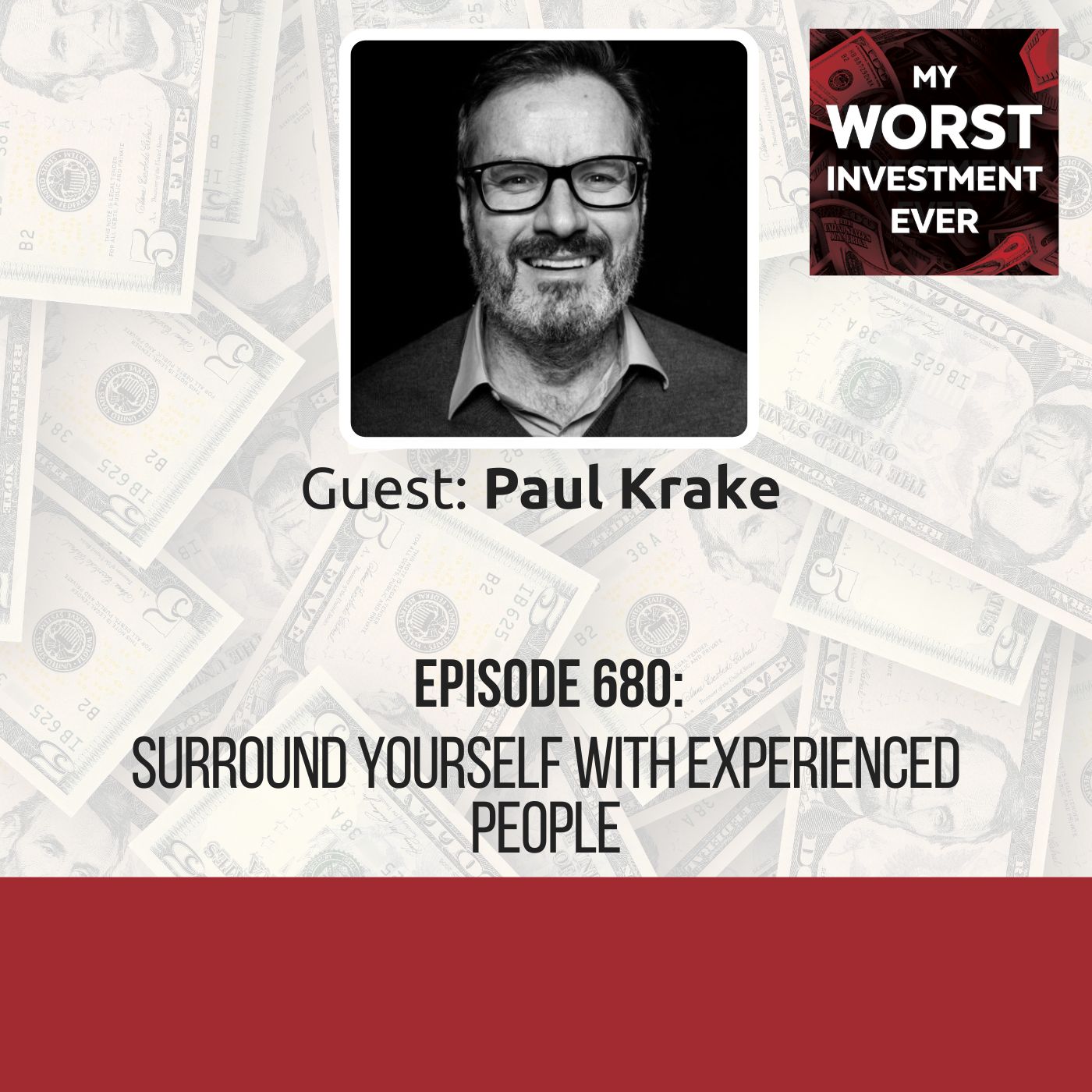
Paul Krake – Surround Yourself With Experienced People
BIO: Paul Krake is a global strategist focusing on mega themes of climate, China, digitization, and demographics.STORY: Paul quit a prestigious job where he had seasoned mentors to start a hedge fund. After a few years, he realized he wasn’t mature enough or emotionally prepared to run a business on his own.LEARNING: Surround yourself with people who are more experienced than you are. Think about all the scenarios where an investment can go wrong. “For every good idea out there, there are a million ways (that you can’t think about) for it to go wrong.”Paul Krake Guest profilePaul Krake is a global strategist focusing on mega themes of climate, China, digitization, and demographics. View from the Peak, Paul’s consultancy was formed in 2011 after an 18-year career in investment banking and as a macro hedge fund manager, where he covers global institutions on these mega themes. His latest venture is Climate Transformed, a global community of climate investors, entrepreneurs, and corporate leaders who are practically implementing the $100 trillion investment required for us to achieve decarbonization and sustainability.Worst investment everPaul’s dad passed away in November 2004, and a couple of days after his funeral, Paul was sitting in his mom’s backyard at four in the morning. At that moment, he thought of the idea of starting a fund.Paul went ahead with his idea and started a hedge fund even though the timing was wrong, and it was for all the wrong reasons to follow through with this idea. There was such a high degree of emotion involved in making this decision that he didn’t really think through it and consider all that he was giving up.At the time, Paul had a prestigious job at Caxton Associates. He had the support of great mentors and trainers. He gave up all this to start his business.After about three years of running the hedge fund, Paul realized he wasn’t emotionally prepared or mature enough to do what he was doing.Lessons learnedSurround yourself with people who are more experienced than you are.Think about all the scenarios where an investment can go wrong.Think of a business as trade and have an exit strategy if it doesn’t work for X years or if you spend X amount.Andrew’s takeawaysWhen you get that wind of confidence and want to invest, take a step back and think things through.When you quit a job to start a business, you lose support and have to do it alone.Actionable adviceBefore you make any investment:Think about your processes.Consider your entry and exit position and treat everything with the same agnostic clinical approach.Always have an exit strategy for when things don’t work out.Paul’s recommendationsRecommended resources: The secret to not getting stressed over not finding ways to de-stress is to use fewer resources.No.1 goal for the next 12 monthsPaul’s number one goal for the next 12 months is to successfully roll out 30 in-person events in nine countries.Parting words “I love this. I think it’s a great way to get people to seriously think about the benefits of failing.”Paul Krake [spp-transcript] Connect with Paul KrakeLinkedInWebsitePodcastAndrew’s booksHow to Start Building Your Wealth Investing in the Stock MarketMy Worst Investment Ever9 Valuation Mistakes and How to Avoid ThemTransform Your Business with Dr.Deming’s 14 PointsAndrew’s online programsValuation Master ClassThe Become a Better Investor CommunityHow to Start Building Your Wealth Investing in the Stock MarketFinance Made Ridiculously SimpleFVMR Investing: Quantamental Investing Across the WorldBecome a Great Presenter and Increase Your InfluenceTransform Your Business with Dr. Deming’s 14 PointsAchieve Your GoalsConnect with Andrew Stotz:astotz.comLinkedInFacebookInstagramTwitterYouTubeMy Worst Investment Ever Podcast
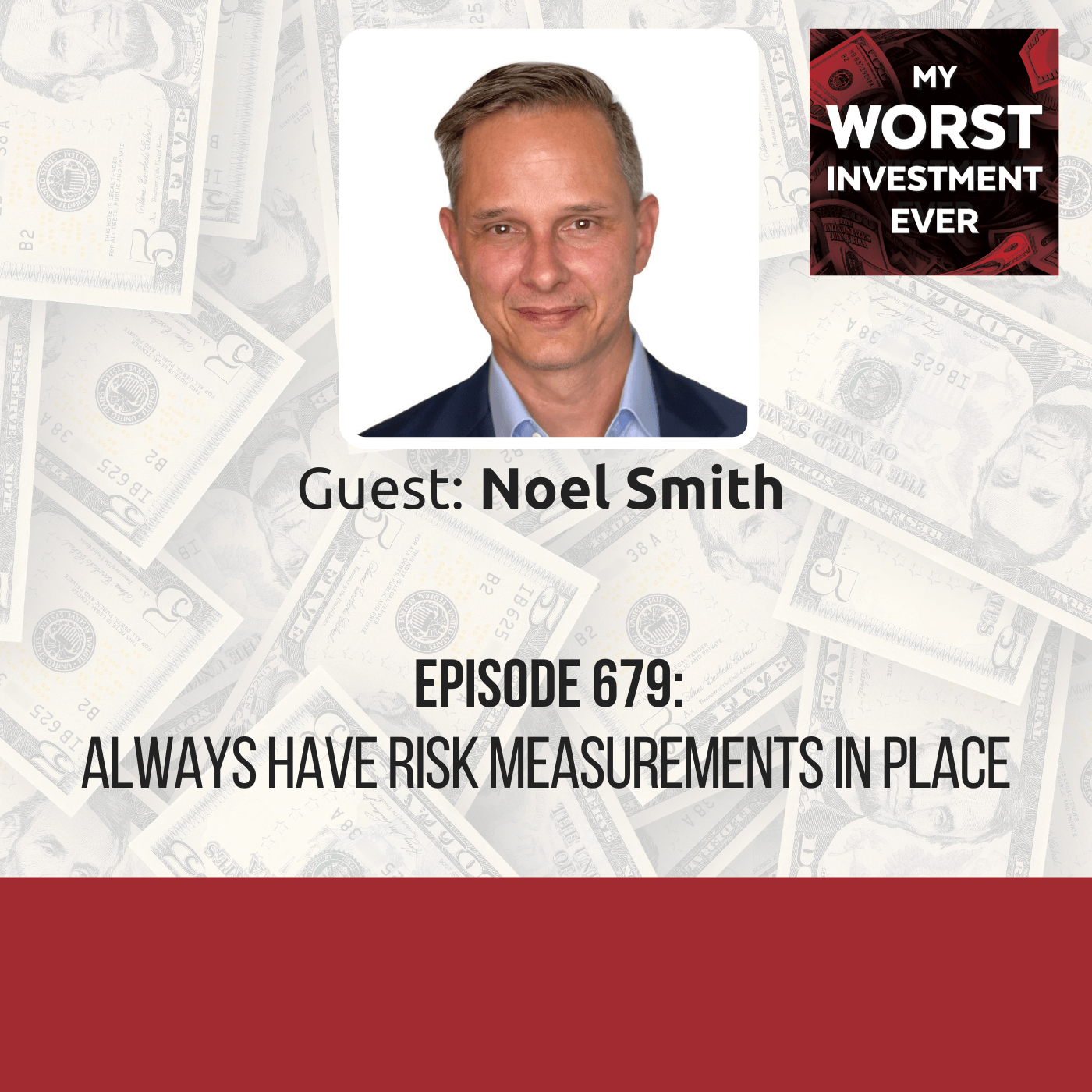
Noel Smith – Always Have Risk Measurements in Place
BIO: Noel Smith is the Chief Investment Officer of Convex Asset Management and the Head of Options Trading at Tanius Technology. STORY: Noel and his partner invested in a stock whose price kept falling. Every time the price would fall, Goldman Sachs would come in and buy like 50,000 out of the money calls. This made the partners hold onto the stock, eventually riding it to zero.LEARNING: Have risk measurements in place that you know you will not break. Have some percentage that you're willing to lose.“Learning about options and how they affect the marketplace is much more important than you think."Noel SmithGuest profileNoel Smith is the Chief Investment Officer of Convex Asset Management and the Head of Options Trading at Tanius Technology. A member of the CME, CBOT, and CBOE, Noel has over 25 years of experience trading volatility, market making, and managing risk. Noel was previously the CIO and Portfolio Manager of two separate Chicago-based proprietary derivatives trading firms. Additionally, he was the seed investor who financed the launch of global high-frequency trading firm GETCO LLC (KCG/Virtu), which grew to account for 20%+ of trading volume in the U.S.Worst investment everNoel and his partner had a position in Enron, the ninth largest market cap company at the time. Enron started to lose money. Each time the stock would go down 10%, Goldman Sachs would come in and buy like 50,000 out of the money calls. Such stunts would convince people, Noel included, to hold onto the stock. And so the partners kept holding onto the stock as the price went up and down. Eventually, they rode the stock to zero, losing their entire investment. Lessons learnedHave risk measurements in place that you know you will not break.Have some percentage that you're willing to lose.Andrew's takeawaysA good investor has set up a structure of how to invest and doesn’t second guess the structure.Actionable adviceYou always have to be able to see the cause and effect of everything.Noel's recommendationsNoel recommends learning about options and how they affect the marketplace.No.1 goal for the next 12 monthsNoel's number one goal for the next 12 months is to develop his business and get more people to understand why options are useful and not to be afraid of them.Parting words“Thank you for having me today. Hopefully, everyone got something out of this.”Noel SmithConnect with Noel SmithLinkedInWebsite Andrew’s books ● How to Start Building Your Wealth Investing in the Stock Market ● My Worst Investment Ever ● 9 Valuation Mistakes and How to Avoid Them ● Transform Your Business with Dr. Deming’s 14 Points Andrew’s online programs ● Valuation Master Class ● How to Start Building Your Wealth Investing in the Stock Market● Finance Made Ridiculously Simple● Become a Great Presenter and Increase Your Influence ● Transform Your Business with Dr. Deming’s 14 Points Connect with Andrew Stotz ● astotz.com ● LinkedIn ● Facebook ● Instagram ● Twitter ● YouTube ● My Worst Investment Ever Podcast
ISMS 22: Toyota vs. EV Extremists – Who Is Right?
What’s interesting about Toyota is that if you buy today, you get its future growth for freeThe right time to buy might be nowICE vehicles are not going away, providing ongoing revenue supportToyota is the world’s largest car manufacturer, ranked by a composite of market cap, revenue, and employees. The company has been a leader in alternative energy solutions such as hybrids and hydrogen-powered vehicles. The prior president has said that the company will “not simply repeat the approach of other companies” when it comes to electric vehicles (EV). Toyota points out the limited battery range, scarcity of lithium resources, lack of a charging network, and consumer preferences towards internal combustion engines (ICE). And developing markets in South America, Asia, and Africa could be decades away from having the infrastructure to implement a massive EV rollout; Toyota is well positioned to grow with these markets. Over the next five years, we expect Toyota to return to its pre-pandemic average growth level and achieve a CAGR of 6.9%.Hybrid and Hydrogen leadership and more EVs coming could prove critics wrongToyota is a pioneer in the mass production of hybrid technology, having rolled out its hybrid “Prius” model in 1997, since selling more than 5m. Currently, hybrids account for about 27% of total vehicle sales. Toyota is pushing ahead with hydrogen-powered cars, currently selling its “Mirai” model. The beaten-down share price is some evidence that observers expect the company’s hydrogen offerings will eventually fail. But there is promise to the technology, and an investor could consider Toyota’s hydrogen to have an option value. Of course, Toyota has not turned its back on EVs; recently, announcing plans to invest US$70bn in electrifying part of its fleet by 2030. We appreciate Toyota’s diversified approach to transition to more carbon-neutral cars and expect total CAPEX spending of about JPY12trn over the next few years.Negative sentiment pressuring price; but at 1x PB, it might be the time to BUYThe sector is unfavorable given recession fears, as well, investors doubts Toyota’s unconventional EV policies and its ability to defend its position as the world’s largest carmaker. The company’s price-to-book ratio (PB) dropped below 1x, which is 1x std dev below its long-term average. With an average net margin of 7.8% over the past 5 years, Toyota is among the most profitable automobile companies in the world. We believe negative sentiment has been too punishing, and the stock deserves a re-rating.FY3Q23 saw strong revenue growthToyota’s 3Q23 revenue was up an impressive 25% YoY due to strong sales volume.The operating profit also grew by 22%, with the positive effect of higher sales volume more than offsetting soaring material prices.Though, the bottom line is slightly weaker YoY due to FOREX losses.Revenue structureWith 10.5m sold cars in 2022, Toyota remained the largest car manufacturer in the world. Its automotive segment, which accounts for 91% of revenue includes the production of passenger cars, commercial vehicles, and related parts.The company produces vehicles under four brands: Daihatsu, Hino, Lexus, and the namesake Toyota. Accounting for 85% of total automotive sales, Toyota was the best-selling brand.It derives 7% of its revenue from financial services. Compared to other car companies, this contribution is relatively low, meaning that Toyota generates most of its sales from its core segment of car production.Toyota gets its revenues from multiple geographic regions. In 2022, North America was the largest region in terms of revenue as it represented 35% of total revenue. Its domestic market Japan makes up 26%, followed by Asia (18%), and Europe (12%).A. Stotz Four ElementsOverall: Toyota is highly unappealing relative to 2,300 non-financial companies in Japan considering Fundamentals, Valuation, Momentum, and Risk.Fundamentals: Ranked in the bottom 30% in Japan due to low profitability driven by low margin and slow return on assets.Valuation: Neutral as it trades on considerably lower PE, and PB relative to other companies in the Japanese market but on higher EV/EBIT.Momentum: Moderately unattractive as both price and fundamental momentum are inconsistent and have not delivered convincing results.Risk: Toyota has a low current ratio and risky debt status, but consistently high times interest earned. Price risk measured in terms of beta is about the same as the Japanese market.A. Stotz Profitable GrowthProfitable Growth consistently ranked slightly below average among 930 large Consumer Discretionary companies globally. In the past 12 months, the ranking among its peers fell to #7 from #6 in 2022.Profitability shares a similar story, ranking at #6 for more than half the period. Growth has improved slightly since 2019 to #8 from #10 but can also be seen as continually dropping from #5 in 2020.Asset efficiency has ranked #9 since 2019 and constituted a heavy drag on Profitability. However, strong E
Guillermo Cornejo – Don’t Underestimate the Value of Experience
BIO: Guillermo Cornejo is the CEO of Riders Share, the Airbnb of motorcycles he started while attending grad school at UCLA.STORY: Guillermo had an insurance company handling claims for his customers. When he realized the insurance company had a 50% profit margin, he decided to start his own insurance business. This became a costly and challenging venture because he had no experience handling claims.LEARNING: Don’t underestimate the value of experience. “Whenever somebody is talking to me about any industry, I'm all ears. I know I know nothing.”Guillermo Cornejo Guest profileGuillermo Cornejo is the CEO of Riders Share, the Airbnb of motorcycles he started while attending grad school at UCLA. Before that, he worked in analytics roles for GM, Nissan, and Hyundai. He grew up in Peru and enjoys anything that makes your heart race.Worst investment everGuillermo launched his company in 2018, and it grew immensely. The company booked over a million dollars in rentals within the first year. Guillermo was on top of the world.The company was working with an insurance partner with pretty good rates but was providing terrible service to Guillermo’s customers. It took many months to handle the claims. When Guillermo looked at his company’s history of accidents and measured the cost of paid-out claims and how much he had paid the insurance company in premiums. He found the insurance company was making a 50% margin in profits. This got Guillermo thinking he should do it himself.Guillermo raised some capital and used most of it to set up an insurance company. This was an expensive venture (millions of dollars). The more the company grew, the more bad customers it attracted—from risk-takers to fraudsters trying to steal his motorcycles. On top of that, he realized how difficult it was to handle claims, and just like the insurance partner, it took him months to pay out claims.Lessons learnedDon’t underestimate the value of experience.Andrew’s takeawaysDon’t let overestimation bias mislead you into thinking you can do more than you’re capable of.Try to shift your mind from I think I know something to I know I know nothing.Actionable adviceDon’t overestimate your skills, abilities, and knowledge. Work with advisors and connect with more experienced people who have done it before. They will help you understand how much you don’t know and then try to fill that gap.Guillermo’s recommendationsGuillermo recommends reading Factfulness: Ten Reasons We’re Wrong About the World--and Why Things Are Better Than You Think, co-authored by a previous guest on our podcast, Anna Rosling Rönnlund.No.1 goal for the next 12 monthsGuillermo’s number one goal for the next 12 months is to double his company revenues while remaining profitable. [spp-transcript] Connect with Guillermo CornejoLinkedInFacebookTwitterBlogWebsiteAndrew’s booksHow to Start Building Your Wealth Investing in the Stock MarketMy Worst Investment Ever9 Valuation Mistakes and How to Avoid ThemTransform Your Business with Dr.Deming’s 14 PointsAndrew’s online programsValuation Master ClassThe Become a Better Investor CommunityHow to Start Building Your Wealth Investing in the Stock MarketFinance Made Ridiculously SimpleFVMR Investing: Quantamental Investing Across the WorldBecome a Great Presenter and Increase Your InfluenceTransform Your Business with Dr. Deming’s 14 PointsAchieve Your GoalsConnect with Andrew Stotz:astotz.comLinkedInFacebookInstagramTwitterYouTubeMy Worst Investment Ever Podcast

Eugene Ng – Keep Playing the Long-Term Game of Investing
BIO: Eugene Ng is the Founder and Chief Investment Officer of Vision Capital & Vision Capital Ventures. He is also the author of the Amazon best-selling book Vision Investing: How We Beat Wall Street & You Can, Too!STORY: Eugene invested in a three-day course in a bid to accelerate investment learning. The course involved playing a simulated stock investment game. Eugene lost in the early stages of the game due to overconfidence.LEARNING: It’s okay to make a mistake. Keep playing the long-term game of investing. “If you want to invest long term, avoid playing Russian roulette. You don’t want to be a hero and then end up in a cemetery sooner or later.”Eugene Ng Guest profileEugene Ng is the Founder and Chief Investment Officer of Vision Capital & Vision Capital Ventures. He is also the author of the Amazon best-selling book Vision Investing: How We Beat Wall Street & You Can, Too! He also teaches investing once a year to educate new investors and to give back.Born and raised in Singapore, Eugene studied economics and finance and received his Summa Cum Laude from the Singapore Management University in 2008.Eugene’s career in finance spans over 11 years. His career started in 2008, joining Citi as a Management Associate for 3 years. Subsequently, he was with J.P. Morgan providing FX and Interest Rates sales & advisory for corporates for over 8 years, where he was a Vice-President.Worst investment everEugene had a near-death accident when he broke his neck almost ten years ago. While intoxicated, he decided to do a somersault into a very shallow swimming pool. Eugene broke the top of his head after hitting the bottom of the swimming pool. This type of injury is so severe that 99% of people who get it die, and of those who survive, 99% become paralyzed in some form or another.After that near-death incident, Eugene got thinking about what to do with his life. Before the accident, he was living a meaningless life and just wasting his money. Being a reasonably logical, curious person, who is also fairly good at numbers, Eugene decided to look into investing. He had never even read an investing book. Now he wanted to master investing. Instead of reading books, taking time to figure it out, and making costly mistakes over a period, he took a different route to accelerate his learning. Eugene decided to pay for a three-day investing course.The participants played a simulated stock investment game on the second day of the investing course. They were given five stocks to choose from, of which the financials were provided. They were to play this for ten rounds. A participant could decide to buy or sell each round. There was an additional advantage; a participant could take up to 10 times leverage on the limited amount of capital they had to buy the stocks.Eugene believed he was brilliant, having been in finance and banking. So in round one, he chose three of the five companies, equally split them, and took the maximum leverage possible. So he took 10X his capital. The stock was 10% up, making Eugene one of the few winners of the 60 participants. Then the second round came, and the stock market was up again by 20%. Suddenly, Eugene was the top guy in his class due to his power of leverage. When round three came, a massive stock crash occurred due to a recession, and the market was down 50%. He was completely wiped out. As the game continued through ups and downs, there were just a handful of people left, and ultimately, only one was left.While this was a simulated game, and Eugene didn’t lose anything in reality, the kick to his ego tore him apart mentally.Lessons learnedIt’s okay to make a mistake, especially early on.Don’t use margin, leverage, or complicated derivatives, no matter how attractive they are.Don’t sell short.Keep playing the long-term game of investing.Andrew’s takeawaysOverconfidence bias will lead to poor investment decisions.There’s no point in playing a game with an unlimited downside.Actionable adviceAvoid making the same mistakes that Eugene made.Eugene’s recommendationsEugene recommends reading his book Vision Investing: How We Beat Wall Street & You Can, Too!, where he shares his learnings and lessons so you can invest better and beat the market.No.1 goal for the next 12 monthsEugene’s number one goal for the next 12 months is to start his journey of investing full-time. He wants to build a hedge fund and manage capital for others and himself.Parting words “Figure out what game you want to play in investing. Do that well, and you’ll never be wiped out.”Eugene Ng [spp-transcript] Connect with Eugene NgLinkedInTwitterInstagramWebsiteBlogBookAndrew’s booksHow to Start Building Your Wealth Investing in the Stock MarketMy Worst Investment Ever9 Valuation Mistakes and How to Avoid ThemTransform Your Business with Dr.Deming’s 14 PointsAndrew’s online programsValuation Master ClassThe Become a Better Investor CommunityHow to Start Building Your Wealth Invest
ISMS 21: CPI Collapsing Across the Globe
Will the global CPI slowdown continue?Global MarketsGlobal CPI is falling fast in both DM and EMsEconomies across the world have a GDP of about US$90trn and an average CPI of 6.2%DM CPI was 5.7%EM CPI was 6.9%World CPI was 6.2%, down 0.4ppts from one year ago; MoM it was down 0.8pptsDM CPI was 5.7%, down 0.9ppts from one year ago; MoM it was down 0.8pptIt has moved from being in line with World CPI last year; to the current 0.5ppt discountEM CPI was 6.9%, which is about flat vs. one year ago; MoM it was down 0.8pptIt has moved from being in line with the World CPI last year; to the current 0.7ppt premiumDeveloped RegionsDM Americas CPI is falling fast, DM Europe is sliding, DM Asia is on a steady riseDM Americas is the largest, with US$25trn of GDP and 4.9% CPIDM Europe has US$14.9trn GDP and 7.1% CPIDM Pacific has US$7.6trn GPD and 4.7% CPIDM Americas CPI is falling fast, DM Europe is sliding, DM Asia is on a steady riseDM Americas CPI was 4.9%, down 3.4ppts from one year ago; MoM it was down 1ppts.It has moved from a 1.7ppts premium to World CPI last year; to the current 1.3ppts discountDM Europe CPI was 7.1%, up 0.9ppts from one year ago; MoM it was down 1.1ppts.It has moved from a 0.5ppts discount to World CPI last year; to the current 0.9ppts premiumDM Pacific CPI was 4.7%, up 2.4ppts from one year ago; MoM it was up 0.4ppts.It has moved from a 4.4ppts discount to World CPI last year; to the current 1.5ppts discountEmerging RegionsEM Europe and Asia CPI falling; Middle East & Africa, and Frontier markets are still on fireEM Americas had a small GDP of US$3.8trn and CPI of 7%EM Asia had a massive GDP of US$25.7trn and 1.9% CPIEM Europe had a small US$3.9trn GDP and a massive 17.7% CPIEmerging Middle East & Africa had a tiny US$1.7trn GDP and a high 11.5% CPIFrontier markets had a US$2.9trn GDP and an extremely high 31.2% CPIEM Europe and Asia CPI falling; Middle East & Africa, and Frontier markets are still on fireEM Americas CPI was 7%, down 2.4ppts from one year ago; MoM it was down 0.8ppts.It has moved from a 2.6ppts premium to World CPI last year; to the current 0.7ppts premiumEM Asia CPI was 1.9%, down 0.6ppts from one year ago; MoM it was down 0.4ppts.It has moved from a 4.1ppts discount to World CPI last year; to the current 4.3ppts discountEM Europe CPI was 17.7%, down 6.1ppts from one year ago; MoM it was down 5ppts.It has moved from a 17.1ppts premium to World CPI last year; to the current 11.4ppts premiumEM ME&A CPI was 11.5%, up 6.4ppts from one year ago; MoM it was up 0.4ppts.It has moved from a 1.5ppts discount to World CPI last year; to the current 5.3ppts premiumFrontier CPI was 31.2%, up 14.7ppts from 1yr ago; MoM up 0.3pptsIt has moved from a 9.9ppts premium to World CPI last year; to the current 25ppts premium. This region was up YoY and MoMDeveloped CountriesOnly US CPI fell YoY; all top 5 DM countries, except Japan, fell MoM; UK CPI is double the USTop five DM countriesUS GDP was US$23trn, CPI of 5.0%Japan US$4.9trn and 3.9% CPIGermany US$4.2trn and 7.5% CPIUK: US$3.2trn, 10.2%France: US$2.9trn/5.8%USA CPI was 5%, down 3.5ppts from one year ago; MoM it was down 1ppts.It has moved from a 1.8ppts premium to World CPI last year; to the current 1.2ppts discountJapan CPI was 3.9%, up 2.7ppts from one year ago; MoM it was up 0.6ppts.It has moved from a 5.5ppts discount to World CPI last year; to the current 2.3ppts discountGermany CPI was 7.5%, up 1.9ppts from one year ago; MoM it was down 1.3ppts.It has moved from a 1.1ppts discount to World CPI last year; to the current 1.3ppts premiumUK CPI was 10.2%, up 3.1ppts from one year ago; MoM it was down 0.4ppts.It has moved from a 0.4ppts premium to World CPI last year; to the current 4ppts premiumFrance CPI was 5.8%, up 1.3ppts from one year ago; MoM it was down 0.6ppts.It has moved from a 2.1ppts discount to World CPI last year; to the current 0.4ppts discountEmerging CountriesBig CPI fall in Russia, China, and India; more minor falls in Korea and BrazilChina: US$17.5trn/0.6%India: US$3.2trn/5.6%Korea: US$1.8trn/4.3%Russia: US$1.8trn/3.6%Brazil: US$1.6trn/4.7%China CPI was 0.6%, down 0.9ppts from one year ago; MoM it was down 0.3ppts.It has moved from a 5.2ppts discount to World CPI last year; to the current 5.6ppts discountIndia CPI was 5.6%, down 1.5ppts from one year ago; MoM it was down 0.8ppts.It has moved from a 0.4ppts premium to World CPI last year; to the current 0.6ppts discountKorea CPI was 4.3%, up 0.2ppts from one year ago; MoM it was down 0.6ppts.It has moved from a 2.6ppts discount to World CPI last year; to the current 2ppts discountRussia CPI was 3.6%, down 12.9ppts from one year ago; MoM it was down 7.5ppts.It has moved from a 9.8ppts premium to World CPI last year; to the current 2.7ppts discountBrazil CPI was 4.7%, down 6.5ppts from one year ago; MoM it was down 0.9ppts.It has moved from a 4.5ppts premium to World CPI last year; to the current 1.6ppts discount Click here to get the PDF with all chart
Nick Maggiulli – Don’t Buy Individual Stocks
BIO: Nick Maggiulli is the Chief Operating Officer and Data Scientist at Ritholtz Wealth Management, where he oversees operations across the firm and provides insights on business intelligence.STORY: Nick invested in a stock he wasn’t familiar with just because his friends were doing it. He suffered a 78% loss.LEARNING: Don’t buy individual stocks. Trust your gut. “If you’re going to gamble, just wager less.”Nick Maggiulli Guest profileNick Maggiulli is the Chief Operating Officer and Data Scientist at Ritholtz Wealth Management, where he oversees operations across the firm and provides insights on business intelligence. He is also the author of OfDollarsAndData.com, a blog focused on the intersection of data and personal finance. His work has been featured in The Wall Street Journal, CNBC, and The Los Angeles Times. Nick graduated from Stanford University with a degree in Economics and currently resides in New York City.Worst investment everIt was the summer of 2021, and Nick was having a great night with some friends. One of his buddies, who’s pretty good at stock picking, told the group about this new exciting stock called Matterport (MTTR). Matterport is a virtual reality software that allows you to do 3D imaging of a room.Up until this point, Nick had primarily been a passive investor. The friend convinced the group to invest in Matterport, saying it would be big. Nick put in about 1% of his net worth. The group didn’t do much research. They just discussed the stock in a group chat for a day or two. They didn’t pay attention to it anymore.Over the next few months, the stock starts going up. Nick got excited about the surprising stock performance. He happened to attend an art show in New York. Coincidentally, the gallery was using Matterport to give a tour of their art venues. This was so wild and got Nick even more excited.The stock kept going up, and by November 2021, it had doubled. Nick bought it for $15, and now it was $30. At this point, everyone in the friends’ group doubled their investment.The peak was in November, and then the price started to decrease slightly. Nick figured it was no big deal, as every great winning stock has a decline. So he held onto the stock. The price kept going down. Nick sold his stock in October 2022 at $3.30 a share, making a 78% loss.Lessons learnedDon’t buy individual stocks.Trust your gut.Andrew’s takeawaysWhen you get invested in something, you’ll find every possible reason to justify it.There are a lot of times that we know stuff that we’re not supposed to do, yet we somehow end up in it.Actionable adviceIf you’re going to gamble, make sure you know exactly how much you’re willing to lose.Nick’s recommendationsIf you want to learn about individual stocks, Nick recommends reading Scale: The Universal Laws of Life, Growth, and Death in Organisms, Cities, and Companies. The book talks about the growth of cities, companies, and that type of stuff. To understand asset allocation, Nick recommends books by William Bernstein. He also recommends reading his book Just Keep Buying: Proven ways to save money and build your wealth if you want to learn the risks of investing in individual stocks.No.1 goal for the next 12 monthsNick’s number one goal for the next 12 months is to expand his blog’s SEO traffic.Parting words “Keep buying.”Nick Maggiulli [spp-transcript] Connect with Nick MaggiulliLinkedInTwitterInstagramWebsiteAndrew’s booksHow to Start Building Your Wealth Investing in the Stock MarketMy Worst Investment Ever9 Valuation Mistakes and How to Avoid ThemTransform Your Business with Dr.Deming’s 14 PointsAndrew’s online programsValuation Master ClassThe Become a Better Investor CommunityHow to Start Building Your Wealth Investing in the Stock MarketFinance Made Ridiculously SimpleFVMR Investing: Quantamental Investing Across the WorldBecome a Great Presenter and Increase Your InfluenceTransform Your Business with Dr. Deming’s 14 PointsAchieve Your GoalsConnect with Andrew Stotz:astotz.comLinkedInFacebookInstagramTwitterYouTubeMy Worst Investment Ever Podcast
ISMS 20: Larry Swedroe – Do You Extrapolate From Small Samples and Trust Your Intuition?
In this episode of Investment Strategy Made Simple (ISMS), Andrew and Larry discuss a chapter of Larry’s book Investment Mistakes Even Smart Investors Make and How to Avoid Them. In this third episode, they talk about mistake number three: Do you believe events are more predictable after the fact than before? And mistake number four: do you extrapolate from small samples and trust your intuition?LEARNING: Know your investment history. Don’t be subjected to confirmation or recency biases. “The key to long-term success is having a deep understanding of history and not being subjected to recency bias.”Larry Swedroe In today’s episode, Andrew continues his discussion with Larry Swedroe, head of financial and economic research at Buckingham Wealth Partners. You can learn more about Larry’s Worst Investment Ever story on Ep645: Beware of Idiosyncratic Risks.Larry deeply understands the world of academic research and investing, especially risk. Today Andrew and Larry discuss a chapter of Larry’s book Investment Mistakes Even Smart Investors Make and How to Avoid Them. In this third series, they talk about mistake number three: do you believe events are more predictable after the fact than before? And mistake number four: do you extrapolate from small samples and trust your intuition?Missed out on previous mistakes? Check them out:ISMS 8: Investment Mistake No.1: Are You Overconfident in Your Skills?ISMS 17: Investment Mistake No.2: Do You Project Recent Trends Indefinitely Into the Future?Mistake Number 3: Do you believe events are more predictable after the fact than before?People often believe that events are more predictable before the fact than after. Larry says this is a big investment problem because it leads to overconfidence. After all, investors think they know what the outcome is.To avoid making this mistake, Larry’s advice is not to act immediately because if you do, you’re likely acting based on irrational fears. You don’t know the investment history and have a confirmation bias. The cure for this bias of believing events are inevitable is to think before the fact when the events are far from certain, let alone inevitable.Before you invest, Larry says you should keep a diary. Write down what you think will happen and compare it with the results after the fact. This analysis shows that you don’t know the future any better than anyone else. Your crystal ball is just as blurry. So don’t try to make forecasts based on your views because you think events are predictable.Mistake Number 4: Do you extrapolate from small samples and trust your intuition?People make investment judgments based on small samples, typically recent ones. For example, growth dramatically outperformed small-value stocks in 1997, 98, and 99 because of the Dotcom bubble.So people judging by that small sample didn’t look at the long-term historical evidence, showing a 20% chance that growth will outperform small value over any three-year period. At five years, the likelihood drops to 15%. At 20 years, the chances of this happening are between 3% and zero. So there’s always a chance that growth will outperform small value, but the longer the period, the less likely it will happen.Larry insists that you have to know your investment history. Whenever you see a small sample, look at the long-term data and remember that when investing in risk assets, three years is a very short time, and five years is still a pretty short time. You need much longer periods. The key to successful investing is not intelligence; it’s patience.Final thoughts from LarryKnow your investment history and keep that diary every time you make a forecast.About Larry SwedroeLarry Swedroe is head of financial and economic research at Buckingham Wealth Partners. Since joining the firm in 1996, Larry has spent his time, talent, and energy educating investors on the benefits of evidence-based investing with an enthusiasm few can match.Larry was among the first authors to publish a book that explained the science of investing in layman’s terms, “The Only Guide to a Winning Investment Strategy You’ll Ever Need.” He has authored or co-authored 18 books.Larry’s dedication to helping others has made him a sought-after national speaker. He has made appearances on national television on various outlets.Larry is a prolific writer, regularly contributing to multiple outlets, including AlphaArchitect, Advisor Perspectives, and Wealth Management. [spp-transcript] Connect with Larry SwedroeLinkedInTwitterWebsiteBooksAndrew’s booksHow to Start Building Your Wealth Investing in the Stock MarketMy Worst Investment Ever9 Valuation Mistakes and How to Avoid ThemTransform Your Business with Dr.Deming’s 14 PointsAndrew’s online programsValuation Master ClassThe Become a Better Investor CommunityHow to Start Building Your Wealth Investing in the Stock MarketFinance Made Ridiculously SimpleFVMR Investing: Quantamental Investing Across the WorldBecome a Great Presenter and Incre
Larry Shumbres – Invest in What You Know and Is Regulated
BIO: As an accomplished entrepreneur and respected leader in the fintech industry, Larry Shumbres’s mission is to continuously enhance the investing experience for both advisers and investors through innovative technology.STORY: Larry tried to create a hedge fund, 50% tied to digital gold and 50% tied to the top five cryptocurrencies but faced so many setbacks in the process. He spent too much time and money on this venture, which never paid off.LEARNING: Don’t try to build an investment product around an unregulated industry. Don’t invest in what you don’t know. “If you don’t know anything about private equity, derivatives, or options, don’t do it. First, learn how it works and then look to invest in it.”Larry Shumbres Guest profileAs an accomplished entrepreneur and respected leader in the fintech industry, Larry Shumbres’s mission is to continuously enhance the investing experience for both advisers and investors through innovative technology. He is recognized as an industry expert and has over 20 years of fintech experience with companies such as Charles Schwab, Morningstar, and New York Life Investments.Most recently, Larry founded, built, and exited Totum Risk, a leading risk tolerance platform for the financial industry, through its acquisition by TIFIN. Before Totum, Larry built SmartVision by eVestment, which was later acquired by Nasdaq. He also led the sales team at eMoney before its acquisition by Fidelity.Worst investment everIn 2017, Larry had the idea of building a hedge fund, 50% tied to digital gold and 50% to the top five cryptocurrencies based on market cap. He put a lot of time and money into it. Larry had another business partner that was also putting time and money into it. He even had some friends and family money tied into this venture.Larry completed the private placement memorandum (PPM) to enable him to sell the product and have investors review it. Larry faced a couple of problems during this whole process. One, he didn’t have a track record. Two, he couldn’t sell the product in the United States. Three, it was impossible to distribute the product in other countries that had their own rules and regulations.So after spending a lot of money on attorneys, consultants, rules and regulations, and licenses, it got to the point where it wasn’t worth it. So Larry shut it down and lost the money.Lessons learnedDon’t try to build an investment product or tool around an unregulated industry.Anything that the SEC hasn’t approved is a big risk.Andrew’s takeawaysRevenue is everything. As a startup, your number one goal is to get your revenue up as fast as possible.Actionable adviceWhether you’re an entrepreneur or an investor, investing in what you know and what is regulated is wise.Larry’s recommendationsTo review any investments, Larry recommends going to large financial institutions like Schwab, Fidelity, Vanguard, JPMorgan, Chase, etc. Such institutions have a plethora of information to help you learn about investments. But more importantly, if you don’t have a passion for investments, Larry recommends partnering with a financial advisor to help you invest and plan for any life events and goals.No.1 goal for the next 12 monthsLarry’s number one goal for the next 12 months is profitability. The company is also planning to install its machine learning use cases in AI to widen its moat and be the leader in the industry.Parting words “If you’re an advisor, check out Presults.com, and if you’re an investor, do your homework.”Larry Shumbres [spp-transcript] Connect with Larry ShumbresLinkedInTwitterWebsiteConnect with Vincent DeluardLinkedInTwitterWebsiteAndrew’s booksHow to Start Building Your Wealth Investing in the Stock MarketMy Worst Investment Ever9 Valuation Mistakes and How to Avoid ThemTransform Your Business with Dr.Deming’s 14 PointsAndrew’s online programsValuation Master ClassThe Become a Better Investor CommunityHow to Start Building Your Wealth Investing in the Stock MarketFinance Made Ridiculously SimpleFVMR Investing: Quantamental Investing Across the WorldBecome a Great Presenter and Increase Your InfluenceTransform Your Business with Dr. Deming’s 14 PointsAchieve Your GoalsConnect with Andrew Stotz:astotz.comLinkedInFacebookInstagramTwitterYouTubeMy Worst Investment Ever Podcast
Jesse Felder – Don’t Rationalize a Lousy Trade
BIO: After starting his career at Bear Stearns and then co-founding a multi-billion-dollar hedge fund firm, Jesse Felder left Wall Street to focus his energies on research and writing. Today he publishes The Felder Report and hosts the Superinvestors podcast.STORY: Jesse found a cigar butt stock that was cheap and performed extraordinarily well in just a few months after he took a pretty sizable position. A friend convinced him to hold the stock long-term instead of short-term as he had planned. Government legislation affected the business, and Jesse lost about 50% of his investment.LEARNING: Don’t rationalize a bad trade; get out. Be very careful when you’re in a situation that’s being primed by the government. “When you’re in a situation that’s not working out as you would hope, rather than dig the hole deeper, move on and find something different.”Jesse Felder Guest profileAfter starting his career at Bear Stearns and then co-founding a multi-billion-dollar hedge fund firm, Jesse Felder left Wall Street to focus his energies on research and writing. Today he publishes The Felder Report and hosts the Superinvestors podcast.Worst investment everAbout 10 years ago, Jesse came across an idea that seemed to tick all the boxes for a cheap stock. It looked really compelling. The company was Corinthian College, a for-profit college in the US. The company was a reputable business and had excellent profit margins. The stock was trading about three times the cash flow.From a technical standpoint, the stock seemed like it would turn around positively, so Jesse took a pretty sizable position. The stock did nothing for the next couple of months. However, it took off the following year and doubled in a very short period. In fact, it went 150-200% up. All along, Jesse knew this was a cigar butt stock, and the plan was to hold it short-term.One of Jesse’s friends, whom he was managing money for at the time, called him and said he’d never owned a stock that performed so well in such a short period. The friend asked Jesse to hold the stock for at least a year. Initially, Jesse wanted to take the profits. After his friend’s call, he rationalized why he should keep it longer. Jesse held on to it and kept monitoring it.As time passed, it became clear that the Obama administration would limit for-profit colleges’ ability to offer government-subsidized student loans. This was essentially a death knell for these companies. If their students couldn’t get debt financing to pay tuition, they would go out of business because that was 90% of the people borrowing money to pay tuition. Jesse naively thought there was no way the government would put an entire industry segment out of business.Jesse kept holding on to the stock and reinvested all of the gains. The stock went down about 50% below Jesse’s purchase price. He finally sold the stock before the company went out of business. This ended up being one of the worst losses that Jesse has taken as an investor.Lessons learnedDon’t let your thesis migrate. You need to remember why you bought something and always ask yourself if it’s working out how you anticipated it.Don’t rationalize a lousy trade; get out.Never underestimate the government’s willingness to put an entire industry out of business if it serves a political or economic purpose.Ego has no place in investing. It can be very dangerous.Andrew’s takeawaysBe very careful when you’re in a situation primed by the government, particularly in an industry where the potential customers are poor.Tax is not a good motivator for building a position.Actionable adviceLearn to be proud of yourself for taking losses early. Focus on risk, and the gains will take care of themselves.Jesse’s recommendationsJesse recommends following him on Twitter, where he shares some of the most exciting things that he’s found, such as articles and charts.No.1 goal for the next 12 monthsJesse’s number one goal for the next 12 months is to focus on what he loves to do. He’ll continue plugging away, put his best efforts forward, and whatever happens happens.Parting words “This has been a lot of fun, and I really appreciate the opportunity. You made this very enjoyable.”Jesse Felder [spp-transcript] Connect with Jesse FelderLinkedInTwitterBlogWebsitePodcastConnect with Vincent DeluardLinkedInTwitterWebsiteAndrew’s booksHow to Start Building Your Wealth Investing in the Stock MarketMy Worst Investment Ever9 Valuation Mistakes and How to Avoid ThemTransform Your Business with Dr.Deming’s 14 PointsAndrew’s online programsValuation Master ClassThe Become a Better Investor CommunityHow to Start Building Your Wealth Investing in the Stock MarketFinance Made Ridiculously SimpleFVMR Investing: Quantamental Investing Across the WorldBecome a Great Presenter and Increase Your InfluenceTransform Your Business with Dr. Deming’s 14 PointsAchieve Your GoalsConnect with Andrew Stotz:astotz.comLinkedInFacebookInstagramTwitterYouTubeMy Worst Investment Ev
ISMS 19: 5% March 2023 CPI Could Fall to 4% By Year-End; If Oil Doesn’t Fly
Remember that CPI is not inflationMar 2023 US CPI was 5%, down from 6% in Feb and off its June 2022 peak of 9.1%Mar 2023, the food component was up 8.5% but has come off its Aug 2022 11.4% peakMar 2023, the energy component was down 6.4, a massive fall from its 41.6% June 2022 peakIn Mar 2023, all other items were flat MoM at 5.6%, down from Mar 2022 6.5% highWithout a surge in oil US, we forecast CPI could end 2023 at 4%Two things that could derail YE23 4% …An oil price surge would push end-2023 slightly higher than 4%, but only slightly because it takes a few months for an oil price rise to impact CPIA US recession could quickly bring CPI below 4% Click here to get the PDF with all charts and graphs Andrew’s booksHow to Start Building Your Wealth Investing in the Stock MarketMy Worst Investment Ever9 Valuation Mistakes and How to Avoid ThemTransform Your Business with Dr.Deming’s 14 PointsAndrew’s online programsValuation Master ClassThe Become a Better Investor CommunityHow to Start Building Your Wealth Investing in the Stock MarketFinance Made Ridiculously SimpleFVMR Investing: Quantamental Investing Across the WorldBecome a Great Presenter and Increase Your InfluenceTransform Your Business with Dr. Deming’s 14 PointsAchieve Your GoalsConnect with Andrew Stotz:astotz.comLinkedInFacebookInstagramTwitterYouTubeMy Worst Investment Ever Podcast
Sachi Wickramage – Target the Customer With the Problem at Scale
BIO: Sachi Wickramage is the Co-founder, COO & CPO of i4T Global, a disruptive Field Service Management ecosystem.STORY: Sachi and his partner created an app that they thought would solve a problem for suppliers. Turns out, the suppliers didn’t need the app at all.LEARNING: Sometimes, you have to take a step back to take a step forward. Understand the moment of intent for each of your customer segments. “Understand the moment of intent for each of the segments of your customer base.”Sachi Wickramage Guest profileSachi Wickramage is the Co-founder, COO & CPO of i4T Global, a disruptive Field Service Management ecosystem.With a track record of co-founding multiple mobile-first startups, Sachi has taken his apps to over 1 million active users across various platforms worldwide.Worst investment everWhen Sachi and his co-founder were building their Field Management Service app, they looked at the problem and figured the consumer in the ecosystem was the one facing the problem. But, they targeted the supplier. The goal was to provide the supplier with a better tech platform to provide better consumer visibility. One thing the partners did not identify at that time was that the suppliers were okay with the way they were operating their business because they knew they were a scarce resource.Now the partners were in a fix. They couldn’t promote the app to the consumer because they needed a critical mass of suppliers on the app. When they tried to promote the app to the suppliers, their question was if there were already many customers who would give them more jobs.The two partners had to step back, look at their model, and figure out who was the target audience with the problem at scale.Lessons learnedWhen building solutions, first figure out who is the target customer with the problem at scale.Andrew’s takeawaysSometimes you have to take a step back to take a step forward.Actionable adviceWait for the moment of intent. Once the moment of intent arises, people are ready for your solution. But if you incorrectly identify the moment of intent, your solution becomes a disturbance because people don’t have a need at that time.No.1 goal for the next 12 monthsSachi’s number one goal for the next 12 months is to expand beyond Australia to Europe and the US while staying true to his purpose.Parting words “Define who you are and who you inspire.”Sachi Wickramage [spp-transcript] Connect with Sachi WickramageLinkedInFacebookTwitterInstagramYouTubeBlogWebsitePodcastAndrew’s booksHow to Start Building Your Wealth Investing in the Stock MarketMy Worst Investment Ever9 Valuation Mistakes and How to Avoid ThemTransform Your Business with Dr.Deming’s 14 PointsAndrew’s online programsValuation Master ClassThe Become a Better Investor CommunityHow to Start Building Your Wealth Investing in the Stock MarketFinance Made Ridiculously SimpleFVMR Investing: Quantamental Investing Across the WorldBecome a Great Presenter and Increase Your InfluenceTransform Your Business with Dr. Deming’s 14 PointsAchieve Your GoalsConnect with Andrew Stotz:astotz.comLinkedInFacebookInstagramTwitterYouTubeMy Worst Investment Ever Podcast
ISMS 18: Dave Collum – What Makes Your Investments Good or Bad
In this episode of Investment Strategy Made Simple (ISMS), Dave joins Andrew again as he shares more about his good and bad investments, among other things. “Most of the books I read that helped me invest are not about investing but about history.”Dave Collum Listen to Dave’s previous interview Ep660: What Should the US Be Doing in Ukraine? He shares his views about the UK, the US, and what the US should do about Ukraine.Dave’s early investment journeyIn 1980, when Dave started investing, it was nothing but bonds because interest rates were humongous, and investors could get a great return. Dave didn’t know what he was doing. He just depended on recency bias to make his investment decisions. Luckily, the bonds did great. After the 1987 crash in equities, Dave found himself sitting in the faculty lounge with an old guy who convinced him to buy equities. He looked into it, liked the idea, went in, and flipped equities. Dave was in equities until the mid-90s when he got enthusiastic after starting to accrue some wealth and was very bullish.Dave had a contact who was a traveling pharma salesman who would tell him what all the CEOs and staff were telling him. The connection had good information and gave Dave some ideas, one of which was a small company in Mississippi. The company did well and started acquiring everything under the sun.In early 1998, Dave started getting a little queasy about the markets because he’d read enough books now and better understood investing. At the beginning of July 1998, Dave emptied half of his equities. Then the economy went right into the Asian crisis. At this point, Dave had dumped everything and made 700%, and everything had worked great. So he thought he was a genius.Dave then got into gold. He had no clue what he was doing and simply white-knuckled gold for two years. Prices went from $256 to $1,900 at one point. Energy soared, too, and the decade following the tech boom was Dave’s best decade relative to the world. While the world was getting pounded by two nasty bear markets, Dave compounded 13% a year—that was extraordinary.Dave’s recommendationsDave recommends reading history books to understand investing. He highly recommends The Rise and Fall of American Growth: The U.S. Standard of Living since the Civil War.Andrew’s takeawaysIt’s important to understand that the returns in the stock market are a function of two things. The first part of the return is what you’re getting for a company’s earnings which are paid in dividends. The second part is the premium people are willing to pay for those earnings.We have had fantastic times for decades. It’s time to pay attention and think about a different way of looking at things.About Dave CollumDave Collum is a professor of Organic Chemistry at Cornell University who developed an interest in markets, which, in turn, led to an interest in geopolitics. He enjoys the human folly of it all. He has a natural predilection for being contrarian, which makes him a “denier” on almost all hot topics. [spp-transcript] Connect with Dave CollumLinkedInTwitterBlogAndrew’s booksHow to Start Building Your Wealth Investing in the Stock MarketMy Worst Investment Ever9 Valuation Mistakes and How to Avoid ThemTransform Your Business with Dr.Deming’s 14 PointsAndrew’s online programsValuation Master ClassThe Become a Better Investor CommunityHow to Start Building Your Wealth Investing in the Stock MarketFinance Made Ridiculously SimpleFVMR Investing: Quantamental Investing Across the WorldBecome a Great Presenter and Increase Your InfluenceTransform Your Business with Dr. Deming’s 14 PointsAchieve Your GoalsConnect with Andrew Stotz:astotz.comLinkedInFacebookInstagramTwitterYouTubeMy Worst Investment Ever Podcast
Vincent Deluard – Know the Difference Between a Trade and an Investment
BIO: Vincent Deluard is the global macro strategist for StoneX Group Inc., where he authors weekly commentary on global macro topics and advises pension funds on asset allocation.STORY: Vincent decided to overleverage an ETF during the financial crisis of 2008 in the belief that the economy would bounce back. Interest rates, however, fell, and he lost 70% of his investment.LEARNING: Take into account falling yields and falling inflation. Understand the difference between a trade and an investment. “The more volatile something is, the more likely it will lose its value over time.”Vincent Deluard Guest profileVincent Deluard is the global macro strategist for StoneX Group Inc., where he authors weekly commentary on global macro topics and advises pension funds on asset allocation. Prior to joining StoneX Group Inc., Vincent served as Europe strategist for Ned Davis Research, where he created the firm’s Europe product. Before that, Vincent was executive vice president for TrimTabs Investment, where he headed the firm’s quantitative research. Vincent is frequently quoted in the Financial Times, the Wall Street Journal, and Barron’s and is regularly on Bloomberg TV and CNBC.Worst investment everDuring the great financial crisis of 2008, Vincent had just started working and decided to get into investing. The interest rates at the time were stable at 5%—which seemed like a good number to Vincent.Then in a matter of a week, the interest rates went all the way to 2.5% in the wake of the Lehman Brothers panic. As the interest rates went down, bond prices went up. Vincent believed the situation would reverse, so he leveraged an ETF that gave him access to shorting the US Treasury prices. This worked at the beginning.The economy came out of recession, the yield curve steeped, and interest rates increased. Vincent thought they would go higher and back up to the 5% range, so he didn’t sell his position. Unfortunately, the interest rates didn’t go back up, and Vincent lost about 70% of his investment.Lessons learnedThe more volatile something is, the more likely it will lose its value over time.Take into account falling yields and falling inflation.Understand the difference between a trade and an investment.Andrew’s takeawaysAvoid leverage.Be careful about treasuries and Forex. Because basically, you’re fighting against the Fed, banks with a massive balance sheet, and a limited buyer who can move in any direction.Don’t overestimate the genius of the Fed and other bureaucrats.Actionable adviceMake your mistakes when you’re young, and learn from them to become a prudent investor.Vincent’s recommendationsVincent recommends signing up for his weekly reports, in which he addresses risks that people may have missed and other overlooked things. Sign up on his pinned tweet to get a two-month free trial.No.1 goal for the next 12 monthsVincent’s number one goal for the next 12 months is to do what matters to him and live a more meaningful life.Parting words “This was fun, and I like your humility. I think we all need some of that.”Vincent Deluard [spp-transcript] Connect with Vincent DeluardLinkedInTwitterWebsiteAndrew’s booksHow to Start Building Your Wealth Investing in the Stock MarketMy Worst Investment Ever9 Valuation Mistakes and How to Avoid ThemTransform Your Business with Dr.Deming’s 14 PointsAndrew’s online programsValuation Master ClassThe Become a Better Investor CommunityHow to Start Building Your Wealth Investing in the Stock MarketFinance Made Ridiculously SimpleFVMR Investing: Quantamental Investing Across the WorldBecome a Great Presenter and Increase Your InfluenceTransform Your Business with Dr. Deming’s 14 PointsAchieve Your GoalsConnect with Andrew Stotz:astotz.comLinkedInFacebookInstagramTwitterYouTubeMy Worst Investment Ever Podcast
Igor Yelnik – Think About Non-Market Risks
BIO: Igor Yelnik founded Alphidence Capital Ltd in 2020 and holds the positions of CEO and CIO. Alphidence is a systematic macro hedge fund management firm based in London, UK.STORY: Igor’s company entered into a forward contract with one of Russia’s biggest banks and sold a very significant amount of the Russian ruble against the US dollar. The company made a considerable profit, but the bank decided not to pay. After a lengthy court battle, the company gave up and counted its losses.LEARNING: Infrastructure and systematic risks can affect your trade significantly. “Non-market risks are really paramount in forward currency trades.”Igor Yelnik Guest profileIgor Yelnik founded Alphidence Capital Ltd in 2020 and holds the positions of CEO and CIO. Alphidence is a systematic macro hedge fund management firm based in London. Previously Igor was the CIO for ADG Capital Management from 2013 to 2019. Prior to that, he spent 9 years at IPM Informed Portfolio Management, where he was a Partner and Head of Portfolio Management and Research. Before this, Igor co-founded St. Petersburg Capital, an asset management firm that specialized in the Russian securities market, and later Unibase Invest, a managed futures business based in Tel Aviv.Worst investment everIn 1998, Asian prices, oil prices, stock prices, and the Russian ruble were going down. Igor was still working in Russia at that time. The Russian Central Bank established a cap—the currency corridor—they set ranges for the ruble. The exciting part was how much the US dollar could appreciate against the ruble. Everybody understood that the ruble was doomed to depreciate in that macroeconomic environment.Then the most popular trade of the summer of 1998 happened. This was the currency forward trade. Russian banks believed the Russian Central Bank would support the currency, so they bought the ruble. Then all the foreign banks played against them and sold the ruble.The ruble was already trading in the Chicago Mercantile Exchange. The foreign price of the ruble on the over-the-counter market in Russia was higher than in Chicago. So in principle, you could sell the ruble in Russia and buy it in Chicago, which was like free money.Under Russian law, Igor’s company entered into a forward contract with one of Russia’s biggest banks. The company sold a significant amount of the Russian ruble against the US dollar. The trade was entered into in July, and the delivery would be on the 15th of September 1998. The price of the trade was 6.37 rubles for $1.On the 17th of August, Russia defaulted on its debt denominated in the national currency. At the same time, it stopped supporting the ruble, so it devalued. By the middle of September, the ruble depreciated relative to the US dollar. It went from 6.37 to around 16. So Igor’s company won in that trade. Then on the 14th of September, the morning trading session set the price of the ruble at 8.25. This was still profitable for Igor’s company.The most interesting thing happened. The Russian bank refused to pay for these contracts, so Igor’s company wasn’t paid for its trade. The company decided to go to court and won. The bank appealed, but Igor won again.At that time, the Supreme Court decided in a similar case, where another major Russian bank was sued by one of the major French banks because of a non-payment on a similar contract. The Russian Supreme Court decided that the law should not protect a currency-forward transaction because it’s akin to betting. Igor and his company decided enough was enough, so they just dropped the matter that was it. They never received any payment and also lost legal fees.Lessons learnedBeing right and making money are two very different things.Infrastructure risks matter because a winning trade may become a losing one if you have the wrong counterparties and infrastructure.If your trade presents a systemic risk, there’s no guarantee you’ll get paid because the government could find non-market ways to deal with you.Andrew’s takeawaysGovernment makes the rules. You may think you’ve made a good bet, but there’s no telling what will happen.Actionable adviceThink about non-market risks when making forward currency trades. It’s also crucial to understand who you’re in business with. Your business partners have to be honest and dependable.Igor’s recommendationsIgor recommends three books:Market Wizards: Interviews with Top TradersReminiscences of a Stock OperatorA Demon of Our Own Design: Markets, Hedge Funds, and the Perils of Financial InnovationNo.1 goal for the next 12 monthsIgor’s number one goal for the next 12 months is to perform well as a hedge fund manager.Parting words “The last 12 months have been very difficult for many people. I really hope that the next 12 months will be much, much better for all of you.”Igor Yelnik [spp-transcript] Connect with Igor YelnikLinkedInWebsiteAndrew’s booksHow to Start Building Your Wealth Investing in the Stock MarketMy Worst Investme
Bogumil Baranowski – Be Careful With Businesses in Secular Decline
BIO: Bogumil Baranowski is a founding partner of Sicart Associates, LLC, a New York City investment firm. He has almost two decades of investment experience.STORY: Bogumil invested a lot of time and money in two companies that were drowning in debt, had poor management, and had a secular decline.LEARNING: Just because it’s cheap, don’t compromise on debt, management, and secular decline. Debt is the number one risk for an existing company. “Yes, you can make money, but keeping it is equally as important.”Bogumil Baranowski Guest profileBogumil Baranowski is a founding partner of Sicart Associates, LLC, a New York City investment firm. He has almost two decades of investment experience. He holds a master’s degree in Finance and Strategy from Sciences Po Paris and a master’s in Finance and Banking from the Warsaw School of Economics. He is the author of Outsmarting the Crowd and Money, Life, Family. He is the host of the Talking Billions Podcast.Worst investment everIn 2011, Bogumil picked up Verifone stock because it was cheap. The company had just acquired Hypercom, one of its competitors. It looked like they were well positioned, with Ingenico being the other competitor to coexist in a growing industry. Bogumil paid attention to how cheap the stock was. However, he had questions about how the merger would go, and the management was questionable. But Bogumil thought the price was so reasonable. So he overlooked the debt added for the acquisition and the fact that management was not exactly the team he was comfortable with.Soon enough, the management changed. There was a temporary chairman who even went to Bogumil’s office for a chat. Bogumil and his team invested so much time in understanding all the Verifone’s pieces, the payment systems, and how its products are sold.Then the stock started going down and got to 50% of his entry point. The earnings were also dropping, but Bogumil kept holding onto the stock. Then the tipping point came when Bogumil met with the new management. He didn’t like their approach, so he finally dropped the stock. He walked away with about a 70% loss at the time.Bogumil also shared an interesting case study, a South African retailer - an example of what can go wrong. The company was importing furniture from communist countries and then reselling it at very good prices. So it was a good business. One of the managers decided to get more aggressive with growth, and the company ran into some trouble.Bogumil looked at this company because some people had told him it was an exciting story. He had reservations about retail but put the company on the list regardless. Bogumil did his research well. Five minutes into reading about the company, Bogumil was ready to say no, no matter who was recommending it. But he decided to use it as a case study to teach his interns.The company was piling up debt quickly, and the market cap reached 20-something billion. It was the zero interest rate time in Europe, and money was so cheap. Businesses could easily get loans. This company accumulated about 20 billion in debt and was not picky about what it bought. The company purchased a US mattress business rolling up at a very high premium (over 100%). Bogumil thought it was crazy for an over-leveraged company to buy another over-leveraged company at a 100% premium and borrow money as if there was no tomorrow. And when he watched the management, listened to them, and read what they were saying, Bogumil felt uncomfortable.But as Bogumil continued learning the company’s story, one of the executives was featured on a cover of a prestigious magazine. The magazine called him the new visionary of retail, the one who figured out retail. So Bogumil made a note of it and kept watching it. A year later, the company went to almost zero and was nearly bankrupt. It negotiated a deal with the banks, and the management was fired.Lessons learnedJust because it’s cheap, don’t compromise on other factors that affect a stock, such as debt, management, and secular decline.Decide to cut your losses and not just think in terms of money but also in terms of timeAs an investor, money is one thing, but time is also crucial. Don’t waste too much time on a bad investment.It’s not only what you’re buying but also what you choose not to buy that can make a difference in the portfolio.Too much debt in a company is a red flag.Pay attention to how the management communicates with you.Be careful with a secular decline if you’re a value investor looking for a bargain.A company that can hold on to cash and is ready to survive will flourish in any economic downturn.Andrew’s takeawaysDebt is the number one risk for an existing company. Run with a minimal amount of debt.When acquisitions come along, and you got the cash, you can move fast and beat your competitors.Just because it’s cheap doesn’t mean you have to buy it.Actionable adviceWhen analyzing a company, pay attention and ask the right questions. Take the time to get to know th
ISMS 17: Larry Swedroe – Do You Project Recent Trends Indefinitely Into the Future?
In this episode of Investment Strategy Made Simple (ISMS), Andrew and Larry discuss a chapter of Larry’s book Investment Mistakes Even Smart Investors Make and How to Avoid Them. In this second episode of the series, they talk about mistake number two: Do you project recent trends indefinitely into the future?LEARNING: Hyper-diversify and rebalance your portfolio. “You cannot run away from risks; you can only choose which risk you’re going to take. Hyper-diversify on as many different unique risks as you can, stay the cause, and rebalance.”Larry Swedroe In today’s episode, Andrew continues discussing with Larry Swedroe, head of financial and economic research at Buckingham Wealth Partners. You can learn more about Larry’s Worst Investment Ever story on Ep645: Beware of Idiosyncratic Risks.Larry deeply understands the world of academic research and investing, especially risk. Today Andrew and Larry discuss a chapter of Larry’s book Investment Mistakes Even Smart Investors Make and How to Avoid Them. In this second series, they talk about mistake number two: Do you project recent trends indefinitely into the future?Missed out on mistake number one? Check it out: ISMS 8: Investment Mistake No.1: Are You Overconfident in Your Skills?Recency bias explainedAccording to Larry, most investors suffer from recency bias. Recency bias is that we tend to overweight whatever has happened in the most recent past, whether it’s months or years, and ignore long-term evidence. Say you’re watching a stock and go back to 1995 and notice that technology stocks in ‘96, ‘97, and ‘98 performed well. So you think the same performance will prevail, and now you buy tech stocks based on that recent trend.If you buy things that have done well in the last few years, and now you think it’s safe, what you’ve done is bought high. You didn’t get those great returns but paid high prices. High prices generally mean you’ll get low expected returns.Larry reminds investors that knowing your history is the best way to overcome recency bias. History tells us that all risk assets, gold, real estate, US stocks, small stocks, value stocks, high-yield bonds, etc., go through very long periods of poor performance. That means you don’t want to be subject to recency bias because you think three, five, or even ten years is a long time to judge performance. It’s not; otherwise, there would be no risk for an investor with a 10-year horizon. So you just have to wait it out.An excellent example of that problem is when the S&P underperformed T bills for at least 13 years for three periods, from 1929 to 1943, from 1966 to 1982, and then again from 2000 to 2012. Of course, the stocks did great in the other half of that period, but you don’t get those returns if you’re subject to recency bias.The never-ending game of buying high and selling lowThe message that Larry tries to give investors is that there are no clear crystal balls. So don’t be subject to recency bias because you’ll forever chase and buy high and sell low. This is not a prescription for success. You cannot run away from risks; you can only choose which risk you’ll take. And if you don’t have a clear crystal ball, there’s only one logical answer; you should hyper-diversify on as many unique risks as possible and stay with the cause.Also, rebalance your portfolio and do what Warren Buffett, maybe the greatest investor of all time, has told people to do: don’t try to time the market. But if you’re going to because you can’t resist, buy when everyone else is panic selling and sell when everyone else is getting greedy.Reversion to the mean of abnormal returnsAccording to Larry, investors get hooked on recency bias and ignore that one of the most powerful forces in the universe is the reversion to the mean of abnormal returns, both good and bad. That’s not necessarily true of individual stocks. For example, a stock could do poorly and then eventually go bankrupt. But it’s true of country indices or any broadly diversified portfolio. When you have a terrible performance period, that’s likely a result of the fact that valuations are falling. And if valuations are falling, your earnings-to-price ratio is going up, which means your expected returns are going up. But investors run away from the bad performance instead of rebalancing their portfolio.Is recency bias symmetrical or asymmetrical in our decision-making?Larry believes recency bias is both symmetrical and asymmetrical in our decision-making. Whatever is done well, people jump on the bandwagon due to fear of missing out (FOMO). But on the downside, the impact is worse because losses have a much more significant effect than an equal-size gain and how we feel.So if you invest $100, for example, you feel twice as bad when you lose that $100 than if you make it. If you turn it around to a million dollars, the multiple effects may be 10X. The bigger the number, the worse that ratio becomes. So what happens is, when markets are going down, you
ISMS 16: Top 5 EM Country Interest Rates – Normal China Yield Curve
Emerging Countries - China and Russia with stable rates, LT rates up only slightly, yield curve inversion less severe except RussiaInterest rate overviewChina 3m yield 2.5%, India 7.2%, Korea 3.3%, Russia 22.3%, Brazil 13.6%China 1yr yield 2.2%, India 7.2%, Korea 3.3%, Russia 10.0%, Brazil 13%China 10yr yield 2.9%, India 7.3%, Korea 3.3%, Russia 10.3%, Brazil 13.1%Year-on-year changes3m yield went up in most emerging countriesChina 3m yield was up 0.1ppts, India up 3.4ppts, Korea up 2.1ppts, Russia flat, Brazil up 1.9ppts1yr yield increases most prominent in India and KoreaChina 1yr yield was up 0.1ppts, India up 2.9ppts, Korea up 1.6ppts, Russia down 4ppts, Brazil up 0.2ppts10yr yield curve hasn’t changed significantly among emerging countriesChina 10yr yield was flat, India up 0.5ppts, Korea up 0.4ppts, Russia down 0.8ppts, Brazil up 1.5pptsRate progression3m yield was quite stable in developing countriesOverall, developing countries have been more cautious in adjusted their short-term interest rates1yr yield was volatile in Russia over the past year; other developing countries remained flat10yr yield almost stayed constant in all emerging countriesYield curveChina yield curve remained constant over the past 12 monthsBoth short-term and long-term yield haven’t moved muchAs of March 2023, the 10yr yield remained 0.4ppts higher than the 3m yieldIndia yield curve flattened massively and looks set to invert3m yield almost reached the same level as 10yr yield recentlyThis is a massive change YoY as the yield curve was pretty steep back in March 2022Korea yield curve inverted slightly in March 2023Russia yield curve stays invertedBoth short term yield and long-term yield haven’t moved muchBrazil yield curve inversion has widenedThe inversion accumulated to 0.5 ppts which is a bit higher compared to the previous yearKey pointsIndia, Korea, and Brazil raised ST rates significantly; China and Russia were stableLT rates are up slightly in all EM countries but increased less than WorldBrazil and Korea saw yield curve inversion recently, Russia remains worst Click here to get the PDF with all charts and graphs Andrew’s booksHow to Start Building Your Wealth Investing in the Stock MarketMy Worst Investment Ever9 Valuation Mistakes and How to Avoid ThemTransform Your Business with Dr.Deming’s 14 PointsAndrew’s online programsValuation Master ClassThe Become a Better Investor CommunityHow to Start Building Your Wealth Investing in the Stock MarketFinance Made Ridiculously SimpleFVMR Investing: Quantamental Investing Across the WorldBecome a Great Presenter and Increase Your InfluenceTransform Your Business with Dr. Deming’s 14 PointsAchieve Your GoalsConnect with Andrew Stotz:astotz.comLinkedInFacebookInstagramTwitterYouTubeMy Worst Investment Ever Podcast
ISMS 15: Top 5 DM Country Interest Rates – Steep US Inversion
Developed Countries - Vast DM Country increases in ST and LT rates, Japan stays an outlier, US looks worst based on yield curve inversionInterest rate overviewUS 3m yield 4.9%, Japan -0.3%, Germany 2.6%, UK 4.1%, France 2.8%US 1yr yield 4.7%, Japan -0.1%, Germany 2.9%, UK 4.0%, France 3.0%US 10yr yield 3.6%, Japan 0.3%, Germany 2.3%, UK 3.5%, France 2.8%Year-on-year changes3m yield in US up the most YoY as it started the interest rate hikeUSA 3m yield was up 4.4ppts, Japan down 0.2ppts, Germany up 3.2ppts, UK up 3.5ppts, France up 3.4ppts1yr yield has risen significantly in developed countries; only Japan’s yield didn’t moveUSA 1yr yield was up 3.1ppts, Japan down 0.1ppts, Germany up 3.3ppts, UK up 2.7ppts, France up 3.5ppts10yr yield grew in all developed countries YOY, even in JapanUSA 10yr yield was up 1.2ppts, Japan up 0.1ppts, Germany up 1.8ppts, UK up 1.9ppts, France up 1.8pptsRate progression3m yield has risen steepest in the USGermany, UK, and France 3m yield follows US, but with a delayJapan remains an outsider and continues with its negative interest rate policy1yr yield in developed countries moved up aggressivelyHowever, in March 2023, US 1yr yield dropped for the first time in 12 monthsOther developed countries also saw a slight fall recently10yr yield has risen in all developed countries, but starts to show flattening behavior recentlySince October 2022, the 10yr yield among the developed countries hasn't moved much and stayed flatYield curve3m yield curve inversion in the US widened after the Fed aggressively increased short-term ratesIn March 2023, the 3m rate was 1.3 ppts higher than the long-term rate1yr yield curve in Japan steepened over the past 12 monthsJapan is among the few countries that haven’t seen a yield curve inversionQuite the opposite is true as the differential between 10yr yield and 3m rates doubled over the past 12 months10yr yield curve in Germany turned into negative territory, but far less severe compared to World10yr yield curve in the UK also saw a slight widening of its yield curve inversion10yr yield curve in France flattened massively and seems likely to invert soonKey pointsAggressive ST rate hikes led by the US and followed by European developed countriesLT rates seem to have peaked and fell MoMJapan with different policy sees almost no movements in both ST and LT ratesUS faced steepest inversion among developed countries; Japan maintains positive yield curve Click here to get the PDF with all charts and graphs Andrew’s booksHow to Start Building Your Wealth Investing in the Stock MarketMy Worst Investment Ever9 Valuation Mistakes and How to Avoid ThemTransform Your Business with Dr.Deming’s 14 PointsAndrew’s online programsValuation Master ClassThe Become a Better Investor CommunityHow to Start Building Your Wealth Investing in the Stock MarketFinance Made Ridiculously SimpleFVMR Investing: Quantamental Investing Across the WorldBecome a Great Presenter and Increase Your InfluenceTransform Your Business with Dr. Deming’s 14 PointsAchieve Your GoalsConnect with Andrew Stotz:astotz.comLinkedInFacebookInstagramTwitterYouTubeMy Worst Investment Ever Podcast
ISMS 14: Regional Interest Rates - Low in Asia, Egypt and Frontiers on Fire
Developed Market Regions - ST rates about to peak, LT rates are falling, inverted yield curve in DM Americas and Europe widenedInterest rate overviewDM Americas 3m yield 4.8%, DM Europe 3%, DM Pacific much lower at 1.1%DM Americas 1yr yield 4.6%, DM Europe 2.8%, DM Pacific same as 3m yield at 1.1%DM Americas 10yr yield 3.5%, DM Europe 2.9%, DM Pacific 1.4% is higher than 3m and 1yr yield, normal yield curveYear-on-year changesBiggest rise of 3m yield in Developed AmericaWorld 3m yield was up 3.2ppts, DM Americas up 4.3ppts, DM Europe up 3.3ppts, DM Pacific up 1.1pptsFollowing 3m yield, 1yr yield YoY changes were most prominent in DM Americas and DM EuropeWorld 1yr yield was up 1.9ppts, DM Americas up 3ppts, DM Europe up 2.9ppts, DM Pacific up 0.8ppts10yr yield in DM Europe and DM Americas widened fastest, little movement in DM PacificWorld 10yr yield was up 0.9ppts, DM Americas up 1.2ppts, DM Europe up 1.8ppts, DM Pacific up 0.4pptsRate progression3m yield has risen most aggressively in DM AmericasDM Europe yield moved at a similar pace to WorldDM Pacific yield only rose slightly, widening the 3m interest rate differential to other DM regionsUnlike World, 1yr yield has fallen in all DM regions in March 202310yr yield in DM Americas and DM Europe moved up simultaneouslyDM Pacific 10yr yield stayed almost flatAll DM 10yr rates fell MoM in MarchYield curveDM Americas yield curve has inverted the most among all DM regionsIn March 2023, the 3m yield was 1.3ppts higher than the 10yr yieldThe degree of inversion is similar to WorldDM Europe yield curve just inverted in March 2023The yield curve turned to negative territory as the 10yr yield dropped in March by 0.4ppts compared to FebruaryThough the inversion is much less extreme compared to WorldDM Pacific sees flattening yield curve over the past 12 months, but remains positiveAs of March 2023, the long-term 10yr yield was 0.3ppts higher compared to the short-term 3m yieldOne year earlier, the difference was 0.9pptsKey pointsST rates in DM Americas and Europe risen more aggressively than World, DM Pacific much slowerSmall increases in LT rate in all DM regions YoY, but fell MoMDM Pacific maintains a positive yield curve while inversion worsened in DM Americas and EuropeEmerging Market Regions - Massive ST rate hikes in ME&A and Frontier, LT rates more stable, no yield curve inversion in AsiaInterest rate overviewEM Americas 3m yield 12.7%, EM Asia 3.2%, EM Europe 14.6%, EM ME&A 52.7%, Frontier markets 23%EM Americas 1yr yield 12.6%, EM Asia 3.2%, EM Europe 9.4%, EM ME&A at 23% is half 3m rate, Frontier markets 17.1%EM Americas 10yr yield 11.2%, EM Asia 3.6%, EM Europe 8.8%, EM ME&A 10yr yield at 15.4%, 1/3rd of 3m rate, Frontier markets 10yr yield 11.9%, half 1yrYear-on-year changes3m yield has risen in all EM regions; it was most extreme in ME&A and Frontier marketsEM Americas 3m yield was up 3.1ppts, EM Asia up 0.9ppts, EM Europe up 0.3ppts, EM ME&A 3m yield was up 43.2ppts, Frontier 3m yield was up 10.6ppts1yr yield saw a rise in all EM regions YoY, except in EM EuropeEM Americas 1yr yield was up 1.8ppts, EM Asia up 0.8ppts, EM Europe down 3ppts, EM ME&A up 9.2ppts, Frontier up 4.3ppts10yr yield surged in all EM regions, except EM EuropeEM Americas 10yr yield was up 1ppts, EM Asia up 0.1ppts, EM Europe down 2.7ppts, EM ME&A up 2.7ppts, Frontier up 3.4pptsRate progression3m yield has moved in different directions among EM regionsME&A and Frontier saw extreme increases in their 3m rates mainly driven by EgyptEM Asia and EM Europe actually stayed flat over the past 12 monthsSpotlight on Egypt Inflation went from 9% to 32% in 12 monthsRussia and Ukraine account for 80% of Egypt’s wheat importsSince the war, import prices skyrocketed50% currency devaluation in 2016 and another 50% since March 20221yr yield in all EM regions higher than World, except Asia10yr yield in EM regions were less fluctuatingAll EM regions have a higher long-term 10y yield than WorldYield curveEM Americas yield curve inverted slightly more than WorldEM Asia yield curve is the only EM regions which didn’t see an inversion of its yield curve yetThough, the yield curve has flattened over timeIn March, the difference between the 10y yield and 3m yield was just 0.4pptsOne year earlier, the difference stood at 1.2pptsEM Europe yield curve inversion more than doubled over the past 12 monthsIn March 2023, the long-term yield was 5.8ppts higher than the 3m yield12 months ago, the difference was only 2.8pptsEM ME&A yield curve has massive inversionGiven the aggressive increase in 3m yield, the inversion amounted to 37.4ppts in March 2023This compared to no inversion one year agoFrontier yield curve stays inverted in March 2023, but a bit less MoMKey pointsST rates exploded in ME&A and Frontier, EM Asia a
ISMS 13: Global Interest Rates - Hikes Slow, Inversion Signals Recession
World - End of DM ST rate rise, inverted yield curves remain, high rates in EMLevel – High ST global and EM rates, yield curve inversionWorld ST rates at 5.3%, DM 3.6%, EM 7.7%World 1yr rates at 4.4%, DM 3.4%, EM 5.8%World 10yr rates at 4.1%, DM 3.0%, EM 5.6%YoY rise – ST rates up massively YoY, small increase in LT ratesWorld 3m yield was up 3.2ppts, DM up 3.5ppts, EM up 2.6pptsWorld 1yr yield was up 1.9ppts, DM up 2.6ppts, EM up 0.7pptsWorld 10yr yield was up 0.9ppts, DM up 1.3ppts, EM up 0.1pptsProgression – ST rate rise stopped in DM, DM LT rates fell MoM3m yield consistently grew over the past 12 months, but DM is flat MoMWorld 1yr yield has fallen for the first time in March 2023, driven by fall in DM10yr yield has risen less extreme compared to short-term rates, again DM fell MoM Click here to get the PDF with all charts and graphs Andrew’s booksHow to Start Building Your Wealth Investing in the Stock MarketMy Worst Investment Ever9 Valuation Mistakes and How to Avoid ThemTransform Your Business with Dr.Deming’s 14 PointsAndrew’s online programsValuation Master ClassThe Become a Better Investor CommunityHow to Start Building Your Wealth Investing in the Stock MarketFinance Made Ridiculously SimpleFVMR Investing: Quantamental Investing Across the WorldBecome a Great Presenter and Increase Your InfluenceTransform Your Business with Dr. Deming’s 14 PointsAchieve Your GoalsConnect with Andrew Stotz:astotz.comLinkedInFacebookInstagramTwitterYouTubeMy Worst Investment Ever Podcast
Peter Ricchiuti – Don’t Fall in Love With a Stock
BIO: Peter Ricchiuti is a graduate of Babson College and began his career with the investment firm Kidder Peabody in Boston. He later managed Louisiana’s $3 billion investment portfolio while serving as the assistant state treasurer.STORY: Peter made the mistake of falling in love with a particular stock and hyped it to his clients. The company had no moat and couldn’t stand the competition. Peter’s reputation was severely affected after the stock price fell significantly.LEARNING: Don’t fall in love with a stock. Diversification is key. “If you meet a money manager and they tell you they’ve never had any big losers, just run because losses are part of the game.”Peter Ricchiuti Guest profilePeter Ricchiuti is a graduate of Babson College and began his career with the investment firm Kidder Peabody in Boston. He later managed Louisiana’s $3 billion investment portfolio while serving as the assistant state treasurer.From Memphis to Mars (PA), Peter has addressed more than 1,200 groups in 47 states and several countries. He has been featured in BARRON’S, Kiplinger’s, The New York Times and The Wall Street Journal. He also hosts a popular weekly business show on National Public Radio in New Orleans called “Out To Lunch.”Worst investment everPeter got interested in a new company making soft soap that would replace the bar soap, which it did. The stock was trading at around $19 a share, and Peter just fell in love with it. He got many blatant signals that this would not work, but he ignored them.At first, the stock performed very well. However, the company had no moat. So the stock started falling. It got to $9, and Peter was beside himself because he had the stock in many client accounts as a speculative stock. The stock price just kept falling.As a broker, Peter’s biggest loss was not the money but the fact that his entire clientele and institutional salespeople wouldn’t believe him anymore.Lessons learnedDiversification is crucial.Don’t fall in love with a stock.Andrew’s takeawaysJust because a company or a CEO has an idea and is implementing it well doesn’t mean they can hold on to it.Actionable adviceThink of all the downsides before you take a position.Peter’s recommendationsPeter recommends reading How to Invest: Masters on the Craft to learn more about investing.No.1 goal for the next 12 monthsPeter’s number one goal for the next 12 months is to dig deeper into a few stocks he liked a couple of years ago and are now selling for much lower prices. [spp-transcript] Connect with Peter RicchiutiWebsiteAndrew’s booksHow to Start Building Your Wealth Investing in the Stock MarketMy Worst Investment Ever9 Valuation Mistakes and How to Avoid ThemTransform Your Business with Dr.Deming’s 14 PointsAndrew’s online programsValuation Master ClassThe Become a Better Investor CommunityHow to Start Building Your Wealth Investing in the Stock MarketFinance Made Ridiculously SimpleFVMR Investing: Quantamental Investing Across the WorldBecome a Great Presenter and Increase Your InfluenceTransform Your Business with Dr. Deming’s 14 PointsAchieve Your GoalsConnect with Andrew Stotz:astotz.comLinkedInFacebookInstagramTwitterYouTubeMy Worst Investment Ever PodcastFurther reading mentionedDavid M. Rubenstein (September 2022), How to Invest: Masters on the Craft
Jason Hsu – The Market Can Be Crazy for Longer than You Have the Conviction
BIO: Jason Hsu is the founder, chairman, and CIO of Rayliant Global Advisors (RGA), a global investment management group with over US$15+ billion in assets managed using its strategies as of June 30, 2022.STORY: Jason bet against the GameStop short squeeze and learned that John Maynard Keyens’ saying that “markets can remain irrational longer than you can remain solvent” still holds true.LEARNING: The market can be crazy for longer than you have the conviction to stay invested. Apply position constraints and diversify. “In the short run, the market can really stay crazy for longer than you have the money to stay on. And if you forget that, the market will remind you in as painful of a way as possible.”Jason Hsu Guest profileJason Hsu is the founder, chairman, and CIO of Rayliant Global Advisors (RGA), a global investment management group with over US$15+ billion in assets managed using its strategies as of June 30, 2022. Rayliant applies quantitative methods to access behavioral-based alpha prevalent in inefficient markets like China. Jason also co-founded Research Affiliates, a smart beta and asset allocation leader with over US$143 billion in assets managed using its strategies.Worst investment everGameStop is a sleepy, almost dead brick-and-mortar retail store selling video games that come in a DVD ROM you put into your laptop to play. It sells cartridges for your Nintendo. In a world where online games are reigning, GameStop is definitely a dying business, and the stock price shows it.Two years ago, the stock price was trading at a couple of bucks. A forum on Reddit started hyping the stock and convincing everyone that hedge funds shorted GameStop since they had realized the company would declare bankruptcy. The forum insisted it was a good time to do a short squeeze and screw the hedge funds. All this started as a joke, but in no time, the share price got to as high as $300.When Jason first caught wind of this, he thought the situation would make a fascinating case study. Jason would do a case study and use it to teach his MBA class about how markets can become inefficient and how these prices clearly violate any rationality.After a while, the stock price started pulling back and gradually falling. By that time, most people had recognized that it was just a crazy short squeeze, and now things were going back to normal. Jason figured the stock price would drop to $30 or $40. He decided to make a bet on that. This was when the second wave of the leading stock rally on GME happened, and the stock, for bout a two-three day run, went from $40 to $200. Jason lost a lot of money on that bet.Lessons learnedThe market can be crazy for longer than you have the conviction to stay invested.Be diversified. Don’t research one stock and bet big on it. Have lots of research and lots of uncorrelated possibilities.Apply position constraints so your portfolio is well diversified.Andrew’s takeawaysThe market can wear you down, but that doesn’t mean you’re wrong. It just means that your timing was terrible.Stop losses is a great way to protect you from an inefficient market.Actionable adviceApply risk management through a stop loss or position constraint. It doesn’t matter how convinced and sure you are about a stock; size it so that if you lose the entire position, you won’t commit suicide because the pain is intolerable.Jason’s recommendationsJason recommends following him on LinkedIn, where he posts his commentaries, random musings, and links to his research papers.No.1 goal for the next 12 monthsJason’s number one goal for the next 12 months is to stay alert as he observes the bonding process for global equities. He hopes to participate in the next global bull market cycle.No.1 goal for the next 12 monthsJason’s number one goal for the next 12 months is to stay alert as he observes the bonding process for global equities. He hopes to participate in the next global bull market cycle.Parting words “Always ask yourself before you make any trade; am I smarter than the person who’s selling me that share of stock?”Jason Hsu [spp-transcript] Connect with Jason HsuLinkedInTwitterWebsiteAndrew’s booksHow to Start Building Your Wealth Investing in the Stock MarketMy Worst Investment Ever9 Valuation Mistakes and How to Avoid ThemTransform Your Business with Dr.Deming’s 14 PointsAndrew’s online programsValuation Master ClassThe Become a Better Investor CommunityHow to Start Building Your Wealth Investing in the Stock MarketFinance Made Ridiculously SimpleFVMR Investing: Quantamental Investing Across the WorldBecome a Great Presenter and Increase Your InfluenceTransform Your Business with Dr. Deming’s 14 PointsAchieve Your GoalsConnect with Andrew Stotz:astotz.comLinkedInFacebookInstagramTwitterYouTubeMy Worst Investment Ever Podcast

Shreekkanth Viswanathan – Qualitative Strengths of a Company Matter Too
BIO: Shreekkanth (“Shree”) Viswanathan is the founder and portfolio manager of SVN Capital, a Chicago-based, concentrated, long-only, global equity-focused fund.STORY: Shree’s biggest mistake is an error of omission. That is, after studying a particular business, he decided not to invest in it for various reasons. The stock turned out to be a multi-bagger a couple of years later.LEARNING: The qualitative strengths of a company are not always readily apparent in the financials. Get out and work in business; it will make you a better analyst and investor. “If you don’t know who you are, the market is an expensive place to find out.”Shreekkanth Viswanathan Guest profileShreekkanth (“Shree”) Viswanathan is the founder and portfolio manager of SVN Capital, a Chicago-based, concentrated, long-only, global equity-focused fund.After graduating from the University of Chicago, Shree worked as an investment banker for a few years before moving over to the buy side. Shree describes his investment style as Value investing with a Quality overlay.Worst investment everBack in 2009, Shree was working as an analyst in Chicago. As the economy struggled to come out of the real estate-centered malaise, Shree studied a company called Copart Inc. Copart is the largest salvage yard company in the US. Its business model is pretty simple. When a vehicle on the road gets into an accident, it’s hauled to a salvage yard. The insurance company covering that vehicle will quickly decide if they will pay the policyholder for repairs or total the vehicle and send it to the salvage yard. For various reasons, more and more insurance companies send damaged cars to the salvage yard.At the salvage yard, these vehicles are auctioned, and buyers will buy them to get parts, fix up their cars, or pull the parts and sell them. So, in any case, Copart is the middleman and gets paid from both sides.From its early days, the founder, Willis Johnson, had decided to own the land on which the salvage yards operate instead of leasing it. Given that real estate was the epicenter of the 2008/9 financial crisis, many businesses were cheap. Shree had been studying Copart and was impressed by the price. The market cap was about US$350 million. At that price, Shree would be paying for just the land in all the salvage yards that the company owns (about 140 yards around the country). He’d be getting the operations for free. That was the hypothesis Shree was working off. He did more research and then concluded that he wasn’t only paying for the land at that price.After reaching that conclusion, Shree decided to move on. There were lots of other options. Over time as the economy improved and Copart’s earnings and cash flow improved, the stock price reflected that improvement. Shree was just on the sidelines, watching the stock go up. By 2020, the stock was up 10x from 2009.Lessons learnedThe qualitative strengths of a company are not always readily apparent in the financials.Try understanding the strengths of the management teams of the companies you intend to invest in.Andrew’s takeawaysGet out and work in business. It will make you a better analyst and investor.Actionable adviceInvesting is an individual sport, and we each have to play to our strengths.Shree’s recommendationsShree recommends finding ways that help you get the vision, courage, and patience to invest.No.1 goal for the next 12 monthsShree’s number one goal for the next 12 months is to find at least one new stock that can be a multi-bagger.Parting words “Better late than never. I sincerely appreciate you, Andrew, for taking the time and having me on your wonderful podcast.”Shreekkanth Viswanathan [spp-transcript] Connect with Shreekkanth ViswanathanLinkedInTwitterWebsiteAndrew’s booksHow to Start Building Your Wealth Investing in the Stock MarketMy Worst Investment Ever9 Valuation Mistakes and How to Avoid ThemTransform Your Business with Dr.Deming’s 14 PointsAndrew’s online programsValuation Master ClassThe Become a Better Investor CommunityHow to Start Building Your Wealth Investing in the Stock MarketFinance Made Ridiculously SimpleFVMR Investing: Quantamental Investing Across the WorldBecome a Great Presenter and Increase Your InfluenceTransform Your Business with Dr. Deming’s 14 PointsAchieve Your GoalsConnect with Andrew Stotz:astotz.comLinkedInFacebookInstagramTwitterYouTubeMy Worst Investment Ever PodcastFurther reading mentionedPeter Thiel (September 2014), Zero to One: Notes on Startups, or How to Build the FutureThomas William Phelps (August 2021), 100 to 1 in the Stock Market: A Distinguished Security Analyst Tells How to Make More of Your Investment Opportunities
Jeremy Kokemor – Tread Carefully When Investing in Metals and Mining
BIO: Jeremy Kokemor founded Right Tail Capital: a concentrated, fundamental equity investment firm based in Richmond, Virginia.STORY: Jeremy was an intern in an investment management firm where he got to cover small-cap metal miners. He was new to this industry and made several mistakes.LEARNING: Figure out your investment style. Be careful of overconfidence and overestimation bias when looking at stocks to invest in. Be willing to change your mind when the circumstances call for it. “Figure out if there’s a certain type or style of investing that really appeals to you.”Jeremy Kokemor Guest profileJeremy Kokemor founded Right Tail Capital: a concentrated, fundamental equity investment firm based in Richmond, Virginia. Jeremy loves helping people with their investments through owning high-quality, under-valued companies for the long term. Jeremy grew up in New Orleans, Louisiana, prior to attending the University of Virginia. After working in investment banking and investment management, Jeremy graduated from Harvard Business School. He then worked with several fantastic investors at global mutual fund company T. Rowe Price before managing concentrated portfolios at Private Advisors and Thompson, Siegel & Walmsley.Worst investment everJeremy had the great opportunity to work for T. Rowe Price after the financial crisis. He covered a portion of the technology sector for his internship and really enjoyed it. Later, when Jeremy was asked if there were any industries he did not want to cover, he said no because he liked learning about many different businesses. That’s how Jeremy found himself covering small-cap metals miners.Jeremy was utterly new to this industry and often made mistakes investing in this industry. Some of the mistakes include investing in a small hometown Canadian company that announced they were making a significant acquisition of a copper project in Peru. The company had never done anything before in South America.Another one was an investment in a gold mining company that, when they began production, their operating costs were just through the roof and dramatically higher than they had ever envisioned. Jeremy should have realized that the estimates they were publishing were based on the lowest degree of confidence of a feasibility study.Lessons learnedDon’t invest in metals and mining because it’s a more difficult industry to make money in, and not many companies survive for long.Know yourself and figure out where you’ve done an excellent job, where you’ve made mistakes, and where you’ve gotten lucky or unlucky.Figure out if a particular type or style of investing appeals to you as an individual.As public market investors, we always know less than we think we do.Have enough conviction to make the investment, but also hold that conviction loosely and recognize that many things could go wrong, and at times you might get duped.Be willing to change your mind when the circumstances call for it.You’ll learn much more from experience than from reading a textbook.Andrew’s takeawaysSometimes in some sectors, it’s the Wild West, so facing failure is a huge possibility.There’s overconfidence bias and overestimation bias that we’re all subjected to, and certain sectors are more prone to that.Actionable adviceIf you’re a student, start building your investing acumen, even with just a little money. Make some of those mistakes and learn while at it. It’ll really pay great dividends over the long run.Jeremy’s recommendationsJeremy recommends reading a lot to improve your investment skills. Some of his favorite reads include You Can Be a Stock Market Genius: Uncover the Secret Hiding Places of Stock Market Profit and books by Warren Buffett and Charlie Munger.No.1 goal for the next 12 monthsJeremy’s number one goal for the next 12 months is to continue to learn new businesses and industries and increase his investment performance.Parting words “Keep learning and trying to get a little bit better.”Jeremy Kokemor [spp-transcript] Connect with Jeremy KokemorLinkedInTwitterWebsiteAndrew’s booksHow to Start Building Your Wealth Investing in the Stock MarketMy Worst Investment Ever9 Valuation Mistakes and How to Avoid ThemTransform Your Business with Dr.Deming’s 14 PointsAndrew’s online programsValuation Master ClassThe Become a Better Investor CommunityHow to Start Building Your Wealth Investing in the Stock MarketFinance Made Ridiculously SimpleFVMR Investing: Quantamental Investing Across the WorldBecome a Great Presenter and Increase Your InfluenceTransform Your Business with Dr. Deming’s 14 PointsAchieve Your GoalsConnect with Andrew Stotz:astotz.comLinkedInFacebookInstagramTwitterYouTubeMy Worst Investment Ever Podcast
Paul Hodges – There’s No Substitute for Judgment
BIO: Paul Hodges is a trusted adviser to major companies and the investment community and has a proven track record of accurately identifying key trends in global marketplaces. He is chairman of New Normal Consulting and a Global Expert with the World Economic Forum.STORY: Paul invested in a company in the cinema industry, which according to his research, was a well-performing business. After investing, his bank’s asset manager advised him to sell this stock. The stock grew 10-fold after that. Paul missed out on that windfall.LEARNING: There’s no substitute for judgment. Distinguish between opinion and knowledge. Opinions are not knowledge. “Distinguish between opinion and knowledge. There’ll be many people who know more than you do, but they don’t actually know what they’re talking about.”Paul Hodges Guest profilePaul Hodges is a trusted adviser to major companies and the investment community and has a proven track record of accurately identifying key trends in global marketplaces. He is chairman of New Normal Consulting and a Global Expert with the World Economic Forum.His consulting work focuses on the major paradigm shifts taking place in the global economy in Demand Patterns, Reshoring of Supply Chains, Renewable Energy, Circular Economy, Advanced Manufacturing, and Financial Markets. He is a regular speaker at international and industry conferences.Worst investment everPaul was lucky enough to work for one of the UK’s biggest companies, where he had access to the best pension fund advisors. Paul went to one of those advisors and told them he had 20,000 pounds to invest. The advisor gave him a portfolio of eight businesses.A couple of years later, Paul started seriously thinking about a company he had kept an eye on for a while. It was in the cinema industry. The company was paying a very high dividend of 10%. It had quite a lot of cash in the bank, but everybody hated it. However, Paul went to the cinema a lot. He figured many other people also went to the cinema, so it would be a good company to invest in. Paul invested some money into that stock and added it to his portfolio.One day his bank wrote to him, saying they’d happily give him an expert review of his portfolio. They told him he had an excellent portfolio but advised him to sell the cinema company, which he did. The stock went up 10-fold after Paul sold his shares.Lessons learnedThere’s no substitute for judgment.The key to success in anything is persistence.Distinguish between opinion and knowledge.Andrew’s takeawaysEverybody’s got an opinion, but not everybody has knowledge.Opinions are not knowledge.Paul’s recommendationsPaul recommends reading a lot to continue learning.No.1 goal for the next 12 monthsPaul’s number one goal for the next 12 months is to focus on his family, especially his kids and grandkids.Parting words “It was great being here!”Paul Hodges [spp-transcript] Connect with Paul HodgesLinkedInTwitterWebsitePodcastBookAndrew’s booksHow to Start Building Your Wealth Investing in the Stock MarketMy Worst Investment Ever9 Valuation Mistakes and How to Avoid ThemTransform Your Business with Dr.Deming’s 14 PointsAndrew’s online programsValuation Master ClassThe Become a Better Investor CommunityHow to Start Building Your Wealth Investing in the Stock MarketFinance Made Ridiculously SimpleFVMR Investing: Quantamental Investing Across the WorldBecome a Great Presenter and Increase Your InfluenceTransform Your Business with Dr. Deming’s 14 PointsAchieve Your GoalsConnect with Andrew Stotz:astotz.comLinkedInFacebookInstagramTwitterYouTubeMy Worst Investment Ever Podcast

Amy Minkley – What Is Your Enough?
BIO: The founder of FI Freedom Retreats, Amy Minkley’s, life changed when she discovered the Financial Independence movement in 2019.STORY: Amy was working in Bangkok, living an unhappy life of overworking and over-saving. This way of life gave her zero balance, and she was burning out. Ultimately, this led her to a new path that saw her quit her job in search of a more balanced life.LEARNING: Be clear about your values and spend on that and not what others value. Separate creating wealth from growing wealth. “Knowing what your enough is allows you to grow the gap between your income and spending and then invest that gap.”Amy Minkley Guest profileThe founder of FI Freedom Retreats, Amy Minkley’s, life changed when she discovered the Financial Independence movement in 2019. After working in Asia for 18 years, she was burned out. In a frantic bid to save her sanity and relationship, a late-night online search led her to the FIRE (Financial Independence, Retire Early) movement. Armed with the knowledge of hundreds of FIRE blogs and podcasts, Amy gained a new sense of hope, overcame the “one more year” syndrome, and quit her job in Bangkok. In 2021, she moved to Bali to live her dream life and share the message of Financial Independence and purposeful living. She is now happily engaged to her Australian beloved and organizing transformational FI retreats.Worst investment everWhen Amy worked in Bangkok, she was unhappy and ran on an old pattern of overworking and over-saving. She was saving 90% of her income and investing it all. This cycle saw Amy tell herself she needed to work one more year and save more. So she continued overworking herself into the ground, leaving her with no work-life balance.Then one day, Amy had this idea to have a conference in Asia. This led her to a new path that saw her quit her job in search of a more balanced life. Amy will host a FI Freedom Retreat in Bali, Indonesia, from September 27 to October 1.Amy will be bringing in great speakers with a lot of expertise. She aims to have speakers offering attendees information and knowledge that will transform their lives.Attendees will not only go on adventures in Bali, connect with the Balinese people, and immerse in the Balinese culture but also get the intrinsic value of community.Lessons learnedBe clear about your values and spend on that and not what other people value.Ask yourself what is your enough. Once you know what is enough to make you happy, you can grow the gap between what you’re earning and what you’re spending and then invest that gap.Even as you create, grow, and protect your wealth, make sure you also enjoy spending on what you value.Andrew’s takeawaysSeparate creating wealth from growing wealth.Once you grow your wealth, ultimately, you have to protect it.Amy’s recommendationsIf you want to learn more about investing and financial investment, Amy recommends reading The Simple Path to Wealth: Your road map to financial independence and a rich, free life, listening to relevant podcasts such as the ChooseFI podcast, and attending in-person events near you.No.1 goal for the next 12 monthsAmy’s number one goal for the next 12 months is to create an incredible FI freedom event where she’ll bring together exceptional speakers and a great group of people. She hopes the event will allow attendees to talk, connect, and build relationships.Parting words “Take the plunge in your life and really reflect on what you want. Then ask yourself if your money aligns with that. If yes, take a plunge with it.”Amy Minkley [spp-transcript] Connect with Amy MinkleyInstagramWebsiteAndrew’s booksHow to Start Building Your Wealth Investing in the Stock MarketMy Worst Investment Ever9 Valuation Mistakes and How to Avoid ThemTransform Your Business with Dr.Deming’s 14 PointsAndrew’s online programsValuation Master ClassThe Become a Better Investor CommunityHow to Start Building Your Wealth Investing in the Stock MarketFinance Made Ridiculously SimpleFVMR Investing: Quantamental Investing Across the WorldBecome a Great Presenter and Increase Your InfluenceTransform Your Business with Dr. Deming’s 14 PointsAchieve Your GoalsConnect with Andrew Stotz:astotz.comLinkedInFacebookInstagramTwitterYouTubeMy Worst Investment Ever Podcast
Benjamin Claremon – Know What Kind of Investor You Are
BIO: Ben Claremon joined Cove Street in 2011 and has been a Co-Portfolio Manager for the Classic Value | Small Cap PLUS strategy since its inception in 2016.STORY: Benjamin has made the biggest mistakes and lost the most money by buying cheap companies that get less valuable over time.LEARNING: Know what kind of investor you are and let your portfolio reflects that. Just because it’s cheap doesn’t mean you have to buy it. Invest in a business you can own for years. “It’s hard to establish a true margin of safety when the intrinsic value is falling over time. It’s like catching a falling knife.”Benjamin Claremon Guest profileBen Claremon joined Cove Street in 2011 and has been a Co-Portfolio Manager for the Classic Value | Small Cap PLUS strategy since its inception in 2016. His background includes positions on the long and short side of hedge funds as well as commercial real estate finance and management. Ben is the proprietor of the value investing blog The Inoculated Investor, the founder of the 10-K Club of Southern California, and the host of the podcast Compounders: The Anatomy of a Mutlibagger.Worst investment everThe place where Benjamin has made the biggest mistakes and lost the most money is with companies that get less valuable over time. These are businesses facing secular headwinds or outright secular decline. Every day, the businesses become worth a little bit less. They seem lucrative to buy when they’re cheap and sell when the valuation goes from highly depressed to merely depressed. However, businesses that don’t get more valuable, over time, tend to throw curveballs at you that you might not be expecting. Whether it’s a balance sheet issue, a capital allocation issue, or a management change, trouble just breeds more trouble.There was such a company that Benjamin was relatively public on. When investing in this company, Benjamin thought there was a distinctive margin of safety. He believed the management team understood how to create value for shareholders. The company had valuable assets that could be sold at higher prices in the current valuation. And that capital allocation changes could have increased the company’s value relative to the current stock price.For this reason, Benjamin thought that the business connectivity and the business services sides were worth a certain fair amount more than the stock was trading for. He was looking at a situation where the value was much higher if they could just unlock it via divestitures. Amazingly, that’s precisely what the management did. They sold three businesses, all of which were at multiples higher than the stock price. But, to date, the stock is still down.Lessons learnedBefore you invest in a company, ask yourself, does this business look like it is getting more valuable over time and has a chance to compound? If the answer is no, don’t waste your time on it.Know what kind of investor you are, what fits your temperament, and what allows you to sleep well at night. Then let your portfolio reflects that.You’re better off investing in a business you can own for years instead of one meant to be sold.When investing, consider the moat trajectory and determine if the company is stable, expanding, or contracting. If it’s contracting, don’t assume that a cheap valuation will protect you from what will happen over the next couple of years.Andrew’s takeawaysGrow and learn from mistakes, and don’t let them scar you.Companies go through upcycles and downcycles all the time. Understand which cycle you want to invest in, then find your investing style.Whether it’s in your personal, investing, or business life, remember the impact of taxes can be enormous.Just because it’s cheap doesn’t mean you have to buy it.During a mergers and acquisition deal, buy the company being acquired, don’t buy the acquirer.No.1 goal for the next 12 monthsBenjamin’s number one goal for the next 12 months is to be a better investor than he is today. So everything he does on the investment side is focused on being consistent, repeatable, thoughtful, reflective when he’s wrong, and willing to learn from others.Parting words “The cool thing about this industry is that people share so much of what’s made them successful. You can just pick, choose and steal very liberally, and create your own frame and understand what kind of investor you are.”Benjamin Claremon [spp-transcript] Connect with Benjamin ClaremonLinkedInTwitterWebsiteBlogPodcastAndrew’s booksHow to Start Building Your Wealth Investing in the Stock MarketMy Worst Investment Ever9 Valuation Mistakes and How to Avoid ThemTransform Your Business with Dr.Deming’s 14 PointsAndrew’s online programsValuation Master ClassThe Become a Better Investor CommunityHow to Start Building Your Wealth Investing in the Stock MarketFinance Made Ridiculously SimpleFVMR Investing: Quantamental Investing Across the WorldBecome a Great Presenter and Increase Your InfluenceTransform Your Business with Dr. Deming’s 14 Point
Edward McQuarrie – Never Ever Sell Naked Calls
BIO: Edward McQuarrie is Professor Emeritus at Santa Clara University. He writes on market history and personal finance, and his research has been mentioned in columns in the Wall Street Journal, Marketwatch, and Barron’s.STORY: Edward opened an account to trade naked puts. When the financial crisis of 2008 hit, he thought it was a good time to sell his puts. He ended up losing almost all the money in his account.LEARNING: Keep your play money small. Never trade your treasury bond until maturity to avoid losses. “I find intermediate treasuries to be superior to total bonds, especially for new investors.”Edward McQuarrie Guest profileEdward McQuarrie is Professor Emeritus at Santa Clara University. He writes on market history and personal finance, and his research has been mentioned in columns in the Wall Street Journal, Marketwatch, and Barron’s. His papers can be downloaded from SSRN.com, and he posts as McQ at Bogleheads.org, where you can view some of the charts mentioned today.Worst investment everYears ago, Edward gave himself a small play account to keep his hands off the money in his 401(k) account. In that play account, which he opened with a broker, Edward began to trade options, and more particularly, he began to sell naked puts.Then the great financial crisis of 2008 hit. Edward had been trading puts and calls for four or five years at that point. By November 2008, the Lehman Brothers had already gone bust, and the markets were going down, so Edward thought this was an excellent time to sell a naked put.At that point, Edward had $21,000 in his play account, and his maintenance requirement was only $11,000. A day later, he logged into his account and found a balance of $11,000 and a $21,000 maintenance requirement. This meant Edward was $10,000 short. His best option was to take the loss and reduce the maintenance requirement. So after 30 minutes of frenzy to position covering, Edward still got a margin of about $2,000, which he had to cover with money outside the play account.Lessons learnedKeep your play money small.Always have a lifeline in case you totally screw it up.Nobody holding a US Treasury to maturity loses their money nominally. It’s when you trade them before maturity that you can lose significantly.Andrew’s takeawaysAlways have a backup plan to survive.Get into a short-duration bond when you think that bond prices will fall. On the other hand, invest in a long-duration bond if you think that prices will rise.No.1 goal for the next 12 monthsEdward’s number one goal for the next 12 months is to write as much good stuff as he can pump out the door.Parting words “Own the total stock market, just like Andrew said.”Edward McQuarrie [spp-transcript] Connect with Edward McQuarrieLinkedInWebsiteBooksAndrew’s booksHow to Start Building Your Wealth Investing in the Stock MarketMy Worst Investment Ever9 Valuation Mistakes and How to Avoid ThemTransform Your Business with Dr.Deming’s 14 PointsAndrew’s online programsValuation Master ClassThe Become a Better Investor CommunityHow to Start Building Your Wealth Investing in the Stock MarketFinance Made Ridiculously SimpleFVMR Investing: Quantamental Investing Across the WorldBecome a Great Presenter and Increase Your InfluenceTransform Your Business with Dr. Deming’s 14 PointsAchieve Your GoalsConnect with Andrew Stotz:astotz.comLinkedInFacebookInstagramTwitterYouTubeMy Worst Investment Ever Podcast
ISMS 12: CPI Racing Across the Globe
Is global CPI going to follow the US CPI slowdown?Global MarketsGlobal CPI has leveled off and is slowing in DMs, but still rising in EMsEconomies across the world have GDP of about US$90trn and an average CPI rate of 7.4%The developed world has GDP of US$52trn and CPI of 6.9%And the emerging world has GDP of US$38trn and a higher 8.2% CPI rateWorld Jan. 2023 CPI was 7.4%, up 2.1ppts YoY; MoM DM continues to fall, while EM is risingDM Jan. 2023 CPI was 6.9%, up 1.5ppts YoY, but falling slightly MoMEM Jan. 2023 CPI was 8.2%, up 2.9ppts YoY, and is rising MoMKey pointsGlobal CPI was 7.4% in January, up 2.1ppts YoY, but it was flat MoMDeveloped world CPI was 6.9%, up 1.5ppts YoY, but falling slightly MoMEmerging world CPI in January at 8.2%, up 2.9ppts YoY, and it rose MoMDeveloped Markets RegionsCPI is contained in DM Americas, peaking in DM Europe, and rising in DM AsiaWith in the Developed Markets, DM Americas is the largest with US$25trn of GDP and 6.3% CPIDeveloped Europe has US$15trn of GDP and a higher 8.3% CPIDeveloped Pacific is smaller at US$8trn and has the lowest CPI of the developed regions at 5.1%DM Americas CPI falling, DM Europe peaking, DM Asia rising12 months ago, DM Americas had a 7.4% CPI which is now down to 6.3%, a 1.1ppts fallThis means that CPI went from 2.1ppts above the global average to 1.1ppts belowDM Europe rose from 4.4% 12 months ago to 8.3%, up 3.8pptsThis means it went from 0.9ppts below to 0.8ppts above the global averageCPI is racing up in DM Pacific from 1.5% 12 months ago to the current 5.1%, that’s a 3.6ppts increaseIt has gone from 3.8ppts lower than World CPI to 2.4ppts lowerKey pointsDM Americas 6.3% January CPI is down from 7.4% 12 months ago; and has now shifted from being 2.1ppts above the global average to 1.1ppts belowCPI nearly doubled in DM Europe over the past 12 months from 4.4% to 8.3%, shifting from about 1ppts below to 1ppts above the global averageCPI in the must smaller DM Pacific region raced up from 1.5% 12 months ago to the current 5.1%; despite that massive 3.6ppts increase, it remains about 2.4ppts lower than the global averageEmerging MarketsEM CPI rising in Asia, Middle East and Africa, and Frontier markets on fireEM Americas had a small GDP of US$3.8trn and CPI of 7.9%EM Asia had a massive GDP of US$25.7trn and 3.2% CPIEM Europe had US$3.9trn GDP and a massive 23% CPIEM Middle East and Africa had a small US$1.7trn GDP and a high 10.2% CPIFinally, Frontier markets had US$2.9trn GDP and 30% CPIEM CPI rising in Asia, Middle East and Africa, and Frontier markets on fireEM Americas CPI was 7.9% in January, down slightly from 8.5% 12 months agoEM Asia CPI went from a tiny 1.9% 12 months ago to 3.2% and is still 4.3ppts below the World CPIMost notably, this has ticked up slightly MoMEM Europe CPI was 23% and over the past two months has been falling; though it is still 15.5ppts above the World averageEM ME&A CPI was 10.2% compared to 3.7% 12 months ago. It has now risen to be 2.8ppts above the world average compared to 1.7ppts below 12 months agoConsumer prices are on fire in Frontier markets up 30% YoY in January; this is double where they were 12 months ago; CPI keeps rising MoM and is now 22.5ppts above the world averageKey pointsEM Americas CPI was 7.9% in January, down slightly from 8.5% 12 months agoEM Asia CPI went from a tiny 1.9% 12 months ago to 3.2% and is still 4.3ppts below the World CPI. Most notably, this has ticked up slightly MoMEM Europe CPI was 23% and over the past two months has been falling; though it is still 15.5ppts above the World averageEM ME&A CPI was 10.2% compared to 3.7% 12 months ago. It has now risen to be 2.8ppts above the world average compared to 1.7ppts below 12 months agoConsumer prices are on fire in Frontier markets up 30% YoY in January; this is double where they were 12 months ago; CPI keeps rising MoM and is now 22.5ppts above the world averageDeveloped MarketsCPI is flattening in major developed markets, led by US CPI fallTop five DM countriesOnly US CPI is falling YoY; UK has started falling MoM; Germany, Japan, and France are risingUSA CPI was 6.4% in January, down from 7.6% a year ago; it has gone from 2.2ppts above the global average to -1.1ppts belowFebruary just came out for US CPI at 6.0%. Unfortunately, February numbers are not out for all the other countries, so we focus now on JanuaryJapan's CPI went racing up from 0.5% 12 months ago to 4.4% in January; though it remains at a deep discount to the global average, it appears to be closing that gapGermany's CPI doubled from 4% 12 months ago, which was 1.4ppts below the worldwide average, to 8.8% now, 1.3ppts above the global averageUK CPI started 12 months ago relatively high at 5.4% and is now has doubled to 10.2%; though it has fallen slightly MoMFrance's CPI was a low 3% a year ago and has doubled to 6.1%, which is still 1.3ppts below the global averageKey pointsUSA CPI fell to 6.4% in January and 6.0% in February, going from 2.2ppts above the