My Worst Investment Ever Podcast
902 episodes — Page 3 of 19
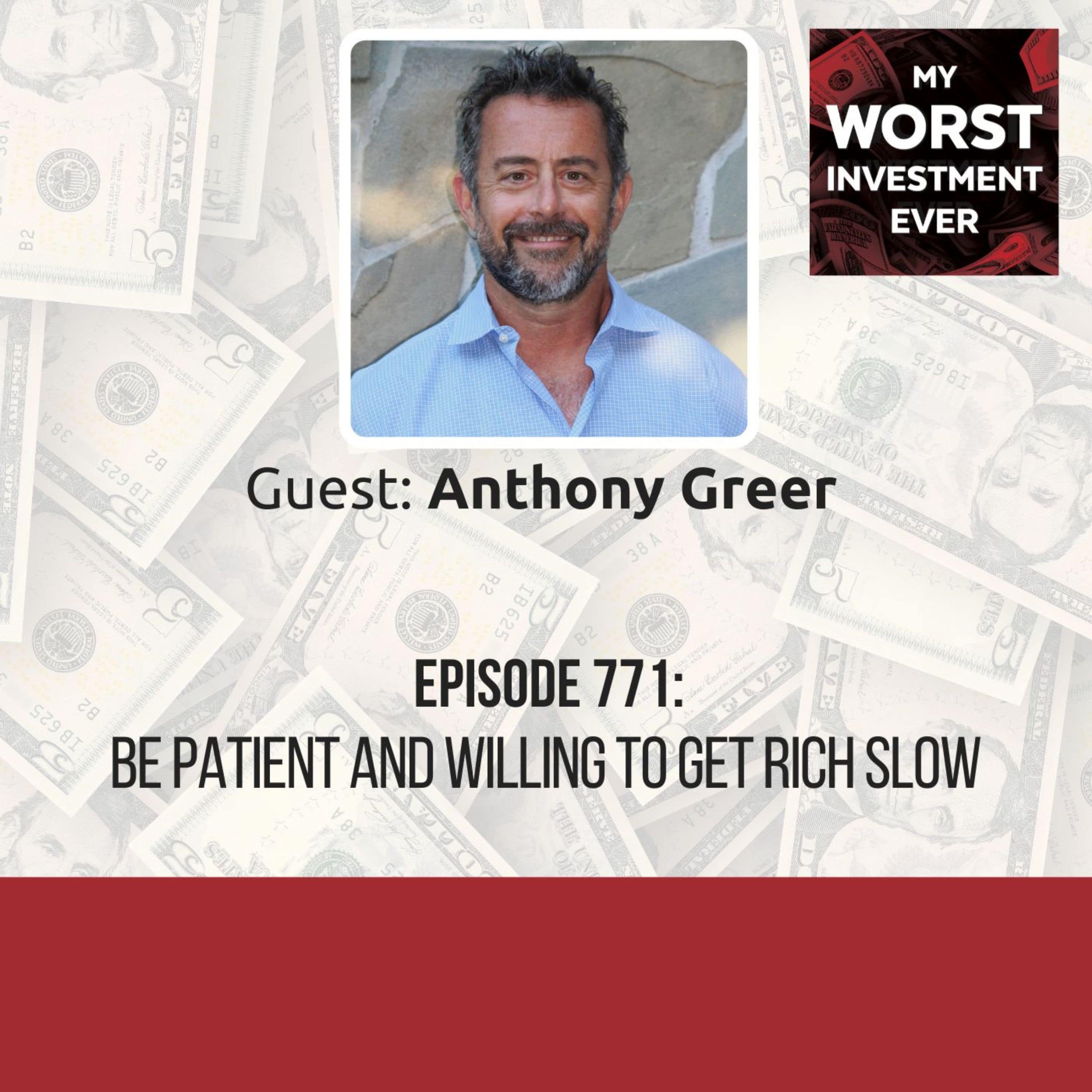
Anthony Greer - Be Patient and Willing to Get Rich Slow
BIO: Tony began a career in equity sales in varying capacities, including running sales and trading at Bank Hapoalim for three years and a team of sales traders at Dahlman Rose for five years. In November 2016, Tony launched the Morning Navigator, a macro trading newsletter distributed to over 800 professionals worldwide.STORY: Tony invested six figures into a small ophthalmic company his friend told him about. He didn’t know much about the company besides what his friend told him. He lost investment when the share price collapsed.LEARNING: Understand the nuts and bolts of the business you want to invest in. Be patient and willing to get rich slowly. The stock markets are for growing wealth, not creating it. Time is the only surefire thing on your side. “Live to trade another day.”Anthony Greer Guest profileAfter graduating from Cornell University in 1990, Anthony Greer began his trading career in the foreign exchange market for Sumitomo Bank and Union Bank of Switzerland, where he began running large bank books. He joined the J. Aron division of Goldman Sachs in 1994, where he learned the rigor of risk management in trading gold and the Goldman Sachs Commodities Index. Tony left the commodity desk at Goldman Sachs to launch his equity trading operation in 2000, surfing the dot.com crash for two years. Tony began a career in equity sales in varying capacities, including running sales and trading at Bank Hapoalim for three years and a team of sales traders at Dahlman Rose for five years. In November 2016, Tony launched the Morning Navigator, a macro trading newsletter currently distributed to over 800 professionals worldwide.Worst investment everWhen Tony was at Goldman Sachs in the ’90s, he managed to get into the Dotcom bubble. His love for music led him to discover Amazon. Tony would order records he was dying to have on Amazon, which would be delivered to his door in a few days. This business model fascinated Tony so much that he invested in tech stocks.During that period, Tony decided to expand his portfolio. A friend of his put a name in front of him. The friend insisted that he knew a lot about the company and that it would be a nationwide chain where everybody went to check their eyes and buy glasses. He said that PE funds were investing in it. Tony amassed a massive position in this company, whose shares sold at 20 cents a share. Tony had six figures worth of this little ophthalmic company that he didn’t know much about. Suddenly, the bottom dropped out, and the PE companies sold their shares, causing the share price to collapse even further.Lessons learnedAlways consider the total dollar value of money invested, no matter what percentage of your portfolio it is.First, understand the nuts and bolts of the business you want to invest in.Starting early is very valuable. Be patient and willing to get rich slowly.Andrew’s takeawaysPosition sizing matters most, no matter how much you want to make your investment a big bet.The stock markets are for growing wealth, not creating it.Time is the only surefire thing on your side.Actionable adviceLive to trade another day by trading carefully without greed.Tony’s recommendationsTony recommends subscribing to his Morning Navigator newsletter and reading No Worries: How to live a stress-free financial life. The book is about getting the three big ones right, i.e., education, home, and car. You’ll learn how to live a life without worrying about your finances.No.1 goal for the next 12 monthsTony’s number one goal for the next 12 months is to immerse himself in his business.Parting words “If you’re interested in getting some help looking for trades and taking risks, contact me; that’s what I do.”Anthony Greer [spp-transcript] Connect with Anthony GreerLinkedinTwitterWebsitePodcastAndrew’s booksHow to Start Building Your Wealth Investing in the Stock MarketMy Worst Investment Ever9 Valuation Mistakes and How to Avoid ThemTransform Your Business with Dr.Deming’s 14 PointsAndrew’s online programsValuation Master ClassThe Become a Better Investor CommunityHow to Start Building Your Wealth Investing in the Stock MarketFinance Made Ridiculously SimpleFVMR Investing: Quantamental Investing Across the WorldBecome a Great Presenter and Increase Your InfluenceTransform Your Business with Dr. Deming’s 14 PointsAchieve Your GoalsConnect with Andrew Stotz:astotz.comLinkedInFacebookInstagramThreadsTwitterYouTubeMy Worst Investment Ever Podcast
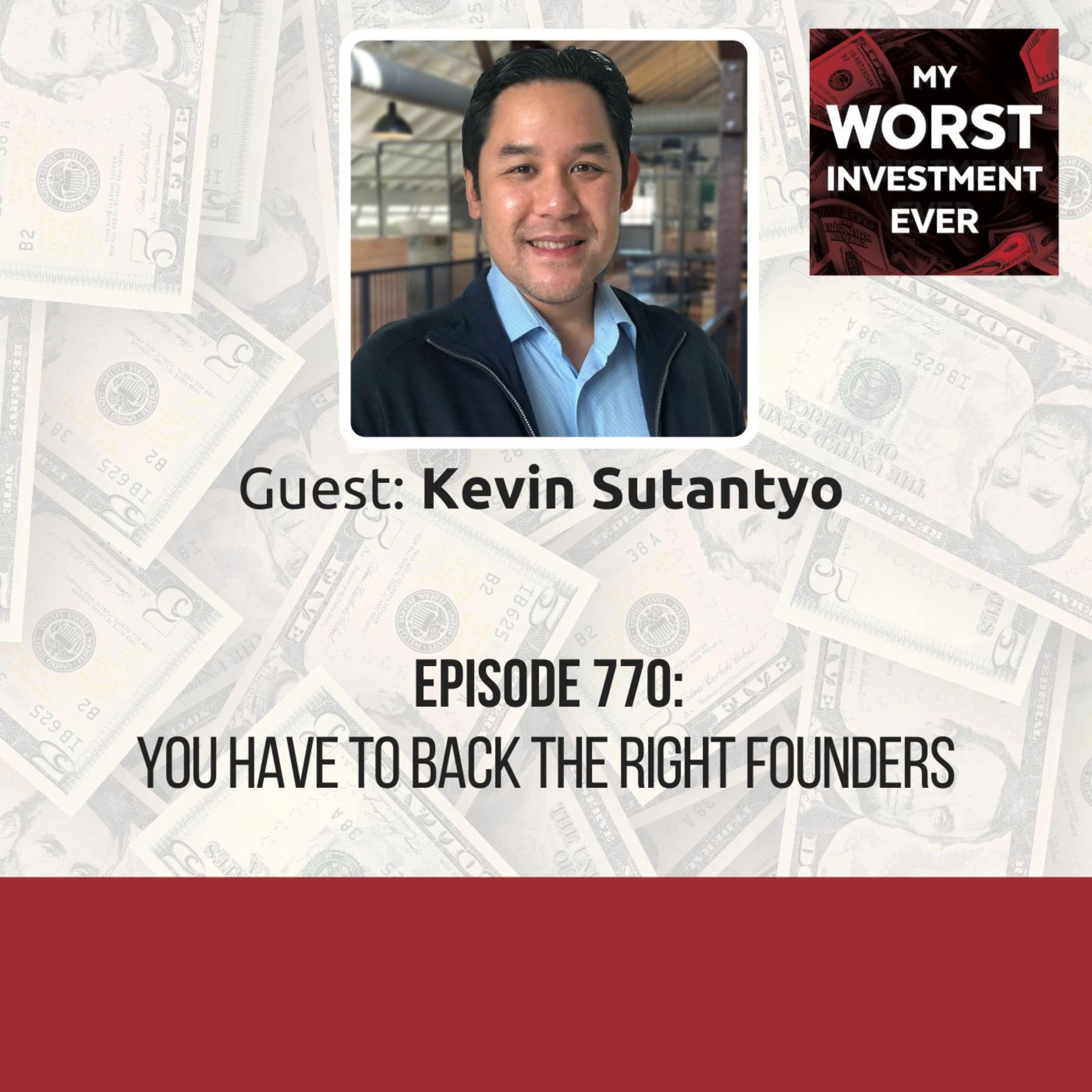
Kevin Sutantyo - You Have to Back the Right Founders
BIO: Kevin Sutantyo is the Partner for South East Asia investments for Sovereign’s Capital, a venture capital fund focused on early-stage, tech-driven, scalable companies.STORY: Kevin invested in a company, thinking that he had more influence over the outcome of the company than he actually did. So, he directed the company owners on what to do, making them over-dependent on Kevin’s opinion. As an investor, he wasn’t always in the office, so sometimes he wouldn’t be reachable. The company would get stuck without Kevin’s decision.LEARNING: You have to back the right founders. As investors, you’re here to guide companies, not to be prescriptive. The founders ultimately have to make final decisions because it’s still their company. “As investors we’re here to guide companies, but not be prescriptive. We need to help them when they ask for our help.”Kevin Sutantiyo Guest profileKevin Sutantyo is the Partner for South East Asia investments for Sovereign’s Capital, a venture capital fund focused on early-stage, tech-driven, scalable companies.Kevin was an active Angel investor in both the US and SEA prior to his work at Sovereign’s Capital.He was an operator/investor for four years at an environmental biotechnology company focused on waste management.Kevin also has experience with the Indonesian public markets as a Commissioner at a local Indonesian securities brokerage, maintaining a fit and proper standing with the Indonesian regulator (Otoritas Jasa Keuangan).Worst investment everKevin’s worst mistake was investing in a company and thinking he had more influence over the company’s outcome than he actually did. For some reason, Kevin thought he was more experienced and knew better, so he directed the company owners on what to do. This made them over-dependent on Kevin’s opinion. As an investor, he wasn’t always in the office, so sometimes he wouldn’t be reachable. The company would get stuck without Kevin’s decision.Lessons learnedYou have to back the right founders.As investors, you’re here to guide companies, not to be prescriptive. Help them only when they ask.The founders ultimately have to make final decisions because it’s still their company.Realize that your influence may have some limitations.Trust the founder.Endeavor to be in a helpful position instead of a combative one, even when you and the founder have a difference of opinion.Andrew’s takeawaysAs an angel investor, your responsibility is to provide ideas and outside views.Actionable adviceDon’t be a burden to the company. Take the approach that you’re investing in someone’s hopes, dreams, and mission and are here to support it. If you don’t believe in those hopes, dreams, and missions, don’t invest. Wait until you find another company that will align with precisely what you are looking for.No.1 goal for the next 12 monthsKevin’s number one goal for the next 12 months is to continue with the fundraising trail. At the same time, he’ll continue looking for new, high-growth, and potential startups in Southeast Asia.Parting words “Be excited about the investment space and innovation. Get in there, and keep building. Our region is exciting, and I do see a bright future ahead.”Kevin Sutantiyo [spp-transcript] Connect with Kevin SutantiyoLinkedinWebsiteAndrew’s booksHow to Start Building Your Wealth Investing in the Stock MarketMy Worst Investment Ever9 Valuation Mistakes and How to Avoid ThemTransform Your Business with Dr.Deming’s 14 PointsAndrew’s online programsValuation Master ClassThe Become a Better Investor CommunityHow to Start Building Your Wealth Investing in the Stock MarketFinance Made Ridiculously SimpleFVMR Investing: Quantamental Investing Across the WorldBecome a Great Presenter and Increase Your InfluenceTransform Your Business with Dr. Deming’s 14 PointsAchieve Your GoalsConnect with Andrew Stotz:astotz.comLinkedInFacebookInstagramThreadsTwitterYouTubeMy Worst Investment Ever Podcast
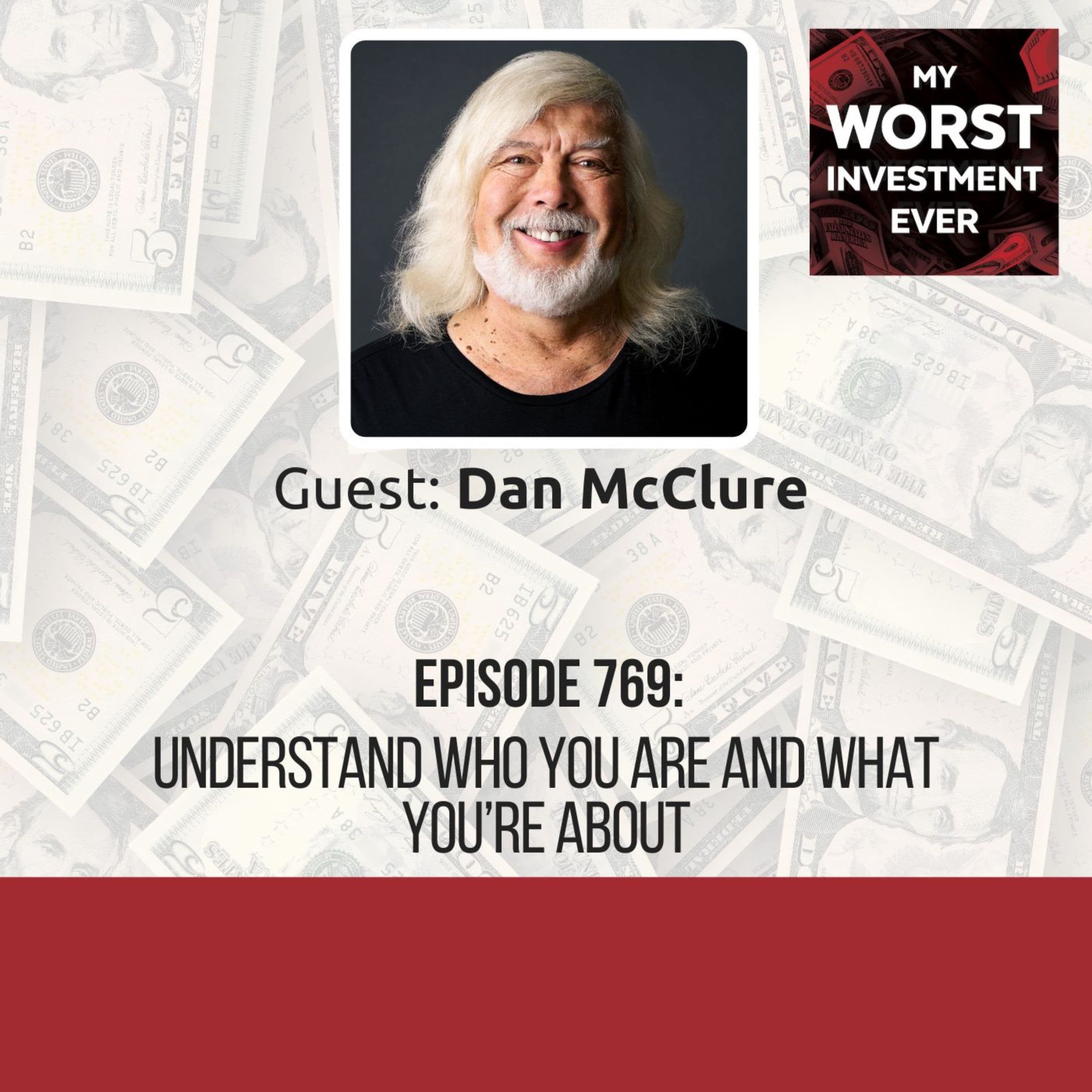
Dan McClure - Understand Who You Are and What You’re About
BIO: Dan McClure is an innovation choreographer. That’s someone whose job is to run into burning buildings, looking for opportunities to reinvent how the world works.STORY: Dan took up a senior management job because his friends and family insisted he should have a ‘real’ job. However, Dan hated the job and was terrible at it.LEARNING: Understand who you are and what you’re about. Be committed to following your passion and talents. Otherwise, you’ll be dragged into things that make you miserable. “Have the courage to say; I’m not good at that, and therefore, I’m not going to build my life around it. Instead, I’m going to embrace these other things that I am good at.”Dan McClure Guest profileDan McClure is an innovation choreographer. That’s someone whose job is to run into burning buildings, looking for opportunities to reinvent the way the world works. He’s a thought leader in the emerging practice of ecosystem innovation and the co-author of the Fast Company Press book “Do Bigger Things – A Practical Guide to Powerful Innovation in a Changing World.” Across his 40-year career, he’s worked with firms facing the threat of obsolescence, helped business pioneers thrive in fast-changing markets, and supported activists tackling tough challenges like climate change. He’s a passionate optimist who’s excited about the future.Worst investment everWhen Dan was in college, he was looking for something to do. He was thinking of the Peace Corps. Dan applied and was three weeks away from traveling. While doing the medical exam, the doctor told him he had an umbilical hernia, and they didn’t let any hernias into the Peace Corps. And with that, Dan was out of the Peace Corps.Dan found a job at a local utility company as an engineer. It was a good job, but he wasn’t very good at it. Dan was chugging along. Then he realized if he wrote a computer program, it could do his job, and Dan wouldn’t have to do everything he was doing. So Dan started writing the computer program. Then, the federal government deregulated the entire energy industry and threw everything into turmoil. Luckily, Dan had a computer program that could save the day. He got an innovation team and started fixing and changing things.Everybody around Dan kept telling him to get a real job. His innovation stuff wasn’t so cool back then. After about six or seven years, things began to calm down. There was a senior manager position in the newly created marketing department in Dan’s company. He decided to take the job. Finally, he had a real job and could settle down. With that job, Dan could move up in the company and be an executive-level person. This was a great opportunity, but Dan hated the job. And even worse than that, he was terrible at it. Dan had invested his future in this success that he had earned, and it was what everybody else said he should want and do, but it was a catastrophe.Lessons learnedUnderstand who you are and what you’re about.Be committed to following your passion and talents. Otherwise, you’ll be dragged into things that make you miserable.Andrew’s takeawaysFind your place in the world.Actionable adviceInvest time and effort in figuring out what you really are and are not.Dan’s recommendationsDan recommends reading Do Bigger Things. It’s fun to read and has a lot of stories that illustrate complex concepts.No.1 goal for the next 12 monthsDan’s number one goal for the next 12 months is to create a tribe of choreographers.Parting words “Go do bigger things, muck around in the world, and change stuff. It’s a lot of fun.”Dan McClure [spp-transcript] Connect with Dan McClureLinkedinTwitterWebsiteBookAndrew’s booksHow to Start Building Your Wealth Investing in the Stock MarketMy Worst Investment Ever9 Valuation Mistakes and How to Avoid ThemTransform Your Business with Dr.Deming’s 14 PointsAndrew’s online programsValuation Master ClassThe Become a Better Investor CommunityHow to Start Building Your Wealth Investing in the Stock MarketFinance Made Ridiculously SimpleFVMR Investing: Quantamental Investing Across the WorldBecome a Great Presenter and Increase Your InfluenceTransform Your Business with Dr. Deming’s 14 PointsAchieve Your GoalsConnect with Andrew Stotz:astotz.comLinkedInFacebookInstagramThreadsTwitterYouTubeMy Worst Investment Ever Podcast
Bryan Kramer - Be Human and Build Relationships
BIO: Bryan Kramer is a renowned business strategist, global keynote speaker, executive trainer and coach, investor, two-time bestselling author, and Forbes contributor.STORY: Bryan decided to expand his business, but the growth snowballed out of control to the point where he traveled 200 days a year and missed out on family time. Being on the road too much also saw him develop type two diabetes. Only after his 11-year-old son pointed out the horrible life he was living did Bryan decide to quit it all.LEARNING: Relationships carry us through the highs, the mid-levels, and the lows. First, look at what you need today and then how you can serve others. “Relationships, I believe, is the thing that carries us through the highs, the mid-levels, and lows. I will never stop being a fight for relationships and being human, especially right now.”Bryan Kramer Guest profileBryan Kramer is a renowned business strategist, global keynote speaker, executive trainer and coach, investor, two-time bestselling author, and Forbes contributor.As President and co-owner of PureMatter, a Silicon Valley global marketing agency since 2001, and CEO of H2H Companies, he sparked the Human-to-Human “H2H” global movement that sets out to humanize business through simpler communication, empathy, and celebrating our imperfections.His TED Talk featured a TED “first” – allowing mobile devices during the event to illustrate his belief that even a small inspirational share holds the power to change the world for the better.Bryan has spoken all over the world, over 200 times at global companies including Mastercard, L‘oreal Paris, NASA, GoDaddy, Harvard University, Charles Schwab, SXSW, International Culinary Institute, Verizon, Dell, NFL, and Hawaii Lodging & Tourism, to name a few.Worst investment everBryan decided to expand his business to more than 10 people and then expanded into a 6,000-square-foot space and later to a 10,000-square-foot space. He continued to increase his employees and hired around the United States. Bryan was looking at fame and power from speaking, keynoting, creating a bigger business, more money, and more clients. It was just a never-ending process, and it got to the point where Bryan was speaking on the road. He’d written two best-selling books, given a TED talk, and was speaking on the road. Bryan was traveling for 200 days a year, eating food around the world because it was so good. But he blew up and became morbidly obese. All of a sudden, he got type two diabetes. His business growth had snowballed into something I had no control over anymore.The worst part was missing out on family time. Bryan had two young kids at the time. One day, he went home, and his 11-year-old son complained about not seeing him anymore, complained about his drinking, and called him fat. This hit Bryan right in the heart. A week later, when he returned from another trip, he told his wife he wanted to reverse everything. So, he walked out of the business and consolidated everything between them over the next six months.Lessons learnedRelationships carry us through the highs, the mid-levels, and the lows.Look around for people you can be in a relationship with that will help you create more of what you need right now.We have to take care of ourselves first and then care for everyone else.First, consider what you need today, then how you can serve others.Andrew’s takeawaysFigure out what you need to fix and how to start fixing it today.Actionable adviceAsk yourself what will this make possible when things don’t work out or when things do work out. Be okay and be present with what you have. Look at the next challenge as an opportunity.Bryan’s recommendationsBryan recommends subscribing to his newsletter. He writes a letter every two weeks discussing leadership, self-development, and growth. Bryan also recommends reading The Untethered Soul: The Journey Beyond Yourself. The book speaks volumes about how to stay connected and unconnected at the same time with your true self. It also teaches how to remain unattached to the things you don’t need to be attached to that aren’t serving you.No.1 goal for the next 12 monthsBryan’s number one goal for the next 12 months is to finish his third book about trust. The book will tackle what, how, why, when, and where we trust and how to rebuild it.Parting words “Remember that being human is now your competitive advantage. That’s what’s going to help you stand out. Andrew, thank you so much. I really appreciate you having me on the show, and I’m honored to have the alumni status.”Bryan Kramer [spp-transcript] Connect with Bryan KramerLinkedinTwitterFacebookInstagramYouTubeWebsitePodcastBooksAndrew’s booksHow to Start Building Your Wealth Investing in the Stock MarketMy Worst Investment Ever9 Valuation Mistakes and How to Avoid ThemTransform Your Business with Dr.Deming’s 14 PointsAndrew’s online programsValuation Master ClassThe Become a Better Investor CommunityHow to Start Buil
Andrew Stotz - 8 Benefits of Increasing the Profits of Your Business
Isn’t Capitalism Great!? Here are eight key benefits of increasing the profits of your business. And I challenge you to set the goal for 2024 to increase the profits of your business.Why is increasing profit so important? Because without profit any business will eventually die. Your obligation as a founder, owner, leader, or director is to ensure that profit remains strong.Reinvestment and Growth: Higher profits enable reinvestment in research and development, operations expansion, infrastructure improvements, and inventory, ensuring growth and long-term sustainability.Attracting Investment: Profitable businesses demonstrate a viable business model and robust financial health, making them more attractive to investors and lenders, thus increasing financing options.Competitive Advantage: Businesses can use increased profits to lower prices, enhance product quality, or boost marketing efforts, which helps them gain a competitive advantage.Market Expansion: With higher profits, businesses can invest in new markets or acquire competitors, expanding their market share and solidifying their industry position.Employee Satisfaction: Profitability allows businesses to offer employees better salaries, benefits, and growth opportunities, improving morale and job satisfaction. This helps attract and retain top talent.Risk Reduction: Higher profits allow you to set aside reserves, which can help you better survive unexpected downturns, maintain stability, and even thrive when competitors struggle.Social Impact: A profitable business can contribute to communities through charitable efforts, community service, or sustainable practices, positively impacting society beyond its operations.Personal Rewards: Increased profits mean higher dividends for owners and shareholders, leading to improved lifestyles, enhanced retirement security, and greater personal investment opportunities. Andrew’s booksHow to Start Building Your Wealth Investing in the Stock MarketMy Worst Investment Ever9 Valuation Mistakes and How to Avoid ThemTransform Your Business with Dr.Deming’s 14 PointsAndrew’s online programsValuation Master ClassThe Become a Better Investor CommunityHow to Start Building Your Wealth Investing in the Stock MarketFinance Made Ridiculously SimpleFVMR Investing: Quantamental Investing Across the WorldBecome a Great Presenter and Increase Your InfluenceTransform Your Business with Dr. Deming’s 14 PointsAchieve Your GoalsConnect with Andrew Stotz:astotz.comLinkedInFacebookInstagramThreadsTwitterYouTubeMy Worst Investment Ever Podcast
Nathaniel Harding - One Risk at a Time
BIO: A born and bred Oklahoman, Nathaniel Harding is an innovator and market maker who has founded, scaled, and sold companies. He is a successful investor in energy, biotech, and ag tech.STORY: Nathaniel’s company decided to deploy new technology to explore oil and gas fields. The venture was cash-intensive and an absolute commercial zero.LEARNING: Categorize risks. Limit your investments to one risk. Do one risk at a time and do it sequentially. “There is such a thing as too many firsts. When you stack that house of cards up high enough, it’s going to fall.” Nathaniel Harding Guest profileA born and bred Oklahoman, Nathaniel Harding is an innovator and market maker who has founded, scaled, and sold companies. He is a successful investor in energy, biotech, and ag tech. Nathaniel was named a Young Global Leader by the World Economic Forum and a Most Admired CEO in Oklahoma by the Journal Record.Worst investment everAbout 10 years ago, Nathaniel’s company evaluated new oil and gas fields that they believed were underdeveloped or underdeveloped. The company developed competence in using analytical methods using high science to assess potential areas. Then, it deployed the infrastructure and equipment personnel to prove and develop it. The company would do that and increase production throughout a new area and then sell it to a bigger, more established oil and gas company.After much success with that model, the company decided to do it again. They believed they had the Midas touch. They were now working with some very well-established and accomplished geologists and geoscientists. This time, they took the model outside of their home state of Oklahoma to Michigan. In this new location, they went the extra mile. They introduced a new technology that no other company had used before. This was cash-intensive, and they had to find an investor. They needed upfront capital to lease the acreage and go through the many regulatory steps to have the right to operate in a new environment. Unfortunately, the project was an absolute commercial zero.Lessons learnedCategorize risks.Limit your investments to one risk.Do one risk at a time and do it sequentially.Andrew’s takeawaysIsolate your risks.Actionable adviceIf embarking on something with many firsts or new experiences, partner with someone who knows that territory. Also, make your first 10 customers wildly happy, which will help with execution and scale risk.Nathaniel’s recommendationsNathaniel recommends traveling often to get yourself out of the daily grind so you can think more aspirationally and creatively.No.1 goal for the next 12 monthsNathaniel’s number one goal for the next 12 months is to be a top decile fund.Parting words “Never stop learning, never stop growing. You learn more from failure.”Nathaniel Harding Connect with Nathaniel HardingLinkedinTwitterInstagramWebsitePodcast [spp-transcript] Connect with Nathaniel HardingLinkedinTwitterInstagramWebsitePodcastAndrew’s booksHow to Start Building Your Wealth Investing in the Stock MarketMy Worst Investment Ever9 Valuation Mistakes and How to Avoid ThemTransform Your Business with Dr.Deming’s 14 PointsAndrew’s online programsValuation Master ClassThe Become a Better Investor CommunityHow to Start Building Your Wealth Investing in the Stock MarketFinance Made Ridiculously SimpleFVMR Investing: Quantamental Investing Across the WorldBecome a Great Presenter and Increase Your InfluenceTransform Your Business with Dr. Deming’s 14 PointsAchieve Your GoalsConnect with Andrew Stotz:astotz.comLinkedInFacebookInstagramThreadsTwitterYouTubeMy Worst Investment Ever Podcast
Will Roundtree - Get a Customer First
BIO: Will Roundtree offers the world a unique lens into wealth-building strategies and examines opportunities for his communities to expound on their knowledge and have effective practices to apply it.STORY: Will invested in a small tax franchise after he bought into the owner’s lavish lifestyle. He didn’t do his due diligence, only to discover that the owner had been stealing from his clients. This saw him lose over $40,000.LEARNING: Do your due diligence. Study the actual industry you want to invest in and verify its legitimacy. There’s no hack or shortcut to earning trust. “People want to look like they’re running a business. So they go and get all these business expenses. I’d say the number one thing you should do is get a customer first.”Will Roundtree Guest profileWill Roundtree offers the world a unique lens into wealth-building strategies and examines opportunities for his communities to expound on their knowledge and have effective practices to apply it.From homeless to millionaire, Will has established himself as a staple in the real estate investment sector. His expertise has garnered recognition among his peers and community members as the founder and top-grossing principal at WE Management Services. Will has helped over 3,500 small to medium-sized businesses access over 300 million dollars in business funding over the 36 months.In 2005, he left his hometown of Milwaukee, WI, with a borrowed 500 dollars and headed towards Las Vegas. Once there, Roundtree found the ruthless realities of living without a financial plan and imperfect credit. His applications were denied for housing, and this left him homeless and living out of his car.Roundtree was inspired to diligently educate himself on personal finance and credit. He would walk into libraries and read books about consumer credit laws, standard operating procedures, regulations, and economics. This led to him becoming a FICO Certified Consultant and eventually to the creation of WE Management Services, a highly-rated financial services company. In this role, Roundtree has helped numerous families successfully restore credit, become homeowners, obtain financial freedom, and become flourishing business owners. More than a decade later, Roundtree tours the country as a notable financial advisor, author, motivational speaker, mentor, community organizer, real estate investor, and wealth builder. Just recently, he completed a nationwide tour headlining his innovative Cocktails and Credit seminars. He is also the creator and host of the Full Time CEO Podcast: The $h!t They Don’t Tell You!Worst investment everWill invested in a small tax franchise when they were up and coming. The owner of the franchise pitched Will by showing him how much money he had made the year before. Will didn’t ask to see any financials or verify if the company was legit. He was impressed by the profit and loss statement and pictures of the guy’s automobiles and the trips he took. So he sold Will on the lifestyle, not necessarily the business.After liquidating his 401-K, Will also took out some personal loans to invest in the tax franchise. His total investment into the franchise was about $40,000 upfront, plus additional yearly fees. After the purchase was completed, Will had to lease an office. He negotiated for a tenant improvement allowance of about $25,000. For the landlord to renovate the building, Will had to go from a three to a six-year lease. Now, he had a 3,000-square-foot office for six years. Next, he went out and hired over 35 tax preparers.When the tax season started, Will believed he would have over 500 clients coming in, but that wasn’t the case. At the time, he had partnered with a bank to make tax payouts, and close to the end of the tax season, the bank just shut him off. He got a letter saying the bank was auditing all of his financials. Turns out the parent tax company had been stealing clients’ money. The owner would stuff a bunch of fake expenses into a client’s tax refund, help them get a large refund, and then charge the client $1,500 in software costs. This money would be deposited into the company’s bank account, and that’s why the bank was now auditing Will’s accounts.Will had to take the franchise owner to court, leading to a long, expensive legal battle that lasted years.Lessons learnedWhen you do something solely for money, you overlook all the other outpoints it takes to make money.Do your due diligence.Study the actual industry you want to invest in and verify its legitimacy.Andrew’s takeawaysThere’s no hack or shortcut to earning trust.Be super careful when you go into any business with no experience and no client base on which you can build a revenue stream.Actionable adviceGet experience in the space you want to start a business to see if you’ll like it. Go work for someone in that industry. Before jumping in, this will help you determine if you like that business model and the industry.Will’s recommendationsWill has over 300 video
Kyle Mowery - Invest in Your Circle of Competence
BIO: Kyle Mowery, founder and portfolio manager at GrizzlyRock Capital, has an 18-year career beginning at PAAMCO, where he honed his analytical skills. He later delved into high-yield corporate securities at T.H. Lee Senior Credit Strategies and expanded his expertise at BMO Capital Markets.STORY: Kyle invested in a business that produced sandalwood trees. He believed they were about to sell at significantly higher prices to buyers across the globe. Unfortunately, some of the sales fell through, management resigned and didn’t report when they sold their shares, and then the whole thing imploded.LEARNING: Invest in your circle of competence. Make sure the bet size is correct. “In inflection investing, see the inflection. You’ll pay a higher price, but you’ll have a greater certainty.”Kyle Mowery Guest profileKyle Mowery, founder and portfolio manager at GrizzlyRock Capital, has an 18-year career beginning at PAAMCO, where he honed his analytical skills. He later delved into high-yield corporate securities at T.H. Lee Senior Credit Strategies and expanded his expertise at BMO Capital Markets. In 2012, he established GrizzlyRock, adopting a fundamental, value-oriented research approach in small-cap companies. Kyle’s method involves rigorous research, systematically identifying mispriced securities with high risk/reward potential. With unwavering discipline, he navigates market complexities, focusing on high-conviction investments amidst information overload. His adeptness in spotting substantial mispricing opportunities sets him apart in the crowded investment landscape.Worst investment everKyle wanted to grow his business in 2016, so he hired an additional analyst with a background in small-cap, Asian developed markets, and Asian equities. Kyle had also been following a business that produced sandalwood trees at the time. He researched the business and ultimately purchased shares, believing the company was on the cusp of significant free cash flow. The company was levered financially, and Kyle was well aware of that. Kyle invested based on the imminent free cash flow. His company would harvest this wonderful group of trees. Kyle put his team on the ground in Australia. They saw the trees, they were all very real.Kyle was also impressed that a founding family owned between 20 and 25% of the business. He did his full diligence and believed they were about to sell at significantly higher prices to buyers across the globe.Unfortunately, some of the sales fell through, management resigned and didn’t report when they sold their shares, and then the whole thing imploded. Kyle luckily sold before it hit zero, but it was a very nasty loss.Lessons learnedInvest in your circle of competence.Make sure the bet size is correct.Andrew’s takeawaysMaking great investments can be very emotional, especially if you’re starting up or a small to mid-cap company.Actionable advicePractice intellectual honesty. The minute things don’t align with what you had underwritten, reassess. It’s okay that your original thesis was invalidated; just be intellectually honest.Kyle’s recommendationsKyle recommends reading Margin of Safety to understand risk versus return.No.1 goal for the next 12 monthsKyle’s number one goal for the next 12 months is to build a portfolio that can manage political uncertainty and perform or not drawdown very far across a broad spectrum of economic outcomes.Parting words “Investing is a wonderful passion for many of us, and it’s a wonderful lifelong journey. You get some wrong and some right. The key is to just keep on size and keep it compounding.”Kyle Mowery [spp-transcript] Connect with Kyle MoweryLinkedinWebsitePodcastAndrew’s booksHow to Start Building Your Wealth Investing in the Stock MarketMy Worst Investment Ever9 Valuation Mistakes and How to Avoid ThemTransform Your Business with Dr.Deming’s 14 PointsAndrew’s online programsValuation Master ClassThe Become a Better Investor CommunityHow to Start Building Your Wealth Investing in the Stock MarketFinance Made Ridiculously SimpleFVMR Investing: Quantamental Investing Across the WorldBecome a Great Presenter and Increase Your InfluenceTransform Your Business with Dr. Deming’s 14 PointsAchieve Your GoalsConnect with Andrew Stotz:astotz.comLinkedInFacebookInstagramThreadsTwitterYouTubeMy Worst Investment Ever Podcast
Gabe Marusca – Pay Extreme Attention to Your Body
BIO: Gabe Marusca, known as The Nomad Solopreneur, is a location-independent marketing strategist who established Digital Finest as a solo founder.STORY: Gabe spent 20 hours working daily for over a year trying to make as much money as soon as he could. This caused his body to shut down, and he developed a chronic disease.LEARNING: Pay extreme attention to your body. Having a long-term vision and patience is more sustainable than trying to gain fortune overnight. Stop putting too much time into the things that don’t matter. “When your calendar is full and you don’t have time for yourself, you become frustrated and feel unfulfilled. Then everyone will suffer, starting with you.”Gabe Marusca Guest profileGabe Marusca, known as The Nomad Solopreneur, is a location-independent marketing strategist who established Digital Finest as a solo founder. When he’s not helping solopreneurs get more leads from their websites, you can find him swimming in the ocean, hiking through tropical forests, or interviewing remote solopreneurs around their business model on The Nomad Solopreneur Show. In his spare time, he writes a weekly newsletter with the same name that follows his mission to help 10,000 aspiring solopreneurs build location-free one-person businesses.Gabe offers an exclusive Free Landing Page Review for My Worst Investment Ever listeners.Worst investment everFor almost a year, Gabe slept only four hours a day in a bid to make enough money to make ends meet. He’d often find himself working in poor conditions. At one point, he was working with one of his legs in a bucket of ice because he’d had a minor football accident and couldn’t take a day off to recover.At the time, Gabe had a side hustle and a full-time job. He’d wake up every day at 3 am, work on his side hustle until 6 or 7 am, then commute to his full-time job and stay there for eight hours. Gabe would then go back home, study for one hour, and start working again on his business. He was eating at his work desk, not exercising, and had no social life. This caused his body to act out, but Gabe ignored it and kept on hustling. Gabe believed he was healthy and had the energy to keep going. All that overworking made him feel worse, and he developed a chronic illness.Lessons learnedPay extreme attention to your body.Having a long-term vision and patience is more sustainable than trying to gain fortune overnight.Stop putting too much time into the things that don’t matter.Andrew’s takeawaysSleep is critical, so don’t try to take from sleep to be productive.Eat good food.Exercise daily.Actionable adviceWhen planning your calendar for the next week or the next day, put that activity that fills you with energy and joy first. Block your most active hours with essential things, and all the others will start to add on.Gabe’s recommendationHabe recommends reading the book When the Body Says No. It will change the way you act and how you take care of yourself.No.1 goal for the next 12 monthsGabe’s number one goal for the next 12 months is to reach 10,000 aspiring solopreneurs through the Nomad Solopreneurs show and newsletter and help them build successful one-person businesses without feeling overwhelmed and unfulfilled.Parting words “Tell me how you spend your time, and I’ll tell you how successful you are.”Gabe Marusca [spp-transcript] Connect with Gabe MaruscaLinkedInTwitterInstagramWebsitePodcastAndrew’s booksHow to Start Building Your Wealth Investing in the Stock MarketMy Worst Investment Ever9 Valuation Mistakes and How to Avoid ThemTransform Your Business with Dr.Deming’s 14 PointsAndrew’s online programsValuation Master ClassThe Become a Better Investor CommunityHow to Start Building Your Wealth Investing in the Stock MarketFinance Made Ridiculously SimpleFVMR Investing: Quantamental Investing Across the WorldBecome a Great Presenter and Increase Your InfluenceTransform Your Business with Dr. Deming’s 14 PointsAchieve Your GoalsConnect with Andrew Stotz:astotz.comLinkedInFacebookInstagramThreadsTwitterYouTubeMy Worst Investment Ever Podcast
Giuseppe Grammatico - Pick the Medium That Works for You and Stick With It
BIO: Giuseppe Grammatico is a franchising advisor who has owned several Master Franchise licenses and has enjoyed a successful franchising career, guiding over 200 individuals through business ownership, many for the first time.STORY: Giuseppe hired a full-service marketing company that managed everything from his website to emails and social media posts. Giuseppe gave the company complete control of his business, and his voice got lost. He also got virtually zero return from hiring the company.LEARNING: Pick the medium that works for you and stick with it. Publicity doesn’t mean revenue. “Just do your thing, have a plan going forward, and it’ll pay dividends down the road.”Giuseppe Grammatico Guest profileGiuseppe Grammatico is a franchising advisor who has owned a number of Master Franchise licenses and has enjoyed a successful franchising career, guiding over 200 individuals through business ownership, many for the first time. In addition to two decades in franchising, he also has 20 years of sales, marketing, and management experience. Book a free call with Giuseppe here.Worst investment everGiuseppe was looking to take some things off his plate, so he hired a full-service marketing company that did everything from website management to emails and social media posts. Giuseppe’s voice got lost in this process. He had given someone else control of his brand and what he was doing. It all got diluted. Giuseppe felt like he’d been thrown in a box with just about every other company in the marketing company’s portfolio. He also got virtually zero return from hiring the company. In fact, it ended up causing more confusion for his business. It took Giuseppe a long time to regain control of his brand and voice.Lessons learnedPick the medium that works for you and stick with it. Then, create all your content around that medium. If it’s just videos, then so be it, or if you’re a writer, write books and blogs.Do your thing, have a plan going forward, and it’ll pay dividends.Andrew’s takeawaysPublicity doesn’t mean revenue.Actionable adviceWrite your 12 Frequently Asked Questions, record your answers for each question in a video, and release it on all platforms. Repurpose the video into a blog post, snippets, LinkedIn carousel, and more.Giuseppe’s recommendationsGiuseppe recommends reading Traction: Get a Grip on Your Business to learn how to keep everything balanced. Even if you don’t own a business, the book will teach you about the intricacies of managing your KPIs daily.No.1 goal for the next 12 monthsGiuseppe’s number one goal for the next 12 months is to work less and help more people than he did in 2023. He’s outsourced his marketing by having someone produce, edit, and share the content that he’s creating.Parting words “Go for it. Life’s too short to be miserable. Take a chance on yourself, but do your due diligence and talk to people that own a business.”Giuseppe Grammatico [spp-transcript] Connect with Giuseppe GrammaticoLinkedinTwitterFacebookInstagramWebsiteBookPodcastAndrew’s booksHow to Start Building Your Wealth Investing in the Stock MarketMy Worst Investment Ever9 Valuation Mistakes and How to Avoid ThemTransform Your Business with Dr.Deming’s 14 PointsAndrew’s online programsValuation Master ClassThe Become a Better Investor CommunityHow to Start Building Your Wealth Investing in the Stock MarketFinance Made Ridiculously SimpleFVMR Investing: Quantamental Investing Across the WorldBecome a Great Presenter and Increase Your InfluenceTransform Your Business with Dr. Deming’s 14 PointsAchieve Your GoalsConnect with Andrew Stotz:astotz.comLinkedInFacebookInstagramThreadsTwitterYouTubeMy Worst Investment Ever Podcast
Andrew Stotz - 27 Top Podcast Interviews of 2023 to Reduce Risk and Increase Return
In 2023, I released about 160 My Worst Investment Ever podcast episodes, and this is a list of some of my and my listeners' favorites. I have also created a free “Top 27 from 2023” playlist where you can listen to and view this curated list for free. Just go to My Worst Investment Ever dot com and click the button that says, “Top 27 from 2023.” Since starting this podcast, I have published 760 episodes and look forward to continuing this journey in 2024! I welcome you on my journey “to help 1,000,000 people reduce risk in their lives.”27. Ep738: Neil Johnson – Take the Profit When You CanBIO: Neil Johnson is a renowned finance expert with over 30 years of experience in investment banking, merchant banking, and research analysis in Canadian and UK capital markets. He is the Executive Director and CEO of Duke Royalty, a $300 million alternative finance investment company listed on the London Stock Exchange.STORY: Neil invested in an internet company building website templates when the internet started. The company filed to go public, but the financiers kept delaying the process and never went public. Six months later, the company went to zero. Neil lost his entire investment.LEARNING: Take the profit when you can. Take some money out and play with the rest. Do your due diligence. “Try not to be overly greedy. There’s something about leaving a little on the table for someone else.” 26. Ep658: Jeroen Blokland – Know the Actual Business Outlook Before InvestingBIO: Jeroen Blokland is a multi-asset investor with a long-term track record. He worked at Dutch investment bank, Robeco for almost 20 and now runs his independent investment research company, True Insights. Find him on Twitter.STORY: Jeroen’s first investment was in a Dutch company selling PCs. He barely did any research or due diligence. The company reported a loss of $27 million in the same year Jeroen invested. It later went bankrupt, leaving him with a massive loss.LEARNING: Know the actual outlook of a company before investing. Diversify your portfolio. “90% of the investing population doesn’t know the actual outlook of a company.” 25. Ep674: Jesse Felder – Don’t Rationalize a Lousy TradeBIO: Jesse Felder started his career at Bear Stearns and co-founded a multi-billion-dollar hedge fund firm. He left Wall Street to focus on The Felder Report and hosts the Superinvestors podcast. Find him on Twitter.STORY: Jesse found a “cigar butt” stock that was cheap and performed extraordinarily well in just a few months after he took a sizable position. A friend convinced him to hold the stock long-term instead of short-term as planned. Government legislation affected the business, and Jesse lost about 50% of his investment.LEARNING: Don’t rationalize a bad trade; get out. Be very careful when you’re in a situation where the government is supporting an industry. “When you’re in a situation that’s not working out as you would hope, rather than dig the hole deeper, move on and find something different.” 24. Ep668: Jason Hsu – The Market Can Be Crazy for Longer than You Have the ConvictionBIO: Jason Hsu is the founder, chairman, and CIO of Rayliant Global Advisors, a global investment management group with over US$15+ billion in assets under management as of June 30, 2022. Find him on Twitter.STORY: Jason bet against the GameStop short squeeze and learned that John Maynard Keynes’ saying that “markets can remain irrational longer than you can remain solvent” still holds true.LEARNING: The market can be crazy for longer than you have the conviction to stay invested. Apply position constraints and diversify. “In the short run, the market can really stay crazy for longer than you have the money to stay on. And if you forget that, the market will remind you in as painful of a way as possible.” 23. Ep646: Praveen Kumar Rajbhar – Don’t Fall in Love with Your Own IdeasBIO: Praveen Kumar Rajbhar is an entrepreneur, founder, and CEO SkillingYou, an employability Skills Focused EdTech startup in rural India. Find him on Twitter.STORY: When Praveen started his first startup, he spent money to hire many people, buy a lot of gadgets, and rent a huge office space. The business collapsed in less than two years.LEARNING: Get the right mentor to guide you on how to make your startup a success. You don’t need a big team to be successful. Get on-time and accurate financial statements every month. “Having the right mentor will help you create a great company.” 22. Ep731: Robin Wigglesworth – You Can’t Outsmart the MarketsBIO: Robin Wigglesworth is the editor of Alphaville, the FT’s financial blog. From Oslo, Norway, he leads a team of writers who dig into anything deeply nerdy or delightful that they spot. Find him on Twitter.STORY: Robin invested in an ETF in Norway, a consumer durables company, and a fertilizer company after the 2008 financial crisis
Johan Norberg - We Have to Fight for Capitalism
BIO: Johan Norberg is an author, lecturer, and historian of ideas from Stockholm, Sweden. His books on economics, politics, and history have been translated into more than 30 languages.STORY: Johan talks about capitalism and why it’s important.LEARNING: We should never lose sight of the benefits of capitalism. Capitalism is about peace, trust, and voluntary exchange, not war. “No matter what your long-term objective is, it’s better to be wealthy using resources in an effective manner and being more productive.”Johan Norberg Guest profileJohan Norberg is an author, lecturer, and historian of ideas from Stockholm, Sweden. His books on economics, politics, and history have been translated into more than 30 languages.In today’s episode, Johan discusses capitalism and its importance. Johan recently published his latest book, The Capitalist Manifesto. Like the title, the book is brilliant! Elon Musk said: “This book is an excellent explanation of why capitalism is not just successful, but morally right, especially chapter 4.” Have we lost sight of the benefits of capitalism?Without free markets and free trade, we’d probably be nowhere because it was only with the advent of higher productivity, open global markets, and free enterprise. Remember that when you give people more freedom to seek out opportunities to innovate, develop new business models, and exchange their best with the best of others, you have the machinery to reduce poverty and hunger worldwide.We must never forget this process because once people reach a certain threshold, they take wealth, opportunities, and technologies for granted and forget where they came from. This happens to many countries worldwide, electing the populace who use wealth without realizing that it’s not a pile of cash that happens to lie around.If we were to stop producing and innovating and start consuming and redistributing the wealth already on the planet, all of it would be gone in around four years. So wealth has to be created every day by hard work.Can government and capitalism co-exist?For your business to make a profit, you must make all the other groups happy. You have to satisfy your customers by giving them something they value more than the money they hand you. You must also pay your workers, suppliers, and those who lent you money. Then, and only then, if you made all these groups happy, and there’s something left for you, which will be heavily taxed, can you make a profit. The bigger your profit, the more good you’ve done to society.However, some profit is made not by competing over having the best goods and services but by having good connections with politicians and governments. They get subsidies and tariff protection from governments picking taxpayers’ pockets and handing them to businesses. That’s the opposite of a free market and capitalism—cronyism. It’s a horrible thing that can only end by stopping politicians from entering the game of business, picking winners, and deciding who gets what.Unfortunately, the future has no lobbyists, business organizations, or trade unions to defend them, only the incumbents and the old alternatives who constantly tailor all the regulations and policies to their needs and demands. Johan says the natural history of business regulation is always that you have, at first, a combination of people who want to do good. They see problems and want to improve upon things, so they want to regulate and ensure that it’s in the interest of society.But these well-meaning do-gooders often ally with people genuinely interested in their business models and the trade unions. So, in combination, they come forth with new regulations, constantly tailor-made to support incumbents in what they are doing. Then, the do-gooders move on to the next field to the next sector because they’ve succeeded. But those with a particular economic interest in those regulations stay behind because this is their sector. They constantly adapt it more to their own situation and to keep the competitors out. And that’s incredibly dangerous.Johan’s take is that businesses have one objective: to make the world a better place by being successful. By doing so, businesses ensure that our resources, machinery, and labor are being used as efficiently as possible. He doesn’t believe that successful businesses have to give something back to society as some apology for being successful in making a profit because the fact that they made a profit proves that they’ve done something for the community.Capitalism is about peace, trust, and voluntary exchangeJohan says that capitalism is for peace. The only people who benefit from war are politicians and companies that make weapons of war. Capitalism is the first economic system where you only get rich by enriching others, where everybody’s free to walk away from any deal.Capitalism is the first instance where if you want the resources of others, then you’d better give them something that they value even more. That’s a peacef
Steve Faktor – How to Build Your Investment Future
BIO: Steve Faktor is a former Fortune-100 executive—turned entrepreneur, futurist author of Econovation, and podcaster. As Managing Director of IdeaFaktory Innovation, he helps tech, financial services, and consumer goods clients see and build the future.STORY: Steve joins the My Worst Investment Ever podcast again, this time sharing advice on how investors can see and build their investment futures.LEARNING: Try to understand the future by differentiating between noise and legitimate signals. Don’t let others impose on your story. Act in principle. “I would like to see more people acting in a principled way because even if you win, but you do it without principle, you will have lost because those same unprincipled methods will come back to haunt you.”Steve Faktor Guest profileSteve Faktor is a former Fortune-100 executive—turned entrepreneur, futurist author of Econovation, and podcaster. As Managing Director of IdeaFaktory Innovation, he helps tech, financial services, and consumer goods clients see and build the future.Steve is a LinkedIn Influencer with over 750,000 followers and has been featured in Forbes, Harvard Business Review, and The Wall Street Journal, among others. He’s a popular keynote speaker at major events and numerous corporations.The McFuture Podcast features Steve’s provocative predictions and prescriptions, as well as guests like Larry King, comedian Jim Jefferies, Governor Jesse Ventura, Nobel Economist Joseph Stiglitz, former ACLU President Nadine Strossen, Megachurch Pastor AR Bernard, and many more.Previously, Steve launched multiple $150m+ loyalty, payments, and e-commerce products & services as head of the American Express Chairman’s Innovation Fund, SVP at Citi Ventures, VP of Strategy & Innovation at MasterCard, and management consultant at Andersen.Steve joins the My Worst Investment Ever podcast again, sharing advice on how investors can see and build their investment futures. Listen to his previous episode: Take the Risk and Pursue Your Dreams.Understanding the future as a long-term investorIf you want to invest in three to ten-year opportunities, Steve says you need to know what the future will look like or at least have an idea of what that might be. However, as we try to understand the future, Steve says most of what we are reacting to is noise. You therefore, need to learn how to filter out what is signal and what is noise. Once you’ve identified which opportunities are legitimate signals and not noise, ask yourself where they could go. You’ll never know for sure. But again, that’s where you assign probabilities and say, this is likely to happen or more likely than something else. Now that you have an idea of where these things might go and what this future might look like, ask yourself how you’ll act in that future.Steve adds that there’s another equal danger to listening to noise, which is deafness. So there’s the hearing of everything that may not be relevant or important, and then there’s complete deafness. Steve says the vast majority of people are deaf. And so they’re not even hearing and understanding the signals or the noises. Such people are complete pawns in whatever the people who are active and responding to either signal or noise will determine.This kind of deafness is because some people there are institutionalized and believe that whatever system has worked for them is what is working. They don’t have an incentive to look any deeper. So they just putter along.Dealing with propagandaWhile propaganda is a negative characterization, and for good reason, Steve thinks personal narratives are important. The story that you tell yourself of how the world works and what matters to you is the story that will motivate you to do something. Now the question is, is it a good something or a bad something? Will it propel you forward to be a better person to help others to do things that are moral and unjust? Or will it push you to do harmful and destructive things, profiteering, or whatever else that may not be moral?So the question is, what is the story? What are the stories that we want to have versus the stories others want us to have? So, regarding propaganda, Steve believes that what matters is the imposition of other people’s stories into our lives and our response to them. Will you make their imposition part of your story, or do you have the ability to decide what your story should be? Steve says that’s tricky because we’re not equipped to deal with this level of propaganda individually.The victim-oppressor ideologySteve also talks about a terrifying ideological thing currently happening, especially in the education system. There are groups in education institutions about the victim-oppressor ideology. According to Steve, this ideology works by weaponizing empathy. It’s a brutal ideology, but its brutality is cloaked in justice and kindness. So, it’s the appearance of compassion and empathy. So people care about the victim but are prepared to sta

Eric Simonson - Not All Real Estate Investments Are Made Equal
BIO: Eric Simonson is the Founder and CEO of Abundo, a financial planning firm that teaches and empowers people to take action and own their financial lives.STORY: In 2020, during the early days of COVID-19, Eric and his wife sold their home and bought a condo because they wanted to live downtown. They later sold the condo in 2023 and lost about 10% on that home purchase.LEARNING: Not all real estate investments are made equal. Focus on location and build quality. Don’t expect to flip new builds into a profit immediately. Don’t bet on a recovery of a big macro event. “Make sure you’re confident you’re gonna live in your new home long enough to recoup some of those initial buying costs.”Eric Simonson Guest profileEric Simonson is the Founder and CEO of Abundo, a financial planning firm that teaches and empowers people to take action and own their financial lives. After working as a traditional advisor for over a decade, Eric saw a need to help people who couldn’t work with a traditional financial advisor since most require having a certain amount of money to invest with them first. He left his corporate job and launched a different model, one where he was only paid for giving honest advice that benefited his clients, not him. He built Abundo around a Flat Fee and Advice-Only Financial Planning model, eliminating all conflicts of interest without overcharging for professional advice and using proven low-cost investments. His firm now guides over 450 clients in all areas of their financial lives.Worst investment everIn 2020, during the early days of COVID-19, Eric and his wife sold their home and bought a condo because they wanted to live downtown. They sold the condo in 2023 and lost about 10% on that home purchase.Lessons learnedThe condo market behaves differently than the single-family home market.Downtown markets behave differently than suburban markets.Not all real estate investments are made equal. Focus on location and build quality.Don’t expect to flip new builds into a profit immediately.Don’t bet on a recovery of a big macro event. It’s hard to guess what’s going to happen.Andrew’s takeawaysIt’s challenging to sell secondhand condos.Actionable adviceEnsure you’re confident you’ll live in your new home long enough to recoup some of those initial buying costs. Don’t spend more on a condo purchase than you’re comfortable spending. Understand the rules around the rentability—what happens if you want to get out of it? Can you rent it out?Eric’s recommendationsEric recommends checking out his company’s blog for fresh content and valuable resources.No.1 goal for the next 12 monthsEric’s number one goal for the next 12 months is to create the best culture and team he can make. If he does that, the team will work hard and serve clients well.Parting words “Thank you for having me, Andrew. I appreciate it.”Eric Simonson [spp-transcript] Connect with Eric SimonsonLinkedinTwitterInstagramWebsiteAndrew’s booksHow to Start Building Your Wealth Investing in the Stock MarketMy Worst Investment Ever9 Valuation Mistakes and How to Avoid ThemTransform Your Business with Dr.Deming’s 14 PointsAndrew’s online programsValuation Master ClassThe Become a Better Investor CommunityHow to Start Building Your Wealth Investing in the Stock MarketFinance Made Ridiculously SimpleFVMR Investing: Quantamental Investing Across the WorldBecome a Great Presenter and Increase Your InfluenceTransform Your Business with Dr. Deming’s 14 PointsAchieve Your GoalsConnect with Andrew Stotz:astotz.comLinkedInFacebookInstagramThreadsTwitterYouTubeMy Worst Investment Ever Podcast
Kimberly Flynn - Don’t Put All Your Savings Into a Single Idea
BIO: Kimberly Flynn, CFA, is a founder and Managing Director of XA Investments, responsible for all product and business development activities.STORY: Kimberly put all her $2,000 savings into a single telecom-dedicated mutual fund at the peak of telecom valuations and saw it go down to 30 cents on the dollar.LEARNING: Don’t put all your savings into a single idea. Be diversified, especially when dealing with active manager selection. Know yourself and your risk tolerance. “You’ve got to feel comfortable making investment decisions, and if you’re not, get advice from somebody who can give you the right guidance.”Kimberly Flynn Guest profileKimberly Flynn, CFA, is a founder and Managing Director of XA Investments, where she is responsible for all product and business development activities. XA Investments has a proprietary closed-end platform and a consulting practice to assist clients with developing US and UK-registered closed-end funds. Previously, Kim was Senior Vice President and Head of Product Development for Nuveen Investments’ Global Structured Products Group.Kim received her MBA degree from Harvard University and her BBA in Finance and Business Economics, summa cum laude, from the University of Notre Dame in 1999. Kim earned the Chartered Financial Analyst (CFA) designation and is a member of the CFA Institute and CFA Society of Chicago.Kim was recently selected to serve on the Notre Dame Wall Street leadership committee. She also serves as secretary of the Chicago Symphony Orchestra Women’s board executive committee and on the advisory board of Youth Guidance’s Becoming A Man program. She is an active member of the Harvard Club of New York City and the University Club of Chicago, where she serves on the Finance Committee.Worst investment everKimberly made a $2,000 investment into an Invesco telecom-dedicated mutual fund at the peak of telecom valuations. This was in 1999, and very quickly rode it down to 30 cents on the dollar. Kimberly was assured that the telecom sector would be hot based on the research she was doing at the time at Morgan Stanley. This was Kimberly’s first investment after graduating college.Lessons learnedBe diversified, especially when dealing with active manager selection.Know yourself and your risk tolerance.You’ve got to feel comfortable making investment decisions, and if you’re not, get advice from somebody who can give you the proper guidance.Andrew’s takeawaysSet a long-term plan and methodically contribute to it.Find your investment style and follow it.Actionable adviceTake 80% of the amount you plan to invest and put it into a diversified portfolio. Then, take 20% of it and buy a telecom or crypto fund because experimentation is sometimes helpful. If you lose 20% of your investment, you can recover.Kimberly’s recommendationsIf you’re working in the financial space, Kimberly recommends checking out resources on her website, XA Investments, to learn more about alternatives. She also recommends reading The Economist or The Financial Times to gain a global perspective.No.1 goal for the next 12 monthsKimberly’s number one goal for the next 12 months is to launch new products and take on new prospective consulting clients so she can grow her business.Parting words “Stay positive. Even if you make a mistake, you can always start again and take on a new challenge or a new investment opportunity.”Kimberly Flynn [spp-transcript] Connect with Kimberly FlynnLinkedinTwitterWebsiteAndrew’s booksHow to Start Building Your Wealth Investing in the Stock MarketMy Worst Investment Ever9 Valuation Mistakes and How to Avoid ThemTransform Your Business with Dr.Deming’s 14 PointsAndrew’s online programsValuation Master ClassThe Become a Better Investor CommunityHow to Start Building Your Wealth Investing in the Stock MarketFinance Made Ridiculously SimpleFVMR Investing: Quantamental Investing Across the WorldBecome a Great Presenter and Increase Your InfluenceTransform Your Business with Dr. Deming’s 14 PointsAchieve Your GoalsConnect with Andrew Stotz:astotz.comLinkedInFacebookInstagramThreadsTwitterYouTubeMy Worst Investment Ever Podcast
Peter Goldstein – Check Your Emotions at the Door
BIO: Peter Goldstein is a seasoned entrepreneur, capital markets expert, and investor with over 35 years of diverse international business experience.STORY: He and four others put a significant amount of money into opening up this facility in Long Beach, California, where cannabis was in great demand just when it was being legalized for recreational purposes. At the time, there were no clear regulations, making compliance with the ever-changing rules costly to the point where the business was not making any profits.LEARNING: Check your emotions at the door. Be cautious before you jump on a trend. Analyze and understand your risk. Get expert help if you don’t understand your investment. “Check your emotions at the door. Ego and greed don’t have interplay when making a sound investment.”Peter Goldstein Guest profilePeter Goldstein is a seasoned entrepreneur, capital markets expert, and investor with over 35 years of diverse international business experience. Throughout his career, he’s held pivotal roles, including CEO, chairman, investment banker, founder, board member, investor, and advisor to public, private, and emerging growth companies.He founded Exchange Listing, LLC, dedicated to facilitating growth companies’ listings on esteemed exchanges like NASDAQ and the NYSE.He also founded Emmis Capital, a specialized boutique fund investing in global small and microcap pre-IPO growth companies.Worst investment everPeter was living in California when cannabis was being legalized for recreational purposes. He and four others put a significant amount of money into opening up this facility in Long Beach, California, where cannabis was in great demand. They went through all of the necessities to get the license to comply and build the facility, not realizing the complexities and challenges that would result in the worst investment Peter has ever made.A few factors made Peter want to invest in a licensed facility that was going to manufacture and distribute recreational and medical cannabis products in the largest state in the US with the most history in the cannabis sector. One, there was a crowd and a popular trend for cannabis. Two, an emotional component of greed made him believe he could make an exponential return on his investment. Unfortunately, Peter didn’t think about the risk component, nor did he think about getting expert advice to guide him through understanding the industry and how to manage risk.Another thing that affected their business was that they were one of the first movers. And so, as they were learning, so were the regulators, and every time they learned something new or something changed, the business owners had to react to that. Also, there was not yet a proven market. There was a grey market, and there was certainly a black market. But there wasn’t a compliant market where it was understood what the accurate margins would be. Of course, there was significant demand. But after deducting all of the production costs, regulatory taxes, and distribution, the margins were slim to none.Lessons learnedCheck your emotions at the door. Ego and greed don’t have an interplay when making a sound investment.Be cautious before you jump on a trend. Don’t follow the crowd mindlessly just because everyone’s going in that direction.Analyze and understand your risk.Get expert help if you don’t understand your investment.Don’t believe your own thoughts about how unique your product or service is. Pressure tests ensure that what you think is received by the market is true.Andrew’s takeawaysIf you’re starting a business, know that you and your business will be a commodity. The only way to get out of that is by thinking about strategy, positioning, how you will enter this industry, what will be different about you, and having the discipline to follow that strategy.Actionable adviceDon’t believe the hype.Peter’s recommendationPeter recommends his new book, The Entrepreneur’s IPO: The Insider’s Roadmap to Taking Your Company Public, for any entrepreneur wanting to understand the IPO process. There are 12 chapters in the book. Each chapter features two industry professionals from NASDAQ, the New York Stock Exchange, the London Stock Exchange, etc., giving practical advice to fill a knowledge gap for entrepreneurs considering taking their companies public.No.1 goal for the next 12 monthsPeter’s number one goal for the next 12 months is to build a global community of entrepreneurs who want to learn and understand investing in micro and small-cap companies.Parting words “It’s been a pleasure. Good luck, everyone. Stay smart and stay safe.”Peter Goldstein [spp-transcript] Connect with Peter GoldsteinLinkedInTwitterAndrew’s booksHow to Start Building Your Wealth Investing in the Stock MarketMy Worst Investment Ever9 Valuation Mistakes and How to Avoid ThemTransform Your Business with Dr.Deming’s 14 PointsAndrew’s online programsValuation Master ClassThe Become a Better Investor CommunityHow to St
ISMS 37: Larry Swedroe – Pay Attention to a Fund’s Proper Benchmarks and Taxes
In this episode of Investment Strategy Made Simple (ISMS), Andrew gets into part two of his discussion with Larry Swedroe: Ignorance is Bliss. Today, they discuss two chapters of Larry’s book Investment Mistakes Even Smart Investors Make and How to Avoid Them. In this fourteenth series, they discuss mistake number 26: Do You Fail to Compare Your Funds to Proper Benchmarks? And mistake 27: Do You Focus On Pretax Returns?LEARNING: Always run a regression analysis against an asset pricing model on portfoliovisualizer.com. Actively managed funds have higher tax expenses than ETFs and mutual funds. “If you want to see if an active manager is truly outperforming and their appropriate risk-adjusted benchmark, run a regression analysis against an asset pricing model on portfoliovisualizer.com.”Larry Swedroe In this episode of Investment Strategy Made Simple (ISMS), Andrew gets into part two of his discussion with Larry Swedroe: Ignorance is Bliss. Larry is the head of financial and economic research at Buckingham Wealth Partners. You can learn more about Larry’s Worst Investment Ever story on Ep645: Beware of Idiosyncratic Risks.Larry deeply understands the world of academic research and investing, especially risk. Today, Andrew and Larry discuss two chapters of Larry’s book Investment Mistakes Even Smart Investors Make and How to Avoid Them. In this fourteenth series, they discuss mistake number 26: Do You Fail to Compare Your Funds to Proper Benchmarks? And mistake 27: Do You Focus On Pretax Returns?Did you miss out on previous mistakes? Check them out:ISMS 8: Larry Swedroe – Are You Overconfident in Your Skills?ISMS 17: Larry Swedroe – Do You Project Recent Trends Indefinitely Into the Future?ISMS 20: Larry Swedroe – Do You Extrapolate From Small Samples and Trust Your Intuition?ISMS 23: Larry Swedroe – Do You Allow Yourself to Be Influenced by Your Ego and Herd Mentality?ISMS 24: Larry Swedroe – Confusing Skill and Luck Can Stop You From Investing WiselyISMS 25: Larry Swedroe – Admit Your Mistakes and Don’t Listen to Fake ExpertsISMS 26: Larry Swedroe – Are You Subject to the Endowment Effect or the Hot Streak Fallacy?ISMS 27: Larry Swedroe – Familiar Doesn’t Make It Safe and You’re Not Playing With the House’s MoneyISMS 29: Larry Swedroe – The Shiny Apple is Poisonous and Information is Not KnowledgeISMS 30: Larry Swedroe – Do You Believe Your Fortune Is in the Stars or Rely on Misleading Information?ISMS 34: Larry Swedroe – Consider All Hidden Costs Before You InvestISMS 35: Larry Swedroe – Great Companies Are Not Always High-Return InvestmentsISMS 36: Larry Swedroe – Two Heads Are Not Better Than One When InvestingMistake number 26: Do You Fail to Compare Your Funds to Proper Benchmarks?In Larry’s opinion, mutual funds lie about their performance or bend the facts to suit their needs. The SEC requires mutual funds to define their category, but it doesn’t tell them what is the proper benchmark. So, the mutual fund can choose a benchmark that is easier to beat than a more appropriate benchmark to make it look good. A classic example is that all small-cap funds almost always benchmark themselves against the Russell 2000, a small-cap index. However, the Russell 2000 is not a small-cap stock index. The Russell 1000 is the largest 1000 of the largest 3000. The Russell 2000 is the next smallest 2000 stock of the largest 3000.Small-cap funds should be compared to a small-cap index, and large-cap funds should be compared to a large-cap index. The same is true about value and growth funds. Mark Carhart’s classic study of the mutual fund industry determined that once you accounted for style factors (small cap versus large cap and value versus growth), the average actively managed fund underperformed its benchmark on a pretax basis by 1.8% per year. For the 5-, 10-, and 15-year periods ending in 2000, only 16%, 16%, and 17% of actively managed funds outperformed the Wilshire 5000.To avoid making this type of mistake, Larry says you should compare the performance of an actively managed fund against its appropriate passive benchmark. If you want to see if an active manager is outperforming and their risk-adjusted benchmark is suitable, run a regression analysis against an asset pricing model on portfoliovisualizer.com.Mistake number 27: Do You Focus On Pretax Returns?According to Larry, active managers, on average, are smart and generate gross alpha. The problem is that their costs far exceed their ability to generate alpha. One of the oldest studies found the average stock-picking fund added value with their picks by about 0.8%. But their expense ratio was about 0.8%. The trading costs were 0.7%. Also, the cost of holding cash adds up, so they underperform by over 1% yearly. So investors, even though they may have identified a manager with stock picking skills, will underperform appropriate benchmarks anyway. But the sad part is that taxes for the average taxable investor are often the most significant expense
Jitipol Puksamatanan – Let Time Be Your Friend
BIO: Dr. Jitipol Puksamatanan heads macro and wealth research at CGS-CIMB Securities (Thailand). He develops actionable investment ideas, independent economic analysis, and asset allocation strategies.STORY: Jitipol learned as much as he could about a stock he was interested in. He was very confident in this stock. So much so that even when the stock price fell, and he made a loss, he doubled his investment, believing the price would go up, but it never did. Jitipol lost all his savings in this investment.LEARNING: Investing is about knowing yourself and what you’re doing. Investing is not gambling; don’t expect overnight success. “Investing is not a timed sport with a predetermined end time. If you’re seeking financial freedom, invest in the long-term and let time be your friend.”Jitipol Puksamatanan Guest profileDr. Jitipol Puksamatanan heads macro and wealth research at CGS-CIMB Securities (Thailand). He develops actionable investment ideas, independent economic analysis, and asset allocation strategies.Over the course of two decades, Dr. Jitipol has worked with securities, banks, and asset management companies.Worst investment everJitipol learned as much as he could about a stock he was interested in. He knew the company’s CEO and the management team; he knew what they were doing and how they did business. Jitipol was very confident in this stock. So much so that even when the stock price fell, and he made a loss, he doubled his investment, believing the price would go up, but it never did. Jitipol lost all his savings in this investment.Lessons learnedInvesting is about knowing yourself and what you’re doing.Investing is not gambling; don’t expect overnight success.Andrew’s takeawaysTrying to win back your losses is a dangerous game. It’s better to take a break, leave it, and let your mind and emotions get back on track.Before investing after a loss, ask yourself the best investment for this money.Actionable adviceInvesting is not a timed sport with a predetermined end time. If you’re seeking financial freedom, invest in the long term and let time be your friend.Jitipol’s recommendationsJitipol recommends listening to investment podcasts for new ideas and to gain knowledge.No.1 goal for the next 12 monthsJitipol’s number one goal for the next 12 months is to expand his community and build deeper relationships.Parting words “Good luck, happy investing, and remember to make friends.”Jitipol Puksmatanan [spp-transcript] Connect with Jitipol PuksamatananLinkedInTwitterFacebookWebsiteAndrew’s booksHow to Start Building Your Wealth Investing in the Stock MarketMy Worst Investment Ever9 Valuation Mistakes and How to Avoid ThemTransform Your Business with Dr.Deming’s 14 PointsAndrew’s online programsValuation Master ClassThe Become a Better Investor CommunityHow to Start Building Your Wealth Investing in the Stock MarketFinance Made Ridiculously SimpleFVMR Investing: Quantamental Investing Across the WorldBecome a Great Presenter and Increase Your InfluenceTransform Your Business with Dr. Deming’s 14 PointsAchieve Your GoalsConnect with Andrew Stotz:astotz.comLinkedInFacebookInstagramThreadsTwitterYouTubeMy Worst Investment Ever Podcast
Anatoliy Labinskiy – Double-Check How Your Product Looks and Works
BIO: Anatoliy Labinskiy is an entrepreneur, eCommerce expert, and a holder of 4-time Two Comma Club awards. He is the founder of GSM Growth, an agency that helps e-commerce entrepreneurs achieve a new level of growth in their businesses.STORY: When Anatoliy and his partner decided to scale their e-commerce shoe business, they paid a supplier in China $250,000 upfront and let him handle everything. The supplier sent customers low-quality shoes and eventually stopped shipping products despite having large orders. The partners had to refund customers and lost all the money they’d paid the supplier.LEARNING: Double-check with your supplier how the product looks and works before scaling your sales. Think about how you’ll control your inventory once you scale your sales. Start slow. “When you start scaling your business, even when you start just seeing a couple of sales here and there, ask your supplier to send you pictures and videos of the product in the warehouse.”Anatoliy Labinskiy Guest profileAnatoliy Labinskiy is an entrepreneur, eCommerce expert, and a holder of 4-time Two Comma Club awards. He is the founder of GSM Growth, an agency that helps e-commerce entrepreneurs achieve a new level of growth in their businesses. He is also a co-founder of EcomScout.io, an AI-powered service that tracks all loss events in advertising campaigns, providing real-time data and insights for informed decision-making and optimized ad spending.In addition to his entrepreneurial pursuits, Anatoliy hosts the highly acclaimed Ecom Business Stream Podcast. The podcast showcases real-life stories from successful entrepreneurs, executives, investors, and thought leaders, offering a glimpse into their journeys to success in the business world.Recognized for his outstanding achievements, Anatoliy Labinskiy is a member of the Forbes Business Council. He also proudly holds a place among the Top 100 USA Entrepreneurs with Ukrainian Origins, underscoring his influence and impact in the dynamic realm of e-commerce.As an international speaker, Anatoliy shares his knowledge and expertise with audiences worldwide, further establishing himself as a leading figure in the e-commerce landscape.Worst investment everIn 2019, Anatoliy and his partner decided to scale their e-commerce business. At the time, they were selling leather shoes. They pumped in $250,000 to pay the supplier for inventory and to ship to customers instantly. They had worked with this supplier for a couple of months, so they let him handle everything. The partners had never seen the shoes they were selling in real life. They had only seen the pictures provided by the supplier.Then, customers started sending emails complaining about the quality of the shoes. They thought it was just the usual case of a few unhappy customers and didn’t take it seriously until one customer insisted on sending back the shoes she had received so that the partners could see what they were selling. The shoes were sent to Anatoliy’s partner, who was in Minnesota. When the shoes arrived and the partner opened the box, it was unbelievable. The shoes had the smell of some toxic material. The shoes were plastic and wrapped in a garbage bag. The partners couldn’t believe what they were seeing. They couldn’t believe they had paid $250,000 for such crap.They contacted the supplier, who assured them he would ship the correct product. Two weeks after this conversation, the partners started receiving customer emails complaining that they hadn’t received their orders. On checking the tracking numbers, they realized that they were fake.So many people asked for chargebacks, causing PayPal and Stripe to hold all payments the customers had made. Anatoliy and his partner had to dip into their pockets to refund the customers. They never got the money that was put on hold.Lessons learnedDouble-check how the product looks and works with your supplier before scaling your sales.Think about how you’ll control your inventory once you scale your sales.You need cash flow and remain liquid for your business to stay afloat.Andrew’s takeawaysStart slow.Anatoliy’s recommendationAnatoliy recommends checking out his website for tips and tricks on running your e-commerce store and resources for writing ad copy that converts.No.1 goal for the next 12 monthsAnatoliy’s number one goal for the next 12 months is to get better quality customers for his agency and make it bigger in terms of results.Parting words “Look at your failures as lessons, and they won’t be failures anymore.”Anatoliy Labinskiy [spp-transcript] Connect with Anatoliy LabinskiyLinkedInTwitterInstagramFacebookYouTubePodcastWebsiteAndrew’s booksHow to Start Building Your Wealth Investing in the Stock MarketMy Worst Investment Ever9 Valuation Mistakes and How to Avoid ThemTransform Your Business with Dr.Deming’s 14 PointsAndrew’s online programsValuation Master ClassThe Become a Better Investor CommunityHow to Start Building Your Wealth Investin
Therapong Vachirapong – You Need to Take Risk to Earn a Return
BIO: Therapong Vachirapong is a Managing Director and a Head of Equity Research at Phatra Securities PLC.STORY: Therapong was a risk-averse investor who hardly took any risks. Therefore, he missed out on many investment returns and didn't increase his returns. The only time he’d take a risk was buying stocks when the prices were very low and in most cases, these stocks never grew in value.LEARNING: Avoid the maximum drawdown. You cannot increase your return without taking calculated risks. Have an investment style to avoid investing in everything. “Investing is actually not difficult as long as you don’t get emotional and make irrational decisions when prices change.”Therapong Vachirapong Guest profileTherapong Vachirapong is a Managing Director and a Head of Equity Research at Phatra Securities PLC. He served as the Co-Head of Equity Research and Banking Analyst until May 2018, covering fundamental equity analysis of Thailand finance and securities companies. He also covered strategy and the financial institutions sector for Thailand and worked closely with BofA Merrill Lynch Research Division regional financials team. He was also a part of the ASEAN investment strategy team. He joined Phatra in 1997.He won the IAA Awards for Analyst in the Financials sector in the Year 2013 and Best Research House for two consecutive years (2013-2014) by the Investment Analysts Association (IAA)Theraphong holds an MBA in Finance from Western International University, Arizona, USA, and a BA in Accounting and Finance from Thammasart University.Worst investment everTherapong was a risk-averse investor who hardly took any risks. Therefore, he missed out on many investment returns and didn't increase his returns. The only time he’d take a risk was buying stocks when the prices were very low, and in most cases, these stocks never grew in value.Lessons learnedYou cannot increase your return without taking calculated risks.Gain financial literacy before you start investing.Have an investment style to avoid investing in everything.Andrew's takeawaysYour financial background will affect how you view risks.Actionable adviceFind your own investment style and understand it before committing to it.Therapong's recommendationsTherapong recommends reading Capitalism without Capital and The Psychology of Money to understand the business world, globalization, and technology before investing.No.1 goal for the next 12 monthsTherapong's number one goal for the next 12 months is to start investing and building a retirement portfolio because he's about to retire.Parting words “Stick to your investment style and be patient. At the end of the day, investing is not difficult as long as you take emotions out of it and stay true to your style.”Therapong Vachirapong [spp-transcript] Connect with Therapong VachirapongLinkedInWebsiteAndrew’s booksHow to Start Building Your Wealth Investing in the Stock MarketMy Worst Investment Ever9 Valuation Mistakes and How to Avoid ThemTransform Your Business with Dr.Deming’s 14 PointsAndrew’s online programsValuation Master ClassThe Become a Better Investor CommunityHow to Start Building Your Wealth Investing in the Stock MarketFinance Made Ridiculously SimpleFVMR Investing: Quantamental Investing Across the WorldBecome a Great Presenter and Increase Your InfluenceTransform Your Business with Dr. Deming’s 14 PointsAchieve Your GoalsConnect with Andrew Stotz:astotz.comLinkedInFacebookInstagramThreadsTwitterYouTubeMy Worst Investment Ever Podcast
Carolyn McClanahan – You’ll Never Be Smart Enough to Beat the Market
BIO: Dr. Carolyn McClanahan is a physician turned financial planner. In addition to working in her financial planning practice, she speaks regularly on the interplay between health and financial issues, particularly regarding aging, chronic illness, end-of-life, long-term care, health care reform, and health care costs.STORY: Carolyn lost a good chunk of her portfolio while doing active management.LEARNING: There’s nobody out there who can be consistently smart to beat the market. Know your money goals. Be careful of overconfidence bias. “We (doctors) think just because we’re smart at medicine, that we can beat the market, we can pick the best investments, and get rich.”Carolyn McClanahan Guest profileDr. Carolyn McClanahan is a physician turned financial planner. In addition to working in her financial planning practice, she speaks regularly on the interplay between health and financial issues, particularly regarding aging, chronic illness, end-of-life, long-term care, health care reform, and health care costs. She is an Investopedia Top 100 advisor, serves on the CNBC Financial Advisor Council, and writes for various publications. She is quoted regularly in the Washington Post, New York Times, and CNBC.Worst investment everCarolyn started experimenting with investing in the 90s when she was in her 30s. Her husband inherited a little money from his parents, and they invested it. The investment did super well because it was the mid-90s.Her husband didn’t want to be an engineer anymore. He wanted to be a track coach and a photographer. The couple tried to find a financial planner to help them plan their finances to accommodate the husband’s wishes. All the financial planners wanted to do was take over the couple’s money and charge a fee to put them in a bunch of mutual funds. They didn’t do actual financial planning.That’s why Carolyn decided to go back to school. She did stuff like day trading along the way, which was crazy. Carolyn also became a financial planner and got to learn about mutual funds. She spent so much time picking these great mutual funds that were supposed to grow beyond everything else. She also started investigating alternative assets.The stock market crashed in 2008-2009, and Carolyn suffered a massive loss due to active management.Lessons learnedEverybody is brilliant in a different way, but there’s nobody out there who can be consistently brilliant to beat the market.Know your money goals. For short-term money, invest conservatively. For long-term money, you can be more aggressive, but don’t try to pick what’s going to do best because you’re not going to know what that is—pick the whole basket.Andrew’s takeawaysActive management makes it very difficult to beat the market.Set up a passive investment account and let it grow.Be careful of overconfidence bias.Actionable adviceKnow your money goals and your time horizon, and make sure you have an investment policy statement that you follow and stick to through thick and thin, and you’ll be okay.No.1 goal for the next 12 monthsCarolyn’s number one goal for the next 12 months is to start her succession plan, so she’s hoping to hire three new advisors, grow the practice a little more, and get ready to launch herself in the next five to 10 years.Parting words “Just live life fully every day because you won’t get another one.”Carolyn McClanahan [spp-transcript] Connect with Carolyn McClanahanLinkedInTwitterFacebookWebsiteAndrew’s booksHow to Start Building Your Wealth Investing in the Stock MarketMy Worst Investment Ever9 Valuation Mistakes and How to Avoid ThemTransform Your Business with Dr.Deming’s 14 PointsAndrew’s online programsValuation Master ClassThe Become a Better Investor CommunityHow to Start Building Your Wealth Investing in the Stock MarketFinance Made Ridiculously SimpleFVMR Investing: Quantamental Investing Across the WorldBecome a Great Presenter and Increase Your InfluenceTransform Your Business with Dr. Deming’s 14 PointsAchieve Your GoalsConnect with Andrew Stotz:astotz.comLinkedInFacebookInstagramThreadsTwitterYouTubeMy Worst Investment Ever Podcast
ISMS 36: Larry Swedroe – Two Heads Are Not Better Than One When Investing
In this episode of Investment Strategy Made Simple (ISMS), Andrew gets into part two of his discussion with Larry Swedroe: Ignorance is Bliss. Today, they discuss two chapters of Larry’s book Investment Mistakes Even Smart Investors Make and How to Avoid Them. In this thirteenth series, they discuss mistake number 24: Do You Believe More Heads Are Better Than One? And mistake 25: Do You Believe Active Managers Will Protect You from Bear Markets?LEARNING: Invest conservatively instead of following the crowd. The best way to minimize the risks of a bear market is to hyper-diversify. “The only way to help minimize those risks and be safe is not to take risks, but then, you won’t get any actual returns, and it’ll be hard to reach your goals. The next best thing is to hyper-diversify.”Larry Swedroe In this episode of Investment Strategy Made Simple (ISMS), Andrew gets into part two of his discussion with Larry Swedroe: Ignorance is Bliss. Larry is the head of financial and economic research at Buckingham Wealth Partners. You can learn more about Larry’s Worst Investment Ever story on Ep645: Beware of Idiosyncratic Risks.Larry deeply understands the world of academic research and investing, especially risk. Today, Andrew and Larry discuss two chapters of Larry’s book Investment Mistakes Even Smart Investors Make and How to Avoid Them. In this thirteenth series, they discuss mistake number 24: Do You Believe More Heads Are Better Than One? And mistake 25: Do You Believe Active Managers Will Protect You from Bear Markets?Did you miss out on previous mistakes? Check them out:ISMS 8: Larry Swedroe – Are You Overconfident in Your Skills?ISMS 17: Larry Swedroe – Do You Project Recent Trends Indefinitely Into the Future?ISMS 20: Larry Swedroe – Do You Extrapolate From Small Samples and Trust Your Intuition?ISMS 23: Larry Swedroe – Do You Allow Yourself to Be Influenced by Your Ego and Herd Mentality?ISMS 24: Larry Swedroe – Confusing Skill and Luck Can Stop You From Investing WiselyISMS 25: Larry Swedroe – Admit Your Mistakes and Don’t Listen to Fake ExpertsISMS 26: Larry Swedroe – Are You Subject to the Endowment Effect or the Hot Streak Fallacy?ISMS 27: Larry Swedroe – Familiar Doesn’t Make It Safe and You’re Not Playing With the House’s MoneyISMS 29: Larry Swedroe – The Shiny Apple is Poisonous and Information is Not KnowledgeISMS 30: Larry Swedroe – Do You Believe Your Fortune Is in the Stars or Rely on Misleading Information?ISMS 34: Larry Swedroe – Consider All Hidden Costs Before You InvestISMS 35: Larry Swedroe – Great Companies Are Not Always High-Return InvestmentsMistake number 24: Do You Believe More Heads Are Better Than One?One of the things Larry tries to teach people is about conventional wisdom when it comes to investing. Conventional wisdom is things that are generally accepted that no one questions because they typically apply in most fields.Larry says that the problem with using conventional wisdom when investing is that investing is a very different endeavor because you’re not competing one-on-one against someone; you’re competing against the collective wisdom of the market. And the conventional wisdom is that more heads are always better than one. But when it comes to investing, too many cooks spoil the broth; therefore, more heads are not better than one.To illustrate this, Larry quotes a study by professors Terrance Odean and Brad Barber, Too Many Cooks Spoil the Profits: Investment Club Performance. The study covered 166 investment clubs, using data from a large brokerage house, from February 1991 to January 1997. Here’s a summary of their findings, which include all trading costs:The average club lagged a broad market index by 3.8% annually, returning 14.1% versus 17.9%.60% of the clubs underperformed the market.When performance was adjusted for exposure to the risk factors of size and value, alphas (performance above or below benchmark) were negative even before transaction costs. After trading costs, the alphas were, on average –4.4% per year.Larry’s advice is to invest conservatively instead of following the crowd. Diversify your portfolio, make any big bets, and you’ll be fine.Mistake number 25: Do You Believe Active Managers Will Protect You from Bear Markets?Larry admits that active managers start with an advantage headed into a bear market because the passive systematic investor is going to earn the return of the market; they’re not getting in and out of the market. The market may have done very well before the bear market. They would have rebalanced their portfolio, taken some of those chips off the table, and sold high. And when the bear market hits, if they stay disciplined, they get to buy low and can even outperform the very funds they invest in.But active managers tout themselves to have the ability to get you out before the bear emerges from its hibernation and will get you back in before the bull gets into the arena again. So they can move to cash. However, there’s no e
Luke Gromen – Start Small, Then Grow as You Learn
BIO: Luke Gromen has 25 years of experience in equity research, equity research sales, and as a macro/thematic analyst.STORY: Luke put a large position in a private equity investment because it had a great founder who had previously created and sold some tech companies. Additionally, one of Luke’s dearest friends went to work there. However, he didn’t realize that the company was overvalued, so when the founder couldn’t raise funding, the company collapsed, and Luke lost all his money.LEARNING: Position sizing is crucial. Don’t get too excited and emotionally invested in an investment. Be careful when investing in illiquid assets because you can easily get trapped. “Start small; you can always get bigger. You’re better off chasing a higher valuation down the road of a more successful operation than starting too big and then having to put in more money or be stuck.”Luke Gromen Guest profileLuke Gromen has 25 years of experience in equity research, equity research sales, and as a macro/thematic analyst. He is the founder and president of macro/thematic research firm FFTT, LLC, which he founded in early 2014 to address and leverage the opportunity he saw created by applying what clients and former colleagues consistently described as a “unique ability to connect the dots” during a time when he saw an increasing “silo-ing” of perspectives occurring on Wall Street and in corporate America. FFTT caters to institutions and sophisticated individuals by aggregating a wide variety of macroeconomic, thematic, and sector trends in an unconventional manner to identify investable developing economic bottlenecks for his clients.Prior to founding FFTT, Luke was a founding partner of Cleveland Research Company, where he worked from 2006-14. At CRC, Luke worked in sales and edited CRC’s flagship weekly thematic research summary piece (“Straight from the Source”) for the firm’s clients. Prior to that, Luke was a partner at Midwest Research, where he worked in equity research and sales from 1996-2006. While in sales, Luke was a founding editor of Midwest’s widely-read weekly thematic summary (“Heard in the Midwest”) for the firm’s clients, in which he aggregated and combined proprietary research from Midwest with inputs from other sources.Luke Gromen holds a BBA in Finance and Accounting from the University of Cincinnati and received his MBA from Case Western Reserve University. He earned the CFA designation in 2003.Worst investment everLuke’s worst investment ever was a private equity investment he made. He started investing in it in early 2001, relatively early in his career when the US was already in recession. The investment was in a tech company similar to Amazon but for construction supplies. It had a database targeting the industrial B2B space.The company had a great founder who had previously created and sold some tech companies. Some friends of Luke knew him and spoke highly of him. Additionally, one of Luke’s dearest friends went to work in the company, so he had somebody on the inside telling him the company was going well. All this made Luke overconfident, and he went in too big. The investment was about 30% of his entire net worth. Luke didn’t think anything wrong was going to come up. Then Luke met the founder and realized he was not a very good salesperson. He didn’t think much about it anyway.One day, Luke talked about his investment with a tech analyst at work. When he mentioned the initial valuation, the analyst told him he would lose all his money. This is because the initial valuation was too high. Luke was perplexed by the analyst’s declaration, but he still believed he’d made a good investment.Luke was still hearing from his buddy at the company, who kept reassuring him that the company was going well. The company had a deal with a major international conglomerate to be acquired. Luke would have made about 8x his money from this sale, but the founder dilly-dallied, and 9/11 happened. There was a funding recession due to 9/11, so the deal never happened, and Luke lost all his money.Lessons learnedPosition sizing is crucial.Don’t get too excited and emotionally invested in an investment.When choosing a founder, they must blow your socks off on numerous aspects, not just the product. They should also be good at many things, such as marketing and sales.Andrew’s takeawaysBe careful when investing in illiquid investments because you can easily get trapped.Actionable advicePosition sizing is so critical because you can easily be wrong or unpredictable things like 9/11 can happen and burn down your investment. So when position sizing, start small and go big later. You’re better off chasing a higher valuation down the road of a more successful operation than starting too big and then getting stuck in a bad investment.Luke’s recommendationsLuke recommends checking out FFTT, LLC, to learn more about his various research product offerings.No.1 goal for the next 12 monthsLuke’s number one goal for the next 1

Jason Brown – You Never Go Broke Taking a Profit
BIO: Jason Brown is the founder of Power Trades University and the Brown Report. He has over a decade of stock & options trading experience, is a podcast host, and is a YouTuber. Jason believes anyone can profit from the stock market, even if they’ve lost money before.STORY: At 24, Jason had about $250,000 in a trading account. Jason wanted to buy a condo and pay cash for it. Condos were like $500,000. He figured that he could use the $250,000 to trade and make enough to pay cash for the condo. So he risked a quarter million trying to make half a million and lost it all.LEARNING: You never go broke taking a profit. There’s no one trade that’ll make you rich, but there is one trade that will blow up your entire account. Don’t set unrealistic or obsessive goals. “You never go broke taking a profit. So, if you’re up, it’s better to take that money off the table and go into your next investment with the house’s money versus trying to make everything at once.”Jason Brown Guest profileJason Brown is the founder of Power Trades University and the Brown Report. He has over a decade of stock & options trading experience, is a podcast host, and is a YouTuber. Jason believes anyone can profit from the stock market, even if they’ve lost money before. They just need to know how to identify the best time to buy and sell and the correct option strategies that can supercharge returns and minimize risk. Jason helps people go from nervous beginners to confident stocks & options traders. Check out his Free Stock Market Starter Pack and Premium courses and coaching.Worst investment everAt 21, Jason had an account with $113,000. He felt smarter than everybody. He’d made a six-figure income without a degree or a job. Jason went into full-time trading for the next two years and grew the account to about $300,000. But since he was living off some of the money, he had a balance of $250,000.Jason decided to buy a condo downtown Royal Oak, Michigan, and pay cash for it. Condos were like $500,000. Jason figured that he could use the $250,000 to trade and make enough to pay cash for the condo. So he risked a quarter million trying to make half a million and lost it all. Jason didn’t lose the money all at once. In fact, he was up $100,000 in that trade, but he wanted to make half a million in one trade. So, he ended up blowing his entire account. That was Jason’s worst investment because he already had a good life. He had a nice place to stay and a nice car. He didn’t need to risk his entire account to buy some condo in cash. It just wasn’t smart. This investment made Jason lose everything. He had to sell his car, move out of his place, and return home to live with his mom.Lessons learnedYou never go broke taking a profit.There’s no one trade that’ll make you rich, but there is one trade that will blow up your entire account.You’re stronger and better than your worst day.It’s OK to have an astronomical goal, but also be OK with the astronomical risks of the goal not working out.Andrew’s takeawaysDon’t set unrealistic or obsessive goals.Don’t let your worst days define you; grab power from having faced loss.Actionable adviceStop and take time to think. Also, seek out mentors who have succeeded in a similar path before.Jason’s recommendationsJason recommends the book Think and Grow Rich because people often think making money is about learning this one skill. However, what’s missing is the mindset, the belief that they can do it and be right on their investments.Jason also recommends his free resource, The Stock Market Starter Pack, which teaches people how to start reading stock charts, how to open their first account, and when to buy or sell.No.1 goal for the next 12 monthsJason’s number one goal for the next 12 months is to complete a book he’s working on so that he can help many more people.Parting words “You never go broke taking a profit. So when you’re up, take the money off the table.”Jason Brown [spp-transcript] Connect with Jason BrownLinkedInTwitterFacebookYouTubePodcastWebsiteAndrew’s booksHow to Start Building Your Wealth Investing in the Stock MarketMy Worst Investment Ever9 Valuation Mistakes and How to Avoid ThemTransform Your Business with Dr.Deming’s 14 PointsAndrew’s online programsValuation Master ClassThe Become a Better Investor CommunityHow to Start Building Your Wealth Investing in the Stock MarketFinance Made Ridiculously SimpleFVMR Investing: Quantamental Investing Across the WorldBecome a Great Presenter and Increase Your InfluenceTransform Your Business with Dr. Deming’s 14 PointsAchieve Your GoalsConnect with Andrew Stotz:astotz.comLinkedInFacebookInstagramThreadsTwitterYouTubeMy Worst Investment Ever Podcast
ISMS 35: Larry Swedroe – Great Companies Are Not Always High-Return Investments
In this episode of Investment Strategy Made Simple (ISMS), Andrew gets into part two of his discussion with Larry Swedroe: Ignorance is Bliss. Today, they discuss two chapters of Larry’s book Investment Mistakes Even Smart Investors Make and How to Avoid Them. In this twelfth series, they discuss mistake number 22: Do You Confuse Great Companies with High-Return Investments? And mistake number 23: Do You Understand How the Price Paid Affects Returns?LEARNING: Great companies are not always high-return investments. Understand how the price paid affects returns. Rebalance your portfolio regularly. “Rebalancing forces you to do the opposite of what most people do, which is dumbly chasing returns and ignoring the historical evidence. They ignore the fact that typically, over the longer term, prices tend to revert to some mean.”Larry Swedroe In this episode of Investment Strategy Made Simple (ISMS), Andrew gets into part two of his discussion with Larry Swedroe: Ignorance is Bliss. Larry is the head of financial and economic research at Buckingham Wealth Partners. You can learn more about Larry’s Worst Investment Ever story on Ep645: Beware of Idiosyncratic Risks.Larry deeply understands the world of academic research and investing, especially risk. Today, Andrew and Larry discuss two chapters of Larry’s book Investment Mistakes Even Smart Investors Make and How to Avoid Them. In this twelfth series, they discuss mistake number 22: Do You Confuse Great Companies with High-Return Investments? And mistake number 23: Do You Understand How the Price Paid Affects Returns?Did you miss out on previous mistakes? Check them out:ISMS 8: Larry Swedroe – Are You Overconfident in Your Skills?ISMS 17: Larry Swedroe – Do You Project Recent Trends Indefinitely Into the Future?ISMS 20: Larry Swedroe – Do You Extrapolate From Small Samples and Trust Your Intuition?ISMS 23: Larry Swedroe – Do You Allow Yourself to Be Influenced by Your Ego and Herd Mentality?ISMS 24: Larry Swedroe – Confusing Skill and Luck Can Stop You From Investing WiselyISMS 25: Larry Swedroe – Admit Your Mistakes and Don’t Listen to Fake ExpertsISMS 26: Larry Swedroe – Are You Subject to the Endowment Effect or the Hot Streak Fallacy?ISMS 27: Larry Swedroe – Familiar Doesn’t Make It Safe and You’re Not Playing With the House’s MoneyISMS 29: Larry Swedroe – The Shiny Apple is Poisonous and Information is Not KnowledgeISMS 30: Larry Swedroe – Do You Believe Your Fortune Is in the Stars or Rely on Misleading Information?ISMS 34: Larry Swedroe – Consider All Hidden Costs Before You InvestMistake number 22: Do You Confuse Great Companies with High-Return Investments?According to Larry, if you ask most investors if they’d rather own companies that have had an average return on assets of roughly 9% and a higher growth rate in earnings or companies that have an average return on assets of about 4% and lower earnings growth, 99% of investors would choose the high return and fast growth companies. One of the most persistent and incorrect beliefs among investors is that “growth” stocks have provided (and are expected to provide) higher returns than “value” stocks. But that shows a lack of understanding of how markets work.Larry says you should buy the safer investment unless the expected return from the worse investment is much higher to compensate for the extra risk because the market is pricing for risk. He reminds investors that just because value companies have lower growth in earnings and lower returns on their assets doesn’t make them bad investments. It just makes them less glamorous and attractive companies.When you identify a great company, that’s only one bit of the story. Larry says you have to ask yourself, what’s the price you’re paying? What do you know that the market doesn’t know? And suppose the answer is nothing, which it almost certainly is. In that case, the price already reflects all that great information, which means the PE ratio is likely high, meaning the expected return generally will be lower. If you’re going to buy growth stocks or small stocks, make sure that you’re screening out the ones with high investment but low profitability because they’re not burning cash with high investment, and they can turn around.Mistake number 23: Do You Understand How the Price Paid Affects Returns?When forecasting investment returns, many individuals make the mistake of simply extrapolating recent returns into the future. Bull markets lead investors to expect higher future returns, and bear markets lead them to expect lower future returns. However, you need to understand the price you pay for an asset impacts future returns.Larry says the best investment strategy is not to try to time the markets but instead rebalance. When you do well, and the PEs are going up, you’ll put less into equities and more into bonds or even sell some stocks to buy bonds. And when the PEs are low because stocks have done poorly, you’ll put more money into stocks or even s
Chris Vermeulen – Find What You’re Passionate About
BIO: Chris Vermeulen shares a different way of investing that doesn’t use diversification or the buy-and-hold method. In his new book, “Asset Revesting - How To Exclusively Hold Assets Rising In Value, Profit During Bear Markets, And Continue Building Wealth In Retirement,” he explains why this approach is the way forward.STORY: Chris and his father imported infrared saunas from China only to discover they were not certified in Canada after arrival. Chris had invested over $250,000 that went down the drain.LEARNING: Find what you’re passionate about. Invest in what you’re familiar with. Start small, test things out, and then go big. “You might not make as much doing something you’re passionate about, but if you’re a creative person, you’ll find a way to make it work and eventually become highly successful.”Chris Vermeulen Guest profileChris Vermeulen shares a different way of investing that doesn’t use diversification or the buy-and-hold method. In his new book, “Asset Revesting - How To Exclusively Hold Assets Rising In Value, Profit During Bear Markets, And Continue Building Wealth In Retirement,” he explains why this approach is the way forward. He believes that investing should be about capital preservation first and growth second. By doing this, there will always be capital to invest and consistent account growth.With over 25 years of investment experience and data working with 20,000 self-directed investors, Chris is confident that this will become the new industry standard investment model.Worst investment everChris made enough money in the last year of college trading. Since his parents paid for his college education, he was debt-free and could start investing immediately after college. His dad happened to be helping a friend who was selling generators. The guy was importing them into the country.He suggested to his dad to buy these same generators from China. They flew to China and went to the Canton World Fair, where there were over 40,000 products and manufacturers of everything you can imagine. They’d visit the warehouses daily, and every time they saw a product they liked, they’d take the pamphlet and keep it. At the night’s end, they’d sort the brochures into yes, no, and maybes. They did this for four days.Eventually, they came across infrared saunas; at the time, no one was selling them in Canada. They put in a big order. Chris borrowed $250,000, ready to take over the world.When the products arrived in Canada months later, they set one up and realized they had more or less been scammed. The products weren’t certified by the Canadian Electrical Code. The Canadian Electrical Safety Authority came, checked them out, and refused to approve them. They had to put the products in the dump and pay to get rid of them, making a complete loss. It took them over a year and a half to get the next batch of products that were actually certified.Lessons learnedFind what you’re passionate about.Invest in what you’re familiar with.Andrew’s takeawaysStart small, test things out, and then go big.Actionable adviceDo something you’re passionate about because, eventually, you’ll run into tough times. You only have to be really good at one thing, and you can be as wealthy as you could ever imagine—if you can help enough people with whatever product or something you’re good at.Chris’s recommendationsChris recommends reading Stan Weinstein’s Secrets For Profiting in Bull and Bear Markets. The book teaches the four stages that the stock market goes through, how to identify the stages, and the strategy to use for each. If you understand these stages, you can apply that to whatever you’re investing in.No.1 goal for the next 12 monthsChris’s number one goal for the next 12 months is to preserve capital.Parting words “Protect your capital. Don’t get caught up thinking stocks are the only asset available, and buy a bunch of them. There are many more things out there to invest in.”Chris Vermeulen [spp-transcript] Connect with Chris VermeulenLinkedInFacebookTwitterYouTubeWebsiteBooksAndrew’s booksHow to Start Building Your Wealth Investing in the Stock MarketMy Worst Investment Ever9 Valuation Mistakes and How to Avoid ThemTransform Your Business with Dr.Deming’s 14 PointsAndrew’s online programsValuation Master ClassThe Become a Better Investor CommunityHow to Start Building Your Wealth Investing in the Stock MarketFinance Made Ridiculously SimpleFVMR Investing: Quantamental Investing Across the WorldBecome a Great Presenter and Increase Your InfluenceTransform Your Business with Dr. Deming’s 14 PointsAchieve Your GoalsConnect with Andrew Stotz:astotz.comLinkedInFacebookInstagramThreadsTwitterYouTubeMy Worst Investment Ever Podcast

Kenny Rose – Don’t Invest in Anything You’re Not Fully Educated In
BIO: Kenny Rose is the Chicago-based founder and CEO of FranShares, a platform that democratizes franchise investing.STORY: Kenny invested in an aviation stock and hit the jackpot. Feeling lucky, he invested in a company dealing with processors and microchips, an industry he knew nothing about. He bought the stock at $4. About a year later, the stock went down to $2.50. Kenny panicked and sold his stocks. The stock is trading at over $100 today.LEARNING: Before you invest, think about how much you’re willing to lose, what your time horizon is, and what your maximum loss might be. Educate yourself about what you want to invest in. Outsource what you don’t know to professionals who know those spaces better. “Be educated, pick an investment style you know, and stick with it. Outsource what you don’t know to professionals who know those spaces better.”Kenny Rose Guest profileKenny Rose is the Chicago-based founder and CEO of FranShares, a platform that democratizes franchise investing. With over a decade of experience in the franchise industry, Kenny has worked with over 600 franchise brands in more than 100 industries. He is an expert on franchise evaluation and has helped individuals identify the best ways to deploy capital into franchise ownership to maximize return on investment and operations.Kenny founded FranShares to allow individuals to invest in a diversified portfolio of franchises with as little as $500. Backed by Chicago Ventures, his platform aims to create passive income streams for investors.Worst investment everIn 2013, after Kenny graduated college, he became a financial advisor at Merrill Lynch in San Francisco. At the time, American Airlines and US Airways merged. The Justice Department challenged the merger, and both stocks plummeted. US Airways stocks went from $2.50 to about a quarter per share. Kenny had a bit of knowledge of the aviation industry from his pilot brother. So Kenny believed that the government would eventually allow the merger. He threw every nickel and dime he had at those stocks. As Kenny had predicted, the deal went through, and the stock went up to $12. It was an absolute home run for this young graduate.Kenny was feeling very proud and excited about his next big investment. He talked to another financial advisor, a friend of his, who asked him if he had heard of AMD. Kenny hadn’t heard of it but was curious to know more. The friend told him about the world of processors and microchips, which Kenny found fascinating.Though Kenny didn’t understand most of what the friend was saying, he was interested in the investment bit. He bought the AMD stock at $4. About a year later, the stock went down to $2.50. Kenny panicked and sold his AMD stocks. The stock is trading at over $100 today.Lessons learnedBefore you invest, think about how much you’re willing to lose, what your time horizon is, and what your maximum loss might be.Educate yourself about what you want to invest in.Pick an investment style, and stick with it.Outsource what you don’t know to professionals who know those spaces better.Andrew’s takeawaysBuild a diversified portfolio either of individual stocks or an index.Stop and think about how you will build the habit of learning.Actionable adviceDo not invest in anything you have not become fully educated in.Kenny’s recommendationsIf you’re interested in the franchise world, FranShares has created an investor guide to help people get educated on franchises. Kenny also recommends subscribing to the ExecSum newsletter by the financial meme group Litquidity. The daily newsletter curates major news from Wall Street to Silicon Valley, with a touch of humor and memes.No.1 goal for the next 12 monthsKenny’s number one goal for the next 12 months is to bring on another 10+ franchise brands and get FranShares to 100 million in gross investment volume.Parting words “Keep an open eye; you never know what’s good until you research it. I think people like to hop on the ball that’s already rolling instead of rolling up their own.”Kenny Rose [spp-transcript] Connect with Kenny RoseLinkedInTwitterFacebookInstagramYouTubeWebsiteAndrew’s booksHow to Start Building Your Wealth Investing in the Stock MarketMy Worst Investment Ever9 Valuation Mistakes and How to Avoid ThemTransform Your Business with Dr.Deming’s 14 PointsAndrew’s online programsValuation Master ClassThe Become a Better Investor CommunityHow to Start Building Your Wealth Investing in the Stock MarketFinance Made Ridiculously SimpleFVMR Investing: Quantamental Investing Across the WorldBecome a Great Presenter and Increase Your InfluenceTransform Your Business with Dr. Deming’s 14 PointsAchieve Your GoalsConnect with Andrew Stotz:astotz.comLinkedInFacebookInstagramThreadsTwitterYouTubeMy Worst Investment Ever Podcast
ISMS 34: Larry Swedroe – Consider All Hidden Costs Before You Invest
In this episode of Investment Strategy Made Simple (ISMS), Andrew gets into part two of his discussion with Larry Swedroe: Ignorance is Bliss. Today, they discuss two chapters of Larry’s book Investment Mistakes Even Smart Investors Make and How to Avoid Them. In this eleventh series, they discuss mistake number 20: Do You Only Consider the Operating Expense Ratio When Selecting a Mutual Fund? And mistake number 21: Do You Fail to Consider the Costs of an Investment Strategy?LEARNING: Don’t focus solely on the operating expense ratio when buying a mutual fund; consider hidden costs, too. Always consider the costs of an investment strategy, such as bid-offer spreads, market impact costs, taxes, etc. “Successful active management, as I like to explain it, sews the seeds of its own destruction.”Larry Swedroe In this episode of Investment Strategy Made Simple (ISMS), Andrew gets into part two of his discussion with Larry Swedroe: Ignorance is Bliss. Larry is the head of financial and economic research at Buckingham Wealth Partners. You can learn more about Larry’s Worst Investment Ever story on Ep645: Beware of Idiosyncratic Risks.Larry deeply understands the world of academic research and investing, especially risk. Today, Andrew and Larry discuss two chapters of Larry’s book Investment Mistakes Even Smart Investors Make and How to Avoid Them. In this eleventh series, they discuss mistake number 20: Do You Only Consider the Operating Expense Ratio When Selecting a Mutual Fund? And mistake number 21: Do You Fail to Consider the Costs of an Investment Strategy?Did you miss out on previous mistakes? Check them out:ISMS 8: Larry Swedroe – Are You Overconfident in Your Skills?ISMS 17: Larry Swedroe – Do You Project Recent Trends Indefinitely Into the Future?ISMS 20: Larry Swedroe – Do You Extrapolate From Small Samples and Trust Your Intuition?ISMS 23: Larry Swedroe – Do You Allow Yourself to Be Influenced by Your Ego and Herd Mentality?ISMS 24: Larry Swedroe – Confusing Skill and Luck Can Stop You From Investing WiselyISMS 25: Larry Swedroe – Admit Your Mistakes and Don’t Listen to Fake ExpertsISMS 26: Larry Swedroe – Are You Subject to the Endowment Effect or the Hot Streak Fallacy?ISMS 27: Larry Swedroe – Familiar Doesn’t Make It Safe and You’re Not Playing With the House’s MoneyISMS 29: Larry Swedroe – The Shiny Apple is Poisonous and Information is Not KnowledgeISMS 30: Larry Swedroe – Do You Believe Your Fortune Is in the Stars or Rely on Misleading Information?Mistake number 20: Do you only consider the operating expense ratio when selecting a mutual fund?According to Larry, a lot of investors are aware that there is at least some relationship between expense ratios and returns of mutual funds. Sadly, too many people ignore that because they believe that active management will likely add value despite the evidence against it.Further, many investors only consider the operating expense ratio when selecting a mutual fund. Larry says this is just one of many costs associated with investing and often not the most significant. He emphasizes that investors should look out for other hidden costs, such as:The “cost of cash” – when a fund holds cash instead of being fully invested.Trading expenses such as commissions and market impact costs.Taxes on gains.These costs can significantly impact returns, with high turnover and tax inefficiency leading to lower after-tax returns. So, don’t focus solely on the operating expense ratio.If you’re trying to decide whether to buy an ETF or a mutual fund, Larry says the rule is for a taxable account: buy the ETF because it’s more tax efficient. If you’re in a tax-advantaged account, buy the mutual fund because you don’t pay a bid-offer spread, and you don’t care about the tax efficiency in the fund. Also, if you’re going to buy an ETF, don’t trade first thing in the morning or last thing at the end of the day. You can get really screwed by price movements. Trade at the middle of the day.Mistake number 21: Do you fail to consider the costs of an investment strategy?Investors are often drawn to market-beating investment strategies but should exercise caution. Larry notes that when you see returns on a strategy, they often don’t include costs. What you usually see is a strategy that encourages you to buy stocks by looking at the day’s closing prices. Then, you sell at the closing price later. Such a strategy ignores bid-offer spreads, market impact costs, taxes, etc. Moreover, implementing such a strategy incurs costs that can erode your returns.Larry adds that most people think that the past performance of active funds predicts future performance. As successful funds see their assets under management (AUM) grow, investors might think it’s a good sign. However, research shows there are diseconomies of scale in active management because the bigger the funds get, the higher their market impact costs go. Therefore, you should always remember that past performance does not alw
Chong Ser Jing – Pay Attention to What Drives Business Results
BIO: Chong Ser Jing is the Portfolio Manager and Co-Founder of Compounder Fund, an investment fund that invests in stocks around the world.STORY: In October 2010, Ser Jing bought six stocks. Two of these were companies in the oil industry. By the time he was selling these stocks, he had a loss of 77% and 31% from the two companies, respectively.LEARNING: Some sectors may not be worth investing in because they tend to historically generate poor returns on invested capital. Pay careful attention to the drivers of a company’s business results. Understand the difference between internal and external drivers. “There are companies whose business fortunes do not depend on the price movement of commodities. And then there are those who do. That’s a really important distinction.”Chong Ser Jing Guest profileChong Ser Jing is the Portfolio Manager and Co-Founder of Compounder Fund, an investment fund that invests in stocks around the world. Ser Jing graduated with an engineering degree in 2012, but having been bitten by the investing bug since he was in his late teens, he decided to pursue investing as a career. From January 2013 to October 2019, Ser Jing served in Motley Fool Singapore as a writer as well as a co-leader of the investing team. One of his career highlights with Fool Singapore was to help its flagship investment newsletter outperform a global stock market benchmark by nearly 2x over a 3.5-year period. Besides running Compounder Fund today with his co-founder Jeremy Chia, both of them also have an investing blog, The Good Investors, where they share their thoughts about investing and life.Worst investment everIn October 2010, Ser Jing bought six stocks. Two of these were companies in the oil industry. One company owned oil rigs, while the other supplied parts and equipment that helped keep oil rigs running. By the time he was selling these stocks, he had a loss of 77% and 31% from the two companies, respectively.Ser Jing considers these two stocks his worst investment ever because he had no idea what he was doing. He invested in them because he wanted to be diversified according to sectors. Ser Jing believed that oil and gas was a sector that was worth investing in since the oil demand would likely remain strong for a long time. His view was actually right. But, in hindsight, he was only right to a small extent and wrong in two critical areas.First, some sectors may not be worth investing in in the long run because their economic characteristics are poor. The second thing is that the global oil demand grew quite strongly from 2010 to 2016.The annual oil consumption increased from around 86 million barrels to about 97 million barrels in that period. But oil prices also fell significantly over that over the same timeframe. So, Ser Jing could not predict the oil price level. When he invested in the two companies, he completely missed out on the crucial fact that the oil price would have an outsized impact on both companies’ fortunes.Lessons learnedSome sectors may not be worth investing in because they tend to historically generate poor returns on invested capital.Pay careful attention to the drivers of a company’s business results.Andrew’s takeawaysUnderstand the difference between internal and external drivers.Actionable adviceLook deeply at what has historically driven the price of a commodity if you’re trying to invest in a company whose business results depend on the commodity’s price.Ser Jing’s recommendationsSer Jing recommends Robert Shiller’s historical database on US interest rates, US inflation, validation price, and dividend data for US stocks. The database is an incredible trove of data for investors to learn about market history to have some base rates about how stocks, interest rates, and inflation have performed in the past.No.1 goal for the next 12 monthsSer Jing has no goals for the next 12 months or the future. He has processes in place that will make him a better person and a better investor.Parting words “Most people will think about their worst investments as the stocks they bought but fell tremendously in price, maybe because of a high initial valuation. But I think a timing component also needs to be brought into the picture when thinking about this issue.”Chong Ser Jing [spp-transcript] Connect with Chong Ser Jing LinkedInBlogWebsiteAndrew’s booksHow to Start Building Your Wealth Investing in the Stock MarketMy Worst Investment Ever9 Valuation Mistakes and How to Avoid ThemTransform Your Business with Dr.Deming’s 14 PointsAndrew’s online programsValuation Master ClassThe Become a Better Investor CommunityHow to Start Building Your Wealth Investing in the Stock MarketFinance Made Ridiculously SimpleFVMR Investing: Quantamental Investing Across the WorldBecome a Great Presenter and Increase Your InfluenceTransform Your Business with Dr. Deming’s 14 PointsAchieve Your GoalsConnect with Andrew Stotz:astotz.comLinkedInFacebookInstagramThreadsTwitte
James M. Dahle – Don’t Buy More Insurance Than You Need
BIO: James M. Dahle, MD, is a practicing emergency physician who took an interest in personal finance and investing in residency after getting ripped off by every financial professional he came into contact with. He founded The White Coat Investor in 2011 to help fellow docs get a fair shake on Wall Street.STORY: James got sold a whole life insurance policy in medical school. He invested in it, thinking it would be a good option, only to realize seven years later that it was not. When he pulled out of the policy, he lost 33% of the premiums he had paid.LEARNING: You must understand anything you buy. Don’t buy more insurance than you need. Focus on one catastrophe-related insurance product that’s reasonable. “Insurance is expensive, so don’t buy more than you need.”James M. Dahle Guest profileJames M. Dahle, MD, is a practicing emergency physician who took an interest in personal finance and investing in residency after getting ripped off by every financial professional he came into contact with. He founded The White Coat Investor in 2011 to help his fellow docs get a fair shake on Wall Street.Worst investment everWhen James was a medical student with minimal income, a friend interning with a large mutual life insurance company convinced him to buy a whole life insurance policy.Looking back, what James really needed as far as insurance went was a term life insurance policy. At that point, he was married with no kids, and his wife was designing her life around his financial future as a doctor. The insurance policy James invested in, partially as an investment, was a whole life insurance policy. He held on to that policy for about seven years when he realized this was not a good deal for him. Not only was it not the insurance James needed, but it was a lousy investment.By the time James surrendered that policy, his cumulative return was minus 33% of the premiums he had paid. So he walked away with only two-thirds of the money he had paid into it.Lessons learnedYou must understand anything you buy, especially if it has a long commitment.Don’t buy more insurance than you need.Andrew’s takeawaysFocus on one catastrophe-related insurance product that’s reasonable, find the best price on it, and set it up to protect your family against that catastrophe. Then, build a solid investment plan with the remainder of your money.Actionable adviceWhile you don’t want to get paralysis analysis, you do need to take the time to understand what you’re buying, whether it’s an insurance policy or an investment. You need to know how it works and how it’s likely to perform over the long term so you’re not disappointed and end up bailing out.James’s recommendationsJames recommends evaluatelifeinsurance.org if you’re already in a whole life insurance policy and trying to decide whether it’s worth keeping it, even though maybe you shouldn’t have bought it originally. He also recommends the Fire Your Financial Advisor, designed to help you write a financial plan to go from zero to 60.No.1 goal for the next 12 monthsJames’s number one goal for the next 12 months is to help as many doctors as possible reach a situation where they feel good about their finances, whether that’s achieving financial independence or just feeling like they have their financial ducks in a row. James wants them to be able to quit worrying about their money so they can concentrate on the things that matter most in life.Parting words “Keep your head up and your shoulders back. You’ve got this.”James M. Dahle [spp-transcript] Connect with James M. DahleLinkedInTwitterInstagramFacebookYouTubeWebsiteBooksPodcastAndrew’s booksHow to Start Building Your Wealth Investing in the Stock MarketMy Worst Investment Ever9 Valuation Mistakes and How to Avoid ThemTransform Your Business with Dr.Deming’s 14 PointsAndrew’s online programsValuation Master ClassThe Become a Better Investor CommunityHow to Start Building Your Wealth Investing in the Stock MarketFinance Made Ridiculously SimpleFVMR Investing: Quantamental Investing Across the WorldBecome a Great Presenter and Increase Your InfluenceTransform Your Business with Dr. Deming’s 14 PointsAchieve Your GoalsConnect with Andrew Stotz:astotz.comLinkedInFacebookInstagramThreadsTwitterYouTubeMy Worst Investment Ever Podcast
Harley Bassman – Sizing Is More Important Than Entry Level
BIO: Harley Bassman is an industry thought leader and commentator on macroeconomic issues spanning decades.STORY: In 2019, Harley bought some calls and sold some puts on Citibank stock for a cost strategy. He believed the stocks would increase because all its peers were trading above their book value. When COVID came, the stocks went south, causing Harley to make his biggest loss ever.LEARNING: When something trades well below what you think its value is, consider why that’s the case. Size the investment. “Forget timing; size the investment. Pick the size such that you’ll make enough if you’re right, and if you’re wrong, you won’t get wiped out.”Harley Bassman Guest profileHarley Bassman is an industry thought leader and commentator on macroeconomic issues spanning decades. He spent 26 years at Merrill Lynch. From 2014 to 2017, Harley was an Executive VP and Portfolio Manager at PIMCO. In 2011, he joined Credit Suisse’s Global Rates. In 2006, he built the RateLab, a full spectrum US Rates Trading Desk Strategy Group.Presently, Harley is a Managing Partner at Simplify Asset Management. He continues to pen an episodic macroeconomic Commentary as well as manage a “hedge fund of one.”Harley has a B.A. in management science from the University of California, San Diego, and an MBA in finance and marketing from the University of Chicago.Worst investment everIn 2019, Harley bought some calls and sold some puts on Citibank stock for a cost strategy. He believed the stocks would increase because all its peers were trading above their book value. Harley put more into this trade than he logically should have. He was hung up on the value construct and wasn’t thinking about why the stock traded under tangible.When COVID came, the stocks went south, causing Harley to make his biggest loss ever.Lessons learnedWhen something trades well below what you think its value is, consider why that’s the case.Size the investment. When you make an investment, invest enough so that your gain can be worthwhile.Sizing is more critical than entry-level.Andrew’s takeawaysBe very careful when investing in banks because if their equity gets hit, the value of their assets could fall.Actionable adviceDon’t fall into a value trap. Be careful of single names because there’s always a lottery effect that you can never predict.Harley’s recommendationsHarley recommends reciting his Maven mantra: Number one, it’s always about character. Number two, it’s never different this time. And number three, you’re born, you live, and then you die. Prioritize your life.No.1 goal for the next 12 monthsHarley’s number one goal for the next 12 months is to focus and spend more time with his family.Parting words “Just be careful and stay safe.”Harley Bassman [spp-transcript] Connect with Harley BassmanLinkedInTwitterBlogWebsiteAndrew’s booksHow to Start Building Your Wealth Investing in the Stock MarketMy Worst Investment Ever9 Valuation Mistakes and How to Avoid ThemTransform Your Business with Dr.Deming’s 14 PointsAndrew’s online programsValuation Master ClassThe Become a Better Investor CommunityHow to Start Building Your Wealth Investing in the Stock MarketFinance Made Ridiculously SimpleFVMR Investing: Quantamental Investing Across the WorldBecome a Great Presenter and Increase Your InfluenceTransform Your Business with Dr. Deming’s 14 PointsAchieve Your GoalsConnect with Andrew Stotz:astotz.comLinkedInFacebookInstagramThreadsTwitterYouTubeMy Worst Investment Ever Podcast
Mike Philbrick – Just Because You’re Winning Doesn’t Mean You’re Smart
BIO: Mike Philbrick is the CEO of ReSolve Asset Management. He has over 30 years of experience in investment management, serving in senior investment industry positions with several major financial services firms, and is responsible for investment decisions, coaching, and strategic leadership.STORY: Mike learned of a mining stock at the urinal. He invested, and the stock performed well because the mining industry was on fire. And so encouraged by early success and massive ignorance, Mike wiped all of those gains in no time.LEARNING: Don’t over-leverage. Understand what kind of investor you are. Ensure you have some protection before you go all-in in an investment. “Just because you’re winning doesn’t mean you’re smart or you’re good at these things.”Mike Philbrick Guest profileMike Philbrick is the Chief Executive Officer of ReSolve Asset Management. He has over 30 years of experience in investment management, serving in senior investment industry positions with several major financial services firms, and is responsible for investment decisions, coaching, and strategic leadership. He has co-authored the book Adaptive Asset Allocation: Dynamic Global Portfolios to Profit in Good Times – and Bad (Wiley), as well as several whitepapers and research focused on adding new insights to the quantitative global asset allocation space.Adaptive Asset Allocation and Return Stacked Portfolio Solutions have been popularized by him and his team at ReSolve.Preceding his investment career, Mike played professional football in the CFL, winning the Grey Cup Championship in 1999 and being inducted into the Hamilton Tiger-Cat Walk of Fame in 2015.Worst investment everBack in the early 90s, there was a lot of mining going on in Canada, and so mining stocks were becoming popular. Mike had started noticing the stocks but had yet to invest. One day, he’s at a urinal, and a guy tells him about a particular mining stock. Mike figured it was a good idea to invest in the stock. He didn’t do any research; he just took the man’s word for it.The stock wins, and Mike gets a couple more wins from the stock, not because he was a genius but because the mining industry was on fire. And so emboldened with early success and massive ignorance, Mike wiped all of those gains in no time.Lessons learnedUnderstand what kind of investor you are. Can you withstand a 90% decline?Can you buy something and then ignore it long-term?Don’t over-leverage.Andrew’s takeawaysEnsure you have some protection before you go all-in in an investment, particularly when you don’t know much about it.Actionable adviceAlways remember that you don’t know as much as you think, so take different approaches such as diversifying, being less confident, managing risk with stop losses, or managing risk at the portfolio level on an ongoing basis. You don’t need to own more of what’s going well. Just do less of what’s dragging your portfolio from a momentum factor that enhances returns.Mike’s recommendationsMike recommends his book Adaptive Asset Allocation: Dynamic Global Portfolios to Profit in Good Times – and Bad, which goes through steps that you would take to maximize diversification and how to use the factor of momentum to enhance that.No.1 goal for the next 12 monthsMike’s number one goal for the next 12 months is to get his firm 1.5 billion dollars in assets under management.Parting words “Stay true to yourself.”Mike Philbrick [spp-transcript] Connect with Mike PhilbrickLinkedInTwitterYouTubePodcastWebsiteBookAndrew’s booksHow to Start Building Your Wealth Investing in the Stock MarketMy Worst Investment Ever9 Valuation Mistakes and How to Avoid ThemTransform Your Business with Dr.Deming’s 14 PointsAndrew’s online programsValuation Master ClassThe Become a Better Investor CommunityHow to Start Building Your Wealth Investing in the Stock MarketFinance Made Ridiculously SimpleFVMR Investing: Quantamental Investing Across the WorldBecome a Great Presenter and Increase Your InfluenceTransform Your Business with Dr. Deming’s 14 PointsAchieve Your GoalsConnect with Andrew Stotz:astotz.comLinkedInFacebookInstagramThreadsTwitterYouTubeMy Worst Investment Ever PodcastFurther reading mentionedRobert M. Pirsig, Zen and the Art of Motorcycle Maintenance: An Inquiry Into Values.
Sam Burns – Understand What You’re Really Betting On
BIO: Sam Burns is Chief Investment Strategist at Mill Street Research, an independent investment research firm based near Boston, MA. For 25 years, he has focused on global asset allocation and quantitative stock selection, primarily for institutional investors.STORY: Sam decided to short-sell options that went horribly wrong after the Russian default. Even though he knew how options work in principle and that he could lose money, Sam didn’t have a plan for what if some geopolitical event happened, causing the market to fall suddenly. And so he lost a whole lot of money in the trade.LEARNING: Understand what you’re really betting on. Every option trade is about volatility. Have a plan for what could go wrong and what you’ll do about it before you look at the headline to see what’s happening. “There often are hidden drivers of an investment that are not what you think they are.”Sam Burns Guest profileSam Burns is Chief Investment Strategist at Mill Street Research, an independent investment research firm based near Boston, MA. For 25 years now, he has focused on global asset allocation and quantitative stock selection, primarily for institutional investors. After spending many years doing research at firms like Oppenheimer & Co, State Street, Brown Brothers Harriman, and Ned Davis Research, Sam founded Mill Street in 2016 to be able to bring all of his best work together and offer it to clients without any constraints or conflicts.Worst investment everSam had been trading options for a while, mainly from the long side, buying puts and calls, which, at the very least, has a limited risk aspect since you can only lose what you put in. At some point, Sam decided to try short-sell options, which went violently against him.This was in August 1998 when the Russian default set off a chain reaction of problems and Long-Term Capital Management blew up. Even though he knew how options work in principle and that he could lose money, Sam didn’t have a plan for what if some geopolitical event happened, causing the market to fall suddenly. And so he lost a whole lot of money in the trade.Lessons learnedEvery option trade is about volatility.Have a plan for what could go wrong and what you’ll do about it before you look at the headline to see what’s happening.Ensure you’re capitalized well enough to handle or ride through ups and downs and drawdowns.Andrew’s takeawaysUnderstand what you’re really betting on.Actionable adviceMake a point to think through what’s behind an investment and understand the other things moving simultaneously that might explain the movement of the asset you’re interested in.Sam’s recommendationsSam recommends listening to or reading people who are practitioners involved in markets day to day rather than journalists, who, though they do a great job, a lot of them write for a different reason than to make you a better investor.No.1 goal for the next 12 monthsSam’s number one goal for the next 12 months is to try and stay on the right side of the macro picture.Parting words “Have a plan.”Sam Burns [spp-transcript] Connect with Sam BurnsLinkedInTwitterYouTubeWebsiteAndrew’s booksHow to Start Building Your Wealth Investing in the Stock MarketMy Worst Investment Ever9 Valuation Mistakes and How to Avoid ThemTransform Your Business with Dr.Deming’s 14 PointsAndrew’s online programsValuation Master ClassThe Become a Better Investor CommunityHow to Start Building Your Wealth Investing in the Stock MarketFinance Made Ridiculously SimpleFVMR Investing: Quantamental Investing Across the WorldBecome a Great Presenter and Increase Your InfluenceTransform Your Business with Dr. Deming’s 14 PointsAchieve Your GoalsConnect with Andrew Stotz:astotz.comLinkedInFacebookInstagramThreadsTwitterYouTubeMy Worst Investment Ever Podcast
Jay Pelosky – You Can Be Right but at the Wrong Time
BIO: Jay Pelosky has over 35 years of both buy and sell side financial market experience. While at Morgan Stanley, he was ranked # 1 in Institutional Investor in Global Equity Strategy and Global Asset Allocation Strategy.STORY: In the 90s, Jay was bullish about Mexico even though people were concerned about foreign currency debt and the country’s risk of devaluation. He remained adamant that people shouldn’t worry because Mexico wouldn’t devalue, and everything would be fine. Lo and behold, the Mexican government devalued in the middle of the night.LEARNING: You can be right but at the wrong time. A forward-thinking approach is precious as an investor. You must have a thick skin to be an investor because you’ll get stuff wrong often. “The only person who hasn’t struck out is the person who hasn’t swung the bat. In other words, if you’re going to be in this business, you’re going to make mistakes.”Jay Pelosky Guest profileJay Pelosky has over 35 years of both buy and sell side financial market experience. While at Morgan Stanley, he was ranked # 1 in Institutional Investor in Global Equity Strategy and Global Asset Allocation Strategy. He has over 20 years of global macro experience and has spent much of the past 20 years investing his own capital using US-listed ETFs.TPW Advisory is a NYC-based, independent investment boutique offering global asset allocation and portfolio strategy advice to retail and institutional investors through its Model Portfolio Delivery Service (MPDS). Learn more at pelosky.com.Worst investment everIn the 1990s, Jay was the Latin American strategist at Morgan Stanley Asset Management and the research department head. He had hired many people and did a lot of IPO business because of the emerging market enthusiasm. Many S&P investors were peeling off 5% or 10% of their exposure and putting it in emerging markets to juice their returns relative to the S&P.Jay was bullish about Mexico even though people were concerned about foreign currency debt and the country’s devaluation risk. He remained adamant that people shouldn’t worry because Mexico wouldn’t devalue, and everything would be fine. He encouraged people to stay invested.Lo and behold, the Mexican government devalued in the middle of the night. Jay had to go in front of the sales force, admit that he had gotten it wrong, and articulate how he got it wrong. He became the poster child in the Wall Street Journal for how Wall Street got Mexico wrong.Lessons learnedYou must have a thick skin to be an investor because you’ll get stuff wrong often.Learn to handle being wrong publicly, shake it off, and understand where you went wrong.A forward-thinking approach is precious as an investor.Andrew’s takeawaysYou can be right but at the wrong time.If you’re taking risks, you’re definitely going to lose. Even the best people fail; it’s just part of the game.Actionable adviceTalk with someone with more experience to give you an honest read on what their bullish view is. Ask them to help you identify some of the risks.Jay’s recommendationsIf you want to get into the business of Wall Street or invest in the capital markets, Jay recommends establishing your own portfolio. By showing that you’re willing to bet on yourself, you’ll go a long way toward encouraging others to bet on you.No.1 goal for the next 12 monthsJay’s number one goal for the next 12 months is to have a good portfolio performance and continue to identify opportunities, avoid market pitfalls, and provide excellent service to his clients.Parting words “It’s been a great discussion. I appreciate your questions and the opportunity to tell some of my stories. It’s always fun.”Jay Pelosky [spp-transcript] Connect with Jay PeloskyLinkedInTwitterWebsiteAndrew’s booksHow to Start Building Your Wealth Investing in the Stock MarketMy Worst Investment Ever9 Valuation Mistakes and How to Avoid ThemTransform Your Business with Dr.Deming’s 14 PointsAndrew’s online programsValuation Master ClassThe Become a Better Investor CommunityHow to Start Building Your Wealth Investing in the Stock MarketFinance Made Ridiculously SimpleFVMR Investing: Quantamental Investing Across the WorldBecome a Great Presenter and Increase Your InfluenceTransform Your Business with Dr. Deming’s 14 PointsAchieve Your GoalsConnect with Andrew Stotz:astotz.comLinkedInFacebookInstagramThreadsTwitterYouTubeMy Worst Investment Ever Podcast
Jerry Parker – Understand Your Investing Capabilities and Limitations
BIO: Jerry Parker started his trading career in 1983 in the Richard Dennis Turtle Program. He started Chesapeake Capital in 1988. Chesapeake manages about $200M in private funds, mutual funds, ETFs, and managed accounts.STORY: Jerry has had some stinker investments in real estate and gold over the years. Two things that have cost him money in his real estate investment are overpaying and not being patient. Often, Jerry would find himself buying homes by speculating and thinking that he knew what he was doing, only to realize that he didn’t.LEARNING: Understand what you’re capable of and your limitations as well. Be afraid of situations you’re unfamiliar with and assume the worst. “If you’re at a poker table and don’t know who the patsy is, it’s usually you.”Jerry Parker Guest profileJerry Parker started his trading career in 1983 in the Richard Dennis Turtle Program. He started Chesapeake Capital in 1988. Chesapeake manages about $200M in private funds, mutual funds, ETFs, and managed accounts. All of the trading is done using a Trend Following + Nothing approach. The funds are maximally diversified and include bond, commodity and currency futures, stocks, crypto, and FX forwards. Jerry is active on Twitter and Twitter Spaces at @rjparkerjr09.Worst investment everOver the years, Jerry has had some stinker investments in real estate and gold. Two things that have cost him money in his real estate investment are overpaying and not being patient. Often, Jerry would find himself buying homes by speculating and thinking that he knew what he was doing, only to realize that he didn’t.Lessons learnedUnderstand what you’re capable of and your limitations as well.Be afraid of situations you’re unfamiliar with and assume the worst.Andrew’s takeawaysDo what feels right for you, but don’t feel pushed into something just because everybody else does it.Actionable adviceFind a great mentor in a field you’re passionate about, and learn from them. Also, be ready for a big break.Jerry’s recommendationsJerry recommends finding people on Twitter and subjects you’re interested in and following them for great advice. He also recommends listening to podcasts and reading books to get information about things you can’t learn in college.No.1 goal for the next 12 monthsJerry’s number one goal for the next 12 months is to stay disciplined, keep doing what he’s been doing, and continue improving his portfolio.Parting words “Thank you for having me. I will go back and listen to some of your old podcasts.”Jerry Parker [spp-transcript] Connect with Jerry ParkerLinkedInTwitterWebsitePodcastAndrew’s booksHow to Start Building Your Wealth Investing in the Stock MarketMy Worst Investment Ever9 Valuation Mistakes and How to Avoid ThemTransform Your Business with Dr.Deming’s 14 PointsAndrew’s online programsValuation Master ClassThe Become a Better Investor CommunityHow to Start Building Your Wealth Investing in the Stock MarketFinance Made Ridiculously SimpleFVMR Investing: Quantamental Investing Across the WorldBecome a Great Presenter and Increase Your InfluenceTransform Your Business with Dr. Deming’s 14 PointsAchieve Your GoalsConnect with Andrew Stotz:astotz.comLinkedInFacebookInstagramThreadsTwitterYouTubeMy Worst Investment Ever Podcast
ISMS 33: Fed Success! High LT Rates & Recession Coming
Fed Success! High LT Rates & Recession ComingWorld yield curve inversion is falling because of rising LT ratesRising LT rates are reducing yield curve inversion fastest in DM Americas and DM EuropeRates are high across EMs, crushing in FMs, and low in EM AsiaFrance and Germany ST rates rising; DM countries have past peak yield curve inversion due to rising LT ratesRates are low in China, which, together with India, never invertedRates returning to normal?Irving Fisher (1867 –1947) – One of the earliest American neoclassical economistsDescribed as "the greatest economist the United States has ever produced"His reputation during his lifetime was irreparably harmed by his public statement, just nine days before the Wall Street Crash of 1929, that the stock market had reached "a permanently high plateau"His 1930 treatise, The Theory of Interest, summed up a lifetime's research into capital, capital budgeting, credit markets, and the factors (including inflation) that determine interest ratesSome core conceptsTime Preference – The idea that people generally prefer to have goods and services sooner rather than laterReal Interest Rate – The real interest rate adjusts for the effects of inflation, allowing for a more accurate evaluation of the purchasing power of money over timeFisher Equation – Relates nominal interest rates to real interest rates and inflationExpressed as: Nominal Interest Rate = Real Interest Rate + Inflation RateThe Fisher Effect - Suggests that nominal interest rates adjust in response to expected changes in inflationIn other words, if people anticipate higher inflation, nominal interest rates will rise to compensateJeremy Siegel (born 1945) Professor of finance at the Wharton School of the University of Penn.Comments extensively on the economy and financial marketsWrote two books, but most prominent isStocks for the Long Run: The Definitive Guide to Financial Market Returns and Long-Term Investment StrategiesHistory of the real return on long-term US government bondsGlobal MarketsWorld yield curve inversion is falling because of rising LT ratesInterest rate level – 5.4% world 3m yield, 10yr 4.4%; LT rates much higher in EMWorld 3m rates were 5.4% in Sept., DM rates were 4.4%, and EM rates were 6.9%, a 2.6ppt premiumWorld 1yr rates were 5.1% in Sept., DM rates were 4.3%, and EM rates were 6.2%, a 1.9ppt premiumWorld 10yr rates were 4.7% in Sept., DM rates were 3.8%, and EM rates were 5.9%, a 2ppt premiumYear-on-year changes – DM 3m yield rose from lower base; fast DM LT rate rise3m yield had a large 2.2ppt YoY rise to 4.4% in DM; there was a smaller 1.4ppt rise in EM1yr rates only increased 0.7ppts YoY in EM; but were up a large 1.4ppt YoY in DM10yr EM rates up only 0.2ppts YoY, DM rates rose by a much higher 0.7pptsRate progression – DM tightening has stopped but continues in EM3m rates were flat MoM in DM and are on the rise in EMA 0.5ppt MoM rise in EM 1yr yield is raising World yields; DM yield was flatSept 10yr yield rose in both DM and EM, up about 0.4ppts MoMYield curve – Rising LT rates pushed world past August peak inversionAugust looks to have been World peak inversion as LT yields have been risingWorld 3m rates rose fast, but now LT rates have started to riseMay looks to have been DM peak inversion as LT yields start to rise3m DM rates have flattened, but LT rates have been rising, reducing yield curve inversionAugust looks to have been EM peak inversion as LT yields have been risingAfter a year of significant rises in EM ST rates, LT rates have started rising, reducing inversionKey points and the bottom line5.4% world 3m yield, 10yr 4.4%; LT rates much higher in EMDM 3m yield rose from lower base; fast DM LT rate riseDM tightening has stopped but continues in EMRising LT rates pushed world past August peak inversionWorld yield curve inversion is falling because of rising LT ratesDeveloped Market RegionsRising LT rates are reducing yield curve inversion fastest in DM Americas and DM EuropeInterest rate level – High DM Americas rates, EM Europe lower, and DM Pacific much lowerDM Americas 3m rates were 5.4% in Sept, DM Europe rates were 4.0%, DM Pacific rates were 1.4%DM Americas 1yr rates were 5.5% in Sept, DM Europe rates were 3.7%, DM Pacific rates were 1.6%DM Americas 10yr rates were 4.5% in Sept, DM Europe rates were 3.6%, DM Pacific rates were 2.1%Year-on-year changes – ST rates rising in DM Europe, LT rates rising in DM Americas2.8ppts YoY 3m rate rise in DM Europe, to 4%; up only 0.5ppt to a low 1.4% in DM PacificDM Americas and Europe had a high 1.5ppt rise in 1yr rate; 0.5ppt in DM Pacific to a low 1.6%DM Americas had the highest rise in 10yr yields, up 0.8ppts, but other regions are rising as wellRate progression – Rates hardly moved MoM across all DM regionsDM Europe central bank tightening drove fast 3m rate YoY rise; rates flat MoM in all DM regions1yr rate barely moved MoM in all DM regions10yr yield rising fastest MoM in DM Americas and Europe, slow MoM rise in DM
William Cohan – Get the Numbers Right Before You Invest
BIO: William D. Cohan, a former senior Wall Street M&A investment banker for 17 years at Lazard Frères & Co., Merrill Lynch, and JPMorgan Chase, is the New York Times bestselling author of seven non-fiction narratives, including his most recent book called Power Failure: The Rise and Fall of an American Idol.STORY: In 1990, William asked a trader to buy him 10 shares in Berkshire Hathaway, thinking a share was selling at $1,200, only to be told it was $12,000. He decided to keep two shares and sold the other eight. Had William invested $120,000 for the 10 shares in Berkshire Hathaway in 1990, they would be worth $7.4 million today.LEARNING: Get the numbers right before you invest. “I decided to write this book for people who wanted to know about how Wall Street works but were afraid to ask how things work.”William Cohan Guest profileWilliam D. Cohan, a former senior Wall Street M&A investment banker for 17 years at Lazard Frères & Co., Merrill Lynch, and JPMorgan Chase, is the New York Times bestselling author of seven non-fiction narratives, including his most recent book called Power Failure: The Rise and Fall of an American Idol.Worst investment everIn 1990, William was interested in buying some Berkshire Hathaway stock. The company he was working for at the time, Lazard, had a Quotron machine on each floor. William used the machine to get Berkshire’s stock price of the day and got $1,200 a share. William went down to the company’s trader and told him that he wanted to buy 10 shares of Berkshire Hathaway. William figured 1,200 x 10, that’s $12,000, and as a first-year associate, he didn’t have much money but figured he had 12,000 extra dollars to invest in Warren Buffett’s Berkshire Hathaway shares.Twenty minutes later, the trader called William back, and he said the trade was done and to pay $120,000. William was in shock because he thought he was supposed to pay $12,000 and not $120,000. The trader explained that the Quotron machine only goes to four decimal points, so he’d gotten $1,200.William didn’t have $120,000, so he decided to keep only two shares at $24,000. The trader sold the other eight back into the market. Now, 33 years later, the Berkshire Hathaway stock is trading for something like $540,000 a share. William’s two shares are now worth over a million dollars, and he only paid $24,000 for them, which is nice. But he also let go of eight shares. Had he invested $120,000 for the 10 shares in Berkshire Hathaway in 1990, they would be worth $7.4 million today.Lessons learnedGet the numbers right before you invest.William’s recommendationsWilliam recommends his books because he believes they’re great resources for learning about important events and companies on Wall Street.No.1 goal for the next 12 monthsWilliam’s number one goal for the next 12 months is to continue writing his new book and the weekly writing assignments for POC.Parting words “Enjoy your life as much as you can. No one gets out alive.”William Cohan Connect with William CohanLinkedInTwitterWebsiteBooksAndrew’s booksHow to Start Building Your Wealth Investing in the Stock MarketMy Worst Investment Ever9 Valuation Mistakes and How to Avoid ThemTransform Your Business with Dr.Deming’s 14 PointsAndrew’s online programsValuation Master ClassThe Become a Better Investor CommunityHow to Start Building Your Wealth Investing in the Stock MarketFinance Made Ridiculously SimpleFVMR Investing: Quantamental Investing Across the WorldBecome a Great Presenter and Increase Your InfluenceTransform Your Business with Dr. Deming’s 14 PointsAchieve Your GoalsConnect with Andrew Stotz:astotz.comLinkedInFacebookInstagramThreadsTwitterYouTubeMy Worst Investment Ever Podcast
Neil Johnson – Take the Profit When You Can
BIO: Neil Johnson is a renowned finance expert with over 30 years of experience in investment banking, merchant banking, and research analysis in Canadian and UK capital markets.STORY: Neil invested in an internet company building website templates when the internet was just starting. The company filed to go public, but the financiers kept delaying the process and never went public. Six months later, the company went to zero. Neil lost his entire investment.LEARNING: Take the profit when you can. Take some money out and play with the rest. Do your due diligence. “Try not to be overly greedy. There’s something about leaving a little on the table for someone else.”Neil Johnson Guest profileNeil Johnson is a renowned finance expert with over 30 years of experience in investment banking, merchant banking, and research analysis in both Canadian and UK capital markets.He currently serves as the Executive Director and Chief Executive Officer of Duke Royalty. He is responsible for leading deal origination, due diligence, and structuring for Duke, a $300 million alternative finance investment company listed on the London Stock Exchange.Neil’s expertise as CEO of Duke Royalty and in his prior role as European Head of Investment Banking at Canaccord Genuity is invaluable for business owners of private companies and investors in public companies.He has played an instrumental role in the growth and success of companies, raising over $5 billion in funding for hundreds of companies during his 19-year tenure.Worst investment everDuring the run-up to the.com one era, when the internet was starting, Neil was a young internet analyst with some exposure to some of the high-flying stocks of the day. He learned of a company that was creating website templates. The company was looking for investors, and Neil thought it was a good investment, so he invested his savings. Neil also charged the company an investment banking fee that he was taking in stock.Though the business had a good product, it was too early into the market, so no one paid attention. Neil was getting in at 50 cents a share. A few years later, the internet bubble enveloped the company. The founders got a call from one of the biggest internet financiers in Silicon Valley and got signed up to go public.They did a pre-public round, so they wanted to buy all the shares they could get. They tried to get Neil to sell his shares to them at $5 a share, which was ten times more than he paid for his shares. He, however, wasn’t interested in selling his shares as he believed the company would grow and the shares would be worth a lot more.The company filed to go public in March 2000, and now the shares were selling at $15. They kept delaying the process and never went public. They had ballooned the management team and company costs. The company had about $25 million on the balance sheet, but management blew through all of it. Six months later, the company went to zero. Neil lost his entire investment.Lessons learnedTake the profit when you can.Take some money out and play with the rest.Do your due diligence.Andrew’s takeawaysYou’ve got to have a lot of bets lined up so that one decision doesn’t wipe you out.Actionable adviceDon’t be overly greedy. There’s something about leaving a little on the table for someone else.Neil’s recommendationsNeil recommends investing in Duke Royalty because cash flow is king.No.1 goal for the next 12 monthsNeil’s number one goal for the next 12 months is to continue investing in good companies, get that cash flow out to his investors in dividends, and look for new opportunities.Parting words “Stay safe out there. Investing is never 100%; you just have to win more than you lose.”Neil Johnson [spp-transcript] Connect with Neil JohnsonLinkedInWebsiteAndrew’s booksHow to Start Building Your Wealth Investing in the Stock MarketMy Worst Investment Ever9 Valuation Mistakes and How to Avoid ThemTransform Your Business with Dr.Deming’s 14 PointsAndrew’s online programsValuation Master ClassThe Become a Better Investor CommunityHow to Start Building Your Wealth Investing in the Stock MarketFinance Made Ridiculously SimpleFVMR Investing: Quantamental Investing Across the WorldBecome a Great Presenter and Increase Your InfluenceTransform Your Business with Dr. Deming’s 14 PointsAchieve Your GoalsConnect with Andrew Stotz:astotz.comLinkedInFacebookInstagramThreadsTwitterYouTubeMy Worst Investment Ever Podcast
Jeremy Deal – Use Differentiated Insight to Evaluate an Investment
BIO: Jeremy Deal manages the Survivor & Thriver Fund LP, a private investment partnership for high-net-worth families globally.STORY: In 2012, Jeremy bought Tesla for about $2 a share and sold it eight months later for 50% more. He didn’t have a real differentiated insight to continue believing in Elon Musk’s ability to convince consumers to keep buying Teslas even though the product was of mediocre quality initially.LEARNING: Use differentiated insight to evaluate an investment. When evaluating a company, see the bigger picture and look at it for what it is, not just how expensive or cheap it is. “My mistake was not having any insight into the business other than why I think the OEM contracts made this business look relatively cheap.”Jeremy Deal Guest profileJeremy Deal manages the Survivor & Thriver Fund LP, a private investment partnership for high-net-worth families globally. The fund makes multi-year investments in companies with substantial unrecognized earnings potential. Fund investment criteria are rooted in four basic tenets around business quality.Worst investment everIn 2012, Jeremy bought Tesla for roughly what would be about $2 a share today and sold it eight months later for 50% more. Looking back, Jeremy sold what would today be worth around $100 million for less than a million dollars.Jeremy didn’t understand how bad the competition was for Tesla at the time. He didn’t have a real differentiated insight to continue believing in Elon Musk’s ability to convince consumers to keep buying Teslas even though the product was mediocre to low quality initially and was falling apart.Lessons learnedUse differentiated insight to evaluate an investment.When evaluating a company, see the bigger picture and look at it for what it is, not just how expensive or cheap it is.Parting words “When you think about a business over multiple years, consider the intangibles. Think about the competitive advantage of the business and its ability to evolve. Think about the disruption risk in the business you’re competing with.”Jeremy Deal [spp-transcript] Connect with Jeremy DealLinkedInWebsiteBook recommendationAndrew’s booksHow to Start Building Your Wealth Investing in the Stock MarketMy Worst Investment Ever9 Valuation Mistakes and How to Avoid ThemTransform Your Business with Dr.Deming’s 14 PointsAndrew’s online programsValuation Master ClassThe Become a Better Investor CommunityHow to Start Building Your Wealth Investing in the Stock MarketFinance Made Ridiculously SimpleFVMR Investing: Quantamental Investing Across the WorldBecome a Great Presenter and Increase Your InfluenceTransform Your Business with Dr. Deming’s 14 PointsAchieve Your GoalsConnect with Andrew Stotz:astotz.comLinkedInFacebookInstagramThreadsTwitterYouTubeMy Worst Investment Ever Podcast
William Bernstein – Never Invest Based on the Headlines
BIO: William Bernstein is a neurologist, a co-founder of Efficient Frontier Advisors – an investment management firm, and has written several titles on finance and economic history.STORY: William lost money after investing in palladium futures under the belief that a couple of physicists had perfected the technique of cold fusion to get helium.LEARNING: Never invest based on the headlines. Something that everyone knows isn’t worth knowing. “Something that everyone knows has already been pounded into the market, so it isn’t worth knowing.”William Bernstein Guest profileWilliam Bernstein is a neurologist, a co-founder of Efficient Frontier Advisors – an investment management firm, and has written several titles on finance and economic history. He has contributed to the peer-reviewed finance literature and has written for several national publications, including Money Magazine and The Wall Street Journal.He has produced several finance titles and four volumes of history, The Birth of Plenty, A Splendid Exchange, Masters of the Word, and The Delusions of Crowds, about, respectively, the economic growth inflection of the early nineteenth century, the history of world trade, the effects of access to technology on human relations and politics, and the history and social psychology of mass manias. He was also the 2017 winner of the CFA Institute’s James R. Vertin Award.Worst investment everAbout 35 years ago, a couple of physicists announced that they had perfected the technique of cold fusion, which enables you to take hydrogen atoms, smash them together, and get helium—the same thing that goes on in a hydrogen bomb. If that were the case, then it meant there was now a source of energy that was too cheap to meter. The limiting factor in that technique was palladium, which was the catalyst. So, palladium went from $100 to $400 an ounce. William thought it would be a good idea to buy palladium futures. He lost his money in that investment.Lessons learnedNever invest based on the headlines.Something that everyone knows isn’t worth knowing.Andrew’s takeawaysDon’t be lured by the seductiveness of headlines.Actionable adviceStart slow, see how you react to the bear market, and find out your actual risk tolerance in the real world because there’s a big gap between talking to talk and walking the walk.No.1 goal for the next 12 monthsWilliam’s number one goal for the next 12 months is to read good nonfiction books and then write reviews.Parting words “Just keep buying.”William Bernstein [spp-transcript] Connect with William BernsteinWebsiteBooksAndrew’s booksHow to Start Building Your Wealth Investing in the Stock MarketMy Worst Investment Ever9 Valuation Mistakes and How to Avoid ThemTransform Your Business with Dr.Deming’s 14 PointsAndrew’s online programsValuation Master ClassThe Become a Better Investor CommunityHow to Start Building Your Wealth Investing in the Stock MarketFinance Made Ridiculously SimpleFVMR Investing: Quantamental Investing Across the WorldBecome a Great Presenter and Increase Your InfluenceTransform Your Business with Dr. Deming’s 14 PointsAchieve Your GoalsConnect with Andrew Stotz:astotz.comLinkedInFacebookInstagramThreadsTwitterYouTubeMy Worst Investment Ever PodcastFurther reading mentionedAngus Deaton, Economics in America: An Immigrant Economist Explores the Land of Inequality
ISMS 32: 5 Signs of Impending Recession
Warning Sign #1 - Inverted yield curveIt’s not the first time the Fed has fought inflationFed has been fighting inflation with its main toolSteep rate hikes have historically preceded recessionsFed’s tool to fight inflation is raising the federal funds rateThis is the fastest and most aggressive rate-hike cycle by the Fed since the 1980sAfter the 0.25%-hike in Feb 2023, the current rate-hike cycle became the most aggressive since the 1980sThe Fed has hiked rates by 5.25% in the current cycleThis has resulted in short-term rates becoming higher than long-term (yield-cure inversion)Yield-curve inversion signals 4Q23 US recessionAll recessions in the US since 1968 were preceded by an inverted yield curveAs it turns, recession typically followsAverage time from inversion, until the recession started, was about 1 year (so 4Q23)Warning Sign #2 - Peak employmentUS is now at peak employmentPeak employment precedes recessionUnemployment now at 3.8% (same as April 2000)Puts upward pressure on wages, which is inflationaryOn the flip side, a strong labor market can keep the recession at bayWarning Sign #3 - Slowdown in bank lendingBusiness lending has slowed; real estate and consumer loans flatWarns about a slowdown in business activityWarning Sign #4 - Leading indicators falling & bankruptcies risingComposite leading indicators falling but seen a slight rebound recentlyThe indicator looks at factors aimed at providing early signals of turns in the business cycleWhile the indicator has given false signals before, recessions have typically followed large falls72 US bankruptcy filings in 1H23, more than the previous two yearsPrivate and public companies with over US$100m in assets at the time of bankruptcy filing“Filings in the first seven months of 2023 surpassed total filings for the previous year”S&P Global Market Intelligence recorded 64 corporate bankruptcy filings in July, the largest monthly total since March and more filings than in any single month in 2021 or 2022Warning Sign #5 - Weakening consumerRetail sales have been slowing, which typically precedes a recessionConsumer sentiment has fallen since 2020Credit card debt at US$1trn and growing while past due bills are rising Click here to get the PDF with all charts and graphs Andrew’s booksHow to Start Building Your Wealth Investing in the Stock MarketMy Worst Investment Ever9 Valuation Mistakes and How to Avoid ThemTransform Your Business with Dr.Deming’s 14 PointsAndrew’s online programsValuation Master ClassThe Become a Better Investor CommunityHow to Start Building Your Wealth Investing in the Stock MarketFinance Made Ridiculously SimpleFVMR Investing: Quantamental Investing Across the WorldBecome a Great Presenter and Increase Your InfluenceTransform Your Business with Dr. Deming’s 14 PointsAchieve Your GoalsConnect with Andrew Stotz:astotz.comLinkedInFacebookInstagramThreadsTwitterYouTubeMy Worst Investment Ever Podcast
ISMS 31: Global CPI saw 2nd MoM uptick in August
Will the global CPI slowdown continue? Or will it rebound?Global MarketsGlobal CPI saw 2nd monthly uptick in August, DM remains below Global; DM and EM are now on the riseEconomies across the world have a GDP of about US$97trn and an average CPI of 5.1%DM has US$55trn GDP, and CPI was 4.3%EM has US$42trn GDP, and CPI was 6.1%World CPI was 5.1%, down 3ppts from one year ago; MoM it was up 0.3ppt, a 2nd monthly uptickDM CPI was 4.3%, down 3.3 ppts from one year ago; MoM it was up 0.2pptsIt has moved from a 0.5ppts discount to World CPI last year to the current 0.8ppt discountEM CPI was 6.1%, down 2.6 ppts from one year ago; MoM it was up 0.6pptsIt has moved from a 0.7ppts premium to World CPI last year to the current 1ppt premiumDeveloped RegionsDM Americas CPI had 2nd uptick, DM Europe continues its slide, while DM Pacific stays flat at 4%DM Americas is the largest region, with US$28trn of GDP and 3.7% CPIDM Europe has US$15trn GDP and 5.2% CPIDM Pacific has US$8trn GDP and 3.9% CPIDM Americas CPI had 2nd uptick, DM Europe continues its slide, while DM Pacific stays flat at 4%DM Americas CPI was 3.7%, down 4.4ppts from one year ago; MoM it was up 0.4pptsIt has moved from a 0.1ppts premium to World CPI last year to the current 1.4ppt discountDM Europe CPI was 5.2%, down 2.9ppts from one year ago; MoM it was down 0.1pptsIt has moved from a 0.1ppts premium to World CPI last year to the current 0.1ppt premiumDM Pacific CPI was 3.9%, down 0.3ppts from one year ago; MoM it was down 0.1pptsIt has moved from a 3.9ppts discount to World CPI last year to the current 1.2ppt discountEmerging RegionsCPI in EM Asia and Frontier markets re-igniting, EM Europe continues its riseEM Americas had a small GDP of US$4trn and CPI of 5.4%EM Asia had a massive GDP of US$29trn and 1.4% CPIEM Europe had a small US$4trn GDP and a massive 16.5% CPIEmerging Middle East & Africa had a tiny US$2trn GDP and a high 10.9% CPIFrontier markets had a US$3trn GDP and an extremely high 32.3% CPICPI in EM Asia and Frontier markets re-igniting, EM Europe continues its riseEM Americas CPI was 5.4%, down 3.9ppts from one year ago; MoM it was up 0.1pptsIt has moved from a 1.3ppts premium to World CPI last year to the current 0.3ppt premiumEM Asia CPI was 1.4%, down 2.1ppts from one year ago; MoM it was up 0.3pptsIt has moved from a 4.5ppts discount to World CPI last year to the current 3.6ppt discountEM Europe CPI was 16.5%, down 11.8ppts from one year ago; MoM it was up 2.1pptsIt has moved from a 20.3ppts premium to World CPI last year to the current 11.4ppt premiumEM ME&A CPI was 10.9%, up 3.9ppts from one year ago; MoM it was flatIt has moved from a 1ppts discount to World CPI last year to the current 5.8ppt premiumFrontier CPI was 32.3%, up 6ppts from one year ago; MoM it was up 2pptsIt has moved from a 18.3ppts premium to World CPI last year to the current 27.2ppt premiumDeveloped Countries2nd US CPI uptick; strong 1st uptick in France; Japan and UK steady slide; Germany flatTop five DM countriesUS GDP was US$25trn, CPI of 3.7%Japan US$5trn and 3.1% CPIGermany US$4.3trn and 6.2% CPIUK: US$3.4trn, 6.8%France: US$3trn/4.6%USA CPI was 3.7%, down 4.5ppts from one year ago; MoM it was up 0.4pptsIt has moved from a 0.2ppts premium to World CPI last year to the current 1.4ppt discountJapan CPI was 3.1%, up 0.1ppts from one year ago; MoM it was down 0.1pptsIt has moved from a 5ppts discount to World CPI last year to the current 2ppt discountGermany CPI was 6.2%, down 0.9ppts from one year ago; MoM it was flatIt has moved from a 0.9ppts discount to World CPI last year to the current 1.1ppt premiumUK CPI was 6.8%, down 3.2ppts from one year ago; MoM it was down 0.2pptsIt has moved from a 1.9ppts premium to World CPI last year to the current 1.7ppt premiumFrance CPI was 4.6%, down 1.2ppts from one year ago; MoM it was up 0.5pptsIt has moved from a 2.2ppts discount to World CPI last year to the current 0.5ppt discountEmerging CountriesChina CPI flat after July deflation; India slows; strong rise in Korea; rising in Russia and BrazilChina: US$20trn/0.1%India: US$3.5trn/6.8%Korea: US$1.8trn/3.5%Russia: US$1.8trn/5.2%Brazil: US$1.8trn/4.7%China CPI was 0.1%, down 2.3ppts from one year ago; MoM it was up 0.4pptsIt has moved from a 5.7ppts discount to World CPI last year to the current 5ppt discountIndia CPI was 6.8%, down 0.1ppts from one year ago; MoM it was down 0.6pptsIt has moved from a 1.1ppts discount to World CPI last year to the current 1.7ppt premiumKorea CPI was 3.5%, down 2.2ppts from one year ago; MoM it was up 1.2pptsIt has moved from a 2.4ppts discount to World CPI last year to the current 1.6ppt discountRussia CPI was 5.2%, down 9.2ppts from one year ago; MoM it was up 0.9pptsIt has moved from a 6.3ppts premium to World CPI last year to the current 0.1ppt premiumBrazil CPI was 4.7%, down 4.1ppts from one year ago; MoM it was up 0.6pptsIt has moved from a 0.8ppts premium to World CPI last year to the current 0.4ppt discountDeveloped Countri
Swen Lorenz – Carefully Consider Liquidity in Your Portfolio
BIO: Swen Lorenz is a passionate public equity investor and the face of Undervalued-Shares.com. With over 30 years of experience in investing, Swen has a knack for finding exciting investment opportunities in very unexpected places, which he discovers while traveling the globe.STORY: Swen had a 12.5% stake in a German fund manager performing well. A competitor wanted to buy up companies in that space and approached Swen to ask other shareholders if they would sell. The company didn’t like this, asked the regulator to look into Swen’s affairs, and accused him of all sorts of things. It ended with Swen narrowly losing a contentious proxy battle.LEARNING: Carefully consider the liquidity of the investments you’re holding. Going above the disclosure threshold as an investor is dangerous. “I’m a big proponent of investing into stuff that’s liquid and where you can get in and out quite easily, even under extreme circumstances.”Swen Lorenz Guest profileSwen Lorenz is a passionate public equity investor and the face of Undervalued-Shares.com. With over 30 years of experience in investing, Swen has a knack for finding exciting investment opportunities in very unexpected places, which he discovers while traveling the globe. His trademarks include extensive investigative reports, which give investors plenty of inspiration and ideas to work with.Worst investment everSwen invested in a German wealth and fund manager. The company fitted his investment profile; it seemed appealing to his common sense and had huge potential. Swen felt that he was ahead of everyone.The company was listed in the late 1990s through a quiet listing. Swen liked that because there were virtually no headlines about this listing. The company came with excellent fundamentals, had superb dividend yield growth prospects, and growth rates from the past were excellent. So Swen was basically buying growth at value prices. The company’s market cap was just 50 million euros, but it set out to conquer the German market for independent fund managers and wealth managers and take away market share from the banks. That was the big idea. And that was something Swen believed in.In 2003, during the Dotcom crash, a major investor was forced to liquidate. Swen bought as many shares as possible and got a 10% stake in the company, eventually 12.5%. That meant that suddenly, he was on the public register. It also meant that he was highly visible. Swen had bought most of the stock at a pretty low price.The investment went great until a competitor wanted to buy up companies in that space. The competitor felt it was a great idea not to approach the CEO, the major shareholder, but to instead call Swen first. He asked him to do a survey as an independent entity and speak to shareholders to see if they were willing to sell.Little did Swen know what he would kick off by having that conversation with other shareholders. He informally approached the CEO and a variety of other large shareholders. The CEO Swen spoke to was not entirely straightforward. He said he wanted to sell, but that was not the case. The other stakeholders, however, wanted to sell. For most of them, it was just a matter of receiving the highest offer possible. But it all became complicated and contentious.The company eventually asked the regulator to look into Swen’s affairs and accused him of all sorts of things. It ended with Swen narrowly losing a contentious proxy battle. He spent half a million euros on lawyers. He was in the public and had the regulator looking into him. As a result, many personal things also happened, like losing friendships. Taking up the competitor’s request was a complete waste of Swen’s time and reputation.Lessons learnedCarefully consider the liquidity of the investments you’re holding.Going above the disclosure threshold (3%) as an investor is dangerous because it influences your thinking, and your ego gets involved.Carefully consider whether you want to be involved in activism because it’s complicated, time-consuming, and expensive.Andrew’s takeawaysLearn to spot narcissists and psychopaths, and educate yourself about that.Be very careful about the size of your liquidity, and expect that you will get a huge upside for taking on that liquidity risk.You must be able to outlast an irrational market when it’s not behaving as you think it should be.Swen’s recommendationsSwen recommends checking out The Activist Investor (TAI), a news aggregation website. Join the email list, and you’ll occasionally receive emails with the most recent articles about activist investing. You’ll also get academic research and quirky articles from niche publications that you wouldn’t usually come across—all for free.Swen also publishes a free weekly newsletter, Weekly Dispatches. It helps its readers shape their worldview, teaches new investment strategies, and gives new ideas that can be researched further.No.1 goal for the next 12 monthsSwen’s number one goal for the next 12 months is to bec
Paul Merriman – What You Do When You Are Young, Is Golden
BIO: Paul Merriman is a nationally recognized authority on mutual funds, index investing, and asset allocation. After retiring in 2012 from Merriman Wealth Management, which he founded in 1983, Paul created The Merriman Financial Education Foundation, dedicated to providing investors of all ages with free information and tools to make better investment decisions.STORY: Paul has had a series of bad investments, and they were all driven by emotions. It wasn’t until Paul got the emotion out of that process that his money started to grow.LEARNING: The first five years of the money you put away can, theoretically, represent 40% of the value of your portfolio over the long term. Start investing early so that you can benefit from the compounding effect. “It was not until I got the emotion out of the investing process that I started to get the money to truly grow. And to realize that the greatest success in this process is time.”Paul Merriman Guest profilePaul Merriman is a nationally recognized authority on mutual funds, index investing, and asset allocation.After retiring in 2012 from Merriman Wealth Management, which he founded in 1983, Paul created The Merriman Financial Education Foundation, dedicated to providing investors of all ages with free information and tools to make better investment decisions.Paul is the author of eight books, including We’re Talking Millions! 12 Simple Ways to Supercharge Your Retirement.At his website, he provides over 700 articles, podcasts, and videos, plus recommended mutual fund and Best-In-Class ETF portfolios at Vanguard, Fidelity, and Schwab.Worst investment everPaul has had several bad investments, and they all look alike. Some of these mistakes were in the commodities market, others were loaning money to friends, and some were investing in early small companies. Other mistakes involved trying to trade the market and make quick money. Though different, all these mistakes had one thing in common: they were driven by emotions. It wasn’t until Paul got emotions out of that process that his money started to grow.Lessons learnedThe first five years of the money you put away can, theoretically, represent 40% of the value of your portfolio over the long term.Andrew’s takeawaysIf you don’t get it right at a young age, your time will run out and you won’t get the value of compounding.Paul’s recommendationsPaul recommends reading his free book We’re Talking Millions! 12 Simple Ways to Supercharge Your Retirement. He also recommends checking out BootCamp for Investors on his website, where you’ll find eight topics that will teach you the essential things you need to know, including how much you need in bonds, what equity asset classes you should have, how to take money out of your investments at retirement, and more.No.1 goal for the next 12 monthsPaul’s number one goal for the next 12 months is to get his new program at Western Washington University up and running.Parting words “The payoff for getting a good education is the biggest return you’re ever going to get. So find yourself some good teachers.”Paul Merriman [spp-transcript] Connect with Paul MerrimanLinkedInFacebookTwitterYouTubeWebsitePodcastBooksAndrew’s booksHow to Start Building Your Wealth Investing in the Stock MarketMy Worst Investment Ever9 Valuation Mistakes and How to Avoid ThemTransform Your Business with Dr.Deming’s 14 PointsAndrew’s online programsValuation Master ClassThe Become a Better Investor CommunityHow to Start Building Your Wealth Investing in the Stock MarketFinance Made Ridiculously SimpleFVMR Investing: Quantamental Investing Across the WorldBecome a Great Presenter and Increase Your InfluenceTransform Your Business with Dr. Deming’s 14 PointsAchieve Your GoalsConnect with Andrew Stotz:astotz.comLinkedInFacebookInstagramThreadsTwitterYouTubeMy Worst Investment Ever Podcast
Vikram Mansharamani – Liquidity Will Not Always Be There
BIO: Dr. Vikram Mansharamani is a global trend-watcher who shows people how to anticipate the future, manage risk, and spot opportunities.STORY: Vikram invested in a small commercial condo that he hoped to rent to Ph.D. students, but they weren’t interested. He had to sell it after a few years of no income. He took a 50% loss.LEARNING: Liquidity is not a constant. If the timing of your thesis is off, then you’re wrong. The market can stay irrational longer than you can remain liquid. “As long as you have liquidity available, or the option to redeploy or invest more, then you’re going to be fine because, over time, investments work out. It’s just getting caught at the wrong time and the wrong illiquid investment that could really hurt you.”Vikram Mansharamani Guest profileDr Vikram Mansharamani is a global trend-watcher who shows people how to anticipate the future, manage risk, and spot opportunities. He is the author of THINK FOR YOURSELF: Restoring Common Sense in an Age of Experts and Artificial Intelligence and BOOMBUSTOLOGY: Spotting Financial Bubbles Before They Burst.He is a frequent commentator on issues driving disruption in the global business environment.Vikram’s ideas and writings have also appeared in Bloomberg, Fortune, Forbes, The New York Times, and many other publications.LinkedIn twice listed him as their #1 Top Voice for Money, Finance and Global Economics and Worth and profiled him as one of the 100 most powerful people in global finance.Millions of readers have enjoyed his unique multi-lens approach to connecting seemingly irrelevant dots.Worst investment everIn 2008, Vikram invested in a small commercial condo in Southern Maine. He had done a lot of analysis on the investment, and his thesis was that this was an increasingly valuable asset.At the time, Vikram was working on his Ph.D. and figured he would rent the space to other students. He was sure demand would be excessive. Unfortunately, things didn’t go as Vikram had planned. Vikram was stuck with an illiquid asset that brought no income. Yet, he was paying condo fees and other recurring expenses. Vikram lost faith in the condo and sold it in 2015 at a 50% loss. What was worse than the loss is that the property is now worth about 5x what he paid. So, Vikram’s thesis was correct. If only he’d believed and stuck with it.Lessons learnedLiquidity is not a constant. Something that you think is liquid may become highly illiquid at certain points in time.You won’t always have the duration for holding you think you do, so have enough flexibility.If the timing of your thesis is off, then you’re wrong.Andrew’s takeawaysThe market can stay irrational longer than you can remain liquid.An asset’s liquidity and your need for liquidity change over time.First, you must have a thesis, then invest in that thesis, and stay in that thesis, and most importantly, the thesis needs to be right for you to be successful.Be careful when investing in illiquid assets, such as property, because you can’t get out of it that easily.Actionable adviceMaintain optionality when you’re younger. You may think you have the greatest investment, and it’s illiquid, but you get stuck in it. And if things go down, you lose the option value of buying something else at a lower price.Vikram’s recommendationsIf you want to get up to speed on Vikram’s current views and the complete archive of all his writings, check out his substack.No.1 goal for the next 12 monthsVikram’s number one goal for the next 12 months is to write another book, particularly about the lessons of being a generalist in a land of specialists.Parting words “At the end of the day, the world is filled with specialists, and there could be a lot of value in being a generalist. So look broad, as much as you take the time to look deep.”Vikram Mansharamani [spp-transcript] Connect with Vikram MansharamaniLinkedInTwitterWebsiteBooksSubstackAndrew’s booksHow to Start Building Your Wealth Investing in the Stock MarketMy Worst Investment Ever9 Valuation Mistakes and How to Avoid ThemTransform Your Business with Dr.Deming’s 14 PointsAndrew’s online programsValuation Master ClassThe Become a Better Investor CommunityHow to Start Building Your Wealth Investing in the Stock MarketFinance Made Ridiculously SimpleFVMR Investing: Quantamental Investing Across the WorldBecome a Great Presenter and Increase Your InfluenceTransform Your Business with Dr. Deming’s 14 PointsAchieve Your GoalsConnect with Andrew Stotz:astotz.comLinkedInFacebookInstagramThreadsTwitterYouTubeMy Worst Investment Ever Podcast
Gino Barbaro – Buy Right, Finance Right and Manage Right
BIO: Gino Barbaro is the co-founder of Jake & Gino. He is an investor, business owner, author and entrepreneur. As an entrepreneur, he has grown his real estate portfolio to over 2,120 multifamily units & $280,000,000 in assets under management.STORY: Gino invested and lost $172,000 in mobile home parks that he didn’t even know what they looked like or where they were.LEARNING: Know your values before you form a business partnership with anyone. Do due diligence to understand what you’re investing in. “A person with money needs a person with experience. The person with the experience gets the money. The person with the money gets the experience.”Gino Barbaro Guest profileGino Barbaro is the co-founder of Jake & Gino. He is an investor, business owner, author and entrepreneur. As an entrepreneur, he has grown his real estate portfolio to over 2,120 multifamily units & $280,000,000 in assets under management.Gino and his partner, Jake, are teaching others how to do the same through Jake & Gino, the premier multifamily real estate education community. Their students have closed over 71,000 units and have $4 Billion in deal volume!Gino is the best-selling author of three books, “Wheelbarrow Profits,” “The Honey Bee,” and “Family, Food and the Friars.” He currently resides in St. Augustine, Florida, with his beautiful wife Julia and their six children.Worst investment everIn 2005, Gino had $172,000 sitting in the bank. His friend and accountant told him of an investment from a gentleman he’d been investing with for years. The gentleman was doing mobile home parks.Though Gino knew nothing about mobile home parks, he was interested in the investment. He met the gentleman, who came driving a gold Maserati. He pitched him this syndicated deal. The parks were in Florida, but Gino never went to see them. He believed the gentleman’s word.The first six months were great, and Gino was getting distribution checks. Six months later, the checks stopped. Gino and his accountant decided to find out what was happening. They searched the parks online, and what they saw was awful. The parks were in the middle of nowhere. No one would want to buy them.Lessons learnedBuy right, manage right, and finance right.Know your values before you form a business partnership with anyone.Do due diligence to understand what you’re investing in. If you don’t know how to do it, hire an attorney or find a company to help you.Learn each process before you invest in it.Learn how to underwrite an asset to see if the numbers make sense.Decide your investment goals and what you are trying to accomplish with each investment because it’s not always about chasing the highest yield. Ask yourself if each investment aligns with your goals,Andrew’s takeawaysNever invest with somebody who approaches you with an investment. Do your own research.Illiquid types of investments require much more due diligence than liquid ones.Actionable adviceGet on the plane and fly down to the property. Take some pictures, then make your decision whether to invest or not.Gino’s recommendationsGino recommends listening to podcasts on his website to listen to interviews of thought leaders, people who think outside the box, and entrepreneurs. The website also has a ton of other valuable resources.No.1 goal for the next 12 monthsGino’s number one goal for the next 12 months is to close another 300 real estate deals. He also hopes to continue to scale the education company and bring more students on.Parting words “Continue to listen to this podcast because you’re going to hear a lot more horror stories in the weeks, months, and years to follow. It’s only beginning.”Gino Barbaro [spp-transcript] Connect with Gino BarbaroLinkedInTwitterFacebookInstagramWebsiteBooksPodcastAndrew’s booksHow to Start Building Your Wealth Investing in the Stock MarketMy Worst Investment Ever9 Valuation Mistakes and How to Avoid ThemTransform Your Business with Dr.Deming’s 14 PointsAndrew’s online programsValuation Master ClassThe Become a Better Investor CommunityHow to Start Building Your Wealth Investing in the Stock MarketFinance Made Ridiculously SimpleFVMR Investing: Quantamental Investing Across the WorldBecome a Great Presenter and Increase Your InfluenceTransform Your Business with Dr. Deming’s 14 PointsAchieve Your GoalsConnect with Andrew Stotz:astotz.comLinkedInFacebookInstagramThreadsTwitterYouTubeMy Worst Investment Ever PodcastFurther reading mentionedMorgan Housel, The Psychology of Money: Timeless Lessons on Wealth, Greed, and HappinessVicki Robin, Your Money or Your Life: 9 Steps to Transforming Your Relationship with Money and Achieving Financial Independence
Robin Wigglesworth – You Can’t Outsmart the Markets
BIO: Robin Wigglesworth is the editor of Alphaville, the FT’s financial blog. From Oslo, Norway, he leads a team of writers who dig into anything deeply nerdy or plain delightful that they spot in markets, business, or the global economy.STORY: Robin invested in an ETF in Norway, a consumer durables company, and a fertilizer company after the 2008 financial crisis. These companies did incredibly well. Unfortunately, Robin reacted to short-term headlines when the European crisis started erupting and sold out.LEARNING: You can’t outsmart the markets. Always let your winners ride. “Always let your winners ride.”Robin Wigglesworth Guest profileRobin Wigglesworth is the editor of Alphaville, the FT’s financial blog. From Oslo, Norway, he leads a team of writers who dig into anything deeply nerdy or plain delightful that they spot in markets, business, or the global economy. He is also the author of Trillions, a book on the past, present, and future of passive investing and how it is reshaping financial markets.Worst investment everRobin was a Middle East correspondent for The Financial Times after the financial crisis. The crisis hit later in the Middle East because of the oil price boom. Until the collapse of Lehman, the Gulf was partying. Robin was impressed with how quickly central banks reacted in the last quarter of 2008 after the Lehman collapse.As a journalist, Robin couldn’t invest in any company he covered, even if it was a broad index fund. But because Robin was in the Middle East, there was a lot of this stuff that he didn’t cover.In the Gulf, the dirham was pegged to the dollar, so it was suddenly worth a lot more. Robin didn’t have much money, but he had banked the odd few special payments he’d received for special reports on the FT. He put that money in an ETF in Norway, a consumer durables company called Orkla, and a fertilizer company called Yara.Robin’s choice of investments was brilliant because these companies did incredibly well. Unfortunately, Robin reacted to short-term headlines when the European crisis started erupting and sold out. However, he kept Yara because he figured the world would always need fertilizers to grow food. But Yara got embroiled in a corruption scandal.Had Robin kept that small pot of money running to date, he’d now have a far larger pot of money.Lessons learnedYou can’t outsmart the markets as a whole.If you want to trade, you must find something you know and nobody else has discovered.Always let your winners ride.Andrew’s takeawaysThe average investor in America destroys 30 to 50% of the value that they could have captured in, for example, an index fund simply because of their timing decisions.First, you have to be able to see the opportunity, then have cash and the flexibility to invest in it, and finally, have the guts to actually pull the trigger and do it and let it ride.Robin’s recommendationsRobin recommends reading his book Trillions and registering for free to read Alphaville and learn about passive investing.No.1 goal for the next 12 monthsRobin’s number one goal for the next 12 months is to write another book on the history of the bond market.Parting words “Buy my book, buy index funds, and most of all, stay boring. I think keeping it simple is the best thing.”Robin Wigglesworth [spp-transcript] Connect with Robin WigglesworthLinkedInTwitterWebsiteBooksAndrew’s booksHow to Start Building Your Wealth Investing in the Stock MarketMy Worst Investment Ever9 Valuation Mistakes and How to Avoid ThemTransform Your Business with Dr.Deming’s 14 PointsAndrew’s online programsValuation Master ClassThe Become a Better Investor CommunityHow to Start Building Your Wealth Investing in the Stock MarketFinance Made Ridiculously SimpleFVMR Investing: Quantamental Investing Across the WorldBecome a Great Presenter and Increase Your InfluenceTransform Your Business with Dr. Deming’s 14 PointsAchieve Your GoalsConnect with Andrew Stotz:astotz.comLinkedInFacebookInstagramThreadsTwitterYouTubeMy Worst Investment Ever Podcast
Sheryl Garratt – Shove Your Ideas Out There and See What Happens
BIO: Sheryl Garratt is a coach who helps creative professionals do their best work - while also living their best lives. She was a journalist for more than 30 years, the editor of The Face and The Observer magazines, and has published several books, including Adventures In Wonderland, a history of British nightclubs.STORY: Sheryl’s perfectionism, which she wore as a badge of honor, has made her miss out on great opportunities over the last couple of years.LEARNING: Shove your ideas out there and see what happens. In business, you should be iterating often. “Shove your ideas out there and see what happens. If you just sit there reworking the same thing repeatedly, you’ll overwork it and kill the life out of it.”Sheryl Garratt Guest profileSheryl Garratt is a coach who helps creative professionals do their best work - while also living their best lives. She was a journalist for more than 30 years, the editor of The Face and The Observer magazines, and has published several books, including Adventures In Wonderland, a history of British nightclubs.Sheryl has a free 10-day course to help writers, artists, musicians, designers, makers, and creatives of all kinds grow their creative business. Sign up for it at free 10-day course.Worst investment everSheryl’s perfectionism has been her worst investment over the years. She used to wear her perfectionism as a badge of honor and thought that meant something exceptional. But it only cost Sheryl dearly. It stopped her from doing things that might have been fun and wasted a lot of her time over the years.The ideas that Sheryl spent so much time trying to perfect are the ones she never completed. She must have had over 100 book ideas she never wrote because she couldn’t perfect them. At one point, a major publisher offered Sheryl quite a lot of money for a nonfiction book and asked her to pitch them ideas. By the time Sheryl had honed all those ideas, that editor had moved on and wasn’t working at the publishing house anymore. Sheryl has also had prestigious magazines ask her to send ideas so she can work for them. She’d take too long to work on the ideas, and the magazines would change direction.Lessons learnedShove your ideas out there and see what happens.Pitch to people you think are way out of your league and see what happens.Andrew’s takeawaysIn business, you should be iterating often.Actionable adviceDo it quickly and set restraints on whatever you’re trying to do. For example, if you’re trying to write something, give yourself an hour to write it, and then put it out in some reasonably low-risk outlet such as a blog or Medium. Then do it again the next week, the week after that, and the week after that, and you’ll get better. But if you just sit there rewriting the same thing repeatedly, you’ll overwork it and kill the life out of it.Sheryl’s recommendationsSheryl recommends her free 10-day course that outlines how to set up and grow a creative business. The course is relevant for those starting out and also for more established business owners who want a business health check. The course is just 10 emails in 10 days.No.1 goal for the next 12 monthsSheryl’s number one goal is to finish her book by the 31st of December this year. Ready or not, she’ll publish the book next March.Parting words “Just do it.”Sheryl Garratt [spp-transcript] Connect with Sheryl GarrattLinkedInInstagramFacebookTwitterWebsiteBooksAndrew’s booksHow to Start Building Your Wealth Investing in the Stock MarketMy Worst Investment Ever9 Valuation Mistakes and How to Avoid ThemTransform Your Business with Dr.Deming’s 14 PointsAndrew’s online programsValuation Master ClassThe Become a Better Investor CommunityHow to Start Building Your Wealth Investing in the Stock MarketFinance Made Ridiculously SimpleFVMR Investing: Quantamental Investing Across the WorldBecome a Great Presenter and Increase Your InfluenceTransform Your Business with Dr. Deming’s 14 PointsAchieve Your GoalsConnect with Andrew Stotz:astotz.comLinkedInFacebookInstagramThreadsTwitterYouTubeMy Worst Investment Ever Podcast
Kim Ades – Slow It Down
BIO: Kim Ades is the Founder of Frame of Mind Coaching™ and Co-Founder of The Journal That Talks Back™. Recognized as a pioneer in leadership coaching and thought mastery, Kim uses her unique philosophy and quirky coaching style to help leaders identify their blind spots and learn to direct their thinking to achieve extraordinary results.STORY: Kim had partnered with a friend and her ex-husband to start a business, but as her marriage unraveled, the partnership became hard. Kim decided to sell the company to her husband but didn't take the time to understand the deal. Three years later, Kim learned that she owed the government $300,000 in taxes from the business she'd sold.LEARNING: When things are very stressful, it's a good idea to slow down instead of speeding up. Don't be forced into a decision without understanding all the elements. "If you don't understand what's going on, don't just quickly make a decision. Slow it down, get your information, and make sure you understand fully what's going on."Kim Ades Guest profileKim Ades is the Founder of Frame of Mind Coaching™ and Co-Founder of The Journal That Talks Back™. Recognized as a pioneer in the field of leadership coaching and thought mastery, Kim uses her unique philosophy and quirky coaching style to help leaders identify their blind spots and learn to direct their thinking to achieve extraordinary results. Author, speaker, entrepreneur, coach, and mom of five, Kim's claim to fame is teaching her powerful coaching process to leaders, executives, and entrepreneurs worldwide.Worst investment everWhen Kim started her first company, Upward Motion, she had two business partners. One was a good friend, and the other was her ex-husband. The company built simulation-based assessments to help people make better hiring decisions.As Kim's marriage was unraveling, maintaining the partnership became harder and harder. She ended up selling her business to her ex-husband. The problem is that Kim didn't know anything about selling businesses. She was pretty young and didn't know about taxes or tax law. Kim was in a state of upheaval and just wanted to get out and have peace in my life. So, Kim made a deal without really understanding it. All she knew was she was getting out of the mess with a lot of money. It was still hard for Kim because she was very attached to the business.About three years later, Kim was contacted by Revenue Canada, notifying her that she hadn't paid her tax bill and owed $300,000. Kim's hastily made decision had led her to this point.Lessons learnedWhen things are very stressful, it's a good idea to slow down instead of speeding up.Don't be forced into a decision without understanding all the elements.If you don't know what's happening, slow it down, get your information, and make sure you know entirely what's happening.Don't be pressured into something that is not the right fit for you.Andrew's takeawaysIf you can sit through the pressure, you will win.Actionable adviceIf you're feeling pressured to make a decision, first ask yourself why, what's the rush, and what's the belief you have that makes you feel like there's an urgency to making this decision. Find out where the pressure is coming from and the facts around it. When does this decision need to be made? Are you prepared to make the decision?Kim's recommendationsKim recommends journaling because it allows you to put your thoughts down and look at them and see if this thinking leads you to where you want to go. Kim believes journaling is beneficial to help guide you toward your destination.No.1 goal for the next 12 monthsKim's number one goal for the next 12 months is to create a journal-based coaching course for the coaching community.Parting words "Andrew, thank you for all the work that you do. I hope to meet some of your listeners face-to-face at some point."Kim Ades [spp-transcript] Connect with Kim AdesLinkedInInstagramFacebookTwitterYouTubeWebsitePodcastBookAndrew’s booksHow to Start Building Your Wealth Investing in the Stock MarketMy Worst Investment Ever9 Valuation Mistakes and How to Avoid ThemTransform Your Business with Dr.Deming’s 14 PointsAndrew’s online programsValuation Master ClassThe Become a Better Investor CommunityHow to Start Building Your Wealth Investing in the Stock MarketFinance Made Ridiculously SimpleFVMR Investing: Quantamental Investing Across the WorldBecome a Great Presenter and Increase Your InfluenceTransform Your Business with Dr. Deming’s 14 PointsAchieve Your GoalsConnect with Andrew Stotz:astotz.comLinkedInFacebookInstagramThreadsTwitterYouTubeMy Worst Investment Ever Podcast
Nick Hutchison – Have a Proof of Concept Before You Dive Into the Big Idea
BIO: Nick Hutchison is the author of Rise of the Reader: Strategies for Mastering Your Reading Habits and Applying What You Learn and the founder of BookThinkers. This growing 7-figure digital marketing agency serves mission-driven authors.STORY: Nick envisioned the first iteration of BookThinkers to be a grand mobile application. He got partners together, and they started working on the idea. Without much research or due diligence, the partners contracted an Argentinian company to build the app. Unfortunately, the company in Argentina went out of business under a year later.LEARNING: Failure is a great thing. Before you dive into a big idea, have a proof of concept and spend tens of thousands of dollars on it. Do more due diligence and understand the process before jumping into it. “I think that failure is a great thing. You should fail often and fast. Then make iterations and change.”Nick Hutchison Guest profileNick Hutchison is the author of Rise of the Reader: Strategies for Mastering Your Reading Habits and Applying What You Learn and founder of BookThinkers, a growing 7-figure digital marketing agency that serves mission-driven authors.At the age of 20, Nick discovered the world of personal development and quickly used the books he was reading to improve every aspect of his personal and professional life. Now, Nick has dedicated his life to helping millions of readers take action on the information they learn and rise to their potential.Nick’s podcast, BookThinkers: Life-Changing Books, features captivating interviews with world-class authors such as Grant Cardone, Lewis Howes, and Alex Hormozi. During these insightful discussions, Nick delves into the pages of their books, uncovering practical and transformative takeaways for his motivated audience.Worst investment everAs Nick was getting ready to graduate college, he knew he wanted to start a business and make a splash in entrepreneurship. Luckily, Nick had a safety net—a software sales rep full-time job that allowed him to make a lot of money right after graduating. So Nick had a bit of cash to spend on a side hustle idea he’d had for a while.The first iteration of BookThinkers was supposed to be a grand mobile application that readers could use to categorize their favorite takeaways from each book they read, follow each other, and see the trending books within the platform. It was supposed to be a much better version of what Good Reads is today.Nick connected with a couple of friends and started this business. The first order of business was how to build a mobile application. They found a firm in Argentina that would create the mobile application for them. They put all of their money that we’ve got into this mobile app.The company in Argentina went out of business under a year later. The tech built so far wasn’t working, so they couldn’t test it. Nick and his partners never found a product market fit and had no successful monetization after spending tens of thousands of dollars on the mobile app.Lessons learnedFailure is a great thing. Fail often and fast, then make iterations and changes.Have a proof of concept before you dive into a big idea and spend tons of money on it.Do more due diligence and understand the process before jumping into it.Andrew’s takeawaysIf you have to have a mobile app, the best way to do it is to create a tiny MVP that does one small thing and then release it to an audience.Actionable adviceSpeak to potential mentors or people who have severally done what you want to do and have also helped other people do it as well. Have them show you the roadmap.Nick’s recommendationsNick recommends reading $100M Offers: How To Make Offers So Good People Feel Stupid Saying No. In the book, the author Alex Hormozi talks about how 20% of your customers are willing to pay five times more if you could provide more value. He teaches how to have the same revenue but work with 1/5 of your clientele, serve them better, work slower, and offer more value.Nick also recommends pre-ordering his book Rise of the Reader: Strategies for Mastering Your Reading Habits and Applying What You Learn. The book has the power to help readers rise to their potential.No.1 goal for the next 12 monthsNick’s number one goal for the next 12 months is to make seven figures in revenue. He also plans to have a kid in the next 12 months.Parting words “The right book at the right time can change your life if you can apply it the right way. So, just remember that our life experiences aren’t as unique as we think they are. Billions of people have lived before us; millions of them have written books, and thousands of those books might be able to solve your problems.”Nick Hutchison [spp-transcript] Connect with Nick HutchisonLinkedInInstagramWebsitePodcastBookAndrew’s booksHow to Start Building Your Wealth Investing in the Stock MarketMy Worst Investment Ever9 Valuation Mistakes and How to Avoid ThemTransform Your Business with Dr.Deming’s 14 PointsA