My Worst Investment Ever Podcast
902 episodes — Page 6 of 19

ISMS 6: UK Looks Most Interesting Among the Top 5 Stock Markets
In this presentation, I will introduce you to our FVMR investment frameworkAnd will apply it to assess the attractiveness of the top five developed countries in the world: US, Japan, Germany, UK, and France.Click here to get the PDF with all charts and graphsWhat do you think: Which of the largest country’s stock markets is most attractive?What is your investment framework?Our investment strategies for ETFs and stocks come from our FVMR frameworkWe backtest and optimize the strategy for the factors that have worked best in that marketWe do all our research in-houseWe don’t rely on other people’s researchWe might, of course, get ideas from others, but we then test those ideas in our FVMR frameworkThe benefit of an investment framework is that it forces disciplineIt’s easy to be emotionally affected by market events, which can cause you to make rash and costly decisionsTo avoid this, we stick to our frameworkA robust framework means our strategy relies on data and structure rather than just a feeling or an opinionManagement is responsible for producing earningsInvestors set the price the company trades atThere are Four Elements to our FrameworkFundamentals: Strong profitability shows a company is managed well. We prefer high or rising profitability.Valuation: Shows how the market perceives the stock. We prefer good fundamentals at relatively cheap valuations.Momentum: We try to avoid “value traps” by looking for positive price and earnings momentum. At times, low momentum signals an out-of-favor opportunity.Risk: Prefer low business and price risk. Not every stock is going to fly; some just provide stable returns and strong dividends.For this study, we look at the top 5 Developed Market countries ranked by GDPUSA – US$23trnJapan – US$4.9trnGermany – US$4.2trnUK – US$3.2trnFrance – US$2.9trnEBITDA margin remains high in the US and UK at above 20%, lowest in Japan at 13%Net margin is a remarkably high 12% in the US and UK, double the global LT averageAt 7%, Japan is still double its long-term net margin of 3%At 7% Germany is nearly double its long-term average of 4%US companies have a relatively high 19% ROE, above its 16% LT averageJapan’s low 9% ROE is partially driven by the low interest rate environmentGermany is just slightly above its 11% long-term averageEuropean companies have paid out more cash to shareholdersUS companies also return cash to shareholders through buybacks in addition to dividends, a reason this number is relatively lowShareholder yield is about equal across these marketsUS remains the most expensive market at 19x PEJapan, Germany, and France at 13xUK super cheap at 10xOn a PB basis, the US is very expensive at 3.7xUK companies are asset-heavyUS revenue/asset: 0.70xJapan: 0.69x, Germany: 0.58x, UK: 0.57x, and France: 0.52xUS companies are most expensive again with price-to-cash flow at 13xAbout 50% higher than the others, which hover between 7x and 8x price-to-cash flowSuper low US dividend yield due to expensive market and payouts coming from share buybacksThe UK market now pays a high 4.2%This shows that the market is cheap and also that inflation expectations are highConsidering ROE/PB, UK is super cheap, and the US is 2x as expensive6x PB in UK for a 16% ROEEarnings expectations collapsed in France, Germany, and UK, but have bounced backHighest expected EPS recovery in the UK2023 growth is expected to be strongest in Japan, weakest in UKOver the past 6-months Germany and France are up about 12%, UK only half that, US neg.The US market is up most over the past three years, Germany is about flat over three yearsYTD winners are Germany and FranceThings to consider about EuropeLack of tech stocks in Europe compared to the US, so when value does well European markets do wellChina reopening is positively impacting sentimentSome speculate that lower oil prices and China opening may prevent a recession in EuropeRisk is that ECB will hike more than the FedUK and Italy have the highest 10-year govt bond ratesEurope – 2.8%Germany – 2.2%UK – 3.3%France – 6%Italy – 4.0%Spain – 3.2%So many risksNuclear warEnergy spikeUS recessionSlower-than-expected China recoveryKey points and the bottom lineConsidering all four elements: Fundamentals, Valuation, Momentum, and RiskThe US is expensive, and the UK looks cheapUK looks most interesting among the top 5 stock marketsClick here to get the PDF with all charts and graphs Andrew’s booksHow to Start Building Your Wealth Investing in the Stock MarketMy Worst Investment Ever9 Valuation Mistakes and How to Avoid ThemTransform Your Business with Dr.Deming’s 14 PointsAndrew’s online programsValuation Master ClassThe Become a Better Investor CommunityHow to Start Building Your Wealth Investing in the Stock MarketFinance Made Ridiculously SimpleFVMR Investing: Quantamental Investing Across the WorldBecome a Great Presenter and Increase Your InfluenceTransform Your Business with Dr. Deming’s 14 PointsAchieve Your GoalsConnect with Andrew Stotz:astotz.com

Terri Spath – Always Know When to Buy and When to Fold
BIO: Terri Spath is the founder and CIO of Zuma Wealth LLC and has earned top performance marks stewarding billions of dollars at large investment shops through the booms and busts of the past quarter-century.STORY: At the height of the Dotcom boom, Terri bought—on behalf of clients—some terrific companies because she knew how to value, assess, and analyze them. But she kept holding onto the companies when the market tanked instead of selling.LEARNING: Know when to buy and when to sell. Don’t get too attached to your favorite stocks. “If you have great self-discipline, you can figure out how to make money in your sleep.”Terri Spath Guest profileTerri Spath is the founder and CIO of Zuma Wealth LLC and has earned top performance marks stewarding billions of dollars at large investment shops through the booms and busts of the past quarter-century.A renowned expert, Terri is a regular CNBC and Bloomberg TV guest and a sought-after industry speaker. She was named a “Top 10 Inspiring Women of 2022” and shortlisted by the Women in Asset Management awards. She has earned the CFA charter, the CFP® certification, an MBA from Columbia University, and an AB from the University of Michigan.Terri started investing when her father introduced her to the concept of compound interest when she learned she could make money in her sleep.Worst investment everWhen Terri came out of Columbia Business School, she got hired by a big company on the West Coast. She had already started investing, as she had learned a lot when studying for her CFA. The philosophy of Columbia Business School is very much in line with Benjamin Graham and Warren Buffett. The philosophy is that value investing relies on picking good companies that have great moats around them and strong management, and you can buy them at a dirt-cheap price. Terri came out of Colombia, well-trained in that arena, and when she started working for the big company, she started putting those ideas to work.At the time, more and more technology and internet companies were coming out. Terri was assigned to the industry and covered all the stocks under that umbrella. She was buying conservatively, following what she had learned at Columbia about buying stuff cheap. Terri didn’t get trapped in the excitement of the new companies. She followed the philosophy she had learned.Terri bought some terrific companies on behalf of clients because she knew how to value, assess, and analyze them. Terri believed she had made good purchases.The frenzy and excitement in internet retail and technology companies pulled the market up. Then some of those companies started to collapse. This ripple effect killed the technology stocks, the NASDAQ, and the broader markets.When everything started going down, Terri decided to hang onto those stocks. She didn’t acknowledge it was time to sell. Terri’s biggest mistake was holding onto what she thought were great companies in terrible markets.Lessons learnedPay attention to the broader markets too.Have the discipline to evaluate when to buy and when to fold to avoid losing your profits.Don’t get too attached to your favorite stocks; always know when to get out.Make sure that you understand the risk.Most investors tend to be better at one side of the trade than the other, but balancing both sides will bring you more success.Have a sell strategy and apply it regularly.Andrew’s takeawaysEmploy stop losses to help you sell when the investment is not working.Don’t fight the flow of funds.Actionable adviceConsistency, consistency, consistency. Have a consistent sell discipline and stick to it. This will protect your downside and prevent you from losing unnecessarily.Terri’s recommendationsTerri has tons of information on her Zuma Wealth website on ensuring you participate in the upside of the market without losing too much.No.1 goal for the next 12 monthsTerri’s number one goal for the next 12 months is to motivate and educate people on how to invest properly.Parting words “Don’t be afraid of losing money. Stay disciplined and keep listening to this podcast so you don’t have to make the same mistakes.”Terri Spath [spp-transcript] Connect with Terri SpathLinkedInFacebookYouTubeWebsiteAndrew’s booksHow to Start Building Your Wealth Investing in the Stock MarketMy Worst Investment Ever9 Valuation Mistakes and How to Avoid ThemTransform Your Business with Dr.Deming’s 14 PointsAndrew’s online programsValuation Master ClassThe Become a Better Investor CommunityHow to Start Building Your Wealth Investing in the Stock MarketFinance Made Ridiculously SimpleFVMR Investing: Quantamental Investing Across the WorldBecome a Great Presenter and Increase Your InfluenceTransform Your Business with Dr. Deming’s 14 PointsAchieve Your GoalsConnect with Andrew Stotz:astotz.comLinkedInFacebookInstagramTwitterYouTubeMy Worst Investment Ever Podcast

Brett Martin – Fix Your Partnership or Quit It
BIO: Brett Martin is co-founder of Kumospace, the virtual HQ for remote teams, and Charge Ventures, a pre/seed VC based in Brooklyn, NY.STORY: Brett started a company and got just 20% ownership; the rest went to investors who eventually walked away, leaving the business to crumble.LEARNING: If you’re in a partnership that’s not working, you must push it to a conclusion. Complaining won’t resolve your problems. If you can, bootstrap your company instead of taking money from venture capitalists. “A good business partnership is like a relationship. You have to like the person, respect and trust them.”Brett Martin Guest profileBrett Martin is co-founder of Kumospace, the virtual HQ for remote teams, and Charge Ventures, a pre/seed VC based in Brooklyn, NY. He also serves as Adjunct Professor at Columbia Business School, where he teaches data analytics. He loves you.Worst investment everBrett had just come off his first failed startup. He moved back to New York City, where his friend connected him with a job at an early-stage venture capital fund. The fund owners said they were looking to turn the fund into a venture studio, where they build and invest in companies. Brett wanted to start his own company, and he figured he might as well do it with the fund.The fund gave Brett a pretty lousy deal on ownership. He owned just 20% of the company he founded. He got funding of $150,000 for giving up 80% of his company. Brett took the money and got the company up and running. He built a proof of concept and started pitching to venture capitalists. A couple of venture capitalists loved his pitch and had another meeting with them. Brett was able to raise a million dollars in funding. He launched his company, and it was off to a good start. The business received 300 press mentions in six months.Brett had a problem, though. He had a totally fractured investor base. Some people had put in millions of dollars and owned 10% of the company. Others put in a couple of $100,000 and had 60% ownership. Brett had no control over his company, eventually bringing down the business.At the time, the company had millions of users, and Brett wanted to keep going and figure out how to make it work. Unfortunately, all the funding dried up, and all the investors walked away. And so Brett was scrambling to raise money just to keep the company afloat. He did that for six months until he finally got someone willing to recapitalize the company and start the whole thing again. All Brett needed to do was get his investors to agree to that deal. They wouldn’t take it, and the entire thing blew up. Brett and everyone who had invested in his company lost all their money.Lessons learnedIf you’re in a partnership that’s not working, you have to push it to a conclusion.Complaining won’t resolve your problems.If you can, bootstrap your company instead of taking money from venture capitalists.Lean on your legal counsel for advice on the best deal to take when building a partnership.As an investor investing in a business owner, always ask yourself if this is this someone you want to work with for the next ten years. If not, don’t give them your money.Andrew’s takeawaysIdentify your problems and solve them.Cash flow is your ultimate source of value.Actionable adviceThink long-term when forming partnerships. Don’t take the deal just because it’s there or because someone’s dangling money in front of you. Or just because you’re pressured to work with people you’re not excited about. Always hold out for people that you love and respect.Brett’s recommendationsBrett recommends checking out Stats For Startups, a platform for entrepreneurs who want to understand how to describe their SaaS businesses. You’ll find all the stats or metrics you need to value your startup.No.1 goal for the next 12 monthsBrett’s number one goal for the next 12 months is to lock down a long-term partnership deal he’s working on.Parting words “Be bold, be curious, and have fun.”Brett Martin [spp-transcript] Connect with Brett MartinLinkedInTwitterInstagramWebsiteAndrew’s booksHow to Start Building Your Wealth Investing in the Stock MarketMy Worst Investment Ever9 Valuation Mistakes and How to Avoid ThemTransform Your Business with Dr.Deming’s 14 PointsAndrew’s online programsValuation Master ClassThe Become a Better Investor CommunityHow to Start Building Your Wealth Investing in the Stock MarketFinance Made Ridiculously SimpleFVMR Investing: Quantamental Investing Across the WorldBecome a Great Presenter and Increase Your InfluenceTransform Your Business with Dr. Deming’s 14 PointsAchieve Your GoalsConnect with Andrew Stotz:astotz.comLinkedInFacebookInstagramTwitterYouTubeMy Worst Investment Ever Podcast

Damon Pistulka – Be Careful of Concentration Risk
BIO: Damon Pistulka earned a Mechanical Engineering degree in college, then worked in technical and managerial roles, including designing, building, and operating facilities.STORY: Damon’s company focused on building a client’s business for sale. The client pulled out of a great offer at the last minute.LEARNING: Always have a contract in place and ensure it has an exit clause that protects you. Diversify to avoid concentration risk. “Always have an exit clause when leveraging your time against future value with clients.”Damon Pistulka Guest profileDamon Pistulka earned a Mechanical Engineering degree in college, then worked in technical and managerial roles, including designing, building, and operating facilities. Over the decades, he has led various businesses. Now, he helps owners build valuable businesses that they can sell when they want to.Worst investment everWhen Damon started his current company, it had what would have been considered a dream client. Damon and his team allowed that client to take up all their focus. The company got the client through the Exit Your Way process in the hope of exiting them with a very nice return.After about 24 months of work, the client just decided to stop. Damon and the client were sitting at the table one day with a buyer willing to pay them $10 million more than they’d initially asked for. The client just said no to the offer and insisted the business was worth more than that.Damon and his team had invested a lot of time into the sale. They had focused entirely on this client and had not built other clients up. Damon’s company was to be compensated with a portion of the exit proceeds from the sale. After the client refused the offer, Damon had to start his business over. It took him almost 12 months to get back after that.Lessons learnedAlways have a contract in place and ensure it has an exit clause that protects you.Help your clients understand what it means to have life-changing money in front of them and turn it down.Andrew’s takeawaysDiversify to avoid concentration risk.You’re going to have losses in the beginning.Don’t be overconfident when you get a good deal on the table; take it.Consider when it’s best to get compensated in the percentage of a transaction or the percentage of shares in a company.Actionable adviceMake sure you have an out clause in case someone wants to say no so that your business stays safe.Damon’s recommendationsDamon recommends checking out exityourway.com, where you’ll find many guides and videos.No.1 goal for the next 12 monthsDamon’s number one goal for the next 12 months is to see through a significant marketing content development project the company has been working on. He believes this project is going to transform the way that he does business.Parting words “Thank you for having me, Andrew.”Damon Pistulka [spp-transcript] Connect with Damon PistulkaLinkedInTwitterFacebookYouTubeWebsiteAndrew’s booksHow to Start Building Your Wealth Investing in the Stock MarketMy Worst Investment Ever9 Valuation Mistakes and How to Avoid ThemTransform Your Business with Dr.Deming’s 14 PointsAndrew’s online programsValuation Master ClassThe Become a Better Investor CommunityHow to Start Building Your Wealth Investing in the Stock MarketFinance Made Ridiculously SimpleFVMR Investing: Quantamental Investing Across the WorldBecome a Great Presenter and Increase Your InfluenceTransform Your Business with Dr. Deming’s 14 PointsAchieve Your GoalsConnect with Andrew Stotz:astotz.comLinkedInFacebookInstagramTwitterYouTubeMy Worst Investment Ever Podcast

ISMS 5: How Rising Rates and Oil Prices Are Contributing to 6.4% Inflation in the US
How rising rates and oil prices are contributing to 6.4% inflation in the USClick here to get the PDF with all charts and graphsWhat do you think: Are we headed for a recession or has the Fed engineered a soft landing?Jan. US CPI was up 6.4% YoY, continuing its slide from the June 2022 9.1% YoY peak, driven by high food and energy-related productsFood was up 10.1% YoY but continued its 5th straight month of slowdown, driven by food consumed at home was up 11.3%The energy component of CPI rose 8.7% YoY; Oil was $100/bbl in Jul-2022; it’s now down to $80bbl. Oil price is the driver; however, energy commodities prices were up only 2.8%, thanks to a slower oil and gas price riseAll other items excluding food and energy never rose as much and are coming down more slowly. This group benefited from negative used vehicle prices, but shelter costs keep it highOver the long term, energy, despite its small weight in CPI, drives consumer pricesPutin’s invasion of Ukraine was not the primary driver of inflation; instead, it was the oil and gas price rise in 2021 when post gov’t lockdown demand bounced backHome prices rose massively thanks to Fed’s nearly-free money, and soon could start contractingThe oil price fell 6.1% YoY in Jan, down from its Jun-22 high rise of 60.8%; disinflation is in full swingHome prices continued slowing from the July 2021 peak YoY change of 18%Key pointsJan. US CPI was up 6.4% YoY, continuing its fall from its 9.1% peak in June 2022The 6.4% level was kept high mainly by high food and energy pricesIt was a slight YoY slowdown compared to Dec-22, which was 6.5%Food was up 10.1% YoY but continued its 5th straight month of declineFood peaked in Aug-22 at 11.4%The 10.1% food price rise was driven by food consumed at home which was up 11.3%Though oil price has fallen, prior oil price shocks are still feeding into the food supply chainIn addition, food supply chains seemed to still be damaged by the US gov’t economy lockdownEnergy component of CPI rose 8.7% YoY, Oil was $100/bbl in Jul-2022, now at $80bblWhen you smooth price changes with a 12mma you see that oil price is the driverEnergy commodities prices were up only 2.8%, thanks to a slower oil and gas price riseEnergy services were up 15.6%, driven by the prior oil price spikes feeding throughAll other items didn’t rise as much and are coming down more slowlyThis component of CPI is slow to adjustThis is why a few months ago, when I last looked at US inflation, I mentioned that inflation was unlikely to come crashing downEx-food and energy items benefited from fall in used vehicle prices; shelter remains highPrice rises were low for Apparel (3.1%), New vehicles (5.8%), Used cars and trucks (Negative 11.6%), and Medical care commodities (3.4%)Energy, despite its small weight in CPI, seems to always drive consumer pricesDid Putin’s invasion of Ukraine drive inflation?Oil and gas prices started their rise in 2021 when post gov’t lockdown demand kicked onHome prices rose massively thanks to Fed’s nearly-free money, now falling to neg?Oil price has already moved to negative, it looks like disinflation is in full swingThe 2007 YoY housing price increase maxed at 10%; it peaked at 19% in July 2021 Click here to get the PDF with all charts and graphs Andrew’s booksHow to Start Building Your Wealth Investing in the Stock MarketMy Worst Investment Ever9 Valuation Mistakes and How to Avoid ThemTransform Your Business with Dr.Deming’s 14 PointsAndrew’s online programsValuation Master ClassThe Become a Better Investor CommunityHow to Start Building Your Wealth Investing in the Stock MarketFinance Made Ridiculously SimpleFVMR Investing: Quantamental Investing Across the WorldBecome a Great Presenter and Increase Your InfluenceTransform Your Business with Dr. Deming’s 14 PointsAchieve Your GoalsConnect with Andrew Stotz:astotz.comLinkedInFacebookInstagramTwitterYouTubeMy Worst Investment Ever Podcast

Pia Singh – Mistakes Are Inevitable, So Be Prepared
BIO: Pia Singh is a Business Growth Strategist with 15+ years of experience in helping companies find ways to save on the bottom line and drive topline growth. She is a recognized Growth Strategist with excellent strategic planning capabilities.STORY: Pia invested a substantial amount of her wedding money in a friend’s business. She lost everything she had invested and had to take a loan to pay for her wedding.LEARNING: There are no shortcuts in investing; you must do your due diligence to succeed. Don’t make a rash investment decision without doing your research. Mistakes are inevitable, so be prepared. “We make bad decisions all the time, and that’s okay.”Pia Singh Guest profilePia Singh is a Business Growth Strategist with 15+ years of experience in helping companies find ways to save on the bottom line and drive topline growth. She is a recognized Growth Strategist with excellent strategic planning capabilities.She is a part of 2 World Records in Training and Business Growth and has authored four books on business startups and scaleups.Nowadays, Pia is applying years of experience to build a Brain Health Company - The MindSmith.Worst investment everPia was 29 and was supposed to get married in about three to four months. Her parents went on and on about everything they needed to do for the wedding. The wedding planning got out of hand and out of budget. Pia started thinking of what she could do to help her parents.One of Pia’s very good friends and her ex-colleague contacted her out of the blue and told her of a business she was building. The friend wanted Pia to be a part of it.Pia met her friend, who showed her the business plan. It looked like a beautiful plan. It was all on paper; the numbers were all there, and they were achievable. Pia believed the business would give her good money in the next three to four months—which she badly needed for her wedding.Pia pulled a substantial amount out of the funds kept for her wedding and invested in her friend’s business. Pia tried to apply all the processes to make money from the business, but four months later, she had not made any money. It was almost time for her wedding, and Pia didn’t have enough money saved. She had to take a loan to compensate for the funds she withdrew to invest in the business.Pia eventually gave up on the business and had to pay the bank loan out of pocket. Pia experienced a double loss; the amount she invested in the company and the interest she paid for the loan.Lessons learnedThere are no shortcuts in investing; you must do your due diligence to succeed.Before you invest in any business, talk to as many people as possible within that industry to see if this has been done before and if it’s viable.Pick the brains of the experts you have in your community so you can learn from their mistakes.Let the experts do their work if you lack expertise in a particular area.Andrew’s takeawaysDon’t make a rash investment decision without doing your research.Good things can happen to you through luck. But you can’t build a life around chance.Nothing good comes easy. And if you see something really good coming easy, start asking questions.Set up a process.Mistakes are inevitable, so be prepared.Actionable adviceDo your research because nothing speaks to success more than the efforts that you’ve put in. If you have experts around you, talk to them. If you don’t know about something, and you want to get into it, talk to at least 20 people from different geographies and directions who are involved with that sort of thing, who have tried it, to understand what it takes to succeed.Pia’s recommendationsPia recommends subscribing to her MindSmith LinkedIn page to access resources and monthly lives on various topics such as self-esteem. You’ll also find tips and tricks, so you don’t have to wait for an appointment with a doctor or an expert.No.1 goal for the next 12 monthsPia’s number one goal for the next 12 months is to build a task force across India that will ensure people are trained in primary healthcare so they can identify and refer people to get treatment before it gets out of hand.Parting words “Good judgment comes from experience, and experience comes from bad judgment.”Pia Singh [spp-transcript] Connect with Pia SinghLinkedInTwitterInstagramFacebookWebsiteAndrew’s booksHow to Start Building Your Wealth Investing in the Stock MarketMy Worst Investment Ever9 Valuation Mistakes and How to Avoid ThemTransform Your Business with Dr.Deming’s 14 PointsAndrew’s online programsValuation Master ClassThe Become a Better Investor CommunityHow to Start Building Your Wealth Investing in the Stock MarketFinance Made Ridiculously SimpleFVMR Investing: Quantamental Investing Across the WorldBecome a Great Presenter and Increase Your InfluenceTransform Your Business with Dr. Deming’s 14 PointsAchieve Your GoalsConnect with Andrew Stotz:astotz.comLinkedInFacebookInstagramTwitterYouTubeMy Worst Investment Ever Podcast

Raghav Kapoor – Be on High Alert When You’re Doing Well
BIO: Raghav Kapoor is the CEO and Co-Founder of Smartkarma, an Asia-focused Investment Research Network that serves global institutional investors, corporates, and private wealth.STORY: Raghav invested 2% of his portfolio in a biotech company in the US simply because it was run by people he believed had a good reputation. He ended up losing 98% of his investment.LEARNING: Invest within your area of competence or expertise. Capital preservation and compounding are essential. Great people get it wrong too. “I try to get in early on an investment that I know is so simple that I can explain it in one sentence, and almost everyone would agree to it.”Raghav Kapoor Guest profileRaghav Kapoor is the CEO and Co-Founder of Smartkarma, an Asia-focused Investment Research Network that serves global institutional investors, corporates, and private wealth.Subscribe to Smartkarma Plus - Institutional Level Investment Insight for the Aspirational Investor at a special welcome offer of just $1.99 for the first month.Worst investment everIn 2021, Raghav had an excellent portfolio performance behind him. He got overzealous and invested in a US biotech company. There were a lot of things that looked really great about this company. For starters, the company had been operational for about 15 years. They were developing a new platform for cancer research and drugs, and the specific type of cancers they were trying to cure were called orphan cancers. These are cancers that affect a tiny percentage of the global population. But they’re almost always fatal. Because they affect such a small percentage of the population, the Big Pharma companies don’t have a big incentive to try and come up with medication.This company firmly believed it could cure some orphan cancers using hormone treatment. They had been doing this research for many years and had quite a bit of success. At some point, the company joined a more prominent group well-known in the US. The group had an impeccable track record and had taken a controlling stake in this business.In addition to the research that they were doing, the company was also sitting on a beautiful piece of real estate in downtown New York—that alone was worth almost 40-50 % of their market cap. Because most of the company’s value and revenue at that time came from that commercial real estate, it was misclassified in all the industries as a real estate company even though it was a biotech company. And so it used to trade at a discount to book value, whereas biotech stocks back then were trading at very rich valuations.The company hired a guy heading the oncology practice at Novartis, one of the largest Big Pharma firms. He joined as the CEO of this small company and went on to build a solid bench of illustrious managers and board members. The company’s first drug went into phase three trials. According to initial valuation, even the smallest of these drugs would generate about $5 billion per year of revenue stream. When you look at how these things are valued, you can get at least a two times revenue multiple because these are very high-margin businesses. So it looked likely that the company would get bought out even before the trial results came out.After analyzing all these factors, Raghav predicted that the payoff of this investment would be about a 5,000% return on the upside. He decided to put 1% of his portfolio into this investment. Raghav figured that if this led to that 5,000% return, he would get many times his entire portfolio back. And if it dropped 60%, that would shave off about 60 basis points from his book in a year when he was up 40% to 50% overall.The company did a small placement of $30 to $40 million. Raghav thought that was tactically very smart because such clinical trials are expensive. This placement brought in four or five pure healthcare investors, adding to the company’s credibility. The company also reclassified from real estate to healthcare, which would now unlock more value. The stock fell below the placement price, which had come at a discount. Raghav decided to double down on his position. So it went from being 1% to a 2% position.Raghav waited and waited for something good to happen and push the stock up. Then one day, investors woke up to the news that the phase three trials had failed by a vast margin (from $50 to $1). Raghav lost 98% of his investment.Lessons learnedWhen investing, don’t step very far out of your area of expertise or competence.It’s tough to get an excellent risk-adjusted return when you take bets outside your area of competence.Sizing and trading decisions have a tremendous impact on eventual returns or losses.Just because great people are involved in a business doesn’t necessarily make the business successful.Capital preservation and compounding are essential.Andrew’s takeawaysBe more cautious as you grow older and avoid high-risk investments.Great people get it wrong too. Don’t blindly follow them, as you don’t know their objectivesBe

ISMS 4: Bond Yields Are Showing the Fed Has Won Its Battle Against Inflation
EM don’t have reserve currency status, unlike DM they never benefited from zero ratesOver the past 12 months, the World average 3mth gov’t bond rate rose from 1.7% to 5.0%That 3.3ppts rise highlights the rising interest rate environment we have been living throughIn the Developed markets 3mth rates rose from zero 12 months ago, before the Ukraine war started, to the current 3.3%Despite this strong rise, DM’s interest rates remained at a 1.7ppt discount to the world averageMeaning EMs were rising equally fastSo, let’s look at EMsOver the past year, 3mth rates rose from an already high 4.3% to 7.4%, up 3.1ppts, double the rate of DMs and a 2.4ppt premium to the World averageDM 10yr yield starting to fall, anticipating lower inflation; EM flat for a yearWorld LT interest rates rose from 2.8% 12 months ago to 4% today, a 1.2ppts riseDeveloped markets saw a YoY interest rate rise from 1.2% to 2.9%, up 1.7ppts riseDM’s discount to the world interest rates rose from negative 1.6ppts to negative 1.1pptsEM had a small rise from 5.1% to 5.6% YoY, a small 0.5ppts rise on an already high rateEM premium to world fell from 2.4ppts to 1.6pptsKey points & the bottom lineEM never had reserve currency status, so unlike DM, they never benefited from zero ratesSince rates have always been higher, borrowers in EMs have not had the same incentive to borrow as in the DMs; therefore, the balance sheet quality is strongUS led the rise, DM Europe is catching up, DM Pacific is now at a deep discount to world ratesDM Americas rose from 0.2% to 4.7%, up 4.5pptsIts relative discount to the world narrowed from negative 1.5ppts to negative 0.3pptsUS led the rise, DM Europe is catching up, Japan now at a deep discount to world ratesDM Europe rose from negative 0.4% to 2.5%, up 2.9pptsIts relative discount to the world widened from negative 2.1ppts to negative 2.5pptsDM Pacific rose from 0% to 1.1%Its relative discount widened from negative 1.7ppts to negative 3.9pptsDM Europe LT rates rose most aggressively from near zero, preventing a currency collapseDM Americas rose from 1.8% to 3.4%, up 1.7ppts; rel. discount narrowed from -1% to -0.6%But LT rates fell slightly in January showing the market believes inflation has been tamedDM Europe rose from 0.6% to 2.8%, up 2.2ppts; rel. discount narrowed from -2.1% to -1.2%DM Pacific rose from 0.7% to 1.4%, 0.7ppts; rel. discount widened from -2% to -2.6%Key points & the bottom lineUS led the rise, DM Europe is catching up, DM Pacific is now at a deep discount to world ratesDM Europe LT rates rose most aggressively from near zero, preventing a currency collapseImportantly, LT rates fell slightly in January showing the market believes inflation has been tamedClick here to get the PDF with all charts and graphs Andrew’s booksHow to Start Building Your Wealth Investing in the Stock MarketMy Worst Investment Ever9 Valuation Mistakes and How to Avoid ThemTransform Your Business with Dr.Deming’s 14 PointsAndrew’s online programsValuation Master ClassThe Become a Better Investor CommunityHow to Start Building Your Wealth Investing in the Stock MarketFinance Made Ridiculously SimpleFVMR Investing: Quantamental Investing Across the WorldBecome a Great Presenter and Increase Your InfluenceTransform Your Business with Dr. Deming’s 14 PointsAchieve Your GoalsConnect with Andrew Stotz:astotz.comLinkedInFacebookInstagramTwitterYouTubeMy Worst Investment Ever Podcast

Praveen Kumar Rajbhar – Don’t Fall in Love with Your Own Ideas
BIO: Praveen Kumar Rajbhar is an entrepreneur, founder, and CEO SkillingYou, an employability Skills Focused EdTech startup in rural India.STORY: When Praveen started his first startup, he spent money to hire many people, buy a lot of gadgets, and rent a huge office space. The business collapsed in less than two years.LEARNING: Get the right mentor to guide you on how to make your startup a success. You don’t need a big team to be successful. Get on-time and accurate financial statements every month. “Having the right mentor will help you create a great company.”Praveen Kumar Rajbhar Guest profilePraveen Kumar Rajbhar is an entrepreneur, founder, and CEO SkillingYou, an employability Skills Focused EdTech startup in rural India. It’s one of the top 100 promising startups ranked by Google and the Ministry of Electronics and Information Technology and is being incubated by Google, EdStart, Agora, and TiE.Praveen has worked for over 13 years in corporates such as Axis Bank, Home Credit, Amway, SBI Cards, and AU Bank.Worst investment everPraveen left his corporate job and started his first startup. Instead of controlling his expenses, Praveen hired more people than he needed, bought unnecessary gadgets, and rented colossal office space. In total, Praveen spent over $60,000 to run the startup. Being the family’s only breadwinner, he was soon in a lot of debt. The business collapsed in under two years.Lessons learnedMake sure that you understand your product before testing your market.People are your biggest strength as a founder and CEO. So surround yourself with the right mentors if you want to run a successful startup, don’t play it all alone.Work with a mentor in your industry or who has walked the path you want.Practical learning will give you strength and maturity, and you’ll know what not to do next.You can run a successful business with a small team.Andrew’s takeawaysA startup is a lifestyle.If you have a startup and are trying to grow it into something big, make sure you close your financial books monthly and have on-time and accurate financial statements.People want to help and are okay with sharing their experience and knowledge, so reach out.Actionable adviceBefore starting a startup, know your “why” because it will be a challenging journey, so you must understand why you want to do it. If you can’t do it for five years, don’t do it for five minutes.Praveen’s recommendationsPraveen recommends checking out the My Worst Investment Ever website to learn what successful people did wrong and learn from their mistakes.No.1 goal for the next 12 monthsPraveen’s number one goal for the next 12 months is to impact one million students with essential employability skills that will help them get a job.Parting words “Just love whatever you’re doing. Never give up; it’s going to be a beautiful world tomorrow for you.”Praveen Kumar Rajbhar [spp-transcript] Connect with Praveen Kumar RajbharLinkedInTwitterFacebookInstagramYouTubeBlogWebsiteAndrew’s booksHow to Start Building Your Wealth Investing in the Stock MarketMy Worst Investment Ever9 Valuation Mistakes and How to Avoid ThemTransform Your Business with Dr.Deming’s 14 PointsAndrew’s online programsValuation Master ClassThe Become a Better Investor CommunityHow to Start Building Your Wealth Investing in the Stock MarketFinance Made Ridiculously SimpleFVMR Investing: Quantamental Investing Across the WorldBecome a Great Presenter and Increase Your InfluenceTransform Your Business with Dr. Deming’s 14 PointsAchieve Your GoalsConnect with Andrew Stotz:astotz.comLinkedInFacebookInstagramTwitterYouTubeMy Worst Investment Ever Podcast

Larry Swedroe – Beware of Idiosyncratic Risks
BIO: Larry Swedroe is head of financial and economic research at Buckingham Wealth Partners.STORY: Larry chose to invest in an individual bank stock in the mid-80s instead of following his gut to invest in a portfolio of stocks. The bank’s President committed fraud, and the company went bankrupt. Larry lost about 80% of his investment.LEARNING: Avoid idiosyncratic risks by hyper-diversifying your portfolio. “Focus on managing risks and not trying to generate alpha or risk-adjusted outperformance.”Larry Swedroe Guest profileLarry Swedroe is head of financial and economic research at Buckingham Wealth Partners. Since joining the firm in 1996, Larry has spent his time, talent, and energy educating investors on the benefits of evidence-based investing with enthusiasm few can match.Larry was among the first authors to publish a book that explained the science of investing in layman’s terms, “The Only Guide to a Winning Investment Strategy You’ll Ever Need.” He has authored or co-authored 18 books.Larry’s dedication to helping others has made him a sought-after national speaker. He has made appearances on national television on various outlets.Larry is a prolific writer, regularly contributing to multiple outlets, including AlphaArchitect, Advisor Perspectives, and Wealth Management.Worst investment everIn the mid-80s, while Larry was working at Citicorp as the regional treasurer on the West Coast, his colleague and friend convinced him to invest in a company called Jefferson National Bank. Larry happened to believe in two themes that were behind his friend’s recommendation.One, this was a small regional bank, and Larry was confident that the US would allow consolidation to build national banks. So there was going to be a trend of purchasing well-run small banks at premiums to enable the big banks to become national.Two, the bank was located on the border between Canada and upstate New York. There was a military base with a good, sound community, making it suitable for businesses. Larry also believed NAFTA would pass, which would build up the trade in the area.Larry then called a bunch of friends in the banking business and asked them what they thought of this company. Most were impressed by how well the bank was run and the good earnings. Everything seemed suitable for an investor.The President of the bank committed fraud, and the company went bankrupt. Larry lost about 80% of his investment.Looking at hindsight, Larry could have made a much more intelligent bet by avoiding idiosyncratic risks. He could have found a collection of regional stocks with the same advantages as the bank he invested in but without the idiosyncratic risk.Lessons learnedLarry has, over time, developed three principles of investing:Principle one: If the markets are sufficiently efficient, invest in systematic, transparent, rapidly run funds that try to keep their trading costs down with patient trading.Principle two: All risk assets have to have very similar risk-adjusted returns.Principle three: Once you account for all risks, hyper-diversify your portfolio.Actionable adviceIf you need excitement from your life by trying to pick stocks and time in the market, take 1% of your portfolio that you’re willing to lose and go play the market. But don’t take your IRA account to the Merrill Lynch office because you’re more likely to lose it.Larry’s recommendationsLarry recommends reading his book, Investment Mistakes Even Smart Investors Make and How to Avoid Them, so that you can learn from others’ mistakes than make them yourselves. He also recommends books by John Bogle and William Bernstein.Parting words “Ignorance is not an excuse for making mistakes; the best thing you can do is get educated.”Larry Swedroe [spp-transcript] Connect with Larry SwedroeLinkedInTwitterWebsiteBooksAndrew’s booksHow to Start Building Your Wealth Investing in the Stock MarketMy Worst Investment Ever9 Valuation Mistakes and How to Avoid ThemTransform Your Business with Dr.Deming’s 14 PointsAndrew’s online programsValuation Master ClassThe Become a Better Investor CommunityHow to Start Building Your Wealth Investing in the Stock MarketFinance Made Ridiculously SimpleFVMR Investing: Quantamental Investing Across the WorldBecome a Great Presenter and Increase Your InfluenceTransform Your Business with Dr. Deming’s 14 PointsAchieve Your GoalsConnect with Andrew Stotz:astotz.comLinkedInFacebookInstagramTwitterYouTubeMy Worst Investment Ever Podcast

ISMS 3: Will the US Have a Recession or a Soft Landing?
Never has the US gov’t caused such a massive move in GDP. The question is, “which way is GDP going?” Will we see a recession or a soft landing?Click here to get the PDF with all charts and graphsReasons for a recessionExtreme increases in interest rates are meant to slow down the economyThe fastest rate-hike cycle by the Fed since the 1980sIn the 2004 cycle, the target rate was hiked by 4.25% in totalSame as in the current cycle, but it has now been done much fasterThe massive rise in mortgage rates is dramatically slowing the property marketThis, in turn, leads to crashing prices, which will make people feel less wealthy and hold them back from spendingThe yield curve has inverted, which has perfectly predicted prior recessionsAll recessions in the US since 1968 were preceded by an inverted yield curveThe average time from inversion until the recession started was about 1 year (about mid-2023)The surge in spending supported by gov’t handouts is working itself out of the systemSince 2Q21, households have demonstrated stronger than usual spending behaviorStrong wage growth has contributed to more savings in 4Q21 onwardReasons for a soft landingHigh employment means the economy is robust and can withstand the rate hikesCompanies are highly profitable, which will allow them to bear a slowdown more easilyCompanies are sitting on tons of cashIndividuals slowed their spending in anticipation of an economic slowdownDemocrat party leadership will pump things up (e.g., strategic petroleum reserve)US banks are in a strong position, holding lots of cash and gov’t bondsReducing the risk of a financial sector crisis that would exacerbate an economic crisisAt the end of 2021, the banks had nearly 40% of their assets in cash and securitiesCompared to 13% at the end of 2007Gov’t spending is going to be crowded out by borrowing interest paymentsAnd then politicians will pressure the Fed to cut ratesClick here to get the PDF with all charts and graphs Andrew’s booksHow to Start Building Your Wealth Investing in the Stock MarketMy Worst Investment Ever9 Valuation Mistakes and How to Avoid ThemTransform Your Business with Dr.Deming’s 14 PointsAndrew’s online programsValuation Master ClassThe Become a Better Investor CommunityHow to Start Building Your Wealth Investing in the Stock MarketFinance Made Ridiculously SimpleFVMR Investing: Quantamental Investing Across the WorldBecome a Great Presenter and Increase Your InfluenceTransform Your Business with Dr. Deming’s 14 PointsAchieve Your GoalsConnect with Andrew Stotz:astotz.comLinkedInFacebookInstagramTwitterYouTubeMy Worst Investment Ever Podcast
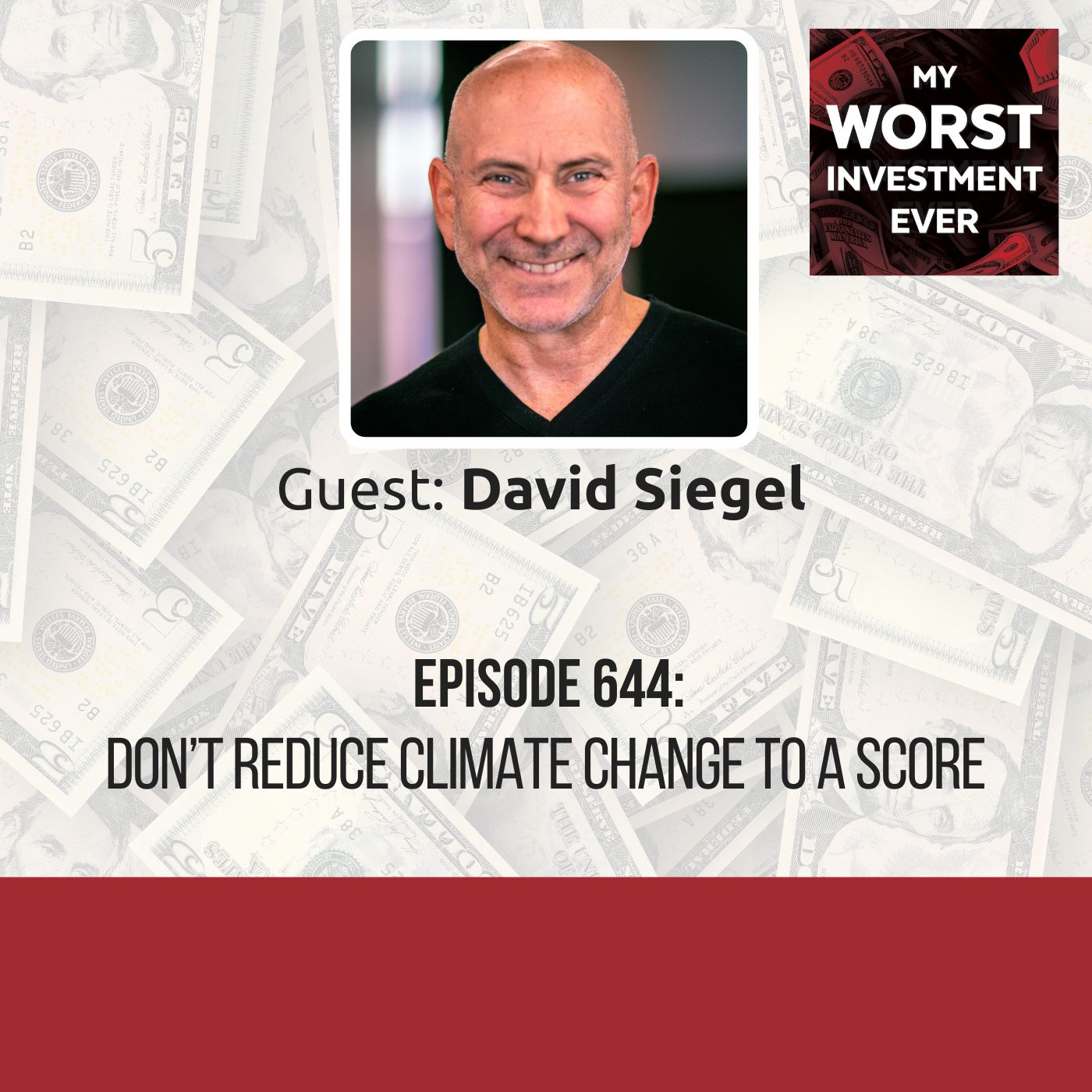
David Siegel – Don’t Reduce Climate Change to a Score
BIO: David Siegel is an entrepreneur who has started more than a dozen companies. He has written five books on technology and business, given more than 200 professional speeches worldwide, and was once a candidate to be the dean of Stanford business school.STORY: David joins the podcast again, this time around discussing climate change.LEARNING: It’s wrong to reduce climate change to a score. We need a better alternative to the UN’s Environment, Social, and Governance (ESG) movement. “You don’t have to do anything the way anybody tells you to. Go learn in the most irreverent way possible.”David Siegel Guest profileDavid Siegel is an entrepreneur who has started more than a dozen companies. He has written five books on technology and business, has given more than 200 professional speeches around the world, and was once a candidate to be the dean of Stanford business school. He is a fintech leader, a leader of the open Metaverse movement, a business strategy coach, and an advocate for the scientific method. He writes and makes videos about climate change at www.climatecurious.com.Worst investment everDavid is a previous guest who joined us on Ep98: Start-ups Should Start with Selling. In today’s episode, he tells us more about his research on climate change.David’s penchant for climate changeDavid has been conducting research on climate change since 1988. He wrote his first book on climate in 1991. So David is not one of those instant climate experts. In 2015, he decided to really dig into the subject and spent an entire year doing nothing but climate research. During this extensive research, David realized that many scientists don’t understand climate change fully and that many people take it at its face value. He believes people need to understand climate change on its own merits and not as an overarching cause and effect. For this reason, David digs deep into research to present raw data and help people make up their minds.In comes the UN’s ESG movementThe rigorous talks on climate change have metastasized into the global Environment, Social, and Governance (ESG) movement that has been forced on us by the World Economic Forum and the UN. ESG is a UN program strongly endorsed by the World Economic Forum and has been going on for 20 years. The point of ESG is to give every company a detailed scorecard of their carbon footprint, water use, energy, pollution, and other practices that affect climate change.Every public company in the United States pays $2 billion yearly for compliance, which could go to $8 billion. David believes this money is spent so the companies can get a high score regardless of their efficiency.Transparency is good; it’s just being done the wrong wayDavid believes that while we must have transparency where climate change is concerned, it’s not okay to reduce it to a score given by some consultants. He thinks the ESG scoring system simplifies a complex subject into a single set of numbers that don’t represent reality.Moreover, ESG scoring is done arbitrarily, based on political assumptions and a set of unclear rules by anointed consultants selling indulgences. According to David, coming up with one score on something is full of problems and creates terrible incentives. In this case, companies won’t be efficient with the goal of fighting climate change but simply get a good score. And with the amount of money companies are paying, it really comes down to paying for the ratings. So there’s a lot of conflict of interest in the ESG scoring process.The scoring will soon get personalCurrently, every US state and city must get an ESG ranking. David believes this will go further down to a personal ESG score. Soon, everyone will need to have a unique social credit score. This personal ESG score will be used to deny you access to financial services, rent, loans, how far and when you can travel, etc.Let’s build a better alternativeDavid believes that the idea behind creating ESG is good. Still, we need to build a better alternative that’s more objective and efficient. He also insists that people should use independent thinking to combat climate change at an individual level. David’s advice is to participate where it makes sense and know when to go with the herd and when to go against it.No.1 goal for the next 12 monthsDavid’s number one goal for the next 12 months is to build his Cutting Through The Noise platform.Parting words “Develop yourself and learn all you can. Podcasts like Andrew’s are really valuable. Don’t take anything from other people; find your own way. Look at the data, learn to interpret it, and ask difficult, irritating questions.”David Siegel [spp-transcript] Connect with David SiegelTwitterWebsiteBlogAndrew’s booksHow to Start Building Your Wealth Investing in the Stock MarketMy Worst Investment Ever9 Valuation Mistakes and How to Avoid ThemTransform Your Business with Dr.Deming’s 14 PointsAndrew’s online programsValuation Master ClassThe Become a Better I
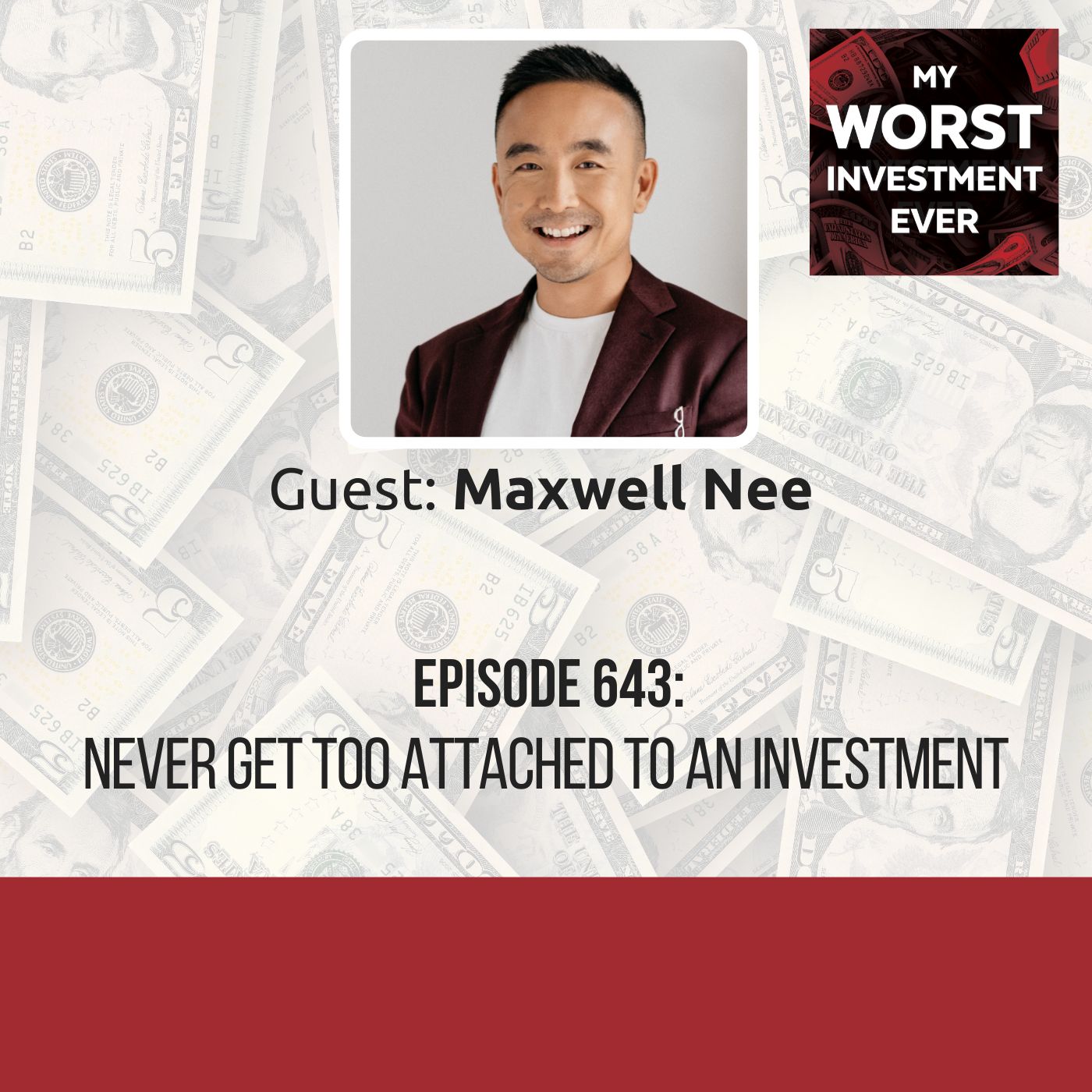
Maxwell Nee – Never Get Too Attached to an Investment
BIO: Maxwell Nee is the Managing Partner of OENO Wine & Whisky Investment. He’s a multi-award-winning entrepreneur making alternative investments in wine and whisky.STORY: Maxwell bought an apartment in an off-plan contract and paid 45,000 Australian dollars as a downpayment. He was to pay the balance once the apartment was complete in about 36 months. Mid-project, he realized the deal was not worth it, so he pulled out of the contract and lost his downpayment.LEARNING: Slow down and think about something before you commit. It’s okay to walk away from a bad investment. “When you get fully committed to an investment, you only find reasons to fall more in love with it. Then it becomes harder and harder to walk away even if it looks bad.”Maxwell Nee Guest profileMaxwell Nee is the Managing Partner of OENO Wine & Whisky Investment. He’s a multi-award-winning entrepreneur who earns his investors a recession-proof and market-beating return with wine and whisky alternative investments.Worst investment everWhen Maxwell was 21, he was in Brisbane, Australia, and the city was in the middle of a transition where everyone living in houses started to live in apartments. This led to developers building apartments everywhere, creating a massive oversupply.Maxwell decided to move with the trend and bought an apartment off-plan. The apartment was worth about AUD 450,000, and since the apartment wasn’t built yet, Maxwell would pay a 10% deposit and clear the balance after settling in—about 36 months later. He was absolutely in love with this plan from the moment he walked into the showroom. Maxwell used to watch the show Suits and always admired one of the lead character’s New York apartments—the showroom looked like this apartment. Maxwell was in love with the lifestyle of a young professional living in New York City. So he was sold on the property and didn’t even really care about the price.Maxwell borrowed money for the deposit and spent three months picking furniture, forks, cups, glasses, crystals, whiskey tumblers, and all this stuff in readiness to live in his dream apartment. All this excitement distracted him from doing any due diligence. Maxwell didn’t look at the metrics or research the developer. He simply signed an unconditional contract which meant that no matter what happened, he wouldn’t get out of the contract.About halfway through the project, Maxwell saw an article saying that because the place was so city-centric (it was in a boisterous place), and so the developer was legally obligated, according to the local council, to invest $10 million in triple-glazed glass. This was to protect the occupants from the noise. This was not good for the investors because it meant the developer would take that $10 million from them.Maxwell worked at the bank at the time. So he went to get a loan to pay the remaining amount. The valuer went to value the property and informed Maxwell that he could only value it at 88% of what he had signed up for. So his expected value of the apartment was already 12% down. Maxwell started forecasting how long it would take him to return to parity and realized it would be about seven or eight years. It was such a losing position.Maxwell’s loan was approved, but he decided last minute to walk away, even if it meant losing his deposit of $45,000. The developer tried to extract the balance from Maxwell, so he returned to his agent, who helped him find a replacement buyer. The new buyer only signed the deal because Maxwell signed over his deposit to them.Lessons learnedIt never hurts to slow down and think about something before you commit.It’s okay to look at other options before deciding what to invest in.Make sure you double-check yourself if you get too attached to an investment.If you’re not an expert, or it’s your first time doing something, get a mentor or a coach to teach. Or pay for someone to do it for you.Andrew’s takeawaysProperty can be a trap as it’s not liquid, and it can be hard to get in and out of compared to the stock market. So it’s imperative to do proper research before getting into real estate.It’s okay to walk away from a bad investment.Actionable advicePut your hand up more and seek an expert instead of blindly getting into something you don’t know about.No.1 goal for the next 12 monthsMaxwell’s number one goal for the next 12 months is to educate and empower as many people as possible and guide them in their investment journey.Parting words “Guys, Andrew has got this podcast down pat. So subscribe and listen. I really love this concept.”Maxwell Nee [spp-transcript] Connect with Maxwell NeeLinkedInInstagramYouTubeWebsitePodcastAndrew’s booksHow to Start Building Your Wealth Investing in the Stock MarketMy Worst Investment Ever9 Valuation Mistakes and How to Avoid ThemTransform Your Business with Dr.Deming’s 14 PointsAndrew’s online programsValuation Master ClassThe Become a Better Investor CommunityHow to Start Building Your Wealth Inve
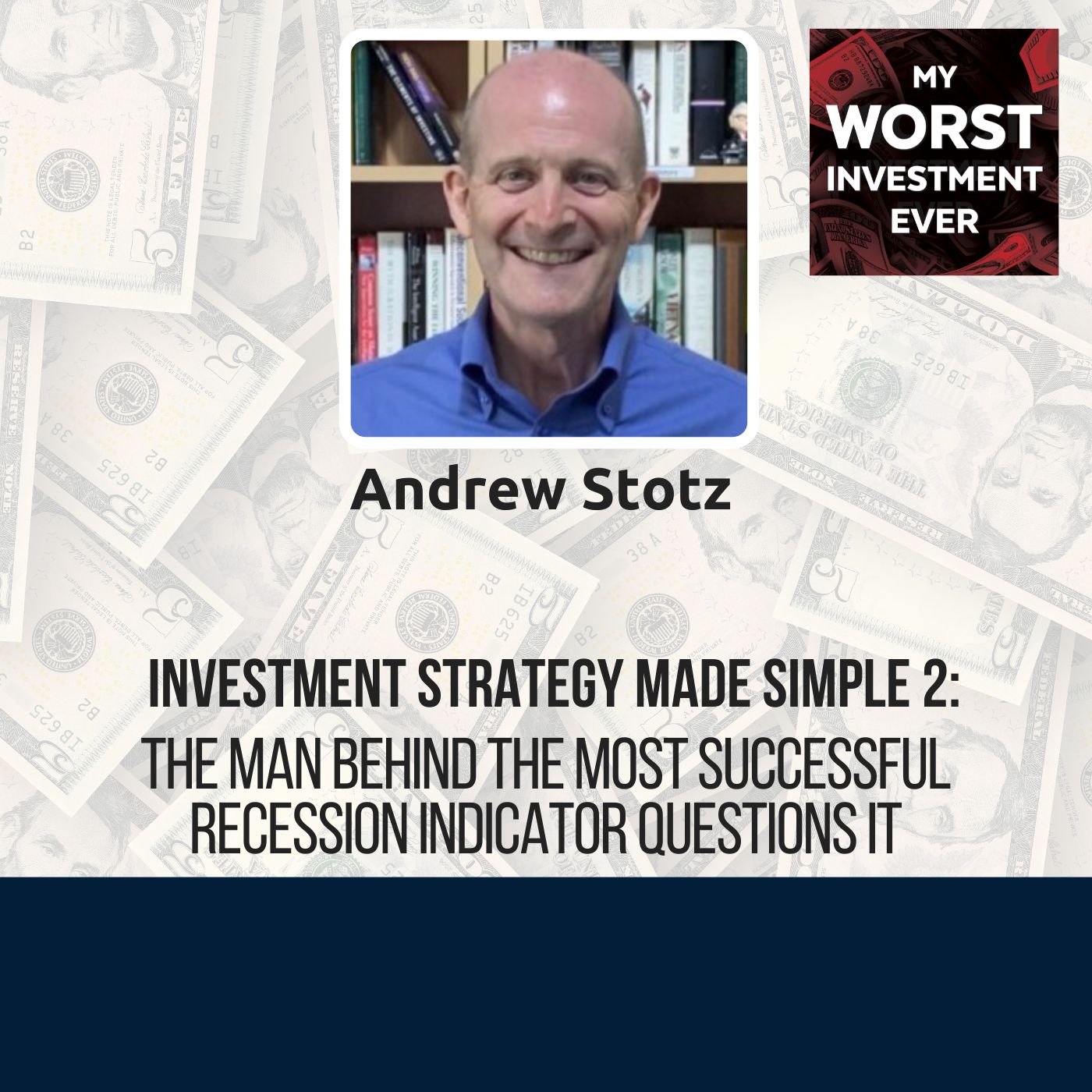
ISMS 2 - The Man Behind the Most Successful Recession Indicator Questions It
Did the man who discovered the most successful recession indicator abandon it?Click here to get the PDF with all charts and graphsIn a recent LinkedIn post, Campbell Harvey outlined why his yield curve inversion theory, which has a perfect record of predicting recessions, may no longer work. He concludes that we may not get a recession in 2023.He argues that the labor market is strong compared to the past two recessions. Unfilled jobs are still high, and skilled workers losing their jobs have shorter periods before getting a new job.The current situation is not like the 2008 or 2020 crisesThis is unlike the 2008 global financial crisis and the 2020 pandemic recession, where workers had no job opportunities to pursue. Harvey argues that consumers have less indebtedness and are better prepared to withstand the rise in interest rates.The financial sector is strong compared to the 2008 period, reducing the risk of a financial sector crisis that would exacerbate an economic crisis.Focus on the real yield curveHarvey also suggested that we should put more weight on the real yield curve (after adjusting for inflation), which shows no inversion, despite the inversion of the nominal yield curve.The inverted yield curve has become a victim of its own successFinally, he proposes that his predictor may have become a victim of its own success. Harvey argues that the reactions of economic agents could lead to lower growth, and if the economy survives the period, a soft landing is possible.Maybe the widespread knowledge of the success of the yield curve has caused people to adjust ahead of time which will lessen the impact of the recession.Arguments for why Harvey’s inverted yield curve signal is working just fineBut not everyone is buying his reasons for abandoning his measure. Below is a list of some of the arguments made in the comment section about why Harvey’s inverted yield curve signal is working just fine.The labor force participation rate in the United States has been falling, it averaged 63% from 1948 to 2022, reaching an all-time high of 67% in 2000Consumer debt is at all-time highs; most relevantly, consumer debt service payments as a percent of disposable personal income are the highest in over 13 years and still risingThe consumer is weak as wages are not keeping up with the fast rise in consumer prices, driven by high energy and commodities pricesConsumers need to borrow or tap into their savings as disposable income gets eaten upConsumer savings rates are lowThe Fed will not reduce its rate rise course soon as unemployment is still lowWill 2022 be the first time since 1968 that the inverted yield curve gives a false signal of recession?Click here to get the PDF with all charts and graphs

Cameron Herold – Unleash the Power of Your COO
BIO: Cameron Herold is the mastermind behind hundreds of companies’ exponential growth and has earned his reputation as the business growth guru.STORY: Cameron is back on the Podcast with tidbits from his upcoming book, The Second in Command: How to Unleash the Power of Your COO.LEARNING: A working relationship between a CEO and a COO can grow a company exponentially. Make your company culture conducive to retain your employees. “The very first thing that a smaller company should do before they hire their first second in command is hiring an executive assistant.”Cameron Herold Guest profileCameron Herold is the mastermind behind hundreds of companies’ exponential growth and has earned his reputation as the business growth guru. He has built a dynamic consultancy with clients that include a monarchy and a Big 4 wireless company. The author of six books, Cameron is also a top-rated international speaker, having spoken on all 7 continents. The founder of the COO Alliance, the World’s Leading Network for Seconds in Command, he’s also the host of the Second in Command: The Chief Behind the Chief podcast, where he interviews COOs and other seconds to share their insights with his listeners.Cameron previously joined us on Episode 266, and today he’ll be telling us about his upcoming sixth book.The Second in CommandCameron’s sixth book, The Second in Command: How to Unleash the Power of Your COO, comes out in a couple of days. As with all his other books, Cameron listened to his clients and took their guidance on where they wanted more information from him. He runs an organization called COO Alliance, the only network of its kind in the world for the second in command. Cameron also hosts the Second in Command: The Chief Behind the Chief podcast. In both of those platforms, what he kept hearing was that it’s hard for CEOs to find a second command. They don’t know where to look for them or how to hire them. And once they have one, they don’t get along perfectly, or they think differently. Cameron decided he was going to focus on this in his new book.The yin and yang relationship of the CEO and COOAfter years of being a CEO, Cameron realized that a CEO and COO’s relationship is a very yin and yang relationship. A CEO could grow a company alone—so can a COO. But when they work together, the growth becomes exponential. Cameron’s book aims at helping entrepreneurial and mid-sized companies to put that solid yin and yang together. It also tackles the time and place to get rid of the second command.Andrew’s takeawaysMake the culture of your organization great, so people want to be there.Cameron’s recommendationCameron recommends checking out the Invest in Your Leaders course that offers 12 strong modules around coaching and delegation, time management, and project management. The 12 modules are what Cameron considers the 12 core competencies of successful leaders.No.1 goal for the next 12 monthsCameron’s number one goal for the next 12 months is to look into Dubai, Portugal, or Spain, where he and his wife can buy homes. His other goal is to scale up COO Alliance.Parting words “Remember that at the end of the day, we’re all gonna kick the bucket. So let’s enjoy our journey.”Cameron Herold [spp-transcript] Connect with Cameron HeroldLinkedInTwitterInstagramFacebookPodcastYouTubeWebsiteBooksAndrew’s booksHow to Start Building Your Wealth Investing in the Stock MarketMy Worst Investment Ever9 Valuation Mistakes and How to Avoid ThemTransform Your Business with Dr.Deming’s 14 PointsAndrew’s online programsValuation Master ClassThe Become a Better Investor CommunityHow to Start Building Your Wealth Investing in the Stock MarketFinance Made Ridiculously SimpleFVMR Investing: Quantamental Investing Across the WorldBecome a Great Presenter and Increase Your InfluenceTransform Your Business with Dr. Deming’s 14 PointsAchieve Your GoalsConnect with Andrew Stotz:astotz.comLinkedInFacebookInstagramTwitterYouTubeMy Worst Investment Ever Podcast
Kim Scott – Don’t Always Accept Funding Just Because It’s Been Offered
BIO: Kim Scott is the author of Radical Candor: Be a Kick-Ass Boss Without Losing Your Humanity and Just Work: How to Root Out Bias, Prejudice, and Bullying to Build a Kick-ass Culture of Inclusivity, and she is a co-founder of the company, Radical Candor.STORY: Kim got an idea and $2 million from a friend to build an app for her company Radical Candor. What Kim didn’t realize was that the app was doing the exact opposite of what Radical Candor aimed to do.LEARNING: Just because somebody offers you money doesn’t mean you should take it. Don’t throw good money after bad. Don’t grow for growth’s sake. “If it’s too good to be true, keep asking questions before you jump.”Kim Scott Guest profileKim Scott is the author of Radical Candor: Be a Kick-Ass Boss Without Losing Your Humanity and Just Work: How to Root Out Bias, Prejudice, and Bullying to Build a Kick-ass Culture of Inclusivity, and she is a co-founder of the company, Radical Candor. Kim was a CEO coach at Dropbox, Qualtrics, Twitter, and other tech companies. She was a member of the faculty at Apple University and, before that, led AdSense, YouTube, and DoubleClick teams at Google.Worst investment everKim had just finished writing Radical Candor, but it was going to be published a few months later. So she had some downtime. One time Kim was having lunch with a friend who’s an investor in Silicon Valley, and she told him about the book. The friend suggested that Kim considers building an app to help people change their habits and be radically candid. He said he’d give her $2 million. Kim thought this was a good idea.Kim built one app, and it didn’t work. She created a second app, and it didn’t work. Then made a third version of the app, which still didn’t work. Then one day, Kim was watching her daughter and son perform a musical in a theater, filming it on her phone and watching it on the phone. She looked up from her phone and at the actual children, and the emotional impact was totally different. At that moment, Kim realized that the whole point of Radical Candor was to get people to put their telephones away, look each other in the eye, and have real conversations. This app she was building was a value-subtracting platform. Kim decided not to continue building the app. She had spent about half the money her friend had given her at this point.Lessons learnedJust because somebody offers you money doesn’t mean you should take it. First, stop and think if it’s really necessary.If you’re running a business, don’t get pushed to grow too fast.That thing that you really love doing that helps you add value to the world, do it.Don’t throw good money after bad.Andrew’s takeawaysDon’t grow for growth’s sake.Just because something is cheap doesn’t mean you have to buy it.Actionable adviceSlow down a little bit. If it’s too good to be true, it probably is. If something comes too easy, there’s probably something you’re missing.Kim’s recommendationTo Radicalcandor.com to learn more about what Kim does. If you’re curious about the different ways that bias, prejudice, and bullying masquerade as feedback, go to justworktogether.com and figure out how to root out those problems.No.1 goal for the next 12 monthsKim’s number one goal for the next 12 months is to spend 80% of her time writing her new novel.Parting words “Go forth and solicit feedback. That’ll keep you out of more trouble than anything else.”Kim Scott [spp-transcript] Connect with Kim ScottLinkedInFacebookInstagramYouTubeWebsiteBooksAndrew’s booksHow to Start Building Your Wealth Investing in the Stock MarketMy Worst Investment Ever9 Valuation Mistakes and How to Avoid ThemTransform Your Business with Dr.Deming’s 14 PointsAndrew’s online programsValuation Master ClassThe Become a Better Investor CommunityHow to Start Building Your Wealth Investing in the Stock MarketFinance Made Ridiculously SimpleFVMR Investing: Quantamental Investing Across the WorldBecome a Great Presenter and Increase Your InfluenceTransform Your Business with Dr. Deming’s 14 PointsAchieve Your GoalsConnect with Andrew Stotz:astotz.comLinkedInFacebookInstagramTwitterYouTubeMy Worst Investment Ever Podcast
ISMS 1 – The United States Won WW2.5, but Who Lost?
WW2.5 is what I like to call “The US against who?” You may say China or Russia. In my opinion, those are both wrong. It’s the US against Europe. And the US just won. The Russia-Ukraine conflict has encouraged US dominance over Europe. Let’s take a deeper look at this dominance.Click here to get the PDF with all charts and graphsMilitary dominanceThe US has more than 60,000 troops in Europe, half of which are in Germany, a third in Italy, and the UK. The US operates more than 200 military bases in Europe. People often like to say that it’s China or maybe Russia that will take over the world. But when I look at it objectively, Russia is almost a non-issue for the US. Here’s why:Economically, it’s tinier than the USMilitarily, the US military budget is 10X the Russian budgetPeople worldwide are more likely to prefer the US political system over the Russian oneAlmost all European countries joined NATO, and the US now controls it. NATO membership means Europeans participate as “peacekeepers” in US conflicts. In today’s world, joining NATO means getting involved in military action worldwide for Europeans.Political dominanceIn 2018, Trump raised the issue of Germany’s energy dependence on Russia in a meeting with Jens Stoltenberg, Secretary-General of NATO.https://youtu.be/9LLZBVTid4IThe conversation shows that back when Trump was in power, the US tried to get Germany to stop getting oil and gas from Russia. This was a move to control Russia’s dominance.The absence of former Chancellor of Germany Angela Merkel and her coalition’s political leadership in Europe has allowed the US to fill the gap, for example, forcing Germany to cut off the Russian oil and gas supply. European political leaders will find it hard to oppose the US, thus weakening Europe politically.Cultural dominanceI find it fascinating that the 2015 Syrian refugee crisis saw nearly 1.3 million people (Syrians, Afghans, Nigerians, and others) arrive in Europe to request asylum. This is the highest number of asylum seekers in a single year since World War II. I believe an influx of refugees into any country will cause a cultural disruption.Of the asylum seekers from the Syrian Crisis:51% went to Germany10% to France9% to Italy7% to SwedenI’m talking about the Syrian crisis in 2015 and the refugees because, since February 2022, more than 11 million Ukrainians have entered the European Union. In the presentation, I shared an excellent chart that shows where these people are going.The main thing about this that is interesting is that we’re not seeing 1.3 million people as we saw in the Syrian war; we see 11 million. We could estimate that many of the 11 million will return to Ukraine after the war, and we’ll remain with about 3 or 4 million permanent refugees or political asylum seekers in Europe. That still causes disruption. Whether you’re for or against accepting political asylum seekers, the fact is that it causes disruption.Financial dominanceWhen you look at the GDP of the biggest countries in the world, and I break it into three groups; the Americas, Asia, and Europe, you’ll see that the US is about 24% of the total GDP. China is about 19% of the total global GDP. So in the Americas and Asia, we have dominant players, the US and China.But in Europe, the German GDP is only 4% of the world’s total. The UK has about 3.2%, France 2.8%, and Italy 2%. Unlike the Americas and Asia, no country is a dominant economic force in Europe. Merkel’s strong leadership is gone, with nothing to replace it. Germany’s economy is weakened from this crisis. This makes Europe ripe for the taking for the US.Energy dominanceChina, the US, and India are the top three energy consumers. China consumes about 26% of the world’s energy, the US 16%, India 6%, Russia 5%, and Japan 3%.Now let’s look at consumption from fossil fuels, nuclear, hydro, and renewable perspectives. 82% of the world’s energy consumption comes from fossil fuels. As of 2021, Europe was at 71%. So they’re already down a lot on fossil fuel consumption. This means they also have a large amount of nuclear.The world is still heavily reliant on fossil fuels, with 82% of total consumption. If we then look at what countries are producing the most oil and gas output, the first country is the US, with 18.5% of the total oil and gas output. Russia and Saudi Arabia are second at 12%, followed by Canada at 6%, Iraq at 4.6, and China at 4.4%. So what’s interesting here is that the US has just knocked out Russia, that’s 12.2% of total output. And now, Europe will have to get oil from the US or Saudi Arabia.On page 25, you’ll see a map of Europe and Russia when you download my presentation. From the map, you can see that Russia is the heart of the European energy sources. There’s no denying that Russia is the closest and most efficient source for Europe to depend on. So, cutting off the Russian gas supply to Europe is no small thing.It’s a fantastic accomplishment for the US to dominate Europe. And the beauti

Peter Johnson – Pick the Right People to Work With
BIO: Peter W. Johnson, Jr. is the founder and principal of PWJohnson Wealth & Legacy, LLC, a fee-only Registered Investment Advisory firm based in Silicon Valley, California.STORY: Peter invested in two business ideas that came too early for their time. Both businesses had minimal uptake because people didn’t understand what Peter was trying to do.LEARNING: Never invest all of your money in risky things; always stay diversified. Pick the right people to work with. A great idea is not the only thing you need to succeed. “Never invest all of your money in risky things; always stay diversified.”Peter Johnson Guest profilePeter W. Johnson, Jr. is the founder and principal of PWJohnson Wealth & Legacy, LLC, a fee-only Registered Investment Advisory firm based in Silicon Valley, California.His independent firm has provided investment and financial planning services to clients and families for 30 years, with a balanced emphasis on both the analytical and human sides of the wealth equation.Family wealth is personal for Peter. Peter’s great-grandfather was a self-made businessman who built his wealth to $100 million. But he subsequently lost this wealth over three generations.Worst investment everPeter has always been a computer geek. It was no surprise when he attended a conference in 1995 where they discussed setting up websites, and he immediately came up with a business idea. The internet was just opening to commercial use. Peter thought it would be a good idea to build an online community of investment professionals who could share their favorite websites and store them in a database. He hired friends to set up the community.Peter immediately went out to market his community. He realized he was speaking to people who didn’t know what email was. Only 10% of the people he talked to had email, internet web databases, or bulletin boards. The uptake was very slow, and people were reluctant to pay even though the value was self-evident. Peter’s idea came just too early for its time. People simply didn’t grasp what he was trying to do.In 2001, Peter went to another conference about publishing ebooks. He started doing ebooks on the side in collaboration with a little book publishing company. Unfortunately, he didn’t get the subscribership he needed. Then 9/11 happened, and everything went into a funk. The business ran out of money and could no longer afford to pay the people Peter had hired.Lessons learned Never invest all of your money in risky things; always stay diversified.Pick the right people to work with.Learn the joys of guerilla marketing to become a hell of a marketer.If you want input from friends and family, form an advisory board.Pay attention to your gut feeling.Don’t be early and don’t be late.Andrew’s takeawaysA great idea is not the only thing you need to succeed.The runway is not just money. It also involves your emotions.Actionable adviceBe kind to yourself and invest in yourself. Follow your passions because there’s something there. As long as you learn something, it’s okay to fail. Sometimes you won’t learn anything, but you’ll learn to survive.Peter’s recommendationPeter recommends finding and joining a community of people who can inspire and lift you up. People you can meet, talk to, share ideas with, and support each other.No.1 goal for the next 12 monthsPeter’s number one goal for the next 12 months is to build a new podcast called Life, Love, and Legacy. He hopes to use the platform to let people know the value of doing more than surviving.Parting words “There’s so much that we have to offer people and such platforms are a great way to get the word out. So thank you for the work you’re doing.”Peter Johnson [spp-transcript] Connect with Peter JohnsonLinkedInWebsiteAndrew’s booksHow to Start Building Your Wealth Investing in the Stock MarketMy Worst Investment Ever9 Valuation Mistakes and How to Avoid ThemTransform Your Business with Dr.Deming’s 14 PointsAndrew’s online programsValuation Master ClassThe Become a Better Investor CommunityHow to Start Building Your Wealth Investing in the Stock MarketFinance Made Ridiculously SimpleFVMR Investing: Quantamental Investing Across the WorldBecome a Great Presenter and Increase Your InfluenceTransform Your Business with Dr. Deming’s 14 PointsAchieve Your GoalsConnect with Andrew Stotz:astotz.comLinkedInFacebookInstagramTwitterYouTubeMy Worst Investment Ever Podcast

Morad Fiki – Don’t Partner With Someone Who Has Nothing to Lose
BIO: Morad Fiki is a former U.S. Naval Officer and #1 Real Estate Expert on Social Media in Texas. He has been awarded Top 1.4% Real Estate Agents In the United States through Real Trends and has over 100 Million dollars in Career Sales.STORY: Morad got into the restaurant business without prior due diligence causing him to buy a non-profitable business. In addition to that, he got into a partnership where he was the sole financier.LEARNING: Don't go into business with someone who has nothing to lose. Do your research. “Don't go into business with someone with nothing to lose. If a partner doesn’t put money into the venture and it doesn’t work, they could just walk away."Morad Fiki Guest profileMorad Fiki is a former U.S. Naval Officer and #1 Real Estate Expert on Social Media in Texas. He has been awarded Top 1.4% Real Estate Agents In the United States through Real Trends and has over 100 Million dollars in Career Sales. Morad helps people who feel stuck in their careers and their lives and have no sales, no business, no customers, and no idea where to go from here to get out of their own way and realize the greatness within themselves. He believes that once you do this, you can unlock your potential and take profound steps to live your best lives and have a business that reflects that. Morad is on a mission to inspire 10 million real estate professionals and associated services providers to grow their businesses to six figures and beyond so that they can make a greater impact on their own lives, families, and communities.Worst investment everMorad wanted to be an uber-successful business tycoon. He decided to buy several restaurants and liquidate them. At first, he started looking at different franchising opportunities. Morad had no experience in this whatsoever.Morad's best friend from high school had an older brother who had worked as a sous chef for about 20 years, so he knew how to cook. His dream was to own his own restaurant. Morad figured they could partner in his quest to be a restaurant owner. The plan was for Morad to acquire the restaurants, and his friend's brother would run them. Morad would fund them all and do the marketing and advertising. Since the two were starting from scratch, Morad thought it was best to buy an existing restaurant that was already operating and profitable. He went ahead and got a business broker, who found him a pizza parlor. It was selling for $120,000, but he ended up negotiating it to $90,000. Morad had sort financing from the bank. He went to the sales tax office and got the license in his name. They opened the restaurant, and Morad went hard on the advertising. But, this was in vain. They only got a few customers, but more was needed to keep the business going. In due time, Morad discovered that the restaurant wasn't making the amount of money the seller said it was making. Morad was lucky to break even. Morad tried to sell it before it went under. He hired the same business broker that sold it to him. All the buyers were savvy and had done enough due diligence to realize there was no money to be made in the business. So it became impossible to sell the business. Morad's partner quit the partnership and left him high and dry. The business finally went under.Lessons learnedDon't go into business with someone who has nothing to lose because it will be easy for them to walk away when it doesn't work out.Don't rush into something. If you don't feel 100% good about it, it's better to walk away and reassess.Take a risk, but fully evaluate that risk and do thorough due diligence.Andrew's takeawaysOnly partner with people who have skin in the game.The number one reason why people make a mistake and experience their worst investment is that they don't do their research.You'll go out of business if you cannot deploy your capital well.Actionable adviceIf you feel like something's off, and it doesn't add up or make sense, don't do it.Morad’s recommendationMorad recommends reading Think and Grow Rich and The 10X Rule: The Only Difference Between Success and Failure to gain business acumen. No.1 goal for the next 12 monthsMorad's number one goal for the next 12 months is to continue making an impact on the Houston real estate business. He also wants to get to the top 10 agents in Houston. He’s currently in the top 200.Parting words "Thank you, Andrew, for giving me a chance to talk to your audience."Morad Fiki [spp-transcript] Connect with Morad FikiLinkedInFacebookTwitterInstagramYouTubeWebsiteAndrew’s booksHow to Start Building Your Wealth Investing in the Stock MarketMy Worst Investment Ever9 Valuation Mistakes and How to Avoid ThemTransform Your Business with Dr.Deming’s 14 PointsAndrew’s online programsValuation Master ClassThe Become a Better Investor CommunityHow to Start Building Your Wealth Investing in the Stock MarketFinance Made Ridiculously SimpleFVMR Investing: Quantamental Investing Across the WorldBe

Drew Neisser – Be Real Estate Light
BIO: Drew Neisser is the founder of Renegade and CMO Huddles. Drew has helped dozens of CMOs unleash their inner renegade via multiple award-winning campaigns.STORY: Drew made the mistake of increasing his staff from 40 to 100 and tripling his office space. Then one of his clients refused to pay the $500,000 owed. He was left with a real estate and cash flow problem.LEARNING: Be conscious about recurring versus non-recurring revenue. Be careful not to lose your business focus while chasing revenue. “Sweat, then figure out where that opportunity is.”Drew Neisser Guest profileDrew Neisser is the founder of Renegade and CMO Huddles. Drew has helped dozens of CMOs unleash their inner renegade via multiple award-winning campaigns and told the stories of over 500 marketers via his podcast Renegade Marketers Unite, Ad Age column, and two books. His 2nd book, Renegade Marketing: 12 Steps to Building Unbeatable B2B Brands, was named the top B2B audiobook of 2022.Drew is ranked among LinkedIn’s Top 15 marketing voices of 2022 and has been a featured marketing expert on TV, radio, print, and dozens of podcasts.Says bestselling author Jay Baer, “Drew Neisser is among the strongest B2B marketing thinkers in the world.”Worst investment everRenegade grew tremendously between 2005 and 2008. The company had 40 people, but it really needed 100 people to handle this brief moment. So Drew tripled the company’s office space, which soon became a problem.In addition to being in this gigantic space, Drew had the genius idea that this was the moment to buy Renegade from the parent company. The plan was to fund the deal with pending payments. Forty-five days into the agreement, Drew got a client call saying they wouldn’t pay the $500,000 they owed because someone had scammed the client.At this point, the company was over-extended in real estate and had too many product lines. At the time, the company was doing event marketing, guerilla marketing, website development, and social media. Then the financial crisis hit, and Drew had a real estate problem and a cash flow problem.Lessons learnedDon’t let the chase for revenue make you lose focus on what you’re really good at.Join a community first and get to know it well, and participate before you start your own.Andrew’s takeawaysThe chasing revenue phase can take you to many exciting places, but eventually, it will overextend you.Be conscious about recurring versus non-recurring revenue.Consider joining and starting a community.Actionable adviceBe real estate light, especially if you’re a service company since clients rarely visit offices now.Drew’s recommendationsDrew recommends checking out Renegade.com. There, you’ll find links to his podcast, a monthly newsletter that a lot of folks in business subscribe to, and a blog that’s constantly being updated and has transcripts from all the podcast episodes.No.1 goal for the next 12 monthsDrew’s number one goal for the next 12 months is to work four days a week instead of six. At the same time, he wants to grow Renegade and CMO Huddles while enjoying every minute of it.Parting words “Don’t be afraid. Just get out there and do it.”Drew Neisser [spp-transcript] Connect with Drew NeisserLinkedInTwitterFacebookInstagramYouTubeBookPodcastWebsiteAndrew’s booksHow to Start Building Your Wealth Investing in the Stock MarketMy Worst Investment Ever9 Valuation Mistakes and How to Avoid ThemTransform Your Business with Dr.Deming’s 14 PointsAndrew’s online programsValuation Master ClassThe Become a Better Investor CommunityHow to Start Building Your Wealth Investing in the Stock MarketFinance Made Ridiculously SimpleFVMR Investing: Quantamental Investing Across the WorldBecome a Great Presenter and Increase Your InfluenceTransform Your Business with Dr. Deming’s 14 PointsAchieve Your GoalsConnect with Andrew Stotz:astotz.comLinkedInFacebookInstagramTwitterYouTubeMy Worst Investment Ever Podcast

Rick Elmore – Your Entrepreneurial Journey Is the Dream
BIO: Rick Elmore is an entrepreneur, sales and marketing expert, and the Founder and CEO of Simply Noted.STORY: Rick had a team of software developers, electrical engineers, and mechanical engineers who were to develop a robot for a seven-figure client. The robot was supposed to be done six months before the client signed the contract. Unfortunately, the team couldn’t deliver, so Rick lost the contract.LEARNING: Let your losses drive you. There’s no straight line to success. “There’s no straight line to success, it’s going to be constant ups and downs, and there may be many more downs than ups.”Rick Elmore Guest profileRick Elmore is an entrepreneur, sales, and marketing expert. As the Founder and CEO of Simply Noted, Rick developed a proprietary technology that puts real pen and ink to paper to scale handwritten communication, helping businesses of all industries scale this unique marketing platform to stand out from their competition and build meaningful relationships with clients, customers, and employees.Founded in 2018 and based in Tempe, Arizona, Simply Noted has grown into a thriving company with clients of various sizes across the country, including in hospitality, real estate, insurance, nonprofit, franchise, B2B, and others. Rick has served as the company’s CEO since its founding for more than five years and has over a decade of sales and marketing industry experience.Worst investment everRick’s background is in athletics, but in 2017, he had a bright idea to start a robotics and industrial automation company. Rick had no clue what he was doing. He worked hard, and his sales team brought in clients. Rick had a seven-figure contract with one client.After a year of working with this client, it was time to renew the contract. However, the multi-year contract depended on getting a robot done. The robot the company was using then couldn’t scale with the client. Rick had been in talks with the client and promised that the new robot would be done before signing the new contract.Rick had a software development team, an electrical engineering team, and a mechanical engineering team. Together, they were supposed to be done with the robot six months before the new contract negotiation was done. The team, however, was way behind schedule. Rick had put so much work and money into the robot for almost three years, and the developers and engineers just couldn’t get it done on time. Rick ended up losing that seven-figure contract.Lessons learnedThere’s no straight line to success. It involves a lot of ups and downs—there will be more ups than down.You cannot refuse to start something because you’re afraid of how hard it will be or because you don’t have all the answers.You have to get started. You can’t be afraid to fail. Fail early and often.Learn from your failures.Andrew’s takeawaysYou have to scale to get to the next level.Let your losses drive you.You’re going to make mistakes, and you’re going to go in wrong directions. That’s just part of life.Actionable adviceTo be a successful entrepreneur, you must be disciplined and take calculated risks. The only way to do that is by doing a lot of tests in your business.Rick’s recommendationRick recommends taking Coursera courses for self-education. You’ve got to become a student in life and your craft.No.1 goal for the next 12 monthsRick’s number one goal for the next 12 months is to build a new website to offer his clients the best product experience.Parting words “Never give up. You don’t fail until you quit.”Rick Elmore [spp-transcript] Connect with Rick ElmoreLinkedInWebsiteAndrew’s booksHow to Start Building Your Wealth Investing in the Stock MarketMy Worst Investment Ever9 Valuation Mistakes and How to Avoid ThemTransform Your Business with Dr.Deming’s 14 PointsAndrew’s online programsValuation Master ClassThe Become a Better Investor CommunityHow to Start Building Your Wealth Investing in the Stock MarketFinance Made Ridiculously SimpleFVMR Investing: Quantamental Investing Across the WorldBecome a Great Presenter and Increase Your InfluenceTransform Your Business with Dr. Deming’s 14 PointsAchieve Your GoalsConnect with Andrew Stotz:astotz.comLinkedInFacebookInstagramTwitterYouTubeMy Worst Investment Ever Podcast

Lisa Gates – Someone’s Burdens Shouldn’t Be Yours
BIO: Lisa Gates is a leadership coach and career story sleuth who helps women strategically self-advocate so they are seen, heard, valued, and paid.STORY: Lisa’s husband got a 65 Mustang as payment for an $800 debt. They spent over $14,000 to repair the car and sold it for just $7,000.LEARNING: Don’t invest in something you don’t naturally value or have an interest in. Don’t let other people’s problems be yours. “It’s never about the other person, even when it is.”Lisa Gates Guest profileLisa Gates is a leadership coach and career story sleuth who helps women strategically self-advocate so they are seen, heard, valued, and paid.By building core narratives for every career context, from interviewing to networking to promotion, Lisa helps women capture the stories that demonstrate impact in action to break through the barriers of invisibility and exclusion.With a career that spans from marketing and public relations to writing and acting, Lisa has become an expert at interviewing, pitching, negotiating, and storytelling.Previously, she co-founded She Negotiates, an internationally recognized consulting and training firm, where she helped hundreds of women close their wage and leadership gaps. Her work has appeared on NPR, CNN, The New York Times, The Wall Street Journal, The Atlantic, Glamour, and elsewhere.Worst investment everSomeone owed Lisa’s husband about $800, which was a lot of money back then. One day her husband came home and said he’d got paid. Well, not in cash. The person had given Lisa’s husband a 65 Mustang. The car was a collector’s dream, but it needed an engine, a paint job, a Fender, a headliner, carpeting, and new upholstery.Lisa’s husband believed he could sell the car for $20,000. Lisa was livid because they needed the money owed, and the only way they could make any money from selling the car was if they made all the repairs necessary.Lisa’s father-in-law died and left a small inheritance of about $17,000. They spent about $14,000 from the inheritance to repair the car. It was beautiful by the end of the repairs. Just after picking up the car, the couple was driving home when Lisa ran into the back of another vehicle and crunched the front end. Now they had to do some more repairs and spend more money. They finally sold that car for $7,000.Lessons learnedIf it isn’t something you naturally value or are interested in, don’t invest in it.Whatever you invest in has to fit your priorities and what you’re up to in your life.Andrew’s takeawaysAsk yourself, knowing what you know about this person right now, if you weren’t in this relationship and this person walked up to you and wanted to start this relationship, would you start it? If the answer is no, then you’ve got some decisions to make. If the answer is yes, double down and bring more value to that relationship.When somebody’s having a problem or dealing with their burden, that burden or problem doesn’t have to be yours, and you don’t have to accept it.Actionable adviceGrow your emotional intelligence by learning to ask questions before responding or saying yes.Lisa’s recommendationsLisa recommends her various LinkedIn courses for conflict resolution and negotiation:Coaching for ResultsNegotiation FoundationsConflict Resolution FoundationsNo.1 goal for the next 12 monthsLisa’s number one goal for the next 12 months is to lose 25 pounds.Parting words “I just have a big thank you. You have a great heart and a great expertise.”Lisa Gates [spp-transcript] Connect with Lisa GatesLinkedInWebsiteAndrew’s booksHow to Start Building Your Wealth Investing in the Stock MarketMy Worst Investment Ever9 Valuation Mistakes and How to Avoid ThemTransform Your Business with Dr.Deming’s 14 PointsAndrew’s online programsValuation Master ClassThe Become a Better Investor CommunityHow to Start Building Your Wealth Investing in the Stock MarketFinance Made Ridiculously SimpleFVMR Investing: Quantamental Investing Across the WorldBecome a Great Presenter and Increase Your InfluenceTransform Your Business with Dr. Deming’s 14 PointsAchieve Your GoalsConnect with Andrew Stotz:astotz.comLinkedInFacebookInstagramTwitterYouTubeMy Worst Investment Ever Podcast

Ilise Benun – Ask Every Question You Can Think Of
BIO: Ilise Benun has made it her business to teach basic business skills to creative professionals who should have learned them in school but, alas, did not because it’s not taught in school.STORY: Ilise hired a designer to design a brochure for her consulting practice. Instead, he delivered a folder with her logo.LEARNING: Stand up for yourself. Ask every question you can think of. “Ask every stupid question to confirm the details of any arrangement.”Ilise Benun Guest profileIlise Benun has made it her business to teach basic business skills to creative professionals who should have learned them in school but, alas, did not because it’s not taught in school. This has, for years, perpetuated a “starving artist” mentality amongst creative professionals, who are naturally talented and could easily bring their creativity to the business side of their business if only they knew how. That’s her mission with all of her work through marketing-mentor.com, including The Marketing Mentor Podcast, seven books including The Creative Professional’s Guide to Money, three online courses for Creative Live and Domestika.org, and much more. If you want more from Ilise on mindset, money, and marketing, sign up for her Quick Tips.Worst investment everWhen Ilise started her business, she came across a graphic designer and thought it would be great to have a brochure for her consulting practice. The designer showed Ilise images and examples of what the brochure would look like. Ilise was very excited. But when the brochure arrived on her doorstep, it was not what she had imagined. The designer designed boxes of folders with Ilise’s logo on it. The designer asked her all sorts of questions, and she answered them. She was utterly disappointed in the product but didn’t say anything. She just never worked with the designer again. Ilise was so young, immature, and afraid at that point in her career that she just didn’t stand up or advocate for herself.Lessons learnedStand up for yourself and bring yourself to the negotiation.Strip away all of those things you imagine you’re supposed to be so that people can see who you are. That’s who they’re going to want to work with.Andrew’s takeawaysWhen working with service providers, ensure that they deliver incrementally or get feedback as you go through the process. Don’t wait to get the final product to give your input.Stand up for yourself to deliver to your business partners, employees, and family.Actionable adviceAsk every question you can think of, even if it feels like it would be a stupid one.Ilise’s recommendationsIlise recommends her Domestica course, Writing a Winning Proposal. She teaches what she calls the proposal Oreos strategy. This is a way to help people using a food metaphor to learn how to have the money conversation and then decide whether or not to write a proposal based on that conversation.No.1 goal for the next 12 monthsIlise’s number one goal for the next 12 months is to expand the E-commerce part of her business, take all the content she’s been creating, and turn it into products she can sell.Parting words “The only mistake is making the same mistake more than once.”Ilise Benun [spp-transcript] Connect with Ilise BenunLinkedInTwitterFacebookYouTubeBooksPodcastWebsiteAndrew’s booksHow to Start Building Your Wealth Investing in the Stock MarketMy Worst Investment Ever9 Valuation Mistakes and How to Avoid ThemTransform Your Business with Dr.Deming’s 14 PointsAndrew’s online programsValuation Master ClassThe Become a Better Investor CommunityHow to Start Building Your Wealth Investing in the Stock MarketFinance Made Ridiculously SimpleFVMR Investing: Quantamental Investing Across the WorldBecome a Great Presenter and Increase Your InfluenceTransform Your Business with Dr. Deming’s 14 PointsAchieve Your GoalsConnect with Andrew Stotz:astotz.comLinkedInFacebookInstagramTwitterYouTubeMy Worst Investment Ever PodcastFurther reading mentionedMori Taheripour (March 2020), Bring Yourself: How to Harness the Power of Connection to Negotiate Fearlessly

Souniya Khurana – Own Your Narrative Regardless of What People Tell You
BIO: Souniya Khurana is the Co-Founder and CEO of the podcast company and a new-age media venture WYN (Wine) Studio.STORY: When Souniya was in grade six, she failed math. Everyone kept pushing her to focus on this failure instead of her strengths. This made her create a narrative that she wasn’t good enough.LEARNING: Own your narrative. Don’t let anybody else decide who you are or your narrative. You can change your narrative. “Please don’t invest in things that you’re bad at.”Souniya Khurana Guest profileSouniya Khurana is the Co-Founder and CEO of the most creative & sought-after branded podcast company and a new-age media venture WYN (Wine) Studio.While Souniya’s career spans more than a decade across developing businesses and strategic roles and a failed startup before navigating her way successfully through her second entrepreneurial stint, WYN Studio, what has conspired to her success is owning her story and seeing through the many failures in her life as important milestones.TGIF, she often says! Often? Why? Because for her, it means, “Thank God I Failed!”Worst investment everSouniya was horrible at mathematics, and her family always told her that this was her weakness and that she should invest in it more to get better at it. Souniya really tried to get better at mathematics, and she did but at the expense of what she was really good at. Nobody ever amplified or helped Souniya look at her strength—English. She loved stories and the world of narratives. But nobody helped her realize that this was where she needed to invest more. She felt like she was not good enough for her entire school life.When Souniya failed math in sixth grade, she contemplated suicide because she felt her life was not worth it. Instead of looking at it as an event in her life, she ended up looking at it as who she was—a failure. She used that as a tag up until her first venture in 2016.No matter what happened before 2016, whether it was getting the best placement in college, good grades in university, or a good job, Souniya always felt that those things were happening by default. She didn’t believe she made them happen. She always thought she wasn’t good enough because people always pushed her to focus on her weaknesses.It was only after 2016, when Souniya met the right mentors, that she realized that the fact was that she was not good at math, but that didn’t mean that she wasn’t good enough.Lessons learnedOwn your narrative. People will tell you many things but step out of your situation, take a helicopter view, and create your own story.Take the emotion out of situations that drain you and look at them more rationally and clearly.Invest in your strengths.Always remember that it’s you who’s in the arena and the only one who knows what’s going on. So don’t let anybody belittle you or decide who you are or what’s your narrative.Andrew’s takeawaysStep outside of your situation and imagine that you’re up on the ceiling looking down, and then use that as a tool to observe yourself.You can change your narrative.Actionable adviceIf you’re on the verge of making important decisions—whether it’s choosing the right education, right university, or career—first recognize your strengths. Think about those times when you felt you were in the absolute flow, when you loved doing what you were doing and were so engrossed and involved in that activity. Figure out what that thing is. Then see if there’s a possibility to transition that into a profession or something that’ll make you money or create an impact in the world. If yes, then go all out for it.Souniya’s recommendationsSouniya recommends the CXO Talks podcast to aspiring CXOs, entrepreneurs, those in middle management, and anyone looking to get into executive positions. The podcast offers candid, vulnerable stories to help you overcome murky moments or regrets.No.1 goal for the next 12 monthsSouniya’s number one goal for the next 12 months is to get into better health and fitness because she now fully understands that her health is her wealth.Parting words “There are so many insights that come from the worst investments. I don’t think there’s any other way to get better at investing than to learn from others’ mistakes. So I think you’re doing a phenomenal job, Andrew.”Souniya Khurana [spp-transcript] Connect with Souniya KhuranaLinkedInTwitterInstagramYouTubePodcastWebsiteAndrew’s booksHow to Start Building Your Wealth Investing in the Stock MarketMy Worst Investment Ever9 Valuation Mistakes and How to Avoid ThemTransform Your Business with Dr.Deming’s 14 PointsAndrew’s online programsValuation Master ClassThe Become a Better Investor CommunityHow to Start Building Your Wealth Investing in the Stock MarketFinance Made Ridiculously SimpleFVMR Investing: Quantamental Investing Across the WorldBecome a Great Presenter and Increase Your InfluenceTransform Your Business with Dr. Deming’s 14 PointsAchieve Your GoalsConnect with Andrew Stotz:astotz.comLinkedIn

Michele Wucker – Don’t Ignore the Warning Signs
BIO: Strategist, speaker, and author Michele Wucker coined the term “gray rhino” as a call to take a fresh look at how we respond to obvious, probable, impactful risks.STORY: Michele hated being a pre-med and psychology student, but she kept at it because she believed it was the safest path for her.LEARNING: Don’t ignore the signs telling you that something is wrong. Build your self-awareness. “When you’re tired, and you’re just not feeling like yourself, that’s a really great signal that something is wrong.”Michele Wucker Guest profileStrategist, speaker, and author Michele Wucker coined the term “gray rhino” as a call to take a fresh look at how we respond to obvious, probable, impactful risks. The metaphor and framework have shaped business and investment strategies and made headlines in more than 35 languages and 70 countries. Michele founded the Chicago-based advisory firm Gray Rhino & Company and is a former media and think tank executive. Her four books include the influential global bestseller The Gray Rhino and the sequel, You Are What You Risk.Worst investment everMichele decided to join college as a pre-med, psychology, and French major. She believed this was the best choice and what was expected of her. But Michele hated the psychology and chemistry classes. However, Michele had this idea in her head that she’d be a psychiatrist, so she kept pushing.It took Michele way too long to realize that she was investing her time, energy, and intellect into something that wouldn’t work out. It took many more experiences of investing her time, energy, and emotions into other people’s expectations or into what Michele thought was the safest and least risky path for her to chase her true dreams. Eventually, she quit med school and became a Policy Studies major.Lessons learnedUnderstand how to recognize the signs warning you that something is wrong.Be aware of what you give to the world and what sustains you.Always analyze risks, possible responses, what makes you comfortable or not and what gives you an increased sense of control.Andrew’s takeawaysAwareness allows you to identify what isn’t for you quickly.Don’t wait to find the thing you like because that may or may not be in front of you. But if you find what you don’t like, use that as an impetus to move you to the next thing.Actionable adviceIdentify the stresses and what triggers them. Then identify what makes you feel better or more comfortable.Michele’s recommendationsMichele recommends her blog, The Horn, which talks about global issues and how to respond to them. She also recommends the Gray Rhino blog, which includes her thoughts about behavioral responses to risk.No.1 goal for the next 12 monthsMichele’s number one goal for the next 12 months is to rearrange her life so she can be based more in Chicago. This will help her reduce the number of plane trips she makes and, as a result, reduce her carbon footprint and the toll on her health.Parting words “Your worst mistakes will get you to where you want to go. So don’t beat yourself up for them. But while you’re in them, learn that lesson faster so you can get to where you want to go faster.”Michele Wucker [spp-transcript] Connect with Michele WuckerLinkedInTwitterFacebookInstagramBookWebsiteAndrew’s booksHow to Start Building Your Wealth Investing in the Stock MarketMy Worst Investment Ever9 Valuation Mistakes and How to Avoid ThemTransform Your Business with Dr.Deming’s 14 PointsAndrew’s online programsValuation Master ClassThe Become a Better Investor CommunityHow to Start Building Your Wealth Investing in the Stock MarketFinance Made Ridiculously SimpleFVMR Investing: Quantamental Investing Across the WorldBecome a Great Presenter and Increase Your InfluenceTransform Your Business with Dr. Deming’s 14 PointsAchieve Your GoalsConnect with Andrew Stotz:astotz.comLinkedInFacebookInstagramTwitterYouTubeMy Worst Investment Ever Podcast

Anna Rosling Rönnlund – You Don’t Always Have to Buy a Home
BIO: Anna Rosling Rönnlund is a Swedish designer who, with her husband Ola Rosling, developed Trendalyzer, interactive software for visualizing statistical information.STORY: Anna and her husband bought a home after moving to the US. A while later, they had to move back to Sweden, so they decided to sell the house. This was during the financial crisis that hit the real estate market badly. So the couple lost a lot of money after the sale.LEARNING: Keep your costs low. You don’t always have to buy a home. “Spending time doing things you love is the best investment ever.”Anna Rosling Rönnlund Guest profileAnna Rosling Rönnlund is a Swedish designer who, with her husband Ola Rosling, developed Trendalyzer, interactive software for visualizing statistical information. In 2005, with statistician and father-in-law Hans Rosling, she co-founded the Gapminder Foundation, where she serves as vice president for design and usability. In 2016, she announced Dollar Street, a website that imagines a street of homes to help visualize how people of varying cultures and incomes live around the world. In 2017, she collaborated with Hans Rosling on his book, Factfulness.Worst investment everAnna and her husband moved to the US, where they were both working at Google. They decided to look for a place to stay close to the office. The couple had sold their apartment in Sweden, so they had some cash to purchase a house. They bought their home just before the real estate market crashed and then moved back to Sweden after it crashed. They decided to sell the house and lost quite a lot of money.The home was just a few miles from where Facebook was building its new headquarters. Had the couple held onto the house for just a year or two after moving back to Sweden, they’d have gained quite a lot of money.Lessons learnedWhen investing, start from your dream or passion and then gradually diversify to other things.Keep your costs low, but still enjoy life, and make sure you do things you like—it doesn’t have to cost a lot.Andrew’s takeawaysOne way to protect yourself is to keep your costs really low.You don’t have to buy a house, especially when you’re moving to a new city.Property can fall, and you lose for a while, but in the long run, it eventually comes back.Actionable adviceIf you’re not going to stay in a home for a very long time, don’t buy it—rent instead.Anna’s recommended resourceAnna recommends reading Factfulness because it’s all about how to make sense of the world. It gives you a general overview of the biggest trends and proportions to make better decisions in life and work.No.1 goal for the next 12 monthsAnna’s number one goal for the next 12 months is to add the questions received from the general public and interactive video-led courses, the Worldview Upgrader. This is a tool she developed for people to check their knowledge and upgrade their worldview.Parting words “Good luck with your investments, and make decisions based on data.”Anna Rosling Rönnlund [spp-transcript] Connect with Anna Rosling RönnlundLinkedInTwitterFacebookInstagramYouTubeBookWebsiteAndrew’s booksHow to Start Building Your Wealth Investing in the Stock MarketMy Worst Investment Ever9 Valuation Mistakes and How to Avoid ThemTransform Your Business with Dr.Deming’s 14 PointsAndrew’s online programsValuation Master ClassThe Become a Better Investor CommunityHow to Start Building Your Wealth Investing in the Stock MarketFinance Made Ridiculously SimpleFVMR Investing: Quantamental Investing Across the WorldBecome a Great Presenter and Increase Your InfluenceTransform Your Business with Dr. Deming’s 14 PointsAchieve Your GoalsConnect with Andrew Stotz:astotz.comLinkedInFacebookInstagramTwitterYouTubeMy Worst Investment Ever Podcast

Susan Frew – Trust but Verify All Your Employees
BIO: Susan Frew is a renowned entertaining, and value-driven speaker and thought leader. She has coached hundreds of companies and non-profits to great success.STORY: Susan left an unsupervised employee in charge of her coaching practice. This employee left her with a million dollars in debt.LEARNING: Trust but verify every single employee. Get on-time and accurate monthly financial statements. Put in place metrics of accountability. “Get your own mail. If I had been getting my mail, this wouldn’t happen.”Susan Frew Guest profileSusan Frew is a renowned entertaining, and value-driven speaker and thought leader. She has coached hundreds of companies and non-profits to great success. Susan and her husband, William, grew their trade business by 535% in just one year by creatively using seven deceptively simple tools coupled with some good old-fashioned elbow grease. As a result, Sunshine Home Services now boasts a coveted spot on the INC 5000 List as one of the INC Best Places to work.Worst investment everSusan’s husband started a plumbing business while she was running a coaching practice. Her husband’s business grew so much that she decided to leave her practice and join him.But with time, Susan started speaking again and got busier and busier. She was traveling a lot for her speaking engagements. So she had to leave the practice to an employee to manage it while she was away. The mistake she made was to advocate and dump all the work she didn’t want to do on the employee instead of delegating strategically. She also didn’t have the proper supervision in place. This employee was allowed to get Susan’s mail, use her credit card, and access her bank accounts and other accounts.One Saturday, Susan got a knock on her door, and it was the postman with a letter saying that she owed the IRS $498,000 in taxes and fees. She also had a $209,000 fine for not supervising her employee.Susan had put her employee on a Pay Plan, which she thought was genius at the time. The employee would get a bonus every month if she stayed on budget. Her way of staying on budget was to short the bills. So if, for instance, the practice owed the IRS $5,000, she’d pay $4,000. What she didn’t realize was that the IRS would eventually match up the W2s with all the 941 deposits and signature sheets Susan would submit.Peeling back the onion even further, Susan found out that the employee had used her tire account to buy tires for the cars of everyone in her family. She’d use one of Susan’s gas cards to fill her car. She even bought tools at the local parts store on Susan’s account. On adding up all these purchases, Susan was a million dollars in debt.Lessons learnedTrust but verify every single employee and put in place metrics of accountability.Don’t dump your work on someone else; instead, delegate strategically.Don’t take yourself too seriously.Have an outside bookkeeper who has no emotional attachment to your office manager and is a very strong taskmaster.Exit before it tanks.Andrew’s takeawaysGet on-time and accurate monthly financial statements.When you make a mistake, be vulnerable with a small group of people you trust and then move on.Ultimately, profit solves so many problems. So focus on building profit for your business.Actionable adviceHave a proper understanding of your financials and watch that money.Susan’s recommendationsIf you’re running a company, Susan recommends making time for self-care to stay in good shape. Self-care will make you focus better, make you stronger, and give you a better opportunity to make better decisions.No.1 goal for the next 12 monthsSusan has a five-year plan, starting next year, to look for an exit for the company. She’s working on building a healthy EBITDA number while still serving her clients exceptionally.Parting words “Surround yourself with loving, supportive people that you can trust because you need them.”Susan Frew [spp-transcript] Connect with Susan FrewLinkedInPersonal websiteWebsiteAndrew’s booksHow to Start Building Your Wealth Investing in the Stock MarketMy Worst Investment Ever9 Valuation Mistakes and How to Avoid ThemTransform Your Business with Dr.Deming’s 14 PointsAndrew’s online programsValuation Master ClassThe Become a Better Investor CommunityHow to Start Building Your Wealth Investing in the Stock MarketFinance Made Ridiculously SimpleFVMR Investing: Quantamental Investing Across the WorldBecome a Great Presenter and Increase Your InfluenceTransform Your Business with Dr. Deming’s 14 PointsAchieve Your GoalsConnect with Andrew Stotz:astotz.comLinkedInFacebookInstagramTwitterYouTubeMy Worst Investment Ever Podcast

Ridhi Bahl – Your Health Is More Important Than Wealth
BIO: Ridhi Bahl is a leading Astrologer in India with a Ph.D. in Astrology and Vastu.STORY: It wasn’t until Ridhi was found to have an ovarian tumor that she started taking her health seriously.LEARNING: Health is your biggest and best investment. If one door closes, another opens. Don’t let self-pity get out of hand. “Man is a master of his own destiny. We have the power to change our own destiny.”Ridhi Bahl Guest profileRidhi Bahl is considered one of the top-notch Astrologers in India. She has done her Ph.D. in Astrology and Vastu. Her numerous years of experience and research in various branches of Astrology have given her a professional edge in Predictive Astrology, Mundane Astrology, and Medical Astrology. With intensive research in Vastu for over two decades, Ridhi has to her credit more than 5,000 case studies of successful Vastu amendments, including commercial, industrial, and residential projects. To add to her skills, she provides Vastu solutions without making structural changes.Worst investment everWhen Ridhi was young, she suffered from certain health conditions, leading to regular tests, medical checkups, and doctor visits. At times, day-to-day activities would be a challenge to her. Her health issues continued even after she graduated, did her masters in management, and started working a corporate job. Like any other young person in their 20s, Ridhi was full of dreams and aspirations despite having health issues.All along, astrology was always at the back of Ridhi’s mind, but it was just a fascination to know the future. As all these things were simultaneously going on, Ridhi was under the impression that she’d made the right decisions for herself by doing an MBA and getting the right job. But there was some disconnect somewhere happening. Even though she was paid very well, was working for an excellent organization, and everything was picture perfect from the outside, from within, it was not. Ridhi felt unhappy. Something just wasn’t feeling right. But she continued with life because everybody else around her thought her life was perfect.When Ridhi was 28 years, she gave birth to a son. This was when she was found to have an ovarian tumor. Even though the tumor was benign, the whole experience was life-changing. It took a nasty toll on her health to the point where she couldn’t get out of bed. Ridhi had to quit her job. She felt like her life had come to a standstill, and nothing was going to move.Ridhi had a lot of why’s, and nobody was able to give her answers to those y’s. This was when she decided to get into astrology. Ridhi studied astrology and got the answers she was looking for.Lessons learnedHealth is your biggest and best investment. It’s more important than wealth.If one door closes, another opens. So keep going even if certain things are not working as you want them to.When you put your mind to something, you can really do it.Andrew’s takeawaysIf you’re pushing yourself to a point where you’re physically hurting yourself, you’ve got to stop. Life is not about that.Sometimes life is as simple as just being grateful for what you have.Don’t let self-pity get out of hand because it can lead to psychosomatic problems.Actionable adviceHave faith in yourself. We, humans, have the immense capacity and capabilities to bring about a lot of changes. You have the power to change your destiny.No.1 goal for the next 12 monthsRidhi’s number one goal for the next 12 months is to continue guiding people the right way so they can follow the right path.Parting words “Have faith and trust in yourself; you can move mountains.”Ridhi Bahl [spp-transcript] Connect with Ridhi BahlLinkedInTwitterFacebookInstagramPinterestYouTubeWebsiteAndrew’s booksHow to Start Building Your Wealth Investing in the Stock MarketMy Worst Investment Ever9 Valuation Mistakes and How to Avoid ThemTransform Your Business with Dr.Deming’s 14 PointsAndrew’s online programsValuation Master ClassThe Become a Better Investor CommunityHow to Start Building Your Wealth Investing in the Stock MarketFinance Made Ridiculously SimpleFVMR Investing: Quantamental Investing Across the WorldBecome a Great Presenter and Increase Your InfluenceTransform Your Business with Dr. Deming’s 14 PointsAchieve Your GoalsConnect with Andrew Stotz:astotz.comLinkedInFacebookInstagramTwitterYouTubeMy Worst Investment Ever Podcast

Will Basta – Step Outside of the Rat Race Box
BIO: Will Basta is the co-founder of ACV - Accelerated eCom Ventures, an e-commerce automation agency and investment management company, the only company in the industry capable of combining logistics, wholesale distribution, and e-commerce growth all into one.STORY: Will felt obliged to follow his family’s steps and went to university as a pre-med student. This left him with over $100,000 in student loans, yet he feels he’d have pursued other interests.LEARNING: Take your time before rushing to the next phase in life. There are many options for acquiring knowledge; don’t limit yourself to university. “Things change all the time. So step outside the rate race box laid out in society.”Will Basta Guest profileWill Basta is the co-founder of Ascend Ecom, an e-commerce automation agency and investment management company, the only company in the industry capable of combining logistics, wholesale distribution, and e-commerce growth all into one.With two years in the business, he’s made Ascend Ecom a company comprised of 500+ clients, two warehouses in Dallas, 100’s of employees, and millions of monthly revenues.Worst investment everWill comes from a family of well-educated high fliers. His elder sisters went to Ivy League universities and are successful professionals. When he finished high school, Will felt obliged to go to the university and take the pre-med direction.One of Will’s sisters took a $20,000 loan for him, but he had to pay the rest of the college fees. This saw him spend well over $100,000 in student loans and graduate with a general degree.Will regrets rushing into university and putting himself in serious debt, yet he doesn’t see the value of that university experience. He wishes he had taken a full year after graduating high school and thought things through before joining the university.Lessons learnedThere’s a lot of time, so you can take your time before deciding what’s next.University isn’t 100% necessary.Andrew’s takeawaysThere are many options for acquiring knowledge; don’t limit yourself to university.Actionable adviceTake your time because life goes by fast. Be aware of life’s rollercoaster and take a step back at every benchmark and chapter in your life.Will’s recommended resourceWill recommends reading the book Own the Day, Own Your Life: Optimized Practices for Waking, Working, Learning, Eating, Training, Playing, Sleeping, and Sex. It touches on pretty much everything from waking up in the morning, what you eat, professional life, sex, partnerships, etc.No.1 goal for the next 12 monthsWill’s number one goal for the next 12 months is to keep bringing value to his clients and to take his company global. He wants to get into the Canadian and UK markets.Parting words “Stay positive, stay on the path and remember that being present is extremely important.”Will Basta [spp-transcript] Connect with Will BastaLinkedInTwitterFacebookInstagramWebsiteAndrew’s booksHow to Start Building Your Wealth Investing in the Stock MarketMy Worst Investment Ever9 Valuation Mistakes and How to Avoid ThemTransform Your Business with Dr.Deming’s 14 PointsAndrew’s online programsValuation Master ClassThe Become a Better Investor CommunityHow to Start Building Your Wealth Investing in the Stock MarketFinance Made Ridiculously SimpleFVMR Investing: Quantamental Investing Across the WorldBecome a Great Presenter and Increase Your InfluenceTransform Your Business with Dr. Deming’s 14 PointsAchieve Your GoalsConnect with Andrew Stotz:astotz.comLinkedInFacebookInstagramTwitterYouTubeMy Worst Investment Ever Podcast

Shayne Heffernan – Stop Lending Your Money to Friends
BIO: Shaye Heffernan has a Ph.D. in Economics and has done several IPOs that have surpassed a market cap of a billion dollars.STORY: Shayne lent his friend of 20 years $6 million in the agreement that he’d get a stake in his friend’s business. That business failed, so Shayne never got his money back nor made anything from the friend’s company.LEARNING: Lending money to friends is a terrible idea. Have very clear agreements when lending money. “Keep your friends as friends and your business as a business. Don’t try to mix those up.”Shayne Heffernan Guest profileShaye Heffernan has a Ph.D. in Economics and has done several IPOs that have surpassed a market cap of a billion dollars.Worst investment everShayne’s friend of 20 years came to him in Hong Kong in tears wanting $6 million to save his business. The friend was also being thrown out of his house within the next 48 hours. Shayne felt sorry for his friend, so he lent him $6 million. The agreement was that he’d get his money back and some returns once the friend rebuilt his business.Shayne didn’t do any due diligence, and the agreement was written quickly without thought. He just transferred the money to his friend immediately.Shayne’s friend built his next venture, which got listed and went through the roof. Shayne was celebrating as the company had a valuation of about $10 billion. So his friend’s stake was worth about $6 billion. Shayne thought he would be rich! He called his friend to follow up on the agreement. His friend said that this was a second venture, the first one (which he insisted was the one they agreed on) had failed. So Shayne didn’t get his $6 million back or make any money from his friend’s business, which he saved.Lessons learnedUrgent deadlines are an enormous red flag.Lending money to friends is a terrible idea.Have very clear agreements when lending money.Take your time before coming to someone’s financial rescue and see what happens.Keep your friends as friends and your business as a business. Don’t mix the two.Everyone you owe money to is your problem.Andrew’s takeawaysDon’t be a hero. You can’t save the world.Your obligation is only to your family and your business partners and to protect your wealth for yourself.Actionable adviceLearn to be patient and get over yourself in terms of your ego.Shayne’s recommended resourcesShayne recommends reading I Am Right, You Are Wrong. The book will help you learn how to look beyond the argument, and the powerful emotional rhetoric, get to the facts, and see what’s right and wrong.No.1 goal for the next 12 monthsShayne’s goal for the next 12 months is to teach his sons how to run a trading desk.Parting words“Just be careful.”Shayne Heffernan [spp-transcript] Connect with Shayne HeffernanLinkedIn WebsiteAndrew’s booksHow to Start Building Your Wealth Investing in the Stock MarketMy Worst Investment Ever9 Valuation Mistakes and How to Avoid ThemTransform Your Business with Dr.Deming’s 14 PointsAndrew’s online programsValuation Master ClassThe Become a Better Investor CommunityHow to Start Building Your Wealth Investing in the Stock MarketFinance Made Ridiculously SimpleFVMR Investing: Quantamental Investing Across the WorldBecome a Great Presenter and Increase Your InfluenceTransform Your Business with Dr. Deming’s 14 PointsAchieve Your GoalsConnect with Andrew Stotz:astotz.comLinkedInFacebookInstagramTwitterYouTubeMy Worst Investment Ever Podcast

Brian Portnoy – Financial Wellbeing Is Your Gateway to a Meaningful Life
BIO: Brian Portnoy is the founder of Shaping Wealth, a learning technology platform transforming the human experience of money.STORY: Brian joins us again on the podcast. This time he talks about his endeavors in behavioral finance and how he’s helping financial advisors improve their emotional competencies to achieve financial well-being more effectively.LEARNING: Put thought into your financial well-being. “The driving assumption of most economics is that more is better. We know that that’s not true.”Brian Portnoy Guest profileBrian Portnoy is the founder of Shaping Wealth, a learning technology platform transforming the human experience of money.He is one of the world’s leading experts on the psychology of money.He has written multiple bestselling books, including The Geometry of Wealth, and has 20+ years of experience as an investor and educator in the hedge fund and mutual fund industries.He is a CFA Charterholder and earned a Ph.D. at the University of Chicago.Brian Portnoy was one of our first guests on the My Worst Investment Ever podcast. He shared his experience with us in episode 17. Four years later, he joins us again, and in today’s episode, we catch up on what he’s been up to.Getting into the world of social psychology, neuroscience and behavioral financeBrian got into social psychology, positive psychology, and neuroscience. he wanted to understand how we tick as human beings, what makes us have shared qualities and experiences, and what makes us unique. He enjoyed that endeavor of learning so much that he wrote a few books in the field. One’s called The Investor’s Paradox: The Power of Simplicity in a World of Overwhelming Choice.A few years later, Brian published a different book called The Geometry of Wealth: How to shape a life of money and meaning. The book is about behavioral finance and targets professionals in the wealth management industry. The book seeks to address three issues these professionals face:Am I going to be okay?How much is enough?Does money buy happiness?The uniting theme of these three issues is the term funded contentment. This is the ability to underwrite a life well lived, a life that is meaningful to you—however you choose to define it. There’s this assumption of most economics that more is better. According to Brian, this is not valid. Instead, he believes it should be about finding calibration and balance in equilibrium more than maximizing things, especially the size of our bank accounts or balance sheets.As brian dug deeper into behavioral finance, he felt the urge to get into coaching. So he started a coaching and content platform called Shaping Wealth. He took some of the key ideas from The Geometry of Wealth and used them in his coaching business to help people make better decisions, form better habits, and achieve a more meaningful life with a specific emphasis on financial well-being.Dealing with overwhelming dimensions of our money lifeBrian notes that there are many dimensions to our money life, and we’re often overwhelmed by them. We live in a global financial supermarket—an always-on, 24/7 world. His book and coaching business help people learn how to form good habits and ultimately achieve the well-being they want— even when so many things are stacked against them.Coaching the coaches to keep up with a changing wealth management industryBrian’s business works with the wealth management industry. It’s a B2B platform that works with financial advisors. As the financial advice industry moves from transactional to more relational, advisors become not just planners but also coaches and guides for people. So Brian has stepped into coach the coaches.Globally, companies are investing in their people in ways that they haven’t in the past. Physical, emotional, and financial wellness has become a priority for many companies. With this in mind, Brian is helping companies be more thoughtful about what they share with their employees. This is in terms of assisting them in making better decisions, forming better habits, and, more broadly, helping money fit into a meaningful life.So much of what Brian is doing at Shaping wealth is helping financial advisors and, in turn, their clients improve their emotional competencies to achieve financial well-being more effectively.No.1 goal for the next 12 monthsBrian’s goal for the next 12 months is to ensure that an increasing percentage of the global wealth management community understands the positive impact a chief behavioral officer can have on their firm, team, and clients.Parting words “I just want to leave with an expression of thanks and gratitude, you’re a good guy, and I appreciate it.”Brian Portnoy [spp-transcript] Connect with Brian PortnoyLinkedInTwitterWebsiteAndrew’s booksHow to Start Building Your Wealth Investing in the Stock MarketMy Worst Investment Ever9 Valuation Mistakes and How to Avoid ThemTransform Your Business with Dr.Deming’s 14 PointsAndrew’s online programsValuation Master

Tara LaFon Gooch – Vet Your Business Partners
BIO: Tara LaFon Gooch is a 2X business founder and entrepreneur. Before entrepreneurship, she was a corporate sales director who got burnt out on corporate life and wanted to explore more possibilities.STORY: Tara started a business with a partner who didn’t align well with its goals. This saw her do all the work, and she had to quit after realizing this wasn’t a partnership anymore.LEARNING: Vet your partners well before getting into a partnership with them. Listen to your gut. “Your business partner can dictate the progression, the strategy, the flow, and ultimately the success of anything you do.”Tara LaFon Gooch Guest profileTara LaFon Gooch is a 2X business founder and entrepreneur. Prior to entrepreneurship, she was a corporate sales director who got burnt out on corporate life and wanted to explore more possibilities.Her background afforded her the ability to view problems from more than one angle, to be creative, and to apply out-of-the-box thinking.Through her business, Best Branding Solutions, she helps executives and businesses improve their personal brand. Their improved digital footprint helps them be seen as visionaries in their field.Tara offers 60-minute 1:1 business consulting or LinkedIn strategy calls.Worst investment everEarlier this year, Tara had a business partner with this fantastic business idea. The customer base was there. Tara was excited to get started and had lots of energy. This was a new industry that she’d never been in, but she was not intimidated.The two formed a 50/50 partnership. Tara’s title was Executive Vice President. The two took it from an idea to a national-level business in just seven months. The company was in home advertising, and they had a truck fleet that went nationally and was absorbed into every state in the United States within seven months.Though the business was growing, Tara realized she was doing all the work. Her business partner was hardly involved and didn’t seem to align with the business’s goals. Eventually, Tara was tired of doing everything, so she quit the partnership.Lessons learnedIn a partnership, both partners must be aligned with the business’s goal; otherwise, it will fail.Vet your partners and do thorough research before you make an investment.Listen to what your gut is saying instead of what other people say.There’s no secret sauce to success. Success comes from where you put your energy.Andrew’s takeawaysMove beyond the excitement of a new opportunity and do your due diligence.Pay attention to your intuition to avoid making big mistakes.Actionable adviceDon’t rely on somebody else to give you success. Success comes from within. Take action steps every single day, and you’ll succeed.Tara’s recommended resourcesIf you think success and wealth are not for you, Tara recommends reading The Science of Getting Rich to learn how to have the success and wealth you deserve.No.1 goal for the next 12 monthsTara’s goal for the next 12 months is to achieve 100% financial freedom and independence.Parting words “Follow your gut and know that you have the power within you already. But take action and take it today. Tomorrow is not promised to anyone.”Tara LaFon Gooch [spp-transcript] Connect with Tara LaFon GoochLinkedIn FacebookWebsiteAndrew’s booksHow to Start Building Your Wealth Investing in the Stock MarketMy Worst Investment Ever9 Valuation Mistakes and How to Avoid ThemTransform Your Business with Dr.Deming’s 14 PointsAndrew’s online programsValuation Master ClassThe Become a Better Investor CommunityHow to Start Building Your Wealth Investing in the Stock MarketFinance Made Ridiculously SimpleFVMR Investing: Quantamental Investing Across the WorldBecome a Great Presenter and Increase Your InfluenceTransform Your Business with Dr. Deming’s 14 PointsAchieve Your GoalsConnect with Andrew Stotz:astotz.comLinkedInFacebookInstagramTwitterYouTubeMy Worst Investment Ever Podcast

Adrian Choo and Sze-Yen Chee – The Great Career Paradox
BIO: Adrian Choo is a Career Strategist in Asia and the founder of Career Agility International. Sze-Yen Chee is the Executive Director/Co-founder of Career Agility International and is a top Singaporean career coach.STORY: We look at their book The Great Career Paradox (When Pursuing Career Success May Not Lead To Career Happiness).LEARNING: Your career is not everything. “You’re more than your career. You can fail in your career, but you haven’t failed in life.”Adrian Choo and Sze-Yen Chee Guest profileAdrian Choo is the One and Only Career Strategist in Asia and is the founder of Career Agility International. Sze-Yen Chee is the Executive Director/Co-founder of Career Agility International and is Singapore’s top Career Coach. Together, they wrote a great book: The Great Career Paradox (When Pursuing Career Success May Not Lead To Career Happiness).In today’s episode, we’re going to do things differently. Instead of talking about Adrian Choo’s worst investment ever—we already did that in episode 495—we’ll talk about the book he’s co-authored with Sze-Yen Chee: The Great Career Paradox (When Pursuing Career Success May Not Lead To Career Happiness).The book idea is bornPost-COVID, Adrian and Sze-Yen noticed a shift in values manifesting in the form of quiet quitting and the Great Resignation. Many people were still coming to terms with that. This led to the idea of writing a book to amalgamate and put together all the observations they’d made.One of the reasons why the authors named the book The Great Career Paradox is because they noticed a fascinating trend where many believe that to achieve personal happiness, they must have career success. They work hard to drive their career success and don’t care about other things in their life, such as their health, family, hobbies, etc., that are equally important. Then they achieve success, yet they feel empty inside. To fill this gap, they work even harder in their career to get even more successful. And hence, a career paradox that you cannot achieve happiness through just your career.Breaking out of the career paradoxAdrian and Sze-Yen wrote their book to help people break out of their career paradox. They use their wisdom to help their readers manage the little speed bumps people experience in their career journey.The book will help readers take care of the career path aspects of their life or at least be aware of what they can do to manage their careers better. That gives them a lot more bandwidth, time, and mind space for the things that really matter—including family, hobbies, health, etc.The book gives you clarity and introduces you to new logic and different points of view toward career progression.Your career is not everythingOne of the biggest things that Adrian and Sze-Yen want to dispel is that your career is everything. You’re more than your career. You can fail in your career, but that doesn’t mean you have failed. It’s just a job. You can recover.Adrian and Sze-Yen emphasize the need to find your life’s purpose and plot your career strategy around that purpose instead of making your career your purpose.Andrew’s takeawaysNot everybody is driven by the goal of achieving a lot in life. Some people want a good job and don’t want to push everything to the limit. So bosses need to understand the different motivations different employees have.As a boss, you must know that people go through all sorts of seasons and will therefore be different people during those seasons.Actionable adviceAdrian advises career professionals to know when to pull back to avoid burnout. He suggests approaching your career the same way a professional athlete approaches theirs. They never train excessively to avoid injuring themselves.Sze-Yen’s advice is to continue growing no matter the season you are in. Continue accumulating skills, sponsors, and mentors, and keep up with current trends because the world is changing at an unbelievable pace. So always have a future-oriented growth mindset. [spp-transcript] Connect with Adrian Choo and Sze-Yen CheeLinkedIn (Adrian)LinkedIn (Sze-Yen)BookWebsiteAndrew’s booksHow to Start Building Your Wealth Investing in the Stock MarketMy Worst Investment Ever9 Valuation Mistakes and How to Avoid ThemTransform Your Business with Dr.Deming’s 14 PointsAndrew’s online programsValuation Master ClassThe Become a Better Investor CommunityHow to Start Building Your Wealth Investing in the Stock MarketFinance Made Ridiculously SimpleFVMR Investing: Quantamental Investing Across the WorldBecome a Great Presenter and Increase Your InfluenceTransform Your Business with Dr. Deming’s 14 PointsAchieve Your GoalsConnect with Andrew Stotz:astotz.comLinkedInFacebookInstagramTwitterYouTubeMy Worst Investment Ever Podcast

Litan Yahav – The Risk of Investing in Single-Family Rental Properties
BIO: Litan Yahav sold a startup, decided to invest a lot of the money he made into real estate - mainly syndications, and encountered a lot of (good) problems managing it. That led him to build a new startup to solve his problems and similar problems of millions like him.STORY: When Litan sold his company, he and his co-founder decided to buy single-family homes in Ohio via a property management firm. The two never anticipated the challenges they’d encounter from tenants and the municipality.LEARNING: Investing in single-family rental properties is never really passive. Buying a single-family home is riskier than investing in an apartment block. Buying properties far away from you is just full of risks. “Investing in real estate is long-term and can generate excellent returns. But there’s also a huge chance it’ll be a flop.”Litan Yahav Guest profileLitan Yahav sold a startup, decided to invest a lot of the money he made into real estate - mainly syndications- and encountered many (good) problems managing it. That’s what led him to build a new startup to solve his problems and similar problems of millions like him.Vyzer is the platform for investors with complex portfolios to manage cash flows, get insights and build wealth.Worst investment everLitan sold his company and made some good money. He and his co-founder decided to invest in index funds. They also wanted to get into real estate. So they met with friends and friends of friends and friends of their friends. The duo then decided to buy single-family homes in Ohio through a guy who did real estate there.The idea was to work with a property management firm to help find tenants for their single-family homes. The co-founders settled on buying two single-family homes in Cleveland, Ohio. The houses were very cheap; each one was like $60,000.From the moment the duo transferred money to the title company and bought the homes, it became one long sequence of bad events involving tenants and the municipality. Some tenants refused to pay rent, and others destroyed their homes. The municipality forced them to fix things that were under its responsibility. Eventually, the two decided to cut their losses and sell the properties.Lessons learnedInvesting in single-family rental properties is never really passive.Buying a single-family home is riskier than investing in an apartment block.Apartment blocks, unlike single-family homes, allow you to diversify your risk across different tenants.Understand the implications of buying property abroad.Andrew’s takeawaysBuying properties far away from you is just full of risks.Actionable adviceAlways be in that mindset that investing in real estate is long-term and can generate excellent returns. But there’s also a huge chance that it will be a flop.Litan’s recommended resourcesLitan recommends reading the book Never Split the Difference: Negotiating As If Your Life Depended On It to understand the art of negotiating. This is because everything in our life is based, at the end of the day, on our ability to negotiate.No.1 goal for the next 12 monthsLitan’s number one goal for the next 12 months is to secure another round of funding so he can scale his business to bring value to as many people as possible.Parting words “You’ll never learn if you don’t fail. So take yourself out of your comfort zone and find a way to fail so that you can get better.”Litan Yahav [spp-transcript] Connect with Litan YahavLinkedInTwitterFacebookWebsiteAndrew’s booksHow to Start Building Your Wealth Investing in the Stock MarketMy Worst Investment Ever9 Valuation Mistakes and How to Avoid ThemTransform Your Business with Dr.Deming’s 14 PointsAndrew’s online programsValuation Master ClassThe Become a Better Investor CommunityHow to Start Building Your Wealth Investing in the Stock MarketFinance Made Ridiculously SimpleFVMR Investing: Quantamental Investing Across the WorldBecome a Great Presenter and Increase Your InfluenceTransform Your Business with Dr. Deming’s 14 PointsAchieve Your GoalsConnect with Andrew Stotz:astotz.comLinkedInFacebookInstagramTwitterYouTubeMy Worst Investment Ever Podcast
Chris Do – Don’t Put Good Money After Bad
BIO: Chris Do is a self-described loud introvert, recovering graphic designer, middle child, serial entrepreneur, Emmy award-winning director, educator, and founder of TheFutur.STORY: Chris’s business was based on the West Coast, and they wanted to expand to the East Coast for a bigger market share. So they opened a small office hemorrhaging money and didn’t generate substantial revenue.LEARNING: You can’t export your core competency. Optimize your business before you scale. “Optimize your business before you scale. Because when you scale, you scale all the success and all the mistakes.”Chris Do Guest profileChris Do is a self-described loud introvert, recovering graphic designer, middle child, serial entrepreneur, Emmy award-winning director, educator, and founder of TheFutur.Chris has an audacious mission of teaching one billion people how to make a living doing what they love.Worst investment everChris’s company was a West Coast LA-based motion design firm. They realized that for the business to get the market share they wanted, they needed to have an East Coast office. They rented a small office and renovated it. They hired an office manager, an executive producer, and a creative director to run it for them. No one from the West Coast office wanted to live on the East Coast. So they had to run two offices incurring double the expenses, but we’re still not growing their revenue. Now they were shrinking profit.This happened over five years. The company was putting more money into the East Coast office year after year with no reliable revenue. Ultimately, they closed the office because it didn’t work for them.Lessons learnedDon’t put good money after bad.You need to export your core competency.Optimize your business before you scale.Do an accurate cost-benefit analysis and understand your risk.Andrew’s takeawaysYou can’t have someone else fight your battles; you’ve got to be on that front.Always consider all the possible risks when you’re looking at expanding your business.Get monthly, accurate, and on-time financial statements.Actionable adviceBefore you expand your business, question your assumptions and analyze whether the effort is worth the risk.No.1 goal for the next 12 monthsChris’s number one goal for the next 12 months is to launch his mastermind, a high-level group for people making between one to 5 million a year. [spp-transcript] Connect with Chris DoLinkedInTwitterInstagramWebsiteBookAndrew’s booksHow to Start Building Your Wealth Investing in the Stock MarketMy Worst Investment Ever9 Valuation Mistakes and How to Avoid ThemTransform Your Business with Dr.Deming’s 14 PointsAndrew’s online programsValuation Master ClassThe Become a Better Investor CommunityHow to Start Building Your Wealth Investing in the Stock MarketFinance Made Ridiculously SimpleFVMR Investing: Quantamental Investing Across the WorldBecome a Great Presenter and Increase Your InfluenceTransform Your Business with Dr. Deming’s 14 PointsAchieve Your GoalsConnect with Andrew Stotz:astotz.comLinkedInFacebookInstagramTwitterYouTubeMy Worst Investment Ever Podcast
Cesar Hasselmann – Work Today on the Things You Want to See Happen
BIO: Cesar Hasselmann is an author, mentor, coach, and business consultant.STORY: Cesar started a very successful gas and supermarket distribution network when he was only 16 years old. Unfortunately, about three years later, his country’s president stole public funds and caused most businesses, including Cesar’s, to suddenly collapse.LEARNING: Challenges make you a better entrepreneur. Everything has a time. Understand the macro environment. “Make your business and life work for you, not the other way around.”Cesar Hasselmann Guest profileCesar Hasselmann is an author, mentor, coach, and business consultant. After helping multinational and international companies adjust and succeed in their projects, he began to branch out and help small to medium business owners achieve success and founded AMH Consultancy.Worst investment everWhen Cesar was 16, he started his first distribution business in Brazil. His family knew some business people who owned industries, and he got to distribute their products through different channels. One of the most successful channels was a small gas station he’d started.Later, Cesar opened several gas stations and now had a successful network. This opened more opportunities for him, and he started selling for all the big gas station brands, like Shell. Cesar asked his brother to join him in the business as a partner. His brother left his job at Coca-Cola and joined him. The brother took over the supermarket distribution channel.The business grew, and they started adding more products. The two brothers were experiencing great success until the president stole public funds with the excuse of paying the country’s debt. Everything started to collapse, and the whole country was scrambling. The only money businesses could hold was the new money coming in because the money they had saved was gone—this crippled Cesar’s business.Lessons learnedChallenges make you a better entrepreneur.Everything has a time—be mindful of making decisions too late or too early in the process.Don’t start a business if you don’t know where you’ll end up or how it will impact your life in the next 20 years.Work today on the things you want to see happen. Don’t wait for tomorrow. It’s too expensive, time-consuming, and stressful.Andrew’s takeawaysUnderstand the macro environment.Understand the currency you’re using and what’s going on with it.Investing is about risk, and sometimes bad things happen without warning.Actionable adviceKnow your magic numbers. Also, have your plan in place. So if you have a family business, you must have a succession, acquisition, or sales plan. You need to be ready to sell every day.Cesar’s recommended resourcesCesa recommends reading his upcoming book, The Life Break Through (available in the next 30 days). This book is about business, family, and personal cycles. Cesar broke down these cycles to allow people to understand their different emotions and their impact on their businesses.No.1 goal for the next 12 monthsCesar’s number one goal for the next 12 months is to have two properties—100% percent paid out—and $1 million in his bank account.Parting words “Make the best use of my experience to put yourself in the place where you’re fulfilled and have a better life.”Cesar Hasselmann [spp-transcript] Connect with Cesar HasselmannLinkedInTwitterInstagramWebsiteAndrew’s booksHow to Start Building Your Wealth Investing in the Stock MarketMy Worst Investment Ever9 Valuation Mistakes and How to Avoid ThemTransform Your Business with Dr.Deming’s 14 PointsAndrew’s online programsValuation Master ClassThe Become a Better Investor CommunityHow to Start Building Your Wealth Investing in the Stock MarketFinance Made Ridiculously SimpleFVMR Investing: Quantamental Investing Across the WorldBecome a Great Presenter and Increase Your InfluenceTransform Your Business with Dr. Deming’s 14 PointsAchieve Your GoalsConnect with Andrew Stotz:astotz.comLinkedInFacebookInstagramTwitterYouTubeMy Worst Investment Ever Podcast
Michael Bungay Stanier – Find a Trusted Financial Advisor to Manage Your Investments
BIO: Michael Bungay Stanier is the author of seven books that have sold over a million copies between them. He’s best known for The Coaching Habit, the best-selling coaching book of the century and already recognized as a classic.STORY: Michael had $5,000 that he wanted to invest. He tasked his wife with finding the most suitable investment option. She found e-trading. They opened an online account and bought one share from about 20 companies. When it was time to sell, they lost almost half the remaining value of the portfolio to selling fees.LEARNING: If you’re struggling with investing, find a trusted financial advisor to manage your investments—separate creating wealth from growing wealth. Understand the nature of the markets before you invest. “If you’re not going to be good at this, find somebody else who is. Then go find something else you can be good at.”Michael Bungay Stanier Guest profileMichael Bungay Stanier is the author of seven books which between them have sold over a million copies. He’s best known for The Coaching Habit, the best-selling coaching book of the century and already recognized as a classic. His new book, How to Begin, helps people be more ambitious for themselves and for the world. Michael was a Rhodes Scholar and plays the ukulele badly. He’s Australian, and lives in Toronto, Canada.Worst investment everIn 2000, Michael was finally earning enough salary to invest some of the money. He had $5,000 that he wanted to invest. He talked about it with his wife and asked her to find out how best to invest the money.Michael’s wife returned with a plan to do e-trading, where they could set up an investment account online and buy stocks. This sounded like a great plan. They set up an account and purchased one share from 20 companies they liked. Over time, none of the shares increased massively, so they decided to close the portfolio. This meant they had to pay a fee for every share they sold. So they not only lost money on the portfolio but also lost about half the remaining value of the portfolio to the costs of selling.Lessons learnedIf you’re struggling with investing, find a trusted financial advisor to manage your investments.Don’t buy just one share of a company.Understand how the fees you pay will influence your investment portfolio.Understand the story you have around money and how you grew up influences your relationship with money.Andrew’s takeawaysMany people go into the stock market thinking they’re going to create wealth when they should focus on growing it.Try to understand the context of where things are in the markets before you invest.Before you invest, ask yourself if you have an interest in investing, you have the time and the knowledge. If you don’t have these things, keep it simple, like buying a fund that owns every stock in the world.Hiring a professional financial advisor to work with can bring you great value.Actionable adviceThink about what you want to do with money. What does success with money look like for you?Michael’s recommended resourcesMichael recommends checking out resources on MBSWorks if you’re interested in figuring out the next big thing for you and how you might claim ambition for yourself in the world.No.1 goal for the next 12 monthsMichael’s number one goal for the next 12 months is to move into claiming writer more thoroughly as an identity.Parting words “If you take one thing away from this conversation, may it be to learn to stay curious a little bit longer.”Michael Bungay Stanier [spp-transcript] Connect with Michael Bungay StanierLinkedInTwitterYouTubeWebsiteBooksPodcastAndrew’s booksHow to Start Building Your Wealth Investing in the Stock MarketMy Worst Investment Ever9 Valuation Mistakes and How to Avoid ThemTransform Your Business with Dr.Deming’s 14 PointsAndrew’s online programsValuation Master ClassThe Become a Better Investor CommunityHow to Start Building Your Wealth Investing in the Stock MarketFinance Made Ridiculously SimpleFVMR Investing: Quantamental Investing Across the WorldBecome a Great Presenter and Increase Your InfluenceTransform Your Business with Dr. Deming’s 14 PointsAchieve Your GoalsConnect with Andrew Stotz:astotz.comLinkedInFacebookInstagramTwitterYouTubeMy Worst Investment Ever Podcast
Robert Glover – Start Building a Wisdom Council When Young
BIO: Dr. Robert Glover, coach, speaker, and educator, is a relationship expert with over 40 years of professional experience.STORY: Robert went shopping for a pop-up trailer, and when he found one, he bought it before inspecting it thoroughly. His gut told him this was a terrible idea, but he ignored it. The trailer turned out to be useless to him. He sold it off for half what he’d paid for it.LEARNING: Listen to your intuition. Suffering is also the path to joy. Don’t get too attached to anything. “Have a wisdom council that you go to when you have to make important decisions.”Robert Glover Guest profileDr. Robert Glover, coach, speaker, and educator, is a relationship expert with over 40 years of professional experience. The author of the groundbreaking, No More Mr. Nice Guy, Dr. Glover has helped thousands of men and women worldwide get what they want in love, sex, and life.Worst investment everIn the early 90s, Robert was a poor entrepreneur trying to build his counseling practice. Money was tight at the moment. His family vacations were camping. Robert really wanted something that would accommodate the family, but he didn’t have much money.Robert decided to buy a camping pop-up trailer. He knew he couldn’t afford a new one, so he started looking on Craigslist and found one. Robert had saved up about $1,000. He took his wife, and they went to look at this particular trailer. It was an old Coleman hardshell pop-up that seemed like just what he was looking for. It was old but not terrible. Robert thought he could fix it and give his family something to camp in. So he talked with the owner, reached a deal, and signed off on it. When it was time to crank the trailer up, it refused. Robert felt uneasy but had already agreed, signed the sales paper, and handed over the money. He was already visualizing how he could pimp up the trailer and go on camping trips. But something just felt wrong. Unfortunately, he overrode that feeling.Robert managed to get the trailer home, but it was a challenge to get the pop-up raised. He then started working on the trailer, got it fixed up, and finally, on the United States Memorial Day, Robert’s family joined some friends who had a pop-up camper trailer. They went out camping at the ocean shores in Washington State. It rained all weekend long. When Robert tried to get the pop-up down, it refused. The best he could do was to get the lid down. The cogs for the wheels that make it go up and down were faulty.When the family returned home, Robert put the trailer in the garage. He tried to replace the faulty parts for weeks, but none of the dealerships sold them. So the trailer sat in his garage for a long time as a painful reminder that he’d ignored his gut. He advertised it, and luckily, somebody came in and bought it for about half what he’d paid for it.Lessons learnedTake advantage of opportunities when they come but don’t get too attached to a specific outcome and override your senses.Listen to the intuitive sense within you.Check in with people who know you well. Tell them what you’re thinking and feeling, and ask them for their feedback.Suffering is also the path to joy. The mistakes you’ve made that caused you to suffer can be transmuted into joy and better decisions.Andrew’s takeawaysTry to raise your awareness of intuition because that’s the first indication of whether something’s good or bad.Make sure you’re not attached to objects or relationships because things come and go. So don’t try to hold them too tightly.When trying to make a decision, talk to someone before you act.Listen to your intuition.Actionable adviceStart building a wisdom council when you’re 16. Find somebody who can ask you the right questions and let you make your own mistake. Your council shouldn’t consist of your friends, who are just as stuck and clueless.Robert’s recommended resourcesRobert recommends reading books by Thích Nhất Hạnh, a Vietnamese monk nominated for Nobel Peace Award by Martin Luther King, Jr.No.1 goal for the next 12 monthsRobert’s number one goal for the next 12 months is to build a membership community and make it available to everyone on the planet, regardless of age or income, where they can find a tribe, community, and resources. He also plans to finish three more books that he’s working on.Parting words “Thank you. This has been fun.”Robert Glover [spp-transcript] Connect with Robert GloverLinkedInYouTubeWebsiteBookAndrew’s booksHow to Start Building Your Wealth Investing in the Stock MarketMy Worst Investment Ever9 Valuation Mistakes and How to Avoid ThemTransform Your Business with Dr.Deming’s 14 PointsAndrew’s online programsValuation Master ClassThe Become a Better Investor CommunityHow to Start Building Your Wealth Investing in the Stock MarketFinance Made Ridiculously SimpleBest Business Book ClubBecome a Great Presenter and Increase Your InfluenceTransform Your Business with Dr. Deming’s 14 PointsConnect with Andrew Stotz:astotz.comLinkedInFac
Shil Shanghavi – Find Your Elite
BIO: Shil Shanghavi is a public speaking specialist, storyteller, and highly regarded speaker coach. He is redefining the meaning of public speaking by demonstrating its value across all forms of communication.STORY: Shil’s worst investment was paying for ecstasy for over 15 years. However, this also turned out to be his best investment because he discovered house music while high on drugs. He learned to speak to music to control his stuttering and talk fluently.LEARNING: Find a way to flip your challenges into your success story. Reach out to people around you when you need help. Write your thoughts down but don’t feel compelled to action them immediately. “Find your elite, and don’t let it scare you.”Shil Shanghavi Guest profileShil Shanghavi is a public speaking specialist, storyteller, and highly regarded speaker coach. He is redefining the meaning of public speaking by demonstrating its value across all forms of communication.Shil is the Head of Speaker Coaching for TEDxPerth, a Board member of Guerrilla Establishment, and a presentation mentor with Impact100 WA. He is a pioneer in his field, having introduced the concept of public speaking in virtual reality and artificial intelligence—two groundbreaking approaches which are disrupting the speaking game.In 2021, an award-winning short film documentary of Shil’s life story was released globally. The documentary is an intimate, behind-the-scenes look at Shil’s story, documenting his public speaking journey.Worst investment everShil was born with a stutter which got worse as his life progressed. All through school and around other kids, Shil got teased, ridiculed, bullied, ignored, and dismissed because he couldn’t talk properly. That continued when Shil moved to Australia. The horrible treatment made his stuttering even worse. It continued through to university.In university, Shil was around people older than him studying subjects he’d never come across. And because of that, Shil thought they were more intelligent, educated, and better than him. His stuttering made people distrust him and think of him as incompetent. So Shil was always excluded from assignments, team meetings, and discussions. He never felt like he belonged or had a place in the world.One day, Shil was invited to a party. During the party, he was standing around a group of people, and one of the guys in this group offered Shil a little blue pill. He didn’t know what it was at first. The whole group turned to look at Shil, and they all urged him to take this pill, and that’s when it struck him that this was some drug. He’d never taken drugs before but wanted to fit in, be liked, and belong. So Shil took the pill. The following eight hours were phenomenal. It was one of the most incredible things he’d ever felt. Everybody was his friend. Nobody laughed at him when he stuttered; they instead laughed with him, which felt really good. From that moment, Shil got hooked on drugs and ecstasy because of that feeling of acceptance.The drug addiction continued for more than 15 years. This addiction made Shil fall in love with progressive dance and house music. He would sit on his couch, a buddy’s couch, or at a party for hours and hours, immersed in the high while listening to house music. He did it repeatedly, for hours. As Shil was listening to house music, he started speaking to himself. The more he listened to the music, the more he started correlating what he was saying to the rhythm of the house music playing in his head. Shil learned that house music operates at a four-on-the-floor beat. He memorized how house music plays by understanding time signatures. Then he started speaking to the time signatures. This taught him to speak to music to control his stuttering and talk fluently. That’s how a $35 investment in ecstasy ended up being one of the worst and best investments of Shil’s life.Lessons learnedIf you have a challenge, find out how you can flip that challenge and make it your success story.Write your thoughts down but don’t feel compelled to action them immediately. Let them sit, embrace the silence, percolate them, and come back when it feels right.Take care of your mind and your body. The more you take care of your body, the more it will take care of you.Find the style of music you enjoy, and create a peaceful influence out of it.Andrew’s takeawaysReach out to people around you when you need help.Actionable adviceFind your elite, and don’t let it scare you.No.1 goal for the next 12 monthsShil’s number one goal for the next 12 months is for his mom and dad to watch him present live.Parting words “Please don’t take what I said as a literal thing. However, if you can take one thing away from this, please do and make sure you action it.”Shil Shanghavi [spp-transcript] Connect with Shil ShanghaviLinkedInFacebookInstagramWebsiteAndrew’s booksHow to Start Building Your Wealth Investing in the Stock MarketMy Worst Investment Ever9 Valuation Mistakes and How to Avoid
Mike Michalowicz – Stay In Your Lane
BIO: Mike Michalowicz leads two new multi-million-dollar ventures as he tests his latest business research for his books.STORY: Mike made huge profits from selling his second business, and his ego as an entrepreneur exploded. He took the gains and decided to fund multiple companies in different industries where he had no experience. They all failed and left him with zero assets.LEARNING: Stay in your lane. Take time after selling a business to think before you rush into another investment. “If you don’t know a space inside and out, don’t get into that business.”Mike Michalowicz Guest profileMike Michalowicz leads two new multi-million-dollar ventures as he tests his latest business research for his books. He is a popular main-stage keynote speaker on innovative entrepreneurial topics. He is the author of eight books, including Profit First, and Clockwork, which have transformed over seven hundred thousand businesses.Worst investment everMike started his first company out of college. He sold it in a private equity transaction and started another business. The second business was data forensics and computer crime investigation, doing defense analysis. The company had big clients who put it on the map right away. That business grew bootstrapped very rapidly and was acquired by a Fortune 500 company one and a half years after its inception. With this sale, Mike became a self-made millionaire in his early 30s.Mike’s newfound success made him believe that he knew everything about entrepreneurship. His ego exploded. He decided to amplify his new lifestyle to mega status by becoming an angel investor. Mike decided to start and fund multiple businesses simultaneously. He had no experience in any of the businesses and didn’t even know what the term angel investor meant. The companies Mike funded were all start-ups in different industries that didn’t complement each other. He was just all over the place. Mike thought this would be the best thing he’s ever done. But it wasn’t. None of the businesses got any traction.One day Mike’s accountant called him and told him he had two options; to declare bankruptcy or liquidate his remaining assets. He chose to liquidate his assets to cover his tax bill. After that, Mike had to fold up all the businesses. He lost his house, his cars, and stuff like that.Lessons learnedStay in your lane.Be humble, but not artificially modest.When investing in different sectors, ask yourself how each complements the other.Andrew’s takeawaysWhen you get your gains after selling a business, save that money in a reliable fund and take a year to think before rushing into another investment.Actionable adviceBefore starting a business, ask yourself if you’re at a mastery level in that space. If you’re not, it’s premature to take action. Only get into that business if you know the space inside and out.Mike’s recommended resourcesMike recommends checking out his ten best-performing articles available as PDFs on his website.No.1 goal for the next 12 monthsMike’s number one goal for the next 12 months is to be of extraordinary service to small businesses in the process of eradicating entrepreneur poverty.Parting words “I hope no one else needs to make the worst investment ever, but if you do, make it your best lesson ever.”Mike Michalowicz [spp-transcript] Connect with Mike MichalowiczLinkedInTwitterFacebookInstagramYouTubeWebsitePodcastBooksCoursesAndrew’s booksHow to Start Building Your Wealth Investing in the Stock MarketMy Worst Investment Ever9 Valuation Mistakes and How to Avoid ThemTransform Your Business with Dr.Deming’s 14 PointsAndrew’s online programsValuation Master ClassThe Become a Better Investor CommunityHow to Start Building Your Wealth Investing in the Stock MarketFinance Made Ridiculously SimpleBest Business Book ClubBecome a Great Presenter and Increase Your InfluenceTransform Your Business with Dr. Deming’s 14 PointsConnect with Andrew Stotz:astotz.comLinkedInFacebookInstagramTwitterYouTubeMy Worst Investment Ever Podcast
John Talty – It’s OK to Move On to the Next Thing
BIO: John Talty is the senior sports editor and SEC Insider at Alabama Media Group. He is the Wall Street Journal best-selling author of The Leadership Secrets of Nick Saban: How Alabama’s Coach Became the Greatest Ever.STORY: John left New York to take a new job in Jackson, Mississippi. He didn’t do any research before he went and was miserable the moment he arrived.LEARNING: It’s OK to move on to the next thing if your decisions go wrong. Sometimes you have to move around a little to find the right spot. “Anytime you make a mistake, or you have a bad investment, learn from it. That’s the most important thing.”John Talty Guest profileJohn Talty is the senior sports editor and SEC Insider at Alabama Media Group. He is the Wall Street Journal best-selling author of The Leadership Secrets of Nick Saban: How Alabama’s Coach Became the Greatest Ever. His work has been featured on ESPN, Sports Illustrated, and CBS Sports, among other national outlets.Worst investment everWhen John was in his 20s, he worked in New York at a business publication and was doing well. An opportunity to take a job elsewhere came up, and he decided to take it without much thought. John broke up with the girl he was dating then, packed up his meager possessions in his little Honda Civic, and drove from New York City to Jackson, Mississippi.In Jackson, Mississippi, John didn’t know a single soul and hated every bit of living there. Two months into it, his boss called him into his office to find out how he was settling in. John was so miserable and ready to quit his job. He told his boss that if the next month would be as bad as the previous months, he’d leave Jackson.John’s biggest regret was moving into a new city without researching and thinking about the end game.Lessons learnedWhen you make a significant investment that doesn’t work out, it’s OK to cut ties and move on rather than trying to be a martyr and prove to everybody that you can make it work.Sometimes, you must move around a little to find the right spot.Tough times don’t last. Tough people do.Keep powering through the tough times.Andrew’s takeawaysIt’s OK to move on to the next thing if your decisions go wrong.Actionable adviceWhen making a decision, always think about the endgame. Do your research so you have an understanding of what you’re walking into. This will make it a little easier to navigate that challenge.John’s recommended resourcesPerennial Seller: The Art of Making and Marketing Work That LastsThe Obstacle Is the Way: The Timeless Art of Turning Trials into TriumphNo.1 goal for the next 12 monthsJohn’s number one goal for the next 12 months is to write another book. He also wants to give himself at least one moment every day to appreciate something about his life or what he’s doing.Parting words “I appreciate you having me on so. I enjoyed our conversation and hope people got something out of this.”John Talty [spp-transcript] Connect with John TaltyLinkedInTwitterWebsiteBookAndrew’s booksHow to Start Building Your Wealth Investing in the Stock MarketMy Worst Investment Ever9 Valuation Mistakes and How to Avoid ThemTransform Your Business with Dr.Deming’s 14 PointsAndrew’s online programsValuation Master ClassThe Become a Better Investor CommunityHow to Start Building Your Wealth Investing in the Stock MarketFinance Made Ridiculously SimpleBest Business Book ClubBecome a Great Presenter and Increase Your InfluenceTransform Your Business with Dr. Deming’s 14 PointsConnect with Andrew Stotz:astotz.comLinkedInFacebookInstagramTwitterYouTubeMy Worst Investment Ever Podcast
Aaron Velky - Go Slow and Think Through an Investment Before You Commit
BIO: Aaron Velky is an entrepreneur, author, high-performance coach, and speaker from Phoenix, Arizona.STORY: Aaron felt stuck as an entrepreneur and decided to find a quick-fix investment. He landed on forex trading, which seemed like exactly what he wanted. Aaron never took the time to learn about the trade and lost $56,465 in this venture.LEARNING: Think through an investment before you commit. Detach yourself from your emotions when investing. Don’t get involved with forex. “Speed doesn’t come from transaction rate. Speed comes from capital magnitude.”Aaron Velky Guest profileAaron Velky is an entrepreneur, author, high-performance coach, and speaker from Phoenix, Arizona.He’s the CEO of Money Club, a movement-in-a-business believing that while money matters, financial intelligence matters more. Money Club offers employers a meaningful way to retain their talent, deliver amazing company culture, and empower their people, taking their team through a series of workshops on personal finance and wealth building. One part motivating and high engagement workshops and one part financial tools, courses, app recommendations and action steps to better their financial future. Money Club also has an online community, courses and content to help those ready to invest and grow wealth.He’s a principle and a personal performance coach with The Quitter’s Club, an organization that helps men and women quit the life they thought would make them happy to build the one that will. They host online mastermind programs and retreats focused on personal development, providing a structure and formula for quitting what no longer serves you so you can build a life by design.He’s coached several hundred athletes and released his first book called Let Her Play that guides parents and coaches through a framework that creates better communication, more psychological safety, and increased physical performance on the field and in the classroom.Worst investment everAaron was researching various investment platforms looking for something new to do. He felt like he’d hit a plateau and was struggling with this identity under the success of the Money Club. He felt stuck, so he found himself in this inquisition mode, looking around for ways to go quickly.Aaron wanted something that would give him immediate success. He found forex trading, liked it, and started with a play account. He found a broker overseas, conversed with them, and immediately started working with them.Aaron sent a couple of dollars to his forex account. He’d have these moments where this couple of dollars turned into a couple more quickly. There would be days when Aaron would put $100, and then it would suddenly be $300. So he put in more money. At some point, he started playing with serious swings and making a couple of thousand dollars daily. Aaron was having a field day. At one point, he’d be up five grand. The next day, Aaron would be down four grand, then up six, down three, and so on. This up-and-down rollercoaster saw his emotional turbulence hit the roof, and he was very unstable during this period. The more money he made, the more he kept investing in the forex account.Then one day, Aaron’s winning was like 100 grand. He decided to stop here and pull out his winnings. Now he had a sizable account and was feeling good. The excitement made Aaron try one more trade. He did, and it tanked. Aaron was left with negative $12,000. Now he owed the trading company $12,000. On top of that, he’d already lost $56,465 in forex trading.Aaron decided to research the trading company and finally realized that the company had put him on a fake trading account because the entire company was a hoax. Luckily, he didn’t have to pay the $12,000.Lessons learnedDon’t be so hard on yourself when you lose. Learn from the experience.Research people better.Calculate your risks before you invest.Go slow and think through an investment before you commit.Andrew’s takeawaysDon’t get involved with forex.If you are obsessed with forex, get a job as a forex trader in a bank and gain experience, then trade on your own.Detach yourself from your emotions when investing.If you feel you’re on an emotional roller coaster of highs and lows, that’s gambling. It’s not investing, so get out of it.Actionable adviceGain financial literacy. Get educated, then invest. You’ll do way better if you follow that sequence.Aaron’s recommended resourcesIf you’re eager to grow and have the ambition to accelerate, Aaron recommends reading The War of Art: Break Through the Blocks and Win Your Inner Creative Battles.The Money Club has many high-class resources for people who want to get educated.No.1 goal for the next 12 monthsAaron’s number one goal for the next 12 months is to get incredibly good at pushing people past their comfort zones. He wants to help at least 150,000 people (over his lifetime) get to a point where they feel safe and stable.Parting words “Do as I say, not as I do.”Aaron Velky [spp-tra

Sean Harper – Iterate Until You Come Up With a Good Market Fit
BIO: Sean Harper is the co-founder and CEO of Kin, an insurance company built from scratch on modern tech to make it easier and more affordable to insure a home.STORY: When Sean started his first business, things got so hard that when a company offered to buy it, he sold it without a second thought. Ten years later, he still regrets this decision.LEARNING: Believe in yourself. Be systematic when setting up your business. Iterate until you come up with something that the market appreciates. “You make things happen by convincing people of your vision, and that’s what selling is.”Sean Harper Guest profileSean Harper is the co-founder and CEO of Kin, an insurance company built from scratch on modern tech to make it easier and more affordable to insure a home.A self-proclaimed tech geek, Sean has spent his career developing apps to revolutionize antiquated industries. When he realized that the homeowners insurance industry was still being managed unlike any other consumer financial products today (relying on paperwork, legacy IT systems, and distribution through local brokers), he saw an opportunity.Sean co-founded Kin as a tech-based insurance agency in 2016 and has grown it to a fully-licensed home insurance carrier supported by a team of over 400 employees. With a focus on ease, affordability, and exceptional service, Sean and his team are changing the way insurance is done.Worst investment everSean started his previous company, a payment processing business, in 2009. It was tough for Sean to start this company. He raised a bit of angel money and tried one version of the product, but it didn’t sell well, so he pivoted and rebuilt the product from scratch.Growing the business was getting harder by the day, and Sean’s investors were losing patience. A prominent public company came along and wanted to buy Sean’s company for its technology. Sean sold the company.Three years later, companies in the same industry, like Stripe, were now big multibillion-dollar businesses dominating the industry. These companies wiped out Sean’s business. Just three years after selling the business, there was no trace of it. This was a very disappointing outcome, and it made Sean regret selling the business. He should have stuck with it, even though it was hard. Ten years later, he still regrets that decision.Lessons learnedBelieve in yourself.Be systematic when setting up your business.Have the right investors, supporters, and mentors.Andrew’s takeawaysIf you’re struggling to raise capital, chances are you need a better market fit with your product.Iterate until you come up with something that the market appreciates.When you sell your business, don’t go work for the buyer.When you start a business, go as fast as possible to get between $3 million and $5 million in revenue.Actionable adviceSurround yourself with people who have conviction and who believe in your idea.Sean’s recommended resourcesAgainst the Gods: The Remarkable Story of Risk by Peter L. Bernstein. The book is about statistics, probability, and early capitalism before we even had an economy.No.1 goal for the next 12 monthsSean’s number one goal for the next 12 months is to get to profitability and not have to raise money every year from investors.Parting words “Thank you for having me. I appreciate it.”Sean Harper [spp-transcript] Connect with Sean HarperLinkedInInstagramTwitterFacebookYouTubeWebsiteAndrew’s booksHow to Start Building Your Wealth Investing in the Stock MarketMy Worst Investment Ever9 Valuation Mistakes and How to Avoid ThemTransform Your Business with Dr.Deming’s 14 PointsAndrew’s online programsValuation Master ClassThe Become a Better Investor CommunityHow to Start Building Your Wealth Investing in the Stock MarketFinance Made Ridiculously SimpleBest Business Book ClubBecome a Great Presenter and Increase Your InfluenceTransform Your Business with Dr. Deming’s 14 PointsConnect with Andrew Stotz:astotz.comLinkedInFacebookInstagramTwitterYouTubeMy Worst Investment Ever PodcastFurther reading mentionedGary Sutton (November 2001), The Six-Month Fix: Adventures in Rescuing Failing Companies.
Cam F Awesome - Don’t Stop Chasing You’re Dream
BIO: Cam F Awesome is a multi-time National Champion Heavyweight Olympic boxer and former USA National Boxing Team Captain.STORY: Cam invested so much time and effort chasing his dream of going to the Olympics. An avalanche of events stole this dream from him, and now he doesn’t stand a chance of ever going to the Olympics.LEARNING: There are ups and downs in investing. Persevere and be willing to pivot. “Just because the goal looks a little different in reality doesn’t mean you should stop chasing it.”Cam F Awesome Guest profileCam F Awesome is a multi-time National Champion Heavyweight Olympic boxer and former Captain of the USA National Boxing Team. After retiring as the Winningest Boxer in US history, Cam hung up the gloves and picked up a microphone as a Motivational Speaker, Diversity Consultant, Event MC, and Standup Comic.Worst investment everCam’s goal had always been to go to the Olympics. Unfortunately, in 2016 he lost in the finals on a split decision and didn’t get to go to Rio for the Olympics.After that, Cam bought a van because he now had to build a career for himself. He started traveling around the country, speaking at schools, and training for the next Olympics. After he’d built a nice business for himself, the US Olympic Committee told him they wouldn’t allow him to box now that he had a speaking business. So he had to give up boxing or his speaking business.So Cam flew to Trinidad and Tobago (his dad’s home country), got dual citizenship, did one of their Olympic trials, and qualified. But he got suspended.Then in 2020, Cam again won the Olympic trials, and then COVID happened. Then April of this year, he woke up with a detached retina and was told he could never box again. And just like that, his dream of going to the Olympics was dimmed.Lessons learnedThere are ups and downs in investing. And if you can just, if you’re willing to ride out the down long enough, you can least come back up to at least break even.When life gives you lemons, make lemonade.Andrew’s takeawaysYou’ve got to persevere.Be willing to pivot.Set your dreams and your goals.Sometimes, what you set as your goal or dream is not what you’re going to get. But what you’re going to get along the way is really what life’s all about.Actionable adviceIf you have no dependents, take bigger risks. Put all those eggs in the basket. Even if the basket drops, the experience you’d learn will give you more success.Cam’s recommended resourcesCam recommends going to the public library for free access to thousands of books.No.1 goal for the next 12 monthsCam’s number one goal for the next 12 months is to make motivational humor a more well-known thing.Parting words “If you can fail without being discouraged, success is inevitable.”Cam F Awesome Connect with Cam F AwesomeLinkedInInstagramTwitterFacebookWebsiteAndrew’s booksHow to Start Building Your Wealth Investing in the Stock MarketMy Worst Investment Ever9 Valuation Mistakes and How to Avoid ThemTransform Your Business with Dr.Deming’s 14 PointsAndrew’s online programsValuation Master ClassThe Become a Better Investor CommunityHow to Start Building Your Wealth Investing in the Stock MarketFinance Made Ridiculously SimpleBest Business Book ClubBecome a Great Presenter and Increase Your InfluenceTransform Your Business with Dr. Deming’s 14 PointsConnect with Andrew Stotz:astotz.comLinkedInFacebookInstagramTwitterYouTubeMy Worst Investment Ever Podcast
Dudu Cearense – It’s Your Responsibility to Take Care of Your Money and Wealth
BIO: Dudu Cearense is an ex-soccer player, financial adviser, and private banker.STORY: Dudu’s worst investment ever was not learning about managing his money when he was a successful soccer player.LEARNING: Invest in learning about money management. “Learn how to take care of your money.”Dudu Cearense Guest profileDudu Cearense is an ex-soccer player, financial adviser, and private banker.Worst investment everDudu was a young athlete making good money, just like many professional athletes, but he didn’t know anything about managing this money. He didn’t know about saving on taxes, he didn’t clearly understand the terms of his contract, and most importantly, he didn’t know how to invest his money.Therefore, Dudu relied on other people for investment advice. A friend came along and told him that real estate was the best way to invest his money. Since he didn’t know much about investing, Dudu believed his friend, so he only built a real estate portfolio.Lessons learnedYou need to know everything about your investments before you invest.Read and understand contracts before you sign them.Invest in learning about money management.Andrew’s takeawaysYou cannot expect other people to take care of your finances. You’ve got to learn how to do it yourself.Be responsible for your financial life.Only go into investing if you know what you’re doing.Actionable adviceYou need to know what to do with your money from the moment you start making it.No.1 goal for the next 12 monthsDudu’s number one goal for the next 12 months is to start a podcast and get to 1,000 clients.Parting words “Have an attitude of gratitude. I wish every listener success.”Dudu Cearense Connect with Dudu CearenseLinkedInInstagramTwitterFacebookWebsiteAndrew’s booksHow to Start Building Your Wealth Investing in the Stock MarketMy Worst Investment Ever9 Valuation Mistakes and How to Avoid ThemTransform Your Business with Dr.Deming’s 14 PointsAndrew’s online programsValuation Master ClassThe Become a Better Investor CommunityHow to Start Building Your Wealth Investing in the Stock MarketFinance Made Ridiculously SimpleBest Business Book ClubBecome a Great Presenter and Increase Your InfluenceTransform Your Business with Dr. Deming’s 14 PointsConnect with Andrew Stotz:astotz.comLinkedInFacebookInstagramTwitterYouTubeMy Worst Investment Ever Podcast

Kim Barrett - Check Your Capacity Before You Hire
BIO: Kim Barrett is a world-renowned million-dollar marketing strategist with a focus on Facebook. Kim is an international speaker and trainer, having taught marketing worldwide and helping businesses grow to six, seven, and even eight figures.STORY: Kim had a successful start to his business. He was bringing in lots of sales, and he felt he needed more staff to handle these sales. The problem was that he spent too much on those people without looking at their achievements and his team’s capacity limits.LEARNING: Have a clear understanding of your business numbers. Dive deep into the capacity that you have before hiring. Avoid a business model that makes it easy to grow costs and hard to increase revenues. “My worst investment was in human capital people. Not because they were bad people, but because I didn’t need it.”Kim Barrett Guest profileKim Barrett is a world-renowned million-dollar marketing strategist with a focus on Facebook.Kim is an international speaker and trainer, having taught marketing around the world and helping businesses grow to 6, 7, and even 8 figures.Kim is the Founder and CEO of Your Social Voice, an Australian-based Digital Marketing Agency established in 2015. YSV helps businesses get heard on Social Media and, most importantly, build engagement and generate more leads and more sales.Worst investment everKim started his business when he was 25 years old and had a good start. In the beginning, Kim was good at marketing, and then he got very good at sales. He made many sales, and his team would deliver on his sales.As he continued bringing in more sales, he felt he needed to hire more staff to handle all the sales. Being young, inexperienced, and running a successful business, Kim brought on people without paying attention to capacity or doing any quality assurance. At one point, he had many different people and had to expand and get a new office.As Kim continued to hire more people, one of his first-ever marketing mentors sat him down and asked him if he was looking at his team’s capacity. He made him think about the price he was charging, his wage bill, and the profit margin left at the end of the day.From this talk, Kim realized that he was paying so many people who, while at first useful, many of them weren’t doing much once the quiet months hit and there wasn’t a high volume of work. He realized he had to let go of a couple of people immediately.Lessons learnedHave a clear understanding of your business numbers.Dive deep into the capacity that you have before hiring.Be careful about the average employee. They can drain your business slowly.Andrew’s takeawaysAvoid a business model that makes it easy to grow costs and hard to increase revenues.Be careful when hiring people because some may not add value to your business, yet they’re generating costs that need to be covered by your revenue.Actionable adviceGo to the people who have done what you want to do, ask them for advice, and listen to them.Kim’s recommended resourcesIf you’re new to the world of marketing and advertising and you do want to grow, Kim recommends reading Breakthrough Advertising. In the book, Eugene Schwartz shares excellent principles.Join Kim’s Facebook Group to hear more about Kim’s approach and get free resources, training, and education.Parting words “Stay safe out there. Learn a lot and avoid mistakes.”Kim Barrett [spp-transcript] Connect with Kim BarrettLinkedInInstagramWebsiteAndrew’s booksHow to Start Building Your Wealth Investing in the Stock MarketMy Worst Investment Ever9 Valuation Mistakes and How to Avoid ThemTransform Your Business with Dr.Deming’s 14 PointsAndrew’s online programsValuation Master ClassThe Become a Better Investor CommunityHow to Start Building Your Wealth Investing in the Stock MarketFinance Made Ridiculously SimpleBest Business Book ClubBecome a Great Presenter and Increase Your InfluenceTransform Your Business with Dr. Deming’s 14 PointsConnect with Andrew Stotz:astotz.comLinkedInFacebookInstagramTwitterYouTubeMy Worst Investment Ever Podcast

Rick Jordan - Be Careful When Helping Friends
BIO: Rick is the Founder & CEO of ReachOut Technology, which just had its initial public offering. He appears on global media and speaks on stages across the United States as an inspirational speaker, cybersecurity expert, and mindset motivator.STORY: Rick wanted to bail out a struggling friend, so he offered to buy his business. Unfortunately, he didn’t have a legal structure during the acquisition to include a non-compete clause. Six months later, his friend started another company and took back the clients Rick had acquired from the sale.LEARNING: Get the proper legal structure when buying a business. Refrain from letting emotion drive your decisions when investing. There’s no such thing as a bad asset, just a bad price. “I think business partners can become friends, but I don’t think friends can become business partners.”Rick Jordan Guest profileRick Jordan is a magnetic personality who constantly appears on global media and speaks on stages across the United States as an inspirational speaker, cybersecurity expert, and mindset motivator.Rick is the Founder & CEO of ReachOut Technology, which just had its initial public offering.In his free time, Rick is the host of the popular podcast ALL IN with Rick Jordan.Worst investment everRick’s longtime friend struggled in business, making about $150,000 in revenue annually before expenses. He requested Rick to take out a loan for him, but Rick felt this wasn’t the best way to approach the problem because his friend wasn’t in a position to afford to pay the loan. Instead, he advised him to sell his business and get into employment. Rick even offered to buy the company. His friend agreed to the proposal.Rick’s first mistake when getting into this deal was overvaluing his friend’s business. The second mistake was letting emotions drive his decision when he valued the company. Being his friend, there was an emotional attachment to Rick’s decision.Rick believed he would take on his friend’s client base and triple the revenue in no time. The excitement to get the ball rolling saw Rick make his third mistake. Rick didn’t get solid business acquisition documentation in place. He just had a very simple contract to purchase the business assets. No absolute non-compete clause was listed within this document. As a result, six months later, his friend returned to business under a different name and took back all the customers Rick had acquired during the purchase.Lessons learnedBe careful when valuing a business.Get the proper legal structure when buying a business.Refrain from letting emotion drive your decisions when investing.Friends typically don’t make good business partners or business associates.Andrew’s takeawaysTo produce tangible evidence that you have a sustainable business, you need to get between $3 to $5 million in revenue.You need consistent growth in profits.To be successful in business, your number one goal should be to pay a dividend.There’s no such thing as a bad asset, just a bad price.If you’re a business manager, and you have an opportunity to help a friend, stop. Your obligation is to help your customers, employees, and shareholders.Actionable adviceRead The Wisdom of Walt: Leadership Lessons from the Happiest Place on Earth. The wisdom in this book will get you through many things.No.1 goal for the next 12 monthsRick’s number one goal for the next 12 months is to get to $50 million in revenue. He also wants to continue pushing up as many acquisitions as possible to build value for his shareholders.Parting words “Just go all in. Anything that you decide to do, don’t half-ass it. Go all in.”Rick Jordan [spp-transcript] Connect with Rick JordanLinkedInInstagramWebsitePodcastAndrew’s booksHow to Start Building Your Wealth Investing in the Stock MarketMy Worst Investment Ever9 Valuation Mistakes and How to Avoid ThemTransform Your Business with Dr.Deming’s 14 PointsAndrew’s online programsValuation Master ClassThe Become a Better Investor CommunityHow to Start Building Your Wealth Investing in the Stock MarketFinance Made Ridiculously SimpleBest Business Book ClubBecome a Great Presenter and Increase Your InfluenceTransform Your Business with Dr. Deming’s 14 PointsConnect with Andrew Stotz:astotz.comLinkedInFacebookInstagramTwitterYouTubeMy Worst Investment Ever Podcast

Conor Riley – Don’t Throw Good Money After Bad Money
BIO: Conor Riley is a global executive who has worked in investment banking, private equity, and consumer products.STORY: Conor heard about the Washington Mutual stock from his workout buddy. He invested without doing any research. The stock price dropped significantly when the global financial crisis hit in 2008. Conor thought it was best to buy more. The price never went up. The company finally went under. Conor lost 70% of his net worth.LEARNING: Don’t have more than 8% of your portfolio in a single thing. Do your own research. If an investment is going wrong, get out as quickly as you can. “My rule of thumb right now is don’t have more than 8% of your portfolio in any one thing.”Conor Riley Guest profileConor Riley is a global executive who has worked in investment banking, private equity, and consumer products.He served as CEO, Principal, and other key roles while leading Global Capital Markets and Luxie, Inc, and funds over a 20-year career.Worst investment everConor would spend a lot of time at the gym working out. One of his gym buddies started talking about some good stocks paying good dividends and how one could maximize their income risk-aversely. Conor was listening to this talk between reps thinking this was great.He did zero research beyond what the gym guy told him. He’d never invested in the stock market, so he didn’t know anything.Conor went ahead and invested in the Washington Mutual stock in 2007. This was the only stock he wanted in his portfolio, so he bought many stocks. The stock earned him good dividends.In 2008, the global financial crisis hit, and now the markets were buckling. During this time, all the financial institutions were under the gun, and no government was looking at them. The big institutions were waiting in line to get bailed out. The stock for Washington Mutual started going down. Conor thought this was an excellent opportunity to buy more shares now that it was half what he’d bought it for. He believed that the government would bail out the company just like they did some of the other institutions.The stock continued to drop, and Conor continued buying it. Finally, he got word that Washington Mutual was shutting down. Everything awful that Conor thought could never happen was now happening. His entire investment was now worth nothing. The stocks were 70% of his net worth, and now they were worth nothing.Lessons learnedDon’t characterize a plan by the character of the person that’s sharing it. You have to look deep at what is going on.Do your research and be honest with yourself and with your reliability.Don’t have more than 8% of your portfolio in a single thing.When things start moving in the wrong direction, get out as quickly as possible. There’s no benefit in holding on.Talk to people that have benefited from liquidity events, and ask them how they manage their money.Andrew’s takeawaysNever buy something that someone recommended. Do your own research.If you’re a new investor, put a stop loss on your stocks when you buy them until you become a more educated or experienced investor.Diversify your portfolio.If you’ve had a recent liquidity event, go slow when getting into an investment.Actionable adviceIf the investment is not going well, immediately leave that position and stop.Conor’s recommended resourcesRead Running Money: Hedge Fund Honchos, Monster Markets, and My Hunt for the Big Score to learn about managing money.No.1 goal for the next 12 monthsConor’s number one goal for the next 12 months is to complete aggregating four different companies in the beauty space.Parting words “Thank you so much. This was so much fun.”Conor Riley [spp-transcript] Connect with Dave ClareLinkedInInstagramWebsiteAndrew’s booksHow to Start Building Your Wealth Investing in the Stock MarketMy Worst Investment Ever9 Valuation Mistakes and How to Avoid ThemTransform Your Business with Dr.Deming’s 14 PointsAndrew’s online programsValuation Master ClassThe Become a Better Investor CommunityHow to Start Building Your Wealth Investing in the Stock MarketFinance Made Ridiculously SimpleBest Business Book ClubBecome a Great Presenter and Increase Your InfluenceTransform Your Business with Dr. Deming’s 14 PointsConnect with Andrew Stotz:astotz.comLinkedInFacebookInstagramTwitterYouTubeMy Worst Investment Ever Podcast

Dave Clare – Don’t Buy Stuff to Band-aid Your Unhappiness
BIO: For over two decades, Dave Clare has been a practitioner who has led multiple businesses in and through commercially and organizationally challenging times.STORY: Dave was trying to fill up his unhappy life and thought investing in a community leadership center was the answer. The center only hemorrhaged money and never brought in any revenue.LEARNING: Don’t buy stuff just because you’re trying to make yourself feel happy. Keep the absolute minimum on costs, and drive revenue. Never compare your insides to other people’s outsides. “If I’m happy on the inside, I don’t have to try and force happiness on the outside. And I don’t have to make poor decisions on the outside.”Dave Clare Guest profilePurpose, Leadership, and Simplicity are the keys to success in shaping your business evolution.For over two decades, Dave Clare has been a practitioner who has led multiple businesses in and through commercially and organizationally challenging times.Bringing care, compassion, and urgency to his process, Dave’s legacy in the making is one of achievement, fulfillment, and joy in the workspace. Dave’s process works because they matter to everyone - clients, teams, leaders, everybody!Worst investment everIn 2000, Dave was living in Canada and was a licensee of the world’s largest personal and organizational development company. He had just come off a very successful year and thought it would be great to embed himself in the community.Dave decided to leverage the equity in his house and buy a building where he’d set up a Center for Leadership Excellence in the community. He’d worked really hard to position himself in the business community. He found this ancient building, bought it, and renovated it. The house was over 150 years old then. Dave bought new furniture, hired staff, and started the center.Dave just kept spending more money in a business that, at the time, really wasn’t making money. The company didn’t have a recurring revenue model and wasn’t building equity.Then the global financial crisis hit, and Dave’s staff started disappearing one by one. At this point, he was upside down on the house and the business and lost 70% of his client base. Dave had heavily invested in tier-one automotive clients. When the global financial crisis started, Obama pulled many automotive plants from southern Ontario and put them back into America. When this happened, many of Dave’s clients’ businesses were decimated. Therefore his business was destroyed too.Lessons learnedDon’t buy stuff just because you’re trying to make yourself feel happy instead of buying something because you need it.Having a robust support network is critical.Take responsibility for your poor decisions.Only invest in stuff that adds value to your clients.Andrew’s takeawaysNo matter how far down you go, you can turn things around.Keep the absolute minimum on costs, and drive revenue.Never compare your insides to other people’s outsides.Actionable adviceInvest in yourself and find inner happiness because if you’re happy on the inside, you don’t have to try and force happiness on the outside or make poor decisions to mask your unhappiness.Dave’s recommended resourcesHave a 30-minute free online whiteboard session with Dave about yourself and your leadership. Dave will help you look at any of the four critical frameworks of culture, strategy, tactics, and performance for your success. Mention that you’re a My Worst Investment Ever podcast listener, and he’ll slot you in one of the four weekly sessions.No.1 goal for the next 12 monthsDave’s number one goal for the next 12 months is to free himself up from his responsibilities in his business so he can focus more outside of it.Parting words “Don’t be afraid to fail.”Dave Clare [spp-transcript] Connect with Dave ClareLinkedInInstagramFacebookTwitterYouTubeAndrew’s booksHow to Start Building Your Wealth Investing in the Stock MarketMy Worst Investment Ever9 Valuation Mistakes and How to Avoid ThemTransform Your Business with Dr.Deming’s 14 PointsAndrew’s online programsValuation Master ClassThe Become a Better Investor CommunityHow to Start Building Your Wealth Investing in the Stock MarketFinance Made Ridiculously SimpleBest Business Book ClubBecome a Great Presenter and Increase Your InfluenceTransform Your Business with Dr. Deming’s 14 PointsConnect with Andrew Stotz:astotz.comLinkedInFacebookInstagramTwitterYouTubeMy Worst Investment Ever Podcast

Craig Handley - Revenue Is Your Shield From Your Mistakes
BIO: Craig Handley is an author of a best-selling book: Hired to Quit, Inspired to Stay: How Focusing on Employee Dreams Built an Exceptional Culture and an Unbreakable Company. He is a musician writing music for artists all over the world.STORY: Craig’s company invested over a million dollars in software that was never used.LEARNING: Find a niche and concentrate on that. Review your financial statements monthly. “If you’re a company doing X, don’t try to be a company doing everything else.”Craig Handley Guest profileCraig Handley is an author of a best-selling book: Hired to Quit, Inspired to Stay: How Focusing on Employee Dreams Built an Exceptional Culture and an Unbreakable Company.He is a musician writing music for artists all over the world.He is a bit of a comedian who has done Stand Up on Broadway in New York City.Craig also moonlights as CEO of his company ListenTrust, named #1 in Business Products and Service on Inc. Magazine’s 500 and 5,000 lists.That company does about $150m in sales for their clients and answer 100’s of thousands of C.S. lead generation calls.ListenTrust employs close to 1,000 awesome people, and Craig now runs a social media company called SocialClose that’s gone from 0 to $600,000 in revenue in the past 60 days.Craig has cage-dived with great white sharks and rappelled down Table Mountain in South Africa, driven the Baja 500 trail in Mexico, and hiked through the jungles of Malaysia.In Iceland, he snowmobiled across a live volcano, swam in the Blue Lagoon, and dove in the famed Silfra Fissure, the only dive site in the world where your dive is in the crack between two continental plates.He is also the 85th civilian in the world ever to jump out of a plane from over 32,000 feet (HALO Dive)... out of respect; mosquitoes don’t bite him.Craig hung out on Necker Island with Richard Branson, met Ringo Starr, and bumped into Paul McCartney (before security escorted him back to his table while trying to get a selfie.)And in Calgary, he had a scarf blessed while meeting the Dalai Lama (which he has since misplaced).He has partied with Akon, Snoop Dogg, and many other celebrities who asked him for his autograph (because they thought he starred in Vikings or Game Of Thrones, and he did not correct their thinking).He served five years in the U.S. Army infantry during the first Iraqi war, leaving with an honorable discharge.Handley studied voice and piano in college. He has written and produced hundreds of songs, from rap to pop to ballads to humorous parodies, and even opened for Coolio and hosted the Adult Entertainment Awards.He once turned down a record deal because it would have been “a pay cut” from his profitable businesses - and the required tour schedule didn’t leave him enough time for his business or family.Worst investment everCraig owned a call center and was paying a lot for software licensing. He figured he could save money by building the company’s own order entry platform. The company hired a team of five people to make this software. Each of them was getting paid around $70,000 a year.The programmers told Graig that the company needed to have a specific piece of software to integrate with the platform they were building. The software was at a discounted rate of $330,000 a year. This would save the company a million dollars yearly by not having to pay for a third-party platform. So Craig bit the bullet and paid the $330,000. That was about 14 years ago. To this day, nobody has ever logged in to that platform. Nobody integrated it. Nobody did anything with that software. So the company not only invested $330,000 in that product but also invested in five salaries that produced nothing. The company basically put almost a million dollars into building its own software that was never used.Lessons learnedLearn what business you’re into and think it through. If you’re a company doing X, don’t try to be a company doing everything else.Andrew’s takeawaysSoftware isn’t what it appears to be.Don’t develop software without reading The Lean Startup: How Today’s Entrepreneurs Use Continuous Innovation to Create Radically Successful BusinessesRevenue is your shield from your mistakes. It prevents your mistakes from destroying you.Get on-time and accurate financial statements from your accountants and review them monthly.Actionable adviceAsk for help when you’re not sure about a significant decision you need to make.Craig’s recommended resourcesCraig recommends his book Hired to Quit, Inspired to Stay: How Focusing on Employee Dreams Built an Exceptional Culture and an Unbreakable Company for anyone who wants to build a perfect culture within their organizationCraig also recommends Matthew Kelly’s book The Dream Manager: Achieve Results Beyond Your Dreams by Helping Your Employees Fulfill Theirs.No.1 goal for the next 12 monthsCraig’s number one goal for the next 12 months is to grow his marketing company to over two and a half million. Craig also hopes to win a Grammy next yea