My Worst Investment Ever Podcast
902 episodes — Page 7 of 19

Amit Kumar – Invest Long-term but Don’t Forget About It
BIO: Amit Kumar is a nuclear scientist turned serial entrepreneur who never thought of being an entrepreneur and now coaching and mentoring thousands of small business entrepreneurs through the MSMEx platform.STORY: Amit got so engrossed in his first entrepreneurial venture that he forgot about some investments he had made. When he remembered them, he learned that the companies he’d invested in had long been delisted.LEARNING: Define your long-term. Always track your investments. Take care of your own money. “While the principle of long-term investment is good, long term isn’t perpetuity; you have to define your long term.”Amit Kumar Guest profileAmit Kumar is a nuclear scientist turned serial entrepreneur who never thought of being an entrepreneur and now coaching and mentoring thousands of small business entrepreneurs through the MSMEx platform.Worst investment everAmit left the corporate world and started his first venture. Coming from a project management background, he took this venture as a project. For this reason, it did well, but he didn’t enjoy it.Amit put so much time into his entrepreneurship stint that he forgot about the investments he’d made after opening a Demat Account (an account to hold financial securities in a digital form and to trade shares in the share market in India). He had applied the principle of invest and forget.Amit now couldn’t find the investments in his portfolio. When he followed up, he learned the companies got delisted. The account manager claimed to have sent Amit some emails updating him on the status of his account, which he never noticed because he was busy building his business.Lessons learnedWhile the principle of long-term investment is good, long-term isn’t infinity. You have to define your long-term.Always track your assets, even if you invest long-term.If you don’t have time to keep track of your assets, delegate them to someone else.Andrew’s takeawaysTake care of your own money.Create, grow and protect your wealth.Always review your monthly financial statements and make sure they’re accurate.Actionable adviceWhen investing long-term, have a goal in mind and think about your exit strategy. Review your investments regularly.Amit’s recommended resourcesAmit recommends listening to the My Worst Investment Ever podcast and reading Andrew’s books to learn from other investors’ failures.No.1 goal for the next 12 monthsAmit’s number one goal for the next 12 months is to list 10 SMEs in the SME IPO platform, as this will create a good opportunity for these SMEs by opening a new asset class. [spp-transcript] Connect with Amit KumarLinkedInWebsiteAndrew’s booksHow to Start Building Your Wealth Investing in the Stock MarketMy Worst Investment Ever9 Valuation Mistakes and How to Avoid ThemTransform Your Business with Dr.Deming’s 14 PointsAndrew’s online programsValuation Master ClassThe Become a Better Investor CommunityHow to Start Building Your Wealth Investing in the Stock MarketFinance Made Ridiculously SimpleBest Business Book ClubBecome a Great Presenter and Increase Your InfluenceTransform Your Business with Dr. Deming’s 14 PointsConnect with Andrew Stotz:astotz.comLinkedInFacebookInstagramTwitterYouTubeMy Worst Investment Ever Podcast

Mark Longo - Don’t Be Afraid to Look That Gift Horse in the Mouth
BIO: Mark Longo is the Founder & CEO of the Options Insider Media Group. A former Chicago Board Options Exchange (CBOE) member, Mark created the first options podcast over 15 years ago.STORY: Mark was working as an equity puts trader on the floor of the CBOE when, one day, every broker on the floor started calling out orders for puts. Mark, however, was hesitant to join in the funfair. This caused him a few dollars but saved him a lot more because the S&P futures started tumbling, traders lost millions of dollars, and many lost their jobs after that.LEARNING: Listen to your intuition. Don't be afraid to walk away from an option that looks too good to be true. There will always be other options to trade. “When a trade is just too perfect, don't be afraid to look that gift horse in the mouth."Mark Longo Guest profileMark Longo is the Founder & CEO of the Options Insider Media Group. A former member of the Chicago Board Options Exchange (CBOE), Mark created the first options podcast over 15 years ago. That single program has since grown into the Options Insider Radio Network - the world’s leading podcast network for options traders. Known as “the voice of options” for his pioneering work in digital media, Mark now hosts a variety of long-running programs, including Options Boot Camp, Volatility Views, and This Week in Futures Options, among others.Worst investment everMark was a new trader right out of college when he was recruited in Chicago, the Mecca, for trading options. Mark focused on the equity options. He got to break into the SPX pit, which was the biggest pit at the time. This was around 1999 when the Dotcom bubble was in full swing, and stocks only went up. This was when firms were recruiting massive D1 linemen to hold a physical presence on the trading floor. Physical presence was the thing. So Mark had to break into the back of this crowd of hundreds of men who did not want him there. Another firm wanted his spot, so they sent a former professional hockey goon to try to take that spot from him. And while all this was happening, Mark was trying to learn SPX.Mark was finally breaking into the new trade. One day in early 1999—a quiet day as it often was on the trading floor—Mark was sure it would be a dull day, so he was sitting at the back of his spot waiting for something to happen. Suddenly the phone rang on the far side of the pit. A broker picked up the call and talked to his customer, and he started calling out a market for some slightly out-of-the-money puts in the S&P. Another phone rang, and another broker talked to his customer; he started barking out an order for similar puts. This was kind of strange. Mark thought to himself that it was just customers looking for puts.Then more phones started ringing in the front of the pit, and those brokers picked up their phones, and they, too, talked to customers and started calling out orders for puts. Mark could see the ticker in the pit SPX wasn't moving, and the next thing every broker in the pit was lifting offers on these puts. Typically, a broker would get a call from a customer, and he'd call out a market, then it would be a bidding song and dance that takes forever because no one ever lifts your offer instantly. So the fact that not just one broker but all were doing it simultaneously was strange. Everyone was trampling each other to get the brokers to sell these puts.Mark, however, decided not to join the bandwagon. He just took a moment, stepped back, and pulled his hand down. And in just seconds, the S&P futures started tumbling. Many traders lost millions of dollars, and many more lost their jobs.Turns out, Robert Rubin had suddenly resigned. This was in the middle of the Dotcom bubble, and the Treasury Secretary was a big deal. His sudden resignation shocked the hell out of the markets.Lessons learnedWhen a trade is just too perfect, fits all your conditions, and seems like free money, take a step back because you could be missing something.It's okay to listen to your intuition when it's warning you something isn't right.Don't be afraid to walk away from an option that looks too good to be true. There's always a reason that it's priced at that level.Andrew's takeawaysPay attention to your intuition.Remember, a lot is always going on behind a trade, and if you feel nervous, maybe it's time to back off.Actionable adviceIt's okay not to make a trade. There will always be others. So instead of trading in microseconds, spend some time doing your due diligence.Mark's recommended resourcesGo to the Options Insider Media Group to access a dozen different shows with great content in the world of options.If you'd like exclusive content, try out the Options Insider Memberships to listen to podcasts live before they are available to stream on all major platforms and listen to Mark's company's exclusive podcasts.No.1 goal for the next 12 monthsMark's number one goal for the next 12 months is to help new traders fin

Harriet Mellor – Do You Have the Time to Invest and Take Action?
BIO: Harriet Mellor is a Sales Transformation Coach, Serial Entrepreneur, Consultant, and CEO of Your Sales Co. She is passionate about growing businesses and removing the stigma from sales.STORY: Harriet invested thousands of dollars in courses, programs, and coaches she never used because they didn’t align with her values.LEARNING: If you don’t take action, you won’t see any results from your investment. “I am my biggest investment and my biggest asset if I invest correctly.”Harriet Mellor Guest profileHarriet Mellor is a Sales Transformation Coach, Serial Entrepreneur, Consultant, and CEO of Your Sales Co. She is passionate about growing businesses and removing the stigma from sales.Over the last 17 years, she’s helped hundreds of top companies around the world (including her own) make more money using simple, powerful, and proven sales strategies that work. From scaling Sales teams to million-dollar business growth—by applying her Signature Sales Success Method, Harriet’s clients have experienced impactful and sustainable results.Harriet is on a mission to empower 1,000 business owners and salespeople to grow to 6 and 7 figures (and beyond) using simple and well-planned processes with a focus on Sales activities and efforts.Worst investment everDuring the earlier years of her career, Harriet made some really poor investments in who she worked with and the content she consumed. Harriet invested thousands of dollars in several courses, programs, and coaches that didn’t quite align with her values. These investments just sat there waiting for her to take action, but she never did. They were just a waste of her money.Lessons learnedTake more time to make decisions.Be mindful when speaking to people.Before you invest in something, ask yourself if you have the time to invest and take action.Always consider the expected ROI.If you don’t take action, you won’t see any results from your investment.Andrew’s takeawaysInvolve other people concerned when making a decision.Make sure an investment is suitable for you.Focus on the outcome of an investment, not its hype.Actionable adviceMap out what you want to achieve, share that with the person you’re considering investing in, and get their feedback.Harriet’s recommended resourcesDownload the FREE Replicate Your ideal Client template to help you find your outreach target clients.Harriet also recommends reading The E-Myth Revisited: Why Most Small Businesses Don’t Work and What to Do About It to learn about success and the ability to fail and pick yourself back up again.No.1 goal for the next 12 monthsHarriet’s number one goal for the next 12 months is to go across Australia, the US, and the UK delivering more in-person value-driven workshops.Parting words “Go out there, sell with value and deliver with value.”Harriet Mellor [spp-transcript] Connect with Harriet MellorLinkedInFacebookInstagramAndrew’s booksHow to Start Building Your Wealth Investing in the Stock MarketMy Worst Investment Ever9 Valuation Mistakes and How to Avoid ThemTransform Your Business with Dr.Deming’s 14 PointsAndrew’s online programsValuation Master ClassThe Become a Better Investor CommunityHow to Start Building Your Wealth Investing in the Stock MarketFinance Made Ridiculously SimpleBest Business Book ClubBecome a Great Presenter and Increase Your InfluenceTransform Your Business with Dr. Deming’s 14 PointsConnect with Andrew Stotz:astotz.comLinkedInFacebookInstagramTwitterYouTubeMy Worst Investment Ever Podcast

Hugh Grover – Choose to Listen to Your Gut Feeling
BIO: Hugh Grover is the founder of the Digital Sales Community. He has helped Fortune 100 companies and some of Australia’s leading businesses massively turn the dial on revenue.STORY: Hugh spent over six years studying a course he was uninterested in and working a job that he hated just because he thought that’s what people thought was right for him.LEARNING: If something doesn’t appear right, listen and unpack why your gut feeling is off. “We make good decisions when we choose to listen to our gut feeling.”Hugh Grover Guest profileHugh Grover is the founder of the Digital Sales Community. He has helped Fortune 100 companies and some of Australia’s leading businesses massively turn the dial on revenue.Previously, Hugh was a top 1% revenue generator for a Fortune 100 company for four consecutive years.He also helped grow a retail business by over 36%+ in only five months and helped a brick-and-mortar business club grow its revenue exponentially in the height of a global pandemic.Hugh has developed a proven ‘sales system’ over the past decade that his clients are implementing right now in their different businesses. Let Hugh show you how you can apply that system in your business and massively turn the dial on revenue.Worst investment everWhen Hugh was choosing what to study in university, he felt obliged to follow what everyone else in his family did. So his options were medicine, finance, or law. Hugh had no passion in these areas, but he felt that was what was expected of him. So he chose to do accounting. Hugh failed his accounting subjects three times in his first year at university. He really wasn’t interested in the course, so he didn’t apply the time and effort required to pass.Hugh had ignored his gut feeling that kept telling him to do what he was good at (communication) but followed a path that he thought would look good on him. He was more concerned with what other people thought was good for him than what he wanted. This caused him six years of unfulfillment and unhappiness. It was a period when Hugh was just going through a degree, a job, and a career, trying to be someone he thought he needed to be as opposed to who he actually was.Lessons learnedIf something doesn’t appear right, listen and unpack why your gut feeling is off.When deciding whether to continue pursuing something, ask yourself what you’re actually getting out of it and what you are happy to sacrifice for that thing.Andrew’s takeawaysLearn to let go when the suffering is unnecessary.Think about the difference between emotion and intuition. Emotion is a persistent feeling, while intuition is usually a fleeting moment.Actionable adviceWhen something doesn’t feel right, question it and seek unbiased advice and counsel on how to navigate through it.Hugh’s recommended resourcesHugh believes your gut feeling is your best resource for making better decisions that make you feel happy and congruent with who you are as a person.No.1 goal for the next 12 monthsHugh’s number one goal for the next 12 months is to be present, more balanced with what he’s doing and put his customers, clients, and family first. [spp-transcript] Connect with Hugh GroverLinkedInFacebookInstagramYouTubeWebsiteAndrew’s booksHow to Start Building Your Wealth Investing in the Stock MarketMy Worst Investment Ever9 Valuation Mistakes and How to Avoid ThemTransform Your Business with Dr.Deming’s 14 PointsAndrew’s online programsValuation Master ClassThe Become a Better Investor CommunityHow to Start Building Your Wealth Investing in the Stock MarketFinance Made Ridiculously SimpleBest Business Book ClubBecome a Great Presenter and Increase Your InfluenceTransform Your Business with Dr. Deming’s 14 PointsConnect with Andrew Stotz:astotz.comLinkedInFacebookInstagramTwitterYouTubeMy Worst Investment Ever Podcast

Mihir Koltharkar - Don’t Count Your Chickens Before They’re Hatched
BIO: Mihir Koltharkar is a Global Award Winning Trainer, TEDx and Keynote Speaker, and Author with a rich experience spanning 22 years.STORY: Mihir partnered with a friend to offer his services to a government company in Mauritius. The profits from this deal would have been in millions in just about 45 days. Then, out of the blue, the company declared bankruptcy nullifying the contract.LEARNING: Don’t count your chickens before they’re hatched. Be careful not to get into the entrepreneurial seizure. Even if you have a signed contract, the deal is not done until the money is in your bank account. “The deal is not done until the money is in your bank account.”Mihir Koltharkar Guest profileMihir Koltharkar is a highly accomplished and a Global Award Winning Trainer, TEDx and Keynote Speaker, and Author with a rich experience spanning 22 years. He delivers sessions in his unique and engaging way, and has a proven track record of enhancing performance and growing revenues spanning sectors and industries.In the last 2 decades, he has conducted 2,000+ live sessions in 12 countries and inspired hundreds of thousands of people. Mihir’s life purpose is to add value to people’s lives. He is featured among the Top 20 Global Trainers - Sales (2021), and was recently awarded ‘Master Trainer - Pride of India - Negotiation Skills’. People and Media call him ‘Smiling Buddha Of Sales’ and ‘Mr. Sales’ for his wisdom and knowledge in the domain.Worst investment everMihir worked for a luxury real estate company headquartered in Dubai with more than 800 sales professionals. He stayed at this company for one year and managed to increase its turnover by 4.5 billion dirhams. When that happened, Mihir decided that his knowledge shouldn’t be restricted just to one organization. So he took the risk and decided to start his own company.Mihir moved from Dubai to India, where he registered the company. He was full of hope and planned to give himself six months to set up the organization.Mihir started from zero without any investment. He did everything for himself, from setting up the website and social media to writing proposals and attending client meetings. Gradually, things started kind of moving. When revenue started coming in, Mihir invested all the money into the business for marketing purposes.There was this guy in Mauritius whom Mihir had known since 2001. The guy encouraged Mihir to partner with him and take his training sessions to Mauritius. Mihir thought this was a great idea and arranged some training sessions there. The sessions went on well. After the training sessions, the guy told Mihir that he had a potentially huge client—a government company.Mihir traveled back to Mauritius to meet the company. The meeting went well, and the company was interested in Mihir’s services. He mentally calculated the profits. It would have been in millions in about 45 days. Mihir’s mind started going crazy.After the meeting, Mihir gave them a proposal. They liked it and requested a second meeting. Mihir went again, met them, and they suggested some modifications to the proposal. The parties went ahead with the negotiations as well. The company was okay with the negotiated price. Mihir was super happy and was already building castles in his head.Mihir’s partner was also super excited about this deal. He suggested that they get an office space in Mauritius. They signed a two-year lease for an entire building and placed an order for furniture in China. Things were moving forward, and then suddenly, the government company declared bankruptcy. And that was the end of Mihir’s contract.Lessons learnedDon’t count your chickens before they’re hatchedEven if someone signs the contract or gives verbal approval, the deal isn’t finalized until the time the money is in your account.Andrew’s takeawaysWhen a business idea sweeps into your mind, it can take you over. So be careful not to get into the entrepreneurial seizure.Actionable adviceWhen starting a business, don’t just rely on hopes, have a structured plan, and even when an unexpected event occurs, don’t deviate from your plan.Mihir’s recommended resourcesMihir recommends reading Allan Pease’s books to learn about communication and better handle problems in business and your personal life.No.1 goal for the next 12 monthsMihir’s number one goal for the next 12 months is to take his training sessions to 15 countries, up from the current 12.Parting words “Plan your work, and work your plan. Most people plan a lot, but they don’t put in the effort or work on that particular plan.”Mihir Koltharkar [spp-transcript] Connect with Mihir KoltharkarLinkedInFacebookTwitterYouTubePodcastWebsiteBookAndrew’s booksHow to Start Building Your Wealth Investing in the Stock MarketMy Worst Investment Ever9 Valuation Mistakes and How to Avoid ThemTransform Your Business with Dr.Deming’s 14 PointsAndrew’s online programsValuation Master ClassThe Become a Better Investor CommunityHow to Start Build

Andrew L. Howell - Don’t Invest in a Business With Family
BIO: Andrew L. Howell is a Co-Founder of the Salt Lake City law firm York Howell, known as one of Utah’s fastest-growing companies.STORY: Andrew was convinced by his second cousin to enter a business deal with him and another family member. They took out a loan of $1.7 million. The business was a flop, and the two partners abandoned him, leaving him to bear the burden of repaying the loan.LEARNING: Don’t get involved in a business you’re unwilling to invest your time and effort into. Don’t bring partners into your life if you can avoid it. Avoid getting involved with family members. “Don’t bring partners into your life if you can avoid it. If you can do something on your own, do it.”Andrew L. Howell Guest profileAndrew L. Howell is a Co-Founder of the Salt Lake City law firm York Howell, which is known as one of Utah’s fastest-growing companies.Andrew has built a successful practice throughout the United States with respect to estate planning, asset protection planning, probate, and estate administration, charitable giving, sophisticated business structuring and transactions, and tax planning.Andrew is most passionate about the family legacy planning that he assists his clients with, and he has a specific focus on ultra-high net worth families and business owners.He is also the co-author of the book, Entrusted: Building a Legacy That Lasts, which features seven core disciplines of successful wealth transfer of high-net-worth families going back hundreds of years. He is also the co-author of a follow-up book, Riveted: 44 Values That Change the World. Entrusted has been very well received by the estate planning community and has led to recent speaking engagements with attorneys on the future of estate planning.Andrew is routinely recognized as a Mountain States Top Lawyer. Utah Business Magazine named him among Utah Legal Elite from 2011 through 2016. The National Advocates recommended Mr. Howell as one of the Top 100 Lawyers in Utah.Andrew enjoys vacationing in Montana with his wife and their three children when not in the office. He is also an avid fly fisherman, hunter, and skier and loves to be outdoors with his family.Worst investment everAndrew had a second cousin who was older and all grown up. He admired and thought highly of him. The guy had gone to Stanford Law and seemed to be successful.Around 2006 when everybody was making money from real estate, Andrew decided to dip his feet into the field.The second cousin told him about a building that was being built in Salt Lake in which he had the right to the bottom floor. He asked Andrew and another family member to join him and turn the floor into an office-sharing arrangement.Andrew figured it was a good idea, and the three got an SBA loan of $1.7 million to purchase the property. Andrew was busy with his day job, so he wasn’t actively involved in running the business. He, therefore, expected his partners to run it.The partners had zero marketing and zero push for the entire project. They had about 70 offices they needed to rent out, but they never got more than 15% occupied. The business was just hemorrhaging money without bringing in any revenue.Finally, Andrew’s two partners got tired of pumping money into the business and threw in the towel. This was when Andrew came to find out the second cousin, who he thought was financially successful, didn’t own anything. He was up in debt, didn’t have any assets, and was going to declare bankruptcy. So Andrew was left holding the bag. The business collapsed, and the bank repossessed what it could.Andrew went through the loss of a relationship. He and his second cousin no longer talk and probably never will. The failed business caused Andrew a tremendous amount of sleepless nights. He was up for months and months thinking about how to come up with $1.7 million. All the equity in his home and retirement accounts were sucked away. He’d get letters from treasury demanding payment for the loan.Andrew managed to negotiate with the treasury, and instead of paying the $1.7 million loan, he’d pay $70,000. He sold a rental property that he had at the time to come up with that $70,000. That rental property would today be worth twice what it was then.Lessons learnedDon’t get involved in a business you’re unwilling to put your time and effort into.Be very careful about partners. Don’t bring partners into your life if you can avoid it. It’s much easier to do something on your own.Don’t get involved in a business you’re not passionate about.Avoid getting involved with family members.Live a purposeful life doing whatever you decide to do.Andrew’s takeawaysPay attention to your clients ‘why’ if you want to make a difference.Stay away from sexy money-making opportunities.Never invest in anything that someone brings to you.Business starts with revenue. Without revenue, you’ll never have profits.Beware of outward appearances.Protect your energy. When you feel something is draining your energy, try to get out of it.Appl
Annie Duke – Do Things in Parallel
BIO: Annie Duke loves to dive deep into decision-making under uncertainty. Her latest obsession is the topic of quitting.STORY: Annie’s worst investment ever was becoming a poker player.LEARNING: It’s ok to do a few different things at a time. Quit more if you have to. “Quit more.”Annie Duke Guest profileAnnie Duke loves to dive deep into decision-making under uncertainty. Her latest obsession is the topic of quitting. In particular, she is on a mission to rehabilitate the term and get people to be proud of walking away from things. Annie is an author, speaker, and consultant in the decision-making space, as well as Special Partner, focused on Decision Science at First Round Capital Partners, a seed stage venture fund. Annie’s latest book, Quit: The Power of Knowing When to Walk Away, was released October 4, 2022, from Portfolio, a Penguin Random House imprint. Her previous book, Thinking in Bets, is a national bestseller.Worst investment everAnnie had been pursuing a Ph.D. in cognitive science for five years. The plan was to become a tenure track professor. Right at the end of her time at university, Annie started suffering from stomach problems, which became acute. She got pretty sick and landed in the hospital. Annie then decided to take a year off. She needed money during that year off, so she started playing poker to make money.Annie considers going into poker her worst investment ever because there wasn’t a lot of process behind that decision. She just thought it would be a fun way to make the money she badly needed. She didn’t think about the consequences of that decision, and even though she did well at playing poker and had some pretty good wins, Annie wishes she had put more thought into it.Lessons learnedIf the time and investment are small to complete something, just do it.Do things in parallel. That means it’s ok to do a few different things at a time.Keep your investments robust, not just against luck, but against your poor decision-making.Andrew’sAndrew’s takeawaysYour focus doesn’t need to be single-minded.No.1 goal for the next 12 monthsAnnie’s number one goal for the next 12 months is to finish her PhD. to create more time for things that are outside of work.Parting words “Don’t be afraid of quitting. When things aren’t working out, get to that decision earlier. It’s going to move you along in your life faster.”Annie Duke [spp-transcript] Connect with Annie DukeLinkedInFacebookTwitterYouTubeWebsiteBooksAndrew’s booksHow to Start Building Your Wealth Investing in the Stock MarketMy Worst Investment Ever9 Valuation Mistakes and How to Avoid ThemTransform Your Business with Dr.Deming’s 14 PointsAndrew’s online programsValuation Master ClassThe Become a Better Investor CommunityHow to Start Building Your Wealth Investing in the Stock MarketFinance Made Ridiculously SimpleBest Business Book ClubBecome a Great Presenter and Increase Your InfluenceTransform Your Business with Dr. Deming’s 14 PointsConnect with Andrew Stotz:astotz.comLinkedInFacebookInstagramTwitterYouTubeMy Worst Investment Ever Podcast

Mathew Frederick – Look Beyond the Surface When Buying Property
BIO: Mathew Frederick specializes in finding and securing under-contract, off-market multi-family, and office buildings for conversion to their highest best use.STORY: Mathew bought a building without knowing that it had underground storage tanks of fuel that were polluting the environment. It cost him $400,000 to clean up the mess. The mess further reduced the property’s value to $1.7 million from $2.1 million.LEARNING: Make a minor adjustment to your ego and humility. Do your due diligence. Know the fights to walk away from. “I realized I had to make a minor adjustment to my ego and my humility.”Mathew Frederick Guest profileMathew Frederick specializes in finding and securing under-contract, off-market multi-family and office buildings for conversion to their highest best use. He did not plan to be an investor; his police officer brother convinced him under gunpoint, so he decided to say yes. With 34 years of experience in residential, commercial, and new development, Mathew has seen much chaos in the industry and would like to guide others through the land mines. He loves the lifestyle that investing affords him but is excited to help others reach their financial freedom also.Worst investment everIn 2005, after much success in residential property, Mathew decided to go commercial. He carried the attitude that he was good at what he was doing. However, Mathew’s first commercial property taught him that he wasn’t so bright.Mathew would drive by the building daily. It was vacant and abandoned. He talked to the owners and convinced them to sell the property to him for $680,000, down from the $800,000 they were asking for. Mathew got a vendor take-back mortgage (VTB) where the seller would hold the mortgage. He put down $180,000, and the sellers held a mortgage for half a million dollars. No bank was involved in the deal. Mathew felt very proud of himself for convincing the sellers to hold a mortgage for seven years at a reasonable interest rate and got property worth $800,000 for $680,000.Mathew immediately started renovating the property. He wanted it to be the head office of his real estate company. He also wanted to put a restaurant there.Things went great. Seven years later, the property went from $680,000 to about 1.6 million dollars. Mathew decided to refinance it. He would pull his money out, pay off the VTB, and still be sitting on a lot of money.There was one problem, though, that affected this plan. When Mathew bought the property, he didn’t get a phase one environmental. His lawyer had asked him about it, but Mathew insisted the stormwater management assessment was enough. When he went to refinance the building and get a bank mortgage, the bank required a phase one environmental and a phase two environmental because it was discovered that 50 years before Mathew was born, there were gas stations at the property that caused lots of pollution. Mathew spent about $400,000 cleaning up the mess on that property. Had he gone to a bank during the initial sale, they would have demanded the environmental check immediately, and the sellers knew it. That’s why they gave Mathew the VTV. It wasn’t because of his genius negotiation.Everything that could go wrong went wrong. The underground storage tanks of fuel were found under the property. At the same time, the property backed onto a ravine that went down to a stream. The Conservation Authority was upset that the property could pollute the ravine. At this point, the property had been appraised to about $2.1 million. But all this mess reduced the value to $1.7 million.Lessons learnedHave a mentor, join a coaching program, or a community to work with so you can learn about investing.Make a minor adjustment to your ego and humility.Andrew’sAndrew’s takeawaysDue diligence is a necessary process that makes up for the lack of full disclosure when doing any deal.When buying a piece of land, look beyond just the surface.We do not need to be in some fights, so we know the battles to walk away from.Eventually, you can win.Actionable adviceListen to your lawyer.Mathew’s recommendationsAn online video library with 100 videos (75 hours), 80 audios (15 hours), and 100 documents to help teach investors how to start, run and maintain a successful real estate investing business.No.1 goal for the next 12 monthsMathew’s number one goal for the next 12 months is to bring water to North America and use it for some purpose.Parting words “I am honored and humbled to have you accept me as that person on your 600th episode. I think it’ll make a difference for folks out there.”Mathew Frederick [spp-transcript] Connect with Mathew FrederickLinkedInInstagramYouTubePodcastAndrew’s booksHow to Start Building Your Wealth Investing in the Stock MarketMy Worst Investment Ever9 Valuation Mistakes and How to Avoid ThemTransform Your Business with Dr.Deming’s 14 PointsAndrew’s online programsValuation Master ClassThe Become a Better Investor CommunityHow to Start Buildi
Kirk Chisholm – A Paradigm Shift Is Happening in the Markets
BIO: Kirk Chisholm is a wealth manager and principal of Innovative Advisory Group and Host of the popular podcast Money Tree Investing.STORY: Kirk shares his thoughts regarding the current status of the global markets.LEARNING: Always check your assumptions. Cash is now safer than bonds. Now is not the time to buy. “Everything you think you know about investing is now wrong.”Kirk Chisholm Guest profileKirk Chisholm is a wealth manager and principal of Innovative Advisory Group and Host of the popular podcast Money Tree Investing.He and his firm specialize in Risk Management, Inflation, Self Directed IRAs, Alternative Investments, and advanced tax strategies.They truly are outside-the-box thinkers in everything they do, and as you will hear on this show, Kirk is a unique and all-around interesting guy.Worst investment everKirk is not new to the My Worst Investment Ever podcast. He made a previous appearance on episode 138. You can go back and listen to his experience of investing internationally in a Chinese coal company. Today he doesn’t delve into his investment mistakes but rather shares his thoughts regarding the current status of the global markets.We come to our opinions by someone else giving them to usKirk believes that we form our opinions based on other people’s points of view. You may imagine that you think independently, but that’s actually not true. What happens is you do something, and your brain justifies it afterward.When you form an opinion, most likely it’s after listening to someone else’s point of view. For instance, you may have been watching the news and then forming an opinion. That’s how our brain works. When you understand this, you’ll be able to look at the world differently.There is a paradigm shift going on in the marketsA paradigm shift is happening in the markets, and most people either aren’t aware of it or they’re not respecting it. For the last 40 years, we’ve had declining interest rates and declining inflation. In the US, interest rates and inflation peaked in 1981 and have been going down for 40 years. In the last 40 years, we’ve had an enormous bull market in bonds, stocks, real estate, and pretty much everything. We’ve had asset growth, wealth creation, and abundance across the spectrum for the last four years.However, this year the paradigm has changed. We have inflation at eight and a half percent, and the old paradigm won’t work in this type of market. The old paradigm supported the buying and holding strategy and viewed cash as bad. This strategy, however, doesn’t work in a recession or a bear market. It’s just a great strategy during a bull market.Always check your assumptionsInvestors have been making assumptions based on the 40-year market. In large part, investors assumed that real estate always goes up, which was wrong. This assumption caused the whole system to implode. So we always have to check and reassess our assumptions. Better still, if you understand the inflation part, you’re gonna be so far ahead of everybody.Cash is now safer than bondsBonds have moved from a safe investment to a risky one. Cash is now safer. Stay away from the growth areas and focus more on the value areas because value tends to do well in recessions. This doesn’t mean you won’t lose money. It just means you’ll be safer.Real estate is really dangerousThe biggest problem with real estate is that it’s illiquid. If you’re a homeowner and don’t need to move in the next five to ten years, you have nothing to worry about as long as your mortgage is fixed and not variable. You’ll still be fine if you get to 50% interest rates. However, if you plan to move in the next five years, sell now and rent.Is now the time to buy?Kirk has been through the ups and downs of the markets, and he knows what a bottom and a top feel like. According to his experience, we’re not at the bottom. The interest rates aren’t going to stop rising—at least for the next four months, according to Wall Street’s picks. It’s probably going to be longer than that. So if you’re wondering if it’s the right time to buy, no, it’s not. It’s better to stay on the sidelines until we see things easing up. Don’t take any risk in any asset because it’s not worth it.The worst times are ahead of usWe’re heading to the worst times. But, it’s not going to be worse forever. We might have about six to 24 months when the markets will probably get progressively worse. Then we’re going to hit a period where everything’s really low, and the market will bounce back. This means there will be good buying opportunities in the next 10 years. Stocks will get cheaper, and you could find some fantastic deals, even if they’re at a higher nominal price from a valuation perspective.Andrew’s takeawaysWe’re getting close to a global price equilibriumWe’ve had 40 years of declining interest rates and inflation, and there was not much that the Fed or anybody could do about it. There were deflationary forces that were overpowering money printing, an
Randall Crowder – Don’t Settle for the Easy Way
BIO: Randall Crowder is an entrepreneur, angel investor, and venture capitalist who is currently the Chief Operating Officer (COO) of Phunware, a publicly-traded technology company on NASDAQ.STORY: Randall spent too much time being a venture capitalist when all he ever wanted was to be an entrepreneur.LEARNING: Sometimes, the easy way is absolutely the wrong way. Don’t just take what’s right before you, especially when you know it’s not what you want to do. Nothing good comes easy; you must fight or work for the good things in your life. “Know who you are and what you want to do, and don’t settle for the easy way when you know the right way.”Randall Crowder Guest profileRandall Crowder is an entrepreneur, angel investor, and venture capitalist who is currently the Chief Operating Officer (COO) of Phunware, a publicly-traded technology company on NASDAQ.Worst investment everRandall had been an angel investor for over five years and felt it was time to hang those boots. He partnered with a few people and ventured into a healthcare tech venture fund. The idea was to invest in healthcare companies. The fund performed well, but Randall still considers this his worst investment ever, not because he lost any money, but because he wasn’t being true to himself.He had always wanted to be an entrepreneur so starting a venture fund didn’t fulfill this desire. However, he kept finding a reason to justify staying at the fund. From not having an idea he’s passionate about to maybe he’d learn the venture capital side of things to be a better entrepreneur. All these excuses convinced him to continue running the fund. Randall felt miserable doing a job that was never what he set to do, and he knew it.Lessons learnedHave the discipline to think about what you’re most passionate about and go for it no matter how hard it is to get it.Sometimes, the easy way is absolutely the wrong way.Don’t just take what’s right before you, especially when you know it’s not what you want to do.Know who you are and what you want to do.Don’t settle for the easy way when you know the right way.Be careful whom you choose to start a business with.Andrew’s takeawaysStarting a business is a long-term venture. So when picking your business partners, choose people you want to work with long-term.Andrew believes three things make one company successful over another:The right leaderThe right directionCoordination of the efforts of the management teamNothing good comes easy; you must fight or work for the good things in your life.Actionable adviceSchool is not your resource; your resourcefulness is your resource. You can be resourceful even if you don’t have money, status, or connected parents. You just have to be willing to put yourself out there and try to create fire.No.1 goal for the next 12 monthsRandall’s number one goal for the next 12 months is to do his best to be the best father and husband he can be.Parting words “Everybody’s got their own journey, and sometimes it might rub you the wrong way. But always be kind and look for ways to help other people; I guarantee you, it’ll be more rewarding and your best investment.”Randall Crowder [spp-transcript] Connect with Randall CrowderLinkedInTwitterFacebookYouTubePodcastWebsiteAndrew’s booksHow to Start Building Your Wealth Investing in the Stock MarketMy Worst Investment Ever9 Valuation Mistakes and How to Avoid ThemTransform Your Business with Dr.Deming’s 14 PointsAndrew’s online programsValuation Master ClassThe Become a Better Investor CommunityHow to Start Building Your Wealth Investing in the Stock MarketFinance Made Ridiculously SimpleBest Business Book ClubBecome a Great Presenter and Increase Your InfluenceTransform Your Business with Dr. Deming’s 14 PointsConnect with Andrew Stotz:astotz.comLinkedInFacebookInstagramTwitterYouTubeMy Worst Investment Ever Podcast
Lance Depew – You’re Going to Lose Despite Your Best Efforts
BIO: Lance Depew has over 30 years of equity research, portfolio management, and corporate finance experience.STORY: Lance’s worst investment was in a company called Transocean. He bought shares on in 2006 at $80.35 a share. He ultimately exited the position in 2020, when the shares sold at less than $1 a share.LEARNING: Regardless of how smart you are and how much homework you do, things can go wrong when investing. Take steps to de-risk your positions. “Despite your best-laid plans, things can still go wrong.”Lance Depew Guest profileLance Depew has over 30 years of equity research, portfolio management, and corporate finance experience.Since 2000, he has co-managed Railay Capital Partners, L.P., a global multi-strategy absolute return hedge fund.Between 1994 and 2007, Lance was a portfolio manager and director of equity research for Leading Assets United Ltd., the premier asset management firm dedicated to both public and private equity investments in the Thai market.Mr. Depew received his MBA in finance at the Anderson Graduate School of Management at UCLA and is currently a member of the investment committee for the Santa Barbara Museum of Natural History.Worst investment everLance’s worst investment was in a company called Transocean. On January 30th, 2006, Lance’s fund management company bought the shares at $80.35 each. They ultimately exited the position on October 7th, 2020. The last sale took place at less than $1 a share.At the time Lance was investing, Transocean had about a billion dollars of net debt, which was pretty modest relative to its market cap, which was below the $20 billion range. It wasn’t a highly leveraged company, nor was it trading at a high multiple. The utilization rates for the various assets in the industry were also very high. Further, Transocean was the number one company in terms of dividends paid to investors. The company looked like it would be an excellent investment with all these factors.Unfortunately, several things went wrong, leading to a steep share price fall. The first problem was the global financial crisis.The second problem was the 2010 deepwater explosion in the Gulf of Mexico. This crisis weighed on transactions and significantly impacted the stock price. The third problem occurred in March 2020 when the Saudi Arabia and Russia oil price war kicked in as the two countries were duking it out in the global commodity markets. This war tanked the oil price for some time.The fourth problem was the global pandemic. There was complete and sudden demand destruction that ultimately led to the price of oil dropping into negative territory for a brief period. Lessons learnedRegardless of how smart you are and how much homework you do, things can and will go wrong when investing.Don’t let one lousy investment weigh on your psyche. Just continue to plug away. Over time, you’ll be rewarded if you invest wisely.Invest in value, and you’ll get positive returns on investment.Investments can turn sour despite attempts to understand a company and an industry entirely. So you just got to anticipate that there are going to be unforeseen events during your investment journey.Occasionally, resort to timely sales as a way of de-risking your positions and bringing back some return on your investment.Andrew’s takeawaysYou’ll lose despite your best efforts as a fund manager, so have a risk management plan in place.Take steps to de-risk your positions.Try and get different opinions on what you’re trying to invest in.Actionable adviceRead as much as possible—especially financial journals such as the Wall Street Journal. Do as much research as possible and learn as much as you can about companies and industries, macroeconomic conditions, global events, etc. This will help you when it comes to putting your portfolio together.No.1 goal for the next 12 monthsLance’s number one goal for the next 12 months is not to lose money and to earn positive rates of return on investment.Parting words “Thank you very much for your time, Andrew. I wish everyone the best of luck this coming year.”Lance Depew [spp-transcript] Connect with Lance DepewLinkedInAndrew’s booksHow to Start Building Your Wealth Investing in the Stock MarketMy Worst Investment Ever9 Valuation Mistakes and How to Avoid ThemTransform Your Business with Dr.Deming’s 14 PointsAndrew’s online programsValuation Master ClassThe Become a Better Investor CommunityHow to Start Building Your Wealth Investing in the Stock MarketFinance Made Ridiculously SimpleBest Business Book ClubBecome a Great Presenter and Increase Your InfluenceTransform Your Business with Dr. Deming’s 14 PointsConnect with Andrew Stotz:astotz.comLinkedInFacebookInstagramTwitterYouTubeMy Worst Investment Ever Podcast
Vijay Pravin Maharajan – Spend Time, Not Money Before You Invest
BIO: Vijay Pravin Maharajan is the Founder and CEO of bitsCrunch GmbH, a Blockchain Analytics company focused on securing the NFT ecosystem.STORY: Vijay lost over 90% of his savings after investing blindly in cryptocurrency.LEARNING: Do thorough due diligence before investing in anything. Don’t follow people blindly. “Before you spend your money, take your time to research the investment.”Vijay Pravin Maharajan Guest profileVijay Pravin Maharajan is the Founder and CEO of bitsCrunch GmbH, a Blockchain Analytics company focused on securing the NFT ecosystem.He has a masters in Electrical Engineering and Information Technology from Technische Universität Munchen (TUM), Germany. Vijay is a 3x TEDx Speaker.He’s also the first Indian to be invited for a TEDx talk in Germany below 30. He was nominated as ‘Top Men Leaders to look up to in 2021’ by Passion Vista magazine. He was also awarded as ‘Top 40 Data Scientists under 40’ in India. And finally, he was nominated as ‘20+ Inspiring Data Scientists to follow in 2020’ by AI (Artificial Intelligence) Time Journal from the United States.He previously worked a Siemens Mobility, Volkswagen AG, and Telefónica GmbH in Germany.Worst investment everAfter completing his master’s in Munich, Vijay’s friends pulled him into the crypto space. He took close to 80% of his savings and put them into crypto. Vijay ended up losing almost 90% of his investment. His biggest mistake was not doing any research. He just followed his friends blindly.Lessons learnedDo thorough due diligence before investing in anything.Don’t follow people blindly.Andrew’s takeawaysNever invest in something that somebody told you about.Don’t get caught up in the emotion of new investments.Actionable adviceSpend time, not money, before you invest. First, take your time to research the investment.No.1 goal for the next 12 monthsVijay’s number one goal for the next 12 months is to go out there, educate more people about the NFT space, and be a good father.Parting words “Thanks, Andrew. You’re saving a lot of people from getting screwed up or getting lost.”Vijay Pravin Maharajan [spp-transcript] Connect with Vijay Pravin MaharajanLinkedInTwitterFacebookYouTubeInstagramWebsiteAndrew’s booksHow to Start Building Your Wealth Investing in the Stock MarketMy Worst Investment Ever9 Valuation Mistakes and How to Avoid ThemTransform Your Business with Dr.Deming’s 14 PointsAndrew’s online programsValuation Master ClassThe Become a Better Investor CommunityHow to Start Building Your Wealth Investing in the Stock MarketFinance Made Ridiculously SimpleBest Business Book ClubBecome a Great Presenter and Increase Your InfluenceTransform Your Business with Dr. Deming’s 14 PointsConnect with Andrew Stotz:astotz.comLinkedInFacebookInstagramTwitterYouTubeMy Worst Investment Ever Podcast
Taimur Baig - Don’t Let the Upsides Distract You From the Downsides
BIO: Taimur Baig heads global economics and macro strategy for interest rate, credit, and currency at DBS Group Research.STORY: Taimur invested in his friend’s hedge fund that was dealing with Iraqi stocks. He lost 50% of his investment after the country entered a war three years later.LEARNING: Don’t get swayed by the upside and forget about the downside. Always analyze the risks, especially when the deal seems too good. “Don’t get swayed by greed and the potential upside, and forget about the downsides.”Taimur Baig Guest profileTaimur Baig heads global economics as well as macro strategy for interest rate, credit, and currency at DBS Group Research. He is a Director Fellow at the Asian Financial Think Tank and a council member of the Economic Society of Singapore.Before joining DBS in 2017, Taimur was a Principal Economist at the Economic Policy Group, Monetary Authority of Singapore. Earlier, he spent nine years at Deutsche Bank, where his last position was Managing Director and Chief Economist, Asia.During 1999-2007, Taimur was based in Washington, DC, at the headquarters of the International Monetary Fund, where his last position was Senior Economist. He is the host of the Kopi Time Podcast.Worst investment everIn 2012, Taimur’s friend—a Wall Street success story—who ran a hedge fund was pivoting to geopolitical bets. The idea was to invest in stocks in countries just recovering from war. Taimur was impressed by his success in the 2000s and had a lot of respect for him. So he started following the setting up of this fund.The fund’s first investment idea was Iraq. The country had had 10 years of massive conflict. But after a decade of death and destruction, the country was coming together, and there was some peace in place. There was huge potential for the US Iraqi stock market to make an earnings growth of about 40% a year. This was the mother of all bull markets to latch on to.Taimur had little understanding of the institutional nature of the Iraqi capital market. Still, he trusted his friend, who had made trips around Baghdad with US Marines and talked to entrepreneurs and the people who were to set up and run the new Iraqi stock exchange. It all seemed very good.The fund launched in 2012, and Taimur invested in it. By the end of 2013, things were going really well, and the value of the investment was growing steadily. Then the insurgency began, and the following years got terrible in terms of security, as well as deep disappointment in the Iraqi government’s ability to channel oil resources to support Iraq’s economic rejuvenation.In 2016, Taimur’s friend called him from New York and informed him that he would shut the fund down. He said he’d pay Taimur 50% of his investment in that fund.Lessons learnedDon’t get swayed by greed and the potential upside, and forget about the downsides.Be careful when investing with friends.You don’t have to reach for the stars and be super greedy when investing.Andrew’s takeawaysJust because something sounds cool doesn’t mean it’s gonna be cool.No matter how exciting an investment opportunity is, don’t get too excited and forget to analyze the risks.Actionable adviceGetting into an illiquid investment is a bad idea for the average investor. Investing in liquid things is far more preferable.No.1 goal for the next 12 monthsTaimur’s number one goal for the next 12 months is to be a faster runner. He also wants to solve the six sides of the Rubik’s Cube a little faster.Parting words “Just keep listening to My Worst Investment Ever. It’s an awesome podcast.”Taimur Baig [spp-transcript] Connect with Taimur BaigLinkedInTwitterYouTubePodcast Andrew’s booksHow to Start Building Your Wealth Investing in the Stock MarketMy Worst Investment Ever9 Valuation Mistakes and How to Avoid ThemTransform Your Business with Dr.Deming’s 14 PointsAndrew’s online programsValuation Master ClassThe Become a Better Investor CommunityHow to Start Building Your Wealth Investing in the Stock MarketFinance Made Ridiculously SimpleBest Business Book ClubBecome a Great Presenter and Increase Your InfluenceTransform Your Business with Dr. Deming’s 14 PointsConnect with Andrew Stotz:astotz.comLinkedInFacebookInstagramTwitterYouTubeMy Worst Investment Ever Podcast
Jem Bourouh – Know What You Want to Do and Who You’re Doing It For
BIO: Jem Bourouh is 24 years old and a serial entrepreneur from Germany. With his Google Ads agency Adcubator, Jem and his team have spent more than $318 million profitably.STORY: Jem’s worst investment ever was enrolling for a Bachelor’s degree without thinking clearly about what he wanted to do with his life after university. This saw him try out many things that failed due to a lack of proper focus. He is yet to finish his degree.LEARNING: XXX “Don’t pursue something you’re genuinely unhappy with just because you think it’s something you need, or you think society will like it.”Jem Bourouh Guest profileJem Bourouh is 24 years old and a serial entrepreneur from Germany. With his Google Ads agency Adcubator, Jem and his team have spent more than $318 million profitably. After being in the direct-to-consumer space for more than 4 years, he’s decided to bootstrap his own e-commerce brands and invest in and acquire other businesses such as marketing agencies and e-commerce brands.Worst investment everJem’s worst investment ever was enrolling for a Bachelor’s degree without thinking clearly about what he wanted to do with his life after university. This saw him try out a myriad of things that failed due to a lack of proper focus.His dream was to be a millionaire; he just didn’t know how to become one. So while studying, he started doing different jobs and even tried to learn internet marketing. Jem started his first dropshipping venture and failed miserably after three months. After this, he changed universities and moved to a new city. Jem is still enrolled at this university and is yet to finish his degree.Lessons learnedFirst, understand what you want to do and for who you’re doing it.Always strive for greatness in life.Andrew’s takeawaysFocus on the journey to get to the goal.Follow one course until success.Maybe it’s worth returning to that thing you’re very close to completing, but you put it aside for various valid reasons.Actionable adviceIf there’s something that you don’t enjoy and are genuinely unhappy with, then there is no point in pursuing that path just because you think it’s something you need or you think society will like it.No.1 goal for the next 12 monthsJem’s number one goal for the next 12 months is to grow his company, eCom Incubator, and train more people.Parting words “Don’t stop; you’ve got this. Believe in yourself, and don’t ever quit. Just pursue what you want to do with intimacy, and you’ll make it. You’re gonna be happy no matter what.”Jem Bourouh [spp-transcript] Connect with Jem BourouhLinkedInFacebookTwitterInstagramYouTubeWebsiteAndrew’s booksHow to Start Building Your Wealth Investing in the Stock MarketMy Worst Investment Ever9 Valuation Mistakes and How to Avoid ThemTransform Your Business with Dr.Deming’s 14 PointsAndrew’s online programsValuation Master ClassThe Become a Better Investor CommunityHow to Start Building Your Wealth Investing in the Stock MarketFinance Made Ridiculously SimpleBest Business Book ClubBecome a Great Presenter and Increase Your InfluenceTransform Your Business with Dr. Deming’s 14 PointsConnect with Andrew Stotz:astotz.comLinkedInFacebookInstagramTwitterYouTubeMy Worst Investment Ever Podcast
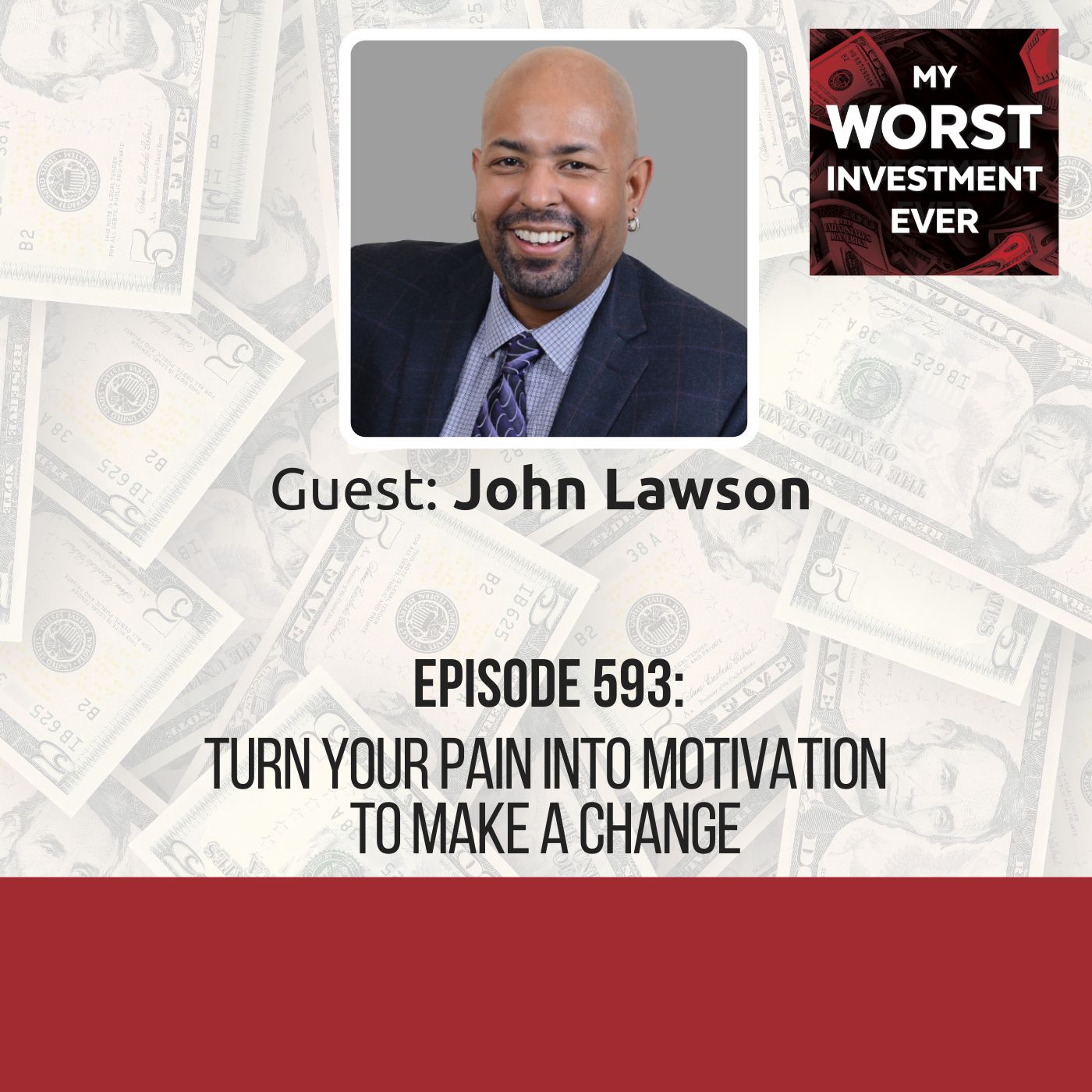
John Lawson – Turn Your Pain Into Motivation to Make a Change
BIO: John Lawson is an award-winning entrepreneur and best-selling author. His entrepreneurial spirit helped him achieve a level of success that few obtain.STORY: A friend convinced John to buy a house and flip it. He took a loan and got into the project. The friend was in charge of the renovations and made changes, which reduced the home’s value and made it impossible to sell for a profit. John was stuck with the home for eight years.LEARNING: Never depend on other people to watch your money. Monitor your investment consistently. “Never depend on other people to watch your money.”John Lawson Guest profileJohn Lawson is an award-winning entrepreneur and best-selling author. His entrepreneurial spirit helped him achieve a level of success that few obtain. After consulting Fortune 100 companies at Accenture, he took his expertise to the world of small business, today mentoring entrepreneurs on topics such as social commerce, online marketing tactics, and e-commerce strategies.John is a small business power player listed as one of the Top 50 SMB Influencers by All Business. Recognized for his work in e-commerce, John received two Small Business Influencer awards from SmallBusinessTrends.com and won “Business Book of The Year” for his book “Kick Ass Social Commerce for E-prenuers.”Worst investment everAround 2000, John worked in consultancy, making a decent salary. A friend suggested to him that they start flipping houses. The idea was for John to finance the project and the friend to oversee it, then split the profit 50/50.The house was in a bad neighborhood in Georgia but close to the city. Some gentrification plans were going on where the whole neighborhood would be turned into a more livable area. John took a loan to buy and repair the house. The loan terms were that he would pay it back after three months. From his calculations, this would be enough time to flip and sell the house. So John signed the paperwork, and work started. He was still working full time, so he couldn’t follow up with the project in person. John visited the house a few days before selling, and everything looked good. But he noticed they had turned the three-bedroom home into a two-bedroom one. This change reduced the house’s value, and now it was going to be hard to make any money back and pay the loan.John got a 30-day extension from the bank but had to come up with $21,000. There was no way he would make that kind of money from the house that had just been turned into a two-bedroom. John started looking for other ways to make money. A friend told him about eBay, where he sold old programming books and made some money. He ran out of books and needed more ways to make money.John read in a Sunday morning newspaper about getting free inkjet printers after a rebate. He went on a mission to collect as many free printers as possible. John would then sell the printers and the ink cartridges separately on eBay. He then got into selling Tickle Me Elmo dolls and made enough money to pay off his loan, but he was still stuck with the house. He only managed to sell it off eight years later.Lessons learnedNever depend on other people to watch your money.No matter what you’re experiencing, just persevere. That pressure will make you stronger.Andrew’s takeawaysTurn your pain into motivation to make a change.Don’t just start a partnership with someone you don’t trust yet.Monitor your investment consistently. Otherwise, it could go south pretty quickly.Actionable adviceBe careful with real estate. Understand what you’re getting into because real estate will bind you for many years.John’s recommended resourcesFeeling overwhelmed and want to get your time back? Get his FREE How To Hire a VA guide.No.1 goal for the next 12 monthsJohn’s number one goal for the next 12 months is to go to Thailand and live there for at least three months.Parting words “I’m totally stoked. Thank you.”John Lawson [spp-transcript] Connect with John LawsonLinkedInBookWebsiteAndrew’s booksHow to Start Building Your Wealth Investing in the Stock MarketMy Worst Investment Ever9 Valuation Mistakes and How to Avoid ThemTransform Your Business with Dr.Deming’s 14 PointsAndrew’s online programsValuation Master ClassThe Become a Better Investor CommunityHow to Start Building Your Wealth Investing in the Stock MarketFinance Made Ridiculously SimpleBest Business Book ClubBecome a Great Presenter and Increase Your InfluenceTransform Your Business with Dr. Deming’s 14 PointsConnect with Andrew Stotz:astotz.comLinkedInFacebookInstagramTwitterYouTubeMy Worst Investment Ever Podcast
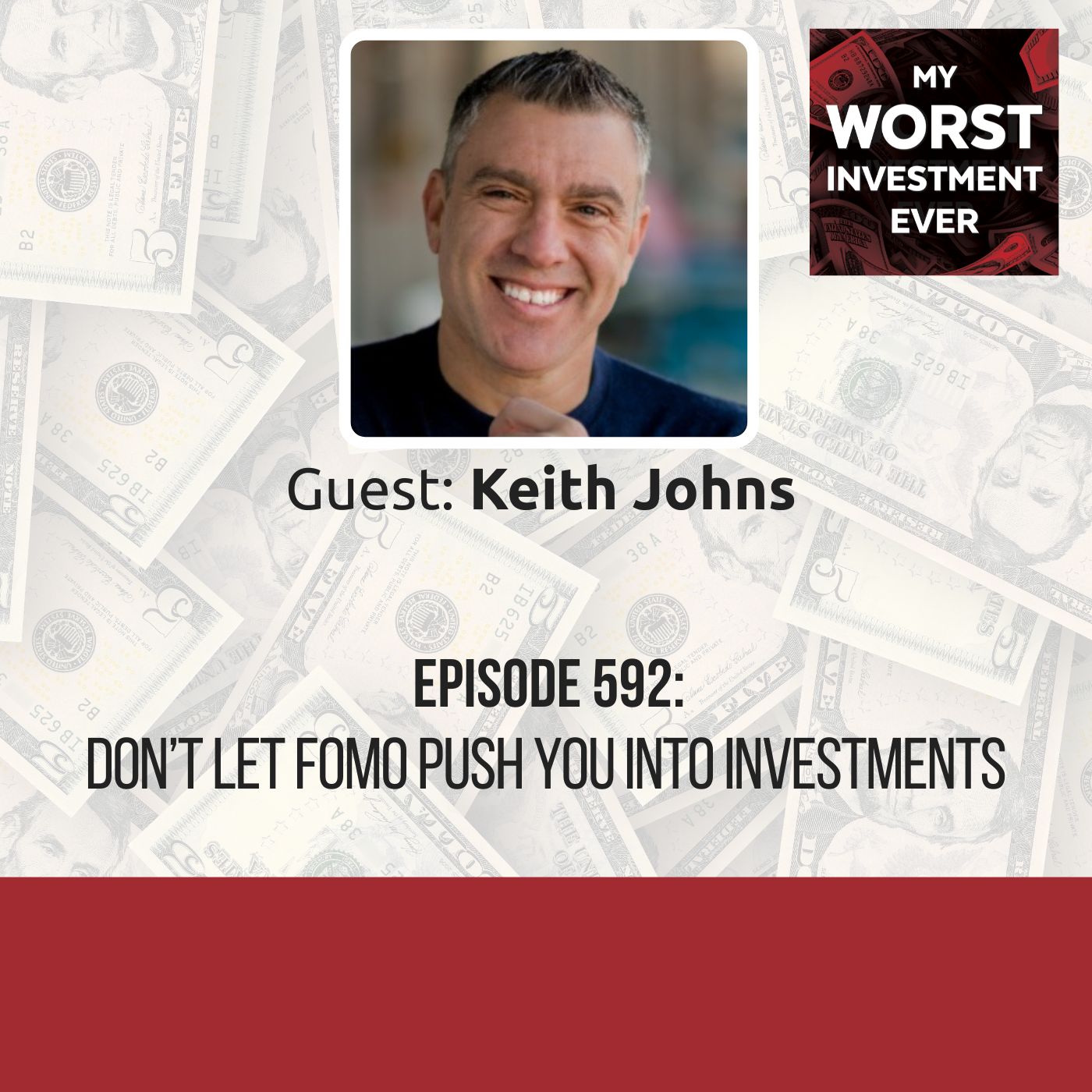
Keith Johns – Don’t Let FOMO Push You into Investments
BIO: Keith Johns helps corporate leaders who are feeling stuck in their 9-5 break free from corporate by building and scaling a purpose-driven business.STORY: Keith came across two Facebook marketing programs and bought them for five figures because he didn’t want to miss out. He only had time to implement one of the programs. He is yet to implement the second one to date.LEARNING: Don’t let the fear of missing out (FOMO) push you to do something before you’re ready. Don’t let emotions or flawed thinking affect your investment decision. “Pay attention to your emotional state when investing.”Keith Johns Guest profileKeith Johns helps corporate leaders who are feeling stuck in their 9-5 break free from corporate by building and scaling a purpose-driven business. Keith believes you’re not crazy for wanting more, and you can have more purpose, freedom, income, and free time in your work.Worst investment everKeith quit his job to start a coaching business. When he was ready to diversify where he marketed his services, he invested in two Facebook marketing programs. Keith bought the two programs for five figures.It was only after he paid for the programs that he realized he had made an emotional decision out of fear of being left out. Now he didn’t have the time to integrate two Facebook systems simultaneously. One program is still lying somewhere on the back burner, unimplemented.Lessons learnedPay attention to your emotional state when investing.Before you invest, have a plan. Consider talking to someone with more experience who can help you navigate those waters more successfully.Don’t be in a hurry to invest in anything you don’t understand. There will always be plenty of entry opportunities at different moments.Don’t let the fear of missing out (FOMO) push you to do something before you’re ready.Andrew’s takeawaysDon’t let emotions or flawed thinking affect your investment decision.Actionable adviceThe minute you’re inspired, have an idea, or are excited about something, share that excitement so somebody else knows what you’re up to.Keith’s recommended resourcesRead Questions Are the Answer: A Breakthrough Approach to Your Most Vexing Problems at Work and in Life more at ease and more comfortable knowing I don’t have to have all the answers, but I could be the most effective person in the room if I listen better and ask better questions.No.1 goal for the next 12 monthsKeith’s number one goal for the next 12 months is to take his business, get it running and then leave other people to run it so he can have time to do other things.Parting words “I really appreciate the time. If anyone’s interested in contacting me, I’m on LinkedIn, reach out and say hi; I’d love to have a conversation.”Keith Johns [/spp-transcript] Connect with Keith JohnsLinkedInAndrew’s booksHow to Start Building Your Wealth Investing in the Stock MarketMy Worst Investment Ever9 Valuation Mistakes and How to Avoid ThemTransform Your Business with Dr.Deming’s 14 PointsAndrew’s online programsValuation Master ClassThe Become a Better Investor CommunityHow to Start Building Your Wealth Investing in the Stock MarketFinance Made Ridiculously SimpleBest Business Book ClubBecome a Great Presenter and Increase Your InfluenceTransform Your Business with Dr. Deming’s 14 PointsConnect with Andrew Stotz:astotz.comLinkedInFacebookInstagramTwitterYouTubeMy Worst Investment Ever Podcast
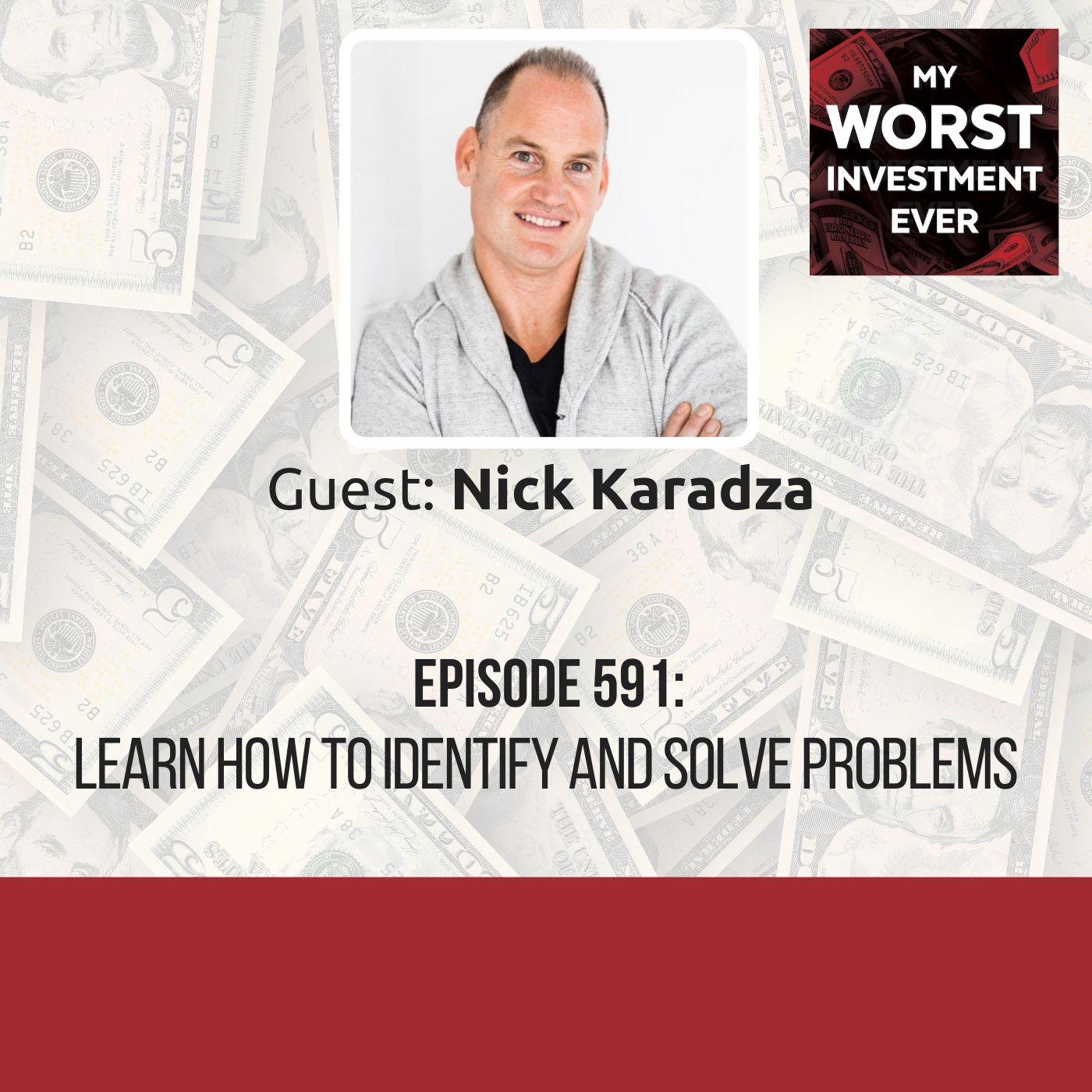
Nick Karadza – Learn How to Identify and Solve Problems
BIO: Nick Karadza and his brother Tom quit their jobs in the software industry to start Rock Star Real Estate. The company has over 60 people and works with thousands of clients who have purchased billions of dollars in income property across Ontario.STORY: Nick bought his first fixer-upper property when he was 21. What he thought would be a quick-fixing job turned out to be much more work than he had anticipated. After much hard work, he sold the property and made a negligible profit.LEARNING: Understand the real estate market before you invest in it. “Whoever handles the most crap wins.”Nick Karadza Guest profileNick Karadza was buying rental properties around the Greater Toronto Area. He couldn’t find anyone to help him find the data he needed to make educated decisions about local investment property. Together with his brother Tom, they quit their jobs in the software industry to start Rock Star Real Estate.What began as two brothers working out of a closet with zero clients has turned into a team of over 60 people, working with thousands of clients, who have now purchased billions of dollars in income property all across Ontario.They have authored three books, host a growing podcast, and run an educational membership program with over 1,000 clients, and 22 different instructors lead classes.The entire purpose of Rock Star Real Estate is to help Canadians build and buy assets that will help them live life on their own terms.Worst investment everNick bought his first property when he was 21. He believed it would be a straightforward process where he’d buy the property, fix it, sell and make his money. Well, it was a lot more work than Nick had anticipated.He was working full-time at the time, so he had to wake up early in the morning and work late at night fixing the property. Nick put in long hours fixing the property and then sold it and made a profit of $4,000. The overall return investment was negligible for the amount of work and time Nick put into that property.Lessons learnedHave a great understanding of the real estate market segments before you start investing.You’ll have bigger opportunities if you stop worrying about the little stuff and level yourself up to more significant problems.Hands-on investment experience allows you to grow as a person, and the skills you gain open new doors for you.People want to grow their network with people that can identify and solve problems.Andrew’s takeawaysYou’ll find many opportunities when you learn to identify problems and solve them.Actionable adviceLook for more information to get a little bit more of an understanding before you get into real estate.Nick’s recommended resourcesGrab Nick’s free books that cover Canadian real estate.No.1 goal for the next 12 monthsNick’s number one goal for the next 12 months is to find bigger problems, turn them into opportunities and see where that takes his company.Parting words “Andrew, I think what you’re doing is great, and if anyone’s listening, opportunities are always out there. Just go grab them.”Nick Karadza [spp-transcript] Connect with Nick KaradzaFacebookPodcastYouTubeWebsiteBooksAndrew’s booksHow to Start Building Your Wealth Investing in the Stock MarketMy Worst Investment Ever9 Valuation Mistakes and How to Avoid ThemTransform Your Business with Dr.Deming’s 14 PointsAndrew’s online programsValuation Master ClassThe Become a Better Investor CommunityHow to Start Building Your Wealth Investing in the Stock MarketFinance Made Ridiculously SimpleBest Business Book ClubBecome a Great Presenter and Increase Your InfluenceTransform Your Business with Dr. Deming’s 14 PointsConnect with Andrew Stotz:astotz.comLinkedInFacebookInstagramTwitterYouTubeMy Worst Investment Ever Podcast

Miguel Rodriguez – Protect Your IP Before Pitching Your Idea
BIO: Miguel Rodriguez is the CEO of the US Presidential Service Center. He has retired from an outstanding US government career and is currently a facilitator with the George Washington University Graduate School of Political Management Program.STORY: Miguel was actively involved in developing government contracting with companies. Some of these companies would take his ideas and start side projects without his knowledge. This led him to learn the importance of protecting his intellectual properties the hard way.LEARNING: Always have an NDA with you before pitching your ideas. Get compensated for your intellectual property. “Protect your intellectual property right from day one when entering any business transaction.”Miguel Rodriguez Guest profileMiguel Rodriguez is the CEO of the US Presidential Service Center. He has retired from an outstanding US government career and is currently with the George Washington University Graduate School of Political Management Program as a facilitator.Worst investment everMiguel was actively involved in developing government contracting with companies. He didn’t realize for a very long time that in the course of this consulting, he was exposing his intellectual properties to the companies he was working with. Some of these companies would take his ideas and start their own projects on the side without acknowledging Miguel as the owner of these ideas. It wasn’t until he learned just how much he was losing that Miguel started copywriting his intellectual properties.Lessons learnedWhenever you engage in any business discussion where you’re presenting your ideas or works, ensure everyone involved signs an NDA that protects intellectual property from going beyond that discussion.If there’s a need for anyone to own your intellectual property, ensure that you receive a monetary return from that.Andrew’s takeawaysBe careful when bidding for a massive project. Don’t let the excitement make you do anything to get it because you may lose something in the process and still not land the project.Actionable adviceProtect your intellectual property right from day one when entering any business transaction. Before you give your pitch, let everyone know your deliverables and how you expect to be paid.No.1 goal for the next 12 monthsMiguel’s number one goal for the next 12 months is to develop strong relationships with other companies worldwide that will work together to build jobs and address food shortages in Africa and Latin America.Parting words “Don’t be discouraged by failure because it’s in failure that we learn. So take that failure and keep moving forward.”Miguel Rodriguez [spp-transcript] Connect with Miguel RodriguezLinkedInWebsiteAndrew’s booksHow to Start Building Your Wealth Investing in the Stock MarketMy Worst Investment Ever9 Valuation Mistakes and How to Avoid ThemTransform Your Business with Dr.Deming’s 14 PointsAndrew’s online programsValuation Master ClassThe Become a Better Investor CommunityHow to Start Building Your Wealth Investing in the Stock MarketFinance Made Ridiculously SimpleBest Business Book ClubBecome a Great Presenter and Increase Your InfluenceTransform Your Business with Dr. Deming’s 14 PointsConnect with Andrew Stotz:astotz.comLinkedInFacebookInstagramTwitterYouTubeMy Worst Investment Ever Podcast
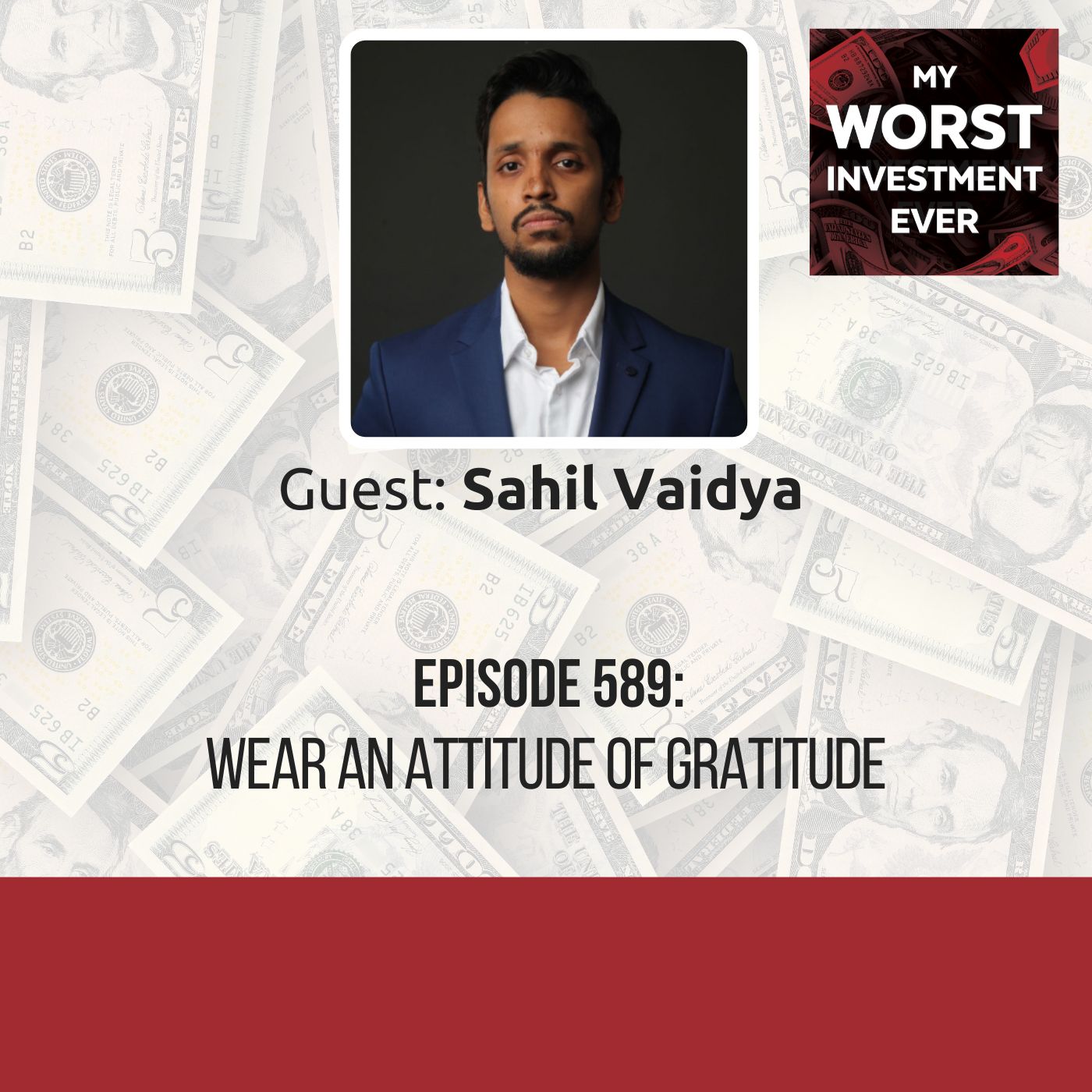
Sahil Vaidya – Wear an Attitude of Gratitude
BIO: Sahil Vaidya co-founded The Minimalist in 2015, one of India’s fastest-growing creative solutions companies. In 2019, Sahil was featured in the Forbes 30 Under 30 Asia list.STORY: Sahil’s worst investment was investing too much time chasing dopamine hits.LEARNING: Incorporate gratitude in your life. Don’t be fooled by the shiny object syndrome. “Gratitude is really underrated.”Sahil Vaidya Guest profileSahil Vaidya is the co-founder of The Minimalist, one of India’s fastest-growing creative solutions companies. An engineering graduate from IIT Bombay, Sahil co-founded the company during his final year in 2015. Marshaling a crew of over 170+ creative minds, Sahil wakes up every day with a single-minded focus: to turn The Minimalist into India’s most inventive company in the creative business.In 2019, Sahil was featured in the prestigious Forbes 30 Under 30 Asia list. He has also been the driving force behind the company’s growth, which resulted in The Minimalist being featured in LinkedIn India’s Top 25 Startups List (2018).In 2021, Sahil and Chirag launched their book Think Like The Minimalist, which is a short read on their unique IP of Minimalist Thinking. Filled with detailed techniques, examples, and anecdotes, the book is a potent tool for design, marketing, and branding students, practitioners as well as leaders to master the art and science of thought-provoking design.Worst investment everSahil’s worst investment was investing too much time chasing dopamine hits. When he started his business, it was an instant success. He received a lot of accolades, awards, and recognition. Sahil thoroughly enjoyed that attention and high.He desired to cultivate a bigger external image. Sahil started chasing things like better looks, more fame, better relationships, and a much bigger company. It took a lot of time for Sahil to realize that the stuff he was after wasn’t really important.Lessons learnedIncorporate gratitude in your life.Write down a list of all the things you’re grateful for every day.That external high you’re chasing will never be enough, so pursue meaningful things.Andrew’s takeawaysDon’t be fooled by the shiny object syndrome.Follow one course until successful.PR doesn’t generate revenue.Go over your financial statements monthly.Wear an attitude of gratitude.Actionable adviceStart meditating as soon as possible.No.1 goal for the next 12 monthsSahil’s number one goal for the next 12 months is to do a lot of inventive work for his clients so that his company is known as the company that does unique, unconventional, innovative work.Parting words “It’s been a fantastic opportunity to be a guest here. I hope the audience constantly incorporates the learnings they get from these sessions and become better versions of themselves.”Sahil Vaidya [spp-transcript] Connect with Sahil VaidyaLinkedInTwitterWebsiteBookAndrew’s booksHow to Start Building Your Wealth Investing in the Stock MarketMy Worst Investment Ever9 Valuation Mistakes and How to Avoid ThemTransform Your Business with Dr.Deming’s 14 PointsAndrew’s online programsValuation Master ClassThe Become a Better Investor CommunityHow to Start Building Your Wealth Investing in the Stock MarketFinance Made Ridiculously SimpleBest Business Book ClubBecome a Great Presenter and Increase Your InfluenceTransform Your Business with Dr. Deming’s 14 PointsConnect with Andrew Stotz:astotz.comLinkedInFacebookInstagramTwitterYouTubeMy Worst Investment Ever Podcast
Tony Whatley – Just Walk Away
BIO: Tony Whatley is an entrepreneur, business mentor, best-selling author, podcast host, and speaker.STORY: An unplanned pregnancy saw Tony stay in a bad relationship that worsened daily and threw him into depression.LEARNING: Don’t be afraid to walk away from a bad situation. Always know your self-worth. “Walking away is probably the hardest decision you’ll make. But it’s also probably the best decision.”Tony Whatley Guest profileTony Whatley is an entrepreneur, business mentor, best-selling author, podcast host, and speaker. He is best known as Co-Founder of LS1Tech, an online automotive community that grew into the largest of its kind. This website grew to over 300,000 registered members and was later sold for millions in only 5 years. Amazingly… it was just his part-time business!Tony shares his mindset and business strategies within his book, Sidehustle Millionaire. He also teaches entrepreneurs how to start, scale, and sell their businesses within his podcast and consulting brand 365 Driven.Worst investment everTwo years out of college, Tony was working an entry-level engineering job. He decided to move closer to downtown Houston and just do what single dudes do—party and live the youth of their 20s. Tony met a woman during all the partying, and an unplanned pregnancy happened. They decided the right thing to do was to keep and raise the child together.Tony had an apartment lease that he couldn’t break, so he moved in with the woman and paid both rents. Soon enough, the two realized they weren’t meant to be in a relationship. The connection just wasn’t there. But they just stuck it out because they didn’t want to disappoint their parents.In no time, Tony started to spiral down and got into a depressive state, but he hung around for another six months after his son was born. The relationship kept getting toxic, and finally, one of the arguments escalated to the point where she told Tony to leave. He took that as a sign, packed up what little he had, got the cheapest place he could afford, and restarted his life.Lessons learnedKnow your self-worth.Never be afraid to walk away from a bad relationship.Don’t let the fear of being judged keep you in a bad relationship.Andrew’s takeawaysStop escalating your problems.Just walk away because the situation just gets worse.Be a role model to your kids.Actionable adviceIf you’re going to get in a relationship with somebody, ask yourself if this person will bring you energy or if they’ll just rob your energy.Tony’s recommended resourcesListen to Tony’s The 365 Driven Podcast, which features successful people doing incredible things worldwide. The guests share advice, strategies, and tips on how to improve your life daily.No.1 goal for the next 12 monthsTony’s number one goal for the next 12 months is to finish writing his second book—a philosophical guide to living and excelling.Parting words “No matter how bad you think your situation is, focus on the things that are actually within your control, and release the stress and anxiety around things that are beyond your control because those are going to happen either way.”Tony Whatley [spp-transcript] Connect with Tony WhatleyLinkedInInstagramFacebookWebsiteBookPodcastAndrew’s booksHow to Start Building Your Wealth Investing in the Stock MarketMy Worst Investment Ever9 Valuation Mistakes and How to Avoid ThemTransform Your Business with Dr.Deming’s 14 PointsAndrew’s online programsValuation Master ClassThe Become a Better Investor CommunityHow to Start Building Your Wealth Investing in the Stock MarketFinance Made Ridiculously SimpleBest Business Book ClubBecome a Great Presenter and Increase Your InfluenceTransform Your Business with Dr. Deming’s 14 PointsConnect with Andrew Stotz:astotz.comLinkedInFacebookInstagramTwitterYouTubeMy Worst Investment Ever Podcast

Vitaliy Katsenelson – Be Willing to Endure Short Term Pain for Long Term Gain
BIO: Vitaliy has written two books on investing and is an award-winning writer. Known for his uncommon common sense, Forbes Magazine called him “The New Benjamin Graham.”STORY: Vitaliy bought stocks in a company that had been named the worst company ever. He bought the stock at $16, it went to $10, and then up to $26. Vitaliy sold, and this is a decision that he regrets. Today, the stock is at $120.LEARNING: Be willing to endure short-term pain for long-term gain. Don’t stop researching. Use stop losses to exit bad investments. “Don’t shrink your investment time horizon.”Vitaliy Katsenelson Guest profileVitaliy Katsenelson was born in Murmansk, USSR, and immigrated to the United States with his family in 1991. After joining Denver-based value investment firm IMA in 1997, Vitaliy became Chief Investment Officer in 2007 and CEO in 2012. Vitaliy has written two books on investing and is an award-winning writer. Known for his uncommon common sense, Forbes Magazine called him “The New Benjamin Graham.”He’s written for publications including Financial Times, Barron’s, Institutional Investor and Foreign Policy. His articles are also published on his website, ContrarianEdge, and in audio format on his Intellectual Investor Podcast. Vitaliy lives in Denver with his wife and three kids, where he loves to read, listen to classical music, play chess, and write about life, investing, and music. Soul in the Game is his third book and first noninvesting book.Worst investment everTen years ago, Vitaliy invested in Electronic Arts (EA), a gaming company. At the time, the company had been named by Consumerist magazine as the worst company ever. The company spent 500 million dollars on a Star Wars game that flopped.When Vitaliy was buying the stock, a couple of things were happening. People were transitioning from purchasing games at the store to downloading games. Smartphones were becoming a significant market for video games. With this in mind, Vitaliy figured the gaming market was about to become much more extensive; therefore, EA’s profitability would skyrocket. So he bought the stock at $16 despite the negative valuation.The following year the stock went to $10. Vitaliy was frustrated. Then over the next year, the stock went up to $26. He was over the moon. He had just doubled his money. Vitaliy decided to sell because he was just so exhausted from owning the stock. This is a decision that he regrets. Today, the stock is at $120.Lessons learnedWhen investing, you have to be willing to endure short-term pain for long-term gain.Go in with your eyes open.Don’t shrink your investment time horizon.Precondition yourself through the negative realization that stocks can decline 30-50% so that it doesn’t hurt as much when it happens.Don’t stop doing research.Andrew’s takeawaysUse stop losses to exit a poorly performing stock, then reenter that position later when you feel the timing is better.Actionable adviceWhen picking a stock, consider the company’s earnings power for the next three, four, or five years.Vitaliy’s recommended resourcesDownload The Six Commandments of Value Investing for FREE to learn the principles behind the investing approach popularized by Warren Buffett and how you can apply them in the real world.Listen to his Intellectual Investor Podcast for the best investing tips.No.1 goal for the next 12 monthsVitaliy’s number one goal in life is just to wake up every day and live every day as if it was his last day and simply have a healthy, happy day.Parting words “Let’s enjoy life and prosper.”Vitaliy Katsenelson [spp-transcript] Connect with Vitaliy KatsenelsonLinkedInTwitterFacebookYouTubeWebsiteBooksPodcastAndrew’s booksHow to Start Building Your Wealth Investing in the Stock MarketMy Worst Investment Ever9 Valuation Mistakes and How to Avoid ThemTransform Your Business with Dr.Deming’s 14 PointsAndrew’s online programsValuation Master ClassThe Become a Better Investor CommunityHow to Start Building Your Wealth Investing in the Stock MarketFinance Made Ridiculously SimpleBest Business Book ClubBecome a Great Presenter and Increase Your InfluenceTransform Your Business with Dr. Deming’s 14 PointsConnect with Andrew Stotz:astotz.comLinkedInFacebookInstagramTwitterYouTubeMy Worst Investment Ever Podcast

Marylen Ramos-Velasco – Strike a Balance Between Taking Care of Yourself and Others
BIO: Marylen Ramos-Velasco is the Founder and CEO of Customized Training Solutions (CTS) Pte. Ltd. – “Asia’s Most Trusted Customized Solutions Provider.”STORY: Marylen spent her life doing too much for people who didn’t deserve her time and effort at the expense of her health. She started taking better care of herself and creating boundaries when she suffered several gastritis attacks.LEARNING: Strike a balance between taking care of yourself and others. Prioritize self-love and self-care. Always think about your value. “Every one of us needs balance.”Marylen Ramos-Velasco Guest profileMarylen Ramos-Velasco is the Founder and CEO of Customized Training Solutions (CTS) Pte. Ltd. – “Asia’s Most Trusted Customized Solutions Provider.” She has 15 years of experience in sales & marketing, customer service, events management, and operations in the hospitality industry. Since moving to Singapore, she has worked in event services focused on specialized training and summits.With her gift of leadership and strength in partnership to drive clarity and change, she is living her purpose to make life easier for others. Her solutions include but are not limited to training, coaching, and consulting for leaders and organizations. While she helps trainers, coaches, speakers, and consultants with personal branding, sales, and marketing services.Worst investment everMarylen’s worst investment ever was doing too much for people who didn’t deserve her time and effort. She also tended to forget about herself and was poor at setting boundaries, which caused her a lot of burnout, stress, and even depression. As a result, she suffered several gastritis attacks and had to get a hospital procedure done. This was when Marylen realized she had forgotten about self-love and self-care. She had failed to invest in her body and soul.Lessons learnedYou cannot serve from an empty vessel. So take time to replenish your spirit so that you’re able to help others.Strike a balance between taking care of yourself and others.Prioritize self-love and self-care.Invest in the right people, and be sure to set boundaries.Andrew’s takeawaysSelf-care means taking care of yourself first.Always think about your value.Always put money down when working with an accountability partner for motivation and accountability.Actionable adviceInvest in your mind, body, and soul.Marylen’s recommended resourcesVisit Customized Training Solutions for various resources, including blogs, online resources, and upcoming programs to help you handle or create balance in your private and professional life.No.1 goal for the next 12 monthsMarylen’s number one goal for the next 12 months is to create more win-win-win outcomes for herself, her clients, and partners through the work she does around education, empowerment, and inspiration.Parting words “Investing in yourself is the best investment you can ever make in your life. And continue to live with passion and purpose.”Marylen Ramos-Velasco [spp-transcript] Connect with Marylen Ramos-VelascoLinkedInTwitterFacebookYouTubeWebsiteAndrew’s booksHow to Start Building Your Wealth Investing in the Stock MarketMy Worst Investment Ever9 Valuation Mistakes and How to Avoid ThemTransform Your Business with Dr.Deming’s 14 PointsAndrew’s online programsValuation Master ClassThe Become a Better Investor CommunityHow to Start Building Your Wealth Investing in the Stock MarketFinance Made Ridiculously SimpleBest Business Book ClubBecome a Great Presenter and Increase Your InfluenceTransform Your Business with Dr. Deming’s 14 PointsConnect with Andrew Stotz:astotz.comLinkedInFacebookInstagramTwitterYouTubeMy Worst Investment Ever Podcast

Ted Leverette – Buy Businesses That Have Fixable Problems
BIO: For more than 30 years, Ted Leverette, The Original Business Buyer Advocate, has been helping people worldwide find and buy the right businesses the right way.STORY: Ted bought a business for eight figures only to discover it was sinking in debt.LEARNING: Hire the right kind of advisors when buying a business. Do your due diligence and get to know how the business works before you buy it. “No matter how naive you think a business owner is, his lawyer and accountant aren’t naive and will negotiate you into a bad deal.”Ted Leverette Guest profileFor more than 30 years, Ted Leverette, The Original Business Buyer Advocate, has been helping people worldwide find and buy the right businesses the right ways by training and assisting them through any or all of these phases: Preparation, targeting, search, due diligence, financing, valuing, negotiating, and transitioning into their acquisition or merger. Ted positions clients to be the 1st choice of brokers and sellers. And to complete more-profitable deals sooner with less aggravation at a lower cost.How? ACTIONABLE guidance. Read his how-to books (available on Amazon). And then let him help you deploy his proven best practices.Worst investment everTed bought a privately owned company for eight figures only to find out it was deep in debt. He lost a substantial amount of his investment in paying off this debt.The business had three operations: A consulting operation, 11 travel agencies, and a travel agent training school. The operator of this holding company knew the travel sector well. But he didn’t know about managing the holding company, which is what Ted was buying. He didn’t know anything about finance, so he delegated money matters to an inept accountant. When Ted asked this guy why he wanted to sell, he said it was because he had a different interest in another industry with bigger potential.Ted’s mistake was letting the seller’s lawyer do the purchase and sale agreement. He also relied on the company accountant, who had been pulling off shenanigans that left the company in debt.It took months after Ted got control of that company to negotiate with the unpaid vendors who wouldn’t perform without a payment plan. The amount the company owed these vendors was seven times larger than what was represented to him before he bought it. Ted paid the company’s debt liability for a whole year to untangle the mess.Lessons learnedSuccess does not always breed success.Sellers and their advisors won’t always tell buyers enough of what buyers need to know to make informed decisions about buying the company.When purchasing a business, hire the right kind of advisors, particularly lawyers and accountants who know what they’re doing.Don’t let buyer competition get you into a bad deal.Andrew’s takeawaysDo your due diligence, get into that business and understand what’s going on in detail before you buy it.Have professional advocates that are fighting for you.Get monthly financial statements that are on time and accurate. Doing so is a sign that your accounting system is in good shape.Actionable adviceDon’t be a do-it-yourself businessman. Lean on people who know what they’re doing. Read books on the topic from legitimate deal makers, and avoid the charlatans out there trying to sell advice to people buying businesses. So do your homework because no matter how naive you think a business owner is, chances are his lawyer and accountant are not that naive, and they’ll help negotiate with you, and you could end up in a bad deal.Ted’s recommended resourcesIf you’re looking for a business to buy and want to know how to start, read Ted’s book How to Prepare Yourself and Find the Right Business to Buy.If you’re looking at a business for sale or you’ve already found it, How to Buy the Right Business the Right Way has all the tactics necessary to investigate a deal.Both books have 500 different tactics, no theory, no fluff, but tactics that actually happen when people buy businesses.No.1 goal for the next 12 monthsTed’s number one goal for the next 12 months is to keep doing what he’s doing; trying to save the lives and money of people looking for businesses to buy.Parting words “Thanks, Andrew. This was fun.”Ted Leverette [spp-transcript] Connect with Ted LeveretteLinkedInTwitterYouTubeWebsiteBooksAndrew’s booksHow to Start Building Your Wealth Investing in the Stock MarketMy Worst Investment Ever9 Valuation Mistakes and How to Avoid ThemTransform Your Business with Dr.Deming’s 14 PointsAndrew’s online programsValuation Master ClassThe Become a Better Investor CommunityHow to Start Building Your Wealth Investing in the Stock MarketFinance Made Ridiculously SimpleBest Business Book ClubBecome a Great Presenter and Increase Your InfluenceTransform Your Business with Dr. Deming’s 14 PointsConnect with Andrew Stotz:astotz.comLinkedInFacebookInstagramTwitterYouTubeMy Worst Investment Ever Podcast

Jerome Myers – What Value Do You Bring to the Table?
BIO: Jerome Myers left corporate America because he realized that although he had many accomplishments, he had not gained significance because he was not leading a centered life.STORY: Jerome quit corporate America and went into real estate without any skills or experience in the industry. He missed a million-dollar investment because he had nothing to bring to the table.LEARNING: If you’re trying to figure out how to get something done, pay a person who’s already done it, who has a comprehensive system, to accelerate your learning process. Articulate the value you bring to a deal or an organization. “Pay somebody who’s done what you’ve already done to help you do what you want to do.”Jerome Myers Guest profileJerome Myers left corporate America because he realized that although he had many accomplishments, he had not gained significance because he was not leading a centered life. Now, as a leadership coach, he uses his personal journey and unique training method to guide other apex performers in leadership positions to face their toughest personal and professional challenges head-on.Worst investment everJerome exited corporate America and went into real estate full time. At the time, he didn’t know what he was doing. Jerome simply jumped on the loop net and found a deal, a 23-unit apartment building. He put his business plan together, took it to the bank, and asked for a million dollars to buy the building. The bank requested Jerome to show them a similar business plan he’d executed before. He didn’t have that. They went back and forth for a bit, and the bank told Jerome he needed a partner to qualify for the loan.Jerome didn’t have a partner, so he went to another bank. He was turned down, then another, and another. When I got to the 10th bank, he realized he didn’t know what he was doing. So Jerome went online and started listening to stuff and soon realized the project wouldn’t happen for him. So he pivoted and found a fix and flip house. He found a few more and worked on them.One day Jerome was sitting on the stoop of one of his properties when a guy pulled up. He was interested in checking out the house. The man went through the house, and as he walked out, he asked Jerome if he knew anything about a 23-unit apartment building. It was the same building Jerome was trying to buy. The man told him that he would make an offer on it. Jerome asked him not to leave him out of the deal. The man asked him what he was going to bring to the table. Jerome didn’t have anything. And that’s how he missed this opportunity for a second time.A week later, Jerome got a phone call from a guy he used to lend money to. The guy was a rehabber, had an opportunity as a general contractor on a project, and wanted to bring Jerome on board. Once Jerome started working on the project, he realized gaps in his knowledge. He didn’t know a lot because he decided to learn quickly on his own. He wasn’t implementing a cohesive system into the business he was beginning to build, which literally cost him hundreds of thousands of dollars and potentially over a million dollars.Lessons learnedIf you’re trying to figure out how to get something done, pay a person who’s already done it, who has a comprehensive system, to accelerate your learning process.Articulate the value you bring to a deal or an organization. If you can’t do that, you’re asking them to do charity.Andrew’s takeawaysAs a manager, you must implement a system to prevent your company from getting chaotic.If you don’t have money to pay a pro to teach you what you want to learn, work for someone or volunteer with someone in the area you want to learn and get that experience.Build a skill to generate value and have something to bring to the table.Actionable adviceBe clear about what you want. If you know what you want but don’t know how to get it, find the person who knows how to help you.Jerome’s recommended resourcesJerome’s book Your Dreams Should Be Real provides education, inspiration, and direction to help you realize your wildest dreams.No.1 goal for the next 12 monthsJerome’s number one goal for the next 12 months is to add coaches to his organization who will work with folks who aren’t quite ready to invest at the level it takes to spend time with him weekly. This will help more people start making the progress they want towards their worthy pursuits.Parting words “Your dream should be real.”Jerome Myers [spp-transcript] Connect with Jerome MyersLinkedInInstagramPodcastBookAndrew’s booksHow to Start Building Your Wealth Investing in the Stock MarketMy Worst Investment Ever9 Valuation Mistakes and How to Avoid ThemTransform Your Business with Dr.Deming’s 14 PointsAndrew’s online programsValuation Master ClassThe Become a Better Investor CommunityHow to Start Building Your Wealth Investing in the Stock MarketFinance Made Ridiculously SimpleBest Business Book ClubBecome a Great Presenter and Increase Your InfluenceTransform Your Business with Dr. Dem

Eric Sim – Find a Buyer First Before You Buy Property
BIO: Eric Sim is the author of Small Actions: Leading Your Career To Big Success, giving 66 actionable tips to help one achieve career success.STORY: Eric bought a condo with the hopes of selling it at a higher price. Unfortunately, the government changed, affecting the demand for condos. Eric is yet to sell the property or rent it for income.LEARNING: Don’t let your past successes blind you when investing. Identify your buyer before you even buy that real estate. “Never expect 100% of your investments to make money. Sometimes you lose, sometimes you win.”Eric Sim Guest profileEric Sim is the author of Small Actions: Leading Your Career To Big Success, giving 66 actionable tips to help one achieve career success. He is a successful banker, having worked with Citi in Singapore, Shanghai, and Hong Kong before joining UBS Investment Bank as a managing director.Worst investment everEric bought a massive piece of property north of Singapore. It was a 2,400-square foot home. It did well because demand was high. One year later, Eric decided to buy another property. The prices had gone up this time, and he paid a lot more for the second property. There had been plans to construct a high-speed rail from Singapore to Malaysia. This saw properties in Malaysia increase in demand.About three years later, the Malaysian government changed. The new government put the high-speed rail plans on hold. This saw property prices drop due to low demand and high supply. Eric tried to sell his property but couldn’t as there was no demand. He wanted to rent it out, but it was just not worth it because prepping the property to rent it out would cost 1-2 years of rental income. He is still holding onto the property.Lessons learnedDon’t let your past successes blind you when investing.Before you buy property, seriously think about the demand. Who will buy that property when you want to sell it one or two years later?Never expect 100% of your investments to make money. Sometimes you lose, sometimes you win, so don’t be too hard on yourself.Don’t let one lousy investment ruin your life.Andrew’s takeawaysSometimes investing in condos can be a trap where you just get into it because you’re excited and then get stuck in it because nobody will buy it.Identify your buyer before you even buy that real estate property.Actionable adviceDo your due diligence and make the correct type of comparison. List down the facts and be your own devil’s advocate.Eric’s recommended resourcesRead the Small Actions: Leading Your Career To Big Success for 66 actionable tips to help you supercharge your career.No.1 goal for the next 12 monthsEric’s number one goal for the next 12 months is to use his money to create impact and to live a meaningful life.Parting words “Think big. Start small. Act now.”Eric Sim [spp-transcript] Connect with Eric SimLinkedInBookAndrew’s booksHow to Start Building Your Wealth Investing in the Stock MarketMy Worst Investment Ever9 Valuation Mistakes and How to Avoid ThemTransform Your Business with Dr.Deming’s 14 PointsAndrew’s online programsValuation Master ClassThe Become a Better Investor CommunityHow to Start Building Your Wealth Investing in the Stock MarketFinance Made Ridiculously SimpleBest Business Book ClubBecome a Great Presenter and Increase Your InfluenceTransform Your Business with Dr. Deming’s 14 PointsConnect with Andrew Stotz:astotz.comLinkedInFacebookInstagramTwitterYouTubeMy Worst Investment Ever Podcast

Direk Khanijou – Be Careful of the Dangers of Leverage
BIO: Direk Khanijou is a student of business and currently works with his family in the textile business in Bangkok, Thailand. He started his investment portfolio at 20 while studying at the University College London.STORY: Direk invested in a pharmaceutical company simply because it had some of the most respected hedge funds on the shareholder roster. He lost 94% on his investment less than two years later.LEARNING: Be careful of leverage and taking on too much debt. Don’t stray outside of your circle of competence when investing. Be cautious of endowment bias. “Mistakes are great because that’s where the real learning happens.”Direk Khanijou Guest profileDirek Khanijou is a student of business and currently works with his family in the textile business in Bangkok. He started his investment portfolio at the age of 20 while studying at the University College London.He looks to differentiate himself through hard work, voracious reading, and continuous learning. His objective is to compound capital at decent rates of returns without taking undue risk.You can learn more about him at RBX Investments.Worst investment everDirek invested in a pharmaceutical company despite having no experience or interest in that industry. He was impressed by the company’s incredibly complex business model. This company caught his eye because many brilliant people had invested in it. It had some of the most respected hedge funds on the shareholder roster. Owning it made Direk feel smart.Under the then CEO, the company relied on guile and aggressive accounting to increase its value. The CEO believed spending money to develop new drugs was inefficient and wasteful. So instead, the company borrowed money to acquire pharma companies, slashed its R&D, and jacked up the prices of life-saving drugs to offset volume declines. In 2017, the company raised the price of one particular drug from $13.50 to $750 per pill. This decision revealed everything that was wrong with the CEO’s business model. The stock collapsed, and the CEO was fired.Direk had invested in this company in October 2015 at $166 per share and sold his shares in March 2017 at about $10 per share. That’s a 94% loss on his capital. He had many chances to sell along the way, but he was just too stubborn, and his ego made him hold onto the losing stock for too long.Lessons learnedBe careful of leverage and taking on too much debt. When a business has a lot of debt, the focus of the management sometimes shifts from managing the business to managing the balance sheet.Be careful of endowment bias and learn to strike the right balance between holding onto your losers for too long and letting your winners run.Don’t stray outside of your circle of competence when investing.There are two ways to learn from mistakes. You can make mistakes and learn from them. Or you can learn vicariously from other people’s mistakes—which is much less painful. Direk, however, believes lessons stick better when you make a mistake yourself.Andrew’s takeawaysDo your research before investing, even when an intelligent, successful person recommends a particular investment vehicle.Leverage is the number one risk that a company faces because it takes away flexibility.Actionable adviceSubscribe to My Worst Investment Ever podcast and listen to the many lifetimes’ worth of wisdom. Secondly, develop your own investment philosophy early on in life. Figure out what kind of an investor you want to be. Lastly, hang around people who are better than you; over time, you’ll drift in that direction. You don’t have to hang out with them physically. You can mentally hang out with them in books.Direk’s recommended resourcesRead The Art of Learning: An Inner Journey to Optimal Performance by Josh Waitzkin to learn about his learning principles because learning to learn is a meta-skill in life. Once you figure out how to learn what you want to know, then you can get into any field you wish to.No.1 goal for the next 12 monthsDirek’s number one goal for the next 12 months is to pick one industry, then spend the next six to 12 months reading everything he can about that particular industry and try to develop a good understanding of that industry. Direk’s other goal is to get better at dancing.Parting words “Thank you so much for having me on your show Andrew; it’s a real privilege.”Direk Khanijou Connect with Direk KhanijouLinkedInInstagramPodcastYouTubeWebsiteAndrew’s booksHow to Start Building Your Wealth Investing in the Stock MarketMy Worst Investment Ever9 Valuation Mistakes and How to Avoid ThemTransform Your Business with Dr.Deming’s 14 PointsAndrew’s online programsValuation Master ClassThe Become a Better Investor CommunityHow to Start Building Your Wealth Investing in the Stock MarketFinance Made Ridiculously SimpleBest Business Book ClubBecome a Great Presenter and Increase Your InfluenceTransform Your Business with Dr. Deming’s 14 PointsConnect with Andrew Stotz:astotz.comLinkedInFacebookInsta

Adam Carroll – Never Buy a Home at an Auction
BIO: Adam Carroll has decades of experience working with families and business owners interested in creating massive efficiencies in their income and wealth-building capacity.STORY: Adam bought a home in an auction without seeing it first and had to sink in more money to restore it than he made from selling it.LEARNING: Never buy a home without doing your research first. Never make an investment decision under pressure. “There’s a big difference between taking a calculated risk and being risky.”Adam Carroll Guest profileAdam Carroll has decades of experience working with families and business owners interested in creating massive efficiencies in their income and wealth-building capacity.He is an internationally recognized financial literacy expert, author of three Amazon best-sellers, and a two-time TED talk speaker with over 6 million views on YouTube and TED.com.Adam is the host of the Build A Bigger Life podcast, the curator of MasteryOfMoney.com, and the founder of The Shred Method™.Worst investment everIn his late 20s, Adam realized he badly wanted to be in real estate. He had already procured a single-family home and turned it into a rental after he couldn’t sell it. That worked out very well for him. Adam later bought a duplex with his father. Which also turned out to be a fairly sound investment. And so he was on a roll and decided to go for a third property.Adam went to an auction of a home in this small community near where he lived. His plan was to see what the auction would be like, not knowing that he would ultimately get swept into the bidding process. Hearing people make comments about the value and the assessed value and how much money one could make on this property made Adam interested in bidding. And just like that, he became the highest bidder and the new homeowner.Adam later found out that the house he bought had water damage, a hot tub full of mold, and many other small damages that turned the home into a money pit. He put in so much money into restoring the house and spent the next six years trying to find tenants. He eventually sold it but never made a return on that investment.Lessons learnedLeverage is one thing, and risk is something else entirely. Therefore, there is a big difference between taking a calculated risk and being risky.When getting into real estate, go in prepared.The bigger the home, sometimes the bigger the challenges. So if you’re new to real estate, start small.When push comes to shove, you can do a lot when you challenge yourself to do it.Andrew’s takeawaysDo your research and ensure that you separate your research on returns from the research you do on risk.Never make an investment decision under pressure.Be careful of early success. If you’re experiencing early success, work harder to reduce risk and protect your wealth.When you find people who can mentor you, listen to them.Actionable adviceSurround yourself with people who have been there and done that, who can advise you on when to pull the trigger and when not to.Adam’s recommended resourcesCheck out The Shred Method™ to learn how to optimize your income, eliminate debt, reduce risk and create wealth with the money that you save.Parting words “Life is what we’re here for. A lifestyle is just stuff we use to show off. So build a bigger life, not a bigger lifestyle.”Adam Carroll [spp-transcript] Connect with Adam CarrollLinkedInTwitterFacebookInstagramPodcastYouTubeWebsiteBooksAndrew’s booksHow to Start Building Your Wealth Investing in the Stock MarketMy Worst Investment Ever9 Valuation Mistakes and How to Avoid ThemTransform Your Business with Dr.Deming’s 14 PointsAndrew’s online programsValuation Master ClassThe Become a Better Investor CommunityHow to Start Building Your Wealth Investing in the Stock MarketFinance Made Ridiculously SimpleBest Business Book ClubBecome a Great Presenter and Increase Your InfluenceTransform Your Business with Dr. Deming’s 14 PointsConnect with Andrew Stotz:astotz.comLinkedInFacebookInstagramTwitterYouTubeMy Worst Investment Ever PodcastFurther reading mentionedMichael Easter (May 2021), The Comfort Crisis: Embrace Discomfort To Reclaim Your Wild, Happy, Healthy Self

Ralph Burns – Create Value First, Then Sell
BIO: Ralph Burns is the Founder and CEO of Tier 11, a digital marketing agency that utilizes a proprietary system called Customer Acquisition Amplification™ to unlock the online potential of purpose-driven businesses to help them scale and grow.STORY: Ralph spent $30,000 to build a membership site and got over 10,000 email subscribers, but only two people paid when he launched the site.LEARNING: Do your research. Create a minimum viable product first to test the market. “All the traffic in the world doesn’t matter if your offer sucks. You have to have something that people will want to buy.”Ralph Burns Guest profileRalph Burns is the Founder and CEO of Tier 11, a digital marketing agency that utilizes a proprietary system called Customer Acquisition Amplification™ to unlock the online potential of purpose-driven businesses to help them scale and grow.Ralph’s 100% virtual agency, with people in 30+ countries and 6 continents, manages a portfolio of social media advertising customer accounts in over 57 industries with an annual spend in excess of $100 million.His podcast, Perpetual Traffic, has been downloaded well over 8 million times and has helped tens of thousands of people grow their businesses through online traffic and conversion strategies. Ralph splits his time between Boston and Cape Cod, Massachusetts, with his wife and two college-aged sons.Ralph Burns’s digital marketing top tipsBefore we get down to Ralph’s worst investment ever, let’s first tap into some of his nuggets of wisdom on successful digital marketing.Selling a product/service onlineAccording to Ralph, when trying to sell something online, you should first find the customers because you launch your product or service. The best way to do this is to give potential customers something of value in exchange for their contact information or even their time. This is what Ralph refers to as a transitional lead magnet. In essence, this isn’t what you want them to buy, but something free and of very high value that they get in exchange for their name and email.Leverage the hero’s journeyRalph says that you should remember that you’re customers’ guide. Understand your ideal customer’s most significant problem standing in the way of achieving their goals and help them solve this problem. Once you do that, you become the trusted adviser who will help them get to the promised land.According to Ralph, walking your customers through the hero’s journey is important because, typically, people don’t want to buy from strangers. So give them something of value to transition from a stranger and build trust. Then you can put them on a drip campaign that’ll maybe subtly give them even more information and then ask them to make a purchase.Advertising on FacebookRalph believes that Facebook is still a valuable platform for businesses, but for success, you need to connect with your avatar. Understand their biggest problem, then hit them right between the eyes with a message that resonates with them, and they stop the scroll.How much to pay to acquire a customerWhen it comes to advertising on Facebook, the right price point for acquiring a new customer, according to Ralph, depends on many factors. What’s critical is understanding what the economics are and implementing a sales funnel.Worst investment everRalph worked as a regional director at a big diagnostic company in the medical field. He had all the trappings of success, but he was miserable. Ralph had received The 4-Hour Workweek as a gift from his wife. He read the book and realized people were actually making money online. Ralph was fascinated by the internet and the idea of making money. He started a website, followed the book’s advice, and listened to many podcasts. Ralph built an extensive list of 10,000 email subscribers and, in the process, racked up about $20,000 on his credit card. He spent another $10,000 to build a website and a membership site. He followed the Jeff Walker Product Launch Formula and launched his membership site.Ralph had a three-day launch. On the first and second days, he made zero sales. On the third day, he made two sales. The product was $67 a month. Out of Ralph’s 10,000-person list, which he had probably spent $20,000 to build, only two people subscribed to his membership site, and they only stayed for a month.Ralph held onto the business for another three years, just trying to make it work. He didn’t sell anything more than those two memberships that lasted one month.Lessons learnedDo your research.Don’t mistake interest in a free lead magnet as interest in actually buying your product.Launch a minimum viable product first to get some sense from the market as to whether or not they can purchase and to get a proof of concept.Andrew’s takeawaysStay with whatever you’re doing, keep trying, keep iterating, and testing.Create a minimum viable product, figure out what people are willing to pay for, and then pivot.Actionable adviceGo to the market with a low price, then

Tony Pawlak – Stop Trying to Get Rich Overnight
BIO: Tony Pawlak is a full-time stock trader and options instructor at Real Life Trading. It’s his life mission to help others face their fears and live their dreams.STORY: Tony lost almost $100,000 in trading. More than half of this was bank loans and credit card limits.LEARNING: If you view the markets as a get-rich-quick method, it will burn you. Assess risk before you go in and manage it when sizing your position. “Stop trying to get rich overnight, and invest in yourself.”Tony Pawlak Guest profileTony Pawlak is a full-time stock trader and options instructor at Real Life Trading. It’s his life mission to help others face their fears and live their dreams.Worst investment everTony ran a trucking company for years, spending 60 to 80 hours weekly. After eight years in the family business, he was out of shape, miserable, depressed, and felt he was wasting his life. Tony had a feeling that he should go into trading. So for a year or two, he would listen to podcasts and try to learn as much as he could. Finally, he felt the time was right to quit the job and go to trade full time.Tony started with a $30,000 trading account and believed he’d turn it into $500,000 in just a couple of months. In just a month, Tony had blown the $30,000. He had $20,000 set aside to pay bills for a couple of months. He took that out and put it in his trading account. That amount lasted another three weeks until it dwindled down to about a couple of thousands.Tony went to the bank, took a $20,000 loan, and put it into his trading account. That loan lasted another month and a half. He went back to the bank a second time and got another loan. Tony lost that too. The third time he went to the bank, they gave him a couple of credit cards worth $15,000.Tony wanted to abandon day trading for something more consistent. He decided to try credit spreads and built a trading strategy he hadn’t seen elsewhere. Tony spent about three weeks just figuring out the ins and outs of the process and finally put it to work. He started making $1,000 to $2,000 weekly on his $15,000 account. Tony began getting pretty efficient, earning enough to pay off bills and loans, including some credit cards.Tony was going strong for about six or seven months until he saw this one trade outside his plan—day trading a credit spread. He jumped on it, thinking this was it. Tony put on half of his account on this one credit spread. Soon after, the markets reversed and started going against his trade. Tony figured he’d hedge it. He lost on that first hedge. Tony hedged again and lost. He kept hedging, and before he knew it, he’d lost the entire loan amount in one day.Lessons learnedDon’t quit; get up and find a way.If you view the markets as a get-rich-quick method, it will burn you.Succeeding in trading has nothing to do with knowledge but everything with managing risk.Have the right perspective to make money in the markets.Making money is not hard. You just need to know where to look and what to do.Andrew’s takeawaysStop stressing about the outcome and focus on the process.Understand all the different emotions involved in trading because everything that’s happening in the market is a physical reaction going on in your body.Borrowing money and leveraging it is a number one risk factor.There are lessons you could only learn by losing. So embrace your losses and mistakes.You’ve got to find your trading style.Assess risk before you go in and manage it when sizing your position.Actionable adviceInvest in yourself and get coaching from people that you trust, that are currently doing it, and that have done it.Tony’s recommended resourcesVisit Tony’s website, Real Life Training to join coaching sessions with him and learn the trading skill.No.1 goal for the next 12 monthsTony’s number one goal for the next 12 months is to help 200 people replace their income through trading.Parting words “The only thing standing between you and your dreams is fear. You just got to walk through it. That’s it.”Tony Pawlak [spp-transcript] Connect with Tony PawlakYouTubeWebsiteAndrew’s booksHow to Start Building Your Wealth Investing in the Stock MarketMy Worst Investment Ever9 Valuation Mistakes and How to Avoid ThemTransform Your Business with Dr.Deming’s 14 PointsAndrew’s online programsValuation Master ClassThe Become a Better Investor CommunityHow to Start Building Your Wealth Investing in the Stock MarketFinance Made Ridiculously SimpleBest Business Book ClubBecome a Great Presenter and Increase Your InfluenceTransform Your Business with Dr. Deming’s 14 PointsConnect with Andrew Stotz:astotz.comLinkedInFacebookInstagramTwitterYouTubeMy Worst Investment Ever PodcastFurther reading mentionedJason Zweig (September 2008), Your Money and Your Brain: How the New Science of Neuroeconomics Can Help Make You Rich
Mark Graban – Don’t Shame Yourself for Your Differences
BIO: Mark Graban is an author, speaker, consultant, and podcaster. His podcasts include Lean Blog Interviews, Habitual Excellence, and My Favorite Mistake. He’s also affiliated with the technology company KaiNexus and the healthcare advisory firm Value Capture.STORY: Two of Mark’s worst investments were investing $4,000 in a company he knew nothing about and living in denial about his ADHD diagnosis for over 20 years.LEARNING: Be careful when choosing individual stocks. Don’t be in denial about things. You’re beautiful as you are. “If you think you might have a problem, you probably have a problem. It’s worth talking to a professional to get help.”Mark Graban Guest profileMark Graban is an author, speaker, consultant, and podcaster. His podcasts include Lean Blog Interviews, Habitual Excellence, and My Favorite Mistake. He’s also affiliated with the technology company KaiNexus and the healthcare advisory firm Value Capture.His books include his most recent, titled Measures of Success: React Less, Lead Better, Improve More.He has a BS in industrial engineering from Northwestern University and an MS and an MBA from MIT.His website with all of his books, podcasts, and more is MarkGraban.com.Worst investment everIn early 2000, Mark was trying to get started with a retirement account when a colleague told him about a stock they had invested in. The colleague raved about how the stock had skyrocketed, making them a lot of money. The company was called Commerce One. Mark didn’t know anything about it and didn’t do any research. He just took his colleague’s advice and invested $4,000. Before long, the value fell by about 50%.Another one of Mark’s worst investments is living in denial about his ADHD diagnosis. He has struggled with attentiveness, especially at work in meetings and conferences. He would often blame and shame himself for not paying attention. He regrets not doing something about it 20 years ago.Lessons learnedBe careful when choosing individual stocks. Let professionals do it for you through diversified mutual funds or index funds.Don’t be in denial about things.Don’t shame yourself for your differences.Andrew’s takeawaysIf you’re struggling with anything, don’t be afraid to talk about it.You’re beautiful as you are.No.1 goal for the next 12 monthsMark’s number one goal for the next 12 months is to write a book based on the lessons from the My Favorite Mistake podcast series.Parting words “Embrace the idea of transparency and openness when you’ve made a mistake at work.”Mark Graban [spp-transcript] Connect with Mark GrabanLinkedInFacebookTwitterInstagramYouTubePodcastWebsiteBookAndrew’s booksHow to Start Building Your Wealth Investing in the Stock MarketMy Worst Investment Ever9 Valuation Mistakes and How to Avoid ThemTransform Your Business with Dr.Deming’s 14 PointsAndrew’s online programsValuation Master ClassThe Become a Better Investor CommunityHow to Start Building Your Wealth Investing in the Stock MarketFinance Made Ridiculously SimpleBest Business Book ClubBecome a Great Presenter and Increase Your InfluenceTransform Your Business with Dr. Deming’s 14 PointsConnect with Andrew Stotz:astotz.comLinkedInFacebookInstagramTwitterYouTubeMy Worst Investment Ever Podcast

Emma Mumford – Everything’s a Blessing or a Lesson
BIO: Emma Mumford is the UK’s leading Law of Attraction expert. She is an award-winning life coach, mentor, Law of Attraction YouTuber, and 2x bestselling author.STORY: Emma took a £7,000 loan on behalf of her boyfriend to help him pay off a previous loan. They broke up a month later, and he never paid back a cent of the loan.LEARNING: Don’t focus more on the negative part of a bad situation; instead, focus on the positive. Look at your biggest loss as your biggest opportunity. “At this moment, a situation may feel awful, but in hindsight, it could lead you to your best situation.”Emma Mumford Guest profileEmma Mumford is the UK’s leading Law of Attraction expert. She is an award-winning life coach and mentor, Law of Attraction YouTuber, 2x bestselling author of her books Positively Wealthy and Spiritual Queen, speaker and podcast host of the popular podcast Spiritual Queen’s Badass Podcast. Emma’s work helps people turn their dream life into an abundant reality using the Law of Attraction and spirituality. Emma’s work has helped hundreds of thousands of people globally over the last 8 years across her two businesses, ‘Extreme Couponing and Deals UK’ as Coupon Queen, back in 2013 and here now with her spiritual work.Worst investment everIn 2012, Emma worked as a banking manager in one of the UK’s leading banks. She was 18 years old and straight from college. Emma had no experience or the right qualifications to do it. She hated working at the bank because she had to put people in debt daily. The worst part was seeing people’s desperation when they couldn’t fulfill their financial obligations. Emma got depression very quickly from that role.At the same time, she was in a really negative relationship. It was her first serious relationship, and she lived with the person. The man had a lot of debt he hadn’t told Emma about. Soon, the bailiff started turning up at their door demanding payment. Emma wanted to help him get the bailiff off his back, and because she got preferential rates at the bank, she decided to take out a loan on behalf of the boyfriend. She took a £7,000 loan for her boyfriend, thinking it was the adult best decision of her life.Within a month, they broke up, and he hadn’t paid back a single penny of that loan. Emma found out that he had £30,000 worth of debt. Her depression worsened to the point that she couldn’t even turn up to work, so she had to leave her well-paying job. It became tough to pay the loan off because she wasn’t earning much money. Emma moved back to her parents and picked herself back up. The ex-boyfriend never paid back a single penny to this day.Lessons learnedDon’t focus more on the negative part of a bad situation; instead, focus on the positive.In every situation, ask yourself what is in your control, what you’re able to do in that situation, and What’s the most loving thing you can do for yourself. Then make empowered decisions from that.Andrew’s takeawaysLook at your biggest loss as your biggest opportunity.Do the inner work; it pays off.Actionable adviceLearn about the law of attraction, start taking responsibility, do better and be better.Emma’s recommended resourcesRead Emma’s second book, Positively Wealthy, if you want to dip your toes into the law of attraction and do your funnel or manifestation challenge. It’s a 33-day guide to manifesting sustainable abundance and wealth.No.1 goal for the next 12 monthsEmma’s number one goal for the next 12 months is to relax, enjoy, and soak up in all the amazingness she has worked hard for. [spp-transcript] Connect with Emma MumfordLinkedInFacebookTwitterInstagramYouTubePodcastWebsiteBookAndrew’s booksHow to Start Building Your Wealth Investing in the Stock MarketMy Worst Investment Ever9 Valuation Mistakes and How to Avoid ThemTransform Your Business with Dr.Deming’s 14 PointsAndrew’s online programsValuation Master ClassThe Become a Better Investor CommunityHow to Start Building Your Wealth Investing in the Stock MarketFinance Made Ridiculously SimpleBest Business Book ClubBecome a Great Presenter and Increase Your InfluenceTransform Your Business with Dr. Deming’s 14 PointsConnect with Andrew Stotz:astotz.comLinkedInFacebookInstagramTwitterYouTubeMy Worst Investment Ever Podcast
Gavin Wren – Invest Your Time in the Right People
BIO: Gavin Wren is a founder, consultant, and content creator from London, helping the world learn more about food. His background in media has seen him photographing food around the world for the likes of National Geographic and writing in the national press.STORY: Gavin’s worst investments have been the relationships he’s put in a lot of effort and time to build, only to realize they weren’t beneficial for him.LEARNING: Don’t bend yourself out of shape for people. Learn to walk away from bad situations. “Don’t be a people pleaser. It doesn’t get you anywhere.”Gavin Wren Guest profileGavin Wren is a founder, consultant, and content creator from London, UK, helping the world learn more about food. His background in media has seen him photographing food around the world for the likes of National Geographic and writing in the national press. Today he helps organizations develop their strategy for the future of sustainable food whilst also creating content on TikTok, which reaches millions of people each month. He’s the founder of three businesses and a non-profit but loves nothing more than good pizza or strong espresso.Worst investment everGavin’s worst investment over the years has been investing in the wrong relationships. Spending months or years building relationships that weren’t beneficial to him has been worse than losing money. According to Gavin, one can get over financial losses quickly. You’ll be depressed for a few days or weeks, and then you get over it and move on. But the bad personal business relationships are pretty insidious, and you never quite recover from them.One instance Gavin recounts is this person with a lot of influence and power he badly wanted to work for. Gavin wanted to be part of their circle and work with them. He did everything he could, got close to the person, and started working with them. Gavin soon realized that there was a misalignment of values, and something just didn’t sit right with him about this person. But Gavin kept pushing because he knew he wanted to be associated with that person. A year later, Gavin was stuck, intensely stressed, and always anxious. Eventually, he stopped working for that person, which was the biggest relief ever because he didn’t get anything out of it. All he did was do a lot of work for very little money.Lessons learnedTrust your gut.If stress and anxiety arise around a person, question whether that relationship has a long-term benefit.Drop your ego and do the work that you want to do and that you enjoy. Not the work that you think someone else is going to enjoy.Don’t bend yourself out of shape for people.Speak your mind and be honest.Andrew’s takeawaysLearn to walk away from bad situations and just bite the bullet.Actionable adviceBefore forming bonds with people, ask questions to get more information and decide whether those are the right bonds.No.1 goal for the next 12 monthsGavin’s number one goal for the next 12 months is to keep growing his TikTok account and find a way to start monetizing it.Parting words “Just keep trying to help people and learn in the process.”Gavin Wren [spp-transcript] Connect with Gavin WrenLinkedInTwitterInstagramTikTokAndrew’s booksHow to Start Building Your Wealth Investing in the Stock MarketMy Worst Investment Ever9 Valuation Mistakes and How to Avoid ThemTransform Your Business with Dr.Deming’s 14 PointsAndrew’s online programsValuation Master ClassThe Become a Better Investor CommunityHow to Start Building Your Wealth Investing in the Stock MarketFinance Made Ridiculously SimpleBest Business Book ClubBecome a Great Presenter and Increase Your InfluenceTransform Your Business with Dr. Deming’s 14 PointsConnect with Andrew Stotz:astotz.comLinkedInFacebookInstagramTwitterYouTubeMy Worst Investment Ever Podcast

Andrew Stotz – 15 Risk Reduction Lessons from My Guests
15 Risk Reduction Lessons from My GuestsIn this episode, Andrew Stotz explains the 15 risk reduction lessons he has learned from his guests.Download the The Investor's Risk Reduction Checklist.1 Get the power of compounding working for you now, and don’t interrupt it.Dan Solomon from Ep434: The Time to Start Investing Is Now2 Do your own research before making any investment. Do not rely on others.Travis Watts from Ep381: Do Your Due Diligence and Keep Your Investment SimpleCurt Mercadante from Ep438: Not Every Home Is an InvestmentFurqan Aziz from Ep441: Validate Every Idea You Invest Time In3 Have a rigorous thought process when evaluating investments, and stick to that process.Shashank Randev from Ep352: There Is No Surefire Formula to Venture Capital Investing4 Expect long-term returns of about 8% and consider that investments above that could be “too good to be true.”Pete Alexander from Ep284: Pete Alexander – If the Real Estate Deal Sounds Too Good to Be True, It Is5 Build a network of experienced professionals who can give you input.Sarah Larbi from Ep177: Build a Network of Successful Role Models to Avoid this Real Estate Investing Mistake6 Always spend time considering the risk before investing.Furqan Aziz from Ep441: Validate Every Idea You Invest Time In7 Size your position according to your ability to handle a loss. If the risk is high, start small.Furqan Aziz from Ep441: Validate Every Idea You Invest Time InEric Rosenberg from Ep403: Start Investing by Making Regular Monthly ContributionsKittisak Kovintavewat from Ep432: Kittisak Kovintavewat – Be an Investor, Not a Speculator8 Consider the “unknowns” with any investment idea.Daniel Ramsey from Ep159: When Investing in Real Estate Take Your Time to Remove the Unknowns9 Invest in things that you can quickly exit. If you can’t, demand a very high return and deploy a small amount of your money.Pete Alexander from Ep284: Pete Alexander – If the Real Estate Deal Sounds Too Good to Be True, It Is10 Walk away from an investment as soon as you realize it’s not going to work.Furqan Aziz from Ep441: Validate Every Idea You Invest Time InShashank Randev from Ep352: There Is No Surefire Formula to Venture Capital Investing11 Remember that past success does not guarantee future success.Randy Mortensen from Ep444: Randy Mortensen – Past Success Doesn’t Guarantee Future Success12 When investing in a foreign country, consider the risks of both the asset and the currency.Santiago Iñiguez from Ep324: Sometimes Your Worst Investment Can Bring You the Most Joy13 Focus on company performance, not only stock price.Kittisak Kovintavewat from Ep432: Kittisak Kovintavewat – Be an Investor, Not a Speculator14 Invest in good quality companies rather than betting on poor companies turning around.Kittisak Kovintavewat from Ep432: Kittisak Kovintavewat – Be an Investor, Not a Speculator15 Expect that some of your investment ideas will fail; not every stock you pick will be a winner.Eric Rosenberg from Ep403: Start Investing by Making Regular Monthly Contributions Andrew’s books<a href="https://amzn.to/3qrfHjX" rel="noopener...
Andrew Stotz – 12 Steps to Financial Independence
12 Steps to Financial IndependenceDownload the 12 Steps to Financial Independence cheat sheet.In this episode, Andrew Stotz explains the 12 steps to financial independence.1. Have no written financial plan2. Allow others to complicate your investing3. Think short term; start too late4. Want to get rich quick in the market5. Rely on others too much6. Make big mistakes early in life7. Do not save enough money8. Underestimate the impact of fees9. Take too much risk10. Ignore bonds in favor of stocks11. Trade too much12. Try to time the market Andrew’s booksHow to Start Building Your Wealth Investing in the Stock MarketMy Worst Investment Ever9 Valuation Mistakes and How to Avoid ThemTransform Your Business with Dr.Deming’s 14 PointsAndrew’s online programsValuation Master ClassThe Become a Better Investor CommunityHow to Start Building Your Wealth Investing in the Stock MarketFinance Made Ridiculously SimpleBest Business Book ClubBecome a Great Presenter and Increase Your InfluenceTransform Your Business with Dr. Deming’s 14 PointsConnect with Andrew Stotz:astotz.comLinkedInFacebookInstagramTwitterYouTubeMy Worst Investment Ever Podcast

Dr. Chris Stout – Plan for the End
BIO: Dr. Chris Stout is a licensed clinical psychologist and international humanitarian with a diverse background in various domains. He is the Founding Director of the top-ranked nonprofit Center for Global Initiatives.STORY: Two years after Chris started the Center for Global Initiatives, he met a couple who had a project for developmentally different children in orphanages in Ukraine. They wanted to collaborate with the center, and he said yes because the project looked good. Unfortunately, he realized that he couldn’t manage to take a week off every year to go to Ukraine. Chris had to back out of this project, which left him very emotional for not being able to help.LEARNING: Plan for the end so that you know what happens when things don’t go well. “Planning for the end will help you decide what happens when things don’t go well, and you need to make a pivot.”Dr. Chris Stout Guest profileDr. Chris Stout is a licensed clinical psychologist and international humanitarian with a diverse background in various domains. He is the Founding Director of the top-ranked nonprofit Center for Global Initiatives. He works as the Executive Producer and Host of the popular “Living a Life in Full” podcast, a top 5% show with an audience reach of 3 million+.He was a Fellow in the School of Public Health and a Full Professor in the Department of Psychiatry in the College of Medicine at the University of Illinois, Chicago. Before that, he held an academic appointment at Northwestern University’s Feinberg School of Medicine.Worst investment everChris set out to summit all the Seven Summits, starting with Kilimanjaro. While at it, he met a seminarian, and they hit it off quickly. The two stayed in touch for years. At some point, the seminarian became the chaplain at two hospitals in Tanzania. Chris decided to help him and shipped several materials over for the kids for Christmas. The process cost him a fortune, and some materials got lost along the way.Chris talked to his mentor about his desire to keep helping the children in Tanzania and the hurdles he faced. The mentor advised him to start a nonprofit organization and have people donate to support his cause. Chris got in touch with the mentor’s wife, a lawyer dealing with nonprofits. She made the IRS application and other applications and got the approval. Chris constituted a board and went out to do great charity projects worldwide.In 2009, two years after he started the nonprofit, a couple from Ukraine came to him and told him they had a project they thought would be a good collaboration for his nonprofit. The project was to support developmentally different children in orphanages in Ukraine. The couple was applying for a grant from USAID, and one of the three-year grant requirements was a quarterly visit to Ukraine to assess the project. Chris was the one to be in charge of the projects. Unfortunately, he couldn’t take four weeks every year to attend to matters in Ukraine. Unfortunately, the nonprofit had to back out of this project which left Chris very emotional for not being able to help.Lessons learnedPlan for the end. Think about how what you’re getting into will end. Planning for the future will help you decide what happens when things don’t go well, and you need to make a pivot.Chris’s recommended resourcesCenter for Global Initiatives website has a tools and resources page for this interested in the nonprofit area. You’ll find tips, lectures, webinars, free downloadable books and articles, scientific articles, and more.The Living a Life in Full podcast for broader aspects such as startups, finance, travel, motorcycle art, and more.No.1 goal for the next 12 monthsChris’s number one goal for the next 12 months is to have a better mindset of how to do what he feels he still needs to do with the remaining time. [spp-transcript] Connect with Dr. Chris StoutLinkedInTwitterFacebookYouTubePodcastBooksBlogWebsiteAndrew’s booksHow to Start Building Your Wealth Investing in the Stock MarketMy Worst Investment Ever9 Valuation Mistakes and How to Avoid ThemTransform Your Business with Dr.Deming’s 14 PointsAndrew’s online programsValuation Master ClassThe Become a Better Investor CommunityHow to Start Building Your Wealth Investing in the Stock MarketFinance Made Ridiculously SimpleBest Business Book ClubBecome a Great Presenter and Increase Your InfluenceTransform Your Business with Dr. Deming’s 14 PointsConnect with Andrew Stotz:astotz.comLinkedInFacebookInstagramTwitterYouTubeMy Worst Investment Ever Podcast

Ron Baker – Have Your Skin in the Game
BIO: Ron Baker is the founder of VeraSage Institute—the leading think tank dedicated to educating professionals internationally. He’s also a radio talk-show host of The Soul of Enterprise: Business in the Knowledge Economy on Voice America.STORY: Ron partnered with a group of friends and invested $70,000 to start a software company. All the partners had no experience or skills to run the business leading to its failure.LEARNING: Seek out successful people and try to learn from them. Learn from your losses. “When it comes to business, you’ve got to have your total skin in the game.”Ron Baker Guest profileRon Baker started his CPA career in 1984 with KPMG’s Private Business Advisory Services in San Francisco. Today, he is the founder of VeraSage Institute—the leading think tank dedicated to educating professionals internationally—a radio talk-show host on Voice America; the show is The Soul of Enterprise: Business in the Knowledge Economy.Ron has authored seven best-selling books, including The Firm of the Future; Pricing on Purpose; Measure What Matters to Customers; and Implementing Value Pricing. His forthcoming book, Time’s Up!: The Subscription Business Model for Professional Firms, will be published in November 2022.Worst investment everRon partnered with a couple of friends and started a software company. He invested about $70,000 into the company. The group wanted to write a software program to help firms value price. They hired a software engineer and spent a lot of money to get the program going.They were all delusional and believed they were sitting on top of something radical and innovative. Their most significant setback was their lack of skills and experience in building a software company. All the partners also had other jobs and were treating business as a side-hustle, not paying it the full attention it needed. Needless to say, the business wasn’t successful.Lessons learnedSeek out people who are successful and try to learn from them.Make sure that you have partners who have skin in the game.Andrew’s takeawaysLearn from your losses. If you lose money, at least make sure you gain knowledge from the experience.Never overlook the randomness of success and failure.Focus more on avoiding loss by reducing your risk as much as you focus on growth and success.Actionable adviceDon’t be delusional and go into business just to confirm your biases. Keep in mind that business is much more complicated than most people think.Ron’s recommended resourcesImplementing Value Pricing for anyone who wants to learn more about pricing.Time’s Up!: The Subscription Business Model for Professional Firms for anyone who wants to understand the subscription model. Ron believes that in five years, we’ll have the option to subscribe to everything, so now is the time to perfect your subscription business.No.1 goal for the next 12 monthsRon’s next project is to get his upcoming book Time’s Up!: The Subscription Business Model for Professional Firms published and then go and speak and evangelize about it. [spp-transcript] Connect with Ron BakerLinkedInTwitterFacebookPodcastBooksAndrew’s booksHow to Start Building Your Wealth Investing in the Stock MarketMy Worst Investment Ever9 Valuation Mistakes and How to Avoid ThemTransform Your Business with Dr.Deming’s 14 PointsAndrew’s online programsValuation Master ClassThe Become a Better Investor CommunityHow to Start Building Your Wealth Investing in the Stock MarketFinance Made Ridiculously SimpleBest Business Book ClubBecome a Great Presenter and Increase Your InfluenceTransform Your Business with Dr. Deming’s 14 PointsConnect with Andrew Stotz:astotz.comLinkedInFacebookInstagramTwitterYouTubeMy Worst Investment Ever Podcast

Andrew Stotz – 12 Barriers to Financial Independence
12 Barriers to Financial IndependenceDownload the 12 Barriers to Financial Independence cheat sheet.In this episode, Andrew Stotz explains the 12 barriers to financial independence.1. Have no written financial plan2. Allow others to complicate your investing3. Think short term; start too late4. Want to get rich quick in the market5. Rely on others too much6. Make big mistakes early in life7. Do not save enough money8. Underestimate the impact of fees9. Take too much risk10. Ignore bonds in favor of stocks11. Trade too much12. Try to time the market Andrew’s booksHow to Start Building Your Wealth Investing in the Stock MarketMy Worst Investment Ever9 Valuation Mistakes and How to Avoid ThemTransform Your Business with Dr.Deming’s 14 PointsAndrew’s online programsValuation Master ClassThe Become a Better Investor CommunityHow to Start Building Your Wealth Investing in the Stock MarketFinance Made Ridiculously SimpleBest Business Book ClubBecome a Great Presenter and Increase Your InfluenceTransform Your Business with Dr. Deming’s 14 PointsConnect with Andrew Stotz:astotz.comLinkedInFacebookInstagramTwitterYouTubeMy Worst Investment Ever Podcast

Andrew Stotz – 10 Harsh Realities Shaping Our Future
10 Harsh Realities Shaping Our FutureDownload the 10 Harsh Realities cheat sheet.In this episode, Andrew Stotz identifies and explains 10 harsh realities shaping our future.Politicians created the mess we are inThe Fed is going to crash the marketEurope (esp. Germany) is destroying itselfIt’s a US-Russia, not a Russia-Ukraine showdownGov’ts pushed 100m people into poverty and starvationAmerica openly states that China is enemy #1The US, not China, is the biggest global threatWorld leaders are not nearly as wise as they may appearMass refugee influx is being used as a political tool to cause social disruptionGermany is rearming 77 years after WWII1. Politicians created the mess we are inThey kept interest rates too low for too long. They shut down global economies, destroying supply chains and reducing the supply of goods. They borrowed to finance massive spending, and they produced unparalleled money printing. They bailed out the bond market in 2020. They allowed the war in Ukraine to escalate, causing food shortages. 2. The Fed is going to crash the marketThe Fed pumped up the stock market with a decade of ultra-low interest rates. This low-interest rate policy incentivized borrowing, leading to corporate malinvestment. Now the Fed is raising rates into what looks to be a recession. 3. Europe (esp. Germany) is destroying itselfGermany and Europe had no reason to stop oil and gas from Russia. They had been improving commercial relationships (Remember: Trade brings peace). Germany’s transition to green energy didn’t produce the energy needed to replace its fossil fuel and nuclear power wind-down. Rising energy prices are crippling German industry and consumers. 4. It’s a US-Russia, not a Russia-Ukraine showdownThe US sees Russia as its arch-enemy and has been closing in on it since the 1991 break up of the Soviet Union. Since 2008, the US, through its proxy, NATO, has been trying to get on Russia’s borders by bringing Georgia and Ukraine into NATO. Don’t be deceived by US concern for Ukraine. Ukraine is just a means for the US to get at Russia.3 April 2008: Bucharest Summit Declaration, Paragraph 23: “NATO welcomes Ukraine’s and Georgia’s Euro-Atlantic aspirations for membership in NATO…Today we make clear that we support these countries’ applications for Membership Action Plan.” 5. Governments pushed 100 million people into poverty and starvationGlobal economy lockdowns were estimated to have pushed 100 million people into poverty. As many as 70 million of them are in India. Instead of negotiating peace, experts expect that the continued war in Ukraine will push 100 million people into starvation, most of them in Africa.All the while, the rich get richer at a faster pace. According to The Guardian, “The 400 richest Americans added $4.5tn to their wealth last year [2020], a 40% rise….” 6. America openly states that China is enemy #1China had considerable respect for America and US capitalism and benefits from being a friend, not an enemy of the US. The US Department of Defense now openly states that China is America’s #1 enemy, and you can expect the US to pursue this policy until it provokes a war with China.“The Department will act urgently to sustain and strengthen deterrence, with the People’s Republic of China (PRC) as our most consequential strategic competitor….” – US Department of Defense 7. The US, not China, is the biggest global threatUS gov’t recognizes Taiwan as part of China. In January 1979, the US recognized the PRC as the sole legal gov’t of China and acknowledged, but did not endorse, that Taiwan is part of China.Hong Kong was forcibly taken and established as a colony of the British Empire in 1841 and eventually handed back to China.Since 1986, the US has participated and interfered in the replacement of foreign governments, e.g., Afghanistan, Bolivia, Bosnia, Croatia, Haiti, Honduras, Iran, Iraq, Kyrgyzstan, Liberia, Libya, Macedonia, Palestine, Panama, Paraguay, Philippines, Somalia, Sudan, Syria, Ukraine, Yugoslavia, and Zaire (Congo). 8. World leaders are not nearly as wise as they may appearThe Greens of Germany got it wrong.US pharmaceutical regulators may have put the companies they regulate above the people they represent. Big Pharma spends massively on lobbying politicians and media. The regulators are captured; in Australia 96% of the regulator’s budgets are paid by Pharma, in Europe the number is 89%, in the UK 86%, in Japan 85%, and in the US 65%. The industry has been fined US$87bn since 2000.Fed officials aren’t as smart as they appear. Yellen and Powell both said inflation is transitory and now say that a recession isn’t coming. Econ 101 tells us that a reduction in the supply of goods and an increase in money supply both cause inflation. 9. Mass refugee influx is being used as a political tool to cause social disruptionEurope (mainly Germany) has been absorbing refugees fleeing mostly US conflicts. US Democrats are allowing massive mi

Richard Moran – Common Sense in the Workplace
BIO: Richard Moran is a Silicon Valley investment and operations veteran. He is General Partner at Tonic BioVentures, an early-stage life sciences venture firm.STORY: Richard was impressed by the success record of a young man, so much so that he got his company to invest $6 million to build a business. A few months later, the young man misbehaved in front of customers. Richard reprimanded him, but he did the same thing again and had to be fired. Richard’s company lost $6 million.LEARNING: Pay proper attention to the findings of the due diligence. Don’t be distracted by past track records. Be careful of key man risk where the success of your investment is hinged on one person. “Sometimes past performance is not an indicator of future performance in investing.”Richard Moran Guest profileRichard Moran is a Silicon Valley veteran in both investing and operations. He is General Partner at Tonic BioVentures, an early-stage life sciences venture firm. Previously, he was the President of Menlo College. His background includes serving as a Partner at Venrock, CEO at Accretive Solutions, Chairman of Portal Software, and a Managing Partner at Accenture. His track record includes successful exits in software, gaming, food, and life sciences. He is a best-selling author with ten books to his credit.His latest book is Never Say Whatever to be published by McGraw-Hill. He has a syndicated show, “In the Workplace” on CBS Radio, and is an “Influencer” on LinkedIn where he is a regular contributor but never reads the comments.Worst investment everA young man, who had been very successful, wanted to start a new company and needed $6 million to start it. Richard was blinded by his success story and immediately got his company to invest in him. They gave the young man the $6 million he needed to build this company. The success of that company was all hinged on him because he was its core.A couple of months later, the young man behaved inappropriately at a trade show. The partners went to Richard about what to do. According to Richard, the partners had two options. One was to fire him, in which case, they’d lose $6 million. The second option was to coach him; in this case, he might change or ignore it; if he ignored it, no one would want to be involved in his company.Richard didn’t want to lose the $6 million, but he also didn’t want to keep him on. So he brought him into his office, yelled at him, and warned that he’d fire him if it happened again. The young man did something similar again. So he was fired, and Richard’s company lost $6 million.The sad part is that there were hints of the young man’s bad behavior during due diligence before Richard made the first investment. But he ignored it.Lessons learnedPay proper attention to the findings of the due diligence. Don’t be distracted by past track records.Sometimes past performance is not an indicator of future performance in investing.Whatever you do, know you’ll always get caught.Stay current.Andrew’s takeawaysBe careful of key man risk where the success of your investment is hinged on one person.Remember to talk to people who don’t like that company or have had a bad experience when you do your due diligence.Actionable adviceDon’t go after the shiny objects that everybody wants. When doing your due diligence, it’s not just about the person or the company but also about the market. Find out what’s happening in that category.No.1 goal for the next 12 monthsRichard’s goal for the next 12 months is to stay healthy and continue to be an evangelist of common sense in the workplace.Parting words “Common sense in the workplace.”Richard Moran [spp-transcript] Connect with Richard MoranLinkedInTwitterFacebookBlogWebsiteBooksAndrew’s booksHow to Start Building Your Wealth Investing in the Stock MarketMy Worst Investment Ever9 Valuation Mistakes and How to Avoid ThemTransform Your Business with Dr.Deming’s 14 PointsAndrew’s online programsValuation Master ClassHow to Start Building Your Wealth Investing in the Stock MarketFinance Made Ridiculously SimpleBecome a Great Presenter and Increase Your InfluenceTransform Your Business with Dr. Deming’s 14 PointsConnect with Andrew Stotz:astotz.comLinkedInFacebookInstagramTwitterYouTubeMy Worst Investment Ever Podcast

Amelia Sordell – Selfishly Invest in Yourself Before Everyone
BIO: Amelia Sordell is a speaker, content creator, and Founder of Klowt, the first-of-its-kind personal brand marketing agency.STORY: Amelia lived all her life seeking external validation, and instead of making her happy, it left her very empty. She eventually decided to invest in herself and now is thriving.LEARNING: Selfishly invest in yourself before everyone. Always ask yourself if what you’re spending time on has any ROI. “You can’t serve people in the way that you’re meant to if you’re not first looking after yourself.”Amelia Sordell Guest profileAmelia Sordell is a speaker, content creator, and Founder of Klowt, the first-of-its-kind personal brand marketing agency.Her desire to oversee her career and live by her own rules led to launching her first business, a clothing brand, at the age of just 21. After the business failed, Amelia’s resilient attitude meant she pivoted her career to become a Tech Headhunter, where she quickly discovered the reach and positive power that an individual personal brand can have on the overall company.It wasn’t long before people outside the organization began to contact Amelia for her help in building their brands online. Now 31, Amelia has built a 6-figure personal branding agency - Klowt with a team of 7 during the middle of a pandemic, all off the back of her own personal brand.With a strong following on LinkedIn and with views of 40 million, Amelia and the agency have worked with Tech Startup Founders to FTSE Leadership teams, such as The National Lottery, on building personal brands that deliver actual results so they can scale their lead pipeline, generate more referrals to position themselves as an authority and accelerate their businesses growth.A strong leader and public speaker, Amelia also often comments on discussions around fairness, equal opportunities and pay, hiring and retaining great talent, the realities of running a startup, and women’s issues online.Worst investment everAs a 13-year-old girl, an incident happened, and Amelia suffered tremendous trauma. As a result, she constantly sought external validation from others, particularly men, in relationships, friendships, and online. Amelia was obsessed with how people perceived her looks to the point of losing a lot of weight and ended up with a bad case of bulimia. Amelia believed that if she could control the external narrative she was telling people, she wouldn’t have to deal with her internal feelings about how she felt herself. She just wanted people to like her.Amelia lived like this through to her 30s, and it affected her actions, behaviors, friendships, relationships, the jobs she took, etc. She finally got to a point where she realized she wasn’t happy. Not in her marriage, her home, her job, everything. She found herself constantly wondering what she was doing with her life.Amelia checked all the things she was spending her time on and realized she didn’t enjoy any of them. She loved her kids and loved spending time with them. But that was about it. There was nothing else in her life that was making her feel happy. She was at a harrowing point in her life. Amelia decided to look inward and invest in herself. She filed for divorce, quit her job, and started a business.Lessons learnedSelfishly invest in yourself before everyone.Always ask yourself if what you’re spending time on has any ROI. ROI doesn’t need to be cash. It could be happiness, fitness, good health, the overall sense of well-being, etc.You can’t serve people how you’re meant to serve them if you’re not first looking after yourself.Andrew’s takeawaysYou have a right and the ability to have everything in this life. But you’ve got to make a choice.Actionable adviceWrite down a list of the things that trigger you to feel unhappy, depressed, or trapped. Underneath that, you write down what makes you feel calm and happy. And then underneath that, write down a routine explicitly built around the things that make you feel good and completely ignore the things that trigger you.No.1 goal for the next 12 monthsAmelia’s goal for the next 12 months is, first of all, to be the best mom she can be. The second goal is to grow her business to be known synonymously with personal branding. She wants Klowt to be known as THE (not a) personal branding agency in the world.Parting words “You’re the only person in your life that will be there for you unconditionally. So protect yourself at all costs.”Amelia Sordell [spp-transcript] Connect with Amelia SordelLinkedInTwitterInstagramBlogWebsitePodcastAndrew’s booksHow to Start Building Your Wealth Investing in the Stock MarketMy Worst Investment Ever9 Valuation Mistakes and How to Avoid ThemTransform Your Business with Dr.Deming’s 14 PointsAndrew’s online programsValuation Master ClassHow to Start Building Your Wealth Investing in the Stock MarketFinance Made Ridiculously SimpleBecome a Great Presenter and Increase Your InfluenceTransform Your Business with Dr. Deming’s 14 PointsC

Ana Melikian – Marketing Is Essential, but Not Enough to Get the Client
BIO: Ana Melikian, Ph.D., is an optimist who had to overcome two bouts with cancer to learn that pursuing happiness is a fallacy.STORY: When Ana started her online coach business, she was looking for the quickest way to find clients. This hunger made her fall for two marketing strategies that never worked. The first was a search engine that promised to be better than Google, and the other was publishing a chapter in a book.LEARNING: Marketing does not get you clients; building relationships does. Have both sales and marketing departments. “Marketing will not get you the client. Building relationships will.”Ana Melikian Guest profileAna Melikian, Ph.D., is an optimist who had to overcome two bouts with cancer to learn that pursuing happiness is a fallacy. To choose happiness is a much more powerful strategy to tap into our highest human potential.Either by working with leaders and their teams, or other coaches and consultants, Ana supports her clients to break through their mindset limitations and upgrade their psychological operating systems so that they achieve better results than ever in work and life while enjoying the process.Worst investment everWhen Ana moved to the United States from Portugal, she had to reinvent herself professionally. She decided to be an online coach, so she built a website hoping that people would find it. A salesperson contacted her and told her about this search engine that was going to be the next Google.The salesperson showed Ana these really cool and well-done features on the search engine. They did a demo for Ana and convinced her that if she invested in the search engine, she’d secure a permanent placement on page one of search results. Ana signed up believing she’d get more clients than she could handle. She didn’t get a single client.The same thing happened to Ana again. Someone else contacted her online with an idea to write and publish a book that would position her as an expert and get clients quickly. The company would just interview Ana, put everything together, and then publish a chapter in a book with her photo. Ana thought, okay, why not? So she put more money into it, and they fulfilled their promise and published her in an excellent chapter.But when Ana received the book, she realized that the other people featured were not the kind of people she wanted to be associated with. So the books stayed in a box somewhere in storage in Ana’s house.Lessons learnedMarketing does not get you clients. It’s a way of creating awareness.Focus on building relationships if you want to get clients.You need both marketing and sales departments.Andrew’s takeawaysYou will fail if you think that just doing marketing will bring you clients.The sales process (guiding a customer through the buying process) is different from marketing.Actionable adviceDon’t wait for people to come and work with you. Create opportunities to have conversations and build relationships.Ana’s recommended resourcesThe Mindset Zone Podcast is an excellent way of expanding your possibilities.No.1 goal for the next 12 monthsAna’s goal for the next 12 months is to create a plan to market and sell the book.Parting words “Be gentle with yourself and keep moving forward.”Ana Melikian [spp-transcript] Connect with Ana MelikianLinkedInFacebookTwitterInstagramYouTubeWebsitePodcastAndrew’s booksHow to Start Building Your Wealth Investing in the Stock MarketMy Worst Investment Ever9 Valuation Mistakes and How to Avoid ThemTransform Your Business with Dr.Deming’s 14 PointsAndrew’s online programsValuation Master ClassHow to Start Building Your Wealth Investing in the Stock MarketFinance Made Ridiculously SimpleBecome a Great Presenter and Increase Your InfluenceTransform Your Business with Dr. Deming’s 14 PointsConnect with Andrew Stotz:astotz.comLinkedInFacebookInstagramTwitterYouTubeMy Worst Investment Ever Podcast

Justin Cunningham – Face Your Fears and Show Up
BIO: Justin Cunningham helps thought-leader business owners make simple changes to radically grow profits through standing out, creating transformative content and offers, and optimizing effectiveness.STORY: Justin overworked himself while planning an event in Los Angeles so much that he was out of his depth during the event.LEARNING: Face your fears and show up. Stay true to your passion. Your outcomes do not define you. “Luck is when passion meets opportunity.”Justin Cunningham Guest profileJustin Cunningham helps thought-leader business owners make simple changes to radically grow profits through standing out, creating transformative content and offers, and optimizing effectiveness.Justin is a former international music performer, designer, event producer, and editor of NZ Entrepreneur magazine.His business career as a global sales trainer, accelerated results educator, and the founder of the SHIFT agent movement and the celebrated ‘SHIFT Your results’ system.Justin is best known for his fast results recipes for time-poor businesses and his ability to simplify the complexity of standing out and being rewarded in saturated markets.In short - Justin helps frustrated business rockstars go BIG!Take The ‘Shift Your Results’ - Business Owner Quiz reveals the unconscious ways we are blocking our goals and results and how to overcome that.Worst investment everJustin wanted to go to Los Angeles and create an event called Creative supernova. He intended to support creative entrepreneurs. He was motivated, pumped, and fired up to host the event. Justin had a business partner helping him with the finances, and she also had a lot of relationships in Los Angeles.Promotions for the event started, but nothing was happening. No tickets were being sold at this stage. He’d already spent about $30,000. Justin went to LA, and even though he didn’t have any support structure there, he stayed seven weeks on the ground hustling. He managed to get about 90 people to sign up for the event.Justin’s biggest mistake was doing so much by himself to make the vent happen. He spent so much time hustling and getting it ready. He was also dealing with the grief of losing his dog and stepfather. This left him so burned out that when he went on stage during the event, he was out of his depth despite being a successful sales trainer.Lessons learnedFace your fears and show up.Stay true to your passion.Your outcomes do not define you.Where your attention goes, your energy flows.Andrew’s takeawaysBurnout is real.Don’t try to do too much at once. This could break you.Actionable adviceYou can be afraid or excited about what the future holds. Either way, the future is going to come. So make your choice and go forward because taking action will always get you closer to whatever you want to be. You might not always get what you want. But you may get more than you expected.No.1 goal for the next 12 monthsJustin’s goal for the next 12 months is to be consistent and persistent.Parting words “You’ve got one choice; go big.”Justin Cunningham [spp-transcript] Connect with Justin CunninghamLinkedInFacebookWebsiteAndrew’s booksHow to Start Building Your Wealth Investing in the Stock MarketMy Worst Investment Ever9 Valuation Mistakes and How to Avoid ThemTransform Your Business with Dr.Deming’s 14 PointsAndrew’s online programsValuation Master ClassHow to Start Building Your Wealth Investing in the Stock MarketFinance Made Ridiculously SimpleBecome a Great Presenter and Increase Your InfluenceTransform Your Business with Dr. Deming’s 14 PointsConnect with Andrew Stotz:astotz.comLinkedInFacebookInstagramTwitterYouTubeMy Worst Investment Ever PodcastFurther reading mentionedEvan Carmichael (December 2016), Your One Word: The Powerful Secret to Creating a Business and Life That Matter.

Mohammed Aneez – Learn Leadership Qualities and Build the Right Team
BIO: Mohammed Aneez is a multidisciplinary designer and has been Co-founder and Design Director at Emnicent Designs.STORY: Mohammed co-founded a design studio with three friends from college. Even though the company was profitable, the co-founders didn’t have enough entrepreneurial experience to scale the business according to their goals.LEARNING: Focus on good leadership. Learn from other leaders. “Good leadership will build you a profitable company.”Mohammed Aneez Guest profileMohammed Aneez is a multidisciplinary designer and has been Co-founder and Design Director at Emnicent Designs. His expertise lies in product design for enterprise solutions, digital transformation, and usability design for business-to-business (SaaS) products across domains. With cross-domain experience and a veteran of design methodologies, Aneez leads multiple teams in-house and at client locations. He also provides free design consultations for various startups from India.He believes that creativity and entrepreneurship are skills that are innate in every human being and must be embraced. He likes to indulge in design practices that are experimental.Worst investment everAfter college, Mohammed and his three friends started a design studio. The four were good designers, but none had business experience. However, they succeeded in running a profitable company. The company was cash-flow positive in under a year and had many projects coming in. Their problem was high demand and low supply at the end of the first year. They didn’t have sufficient designers for the demand.Due to a lack of entrepreneurial experience, the four were just going by the gist of it. They had zero structure for handling sales, marketing, finance, hiring, etc.By the end of the first year, one of Mohammed’s co-founders had a family emergency, and he felt getting a job would be better. He was not into the entrepreneurial spirit, so he left the company. At the end of the second year, another co-founder left because he felt the company was more focused on making profits than the initial goal. When the co-founders came together, their goal was to do much more research and drive the design community forward. Now the company was just a design studio that provided services to different companies.After the second guy left, Mohammed started to think about why he had launched the business. He realized that his lack of leadership skills had made the co-founders and the business generally stray from its initial goal.Lessons learnedLearn leadership qualities and how to ensure that it’s imbibed in the company culture.Learn from other leaders. Get to know how they keep the ball rolling and become great.Focus on building the right team.Andrew’s takeawaysScaling is very crucial for a company to continue running.No.1 goal for the next 12 monthsMohammed’s goal for the next 12 months is to learn to be a better leader.Parting words “You don’t need a lot of people to trust and be around you. Just find that one person who is ready to listen and talk.”Mohammed Aneez [spp-transcript] Connect with Mohammed AneezLinkedInWebsiteAndrew’s booksHow to Start Building Your Wealth Investing in the Stock MarketMy Worst Investment Ever9 Valuation Mistakes and How to Avoid ThemTransform Your Business with Dr.Deming’s 14 PointsAndrew’s online programsValuation Master ClassHow to Start Building Your Wealth Investing in the Stock MarketFinance Made Ridiculously SimpleBecome a Great Presenter and Increase Your InfluenceTransform Your Business with Dr. Deming’s 14 PointsConnect with Andrew Stotz:astotz.comLinkedInFacebookInstagramTwitterYouTubeMy Worst Investment Ever Podcast

Cory Warfield – Generating Revenue Is Better Than Raising Capital
BIO: Tech founder, LinkedIn influencer, Metaverse architect, community builder, advisor and consultant to web3 and blockchain projects, philanthropist, and lover of dogs - it’s LinkedIn’s (beloved) “Crytpo Guy” Cory Warfield!STORY: Cory spent so much time and emotions trying to raise capital for his company instead of focusing on generating revenue from a product that was already selling.LEARNING: Focus on producing revenue, and investors will come knocking. “If you ask for money, you get advice. But if you ask for advice, you get money.”Cory Warfield Guest profileTech founder, LinkedIn influencer, Metaverse architect, community builder, advisor and consultant to web3 and blockchain projects, philanthropist, and lover of dogs - it’s LinkedIn’s (beloved) “Crytpo Guy” Cory Warfield!Worst investment everCory’s made his worst investment ever as a first-time founder trying to raise capital. Raising about $800,000 for his company caused the demise of the company. Cory spent so much time and emotion creating pitch decks trying to raise money.After he raised the capital, the funders came in and hired all sorts of unnecessary staff. They also scrapped Cory’s MVP, which was earning revenue, and instead spent a lot of money launching an inferior product.Cory believes that had he instead spent that time trying to find ways to increase revenue, the company could have raised that $800,000 quicker. The company would have had enough capital to scale the way he had wanted it to. Now Cory bootstraps every venture he’s part of.Lessons learnedThe best investment that an early-stage company can get is revenue. When you have customers putting their money into your product, you’ll have enough validation, and investors will throw money at you.In addition to revenue, building a community is even more important. And if you offer value to that community, you can monetize it.Andrew’s takeawaysFocus on sales and generating profit so that you can bootstrap your start-up instead of just raising capital to run it.Actionable adviceIf you are pursuing investment capital, don’t appease or kiss investors’ butts. Just act like they’re no big deal. Psychologically, it makes them start to bid on you in their own mind. It makes them want that deal.No.1 goal for the next 12 monthsCory’s goal for the next 12 months is to help as many people as possible get into the metaverse. He wants to help them create their own meta worlds, communities, and other metaverses and environments. He wants to see more people embrace this new world happening in real-time.Parting words “If you’re wondering whether or not you should go for it. I think the answer is always very simple: go for it.”Cory Warfield [spp-transcript] Connect with Cory WarfieldLinkedInAndrew’s booksHow to Start Building Your Wealth Investing in the Stock MarketMy Worst Investment Ever9 Valuation Mistakes and How to Avoid ThemTransform Your Business with Dr.Deming’s 14 PointsAndrew’s online programsValuation Master ClassHow to Start Building Your Wealth Investing in the Stock MarketFinance Made Ridiculously SimpleBecome a Great Presenter and Increase Your InfluenceTransform Your Business with Dr. Deming’s 14 PointsConnect with Andrew Stotz:astotz.comLinkedInFacebookInstagramTwitterYouTubeMy Worst Investment Ever Podcast
William Green – Be Aware of, and Reduce, Your Particular Flavor of Stupidity
BIO: William Green is the author of “Richer, Wiser, Happier: How the World’s Greatest Investors Win in Markets and Life.” The book is based on hundreds of hours of interviews that he’s conducted with many legendary investors over the past quarter of a century.STORY: We look at some of the many lessons William learned from spending hundreds of hours interviewing some of our greatest investors.LEARNING: Be aware of your flaws and frailties. Avoid standard stupidities. Be authentic and true to who you are. “I’m very vulnerable to my flaws and frailties. I think it’s a valuable thing to be aware of your particular flavor of stupidity.”William Green Guest profileWilliam Green is the author of a book titled “Richer, Wiser, Happier: How the World’s Greatest Investors Win in Markets and Life.” The book is based on hundreds of hours of interviews that he’s conducted with many legendary investors over the last quarter of a century. Published in 2021, the book is being translated into about 22 languages.William is also the host of the “Richer, Wiser, Happier” podcast, in which he interviews famous investors like Howard Marks, Joel Greenblatt, and Ray Dalio.William has written for many leading publications, including The New Yorker, Time, Fortune, Forbes, Barron’s, and The Economist. He also edited Time magazine’s European, Middle Eastern, African, and Asian editions.Having interviewed extraordinary people like Jack Bogle, who founded Vanguard, Peter Lynch, the legendary investor of fidelity, and Sir John Templeton, who was probably the greatest international investor of the 20th century, among others, William Green has learned many lessons about investing and life in general.Today, we go straight to some of the profound lessons he’s learned.Lessons learnedSelf-awareness is critical in investing successfullyOne of William’s most essential lessons from spending hundreds of hours interviewing great investors is that he’s not one of them. He doesn’t have the temperament that they have or the intellectual firepower that most of them have. He’s not as calm, patient, or rational as they are or has an obsessive fascination with sitting around analyzing business models and looking at financial statements. However, this realization is not a bad thing. In fact, it’s incredibly liberating. William realized that once he was self-aware, he could stop playing against people better equipped to win than he was.Charlie Munger taught him it’s best to play games that you can winThis incredible revelation came particularly from Charlie Munger, Buffett’s polymath genius partner at Berkshire Hathaway. Munger taught William that it’s best to play games that you can win. Now William is aware of his strengths and thus takes on opportunities in life that harness those strengths. When it comes to investing, the lesson here is that people should avoid buying individual stocks if they don’t know how to value a business and, therefore, are not equipped to understand the individual stocks that are winners.Arnold Van Den Berg taught him the value of controlling your inner landscapeAnother lesson William took away from his interviews came from Arnold Van Den Berg. He was born just before World War II, and during the Holocaust, he went into hiding as a Jew. Van Den Berg was a guy who was least likely to succeed. He barely made it through high school and had internalized the idea that he was stupid and brain-damaged. Yet, he had this incredibly successful investment career that he built by turning around his life and controlling his inner self. Whenever William is anxious, sad, self-loathing, or feeling like his life is going in the wrong direction, he thinks of Van Den Berg’s journey. If Van Den Berg could turn his life around, he could also achieve what he wanted if William just took control of his inner landscape.Money is important to reduce everyday stressBy interviewing the greats, William learned that people want to be heard and understood. They will tell you what you want to know if you’re captivated, empathetic, honest, and authentic with them.William advises people to take their money and financial security seriously. This is because it’s really stressful not to know if you can pay your bills and take care of your family. Don’t let anyone convince you that money is not important. It is.Avoid what Charlie Munger calls standard stupiditiesLuck may have played a big part in the success of great investors, but a lot depended on tilting the odds in their favor. One of the things that the most successful investors like Charlie Munger do is try to avoid what he calls “standard stupidities.” When you behave stupidly in the short run, you can get away with it. But if you do that consistently or regularly over 10 to 20 years, your luck runs out at some point. Thus, the advice from Munger is to avoid things with a catastrophic downside and limited upside to increase your likelihood of staying in the game.William says one form of standard stupidi
AJ Aluthwala – Make Decisions Based on Numbers Not Emotions
BIO: AJ Aluthwala is a specialist in discovering, planning, and executing customized online marketing strategies for businesses to attract massive amounts of online traffic and convert that traffic into sales.STORY: AJ and his business partner agreed to get into an unprofitable business only to help a friend. They lost a ton of money, and the friendship failed too.LEARNING: Don’t partner with anybody, especially friends, based on emotion. Always know your numbers. Review your financial statements monthly. “Always know your numbers.”AJ Aluthwala Guest profileAJ Aluthwala is a specialist in discovering, planning, and executing customized online marketing strategies for businesses to attract massive amounts of online traffic and convert that traffic into sales.He also helps companies develop their own proprietary apps to help them improve customer experience and increase the value of their business.He has worked with over 200 companies around the US and worldwide.AJ has lived and worked in Asia, Europe, and North America and has visited over 15 countries worldwide. AJ and his family moved to sunny Florida in 2014.He is offering listeners a free white paper on “5 Things to Look for When Selecting a Mobile App Developer’ which you can download at ElleApps.Worst investment everIn 2013, AJ and a partner were running a wholesale business. They did not want to get into the retail side at all because they knew it was cutthroat. However, they had a friend who begged to get involved in their business. His idea was to take the wholesale business to retailers for better profit and more significant margins.To help out this friend, the two partners accepted his idea and got into the retail side. They acquired property, vehicles, and other things to run the business. However, the company was losing around $5,000 a month, which was excruciatingly painful. AJ had to borrow $10,000 from his wife to keep the business afloat.Eventually, they had to close everything up in a few months. The partners didn’t part ways on good terms, and the friendships fell apart. So AJ not only lost money in this investment but a friend too.Lessons learnedDon’t partner with anybody based on emotion.Before starting a business, do your research and look at numbers; if numbers make sense, you can start the business.Be careful when getting into business with friends.Andrew’s takeawaysStay open to new ideas, but don’t get distracted from your vision.Create, or hire someone to draw financial statements and then review them monthly.Actionable adviceMake sure you run the numbers, then make decisions based on the numbers, not on emotions.AJ’s recommended resourcesThe 5 Things to Look for When Selecting a Mobile App Developer whitepaper.No.1 goal for the next 12 monthsAJ’s goal for the next 12 months is to expand and build an A-grade team to handle a couple of new projects starting up. [spp-transcript] Connect with AJ AluthwalaLinkedInFacebookInstagramYouTubeWebsiteAndrew’s booksHow to Start Building Your Wealth Investing in the Stock MarketMy Worst Investment Ever9 Valuation Mistakes and How to Avoid ThemTransform Your Business with Dr.Deming’s 14 PointsAndrew’s online programsValuation Master ClassHow to Start Building Your Wealth Investing in the Stock MarketFinance Made Ridiculously SimpleBecome a Great Presenter and Increase Your InfluenceTransform Your Business with Dr. Deming’s 14 PointsConnect with Andrew Stotz:astotz.comLinkedInFacebookInstagramTwitterYouTubeMy Worst Investment Ever Podcast
David Aaker – Don’t Let Tax Savings Drive Your Investment Decisions
BIO: David Aaker, sometimes called the Father of Modern Branding, is the author of 18 books on branding and related topics. He is the vice-chair of Prophet, a global branding, growth, and transformation consultancy.STORY: David was an advisor to a software company acquired by Microsoft in the 80s. He had stock in the company but decided to sell it to save on taxes. The stock would now be worth millions of dollars.LEARNING: Don’t let saving taxes drive your investment decisions. Keep your money in the market for as long as possible. “Don’t sell your stocks to save on taxes.”David Aaker Guest profileDavid Aaker, sometimes called the Father of Modern Branding, is the author of 18 books on branding and related topics. The last three are Aaker on Branding, Creating Signature Stories, and Owning Game-Changing Subcategories. He is the vice-chair of Prophet, a global branding, growth, and transformation consultancy.Worst investment everDavid was an advisor to a software company that was a competitor to Windows in the 80s. The company was better than Windows but couldn’t get any of the big computer companies to adopt it. And so they sold to Microsoft. David had stock in this company that he wanted to keep for his daughters. He later decided to sell his stocks to avoid income tax. Had David kept the stocks, his daughter would have millions of dollars today.Lessons learnedDon’t let saving taxes drive your investment decisions.Andrew’s takeawaysThe real long game in building a portfolio is letting time work its magic. So keep your money in the market for as long as possible.No.1 goal for the next 12 monthsDavid’s goal for the next 12 months is to help people understand how to build brand assets and emphasize structures and financials in their strategic thinking.Parting words “People should manage their charitable giving portfolio as they do their stock portfolio.”David Aaker [spp-transcript] Connect with David AakerLinkedInFacebookTwitterWebsiteBooksAndrew’s booksHow to Start Building Your Wealth Investing in the Stock MarketMy Worst Investment Ever9 Valuation Mistakes and How to Avoid ThemTransform Your Business with Dr.Deming’s 14 PointsAndrew’s online programsValuation Master ClassHow to Start Building Your Wealth Investing in the Stock MarketFinance Made Ridiculously SimpleBecome a Great Presenter and Increase Your InfluenceTransform Your Business with Dr. Deming’s 14 PointsConnect with Andrew Stotz:astotz.comLinkedInFacebookInstagramTwitterYouTubeMy Worst Investment Ever Podcast

Mahesh Murthy – Trust but Verify Startup Founders
BIO: Mahesh Murthy has helped launch Amazon, over 60 startups, a few hundred brands, and a few satellites. He’s a marketer, entrepreneur, and investor.STORY: Mahesh invested close to $400,000 into a startup only to discover that one of the founders was siphoning money via his sister and mother.LEARNING: Verify startup founders before investing in them. Hire someone to monitor your investments if you cannot do it yourself. Invest in a minimum of 10 startups instead of just one. “Never give your entire investment to one person.”Mahesh Murthy Guest profileMahesh Murthy has helped launch Amazon, over 60 startups, a few hundred brands, and a few satellites. He’s a marketer, entrepreneur, and investor.As a marketer he:Worked on Amazon, Pepsi, and NikeHelped launch MTV and its rival Channel V.Founded ad firm Pinstorm.Wrote ads, including ‘Asia’s best ad of the decade.”As an entrepreneur he:Failed in his first three ventures.Is taking a company public soonHas taken another into space: Asia’s first private firm to launch satellitesAs an investor he:Has run three venture fundsWas voted India’s “Best VC of the Year.” Twice.Worst investment everMahesh was lucky to be in the US at the start of the Dotcom revolution working at one of the early digital advertising firms in Silicon Valley. He read about a small startup in Seattle that wanted to sell stuff online.Mahesh went to his boss and told him about the startup, but he dismissed him. But he prevailed, and finally, the boss allowed him to meet the startup’s founders. The startup was Amazon. Mahesh started working with Amazon, and in the process, he learned a lot from Jeff Bezos.After a few years, Mahesh decided to return to India and take his e-commerce knowledge there. He also started doing a lot of angel investing. Through this, he met two founders who wanted to teach students outside India online.Mahesh was very excited about the idea and was ready to invest. The two founders hired teachers, and the teaching started. Mahesh was pretty much hands-off and would write a check every three months. The founders would update him on the progress and insist they had everything under control.Soon, Mahesh noticed the company was spending so much money renting computers and an office space bigger than necessary. He kept asking why the founders were doing this instead of buying the computers and renting a smaller space. The founders insisted that they just wanted to be flexible and not invest in assets they knew nothing about. Mahesh just bought into all this.Finally, after about two years of pumping so much money into the company without much progress, Mahesh decided to look deeper into how things were running. He went to the office, and while looking at the financial books, he noticed that the people renting out the computers and the space were related. He dug a little deeper, did a few Google searches, then figured out that the computers belonged to one of the founder’s sisters and the space belonged to his mother. This partner was taking a chunk of money from the company and putting it into his own pocket through his mother and sister. Mahesh was incensed. When he asked the founder about it, he exited the company. When the second founder heard about it, he also left the company.Now Mahesh had very little money left, a company with no leadership, about 25 staff, and no customers. He and his partner jumped in and did what they could to find some customers, paid the teachers full pay, and slowly let them off.About two years later, they sold the company to another company building an education giant and got some shares in it. Up to that point, Mahesh had invested close to $400,000, and he only managed to get about $40,000 back when the new owners took the company public.Lessons learnedNobody’s a good judge of character, so don’t trust people blindly.Being hands-off may be easy and fantastic, but it won’t help your investments.Ensure all the paperwork is correct and your tax is done correctly.Hire somebody who will track and monitor your investments if you cannot be hands-on.Andrew’s takeawaysIf you’re going to invest in startups, invest in 10 startups, not just one.Monitor your investment regularly.Get your complete financial statements, balance sheet, and income statement monthly and hold a monthly meeting to review them.Actionable adviceIf you’re investing in a startup, hire a chartered accountant who will look deep into the books on your behalf. Additionally, put the systems in place to monitor your investments so you don’t get scammed.No.1 goal for the next 12 monthsMahesh Murthy’s goal for the next 12 months is to launch more satellites and segments.Parting words “Trust but verify.”Mahesh Murthy [spp-transcript] Connect with Mahesh MurthyLinkedInFacebookTwitterInstagramWebsiteAndrew’s booksHow to Start Building Your Wealth Investing in the Stock MarketMy Worst Investment Ever9 Valuation Mistakes and How to Avoid ThemTransform Your Business with Dr.D
Joseph Hogue – Never Ignore the Debt to Equity Ratio
BIO: Joseph Hogue graduated from Iowa State University after serving in the Marine Corps. He worked in corporate finance and real estate before starting a career in investment analysis. He has appeared on Bloomberg and CNBC and led a team of equity analysts for a venture capital research firm.STORY: Joseph bought stocks in an energy company at a time when industry prices were low with the hope that the company would outperform the market, but it didn’t. He lost $30,000 in the investment.LEARNING: Always look at debt-to-equity ratios, especially in a down market. Set percentage caps on the stocks in your portfolio. “Bad things happen to good companies.”Joseph Hogue Guest profileBorn and raised in Iowa, Joseph Hogue graduated from Iowa State University after serving in the Marine Corps. He worked in corporate finance and real estate before starting a career in investment analysis. Joseph has appeared on Bloomberg and CNBC and led a team of equity analysts for a venture capital research firm. He holds a master’s degree in business and the Chartered Financial Analyst (CFA) designation.Joseph left the corporate world in 2014 to build his online businesses, first through creating websites and later through his YouTube channel, Let’s Talk Money. He’s since grown the community to over 500,000 and reaches more than 1.8 million people a month through his blogs, YouTube channel, and a weekly market newsletter.Subscribe to Joseph’s free weekly market newsletter to get an update on all the news, trends, and what he’s watching in the week ahead for stocks!Worst investment everIn 2014/15, high debt and low energy prices knocked the entire coal industry down. Regulators were circling, trying to limit the coal generation capacity in the United States. But still, a third of the US energy grid was generated by coal, so this was still a viable resource that people were using. The stocks in the energy industry were down by almost half.Joseph was fully aware of what was happening in the industry. He decided to do a bottom-up analysis of the stocks. He found Peabody Energy, the world’s largest private-sector coal producer at the time. The company had a solid market share and relatively good fundamentals relative to many other stocks in that sector.He started buying Peabody Energy stocks in 2015. At the time, the stock was already 50% lower from its peak just a couple of years ago. The stock kept falling, and he kept buying. Like many investors, Joseph fell into the gamblers’ trap. Eventually, he was just praying to get even.Peabody Energy ended up filing for bankruptcy in 2016, and in the process, Joseph lost about $30,000. This loss embarrassed him because he had already worked in the industry for about four years and had passed all three levels of the CFA in 2011. He was a charterholder and had worked with venture capital and private wealth management.Still, Joseph just ignored the basics of investing. He thought he had a strong investment case in that coal was still something the US would need to generate electricity. The world was not about to get rid of it overnight. A lot of these stocks seemed to be trading at a discount. Joseph picked the one stock he thought had the financial size and scope to survive, supposedly, but it didn’t survive.Lessons learnedWhen buying a specific industry is down, always consider the debt-to-equity ratios. This will help you know if the company can survive this period of market weakness.Just because you think a company or even an entire industry is indispensable doesn’t mean that that specific company can’t file for bankruptcy or that it can’t wipe out its shareholders.Don’t think any companies or investors are sacrosanct.Set percentage caps on the stocks in your portfolio.Bad things happen to good companies.Andrew’s takeawaysDebt is the number one risk that companies face.Understand how bankruptcy can affect your portfolio and what to do when a company you’ve invested in files for bankruptcy.Actionable adviceDon’t put more than 10% of your money in a single stock. Do your rebalancing on the asset level, from stocks to bonds, commodities, or other assets. Suppose you’re trading in a particular industry or even a sector doing well. In that case, you can always reallocate some of that money into the competitors doing well, so you still have that industry exposure that’s doing so well but not necessarily that one individual company.Joseph’s recommended resourcesHis Let’s Talk Money YouTube channel, where he explains investing in straightforward and easy-to-understand ways.Sectorspdr.com, where you can see how the 11 stock sectors of the economy and the S&P 500 companies have done over specific periods like one day, five days, up to five years. The analysis gives you an idea of what the market is doing in those 11 sectors. You get to know which sectors are performing well and which ones are lagging.FactSet Earnings Insight is excellent for people who want to do a deeper analysis of th

Priya Kumar – Don’t Trust Somebody With Your Money Blindly
BIO: Priya Kumar is an internationally acclaimed motivational speaker, bestselling author, and now screenwriter. She has written 15 inspirational books that have won 42 international awards.STORY: Priya ignored the need to learn basic accounting and instead left her money matters in the hands of her accountant. The accountant took advantage of her ignorance and swindled all her money.LEARNING: Learn basic accounts and finance. Analyze your profit and loss statement and balance sheet every month. “Learn accounts so that you’re always aware of where your money is going.”Priya Kumar Guest profilePriya Kumar is an internationally acclaimed motivational speaker, bestselling author, and screenwriter. She has written 15 inspirational books that have won 42 international awards. She has worked with over 2000 multi-national corporates across 47 countries and has touched over 3 million people through her workshops and books.Priya has written over 700 columns for national and international publications. The media have extensively featured her work in India and abroad, and she has been invited as a celebrity guest on several business, entertainment & reality shows.Priya was awarded the Times of India, Speaking Tree, and Good Karma Award as India’s most Inspirational Author.Known as The Biography Specialist, Priya is currently penning the official biography of Mr. Pullela Gopichand, the Olympics Badminton Coach. Priya wrote the biography of Late Shri O.P. Munjal, the founder of the Hero Group, and Subhashish Chakraborty, the founder of DTDC, which made it to the most famous biography of 2015 on Amazon.Worst investment everPriya didn’t know anything about finance or accounting, so she hired an accountant to manage her money. She didn’t know that he was stealing her money through forgery and deceit to the point that Priya had no money in the bank. The theft went on for a year and a half.Circumstances aligned, and it came to Priya’s notice through her bank that she had issued some checks, which she hadn’t. She reported the whole thing to the police, and the accountant was caught. However, there was no way to bring the money back. It’s been six years, and the case is still in court. Priya is yet to get any money back.Lessons learnedWhen you delegate your accounts to somebody, put systems around it.Learn finances and accounting so that you’re always aware of where your money is going.Andrew’s takeawaysMake sure you get your profit and loss statement and your balance sheet every month.Reconcile your accounts at the end of every month.You don’t need to become a financial or accounting specialist. Just learn the basics.Actionable adviceIf you want to be wealthy and protected, invest in learning finance basics.No.1 goal for the next 12 monthsPriya’s goal for the next 12 months is to be centered and solid and do whatever it takes for her to find herself.Parting words “Be responsible. Whatever happens, it is your doing and your creation.”Priya Kumar [spp-transcript] Connect with Priya KumarLinkedInFacebookTwitterInstagramYouTubeWebsiteBooksAndrew’s booksHow to Start Building Your Wealth Investing in the Stock MarketMy Worst Investment Ever9 Valuation Mistakes and How to Avoid ThemTransform Your Business with Dr.Deming’s 14 PointsAndrew’s online programsValuation Master ClassHow to Start Building Your Wealth Investing in the Stock MarketFinance Made Ridiculously SimpleBecome a Great Presenter and Increase Your InfluenceTransform Your Business with Dr. Deming’s 14 PointsConnect with Andrew Stotz:astotz.comLinkedInFacebookInstagramTwitterYouTubeMy Worst Investment Ever Podcast