My Worst Investment Ever Podcast
902 episodes — Page 10 of 19

MD Imdadul Islam – Never Borrow Money to Invest
BIO: MD Imdadul Islam (Imdad) is a business strategist, speaker, and collaborator. He collaborates with CEOs, CXOs, sales leaders, Realtors, and Financial Advisors to help them grow via Personal Branding, Social Selling, and Employee Advocacy.STORY: Imdad met a guy who sold him on the idea of investing in his online business. He borrowed money from his mom and put it into the company. He received some returns the first two months, but after that, the guy went mute. Eventually, he learned that the company had closed shop, and that’s how he lost his six-figure investment.LEARNING: Never invest with borrowed money. Know the business well before you invest in it. “Don’t borrow money to invest because that’s not your money to lose.”MD Imdadul Islam Guest profileMD Imdadul Islam is a business strategist, speaker, and collaborator. He collaborates with CEOs, CXOs, sales leaders, Realtors, and Financial Advisors to help them grow via Personal Branding, Social Selling, and Employee Advocacy.He has gained experience in the consulting profession by working with a number of Group Companies, SMEs, and Startups in Bangladesh.Worst investment everImdad was always interested in becoming an investor. So he’d network with many people and talk to his seniors about their investments and how they do it. He met a guy who shared an investment opportunity at a company dealing with some online business. Imdad didn’t understand much about the business, but he believed the guy when he told him they could multiply his investment.Imdad went to his mom and asked her to lend him money to invest in the business. His mom loaned him a six-figure amount, which was quite a big deal because she wasn’t rich, but she trusted Imdad.He took the money and invested it in the business. Imdad got some returns the first two months, then suddenly there were no more payments. His friend told him that the business was just going through typical business hurdles and would bounce back.When the payments didn’t come through for a couple of months, Imdad visited their office only to find the company had shut down. His calls went unanswered, and soon enough, he realized he had been scammed.Lessons learnedBefore you invest, learn about the business. Understand how the company makes money, where your investment will go and if the company can generate a return for itself and you.Never invest by borrowing money because that’s not your money, and should you lose it, the loss will be twice-fold.Andrew’s takeawaysBe careful when a stranger or someone you barely know comes to you with an investment proposal. Such people are experts at playing on your emotions and will often scam you.Actionable adviceAt least have a basic idea of what you want to do before you do anything, not just in investment but in everything in life.No. 1 goal for the next 12 monthsImdad’s number one goal for the next 12 months is to add value to more people and help them grow their personal brand.Parting words “The best investment you can ever make is in yourself.”MD Imdadul Islam [spp-transcript] Connect with MD Imdadul IslamLinkedInFacebookYouTubeBlogAndrew’s booksHow to Start Building Your Wealth Investing in the Stock MarketMy Worst Investment Ever9 Valuation Mistakes and How to Avoid ThemTransform Your Business with Dr.Deming’s 14 PointsAndrew’s online programsValuation Master ClassHow to Start Building Your Wealth Investing in the Stock MarketFinance Made Ridiculously SimpleBecome a Great Presenter and Increase Your InfluenceTransform Your Business with Dr. Deming’s 14 PointsConnect with Andrew Stotz:astotz.comLinkedInFacebookInstagramTwitterYouTubeMy Worst Investment Ever Podcast

Chatchai Unrasmeewong – A Shareholder’s Agreement Will Save Your Partnership
BIO: Chatchai Unrasmeewong is a financial advisor at FINLAB, a financial advisor group that helps clients reach their financial goals.STORY: Being a board game enthusiast, Chatchai decided to partner with a friend and open a board game cafe when he was in university. His target was students at local universities, so he picked a location next to one of the universities. The cafe did well but after one month schools went for a 3-month holiday break and the business could not withstand such a long break.LEARNING: Always sign a shareholder’s agreement when getting into a business partnership. Research your market thoroughly before launching your business. “Spend enough time studying the market if you want to run a successful business.”Chatchai Unrasmeewong Guest profileChatchai Unrasmeewong is a financial advisor at FINLAB, a financial advisor group that helps clients reach their financial goals.He has a bachelor’s degree in finance from Thailand’s Kasetsart University. For two years after graduation, he worked as an assistant to the president of a private company. Then he pivoted to pursue his dream job of being a flight attendant. At that time, he also started his first business, which was a board game cafe.His passion is to apply his experience from past careers, knowledge, and abilities to advise people to understand their finances of life and achieve their financial goals.Worst investment everChatchai has always been very passionate about board games, and when he was in university, he decided to make money out of this hobby. He approached a good friend and asked him to partner with him and open a board game cafe. Chatchai borrowed about $2,000 from his mom to fund the partnership.Chatchai did some market research for a month and found a location near a university that he felt would be perfect for the cafe because he wanted to target students. The first month of business was great, and the students loved the cafe. Schools were then closed for three months, and it was a struggle. When schools reopened, Chatchai had to market the cafe all over again, and it was a struggle for him to keep the business afloat. His business partner had gotten a full-time job, so he wasn’t helping much.After a few months, Chatchai’s business partner suggested closing the business because they were making losses. Chatchai agreed, albeit reluctantly.Lessons learnedDo thorough market research to understand the market first before you launch your business.Have a shareholder’s agreement, especially when partnering with friends.Andrew’s takeawaysThere’s nothing wrong with writing down a shareholder’s agreement between partners and agreeing upon what to do should something happen to one of the partners, as well as your plan for your shares.When opening a retail business, choose your location wisely because it could make or break your business.Actionable adviceBefore you make any investment, you need to spend enough time studying the market because you won’t run a successful business without that knowledge.No. 1 goal for the next 12 monthsChatchai’s number one goal for the next 12 months is to use his knowledge to educate and encourage other entrepreneurs.Parting words “Learn from our worst investment mistakes, and you’re going to be better.”Chatchai Unrasmeewong [spp-transcript] Connect with Chatchai UnrasmeewongLinkedInFacebookAndrew’s booksHow to Start Building Your Wealth Investing in the Stock MarketMy Worst Investment Ever9 Valuation Mistakes and How to Avoid ThemTransform Your Business with Dr.Deming’s 14 PointsAndrew’s online programsValuation Master ClassHow to Start Building Your Wealth Investing in the Stock MarketFinance Made Ridiculously SimpleBecome a Great Presenter and Increase Your InfluenceTransform Your Business with Dr. Deming’s 14 PointsConnect with Andrew Stotz:astotz.comLinkedInFacebookInstagramTwitterYouTubeMy Worst Investment Ever Podcast

James Neilson-Watt – Best Lessons Come From Others People’s Mistakes
BIO: James Neilson-Watt is the CEO of Patients & Profit, which teaches health professionals how to run successful businesses to create more impact.STORY: James suffered from chronic panic and anxiety attacks, and for years he allowed this to hold his life back. Eventually, he decided to face his fears head-on and has been on a journey of healing since.LEARNING: Learn from people’s mistakes. Find good mentors to guide you. “Things that you have no control over will always happen. But suffering is optional.”James Neilson-Watt Guest profileJames Neilson-Watt is the CEO of Patients & Profit, which teaches health professionals how to run successful businesses, so they create more impact.James is also the author of “Healthcare Business Secrets-A step by step guide to growing a wildly successful healthcare business.” He is a health Professional himself, having practiced in and run his own healthcare business for a number of years before transitioning into the coaching space.James has been featured in Yahoo Finance, LA Weekly, NY Weekly, and other publications and has worked with hundreds of healthcare business owners in over 15 countries, helping them increase their revenue by over $20,000,000 per year collectively and helping 10’s of thousands of patients in the process.Worst investment everJames suffered from chronic panic and anxiety attacks for over 20 years. He would experience crippling terror that held him back from living life to the fullest.It wasn’t until James let go and decided to face his fears that he could wade his way out of it. It hasn’t been an easy journey, but he did it.Lessons learnedThe only way to get from where you are to where you want to be is to find people who have done it and learn from their mistakes.Find good mentors that can guide you and learn from them.Actionable adviceIf you’re feeling depressed, take time to be curious and think what a non-depressed version of you would want to be. What decisions would you make? What beliefs would you hold? Think more about that to bring positivity to your life.No. 1 goal for the next 12 monthsJames’s number one goal for the next 12 months is to triple our client volume in our businessParting words “You have more control than you think you do. We all can achieve more, but it’s our choice as to whether we will. So go and be resourceful.”James Neilson-Watt [spp-transcript] Connect with James Neilson-WattLinkedInFacebookYouTubePodcastBookAndrew’s booksHow to Start Building Your Wealth Investing in the Stock MarketMy Worst Investment Ever9 Valuation Mistakes and How to Avoid ThemTransform Your Business with Dr.Deming’s 14 PointsAndrew’s online programsValuation Master ClassHow to Start Building Your Wealth Investing in the Stock MarketFinance Made Ridiculously SimpleBecome a Great Presenter and Increase Your InfluenceTransform Your Business with Dr. Deming’s 14 PointsConnect with Andrew Stotz:astotz.comLinkedInFacebookInstagramTwitterYouTubeMy Worst Investment Ever Podcast
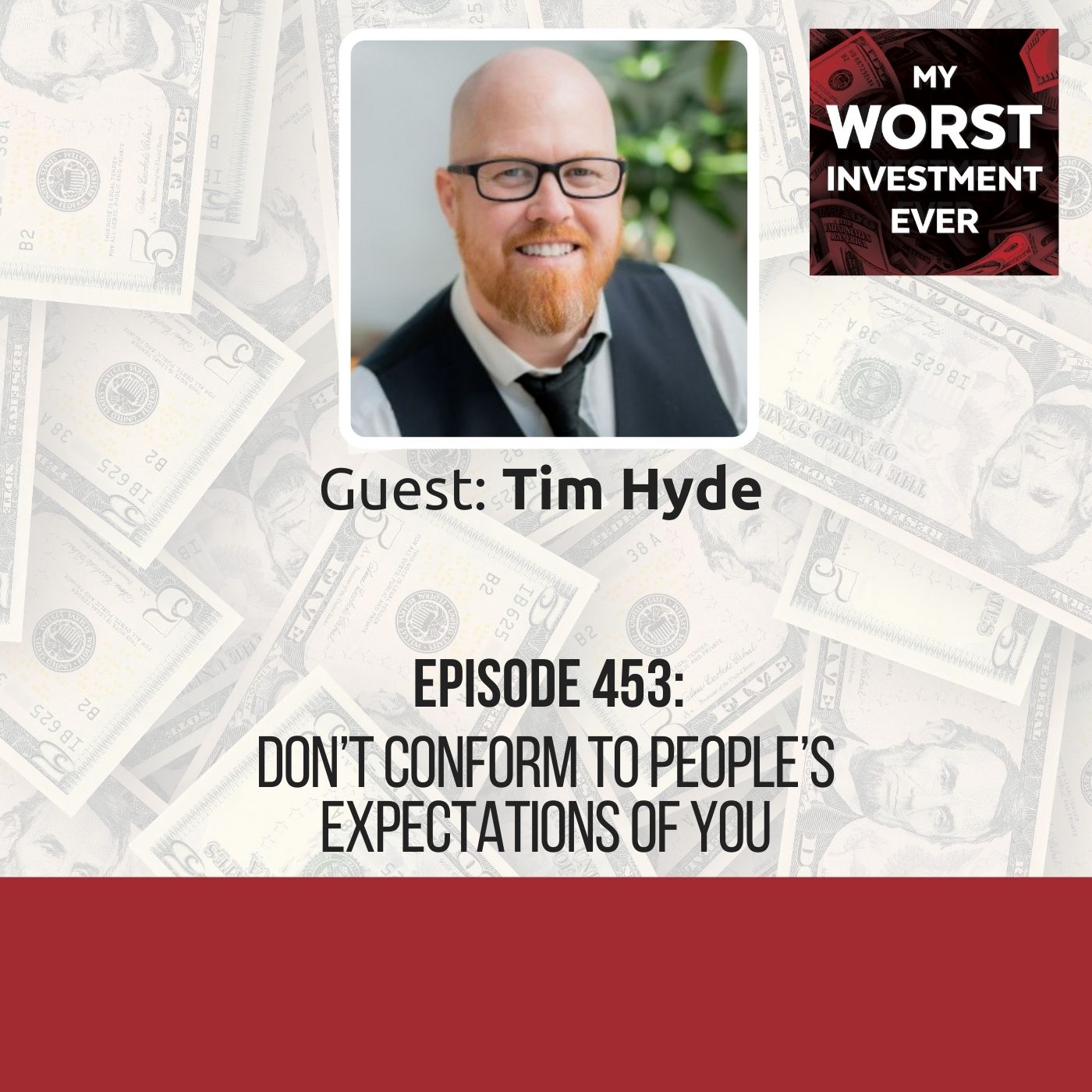
Tim Hyde – Don’t Conform to People’s Expectations of You
BIO: Tim Hyde is a fixer, a business growth strategist, an Infusionsoft Certified Partner, and is Australia’s leading authority in sales and marketing automation for small businesses.STORY: Tim regrets spending years trying to live up to what he thought were other people’s expectations of him instead of living the kind of life he wanted.LEARNING: Stop trying to conform to other people’s expectations. People don’t think of you as much as you think they do. “Who is the person you really want to be, and are you being true to that or just being who you think people want you to be?”Tim Hyde Guest profileTim Hyde is a fixer, a business growth strategist, an Infusionsoft Certified Partner, and is Australia’s leading authority in sales and marketing automation for small businesses.He works with business owners on their sales and marketing strategy, with a particular focus on optimizing their sales lifecycle and marketing automation.He provides the advice, support, and tools his clients need so that their business gives them more time, money, and freedom.Worst investment everTim spent a lot of his teenage years building sales enterprises and other side businesses. However, he still went down the familial path of expectation that when he finished college, he’d go to university and then get himself a job.No matter how much Tim succeeded with his enterprises, he kept falling back to this expectation of who he should be, rather than being true to himself. He believes his worst investment ever is the years he spent at university trying to meet the expectations he thought other people had of him.Lessons learnedStop trying to conform to other people’s expectations because you end up losing opportunities to explore and express who you are and the impact you have. Do what feels right to you, not what you think other people want you to do, and you’ll be happier.Andrew’s takeawaysIf you want to get something, you have to take a risk. You won’t go far if you stay in your safety net.We imagine all kinds of things of what other people think of us, and the reality is that that’s all in our mind because people are thinking a lot less of us than we think they are.Actionable adviceWhen you look at yourself in the mirror every single morning, ask yourself who is the person you really want to be and if you’re true to that. Then ask yourself if those are your expectations of yourself or your perceptions of what you think other people expect from you. Secondly, look at how you project your expectations on others and ask yourself if it’s your expectation of what you want for them or you’re enabling them to be the best that they can be.No. 1 goal for the next 12 monthsTim’s number one goal for the next 12 months is to enable other people to be their best now through his business and help people build more resilient and effective businesses.Parting words “Take advantage of the resources around you to live your best life and leave a legacy.”Tim Hyde [spp-transcript] Connect with Tim HydeLinkedInTwitterWebsiteAndrew’s booksHow to Start Building Your Wealth Investing in the Stock MarketMy Worst Investment Ever9 Valuation Mistakes and How to Avoid ThemTransform Your Business with Dr.Deming’s 14 PointsAndrew’s online programsValuation Master ClassHow to Start Building Your Wealth Investing in the Stock MarketFinance Made Ridiculously SimpleBecome a Great Presenter and Increase Your InfluenceTransform Your Business with Dr. Deming’s 14 PointsConnect with Andrew Stotz:astotz.comLinkedInFacebookInstagramTwitterYouTubeMy Worst Investment Ever Podcast

Jenny Wilde – Embrace Complexity in Innovation
BIO: Jenny Wilde has over 15 years of hands-on experience as a senior manager in humanitarian response and an innovation expert.STORY: Jenny saw the need to set up an Innovation Fund to support innovative ideas to make their emergency response easier and more effective. Unfortunately, company politics took over, and the fund was scrapped off.LEARNING: Embrace complexity when dealing with innovation. “Different problems in different innovations require different tools and methodologies.”Jenny Wilde Guest profileJenny Wilde has over 15 years of hands-on experience as a senior manager in humanitarian response and an innovation expert. She has supported innovative organizations and initiatives in countries as diverse as the USA, South Sudan, and Nepal. She has pioneered initiatives that break from conventional innovation models and enable global scale.Worst investment everJenny was the operational director of emergency response in the Philippines, responding to a large typhoon, Typhoon Haiyan, that had ripped through the country’s center. Everyone was trying to make decisions and get stuff out of the door without a lot of deeper thinking. Jenny thought that her organization needed an innovation fund that would help bring to light any innovative ideas that would make their work easier. So they got the money and a team together and set up the fund.Within no time, the fund got political, with everyone wanting to take credit for the idea while, in reality, doing nothing. It was stressful for Jenny because she was heavily invested in the idea. Essentially the Innovation Fund got scrapped because of politics.Lessons learnedYou’ve got to simplify the problem. Make it as simple as possible, and then work with it.When you’re innovating around complex problems, you need to step back and take in all that complexity to do transformational shifts.Andrew’s takeawaysEmbrace complexity because there will be problems that you need to solve that are very complex.Think about the balance between the long term versus the short term. Which one works best for your current environment?Your idea should fit the company’s culture; otherwise, people will only shoot it down.Actionable adviceIf you want to go big and create something that’s really transformational, you should be using systems innovation and the tools associated with that. Don’t harm yourself with small ideas and small innovation traps.No. 1 goal for the next 12 monthsJenny’s number one goal for the next 12 months is to help people create big shifts in their industries.Parting words “Thanks, and good luck on the next investment.”Jenny Wilde [spp-transcript] Connect with Jenny WildeLinkedInTwitterWebsiteAndrew’s booksHow to Start Building Your Wealth Investing in the Stock MarketMy Worst Investment Ever9 Valuation Mistakes and How to Avoid ThemTransform Your Business with Dr.Deming’s 14 PointsAndrew’s online programsValuation Master ClassHow to Start Building Your Wealth Investing in the Stock MarketFinance Made Ridiculously SimpleBecome a Great Presenter and Increase Your InfluenceTransform Your Business with Dr. Deming’s 14 PointsConnect with Andrew Stotz:astotz.comLinkedInFacebookInstagramTwitterYouTubeMy Worst Investment Ever Podcast

Chris Franzen – Only Play in a Field That You Really Understand
BIO: Chris Franzen has been a hotelier for over two decades, having worked in the US, Europe, Middle East, and Asia.STORY: Chris saw an advert during the football World Cup a few years ago for a company he was unfamiliar with. He was intrigued by this unknown company that could afford to advertise in the World Cup. He did a bit of research and decided to invest in it. The stock went up for a few days but later plummeted to a point the company folded, and Chris lost his entire investment.LEARNING: Invest in industries you’re familiar with. Do thorough research before you invest. “When picking stocks, pick those in industries that you understand well.”Chris Franzen Guest profileChris Franzen has been a hotelier for over two decades, having worked in the US, Europe, Middle East, and Asia. He learned his trade from the ground up as a chef before rising through the ranks and being appointed Area Vice President with Hyatt Hotels. In July 2021, Chris opened his own company, advising operators and owners in the field of luxury hospitality.Worst investment everChris was watching the football World Cup a couple of years ago when he noticed this unfamiliar energy company whose ads would keep popping up every now and then. Seeing as the unknown company was paying millions to advertise at such a high-level stage, Chris imagined that it must be a reliable company.So after a few days, he decided to do some basic investigation and found out it was a Chinese green energy company dealing with solar panels. It was one of the biggest solar panel producers and had unsigned contracts in the pipeline all over Asia. Chris thought this must be an excellent investment, especially because the stock was marked as undervalued. He went ahead and bought stocks worth several thousands of dollars.About two, three days later, the stock rose, and it was a fantastic investment. After that, Chris didn’t pay much attention for the next few weeks. Suddenly, the stock plummeted day after day. Chris is not a panic seller, so he held onto the stock and waited for it to recover. But unfortunately, for this stock, it kept going down and never recovered. In fact, after about nine months from the day he bought the stock, the company ceased to exist, and he lost all the money he had invested. This remains his worst investment ever.Lessons learnedYou have to scrutinize what you invest in thoroughly. What security do you have if the company defaults?Do thorough research of companies that you want to invest in more so if they are new.Andrew’s takeawaysJust because a company can afford to be out there doesn’t mean anything. Big companies can fail, and sometimes they can fail fast.If you invest in the overall stock market, it’s going to go down at times, but it’s going to recover. But with individual stocks, some of them can go down and never recover.Actionable adviceInvest only in companies that are in industries that you understand really well.No. 1 goal for the next 12 monthsChris’s number one goal for the next 12 months is to ensure his new company gets a decent foothold and build a good reputation. He also hopes that COVID will finally be over sooner or later so people can go back to traveling and enjoying themselves. [spp-transcript] Connect with Chris FranzenLinkedInBlogWebsiteAndrew’s booksHow to Start Building Your Wealth Investing in the Stock MarketMy Worst Investment Ever9 Valuation Mistakes and How to Avoid ThemTransform Your Business with Dr.Deming’s 14 PointsAndrew’s online programsValuation Master ClassHow to Start Building Your Wealth Investing in the Stock MarketFinance Made Ridiculously SimpleBecome a Great Presenter and Increase Your InfluenceTransform Your Business with Dr. Deming’s 14 PointsConnect with Andrew Stotz:astotz.comLinkedInFacebookInstagramTwitterYouTubeMy Worst Investment Ever Podcast

Daniel Chan – Don’t Sell What You Have to Diversify
BIO: Daniel Chan is a pre-IPO PayPal financial operations employee who became a magician, and now he’s pivoted to Zoom. He has performed over 390 virtual shows since last year.STORY: As one of the first employees of PayPal, Daniel was granted about 10,000 stock options. When he left the company, he dumped his stocks for a more diversified portfolio. Daniel would have been worth close to $5 million if he had kept everything, but he bought many other things that didn’t earn him that much.LEARNING: Invest in things that you buy and use regularly. Diversifying doesn’t mean selling what you have; it means putting additional money into something else. “Learn how to read the income statement, understand profit and loss, debt-to-equity ratios, and P/E ratios.”Daniel Chan Guest profileDaniel Chan is a pre-IPO PayPal financial operations employee who became a magician, and now he’s pivoted to Zoom. He has performed over 390 virtual shows since last year. What’s cool is that he has invested in most of the companies that have hired him.Daniel’s clients are literally a who’s who from “A” to “Z.” He has performed for Apple and Airbnb all the way to Zillo. And Google has hired him over 40 times.Worst investment everWhen Daniel was working at PayPal, he was granted about 10,000 stock options with a four-year vest and had to stay at least a year. He stayed for over a year. However, when he left, he pretty much dumped his stocks for a more diversified portfolio.From Daniel’s calculation, he would have been worth close to $5 million if he had kept everything, but he bought many other things that didn’t earn him that much.Lessons learnedDiversify, and when you’re sure about particular stocks, put in a little more into those.Invest in things that you buy and use regularly.Don’t put all your eggs in one basket.Andrew’s takeawaysDiversifying doesn’t mean selling what you have; it means putting additional money into something else.Just because you use a product and believe in the company’s stock doesn’t mean you should put all your money into it. Make sure you diversify.Actionable adviceWhen looking for stocks to invest in, look at things around you that you’re familiar with. Then when you find a few companies that interest you look at the bottom line. Learn how to read the income statement, understand profit and loss, debt-to-equity ratios, and P/E ratios.No. 1 goal for the next 12 monthsDaniel’s number one goal for the next 12 months is to find investors for a magic dinner show and a club in Silicon Valley. [spp-transcript] Connect with Daniel ChanLinkedInFacebookYoutubeTwitterBlogWebsiteAndrew’s booksHow to Start Building Your Wealth Investing in the Stock MarketMy Worst Investment Ever9 Valuation Mistakes and How to Avoid ThemTransform Your Business with Dr.Deming’s 14 PointsAndrew’s online programsValuation Master ClassHow to Start Building Your Wealth Investing in the Stock MarketFinance Made Ridiculously SimpleBecome a Great Presenter and Increase Your InfluenceTransform Your Business with Dr. Deming’s 14 PointsConnect with Andrew Stotz:astotz.comLinkedInFacebookInstagramTwitterYouTubeMy Worst Investment Ever Podcast

Jacob Roig – You Can’t Neglect Your Way Out of Problems
BIO: Jacob Roig specializes in helping coaches and the entrepreneur create the steps and strategies to growing or scaling their business, so they can quickly double their incomes, increase profits and figure out how to grow into their ideal lifestyle with a great team, more time off and a workable plan to get there.STORY: Jacob sold his business and invested in single-family homes. This turned out well for him, but he got convinced to invest in apartment buildings at some point. Jacob didn’t have the time to manage the apartments, and so when the 2008 real estate crash happened, he lost everything, including his over $2 million net worth, and had to file for bankruptcy.LEARNING: Own up to your challenges and seek the help that you need. You don’t need to have a solution; you just need to be willing to try to get back on your feet. “It seems easier not to take a step, but it is so much more painful to stay where you’re at.”Jacob Roig Guest profileJacob Roig specializes in helping coaches and the entrepreneur create the steps and strategies to growing or scaling their business, so they can quickly double their incomes, increase profits and figure out how to grow into their ideal lifestyle with a great team, more time off and a workable plan to get there.Jacob is a certified business coach, certified firewalk instructor and besides coaching leaders, runs live events that routinely do the impossible, like getting you to walk over broken glass and burning coals. He’s mastered overcoming fears and limitations all of his life.Jacob knows how to face life and business challenges and now teaches and coaches others along the way.Worst investment everJacob decided to become an entrepreneur after working a corporate job for 12 years. In his first 10 months in business, he did $1.2 million in sales. Along the way, he had to learn how to manage projects as well as people. That led him to fulfill his five-year goal in the first year.Being a creative and a driven person, after three years in that business, Jacob was ready to do something different. He sold the business and invested in real estate. He bought single-family homes, and they were working well.One day he went to a seminar and was convinced to buy apartment buildings. One thing he overlooked was how much work he had to put in to manage the apartments. Jacob didn’t have the time to do what was required, so he got into a situation which he ignored and just hoped that the problem would go away without him doing anything.In 2008, the real estate crash happened, and Jacob’s problems with the apartments just got worse. In 2009, he had to file for bankruptcy and lost everything, including his $2 million net worth.Lessons learnedYou may lose your wealth, but you can never lose your knowledge and your ability to get back on your feet as long as you’re willing to try.You don’t have to know what exactly to do; you just need to be willing to try and then take one step.Do what it takes to get the help you need. Holding back will not do you any good.Andrew’s takeawaysYou can’t neglect your way out of the problem; it doesn’t go away if you don’t deal with it.When you’re going through problems and challenges, you have two choices; to face it now or put it off and face it later. If you put it off for later, it will eventually come, so face it now.Actionable adviceIt seems easier not to take a step, but it is so much more painful to stay where you’re at. Any action or step that you take and just the fact that you’re taking this step is a good start.No. 1 goal for the next 12 monthsJacob’s number one goal for the next 12 months is to scale his third seven-figure business.Parting words “Don’t let go of your dream; pursue it and seek the help that you require.”Jacob Roig [spp-transcript] Connect with Jacob RoigLinkedInFacebookYoutubeWebsiteAndrew’s booksHow to Start Building Your Wealth Investing in the Stock MarketMy Worst Investment Ever9 Valuation Mistakes and How to Avoid ThemTransform Your Business with Dr.Deming’s 14 PointsAndrew’s online programsValuation Master ClassHow to Start Building Your Wealth Investing in the Stock MarketFinance Made Ridiculously SimpleBecome a Great Presenter and Increase Your InfluenceTransform Your Business with Dr. Deming’s 14 PointsConnect with Andrew Stotz:astotz.comLinkedInFacebookInstagramTwitterYouTubeMy Worst Investment Ever Podcast

Axel Meierhoefer – Never Get Involved in Anything You Don’t Understand
BIO: Axel Meierhoefer was born in Germany, served 22 years as an air force aviator and instructor. In 2005, he started his consulting company then discovered real estate investing during the recession.STORY: Axel blindly invested in penny stocks in the late 90s. He knew nothing about penny stocks at the time, and he ended up losing $75,000 after the market fell suddenly.LEARNING: Never get involved in anything that you don’t understand. Understand how company P/E ratios work and how they affect a stock. “If it’s initially interesting, I’ll first go into research until I’m satisfied I understand it well enough to commit money to it.”Axel Meierhoefer Guest profileAxel Meierhoefer was born in Germany, served 22 years as an air force aviator and instructor. In 2005, he started his consulting company then discovered real estate investing during the recession. Now, experiencing financial freedom, he wants to share his secrets and life lessons with us. You can find him on his Ideal Wealth Grower YouTube Channel.Worst investment everIn the late 90s, Axel was appointed the program manager for this new German Flight Training Center in the US. While at the center, the media kept constantly drumming on how necessary it was for everybody to be in the stock market. It was going on and on about the Dot-com boom that would change everything.At the time, neither Axel nor most other people he was with had any idea what a blue-chip stock or a penny stock was. But one thing that was the real fascination, initially for him, was that it didn’t take a rich person to start participating because the penny stocks were relatively cheap, well below $1 apiece. So you could buy like several thousand without investing a substantial amount. He figured if it’s not a considerable number, it won’t make a difference, so he bought a bunch of stocks.In just a few months, the stocks gained, and some of Axel’s friends cashed in their stocks, but he decided to hold onto his stocks. Unfortunately, the stock’s value plummeted as fast as it had gained. Axel ended up losing $75,000.Lessons learnedDon’t get involved in anything that you don’t understand.Learn how to differentiate between companies with reasonable valuation ratios and those that are just hype.Andrew’s takeawaysYou can never know the future, but you can know the present if you do your research well. If you know where you are, it can help you think about what you want to do.Actionable adviceDon’t be greedy. If you have been lucky enough to follow your principles and follow your purpose, and things have worked out well, there is nothing wrong with taking something off the table and putting it into something that still has all this potential ahead of it.No. 1 goal for the next 12 monthsAxel’s number one goal for the next 12 months is to grow his real estate property portfolio by another two or three properties.Parting words “Anybody can be an investor.”Axel Meierhoefer [spp-transcript] Connect with Axel MeierhoeferLinkedInFacebookYoutubeTwitterBlogFree bookAndrew’s booksHow to Start Building Your Wealth Investing in the Stock MarketMy Worst Investment Ever9 Valuation Mistakes and How to Avoid ThemTransform Your Business with Dr.Deming’s 14 PointsAndrew’s online programsValuation Master ClassHow to Start Building Your Wealth Investing in the Stock MarketFinance Made Ridiculously SimpleBecome a Great Presenter and Increase Your InfluenceTransform Your Business with Dr. Deming’s 14 PointsConnect with Andrew Stotz:astotz.comLinkedInFacebookInstagramTwitterYouTubeMy Worst Investment Ever Podcast

Andre Hsu – Trust Your Partner before Investing in Their Idea
BIO: Andre Hsu is a thinker and business strategist based in Singapore. He is the author of three books about qualities, mindsets, and frameworks relevant to business, which he observed in several business tycoons who left a deep and lasting impact on his life.STORY: Andre partnered with a software company with an excellent business idea, but the partners were poor in managing the company and selling the product, so it failed. Andre lost his entire investment.LEARNING: Research the people who own a business as much as you research the business. “No matter how great the idea is, you’ll not succeed if you cannot trust your partner.”Andre Hsu Guest profileAndre Hsu is a thinker and business strategist based in Singapore. He started his entrepreneurial journey at 17, working on a real estate project while juggling three academic degrees completed concurrently in Australia.He is the author of three books about qualities, mindsets, and frameworks that are relevant for business which he observed in several business tycoons who left a deep and lasting impact on his life.Andre likes to use multiple techniques to read, predict people, assess situations, and formulate strategies that are suitable for properties and negotiations, deal structuring related to the assets.He likes to educate, share knowledge, insights, and reasoning of strategies to business associates who then proceed to implement them. He looks forward to doing this with people who share similar values and visions.Worst investment everAfter finishing university, Andre went into the family business, and after a while, he decided to venture into his own business pursuits. He got involved in a small software company that was dealing with Point-of-Service systems.At the time, this was a very lucrative business because not many companies were using POS systems. Andre was, therefore, happy to partner with the company and invest in this venture.The mistake Andre made was investing in people who didn’t take the business part of the venture seriously. They only created a good product, but they never invested in sales or management, so the product never really took off.Lessons learnedYou need to research the people who own a business as much as you research the business.Andrew’s takeawaysWhen investing in a startup, you need to look for trust, a good idea, the ability to execute the idea, and capital.Actionable adviceIf you cannot trust the person you want to partner with, forget the idea. No matter how great the idea is, you’ll not succeed if you cannot trust your partner.No. 1 goal for the next 12 monthsAndre Hsu’s number one goal for the next 12 months is to step back from the business and have his partners run it to have more time to do strategic thinking and come up with new ideas. [spp-transcript] Connect with Andre HsuLinkedInBookAndrew’s booksHow to Start Building Your Wealth Investing in the Stock MarketMy Worst Investment Ever9 Valuation Mistakes and How to Avoid ThemTransform Your Business with Dr.Deming’s 14 PointsAndrew’s online programsValuation Master ClassHow to Start Building Your Wealth Investing in the Stock MarketFinance Made Ridiculously SimpleBecome a Great Presenter and Increase Your InfluenceTransform Your Business with Dr. Deming’s 14 PointsConnect with Andrew Stotz:astotz.comLinkedInFacebookInstagramTwitterYouTubeMy Worst Investment Ever Podcast

Manish Kumar Tyagi – Never Blindly Trust Anybody with Your Money
BIO: Manish Kumar Tyagi used to be a Commander in the Indian Navy before he decided to become a standup comic sometime in 2014 and goes by the name “The Knotty Commander.”STORY: Manish relied upon his investment agent to invest his money. The agent invested in several options that lost him money over and over.LEARNING: Don’t blindly trust anybody with your money. Don’t rely on one investment agent. “Don’t be a blind investor; read a little about investing.”Manish Kumar Tyagi Guest profileManish Kumar Tyagi used to be a Commander in the Indian Navy before he decided to become a standup comic sometime in 2014 and goes by the name “The Knotty Commander.” An Officer and a Gentleman, he has some very funny tales to tell from his life experience. His style is full of unprecedented stories blended with wit and humor. His Facebook page and YouTube channel have over a quarter-million followers, with multiple videos having over 3 million organic viewers. He has performed across multiple cities in India and overseas. As a Motivational Speaker, he has also spoken at Josh Talks, 14 TEDx conclaves and is also a regular with corporate assignments.Worst investment everWhen Manish quit the army in 2012, he got his retirement benefits and invested in real estate. The market took a downturn, and Manish lost about 25% of his investment. He took what remained and invested it in a mutual fund, and it was doing well until the pandemic hit in 2020. One morning, Manish learned that Franklin Templeton had frozen six of their funds, and he had quite a substantial amount there. He spoke to his agent, who assured him that everything was going to bounce back. He told him that he would reshuffle his portfolio, but Manish wanted a long-term plan because he had money in another fund he didn’t want to lose.Manish asked to have his money back and kept it in the bank. In the process, he lost 15% of his investment, but at this point, all he wanted was to see his money in the bank. A friend then advised him to buy gold which he did. Then he purchased gold bonds to diversify his portfolio. The price of gold went down 30%.Manish’s greatest regret is leaving his money at the hands of his agent and taking blind advice from friends. He never took the time to understand the investments his agent was putting his money in.Lessons learnedDon’t blindly trust anybody with your money. You need to keep reading up about whatever you invest your money in.Don’t put all your eggs in the same basket. When engaging an investment agent, always get a second opinion.Andrew’s takeawaysAlways know that there’s a lot of volatility in the stock market.Our emotions are really against us when it comes to the stock market.There are many investment instruments today where an amateur who knows nothing and doesn’t want to spend all their time doing the market research can invest in.Actionable adviceDon’t be a blind investor; read a little about it, speak to people, and keep checking on your investments from time to time and see how the market is doing.No. 1 goal for the next 12 monthsManish’s number one goal for the next 12 months is to consolidate his investments and wait for the opportunity to re-enter the market.Parting words “At this point in time, stay low. Stay safe.”Manish Kumar Tyagi [spp-transcript] Connect with Manish Kumar TyagiLinkedInFacebookYoutubeTwitterAndrew’s booksHow to Start Building Your Wealth Investing in the Stock MarketMy Worst Investment Ever9 Valuation Mistakes and How to Avoid ThemTransform Your Business with Dr.Deming’s 14 PointsAndrew’s online programsValuation Master ClassHow to Start Building Your Wealth Investing in the Stock MarketFinance Made Ridiculously SimpleBecome a Great Presenter and Increase Your InfluenceTransform Your Business with Dr. Deming’s 14 PointsConnect with Andrew Stotz:astotz.comLinkedInFacebookInstagramTwitterYouTubeMy Worst Investment Ever Podcast
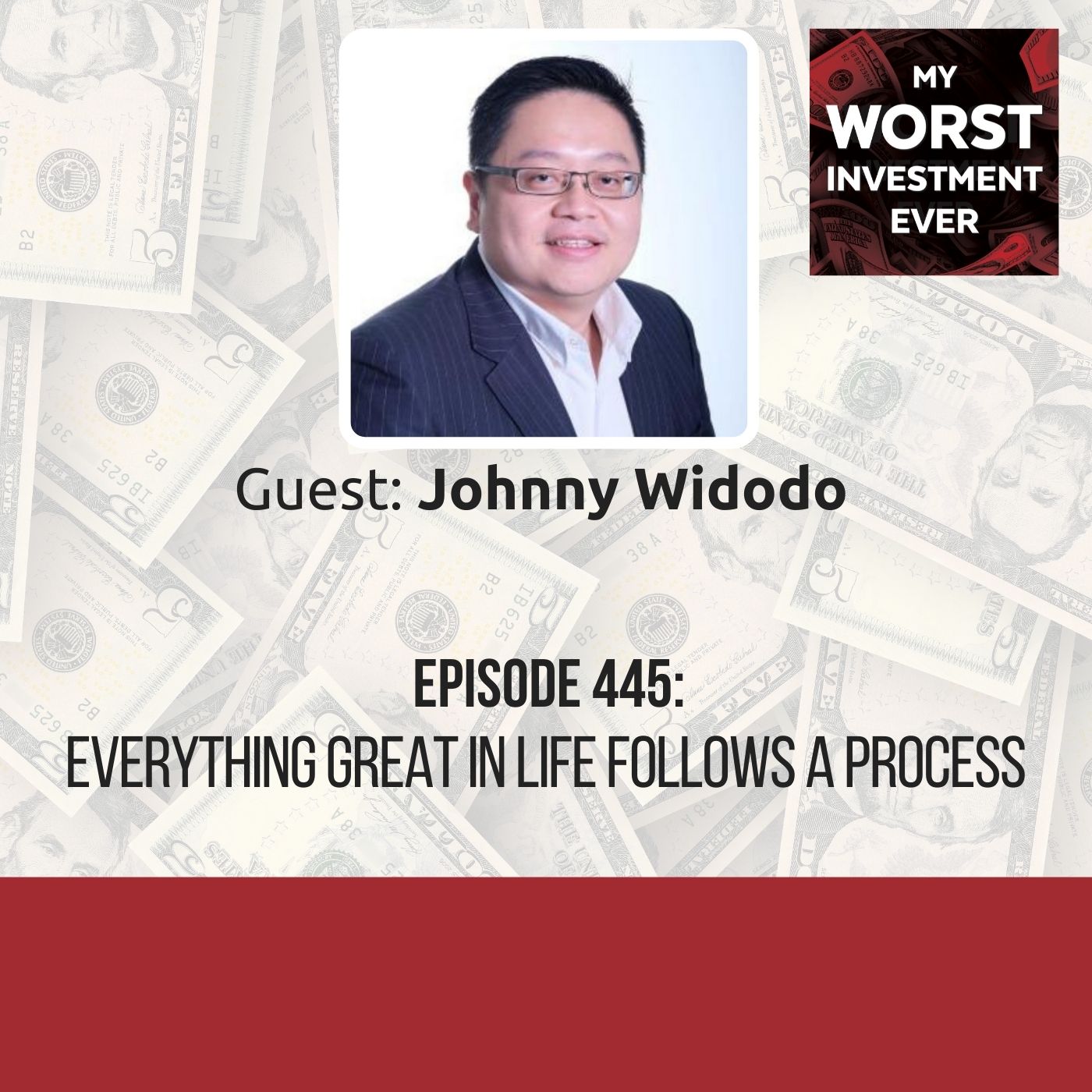
Johnny Widodo – Everything Great in Life Follows a Process
BIO: Johnny Widodo is CEO in an automotive startup space with over 16 years of experience across multiple industries and geographies.STORY: Johnny saw a colleague who was making crazy money trading stocks daily. Johnny decided to do what his colleague was doing and ended up losing about $30,000.LEARNING: Learn and do your research to understand the investment first before you sign off on it. The game of investing is about how much you have at the end of the game. “There is no instant thing in life. Everything follows a process.”Johnny Widodo Guest profileJohnny Widodo is CEO in an automotive startup space with over 16 years of experience across multiple industries and geographies. He is active as a global speaker, advisory board member, and mentor in various organizations. He is co-author of 2 books and has published his biography. In his free time, he is passionate about weightlifting and hosts the J-Talk Podcast.Worst investment everWhen Johhny just started working, he had this former schoolmate and colleague who sat beside him at work. The colleague would just play his stocks, and Johnny could literally see him making hundreds, even $1,000 every day. This all seemed too easy, and obviously, he was interested in making such amounts of money so quickly.Johnny started to pump all the money he made into the same stocks as his colleague. As soon as he began trading, the market collapsed, and he lost 95% of his investment, a total of about $30,000.Lessons learnedThere is no instant thing in life. Everything follows a process.When it comes to investing, it’s not about monkey see monkey do. Learn and do your research so that you understand the investment first before you sign off on it.Things happen. You can dwell over it, but not too long. Move on, take the lessons learned, and make sure you don’t fall into the same trap again.Make as many mistakes as possible when you’re young. This is when you can afford to lose everything.Investing in stocks is beyond your control because a lot of things are being impacted by the markets and speculations.Andrew’s takeawaysWhen you see someone winning in the stock market, keep in mind that people only talk about their winners, not their losses.The game of investing is about how much you have at the end of the game. It’s not how much you have this year or next year. It’s the money you have at the end of the game that makes your investment a success.Actionable adviceIf you have some money that you can afford to lose, put it out and play. But before you play, you have to do a lot of research on what you are going to invest in to balance your risks.No. 1 goal for the next 12 monthsJohnny’s number one goal for the next 12 months is to build the largest automotive ecosystem in Indonesia. He is also trying to deadlift six plates of like 260 kg. He’s currently doing 230 kg.Parting words “Be responsible for your life. It’s okay to make mistakes, to make your worst investment but just make sure you learn and move on and win the game.”Johnny Widodo [spp-transcript] Connect with Johnny WidodoLinkedInYoutubeTwitterPodcastAndrew’s booksHow to Start Building Your Wealth Investing in the Stock MarketMy Worst Investment Ever9 Valuation Mistakes and How to Avoid ThemTransform Your Business with Dr.Deming’s 14 PointsAndrew’s online programsValuation Master ClassHow to Start Building Your Wealth Investing in the Stock MarketFinance Made Ridiculously SimpleBecome a Great Presenter and Increase Your InfluenceTransform Your Business with Dr. Deming’s 14 PointsConnect with Andrew Stotz:astotz.comLinkedInFacebookInstagramTwitterYouTubeMy Worst Investment Ever Podcast

Randy Mortensen – Past Success Doesn’t Guarantee Future Success
BIO: Randy Mortensen guides talented individuals whose drive has led them toward destructive behaviors. He facilitates an 8-week cohort, guiding members toward True Significance: Success and Sustainable Living.STORY: Randy was looking for an investment that would bring him huge returns to support his projects in the Caribbean and Africa. He came across the hemp industry, which he had zero experience in, but he was convinced it was the right investment. Randy invested $600,000 and is yet to make much out of it.LEARNING: Don’t be too quick to jump into an investment you’re not familiar with. Succeeding in one investment doesn’t mean you will in another. “Be a bit slower to jump into the deep end of the pool.”Randy Mortensen Guest profileRandy Mortensen guides talented individuals whose drive has led them toward destructive behaviors. He facilitates an 8-week cohort, guiding members toward True Significance: Success and Sustainable Living. You can have both.Worst investment everRandy wanted to help people in the Caribbean and Africa. He figured if he was going to support those efforts, he should look for a significant investment. Randy was convinced that the hemp industry would be an excellent opportunity for an investment.Randy wasn’t connected well enough to the network of growers and financiers in Canada or the hemp industry in Europe. But he did invest heavily in it.Well, $600,000 later, it’s probably still a good investment, but the returns have been horrible for the last four or five years.Lessons learnedDon’t be too quick to jump into an investment you’re not familiar with.It’s essential to communicate with your spouse and to draw on their common sense.Andrew’s takeawaysYour success in the corporate environment does not necessarily translate into the startup environment. Often, the skills required for the two are different.Confidence from past success will blind you from doing the research you should perform when starting a new company.Actionable adviceDraw on input from others and apply a heavy element of common sense instead of trusting your intuition and instincts.No. 1 goal for the next 12 monthsRandy’s number one goal for the next 12 months is to return to speaking and hold workshops and speak to talented management officials or professionals.Parting words “If you’re struggling with a compulsive, destructive behavior, don’t wait another day to seek help because there is hope.”Randy Mortensen [spp-transcript] Connect with Randy MortensenLinkedInFacebookWebsitePodcastAndrew’s booksHow to Start Building Your Wealth Investing in the Stock MarketMy Worst Investment Ever9 Valuation Mistakes and How to Avoid ThemTransform Your Business with Dr.Deming’s 14 PointsAndrew’s online programsValuation Master ClassHow to Start Building Your Wealth Investing in the Stock MarketFinance Made Ridiculously SimpleBecome a Great Presenter and Increase Your InfluenceTransform Your Business with Dr. Deming’s 14 PointsConnect with Andrew Stotz:astotz.comLinkedInFacebookInstagramTwitterYouTubeMy Worst Investment Ever Podcast

Gil Baumgarten – Concentrate to Get Wealth but Diversify to Keep It
BIO: Gil Baumgarten is a 36-year veteran of the investment industry. In 2010, Gil made a break from the brokerage world to start Segment, a fully fiduciary firm where the interests of the client and the firm could align.STORY: Gil invested heavily in UBS shares, and when the 2008 financial crisis hit, the stock lost its value and knocked about 80% of the market value of his stocks.LEARNING: Concentration is the key to getting wealthy. Diversification is the key to keeping your wealth. Don’t be too diversified or overly concentrated. “Wealth is the sum total of all the money you’ve never spent.”Gil Baumgarten Guest profileGil Baumgarten is a 36-year veteran of the investment industry. In 2010, Gil made a break from the brokerage world to start Segment, a fully fiduciary firm where the interests of the client and the firm could align. He has since attracted a billion dollars in supervised assets. He is a multi-year recipient of Barron’s Top 1,200 Financial Advisors in America distinction, wherein Gil was ranked in the Top 50 Financial Advisors in Texas.Worst investment everGil decided to accumulate some stock options and use that to retire in his 60s. His plan was to have a couple of million dollars worth of stock and stock options. Gil invested heavily in the UBS stock and was feeling confident about it.Come around 2008/09, not only did the stock market fall apart, but his UBS shares dropped and knocked about 80% of the market value of his stock. He lost well into six figures in a relatively short time. The vast majority of his loss was occurring in his UBS shares.Lessons learnedDon’t get carried away. Be mindful of the risks that you cannot control.Concentration is the key to getting wealthy. Diversification is the key to keeping your wealth.Stop speculating, instead buy an index fund and let it sit if you’re interested in compounding wealth.Andrew’s takeawaysPeople get wealthy by first concentrating their energy on improving themselves through education and/or working with smart people. Second, they find the right way places to allocate their money.Don’t have too much diversification. You want to get exposure, particularly to the stock market, because you need that compounding. But you also don’t want to be overly concentrated.Figure out where you’re going to create the most wealth.Actionable adviceReduce speculative investments. Anything that you’re buying with the anticipation that you’re going to sell to someone else at a later date for more money is speculation, as opposed to buying shares in Coca-Cola or American Express, or any other well-established business.No. 1 goal for the next 12 monthsGil’s number one goal for the next 12 months is to turn readers of his new book FOOLISH: How Investors Get Worked Up and Worked Over by the System into clients. [spp-transcript] Connect with Gil BaumgartenLinkedInFacebookWebsiteBookAndrew’s booksHow to Start Building Your Wealth Investing in the Stock MarketMy Worst Investment Ever9 Valuation Mistakes and How to Avoid ThemTransform Your Business with Dr.Deming’s 14 PointsAndrew’s online programsValuation Master ClassHow to Start Building Your Wealth Investing in the Stock MarketFinance Made Ridiculously SimpleBecome a Great Presenter and Increase Your InfluenceTransform Your Business with Dr. Deming’s 14 PointsConnect with Andrew Stotz:astotz.comLinkedInFacebookInstagramTwitterYouTubeMy Worst Investment Ever Podcast

Meridith Elliott Powell – Do What Is Right for You Not What Society Wants You to Do
BIO: Meridith Elliott Powell is passionate about helping her clients learn the strategies to turn uncertainty into a competitive advantage.STORY: Meredith met her husband at 21, and they got married soon after. She spent close to 17 years trying to save her husband from countless brushes with death, arrests, and bankruptcies.LEARNING: Have the courage to do what is right for you, not what you think society wants you to do. You can’t fix things you can’t control. “Surround yourself with the right people. People whose values you admire and who won’t judge you or tell you what to do. They just love you and support you.”Meridith Elliott Powell Guest profileVoted one of the top 15 Business Growth Experts To Watch, Top 41 Motivational Speakers, and Top Sales Expert on LinkedIn, Meridith Elliott Powell is passionate about helping her clients learn the strategies to turn uncertainty into a competitive advantage. She is the author of six books, including her latest THRIVE: Turning Uncertainty To Competitive Advantage.Worst investment everMeridith’s father died of alcoholism when she was just 21 years old. It was at this point that she met her future husband. They quickly got married, and the marriage turned out to be her worst investment ever.Meridith stayed tied to her husband through countless brushes with death, arrests, and bankruptcies until he died when he was 41 and she was 38.Meridith wasted some of the good and best years of her life trying to save someone that had zero desire to be saved.Lessons learnedTrust your gut, not your head.Have the courage to do what is right for you, not what you think society wants you to do. Have the courage to live your life and to live your voice.You can’t fix things you can’t control.Andrew’s takeawaysYou can only help someone who wants to be helped.Actionable adviceFind your voice. Spend time figuring out what kind of life you want to lead. Then ask yourself what is preventing you from getting that life, and what are you doing right to get that life.No. 1 goal for the next 12 monthsMeridith’s number one goal for the next 12 months is to help people start to view what life throws at them as an opportunity rather than a negative. [spp-transcript] Connect with Meridith Elliott PowellLinkedInTwitterFacebookYouTubeWebsiteBookAndrew’s booksHow to Start Building Your Wealth Investing in the Stock MarketMy Worst Investment Ever9 Valuation Mistakes and How to Avoid ThemTransform Your Business with Dr.Deming’s 14 PointsAndrew’s online programsValuation Master ClassHow to Start Building Your Wealth Investing in the Stock MarketFinance Made Ridiculously SimpleBecome a Great Presenter and Increase Your InfluenceTransform Your Business with Dr. Deming’s 14 PointsConnect with Andrew Stotz:astotz.comLinkedInFacebookInstagramTwitterYouTubeMy Worst Investment Ever Podcast
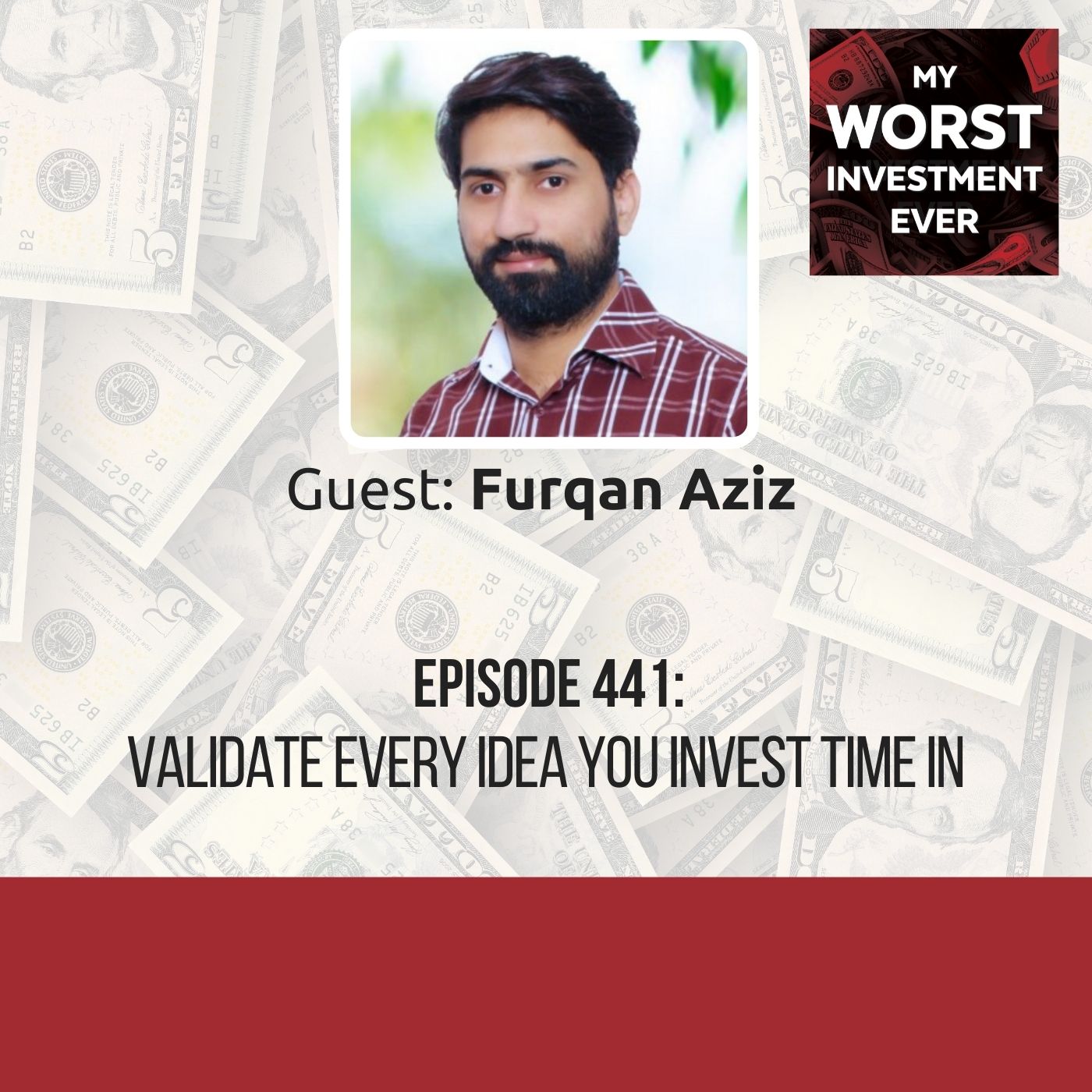
Furqan Aziz – Validate Every Idea You Invest Time In
BIO: Furqan Aziz is the CEO of InvoZone, a software development company that specializes in resource augmentation.STORY: Furqan took on a client who promised to pay him in the form of shares to develop what seemed like an excellent product for airlines. Unfortunately, COVID hit, and the product never saw the light of day. Needless to say, all the time, money, and resources Furqan invested in developing the product went down the drain.LEARNING: Do thorough research to validate every idea before you invest in it. Size your position; invest just a little if the investment idea is high risk. “Fail fast, and don’t keep sporting your mistake by making another mistake.”Furqan Aziz Guest profileFurqan Aziz is the CEO of InvoZone, a software development company that specializes in resource augmentation. He has over 10 years of experience in the IT industry and specializes in architecting concurrent, distributed, fault-tolerant, scalable applications.Worst investment everIn 2018, Furqan met with a client whose background was very solid. They were providing big software to airline companies. The client came to Furqan with a great idea. They had a lot of data from the airlines they worked with, and they wanted to build a big data product where they would utilize that data and give some analytics to the decision-makers. The idea was to pitch these to the airline industry decision-makers and have them buy the product.The idea had the potential to make a lot of money for Furqan and the client. The catch, however, was that the client could not pay Furqan for any services rendered but offered him shares in their company. Usually, Furqan would never get into such a deal. But because the company had an excellent background and the idea was also exciting, he decided to take the risk.Furqan started the development, and after six months or so, they prepared their proof of concept and then demonstrated it to the airline decision-makers, and they were okay-ish at that moment. But they asked for more features to make the product useful. Furqan sat down with the client and talked about these extra features, and they agreed to add them.Again, Furqan spent six more months and made the additions. They went back to the airline companies, but again, they asked for more features. Furqan spent three more months, and before they could go back to the airlines, COVID hit. Now the product was a waste. All the money, time, and resources Furqan invested went to waste.Lessons learnedIf you’re going to ask someone to put money into your solution, you must make it a lot better than what they already have.Don’t deviate from whatever you are doing as a core business unless you’re really sure about the new thing you want to delve into. Remember that chances of failure are pretty high.Don’t set your expectations too high even if you’re very successful in your core business because your core business is pretty different from whatever you will do.Do the market research by yourself rather than relying on someone else, especially the person selling the idea to you.Fail fast, and don’t keep sporting your mistake by making another mistake. Walk away as soon as you realize that this is not going to work.Don’t wait for the golden moment. If things are not working well, just cash out whatever you can because acquisitions are not always bad; sometimes, they are good for you.Andrew’s takeawaysIn life and business, there are all kinds of risks you can face. Your goal is to try to reduce those risks, but you can never reduce them completely.Don’t just look at the upside; you always have to look at different downsides too.Size your position. If you know that you’re taking a big risk by doing something that you don’t normally do, put about only 5% of your resources into it, and then slowly build up.Actionable adviceYou must validate all ideas by doing extensive research so that you can fully understand them before you commit. Don’t rely just on the person who is presenting the idea.No. 1 goal for the next 12 monthsFurqan’s number one goal for the next 12 months is to build another product for the healthcare industry, this time around employing all the lessons he learned from his worst investment ever. [spp-transcript] Connect with Furqan AzizLinkedInTwitterWebsiteAndrew’s booksHow to Start Building Your Wealth Investing in the Stock MarketMy Worst Investment Ever9 Valuation Mistakes and How to Avoid ThemTransform Your Business with Dr.Deming’s 14 PointsAndrew’s online programsValuation Master ClassHow to Start Building Your Wealth Investing in the Stock MarketFinance Made Ridiculously SimpleBecome a Great Presenter and Increase Your InfluenceTransform Your Business with Dr. Deming’s 14 PointsConnect with Andrew Stotz:astotz.comLinkedInFacebookInstagramTwitterYouTubeMy Worst Investment Ever Podcast

Nada Lena Nasserdeen – Rise Up For You
BIO: Nada Lena Nasserdeen is transforming companies and individuals with people, emotional, and communication skills.STORY: Lena Dena was a high-flying executive, but she gave it all up for a marriage that lasted just two weeks.LEARNING: Focus more on the inner and not the outer things that make you who you are. “Everything you need is already inside of you; you just have to rise up for you and do it.”Nada Lena Nasserdeen Guest profileNada Lena Nasserdeen is transforming companies and individuals with people, emotional, and communication skills. She is a TEDx speaker, best-selling author, a corporate trainer, a leadership and confidence coach, and the founder of Rise Up For You.Worst investment everNada Lena was a successful executive at 28 years old, living the best life. She had everything you imagine to be a success. From a luxury car, house on the lake, boats, and kayaks to all kinds of stuff. Then she decided to spend all her energy and time building a relationship. She resigned from her company, sold everything, pulled out her 401k, and moved out of the country to get married.After two weeks of being married, Nada Lena’s husband decided that he wanted a divorce. She went from a high functioning executive with six figures, a house, and all this stuff successful people have to two luggage and $100. No car, no house, no job. She had invested a lot of time, energy, and resources to make this shift happen. Unfortunately, it just didn’t work out. Nada Lena had to rebuild herself up again from zero.Lessons learnedLife is more about the inner skills that help us become successful, not technical or outer skills and things that we emphasize. These don’t make you who you are.It’s essential to believe in yourself and feel confident that you’re enough, even when you have it rough.Andrew’s takeawaysIf you can get an education and a strong family bond, that’s already a significant step towards success. Focus on that.Actionable adviceConstantly do a check-in with yourself on all the pillars of life—your self-worth, career, romance, health and fitness, your community, and money. Building a life that you’re proud of is not only about spending all your time, money, energy, and resources in one area but having a very balanced and nurtured environment as a whole human being. So that when one pillar falls, you can still use the other five pillars to pull you back up.No. 1 goal for the next 12 monthsNada Lena’s number one goal for the next 12 months is to invest in a home once the market dips.Parting words “The greatest tragedy is wasted human potential. I encourage you not to let that be your story.”Nada Lena Nasserdeen [spp-transcript] Connect with Nada Lena NasserdeenLinkedInInstagramFacebookWebsiteAndrew’s booksHow to Start Building Your Wealth Investing in the Stock MarketMy Worst Investment Ever9 Valuation Mistakes and How to Avoid ThemTransform Your Business with Dr.Deming’s 14 PointsAndrew’s online programsValuation Master ClassHow to Start Building Your Wealth Investing in the Stock MarketFinance Made Ridiculously SimpleBecome a Great Presenter and Increase Your InfluenceTransform Your Business with Dr. Deming’s 14 PointsConnect with Andrew Stotz:astotz.comLinkedInFacebookInstagramTwitterYouTubeMy Worst Investment Ever Podcast

Owen O’Malley and Ana Rodríguez – Don’t Lose Control of the Checkbook
BIO: Owen O’Malley and Ana Rodríguez are business and life partners. They are on a mission to create one million millionaires by 31st December 2050.STORY: Owen invested $25,000 in a business he had no experience running because his friend convinced him to. The company failed, and he lost all the money he had invested.LEARNING: Invest in something that is liquid and is in your control. Take time to ask questions before you buy into an investment idea. “Keep the money in your control at all times.”Owen O'Malley and Ana Rodríguez Guest profileOwen O’Malley and Ana Rodríguez are business and life partners. They are on a mission to create one million millionaires by 31st December 2050. They have helped many people accumulate one million dollars in their online trading accounts, and they have a powerful plan to help you reach one million dollars by just investing 200 per month.They were taught by the most successful investors in the world and have a combined 30 experience in the markets.Worst investment everOwen was once approached by someone he knew and showed him this spectacular business plan. The plan was to set up a factory making security cameras. This was in the early 90s, before CCTV was big. Owen was excited about this project. The two were going to build their own security cameras in a tiny little factory in Donegal and sell them worldwide.Owen’s friend convinced him to invest $25,000, which he didn’t have at the time. He went to the bank, borrowed the money, and gave it to his friend. This was the worst investment he has ever made. The business never panned out. If Owen had done his math right, he would have put that $25,000 in the stock market, and it would be worth multiple millions today.Lessons learnedMake sure you invest in something that is liquid and is in your control.Don’t lose control of the checkbook; keep the money in your control at all times.When you invest in the best companies in the world, you’ll have the best people in the world working for you.Andrew’s takeawaysSmall businesses are a trap. If you’re running one, you’re just going to get trapped. You’re rarely going to be able to cash it out, so you just get stuck.If someone comes to you with a sexy idea about investing, take the time to ask the questions.Actionable adviceIf you are going to invest in companies, go to the stock market and invest in the best companies.No. 1 goal for the next 12 monthsOwen and Ana’s number one goal for the next 12 months is to continue opening up investment clubs and give people that safe, supportive space that they can learn and grow within.Parting words “By living in abundance, we attract abundance for us and for others around us, so it’s safe to be there.”Ana Rodríguez [spp-transcript] Connect with Owen O'Malley and Ana RodríguezLinkedIn Owen O'MalleyLinkedIn Ana RodríguezTwitterFacebookPodcastWebsiteAndrew’s booksHow to Start Building Your Wealth Investing in the Stock MarketMy Worst Investment Ever9 Valuation Mistakes and How to Avoid ThemTransform Your Business with Dr.Deming’s 14 PointsAndrew’s online programsValuation Master ClassHow to Start Building Your Wealth Investing in the Stock MarketFinance Made Ridiculously SimpleBecome a Great Presenter and Increase Your InfluenceTransform Your Business with Dr. Deming’s 14 PointsConnect with Andrew Stotz:astotz.comLinkedInFacebookInstagramTwitterYouTubeMy Worst Investment Ever Podcast
Curt Mercadante – Not Every Home Is an Investment
BIO: Curt Mercadante specializes in helping business owners deliver the right message to the right clients to generate the right revenue.STORY: Curt grew up knowing that owning a home is an important investment that everyone should have. Over the years, and after a couple of losses, he has learned that a home is not an investment unless you’re planning on flipping it.LEARNING: Don’t just take advice at face value, do your research and get second opinions. Don’t fall for the American Dream fallacy; rent if that’s what you want. “Remember to apply your greatest weapon—creative thinking—where you think with the end in mind.”Curt Mercadante Guest profileCurt Mercadante specializes in helping business owners deliver the right message to the right clients to generate the right revenue.For 23 years, he has counseled small businesses, entrepreneurs, as well as some of the largest corporations and associations in the US. He’s built three profitable businesses, including a 7-figure PR and ad agency.Curt has trained, coached, and delivered keynotes and workshops to clients across the globe.He is a Gallup-Certified Strengths Trainer, a Certified Human Behavior Consultant, host of The Authority Brand podcast, and author of the bestselling book, Five Pillars of the Freedom Lifestyle.Curt and his wife, Julie, are currently traveling the country with their four children.Worst investment everOver the years, Curt has owned several homes, and he viewed them as investments all along. His financial advisor would often advise him not to look at houses as an investment. Still, because of how he was brought up and the fallacy of the American dream, Curt always believed owning a home was the best investment. After making a couple of losses buying homes, Curt now believes his financial advisor.Lessons learnedOur habits are influenced by our societal conditioning, which can be dangerous.A lot of the security we have is an illusion. Step back, have some discernment and awareness, and start asking yourself why you do what you do—question your conditioning instead of flowing with it.Andrew’s takeawaysDon’t be caught up in the American Dream fallacy.Buying a home is not always the best option; sometimes renting is.Actionable adviceDon’t just take things at face value just because someone you know said it, or someone on TV said it, or some experts somewhere said it. Do your homework and get a second opinion. Also, remember to apply your greatest weapon—creative thinking—where you think with the end in mind.No. 1 goal for the next 12 monthsCurt’s number one goal for the next 12 months is to unleash his creative flow on a regular basis.Parting words “When the world is burning around you, keep your head above water. Think creatively, and you won’t go wrong.”Curt Mercadante [spp-transcript] Connect with Curt MercadanteLinkedInTwitterBlogPodcastBookAndrew’s booksHow to Start Building Your Wealth Investing in the Stock MarketMy Worst Investment Ever9 Valuation Mistakes and How to Avoid ThemTransform Your Business with Dr.Deming’s 14 PointsAndrew’s online programsValuation Master ClassHow to Start Building Your Wealth Investing in the Stock MarketFinance Made Ridiculously SimpleBecome a Great Presenter and Increase Your InfluenceTransform Your Business with Dr. Deming’s 14 PointsConnect with Andrew Stotz:astotz.comLinkedInFacebookInstagramTwitterYouTubeMy Worst Investment Ever Podcast

Simon Bedard – Make Your Contracts as Airtight as Possible
BIO: Simon Bedard is the CEO of Exit Advisory Group, a boutique M&A firm, that also provides a range of advisory services focused on exit strategies and how to maximize company value.STORY: Simon had a client who convinced him to change the terms of their contract. The change worked in Simon’s favor because he made $2 million after delivering his services instead of the low seven-figure he had quoted. Unfortunately, the client now felt this was more than he expected and refused to pay up.LEARNING: Make your contracts airtight enough to cover you during conflicts. A contract is important but doesn’t have to be everything. “If you don’t understand all the elements of your contracts, then you’ll make decisions on flawed information.”Simon Bedard Guest profileSimon Bedard is the CEO of Exit Advisory Group, a boutique M&A firm, that also provides a range of advisory services focused on exit strategies and how to maximize company value.Simon’s experience spans over 20 years in the finance, investment, energy, and technology sectors. As an entrepreneur, Simon has started, bought, and exited his own companies. He has also worked for one of Australia’s largest banks as an investment advisor to high-net-worth clients and private companies.Simon’s passion is helping business owners understand where they want to be, then building a business that can get them there.Worst investment everSimon’s company had this particular client that they wanted to work with. The company negotiated a contract and put a standard fee based on the valuation they did. This was a solid seven-figure. The client came back and renegotiated the contract wanting a sliding scale with the aim of getting Simon’s company to push for higher valuations.He told them that this was unnecessary because his firm is motivated and would do the best possible work. But because the company could make more from this deal, Simon accepted their terms.The company went on to deliver more than the client expected. By the time it came to getting the deal done, the valuation was probably 50% higher than the client initially thought. And so, Simon’s fee went from a low seven-figure to over $2 million.Now the client didn’t want to pay. They went down the path of just blatantly making up lies and never paid up.Lessons learnedWhen structuring your contracts, make sure that you include things that you are willing to accept and not accept and make sure it is tight.When getting into a contract, do a basic scenario analysis of good and bad outcomes and how clients are likely to react to certain things.Be wary of making your contracts super tight and aggressive because every deal has different underpinnings. Know what you can afford to give up to keep both parties happy.Andrew’s takeawaysContracts only matter at the point of conflict. So make sure you’re protected from that.A contract is important but doesn’t have to be everything. Things change, and you can always talk, resolve issues, and modify a contract if necessary.Actionable adviceWhatever you invest in, make sure you spend time assessing all the variables and understand where the risk sits.No. 1 goal for the next 12 monthsSimon’s number one goal for the next 12 months is to find good solid advisors and people to join his team and help us have the kind of impact we want to have.Parting words “Be kind to yourself and to the world. We need more kindness.”Simon Bedard [spp-transcript] Connect with Simon BedardLinkedInFacebookYouTubeBlogPodcastWebsiteAndrew’s booksHow to Start Building Your Wealth Investing in the Stock MarketMy Worst Investment Ever9 Valuation Mistakes and How to Avoid ThemTransform Your Business with Dr.Deming’s 14 PointsAndrew’s online programsValuation Master ClassHow to Start Building Your Wealth Investing in the Stock MarketFinance Made Ridiculously SimpleBecome a Great Presenter and Increase Your InfluenceTransform Your Business with Dr. Deming’s 14 PointsConnect with Andrew Stotz:astotz.comLinkedInFacebookInstagramTwitterYouTubeMy Worst Investment Ever Podcast

Ali Awad – Accept Low-Risk Payment Methods Only
BIO: Ali Awad, also known as The CEO Lawyer on social media, is a successful lawyer and entrepreneur. He has a multi-million dollar law firm and media company where he teaches lawyers, doctors, and other professionals how to brand themselves digitally and generate clients through social media.STORY: Ali once delivered an order of car audio worth $25,000 to a newly acquired customer. Out of excitement to make such a huge sale, he made the mistake of accepting postdated checks for payment. The checks bounced, and the customer threatened to shoot him if he ever went near his store again.LEARNING: Only accept risk-free payment methods, especially when dealing with new customers. “Do whatever you can to make sure that when you get paid, that money cannot be reversed.”Ali Awad Guest profileAli Awad, also known as The CEO Lawyer on social media, is a successful lawyer and entrepreneur. He has a multi-million dollar law firm and media company where he teaches lawyers, doctors, and other professionals how to brand themselves digitally and generate clients through social media.Worst investment everAli started a wholesale car audio company when he was 19. Instead of selling online, he decided he’d sell wholesale to other retailers within a 30-mile radius of his hometown of Dalton, Georgia.Ali would drive around to different car audio shops in the area. He quickly realized that most retailers were not going to buy from a 19-year-old. But he didn’t let it deter him. He just kept going and hustled hard.Eventually, Ali landed a significant account in New Orleans, about 500 miles away from where he was located. The retail shop placed an $18,000 order. He drove all the way to New Orleans with his dad and brother to deliver the order. While there, Ali helped them sell the product to a retail customer for like 20 times more than he was charging them. This led them to place a second order was for $25,000.Ali loaded his trailer with car audio and went to deliver the order, but he went by himself this time. Instead of paying him cash, they gave him a stack of postdated checks that he was to deposit about three weeks out. Ali was excited about getting so much money that he didn’t think much about why they were paying him in postdated checks instead of cash as usual.Trouble started when he deposited the first check, and it bounced. The buyer gave him a flimsy excuse. After a while, he deposited the second check, and it bounced too. Ali called the buyer and asked what was going on. Again, he gave him a flimsy excuse. Ali informed him that he would go to the store and get his stuff back because he was done with the lies. The buyer said, “Sure. Why don’t you come over here, and I’ll put a bullet in your head.” And that’s how Ali lost $25,000.Lessons learnedDon’t accept payment if it can bounce or be reversed.Try to business that you can scale without your everyday involvement.Be careful not to jump from one business to the next or to take shortcuts in business.Always skill up no matter where you are in your entrepreneurship journey.Andrew’s takeawaysIf you can, get paid in cash or any other risk-free payment method.Actionable adviceConnect your bank account to your website for payments. And instead of accepting credit cards, make people pay with a direct deposit. Do whatever you can to make sure that when you get paid, that money cannot be reversed.No. 1 goal for the next 12 monthsAli’s number one goal for the next 12 months is to increase his employees to 100 and spend a million dollars on ads a month. He also wants to focus on diversification. [spp-transcript] Connect with Ali AwadLinkedInTwitterFacebookYouTubeWebsiteAndrew’s booksHow to Start Building Your Wealth Investing in the Stock MarketMy Worst Investment Ever9 Valuation Mistakes and How to Avoid ThemTransform Your Business with Dr.Deming’s 14 PointsAndrew’s online programsValuation Master ClassHow to Start Building Your Wealth Investing in the Stock MarketFinance Made Ridiculously SimpleBecome a Great Presenter and Increase Your InfluenceTransform Your Business with Dr. Deming’s 14 PointsConnect with Andrew Stotz:astotz.comLinkedInFacebookInstagramTwitterYouTubeMy Worst Investment Ever Podcast

Kim Kristiansen – Consider the Relevance of What You Devote Yourself To
BIO: Kim Kristiansen is a Family Physician from Denmark with more than 30 years of clinical experience. He is a peer reviewer for medical journals and a former TEDMED research scholar.STORY: Kim found himself wasting so much time reading research papers that were not relevant to his patients. Now he has learned how to screen papers for clinical relevance.LEARNING: Screen research papers for clinical relevance to avoid wasting your precious time. “Research analysis it’s not just about reading the paper; it’s also about finding relevance in it.”Kim Kristiansen Guest profileKim Kristiansen is a Family Physician from Denmark with more than 30 years of clinical experience.He has researched pain medicine; he is a peer reviewer for medical journals and a former TEDMED research scholar.He is a host at the podcast Precision Evidence. He and his co-host go beyond the abstracts of clinical research papers looking for clinical relevance and precision of the evidence and discuss how to read, analyze and look for pitfalls when reading about results from clinical trials.Finally, he is a co-founder of Zignifica, a company building a system and method to analyze clinical research for precision, relevance, and meaningfulness based on a grading system.Worst investment everAs a practicing physician, Kim often found himself paying interest and spending time reading papers published in medical journals that turned out to be of no clinical relevance or meaningful to his patients. This would see him waste so much of his precious time. He has learned how to analyze research papers for clinical relevance and is helping others do the same.Lessons learnedBe careful about how you spend your time screening for clinical relevance. Don’t waste your time reading something out of your interest and which you cannot relate to.Andrew’s takeawaysAllocate your resources (creativity and energy) to research findings that are worth your time.Dead-ends are part of the research process. When you’re in the field of research, expect to go down blind alleys and investigate a bit, you can never completely get rid of that.Actionable adviceDo your analysis and force yourself to sync up the usefulness of the findings, not just believing that it’s correct because it was in whatever journal it was in.No. 1 goal for the next 12 monthsKim’s number one goal for the next 12 months is to increase the awareness of clinical relevance.Parting words “Be curious and ask questions about the meaningful relevance of the outcomes.”Kim Kristiansen [spp-transcript] Connect with Kim KristiansenLinkedInTwitterBlogPodcastAndrew’s booksHow to Start Building Your Wealth Investing in the Stock MarketMy Worst Investment Ever9 Valuation Mistakes and How to Avoid ThemTransform Your Business with Dr.Deming’s 14 PointsAndrew’s online programsValuation Master ClassHow to Start Building Your Wealth Investing in the Stock MarketFinance Made Ridiculously SimpleBecome a Great Presenter and Increase Your InfluenceTransform Your Business with Dr. Deming’s 14 PointsConnect with Andrew Stotz:astotz.comLinkedInFacebookInstagramTwitterYouTubeMy Worst Investment Ever Podcast

Dan Solomon – The Time to Start Investing Is Now
BIO: Dan Solomon is on a mission to help international students and young professionals, especially those in Germany and the Netherlands, gain the right skills to succeed in the job market.STORY: When Dan was studying in Russia, he would receive $500 every month from his scholarship. Dan never invested a single cent of this money for the five years he was in Russia, which regrettably would have grown to a substantial amount had he invested it.LEARNING: Start investing now to gain from compounding interest. Don’t spend your dividends or interest; reinvest it. “Invest, and don’t take out your gains.”Dan Solomon Guest profileDan Solomon has a diverse background in engineering, business, and finance with experience across several industries, including banking, consulting, and chemical. He is on a mission to help international students and young professionals, especially those in Germany and the Netherlands, gain the right skills they need to succeed in the job market. He is a strong believer in taking little steps towards making the world a better place.Worst investment everDan spent five years studying in Russia on a scholarship. For those five years, he would receive $500 per month. Dan was a bit flamboyant and spent all that money on things that didn’t really mean anything. He bought stuff he didn’t have to buy. Dan regrets never investing any of this money.Lessons learnedStart investing now. You don’t need to wait until you have x amount of money in your bank account; it’s never going to come. Start now and build that discipline.You need to understand what kind of investment you’re getting into. Why should you invest in an index fund or an ETF, or individual stocks? Most importantly, understand the concept of compound interest.Andrew’s takeawaysBuild your knowledge base because you will suffer from a lack of knowledge.You will not witness an exponential rise in your investment until about year 20. It is, therefore, essential to start investing now.Don’t take out any money you get from your investment to pay bills, instead reinvest it so that you benefit from compounding interest.Actionable adviceStart now.No. 1 goal for the next 12 monthsDan’s number one goal for the next 12 months is to build the Bliss Career platform to a level where it is self-sustaining to help as many people as possible. He also wants to build the discipline to keep pushing his investment plans and make sure that he stays consistent.Parting words “Try your best to make sure that every month you take a bit of your money and put it in your investment portfolio.”Dan Solomon [spp-transcript] Connect with Dan SolomonLinkedInWebsitePodcastAndrew’s booksHow to Start Building Your Wealth Investing in the Stock MarketMy Worst Investment Ever9 Valuation Mistakes and How to Avoid ThemTransform Your Business with Dr.Deming’s 14 PointsAndrew’s online programsValuation Master ClassHow to Start Building Your Wealth Investing in the Stock MarketFinance Made Ridiculously SimpleBecome a Great Presenter and Increase Your InfluenceTransform Your Business with Dr. Deming’s 14 PointsConnect with Andrew Stotz:astotz.comLinkedInFacebookInstagramTwitterYouTubeMy Worst Investment Ever Podcast

Shinobu Hindert – Speak Up When You Believe Something Strongly
BIO: Shinobu Hindert is a certified financial planner™, professional, money expert, and creator of Empowered Planning, LLC.STORY: Shinobu tried to convince her clients to diversify their investment, but they ignored her and insisted on investing 100% in the Lehman Brothers company. When the 2008 financial crisis hit, the company went under, and the clients lost their investments. Shinobu regretted not pushing them harder to diversify.LEARNING: Don’t be afraid to push your philosophy hard if you believe in it. What worked for you in the past may not always work for you in the future. “Always push harder as a financial adviser, especially if you have a philosophy you believe in.”Shinobu Hindert Guest profileShinobu Hindert is a certified financial planner™, professional, money expert, and creator of Empowered Planning, LLC. She spent the first half of her career working for some of the largest financial institutions in the United States, including Smith Barney and Fidelity Investments. As a financial adviser, she created personalized financial plans for high-net-worth individuals overseeing more than $350 million in client assets.Now Shinobu has taken all her knowledge and created a simple, proven method for teaching personal finance. She has delivered over five hundred live workshops covering a wide range of topics, from budgeting to estate planning. Her goal is to simplify the complex world of investing and empower women everywhere to reach financial freedom.Worst investment everShinobu was working as a financial advisor back in 2007, and everything was good. Everybody loved financial advisors. When 2008 started approaching, there were hints that the markets were beginning to dwindle. But financial advisors didn’t dwell on these hints. Then came rumblings that banks were backing out of loans.One day in 2008, Shinobu came back to the office after lunch and found that the market had dropped so quickly that they had halted trading. The market just started to plummet from there. Lehman Brothers company went under, and all hell broke loose.Shinobu had clients who had invested 100% in Lehman Brothers, and now they were about to lose everything. She had tried to get them to diversify their investments earlier, but they didn’t want to listen to her. When the financial crisis hit and so many people were affected, Shinobu regretted not pushing harder to get her clients to diversify.Lessons learnedIf you’re a financial adviser and have a philosophy you believe in, you must push it harder.Don’t shy away from selling. It’s your responsibility as a financial adviser.Find a trusted partner, a family member, or a financial expert, whom you can talk to when you make a mistake.Mistakes are part of learning, don’t let them consume you.Andrew’s takeawaysWhat worked for you in the past may not always work for you in the future.Actionable adviceBe clear on the purpose of the money you’re investing. What is the goal of that money? Be clear about it, and then you will feel comfortable with your investment strategy.No. 1 goal for the next 12 monthsShinobu’s number one goal for the next 12 months is to promote her academy, Empowered Academy, to a larger audience.Parting words “If you are about to make an investment and don’t understand it, just ask, ask, ask, ask until it makes sense.”Shinobu Hindert [spp-transcript] Connect with Shinobu HindertLinkedInFacebookWebsiteBookAndrew’s booksHow to Start Building Your Wealth Investing in the Stock MarketMy Worst Investment Ever9 Valuation Mistakes and How to Avoid ThemTransform Your Business with Dr.Deming’s 14 PointsAndrew’s online programsValuation Master ClassHow to Start Building Your Wealth Investing in the Stock MarketFinance Made Ridiculously SimpleBecome a Great Presenter and Increase Your InfluenceTransform Your Business with Dr. Deming’s 14 PointsConnect with Andrew Stotz:astotz.comLinkedInFacebookInstagramTwitterYouTubeMy Worst Investment Ever Podcast

Kittisak Kovintavewat – Be an Investor, Not a Speculator
BIO: Kittisak Kovintavewat is a value investor who focuses on investing in value stocks in the US and China.STORY: Kittisak bought the Thai Airways stock as it grew steadily, but a few external and internal problems made the stock price drop. Even though Kittisak had studied the company extensively and knew the stock was strong, he panicked and sold his shares. The problems were later resolved, and the stock went up to three times more than what Kittisak had sold it for.LEARNING: Don’t focus too much on the price; instead, focus on the company’s stability. Find your investment style. “Invest often so that you can find your investment style. Once you find your style, you will gain more success.”Kittisak Kovintavewat Guest profileKittisak Kovintavewat is a value investor who focuses on investing in value stocks in the US and China. He has been investing in the US for more than seven years and runs the Billionaire VI page to help investors invest following the value investment style.Worst investment everIn 2014, Kittisak took an interest in Thai Airways. He studied the company for a while and realized that the company would make a huge profit every time oil prices would fall. Kittisak continued his research, convinced that it was a good company to invest in.At the time, Thai Airways’ shares were selling at 15 Baht per share. The price kept rising after Kittisak made his investment. But after a while, problems started arising in the Thai economy. The company was also experiencing internal issues, and this saw the share price begin to fall. The price went all the way down to 9 Baht per share. At this point, Kittisak feared that he would lose his entire investment, so he made the rash decision to sell his shares at 9 Baht per share.Soon after Kittisak sold his shares, the government came to Thai Airways’ rescue, and things started turning for the company. Within a few months, the share price went up to 30 Baht. Kittisak was devastated for not giving the company a chance to turn around.Lessons learnedDon’t speculate in the stock but invest in the company. If you focus on the stock, you only concentrate on the short-term price, but when you focus on the company, you focus on the long-term value.Never invest in a turnaround company; instead, invest in stable companies with the potential for long-term gain.Investment is about time, so always think long-term.Andrew’s takeawaysYou can’t capture every factor that affects a share price; there will be surprise factors.Find your investment style.Actionable adviceUnderstand the difference between speculators and investors. Speculators are interested in the price and make profits when the prices go up. They buy and sell in the short term. They don’t want to study or know about the company. An investor takes time to learn about the company and understands the fundamentals of the company. They consider themselves the owner of the company. The investor succeeds more than the speculator.No. 1 goal for the next 12 monthsKittisak’s number one goal for the next 12 months is developing and growing his portfolio by 20%. He also wants to continue sharing more investment information via his Billionaire VI page.Parting words “The most important thing now is to stay safe because if you get COVID, you cannot invest or make money.”Kittisak Kovintavewat [spp-transcript] Connect with Kittisak KovintavewatLinkedInFacebookWebsiteAndrew’s booksHow to Start Building Your Wealth Investing in the Stock MarketMy Worst Investment Ever9 Valuation Mistakes and How to Avoid ThemTransform Your Business with Dr.Deming’s 14 PointsAndrew’s online programsValuation Master ClassHow to Start Building Your Wealth Investing in the Stock MarketFinance Made Ridiculously SimpleBecome a Great Presenter and Increase Your InfluenceTransform Your Business with Dr. Deming’s 14 PointsConnect with Andrew Stotz:astotz.comLinkedInFacebookInstagramTwitterYouTubeMy Worst Investment Ever Podcast

Julie Talbot – Establish Rules to Live By
BIO: Julie Talbot is growing a UK property portfolio from Abu Dhabi, where she lives with her husband and twin daughters. She’s completed 25 property projects since 2017, and 2 of her rules are she doesn’t fly back to the UK, and her phone doesn’t ring.STORY: When Julie moved to Abu Dhabi, she assumed she couldn’t handle her property business in the UK from that many miles away, so she hired someone in the UK to do it for her. This person got her mixed up in a property price war that took 10 years to resolve.LEARNING: You’ve got all it takes to run a business from 4,000 miles away just as you would if you were 4 miles away; believe in yourself. If you want to seek advice, get it from an expert in that area, not a novice. “Your perception is your reality.”Julie Talbot Guest profileJulie Talbot is growing a UK property portfolio from Abu Dhabi, where she lives with her husband and twin daughters.She’s completed 25 property projects since 2017, and 2 of her rules are she doesn’t fly back to the UK, and her phone doesn’t ring.Download her Ebook Expats Bootstrap Your UK Property Business and learn 12 property secrets to help you grow and manage your property portfolio IN the UK whilst you are OUTSIDE the UK.Worst investment everIn 2009 Julie decided that she wanted to be a professional landlord. She did some training, worked with a coach, and bought a few houses quite quickly that year. The same year, Julie got married, and the couple decided to move overseas.Julie assumed that she couldn’t carry on buying houses as she had been doing it. She also thought that because she was thousands of miles away and couldn’t fly to the UK every time she needed to view a house, she would have to work with somebody on the ground to do stuff for her.Julie started working with someone who found her a property that matched her criteria. The property was a small block of flats, not her usual type of property as she typically bought family houses, but since it met her criteria, she agreed to go for it. For various reasons, Julie ended up not buying them all at the same time. The vendor held one, Julie bought one, and the person she was working with bought another. Julie wasn’t aware of what was happening, and all along, she thought she was the only one making the purchase. It also turned out that there was a misunderstanding somewhere in this chain of people about the price. The vendor thought it was one price, and Julie thought it was another, and it took them 10 years to fix that. If only Julie had done the business on her own as she had done while in the UK, she would have saved herself 10 years of emotional turmoil and frustration.Lessons learnedWhen you’re doing anything new, leverage on the value of connecting with somebody who’s done it before or who’s been through it.Your perception is your reality.Andrew’s takeawaysTake advice from an expert.Anything that gets complicated let that be a warning bell.Business is full of risk, both seen and unseen. Do your best to manage risks.Actionable adviceIf you want to grow a portfolio from overseas, don’t believe or let the miles be a barrier. You’ve got all the same options you would have if you were four miles away from where you want to buy. What stops you when you’re 4,000 miles away is a mindset of thinking you’re far away; therefore, you can’t. You can scale a portfolio the same way 4,000 miles away as you would if you were four miles away. You just need to do a few things differently.No. 1 goal for the next 12 monthsJulie’s number one goal for the next 12 months is to carry on living simply, spontaneously sustainably, by her rules and growing her portfolio. [spp-transcript] Connect with Julie TalbotLinkedInFacebookInstagramEbookAndrew’s booksHow to Start Building Your Wealth Investing in the Stock MarketMy Worst Investment Ever9 Valuation Mistakes and How to Avoid ThemTransform Your Business with Dr.Deming’s 14 PointsAndrew’s online programsValuation Master ClassHow to Start Building Your Wealth Investing in the Stock MarketFinance Made Ridiculously SimpleBecome a Great Presenter and Increase Your InfluenceTransform Your Business with Dr. Deming’s 14 PointsConnect with Andrew Stotz:astotz.comLinkedInFacebookInstagramTwitterYouTubeMy Worst Investment Ever Podcast

Dan LeFave – Chaotic People and Systems Rarely Create Value
BIO: Dan LeFave is the #1 Best-selling Author of Living the Life of Your Dreams - How To Stop Working Insane Hours And Start Living An Awesome Life. He helps businesses grow 7 and 8-figure revenues.STORY: Dan quit his job to work in his brother’s company, where he ended up managing daily business operations. His brother’s business systems were pretty chaotic, and it took Dan years to get it to run smoothly. When Dan asked his brother to make him a shareholder, and he refused, he realized that he had made his worst investment building someone else’s dream.LEARNING: Be careful of working with chaotic people or systems because you will only keep going in circles without gaining any value. “Discipline can be learned, but it’s best learned at a young age.”Dan LeFave Guest profileDan LeFave received life’s second chance when he survived a severe car accident that took three lives. He’s struggled through brain injuries, business failures, heartbreaks, running marathons, and daily fights with fear and doubt.He is the #1 Best-selling Author of Living the Life of Your Dreams - How To Stop Working Insane Hours And Start Living An Awesome Life.Dan helps businesses grow 7 and 8-figure revenues. He’s known as the 7-Figure High-Performance Business Coach because online business owners hire him to establish self-managing businesses in a few short months by upgrading their SKILLSET, MINDSET + SYSTEMS to scale with ease.Worst investment everTwenty-five years ago, Dan was trying to figure out his life after graduating college and working as a junior investor, which he didn’t excel in. During this time, he communicated with his brother, who was building a business in wireless telecom. As they got talking, Dan asked his brother if he could join him, and he accepted.After two weeks of working in the field, Dan got an injury and had to leave the field and work in his brother’s office. This saw him start running the business operations. It’s only after Dan began working in the office that he realized how chaotic his brother was. His business records and operations were a mess. Dan, though inexperienced, did everything he could to get the business running properly for a couple of years. All this while, his brother was paying him way below what he deserved. When Dan asked to be a partner in the business, his brother refused, and that’s when he realized that he was better off building his own career path, so he left.Lessons learnedNever partner with chaotic people.When you go through bad experiences, convert those experiences into something better so you can achieve your dreams.Andrew’s takeawaysShareholding in a company is not always the best option; a cash bonus may be better.Chaotic people or systems rarely create value.Actionable adviceTake a broader perspective and take some more time to think and know what you want.No. 1 goal for the next 12 monthsDan’s number one goal for the next 12 months is to push his brand, The Three-month Year. Dan wants to help people transition from an intentional imbalance in their business to better health, well-being, and relationships with this business.Parting words “If you’re listening to this and there’s one thing you take away from it, write it down and implement it today.”Dan LeFave [spp-transcript] Connect with Dan LeFaveLinkedInTwitterFacebookYouTubeBlogWebsiteAndrew’s booksHow to Start Building Your Wealth Investing in the Stock MarketMy Worst Investment Ever9 Valuation Mistakes and How to Avoid ThemTransform Your Business with Dr.Deming’s 14 PointsAndrew’s online programsValuation Master ClassHow to Start Building Your Wealth Investing in the Stock MarketFinance Made Ridiculously SimpleBecome a Great Presenter and Increase Your InfluenceTransform Your Business with Dr. Deming’s 14 PointsConnect with Andrew Stotz:astotz.comLinkedInFacebookInstagramTwitterYouTubeMy Worst Investment Ever Podcast

Justin Weeder – Only Go Into Debt to Buy Assets
BIO: Justin Mark Weeder is a psychology nerd turned sales coach. He’s the creator of the LISTEN Method for closing sales and the founder of The Covert Closer – a sales coaching and consulting agency based in Denver, Colorado.STORY: Justin and his wife bought a new house and made the mistake of getting a bunch of credit cards to buy stuff for the home. They spent so much that before they knew it, they were so deep into credit card debt.LEARNING: Use debt to buy assets, not to purchase shiny stuff. Cut your costs down and live below your income if you want to create wealth. “The only happiness you can ever experience comes from inside you, not in shiny things.”Justin Weeder Guest profileJustin Mark Weeder is a psychology nerd turned sales coach. He’s the creator of the LISTEN Method for closing sales and the founder of The Covert Closer – a sales coaching and consulting agency based in Denver, Colorado. Justin teaches his students how to collaborate with their prospects, ditching the high-pressure ‘sales terrorist’ techniques that are popular today.Worst investment everJustin and his wife, then girlfriend, were looking for a house to buy when they came across brand new houses that were being built. They loved the places instantly and signed the paperwork that day.The house was perfect, and they moved in as soon as it was done. At the time, the couple was doing well financially. In fact, they got all of their debt paid off before they moved in. One mistake, though; after they moved in, they got many credit cards and spent lots of money filling their new house with all the stuff they didn’t have. They bought furniture, dishes, light fixtures and even did a $25,000 landscape job in the backyard. They kept spending money, and the credit card bills got bigger and bigger, and before they knew it, they had dug themselves in a hole too deep to get out.Lessons learnedUse debt to buy assets, not shiny stuff.You have to be happy with yourself because you can’t ever be truly happy with something else.Andrew’s takeawaysThe number one risk factor that any company faces is debt. Manage your debt well.Live deeply below your income by keeping your costs low, and you will create wealth every single month.Actionable adviceGet educated on how money works, and do your best to understand compound interest.No. 1 goal for the next 12 monthsJustin’s number one goal for the next 12 months is to get entirely out of credit card debt and zero revolving debt.Parting words “Keep an eye on your spending, and don’t do credit cards.”Justin Weeder [spp-transcript] Connect with Justin WeederLinkedInFacebookAndrew’s booksHow to Start Building Your Wealth Investing in the Stock MarketMy Worst Investment Ever9 Valuation Mistakes and How to Avoid ThemTransform Your Business with Dr.Deming’s 14 PointsAndrew’s online programsValuation Master ClassHow to Start Building Your Wealth Investing in the Stock MarketFinance Made Ridiculously SimpleBecome a Great Presenter and Increase Your InfluenceTransform Your Business with Dr. Deming’s 14 PointsConnect with Andrew Stotz:astotz.comLinkedInFacebookInstagramTwitterYouTubeMy Worst Investment Ever PodcastFurther reading mentionedGary Sutton (2001), The Six-Month Fix: Adventures in Rescuing Failing Companies.

Kara Goldin – Don’t Put Industry Leaders on a Pedestal
BIO: Kara Goldin is the Founder and CEO of Hint, Inc., best known for its award-winning Hint water, the leading unsweetened flavored water.STORY: When Kara started her beverage business, she had zero experience in the industry. So she figured hiring people with impressive experience in the big beverage companies would help her business. Instead, they didn’t understand her vision, and thus there was no return on her vast investment.LEARNING: When hiring, don’t be blinded by executives in big companies; they may not have the experience needed to run a startup. “Trust your gut, fire fast, and hire slow.”Kara Goldin Guest profileKara Goldin is the Founder and CEO of Hint, Inc., best known for its award-winning Hint water, the leading unsweetened flavored water.She has received numerous accolades, including being named EY Entrepreneur of the Year 2017 Northern California and one of InStyle’s 2019 Badass 50. Previously, Kara was VP of Shopping Partnerships at America Online. She hosts the podcast The Kara Goldin Show. Her first book, Undaunted: Overcoming Doubts and Doubters, was released October 2020 and is now a WSJ and Amazon Best Seller. Kara lives in the Bay Area with her family.Worst investment everWhen Kara started her beverage company, Hint, she came from a tech background and had never worked in the beverage industry. She didn’t know anything about the industry other than the fact that she drank beverages. Before that, she had never dreamt of being an entrepreneur.When Kara launched her product on the shelf at Whole Foods, she decided to get industry experts to help get her off the right start. She did everything she could to find executives from Coke, Pepsi, and other big soda companies. Finding such people cost a lot of money. Taking the approach to work with people in the big companies was Kara’s worst investment.The core of Kara’s product started from a problem that she was solving for herself, so she created her solution. Unfortunately, the industry experts that were out there that Kara so wanted all her answers from didn’t understand the mission and the purpose behind the product.After spending a lot of money trying to get the so-called experts to help her push her product, Kara realized that the playbook they had gone through within these large companies was not the same playbook that she needed for her startup. She decided to stop looking for answers from the big companies, and instead, she believed in herself and found the solutions on her own.Lessons learnedBe careful when hiring big shots from very successful companies because they may not be able to handle the challenges of a startup.Curiosity, the ability to go out and try, and think outside the box are more valuable in an employee than experience.Hire slow and fire fast.Believe in yourself and have the confidence to find the answers you need to run a successful startup. You don’t have to rely on other people entirely.Andrew’s takeawaysWhen hiring people from the big business world, remember they may not have the experience of working in the small business world, so they may not be the right fit for you.Be careful of A-students because sometimes the skills required to get A’s in school are the exact opposite skills needed to succeed in business.No. 1 goal for the next 12 monthsKara’s number one goal for the next 12 months is to push her new product line that focuses on getting people to get healthy.Parting words “Find those lessons out there that you can learn from and move forward.”Kara Goldin [spp-transcript] Connect with Kara GoldinLinkedInTwitterFacebookPodcastWebsiteAndrew’s booksHow to Start Building Your Wealth Investing in the Stock MarketMy Worst Investment Ever9 Valuation Mistakes and How to Avoid ThemTransform Your Business with Dr.Deming’s 14 PointsAndrew’s online programsValuation Master ClassHow to Start Building Your Wealth Investing in the Stock MarketFinance Made Ridiculously SimpleBecome a Great Presenter and Increase Your InfluenceTransform Your Business with Dr. Deming’s 14 PointsConnect with Andrew Stotz:astotz.comLinkedInFacebookInstagramTwitterYouTubeMy Worst Investment Ever Podcast
Deborah Crowe – Don’t Give Up, Make Today Great
BIO: Deborah Crowe is an executive and business coach. She has more than 30 years of global experience in top Fortune 500 companies in Canada, the United States, Europe, Asia, and Australia, leading and coaching C-suite leaders, executive professionals, teams, and businesses into a success.STORY: Deborah’s dad got sick when she was 20 and died a year later. She had to quit school to take care of her sick dad, so she grew up quickly. Without the much-needed parental guidance on navigating adulthood, Deborah often found herself undervaluing herself, her intellect, and what she brings to the table.LEARNING: Don’t give up on yourself even when you can’t see the light at the end of the tunnel. Stay consistent. “We get one trip around the sun; make sure you spend it wisely.”Deborah Crowe Guest profileDeborah Crowe is an executive and business coach. She has more than 30 years of global experience in top Fortune 500 companies in Canada, the United States, Europe, Asia, and Australia, leading and coaching C-suite leaders, executive professionals, teams, and businesses into a success.Deborah started and has been the CEO of her company for 30 years and knows how to get to the top, hold that senior position, and balance career and family. In her coaching practice, she provides the tools, strategies, programs, and support to help create meaningful change in their lives.Deborah’s expertise includes leadership development, change management, human resources onboarding, diversity & inclusion practices, assessing and integrating high-performance teamwork, increasing personal skills, resilience and agile behaviors, emotional intelligence, and disrupting habits from a cognitive standpoint.Worst investment everDeborah’s worst investment was undervaluing herself, her intellect, and what she brings to the table professionally. This habit stems from having to become a responsible adult at a very early age.Deborah’s dad got very sick when she was 20, and she had to quit school a year earlier to care for him. This huge responsibility meant she had to grow up quickly. A year later, her dad died. Deborah didn’t get the opportunity to get advice from her parents about how to adult. Her dad’s situation threw her in the ring with the ball, and she had to figure it out alone.Lessons learnedDon’t give up on yourself even when you can’t see the light at the end of the tunnel. Consistency will always help you get there.If you don’t believe in yourself, nobody else will.Always be open-minded and attentive because there are lots of signs everywhere every day. Just be tuned in and pay attention to see them.Andrew’s takeawaysLife challenges only make you stronger. Don’t let them bring you down because you have a lot of value to bring.Don’t give up on your friends and family because even when it appears like there’s just no hope, things can change. Take a break but don’t give up.Actionable adviceWhen you can’t see that light at the end of the tunnel, open your eyes and your ears too. The message is already in your heart; you just need some quiet time to figure it out.No. 1 goal for the next 12 monthsDeborah’s number one goal for the next 12 months is to work with C-suite leaders interested in improving their mental health and general well-being.Parting words “Live every day like it’s your last because you never know about tomorrow.”Deborah Crowe [spp-transcript] Connect with Deborah CroweLinkedInTwitterFacebookPodcastWebsiteAndrew’s booksHow to Start Building Your Wealth Investing in the Stock MarketMy Worst Investment Ever9 Valuation Mistakes and How to Avoid ThemTransform Your Business with Dr.Deming’s 14 PointsAndrew’s online programsValuation Master ClassHow to Start Building Your Wealth Investing in the Stock MarketFinance Made Ridiculously SimpleBecome a Great Presenter and Increase Your InfluenceTransform Your Business with Dr. Deming’s 14 PointsConnect with Andrew Stotz:astotz.comLinkedInFacebookInstagramTwitterYouTubeMy Worst Investment Ever PodcastFurther reading mentionedAnthony de Mello (1990), Awareness: The Perils and Opportunities of Reality.

Ulrik Nerloe – Bring Your Heart to Work and Life
BIO: Ulrik Nerloe’s specialty is empathetic dialogue and the work of clarifying and realizing dreams. As a holistic coach and mentor, Ulrik helps people to encourage the joy of life and find themselves.STORY: Ulrik quit his job in the IT industry to work as a holistic coach and mentor, helping people realize their dreams. He sacrificed everything to do what he loves and that has seen him suffer a few financial challenges.LEARNING: You need courage, resilience, and energy to achieve your dreams. “It’s amazing what we can do if we start to appreciate what’s right here right now.”Ulrik Nerloe Guest profileUlrik Nerloe’s specialty is empathetic dialogue and the work of clarifying and realizing dreams. As a holistic coach and mentor, Ulrik helps people to encourage the joy of life and find themselves. The energy is high, happy, and caring. Ulrik is a good host, whether it is in a meeting, in a conversation, or in private. Because he is in close contact with his intuitive and empathetic sides, Ulrik often senses something happening or not happening in a room, which most people oversee, and is not afraid to act on these emotions. Ulrik also has a sense of creating business, leading people, providing service and experiences. He is an international bestseller, gives inspiring talks, and publishes podcast series.Worst investment everUlrik had been in the IT industry for 13 years, working as a sales director. He would build businesses from the bottom. While Ulrik experienced lots of success throughout his career, he was so sick and tired of being around managers that were so poor in leading people. So he decided to leave that line of work and do something different with his life.Ulrik started focusing on changing the world to a better place where people can realize their dreams. While he enjoys what he does, Ulrik regrets that he sacrificed everything to do it. In hindsight, he should have built a better financial foundation before quitting his job.Lessons learnedYou need three things for your dreams to come true; courage, resilience, and energy.Andrew’s takeawaysIf what you are doing does not feel right, dare to quit and do something else.Freedom comes at a cost.Actionable adviceEverything is possible, the impossible just takes a bit longer, so be patient, and with time you will develop resilience.No. 1 goal for the next 12 monthsUlrik’s number one goal for the next 12 months is to get as many people to read his book and go out and generate energy and love in people and companies.Parting words “Stick with your dream because everything is possible; the impossible just takes a little bit longer.”Ulrik Nerloe [spp-transcript] Connect with Ulrik NerloeLinkedInYouTubeFacebookPodcastWebsiteAndrew’s booksHow to Start Building Your Wealth Investing in the Stock MarketMy Worst Investment Ever9 Valuation Mistakes and How to Avoid ThemTransform Your Business with Dr.Deming’s 14 PointsAndrew’s online programsValuation Master ClassHow to Start Building Your Wealth Investing in the Stock MarketFinance Made Ridiculously SimpleBecome a Great Presenter and Increase Your InfluenceTransform Your Business with Dr. Deming’s 14 PointsConnect with Andrew Stotz:astotz.comLinkedInFacebookInstagramTwitterYouTubeMy Worst Investment Ever PodcastFurther reading mentionedEckhart Tolle (2001), Practising The Power of Now Essential Teachings, Meditations, and Exercises From The Power of Now

Jessica Yarbrough – Don’t Outsource Your Sales
BIO: Jessica Yarbrough has quickly developed a reputation of being one of the best business strategists and marketing and sales consultants for entrepreneurs who want to sell high-value products and services.STORY: Jessica met a very persistent guy who offered to take over her sales and marketing. Jessica was at a point where she could do with the help, so she didn’t research the guy and his business. Unbeknownst to her, the guy was selling his services to Jessica’s customers instead of getting her new ones.LEARNING: Do thorough research before working with a service provider. Don’t outsource your sales unless you’re a high-volume business. “I don’t recommend outsourcing your sales unless you have a volume-based business.”Jessica Yarbrough Guest profileJessica Yarbrough has quickly developed a reputation of being one of the best business strategists and marketing and sales consultants for entrepreneurs who want to sell high-value products and services. Her background is in international business, and she has built multiple companies.Jessica is a genius at showing entrepreneurs how to build an expert platform, rapidly raise their value, build their credibility online, and attract high-paying clients. She is passionate about teaching and inspiring entrepreneurs and helping them grow their influence and make the income and impact they desire.Download her case study that shows how she took a business coach from stagnant at a quartermillion dollars to seven figures during a pandemic year.Worst investment everJessica had just reignited her business after getting back from travels. She was having some success selling high-end services when a guy reached out to her with the offer to take over most of the business functions that most entrepreneurs struggle with. This included sales, marketing, customer service, etc.Even though she had her doubts, it all sounded great, especially since Jessica wanted more time away from the business to pursue other interests, including full-time travel. Jessica invested significantly into the offer.One day she got a call from her friend who had had a rather bad experience with the guy’s company. The friend had contacted the company because she wanted to enroll in Jessica’s program but instead was told she’s not a good fit. Instead, they tried selling to her the very same program they’d sold Jessica. The company was stealing Jessica’s customers instead of getting her more, yet she had paid them to bring in customers.Lessons learnedResearch, research, research.Only work with people with a proven track record who will bring you results.Use your discernment to evaluate your service providers.Check their paper trail online, get a sense of their values and integrity, look at their content, and get their website.Look at their results, know the values and the integrity of that person.Andrew’s takeawaysNot doing thorough background research is the biggest mistake that entrepreneurs make.Before you invest in anything, find dissatisfied customers and learn from them.Actionable adviceDon’t outsource your sales; own it. Do your own sales unless you have a volume-based business.No. 1 goal for the next 12 monthsJessica’s number one goal for the next 12 months is to do more traveling again and continue to help her clients scale their businesses.Parting words “Follow your dreams and keep executing. Even if life knocks you down, get back up and go again.”Jessica Yarbrough [spp-transcript] Connect with Jessica YarbroughLinkedInYouTubeWebsiteAndrew’s booksHow to Start Building Your Wealth Investing in the Stock MarketMy Worst Investment Ever9 Valuation Mistakes and How to Avoid ThemTransform Your Business with Dr.Deming’s 14 PointsAndrew’s online programsValuation Master ClassHow to Start Building Your Wealth Investing in the Stock MarketFinance Made Ridiculously SimpleBecome a Great Presenter and Increase Your InfluenceTransform Your Business with Dr. Deming’s 14 PointsConnect with Andrew Stotz:astotz.comLinkedInFacebookInstagramTwitterYouTubeMy Worst Investment Ever Podcast
Robert Leonard – Value the Qualitative Aspect of a Stock
BIO: Robert Leonard is the VP of Growth & Innovation at The Investor’s Podcast Network, Podcast Host of ‘Real Estate 101’ and ‘Millennial Investing,’ ex-W2 Accounting and Finance professional, as well as a stock and real estate investor.STORY: When Robert first got into the financial markets, his research into companies he invested in was purely quantitative. He never paid attention to details such as the actual business itself, its prospects, or where the industry was going. His focus was purely on the numbers. This led him to make a couple of bad investments.LEARNING: There is more value or at least equal value in the qualitative factors than there is in the financials. Stop just focusing on intrinsic value and start looking at the whole picture. “There is arguably more value or at least equal value in the qualitative factors of a business than there is in the financials.”Robert Leonard Guest profileRobert Leonard is the VP of Growth & Innovation at The Investor’s Podcast Network, Podcast Host of ‘Real Estate 101’ and ‘Millennial Investing,’ ex-W2 Accounting and Finance professional, as well as a stock and real estate investor. He earned an MBA in Accounting and Finance, a BSBA in Finance and Economics, and is a Certified Management Accountant (CMA).Worst investment everWhen Robert first got into the financial markets, his understanding was that value investing was simply following a discounted cash flow (DCF) model. So, for the most part, he just relied on the DCF model and made many investments based on quantitative factors.Robert never looked at the actual business itself, its prospects, or where the industry was going. His research was purely quantitative. After making a couple of bad investments, Robert found out that investing is not just about the numbers. It’s not always just about the valuation; although that is important and should be considered, it’s also about the qualitative aspects of the business.Lessons learnedThere is more value or at least equal value in the qualitative factors of a business than there is in the financials.There’s so much value in the qualitative data so pay attention to it.Andrew’s takeawaysIt’s one thing to pick a stock, and it’s another one to build a good portfolio.You can add value by being steady in your emotions and not let them get the best of you even when the market is going crazy.Stop just focusing on intrinsic value and start looking at the whole picture.Actionable adviceCompletely understand the business you want to invest in and make sure it’s within your circle of competency. If you can, use their products or services first. It’s worth a little bit of money that you’re going to put into seeing how the business works, seeing what their products and services are and their quality.No. 1 goal for the next 12 monthsRobert’s number one goal for the next 12 months is to scale his new stock investing software platform to help investors. [spp-transcript] Connect with Robert LeonardLinkedInTwitterFacebookInstagramAndrew’s booksHow to Start Building Your Wealth Investing in the Stock MarketMy Worst Investment Ever9 Valuation Mistakes and How to Avoid ThemTransform Your Business with Dr.Deming’s 14 PointsAndrew’s online programsValuation Master ClassHow to Start Building Your Wealth Investing in the Stock MarketFinance Made Ridiculously SimpleBecome a Great Presenter and Increase Your InfluenceTransform Your Business with Dr. Deming’s 14 PointsConnect with Andrew Stotz:astotz.comLinkedInFacebookInstagramTwitterYouTubeMy Worst Investment Ever Podcast

Patrick Zulueta – To Achieve Success, Start Failing Now
BIO: Patrick Zulueta is a country pioneer for launching and managing technology brands. He’s helped Cashalo, PayMaya (Mai a), and BPI achieve millions of downloads and users, as well as triple-digit revenue growth in the first two years handling each of these brands.STORY: Patrick’s worst investment was failing to invest in himself earlier in his career and only started doing so in his 30s.LEARNING: Failure is an integral part of success, and the earlier you fail, the better. Start testing your ideas as early as possible. “Open yourself to failures and be willing to accept the risks.”Patrick Zulueta Guest profilePatrick Zulueta is a country pioneer for launching and managing technology brands. He’s helped Cashalo, PayMaya (Mai a), and BPI achieve millions of downloads and users, as well as triple-digit revenue growth in the first two years handling each of these brands.Since then, he has become a Co-founder and Director for Growth at apper.ph, a tech company that helps businesses adopt new technology and innovation. Their clientele includes some of the country’s top digital companies.He has over 13 years of experience in marketing strategy, branding, business development, and marketing communications. And Patrick’s mission is to continually empower the underserved via digital transformation.Worst investment everPatrick’s worst investment was not investing in himself early on in his career. Many tech co-founders in Southeast Asia, Silicon Valley, and the greater regions of Europe typically experience success even in the 20s. But Patrick received his success in his early 30s. This is because he didn’t invest in the right mentorship, the right skill set, or trying out a tech startup earlier. He started doing these things when he was already 30.Lessons learnedThe only way to learn is by trying it out, failing, and then getting back to it.It’s only when you put yourself out there will you learn and start to succeed.Be willing to accept that failures are essential before success comes, and the earlier you fail, the better.Andrew’s takeawaysYou’ve got to start testing your hypotheses and ideas as early as possible.Actionable adviceTake one idea, whether it’s a good one or a bad one, as long as you strongly believe in it and it’s something that you’re passionate about, go for it.No. 1 goal for the next 12 monthsPatrick’s number one goal for the next 12 months is to continue helping shape the Philippine tech and cloud industry.Parting words “Listen to other people’s learnings and failures in investing so you don’t make the same mistakes. You’ll learn and fail forward sooner.”Patrick Zulueta [spp-transcript] Connect with Patrick ZuluetaLinkedInFacebookWebsiteAndrew’s booksHow to Start Building Your Wealth Investing in the Stock MarketMy Worst Investment Ever9 Valuation Mistakes and How to Avoid ThemTransform Your Business with Dr.Deming’s 14 PointsAndrew’s online programsValuation Master ClassHow to Start Building Your Wealth Investing in the Stock MarketFinance Made Ridiculously SimpleBecome a Great Presenter and Increase Your InfluenceTransform Your Business with Dr. Deming’s 14 PointsConnect with Andrew Stotz:astotz.comLinkedInFacebookInstagramTwitterYouTubeMy Worst Investment Ever Podcast

Jonathan Yabut – Don’t Put Your Money in the Bank
BIO: Jonathan Yabut is the proud Filipino winner of the hit Asian reality TV show, The Apprentice Asia. Today, he is Asia’s leading motivational speaker on topics involving leadership, talent development of Gen Y workers, and office productivity.STORY: Jonathan won $100,000 as the winner of The Apprentice. He took a large chunk of the money and left it sitting in the bank. He regrets never investing the money because it never made much from the bank.LEARNING: Your money won’t grow if you put it in the bank. Ask questions to understand how an investment works. “Never hesitate to ask questions about your finances and investments.”Jonathan Yabut Guest profileJonathan Yabut is the proud Filipino winner of the hit Asian reality TV show, The Apprentice Asia. For winning the show, he served for one year as Chief of Staff of AirAsia, reporting directly to Malaysian business mogul Tony Fernandes based in Kuala Lumpur. Today, he is Asia’s leading motivational speaker on topics involving leadership, talent development of Gen Y workers, and office productivity.Worst investment everAs the winner of The Apprentice Asia, Jonathan got $100,000. That was quite a huge prize money for a 27-year-old. So apart from spending on things every millennial wants, such as shoes, travel, gadgets, he left a big chunk of it sitting in the bank.Jonathan’s biggest regret now is that he never invested in investments such as stocks, bonds, money market, etc., way earlier. Had he invested that money as soon as he got it, it could have probably led to something more significant.Lessons learnedExpand your network and be around people who can nudge and advise you on where to invest your money and yield better returns.Never be ashamed of asking as many questions as you can, especially if you are entering or enrolling in a long-term investment.Andrew’s takeawaysTake advantage of the many investment options available now.If you put your money in the bank, you expose yourself to the shortfall risk because it doesn’t grow as it should.Actionable adviceNever be embarrassed if you don’t know much about your finances and how it’s going to be utilized. You need to ask as many questions as possible until you have a reasonably good understanding.No. 1 goal for the next 12 monthsJonathan’s number one goal for the next 12 months is to diversify his assets further. [spp-transcript] Connect with Jonathan YabutLinkedInTwitterFacebookInstagramBlogAndrew’s booksHow to Start Building Your Wealth Investing in the Stock MarketMy Worst Investment Ever9 Valuation Mistakes and How to Avoid ThemTransform Your Business with Dr.Deming’s 14 PointsAndrew’s online programsValuation Master ClassHow to Start Building Your Wealth Investing in the Stock MarketFinance Made Ridiculously SimpleBecome a Great Presenter and Increase Your InfluenceTransform Your Business with Dr. Deming’s 14 PointsConnect with Andrew Stotz:astotz.comLinkedInFacebookInstagramTwitterYouTubeMy Worst Investment Ever Podcast

Dennis Yu – Dream Big, Start Small
BIO: Dennis Yu is the CEO of BlitzMetrics, a digital marketing company that partners with schools to train young adults.STORY: Dennis had a very good idea for a program, and once he launched it, he got more customers than he anticipated. Unfortunately, he was not able to execute the program well, and so it failed.LEARNING: Just because you’re good in one business doesn’t mean you will automatically be good in another. Have a system in place to help you execute your ideas. “Never overestimate the level of preparation you need to anticipate when executing an idea.”Dennis Yu Guest profileDennis Yu is the CEO of BlitzMetrics, a digital marketing company that partners with schools to train young adults. He’s a former Yahoo search engine engineer who optimizes ads and analytics across search and social that he’s turned into training to create good jobs for aspiring digital marketers.Worst investment everDennis started a digital marketing agency and launched it at a conference. He got so many people who paid about $2,000 to come into the program. Dennis hired a CEO and a couple of VAs to run the program.As luck would have it, the program attracted so many customers. Unfortunately, the program got destroyed by having too many customers. The team Dennis hired wasn’t able to execute the program, and eventually, he had to shut the thing down. Dennis had put in $100,000 into the program, and shutting it down was painful.Lessons learnedJust because you’ve been successful in another kind of business doesn’t mean you’re going to be successful in a different or even a similar one.Hope for the best, but prepare for the worst.Have a tight process and people who know how to operate in that process.Andrew’s takeawaysAs you start your business, be sure to manage your risks.Ideas are one thing; execution is another. Have systems in place that will help you to execute your ideas.Actionable adviceStart small, but still dream big.No. 1 goal for the next 12 monthsDennis’s number one goal for the next 12 months is to launch 10 agencies. He has already launched three of them, and they’re going in the right direction.Parting words “By sharing your failures, people respect you more, and they’re more likely to hire you.”Dennis Yu [spp-transcript] Connect with Dennis YuLinkedInTwitterFacebookBlogWebsiteAndrew’s booksHow to Start Building Your Wealth Investing in the Stock MarketMy Worst Investment Ever9 Valuation Mistakes and How to Avoid ThemTransform Your Business with Dr.Deming’s 14 PointsAndrew’s online programsValuation Master ClassHow to Start Building Your Wealth Investing in the Stock MarketFinance Made Ridiculously SimpleBecome a Great Presenter and Increase Your InfluenceTransform Your Business with Dr. Deming’s 14 PointsConnect with Andrew Stotz:astotz.comLinkedInFacebookInstagramTwitterYouTubeMy Worst Investment Ever Podcast

Jeff Heggie – It’s OK to Choose Failure over Losses
BIO: Jeff Heggie is an entrepreneur and success coach with a passion for helping others achieve their biggest dreams.STORY: Jeff started a manufacturing business with a former client, and everything was going great until the 2008 financial crisis hit. While it would have been a better idea to close down the business then, Jeff put everything he had, including his house, into the business to try and salvage it. Unfortunately, it never recovered, and they had to finally close it after COVID-19 hit.LEARNING: Sometimes, it’s better to accept failure instead of getting sucked into the sunk cost fallacy. “A fixed mindset focuses on specific outcomes, whereas the growth mindset focuses on the process and doing things right.”Jeff Heggie Guest profileJeff Heggie is an entrepreneur and success coach with a passion for helping others achieve their biggest dreams. As a coach, Jeff starts with a focus on mindset. Taking his client or their business to the next level always begins with the right mindset.Jeff enjoys using his extensive experience in the banking industry, over twenty years as an entrepreneur, plus his training and experience as a coach to help his clients break through the mental and physical barriers that hold them backWorst investment everJeff left the banking industry when he saw an opportunity with one of his clients, who turned into an incredible mentor and a great business partner. Together they started a manufacturing company that though it was capital intensive, and did pretty well.Then the 2008 financial crisis hit, and their world got turned upside down. They came to a point between 2008 and early 2010 where everything they tried to do failed. They should have closed the company, but as the CEO, sitting in a staff meeting with all the team heads, Jeff decided failure was not an option. And so, they invested more to try to save the company.Jeff took everything he had and even mortgaged his house and put it back into this company. His rationale was that they had already sunk as deep as they could go, now they had to fight their way back and rebuild.When the COVID-19 pandemic hit, the company could barely survive, so they closed down in January 2021. Jeff knew the company was done long before that. But he was too afraid to let it happen. He was too scared to face the reality of what his losses were going to be and to face his shareholders and tell them he had lost everything.Lessons learnedFailure is always an option when trying to achieve success.Sometimes you must accept you’ve failed and try to move on instead of trying to keep pushing a failing business.Andrew’s takeawaysAny business can fail. That’s a risk every business owner and shareholder has to accept.If you’re contemplating closing your business, first ask yourself: if knowing what you know now about this business would you start it today? If the answer is no, then you better start closing down. If the answer is yes, then you better start thinking differently and bring your energy to keep going.Get rid of the sunk cost fallacy.Actionable adviceFailure is an option. But when things get tough, make the right business decisions and don’t act on your emotions.No. 1 goal for the next 12 monthsJeff’s number one goal for the next 12 months is to get 350 clients and 1,000 athletes to take his High Achievers Mindset Secrets course.Parting words “To be great, you’ve got to be able to take the risk. Put yourself out there and know that failure is an option. So keep going because you’re gonna get there.”Jeff Heggie [spp-transcript] Connect with Jeff HeggieLinkedInTwitterFacebookYouTubePodcastWebsiteAndrew’s booksHow to Start Building Your Wealth Investing in the Stock MarketMy Worst Investment Ever9 Valuation Mistakes and How to Avoid ThemTransform Your Business with Dr.Deming’s 14 PointsAndrew’s online programsValuation Master ClassHow to Start Building Your Wealth Investing in the Stock MarketFinance Made Ridiculously SimpleBecome a Great Presenter and Increase Your InfluenceTransform Your Business with Dr. Deming’s 14 PointsConnect with Andrew Stotz:astotz.comLinkedInFacebookInstagramTwitterYouTubeMy Worst Investment Ever Podcast

Karen Briscoe – I Can Change Me
BIO: Karen Briscoe is the creator of the transformative “5 Minute Success” concept. Her first book Real Estate Success in 5 Minutes a Day: Secrets of a Top Agent Revealed, offers a combination of information and inspiration delivered through memorable stories.STORY: Karen took over Huckaby Briscoe Conroy Group (HBC) when Sue Huckaby passed in 2008. The luxury business had high overheads, and Karen was having a tough time running it, but a past client came to her rescue.LEARNING: Invest in yourself because you are your greatest asset. Take your challenges and turn them into confidence. “Changing you starts with changing the way you look at things because whatever got you here is probably not going to get you there.”Karen Briscoe Guest profileKaren Briscoe is the creator of the transformative “5 Minute Success” concept. Her first book Real Estate Success in 5 Minutes a Day: Secrets of a Top Agent Revealed, offers a combination of information and inspiration delivered through memorable stories. Karen is the host of the “5 Minute Success” podcast, ranked #1 on Overcast, most recommended in the business category.Karen is the principal owner of the Huckaby Briscoe Conroy Group (HBC) with Keller Williams. The HBC Group has been recognized by the Wall Street Journal as one of the 250 Top Realtor® teams in the United States.Worst investment everIn the early 2000s, Karen went into residential real estate, where she did well and became successful very rapidly. Karen’s success came to the attention of one of the top agents in her market area, who happened to also be number 10 in the entire nation. Sue Huckabee asked Karen to join her and become a partner in her company, which she did in 2006. The business was doing great then.In 2008, the financial crisis hit the US, and real estate took a turn for the worst. In the same year, Karen’s partner died, and she took over the business.Running the business was tough for Karen because it was a luxury business with high overheads. She often felt like she had made the worst investment ever. But just as Karen was about to give up, a past client came to her and expressed interest in getting into real estate. Her client’s energy and drive renewed Karen’s spirit, and together they revived the company.Lessons learnedInvesting in yourself is worth it.Your knowledge and ability to create value and help people are your greatest asset.Andrew’s takeawaysConfidence is built by overcoming a record of challenges.Take your tough experiences and turn them into your confidence.You can change yourself.Actionable adviceTake action. What you put energy into is what you’re going to receive back. If you want to attract something new or anything good in your life, you need to take action towards it.No. 1 goal for the next 12 monthsKaren’s number one goal for the next 12 months is to launch four books. She is also focusing on expanding her coaching business.Parting words “If I can do it, you can too.”Karen Briscoe [spp-transcript] Connect with Karen BriscoeLinkedInTwitterWebsitePodcastBookAndrew’s booksHow to Start Building Your Wealth Investing in the Stock MarketMy Worst Investment Ever9 Valuation Mistakes and How to Avoid ThemTransform Your Business with Dr.Deming’s 14 PointsAndrew’s online programsValuation Master ClassHow to Start Building Your Wealth Investing in the Stock MarketFinance Made Ridiculously SimpleBecome a Great Presenter and Increase Your InfluenceTransform Your Business with Dr. Deming’s 14 PointsConnect with Andrew Stotz:astotz.comLinkedInFacebookInstagramTwitterYouTubeMy Worst Investment Ever PodcastFurther reading mentionedGary Sutton, (2001) The Six-Month Fix: Adventures in Rescuing Failing Companies

Marina Krivonossova – Never Give Anyone Money without a Contract
BIO: Marina Krivonossova is a Russian-American currently based in the Netherlands, pursuing a master’s degree in political science.STORY: Marina was looking for accommodation in the Netherlands when she met a fellow Californian lady on Facebook. They decided to move in together. Marina made the mistake of leaving her in charge of the lease. One day, she came home to find the lady had canceled the lease and didn’t want to live with her anymore. Marina was left homeless and a few thousand dollars poorer.LEARNING: Never trust anyone with your money unless you have a legal contract in place. “Don’t trust anyone else with your money unless there’s a legal contract.”Marina Krivonossova Guest profileMarina Krivonossova is a Russian-American currently based in the Netherlands. She moved there to pursue a master’s degree in political science after completing her bachelor’s degree at the University of California, Irvine. Though her most recent work has been in marketing and writing, Marina’s ultimate goal is to work for the government in anti-human trafficking policy development and implementation. In her free time, Marina is a fan of traveling, hiking, and baking.Worst investment everMarina was craving for something new, and so she decided to study in the Netherlands. She found a program that she liked and started looking for a place to stay but couldn’t find any through the websites she was using. She decided to turn to Facebook, where she found a lady who lived near her in California. The lady also wanted to do that exact same program, at the exact same time, at the exact same location. They got in touch and decided to meet up. They got along fine, and they decided to be roommates.The lady had an Airbnb account, so they found a long-term rental and moved in together. The two ladies lived in harmony, but there was just something off about the lady. However, Marina didn’t think much about it, and she wasn’t home most of the time anyway.Marina spent most of her free time traveling in and out of Netherlands. For her birthday, Marina went to visit a friend in London, and on getting back, her roommate informed her that she didn’t want to live with her anymore and had canceled their Airbnb lease. The lady refused to refund her the money she had paid for the lease.As if that was not enough, they had booked a trip together to Portugal, Spain, and Morocco, and now they couldn’t go. Everything had been prebooked and was nonrefundable.Marina was homeless and also lost thousands of dollars on a trip that she never got to take. Her biggest regret was trusting a stranger too fast and allowing her to have access to her money.Lessons learnedDon’t trust anyone else with your money unless there’s a legal contract.Make sure everything you book is refundable, or at least partially refundable.Make sure you’re always in charge of your situation, and nobody else is influencing it.Andrew’s takeawaysNever lose control of your money or let another person get access to it.When moving to a new location, use your friends as a reference or starting point.Actionable adviceDo thorough research before moving to a new country. Don’t be so trusting and never let anyone take control of your money.No. 1 goal for the next 12 monthsMarina’s number one goal for the next 12 months is to finish a book she’s been working on. [spp-transcript] Connect with Marina KrivonossovaLinkedInFacebookBlogAndrew’s booksHow to Start Building Your Wealth Investing in the Stock MarketMy Worst Investment Ever9 Valuation Mistakes and How to Avoid ThemTransform Your Business with Dr.Deming’s 14 PointsAndrew’s online programsValuation Master ClassHow to Start Building Your Wealth Investing in the Stock MarketFinance Made Ridiculously SimpleBecome a Great Presenter and Increase Your InfluenceTransform Your Business with Dr. Deming’s 14 PointsConnect with Andrew Stotz:astotz.comLinkedInFacebookInstagramTwitterYouTubeMy Worst Investment Ever Podcast

Andrew Stotz – How to Value a Startup
How to Value a StartupToday I want to talk to you about how to value a startup.This story started when Dan, a podcast listener, replied to my recent weekly email with this question, “How do you value a startup, especially if there is no revenue?”How do you value a startup?To answer this question, I decided to dust off a business plan that I wrote for a client soon after the 2000 dot-com boom and bust. For those of you who were not around then, the dot-com boom saw the US Nasdaq Composite peak in early 2000, up 400% from 1995. At that time, the New York Stock Exchange Composite index was trading at a Shiller cyclically adjusted PE (CAPE) ratio of 45x (by the way, as of this writing on July 16th, 2021; we are currently at 37x a CAPE). But after the Dot Com crash by 2002, the Nasdaq Composite had fallen by 80% from its peak.You will learn how to value a startupAfter this story, you will see that you can value an idea, activity, or revenue for early-stage companies. Ideas have value if their market size is massive and there is a reasonably high probability of success. Activity has value, particularly activity related to customers. This value derives from the fact that eventually, those users can be converted into paying customers. And that’s when revenue starts rolling in. A company may lose money for years but still have massive revenue growth.You can value an early-stage startup with no revenueA good example of this is Amazon which ramped up revenue but produced losses for many years. And now we all know there was value to those revenues. So, Dan, you can value an early-stage startup with no revenue based on its idea, activity, or revenue.Let’s get into the story.I was hired to write a business plan to help my client raise capitalThis client came to me in 2004 as we were just recovering from the dot com bust. He asked me to help his team write a business plan and value their company to raise capital from angel investors and eventually from venture capital funds. He even had big dreams of someday listing his startup on the stock market.I pulled together all the information they had and started to work on forecasting revenue and building the financial model that would lead us to the value of the business. What follows are excerpts from the report I wrote for him.Our product is globalWe believe that our product is global, so our market is the world. Therefore, the first driver of value for our business is the size and growth of the global population. As of 2004, the world’s population is 6.5 billion, and we expect it will grow at about 1.2% per year for the next 10 years and then slow to 1.1% for the remainder. That means that by year 30 of our projections, the global population will be about 8.6 billion, which is our starting point for forecasting and valuing our business.Our product is free softwareOur product is a software application that runs on a desktop computer and allows users to communicate better. We are still in the testing and development phase, and as a result, have encouraged our customers to download our software for free. Since we have also started experimenting with monetizing our software, we have generated a tiny bit of revenue. We are optimists and expect explosive growth and are raising the funding we will need to finance that growth.Only internet-connected people can use our softwareOne challenge we face is that, because we will be using the power of the internet, only those people who are on the internet can use our software. Currently, 87% of the world’s population is not on the internet, but we think that this will change over the decades to come.Addressable market of 800 million people now, and we expect 6 billion in 30 yearsTo calculate our addressable market for our software, we multiply the percent of the population (currently 6.5 billion) times the percentage of people on the internet, which we estimate at about 13%. Therefore, we consider about 800 million people as our total addressable market today.We have talked with many thought leaders who confirm that the internet is the trend of the future. They estimate that 17 years from now, there will be 5 billion global internet users, up from the current 800 million. We also expect 30 years from now; there will be 6.3 billion people on the internet, more than two-thirds of humanity. In other words, three decades from now, our total addressable market will have expanded by 8 times. This is massive. This is exciting. And now is your opportunity to get in.We expect to capture at least 50% of all internet usersWe estimate that by year five, we will capture 10% of all internet users, and by year ten, 49%. No company can expand forever, so we forecast that this will peak at about 60% of all internet users sixteen years from now and then slowly fall to 50% due to competition. However, we do not forecast that our share of internet users will ever fall below 50%.One million customers already use our softwareNow that you understand the market p

Doug Gordon – Live Your Purpose Every Day
BIO: Doug Gordon is an international speaker, radio presenter, and CEO of D&S Performance Optimisation. He spent 21 years in the investment industry selling hedge funds and mutual funds B2B to global banks, institutional fund managers, and stockbrokers.STORY: In the past, Doug would follow other people’s dreams and would often be motivated by money. This got him stressed, depressed, and anxious. Eventually, he decided to follow his true purpose, and now his focus is on living his dream while helping people find their true calling.LEARNING: The more grateful you are, the more you open yourself to receiving more. Bring purpose to everything you do. “Visualize what you want in life, and be grateful for everything you have because you open yourself up to receive more.”Doug Gordon Guest profileDoug Gordon is an international speaker, a radio presenter, and CEO of D&S Performance Optimisation. He spent 21 years in the investment industry selling hedge funds and mutual funds B2B to global banks, institutional fund managers, and stockbrokers. He held positions of head of sales and marketing and sales director at two of the top fund managers in Europe. In 2012 he had a near-death experience which was the same year he did an industry record of over $1.75bn in sales in one year.Worst investment everDoug’s worst investment ever was following other people’s dreams and money rather than following his heart and what was truly meant for him. He found himself doing what other people said he should be doing instead of following his true mission in life. This made Doug stressed, depressed, and anxious because his gut told him he was meant to take a different path, but he kept ignoring it. Eventually, Doug listened to himself and got on track. Now he is doing what he loves most and has aligned what he loves doing and helping people. Doug focuses on adding value to people rather than focusing on how much money he will make out of it. He believes he’s found his true purpose, and he is living it.Lessons learnedMany people hold onto past influences from parents, teachers, preachers, etc. You need to move past this to live your true purpose.The people that come into our lives mirror back the areas that we serve. Suppose you can utilize that reflection of what you see in them as a way of self-improving yourself and understanding that they’re coming into your life to help you grow, evolve, learn, and then eventually, hopefully, teach someone else as well. In that case, it will make life so much easier.Focus on what you want rather than what you don’t want. This will give you the energy to focus and go in that direction.Andrew’s takeawaysYou don’t need money to be happy. Family, friends, and healthy life can bring happiness.No matter what you are doing, bring purpose to it.Actionable adviceGleam your light every day. Have gratitude for everything you have because you open yourself up to receive more. Learn something new every day because when you’re learning, you’re growing. Exercise to honor your body every day and have that awareness of where you are and what you’re looking to achieve. Then meditate to visualize your goals and visualize the steps, procedures, and processes in place to achieve those goals.No. 1 goal for the next 12 monthsDoug’s number one goal for the next 12 months is to get his TV show up and running and bring on some inspirational people that can add as much value to people. He also wants to continue adding as much value to his clients as possible and to make them align with their true selves to complete their true mission in life.Parting words “Go out and enjoy your life. Remember to focus on what you want, rather than what you don’t want.”Doug Gordon [spp-transcript] Connect with Doug GordonLinkedInTwitterWebsiteAndrew’s booksHow to Start Building Your Wealth Investing in the Stock MarketMy Worst Investment Ever9 Valuation Mistakes and How to Avoid ThemTransform Your Business with Dr.Deming’s 14 PointsAndrew’s online programsValuation Master ClassHow to Start Building Your Wealth Investing in the Stock MarketFinance Made Ridiculously SimpleBecome a Great Presenter and Increase Your InfluenceTransform Your Business with Dr. Deming’s 14 PointsConnect with Andrew Stotz:astotz.comLinkedInFacebookInstagramTwitterYouTubeMy Worst Investment Ever Podcast

Joy Abdullah – Enhance Your Self Awareness for Success
BIO: Joy Abdullah helps B2B service business owners, CEOs, and their teams to create emotive impact and influence using organic marketing.STORY: Joy was out of work in 2018, and he did everything he could to get another job without success. He was driven into a joint business venture with a friend out of fear of being financially unstable. The two didn’t quite think through the business model, and two years later, Joy was burned out and couldn’t run the venture anymore.LEARNING: Success comes from understanding your customer’s needs, not from what you know or your expertise. Hone in on what your market wants instead of chasing revenue. “If you’ve recently lost your job, stop feeling sorry for yourself. You’re more than a title; you’re more than a designation.”Joy Abdullah Guest profileFrom his 30 years of experience in various leadership roles across Southeast Asia, Joy Abdullah learned the importance of people in the success of an organization.And when it comes to giving our attention, people are influenced by the content, technology, and value that a brand communicates.As a business humanizer, Joy helps B2B service business owners, CEOs, and their teams to create emotive impact and influence using organic marketing.Worst investment everIn October 2018, Joy had been job hunting for 10 months and was on the verge of giving up. He had prepared a three-page resume, applied to every job ad he could, and asked for referrals from literally everyone he could think of. Yet 10 months later, he still had no job, and his savings were dwindling.Out of fear of acute financial pressure, Joy was driven into a collaborative venture in business and corporate strategy targeting corporates and mid-sized organizations and the SME groups. The venture was with a friend who was similarly out of work and living in Singapore.The business venture was quite erratic. So they had to keep pushing to get the venture to stabilize. They’d have a couple of good months then a few bad months, then back to the top again. This was the scenario till March 2020, and at this point, Joy was absolutely burned out and got out of the venture to pause and rethink the business model.Lessons learnedWhen starting a new business, take into account your environment. Do a simple SWOT audit because people are not behaving and doing work the way you’ve been used to.It’s not what you know or your expertise that will make you succeed. It is understanding who has a need that you can solve.If you want something to be done, don’t give with the intent of getting it. Instead, make people understand what is going to make them look good and feel good.Andrew’s takeawaysHone in on what your market wants instead of chasing revenue.Actionable adviceEnhance your self-awareness. Understand your mindset, how your beliefs and habits impact your behavior, which affects your decision-making, and your self-leadership.No. 1 goal for the next 12 monthsJoy’s number one goal for the next 12 months is to turn 30 companies to be humans in their marketing in the B2B world. He also hopes the family will be together physically in one location soon for just a fortnight as it has been over three years since that last happened.Parting words “Remember, the other person in front of you is just as human as you with fears, worries, hopes, and aspirations. Do unto them as you would have them do unto to you.”Joy Abdullah [spp-transcript] Connect with Joy AbdullahLinkedInTwitterYouTubeAndrew’s booksHow to Start Building Your Wealth Investing in the Stock MarketMy Worst Investment Ever9 Valuation Mistakes and How to Avoid ThemTransform Your Business with Dr.Deming’s 14 PointsAndrew’s online programsValuation Master ClassHow to Start Building Your Wealth Investing in the Stock MarketFinance Made Ridiculously SimpleBecome a Great Presenter and Increase Your InfluenceTransform Your Business with Dr. Deming’s 14 PointsConnect with Andrew Stotz:astotz.comLinkedInFacebookInstagramTwitterYouTubeMy Worst Investment Ever Podcast

Andrew Stotz – What It Takes to be Financially World Class
What It Takes to be Financially World ClassToday I want to talk to you about what it means to be Financially World Class.Many years ago, the management team of the business I co-own in Thailand, CoffeeWORKS, made it through the tenth year of an annual (and massive) quality audit done by one of our multinational customers. Our customer congratulated us for having World Class quality, the feeling among our management team and all employees was ecstatic. Since that time, we have maintained that World Class level of quality in CoffeeWORKS.Is CoffeeWORKS Financially World Class?As I drove home from the celebration at the factory, I asked myself, “How would we know if our company was Financially World Class?” I felt a bit disappointed with myself because I should have had the answer long ago. After all, as a financial analyst, I had already developed various tools to evaluate the stocks I was either recommending or owning.Developing a measurement to meet many requirementsSo at that time, I set out to develop a tool that could meet the following requirementsIt had to be ONE measure that definitively assessed whether a company was Financially World ClassIt had to be a measure that, if improved, could be shown to increase the value of the businessIt had to be able to stand up to rigorous scrutiny from finance academics and professionalsIt had to be clear whether a company was moving up or down in that rankingIt had to be able to be used by both sophisticated financial analysts as well as company managers who knew nothing about financeIt needed to be robust enough that we could use it in CoffeeWORKS for the assessment of management performanceIt needed to be a financial measure that would bring the management team together instead of pitting them against each otherIt needed to be able to be used for any company in the worldThe World Class Benchmarking scorecard was bornAbout seven years ago, I developed the World Class Benchmarking scorecard that met all of the above criteria, and I rolled it out to the CoffeeWORKS management team. Now, we update it every month, and at that time, we review the company’s financial performance. Though we are not Financially World Class every month, the whole management team now thoroughly understands when we are not, and as a result, they then make more informed decisions.The World Class Benchmarking scorecard is based on scienceIn creating the scorecard, we did a lot of academic-style testing of various measures. From that testing, we could calculate the percent increase in the company’s value from improving the ranking. This is why the scorecard is also so handy for picking stocks.So, besides using the scorecard to help management teams, we also use it daily in A. Stotz Investment Research to evaluate the financial performance of any company in the world. We regularly perform an internal assessment of many thousands of companies worldwide, and internally we designate some as World Class Companies.What is a World Class Company?What follows is our internal process of identifying World Class Companies. We start with a universe of 26,000 firms worldwide across ten sectors: Communication Services, Consumer Discretionary, Consumer Staples, Energy, Health Care, Industrials, Information Technology, Materials, Real Estate, and Utilities.To determine a World Class Company, we focus on one measure, Profitable Growth. This is a composite of two measures that matter most regarding share-price performance: Profitability and growth relative to global sector peers.We consider the “World Class Company” status within each sector; in other words, there is no one World Class Company in the world; instead, there is only a World Class Company at the top of each sector.Started with 26,000 companiesOnly 60 companies out of 26,000 (or 0.2%) made it to this final round. The companies that constituted the universe were listed on any stock exchange during 2019-2021 and had a market capitalization of at least US$50m as of 29 May 2021.Each company that achieved this designation has maintained itself in the top four deciles for profitability and growth relative to sector peers of similar size for at least ten quarters. These companies have also shown a net profit for the past three years on a quarterly or semi-annual basis. In addition, the winners had the highest Profitable Growth score based on their past 12 months of reported results as of 29 May 2021.World Class Companies from around the worldThe developed world hosts 41 of this group of 60 World Class companies, which is natural considering the size and maturity of developed markets. Twenty companies come from the Americas, but interestingly twenty companies also come from Asia. Eighteen of the twenty companies came from the US. Ten companies come from Asia; excluding Japan, nine came from Western Europe. Australasia and Japan each contributed six.World Class Companies from all sectorsIt is interesting to note that outside of the economic area of North Americ

Christina Demetriades – Always Take Care Of Yourself First in Any Relationship
BIO: Christina Demetriades works as a personal leadership coach, trainer, and coach/mentor supervisor. Through her work, she empowers and motivates people to succeed in their goals and to enjoy a fulfilling, meaningful career and life consciously.STORY: Christina suffered a severe back issue that left her bedridden and wholly dependent on others. When she got better, all she wanted was to live life. She met a man whom together they built an adventurous life. Christina got so immersed in the relationship that she lost herself. Her priority was her boyfriend. Everything was about him and not her. When they broke up, she was so empty after giving her all to him.LEARNING: The most valuable relationship you have is with yourself. Be an independent person and bring value to your relationships. “Imagine what you could do and what your life could be like if you were your best cheerleader.”Christina Demetriades Guest profileChristina Demetriades works as a personal leadership coach, trainer, and coach/mentor supervisor. She works with individuals and groups alike globally. Through her work, she empowers and motivates people to succeed in their goals and to enjoy a fulfilling, meaningful career and life consciously. A firm believer in each person’s ability to lead themselves effectively in any context, she guides her clients in developing leadership skills towards personal and professional self-actualization. Her motto is ‘Lead your life. Lead your career. Lead your community.’Worst investment everChristina was 27 years old when she suffered a severe back issue which kept her in bed and immobile for about three months. As a result, she was bedridden and wholly dependent on her family and friends. Eventually, she was able to avoid extensive surgery, and she was able to regain mobility.Coming out of these circumstances, Christina was so enthusiastic about life. She was now all about living, going out, socializing, and exploring. During this time, she happened to meet an old acquaintance. They started chatting, and the night just flew by.The two got together and went on to date for one and a half years. That one and a half years were full and adventurous. Christina was having the time of her life, and slowly she started losing herself in this relationship.Christina invested herself so much in this relationship. She took all her partner’s issues and made them her own. She prioritized all the problems he was facing on a very personal and familial level. Even with things that were none of her business, she was still invested in helping him fix and solve problems, some of which he wasn’t ready to resolve.Because of investing herself so much in the relationship, Christina forgot to love and take care of herself. So when the relationship ended, she came out empty and had to relearn how to love herself.Lessons learnedThe most valuable relationship we have is with ourselves.Being friends with ourselves is central to finding happiness.Give to yourself what you would give to a best friend or a loved one.Everything we experience in life, through our relationships with those around us, loved ones or not, carries a wealth of opportunities for us to learn, grow, become wiser, and evolve.Andrew’s takeawaysEvery relationship has one thing in common; you are in it. And so, you need to bring more to each relationship that you have.Be an independent person and bring value to your relationships.Actionable adviceBe your own best friend, give yourself whatever you need. Listen to yourself, support yourself, even laugh with yourself and cry with yourself. It’s fine.No. 1 goal for the next 12 monthsChristina’s number one goal for the next 12 months is to get to know herself on a deeper level. She also wants to be a good mum.Parting words “Go out, live your life and remember to be a friend to yourself.”Christina Demetriades [spp-transcript] Connect with Christina DemetriadesLinkedInFacebookInstagramWebsiteAndrew’s booksHow to Start Building Your Wealth Investing in the Stock MarketMy Worst Investment Ever9 Valuation Mistakes and How to Avoid ThemTransform Your Business with Dr.Deming’s 14 PointsAndrew’s online programsValuation Master ClassHow to Start Building Your Wealth Investing in the Stock MarketFinance Made Ridiculously SimpleBecome a Great Presenter and Increase Your InfluenceTransform Your Business with Dr. Deming’s 14 PointsConnect with Andrew Stotz:astotz.comLinkedInFacebookInstagramTwitterYouTubeMy Worst Investment Ever Podcast

Weldon Long – The Best Way Out of Financial Trouble Is to Sell
BIO: Weldon Long is a successful entrepreneur, sales expert, and author of the NY Times Bestseller, The Power of Consistency-Prosperity Mindset Training for Sales and Business Professionals.STORY: Weldon started his first business a year after he got out of prison. The business grew very fast, and within no time, Weldon began to buying out other bigger companies. In the process, he accumulated so much debt and had to find the best way out of it to avoid bankruptcy.LEARNING: You cannot cheat, lie or borrow your way out of financial trouble. You’ve got to sell your way out of it. “Never give up on anyone. But don’t forget, that includes yourself.”Weldon Long Guest profileWeldon Long is a successful entrepreneur, sales expert, and author of the NY Times Bestseller, The Power of Consistency-Prosperity Mindset Training for Sales and Business Professionals. In 2009, his business was selected by Inc Magazine as one of America’s fastest-growing privately held companies.Today, Weldon Long is one of the nation’s most powerful speakers and a driven motivator who teaches the Sales and Prosperity Mindset philosophies that catapulted him from desperation and poverty to a life of wealth and prosperity.Weldon is honored to have served some of America’s finest companies, including Comcast, The Franklin Covey Organization, The Home Depot, Fed Ex, Tom Hopkins International, Wells Fargo Bank, Owens Corning, and Farmers Insurance.Worst investment everWeldon got out of prison in 2003, and all he wanted was to turn his life around for the sake of his 10-year-old son. So he knocked on doors looking for a job. Finally, he got one as a heating and air conditioning salesman. He turned out to be really good at it and worked for a year saving everything he earned.Weldon started his heating and air conditioning business a year later and hired an operations expert as he knew nothing about heating and air conditioning. All he knew was about sales and marketing, customer service, and risk management. Together, they grew the company very quickly.Throughout 2006 and 2007, Weldon consolidated about five of the larger older companies in town. He took on a lot of debt to do that because he had to borrow a lot of money from the bank. While he had so much debt, he also had these companies that were thriving.Unfortunately, the housing crisis and the recession of 2008 hit, and with his debt record, Weldon’s companies went bust. Weldon took on a lot of debt by buying so many companies and extended himself very precariously financially, but luckily he managed to get through it and avoid bankruptcy.Lessons learnedYou cannot cheat, lie or borrow your way out of financial trouble. You’ve got to sell your way out of it.Learn how to sell at great margins.Actionable adviceDon’t give up no matter how bad it seems or feels or no matter how hard you tried and perhaps came up short. There’s no such thing as failure as long as you understand each setback is a learning opportunity.No. 1 goal for the next 12 monthsWeldon’s number one goal for the next 12 months is to spend more time with family and work less. Businesswise, he recently launched an app called Rehash Leads, so his focus is to grow it.Parting words “Your thoughts are things; think about what you think about.”Weldon Long [spp-transcript] Connect with Weldon LongLinkedInFacebookTwitterWebsiteAndrew’s booksHow to Start Building Your Wealth Investing in the Stock MarketMy Worst Investment Ever9 Valuation Mistakes and How to Avoid ThemTransform Your Business with Dr.Deming’s 14 PointsAndrew’s online programsValuation Master ClassHow to Start Building Your Wealth Investing in the Stock MarketFinance Made Ridiculously SimpleBecome a Great Presenter and Increase Your InfluenceTransform Your Business with Dr. Deming’s 14 PointsConnect with Andrew Stotz:astotz.comLinkedInFacebookInstagramTwitterYouTubeMy Worst Investment Ever PodcastFurther reading mentionedStephen R. Covey (2004), The 7 Habits of Highly Effective People: Powerful Lessons in Personal ChangeChris McChesney, Sean Covey, Jim Huling (2012), The 4 Disciplines of Execution: Achieving Your Wildly Important GoalsAndrew Stotz (2015), Transform Your Business with Dr. Deming’s 14 PointsWeldon Long (2009), The Upside of Fear: How One Man Broke the Cycle of Prison, Poverty, and Addiction

Patt Soyao – Make Your Dreams Real
BIO: Patt Soyao is currently the Managing Director and founder of Icon Executive Asia, an executive solutions firm that focuses on executive search and executive events that services a roster of high profile and high net worth clientele.STORY: Patt won the chance to run an event for a high-level multinational. The event would cost him about $100,000, but he had $5,000 only. His former business partner got him someone to lend them the money, but he’d have to pay back $30,000 in interest. This was equivalent to his profit. Patt had no choice but to accept the deal since he already had a contract with the multinational.LEARNING: Have enough funds to run your business before you start. Be careful when borrowing money from friends. “If you’re going to be a business owner, turn that thought into tangible things. Make things exist.”Patt Soyao Guest profilePatt Soyao is currently the Managing Director and founder of Icon Executive Asia, an executive solutions firm that focuses on executive search and executive events that services a roster of high profile and high net worth clientele. He is also the Chief Strategy Officer and Cofounder of Shoppertainment Live, the leading live stream shopping network in the Philippines.Check out his podcast Job Defined, which is all about debunking job descriptions through interviewing actual professionals who are doing that job right now.Worst investment everPatt had an events business that did a lot of high-level productions for multinational companies. The business was great. The only catch with working with multinational clients is that they have terms that require payments to be made 60 to 90 days after you bill them.Patt won this huge project, and after doing his cost estimates, he’d require more than $100,000 to run it. The business barely had $5,000 in the bank. Patt’s previous business partner told him that she would find a financer who could finance the event.Just a few weeks before the event, the lady told Patt that she found someone who could lend him $100,000 but at an interest rate of 10% per month. Because this particular client would be paying in three months, that meant Patt would have to pay an interest of $30,000. That was basically all the profit he would be making from the project.Patt was distraught, but he had nowhere else to get the money that fast. So he agreed to take the deal.Lessons learnedFigure out where your financing will come from before you get into business. Have that runway before you start doing business.Be careful when borrowing money from friends. Ask yourself if you are ready to risk the friendship.Andrew’s takeawaysYou can always go back and ask to get out of a contract if it is not working for you.Sometimes it is better to walk away from a deal if it is going to sink your business.Actionable adviceKnow your numbers but at the same time, think bigger. Understand when money is involved; you have to manage the cash flow and how long you can survive without making sales.No. 1 goal for the next 12 monthsPatt’s number one goal for the next 12 months is to scale his live stream shopping business so that it’s not just surviving but thriving in the pandemic.Parting words “Ups and downs are normal. So just keep on keeping on.”Patt Soyao [spp-transcript] Connect with Patt SoyaoLinkedInFacebookPodcastWebsiteAndrew’s booksHow to Start Building Your Wealth Investing in the Stock MarketMy Worst Investment Ever9 Valuation Mistakes and How to Avoid ThemTransform Your Business with Dr.Deming’s 14 PointsAndrew’s online programsValuation Master ClassHow to Start Building Your Wealth Investing in the Stock MarketFinance Made Ridiculously SimpleBecome a Great Presenter and Increase Your InfluenceTransform Your Business with Dr. Deming’s 14 PointsConnect with Andrew Stotz:astotz.comLinkedInFacebookInstagramTwitterYouTubeMy Worst Investment Ever Podcast

Michael Maher – Take the Time to Think When Things Get Tough
BIO: Michael Maher is a musician turned business owner. He runs his own Amazon Managed Services Agency called Cartology, and he loves it.STORY: Michael’s e-commerce business was not doing so well, and he thought putting in more money would help. So he went to a cash advance merchant and blindly got $14,000. Unfortunately, only a day after signing the loan papers, he realized he had gotten himself into a horrible deal.LEARNING: Money doesn’t solve all problems; sometimes, the solution is to sit through your problems and find the cause. Seek help from a trusted friend or community. “There was always time to solve any issue I was facing. But I didn’t notice that at the moment because I was so panicked on trying to fix it.”Michael Maher Guest profileMichael Maher is a musician turned business owner. Yes, he once dreamed of being a Rockstar and even dropped out of college to pursue that. But reality set it. Now Michael runs his own Amazon Managed Services Agency called Cartology, and he loves it. He now spends his time helping his clients translate their brand story into highly engaging product listings and artfully utilizes Amazon’s Advertising Platform to insert their brand into the conversations consumers are having with them.Worst investment everMichael started selling back in 2010 when he was working a job that he hated. He was able to build an e-commerce business while working this other job. He finally quit and went into entrepreneurship full time and launched on multiple channels, including eBay, Amazon, and Sears.The business owner without any business skillsMichael was not a trained business person. His college degree was in Asian Studies. So he built this business not knowing anything about it. He got an accountant friend to teach him some finance basics.Doing whatever it took to succeedMichael had this desire to grow his business and almost desperate to take whatever means possible. He had this idea of what he thought success looked like, and the success of his business was very closely tied to his self-worth. So if his business wasn’t succeeding, he wasn’t succeeding.A couple of years into his business, Michael didn’t have the cash he needed; it was tied up on credit cards, inventory, paying himself and other people. So he placed immense pressure upon himself to get his business to perform.The worst deal everMichael thought that pumping in money into the business would help. So he started researching places to get money. And, of course, the easiest places to get money are cash advance merchants. Michael went ahead and locked in on one and got an advance of $14,000. Unfortunately, while he did a pretty good job researching the merchants, he did not examine the deal itself.The deal was terrible. Michael had to pay monthly payments and tons of interest upfront. It was the day after he signed the papers that he realized he had made a colossal mistake. After he reread the terms and conditions, he realized that it was a terrible deal.Lessons learnedSometimes you just need to sit through your problemsSometimes you can’t get out of your own crap; you’re just stuck in it. Just sit in it and look at what you are doing and where the problem is. Find a solution slowly instead of acting so quickly.Money doesn’t solve all problemsWhen you’re having problems in your business, putting in more money will not necessarily make the problems go away. The solution is to find out what is causing these problems.Andrew’s takeawaysJoin a community of fellow entrepreneursWhen you’re an entrepreneur, it can be very lonely because you have no one to share your fears and struggles with. Find a community that you can be part of to help you tackle these difficulties instead of trying to do it all by yourself. Your problems won’t go away, but you can use your community as a resource.Go to your trusted friendWhen you face challenges, you need to explore all the options to overcome them. The best way to do that is to find someone you trust, sit down, and talk about your challenges.Actionable adviceRunning a business can be very stressful. So now and then, take a step away from that, take a breather, sit in a park and journal or walk around, think, talk out loud, pray, whatever it is that you want to do, and just try to gather yourself. Secondly, find someone who you trust, be honest with them and ask for their help. Then listen, don’t just ask for help; listen to what they say if you trust them.No. 1 goal for the next 12 monthsMichael’s number one goal for the next 12 months is to be able to help more people. The goal is to double his clients. Michael is also about to launch a podcast and a blog that he intends to use to be seen as a trusted source of information. He wants to help people create real honest growth.Parting words “Take your time, people.”Michael Maher [spp-transcript] Connect with Michael MaherLinkedInFacebookWebsiteAndrew’s booksHow to Start Building Your Wealth Investing in the Stock MarketMy

Baret Lepejian – Never Go Into the Restaurant Business Alone
BIO: Baret Lepejian started his business career at 14 years old, working in his mom and dad’s family business that they started in 1971. Together with his brother, they went on to expand the business to 9 locations and 150 employees.STORY: When Baret and his brother agreed to sell their photo lab business, Baret took his share of the money and invested it all in a second restaurant. Baret thought that he had what it took to run a chain of restaurants on his own, but it became too overwhelming and he had to close shop after a long struggle.LEARNING: Never go into the restaurant business alone; make sure you have the right people beside you. Have good contracts in place and do proper calculations before opening a restaurant. “Don’t let one thing consume you.”Baret Lepejian Guest profileBaret Lepejian started his business career at 14 years old, working in his mom and dad’s family business that they started in 1971, called Isgo (Is go) Lepejian Photo Lab. Baret was a black and white darkroom printer for photographers from many fields, including rock & roll, celebrity, bodybuilding, architecture, fashion, fine art, and much more. He and his brother Vic expanded the business to 9 locations and 150 employees at its peak. Then, in 2004 a western saloon that Baret frequented with family, clients, and employees became available just across the street from the Burbank headquarters of Isgo, and that’s how he got into the restaurant industry. From there, he ended up owning four restaurants from 2004 until now. Today he will share his story about opening one of those four restaurants, Tinhorn Flats–Hollywood, from scratch in 2013.Worst investment everIn 2012 Baret and his brother sold the photo lab business, and sales had started decreasing as people moved to digital cameras and smartphones.Investing everything in a second restaurantAt the time, Baret had a restaurant that was doing pretty well. So he decided to take the money from the sale and invest in another restaurant.Baret came across this one listing in Hollywood that was wonderful. It was right across the street from the Grom Gelateria and Chinese Theater and all these tourist attractions. It was the perfect space for a restaurant.The listing was a building shell, and Baret had to put a ton of money into it to turn it into a restaurant. The construction process was an absolute nightmare for him, but he hoped it would be a good business.Opening the doorsA year later, Baret opened the doors of his second restaurant with his own menu, super quality, and reasonable prices. The initial reception was excellent. People really loved it.At this point, Baret had four restaurants. He decided to hire an executive chef because it was overwhelming for him to deal with all the different cooks. So this guy was going to overlook all four kitchens, make a menu adjustment, and whatever else needed to happen, and report back to Baret.Dupped by his chefAbout three or four months in, all of a sudden, all of Baret’s credit cards started declining. He had 25 American Express credit cards for all the businesses, including the photo lab and employee cards. In one day, everything stopped.The executive chef had a catering business, and he put like $120,000 on the cards in one month. This put a massive blow on his business because he had to pay that debt.The scorned competitorThe second blow came from a competitor across the street in Hollywood. Baret’s restaurant started taking away some of their big parties, and they were not happy. The competitor began a smear campaign against Baret’s restaurant, and this caused his sales to dip.Things started getting bad as the restaurant wasn’t making enough sales to run itself. The debt started piling up.Letting go of his beloved second restaurantAfter five years of struggling to keep the restaurant running, Baret’s girlfriend at the time made him see there was no more sense in trying to keep the restaurant open. He had been putting in a lot of his money into the business, and he was bleeding financially. Eventually, he got over himself and agreed to quit the business and sold the restaurant.Lessons learnedDon’t go into the restaurant business aloneYou may have the drive and charisma to run a restaurant, but you can’t do it all by yourself. There are other key people that you need for your restaurant to succeed. One is an accountant, the second is a lawyer, and the third is a chef. The chef need not be a high-end one but someone who understands a commercial kitchen. So find a way to partner with these three essential people.Have contracts in placeWhen you partner with the key people, make sure that you have contracts in place describing each person’s position.Andrew’s takeawaysDo your calculations well before opening a restaurantThe restaurant business may seem lucrative, but it is just a trap. You may be able to make a restaurant successful, but the revenue possibility is limited.Actionable adviceIf you want to get into the restaurant b

Wendy Harris – You Must Dig Deeper When You Really Want Something to Work
BIO: Wendy Harris is an outbound telephone sales trainer who gives businesses the confidence to talk to strangers and never cold call again.STORY: Wendy invested in a franchise that was doing quite well until the head office forced her to use scare tactics to get other people to join the franchise. She refused to go against her business ethics, which tired down her chances of making money with the franchise.LEARNING: Do thorough due diligence and ask lots of questions, especially when you badly want something to work out. Always remember that you have an ethical obligation to your customers above making a profit. “Always get a second opinion from a professional that you trust. Someone that will give you unbiased and God’s honest feedback.”Wendy Harris Guest profileWendy Harris is making conversations count! She is an outbound telephone sales trainer who gives businesses the confidence to talk to strangers and never cold call again. She is the author of the Bestselling book Making Conversations Count: How To Sell Over The Phone and podcast host of the Making Conversations Count podcast.Worst investment everIn 2004 Wendy led a team of ladies calling out, booking appointments, and doing quotes in the telecommunications industry. She’d been headhunted to this company, and when she got there, she found that the staff was talking to precisely the same people as she was in her old position. Deals were being closed, but commissions were not being paid to the people making the appointments. Her trust went entirely out of the window.Breaking out to her own thingThe broken trust made Wendy want to consider quitting employment and do something else. So she persuaded her husband to give her a good few thousand pounds to invest in a franchise. So she set off on this path to run her own business with head office support and the other people’s experience doing the same thing in their area.Wendy got invited by the head office to go into the office and do some paid work to support her income. The work involved talking to other people about how good it is to be a franchisee.Being forced to go against her business ethicsEverything was working out well until Wendy was told the only way she would be paid is if she got people to sign up for these franchises and get them to pay for it on their credit card. These sales tactics did not amuse wendy because they were based on selling on fear. She then got slapped with a brand new franchise agreement that went from a four or five-page document to a 50-page document. The new deal gave all the control to head office, so the franchise was no longer Wendy’s business.Lessons learnedThere are two things that Wendy failed to do which led her to make her worst investment ever:Not asking questions and instead took everything at face valueNot doing her homework by researching other franchises or talking to other people that had bought franchisesAndrew’s takeawaysFear sells, but it’s an unethical tacticYes, fear sells, but you have an ethical obligation to your customers when selling your products and services not to use it as a tactic.Due diligence is most important when you want something to workWhen we really want something to work, we tend to be less vigilant and want to push it through to the end. We forget to do our due diligence and give people the benefit of the doubt. However, this is the time that we need to be the most vigilant because that’s when we’re most vulnerable.Actionable adviceGet a second opinion from somebody that you trust. Not a family member or a friend in the industry because they may be your biggest fans, but they’re not necessarily always going to give you unbiased and honest feedback. Seek help from professionals such as getting an accountant to look over the figures, a solicitor to look over the contract, etc.No. 1 goal for the next 12 monthsWendy’s number one goal for the next 12 months is to do a TEDx talk.Parting words “Just keep making conversations count.”Wendy Harris [spp-transcript] Connect with Wendy HarrisLinkedInTwitterFacebookWebsitePodcastAndrew’s booksHow to Start Building Your Wealth Investing in the Stock MarketMy Worst Investment Ever9 Valuation Mistakes and How to Avoid ThemTransform Your Business with Dr.Deming’s 14 PointsAndrew’s online programsValuation Master ClassHow to Start Building Your Wealth Investing in the Stock MarketFinance Made Ridiculously SimpleBecome a Great Presenter and Increase Your InfluenceTransform Your Business with Dr. Deming’s 14 PointsConnect with Andrew Stotz:astotz.comLinkedInFacebookInstagramTwitterYouTubeMy Worst Investment Ever Podcast

Tom Dutta – Avoid Fraud by Digging Deeper Than the Traditional Due Diligence Process
BIO: Tom Dutta is an award-winning CEO, # 1 International best-selling author, TEDx speaker, and radio/film producer.STORY: Tom was drawn to his neighbors who had a huge house and two Corvettes. Out of curiosity about their wealth, Tom indulged them, and that’s how he and his wife got lured into investing in a Ponzi scheme.LEARNING: Due diligence is not enough; you must dig deeper. Trust your gut, and don’t fall for the shiny object syndrome. “Get back into your analytical side and follow your gut.”Tom Dutta Guest profileTom Dutta is an award-winning CEO, #1 International best-selling author, TEDx speaker, and radio/film producer. Transforming leaders and companies worldwide, Tom believes real change starts at the top. He is dedicated to changing our view of mental health in the workplace by breaking the silence, telling his story of struggle, and being a leader by example.Worst investment everTom became a CEO at the age of 31 when he was newly wedded and with a baby. The responsibility came with a lot of travel, but he was well paid and could afford to give his young family a good life.Things start to shake upIn 2006 at the peak of Tom’s career, three significant events happened. His wife’s mom had a major medical setback, and his wife was now juggling work and taking care of her mom's recovery. Given that Tom’s career was flourishing, he suggested that his wife considers taking early retirement. And so she did.The curiously wealthy neighborsAt that time, Tom and his wife had moved into a nicer home, and their neighbors were seniors, 65 years old plus. They had this big backyard with a double-decker house and two Corvettes parked in the parking lot. One of the owners, a grey-haired man, was always gardening. Tom was very curious about what their secret to living such a good life was.One day Tom walked over and asked the man what he did for a living. He said they help people structure their finances. They got to know each other and even invited Tom and his wife over for dinner.Lured into an investment optionOver time, Tom and his wife started learning more about their neighbors. They got invited to an investment presentation the neighbors were making. Tom and his wife innocently went, sat in the room, and listened.The presentation was about an investment where they could earn a high rate of return. There was a perfect storm right about that time because Tom’s wife had retired and had received a relatively large retirement pension. They had also saved up a lot. So they had the money to invest should they wish to do so.Doing their due diligenceTom and his wife took a year to check the investment out. They did their due diligence, and in the process, were flown over to one of the other provinces in Canada to meet the CEO of the group. They even had a gathering of 1,000 people in one session that the couple attended. Companies that were part of the structure that the investors were investing in through their retirement savings plans were brought in to talk to the potential investors. Everything checked out.Taking the leapAfter about a year, the couple reached a point where they figured it was time to decide. Tom had a gut feeling warning him against the investment, but he brushed it off as emotions because so much was happening simultaneously. They decided to invest.The first year was amazing, the returns were great, and the cash started coming in. The plan was for the investment return to give the couple a runway while Tom’s wife was off work until she eventually returned. They’d use the money from the investment to maintain their lifestyle and take some pressure off Tom.Losing his jobIn 2007, Tom’s company went through an M&A, and his job was eliminated. Now he had no income. One month later, he went to the bank to withdraw some of the investment return they were getting and was declined. Now they had nothing.The couple had no idea that they had invested in the world’s biggest Ponzi scheme. Now they were left with a massive amount of debt, and a lifestyle they could no longer sustain.Lessons learnedCreate a platform that allows you to make passive incomeIf you are trying to rebuild your life, don’t get back on the same playing field. Instead, create a platform that allows you to make passive income. When creating your platform, make sure that it is a saleable asset.Due Diligence isn’t enoughTalk to other people who are experts. Go to your friends who are lawyers, accountants, financial advisors, etc., and let them help you dig deeper to make the right decisions.Listen to your gutWhen faced with an important decision, let go of your emotions, get back to your analytical side and listen to your gut.Andrew’s takeawaysDon’t let manipulators fool you with their shiny objectsManipulators are clever, and they will use all sorts of shiny magnets to attract people, and they know exactly what they’re doing. Be wary of them.Do your due diligence and dig deeperNot everyone who seems credible is. Do your due