My Worst Investment Ever Podcast
902 episodes — Page 13 of 19
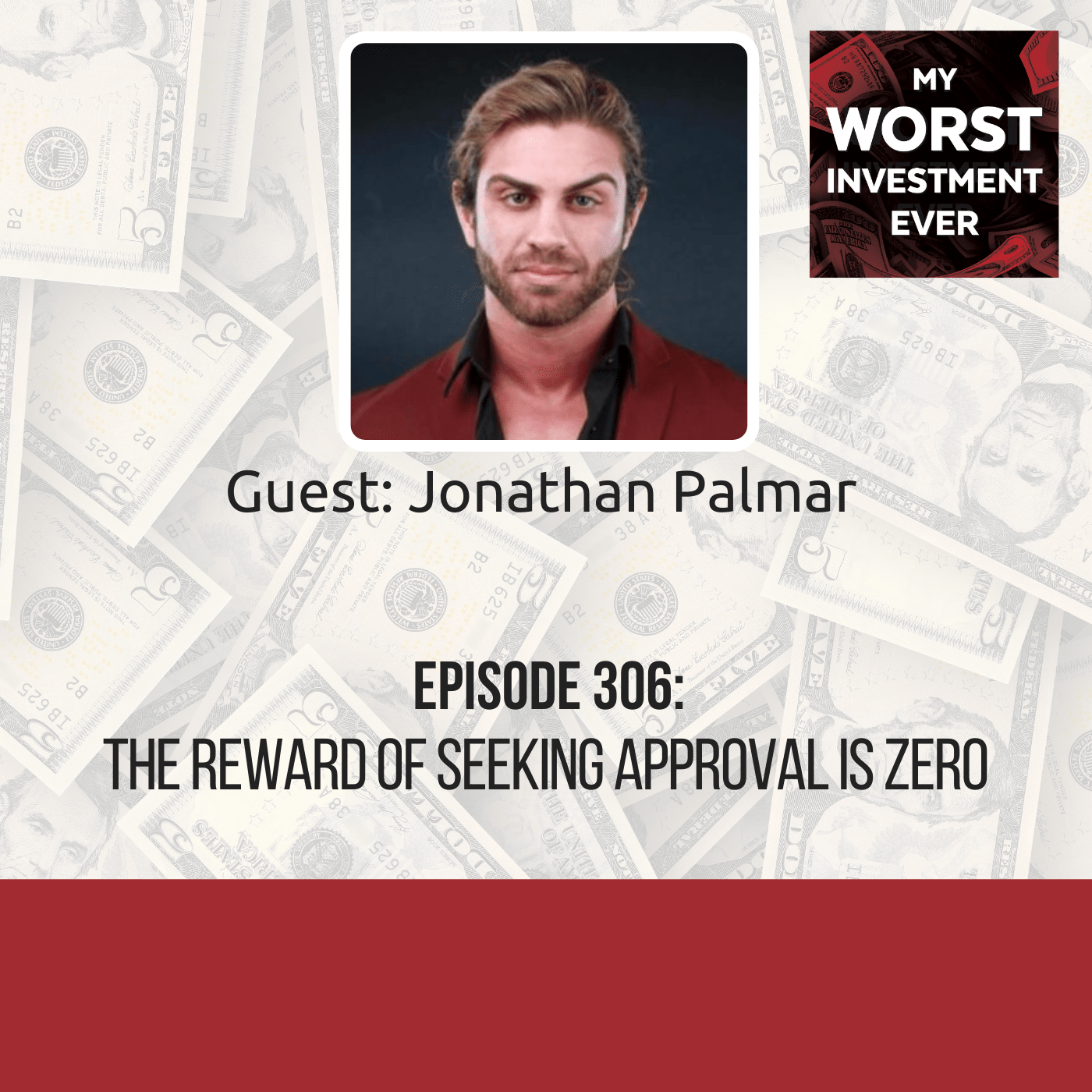
Jonathan Palmar – The Reward of Seeking Approval Is Zero
Jonathan Palmar makes videos. “People will always disappoint you because your expectations will never match what they provide you with.”Jonathan Palmar Worst investment everEver seeking approvalLike most people, Jonathan grew up believing that he needed to trust in the constant search for other people’s approval. As is human nature, Jonathan wanted to fit into the pack. He found himself often wanting people to give him the validation that he was going on the right path.The nagging need to be validatedJonathan’s need for approval sometimes got pretty dramatic. He would often put himself in gravely uncomfortable situations.There was this one time that Jonathan wanted to complete this project so badly. He put his heart and soul into this project because he wanted his boss to be happy. When he finally went to present it, his boss responded nonchalantly and tossed it to the side.Getting to his breaking pointJonathan was devastated by the reaction he received from his boss so much that it threw him to his breaking point. He realized that he had put all this time into the project, and he ought to be proud of himself. Jonathan also admitted that he would always get disappointed if he kept trying to get people to validate him.Adjusting his expectations of othersAfter this incident, Jonathan learned that he had wasted so much money and time searching for validation from people. Now he has stepped out of this kind of thinking. He lives his life without seeking approval from anyone, including his friends, family, coworkers, and audience.Lessons learnedOutward approval brings you zero rewardThere is no reward in searching for approval or doing things to get acceptance from other people. Stop seeking validation from others and be your number one cheerleader.You need to invest more in yourself and not other peopleWe need to focus more on building ourselves up and investing in ourselves instead of on building others.Partner with someone who gives as much as they takeFind somebody you can work with within a balanced partnership in which the give and take are equal. If you find yourself in a situation where the amount of effort that you are putting to get validation is not equal to the outcome that your partner provides you with, then you need to leave.Andrew’s takeawaysWhat other people think of you is none of your businessBe comfortable with the fact that this is your life, your decision, and your thinking. Some people are going to like it, and some won’t. But that is their problem. So have the courage to live your life, and do your things without getting concerned with what people think about you.Actionable adviceYou have to polish your diamond. Nurture yourself as an investment. Take the time to look introspectively and figure out what is important to you, and then have the courage to act on it. You cannot start to love and care for people until you begin to love and care for yourself.No. 1 goal for the next 12 monthsJonathan’s number one goal for the next 12 months is to live a day at a time and not plan a single moment.Parting words “This wasn’t the worst podcast I’ve ever been on. So I consider this a success story.”Jonathan Palmar [spp-transcript] Connect with Jonathan PalmarLinkedInAndrew’s booksHow to Start Building Your Wealth Investing in the Stock MarketMy Worst Investment Ever9 Valuation Mistakes and How to Avoid ThemTransform Your Business with Dr.Deming’s 14 PointsAndrew’s online programsValuation Master ClassHow to Start Building Your Wealth Investing in the Stock MarketFinance Made Ridiculously SimpleBecome a Great Presenter and Increase Your InfluenceTransform Your Business with Dr. Deming’s 14 PointsConnect with Andrew Stotz:astotz.comLinkedInFacebookInstagramTwitterYouTubeMy Worst Investment Ever Podcast

Dale Dupree – Do Not Be Tricked Into Taking Shortcuts to Riches
Dale Dupree is leading a sales rebellion against the mediocre ways of the status quo in order to put people over products, community over commissions, experiences over performing a pitch, and fellowship over negotiations. “If you miss it at 30, and you don’t find it until 60, it’s okay. Being patient with your outcomes is what’s most important instead of trying to force them.”Dale Dupree Worst investment everWhen Dale was 23 years old, he had ambitions to become a rockstar. He rubbed elbows with big names in the industry, such as Lou Pearlman, a well-known record producer.Meet the who is who in the music industryOne day, Dale got invited to Pearlman’s mansion for a hangout with the who is who in the industry. He was elated to receive the invite because this was his chance to network with the music industry big wigs.The enticing investment opportunityWhile at the mansion, Pearlman and other big wigs from Warner Brothers, Sony, and Universal Records did a video presentation of a product similar to Spotify where a user could access any album they wanted at a subsidized rate. Now in 2007, this was huge.The big wigs invited those in attendance to invest in the product. One could choose to invest $50,000, $20,000 or $10,000. Dale liked the idea.Here comes the pyramid schemeAfter signing up for the investment, Dale got informed that he had to get 10 of his friends to sign up underneath him, and all their sales would level him up.Then came the wait for returns. A year later, Dale had made nothing. Two years later, he still had not seen any return on his investment. Eventually, in 2012 the scheme was shut down by the government. Dale never made anything from this investment.Lessons learnedJust because someone has a big name does not mean that they are credibleBe careful when investing in something just because someone famous has endorsed it. Just because a big wig has put their name on something does not give it credibility. Just because a celebrity says you should do something does not mean that you should. Always do your due diligence.We control our outcomes much better than other people canNever believe in a scheme that tells you to sit back, relax, and have other people make you money. If you want to be rich, you have to work hard. Do not depend on luck. Making smart, intentional decisions and being very aware of what you are doing will create the wealth you desire, not joining pyramid schemes.Andrew’s takeawaysKnow the difference between multi-level marketing and Ponzi schemesThere is a fine line between multi-level marketing and pyramid/Ponzi schemes. A Ponzi scheme involves getting paid out from what other people are paying, while multi-level marketing involves real products and services. There are legitimate multi-level marketing methods of distributing products. However, a pyramid scheme is illegal. It is, therefore, vital that you know the difference between the two. You do not want to find yourself on the wrong side of the law.There is no legal fast way of making moneyIt takes time to make money. You have to invest it and let it grow slowly and compound. Do not go looking for shortcuts.Question the motivation behind every opportunity offered to youEverybody who is approaching you with an opportunity is doing so from a financial incentive perspective. Nothing wrong with that as it is just business. Whether they are a salesperson, or an entrepreneur selling a dream, they will be motivated by some financial incentive. Understand that incentive so that you can make a better decision. If those incentives are not stated clearly or are hard to figure out, or someone denies that they have some financial incentive, then take that as a warning sign.Actionable adviceThere is so much fakeness out there, be very careful about what you perceive to be real. If you cannot touch it, feel it, see it, or believe it, it is not real. Make the right decisions around your wealth, your family, your community, and your legacy.No. 1 goal for the next 12 monthsDale has developed an app for rebels that do not have 1,000s and 1,000s of dollars to spend on sales training because it is expensive. The app is part of his company’s ministry as a sales organization to help small businesses wanting personal development and growth. Dale’s number one goal for the next 12 months is to launch the first, second, and third iteration of the app. [spp-transcript] Connect with Dale DupreeLinkedInTwitterFacebookYouTubeWebsiteBlogAndrew’s booksHow to Start Building Your Wealth Investing in the Stock MarketMy Worst Investment Ever9 Valuation Mistakes and How to Avoid ThemTransform Your Business with Dr.Deming’s 14 PointsAndrew’s online programsValuation Master ClassHow to Start Building Your Wealth Investing in the Stock MarketFinance Made Ridiculously SimpleBecome a Great Presenter and Increase Your InfluenceTransform Your Business with Dr. Deming’s 14 PointsConnect with Andrew Stotz:astotz.comLinkedInFacebookInstagramTwitterYouTub

Chris Tate – Time Is Precious, Invest It
Chris Tate is one of the first people to ever release a share trading book in Australia. He is the best-selling author of The Art of Trading and The Art of Options Trading in Australia. He’s been running the 6-month repeat-for-free Mentor Program since the year 2000, and he’s also the founder of the Talking Trading podcast, a free weekly trading podcast.With a background as an immunologist and his previous work as a bouncer, Chris’s life experiences will amaze you. When he’s not hanging out with his traders, he can be seen lifting weights at the gym, enjoying yoga, and trying to get a personal best time on his rowing machine in his garage. “Time is more important than money because money can be replaced; time cannot.”Chris Tate Worst investment everChris began his career as an immunologist and had a profession in academia mapped out for himself. However, he started to trade in the 80s bull market in Australia.Chris made the mistake of thinking that because everything he bought succeeded, he was somewhat a genius. When his luck stopped, Chris thought he should learn about trading. He figured stockbrokers know best about stocks.Joining a broking firmChris conned his way into a broking firm based on the fact that his background is reasonably quantitative. Derivatives were beginning to take off in Australia, and he seemed to have an affinity for understanding them.Stockbrokers know squat about tradingAs soon as Chris joined the broking firm, he learned that stockbrokers knew nothing about trading. He found out the person sitting opposite him had been selling shoes two weeks beforehand, and the person sitting next to him had been selling carpets.Chris quickly learned that broking was a sales profession and not of analysis and execution.Making the best of what he had learnedNow that Chris had realized that brokers would never teach him how to trade, he had to make the most of his situation. He was still working for a brokerage anyway.Chris noted that being in a dealing room gave him access to information he did not have before. It also gave him access to a trading floor that helped him understand ebbs and flows very quickly. Chris also got to understand the cyclical nature of emotion that drives price. And so he thought he could marry his access to information and the trading floor together. Chris spent many years as a broker taking the opportunities presented to him to hone his skills.There was an easy and quick way to learn about tradingIn hindsight, working in the brokerage for so long was his worst investment ever because he just burned time, not knowing that time is precious. He now realizes that he did not think through the problem well.Chris’s problem was his desire to learn how to trade, and instead of going back to school and take a degree in Finance, he went to work for a brokerage. A Master’s degree would have taken him between 18 months and two years, and it would have given him different connections within the industry.Lessons learnedTime is precious invest it wiselyTime, unlike money, cannot be replaced. Therefore invest your time wisely. You can make more money should you lose it, but once your time is gone, that is it. There are many opportunities to make money. But no option or scheme grants you time.Take risks when you are youngIt is best to take risks and make mistakes when you are young because you still have time to recover and learn from your mistakes.Andrew’s takeawaysIf you want to learn about trading, go to a trader, not a brokerBrokers are simply salespeople who package ideas for clients in a way they think they would like them. If you want to learn about trading, go to a trader. If you desire to learn sales in the financial world, go to a broker.Money is not hard to access. What you need is a solid ideaMoney may be hard to make, but nowadays, if you have a good idea and are good at convincing people, you can make money if you execute your plan well.Actionable adviceDon’t be impulsive when making decisions. Instead, take time to sit and think about your problem instead of just rushing to a solution.No. 1 goal for the next 12 monthsChris’s number one goal for the next 12 months is to get on an airplane and go somewhere.Parting words “Pack your ego.”Chris Tate [spp-transcript] Connect with Chris TateLinkedInTwitterFacebookWebsiteAndrew’s booksHow to Start Building Your Wealth Investing in the Stock MarketMy Worst Investment Ever9 Valuation Mistakes and How to Avoid ThemTransform Your Business with Dr.Deming’s 14 PointsAndrew’s online programsValuation Master ClassHow to Start Building Your Wealth Investing in the Stock MarketFinance Made Ridiculously SimpleBecome a Great Presenter and Increase Your InfluenceTransform Your Business with Dr. Deming’s 14 PointsConnect with Andrew Stotz:astotz.comLinkedInFacebookInstagramTwitterYouTubeMy Worst Investment Ever Podcast
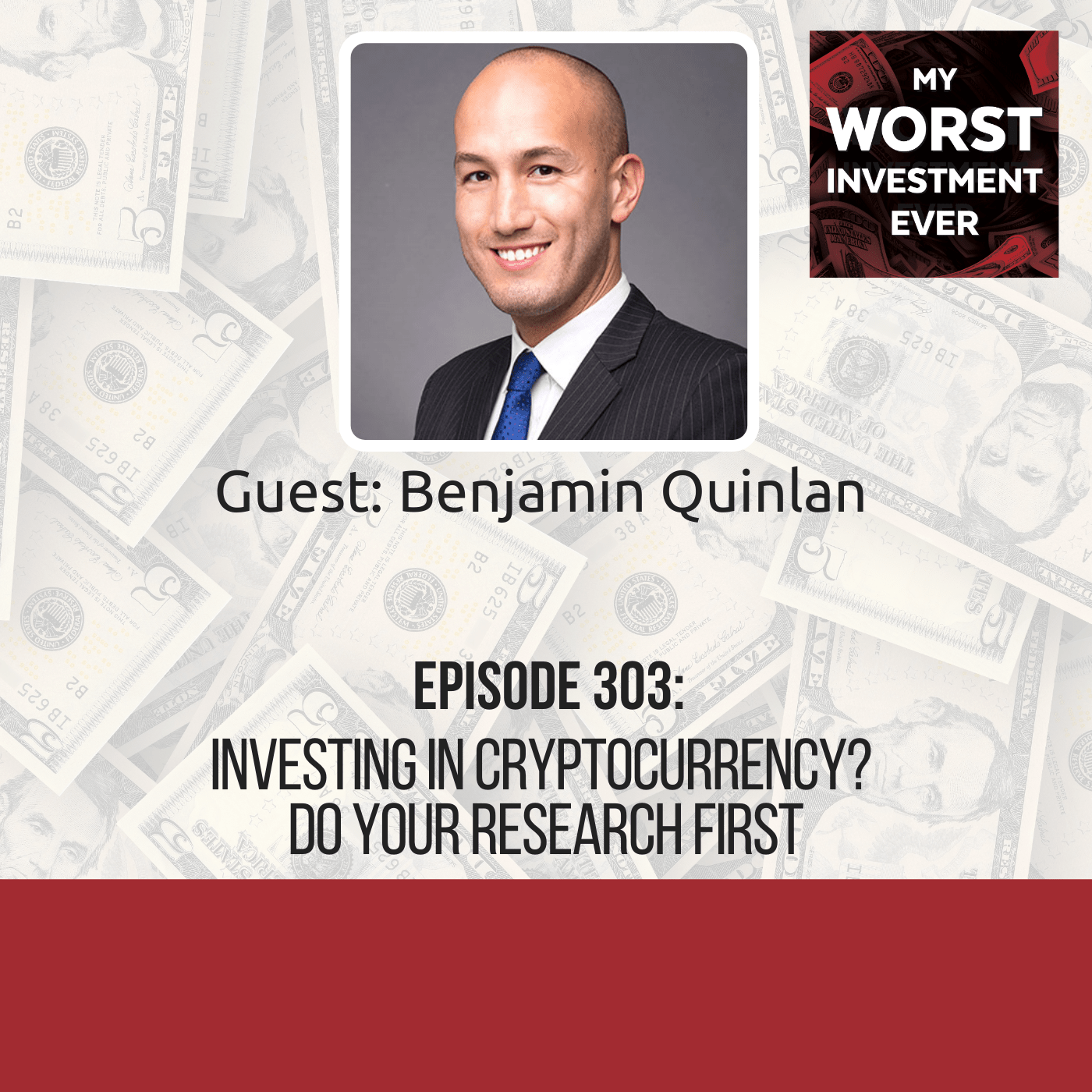
Benjamin Quinlan – Investing in Cryptocurrency? Do Your Research First
Benjamin Quinlan is the CEO and Managing Partner of Quinlan & Associates. He is also the Chairman of the FinTech Association of Hong Kong, an Adjunct Professor at the AIT School of Management, a Mentor for PingAn’s Cloud Accelerator, a Guest Contributor for eFinancialCareers and Regulation Asia, and a Senior Advisor to many leading startups in the region.He was previously the Head of Strategy for Deutsche Bank’s equities business in the Asia Pacific and its Investment Bank in Greater China. He has also worked at UBS, Oliver Wyman, and PwC. “You’ve got to be in the game and not on the sidelines; otherwise, you are never going to get involved to the degree you need to make things work for you.”Benjamin Quinlan Worst investment everInvesting in cryptocurrency with all the hypeIn 2017, there was all this hype going on around cryptocurrencies. Bitcoin was literally on the financial news headlines every day. As a strategic consultant, Benjamin likes to put a lot of data and thought behind how he looks at new opportunities and new developments, particularly in the financial services industry.So Benjamin deployed his team and tasked them with cracking this new cryptocurrency. His focus was on learning what this ecosystem was all about and the real value of this very elusive Bitcoin that everyone kept referring to.Finding a way to value BitcoinAs Benjamin and his team tried to crack Bitcoin, they realized that nobody knew its worth. Analysts in the market said it was worth zero, while the people rushing to invest in Bitcoin were saying it was worth a million. But they were all in agreement about one thing; there were zero methodologies and approaches to valuing Bitcoin.The team sat down and worked out how to value this new currency. The team came up with four different methodologies. Every single method pointed to the fact that this was a massive speculative bubble.Sharing his report with the marketBenjamin and his team concluded that Bitcoin was just a speculative investment that would plummet in no time. At the time of Benjamin’s research, the price of Bitcoin was around $20,000.In Benjamin’s report, he predicted that the price of Bitcoin at the end of 2018 would be $1,800. By the end of the year, it hit $3,100.Claim to fameBloomberg cited Benjamin’s report as the most accurate crypto forecaster in the world. The report got so much coverage around the world and even made it into Quora and Reddit.The advice he had but never tookOne day, Benjamin was on international TV, CNBC, and the anchor asked him, “So Benjamin, given all of your research and analysis and thought process, are you shorting Bitcoin?” He said, “No, we do not. Because as an independent consulting firm, we do not get involved in the investment side.”Benjamin watched as Bitcoin continued to plummet throughout the year and could not help but think about the amount of money he could have made from backing the advice he and his team were so confident of. But alas, he did not do it. It would have been great to put his money where his mouth is.Lessons learnedThe success of any investment lies in thorough researchWhen considering an investment, including cryptocurrencies such as Bitcoin, do thorough research first. Do not just look at technicals and theories. You need to look at what is going on in the broader market too.Back your thought process with convictionYou will not always get everything you do right but no matter what happens, always back up your decisions with conviction. If you strongly believe that your decision is right, then stick by it.Andrew’s takeawaysTake a small position and grow it over timeJust because your gut tells you to do something does not mean you have to go all in. Invest just a little bit into your investment of interest so that you are at least taking action. Start slowly and continue to build your portfolio.Actionable adviceIf your gut is fundamentally pushing you in a direction to make a decision, take a position. Whatever that position might be, follow your instinct, and follow your gut. Only over time can you work out if you got it right or wrong and, that is part of investing.No. 1 goal for the next 12 monthsBenjamin’s number one goal for the next 12 months is to continue to build and scale his business. Beyond that, he wants to get back on stage and do some more touring for comedy. He also wants to finish the book he’s been working on.Parting words “I wish everyone a very fruitful 2021.”Benjamin Quinlan [spp-transcript] Connect with Benjamin QuinlanLinkedInTwitterFacebookInstagramWebsiteBlogAndrew’s booksHow to Start Building Your Wealth Investing in the Stock MarketMy Worst Investment Ever9 Valuation Mistakes and How to Avoid ThemTransform Your Business with Dr.Deming’s 14 PointsAndrew’s online programsValuation Master ClassHow to Start Building Your Wealth Investing in the Stock MarketFinance Made Ridiculously SimpleBecome a Great Presenter and Increase Your InfluenceTransform Your Business
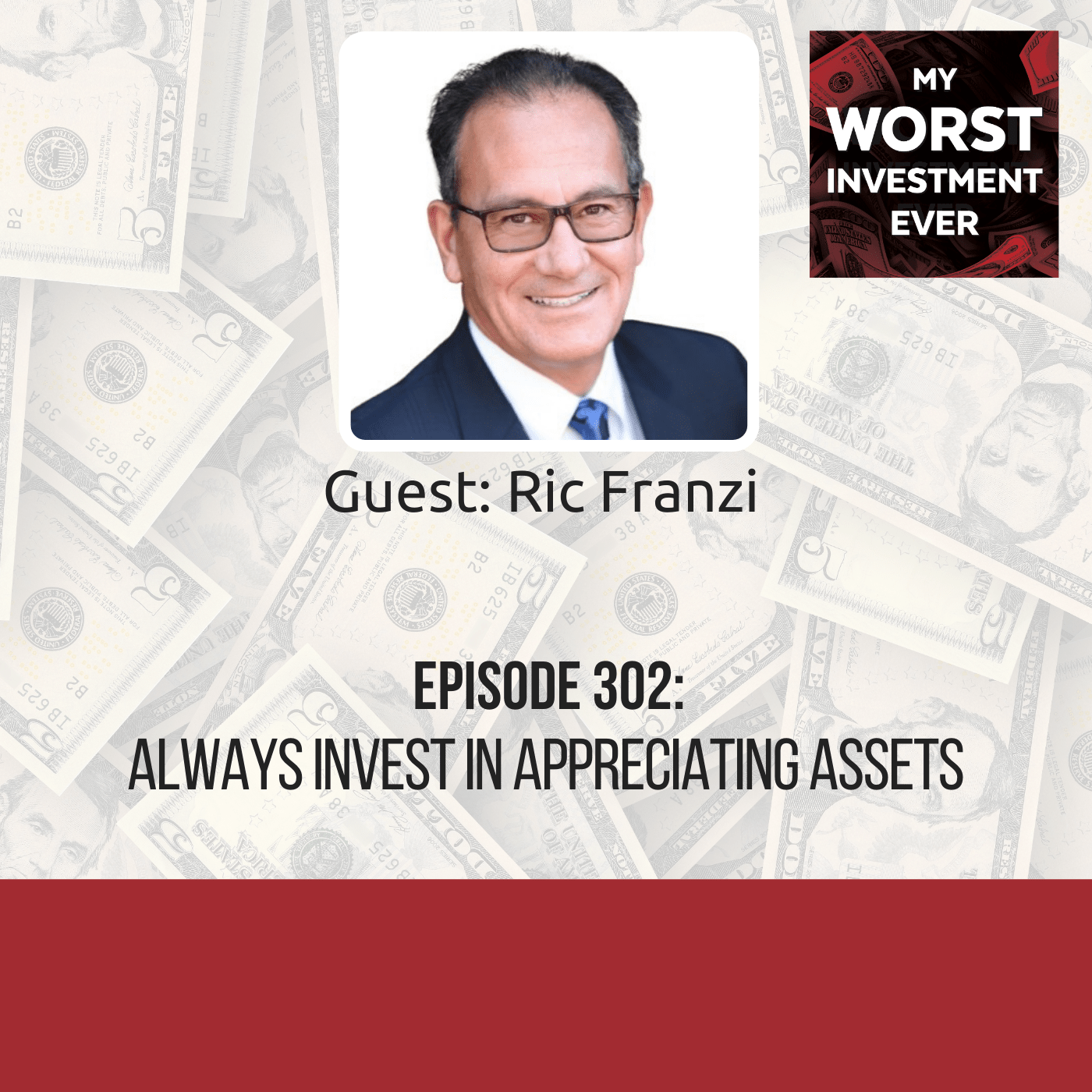
Ric Franzi – Always Invest in Appreciating Assets
Born and bred in a small coal mining and steel mill town in Western Pennsylvania, Ric Franzi moved to California after graduating with a B.A. in Communications from the University of Pittsburgh. While in Southern California, he continued his education by attaining his MBA from Pepperdine University.Ric is the host of the Critical Mass Radio Show & Podcast and an author of three books and frequently speaks to CEOs and business owners. He has been featured on Forbes, INC, CNBC, and many others. “When you emotionally want something, it is amazing how you can mentally rationalize that it makes sense.”Ric Franzi Worst investment everRic and his wife had family friends whom they had known for a very long time. The friends had a son, Henry, who was one of two co-founders of the company Broadcom. The company is a very well recognized chip manufacturer. The couple has known Henry forever, and they trusted him. Henry had started other successful businesses, and so they knew him to be a successful entrepreneur.Getting the first chance to invest in their friend’s startup companyRic and his wife got a chance to buy shares into Broadcom at a family and friends rate.Being the cautious investor he is, Ric called his broker and talked to him about the idea of investing in Broadcom.The broker told him that he did not have to but that the shares were three times higher than the price he could buy them. With that advice, he made up his mind to purchase the shares.Selling their shares to build a poolBroadcom was doing well, and so Ric was quite delighted with the decision they had made. After a while, the couple decided to build a pool and do some modernization to their house.Since the couple had made enough money on the Broadcom stock, they decided to sell it and use that money to finance the project rather than getting a second mortgage. So they took the gains off the table and spent it on something that they wanted.The couple spent tons of time in that pool with their growing children and made lots of family memories.Leaving money on the tableWhile building a pool and improving their house was a fantastic personal decision, selling their stock too early saw the couple lose a lot of money. The Broadcom shares continued to appreciate.Ric was pained to realize that they had made a very foolish financial decision by selling an appreciating asset to get a depreciating one.Lessons learnedDo not sell an appreciating asset to buy a depreciating oneDo not buy depreciating assets, especially if you have to sell an appreciating asset. It never works out well. Also, do not overbuy depreciating assets.Seek the assistance of a financial advisor whenever you need to sell your investmentsIf you have an urgent need for cash and the only way to raise it is to sell your investments, then consult a financial advisor and figure out how to minimize the drain on your finances. Do not let emotions take control of your decisions.Have someone who can offer you uncompromised adviceHave someone trusted who will advise and reason with you without any emotions involved whenever you want to make financial and investment decisions.Andrew’s takeawaysPeople miss opportunities every day. So do not beat yourself upIt is painful to look back at the opportunities that we miss. The best way to deal with the emotion of that is to remember that everyone has missed many other opportunities.Test things out with a small positionWhen you encounter a stock whose price goes up or down, take a small amount of that stock and sell it or buy it depending on the price’s direction.Actionable adviceSolicit outside advice from people who have no vested interest in the decision you are going to make. Then take seriously the recommendation that you get. Remember to submerge your ego and your emotion and realize these people have your best interests at heart. They may be smarter than you, so follow that advice as much as you may not want to hear it.No. 1 goal for the next 12 monthsRic’s number one goal for the next 12 months is to leverage digital-first strategies to drive his top of the funnel activities and grow his community.Parting words “Stay healthy.”Ric Franzi [spp-transcript] Connect with Ric FranziLinkedInTwitterFacebookWebsiteAndrew’s booksHow to Start Building Your Wealth Investing in the Stock MarketMy Worst Investment Ever9 Valuation Mistakes and How to Avoid ThemTransform Your Business with Dr.Deming’s 14 PointsAndrew’s online programsValuation Master ClassHow to Start Building Your Wealth Investing in the Stock MarketFinance Made Ridiculously SimpleBecome a Great Presenter and Increase Your InfluenceTransform Your Business with Dr. Deming’s 14 PointsConnect with Andrew Stotz:astotz.comLinkedInFacebookInstagramTwitterYouTubeMy Worst Investment Ever Podcast

Pete Lonton – Stick With Your Successful Property Investment Model
Mighty Pete Lonton from the Fire In The Belly show is an author, soon to be TEDx speaker (Jan 2021), podcast host, mentor, entrepreneur, property investor, husband, and father of three beautiful girls.Pete’s background is in project management and property, but his true passion is the ‘Fire In The Belly’ show and project. His mission is to help others find their potential and become the mightiest version of themselves.Pete openly talks about losing both of his parents, suffering periods of depression, business downturn, burn-out, and ultimately his years spent not stoking ‘Fire In The Belly.’ In 2017, at 37.5 years of age, that changed, and he is now on a journey of learning, growing, accepting, and inspiring others. “Not everything that shimmers is gold. Just because it looks good and it smells good doesn’t mean it is good.”Pete Lonton Worst investment everPete started investing in property 20 years ago in his early 20s. It has always been something that has worked for him in the background. Pete, over time, came up with a very successful property investment model that was super simple. The model looked for a 10% growth yield that brought a return on investment in three years. Pete retained the asset but would add value to it or buy an undervalued property and get it back up to value.Exploring new opportunitiesPete had the opportunity to meet somebody who was a much bigger investor than him. The man was heading towards retirement, and his portfolio was about ten times the size of Pete’s portfolio. The man wanted to offload his portfolio, and Pete saw an opportunity to grow his portfolio. The two gentlemen quickly grew on each other and had a good rapport.Sizing up the opportunityPete got invited to go and take a look at the properties with a view of potentially doing a deal. One particular property stood out as a good investment opportunity. The Gulf Open was coming to a location in Northern Ireland, and as a result, accommodation was under severe demand. The property could be developed into a guest house, or it could be knocked down and built into ten apartments. The property, therefore, had both short term and long term potential.The universe bending to make this happenThe deal was a five-year lease, with an agreement to buy. So that gave Pete five years of a head start on the lease agreement. The sale price to be paid in five years was pre-agreed on the commitment to sell and for Pete to buy. With this kind of arrangement, financing the deal would not be a problem for Pete. Contracts were drawn in just a matter of days, and everything seemed to be moving along pretty fast. The pressure to close the deal was on.One little issueEverything seemed to be right with this deal except one thing—it went against his property investment model. Pete started feeling off about the whole deal, and he decided to run it through someone else who would look at it with fresh eyes.Pete assembled his family, friends, and colleagues, took them to the property, and asked them for their feedback. They were all against the deal. Their reaction came as a huge shocker for Pete but was also a big wake up call.Backing out of an agreementFortunately, Pete had not signed the deal yet though they had had a gentleman’s handshake. Pete felt guilty about having to back out of the deal, but he had to protect himself from making his worst investment ever.Lessons learnedStick to your investment modelDo not let anyone rush you into a deal, especially if it goes against your investment model.Take time to make significant decisionsBefore you make a major decision, sleep on it, and give it some more thought. You never have to make a decision right away.Not everything that shimmers is goldJust because it looks good and it smells good does not mean it is good. Do not let the excitement of something new cloud your judgment.Andrew’s takeawaysUrgency is just a sales tool. Take your time before investing in propertyWhenever you are purchasing property, remember that urgency is just a sales tool. Occasionally, urgency is real, such as when a property is to be foreclosed on, and the owner wants to get out of it right away because the bank has given a deadline. But in normal circumstances, be sure to take your time before investing in property.If you have a system that works, don’t break itIf you have a system that works well for you, do not break it. Always stick with your system.Protect your interests even if it means reneging on a contractYou have a right to protect your interests, even if it means backing out of a contract. Do not accept to get caught up in contracts because sometimes the pain of what comes out of a contract is not worth it.Actionable adviceKnow what you are good at and do it repeatedly.No. 1 goal for the next 12 monthsPete’s number one goal for the next 12 months is to build passive assets that will be working for him while he sleeps. These include books, podcasts, property, and intellectual property.Parting words “Be

Andrew Stotz - 49 Incredible Life Lessons I learned in 2020 from 26 Extraordinary People
Best of 2020 Podcast Episodes Roundup“Hello, fellow risk-takers, and welcome to My Worst Investment Ever,” that’s how I start every one of the 300+ My Worst Investment Ever Podcast episodes I have recorded. Below are some of the highlights from the 170 people I interviewed in 2020.One of the things that makes the investors, businessmen and women, and experts who come on the show extraordinary is their willingness to share their worst investment with the world. Most people I ask to go on the show say, “No, thank you.”The good news for you is that you don’t have to experience their loss. Listen and absorb the lessons they teach. Whether you’re an experienced investor or just starting your investment journey, these podcasts can give you a different investment perspective and expand your knowledge.To get straight to the lessons, just click here and download my one-page cheat sheet.Ep250: Stephen Kalayjian – The Key to Success in Trading Is to Have DisciplineStephen Kalayjian is a Chief Market Strategist and co-founder of Ticker Tocker. He has decades of experience trading stocks, futures, currencies and has traded nearly 2 billion shares.Steve shared how, in his youth, he used his hard-earned money to buy 550 calls and assumed that stocks only went higher (they don’t).Key takeawaysDiscipline is the key to successIt’s better to admit you are wrong; than to lose all your moneyKnow when to continue or quit a specific investmentEp248: Karen Foo – Risk Management Is the Key to Success in ForexKaren Foo is a motivational speaker, financial trainer, and author. She has ranked #1 in a Singapore nationwide Forex trading competition. You can find her on her YouTube channel.Karen shared how she lost her savings when she invested in forex and unit trusts without guidance and research.Key takeawaysRisk management is the key to long-term successSeek out mentors who are experts in what you want to learnWrite out your investment plan before investingDo your research, ask more questions than you answerEp279: James Jani – You May Gain the Right Skills From the Wrong PathJames Jani is a YouTube Expert and Vlogger, who creates thought-provoking documentaries on YouTube about Business, Money, and Life.James shared his story of investing years of his life into acting without success, only to realize later acting wasn’t what he wanted to do for the rest of his life.Key takeawaysBe brave to follow your purpose in life, no matter what.The skills you gain from every experience combine to help you create value in the future.Ep249: Chris Mayer – Build a List of 5 Quality Companies and Enter at the Next Market FallChris Mayer is the co-founder and portfolio manager of the Woodlock House Family Capital fund. He has authored four books, including 100 Baggers: Stocks that Return 100-to-1 and How to Find Them, ranked 4.6 out of 5 on Amazon with 290 reviews. You can follow him on Twitter.Chris’s worst investment story happened when he bought cheap companies while disregarding what those businesses could offer in the long-term.Key takeawaysBuy the best companies, even if they are expensiveBuild your stock buy list and wait for significant market falls to buy themConsider the long-term returns instead of being seduced by today’s cheap stocksEp192: Sampath Mallidi – Your Startup Should Always Have Paying CustomersSampath Mallidi is the Founder and CEO of Intandemly, an account-based sales platform that helps organizations simplify their sales pipeline.Sampath shared that he and his then-boss spent all their money, shifting their company’s strategy because they anticipated funding. The money never came.Key takeawaysA deal is never done until the money is in the bankCash flow, not cash, is KingDon’t let failure get to you. Bounce back fast, and figure out how to move forward.Ep232: Ranveer Brar – Deepen Your Relationship with What You Love and Be a Good BusinessmanRanveer Brar is one of India’s top chefs, a celebrity, a Masterchef India judge, author, restaurateur, food film producer, and benefactor. He shares his passion for food on his website and his excellent YouTube channel. Follow him on Facebook, Twitter, and Instagram.Ranveer shared how he left his executive chef position in India to join a restaurant startup in the US. His big mistake was going with the flow of other people’s plans.Key takeawaysDon’t do something just because it worked for others; find what works for youBalance your passion with the need to create a profitable business modelDeal with problems head-on rather than denying and avoiding themEp235: Rand Fishkin – Don’t Be Afraid to Stand up Against the Growth-at-All-Cost Venture Capital ModelRand Fishkin is CEO & co-founder of SparkToro, and author of Lost and Founder: A Painfully Honest Field Guide to the Startup World. The book has an impressive 4.7 out of 5 Amazon rating; I enjoyed how Rand personally narrated the book’s Audible format. He previously co-founded and ran the SEO optimization company, Moz.Rand’s worst invest

Larry Levine – Your Tragedy Could Be the Story That Brings You Success
Larry Levine is the best-selling author of Selling from the Heart and the co-host of the Selling from the Heart Podcast.In a post trust sales world, Larry Levine helps sales teams leverage the power of authenticity to grow revenue, grow themselves, and enhance their clients’ lives.Larry has coached sales professionals across the world, from tenured reps to new millennials entering the salesforce. They all appreciate the practical, real, raw, relevant, relatable, and “street-savvy” nature of his coaching. Larry is not shy when it comes to delivering his message.In a world full of empty suits, Larry is passionate about helping sales reps succeed by helping them to uncover their true value before they get visible.Larry is leading a revolution of authenticity, integrity, and substance in the sales profession. “If you can self reflect, become self-aware of who you are, and work on the inner part of who you are, you, it fills your outer success.”Larry Levine Worst investment everLarry helped start a company in LA in 1994. In 2000 he bought into the company that went on to expand rapidly.Wanting to explore more optionsIn 2012, Larry started feeling that it was time for him to move on. His work environment had become too toxic and dysfunctional. It was time for Larry to explore other options. In 2013, Larry sold his shares of the company, and after about eight months, he left the company for good.Starting afreshAfter working for almost 20 years with the same company where he poured a lot of blood, sweat, and tears, Larry made a career decision to go somewhere else. This time he decided to go to a large corporation. He was now a newbie in one of the biggest corporate firms in LA. Larry was number 18 on an 18 person corporate account team.To prove himself, Larry got an exorbitantly high quota for the year. For 90 days, it was a rough roller coaster for him but, Larry took everything he had learned, put his best foot forward, and rose in one year from number 18 to number two. He managed to bring in a million and a half dollars of brand new business.The biggest let down of his lifeIn the spring of 2015, at 50 years old, Larry was fired. For the first time, he found himself without a job. Losing his job was the worst rejection Larry had ever had in his whole life, and it hit him so bad. He cried for days. Now he had to figure out what to do with himself at 50 years old.Trusting himself to start his own businessLarry had to figure out what to do next because he had a family to take care of. He started tapping into his networks right away. A few days later, Larry’s close friend called him and suggested that he becomes a sales coach and trainer.Larry thought about his friend’s advice and realized that he could do it. But he was afraid of disappointing his dad. However, Larry decided to give it a shot. The plan was to be the best coach ever and make his dad proud.Building a successful coaching businessLarry started to coach office technology reps. He wore his emotions on his sleeves, connected deeply, and built meaningful relationships with his clients. He built a successful coaching business based on everything he had learned over the years.Lessons learnedReinvent yourself and learn from your mistakesWhether you made a horrible career investment or a bad financial investment, pick yourself up, dust yourself off, and keep pushing forward.You are capable of doing a lot more than you think; just believe in yourselfIf you believe in yourself, you will see that you can do a lot more than you ever thought you could. Trust yourself to be great.Andrew’s takeawaysBe comfortable with facing resistance. It will propel you to greatnessEmbrace resistance, disasters, frustration, and emotions. It is this resistance that forces you to change and look for new options and propel yourself.Embrace your pain and your struggle and tell your story with authenticityYou may have gone through a lot of struggle and pain. Instead of letting it hold you back, embrace it, and then bring your story to the world. You will never know where it can take you and who you may help with your experience.Actionable adviceWhether you are in sales, finance, you are a teacher, a banker, work as a clerk in a grocery store, etc. if you bring genuine sincerity, substance, and your heart to the forefront, it will not only change you but also change the conversations you have, your relationships and your business endeavors.No. 1 goal for the next 12 monthsLarry’s number one goal for the next 12 months is to launch another Selling from the Heart book. He just started the rough outline, and he hopes to get the book to market in 2021.Parting words “Sincerity, substance, and heart will set you apart.”Larry Levine [spp-transcript] Connect with Larry LevineLinkedInTwitterWebsiteAndrew’s booksHow to Start Building Your Wealth Investing in the Stock MarketMy Worst Investment Ever9 Valuation Mistakes and How to Avoid ThemTransform Your Business with Dr.D
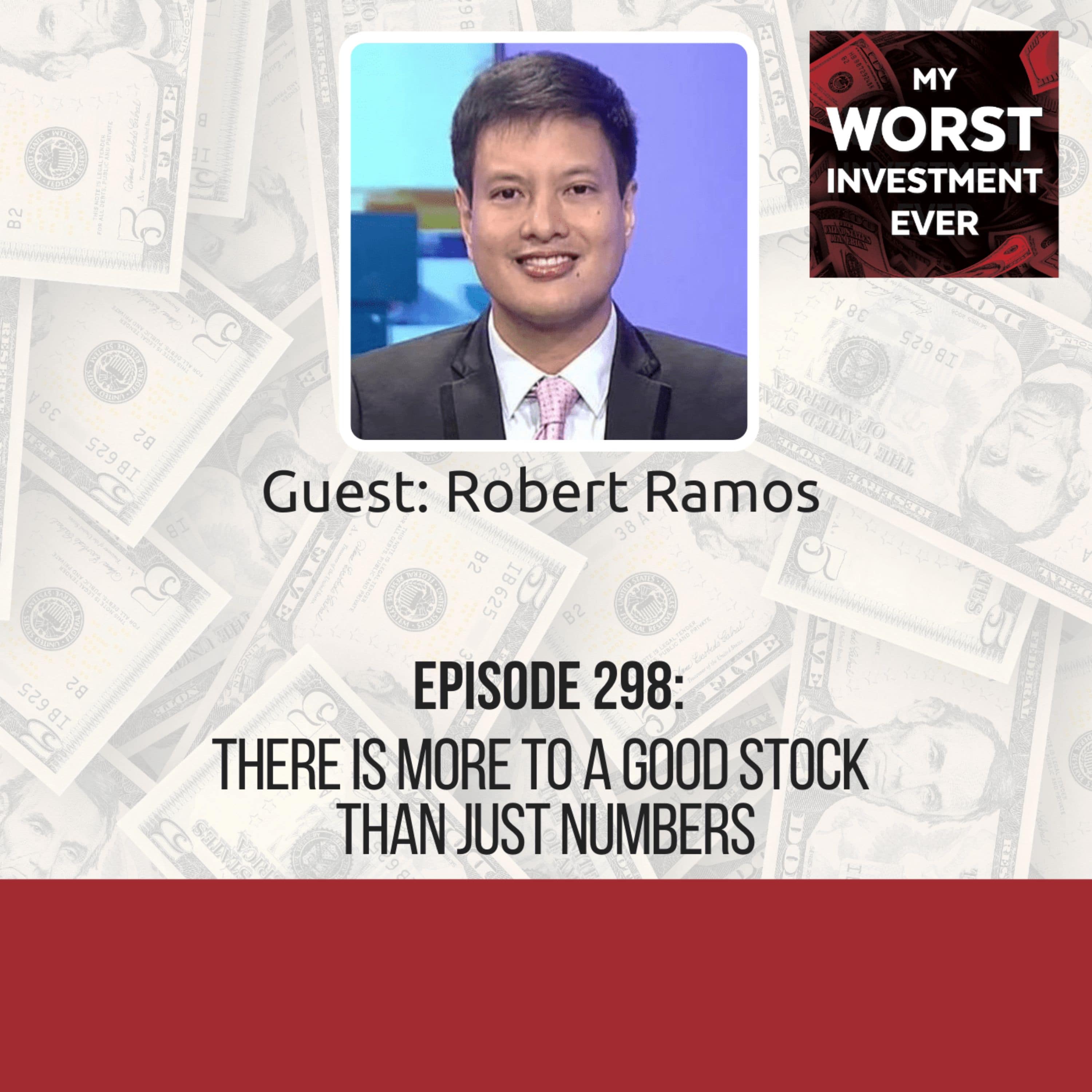
Robert Ramos – There Is More to a Good Stock Than Just Numbers
Dr. Robert B. Ramos, CFA, CAIA, CIPM, completed his undergraduate degree from the Ateneo de Manila University. He finished one master’s degree in Business Management from the Asian Institute of Management and the second one in Business Economics from the University of Asia and the Pacific. And to top that off completed his doctoral degree from De La Salle University.Robert has more than 20 years of banking and finance experience working for both Philippine and foreign institutions. He has experience in the fields of trust and asset management, product development, treasury trading, fund management, marketing, and relationship management.He is currently the First Senior Vice-President and Group Head of RCBC Trust and Investments Group. Robert is a CFA Charterholder, a CAIA Charterholder, a CIPM Certificant, and the current President of the CFA Society of the Philippines. “The thing that made you a star may not work in the next few years. So be ready to adapt, not only from a firm management standpoint but also from a people management standpoint.”Robert Ramos Worst investment everAround 2013 Robert was promoted to the head of investments and business development. He took pride in being able to select undervalued stocks. Robert would choose firms that had a good story and a massive upside. For the past seven years, this had worked very well to the point where many of the funds managed by the firm were in the upper tier.In a continued effort to grow the fundOne of Robert’s best analysts brought a good stock in the power industry to his attention. The stock was undervalued and had fantastic growth potential. Robert looked at the numbers, and he was impressed. This firm was just the best. Not only did they have great numbers, but good management too.Having a piece of the pieRobert was satisfied that this was the best stock to buy. So the firm went ahead and decided to buy a 13% stake.Watching the stockThe stock was performing well a few days after buying it. But after about three months, it started slowing down. In about six months, the stock started dipping. Initially, the decline in value of the stock was not so much that it would cause panic, but it was enough for Robert to notice.However, he believed that the numbers he had seen when evaluating the stock would save it once people saw its value.A downward spiralIn the eighth month, the stock started dipping more and more. Now everyone, including fund managers, was taking notice. In the ninth month, clients started calling because this fund that was doing so well for them suddenly was not doing well.Now the tables had turned. The stock expected to outperform the rest was the one bringing the fund down. Eventually, Robert had to sell that position. That stock remains as Robert’s worst investment ever.Lessons learnedNumbers are not the only thing that determines the value of a good stockNumbers are great, but sometimes they will lie to you. Go beyond numbers when evaluating a good stock. Check out other factors too, including management, illiquidity, the number of analysts covering the stock, and the number of people looking at the stock daily.Selling your underperforming position does not mean you are a failureUnderstand that selling a poorly performing position does not make you a failure. You have to be able to separate yourself and your actions to be able to move accordingly. If you fall in love with your position, then you fall into the trap of throwing in good money into bad money and making a problem even worse than it is.Andrew’s takeawaysBuild a position slowly, over timeBuilding a position over time is an exceptional risk management tool because it removes the excitement of owning it all. You can put your emotions aside and observe how the position performs over time, and you can increase it when you deem it viable.Consider having a stop lossSometimes you may have played your cards right and got the best stock, but you just bought it at the wrong time. In such a case, a stop loss can have some value. So consider using stop losses in a limited way.Liquidity is a major risk factor when selecting the best stock to buyDo not overlook liquidity when deciding which stocks are good investments. You want to invest in a company that is liquid and profitable.Actionable adviceWhen evaluating a stock, look at its numbers, management, size, and liquidity. But the most important thing is being able to admit that you made a mistake and act fast.No. 1 goal for the next 12 monthsRobert’s number one goal for the next 12 months is to grow the business of his current asset management firm and serve the needs of his clients.Parting words “Keep learning and evolving. The world is evolving and if you don’t evolve with it you will die.”Robert Ramos [spp-transcript] Connect with Robert RamosLinkedInTwitterInstagramWebsiteAndrew’s booksHow to Start Building Your Wealth Investing in the Stock MarketMy Worst Investment Ever9 Valuation Mistakes and How to

Kevin Maloney – You Don’t Have a Product Until You Get Paying Customers
Kevin Maloney is a serial entrepreneur with 20+ years of experience in business development, marketing, operations, and finance with early to the mid-stage consumer, media, technology, and real estate companies.He has led more than 1,000+ early mid-stage investor presentations, conducted 100+ corporate and institutional roadshows, and raised more than $90M+ in capital for a dozen early-stage companies. “It doesn’t matter what you or your science team think. Just innovate and iterate quickly based on customer feedback.”Kevin Maloney Worst investment everAt the age of 29, Kevin connected with some scientists working on a process to produce nanomaterials. These are very tiny metallic powders. Kevin saw the potential this technology had, so he raised $100,000 to support the development of this technology.Building one of a kind productKevin gathered the best of the best people in the industry to work on this product that would be a gamechanger. He also surrounded himself with the best mentors. The team went on to develop a high-class product.Kevin raised the first amount of capital, proved the concept, filed patents, and launched his product in 2003. Then he started engaging with a few large potential partners and potential early customers.Struggling to get paying customers for his incredible productKevin believed that if you build an incredible product, then customers will come. He was so wrong. It was an uphill task to get customers to buy his product. Kevin had wanted to start engaging customers while the product was still an idea, but his scientists insisted that he waits until they had a finished product.Kevin missed Energizer’s opportunity to engage and commit to his project because he waited to have a finished product.No money, no businessKevin’s product was not bringing in any substantial income, and he could barely raise enough capital to continue working on it. He was technically running an R&D company with great technology, looking for applications.Eventually, Kevin ran out of money. He had spent over $35 million on this project. He ended up selling the technology to a public company and got an offer for about $10 million in equity.Lessons learnedEngage customers as early as possibleEngage customers and get them to buy in as early as when your product is just a vision. Do not wait for a finished product to start engaging customers. The earlier you start doing it in your product development cycle, the better.It is easier to raise money on a passionate visionStart selling your product as soon as it is a vision; do not wait until you have a finished product. Selling a passionate vision that could change the world is less complicated than selling a ready product.When you have a ready product, people will only give you their money when they see you have paying customers. So sell your vision first to investors before you even come up with the product.You don’t have a business unless you start selling somethingServe your customer well with a great product or service, and they will pay you for it. If you want your business to be successful, make creating a sustainable customer base your focal focus.Andrew’s takeawaysGetting people to pay for your product is the hardest part of entrepreneurshipYou may have a perfect idea, employ the best team that develops the best product, but you cannot count yourself as a successful entrepreneur until you convince people to pay for your product.Actionable adviceWhen the opportunity to take your company public and raise money comes, take it.No. 1 goal for the next 12 monthsKevin’s number one goal for the next 12 months is to launch an indoor air quality, IoT sensor, and monitoring platform. He is also launching a program with his son to motivate kids, students, athletes, and entrepreneurs worldwide to hustle with grit.Parting words “Have fun, fail quickly and often. Engage your customer and get feedback from them.”Kevin Maloney [spp-transcript] Connect with Kevin MaloneyLinkedInAndrew’s booksHow to Start Building Your Wealth Investing in the Stock MarketMy Worst Investment Ever9 Valuation Mistakes and How to Avoid ThemTransform Your Business with Dr.Deming’s 14 PointsAndrew’s online programsValuation Master ClassHow to Start Building Your Wealth Investing in the Stock MarketFinance Made Ridiculously SimpleBecome a Great Presenter and Increase Your InfluenceTransform Your Business with Dr. Deming’s 14 PointsConnect with Andrew Stotz:astotz.comLinkedInFacebookInstagramTwitterYouTubeMy Worst Investment Ever Podcast

Armand Rosamilia – You Will Never Regret Pursuing Your Passion
Armand Rosamilia is a New Jersey boy currently living in sunny Florida, where he writes when he’s not sleeping. He’s happily married to a woman who helps his career and is supportive, which is all he ever wanted in life.He’s written over 150 stories that are currently available, including horror, zombies, contemporary fiction, thrillers, and more. His goal is to write a good story and not worry about genre labels.He not only runs two successful podcasts but also owns the network they’re on, Project Entertainment Network.His two podcasts are Arm Cast Podcast that interviews other authors, filmmakers, musicians, etc., and The Mando Method Podcast, with co-host Chuck Buda. The podcast talks about writing and publishing.You can find him at Armand Rosamilia for his latest releases and interviews and guest posts with other authors he likes. “When I look back on my life, at least I can say I tried, and it failed. I gave it a shot.”Armand Rosamilia Worst investment everArmand wanted to become a writer ever since he was 12 years old. However, he was now in his 40s and was yet to muster the courage to do what he wanted to do most—write.Living a life of obligationEverything that Armand did in his life was out of obligation. He got a job to be able to pay bills and take care of his family. He hated his job so much, but he couldn’t stop working. His ex-wife would not let him quit. Armand had to continue meeting his obligation to his wife and kids.Sneaking out to pursue his passionThe dream of becoming a writer never left Armand. Every night he would sneak out of bed and stay up to write. This habit annoyed his ex-wife so much, but he kept doing it.Hitting rock bottom and rising to his dreamOne day, Armand found himself jobless, and even though his ex-wife was pushing him to get another job, he spent the time writing. He managed to finish his first story. He could not be happier even though he was dead broke. At this point, Armand’s ex-wife was tired of pushing him to get a job and decided to leave him.Armand was devastated. His life was a complete mess, and he could barely take care of his family. He was ready to take on any job to make ends meet. However, Armand’s day of becoming a writer had come.The breakthroughUnbeknownst to Armand, a publisher had picked up his book, read it, and loved it. As his wife walked out of the door and left him for good, his phone rang. It was the publisher. He said he would love to have a conversation with him about a deal he had struck with a movie company in Hollywood. The company wanted to turn Armand’s book into a movie. This opportunity catapulted Armand’s career as a full-time author. He has not looked back since.Lessons learnedYour dreams are valid even if other people do not believe in themDo not stop chasing your dreams just because other people do not believe in them. You are the only one who can make your dreams come true. Do not let anyone tell you that you are not worth dreaming.Andrew’s takeawaysPursuing your dreams will not be easy, but you have to do itIf you have a passion, go for it. The world is not just going to open up for you. You have to do it yourself. People are going to resist and doubt you. They are going to challenge you and even discourage you. But, there is a point in your life when you have to decide to make your passion work. If you do that, hopefully, if you are good at it, then you will get your breakthrough.Your dreams will not always be validated, and that is okIt feels nice to be validated but don’t chase your dreams because you want validation from other people. External validation is not a guarantee. Pursue your dreams for yourself.Actionable advicePursue your dreams. Strive for what you believe in and remain realistic about it. It is a lot of work, but you have to do it.No. 1 goal for the next 12 monthsArmand’s number one goal for the next 12 months is to continue working and learning. [spp-transcript] Connect with Armand RosamiliaLinkedInTwitterFacebookWebsiteAndrew’s booksHow to Start Building Your Wealth Investing in the Stock MarketMy Worst Investment Ever9 Valuation Mistakes and How to Avoid ThemTransform Your Business with Dr.Deming’s 14 PointsAndrew’s online programsValuation Master ClassHow to Start Building Your Wealth Investing in the Stock MarketFinance Made Ridiculously SimpleBecome a Great Presenter and Increase Your InfluenceTransform Your Business with Dr. Deming’s 14 PointsConnect with Andrew Stotz:astotz.comLinkedInFacebookInstagramTwitterYouTubeMy Worst Investment Ever Podcast

Natalia Wiechowski – Your Dream Job Only Exists When You Create It
At the age of 29, and the peak of her corporate career and deep unhappiness, Dr. Natalia Wiechowski quit her job and started from scratch. She took a nine-month sabbatical, during which she changed the way she thinks, speaks, and acts. From that moment, she committed to designing her purposeful dream life and founded Think Natalia.Her obsession is “coachsulting” people who have left the corporate rat race to do their own thing. These people all have one thing in common; they want to build an international, sustainable, and purposeful thought leadership personal brand on LinkedIn. They want to use that brand to become the voice of their niche, get more clients, and positively impact the world.She started as a Social Scientist, turned into a Dr. of Philosophy, a “LinkedIn Marketing Unicorn” (Inc. magazine), a Forbes Coaches Council Member, a LinkedIn Learning author, and the Middle East’s leading Edutainer. “If you don’t take calculated risks, then you’re going to live a boring, mediocre life. That’s my biggest nightmare.”Natalia Wiechowski Worst investment everNatalia invested a lot of time, energy, and resources into becoming the model successful woman. She finished her studies, made her parents proud, worked her way up the career ladder, and even was a competitive athlete with tons of awards. All her peers admired her.All looking good from the outside but not from the insideThis kind of life that Natalia had built for herself looked phenomenal from the outside. Everyone thought that she was very happy. This is precisely the kind of life she imagined having when she was a teenager. But deep down, Natalia was unhappy. She didn’t think of herself as successful. She felt like a complete mess.Yearning for more from lifeNatalia went through a phase of confusion. She had a seemingly successful career, but inside she felt like a mess. She wanted more from life. The confusion left Natalia in a lot of physical pain that nobody could figure out the cause. She slowly realized that the pain was self-created.Getting herself out of a rutWhen it dawned on Natalia that she was causing herself physical and emotional pain, she committed to finding healing. Natalia talked about what she was going through with her friends, mentor, and parents. They all advised her to quit her job and go on a sabbatical. During that sabbatical, she went on a journey to define what happiness, success, money, time, and work meant to her. Natalia also tried to figure out how she wanted to live and whom she wants to work with.Natalia’s sabbatical leads her to her dream life and a career of purpose. She understood that your dream job only exists when you create it, and if you believe that you have what it takes, just go for it.Lessons learnedFollow your heart and live your true purposeWhen that inner voice asks you to follow your heart, listen to it and go on that journey that leads you to your true purpose.Invest in yourself and live the life you’ve always wantedDesign a lifestyle around your dreams and passions. Go out there, sharpen that skill that fuels your dreams, master it, and share it with the world. That’s the way to live a healthy balanced life without any regrets.Don’t fear changing direction just because you have invested time in somethingMost people refuse to change because they have invested so much invest time, love, energy, and money into something. So they keep holding onto it even long after it has stopped serving them. The truth is that you will always invest and lose but learn in the process.Andrew’s takeawaysDon’t listen to the naysayersIf you want to do something, forget what other people say. Just go on and do it. Ultimately, it’s about your own satisfaction and pursuing your dreams.Learn how to quit the things that don’t workWhen you realize that a relationship, a job, or whatever, is not working for you, you better quit it. Hurry up and quit before you get trapped in it.Actionable adviceDesign space and time to reflect on your life, your goals, and your dream career. Doing this will help you figure out who you are meant to be and take control of your destiny.No. 1 goal for the next 12 monthsNatalia’s number one goal for the next 12 months is to be more entertaining. She wants to learn more about the art of stand up comedy, humor, satire, cracking jokes, and what is entertainment. Natalia wants to find out how she can incorporate entertainment into her business, life, stage character, and personal brand to help even more people while having fun along the way.Parting words “Stop waiting for the perfect moment because perfection is an illusion. Start now.”Natalia Wiechowski [spp-transcript] Connect with Natalia WiechowskiLinkedInFacebookYouTubeInstagramWebsiteAndrew’s booksHow to Start Building Your Wealth Investing in the Stock MarketMy Worst Investment Ever9 Valuation Mistakes and How to Avoid ThemTransform Your Business with Dr.Deming’s 14 PointsAndrew’s online programsValuation Master ClassHow to S

Ari Gunzburg – Persistence Cannot Solve All Your Challenges
Ari Gunzburg is a rising new star in personal growth after experiencing trauma as a child and then extreme volatility as a teenager. As an award-winning international speaker, Ari motivates people using personal stories filled with triumph, tragedy, and transformation. Ari also helps inspire people using one-on-one coaching and his books for both children and adults. New in 2020 is his debut non-fiction title, The Little Book of Greatness. “If something truly isn’t working, the sooner you realize it, the better off you are.”Ari Gunzburg Worst investment everAri used to deliver a book called The Advertiser while growing, a small book full of advertisements from the community businesses and delivered to every home in Baltimore.Starting his own book of advertisementsAs a young man, Ari had a dream to start a similar book, and the opportunity came when he moved to Cleveland. He reached out to the people running it originally and made an offer, and they accepted.Ari started working on the book, and he put everything into it. He went knocking on business owners’ doors, trying to sell them to the idea of advertising in the book. In Baltimore, all the business owners believed that they needed to be in the book because that’s where people look to find out what is going on.In Cleveland, though, things were different, and the business owners needed some convincing.A poor startThe book’s uptake was not encouraging, but Ari persisted and kept trying everything he could to make it work. Things didn’t get better; in fact, they got worse.Simultaneously, a website that many people in Cleveland went to for information and news was also running an advertising section and charging low advertising prices. The website was giving Ari real competition.Doing the math and cutting his lossesAfter three years of giving this book his best and still barely making any money, Ari started thinking about closing it down, but he didn’t have the courage to do it.One day, Ari spoke with a business coach who asked him to consider a scenario in which his book suddenly became wildly successful, and every single business in town started advertising with him. What’s the maximum amount of dollars that he could make?Ari ran the numbers quickly in his head and realized that that number was about half a million a year before taking out expenses. This number made Ari realize that it was time to close shop. It was just not enough to keep him afloat.Lessons learnedPersistence is not about persevering in every situation at all costsPersistence is about recognizing when you should stick it out and when you should throw in the towel. Being persistent with things that you don’t want to be doing, or that are not working for you, or an investment that’s just losing money is pointless.Be aware of the advice you’re getting and where it’s coming fromIt is good to have sounding boards that can help you process your advice and decide if it is in line with where you truly see yourself going. Always feel free to say no to advice if it does not suit you.Andrew’s takeawaysUnderstand the actual market size and potentialAs you are researching your business, make sure you calculate your actual market size and income potential. This will guide you on whether you should invest your money and time in that business.Advice is good, but you must process itIt is good to receive all advice, but you must process that advice and identify what part of it is right for you and which one is not. Welcome advice, but accept that not all of it will come from a place of genuine understanding.Consider external factors that might affect your businessWhen starting a business, you must consider external factors that might affect your business. External factors can easily crush your business if you are not aware of them beforehand.Actionable adviceThere are many different businesses that you can start. But before you settle on any, have clarity on what you want to do, how it will help people, and whether or not you can actually make money with it.No. 1 goal for the next 12 monthsAri’s number one goal for the next 12 months is to finish a program that he is working on. The program is meant to help people reconnect with themselves and rekindle their lives’ magic. [spp-transcript] Connect with Ari GunzburgLinkedInTwitterYouTubeInstagramWebsiteAndrew’s booksHow to Start Building Your Wealth Investing in the Stock MarketMy Worst Investment Ever9 Valuation Mistakes and How to Avoid ThemTransform Your Business with Dr.Deming’s 14 PointsAndrew’s online programsValuation Master ClassHow to Start Building Your Wealth Investing in the Stock MarketFinance Made Ridiculously SimpleBecome a Great Presenter and Increase Your InfluenceTransform Your Business with Dr. Deming’s 14 PointsConnect with Andrew Stotz:astotz.comLinkedInFacebookInstagramTwitterYouTubeMy Worst Investment Ever Podcast

Sanjeev Chitre – You Need to Pivot Your Business, Not Change the Direction
Sanjeev Chitre is the Managing Partner at U-Group and a four-time successful entrepreneur. Sanjeev has 30+ years of starting, growing, and executing the liquidity of several major small and medium-sized companies.He brings together an integrated team of industry and growth partners to creatively build value for The U-Group clients. Sanjeev earned his MS in Electrical Engineering from the University of Wisconsin-Madison, US, and a BS in Electronics & Telecommunications from the University of Pune, India. “When you make a mistake, accept that it was not the right thing to do and make an effort never to do it again. That allows the world around you to change.”Sanjeev Chitre Worst investment everSanjeev’s worst investment ever happened when he was building his first public company. The company had five people only and had less than a million dollars in revenues. The company was in one of the not so desired spaces of the venture capital space, semiconductor and semiconductor chip-making equipment. At the time, the company was worth $25 million.Growing his portfolio of companiesAfter taking his first company public, he bought another company that was 30 times bigger than the first one but was illiquid. However, this acquisition made Sanjeev very confident, and he went on to acquire more companies, and now he had five companies in total. Two were performing well, two were average, and one was simply horrible.Letting his ego beat his business acumenEven though that one company was a poor performer, Sanjeev went ahead and outbid another buyer for it. He could have paid $12 million, but he paid $30 million for it. Sanjeev’s ego led him to believe that he could pivot the company and make money from him. He had this big plan to reduce the cost of materials by reprocessing them in real-time. This plan, however, was not risk mitigated and was purely led by ego.Losing the investmentSanjeev spent the next three years trying to prove that his plan was a good one. He ended up decimating the value of the shareholders and lost over $100 million as he tried to build that investment.Lessons learnedMitigate your risk before investing in somethingThere are so many revolutionary disruptive changes that all entrepreneurs want to make. Do not do it unless you have a risk mitigated path of execution.Listen to the people you work withListen to what the overall team is saying, respect their decisions, and their feedback.Know the expected outcome first before getting into any businessDon’t get involved in a competitive landscape where you do not know what that outcome is going to be.Cut your losses as soon as possibleIt is vital to cut your losses early enough and move on.Do not change direction pivot your business insteadThere is a difference between changing the entire direction of your business and pivoting it. Pivoting your business involves changing your vision to align with the reality of the marketplace. Changing direction entails exploring an entirely new market with a new product.Andrew’s takeawaysTake it easy on yourself; mistakes are part of lifeDo not beat yourself up when you make a mistake. Remember that you made the best decision at the time, with the knowledge and tools you had.Diversify your portfolio to manage riskHave a diversified portfolio to manage your risk. While you will never get all your investments right, at least the good performing ones will cover the poorly performing ones.Have an exit plan for all your investmentsWhat is your plan for cutting loss? One good exit plan is to have a stop loss for all your investments.Actionable adviceLook at where solutions exist and bring them into your business to create a much more workable solution. If the model has worked in other industries, it is likely to work in your industry without you having to reinvent a solution.No. 1 goal for the next 12 monthsSanjeev’s number one goal for the next 12 months is to publish his book on what not to do in entrepreneurship.Parting words “Keep the entrepreneurial spirit fully engaged. Entrepreneurs are made for passion in life. They are not made for an event.”Sanjeev Chitre [spp-transcript] Connect with Sanjeev ChitreLinkedInTwitterWebsiteAndrew’s booksHow to Start Building Your Wealth Investing in the Stock MarketMy Worst Investment Ever9 Valuation Mistakes and How to Avoid ThemTransform Your Business with Dr.Deming’s 14 PointsAndrew’s online programsValuation Master ClassHow to Start Building Your Wealth Investing in the Stock MarketFinance Made Ridiculously SimpleBecome a Great Presenter and Increase Your InfluenceTransform Your Business with Dr. Deming’s 14 PointsConnect with Andrew Stotz:astotz.comLinkedInFacebookInstagramTwitterYouTubeMy Worst Investment Ever Podcast

Kathleen Ann – Think Twice Before Leaving Your 9 to 5 Job
Kathleen Ann, a corporate escapee, is known as the “Money & Marketing Champion” for heart-centered women entrepreneurs (and enlightened men!). She is the Founder of ‘Power Up Your Marketing’ and holds multiple Money and Marketing Coach certifications.Kathleen works with service-based women business owners to help them create and grow financially successful businesses based on their passion and unique brilliance.Her marketing expertise and insight have helped women around the world to stand out and position themselves as experts in their field. As well as move away from charging by the hour and package and price their services instead, so they can charge what they’re worth and get it. “If you are not prepared to invest in yourself, then don’t quit your job.”Kathleen Ann Worst investment everKathleen had been working in a corporate role, had a good position, and had built a great career in direct response marketing. Everything was going great until she got laid off. And just like that, she was jobless.Starting her own businessKathleen had 20 years in the direct response marketing industry. It happens that Kathleen had started losing interest in the corporate arena, and so when she got laid off, she decided not to go back to another corporate job. Instead, she started her own business doing the same thing she had been doing in her 9 to 5 job.The challenging journey of a solopreneurThings were working out for Kathleen at first. She managed to get a few clients, and she was making money here and there. The excitement of working for herself got the best of her. Kathleen just went in without much thought about her solopreneurship and the journey with time became tough for her. There were times when she could barely make any income.Rethinking her business modelKathleen started rethinking her business model as it was not working well for her. She found a lady who was running a three-day course on rebranding. Kathleen attended the training, and after that, she rebranded her business, refocused her niche, and the business has taken off since.Lessons learnedBe in the right mindset before leaving your 9 to 5 jobUnderstand what it takes to run a business. Research your market, and be sure that it is indeed what you want to do. Be prepared for the risks that come with running a business and once you are sure you can handle it, then quit.To be a successful business owner, you must invest in yourselfTake entrepreneurial courses to learn how to run your business. By investing in your growth, you will be investing in your business and your future.Andrew’s takeawaysYour business won’t have the same infrastructure as your employerWhen you start your own business, you won’t have the same resources you had in your employment. You won’t have staff in various departments to help you out, and you won’t have all the technology you need or even a lot of working capital. So embrace yourself because running your business is a different ball game.As a business owner, you bear all the riskAs an employee, you bear no risk should anything happen to the company. However, as a business owner, all risk is on you.Actionable adviceFind somebody who has done what you want to do, have the type of business you want to have, and hire them to help you with your business.No. 1 goal for the next 12 monthsKathleen’s number one goal for the next 12 months is to launch an online program that will help people learn from her over 12 years of experience running her business as a solopreneur. Parting words “Good luck with your endeavors.”Kathleen Ann Connect with Kathleen AnnLinkedInTwitterWebsiteAndrew’s booksHow to Start Building Your Wealth Investing in the Stock MarketMy Worst Investment Ever9 Valuation Mistakes and How to Avoid ThemTransform Your Business with Dr.Deming’s 14 PointsAndrew’s online programsValuation Master ClassHow to Start Building Your Wealth Investing in the Stock MarketFinance Made Ridiculously SimpleBecome a Great Presenter and Increase Your InfluenceTransform Your Business with Dr. Deming’s 14 PointsConnect with Andrew Stotz:astotz.comLinkedInFacebookInstagramTwitterYouTubeMy Worst Investment Ever Podcast

Scott Eddy – Face Tragedy Head-on
After 10 years in investment banking, Scott Eddy moved overseas and lived in Europe and Asia for 17 years. While living in Bangkok, he started the first digital agency in Southeast Asia, and it remained the biggest in the region for five years.After selling the agency and spending some time in Europe while building his personal brand, he now travels full-time while building social media strategies, speaking at conferences, creating video marketing packages, and consulting for the world of luxury travel. He is also the TV host for the new travel series on Lifetime Television called Video Globetrotter. “The one skill that you need no matter what industry you’re in is sales.”Scott Eddy Worst investment everScott comes from a police background. His father was a Fort Lauderdale cop. Just like everybody on his dad’s side, Scott’s plan in life was to graduate high school, join the police academy, become a cop, get married, have kids, retire, and die.Getting ready to be a copScott spent every day after school in the police department, where he learned everything about being a cop. He watched an autopsy when he was 13, saw interrogations, and went on ride alongs. That was Scott’s whole life.The dream turns to dustThree weeks before Scott graduated high school, and just a few months before he joined the police, his father was killed in a plane crash in the line of duty. This turned Scott’s whole world upside down and killed his dream to become a police officer.Lessons learnedFace tragedy head-onWhen tragedy strikes, you could stick your head in the sand, pity yourself, allow yourself to get crushed every time you think about it, and prevent you from moving forward. Or you could stare it in the face and move on with your life.Choose your friends wiselyContinually reevaluate and look at who you surround yourself with. If it’s the wrong people block them, unfollow them and just immediately cut them out of your life. Always have people that uplift you. It doesn’t matter what industry you’re in.Manage your time wellTime management is your best friend or your worst enemy. You have to be religiously strict with your time.Andrew’s takeawaysPut your life into perspectiveOne of the tools to put your life into perspective is to look at it from the outside in. Talk to people and get other views. Use this tool to move through tragedy.Tragedies are not always mistakesSometimes a tragedy can be a mistake; sometimes, it’s just a simple tragedy. How we handle the bad things that come into our life is what matters. Take tragedies head-on and allow yourself to grow from that experience.Actionable adviceBefore you make any big decision, take a step back, take an extra day, and look at it from the outside looking in. If you have people you trust in your inner circle, ask for their opinion. By looking at things from the outside in, you’re always going to have a clearer mind.No. 1 goal for the next 12 monthsScott’s goal is to make his personal brand continue to grow.Parting words “Stay positive, go big, or go home.”Scott Eddy [spp-transcript] Connect with Scott EddyLinkedInTwitterFacebookInstagramWebsiteAndrew’s booksHow to Start Building Your Wealth Investing in the Stock MarketMy Worst Investment Ever9 Valuation Mistakes and How to Avoid ThemTransform Your Business with Dr.Deming’s 14 PointsAndrew’s online programsValuation Master ClassHow to Start Building Your Wealth Investing in the Stock MarketFinance Made Ridiculously SimpleBecome a Great Presenter and Increase Your InfluenceTransform Your Business with Dr. Deming’s 14 PointsConnect with Andrew Stotz:astotz.comLinkedInFacebookInstagramTwitterYouTubeMy Worst Investment Ever Podcast

James Mulvany – Angel Investors Should Invest in What They Know
James Mulvany is a successful entrepreneur, and over the past 10 years, has built multiple internet companies (including Podcast.co & Radio.co) plus a property portfolio and has made a range of angel investments in startups! Having actually never had a job in his life, he started his first business when leaving school. “Business is never plain sailing. You have your ups and downs, you have good years and bad years, just like any job.”James Mulvany Worst investment everAbout a year after launching Radio.co and experiencing a great first year, James started thinking of ways to invest the profit he made.James had been very much engaged with the local area’s startup scene, and he figured he could invest in one. So he started going to various angel pitching events.Joining an angel investors syndicateThe more James attended the pitching events, the more his angel investment network expanded. One of the things that were quite common in the angel circus was the idea of having a syndicate. A syndicate is made of five or six investors who invest together.James found himself involved in a syndicate with some top-notch guys interested in making a few investments. The other members of the syndicate saw James as the lead to any IT related investment. They looked up to him to decide whether to invest in IT-related companies or not.Picking a startupThey found a few good pitches, and one concept for an augmented reality computer game stood out. At the time, there was so much hype around these gaming goggles. James’ syndicate saw this as an opportunity to make massive returns on their angel investment at that early stage. The team invested around £25,000 each. James was 29 years old at the time, so this was a considerable investment for him.The problems start trickling inThe concept James and his team invested in was good, but a couple of months into it, the startup realized that augmented reality wasn’t necessarily going to work out. They wanted to pivot to a regular computer game.As if that was not enough, one of the startup guys fell out with the other two guys. He moved to another country, and no one could get in touch with him. The two other partners tried to get him to resign as a director of the company and forfeit his shareholding, but he just went off the radar.Unfortunately, the main director became quite ill and at this point, the problems were just too many to handle. The startup ran out of money, and they had very little to show for the money the investors had put in. James was left with a loss of £25,000.Lessons learnedInvest in an industry you understandIf you’re going to make an angel investment, it needs to be in an industry where you’re entirely convinced that your money is in good hands. Be sure that the business owners do not need any mentoring or hand-holding from you. So it’s very much, just like a hands-off investment. If you’re going to make a hands-on investment, it needs to be something that you understand for sure.Be careful of investing in new shiny thingsMost novel ideas tend to be volatile. If you are going to invest in new cutting-edge ideas, be prepared to lose.Stay togetherIf you want to be successful, you need to stay together. You don’t need to be amazing because the amazing guys crash and burn, and they quit. So keep the team together and treat each other well, and you will succeed.Andrew’s takeawaysIf the company starts to pivot, stop the businessIf you end up chasing the revenue, you’ve lost what you originally planned to do, and you are likely going to let your investors down.There’s a difference between starting a new business and a never before seen businessInvesting in completely new things brings on a considerable level of risk. It will occasionally be successful, but it brings in a lot more risk.Actionable adviceDon’t go into something you don’t understand. If you go into something you’re not 100% sure about, make sure you’re prepared for the possibility of losing.No. 1 goal for the next 12 monthsJames just launched a platform called Matchmaker.fm a matchmaking service for podcasters and guests. The platform recently hit 13,000 users. James’ number one goal, therefore, is to get 100,000 users over the next year.Parting words “Just go out there and succeed.”James Mulvany [spp-transcript] Connect with James MulvanyLinkedInTwitterYouTubeWebsiteBlogAndrew’s booksHow to Start Building Your Wealth Investing in the Stock MarketMy Worst Investment Ever9 Valuation Mistakes and How to Avoid ThemTransform Your Business with Dr.Deming’s 14 PointsAndrew’s online programsValuation Master ClassHow to Start Building Your Wealth Investing in the Stock MarketFinance Made Ridiculously SimpleBecome a Great Presenter and Increase Your InfluenceTransform Your Business with Dr. Deming’s 14 PointsConnect with Andrew Stotz:astotz.comLinkedInFacebookInstagramTwitterYouTubeMy Worst Investment Ever Podcast
Jim O’Shaughnessy – Have the Discipline to Stick With Your Investment Process
Jim O’Shaughnessy is the Chairman and Co-Chief Investment Officer of O’Shaughnessy Asset Management (OSAM). He is the author of four books on investing, and his book What Works on Wall Street is a BusinessWeek and New York Times Business bestseller.Jim is the former Chairman of the Board of the Chamber Music Society of Lincoln Center and currently serves as the Chairman of the Capital Campaign for CMS. Jim is married with three children and two grandchildren and lives in Greenwich, Connecticut. “You got to have the ability to stick with the process. Trust the process.”Jim O’Shaughnessy Worst investment everJim started investing when he was 20. Back then, he was doing a lot of mathematical modeling. Jim concentrated on the Black Scholes option pricing model that was a pretty good investing model with about 70% accuracy. The downside of the model was that it was about singles and doubles. There were no home runs. Jim craved for home runs.Experimenting with other investment modelsJim was having a lot of fun with his model of choice, and his investments were doing well. Then he started experimenting with another model that was more focused on the market and not individual companies. The model would look at whether the market was fairly priced, overpriced, or underpriced.Riding on a highFor a moment, the model worked pretty well. According to this model, the market was very overpriced, and so Jim started accumulating put options. By early October of 1987, Jim had acquired the largest put position in his life.Selling it allIn 1987 the market experienced the biggest, on a percentage basis, crash ever. Though, Jim had ignored his model and sold all his puts the day before the crash! He made a small amount of money because the markets were gyrating all over the place. Jim would have made so much more money after the crash had he stuck with his model and held onto his investment.Lessons learnedAnyone can make a poor investment decision. You are not an exceptionWe all think we are exceptions, that because we study a lot, do a lot of research, and we are smart, we cannot make poor investment decisions. The truth is that if you are smart, you are probably more likely to fail because you create narratives about how good you are that you believe them, and then you convince other people of them. In the process, you let your guard down and end up making the wrong choice.For your investment model to work, you must be consistently consistentYou may have this great model that you believe will help you soar as an investor, but it does not work. And not because you are not smart enough to figure it out, but because you are incredibly consistently inconsistent. To make a model work, you must have the discipline to use it consistently.You must trust your investment processThe vast majority of successful investors who beat the market over time have rigorously researched investment processes they religiously adhere to. Their secret lies in trusting their processes. Sometimes they win, sometimes they lose, but they stick with the process regardless.Andrew’s takeawaysDon’t sell everything, size yourself insteadOne of the biggest mistakes people make is to jump into something 100% instead of sizing themselves into that position. If you want to get out of an investment, the best way to prevent yourself from overreacting is to sell X amount, not everything.No investment model will work all the timeThe whole concept of an investment model is that no model will work every year. But what keeps you winning is your discipline to stick to your model even when it does not work.Actionable adviceFind an investment process that works for you. It might not work for other people, but if it works for you and feels right to you, stick with it and let it work.No. 1 goal for the next 12 monthsJim’s number one goal for the next 12 months is to help with a couple of exciting projects that OSAM has. One of the projects is called Canvas, an operating system for investment advisors. The second project to start in 2021 is the fifth edition of What Works on Wall Street.Parting words “Good investing is simple. It’s not easy.”Jim O’Shaughnessy [spp-transcript] Connect with Jim O’ShaughnessyLinkedInTwitterWebsiteAndrew’s booksHow to Start Building Your Wealth Investing in the Stock MarketMy Worst Investment Ever9 Valuation Mistakes and How to Avoid ThemTransform Your Business with Dr.Deming’s 14 PointsAndrew’s online programsValuation Master ClassHow to Start Building Your Wealth Investing in the Stock MarketFinance Made Ridiculously SimpleBecome a Great Presenter and Increase Your InfluenceTransform Your Business with Dr. Deming’s 14 PointsConnect with Andrew Stotz:astotz.comLinkedInFacebookInstagramTwitterYouTubeMy Worst Investment Ever PodcastFurther reading mentionedRobyn Dawes (1996) House of CardsJason Zweig (2007), Your Money and Your Brain: How the New Science of Neuroeconomics Can Help Make You RichBob Seidensticker (2006), Futur

John North – Know Your Customers, Know Your Suppliers
John North is a Seven-Time #1 International Selling Author about business strategy and internet marketing and his passion for squash. John is CEO of Evolve Systems Group and has created many products and services designed to empower business owners, including Evolvepreneur.app, Evolvepreneur.club, and Evolve Global Publishing.John’s passion is to help business owners become more strategic and smarter about their marketing efforts. He continually pushes the envelope of what’s possible in this modern era and is widely regarded among his peers as very innovative and highly creative in his approach. “Own your brand, own your customers.”John North Worst investment everJohn had a software distribution company on one side of Australia, and his competitor had a similar company on the other side. The two had healthy competition, each with their customers.The mergerJohn and his competitor decided that it was a good idea for the two businesses to merge and distribute their products together. So they did a 50/50 partner split. The merger seemed good and legit to John.Jumping the gunThe two soon-to-be partners set a date to sign the merger documents in Sydney. Even before the ink could dry on the signed papers, his former competitor had announced the merger to everyone without John’s consent. This move severed relationships with some of their customers. John had to do a lot of damage control.The competition withinWithin six months, John found out that his new business partner had set up another business inside their business. He was trading with this other company. He also put all the good employees and programs in his side of the business, instead of the partnership.Parting waysThe partnership was quickly going south. John decided to buy out his business partner. He offered him $500,000, which he promptly accepted.The supplier from hellJohn’s supplier decided to bring someone else into the country to distribute the same stuff and steal all his customers. John and his supplier had a war over customers for a whole year. John’s business was losing money due to this trade war.John’s last option was to sell the company and start something different. He found a buyer, but he never recovered the money he lost in the merger.Lessons learnedNever trust your supplierSuppliers are smarter than you think. So be careful not to let them outsmart you.Own your stuffBe careful about being the distributor because it is easy to get screwed when you are the middleman.Andrew’s takeawaysBusinesses are about trust and personalitiesYour product is a secondary item. The people that you work with and the trust that you have are what make your business. A lot of young people overlook the trust element.Don’t let fear blind youTake a step back from the deals you’re doing right now and assess whether you are doing them because of fear. Sometimes fear is very healthy, but other times it drives us to consider doing something that may not make sense. It drives us to do things too quickly and not pay attention to the details.Actionable adviceDon’t make business decisions out of fear. Step back and think things through.No. 1 goal for the next 12 monthsJohn’s number one goal is to get his software off the ground, particularly in the area of podcasting.Parting words “Own your stuff. And always be looking at the big picture.”John NorthConnect with John NorthLinkedInTwitterFacebookWebsiteBlogAndrew’s booksHow to Start Building Your Wealth Investing in the Stock MarketMy Worst Investment Ever9 Valuation Mistakes and How to Avoid ThemTransform Your Business with Dr.Deming’s 14 PointsAndrew’s online programsValuation Master ClassHow to Start Building Your Wealth Investing in the Stock MarketFinance Made Ridiculously SimpleBecome a Great Presenter and Increase Your InfluenceTransform Your Business with Dr. Deming’s 14 PointsConnect with Andrew Stotz:astotz.comLinkedInFacebookInstagramTwitterYouTubeMy Worst Investment Ever Podcast

Frank Agin – Get to Know Your Customers and Your Vendors
Frank Agin works to empower small businesses to achieve more by helping them create dynamic professional relationships. He does this by operating a membership-based referral program called AmSpirit Business Connection and shares insightful content via his Networking RX podcast, articles, and books. Learn all about Frank here. “Everybody I know can benefit from somebody else I know.”Frank Agin Worst investment everFrank worked for a while as a tax consultant with PricewaterhouseCoopers, one of the most prestigious public accounting firms. He left the job and got paid his pension. Frank decided to invest that pension and 401k.Working with the familiarFrank approached a financial advisor he had met at PricewaterhouseCoopers. The man was on the board of some of the clients Frank had worked with. Frank, therefore, trusted him and chose him to be his financial advisor. Frank didn’t bother to find out more about him. Working for his former firm was enough credibility for Frank to trust him with his money.The advisor with no adviceThis was Frank’s first investment, and he didn’t know much about investing. He thus just went with the flow. The financial advisor would call Frank once every six months with a few updates on how the stocks were performing. He never gave Frank advice on how to improve his portfolio.Whenever Frank would make suggestions, the financial advisor would brush them off. Frank ended up missing out on so many investment opportunities. The financial advisor didn’t seem to have time for Frank and wasn’t too bothered about getting to know him and what he truly needed as an investor.Going for some who truly caredWhen he left his previous job, Frank ended up in a smaller investment firm where he occasionally engaged with one of the financial advisors. This advisor would randomly offer Frank advice on how to best invest his money even though he was still working with his old financial advisor.Frank grew to like the new financial advisor as he seemed to care more about his financial well being. Eventually, Frank decided to drop his old financial advisor and started working with the new one, who continues to be his advisor to date.Lessons learnedKnow your customers by building relationships with themYou need to know your customers and have a relationship with them and your vendors. We do business with those we know, like, and trust.Andrew’s takeawaysCheap is expensiveGoing with the lowest cost supplier is probably the most expensive thing you can do. You may think you’re cutting corners, and you’re getting something cheap, but chances are, you’re getting it super expensive.Actionable adviceYou need to get to know whoever is in your world. Engage with people whenever you have the opportunity. When you’re vetting vendors or looking to hire somebody, make sure you engage with them to know them better.No. 1 goal for the next 12 monthsFrank’s number one goal is to keep meeting people and grow his networks.Parting words “Find something you’re passionate about and volunteer. It’s a wonderful thing that will make you feel good and connect you to people that you didn’t even know existed.”Frank Agin [spp-transcript] Connect with Frank AginLinkedInTwitterFacebookWebsiteAndrew’s booksHow to Start Building Your Wealth Investing in the Stock MarketMy Worst Investment Ever9 Valuation Mistakes and How to Avoid ThemTransform Your Business with Dr.Deming’s 14 PointsAndrew’s online programsValuation Master ClassHow to Start Building Your Wealth Investing in the Stock MarketFinance Made Ridiculously SimpleBecome a Great Presenter and Increase Your InfluenceTransform Your Business with Dr. Deming’s 14 PointsConnect with Andrew Stotz:astotz.comLinkedInFacebookInstagramTwitterYouTubeMy Worst Investment Ever Podcast

Hala Taha – Invest Your Time Into Something That You Own
Hala Taha is the host of Young and Profiting Podcast, a top 10 Self-Improvement podcast on Apple with over 1 million downloads. She recently launched YAP Media, a full-service podcast production and marketing agency for top podcasters, celebrities and CEOs projected to generate over $2M in revenue in its first year. Hala is also known for her engaged following and influence on LinkedIn. “It’s always great to evolve your dream.”Hala Taha Worst investment everHala is a natural-born leader. So it was no surprise that when she joined Hewlett-Packard (HP) as an intern, she was burning to take on some leadership role. Previous to joining HP, Hala was the CEO of a company of 50 girls. She also was the President of her Alumni Association.Jumping heart in into a leadership opportunityHala saw an opportunity to start the young employee network chapter in New Jersey, where she was stationed. She went around the office, got signatures, and started the network from scratch.At the time, Hala’s company office had no culture. She went in there and infused everything with culture. She started the company holiday party and did a fantastic company summer picnic every year, which the company still does.Putting her soul into itHala put a lot of time into the young employee network. She would work full time during the day, and then at night, she would be working on the young employee network. She was so passionate about it and loved being a leader.Getting the recognitionHala quickly became the face of the young employee network. She was the President of her chapter for two years. Her hard work at the network got her great visibility with the CEO.Going higherHala wanted to keep growing and take her leadership skills to the next level. The next logical phase for her was the global young employee network. Here, the leaders from all the chapters around the world run all of the young employee networks and set the global strategy.Hala had her foot in the door as the recruitment director for the young employee network globally. She took advantage of this role and started a global event for Hewlett-Packard called HP Spirit Week. This is a week-long themed event. It became a huge event that they still do.The letdownStarting this event made Hala stand out in the entire company. All her peers agreed she was doing the President’s job. In her fourth year in the young employee network, she vied to be President. She had earned it. Hala had done everything right. She was President of her chapter for two years; she did the HP Spirit Week and knocked that out of the park. She had like 50 people that wanted her to be president record video nominations. Her board wanted her to be President.But the ultimate decision-maker was this lady who was the HR director, and she didn’t like Hala. When it was time for Hala to become President, she gave it to somebody else who had zero experience. Hala was crushed. She was so confused. She had put in almost four years, that she could have worked on a side hustle, into this young employee network thing.Hala felt so devastated to have made her worst investment ever by investing all her time into something she was never rewarded for. She left HP and went to Disney after that because she felt burned.Lessons learnedInvest your time in an asset that you ownInvest your time in something that you can take with you wherever you go, no matter what job you’re in and where you are in life. Do this instead of investing in a company that you will leave behind.You’ll always have your brandYour brand never leaves you, your network never leaves you, but your job can leave you at any time. Job security is no security, so invest in your brand.Andrew’s takeawaysWhat is your differentiating point?To be successful in anything you’re doing, you’ve got to figure out your differentiating point. A lot of young people getting into the workforce come with nothing that differentiates themselves. You’ve got to stand out to succeed.The best people don’t always rise to the topSuccess is not all about hard work. You can prepare, work hard, study, and bring that value to your company. But, success is 50% hard work and 50% relationships.You can edge out the big guysAs a small and medium-sized business, attack the weakness of your big giant competitors. Figure out that one thing that they do not do well, and do it amazingly.Invest in life skillsInvest in personal development skills such as writing, leadership, presenting, public speaking, etc. Life skills will add value to your company. But most importantly, they are transferable skills that you can take with you wherever you go.Actionable adviceWhen you’re in the moment, and you want something really bad, think to yourself: “Is this something I could do on my own? Do I need a gatekeeper to tell me “yes”? Is this something that I can start on my own, and I could own whatever I’m working on?”If the answers are “yes,” and you feel like you can do it on your own, don’t go work for another p

Rune Sovndahl – A Business Is Only as Strong as Its Weakest Link
Rune Sovndahl is the co-founder of Fantastic Services – an international brand with 10+ years of experience that combines technological innovations with bespoke customer care to deliver services for the home, office, and garden.Rune is Danish but moved to London 20 years ago to study for a BA (Hons) in Business Information Systems Design at South Bank University. Following the completion of his degree, he was accepted into a graduate program with British Telecom.In 2003 he also established the European Young Professionals committee in London and was involved in its website’s creation and the recruitment of more than 200 new members. Most recently, he worked for lastminute.com as Head of SEO. “For any investment that you get into, be prepared to lose it all.”Rune Sovndahl Worst investment everRune was running a successful business, and he had managed to put aside some good savings for 12 years. He decided that he wanted to invest this money in something that would make him a good return. So he started researching possible investment ideas.Getting some of the Amazon pieRune came across Fulfillment by Amazon, something he found quite fascinating, and after he did his math, he saw that he could make some pretty good money. So he got into this.Mixing business with friendshipAt the time, Rune had a friend he had worked with for a couple of years on many other things. Rune spoke to his friend about his new investment, and they agreed to run it together. They signed a contract, got the paperwork in order, and the partnership was good on paper.Return on investmentThe business picked up, and Rune started getting good returns. It grew into something useful, and there was money continually going into their Amazon account.Though Rune was busy with his other businesses, he would occasionally check on the account and confirm that everything was ok.Getting blockedRune’s account got blocked at some point, so they had to set up another one with a different company name and details. In the process, the money in the previous account was moved to the new one.Suddenly, Rune’s login details would not work for the new account. But since he still had access to the spreadsheet with the money details, he didn’t pay much attention to the logins.Bleeding dryMoney over time stopped going into the Amazon account, and when it came back, it was transferred to another account, which wasn’t Rune’s bank account. Suddenly there was no more money in the Amazon account.Rune was notified that the account was shut down. He found this strange because, as far as he knew, they were still in business. He tried to log in, but it said the account was shut down. That’s when Rune found out that all the money they had made was gone. His trusted friend had siphoned all of it.Lessons learnedPartner with people who have something of vested interestWhen partnering with people, even if you have the correct paperwork in place, these people should have assets or anything else that is of value. This makes it easy for you to recover your investment should the deal go sour.Don’t let past success blind youMost investors think that because they’re successful and what they want to invest in somehow seems easy, they can do it. You realize later that that’s not true.Be careful who you trustWhen getting into partnerships, most people trust blindly. They believe their partners have the same integrity as them and, therefore, expect them to deliver the end of their bargain faithfully.Be prepared for lossesFor any investment that you go into, be prepared to lose it all. Have a stop loss for all your investments to protect your downside.Andrew’s takeawaysThere’s a difference between a business operator and an investorThere are so many people who are very confident and very successful as business operators, but when they take their money and invest in something, it doesn’t go the same way. Be careful because this kind of overconfidence can spill over and ruin your investment portfolio.Prepare for lossThink about the investments you have and the ones you’re considering making and ask yourself how you can lose on them. Don’t get stuck with telling yourself that you are not going to lose. Always ask yourself how can you lose in this situation and come up with ways to protect yourself from losses.Be careful when granting people access to your accountsPut securities in place before you share access to your accounts with anyone, including your managers.Actionable adviceManage your accounts, no matter how busy you are. Do not give complete access to other people.No. 1 goal for the next 12 monthsRune’s goal for the next 12 months is to attract the right people for his next challenge to create 1,000 millionaires.Parting words “We have to remind ourselves of some of our losses and some of our failures in order to get stronger.”Rune Sovndahl [spp-transcript] Connect with Rune SovndahlLinkedInInstagramTwitterWebsiteAndrew’s booksHow to Start Building Your Wealth In

Pete Alexander – If the Real Estate Deal Sounds Too Good to Be True, It Is
A recovering, hard-driving leader with over 35 years of sales, marketing, educational and entrepreneurial experience, Professor Pete Alexander successfully battled the negative effects of stress head-on and developed the LIGHTEN™ stress management model that will motivate you and your team to take action in only a few minutes per day.After learning the stress management techniques, participants can better become leaders teams want to follow rather than hide from.Professor Pete has an Amazon best-selling book titled LIGHTEN Your Day and hosts a popular 7-minute podcast on LinkedIn titled Winning at Business and Life. “Not all stress is bad. There’s good stress, and there is negative stress.”Pete Alexander Worst investment everPete was interested in investing in real estate and happened to have a friend living in California who knew a real estate agent who could help him find a property to invest in. Pete’s friend made arrangements for the agent to come from Arizona and talk to Pete and other friends interested in real estate investing.Cheap government housesThe agent told them that the federal government was offering houses for 1% down because these houses were mortgaged to military personnel who got moved, and now they were open and vacant, and they had to get rid of them.The agent gave them brochures on the different houses and information about how much cash they stood to make. There was also the added benefit of, besides being a real estate agent, the gentleman was also a property manager, and his company would be able to get renters for the investors.Additionally, Pete and his friends would not have to put a lot of money down, and the renters would pay the mortgage for them. The deal was a no brainer. They were sold on the idea.Real estate investment deal too good to say no toPete and his wife went ahead and took a second mortgage out on their house and invested $100,000 into this opportunity. Lo and behold, they ended up with three houses in Phoenix and two houses in Las Vegas because there was a mixup in what the agent said they thought Pete wanted and what they bid on for him. So now he had five houses. Interestingly, Pete and his wife only physically saw one of those five houses, and that one house was the only one that they didn’t lose money on. The other four were an absolute disaster.The property manager who couldn’t do his jobThree of the four houses were almost impossible to rent because the property manager’s office was so far away that people who wanted to look at the houses couldn’t manage to drive to him and then go to the house. So logistically, it didn’t work. The property manager would also not respond to renters who were having issues with the homes. So people would get fed up and leave the houses in a mess.Cash flow nightmareSo here was Pete with five full-price mortgages that had turned into a cash flow nightmare. It took him years to recover from that disaster.Lessons learnedIf it sounds too good to be true, it isFor any kind of investing, if it seems too good to be true, it is.Hire the right property managerIf you’re planning to have investment properties where people lease your houses, make sure you hire a property manager that has excellent reviews, is proactive, and operates close to your property.Research the markets you’re investing inBefore you invest in any market, find out what it is all about. What are the trends? What is the situation in terms of landlord versus renters?Consider all the costs incurredWhen you calculate how much you’re going to get in rent versus the mortgage cost and taxes, factor in a higher cost for maintenance because there will always be unexpected things happening.Andrew’s takeawaysReal estate investment needs workPeople say that real estate brings passive income, but real estate’s not really passive; there’s a lot of work involved.Your property manager mattersGet the right property manager and keep them close by. Property managers do a lot of work, so you better find the right one.Consider liquidity and legalityThe advantage of investing in the stock market, unlike other investments, is that there’s ample liquidity. If you want to get out of something, you can do it. Also, the legal structure is generally in your favor.Actionable adviceDo your homework, if you have money to invest, consider real estate, consider stocks, whatever it is, but remember that if it sounds too good to be true, it absolutely is.No. 1 goal for the next 12 monthsPete’s number one goal for the next 12 months is to launch a 30-day stress-buster challenge starting next month. He plans to offer it every couple of months. [spp-transcript] Connect with Pete AlexanderLinkedInTwitterFacebookInstagramWebsiteAndrew’s booksHow to Start Building Your Wealth Investing in the Stock MarketMy Worst Investment Ever9 Valuation Mistakes and How to Avoid ThemTransform Your Business with Dr.Deming’s 14 PointsAndrew’s online programsValuation Master ClassHow to Start Building Yo

Marcia Daszko – Question Everything to Bring the Joy Back
Marcia Daszko is one of the world’s leading business strategists and catalysts for leadership and organizational transformation. She believes and teaches innovation in leadership thinking. She has 25 years of proven success as a Founder and CEO of a consulting firm, Marcia Daszko & Associates, and is an executive team workshop facilitator.She is also a researcher and graduate-level teacher, a keynote speaker, an award-winning writer and communicator, and an executive advisor to Fortune 500 corporations, private companies, government agencies; educational institutions; and global non-profit organizations. She is most recently the author of Pivot, Disrupt, Transform: How Leaders Beat the Odds and Survive. “Break down the barriers, silos, and hierarchies. Get out of the traditional mindsets that you have created, and instead ask yourself if you’re getting the results that you want.”Marcia Daszko Worst investment everMarcia was a stickler to societal norms. She went to school, got good grades, made it to the dean’s list, and went on to get a good job.Never questioning the systemThroughout her career, Marcia’s goal was to do the right thing and be the best employee possible. She concentrated on performing well in her performance appraisals, so she followed the rules. She was ok with the way her life was going and never questioned the system.Forming her way of thinkingOne day, Marcia’s boss sent her to attend Dr. Edward Deming’s four-day seminar in San Diego. She got to interact with Dr. Deming even after the workshop. Dr. Deming became Marcia’s mentor and taught her his concepts.Over time, Marcia started questioning the status quo and what society had taught her was the way to build her life and be successful. She started questioning things and thinking more about what success truly meant to her.Lessons learnedIt’s not all about good grades and being the best employeeLet go of things like grades and performance appraisals. But more importantly, think about what you are trying to accomplish before you let all of those things get in your way.Andrew’s takeawaysBe wary of internal competitionInternal competition is one of the things that we think is good but takes away the joy of learning. This kills the massive potential we have because you just concentrate on hitting targets and numbers, not on self-improvement.Be an independent thinkerTrue independence is the independence of thinking. It doesn’t mean you have to oppose every idea, just form your independent way of thinking. Allow yourself to think and question things.Actionable adviceIt’s essential to question. But use strategic thinking and questioning. Don’t just go out and question everything for the heck of it; understand where you’re coming from and where you want to go.Parting words “Reach out, ask questions.”Marcia Daszko [spp-transcript] Connect with Marcia DaszkoLinkedInTwitterFacebookWebsiteAndrew’s booksHow to Start Building Your Wealth Investing in the Stock MarketMy Worst Investment Ever9 Valuation Mistakes and How to Avoid ThemTransform Your Business with Dr.Deming’s 14 PointsAndrew’s online programsValuation Master ClassHow to Start Building Your Wealth Investing in the Stock MarketFinance Made Ridiculously SimpleBecome a Great Presenter and Increase Your InfluenceTransform Your Business with Dr. Deming’s 14 PointsConnect with Andrew Stotz:astotz.comLinkedInFacebookInstagramTwitterYouTubeMy Worst Investment Ever Podcast

Julian Hosp – Learn to Win by Focusing on How Not to Lose
Dr. Julian Hosp is the largest crypto influencer in the German-speaking world, with over 90,000 followers on YouTube. He has written many articles and spoken at many blockchain conferences.He is a medical doctor and ex-professional athlete, and CEO co-founder of Cake, and chairman of DeFiChain Foundation.His vision is to bring blockchain awareness and understanding to a billion more people by 2025.You can find a large collection of his articles on his blog. “It’s way easier to invest by trying not to be wrong, rather than by trying to be right.”Julian Hosp Worst investment everAt 22, Julian was a successful professional athlete living his best life. He had about $100,000 in savings that was just sitting in the bank. Julian had no intention of investing the money as he knew nothing about investing.Pressured into his first investmentJulian happened to go to Brazil for training, where he met a fellow Austrian named Ralph. Ralph was a super friendly dude, and Julian got along with him just fine.Ralph told Julian about this fantastic investment opportunity that he wanted him to invest in. It was a new lot right at the beach that would get converted into actual construction land. He was looking for people to buy parcels of this land because he could split this up, and it would be easier to develop. Ralph made the investment look super exclusive and such a no brainer deal that was going to make Julian a millionaire.Putting in his entire savingsEven though Julian had no clue about real estate investing, Ralph was compelling and made him feel like he had to move fast else he’d miss out on the deal of a lifetime. Julian decided to invest and handed Ralph $80,000.Here come the cricketsJulian left Brazil a month later, and that was the last he heard of Ralph and his investment. After weeks of trying to reach Ralph endlessly without any success, it dawned on Julian that he had been duped into making his worst investment ever.Lessons learnedTake your time to recover an investment lossWhen you lose money, don’t try to get it back straight away. You might end up retaking the same stupid risks. Take some time to let the emotions cool down before you try something else.Learn to win by knowing when to exitIf you want to learn to win in investing, you must know when to quit. Have an exit plan, and make sure you understand how it works. You need to have a plan for when things are not working out. This prevents emotions from getting in the way of deciding to exit an investment.Don’t be pressured into investingWhenever you feel pressured by someone to make an investment, step away immediately and take time to think about it on your own.Become a strong diversifierFocus on diversification because out of 10 to 15 investments, probably just a couple will fail, and the rest will cover the loss.Andrew’s takeawaysTake your emotions out of investingLosing is two and a half times more emotionally painful than the joy of winning. You must take emotion out of investing.Build trust firstBuild trust with the people you want to make a financial investment with before you seal the deal.Actionable adviceLimit your access or the speed of access to making investment decisions. If possible, have strategies and tools in place that slow you down from buying and selling something to give you time to think about it.No. 1 goal for the next 12 monthsJulian just became a father and so his number one goal for the next 12 months is to spend more time with his son and provide him with a successful first year.Parting words “Try not to be wrong instead of trying to be right. It’s hard trying to be right all the time.”Julian Hosp [spp-transcript] Connect with Julian HospLinkedInTwitterWebsiteAndrew’s booksHow to Start Building Your Wealth Investing in the Stock MarketMy Worst Investment Ever9 Valuation Mistakes and How to Avoid ThemTransform Your Business with Dr.Deming’s 14 PointsAndrew’s online programsValuation Master ClassHow to Start Building Your Wealth Investing in the Stock MarketFinance Made Ridiculously SimpleBecome a Great Presenter and Increase Your InfluenceTransform Your Business with Dr. Deming’s 14 PointsConnect with Andrew Stotz:astotz.comLinkedInFacebookInstagramTwitterYouTubeMy Worst Investment Ever PodcastFurther reading mentionedJason Zweig (2007), Your Money and Your Brain: How the New Science of Neuroeconomics Can Help Make You Rich

Shana Sissel – Take Action on Your Good Ideas
As the CIO of Spotlight Asset Group, Shana Sissel oversees all aspects of the investment platform ranging from overall strategy, implementation, and communication to clients and prospects. Shana has nearly two decades of industry experience at leading investment firms, primarily in Boston and Chicago. She previously served as Director of Investment Due Diligence & a Senior Portfolio Manager with Orion Advisor Solutions.Shana is a sought-after speaker & media contributor, frequently appearing at industry events and major financial news outlets like CNBC, Bloomberg, and Fox Business News.She earned a Bachelor of Science in Sport Management from the UMass-Amherst and a Master of Business Administration Degree from Bentley University’s McCallum School of Business. Shana is a proud holder of the Chartered Alternative Investment Analyst (CAIA) designation. “If you have an idea, the knowledge, and you’ve done the work, then don’t be afraid to go out and talk about it or have a differentiated viewpoint.”Shana Sissel Worst investment everLate 2006 or early 2007, Shana was interviewing for an equity research analyst position at a major global asset manager. Part of the interview process was to pitch a stock that you believed in and do the work and have enough conviction. A stock that you would put your own money in.Banking on AppleShana did a write up on Apple. She believed that this was it. It was an excellent choice. Shana’s pitch was based on the fact that Apple was just about to launch the very first iPhone. At the time, the stock was probably trading at $3 a share. She had done her research well and believed that the iPhone was going to be a complete game-changer.Trying to sell a newcomerApple, at the time, had no market share. Blackberry ruled the world when it came to smartphones. Shana’s selling point was that it would develop this ecosystem because Apple had such a brand commitment from the people who used it. A generation of students was coming up that would prefer Apple to the larger brands at the time.Laughed out of the roomSo Shana went in and pitched the iPhone as a game-changer. She projected the stock would grow to $150. She got laughed out of the room and was told to pick a different career.Shana was unable to convince the portfolio manager that she was interviewing with to purchase Apple.Losing confidence in her ideaWhen Shana got laughed at, her confidence completely left her. Shana stopped trusting her instincts, and in all the work she had put into her pitch. She believed the portfolio manager who told her that she was wrong simply because he was in a position of power and had more experience than her.Failing to invest in her ideaThe worst part of it all was not that nobody believed her, but that Shana didn’t believe in herself enough to invest in Apple. This missed opportunity went down to be her worst investment ever because the iPhone went on to be a game-changer just as she had predicted, and she missed out on the returns it has made over the years.Lessons learnedIt’s ok to think differentlyIt’s ok to have different views from other people. Just because others disagree with you doesn’t mean you’re wrong. Thinking differently is a positive thing. When it comes to investing, that’s how you win. Following the crowd is never how you win. You win by being different, thinking different, and seeing things differently.Do your homeworkIf you have an investment opportunity, but you don’t trust your judgment, do your research so that you can be sure it’s worth investing in. You can’t convince somebody else if you can’t convince yourself. As long as you’re making good, thoughtful investments and doing the work, and you are confident in your investment, even if it turns out you were wrong, you win because it’s always about learning something new.Andrew’s takeawaysBeware of shortfall riskPutting your retirement savings in a bank and waiting for retirement day is a bad idea. That money will never grow. Invest it and let it make you good returns.Be confident in your ideasIf you have an idea and have a strong conviction that it’s a good idea and have all the facts to back it up, don’t let anyone tell you it’s a bad idea. Be confident in your opinion and push for it.Don’t be afraid of investingIf you find a stock or company or product that you like, do some research on it. Then if you think it’s good, invest in it. However, go in slow. Don’t invest all your money in it; instead, add to a diversified portfolio.Take actionOne way to take action on your idea is to start small. Just start small but do it.Actionable adviceTake action. If you have an idea or a belief that you think strongly of, and you’ve done the work, then put it into action instead of being paralyzed in the fear that you might be wrong.No. 1 goal for the next 12 monthsShana’s number one goal for the next 12 months is just to continue fighting the good fight. And if she has a differentiated view, she won’t be afraid to articulate

Wes Schaeffer – Do Your Research and Trust Your Gut
Wes Schaeffer is The Sales Whisperer®, a pigheaded entrepreneur who rehabilitates salespeople and trains their managers. He’s a reassuringly expensive copywriter, sought-after speaker, and marketing automation expert. He is the author of 2.5 books on sales, marketing, and CRMs, host of The Sales Podcast, host of The CRM Sushi Podcast, and he will help you grow by mastering the overlooked truth in life that to make any sale, you must make every sale. “It’s our job to change how we sell to match how the prospect wants to buy.”Wes Schaeffer Worst investment everWes, though an avid investor, always doubted his ability to invest on his own. He thought that other people had more knowledge, wisdom, insight, and skills to be better stewards of his money than he was.Trusting his boss with his moneyIn 2002, his boss at the time had a lot of real estate properties. He wanted to invest in an apartment complex, and he asked Wes to buy into the investment. Wes just trusted him because he was older, more successful, had made money in the Dotcom run-up in the late 90s, and was a high-flyer salesperson. Wes got his mom and college friend to join in the investment.Investing from a distanceWes had no idea how apartment complexes work as he’d never invested in one before and so he left all the responsibilities of running the investment to his boss.Things then started going sideways, and Wes’s boss was making excuses about why they were losing money in the investment. He then came up with this idea that he made look like it was to Wes’s advantage. He told Wes that he would give him 50% ownership in the apartment to have a bigger write-off and at least maybe recoup some of the losses in taxes.The con game unfoldsOne day Wes got a call from the IRS telling him he owed them $86,000 in late fees. Wes was shocked at how he could be owing money on something that lost money. However, he was informed that the investment had made over $450,000, and now that he was a 50% owner, he had to pay the late fees. His boss had kept all the money and tricked him into taking responsibility for 50% of his taxes.Deal goes sourWes was angry that his boss, a man he respected and trusted, had tricked him into making his worst investment ever. Now he had to reimburse his mom and friend using his own money.Lessons learnedTrust yourselfTrust that you can do it. The only way to truly trust in yourself is to do thorough research to understand your investment entirely. If you don’t know your investment well, don’t invest in it.Trust your gutIf you feel something is not right about the investment you’re making or the person you’re working with, take some time, and investigate the issue. Don’t make excuses; trust your gut, and look into it.Andrew’s takeawaysStart with the simpleDon’t take yourself into complex areas that you don’t understand. There are some simple ways to invest, such as an ETF or a fund that invests in every company. So consider simple investments to kick off your investment venture before you start getting into something complicated.Be wary of misplaced trustFinding people to trust is one of the hardest things in business because trust is only built over time.Monitor your investmentPeople often get busy and put their investment documents in a drawer and not look at them again. But you need to look at your investments once a month. Just pop in and get the necessary numbers of what’s happening with that investment.Actionable adviceInvest in yourself and apply what you learn. Don’t just study for the sake of studying. Make good use of what you learn.No. 1 goal for the next 12 monthsWes’s number one goal for the next 12 months is to make more money this year. He’s tightening up his website and offers. Wes recently got a lot of clarity on how he wants to structure things, who he wants to work with, and will be hitting hard again, for the first time in years.Parting words “Go sell something.”Wes Schaeffer [spp-transcript] Connect with Wes SchaefferLinkedInTwitterInstagramYouTubeWebsiteAndrew’s booksHow to Start Building Your Wealth Investing in the Stock MarketMy Worst Investment Ever9 Valuation Mistakes and How to Avoid ThemTransform Your Business with Dr.Deming’s 14 PointsAndrew’s online programsValuation Master ClassHow to Start Building Your Wealth Investing in the Stock MarketFinance Made Ridiculously SimpleBecome a Great Presenter and Increase Your InfluenceTransform Your Business with Dr. Deming’s 14 PointsConnect with Andrew Stotz:astotz.comLinkedInFacebookInstagramTwitterYouTubeMy Worst Investment Ever Podcast
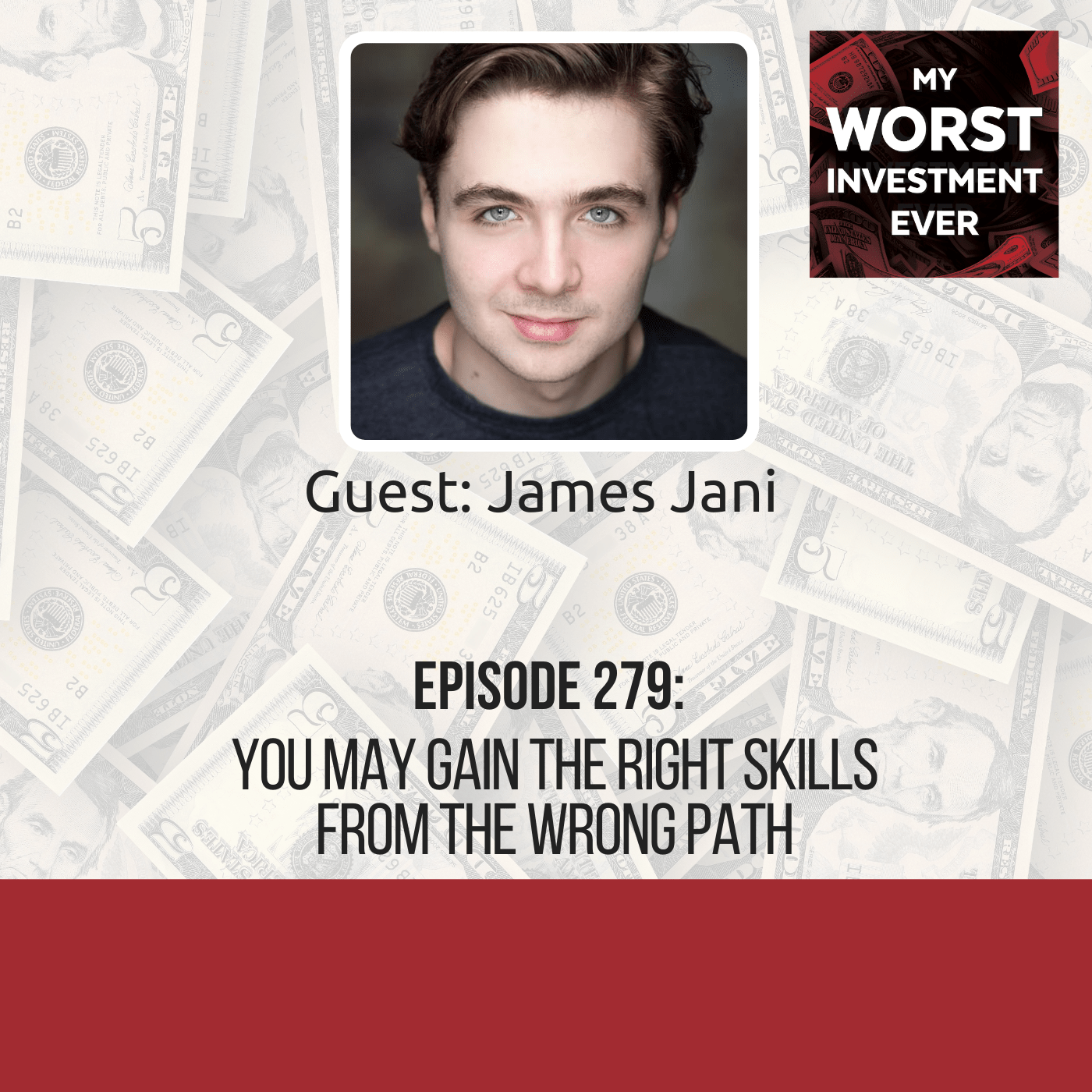
James Jani – You May Gain the Right Skills From the Wrong Path
James Jani is a YouTube Expert and Vlogger, who creates thought-provoking documentaries on YouTube about Business, Money, and Life. He’s been running a YouTube channel since January of 2020 that has now grown to 422k+ subscribers, with an average of 2 million views a month!His “The Untold Truth About Money” has had 3.8m views, and he first went down his rabbit hole watching “The Rise of Fake Gurus...”James now wants to share his methods with other people interested in growing their YouTube channel to expand their audience reach and engagement massively. “Just to go in and dive into more stuff. And even if it doesn’t turn out into a career, there are tasks in there that might be useful in finding out what exactly you want to do.”James Jani Worst investment everJames had always had a knack for acting, and he loved the validation that came from acting. Everyone knew him as James the actor. He had built a massive reputation behind his desire to be an actor.Trying to get into drama schoolJames tried to get into drama school, but he didn’t get in. He decided to join his friends for a trip to Portugal during his gap year. He came back home broke.Money for survivalJames had already resigned himself to living the life of a poor actor. He didn’t have so much desire for money because he knew he would only be rich once he made it as an actor. However, now that he had come home broke and didn’t make it into drama school, James decided to make some money to survive.James learned about selling second-hand stuff on eBay and decided to try it. He scouted his room for things he could sell and found some old video games. He sold all of them. James then hit garage sales and got a few more items and sold all of them.The fire of entrepreneurship sparksIt was while selling stuff on eBay that James had this huge desire to become an entrepreneur. After trying and failing to get into drama school for the second time, he realized that he didn’t want to be an actor after all. However, he couldn’t admit this to himself, his friends, or his parents. James had grown to identify himself as an actor, and he just couldn’t let it go.James continued to research on making money as the fire to become an entrepreneur kept burning in him as his passion for acting kept waning. However, he still kept trying to become an actor instead of putting more effort into becoming an entrepreneur.Nobody caresEventually, James figured that nobody cared that he didn’t want to become an actor anymore. He stopped worrying about what people would say and finally paid attention to his love for entrepreneurship, and finally made something big out of this passion.Lessons learnedLearn from your failuresYou will make lots of mistakes in life as you try to find your true north. Don’t let these mistakes hold you back. Instead, learn from your failures and let them propel you to greatness.Andrew’s takeawaysLet value be your motivatorBusiness is about bringing value and not about money. Money is just validation.Every job is the sameJust throw yourself into the work in front of you, and learn the tasks involved with that work. That work may not be where you end up, but the tasks and the skills you acquire will be applied elsewhere. Identify the tasks that you love to do the most, and then find a job that allows you to do these tasks.Actionable adviceDo as much as you can, and learn from each of those experiences. The best thing that will happen is that you may learn that you weren’t interested in that job in the first place.No. 1 goal for the next 12 monthsJames’ number one goal for the next 12 months is to bring in video editors, people to help him with the research side of things, and a manager to run the day to day activities. He hopes that with this team, he will create even better content that he has right now. [spp-transcript] Connect with James JaniLinkedInInstagramYouTubeAndrew’s booksHow to Start Building Your Wealth Investing in the Stock MarketMy Worst Investment Ever9 Valuation Mistakes and How to Avoid ThemTransform Your Business with Dr.Deming’s 14 PointsAndrew’s online programsValuation Master ClassHow to Start Building Your Wealth Investing in the Stock MarketFinance Made Ridiculously SimpleBecome a Great Presenter and Increase Your InfluenceTransform Your Business with Dr. Deming’s 14 PointsConnect with Andrew Stotz:astotz.comLinkedInFacebookInstagramTwitterYouTubeMy Worst Investment Ever PodcastFurther reading mentionedEric Ries (2011), The Lean Startup: How Today’s Entrepreneurs Use Continuous Innovation to Create Radically Successful BusinessesMJ DeMarco (2011), The Millionaire Fastlane: Crack the Code to Wealth and Live Rich for a Lifetime!
Daniel St-Jean – Choose Your Investing System and Follow It
Daniel St-Jean was born and raised in Montreal. Still, he has also lived in Whitehorse Yukon Territory, Vancouver BC, Ottawa, and now home is in Niagara-on-the-Lake, Ontario.He is an entrepreneur to the core, and the last time he received a paycheck as an employee was in 1986.Over the 34 years since, he has owned several businesses, including an art gallery and framing shop and a publishing company. As well, he wrote and published two Canadian bestsellers.He started investing in real estate in 2010 with his wife Laurel because they needed a source of income that was not tied to them living in Ottawa, where they were working as consultants.They wanted to move to Ontario’s wine region, so Laurel could pursue a life-long dream of becoming a winemaker.It took them only four years to be in a position to kiss Ottawa goodbye and move to Niagara-on-the-Lake.In their 11 years in the real estate investing business, they have acquired 62 properties worth over $25 million. The fantastic part is that to date; they are yet to invest one dollar in that portfolio—100% financed with OPM–Other People’s Money.How to do that is one of the many things they teach the members of The REITE Club that they co-founded in March 2017. “We are now following our investing system to the letter, no exception for any reason whatsoever. Now we’re successful.”Daniel St-Jean Worst investment everDaniel and his wife kicked off their real estate investing career with the rent-to-own strategy. They built on it slowly and got some real success out of it. In 2012, they went to Nova Scotia to expand their market. They found some cool people who wanted to do a rent-to-own deal, and they decided to get into business with them.Breaking their own rulesDaniel and his wife had a couple of rules that they followed when looking for property to invest in. One was to pick a house that they could quickly sell should the people renting it walk away. The second rule was always to take a deposit. However, they broke these two crucial real estate investing rules.Facing the consequencesAfter two months of renting the house, the people moved out unbeknownst to Daniel and his wife. They were now stuck with a house in the middle of nowhere with snowbanks so high. It wasn’t the easiest house to sell, but they managed to, albeit making a loss of $25,000.Putting in place a reliable investing systemAfter that loss, Daniel spent the next three or four months, setting up an investing system. This system had about 52 points, and this was the system he would always stick to when making investment decisions.Breaking the rules againIn the Fall of 2013, Daniel did a refinancing deal with a family that he felt needed his help. He didn’t like the house much, and he also didn’t take a deposit, but he went ahead and bought the house because he wanted to help this lovely family.The family, however, panicked and moved out just as the purchase was being closed. Now Daniel had this rundown empty massive house in a little town outside of Ottawa. The empty house cost Daniel $2,500 every month to maintain.Finding the elusive buyerIn the Spring of 2014, someone approached Daniel and told him that he’d want to rent the house and turn it into a daycare. He would be paying $4,500 in rent. Daniel got excited about the prospect of finally making some money from this property. However, after a year of waiting for the guy to get approval for his daycare, they found out that the water supply on that side of the street was insufficient for them to run a daycare, and so the client slowly walked away.Finally, Daniel could rent it out to a tenant paying $2,500 just enough to break even. But when the people later moved out, it was a total disaster. The house was in a complete mess.Fixing his messDaniel had to fix the mess before putting the house on the market. This cost him $90,000. Then as luck would have it, the weekend before Daniel listed the house, there was a huge storm that left the basement with two feet of water ruining the drywall and doors. Daniel had to spend another $40,000 to do repairs.At the end of it all, Daniel made a loss of $226,000 and change on that deal, making it his worst investment ever just because he failed to stick to his investing system.Lessons learnedDon’t deviate from your investing systemOnce you put an investing system in place, do not deviate from it come hell or high water. There are many ways to invest, but once you’ve figured out what strategy works for you, never deviate from that system.Don’t conduct business with your heartConduct your business transactions with your head to make money, and then you give it away with your heart. Don’t ever try to conduct your business transaction with your heart because, very often, it’s going to end up not benefiting you.Andrew’s takeawaysBusiness is business; leave philanthropy out of itIf you want to help people, make a profit, and give it to them. But don’t confuse business with helping people in that way. If you

Rhonadale Florentino – To Succeed in Startups, Don’t Just Do it
Rhonadale Florentino has been an HR practitioner for around 19 years. She is the CEO and President of UpRush Social Geekers, an HR solutions and services provider located in the Philippines. She has held various director-level positions and has worked on the Gamification Framework to gamify human resources and the Digital 201, which helped her company digitize its human resources operations.She graduated with a bachelor’s degree in psychology and has been quite active in improving the standards of HR in the Philippines through programs like UpRush’s HR Boot Camp, which provides the necessary competencies for up-and-coming HR practitioners who would like to become professionals someday. “Don’t just start a small business blindly. Do your due diligence first.”Rhonadale Florentino Worst investment everRhonadale got into an accident and was bedridden for about two months. She’s not the type of person who can just sit down and not do anything. So during those two months, she was thinking of how she could earn money as she recuperated.Doing online jobsRhonadale decided to look for online platforms where she could get a job, and then she came across oDesk (currently Upwork). She applied for jobs and got hired. But it was not for HR work but a writing job. Rhonadale wrote articles and blogs, and in the process, she got to understand what SEO is.Starting a small businessRhonadale enjoyed working online, and by the time she was going back to work, she was toying with the idea of doing a consultancy in internet marketing, which at that point, she thought was something that she could manage.Let’s start doing businessRhonadale wasted no time trying to analyze the business idea. Instead, she registered the business, came up with a catchy business name, and just started.Rhonadale felt very proud of herself. She was in her late 20s at the time, enjoying being the president of her own company.Off to a good startRhonadale started tapping into her previous internet marketing clients and subscribed them to her business instead of going through oDesk. She looked for connections from her last bosses and got some excellent referrals. The first few months were the best for her. Money was coming in, and she was getting a lot of clients.Building a teamRhonadale’s clients were too many for her to handle them alone. She decided to hire a team. Rhonadale started looking for people that she had an emotional connection with even though this goes against all of the things she’d learned as an HR professional. Instead of looking into competencies and skills, she was looking at the emotional connection. Rhonadale got people that were part of her life.Not up to the taskSince the team she built didn’t share the same vision as her, nor the skills needed to do the job, she started getting many complaints because the quality of the services that they were putting out was not the same as before.Trying to run the business while training her team put so much strain on Rhonadale. So she reduced the number of clients she was taking in, and so the income decreased.Losing sight of the financesRhonadale did not have anyone monitoring her finances. Her idea of finances at the time was that money coming in was more than what she was spending. But because no one was watching her expenses, Rhonadale spent so much on things that were not important to the business. She was also spending so much of her personal finances as part of the company’s finances.Rhonadale got someone to help her with the finances, and that’s when she figured out that she was losing so much money and had to cut down on costs and let go of some people.So, where was the problem?While going through her finances and trying to get her business back on track, Rhonadale realized that how she started that business was wrong right from the start. Rhonadale didn’t do any research, and she hired the wrong people.Lessons learnedDo your due diligenceDon’t just start a business because you’ve got a good business idea. You have to research first. First, understand how to start the business and understand your own strengths and weaknesses.Pay particular attention to your financesWhatever your background, you must understand basic accounting principles for you to understand what’s happening in your business. Understand what’s credit, debit, assets, liabilities, etc.Andrew’s takeawaysSmall businesses are a trapPeople get into small businesses, but they don’t realize they will get trapped in it. Sometimes it’s hard even to bring it forward, and you find yourself stuck.Think of a startup as a whole entityMost of the people who get into startups focus on the one area that they’re good at. Running a business requires you to be good at everything that pertains to the business. You’ve got to be good in finance, bookkeeping, marketing, administration, management, etc. It’s not about taking one technical skill that you have and building a business around it.Business is an emotional journeyPeople get all

Jim Rembach – Some Risks Just Can’t Be Avoided
Jim Rembach is a Customer Experience Authority and President of Influence to Action, which operates several entities, including CX Global Media, Call Center Coach Virtual Leadership Academy, Contact Center Virtual Summit, and Customer Service Weekly. He’s the host of the Fast Leader Show, B2B Digital Marketer, and Customer Service Weekly podcasts.Jim is a Certified Emotional Intelligence practitioner, Community Specialist, Employee Retention Specialist, and Digital Marketer. His work as a digital business development expert enables organizations to deliver on the needs of the new digital business development imperative. “Do it again even after losing because there are opportunities existing out there, and you’ve got to make those moves.”Jim Rembach Worst investment everTime for some riskJim had some money that he was willing to risk in a new investment, so he started looking around for risk opportunities.Finding the right fitJim picked about five different companies to look at. He did his research and ensured that he had marked off all the checkboxes. Then he decided on a female apparel company that seemed promising. Even though the company had some short term debt issues, it got refinanced for favorable rates.Staying down underJim had hoped that the company would pick up, and the stock starts performing well. However, they went down further.Jim stayed hopeful. He did more research, and all indications showed that the company would pick up. Jim decided to double his investment in the company.The unavoidable lossRoughly four or five months after he doubled down, the company declared bankruptcy, and just like that, Jim lost his entire investment.Lessons learnedKeep taking risksContinue taking risks even when you lose. Don’t have your emotions tied so profoundly in the loss and make it stop you from trying again.Do your due diligenceDo your due diligence and research, look at fundamental elements before you make a move.Andrew’s takeawaysPlay with money that you can loseInvest money that you can afford to lose to avoid losing all your wealth.Be aware of event riskEvent risk happens very suddenly. It could be bankruptcy, a corporate governance event where the owner did something benefiting themselves and harming others. With event risk, when it is announced, either trading stops immediately, or the stock price falls 30%, and you can’t execute that stop loss.Apply rules of risk managementRisk assessment is critical when getting into investment. Size your position and go into a position slowly.Actionable adviceHave an active pool of funds that you’re looking at doing some speculating with. Also, learn how to become better at your research from a human perspective.No. 1 goal for the next 12 monthsJim’s number one goal for the next 12 months is to look at the permanent shifts that people think are temporary and make some investments because he believes wealth is made in downturns, not upswings.Parting words “Move forward. Even if you end up taking two steps back from one step forward, it’s just temporary.”Jim Rembach [spp-transcript] Connect with Jim RembachLinkedInTwitterFacebookWebsiteAndrew’s booksHow to Start Building Your Wealth Investing in the Stock MarketMy Worst Investment Ever9 Valuation Mistakes and How to Avoid ThemTransform Your Business with Dr.Deming’s 14 PointsAndrew’s online programsValuation Master ClassHow to Start Building Your Wealth Investing in the Stock MarketFinance Made Ridiculously SimpleBecome a Great Presenter and Increase Your InfluenceTransform Your Business with Dr. Deming’s 14 PointsConnect with Andrew Stotz:astotz.comLinkedInFacebookInstagramTwitterYouTubeMy Worst Investment Ever Podcast

Michelle Connell – Long-Term Gains Come From Protecting the Downside
Michelle Connell, CFA, owns Portia Capital Management, LLC, a registered Investment Advisory firm specializing in the investments of foundations, charities, and high net worth individuals. Portia Capital Management is the only investment management firm in the Dallas-Fort Worth area owned by a female CFA charterholder-an important resource in a world where 60% of women retire in poverty.Michelle’s expertise is backed by more than 20 years of financial experience in management positions with large investment boutiques and private banks. She is also one of the highest-rated finance professors in the U.S., currently serving as an adjunct professor at The University of Texas at Dallas.She works with her students and clients to understand the value of crafting a portfolio that includes conventional products as well as alternative assets. In addition to her work with students and clients, Michelle teaches the CFA Review through the DFW CFA Society.She also founded “Portia’s Children,” through which up to 10 percent of her company’s profits are donated to the North Texas Charity, Educational First Steps. “The only way that you’re going to have any security is by understanding money and finance.”Michelle Connell Worst investment everMichelle got a job analyzing semiconductor stocks for a private boutique in San Diego in the late 90s. She didn’t have a background in engineering, and because technology stocks can be extremely volatile, it was a struggle for her to handle these stocks.No choice but to learnTo save her job and prevent losing too much on the stocks, Michelle quickly learned how to understand any investment's downside, whether it’s a stock, a bond, a private investment, etc. This way, she could tell when to let go of an investment.Though this was tough, this knowledge worked to Michelle’s advantage as a few years later; she got to use it as the head of the tech sector for Wells Fargo, right before the tech bubble burst.Lessons learnedAlways look at the downsideLook at the downside of your stocks, and if possible, have your analyst hold back on what you own. And if you don’t understand the downside, be willing to sidestep the upside.Actionable adviceYou need to evaluate the upside and downside in the different investments you hold. That doesn’t just mean the individual securities, but also those within a particular style or market cap.No. 1 goal for the next 12 monthsFor the next 12 months, Michelle's goal is to concentrate on her investment reallocations and take advantage of her portfolio's fixed income side.Parting words “Keep reading and looking at the downside as well as the upside. Think of investing as a long-term game. That’s the way you should approach your retirement and your assets.”Michelle Connell [spp-transcript] Connect with Michelle ConnellLinkedInInstagramWebsiteAndrew’s booksHow to Start Building Your Wealth Investing in the Stock MarketMy Worst Investment Ever9 Valuation Mistakes and How to Avoid ThemTransform Your Business with Dr.Deming’s 14 PointsAndrew’s online programsValuation Master ClassHow to Start Building Your Wealth Investing in the Stock MarketFinance Made Ridiculously SimpleBecome a Great Presenter and Increase Your InfluenceTransform Your Business with Dr. Deming’s 14 PointsConnect with Andrew Stotz:astotz.comLinkedInFacebookInstagramTwitterYouTubeMy Worst Investment Ever Podcast

Jordan Paris – Do What You Want to Do
Jordan Paris is an author, podcast host, and entrepreneur featured in Forbes, Entrepreneur, Men’s Health, Yahoo! Finance, and Market Watch.Jordan’s podcast, Growth Mindset University, was ranked #6 in Apple’s Self-Improvement category, #3 in the Training category, and #5 in the How-to category. In Education, one of Apple’s most competitive categories, the show was ranked #15. The show has also rated highly in 40+ countries worldwide. On the show, Jordan interviews his heroes, including James Altucher, Grant Cardone, Robert Greene, Mark Manson, Seth Godin, Ryan Serhant, Dean Graziosi, and Naveen Jain.Jordan is the founder of Trend Up Media, a one-stop podcast agency that produces podcasts to help businesses grow in profit and influence.His life and business approach is simple yet powerful: Don’t make a living, design a life. With this creator’s mentality, Jordan has produced outstanding results for himself and challenges others to rise above circumstances, break the mold of society, and take control of their lives. “If you are thinking of starting a podcast, I say just start because it’s something that you honestly want to and do not because other people are doing it.”Jordan Paris Worst investment everJordan got wrapped up in the fact that he wasn’t cool in high school, and so for the better part of his life, he just wanted to prove everyone wrong. He wanted to prove to everyone that he could be famous.Using his podcast to fuel his desire for validationThe only way Jordan could attain fame and credibility over the past few years was to surround himself with other famous people. And so his podcast, for the most part, has been a show where people can have a front-row seat to his narcissism. A platform where he would talk with famous people, laughing along with them, sucking up to them, and not asking the tough questions.The epiphanyJordan recently had an epiphany where he realized that he’s been doing life the wrong way. Now, if he’s going to be known, he wants to be known for having something important to say and having actually done something. Jordan does not want to be famous just for the sake of being famous.Lessons learnedDo it for you, not othersMany people do things they don’t want to do and buy things they don’t want or need to impress people who don’t care. They’re then forced to do more things that they don’t want to do to keep up that lifestyle and keep up with that image. Don’t join that rat race.Realize it is enoughAwareness is almost always the first step to dealing with every hurdle you face.Andrew’s takeawaysJust do itDo what you want to do, even if it is not necessarily what you’re good at.Don’t get caught up with what people thinkPeople don’t care that much about you, so don’t get caught up with what people think about you.Embrace your problemsWhat is that thing in your life that you’ve been running away from or you haven’t been aware of? Stop running, turn around, and embrace it.Actionable adviceLearn to question yourself and everything. Scrutinize yourself. This leads to good things.No. 1 goal for the next 12 monthsJordan’s number one goal for the next 12 months is to achieve the revenue goal he set at the beginning of the year. [spp-transcript] Connect with Jordan ParisLinkedInTwitterFacebookInstagramYouTubeWebsiteAndrew’s booksHow to Start Building Your Wealth Investing in the Stock MarketMy Worst Investment Ever9 Valuation Mistakes and How to Avoid ThemTransform Your Business with Dr.Deming’s 14 PointsAndrew’s online programsValuation Master ClassHow to Start Building Your Wealth Investing in the Stock MarketFinance Made Ridiculously SimpleBecome a Great Presenter and Increase Your InfluenceTransform Your Business with Dr. Deming’s 14 PointsConnect with Andrew Stotz:astotz.comLinkedInFacebookInstagramTwitterYouTubeMy Worst Investment Ever Podcast
Luke Fenwick – What Is Your Legacy in Life?
Luke Fenwick has had a corporate career spanning over 20 years across numerous industries, including luxury goods and professional sports at organizations such as Louis Vuitton Moet, Hennessy, and Melbourne United Basketball Club.He is a father and husband and chose to follow his purpose and become a life impact coach to help people gain awareness of their vision and goals and their deeply held beliefs to create a positive impact in their lives.His official teaching is derived from the Jay Shetty Genius School for Life Coaches; however, his approach with clients has been shaped by coaching and mentoring people over 20 years and studying experts. “If you don’t have a strong handle on your beliefs, the things that shape your life, and what you believe around yourself, then that will impact your goals and your ability to get there.”Luke Fenwick Worst investment everChasing the money Luke was working for the Melbourne United Basketball Club when he got a job opportunity in Australia. The new position offered more money, and even though he found joy in working for the club, he liked the idea of making more money. Luke could now afford to do property development and other investments, so he took the job.Regretting his decisionLuke had thought that the new job was something that he would do for 10 or more years. However, all of a sudden, he started feeling that this was not it for him. Every day, for six months, he would wake up at 4 am dreading to go to work. The job didn’t align with his passion and purpose, and he hated it.Walking awayAfter months of anxiety and hating his job, Luke spoke to his wife about how he felt and why this job would not be long-term. They decided that he should quit and follow his passion. After so much reflection, Luke decided that this was enough, and things needed to change, and he left the job.Lessons learnedSelf-validation is importantMost people look for validation from others and not from within. They look for that praise or that pat on the back from their peers and friends so that they can feel confident. Real confidence, though, comes from self-validation. This is especially important if you’re looking to do challenging things outside of the box.Pause, reflect and ask yourself what is your legacyTake time to understand what’s happening in your life. Ask yourself how your life impacts other people in your life, what your legacy is, and do you like how things are turning out.Enjoy the journeyTake a pause and enjoy the journey. Be grateful for the far that you’ve come no matter what’s going on in your life. Don’t get stuck on always focusing on what was further down the road.No one is perfectFailure is part of life. Don’t dwell on the times life is imperfect.Andrew’s takeawaysBe ready to quit oftenWhen you find something that’s not working for you, don’t be afraid to leave it. Often, people don’t leave things because they fear the unknown, but it’s ok to walk away and say it wasn’t for me.Be gratefulLearn how to step back and count your blessings, especially in times of crisis.Actionable adviceWhether life is good or you’re struggling, take the opportunity to pause, reflect, and look at the legacy and life you’re creating. If you’re not satisfied with what you think life will be in 10, 20, 30, or 40 years from now, then start to make some changes now.No. 1 goal for the next 12 monthsLuke has a vision that by 2025, he will have impacted one million lives. His goal for the next 12 months is to continue engaging with people, get in front of many businesses, and do as much coaching as he can.Luke also wants to keep learning, growing, getting better every day, being more mindful and aware of what he needs to work on. If he does all of those things, he’ll become a better dad, better husband, and better coach and impact more lives.Parting words “Don’t let those weeks, months, and years pass you by without embracing the conversations going on in your mind, and not giving them the energy to explore and figure out how your life could go from good to amazing.”Luke Fenwick [spp-transcript] Connect with Luke FenwickLinkedInFacebookInstagramWebsiteAndrew’s booksHow to Start Building Your Wealth Investing in the Stock MarketMy Worst Investment Ever9 Valuation Mistakes and How to Avoid ThemTransform Your Business with Dr.Deming’s 14 PointsAndrew’s online programsValuation Master ClassHow to Start Building Your Wealth Investing in the Stock MarketFinance Made Ridiculously SimpleBecome a Great Presenter and Increase Your InfluenceTransform Your Business with Dr. Deming’s 14 PointsConnect with Andrew Stotz:astotz.comLinkedInFacebookInstagramTwitterYouTubeMy Worst Investment Ever Podcast

Josh Steimle – Get Your Priorities Straight and Remarkable Things Can Happen
Josh Steimle is an entrepreneur, author, and speaker, best known for his framework The 7 Systems of Influence and the 300+ articles he’s published in more than two dozen publications like Time, Forbes, Fortune, Mashable, and TechCrunch. Get started on writing your book with Josh at Publishedauthor.com. “Business should never be your highest priority. If it is, you will lose the business along with everything else.”Josh Steimle Worst investment everWanting to be like the greatsJosh was a college student when he made his worst investment ever. At the time, he had what he thought was a great job making $13 an hour. The company Josh was working for was growing like crazy. And so he thought he should leave and start his own business.Josh would look at the company executives flying around, meeting with venture capitalists, having all the fun and making all the money, and think to himself, “I could do that too.” So he quit his job and started his own business.Doing what he knew bestJosh knew how to design websites and hence started a web design business. He thought this would be as easy as launching a business, and then people line up and hire him. But nobody lined up. Soon enough, Josh had no money to pay rent and sold everything he owned on eBay to pay the rent.Things start to looking upAfter a while, Josh got a few clients and was able to survive. The business continued to grow steadily. Then he brought on a partner and then another, and the company grew a little bit more. It was tough, but he made it along.Heading separate waysJosh and the partners kept fighting and disagreeing on how to run the business. Eventually, things got so bad that they had to sell the business.Josh restarted over again in 2003. Things went back to being tough. Because of the bad experience he had with his partners, Josh decided to do this by himself.Giving business his allJosh went out and got a $100,000 loan from the bank. He also borrowed money from family and friends. He invested all the money in his new business, and for the next four years, he drowned himself in work.Josh would work 100 hours a week. He would go to sleep at three am on his office floor, wake up at 6 am and go right back to work six days a week. Josh didn’t take holidays; he worked Christmases and birthdays. He missed weddings and family reunions. Josh thought he was investing in himself, the business, and his family’s future. He believed that everything was going to pay off eventually, someday.Four years of nothingFor the next four years, Josh immersed himself in his business, but he made absolutely no profit. He didn’t pay himself a dime all this while because he couldn’t afford it and was drowning in about $500,000 of debt.Josh’s family had gained nothing from all the time and energy he put into the business. He was now at risk of losing his wife and family if he kept going down this path. It took Josh four years to realize that this was not working; it was not a good investment, and that he was losing everything.Taking it a notch downJosh decided that he would not continue working like this anymore. He started working 40 hours a week, spent more time with his wife, and didn’t work weekends anymore.A funny thing happened once Josh set those boundaries and said no more. Within two months, he was paying himself for the first time in four years. He was able to pay off 10 or 20 grand in debt every month, and his wife could quit her job. She had been supporting the family for the previous four years, and she hated it. Everything turned around as soon as Josh set those boundaries.Lessons learnedSet your own boundariesDon’t let life set the boundaries for you, do it yourself. If you leave it to fate, the boundaries that life gives you are much more painful than the limitations you can set for yourself.Get your priorities straightPrioritizing is very important. Your family and your health have to come before your business. If you don’t take care of your health first, you won’t be very good at work, you don’t think very clearly, and you’ll end up dying because you’re not taking care of yourself. If you put your business ahead of all your other priorities in life, you will lose the company along with everything else. So get your priorities straight.Build a life outside of workHaving something outside of work allows you to focus, ironically, more on the work. When you’re in the business every day, all day, and that’s all that consumes you, you can’t see the forest for the trees, you can’t see the decisions or the choices. But when you step back, and then you come back in, you often see things more clearlyAndrew’s takeawaysSometimes working harder produces lessWorking harder during a crisis does not produce more income or more revenue because nothing is happening. Focus more on your wellbeing.Small businesses are a trapBe careful before investing in a small business. You know, you go into it with all these dreams, and you get down the road and get to a point wher

Oluwatosin Olaseinde – Africa’s Financial Literacy Queen Says Be Careful Who You Trust
Oluwatosin Olaseinde is a professional accountant with over 10 years of experience spanning across accounting, audit, financial management, and taxation. She is the Founder and CEO of Money Africa, an ed-tech platform that enhances financial literacy and investments leveraging technology.Oluwatosin is a Washington Mandela Fellow, and she was a finalist for The Future Awards. In 2019, she was selected as one of the top 100 women by The Leading Ladies Africa. She was awarded one of the top 8 traders by CNBC Africa in 2012 and is a member of the Golden Key International Honour Society. Oluwatosin has spoken at TedX and has been featured on BBC UK, Al Jazeera, Guardian, and other outlets. “Be comfortable with having money conversations. It’s your money, and you have every right to know where it goes and how it works.”Oluwatosin Olaseinde Worst investment everThe one with the winnersOluwatosin had this friend who was always talking about how well his investments were performing and would always entice her to join him.In 2017 the Bitcoin craze was gaining so much momentum. At the beginning of the year, it was at $2,000, then $3,000, and it kept growing. Her friend was investing in Bitcoin and would constantly tell Oluwatosin about all the profits he was making. Oluwatosin now wanted a piece of the pie.Investment out of her reachBeing an account, Oluwatosin knew about the stock market, mutual funds, and all these other things, but Bitcoin sounded very futuristic. It sounded very abstract, and she didn’t understand it. So she was relying on her friend’s knowledge.When the price of Bitcoin hit $10,000, Oluwatosin decided she could not wait anymore. She reached out to her friend, and because she didn’t bother to learn about Bitcoin, she entrusted her friend to invest on her behalf. At this point, the price was about $18,000. Oluwatosin handed her friend a large amount of money, and he promised to invest it.Time to cash outOluwatosin’s friend created an account on some Bitcoin platform and told her that he had invested her money on that platform. He would continuously give her updates on WhatsApp. Oluwatosin trusted these updates and, therefore, never concerned herself with learning how the platform worked.The next year, the Bitcoin market stagnated, and Oluwatosin knew it was time to get out. The price was at $20,000, and she felt she’d made enough profit, and it was better to get out when the market was still high.Cat and mouse gamesOluwatosin told her friend that she wanted to sell, and he tried to convince her otherwise, but she stood her ground. Then the games began.Oluwatosin would message him, and he would not respond. She even reached out to mutual friends for help, but nothing worked. Eventually, she got to learn that her friend had never invested her money, and he’d basically stolen all her money in the name of investing in Bitcoin.Lessons learnedFinancial literacy is criticalFinancial literacy is excellent. However, when it comes to particular sectors, people tend to feel they are too technology-driven. And, therefore, do not educate themselves in these sectors. The truth is that the concept is the same across the field. So whether you are investing in a savings account, shares, Bitcoin, Cryptocurrency, etc. the rule is the same, you have to understand how the investment works and how to access it.Always own your assetIf you do not own your asset, you cannot control the resources. Should you outsource the ownership to other people, always document it as proof of ownership.Even the best investors make mistakesMany times people think they are too intelligent ever to make a financial mistake. This can happen to anyone. That is why financial knowledge and awareness are essential. Always do your research and educate yourself to ensure that you’re covering all your bases.Andrew’s takeawaysIt’s not always peaches and roses in investingMost people never talk about the performance of their overall portfolio or about the investments that went wrong. They stick to the investments that are winners. This makes so many people go into the stock market, thinking that they will get rich overnight.Never put your investment in someone else’s nameNever put your money under someone else’s name or into someone else’s account; all your investments must be in your name. Even if you are investing in a mutual fund company, you’re going to be putting your money into their bank account, and your name must be represented there. So never hand over your assets to someone else because the moment you do so, and they are not in your name, you can just consider them gone.Monitor your investments constantlyAlways monitor your investment to ensure that you catch any mischief. For instance, when you put your money in a bank or an asset management account, you generally receive an account statement every month. The purpose of this monthly statement is to detect fraud within that organization. If you don’t receive your monthly report fo

Beverley Agbakoba-Onyejianya – You Need All Types to Build a Successful Business
Beverley Agbakoba-Onyejianya is a Sports & Entertainment lawyer and Entrepreneur. She is an accredited mediator with the Lagos High Court Multi Door Centre and a member of the panel of neutrals at the Lagos Court of Arbitration.She has years of experience in the banking and capital markets in the United Kingdom and Nigeria. She is a Nigeria SEC-registered compliance officer, providing regional compliance, risk management, and financial crime prevention advisory support. Her broad experience in the compliance industry covers investment banking, brokerage, and fund management sectors.Additionally, she is passionate about sports and youth development and founded the Lagos Tigers Football Club in 2012, the Little Tigers Football Foundation in 2017, and a social network for women called GFC. “Delay is not denial. Things do not have to run at top speed to indicate that you’re on the right path.”Beverley Agbakoba-Onyejianya Worst investment everIn 2015 Beverley and her good friend were talking about doing something to better their lives. They explored different things, and her friend suggested that they get into the peanut butter packaging business.Beverley did some research and realized that there was such a massive market for peanut butter in the US, and so she paid the suggestion more attention.Jumping right into itThe two friends jumped right into business. They did a bit of research, came up with a name and branding. They were reeling to go. The friend even suggested that they not only do peanut butter but cashew nut butter too. They went all out with different flavors. They received an incredible reception when the butter went on sale.The clashing of two personalitiesThe butter was selling in their hundreds, and everything was going great except for the two business partners’ personalities.Beverley is brash and rash, while her friend is very detailed and a risk manager. And so the two kept clashing whenever they would have different business ideas. Beverley, especially wouldn’t take feedback well.Things turn uglyBeverley wanted things done in a rush, while her friend would instead take things slow. Beverley was also very emotionally driven and would often react irrationally during disagreements.Things got so bad that one morning Beverley woke up and changed all the factory locks locking her friend out. This was the last straw that brought the butter business to its premature end.Lessons learnedSolve problems rationallyYou don’t have to react immediately every time you are confronted with a problem or a misunderstanding. You don’t need to act on whatever comes to your mind first because sometimes the first thing you think of doing could put you in jail.Develop emotional intelligencePeople who have high emotional intelligence tend to be better leaders, teammates, and colleagues. You can have the best skills, you can be the best, but what is the point if your emotional intelligence is so low?Draw the line between emotions and businessIt is unnatural to expect your business partner to agree with everything you say and vice versa. You will often disagree, but it doesn’t mean that you should take it personally.Meet people halfwayEverybody has their reference point, so meet them where they are and find ways to complement each other.Everyone has something unique to offerEverybody has different skill sets that add value to your business. If you keep measuring other people by your standards, you’ll never be satisfied.Andrew’s takeawaysThe ugly side of businessWhen books talk about building a successful business, they never talk about the ugly side of the hustle. It takes blood and sweat to build a business. Most books won’t tell you this.Slow and steady wins the raceDon’t be in a rush to become successful. Take your time to build a stable business, and you will create an empire.It’s not just about youYou may be the business owner, but your business’s success is not just about you. It’s essential to think about the well-being of all the people involved in building your business, including all the stakeholders.You need different qualified people to build a successful businessTo be successful in any startup, you need people with different skills. You need a salesperson, a product person, a marketer, an accountant, and many more. These people won’t always get along, because they’re coming from different places. Figure out a way to keep everybody together.Actionable adviceYou need to know deep down and intuitively whether this is for you or not at all. Don’t flog a dead horse, but at the same time, don’t give up too soon.No. 1 goal for the next 12 monthsBeverley’s goal for the next 12 months is to focus on creating digital content. She has another brand in the works right now, and her podcast Develop Your A-Game. Beverley plans to concentrate on these two projects for now.Parting words “Stay consistent and authentic.”Beverley Agbakoba-Onyejianya [spp-transcript] Connect with Beverley Agbakoba-O
Steve Anderson – Make Successful Failures Like Amazon and Protect the Downside
Steve Anderson is an expert in strategic risk and business growth. Drawing on decades of experience in the insurance industry, he wrote The Bezos Letters: 14 Principles to Grow Your Business Like Amazon, a Wall Street Journal, USA Today, and international bestseller. With hundreds of thousands of followers, Steve has been handpicked by LinkedIn as one of the world’s most influential thought leaders. “Measure what matters, question what was measured, and trust your gut.”Steve Anderson Worst investment everIn 2007, Steve inherited a pretty good amount of money from his sister, who died from breast cancer. He wanted to invest this money in the smartest way possible. So he went to an investment advisor who advised him to invest in REITs and Class A office buildings, which he did.Here comes the recessionA year later, the recession hit the US real estate market, and Steve lost his entire investment. He knew that he should have pulled out his investment as soon as things started to take a turn, but he opted to hold on for a year hoping for the best. Unfortunately, this turned out to be his worst investment decision ever.His one mistakeWhile he had the right intentions and was even smartly investing his inheritance, Steve made the one mistake not to put measures in place to protect the downside.Lessons learnedThink more about downside protectionSomething will always happen that is outside your control. So think about what you’re going to do in case of uncertainties.Protect your assetsConcentrate more on protecting your assets than growing them.Andrew’s takeawaysFocus on the long termA lot of times, we get caught up in the short term. Instead, focus on the things that will make money over a long period, such as stocks and bonds.Shortfall risk is a huge riskVery few people ever think about shortfall risk. Most people take comfort in putting all their money in the bank, thinking that it’s low risk. No, that’s high risk because your money will never grow.Actionable adviceDo a better job than I did to protect the downside.No. 1 goal for the next 12 monthsFor the next 12 months, Steve’s goal is to keep the book alive and keep the buzz going. Hopefully, this will lead to live in-person events.Parting words “Obsess over your customers. Think about that more because you’re probably not.”Steve Anderson [spp-transcript] Connect with Steve AndersonLinkedInFacebookTwitterInstagramBlogWebsiteAndrew’s booksHow to Start Building Your Wealth Investing in the Stock MarketMy Worst Investment Ever9 Valuation Mistakes and How to Avoid ThemTransform Your Business with Dr.Deming’s 14 PointsAndrew’s online programsValuation Master ClassHow to Start Building Your Wealth Investing in the Stock MarketFinance Made Ridiculously SimpleBecome a Great Presenter and Increase Your InfluenceTransform Your Business with Dr. Deming’s 14 PointsConnect with Andrew Stotz:astotz.comLinkedInFacebookInstagramTwitterYouTubeMy Worst Investment Ever Podcast

Ela Staniak Leaupepe – Use Multiple Lead Generation Platforms to Have a Safety Net
Ela Staniak Leaupepe was born in Poland, and her challenging upbringing was a speed lesson in life. At 21, she moved to Australia and began working first in the fitness industry before embarking on a journey through online and corporate coaching. She studied Fitness, Sports Coaching, Neurolinguistic Programming, Hypnotherapy, Public Speaking, Intuitive Coaching, and attended countless professional development events.Ela is the Founder and CEO of Feminine Leaders–which creates a pathway for women to rise and find their place as true leaders. Ela partners with CEOs, Executives & Business Owners to produce high caliber business results and access their creative genius. “Always have multiple lead generation platforms to serve your network and clientele.”Ela Staniak Leaupepe Worst investment everEla had, for the longest time, wanted to expand her fitness career into something bigger that could empower women all over the world. She took the bold step to learn about business coaching and hired a coach.Finding her sweet spotEla invested over $100,000 in various personal development programs and business coaching programs. She also invested about $10,000 in Facebook marketing and used it as her primary lead generation platform.Finally, this year, she found her sweet spot in the business and had a formidable social media presence on Facebook. Ela had created a name for herself and was now the go-to person for women empowerment, weight loss, and hypnotherapy.Rug pulled out from under herUnfortunately for Ela, the sweet spot didn’t last very long. In June this year, Ela woke up one morning and found an email notifying her of suspicious login activity on her Facebook account and was asked to verify her identity. That verification was rejected, and her accounts got deleted entirely and disabled.Ela had 5,000 connections on her personal profile, nearly 11,000 connections on her business page, and almost 6,000 connections on Instagram. She was also running two different Facebook groups; one of them had 1,600 women in there.Shock, disbelief, and denialAt first, Ela went into shock, disbelief, and complete denial. She convinced herself that there must be a way to get her accounts back. She hadn’t done anything wrong anyway.Ela tried to contact Facebook several times, pleading her case. She eventually heard back from Facebook but not with the kind of news she was hoping for. Ela was informed that the decision to close her Facebook accounts had been reviewed and that her application to have the decision reversed had been rejected.She couldn’t believe that all the years of work, sleepless nights, 18 hour days, moments of tears, moments of giving up, and continuously pursuing and persisting in building her business on Facebook and Instagram had gone down the drain.One too fewUnfortunately, other than her email list Ela did not have any other lead generation platform, so she had to rebuild her audience from scratch. While running her business on Facebook and Instagram alone had been fruitful for a moment, it turned out to be her worst investment ever because she abandoned other platforms, and now she had nothing to work with.Lessons learnedHave multiple lead generation platformsWhen you are creating a business, have multiple lead generation platforms that you can use to serve your network and your clientele. This ensures that you still have a soft spot to fall onto should any of the platforms fail.Be flexible and adaptableIf you want to run a business or organization or be in a managerial position, practice flexibility and adaptation. Challenges, whether it’s in business or personal life, never end. So always be flexible enough to adapt to change.Andrew’s takeawaysEmbrace changeWhen things are falling apart, acknowledge that change is inevitable and embrace it. Find new ways to make the change work.Be more of yourself instead of copying othersTry to be more of yourself. Find your place on this earth, know where you’re supposed to be and be happy to be there.The four drivers of a company’s valueFour things drive the value of a company; one, revenue, increase it. Two, expense, decrease it. Three assets, increase them or get more out of the existing assets that you have. Four, risk, reduce it.Actionable adviceExpand your thinking and your consciousness. Use multiple platforms to provide your network and clients access to whatever you offer. If one platform is taken away from you or stops working, you’ll have other safety nets to continue serving your clients and networks, and that will ultimately put you in the center.No. 1 goal for the next 12 monthsEla’s goal for the next 12 months is to launch her biggest women empowerment event ever. She hopes the world will have overcome COVID-19. Her goal is to provide an amazing transformational experience for women to come in and experience the feeling of letting go and making peace with the past, experiencing the now, and creating the future.Parting words “You are the one

John Pastor – Ask the Right Questions When Finding a Job
John Pastor has close to two decades of leadership experience in the business process industry in the Philippines. He has numerous years of exposure in both the in-house and outsourced areas of the industry and has had the opportunity to work with top tier multinational organizations since 2001.Aside from operations, he is also well-versed in the business’s different areas, such as continuous improvement, quality, sales, business development, workforce management, facilities management, training, human resources, and recruitment. He has had the opportunity to either oversee these areas directly and indirectly or collaborate with their respective department heads.John is passionate about people development, creating a positive culture and working environment, client and stakeholder relations, customer advocacy, and running day to day operations. “If you’re unemployed, don’t just grab the first thing that’s out there. Look for something that you truly want to be a part of.”John Pastor Worst investment everIn early 2001, John discovered the Business Process Outsourcing industry, and he felt right at home. He worked for different multinationals within the industry and built a budding career.A gloomy ChristmasThings were going pretty well for John until December 15, 2015. This is a date he remembers very well because, on that day, darkness entered his life. John received a redundancy letter. The company he was working for at the time no longer needed his services.The company was trying to reduce costs, so they made a few roles in their Philippines office redundant. And just like that, John lost his job two weeks before Christmas.Back to job huntingSearching for a job during Christmas and New Year was a futile attempt for John. It took him 10 months to get his first job offer. It had been a difficult 10 months, and John had grown desperate.No questions askedThe inability to provide financially for his family took a toll on John mentally, physically, and emotionally. When the first job offer came, he took it, no questions asked.After a few months, John was laid off again. His company decided to move all their business from the Philippines to India because it was a lot cheaper from a back-office work perspective.Two times wiserLuckily, this time around, the job search didn’t take John too long. In about two months, he had another job. This time though, he was smart enough to dig deeper during the interviews to make sure that he got himself a job that was the right fit for him and that he would not find himself jobless just a few months in.Lessons learnedTake your time when finding a jobDon’t be in a rush when finding a job. Ask many questions whenever you go for interviews to open up conversations about the role being offered. You want to make sure that the position and company is the right fit for you.Stay positiveRemain positive even when things are bad because holding onto negative ideas will only beat you up and make you give up.Andrew’s takeawaysAdapt to changeWhen things change, you also have to change the circumstances a bit to break the cycle of the emotions you’re going through.Don’t be too hard on yourselfThings go wrong in life all the time. It’s not always that it’s your fault that things don’t work out. There are times in life where circumstances are a significant factor, and so when things go south, don’t be too hard on yourself. Just know that this too shall pass.Actionable adviceIf you’re unemployed and job hunting, do not just grab the first opportunity that comes up. Take your time and ask as many questions as possible during the interview process. Make sure that you’re getting into something that you truly love and that the role is something that would align with your core competencies.No. 1 goal for the next 12 monthsFor the next 12 months, John’s goal is to grow his company, especially the online payments platform. On a personal level, John wants to make sure that his family is well taken care of while waiting for the COVID situation to be over.Parting words “Keep a positive frame of mind. Things will get better.”John Pastor [spp-transcript] Connect with John PastorLinkedInWebsiteAndrew’s booksHow to Start Building Your Wealth Investing in the Stock MarketMy Worst Investment Ever9 Valuation Mistakes and How to Avoid ThemTransform Your Business with Dr.Deming’s 14 PointsAndrew’s online programsValuation Master ClassHow to Start Building Your Wealth Investing in the Stock MarketFinance Made Ridiculously SimpleBecome a Great Presenter and Increase Your InfluenceTransform Your Business with Dr. Deming’s 14 PointsConnect with Andrew Stotz:astotz.comLinkedInFacebookInstagramTwitterYouTubeMy Worst Investment Ever Podcast

Cameron Herold – Don’t Let Your Mindset Block Your Next $108-Million Investment
Cameron Herold is the founder of the COO Alliance & Second In Command Podcast. He is known worldwide as THE CEO Whisperer and is the mastermind behind hundreds of companies’ exponential growth. Cameron has built a dynamic consultancy by speaking, not from theory, but experience. He earned his reputation as the business growth guru by guiding his clients to double their profit and double their revenue in just three years or less. Cameron was an entrepreneur from day 1. At age 21, he had 14 employees. By 35, he’d help build his first two $100 million companies. By the age of 42, Cameron engineered 1-800-GOT-JUNK?’s spectacular growth from $2 million to $106 million in revenue and 3,100 employees—and he did that in just six years. Not only does Cameron know how to grow businesses, but the current publisher of Forbes magazine called him “The best speaker I’ve ever heard...”. Cameron is the author of the global best-selling business book Double Double, which is in its 7th printing and multiple translations around the world, as well as Meetings Suck and The Miracle Morning for Entrepreneurs. Look for all of Cameron’s five business books on Amazon today. “Working hard isn’t the path to success, but working smart is.” Cameron Herold Worst investment ever Cameron used to judge people based on the way they looked. He naturally gravitated to the good looking guy, the woman who looked successful, people who dressed and carried themselves well. In his mind, those were successful people. He would not give a thought to people who didn’t look successful, dressed more casually, who didn’t shave, probably overweight, and weren’t attractive. Cameron judged them as not being successful. He would avoid spending time getting to know them. Because he would judge very quickly, he would often miss out on opportunities. Snobbing the outsiders In the summer of 2008, Cameron invited Tim Ferriss to come to his first time at Burning Man; it would be Cameron’s second time. Tim said yes and brought two friends with him. One of Tim’s friends was an entrepreneur. At Burning Man, Tim and his timid friends didn’t quite fit in with Cameron’s group. Cameron’s friends did not embrace them, so they became the outsiders to his group. Being his usual judgy self, Cameron spent more time with his group than Tim and his friends. The missed opportunity of a lifetime One night, very late, Tim’s friend, the entrepreneur, wanted to pitch Cameron and his friends on a business that he was starting and had an investment opportunity. Cameron, however, did not give him any credit when he pitched his idea. He just brushed him off, thinking that because his first business was such a silly one, his second business wouldn’t be very successful. Tim’s friend explained his idea of pressing a button on an app, and a taxi or limousine would come to you. Apps at the time were a new and unpopular phenomenon. Cameron and his friends thought that this was the stupidest idea they’d ever heard. Cameron and his friends refused to invest in the business. Tim, however, put in $25,000 into the business. This business turned out to be Uber. The guy that Cameron judged as weird and not worth his time was Garrett Camp, the original CEO and founder of Uber. By saying no to him, Cameron missed out on $108 million, considering the company’s valuation the day of its IPO. Lessons learned Do not judge a book by its cover Do not judge people at face value. Take your time and get to know people before you judge them. When you go to conferences and other events, sit with people who don’t necessarily fit in. Get out of your comfort zone, meet new people, get to know them, and connect with them. Andrew’s takeaways Opportunities are all around us Often, we look at the opportunities that we miss and feel bad about it. But it’s always important to remember that there are millions of opportunities that we’re missing every single day. So don’t beat yourself up over a missed opportunity. Do not judge what you see at face value Don’t compare your insides to other people’s outsides. Everybody is broken in one way or another inside. Most people are trying to keep up a facade and look good. Don’t let this intimidate you. Change your mindset Our mindset is shaped by our past, our emotions, and our judgments. Our mindset can hold us back in one way or another, so be open to changing it and have a growth mindset if you want to be successful. Actionable advice Go into situations and try to meet people that you wouldn’t necessarily try to meet. Some of the smartest people in the room are the ones that aren’t talking. They’re the ones that are listening and writing notes. The ones learning and paying attention. They’re not trying to get seen or get known. They’re there to learn. No. 1 goal for the next 12 months Cameron is very cognizant about the time he has left with his kids, 19 and 17 years old. One of them is going into second-year university this year, and thankfully, he’s at home for four months becau

Avelo Roy – Don’t Let Investors Force You Into Something You Don’t Believe In
Avelo Roy is a serial tech entrepreneur, investor, and TV host, who started his first startup at the age of 19 around his patent-pending technology while still studying as a computer engineer at Illinois Institute of Technology. He built that company up to a multi-million dollar valuation by the age of 22. Over the years, he has built eight businesses in the US and India with millions of dollars’ worth of products and services ranging from consumer electronics, artificial intelligence systems, healthcare process automation, food science, wireless communications, wearable technology, and graphical password applications. As the great-great-grandson of the first female governor of India, a Gandhi-protégé (Sarojini Naidu), Avelo continues the legacy forward by tirelessly serving the Indian youth through entrepreneurship education using lean startup methodology and principles of Bhagavad Gita. His efforts through Kolkata Ventures in the past three years have resulted in 400+ revenue-generating startups responsible for around 4,500 new jobs created in 10 states of East India. “Your investors should not have the right to tell you what to do, but they can advise.” Avelo Roy Worst investment ever Avelo came across this fantastic well-respected venture capitalist who kept asking him to join a company that he wanted to buy from the current co-founders. The venture capitalist nagged Avelo for six months, but he kept saying no to his request. At the time, Avelo was running his business in Kolkata while the venture capitalist was in Delhi. The venture capitalist was so interested in hiring Avelo that he flew down to Kolkata. He told Avelo in two hours, everything that he was doing wrong with Kolkata Ventures. The guy knew what he was talking about. Getting a local mentor Avelo grew quite interested in the venture capitalist, especially because he needed a mentor in India. At the end of their discussion, Avelo decided to take up his offer. So he flew down to Delhi. He looked at the team and the business to see what was possible. The warning he should have heed The founder of the company told Avelo not to take the deal. He said to him that he’d been unable to run the company. The venture capitalist told Avelo to ignore the founder. The reason why they were getting rid of him was that he was very arrogant. He convinced Avelo to come on board and buy the founder out together. It took six months to get the papers in order and finally get access to the product. Working with the best The product the founder had built was the best in its category in the UK. But then the investors purposely let the founder “die”; they stopped investing. People came in with money and saw his arrogance, and would back off. When Avelo got the product, it was just buggy, irrelevant, and had many problems. The biggest hurdle, though, was that the payment gateway was not working. There was no way for customers to pay for the product. Trying to get things back on track Once Avelo had the team ready, he proposed to rebuild the product to the investors. They refused and said that the product was known for its intelligence built with so many data sets, and had hundreds of thousands of users. He couldn’t get rid of it, create something in six months, and expect it to work. They insisted that Avelo work with the product as it was and make it work. Avelo was getting quite frustrated with this decision. Having built eight businesses, gone through a product development life cycle over and over again, he knew that when you deal with somebody else’s code, it takes a long time to learn it. It is far easier and smarter to rebuild from scratch than take somebody else’s mess and try to make sense of it. But the investors disagreed with Avelo on that. All gateways shut The product was not making money as the payment gateway was still not working. To make matters worse, when the Cambridge Analytical scandal happened, Facebook shut the doors on small players. More than half of the product’s business was happening through its Facebook API, which got shut. Now he had a product that hardly worked. There was a lot of money going in, but no results were coming out. Things just keep getting bad As if all that was not enough, the venture capital firm that was supposed to put in the money ran out of funds, and they didn’t tell Avelo that. Now the whole project was on his shoulders, and for almost a year, Avelo had to fund it partially, putting in far more than he had wanted to do. His ego just wouldn’t let him allow the business to fail, but things kept getting more challenging as he still could not change the product. But he kept pushing it. A ray of hope, perhaps? After a while, Avelo managed to get back up to 100,000 users. They had gone down from 300,000 users to zero. From there, they went up to 100,000 users and kept going, but no transactions were happening. Money wasn’t going to come in without a working payment gateway. Something interesting then happened. Out of the b

Todd Dewett – How the Pain of Failure Can Inspire You to Become an Expert
Dr. Todd Dewett is a best-selling leadership author, educator, and professional speaker. After beginning his career with Andersen Consulting and Ernst & Young, he completed his Ph.D. in Organizational Behavior at Texas A&M University and enjoyed a career as an award-winning professor. Today he speaks, writes, coaches, and has created an educational library of courses at LinkedIn Learning that is enjoyed by millions of professionals in nearly every country in the world. Visit him online at www.drdewett.com. “Hard work always pays, but it’s not always in money. Sometimes it’s in growth and learning, and sometimes that ends up making you more money in the long term.” Todd Dewett Worst investment ever The successful young professor Todd was a young professor teaching classes and writing papers. His little fledging side career of speaking at conferences started to grow. Todd was getting more and more calls to speak at conferences. He was now feeling happy, grateful, and entirely too full of himself. Jumping on a trend Todd was doing an ancient podcast back then when no one was doing them when he noticed an obvious trend or what he thought was an obvious trend. He noticed that that microlearning, shorter focused videos from YouTube were becoming popular. Todd kept getting feedback from students and people in the community and businesses about his talks. And so he figured well if he’s that good, then people would pay for his advice. Investing his inheritance Todd’s mother, unfortunately, passed and left him a small amount of money. He decided to do something he’d been thinking about for several years at that point, which was launching a business to monetize the advice he loved to give. And so he jumped onto the micro-video trend. Todd hired a video director who came with a lighting person and a hair and makeup person. Todd wrote scripts for over 100 initial mini-courses, three to five-minute advice oriented bits that he was going to do. Then he scouted the city where he lived, got 10 different locations, and started shooting the videos. Lights, cameras Todd was having a blast creating this database. He also hired a firm to build a subscription-based website in readiness for all the people he knew who would love his videos and pay top dollar, no doubt. And so he took over $100,000 and created all of this content over many hours, working alone to write and working with his team to shoot videos, have them edited, and loaded onto the website. Action The day to launch the videos finally came. Todd hit up his list and told them the videos were live. He went onto social media and made a huge announcement. Then he waited for the money to start rolling in. Crickets chirped. On the first day, only two people signed up. Then one person the next day. That’s almost all he ever got. Todd called his clients, and they said they were not sure the videos were what they needed. He heard many other statements about why the videos weren’t the right thing for so and so. Admitting he had failed Todd had this beautiful product. He had told so many people about it publicly through every microphone he could get his hands on, but no one cared. Six or seven months into this, Todd made a public announcement that this thing he was so proud of working very hard on and that had cost him more than any single investment he’d ever made in his entire life, was an absolute failure. He admitted that it was indeed his worst investment ever. It didn’t come close to breakeven; frankly, it just failed. Lessons learned To become an expert, you must learn Don’t be blinded by what you know, and thus less capable of seeing what you should learn. At the very least, build a team to help you understand what you don’t know. To become an expert, talk to smart people who know what you don’t and build a team that knows things you don’t. Andrew’s takeaways It’s not only about the content Success in business is not only about your content. It is also about how good you are and, most importantly, how good your relationships are. Hard work pays Hard work pays eventually. It may be one year or six years or even 10 years later, but hard work pays. Turn your losses into your winners In every loss and mistake is the seed of your next stage of growth. Actionable advice To become an expert in what you do, find someone who has traveled the road you want to travel, and ask them what they learned so that you can learn from all of their mistakes and successes. Please share some of that wisdom. Don’t assume you understand what’s about to happen; just find someone who’s done it before. They will save you a ton of heartache and money. Parting words “Listen to this podcast and take it personally. When you fail, learn something, then go share it with somebody.” Todd Dewett [spp-transcript] Connect with Todd Dewett LinkedIn Twitter Facebook Instagram YouTube Website Andrew’s books How to Start Building Your Wealth Investing in the Stock Market My Worst Investment Ever 9 Valuation Mista

Nathanial Bibby – Growth Happens When Only You Can Help Yourself
Nathanial Bibby ranks number one in the Asia Pacific region on the Social Media Marketing Institute’s top LinkedIn marketers list, and he won Best Use of LinkedIn at the Social Media Marketing Awards 2019. He is a two-time finalist for the 2020 Social Media Marketing Awards for his campaigns “Monday Night Live” and “LinkedIn vs. Instagram.” Bibby Consulting Group has generated over $400 million in sales through LinkedIn lead generation. “If you’re basing what you do in life on other people’s opinions of you, you will never be fulfilled.” Nathanial Bibby Worst investment ever Ever since Nathanial started going to school, everything he did was geared towards seeking his family’s attention, especially his father. A lot of what he did at university and early on in his career was geared towards other people’s opinions. He always thought it was his responsibility to solve all of his father’s problems. It came as no surprise that after completing university, Nathanial went to work with his father in Phuket doing property development. A father-son duo Nathanial and his father were very successful in terms of sales, and the business was booming. Soon enough, his dad bought more land and developments that only caused trouble in their business. Spreading his wings Nathanial left Phuket and moved to Hong Kong, where he worked a job that he hated but kept doing it because his family thought it was the right job for him. Nathaniel tried several other things that he thought would please his family. It took him about six or seven years to do something that he wanted to do. Standing on his own Nathanial finally dared to do what he truly wanted. He quit his job and started a company, to the dismay of his family and friends. They all thought that he was insane and did not talk to him for six months. But, this was the most fulfilling decision Nathanial has ever made. Lessons learned Start listening to yourself If you’re basing what you do in life on other people’s opinions of you, you will never be fulfilled. Ignore the views of others, and listen to yourself. Start doing what you are most passionate about. Follow your passions It might be hard to say no to people and go out on your own. People will judge you and resist you changing altogether. But, when you succeed, they will respect you. Andrew’s takeaways Be more of you Often, the challenge is not to be like someone else; the challenge is to be more of you. Ultimately, you are unique, you are the only one, and you are your uniqueness. So be more of you. You can make it through the bad times Things don’t bring happiness. What brings joy is peace with yourself and having good people around you. With these two things, you can make it through anything. You can make it through losing everything, losing all the money that you have, if you have yourself, and good people around you. Actionable advice Find what you’re passionate about because if you’re a business owner, you’re going to run into some big challenges. If you’re not passionate about your business, you’ll probably give up, and the passionate people will outwork you. Secondly, start adding value without expectation, and all the things you need will get taken care of. The world will find a way to meet your human needs, whether it be your financial needs and your business, or relationships or what have you. All you need to do is get out of your head and focus on giving and helping other people. No. 1 goal for the next 12 months Nathanial’s number one goal for the next 12 months is to simply turn 36 years old. Parting words “Andrew, keep doing what you’re doing. I love seeing people adding value. It’s fantastic.” Nathanial Bibby [spp-transcript] Connect with Nathanial Bibby LinkedIn Twitter YouTube Website Andrew’s books How to Start Building Your Wealth Investing in the Stock Market My Worst Investment Ever 9 Valuation Mistakes and How to Avoid Them Transform Your Business with Dr.Deming’s 14 Points Andrew’s online programs Valuation Master Class How to Start Building Your Wealth Investing in the Stock Market Finance Made Ridiculously Simple Become a Great Presenter and Increase Your Influence Transform Your Business with Dr. Deming’s 14 Points Connect with Andrew Stotz: astotz.com LinkedIn Facebook Instagram Twitter YouTube My Worst Investment Ever Podcast

Greg Au-Yeung – Debt Management Tip: Only Invest What You Can Afford to Lose
Greg Au-Yeung has held senior executive positions at various global banks in China, including Saxo, UBS, ANZ, Morgan Stanley, and State Street Bank. He has a solid track record pioneering, building, and managing technology centers in China that deliver innovative solutions and support digital transformation programs for incumbent banks and FinTech. Greg is currently Senior Advisor for Shanghai Fudan University, specializing in FinTech, and the Co-founder of the Financial Technology Talent Standardization Committee. He was also the China columnist for Shanghai Daily, ComputerWorld, and various newspapers and magazines in Hong Kong and China. He graduated with a degree in Computer Science from the University of Westminster (UK), completed the Executive MBA program at the Chinese University of Hong Kong, and certified from MIT (Artificial Intelligence), Harvard University (FinTech), and Copenhagen Business School (Digital Transformation-Financial Services). He is also a Chartered Information Technology Professional, a Fellow of the Hong Kong Computer Society, a member of the British Computer Society, the Hong Kong Chamber of Commerce (Shanghai), and the American Chamber of Commerce (Shanghai). “I do speculate sometimes, but only when I can afford it.” Greg Au-Yeung Worst investment ever Around 1995, Greg’s parents decided to invest in additional property when prices were on a record high. Because they could not raise funding, they had to remortgage their current properties and borrow money from the bank. Due to the high property prices, the interest on the bank loan was high too. Here comes the Asian financial crisis For one year, everything was good, and the investments were making good returns. Then boom! The bubble burst and the property market crashed. In just two years, property prices went down by 50% and continued to go down for almost eight years. The banks still wanted their money Greg’s parents still owed money to the bank. The bank came knocking on their door, wanting to get paid. So they had to start selling the properties at much lower prices than before, including some of the properties they held before just to pay off the debt. They experienced a substantial loss in the family’s assets. Lessons learned Always know what you can afford Make sure that you always understand what you can and cannot afford. Before you leverage or borrow money, know that you have to pay it back and with interest. You cannot live on credit Don’t hide under the comfort of a paycheck and think that you can live on credit; you can’t. The world is not the same anymore. That comfort can be taken away from you anytime. Make debt management a priority To make debt management possible, always live within your means because you don’t know what will happen next year. Your job could be lost tomorrow. The economy could go down the drain tomorrow; just see what COVID-19 has done. Andrew’s takeaways Expect economic crashes Crashes in the economy happen. They can be massive and can take years for them to recover. Almost every economic crisis is a property market crisis An economic crisis starts with the property. Part of the reason is that property is the ultimate collateral that backs the loans. Debt is the number one risk in business and life Debt can take you down just when you don’t expect it. There are other risks, such as foreign exchange, but ultimately, the number one risk is debt. To manage your debt, do not get overextended. If you’re going to borrow money for yourself or business, borrow a small amount. You may have slower growth, but you will protect your wealth over the long term. The free market should set interest rates The free market should set interest rates because interest is the price of risk. And when you distort the price of risk, you cause tremendous distortions in your country’s economy and the global economy. Actionable advice Afford what you can invest; it is as simple as that. Do your calculations and know what risk appetite you have, and what you can afford to lose. No. 1 goal for the next 12 months Greg will be doing something different soon and so his number one goal for the next 12 months is to get ready and prepared for his next adventure. Parting words “People deserve to understand what the real world is like, what’s better than to share a real story of a bad investment so you can help people to make the right choice going forward. I’m super glad to be here.” Greg Au-Yeung [spp-transcript] Connect with Greg Au-Yeung LinkedIn Andrew’s books How to Start Building Your Wealth Investing in the Stock Market My Worst Investment Ever 9 Valuation Mistakes and How to Avoid Them Transform Your Business with Dr.Deming’s 14 Points Andrew’s online programs Valuation Master Class How to Start Building Your Wealth Investing in the Stock Market Finance Made Ridiculously Simple Become a Great Presenter and Increase Your Influence Transform Your Business with Dr. Deming’s 14 Points Connect with Andrew Stotz: astotz.com

Tony Fish – CEOs Can Defraud a Business in Very Hard to Detect Ways
Tony Fish thrives in complex, ground-breaking, and uncertain environments, bringing proven judgment and decision-making skills with cross-sectorial experience. He has a track record of sense-making and foresight, with enthusiasm and drive that is contagious. Tony is a maverick and (un)intentional rule breaker. His focus is on how the future of corporate governance, decision making, and judgment will be affected by complex data at the corporate board level. This focus leads him to speak about what board meetings will look like in 2025, and the implications and unintended consequences. Tony has founded, co-founded, sold, and listed many businesses and remains deeply passionate about new ways of creating value, inspiring, and supporting the next generation of thinkers and doers. “You learn the most from the worst and the toughest times. There is no doubt that you go into your worst investment to learn more.” Tony Fish Worst investment ever Tony made his worst investment ever as a board chairman. His company had a simple idea to deliver a product to three million captive customers in the UK market. Those customers had already fairly much adopted the product, but they were particularly sensitive to price. For this reason, all of the existing players, because of their large infrastructures, could not offer the price that would see the customers carry on being incredibly loyal. Getting it right from the start With this advantage, Tony’s company started from scratch with a different philosophy and different economics and got price efficiency from day one. The company wanted to create something which was highly efficient, effective, and built from the ground up. They identified a power player, which was a company that had access to their market and utter control over the digital channels to this market. They did a cross-shareholding with this supplier to get a deal, which gave them access to that market in terms they could not get in any other way. The supplier offered a superior product with a subscription model, which they could now offer to this captive audience. Capturing the customer The company raised Series A, which was just short of 10 million pounds in about four months. So basically, they were swapping existing customers from one platform to another platform with a much better cost advantage. In less than six months, they had a significant customer base, and each subscriber was paying about 20 pounds per month. After just less than six months, they were making five million pounds a month in income. Scaling the business The company needed to raise more capital for cash flow, and before they could do it, they had to go back to the supplier and get better terms because the terms they had would not go to a large scale. At the point, they had committed about 20 million pounds in debt and equity. Tony believed that the supplier would buy the business themselves because the company had built a substantial new customer base. With the supplier’s new platform, they would be able to offer something they hadn’t done before. So it was a pretty obvious strategic exit. Tony set up a meeting with them. He went as chair of the board and took one of the other major shareholders and the CEO. They went into the meeting with high expectations of getting a better deal or, better still, opening up the conversation of the supplier, becoming either a strategic funder or taking the business out when it passes a specific number. Here comes the shocker So after the pleasantries and Tony presenting their proposal, the supplier asked them how many verified customers they had. Tony was feeling quite proud of the company’s success, given the high numbers that the CEO had been giving the board. So he goes through the numbers, ready to provide them with an impressive figure. But shock on him, there was an enormous gap between the data the board had and the data the supplier had. Tony and the shareholders could not believe it. Over the next three days, the board found out that the CEO had been lying to them. Not only had he been lying but had been utterly fabricating the numbers. On top of that, there was a massive fraud issue, and all of it was hidden. The systems that the board believed were in place and working turned out to be a user interface that was completely fabricated. The friend turned foe The CEO was Tony’s mate, and they had worked together before on other projects. Tony came to find out that his mate had a hidden past and was not even qualified for a CEO’s role. He had been stealing from the company all along and misleading the board. The CEO was also about to jump ship and had found another job. Tony had made the worst investment ever when he hired the CEO. Needless to say, there was no deal made with the supplier. The board also was liable for all the mess that the CEO created. Lessons learned Directors carry all the liability The company and its shareholders have limited liability. Directors, however, are 100% liable. There

Edmund Lowell – Great Angel Investors Know When to Keep Their Distance
Graduating from Northeastern University in Boston, Massachusetts, where he studied law, finance, and technology, Edmund Lowell is a serial entrepreneur living in Asia since 2011, innovating at the crossroads of finance, technology, and legal fields. Edmund has built several Fintech and RegTech products during this time, including FlagTheory.com, KYC-Chain.com, and SelfKey.org. The SelfKey Foundation raised US$21 million, selling out in just 11 minutes for the crypto utility token, called KEY, now listed on Binance. “Focus on the most important things that have the biggest impact.” Edmund Lowell Worst investment ever Edmund got his first job as a real estate agent selling property in the United States. Though this was a job that he loved, his timing was just wrong. In 2008, the global financial markets had a massive crisis led by the US housing market. The crisis rendered Edmund jobless. Finding something more marketable to do Edmund took a look at his skill set as a college-trained individual and realized that he didn’t have much to offer the real job world yet. But, he knew how to file paperwork. And so he started setting up LLCs and corporations in the United States. His first start in business What started as a means to stay afloat amid a crisis went on to become a successful business. After graduating from undergrad, he deferred going to law school and moved to Thailand full time and continued running this business. Becoming an angel investor After a few years, as most entrepreneurs do, Edmund had a little extra capital and was interested in making some angel investments. At the time, he had a good friend who was starting up a business, and he made an angel investment into his company. Giving more than money The business was not doing so well, but Edmund believed that he could make a difference as an investor. At first, he gave money to the company and, after a while, started spending a significant amount of time working on it. Eight months later, the business had not picked up, and the opportunity costs of going into it were weighing on Edmund. So he decided to stop working for this angel investment and move on to new businesses and cut his losses. Lessons learned Don’t do it unless your heart is in it If there’s going to be a business you’re working on seven days a week, it’s got to be something that you enjoy. If it’s a business that you care deeply about, on an intrinsic level, it’s going to be easier to stay motivated through the ups and the downs. You learn so much more from the failures It’s just unbelievable the number of insights that you get from failure as compared to success. Most times, success only feeds your ego, and you think that you’re impervious, making you more likely to make a bigger mistake in the future. So it’s crucial to study where things went wrong, where others went wrong, as opposed to glorifying your successes. Andrew’s takeaways Don’t be afraid to get out of a falling market It is harder to succeed in a market that is falling or has slow growth. Top angel investors know that it’s not worth making it hard on themselves. So when it makes sense to get out of an industry that will be a grind for a long time to come, they are not afraid to do it. The zero-based thinking concept Zero-based thinking involves asking yourself if an opportunity came along, would you take it up right away. If the answer is yes, then double down. But if the answer is no, walk away. Learn to walk away If you want to get success and happiness, you’ve got to walk away from things you know aren’t working. There’s no guarantee that you’re going to end up at something better or something amazing, but you at least know that you’re getting away from what’s not working. Actionable advice If you make an angel investment in a business and it’s going to be your business, then your heart has to be in it. You have to be willing to run that business for a long time. Connect with Edmund Lowell LinkedIn Twitter YouTube Website Blog Andrew’s books How to Start Building Your Wealth Investing in the Stock Market My Worst Investment Ever 9 Valuation Mistakes and How to Avoid Them Transform Your Business with Dr.Deming’s 14 Points Andrew’s online programs Valuation Master Class How to Start Building Your Wealth Investing in the Stock Market Finance Made Ridiculously Simple Become a Great Presenter and Increase Your Influence Transform Your Business with Dr. Deming’s 14 Points Connect with Andrew Stotz: astotz.com LinkedIn Facebook Instagram Twitter YouTube My Worst Investment Ever Podcast
Gillian Perkins – Patience Is Critical to Growing Your Business
Gillian Perkins is the founder of Startup Society and the host of the Earn More, Work Less podcast. She also hosts a popular entrepreneurship-focused YouTube channel that has received over 20 million views to date. Gillian teaches people how to start and build profitable online businesses that allow them to earn passive income and live a flexible lifestyle. She runs her company with a primarily remote team, enabling her to travel the world with her family and homeschool her four young children. “Focus on the most important things that have the biggest impact.” Gillian Perkins Worst investment ever Gillian’s worst investment happened a few years back when she started an online business. At the time, she was running a local business and wanted more flexibility and freedom. So she thought an online business was the way to go. She started tinkering around, created a website for her business, and got heavy into that online marketing world. Getting help from the gurus In a bid to grow her online business, Gillian watched a webinar about growing an email list. The coach promised that by growing an email list, one would have a machine that can produce cash at any point in time. You can just tell your email list about whatever you’re selling, and they will buy it with no questions asked. Gillian thought that this sounded pretty good and precisely because she already knew that she wanted to sell online courses. Gillian is a teacher at heart. So she felt this was a good fit for her and was pretty much sold on that idea. The course cost $2,000, and at the time, Gillian was living paycheck to paycheck. But, she spent $2,000 that she didn’t have because this sounded like a good and helpful thing to have in her business. Getting ahead of herself Now the course wasn’t bad at all. In fact, in the grand scheme of things, it was a good course. The problem was simple; Gillian didn’t understand what she was buying. She did not know anything about building an online following or marketing her business, two things that were paramount for the course to work. The course was mainly about optimizing her email list, yet she didn’t have an email list to begin with. She had bought a tool for her tool belt when she didn’t know how to build things yet. Needless to say, Gillian didn’t get much of a return on investment, and her $2,000 went down the drain. Lessons learned Don’t commit too fast Try to fully understand what you are getting yourself into before you sign up or commit to anything. Don’t let the scarcity mindset make you think that you must have it right now. There is going to be another opportunity so take your time to think things through. So be patient, take it slow, take it easy, and keep doing some research. Growing your business require you to take action Moving forward and taking action is a crucial part of growing your business. You don’t have to have all your ducks in a row; just move forward. Andrew’s takeaways Listen with care Be careful when listening to people’s advice. Before you act, step back, and don’t let your emotions go out of control. Evaluate everything before you allow people to influence your decision. Look at the big picture Any business is a series of processes, from marketing to sales to operations to finance. Sometimes we get excited about one part of that process and neglect the rest. When you decide to start an online business or any other business, you have to realize that you have to do all of those parts. It can’t just be one part of it. Actionable advice Be patient and do your research. Always know that there’s going to be another opportunity out there. No. 1 goal for the next 12 months Gillian’s number one goal is to grow her membership program, Startup Society, that teaches people how to start online businesses, to 1,000 members. She’s passionate about sharing this opportunity with as many people as possible. Parting words “Be patient; there’s going to be another opportunity.” Gillian Perkins Connect with Gillian Perkins LinkedIn Facebook Instagram YouTube Website Andrew’s books How to Start Building Your Wealth Investing in the Stock Market My Worst Investment Ever 9 Valuation Mistakes and How to Avoid Them Transform Your Business with Dr.Deming’s 14 Points Andrew’s online programs Valuation Master Class How to Start Building Your Wealth Investing in the Stock Market Finance Made Ridiculously Simple Become a Great Presenter and Increase Your Influence Transform Your Business with Dr. Deming’s 14 Points Connect with Andrew Stotz: astotz.com LinkedIn Facebook Instagram Twitter YouTube My Worst Investment Ever Podcast

Charoenjit Chantarasiri – Use Asset Allocation Framework to Overcome Your Behavioral Biases
Charoenjit Chantarasiri has been an investment consultant at Kasikorn Securities in Thailand for the past 10 years. He holds a bachelor’s and a master’s degree in finance from Thammasat Business School. As an investment consultant, Charoenjit advises retail investors in various equities, fixed-income, derivatives, and mutual funds products. He also runs Charoenjit’s Podcast, which he started in 2019 to help retail investors in Thailand. He podcasts in Thai and covers everything there is to know about Thai listed companies. His podcast is climbing the charts because of the value he adds. “Be a confident investor. Don’t let today’s price scare you from buying an asset.” Charoenjit Chantarasiri Worst investment ever Charoenjit started his career as an investment consultant in 2010, two years after the global financial crisis. He would advise his clients to forget about equity and try to make the most profit. The gold trend At that time, gold was one of the assets whose price was on an uptrend. Many of Charoenjit’s clients were interested in investing in gold, and so he had to monitor the gold market as well. Failing to take his advice Charoenjit saved his money in a savings account and equity. He watched as the gold price continued to go up as his clients kept investing in it. Charoenjit remained hesitant to invest in gold. In no time, the price of gold was at a record high of 26,000 baht from 17,000 baht. For a short period, the price went down to 23,000 baht. Charoenjit still didn’t bulge. Jumping onto the bandwagon, albeit too late When the price of gold moved up to 25,000 baht, Charoenjit now felt afraid of missing the train and decided to buy it at nearly the peak price. Soon after he purchased gold, the price ran a little bit more to around 26,000 baht. But after a while, the price dropped sharply. The price remained between 18,000 baht and 22,000 baht for about four years. Throwing in the towel In early 2018 Charoenjit decided to sell his gold and look for another investment choice. He sold it for only 19,000 baht. In 2019, just a year later, gold prices went back to an upward trend rocketing to a record high of 30,000 baht in 2020. If only Charoenjit had been patient and confident in his decision to invest in gold, he would not have missed the opportunity to make huge returns. Lessons learned Use the asset allocation concept When getting into an investment, look at it as a part of your portfolio and not as a separate entity. Don’t invest in something just for the sake of it or just because it is the new trend. Ask yourself if the new investment will improve or ruin your portfolio. Consider investing in gold Consider having a small portion of gold in your portfolio. This could be between 5% to 30%. Holding gold could help your portfolio be well-diversified and protect its value. Be a confident investor If you are a confident investor, you are more likely not to miss out on good investment opportunities. Andrew’s takeaways There are no rules in finance There are no laws or rules in finance, so you can never be sure. Today, you may confidently say gold is not a good long term investment. But then tomorrow things change. The truth is that it is tough for all of us to detect when that change is happening. Unrealized losses are real A lot of times, we say that unrealized losses are not real. But the fact is that the best way to look at a portfolio is to use zero-based thinking that lets you ask the question, “If I didn’t own anything, what would I allocate to this today?” It’s a tool that will help you let go of the past. Don’t let emotions get in the way It’s easy for us to get emotionally attached to an investment. Always try to let go of the feelings you have about your winners and losers. Actionable advice Diversify your portfolio using the asset allocation concept. No. 1 goal for the next 12 months Charoenjit’s number one goal for the next 12 months is to create more quality content through his podcast and hopefully have over 10,000 followers from every channel. He wants to be more beneficial to investment companies. Parting words “Be confident.” Charoenjit Chantarasiri Connect with Charoenjit Chantarasiri LinkedIn Facebook Instagram Website Andrew’s books How to Start Building Your Wealth Investing in the Stock Market My Worst Investment Ever 9 Valuation Mistakes and How to Avoid Them Transform Your Business with Dr.Deming’s 14 Points Andrew’s online programs Valuation Master Class How to Start Building Your Wealth Investing in the Stock Market Finance Made Ridiculously Simple Become a Great Presenter and Increase Your Influence Transform Your Business with Dr. Deming’s 14 Points Connect with Andrew Stotz: astotz.com LinkedIn Facebook Instagram Twitter YouTube <a href=...

Justin Christianson – Listen to Your Intuition and Take It Slow to Enter a Partnership
Justin Christianson is a self-proclaimed number junky and a digital marketing veteran. Father, husband, and #1 Bestselling author of Conversion Fanatic: How to double your customers, sales, and profits with A/B testing. He is also the co-founder and President of Conversion Fanatics, a full-service conversion rate optimization company, helping companies like Burt’s Bees, Dr. Axe, and many others improve their results. “When it comes to conversion optimization funnels, start small. Test the biggest leverage points, and don’t overcomplicate it.” Justin Christianson Worst investment ever Helping a client out At the end of last year, Justin got a call from an e-commerce business owner who was freaking out because his business was falling apart. Justin and his partner had a meeting with him, and they soon realized that they could help him out. I want a piece of the pie The business was something that Justin could relate to, and so he got quite excited about it. He wanted a piece of it, and he proposed to the owner to help him grow his business, and in return, Justin would buy a 30% stake in the company. They shook on it. Justin and his partner invested a bit of money into this business. What mess did I get myself into? As Justin was doing a background check on the company, he found out that the books were a mess and even had receivable loans. Though this was a red flag, he dismissed it. He figured his accountant would sort it out. What attracted Justin to this partnership was the fact that there was a huge fanbase, and he knew the business had the potential to make huge profits. It’s a deal The trio signed the deal, created a new LLC, and pulled over the assets making the partnership official. They set up new bank accounts and tried to do everything the right way. Justin went all in and started humming along and focused on sales. He spent a bunch of money on advertising and dialing things in. He increased the average order value by about 40% in a short amount of time. Deal goes sour After some time, the partner went back to his old ways and started spending company money on personal stuff. At first, $2,000 went missing from the business account, then $2,500, and then $4,000. To make matters worse, all of a sudden, two more receivables loans popped up. So now the company was triple-dipping before they even got to make any profits. Every sale they made had to be channeled to repay the loans. Soon enough, Justin realized that this partnership would not be beneficial to him. His partner’s spending and the loans would cripple the business. Justin tried to have a conversation with him about his spending, but he just scoffed at him. Calling it quits One day while at his son’s football game, Justin got a notification on his phone that he had a change in his access to the bank account. He tried logging in but had no access to anything, the bank account, the PayPal account, the website, nothing. He has been locked out of everything. Justin sent a group text to the business partner, and he made up some big story about how he didn’t want to burden him with his debt, and because he started the company, he wanted to take care of it alone. Justin decided not to fight him or even take him to court as it would not be worth it, and he might just end up losing more money than he had already invested. He decided to write the investment off as a bad debt. Lessons learned Do not get emotions involved when entering a partnership When you see something exciting that you can relate to, and you want in, be careful not to let your feelings guide your decisions. Do your due diligence Do your due diligence before entering into a partnership, look out for red flags such as commingling of funds, lack of books, lack of true expenses, and P&L balance sheet. Do not rush Do not be in a rush to enter into a business partnership. The timing will come when the right time comes. Andrew’s takeaways Think the red flags through When you see a red flag, stop and step back. Think things through and see how to deal with the red flags first. Also, you do not have to stop the deal, but you must slow down your emotions. Understand the difference between emotion and intuition Intuition is an instantaneous feeling that will go away quickly, and then your emotions and your mind will override it. In many cases, it will be the right thing. Make sure you’re open and aware to the intuition message that is coming to you, and so you can receive it. Know who can bind your company to any agreement Before buying into a company or getting into a partnership, know who has the power to sign the checks and the power to bind the company. Understand how far that power goes before you commit to any agreement. Avoid confrontations You do not have to have a confrontation over everything that happens in life. Sometimes avoiding confrontations is the best way to deal with conflicts. Actionable advice Just be patient. Take it all in and trust your intuition. No. 1 goal for the next 1