My Worst Investment Ever Podcast
902 episodes — Page 12 of 19

Austin Belcak – Get Help from Someone Who Is Where You Want to Be
BIO: Austin Belcak is the founder of CultivatedCulture.com, where he helps people land jobs they love without traditional experience and without applying online.STORY: Austin made two mistakes. One was to take a terrible job without evaluating if it was indeed a good fit. Two, he spent so much time following jobseeking advice from family and friends who had no experience in the field he was interested in.LEARNING: Successful careers are built from networking and building relationships. Find creative ways to showcase your value when searching for a job. Seek advice from people already doing what you want to do. “Go find people who have already been down the path you want to follow and who are now working in the places that you want to work.”Austin Belcak Guest profileAustin Belcak is the founder of CultivatedCulture.com, where he helps people land jobs they love without traditional experience and without applying online.Austin’s job search system stems from his personal experience transitioning from a new grad with a biology degree, a 2.58 GPA, and a job in healthcare to landing interviews and offers at Microsoft, Google, and Twitter.His strategies have been featured in Forbes, Business Insider, Fast Co, and Inc., and he has helped thousands of job seekers land jobs at places like Microsoft, Google, Amazon, and many more--without applying online.He also hosts The Dream Job System Podcast, where he shares bite-sized, highly actionable career advice.Worst investment everWhen it was time for Austin to go to college, he did not know what he wanted to do. But he chose to be a doctor because it made his parents and their friends happy. So he went to college with the plan to become a doctor, but deep down, he knew that’s not what he wanted to be.In college, Austin spent his time doing all manner of things other than studying. Consequently, he graduated with a 2.58 GPA. Now he could not become a doctor.No desire for workAustin had no interest in joining the formal employment world. He never interviewed for a job and only took an internship because it fell on his laps. The company then offered Austin a job, and he took it no questions asked. He did not even negotiate his salary.Working the worst jobThe job Austin took was horrible. He was selling medical devices, and sometimes he would have to drive over two hours to deliver the devices to hospitals as early as 6 am. His boss was the worst, and he’d keep telling Austin that he was not good enough and had no future. This was quite demoralizing.On top of the bad working conditions, the salary Austin accepted was barely enough for rent, car insurance, groceries, and other expenses. So he ended up racking up about $15,000 in credit card debt in the first couple of months out of school, just trying to make ends meetThe start of his worst investment everAustin knew that he had to quit this job. His goal was to work in tech, but he had no experience. He went to the people we always go to for advice; parents, friends, and career counselors. They all told him the same thing; to tweak his resume and cover letter and apply for jobs online.Austin spent hours and hours of his time online searching for a job without any success. In the first month, he applied to about 100 companies, and not a single one got back to him.Going back to his advisorsAustin went back to the people he had asked for advice. He asked them what he could be doing wrong since they were all successful and he was doing what they told him to do, yet he was unsuccessful. They said to him that it was a numbers game and he just hadn’t applied to enough jobs, and he just needed to continue applying.This advice did not sit well with Austin, considering that these people all had different experiences. His parents, for instance, had not searched for jobs in decades, and his friends were all working on Wall Street, so they had no experience working in medical or tech fields.The feeling of betrayalAustin felt a little betrayed by his family, friends, and the people he was getting advice from because this advice clearly didn’t seem to work. He also felt betrayed because he invested so much money into college, and that did not seem to be delivering on the promise he’d always have an opportunity if he had a degree. Austin felt left out by the companies he wanted to work in. He started thinking he was the problem, that something was wrong with him.It was not until he had coffee one day with someone from his alumni that he realized things were not working because he sought advice from the wrong people. He now started seeking advice from people working at the places he wanted to work at.Lessons learnedNetworking and building relationships are the secrets to building successful careersIf you are looking to elevate your career, it comes down to networking and building relationships.Quit the ‘me’ mindsetWhen reaching out to people, instead of making a direct ask for them to refer you to recruiters, focus on the other pe

Ibrahim Kocagoz – Do Your Research Before Investing in Property
BIO: Ibrahim Kocagoz is the Technical Director at SODEXO Thailand, responsible for Innovation, Smart City & Systems, and Sustainability.STORY: Ibrahim and his wife bought several apartments in Istanbul. The plan was to retire soon at a vineyard, making wine while receiving income from the apartments. However, the Turkish currency started devaluing, throwing off the value of the flats. Ibrahim could only charge half of what the apartments were worth when purchasing them.LEARNING: Do thorough research before investing in property. Real estate is high-risk; avoid investing in it if you can. Understand the currency risk concept before investing abroad. “Learn a lot about what you want to invest in and try to invest in more than one sector.”Ibrahim Kocagoz Guest profileIbrahim Kocagoz is the Technical Director at SODEXO Thailand, responsible for Innovation, Smart City & Systems, and Sustainability. Before joining SODEXO, Ibrahim worked as a Smart City Project Manager in Qatar for almost seven years. Ibrahim received a Bachelor’s Degree in Electronics Engineering from the University of Istanbul, Turkey, in 2004.Ibrahim has more than 15 years of experience in urban development, oil & gas fields, and industrial projects. He has excelled at engineering, construction, commissioning, research, development, and management, especially for systems integration, instrumentation & control systems, and sustainability.Worst investment everIbrahim and his wife talked about investments, and they settled for real estate. They believed that it was stable and it would gain in the future. So they bought several one-bedroom apartments in Instanbul.The plan was for the couple to, later on, move to the South of Turkey, buy a vineyard and produce wine while getting rent from the apartments.The currency issueSoon after they bought the apartments, the Turkish currency started devaluing, so the apartments’ value went down. Ibrahim, thus, had to lower his rent to get tenants. Selling the flats was not even an option because he could never sell them for a profit.The currency recovered after a few years, but Ibrahim could not increase rent, and so he lost 50% of their expected value in rent collection.Overlooking important investing factorsThere are two things that Ibrahim and his wife overlooked when they decided to invest in real estate. One, they assumed that Instanbul, being the largest and most popular city in Turkey, would be more profitable in terms of rents. However, the city of Izmir has better incomes.The second thing they overlooked was the performance of the currency. They did not do any research to see how the currency was changing and if it was stable or not.Lessons learnedDo thorough research before you invest in real estateReal estate is a high-risk investment because there is no guarantee that you will make a profit. It is, therefore, imperative that you do thorough research before you decide it is the right investment option for you.Diversify your investment portfolioDo not invest in just one sector; diversify your investments. At the very least, invest half of your money in different stocks and the other half in a sector that you understand fully. Doing this will help you reduce your risk.Andrew’s takeawaysInvesting from abroad means you’re making two investmentsMost people live and invest in their home country. And therefore, the concept of currency risk is not a big thing. But when you live outside of your country and want to invest back into your home country, you will make two investments.The first is you have to buy the currency of that country and then buy the underlying asset. Many people forget about this, but it’s important to think about currency risk because you could greatly gain on the underlying asset. Still, if the currency devalues, you lose that gain.Real estate is a high-risk investmentOn the surface of it, rental property seems like a good investment. But there are several problems with it. First, you can have a lot of supply but little demand making it hard to resell at a profit. Second, there could be a crisis, such as the Coronavirus pandemic, where many people are never going to get the gain that they thought they’d get on their properties.Property is illiquidYou cannot just wake up one day and say you do not want to own your property anymore and then just get out. It takes time to sell.Do not buy rentals during an inflationary periodWe should expect to experience inflation around the world. Most people may think this is the time to own property, especially rentals. However, this is not a good idea because it is hard to increase the rent. After all, salaries are not going up. Land and physical assets offer some protection against inflation.No. 1 goal for the next 12 monthsIbrahim’s number one goal for the next 12 months is to bring his smart city vision, sustainability, knowledge experiences to more countries, including Vietnam, Laos, and Myanmar. [spp-transcript]
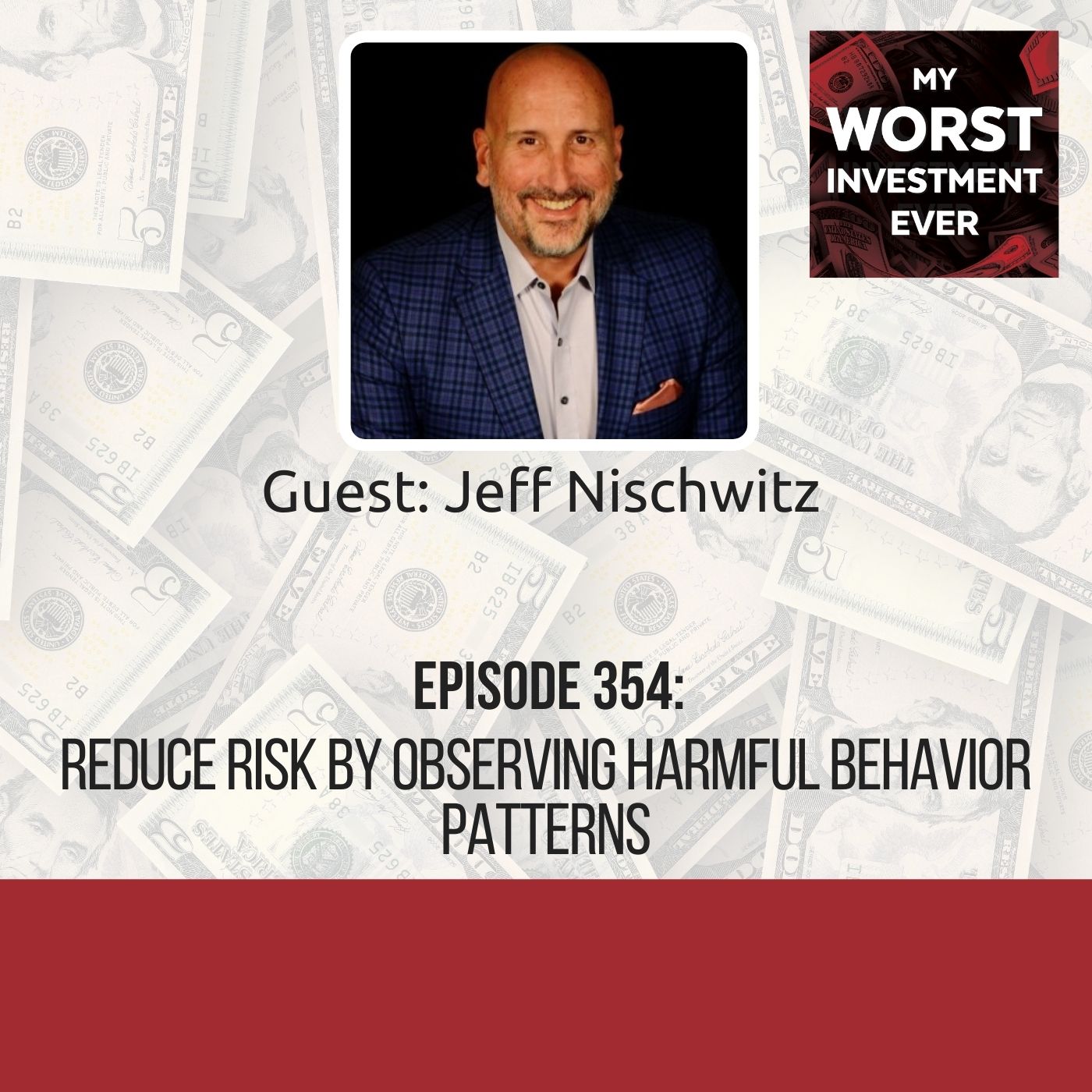
Jeff Nischwitz – Reduce Risk by Observing Harmful Behavior Patterns
BIO: Jeff Nischwitz is known as a Snow Globe Shaker who’s on a mission to help people shift how they lead and thereby shift their leadership impact.STORY: Jeff’s parents sold their business and gave the money to their grandchildren for a college education. Jeff decided to invest his kids’ money as advised by a financial advisor who knew his dad. This was during the Dotcom boom, and at first, the investment grew from $10,000 to $75,000 per kid’s share. But within six months, the market crashed. The worst part was that his advisor never talked to him as the market started shifting. Being a thrill-seeker, Jeff decided to try another venture. This time around, he invested in a franchise that failed from the get-go. Jeff continued pumping money into the business even though things never improved. Jeff never quit until he was so deep into the mess.LEARNING: Don’t let your ego drive you to poor decisions. Focus on the long-term instead of big hits that only last a short time—work with an experienced financial advisor. “When things are chaotic around you, when you’re being shaken up externally, it’s even more important to shake internally.”Jeff Nischwitz Guest profileJeff Nischwitz is known as a Snow Globe Shaker who’s on a mission to help people shift how they lead and thereby shift their leadership impact. He’s an international speaker and personal transformation coach known for his unique perspectives, challenging traditional thinking, and delivering tangible shifts for leaders to grow their people, build their businesses and enhance their relationships.Jeff’s the Founder of The Nischwitz Group, a speaking, consulting, and coaching company, and the Co-Founder of Cardivera, a leadership development ecosystem that grows leaders and their impact. He also co-hosts the Leadership Junkies Podcast. Jeff has published four leadership and business books, including his most recent–Just One Step: Walking Backwards to the Present on the Camino Trail.Worst investment everBack in the mid-90s, Jeff’s parents sold their business and gave the company stock to their grandchildren. This money was intended for their college education when they came of age.Investing the moneyJeff was the administrator for his kids’ share. He went to a guy that he did not know well but who knew Jeff’s father. He suggested a stock for Jeff, and he put in all the money into that stock. The stock was going crazy. Jeff started with $10,000 a child, and the money went up to like $75,000.The Dotcom boomThe Dotcom boom hit in 2000, and now there was all this speculation on tech stocks. Jeff started thinking whether it was time to sell the stock as it was still on a high. He, however, waited on his guy to advise him. But he wasn’t getting any communication from him.As he was waiting for advice, the market started to tumble and ultimately crashed. Jeff lost most of the money. All this while, Jeff never heard from the financial advisor.Trying againThe same year, Jeff started a business that involved buying a franchise. The company started poorly right from the beginning. Jeff’s gambler’s mindset set in, and instead of pulling the plug, he kept pumping money into the business.It took Jeff forever to pull out and say enough, finally. By the time he pulled the plug, he had dug himself a bottomless hole.Lessons learnedBe careful of the treacherous thrill of the unknownJeff realized that he was a bit of a thrill-seeker. He loved the thrill of the unknown. This caused him to make financial decisions with a gambling mindset. Now he has learned how to be self-aware and catch himself when he is going in that direction.Focus on long-term wins instead of shorter big hitsAnother lesson that Jeff learned from his worst investment was that he had always been trying to go for the big hits. This was all about his ego. He would feel better about himself by getting the big wins, but this often put him in trouble.Andrew’s takeawaysReduce risk through the dollar-cost averagingThe dollar-cost averaging strategy puts in a small amount of money every month instead of your entire savings. Using this strategy allows you first to understand where the market is before investing a lump sum.Financial advisors should communicate regularly with their clientsIf you manage other people’s money, make sure that you have regular communication with your clients. The most optimum would be monthly, but quarterly is okay. Pick the time that suits you and suits your client, and ensure you have regular communication.Choose a financial advisor with experienceWhen picking a financial advisor, choose one with experience. A financial advisor who has been through many ups and downs may be better at communicating and handling your financial matters.Actionable adviceBe honest with yourself and get to know yourself. Look for behavior patterns that do not serve you. A great way to do that is to ask yourself what you wish were more of and what you want to you were less of. That’s the way you can start

Andrew Stotz – Valuable Risk–Reduction Advice from Guests
Recently, I posed this question to some of my prior guests, “How would you advise a young person to reduce risk in their life?” The answers rolled in from 40 guests! I grouped the responses into five categories: Building valuable relationships, managing finances, personal growth, risk management, and having awareness. There are tremendous pearls of wisdom!Valuable relationships – Communication with loved ones, mentors, and friendsDon’t be afraid to ask for helpSeek out trusted friends, family members, and mentors and listen to them “Don’t be afraid to ask for help.”Corey Hoffstein “At each stage in your life, find mentors and friends you trust and who you feel are invested in you – listen to their advice.”Colin W. McLean “Get married, listen to your wife, stay married.”Michael Markels “Alongside your time and money, the most important asset allocation decision you will make is with the trust you invest in a select few people: your spouse and family, your friends, those you work with, and those you entrust to take care of whatever or whomever you cannot personally care for. (You’ll note your choice of fund managers and CEOs of stocks you buy only fits into that last category).”Tariq Dennison Managing finances – Focus on investing in your futureStart investing earlyGet a great education and training in your fieldUnderstand what you are investing inStudy everything you can find about moneySet a long-term investment strategy and stay the course, even when it’s scaryTraditional jobs are often bad investments these daysDiversify your life by developing skills and relationships in multiple areas “Start investing early to create wealth and always live within your means.”Nicolas Rabener “Pass CFA exams and be a CFA charterholder.”David Ying “Invest in what you truly understand.”Sopon Srisakunpath “Study money! If you want more of it, you must talk about it and think about it daily, which means, read books; all and any book with the word money in the title.”Jerremy Newsome “Hold when your investments drop a little; hold even when they go up as much as you wish. There’s more on the horizon for you, always.”Philipp Kristian Diekhöner “The worst income source you will ever have as an adult is a traditional job.”Bobby Casey “Find ways to put multiple irons in the fire, aka develop skills that are valuable among several industries, and develop relationships with colleagues in a variety of industries and professions. This is much like the diversification of assets in an investment portfolio. However, the flip side is reducing risk generally results in lower overall returns since the investments are not overweight in any single industry (or portfolio holding). So, one must be content with not experiencing exceptional returns in exchange for reducing risk in life and career choices.”Bill Winterberg Taking responsibility – Admit your mistakes and learn from themBe honest about your mistakes, learn from them, but most importantly, move on from themChase your dreams, so you never have to regret missed chancesIf you are struggling to be who you want to be, just reach out to others who have been through it “Get away from the mistake, learn from it and try to avoid it in the future.”Roongkiat Ratanabanchuen “Be honest about your mistakes and losses so you can learn from them.”Michael “Mike” R. McGaughy “Live with no regrets. The memory of not chasing your dream at all is worse than the pain of going for it and failing.”Lisa Ryan “Curiosity is a superpower; use it to be open to what you don’t know and never be closed to what you learn.”Michael Falk “If there is a mismatch between your long-term goals and your everyday actions, there are professionals out there who can help you.”Anonymous prior guest Personal growth – Unlock your creativity and trust the direction of your lifeYou are your main engine of wealth; invest in youDon’t get distracted by the current situation; look beyond itBe open to give and receiveGet off the daily rollercoaster, set your long-term strategy, and stick to itBe curious and be bold; life is shortStudy about the opportunities you face before actingAlways have a planDon’t believe what you read, test for yourself, then follow your own path “Invest in yourself; your mind and hands are the engines of your wealth.”Dr. Daniel Crosby “Look beyond the current scenario.”Mohd Sedek Bin Jantan “Give without expectation and receive without resistance.”Christopher “Chris” Salem “Let time do the work for you, do not entertain the daily emotional rollercoaster; instead, stay true to your long-term strategy.”Emil Voehlert “Be bold and live your dream, for life is short.”<a...

Shashank Randev – There Is No Surefire Formula to Venture Capital Investing
BIO: Shashank Randev has acquired a depth and breadth of experience from working in large companies, being the founding member for a SaaS startup (acquired by a Fortune 500 Company), to an early-stage fund investing in technology-enabled startups.STORY: Shashank was the lead investor of his angel network and was advocating for a startup looking for funding. They had an impressive conversational artificial intelligence assistant for retailers. Their one problem, though; they didn’t have proof of concept. Shashank was unable to convince the founders to work on proof of concept, so he pulled his support. A year later, the startup was acquired by a huge company. Had Shashank not pulled out, he would have made 7x of his investment in the acquisition.LEARNING: Identify your buyer even before you create your product. Have different perspectives when evaluating an early-stage startup. “You cannot possibly have one set of perspectives when looking at an early stage company because anything can happen; acquisition can happen at any time.”Shashank Randev Guest profileShashank Randev brings entrepreneurial and investment understanding with 15+ years of cross-functional expertise. He has acquired a depth and breadth of experience from working in large companies, being the founding member for a SaaS startup (acquired by a Fortune 500 Company), to an early-stage fund investing in technology-enabled startups.Shashank is Founder VC at 100X.VC (x)-India’s first venture fund to invest in early-stage startups using iSAFE Notes. Go to https://www.100x.vc/ and submit your pitch deck.He is also an Angel Investor and Advisor with a keen interest in B2B emerging technology startups. Additionally, he is a Member at PIOCCI (People of Indian Origin Chamber of Commerce and Industry).Previously, he was the Founding member and Vice President of VCCEdge, the SaaS data platform by VCCircle (acquired by News Corporation in 2015). He launched the SaaS platform, led revenue, product development, and growth initiatives for close to seven years at VCCEdge. He has also worked with NIIT Ltd. and Zensar Technologies Ltd.Shashank holds an undergraduate degree in Bachelor of Engineering from Nagpur University and an MBA from International Management Institute (IMI), New Delhi.Specialties: Scaling up Startups, Accelerators, Angel & Seed Investment, Venture Capital, Global Open Innovation, M&A, Cross-Border Transactions & Entrepreneurship.Worst investment everShashank was and still is very interested in conversation in commerce. In 2017, he met this company developing a conversational artificial intelligence (AI) assistant for retailers. The AI assistant could understand a customer’s needs through natural conversation, offer them relevant recommendations, and explain why that may be the best choice. This fascinating AI was a huge opportunity.The founders of the company had previously built another successful startup that a famous Indian company acquired. So they were second-time founders, which was a colossal tickmark for Shashank.Advocating for the founders to get fundedIn August 2018, Shashank decided to lead the investment through an angel network. As the leader of this transaction, Shashank’s job was to convince all the other angel investors in that network that they should join him in investing in the two founders.The missing proof of conceptThe two founders had a good minimum viable product, but they had not tested it. Shashank kept asking the founders to try implementing the product in a few companies to test it.But the founders wanted to focus on enhancing their algorithms instead of working on the proof of concept, which is what the network of angel investors wanted. At the end of 2018, after spending five months having multiple conversations, Shashank was not convinced that they would be able to sell their final product.Giving up on the foundersEventually, Shashank felt that he was wasting time trying to convince them to give him proof of concept. He also did not want to ruin the relationship he had with the angels in the network should the product fail. So he pulled the plug. Shashank decided not to lead the round, and eventually, that company did not get funded by the angel network.If only he had been a little patientCome September 2019, and a large Indian firm acquired the company. The company was so impressed by the hardcore tech product that they could not wait to acquire it.When Shashank learned about the acquisition, he regretted dismissing the founders. Had he been a little patient to get to the acquisition cycle, he would have easily made a 7x return of whatever capital he would have invested.Lessons learnedKeep an open mind when evaluating an early-stage companyYou cannot have only one set of perspectives when looking at an early-stage company. Anything can happen. An acquisition can happen at any time.Andrew’s takeawaysIdentify your buyer even before you create your productOne of the best ways to start up a c
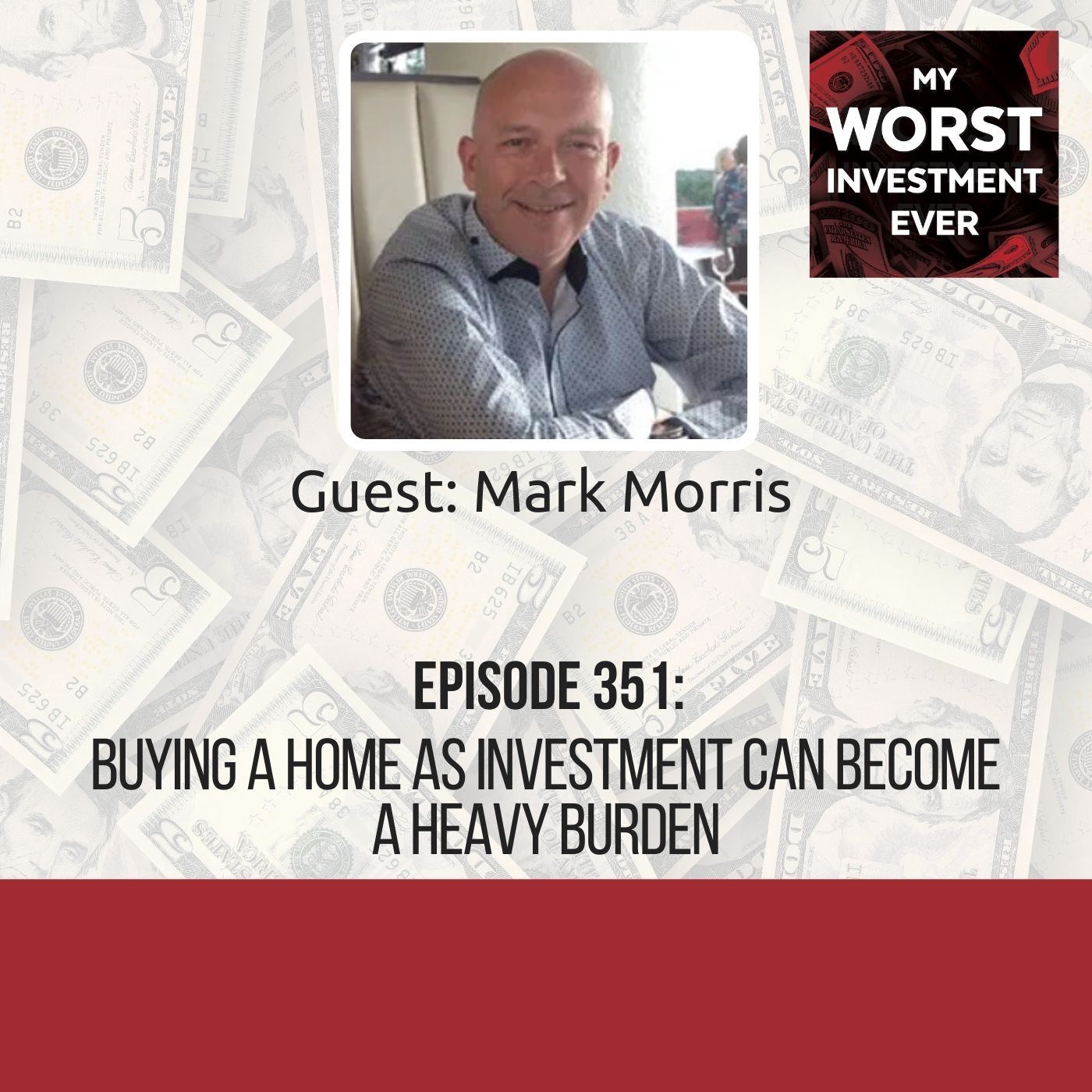
Mark Morris – Buying a Home as Investment Can Become a Heavy Burden
BIO: Mark Morris is an expert at building developer relationships and helping housebuilders achieve discreet volume sales at speed.STORY: Mark bought an off-plan property for $200,000 with the hopes of selling it for a profit. Unfortunately, a project that was supposed to take 12 months took two years to complete. The US financial crisis hit just a few months after completion, and now Mark could not sell the property.LEARNING: Be careful when investing in an off-plan property because you are simply buying a dream. Most homes just take money away from the owner, making them liabilities instead of assets. Take advantage of the cooling-off period in your contract should you think you made a mistake. “I’m not against off-plan investments, but they are just riskier.”Roshan Cariappa Guest profileWhen you hear the name Mark Morris, I want you to think, “High cash flow portfolios.” He is an expert at building developer relationships and helping housebuilders achieve discreet volume sales at speed. Alongside an IT freelance career, he has been a property investor for the last 20 years, building a portfolio of buy-to-let apartments and houses across Greater Manchester. He has also created a solid income-generating portfolio in the midwest of the US.Worst investment everMark saved up quite a chunk of money around 2005, and when his friend, a real estate agent, invited him to see some property, he did not hesitate to go. The property was a development in a marina that was being sold off-plan.The 12-year planThe owner was selling the properties for $200,000, and the plan was to have the apartments ready in 12 months. So the catch was that Mark, should he buy the property, would sell it for about $260,000.Mark was itching to add properties to his portfolio, and so he quickly bought into the investment. He was still new in the property market and knew nothing about such investments, but this did not stop him from purchasing the property.The promised 12 months turned into 18 months and 18 months turned into two years. In 2007 the project was completed, and now Mark could sell his apartment.Here comes the US financial crisisWithin months of completion, the US financial crisis happened. Now Mark could not get anyone to buy the apartment for a profit. Mark decided to rent the apartment, but the rent he collected was too little to even pay for the mortgage. Mark still has this property to date, and it’s still not covering the mortgage.Lessons learnedUnderstand the investment you want before you make any paymentDo your research and your due diligence. Look at the fundamentals of whatever you want to invest in.Have a plan BDo not focus too much on the upside. Consider that your investment could go south and so always have a plan B.Choose long-term over short-term investmentsAlways be looking at the long term, not the short term, when it comes to investing.Andrew’s takeawaysMost houses are liabilities and not assetsMost people buy homes using bank loans, turning the house into a liability instead of an asset. This is because it is just taking money instead of giving cash flow to the owner.Buying off-plan is akin to buying the seller’s dreamWhen you are buying off-plan, you are buying a startup company; you are buying a dream. This places you at a considerable amount of risk to get to the final result because you invest in the person selling you the dream and in their business, not in property.Find out about any cooling-off periods in your contractCheck on any existing cooling-off periods related to your contract. This helps if you sign a contract, and later you feel you made a mistake, you are allowed to break the contract as long as it’s within the cooling-off period.Actionable adviceGet yourself educated, do your research and just commit to personal development. Make sure you understand the investment that you are getting yourself into. Do your due diligence before you put money into it.No. 1 goal for the next 12 monthsMark’s number one goal for the next 12 months is to create another high cash flow and income stream.Parting words “Do not be afraid to make mistakes. Take ownership of your mistakes but learn from them.”Mark Morris [spp-transcript] Connect with Mark MorrisLinkedInAndrew’s booksHow to Start Building Your Wealth Investing in the Stock MarketMy Worst Investment Ever9 Valuation Mistakes and How to Avoid ThemTransform Your Business with Dr.Deming’s 14 PointsAndrew’s online programsValuation Master ClassHow to Start Building Your Wealth Investing in the Stock MarketFinance Made Ridiculously SimpleBecome a Great Presenter and Increase Your InfluenceTransform Your Business with Dr. Deming’s 14 PointsConnect with Andrew Stotz:astotz.comLinkedInFacebookInstagramTwitterYouTubeMy Worst Investment Ever Podcast
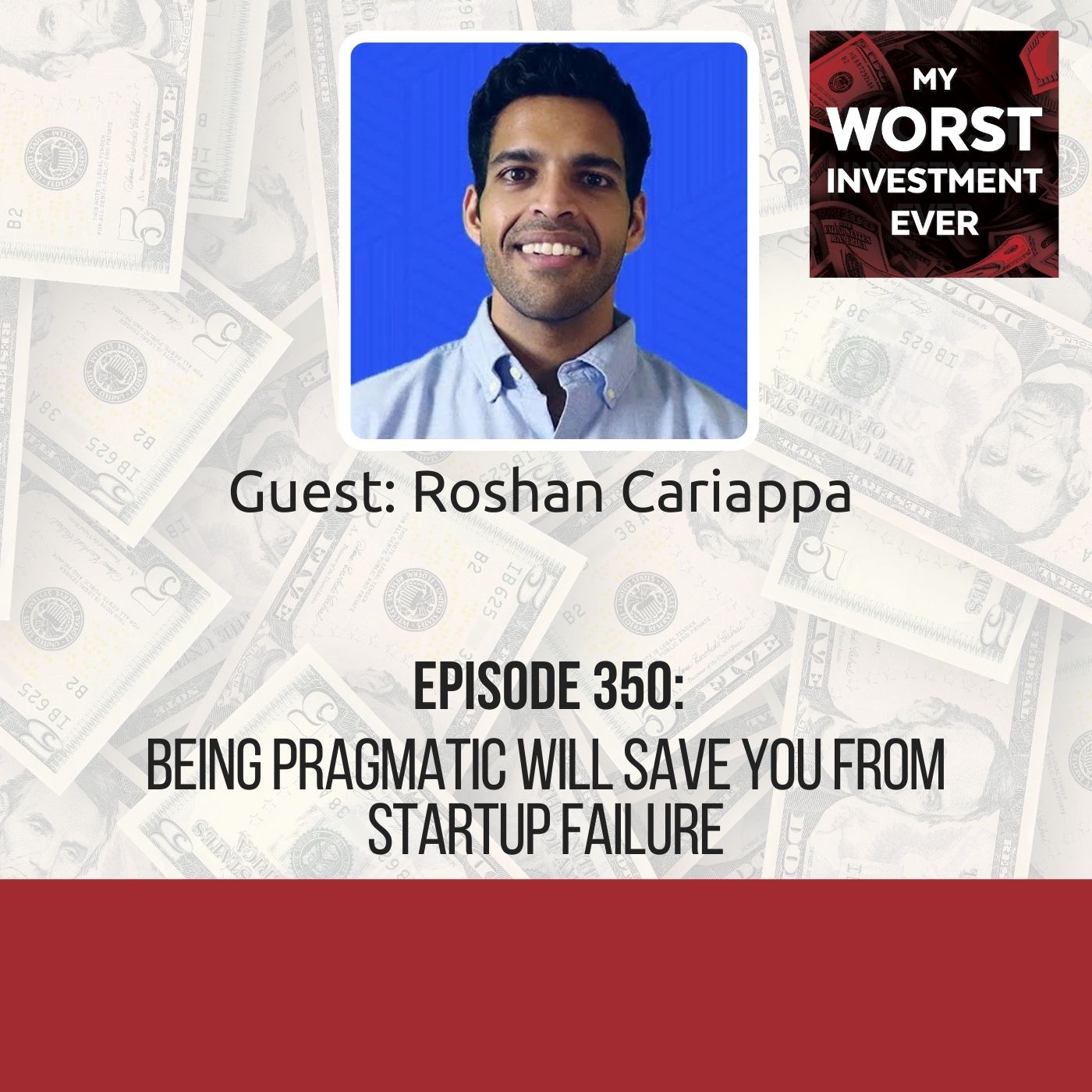
Roshan Cariappa – Being Pragmatic Will Save You From Startup Failure
BIO: Roshan Cariappa has over 12 years of experience as an entrepreneur and operator at early and growth-stage startups, specializing in going from zero to one and setting up cross-functional teams. Currently, he heads Marketing at Vymo, one of the fastest-growing SaaS startups in India.STORY: Roshan started his business in 2012, offering marketing services to startups and small businesses. He then pivoted to offering digital assets when digital marketing hit. The business was quite a success. In 2015, there was a vast consumer internet boom in India, and so Roshan thought he’d take advantage of this and pivot his business to offering tech products. He created an app to connect families. This was a huge change that worked against his company. In a few short years, the business failed.LEARNING: Pivoting is about making small changes, not huge ones. Do not go all in; make room for risk and probability and always have a plan B. “You can be super optimistic about your vision, but be a little pragmatic, or even slightly pessimistic about your execution.”Roshan Cariappa Guest profileRoshan Cariappa has over 12 years of experience as an entrepreneur and operator at early and growth-stage startups, specializing in going from zero to one and setting up cross-functional teams.Currently, he heads Marketing at Vymo, one of the fastest-growing SaaS startups in India, and also runs Bharatvaarta podcast (Politics, Policy, & Culture focused on India) and The Startup Operator podcast (wisdom from Indian founders, operators, and investors).Worst investment everIn 2012, Roshan started a business offering marketing services to startups and small businesses. The business then pivoted to building digital assets. Roshan and his team realized that digital was becoming the front and center of business, and people didn’t really have a focal point for all marketing activities. So they took advantage of this and pivoted the business.For a couple of years, the business was doing well and making good money.Pivoting a second timeIn 2015, the team had an itch to pivot again. This time they decided that they were done with services and decided to build products. They settled on creating an app to connect families.Going all inAt the time, there was this colossal consumer internet boom in India. There were a lot of new users on the internet, and every app business was getting funded. So there was a lot of optimism in the air. Roshan decided to go all in. He believed they could build the app successfully just as they had done with their previous offerings, the digital assets.It was not as easy as it seemsRoshan and his team grossly underestimated the time, effort, resources, money, patience, and skills required to build a consumer app.Roshan soon found out that App Store discovery is quite hard, and an app has to either go viral or spend a ton of money on acquisition. And once you’ve acquired these consumers, you still have to retain them and then make money out of them, which is not a trivial thing.Having to wind upRoshan had to wind up after a couple of years of trying to make the app a success. This was quite humiliating for him as he had to let go of people he had hired and nurtured.The failure of the app drained all of Roshan’s self-confidence. He hit a real low point after this venture.Lessons learnedDo not go all in make room for risk and probabilityWhile it is good to be optimistic about the outcome of your new idea, it helps to be a little pessimistic about your execution. Before you go all in, think about risk and probability. Consider that things might fail; what will you do in that eventuality? It is always better to be prepared for such an outcome than for it to hit you by surprise.Always have a plan BIt may sound like a cliche but always have a plan B. There is a lot of survivorship bias, especially when starting a business, so it’s going to take a lot out of you, and it’s good to have a solid plan B.Andrew’s takeawaysPivoting is not about making big moves but about small changesA lot of times, when entrepreneurs want to pivot, they make big changes. But the fact is that a pivot is just a small change. Pivoting from a service to a product or a product to a service is a huge change, and you are no longer pivoting but starting a new business.Actionable adviceBe deliberate about your choices. It is also imperative to be pragmatic about the present.No. 1 goal for the next 12 monthsRoshan’s number one goal for the next 12 months is to stay healthy and happy and keep his family happy.Parting words “I think we underestimate how much success can be had by not doing dumb stuff like, in my case, put everything on the line without a plan.”Roshan Cariappa [spp-transcript] Connect with Roshan CariappaLinkedInTwitterPodcast 1Podcast 2WebsiteAndrew’s booksHow to Start Building Your Wealth Investing in the Stock MarketMy Worst Investment Ever9 Valuation Mistakes and How to Avoid ThemTransform Your Business wit

Marc Cirera – Don’t Be Afraid to Walk Away If You Lack the Passion
BIO: Marc Cirera is a business ethics and CSR specialist with a clear vision: a world where companies operate more sustainably and responsibly. It is for this reason he founded Companies for Good.STORY: Marc was traveling across South America when he realized just how much the process of booking a bus, the most popular mode of transportation, was. He decided to create an application that would make this process easy. The biggest mistake Marc made was failing to research his idea before launching it. He went all in and came up with this spectacular product, but he soon realized that selling bus tickets was just not where his heart was.LEARNING: Find that one thing that motivates you the most and do it. It is okay to walk away from an idea that is no longer working; let the experience be your chance to learn. Go out there, test your idea, make it work, and keep improving it as you get feedback. “You will always regret the things you haven’t done, not the things you have done. And so, whenever you have the opportunity to do something, do it.”Marc Cirera Guest profileMarc Cirera is a business ethics and corporate social responsibility (CSR) specialist with a clear vision: a world where companies operate in a more sustainable and responsible way.He founded Companies for Good because he knows that good business practices help companies perform better and because he knows that businesses have the potential to solve some of the world’s most pressing issues.A born entrepreneur, Marc was introduced into the business world at a very early age by his grandfather, a self-made businessman. At 19, Marc set up his first business in hospitality while studying Economy & Business Administration in Barcelona. Marc ran the business for four years, then sold it and used the profits to pursue his Master’s in Business Ethics in Sydney.After graduation, Marc moved to London where he worked at communications consultancy, Radley Yeldar, as an Employee Engagement & Sustainability consultant for 5 years. He helped multinational companies become stronger by putting ethics, values, and CSR at the heart of their organizations.Marc landed in Dubai in 2015 and joined the sustainability team of the luxury retail giant Chalhoub Group. In parallel to his full-time job, he developed and launched Companies for Good (in 2017) and has been fully dedicated to the social impact start-up since November 2018.Worst investment everMarc was traveling around South America, as a backpacker, after quitting his job in London. Being an entrepreneur at heart, Marc went looking for any opportunities as he backpacked in South America.Smelling an opportunityMarc noticed that bus transportation was the most popular mode of transportation given that planes were expensive and there was no railway line. People would use buses to travel across cities and countries. The buses were quite comfortable.One thing was missing, though. The process to find information such as bus timings and routes and purchase the ticket was a nightmare, especially for tourists who could not speak Spanish. Immediately, Marc got the idea to create something like Skyscanner, but for the bus transportation in South America.Coming up with the coolest solutionMarc spent about a year working on the application. He did many cool things, such as an amazing website, a fantastic name, and the coolest logo. Marc started talking with loads of bus companies and sharing his idea of selling their bus tickets online. And they loved it, of course, because it meant more business for them.Going in full-timeMarc traveled to South America again sometime later to negotiate the rates. He did pretty much everything that needed to be done to set up the business.At some point, Marc realized that he needed to put his full attention to the business. He could not be traveling while developing a business idea. So he dedicated himself full-time. He created a team and financed the whole business because he was 99% sure it would be a great business model. Marc truly believed it could be amazing and was ready to invest in it.Losing interestThe business model was wholly dependent on selling bus tickets. After a year of doing it, Marc realized that this was something he just couldn’t see himself doing 5-10 years down the line. There was just no motivation to keep doing it, and so he wrapped up the business.Lessons learnedFind that one thing that motivates you the most and do itIf you want to succeed as an entrepreneur, do something that motivates you. Something that you will want to continue doing for a long time. Think about the things that inspire and drive you as a person and as an entrepreneur. What are the things that make you wake up every morning and be excited? What kind of job would you like to do that doesn’t feel like you’re working? Before spending time and money on anything, spend some time thinking about what will make you happy and keep you motivated.Whenever you have a chance to do something, d
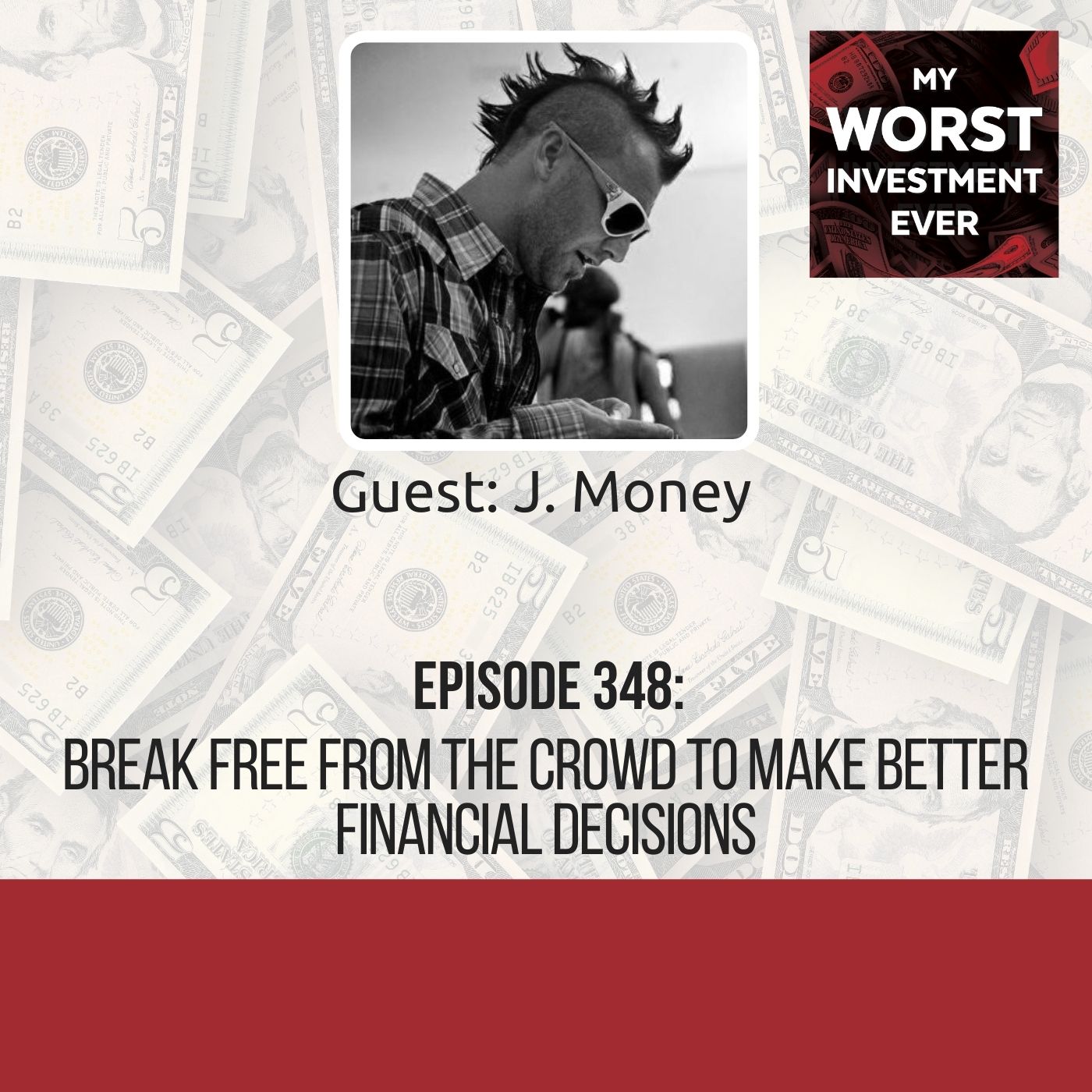
J. Money – Break Free From the Crowd to Make Better Financial Decisions
BIO: J. Money is an award-winning personal finance blogger. He’s founded several popular projects over the past decade, including Budgets Are Sexy and Rockstar Finance.STORY: J went looking for a 2-bedroom apartment to rent in 2007. He got lost and ended up buying a $350,000 house on a whim 48 hours later, with no idea of what he was getting into. A few months later, the property market went bust, so he could not sell his house. J has always been a drifter and buying a house that he could not sell saw him get stuck in a place he did not enjoy living in for seven years.LEARNING: Do not do things just because others are doing it; try to shape your lifestyle according to your dreams. You could make more money by being a renter than a homeowner because there is no guarantee you’ll sell the house for a profit. “There is no shame in renting. Take your money and invest it in the stock market.”J. Money Guest profileJ. Money is an award-winning personal finance blogger, a daddy of 3, and mega-fan of the Personal Finance space online. He’s founded a number of popular projects over the past decade, including Budgets Are Sexy and Rockstar Finance, and is now curating the best articles from around the community at All-Star Money—a project in partnership with The Motley Fool. You can find his entire story here.Worst investment everWhen J got engaged, he felt that the next thing on his life’s checklist was buying a home. But at first, they decided to rent a one or two-bedroomed house.Finding a home by sheer accidentOne day, as the couple was apartment hunting, they got lost after taking a wrong turn. They stumbled across a townhouse that was for sale. They thought it was a nice-looking townhouse, and they decided to call the realtor just for the fun of it.The realtor confirmed that it was for sale and invited them to go inside and take a look. They told the realtor that they were planning on renting. The realtor convinced them that renting was just a waste of their money, and for only $200 more, they could own a house.But my friends are homeownersAs the realtor tried to convince them to buy, J thought everyone, including his friends and family, was a homeowner. And at that point, he knew a house is an asset. All these thoughts convinced him to buy the house for $350,000 within 48 hours.The decision to buy the house was entirely on a whim. They did no research or weighed their options thoroughly. They just saw a house that they liked, and it was well priced, so they bought it even though that was not their initial plan.The bubble goes bustWhile J felt that he had made a rash decision, he comforted himself with the fact that he had bought the house when the market was down, and maybe he would sell once it goes up.Unfortunately, the market kept going down. Then the 2008 financial crisis happened and crashed the property market altogether. Now J could not sell the house.The massive responsibility of owning a houseBesides having to deal with a declining market, J also had to bear the immense responsibility of owning a house. He had to deal with things like maintenance and property taxes, something he was not used to as a renter.Tethering a drifterJ came from a military background and so was used to moving every two years. And while in his head he thought it might be good to settle down, it was impossible to buy a house every two years and sell it.J and his family were forced to live in that house for about seven years because he could not sell the house for profit, even though he badly wanted to be on the move.Lessons learnedYou do not have to do what everyone else is doingDo not do what others are doing. Live your life on your own terms. Buy a house because it’s the right thing for you, not just because your best friend bought a house. Know yourself, understand how you work, and build a lifestyle around that.There is no shame in rentingIt is okay to rent. In fact, there are some advantages to renting over ownership. With renting, you do not have to worry about maintenance costs and taxes. You can invest this money in something with a high return. Renting also gives you the freedom to move around as much as you want. You do not get tied down to one place.There are other better ways of investing other than homeownershipAn asset is supposed to bring you an income. Houses, unless it is a rental, do not bring income. Instead, they take money from you. There are other investment options, such as the stock market. If you are buying a house with the hopes of making money from it, don’t. Instead, invest in the stock market.Andrew’s takeawaysRenting could make you more money than owning a homeLong gone are the times when owning a home was a huge investment in terms of returns. If you calculate the long-term costs of owning versus renting, renting is more cost-saving. If you are an intelligent renter and invest the money you’d use to buy a house, you could make a lot more than if you were a homeowner.There are many investment

Chuen Chuen Yeo – Seek Out Expert Guidance Before Taking on a New Project
BIO: Chuen Chuen Yeo is an executive coach specializing in developing the agile mindset in professionals, thereby raising the quality of leadership in every organization.STORY: Chuen Chuen quit working as a public servant and set up a coaching business. She then put her heart and soul into creating an online course. After three weeks of ignoring everything else, including her husband and kids, Chuen Chuen made only one sale. Her biggest mistake was failing to conduct background research and understand the online course space before jumping into it.LEARNING: Do not allow fear to stop you from reaching your full potential. But, also, do not let too much optimism blind you from seeking guidance. Sell your online course before creating it. “I overcame imposter syndrome by accepting what my strengths profile was trying to tell me.”Chuen Chuen Yeo Guest profileChuen Chuen Yeo is an executive coach specializing in developing the agile mindset in professionals, thereby raising the quality of leadership in every organization.Named one of “Top 101 Global Coaching Leaders” and “Woman Super Achiever” at the 28th World HRD Congress.She works with business executives from nearly 40 countries, including Fortune 500 companies and senior officers from the Singapore Civil Service.Chuen Chuen is also the author of ‘8 Paradoxes of Leadership Agility’ where through stories of transformation, she shows how mindset shifts are made possible with her proprietary Re4 Coaching Model.Worst investment everLeaving her safety netChuen Chuen decided to move from being a public servant and become an entrepreneur. The move meant leaving the stability of a full-time job, but she was determined to explore this route of becoming an entrepreneur.Setting up her own businessChuen Chuen set up a coaching business, and to scale the business; she put together an online course with the hopes of making some passive income.Chuen Chuen spent about three weeks wholly engrossed in creating the perfect course. In the three weeks, she ignored her husband and three kids. Fortunately, her husband was very understanding throughout that period.Time to sell the courseAfter spending all her time and money creating the perfect course, it was now time for Chuen Chuen to sell her course. She asked her greatest supporters to have a look.After all the work she put in, Chuen Chuen got just one sale. She was utterly disappointed.Learning from failureEven though Chuen Chuen was disappointed by the failure, she decided to learn from it. She asked a few people for feedback, and she got to know that her biggest mistake was being overly optimistic about her course. She believed that it would be great just from creating good content. So she failed to do any research or seek guidance from other online course sellers.Lessons learnedDo not let too much optimism blind you from seeking guidanceWe have to guard ourselves against our optimism to avoid trapping ourselves in a box, thinking that everything will work out fine. Too much optimism may make you paint this overly rosy picture that you do not need guidance because things will work out fine.Andrew’s takeawaysDo not let fear stop you from reaching your full potentialYou are unique and capable. Stop feeling bad about yourself, stop feeling inadequate, or letting imposter syndrome stop you from reaching your highest capabilities. Your job in this life is to bring the most and the best out of yourself.Sell your course before you create itIf you want to make money selling online courses, the best thing to do is sell the course before creating it. Drum up interest before you even create it. This will help you know if people indeed want it.Do not be afraid to charge premium rates for your coursesSometimes people are afraid to charge a higher price for their courses, not recognizing that cost is a serious accountability tool.Actionable adviceIf you are planning to launch an online course, check out Amy Porterfield first.No. 1 goal for the next 12 monthsChuen Chuen’s number one goal for the next 12 months is to scale and automate her business.Parting words “Please connect with me if this interview has done something positive for you.”Chuen Chuen Yeo [spp-transcript] Connect with Chuen Chuen YeoLinkedInTwitterInstagramWebsiteAndrew’s booksHow to Start Building Your Wealth Investing in the Stock MarketMy Worst Investment Ever9 Valuation Mistakes and How to Avoid ThemTransform Your Business with Dr.Deming’s 14 PointsAndrew’s online programsValuation Master ClassHow to Start Building Your Wealth Investing in the Stock MarketFinance Made Ridiculously SimpleBecome a Great Presenter and Increase Your InfluenceTransform Your Business with Dr. Deming’s 14 PointsConnect with Andrew Stotz:astotz.comLinkedInFacebookInstagramTwitterYouTubeMy Worst Investment Ever Podcast

Bushy Martin – Focus on Your Health Because It Is Your Wealth
BIO: Bushy Martin helps others to work less and live more. He is a highly respected property investment and finance expert, an author, and an anchor on Australia’s number one and longest-running property program ‘Real Estate Talk. He is also the host of the Get Invested podcast.STORY: Bushy always believed that hard work was all a successful man needed. This made him self-obsessed with his career to a point where he abandoned everything else in his life. It made him lose everything, including his wife and son.LEARNING: Invest in your health because it is your wealth. Focus on creating passive income so that you can have more time to live life. Time is a limited resource; use it wisely. “People who achieve sustainable success are those who invest in themselves, in their health, and their wealth.”Bushy Martin Guest profileBushy Martin helps others work less and live more through his contributions as an award-winning author, media host, podcaster, and one of Australia’s most highly respected property investment and finance experts. He is the author of The Freedom Formula and Get Invested. He is the newly appointed anchor on Australia’s number one and longest-running property program, Real Estate Talk, and Bushy interviews some of the world’s leading investors and high performers each week on his podcast, Get Invested.Worst investment everBushy was brought up to believe that a man’s role is to work hard as the wife looks after the house and brings up the kids.Hard work was his strengthBushy was not very talented, so his way of standing out was to work harder than everyone else. He worked hard through high school and university. He continued to work hard even after he became an architect.Bushy was all consumed in being a world-leading architect. His dream was to have award-winning projects all over the country, and to some degree, he achieved that level of success. Bushy got to work on some fantastic projects all over Australia and Asia.Great on the outside, dead on the insideBushy had a great career, got married, had a beautiful son, and lived in a beautiful home. Everything seemed perfect on the outside, but on the inside, Bushy was dying. He became obsessive about work. He was working seven days a week, 14 hours a day, for years on end.Losing everythingBushy’s obsession with his career caused him to lose everything else that was important to him, including his family. That hit him hard. He was burnt out, broken, and broke at 33.Bushy found himself at absolute Ground Zero and having to start again. He regrets the damage his obsession did to his first wife and son. Bushy resolved not to get that obsessed ever again and try to find a balance between making money and living life.Lessons learnedStop working for money and start getting money to work for youFocus on creating passive income so that you do not have to work all the time at the expense of everything else in your life.Treat yourself to some TLCFocus on your health because it is your wealth. The moment you start investing in your health, your life will change. You will start to see the world differently, and money will not be your motivation, but your health will be.Family is everythingFamily is everything you have got. So if you have disagreements with your parents or siblings, forgive them. You do not have to forget but forgive them because if you do not, the person you are hurting most is yourself.Andrew’s takeawaysChange is possible at any point in your lifeYou can change yourself whenever you feel it is necessary. Think about the kind of legacy you want to leave and adjust accordingly.Time is our limited resource, and all that we haveTime is a scarce resource so use it wisely. Live every day intentionally to get more out of life before time runs out.Actionable adviceStart the day by asking yourself: “What can I invest in today that is going to give me more time tomorrow?”No. 1 goal for the next 12 monthsBushy’s number one goal for the next 12 months is to continue helping and giving to others. His goal is to look at how to evolve the Real Estate Talk show on the professional front. Bushy is also working on his third book called Get Inspired, which takes all the gold out of the podcast episodes he has been doing over the last three years. You can grab a free copy of the intro book here.Parting words “Get invested.”Bushy Martin [spp-transcript] Connect with Bushy MartinLinkedInTwitterWebsitePodcastAndrew’s booksHow to Start Building Your Wealth Investing in the Stock MarketMy Worst Investment Ever9 Valuation Mistakes and How to Avoid ThemTransform Your Business with Dr.Deming’s 14 PointsAndrew’s online programsValuation Master ClassHow to Start Building Your Wealth Investing in the Stock MarketFinance Made Ridiculously SimpleBecome a Great Presenter and Increase Your InfluenceTransform Your Business with Dr. Deming’s 14 PointsConnect with Andrew Stotz:astotz.comLinkedInFacebookInstagramTwitterYouTubeMy Worst Investment Ever Pod

Steve Faktor – Take the Risk and Pursue Your Dreams
BIO: Steve Faktor is a former Fortune-100 executive—turned entrepreneur. As Managing Director of IdeaFaktory Innovation, he helps tech, financial services, and consumer goods clients see and build the future. The McFuture Podcast features Steve’s provocative predictions and prescriptions.STORY: Steve’s lifelong dream was to be a comedian and radio personality just like Howard Stern. His parents, however, could hear none of it and pushed him to conform to being a nice boy who does well in school and then goes out to get a family and a job that everyone can be proud of. Today, he regrets never fighting hard to achieve that dream.LEARNING: Fight hard to pursue your dreams, and don’t let anyone stop you. It is not too late to turn back and chase your dreams. “If you follow the money, the culture, and technology, you will lead yourself to the right answers.”Steve Faktor Guest profileSteve Faktor is a former Fortune-100 executive—turned entrepreneur, futurist author of Econovation, and podcaster. As Managing Director of IdeaFaktory Innovation, he helps tech, financial services and consumer goods clients see and build the future.Steve is a LinkedIn Influencer with over 750,000 followers and has been featured in Forbes, Harvard Business Review, and The Wall Street Journal, among others. He’s a popular keynote speaker at major events and numerous corporations.The McFuture Podcast features Steve’s provocative predictions and prescriptions, as well as guests like Larry King, comedian Jim Jefferies, Governor Jesse Ventura, Nobel Economist Joseph Stiglitz, former ACLU President Nadine Strossen, Megachurch Pastor AR Bernard, and many more.Previously, Steve launched multiple $150m+ loyalty, payments, and e-commerce products & services as head of the American Express Chairman’s Innovation Fund, SVP at Citi Ventures, VP of Strategy & Innovation at MasterCard, and management consultant at Andersen.Worst investment everSteve was always a creative, disruptive, and curious child. He would often question everything, including what the rabbis taught him.Tucking his creativity awayNow one thing Steve loved was writing. He would always write, and some of this stuff was so creative and funny. Steve kept his writing in a plastic shopping bag and tucked it away in his grandmother’s house in her closet.Watching his dream wither awaySteve’s dream was to be Howard Stern. He grew up listening to him. The excitement of live radio blew him away, and he just wanted to be part of it. Steve even bought a special Walkman that allowed him to record shows. He would listen to the recordings on his way to school and back.Steve even got into Boston University, where Howard went, but he ended up going to NYU, where he got an academic scholarship.Steve’s parents were oblivious to his passion for writing or his love of radio, and they couldn’t care less about it. To them, a successful life is where Steve grew up to be a nice boy who did well in school, went out and got a family, and a job that everyone could be proud of. And that is the kind of direction they pushed Steve in.Lessons learnedFight hard to pursue your dreamsYou have to fight harder if you feel that something is innate inside of you. You cannot allow anyone, even your parents, to guide you elsewhere. So, fight for that personal narrative that fits who you are.Andrew’s takeawaysIt is not too late to turn back and chase your dreamsThink about your dreams and the things that are holding you back from achieving those dreams. Now believe that you have shelved your dreams for far too long and gather the courage to move to the next level.Actionable adviceDistinguish between what is easy and what is satisfying—chase what is satisfying and fulfilling.No. 1 goal for the next 12 monthsSteve’s number one goal for the next 12 months is to get on Joe Rogan’s show. [spp-transcript] Connect with Steve FaktorLinkedInTwitterYouTubeWebsitePodcastAndrew’s booksHow to Start Building Your Wealth Investing in the Stock MarketMy Worst Investment Ever9 Valuation Mistakes and How to Avoid ThemTransform Your Business with Dr.Deming’s 14 PointsAndrew’s online programsValuation Master ClassHow to Start Building Your Wealth Investing in the Stock MarketFinance Made Ridiculously SimpleBecome a Great Presenter and Increase Your InfluenceTransform Your Business with Dr. Deming’s 14 PointsConnect with Andrew Stotz:astotz.comLinkedInFacebookInstagramTwitterYouTubeMy Worst Investment Ever PodcastFurther reading mentionedMalcolm X and Alex Haley (1965), The Autobiography of Malcolm X

Lisa Goldenthal – Avoid Loss by Taking Care of Your Health
BIO: Lisa Goldenthal is an expert concierge lifestyle coach, creating customized meal and exercise plans for clients to combat sleep deprivation, stress, and unhealthy eating. Lisa recently launched The WholeCEO Podcast, where she sits down with industry leaders to discuss their insider secrets to being unstoppable.STORY: Lisa, for a long time, assumed that she could eat anything she wanted over the weekend and burn it by working out during the week. But, this was a horrible plan that never worked. Tired of her unsuccessful plan, Lisa discovered her Boss Weight Loss system that works like magic.LEARNING: You are what you eat, and your body is your best investment ever. Have a flexible, structured, and consistent weight loss plan. “Your health is your wealth, and health and time are your diminishing assets.”Lisa Goldenthal Guest profileLisa G. is the best-selling author of The Boss Weight Loss and creator of the original Skinny Jeans Workout that sold over 100,000 units in Target and Walmart. She has been featured in Life & Style Magazine, KTLA 5, CBS News, Thrive Global, and Web MD and has 20+ years transforming clients’ lives, including Cheryl Tiegs and Paul Zane Pilzer.Lisa is recognized as an expert concierge lifestyle coach, creating customized meal and exercise plans for clients to combat sleep deprivation, stress, and unhealthy eating. She gets results for high-impact CEOs, Senior Executives, Busy Entrepreneurs, and Boss Moms by holding them to the highest level of accountability to get in shape while increasing productivity and energy levels. She inspires clients to go from stuck to unstoppable in all areas of life-wellness, weight loss, business, and mindset!Lisa recently launched The WholeCEO Podcast, where she sits down with industry leaders in business, wellness, fitness, and mindset to discuss their insider secrets to being unstoppable, wrapped around their own personal journeys to dreaming bigger and never giving up...no matter what.Worst investment everThe not-so-clever weight loss planLisa used to take her health for granted. She used to think that she could eat anything she wanted and then work out.Lisa would drink and party like a rock star on the weekends and then eat healthily and work out during the week. And so she spent her whole life going on crazy diets, but they did not work long term.Coming up with a permanent solutionLisa went through so much pain trying to find a weight loss plan that would finally work. People were starting to make snide comments about her weight, especially since she was a workout person.These comments made Lisa hit rock bottom, and it was at her lowest that she discovered her Boss Weight Loss system.Lessons learnedYour body is your best investment everThink of your body as your best investment ever, and never forget that you are what you eat. You cannot be eating and drinking like a rock star every weekend and expecting to stay healthy just because on Monday; you will quit.Allow for some flexibility in your weight loss planHave a plan that allows a little flexibility because life is not so black and white. Always have some wiggle room in your plan.Andrew’s takeawaysHave a structure and a consistent weight loss planInstead of trying to starve yourself, start with a moderate weight loss plan that is consistent and has rules or structure.Actionable adviceBaby steps are the way to go. Pick one thing that you think you can consistently do, whether it is intermittent fasting, proper hydration, drinking water daily, cutting down carbs and sugar, etc., and focus on that one thing.No. 1 goal for the next 12 monthsLisa’s number one goal for the next 12 months is to impact a million people to live longer, have a better quality of life, have a better lifestyle, be healthier, have a stronger immune system, and realize that their health is their wealth.Parting words “Invest in your health. It will pay back in dividends more than you can count on with the stock market.”Lisa Goldenthal [spp-transcript] Connect with Lisa GoldenthalLinkedInTwitterYouTubeInstagramWebsitePodcastAndrew’s booksHow to Start Building Your Wealth Investing in the Stock MarketMy Worst Investment Ever9 Valuation Mistakes and How to Avoid ThemTransform Your Business with Dr.Deming’s 14 PointsAndrew’s online programsValuation Master ClassHow to Start Building Your Wealth Investing in the Stock MarketFinance Made Ridiculously SimpleBecome a Great Presenter and Increase Your InfluenceTransform Your Business with Dr. Deming’s 14 PointsConnect with Andrew Stotz:astotz.comLinkedInFacebookInstagramTwitterYouTubeMy Worst Investment Ever Podcast

Shane Torres – Be Open with Your Team about Your Business Idea
BIO: Shane Torres is the CEO & Founder of Road to $20 Million. He is committed to helping people achieve real estate business success with life balance through valuable resources, business planning, and consulting for both entrepreneurs and real estate professionals.STORY: Shane started a home building company and roped in his wife as the designer and his friend as the project manager. He got overzealous with the business, took on more projects than the team could handle. This led to penalties from the EPA and the ultimate closure of the business.LEARNING: Do not force your employees to be like you, or have your personality. Great people still need coordination and leadership. Have a realistic perspective when exploring new business ideas. “Be upfront about expectations and processes. Also, ensure everybody understands what’s expected of each other.”Shane Torres Guest ProfileShane Torres is the CEO & Founder of Road to $20 Million. He is on a mission to redefine the journey to success and make it attainable for everyone.Shane is committed to helping people achieve real estate business success with life balance through valuable resources, business planning, and consulting for both entrepreneurs and real estate professionals. Regardless of industry or whether you hope to accomplish $1 or $100 million in production–Shane can help.Shane knows first-hand that success does not come easy. He faced countless personal and professional roadblocks, but he went from bankrupt, broken, and facing foreclosure to selling $20M in real estate in just four short years. Shane has built a highly productive team at his own company and lives a life he had only dreamed of living.Shane’s mission now is to help others to achieve personal and professional success and a balanced quality of life.Worst investment everShane always loved building houses, so he figured it would be a good idea to start a construction business. He brought on his wife to be the designer and his friend to be the project manager.Getting overzealousEverything was working out well, but Shane got a little overzealous and went from doing two projects to 20 something projects, building both rehabs and new homes. For the rehabs, Shane was, at the time, using some money lending facilities that had penalties for not getting done in a specific time.And next thing you know, Shane had six to 10 projects all come up to their maturity date at once. He was penalized a ridiculous amount of money by the EPA because the construction crew had not handled asbestos siding properly. He lost well over six figures in penalties in his first year of business.Pushing onFortunately, Shane had built up some money reserves, so he could weather the storm and not have to close shop as he had done back in 2009.But, tragedy kept following his business. His friend, the project manager, had some severe health issues, so Shane had to fill in for months, which he did not enjoy.Time to let goWhile holding his friend’s forte, Shane realized that he did not want to continue running this business. He talked to his wife about it, and they agreed that they would close shop once his friend got better.Shane later spoke to his friend, and he was also in agreement that they close down the business so each could focus on their other individual ventures.Lessons learnedDo not force your employees to be like youEveryone has their strengths and weaknesses. Do not force your employees to be like you or have your personality. This will only blow in your face.Andrew’s takeawaysBe realistic when exploring new business ideasWhen expanding into a different area or trying out a new business idea, often, things may seem easier than they appear. This could be quite deceiving, so always try to have a realistic perspective on things.Great people still need coordination and leadershipOne mistake most leaders make is to assume that great people know what to do and do not require guidance. But great people can do exactly what they know how to do and still go off in very different directions. So the job of a business leader is coordinating all your people’s efforts, including the great ones.There’s a difference between having a company culture and imposing oneThere’s a fine line between a company culture built around the leader and imposing the leader’s culture on employees. Understand where to draw the line.Actionable adviceDo a little more homework before you get started. Once you get started, be upfront about expectations and processes and make sure everybody understands each other’s expectations.No. 1 goal for the next 12 monthsShane’s number one goal for the next 12 months is to see his commercial development projects get a little farther along. [spp-transcript] Connect with Shane TorresLinkedInInstagramFacebookWebsiteAndrew’s booksHow to Start Building Your Wealth Investing in the Stock MarketMy Worst Investment Ever9 Valuation Mistakes and How to Avoid ThemTransform Your Business with Dr.Demi

Tyron Giuliani – Past Success Does Not Guarantee Future Success
BIO: Tyron Giuliani is an Australian entrepreneur who moved to Tokyo on a whim, where he went on to work with 67 Fortune 500 companies to build their management teams in Asia. He hosted Vice President Al Gore in Japan after winning his Nobel Peace Prize.STORY: Tyron got introduced to two celebrity business moguls by his big shot CFO friend. The two were starting a new company and asked Tyron to invest. He said yes without understanding what he was getting himself into. The two partners did not see eye to eye businesswise, leading to the company’s death before it even got off the ground. Tyron lost $300,000 in the process.LEARNING: Don’t let ego mislead you into getting into a bad investment. Do not be blinded by the upside and let an expert do your due diligence for you before you invest. “Unless you truly know what you’re doing, have another person’s eyes look at your deals.”Tyron Giuliani Guest profileTyron Giuliani is an Australian entrepreneur, but after being injured and suffering a permanent disability while in the Australian Army, he left Australia on a whim and moved to Tokyo, Japan.He had one suitcase, no friends, no family, and no Japanese language skills whatsoever.Fast forward 22 years and he is still there, speaks Japanese like a 3-year-old, but has co-founded, founded, and partnered in three 7-to-8 figure businesses.He started his first business servicing weddings as an ordained minister, and that business provides wedding dresses to over 420 weddings a month.To working with 67 Fortune 500 companies to build their management teams in Asia, hosting Vice President Al Gore in Japan after winning his Nobel Peace prize, to opening a K-pop event space in Tokyo.And since 2017 coaching other B2B business owners his unique methods of transforming LinkedIn from a stale, resume profile approach to recreating your own personal mini-website in LinkedIn and using a sales funnel there to land clients.Worst investment everWhen Tyron first went to Japan, he started out teaching English. He soon realized that the country had a lot of potential, and so he was always on the look for opportunities.Tyron met a guy who was a CFO of a very famous Italian luxury brand, and they became good friends.Fast forward many years, Tyron was a partner in a recruitment firm. He got in contact again with his friend. At the time, he was the CFO of Virgin Cinemas in Japan, and he was friends with Richard Branson and was quite a well-known guy.Investing in the who is who in businessTyron later got a call from his CFO friend saying that he had an investment opportunity for him. Knowing how much influence his friend had, Tyron was indeed interested in the opportunity. He met with the CFO, and he introduced him to his old boss, who was a big shot in the business world. He had partnered with an award-winning creative director. Investing in two big shots sounded like a good plan. Tyron was too excited to have been considered for this opportunity.The two guys were starting a nutraceutical company, and the plan was to get it to $300 million. Tyron was entirely sold to the idea, and so he invested $300,000 into the company. The two founders’ previous success blinded him, and he believed they would turn the company over in probably six months.Not as promising as it lookedThings did not go as Tyron had predicted. The two partners were burning through the cash, and they kept clashing about how to do things. One was very much about testing, while the other was about creativity.Tyron kept the faith, and he believed that the two partners would sort this out and make it work. But he never got involved. He never asked why progress was so slow or what the plan was. Tyron was just happy to be sitting at the big boys’ table.Running out of money and businessThe partners blew through all the money they had. They decided to get a round of funding, but as they went out to look for investors, the global financial crisis hit.All the investments dried up; the partners could not work together as much as they were friends at the start. They just closed and ceased operation. And there was Tyron with $300,000, now worth zero. That was a kick in the guts. Had he put that same money in Amazon stock, it would be worth $19 million today.Lessons learnedDon’t let ego mislead you into getting into a bad investmentDo not let the thrill of hitting it big get in the way of making sound investment decisions.Seek advice from an expert before you investIf you are not an expert in the area you are investing in, find someone to do the research and due diligence for you.Andrew’s takeawaysDo not be blinded by the upsideLook at everybody and everything equally. Do not trust any situation with your money blindly. Ensure that you do all the necessary research because there is a lot to look into before you give anybody your money.You have the right to know anything about your investmentWhen it comes to your money and your life, you have a right to ask questions. When inves
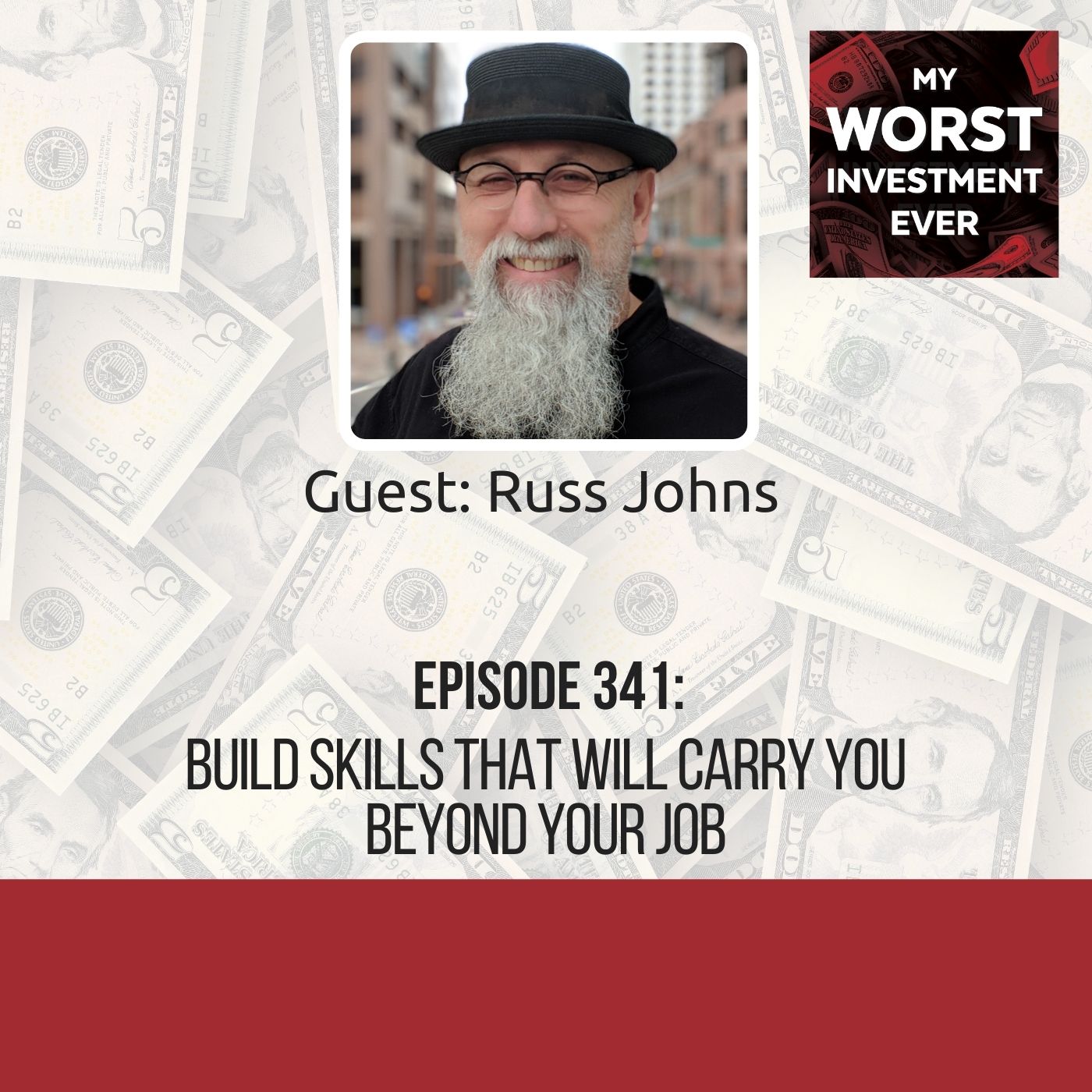
Russ Johns – Build Skills That Will Carry You Beyond Your Job
BIO: Russ Johns is a producer at The Pirate Syndicate. He helps people be SEEN, be HEARD & TALKED ABOUT... using LiveStreaming Media.STORY: Russ spent 15 years dedicating all his time to his job at the expense of his family and health. The company went through a merger and acquisition, and Russ’s role was made redundant, leaving him jobless. Russ’s biggest regret is spending so much time building someone else’s dream instead of his.LEARNING: Build skills that are marketable outside of work. Build your dream, not someone else’s. Invest in what interests you and brings you joy the most. “The worst investment is the one that you do not make. The time that you do not invest in what you are doing.”Russ Johns Worst investment everInvesting everything in his job at the cost of his family and healthRuss invested 15 years in an organization that he thought was amazing. He invested a lot of time at the cost of his family and health. He truly loved his job and had no desire to stop doing it.Getting phased outAs fate would have it, the company went through a merger and acquisition, and Russ’s position was no longer needed. And just like that, he had to leave an organization he had dedicated his life to for 15 years.The loss of his job was a tragedy that changed Russ’s life completely. It took him a while to recover from it.Picking himself upRuss had no choice but to pick himself up, recover from the loss, and come back in full swing. He had to learn new skills to keep going, but this time around, Russ decided to dedicate his time building his dream and not someone else’s.Lessons learnedDo what interests you and brings you joy the mostExplore and understand some of the things you might be interested in and learn about them. Learn what brings you joy and gratitude.Build your dream, not someone else’sBe cautious about how you spend your time and about investing in other people’s dreams. Instead, work on your own dreams.Add value to your life every dayAlways wake up with gratitude and create something of value every day. Be okay with who you are and where you are. As you go forward and create something new, you become something new.Andrew’s takeawaysTake advantage of the opportunities in front of youThanks to the internet age, you can take advantage of numerous tools and opportunities to build yourself. Make sure that you do.Build skills that are marketable outside of workYou have got to build a skill that is marketable outside of your job. Just devote a couple of hours every weekend or throughout the week to learn a new skill. If you do, you can secure your future income and happiness.Actionable advicePay attention.No. 1 goal for the next 12 monthsRuss’s number one goal for the next 12 months is to grow The Pirate Syndicate and help over 100 people produce their own shows, their own events, and their own activities to be seen, be heard, and be talked about.Parting words “Kindness is cool, smiles are free, and you enjoy the day.”Russ Johns [spp-transcript] Connect with Russ JohnsLinkedInTwitterFacebookWebsiteAndrew’s booksHow to Start Building Your Wealth Investing in the Stock MarketMy Worst Investment Ever9 Valuation Mistakes and How to Avoid ThemTransform Your Business with Dr.Deming’s 14 PointsAndrew’s online programsValuation Master ClassHow to Start Building Your Wealth Investing in the Stock MarketFinance Made Ridiculously SimpleBecome a Great Presenter and Increase Your InfluenceTransform Your Business with Dr. Deming’s 14 PointsConnect with Andrew Stotz:astotz.comLinkedInFacebookInstagramTwitterYouTubeMy Worst Investment Ever Podcast

Jonaed Iqbal – Ponder How Much You Can Stomach to Lose When Buying Crypto
BIO: Jonaed Iqbal is set on shattering the stigma associated with hiring people without college degrees. It is no surprise that he founded NoDegree.com, a platform with job listings that do not require college degrees.STORY: Jonaed invested $800 in Bitcoin when he was in college. He was lucky enough to sell when the price was high and just before it crashed. Fast-forward to 2017, Jonaed decided to use his credit card to invest $20,000 in several cryptocurrencies. He lost it all two months later. He is still paying the credit card debt.LEARNING: Only invest what you can afford to lose, especially when buying crypto. Start small and invest 70% of your money in Bitcoin and 30% in the top three cryptocurrencies at the time. “Only invest what you can afford to lose and go to sleep at night without worrying.”Jonaed Iqbal Worst investment everBuying crypto by accidentJonaed bought his first Bitcoin by accident. A friend who was sort of into shady activities needed some money. He told Jonaed that he had some Bitcoin that he was selling at $34.5. Jonaed called another friend, and together they bought 35 coins.This was during the first crash of Bitcoin. Fortunately, Jonaed saw the rise coming. The price rose to $40, then $50, then $70 bucks, and at $120, they decided to sell.Regulations make it hard to sellJonaed and his friend were trying to figure out how to sell their Bitcoin, but there were many hurdles at the time. Fortunately, they managed to create an account to sell their coins. As soon as their account was verified, the price shot up to $260. They sold their coins immediately. Then Bitcoin crashed three hours later.Jonaed made $4,000 from an investment of about $800. He used the money to clear his credit card bills and other student bills.The second boomAround December 2017, Bitcoin started going through a boom. Jonaed decided to invest again; this time, he was going to go big. At the time, you could buy Bitcoin using a credit card, and Jonaed had a decent limit amount of about $20,000.Jonaed figured that he would either become a millionaire or lose some money, but either way, he would go big. He ended up buying cryptocurrency worth $20,000.Losing it allA month or two later, crypto crashed. Jonaed had invested in several coins, two of them were useless coins, and the rest still lost him money. Jonaed is still paying his credit card debt.Lessons learnedOnly invest what you can afford to loseDo not go making big moves if you cannot afford to lose the money. Invest small even if you think you will hit it big and consider if you can afford to lose the money you are about to invest.Andrew’s takeawaysStart small when buying crypto for the first timeIf it is your first time investing in crypto, start with a small position between zero and 3% of your total assets. Then from there, you may decide to get bigger and better.Diversify your crypto portfolioWhen buying crypto, do not just settle on one. Buy Bitcoin with 70% of your money. Then find the three best cryptos to invest in and use the other 30% for the three.Actionable adviceBe careful, and sleep on it. Think about if the investment does not go your way, how will the loss affect your life? How much loss can you handle, 50%, 90%, or even 100%?No. 1 goal for the next 12 monthsJonaed’s number one goal is to grow his podcast listenership base and increase traffic to his website. He would also like to pay off his credit card debt in the next couple of months.Parting words “Crypto is hot right now. So be careful not to make the same mistake I did.”Jonaed Iqbal [spp-transcript] Connect with Jonaed IqbalLinkedInTwitterWebsiteAndrew’s booksHow to Start Building Your Wealth Investing in the Stock MarketMy Worst Investment Ever9 Valuation Mistakes and How to Avoid ThemTransform Your Business with Dr.Deming’s 14 PointsAndrew’s online programsValuation Master ClassHow to Start Building Your Wealth Investing in the Stock MarketFinance Made Ridiculously SimpleBecome a Great Presenter and Increase Your InfluenceTransform Your Business with Dr. Deming’s 14 PointsConnect with Andrew Stotz:astotz.comLinkedInFacebookInstagramTwitterYouTubeMy Worst Investment Ever Podcast

Patrick Metzger – Find A Mentor Who Can Challenge You to Do Bigger Things
BIO: Patrick Metzger is the CEO/Founder of PM and Associates and one of less than 450 Professional EOS Implementers in the world. Patrick and his team help businesses get the most out of their organizations and people by helping get everyone on the same page and executing the company vision, as well as by creating healthier, more cohesive, and higher functioning leadership teams.STORY: Patrick grew up around teachers and coaches. He believed that he, too, was meant to be a teacher. He went to school and earned two teaching degrees, and went on to teach for 11 years. Patrick had this nagging feeling that he was not doing what he was meant to do with his life. He went on a journey to find his true calling, but it was not until he decided to find a mentor that he could see it and reach his full potential.LEARNING: Find a mentor or a coach who will challenge you and pull out the best of you. Dive deep into your past to know yourself and what you are meant to do with your life. Do not be afraid of obstacles or to quit and start over. “Double down on yourself. If you’re going to roll the dice, roll it on yourself.”Patrick Metzger Worst investment everPatrick grew up around influential leaders, coaches, and teachers that he admired. Both his parents were huge influences in his life, being teachers. Patrick went to college dead set on the idea that he would be a teacher and a coach, as that is what he was familiar with.Settling straight into his childhood dream jobWhen Patrick got out of college, he had two teaching degrees. Then he got his first teaching job and was a head football coach. He absolutely loved it. He truly believed that this is what he wanted to do.Maybe I am meant for moreFast forward eight years, Patrick started questioning things. He started asking if teaching was all he was meant to do. He started feeling a calling to do something else. He did not know if it was teaching that he needed to leave or it was just the environment of the current school that he needed to leave.Patrick ended up leaving the school he was at and went to a different one. It was like a brand new start. New coaching job, new environment of teachers, students, and new school district. He loved it here.Itching for a greater challengeInto Patrick’s third year at the new school and his 11th year of teaching, he started feeling like he had slammed into a brick wall. That brick wall woke him up to the reality that teaching is not what he was supposed to be doing for the rest of his life.Patrick quit his teaching job and took a job as an executive recruiter and did that for about six months. He still felt unsettled, and so while he worked as a recruiter, Patrick started putting together plans to develop an online health and wellness coaching and consulting business.Patrick got approached to manage a gym, and he saw this as a stepping stone. So he left his recruiting job, took the job as a gym manager, and did that for nine months. Then he got fired.Rebuilding from scratchGetting fired was a shocker for Patrick, and it threw him into the deep end of the pool. He had to swim or sink. Luckily, two months before that, Patrick had launched his online business. Now he was tasked with deciding whether to roll the dice on himself again and go into his online business full time or go back to teaching. He chose to concentrate on his online business.Time to find a mentorThree months after launching his business, Patrick realized he would have trouble scaling his business. He decided to seek guidance from a business coach out of the San Diego area. His name is Peter Scott; he specializes in online automation for businesses. He did not know how he would pay the coach, so he put his fees on a credit card, something Patrick never does.The coach was an absolute game-changer for Patrick. Within two weeks, the coach had already paid for himself with just a little bit of advice.Finally doing what he was meant to doOne of the best things for Patrick while working with the coach is that he finally got to see what he was truly meant to do. The coach made him realize that he loved health wellness, he loved teaching and coaching, and if he merged the three, he would find his true calling.Within months, Patrick, with his coach’s guidance, transitioned his whole business into high-performance coaching. This got him into working with companies, and he started doing some keynote speaking.Patrick happened to run across the EOS framework while reading the book Traction by Gino Wickman. He was astounded by the framework. He started looking into it, and finally, he was convinced that this right here was what he was meant to be doing, and indeed it is what he is still doing.Patrick’s biggest regret is that he spent more than 11 years doing something that was not meant for him.Lessons learnedTake a trip to the past to know yourselfYou do not get to know what you are meant for until you dive into the past and examine yourself. Look at your self-limiting, y

Nina Sharil Khan – Sometimes Trusting Yourself Is Better Than Trusting Others
BIO: Nina Sharil Khan is the Founder & CEO of PopCon, International Speaker & Host of the #JustLanggar PopCast live show. Nina is also Marketing in Asia’s Top 100 Inspirational LinkedIn Icons for both 2019 & 2020.STORY: Nina quit her job to start selling unit trusts. In the process, she met a hedge fund manager who recruited her to his fund, which she blindly joined and started selling to her friends. The fund ended up being a Ponzi scheme.LEARNING: Do your due diligence before investing in anything, and be careful of scams as they always come in very appealing packaging. Always diversify your risk. “Invest with money that you think you do not mind if anything happens to it.”Nina Sharil Khan Worst investment everNina was a scholar with one of the biggest oil companies in Malaysia. She happened to take this course that taught her that she could do anything she wants. So she was high on that feeling and decided to quit her job and sell unit trusts. Nina had seen people make money from selling unit trusts, and she thought she could do it too.Making money selling investment plansNina started selling unit trusts, and in the process, she met a fund manager who enrolled her into his fund. Nina was sold to his financial solution instantly.Nina sold this product to people, and it worked. She sold the product to all her friends, and they bought it because they trusted her. It was a great product, and it gave a monthly return. Nina was making a lot of money from the monthly commissions.Alas! It is a Ponzi schemeNina continued to sell and make money from the hedge fund for about two years when it went bust. It turns out it was a Ponzi scheme disguised as a hedge fund.The realization that she had been duped was tough on Nina. She felt ashamed that she had sold this fake investment to people who trusted her. Even though her friends do not blame her, she still blames herself for being so naive.Lessons learnedFind out about the regulations around what you want to invest inAlways research your investment. It may sound good, and other people may be making money from it, but even though the investment is good, there might be country regulations that can come in and stop it. If this happens, then the investment will not serve you because your money will get stuck.Diversify your riskYou do not want to put everything in one basket. Be mindful of how you invest. Even though an investment sounds excellent, put in money that you are okay losing should it go bust. You want to maybe put aside 10% or 20% as your play money instead of pumping in 50% of your savings into one investment.Do not stop trusting yourselfAs an investor, when you make a poor investment decision and lose your money, do not be too hard on yourself because this could happen to anybody. Do not let one wrong decision stop you from trusting yourself to make better decisions in the future.Andrew’s takeawaysScams are always very appealingScams will come at you in an appealing way; you’re promised to earn money, and it is low risk. But do not let this blind you to the fact that it is a scam. A Ponzi scheme pays old investors with money that it is raising from new investors. That is why they eventually run out of money when they cannot get any more money in.Do your due diligence before you invest your moneyAlways do your diligence before investing your hard-earned money to make sure that you are not investing in a Ponzi scheme.Actionable adviceTrust yourself. Do not put your trust in somebody else.No. 1 goal for the next 12 monthsNina’s number one goal for the next 12 months is to grow her course and community to reach more people in 2021. She also hopes to have at least 5,000 members in her free Facebook group.Parting words “Trust yourself, and when something bad happens, know there is something for you to learn and that you will come out stronger and bigger than ever.”Nina Sharil Khan [spp-transcript] Connect with Nina Sharil KhanLinkedInTwitterInstagramFacebookWebsiteAndrew’s booksHow to Start Building Your Wealth Investing in the Stock MarketMy Worst Investment Ever9 Valuation Mistakes and How to Avoid ThemTransform Your Business with Dr.Deming’s 14 PointsAndrew’s online programsValuation Master ClassHow to Start Building Your Wealth Investing in the Stock MarketFinance Made Ridiculously SimpleBecome a Great Presenter and Increase Your InfluenceTransform Your Business with Dr. Deming’s 14 PointsConnect with Andrew Stotz:astotz.comLinkedInFacebookInstagramTwitterYouTubeMy Worst Investment Ever Podcast

Dror Tamir – Don’t Put All Your Eggs in One Basket When Raising Capital
BIO: Dror Tamir is a serial food and nutrition entrepreneur with a passion is to improve the health of children and families through better nutrition. He is the CEO & co-founder of a startup, Hargol FoodTech, the world’s first commercial grasshopper protein producer.STORY: Dror was looking for investors when one particular one showed interest in being the lead investor. He was super excited about this opportunity so much that he put his entire focus on this investor. After eight months of due diligence, the investor refused to follow through with their promise leaving Dror with zero investment.LEARNING: Do not chase just one investor when raising capital; keep your options open. Time is money, especially for a startup with limited resources so use it wisely. “As an entrepreneur, you have to be the most optimistic person on the planet and believe that your startup is going to succeed.”Dror Tamir Worst investment everRaising capital for his startupDror is always looking for suitable investors, and in one of his previous rounds of raising capital, his company received a lot of interest from investors. One particular investor approached him and said they wanted to be the lead investor. From day one, they said they would invest 70% of the funds that Dror needed.Opening up his company to strangersDror was excited about this opportunity. These were the guys that he wanted to work with. Dror discussed the valuation, terms, and plan with them, and then they went into due diligence, the longest due diligence he ever had. They did eight months of due diligence.Part of the due diligence meant that Dror had to answer hundreds of questions of every aspect of the company. Another part of that due diligence included discussions with experts that the investors hired and got into the company’s heart. This made Dror feel very uncomfortable because it meant he had to share delicate company information with persons that had no relation with his project and who could even become competitors. But Dror needed the money, and so he had to comply with the due diligence process.Show me the moneyAfter eight long months, it was time for the investor to show Dror the money. The investor said they would invest the funds that they promised but only a third of the valuation they discussed. This was unacceptable for Dror.It became apparent that the investor had prolonged the due diligence process to put pressure on Dror. Things got even worse because while the due diligence took place, Dror had received interest from other investors.But because this particular investor was supposed to be the lead investor, Dror never negotiated terms with other investors. He just told them he had a lead investor, and any other investor would enjoy the same terms as the lead investor. They signed the investment documents and waited for Dror to finish the due diligence.Losing it allAfter the lead investor went back on their word, Dror went to the other investors and asked them to move forward with what they had agreed on. The result was horrific. The investors pulled their agreements and decided not to invest. Dror was left with nothing.What irked Dror most was the eight months his company lost during the due diligence process that yielded nothing in the end.Lessons learnedHave a devil’s advocate to help you deal with investorsDo not engage investors all on your own. Bring in another person from your team who will be your devil’s advocate. A person that will tell you when you are just wasting your time. Someone who will not be afraid to ask the hard question that you personally cannot ask.Do not chase investors too much; otherwise, you will chase them awayDo not apply too much pressure when chasing investors. If they feel too pressured, they will not invest or offer you a deal that you will not accept. So think about how much pressure you want to apply, and take your time. If they do not come back to you, they probably do not want to invest.Andrew’s takeawaysTime is indeed money for startupsWhen it comes to a startup that has very limited resources, time is money. If you get caught up in something that takes you away from the business, it is like spending money. Wasted time becomes wasted money.Take care of your emotional runwayThere is an emotional runway that is the confidence that people working for you have in you to make the idea work, get the funding, bring it all together, and get the results. As a leader, you need to know when you are spending too much energy on other things instead of focusing on the business.Actionable adviceBe more open, listen more, understand what the messages are, and if necessary, move on to the next potential investor. This will save you a lot of money, much more than you can get from a non-committal investor.No. 1 goal for the next 12 monthsDror’s number one goal for the next 12 months is to sign a significant joint venture with one of the leading food producers worldwide and bring his products to one of th

Marko Höynälä – Trust Is the Backbone of Any Business
BIO: Marko Höynälä is the Founder and CEO of Kipuwex Ltd and has invented three game-changing IoT products. Kipuwex is a medical device that wirelessly and continuously measures a person’s biomarkers which can then be accessed by health care professionals from anywhere in the world.STORY: Marko jumped blindly into an opportunity to partner with a Pakistani company to distribute his medical device. The company ordered a considerable amount of devices but never paid for them.LEARNING: Do not trust people or businesses blindly. Building trust is an essential part of a business, and when it is broken, the business breaks down too. Be confident to go out of your comfort zone. “Do your homework on how foreign markets operate. Do not just go there blindly.”Marko Höynälä Worst investment everMarko had been actively seeking investors and customers of Kipuwex outside of Finland, his home country. Coincidentally, Marko was contacted by a company from Pakistan that was very eager to have this kind of device because it can do more than most of the other devices and is more affordable.He decided to go to Pakistan and find out what the market had in store for his company, despite the security risk that the country is. Marko spent some time with a company that wanted to do sales and distribution of Kipuwex.Getting into a foreign partnershipMarko spent a week with the Pakistani company. The company introduced Marko to about five hospitals, and he got to demonstrate Kipuwex to them. The hospitals were eager to buy the device.Marko and the distribution company got all the agreements and paperwork ready, and they agreed to partner and distribute Kipuwex in Pakistan. The company even ordered some devices. Then Marko returned to Finland and sent the devices to Pakistan.The company did not pay upfront for the devices; they promised to do so the next day. Marko is yet to receive the money to date. The company gave a shoddy excuse claiming that the problem was with Marko’s bank account. Marko lost a considerable sum of money in the deal.Lessons learnedDo not trust people blindlyDo not trust people or businesses blindly. Find out as much as you can about them before partnering with them.Cultures are different around the worldPeople are not necessarily similar in other countries. Just because people do business in a certain way in your home country does not mean it will be done the same elsewhere.Be confident to go out of your comfort zoneIf you want to be a successful entrepreneur, you must be bold enough to get out of your comfort zone and try new things.Andrew’s takeawaysBuilding trust is an essential part of a businessTrust is the glue that keeps a business together. If that trust breaks, the business breaks down too.There is no shortcut to building trustTrust is built over time. You get to see how a person or a relationship performs over time and get to know whether they are worth trusting.Actionable adviceTo be successful as an entrepreneur, you must go out of your comfort zone. But, first, do thorough research and seek guidance from those who have been in your area of business before.No. 1 goal for the next 12 monthsMarko’s number one goal for the next 12 months is to focus on the next round of investment that his business needs to deliver products to customers around the world.Parting words “Do not replicate my mistakes.”Marko Höynälä [spp-transcript] Connect with Marko HöynäläLinkedInAndrew’s booksHow to Start Building Your Wealth Investing in the Stock MarketMy Worst Investment Ever9 Valuation Mistakes and How to Avoid ThemTransform Your Business with Dr.Deming’s 14 PointsAndrew’s online programsValuation Master ClassHow to Start Building Your Wealth Investing in the Stock MarketFinance Made Ridiculously SimpleBecome a Great Presenter and Increase Your InfluenceTransform Your Business with Dr. Deming’s 14 PointsConnect with Andrew Stotz:astotz.comLinkedInFacebookInstagramTwitterYouTubeMy Worst Investment Ever Podcast

David Ward – Always Have an NDA, Even When Doing Business with Friends
BIO: Rise, fall, rise again. Along the way, get divorced, get turned over by a friend on a new business idea, get ripped off in the sale of another. Get married again, become a father again, build again.STORY: David had this excellent novel business that he shared with a trusted friend who went on to stab him in the back by taking the idea and making it hers.LEARNING: Always have an NDA or any other formalized document before sharing your proprietary ideas with anyone. Be careful when doing business with friends; it is best to avoid it altogether. Do not be afraid of competition; keep reinventing yourself to stay ahead. “Opportunities and choices come along all the time. It depends on the ones we take.”David Ward Worst investment everDavid was traveling through Asia when he met a friend from London at an airport lounge. They talked, and David shared a business idea with her in the sustainability space he was quite passionate about. His friend expressed interest in doing business with David, but nothing was put on paper at the time. David went ahead and shared the first outline of the business with her.Keeping the conversation goingDavid and his friend continued talking about the business idea for the next six weeks or so. However, they did not come to any sort of agreement. David was really passionate about starting this business, so he launched his first sustainable products brand in Asia. The launch went well, and he further launched the products in the US market eight months later.Getting stabbed by his friendAll this while, David was still communicating with his friend who was now in London. David would share many details regarding his newly launched brand as he always hopes to go into business with his friend.Two years after David launched his product, he saw some details on the internet about his friend that devastated him. David’s friend had taken his idea and started a company on her own. She claimed to have thought up the business idea on her own.David was not angry that his friend had started a business without him, but because she had taken something that was shared with her in good faith and turned it to hers.Lessons learnedGo into a partnership with your eyes openIf you are going to share something fairly proprietary, make sure that you have an NDA in place. Do not leave it all to trust, especially if you are dealing with friends.Andrew’s takeawaysCompetition is inevitable and never endsWe are all going to face competition in our business, but the real entrepreneur is the one who keeps fighting to stay ahead of the competition.NDAs are not a sign of mistrust; they are just a securityWhen a prospective business partner asks you to sign an NDA, it does not mean that they do not trust you, it is just a formal way of keeping your interests, and theirs protected.Actionable adviceDo not start businesses with your friends because your relationship with them can suffer if something goes wrong. If you go into business with your friends, do not be afraid of setting things out on paper. Be clear about who has proprietary over the idea and ensure you protect yourself through an NDA or other formalized documents that give clarity to whose role is what.No. 1 goal for the next 12 monthsDavid’s number one goal for the next 12 months is to see his products launched into at least four more markets, including the US and the UK. David’s business objective is to reduce the use of as much plastic as possible around the world. This means entering new markets and extending reach to as many people as possible so that they have the choice of sustainable, lower impacting alternatives.Parting words “You can’t keep a good person down. They will fall to their knees, but they will get back up again.”David Ward [spp-transcript] Connect with David WardLinkedInTwitterWebsiteAndrew’s booksHow to Start Building Your Wealth Investing in the Stock MarketMy Worst Investment Ever9 Valuation Mistakes and How to Avoid ThemTransform Your Business with Dr.Deming’s 14 PointsAndrew’s online programsValuation Master ClassHow to Start Building Your Wealth Investing in the Stock MarketFinance Made Ridiculously SimpleBecome a Great Presenter and Increase Your InfluenceTransform Your Business with Dr. Deming’s 14 PointsConnect with Andrew Stotz:astotz.comLinkedInFacebookInstagramTwitterYouTubeMy Worst Investment Ever Podcast

Scott Buss – Live by Principles of Trust and Transparency
BIO: Scott Buss lives his life and runs his business based on the principles of TRUST and TRANSPARENCY. He is an aviation expert who explores and connects the synergies between the private jet industry and the unlimited number of luxury lifestyle VIP brands.STORY: Scott found himself on the wrong side of Arizona’s law and landed in jail for four months. During his time in jail, Scott chose to focus on his life after prison. It was while in prison that he came up with his business idea, a business that is now thriving.LEARNING: Do not let your past mistakes define you. Always try to make the best out of a bad situation. Be kind and supportive to those going through a rough patch. “With every negative, there is a positive. It is up to you to figure that out the positive.”Scott Buss Worst investment everMaking the best out of a bad situationScott found himself on the wrong side of Arizona’s law and landed in jail for four months. Being locked up left Scott with lots of time on his hands. He decided to put this time into good use.Scott would read magazines, newspapers, and books. He would then write notes of CEOs and executives worldwide from Entrepreneur, Businessweek, and Wall Street Journal. Scott knew he wanted to be a CEO after finishing his jail term.Hatching a business ideaScott would also read quotes on entrepreneurship and keep himself motivated. In the process, Scott got an idea of starting his private jet business. He had been in private aviation for about four years.When Scott was done with his four months, he was fully prepared to build his business, and so he hit the ground running.Leaving with life’s lessonsThe four months Scott was in jail taught him a lot, mentally and physically, and also about what one can do with limited resources. It also taught him about trust and transparency.Lessons learnedIf you are a spiritual person, draw your strength from prayersThe best form of energy is prayer energy, so renew your strength by praying.Make the most out of your bad situationIf you are in a bad situation, focus on the positives. Do not wallow in self-pity and just count down the days. Know that the only one who can control the person you will be once the storm is over is you. So make the most out of your horrible situation.If you have been shown kindness, pay it forwardYou never know what someone could be going through. So pay kindness with kindness and bring a smile to someone’s face.Andrew’s takeawaysSupport those who are struggling with the consequences of their bad decisionsIf you know somebody struggling with the consequences of their mistakes but is trying to make up for them, do not give up on them. Identify someone who is at their most painful point and reach out to them. It could be a short phone call, a quick visit, or a short talk. This simple gesture could change that person’s life.Own up to your mistakes but do not let them define youOwn up to your mistakes, apologize and make amends. However, do not let the bad decisions you have made in life define you; instead, learn from them.No. 1 goal for the next 12 monthsScott’s number one goal for the next 12 months is to continue scaling his private travel business and to launch other businesses.Parting words “No matter what you’re going through, if you need somebody to talk to, reach out; I’ll be happy to be a lending hand.”Scott Buss [spp-transcript] Connect with Scott BussLinkedInTwitterWebsiteAndrew’s booksHow to Start Building Your Wealth Investing in the Stock MarketMy Worst Investment Ever9 Valuation Mistakes and How to Avoid ThemTransform Your Business with Dr.Deming’s 14 PointsAndrew’s online programsValuation Master ClassHow to Start Building Your Wealth Investing in the Stock MarketFinance Made Ridiculously SimpleBecome a Great Presenter and Increase Your InfluenceTransform Your Business with Dr. Deming’s 14 PointsConnect with Andrew Stotz:astotz.comLinkedInFacebookInstagramTwitterYouTubeMy Worst Investment Ever Podcast

Paulina Tenner – Stay Focused on Your Core Business
BIO: Paulina Tenner is an entrepreneur, angel investor, TEDx speaker, and author. Her company, GrantTree, specializes in research and development tax credits and grants. She is passionate about burlesque and used to perform as a showgirl!STORY: Paulina’s company ventured into a new business area of renting out office space, a venture that almost killed the company.LEARNING: Focus on your core business. Check-in whenever you delegate a project and ensure you put controls in place. Do not fall prey to overconfidence bias. “Focus on what you are good at instead of trying to break into new territories.”Paulina Tenner Worst investment everAbout five years ago, Paulina’s company reached a point where the team was too big for their current office, so they needed a new one. They had the option to get an office that was a perfect fit for them, slightly bigger than the current one, so that they could grow into it. But there was also this genius idea of taking over an entire building, renovate it, and sublet to other companies with a similar culture to theirs.Taking a votePaulina’s instinct told her to go with the smaller option instead of an entire building. But when the two options were put into a vote, there were two or three votes more for the building. So they decided to go with the idea of an entire building.One colleague in Paulina’s company had big ambitions and a clear vision of what he wanted that building to be. So he found one. The company took over the building and paid a hefty deposit of about £300,000 or so. Then they started renovating it.The costly mistake of delegationPaulina and her co-founder decided to put the colleague with the big vision in charge of the entire project. They were not paying too much attention to the management of the project and thought because this particular colleague was in charge, everything would be fine.So much money was spent on renovating the building. By the time Paulina and her co-founder put a hard stop to it, the company had spent over £600,000 on renovating that building. It was over the top and way more than they needed.The desperate struggle to make a return on investmentAfter they were done with the renovations, they started advertising the building and looking for companies to take up the office spaces. That is when they realized that they knew nothing about the office rental space, it was not their specialty. Their specialty is finding government funding schemes to fit in with what their clients do.It took many months, more than they anticipated, to find companies to use the space. At some point, they got truly desperate to get people into the building and share their ongoing costs with them, so they decided to rent it out at cost. So no profit whatsoever.And as if that was not enough, when the company decided it was time to wrap up this crazy idea and get out of the building, they were charged enormous amounts of money for dilapidation. The landlord wanted the building in its previous state, even though they had made it better with all the renovations.Paulina’s company lost so much money on the entire operation, it almost died.Lessons learnedFocus on your core businessFirst, focus on what you are good at because it is tough to diversify and break into an entirely new industry before you get good at what you are doing. If you are a relatively small startup company, do not take on projects that cost a lot of money upfront.Mistakes are part of learning; embrace themEvery founder will, at some point, make a costly mistake. It’s part of the learning process.Do not wholly delegate a new projectIf there is a big project that is important for you, do not delegate it to just one person. Make sure you put controls in place on how much money is to be spent and how the whole thing is to be managed. As a founder, you need to get involved in that project or at least have oversight of it if it is significant for your company.Andrew’s takeawaysLimit yourself to your core businessUnderstand what your core business is and focus your energy there instead of trying to venture into an area you are not good at.Be careful of overconfidence biasDo not fall prey to overconfidence bias where you think you can do anything and everything because you will end up losing it all.Do not make the wrong mistakeThe most important thing when starting a business is not to make the wrong mistake. But the hard part is that you don’t know what’s the wrong mistake. Unfortunately, the wrong mistake is the one that knocks you out of business.Actionable advicePut controls in place and monitor your investment, particularly when investing in a new project.No. 1 goal for the next 12 monthsPaulina’s number one goal for the next 12 months is to see her upcoming book, Laid bare: what the business leader learnt from the stripper become a success. The book will be out in July 2021.The book talks about the innovative company culture Paulina implemented in her business (such as financial transparency and

Christopher Elliott – Question Conventional Wisdom When Buying a House
Christopher Elliott is an award-winning consumer advocate, multimedia journalist, and customer service expert. He is known for his practical advice and creative solutions to customer-service problems.He’s the author of Scammed: How to Save Your Money and Find Better Service in a World of Schemes, Swindles, and Shady Deals and How to Be the World’s Smartest Traveler (and Save Time, Money, and Hassle).Christopher is a nationally syndicated columnist through King Features Syndicate, which distributes his work to publications from the Seattle Times to the Miami Herald.He writes a weekly column for The Washington Post and USA Today and is the founder of Elliott Advocacy, a consumer advocacy organization. “If you are not going to be in one place for more than five years, do not buy a house, just rent.”Christopher Elliott Worst investment everChristopher bought his first house in 2001 after resisting the homeowner bug for so long. But he found a great place in the Florida Keys, and he loved being there. And at $175,000, the price was just right. This was before the big housing boom.A few weeks after moving into the new house, Christopher’s partner got pregnant as luck would have it. Now the two-bedroom home was not going to cut it for long.Selling in a booming marketBy the time Christopher’s son was a year and a half, they started getting very serious about selling. At the time, the housing market had exploded. He did a couple of renovations on the house and ended up selling it for $350,000.Buying another home when he really should have rentedChristopher took all the money he made from selling his house and moved to Central Florida. Here he paid $235,000 cash for his new home. The house needed a little tender loving care, but Christopher did not mind; he still had some money left. So he renovated the house.Being a nomad, he started getting restless and thought maybe they should sell the house and move into something a little bit bigger in a different area. And just as they were having that discussion, the bottom fell out of the housing market. They ended up staying in the house for about 12 years because they could not get a reasonable price for it.Finally selling the houseEventually, Christopher could no longer stay in the house, so he decided to sell it for the best price possible. Selling the home was a massive undertaking for Christopher. He got several buyers that came in and fell through. Others kept renegotiating the price down.They finally settled for $285,000. Once the real estate agent took her cut and adding the money he had put into the house for renovations, he ended up losing a significant amount of money on that house. Christopher made a resolve never to buy a home as an investment again.Lessons learnedDo not listen to conventional wisdom when buying a houseStop assuming that what everyone says about owning a home is the best investment you can make, to be true. It is never a guarantee that you won’t lose money from buying a home. The American dream of being a homeowner is overrated.Andrew’s takeawaysA house is not always an investmentIt is never a guarantee that you will always be able to buy low and sell high when dealing with real estate.Be careful when listening to marketing messagesMarketing messages are intended to hook you in. It is not always that you will gain from what is being sold. Remember that whoever is putting out that marketing message is looking to gain and not necessarily help you.You do not have to get into debt just because loans are availableSeriously contemplate your options before you get sucked into a mortgage just because there are facilities that can offer you the loan. Be sure that this is a debt that you can comfortably bear.Actionable adviceThink carefully before you buy that house. If you are not going to be in one place for more than five years, do not buy a house just rent, because you’ll have more flexibility.No. 1 goal for the next 12 monthsChristopher’s number one goal for the next 12 months is not to get infected with the Corona Virus. [spp-transcript] Connect with Christopher ElliottLinkedInTwitterBlogWebsiteAndrew’s booksHow to Start Building Your Wealth Investing in the Stock MarketMy Worst Investment Ever9 Valuation Mistakes and How to Avoid ThemTransform Your Business with Dr.Deming’s 14 PointsAndrew’s online programsValuation Master ClassHow to Start Building Your Wealth Investing in the Stock MarketFinance Made Ridiculously SimpleBecome a Great Presenter and Increase Your InfluenceTransform Your Business with Dr. Deming’s 14 PointsConnect with Andrew Stotz:astotz.comLinkedInFacebookInstagramTwitterYouTubeMy Worst Investment Ever Podcast

Lou Adler – Avoid Raising Capital from Friends If You Want to Keep Both
Lou Adler is the CEO and founder of Performance-based Hiring Learning Systems – a consulting and training firm helping recruiters and hiring managers around the world source, interview, and hire the strongest and most diverse talent.Lou is the author of the Amazon top-10 best-seller, Hire With Your Head (John Wiley & Sons, 3rd Edition, 2007), The Essential Guide for Hiring & Getting Hired (Workbench Media, 2013), and the Lynda.com Performance-based Hiring video training program (2016).His current “Diversity Hiring without Compromise” initiative is focused on developing a color-blind hiring process that ensures the best people get hired regardless of race, religion, age, sexual preference, and physical challenges.Lou is one of the top bloggers on LinkedIn’s Influencer program writing about the latest trends in hiring, employment, and recruiting. His articles, quotes, and research can now be found in Inc. Magazine, Business Insider, Bloomberg, SHRM, and The Wall Street Journal.The company’s new mobile-ready learning platform—TheHiring Machine—provides instant access to all of the tools needed to find and hire outstanding talent. “Do not take money from your friends unless you want to lose them.”Lou Adler Worst investment everLou was running a company with 300 people in it when he was 32 years old. He hated his boss, and they would argue every other week. Lou would quit every other month. One day he just left for good.Becoming a recruiterIn his old job, Lou would work with recruiters who were making so much money. This enticed him to become a recruiter after he quit his job.When Lou became a recruiter, he realized that hiring was just like any other business process. You just had to do it right. There were so many things being done wrong, and if he did them right, he could make a lot of money. And that is precisely what he did.Winning the recruitment gameAfter year two, Lou tripled and then quadrupled his income. He could not believe his luck. After riding on this wave of success for about 25 years, Lou decided to try something different. He decided to automate his recruitment process. This was during the dot-com boom.Losing his business and his friendsLou invested a million dollars and borrowed another million dollars from his friends and used the money for his new business venture.While Lou’s idea was a smart one, the market was just not ready for it. For this reason, everything fell apart. He lost his company and the friends he had borrowed money from.Lessons learnedRaising capital by borrowing from your friends is a bad ideaBe very careful when asking friends for money to run your business. When you take someone’s money, you got to deliver. If you do not, you will undoubtedly ruin the friendship.Learn how to manage your cash flowCash flow is vital in running a successful business. Do not ignore it. Learn how to manage your cash flow, and everything else will fall into place.Andrew’s takeawaysBeing skilled in something does not necessarily make you a good businessmanYou may be very good at doing something, for instance, a great technician, then you decide to start a business as a technician. Soon enough, you will realize that the job of running a business is very different from the position of being a technician.Sometimes the problem is just your timingJust because a business fails to succeed does not mean it was a bad business. Sometimes, it is just the timing that is wrong. Great idea, but at the wrong time.Cash flow is kingIt is not cash that is king; it is cash flow that is king. Raising money is easy. The real challenge comes in creating the cash flow to build a profitable business.Do not mix friendship with businessIf you have to borrow money from your friends to run your business, make sure that you do it professionally. Do not let friendship get in the way, because if the company fails, so will the friendship.Actionable adviceLife is not all about money. Think about what is important to you and let that drive you.No. 1 goal for the next 12 monthsLou’s number one goal for the next 12 months is to finish writing his fourth edition of his book Hiring With Your Head: Using Performance-Based Hiring to Build Outstanding Diverse Teams.Parting words “Be good and be safe.”Lou Adler [spp-transcript] Connect with Lou AdlerLinkedInTwitterWebsiteAndrew’s booksHow to Start Building Your Wealth Investing in the Stock MarketMy Worst Investment Ever9 Valuation Mistakes and How to Avoid ThemTransform Your Business with Dr.Deming’s 14 PointsAndrew’s online programsValuation Master ClassHow to Start Building Your Wealth Investing in the Stock MarketFinance Made Ridiculously SimpleBecome a Great Presenter and Increase Your InfluenceTransform Your Business with Dr. Deming’s 14 PointsConnect with Andrew Stotz:astotz.comLinkedInFacebookInstagramTwitterYouTubeMy Worst Investment Ever PodcastFurther reading mentionedMichael E. Gerber (1988), The E Myth: Why Most Businesses Don’t Work an

Eric Siu – Do Not Chase the Money, Chase the Opportunity
Eric Siu is the CEO of content intelligence software ClickFlow, which helps you grow your traffic while looking like a genius. He also owns ad agency Single Grain and has worked with companies such as Amazon, Airbnb, Salesforce, and Uber to acquire more customers.He hosts two podcasts: Marketing School with Neil Patel and Leveling Up, which combined have over 48 million downloads to date.He also speaks frequently around the world on marketing and SaaS. “If you keep chasing the money, you are going to run out of steam at a certain point, and you will not want to keep working at it anymore.”Eric Siu Worst investment everEric was in the first year of running his ad agency, and things were not going too well. So he decided to look for something else he could venture into. He ended up settling on the senior living niche that he believed would blow up in a few years.Partnering with his high school matesAt the time, two of Eric’s friends from high school were interested in Eric’s idea. They made a power team. One had a finance and operations background, another was a developer, and Eric had a marketing background.Together, they started a company called CareSprout. They each contributed $80,000 to start the company.Focusing on too many things at onceWhile the team was great, their heads were not in the game. Each partner had other things they were focusing on simultaneously, so they could not give their business the full attention it needed.Needless to say, the business did not work out even after going at it for two years. When they ran out of money, one of the partners suggested they raise more money, but Eric felt it was time to cut their losses, and so they did.Lessons learnedDo not chase the money; chase the opportunityDo not get into a business just because you want to make money. Go into it because there is an opportunity you can benefit from.Focus on one thing until you have it workingDo not be a jack of all trades. Work on one thing and nail it before you try to scale anything else.Make sure that your values and those of your partners alignBefore you get into a partnership, make sure that you vet the people you want to partner with and see if their values align with yours. Make sure that everyone understands their roles and responsibilities, and they are comfortable with them.Andrew’s takeawaysImplementing an idea is more challenging than you imagineImplementing an idea to fruition is such a huge challenge. It is better to work in an area, understand it, and then implement an idea in that area. Start small before you go big.Is your idea worth investing in?Before you turn your idea into a business, ask yourself if it is an idea that people can invest in. Can you confidently ask people to invest in your idea and guarantee them a return on investment?Money is secondary in businessMaking money should not be the primary goal of a business. The idea, the implementation, the passion, and the customers are the primary thing. Money is just a measure of success.Actionable adviceSlow down and think things through so you can have the tool belt to sidestep critical mistakes. So just be very intentional and slow down from time to time.No. 1 goal for the next 12 monthsEric’s number one goal for the next 12 months is to hit the Wall Street Journal bestseller list for his new book Leveling Up.Parting words “Keep going.”Eric Siu [spp-transcript] Connect with Eric SiuLinkedInTwitterYouTubeWebsiteAndrew’s booksHow to Start Building Your Wealth Investing in the Stock MarketMy Worst Investment Ever9 Valuation Mistakes and How to Avoid ThemTransform Your Business with Dr.Deming’s 14 PointsAndrew’s online programsValuation Master ClassHow to Start Building Your Wealth Investing in the Stock MarketFinance Made Ridiculously SimpleBecome a Great Presenter and Increase Your InfluenceTransform Your Business with Dr. Deming’s 14 PointsConnect with Andrew Stotz:astotz.comLinkedInFacebookInstagramTwitterYouTubeMy Worst Investment Ever Podcast

Britt Andreatta – Our Failures Remind Us That We Are Learning Beings
Dr. Britt Andreatta is an internationally recognized thought leader who creates brain science-based solutions for today’s challenges. As CEO of 7th Mind, Inc., Britt Andreatta draws on her unique leadership, neuroscience, psychology, and learning background to unlock the best in people and organizations. Her series of books, The WIRED TO™ Series: Books on the brain science of success, focuses on how we are wired to grow, resist, and connect. “Failure is information, and it helps us get better as long as you know what to do better.”Dr. Britt Andreatta In today’s episode, rather than focus on Dr. Britt’s story, we will focus on what she has learned about failure as a brain science researcher, author, speaker, and consultant. Leaders can apply these lessons to bring out the best from their teams.Lessons learnedBiologically, we are constantly sensing our environment, trying different actions, and trying to maximize our positive results. We are wired to learn through trial and error.Having goals and setting a standard, and achieving that standard is essential. But, it is also important to celebrate progress and effort.Leaders should refrain from focusing on their team members’ faults and instead focus more on their accomplishments. If a leader is all about the numbers, they will have a disengaged workplace.Care about how people feel, their sense of satisfaction, their sense of purpose, and their sense of feeling respected. These are the real performance indicators.When conducting performance reviews, have two scores: individual contributor score and team score.Using fear as a leader will always undermine performance because people cannot perform at their best when they are in a fight or flight state.Competition is excellent for driving performance but be sure to nurture healthy competition instead of a toxic competition.Andrew’s takeawaysThere is a difference between training and education. Training is about acquiring a skill, and education is about expanding the mind and bringing new information into the system.As a leader, it helps develop a common goal rather than giving everybody separate KPIs. Working separately makes it a lot harder for the team to cooperate and achieve a common goal.Actionable adviceEmbrace your true nature as a learning being. Failure is just the first attempt at learning. Therefore, create space for making mistakes, taking risks, failing, picking yourself up, learning from it, trying again, and letting yourself get better at something. Mastery takes time.No. 1 goal for the next 12 monthsBritt’s number one goal for the next 12 months is to launch her Brain Aware Manager training, a program on how managers can use brain science to bring out their teams’ best. She is currently putting the finishing touches on the training and will be launching it soon.Parting words “Go out and learn something fun.”Dr. Britt Andreatta [spp-transcript] Connect with Dr. Britt AndreattaLinkedInTwitterInstagramYouTubeWebsiteAndrew’s booksHow to Start Building Your Wealth Investing in the Stock MarketMy Worst Investment Ever9 Valuation Mistakes and How to Avoid ThemTransform Your Business with Dr.Deming’s 14 PointsAndrew’s online programsValuation Master ClassHow to Start Building Your Wealth Investing in the Stock MarketFinance Made Ridiculously SimpleBecome a Great Presenter and Increase Your InfluenceTransform Your Business with Dr. Deming’s 14 PointsConnect with Andrew Stotz:astotz.comLinkedInFacebookInstagramTwitterYouTubeMy Worst Investment Ever Podcast

Bracken Darrell – Trust Your Instincts but Ask If You Are Unsure
Bracken P. Darrell is the president and CEO of Logitech. The company is worth 12x more than when he started there in 2012. “Failure is rarely fatal. But success is never final.”Bracken Darrell Worst investment everBracken once went to lunch with one of his board members at Logitech. His name is Neil Hunt. As they were chatting, Bracken asked Neil what he had worked on. At the time, Bracken did not know anything about the company Neil worked for.Neil told him that he had worked on an algorithm all day. It was an algorithm that was trying to help recommend something to users. He explained to Bracken that they already had a recommendation algorithm, but he was trying to understand why the two algorithms were bringing different results.Impressed by Neil’s curiosityNeil was the head of product at his company. Bracken was so impressed by the level at which Neil and his company were trying to understand their product and user behaviors to give their customers a good experience.Bracken invested in the company as soon as he got back to his office. He put in a lot of money into the company. The stock doubled in two months. In six months it had gone up by 250%.Something just did not sit right with his investment decisionThough Bracken was super impressed by Neil’s company, he had this little voice in his head that made him uncomfortable about the investment he made. Bracken felt uncomfortable because Neil was a member of his board, and he thought that this would be seen as a conflict of interest.Bracken thought that the smart move would be to sell his stock, so he sold half of it.The stock continued to double, and the more the stock went up, the more Bracken felt uncomfortable.He kept thinking that if people knew that Neil was a board member, they would think he had gotten insider information. Eventually, he sold his entire stock. The stock ended up going up 30-fold. The company is Netflix.Bracken should have known betterInstead of selling his stock, Bracken should have gone to his general counsel and inquired if he had done anything wrong. He would have been told that there is nothing wrong with investing in your board member’s companies.But Bracken never asked, so he lost so much money by selling a stock that has continued to grow tremendously over the years.Lessons learnedTrust your instinctsTrust your intuition on things that you feel are good for you. Chances are, they are good.Hold onto your investment for as long as possibleMost people get out of investments too early. When you invest, do not be afraid to hold on to it for as long as you can.Communicate and ask for adviceBefore you sell your investment, seek advice. If you are having doubts about your investment, communicate with the people involved. There might just be a better solution than selling your investment.Andrew’s takeawaysThink long termYou should look at your investing period over decades. So if you are 30 years old, you want to retire when you are 60. That is 30 years, but do not forget, you are probably going to live to be 90, that is another 30 years, so we are talking about 60 years. When you put 60 years into your head, it helps you think long term and not short term.Sometimes all you have to do is askIf there is anything that you do not understand regarding your investment, ask and get the help or advice you need. But do not keep it inside. Ask.Actionable adviceTake a long-term view of everything in your life because you will rarely go wrong if you bet on long-term trends.No. 1 goal for the next 12 monthsBracken’s number one goal for the next 12 months is to make tremendous progress on diversity and inclusion at Logitech.Parting words “Stay focused on the long term, and you will have a long successful life.”Bracken Darrell [spp-transcript] Connect with Bracken DarrellLinkedInTwitterWebsiteAndrew’s booksHow to Start Building Your Wealth Investing in the Stock MarketMy Worst Investment Ever9 Valuation Mistakes and How to Avoid ThemTransform Your Business with Dr.Deming’s 14 PointsAndrew’s online programsValuation Master ClassHow to Start Building Your Wealth Investing in the Stock MarketFinance Made Ridiculously SimpleBecome a Great Presenter and Increase Your InfluenceTransform Your Business with Dr. Deming’s 14 PointsConnect with Andrew Stotz:astotz.comLinkedInFacebookInstagramTwitterYouTubeMy Worst Investment Ever Podcast

Rachel Beck – Invest in Healthy Business Relationships
Rachel Beck is the author of “Finding Your Way When Life Changes Your Plans: A Memoir of Adoption, Loss of Motherhood and Remembering Home,” she lives in Des Moines, Iowa, and is a rising voice in the movement of women’s storytelling.Her story is rooted in a cross-cultural, adoptive-family love story unlike any other. Lifted by wings strengthened through struggle, Rachel’s story flies in the face of society’s expectations for women to look a “certain way” and slip comfortably into the American Dream. “Take the time to build relationships because, in business, it is not about what you know; it is about who you know.”Rachel Beck Worst investment everBuilding friendships instead of business relationshipsRachel has always put her heart and soul into every project that she handles. Unfortunately, this has caused her to put emotions first, especially when dealing with business partners. Doing this has cost her a lot as she conducts her businesses.Rachel’s nature of being an empath has led her to make friends instead of building business relationships. Being friends with her business partners has lead her to trust people who have often not kept their part of the bargain.After a couple of mistakes, Rachel has learned how to build healthy business relationships founded on mutual trust.Lessons learnedLook for the red flagsIf something is too good to be true, then it is. Learn to keep your eyes open and look out for any red flags.Learn how to ask for helpFind role models who are successful in your area of interest and let them guide you. Do not let ego stop you from asking for help whenever you need it.Build healthy business relationshipsTake time to invest in healthy relationships. You have no excuse not to do it because a smart entrepreneur knows that it is not what you know but whom you know that is important in business.Always be professionalJust because we are in a virtual world right now does not mean everything else goes away. This is not the time to stop being professional.Andrew’s takeawaysTrust your intuition but choose logic over emotionAlways listen to your intuition but remember that your intuition is different from your feeling. Your feeling goes longer, deeper, and stronger. But the point is, in business, you must choose logic over emotion. Put your feelings aside and focus on reason.Trust is critical in businessBusinesses should be based upon trust. Build trust with your business partners if you want your business to succeed even when you have contracts in place.Actionable adviceDo the research. Invest time into researching, do it, and then do it more.No. 1 goal for the next 12 monthsRachel’s number one goal for the next 12 months is to keep lifting people. She wants to shine a light on people in her network and give them the platform to get out there and tell their stories. [spp-transcript] Connect with Rachel BeckLinkedInWebsiteAndrew’s booksHow to Start Building Your Wealth Investing in the Stock MarketMy Worst Investment Ever9 Valuation Mistakes and How to Avoid ThemTransform Your Business with Dr.Deming’s 14 PointsAndrew’s online programsValuation Master ClassHow to Start Building Your Wealth Investing in the Stock MarketFinance Made Ridiculously SimpleBecome a Great Presenter and Increase Your InfluenceTransform Your Business with Dr. Deming’s 14 PointsConnect with Andrew Stotz:astotz.comLinkedInFacebookInstagramTwitterYouTubeMy Worst Investment Ever Podcast

Jordan West – You Must Pay Attention to Cash Flow When Buying a Business
When Jordan West was 23, he decided to buy a Taco Del Mar restaurant. He knew he had made a huge mistake at 2 pm the first day when only three customers had walked in (and two of them were his parents). For five years, he worked hard to grow sales every way he could think of and, in the end, tripled his revenue, which still didn’t seem to matter on the profit side. (He lost a lot of money).The one thing that he seemed to be the best at in his restaurant endeavor was marketing and getting people in the door. Fast forward to 2014, when his wonderful wife, Carmen, started a modest baby clothing line and was selling at craft markets. He asked Carmen if he could test running a few ads on Facebook, and the rest is history. He learned every up-and-coming strategy and tactic and helped grow her small start-up into a multi-million-dollar company. And it’s still growing to this day!Over the years, he realized what he is good at and what he is not good at. What he’s good at is marketing and helping others scale their businesses, which leads us to now.In 2019 Jordan started the podcast “Secrets to Scaling Your e-commerce Brand,” which is now in the top 50 business/marketing podcasts in multiple countries, including Canada and the United States. “That business idea you have will cost twice as much, and it is going to take four times as much time as you think.”Jordan West Worst investment everIn 2010, Jordan started thinking about going into business. His family was in the milling business, and he wanted to join in, but his family wouldn’t let him. And because he did not want to go to business school, Jordan thought what better thing to do than to purchase some kind of business and learn on the go.Buying a restaurant off CraigslistIn his pursuit to own a business, Jordan looked on Craigslist and found a Taco Del Mar restaurant. This was a Mexican chain restaurant that had had a lot of success in the past but was currently on a bit of a downward trajectory. But the restaurant itself was selling for about USD 25,000.Jordan figured he could afford to lose $25,000 should the business fail. What he did not factor in was all the money he was going to put in to run the restaurant, plus all the time he would have to spend running it.Getting into the real business of owning a restaurantRunning the restaurant was not as easy as Jordan had thought it would be. The biggest problem he faced was getting the restaurant to start making a profit. Year after year, the restaurant kept making losses.Jordan had it so rough that he had to work 60 hours as a paramedic just to try to afford the payroll.Time to call it quitsJordan kept pushing, trying to turn around the restaurant. But when one day he gave his landlord a check of $56,000, and it bounced, Jordan figured it was time to rethink his business venture. He just could not continue living in so much debt because, at this point, he had borrowed so much to keep the restaurant afloat.About six months before the end of the lease, Jordan went to the franchise headquarters and asked them to find someone to buy the restaurant. They found a buyer who could tell right off the bat that Jordan was desperate to sell. He ended up selling it for $25,000.At the end of it all, Jordan had lost $150,000 and five years of his life. This was indeed his worst investment ever.Lessons learnedMake sure you scrutinize all financial reports before buying a businessWhen buying a business, make sure that you scrutinize all possible financial reports to get proper financial projections.Learn how to read financial statementsLearn how to read a financial statement before you buy a business. This way, you will be able to see what the owners have been spending money on. When you can read and understand financial statements, you will see if there is any possible way to make money from that business.Take a look at the cash flow statement as wellWhen making your financial projection, be sure to look at the cash flow statement as well. This will help you figure out how much money you are going to need to keep the business afloat until you can make money.Marketing cannot save a sinking shipGreat marketing cannot save a business that does not have sound financials.Andrew’s takeawaysBe careful when investing in a restaurant because they are a very limited businessIf you are thinking about buying a restaurant, just know that it is a very limited business, and it is tough to scale a restaurant.Buying a small business is a trapThe biggest problem with investing in a small business is that you are limited in your revenue and resources. It takes a lot to get out of that trap.Understand the concept of working capital versus cash flowSeveral working capital items will come up when operating a business. So when you are making your financial projections to determine whether the company you want to buy will bring you enough cash flow, be sure to factor in operating losses as well.Sometimes the best way out is to take get outSo

Jess Larsen – You Should Never Speculate When Investing
Jess Larsen started his finance career on a mergers and acquisitions team with Citi. Later he founded several businesses; the three companies he currently co-owns are Graystoke Investments, Graystoke Advisors, and Graystoke Media.Jess was previously the Director of Special Operations and Intelligence Agencies practice for the management consulting firm the Arbinger Institute.Ten years ago, he co-founded a charity called Child Rescue Association that combats child trafficking through prevention campaigns, aftercare support, and undercover rescue missions.You can listen to him regularly on his podcast, Innovation & Leadership with Jess Larsen. “Cash flow is king.”Jess Larsen Worst investment everWhen Jess was in his twenties, he left Southern California and went back home to Canada, where he started an energy-focused private equity fund. Then some friends got him and his small group of friends into a deal with a billionaire. They co-invested in a company with exclusive rights to bring renewable energy technology for small hydro from Europe. The company had big deals tied up with guaranteed investment contracts from the Ontario government.Jess, his brother, and his partner did their due diligence, and everything was smelling like roses. The group decided to invest two and a half million dollars into the company.Failing to have controls in placeOne thing that Jess and the other investors failed to do was to verify what sort of a person the CEO was. They also did not have controls in place to determine how the CEO should use money from investors. They optimistically just assumed the guy would do what he said he would do.Instead of using the money to install the first unit, which could make the business cash flow positive, he started 12 other projects just to claim he had a good portfolio going. He thought this would make his portfolio more attractive for fundraising. So while the CEO was chasing other projects, he ran the business out of money.CEO manages to get more fundingInterestingly, somehow the CEO got a $50 billion public company to co-invest with the company. Jess tried to warn the new co-investors about how the CEO was running the company, but they chose to trust the CEO and invested $4 million. True to Jess’s prediction, the CEO squandered $4 million into useless projects that were not part of what he had promised his investors.Lessons learnedDo not forget to think about the downside tooDo not get too excited about the upside that you forget to think and prepare for a downside. Think about a scenario where your investment goes sideways. What if you need to remove the CEO or minority shareholder? What is the process to follow? Factor in such essential details before you sign on the dotted line.Cash flow is kingWhen you are cash flow positive, you have a runway to make mistakes, experiment, and still survive, and have another swing at entrepreneurship.Do not let over-optimism make you forget about risk managementThe over-optimism that turns somebody into an entrepreneur can sometimes be a hindrance in being an investor. It can make you relax and forget about managing your risk.Andrew’s takeawaysThere is no hack, shortcut, or secret to building trust; it builds over timeDo not just trust anyone right off the bat or after working with them for a short while. Always remember that trust is built over time.Ensure there are controls within the company you are investing inWhen investing in a company, ensure that controls within the business and on the money are strong. During your research process, find out if the accounts are in order and are updated regularly and on time.Be careful about concentrating on growth at all costsGrowth for growth’s sake, and growth at all costs, often just end up in disaster. So when investing in a CEO, go for one who not only focuses on growth but on risk management too.Actionable adviceThink of a higher return opportunity if you are looking for predictable ways to become financially independent.No. 1 goal for the next 12 monthsJess’s number one goal for the next 12 months is to work closely with real estate brokers to get off-market real estate deals that meet the Howard Marks and Warren Buffett contrarian investment by buying current cash flow at a discount.Parting words “If you are willing to learn solid financial tools and techniques, you can improve a lot of other people’s lives.”Jess Larsen [spp-transcript] Connect with Jess LarsenLinkedInTwitterWebsiteAndrew’s booksHow to Start Building Your Wealth Investing in the Stock MarketMy Worst Investment Ever9 Valuation Mistakes and How to Avoid ThemTransform Your Business with Dr.Deming’s 14 PointsAndrew’s online programsValuation Master ClassHow to Start Building Your Wealth Investing in the Stock MarketFinance Made Ridiculously SimpleBecome a Great Presenter and Increase Your InfluenceTransform Your Business with Dr. Deming’s 14 PointsConnect with Andrew Stotz:astotz.comLinkedInFacebookInstagramTwitt

Santiago Iñiguez – Sometimes Your Worst Investment Can Bring You the Most Joy
Santiago Iñiguez de Onzoño is the President of IE University and a recognized influencer in global higher education. Iñiguez is also the Vice-Chairman of Headspring, a company owned by the Financial Times and IE Business School, providing custom education programs for companies worldwide.Iñiguez is the former Dean of IE Business School and has played a leading role in business education. He was portrayed by the Financial Times as “one of the most significant figures in promoting European business schools internationally.” He was the first European appointed as “Dean of the Year” by Poets & Quants (2017).He is the author of “The Learning Curve: How Business Schools Are Reinventing Education” (2011), “Cosmopolitan Managers: Executive Education That Works” (2016), and “In An Ideal Business: How the Ideas of 10 Female Philosophers bring Values, Meaning, and Innovation to the Workplace” (2020), as well as co-editor of “Business Despite Borders: Companies in the Age of Populist Anti-Globalization” (2018), all published by Palgrave Macmillan.Iñiguez is a regular speaker at international conferences and frequently contributes to different journals and media on higher education and executive development. He is one of the 500 Global LinkedIn Influencers. “Every business opportunity is a learning experience, not just an opportunity to make money.”Santiago Iñiguez Worst investment everSantiago’s worst investment was a personal investment that he did years ago in Brazil. He participated in all sorts of real estate development in the Northeast of Brazil.In 2007, Brazil was the land of promise and was close to holding the Olympic Games, so the government invested heavily. Many entrepreneurs came in, so Santiago participated in this personal investment because he fell in love with that piece of paradise.Not such a rosy investment after allWhile Santiago loved the investment he made in Brazil, its value has gone down with time because of the low value of the country’s currency. The Brazilian Real was about two Reals per Euro at the time. Now it is five Reals per Euro. So if Santiago tried to sell his property there now, he would definitely make a loss.Turning his worst investment into pure goldSantiago happened to be the only investor who built a house on the property in Brazil. He turned this spectacular house into a peaceful place where he can write and concentrate. It is now the place Santiago spends his holidays.Even though, from an economic standpoint, the property became a damaging investment, it has rendered so many positive personal experiences that Santiago does not regret having bought it.Lessons learnedDo not be too passionate that you forget to do your researchDo not become too passionate about investing to the point that you forget to do your research. Make sure that you get an expert’s assessment and then do your analysis.Andrew’s takeawaysDo not buy a house if you cannot see yourself in it for the rest of your lifeThe rule about buying a house is that you have to walk in and feel convinced that you want to live there the rest of your life. This is because a property is a significant thing, but sometimes it can be a trap. If you buy something because of a financial aspect, then you run into a potential pitfall. So look for something that you love.When investing in a foreign country, you are investing in two thingsAnytime you are buying something in another country, you are buying two things. You buy the currency of that country and that underlying asset. Unlike buying a piece of property in your own country where you buy just the asset. A lot of people get confused or forget about that.Actionable adviceDo not be too cautious when it comes to investing. Consider every business opportunity as a learning experience and not just a chance to make money. Allow every opportunity to be a chance to learn and develop your personality and become a better person.No. 1 goal for the next 12 monthsSantiago’s number one goal for the next 12 months is to focus on an ongoing project to grow the university. The university is now expanding its programs to become more international. [spp-transcript] Connect with Santiago IñiguezLinkedInTwitterWebsiteAndrew’s booksHow to Start Building Your Wealth Investing in the Stock MarketMy Worst Investment Ever9 Valuation Mistakes and How to Avoid ThemTransform Your Business with Dr.Deming’s 14 PointsAndrew’s online programsValuation Master ClassHow to Start Building Your Wealth Investing in the Stock MarketFinance Made Ridiculously SimpleBecome a Great Presenter and Increase Your InfluenceTransform Your Business with Dr. Deming’s 14 PointsConnect with Andrew Stotz:astotz.comLinkedInFacebookInstagramTwitterYouTubeMy Worst Investment Ever Podcast

Dave Kerpen – Doing Thorough Research Will Save You From Losing Money
Dave Kerpen is a serial entrepreneur, New York Times bestselling author, and global keynote speaker. Dave is the co-founder and co-CEO of Apprentice, a platform that connects entrepreneurs with the brightest college students, as well as the co-founder and CEO of Remembering Live, a virtual memorial service company. Dave is also the founder and Chairman of Likeable Local, a social media software company serving thousands of small businesses, and the co-founder and Chairman of Likeable Media, an award-winning social media and content marketing agency for big brands. Dave’s newest book is “The Art of People: 11 Simple People Skills That Will Get You Everything You Want.” “The greater the risk, the greater the reward.”Dave Kerpen Worst investment everDave was a young entrepreneur when he got caught up in an opportunity to invest with a venture capital firm. He was drawn in by the allure of feeling like a venture capitalist, and it seemed exciting to be investing in fantastic deals and alongside terrific people.This excitement blinded Dave from vetting the opportunity nor understanding it first before putting $30,000 into it. This was quite a substantial amount for him at the time.Lack of communicationWhat took Dave aback concerning this investment was a real communication gap between the folks running the firm and their investors. The investors never received any communication regarding their investment or how the company was performing.Dave felt uncomfortable about the poor communication after a while. He even reached out to one of the other investors, who confirmed that he was also going through the same lack of communication experience.Where there is smoke, there is indeed fireThe lack of communication continued, and the fund was eventually shut down. Dave never saw a dime, but worse, he never got to know what happened to his money, which, sadly, he lost.Lessons learnedForget the glitz and glamour; understand your investment firstDo not get caught up in the glitz and glamour of investing. Instead, do your homework to understand what you are getting yourself into. Do thorough research until you feel more comfortable about the investment.Understand risk and rewardBefore you invest in anything, make sure you understand what the risk is compared to the reward. To protect yourself from risk, invest different amounts of money based on your ability to stomach the loss. Do not invest everything you have into one speculative investment venture. Instead, diversify your investments.Understand what your communication needs as an investor areKnow what your communication needs are. Go in knowing if these needs are going to be met or not. First, you should have access to the publicly available data regarding any investment you are interested in. You should also be able to get regular communication regarding the performance of your investment.Andrew’s takeawaysScammers will come at you genuine peopleThere are plenty of scams that come across as extremely legitimate. In fact, that’s what they are good at, looking real. So be very careful about the people you invest with.Choose an investment option that gives you liquiditySome investment options have more liquidity than others. If you put your money into a listed company in the stock market and things do not go well, you have the option of exiting and getting money invested. But when you go into private equity or venture capital, it is much harder to exist and make money out of it.Size your position and diversify to avoid losing moneyIf you do not size your position, you run the risk of being wiped out. So if you find an opportunity that you are excited about, put a small amount of money in it instead of all your money, then watch how it performs and increase it over time. Invest the rest of your money into other different positions.Actionable adviceDo thorough research. This will save you from losing money.No. 1 goal for the next 12 monthsDave’s number one goal for the next 12 months is to focus on his health by getting fit, eating well, exercising, and getting a little bit more sleep. [spp-transcript] Connect with Dave KerpenLinkedInTwitterWebsiteAndrew’s booksHow to Start Building Your Wealth Investing in the Stock MarketMy Worst Investment Ever9 Valuation Mistakes and How to Avoid ThemTransform Your Business with Dr.Deming’s 14 PointsAndrew’s online programsValuation Master ClassHow to Start Building Your Wealth Investing in the Stock MarketFinance Made Ridiculously SimpleBecome a Great Presenter and Increase Your InfluenceTransform Your Business with Dr. Deming’s 14 PointsConnect with Andrew Stotz:astotz.comLinkedInFacebookInstagramTwitterYouTubeMy Worst Investment Ever Podcast

James Leong – Learn How to Read Financial Reports to Pick Stocks
James Leong is the founder of Visions One Consulting, a training consultancy that teaches finance to non-finance people. Using his unique Financial Storytelling approach, James can simplify a complex and dry topic to make learning joyful and fun. James has helped thousands of university students and non-financially trained people grasp finance and accounting easily, empowering them to make better decisions. The Singapore Business Review has featured James as one of ten influential professional speakers in Singapore. James is also a CSP (Certified Speaking Professional), a recognition earned by the top 12% of professional speakers worldwide. “Go and seek your passion. I think that is what gives us joy and happiness in life, which is ultimately the most important thing.”James Leong Worst investment everJames got into investing when he was a freshman. Having some knowledge in finance and accounting, he believed he understood numbers.There was this particular young startup listed on the stock exchange. It was a newly IPO company with a lot of hype and tremendous growth prospects. Not a week could go by before an analyst said something great about this company. And, of course, the share price would keep going up. This attracted James’ attention, and he invested a substantial amount in the company.Making huge returns before trouble startsEverything leading up to the IPO was perfect. The growth curve, sales, revenue, everything was going up. IPO year was the best year. The shares made huge returns.After the first year, things started getting rocky for the company. The numbers began dipping. Unfortunately, at the time, it was hard to find financial reports. Investors had to rely on what analysts were saying. While the numbers showed that the company was doing poorly, analysts kept saying that it would turn around. So James ignored the numbers and held onto his shares.Unfortunately, the numbers never went back up, and after three years of making nothing, James finally sold his shares though he did not make much from them.Lessons learnedKnow your numbers and trust themKnow your numbers because numbers speak the truth. Get financial reports that go as back as 10 years and look at the numbers. These numbers will save you from making your worst investment ever. Do not let the story override the numbers, always pick up the story with numbers.Know how much risk you can afford to takeFind out your psychological makeup, what can be absorbed, and how much volatility you can take within your portfolio. This will always help you manage your risks.Andrew’s takeawaysKeep your market exposureThe best way to keep your market exposure for the long-term is to buy an ETF or an index fund.Own 10 stocks, not more, not lessFrom his own research and what he has learned over the years, Andrew’s advice is if you are going to buy stocks in the stock market, own 10. Not more and not less than 10. If you buy less than 10, you will not be fully diversifying, and buy if you buy more than 10, you might as well buy an index fund. So if you want to be a stock picker, build a portfolio of 10 stocks.Actionable adviceTake a course on how to read financial statements and reports so that you at least understand the basics.No. 1 goal for the next 12 monthsJames’ number one goal for the next 12 months is to complete his book that will allow anyone with no financial background to learn and grasp finance and accounting easily.Parting words “Keep learning. Learning never stops.”James Leong [spp-transcript] Connect with James LeongLinkedInTwitterWebsiteAndrew’s booksHow to Start Building Your Wealth Investing in the Stock MarketMy Worst Investment Ever9 Valuation Mistakes and How to Avoid ThemTransform Your Business with Dr.Deming’s 14 PointsAndrew’s online programsValuation Master ClassHow to Start Building Your Wealth Investing in the Stock MarketFinance Made Ridiculously SimpleBecome a Great Presenter and Increase Your InfluenceTransform Your Business with Dr. Deming’s 14 PointsConnect with Andrew Stotz:astotz.comLinkedInFacebookInstagramTwitterYouTubeMy Worst Investment Ever Podcast

Billy Samoa Saleebey – Spend Your Time Doing Long-Term Endeavors that Matter
Billy Samoa Saleebey is an entrepreneur, podcast host, and award-winning filmmaker. He has led learning and development organizations for some of the most disruptive companies in the world, including Tesla, where he was Head of Global Sales & Product Training.He is currently CEO and Co-Founder of Podify, a podcast agency that provides production and promotion services to companies and individuals who want to create a podcast.He is also President & Founder of Insight Media, a Los Angeles-based production company specializing in podcasting and digital media.In addition to being the host of For the Love of Podcast (a podcast about podcasting), he’s also the host of the podcast Insight Out, where he interviews best-selling authors, entrepreneurs, and thought leaders to uncover powerful insights, reveal why they make an impact, and explain exactly how they can be applied. “There is only one you. There has only been one you, and there will only ever be one you. That is your competitive advantage.”Billy Samoa Saleebey Worst investment everBilly had a great job at Tesla, arguably, the most disruptive company on the planet. He had worked in the corporate world for about 10 years. Billy truly enjoyed doing sales, and it came easy for him. He loved being real, honest, and speaking from the heart. And so his career blossomed.Enjoying the safety net for far too longBilly was very fortunate to get multiple roles in leadership and management. He moved from manager to director during the 10 years. Billy’s position was a relatively high and prominent one at a global level. He had a team in Asia, North America, and Europe. He felt good about his career and never saw an exit point from it. He was happy.His role becomes obsolete suddenlyIn January of 2019, it was decided that Billy’s role was unnecessary because there were team leaders in North America, Europe, and Asia. And so his position was eliminated.Billy admits that though this came as a shock to him, it was a relief in many ways. He had known that he was ready to go out on his own for a long time, but he just never put in the time to figure out what exactly he was going to do.Making his worst investment everAfter Billy was relieved of his duties, he decided to take his stocks and parlay them into more money. At the time, he had zero experience in the stock market. But he chose to learn day trading. He did it for about a month and made about 40 grand by making a few short trades. This made Billy get this false sense of early success.Feeling confident, Billy cashed in his Tesla shares. He had over 1,000 Tesla shares, which he cashed for $300 a share. Now, had Billy not touched those shares, they would be worth almost $4 million today.While Billy’s poor investment decision cost him a lot of money, what he feels was wasted was the time he spent doing day trading. He spent the next six months day trading after he cashed his Tesla shares, and he never quite made much in return. He regrets that those are six months he would have spent building his business.Lessons learnedTime is more precious than any amount of moneyMake sure that you always spend your time wisely. When you dedicate your time to anything, make sure it is fulfilling in the long term, and not a shortcut that you think will give you a quick benefit.If you make a wrong turn, fret not, you can always pivotIf, for some reason, you find yourself doing something that you are not passionate about and you are struggling with it, stop and pivot. It is never too late to start doing what you have always wanted to do. Just make a hard pivot now, and you can make up for the lost time.Andrew’s takeawaysInvest your time in long-term thingsIf you want to invest your time and money into something, make sure it will bring you long-term benefits.Listen to your gut and your instinctAlways listen to your gut and your instinct when making investment decisions. It is also essential that you separate feelings from instinct. Instinct is that sensation you feel when you know something is not right.Know when to pivot and be willing to pivotIt does not matter what happened yesterday; that is gone. You have to think about the future and decide whether it is time to pivot and, if yes, be willing to do so.It is tough to accumulate wealth from day tradingEven though day trading is so seductive, rigorous academic research shows just how difficult it is to make money from it, especially in the long term.Actionable adviceEvery morning when you wake up, remember that you have a decision to make on what you can do and how you use your day. Be intentional with that decision. Your intentionality should be tethered back to a central purpose and theme. So get clear on what that theme is.No. 1 goal for the next 12 monthsBilly’s number one goal for the next 12 months is to help as many people as possible to amplify their message and voice through podcasting.Parting words “Every single thing that you do make sure that you do it bec

Daniel Burrus – Invest Your Energy in Your Area of Expertise
Daniel Burrus is considered one of the world’s leading futurists on global trends and disruptive innovation. The New York Times has referred to him as one of the top three business gurus.He is the CEO of Burrus Research, a research and consulting firm that monitors global advancements in technology-driven trends to help clients profit from technological, social, and business forces that are converging to create enormous, untapped opportunities.He is a strategic advisor to executives from Fortune 500 companies, using his Anticipatory Business Model to develop game-changing strategies based on his proven methodologies for capitalizing on technology innovations and their future impact. He has delivered over 3,000 keynote speeches worldwide.Daniel is the author of seven books, including The New York Times and Wall Street Journal bestseller, Flash Foresight, and his latest best-selling book, The Anticipatory Organization, and he is a syndicated writer with millions of monthly readers on the topics of technology-driven trends, disruptive innovation, and exponential change.Burrus is an innovative entrepreneur who has founded six businesses, four of which were the U.S. national leaders in the first year.His accurate predictions date back to the early 1980s where he became the first and only futurist to accurately identify the twenty exponential technologies that would become the driving force of business and economic growth for decades to come. Since then, he has continued to establish a worldwide reputation for his exceptional record of predicting the future of technology-driven change and its direct impact on the business world. “The more you find what is unique in you and leverage it, the more power you have.”Daniel Burrus Worst investment everDaniel has always been interested in science and technology. He started his career teaching biology and physics. Now he is a respected technology futurist. Naturally, he invested in technology and did well with that.Diversifying his portfolioDaniel wanted to diversify his investments, and so he decided to get into commercial real estate. However, this was an unfamiliar area for him, and he did not know anything about it. Daniel had a couple of people who gave him some advice and took it without doing any research independently. Daniel invested in some high-rise buildings.Things take a turnAfter investing in the highrises, some things shifted. Daniel and a few other people that had invested in these highrises decided to take the matter to court. They later found out that the company behind the highrises was Berkshire Hathaway, a big company controlled by Warren Buffett with much deeper pockets than they had to fight them in court.Pushing on with the fightDaniel did not let the company bully him into dropping the court battle. Unfortunately, the court battle took years, and in those years, his investment was dying as he could not sell them because of the court case.The entire court process was super stressful for Daniel. He put so much of his time and energy into it and ended up distracted from his other ventures. In the end, he lost most of what he had invested.Lessons learnedInvest in your area of expertiseInvest in what you know instead of getting outside of your area of expertise. If you do, you must spend a lot of time researching to make that investment a worthy investment. So always ask yourself what is your area of expertise and can you invest in it and make money from it instead of getting into uncharted waters.Let go of all your distractions and focus on your successLet go of all the things that are distracting you from focusing on your goals.Andrew’s takeawaysFocus on what you enjoy doing and are good atWe enjoy the things that we do well. So if you are struggling with something that you have no interest in, focus on what you like, what you are good at, and make it excellent, rather than focusing on what you are not good at and making it average.Learn from your struggle, then let it goWhatever struggle you are facing right now does not have to become your worst investment. Learn from it and let go.Actionable adviceAsk yourself right now what is distracting you from your focus. Is it something negative? Is it something tied to emotion? Probably it is keeping you awake, and it is distracting you? Just let it go so that you can get back to your focus. That focus is going to be vital in elevating your significance and your success.No. 1 goal for the next 12 monthsDaniel’s number one goal for the next 12 months is to get as many people as possible worldwide to be anticipatory versus reactionary.Parting words “Good news does not sell; bad news sells, and it creates a fog. Blow away the fog, and you will be amazed at the mountain of opportunity that is there right in front of you.”Daniel Burrus [spp-transcript] Connect with Daniel BurrusLinkedInTwitterFacebookYouTubeWebsiteAndrew’s booksHow to Start Building Your Wealth Investing in the Stock Mar

Karl Sjogren – The Fairshare Model: Raise Venture Capital via an IPO
Karl Sjogren’s 2019 book The Fairshare Model: A Performance-Based Capital Structure for Venture-Stage Initial Public Offerings presents an idea for how to raise venture capital via an IPO. The concept can be applied to a blockchain venture that raises equity capital via an initial coin offering (ICO). Its name describes its purpose--to balance and align the interests of investors and employees.A Detroit-area native, Karl Sjogren has a BA and MBA from Michigan State University, is a certified public accountant (inactive), and credentialed in turnaround management. “Valuation equals analytics, plus emotion, plus deal terms.”Karl Sjogren In today’s episode, we will do things a little different from the usual. We will look at what motivated Karl to write his book, do a quick summary of Karl’s Fairshare Model, and then an overview of some of the lessons he learned during the process.Karl’s story behind his book The Fairshare ModelKarl was co-founder and CEO of a company called Fairshare between 1996 to 2001. The company had an online community of investors with interest in the IPOs of young companies. The idea was to build an audience by giving them education about the deal structure and valuation and share due diligence.Once the company got to critical mass, the plan was to provide members free access to pick their public offerings. The members were expected to have a legal offering, a passed due diligence, use Fairshare’s deal structure, the Fairshare Model, and allow members to invest as little as $100. Basically, it was crowdfunding before the term was coined.From this experience, Karl got the motivation to write more about the Fairshare model and its impact on raising venture capital via Initial Public Offerings.Summary of the Fairshare ModelWhile writing his book, Karl learned that there are three capital structures: conventional capital structure, a modified conventional capital structure, and the Fairshare Model.The Fairshare Model is for a venture stage company that wants to raise capital via a public offering. In it, there are two classes of stock. Both have voting rights; one trades, and one does not. Investors get the tradable stock.Employees get the tradable stock as well for value generated as of the IPO date. But for future performance for most of the enterprise, the employees get a voting stock that does not trade. It converts into a tradable stock based on performance criteria described in their prospectus. So the basic idea is, instead of developing a valuation upfront before the investors come in, the valuation unfolds based on performance.The conventional capital structureThe conventional capital structure is used in most IPOs and in private offerings where you do not have professional investors, friends, and family types of investors. The hallmark is there is a single class of stock. So an investor who owns, say 10% of the company, if it is going to be acquired, they get 10% of the proceeds.The modified conventional capital structureA modified conventional capital structure is used by professional investors, venture capital funds, and private equity funds. The hallmark is that multiple classes of stock and capital structures are needed if you are going to treat shareholders differently.Lessons learnedNobody can do valuation rightValuation is a complex topic, and no one knows how to do it right. The real complexity is not so much how you calculate these things but how they all sort of fit into an economy.Emotion plays a significant role in making investment decisionsEmotion plays a crucial role in making investment decisions. Whether you are deciding to buy or sell your shares or trying to understand how the market is performing, you will more often than not depend on your emotions to decide.Understand deal terms clearlyDeal terms play a critical role when investing. Make sure your deal terms give you specific rights and privileges. That kind of safety net allows you to recover should things go wrong.Andrew’s takeawaysNever ignore the deal termsLook at the deal terms critically as you think about what could happen should things go well and, most importantly, should something go wrong.In valuation, there is no right answerA valuation framework is just a framework and not the gospel truth. However, it is still essential to learn how that structure works and understand what drives a company’s value.The four drivers of a company’s valueThere are four drivers of the value of a company when we look at it from the analytic side:RevenueExpensesAssetsRisksActionable adviceRecognize the importance of deal terms. Do some serious thinking and discussions with other people who have raised money as entrepreneurs or your investors, and understand what each of these terms can do to your other shareholders.No. 1 goal for the next 12 monthsKarl’s number one goal for the next 12 months is to launch a social movement to reimagine capitalism, to get enough investors interested in the Fairshare Model so

Marti Mongiello – Have Partnership Agreements to Protect Your Interests
Chef Marti Mongiello is a story weaver intoxicating his audiences by stage and television across the world. A mesmerizing speaker, he’s published nine books, 200+ papers, and given over 100 speeches and keynotes in Europe, Asia, and America. Featured on CBS, PBS, ABC, NBC, CNN, and FOX to almost three billion viewers is only eclipsed by articles in 160+ newspapers and magazines like the Washington Post, LA Times, Australian, The New Yorker, FOOD TV Network Magazine, The Times of London, and many more. His latest television series is Inside the Presidents’ Cabinet.Marti is a former White House Chef, Private Investigator, Security Expert, Executive Chef, and a GM of the Camp David Resort and Conference Center working with the past five Presidents for 25 years, from H.W. Bush through Trump. “Get a super-strong prenuptial agreement that covers everything. You will sleep well at night knowing that every eventuality is covered.”Marti Mongiello Worst investment everMarti lived in Japan when he was contacted for a business partnership by a food service-oriented company that wanted to bring foodservice training online. They thought it would be great for their business to have a former White House chef as their brand’s face.Marti thought this would be a good idea given that he is a great presenter, business plan writer, and an excellent writer and storyteller.Knocking the plan out of the parkMarti flew to Arizona, where the company founders floated numerous stock certificates and bylaws to him. Marti was still in the military at the time and a bit naive as to how these things work. And so he missed critical statements in the founder’s document and in the bylaws, which were registered with the Secretary of State.Nonetheless, Marti sat with them for several days and honed the entire pitch. He went through several training sessions to perfect the pitch. They then flew to New York and presented their professional pitch to a hedge fund interested in their idea. They did a splendid job and got funded.The drama startsSoon after the funding came, Marti, got a phone call saying that the founders wanted to dilute everyone’s shares. Marti’s shares in the company would reduce from 33% to 4%. He was not thrilled about that, especially because it was not discussed with him before it was made.Per the bylaws, the founders formed a quorum, had a special meeting, and went ahead and slashed everyone’s shares. Then they sent him a check for 40 bucks for the shares that they took from him.Losing everything due to ignoranceMarti was not familiar with liquidation clauses or the various other clauses in the bylaws, such as unanimous voting. And because of his lack of knowledge, Marti lost everything he had worked hard for in this partnership.Lessons learnedAlways have partnership agreements that stipulate bylaws clearlyAlways have partnership agreements prepared before getting into a partnership. Squatters and liquidation clauses must be addressed in a partnership agreement, and so must the bylaws. Whether you are investing in the project or being part of a group that is launching a new product or service, these are just necessary provisions that have to be dealt with initially.Understand the liquidation clauseBefore getting into a partnership, discuss the liquidation clause. How is the company allowed to be liquidated? If you disagree about this as partners, it could get messy down the road.It is ok to retire old shareholders who are no longer contributing to the companyIf you have old shareholders who are no longer contributing to your company’s progress, it is good to remove them from the process. They can still own shares, but they should not be allowed to participate in the decision-making process.Just because someone funds your business does not mean they should run itBe careful when dealing with funders. Be sure to have it in writing, the extent to which they should participate in your company. Just because they give you funds should not give them an automatic right to run your company.Have a prenup with your business partnersPut time into drawing a prenuptial agreement that stipulates what is going to happen when the partnership is dissolved. You will sleep well at night knowing that every eventuality is covered.Andrew’s takeawaysBe clear about your valuation processWhen drafting the shareholders’ agreement, have a provision of the actual way you are going to value your company. The benefit of this is that you will ensure that you do not have a situation where one guy walks out and sells his shares to your competitor.Have a provision for dilution in your business partnership agreementIt is impossible to avoid dilution, so you want to have the provisions to go through it in your business partnership agreement.Actionable adviceGet a super-strong prenuptial agreement covering everything, from angry outbursts to storming out of the building to threats via email and phone to full-on intimidation tactics. The contract should spe

Mariya Radysh – Find What Brings You Joy and Start Doing It Every Day
Mariya Radysh is a keynote speaker, 2x TEDx speaker, and a thought leader on human potential and wellbeing. She has built two businesses and several careers as a lawyer, university lecturer, and interpreter being fluent in 5 languages.Mariya holds five university degrees in law and economics. She has lived in the USA, Eastern Europe, and for the last 13 years in Australia. Mariya is from a family of medical practitioners. Over the last few years, she has been focusing on researching and offering insights as a ‘citizen scientist’ and thought leader on adaptability.Throughout most of her life, Mariya herself suffered anxiety and burnout. She changed her life significantly, and her goal is to educate and aid as many people as possible to transform and create for themselves healthier and happier lives. “It’s not the strongest or the smartest people who survive; it is the most adaptable.”Mariya Radysh Worst investment everMariya was a grinder for most of her life. She would rise and grind every day. The grinding started when she was a child. At five, Mariya was going to music school, she was preparing to start regular school, and had just moved countries and had to learn a different language.At 15, she was preparing to do her first university degree, and by 25, she had three careers, including being an interpreter fluent in five languages. Mariya kept grinding and focusing on her professional growth. She believed that was the most important thing that she was supposed to do.Suffering from burnoutA couple of years ago, Mariya suffered complete burnout. She felt burnt into ashes, and her entire body was in pain. She had to keep a cup of coffee by her bed and have it first thing in the morning to help her get out of bed every day.The physical exhaustion started sometime back, but Mariya just kept grinding, dismissed the fatigue, and powered through it. She did not take care of herself because she thought that the best investment was to invest everything into her professional growth.Lessons learnedPersonal development is the best investment you can ever make in lifePersonal development, that’s the best investment that you can make if you want to grow professionally. If you’re going to go to the next level, professionally, you need to go to the next level personally first.Your health is the most precious commodity you will ever haveContrary to popular belief, time is not the most precious commodity that you have. Your health is the most precious commodity. If you want to be successful in life, if you’re going to feel fulfilled and be happy, the first and most important thing you have to do is take care of your health.Andrew’s takeawaysSuccess is not just about grinding hardYou may think that all you need to do to get to the top is grind hard. But, there is more than just hard work involved in success. It is also about relationships, building trust, and sitting down and listening to others.Your physical and mental health is criticalMake time for physical exercise because your physical and mental health is just as important as the hard work you put into your career or business.Actionable adviceDepression is tough to get out of. The best thing you can do is to make sure that you prevent yourself from going into depression because it is easier to prevent than dealing with it. As you create your schedules, put things that bring you joy first.No. 1 goal for the next 12 monthsMariya’s number one goal for the next 12 months is to give value to more people. She plans to have more speaking opportunities, publish more books, run more training, and do more podcast interviews.Parting words “Make sure that you’re not only focusing on your professional fulfillment, but also on building proper relationships with people around you. And most importantly, take care of your health both physically and mentally.”Mariya Radysh [spp-transcript] Connect with Mariya RadyshLinkedInTwitterInstagramAndrew’s booksHow to Start Building Your Wealth Investing in the Stock MarketMy Worst Investment Ever9 Valuation Mistakes and How to Avoid ThemTransform Your Business with Dr.Deming’s 14 PointsAndrew’s online programsValuation Master ClassHow to Start Building Your Wealth Investing in the Stock MarketFinance Made Ridiculously SimpleBecome a Great Presenter and Increase Your InfluenceTransform Your Business with Dr. Deming’s 14 PointsConnect with Andrew Stotz:astotz.comLinkedInFacebookInstagramTwitterYouTubeMy Worst Investment Ever Podcast

Cristiana Tudor – Only Invest What You Can Lose in Bitcoin
Cristiana Tudor is a successful social media coach whose goal is to empower women of any income level to start and scale their business to the next level through effective branding, storytelling, and social media coaching.She incorporates mindset coaching within her programs and helps her clients break out of old patterns, transition into a healthier emotional state, and shift into positive thinking. “Do not invest money that you are not ready to lose.”Cristiana Tudor Worst investment everChristiana is an avid learner. She got an MBA and even took financial classes. However, she never got an education in investing, even though she was really interested in starting to invest.Avoiding the shortfall risk by investing in BitcoinChristiana was aware of the shortfall risk of putting money into a bank account and gaining nothing in return. So she took her savings and invested it all into Bitcoin.While Bitcoin is not a bad investment, Christiana’s biggest mistake was investing in something that she did not understand. She had not done any research before putting all her savings into this one investment.Getting caught up in taxationChristiana did not know that Bitcoin was just like real estate, whereby you get taxed for every gain and also for every time you withdraw your profits. She also did not know that there were other better investments that allowed you to defer your tax. Christiana, therefore, lost some of her gains to taxes.Then came COVID-19When COVID-19 hit the world, the price of Bitcoin collapsed overnight, and then the next morning, when Christiana woke up, she had lost everything. She was utterly devastated and did not know what to do.Christiana was worried about her financial security because, at the same time, the company that she was working for was not doing well, and now all her savings were gone.Lessons learnedNever invest more than you are ready to loseNo matter how lucrative an investment seems, never invest money that you are not ready to lose. It is essential to understand how much you should be investing out of the money you are making. So do not invest all your savings, and when something happens, you have nothing to fall back onto.Pay yourself first before you investPay yourself first, then invest. You can start by investing just 10% of what you earn per month. This way, you will have money work for you while enjoying peace of mind, and you can focus on other important things in life.Invest strategically, not emotionallyWhenever you invest, do it strategically rather than emotionally. Do not just focus on the fact that your money will grow and get to enjoy the money. Remember, to grow your wealth; you have to do it strategically.Andrew’s takeawaysResearch. Research. Research.One of the most critical aspects of successful investing is doing thorough research before committing to an investment. However, this is the one thing that most investors overlook.Assess and manage your risk properlyAnother vital part of the process of investing is understanding the risk. Understand both the potential and the risk of your preferred investment.This allows you to remove emotions from the process. Also, manage your risk by investing just a portion of your money and not all of your money in any one particular asset.Actionable adviceResearch on the investment vehicles that fall under tax-free or are tax-deferred and consider investing in those.No. 1 goal for the next 12 monthsChristiana’s number one goal for the next 12 months is to impact more women globally. She also has two books coming out this year.Parting words “Do your research, don’t get too emotional, and budget your money in terms of percentages, not a fixed amount.”Cristiana Tudor [spp-transcript] Connect with Cristiana TudorLinkedInInstagramWebsiteAndrew’s booksHow to Start Building Your Wealth Investing in the Stock MarketMy Worst Investment Ever9 Valuation Mistakes and How to Avoid ThemTransform Your Business with Dr.Deming’s 14 PointsAndrew’s online programsValuation Master ClassHow to Start Building Your Wealth Investing in the Stock MarketFinance Made Ridiculously SimpleBecome a Great Presenter and Increase Your InfluenceTransform Your Business with Dr. Deming’s 14 PointsConnect with Andrew Stotz:astotz.comLinkedInFacebookInstagramTwitterYouTubeMy Worst Investment Ever Podcast
Coonoor Behal – Pay Great Attention to Your Business Website
Coonoor Behal is the Founder & CEO of Mindhatch, a firm that specializes in getting companies better results with creativity through Design Thinking, Organizational Improv™, Innovation Facilitation, and Diversity & Inclusion. She is also the author of I Quit! The Life-Affirming Joy of Giving Up, which will be published by New Degree Press in April 2021. “If you plan to do your business for three or more years, then do not skimp on your website. Make it great and let it help you.”Coonoor Behal Worst investment everGoing out on her ownCoonoor quit her job at Deloitte Consulting to start her own company, Mindhatch. She immediately went into a bootstrap mode and cut out all these things that were personal expenditures.Taking the bootstrapping mentality into her new business ventureCoonoor knew what she wanted to be doing for clients, but she did not know how to go about it, mainly because she was so strapped for cash. Coonoor was looking for all possible ways to build her business without spending a lot of money.One of the things Coonoor decided she needed was a website. Again, she went into the bootstrapping mentality of not wanting to spend much on this website. Her expectations for the website were low, and she thought this was a smart business decision. She went for a static three-page website with simple details of who she is, what her niche does, and contact details. She paid about $1,000 for that.Time for a new websiteCoonoor’s business started to grow, and she started wanting to do more. Now she was a B2B business, and she needed a website that could do a lot more for her business, such as lead generation, answer questions that people are curious about, and more.Struggling to find a reliable web designerCoonoor decided it was time to improve her website, and she started looking for someone to work with. Unfortunately, this became the worst thing she experienced since starting her business.It took her a really long time to find a good web designer who eventually built the website she should have gotten from the beginning. She learned the hard way that cheap is indeed expensive.Lessons learnedWork on a great business website from the start to save moneyYou will save yourself money, time, and so much heartache and annoyance if you engage a good website design company from the start. Focus on building a professional website as you start building your business so that it can grow with your business.Andrew’s takeawaysBuilding a great website is hard but with the right web design company, you can do itA lot goes into creating a business website that customers will love and find useful. This is an expensive venture that most small businesses prefer to defer until they make a lot of money. However, when you find the right web designer, you can work together to create something great from the very start.Do not let insecurity or fear of failure hold you back from going the whole nine yardsMost new entrepreneurs have a sense of insecurity and fear that their businesses will fail and, therefore, shy away from investing in essential business tools such as websites. Trust yourself and show the world what you are made of.Actionable adviceThink about how long you want to do the thing that requires a website. If you are committed, and you know it is going to be something you will do for three or more years, then definitely invest in that website upfront.No. 1 goal for the next 12 monthsCoonoor’s number one goal for the next 12 months is to sell many books once her book is launched in April. She also plans to do keynote speeches and give author and book talks at organizations and conferences.Parting words “Just try it out and experiment. Most things in life are not as risky as you think they are.”Coonoor Behal [spp-transcript] Connect with Coonoor BehalLinkedInTwitterBlogWebsiteAndrew’s booksHow to Start Building Your Wealth Investing in the Stock MarketMy Worst Investment Ever9 Valuation Mistakes and How to Avoid ThemTransform Your Business with Dr.Deming’s 14 PointsAndrew’s online programsValuation Master ClassHow to Start Building Your Wealth Investing in the Stock MarketFinance Made Ridiculously SimpleBecome a Great Presenter and Increase Your InfluenceTransform Your Business with Dr. Deming’s 14 PointsConnect with Andrew Stotz:astotz.comLinkedInFacebookInstagramTwitterYouTubeMy Worst Investment Ever PodcastFurther reading mentionedDonal Miller (2017), Building a StoryBrand: Clarify Your Message So Customers Will Listen.

Mario Martinez Jr – Mergers and Acquisitions: Do Your Due Diligence First
Mario Martinez Jr is the CEO and Founder of Vengreso. He spent 86 consecutive quarters in B2B Sales and Leadership. He is one of 20 sales influencers invited to appear in the Salesforce.com documentary film “The Story of Sales” launched in 2018 and was named 2019’s Top 10 Sales Influencers by The Modern Sales Magazine. Mario is the host of the popular Modern Selling Podcast. “We always say invest in people, and that is true 100%. But you also need to know when it’s time to not invest in a person.”Mario Martinez Jr Worst investment everWhen Mario formed Vengreso, he started looking at how he could bridge together the world’s largest modern sales training company by amassing multiple companies underneath one corporate structure through a mergers and acquisitions strategy.Mario pitched 14 different business leaders. He ended up getting ten partners that all said yes to his idea. Two, however, literally dropped out the day before they signed all the paperwork.The big mergers and acquisitions ideaMario’s idea was to have a private equity roll-up where you bring all the companies underneath one corporate entity. Everybody’s assets, IP information, and revenue are all rolled up into one centralized structure. And that is what he did.Mario and the eight partners created a large entity with a lot of reach and brand equity. It went on to take the market by storm.Too much for someWhile the idea was a perfect one, Mario overlooked some things when pitching to business owners. He got excited because people welcomed his proposal. So instead of cherry-picking the people to partner with, Mario accepted anyone who wanted in.The merger ended up a total disasterBecause of this, the merger ended up becoming a total disaster from a personality standpoint. The merge ended up being too scary for some of the partners, and so along the way, they left. Others were exited out of the firm because there were just too many differences causing a rift between partners. Now only four of the new partners are left in the firm.Spending time trying to make relationships workMario spent so much of his time trying to make the relationships work. He saw the clash in personalities from the start, but he just let it go thinking that the issue would naturally resolve itself over time. However, the differences just got worse, and Mario had to finally have the difficult conversation of exiting some partners, something he wishes he had done years earlier.Lessons learnedNormalize dissolving partnerships that are no longer workingIf you are in a partnership and find yourself disagreeing all the time, do not leave disagreements to chance. If the relationship keeps getting worse and you are arguing over the same thing all the time, you need to consider dissolving the partnership. Have an honest discussion about it and call it quits if it is just not working.Do thorough due diligence before getting into any mergers and acquisitionsBefore you get into any mergers and acquisitions, do your due diligence to figure out who is the best partner for you and what they will bring to the table. Do not let the excitement of a new venture cloud your judgment.Andrew’s takeawaysNot everything that experts do will work for you tooJust because experts are doing something you are interested in does not mean that it is the right thing to do or that it is going to work for you. It does not mean it is not going to work, be cautious of doing things blindly just because others are doing them.Not every disagreement needs to be resolved with a confrontationYou can resolve disagreements amicably through nonconfrontational communication and conflict resolution.Actionable adviceWhen getting into partnerships, follow your gut. Also, be willing to have honest conversations with your partner/s regarding the progress of your collaboration.No. 1 goal for the next 12 monthsMario’s number one goal for the next 12 months is to double Vengreso’s growth from an employee perspective. He hopes to do this by hiring more people from underrepresented groups.Parting words “Just have fun.”Mario Martinez Jr [spp-transcript] Connect with Mario Martinez JrLinkedInTwitterFacebookYouTubeWebsiteAndrew’s booksHow to Start Building Your Wealth Investing in the Stock MarketMy Worst Investment Ever9 Valuation Mistakes and How to Avoid ThemTransform Your Business with Dr.Deming’s 14 PointsAndrew’s online programsValuation Master ClassHow to Start Building Your Wealth Investing in the Stock MarketFinance Made Ridiculously SimpleBecome a Great Presenter and Increase Your InfluenceTransform Your Business with Dr. Deming’s 14 PointsConnect with Andrew Stotz:astotz.comLinkedInFacebookInstagramTwitterYouTubeMy Worst Investment Ever Podcast

Elizabeth Buko – Take Your Time to Learn Before You Start Investing
Elizabeth Buko is an author and Wealth Coach. She helps entrepreneurs improve their finances & start their wealth-building journey by changing the way they think about money from a faith-based perspective.Elizabeth has helped women eliminate tens of thousands in personal debt, start investing towards their financial goals, grow their net worth to multiple 6 and 7 figures, and let go of deep personal beliefs that limit them financially.She is the Founder of Wealth From Little, where she runs monthly wealth creation classes. She is married and has two young children. “Everything that we have right now is, in most cases, directly related to how we were thinking in the past.”Elizabeth Buko Worst investment everA hunger to be richAt 19, Elizabeth worked as an intern and hated not having enough money to live a comfortable life. She decided that she would be rich and started looking for ways to make money quickly.Elizabeth had heard about investing in the stock market. She had read in the news about people who had invested in stocks and were now millionaires. She wanted to be like them.Saving every penny she couldElizabeth would save every penny that she earned. She would only pay essential bills and save everything else. While her friends and sisters were going shopping, to the cinema, out for dinner, spending money, and having fun, Elizabeth would be left behind. She was literally saving every coin to invest and get rich in 20 or 30 years.Investing in the first option availableElizabeth tried to find information about investing in stocks, but she could not find any. She felt restless and like she was just wasting time sitting around waiting to find information while her savings could be making her rich.Elizabeth had saved about 4,000 pounds, so she decided to just do it. Elizabeth thought that all you had to do was pick a stock from a long list, put money into it, sit back, relax and wait for the money to start coming in. She picked a stock and put in 2,000 pounds. A couple of months later, Elizabeth picked a second stock and put in the rest of her savings.The elusive richesA few months later, the first company Elizabeth invested in started experiencing issues, and the stock lost value. The second stock was still doing well, and she was earning dividends.Fast forward six or seven years later, the company crashed. There was a recession, and the company did not survive it. Just before the recession started, Elizabeth’s money had grown to about 15,000. Then the company crashed, and she lost it all.Lessons learnedDo not let the fear of being poor lead you to your worst investment everThe fear of being poor and the desire to be rich can cause you to invest blindly with the hope of making a lot of money fast. You get so blinded by fear that you make decisions without clearly understanding how to invest as a beginner.Investing in the stock market is not a get rich quick schemeDo not go into the stock market thinking that you will get rich quick. If you want to grow your wealth, you need to do it right. Read up on investing in the stock market, seek advice on how to go about it, and get out of the mindset of getting rich quick.Andrew’s takeawaysInvestment is a serious business that needs more than excitementDo not invest just because you see other investors living lavish lives or get sucked into the media hype on investing. Investing is a serious business that can strip you of your wealth very quickly. So do not get into it blindly.Start investing with a portfolio of ten stocksIf you are going to start investing in stocks, then have about 10 of them. Not one or two, and not 20 or 30, or else you are just mimicking the market. The best way to go about it is to get an ETF or a fund that owns many stocks. This way, you will have a well-diversified portfolio.Actionable adviceGet some education and keep learning every day. No matter where you are, you need the education and information to get you to the next step.No. 1 goal for the next 12 monthsElizabeth’s number one goal for the next 12 months is to love 100 more women through Wealth from Little. She supports hundreds of women through free monthly calls. But now Elizabeth wants also to support more women one on one and give them the knowledge, the understanding, the faith, and the strategies to start building wealth and turn their financial lives around.Parting words “No matter what you are facing, you can do all the things you want. It is more than possible if you believe it.”Elizabeth Buko [spp-transcript] Connect with Elizabeth BukoLinkedInTwitterInstagramBlogWebsiteAndrew’s booksHow to Start Building Your Wealth Investing in the Stock MarketMy Worst Investment Ever9 Valuation Mistakes and How to Avoid ThemTransform Your Business with Dr.Deming’s 14 PointsAndrew’s online programsValuation Master ClassHow to Start Building Your Wealth Investing in the Stock MarketFinance Made Ridiculously SimpleBecome a Great Presenter and Increase Your Influ
AJ Wilcox – Having a Full-Time Job in 2021 Is Risky
AJ Wilcox is a LinkedIn Ads pro who founded B2Linked.com, a LinkedIn Ads-specific ad agency, in 2014. He’s an official LinkedIn partner, host of the LinkedIn Ads Show podcast, and has managed among the world’s largest LinkedIn Ads accounts worldwide.He’s a ginger and triathlete. He and his wife live in Utah, US, with their four kids, and his company car is a wicked-fast go-kart. “You can build a business out of being the best in the world at whatever you choose.”AJ Wilcox Worst investment everGrowing up, AJ had no entrepreneurship goals. He planned to leave college, get a job, and work his way up until he became the CMO or the CEO and then get into a fortune 500 company. And so AJ started his employment journey as a digital marketer.True love for Search Engine OptimizationAJ fell in love with Search Engine Optimization (SEO) and then Google ads. He remembers talking to the CMO on the very first day of his last job. AJ laid out all of his marketing strategies, not wanting to look stupid. The CMO told him that his strategies sounded great and gave him the go-ahead to execute them. But she also asked AJ to look into a LinkedIn Ads pilot that the company had started two weeks earlier.Not wanting to disappoint, AJ jumped into the LinkedIn Ads platform that he had never heard of before and did his thing. About two weeks later, a sales rep came up and introduced himself and told AJ that the sales reps were fighting over his leads. AJ looked through the leads, looked at their source, and every single one of them was from LinkedIn Ads.Losing his job suddenlyAJ continued to learn more about this platform and kept outperforming everyone. Soon, his company became LinkedIn’s highest-spending account worldwide.After working for the company for two and a half years, AJ’s boss walked into his office one Friday morning and informed him that he was being let go. AJ was so devastated. He had three kids and another on the way at the time.Finally getting the guts to start a businessAJ talked to his wife about his job loss, and they agreed he should find another one. Because he was highly skilled, it took him just a few weeks to find a new job. In fact, he had four job offers.But a small still voice kept telling him this is not what he was supposed to do with his life. AJ prayed about it, and eventually, he decided to start a business instead of going back to a full-time job. He has not regretted this decision to date.Lessons learnedStarting a business is less risky than you thinkMany people get stuck in their full-time jobs because they assume that starting a business is very risky. They do not understand that in the long term, a full-time job is riskier than going out on your own.Running your own business gives you more control of your time and lifeWhen you are your own boss, you get to manage your calendar and your life, allowing you to spend time as you wish.You do not need to be great at everything; you just need to offer valueWhen you run your own company, you are operations and finance and sales and marketing. You may not know how to handle all these functions well. Whichever one you are good at, use that to offer your customers value, and that value will come back.Andrew’s takeawaysSome businesses will be better than othersSome industries, some jobs, and some things, in general, are just easier to sell than others. So when you are thinking of the business to start, look for one that stands to brings you the most success.Get your customers first, even before you produce your productIf you’re going to start a business, make sure you get your customers first. Most people think about their product or service and focus more on the brand instead of getting customers. Customers are the ones who will make your company last.A job these days is riskier than a businessYou may be feeling safe to have a job and avoid starting a business because you are afraid of the associated risk. The truth is that a job these days is just shortfall risk. Do not be scared to start your own business, especially if you are really good at something. The risk is worth it.Actionable adviceIf you have dreams of becoming an entrepreneur, but you doubt you can do it and are afraid to take the leap, perfect your skill first. Do not be scared to go and work for someone else and get paid to train. All you have to do is make sure that you are hungry, and you are trying to develop some niche skill that makes you the best in the world at something.No. 1 goal for the next 12 monthsAJ’s number one goal for the next 12 months is to get all sales and operations off his plate so that he can do the stuff that he enjoys doing. This includes ad testing, data analysis, publishing, and speaking.Parting words “Think of opportunities that could take you into something that’s marketable. Start a side hustle, find ways of continuing to grow because you can never go wrong with being hungry and wanting to learn.”AJ Wilcox [spp-transcript] Connect with A

Michael Teoh – Thorough Research Will Help You Outsmart Scammers
During the COVID-19 lockdown, when most corporate training stopped, Michael Teoh led his company, Thriving Talents, to pivot from their usual corporate consulting, team building, and employee training practices to work with SMEs to help their sales teams market and sell better and to boost the performance of work-from-home staff.Since then, Thriving Talents have helped 150 companies generate 5-to-6-figure revenue within the initial 3-month lockdown period. They have also taught thousands of remote staff in Malaysia, India, Singapore, Australia and the US on “Mental Health & Productivity.”Before the COVID-19 pandemic, Michael accumulated 16 years of experience, working in various capacities as a Management Consultant, Branding Strategist, Outreach Campaigns Director, and Serial Entrepreneur. Michael has served Fortune 500 Companies across 41 countries. “As long as you’re willing. There will always be a path for a better future for you.”Michael Teoh Worst investment everMichael had just started his company, Thriving Talents, in 2013 when he made his worst investment ever. He was very fortunate when he first started. The company got big clients, including fortune 500 companies. Michael was bathing in grandiose and in the prestige of working with the world’s largest, most influential organizations, leaders, and brands. He was making progress in life.Investing in crude oilMichael was approached to invest in crude oil. The investment company told him that he could be the trader trading derivatives and commodities. But since he did not have millions of dollars to do that, they advised him to get into drilling the crude oil. Michael figured that made sense.What Michael was buying was land in Canada and the British Virgin Islands so that the investment company could extract crude oil out of it. The company promised Michael a fair return of 12% per year. The return sounded relatively little to Michael, but the company convinced him that anyone promising him 12% a month instead of a year was a scam.Too lucrative a deal, can my family join?Michael did the math quickly and realized that he would get $10,000 every month in return if he were to invest a million dollars. But because he did not have this kind of money, Michael called his grandmother and parents and asked them to join and put their entire savings into it. Though they were not computer savvy, they could not transfer funds luckily missed out on the opportunity.Getting his payoutTrue to their word, the investment company paid Michael his 12% per year for about a year. Now that he had received his money, they asked him to recommend them to other CEOs and friends. While Micahel wanted to share this excellent investment plan with other people, for some reason, he didn’t have that chance to be active and to be serious in promoting it to his inner circle.The cat and mouse games beginOne and a half years later, the company stopped paying. Michael asked them about it, and they told him not to worry; it was just a minor problem with the transaction. Because they had built Michael’s trust for an entire year, he allowed them to pay him in the next six months. Then after six months, they just disappeared.A con game played so wellIn the one and a half years that the company was paying Michael, they held regular meetings. He was invited to go to their posh office, and they would show him actual videos of them going to the site in Canada and the British Virgin Islands.He would see them purchasing the equipment, the drills, and interviewing some chief engineers representing actual oil and gas companies. They even had letters from local governments, acknowledging that the company would be mining crude oil. It all seemed so believable.Accepting that he had been scammedIt was only after the company stopped paying that Michael realized that things were amiss. A group of investors who got scammed about $70 million came together, hired lawyers, and went to regulators. They found out that all those documentations were forged. The land in Canada belonged to other projects by companies that had nothing to do with this investment project. It was all just for show.When the group of investors took the scammers to court, they told the group that it was not rich enough to beat them, and the company would keep hiring the best lawyers or bribe its way through this. The investors, Michael included, decided to let it go and accept that they had been scammed, but the best thing was to move on instead of a draining never-ending court battle.Lessons learnedLearn how to love yourself, especially after you have been scammedIf you ever get scammed, give yourself a break, and just love yourself. Appreciate yourself for being so strong and resilient. Losing money is not worth taking your own life or getting involved in any crimes. Just give yourself a chance, and remember that we all make mistakes. Learn from this mistake and move on.Verify and fact-check information before you sign off
Michael Brody-Waite – Turn to Your Trusted Network for Support
At the age of 23, Michael Brody-Waite was a full-blown drug addict. Every day he drank a fifth of vodka and a twelve-pack of beer, he smoked two packs of cigarettes and more weed than any human should, and he did whatever other drugs he could get his hands on.He had been kicked out of college, fired from his job, and evicted from his apartment. He had no money and no home. He was throwing up blood and believed he would be dead before his thirtieth birthday.Then, on September 1, 2002, after running out of options and fearing death, he checked into rehab, entered recovery, and has been transforming himself every day since.Michael’s TEDx Nashville YouTube video, Great Leaders Do What Drug Addicts Do, is the number one talk in TEDx Nashville’s history. It has been seen by 1,000,000+ people in 25+ countries and provides insight into his seventeen-year journey from addiction and near homelessness to successful entrepreneurship.This talk sparked the #MaskFreeMovement that brought awareness to Michael’s Mask-Free Program, built on three principles inspired by his recovery, showing leaders how to achieve balance, reclaim energy, and thrive in work and life.Michael is an acclaimed speaker, Inc. 500 entrepreneur, award-winning, three-time CEO, a leadership coach, and author of Great Leaders Live Like Drug Addicts: How to Lead Like Your Life Depends on It. His accomplishments include being named a Most Admired CEO, named to the Top 40 Under 40, and is recognized by the Nashville Chamber of Commerce as Healthcare Entrepreneur of the Year. “If you’re suffering right now, the worst thing about you can be the best thing about you.”Michael Brody-Waite Worst investment everMichael had always wanted to be an entrepreneur. And so, at the height of the US recession, he decided to max out his credit card, drain his 401k and blow his savings to start a company. The company Michael started was called Inquicker, a platform that lets patients schedule appointments online. At the time in the States, 99% of healthcare appointments were made over the phone.Michael started the company with his partner a year after getting married. They were bootstrapped and became quite successful and ended up being an Inc 500 company. The company grew 20,000% in six years.Hiding his weaknesses so wellAs his success grew, Michael also became quite good at hiding his most significant weaknesses. He had gotten good at telling people that he was a recovering drug addict. But when he started being recognized as a successful CEO, the temptation to hide his weaknesses grew.Michael had always told his story as the homeless drug addict who beat his addiction and becomes a huge success. However, he did not feel like the successful man the world saw him as. Michael was, in fact, struggling to be a great leader.His world starts to crumbleIn 2013 Michael got blindsided by two of his most important relationships. His business partner decided to take his equity away and tried to get him unseated as CEO of their company. At the same time, his marriage was in turmoil, and his wife wanted to file for divorce. While Michael was good at admitting that he was a drug addict, he was bad at admitting how much he was failing to navigate both of these issues.Failing as a leaderWith these two issues hanging over Michael’s head, his role as a leader suffered. Suddenly, this voracious leader who cared about his people was gone because he did not know how to face his team. Whenever he would be in business meetings, he would put this mask on, pretending that everything was okay because that is what the CEO of any 500 company does.Trying to handle his issuesMichael had suffered for too long, so he decided to find a middle ground with his wife and partner. He signed a marital dissolution agreement that he and his wife had agreed on. Michael’s wife kept trying to take a large part of his equity in the company, but he successfully convinced her to let him buy her out to keep the company’s equity.After settling things with his wife, Michael and his partner met with investment bankers to put the company up for sale. Michael asked one of the investment bankers what he thought the company was worth, and the number he got was 600%, higher than the value they had used in the marital dissolution agreement. Michael felt terrible that he had cheated his wife out of a lot of money even though he had done it unknowingly. He struggled with this, and eventually, he decided to tell her the truth, a decision that cost him a million dollars but left him at peace.Making amendsMichael also found a way to make amends with his business partner, although they never got to do business together again. But by allowing himself to surrender to the outcomes in his life, Michael was able to talk with his partner, who apologized to him and let him keep his equity.Lessons learnedPractice rigorous authenticity in your lifeOwn your life’s journey. It does not matter what you have gone through in life; as a l

Marcus Luer – Do Not Go Global Before You Test Your Product Locally
Marcus Luer is Asia’s #1 Sports Marketing Entrepreneur and the Group CEO of Total Sports Asia (TSA), Asia’s global sports marketing agency, which he founded 23 years ago in Kuala Lumpur, Malaysia.Marcus is a sought-after industry expert and speaker and has been featured on CNBC, BBC News, Bloomberg Asia, regularly presents at major global sports conferences, and has contributed to many international newspapers and industry magazine articles. He recently launched his Sports Entrepreneurs Podcast series featuring top sports executives and entrepreneurs from around the world. “Pivoting is important, but I think you also got to be careful not to distract yourself too much.”Marcus Luer Worst investment everInspired by Netflix, Marcus started his own over the top platform SportsFix. SportsFix is a live sports streaming platform. He felt very confident about this platform because he knew the sports industry in and out. Given his over 20 years of experience, he knew where to buy content and what the audience was looking for.Launching the platform with confidenceMarcus put a team together, put in some of his money into the platform, and even brought external investors. He launched the platform in 2018, believing it would be a gamechanger. SpotsFix was at first available in Malaysia, and then after about eight months, it launched in Indonesia.Why this very good idea never succeededWhile SportsFix was and remains a good idea, Marcus and his team made a couple of mistakes that crippled the idea.Marcus and his team did not understand the consumption habits in Asia. He assumed the Asian market would consume online content the same way people in the West do. But there is a vast difference. People in Asia were not ready to sign up and pay for content, given that there is a lot of free content available.Another thing that Marcus overlooked was piracy. He did not realize there was a massive amount of piracy out there, which the team could not stop.Trying to pivotAfter learning that he had overlooked several vital factors, Marcus tried to change the business model. At one point, he changed the model from a subscription model to an ad-driven model. The constant pivoting saw Marcus get distracted from the original SpotFix idea.In trying to make the business idea work, Marcus ran out of money before he could get the confidence of his investors.Lessons learnedKeep your eye on the ball, and do not get distractedBuilding a business is not easy, and you may want to keep pivoting as you find your ground. However, be careful not to get distracted from your primary goal as you pivot.Find success in your local market before you go globalDo not be too aggressive in your growth strategy. Begin by winning your local market so that you have a strong foundation to expand globally. If your home market is weak and you try to go global right away, you will have a hard time cracking the global market.Andrew’s takeawaysShould you pivot or shut down your idea?As a business owner, always evaluate your business idea critically before you decide to pivot. Sometimes a business idea could be a bad idea. When an idea is bad, it does not matter how many times you pivot it; it will not work. You are better off shutting it down to avoid wasting your time and money.Allocate your business resources wiselyLimited resources are one of the biggest challenges many new entrepreneurs face. Your ultimate success or failure is dependent on how you allocate those resources. So be careful how you do it.Test your product within your local market firstTest your product with a small market, see how it feels about it, make necessary adjustments, and then scale to a bigger market.Actionable adviceDo not get so caught up emotionally in your business. You have to learn to let go, especially when you realize that it is not working anymore.No. 1 goal for the next 12 monthsMarcus’s number one goal for the next 12 months is to take his experience in sports into the world of Esports and gaming. Marcus also has a goal to find the next billion in revenue in the next 10 years.Parting words “It is always good to reflect on what happened in a different way.”Marcus Luer [spp-transcript] Connect with Marcus LuerLinkedInTwitterInstagramWebsiteBlogAndrew’s booksHow to Start Building Your Wealth Investing in the Stock MarketMy Worst Investment Ever9 Valuation Mistakes and How to Avoid ThemTransform Your Business with Dr.Deming’s 14 PointsAndrew’s online programsValuation Master ClassHow to Start Building Your Wealth Investing in the Stock MarketFinance Made Ridiculously SimpleBecome a Great Presenter and Increase Your InfluenceTransform Your Business with Dr. Deming’s 14 PointsConnect with Andrew Stotz:astotz.comLinkedInFacebookInstagramTwitterYouTubeMy Worst Investment Ever Podcast

Andrew Muller – Test Your Ideas to Know What the Market Wants
Before becoming a marketing entrepreneur, Andrew Muller worked for Microsoft in their pay per click (PPC) division. His company (Andrew Muller Creative) now specializes in a new type of hyper-agile market testing called The Market Testing Incubator, where he’s able to test hundreds of ideas in a month (his average market test costs $2.63, which is about 50x cheaper than the industry standard) intending to lower lead costs.He helps clients who are spending thousands on media buying a month but aren’t getting the return on investment (ROI) they need. “An ounce of prevention is like a pound of cure. Test your ideas to understand what the market wants.”Andrew Muller Worst investment everAndrew was 16 years old and about to graduate high school when he decided to find work to pay his bills after graduating. However, Andrew did not want to be employed but rather preferred working for himself.Getting started with Google AdSenseAndrew discovered Google AdSense, and he immediately built a content website and filled it with content. He loved the business idea, and he believed it would be his retirement plan.Skipping the market research partAndrew did not do much research, and anytime he ran into market research that went against what he wanted to do, he would ignore it and do what he wanted to do instead. This ignorance led Andrew into choosing a niche that was difficult to make money in: music. It was very difficult to monetize his website.Doing it anywayEven though Andrew could see that his Google AdSense idea was failing, he kept at it. First, he did it for six months. He even created a course on how to use music production software. That did not work too. But Andrew kept at it until he was 23 years old.Finally putting his ego asideAndrew’s business idea was doomed from the start. He had spent almost seven years investing all his skills into this thing that never worked.Andrew could still not pay his bills from his business, and so he was on Employment Insurance. At one point, he was so broke he had nothing to eat. At this point, Andrew decided it was time to put aside his ego and accept that his idea was a big fail. So he gave up on that dream.Getting a jobAndrew found a job at an agency. Luckily, finding a job was not too hard for him because he had acquired lots of skills while running his business. Andrew had done everything in internet marketing, including email marketing, writing a 500 article website, paid ads, marketing strategy, automation, and more.Lessons learnedTake feedback, put your ego aside and pivot your businessWhen you get feedback about something that is not working, put your ego aside, and make the changes you need. This will prevent you from continuing on the path that is not working.Market research is fundamental; do not skip itMany business owners find market research very dull, and so they skip it. Then they spend a year or more running a failing, instead of spending just one day of market research that will guide them on how to pivot their businesses.Marketing and sales are two completely different business functionsMarketing is not sales, and neither is sales marketing. Marketing is bringing someone to the door, and the salesperson takes them across the finish line. Not understanding the difference between the two critical functions can lead to tension between marketing people and salespeople. Such tension reduces the quality of your leads, which ultimately affects your bottom line.Andrew’s takeawaysSave your time and money by testing your ideas firstTest your ideas so that you do not waste your time pursuing unprofitable ideas. If you test your ideas and realize that they will not work, do not hesitate to change them.Put people’s advice into considerationNot all advice will be good for you, but it pays to listen to people whose opinion you can trust. In doing so, you might just save yourself from getting boxed into a corner.Revenue is proof of concept, while profit is proof of competenceRevenue is indeed proof of concept. You can come up with an idea, test it, and all that. But if you cannot get somebody to pay for it, then the concept just does not work. You also need to understand that revenue is just the beginning when you are running a business.Other things, such as marketing, human resources, managing the people involved, accounting, etc., need to come together to make a business last. This leads to making profits and, therefore, if your concept is bringing you profits, you can consider yourself competent.Actionable adviceShift your mindset so that you can trust other people. Some people are worth trusting. First, believe in that, and then find that person that you can trust.No. 1 goal for the next 12 monthsAndrew’s number one goal for the next 12 months is to double revenue without losing his sanity and continue being happy to be alive.Parting words “Get testing.”Andrew Muller [spp-transcript] Connect with Andrew MullerLinkedInFacebookYouTubeWebsiteAndrew’
Shan Saeed – Start Investing as Early as You Can
Shan Saeed is Chief Economist at Juwai IQI, a leading property, technology, and investment company operating and advising clients in Kuala Lumpur, Singapore, Hong Kong, London, Melbourne, Makati, Toronto, and Dubai.He has 20 years of financial market experience in private banking, risk and compliance management, commodity investments, global economy, and brand and business strategy.Based in Kuala Lumpur, he is a financial market commentator cited in various news outlets around the world.Shan graduated from the Booth School of Business at the University of Chicago and got his first MBA from IBA Pakistan in collaboration with the Wharton School, University of Pennsylvania. He is also trained in Alternative Banking/Strategies from Harvard Business School. “In order to be successful in your life, you need to work hard, have an abiding faith in Almighty God, and lastly, which I strongly believe in, your mother’s blessing.”Shan Saeed Worst investment everShan was always impressed by his mom’s investing acumen. She had started investing in gold from the time when Shan was a kid. When Shan finished his first MBA in 1999, his mom encouraged him to read about gold and oil. However, Shan was not interested.At the time, Shan was focusing on his career and getting his second MBA. So he was saving money for that.Finally getting round to investingThe price of gold had been going up steadily since 1971. In 1971 gold prices were trading at $35 per troy ounce, and in 1980 it was $850. The price went down in 2001 to $257 per ounce. But in 2011, the price hit $1,923.Even though Shan had been keeping an eye on gold and knew how lucrative it was, he did not start investing until 2007. That was pretty late, and he was indeed behind the curve. Shan’s worst investment was the ignorance that saw him miss out on some good returns from gold for at least six to seven years.Lessons learnedSave to investAs soon as you start working, you should allocate 10 to 20% of your saving to investing. Cut down your expenses and save that money.Understand the market before you start investingBefore you start investing, you must first understand the market. So do your homework and get your market intelligence report. When you get to know the market well, you will be able to choose your investments wisely.Understand your risk profile and have an exit strategyUnderstand your risk profile and your risk-reward ratio. And most importantly, you need to have an exit strategy.Andrew’s takeawaysPut aside a specific amount of money for investingYou have to be very intentional with your investment plan. Make it a habit to save by putting aside a certain amount. Do not use it for anything else other than investing. Whether it is 5% or 10%, or 20% of your salary, allocate it to investing in stocks, gold, property, or bonds. Then manage your portfolio slowly and steadily over time.Actionable adviceBe aggressive, gather as much information about the financial market as you can. Listen to people’s advice about investing, but make your own decision.No. 1 goal for the next 12 monthsShan’s number one goal for the next 12 months is to take a long position in gold and silver, be very aggressive in the market, and keep himself up to date. [spp-transcript] Connect with Shan SaeedLinkedInTwitterWebsiteAndrew’s booksHow to Start Building Your Wealth Investing in the Stock MarketMy Worst Investment Ever9 Valuation Mistakes and How to Avoid ThemTransform Your Business with Dr.Deming’s 14 PointsAndrew’s online programsValuation Master ClassHow to Start Building Your Wealth Investing in the Stock MarketFinance Made Ridiculously SimpleBecome a Great Presenter and Increase Your InfluenceTransform Your Business with Dr. Deming’s 14 PointsConnect with Andrew Stotz:astotz.comLinkedInFacebookInstagramTwitterYouTubeMy Worst Investment Ever Podcast