Show overview
My Worst Investment Ever Podcast has been publishing since 2018, and across the 8 years since has built a catalogue of 907 episodes. That works out to roughly 430 hours of audio in total. Releases follow a several-times-a-week cadence.
Episodes typically run twenty to thirty-five minutes — most land between 21 min and 34 min — though episode length varies meaningfully from one episode to the next. None of the episodes are flagged explicit by the publisher. It is catalogued as a EN-language Business show.
The show is actively publishing — the most recent episode landed 3 days ago, with 11 episodes already out so far this year. The busiest year was 2021, with 192 episodes published. Published by Andrew Stotz.
From the publisher
Welcome to My Worst Investment Ever podcast hosted by Your Worst Podcast Host, Andrew Stotz, where you will hear stories of loss to keep you winning. In our community, we know that to win in investing you must take the risk, but to win big, you’ve got to reduce it. Your Worst Podcast Host, Andrew Stotz, Ph.D., CFA, is also the CEO of A. Stotz Investment Research and A. Stotz Academy, which helps people create, grow, measure, and protect their wealth. To find more stories like this, previous episodes, and resources to help you reduce your risk, visit https://myworstinvestmentever.com/
Latest Episodes
View all 907 episodesDavid Barnett - Business and Asset Values: Why Most Small Businesses Never Sell
Pierre Rogers - Lessons on Trust, Ownership, and Rebuilding From Zero
Tony Martignetti - The One-Week Fundraising Plan Small Nonprofits Are Missing
Dustin Heiner - Reselling Your Sawdust: The Passive Income Strategy Hiding in Your Business
#Business DNA: Interview with Chane Laosonthorn
Laurie Barkman - Don't Wait Until You're Exiting to Plan Your Exit
Ep820: Tony Martignetti – A Flattering Binder and $13,500 Down the Drain
David Siegel – The Agentic Economy: Why AI Agents Will Redefine Work and Wealth
BIO: David Siegel is a Silicon Valley entrepreneur who has founded more than a dozen companies. He has written five books on technology and business, was once a candidate for the dean of Stanford Business School, and is now an AI thought leader leading an AI startup he hopes will pave the way for the agentic economy.STORY: Nine months after David's last appearance on the podcast, the conversation has shifted from "what are LLMs?" to agents that act. 60-65% of NYSE trades are already fully machine-to-machine—a preview of where all commerce is headed.LEARNING: You don't need to know exactly how AI works, but you need to get in the game. "The biggest investment mistake everyone is making right now is not appreciating the exponential nature of what we're in and what is coming. The next 12 months will be nothing like any 12 months that have ever happened in human history."David Siegel David Siegel is a Silicon Valley entrepreneur who has founded more than a dozen companies. He has written five books on technology and business, was once a candidate for the dean of Stanford Business School, and is now an AI thought leader leading an AI startup he hopes will pave the way for the agentic economy.David joins the podcast for the fourth time and discusses his latest progress in AI with Andrew.The health reset before we beginBefore diving into AI, David opened with an invitation that even Andrew found surprising: a free online water-fasting event starting on April 20, 2026, with a preliminary strategy session on April 12.What is a water fast? David explains that it's not a diet or a weight-loss tool; it's a physiological reset. For three to six days, your body enters ketosis and "cleans house," activating suppressed systems and energizing you. David does this three to four times per year, emphasizing it's not a monthly practice but a strategic reset aligned with your health journey.The coaching program makes fasting easier and more fun through group accountability, with no obligation, just information to help anyone at any point in their health journey. Learn about fasting, or just join a group of people doing the same thing at the same time. It's designed for people from the West Coast to Europe. Please register for the event and feel free to invite anyone: https://us02web.zoom.us/meeting/register/Tk-zp9ZERomWb0643Sypmw.The agentic economy: what's coming in 20 yearsDavid's core message centers on a profound shift: we're entering the agentic economy, where machine-to-machine communication replaces human-to-website interaction. He notes that in 20 years, you won't shop on Amazon. There won't be advertising or marketing for humans. All those "Cialdini mind tricks" of urgency, storytelling, and Russell Brunson funnels will vanish. Everything will be machine-to-machine, just like the stock market today, where 65% of NYSE trades open and close in less than one second.Even driving will be prohibited because human reaction times cannot match the frequency of machine communication. We're in an awkward transitional period where humans and machines must coexist. Nobody likes it, but it's taking us toward a future where drudge work is automated.What is an AI agent?David clarified a critical distinction that many miss: LLMs (Large Language Models) talk back, type responses, and generate images and videos—but don't do anything outside your interaction.AI Agent, on the other hand, is an LLM connected to APIs that can actually take action: send emails, order meals, book travel, make purchases, and run ads. Think of it as a virtual remote assistant working 24/7 while you sleep.OpenClaw: The framework powering the revolutionOpenClaw (CLAW = agents, inspired by lobsters from a forward-thinking fiction book) is an open-source framework created by Peter Steinberger on GitHub. It connects LLMs (the thinking entities) to APIs (the conduits for doing).This is revolutionary because it allows AI to take real-world actions. Previously, AI was confined to conversation. It can now execute tasks across systems. David strongly warns that OpenClaw is highly technical and requires API configuration. It's not designed for humans to use directly. It's for engineers building agent infrastructure.The security risks nobody is talking aboutDavid explains that agents introduce entirely new cybersecurity vulnerabilities that differ from traditional threats, such as social-engineering attacks against agents. For instance, impersonation via spoofed emails: "David wants a trip to Phoenix, book a flight," or multi-day, persistent attacks in which bots repeatedly try to extract secrets.David's approach with Claw Studio is to use APIs rather than scraping. Wherever possible, he attaches LLMs to official APIs with guardrails. This is safer and more sustainable than screen scraping, which violates Terms of Service and risks a shutdown.How to get started (without blowing yourself up)David's advice is clear: Don't do it yourself. That's suicide. With great power comes
Athena Brownson – What Happens When Trust Replaces Due Diligence
BIO: Athena Brownson is a Denver realtor, investor, developer, and former professional skier whose resilience through chronic illness fuels her refined, strategic, and client-focused approach to real estate.STORY: Athena lost $130,000 in her first development project when a builder she considered a friend vanished with the upfront funds. Her trust and incomplete due diligence led to a total loss, teaching her that personal relationships can create dangerous blind spots in business.LEARNING: Due diligence is non-negotiable. Trust is a liability. “A simple conversation with someone that we know, like, and trust is invaluable, because they can point out to us the blind spots that we may have missed in our excitement.”Athena Brownson Guest profileAthena Brownson is a Denver realtor, investor, developer, and former professional skier whose resilience through chronic illness fuels her refined, strategic, and client-focused approach to real estate.Worst investment everAthena Brownson entered her first development project with confidence and a seemingly dream team. With a 45-year veteran developer—her father—by her side, she felt prepared. She had saved diligently, owned the land, and chose a builder she’d known for three years, a dear friend’s business partner.After multiple interviews where her father asked all the right questions, they felt secure. They signed a contract and paid $130,000 upfront for site clearing, asbestos abatement, and foundation work.Initial excitement turned to unease as progress was glacial. A blue fence went up, and some abatement started, but then communication stopped. Phone lines went dead. Subcontractors began calling Athena directly, asking why they hadn’t been paid.The devastating truth emerged: the builder had vanished with the funds. Athena later discovered she was one of eight victims of the same scam. Despite her real estate expertise and her father’s decades of experience, they had been outmaneuvered by a trusted contact.Lessons learnedDue diligence is non-negotiable: Trust is not a replacement for verification. Athena’s key takeaway was the need for exhaustive due diligence: calling not just a few references, but a comprehensive list of past and current clients to hear the unfiltered story of their experiences.Friendship clouds judgment: A personal connection created a dangerous blind spot. It made her and her experienced team less likely to probe aggressively or assume the worst, a bias scammers often exploit.Assume the worst, hope for the best: The mindset must shift from “I trust you until you prove me wrong” to “Show me consistent, verifiable proof that you are trustworthy.” In business, healthy skepticism is a necessary form of self-defense.Measure twice, cut once: This adage applies to money and contracts. Double and triple-check every detail, every claim, and every line item before funds change hands.Andrew’s takeawaysMoney is life energy: Andrew referenced the classic book Your Money or Your Life, emphasizing that money represents hours of your life traded for it. Guarding it fiercely is an act of self-preservation.Trust is a liability: Stories like Athena’s and others show that misplaced trust is a common thread in catastrophic losses. Systems and verification must replace blind faith.Seek counsel, not confirmation: When making big decisions, actively seek advisors who will challenge you and point out blind spots, not just those who will validate your excitement.Actionable adviceAthena advises investors to do these three things when vetting any partner:Demand a list of 10 past and current clients/vendors and call them all. Don’t settle for 2-3 curated references. Ask specific questions about communication, budgeting, and problem-solving.Before major investments, formally run the deal by a small group of mentors or experienced peers whose explicit role is to find flaws and ask the tough questions you might be avoiding.Impose a mandatory 48-72 hour “cooling-off” period between agreeing to a deal and signing or funding. Use that time to conduct the extra due diligence that your initial excitement may have skipped.Athena’s recommendationsAthena’s number one recommendation is to invest in mentorship and continuous education. Whether through formal coaching, podcasts, masterclasses, or peer groups, constantly feed your knowledge.She advocates for finding a community that provides both accountability and the ability to see your own blind spots, which are invisible to you alone. For her, this approach, ingrained from her athletic career, is pivotal for professional growth and risk mitigation.No. 1 goal for the next 12 monthsAthena’s number one goal for the next 12 months is to deepen her impact by building a powerful, trusted referral network. She aims to serve more clients in building long-term wealth through strategic real estate and to expand her team. A core part of this mission is to pay forward the mentorship she received by guiding younger agents, helping them avoid th
Jon Ostenson – Top 10 Franchise Opportunities for 2026
BIO: Jon is the Founder and CEO of FranBridge Consulting, a 2-time Inc. 5000 company, and a leading franchise consultant.STORY: Jon believes franchising remains one of the most effective ways to build durable income, especially when investors focus on operational discipline and unit economics. He shares his top franchise categories for 2026.LEARNING: Look for businesses with repeat customers, operational discipline, proven unit economics, and leadership teams that have already made their mistakes.Guest profileJon Ostenson is the Founder and CEO of FranBridge Consulting, a 2-time Inc. 5000 company, and he is a top 1% franchise consultant. Jon is also the author of the bestselling book, Non-Food Franchising. Jon draws on his experience as a former Inc. 500 Franchise President and Multi-Brand Franchisee in helping his clients select their franchise investments.For many aspiring business owners, the biggest financial losses don't come from bad intentions. They come from underestimating complexity, overestimating scalability, or betting everything on an unproven idea. Jon Ostenson knows this lesson intimately.As the founder and CEO of FranBridge Consulting and franchise consultant, Jon has spent years helping entrepreneurs shortcut costly mistakes by investing in proven, non-food franchise models.In Episode 815: I Built a Million-Dollar Business That Never Made a Profit, he openly shared how he once built a million-dollar business that never made a profit. That experience now informs how he evaluates opportunities with discipline, structure, and risk control.Looking ahead to 2026, Jon believes franchising remains one of the most effective ways to build a durable income stream, especially when investors focus on operational discipline and unit economics. Below are his top franchise categories for 2026, and more importantly, why they help investors avoid the common traps that sink new businesses.Why Franchising Can Help Investors Avoid Big MistakesOne of the most common investment errors is assuming passion alone will overcome operational complexity. Many entrepreneurs love an idea but underestimate the systems, staffing, pricing discipline, and capital required to make it profitable.Franchising addresses this risk by offering something rare: a business model with historical data. Instead of guessing whether pricing works or whether customers will pay, franchisees can examine real-world performance, talk to existing owners, and follow systems that have already survived market cycles, helping investors feel confident in demand-driven, structured opportunities.Jon emphasizes that franchising is not about eliminating risk. It's about trading unbounded risk for structured risk, supported by systems, training, and benchmarks.1. Cost Mitigation Consulting: Profits Without PayrollCost-mitigation franchises help small and medium-sized businesses reduce expenses by analyzing vendor contracts, utility bills, shipping costs, and other fees. Clients pay nothing up front and instead share a percentage of the savings.What makes this model compelling is its simplicity. There's no inventory, no employees required, and no large infrastructure investment. Franchisees focus on business-to-business sales while the franchisor provides analytical support and benchmarking tools.From an investment standpoint, this avoids two common mistakes: high fixed costs and overstaffing before revenue stabilizes.2. Freight Brokerage: Leveraging Collective Buying PowerShipping costs remain a pain point for businesses, and freight brokerage franchises sit neatly between companies and major carriers like UPS, FedEx, and DHL.Rather than competing on price alone, franchisees act as trusted advisors, simplifying logistics and negotiating better rates using collective buying power. Technology and systems are already in place, preventing the trial-and-error phase that sinks many startups.This model rewards consultative selling skills while insulating owners from volatile commodity pricing.3. Digital Billboard Advertising: Recurring Local RevenueDigital billboard franchises install advertising screens in high-traffic locations such as medical offices, oil change centers, and waiting rooms. The screens are free for host businesses, while advertisers pay for exposure.The appeal here lies in predictable recurring revenue and minimal staffing. Franchisees sell local advertising while the franchisor handles content delivery, technology, and procurement.It's a classic example of monetizing attention without carrying inventory or managing complex operations.4. Senior Fitness and Stretching Services: Demographics at WorkWith thousands of Americans turning 65 every day, senior-focused services remain one of the strongest secular growth trends. One franchise Jon highlights provides on-site stretching and fitness programs inside senior living communities.Revenue is recurring, demand is non-discretionary, and the business directly improves quality of life. For investors
David Siegel – A Smart Idea Nobody Wanted
BIO: David Siegel is a Silicon Valley entrepreneur who has founded more than a dozen companies. He has written five books on technology and business, was once a candidate for the dean of Stanford Business School, and is now an AI thought leader leading an AI startup he hopes will pave the way for the agentic economy.STORY: David invested heavily in launching a longevity coaching business, believing people would pay to extend their lives through lifestyle change. Despite strong science, personal results, and significant marketing spend, demand proved nearly nonexistent.LEARNING: A great idea without real demand is still a bad investment. “There will be many new problems, and whenever there are new problems, there’s a new economic opportunity for many people.”David Siegel Guest profileDavid Siegel is a Silicon Valley entrepreneur who has founded more than a dozen companies. He has written five books on technology and business, was once a candidate for the dean of Stanford Business School, and is now an AI thought leader leading an AI startup he hopes will pave the way for the agentic economy.Worst investment everAfter years of building companies and studying major technological shifts, David found himself pulled deeply into the longevity movement. This wasn’t casual curiosity. He read more than 20 books, radically transformed his lifestyle, and developed a deep understanding of insulin resistance, nutrition, exercise, and long-term health.The results were personal and visible. David was fit, disciplined, and energized. The idea that science could help people live 10 to 15 years longer, with a higher quality of life, felt not only possible but urgent. Helping others do the same seemed like a natural next chapter.Turning passion into a businessConfident in both the science and his own experience, David decided to turn longevity coaching into a scalable business. His target audience was people in their 50s and 60s, individuals who were pre-diabetic or heading toward serious health issues and stood to benefit the most from early intervention.He approached the venture like a seasoned entrepreneur. He built funnels, ran Facebook ads, spoke at retirement communities, and spent months on discovery calls explaining how lifestyle changes could dramatically reduce the risk of cancer, Alzheimer’s, and diabetes.This wasn’t guesswork; it was disciplined execution.The painful reality checkThen reality set in.Despite spending over $100,000 on advertising and investing countless hours in conversations, demand was almost nonexistent. People listened. They nodded. They agreed the logic made sense. Then they walked away.Many believed the healthcare system would save them. Others hoped for a pill instead of discipline. Even those clearly facing insulin resistance weren’t willing to make sustained lifestyle changes.The most sobering realization wasn’t about marketing or pricing. It was this: most people don’t actually want to live longer if it requires consistent effort.Accepting the lossIn the end, only about one percent of the people David spoke to were already doing the work and didn’t need coaching. Everyone else opted out, fully aware of the consequences.The investment failed not because the science was wrong, but because the market wasn’t there. David ultimately gave the information away for free and walked away from the business, having learned an expensive but clarifying lesson about belief versus demand.Lessons learnedEven the most compelling solution will fail if it requires behavior that people are unwilling to change.Logic, evidence, and outcomes don’t matter if the market emotionally resists effort.A great idea without real demand is still a bad investment.Andrew’s takeawaysAndrew highlights that people consistently search for shortcuts rather than long-term solutions. Whether in health or investing, most people prefer convenience over discipline, even when the stakes are life-altering.Actionable adviceBefore scaling any idea, test for real demand, not polite interest. Ask whether people are willing to pay, change their habits, and put in effort. If behavior change is central to your offering, validate that reality early or risk learning the hard way.David’s recommendationsDavid encourages understanding your own health data, particularly insulin resistance, through proper testing, such as an oral glucose tolerance test. While the business failed, the knowledge remains powerful and freely available for those willing to act.Parting words “Keep looking for new problems that didn’t exist six months ago and jump in after them.”David Siegel [spp-transcript] Connect with David SiegelLinkedInXYouTubeWebsiteAndrew’s booksHow to Start Building Your Wealth Investing in the Stock MarketMy Worst Investment Ever9 Valuation Mistakes and How to Avoid ThemTransform Your Business with Dr.Deming’s 14 PointsAndrew’s online programsValuation Master ClassThe Become a Better Investor CommunityHow to Start Building Your Wealth Investing in t
Jon Ostenson – I Built a Million-Dollar Business That Never Made a Profit
BIO: Jon is the Founder and CEO of FranBridge Consulting, a 2-time Inc. 5000 company, and he is a top 1% franchise consultant.STORY: Jon co-founded a marketing and call-center business that appeared successful on the surface, growing to millions in revenue and dozens of employees. However, excessive customization and an inability to charge prices that matched rising costs meant the business never became sustainably profitable.LEARNING: Profitability is oxygen. Knowing when to admit you’re wrong matters just as much as knowing how to start. “Humble yourself and admit when you’re wrong, course correct, and pivot.”Jon Ostenson Guest profileJon Ostenson is the Founder and CEO of FranBridge Consulting, a 2-time Inc. 5000 company, and he is a top 1% franchise consultant. Jon is also the author of the bestselling book, Non-Food Franchising. Jon draws on his experience as a former Inc. 500 Franchise President and Multi-Brand Franchisee in helping his clients select their franchise investments.Worst investment everLeaving the corporate world felt like freedom. After years of structure, predictability, and steady paychecks, you finally get to build something of your own. That was precisely where Jon found himself: grateful for his corporate experience, energized by the idea of business ownership, and eager to prove he could create something meaningful on his own terms.A promising partnership and a compelling business visionShortly after leaving corporate life, Jon partnered with a colleague to launch a marketing and sales company. He owned 60 percent of the business and ran day-to-day operations, while his partner held the remaining 40 percent.The vision was compelling. The company would help franchise businesses grow by handling their marketing, answering inbound calls through an in-house call center, and booking appointments directly for clients. The promise was simple: make the phones ring and convert those calls into revenue.Early momentum and the illusion of successAt first, it worked. The business grew quickly, attracting a strong leadership team and building a culture Jon was proud of. With around 35 employees and annual revenues of $3 million to $4 million, the company appeared successful from the outside. The team was energized, clients were signing on, and the pace was exciting.When growth didn’t translate into profitBut beneath the surface, there was a quiet, persistent problem.The business wasn’t profitable.Despite all the effort, the long hours, and the constant tweaking, the company hovered around breakeven. Some months it lost money. Others it barely scraped by. Payroll was always looming, and profitability felt just out of reach. Jon tried adjusting pricing, shifting emphasis between marketing and call center services, and introducing new technology to increase value.But every fix only delayed the inevitable question he didn’t want to answer: What if the model itself was broken?The hidden cost of customization and complexityThe core issue turned out to be customization. The business was designed to scale by serving franchise systems with repeatable processes. Instead, each franchisee insisted their market was different, their staff was unique, and their customers required special handling. Wanting to please early clients and drive revenue, Jon said yes. Again and again.Over time, the company became highly customized, operationally complex, and increasingly expensive to run. Pricing no longer matched costs. The more the business grew, the harder it became to make money. What looked like top-line success was masking a model that couldn’t sustain itself.The hard decision to walk away with integrityEventually, Jon made the difficult decision to wind down the business. There was no dramatic exit or acquisition, but there was integrity. The team helped place employees in new roles and transitioned clients responsibly. Still, it was a painful experience.The failure wasn’t just financial; it was an ego hit. This was Jon’s first true experience of business ownership, and letting it go meant admitting that the original idea wasn’t as strong as he believed.Lessons learnedThe biggest lesson came from contrast. After running his own startup without a proven product-market fit, Jon developed a deep appreciation for franchising. Unlike a startup built on assumptions, franchises offer historical data, real performance benchmarks, and access to owners who have already walked the path. You can see results before you ever invest.There were personal lessons, too. Knowing when to admit you’re wrong matters just as much as knowing how to start. Humility, course correction, and the willingness to pivot are not weaknesses in entrepreneurship; they’re survival skills.Profitability, Jon learned, is oxygen. A business that can’t consistently operate in the black eventually suffocates, no matter how exciting the vision or how talented the team.Andrew’s takeawaysOne of the most important disciplines for any business owner is accu
Edwin Endlich – Early Doesn't Always Mean Right
BIO: Edwin Endlich is the Chief Marketing Officer of Wysh and President of the National Alliance for Financial Literacy and Inclusion.STORY: Edwin’s worst investment was buying Tilray stock at $143 during the early hype of legal cannabis investing. Swept up in the excitement of a “new frontier,” he held on as the price crashed—eventually selling at around 30 cents and losing over 99% of his investment.LEARNING: The fundamentals always apply, even in new or exciting industries. Don’t let hype replace due diligence. “We’re in this AI conversation, let’s not forget the fundamentals of the market. Learn from what has happened in this space before. And don’t get too cocky.”Edwin Endlich Guest profileEdwin Endlich is the Chief Marketing Officer of Wysh and President of the National Alliance for Financial Literacy and Inclusion. Edwin has spent his career at the intersection of marketing, fintech, and AI, helping financial institutions tell more human stories in an increasingly digital world. He’s passionate about making financial protection simple, accessible, and even a little more fun — proving you don’t need buzzwords or hype to make banking and technology relevant.Worst investment everThere’s nothing quite like the rush of feeling early—early to a trend, early to a movement, early to a once-in-a-lifetime opportunity. That’s precisely what Edwin felt in 2015–2016, when investing in legal cannabis became possible in parts of the United States.For the first time, regular people could invest in a newly legalized industry. It felt like history happening in real time, a frontier market ready to explode. Edwin and his friends didn’t want to miss out, especially when companies were going public, and their share prices seemed destined to skyrocket.One of those stocks was Tilray. At $143 a share, Edwin was convinced he was buying the future. He imagined stock splits, booming demand, and a cannabis empire rising from the ground floor. Instead, he watched that $143 tumble month after month, until he finally sold it for around 30 cents. The emotional rollercoaster of hope, disappointment, and finally acceptance was a journey Edwin will never forget.A 99.3% loss.He now calls it his worst investment—not just because of the financial hit, but because of how powerfully excitement and hype clouded his judgment.Lessons learnedEvery investor thinks their situation is unique. But in reality, the same patterns repeat again and again.Markets take time to mature.Regulation can shift overnight.Early doesn’t always mean right.Excitement is not a strategy.Andrew’s takeawaysA portfolio isn’t just about diversification by industry or geography; it’s also about diversifying across stages of maturity.Stable, well-regulated companies like Coca-Cola or Pepsi behave very differently from early-stage, hype-driven industries, such as the cannabis sector.Even large companies, with teams of top analysts, often get it wrong.Actionable adviceIf Edwin could offer one piece of advice to anyone starry-eyed over the next big thing, it would be this:Do your due diligence. Seriously.Before you invest in anything—especially something exciting, futuristic, or rapidly trending—slow down and ask:Has this been done before?What can I learn from past bubbles?What does history say about similar innovations?Am I investing in fundamentals—or feelings?Whether it’s cannabis in 2016 or AI in 2024, the pattern is the same. Booms become bubbles. Investors overestimate how fast an industry will mature. And emotion often wins over discipline. But with the right mindset and discipline, you can avoid these pitfalls.Edwin’s recommendationsEdwin encourages people to empower themselves with real financial knowledge. That’s why he co-founded the National Alliance for Financial Literacy and Inclusion (NAFLI)—a nonprofit dedicated to helping individuals understand money, investing, and financial products.Whether you’re new to investing or leading a financial institution, NAFLI offers education, tools, and resources to help individuals make more informed financial decisions.No.1 goal for the next 12 monthsEdwin’s goal for the next 12 months is to have a full, uninterrupted conversation with his daughter, one that lasts longer than 10 minutes and isn’t broken by phones, notifications, or distractions. Edwin wants to rebuild community and presence—starting at home.Parting words “Stay focused and look to the past.”Edwin Endlich [spp-transcript] Connect with Edwin EndlichLinkedInWebsiteAndrew’s booksHow to Start Building Your Wealth Investing in the Stock MarketMy Worst Investment Ever9 Valuation Mistakes and How to Avoid ThemTransform Your Business with Dr.Deming’s 14 PointsAndrew’s online programsValuation Master ClassThe Become a Better Investor CommunityHow to Start Building Your Wealth Investing in the Stock MarketFinance Made Ridiculously SimpleFVMR Investing: Quantamental Investing Across the WorldBecome a Great Presenter and Increase Your InfluenceTra
Scott Alldridge – Hot Coffee, Cold Reality: The $10,000 Drone Delivery Mistake
BIO: Scott Alldridge is CEO of IP Services and President of the IT Process Institute, a bestselling author of the VisibleOps series, and a Certified Chief Information Security Officer.STORY: Scott’s worst investment was a stake in a startup promising to deliver hot coffee by drone. Excited by the futuristic idea, he invested before the concept was proven—but the project quickly crashed when the FAA banned drone deliveries and a prototype failed spectacularly.LEARNING: Being first doesn’t always mean being right. Due diligence is non-negotiable. “You don’t have to jump in. Being the first with the most doesn’t matter if it’s a bad idea—you’ll lose money anyway.”Scott Alldridge Guest profileScott Alldridge is CEO of IP Services and President of the IT Process Institute, a bestselling author of the VisibleOps series, and a Certified Chief Information Security Officer. He holds an MBA in cybersecurity and has over 30 years of experience in IT and cybersecurity leadership. Scott empowers organizations to achieve resilience through process excellence, Zero Trust, and AI-driven security.Worst investment everIf you live in the Pacific Northwest, coffee isn’t just a drink; it’s a way of life. Seattle is home to Starbucks, and in Oregon, coffee culture runs deep. So when Scott was pitched an idea that combined coffee and technology—delivering hot coffee via drone—he couldn’t resist.The concept sounded revolutionary: push a button on your phone, and a drone drops off your piping-hot Americano right at your doorstep. It felt like the future—part Amazon innovation, part TED Talk dream.Excited, Scott invested for a 3% stake in the startup. The founders promised a caffeinated empire built on convenience and cutting-edge tech.But just three months later, the buzz wore off. The FAA issued a cease-and-desist order on all drone delivery experiments, particularly those involving liquids.And then came the final straw: the company’s prototype drone spilled an entire cup of hot coffee mid-flight, grounding both the drone and Scott’s hopes. The “coffee drone revolution” turned into a $10,000 lesson in wishful thinking. Delivering hot coffee by drone was never going to fly—literally.Lessons learnedBeing first doesn’t always mean being right.It’s tempting to jump into the next big idea, especially when it sounds exciting and visionary. However, early-stage innovation carries significant risk, especially when the concept hasn’t been tested or proven.Enthusiasm can cloud judgment. Instead of investing based on a slick pitch deck or futuristic concept, it’s smarter to wait until an idea is validated, tested, and compliant with regulations.Andrew’s takeawaysEvery idea looks brilliant until reality—and regulation—show up.Even in large corporations, where top analysts and executives lead multi-million-dollar mergers, success isn’t guaranteed. Only about 20% of them added value within three to five years.Business is hard, and due diligence is non-negotiable.Actionable adviceAlways do your due diligence. Before investing in any idea—no matter how exciting—slow down and dig deep:Validate the concept. Is there a working prototype, or just a fancy pitch?Check the regulations, especially if the business operates in a grey area (like drones or cannabis).Assess the risk. What happens if laws, markets, or consumer behaviour change?Stay patient. If it’s truly a good idea, it will still be good when it’s proven.Scott’s recommendationsScott recommends his Amazon bestseller, Visible Ops Cybersecurity: Practical Ways to Enhance Your Cybersecurity Posture, which breaks down complex IT security concepts into real-world strategies that leaders can actually apply.For executives who don’t speak “tech,” he’s also written The Visible Ops Executive Companion Guide, a concise 105-page edition with zero “geek speak”—just actionable guidance.And coming soon: Visible Ops AI: Artificial Intelligence Governance with Practical Guidance, where Scott explores how businesses can safely and responsibly integrate AI while protecting data integrity.No.1 goal for the next 12 monthsScott’s goal for the next 12 months is to double down on two things: growth and impact.On the business side, his goal is to expand the top-line revenue of his IT services firm and bring in new client partnerships. But there’s also a bigger mission driving him—making the world a safer place through smarter, more disciplined cybersecurity practices.Parting words “Thank you for having me today. Let’s keep the world a cyber-safe place.”Scott Alldridge [spp-transcript] Connect with Scott AlldridgeLinkedInInstagramFacebookWebsiteBookAndrew’s booksHow to Start Building Your Wealth Investing in the Stock MarketMy Worst Investment Ever9 Valuation Mistakes and How to Avoid ThemTransform Your Business with Dr.Deming’s 14 PointsAndrew’s online programsValuation Master ClassThe Become a Better Investor CommunityHow to Start Building Your Wealth Investing in the Stock MarketFinance Made
Dr. Thomas Powell – The One Rule You Must Never Break as an Investor (Even for Friends)
BIO: Thomas J. Powell, founder of The Powell Perspective™, is a seasoned entrepreneur, investor, and advocate for founders, bringing clarity, strategy, and resilience to leaders building at scale.STORY: Thomas invested $3.6M in a friend’s cannabis company, where he ignored his own due diligence framework. Because he skipped key governance protections and didn’t document alignment or exit terms, the investment became frustrating, hard to control, and nearly impossible to fix—proving that breaking your own rules is the most expensive mistake.LEARNING: Never mix friendship and business. Make sure both you and the founder are solving the same problem. “They say good fences make good neighbors, good documents keep good friendships.”Thomas Powell Guest profileImagine navigating the high-stakes world of capital, strategy, and legacy with a guide who has raised billions and structured ventures worldwide. Thomas J. Powell, founder of The Powell Perspective™, is a seasoned entrepreneur, investor, and advocate for founders, bringing clarity, strategy, and resilience to leaders building at scale.Worst investment everYou’ve probably heard the saying, “Never mix friendship and business.” Thomas learned that lesson the hard way.His story starts with good intentions. When his kids’ grandmother battled breast cancer, cannabis was the only thing that eased her treatment side effects. So when medical marijuana became legal in a few US states, investing in the cannabis industry felt like the right thing to do.But here’s where things went wrong.A close friend brought him the deal, and because of that personal connection, Thomas skipped many of the due diligence steps he usually followed through his family office. No detailed governance clauses. No proper reporting framework. No accountability structure.It wasn’t a small investment either—about $3.6 million. As time went on, the cracks began to show. The company missed financial reports, accounting systems were weak, and when COVID hit, things only got messier. To make matters worse, taking over the business wasn’t even an option since he didn’t have a cannabis license. The emotional toll of this situation was significant, as Thomas had to face the reality of his investment failing due to trusting a friend blindly.The worst part? Having to look a friend in the eye, knowing he’d broken his own investment rules.Lessons learnedVerify alignment: Make sure both you and the founder are solving the same problem, and that you share the same exit goals. Ask questions like, “If someone offered to buy this company for $25 million today, would you sell?” If your answers don’t match, you’re not aligned.Watch the hubris: Just because you’re smart or successful doesn’t mean you can see around every corner. Understand the legal and regulatory landscape before investing, especially in industries like cannabis, where compliance is complex.Enforce accountability: Set clear reporting expectations from day one and include consequences for missed deadlines. Thomas admits that if his deal had stricter enforcement clauses, it would’ve saved him time, money, and frustration later on.Andrew’s takeawaysMany startups underpay themselves. It might sound noble, but it actually distorts valuation and creates problems later.Make sure founders are paying themselves a market-rate salary. That way, when the business is valued or acquired, there are no nasty surprises about hidden costs.Define roles clearly. Being a founder is different from being an employee. A salary compensates for your work; ownership rewards your risk. Mixing the two confuses things.Actionable adviceAlign the capital and exit terms from day one—and write them down, even on a napkin. You don’t need a 30-page legal contract to start. Even a handwritten summary that defines the key terms, goals, and triggers for selling or exiting can prevent misunderstandings later. Because once the ink dries, or worse, once the money’s wired, it’s too late to wish you’d had that conversation.Thomas’s recommendationsThomas recommends these books, principles, and resources for smarter investing.Read The Richest Man in Babylon – A timeless classic that teaches simple, lasting lessons about money management and investing in what you understand.Invest in problems you understand. Don’t chase hype. If you know how an industry works, you’ll see both the risks and opportunities clearly.Take advice from people with a “bigger pile.” In other words, learn from those who’ve already achieved more than you in that field. Theory is cheap—experience is priceless.Use structured tools. Thomas’s Founders Office provides frameworks that evaluate pitch decks for both founders and investors, helping you spot weaknesses and strengths before committing capital.No.1 goal for the next 12 monthsThomas’s goal for the next 12 months is to expand his Founders Office cohort program, connecting entrepreneurs and investors to create better capital alignment. He’s passionate about fre

Dan Novaes – The Treasury Strategy That Cost $100 Million
BIO: As Co-Founder & CEO of Mode Mobile, Dan Novaes is leading the transformation of how people interact with technology. His “Earn As You Go” software empowers millions of consumers to turn daily habits into passive income.STORY: Dan decided to take the bold move of turning his treasury into a long-term crypto strategy. What started as $2 million in Bitcoin and Ethereum ballooned to $30 million, but the 2022 crash and business pressures forced him to liquidate at low prices—missing out on what could have been a $100 million windfall.LEARNING: Don’t chase aggressive expansion without a clear path to profitability. Stick to your core business. Separate your business from speculative bets. “Everyone has a plan until they get punched in the face. Take a moment of deep thinking every week when things are going well, think about everything that could go wrong, and then reassess your position.”Dan Novaes Guest profileAs Co-Founder & CEO of Mode Mobile, Dan Novaes is leading the transformation of how people interact with technology. His “Earn As You Go” software empowers millions of consumers to turn daily habits into passive income. Under his leadership, Mode achieved 32,481% revenue growth from 2019 to 2022 and ranked #1 in Software on Deloitte’s Technology Fast 500 in North America.Worst investment everIn today’s rapidly evolving and highly interconnected business world, companies are increasingly relying on external partnerships to drive growth and innovation.Dan’s story begins in the early days of crypto. His company had raised funds through Bitcoin and Ethereum when Bitcoin was valued at just a few thousand dollars and Ethereum at only a few hundred. This early success in the crypto market was a testament to the potential for significant growth that these investments could bring.Once the business had a comfortable runway, Dan made a bold move—he turned their treasury, which is the accumulated profits and cash reserves, into a long-term crypto strategy, much like what companies like MicroStrategy would later become known for.Riding the waveAt first, the decision looked genius. That $1–2 million ballooned into $30 million. Dan was on CNBC, celebrating as Bitcoin crossed $10,000, and his company seemed unstoppable. They never had to fundraise again—until the 2022 crash.The crashIn 2022, Bitcoin’s price fell from $63,000 to $18,000, and pressure mounted. Compounding the pain, many of Dan’s advertising partners went bankrupt, leaving unpaid bills. This was a significant blow to the company’s financial stability. To survive, Dan’s company had to liquidate almost the entire treasury at depressed prices.Had Dan managed his growth and financials more cautiously, that crypto position could have grown to $100 million or more. Instead, he walked away with far less—and a bitter lesson.Lessons learnedGrowth at all costs is dangerous. Chasing aggressive expansion without a clear path to profitability can leave your company vulnerable when market conditions shift.Profit-taking matters. Riding the wave without ever securing gains turned paper wealth into a forced liquidation.Stick to your core business.Discipline is everything. Not letting market euphoria dictate strategy is critical to long-term survival.Andrew’s takeawaysSeparate your business from speculative bets. Don’t gamble with your excess cash on foreign exchange trades. Instead, hedge your risks because trading currencies isn’t your core business.Have cash discipline for survival through decades of ups and downs.Guard your cash, respect your core business, and don’t confuse speculative opportunities with sustainable operations.Actionable adviceTake time every week for deep thinking. When things are going well, take a moment to ask: What could go wrong? By slowing down and imagining worst-case scenarios, you can prepare contingency plans before you get “punched in the face” by reality. This proactive approach to risk management will keep you prepared for any eventuality.Dan’s recommendationsDan recommends building the habit of scheduled deep thinking. Carve out one or two hours weekly—whether it’s through running or quiet reflection. The practice isn’t just for investing; it sharpens decision-making across life and business.No.1 goal for the next 12 monthsDan’s goal for the next 12 months is to double revenue and triple EBITDA through acquiring and growing new businesses. It’s a bold target, but one grounded in the hard lessons of the past. This time, growth will come with more balance, more discipline, and a stronger focus on sustainability.Parting words “Thank you for having me. Feel free to reach out.”Dan Novaes [spp-transcript] Connect with Dan NovaesLinkedInWebsiteAndrew’s booksHow to Start Building Your Wealth Investing in the Stock MarketMy Worst Investment Ever9 Valuation Mistakes and How to Avoid ThemTransform Your Business with Dr.Deming’s 14 PointsAndrew’s online programsValuation Master ClassThe Become a Better Investor C
Dr. Gilbert Guzman – The $1M Lesson I Learned by Not Launching My Startup
BIO: Dr. Gilbert A. Guzmán is a business strategist and systems thinker. He is the founder of IntraQ AI, a SaaS solution designed to eliminate knowledge gaps within the workplace, and the author of Atomic Impact: Systems for Transformative Productivity.STORY: In 2012, Gilbert envisioned a portable charger vending system for airports, universities, and theaters—a “Redbox for power.” He over-engineered, over-researched, and waited for “perfect”—while another company launched the same concept. By the time he moved, they dominated airports with a first-mover advantage.LEARNING: Jump in and get things going. Don’t be afraid to fail. Iterate, and get your product to market. “Don’t be afraid to iterate. Maintain the course, and you’ll see your product through.”Dr. Gilbert A. Guzmán Guest profileDr. Gilbert A. Guzmán is a business strategist and systems thinker. He is the founder of IntraQ AI, a SaaS solution designed to eliminate knowledge gaps within the workplace, and the author of Atomic Impact: Systems for Transformative Productivity, which you can get for free using the code: Stotz.With a doctorate in business and experience leading large teams, he helps organizations boost productivity through practical systems built for real-world constraints. His work bridges people, data, and technology for lasting operational success.Worst investment everIn 2012, Gilbert envisioned a portable charger vending system for airports, universities, and theaters—a “Redbox for power.” Users would rent charged batteries and return them to kiosks for reuse.Ironically, Gilbert is a very impatient man, but when it comes to business ideas, he takes his sweet time, sometimes too long. This is exactly what happened with the portable charger idea.Gilbert over-engineered, over-researched, and waited for “perfect”—while Fuel Rod launched the same concept. By the time he moved, they dominated airports with a first-mover advantage. He invented the wheel but didn’t roll it.Lessons learnedJump in, do what you need to do, stay up late, work hard, do the research, and get things going. Ultimately, everything will come to fruition.Manage your risks.You can earn back cash, but you can’t earn back lost time.In startups, a bad launch always beats no launch. Waiting for no flaws means 100% flaw: no product.You can’t be a risk-averse leader.Andrew’s takeawaysMVPs beat masterpieces because if you’re not embarrassed by the first version of your product, you launched too late.The market doesn’t care who invented a product—it cares who shipped it.Actionable adviceDon’t be afraid to fail. Iterate, get your product to market, and find out if it makes sense and is relevant.Don’t get scared of the big names, the Googles of the world, and think that they will crush you.You don’t have to be horizontal. You can go vertical. You can find a niche and dedicate your time to it.Gilbert’s recommendationsGilbert recommends his e-book Atomic Impact: Systems for Transformative Productivity (remember to use code Stotz for a free copy).He also recommends visiting his website for additional resources. Additionally, reading Edwards Deming’s Out of the Crisis can help you apply systems thinking to your personal and work life, ultimately changing the way you view life, society, and work, and becoming a little more solution-oriented.No.1 goal for the next 12 monthsGilbert’s goal for the next 12 months is to further enhance the success of Atomic Impact and IntraQ AI by creating speaking engagements and workshops that will reinvigorate the concepts he has developed and transform the way people work.Parting words “I appreciate you having me on, Andrew. It’s been a pleasure. I look forward to the future. Go split some atoms.”Gilbert [spp-transcript] Connect with Dr. Gilbert GuzmanLinkedInPodcastYouTubeBlog WebsiteBooksAndrew’s booksHow to Start Building Your Wealth Investing in the Stock MarketMy Worst Investment Ever9 Valuation Mistakes and How to Avoid ThemTransform Your Business with Dr.Deming’s 14 PointsAndrew’s online programsValuation Master ClassThe Become a Better Investor CommunityHow to Start Building Your Wealth Investing in the Stock MarketFinance Made Ridiculously SimpleFVMR Investing: Quantamental Investing Across the WorldBecome a Great Presenter and Increase Your InfluenceTransform Your Business with Dr. Deming’s 14 PointsAchieve Your GoalsConnect with Andrew Stotz:astotz.comLinkedInFacebookInstagramThreadsXYouTubeMy Worst Investment Ever Podcast
Enrich Your Future Conclusion: Larry’s Timeless Guide to Smarter Investing
In this episode of Enrich Your Future, Andrew and Larry Swedroe discuss Larry’s new book, Enrich Your Future: The Keys to Successful Investing. In this series, they conclude the lessons from the book.LEARNING: Investing isn’t about chasing the next hot stock—it’s about building a resilient, well-diversified portfolio you can live with in good times and bad. “Once you have enough, stop playing the game as if you don’t. Reduce risk, enjoy life, and make your money serve you—not the other way around.”Larry Swedroe In this episode of Enrich Your Future, Andrew and Larry Swedroe discuss Larry’s new book, Enrich Your Future: The Keys to Successful Investing. The book is a collection of stories that Larry has developed over 30 years as the head of financial and economic research at Buckingham Wealth Partners to help investors. You can learn more about Larry’s Worst Investment Ever story on Ep645: Beware of Idiosyncratic Risks.Larry deeply understands the world of academic research and investing, especially risk. In this series, they conclude on the lessons from the book.Enrich Your Future: Larry’s Timeless Guide to Smarter InvestingIf you’ve ever wondered how to cut through the noise of investment hype and build a portfolio that actually works for you, Larry’s Enrich Your Future is the blueprint you’ve been looking for. Here’s a distilled look at the wisdom from his book.Start with core principlesLarry insists there are only a handful of fundamental truths in investing—and if you master them, you’ll avoid most costly mistakes:Markets are highly efficient – While not perfect, markets price assets so effectively that consistently beating them on a risk-adjusted basis is near impossible. So don’t engage in individual security selection or market timing.All risk assets offer similar risk-adjusted returns – Whether it’s US stocks, Thai stocks, or corporate bonds, the relationship between risk and return holds steady over time. Invest in assets based upon your ability, willingness, and need to take risks. If you’re willing to take more risk and have the ability and maybe the need to, then you can load up on more risky, higher expected-returning assets. It doesn’t mean they’re better assets; rather, they have higher expected returns at the cost of higher risk.Diversification is non-negotiable – Since all risk assets have similar risk-adjusted returns, it makes no sense to concentrate all of your risk in one basket. Concentrating your risk in a single asset class or geography is a recipe for trouble.Build a portfolio that fits YOUForget cookie-cutter solutions—Larry believes the “right” portfolio depends on three factors:Ability to take risk – Your financial capacity to weather market downturns is influenced by factors like investment horizon and job stability.Willingness to take risk – Your psychological comfort level with market volatility.Need to take risk – Whether you require high returns to meet your financial goals.Larry’s rule? Let the lowest of these three determine your equity exposure. If you don’t need to take big risks, don’t.Think global, but stay rationalA total global market portfolio is an ideal starting point—currently about 65% US, 27% developed international, and 8% emerging markets. Adjust only slightly if you have a reasoned view, but avoid drastic tilts that imply you “know better” than the market.Beyond stocks and bondsLarry is a big believer in alternative investments—if you can access them at reasonable costs. These include:Private credit – Lending directly to companies, often with double-digit returns and lower volatility than equities.Reinsurance – Returns tied to natural disaster risks, uncorrelated with stock markets.Infrastructure funds – Assets like toll roads, dams, and utilities with stable cash flows.His own portfolio now includes a significant allocation to alternatives, reducing reliance on traditional stocks and bonds.Focus on risk sources, not just labelsInstead of obsessing over “asset classes,” Larry advises analysing the risks each investment brings—economic cycle risk, credit risk, inflation risk—and blending assets with low correlations to one another.Integrate factors, don’t isolate themWhile factor investing (such as value, small-cap, quality, and momentum) is powerful, buying single-factor funds separately can create costly and contradictory trades. Larry favours integrated factor funds that combine multiple factors into one systematic strategy, reducing costs and improving efficiency.Master your behaviourEven the best portfolio fails if you can’t stick with it. Larry warns that there is no one right portfolio. The right portfolio for you is the one you are most likely to stick with.That means:Avoid assets you can’t hold for at least 10–15 years.Expect long stretches of underperformance from every risk asset.Continue to buy during downturns to maintain your target allocation.Don’t DIY unless you’re truly qualifiedLess than 1% of investors have the skill, time, and e
Enrich Your Future 41 & 42: DIY Investing or Hire an Advisor? How to Avoid the Costliest Mistakes
In this episode of Enrich Your Future, Andrew and Larry Swedroe discuss Larry’s new book, Enrich Your Future: The Keys to Successful Investing. In this series, they discuss Chapter 41: A Tale of Two Strategies and Chapter 42: How to Identify an Advisor You Can Trust.LEARNING: Passive investing is still the winner. If something is worth doing, it’s worth paying someone to do it for you. “A good wealth advisor helps you build a plan and choose the best investment vehicles that’ll give you the best chance of achieving your life and financial goals.”Larry Swedroe In this episode of Enrich Your Future, Andrew and Larry Swedroe discuss Larry’s new book, Enrich Your Future: The Keys to Successful Investing. The book is a collection of stories that Larry has developed over 30 years as the head of financial and economic research at Buckingham Wealth Partners to help investors. You can learn more about Larry’s Worst Investment Ever story on Ep645: Beware of Idiosyncratic Risks.Larry deeply understands the world of academic research and investing, especially risk. Today, Andrew and Larry discuss Chapter 41: A Tale of Two Strategies and Chapter 42: How to Identify an Advisor You Can Trust.Chapter 41: A Tale of Two StrategiesIn Chapter 41, Larry explains why investors who have implemented the types of passive strategies recommended in his book have experienced “the best of times.” On the other hand, for those who continue to play the game of active investing, it has generally been the “worst of times.”“It was the best of times, it was the worst of times.” Charles Dickens may have been writing about the French Revolution, but Larry observes that that line rings true for today’s investors, too. Depending on how you approach the market, your experience can feel like either a triumph or a disaster.If you’re betting on active management, it’s the worst of timesAccording to Larry, people who still believe in the promise of active fund managers as the winning strategy are likely to find themselves in the “season of Darkness.” Over the years, the ability of active managers to consistently outperform has dwindled significantly.You may be surprised to learn that in 1998, when Charles Ellis wrote his famous book “Winning the Loser’s Game”, about 20% of actively managed funds produced statistically significant returns after adjusting for risk. That figure was already discouraging.A later study in 2014 (Conviction in Equity Investing) found that the percentage of managers producing any net alpha had dropped from 20% in 1993 to just 1.6%.Larry reminds investors who are holding on to the hope that active management will deliver the goods that they are swimming against a strong current. The odds aren’t in their favour—and neither are the expenses.It’s the best of times for passive investorsIf you’ve embraced passive investing, it’s the best of times. The resounding success of this strategy, backed by a wealth of data and real-world results, should instill a strong sense of confidence in your investment decisions.For investors who believe that markets are efficient and that passive investing is the winning strategy, it has been the best of times. The availability of passively managed funds—index funds, exchange-traded funds (ETFs), and passive asset class funds-has dramatically increased. These funds cover a broader range of asset classes and factors, giving you more effective tools to diversify your portfolio.Passive funds are not only inherently more tax-efficient because of their low turnover, but some are also specifically managed with tax efficiency in mind. And if you’re using ETF versions, they become even more efficient.Then there’s the cost. Famous fund companies like BlackRock, Vanguard, and Fidelity are in fierce competition for your investment dollars. That competition has driven expense ratios down dramatically.Chapter 42: How to Identify an Advisor You Can TrustIn Chapter 42, Larry provides guidance to those investors who believe they are best served by working with a financial advisor. He shares a roadmap to help them identify one they can trust.In Larry’s opinion, investing is like home repairs.There are two types of people: the do-it-yourselfers and those who hire professionals. You might fall into the DIY camp because you believe you can save money or because you enjoy the process.But, Larry adds, some people who try to do it themselves simply shouldn’t. If you don’t have the right skills, the cost of fixing mistakes can be much greater than hiring a professional in the first place.The Swedroe PrincipleHere’s where Larry’s encouragement to use the Swedroe Principle comes in: If something is worth doing, it’s worth paying someone to do it for you. The Swedroe Principle advocates for the use of professional financial advisors for tasks that are complex or require specialized knowledge. This advice can empower you to make confident investment decisions.You may value your free time. Maybe you just don’t enjoy man
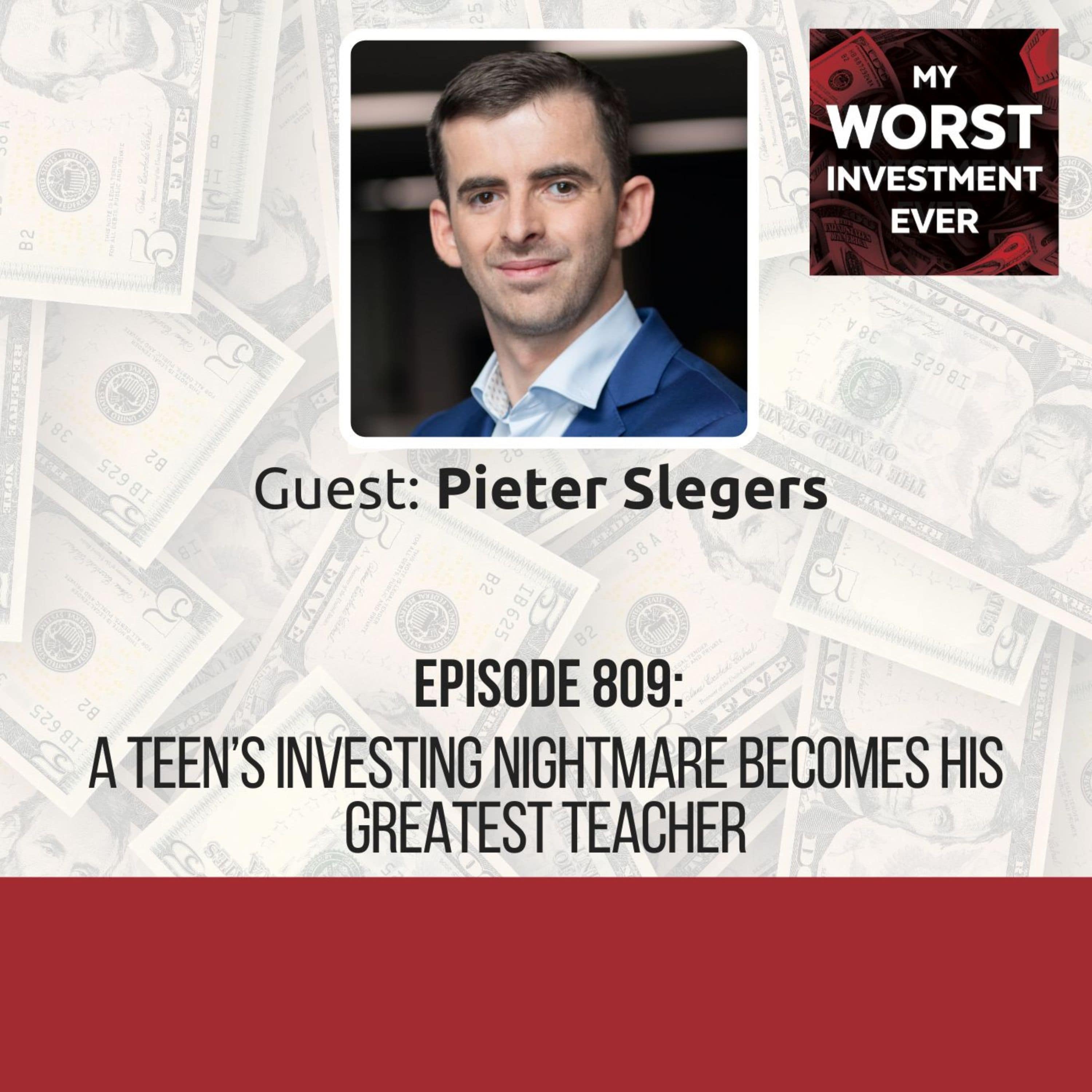
Pieter Slegers – A Teen’s Investing Nightmare Becomes His Greatest Teacher
BIO: Pieter Slegers is the founder of Compounding Quality Newsletter. Pieter worked for three years as a Belgian asset manager before focusing full-time on his investment newsletter, Compounding Quality, in July 2022. Compounding Quality has over 1 million followers across social media and nearly 500,000 email subscribers. The goal of the newsletter is to help other investors by focusing on Quality Investing.STORY: At the age of 13, Peter convinced his parents to open a brokerage account. He picked the broker’s newest “hottest pick” stock—an oil/gas transport company. He invested everything, thinking the people running the company knew what they were doing. Weeks later, the 2008 financial crisis hit. Peter sold his stock after a year, taking a 60% loss.LEARNING: Small losses are better than catastrophic ones. Knowledge is your only edge. “People who invest in individual stocks will make mistakes. There’s no doubt about that, but it’s way better to make a mistake with a few hundred dollars compared to $100,000.”Pieter Slegers Guest profilePieter Slegers is the founder of Compounding Quality Newsletter. Pieter studied Financial Management at the KULeuven and graduated summa cum laude. He worked for three years as a Belgian asset manager before focusing full-time on his investment newsletter, Compounding Quality, in July 2022. Compounding Quality has over 1 million followers across social media and nearly 500,000 email subscribers. The goal of the newsletter is to help other investors by focusing on Quality Investing.Worst investment everAt the age of 13, Peter earned his first paycheck by stocking shelves at a supermarket. Eager to grow his savings, he persuaded his parents to open a brokerage account (a feat for minors in Belgium).Despite his lack of investing knowledge, he diligently explored his broker’s platform for ideas. A new stock caught his eye on the broker’s “hot picks” list—an oil/gas transport company. He invested all his earnings, believing in the company’s potential.Peter didn’t conduct any research, despite his limited knowledge of oil and gas and his complete lack of investing experience. He simply trusted the “hot pick”.The crashWeeks later, the 2008 financial crisis hit. Peter sold his stock after a year, taking a 60% loss. His family was not impressed by his poor investment skills and told him that investing was akin to gambling, and he should consider working for the government instead.Pieter felt like such a failure. However, that $300 loss was his best investment. It hurt, but it taught him never to follow others blindly.Lessons learnedSmall losses are better than catastrophic ones. Losing $300 at the age of 13 beats losing $300,000 when you’re 40. Early pain builds immunity to big mistakes.Knowledge is your only edge: If you don’t understand how a company makes money, you’re gambling, not investing.Failure fuels obsession. That loss made Pieter devour investing books, 10-Ks, and financial news. Pain became his mentor.Andrew’s takeawaysAllow young investors to make mistakes with small sums (e.g., companies they understand, such as Netflix or Coca-Cola).Humility beats hubris. 90% of professional investors at Goldman Sachs underperform. What makes you different? It’s your checklists, not confidence.Read biographies, study market history, and connect patterns. Wisdom compounds like interest.Actionable adviceFor parents guiding young investors, start with brands that they are familiar with and use in their daily lives, such as Coca-Cola, Netflix, and McDonald’s. When they drink a Coke, say: “You own a piece of this.”Cap play money at 5% and limit high-risk bets to cash they can afford to lose. Encourage young investors to do their homework. If they can’t explain the business model in two sentences, they shouldn’t own it.Pieter’s recommendationsPieter recommends reading What I Learned About Investing From Darwin by Pulak Prasad if you want to perfect your investment skills. He also offers numerous free resources on CompoundingQuality.net.Learning from others’ experiences, whether through books, online resources, or personal advice, is a valuable way to improve your own investing skills.No.1 goal for the next 12 monthsPieter’s goal for the next 12 months is to continue his learning journey by reading books, listening to podcasts, and engaging in other educational activities. He understands that continuous learning is the key to successful investing.Parting words “It’s amazing what Andrew is doing. I had a lovely time. Please give him a hand, send him an email, or support him in any way you can. If people have questions for me, I’m always happy to help via combining quality.”Pieter Slegers [spp-transcript] Connect with Pieter SlegersLinkedIn WebsiteAndrew’s booksHow to Start Building Your Wealth Investing in the Stock MarketMy Worst Investment Ever9 Valuation Mistakes and How to Avoid ThemTransform Your Business with Dr.Deming’s 14 PointsAndrew’s online programsVa