
Mom and Mind
487 episodes — Page 5 of 10

285: Perinatal Mental Health Symptoms and Healing with Yoga with Ruthie Ayzenberg
Today’s episode features another personal account of struggle through postpartum issues and a journey to healing. Join us to learn more from Ruthie’s story! I’m joined by Ruthie Ayzenberg, LMFT, LPCC, PMH-C, CYT, a dedicated California-licensed psychotherapist with over a decade of experience specializing in maternal and perinatal mental health. She provides therapy, postpartum CBT/DBT skills coaching, and support groups through her private practice, Mental Fitness Therapy. She explains how her transition into motherhood helped propel her into the perinatal mental health field, and she highlights signs and symptoms, also known as “orange flags,” that are often missed in new moms. Ruthie shares how she incorporates yoga into therapy and how new moms can use yoga practices to manage daily stress and optimize their parenting. Despite being a therapist, Ruthie was caught off guard by the challenges of new motherhood and the juggle of parenting demands. This inspired her to pursue her certification from PSI and gain experience working with El Camino Hospital’s MOM program, creating groups and providing care for struggling perinatal moms and their families. In her practice and her work, Ruthie draws from a variety of therapy modalities, including Experiential, IFS, Brainspotting, EFT-Tapping, Expressive Arts, Mindfulness, Yoga, and CBT/DBT skills. Ruthie’s experience living in Russia, Israel, and the US has instilled in her a deep respect for cultural uniqueness, and she incorporates cultural strengths, creativity, and spirituality into her therapy work. Ruthie strongly believes that the best gift for a child is a parent who is striving for health, regardless of their imperfections. Show Highlights: How Ruthie struggled with the “two sides of motherhood” How the birth experiences with her daughter and son were totally different for Ruthie How the guilt-driven decision to return to work at 6 weeks postpartum created the perfect storm of stress, guilt, shame, and irritability How Ruthie obtained the perfect job at the MOMS program at El Camino–and relished the healing environment there Why so many therapists and medical professionals miss the signs and symptoms of perinatal mental health issues How Ruthie found help and healing through yoga and psychedelic-assisted therapy Signs and symptoms of postpartum issues that are commonly missed in physical, cognitive, emotional, and behavioral categories How Ruthie helps others find healing and recovery through the 5 S’s: sleep, sunshine, social support, self-care, skills, and spirituality How yoga helps connect the body and mind to bring healing How yoga nidra (a practice that can be done at home and for free) can help new moms who struggle with sleep deprivation Ruthie’s takeaways: “I want to give hope to listeners that you are capable, competent, and skillful. There are many different paths to healing, and they can be simple and small.” Resources: Connect with Ruthie and Mental Fitness Therapy: Website, LinkedIn, and Na'aleh Yoga Podcast (try Yoga Nidra with Ruthie!) Visit www.postpartum.net for resources and support! Visit www.postpartum.net/professionals/certificate-trainings/ for information on the grief course. Visit my website, www.wellmindperinatal.com, for more information, resources, and courses you can take today! Learn more about your ad choices. Visit podcastchoices.com/adchoices
284: Blindsided by Anxiety and PTSD with Molly Vasa Bertolucci, PMH-C
Struggles in the transition to motherhood can be a great motivator to help others. Such is the story of today’s guest. Becoming a mom during the early months of the COVID pandemic left Molly feeling blindsided by her birth and postpartum experience, even as a therapist. Unexplained seizures sent her newborn daughter to the NICU, an experience that fueled her postpartum anxiety. Later, she had a missed OCD diagnosis and went through the understandably difficult decision to have a second child. Join us to hear Molly’s story! Molly Vasa Bertolucci is a Licensed Clinical Social Worker in California and the founder of Poppy Therapy. She helps new moms, postpartum women, and moms who want to find meaning and courage in the emotions, big decisions, transitions, and new experiences that come with motherhood. She is a mother of two and is passionate about perinatal mental health. When she’s not doing therapy, Molly interviews moms about their first year of motherhood for her podcast, Our First Year. Show Highlights: Molly’s story of feeling blindsided and isolated by her daughter’s traumatic birth and postpartum anxiety How an earlier miscarriage and the COVID shutdown preceded Molly’s traumatic birth experience at a birth center How breathing complications for her baby, being sent home too soon (after five hours), and unexplained seizures prompted a NICU stay of about ten days for her daughter How the continued COVID shutdown, nearby wildfires, mandatory CA curfews, and the death of a beloved family pet kept Molly feeling isolated, traumatized, and anxious How Molly experienced OCD with feeling consumed by fear and doubt as her life spiraled into chaos and upheaval How shocking intrusive thoughts prompted Molly to get help when her daughter was 6 months old How Molly found help and relief through EMDR with a therapist and from the Hand to Hold support group for NICU parents How medication helped with Molly’s OCD symptoms that she describes as mental and emotional torture Why it was a difficult decision to have a second child, even though that birth turned out to be a healing experience much different than the first time Why Molly decided to specialize in perinatal mental health and begin a podcast Takeaways from Molly: “There is help! If you are not feeling like yourself, reach out for support. There is a whole world of support out there for you.” Resources: Connect with Molly and Poppy Therapy: Website, Instagram, and Podcast Visit www.postpartum.net for resources and support! Visit www.postpartum.net/professionals/certificate-trainings/ for information on the grief course. Visit my website, www.wellmindperinatal.com, for more information, resources, and courses you can take today! Learn more about your ad choices. Visit podcastchoices.com/adchoices
283: Postpartum Healing after D-MER and Sleep Deprivation
Today’s guest shares her experience with postpartum depression and how she got through it to the other side. Sleep deprivation is common for new parents, and it can definitely get in the way and diminish the magic of the brand-new relationship with their baby. Along with depression and the unusual condition of D-MER, sleep deprivation can make parents feel disconnected to the point that they misinterpret who they are and how they are functioning as new parents. Join us to learn more from Alicia’s story! Alicia Delory is a freelance writer, editor, content strategist, and the mother of a four-year-old daughter. She is the author of the Amazon military family bestseller, Something is Better Than Nothing, and she’s currently hard at work on her second book. Alicia candidly shares her parenting story, including the reasoning behind sleep training with her daughter, which always spurs much debate among parents and experts. We discuss why parents should be free to follow their gut instincts in parenting decisions without the pressure of other people’s intrusion and the backlash that comes with those decisions. Show Highlights: How Alicia’s pregnancy and birth did NOT turn out like she wanted and expected–and only heightened her health anxiety How Alicia experienced D-MER (dysphoric milk ejection reflex) and tongue, lip, and buckle ties with her newborn Why she had bonding issues with her baby as the massive snowball of anxiety, D-MER, and diastasis hit her How things came to a head with feelings of hopelessness, loneliness, and a life with no joy How a PSI Climb Out Of the Darkness Walk helped Alicia to see the light at the end of the tunnel Why Alicia decided to do sleep training with her daughter and found immediate relief and improvement How switching to formula feeding helped relieve some of Alicia’s anxiety How prioritizing herself and self-care made Alicia a better mom for her baby How Alicia transitioned back into good sleep, productive work, and pelvic floor therapy—then the pandemic hit and turned everything upside down, making her terrified to leave her home How anxiety medications and therapy helped Alicia realize that anxiety is not a character flaw How she worked to be more comfortable in leaving her house and going out in public Why Alicia did a TEDx talk about her experience to help other moms Why there is undue pressure for the one who becomes the “default parent” Resources: Connect with Alicia Delory: Website, Instagram, TikTok, and TEDx talk (Recognizing the Duality of Permission for New Moms) Visit www.postpartum.net for resources and support! Visit www.postpartum.net/professionals/certificate-trainings/ for information on the grief course. Visit my website, www.wellmindperinatal.com, for more information, resources, and courses you can take today! Learn more about your ad choices. Visit podcastchoices.com/adchoices
282: What to Know About the New Postpartum Depression Medication
I’m excited that today’s episode covers the new postpartum depression medication, Zuranalone (brand name Zurzuvae). This is the first pill for PPD and was just recently approved by the FDA. It differs from the IV infusion Braxanalone, which was FDA approved in 2019. As with any new medication, there are many questions to consider if we are to stay ahead of any misinformation and hesitations. Join us to learn what you need to know and understand about this fantastic new tool in the treatment of PPD. Dr. Samantha Meltzer-Brody is the Assad Meymandi Distinguished Professor and Chair of the Department of Psychiatry at the University of North Carolina at Chapel Hill. She is an internationally recognized reproductive psychiatrist and clinician-scientist who also directs the UNC Center for Women’s Mood Disorders. Her work has focused on developing a comprehensive integrated clinical and research project in women’s mood disorders across the reproductive life cycle. Dr. Meltzer-Brody investigates the epidemiologic and biological predictors of perinatal biomarkers, as well as the impact of adverse life events. Show Highlights: An explanation for the layperson about Zuranolone—and why this is an exciting breakthrough in pill form How SSRIs (Selective Serotonin Reuptake Inhibitors) came to be used in the treatment of PPD, even though they have downsides and significant side effects Why the new drug is different than traditional antidepressants previously used to treat PPD What the clinical trials revealed about Zuranolone side effects, efficacy, and breastfeeding considerations When Zuranolone will be available The overall significance of this new medication Why postpartum is different from major depression–and should be treated differently Resources: Connect with Dr. Samantha Meltzer-Brody: Visit www.postpartum.net for resources and support! Visit www.postpartum.net/professionals/certificate-trainings/ for information on the grief course. Visit my website, www.wellmindperinatal.com, for more information, resources, and courses you can take today! Learn more about your ad choices. Visit podcastchoices.com/adchoices

281: Supporting Black Maternal Health and Mental Health with Chetina Guadalupe, LMFT
Today’s show focuses on how Black birthing people and mothers might experience trauma in the healthcare system that impacts them during pregnancy, birth, and postpartum. There is great complexity in the emotions that people feel during the transition to parenthood, and today’s guest is dedicated to providing support, resources, and healing. Join us to learn more! I’m joined by Chetina Guadalupe, a Licensed Marriage and Family Therapist, consultant, and the owner/creator of Always Live Lovely. In her work, she provides support through individual and couples therapy, music, a podcast, and speaking engagements. She is passionate about breaking the stigma and equipping people with tools for deeper understanding that leads to their healing. Show Highlights: An overview of Chetina’s therapy work and podcast, Breaking Barriers Why Black women have real fears about maternal mortality How labor and birth experiences differ greatly from person to person because of inconsistencies in the healthcare system Why people of color have to advocate for themselves within the healthcare system in different ways Why Chetina chose to have the support of a doula when she gave birth to her son How Chetina went into warrior mode during labor and delivery with a singular, focused purpose Why you have to know yourself, your triggers, and what makes a safe space How to find empowerment and not give in to shame, guilt, and triggers What healthcare providers can do to support a Black birthing person Resources: Connect with Chetina Guadalupe: Website, YouTube, TikTok, Podcast, and Instagram Visit www.postpartum.net for resources and support! Visit www.postpartum.net/professionals/certificate-trainings/ for information on the grief course. Visit my website, www.wellmindperinatal.com, for more information, resources, and courses you can take today! Learn more about your ad choices. Visit podcastchoices.com/adchoices
280: Emotional Journey Through Loss to Surrogacy and Spontaneous Pregnancy
Today’s episode sheds light on the truth that we never know what someone has been through, especially regarding the journey to parenthood. It’s so easy, and often inaccurate, to assume that another person’s path has been somehow easier than our own. My guest’s story includes many elements, including infertility, recurrent pregnancy loss, and the decision to use a surrogate, also known as a gestational carrier. A beautiful part of her story is that her best friend chose to carry her twins for her, and a spontaneous pregnancy added another happy plot twist to the mix. Join us for Katelin’s story. Katelin Buchanan is a Licensed Professional Counselor in Virginia with extensive experience treating those with anxiety, depression, trauma, substance abuse disorders, and major life transitions. She is passionate about working with women coping with infertility, pregnancy loss, and perinatal mood and anxiety disorders. She co-founded a private practice, Women’s Therapy & Wellness, that treats women virtually throughout the state of Virginia. She has completed advanced perinatal mental health training through Postpartum Support International, serves as a volunteer with Postpartum Support-Virginia, and is trained in both EMDR and perinatal IPT. Show Highlights: Katelin’s journey: knowing something was “off,” PCOS, multiple IUIs, IVFs, and recurrent pregnancy loss in a five-year struggle to have a child How her best friend, Erica, offered to carry her baby–but had a miscarriage on the first attempt How Katelin began therapy along her journey and reached a point where she couldn’t continue How Erica carried Katelin’s twins, who are now five-years-old The emotional toll of the infertility journey Why Katelin had to withdraw from many people to protect her mental health How a local Resolve support group helped Katelin have an outlet How she dealt with the anger that came with her journey How she became spontaneously pregnant when her twins were 2-½ after being told it would never happen for her How Katelin had severe postpartum anxiety and did a lot of grief work with her therapist What it’s like to be the intended parent in a surrogacy/gestational carrier situation Katelin’s advice about taking a self-care audit and finding joy in life Resources: Connect with Katelin Buchanan: Website Visit www.postpartum.net for resources and support! Visit www.postpartum.net/professionals/certificate-trainings/ for information on the grief course. Visit my website, www.wellmindperinatal.com, for more information, resources, and courses you can take today! Learn more about your ad choices. Visit podcastchoices.com/adchoices

279: An OB's Postpartum Journey: Healing and Helping Others with Dr. Jessica Vernon
Sadly, many moms fall through the cracks in the field of perinatal mental health because healthcare providers don’t have the proper knowledge about perinatal mental health conditions. Today’s guest is a doctor dedicated to making a difference in the lives of women and families. Join us to learn more! Dr. Jessica Vernon is a mom who experienced a perinatal mental health condition. As an Ob-gyn, she is dedicated to helping educate residents in her field with adequate training and information about perinatal health and wellness so they can identify, assess, and make referrals for appropriate treatment. She is a Clinical Assistant Professor in the Department of Obstetrics and Gynecology at NYU Grossman School of Medicine. She also is an advocate for maternal mental health and is the Director of Perinatal Mental Health at NYU Langone Ob-gyn. In addition to mental health, Dr. Vernon is passionate about health equity and is the physician advisor for the NYU Black Motherhood Matters Committee and the physician director of the NYU Holistic Care Program for Black Mothers. She has been quoted in the media as an expert and has shared her personal experience with postpartum anxiety and depression on national television. When she gave birth to her second daughter, she was able to implement the lessons and tools she learned with her first child. She utilizes social media, along with her website and blog, Metamorphosis to Mom, to connect and share supportive, authentic content and curated resources related to the reproductive journey. Show Highlights: How Dr. Jessica felt hyper-vigilant as a first-time mom and later saw that she had severe anxiety and OCD with sleep deprivation, intrusive thoughts, and feelings of isolation How medication helped her after two long years of suffering How obstetric training falls short in dealing with all the nuances of PMADs How Dr. Jessica changed to focus more in her practice on those who are struggling and suffering with PMADs How Dr. Jessica’s passion to help her patients is providing extra care and support for many How Dr. Jessica and a colleague developed a curriculum for trainees, created a lecture series, and are equipping the next generation of Ob-gyns Why it’s difficult for some Ob-gyns to screen and treat patients with a more holistic approach Highlights of Dr. Jessica’s program and initiatives at NYU, including holistic care for Black birthers How Dr. Jessica’s second pregnancy went differently with planning, medication, supportive resources, and self-care How we can work for big system changes Why Dr. Jessica thinks Obs should strive for better human connection with their patients and find ways to allow space for them and their feelings Resources: Connect with Dr. Jessica Vernon: Website, Instagram, and on TikTok Visit www.postpartum.net for resources and support! Visit www.postpartum.net/professionals/certificate-trainings/ for information on the grief course. Visit my website, www.wellmindperinatal.com, for more information, resources, and courses you can take today! Learn more about your ad choices. Visit podcastchoices.com/adchoices
278: A Postnatal Depression Journey with The Shems Doula, Abla Benyahia
I’m joined today by Abla Benyahia, a Moroccan, London-based postpartum doula and birth educator. She is the mother of two children under two years of age, and she’s a postnatal depression survivor. Passionately supporting women during their postpartum journey, Abla helps them navigate through mental health challenges and mom’s guilt to reclaim their true identities. Abla experienced postnatal depression after the birth of her first child, which was followed quickly by her second pregnancy. She shares her experience of what helped her, what didn’t help, and what she wishes she had done differently, along with her perspective as an Arab and Muslim mother. The mission of Abla’s work is to help people understand the importance of self-care and why it’s essential to get help as quickly as possible. Show Highlights: How Abla was born in Morocco before living in France and settling in London with her husband How her first pregnancy went well, despite PCOS and the pandemic How she experienced depression even before her baby’s birth, triggered by the fact that her family couldn’t travel internationally to be with her How her birth plan couldn’t work like she wanted it to How Abla’s religious beliefs factored into her birth experience and how giving birth in London was much different than in Morocco in support of a new mom both in the hospital and at home How a loss of sleep and breastfeeding problems created the foundation for postnatal depression and intrusive thoughts How a conversation with a friend led Abla to admit that something was wrong and that she needed help How the support of a doula, therapist, and physiotherapist made a huge difference for Abla Why Abla felt anger that none of the women in her daily prepared her for postpartum depression How Abla’s husband learned to help and support her, helping her to prioritize self-care and quality time together rather than household tasks How Abla’s second pregnancy occurred quickly and unexpectedly and gave her the chance to have her preferred birth plan AND her birth doula How a helpful village of support made Abla’s second postpartum experience very different Why Abla decided to become a certified doula and focus on helping other women Resources: Connect with Abla: Instagram Visit www.postpartum.net for resources and support! Visit www.postpartum.net/professionals/certificate-trainings/ for information on the grief course. Visit my website, www.wellmindperinatal.com, for more information, resources, and courses you can take today! Learn more about your ad choices. Visit podcastchoices.com/adchoices
277: Debilitating Postpartum Intrusive Thoughts and OCD
One of the best ways to help moms with various postpartum difficulties is to let them know they are not alone. Helping to do that is what Mom & Mind is all about, and today’s guest wants to help shed light and understanding on intrusive thoughts and OCD. We hope many people will benefit from hearing Jenn’s story. Please join us! Jenn Holmes lives in Mississippi with her husband and two-year-old son. She is the Mississippi State Lead Coordinator for Postpartum Support International, and she’s sharing her story to help other moms. Jenn experienced debilitating intrusive thoughts within days of giving birth to her son. She didn’t know what was happening and became very frightened by her thoughts. As Jenn shares in our conversation, her thoughts became very graphic, which is a real-life scenario for those who experience intensive intrusive thoughts. She shares details that may be hard for some people to hear, so please use your judgment as to whether you are ready for those. If not, you can skip over those parts or come back to listen at any time. An important note that Jenn mentions is that she thought she may be experiencing psychosis because of what she had heard in the media about postpartum psychosis and mothers who harmed themselves or their children. In truth, there is a wide range of postpartum psychosis experiences, and the media portrayal is often incorrect, sensationalized, or inhumane. If you’d like to learn more about postpartum psychosis, please listen to Episode 258 with Michele Davidson. To learn more about postpartum OCD from a clinical perspective, please listen to Episode 205 on destigmatizing intrusive thoughts with Dr. Nichole Fairbrother. Show Highlights: How Jenn’s perfect pregnancy and non-traumatic C-section delivery gave way to her first intrusive thought before she even took her baby home How her thoughts progressed in graphic severity or harm to her baby and herself How Jenn found a Facebook friend who said she had postpartum OCD and told her about coping strategies–(the woman Jenn credits with saving her and her baby) How Jenn’s intrusive thoughts turned even more vivid and catastrophic, making her unable to function in daily tasks without thoughts of harming her son How Jenn’s Ob diagnosed her with severe postpartum depression, prescribed helpful meds, and suggested a “naming and taming” approach to intrusive thoughts How Jenn is doing today How she saw a psychiatrist, a social worker, and two therapists who had no idea what was going on with her Why books, resources, and mental health professionals need to do more regarding postpartum depression, intrusive thoughts, and OCD How Jenn helps others today through work with Postpartum Support International Resources: Connect with Jenn: Instagram and Facebook Visit www.postpartum.net for resources and support! Visit www.postpartum.net/professionals/certificate-trainings/ for information on the grief course. Visit my website, www.wellmindperinatal.com, for more information, resources, and courses you can take today! Learn more about your ad choices. Visit podcastchoices.com/adchoices
276: Healing from Tokophobia, PTSD and OCD with Rebecca McMartin
We already know that the perinatal experience can be multi-layered and differently nuanced for each person. The story we’re hearing today brings several conditions into the spotlight of our attention and highlights the need for awareness and sound treatment around the world. My guest shares her experience with tokophobia, a term that may be unfamiliar. It refers to “a pathological fear of childbirth.” You can only imagine that this condition would cause a mental health crisis and complicate the perinatal experience. Join us to learn more in today’s conversation! I’m joined by Rebecca McMartin, the host of the Perinatal Stories Australia podcast. She is a podcaster and digital creator based in Sydney, Australia, but she sees herself first as a storyteller and mom of a little boy. Following an acute mental health crisis when her son was born, Rebecca found relief in writing and stories as a way to process her pain and grief. From that experience, she decided to harness the power of storytelling to start Perinatal Stories Australia, which is a podcast, blog, and social media platform for Australian women to share their lived experiences with perinatal mental health. In today’s episode, Rebecca shares her complicated perinatal story and explains tokophobia. In her case, tokophobia led to PTSD, and her experience with intrusive thoughts and OCD served to complicate her story. We also talk about the importance of mother-baby psychiatric units, which are not as common in the US as in Australia and the UK. Show Highlights: An overview of Rebecca’s story: a history of anxiety and OCD from childhood that carried into adulthood and an uncomplicated pregnancy Why Rebecca “did all the work” leading up to her pregnancy to avoid anxiety getting in the way of her experience How dealing with anxiety comes down to holding onto the bits of life we can control and feeling overwhelmed by seemingly simple decisions How everything changed for Rebecca as her third trimester came along with unnatural fears of childbirth and dying, fears of leaving her house, and tokophobia How Rebecca’s doctor suggested a C-section because there is a certain level of control How Rebecca found comfort through her Ob, the attending midwife, a social worker, and the hospital staff Why a lot of self-blame and guilt accompany mental illness How her anxiety changed during the postpartum to other fears, worries, and health anxiety How Rebecca experienced PTSD shortly after her son’s birth, along with nightmares, insomnia, intrusive thoughts, and medication that wasn’t helping—all in the first week How a health professional suggested that maybe she didn’t want to be a mother anyway, and that’s why she was struggling How Rebecca’s social worker got her into the mother-baby psychiatric unit for help–and she finally felt SAFE How local mental health crisis services helped Rebecca after her hospital stay and release Why remedying sleep disturbances should be the FIRST step in helping new moms How Rebecca realized (after her MBU stay) that she had tokophobia Why self-compassion was a big piece of what Rebecca had to learn Why Rebecca decided to start her podcast to tell her story and the stories of others–and to provide the resource that she once needed Resources: Connect with Rebecca: Website (and podcast), Facebook, and Instagram Visit www.postpartum.net for resources and support! Visit www.postpartum.net/professionals/certificate-trainings/ for information on the grief course. Visit my website, www.wellmindperinatal.com, for more information, resources, and courses you can take today! Learn more about your ad choices. Visit podcastchoices.com/adchoices

275: Advocacy Through Climb Out of the Darkness and I AM ONE Podcast
We have a very special episode today, as we’re hearing from two guests about their important work through Postpartum Support International that is based on their lived experiences through perinatal mental health conditions. They are working tirelessly to help others access the resources they could have used, and they share how community support and other types of healing have helped them. We hope many people can find encouragement and support through their advocacy efforts and their openness in sharing their stories. Join us to hear from Emily and Dani! Emily Jankowski Newton is a passionate perinatal mental health advocate and the Director of PSI’s Climb Out of the Darkness Program. This annual event is a community gathering for those who have experienced perinatal mental health conditions and their supporters. Through attending one of these events, Emily connected with other parents, found the help she needed, and saw the beginning of something incredible in her life. A combination of treatments, including talk therapy, medication, and lifestyle changes helped her recover from postpartum anxiety, depression, and OCD. Emily works tirelessly today to raise awareness, build community, and connect folks worldwide to life-changing perinatal mental health resources. Dani Giddens is a Perinatal Mental Health-Certified (PMH-C) advocate, a trained Group Peer Support (GPS) Leader in her community, and Assistant Director of PSI’s Climb Out of the Darkness Program. Hearing one person’s story on a podcast changed the trajectory of her life and was the catalyst to help her find a therapist and open up about her postpartum anxiety, depression, and OCD. Most importantly, she realized she was not alone. Dani is one PNMH advocate with a microphone–and she’s not afraid to use it through the I AM ONE podcast. Show Highlights: Highlights from Emily’s story: the difficult birth of her first baby, hard recovery, sadness and anxiety, a second baby two years later, and the realization of her postpartum anxiety and rage Highlights from Dani’s story: became a parent through frightening and unexpected events; felt rage, intrusive thoughts, and exhaustion; and was diagnosed years later with postpartum anxiety, depression, and OCD Why we need to check in on new moms and ask about their emotional health How Emily found healing through blogging, therapy, being honest about her feelings, and attending her first Climb event How Dani found healing through a significant podcast moment when she realized that she, too, could share her experience to help others How Emily explored Climb Out of the Darkness, which she describes as the nexus of a support group, playdate, and summer camp How Dani became involved in the Climb to support a friend–and eventually became a co-leader Why a Climb event is a great place to discover and connect with healing resources Details about Climb events and teams, which are now spreading internationally to Greece, Japan, and several African countries How you can get involved in a Climb, either in person or virtually Details about the I AM ONE podcast: how the idea was birthed and began in 2022, including the powerful intention behind the title Resources: To find out more, visit Climb Website (you can sign up through July 15 to lead a Climb in October or sign up to lead in June of next year), I AM ONE podcast, and PSI Website Instagram links: @psiclimbout, @iamonepodcast, and @postpartumsupportinternational Visit www.postpartum.net for resources and support! Visit www.postpartum.net/professionals/certificate-trainings/ for information on the grief course. Visit my website, www.wellmindperinatal.com, for more information, resources, and courses you can take today! Learn more about your ad choices. Visit podcastchoices.com/adchoices
274: Healing From Paternal Postpartum Depression with Kevin Seldon
Today, we are highlighting the importance of mental well-being for fathers worldwide. Today’s episode features a devoted father who shares his personal journey through postpartum depression after the birth of his child. Kevin Seldon is the founder of a leading social-impact consultancy with clients ranging from award-winning artists and Fortune 500 companies to world-renowned non-profits. However, more than a decade of building a company focused on inspiring passion in others and five years of struggling to build a family left him devoid of any passion within himself. When he and his wife finally found themselves expecting their first child, Kevin took an extended leave from all of his business endeavors and turned off his phone for a year to focus on his family and reconnect with himself. He found the experience exhilarating, exhausting, and lonely. Being shocked at the lack of support available to dads who seemed to be completely excluded from parenting culture led him to launch DILF, as in “Dad I’d Like to . . . FRIEND,” a top parenting podcast. DILF has broken into Apple’s Top 50 Parenting Podcast charts around the world, while recently hitting #6 on the US charts. What began as a simple forum to seek support from dads Kevin would want to . . . friend has evolved into a global community focused on the mental health of parents. In this community, ALL parents are welcome, regardless of cultural background, sexual orientation, and gender. The conversation moves beyond life with kids to focus more on the life of each human (who happens to be a parent), to focus on how they can thrive while attempting to be the best version of themselves. Show Highlights: How Kevin sunk into a deep depression during the five-year infertility journey with his wife How his wife’s diabetes led to a difficult pregnancy and traumatic birth that resulted in a NICU stay for his son and emergency surgery for his wife How Kevin tried to be present and bond with his son in the NICU but felt rejected in the parenting process when they went home How he knew something “was off” with his mood/temperament but found comfort and connection through doing nighttime feedings with his son Why Kevin decided to take a year off from work to spend extended time with his wife and son How he still battled depression but experienced a pivotal moment of bonding with his son during a nighttime feeding How Kevin became a stay-at-home dad not welcome at mom groups and with no dad friends—-and launched a podcast that became widely popular Why dads feeling alone and isolated is a world problem with very little recognition and support How dads can have postpartum depression because of the change in identity, sleep deprivation, change in relationship, etc. How our mental health is affected by our lack of human connection–and what we need to teach our kids How Kevin realized that he had postpartum depression (even though his wife didn’t know) and what the statistics show Why it’s important to give men the space to talk about their feelings How Kevin and his wife navigate “maternal gatekeeping,” co-parenting, and their team dynamic as a couple Why the term “co-parenting” needs to be redefined Why Kevin’s podcast seeks to be inspiring, positive, open, and supportive Key takeaways about allowing space for everyone and protecting mental health and relationships Resources: Connect with Kevin: Website, Podcast, Parenting Survey, and Instagram Visit www.postpartum.net for resources and support! Visit www.postpartum.net/professionals/certificate-trainings/ for information on the grief course. Visit my website, www.wellmindperinatal.com, for more information, resources, and courses you can take today! Learn more about your ad choices. Visit podcastchoices.com/adchoices
273: Paternal Mental Health: The Emotional Wellness of Fathers
Fathers are often overlooked in the conversation around perinatal mental health, and that needs to change. June is not only the month of Father’s Day but also International Fathers’ Mental Health Day, celebrated on June 19. Fathers, and men in general, have been conditioned to look past their feelings in most cultures, but we know men have complex emotional responses to the challenges of fatherhood. We need to offer more support for fathers in the co-parenting relationship, and these conversations are necessary and beneficial. Join us to learn more from today’s guest! Adam Angel, LCSW, has 15 years of experience working with youth, adults, and families. His specializations include paternal mental health and developmental trauma. He currently facilitates both peer support and death-oriented therapy groups for fathers at various stages, specializing in supporting fathers who have suffered perinatal loss in stillbirth and early infancy. Adam’s specialization in developmental trauma is supported by his master’s level training in the NeuroAffective Relational Model, also known as NARM. We need to change the narrative around fatherhood and recognize men as the complex, emotional beings that they are. Show Highlights: What paternal mental health is and how Adam offers support to fathers Why fathers feel left out of much of the perinatal experience and don’t want to be “the other” part Common mental health challenges for dads in the perinatal period How support groups and group therapy help fathers find safe spaces for conversations–even in the virtual space What NARM is and how it works in therapy sessions Why men need help dealing with shame, guilt, emotions, and the role model gap How Adam uses Fair Play Life in therapy with fathers–and how it can be a tool to support relationships Why both partners need to value all three relationships: you and your partner, you and your baby, and you and yourself What fathers can do to get started with mental health conversations Resources: Connect with Adam: Website and Instagram Visit www.postpartum.net for resources and support! Find more information about International Father’s Mental Health Day events! Visit www.postpartum.net/professionals/certificate-trainings/ for information on the grief course. Visit my website, www.wellmindperinatal.com, for more information, resources, and courses you can take today! Learn more about your ad choices. Visit podcastchoices.com/adchoices
272: A Dance in the DSM: My Tango with Postpartum Depression, Anxiety, and OCD
We all can learn from the stories others share about their struggles. Perhaps the most important benefit of that kind of sharing is to let people know that they are not alone. Today’s guest shares her experience because she wants people to understand what it’s like dealing with perinatal mental health issues and why it is vitally important to see a mental health professional. Her memoir, A Dance in the DSM: My Tango with Postpartum Depression, Anxiety, and OCD, documents her story. Join us to hear Jessica’s story. After graduating from Fairfield University with a bachelor’s degree in English and a concentration in creative writing, Jessica Cuomo went on to teach high school English for six years, library science for two years and currently teaches communications at a local high school. With the birth of her first child, she experienced her first mental health crisis, which inspired her to share her story in hopes of helping others who suffer from mental illness. It is not easy to share the uncomfortable and highly-stigmatized parts of a mental health journey, but Jessica’s story helps to normalize the struggle and offers concrete advice for support and recovery. Show Highlights: How Jess’ perinatal mental health was affected with her first pregnancy 11 years ago–when the mental health landscape was very different in the US How mental health episodes occurred with anxiety and intrusive thoughts accompanied by hyperemesis gravidarum and neuroses of worrying about the baby How an intense delivery and the hormone rollercoaster left Jess worrying obsessively about SIDS and not sleeping How Jess recognized OCD symptoms when she saw a professional for a mental health screening Why she felt guilty when she went back to work–and she saw her OCD symptoms worsen How therapy helped with settling the intrusive thoughts How her second pregnancy went better until a few weeks postpartum when she stopped sleeping How a heightened awareness, panic attacks, adjusted meds, a ruptured cyst, a psychopharmacologist, and a lifeline friend at the right moment converged to be Jess’ “Yellow Wallpaper Moment” Why Jess’ mission is to let people know that their mental health IS their physical health How Jess’ book, A Dance in the DSM: My Tango with Postpartum Depression, Anxiety, and OCD, was meant to be a story of hope that busts through the stigma and lets people know that help is available Resources: Connect with Jessica Cuomo: Website, Twitter, Instagram, and Book Visit www.postpartum.net for resources and support! Visit www.postpartum.net/professionals/certificate-trainings/ for information on the grief course. Visit my website, www.wellmindperinatal.com, for more information, resources, and courses you can take today! Learn more about your ad choices. Visit podcastchoices.com/adchoices
271: The Importance of Pelvic Health
There is an overall lack of information and education about pelvic health in the pregnancy, birth, and postpartum world. A new mother’s ability to care for her newborn has everything to do with her mental, physical, and emotional health, but modern medicine and our society have lost touch with this message. Our systems are designed to nurture the infant, neglecting to empower mothers with dignity, truth, and preparedness. Let’s change that! Join us to learn more! Dr. Laura Williams is a Doctor of Physical Therapy (DPT) and Board-certified Women’s Health Clinical Specialist. She practices and lives in Colorado with her husband, three-year-old daughter, and a second child on the way. She founded Hearth Healing, a 100% virtual postpartum healing service as a pelvic health consultant. Although not a substitute for in-person healthcare, postpartum healing consultation should be viewed as a vital way to bridge the gap in maternal care. People deserve information about how to improve symptoms that impact their quality of life after childbirth without having to wait months or feel limited by a lack of childcare or transportation. At Hearth Healing, Laura provides individualized answers to postpartum healing questions, early healing strategies, self-management advice, and guidance on appropriate resources, products, and providers. Our discussion focuses on the lack of information about healing after childbirth and the options during pregnancy for pelvic health. Laura explains symptoms to look out for and when to seek additional help–because pelvic health impacts mental health. Show Highlights: What “pelvic health” is and what Dr. Laura does in her work How Dr. Laura helps people prepare for the postpartum and know about available resources How pelvic health impacts bowel and bladder functions, which are often overlooked Why pelvic floor PT is necessary after certain surgeries Why pelvic health problems are a loss of function—and a physical therapist like Dr. Laura can help people maintain function and optimize their quality of life Why we need to prioritize wellness to be good parents–and to set examples for our kids Why healthcare providers need to do a better job asking the right questions and screening patients for pelvic floor health When someone should/could see a pelvic PT How Dr. Laura helps patients virtually through her practice, Hearth Healing Resources: Connect with Dr. Laura: Website and Instagram Visit www.postpartum.net for resources and support! Visit www.postpartum.net/professionals/certificate-trainings/ for information on the grief course. Visit my website, www.wellmindperinatal.com, for more information, resources, and courses you can take today! Learn more about your ad choices. Visit podcastchoices.com/adchoices

270: Black Maternal Mental Health with Keisha Reaves, LPC, PMH-C
Maternal mental health has a profound impact on individuals, couples, families, children, and our society as a whole. It’s important that every parent, regardless of race, color, or ethnicity, has access to resources and support when they need it most, and that just isn’t the case in our country. Today’s conversation focuses on maternal mental health in the Black community, and our perspective comes from a dedicated, mission-driven mental health provider who wants to make a difference in the lives of Black mothers. There is so much for us to learn and understand about this topic, so join us now for the conversation. Keisha Reaves is the owner and clinical director of Push Thru Therapy. As a Georgia native, she has witnessed the stigma of mental health and has made it her mission to normalize therapy. With more than 16 years in the mental health profession, she is now a Certified Perinatal Mental Health provider serving birthing parents who are trying to conceive, have fertility issues, experience infant loss, are transitioning into parenthood, and those with perinatal mood and anxiety disorders. She has volunteered with Northside Hospital’s Infant Loss/ Bereavement Group and served for three years on the Postpartum Support International Georgia Chapter Board as the Training Coordinator, as well as currently volunteering as an educator to providers treating birthing parents in their practices. She is a facilitator for the Mocha Moms Group at the Atlanta Birth Center, and she facilitates a Black Moms group through Push Thru Therapy. In today’s episode, Keisha shares her personal story, along with giving us perspective on the factors that make Black maternal mental health and reproductive education so vitally important. She is intensely passionate about maternal mental health and strives to spread information, education, resources, and support to women of color. Show Highlights: How Keisha’s journey brought her to the important work she does today How Keisha’s first pregnancy played out with many signs of postpartum depression and anxiety—and she didn’t realize it at the time How she experienced sleep deprivation, brain fog, feelings of isolation, and had no friends and family close by to help How Keisha felt shame and stigma around seeking therapy as a mental health clinician–and why she determined to help others through her work What Keisha sees as gaps in adequate support for Black women—and why so many people of color are afraid to ask for the help they need How Black mothers in the South experience societal and generational pressure to a greater degree because of the history of slavery Why antepartum anxiety is a big challenge for many mothers How Keisha’s second pregnancy was a different experience because she was proactive and had support in place How unique worries and concerns (and anxiety) show up for Black mothers in today’s world–and why Keisha focuses on helping Black mothers to “be present in the joy of motherhood” How a therapist who “looks like me” can be more helpful with sympathy and empathy What Keisha would like to see in our progress with maternal mental health What steps Keisha is taking now in her work to reach more people with education and information, both for mental health providers and mothers Resources: Connect with Keisha: Website, Push Thru Therapy Website, Instagram, Push Thru Mom Instagram Visit www.postpartum.net for resources and support! Visit www.postpartum.net/professionals/certificate-trainings/ for information on the grief course. Visit my website, www.wellmindperinatal.com, for more information, resources, and courses you can take today! Learn more about your ad choices. Visit podcastchoices.com/adchoices

269: Dr. Kat's Postpartum Story - Interviewed by Karen Kleiman
Today is a very special episode because I not only have the pleasure of hosting this podcast, but I am also the guest. Yes, that's right! Today, in honor of Maternal Mental Health Month, I'm opening up my heart and sharing my postpartum story with you once again; I last told my story way back in Episode 1 in June 2016. I want all of you who know me as Dr. Kat professionally to understand why I am so deeply passionate about the cause of maternal mental health. Join us now! Karen Kleiman is a well-known international maternal mental-health expert with over 35 years of experience. As an advocate and author of several groundbreaking books on postpartum depression and anxiety, her work has been featured on the internet and within the mental health community for decades. In 1988, Karen founded The Postpartum Stress Center, a treatment and training facility for prenatal and postpartum depression and anxiety. Katayune Kaeni, Psy.D. PMH-C, “Dr. Kat,” is a perinatal mental health-certified psychologist, author of The Pregnancy Workbook: Manage Anxiety and Worry with CBT and Mindfulness Techniques, and host of the Mom & Mind Podcast, covering personal stories and expert interviews related to perinatal mental health. She is also the board chair of Postpartum Support International, an organization whose mission is to promote awareness, prevention, and treatment of mental health issues related to childbearing in every country worldwide. Dr. Kat began specializing in perinatal mental health after her own experience with postpartum depression, anxiety, and OCD over 12 years ago. Dr. Kat continues to work virtually with clients across California. Show Highlights: How Dr. Kat’s first pregnancy, even though planned and easy, resulted in a long, difficult labor that jump-started postpartum depression, anxiety, and OCD Why new moms struggle to know what’s normal, not normal, too much, or not enough How feeling inadequate and incompetent as a new mom was part of Dr. Kat’s anxiety and her battle with perfectionism How she felt alone and disconnected even from her husband, and NO ONE knew what was happening on the inside How scary intrusive thoughts put her in emotional turmoil Why shame and stigma are greater for mental health professionals–and will silence them at times How Dr. Kat carried on her therapy work with clients as the depression grew, making her feel trapped, exhausted, embarrassed, and confused How finally taking the PHQ-9 depression screening test for herself finally opened her eyes to the truth of what she was going through How she shut down even with her therapist and turned to a naturopathic physician, acupuncture, and other healing alternatives Why therapists MUST address the suffering client in front of them with curiosity and questions Why Dr. Kat is so deeply driven to help other moms break through and find the help and support to know that THEY WILL BE OK Resources: Connect with Karen: Website, Twitter, Instagram, Facebook, Book: Good Moms Have Scary Thoughts and LinkedIn Check out Karen Kleiman’s other books: Website and Amazon Visit www.postpartum.net for resources and support! Visit www.postpartum.net/professionals/certificate-trainings/ for information on the grief course. Visit my website, www.wellmindperinatal.com, for more information, resources, and courses you can take today! Learn more about your ad choices. Visit podcastchoices.com/adchoices

268: "Good Moms Have Scary Thoughts" with Karen Kleiman
We continue in the month of May, Mental Health Awareness Month! We always need more awareness and advocacy for mental health in general, but for far too long, maternal mental health has been underrecognized and underdiagnosed. So many people have suffered without good resources and the proper support in place. Today’s guest has vast experience with perinatal mental health, and it allows her to see the long view of how far we’ve come and how far we still need to go. Join us to learn more! Karen Kleiman is a well-known international maternal mental health expert with over 35 years of experience in the field. She is a strong advocate and the author of several groundbreaking books on postpartum depression and anxiety. Her work has been featured online and in the mental health community for decades. In 1998, Karen founded The Postpartum Stress Center, and in 2022, she founded The Karen Kleiman Training Center, which is dedicated to the advancement of clinical expertise and therapeutic strategies for the treatment of perinatal mood and anxiety disorders. All of her advanced trainings are heavily influenced by The Art of Holding Perinatal in Distress™ model of intervention, created by Karen. In this conversation, we take a close look at intrusive thoughts and identify those that are normal and those that need an increased level of intervention. Karen’s latest book is Good Moms Have Scary Thoughts: A Healing Guide to the Secret Fears of New Mothers. Her other books include The Postpartum Partner, What About Us?, This Isn’t What I Expected, The Art of Holding in Therapy, and Dropping the Baby and Other Scary Thoughts. Show Highlights: Why Karen writes books as a unique avenue to empower moms How the pandemic doubled and tripled exponentially the anxiety and fears for new moms How the “scary thought” range can vary from mild to very awful–and they don’t always come with thoughts of hurting your baby or yourself Why postpartum depression doesn’t always feel like symptoms–but like the mom is broken How to know if scary thoughts are “too scary” by measuring a mom’s distress: How much is it interfering with her ability to get through the day? How much is it interfering with who she is and how she functions? How women are built to function well with very high levels of distress Why Karen hopes her book can help moms ask for help when they need it What the statistics show around intrusive thoughts about harm to a mother’s baby How every new mom experiences some obsessions and compulsions around their baby’s safety Why the core of Karen’s work has become holding space for the authentic suffering of moms when they think they are “fine” Why relationship problems have to be addressed along with postpartum depression and anxiety Why connection to a partner is the #1 most important way to help a suffering mom Resources: Connect with Karen: Website, Twitter, Instagram, Facebook, Book: Good Moms Have Scary Thoughts, and LinkedIn Check out Karen Kleiman’s other books: Website and Amazon Visit www.postpartum.net for resources and support! Visit www.postpartum.net/professionals/certificate-trainings/ for information on the grief course. Visit my website, www.wellmindperinatal.com, for more information, resources, and courses you can take today! Learn more about your ad choices. Visit podcastchoices.com/adchoices
267: Groundbreaking Spanish Language Perinatal Mental Health Training and Resources
Sabemos que 1 de cada 7 mujeres (1 de cada 10 padres) experimenta síntomas de depresión y ansiedad durante su etapa posparto. Los Trastornos del Estado de Ánimo Perinatal (PMD) durante el embarazo y dentro del primer año después del parto, pueden manifestarse en las personas de todas las edades, niveles de ingresos, raza y cultura. En este episodio, me acompañan Karla Cardoza, LMFT, PMH-C, y Marianela Rodriguez, Ph.D., PMH-C para hablar mas sobre este importante tema e informar a las mamas de habla Hispana. Comparten sobre el desarrollo de los programas de Postpartum Support International para la salud mental de la mama. Nos informan sobre el trastorno del estado de animo y ansiedad en la etapa perinatal, y los recursos disponibles en español. También comparten lo importante que es que más profesionales en el campo medico obtengan la certificación para entender sobre la salud mental materna. ¡Acompáñanos! Y comparte este podcast con todas las mamas que hablen español. Learn more about your ad choices. Visit podcastchoices.com/adchoices
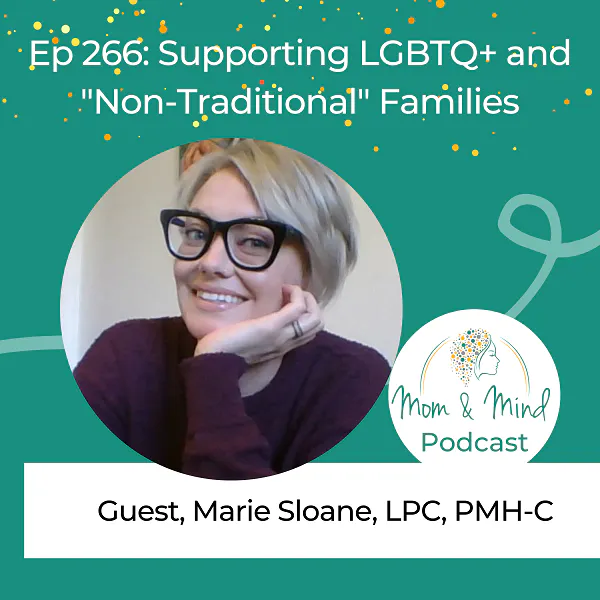
266: Supporting LGBTQ+ and Non-Traditional Families with Marie Sloane
The conversation around parenting in non-traditional families needs to be expanded and better understood in today’s world. More and more families are being created with dynamics that make them non-traditional in some way, and support on the path to parenthood for EVERYONE is crucial. Join us to explore this topic in today’s episode! Marie Sloane is a Licensed Professional Counselor and a Certified Perinatal Mental Health Specialist based in Arizona. She focuses her practice on helping new parents of all backgrounds, specifically LGBTQ+ families and those with non-traditional family dynamics, like co-parenting, single parents by choice, queer parents, polyamorous families, and others. As a single parent for four years and a survivor of postpartum depression, Marie brings compassion and lived experience to parents adjusting to a variety of new dynamics and transitions. In our conversation, Marie explains why support for any parenting journey is vital, especially for those on a non-traditional path. Show Highlights: How Marie came to the important work she does today after experiencing postpartum depression after the birth of her son How Marie didn’t know how to take care of herself, advocate for herself, or set healthy boundaries as a struggling new mom Why Marie felt alienated and isolated as she left her unhealthy relationship without good support in place How counseling helped her reframe her trauma and rebuild her self-esteem–and why she wanted to become a counselor How Marie has learned to navigate the world of co-parenting with her son’s father Why Marie found the niche (during the pandemic) of working with LGBTQ+ parents and non-traditional families Why many non-traditional parents are reaching out for a non-judgmental and affirming space Why Marie encourages her clients to find a combination of online support and local community support (Explore locally to find other family groups like yours!) How “deconstructing” happens for those who grew up with a very specific worldview around faith, family, morality, etc. What Marie sees that is lacking in perinatal mental health and support for LGBTQ+ families How we can best educate ourselves to support non-traditional families around us Resources: Connect with Marie: Website and Facebook Visit www.postpartum.net for resources and support! Visit www.postpartum.net/professionals/certificate-trainings/ for information on the grief course. Visit my website, www.wellmindperinatal.com, for more information, resources, and courses you can take today! Learn more about your ad choices. Visit podcastchoices.com/adchoices
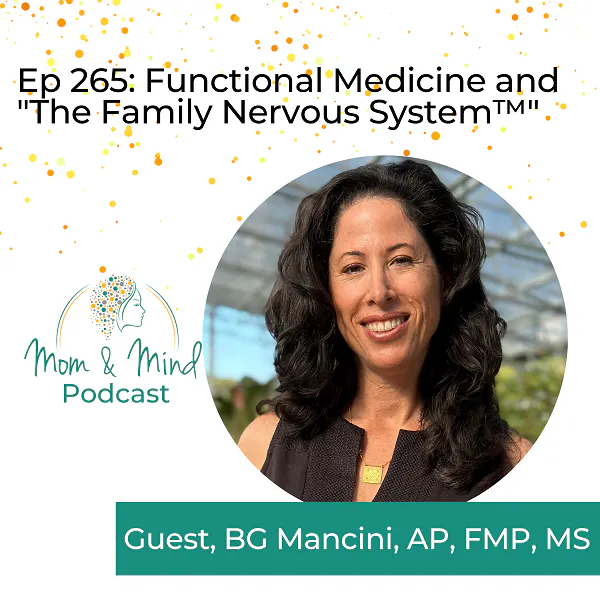
265: Functional Medicine and "The Family Nervous System™"
What happens to a person’s nervous system during times of stress, specifically in the transition to parenthood? The impacts of this stress on an individual’s nervous system are also felt in the entire family system. My guest has spent 25 years specializing in physical and neurological recovery in children with challenges and working with the entire family to recover “the family nervous system™”. I hope you are intrigued and want to know more! Join us now! BG Mancini is a licensed acupuncture physician and practices as a primary care provider via telemedicine. Her focus is on functional medicine and nervous system resilience in children and families to identify the root causes of physical, emotional, and neurological challenges. She uses different tools in her work with families, and she specifically discusses one tool called SSP in today’s conversation. Her desire is to bring joy into parenting and help people feel good in their brains and bodies, thus connecting more deeply to themselves and their children. Show Highlights: How BG came to the healing work she does today with families Why the gut microbiome is integral to mental, emotional, neurological, and hormonal health The importance of the vagus nerve in the body’s responses to stress and trauma–and in the gut-brain connection How the SSP (Safe and Sound Protocol) helps to scaffold the nervous system to identify threats and safety How the SSP can be customized for children and adults with all manner of issues and challenges Why getting an assessment about your digestion and the brain-gut connection is the best first step in stress management How the app makes SSP available to everyone (with supervision) How BG conducts her work through Zoom with people of all ages Resources: Connect with BG: Website (FREE 30-minute course for parents), Instagram, and Facebook Visit www.postpartum.net for resources and support! Visit www.postpartum.net/professionals/certificate-trainings/ for information on the grief course. Visit my website, www.wellmindperinatal.com, for more information, resources, and courses you can take today! Books Mentioned by BG: Why Zebras Don't Get Ulcers by Robert M. Sapolsky The Body Keeps the Score by Bessel Van Der Kolk Learn more about your ad choices. Visit podcastchoices.com/adchoices
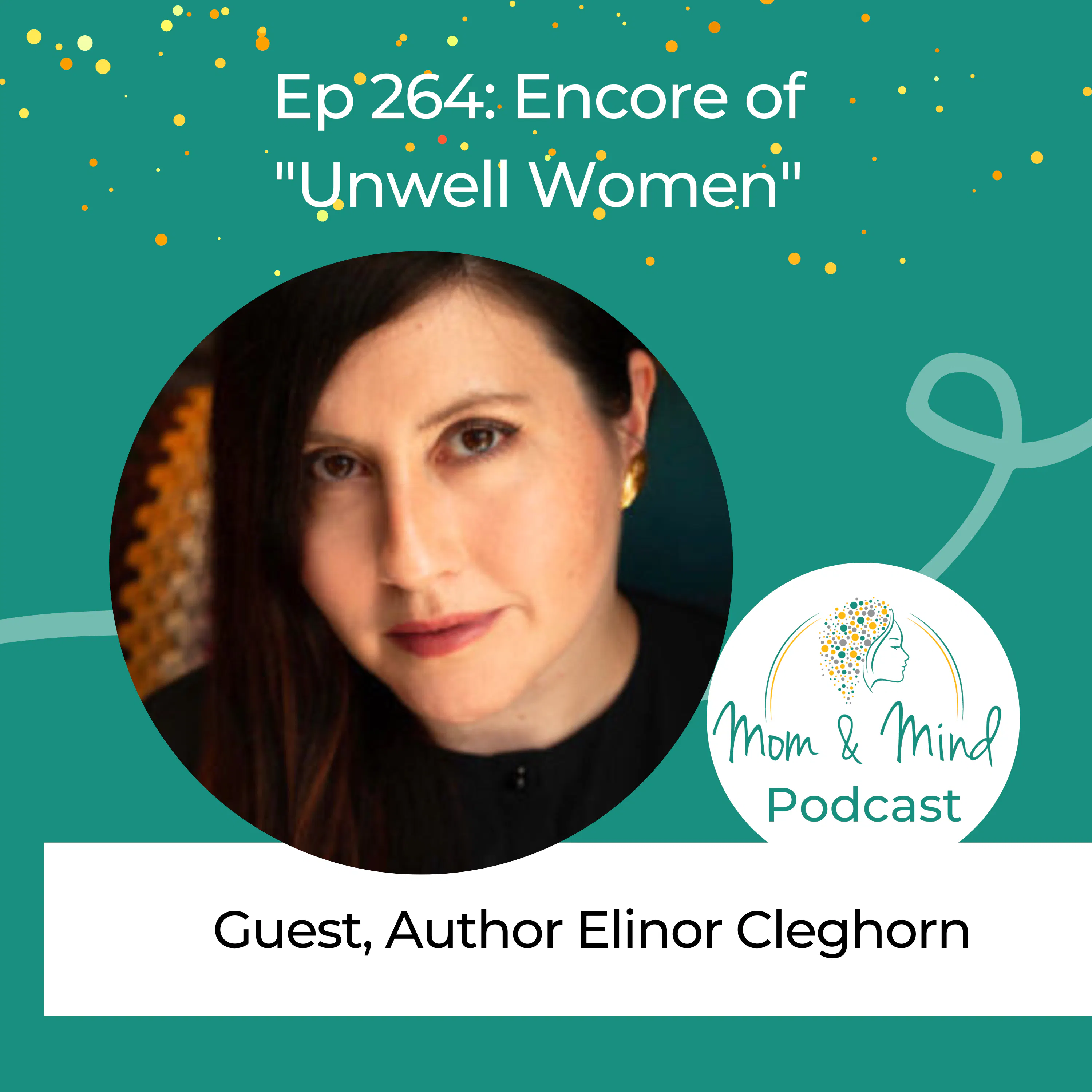
264: Encore of Unwell Women with Elinor Cleghorn
Today’s episode is a replay of one of my most popular episodes that I’m sure you will enjoy. Please tune in and share with your friends. We, as women, have absorbed much history into ourselves over time regarding our bodies and our health. We wonder why we feel unheard and dismissed, and the more we learn, the more enraged we should become about how modern Western medicine has treated women with medical and mental health conditions. Join today’s conversation for deep insight and a message of hope. Dr. Elinor Cleghorn is a feminist cultural historian, and her critical writing has been published in several academic journals. After receiving her Ph.D. in 2012, she spent three years as a post-doctoral researcher at the Ruskin School, University of Oxford, where she worked on an interdisciplinary medical humanities project. She is the author of Unwell Women: Misdiagnosis and Myth in a Man-Made World, a book that I recommend highly to all our listeners. Show Highlights: What brought Elinor to write the book after a lupus diagnosis that followed a very complicated pregnancy with her son How Elinor began her research with urgency into her lupus diagnosis and the history of medicine, expanding into other commonly misdiagnosed diseases in women Why Elinor began at the beginning, learning about ancient Greece and the formation of medical practice How women’s bodies were viewed largely as reproductive vessels to produce and mother male heirs Why men in ancient patriarchal societies began to assert social control over women and their bodies How the Western medical model has been affected by social thinking, myths, and fantasies about women’s roles How the word hysteria has been applied to a misunderstanding of women and was originally derived from a word for the uterus How medical leverage was used in horrible ways against black enslaved women in 19th century America, leading to gynecological violence and reproductive abuse Why Elinor wanted her book to expand to cover women’s experiences all over the world and not just be her personal story What Elinor has discovered about women’s mental health across history How dominant ideas have shaped societal views about the ideal motherhood and “how mothers SHOULD feel” Elinor’s hopes for readers of the book: “Remember that your body is your own, no matter how medical caregivers might make you feel.” Resources: Unwell Women: Misdiagnosis and Myth in a Man-Made World by Elinor Cleghorn Connect with Elinor: Twitter and Instagram Learn more about your ad choices. Visit podcastchoices.com/adchoices
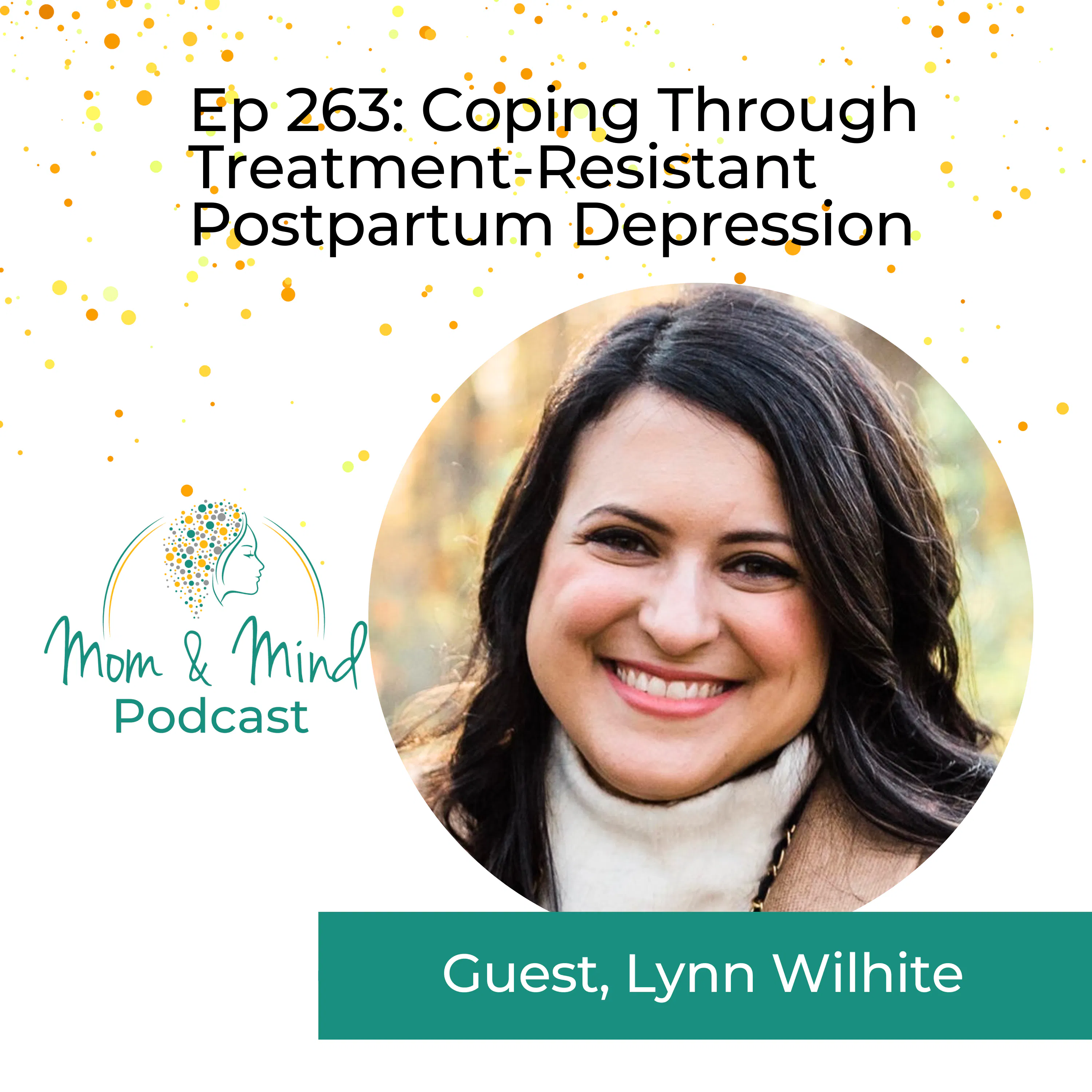
263: Coping Through Treatment-Resistant Postpartum Depression with Lynn Wilhite
The message of today’s conversation is that postpartum depression and anxiety don’t always have simple, easy fixes. Medications, therapy, and other supports don’t help some as quickly as others. In these cases, suffering mothers need to know that they are not alone and that others are going through the same challenges that come with lingering depression. Today’s guest shares her story to bring awareness to this issue. Join us to learn more. As a social worker and mom of a three-year-old son, Lynn Wilhite suffers from postpartum depression. She has been struggling since pregnancy, with medications being unable to help her effectively thus far. She has created the Instagram page, My Journey with PPD, as a way of trying to reach other moms and partners with similar experiences. Lynn hopes to bring awareness to the fact that PMADs don’t always have an easy fix and loved ones need to support a mother for the duration of her journey. Show Highlights: How Lynn’s PPD story began as she planned, with her psychiatrist, adjustments to her antidepressant and sleeping medications to prepare for her first pregnancy How not sleeping for an extended period of time brought on her depressive episode How her son’s birth went well, except for the NICU interventions brought on by her medications—and her first dose of “mom guilt” occurred Where Lynn is today–three years postpartum and over 40 medications later How her son had sensory processing disorders and needed several therapies, perpetuating her mom guilt How Lynn tried multiple medications, trying to find something that worked How suicidal ideations and problems in bonding with her son brought additional challenges How Lynn experiences grief, even today, over her guilt and all the things that haven’t gone well in her motherhood journey Why Lynn was hospitalized at two years postpartum after trying every medication available in different combinations How a move to a different state left her with a gap in therapy and support How a new medication is starting to lift the depression fog for Lynn and give her cautious optimism What Lynn’s current therapy work is doing to help What Lynn wants people to know and hear from her story Resources: Connect with Lynn: Instagram Visit www.postpartum.net for resources and support! Visit www.postpartum.net/professionals/certificate-trainings/ for information on the grief course. Visit my website, www.wellmindperinatal.com, for more information, resources, and courses you can take today! Learn more about your ad choices. Visit podcastchoices.com/adchoices
262: Impacts of High Functioning, Severe Postpartum Anxiety and Depression
My guest today shares her personal story of severe postpartum anxiety and depression while appearing in a high-functioning state to those around her. It is important for us to hear real-life accounts from those who look like “everything is fine.” Join us for a closer look from this unique perspective. Caitlin Shadek is a mom of three boys, ages 3, 6, and 8. She is a lawyer who has practiced as a commercial litigator for the past 14 years, but she recently left her job to attend Rutgers University School of Social Work to obtain her master’s degree in social work. Her desire is to work with women with perinatal mood and anxiety disorders and help bridge the gap in their care between the OB/GYN and the pediatrician. Caitlin felt that lapse in care firsthand when she suffered from severe postpartum depression and anxiety after her first two pregnancies and entered a hospital treatment program when her third son was a toddler. Her own experiences have been the impetus behind her career change and desire to help treat and advocate for better women’s mental health care. She is currently an intern at a practice specializing in infertility and prenatal/postnatal counseling. Show Highlights: How Caitlin’s story begins about nine years ago with her first pregnancy and the immediate feelings of dread and panic she felt at the moment of birth Why she was afraid to go home from the hospital with her new baby How wearing a catheter for six weeks added to the anxiety she felt about caring for her baby How dark thoughts plagued her–but she never shared them with anyone and pretended that everything was fine How she began therapy and medication when her son was about nine months old, but the dark thoughts and depression continued Why she wanted a second child–despite the serious issues in her life (including self-harming behaviors) How she felt guilt about continuing her medication while pregnant and experienced postpartum depression AGAIN How Caitlin went back to work and put on her “high-functioning postpartum depression face” How her struggles continued into her pregnancy with her third son, and things felt a little different after his birth How the pandemic threw their family into survival mode with everyone at home together Why Caitlin worked very hard to put on a good face until everything culminated in December 2021–and she knew she was NOT OK How Caitlin’s therapist sent her to the ER during an intense COVID resurgence because of her depression and suicidal thoughts Why Caitlin agreed to go to the psychiatric floor for treatment–and then tried to change her mind How she was released to go home and enrolled in an outpatient DBT program that changed her life How Caitlin decided what her next phase of work would be–to become a social worker and provide other mothers with the help she had needed Why maternal mental health falls between the OB/GYN and pediatrician and is often overlooked What Caitlin would say to someone in a similar situation Resources: Connect with Caitlin: Instagram Visit www.postpartum.net for resources and support! Visit www.postpartum.net/professionals/certificate-trainings/ for information on the grief course. Visit my website, www.wellmindperinatal.com, for more information, resources, and courses you can take today! Learn more about your ad choices. Visit podcastchoices.com/adchoices
261: Parenting Stress and Coping with Your Child's Medical Condition
Hearing that your child has a medical diagnosis throws a new kind of stress and strain into the parenting arena. Whether the diagnosis is transient or severe, increased parental anxiety is a common issue that presents many twists and turns. Today’s guest shares a pediatrician’s perspective on supporting parents’ mental health through this process. Join us to learn more! Dr. Kelly Fradin is a pediatrician and the author of Advanced Parenting: Helping Kids Through Diagnoses, Differences, and Mental Health Challenges. She is a mother of two and a child advocate based in New York City. Currently the Director of Pediatrics at the Atria Institute, she was inspired to become a doctor because of her experience of surviving childhood cancer. She is a graduate of Harvard College and Columbia College of Physicians and Surgeons, and she has dedicated her career to caring for children with complex medical conditions, using her skills in academic clinics, private practice, inpatient units, and schools. In addition to sharing information from her new book, Dr. Fradin shares realistic and powerful parenting advice and children’s health information on her Instagram account: @adviceigivemyfriends. Show Highlights: How Dr. Kelly’s childhood cancer journey opened her eyes to the mental health needs of parents Why we should normalize and talk about the challenges that come with new parenthood–and anticipate that trying times will come Why it is important to have an honest relationship with your doctor and your child’s doctor How feeding challenges come up for a new baby as a very common issue and diagnosis How a child’s diagnosis can lead to excessive worry, anxiety, and intrusive thoughts How a more serious diagnosis and a larger medical care team lead to a more complex responsibility and anxiety Why parents should NOT try to “do it all” themselves but should accept help and delegate responsibilities to others How a NICU experience can impact parents’ mental health (While in the NICU, don’t be afraid to ask for what you need!) What the reality is in coping with a diagnosis and the stigma that follows in the “what’s next?” phase Why it helps fight feelings of isolation to be open with your circle of family and friends Why it’s OK to give yourself permission to feel anger in addition to frustration and sadness How a couple may experience their child’s diagnosis in very different ways What Dr. Fradin’s book shares about information and coping strategies for parents Resources: Connect with Dr. Kelly Fradin: Website, Instagram, and Book Visit www.postpartum.net for resources! I’d love to hear from you! Visit www.postpartum.net/professionals/certificate-trainings/ for information on the grief course. Visit my website, www.wellmindperinatal.com, for more information, resources, and courses you can take today! Learn more about your ad choices. Visit podcastchoices.com/adchoices
260: Immigration and Culture Shock: Coping Through PPD and PPA with Eszter Kalman
Perinatal mental health is important for every new mom, but there are extra challenges for moms who are immigrants living in a country and culture that are unfamiliar. Such is the story of today’s guest. Join us to hear how she overcame many difficulties to turn her trauma into her renewed purpose to help others! Eszter Kalman is a mom of two who struggled with postpartum depression and anxiety. She experienced the loneliness of motherhood after moving to the US from her native Hungary. She shares with us what it was like to discover her new life as a new mother and immigrant and how she learned to cope with the cultural differences that met her at every turn. Eszter also faced the difficulty of transitioning into motherhood after losing her own mother in Hungary and living in the US with none of her family nearby. It was her postpartum journey that led her to make meaning of her own experience by going back to school to become a therapist and help other moms. She has worked as a Helpline volunteer for Postpartum Support International and the Postpartum Health Alliance of San Diego for many years. From her beginnings in Hungary to time spent living in Spain and Italy, Eszter has resided in San Diego for the past 12 years and proudly calls it her home. She loves the sunny weather, exploring parks and beaches, and going for long walks with her dog. Show Highlights: How Eszter experienced culture shock when she first moved to California as an immigrant from Hungary and quickly married her husband and found herself pregnant just a few months later How Eszter, as a new mom, had to adjust to her husband’s family, which was very different from what she was used to as far as honoring privacy How her pregnancy was easy with no mention of the possibility of postpartum depression and anxiety How postpartum depression and anxiety kicked in almost immediately when she and her newborn son went home, and she felt alone and unsupported How Eszter missed her mother in the first days of motherhood because she has passed away a couple of years earlier How Eszter realized that she wasn’t enjoying motherhood and was jealous of other moms who were How Eszter learned not to express her true feelings because she was invalidated by everyone around her How one nurse made an impact as the one person who understood Eszter and tried to help her How Eszter finally got connected to a therapist and found the help she needed, but was hesitant to reveal that she was getting therapy because of the cultural stigma Why it became healing for Eszter to be able to openly talk about her experience and share it with others without shame and guilt Why Eszter loves the work she does today in private practice to help other moms with perinatal mental health How Eszter is creating resources, like a course and podcast, especially for other Hungarians Why turning your trauma into your purpose makes meaning out of your experience Eszter’s hopeful message for new moms: “The sooner you learn to ask for help when you need it doesn’t mean that you are weak; it means that you want to remain strong.” Resources: Connect with Eszter Kalman and Golden Tears Therapy: Website, Instagram, YouTube, and TikTok Visit www.postpartum.net for resources! I’d love to hear from you! Visit www.postpartum.net/professionals/certificate-trainings/ for information on the grief course. Visit my website, www.wellmindperinatal.com, for more information, resources, and courses you can take today! Learn more about your ad choices. Visit podcastchoices.com/adchoices
259: Journey Through Infertility and Having a Gestational Carrier with Lizzie Smith
We know that family building can happen in many different ways. Today’s show highlights one of the most harshly judged routes to having a child. Let’s take an insightful look at the beautiful process of surrogacy, also known as gestational surrogacy. This family-building option can be something that brings out the best in us as humans! Join us for the conversation! Today’s personal story comes from Lizzie Smith, a 40-year-old school administrator who is the mother of 17-month-old James. She and her husband went through almost a decade of infertility before their miracle baby boy was born. Lizzie explains surrogacy to us, along with why people might need a gestational carrier. She also shares common misconceptions about surrogacy and why there is such judgment around this topic, which prompts many rude and hurtful comments from others. Show Highlights: A look at Lizzie’s journey: trying to get pregnant, having tests done, seeing a reproductive endocrinologist, and going through the long process of four failed IVF transfers Why they considered surrogacy after the fourth failed IVF attempt–and felt hopeful for the first time in years How the long process of surrogacy began in 2018 with an agency and Lizzie and her husband, the intended parents (IPs) Why it’s a long and difficult process to choose a surrogate, a person with whom you are choosing a unique relationship How going through the surrogacy process during COVID added another layer of difficulty How the surrogacy process began for Lizzie with multiple tests and medical clearance for their chosen surrogate–with many opportunities for roadblocks along the way How their embryo transfer took place in late 2020 after all the contracts and legal documents were signed How the pregnancy progressed with Lizzie and her surrogate texting and communicating almost daily How Lizzie and her husband were able to be present at the birth because COVID had calmed down How Lizzie’s relationship with her surrogate continues today How the surrogacy process brought unique challenges for Lizzie How years of frustrating infertility brought many negative feelings to Lizzie about her “broken body” How Lizzie dealt with the comments and opinions from others about her surrogacy choice–and felt pressure to “prove” herself as a person worthy of parenthood Common misconceptions about surrogacy and the reasons people choose this option Why support is important to intended parents going through surrogacy What Lizzie wants people to know and understand about surrogacy Resources: Visit www.postpartum.net for resources! I’d love to hear from you! Visit www.postpartum.net/professionals/certificate-trainings/ for information on the grief course. Visit my website, www.wellmindperinatal.com, for more information, resources, and courses you can take today! Learn more about your ad choices. Visit podcastchoices.com/adchoices

258: Postpartum Psychosis with Michele Davidson, PhD, CNM, PMHNP-BC, PMH-BC, SANE, RN
Postpartum psychosis is a topic we have highlighted on the podcast before, but the need for more information about this devastating condition always increases when it is mentioned in a tragic news story. There are so many questions and concerns when this condition turns up in the national spotlight because many people don’t understand what a mother might be going through as a result of postpartum psychosis. Regardless of the details around a specific situation, it is clear that factual information and education are needed more than ever around perinatal mental health. Join us for a closer look with today’s guest. **Trigger warning: I want to give a heads up that our discussion does include the topic of infanticide, so please determine for yourself if you are able to listen to this episode if this is a sensitive subject for you. Michele Davidson is a fellow board member with me at Postpartum Support International; she has multiple degrees and has been a certified nurse-midwife for almost 30 years, delivering more than 1000 babies in her career. After her personal battle with postpartum psychosis, she became a PMHNP with a specialization and certification in perinatal mental health to help other families who are suffering from this disorder. Dr. Davidson served as an associate professor of nursing at George Mason University and helped develop the certificate in forensic nursing. She was also the coordinator of the Ph.D. program, during which time her research focused on perinatal mood and anxiety disorders. She co-developed the Davidson Conceptual Model of Prodromal Postpartum Psychosis Symptomatology, which has been used in reproductive psychiatry practice. She is the author of over 35 textbooks and 50 peer-reviewed articles, including the Nurse’s Guide to Women’s Mental Health, which was awarded the American Journal of Nursing Book Award, and Old’s Maternal Newborn Nursing, which is published in 12 languages. On the current PSI Board of Directors, she serves as the Infanticide Coordinator and was the previous PPP Coordinator for 12 years. She resides with her husband in coastal Virginia and has four children and is the owner and founder of Chesapeake Bay Psychiatry, which specializes in perinatal mental health and serves families in VA, MD, and CT. Show Highlights: A basic explanation of postpartum psychosis (PPP), which is just one of the conditions under the umbrella of perinatal mood and anxiety disorders (along with depression, anxiety, and OCD) What the main risk factors are for PPP Why PPP is different from postpartum depression and has a very different presentation What the most common symptoms are of PPP, most of which are auditory or visual What it might look/sound like if a loved one is battling PPP What the statistics show about people with PPP relating to suicide and infanticide How and when psychosis might occur, both during pregnancy or the postpartum The connection between PPP symptoms and continual lack of sleep What it might feel like to experience the beginning stages of PPP How PPP symptoms can wax and wane–and how this characteristic plays out in the legal system and the stigma of PPP How PPP played out in Michele’s life as evidence that it CAN happen to anyone, even without the common risk factors Why early intervention, perinatal specialists, and other support resources are vitally important Why it is important to not stop taking medications for mood and anxiety disorders Highlights of helpful resources for perinatal mental health Postpartum Psychosis Awareness Day is May 5! Wear purple to show your support! Resources: Connect with Dr. Davidson: Website Visit www.postpartum.net for resources! I’d love to hear from you! Visit www.postpartum.net/professionals/certificate-trainings/ for information on the grief course. Visit my website, www.wellmindperinatal.com, for more information, resources, and courses you can take today! Learn more about your ad choices. Visit podcastchoices.com/adchoices
257: Native Hawaiian and Pasifika Perinatal Mental Health
Understanding culture is extremely important, especially in the field of perinatal mental health. The cultural context has everything to do with how someone experiences the world and manages their mental health. Join us in this episode to learn more! Kalena Kaopuuokalani Lanuza is a Kanaka Maoli (Native Hawaiian) and a doctorally prepared, fully-certified family and psychiatric mental health nurse practitioner and certified lactation counselor. She currently resides in the unceded territory of the Ventureño Chumash, which is commonly known as Ventura, California. We discuss the connection between colonialism and settler colonialism, cultural and intergenerational trauma, and mood and anxiety disorders in Native Hawaiians and Pasifika. Kalena also shares her current work and how the reconnection to culture and land can be important for Native Hawaiian and Pasifika people who were removed from their ancestral lands. Show Highlights How Kalena became interested in perinatal mental health How Kalena’s personal experience with perinatal anxiety with the birth of her son in 2014 How Kalena opened her practice last June with the intention of being available for other Native Hawaiians Why Kalena named her practice with the symbolic name “Mana” How Kalena found “the truest space” for her to fulfill her calling and work to help other mothers Why changes are needed in health care to establish and maintain cultural competence How Native Hawaiians are inextricably connected to their land How the ramifications of colonialism and settler colonialism influence mental health challenges Why Kalena has to be mindful of ALL the different facets that come into play when working with indigenous people How “lumping” together different populations/cultures has been detrimental–and the data needs to be segregated and recalculated Why we need more and more cultural competency and cultural humility in today’s world Kalena’s message to other providers about sitting with each person and giving them space How specific aspects of perinatal mental health can be best supported through a cultural lens How the identity of a Native Hawaiian solely wrapped up in “vacation mode” is hurtful and inauthentic Resources Connect with Kalena Lanuza: Website and Instagram Visit www.postpartum.net for resources! I’d love to hear from you! Visit www.postpartum.net/professionals/certificate-trainings/ for information on the grief course. Visit my website, www.wellmindperinatal.com, for more information, resources, and courses you can take today! Learn more about your ad choices. Visit podcastchoices.com/adchoices

256: Managing Overstimulation for Highly Sensitive Parents
Today’s important topic is near and dear to my heart. We are discussing what it’s like to be a highly sensitive parent, and if you’ve listened for very long, you know that I am a highly sensitive parent. We can’t shy away from this topic, because it affects many parents, and it puts a different spin on the challenges that are part of the journey to parenthood. Join me to learn more! Amy Lajiness, LCSW, PMH-C, is a psychotherapist and parenting coach with nearly a decade of experience in working in the field of mental health and wellness. She is passionate about teaching highly sensitive, empathic, and overwhelmed moms how to harness their strengths and manage challenges to thrive in parenthood. Amy provides therapy for women and parents in California and offers resources, courses, and video coaching for highly sensitive parents around the world. Amy helps us understand what it’s like to be a highly sensitive parent, along with the ways sensory overload and multiple competing expectations cause parents more stress. Amy shares practical ways to reduce sensory overload and overstimulation and ways to create realistic expectations for yourself as a parent. Being a highly sensitive parent comes with many gifts, and these gifts can be leveraged in positive ways to support yourself and your children. Show Highlights: How Amy realized in her 20s that she experiences the world in different ways–and that was magnified as she became a parent How Amy’s mission became to support parents who don’t fit into a set “box” of postpartum depression or anxiety but find parenting difficult because of their sensitivity The basics of what it means to be an HSP (highly sensitive person) parent: feeling guilt, having a hard time keeping up with parenthood demands, feeling rage/irritability/desire to escape, and losing touch with who they are outside of parenthood How the acronym DOES can be used for the scientific explanation of being an HSP: Depth of processing, Overstimulated easily, Empathy, and Sensitivity to subtle stimuli Why it is important to realize that the signs of an HSP in parenthood can be gifts in certain ways Why highly sensitive parents have to give themselves permission to take a break and take care of themselves–before they hit the WALL How highly sensitive parents deal with stress, overload, and multiple expectations Why highly sensitive parents need to look with introspection and understanding at what they CAN and CAN’T do Practical tips for HSP parents for reducing sensory overload (beyond therapy), like taking micro-breaks, finding balance, setting timers, establishing boundaries, etc. Why we need to dismantle the myth that “good parents” want to be with their kids 24/7 and never need breaks Why the main gifts of HSPs are attunement, empathy, and mindfulness, along with experiencing beautiful things with our children and connecting with them physically and emotionally Resources: Connect with Amy: Website, Instagram, Facebook Visit Amy’s website, find what you’re looking for, and apply coupon code “MOMANDMIND” for 20% off any purchase through all of 2023! Books mentioned in this episode: The Highly Sensitive Child, The Highly Sensitive Person, and The Highly Sensitive Parent (all by Dr. Elaine Aron) Visit www.postpartum.net for resources! I’d love to hear from you! Visit www.postpartum.net/professionals/certificate-trainings/ for information on the grief course. Visit my website, www.wellmindperinatal.com, for more information, resources, and courses you can take today! Learn more about your ad choices. Visit podcastchoices.com/adchoices
255: Sexual Abuse Survivors and Perinatal Mental Health with Deborah Flam
Today’s show is about the effects of sexual abuse on pregnant, birthing, and postpartum people. This topic may be difficult for some, even though we are not discussing specific details of sexual abuse events; please determine for yourself whether you are ready to listen to this episode or not. You can find all of our episodes available for you whenever you are ready at www.momandmind.com. If you are ready, join us to learn more in today’s episode! Deborah Flam is a reproductive therapist in New Jersey. She is also a volunteer support group facilitator and a NJ Support Coordinator for Postpartum Support International. She is on the board of PSI-NJ as the Community Outreach and Engagement Board Member. Her training is in perinatal mental health, infertility, birth trauma, perinatal/infant loss, and compassionate/bereavement care. Deborah also has specialized training on the impact of sexual abuse on childbearing individuals. She has volunteered for the Ocean County Sexual Response Team as a Confidential Sexual Assault Advocate and provided training for nursing and social work students on issues related to sexual abuse. In sharing her personal story, Deborah explains how her trauma history impacted her pregnancy and postpartum experience. She also shares how clinicians can help prepare sexual abuse survivors for their baby’s birth and how medical professionals can provide trauma-informed care. Show Highlights: Deborah’s story of anxiety that began with her positive pregnancy test and escalated to depression–even though she was already seeing a therapist How she was in complete denial about her pregnancy, feeling like the baby was a parasite in her body How her labor began at 35 weeks in an unexpected way–and she didn’t feel anything and was eventually sent home How her 37-week appointment found her in labor again—and her son was born a few hours later How Deborah’s postpartum anxiety, depression, OCD, avoidance, and intrusive thoughts plagued her after giving birth How she learned that the pregnancy and postpartum experience can feel terrible What the statistics say about the likelihood of women experiencing physical and/or sexual violence in their lifetime Why many sexual abuse survivors feel shame, fear, and fragility related to pregnancy and their medical care How the gender of the baby can trigger fears and strong emotions among survivors, along with the common medical practices related to pregnancy and birth How some survivors are triggered by fear and shame around bodily functions and bodily fluids during labor and delivery How even the sights, sounds, and smells of the hospital can be triggering for survivors Why nursing personnel should be attentive to the passive patient who seems calm and perfect, the patient who is completely dissociated from the experience, and the “difficult” patient Deborah’s tips for how medical providers and therapists can show up better for sexual abuse survivors in very simple “workarounds” How Deborah’s PMADs experience has led to beautiful healing Resources Connect with Deborah Website Resources mentioned in this episode and recommended by Deborah: RAINN Black Mamas Matter Alliance Time’s Up FORGE Anti-Violence Project The Network La Red Survivor Moms' Companion When Survivors Give Birth book by Penny Simkin It's OK That You're Not OK book by Megan Devine Visit www.postpartum.net for resources! I’d love to hear from you! Visit www.postpartum.net/professionals/certificate-trainings/ for information on the grief course. Visit my website, www.wellmindperinatal.com, for more information, resources, and courses you can take today! Learn more about your ad choices. Visit podcastchoices.com/adchoices
254: Mental Health Challenges through Miscarriages, Pregnancy, and Postpartum with Megan Monds, LCSW
Many people experience some kind of mental health condition through pregnancy and postpartum. The reproductive journey brings many challenges, and today’s guest gives us a glimpse into her story of recurrent loss, pregnancy, postpartum, and how she came to self-advocacy and empowerment through her challenges. Join us to hear Megan’s story! Megan Monds fills many roles in life, none more important to her than mother to her two small children, ages 5 and 3. She is a highly-sensitive person who works as a mental health therapist for children, adults, and families. Her passion is working with children and adults with complex trauma histories, and she has her own lived experience with anxiety, depression, and trauma. By sharing her story, she hopes to empower and validate others who are facing a challenging journey to parenthood. Show Highlights: How Megan’s story includes three miscarriages before giving birth to her first child How Megan coped with her first miscarriage by using avoidance–and carried on with her very busy life How two more miscarriages occurred during the next two years, and they didn’t seem as emotionally jarring as the first one even though childhood trauma reappeared How her first full-term pregnancy was hard, making it difficult to connect to her baby How her induction and all the medical interventions did not follow her birth plan at all–again, feeling like it was all happening TO her and beyond her control How Megan saw a therapist and did the work on herself after her daughter was born How she felt more whole, healthy, and understanding during her next pregnancy with her son–much different than her pregnancy with her daughter How her son’s birth played out in a much more peaceful way than the raw and intense birth of her daughter How Megan’s sensitivity and anxiety contributed to her trauma response and impacted every aspect of her emotional experience How Megan realized with her second birth that she could have more control over her environment and her mental state What Megan wants others to know about mental health and getting support Why it is empowering to realize that your experience is more important than what any expert or provider might say, especially when “there isn’t research to support your experience” Why it’s OK if your needs and preferences don’t make sense to others Why it’s important to come at your challenges from a place of curiosity instead of rigid expectations Resources: Connect with Megan: Instagram Visit www.postpartum.net for resources! I’d love to hear from you! Visit www.postpartum.net/professionals/certificate-trainings/ for information on the grief course. Visit my website, www.wellmindperinatal.com, for more information, resources, and courses you can take today! Learn more about your ad choices. Visit podcastchoices.com/adchoices
253: Healing Through Trauma from Birth and the Pandemic
Those trained in perinatal mental health can still struggle with perinatal mental health conditions. Having professional knowledge of the issues doesn’t make someone immune from any mental health problems. I’m grateful that today’s guest is sharing her story to show that those in the helping professions can experience the same struggles that any other person does. Join us to hear Kelsie’s story! Kelsie Hammons is a Licensed Clinical Social Worker and Certified Perinatal Mental Health Therapist in Arkansas. She became a mother in early 2020, which meant that her entire postpartum experience took place during the height of the COVID-19 pandemic. Although she was trained and knew about the supportive tools to mitigate postpartum stressors, she struggled with the additional unpredictable layers of stress in healing from her traumatic birth experience while the pandemic was raging. She attempted to find her own rhythm during the isolation as she felt that she was mothering against the current. Kelsie’s experience lit a fire within her to work to support women during these transition times and help them feel more connected and regulated. Show Highlights Kelsie’s professional career launched about the same time as her pregnancy with her baby, born in February 2020 Her birth didn’t go as planned and required an emergency C-section–and then her postpartum coincided with the pandemic shutdown A struggle to find her new identity as a mother while feeling isolated and unsupported What supports Kelsie had in place before her birth Gaslighting herself and her feelings of anxiety until she reached out for help when her daughter was several months old Kelsie coped with what she knows now was a trauma response Healing has to come at its own pace–and how Kelsie learned this through therapy work Why it was monumental for Kelsie to process her birth experience How Kelsie is able to offer regulation tools to women with understanding because she knows what worked best for her Problems occur when external pressures interrupt internal values for new moms Kelsie’s work has transitioned to Heart Led Mental Health Resources Connect with Kelsie Website (coming soon!) and Instagram Thrive Counseling and Wellness Visit www.postpartum.net for resources. I’d love to hear from you! Click HERE for information on the grief course. Visit my website for more information, resources, and courses you can take today! Visit my website, www.wellmindperinatal.com, for more information, resources, and courses you can take today! Learn more about your ad choices. Visit podcastchoices.com/adchoices

252: Preparation and Prevention of Perinatal Mental Health Conditions with Kayce Hodos, LCMHC, PMH-C
Today’s focus is on thinking ahead in your perinatal mental health journey. Most of us learn about our problems as they are happening, and we have to learn how to cope along the way. When someone who has “been there” is open and honest about their experience, we can plan ahead and be better prepared. Join me to hear the journey story of today’s guest. Kayce Hodos has spent the better part of her 20+ year career in mental health focused on loss and life transitions. After having her son in 2012, her coping skills were put to the test as she struggled through the darkness of postpartum depression and anxiety. With the help of her therapist and supportive husband, Kayce was able to climb out of her pit of despair. When she was healthy again, she had a newfound passion for supporting women through their adjustment into motherhood. Today, she works to empower new mothers with real life strategies for thriving while caring for a tiny human. Show Highlights: An overview of Kayce’s journey into motherhood from 2012 until now How she struggled with breastfeeding, sleep deprivation, and the overall transition into motherhood–even though she had a great support system How crawling out of the pit of depression inspired Kayce to help other mothers Why prevention of mental health problems is missing in preparing new parents for the birth of their child How we can help people learn about perinatal mental health–and prepare them for the possible difficulties How preparation and prevention of mental health problems can happen during three phases: pregnancy, problem-solving, and parenting Why it’s important to build in practices and local resources to support your mental health Why there is a BIG need for providers to be honest with women about perinatal mood and anxiety disorders so they aren’t so scary to encounter Resources Connect with Kayce Website and Instagram Visit www.postpartum.net for resources! I’d love to hear from you! Visit www.postpartum.net/professionals/certificate-trainings/ for information on the grief course. Visit my website, www.wellmindperinatal.com, for more information, resources, and courses you can take today! Learn more about your ad choices. Visit podcastchoices.com/adchoices
251: No More Shame: Therapists Need Help, Too
Talking about your own mental health can be even more difficult if you work in the mental health field. There is shame and stigma attached to a therapist who admits that they need help because the assumption is that therapists don’t need help with mental health. My guest shares her story of postpartum struggles and the effect on her relationships and life as she experienced stress, anxiety, and isolation when her second child was born during the pandemic. Join us to hear her perspective. Laura Galindo is a Licensed Marriage and Family Therapist in California, New York, and Connecticut, where she currently resides. She has been in the field for over a decade, providing therapy for individuals who have chronic mental illness, and she works with those who are actively serving in the US military. She runs her private practice in Connecticut, where she is certified in DBT (Dialectical Behavior Therapy), EMDR, and perinatal mental health. Show Highlights: How Laura’s second daughter arrived just days before the world entered the COVID shutdown How Laura’s maternity leave ended up not going according to the plan, along with feeding problems with her newborn How the pandemic shutdown prevented Laura from receiving the help she needed and left her feeling very isolated How Laura felt “mom guilt” very deeply and still feels resentment about the pandemic Why it was hard for Laura, the therapist, to admit that something was wrong with her How seeing a therapist for EMDR and using “movement as medicine” began to help Laura in many ways Why Laura was torn and conflicted about returning to work and felt guilty about cutting her maternity leave short How Laura finally realized that she had to “fill her own cup” before trying to be a good wife, mom, and therapist How Laura faced the questions from coworkers about shortening her maternity leave– and handled the additional anxiety of learning the new telehealth system Why Laura questioned her therapy skills and knowledge because of her unrealistic expectations for herself Why Laura became certified in perinatal mental health as a result of her experiences How Laura first realized that it was time for her to seek help What Laura would say to struggling parents Resources: Connect with Laura: Website and Instagram https://www.thrivecounselingandwellnessgroup.com Visit www.postpartum.net for resources! I’d love to hear from you! Visit www.postpartum.net/professionals/certificate-trainings/ for information on the grief course. Visit my website, www.wellmindperinatal.com, for more information, resources, and courses you can take today! Learn more about your ad choices. Visit podcastchoices.com/adchoices
250: Coping with Holiday Burnout
Welcome to another episode and a New Year! A new year brings times of reflection, especially with all that we’ve been through over these last few years with the pandemic, and some people are still struggling with getting back to “normal.” Wherever you are, it’s OK to be integrating into this new normal in whatever ways you can, and every decision is part of a more complex dynamic. Today’s focus is on the burnout that comes with holiday celebrations and the reintegrating we are doing around social gatherings and traditions. Let’s talk about these issues that might affect you wherever you are in your reproductive journey. Join me! Show Highlights: Why decisions are especially tough when they might affect the health and safety of your family Why holiday burnout is a very specific type of burnout with multiple layers Why the overwhelm that was suppressed during the holidays may be showing up now How feeling like a failure is a common emotion after the holidays–both from the way OUR holidays played out AND from what we see on social media from others Why perfection needs to come out of the conversation and expectations Why I hope normalizing these post-holiday feelings can bring a new perspective Why taking time for rest and recovery can take the pressure off–Give yourself permission to rest! Why awareness and naming things are big parts of taking care of ourselves How to check in with yourself by asking, “How am I doing? What do I need TODAY?” Why making changes to shift things for the better will usually cause stress and discomfort at first—but attending to yourself in this way is essential Resources: Visit www.postpartum.net for resources! I’d love to hear from you! Visit www.postpartum.net/professionals/certificate-trainings/ for information on the grief course. Visit my website, www.wellmindperinatal.com, for more information, resources, and courses you can take today! Learn more about your ad choices. Visit podcastchoices.com/adchoices
249: Supporting Moms and Babies Through Occupational Therapy
Today’s focus is on pediatric occupational therapy and how it helps many families with a variety of feeding, swallowing, and developmental issues. My guest shares her exciting work and her experience in helping struggling parents with physical difficulties AND mental health. Join us to learn more! Aviril (Apple) Sepulveda, OTD, MS, OTR/L, BSP, SCFES, IBCLC is a board-certified pediatric occupational therapist with over 20 years of experience. She spent most of her career in pediatrics at a children’s hospital in metropolitan Los Angeles where she specialized in infant feeding and swallowing and infant development. She also holds the AOTA Specialty Certification in Feeding, Eating, and Swallowing (SCFES). In addition to her doctorate in Occupational Therapy, she is earning her Ph.D. in Translational Health Sciences at George Washington University. Her clinical areas of expertise include occupational therapy interventions on infant development and feeding, pediatric feeding and swallowing in medically-complex children, sensory processing, lactation, and maternal and infant mental health. Dr. Sepulveda received a fellowship from the Robert Wood Johnson Foundation Clinical Scholars Program from 2016-2019, including grant funding for community-based participatory research to address mental health disparities among Filipino immigrants through parenting programs. She co-founded Nurture Collective to address the gaps in early intervention practice. Her vision for Nurture Collective is to integrate parental mental health in early intervention for children at risk for developmental delays. Show Highlights: How Apple’s journey brought her to the work she does today How she realized the systemic issue (and the broken system) of overlooking the care of moms in treating their babies An overview of occupational therapy and the work of an infant feeding specialist Why feeding issues add a lot of additional stress and shame for parents What Apple notices about the screening process for postpartum depression and why support partners are important for primary caregivers How Apple’s work tries to connect parents with available services that can alleviate their stress in many areas How infant mental health is shaped by their environment and experiences Why special needs kids need their moms to be “on” all the time–which is difficult How Nurture Collective works to support parents Dr. Apple’s basic tips for struggling parents Resources: Connect with Dr. Apple Sepulveda: www.mynurturecollective.com Visit www.postpartum.net for resources! Visit www.postpartum.net/professionals/certificate-trainings/ for information on the grief course. Visit my website, www.wellmindperinatal.com, for more information, resources, and courses you can take today! Learn more about your ad choices. Visit podcastchoices.com/adchoices
248: Challenges of Postpartum Depression and Anxiety in a Rural Community
Having a perinatal mood disorder is challenging on its own, but it becomes even more difficult in rural communities where the right resources are not readily accessible. In addition, rural areas are made up of small communities where everyone knows everyone else’s business, which further stigmatizes anyone seeking mental health resources. My guest shares her experiences and explains how she found the help she needed. Join us! Hannah Helms is a spouse, trauma therapist, and mother of three. She currently lives with her family in the Pacific Northwest. She experienced perinatal and postpartum anxiety following the birth of her third child in 2018. At the time, she lived and worked in her northern California hometown, and she faced the unique challenges of trying to seek treatment in a rural community. Show Highlights: How Hannah’s story begins with life in her rural hometown and her first pregnancy in 2014–followed quickly by a second pregnancy and children only 15 months apart How Hannah looks back with more understanding about the postpartum rage she felt in those days—but she didn’t know what to call it How Hannah attempted to get counseling, but the therapist had no clue about postpartum issues How Hannah dealt with her third pregnancy in the middle of her MSW program while working full time and being a mom to two toddlers Why social work in a rural community is more challenging than in other places How panic attacks began to occur for Hannah as her anxiety became more severe How Hannah began weekly visits with her primary care provider after her third child was born How Hannah found the help she needed through a telehealth therapist How her family culture and rural culture contributed to the bias she felt about mental health help How “spiritual bypassing” plays into mental health issues, especially in more rural areas How Hannah has learned a lot about PMADs AFTER her third pregnancy–because there is more awareness, more screenings available, and she knows better now How we can do better in offering peer support and eliminating barriers What Hannah thinks we should do in rural communities to increase awareness of PMADs What people in rural communities can do when there aren’t qualified mental health professionals in their towns How Hannah found help, healing, and self-compassion–and how we can offer more help to others Resources: Connect with Hannah on Instagram Visit www.postpartum.net for resources! Visit www.postpartum.net/professionals/certificate-trainings/ for information on the grief course. Visit my website, www.wellmindperinatal.com, for more information, resources, and courses you can take today! Learn more about your ad choices. Visit podcastchoices.com/adchoices
247: High-Risk Pregnancy, NICU, and their Impact on Living with Bipolar 1
Pregnancy and the postpartum bring multiple challenges. The difficulties can escalate to a much higher level when a mental illness is involved. The good news is that a new mom can survive and thrive with the right support and medication, but the journey to reach that point is not easy. Join us to learn more about one young mother’s journey to parenthood with Bipolar 1. Emily Collins is a young millennial woman living with Bipolar 1. She shares what it’s like to navigate life as a mother and professional while dealing with mental illness. Emily gives us a glimpse into her experience with a high-risk pregnancy, an emergency C-section, and a premature infant who had to spend eight weeks in the NICU. In sharing her story, she helps us understand how she was able to cope and find healing over time despite the many challenges. She is married to her college sweetheart, and they have three children, ages 9, 6, and 4. A pre-kindergarten teacher by trade, Emily’s Instagram account, Lattes and Lithium, pulls back the curtain on what her life is like with bipolar disorder. Show Highlights: What it means to have a bipolar disorder diagnosis (also called manic depression) How Emily first knew something was wrong and felt depression and went through anorexia at age 15 How bipolar disorder and hypomania began to take over Emily’s life during her college years How medication started calming Emily and helped her feel grounded and normal again How Emily’s care team of her husband, therapist, and psychiatrist help her stay grounded today Why it was a difficult decision to stay on her medication during her first pregnancy How her first two pregnancies and deliveries (2013 and 2016) went well with no problems or harmful side effects of Emily’s medication How things were very different with her third pregnancy in 2018 with two frightening bleeding episodes prior to 18 weeks After an ultrasound showed a subchorionic hematoma as the cause of bleeding, her pregnancy took a turn for the worst around 21 weeks with another heavy bleeding incident, total bed rest, and a minimal chance for her baby’s survival How unusual pain and more bleeding at 28 weeks sent Emily to the hospital, where the diagnosis was a partial placental abruption With more severe bleeding, an emergency C-section took place to deliver her son–who went directly to the NICU as a four-pounder in relatively good health How Emily’s hypomania manifested itself with an obsession about being at the NICU to be with her son Why Emily became involved with volunteering at the hospital, wrote articles, and secured an internship to advocate for premature babies—all as a result of her hypomania How Emily’s hypomania lasted for about a year and was followed by severe depression and psychosis for several months How her bipolar took her through alternating episodes of hypomania and severe depression for the next few years with several different medications and a stay at a treatment facility Why mothers of babies in the NICU usually experience forms of PTSD How Emily experienced paranoia as another symptom of bipolar disorder during her postpartum Why there is a sort of grieving process for the time when Emily struggled after her son’s birth What Emily wants people to understand about bipolar disorder and pregnancy/postpartum Resources: Connect with Emily: Lattes and Lithium Visit www.postpartum.net for resources! Visit www.postpartum.net/professionals/certificate-trainings/ for information on the grief course. Visit my website, www.wellmindperinatal.com, for more information, resources, and courses you can take today! Learn more about your ad choices. Visit podcastchoices.com/adchoices
246: More Than: PPD Healing and Supporting Suffering Mothers
My guest today shares her story of pregnancy and postpartum where she experienced “the sampler platter” of issues. Her experiences were varied, and they amounted to more than just the classic PPD symptoms. Because she didn’t understand what was happening, she felt like she was a bad parent in every way even though she appeared to be doing “just fine.” Maybe you–or someone you know–can relate to Alison’s story. Join us to learn more in today’s episode! Alison Staiger is a licensed clinical social worker certified in perinatal mental health. She owns Highwire Therapy, a solo private practice serving clients in Illinois and Louisiana, specializing in full-spectrum reproductive mental health through a feminist lens. Her coaching practice, The Matriarchy, helps feminist mothers use rebellious anger and fierce care to lead their families and small businesses with pleasure, purpose, and personality. Alison shares her personal story, along with her perspective on American motherhood and why we need a new culture of care. Show Highlights: Highlights of Alison’s story of unexpected motherhood around age 30 How Alison worked through an eating disorder and several challenges that left her feeling disoriented during pregnancy How medical interventions furthered Alison’s belief that she wasn’t prepared for motherhood and led to an emergency C-section to give birth to her daughter How Alison had to prove that she was OK and handling everything while she was in panic mode on the inside and felt totally dysregulated How it took slow work with a therapist for Alison to believe that she was allowed to have self-compassion Why Alison had the realization with the 2016 election that she wanted to have more autonomy Why Alison felt like she wasn’t showing up as a mom and in her life like she wanted How things began to shift and change for Alison as she gained a new perspective on her feelings How Alison learned that rebellion and anger against society’s norms can be part of being a good mother How she learned that it was OK to be “anti-perfectionist” and question every voice she hears How Alison’s healing became the context for the work she does today to help other moms Why much of parenting is wrapped up in trauma responses–and we don’t even realize it How our societal structure systems of parenthood and perfectionism make it difficult for moms to ask for care and receive care How Alison stresses to her clients the need to drop into their sense of identity as an internal reconnection How Alison offers support to families through her therapy private practice and coaching practice What Alison wants parents to know about becoming a new parent Resources: Connect with Alison: Therapy Website, Coaching Website, and Instagram Visit www.postpartum.net for resources! Visit www.postpartum.net/professionals/certificate-trainings/ for information on the grief course. Visit my website, www.wellmindperinatal.com, for more information, resources, and courses you can take today! Learn more about your ad choices. Visit podcastchoices.com/adchoices
245: Postpartum in the Pandemic with Courtney Ginder
Our story comes from a postpartum depression survivor during the COVID-19 pandemic. It’s normal for parents to have worry and anxiety when sickness is raging all around them, and these feelings are exacerbated by any sort of mental health condition. My guest shares her experience–and success story–of finding the help she needed in the middle of the pandemic. Many people will resonate with her story, so tell a friend—and join us now to learn more! Courtney Ginder is a mom, wife, and a postpartum depression survivor. She became a mom in February 2020, and three weeks later is when the world shut down due to COVID. Courtney and her husband were first-time parents who were cut off from their support network as they rode out colic and silent reflux with their newborn daughter. Courtney feels lucky that she was able to get help for postpartum depression during the pandemic, and she has become a passionate advocate for perinatal mental health, making sure that no parent feels alone. She is a part-time social media and graphics specialist for Postpartum Support International, the Social Media Chair for the Indiana Chapter of PSI, and a Climb Leader for Climb out of the Darkness in Indianapolis. She writes a blog about postpartum depression recovery, parenting, and mood disorders at Beyond Postpartum Depression. Show Highlights: How Courtney and her husband enjoyed about three weeks of normal parenthood before the pandemic shutdown of March 2020 How colic and the “witching hours” set in for her baby Why Courtney tried to justify her early postpartum depression symptoms How Courtney felt like she was drowning with her daughter’s constant feeding schedule and demands How Courtney began thinking intrusive and irrational thoughts and blamed herself for her daughter’s difficulties with silent reflux, thrush, and colic How Courtney and her husband dealt with the baby’s constant crying How her husband insisted that she reach out for help Why Courtney was devastated about not being able to have her six-week postpartum visit in person How Courtney admitted to her doctor that she had postpartum depression and needed help How things improved for Courtney’s mental health and her daughter’s physical issues The reality that someone can be suffering from postpartum depression while appearing perfectly normal to other people How Courtney became involved as an advocate who wanted to do more for struggling mothers How postpartum depression is misrepresented and misnamed in the media How Courtney’s advocacy work gives great meaning to the suffering she went through as a new mom Resources: Connect with Courtney and her resources: www.beyondpostpartumdepression.com, Instagram, Facebook, PSI Indiana Instagram, and Climb Out of the Darkness Instagram Visit www.postpartum.net for resources! Visit www.postpartum.net/professionals/certificate-trainings/ for information on the grief course. Visit my website, www.wellmindperinatal.com, for more information, resources, and courses you can take today! Learn more about your ad choices. Visit podcastchoices.com/adchoices
244: Postpartum Depression and Anxiety's Impact and Healing Journey
Today’s story is from a mom who experienced postpartum depression, anxiety, OCD, and rage. Many of us have been through one or more of these symptoms, and it’s especially hard for mental health providers to acknowledge these conditions. Postpartum depression and anxiety can take you by surprise, even if you know what to look for in the symptoms. Join us to hear more from Rosalinda in today’s episode. Rosalinda Heider is a Licensed Clinical Social Worker who received her Bachelor’s in Social Work from West Texas A&M University in 2006 and Master’s degree from the Baylor University School of Social Work in 2008. She has spent the last 12 years working as a mental health and suicide prevention social worker for the Department of Veteran Affairs. In her motherhood experience, she became aware of the lack of support for new mothers who are struggling with mental health. After starting a postpartum support group for mothers in her community in 2017, she also began a virtual postpartum support group within the VA for female veterans. Rosalinda joins us to share her story and her message to those with postpartum struggles, that they can come out stronger than ever with the right type of support and treatment. Show Highlights: An overview of Rosalinda’s story as a social worker and her first pregnancy with her daughter How the pregnancy and birth went well but there were a few feeding issues with her newborn How going dairy-free and chiropractic care helped the feeding/colic situation How Rosalinda began being tearful and emotional and thought it was normal, never realizing she was experiencing postpartum depression and anxiety Why Rosalinda saw her primary care doctor for a postpartum depression screening–and cried all the way through it Why a postpartum depression diagnosis brought a sense of relief to Rosalinda and a realization of how common her feelings are How she felt alone in her diagnosis until she found support in talking to other moms Why Rosalinda didn’t enjoy motherhood until her daughter was about 5-6 months old How therapy and medications helped with the depression, anxiety, and intrusive thoughts How a simple suggestion from her therapist helped Rosalinda get better sleep and combat anxiety Why Rosalinda started a support group for moms in 2017 Why it’s therapeutic just to share your story and have it validated by others–knowing you are not alone in your experience How it took a couple of years for Rosalinda to feel normal again because she felt angry and frustrated so much of the time–and struggled to hold her marriage together How Rosalinda realized and felt shame over all the times she blamed her husband for their problems Why social media doesn’t give a true picture of what people are experiencing—and can make some moms feel even more isolated A glimpse into Rosalinda’s support group for moms Resources: Connect with Rosalinda: Postpartum Support of the Texas Panhandle Visit www.postpartum.net for resources! Visit www.postpartum.net/professionals/certificate-trainings/ for information on the grief course. Visit my website, www.wellmindperinatal.com, for more information, resources, and courses you can take today! Learn more about your ad choices. Visit podcastchoices.com/adchoices
243: Postpartum Anxiety and Coping with Congenital Birth Defects Diagnosis
Even though postpartum anxiety is common and carries less stigma than it once did, things escalate to a whole new level when a birth defect diagnosis enters the mix. The stress and anxiety of a mother, father, and caregivers are compounded when new parenthood involves caring for a baby with special needs, and these parents feel more alone than ever. My guest today shares her story to let other parents know they are not alone in their struggles. There is hope, there is help, and there are resources! Join us to learn more! Robin Giesen is a certified perinatal mental health therapist who experienced postpartum anxiety herself. That anxiety was further compounded by the news that her son had a rare birth defect. Robin explains what craniosynostosis is, and how her son’s condition impacted her anxiety. After that totally unexpected diagnosis with her firstborn, her second pregnancy brought the same diagnosis to her second son while in utero. She explains how she coped and why she is invested in helping other parents who are going through similar circumstances. Robin is a Licensed Marriage and Family Therapist in Long Beach, CA. She is certified in perinatal mental health, leads a postpartum anxiety group at her practice, and is a Bringing Baby Home educator. Robin opens our eyes to the rarely-talked-about situation of how a birth defect and caring for a special needs child impact a mother’s mental health. Show Highlights: How Robin’s well-controlled autoimmune disorder brought her worry and anxiety as she experienced her first pregnancy almost 11 years ago How an emergency C-section and a NICU stay complicated what she thought would be a normal labor and delivery How Robin began thinking that some harm would come to her baby if he wasn’t right beside her Why Robin started taking medication to “take the edge off” of her anxiety and intrusive thoughts How Robin noticed something strange about the shape of her son’s head, saw a pediatric eye doctor, and received the diagnosis of craniosynostosis Robin explains craniosynostosis and its impacts How Robin went through the unimaginable scenario of neurosurgery for her newborn son Why Robin felt guilt over her son’s diagnosis and anxiety in preparing for his surgery Why Robin is adamant with her clients today about coregulation and how it begins How Robin’s second pregnancy (through IVF) revealed that her unborn son also had craniosynostosis How her second son was delivered via planned C-section with a totally different outcome—and no anxiety for Robin even though she faced another surgery for her baby Why Robin realizes that she should have done more than talk therapy after her first son’s birth How Robin helps support other moms facing similar situations with their children Resources: Find resources for craniosynostosis and other cranial issues: Cranio Care Bears and Faces Connect with Robin: Website, Facebook, and Instagram Visit www.postpartum.net for resources! Visit www.postpartum.net/professionals/certificate-trainings/ for information on the grief course. Visit my website, www.wellmindperinatal.com, for more information, resources, and courses you can take today! Learn more about your ad choices. Visit podcastchoices.com/adchoices
242: The Value of Fathers and the Black Voice in Parenthood
I’m excited to introduce you to my guest, who is doing amazing work with fathers. His work is very important and very needed in today’s world, and he’s working to combat the negative stereotypes around uninvolved fathers. I met him recently at the Postpartum Support International conference, where he won an award for his work, and I knew we needed to hear more from him on the show. Join us! Reginald (Reg) Day is a Certified Lactation Consultant, creator of the Get At Me Dad podcast, fatherhood expert, and Southeast Michigan IBCLCs of Color. He is the co-facilitator of the Nature’s Playhouse Fatherhood support group and a community health worker. He has also co-facilitated a community-based birth and breastfeeding support group, “Meet, Nurse, Love,” where he has served by mentoring alongside fathers in supporting their birthing and breastfeeding partners. The married father of two children, who were both breastfed, has made it his mission to change the narrative of how fatherhood is viewed in BIPOC populations. Reg lives out his passion for people by serving as an associate pastor at his local church. He is a fatherhood and family advocate who believes that great communities begin with strong families. He makes his home in metro Detroit with his wife and two children. Show Highlights: How Reg came into the work he does today as a way to reframe his personal experiences around fatherhood How mental health issues carry a stigma in the Black community Why Reg felt unseen, unheard, and devalued as an expectant and new father How therapy became the turning point for Reg, providing an outlet and a healthy way to deal with the stress of fatherhood Why Reg chose to use his experience to help others in changing and challenging the system Why the value of a father can never be underestimated How fathers can advocate for themselves in a system that isn’t listening to them What Reg’s platform, Get At Me Dad, is achieving in educating and supporting fathers What Reg does through his extremely rare role as a Black male lactation consultant How Reg teaches fathers to recognize the signs of postpartum depression and anxiety Why Reg works to get more Black fathers involved to help save communities and bring others out of darkness How the stereotype of Black fathers doesn’t match up with the reality of Black fatherhood How Reg gets his message to the fathers who don’t think they need help and support What Reg wants Black fathers to know Resources: Connect with Reg: Email and Instagram and Podcast Visit www.postpartum.net for resources! Visit www.postpartum.net/professionals/certificate-trainings/ for information on the grief course. Visit my website, www.wellmindperinatal.com, for more information, resources, and courses you can take today! Learn more about your ad choices. Visit podcastchoices.com/adchoices
241: From Pregnancy Anxiety to Making Impactful Change for New Parents with Anne Wanlund
Even in our modern world, we still have progress to make in terms of education around pregnancy, motherhood, and maternal mental health. Education and information are key in keeping parents from feeling blindsided and helping them feel supported when issues arise. Out of her personal motherhood experience, my guest is making an impact in the world for today’s new mothers. Join us to learn more! Anne Wanlund is a new mom who has been working in maternal/child health for most of her career, primarily in East Africa. Besides her work in maternal and child nutrition, she has been active in other humanitarian work in various corners of the world. She’s with us to share her story of being caught off guard in trying to manage her anxiety and mood during her pregnancy and postpartum. Through her experiences, she realized there was a huge neglected part of maternal mental health of which she was not aware, so Anne decided to dedicate her life to this issue through Canopie, a social impact company focused on preventing and addressing common maternal mental health conditions. In this episode, she shares her work today and what she wishes other moms knew about maternal mental health. Like me, Anne desires for more parents to know about these conditions so they know what options they have and what help is available. Show Highlights: How Anne came to the work she does today with nutrition programs for mothers and babies in East Africa and the US Highlights of Anne’s personal pregnancy experience in managing her anxiety How pregnant Anne was shamed by her doctor upon returning to the US from Rwanda How Anne felt much compassion for other moms and babies but didn’t allow herself the same compassion Why we don’t realize the distinction between those who are there to clinically assess and those who provide care How Anne realized that something wasn’t right in her pregnancy but never found the support she needed at the time How society pressures us into thinking we aren’t supposed to ask for help What Anne wishes every mom knew about motherhood and support What Anne wishes our society would do differently around maternal mental health A look at the work of Canopie to prevent isolation and offer support in motherhood Resources: Connect with Anne and Canopie: LinkedIn and Canopie Visit www.postpartum.net for resources! Visit www.postpartum.net/professionals/certificate-trainings/ for information on the grief course. Visit my website, www.wellmindperinatal.com, for more information, resources, and courses you can take today! Learn more about your ad choices. Visit podcastchoices.com/adchoices
240: The Parental Leave Playbook with Dr. Amy Beacom and Sue Campbell
The world of parental leave is difficult to navigate. Understanding your rights, options, and the law can be incredibly confusing. How do you prepare for taking leave, being out on leave, and returning to work? It’s important to look at this issue collaboratively to make it a supportive situation for both the individual and the organization, and better family outcomes follow when BOTH parents have parental leave options. Join us for a closer look! Dr. Amy Beacom is the founder and CEO of the Center for Parental Leave Leadership, the first full-service consultancy in the US to focus exclusively on parental leave. She conceived of and began developing the field of parental leave coaching and consulting in 2006. Drawing on over 25 years in executive leadership, development, and coaching, Amy consults with Fortune 500 companies, international organizations, working parents, and more, to transform the way companies and our country engage with a parental leave transition. Amy is the co-author of The Parental Leave Playbook: 10 Touchpoints to Transition Smoothly, Strengthen Your Family, and Continue Building Your Career. Another guest today is Sue Campbell, the co-author of The Parental Leave Playbook. She is a writer, author, and coach who has worked with the Center for Parental Leave Leadership since its early days, helping to communicate the transformative impact of their core mission. Her writing, often focused on issues important to parents, has been published in many outlets, including Prevention, Good Housekeeping, Scary Mommy, and Mamalode. Show Highlights: How Dr. Amy and Sue came to this work surrounding parental leave through their journey into motherhood Why their book is the only resource of its kind How Sue came into the work around parental leave because of a difficult transition to parenthood Why parental leave is a systemic issue that employers need to address Why there is real clash in views about parental leave Why there are murky layers to figuring out what parental leave is available (Fact: FMLA is NOT paid leave and is not guaranteed to everyone.) Why their book is written for employees as a “coach in your hand” but applies to managers and HR supervisors also Why parental leave is a time frame that should be prepared for and planned well Why collaboration between managers and employees is vital around parental leave Why grace and kindness are needed regarding parental leave policies An overview of the ten touchpoints from the book in the three phases of parental leave Why the book is 100% applicable to each partner–every parent who is welcoming a child Why equity in caregiving leave for EVERY parent will help remove the unconscious bias in hiring decisions and promotional decisions in the workplace How perinatal mood and anxiety disorders are decreased when parental leave is in place for BOTH parents Words of hope for parents from Dr. Amy and Sue Resources: Connect with the Center for Parental Leave Leadership: Website, Facebook, Twitter, and Instagram Get the book by Dr. Amy and Sue: The Parental Leave Playbook: 10 Touchpoints to Transition Smoothly, Strengthen Your Family, and Continue Building Your Career. Visit www.postpartum.net for resources! Visit www.postpartum.net/professionals/certificate-trainings/ for information on the grief course. Visit my website, www.wellmindperinatal.com, for more information, resources, and courses you can take today! Learn more about your ad choices. Visit podcastchoices.com/adchoices

239: Pregnancy and Infant Loss with Expert Dvora Entin, LCSW, PMH-C
To continue with our focus during Pregnancy and Infant Loss Awareness Month, Dvora Entin joins us for her second time on the podcast. Today, she will tell us more about the clinical side of perinatal grief and loss and deepen our understanding of how we can better help those in the grieving process. Join us to learn more! Dvora Entin, LCSW, PMH-C, specializes in reproductive and perinatal mental health with advanced training by Postpartum Support International, ASRM, and the MISS Foundation in compassionate bereavement. Dvora is a clinical consultant for several non-profits and is a lead trainer for Postpartum Support International. As an adjunct professor at the Wurzweiler School of Social Work, she developed a maternal mental health curriculum for MSW students and teaches Coping with Loss. A recent graduate of the Council For Relationship’s Sex Therapy post-graduate training, Dvora maintains a group private practice in Philadelphia and consults and presents nationally about mental health and supporting those who may be struggling. Show Highlights: What people might be surprised to understand about the perinatal grief and loss process Why experiences in the perinatal loss realm are under-acknowledged and confusing for people How perinatal loss encompasses so much more than just miscarriage and stillbirth How our society struggles around loss because we aren’t at all comfortable with death What the grieving person deals with over times, holidays, and special dates How Dvora helps clients deal with the fear of unraveling into grief How partners may grieve a loss and associated trauma in totally different ways Why grief is difficult when society and culture don’t allow us to experience our feelings What Dvora wants grieving parents to know about being present and mindful of their loss experience Why another child doesn’t fully fill the space for–or replace–your baby who died Why Dvora created a data-driven, compassionate grief course for therapists and others who support those in grief Resources: Connect with Dvora: Website Visit www.postpartum.net for resources! Visit www.postpartum.net/professionals/certificate-trainings/ for information on the grief course. Visit my website, www.wellmindperinatal.com, for more information, resources, and courses you can take today! Learn more about your ad choices. Visit podcastchoices.com/adchoices
238: Pregnancy and Infant Loss: A Story of Loss, Healing, and Helping others
All through October, we are covering stories of those who have lived experiences of pregnancy or infant loss. As always with episodes with sensitive issues, please judge for yourself whether you are ready for this material. Know that the episodes are always available and waiting for you whenever you are ready. If you are ready, join me now for Jen’s story! Jennifer Burgard is a native of the upper midwest and is a mom to two living children and one who lives solely in her heart. Her titles include loss mom, living mom, wife, founder, podcaster, director, and most proudly–survivor. Upon the death of her second child, Jen set out to fill a gap in accessibility to resources, along with support and community for others also experiencing trauma. With personal experience of her own and her newly formed network, she launched Haven as a service to grieving parents in and around her region. Today, Haven has touched each of the 50 states with their healing gifts, podcast content, and online grief workshops. With a goal to bring awareness and understanding not only to child loss, but our grief culture in general, Jen is creating and building conversations through her podcast called Landscape of Loss. In today’s episode, Jen shares her story and talks about how trauma and PTSD around pregnancy and infant loss can look different from person to person. Her desire is to support families through these losses so they know more than anything that they are not alone. Show Highlights: A look at Jen’s story of the loss of her second child, a son, at 39 weeks How what Jen thought was her water breaking was a bleeding incident that caused her to pass out and undergo an emergency C-section while under anesthesia How Jen’s husband broke the news to her about the complete placental abruption and the grim prognosis that her baby would not survive due to lack of oxygen What it was like to only have 13 hours with their son before he took his last breath and then to face the grief process How Jen began to blame herself and believe she was being punished with her awful fate How her husband helped bring her up from one of her memorable “rock bottom” moments How Jen coped with returning to work part-time, learning to function in public, and building up her “muscle” to protect her heart How Jen’s mind went to ridiculous scenarios and spiraled in new ways that made no sense How therapy gave her the tools to cope with PTSD and build on the healing that had begun How to know when you are “OK enough” to help other people–and how this helped Jen heal even more Why child loss will still make you feel isolated and devastated, no matter how good your support system is How connecting with others and finding community helped Jen see the way through her grief The kinds of support that families need for healing and recovery Why it’s important to talk about our losses and honor the struggles we feel in going through grief What Haven does to offer healing, support, information, and community Hopeful messages and helpful tips from Jen Resources: Connect with Jen: Website, Facebook, and Podcast Visit www.postpartum.net for resources! Visit my website, www.wellmindperinatal.com, for more information, resources, and courses you can take today! Learn more about your ad choices. Visit podcastchoices.com/adchoices
237: Pregnancy Loss: Termination for Medical Reasons
Since October is Pregnancy and Infant Loss Awareness Month, we will be hearing stories of people’s lived experiences in these losses, along with experts who support families during these difficult times. While we honor all kinds of loss, today’s episode focuses on termination for medical reasons (TFMR), a pregnancy loss that deserves compassion and understanding. Join us for this important conversation with today’s guest. Sabrina Fletcher helps grieving parents in the aftermath of terminating a wanted pregnancy for medical reasons. Through community, support groups, and holistic healing, her clients learn to cope with grief and find ways to honor their babies. She chose to work with this specific type of pregnancy loss because she lost her baby in this heartbreaking way in 2018. Sabrina shares her story, as well as mental health concerns that accompany a termination for medical reasons. We will discuss the importance of community, the need to cut through the shame and silence in today’s supercharged political climate concerning abortion, and why there is a lack of trauma-informed care for TFMR patients. Show Highlights: Sabrina’s story of terminating a very wanted and planned pregnancy with her second child in 2018 How her daughter’s diagnosis of several serious issues came at the 11-14 week ultrasound scan How the doctor (in her home state in Mexico) was restricted because of the laws and forced her to choose a plan of action immediately The trauma and frustration that Sabrina went through in making her decision with no support, community, or continuity of care Why the rate of PTSD in TFMR patients is very high Why Sabrina decided to work toward providing support for others in similar TFMR situations Why community is the missing piece for TFMR losses because the loss isn’t acknowledged, recognized, and validated What Sabrina sees as the emotional impact of the silence and isolation that mothers with TFMR losses feel How political and religious considerations play into the emotions of TFMR losses How the shame and stigma around TFMR losses are internalized into emotional distress and hugely conflicting feelings How Sabrina’s work is supporting people for healing and recovery from TFMR losses Resources: Connect with Sabrina: Website, Instagram, Facebook, and TikTok Visit www.postpartum.net for resources! Visit my website, www.wellmindperinatal.com, for more information, resources, and courses you can take today! Learn more about your ad choices. Visit podcastchoices.com/adchoices
236: You Are Not A Sh*tty Parent
Welcome to today’s show! Parents have an unfortunate knack for being too hard on themselves, comparing themselves to others, and living in constant judgment of their decisions. This conversation takes a closer look at how self-compassion, understanding, and lighthearted humor can make the parenting journey easier. Join us to learn more! Dr. Carla Naumburg is a clinical social worker, mother, and the author of five nonfiction books, including her international bestseller, How to Stop Losing Your Sh*t with Your Kids, and You Are Not a Sh*tty Parent. She also wrote the upcoming book,How to Stop Freaking Out, which is the middle-grade adaptation of How to Stop Losing Your Sh*t with Your Kids. Carla infuses her witty sense of humor into her work and writing, bringing lightheartedness into subjects that are often filled with judgment, shame, and guilt. In this episode, she explains “Sh*tty Parent Syndrome,” why so many parents are suffering from it, and how self-compassion can make all the difference. Show Highlights: What Sh*tty Parent Syndrome is–and why you are NOT a sh*tty parent Reasons why SO many people feel like they are bad parents–(it comes down to the way our brains are wired!) Why social media causes us to compare ourselves to literally everyone in the world, both inside and outside our demographic Why it’s a gift when people are truly honest about their parenting experiences How Carla learned about self-compassion and how it benefits us as parents to squelch the anxiety and confusion How self-deprecation and self-contempt become our native language about parenting, especially for women Why we need to expect that chaos is the normal state of parenting–(why do we expect anything different?) A fresh look at “happiness” for parents and our kids How treating yourself with compassion (connection, curiosity, and kindness) reduces anxiety and depression and brings better mood and health Why it’s a BIG deal to find connection with the people who let you know that you are not alone How to use curiosity as the antidote to judging ourselves as a sh*tty parent How to treat yourself with kind self-talk (Hint: It takes practice!) Why we need moments of compassion every day Why parents should not judge themselves for the decisions they made during the pandemic Resources: Connect with Carla: Website, Instagram, and Facebook Order Carla's new book, You Are Not a Sh*tty Parent, in paperback, Kindle, or audiobook format! Visit www.postpartum.net for resources! Visit my website, www.wellmindperinatal.com, for more information, resources, and courses you can take today! Learn more about your ad choices. Visit podcastchoices.com/adchoices