
Mom and Mind
487 episodes — Page 8 of 10

136: Doulas and Birth Trauma Recovery
Many people still may not be clear about the role of a doula in prenatal, birth, and postpartum support. On today’s show, we’re focusing specifically on how a doula can help with trauma for the mother and reduce overall risks during the entire pregnancy and birth process. Courtney Butts is a Licensed Master Social Worker and Certified BEST Doula in Dallas, TX. After the birth of her son, Courtney knew she wanted to serve in support to families as a doula and childbirth educator. This work has allowed her to merge two passions: working with trauma survivors and her love of all things pregnancy and postpartum. She also provides therapy focused on maternal mental health. Alexis Edwards is a Licensed Clinical Social Worker, Certified BEST Doula, and owner of Birth 360, a private practice in Austin, TX, that provides prenatal and postnatal therapy and doula support. She is a survivor of sexual assault and an advocate for healing through birth. Her own traumatic births and journey to motherhood inspired her to become a doula with a holistic, trauma-informed practice that incorporates not only birth and postpartum support, but also recognizes the link between birth and maternal mental health. These two women came together in January 2018 to co-create a trauma-informed support training for birth and postpartum professionals that they teach across the US. As mental health professionals and birth workers with a background of serving survivors, they bring a unique perspective on how to better support women carrying trauma through the childbearing years. Show Highlights: The role of a doula in birth and postpartum: a non-medical professional who provides non-judgmental support and information to improve physical, emotional, and mental health How they want to provide information for their clients to be able to speak up with control and empowerment in the birthing process Most doulas are passionate about advocating and educating outside of birthing spaces, all to help moms have better outcomes How doulas help in trauma that may show up in the birthing process How some women navigate past trauma AND new traumas in the birthing space How they look for triggers and teach grounding techniques Balancing the boundary between the doula and therapist roles and how they hold safe space for clients in both roles Having conversations about potential triggers, like certain types of touch The information that Alexis and Courtney want medical professionals to have to bring better outcomes for moms The need for education, like in understanding the maternal mortality rates for black women in the US Supporting moms to be heard and seen, even before the birthing process How doulas support trauma recovery As a doula, being in tune with the client’s needs and understanding their birth plan wishes The Polyvagal Theory---referring to the vagus nerve, the longest in the human body How we interpret and respond to threats: fight, flight, or freeze How the work of medical professionals should come from a trauma-informed lens How Alexis and Courtney deal with clients with trauma and offer support The focus on grounding and finding a safe space How Alexis and Courtney’s training gives tools and techniques that doulas can use How their training helps in specific ways How doulas can improve outcomes: decreases in C-sections, pitocin, and pain relief meds, and an overall increase in vaginal births Resources: Courtney: @courtneybuttsdoula (Instagram and Facebook) www.courtneybutts.com Alexis: @birth360atx (Instagram and Facebook) www.birth360.net Learn more about your ad choices. Visit podcastchoices.com/adchoices

135: Recovering from 4th Degree Tears
Laura Fry is a wife and mother to 3 amazing kids. She is a former health care professional, turned stay at home mom after the birth of her first son. During that birth she suffered a 4th degree perineal tear and in January 2015 created a Facebook support group for others who have also sustained 4th degree tearing in childbirth. The group has grown to 1,200 members from all over the world, representing 6 continents and 33 countries. Laura is now using the knowledge she has gained from that support group to raise awareness of severe tearing and advocate for better care by using social media and speaking at conferences. Please share your story - How do you think this impacted your mental wellness - Looking back, what do you think you needed at the time. What could have supported you better? - How can health and mental health care providers do better? - Hopeful messages for moms and families out there - Share a bit about your work now. Facebook support group - https://facebook.com/groups/1538075199800995 Facebook page - https://www.facebook.com/Mothers-with-4th-Degree-Tears-1548538518602609/ Instagram - @motherswith4thdegreetears Twitter - @MothersWith4DTs Blog - https://motherswith4thdegreetears.wordpress.com/ Learn more about your ad choices. Visit podcastchoices.com/adchoices

134: Chiropractic Care for Babies: Colic, reflux, breastfeeding and more
Pediatric chiropractic care is a healthcare field that most people know nothing about. Most of us don’t fully understand how amazing this level of support can be, even for newborn babies, and how it brings relief and confidence to weary and frazzled parents. Dr. Sheena Lee is a family chiropractor serving babies, kids, pregnant moms, and growing families. She has extensive pediatric and prenatal training through the International Chiropractic Pediatric Association, and additional training to serve kids with neurodevelopmental challenges. In addition, she’s also a trained birth doula. Dr. Sheena is on a mission to elevate the consciousness of her community about what it means to be truly healthy from the inside out, what it means to make empowered choices, and what it means to feel deeply connected. Why? Because, as a teen, she struggled tremendously and felt disconnected from everyone, including herself, and even felt trapped in her own body. A visit to a chiropractor drastically changed things for Sheena, and she knows she was ultimately reconnected to her body and set free. Things have come full circle for her, as she’s now a chiropractor who is passionately concerned about caring for babies and children so they can thrive from the very beginning of their life, and not experience the same struggles that she did. Dr. Sheena practices at Vibrant Health Family Chiropractic in San Dimas, CA, a space dedicated to serving families so they can shine vibrantly from the inside out. Show Highlights: How chiropractic care for babies and kids differs greatly from adult chiropractic, and covers immune suppression, growth/development, behavior, and symptoms such as reflux and colic Why these issues come down to stress and how the nervous system reacts For adjustments on babies and kids, only fingertip pressure is used, as the chiropractor still adjusts the spine, but doesn’t “crack” the bones Why special attention should be paid to the upper neck and lower back, because of how the baby was positioned in utero and how they came through the birth canal How Dr. Sheena also uses the Insight Nervous System scan to detect stress in a baby’s body Why Dr. Sheen emphasizes the gentle pressure of the adjustment, with no twisting or pressing Most parents will see a lactation consultant and a pediatric dentist--when a pediatric chiropractor may have the answer How to find a pediatric chiropractor The specialized training that not all chiropractors have How chiropractic can help with sensory processing disorders, evidenced by colic and sleep issues, reflux and constipation, ear infections and respiratory infections, allergies and eczema, and motor and speech delays How things stack up with worsening symptoms until chiropractic care brings them back into balance Why chiropractic isn’t a one-time fix, but much relief can be found when it’s used to maintain wellness Resources: www.getvibranthealth.com Check out Dr. Sheena’s website and her free webinars Find her on Instagram and Facebook: @DrSheenaLee and San Dimas Chiropractor www.icpa4kids.org Find a pediatric chiropractor near you Learn more about your ad choices. Visit podcastchoices.com/adchoices

133: An Egg Donor's Journey Through Perinatal PTSD, Depression and Anxiety
Sometimes traumas occur that aren’t discussed or supported in the ways they should be. It takes some brave soul to forge the path in changing the narrative for those who follow. Today’s show is an important conversation of a personal story of egg donation, what can go wrong, and the emotional trauma that might follow. Meghan Coltrane is a Licensed Professional Counselor in perinatal mood and anxiety disorder. Her private practice is in Asheville, NC. She’s here to share her personal experience of being an egg donor, which led her into the field of perinatal emotional health. I’m putting a sensitivity notice on this episode for anyone who has experienced obstetrical complications or trauma related to a procedure. This kind of complication is very rare, but it CAN happen, so we want to bring awareness to it and learn, understand, and support people through all aspects of their reproductive and mental health. Show Highlights: Meghan’s rare complications are an uncommon experience in egg donation When she was 25, she applied to be an egg donor and went through the required testing Within days of being approved, two different couples had chosen her as their egg donor and she prepared for her next cycle with the necessary medications and many ultrasounds Who needs an egg donor? Any couple seeking to do IVF without their own viable eggs 20 eggs were retrieved during the procedure and her mother drove her home to rest, with her plan being to return to work the next day She tried to sleep, then woke up, and fainted on her way to the bathroom The on-call nurse told her to drink more water She went back to sleep, but kept waking up with increasing abdominal pain; it became sharp, like nothing she’d ever felt before The on-call nurse prescribed Tylenol with codeine Later, her roommate took her to the ER, where she was given IV fluids and was admitted for 3 days The diagnosis was ovarian torsion, in which the ovaries were twisting on themselves and severe bleeding was occurring Throughout her hospital stay, her caregivers were always on guard for the need for emergency surgery, which would have meant the removal of her ovaries After her discharge, she visited 6 different doctors and began having anxiety, terrors, and emotional issues Her physical recovery took 1-2 weeks, but the emotional healing took much longer Meghan was anxious, terrified, scared, and filled with irrational fears and repeated nightmares Her body responded as though she had been through a sexual assault, with her even being terrified of every man she came into contact with Why she hunkered down and shut everyone out of her life She had no energy, was exhausted, and lost a lot of weight She saw her therapist and went to Yoga for Trauma classes She saw a psychiatrist for medication to help her eat and sleep During the first year, she threw herself into self-healing and did TRE (trauma releasing exercises) and EMDR (Eye Movement Desensitization and Reprocessing) with her primary therapist The fertility clinic kept calling, asking her to donate again, even though she had told them she was done Why she felt treated “like a machine that gave them their product” There was no discussion about the hormonal effects or the possible mental effects of the process or the risks Meghan’s desire is not to discourage egg donation, but to encourage trauma-informed care How Meghan has started doing trauma-informed care training How she wouldn’t do it again, but gained a lot of insight in how to care for herself and set boundaries The financial benefits of egg donation, taxes, and why it’s not worth it Her official diagnosis: anxiety, depression, and PTSD What Meghan wants others to know about this process and the impact on perinatal mental health Meghan’s advice: “Be open to healing and surround yourself with those who respect your boundaries.” Resources: www.meghancoltrane.com www.weareeggdonors.com Learn more about your ad choices. Visit podcastchoices.com/adchoices

132: Path to Wellness Through Pregnancy and Postpartum
What are the key factors to wellness? Wellness is important for everyone, but is vitally important during pregnancy and the postpartum period, both for new moms AND dads. Let’s talk about the key factors on the path to wellness. Adrienne Griffen is the founder and Executive Director of Postpartum Support Virginia. She started PSVA to fill a gap in services in her area. When she experienced postpartum depression and anxiety in 2002, it took almost six months to find the help she needed. Since then, she’s been providing information, outreach, and support to new mothers and the healthcare providers who serve them. For her efforts, Adrienne was selected as the Peer Specialist of the Year by the National Council for Behavioral Health in January 2016, and a Woman of Vision by Arlington County’s Commission on the Status of Women in June 2018. Adrienne graduated from the US Naval Academy and has a Master’s in Public Policy from Harvard’s Kennedy School of Government. Her early career included military and government service at the White House, Pentagon, and IRS. Adrienne lives in Arlington, VA, with her husband and three children. Show Highlights: Adrienne’s The Path to Wellness, a one-page summary to help moms; it starts with the basics and moves into self-care, social support, therapy, and medications The scaffolding approach of The Path to Wellness Self-care and its four key components: eat, sleep, exercise, and time off How Adrienne helps moms realize the necessity of self-care Tips to get good sleep (4-5 uninterrupted hours) for new moms Nutrition for new moms: eat when the baby eats, and focus on nutrient-dense, high protein snacks with lots of water Tip: stock a feeding station wherever you feed the baby To get good exercise, go for a walk outside, which can benefit both mom and baby To get “time off,” figure out what can make you better for the day, whether it’s showering, yoga, meditation, journaling, etc. For social support, get connected to other women who are going through the same thing Support will give you validation, normalization, and hope Social support can take varied forms, so find the one that works best for you In-person support groups can offer positive reinforcement Talk therapy or counseling can help moms gain control over emotions and learn coping strategies One goal is to “soften up” women who are in a brittle state so they can be more stable Medications are not a first step, but some are safe for pregnant and breastfeeding moms Why there are many misconceptions and much misinformation about medications Why mental health meds are perceived as optional, but not other meds How these valuable interventions help new moms Why we do new moms a disservice by not talking about postpartum issues How single moms can find the help and support they need The value in short-term help, especially for getting good sleep The warning signs of too much sleep, not falling asleep well, or not staying asleep Words of Hope from Adrienne: “You are not alone. You are not to blame, and with help, you WILL be well.” Resources: www.postpartumsupportinternational.org Find PostpartumVA on Facebook Contact Adrienne: [email protected] Find the printable Path to Wellness sheet: http://www.postpartumva.org/wp-content/uploads/2013/11/Path-to-Wellness-February-2015.pdf Learn more about your ad choices. Visit podcastchoices.com/adchoices

131: 7.7 Billion Ways to Heal
Are you feeling it? You know holiday stress comes in different ways for each of us. It can make us feel frantic, overloaded, and completely overwhelmed. But deeper than that, how do you cope and heal in general? What’s your unique way? What have you found out about your strength and resilience? In this episode, I’m having a personal chat with you about the chaos and stress that we all tend to feel. About the depths that we go to ‘get through’. It’s a good time to call it out and come to you with a different energy, one that’s geared toward healing, health, and wellness. One that is uniquely you. Show Highlights: The inherent strength and resilience in mothers and fathers A new baby brings massive change, which can be even more difficult during the holidays Self-care can be healing and can come in different ways Using similar tools can still mean different healing processes; there’s not just ONE right way to heal With a new year, don’t focus on what you need to do better, but focus on your internal strengths How do you get through those quiet moments when you feel alone and misunderstood? Internal resources vs. external resources Why vulnerability is a strength---not a weakness YOUR way of healing is worthy, valuable, and unique My personal path to healing, which came in unconventional ways Ask: What do I need? What are my strengths? What does resilience look like for me? Look into yourself and listen deeply You CAN get through whatever you’re going through! Learn more about your ad choices. Visit podcastchoices.com/adchoices

130: Managing In Law Relationships in Pregnancy and Postpartum
What if YOUR idea of your birth plan and first few postpartum days differs wildly from what your in-laws imagine? How do you stay true to your values and set boundaries without causing an irreparable rift in the family? We’re tackling these topics and more on today’s show! Felicia Hurst is a Licensed Professional Counselor in private practice, serving the needs of the Ardmore, Oklahoma community. She graduated with a Master’s of Science in Clinical Mental Health Counseling from East Central University and has post-Master’s advanced training in perinatal mood and anxiety disorders. Her passion is working with women prior to conception, pregnancy, postpartum, and throughout motherhood, and spreading awareness about perinatal mood and anxiety disorders. In today’s show, she shares her background and professional experience, along with her personal experiences in setting boundaries with her in-laws and family. Don’t miss Felicia’s great tips that anyone can use in navigating these difficult conversations. Show Highlights: How the desire to have children affected decisions for her and her husband, as they waited for the right time How this anticipation played into perinatal mood and anxiety for Felicia Why they decided to set boundaries for her birth and postpartum time The expectations her in-laws had for the birth and postpartum, which wasn’t at all what Felicia wanted for her new family Having the difficult discussions about expectations that clearly weren’t in alignment with each other How people-pleasing can lead to regrets, a desire to withdraw, and even aggression How Felicia held boundaries with the nursing staff about limiting and prohibiting family visits in the hospital Coping with others’ hurt feelings while affirming your values and holding to your boundaries Using a different approach with different family members How Felicia and her husband had discussions about the boundaries Why setting boundaries is important to have the kind of experience you want, without shame and regrets later on How you can get through it and come out on the other side Why it’s never too late to start setting boundaries, but setting them early on sets the stage for how things will go later and eliminates conflict ahead of time Felicia’s tips: Pick the right time and place to have the difficult conversations Be clear and direct in telling others your preferences about boundaries Communicate with family how they can support you best in helping out with cleaning, babysitting, cooking, running errands, etc. Felicia’s advice: Be true to yourself, recognize what your values are, get clear on what’s important to you, and communicate to your partner and go from there Felicia’s work, which focuses on maternal mental health, and her position as Chair for Postpartum Support International’s Oklahoma chapter Felicia’s passion for educating people on perinatal mood and anxiety disorders and reducing the stigma around them How people in rural areas get the care they need, through Ob-gyns, nurses, midwives, and doulas Resources: www.feliciahursttherapy.com Find Felicia on Facebook: Felicia Hurst, MS, LPC Learn more about your ad choices. Visit podcastchoices.com/adchoices

129: Miscarriages and a Rainbow Baby
Chances are that you or someone you know very well, has experienced pregnancy loss. One of the ongoing difficulties surrounding loss, is that it is an uncomfortable subject to discuss, both for the parents and other people in their lives. So, these mothers and parents often suffer in solitary silence. When you couple that with the lack of education, information, and support for Perinatal loss and grief, you have a recipe for mental, emotional and physical devastation. My guest today is on a mission for change. Thank you Nicole for sharing your story through miscarriages and then having your rainbow baby! Nicole Curran Sanchez was born and raised in Orange County, CA, and has lived in Sacramento since 2008. She works at the state capitol as a Senior Legislative Assistant and scheduler to the Chair of the Assembly Health Committee. Nicole is very active in her community and loves to help people navigate state resources. She is especially gifted in helping people understand paid family medical leave, Medi-Cal, and other state programs to help the most vulnerable populations, such as the homeless, seniors, and children. Nicole and her husband, Rick, are thankful for their rainbow baby, their five-year-old son, Cruz. Show Highlights: Nicole’s story of two miscarriages, beginning in 2011, and the depression and heartache that came from never being given the opportunity to talk about her feelings How she “kept on grieving” without even knowing why she was grieving Even as a health advocate, she couldn’t even focus on what was really happening to her In 2012-- a second miscarriage at 14-½ weeks, and the doctor treated her like a statistic As the doctor searched for a heartbeat, she told Nicole that 1 in 4 women experience miscarriage How Nicole felt, with no sympathy, no care, and no hand-holding The domino effect that occurred when Nicole posted a little about her story on social media and then a group of women shared and connected over their losses Why she found a new Ob-gyn AND got a rescue dog who ended up rescuing her When she was pregnant again, she was excited, scared, anxious, and very paranoid After 38 hours of labor and an allergic reaction to the epidural, she experienced the birth of her rainbow baby, Cruz How she felt: “a void of empathy, lack of care, and feeling alone” The ways of support that worked and helped her push herself to not get depressed Nicole’s advice to other moms: Name the losses, make a keepsake box, and honor the losses How her husband was her biggest support and constant source of comfort The emotional rollercoaster that dads go through with losses How Nicole wants to help and support others who go through loss How Facebook allows Nicole to reach out and share to help others How Nicole advocates for other moms in her meetings with healthcare professionals Hopeful messages from Nicole: “Families come in all shapes and sizes and they are all different. Your family is YOUR story and you aren’t just a statistic. Let others be there for you to help and support you.” Learn more about your ad choices. Visit podcastchoices.com/adchoices

128: Supporting Plus Size Pregnancy
We all know about the unfair stereotypes and stigma that exist in our society, but have you ever thought about---or experienced---what a plus-size woman goes through in pregnancy? The body shaming and unfair assumptions are particularly tough to take. Today’s guest is passionate about changing the stereotypes and offering help to these often unsupported moms. Jen McLellan is a published author, speaker, and founder of Plus Size Birth, and she now hosts the Plus Mommy podcast. Plus Size Birth is a premier resource for all things plus-size pregnancy, with over four million page views. Jen is passionate about plus-size pregnancy, sharing tips on embracing your body and navigating the bumps along the road of motherhood. Through the Plus Size Mommy podcast and other social media outlets, she seeks to create an environment of acceptance and to end the stigma surrounding plus-size pregnancy with education, support, and a sense of humor. She is a certified childbirth educator, wife, and mother to a charismatic 8 year old. We’re discussing many great topics related to being a plus-size mom, education, and statistics on things we should consider in supporting plus-size moms to have the happy, healthy pregnancies that they deserve. Show Highlights: In 2010, Jen became pregnant, went online for support, and was horrified at the messages there for plus-size moms Why she decided to break the cycle by telling her story and starting a blog How she found a community of followers who were hungry for resources that weren’t there Why she became a childbirth educator The stories of mistreatment for plus-size women, even by their healthcare providers How a woman’s mental health is affected by this treatment The importance of connecting with a size-friendly care provider Ways to handle weight issues with doctor appointments Stigma about pregnancy and birth for plus-size moms The assumptions: that a plus-size pregnancy won’t have a positive outcome, will definitely have gestational diabetes, cannot have a vaginal birth, and will probably smother her baby while breastfeeding Jen’s work: sharing images of plus-size pregnant women, so they see “someone who looks like me” The care that’s available to help plus-size moms with breastfeeding Why plus-size women should wear clothes that celebrate pregnancy Why plus-size moms don’t take pregnancy photos Ways to normalize the pregnancy experience for larger bodies The importance of connecting with a therapist during the postpartum period Be mindful of language that might be triggering, like “obese” What you can’t tell about a plus-size woman: what she eats, how much she eats, or how she struggles Why we need to come from a place of compassion and not a place of shame How Jen was changed forever by a midwife who had compassion and believed in her The “health at any size” approach, and why it’s important The need to work through your own personal bias The podcast: the topics that are covered with transparency and the hopeful messages that make an impact How the Plus Mommy community as grown as people learn that people don’t deserve to be mistreated just because of their size Resources: Plus Size Birth: http://www.plussizebirthcom Plus Mommy Podcast: http://www.plusmommy.com Social Media: Facebook: https://www.facebook.om/plusmommyblog/ Instagram: https://www.instagram.com/plusmommy/ Learn more about your ad choices. Visit podcastchoices.com/adchoices

127: Holiday Self-care and Stress Reduction
Do you find the holidays stressful? We would all have to say YES, if we’re completely honest. For a pregnant mom, a postpartum mom, or a mom experiencing loss, the holiday obligations can be overwhelming in magnified ways. In today’s solo episode, we will discuss how to survive the holidays and manage stress by setting healthy boundaries and prioritizing self-care. Show Highlights: The holidays: a mix of lovely things and difficult moments with the unseen pressure of motherhood to take care of everyone Boundaries are not easy, and sometimes confusing, but necessary Set boundaries around family, friends, spending, activities, and the time you spend with others Don’t be afraid to communicate what your needs are In spending time at someone’s house, have a set time limit or some kind of communication with your partner to signal when it’s time to go To figure out where you need boundaries, ask yourself, “What brings me stress? What do I find difficult?” Why we feel guilty for setting boundaries How anger and resentment toward others will develop when we don’t set boundaries How pushback from someone else can signal the need for boundaries It’s OK when you need a time-out from the tension of social situations Important skills include knowing when to say NO and when to say YES Why you shouldn’t feel obligated to do things that aren’t good choices for you Allow flexibility and compassion in considering your needs How saying YES and NO protects against resentment building up in relationships Ask yourself what you need when you feel anger, guilt, anxiety, and sadness If sleep and self-care are not on your holiday list, then you will feel depleted Sleep is essential for health and restoration, but especially for pregnant moms, postpartum moms, and moms with loss Give yourself permission NOT to do everything Steps to take to manage stress: Think about times in the past when you’ve ignored your own needs Figure out where you can make adjustments Find places where you can say YES and set limits Don’t allow yourself to feel guilty Why your new holiday regimen should be ways to manage stress, keep your energy level, and feel like yourself What feels restorative, whole, and good to you? Set intentions for baths, yoga, solitary walks, connection time with a friend, alone time, or time with your partner This Episode Sponsored by Ritual Women's Essential and Essential Prenatal Vitamin www.ritual.com/MIND Learn more about your ad choices. Visit podcastchoices.com/adchoices
126: A Journey Through Trauma and Postpartum OCD with Alexis Bruce
Imagine what it would be like to not even trust yourself to be alone with your children---for fear of doing them harm. What if you KNEW something was wrong with your mental health, but couldn’t find the help and support you needed? Dealing with anxiety is always a problem, but never more so than in the postpartum period, when a mom is called upon to give SO MUCH of herself to care for her new baby. Yet moms are not informed and educated about the possibilities that may occur, or given access to the resources that can provide help. My guest today is committed to getting the word out that there is help for new moms. Alexis Bruce is a stay-at-home mom turned maternal mental health advocate after the traumatic birth of her youngest son. Her birth experience, postpartum anxiety, and intense OCD fears and thoughts have been the impetus for her desire to help others in these situations. Through her struggle, it became clear that there is a lack of information and education about perinatal mood and anxiety disorders, and her mission has become to change that narrative. Alexis now works with Moms Mental Health Initiative, a local non-profit group whose mission is to help moms navigate perinatal mood and anxiety disorders by sharing information, connecting them to resources, and providing the necessary peer support. Alexis lives in Milwaukee, Wisconsin, with her husband, Tyler, stepdaughter Ava, and sons Noah and Leo. Show HIghlights: How Alexis struggled long-term with anxiety that was usually manageable until her first son was born, and the intrusive thoughts began, with fears, panic attacks, and guilt Becoming unexpectedly pregnant again, when Noah was only 8 months old, caused a spike in anxiety Intrusive thoughts began again, and Alexis now knows that this is the way her brain sends alarms She went to a therapist and things got better until she was 33 weeks along Around midday, while home alone with Noah, she experienced severe bleeding, called her husband, and paramedics came and took her to the hospital by ambulance, all the while with her fearing she had lost the baby The baby’s hearbeat was OK and they started preparing for an emergency C-section, but then decided to wait and see what would happen Steroid shots for the baby to help lungs develop, and the hope that she could wait 48 hours to deliver Discomfort, contractions, and then intense pain: within 5 minutes, 12 people from the NICU team, several nurses, and the doctor were all present in the room How Alexis pushed once and Leo was born, but he was whisked away The helpless feeling of listening to the medical team trying to get the baby to breathe With no information about their baby’s condition, they watched the baby taken away to NICU Alexis felt no sympathy or attention to the severity of the trauma she had been through; the nurse came in and told her to start pumping, something she did 10x each day for the next few days She finally got to see her son about 3 hours later, but he was covered in tubes and medical tape A hopeful message from Alexis: “You aren’t alone. Help is available. It’s possible on the recovery end to grieve the pregnancy and postpartum period that you wanted to have.” Alexis’ advice: “Be aware of vulnerabilities, be gentle with yourself, and have self-compassion.” Resources: www.momsmentalhealthmke.org www.postpartum.net Email Moms Mental Health Initiative: mmhimke@gmail Find Moms Mental Health Initiative on Facebook Learn more about your ad choices. Visit podcastchoices.com/adchoices
125: Perinatal Loss in the Orthodox Jewish Community
How is perinatal loss handled in the Orthodox Jewish community, or in any other faith-based culture? Today’s show takes a deep dive into a new perspective as my guest shares how she offers faith-based support and understanding of perinatal loss in a unique culture of rich traditions. Dvora Entin, LCSW, developed and directs JFCS Ma’oz in Philadelphia, a unique initiative to engage the Orthodox community on mental health issues. With specialized training in maternal mental health and perinatal death, Dvora moderates the Pregnancy Loss phone support calls for K’nafayim and for Yesh Tikvah Yeesh on infertility. In 2017, her BLOOM program to engage the Orthodox Jewish community on Perinatal Mood and Anxiety Disorders won the Perinatal Mental Health Society Innovation Award. Dvora provides private sessions for supportive counseling and consultation and presents nationally about perinatal loss and compassionate bereavement. She resides in Philadelphia with her husband, Isaac, and their children. Show Highlights: How stigma and shame play a role in perinatal loss and seeking support in a culture and religion with a very long history What orthodox Judaism is The need for a niche approach with mental health, one that is specific and tailored to the needs of the community Dvora’s work as an emotional doula and mental health counselor with 50-100 women monthly from the US and other countries Why mental health is not openly talked about, especially in light of the tendency to help “arrange” marriages The community’s approach to loss and bereavement with the 7-day Shiva Why there is no ritualistic tradition for any loss of a baby who hasn’t lived 30 days How families are given a meaningful space for grief The orthodox community is in tune with mental health, and wants to increase awareness, as long as it doesn’t conflict with religious law Why some women wonder what they’ve done “wrong” to encounter a perinatal loss Why they question their grief and the strength of their faith, wondering if their faith is not strong enough, since they are grieving The stigma around having only 3-4 children, when the norm is many more than that The deeply driven core identity of motherhood for the Orthodox Jewish woman The norm: marry young, have children quickly, and have many overall; if they don’t, then something MUST be wrong In Dvora’s work, she sees the transition from an anonymous phone support space to an in-person space Why early losses are isolating because pregnancy isn’t announced until the 2nd trimester, so women have to act like “everything is fine” if they suffer an early loss The blend of faith and American Jewish heritage The struggle with faith questions and shame Why support is available for men, but it’s difficult to engage them The challenges for husbands to support their wives when there are strict rules about physical contact when a woman is bleeding The challenges in communication skills with a very young couple who now must deal with the intricacies of a multi-layered loss The goal is to more deeply understand the impact of perinatal grief on a woman, her husband, their children, family, and community How Dvora helps them find the pathway to OK and allows them to ask the questions The challenges of different kinds of losses and disenfranchised grief The deep hole that occurs after making the decision to terminate a life-threatening pregnancy Why there is room for growth in any faith community and how remembering their pain helps bring connection Resources: www.dvoraentin.com Learn more about your ad choices. Visit podcastchoices.com/adchoices
124: Single Mother Journey in Pregnancy and Postpartum
Have you thought about--or personally experienced--the stigma surrounding single moms? We all know that the road can be tough for these women, but what support is available? Today’s show features someone who has been there, caught in the swirl of shame, doubt, and fear as she struggled to go through pregnancy and single motherhood. She’s turned the narrative on its head and spreads an empowering message to women who are fearfully stuck in relationships that aren’t healthy and nurturing. There is hope for you, Single Mom! Jaren Soloff is a women’s health practitioner based in San Diego who became a single teen mom after enduring an abusive relationship. As a young, single mother of her daughter, now 7, Jaren is passionate about creating a new narrative for moms to find their voices and connect to themselves. Jaren has the unique experience of raising a child while navigating college, career, and parenting. She hopes to share her journey of single parenting to empower others on their journey. Jaren is a registered dietitian and lactation educator, and the founder and owner of Empowered RD, Nutrition+Lactation, a private practice dedicated to empowering women through their reproductive years, from preconception to postpartum. Jaren shares her perspective on changing the narrative and the language we use around single motherhood. Show Highlights: Jaren’s unplanned pregnancy while in college--and the on/off abusive relationship with the father of her child The shaming reactions and conversations from her family, filled with criticism and judgment How her partner felt about the pregnancy and manifested his power and manipulation Jaren’s next steps: how she left school, moved back home, and braced herself to face motherhood alone How she knew the relationship would have to end for the safety of herself and her child How her mom and her conservative religious background affected her during her pregnancy How Jaren felt about herself and her mental state during this time The chaotic postpartum period and how she returned to school just five weeks after giving birth The helpful support Jaren found in her doula What she really needed was partner support and community with other moms The validation she felt when there was a label put to what she was going through How Jaren finished school when her daughter was four--and then got her nutrition credential Her great job at a university, with good psychological and social support Why resilience was one strength that helped Jaren survive Why we need better support for single moms How Jaren helps support single moms today with her passion and sense of responsibility to serve them and women who are breastfeeding and facing other feeding challenges How we can create a different narrative by eliminating the stigma and shame around single motherhood: Help them form their own identity and interests Teach them to prioritize self-care Help them be unafraid to do well and thrive Resources: www.empoweredrd.com Find Jaren on Instagram: @empoweredrd Facebook: Empowered RD, Nutrition+Lactation Learn more about your ad choices. Visit podcastchoices.com/adchoices
123: Perinatal Chiropractic Care with Dr. Elliot Berlin
Do you know the benefits of chiropractic and massage during pregnancy and the postpartum period? Despite the opinions of some, these practices can be a regular and extremely beneficial part of overall maternal wellness. What does chiropractic care for prenatal women look like and what conditions can be treated in this way? We’re diving into these topics and more with today’s expert guest. Dr. Elliot Berlin is an award-winning prenatal chiropractor, childbirth educator, and labor doula. He’s here to share how chiropractic care can support mental wellness and, specifically, perinatal mood and anxiety disorder. He shares how he came into this amazing work, almost by accident. His Informed Pregnancy Project aims to utilize multiple forms of media, including a weekly podcast, documentary films, and a YouTube series to compile and deliver unbiased information about pregnancy and childbirth to empower new and expectant parents to make informed choices regarding their pregnancy and parenting journey. Show Highlights: Dr. Berlin’s work and how it resulted from his lifelong interest in holistic medicine He and his wife took a long medical journey to have a child---with no success A holistic approach brought them their first baby, and then another every two years for awhile! When they moved to Los Angeles, he started a program to help others improve their health and fertility naturally He was soon surrounded by pregnant women who wanted to continue their wellness with chiropractic and massage care His work grew into attending births and body work, so he and his wife completed doula training together Their holistic perspective of prenatal wellness that developed over time The debate over C-section and VBAC (vaginal birth after Caesarean) How he wrote articles, then a blog, then a magazine, then a podcast, then documentary films, and then a YouTube series How he sees about 15 pregnant patients each day and tries to make sure they are informed about their choices Common conditions that people seek chiropractic care for during pregnancy: sciatica, hip pain, neck/shoulder pain, headaches, pubic joint pain, heartburn, nausea, and positioning problems The analogy of the birth canal: a stretchy rubber band and a squishy basketball How chiropractic care helps with mental wellness, especially with perinatal mood and anxiety disorder The Importance of improving sleep during and after pregnancy Every appointment at Dr. Berlin’s clinic includes at least 25 minutes of massage and body work Being “part of the puzzle” to perinatal mental health Misconceptions about chiropractic care: getting one adjustment isn’t enough unless you keep coming back, and pregnancy isn’t a good time for chiropractic and massage If you are looking for a chiropractor/massage therapist, you need to know that no special training is required for prenatal/postnatal chiropractic Dr. Berlin’s podcast, Informed Pregnancy, airs one episode weekly; they have great audience interaction as they provide information and entertainment about pregnancy, postpartum, and early parenting. They present facts about topics in an unbiased way and let people know about their choices The YouTube series: The Real Midwives of Los Angeles, Heads Up, a documentary about the disappearing art of vaginal breech birth, and VBAC, about vaginal birth after C-section Today's episode supported by Ritual Vitamin! Essential for Women and Essential Prenatal. Go Find out how awesome this vitamin is at www.ritual.com/mind Resources: Find resources on Instagram: @DoctorBerlin icpa4kids.com Find a chiropractor for pediatric patients and pregnancy Find Dr. Berlin on Twitter @DrBerlin or on Facebook @InformedPregnancy Parents on Demand network Find parenting resources! Learn more about your ad choices. Visit podcastchoices.com/adchoices
122: Postpartum Depression, PTSD Personal Story
If you know something is wrong, wouldn’t you want your doctor to listen? How does it feel to advocate for yourself with no success? My guest shares her story of dealing with postpartum depression for years while she tried to advocate for herself. Listen in to see how she finally found healing, and why she shares her story with honesty and openness. Jessica Mirisis lives in Massachusetts and is the mother of three girls, ages 2, 6, and her stepdaughter, age 12. Jessica works as an RN and helps her husband run their two businesses. Jessica battled several issues with maternal mental health for years, not getting the help she needed. Show Highlights: In May 2012, her first daughter was born, about the time she graduated from nursing school, got married, and bought a house With her pregnancy, she was sick all the time Her labor was slow and long, the baby came four days early, and she had low iron after the birth Her breastfeeding struggles for 6 weeks and then switching to formula How her baby didn’t sleep well and woke up every 3 hours to eat Her husband tried to tell her doctor that something was “off” How Jessica continued to struggle with motherhood and going back to work Her frustration and anger that continued for almost 2 years Again, she tried to tell her doctor that something was wrong, that she wasn’t sleeping, and that she was angry and frustrated----but the doctor discounted her feelings Why Jessica saw a psychiatrist and therapist on her own With her 2nd pregnancy, the anxiety increased and the constant sickness returned Why she had a scheduled C-section to avoid another long, hard delivery When her daughter was born, her in-laws came for an extended visit and Jessica still felt the anger and frustration She started Zoloft, but wasn’t getting any better an continued to go downhill The wine rack incident that was the last straw Why she switched to another psychiatrist Another episode that scared her Jessica’s hard time functioning as a mom, with suicidal thoughts and desires to run away How the psychiatrist suggested a partial hospitalization that helped immensely The group sessions, where people actually listened and helped her Jessica’s youngest daughter was almost 2 years old before she started to feel better The diagnoses: generalized anxiety, major depressive disorder, PTSD, and panic Jessica’s new “8 pm rule” and how it helps her every day How journaling has helped her Why she finally feels ready to return to work as a nurse and begin helping others again What Jessica wants others to know about postpartum depression: “Motherhood is not all rainbows and butterflies. Take the advice of others, but make your own decisions.” Her advice to others who may be going through postpartum depression: “You may not even realize what’s going on. Talk to someone who can help and keep going.” Jessica’s rules she lives by now in her recovery How postpartum depression can affect the entire family---not just the mom Resources: Find Jessica Leigh Mirisis on Facebook Learn more about your ad choices. Visit podcastchoices.com/adchoices
121: Eating Disorders and Recovery for Perinatal Moms
If you’ve had any experience with eating disorders, then you know how difficult the recovery process can be. If you’ve ever been a new mom, then you know the perinatal period is crammed full of physical changes, emotional adjustments, and lifestyle challenges. Putting these two volatile situations together can be a recipe for disaster, mainly because of all the triggers and the constant fear of relapse. My guest today has been there. She knows the common triggers for those with eating disorders and how to cope; she’s here to share what she’s learned. Linda Shanti McCabe is a licensed clinical psychologist in CA who has worked in the field of eating disorders, chemical dependency, anxiety, depression, and co-dependency recovery since 1999. She has served in a variety of settings as a therapist for women and their families, and she now is in private practice in San Francisco. Her doctoral research focused on reimagining the body, using expressive arts with women recovering from bulimia, anorexia, and binge eating. Doing work with eating disorders in the postpartum field is her true labor of love, especially since she has recovered from an eating disorder 20 years ago. She will tell us about her new book, The Recovery Mama Guide to Maintaining Your Eating Disorder Recovery in Pregnancy and Postpartum, which is coming out in February, 2019, and available for pre-order now! Show Highlights: What we should know about relapses and shame around eating disorders in the perinatal period The culture of “fat chat” in perinatal circles The societal myths and pressure around thinness Common body image struggles in the perinatal period Eating-related stress and body image problems that exist even in those not officially diagnosed with an eating disorder How hormone shifts and sleep changes set new moms up for difficulties The disruption of hunger and satiety clues for new moms How former eating disorders are triggered How Linda’s own journey has led to connection and understanding for others “You can’t keep it unless you give it away, and you can’t give it away unless you have it.” Common triggers for those with eating disorders include body image changes, relapse into mood disorders, past abuse triggers, lack of sleep, food cravings, nausea, and new hunger cues The myth that eating disorders are limited to straight, white, adolescent women The truth: eating disorders affect people of all genders, sexual orientations, and ages Eating disorders are usually the result of trying to work throught some sort of trauma Why people don’t realize that talking about their struggle will be what gets them through the struggle What an eating disorder really is and the different types How perfectionism and rejection play into eating disorders An overview of chapter topics in Linda’s new book More information about the telesummit next year Hopeful messages about recovery (Are you an orchid or a dandelion?) Action steps: get support, decrease isolation, and lower the bar on your expectations Resources: www.drlindashanti.com Find her on Instagram: @Dr.LindaShanti Find her on Facebook: “Recovery Mama” The Recovery Mama Guide to Maintaining Your Eating Disorder Recovery in Pregnancy and Postpartum by Linda Shanti McCabe--available in February and pre-order now! www.ellynsatterinstitute.org Helpful resource for parents! Learn more about your ad choices. Visit podcastchoices.com/adchoices
120: Preeclampsia, NICU and a Healing Journey
If you’ve gone through a trying experience and NOT had the support or services that you needed, then you become distinctly passionate about helping others find those services. If those services don’t exist, then you may be determined to help provide for others exactly what YOU needed and didn’t have. This is precisely the story of today’s guest, who turned her lemons into lemonade after her own experiences and lack of support inspired her to fill the need in her area. Meisha Shockley is the owner and executive director of Shore Grace, a family wellness center providing wrap-around services to support families on the eastern shore of Maryland who are welcoming a new baby to their home. Meisha is a doula, speaker, and coach with a specialty in maternal mental health for women of color, high risk pregnancies, prematurity, and pre-eclampsia awareness. She holds a BA in Rehabilitation Counseling and is currently pursuing her MA in Marriage and Family Counseling with a specialty in Sex Education. It was her own experience with pre-eclampsia and the premature birth of her daughter that led to the opening of Shore Grace. Show Highlights: After college, Meisha worked full-time in case management with moms who just needed support When she was 24 weeks pregnant with her second child, she went to a walk-in clinic with a headache and swollen feet, not realizing her blood pressure was dangerously high and she would be admitted to the hospital After tests showed pre-eclampsia, she was stabilized and discharged She saw her Ob the next day, was readmitted to a different hospital, educated about pre-eclampsia, and put on meds to go home on bed rest At 25 weeks, she was told she would have to deliver the baby soon and was put in ICU on bed rest At 27 weeks, an ultrasound showed obstructed blood flow to the baby and a C-section was scheduled, but then rushed up as an immediate life or death situation When her daughter was born, weighing 1 lb. 6.9 oz., she remembers them saying, “It’s a girl!” Why she didn’t want to see her baby because she thought she would be burying this baby soon The baby went to NICU and she didn’t see her for two days A pivotal moment when her husband said, “Our daughter is in there fighting, and I need you to fight with her.” Even though the baby had bleeding on the brain and a hole in her heart, she was not in critical condition and had stabilized How Meisha started spending more and more time with the baby 70 days in NICU and then the scariest part: bringing her home at 3 lbs. With no one to turn to, Meisha battled postpartum depression After bringing her daughter home in August, she found out she was pregnant again in November As she started worrying and knew she was not ready for another pregnancy, she started seeing a therapist As she started journaling and using Facebook as an outlet to share, she developed a following She felt frustrated about the lack of education about pre-eclampsia How she became interested in becoming a doula, because it is the kind of support that SHE needed She started Mothering Mother Postpartum Doula Services, but knew families in her area needed more than just birth support Shore Grace Family Wellness was born, providing doulas and counselors whose goal is “to touch families wherever they are in their walk” Why Shore Grace builds lifelong relationships with families and not just provides short-term help Meisha’s efforts to break the stigma and generational habits with black women about not going to therapy or talking about the hard things Why she takes very good care of her mental health and pays attention to her triggers How she and her husband teach a Postpartum Recovery and Infant Care class together Resources: www.shoregracefamily.org Find Shore Grace on Instagram and Facebook: @ShoreGraceFam and Shore Grace Fam Find Meisha on Instagram: @MeishaShockley Learn more about your ad choices. Visit podcastchoices.com/adchoices
119: Healing Mother Wounds
Did you have a difficult relationship with your mother? If so, then those issues may have an impact on your own mothering process. Today’s show address this topic and gives information that can be valuable in the healing process and applicable to the experiences held in this vital relationship between mother and child. Crystal Clancy, LMFT, has a private practice specializing in perinatal mental health. She is one of the founding members of Pregnancy and Postpartum Support MN, which is the Minnesota State Chapter of PSI. She has been a PSI State Coordinator for 5 years. She is married and the mother of a son and a daughter. Show Highlights: How Crystal had a difficult relationship with her mother that intensified when her daughter was born and she encountered postpartum depression Crystal noticed the common theme in her clients of a difficult mother relationship, which can also apply to a father Factors to consider when examining a difficult relationship with a parent The problems when a parent is centered and focused on their own needs over those of their child The difficulty in mothering when you had a difficult relationship with your mother usually manifests itself after your baby is born Sometimes a healthy level of attachment hasn’t been realized and the mother goes to one extreme or the other, either detaching or going overboard with care and control A big step a new mom can take: find someone in your “village” or a professional who validates your feelings Why new moms can feel ungrounded and unsettled Depression and anxiety may be more common for these women due to shame, guilt, and lack of quality support How Crystal helps women and teaches them to find the goal in the parent/child relationship Scripted responses to use to say to a mom that can rewire self-talk The grief that never ends, over the fact that you didn’t get the kind of mom you wanted and deserved Accept that your parent is not capable of giving what you needed and not because of who you are What Crystal has seen with moms reclaiming themselves The intricacies of the healing process to empower and come through with resilience Tools and resources that can help: Will I Ever Be Good Enough? By Karyl McBride Children of the Self-Absorbed by Nina Brown The value of writing therapeutic letters The Little Shaman Healing (youTube.com) Other Resources: www.irisrepro.com Find Crystal on Facebook: @irisrepro or @ppsupportmn Learn more about your ad choices. Visit podcastchoices.com/adchoices
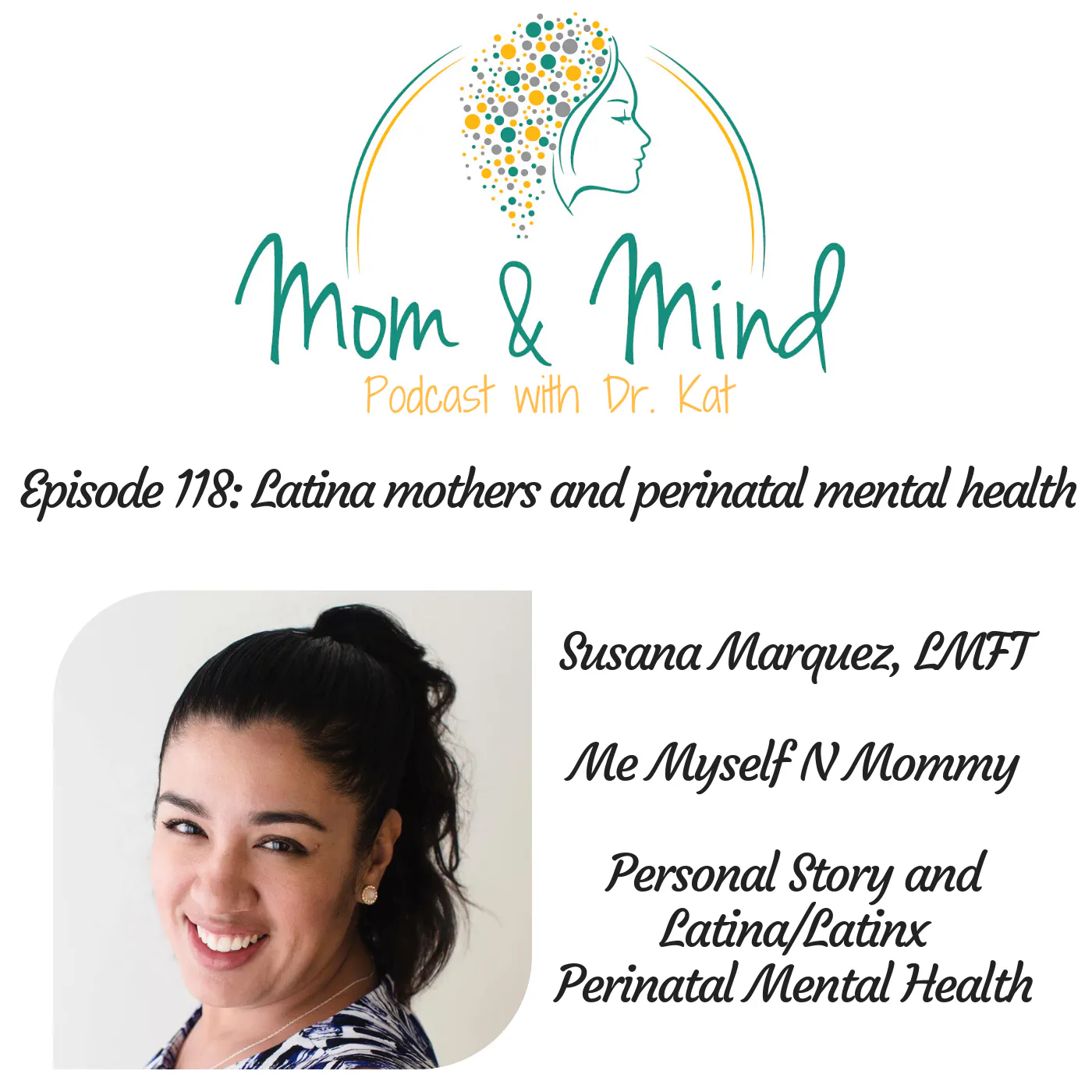
118: Latina Mothers and Perinatal Mental Health
Susana Marquez, LMFT, is the founder of Me Myself N Mommy Therapeutic Services, a private practice in Long Beach, CA. The practice focuses on Latina maternal mental health. Due to her personal struggles with postpartum depression and anxiety, Susana opened up a practice that specializes in providing education, support, and resources to Latina mothers and their families on what maternal mental health is and the importance of a mother’s mental and emotional wellbeing. Her mission is to bridge the gap between Latina mothers and mental health support while bringing awareness to the real issues they face both culturally and socially. Show Highlights: The hard adjustment and loneliness she felt while she experienced postpartum depression and anxiety following the birth of her son in 2014 How her culture expects mothers to deal with motherhood issues and not need extra support Why she couldn’t share her dark and negative feelings and shut down from everyone How the sudden, tragic loss of her father sent her spiraling out of control How she put herself on the back burner and didn’t care for herself or process her grief and anxiety Living with the myth that “time heals all wounds” Dealing with grief, triggers, and having no one to connect with How a colleague insisted that she see a therapist for help and how he changed everything for her The pressure on Latina moms as they are compared and held to the highest standard of motherhood in the Virgin Mary How Susana wanted to put her clinical skills and education to use to help other Latina moms Realizing what is missing in services and resources for Latina moms How she reached out to provide classes and education in her area Offering something for free and still being turned down Raising awareness and erasing the stigmas “Latinx”---the new gender-neutral term Feeling like what you’re doing is “not enough” Cultural specifics that make postpartum a challenging time for Latinx moms In Latina culture, there is not room for setting healthy boundaries and limits How Susana is reaching out to moms and spreading the word about available resources Working with doulas to provide info to pregnant moms and not waiting for postpartum problems to appear Why maternal mental health is not a “one size fits all” issue What Susana wants Latina/Latinx moms and the providers who support them to know Susana’s biggest takeaway for Latina moms: Ask for help Susana’s biggest takeaway for providers: Ask how cultural traditions may play into a lack of support for Latina moms Resources: www.memyselfnmommy.com Find Susana on Instagram, Facebook, and Twitter: Me Myself N Mommy Learn more about your ad choices. Visit podcastchoices.com/adchoices
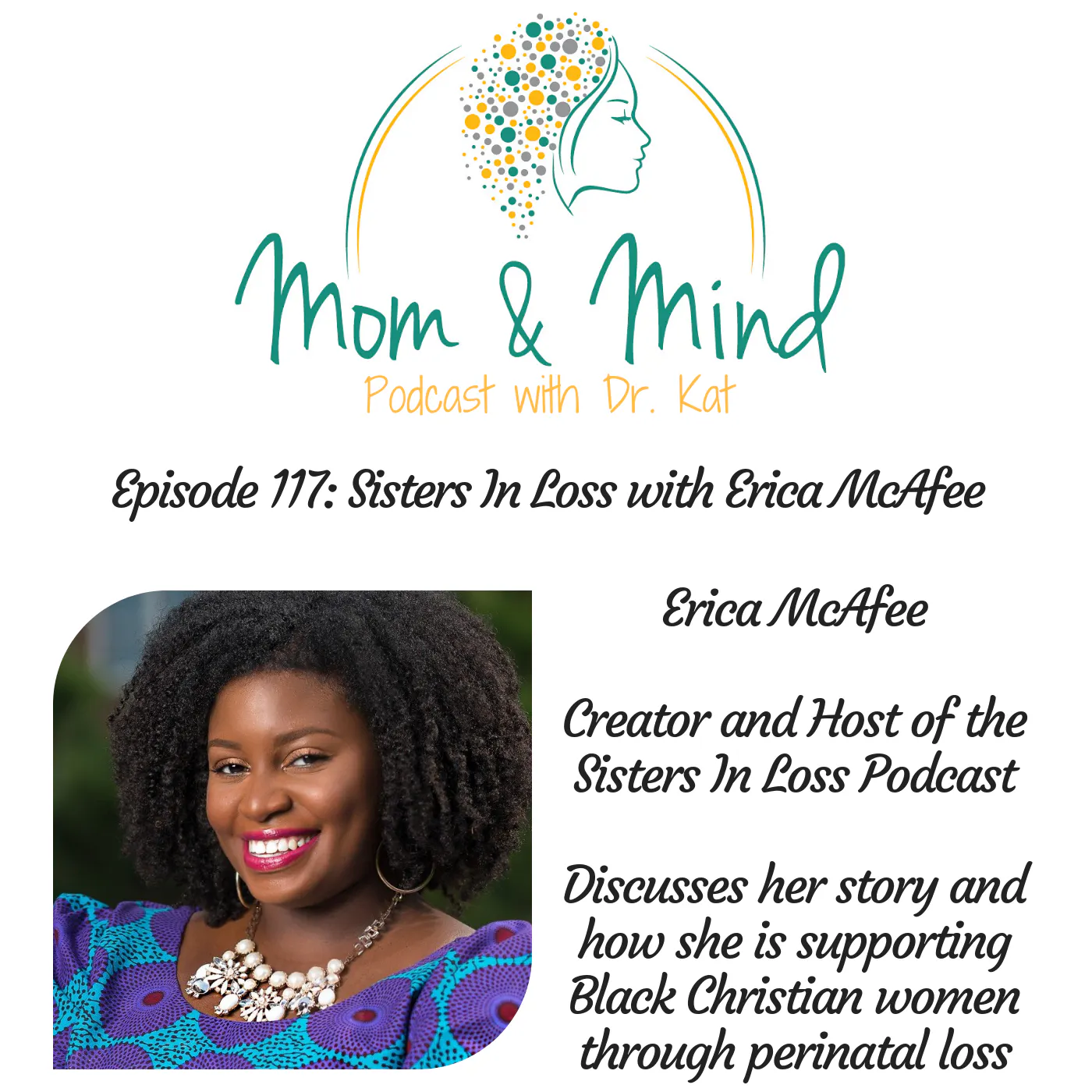
117: Sisters in Loss with Erica McAfee
Infertility, pregnancy loss, infant and maternal mortality----none of these are topics that we enjoy talking about, but the number of women and families affected by these obstacles is astounding. For African-American women, there is a stigma attached to these issues, and the compounding problem of their voices not being heard.Today’s show addresses these topics and more in honor of October being Pregnancy and Infant Loss Awareness Month. Erica McAfee is the founder of Sisters in Loss, LLC, a faith-based grief and pregnancy loss coaching company that helps black women turn their pain into purpose after loss. Sisters in Loss provides consulting and coaching services to help women step beyond anxiety and fear into trust and peace after loss. The Sisters In Loss goal through courses, retreats, and conferences is to help women minimize regrets, maximize memories, and manage their path forward after loss. Their self-titled podcast spotlights faith-filled black women who share miscarriage, infant loss, and infertility stories and testimonies to heal, gain clarity and peace, find hope, and become victorious after loss. Launched in August 2017, the podcast has a community of 5000+ Sisters in Loss. Erica is a Grief and Pregnancy Loss coach, pastor’s wife, and Mom to two angels in heaven and one rainbow baby, Maxwell, also known as Super Mighty Max. She is an alumnus of Virginia Commonwealth University where she earned a BS degree in Chemical Engineering. Show Highlights: How Erica found podcasts a few years ago when she had a long commute to work each day, but she couldn’t find one that told the stories that aligned with what she and her friends had experienced with traumatic loss The year-old podcast shares weekly stories of real women of color and how faith helps them gain clarity, peace, and learning Erica’s coaching work with those still early in their loss experience or those in pregnancy after loss How loss affects everyone around you How the podcast helps African-American women know what questions to ask their medical professionals, no matter where they are in their journey to parenthood The example set by celebrities recently who have shared their pregnancy and birth stories The power of storytelling in healing the pain of loss How the podcast helps support women through the grieving process by building a community Seeing success stories of others helps people in their personal experiences How Erica and her guests share their faith on the podcast and the role faith plays in the journey to healing How the podcast gives scripture, tools, and resources for support How some people going through loss cling to faith and others push it away Sometimes the grieving process isn’t “over and done” and we tend to shove those feelings down because we feel guilty holding onto them What we should know about supporting women of color through loss: Maternal and infant mortality is an issue that African-American women face 3-4 times more than other races Why black women are not taken seriously by their medical providers and their voices aren’t being heard Erica’s message to friends and family of those who have lost: Continue to check on loved ones who have gone through loss, because they may have deep, dark moments. Be a listening ear for your loved ones. How healing requires you to do the work Resources: Find Erica and Sisters in Loss: www.ericammcafee.com www.ericammcafee.com/podcast www.sistersinloss.com www.instagram.com/ericammcafee www.facebook.com/ericammcafee’ https://www.ericammcafee.com/summit Find out about Erica’s free healing and prayer summit, Oct. 15-19 Therapy for Black Girls, a podcast by Dr. Joy Harden Bradford Learn more about your ad choices. Visit podcastchoices.com/adchoices

116: The NICU and Mental Health with Fawn McCool, LCSW
We all know that the path to parenthood can look very different than we dreamily imagine. Sometimes it’s a tough and traumatic experience that leaves us stunned. It’s when our personal struggles motivate us to bring about change that we use our experiences to help others. That’s exactly what today’s guest has done. Fawn McCool, LCSW, is based in Portland, Oregon with Aiyana Counseling. She holds certification in Interpersonal Neurobiology through Portland State University and MamaCare certificate through Shoshana Center. She is the creator of Interpersonal Neurobiology of Perinatal Mood Disorders and Birth Trauma, an online training for professionals that explores the impact and practices of attachment and bonding, including development and interventions for families affected by perinatal mood and anxiety disorders and birth trauma. She offers clinical therapeutic services through Aiyana Counseling and also sits on the board of NICU Familes Northwest, as well as volunteers with Baby Blues Connection. She is the mother of two girls, the oldest of which was born prematurely at 29 weeks. After 8 weeks in a southern California NICU, Fawn vowed that she would work tirelessly to change the mental health outcomes for NICU parents nationwide through advocacy and education. In today’s episode, Fawn discusses her experiences as a parent in the NICU and the work she’s doing to support families in their NICU experiences. We are discussing the common stressors in having a child in the NICU and what it’s like to spend time there and then take that baby home. Fawn also shares about the strength and resilience she sees from parents with their NICU experiences and how we can better support children and parents through their time in NICU. Show Highlights: Fawn’s gratefulness to the maternal mental health community for the support she’s received With her first child, Fawn knew something was wrong at 28 weeks, but she was sent home for bed rest How she had to be pushy and insistent to save her baby’s life How she never felt safe, secure, or cared for through her emergency birth and NICU experience Her baby was diagnosed with reverse blood flow and was not getting the nutrients needed to survive, so an emergency C-section was scheduled, with Fawn being told her daughter had a 50% chance of survival Why the mother’s mental health should be at the forefront The financial stress and the loss of parental autonomy in the NICU experience How NICU parents find strength and resilience--”The size of the body does not reflect the size of the spirit.” NICU parents learn to celebrate their child’s uniqueness and learn that they can’t control outcomes The support Fawn would like to see: advocacy for more peer support, counselors, zero separation, psychological education about the effects of trauma, massage, connection to mental health support, and to prioritize maternal mental health Fawn’s message: “There is strength in numbers and you are not alone. Believe in your child.” Resources: www.fawnmccool.com Find out about Fawn’s work and her online class Learn more about your ad choices. Visit podcastchoices.com/adchoices
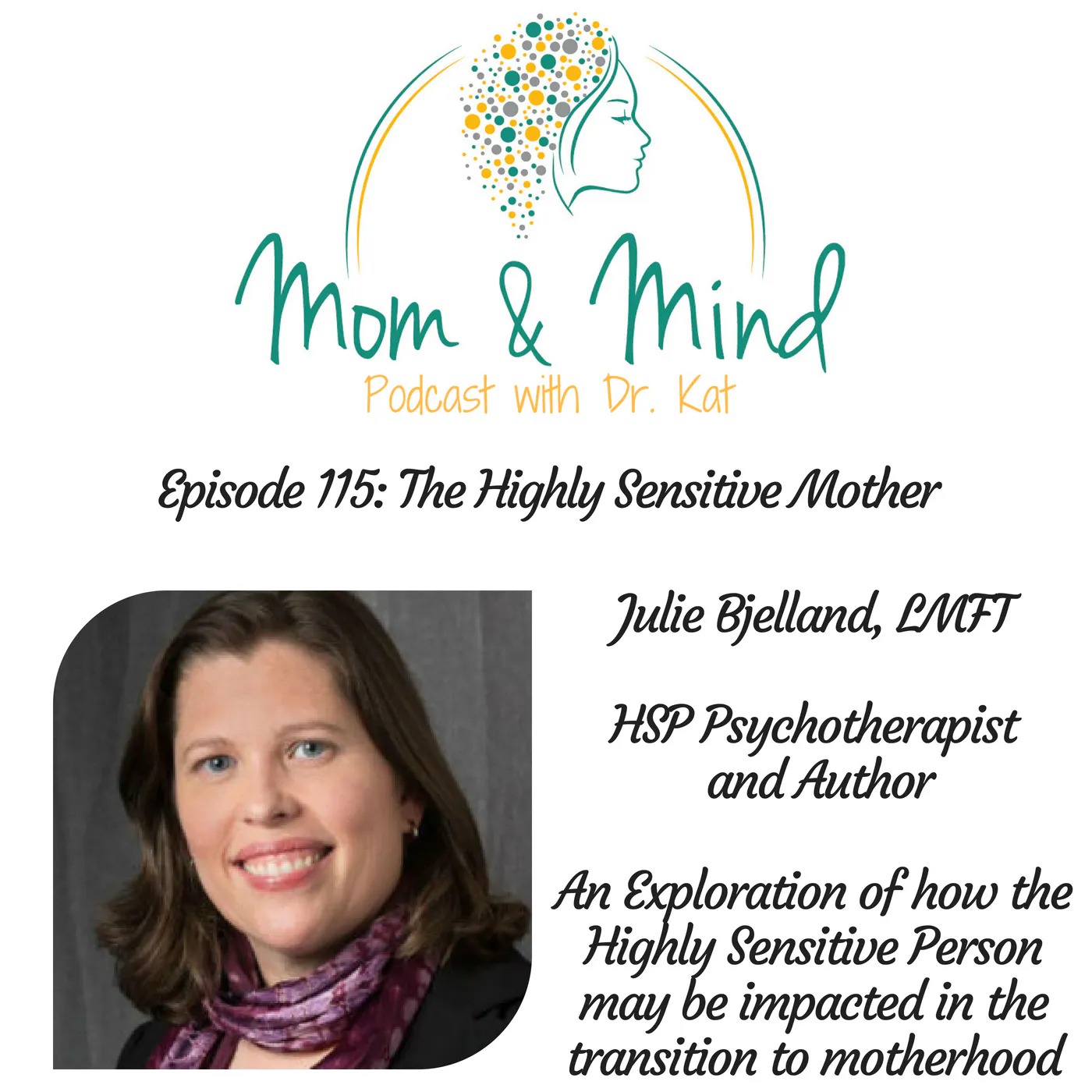
115: The Highly Sensitive Mother
We all know that the challenges of new motherhood can be many--and overwhelming. If you are an HSP (highly sensitive person), then those challenges may be magnified---and you probably aren’t focusing on any self-care. This topic resonates deeply with me and intrigues me in the way the trait interacts with motherhood and its challenges. Julie Bjelland is an LMFT, an HSP psychotherapist, and the author of Brain Training for the Highly Sensitive Person: Techniques to Reduce Anxiety and Overwhelming Emotions. Julie’s mission is to help sensitive people reduce the challenges and increase the positives.Through her website specializing in highly sensitive people (the trait also known as Sensory Processing Sensitivity), she offers many valuable resources for both HSP’s and parents of sensitive children. Julie has a mission to spread awareness and education about the trait of high sensitivity and believes the world needs the gifts of sensitive people. Show Highlights: High sensitivity is a trait and not a disorder--and it’s NOT the same as introversion (30% of HSP’s are extroverts and 20% are introverts) From Elaine Aron’s work on HSP’s: Depth of Processing, Overstimulation, Emotionally responsive, and Sensitivity to subtle stimuli (DOES) The judgment around being sensitive and its connection to weakness How scientific research shows real brain differences in HSP’s On the positive side, HSP’s are more empathetic, more aware, and more compassionate Common for the HSP mother is to put themselves at the bottom of the priority list and take care of others first Trained HSP vs. untrained HSP Self-care---a conscious action you take to lower your stress and bring you to a balanced state A key for HSP’s is getting enough sleep in order to understand and meet specific needs An HSP mom’s default setting is to be hard on themselves and focus on everyone else’s needs Certain parts of the brain in HSP moms will be overactive, like merging into everyone else’s moods and experiences Many people who seek treatment for anxiety will also have the HSP trait How HSP contributes to overall perinatal depression and anxiety, since everything changes in mind, body, and spirit Why HSP’s need creative ways to get two hours of alone time each day The tendency to measure everything in ourselves and others against the standard of perfection Self-talk, with low levels of self-compassion and criticism of themselves Common characteristics of HSP’s: perfectionism, sleep-deprived, overstimulated, and misunderstood Steps to help HSP’s: Develop self-compassion (Kristin Neff outlines 3 steps) Take breaks when needed Practice mindfulness 50% of clients in therapy are HSP’s Supporting moms and dads better in pregnancy and the postpartum period could impact parenting differently and offer more support Using the right tools for support in children can prevent many problems and help them gain confidence and have an easier time accepting who they are Resources: Brain Training for the Highly Sensitive Person: Techniques to Reduce Anxiety and Overwhelming Emotions.by Julie Bjelland The Highly Sensitive Child by Dr. Elaine Aron Self-Compassion by Kristin Neff www.juliebjelland.com Find Julie on Facebook: The Highly Sensitive Person Instagram: hsp psychotherapist Twitter: @juliebjelland LinkedIn: highly-sensitive-juliebjelland Learn more about your ad choices. Visit podcastchoices.com/adchoices
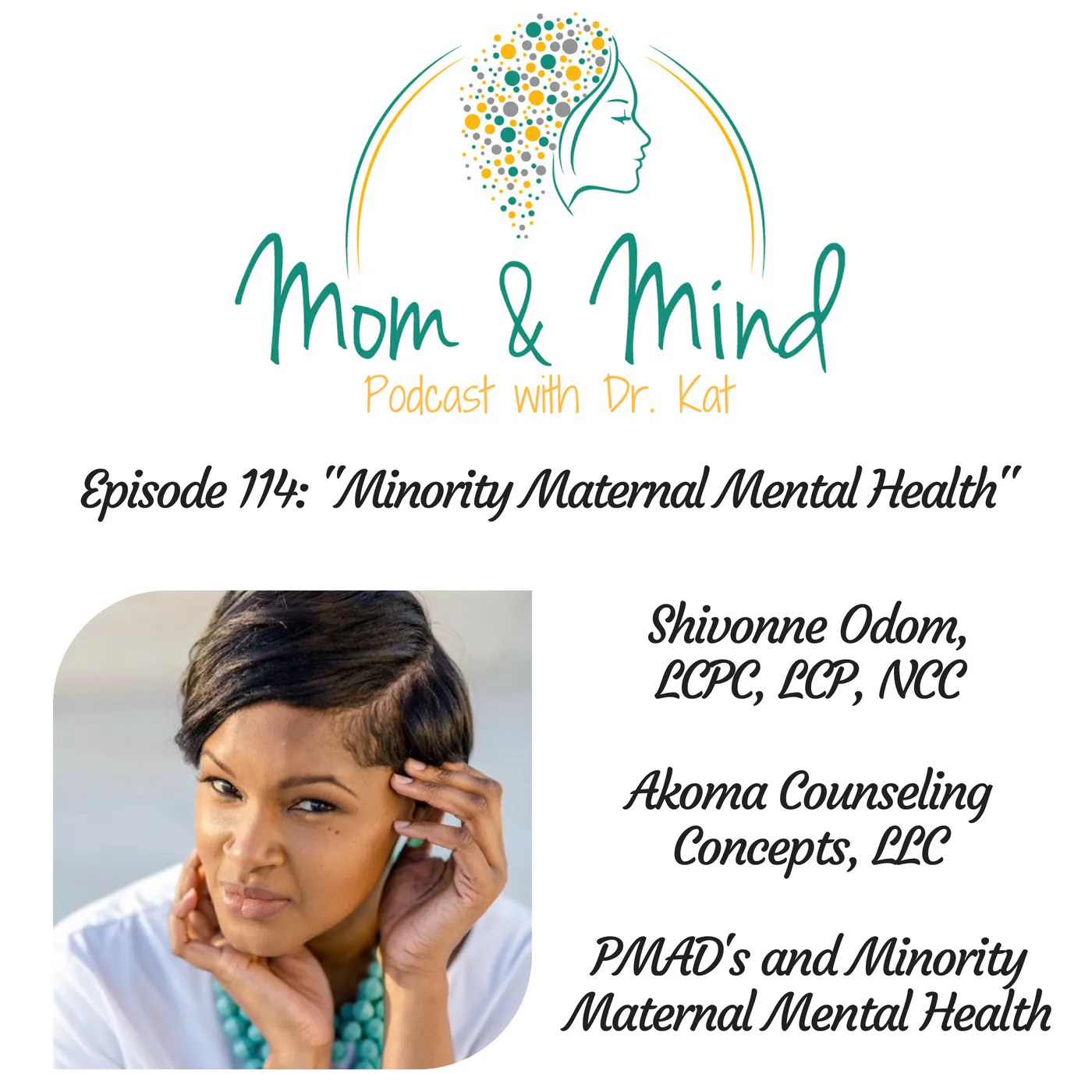
114: Minority Maternal Mental Health
Do you think there is a specific need for therapists of color to help African-American women and other women of color who are PMADS (perinatal mood and anxiety disorders) sufferers? You may not think race, ethnicity and culture are factors to be considered in this treatment, but it can be--mostly due to stigmas, access, and the dynamics around seeking out services as a woman of color. Join us for today’s conversation around this important topic. Shivonne Odom, LCPC, is the founder of Akoma Counseling Concepts, LLC, which is the only minority-owned private practice in Washington, DC that focuses on minority maternal mental health. Shivonne provides continuing educational training on cultural competence and minority maternal mental health. She loves to promote awareness on these important issues via community panel discussions, podcasts, and local media outlets. She is passionate and excited about all things mental health and advocacy for women’s health initiatives. In today’s episode, she talks about things on her mind and things everyone needs to hear about more culturally competent services, the need for more therapists of color to be trained in maternal mental health, and the stigma around postpartum depression for black moms. She even touches on how some organizations could do much more to support perinatal mental health. Show Highlights: How Shivonne started her practice just a year ago in response to the realization that there were no local counseling spaces for moms of color for perinatal mental health How she worked at a community healthcare clinic in DC and saw the need, noticing that 90% of their clients were African-American Why she wanted to make as many mental health services as possible open to as many people as possible What Shivonne saw at the clinic: services focused on diabetes, hypertension, and reproductive services---but not on maternal mental health What it means to provide culturally competent care What Shivonne has seen in pushback regarding mental health from reproductive justice organizations The story of Erica Garner, who died a few months after giving birth and losing her father to police brutality----how she could have been helped with more comprehensive services How mental health and stress affect one’s physical condition Thoughts on the changes that meed to be made and securing more therapists of color being trained to help with culturally competent care during the perinatal period The dominance in healthcare of hetero-normative care and the need for diversity in patient-centered training The trainings Shivonne offers: Perinatal Mood Disorders in Minority Mental Health (See the link below for more info on her upcoming webinar on Sept. 28) At her trainings, Shivonne helps therapists discuss and identify cultural and spiritual issues to be able to assess PMADS and to explain how perinatal health impacts mental health in the African-American community The class teaches what a therapeutic dialogue should sound like with a client of color and what help-seeking behaviors might look like for a mom of color with PMADS The feedback she has received about the “powerful experience” of the webinar, and how people felt connected and established professional relationships with each other How Shivonne’s work has been the most rewarding therapy ever The far-reaching impact of this work to help families The myth that moms believe: that it’s selfish to consider their own mental health Resources: Shivonne’s website: www.akomacounselingconcepts.com Use promo code “momandmind” to receive 10% off Shivonne’s webinar on September 28! Find Shivonne on Twitter: https://twitter.com/akomacounseling Instagram: https://www.instagram.com/akoma_counseling Facebook: Akoma Counseling Concepts Learn more about your ad choices. Visit podcastchoices.com/adchoices
113: Perinatal Anxiety and Depression
How would it feel for your own doctor to discount your postpartum anxiety? Today’s guest experienced this, along with pregnancy loss and depression. The important part of the story is how healing showed up for her and how she is using her experience to help others. Ivy Sias earned her Master’s of Science and Mental Health Counseling from Walden University and became licensed in Louisiana in 2015. In 2017, she founded Ivy Counseling and Wellness Services, a private practice with a focus on assisting people with planting seeds of insight, growing in self-awareness, and making life changes that flourish from the inside out. After her experience with postpartum depression and anxiety and her struggle to find assistance and support in her community, the focus of her practice shifted to maternal mental health and the treatment of perinatal mood and anxiety disorders. A Compton, California native, Ivy has always believed that change happens when people are loud about injustice and when those who have experienced adversity boldly stand in their truth. She’s a wife to her loving husband, Joseph, and the mother of a son, Carter, 4, and daughter, Ryan, 1. Ivy is a National Certified Counselor (NCC) and a Licensed Professional Counselor and Supervisor (LPC-S) in Louisiana. She is passionate about helping underserved populations through therapy, advocacy, and promoting total wellness as a way to heal and grow. Show Highlights: Her son was born in June 2014 after an easy pregnancy, but he had breathing issues and pneumonia which landed him in the NICU for 10 days, while his parents felt helpless How high blood pressure put her on bed rest for 2 days after giving birth Her baby came home, Ivy went back to work soon after, and life returned to the “new” normal In 2016, they decided to have another baby, but had an early miscarriage in June After deciding to try again, Ivy got pregnant right away in September, even though she didn’t feel emotionally ready How she felt disconnected to this pregnancy and felt guilty for not processing the loss and not celebrating the coming daughter How her pregnancy was uncomfortable and full of guilt and worry, with Ivy being constantly upset, frustrated, and in tears In June 2017, her daughter was born during a difficult labor and delivery, in which Ivy had an allergic reaction to the epidural How she didn’t see her baby for several hours after the birth She went home and started feeling sadness and didn’t have much of a support system Upcoming for Ivy is a way to reach out to local daycare centers who might see moms who need resources and support Ivy’s parting advice to moms and families: “You’re not alone. There are social media connections you can make until you find local services. Trust your instinct if you feel that something’s wrong. Share your story.” Resources: Find Ivy on Facebook and Instagram: Ivy Counseling and Wellness Learn more about your ad choices. Visit podcastchoices.com/adchoices

112: Motherbirth
How have your personal experiences launched you into a certain line of work or the pursuit of a passion? Today’s show is about someone who used the tough and challenging journey into motherhood to find ways to help others through their difficulties. If your road to motherhood has been anything but smooth sailing, then you don’t want to miss today’s show! Mellisa Reeves is a doula, coach, and the co-founder of the Motherbirth podcast and community. She shares her personal story around postpartum anxiety and the difficulties that caused in connecting with her son, along with the subsequent loss, birth trauma, and milestones that came and went. She shares about what she had to overcome and how she felt disconnected after the birth of her son and how her experiences have shaped the work she does today. Mellisa works with women who have experienced pregnancy loss and want to trust their bodies again, helping them find their path to hope and healing through the innate intuition they each possess. Brought up with an innate love for simple, natural, rhythmic living, Mellisa’s perspective on motherhood and life comes from a slow reawakening to the depth of feminine wisdom through her experience of stillbirth, multiple miscarriages, and postpartum anxiety. Mellisa is based in Portland but travels semi-fulltime with her husband and two children. Show Highlights: How Mellisa’s interest in perinatal wellness was sparked by her first pregnancy loss, and then intensified with a difficult postpartum period with her son and the stillbirth of her second son As the oldest of ten siblings, she grew up on a farm in Canada with a hippie mother who was either pregnant or breastfeeding for Mellisa’s entire childhood and youth How her mother was very intentional, thoughtful, and present as a mom, and how Mellisa drew confidence from her about the manual aspects of motherhood, but felt severely lacking in the emotional preparation The challenges with a difficult birth, postpartum, and bonding issues with her son How she struggled with postpartum anxiety and felt like that trying time period would NEVER end How she was so overwhelmed that she couldn’t comprehend having more children, lacked any peer support, and lacked connection with her intuition and inner voice How her son reacted with force to her attempts to control him and she thought she would never have a connected relationship with him Why it’s difficult to admit that our relationships with our children are less than ideal because of what it says about us as mothers How her podcast shares stories and experiences of women and the significant identity shift that takes place with the birth of the firstborn How the podcast shares stories of the transition to motherhood and its themes and narratives that are common and shared Her co-host, Laura, is finishing up her doctorate in Nurse Midwifery and focuses on the power of storytelling and group coaching Resources: The Conscious Parent by Shefali Tsabary Find Mellisa online, along with her courses and group coaching: www.trustyourbodyagain.com Find the Motherbirth podcast: www.motherbirth.co Connect with Mellisa on Instagram Learn more about your ad choices. Visit podcastchoices.com/adchoices
111: The Empowered Mama: Lisa Druxman
What are the most important needs of women during pregnancy, postpartum, and the days of new motherhood? You might guess that nutrition, healthy habits, physical fitness, and emotional support are some of the most important needs---and they are! Wouldn’t it be ideal if there was a way to wrap up all of these AND a sense of connection and community with other moms? Join me for today’s show and find out how my guest has found the perfect intersection in meeting the needs of women embarking on their journeys to motherhood---and it just might be available in your hometown. Lisa Druxman is the Chief Founding Mom of FIT4MOM, the parent company to Fit4Baby, Stroller Strides, and Body Back. With nearly 2000 class locations nationwide, FIT4MOM is one of the fastest growing franchises in the country. Lisa is the author of The Empowered Mama and the host of The Empowered Mama podcast. She has been featured on The Today Show, Good Morning America, and more. Lisa is a speaker, writer, and thought leader with a passion for helping moms get out of overwhelm and into a healthy and happy life. We connected through the podcasting network, Parenting on Demand, where we both have our podcasts. Show Highlights: How Lisa felt “lost” 17 years ago on maternity leave with many questions, no confidence, and a loss of identity Why she started a stroller workout to help moms get back in shape as they helped her learn about motherhood The growth of Stroller Strides from 2001 until now, through word-of-mouth advertising; now, it’s a nationwide program that provides a sense of community and much more than just a workout for moms The programs offered now: Fit4Baby (prenatal), Body Back (transformational, high-intensity), and the new brand, FIT4MOM, with 300 franchises and 2000 class locations across the US Our Village, the play group and Mom’s Night Out program as part of Stroller Strides How the positive support leads to success with many motherhood issues How they provide fitness classes and provide education for moms to understand fitness and exercise science The instructors are not therapists, but are trained to be aware of signs of postpartum depression and recommend needed resources How the classes are benefitting new moms and creating amazing success stories of life-changing reconnection and rebuilding relationships and confidence How the classes teach moms to treat themselves the way they hope their kids will someday treat themselves A main point is the focus on inclusivity and that every mom is welcome Lisa’s podcast and book: helping moms reclaim their time, their selves, and their health The podcast format: solo episodes where Lisa shares personal experiences and body image issues, and interviews with amazing moms about their expertise and how they balance their lives Mama Well, the new digital program with 42 weeks of exercise videos, birth preparations, and nutritional guidance---and it includes a private Facebook group Why this holistic program works for general health and wellness for moms---and is different from anything else in the country The new programs coming later this year Lisa’s #1 takeaway: “Every single minute of every single day, you are writing the story to your only life.” ---Katherine Center Resources: www.fit4mom.com Facebook: http://www.facebook.com/lisadruxman Twitter: http://www.twitter.com/lisadruxman Instagram: http://www.instagram.com/lisadruxman The Empowered Mama by Lisa Druxman Learn more about your ad choices. Visit podcastchoices.com/adchoices
110: Preeclampsia & Perinatal Loss with Stacey Porter
Every woman’s pregnancy experience is different, and each pregnancy brings its unique challenges. Today you’ll hear one woman’s story of her pregnancy, loss, and the obstacles she faced due to pre-eclampsia, which can affect women during pregnancy and in the postpartum period. My guest is gracious enough to share the heartbreaking details of her story, with the hope that those in similar circumstances will know they are not alone. Stacey Porter is president and founder of The Tangerine Owl Project, a nonprofit devoted to offering peer support to families, started in memory of her daughter after a NICU loss in 2012. Stacey has been dedicated to efforts centered around supporting families who have suffered infant loss and traumatic birth since 2013. Stacey is heavily invested in efforts to support maternal mental health as it intertwines so greatly with traumatic birth and bereavement experiences for these families. She works as a contractor with the 2020 Mom Project, leading a volunteer program, social media, and a handful of other projects. She sits on the board of directors for local nonprofit Beyond the Baby Blues, which offers clinical group support to women suffering from perinatal mood and anxiety disorders, and she serves on the bereavement committee for the Mothers’ Milk Bank of the Western Great Lakes. Stacey is a member of the National Perinatal Association and Preemie Parent Alliance, and has collaborated on projects for patient education including online curriculum for staff on psychosocial support for NICU parents. Show Highlights: Stacey was pregnant with her third child in 2012 after two picture-perfect pregnancies with her son and daughter Why this was a completely different pregnancy experience, when swollen ankles at a 24-week appointment prompted her doctor to probe further and discover pre-eclampsia Within a few days, she found herself hospitalized and then transferred to a more equipped hospital The baby began to decline rapidly and her doctor told her to be prepared for delivery A C-section was scheduled and the baby was given a 40% chance of survival What is pre-eclampsia? A pregnancy condition in which maternal blood pressure rises to dangerously high levels, the baby is deprived of oxygen, and the placenta’s health can be affected Pre-eclampsia can occur in pregnancy or postpartum, causing vision problems and seizures, and can decelerate the baby’s heart rate Pre-eclampsia can affect people in different ways; Stacey didn’t have the typical risk factors, which include: the first pregnancy, a pregnancy with a different partner than previous pregnancies, smoking, and advanced maternal age Pre-eclampsia can be mild or severe and can affect women of every race and every age Her baby became lethargic and the doctor discovered an infection from hospital-acquired bacteria The baby became septic and they tried antibiotics for the aggressive Pseudomonas infection that they couldn’t get control of After three days of sickness, they spent the last moments with her and held her as she passed away Stacey realized that there is not a lot of peer support for people going through infant loss The Facebook connection that became Stacey’s lifeline, because even though friends and family tried to help, they just couldn’t understand like someone who had been through the same experience How people feel helpless and like they want to help but don’t know what to do or say How the Tangerine Owl Project was inspired through the experience with her daughter, Delilah How Stacey has grown and learned through her grief, starting the organization on the anniversary of her daughter’s death How anxiety, depression, and panic attacks started a couple of years later, even though she was doing everything she could to deal with her feelings How Stacey has become an advocate for maternal mental health Resources: www.tangerineowl.org Find Stacey on Facebook: @Tangerine Owl Project or Stacey Dunlap Porter Learn more about your ad choices. Visit podcastchoices.com/adchoices

109: Healing After Postpartum with Graeme Seabrook
How do we, as mothers, keep ourselves centered while raising our little ones? It’s a tough question to answer, but it becomes even more difficult when perinatal mental health is in jeopardy. Many times, we think that dealing with the crisis is the most important focus, but it’s the time period that follows the crisis---and the healing--that deserves big attention. Don’t miss today’s conversation covering these important topics. Graeme Seabrook is a Motherhood Life Coach whose approach to coaching is that YOU must be a priority in your own life in order to thrive. Following a traumatizing birth experience that left her with PTSD, and surviving postpartum depression and anxiety, Graeme began a healing journey as a mother and a woman. That healing journey led her to train as a life coach and to create spaces where mothers can come to be witnessed, nurtured, inspired, and supported, so they can integrate motherhood with personhood and not the other way around. She does this work because she believes we are living in a global culture that treats mothers as if we are inhuman and expects us to be superhuman. Graeme’s work is dedicated to helping mothers reclaim their humanity. Today we discuss her work in helping mothers recover from recovery, the stabilization after a perinatal mental health issue, and the way to build resilience after the crisis passes. Show Highlights: How the conversations are now happening to help those who are “in it,” but still have active triggers Why we don’t talk about how your life may be changed for years or even decades Carrying the guilt and pressure to be “the perfect mom” and “make up” for what you’ve put your family through Readjusting and cleaning up after the “storm” has passed How Graeme is using the pain and anger as a catalyst to tell her story and do her advocacy work The process of “recovering from recovery” and how Graeme borrowed the phrase from a therapist who helped her How Graeme figured out the next step in recovery: resilience Recognizing triggers and going through the checklist to make a totally different experience in the process of healing Explaining the process of recovering from recovery: when you have made peace with your journey into motherhood The grieving process inherent in motherhood over what we thought it would be Learning to be a mother in the storm of mental illness trauma The tendency to neglect self-care as we recover after the crisis Our underlying drives and how we deal with them How to cultivate resilience: learn to prioritize, make connections, and learn what “balls” to juggle and when Graeme’s program of online coaching: 12 weeks, with no more than 10 people at a time, for moms who are out of the crisis period Graeme’s passion-filled and heart-centered work, which is what she was looking for a few years ago The power and potential connections through the internet Success stories of how moms have transformed with Graeme’s help and become more in control of their lives Resources: Website: www.graemeseabrook.com Twitter: @graemeseabrook Instagram at @Graemeseabrook Learn more about your ad choices. Visit podcastchoices.com/adchoices

108: Hyperemesis Gravidarum and Therapeutic Termination Loss with Kaleigh Mancha, MFTI, Doula, Yogi
We are all familiar with morning sickness that is a common part of pregnancy, but have you heard of hyperemesis gravidarum (HG)? It is a very significant medical issue that is very different from “normal” morning sickness, yet it’s been minimized even in the medical community, and the expectant mothers who suffer from this condition have not been treated with the care and respect that they deserve. Knowledge is power, so I hope with today’s show comes the education to help people empower themselves in this extreme condition that affects 1-2 out of 100 pregnancies. Kaleigh Mancha is a licensed mental health therapist, certified full spectrum doula, body positive yoga teacher, and mother. She runs her business, K.a.y. & M.e., offering various wellness services in the Las Vegas Valley. Advocating for underserved and underrepresented populations has been a lifelong passion of hers and is what brought her into the mental health field ten years ago. She has also been heavily involved in advocating for equitable access to education. Her practice specialties include trauma, anxiety, life transitions, and concerns related to reproductive justice, pregnancy, postpartum, and parenthood. As a body positive yoga teacher, she believes that all bodies, abilities, and experience levels are welcome on the mat, and her goal is to reach people who, like her, didn’t grow up in spaces where wellness was a familiar experience. Kaleigh lives by the motto that “Wellness is a necessity, not a luxury.” She believes all people deserve better access to resources and the knowledge to help them live their best lives. She’s here to share her personal story about HG and how this condition has affected her life in many ways. Show Highlights: Ten years ago, she was pregnant with her daughter, extremely sick beyond what is “normal,” but filled with gratitude because a prior surgery had jeopardized her fertility At 8 weeks pregnant, her doctor downplayed her nausea and sickness, but she became dehydrated and was diagnosed with HG From 8 weeks to 8 months, she was severely sick, but it went away immediately at the birth of her daughter As she planned for a 2nd child, she prepared her partner for the idea of more extreme sickness She quickly became pregnant in December 2017, felt symptoms right away, but didn’t think it would be a big deal At 5 weeks along, her partner was overwhelmed and decided not to continue to be a part of the journey How she dealt with full-time work as a yogi, therapist, and doula while pregnant and so sick Planning for a home birth with a midwife, but was hospitalized again with dehydration; she then tried acupuncture and CBD oil and was hospitalized again Symptoms and facts about HG: Affects less than 2% of pregnancies and is characterized by intense nausea and vomiting (10-20 times/day); can lead to severe dehydration, organ failure, and extreme weight loss. It can vary in severity, can last the entire pregnancy, and is thought to be genetic. The impact on Kaleigh was hopelessness and isolation How her doula, Christina Hernandez, helped her formulate a plan Trying a couple of different medications, which don’t really treat HG well. One was a mixture of B6 and Unisom (a sleep medication) How she had to move in with her parents so they could help care for her and her daughter, close her practice, and cancel her doula clients How the illness left immediately and she felt like herself again, but then she had to deal with the grief and loss. She took 3 weeks for self-care and healing Her recommitment to her patients, to use her experience to become a better doula to help others who don’t have the same support that she did. She now offers free help for those suffering from HG. Resources: Find Kaleigh on Facebook: Kay and Me Doula and Wellness Services Visit her website: www.kayandme.com Find Kaleigh on Instagram: @kaym86 On Facebook, find HG Moms For more info, visit www.hyperemesis.orgI Learn more about your ad choices. Visit podcastchoices.com/adchoices
107: EMDR for Perinatal Mental Health with Bethany Warren, LCSW
Are there experiences in your life that you just can’t “get past”? We all have those memories that seem to crop up again and again, bringing anxiety, depression, and other effects. What if these memories are tied to a pregnancy or postpartum experience? You can see how this might be difficult for a woman to work through on her own. Even traditional talk therapy is not always effective at clearing through these feelings. Today we are discussing the benefits of using a therapy model called EMDR (Eye Movement Desensitization and Reprocessing) to help women. Bethany Warren has been interested in this modality as a treatment for some time and has a passion for women’s mental health issues. She has worked in this field for 20 years, specializing in Perinatal Mood and Anxiety Disorders, also working with women who experienced birth trauma, pregnancy loss, infertility, adoption, and surrogacy. She is certified in EMDR and the trauma processing lens and attachment model guides most of her work with clients. She is passionate about coaching and guiding parents through their adjustment to new roles and assisting women who have children with medical and other health-related issues. She has worked in hospital and outpatient psychiatric settings and is now in a group private practice. Bethany serves on boards and community organizations that promote women’s health and wellness. She is also an adjunct professor at a local university in San Diego and supervises clinicians working toward their licenses. Show Highlights: EMDR has been used mainly in treating veterans with PTSD, but now is a tool found to be useful in many areas, including maternal mental health The connection between EMDR and REM (Rapid Eye Movement) sleep The differences in memories that have been fully processed and those that are “free floating” The statistics: 12% of pregnant women and 9% of postpartum women meet the PTSD criteria, and 34% of women report having a traumatic birth experience How EMDR has impacted Bethany’s practice with more insight-oriented therapy that processes memories the way the brain already knows to do The components of EMDR therapy include eye movement, tapping, and headsets with sounds---these can be used separately or in combination These tools are used to process memories and negative beliefs in the correct part of the brain How does it help? “The memory becomes unstuck” For the therapist, treatment involves less talking and more observing How the therapy works without making clients “take a trauma bath” in the experience they’ve learned to avoid EMDR does NOT involve sitting with a therapist and talking through your traumatic experiences My personal experience with the power of EMDR therapy in getting past stuck feelings and deep-rooted traumas How EMDR helps with early attachment repair, early memories of shame and failure, and repeated harmful patterns The leading researchers on EMDR: Carol Forgash, Amy Robbins, Andrew Leeds, and Claire Stamrood Bethany’s advice: Find a trained and certified EMDR therapist Those who should NOT do EMDR include anyone who is psychotic or currently using substances or is in current chaotic circumstances Hopeful messages of success in how clients have responded and been able to move past the things they never thought they could Resources: Bethany’s website: http://balancehealth.org/therapist_bethany_warren.html Follow Bethany on Instagram: @bethanywarrenlcsw http://www.birthtraumaassociation.org.uk http://www.emdria.org/ EMDR International Association http://pattch.org Prevention and Treatment of Traumatic Birth http://www.solaceformothers.org Solace for Mothers after Traumatic Birth http://tabs.org.nz Trauma and Birth Stress Learn more about your ad choices. Visit podcastchoices.com/adchoices
106: A Couple’s Journey, Loss and Postpartum
Have you ever dealt with pregnancy loss? Unfortunately, it’s more common than we think and the topic is one that we just don’t talk about. Dealing with one miscarriage is difficult enough, but when you have the pain of multiple losses, it can be almost unbearable. How does a couple get through these times? How do you offer support to each other and keep your relationship strong? These are the questions addressed in today’s episode, in which we talk to a husband AND wife together about their experience with loss. Shane and NaKaisha Banks are a couple who dealt with loss, birth, loss again, and birth again. They share about their two rainbow babies, the anxiety and depression that came after, and how they have navigated all of this as a couple. In this powerful episode, NaKaisha and Shane share their story in hopes of increasing awareness about loss as a couple of color. Although this is one couple’s story, it’s a great catalyst for us to think of the family as a system. While we tend to focus on what happens with the mother, the male partner is deeply affected as well. You’ll hear the strength of their relationship and how they were able to pull together through their experiences. NaKaisha loves her roles in life, including Social Worker and life coach through her practice D.U.O. Empowerment Services, which stands for “Do Unto Others” and was begun in 2008. She is the author of The Birdcage, released in April 2018. She is the mother of two beautiful girls, London and Germany, and has been married to Shane for 12 years. Shane is a minister who enjoys fishing, sci-fi and action-packed movies, and lives a blessed life as a husband and father. Shane and NaKaisha share a passion of serving in ministry together, in which their faith is the foundation of life and difficult times. Show Highlights: Why their daughters, London (8) and Germany (2) are “rainbow children,” since Shane and NaKaisha suffered a pregnancy loss prior to each of the girls’ births The first loss was in 2009, when they weren’t even trying to conceive because they were living their lives and waiting to see what God ordained for them as a couple The first pregnancy and its complications, then a miscarriage at 9-11 weeks and a flood of unexplained emotions From Shane’s perspective: he was excited about the baby but found the miscarriage a tough thing to go through. He wanted to be strong and support his wife as much as possible How communication transcends across the relationship and allows you to be present, even without a voice How NaKaisha finds personal healing in being able to help others because of her understanding and empathy Resources: Connect with NaKaisha at www.nakaishatolbertbanks.com Find NaKaisha Tbanks on Facebook, DUO Empowerment Services on Facebook, and @1stLadyGiggles on Twitter and Instagram Learn more about your ad choices. Visit podcastchoices.com/adchoices

105: Let's Talk About Postpartum Sex!
When it comes to sex after having a baby, what’s normal? If we’re honest, we have had these questions and probably been afraid to ask. After all, who do we ask? How do we improve the communication between partners about sex and sexuality? These topics are very important, both during the pregnancy and during the postpartum period. We talk primarily about heterosexual relationships in this episode but some of the dynamics affect all sexual relationships. My guest today holds nothing back! She has a refreshing, honest, and direct approach to everything you want to know about this topic. Elyse Springer, MA, MFT, is a licensed marriage and family therapist who practices in the Los Angeles area. She uses a combination of Cognitive Behavioral Therapy, EMDR Therapy, and psychodynamic modalities to assist people with depression, anxiety, death and loss, relationship conflicts, HIV/AIDS, Perinatal Mood and Anxiety disorders, substance abuse, and trouble with the creative process for artists and writers. Elyse has taught and lectured in a variety of settings and serves on boards and task forces in support of Maternal Mental Health and other causes that are closely related to her work in private practice. Show Highlights: How it became clear that this topic is one that Elyse wants to help people understand more fully A common complaint during the postpartum period for moms: being “touched out” The difference in sex and sexuality and how a woman’s sexuality can change after giving birth Adult woman’s sexuality vs. younger woman’s sexuality The definition of a “sexless marriage”---having sex 10 times/year or less The average frequency of sex before a baby is 1-3 times/week---the key after giving birth is to look at what the frequency was before the birth How fatigue and sleeplessness impact sex drive Is there a difference in a woman’s sex drive after a C-section as opposed to vaginal birth? The specific overall pattern to resuming sex after a baby A common dynamic is when the partner isn’t supportive but still wants sex The distinction between sex and emotional intimacy that allows for sexual satisfaction in a relationship The four parts of sex: desire, arousal, orgasm, and relaxation (for women, sometimes the desire comes AFTER the arousal) Different levels of desire and communication for men and women How a baby can fulfill the mother’s need for connection and intimacy For survivors of sexual trauma, the pregnancy, birthing, and postpartum period are full of potential issues The tricky dialogue around sexual victimization--especially if the woman hasn’t been 100% honest The common cycle of anger vs. anger vs. anger The amazing groundbreaking research by Darby Saxby from USC about the equal dynamic in households How touching increases the connection How a mother changes physically AND mentally after giving birth Elyse’s exercise about writing down your five best sex moments before the birth and asking how you can get back to those How resentment forms from HER irritation and HIS rejection and withdrawal How to listen to those bids for affection How open dialogue about sexual satisfaction can be the precursor to actual sex in the postpartum The ridiculously inaccurate stereotypes of female and male sexuality on TV and in movies: the vampy young woman, the cougar, and the goofy inept dad stereotype The concrete assumption that it’s ALWAYS the mom who doesn’t want sex How men’s testosterone drops in the 4-6 months postpartum Common issues with dads: not knowing the oral language of caring and affection and bearing the mental load to ease up anger and resentment Resources: www.elysespringer.com Twitter: @espringermft Learn more about your ad choices. Visit podcastchoices.com/adchoices

104: Certification in Perinatal Mental Health
You may have wondered about the process required for certification in perinatal mental health. There is much confusion around any supplemental certification and in many cases, the process isn’t clear. What is clear, however, is the increasing need for certified professionals to deal with the issues faced by many new mothers and their families. Birdie Gunyon Meyer is an RN with a Master’s Degree in Psychology/Counseling. She is the Coordinator of the Perinatal Mood Disorders Program at Indiana University Health in Indianapolis, Indiana. She is a Past-President and Past-Chair of Education and Training for Postpartum Support International and currently is the Director of Certification. PSI is the world’s largest non-profit organization dedicated to helping those suffering from perinatal mood and anxiety disorders. Birdie is also on the President’s Advisory Council for PSI and for the International Childbirth Education Association. She specializes in the recognition and treatment of pregnancy and postpartum mood and anxiety disorders. She is a childbirth educator and a lactation counselor and speaks frequently to communities, nursing schools, grand rounds, and conferences. Birdie has been interviewed frequently for radio, television, and print media. She is highlighted as a PMD expert in PSI’s DVD that is shown around the country: “Healthy Mom, Happy Family: Understanding Pregnancy and Postpartum Mood and Anxiety Disorders.” Today’s show covers everything you need to know about getting certification in perinatal mental health. Show Highlights: The history of the PMD certification: the money was donated for the program and PSI took on the task of developing and overseeing the certification program Subject matter experts were chosen (and they volunteered their time) to develop the core competencies for certification How the “blueprint” was developed from which test questions for the exam are fornulated The process of determining the questions is complete and the test should be ready by August 1, 2018 The certification has three tracks: psychotherapy, psychopharmacology, and affiliated professions The prerequisites to sit for the exam: basic training (13-14 hrs.) OR the PSI webinar (18 hrs.) OR an equivalent approved training---AND then a third day advanced training in one of the three tracks The cost of the exam is $500, which covers a lifetime certification as long as the 6 hours of continuing education yearly in your track are fulfilled to keep the certification A common question people ask is if they can bypass the prerequisite courses and just take the exam, especially if they have been in practice for a long time. The answer is NO, that everyone must take the same path to achieve the certification and protect its integrity Resources: www.postpartum.net http://www.postpartum.net/professionals/certification/ [email protected] Learn more about your ad choices. Visit podcastchoices.com/adchoices

103: Breastfeeding, D-MER and Mental Health with Heidi Koss
You may think that postpartum depression covers all aspects of perinatal mental health issues that new mothers face. The fact is that there are other kinds of mood changes, some that are talked about and some that are relatively unknown and uncommon. Today’s show focuses on one specific problem that some mothers experience: it’s called D-Mer, which stands for Dysphoric Milk Ejection Reflex. Heidi Koss, MA, LMHC, is a psychotherapist in private practice in Redmond, WA. She specializes in perinatal (pregnancy and postpartum) mood disorders, birth trauma, sexual abuse, and parent adjustment issues. Heidi has been the WA State Coordinator for Postpartum Support International www.postpartum.net, and has volunteered for over 20 years with Perinatal Support Washington www.perinatalsupport.org. She served as past board member for PATTCh – the Prevention and Treatment of Traumatic Childbirth, www.pattch.org. Heidi is active leading trainings for clinicians on appropriate assessment and treatment options for perinatal mood disorders and birth trauma. She leads monthly clinical consult groups mentoring mental health care providers to develop their competency and expertise in perinatal mental health issues. Heidi was a co-founder of the Northwest Association for Postpartum Support (NAPS, www.napsdoulas.com) a postpartum doula organization as well as the recipient of the Doulas of North America (DONA) Penny Simkin Doula Spirit and Mentorship Award. Prior to her psychotherapy career, Heidi was a Postpartum Doula and Certified Lactation Educator for 12 years. Show Highlights: Heidi’s work as a mother and perinatal mental health therapist and lactation educator: ”Helping moms with mind, body, and breast” Why D-Mer is not often talked about and often misunderstood What D-Mer is: Dysphoric Milk Ejection Reflex. It occurs when milk onset/letdown happens and lasts a few seconds or minutes D-Mer is a strange emotional phenomenon with negative emotions of sadness, dread, despair, nervousness, anxiety, and irritability D-Mer can be severe, with fleeting suicidal thoughts and urges for self-harm The biochemical connection is with two hormones, dopamine and oxytocin, in which they “go rogue,” misfire, or become overactive No studies have shown who is more predisposed to experience D-Mer For some women, D-Mer symptoms ease as the baby ages, but some have no change until weaning D-Mer symptoms might be harder to treat and control in women who already have a diagnosed anxiety or depression disorder What D-Mer is NOT: nausea, postpartum depression, anxiety, breastfeeding aversion---”It’s NOT the mom’s fault.” The best treatment is to educate women about D-Mer How some women can “talk themselves through” D-Mer episodes Ideas for easing symptoms include rewiring the stress hormones, making positive associations with breastfeeding, and positive touch (massage) General good habits for life will ease D-Mer symptoms, like mindfulness, meditation, good sleep and self-care, reduced stress, and managing blood sugar fluctuations To target dopamine, nursing locations should be aesthetically pleasing to make a pleasant mental and physical experience for the mother Some women find D-Mer intolerable and decide to wean, while some can deal with the symptoms and continue to breastfeed Wellbutrin works for some women to ease the symptoms How to find support: Find a lactation consultant and pursue therapy with a perinatal mental health therapist Resources: www.d-mer.org www.heidikoss.com Email Heidi: [email protected] Learn more about your ad choices. Visit podcastchoices.com/adchoices
102: A Personal Story of Postpartum Psychosis with Tarah and Julie
You’ve heard of postpartum depression, but have you heard of postpartum psychosis? Do you know the difference and how to recognize the signs and symptoms? We are talking about a very difficult mental condition that can wreak havoc on a new mother, her baby, and her family. Fortunately, there are signs to look for and ways you can help if someone you know might be experiencing this rare condition. In this episode, we are hearing from Tarah, a woman who experienced postpartum psychosis after the birth of her twins. Tarah’s mother, Julie, joins this chat, which is the first mother-daughter duo we’ve had on the show to talk about the postpartum experience. One or two out of 1000 women will experience a postpartum psychosis, and while it’s very rare, it is a serious condition that requires immediate treatment. Most people have been misled to think that postpartum depression and postpartum psychosis are synonymous, but they are not. Psychosis is a break from shared reality and is an emergency situation that looks very different from postpartum depression. Please note that Tarah’s story may be sensitive for some listeners and is not necessarily what all moms with postpartum psychosis experience. Resources for support are available and listed below. Show Highlights: Tarah married in 2007 and began trying to have a baby in 2009. After Clomid and two miscarriages, she experienced a textbook pregnancy with her twins The twins were born almost 4 weeks early and the postpartum depression began immediately Julie noticed how Tarah didn’t want to hold the babies a lot and seemed disconnected and anxious Three days after the twins were born, Julie noticed that Tarah was not acting normal and took her to the hospital The hospital gave Tarah Xanax and an antidepressant and sent her home, but the symptoms snowballed into psychotic fears and extreme anxiety Two days later, Julie took Tarah for the 2nd visit to the ER and they admitted her to treat her exhaustion Two hours after Julie went home to rest, the hospital called to say Tarah had jumped through a window to escape (she was later found, bleeding, wandering around the parking lot) How one doctor nailed the diagnosis and saved Tarah’s life Tarah was transported to a behavioral health hospital because she thought people were out to hurt her What Tarah and Julie want you to know: This is a real condition and not made-up Someone you know may need help and not even know it People are not aware of postpartum psychosis as something to look for There are some risk factors that can help you know if you are susceptible to a postpartum psychosis or postpartum bipolar onset. Learn more here... Resources: If you are concerned about yourself or a loved one, please reach out to a local organization that supports postpartum women or reach out to Postpartum Support International (PSI) for information Postpartum Support International (PSI) www.postpartum.net If you feel that your family member is experiencing some of the symptoms of postpartum psychosis, please take them to medical care immediately. PSI also has a specialized support coordinator, providing non-emergency support to women and families dealing with postpartum psychosis: Michele Davidson, PhD, CNM, CFN, RN--703-298-3247 or [email protected] Mom and Mind Connection FB Group Learn more about your ad choices. Visit podcastchoices.com/adchoices
101: Black Women Birthing Justice
Have you ever considered how the systemic and institutional racism, implicit bias and disempowerment of women might be played out with birth? This is especially true for Black women, many of whom are experiencing discrimination, bias, racism and/or poor care while pregnant, birthing or postpartum. Today’s show explores these dynamics, the findings of a research project and the recommendations that have come out of that research. We are talking with Professor Chinyere Oparah and Dr. Sayida Peprah, who are part of the Black Women Birthing Justice collective. Today we are discussing some of the research they have done and the report called Battling over Birth. Highlights from our discussion include the power dynamics in the birthing environment for black women, history of sexual survivor issues and how that might impact the birthing experience, empowering Black women in the birth space and some glimpses into what the Battling over Birth report recommends. Julia Chinyere Oparah is a social justice educator, collective leader, activist scholar, and experienced community organizer who has spent over two decades producing critical scholarship in the service of progressive social movements. Oparah is Provost and Dean of the Faculty and professor of Ethnic Studies at Mills College, and she was educated at Cambridge University and Warwick University Oparah is the author of Other Kinds of Dreams: Black Women’s Organizations and the Politics of Organization, the only comprehensive history of the black women’s movement in Britain. Her most recent book, Birthing Justice: Black Women, Pregnancy and Childbirth, places Black women at the center of debates around childbirth and highlights their role in the emerging birth justice movement. Dr. Sayida Peprah became certified through DONA International Inc., as a Birth Doula and began assisting mothers professionally in their journey of pregnancy, childbirth and breastfeeding. Show Highlights: Black Women Birthing Justice: A collective of African-American Caribbean, and multi-racial women who are sharing about the negative experiences they’ve had in their maternal care and childbirth How a negative birth experience can be turned around with a great midwife and doula team How the actions that are being taken by medical providers are disempowering black women How BWBJ began in 2011 with a Research Justice project, with over 100 women being open and honest about their stories Battling Over Birth: a human rights report that unpacks the stories of those 100 women and how they found themselves in conflict with their medical providers Before the sharing circles, some of the women had no idea of what they had missed out on in their birth experiences The comparison with this topic and the sexual survivors of the Me Too movement, and how their birth experiences are re-triggering and re-traumatizing, with further victimization The ramifications and implications for these women, along with the potential stress and trauma How to have empowerment in the birth experience, including how providers interact with you for physical exams during labor and birth The ways we can make sure this doesn’t keep happening--”This doesn’t have to be normal.” How the impact of the negative birth experience bleeds over into breastfeeding Resources: Professor Oparah: https://www.juliachinyereoparah.com/ Dr. Sayida: www.DrSayidaPeprah.com To learn about Dr. Sayida’s non-profit click here: www.DiversityUplifts.org, To learn more about the Black community-based doula program and COVID19 doula initiatives Dr. Sayida is working on, click here: www.FrontlineDoulas.com Please find out more by reading that Battling over Birth report at Find the report here: http://www.blackwomenbirthingjustice.org/battling-over-birth Twitter @birthingjustice Instagram @birthingjustice Facebook: https://www.facebook.com/pg/Black-Women-Birthing-Justice-216928328357571/posts/?ref=page_internal Learn more about your ad choices. Visit podcastchoices.com/adchoices
100: Celebrating 100 Episodes of Mom and Mind
Join us for this very special episode, celebrating 100 episodes of Mom and Mind! In this episode, Dr. Kat takes a look back at some of the most impactful episodes of the first 100! You also get to hear messages from other listeners. These are messages of encouragement and hope. The first 100 episodes is a huge milestone, but to be honest, we are just getting started! There's still so much more to discuss and so many more people to talk to. So join us as we celebrate this milestone, and keep coming back week after week because we are just getting started. Share this episode with a friend and if you haven't already joined the Facebook group, what are you waiting for? For this and all episodes of Mom & Mind, please find us at: www.momandmind.com Facebook: Mom & Mind Facebook Group: Mom & Mind Connection Twitter: @drkaeni Instagram: @momandmind For Sponsorship and Guest Inquiries, please email [email protected] Learn more about your ad choices. Visit podcastchoices.com/adchoices

99: "Strong As A Mother"
Maternal Mental Health Month continues and so do we! Hearing real life situations and experience is so important for us. In this episode, Kate Rope talks about her personal experience with pregnancy and postpartum Anxiety. She also shares about her book, Strong As A Mother, which addresses pregnancy, postpartum throughout the first year and pressures that society place on women. This is book is built to be a useable resource for moms to help guide them through the transition to motherhood. Kate discusses: *How having a medical test during pregnancy made her worry more. *How a Pericarditis diagnosis lead to more testing, which lead to increased Anxiety and intrusive thoughts about illness *Exhaustion from Anxiety *Meeting with a Reproductive Psychiatrist for Anxiety and starting to take the medication Sertraline *"Zoloft was sort of like a snooze button for my brain and I was able to rest" *"Keep talking until you get somebody who listens" *How her book, Strong As A Mother supports women to make the decisions that will help them through the journey into motherhood. Connect with Kate Here: twitter: @katerope insta: @strongasamotherbook FB: https://www.facebook.com/Strongasamotherbook http://katerope.com/ For this and all episodes of Mom & Mind, please find us at: www.momandmind.com Facebook: Mom & Mind Facebook Group: Mom & Mind Connection Twitter: @drkaeni Instagram: @momandmind For Sponsorship and Guest Inquiries, please email [email protected] KATE ROPE is an award-winning freelance journalist whose work has appeared in many publications and online outlets including The New York Times, Time, Real Simple, CNN.com, Shape, Glamour UK, BabyCenter, Parade and Parenting. She is author of the forthcoming, Strong as a Mother: How to Stay Healthy, Happy and (Most Importantly) Sane from Pregnancy to Parenting (St. Martin’s Press, May 2018), coauthor of The Complete Guide to Medications During Pregnancy and Breastfeeding and lives in Atlanta with her husband and two daughters. Learn more about your ad choices. Visit podcastchoices.com/adchoices

98: When Postpartum Packs a Punch
Kristina Cowan shares her story and her book, When Postpartum Packs a Punch: Fighting Back and Finding Joy. (We discuss sensitive content for birth injury and complications.) May is maternal mental health awareness month and Mom & Mind is dedicated to highlighting the lived experience of moms, partners and families. Kristina discusses her experience through a traumatic birth experience, a postpartum thyroid condition and her path to healing. She has written an amazing book that includes her experience, others stories of lived experience and great information from experts in the field. She wrote, “When Postpartum Packs a Punch” and we will learn a bit about that today. Kristina touches on: *Birth Trauma *Postpartum Depression *Medication for treatment *Postpartum onset of Hashimoto's Thyroiditis *Healing and recovery *The resources in her new book Connect with Kristina Here! Website: www.kristinacowan.com Facebook author page: https://www.facebook.com/cowankristina/ Twitter: @kristinacowan Instagram: kcowan8863 LinkedIn: https://www.linkedin.com/in/kristinacowan/ Find the book here: https://www.amazon.com/When-Postpartum-Packs-Punch-Fighting/dp/1946665002 For this and all episodes of Mom & Mind, please find us at: www.momandmind.com Facebook: Mom & Mind Facebook Group: Mom & Mind Connection Twitter: @drkaeni Instagram: @momandmind For Sponsorship and Guest Inquiries, please email [email protected] Learn more about your ad choices. Visit podcastchoices.com/adchoices

97: When Perinatal Myths Become Beliefs
Maternal Mental Health Week is Here! 4/30-5/4 World Maternal Mental Health day is Wednesday 5/2 We are addressing the myths of motherhood and parenthood while digging a little deeper to see how those myths become the beliefs that we carry about ourselves. What are these myths? So glad you asked! They basically sound like perfection at it's most perfect... * You will get pregnant easily * You and your baby will be healthy * You will love being pregnant and being a mother * You will know what to do and how to do it * Breastfeeding will be easy * You will instantly bond with your baby postpartum And so on...What can you add to the list? WELL, what happens when these myths don't become reality???? We feel like failures. We blame ourselves. We think that we did something wrong. We feel like bad mothers. Let's tear this down and start over. Yes, some people have these really lovely experiences, but for those of us who don't...we are suffering by the pain of these "failures". I say, we say, that's enough. Let's call it out and realize that you're working so hard and you are a good mom. Join in and raise your voices for #maternalmentalhealth This week check out these organizations... The Blue Dot Project https://www.thebluedotproject.org/ #realmotherhood #noshame Maternal Mental Health Day (5/2): http://wmmhday.postpartum.net/ #maternalMHmatters For this and all episodes of Mom & Mind, please find us at: www.momandmind.com Connect with us! Facebook: Mom & Mind Facebook Group: Mom & Mind Connection Twitter: @drkaeni Instagram: @momandmind For Sponsorship and Guest Inquiries, please email [email protected] Learn more about your ad choices. Visit podcastchoices.com/adchoices

96: Team Approach and Global Understanding of Perinatal Mental Health
Dr. Raja discusses the importance of multidisiplinary approaches to health and wellbeing in pregnancy and postpartum. He shares his rich and global perspective on how care providers can work together across roles to make sure that perinatal mothers are receiving the care they need. Here are some of the topics we touch on: *OB's are one part of the care team for pregnant mothers *There might be different care pathways in different countries but if we are working together as a care team, we can "join the dots" *How the World Health Organization defines health: physical mental and social well-being. *Keep mothers and families in the heart of everything. "If you listen to the mothers and the families, you can never go wrong" *Discussing Maternal Death and thoughts on prevention *Identify and understand your role in the care of women, which includes making appropriate referrals and following up to make sure she gets support. *Acknowledge your limitations as a provider and offer to find out more. * The International Forum for Wellbeing In Pregnancy: Open access information resource to discuss and learn about different aspects of wellbeing in pregnancy, to understand different practices in different parts of the world. Dr. Raja Gangopadhyay is a Consultant Obstetrician from the UK with a special interest in Perinatal Mental Health and the Founder of International Forum for Wellbeing In Pregnancy." Connect here: International Forum for Wellbeing in Pregnancy (IFWIP): http://www.ifwip.org/ Facebook: https://www.facebook.com/raja.gangopadhyay IFWIP FB page: https://www.facebook.com/ifwip/ Twitter: @RajaGangopadhy3 and @ifwip1 Linkedin: https://www.linkedin.com/in/raja-gangopadhyay-b0816875/ Links to the information that Dr. Raja discussed: Global scenario: http://www.who.int/mental_health/maternal-child/maternal_mental_health/en/ Confidential Enquiries into Maternal Deaths (UK & Ireland): https://www.npeu.ox.ac.uk/mbrrace-uk/reports Red Flag symptoms: Pg 3 of https://www.npeu.ox.ac.uk/downloads/files/mbrrace-uk/reports/MBRRACE-UK%20Maternal%20Report%202015%20-%20Lay%20Summary.pdf IFWIP Resource page: https://www.ifwip.org/resources/ For this and all episodes of Mom & Mind, please find us at: www.momandmind.com Connect with us! Facebook: Mom & Mind Facebook Group: Mom & Mind Connection Twitter: @drkaeni Instagram: @momandmind For Sponsorship and Guest Inquiries, please email [email protected] Learn more about your ad choices. Visit podcastchoices.com/adchoices
95: The AfterBirth Plan
Dr. Alyssa Berlin is on to talk about planning for life after the birth of your child. We often don't consider what happens after the baby comes home, or how our relationship might change. It's important to consider planning for life after you come home with baby! Dr. Berlin uses some really great analogies and examples about our needs during this time. She discusses how to strengthen the couple to be prepared for life with baby, but also normal life after a child. We discuss what postpartum planning is...real expectations, relationships changes, planning for 'normal and learning what could happen... Connect with Dr. Berlin! http://www.doctorberlin.com/dr-alyssa-berlin-psyd Dr. Alyssa Berlin is a clinical psychologist specializing in pregnancy, postpartum and parenting, a labor support doula and a certified Gottman educator. Dr. Berlin is the creator of The AfterBirth Plan Workshop, a program that prepares couples for what to expect after a baby is born and how to prepare for a physically and emotionally healthy postpartum transition for the baby, for each partner and for the evolving relationship. Dr. Berlin is is on the Board of Advisors for the International Cesarean Awareness Network (ICAN) and is a faculty member of Maternal Mental Health NOW Training institute. You can read Dr. Alyssa's blogs on the Huffington Post where she contributes to PBS's 'This Emotional Life" project. Dr. Alyssa and her husband, prenatal chiropractor Dr. Elliot Berlin live in Los Angeles and are the proud parents of four amazing children. For this and all episodes of Mom & Mind, please find us at: www.momandmind.com Connect with us! Facebook: Mom & Mind Facebook Group: Mom & Mind Connection Twitter: @drkaeni Instagram: @momandmind For Sponsorship and Guest Inquiries, please email [email protected] Learn more about your ad choices. Visit podcastchoices.com/adchoices

94: Postpartum Stress and how to start healing
Dr. Kathleen Kendall-Tackett is talking about some essential info on how stress affects postpartum moms and what to do about it! This is a must listen, it's so fascinating. This episode is jam packed with great information and insight. You might want to take notes and pass this along to others. What is so fantastic about this episode is that most people don't have access to this kind of info and education. We aren't reading research articles or even able to understand them half the time. Kathy gives us some education on how our bodies work, which I believe really helps us to take the blame off of ourselves. There are real things happening in our brains and bodies that affect how we feel, think and behave. There are really too many gems to count here... *Depression in pregnancy *Depression and breastfeeding *The stress response: what's normal, what hurts us *The role of inflammation in our illness *WHAT YOU CAN DO TODAY to get on the path to reducing stress and inflammation! Connect with Kathy here: UppityScienceChick.com, BreastfeedingMadeSimple.com KathleenKendall-Tackett.com PraeclarusPress.com Google Scholar link: http://bit.ly/1nSwWIW The article we discussed: http://www.uppitysciencechick.com/ibj_new_paradigm.pdf HAVE YOUR VOICE BE HEARD for MATERNAL MENTAL HEALTH MONTH! ****Listeners, we want to HEAR YOU! Click on this link to find out how to leave me a voice message to be used on the podcast for Maternal Mental Health Month in MAY! https://goo.gl/forms/Kjdzxjp7cDIvxqCJ2 **** For this and all episodes of Mom & Mind, please find us at: www.momandmind.com Connect with us! Facebook: Mom & Mind Facebook Group: Mom & Mind Connection Twitter: @drkaeni Instagram: @momandmind For Sponsorship and Guest Inquiries, please email [email protected] Learn more about your ad choices. Visit podcastchoices.com/adchoices

93: Healing through PPD and nourishing new mothers
Crystal Karges, MS, RDN, IBCLC is sharing her personal story of dealing with postpartum depression after three of her five children. She then went on to use her professional skills to help and support other moms find balance with nutrition and breastfeeding. Crystal touches on many aspects of her experience that so many moms can relate to: -a past eating disorder of anorexia and worry that she wouldn't be able to get pregnant due to that history -feeling disconnected from her children because of postpartum depression -dealing with the pressure to be happy because she was able to have children -breastfeeding difficulties, feeling the pressure to breastfeed and having the support of a lactation consultant Crystal shares how her experiences shaped her work and passion to help mothers nourish themselves and nourish their new babies. Please share this episode with other mothers or partners who are struggling with these similar issues. Crystal shares the message that we talk about on this podcast...you are not alone mamas! With some compassion and understanding you can get through this. Connect with Crystal! Instagram/Twitter: @ crystalkarges Facebook: https://www.facebook.com/crystalkargesnutrition/ FB group: Start with You Moms: https://www.facebook.com/groups/635731143293755/ Website: www.crystalkarges.comFor this and all episodes of Mom & Mind, please find us at: www.momandmind.com Connect with us! Facebook: Mom & Mind Facebook Group: Mom & Mind Connection Twitter: @drkaeni Instagram: @momandmind For Sponsorship and Guest Inquiries, please email [email protected] Learn more about your ad choices. Visit podcastchoices.com/adchoices

92: SOAPBOX Edition! Mom guilt, mom shaming and helping families
Dr. Kat gets on her soapbox! Dishing on a few things that get her upset and maybe get you upset too?!?! We have a long way to go to do better for pregnant, birthing, loss and postpartum moms! Here are some of the things she touchs on... *Can we just be supportive to moms? Can we stop with the shaming and guilt? It's hard enough to be a mom...we need a softer approach on how we treat new parenthood in general. *I have some thoughts about the pressure to breastfeed... *My fantasy and utopia of how if we could treat mothers and families well, with the right kind of support that we can lessen the impacts of stress for generations. *Healthcare providers need to do a better job of supporting perinatal mental health. It's a cop-out to say that "we can't screen mothers because we don't know what to do with them". My advise...figure it out. Let me know what you think! What are the topics that get you on your soapbox? Raising our voices to speak to the stigma and disparities for mothers can be productive if it leads to doing something about it! Have those important conversations! Listen in and share with a mama in need! Let's support each other into wellness! For this and all episodes of Mom & Mind, please find us at: www.momandmind.com Connect with us! Facebook: Mom & Mind Facebook Group: Mom & Mind Connection Twitter: @drkaeni Instagram: @momandmind For Sponsorship and Guest Inquiries, please email [email protected] Learn more about your ad choices. Visit podcastchoices.com/adchoices

91: Therapist perspective: Psychotherapy with new moms
There are some powerful experiences that new moms go through when coming in to psychotherapy. Moms who are pregnant, experienced a loss, birth trauma or postpartum are often transforming in to a new version of themselves. Here's what we reflect on... *These moms are brave and strong. *New motherhood is a mirror. Sometimes a magnifying glass. *Motherhood makes your heart open and can make you a deeper sense of vulnerability, anxiety, be in touch from deeper feelings. That can happen for partners too. *Working through some of the pain leads to healthier lives. *Therapy helps you understand that it's not "you" it's what you're going through. *You can heal through past events that are impacting you now. *You are not alone and you can feel better! For this and all episodes of Mom & Mind, please find us at: www.momandmind.com Connect with us! Facebook: Mom & Mind Facebook Group: Mom & Mind Connection Twitter: @drkaeni Instagram: @momandmind For Sponsorship and Guest Inquiries, please email [email protected] Learn more about your ad choices. Visit podcastchoices.com/adchoices

90: Self Care helps us heal our emotions
Dr. Kat goes solo in this episode and talks about self care and the process of healing. Self care is a complicated topic for motherhood and parenthood. It's pretty straight forward as a concept, but it can be hard to actually do. I'm on here to break down some of those barriers to understanding what self care looks like for you. We talk about how self care is part of the healing process. It's something that you can do for yourself, today. It's not going to fix everything, but it does help over time. Listen in and share with a mama in need! Let's support each other into wellness! For this and all episodes of Mom & Mind, please find us at: www.momandmind.com Connect with us! Facebook: Mom & Mind Facebook Group: Mom & Mind Connection Twitter: @drkaeni Instagram: @momandmind For Sponsorship and Guest Inquiries, please email [email protected] Learn more about your ad choices. Visit podcastchoices.com/adchoices

89: Essentials of Postpartum Planning
Birth planning is very important. Postpartum planning is essential. Arianna Taboada talks about so much, including some of the reasons we need this kind of support in the US specifically or places where maternity leave is not well supported. More specifically, these plans are very supportive for mothers who have any history or risk of perinatal mental health challenge, such as postpartum depression or postpartum anxiety. We touch on: What is a postpartum plan and why do we need it? What's in a postpartum plan and what should be on there? "Who's your crew?" getting the support of others. This is the resource that Arianna discussed... Postpartum eco-map(for anyone) Postpartum eco-map for entrepreneurs Connect with Arianna: Instagram: @ ariannataboada Facebook: www.facebook.com/ariannataboadaconsulting/ Twitter: @ ariannataboada website: www.ariannataboada.com Arianna is a maternal health consultant who works with experienced entrepreneurs who are becoming first time mothers, helping them customize their maternity leave plan and return to work. She is deeply committed to providing on-going, multi-faceted support that meets the professional, physical, mental, social, and emotional needs of entrepreneurs as they babyproof their business and navigate new motherhood. Prior to her consulting practice, Arianna worked on maternal health issues for over a decade as a health educator, a social worker in a mental health clinic, a reproductive health researcher, and a yoga therapist. She draws from her expertise as a maternal health professional, combined with her experience as a business owner and mother, to provide highly personalized services so expecting entrepreneurs have the tools and information they need to make decisions and take action when it comes to balancing their business with a new baby. Arianna lives, works, and plays with her family in Playa del Carmen, Mexico. For this and all episodes of Mom & Mind, please find us at: www.momandmind.com Facebook: Mom & Mind Facebook Group: Mom & Mind Connection Twitter: @drkaeni Instagram: @momandmind For Sponsorship and Guest Inquiries, please email [email protected] Learn more about your ad choices. Visit podcastchoices.com/adchoices
88: Body Full of Stars - Personal Story
As we’ve talked about many times on this podcast, hearing personal stories can be very liberating and shame relieving for mothers. Stories are real, educational, heart breaking and heart opening all at the same time. Today we are hearing a personal story, the lived experience of Molly Caro May. She is going to tell us about parts of her story and how as a writer, she was able to use her story in her own healing and the hope to heal others…. In her book entitled, Body full of Stars: Female Rage and my Passage into Motherhood. She talks about incontinence, breastfeeding challenges, relationship challenges, pregnancy illness, postpartum rage and what she thinks we all need to know in order to keep ourselves well. Please get connected with Molly and check out her book: Website: http://www.mollycaromay.com Facebook: Molly May Instagram: @mollycaromay Twitter: @mollymay26 For this and all episodes of Mom & Mind, please subscribe and find us at: www.momandmind.com Connect with us! Facebook: Mom & Mind Facebook Group: Mom & Mind Connection Twitter: @drkaeni Instagram: @momandmind For Sponsorship and Guest Inquiries, please email [email protected] Learn more about your ad choices. Visit podcastchoices.com/adchoices

87: Postpartum Anxiety
We are talking about Postpartum Anxiety today and more specifically, what’s common and what’s cause for concern and treatment. This is a question that moms have so often and I’m happy for Dr. Carly Snyder to come on and dispel some of the confusion. We touch on the ever present guilt and shame that runs its course through motherhood as well as some ways to cope and manage postpartum anxiety. Some of what we touch on: - What is "normal" anxiety in new motherhood - How can people know when it's becoming more difficult or a clinical issue? - What kinds of anxiety might a mother experience - What you can do to begin feeling better Connect with Dr. Snyder here: Facebook - https://www.facebook.com/CarlySnyderMD Twitter - @CarlySnyderMD Dr. Carly Snyder is one of a small cohort of medical physicians in New York City specializing in reproductive psychiatry. Her unique approach combines traditional psychiatric treatment with integrative medicine-based treatments. Dr. Snyder is an attending physician on staff in the Department of Psychiatry at Beth Israel Medical Center. She also holds a teaching appointment at Mount Sinai School of Medicine, and is an assistant attending with a teaching appointment at Weill-Cornell in the Payne Whitney Women’s Program. Dr. Snyder is on the Postpartum Support International (PSI)Board of Directors as the Research Chair. She frequently speaks to various audiences, such as ‘The Pregnant New Yorker,’ and at professional conferences and meetings. Dr. Snyder is also a member of the Women’s Mental Health Consortium. She is the Director of Women’s Health for Family Health Associates. Her weekly radio show, MD for Moms, can be heard Wednesdays at 1pm ET on the BBM Global Network and TuneIn radio, or anytime on BBMglobalnetwork.com/MD-for-moms. Dr. Snyder’s HuffPost parenting blog shares the MD for Moms moniker. For this and all episodes of Mom & Mind, please find us at: www.momandmind.com Connect with us! Facebook: Mom & Mind Facebook Group: Mom & Mind Connection Twitter: @drkaeni Instagram: @momandmind For Sponsorship and Guest Inquiries, please email [email protected] Learn more about your ad choices. Visit podcastchoices.com/adchoices