
Mom and Mind
487 episodes — Page 7 of 10

Ep 185185: Hyperemesis Gravidarum and Postpartum Anxiety
Today’s show is about an important topic that isn’t talked about very often. We’ve all heard of morning sickness, but there is a much more severe condition called hyperemesis gravidarum. It brings all-day nausea and vomiting and can result in significant physical and emotional effects. Lauren Harris is a married mother of three kids who lives in western Massachusetts. She’s a licensed mental health counselor who owns the Center for Perinatal Wellness. Lauren is also the Western Massachusetts Regional Coordinator for Postpartum Support International. In today’s show, Lauren shares her story of hyperemesis gravidarum (HG) through three separate pregnancies. We’ll hear how she learned of her condition and dealt with for a very long time with little support. Lauren also shares about her struggles with postpartum anxiety, along with how her experiences propelled her into the field of perinatal mental health. Show Highlights: Lauren’s story of her surprise pregnancy at age 22 with her daughter, Natalie, now 13 At eight weeks, Lauren was hit with incredible nausea that kept her vomiting up to 12 times each day; she was unable to keep food/liquids down, but was told it was “normal.” There were four separate times that Lauren was hospitalized for IV fluids due to dehydration; she lost 40 pounds during the first 20 weeks of her pregnancy. She was frustrated that no one took her seriously, and she couldn’t work or function each day, which put a financial strain on their family. Late in her pregnancy, she was prescribed Zofran, which was the only thing that would help. Her parents helped pay the out-of-pocket cost at $90 per pill; Lauren had to take three pills daily for several weeks. What it felt like to be told that her extreme sickness was “normal” Why Lauren had the conversation with her mother about terminating her pregnancy How HG affected Lauren’s work as a mental health counselor How Lauren met the emotional challenges to keep going day by day After a 23-hour induction, her perfectly healthy baby girl was born, weighing 8 lbs. 11 oz. Why the birth was followed by a D & C because of a hemorrhage Four years later, Lauren was pregnant with her second child; she had similar nausea and vomiting but felt much more supported by her medical team With her third pregnancy, she took more care with rest and hydration but experienced much more postpartum anxiety The irony was that as the HG improved with each pregnancy, the anxiety issues became worse How Lauren coped by using therapy and medication Why Lauren was propelled into perinatal mental health work by her personal experiences Lauren’s practice has three clinicians now but is looking to expand soon because the need is so great What Lauren learned about HG and herself Resources: Email Lauren: [email protected] Lauren’s practice: www.cpw.care Find the Center for Perinatal Wellness on Facebook Learn more about your ad choices. Visit podcastchoices.com/adchoices

Ep 184184: Personal Journey of Birth and Adoption as an Adult Sexual Assault Survivor
EIn many ways, our life experiences around reproduction impact us and our mental health significantly. Today’s show focuses on the story of adult sexual trauma and how our guest was affected as she became a mother. **The nature of this topic of sexual trauma and differing birth experiences prompt a sensitivity warning for some listeners. Use your judgment in listening now or at a later time. Emily Finomore is a mother and clinician who couldn’t find information on what to expect with a pregnancy and childbirth experience after adult sexual trauma. Emily wants people to know that each person’s birth experience can be different and yet bring healing. Emily is a child and adolescent therapist as well as outpatient clinic manager for WVU Medicine in Behavioral Medicine. Her previous work includes more than ten years working in various capacities in child welfare systems, clinical work in family treatment drug court, implementing a large scale research project at the Air Force Academy, and working in private practice. Her area of clinical focus is complex developmental trauma. In an effort to support communities in West Virginia as they work to meet the challenging needs of these children, Emily has trained frontline staff, educators, behavioral health professionals, and families on understanding the neurodevelopmental effects of complex trauma and appropriate interventions to support regulation and healing. Emily is the parent of five children, through both biology and adoption. She shares her story in an effort and with the hope that you know that you’re not alone in your experience. Show Highlights: Emily’s story of sexual assault as a college student and becoming a mom for the first time a few years later Emily’s various birth experiences with her four biological children and one adopted child How parenting taught Emily how little control she has over life events Why Emily thought that a natural birth experience with her first child would bring healing How her second pregnancy came quickly after her first child and led to a planned induction How the epidural allowed her to stay present, focused, and joyful How Emily’s third child was adopted from foster care: “the longest and hardest labor of all” How the journey to adopt her daughter brought up trauma triggers for Emily A move to Colorado allowed Emily to consider more natural birth options for her fourth child, using a certified nurse-midwife in the hospital How having birth photography for the first time played an important role in Emily’s trauma response How a surprise pregnancy brought a fifth child and the opportunity to use a birth center and have all her children present with her How important relationship and connection were in the childbirth space The great need for resources in helping people find trauma-informed care providers Emily’s suggestions for other trauma survivors regarding communicating with your spouse and engaging with your clinician Hopeful messages from Emily: “There are many ways to find healing, one of which is becoming a parent. Birth is the start of your parenthood journey, and I’m continuing to heal and grow. Sharing my experiences with others helps my healing, and I’m grateful for all the pieces.” Resources mentioned: Email Emily: [email protected] Learn more about your ad choices. Visit podcastchoices.com/adchoices
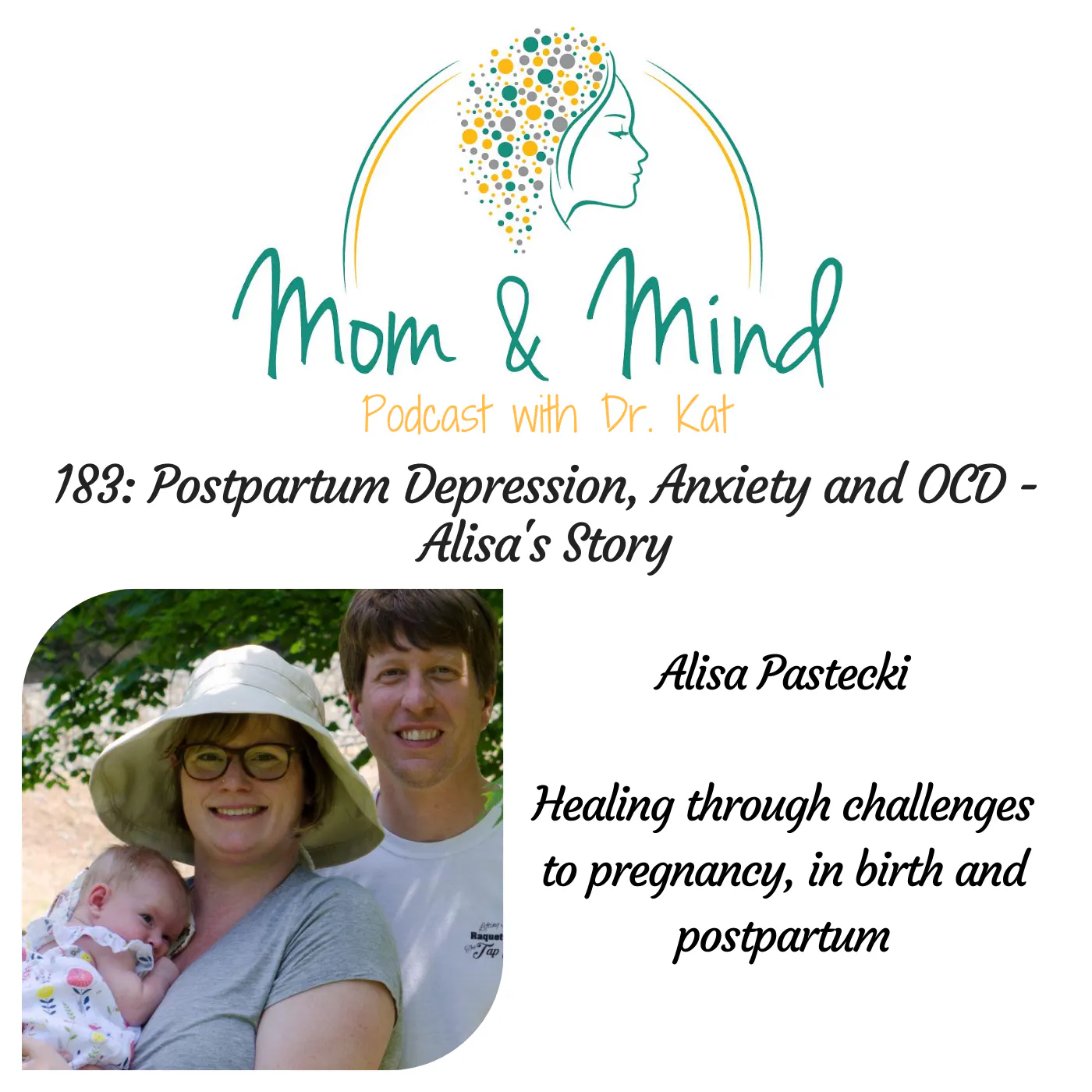
Ep 183183: Postpartum Depression, Anxiety, and OCD - Alisa's Story
Perinatal mood and anxiety disorder can leave you feeling lost, alone, and confused by the symptoms. This is why it’s so important that we hear personal stories of others that show us we are not alone. Alisa Pastecki is a Sales Executive for a network equipment and services provider that works with telecommunications companies all over the US and Canada. She lives in Batavia, NY--just outside of Buffalo--with her husband Doug, two-year-old daughter Gloria, and their dog Lily. The family spends as much time outdoors as possible, enjoying hiking and camping. After the birth of her daughter, Alisa suffered from postpartum depression, anxiety, and OCD. She has since realized just how important it is to raise our voices in the fight against maternal health stigmas, and she wants to help normalize PMADs for moms in her community. Show Highlights: How depression and OCD tendencies began for Alisa even before she was pregnant Trying to conceive, an endometriosis diagnosis, surgery, and plans for IVF An unexpected pregnancy just in the nick of time led to insensitive comments by a nurse that escalated Alisa’s anxiety about the pregnancy With an easy pregnancy, Alisa’s daughter was born full-term, but Alisa’s anxiety kept escalating with the pressure of her doubt in second-guessing every decision Midwife and doula plans, induced labor, painful procedures, and a C-section What Alisa wishes she had done differently Why Alisa had never been so scared before as she was during her C-section Problems with breastfeeding and weight loss for her baby How Alisa felt about being constantly bombarded with a black and white approach to each obstacle she faced Problems with OCD, disconnected feelings, and anxiety in the first few postpartum weeks How the anger and rage set in for Alisa and led to irrational fears about her daughter How intrusive thoughts began around three months postpartum How Alisa stumbled onto the PSI (Postpartum Support International) website and found helpful resources How Alisa found a therapist who let her know that she would be OK; now, two years later, she is still working with that therapist who provided her the tools and meds to change her life The difference that therapy and medications made in giving Alisa confidence as a new mom Lessons learned for Alisa: Many medical practitioners aren’t sufficiently educated on postpartum care, so you need to find a doctor who understands PMADs Reach out to peers and a support group who will honestly open up about the bad and ugly of the postpartum experience Be vocal and help break the stigma around mental health issues Resources: Alisa Pastecki Learn more about your ad choices. Visit podcastchoices.com/adchoices
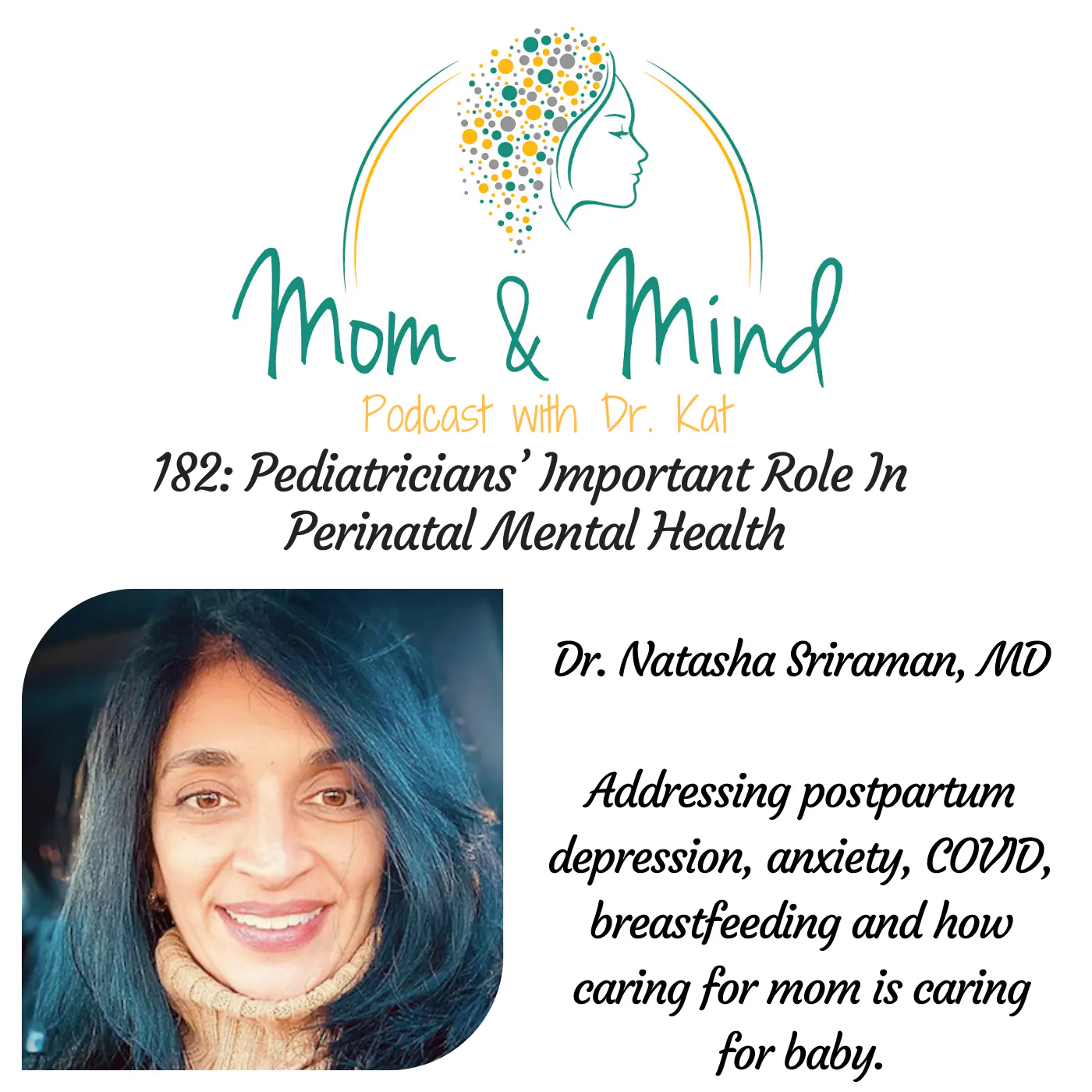
182: Pediatricians' Important Role in Perinatal Mental Health
We are constantly learning more about the importance of mental health and its impact on the overall health of parents, children, and the entire family. More and more clinicians are getting trained in perinatal mental health, which is exactly what is needed. In today’s show, we get a pediatrician’s perspective of stepping in to help new moms, even though their primary role is to support and care for the child. Dr. Natasha Sriraman is a pediatrician and Associate Professor of Pediatrics at Eastern Virginia Medical School. She’s an attending physician, researcher, wife, and mother. Her main areas of research include breastfeeding, postpartum depression, and health disparities. Natasha is a strong advocate who lobbies for breastfeeding support in the workplace and postpartum depression screening within the pediatric setting. She researches, publishes, and speaks around the country about postpartum depression and anxiety, breastfeeding, and the importance of the mother in the fourth trimester. When not working, Natasha enjoys running, boxing, yoga, traveling, reading, and going to the beach with her family. In this episode, Natasha shares her perspective, experience, and knowledge of being a pediatrician who incorporates perinatal mental health awareness and screening into her practice as well as how her own experience prompted her to become a lactation consultant. We’ll touch on how the added stress of COVID-19 is impacting families in receiving necessary care and how pediatricians can play an important role in perinatal mental health. Show Highlights: Natasha’s practice and focus on perinatal mental health and the “fourth” trimester, based on her experience and difficulties as a mom The unique opportunities that pediatricians have to engage with babies and mothers during the first year of a baby’s life and “bridge the gap” for families Why Natasha is screening moms even before the first six-week checkup for the baby The delicate balance for a pediatrician of navigating the issue of a mom’s mental health when the baby is your patient How to differentiate between normal “new mom nervousness” and postpartum depression and anxiety that requires help New worries from pregnant women and new moms in the time of COVID-19 Extra precautions in the doctor’s office during COVID-19: taking temperatures and wearing masks How Natasha navigates her work as a lactation consultant Why patients should never feel like they have to choose between breastfeeding and getting treatment for anxiety/depression The need for widespread education in perinatal mental health Natasha’s hopeful message: “It’s been wonderful to see moms achieve a level of comfort in talking to their physicians and pediatricians in the fourth trimester. One positive aspect of COVID-19 is increased access to virtual support groups.” Resources: Natasha.Mom.MD: Care For Kids, Empowerment for Moms Facebook: Natasha Mom MD Natasha Mom MD Learn more about your ad choices. Visit podcastchoices.com/adchoices

181: Fathers and Perinatal Mental Health
We have the honor of hearing from Dr. Sheehan Fisher about new fathers, the transitions they may go through when a baby comes along, as well as the challenges and strengths that they may experience. There are quite a few gems in our talk today, one of which is how the role of fatherhood is changing and adapting to the times…AND thoughts about navigating that. Dr. Fisher’s take on these transitions is not to be missed. I’m sure you’ll want to share this with the fathers, men and partners of men in your life. PLEASE DO! We also discuss: - The spectrum of mood changes that fathers might experience postpartum, such as depression, anxiety, anger - how it affects them, what they might experience - what their partners might notice - Looking at the family as a system and how family members affect each other - What can they do? What kinds of support or therapy, available? - Coping suggestions - hopeful messages for fathers Connect with Dr. Fisher: Twitter: @SheehanDFisher Facebook: @SheehanDFisher Instagram: @DrChefSheehan Dr. Sheehan Fisher is a clinical psychologist and Assistant Professor at Northwestern University, Feinberg School of Medicine, with an appointment at Lurie Children’s Hospital. His research and clinical interests focus on perinatal mental health, with a subspecialty in father’s mental health and role in the family. His aim is to understand the mechanisms that place mothers and fathers at risk for perinatal mood and anxiety disorders, and the effect of both parents' mental health on infant health outcomes. He also is passionate about increasing fathers' competence in the home and reconstructing views of masculinity. For this and all episodes, visit www.momandmind.com To join in the discussion and community, find us at https://www.facebook.com/MomandMindPodcast/ https://www.facebook.com/groups/MomandMindConnection/ Learn more about your ad choices. Visit podcastchoices.com/adchoices

180: There's More to My Postpartum Story
My goal is for the show to be a mix of personal stories, expert interviews, information, and education. Even though my story isn’t usually at the forefront, I find that it’s powerful and meaningful to share my experiences, and that’s the focus of today’s episode. Join us! You know me as Dr. Kat, but my full name is Katayune Kaeni. I’m a psychologist, wife, and mother to two lovely humans. I’m perinatal mental health certified, and my entry into the world of perinatal mental health began ten years ago with the birth of my first child, my daughter. I’m proud of my children, and I look at this podcast as another beautiful creation that I’ve birthed into the world. Just like the motherhood journey, my four-year podcast journey has been full of many mistakes and lots of learning; we’ve covered many topics, but there is so much more to learn! To date, Mom & Mind is heard in 69 countries, with over 356,000 downloads and a horde of social media followers. Welcome to Episode 180! Show Highlights: For everyone with a perinatal mental health issue, there is always a story behind the pain Why and how my relationship with my body changed and began a different phase in my life How I knew at age 12 that I wanted to be a mental health counselor, even though I already was dealing with anxiety and depression In high school, a skiing accident left me with an ACL injury that required surgery, along with my first concussion In college, risk factors kept building as PMS brought panic attacks and more depression; over the years I tried doctors, diuretics, birth control pills, acupuncture, Chinese medicine, and energy healing In grad school, family stressors brought more depression and anxiety, and I met and married my husband; a biking accident led to my second concussion that wasn’t treated properly As I entered the world of employment, I suffered yet another concussion; other risk factors included anxiety, depression, being a highly sensitive person and a perfectionist, and then---my first pregnancy Because pregnancy brought me relief from PMS and hormonal craziness, I actually felt wonderful--better than I had in many years Ten years ago, in 2010, my daughter was born, and the problems began on Day 1 How I dealt with breastfeeding issues, poor sleep, and intense anxiety; the intrusive thoughts were overwhelming and embarrassing because of their sexual nature Why I never even told my husband how I was feeling--even a year into our daughter’s life As a psychologist, I didn’t want anyone to know that I was suffering, so I lied on a depression screen How I finally decided to make changes, and I started with learning more about perinatal mental health and helping others How getting past the shame, guilt, and embarrassment was a huge obstacle for me How I started accepting clients into my private practice and continued to learn more and more Today, I’m still triggered from time to time, but I can recognize the signs now better than before With my second child, I had similar experiences, but the problems were less intense because I knew what was happening How my PMS symptoms became worse and more difficult to manage after my two children were born How I’m taking measures to manage my mental health Why I want people to have a broader sense of perinatal mental health conditions My goal for myself is to learn to live with it well and have more opportunity for healing My healing isn’t complete, because life brings up things I have to deal with on a daily basis My goal with the podcast is to normalize the fact that we all struggle, and make it OK to reach out and get help Resources: Email me: [email protected] Find my website: Mom And Mind Learn more about your ad choices. Visit podcastchoices.com/adchoices

179: Black Women Birthing Justice
We are talking with Professor Chinyere Oparah and Dr. Sayida Peprah, who are part of the Black Women Birthing Justice collective. Today we are discussing some of the research they have done and the report called Battling over Birth. Highlights from our discussion include the power dynamics in the birthing environment for black women, history of sexual survivor issues and how that might impact the birthing experience, empowering Black women in the birth space and some glimpses into what the Battling over Birth report recommends. Julia Chinyere Oparah is a social justice educator, collective leader, activist scholar, and experienced community organizer who has spent over two decades producing critical scholarship in the service of progressive social movements. Oparah is Provost and Dean of the Faculty and professor of Ethnic Studies at Mills College, and she was educated at Cambridge University and Warwick University Show Highlights: Black Women Birthing Justice: A collective of African-American Caribbean, and multi-racial women who are sharing about the negative experiences they’ve had in their maternal care and childbirth How a negative birth experience can be turned around with a great midwife and doula team How the actions that are being taken by medical providers are disempowering black women How BWBJ began in 2011 with a Research Justice project, with over 100 women being open and honest about their stories Battling Over Birth: a human rights report that unpacks the stories of those 100 women and how they found themselves in conflict with their medical providers Before the sharing circles, some of the women had no idea of what they had missed out on in their birth experiences The comparison with this topic and the sexual survivors of the Me Too movement, and how their birth experiences are re-triggering and re-traumatizing, with further victimization How doctors use fear-based coercion to get the women to do what THEY want The ramifications and implications for these women, along with the potential stress and trauma The opportunity to change the narrative and “do it differently” How to have empowerment in the birth experience, including how providers interact with you for physical exams during labor and birth How the mental health of these women is affected The ways we can make sure this doesn’t keep happening--”This doesn’t have to be normal.” How the impact of the negative birth experience bleeds over into breastfeeding How the timelines followed in the birthing process don’t take into account the stress and trauma that are added to the process What the report shows about the link between postpartum depression being linked to the birth experience, and not just to hormones How those disadvantaged in race, class, and relationship status had toxic postpartum environments more frequently The shame and judgment that black women feel in admitting postpartum depression, because they are supposed “to be strong” Resources: Professor Oparah: https://www.juliachinyereoparah.com/ Dr. Sayida: www.DrSayidaPeprah.com To learn about Dr. Sayida’s non-profit click here: www.DiversityUplifts.org, To learn more about the Black community-based doula program and COVID19 doula initiatives Dr. Sayida is working on, click here: www.FrontlineDoulas.com Please find out more by reading that Battling over Birth report at Find the report here: http://www.blackwomenbirthingjustice.org/battling-over-birth Twitter @birthingjustice Instagram @birthingjustice Facebook: https://www.facebook.com/pg/Black-Women-Birthing-Justice-216928328357571/posts/?ref=page_internal Learn more about your ad choices. Visit podcastchoices.com/adchoices
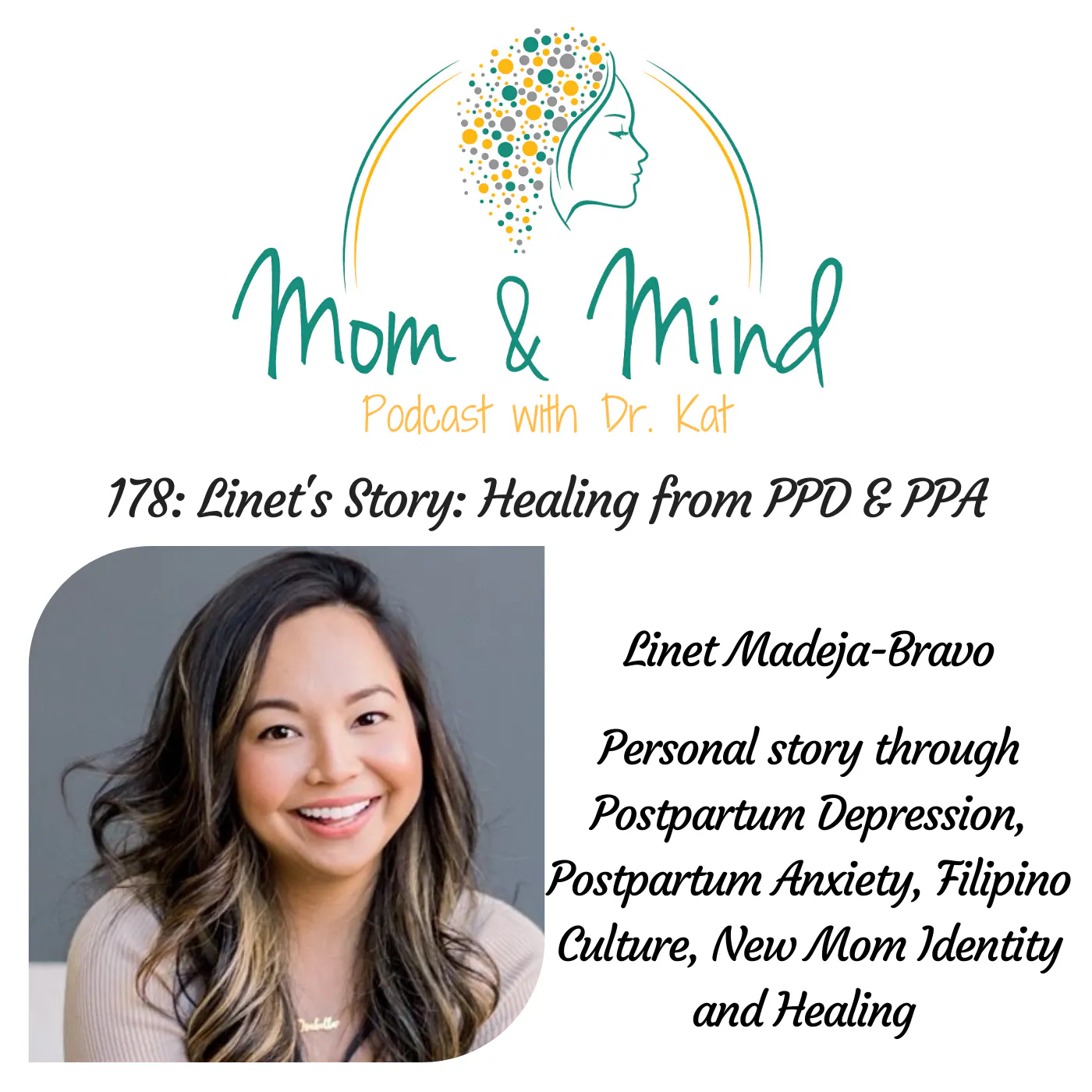
Ep 178178: Linet's Story: Healing from PPD and PPA
Going through a postpartum mental health event can be a transformative experience. Many survivors feel inspired to change the course of their lives and careers and dedicate themselves to supporting and serving others. Such is the case of today’s guest, and her story is a fitting way to round out Maternal Mental Health Month. Join us! Linet Madeja-Bravo is a working mom, wife, and the proud daughter of Filipino immigrants. She lives in the Pacific Northwest and is Mommy to two-year-old Isabella. Professionally, Linet has worked for local government for almost a decade and is most passionate about serving those in her community that are most marginalized and furthest from opportunity. Overwhelmed by the unexpected realities of being a new mom, breastfeeding issues, and other life events, Linet decided to seek professional help at eight weeks postpartum. Linet’s experience with postpartum depression and anxiety ignited a passion for helping other new moms and families. She is also passionate about decreasing cultural stigma and reducing barriers to mental health support and resources for those who need it most. Linet continues to work through her postpartum depression and anxiety with a specialized therapist and shares her story as a way of healing. She also hopes to one day become professionally trained to become a therapist or support person who specializes in perinatal mood and anxiety disorders. Show Highlights: Linet’s story of always wanting to be a mom, getting pregnant soon after their marriage, and an easy pregnancy How she experienced anxiety about the birth process, but then felt overwhelming joy at her daughter’s birth As the difficulties began, Linet found that breastfeeding was the biggest contributor to her postpartum anxiety Why it was hard for Linet to know who to listen to At three days old, her daughter had to go to the hospital due to losing weight; she had to take formula and be treated for jaundice in the NICU How the nurses didn’t explain the problems and treatments to Linet, and she found out later her baby had been weighed incorrectly What Linet learned in the NICU stay: how to pump and how to wash bottles properly How Linet realized that breastfeeding and sleep were her biggest issues, along with an unexpected surgery for her daughter’s tongue-tie issue How LInet realized that everything she tried to control didn’t work out and made things worse How Linet took her daughter to different feeding specialists and therapists, later realizing she was being obsessive How Linet had random crying fits and felt guilty for her postpartum anxiety and suicidal thoughts The breaking point at eight weeks postpartum, when Linet went to the hospital with abdominal pain that turned out to be diverticulitis Why Linet saw a therapist to get help for the first time The unseen pressure in immigrant cultures about mental health How returning to Linet’s faith and her church community helped with her healing The hardest things in Linet’s journey Hopeful words from Linet: “You have everything you need to be a great parent. Your confidence in parenting will ebb and flow, and there will still be hard days. I’ve accepted that parenting is full of hard moments and new things. The most beautiful thing is that I’ve never felt such deep love, passion, and reward. Parents need to prioritize self-care and give themselves grace.” Learn more about your ad choices. Visit podcastchoices.com/adchoices

Ep 177177: The Loss of a Postpartum Mother and Wife
No one will escape this life without feeling the pain of loss, and there is no better way to channel that pain than through creating something beautiful out of it. In today’s show, you’ll meet a devoted husband and father who wasn’t content to wallow in his loss on the sidelines. He’s turned his pain into purpose as he helps countless families through the challenges of maternal mental health treatment. Steven D’Achille is president and founder of The Alexis Joy D’Achille Foundation for Postpartum Depression. He’s an advocate for maternal mental health issues because he realizes that women’s health is a family health issue. His passion is creating access to care for struggling families. He’ll go deep into his story today, sharing how postpartum depression took the life of his wife, Alexis. I’ve had the pleasure of serving on the board of Postpartum Support International with Steven, and I’ve seen up close his passion and dedication springing from the horrible and unnecessary outcome of his wife’s death. He is changing the landscape in Pittsburgh and wherever he goes to share his wife’s story and the foundation in her name. Steven is a passionate advocate for fathers, in addition to his support of maternal mental health because he realizes the need for caring for the whole family, especially fathers and partners. As his six-year-old daughter, Adriana puts it, “He wanted to change the world.” **Sensitivity Notice: Difficult topics are discussed in this episode related to suicide. If you aren’t in a place to listen today, feel free to find the episode at a later date. Show Highlights: Get to know Steven and his story that began with the traumatic birth of his daughter, Adriana How Steven’s wife, Alexis, believed that her first act of motherhood was to damage her child How things started unraveling almost immediately for Alexis, who knew she needed help How Alexis experienced serious anxiety and saw an LCSW for coping mechanisms, receiving a PTSD diagnosis The increased anxiety, shame and stigma, and scary options More symptoms included depression, insomnia, and loss of appetite The disconnect between psychiatric care and Ob care for mothers How HIPAA rules prevented the pediatrician from notifying anyone of her concerns about Alexis How Alexis was prescribed an antidepressant and the depression escalated to suicidal thoughts; her plea for help went unacknowledged How Alexis begged to be admitted for weeks and then hung herself in their basement--just 14 days after beginning the new antidepressant How the system failed Alexis How Alexis survived to get to the hospital and make it to ICU How Steven got clarity on how to move forward and make something good come out of Alexis’ tragedy, to get other moms the help Alexis could not get How The Alexis Joy D’Achille Foundation’s hospital treated 3000 moms in 2019 The family services provided by the foundation The importance of a father’s perspective in going through this journey and raising a 6-½-year-old daughter without her mom How our laws protect puppies more than we do moms and babies The reality of postpartum depression treatment in the US---and what needs to change The power in telling your story What the new standard of care should be Resources: Alexis Joy Foundation Facebook: Alexis Joy D’Achille Foundation for Postpartum Depression: @Alexisjoydachille Instagram: @ajd_foundation Learn more about your ad choices. Visit podcastchoices.com/adchoices

Ep 176176: Mother Burnout
In honoring Maternal Mental Health Awareness Month, today’s topic is mother burnout. It’s something a lot of us moms feel, but we often don’t recognize it until it’s too late. Let’s learn more! Diana Spalding is Digital Education Editor at Motherly, along with being a certified nurse-midwife, pediatric nurse, and mother of three. She wrote The Motherly Guide to Becoming Mama, which was just released. We’ll discuss what burnout means, why it’s important to pay attention, how to recognize the early signs, and what to do from there. Show Highlights: How Diana became interested in burnout The facts: 85% of moms don’t feel supported by society The “occupational phenomenon” of burnout, which is a diagnosable condition with real consequences Characteristics of burnout: fatigue, exhaustion, negativism, cynicism, and not feeling like you’re doing a good job Good mom, bad mom, and how we judge ourselves and each other Contributing factors to mother burnout How and when burnout begins Why parents don’t trust themselves, and how we can empower them How to recognize signs of burnout and be aware of your mental health The importance of reaching out for help and finding connection How certain factors related to the current pandemic contribute to burnout, like isolation, lack of support, and unreasonable demands How our culture teaches us to deal with uncomfortable feelings How our capacity for empathy and sympathy is stretched Long-term effects of chronic stress Diana’s book, a new resource with a holistic focus on mental health Resources: Motherly Instagram: Motherly Facebook: Motherly Media The Motherly Guide to Becoming Mama: Redefining the Pregnancy, Birth, and Postpartum Journey by Diana Spalding, Jill Koziol, and LIz Tenety Learn more about your ad choices. Visit podcastchoices.com/adchoices

Ep 175175: Mom Genes Fight Postpartum Depression
May is Maternal Mental Health Awareness Month, and today, May 6, happens to be World Maternal Mental Health Day. It’s a fitting day to bring you this show with an expert who is the driving force behind a pioneering study to help diagnose postpartum depression earlier and get moms the treatment they need. Dr. Samantha Meltzer-Brody, MD, MPH, is co-principal investigator of the Mom Genes Fight PPD research study, as well as the Assad Meymandi Distinguished Professor and Chair of the UNC Department of Psychiatry and director of the UNC Center for Women’s Mood Disorders. Her funded research is focused on understanding the genetic signature of postpartum depression and investigating novel technologies and treatment modalities to optimize and personalize treatment for women with perinatal depression. Most recently, this has included the MOM GENES app and the brexanolone clinical trials, the first FDA-approved medication for postpartum depression. She knows a lot, and she’s done a lot with her significant work in perinatal mental health. Show Highlights: What postpartum depression is and why Dr. Meltzer-Brody is studying it The MOM GENES study that began in 2016 (learn how you can participate) How the study can help us identify who is at risk so intervention can happen earlier Who can participate in the study The confidentiality and anonymity of the study The availability of resources for participants in the study How the DNA samples are collected and pooled together How the genetic information will be used to determine treatment and outcomes The preliminary findings: not all women have the same types of postpartum depression Why women with co-occurring anxiety disorders are encouraged to apply for the study Examples of postpartum depression and the signals that mean someone needs to seek help How the study and the app have already helped people in many ways Resources: Mom Genes Fight PPD Learn how you can join the study from the comfort of your own home. Learn more about your ad choices. Visit podcastchoices.com/adchoices

Ep 174174: Perinatal Mental Health en Español - Salud Mental Materna
Emilia Ortega-Jara, LCSW is a psychotherapist, Founder and Clinical Director of Corazon Counseling Service Inc., a holistic culturally-rooted community-based counseling center that focuses on all things Preconception, Pregnancy, Birth, and Postpartum! Emilia has over 20 years’ experience working in the mental health field and has been a longtime advocate for culturally and linguistically appropriate mental health services in the Latinx community. She has worked with various social justice organizations and community based mental health agencies throughout California. After the birth of her son, Emilia took special interest in developing her clinical expertise in the treatment of perinatal mood and anxiety distress among Chicana/Indigenous and Latinx communities. She is Certified as a Perinatal Mental Health Specialist through Postpartum Support International and is trained in EMDR, she uses EMDR techniques in the treatment of Perinatal Loss and Birth Trauma. Emilia is passionate about supporting and empowering parents at all stages of their parenting journey through the use of traditional ancestral knowledge and modern trauma-informed psychotherapy. Emilia is a mother to a spirited and emotionally attuned 8-year-old who loves the fact that mommy helps other mommies not be sad, and wife to the most supportive and socially conscious husband. Nayeli Corona-Zitney is a bilingual, licensed clinical social worker whose private practice in Rancho Cucamonga, CA, specializes in Perinatal Mental Health. Her experience includes therapeutic work with adolescents, families, and new parents experiencing perinatal mood disorders. Nayeli is an active member of Postpartum International (PSI) and currently volunteers as PSI’s support coordinator for Riverside and San Bernardino Counties in California. Nayeli is committed to offering her expertise to the community. She does this through her private practice and also by facilitating pregnancy and postpartum support groups in the community in both English and Spanish. Nayeli is a wife, mother of two, and Perinatal Mental Health Advocate who integrates a social justice framework, which recognizes how migration and historical socio-political policies can negatively impact certain groups. Puntos destacados del podcast: Es de vital importancia cuidar la salud mental de las madres durante el parto y posparto. Por la situación de incertidumbre actual, el estrés en la mujer es especialmente difícil para las embarazadas y para las que acaban de dar a luz. Hay que garantizar el bienestar de las madres, cuidarlas y darles el apoyo emocional que necesitan, siendo tan vulnerables y sensibles en esta etapa. Depresión y ansiedad en la etapa perinatal, Nayeli se especializó en esta fase porque durante el embarazo de su hija tuvo un parto traumático y le tuvieron que hacer una cesárea de emergencia. deben ser lo suficientemente fuertes como para hacerlo ellas solas. La obligación de dar y recibir apoyo no solo recae sobre la madre sino a todo el mundo de su alrededor. Recursos: Consejería Terapia del Diálogo: Terapia cognitiva conductal Terapia interpersonal Desensibilización y deprocesamiento por medio de movimientos oculares. Grupos de terapia del Hospital Columbia Valley: 2 veces al mes, el primer y tercer miércoles de cada mes. Grupos de apoyo PSI (Postpartum Support International) Corazón counselling Nayeli LCSW Corazon Counseling Learn more about your ad choices. Visit podcastchoices.com/adchoices

Ep 173173: Holding Both: When Therapists Who Are Affected Are Supporting Others
One challenge that every therapist faces is helping clients through a difficulty that hits very close to home. For instance, when you’ve experienced a personal perinatal mental health challenge, then it can be triggering to provide support for others. Today’s guest has found a way to handle those difficult moments and turn her experience into commitment and advocacy for others. Bridget Cross is a Licensed Clinical Social Worker, certified perinatal mental health professional, and mom to two daughters. She lives in Savannah, Georgia, and works in private practice providing individual, family, and group therapy to new, hopeful, and expectant moms. Bridget is also a volunteer coordinator for the Georgia chapter of Postpartum Support International, and she’s a member of the Maternal Mental Health Collective of Savannah. Bridget’s passion is supporting women in all phases of life, but especially as they encounter and cope with the transition to motherhood. Bridget discusses what it’s like to work as a therapist with pregnant and postpartum moms when going through infertility, and what it’s like working with a perinatal population when going through her pregnancy and postpartum period., Therapists are human, and they have to deal with their own challenges while helping their clients. Show Highlights: Bridget’s three-year journey with IUI and IVF to have her first daughter, now 5 The crippling anxiety, anger, intrusive thoughts, and panic that set in quickly and intensely at her daughter’s birth Why Bridget felt that she “should be stronger than this” How Bridget found herself in deep, dark depression when her daughter was one month old How Bridget withdrew from everyone in her life and “hid out” The external stressors of work, moving to a new city, and career pressure How Bridget went back to work and became involved with PSI The moment of relief and recognition for Bridget that brought clarity on her next steps as a therapist How Bridget covered up and justified her feelings when people tried to help her The assumption that mental health professionals will know to ask for help if they need it How hard it is to admit to others that you need help, especially as a mental health professional When Bridget’s daughter was two, she got pregnant again with IVF, which resulted in an easy pregnancy and wonderful birth Why Bridget expected postpartum depression with her second daughter’s birth and felt better prepared; she started early medications, therapy, and returned to work in a few weeks Bridget’s commitment to becoming an advocate for pregnant and postpartum women, knowing this was part of her personal healing journey The difficult parts of seeing pregnant and postpartum clients even though some stories are triggering and painful How to handle the tendency to get angry about her own story and clients’ stories How to hold space for the anger, hopelessness, and helplessness in this community Why Bridget believes her path has made her a better therapist Bridget’s message to other therapists: “Try to prioritize taking care of yourself and your feelings. Check your boundaries and notice presenting issues that are just too much to handle. Know when you need to step away. Listen to yourself and get connected to the perinatal mental health community.” Resources: Bridget Cross LCSW Facebook: Bridget Cross LCSW Listen To Moms Learn more about your ad choices. Visit podcastchoices.com/adchoices

Ep 172172: Sex, Stress, and Burnout. Understanding it All with Emily Nagoski, Ph.D.
The focus of our chat is on sex, but it’s also about relationships and stress and how our brains work. Our guest Emily Nagoski, Ph.D. shares her brilliant wisdom with us in this episode. Given the current state of the world, we are living in times of unprecedented stress, which absolutely affects how we relate to each other. I’m excited for you to hear this episode and learn more about your brain, sex and stress, especially postpartum. (FYI, sex related body parts, sex related words are used in our chat). Emily Nagoski is a sex educator and the author of Come As You Are: The Surprising New Science That Will Transform Your Sex LIfe and Burnout: The Secret to Unlocking the Stress Cycle. Her job is to travel all over the world, training therapists, medical professionals, college students, and the general public about the science of women’s sexual wellbeing. Show Highlights: The dual control model of how your brain perceives and processes sex Why you might feel judgment about your sexual response, which “hits the brakes”--not the accelerator Why the magical six-week timeline doesn’t work for most women How your brain responds to the physical changes that come with giving birth The best perspective on the six-week timeline Steps to take in the chaos: Identify what is causing you to hit the brakes Have non-sexual sharing and touching Why Emily doesn’t use the term “libido” Why sexual desire differential is the #1 reason people seek sex therapy The secrets of sexuality in long-term relationships Why desire does NOT come first Why you need to identify the sex you want---and don’t want Why “pleasure is the measure” of your sexual wellbeing Why Emily reads her own audiobook versions Creating the ultimate sex-positive context through kindness and compassion The difference in confidence and joy Resources: Emily Nagoski Come As You Are: The Surprising New Science That Will Transform Your Sex Life by Emily Nagoski Burnout: The Secret to Unlocking the Stress Cycle by Emily Nagoski Learn more about your ad choices. Visit podcastchoices.com/adchoices

Ep 171171: Fighting for Nora. PostpartumPsychosis Through the Eyes of a Mother and an Advocate
Today’s show is a special episode with difficult and sensitive topics. We’ll be hearing about Nora and her story of postpartum psychosis and filicide. We have the honor of hearing from Nora’s mother, Kathryn Gahl. She will share from her perspective as a mother and what it’s been like to see what Nora has been through and continues to experience in her imprisonment after filicide. We’ll also hear from Dr. Brooke Laufer, a clinical psychologist who picked up on this case and has followed it closely. Nora has given her permission for us to have this conversation with Brooke and Kathryn about her case. The goal is to get information out in the public about postpartum psychosis, its detection, and treatment. Join us to hear the mother’s perspective, the clinical perspective, and what’s going on in Nora’s life right now. Nora’s mother, Kathryn Gahl, became a widely-published, multi-genre writer after a long career as a nurse manager. She is the mother of a daughter and a son, and in 2004, she lost her young grandson to filicide. Now, her bookshelves sag with letters from her imprisoned daughter, who is also a registered nurse. Kathryn believes in the transformative power of dance, dark chocolate, and red lipstick to help her get through life. Brooke Laufer has been a practicing psychologist since 2005. She began her clinical work in psychiatric wards with severely mentally ill patients and then worked in schools with adolescents and their families. She is currently in private practice doing psychoanalytic psychotherapy. After having her first child, Brooke had a disturbing postpartum OCD experience, which inspired her to begin researching, understanding, and specializing in the area of perinatal mental illness. She recently started working as an expert witness for women who have committed a crime in a postpartum episode. Brooke has two children of her own, along with a Golden Retriever and a loyal husband; they live, work, and play in Evanston, Illinois. Show Highlights: The overview of Nora’s story, from Kathryn Nora’s experience: suffocating her 14-month-old son, Leo, and then attempting suicide because of her postpartum psychosis Circumstances that contributed to Leo’s death Nora’s psychiatric diagnoses: major depressive disorder severe with paranoid ideation, excessive-compulsive personality disorder, and PTSD What these events were like for Kathryn How Kathryn’s writing and dancing have helped her cope with these horrifying events How Kathryn was surprised at the people evaporated from her life and those who stepped up to support and help her How Brooke got involved through corresponding with Nora because of a childhood connection Why Nora believed she deserved to suffer and be punished Altruistic filicide (defined as believing that bringing death to the child is better than if the child survives) is an apt label for Nora What it’s like to be in a state like Wisconsin, where a case like this gets very little support and legal consideration Why Nora made the decision to plead guilty The main issue is how poorly we treat mental health issues in our US legal system that is deeply flawed How other countries deal with mental health, motherhood, and postpartum psychosis How Kathryn dealt with this experience with only one bout of depression Why postpartum psychosis is an issue that shows the failure of our culture A message from Brooke: “We need to understand that motherhood is equally dark and light. We need to ask for good help when we need it.” Why family members need to speak up when a mom seems “off” A message from Kathryn: “Trust your hunch.” The dire need for more postpartum screening Resources: Dr. Brooke Laufer Kathryn Gahl Gahlstone Twitter: @kathryngahl Learn more about your ad choices. Visit podcastchoices.com/adchoices

Ep 170170: Infant Mental Health
Perinatal mental health is the focus of many Mom & Mind episodes, but infant mental health is often overlooked in our discussions. It’s fascinating to see the intersection of infant mental health and perinatal health, and research shows that we need to consider how these two systems work together to bring mental health to both parents and their babies. We are jumping into this interesting topic with today’s guest. Meyleen Velasquez is a psychotherapist who specializes in infant and perinatal mental health. Her practice supports individuals identifying as women and clinicians working on practicing from an anti-oppressive framework. In today’s episode, we’ll talk about what infant mental health is and why it’s important to consider--along with perinatal mental health. Many moms worry about not doing the right thing for their child, so they fall into the traps of modern parenthood. Meyleen talks about the reality of parenthood, assuring you that you aren’t messing up your kids if you don’t attend to them ALL the time. Show Highlights: What infant mental health and why it’s important The intersection of infant mental health and perinatal mental health: infants need a caregiver to provide calming, soothing, focused attention, and the caregiver needs a safe space to express emotions Why there isn’t much focus on the crossover between infant mental health and perinatal mental health The need to share information with parents in the space of compassion and gentleness In the parent/child relationship, a basic need is that struggling parents need support Why an infant who doesn’t show a full range of emotions is cause for concern, but those emotions can’t be overinterpreted The need to be “good enough,” and look at parenting as a whole and not just what happened in one day Why parents need at least 30 min./day to take care of themselves The red flag of developmentally inappropriate regression in young children Overinterpretation vs. under interpretation Myths and misconceptions about infant mental health How we can help an infant learn to co-regulate Why parents need to take breaks to soothe themselves How babies respond differently in different settings and relationships Hopeful messages for parents: “Infants and young children are extremely resilient. If parents can get the support they need, then babies can bounce back. Nothing is a forever situation because we can be good enough and create healthy, thriving babies with relationships that we also enjoy.” Resources: Hummingbird Counseling Facebook: Hummingbird Counseling Zeroththree Learn more about your ad choices. Visit podcastchoices.com/adchoices
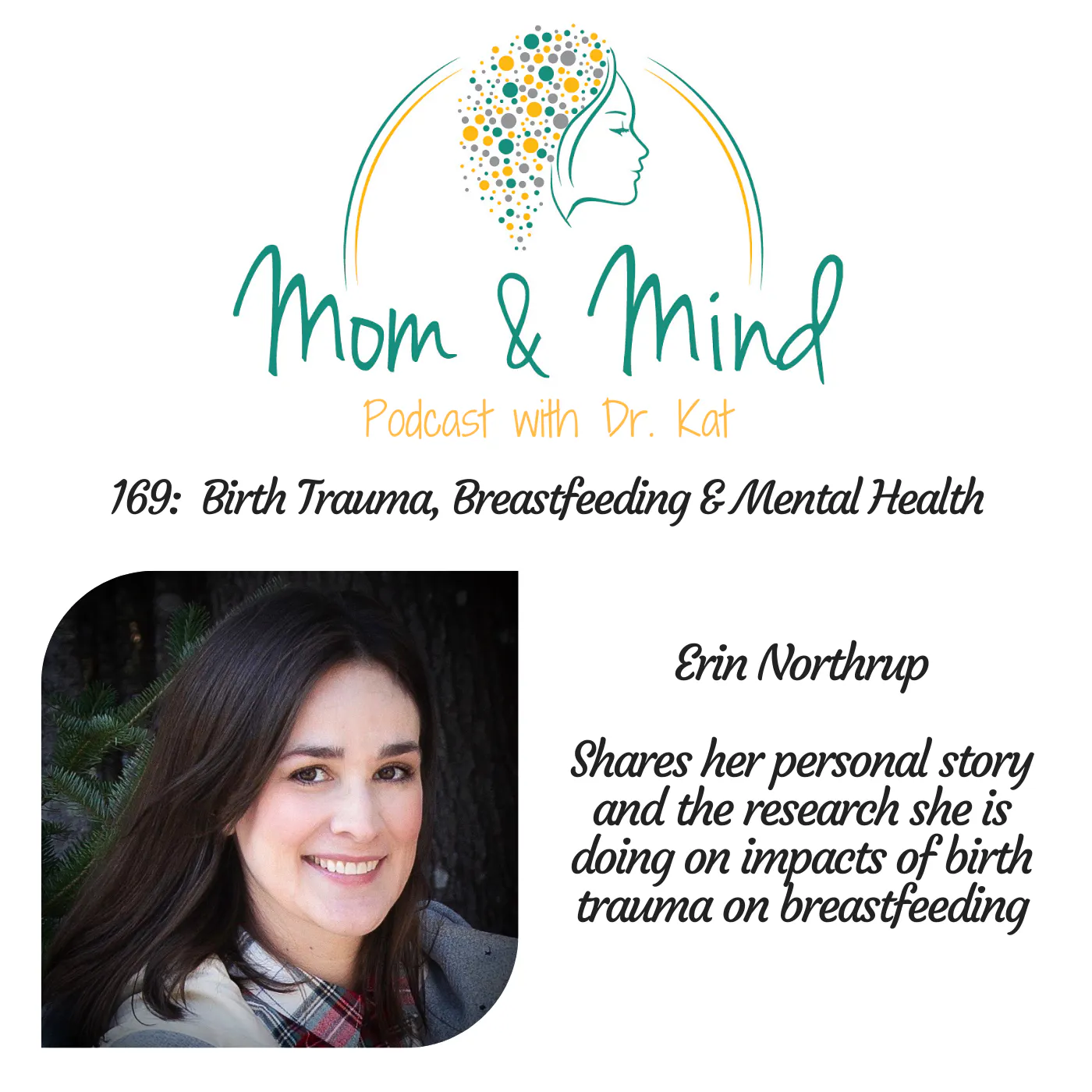
Ep 169169: Birth, Trauma, Breastfeeding and Mental Health
We talk about a lot of things that people don’t want to talk about or even hear. Still, they are very real, challenging, and difficult circumstances surrounding pregnancy, birth, and postpartum. It’s important to share these stories because these difficulties become a reality for many people. Today’s show focuses on birth trauma and breastfeeding as we hear our guest’s personal account. Erin Northrup is a mom of four busy children, ranging in age from 2-10. She lives in Atlantic Canada, where she enjoys spending time in nature with her family. With the birth of her oldest child, Jack, she experienced birth trauma, and this experience sparked her passion for researching trauma. Erin holds a bachelor’s in Psychology and is currently pursuing a Master’s in Health Services Research. Her current research explores the experience of breastfeeding after birth trauma. Her own experience of breastfeeding after birth trauma inspired her to become a volunteer with a breastfeeding support organization offering community-based, peer to peer breastfeeding support. She is committed to raising awareness of the intersection of birth trauma, breastfeeding, and perinatal mental health. Show Highlights: Erin’s birth trauma experience with the birth of her son, Jack, now 10 How her Ob prepared her to have a C-section because of an ambiguous condition How Erin’s water broke a week early, and her spinal didn’t take, so the C-section proceeded under general anesthesia, while Erin felt dissociated from the entire experience In recovery, she was told that her son was taken to the NICU because of low blood sugar, and she couldn’t see him yet How Erin’s mom, a physician, stepped in to advocate for Erin to see her son While eating breakfast a few hours after the birth, Erin felt a popping sensation in her incision and felt a gush of blood Erin was rushed back to the OR, and the spinal worked this time while Erin cried on the table--all of this was before she had even held her baby How Erin was repeatedly spoken about like she wasn’t even in the room; she felt like her input wasn’t even important When Erin got home, survival mode kicked in, and she regretted not advocating more strongly for herself How Erin questioned whether or not her son was even the right baby, worrying that a mix-up could have occurred in the hospital because neither she nor her husband witnessed his birth How she determined to “make it up” to her son by breastfeeding him How the Ob told her at two months postpartum that her condition should not have warranted a C-section in the first place---which just made everything worse How Erin felt an erosion of trust in her doctors and the medical system How Erin asked where the growth and meaning was in her situation and how she could use her experience to help others Erin applied to a Master’s program and went on to have three more kids with positive birth experiences How Erin found support for breastfeeding What Erin has found in her research by asking mothers about their experience with birth trauma and breastfeeding The magnitude of the response she has received, but the difficulty in hearing the painful stories of birth trauma The results from Erin’s research: Birth trauma is destabilizing to the breastfeeding process because of the physical and emotional pain in childbirth and the postpartum from mistreatment The importance of trauma-informed care How women with these experiences feel like the trauma is somehow their fault What care providers should be aware of in their work Resources: Instagram: Live Learn Lactate Learn more about your ad choices. Visit podcastchoices.com/adchoices
Ep 168168: Thyroid, Infertility, and mental Health
We know that our body systems are complicated. There’s no way we can understand everything we need to know to have a healthy pregnancy and postpartum, but the more we know how the brain and body work together, the more prepared we can be. Today’s show focuses on the thyroid, the small--but mighty--organ that impacts fertility, loss, pregnancy, and postpartum. Dr. Hilary Mandzik is a licensed psychologist in private practice in Cary, NC. She also sees clients remotely throughout North Carolina and Virginia. Hilary holds a doctorate in clinical psychology from George Washington University and a Master’s in Education from Harvard. In addition, she has advanced clinical training in perinatal mental health. Hilary is passionate about supporting parents in their journey from conception and onward. She wants to help parents and children feel connected to each other and live their best lives as individuals and as a family unit. In today’s show, Hilary tells us about how her thyroid condition impacted her fertility journey. We’ll discuss other clinical aspects to consider concerning the thyroid, as well as what you need to know if you’re working toward pregnancy. You’ll learn that many people have thyroid conditions and don’t even know it. Show Highlights: Hilary’s personal story of two pregnancies and a missed miscarriage, which clued her in to possible thyroid issues How Hilary didn’t fit the typical thyroid symptom profile How Hilary’s midwife discovered her thyroid issues With research, Hilary discovered that thyroid imbalance is a well-known cause of miscarriage, infertility, anxiety, and depression Why TSH and other hormone levels should be checked routinely in pregnancy How Hilary changed doctors five times within the first six weeks of her third pregnancy, refusing to see a doctor who would dismiss her thyroid issues How pregnancy is a major trigger for autoimmune issues The big difference between normal and optimal in lab ranges How Hilary’s experience has changed how she views perinatal mental health The partnership Hilary feels with functional medicine practitioners How thyroid conditions are often overlooked What tests to ask for from your provider The important role of mental health clinicians to help address health issues and refer clients Why we should take care not to stereotype people with thyroid issues Hilary’s advice to those struggling to get pregnant: educate yourself, connect with doctors who listen to you, and advocate for yourself How the thyroid can impact other systems in the body How the support of a mental health clinician can help you cope How Hilary went on to have a healthy pregnancy after finding and treating her thyroid issues Resources: Hilary Mandzik Stop the Thyroid Madness book Stop the Thyroid Madness website Stop the Thyroid Madness 2 book Hangry book: 5 Simple Steps to Balance Your Hormones and Restore Your Joy (Including a Customizable Paleo/Mediterranean Plan!) The Sarah & Dr. Brooke Show podcast The Autoimmune Solution book by Dr. Amy Myers The Root Cause book by Dr. Isabella Wentz The Hashimoto’s Protocol book by Dr. Isabella Wentz Learn more about your ad choices. Visit podcastchoices.com/adchoices

Ep 167167: When Your Own Thoughts and Feelings are Overwhelming
Welcome to a new year! This is a monumental year for me, as it marks ten years since I was pregnant with my daughter and experienced postpartum depression, anxiety, and OCD. I never dreamed back then that I would be where I am today, trying to help moms and families because of my personal mental health experience. In today’s show, I’ll reflect on those thoughts and feelings that were so overwhelming for me. Show Highlights: As I look back, it’s easier to have compassion and a lighter heart about my experiences than it was a few years ago My planned and wanted pregnancy was actually a break for me from the ups and downs of PMS How I realized with reflection that anxiety was present in my life even before my pregnancy How it felt like I had done something wrong when I experienced a bleeding episode during my pregnancy Why positive and negative experiences get woven together as you reflect on the past The shame and guilt that came with my mental health condition Because of our deepest vulnerabilities, we don’t want to feel our feelings or talk about them The shame, anger, and fear that make you feel alone How scary and intrusive thoughts become traumatizing Why good, specific therapy is crucial My favorite parts of therapy in helping moms realize they aren’t crazy Why I urge you to see a perinatal mental health specialist, join a support group, or find resources to get the help you need The year I spent in an emotional freak-out space, feeling broken and alone Finding a safe person to talk to who will understand Why I am 100% sure that you can get better, too Resources: Postpartum PSI Directory Learn more about your ad choices. Visit podcastchoices.com/adchoices

Ep 166166: You're the Strongest People I Know
As we close out the year, I’m reflecting on my work over the past years. I’m struck by how incredibly strong you all are, and I mean every person who’s endured a perinatal mental health condition. Perinatal mental conditions are very difficult to encounter, and many people navigate their way through these experiences without any help at all. Show Highlights: Going through pregnancy or taking care of a newborn while experiencing a mental health condition is tough, much more so when you have to take care of the other elements of life Loneliness and confusion come with the suffering Worry about other children, finances, and jobs adds to the pressure There are incredible amounts of strength and resilience from people who keep fighting Just getting the sleep you need and getting the right medications can bring amazing hope and relief When the mind relaxes into a new sense of self, then the body relaxes, too It’s worth celebrating when you realize you don’t have to suffer for the rest of your life If you’ve experienced a perinatal mental health condition or a loss, I see you and honor you and respect you Moments of sadness are normal and dehumanizing, but you deserve compassion You are not alone There are many trained professionals who know how to help, so find them and take advantage of the available resources Learn more about your ad choices. Visit podcastchoices.com/adchoices

Ep 165165: Encore! Holiday Self-Care and Stress Reduction
Do you find the holidays stressful? We would all have to say YES if we’re completely honest. For a pregnant mom, a postpartum mom, or a mom experiencing loss, the holiday obligations can be overwhelming in magnified ways. In today’s solo episode, we will discuss how to survive the holidays and manage stress by setting healthy boundaries and prioritizing self-care. Show Highlights: The holidays: a mix of lovely things and difficult moments with the unseen pressure of motherhood to take care of everyone Boundaries are not easy, and sometimes confusing, but necessary Set boundaries around family, friends, spending, activities, and the time you spend with others Don’t be afraid to communicate what your needs are In spending time at someone’s house, have a set time limit or some kind of communication with your partner to signal when it’s time to go To figure out where you need boundaries, ask yourself, “What brings me stress? What do I find difficult?” Why we feel guilty for setting boundaries How anger and resentment toward others will develop when we don’t set boundaries How pushback from someone else can signal the need for boundaries It’s OK when you need a time-out from the tension of social situations Important skills include knowing when to say NO and when to say YES Why you shouldn’t feel obligated to do things that aren’t good choices for you Allow flexibility and compassion in considering your needs How saying YES and NO protects against resentment building up in relationships Ask yourself what you need when you feel anger, guilt, anxiety, and sadness If sleep and self-care are not on your holiday list, then you will feel depleted Sleep is essential for health and restoration, but especially for pregnant moms, postpartum moms, and moms with loss Give yourself permission NOT to do everything Steps to take to manage stress: Think about times in the past when you’ve ignored your own needs Figure out where you can make adjustments Find places where you can say YES and set limits Don’t allow yourself to feel guilty Why your new holiday regimen should be ways to manage stress, keep your energy level, and feel like yourself What feels restorative, whole, and good to you? Set intentions for baths, yoga, solitary walks, connection time with a friend, alone time, or time with your partner Learn more about your ad choices. Visit podcastchoices.com/adchoices

Ep 164164: Acupuncture and Traditional Chinese Medicine for Reproductive Health
We’re diving deep into acupuncture and traditional Chinese medicine. We’re talking specifically about how these treatments can be used in support of people dealing with reproductive health issues and mental health conditions. Abigail Morgan is a mother of two, a licensed acupuncturist and herbalist, and a writer. She is board certified by the state of CA in traditional Chinese medicine and has an additional board certification from the American Board of Oriental Reproductive Medicine (ABORM). She is the owner of FLOAT Chinese Medical Arts in Glendale, CA, an integrative private practice that focuses on reproductive health for all genders and all aspects of the childbearing cycle. Abigail is a passionate advocate for choices in childbirth, and she’s been helping families get pregnant, stay pregnant, and thrive as parents since 2006. She is currently writing a memoir about her experience with postpartum anxiety and her remarkable recovery from it. She’s partnered with a nutritionist to create a new podcast. In today’s episode, we discuss how acupuncture and traditional Chinese medicine help with stress during pregnancy and the postpartum. There is a lot of information here for us to learn about these ways to promote healing. Show Highlights: Abigail’s work with clients in the childbearing cycle and all aspects of reproductive health How Abigail works in conjunction with many therapists about perinatal mental health Why stress, anxiety, depression, and insomnia are common issues with Abigail’s clients What acupuncture is and how it works Common misperceptions about acupuncture and the needles used Benefits of acupuncture: regulates the nervous system, increases blood flow, and reduces blood pressure An interesting study from Georgetown in 2013 about how acupuncture works on a molecular level How we give and receive energy (qi) in our bodies How acupuncture specifically helps with nausea during pregnancy Why the common contributors to anxiety are exhaustion, poor nutrition, headaches, insomnia, and pain The importance of self-care How traditional Chinese medicine helps integrate the mind-body connection How Abigail does empathetic listening with her clients The supports that Abigail offers her clients for the early postpartum period Emotional and physical changes that happen in the early postpartum period How Abigail refers clients out to others who can help them Herbal medicines that nourish the blood and body Why isolation is the #1 risk factor for postpartum anxiety and depression How to find a licensed acupuncturist (visit A.B.O.R.M.) The podcast that Abigail co-hosts with nutritionist Gloria Williamson, “A Nutritionist and Acupuncturist Walk Into a Bar” Resources: Float Chinese Medical Arts Instagram: Mama Float Facebook: Float Chinese Medical Arts Podcast: Instagram: Nutrition Acu Podcast A.B.O.R.M. Learn more about your ad choices. Visit podcastchoices.com/adchoices

Ep 163163: "Dear Scarlet: The Story of My Postpartum Depression"
Today’s show is a personal story of the darkness of postpartum depression and the healing that comes through professional help, self-awareness, and gentleness. The best part of my guest’s experience is the passion she’s gained for helping other moms reach through the darkness to the other side of hope and healing. Teresa Wong is a Canadian writer who has written the graphic memoir, Dear Scarlet: The Story of My Postpartum Depression, which was released last Spring. The book has already had a positive impact on the world and has been featured on NPR and Buzzfeed, as well as in the Paris Review and the NY Times. If you have experienced a perinatal mood and anxiety disorders or any complications related to pregnancy or postpartum, there is something in this graphic memoir that relates to your story. It also shows how culture plays a part in our experience. Through Teresa’s pain, there are beautiful parts interwoven into this story and her healing journey. Show Highlights: How the idea came to Teresa for writing Dear Scarlet when she was pregnant with her third child and needed closure for her postpartum depression experience Why Teresa decided to make it a graphic memoir with pictures Why it was important to Teresa to keep the book short and readable for moms who need to read it How Teresa handled the sketches and drawings for her book How Teresa sought help for postpartum depression when she knew things weren’t right The feelings of guilt, shame, and regret that Teresa experienced The major hemorrhage at Scarlet’s complicated Why Teresa didn’t know what was normal with the birth of Scarlet, her first baby How Teresa’s mom came to help when she got home after Scarlet’s birth, which is part of the Chinese culture How Teresa was diagnosed with postpartum depression at about six weeks and sought additional help from a psychiatrist for about nine months How Teresa hoped and prepared for a better experience with her second pregnancy by having a doula After her second child was born, Teresa went through postpartum depression again at about eight months Why Teresa was disappointed in herself because she had taken preventative measures, but she knows how to get help when she needed it Why Teresa did cognitive behavioral therapy instead of medication for the second time and then had no postpartum issues with her third pregnancy How Teresa’s healing journey has helped her in other ways, like being aware of her feelings and knowing how to handle them The positive reactions from readers of Teresa’s book Teresa’s hopeful messages: “Be gentle with yourself and talk to yourself like you would to a good friend whom you love. These feelings are normal, but you need to get help. You don’t have to live with postpartum depression and muddle through. Ask for help. Resources: By Teresa Wong Instagram: By Teresa Wong Learn more about your ad choices. Visit podcastchoices.com/adchoices

Ep 162162: Pregnancy After Loss Support
October is Pregnancy and Infant Loss Awareness Month, and we are trying to honor each and every one of those losses. Each one has brought significant pain to many people, including grief that is most difficult to acknowledge and navigate. Today’s show focuses on one such loss that has led to the creation of a specific kind of support for thousands. Lindsey Henke is the founder and Executive Director of Pregnancy After Loss Support. She is a clinical social worker specializing as a reproductive mental health therapist with a focus on the grief and trauma that happens after a perinatal loss and the pregnancy that follows. She is also a writer, wife, and, most importantly, a mother to two beautiful daughters and one sweet boy. Tragically, her oldest daughter, Nora, was stillborn after a healthy full-term pregnancy in December 2012. Lindsey’s second daughter, Zoe, was born healthy and alive in March of 2014. Her writing about life after loss has been featured in Listen to Your Mother, Scary Mommy, Healthline, and The New York Times. Lindsey has had the honor of speaking all over the world on the topic of pregnancy after a previous perinatal loss, including at the 2020 Moms’ Maternal Mental Health Forum 2015, Pregnancy and Infant Death Alliance 2016 Conference, Postpartum Support International 2019 Conference, The 2019 Stillbirth Summit, and at The International Women’s Maternal Mental Health 2019 Conference in Paris. She is currently working on her first book. Show Highlights: How and why Lindsey started Pregnancy After Loss Support (PALS), an online support organization for the birth person who is experiencing pregnancy after loss How Lindsey had a stillborn daughter in 2012 after a full-term pregnancy---a devastating and heartbreaking experience How she relied on writing and psychotherapy to help her heal Lindsey’s second pregnancy with her daughter, Zoe, and how she made weekly posts as a blogger Lindsey found that there wasn’t a support space for those experiencing pregnancy after loss How the PALS group was formed and then blossomed into 15 groups for thousands of members How Lindsey digests the research in the field of pregnancy loss to meet the specific needs and wants of the community What’s unique about the experience of pregnancy after loss The insensitive comments that people make during a pregnancy after loss experience The amount of fear and anxiety that occur in pregnancy after loss The balance of grief, fear, and stress, along with joy and hope Knowing when the “expected anxiety” crosses over into the need to seek professional help Invalidating messages that may come from healthcare providers and family members The dance between choosing hope and holding onto fear The circles of grief and how we need to seek support The prevalence of postpartum depression and anxiety in subsequent pregnancies How friends and family can be supportive in validating the experience of the mother Why you should think about what you say and how you say it to someone who has had a pregnancy loss Other steps that family, friends, and healthcare providers can do to give additional support to moms with pregnancy after loss Resources: Pregnancy After Loss Support Facebook: Pregnancy After Loss Support Instagram Facebook: LindseyMHenke Learn more about your ad choices. Visit podcastchoices.com/adchoices

Ep 161161: Postpartum Depression and Anxiety, Twice
Today’s show is another moving, personal story of the journey from pain to healing, and all that happens in the middle. My guest tells the story of how cultural challenges added yet another layer of complexity to her postpartum depression and anxiety experience. Esmeralda Cardenas is a bilingual Licensed Professional Counselor in San Antonio, Texas. She is the owner and provider at Pillars of Life Counseling. Besides being a mental health provider, Esmeralda is a wife and mother of two sons, ages 6 and 8, with both pregnancies bringing her postpartum depression and anxiety. After working with children in different settings for many years, Esmeralda became an advocate and provider for parents experiencing perinatal mood and anxiety disorders. She realized that she needed to own her story and overcome the many fears that came with it. Taking this step has allowed Esmeralda to serve moms and dads in her community with an effort to decrease stigma and help parents know that they are not alone. Show Highlights: The issues Esmeralda faced as an undocumented immigrant from Veracruz, Mexico Her first pregnancy, with no complications until the C-section delivery How Esmeralda was triggered with anxiety, pressure, and judgment from others because of the cultural stigma attached to not having a “natural birth” The symptoms of anxiety and depression, along with the guilt and shame How the pressures of new motherhood and a therapy practice led to Esmeralda’s struggles with rage and intrusive thoughts Why Esmeralda was terrified to let anyone know how she really felt How she finally shared with her husband what was really going on with her With her second pregnancy, two years later, she was much more anxious, but going back to work helped with the depression How the feelings piled up on Esmeralda How Esmeralda dug deeper into grace in owning and sharing her story---and redefined herself The challenges of being a working mom AND a stay-at-home mom Esmeralda’s advice for other moms The evolution we go through to become a happier parent in a better place Why there is hope for everyone, and no mom is ever as alone as she might feel Resources: Pillars Of Life Counseling Instagram: polcounseling Facebook: Pillars of Life Counseling Learn more about your ad choices. Visit podcastchoices.com/adchoices

Ep 160160: Healing from Postpartum Depression and Postpartum Anxiety
Today’s show is a personal story of postpartum anxiety and depression that led to a voluntary psychiatric hospital evaluation. My guest will share how she got to that point, along with the signs and symptoms that went unnoticed for a long time. We will also hear about her journey to healing and how she’s helping other moms now. I believe that hearing the details in others’ experiences can help us recognize these signs in ourselves and our loved ones. Celeste Chapko lives with her husband and three children in Northwest Indiana. She is the founder of Childbirth Melodies (soon to be the Northwest Indiana Center for Maternal Wellness), offering individual and group peer support and music therapy to moms dealing with postpartum depression and other perinatal mood and anxiety disorders. Celeste is a survivor of severe postpartum depression and anxiety and is passionate about supporting moms on their journey to wellness. She is also a volunteer state coordinator, online peer support group leader, and Climb Out of the Darkness leader for Postpartum Support International. Show Highlights: Celeste’s journey with postpartum anxiety and depression: she noticed rage and anxiety at seven months into her third pregnancy, but after the birth, she convinced herself that nothing was really wrong with her How intrusive thoughts convinced her that she needed help; her Ob prescribed Zoloft over the phone and Celeste began seeing a therapist How Celeste went through panic attacks and just “wasn’t functioning well with life” Why she called her husband one day to take her to the hospital’s psychiatric unit After five days in the psych unit, she left with four medications and a referral to see a psychiatrist The signs in Celeste’s first and second pregnancies that went unnoticed The guilt and shame that mother feel, which lead to increased anxiety Why Celeste refers to herself as “a recovering perfectionist” How Celeste’s anxiety and rage manifested themselves in her pregnancy with excessive worry and obsessive thoughts How Celeste knew she needed next-level care in the psych hospital The feelings of hopelessness with nowhere to turn The need for more perinatal psych units for moms How Celeste came into the work she does today on “the other side” How Celeste is more laid back, compassionate, and understanding to herself and others The potential for positive change with the right help and support How Celeste’s experience has changed how she is raising her children to know how to take care of themselves Celeste’s professional journey: music therapist, special education teacher, doula for music-assisted childbirth, and peer support group leader Celeste’s program, The SHARE Journey (Support, Hope, Assessment, Referral, and Education) and how it helps moms with peer support Celeste’s work with her Northwest Indiana Center for Maternal Wellness The difficult task of getting people connected to the resources they need Resources: Childbirth Melodies Facebook: Childbirth Melodies Learn more about your ad choices. Visit podcastchoices.com/adchoices

Ep 159159: "The Bridesmaid's Daughter"
Today’s show is an interesting look into how postpartum issues were dealt with, or not dealt with, in the past. We are looking from the perspective of a daughter who has been on a quest to discover the truth about her birth, her unusual childhood, and her mother’s illness. Nyna Giles is the author of The Bridesmaid’s Daughter, a deeply personal memoir about family, mental health, and revisiting the past. We’ll hear her perspective about growing up with a mother who had mental illness, and how she now knows that her mother had untreated postpartum psychosis. Back then, there was not much knowledge or support for mothers going through any perinatal crisis. We get to hear from Nyna’s perspective what it was like to grow up in that environment and what she reflected on as an adult that she shares through writing The Bridesmaid’s Daughter. Nyna is the youngest daughter of Carolyn Scott Reybold, a Ford model best known as one of Grace Kelly’s bridesmaids. Nyna has worked with leading media organizations and is the COO of Giles Communications. She’s an advocate for the mentally ill, traveling the globe to share her story, revealing the challenges brought on by her mother’s untreated mental illness and her own lost childhood and education. Nyna is a board member of NAMI Westchester and serves on the NAMI New York State Legislative Committee. She is also a volunteer with Postpartum Resource Center of NY. She lives in Westchester with her husband and has three children and three stepchildren. Show Highlights: How the book tells the story of Nyna’s mother’s untreated mental illness A summary of her mother’s glamorous life as a successful model in the 1940’s and 1950’s and best friend to Grace Kelly How her mother married, built a dream house on Long Island, and gave up her career to become a full-time mother to Nyna’s two older sisters How Nyna’s birth was traumatic because she was almost 11 lbs.! Her mother had to have her third C-section and a hysterectomy How Nyna’s father had an affair while she was an infant, and her mother had no family close by and no support Why Nyna had a lack of formal education, no friendships, and was trapped with her mother in a cycle of dysfunction The only diagnosis her mother ever received was paranoid schizophrenia in her 50’s How the change was evident in Nyna’s mom in pictures before and after Nyna’s birth As a child, Nyna never felt connected to or safe with her mom---even though she was with her all the time Nyna’s social anxiety as a teenager, and why she left home at age 14 Why mental illness was a topic that no one talked about back then Now Nyna’s father started staying away from home because he didn’t want to deal with his wife and her mental illness How Nyna’s mom gave away all her money and became homeless Why Nyna has to balance and limit the pain she feels from the past Nyna’s transition to motherhood with her three children Why Nyna felt compelled to get her school records What Nyna learned through her discovery in understanding her birth and what really happened to her mother The revelation Nyna learned about the sexual abuse of her mother by her stepfather How we can each help with mental health by engaging in real conversations Resources Mentioned: Find out more about the book and Nyna: The Bridesmaid's Daughter Facebook: Nyna Giles Author Twitter: Nyna Giles Instagram: Nyna Giles Author Learn more about your ad choices. Visit podcastchoices.com/adchoices
Ep 158158: Jen's Story through Postpartum Depression, Postpartum Anxiety, and Rage
One aspect of postpartum depression and anxiety that doesn’t get much attention is the rage that comes along with these issues. People who experience this rage can feel overwhelmed and confused, and it can be a scary scenario. Today’s guest shares her story of how she came through postpartum depression, anxiety, and rage, and how she uses her healing process to help other moms today. Jen Gaskell is a quality professional who works full-time outside the home. She and her husband live near Milwaukee with their two daughters, ages 8 and 11. Jen used her writing and her blog to help navigate her journey through postpartum depression and anxiety. She was a former co-producer of Listen To Your Mother Milwaukee, where she was part of the inaugural Milwaukee cast telling her story of PPD. Jen has written for Postpartum Progress and was a member of their editorial team for three years. Jen was a Climb Out of the Darkness team leader for Milwaukee for four years. She helps lead a Facebook group of local moms who’ve been through postpartum mood disorders and recently became a PSI helpline volunteer. Show Highlights: How Jen struggled with postpartum depression and anxiety following the birth of her youngest child When she didn’t know who or where to turn to, she turned to Google to research her symptoms How she knew she needed to see someone but was afraid of having her kids taken away How Jen found a therapist and was able to get help quickly The signs in the beginning that told Jen that something was wrong The pressure Jen put on herself because of gestational diabetes and the details of managing the risks How her anxiety turned to irritability during her pregnancy and then spiraled into rage in the postpartum The feelings of irritability and rage that Jen noticed The key indicators that something was wrong How Jen learned about her triggers and when to take a break The guilt Jen felt for needing a break from her kids The internal pressure to be “on top of things” all the time How Jen learned to cope, especially journaling and learning to give herself grace How hard struggling moms work not to let others know the truth of how they feel How Jen became comfortable in sharing her story to help others The importance of normalizing the therapy process and the steps to get better Jen’s hopeful message to other moms: “It’s not you. Those negative thoughts are not who you are. There is so much support available, so reach out. This is a common condition, and it’s treatable. It won’t be like this forever.” Resources: Tranquila Mama Twitter and Instagram: @jenrenpody Facebook: Tranquila Mama Blog Listen To Your Mother on YouTube Learn more about your ad choices. Visit podcastchoices.com/adchoices

Ep 157157: Postpartum Psychosis, Changing the Law, Advocating for Women
Today’s show is a fascinating discussion about the law and postpartum psychosis. My guests helped usher a new law through the Illinois legislature, and the bill became law in January 2018. It’s the first criminal law in the nation to recognize the effects of postpartum depression and postpartum psychosis, so we’re digging into what it took to get the legislation passed and what steps you can take to get the law changed in your state. Dr. Susan Feingold is a licensed clinical psychologist, perinatal legal advocate, and author. She’s a member of the President’s Advisory Council and Postpartum Psychosis Task Force for Postpartum Support International. Susan wrote Happy Endings, New Beginnings: Navigating Postpartum Disorders, and has specialized for over 26 years in women’s mental health issues related to reproduction. She’s an advocate and expert witness involved in legislative efforts for women with postpartum depression on the state and national level and served as the President of the Board of Trustees for Depression After Delivery, Inc. Along with Barry Lewis, Susan won the 2018 Maternal Mental Health Innovation Award in Policy and Advocacy; she also won the 2016 Distinguished Alumni Award for her work in perinatal issues and women’s mental health. Barry Lewis is a litigation attorney with over 44 years in the private practice of law, primarily in the area of criminal law. He’s the past chair of the Chicago Bar Association Lawyer Referral Committee, winner of an award from Chicago Volunteer Legal Services, and has been a continuing legal education lecturer. His most recent published work was in The Champion, the magazine of the National Association of Criminal Defense Lawyers, and was titled A New Model of Law Offers Hope: Postpartum Disorders and the Law. Barry and Susan have a book coming in January 2020: Advocating for Women with Mental Illness: Changing the Law and Transforming the National Climate. The book covers why the law needs to be changed and the steps we can take to make it happen! Show Highlights: Why Susan and Barry are busy working on their new book due out in January One purpose of the book is to motivate others to help change laws in their states How a small group of people was able to make a change in the Illinois law How the change process began with two incarcerated women in Illinois who were serving 30-year and 33-year prison sentences How the new law recognizes postpartum depression and postpartum psychosis as mitigating factors in sentencing when women commit crimes while suffering The long process in getting legislation passed The typical charges in infanticide or postpartum psychosis/depression cases and the shortcomings of the law in dealing with them The difficulty for defense attorneys in making an insanity plea The arbitrary aspect of sentencing from state to state and case to case because there are not sufficient laws The magnitude of women who could be supported and helped with new, sweeping legislation The steps that need to be taken in treatment and sentencing for incarcerated women suffering from postpartum depression/psychosis Why these women benefit from being declared unfit for trial What people can do to start the change process in other states: Find the legislation schedule Look for a sponsor in the House or Senate Take an advocate training session How infanticide laws differ in England, Scotland, and Wales The important first step: eliminate mandatory minimum sentences Why unique conditions call for unique laws How the new Illinois law has opened the door for other legislation The development model to follow in dealing with these issues inhumane ways: Identify the problem Write the law clearly Document the need for new laws Attract a sponsor Convince legislators to act Examples of appropriate sentencing Resources: Websites: Dr. Susan Feingold and Barry Lewis Law Email: [email protected] and [email protected] Learn more about your ad choices. Visit podcastchoices.com/adchoices
Ep 156156: Bedrest and Our Mama Village with Jessica Vanderwier
If you’ve ever had to be on bed rest during pregnancy, then you know it’s not as simple as it sounds. It takes intention to get through it with your mental health intact. Today’s guest, Jessica Vanderwier was on bed rest and she’s here to share how this experience impacted her, along with her best advice about how we can better support moms on bed rest. Jessica Vanderwier is a registered psychotherapist from Guelph, Ontario, who is passionate about supporting families. She is known online for Our Mama Village, a platform where she shares daily pieces of encouragement and support for moms and families. Jessica started this page after she went through a difficult transition into motherhood, and saw the need for a supportive community that moms would access anytime they needed. In her therapy work, Jessica supports families from preconception to working with children with mental health concerns. In her private life, Jessica loves her role as a mom and wife and spends her time with her husband and two-year-old daughter. Show Highlights: Jessica’s pregnancy: started normally, even though she was still working 40-50 hours/week At 20 weeks, cramping began, and she felt terrible after overdoing it planning a Christmas party, so she headed to the hospital to get checked The first clue that something serious was wrong at the hospital was the way the nurses kept repeating internal exams and ultrasounds--with no explanation why The nurse insisted that Jessica get in a wheelchair, so panic set in, with still no reason for the concern The diagnosis was incompetent cervix, preterm labor, and early dilation; the on-call Ob said the next step was bed rest to take the pressure off her cervix Jessica’s instructions were to be on the couch or in bed with her feet up all day, only getting up for brief bathroom breaks Why it was a difficult mental adjustment to have no work and no purpose other than to rest all-day How Jessica tried to keep a schedule each day in moving from bed to the couch, reading, books, and even taking an online course When she reached 34 weeks, her restrictions became a little more flexible; she was allowed to do dishes and ride in the car with her husband Her full-term birth was an answer to prayer, but then she entered a postpartum time of anxiety How she navigated life after bed rest How she felt like those who had helped her during the bed rest were burned out, so she didn’t ask for postpartum help At four months postpartum, Jessica decided to ask for help The frustration when the doctor discounts your postpartum feelings of anxiety and depression How this frustration fuels Jessica’s work today with moms How she got sleep, help with childcare, and therapy to feel better How Jessica looked for ways to help other moms Our Mama Village began as a Facebook page where moms could go for hope and encouragement and know they aren’t alone Why Our Mama Village has grown because the need is great and the message needs to get out to moms Jessica’s advice to others on bed rest: Be gentle with yourself Find something that gives purpose and meaning to each ay Find ways to talk and connect with your baby Schedule each day so they don’t roll along indefinitely Have something each week to look forward to Seek professional support, even if it’s online therapy Jessica’s online course (coming soon) with effective tools for dealing with anxiety and simple strategies to help moms enjoy motherhood Resources: Our Mama Village Instagram: Our Mama Village Facebook: Our Mama Village Learn more about your ad choices. Visit podcastchoices.com/adchoices

Ep 155155: Supporting Muslim New Mothers
Dealing with perinatal mental health issues is a difficult enough task, but the problem is compounded for Muslim women living in the US. My guest today helps us understand the issues and how we can best support these moms. Dr. Venus Mahmoodi specializes in trauma and reproductive mental health. More specifically, in today’s show, she’ll tell us about perinatal mental health for Muslim women, including the rates of depression for the Muslim community in the US, what makes them particularly vulnerable to perinatal mood and anxiety disorders, and how we can support Muslim women in a culturally competent way. Dr. Mahmoodi completed her Ph.D. in Clinical Psychology at Palo Alto University in California, with an emphasis on women’s neuroscience and health through collaboration with Stanford University. Her clinical training included working with refugees and torture survivors, veterans, and perinatal women in a specialized, intensive outpatient program. Her dissertation focused on the perinatal experience of Muslim women living in the US, including the protective aspects of Islamic practice during and after pregnancy against depressive symptoms. Dr. Mahmoodi completed specialized training through Postpartum Support International, and advanced specialized training in grief/loss and distress related to infertility at the Seleni Institute in NY. She now cares for individuals and couples at the Seleni Institute, which focuses on perinatal mental health as well as the Haleel Center, which focuses on the mental well-being of Muslims. Show Highlights: Why the percentages of perinatal mood and anxiety disorders increase for women of color, including Muslim women (up to 28%), but there are lower levels of support, services, and resources How culture and religion play huge roles in the Muslim population The unique challenges for Muslim women, including issues with their country of origin, because their practices will differ from those in other countries The far-reaching effects of Islam in countries around the world, with Indonesia and South Asia having the largest numbers The misconceptions that Muslims only come from Middle Eastern countries How the two sects of Muslims differ in how their religion is practiced and expectations for pregnancy and postpartum Societal pressure and family pressure within the Muslim community How family traditions in pregnancy and postpartum can lead to stress and anxiety for moms Religious practice and prayer restrictions in the Muslim community Other coping strategies that Muslim women can use when they are restricted from prayers Feelings of inadequacy for the Muslim mother How The Haleel Center finds ways to incorporate religious thought and women’s expectations Vulnerabilities for Muslim women in gender roles and stigmas for patriarchal societies Strengths for Muslim women in that religion protects them against mental illness, helps them cope with and manage stress, and gives them a sense of connection to God How we can support Muslim women in culturally competent ways by being curious and avoiding assumptions Join our Patreon today and support this Podcast: Patreon: Mom And Mind Our listeners get a 10% discount on Ritual Vitamins for your first three months! Ritual Mom And Mind Resources: Counseling Muslims: Handbook of Mental Health Issues and Interventions Edited by Sameera Ahmed and Mona M. Amer Learn more about your ad choices. Visit podcastchoices.com/adchoices

Ep 154154: "Scared To Be A Grandma"
Everyone eagerly anticipates becoming a grandparent, right? Think again. There are various reasons why you might be apprehensive about achieving this milestone in life. The truth is that it’s not socially acceptable to admit these feelings. People may shrink away in horror if you dare to confess being hesitant about what you are supposed to embrace with unbridled joy. In today’s show, we are diving deeper into this hush-hush topic. Dr. Shoshana Bennett was the very first guest on the podcast for Episodes 1 & 2. She very graciously came on when I was new at this, and she tolerated my fumbling around and my poor sound quality, too! I’m so grateful to have her back as the first guest to kick off the 3rd year of the Mom & Mind podcast. This time, she’s bringing the perspective of being a new grandmother with her own history of postpartum mental health challenges. This is such a necessary conversation, especially as the field of perinatal mental health grows, and we are recognizing and treating the conditions more. As those mothers develop into grandmothers, this will be something to consider for that time of life. Affectionately known as “Dr. Shosh,” she educates, engages, and empowers her audiences while discussing serious and often uncomfortable topics using humor, the latest research, solution-based protocols, and firsthand knowledge she gleaned after experiencing life-threatening postpartum depression. After two life-threatening bouts of postpartum illness, Dr. Shosh helped pioneer the field of maternal mental health. She founded Postpartum Assistance for Mothers in 1987, became president of California’s state organization, Postpartum Health Alliance, and then served as president of Postpartum Support International. She is the author of Children of the Depressed, Postpartum Depression for Dummies, Pregnant on Prozac, and is the co-author of Beyond the Blues: Understanding and Treating Prenatal and Postpartum Depression & Anxiety. She is an executive producer of the documentary, Dark Side of the Full Moon, and co-founded the Postpartum Action Institute. To date, Dr. Shosh has helped over 20,000 women around the world recover through private consultations, teleclasses, and support groups. At the time of this interview, Dr. Shosh wasn’t a grandmother yet but became one on June 5. In spite of anxiety and scary thoughts, she’s been able to enjoy her grandson and watch her daughter have a totally different postpartum experience than she did. Show Highlights: Shosh reads her recent article, “Scared to be a Grandma” What she heard when she submitted this article to various publications How Dr. Shosh is breaking ground in the field of reluctant grandparenting, just as she did with perinatal mental health back in the 1990s The difficulty in understanding that a grandmother may be apprehensive The fascinating feelings in the grandparent experience Why Dr. Shosh has been getting therapy support in preparing for her grandchild Embracing the whole journey to grandparenthood Finding ourselves and identifying what needs to unfold to deal with our feelings The importance of starting the conversation and being honest without judgment Maintaining the connection between parents and new grandparents Shosh wants to hear your comments, questions, and thoughts! See her contact info below! Resources: Dr. Shosh Email: [email protected] Dr. Shosh’s books: Children of the Depressed Postpartum Depression for Dummies Pregnant on Prozac and Beyond the Blues Learn more about your ad choices. Visit podcastchoices.com/adchoices

Ep 153Bonus Episode: 3 Years of Mom & Mind
Today’s show is a bonus episode as we celebrate our 3rd anniversary! It’s been an adventure and a learning process along the way. I’ll admit that I had no clue what I was doing when we started, or what was involved in doing a podcast, but I knew we needed to get information and resources out there to moms and families. So now, after 152 episodes, I’m proud of how far we’ve come on the journey---and we’ll keep going to get the word out to even more moms and families in the future! Show Highlights: The incredible details of the podcast’s reach: we’ve had 240,000 downloads in over 75 countries! The facts that show the need: 20% of new parents will experience perinatal mood and anxiety disorders, so we still have a lot of work to do How I got started without knowing anything about podcasting The rewarding feeling from the feedback, knowing the show has helped listeners The benefit in sitting and sharing with each other The intensity of our heavy topics and episodes Why I don’t want anyone to feel alone in this struggle The expenses involved to keep the show going, along with our new fundraising efforts Information about the new Monthly Mom and Mind Collaborative Resources: Patreon for Mom & Mind Podcast Learn more about your ad choices. Visit podcastchoices.com/adchoices
Ep 152152: Body Image in Pregnancy and Postpartum
I first heard today’s guest when she appeared on Rebecca Scritchfield’s Body Kindness podcast, and I couldn’t wait to get her on the show! We’re talking about body image in the perinatal period and why we should be talking more about it. We’ll discuss her research, the roles of self-compassion and mindfulness, and some wonderfully helpful resources. Dr. Jennifer WEbb is an associate professor in the Department of Psychological Science and a core member of the Health Psychology Ph.D. program clinical faculty at the University of North Carolina at Charlotte. She received her baccalaureate degree in Cognitive Neuroscience from Harvard, went on to complete her Ph.D. in Clinical Psychologist at the University of Southern California, and did her postdoctoral fellowship training in Clinical Health Psychology at Duke Integrative Medicine. Her research program is informed in culturally and body diverse groups. Her particular emphasis involves the enhancing of the integration, dissemination, and accessibility of evidence-based, mind-body approaches to strengthen embodied self-regulation, positive body image, and wellbeing among women during the developmental transitions of young adulthood, pregnancy, and the postpartum. Show Highlights: How researchers are playing “catch up” in the field of body image and how it’s affected by mood and anxiety during milestone periods How negative body image 3 months postpartum and during pregnancy can increase the chances and severity of depressive symptoms later on The definition of body image: how we think and feel about our bodies, how they move, and how they function The impact of sociocultural pressures and the media and social media messages that we get during pregnancy and postpartum times Western notions of what pregnancy and postpartum body should look like: a narrow portrayal, thin ideal, and a constrained approach Why we need more cross-cultural research across diverse groups of women Obsessiveness around body image can even come from well-meaning healthcare providers The concepts of body surveillance and disordered eating The importance and impact of conversations with healthcare providers, which offer a huge opportunity to help with the reframing process A “health at every size” perspective and non-dieting, weight-neutral understanding Fighting against the “get your body back” messages that our society gives women during the postpartum How researchers define the elements of positive body image: Appreciating and accepting the body as it is Respecting the body through active self-care Protecting the body from negative messages What it means to show acceptance to ourselves and our bodies as we go through changes Lisa Rubin’s research on women during pregnancy and how appreciation for our bodies can help during pregnancy and postpartum and become a lifestyle commitment How mind-body practices can help How Jennifer’s research suggests that mindful self-care was negatively related to negative body image and depressive symptoms in a sample of women Other ways to support women: intervention work, collaboration, guided self-help, and a focus on wellbeing and not diet culture Resources: Body Kindness by Rebecca Scritchfield Breathe, Mama, Breathe by Shonda Moralis Mindful Motherhood by Cassandra Vieten Books by Dr. Marjit I. Berman Expecting Mindfully by Sharon Salzberg, Sherryl H. Goodman, and Sona Dimidjian Body Confident Mums` Learn more about your ad choices. Visit podcastchoices.com/adchoices

Ep 151151: We Are In This Together
As we approach the 3rd anniversary of the podcast in June, I’ve been doing lots of reflection about the journey we’ve taken and what we’ve accomplished. Your feedback has been vital in letting me know that the show has a positive impact and is meaningful to many people. The underlying message in everything we do is that no one is alone on their parenthood journey---and that message will continue. Show Highlights: How the podcast was born out of my suffering and healing process with postpartum depression, anxiety, and OCD The reality: no one is immune from these postpartum problems---even a therapist like me Why normalizing postpartum mental health issues is important for every mom and dad How depression and anxiety lie to us in sneaky ways How you’ll try to bargain with yourself, convince yourself that nothing is wrong, and blame other stressors in your life Why depression screening questionnaires don't’ always work, because we often refuse to come to terms with our condition How a connection to others with the same experience gives relief and validation How the healing process occurs over time How therapy, self-care, and connection to others can bring healing How I can look back now and see the risk factors that I overlooked What I would have done differently to prioritize my sleep The importance of prevention information to help prepare and educate new parents What’s coming up in June for the show: a slight change in format Resources: Email us: [email protected] I’d love to hear from you! Learn more about your ad choices. Visit podcastchoices.com/adchoices

Ep 150150: Postpartum Psychosis and the Law
Postpartum psychosis is a sensitive topic that we’ve talked about on the show, but today we are taking a deep dive into the legal ramifications of the journey for a mother. The more we understand, the better foundation we have for advocacy. George Parnham is a soft-spoken attorney who once trained for the priesthood, and was thrust into the national spotlight through representing such high-profile clients as Andrea Yates and Clara Harris. Parnham has practiced law for 43 years in Houston, Texas, specializing in criminal defense. He has become an expert on the defense of individuals with mental illness and a passionate advocate for legal reform of their treatment in the criminal justice system. Parnham is called upon frequently by local and national news media, as well as state bar organizations, to render an opinion on mental health. George has an unmistakable passion and concern for these mothers and their families. Show Highlights: How George was drawn into the postpartum psychosis field with the Andrea Yates case How “murder” in the mother-child relationship differs from any and every other scenario and must be treated differently by an attorney Why some lawyers in these cases might be hesitant to reach out to experts Mental illness is the underlying cause of the legal and moral wrongs committed by these mothers (this is the crux of what the defense attorney has to explain to the jury) Why the mother’s history, even back in early childhood, can be causal What a defense attorney has to accomplish in the trial: Put the jury in the eyes of the mom on trial Convey all aspects of the circumstances to the jury Counterbalance what has been disclosed by law enforcement to the public A glimpse into the mental state of a mom after a postpartum psychosis incident The best case outcome for a postpartum psychosis case What happens if the defendant pleads insanity and the jury accepts that plea The tedious legal steps that a defense attorney has to take The status of Andrea Yates and her treatment today Resources: Email George: [email protected] Find George and his practice: Parnham And Associates Learn more about your ad choices. Visit podcastchoices.com/adchoices
Ep 149149: Perinatal Women with Chronic Medical Condition
Struggling to conceive, enduring a pregnancy, giving birth, and caring for a new baby are all parts of a challenging process. Inevitably there are hiccups along the way for almost every mom, but living with a chronic illness makes things even more difficult in the process of motherhood. My guest is here to discuss the unique dynamics and challenges a mother might face and some common misconceptions we may not understand. Jenna Daly is a clinical social worker with certifications in Perinatal Mental Health, and she works in private practice in southern Maine. She primarily works in perinatal and parental mental health, as well as perinatal loss and grief. Her interest in perinatal and parental mental health was fostered by her work as an oncology social worker at Memorial Sloan-Kettering Cancer Center, known for its cognitive-existential and motivational approaches. She also promotes articles and other information regarding perinatal mental health and all aspects of parenting. Show Highlights: How a medical condition impacts perinatal mental health for moms who may have already struggled How a mom with chronic illness may already have a medical team in place and have had to advocate for herself For these women, their choices are already limited, and their power is taken away, which can lead to increased stress One concern around advocacy for your medication during pregnancy is whether it’s safe for the fetus Why some women report feeling adrift after the baby’s arrival The mindset differences between promotion and prevention Don’t let yourself be pushed into positivity, but own your decisions Identity shifts in a system that overmedicalizes you The burden of managing an illness AND a pregnancy The likelihood of anxiety and depression is higher for the chronically ill The concern of a genetic condition being transferred to baby Standout strengths: the ability to reframe and find meaning with optimism and hope Diabetes and gestational diabetes as examples How we can better support those with a medical condition Where our personal bias and misconceptions come into play How it’s hard to know what the experience is like When the postpartum is not what you thought it would be Hopeful messages: how the internet has helped people build community and normalize the experience Resources: Jenna Daly LCSW Facebook: Grounded Parent Learn more about your ad choices. Visit podcastchoices.com/adchoices

Ep 148148: Maternal Mental Health of Asian Indian Mothers
We are taking a closer look at the cultural aspects of maternal mental health for Asian Indian mothers. There are barriers to finding and receiving mental health care that bear similarites to many Asian cultures. We also hear how culture impacts the motherhood experience. How can we best support them and to seek the help that’s available to them? We’re covering these topics and more in today’s show. Dr. Deepika Goyal is a Professor of Nursing at San Jose State University and a family nurse practitioner who is passionate about maternal mental health, specifically for women of Asian Indian descent. Dr. Goyal’s research adds to the postpartum mental health narrative regarding Asian American women’s experiences, mental health help-seeking behavior, and preferred management of postpartum depression. Her research findings provide clinicians with the information they need to provide culturally-informed care to promote optimal maternal-child well-being outcomes. Show Highlights: Goyal’s research from 2001-2002 on postpartum depression, regarding sleep disturbances, infant temperament, marital satisfaction, and social support---all with American women of Indian descent More than half of the women who responded to Deepika’s survey said they had experienced depressive symptoms Mental illness and depressive symptoms are very stigmatized in Asian cultures The range of symptoms are anxiety, “baby blues,” postpartum depression, and postpartum psychosis; there are more mainstream policies and awareness now, but the changes haven’t occurred as quickly in Asian cultures Asian women have a fear of someone in their family finding out, bringing shame to the family, and being seen as a weak woman----if they report postpartum depressive symptoms The most concerning piece Deepika found was that the women wouldn’t seek help until it was a last resort, and they are very much against medications to help their symptoms Why mental health care is seen as a personal failure Why women are beginning to be more open in seeking help, especially those who have been in the US longer The importance of at least 6 hours of uninterrupted sleep for a new mom, and the impact on mental health Some of the postpartum cultural practices of Asian American women: A female relative comes to stay with the new family for 3-4 months 30-40 days of rest at home after birth, with no household duties or leaving the house Herbs are used that improve breast milk production and healing, in addition to special foods rich in fats and healing properties The importance of equipping women DURING pregnancy with information about symptoms and how to know when to seek help when symptoms become more severe Similarities in cultural practices for women from India, China, Korea, and Vietnam What we can do to best support Asian American women in the postpartum How a therapist can understand and best offer help to these women How mom’s health can benefit the baby’s health, and mother-baby bond, and the child’s cognitive and language development What Deepika wants to do in the future with non-pharmacologic interventions, especially in the area of sleep Resources: Postpartum Support International Deepika Goyal Selected Works of Dr. Goyal can be found HERE *****Today's podcast is brought to you by Audible - get a FREE audiobook download and 30 days free trial at http://www.audibletrial.com/momandmind Learn more about your ad choices. Visit podcastchoices.com/adchoices

Ep 147147: Taboo Postpartum Truths - When Expectations Don't Meet Reality
We’ve talked a lot on the show about postpartum depression, but there’s another condition that new moms experience that carries much shame, and no one talks about it. It’s called postpartum regret, and it’s that feeling of dissatisfaction and unhappiness with the demands of motherhood and the changes that come with this life transition. We’re talking about how to identify this condition and what to do to pull yourself through it. Marissa Zwetow is a Licensed Marriage and Family Therapist who specializes in prenatal and postpartum counseling. Marissa became passionate about helping mothers prepare and adjust to a new baby after experiencing postpartum depression. She understands what it takes to be on a healing journey to find acceptance, meaning, and happiness in the role of motherhood. Show Highlights: Marissa’s personal journey as she struggled with the transition into motherhood and knew she needed help How she identified postpartum regret as the feeling of regret at becoming a mother, but no one was talking about it How the shame, embarrassment, struggle, and disappointment can lead to postpartum depression Why Marissa wanted validation for herself and other moms who hated being a mom and were saying, “I don’t like this” How she went through an identity crisis in becoming a mom A look at Marissa’s 12 Taboo Postpartum Truths: Lack of bond with the baby during the “golden hour” A baby that’s not easily soothed Breastfeeding is not always wonderful A mother may experience grief for her past life Why Marissa wishes she would have sought help and taken antidepressants sooner Solutions to postpartum regret: Find your tribe and know that you’re not alone Get help any way you can Redefine what being a mother is to YOU Why moms need permission to figure out how they can best show up in parenting that works for them Resources: PostpartumHappiness Find Marissa on Facebook Find Marissa on Instagram: @postpartumhappiness Marissa’s books: Postpartum Happiness: What to do when you love the kids but hate the job 12 Taboo Postpartum Truths: What you may need to know, but probably haven’t been told Learn more about your ad choices. Visit podcastchoices.com/adchoices

Ep 146146: When You Don't Know That You Have Postpartum Depression
The pressure that new moms feel is tremendous. Sometimes they are working so hard to just get through the day that they don't notice (or don't want to notice) how bad they really feel. They are working so hard to manage everything that they might not notice what's going on for themselves. Such was the postpartum experience of today’s guest, Darcy Sauers. She suffered for a long time without realizing that what she felt was a common experience for most new moms. This is all too common and I know that a lot of us experienced this too. Let’s jump into this conversation about how we can offer better support for new moms! Darcy Sauers is The Doula Darcy, a postpartum doula offering in-home postpartum doula services to the moms in her local area. She also provides on-demand postpartum doula support for new moms everywhere so moms can get they help they need---when they need it. Darcy co-hosts the Your Birth, Your Worth podcast. She had three babies in four years, and her experiences fueled her decision to quit her advertising job and certify as a postpartum doula so she could help other women have a better experience than she did. Show Highlights: Darcy’s experience with her first pregnancy and postpartum---over 15 years ago How she was terrified to take her baby home from the hospital The first weeks of motherhood, with difficulties, discomfort, and “going through the motions” What she thought about postpartum depression, and why she COULD NOT have it A year later, she found herself pregnant again How she chalked her feelings up to sleep deprivation or too much sugar For her 3rd pregnancy, she thought things would be better since she planned it out and took better care of herself How she left her advertising career and pursued being a doula because of her obsession How a postpartum doula would’ve changed everything for Darcy The mixture of relief and anger at herself for not recognizing the signs of postpartum depression How she realized she was constantly trying to convince herself that she was a good mom How she constantly fantasized about running away The involuntary, intrusive thoughts that horrified her How getting a babysitter a few hours a week would have made a huge difference The lies we tell ourselves about what it means to be a “good mom” How an antidepressant helped her feel better How she realized what she went through was common Pressures that new moms feel, along with the isolation of not having a “tribe” to help How she couldn’t honestly admit her thoughts to herself Why Darcy wants people to become educated about the real signs of postpartum depression Darcy’s transformation to being a doula and how she helps: Supports with hands-on help for new moms Talks listens, and answers questions Offers on-demand support videos to cover common issues and topics The mental health stigma that new moms feel, and how it prevents moms from getting the help they need Darcy’s podcast, Your Birth, Your Worth---and how it offers more support for new moms Resources: Find Darcy: Facebook The Doula Darcy Instagram: The Doula Darcy The Doula darcy Your Birth Your Worth Podcast Learn more about your ad choices. Visit podcastchoices.com/adchoices

Ep 145145: Angelina Spicer: Postpartum Depression & Comedy Special Documentary
Postpartum depression---and comedy. You might be surprised that anyone can join the two, but my guest today has a passion for women who are suffering as she did, and she hopes to raise awareness and erase the stigma around postpartum depression (PPD). Because of what she has been through, she is committed to using her talents to help change the outcomes for others. Angelina Spicer is a comedian, actress, social media influencer, wife, and mother. A cum laude graduate of Howard University, Angelina has smartly delved deep for comedy that’s authentic, transparent, and relatable. By using her social media platform, she became an outspoken advocate for maternal mental health after she was admitted to a psychiatric facility for treatment of PPD. It was then that her journey to remove the stigma of the shame and guilt associated with PPD began. She became the 2018 Spokeswoman for The Blue Dot Project, lobbied on Capitol Hill, helped pass three new pieces of legislation for new moms in California, and has been featured in USA Today and Essence magazine. She’s now channeling her efforts into making a documentary film about her experience with PPD. Show Highlights: How Angelina became an “accidental activist” After her daughter’s birth, she felt “off” and disconnected from everything she loved, “blindsided by all the curveballs of motherhood” Her breaking point--8 months postpartum--when she was happy to have relief by being admitted to the hospital Why she wants to give other moms the help they need How she decided to do a documentary about her story once she became comfortable with sharing her truth Why transparency is the key to bringing humor to a heavy topic Angelina’s unique, humorous perspective to PPD and motherhood The transformative process after PPD and how “the path reveals itself” The more we open up about PPD, the more others will feel cool about sharing their struggles How we should focus on eliminating the social stigma of PPD so mothers will feel comfortable talking to their doctors How Angelina is “all in” with advocacy since she “came out of the PPD closet” on social media Angelina’s upcoming work in bringing more awareness to PPD The Kickstarter to help finish production on her documentary---and how you can help! Resources: Find out more about Angelina and her Kickstarter campaign: Angelina Spicer Find Angelina on Instagram and Twitter _____________________________________________________ This episode is supported by Ritual Prenatal and Ritual Essential for Women. Mom & Mind listeners get 10% off during your first three months! Visit ritual.com/MOMANDMIND to start your ritual today. Use code MOMANDMIND Learn more about your ad choices. Visit podcastchoices.com/adchoices
144: Not Carol: Postpartum Psychosis Documentary
Today’s show takes a look at the difficult topics of postpartum psychosis and infanticide through the eyes of the filmmakers of the documentary, Not Carol. The film covers the story of Carol Coronado, who was convicted of the 2014 murders of her three young daughters in CA while highlighting the desperate need for education and services for mothers and fathers in recognizing and treating postpartum psychosis. Join us for a conversation with the producers and directors of Not Carol, Eamon Harrington and Veronica Brady. Eamon Harrington has co-owned Planet Grande Pictures since forming the company in 1993 with John Watkin. During that time, he has produced and directed hundreds of hours for all the major broadcast and cable outlets, winning seven Emmys along the way. Other industry honors include a Peabody Award and a DuPont Columbia Baton. Before forming Planet Grande, Eamon spent three years as Head of Production at VH1 in New York. Eamon has directed dozens of documentaries and unscripted series. His Emmy award-winning documentaries include Grandpa, Do You Know Who I Am? (with Maria Shriver for HBO), Shades of a Single Protein (with Oprah Winfrey for ABC), Positive: A Journey into AIDS (ABC), and In Full Effect (FOX). Eamon is a hands-on producer and director, and frequently shoots many of his projects. That same hands-on approach brings him into the editing room on nearly every project. Show Highlights: How the documentary takes a look at maternal mental illness, specifically postpartum psychosis Not Carol, which follows the story of 30-year-old Carol Coronado, arrested for the murder of her three young daughters, all under 2-½ years old The 4-5 year filmmaking journey looking at postpartum psychosis through the lens of Carol’s case wrapped up in advocacy and information What really happens when psychosis sets in and how little we know and understand about it The importance of populating the film with leading experts on postpartum psychosis and survivors who have lived through it What surprised Eamon and Veronica about the lack of laws for infanticide in the US, meaning these women are tried for 1st-degree murder with no recourse for legal defense, all based on laws dating back more than 150 years How these women are at risk even when they are incarcerated How the title Not Carol came about and fits the story What Eamon and Veronica wished people understood about postpartum psychosis: how to recognize this treatable, temporary illness The lack of substantial help for those left behind after a postpartum psychosis tragedy The double whammy of the illness AND the trauma The numbers: 4 million babies are born in the US yearly; 1 in 5 moms will experience some form of postpartum depression; about 2 in 1000 will have postpartum psychosis; of these with PP psychosis, 4% will commit infanticide, and 5% will commit suicide Why Eamon and Veronica think young women AND young men should see the film, to help them understand that postpartum psychosis is a real thing Why much patience was required in the filmmaking process How Eamon and Veronica secured the trust and approval of individuals and Postpartum Support International to tell the story How Eamon and Veronica have become advocates in Carol’s story and for her family How to have a screening in your area Resources: Film information and the 5-part podcast: https://www.notcarol.com/ For more information, please see the Planet Grande website: https://www.planetgrande.com/ Postpartum Support International: www.postpartum.net Learn more about your ad choices. Visit podcastchoices.com/adchoices

143: NICU Experience for Babies and Parents
We know that a NICU stay makes for a difficult postpartum period, but what are the profound and long-lasting effects from this experience? In today’s show, we’re taking a close look at the experience of parents AND babies who go through a stay in the NICU. My guest brings a wealth of information based on her personal and professional experience. Dr. Mara Stein is a clinical psychologist in private practice who specializes in the emotional aspects of coping with crisis around pregnancy, parenting and medical crisis, child development, and relationship-based developmentally-supportive care to babies and their families. She’s a Certified EMDR therapist, EMDRIA Approved Consultant, and an EMDRIA Approved Trainer for the Insitute for Creative Mindfulness. She’s certified in other modalities, like Emotion-Focused Family and Couple Therapy, is a Gottman Certified Therapist, and continues to pursue training in Clinical Hypnosis and Ego-State therapies. She brings a wealth of clinical expertise and insight along with all she has learned interviewing families around the world for her two books, her EMDR Basic Trainings, and her advanced practice workshops. All of this is grounded in her personal experience and perinatal journey, which began 25 years ago and took her through infertility, twin pregnancy, prolonged hospital bedrest, the NICU, and nearly 23 years of raising NICU graduates. We’re diving into the babies’ experience in the NICU and the interplay that may occur with their parents. Show Highlights: How Mara’s specialty came about from her personal journey when she realized that resources were lacking in this area for parents’ emotional needs How she found a worldwide online support group for parents of preemies, which became the foundation of her work How she became passionate about writing and teaching about perinatal trauma Her EMDR work and training over the last 16 years The range of conditions and ages of NICU babies How NICU departments vary around the world in how they operate Factors that interrupt a baby’s natural pattern in traditional NICU, with the environment, lights, sounds, etc. The long-term effects of a NICU stay The sensory mismatch for babies, with sounds, lights, and interruptions How a developmentally-supportive NICU differs from traditional NICU Why moms feel like they need to “stay out of the way” How parent feel disoriented in many ways How overstimulation and stress affect a NICU baby How parents navigate their connection to their baby Why it’s hard to attune to a NICU baby, and a parent’s hesitation may be misinterpreted as lack of attachment The first time Mara felt like her NICU baby’s mother The mental health of parents, and how they can work through and heal Why parents ask, “Who is like me?” and “Where are the others?” Transitions and processes for parents The healing, so parents see themselves as whole human beings Why parents need to see the combination of disarray and competence The necessity of developmentally-supportive help to parents to see their baby as whole The empowering message to parents to nourish them and help them recover and develop Why the post-traumatic moments and grief do NOT invalidate your experiences as a NICU parent Resources: www.docmara.com Parenting Your Premature Baby and Child: The Emotional Journey by Deborah L. Davis, Ph.D. and Mara Tesler Stein, Psy.D. Intensive Parenting: Surviving the Emotional Journey through the NICU by Deborah L. Davis, Ph.D and Mara Tesler Stein, PsyD www.parentsondemand.com www.specialneedsfamilyhour.com The Welcome to Holland Essay Learn more about your ad choices. Visit podcastchoices.com/adchoices

142: Postpartum Psychosis: After a Tragedy
Today I’m speaking from the mind and heart about some topics that have been at the forefront of my thoughts regarding recent postpartum tragedies in the news and in our community. It’s a devastating reality every time mothers and babies are lost due to postpartum mental health issues--and we’ve got to do more to help. Show Highlights: The split that may occur between people who blame postpartum depression or psychosis and people who vilify the mothers who have done something terrible These tragedies highlight the severe lack of information and understanding about postpartum psychosis Why people who aren’t well shouldn’t be tasked to heal themselves alone How we fail these moms multiple times during a very intense time of transformation in their lives How are these moms and their families getting help and finding community support? Why most of society is uneducated about how bad the postpartum mood disorders can get How our laws treat women through the legal process after a tragedy occurs What these women go through while in jail or a psych unit---do they get the help they need there? Why it’s a delicate balance between healthcare, legal, social services, housing, witnesses, neighbors, first responders, medical teams, hospitals, and more The road to recovery for families is a long process that could have been prevented in the first place Why information and resources need to be available to everyone Why we need to normalize postpartum mental health issues and show the reality, and not just put the “social media spin” on them Why it’s easy to feel hopeless about the situation--and how we are failing these mothers The hard part: the help doesn’t always get to the people who need it most How can we build a better safety net? Resources: Email me with your thoughts: [email protected] Get help and information at www.postpartum.net Learn more about your ad choices. Visit podcastchoices.com/adchoices
141: Babywearing Benefits for Mental Health
It’s called “baby wearing” or “baby carrying”--- you may have heard of this technique and wondered what it’s all about. It’s a good idea logistically, but the great news is that it supports mental health and overall well-being in parents and caregivers when a new baby comes into the family. We’re finding out more about the ins and outs of baby wearing on today’s show. Laura Brown is a baby wearing expert. She has been passionate about this topic for over a decade. She’s here to share details about this practice from her perspective, and how she uses her experience to help moms and partners after baby comes home. Since the birth of her first child, Laura has dedicated herself to providing the latest evidence-based information and support to caregivers throughout the birth and postpartum period. She founded one of the largest baby wearing non-profit organizations, helps train other birth and postpartum professionals, counsels manufacturers, and speaks nationally about baby carriers and their use. In addition to being a baby wearing consultant, she is also a full-spectrum doula, child passenger safety technician, lactation educator, and is kangaroo-care certified. I personally used this technique with both of my kiddos, and I saw firsthand the many benefits of baby wearing. Show Highlights: Baby wearing: the act of carrying your baby on your body with a baby carrier Laura’s work, and how it began 10 years ago with the birth of her first child, when she noticed the benefits to baby, maternal mental health, and the freedom to leave the house with baby How she teaches baby wearing classes, works with other healthcare professionals, and consults with baby carrier manufacturers The importance of teaching caregivers this skill set How to find a carrier that’s right for you and why most people will need more than one type of carrier Why ONE carrier will not fit your every need and every situation How a baby wearing class, consultant, or expert can help you find the right carrier and the right fit Why baby wearing is important in the postpartum period: Babies need constant attention, so baby wearing can alleviate stress for mom Helps the baby’s muscle development, social development, and brain development Helps bond the baby to their caregiver Why baby wearing is just another tool in a caregiver’s toolbox, shouldn’t be used all day every day, and can be custom-tailored for how you care for your baby How baby wearing helps with anxiety and depression for mom, releasing oxytocin and connecting mom and baby When baby wearing may not be a good idea: when baby has complex health issues or the caregiver has chronic pain Where to get help with baby wearing: most localities have groups or non-profits where you can learn about different carriers and take classes; even some retailers and manufacturers offer help, and YouTube has videos with troubleshooting information about baby carriers The hopeful message about baby wearing: “Keeping baby close to you enables you to do what you need to do in the postpartum period.” Resources: Visit Laura’s website: www.mamabirdlosangeles.com Find Laura on Instagram: @mamabirdlosangeles Learn more about your ad choices. Visit podcastchoices.com/adchoices

140: The Motherhood Center
There’s a new model of care available to moms and new families. The Motherhood Center in NYC hopes to be the prototype for superior support and services for other facilities around the world. Today’s show highlights this center and the important work being done there in perinatal and postpartum support. Dr. Catherine Birndorf is cofounder and medical director of The Motherhood Center in NYC. It’s the first of its kind as a treatment center for pregnant and new moms who are experiencing anxiety and depression. There aren’t many centers like this one, offering holistic and long-term care. We’re going to hear how The Motherhood Center is providing unique care and how Dr. Birndorf is changing the face of perinatal mental health care. Dr. Birndorf is the Founding Director of the Payne Whitney Program at New York-Presbyterian Hospital/Weill Cornell Medical Center, where she is an Associate Professor of Psychiatry and Obstetrics and Gynecology. Dr. Birndorf is a board member of Postpartum Support International, a non-profit organization for awareness, prevention, and treatment of mental health issues related to childbearing worldwide. For 10 years, Dr. Birndorf was a regular mental health columnist for Self Magazine, and has appeared on numerous TV programs, including the Today Show, Good Morning America, MSNBC, CBS Evening News, and CNN. Her first book, The Nine Rooms of Happiness, which she co-authored with Lucy Danzinger, was a NY Times bestseller, published in 2010. She has co-authored with Alexandra Sacks, What No One Tells You: A Guide to Your Emotions from Pregnancy to Motherhood, which will be released in April. Show HIghlights: How Dr. Birndorf blends her two interests, obstetrics and psychiatry, into what she terms “reproductive psychiatrist,” to help women before, during, and after birth How she got into this field and began teaching it as a subspecialty at Cornell The passion and fire for women’s health Her other endeavors in related fields and services The importance of getting the information out about simple things like medications while pregnant, etc. Parts of the Motherhood Center’s work, like consultation services and frontline provider information How the Center began in NYC in 2014-2015: “a NOT feel like a hospital place” How patients feel like they are being mothered How the Center caters to moderate to severe perinatal or postpartum anxiety and depression The intensive work that expedites recovery How passion and creativity drive the model One of the goals---to replicate the model in other places Part of the next phase: mentoring others How Dr. Birndorf sees her new book as yet another way to help people The book, which covers the ways people classify motherhood and the mental phases of the process that can be a struggle for many How the book covers the challenges in a unique way that no other book has done Resources: https://www.themotherhoodcenter.com/ Instagram: @themotherhoodcenter Facebook: @motherhoodnyc Twitter: @MotherhoodNYC The Nine Rooms of Happiness by Catherine Birndorf and Lucy Danzinger What No One Tells You: A Guide to Your Emotions from Pregnancy to Motherhood by Catherine Birndorf and Alexandra Sacks Learn more about your ad choices. Visit podcastchoices.com/adchoices

139: Transgender and Gender Queer Perinatal Mental Health
Today’s show begins to scratch the surface in bringing more information, knowledge and advocacy to the perinatal period for transgender, gender queer, and gender diverse people. We are discussing pronoun use, the stress and anxiety transgender people may encounter during conception, pregnancy, birth and postpartum and other stressors related to interactions and misunderstandings from their healthcare providers. Thanks to Abbie Rolf, BA for continuing this conversation with us. Abbie Rolf is a Master’s level graduate student in Clinical Mental Health Counseling. They are a behavioral health student intern at Metro Inclusive Health in St. Petersburg, FL. Abbie is a member of WPATH, ALGBTIC, and is actively working toward becoming a gender specialist. Abbie’s intersectional identities include being queer. This and other minority identities inform the lens through which they practice. Abbie is sex-positive and kink-aware. Abbie’s areas of interest include gender-inclusive perinatal mental health, grief/loss, trauma, and consensual non-monogamy. Show Highlights: Think of “transgender” as an inclusive term to include anyone who lives in a way that their gender is incongruent with their sex assigned at birth Under the umbrella of transgender are binary gender, gender queer, non-binary, and agender---”ways pepole can self-identify their nuanced gender experience” Don’t assume a person’s pronoun based on the way they present The best way to find out someone’s pronouns is to introduce yourself and your pronouns and ask how they want to be addressed To be known authentically, it’s important to use the right language to identify ourselves and others Part of bringing awareness to gender issues is to acknowledge that there can be no assumptions based on the way a person presents The microaggressions in misnaming and misgendering people How transgender people are affected by the constant state of being unseen and unvalidated Unseen stressors in the mental health system and how awareness of gender bias in the postpartum may be a manifestation of gender dysphoria Resources: Abbie’s Professional Facebook Page: https://www.facebook.com/Abbie-Rolf-BA-Graduate-Student-Mental-Health-Counseling-INtern-224253768482880/ Transgender Perinatal Mental Health for Professionals (closed Facebook group) https://www.facebook.com/groups/TransgenderPerinatalMHForProfessionals/ www.PracticeWithPronouns.com National Transgender Discrimination Survey: https://transequality.org/issues/national-transgender-discrimination-survey Pronoun Options: http://www.transstudent.org/pronounsgraphic.jpg Gender Identities Overview: https://www.genderspectrum.org/the-language-of-gender/ For Birthing People and Professionals: Facebook Group: Birthing and Breast or Chestfeeding Trans People and Allies: https://www.facebook.com/groups/TransReproductiveSupport/ Queer Birth Project: https://www.facebook.com/QueerBirthProject/ The Feminist Midwife https://www.facebook.com/FeministMidwife/ Learn more about your ad choices. Visit podcastchoices.com/adchoices

138: Highly Sensitive Babies
You’re probably familiar with the term HSP, a designation for a highly sensitive person. You may have heard this trait discussed on some of our previous shows. We know many mothers are HSP’s, but can an infant be a highly sensitive person? Is it even possible? If you’re a highly sensitive person, then this topic may resonate deeply with you, as it does personally for me. Join us for today’s discussion. Julie Bjelland is an HSP psychotherapist, global HSP consultant, and the author of several books for the sensitive person. Her work has helped thousands of sensitive people around the world. As an HSP herself, and the mother of highly sensitive children, Julie understands the trait on a personal level, and she’s distinguished herself as one of the leaders in the field of high sensitivity education. Her mission is to spread awareness and education of this trait, and to help HSP’s reduce the challenges, so they can access their many gifts. Julie invites you to explore her website, which is full of helpful resources. Show Highlights: How proper support in childhood can prevent symptoms of anxiety and depression in adulthood, but lack of support usually means increased symptoms What to look for in an infant (keep in mind that these indicators can show up differently): Advancement in speech and language Highly observant Frequent overstimulation, with crying and meltdowns Sensitive skin and frequent rashes Prone to allergies and food sensitivities Sensitivity to detergents and chemicals Aversion to certain food textures and fabric textures Strong reactions to being wet, dirty, and sticky Preferences of adults with softer energy levels Sleep sensitivities Sensitivity to noise and temperature changes Needing to be held a lot How we create more stress in the way we label HSP behaviors How our sensitivities go down when we are balanced and our needs are met How to support mom and baby if they both have HSP tendencies The HSP trait: it’s innate, affects 20% of the population, is equal in gender distribution, and 70% of HSP’s are introverts Why it’s recommended that HSP’s have 2 hours of alone time each day Changing the culture and helping new moms have “down time” An infant’s mirror neurons when mom is not balanced Recovery times that mom and baby need How the brain perceives anxiety---and how deep breathing can help Difficulties when mom and baby have the HSP trait The roles of sleep, sickness, stress--and how HSP’s are affected What can do to prevent overwhelm and overstimulation How a non-HSP parent can understand an HSP child Why it’s important to work with a good therapist The need for reducing and removing self-judgment The value of finding your tribe and feeling understood Resources: www.juliebjelland.com The Empowered Highly Sensitive Person by Julie Bjelland www.empoweredhsp.com Brain Training for the Highly Sensitive Person by Julie Bjelland www.braintraininghsp.com Email me: [email protected] Learn more about your ad choices. Visit podcastchoices.com/adchoices

137: Healthier Birth Outcomes from Black Moms and Babies
Why are birth outcomes for black women in the US so much different than for white women? The statistics are shocking, and we should all be concerned about this disparity. What can be done about it? Today’s show dives deep into the problem and possible solutions. Alexandra Samuel-Sturgess, LCSW, is passionate about possible solutions to empower black women when it comes to better health care and better birth outcomes. Alex is someone I work with personally, and she’s an awesome advocate and therapist. She’s the founder of Spirited by Truth, a private practice located in Ontario, CA, and she specializes in perinatal mental health. She creates a safe space in her practice for black women to focus on their healing. Alex is an aunt to an angel baby and the sister of a postpartum depression survivor. Spirited by Truth came to fruition due to the overwhelming need to provide holistic pregnancy and postpartum mental health services catered to the needs of black women. Alex is passionate about prenatal and postpartum education and providing culturally responsive treatment for black women seeking mental health services. She is a Postpartum Support International coordinator for San Bernardino county and is a black maternal mental health advocate. At Spirited by Truth, she provides education, community, and support for expecting black mothers to assist in the fight toward healthier birth outcomes for black women and infants. Show Highlights: Statistics for black birth outcomes in the US: black women are 4X more likely to die in childbirth, 30% of black women experience perinatal mental health crises, and 60% of these don’t receive any treatment or support Reasons why black women don’t receive treatment or support as often as white women The focus on finding solutions Solutions we can address for improvement of the situation: Finding things black women CAN control in the childbirth process Finding healthy ways to manage chronic stress Eliminating the taboo for black women who seek mental health treatment How black women can be empowered in asking for a black nurse or Ob The need for education in healthier lifestyles, especially on nutrition and exercise Education about the birthing options, like home births and birth centers Alex’s sister’s birth experience Leapfrog ratings of hospitals across the country Why the infant mortality rate is higher, because of misinformation and lack of education about SIDS Simple dangers of crib bedding and stuffed animals that are normalities in black families How we can give current and updated information to empower black women Why black women need to ask for support and learn self-compassion Why black women fall prey to the “Superwoman” syndrome The need for culturally responsive services for black women Alex’s “Spirited Mama Tribe”--the support circle for black women, including workshops, CPR training, and doula/midwife services Why black women need help in managing preeclampsia, gestational diabetes, chronic stress, and hypertension Resources: www.spiritedbytruth.com Find Alex on Instagram and Facebook: @spiritedbytruth www.leapfrog.org www.tdbh.ca.gov Learn more about your ad choices. Visit podcastchoices.com/adchoices
Episode Interlude: Life Happens!
Things don't always go as planned and sometimes life gets in the way of the best laid plans. So, what do we do? We go with it and jump right back in where we left off! Find out how life has been happening to me and what I'm doing about it! Learn more about your ad choices. Visit podcastchoices.com/adchoices