
Impact Pricing
554 episodes — Page 7 of 12

Blogcast: Software Shrinkflation
This is an Impact Pricing Blog published on November 9, 2023, turned into an audio podcast so you can listen on the go. Read Full Article Here: https://impactpricing.com/blog/software-shrinkflation/ If you have any feedback, definitely send it. You can reach us at [email protected]. Now, go make an impact. Connect with Mark Stiving: Email: [email protected] LinkedIn: https://www.linkedin.com/in/stiving/

Pricing Table Topics: Jack of Diamonds – You're Not Charging Enough
This one is the Jack of Diamonds from the Impact Pricing card deck. It's true. If you're winning them all, you're not charging enough. First, you have to believe that every buyer is different. Every buyer has a different willingness to pay. If every time you go bid on someone and you know that they have a different willingness to pay, and yet you always win, that means that most of your buyers, if not all of your buyers, were willing to pay you more. In fact, it's probably a fair assumption that every time you win a deal, you left money on the table. The buyer was probably willing to pay you a little bit more, or a lot more, than what the price was you finally settled on. What that says to me is that if we never ever lose, we're nowhere near that price point that says, Hey, we're losing the right number. So, once again, if you were to raise your price by 1% that has a 10% impact on profitability, potentially, and probably zero impact on sales because you're winning everything already. And even if you lost a couple deals, you're not going to lose 10% of your deals. And so, that's a really smart thing for you to be doing if you're after more profit, which I hope you are. And so, look at your win ratios. Are you winning every deal you go after? And if you are, raise prices. We hope you enjoyed this example of Pricing Table Topics. What you just heard was done without a script. If you want to get better at speaking about pricing and value, grab a deck of our playing cards, pick a card, read the saying, then talk for one to two minutes about what that card says. You'll become a better speaker and expert. And, you can play games. If you have any questions or feedback, please email me, [email protected]. Now, go make an impact. Connect with Mark Stiving: Email: [email protected] LinkedIn: https://www.linkedin.com/in/stiving/

Capitalizing on Sound Economic Planning with Strategic Pricing for 2024 with Steven Forth
Steven Forth is Ibbaka's Co-Founder, CEO, and Partner. Ibbaka is a strategic pricing advisory firm. He was CEO of LeveragePoint Innovations Inc., a SaaS business designed to help companies create and capture value. In this episode, Steven advocates for proactive scenario planning, encouraging businesses to identify critical uncertainties and fortify their pricing strategies for the uncertainties of the future. Why you have to check out today's podcast: Understand the significance of pricing as a strategic element often overlooked in planning, and recognize its pivotal role in post-COVID economic landscapes Acknowledge the shift to a sounder economic period, where capital has a tangible cost, emphasizing the importance of net present value as a cornerstone of planning assumptions Prioritize fixing issues strategically, considering both short-term and long-term plays, and embrace scenario planning for effective pricing strategies in a dynamic environment "I think we are settling into a sounder economic period where capital has a cost, net present value matters, and we need to have that as a planning assumption." - Steven Forth Topics Covered: 01:38 - An observation about pricing being overlooked in strategic planning for 2024 and pricing being just an afterthought 04:20 - The need to strategically approach pricing in the context of the next three years post-COVID and thoughts on the monetization of generative AI 07:24 - Important thoughts on what kind of impact will AI have in businesses in the years ahead in comparison to what blockchain years ago 09:32 - From low interest rates to normal range, the importance of capital costs and net present value as part of planning assumptions. 13:05 - The need to take realistic steps to investments in AI, impact of non-zero interest rates on capital costs, the stabilization of buying behaviors into 2024 and how all these are considered in pricing planning in 2024 18:47 - Prioritizing what needs to be fixed first rather than fixing all at once and risk messing up everything 19:52 - How often should one conduct a pricing strategy 22:25 -Two key things in mind when planning for 2024: first establish baselines and trends, then aligning pricing with the overall strategic goals of the company 27:13 - What it means to have a portfolio point of view when making pricing planning and how to implement a faster cadence to reach your pricing goals 30:09 - Attributing business results to pricing changes and introducing the concept of causal analysis Key Takeaways: "I think we are settling into a sounder economic period where capital has a cost, net present value matters and we need to have that as a planning assumption." - Steven Forth "You can't really do strategic planning if you don't understand where you are and how you got there." - Steven Forth "I would encourage people to at least consider looking at scenario planning where you plan for more than one scenario. You identify critical uncertainties and you plan for each of the critical uncertainties. That approach would make a lot of sense for pricing." - Steven Forth People / Resources Mentioned: Judea Pearl: https://en.wikipedia.org/wiki/Judea_Pearl The Book of Why: The New Science of Cause and Effect: https://www.amazon.com/Book-Why-Science-Cause-Effect/dp/046509760X Connect with Steven Forth: LinkedIn: https://www.linkedin.com/in/stevenforth/ Email: [email protected] Connect with Mark Stiving: LinkedIn: https://www.linkedin.com/in/stiving/ Email: [email protected]

Blogcast: System 1 and System 2 Value
This is an Impact Pricing Blog published on November 2, 2023, turned into an audio podcast so you can listen on the go. Read Full Article Here: https://impactpricing.com/blog/system-1-and-system-2-value/ If you have any feedback, definitely send it. You can reach us at [email protected]. Now, go make an impact. Connect with Mark Stiving: Email: [email protected] LinkedIn: https://www.linkedin.com/in/stiving/

Pricing Table Topics: Jack of Hearts – Improvement in Pricing Produces Increase in Profit
This one is the Jack of Hearts from the Impact Pricing card deck. If you have the ability to raise your prices and you can still sell the same or just slightly fewer products, you are almost guaranteed to make much more profit. There are many studies out there that show a 1% increase in pricing can yield a 10% improvement in profitability. Now, how does that make sense? It makes sense because if you assume for a second that you have 10% gross margin on your product. So, I'm going to throw some numbers at you here. Assume that it costs, you're going to sell something for $100. It costs you $90 to make it. So, you have 10% gross margin and you're making $10 in profit on that product, or on that sale. If you can raise your price 1%, so we go from a 100 to 101, we just raised our profit from 10 to 11. And that's because raising price has zero impact on our costs. Every dollar we make from the price increase goes directly to the bottom line. So, if we went from 100 to 101, we increased price by 1%. We took our profit from 10 to 11. We increased our profit by 10%. Obviously, that 10% number has everything to do with what's the gross margin of your product at the moment, and that's how you could determine. But price increases go straight to the bottom line without impacting or being affected by our costs. And so, therefore, it's often the single most profitable, most powerful, marketing mix variable any company has. We hope you enjoyed this example of Pricing Table Topics. What you just heard was done without a script. If you want to get better at speaking about pricing and value, grab a deck of our cards, pick a card, read the saying, then talk for one to two minutes about what that card says. You'll become a better speaker and expert. And, you can play games. If you have any questions or feedback, please email me, [email protected]. Now, go make an impact. Connect with Mark Stiving: Email: [email protected] LinkedIn: https://www.linkedin.com/in/stiving/
Optimize Your Pricing Strategies with Cutting-Edge Cloud Technology with Finn Hansen
Finn Helmo Hansen is the CEO and Co-founder of Price Beam and Stratinis, helping businesses use pricing and revenue growth to win. In this episode, Finn discusses the two companies he founded - Stratinis and Price Beam - and their significant contributions to the field of market research in pricing. He also sheds light on effective pricing optimization strategies. Why you have to check out today's podcast: Find out how Price Beam does market research for optimizing pricing using a cloud-based technology Discover what advantages and capabilities conjoint analysis have over other market research techniques Learn insights into the pricing optimization frontiers that are on the rise "It's not about communicating once you've launched the price increase or even the day before, it's a continuous communication. And if you as a pricing team think that you're communicating enough, then double it." - Finn Hansen Topics Covered: 01:13 - What paved his route to pricing 02:29 - Is there truth to wine quality equals higher price? 03:24 - What prevent wineries from raising wine price 05:02 - How do these companies he created, Price Beam and Stratinis differ from each other and why he created these two 07:17 - What specifically does each of these companies do? 09:25 - More in-depth discussion of the business structure of each company 11:09 - How does Price Beam and Stratinis relates to or differs from Conjointly [the process of gathering data up to analysis] 13:59 - The way AI [called Tool Plus] works in the whole process of data research and analysis 15:30 - What more can conjoint research method unpack that historical can't? 21:43 - Distilling the concept of shrinkflation 24:56 - Finn's comments on companies increasing prices by way of package machinations 27:37 - The next frontier in price optimization 29:41 - Testing different promotional alternatives 30:47 - Finn's best pricing advice Key Takeaways: "The next frontier in price optimization is going to be around promotion optimization, especially in CPG, because there's a lot of money there." - Finn Hansen "You need to communicate as much as possible, talk about the value." - Finn Hansen "Communicate about prices all over the year and sell internally." - Finn Hansen "Pricing communication is key." - Finn Hansen People/Resources Mentioned: Survey Monkey: https://www.surveymonkey.com Momentum Now: https://www.themomentum.com/momentum-now Conjointly: https://conjointly.com Carrefour: https://www.carrefour.com/en/group/stores Connect with Finn Hansen: Email: [email protected] / [email protected] LinkedIn: https://www.linkedin.com/in/finnhelmohansen Connect with Mark Stiving: LinkedIn: https://www.linkedin.com/in/stiving/ Email: [email protected]

Blogcast: The 5 How's
This is an Impact Pricing Blog published on October 26, 2023, turned into an audio podcast so you can listen on the go. Read Full Article Here: https://impactpricing.com/blog/the-5-hows/ If you have any feedback, definitely send it. You can reach us at [email protected]. Now, go make an impact. Connect with Mark Stiving: Email: [email protected] LinkedIn: https://www.linkedin.com/in/stiving/

Pricing Table Topics: Jack of Spades – Value Is Not Based On Costs
This one is the Jack of Spades from the Impact Pricing card deck. Many companies use cost-plus pricing and that's understandable because it's easy. It guarantees they're going to make a profit for every sale they make. I get it. When we shift to value-based pricing, we start thinking about what's a buyer willing to pay us. And now, think about what a buyer is willing to pay and that value that they place on our product actually has nothing to do with the cost of us manufacturing it. In fact, if you're used to buying something, whatever it happens to be. Let's say you're buying your favorite shirt and you buy five of these shirts every single year, and you just love it. And one year the cost of materials goes up. And the manufacturer says, okay, we're going to double our price because our costs went up. You don't really care that the costs went up. What you care about is, do I still want to pay that much? Or do I want to pay twice as much to get the shirt that I really like or not? So you're not thinking, what's the cost? Now, oftentimes companies use costs to justify price increases. And we do that because our customers often think price is related to costs and it makes them feel a little bit better. It makes it feel like we're not just trying to raise prices and gouge them. But in truth, the value they get, the decision they're making, am I going to buy this product or not, has nothing to do with your costs. And everything to do with how they perceive the value of your product. We hope you enjoyed this example of Pricing Table Topics. What you just heard was done without a script. If you want to get better at speaking about pricing and value, grab a deck of our playing cards, pick a card, read the saying, then talk for one to two minutes about what that card says. You'll become a better speaker and expert. If you have any questions or feedback, please email me, [email protected]. Now, go make an impact. Connect with Mark Stiving: Email: [email protected] LinkedIn: https://www.linkedin.com/in/stiving/

Bridging the Gender Pay Gap for Women with Julie Scanlon
Julie Scanlon is a D&I Leader 2023 (D&I Leaders: dileaders.com). She enables organizations to enhance diversity and inclusion by providing consultancy, bespoke training solutions and interventions. Supporting individuals and organizations with executive coaching, professional development and career change coaching. In this episode, Julie highlights the challenges women face when it comes to negotiating higher pay, placing them at a disadvantage compared to men. UK studies reveal the significant disparity in earnings between genders. Julie's primary focus is on addressing cultural and structural inequalities, and she offers insights on empowering women to strive for equal treatment. Why you have to check out today's podcast: Understanding the gender pay gap that exists between men and women and the necessary approach to bring about change Learn techniques to effectively mentor women entrepreneurs and businesses led by women, while avoiding gender bias Find ways to promote the recognition of women's worth and empower them to confidently price their value "Take the risk and ask for it." - Julie Scanlon Topics Covered: 01:44 - What makes her drawn to the topic about women and men entrepreneurs and their attitudes towards pricing 02:50 - Julie's thoughts on Mark's statement that women are less confident than men about their pricing and business 05:48 - What could be the reason for gender pay gap in women if it is not about one's confidence in question here 09:40 - Her thoughts on Mark's comment that the problem is with women not asking for pay in reference to a situation raised by Julie 11:14 - A case of 'who knows and who asks' 12:50 - Understanding why there's a bit of a problem for women getting a no for an answer 14:39 - The best approach to coaching women entrepreneurs and those women running companies 17:07 - Julie's suggested strategies for coaching women and the necessary shift in approach 20:39 - Julie's reply to Mark's question if there is the same study made in the US about the gender pay difference 21:58 - Her reaction to Mark's desire to help women get that 43% raise in pay 23:02 - Julie's best pricing advice Key Takeaways: "It is not that we're not asking in the same way that men are, but it might also be that there's different kinds of biases that are going on in the world that mean sometimes we don't get what we ask for." - Julie Scanlon "It is actually being aware, raising awareness of the potential gender differentials. You are saying here as a kind of person sitting in front of me that you like to treat people equitably. The thing is, the world doesn't do that. So recognizing the world doesn't do that and thinking, okay, what can I do to mitigate against some of that unequal treatment by the world? So that might then help you adapt the way that you coach the individual that's in front of you." - Julie Scanlon "The 'being coachable' question is absolutely vital regardless of gender. Absolutely, you need to be ready for it and you need to be open to it and not defensive." - Julie Scanlon People/Resources Mentioned: Sky News: https://news.sky.com IPSE: https://www.ipse.co.uk Connect with Julie Scanlon: LinkedIn: https://www.linkedin.com/in/dr-julie-scanlon/ Connect with Mark Stiving: LinkedIn: https://www.linkedin.com/in/stiving/ Email: [email protected]

Blogcast: We Have Room for Negotiation
This is an Impact Pricing Blog published on October 19, 2023, turned into an audio podcast so you can listen on the go. Read Full Article Here: https://impactpricing.com/blog/we-have-room-for-negotiation/ If you have any feedback, definitely send it. You can reach us at [email protected]. Now, go make an impact. Connect with Mark Stiving: Email: [email protected] LinkedIn: https://www.linkedin.com/in/stiving/

Pricing Table Topics: Queen of Clubs – Value-based Pricing Is Never Perfect
This one is the Queen of Clubs from the Impact Pricing card deck. Value-based pricing is truly a goal or an attitude, but it's never finished because we can't be perfect. We can't read a customer's mind. I define value-based pricing as charge what a customer is willing to pay, but if you can't read a customer's mind, you don't know what that customer is willing to pay. And in fact, all customers are different. And so, we constantly tweak and test new techniques. We add new price segmentations. We think about different market segments. We test our pricing and price increases with certain customers. So, we're never done with our value-based pricing. We always want to be thinking about how is it that our customers are getting value from our products? How might they be using it differently? What was the value of the feature capability we just added to them? Value-based pricing is an ongoing process so I truly think of it as an attitude or a goal. We hope you enjoyed this example of Pricing Table Topics. What you just heard was done without a script. If you want to get better at speaking about pricing and value, grab a deck of our playing cards, pick a card, read the saying, then talk for one to two minutes about what that card says. You'll become a better speaker and expert. Oh, and you can play card games. If you have any questions or feedback, please email me, [email protected]. Now, go make an impact. Connect with Mark Stiving: Email: [email protected] LinkedIn: https://www.linkedin.com/in/stiving/
Pricing Strategies for Your Travel Business with Neil Fitzgerald
Neil Fitzgerald is an experienced, driven, and accomplished pricing and revenue professional, with a wealth of experience while working for leading, high-profile companies. Proven in exceeding all bottom-line expectations. Experienced in cruise, hotel and vacation rental industries. In this episode, Neil shares the crucial role of pricing in the travel industry and its impact on the bottom line success. He emphasizes that achieving pricing goals is not solely reliant on AI, highlighting the importance of collaboration and building relationships with other stakeholders in the company. Why you have to check out today's podcast: Explore effective pricing strategies for one-time opportunities in the travel industry to optimize revenue Learn to strike a balance between short-term gains and long-term profitability, ensuring your pricing decisions don't compromise future success Discover the importance of guiding customers on a journey, expediting their consideration of revenue and pricing management "Don't assume that everyone else in your business understands what you're doing. So, take the time to listen to other people, and take the time to communicate and collaborate with the other people in your teams and the other stakeholders in your business, and take them on the journey." - Neil Fitzgerald Topics Covered: 01:20 - How Neil get into pricing 03:02 - How does pricing for travel differ from any other pricing? 04:51 - The challenge that comes with pricing the travel industry 07:37 - Pricing strategies in other industries that can work best in the travel industry 09:53 - Neil's thoughts on Mark's suggested limited time pricing offer for a cruise ship basing it from Chipotle's food pricing 11:59 - Discussion about one pricing strategy that Disney implemented and had to be discontinued 13:42 - Pricing insights from crowded airport lounges nowadays gleaned from Mark's experience 16:11 - How does he get people sold to the idea of revenue management 18:35 - Talking about AI and pricing algorithms 20:50 - Neil's best pricing advice Key Takeaways: "It is interesting in travel, when you do try and do those one-off opportunities to get a higher price point, you've got to be careful that it really, really is exclusive and it isn't so broad because then you can create too much demand." - Neil Fitzgerald "It's an interesting business case for pricing managers about how Disney built out this fantastic product for the Star Wars hotel, charged thousands of dollars a night, and then has had to close it in a very short time period because they couldn't get the revenues that they were expecting." - Neil Fitzgerald "I always think when it comes to pricing, even when you're more on the revenue management side and you are looking at your supply and demand patterns, you do have to have an awareness of the overall cost basis as well, because it can be quite easy if you're not careful to overprice." - Neil Fitzgerald "It's going to be an interesting case about how airlines effectively raise, find ways of charging guests more so that they're reducing the demand without upsetting the most low guests." - Neil Fitzgerald "We can't produce demand out of thin air and we can't produce higher margins out of thin air. We have to take people on the journey." - Neil Fitzgerald People/Resources Mentioned: Chipotle: https://www.chipotle.com/home Virgin Voyages: https://www.virginvoyages.com Green Bay Packers: https://www.packers.com Connect with Neil Fitzgerald: LinkedIn: https://www.linkedin.com/in/neil-fitzgerald-55122591/ Email: [email protected] Connect with Mark Stiving: LinkedIn: https://www.linkedin.com/in/stiving/ Email: [email protected]

Blogcast: Lessons from Amazon's Nessie
This is an Impact Pricing Blog published on October 12, 2023, turned into an audio podcast so you can listen on the go. Read Full Article Here: https://impactpricing.com/blog/lessons-from-amazons-nessie/ If you have any feedback, definitely send it. You can reach us at [email protected]. Now, go make an impact. Connect with Mark Stiving: Email: [email protected] LinkedIn: https://www.linkedin.com/in/stiving/

Pricing Table Topics: Queen of Diamonds – Create Perceived Value with Marketing
This one is the Queen of Diamonds from the Impact Pricing card deck. We often talk about how we want products that are different from our competitors. And if we think about what we want to build, we want to build products that are better, that are somehow differentiated. And when we do that, we've truly built value for our customers because our products are better than our competitor's products. However, sometimes our customers don't know that our products are better. And if they don't know our products are better and they've never used our product before, then we're not going to get paid more because our products are better. And so, that's a customer's perception. We need to make sure that our customers perceive our products to be better. In the ideal world, we build products that are better. We communicate that ideal differentiation to our customers. And our customers then choose to buy our product because they've perceived that value. Now, it's possible that we can communicate value that may not be true, or we could communicate value that may not be differentiated. One of my favorite papers I read when I was a doctoral student was titled something like, Meaningful Differentiation from Irrelevant Attributes. The example they like to use was Folgers Mountain Grown Coffee. I mean, it turns out all coffee is grown in mountains, so Folgers isn't differentiated with that. But the fact that they tout it, the fact that they talk about it and communicate it, almost makes it feel like they're differentiated. So, you could think of that as perceived value, even if it isn't real value. So, our job really should be, let's create products that are better than our competitors and let's communicate that to our customers. We hope you enjoyed this example of Pricing Table Topics. What you just heard was done without a script. If you want to get better at speaking about pricing and value, grab a deck of our playing cards, pick a card, read the saying, then talk for one to two minutes about what that card says. You'll become a better speaker and expert. And, you can play card games. If you have any questions or feedback, please email me, [email protected]. Now, go make an impact. Connect with Mark Stiving: Email: [email protected] LinkedIn: https://www.linkedin.com/in/stiving/

Top Pricer Tournament: Simulating Winning Pricing Strategies with Mark Chussil
Mark Chussil is the founder of Advanced Competitive Strategies, Inc. He is an expert in qualitative and quantitative business war games, custom strategy simulators, executive education and management development programs. Highly rated speaker, published books and dozens of articles on business and competitive strategy. In this episode, Mark shares how simulating pricing strategies before actually implementing them can do away with costly outcomes thereby improving one's bottom line. Why you have to check out today's podcast: Discover the essence of the Top Pricer Tournament Enhance your pricing strategy by utilizing simulation techniques to mitigate potential risks and minimize losses Find out fascinating insights and findings from the 'Top Pricer Tournament' and learn what to expect when participating in this exciting event "If we choose a good strategy that turns out to be bad, what we have actually encountered is a false positive. And what we need to do a whole lot better in business is to be able to distinguish the false positives from the true positives. And that's what these simulations are about." - Mark Chussil Topics Covered: 02:59 - Differentiating decision rules versus decisions 05:31 - Mark Chussil agreeing to what Mark Stiving says in reference to Axelrod's 'tit for tat' and 'tit for tat with forgiveness' 07:16 - Drawing inspiration from Axelrod's work, Mark describes his own contribution 09:51 - Mark Chussil's perspective on Mark Stiving's assertion that companies prioritizing profit outperform those aiming for market share 11:15 - Findings about 'tit for tat' on why it doesn't work 12:17 - What is 'Top Pricer Tournament' and how it relates to or differ from 'Prisoner's Dilemma' 16:07 - Surprising findings from his own 'Top Pricer Tournament' 21:37 - Things to expect when you join Top Pricer Tournament 24:58 - Mark's best pricing advice 27:12 - Relating strategy to a decision Key Takeaways: "Strategy is a bet." - Mark Chussil "In the Top Pricer Tournaments, and in life in general, we have situations where we can make great decisions, but somebody else has made a better decision or somebody else has come up with something that we didn't think about." - Mark Chussil "I have seen people come up with strategies that I know I never would have thought of. And there's also a few that are in the Top Pricer Tournament that no human has selected yet, and that would outperform any of the ones that humans have selected so far." - Mark Chussil People /Resources Mentioned: The Evolution of Cooperation by Robert Axelrod: https://www.amazon.com/Evolution-Cooperation-Revised-Robert-Axelrod/dp/0465005640 Connect with Mark Chussil: LinkedIn: https://www.linkedin.com/in/markchussil/ Email: [email protected] Connect with Mark Stiving: LinkedIn: https://www.linkedin.com/in/stiving/ Email: [email protected]

Blogcast: Rules of Thumb for Price Increases
This is an Impact Pricing Blog published on October 5, 2023, turned into an audio podcast so you can listen on the go. Read Full Article Here: https://impactpricing.com/blog/rules-of-thumb-for-price-increases/ If you have any feedback, definitely send it. You can reach us at [email protected]. Now, go make an impact. Connect with Mark Stiving: Email: [email protected] LinkedIn: https://www.linkedin.com/in/stiving/

Pricing Table Topics: Queen of Hearts – Value-based Pricing
This one is the Queen of Hearts from the Impact Pricing card deck. Value-based pricing has many different meanings. Different people use it differently. Oftentimes, it's used to say, what's the value of each individual feature that's different between your product and your competitors, and add that to your competitors price. And by the way, that's a great way to think about value and value-based pricing. But the easiest definition I've heard of for value-based pricing is, charge what your customers are willing to pay. And I love this definition because sure, it takes into account the fact that we sometimes have competitors. And we want to know what's the value of our differentiation relative to our competitors' products. Absolutely, these are crucial things for us to know. But we also get to discover, what happens if they're not considering competition at the time? Or, what happens if it's raining and we want to sell an umbrella? So, these differences in time, differences in use cases, these things all have impact in how our customers value our products. And likewise, how much they would be willing to pay for our solutions to their problems. So, I love this concept or this idea that says, look, we all want to charge based on how much value our customers are getting. That would be value-based pricing. But the way to think about it is, how much is a customer willing to pay because that's how much they value your product. We hope you enjoyed this example of Pricing Table Topics. What you just heard was done without a script. If you want to get better at speaking about pricing and value, grab a deck of our playing cards, pick a card, read the saying, then talk for one to two minutes about what that card says. You'll become a better speaker and expert. By the way, you can also play card games. If you have any questions or feedback, please email me, [email protected]. Now, go make an impact. Connect with Mark Stiving: Email: [email protected] LinkedIn: https://www.linkedin.com/in/stiving/
Quantifying Value: The Key to Selling with Confidence with John Mansour
John Mansour founded Product Management University to unlock one's full growth potential by making quantifiable customer outcomes the starting point for everything. In this episode, John explains the concept of buyers trading money for value. Therefore, it is crucial to consider the quantifiable value aspect, as it forms the basis for developing effective pricing strategies. Why you have to check out today's podcast: Understand why it is crucial to prioritize providing value to customers when a company's sustainability is on the line Learn the difference in measuring quantitative value in B2C and B2B contexts in order to effectively deliver the value and achieve the desired outcomes for your customers, and price your offer accordingly Discover how to identify the most straightforward quantifiable value component and use it as a foundation to develop the optimal pricing strategy "The quantifiable value piece is so important in what we do, which is, if you can quantify a unit of value to the customer for what your products are doing, that is a good starting point to figure out your pricing." - John Mansour Topics Covered: 01:31 - Reading a snippet from John's LinkedIn About Section 02:04 - What prompted him to conceive that idea in his LinkedIn About section? 04:56 - Why often customer value comes only secondary to most companies 06:49 - A matter of a discovery journey and digging down the customer's why 09:28 - One key thing to understand when dealing with your customers' key decision makers for your questions to be relevant to them 11:17 - Quantifying value in B2C versus B2B 12:52 - Ways to measure quantitative value 15:03 - Measuring quantitative value other than in dollars 19:26 - A process for identifying quantifiable value [case studies illustrating this] 22:43 - John's best pricing advice Key Takeaways: "If you deliver quantifiable value to the customer, it's going to come back to you in spades to your own organization and support whatever your strategic goals are." - John Mansour "It's a matter of just understanding what their priorities and their agenda is. Because if they're going to trade value for money, we have to understand what's valuable to them and how it can be quantified." - John Mansour "The dollars aren't always at the forefront. It's the impact that you have on things that are important." - John Mansour "The more you can quantify those units of value, the easier it is to come up with a price that you can sell because you're selling the value." - John Mansour Connect with John Mansour: LinkedIn: https://www.linkedin.com/in/johnmansourproductmanagementuniversity/ Connect with Mark Stiving: LinkedIn: https://www.linkedin.com/in/stiving/ Email: [email protected]

Pricing Table Topics: Queen of Spades – Compete on Value, Not on Price
This one is the Queen of Spades from the Impact Pricing card deck. We really should be competing on value, not on price. We often think we're in a price war with our competition. We think our competitors are competing on price because we watch them give deep discounts to customers when we're in negotiations and we're wondering, why are they competing on price? But if you think about it, we responded with deep discounts on our products, and they look at us and they say, why are they competing on price? What we really need to do is hold our price, try to maintain that price at a nice high level, and instead explain why our product is worth so much more money than our competitors. If our competitors are going to lower their price, it's probably because their product isn't as valuable as our product. We need to learn what does value truly mean to our customers and help them understand how much value they're going to get. When we learn to create, communicate, value better, we'll be able to capture more of it in the way we price and the deals we close. We hope you enjoyed this example of Pricing Table Topics. What you just heard was done without a script. If you want to get better at speaking about pricing and value, grab a deck of our playing cards, pick a card, read the saying, and talk for one to two minutes about what that card says. You'll become a better speaker and expert. By the way, you can also play card games. If you have any questions or feedback, please email me, [email protected]. Now, go make an impact. Connect with Mark Stiving: Email: [email protected] LinkedIn: https://www.linkedin.com/in/stiving/

Pricing Table Topics: King of Clubs – Willingness to Pay Drives Pricing
This one is the King of Clubs from the Impact Pricing card deck. Sadly, too many companies still use cost-plus pricing. We take the cost of manufacturing or creating something, we add a margin, and there's our price. It's easy. We know we're making margin, but are we maximizing our profit? Maybe we're pricing so high that we miss out on some customers, or maybe we're pricing so low that we're missing out on what some customers would be willing to pay us. Think about it this way. Imagine that it costs you $10 to build something, all in. Whatever costs you want to consider, great. And you have a buyer out there that's willing to pay you $100 for it. What's the profit-maximizing price that you could charge? Well, it's a hundred dollars. If you charge 99, you left a dollar on the table. If you charge a hundred and one, that buyer's not going to buy. And so, a hundred dollars is the best you could possibly do with that buyer. But what if instead of costing you ten dollars, what if it cost you twenty-five dollars to make it? Same buyer. What price would be the profit maximizing price? Well, obviously it's still a hundred dollars. Mind you, we make less money because our costs are higher. But the best we can do price-wise is the $100 because that's what our customer is willing to pay. When we think about pricing this way, we're not saying costs don't matter to business. What we are saying is costs don't really matter to us setting our price. Yes, we want to make sure our prices are above our costs. We want to make sure we're making money. So, think of it as a limit. But it isn't the thing that drives our price levels. We hope you enjoyed this example of Pricing Table Topics. What you just heard was done without a script. If you want to get better at speaking about pricing and value, grab a deck of our cards, pick a card, read the saying, and then talk for one to two minutes about what that card says. You'll become a better speaker and expert. If you have any questions or feedback, please email me, [email protected]. Now, go make an impact. Connect with Mark Stiving: Email: [email protected] LinkedIn: https://www.linkedin.com/in/stiving/

Maximize Profits with Intelligent Pricing through Customer Segmentation with Nikhil Kalla
Nikhil Kalla is a Global Pricing Manager at Ingersoll Rand who collaborates closely with regional pricing and global cross functional teams to drive projects that build pricing governance, create value propositions, align pricing with the market by applying segmentation, harmonization, rationalization and market research. In this episode, Nikhil shares the significance of customer segmentation in developing a product that caters to different pricing tiers - top, middle, and low. This approach ensures that the product aligns with customers' willingness to pay based on the value they receive. "If we had known our customer more or the most, you would have been able to segment your market and gain maximum on your profitability." - Nikhil Kalla Why you have to check out today's podcast: Learn how customer segmentation drives different pricing points while still attracting customers from various segments Gain insights into the significance of customer segmentation in shaping product design and establishing pricing strategies that cater to customers' varying levels of willingness to pay Find out how proper communication of your product's value can help you gain the most advantage in pricing Topics Covered: 01:46 - What's all this obsession of Nikhil over mastering Rubik's cube 02:52 - How he found himself in pricing 04:31 - Defining customer segmentation 07:09 - Customer segmentation by way of price segmentation 08:59 - What goes into approving different price points for different customers and even for the same ones 11:20 - What drives different pricing mix 17:18 - Market segmentation as a way to sell your products more intelligently 19:40 - How this works: Two different products targets two different market segments with two different price points 26:42 - Explaining what real-life scenario versus assumptions when talking about value to price ratio[how packaging works as part of customer segmentation] 30:23 - Nikhil's best pricing advice Key Takeaways: "Customer segmentation is all about deriving value, the maximum value from your customer base." - Nikhil Kalla "Other than just being value and pricing, I feel there's more about communication of that value and then convincing part to be able to fetch maximum price so that the ratio of value by price is least as a win for me if I'm the supplier. And it has to be maximum so that the buyer gets to gain the most out of that transaction." - Nikhil Kalla "When it comes to having the ability to sell to a slightly non elastic market where the demand is going to be expected to stay the same, you would always want to rely on pricing as a lever. Because everything that comes through pricing just goes to your pocket." - Nikhil Kalla Connect with Nikhil Kalla: LinkedIn: https://www.linkedin.com/in/nikhil-kalla Connect with Mark Stiving: LinkedIn: https://www.linkedin.com/in/stiving/ Email: [email protected]

Blogcast: Why Your NRR Isn't Better
This is an Impact Pricing Blog published on September 28, 2023, turned into an audio podcast so you can listen on the go. Read Full Article Here: https://impactpricing.com/blog/why-your-nrr-isnt-better/ If you have any feedback, definitely send it. You can reach us at [email protected]. Now, go make an impact. Connect with Mark Stiving: Email: [email protected] LinkedIn: https://www.linkedin.com/in/stiving/

Pricing Table Topics: King of Diamonds – Customers Buy Perceived Value
This one is the King of Diamonds from the Impact Pricing card deck. We know that customers trade money for value. They're buying value, but what kind of value? There's lots of ways to break value up, but in this meme we want to talk about the difference between perceived value and real value. Let's imagine there is this true measurable amount of value. For example, maybe I'm selling a gold coin and that gold coin actually has a value that I could look up online and say, what's the value of this coin? Got it. But when I'm selling a service or I'm selling a product, I can't just go look up online and say, what's the value of this? Especially to me, because I don't know how I'm going to use it. I don't know how it's going to create more profits. And so, what I'm willing to pay is based completely around how much value do I think I might be getting from that product. Now here's a great example. Imagine that you're selling a coffee cup. So what's the value of a coffee cup to somebody, right? Maybe it depends upon what the design is on the front, or who really wants it, or what the lid looks like. I mean, there's lots of different factors that might define what someone's willing to pay. And so, they say, yeah, I'd pay 10$ for that coffee mug. But what if there was a gold coin at the bottom of the coffee mug when they bought it, and that gold coin is worth 1, 000$. They just bought 1, 000$ gold coin for 10$ because their perception was, hey, it's a coffee mug. They didn't perceive the value of the gold coin at the bottom. They're not buying the true value, they're only buying the value they know about. How do we use this information? Well, it means to us that we have to be marketing and selling the true value of our product. Because if we're not communicating our value well to our buyers, they're not using it as they make decisions on should they buy our product or not, and how much would they be willing to pay for it. We hope you enjoyed this example of Pricing Table Topics. What you just heard was done without a script. If you want to get better at speaking about pricing and value, grab a deck of our cards, pick a card, read the saying, and then talk for one to two minutes about what that card says. You'll become a better speaker and expert. If you have any questions or feedback, please email me, [email protected]. Now, go make an impact. Connect with Mark Stiving: Email: [email protected] LinkedIn: https://www.linkedin.com/in/stiving/

Leveraging the Power of Selling and Leadership to Win at Higher Prices with Scott K. Edinger
As a consultant, author, advisor, and speaker, Scott K. Edinger creates positive change for clients and is recognized as an expert in the intersection of leadership, strategy, and sales. He is the author of The Growth Leader: Strategies to Drive the Top and Bottom Lines. In this episode, Scott delves into the powerful link between good selling and good leadership. He highlights the significance of persuading others to embrace your vision and strategies as a leader, much like enabling people to invest in the desired outcomes that your product can potentially offer them. Why you have to check out today's podcast: Deep dive into how selling and leadership closely interrelate with each other Find out why sales experience is the underrated differentiator Learn how expanded solutions make way for higher margins "If you really want to think about pricing, then it's not a spreadsheet exercise. It's an exercise in thinking about how do we create value in the sales process. And that will determine how much you can charge." - Scott K. Edinger Topics Covered: 01:24 - How Scott found himself in pricing 02:48 - A backstory of how he started in HR and landed in pricing 03:09 - A deep dive into why selling and leadership are closely related 08:06 - How to sell at a higher margin without too much discounting 10:15 - Questions to ask your team to uncover if they're bringing value to people's sales experience 12:11 - Making customers find aha moments in your offer/service 13:49 - How you make people choose you over competing options 15:16 - Building trust and what it takes to build it at this point in time 17:26 - Discussing about a faulty assumption on the idea of 'land and expand' 19:47 - Sales experience in relation to customer experience in the concept of 'land and expand' 22:08 - What drives expansion 23:51 - The 3 Cs of inspiring and communicating 25:31 - Scott's response to Mark's comment: Here's what I love about those three C's. They ought to be in chapter one 26:04 - Scott giving his best pricing advice Key Takeaways: "The sales experience is the first mile of the customer experience highway. And if it's not good, people get off at exit one and have a customer experience someplace else." - Scott K. Edinger "If you want to sell at a higher margin, sell at greater margins or sell expanded solutions, then your ability to help customers to think differently, to help them to see problems that they hadn't anticipated or solutions that they hadn't considered, that part of the sales experience has to be a priority. That can become a differentiator." - Scott K. Edinger "One of the things that I think really drives it [expansion] is if you recognize the sales execution in your business; sales becomes the execution of your strategy." - Scott K. Edinger People/Resources Mentioned: The Growth Leader: Strategies to Drive the Top and Bottom Lines by Scott K. Edinger: https://www.amazon.com/Growth-Leader-Strategies-Drive-Bottom/dp/1799746208 Sell Is Human: The Surprising Truth About Moving Others by Daniel H. Pink: https://www.amazon.com/Sell-Human-Surprising-Moving-Others/dp/1594631905 Rethinking the Sales Force: Redefining Selling to Create and Capture Customer Value by Neil Rackham: https://www.amazon.com/Rethinking-Sales-Force-Redefining-Customer/dp/0071342532 McKinsey: https://www.mckinsey.com Gartner Research: https://www.gartner.com/en/products Connect with Scott K. Edinger: Website: https://www.scottedinger.com/ LinkedIn: https://www.linkedin.com/in/scott-edinger/ Connect with Mark Stiving: LinkedIn: https://www.linkedin.com/in/stiving/ Email: [email protected]

Blogcast: Learning from iPhone Pricing
This is an Impact Pricing Blog published on September 21, 2023, turned into an audio podcast so you can listen on the go. Read Full Article Here: https://impactpricing.com/blog/learning-from-iphone-pricing/ If you have any feedback, definitely send it. You can reach us at [email protected]. Now, go make an impact. Connect with Mark Stiving: Email: [email protected] LinkedIn: https://www.linkedin.com/in/stiving/
Pricing Table Topics: King of Hearts – Value Comes from Problems Solved and Results Delivered
This one is the King of Hearts from the Impact Pricing card deck. We often think about, what is value? And we think of value-based pricing, it's what's a customer or buyer willing to pay. And so, their willingness to pay has everything to do with how they perceive the value of our product. So, what is that value? Well, it turns out nobody actually wants to buy your product. What they really want to buy are solutions to their problems. And so, how do we think about that? If we want to think about value, let's start by thinking about what's the problem, or problems, our buyers are really facing. When we deeply understand that and we can articulate that back to the buyer, oftentimes, they can't articulate it, we build great relationships. We resonate with them. And then we can start talking, hey, if you solve this problem, what kind of results might you expect? And when they can articulate those results and we put them in numerical format, some kind of quantity, then we can usually use business acumen in a B2B space to say, great, here's how much additional profit that would generate for you. Or even better than that, ask them, how much additional profit do we think that would generate for you? And maybe we hold their hand while they do the math. But regardless, the point of this whole meme is that value always comes back to, my buyer has a problem, they want to solve the problem, and what's the result they're trying to achieve when they solve this problem. We hope you enjoyed this example of Pricing Table Topics. What you just heard was done without a script. If you want to get better at speaking about pricing and value, grab a deck of our cards, pick a card, read the saying, and then talk for one to two minutes about what that card says. You'll become a better speaker and expert. If you have any questions or feedback, please email me, [email protected]. Now, go make an impact. Connect with Mark Stiving: Email: [email protected] LinkedIn: https://www.linkedin.com/in/stiving/

Why Is Net Revenue Retention (NRR) Your Most Important Growth Metric? Latest Report with Steven Forth
Steven Forth is Ibbaka's Co-Founder, CEO, and Partner. Ibbaka is a strategic pricing advisory firm. He was CEO of LeveragePoint Innovations Inc., a SaaS business designed to help companies create and capture value. In this episode, Steven delves into a report that includes research analysis on the Net Revenue Retention growth of various industries. The report explores the impact of factors such as organizational design, package architecture, pricing metrics, among others. Additionally, it highlights the role of churn, customer success, and a dedicated team in driving this growth. Why you have to check out today's podcast: Gain important insights when it comes to Net Revenue Retention [NRR] performance growth for different industries based from a research report Understand how a company's organizational design contributes to a low or high Net Revenue Retention [NRR] Learn how churn, customer success, and dedicated team greatly affects your Net Revenue Retention "You need to have two pricing metrics so that you can grow in package. So, some form of usage-based pricing is going to be absolutely critical to a successful NRR growth." - Steven Forth Topics Covered: 01:55 - What drives Ibbaka and PeakSpan to work together and come out with a report that gives insights to the pricing industry 06:01 - Why not include price increase when considering net revenue retention [NRR] 09:25 - Differentiating upsell from cross-sell 10:58 - Two reasons why NRR by API is high 15:07 - An explanation on what those chart and numbers mean on page 29 of the report 18:10 - Explanation to Mark's observation on the package architecture with one data showing huge NRR 20:48 - The meaning behind having independent modules but low NRR [in reference to the two sections in the report] 23:04 - Steven's response to Mark's suggestion of redoing the chart [good, better, best version] 26:17 - Touching on the different pricing metrics for AI [ what he says about pricing based on input/output tokens] 28:50 - Pricing a solution and a platform [case in point: Zoom] 33:23 - Explanation to Mark's question in reference to page 39 of the report about Pricing Metrics for API Integrators: Are APIs supposed to be a pricing metric? 35:10 - Two important points that these data report generates [also touching on churn, customer success, and dedicated team and how it affects NRR] 40:36 - Steven's best pricing advice Key Takeaways: "If you've designed your packaging and pricing so that you don't have growth in package, don't have upsell, and don't have cross sell, then you know in advance that the net revenue retention is going to be less than a hundred percent because there is always going to be some churn." - Steven Forth "API as a pricing metric is associated with high NRR performance. Why is that? And I think the answer is because of the verticals where it's used." - Steven Forth "There's lots of companies that are not very good at cross-sell. So the fact that, if you're using independent modules and you have low NRR, that suggests that you're not doing a very good job with cross-sell." - Steven Forth "When you really get into this data, even in the verticals that are generally having low net revenue retention, there are a few companies that have high net revenue retention. So you can't just blame it on your vertical because there are probably some of your competitors in your vertical that do have maybe not 130, but 110 to 120% net revenue retention." - Steven Forth "The companies that have the best NRR performance are the companies that have dedicated NRR teams." - Steven Forth Resources/People Mentioned: PeakSpan: https://www.peakspancapital.com Webex: https://www.webex.com Zoom: https://zoom.us Connect with Steven Forth: LinkedIn: https://www.linkedin.com/in/stevenforth/ Email: [email protected] Connect with Mark Stiving: LinkedIn: https://www.linkedin.com/in/stiving/ Email: [email protected]

Blogcast: Four Ways to Grow a Customer
This is an Impact Pricing Blog published on September 14, 2023, turned into an audio podcast so you can listen on the go. Read Full Article Here: https://impactpricing.com/blog/four-ways-to-grow-a-customer/ If you have any feedback, definitely send it. You can reach us at [email protected]. Now, go make an impact. Connect with Mark Stiving: Email: [email protected] LinkedIn: https://www.linkedin.com/in/stiving/

Pricing Table Topics: King of Spades – There's No Such Thing As a Commodity
This one is the King of Spades from the Impact Pricing card deck. Of course there's no such thing as a commodity. Well, many salespeople, many business people think they're selling a commodity. And what that really means is that they just have to charge the same price that everybody else charges. But is that really true? In my view of the world, if you're charging the exact same price, that means you're not adding any value. Why would I buy from you versus somebody else? And in truth, there are ways that you can add value to almost anything. For example, if you were to go to two different vendors of gold coins online today, you'll find they're not identical prices. But isn't gold a commodity? Well, maybe it's approximately the same price, but there's a difference in price based on the service level of the vendor. Based on something that they're giving above and beyond. Maybe it's free shipping. Maybe it's storage. Maybe it's the niceness of the salespeople. Regardless of what it is, there's something there that says, Hey, I get to charge a little bit more than my competition because my product, my service, something is better. And what we need to do, even if we're selling a true commodity, something that is physically identical to somebody else's, we can differentiate it through other means. So, we should always be focused on the fact that we are not selling a commodity. In fact, my view of the world is, if you're claiming that you sell a commodity, then we don't need you as a salesperson. And we don't need you as a product manager. Because pretty much everybody has the same thing, why would we need you to help us? So, accept that fact and drive hard, what's different? Where's your differentiation? What can you do that's better so that you can charge a higher price? We hope you enjoyed this example of Pricing Table Topics. What you just heard was done without a script. If you want to get better at speaking about pricing and value, grab a deck of our cards, pick a card, read the saying, and then talk for one to two minutes about what that card says. You'll become a better speaker and expert. If you have any questions or feedback, please email me, [email protected]. Now, go make an impact. Connect with Mark Stiving: Email: [email protected] LinkedIn: https://www.linkedin.com/in/stiving/

AI Pricing Capabilities for Your Business with Brooks Hamilton
Brooks Hamilton is a principal at Hamilton AI Strategy Advisors, specializing in strategy consulting, product management, program management, cross-functional team leadership, and go-to-market strategy. In this episode, Brooks discusses AI Pricing capabilities and upcoming opportunities that benefit pricing optimization, revenue and data management, and AI's ability to enhance productivity in various areas of your business. Why you have to check out today's podcast: Learn the basics of getting started with AI, especially if you are new to using it Find out how AI can help pricing people in price optimization, management revenue, and data management Learn about AI advancements in email response features, the challenges of using it, and the implications of not implementing it "I would really look at the opportunity in front of them to delight their customers and delight their employees by simplifying the Excel file management problem that we all wrestle with." - Brooks Hamilton Topics Covered: 01:30 - What you can expect from this conversation 02:15 - How is AI pricing helping businesses with no big data sets? 05:32 - The ease of consolidation of customers' names with AI Pricing 07:46 - How much is there to learn with AI pricing? 09:31 - Getting started with AI and navigating it 12:13 - Addressing the issue of AI failing to generate your unique voice [ in the case of writing pricing blogs] 15:06 - Could AI potentially offer a precise solution for the problem presented? [in reference to Mark's case] 16:53 - Going deeper into the analogy that Mark provided regarding the AI's capability to provide a solution 18:55 - AI's capability advancement in terms of pricing 20:43 - Email responses advancement where AI is concerned 22:17 - Two ways to find out your customers' size in terms of revenue even with limited data 24:16 - Challenges and questions with regards to AI pricing 25:46 - What does Brooks' company, Hamilton AI Strategy Advisors do? 27:07 - Some more challenges in addition to what Mark already mentioned and what could be the implications 27:37 - Brook's advice on how organizations should look at and think about AI 38:33 - Brook's best pricing advice Key Takeaways: "In the realm of pricing, certainly things like price optimization, and then more broadly revenue management, especially in a B2B realm, where do I go find these opportunities, have really been the domain of sophisticated analytical and optimization packages." - Brooks Hamilton "Right now I think that the main opportunities are going to be in data management, data cleanup, and then just trying to make your life as a corporate citizen or somebody who interacts with corporate citizens easier in terms of getting faster and more complete on your email responses. It can be that simple to try to just get more productive." - Brooks Hamilton "It's one that I would advise them [companies] to not take off looking at it and saying, hey, this is just going to be crypto crap all over again. Because there are some real differences. And as McKinsey has pointed out, if you do not begin this journey, it is going to be very challenging later to catch up because unlike other tech revolutions, the pace of change of this one is rapid." - Brooks Hamilton People/Resources Mentioned: OpenAI: https://openai.com Outlook: https://www.microsoft.com/en/microsoft-365/outlook/email-and-calendar-software-microsoft-outlook McKinsey: https://www.mckinsey.com/ Connect with Brooks Hamilton: Email: [email protected] LinkedIn: https://www.linkedin.com/in/brooks-hamilton-austin/ Connect with Mark Stiving: LinkedIn: https://www.linkedin.com/in/stiving/ Email: [email protected]

Blogcast: Two Ways to Grow Revenue
This is an Impact Pricing Blog published on September 7, 2023, turned into an audio podcast so you can listen on the go. Read Full Article Here: https://impactpricing.com/blog/two-ways-to-grow-revenue/ If you have any feedback, definitely send it. You can reach us at [email protected]. Now, go make an impact. Connect with Mark Stiving: Email: [email protected] LinkedIn: https://www.linkedin.com/in/stiving/

Blogcast: The First Principle of Pricing
This is an Impact Pricing Blog published on September 1, 2023, turned into an audio podcast so you can listen on the go. Read Full Article Here: https://impactpricing.com/blog/the-first-principle-of-pricing/ If you have any feedback, definitely send it. You can reach us at [email protected]. Now, go make an impact. Connect with Mark Stiving: Email: [email protected] LinkedIn: https://www.linkedin.com/in/stiving/

The Strategic Role of Pricing in Business Operations with Karan Sood
Karan Sood had the privilege of overseeing revenue management for over $6 billion in revenue across a diverse range of industries during the past decade. Throughout this experience, he gained a deep understanding of the critical role that pricing plays in business success. In this episode, Karan explains how to effectively map out touch points within organizations to help individuals understand the significant impact pricing can have on business success. Why you have to check out today's podcast: Understand the challenges that come with the pricing role and learn how to strike a balance when interacting with other roles in the company for them to understand pricing's role in business success Gain insights on how sales flow through pricing Learn how pricing intersects with strategy and marketing "Map out your pricing touchpoints in marketing, supply chain, finance…everyone! And then figure out how your pricing should operate in the organization." - Karan Sood Topics Covered: 01:29 - What led him to pricing and how that internship led him to one job after another 05:46 - Pricing as strategy and marketing 07:40 - Important thoughts on pricing underrepresentation 10:34 - Why there aren't VP of Pricing titles in most organizations 11:34 - The friction role that go with pricing 13:44 - How does pricing relate with sales enablement? 21:53 - What happens when you're mainly pricing and not enabling sales teams 24:56 - Likely reason for sales prevention team existing in the sales enablement team 25:43 - Causes of over-discounting and how not to fall into the trap 28:17 - Karan's best pricing advice Key Takeaways: "Pricing sits at the heart of the organization." - Karan Sood "It's [pricing] not guesswork, but it's guesswork with a framework in a way that there's no one perfect price." - Karan Sood "I don't worry about that price per se anymore because I know with the right leverage with the customer and internally in the organization, I can move that needle." - Karan Sood People/Resources Mentioned: Philip Kotler: https://www.pkotler.org Robert Dolan:https://www.hbs.edu/faculty/Pages/profile.aspx?facId=6449 Thomas Nagle: https://www.linkedin.com/in/thomas-tom-nagle-2bb2288/ Yellow Pages: https://www.yellowpages.com Connect with Karan Sood: LinkedIn: https://www.linkedin.com/in/soodkaran/ Connect with Mark Stiving: LinkedIn: https://www.linkedin.com/in/stiving/ Email: [email protected]

Blogcast: Defining Value-based Pricing
This is an Impact Pricing Blog published on August 25, 2023, turned into an audio podcast so you can listen on the go. Read Full Article Here: https://impactpricing.com/blog/defining-value-based-pricing/ If you have any feedback, definitely send it. You can reach us at [email protected]. Now, go make an impact. Connect with Mark Stiving: Email: [email protected] LinkedIn: https://www.linkedin.com/in/stiving/

Pricing Table Topics: Ace of Clubs – Nobody Cares About Your Product
This one is the Ace of Clubs from the Impact Pricing card deck. Nobody cares about your product. Let's use an example. Let's pretend that you're in the marketplace for a new car, and you're thinking to yourself, Hey, I could go buy a Tesla or some other electric car, or I could buy a more traditional gas powered car. And so, are you really focused on what are the features of the electricity, of the batteries? Are you really focused on, Hey, if I buy electric then I have electric. You actually don't care. Here's what you might care about. You might care about the fact that electric cars, especially Teslas, have amazing acceleration. They come off the line super quickly. You may care about the fact that you're not burning fossil fuels and you're not polluting your city. These are things that you value. But you know what you don't care about? You don't care about the fact that it's electricity or if it's gas. You care about the things it does for you. How it impacts your life, how it impacts your world, how it impacts your self perception. These are all things you value. And so, when we're selling a car, are we going to sell, Hey, this is an electric car. Or are we going to sell, Hey, this is really fast. Or, Hey, this really helps the environment, and don't you want to be environmentally conscious. In the end, buyers buy value. They really don't care about your product. We hope you enjoyed this example of Pricing Table Topics. What you just heard was done without a script. If you want to get better at speaking about pricing and value, grab a deck of our Impact Pricing playing cards, pick a card, read the saying, and then talk for one to two minutes about what that card says. You'll become a better speaker and expert. If you have any questions or feedback, please email me, [email protected]. Now, go make an impact. Connect with Mark Stiving: Email: [email protected] LinkedIn: https://www.linkedin.com/in/stiving/

Setting and Optimizing Pricing for Your Veterinary Business with Robert Ribciuc
Robert Ribciuc is the Managing Partner at EBITDA Catalyst. He helped establish, grew, and managed a successful advisory/consulting firm focusing on pricing strategy and analytics, go-to-market optimization, and revenue management for middle-market corporate and private equity portfolio (PE) clients in diverse industry verticals. In this episode, Robert shares the need to understand the veterinary business as a whole, from the service to the non-service products to come up with the best pricing strategy. Why you have to check today's podcast: Understand how veterinary practice is different from other industries Consider the use of good, better, best pricing strategies when dealing with veterinary services and products Learn to holistically understand the veterinary business from the two sides -- the service and the non-service aspect to create best pricing strategies "The hypothetical practice where the veterinarian also acts as the practice manager which the more you go up in size you have multiple practices, and then you get to these corporate entities, they try to avoid that like the plague." - Robert Ribciuc Topics Covered: 02:31 - Robert's thoughts on what is said as unreasonable expenses in taking care of pets 07:07 - Understanding the dynamics of the veterinary practice as totally different from other industries 11:49 - How are the bigger veterinary companies leading when it comes to price increase? 14:22 - Payment schemes to consider for veterinary expenses 15:22 - How should veterinarians deal with pricing 17:19 - Staying in the veterinary business for long-term 18:17 - The concept of having a practice manager responsible for pricing, instead of the practice owner [implementing the good, better, best pricing] 22:01 - How to effectively manage pricing for the diverse range of services and products offered by a veterinary practice 27:49 - His definition of business success Key Takeaways: "One of the trends we should talk about is adoption or non-adoption of insurance in this space and other types of concepts from pricing like subscription or wellness plans, where instead of having that one time pain that is potentially dramatic and brings you to tears, you have a tiny bit of pain every month, but hopefully short of tears." - Robert Ribciuc "If you are one of these practices and you're selling a product, you take the case of medication that's being sold. And some of these practices sell some of the medication physically in the practice. And then there are providers like vet source, which is a way to have your online pharmacy that's like your practices ordering portal for your practice customers, that's a pretty significant part of revenue for a practice. And so there are questions over there. How do you get sophisticated with pricing in that space?" - Robert Ribciuc People/Resources Mentioned: Blue Pearl Emergency: https://bluepearlvet.com Banfield Pet Hospital: https://www.banfield.com Mars: https://www.marsveterinary.com General Mills: https://en.wikipedia.org/wiki/General_Mills Blue Buffalo: https://bluebuffalo.com VHMA: https://www.vhma.org/home Connect with Robert Ribciuc: LinkedIn: https://www.linkedin.com/in/ribciuc/ Email: [email protected] Connect with Mark Stiving: LinkedIn: https://www.linkedin.com/in/stiving/ Email: [email protected]

Pricing Table Topics: Ace of Diamonds – Value-based Pricing is a Goal and an Attitude
This one is the Ace of Diamonds from the Impact Pricing card deck. Value-based pricing truly is a never ending journey. Think about what it means. It means we're going to charge what a customer is willing to pay. But you can't read your customer's mind. You have no idea exactly how much someone's willing to pay you. And so we can make decisions inside our company to get us closer and closer to that number. We can do experiments. We can do interviews. We can, by the way, sell more value, communicate value better, increase that willingness to pay. And so everything we do should be focused on how much is that customer willing to pay. But because we can't read their mind, we can't be perfect. And if we can't be perfect, that means we can always get better. My recommendation is don't pretend that we have value-based pricing done. Consider value-based pricing as an attitude, it's the goal. It's the journey that we're on to get better and better at capturing more of the value we deliver to our customers. We hope you enjoyed this example of Pricing Table Topics. What you just heard was done without a script. If you want to get better at speaking about pricing and value, grab a deck of our Impact Pricing cards, pick a card, read the saying, and then talk for one to two minutes about what that card says. You'll become a better speaker and expert. If you have any questions or feedback, please email me, [email protected]. Now, go make an impact. Connect with Mark Stiving: Email: [email protected] LinkedIn: https://www.linkedin.com/in/stiving/
Pricing Table Topics: Ace of Hearts – Adopt Value-based Pricing
This one is the Ace of Hearts from the Impact Pricing card deck. It is true, the single most profitable pricing decision any company can make is to adopt value-based pricing. Now value-based pricing is hard to do, but it has a really simple meaning. It means charge what your customers are willing to pay. If you had the ability to read your customer's mind and you knew exactly the most that they would pay for your product, then you could charge that and you'd win the deal. And you couldn't have won it at a higher price. And if you charged a lower price, then you left money on the table. So that's absolutely the optimal approach. Of course, if our salespeople do a better job at communicating value, then we could increase how much our customers are willing to pay. So this isn't the whole deal, but understand the concept is, we want to be able to charge what our customers are willing to pay. And to do that, it's really an attitude inside our company. We should be thinking instead of, hey, we charge based on our costs and we charge based on our time. We charge based on the fact that prices or costs went up. All of these things can impact how much a customer is willing to pay, but the single thing that should be driving our pricing decisions is thinking really hard about the willingness to pay of our buyers. We hope you enjoyed this example of Pricing Table Topics. What you just heard was done without a script. If you want to get better at speaking about pricing and value, grab a deck of our cards, pick a card, read the saying, and then talk for one to two minutes about what that card says. You'll become a better speaker and expert. If you have any questions or feedback, please email me, [email protected]. Now, go make an impact. Connect with Mark Stiving: Email: [email protected] LinkedIn: https://www.linkedin.com/in/stiving/

#CLASSIC Trash the Timesheet: Exploring Opportunities in Subscription Businesses with Ronald J. Baker
Ronald J. Baker is the founder of VeraSage Institute, a reformed CPA and cost accountant who has changed his mind on the value of timesheets and cost accounting. His quest is to bury the billable hour and timesheets. He is also a radio talk-show Host, The Soul of Enterprise: Business in the Knowledge Economy heard on www.voiceamerica.com. In this episode, Ron let us know why he changed his mind when it comes to the use of timesheets when setting up pricing. Hear his reasoning about why you should also get rid of timesheets. He offers profound insights, as well as examples and explanations, into how certain pricing value and cost models are appropriate for particular industries. Why you have to check out today's podcast: Learn why many companies in accounting and the automobile industry are switching to subscription pricing Discover how timesheets cause leaders to focus on the wrong metrics, especially in pricing and value setting No timesheets? Is it possible? "Even if you're a solo entrepreneur, have somebody else help you with pricing because it will put a spine in you and you won't give yourself away." – Ronald J. Baker Topics Covered: 02:44 – Talking about four defenses for timesheets in relation to Pricing 04:41 – Taking into consideration the Cost of Goods Sold in setting the price 07:22 – Difference between a metric and measurement type of cost allocations 09:09 – Opportunity Cost and Sunk Cost 10:39 – Is time really considered in setting up pricing? 14:31 – Project management as a way of making better decisions in the future 15:47 – The best advantage of niching your expertise on 18:31 – The start of subscription pricing in the accounting world 21:30 – Insurance classified as subscription pricing 24:08 – What's the best thing about hiring an accounting firm rather than accounting staff for your business 27:48 – His thoughts on cars leaning towards a subscription model 29:50 – Ron's pricing advice Key Takeaways: "Keep in mind that I don't need to see timesheets to know your firm's costs. I need to know, I need to see your GL, your income statement and I need to know what your labor and all of that is. I'd much rather track revenue per person or labor cost per person, profit per person in a professional firm because that's a true measurement." – Ron Baker "Even if they're just starting out as a sole solo. Don't have any employees. I still think they can put a price on things consistent with their opportunity cost and what they want, willingness to accept and function fine, and this is an integral part of this, as long as they step back after the job is completed and do an after-action review and learn from it." – Ron Baker "If you're niched, if you specialize, it's much easier to know what something's going to take once you build up some experience." – Ron Baker "A subscription model is a way to lock customers in for life. So in value pricing to Oh you're pricing, not the customer. And this is the subtle difference, but bear with me, you're pricing the relationship and you're pricing the portfolio because you're looking at it as a portfolio rather than a project or just a customer. You're actually looking at the entire portfolio." – Ron Baker "We're too busy. I think we confuse being busy with being effective and being profitable. And I'll see a correlation there." – Ron Baker People/Resources Mentioned: Bain & Company: https://www.bain.com/ McKinsey and Company: https://www.mckinsey.com/ Porsche: https://en.wikipedia.org/wiki/Porsche Canvas + Fair: https://drivecanvas.com/ Ed Kless: https://www.linkedin.com/in/edkless TSOE Episode #200: Interview with Reginald Lee: https://www.thesoulofenterprise.com/tsoe/lee2 Lies, Damned Lies, and Cost Accounting: https://www.amazon.com/Lies-Damned-Cost-Accounting-Management/dp/163157065X Connect With Ron Baker: VeraSage Institute: https://verasage.com/ LinkedIn: https://www.linkedin.com/in/ronbaker1 Twitter: https://twitter.com/RonaldBaker Email: [email protected] The Soul of Enterprise: https://www.thesoulofenterprise.com/ Connect with Mark Stiving: Email: [email protected] LinkedIn: https://www.linkedin.com/in/stiving/

Pricing Table Topics: Ace of Spades – Pricing Captures Value
This one is the Ace of Spades from the Impact Pricing card deck. First, companies really do exist to create value for customers. Think about what you do as a business. Everything you do is to get a customer to pay you money. And the only reason a customer would ever pay you money is if you are delivering more value to them than they're receiving. And so, our entire company needs to be focused on how do we create more value for customers? How do we deliver more value? How do we communicate the value? But we spend all this time creating, communicating value, pricing is the one thing that we do that captures the value that we're able to create and communicate. So, when a buyer chooses to buy our product, they pay the price that we're asking, and that happens to be the transaction value. That's how we capture the value of what we deliver to our customers. We hope you enjoyed this example of Pricing Table Topics. What you just heard was done without a script. If you want to get better at speaking about pricing and value, grab a deck of our cards, pick a card, read the saying, and then talk for one to two minutes about what that card says. You'll become a better speaker and expert. If you have any questions or feedback, please email me, [email protected]. Now, go make an impact. Connect with Mark Stiving: Email: [email protected] LinkedIn: https://www.linkedin.com/in/stiving/

Blogcast: Pros and Cons of Price Variance
This is an Impact Pricing Blog published on August 17, 2023, turned into an audio podcast so you can listen on the go. Read Full Article Here: https://impactpricing.com/blog/pros-and-cons-of-price-variance/ If you have any feedback, definitely send it. You can reach us at [email protected]. Now, go make an impact. Connect with Mark Stiving: Email: [email protected] LinkedIn: https://www.linkedin.com/in/stiving/

Customer-Centric Selling to Close More Deals with Carole Mahoney
With a decade of experience as an author, speaker, coach, and trainer, Carole Mahoney helps entrepreneurs, founders, and salespeople grow their businesses with a collaborative and science-based sales formula. In this episode, Carole shares how to make an engaging and collaborative sales conversation that makes your potential buyers feel valued and heard. In doing so, you transform your sales conversations into positive and fruitful interactions. What you will learn from this episode: Learn about this exercise called 'Questions and Periods Game', how to go about it and how it works with your clients Discover the step-by-step process of doing the 'Questions and Periods Game' through a role play demonstration of Carole and Mark Find out the essential principles you need to know about the art of selling "Selling isn't something we do to other people. It's something we do with them. And I think that's a fundamental shift that we need to start making in sales." - Carole Mahoney Topics Covered: 01:17 - Synopsis of her book 'Buyer First' 03:34 - The best way to look at sales 06:03 - Carole coaching Mark on sales 11:57 - A sales conversation role play between Mark and Carole 16:05 -What is the 'Question and Periods Game' that she used to throw phenomenal questions at Mark? 20:30 - How to do the sales call without having to 'sell you' but to 'help you' 22:55 - Carole's valuable thoughts on Mark's sales technique 26:18 - How to handle a reply to a client's question at the end of the sales call, 'What do you think the next step should be'? 27:15 - What you should not fail to ask towards the end of the sales conversation Key Takeaways: "Selling isn't something we do to other people. It's something we do with them. And I think that's a fundamental shift that we need to start making in sales." - Carole Mahoney "The more you drill down into a specific answer, the more you make them think and the more they start to wonder, maybe I don't know the answer to that. And then you find the opportunity to be able to offer an insight to them when you find out what insight matters most to them." - Carole Mahoney "When we talk about what we think, dopamine gets released in our brain. And so dopamine is that pleasure center. Like, we want more of that. That's why so many of us tend to get into talking about what we know instead of asking more questions. If we can get our buyers to talk more than we do, they're getting the dopamine released in their brains and they feel good about the conversation." - Carole Mahoney "Knowing who else can say no or who else can say yes and who else is going to be impacted by this [decision] is a critical question to ask towards the end of a call for your next step." - Carole Mahoney People/Resources Mentioned: Buyer First: Grow Your Business with Collaborative Selling by Carole Mahoney: https://carolemahoney.com/books/buyerfirstbook/ Connect with Carole Mahoney: LinkedIn: https://www.linkedin.com/in/carolemahoney/ Website: https://www.unboundgrowth.com/ Connect with Mark Stiving: LinkedIn: https://www.linkedin.com/in/stiving/ Email: [email protected]
Blogcast: Defining Value
This is an Impact Pricing Blog published on August 10, 2023, turned into an audio podcast so you can listen on the go. Read Full Article Here: https://impactpricing.com/blog/defining-value/ If you have any feedback, definitely send it. You can reach us at [email protected]. Now, go make an impact. Connect with Mark Stiving: Email: [email protected] LinkedIn: https://www.linkedin.com/in/stiving/
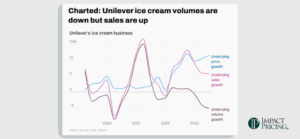
Blogcast: Which Business Do You Want?
This is an Impact Pricing Blog published on August 3, 2023, turned into an audio podcast so you can listen on the go. Read Full Article Here: https://impactpricing.com/blog/which-business-do-you-want/ If you have any feedback, definitely send it. You can reach us at [email protected]. Now, go make an impact. Connect with Mark Stiving: Email: [email protected] LinkedIn: https://www.linkedin.com/in/stiving/

Double Your Price, Boost Sales, and Skyrocket Profitability! with David Falzani
David Falzani is a CEO at Polaris Associates and a Professor at Nottingham University. In this episode, David discusses the strategy for driving higher pricing by understanding the value delivered to customers. He also dispels the myths surrounding the notion that high pricing lowers sales, sharing the results of experiments conducted with various companies that prove otherwise. What you will learn from this episode: Learn how to achieve profitability without constantly chasing pricing Find out the underlying reasons for underpricing and dispel common misconceptions about the negative impact of higher prices on sales Discover experiments where doubling your price yields significantly higher profitability compared to low pricing strategies "Think dynamically about price and do it often." - David Falzani Topics Covered: 01:42 - Expounding on 'sustainable wealth creation' 02:54 - What caught his interest in pricing 04:36 - Three reasons why underpricing exist 06:48 - Emotional baggage and fear that comes with underpricing 08:13 - Frequency of price changes and increase 09:37 - 12 exercise the book suggests you can do to revisit your pricing strategies 12:13 - What makes companies lose confidence in pricing higher 14:37 - How to be profitable without chasing price all the time 17:01 - A case of a perfect example of understanding the relationship of pricing and customer value: Apple versus Android 18:21 - Why double your price? [And experiment you can do] 22:59 - Light double your price [an experiment for the more risk -averse] 24:29 - Looking at the numbers in terms of feasibility of price increase 26:57 - Busting myths about pricing higher 29:24 - David's best pricing advice Key Takeaways: "The frequency of revisiting your pricing decisions. Every time you revisit it, do something different, use a different piece of analysis." - David Falzani "Don't just go and revisit the same comparison to competitors or if you are using cost- plus, which I hope you're not. Think about the frequency at which you are reviewing those pricing decisions." - David Falzani "The more you look at pricing, the more questions that are raised, the more you start to educate yourself about your own customers, your clients, the market, competitors, and all those dynamics." - David Falzani People/Resources Mentioned: Thinking, Fast and Slow by Daniel Kahneman: https://www.amazon/Thinking-Fast-Slow-Daniel-Kahneman/dp/0374533555 Connect with David Falzani: LinkedIn: https://uk.linkedin.com/in/davidfalzani Connect with Mark Stiving: LinkedIn: https://www.linkedin.com/in/stiving/ Email: [email protected]

Blogcast: Pricing, Usage, and Value Metrics
This is an Impact Pricing Blog published on July 27, 2023, turned into an audio podcast so you can listen on the go. Read Full Article Here: https://impactpricing.com/blog/pricing-usage-and-value-metrics/ If you have any feedback, definitely send it. You can reach us at [email protected]. Now, go make an impact. Connect with Mark Stiving: Email: [email protected] LinkedIn: https://www.linkedin.com/in/stiving/

Pricing Table Topics: Joker 2 – Buyers may not Measure Value in Dollars
This one is the Joker 2 from the Selling Value card deck. Almost always when we're dealing with B2B customers, B2B business, value can be measured in additional profit. And that's one of the things I love about B2B business and pricing, is because we know our price has to be related to how much additional profit will they make when they use our product, or when they use our product relative to a competitor's product. But it turns out, sometimes, buyers inside our customers don't really care about profit. Imagine that you're selling a piece of medical equipment and you're talking to a doctor in a big hospital. Now the doctor actually doesn't care how much additional profit you're going to make the hospital. There's an administrator someplace who cares a lot about how much additional profit you're going to make the hospital. And so, we still need to understand the profit side of this conversation. But from that doctor's perspective, they couldn't care less about profit. What do they care about? They care about the quality of the care for the patient. They care about efficacy rates. They care about how long the procedure might take. Things that really affect their world and things that matter to them. What we want to be able to do then, is as we go through our value conversations with a doctor, put value in the perspective of what that doctor cares about. So, it's not always profit, a lot of times it is, but we need to understand what each buyer truly cares about and talk about value from that perspective. We hope you enjoyed this example of Pricing Table Topics. What you just heard was done without a script. If you want to get better at speaking about pricing and value, grab a deck of our cards, pick a card, read the saying, and then talk for one to two minutes about what that card says. You'll become a better speaker and expert. If you have any questions or feedback, please email me, [email protected]. Now, go make an impact. Connect with Mark Stiving: Email: [email protected] LinkedIn: https://www.linkedin.com/in/stiving/

Master Pricing Strategies with Data with Sebastian Baier
Sebastian Baier is the founder of Buynomics, an AI for ultimate customer-centric RGM decisions- in one SaaS solution. In this episode, Sebastian discusses how Buynomics' AI utilizes vast amounts of consumer behavior data to generate virtual customers, enabling the implementation of optimal pricing strategies. What you will learn from this episode: Learn how to create a customer simulation to identify the key factors that drive the value of a product and develop effective pricing strategies for optimal results Discover how to create a customer model for B2B, even when limited data is available Learn how to effectively analyze and interpret customer data in terms of distribution rather than segment "Collect data however ugly it might look." - Sebastian Baier Topics Covered: 01:12 - What got him into pricing 02:47 - Buynomics and what it does 04:41 - Understanding customer simulation and segmentation in the way Buynomics work 08:03 - Talking about segments and distribution densities 12:24 - How Buynomics helps provide what-if analyses for pricing strategies 13:29 - Creating customer models for B2B when there are not enough data available 17:28 - Sebastian's thoughts on Mark's suggested solution for B2C clients 19:11 - Salesperson as a value driver for B2B customer simulation 19:48 - Sebastian's best pricing advice Key Takeaways: "Even if you don't have great data [with B2B], you'll use the data because you have to have a model of the world." - Sebastian Baier "To make statistics work, you have to have a certain number of customers." - Sebastian Baier "It's really very valuable just to start collecting the data, and look at them as you would as a consultant." - Sebastian Baier People/Resources Mentioned: Slack: https://slack.com/ Zoom: https://zoom.us/ Vodafone: https://www.vodafone.com/ Connect with Sebastian Baier: LinkedIn: https://www.linkedin.com/in/sebastian-baier Email: [email protected] Connect with Mark Stiving: LinkedIn: https://www.linkedin.com/in/stiving/ Email: [email protected]

Blogcast: Why Do They Buy?
This is an Impact Pricing Blog published on July 20, 2023, turned into an audio podcast so you can listen on the go. Read Full Article Here: https://impactpricing.com/blog/why-do-they-buy/ If you have any feedback, definitely send it. You can reach us at [email protected]. Now, go make an impact. Connect with Mark Stiving: Email: [email protected] LinkedIn: https://www.linkedin.com/in/stiving/

Pricing Table Topics: Joker 1 – An Indicator of Willingness to Pay
This one is the Joker 1 from the Selling Value card deck. You heard earlier that there are really three types of buyer's value journeys. Those happen to be analytical, relationship, and trust. In the analytical relationship, there's typically a lower level person who's doing a lot of side by side comparison between your product and a competitor's product, and our buyers are by far the most price sensitive in that situation. Or we could go all the way to the trust journey, and that is where they come to us. They ask us, "Hey, what do you do? How do you help us solve our problems?" They never even look at a competitive alternative. And in that situation, they're the least price sensitive. The relationship journey is the one in the middle, where people would come to us and say, "Hey, how do you help us solve our problem?" We guide them. They build a great relationship. They really like us. And then they say, "Yeah, but we have to go look at competitive alternatives." We've built up enough goodwill and probably tweaked their thinking that we have the competitive advantage. And so, they're not going to be as price sensitive as they would be if they were in a relationship journey. But they're still more price sensitive than it was just a trust journey. So, you could think of these three different journeys (the analytical, relationship, and trust) is how our customers go learn about the value of our products. But at the same time, it's how price sensitive are they going to be when it's time to negotiate the price. It's really important that we understand which journey each buyer is on. We hope you enjoyed this example of Pricing Table Topics. What you just heard was done without a script. If you want to get better at speaking about pricing and value, grab a deck of our cards, pick a card, read the saying, and then talk for one to two minutes about what that card says. You'll become a better speaker and expert. If you have any questions or feedback, please email me, [email protected]. Now, go make an impact. Connect with Mark Stiving: Email: [email protected] LinkedIn: https://www.linkedin.com/in/stiving/