
IMF Podcasts
703 episodes — Page 4 of 15

ICRC's Peter Maurer on the Scourge of Fragility and Partnerships to Fight it
Fragility and conflict have forced hundreds of millions of people to live outside of state control without access to basic services. And with violent conflict on the rise, two-thirds of the world's poorest could soon be living in fragile and conflict affected states. The International Committee of the Red Cross is one of the world's most important providers of humanitarian assistance and works at the front line of most conflicts across the globe. In this podcast, ICRC President, Peter Maurer discusses the importance of including the expertise of economists in their humanitarian work and the significance of the IMF's new strategy to strengthen its support to fragile and conflict affected states. Transcript: https://bit.ly/3P8coMh

Women in Economics: Clair Brown's Holistic Approach
Becoming an economist in the 1970s- for a woman, was a lonely road. When Clair Brown joined the Department of Economics at UC Berkeley in 1974 alongside people like Nobel laureate George Akerlof, she was the only female faculty member. But thanks to Brown's prodding, the department hired more women and Berkeley has since become well known for its female economists. Brown has always seen the power of diversity in her work. In 2013 she helped create a new graduate program called Development Engineering that teams engineers with economists to develop technologies that benefit developing regions. Today, she's advocating for a new, more sustainable approach to economic thinking in her book, Buddhist Economics. Journalist, Rhoda Metcalfe spoke with Clair Brown for our special series on extraordinary Women in Economics. Transcript: https://bit.ly/388DzG3 Book: http://buddhisteconomics.net/

Perspectives pour l'Afrique subsaharienne: Nouveau choc, peu de marge de manœuvre
La reprise économique en Afrique subsaharienne a surpris à la hausse au second semestre 2021, mais ces progrès ont été compromis cette année par l'invasion russe de l'Ukraine. La guerre a déclenché un choc économique mondial qui frappe la région à un moment où la capacité de réaction des pays est minime, voire inexistante. Papa N'Diaye dirige l'équipe qui produit les Perspectives économiques régionales pour l'Afrique subsaharienne. Dans ce podcast, il affirme que la croissance a de nouveau ralenti et ne suffira pas à rattraper le terrain perdu.

Sub-Saharan Africa Outlook: New Shock, Little Room to Maneuver
The economic recovery in sub-Saharan Africa surprised on the upside in the second half of 2021, but that progress has been jeopardized this year by the Russian invasion of Ukraine. The war has triggered a global economic shock that is hitting the region at a time when countries' ability to respond is minimal to nonexistent. Papa N'Diaye leads the team that produces the Regional Economic Outlook for sub-Saharan Africa. In this podcast, he says growth has slowed once again and will not be enough to make up for lost ground. Transcript: https://bit.ly/3OIo6N8 Read the report at IMF.org

Giovanni Peri on the Economic Impact of Ukrainian Migration
The war in Ukraine has sparked one of the biggest refugee crises of modern times. So, can Europe afford to accommodate the millions of people coming across its borders? Giovanni Peri says while a crisis of this scale will imply significant upfront costs, the European Union is doing right by investing in the human capital of refugees. Peri heads the Global Migration Center at UC Davis, and in this podcast, he says Ukrainian migrants are an opportunity for many European countries that are experiencing aging populations and labor shortages. Transcript: https://bit.ly/3jY7cMn

Global Financial Stability: Implications of the War in Ukraine
While financial stability risks have risen on several fronts since the beginning of the war in Ukraine, the latest Global Financial Stability Report (GFSR) says no global systemic event affecting financial institutions or markets has materialized so far. Fabio Natalucci heads the GFSR as well as IMF Global Financial Markets Monitoring. In this podcast, he says stronger banking systems, higher capital and higher liquidity have helped to absorb the shock, but an intensification of the war could further test the resilience of the global financial system. Transcript: https://bit.ly/36qyl7D Read the full report at IMF.org/GFSR Read the blog at blogs.imf.org

Kristalina Georgieva: Crisis Upon Crisis: How the World Can Respond
Just as many countries were beginning to feel the grip of the pandemic start to ease, another global calamity is threatening the recovery. In her customary curtain-raiser speech to the IMF-World Bank Spring Meetings, IMF Managing Director Kristalina Georgieva said the war in Ukraine has disrupted millions of lives and many aspects of the global economy. Transcript: https://bit.ly/3KJjeFt Go to IMF.org to follow the Spring Meetings and find all the IMF flagship reports, including the World Economic Outlook, the Global Financial Stability Report, and the Fiscal Monitor.

Ruchir Agarwal and Miles Kimball on Electronic Money and Inflation
Most people and virtually all businesses now use electronic money for their transactions, yet central banks are still dealing with what's known among economists as the paper currency problem, which limits central banks' ability to use deep negative rates to fight recessions. In this second episode of a two-part series on inflation, economists Miles Kimball and Ruchir Agarwal discuss how fully committing to an electronic money standard would allow central banks to break the zero lower bound associated with paper currency and help them to fight both inflation and recessions more effectively, including by lowering the inflation target. Transcript: https://bit.ly/3vncUwW Miles Kimball is a professor at the University of Colorado, Boulder, and Ruchir Agarwal is a senior economist in the IMF Research Department. This podcast series is based on their inflation trilogy published in Finance and Development. Read the articles at IMF.org/fandd

Ruchir Agarwal and Miles Kimball on Negative Interest Rates and Inflation
Everyone feels the pinch when inflation is on the rise and so the pressure on central banks to manage inflation rates has grown exponentially in recent weeks. In this first podcast of a two-part series on inflation, distinguished economists Miles Kimball and Ruchir Agarwal discuss how a robust negative interest rate policy can help central banks better control inflation and stabilize the economy. Transcript: https://bit.ly/3xlHFEK Miles Kimball is a professor at the University of Colorado, Boulder, and Ruchir Agarwal is a senior economist in the IMF Research Department. This podcast series is based on their inflation trilogy published in Finance and Development. Read the article at IMF.org/fandd

Yamini Aiyar on the Education Pandemic
The pandemic has sparked an enormous upheaval in education around the world. But in India and many other low-income countries where remote learning is often not an option, children's education has simply fallen off the rails. Yamini Aiyar is President of the Centre for Policy Research in New Delhi. In this podcast, Aiyar speaks with journalist Rhoda Metcalfe about how the digital divide has pushed poor kids into an educational deficit that could reverberate for years. Transcript: https://bit.ly/3NBfWpk Yamini Aiyar is also the author of The Education Pandemic published in Finance and Development. Read more about bridging learning gaps amongst children here
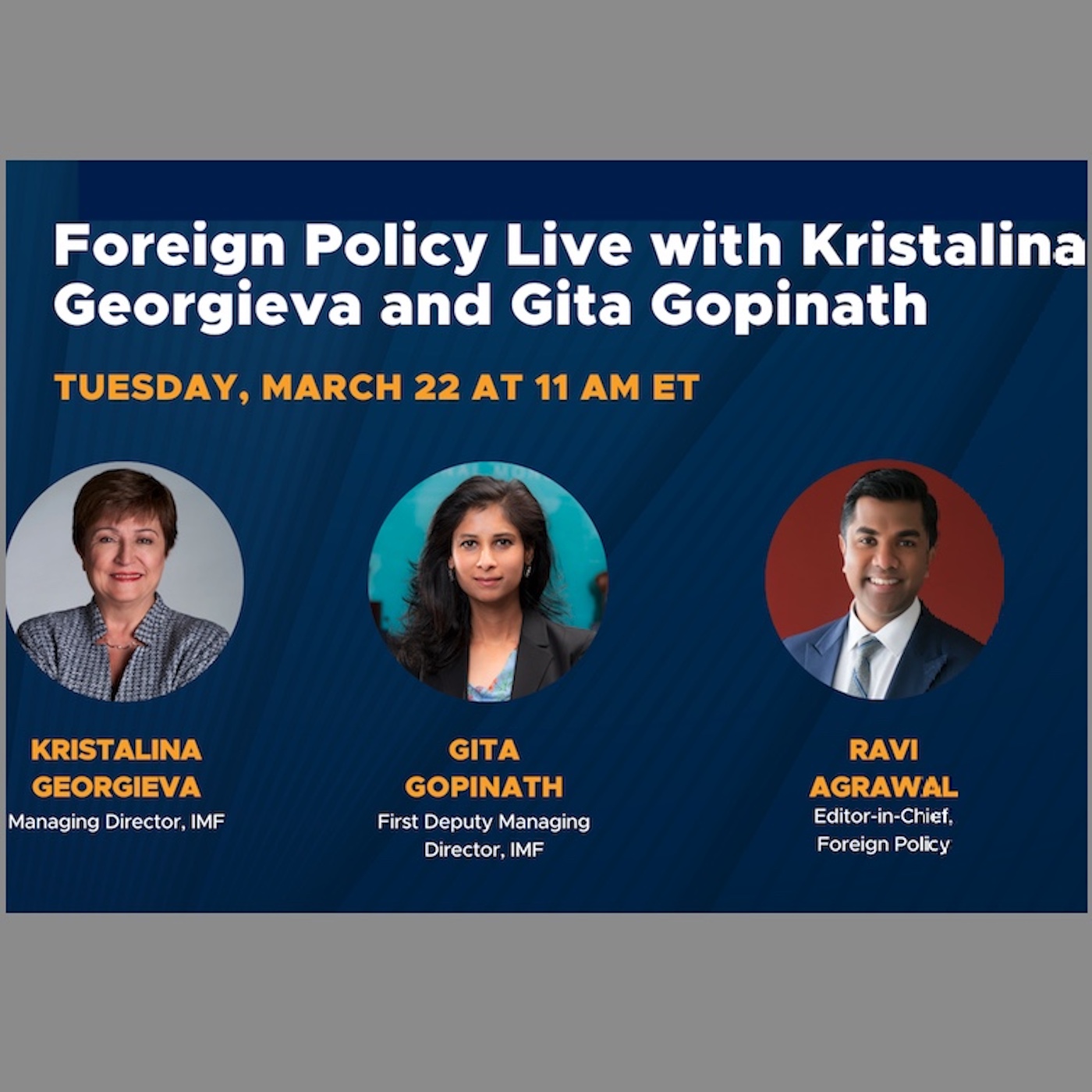
Foreign Policy Live with Kristalina Georgieva and Gita Gopinath
The last two years have proven a test for the global financial system, and the nature of the crises is getting more complex by the day. In this podcast, Foreign Policy magazine's Ravi Agrawal asks the IMF's two top leaders how governments should respond to the growing number of challenges facing the global economy. Transcript: https://bit.ly/382IPKX Watch the webcast at https://foreignpolicy.com/events/

Ian Ball on the Real Value of Hidden Assets
Governments with strong balance sheets are known to recover from shocks more quickly. Yet many of them don't have balance sheets, or even know what assets and liabilities they have. The IMF estimates these often-overlooked global public assets at twice the value of global GDP. Ian Ball is a professor at Victoria University in Wellington and behind the New Zealand government's net worth approach to determining its fiscal position. Ball published an article in Finance and Development about the benefits of digging up all government assets, hidden or otherwise. In this podcast, he sits down with journalist Rhoda Metcalfe to discuss the advantages of this basic accounting exercise that dates back to the time of William the Conqueror. Transcript: https://bit.ly/3CViKsI Read the article at IMF.org/fandd

Kristalina Georgieva: Women Are Powerful Agents of Change
As the world this week celebrates International Women's Day, hundreds of millions of women are living in conflict and fragility. IMF Managing Director Kristalina Georgieva joined a special United Nations Security Council meeting to discuss women's economic inclusion as a key to building peace. In this podcast, Georgieva says women and girls are themselves powerful agents of change and gender equality can prevent conflict and foster stability. Transcript: https://bit.ly/3CuYcXA

Women in Economics: Laura Carvalho on Popularizing Brazilian Economics
In this episode of Women in Economics, economist Laura Carvalho speaks with journalist Rhoda Metcalfe about how growing up in Brazil in the 90s during its currency swings and hyperinflation drove her to become one of the country's most influential economists. Carvalho is a Professor at the Department of Economics at the University of Sao Paulo and the Director of the Research Center in Macroeconomics of Inequality. Her book, Brazilian Waltz - From Boom to Economic Chaos, was a best seller. Carvalho says Brazilians who understood basic economic principles fared better through the economic turbulence of that time. Transcript: https://bit.ly/3pN26pC
Paolo Mauro: Adding Ethics to Public Finance
Should the rich pay more taxes than the poor? Economists and public finance practitioners have traditionally focused on economic efficiency when answering questions like that, steering clear of any moral considerations that could be seen as subjective. But recent work by evolutionary moral psychologists suggests that a more human approach to policy decisions can lead to better policies that muster broader support. Paolo Mauro is Deputy Director in the IMF Fiscal Affairs Department. In this podcast, he says considering people's moral perspectives makes policy choices more politically feasible and sustainable. Transcript: https://bit.ly/3hudH8M

Minouche Shafik and Kristalina Georgieva on a New Social Contract
As part of the IMF Exchange speaker series, London School of Economics Director, Minouche Shafik and IMF Managing Director, Kristalina Georgieva discuss how current economic trends are straining social safety nets and fueling disaffection among people across the globe. In her latest book What We Owe Each Other, Shafik argues the need for a new social contract. The discussion is moderated by CNN Anchor and Correspondent Eleni Giokos. The podcast is an abridged version of the conversation, you'll find a webcast of the entire event at IMF.org.
Eswar Prasad on the Future of Money
When was the last time you used cash? In his latest book, Eswar Prasad looks at a world, not that far off, where using cash will no longer be an option. Prasad is a professor of economics at Cornell University, and his book, The Future of Money, describes how digital currencies and other financial technologies are reshaping everything from consumer banking to monetary policy and international payments. In this podcast, he discusses the book with Finance and Development Magazine editor Chris Wellisz. Transcript: https://bit.ly/3gwQJNu Read the F&D article at IMF.org/fandd

Ippei Shibata and Carlo Pizzinelli on the Puzzling Labor Market
When the pandemic hit two years ago, millions of people quickly found themselves unable to work because of the nature of their jobs or because of the recession that ensued. But now, as economies are picking up- why are companies having such a hard time hiring workers? In this podcast, journalist Rhoda Metcalfe asks economists Carlo Pizzinelli and Ippei Shibata what's behind the labor shortage in many advanced economies. Shibata and Pizzinelli's latest research looks at current trends in the US and UK and suggests there are many pieces to the labor market puzzle. Transcript: https://bit.ly/3rnmmzk Read the blog at blogs.imf.org
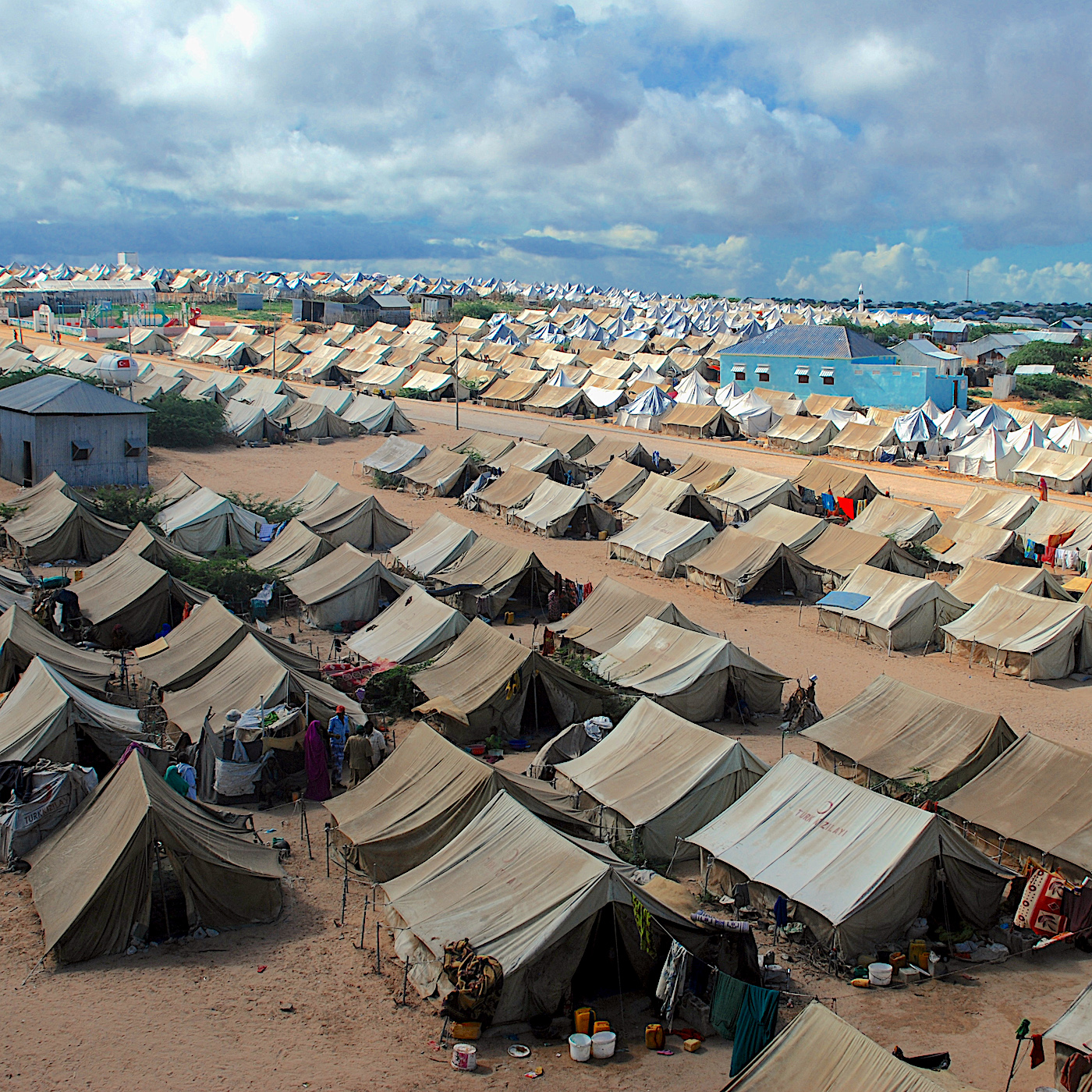
Franck Bousquet: Supporting Fragile and Conflict-Affected States
Fragile and conflict-affected states are home to nearly 1 billion people and confront some of the greatest challenges among the world's economies. 220 million people live within 40 miles from a major conflict event and 155 million globally are acutely food insecure. Franck Bousquet is the deputy director, coordinating the Fund's work in fragile and conflict-affected states. In this podcast, Bousquet talks about the growing costs associated with fragility and conflict, and how the IMF is trying to help. Transcript: https://bit.ly/3GcReGZ Read the blog at blogs.imf.org

Ken Opalo: Democratizing Public Finance in Africa
Spending public funds efficiently and effectively is a challenge for governments around the world, but weak public finance management systems are holding back growth and development in Africa. Ken Opalo studies African legislatures and policymaking at Georgetown University's School of Foreign Service. In this podcast, Opalo says public spending does not adequately reflect taxpayers' priorities in many African countries because elected officials are often left out of the budget process. Transcript: https://bit.ly/3K0Sq3r

Barry Eichengreen: In Defense of Public Debt
Much has been said and written about the dangers of government borrowing. In their new book, In Defense of Public Debt, economic historian Barry Eichengreen and his co-authors trace the evolution of sovereign debt from the wars of medieval Europe through the Covid-19 crisis, illustrating public debt's many positive uses, from reacting to financial crises to building public works. In this podcast, Eichengreen discusses the book with Finance and Development Magazine's Chris Wellisz. Transcript: https://bit.ly/3ec6Hvj

Nathaniel Counts on Dementia: Averting Another Public Health Crisis
While the world has been focused on the pandemic for the past two years, the rapid rise of Alzheimer's disease and related dementias pose another threat to global public health. Nathaniel Counts is Senior VP for Behavioral Health Innovation at Mental Health America and Assistant Professor at Albert Einstein's School of Medicine. In this podcast, Counts says dementia will vastly increase across the globe as the population age rises with increasing life expectancy and have profound impacts on welfare and economic growth, especially in low- and middle-income countries. Transcript: https://bit.ly/32cwKQc Read the F&D article at IMF.org/fandd
Jay Patel on Pandemic Preparedness
Despite all the money and health infrastructure available to them, some of the world's richest countries have suffered higher death rates from COVID-19 than many developing countries. Jay Patel is a researcher at the Global Health Governance Program at the University of Edinburgh and has coauthored along with colleague Devi Sridhar an article about pandemic preparedness in the December issue of Finance and Development. In this podcast, Patel tells journalist Rhoda Metcalfe that regardless of their limited resources, many developing countries in Africa delivered effective containment strategies because of strong local leadership and knowledge sharing. Transcript: https://bit.ly/33hY0xx Read the article at IMF.org/fandd.

Miles Kimball on Measuring National Well-Being
For all its strengths in measuring a country's economy, GDP falls short when it comes to gauging the well-being of its residents. For example, per capita GDP numbers today suggest people in the US are better off now than they were before the pandemic, regardless of the enduring social and economic upheaval. The recognition that GDP cannot encompass many dimensions of well-being has prompted a search for measures that reflect a more complete account of what people care about. Miles Kimball is a Professor at the University of Colorado, Boulder, and is developing the principles for a national well-being index. In this podcast, Kimball says the index would also serve to grade governments. Transcript: https://bit.ly/3lfnD8c Read the F&D article at IMF.org/fandd

Global Fund's Peter Sands on Pandemic Lessons
Pandemics pose significant macroeconomic costs but only recently have garnered the attention they deserve. In this podcast, economist Ruchir Agarwal, sits down with Peter Sands, Executive Director of the Global Fund to Fight AIDS, TB and Malaria, to discuss the role of macroeconomics in public health preparedness. Agarwal heads the IMF's Global Health and Pandemic Response Taskforce. Transcript: https://bit.ly/32KapKk Read the F&D article at IMF.org/fandd
Women in Economics: Diane Coyle on Making Economics Better
In this third episode of Women in Economics, distinguished British economist Diane Coyle speaks with journalist Rhoda Metcalfe about how the lack of diversity within the economic profession is holding it back. Coyle is the Bennett Professor of Public Policy at the University of Cambridge and author of several books, some of which challenge conventional economic wisdom such as GDP. In this podcast, Coyle says economists need to start working with other disciplines if they are to live up to the influence they have in public policy and help deliver solutions to the complex challenges the world is now facing. Transcript: https://bit.ly/3DydryE Look for the review of Diane Coyle's latest book Cogs and Monsters in the Fall edition of Finance and Development. IMF.org/fandd

Gita Gopinath and Raghuram Rajan in Conversation
It's been almost 2 years since the coronavirus began to disrupt economies across the globe. In this podcast, IMF Chief Economist Gita Gopinath asks Raghuram Rajan about inflation and his views on what Central Banks should be doing to minimize the damage caused by the pandemic. Rajan is a former Governor of the Bank of India and currently the Catherine Dusak Miller Distinguished Service Professor of Finance at Chicago Booth. This podcast is an abridged version of their discussion, you'll find a webcast of the full event at IMF.org. Transcript: https://bit.ly/3n69L1m

Luis Breuer on India's Outlook: Seeing Through the Fog
Despite two brutal COVID-19 waves and the widespread disruptions that ensued, India's economy is set to be one of the fastest-growing major economies for this year and beyond. Following a sharp contraction in GDP last year, India's latest outlook shows growth is expected to rebound to 9.5 percent this year and 8.5 percent in FY2022/23. Luis Breuer is IMF Senior Representative to India, Nepal and Bhutan, and a coauthor of the report. In this podcast, Breuer says India is recovering thanks to its response and scaled-up vaccine production but the pandemic is still clouding the country's outlook. Transcript: https://bit.ly/2ZvKViG

Perspectives pour l'Afrique subsaharienne: 1 planète, 2 mondes, 3 réalités
La planète reste aux prises avec une pandémie qui dure et avec une accélération des changements climatiques. Les solutions à ces défis internationaux doivent mobiliser tous les pays et toutes les régions, y compris l'Afrique subsaharienne, qui possède la population la moins vaccinée au monde et des écosystèmes critiques. La croissance de la région devrait s'établir à 3,7 % en 2021, puis à 3,8 % en 2022. Cela fait suite à la forte contraction de 2020, mais représente toujours la reprise la plus lente par rapport aux autres régions. Papa N'Diaye dirige l'équipe qui produit les perspectives économiques régionales pour l'Afrique subsaharienne. Dans ce podcast, il dit que l'accès aux vaccins est toujours la priorité pour la région.

Sub-Saharan Africa Outlook: 1 Planet, 2 Worlds, 3 Stories
The world remains in the grip of the pandemic and a seemingly accelerating pace of climate change. Solutions to these global problems must involve all countries and regions, especially sub-Saharan Africa, with the world's least vaccinated population and critical ecosystems. Sub-Saharan Africa's economy is set to expand by 3.7 percent in 2021 and 3.8 percent in 2022. This follows the sharp contraction in 2020, but still represents the slowest recovery relative to other regions. Papa N'Diaye leads the team that produces the Regional Economic Outlook for sub-Saharan Africa. In this podcast, he says access to vaccines is still the priority for the region. Transcript: https://bit.ly/3ppx8EP

Women in Economics: Jayati Ghosh on Unpaid Care Work
The Women in Economics series showcases extraordinary work by extraordinary women in a field dominated by men. In this second episode, journalist Rhoda Metcalfe speaks with Jayati Ghosh, Professor of Economics at University of Massachusetts Amherst, whose work on gender issues and the public value of care work gives voice to the unpaid caregivers who form the economic base for societies around the world. In this podcast, Ghosh says our whole notion of productivity is skewed because most care work is not captured in GDP. Transcript: https://bit.ly/3lUclqA
Gita Gopinath on Latest Outlook: Recovery Gaps Persist
While the World Economic Outlook shows output in advanced economies set to exceed pre-pandemic levels next year, prospects for low-income countries and emerging markets have darkened considerably due to vaccine shortages and limited support. Overall, the outlook's global growth projection for 2021 has been revised down marginally to 5.9 percent and is unchanged for 2022 at 4.9 percent. The downgrade also reflects continuing supply disruptions and the impact on advanced economies. IMF Chief Economist, Gita Gopinath heads the WEO. In this podcast, she says universal vaccine access remains key for an equitable global recovery. Transcript Transcript: https://bit.ly/3BBV2zZ Read the blog at: blogs.imf.org

Fabio Natalucci: Financial Stability through a Rocky Recovery
The latest Global Financial Stability Report takes a close look at how recent supply chain disruptions, wage pressures and inflation might compromise the stability of the global financial system. Fabio Natalucci is Deputy Director of the Monetary and Capital Markets Department and heads the GFSR. In this podcast, he says while risks have been contained so far, vulnerabilities remain in a number of sectors including the housing market, where house prices have unexpectedly surged during the pandemic. Transcript Read the blog at blogs.imf.org Read the report at imf.org/GFSR

Tobias Adrian: The Promise and the Risk of Crypto Assets
The crypto ecosystem is growing fast because there are a number of potential benefits to adopting crypto assets, like making payments and financial services cheaper, faster and accessible to more people. But the rapid growth and increasing adoption of crypto assets are posing new challenges to financial stability. Analysis in the latest Global Financial Stability Report takes a deep dive into the world of crypto and calls for a global push to regulate crypto assets. IMF Financial Counsellor, Tobias Adrian, headed the research and in this podcast, he says a regulatory approach with common standards across countries will make crypto assets safer and protect investors. Transcript: https://bit.ly/3oIisjG Read the blog at blogs.imf.org

Prachi Mishra on Inflation: Navigating Uncharted Territory
Inflation has not been much of a concern since the 70s when exogenous oil shocks were widely seen to have caused the phenomenon known as stagflation. But given the uncertain nature of the pandemic recovery, inflation is now on the rise and once again on everyone's mind. Analysis in the latest World Economic Outlook explores today's inflation landscape and finds we're in uncharted territory. Prachi Mishra is an Advisor in the IMF Research Department and coauthor of the study. In this podcast, she says while inflation expectations have stayed relatively anchored so far, there is still much to be concerned about. Transcript: https://bit.ly/3lgu7UV Read the blog at: blogs.imf.org

James Stock on Making it Cheaper to be Green
Most economists would agree a carbon tax is a powerful tool in fighting climate change, but carbon pricing alone is not enough. As green technologies evolve and prices fall, the fight against climate change will need a more nuanced plan of attack where people can actually afford to do the right thing. In this podcast, journalist Rhoda Metcalfe talks to Harvard Professor of Political Economy James Stock about how he sees the decarbonization process playing out sector-by-sector, which is the subject of his article titled Driving Deep Decarbonization in the September edition of Finance and Development. Transcript: https://bit.ly/3m8QV7Z Read the F&D article at IMF.org/fandd

Women in Economics: Lisa D. Cook
This is the first in a series of IMF podcasts that will showcase extraordinary work by extraordinary women in economics. In this episode, Dr. Lisa Cook, speaks with journalist Rhoda Metcalfe about her work using data on lynching and racial violence in the US to study the impact of violence on innovation and economic growth. Cook has made her mark not only as a black woman economist in a field dominated by white men but for her ground-breaking research on how racism, sexism and violence prevent economies from achieving their potential. Transcript: https://bit.ly/3zsucIG Read her Profile in F&D at IMF.org/fandd
Partha Dasgupta on the Economics of Biodiversity
Nature is often missing in economic models, but in a study commissioned by the UK government, Partha Dasgupta examines the economic benefits of biodiversity and the costs of losing it. Dasgupta is Professor Emeritus of Economics at the University of Cambridge, and his 600-page study titled the Economics of Biodiversity: The Dasgupta Review sets out a framework for including Nature in our economic thinking and provides a guide for change through three broad, interconnected transitions. Professor Dasgupta published an article about his findings in the September edition of Finance and Development. In this podcast, he says humans are embedded in nature and cannot escape the biosphere through ingenuity. Transcript: https://bit.ly/3A56Eem Read the F&D article at IMF.org/fandd

Andrew Steer: Fighting Climate Change with Innovation
There's been a shift in the economic understanding of climate change of late. Climate action, once believed a trade-off to economic growth, is now seen by many economists as an opportunity to drive innovation and increase efficiency. After almost a decade at the World Resources Institute, Andrew Steer is now President and CEO of the Bezos Earth Fund, which has committed $10 billion toward supporting new technologies that help reduce our impact on nature. Rhoda Metcalfe sat down with Dr. Steer to talk about his recent article in Finance and Development magazine. In this podcast, he says philanthropy has a big role to play in addressing climate change. Transcript: https://bit.ly/3tbRy43 Read the F&D article at IMF.org/fandd

Ruchir Agarwal: Chimpanzee Politics and Climate Change
When it comes to cooperation, humans and chimpanzees still have much in common. Perhaps that's not surprising given humans share over 98 percent of our DNA with chimps. But in a recent article in Finance and Development, economist Ruchir Agarwal argues the 2 percent genetic difference propels humanity's success, but also its potential for disaster. In this podcast, Agarwal asks whether humans have evolved enough to escape "chimpanzee politics" and confront the greatest risk our species is facing—climate change. Transcript: https://bit.ly/3Bk80C0 Read the Article at IMF.org/fandd

Divya Kirti on the Economics of Climate Change
As climate change looms ever larger, most economists agree that a carbon tax would go a long way toward reducing emissions. But carbon taxes and related policies often face deep political constraints, and many are looking at sustainable investing as a way forward. Economist Divya Kirti is coauthor along with Dalya Elmalt and Deniz Igan of a working paper titled Limits to Private Climate Mitigation. In this podcast, Kirti talks about how such market forces could help make meaningful progress in addressing climate change. Transcript: https://bit.ly/3mDPYXj

What $650bn in SDRs Means for the Global Recovery
Special Drawing Rights (SDR) are international reserve assets and used as the accounting unit for IMF transactions with its member countries. Earlier this month, in a historic multilateral response to the pandemic, the IMF board of governors approved a new SDR allocation of $650 billion, the largest in the institution's history. Ceyla Pazarbasioglu heads the Strategy, Policy and Review Department at the IMF. In this podcast, she says the SDR allocation will go a long way toward helping vulnerable countries and minimize the dangerous divergence in recovery paths around the world. Transcript: https://bit.ly/3y6inY1

Rohini Pande on Inclusion Economics
Inclusion doesn't just happen; it takes policies that intentionally serve the very specific purpose of ensuring inclusion. That is the focus of Rohini Pande's work these days as the Director of Yale's Economic Growth Center. Pande is one of the most influential development economists of her generation, always looking for ways for the poor to increase their influence and claim their fair share of growth. In this podcast, Pande speaks with journalist Rhoda Metcalfe about how tackling poverty depends less on direct aid and more on creating effective democratic institutions so that vulnerable populations can push their representatives to implement redistributive policies. Transcript: https://bit.ly/37lughM Read Rohini Pande's profile at IMF.org/fandd

The Global Informal Workforce: Priorities for Inclusive Growth
60 percent of the working-age population worldwide operates in the informal sector. A new book titled The Global Informal Workforce, Priorities for Inclusive Growth uses IMF research to study the causes and effects of the high levels of informality in economies across the globe. The book covers interactions between the informal economy, labor and product markets, gender equality, fiscal institutions and outcomes, social protection, and financial inclusion. In this podcast, co-editors Corinne Deléchat and Leandro Medina say the pandemic has exposed the vulnerabilities of the informal workforce. Transcript: https://bit.ly/3rEZGt7 The book is available at elibrary.imf.org

Oral Williams: How Technical Assistance Translates into Better Lives
Capacity development is one of the IMF's best-kept secrets. Strong institutions are key to a country's long-term development, and a third of the IMF's operating budget goes toward helping governments build the institutional capacity they need to fulfill their development goals. Oral Williams heads the IMF Regional Capacity Development Center for Anglophone West Africa and is coauthor with economists Ralph Chami and Elorm Darkey of a study that shows a direct relationship between technical assistance and the improvement in tax revenues. In this podcast, Williams says providing technical assistance and training to governments means better living standards for more people. Transcript: https://bit.ly/3eiK4py

Island States Paying Price for Climate Change
No country has been spared the effects of changing weather patterns but developing countries–and island states, in particular, are facing the brunt of climate change while not having contributed to its root causes. Prime Minister of Barbados, Mia Mottley, and Madagascar's Finance Minister, Richard Randriamandranto, joined IMF Managing Director Kristalina Georgieva to discuss the effects of natural disasters on their economies and how policies can be designed to help countries adapt to the new climate reality. The podcast is a compilation of excerpts from their discussion. Transcript: https://bit.ly/3hbeR9x Watch a webcast of the full event at IMF.org

Luc Eyraud on Wooing Investors to Africa's Development
With public finances stretched to the limit and the pandemic making things worse by the day, new IMF research looks at innovative ways to get the private sector more involved in financing Africa's development needs. Economist Luc Eyraud led the research. In this podcast, he says while fixing the business environment is a good place to start, sometimes it is simply not enough. Transcript: https://bit.ly/3wOSJHz Read the blog at: blogs.imf.org

Ruchir Agarwal with a Proposal to End the Pandemic
There will be no durable end to the economic crisis until enough people around the world are vaccinated against Covid-19 and its variants to put the health crisis behind us. Economist Ruchir Agarwal and IMF Chief Economist Gita Gopinath have joined forces to come up with a plan that would make that happen. In this podcast, Agarwal says the return on investment for ending the pandemic could reach $9 trillion, one of the highest-return investments ever. Transcript: https://bit.ly/2Tzl6L6

Trevor Manuel Reflects on South Africa's Lost Decade
When the apartheid regime ceded power following South Africa's first democratic elections in 1994, the economy was in shambles. Debt service costs as a share of GDP were crippling. Trevor Manuel—a veteran of the anti-apartheid struggle and appointed minister of finance—revamped the budgeting process and set a stringent deficit reduction target. By 2006, the economy was growing at its fastest pace in more than two decades. In this podcast, Manuel looks back at what drove the country's longest phase of economic growth and how he believes the ruling party he helped establish has lost its way. Read the Transcript. Transcript: https://bit.ly/3pDMLXp Look for Putting People First in F&D

Sanjeev Gupta: Military Spending in the Post-Pandemic Era
Covid-19 has left government budgets across the globe scrambling for revenues and having to reassess their tax and spending policies. For some countries– especially those in conflict areas, spending on defense eats up precious resources that could otherwise go toward other forms of public spending like education, health and infrastructure. In this podcast, economist Sanjeev Gupta says keeping global tensions in check would have long-term economic benefits. Transcript Transcript link: https://bit.ly/3vAx1q8 Look for Military Spending in the Post-Pandemic Era in Finance and Development Magazine.