
IMF Podcasts
703 episodes — Page 3 of 15

Ruud De Mooij on Taxing Crypto
Since their inception in 2008, the contentious rise of crypto assets has been dramatic. Their market value has been as high as $3 trillion and about $50 million is transacted in crypto every day. But what does this brave new world of cryptographically-protected distributed ledgers mean for traditional tax systems? Ruud De Mooij is Deputy Director of the IMF Fiscal Affairs Department and heads its work on taxation. In this podcast, De Mooij says finding ways to tax crypto will mean significant revenue gains for governments and lead to a fairer global tax system. Transcript: https://bit.ly/3O1Hwyt Read the blog and IMF.org/blogs

Noah Kaufman on Green Trade Tensions
The passage of the Inflation Reduction Act in the United States unleashed its largest investment in climate and energy ever. But it also left many countries questioning some of its protectionist provisions, accusing the US of bending, if not breaking international trade rules under the WTO. So how do we move forward on climate without going backward on trade? Noah Kaufman says international trade rules need to be redesigned if protectionism is not to become an unintended consequence of green industrial policy. Kaufman is a senior research scholar at Columbia University's Center on Global Energy Policy and served in the Biden Administration's Council of Economic Advisors. Transcript: https://bit.ly/3CwHIiw

Women in Economics: Claudia Goldin on Family Economics
The history of economics has largely been written by men about men. Even when the economics of family became a burgeoning field of study in the 1970s, the woman's role was hardly talked about. Claudia Goldin is a pioneer in the field of gender economics and her latest book Career and Family places women squarely at the center of the family economics story. Goldin is the Henry Lee Professor of Economics at Harvard University and an economic historian. Journalist Rhoda Metcalfe sat down with Claudia Goldin to discuss her work and how she came to write the definitive book on gender economics Understanding the Gender Gap. The interview is part of the IMF series on extraordinary Women in Economics. Transcript: https://bit.ly/3oYUEdO

Michele Ruta on Discriminatory Regionalism
As rising geopolitical tensions chip away at globalization, will a more fragmented world mean stronger regional pacts? Economist Michele Ruta says regionalism in a time of conflict is unlikely to triumph, but rather is likely to change. The trend toward strengthening ties with friends and loosening them with non-friends is making regional trade less about integration and more about discrimination. Transcript: https://bit.ly/3MHNbIc

Nadia Fettah and Jihad Azour: Morocco Gives Voice to the Global South
Like so many countries across the Middle East and North Africa, Morocco faced successive shocks over the past three years including a devastating drought. But the country managed well thanks to an aggressive reform agenda. In this podcast, Morocco's Finance Minister Nadia Fettah, and IMF Regional Director Jihad Azour, discuss how Morocco is keeping reforms on track despite the challenging circumstances, and what lessons other countries in the region might learn from Morocco's experience. Their conversation was part of the Governor Talks series hosted by the IMF during the IMF-World Bank Spring Meetings, and a preamble to the Annual Meetings to be held in Marrakesh this fall. Watch the webcast at IMF.org

Ruchir Agarwal on Industrial Policy
Industrial policy refers to a set of policies that governments use to bolster national industries or companies deemed strategically important for economic competitiveness, social outcomes, or national security. The approach has been used in many countries to create global giants like Huawei, General Electric, Volkswagen, and Airbus to name a few. Economist Ruchir Agarwal is currently studying industrial policy, among other things, at the Yale School of Management and Harvard Kennedy School. In this podcast, Agarwal says while the practice of choosing national champions fell out of favor in the 1980s, rising geopolitical tensions of late have sparked a renewed interest in industrial policy, which can be a guise for protectionism. Transcript: https://bit.ly/3oxgswS

Helping African Farmers from the Sky
Agricultural productivity in Africa has lagged behind for decades, and now climate change is making things worse. But for Hamza Rkha Chaham, the prospect of helping African farmers increase crop yields prompted him to launch a startup that is transforming lives. Chaham was only 27 years old in 2018 when he co-founded SOWIT, a company that uses processed satellite imagery to provide farmers with invaluable data to optimize decisions related to irrigation and fertilization. In this podcast, he says startups in Africa can be challenging on many levels, but the rewards far outweigh the risks. Transcript: https://bit.ly/3NZcRSG

Nicolas Kazadi on DRC's Natural Wealth and the Energy Transition
The Democratic Republic of the Congo faces many challenges to its development, but the country's natural wealth has the potential to lift more people out of poverty and help the world make the transition to renewable energy. In this podcast, IMF African Department head Abebe Aemro Selassie sits down with DRC's Minister of Finance, Nicolas Kazadi to discuss the country's pivotal role in the fight for climate preservation and sustainable development. Their conversation took place as part of the Governor Talks series hosted by the IMF during the IMF-World Bank Spring Meetings.

Gillian Tett on Anthropology for the Modern Economist
Economists often share a common understanding of the world based on their training and what they've learned from other like-minded professionals. In this podcast, author and Financial Times journalist, Gillian Tett says anthropology offers insights into public policy challenges and helps economists better understand socioeconomic problems. IMF Deputy Secretary, Sabina Bhatia, sits down with Gillian Tett to discuss her recent book Anthro-Vision, a New Way to See in Business and in Life. The conversation took place before a live audience during the IMF and World Bank Group Spring Meetings. Watch the webcast at IMF.org.

Global Financial Stability Tested by Higher Inflation and Interest Rates
Financial stability never comes easy, but the past few months have been especially challenging with persistently high inflation and two bank failures in the United States that exposed vulnerabilities lurking beneath the surface. The latest Global Financial Stability Report (GFSR) examines all the worrying trends including the potential economic impact of rising geopolitical tensions. Fabio Natalucci heads the GFSR. In this podcast, he says while regulatory changes put in place after the Global Financial Crisis have made the financial system more resilient, recent events may be a harbinger of more systemic stress to come. Transcript: https://bit.ly/41zCPQv Read the full report at IMF.org/GFSR
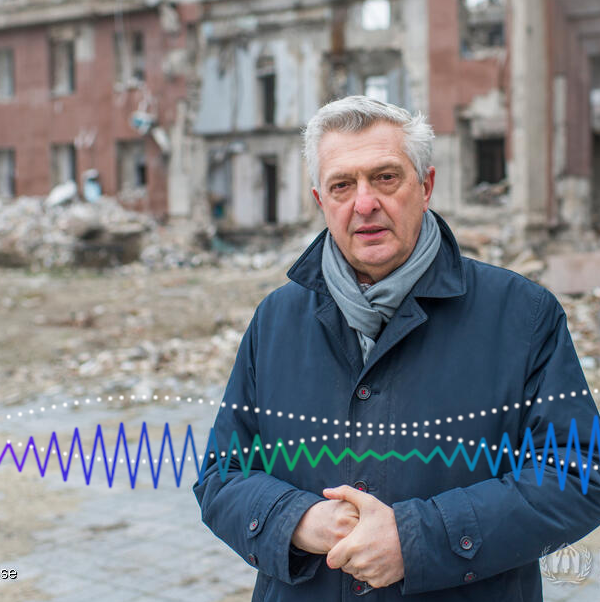
UN Refugee Chief Filippo Grandi on Where Economics Fits In
Financial stability is not only about managing inflation, employment rates and spending, it's about understanding how those factors affect people in different places and in all kinds of circumstances. In this podcast, the United Nations High Commissioner for Refugees, Filippo Grandi, discusses how strategic partnerships between humanitarians and economists will help support the millions of forcefully displaced people in the world and provide a firmer footing for an economic recovery. Transcript: https://bit.ly/3Mnnq13

Abebe Aemro Selassie and Ken Opalo on Making Reforms Stick in Africa
As global economic uncertainty surges, Sub-Saharan Africa faces a host of challenges that will require effective policy responses if it is to regain the ground it lost during the pandemic. But what does it take to design and implement successful policy reforms? In this podcast, IMF African Department head Abebe Aemro Selassie and Georgetown University's Ken Opalo discuss why some reforms work and others do not. This conversation is part of a series of talks hosted by the IMF African Department called Africa Perspectives. Watch the webcast: www.imf.org/en/News/Seminars/Conferences/2022/06/10/africa-speaker-series#

Laura Valderrama: European Housing Markets at a Turning Point
The last few months have witnessed tensions in Europe's housing markets as the cost-of-living crisis has eroded real incomes and the surge in interest rates has made borrowers more vulnerable to financial distress. Laura Valderrama is a macro-financial expert and coauthor of new research that suggests house prices across Europe are overvalued, and housing markets are at risk of a price correction that could undermine the region's economic recovery. Transcript: https://bit.ly/42Dm33U Read the research paper at: https://www.imf.org/en/Publications/WP

Johannes Wiegand on Bimetallism and Monetary Stability
While the currency values of today's economic powerhouses help maintain global financial stability, the currency systems in the 19th century were tied to precious metals and France played the stabilizing role. In the early 1800s, most countries tied their currencies to silver or gold, but Napoleon tied the French franc to both, which sparked the era of global bimetallism. IMF economist Johannes Wiegand has studied bimetallism, and in this podcast, he says this almost-forgotten 19th-century episode shows that international cooperation is essential for a stable global monetary system. Transcript: https://bit.ly/41CunjU Read the article at IMF.org/fandd
Harold James: In Defense of Globalization
The longtime critics of globalization are having another moment, claiming supply chain shortages, high inflation, and increasing migration are products of an overly globalized world. But history suggests more globalization- not less, can help counter those disruptions in the global economy. Harold James is a professor of history and international relations at Princeton University and an IMF historian. In this podcast, James says globalization offers an antidote to inflationary pressures. Transcript: https://bit.ly/3m5mB1J Look for In Defense of Globalization in the March issue of Finance and Development: IMF.org/fandd

Alan S. Blinder on Monetary and Fiscal Policy: Rowing with Both Oars
Alan S. Blinder, former Fed vice chair and one of the world's most influential economists has had a front-row seat to the changes in central banking over the past several decades. Blinder is also a former member of the President's Council of Economic Advisors, and in his latest book, A Monetary and Fiscal History of the United States, 1961-2021, he recounts the conflicts and collaborations in fiscal and monetary policy that have shaped the United States economy. Blinder was invited to the IMF Research Department to discuss his book. Transcript: https://bit.ly/3xtYUTq

China: Reopening, Rebound, and Challenges
China's severe covid lockdowns since the start of the pandemic undoubtedly contributed to an economic downturn last year not seen in decades. And while China has lifted the containment measures and is reopening, the factors behind that slowdown, like its ailing property sector, low productivity growth, and the lingering COVID threat, could weigh on its economic performance this year if left unaddressed. In this podcast, IMF economists Sonali Jain-Chandra and Thomas Helbling walk us through China's latest economic review, a deep analysis of China's economy that includes outlooks, risk assessments, and policy recommendations. Transcript: https://bit.ly/3HpduA8 Read the full report at IMF.org

Resilience and Sustainability Trust: New Tool for a Changing World
The IMF's Resilience and Sustainability Trust (RST) helps low-income and vulnerable middle-income countries build resilience to external shocks and ensure sustainable growth, contributing to their longer-term balance of payments stability. It complements the IMF's existing lending toolkit by providing longer-term, affordable financing to address longer-term challenges, including climate change and pandemic preparedness. In this podcast, IMF Managing Director Kristalina Georgieva discusses the RST with Prime Minister Mia Motley of Barbados, Rwanda's President Paul Kagame, WTO Director-General Ngozi Okonjo-Iweala, and Makhtar Diop, Managing Director of the International Finance Corporation. The discussion is moderated by Rajiv Shah, President of the Rockefeller Foundation. Watch the webcast at IMF.org

Tobias Adrian: Cross-Border Payments for the 21st Century
Most countries have infrastructure and governance structures that allow the private sector to take advantage of new technologies to innovate and improve payment and financial services. But at the international level, it's a different story. Cross-border payments are as slow, expensive, and risky as ever. IMF Financial Counsellor, Tobias Adrian, and coauthors published some new research on creating a Multi-Currency Exchange and Contracting Platform that would effectively transform the cross-border payment system. In this podcast, Adrian says payments are the foundation for the entire monetary and financial system, and new technologies can help get global payments right. Transcript: https://bit.ly/3D1RKJ7 Read the research at IMF.org
Michael Kremer on Innovation
Innovation is often associated with developments in information and communication technologies, but for economists, innovation is also about developing new business models and new ways for governments to deliver public services like health and education. Michael Kremer is a professor of economics at the University of Chicago and the founder of the Development Innovation Lab. His work on poverty reduction with colleagues Esther Duflo and Abhijit Banerjee won them the Nobel Prize in economics in 2019. In the early 2000s, Kremer helped develop the design of Advance Market Commitment models used to incentivize the private sector to work on issues of relevance for the developing world. Michael Kremer was invited to deliver the IMF Richard Goode Lecture, an annual event to discuss policy issues and debates. In his talk, Kremer says commercial incentives for innovation are not always aligned with social needs, which results in underinvestment in some types of innovation and creates a role for public investment. Transcript: https://bit.ly/3ka1daT

Women in Economics: Betsey Stevenson on Work-Life Balance
We often think about the economy as being driven by how productive we are on the job, but the pandemic made it clear that our personal lives and our work lives are in fact deeply linked. Betsey Stevenson is a labor economist who studies how families are shaped by their economic situations and the decisions that policymakers make. Stevenson is a professor at the University of Michigan and a former economic advisor to the Obama administration. Journalist Rhoda Metcalfe spoke with Betsey Stevenson about her research into the powerful connections between our work and home life for the IMF series on extraordinary Women in Economics. Transcript: https://bit.ly/3X7ihML
David Cutler on Cities After the Pandemic
More than half of the world's population lives in cities, and it's expected that almost 70 percent will live in urban areas by 2050. People are attracted to cities for the economic and social opportunities they offer. But if the COVID pandemic taught us anything, it's that population density presents significant health risks. David Cutler is a Professor of Economics at Harvard University's Kennedy School of Government and the Chan School of Public Health. Cutler and his Harvard colleague Edward Glaeser write about Cities After the Pandemic in the December issue of Finance and Development. In this podcast, David Cutler discusses the article with journalist Rhoda Metcalfe. He says cities now need to put more emphasis on public health to keep economies healthy. Transcript: https://bit.ly/3UHR6X6 Read at IMF.org/FandD

Ted Nordhaus on the Nuclear Resurgence
After decades of being shrouded in suspicion and controversy, nuclear energy is emerging as a viable clean alternative to oil and gas. The war in Ukraine has turned post-pandemic energy shortages into a full-blown energy crisis and nuclear power plants across Europe that were destined to close will continue to operate. Ted Nordhaus is the Executive Director of the Breakthrough Institute, which looks for technological solutions to environmental problems. Nordhaus and coauthor Juzel Lloyd published an article titled The Nuclear Resurgence, in the December edition of Finance and Development. In this podcast. Nordhaus discusses the benefits of nuclear energy with Journalist Rhoda Metcalfe. Transcript: https://bit.ly/3Uq4yim Read The Nuclear Resurgence at IMF.org/FandD

Justin Wolfers on the Social Contract
Events of the last three years have made life difficult on many levels for millions of people around the world. And while expecting more support from social and financial institutions during hard times is nothing new, the recent rise in prices has left people angry and questioning the efficacy of the social contract between the government and its citizenry. Justin Wolfers is a Professor of Economics and Social Policy at the University of Michigan. In this podcast, he says there has never been a better time to reinvent- for the first time in decades perhaps centuries, the institutions that foster social cohesion. Transcript: http://bit.ly/3XKUNy7
Women in Economics: Seema Jayachandran: Change Attitudes Change Lives
Economic progress improves lives, but it can also clash with some of the bigger development problems we face, like gender equality and the environment. Seema Jayachandran believes striking that balance is key to making economic development work for everyone. Jayachandran's research has helped change gender attitudes in India's schools, and conserve climate-critical forests in Uganda. Seema Jayachandran is a Professor of Economics and Public Affairs at Princeton University and serves on the board of directors of the Abdul Latif Jameel Poverty Action Lab. In this podcast, Jayachandran talks about her work with journalist Rhoda Metcalfe as part of a special IMF series on extraordinary Women in Economics. Transcript: http://bit.ly/3tW9Wz4
Philip Lane on the Nature of Europe's Double-Digit Inflation
Inflation is high virtually everywhere, but what's pushing prices to record levels in Europe is not necessarily what's fueling inflation in the United States. The European Central Bank and the Federal Reserve share a common problem and similar financial tools to fight it, but Europe's supply-dominated inflation and America's mostly demand-dominated inflation require slightly different approaches. Philip Lane is Chief Economist for the European Central Bank. In this podcast, he says finding the "sweet spot" between fiscal and monetary policies will allow for continued support to vulnerable Europeans hard hit by high energy prices and double-digit inflation, while not further straining public finances. Transcript: http://bit.ly/3X55sU2 Philip Lane participated in the IMF's Jacques Polak Annual Research Conference. Watch the Webcast at IMF.org

Wenjie Chen on the Latest Outlook for Sub-Saharan Africa
Economic outlooks don't come easy in the current environment but the latest Regional Economic Outlook for sub-Saharan Africa proved to be particularly challenging. Its title Living on the Edge tells part of the story but in this podcast, economist Wenjie Chen walks us through the research behind the new report. Chen is a deputy head in the Regional Studies Division and part of the team of macroeconomists who dissect regional trends to come up with key priorities for policymakers. Transcript: https://bit.ly/3U6lUBy Read the report at IMF.org

Hilary Allen on the Superficial Allure of Crypto
Cryptocurrencies have grabbed news headlines with their dramatic highs and lows, and their proponents argue they could revolutionize the financial system, making it faster and fairer. But is the cryptocurrency craze dragging us all into dangerous waters? Hilary Allen is a professor of law at American University and studies the impact of new financial technologies on financial stability. Allen is also the author of The Superficial Allure of Crypto published in the September edition of Finance and Development. In this podcast, Allen sits down with journalist Rhoda Metcalfe to discuss the risks associated with cryptocurrencies and why she thinks that they simply cannot deliver their claimed benefits. Transcript: https://bit.ly/3eJTuOh Read The Superficial Allure of Crypto at IMF.org/FandD
Raghuram Rajan: Climate Action and Continued Globalization Joined at the Hip (2022 Per Jacobsson Lecture)
Amid growing calls to deglobalize the economy, Raghuram Rajan says not so fast. Rajan, a former Governor of the Bank of India and former IMF Chief Economist, delivered this year's Per Jacobsson Lecture, in which he argues that continued globalization is our best chance to tackle climate change. Transcript: https://bit.ly/3EVhCIC Watch the webcast of the Per Jacobsson Lecture at IMF.org
Global Financial Stability: Navigating the High-Inflation Environment
Rising risks to the inflation outlook and rapidly changing views about the likely pace of monetary policy tightening have been dominant themes affecting financial stability. The latest Global Financial Stability Report (GFSR) says the Russian invasion of Ukraine has also exerted a material drag on the global recovery from the pandemic and increased financial vulnerabilities. Fabio Natalucci heads the GFSR and Global Financial Markets Monitoring. In this podcast, he says with inflation now at a multi-decade high and tightening financial conditions, it will take time for investors and policymakers to adjust to the new world. Transcript: https://bit.ly/3Ml5h21 Read the full report at IMF.org/GFSR Read the blog at blogs.imf.org

Kristalina Georgieva: Navigating a More Fragile World
With shock upon shock hitting the world economy in the last three years, IMF Managing Director Kristalina Georgieva's customary opening speech to the Annual Meetings warned of a darker global outlook and emphasized the need for the world to come together to deal with the consequences. The speech was delivered to an audience of students at Georgetown University's School of Foreign Service and presided over by Dean Joel S. Hellman and Georgetown University President John J. DeGioia. Transcript: https://bit.ly/3MgciB9

A Sustainable Future: Ratna Sahay on Mainstreaming Gender
How can multilateral institutions like the IMF help close the gender gap? IMF Senior Advisor on Gender, Dr. Ratna Sahay joins Jason Mitchell, Head of Responsible Investment Research at Man Group, on their A Sustainable Future podcast to talk about how gender disparities hurt economic growth. Dr. Sahay has been a gender equality pioneer over the years- helping to break down barriers within her own institution. She now heads the IMF's first strategy toward mainstreaming gender into its core work. Transcript: https://bit.ly/3dNaCm1 Go to man.com/ri-podcast to see more episodes of A Sustainable Future with Jason Mitchell.

François Villeroy de Galhau on the Ethics of Currency
The Michel Camdessus Central Banking Lecture is an annual event honoring the IMF's longest-serving Managing Director. This year's lecture was presented by François Villeroy de Galhau, Governor of the Banque De France, and introduced by IMF Managing Director Kristalina Georgieva. In his lecture, Governor de Galhau says today's multiple crises are challenging public trust in central banks. Transcript: https://bit.ly/3Sna8Bx Go to IMF.org to watch the webcast of the entire event including a post-lecture discussion.

Carlo Pizzinelli on How Consumers Chart Inflation
While consumers' expectations of where prices are going are something that economists have been tracking for a long time, understanding how those expectations are formed provides valuable insight toward controlling inflation. New research by economists Carlo Pizzinelli (IMF), Peter Andre (Briq Institute), Christopher Roth (University of Cologne), and Johannes Wohlfart (University of Copenhagen) shows a surprising divide between what experts think and consumers believe drives inflation and other economic trends. Carlo Pizzinelli is the author of an article in the latest Finance and Development based on the study. In this podcast, Pizzinelli sits down with Journalist Rhoda Metcalfe to discuss how the collective consumer mind influences economic policy. Transcript: https://bit.ly/3RMPYAv Read the study: https://bit.ly/3RrXmlb

May Khamis on Financial Stability Assessment Programs
Welcome to the 5th and final episode of Fintech Forward, the IMF podcast that focuses on financial technology. Hosted by IMF economist Tara Iyer, the special 5-part series draws from the expertise of the IMF Monetary and Capital Markets Department (MCM) to better understand the impact of emerging technologies on financial systems and local economies around the world. In this podcast, MCM's May Khamis talks about how the IMF's Financial Stability Assessment Programs, which started in the early 2000s, are adapting to the rapid rise of FinTech. Transcript: https://bit.ly/3wJ9HZM

Nicholas Mulder on Sanctions as a Weapon
Sanctions are not new, but they deliver bigger global shocks and are easier to avoid than at any time in history. Nicholas Mulder's latest book, The Economic Weapon, the Rise of Sanctions as a Tool of Modern War, looks at sanctions regimes of the past to better understand the implications of today's sweeping sanctions against Russia. In this podcast, Mulder says we need to think more carefully about crafting macroeconomic policy at a global level to offset the negative effects that the sanctions are having on third countries. Transcript: https://bit.ly/3wBUZnq Read Nick Mulder's article in Finance and Development at IMF.org/fandd

Aditya Narain and Marina Moretti on Regulating Fintech
Welcome to episode 4 of Fintech Forward, the IMF podcast that focuses on financial technology. Hosted by IMF economist Tara Iyer, the special 5-part series draws from the expertise of the IMF Monetary and Capital Markets Department (MCM) to better understand the impact of emerging technologies on financial systems and local economies around the world. In this podcast, MCM's Aditya Narain and Marina Moretti say regulation of financial technology aims to protect consumers and markets, not stifle innovation. Transcript: https://bit.ly/3wkEMCY
Eric Hanushek on the Basic Skills Gap
Economic growth depends on several factors, but a new study (forthcoming) by Eric Hanushek and Ludger Woessmann shows nothing is more important for development than equitable education. Hanushek is a senior fellow at the Hoover Institution at Stanford University, and in this podcast, he says skill differences account for three-quarters of cross-country variations in long-term growth. Hanushek also says the global skills deficit is immense, with two-thirds or more of the world's youth never reaching even basic skill levels. Hanushek and Woessmann are coauthors of The Basic Skills Gap published in Finance and Development where they say reaching the goal of global universal basic skills would raise future world GDP by $700 trillion over the remainder of the century. Transcript: https://bit.ly/3AqSxCE Read the article at IMF.org/fandd

Women in Economics: Sabina Alkire: Tackling Poverty Beyond the Idea of Material Wealth
Mahatma Gandhi once said, "Live simply so that others may simply live." In this podcast, we hear from an economist who believes there is more to poverty reduction than just money. Sabina Alkire began her long career helping the poor doing volunteer work alongside the likes of Mother Teresa- then studying theology before turning to economics. Today, Alkire heads the Oxford Poverty and Human Development Initiative (OPHI) and is one of the creators of the Multidimensional Poverty Index (MPI), which the United Nations uses to identify and help the most vulnerable people in the world. Journalist, Rhoda Metcalfe spoke with Sabina Alkire to discuss her work for our special series on extraordinary Women in Economics. Transcript: https://bit.ly/3bWv56W

Fabio Natalucci on Financial Stability
Welcome to episode 3 of Fintech Forward, the IMF podcast that focuses on financial technology. Hosted by IMF economist Tara Iyer, this special 5-part series draws from the expertise of the IMF Monetary and Capital Markets Department (MCM) to better understand the impact of emerging technologies on financial systems and local economies around the world. In this podcast, Fabio Natalucci, Head of the Global Financial Stability Report, discusses the growing correlation between crypto and equity markets and what that means for financial stability. Transcript: https://bit.ly/3zJn2lO

Maximo Torero Cullen on the Looming Food Crisis
Inflation has pushed up prices for almost everything, but rising food prices could mean life or death for people in countries already struggling with conflict, economic downturns, and the effects of climate change. Maximo Torero Cullen is Chief Economist for the UN's Food and Agriculture Organization, which tracks global food security. In this podcast, Torero says wheat and fertilizer supply shortages have driven up prices and increased food import bills for the most vulnerable countries by more than 25 billion dollars, putting 1.7 billion people at risk of going hungry. Transcript: https://bit.ly/3vlHUht

Dong He on Central Bank Digital Currencies
Welcome to episode 2 of Fintech Forward, a new IMF podcast series with a focus on financial technology. Hosted by IMF economist Tara Iyer, Fintech Forward draws from the expertise of the IMF Monetary and Capital Markets Department (MCM) to better understand the impact of emerging technologies on financial systems and local economies around the world. In this podcast, MCM Deputy Director, Dong He, discusses how central bank digital currencies (CBDC) are set to transform the global monetary system. Transcript: https://bit.ly/3v2T8rb

Daniel Yergin on Energy's New Map
The energy crises of the early 70s, the 80s, and the early 2000s all had their challenges, but none were so intertwined with other emergencies like a war in Europe, climate change, and a global pandemic. Daniel Yergin won the Pulitzer Prize and many other accolades for his writing on the political economy of global energy. His latest book The New Map: Energy, Climate and the Clash of Nations looks at where today's energy markets are headed and the geopolitics of an energy transition from hydrocarbons to renewable energy. In this podcast, Yergin says renewables use a lot more minerals than people realize and will move us from the world of big oil to a world of big shovels. Transcript: https://bit.ly/3uMI4OO Daniel Yergin is Vice Chairman of S&P Global.

Patricia Clavin on Turbulence and Lessons from History
Albert Einstein once said, "In the midst of every crisis, lies great opportunity." But while the war in Ukraine has sparked crises on several fronts, the opportunities are not all that obvious at this point. Historians can help connect those lines by looking back at how we emerged from history's darkest hours. Patricia Clavin is Professor of Modern History at Oxford University. In this podcast, journalist Rhoda Metcalfe asks Clavin what the geopolitical fallout from the war might mean for globalization. Transcript: https://bit.ly/3RdufCi Read Patricia Clavin's article Turbulence and the Lessons of History in the June issue of Finance and Development. IMF.org/FandD

Alphabet CFO Ruth Porat and Gita Gopinath: Where Public Meets Private
While international financial institutions work with policymakers to help countries navigate their way through the myriad of disruptions in the global economy of late, the private sector plays a critical role in catalyzing investment that will help bring long-term solutions. In this podcast, Alphabet and Google Chief Financial Officer Ruth Porat and IMF First Deputy Managing Director Gita Gopinath discuss the growing number of challenges facing the global economy and the opportunities where the private sector can help. Transcript: https://bit.ly/39X0g0S

Pierre-Olivier Gourinchas on Geopolitics and Dollar Dominance
The war in Ukraine and the rise of emerging market economies have opened a new chapter in international relations, with important implications for the global economic order. Like an earthquake, the war has an epicenter, located in Russia and Ukraine, but its seismic waves are impacting economies far and wide and revealing a shift in the underlying geopolitical tectonic plates. In this podcast, IMF Chief Economist, Pierre-Olivier Gourinchas discusses what fragmentation of the global economy might mean for the dominance of the US dollar in the international monetary and financial system. Transcript: https://bit.ly/3N4ZOei Read the article at IMF.org/fandd

Tobias Adrian on the Future of Finance
Welcome to Fintech Forward, a new IMF podcast series with a focus on financial technology. Fintech has grown exponentially in recent years and prompted a paradigm shift in virtually all areas of finance, with significant implications for financial stability. Fintech Forward, hosted by IMF economist Tara Iyer, will draw from the expertise of the IMF Monetary and Capital Markets Department to better understand the impact of emerging technologies on financial systems and local economies around the world. In this first episode, Tobias Adrian, Director of the IMF's Monetary and Capital Markets Department, says fintech is causing nothing less than a revolution in the global financial system. Transcript: https://bit.ly/3aQSqWH
Legal Barriers to Women's Economic Empowerment
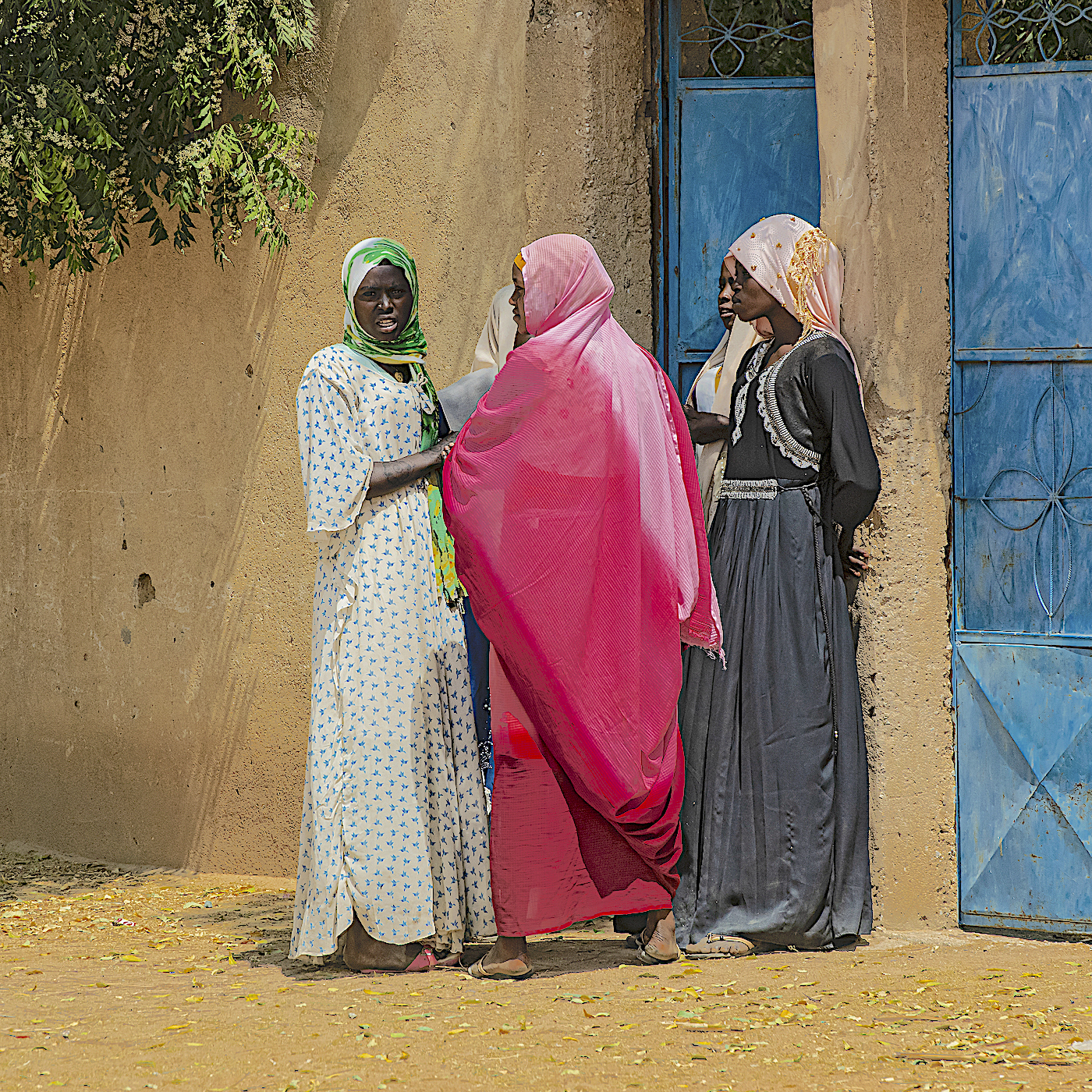
When women begin to participate more in the economy, good things happen. There's more growth, less inequality, and greater financial stability. So, why is women's labor force participation still so low in so many countries? Katharine Christopherson is an Assistant General Counsel in the IMF legal Department and coauthor of some new research that looks at the legal impediments to women's economic activity across the globe. In this podcast, journalist Rhoda Metcalfe and Katharine Christopherson discuss the outdated laws that hold women back and what drives countries to reform them. Transcript: https://bit.ly/3xbEO0P
Shipping Costs and Inflation with Yan Carrière-Swallow
Most of the goods we purchase travel across the oceans in steel containers aboard the largest ships ever to sail the seas. But the pandemic and ensuing lockdowns knocked the wind from their sails and disrupted the entire global shipping network, causing supply shortages and soaring shipping costs. IMF economist Yan Carrière-Swallow has studied the macroeconomic impact of shocks to ocean freight, and in this podcast, he says shipping costs are an important driver of inflation around the world. Transcript: https://bit.ly/3GjIdxD Yan Carrière-Swallow is coauthor along with Pragyan Deb, Davide Furceri, Daniel Jimenez, and Jonathan Ostry, of Shipping Costs and Inflation available at IMF.org.

Alex Cobham on Tax Injustice
Economies grow better when they are more equal, and taxation is a powerful tool to help reduce inequalities. But increasingly, the international tax system is doing the opposite of that by allowing corporations and the world's wealthiest people to avoid paying their fair share. The Tax Justice Network estimates the combined global revenue losses from cross-border tax abuse by people with undeclared offshore assets and of multinational companies amount to some $483 billion a year. Alex Cobham is Chief Executive of the Tax Justice Network, and in this podcast, he speaks with journalist Rhoda Metcalfe about his article Taxing for a New Social Contract in Finance and Development. Transcript: https://bit.ly/3sG6rMI Read the article at IMF.org/fandd