
IMF Podcasts
703 episodes — Page 11 of 15
Indian and Chinese Exceptionalism?
As the Chinese president, Xi Jinping continues his state visit to India, a leading Indian economist assesses the rapid development of these two giant economies, and suggests that the world's most populous countries may be forging a quite exceptional development path.

Being a Small State Isn't Easy, But It Doesn't Have to be Hard
Small states or countries with fewer than 1.5 million people have been struggling economically in recent years. An IMF economist offers an explanation and possible solutions.
Is Africa Forging a Unique Development Path?
Traditionally, countries developed their economies by moving away from agriculture into manufacturing. This was then followed by growth of the service sector. But many countries in Africa are building their service sector without transitioning through widespread industrialization. Is Africa experiencing a quite different path towards development? For more information: http://www.qeh.ox.ac.uk/research/research-themes/projectDetails?res_id=39
Avoiding a Hard Landing in China
Chinese economic growth has been slowing in recent years. If the world's second largest economy is to achieve sustainable, long-term growth, it needs reforms to shadow banking, local government finances and the real estate sector, say IMF economists.
How Fiscal Policy Can Address Energy's Environmental Impacts
Fiscal policies should be center stage in getting energy prices to reflect the harmful health and environmental side effects associated with energy use, according to a new report released by the IMF

Firms Told: Pay Your Fair Share
Equality is not just about everyone getting their fair share, it's also about everyone paying their fair share. A top NGO chief says the growing wealth gap could be reduced by tightening both domestic and international tax rules. Read more on the subject: Fixing International Corporate Taxation---Not Just a Problem for Advanced Economies http://blog-imfdirect.imf.org/2014/06/25/fixing-international-corporate-taxation-not-just-a-problem-for-advanced-economies/ http://www.imf.org/external/np/pp/eng/2014/050914.pdf

IMF Offers Free Economic Training to All
The International Monetary Fund has launched the first in a series of free online courses for those interested in furthering their economic education. One of the course's instructors explains the benefits of raising the public's knowledge about economics, and what he himself has learned from the creation of the course.

The Rise and Rise of Shadow Banking in China
Shadow banking is a system of uninsured investments from non-bank institutions. It can yield very high returns, but investments come with the risk of total bust. Even though shadow banking has the potential for enormous losses, it will continue to be a part of China's economic landscape, says one Sino expert.

Africa: Future Bright, If It Does the Right Thing
Africa has grown faster than many other parts of the world over the last two decades, but many Africans are still not seeing the benefits. One Africa specialist suggests measures that authorities might adopt to take advantage of the continent's burgeoning potential.
David Dollar on The Sino Shift
After years of double digit expansion, China's economic growth is slowing. The world's second largest economy expanded off the back of manufacturing, investment and exports. But, China is now looking inwards for its future growth.

Timothy Taylor: How Economics Can Inform Moral Decisions
Economists are often criticized for viewing the world through the lens of costs and benefits, while ignoring the morality of an economic decision. But, while economics can't answer moral questions, it can inform the debate, says one expert.

More, Better Jobs to Reduce Inequality
Over recent decades, labor's share of GDP has declined steadily in many countries. The International Labour Organization suggests that reforming the labor market could halt that downturn and, at the same time, help reduce inequality.
Piketty: The Origins of Wealth Inequality
The uneven distribution of wealth is one of the most debated issues in contemporary politics and economics. In a recently published, best-selling book, Thomas Piketty, explains the historical forces which have resulted in this inequality, and why a global tax on wealth could be the solution.
Rising Inequality: Not All Bad News
News of rising inequality is, more often than not, met with much handwringing. But, the growing gap between the super rich and the rest has also been accompanied by the lifting of millions out of poverty.
Africa Set for Faster Growth
The future continues to look bright for sub-Saharan Africa, with robust growth expected to accelerate next year. But the IMF also warns of possible threats to the continent's economy coming from outside the region.

Tax and Spending Ideas to Reduce Inequality
Rising inequality around the world is becoming a cause of increasing concern. The IMF is contributing to the debate by suggesting how governments might use tax and spending to reduce the gap between the haves and the have lesses...without slowing down growth.

Arrested Development: The Role of Agriculture
Why are some countries richer than others? The key may lie in the agricultural sector, says one expert, who suggests that low agricultural productivity may be keeping poor countries in a state of arrested development.

Man Versus Nature
The frequency of natural disasters has increased, and its usually poorer countries that are more affected than the developed. But IMF economists say the right policies can be soften their devastating impact. By Nicole Laframboise, Deputy Division Chief, IMF's Western Hemisphere Department

World Braced to Meet Rising Energy Needs, says BP economist
Over the next two decades, global energy consumption is expected to increase by more than 40 percent, according to the Chief Economist of BP, who describes some of the likely tectonic shifts in the energy sector of the future.

The Limits of Economics
Economists use models to try to make sense of economic trends and shape policies. But, since the financial meltdown of 2008, many have criticized what they see as an overreliance on these models which failed to predict the crisis. The former President of the European Central Bank suggests ways these models might be improved.

Unemployment Benefits: The Good and The Bad; Robert Moffitt, Johns Hopkins University
Unemployment benefits deter job seekers from accepting work, say critics. But do they? One expert weighs the evidence.

Bridging Humanitarian Aid and Development
Traditionally, humanitarian workers and development specialists were seen as inhabiting two different worlds, but one expert calls for some joined up thinking to help the people of fragile states.

Croissance mondiale en hausse mais des risques subsistent
La croissance de l'économie mondiale devrait s'accélérer cette année, selon le Fonds monétaire international. C'est ce qui ressort de la dernière mise à jour des Perspectives de l'économie mondiale du FMI. Le FMI table sur une croissance mondiale voisine de 3,7 % cette année, qui passerait à 3,9 % en 2015.

Global Growth on the Rise, But with Wide Regional Variations; Olivier Blanchard
Global growth is expected to increase this year, says the International Monetary Fund in its latest report on the health of the global economy. The IMF forecasts global growth to average 3.7 percent in 2014―up from 3 percent in 2013―and to rise to 3.9 percent in 2015.

Tackling Youth Unemployment in Africa
Africa is one of the fastest growing regions in the world, but the persistence of youth unemployment threatens this progress. Some see this growth without jobs as a ticking time bomb. Lamido Sanusi, the Governor of the central bank of Nigeria explains how to tackle this issue.
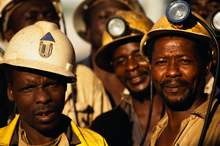
Zambia: Gains Tempered by Large Fiscal Deficit
Zambia has enjoyed rapid growth in recent years, but the size of its fiscal deficit looms large over its future, says the IMF in a new report on the state of this south African economy.

We All Need to Benefit from Economic Growth
"A rising tide lifts all boats." That may be true on the oceans, but it's not always the case when it comes to economic growth. But, countries can choose to pursue economic policies that will benefit all—rich and poor alike.

Emerging Markets: Future Unclear
After a decade of strong growth, many emerging markets have experienced an economic slowdown. Martin Wolf, chief economics commentator at the Financial Times, explains how these economies might restore momentum.

Africa's Middle Class Spearheads Growth
In a wide ranging interview, the chief economist of the African development bank gave his thoughts on the African middle class, the state of data in Africa and the continent' stellar economic performance.

Slower Growth in Emerging Markets: The New Normal?
The recent slowing growth in emerging markets may continue for the foreseeable future says economist Tim Adams. At a recent seminar on "Emerging Markets: Restoring the Momentum", Adams suggested that this change could be a good thing, heralding more balanced and sustainable growth.

Afrique : maintenir le rythme
Dans son dernier rapport sur les perspectives économiques de l'Afrique subsaharienne, le Fonds monétaire international prévoit pour la région une croissance de 6 % en 2014, contre 5 % prévus pour cette année. La région bénéficie de l'amélioration de la conjoncture aux niveaux local et mondial.
Africa: Keeping Up the Pace
In the latest economic outlook for sub-Saharan Africa, the International Monetary Fund expects growth to reach 6% in 2014, up from the 5% expected this year. The region is benefiting from improved domestic and global conditions.
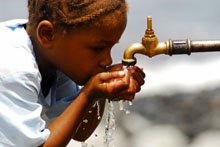
Protecting the World's Water Resources
Water is the one resource we cannot live without. Yet, in some parts of the world, it remains inaccessible to many. To coincide with his article (http://www.imf.org/external/pubs/ft/fandd/2013/09/Gleick.htm) in September's "Finance & Development," Peter Gleick argues that we need to radically change how we consume this vital resource.

Nouvelle configuration de la croissance mondiale
Le FMI prévoit une croissance de 2,9 % de l'économie mondiale cette année, soit moins que les 3,2 % enregistrés l'année dernière. La croissance sera vraisemblablement tirée par les économies avancées, tandis que les pays émergents afficheront des résultats moins bons que prévu.
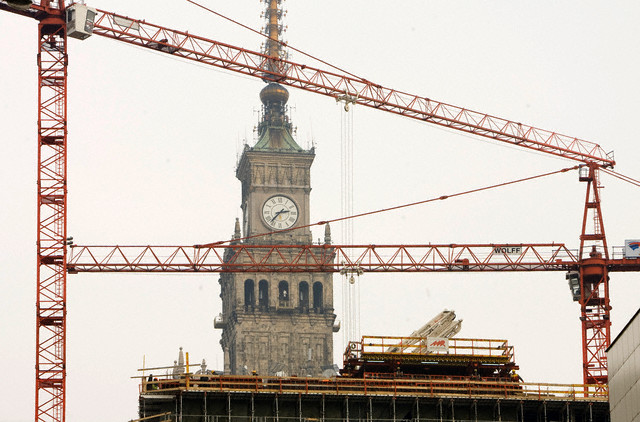
How to Get Faster, Stronger Growth in Central, Eastern Europe
Before the global financial crisis, the economies of central, eastern and southeastern Europe were expected to converge to the levels of their richer, western neighbors. But since the crisis, growth has been disappointing. How then to return this region to greater prosperity?

The Threat of the Debt Ceiling
As US politicians race against the clock to avoid the United States defaulting on its debt, Martin Wolf describes what the debt ceiling is, and its implications for the global economy.
Global Growth Patterns Shift
In the latest update to its World Economic Outlook, the IMF says it expects the world's economy to grow by 2.9 percent this year—below the 3.2 percent recorded last year. Growth is likely to be driven by advanced economies, while the performance of emerging markets will be weaker than expected.

South Africa: The battle for jobs, growth and equality
Despite its many achievements since the transition to majority rule, South Africa struggles with low growth, widespread unemployment, and sharp social tensions. The IMF says Africa's largest economy needs to pursue structural reforms to boost growth and create jobs for a growing population.
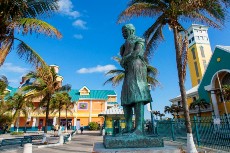
Getting to Growth in the Caribbean
The 26-odd countries in the Caribbean may be small, but they are facing many of the same challenges confronting larger nations. These include the need to create more jobs and ensure that any growth is spread across a wide cross section of society. The countries of the Caribbean and various international organizations are meeting in the Bahamas to discuss how to capture that elusive growth.

Kenya's Economy Takes Off
Kenya is one of the success stories of Africa's economic resurgence. Just a few short years after the global financial crisis caused a sharp economic downturn, the country has rebounded, and earned a reputation as one of the continent's frontier economies. With this strong performance in mind, the Kenya and the IMF will co-host a conference to discuss the country's prospects.

Liberalization Boosts Growth in Myanmar
Myanmar has made impressive strides in opening and liberalizing the economy, boosting growth and the economic outlook, but the formerly isolated country still faces some challenges.

Universities Boom, But New Grads Struggle
Economic growth in the developing world has been accompanied by massive increases in higher education enrollment. This can feed a country's development—but it also puts new pressures on a country's leaders and workers.
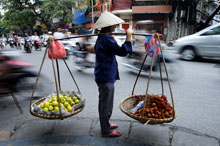
The Persistence of Informal Sector Work
As the economies of the developing world expand, new jobs beckon. But Richard Freeman says these countries have seen a surprising persistence of informal sector jobs—which offer low pay and scant worker protection.
Les envois de fonds, un frein au développement?
Si vous faites partie de ces milliers de gens qui envoient de l'argent à leurs parents et amis à l'étranger, attention! Peut-être faites-vous autant de mal que de bien, selon un économiste du FMI. Ces envois de fonds peuvent certes secourir des familles dans le besoin, mais ils peuvent aussi saper la croissance économique.
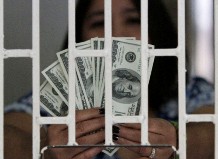
Remittances Can Act as Drag on Development
If you are one of the hundreds of thousands of people who send money abroad to friends and relatives, beware! You may be doing as much harm as good, suggests one IMF economist. Although these remittances can be a lifeline for families, they can also undermine economic growth.

Third World Lessons for First World Growth
Developed countries need to be industrious like ants, says economist, Peter Blair Henry. For years they have offered advice to developing countries on the best path to growth. They might benefit from heeding some of their own advice, he suggests.

Crise de croissance mondiale
La croissance de l'économie mondiale est inférieure aux prévisions, note le FMI dans son dernier rapport sur les Perspectives de l'économie mondiale. Le FMI a révisé à la baisse la croissance pour cette année à 3,1 %, et préviens que les risques augmentent en particulier dans les pays émergents.
Global Growing Pains
The global economy is growing more slowly than expected, says the IMF in its latest assessment. It's revise growth downwards to 3.1 percent this year, and warns risks are rising in emerging markets.

Small, Medium-sized Firms and the Jobs Market
Unemployment is a worry around the world, but it's a particularly pressing issue for developing countries with their growing, young population. Small and medium-sized enterprises (SMEs) can be an important source of new jobs, IF governments provide the them with the right encouragement.

En quête de l'or liquide
De nombreux pays créent des cartels à fin de contrôler le prix d'importants produits de base, dans le but de tirer le maximum de recettes, ou de protéger d'importants secteurs d'activité locaux. Cependant, nombreux sont ceux qui reprochent aux cartels de pénaliser les consommateurs. Nous examinons le pour et le contre des cartels, en partant de l'exemple de la production du sirop d'érable.