
IMF Podcasts
703 episodes — Page 12 of 15
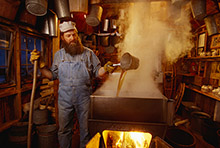
In Search of Sweet Liquid Gold
Many countries create cartels to control the price of important commodities because they want to maximize their income or protect key domestic industries. But the use of cartels is criticized for causing higher prices for consumers. We investigate the pros and cons of cartels through the example of the maple syrup industry.
Africa: Credit Where it's Due
When it comes to borrowing money on the international financial markets, several countries of sub-Saharan Africa can now access money at cheaper rates than some European nations. The change is historic and could open up exciting opportunities for the continent.

Women's Tales from Wall Street
Despite outnumbering men as college graduates within OECD countries, women are still underrepresented at the very top managerial levels, particularly in finance and business. In this podcast a group of women veterans of Wall Street describe how they got to Wall Street, what they found there, and offer advice to young women who want to get there. Read the associated article from Finance & Development magazine: http://www.imf.org/external/pubs/ft/fandd/2013/06/fang.htm

Africa: Onwards and Upwards
Many of the economies of sub-Saharan Africa are performing better than much of Europe. In fact, the region has just completed one of the best decades of growth since the 1960s. This is because it has learnt lessons from the past, say Uganda's finance minister, Maria Kiwanuka who is optimistic about the outlook for the continent.

African Women Need Better Jobs
More women in sub-Saharan Africa participate in the labor force than in any other region. But, most still face an uphill struggle to make ends meet. For them, the problem isn't finding work—it's the kind of work they do.

Pourquoi votre réussite dépend de fonctionnaires bien formés
La réussite économique d'un pays dépend beaucoup du niveau d'éducation de sa population. Mais Rabah Arezki avance qu'une administration publique hautement éduquée est aussi cruciale pour la croissance.

Why Educated Civil Servants Matter to Your Success
A country's economic success depends a lot on how educated its population is. But as Rabah Arezki argues in an article in June's issue of Finance & Development, a highly educated civil service, in particular, can help promote growth for all.

Does What You Export Matter?
Some economists say that a country's exports can determine its economic fate. But William Maloney rejects the idea that exports play such a critical role. He says it's not what you export, but how you do it.

Africa: Strong Growth and Bright Prospects
With a gradually improving outlook for the global economy, growth in sub-Saharan Africa is set to strengthen to 5.5%, according to the IMF's latest forecast for the region. But growth patterns vary within the region.

Afrique : croissance forte et perspectives encourageantes
Grâce à l'amélioration progressive des perspectives économiques mondiales, le taux de croissance devrait atteindre 5,5 % en Afrique subsaharienne, selon les dernières prévisions du FMI. Mais ce chiffre masque des disparités au sein de la région.

Booms Don't Last Forever
In recent years, commodity prices have been riding high, and many commodity dependent countries have benefited from these high prices. But this boon is unlikely to last forever: prices may fall, and nations can run out of key commodities.
Structural Change: Paving the Way for Development?
When a country shifts from being largely based on agrarian economy, to being based on services, or industry, it is said to have undergone structural change. This was the basis of economic development in many Asian countries. Harvard's Dani Rodrik explains why structural change is so critical to development.

On the Road to Recovery, At Different Speeds
Although global growth is expected to reach 3.3% this year, and 4% in 2014, the health of the world's economy is mixed. Olivier Blanchard, Chief Economist at the IMF explains that although the worst is behind us, policymakers still can't afford to relax.
Sur le chemin de la reprise
Bien qu'une croissance mondiale de 3,3 % soit prévue cette année, et de 4 % en 2014, la santé de l'économie mondiale est mitigée. Blanchard, économiste en chef au FMI, explique que, si nous avons passé le pire, les dirigeants ne peuvent toujours pas se permettre de relâcher leur effort.
Breaking Through the Low-Income Ceiling
In the last two decades, many low-income countries have experienced economic take off. But in the 60s and 70s, many of these same countries already boasted robust economic performances, until it all came to an abrupt stop. Can low-income countries keep on growing, this time?

De l'agriculture à l'industrie et au-delà
Dans le processus de développement, les pays subissent des changements structurels. Autrement dit, leurs priorités économiques évoluent d'un secteur à l'autre. Ils diversifient leurs produits, favorisant ainsi leur ascension économique. Mais quand un pays aussi vaste que la Chine procède à des réformes structurelles, l'impact se ressent au-delà de ses frontières.
How to Become Capable of Growth
When you want to get a better job or achieve personal development, you might choose to increase your skills. This might mean learning something new, or acquiring more education. It's the same with countries, if they want to climb up the ladder of development, they need to develop their capacity, or "capabilities," says top economist Ricardo Hausmann.

التجارة والنمو وفرص العمل
تأخرت بلدان منطقة الشرق الأوسط وشمال إفريقيا عن اللحاق بركب اقتصادات الأسواق الصاعدة والبلدان النامية في مجالي النمو الاقتصادي والتجارة على مدار العقدين الماضيين، ولم تكن التجارة في هذه البلدان بمثابة المحرك القوي للنمو مقارنة بالبلدان الأخرى. تركز مقالة في عدد مجلة التمويل والتنمية لصندوق النقد الدولي على هذه المستويات المنخفضة في التجارة في المنطقة. ويوضح الخبير الاقتصادي "أمين ماتي" كيف يمكن توسيع نطاق النمو في المنطقة.

Reforming Energy Subsidies in Africa
In many countries, governments often subsidize the energy sector keeping the price of power lower than it might otherwise be. The aim is to protect the poor by keeping prices low. But, a new study by the International Monetary Fund suggests that these subsidies don't always have the desired effect.
Réformer les subventions énergétiques en Afrique
Les subventions énergétiques jouent un rôle important dans de nombreuses régions du monde. Elles peuvent aider les pauvres en facilitant leur accès à l'énergie. Toutefois, une nouvelle étude du FMI indique que ces subventions ont souvent des conséquences imprévues.

Domestic Integration Before Globalization
Supporters of globalization say that globalization creates growth by encouraging people and countries to interact and trade with each other across national borders. But, has the focus on international integration caused policymakers to overlook the need to integrate their national economies?
A Short History of Debt
Sub-Saharan economies might be performing well now, but not so long ago, they were mired in debt. During the 70's, many of them borrowed money to unsustainable levels and found themselves unable to service their debt. Joly explains how they got out of their predicament.

Une brève histoire de la dette
Les pays d'Afrique subsaharienne enregistrent de bons résultats aujourd'hui, mais il n'y a pas si longtemps, ils étaient surendettés. Dans les années 70, beaucoup d'entre eux ont emprunté dans des proportions intenables et se sont trouvés dans l'incapacité de repayer leur dette.

Spreading the Wealth
Mozambique has had one of highest growth rates in Sub-Saharan Africa over the past two decades. But the increased riches aren't being enjoyed by all. The government is now aiming for "inclusive growth"—something which the IMF is increasingly pursuing in ITS work in Sub-Saharan Africa. But what is "inclusive growth", and how to achieve it?
Caribbean Union Faces Similar Challenges to Euro Area
The euro area may be the world's largest and most well-known regional currency union, but the Eastern Caribbean Economic and Currency Union is an interesting microcosm of its larger European counterpart. The two could learn lessons from each other, suggests an IMF economist.
Revealing the Secrets of Bretton Woods
The 1944 Bretton Woods conference laid the foundations of the modern international monetary system, but little was known about the exact proceedings of that historic gathering, until now. A U.S. treasury economist's discovery of the original transcript of that meeting provides an insight into the characters and the intense debate surrounding the birth of two major international organizations.

Reducing Inequality Through Tax and Spending
Fiscal policy—or the way a government taxes, spends and borrows money—can have a huge impact on reducing inequality. But according to a recent IMF study, that impact has been shrinking over the past decade, as governments scale back social benefits, and make income taxes less progressive.

Fortifier les états fragiles
Un état est considéré fragile lorsqu'il souffre d'instabilité politique et économique, de pauvreté, qu'il se prête au trafic humain, qu'il est ravagé par les maladies ou qu'il subit tous ces fléaux à la fois. Mais comment identifier un état fragile et quelles politiques les états fragiles peuvent-ils mener pour devenir des nations pleinement opérationnelles?
Fixing Fragile States
The features of a fragile state can include political and economic instability, poverty, civil disorder, terrorism, human trafficking, disease, or all of these. But how to identify a fragile state, and what policies can fragile states pursue to become fully functioning nations?
Technology, Education, and Growing Inequality
Over the past several decades, advanced economies, especially the United States, have seen a striking rise in inequality. David Autor of MIT, argues that trend is driven by rapidly developing technology, which has made highly educated workers much more valuable, and which is pushing others out of jobs.

Modest Growth Pickup in 2013, says IMF Chief Economist
The global economy is set to strengthen gradually in 2013, but risks remain. In the latest update to its World Economic Outlook, the IMF projects growth will be 3.5% this year. In this podcast, the IMF chief economist explains that despite the brighter outlook, policymakers need to address risks to the global economy.

Légère accélération de la croissance en 2013, selon le FMI
Dans le dernier rapport sur les Perspectives de l'économie mondiale, le FMI prévoit une croissance de 3,5 % cette année. Dans ce podcast, Mr. Blanchard explique qu'en dépit de l'amélioration des perspectives, les dirigeants doivent s'attaquer aux risques qui pèsent sur l'économie mondiale.

Global Economy Avoids Collapse, but Reforms Still Needed
World leaders have avoided a collapse of the global economy, but they must now follow through with reforms to avoid a relapse into crisis, says Christine Lagarde, the head of the IMF.

Afrique : s'affranchir de la dépendance des matières premières
Durant ces dernières années, l'évolution en dents de scie des cours des matières premières a porté atteinte à de nombreuses régions, et notamment à l'Afrique subsaharienne. Le sort des pays de la région est en effet intimement lié aux fluctuations de ces prix. Que peuvent donc faire les pays pour se protéger contre ces chocs?
Acemoglu : l'inclusion est essentielle à la croissance
Selon Acemoglu, la pauvreté ou la prospérité d'une nation sont sans doute autant l'affaire de la politique que de l'économie. Il avance que les pays plus démocratiques dotés d'institutions politiques «inclusives» parviennent à créer et à entretenir la prospérité, tandis que les régimes «extractifs» autoritaires mènent à la pauvreté.

Social Safety Nets at Work: the Case of Burkina Faso
In the second part of our series on social safety nets in sub-Saharan Africa, we look at practice on the ground. In Burkina Faso, the IMF is working with the government to develop targeted welfare programs. The aim is to identify and help the most vulnerable. But it is still a work-in-progress.

Getting the World Back to Work
Globally, over 200 million people are unemployed, according to the IMF. Many European markets and emerging markets are suffering double-digit jobless rates, and youth and long-term unemployment are at alarming levels. What skills then do job seekers in a global labor market need to succeed?

Social Safety Nets Sustain Growth in Africa
Social safety nets aren't just charitable handouts, they're an essential way to ensure growth is sustainable, says the IMF. Safety nets range from cash transfers through health care, to public works programs to create employment. Over the last decade, more countries in sub-Saharan Africa have been adopting social safety nets to help their poorest.

Africa: Beyond Commodity Dependence
The volatility and price spikes of raw commodities has affected many regions in recent years—sub-Saharan Africa among them. This is because the price of a commodity can make or break the health of a country in this region. What then can countries do to protect themselves from price shocks?

Inclusiveness Essential to Growth, says Acemoglu
A nation's poverty or prosperity may have as much to do with politics as economics, says Daron Acemoglu. He argues that more democratic countries with inclusive political institutions create sustained prosperity, while "extractive," authoritarian regimes lead toward poverty.

Policies Which Destroy Growth
Underdevelopment has often been blamed on bad policies adopted by national governments. Augustin Fosu has identified four such policies which he believes have been the cause of inefficiency, overregulation and misallocation of resources

Africa: From Agriculture To Services
In the last two decades, growth has accelerated significantly in most of sub-Saharan Africa. Researchers at the IMF have been exploring whether this high growth has also led to, what economists describe as, "structural transformation" on the continent.

Slave Trade Leaves Economic Legacy
Decades after the end of colonial rule in Africa, and more than one hundred years after the official end of the slave trade in the US, the continent remains among the least-developed regions of the globe. But how far is the trade in human beings responsible for Africa's lack of economic progress?

La résilience des pays en développement
Les pays émergents et en développement ont remarquablement résisté au récent marasme économique. De la crise asiatique des années 1990 à la crise de 2008, ils ont vite rebondi, prenant même de l'essor. Comment expliquer cette amélioration de la performance ? Abdul de Guia Abiad remonte aux sources de nombreux cas de réussite et cerne quelques facteurs communs.

Utiliser les impôts pour réduire les inégalités
La crise financière mondiale a mis en évidence l'augmentation des inégalités de revenus dans le monde. Thomas Piketty a étudié cette disparité croissante ces dernières années et plaide en faveur d'une imposition progressive pour atténuer cette tendance.

Endiguer la volatilité des prix
Devant la recrudescence de la hausse des prix des produits alimentaires et pétroliers, Samya Beidas-Strom, économiste au FMI, montre que la volatilité de ces prix peut être atténuée.

Managing Oil Wealth in Africa
Despite their oil wealth, the countries of the Central African Economic and Monetary Community still struggle with the "Resource Curse". Sharmini Coorey, Director of the IMF's Institute of Capacity Development describe the challenges of managing oil wealth in the region, and outline policies that could help overcome them.

Towards a rebalancing of the Chinese Economy?
China's current account surplus has declined dramatically over recent years. Many economists believe this signals a much needed rebalancing of the world's second largest economy toward domestic sources of growth. So, what's the reason behind this drop and what does it mean for the rest of Asia?

Understanding Financial Crises
Financial crises have been with us for hundreds of years. From the currency crisis of the Roman Empire to more recent events such as the 2008 financial meltdown, financial crises have been pervasive in market economies. Gary Gorton argues that crises are inevitable, but that with the right policies, their effects can be mitigated.

L'intégration économique mondiale selon Kemal Dervis
Selon Kemal Dervis, trois tendances fondamentales sont aujourd'hui à l'œuvre au sein de l'économie mondiale : la convergence de la croissance des économies émergentes et avancées, l'interdépendance des mouvements conjoncturels des différents pays et la divergence des revenus au sein des sociétés.