Dementia Researcher
351 episodes — Page 5 of 8
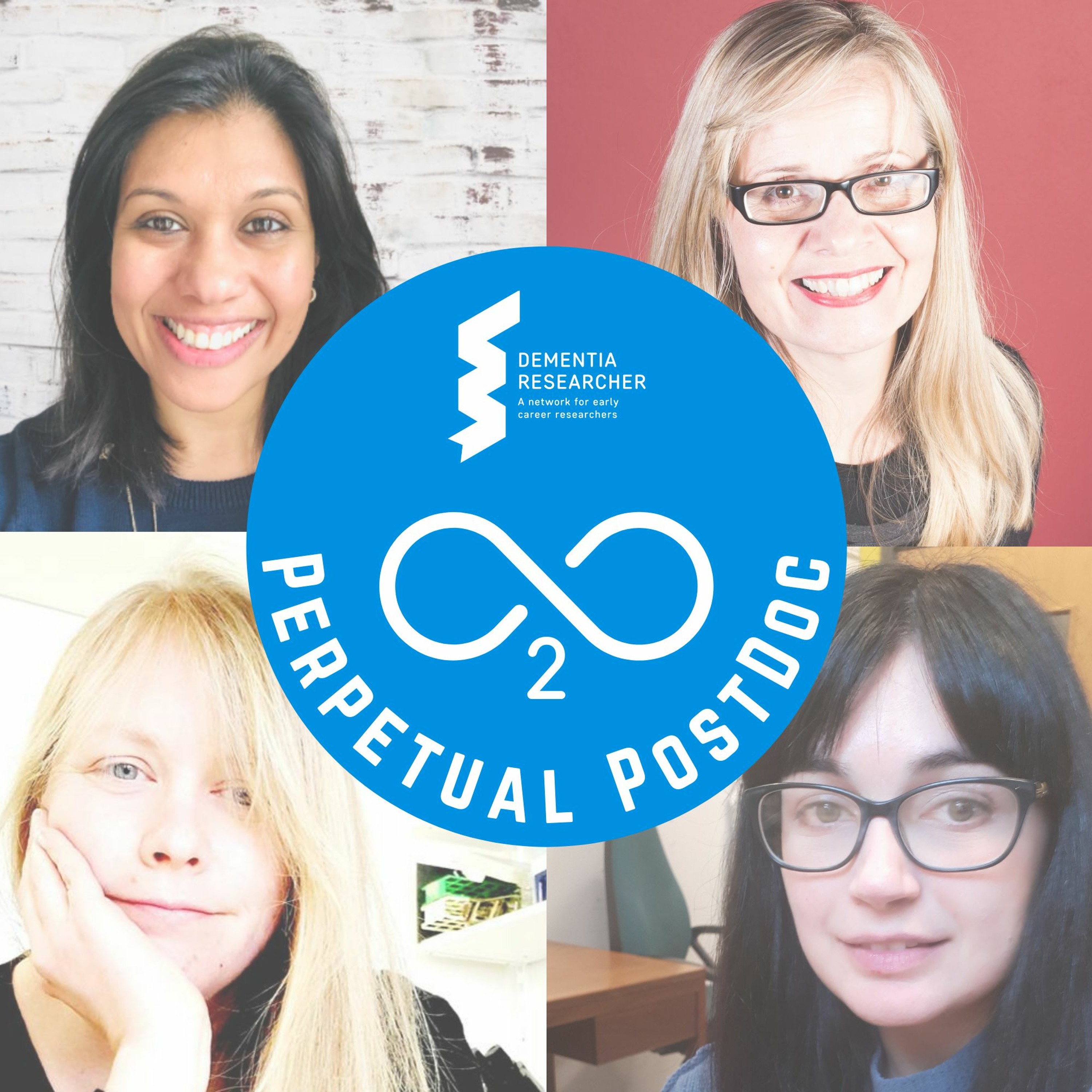
Perpetual Postdoc - Avoiding the Ostrich Approach, Some Tricky Conversations About Academia
Welcome to our mini-series on post-doccing in the 21st century, where we discuss the highs, the lows, the problems and the potential solutions. In this series Dr Yvonne Couch, ARUK Research Fellow from the University of Oxford is joined by Dr Kritika Samsi, Senior Research fellow at King’s College London, Dr Sarah Kate Smith, Research Fellow at Sheffield Hallam and one of our new regular bloggers at Dementia Researcher Dr Kamar Ameen-Ali at the University of Glasgow. If you’ve not yet listened to it, go back and listen to the first episode where we pass on our wisdom to the next generation. In this, the second episode in the series, they discuss some of the things they love about academic life and some of the major obstacles they face. Tune in for the occasional painful truth about life in academia. All this week Dementia Researcher is publishing content aimed providing help, advice and support for anyone who feels a little 'stuck' at the postdoc career stage. Ideal for anyone looking to break out into indepednant research, avoid ever getting in the situation, hoping to work out how to get a promotion or accept this but challenge the issue of short-term contracts. You can find out more about our guests, and access a full transcript of this podcast on our website at: https://www.dementiaresearcher.nihr.ac.uk/podcast Register on our website to receive your weekly bulletin, and to access more great content – blogs, science, career support + much more https://www.dementiaresearcher.nihr.ac.uk This podcast is brought to you in association with Alzheimer's Research UK and Alzheimer's Society, who we thank for their ongoing support.

Perpetual Postdoc - 20/20 Hindsight, Tips from Perpetual Post-Docs
Welcome to our mini-series on post-doccing in the 21st century, where we discuss the highs, the lows, the problems and the potential solutions. In this series Dr Yvonne Couch, ARUK Research Fellow from the University of Oxford is joined by Dr Kritika Samsi, Senior Research fellow at King’s College London, Dr Sarah Kate Smith, Research Fellow at Sheffield Hallam and one of our new regular bloggers at Dementia Researcher Dr Kamar Ameen-Ali at the University of Glasgow. In this first episode they their years of experience in academia and outside of it to generate some sage advice for the next generation. Tune in to find out more + comback on Wednesday for the next installment. All this week Dementia Researcher is publishing content aimed providing help, advice and support for anyone who feels a little 'stuck' at the postdoc career stage. Ideal for anyone looking to break out into indepednant research, avoid ever getting in the situation, hoping to work out how to get a promotion or accept this but challenge the issue of short-term contracts. You can find out more about our guests, and access a full transcript of this podcast on our website at: https://www.dementiaresearcher.nihr.ac.uk/podcast Register on our website to receive your weekly bulletin, and to access more great content – blogs, science, career support + much more https://www.dementiaresearcher.nihr.ac.uk This podcast is brought to you in association with Alzheimer's Research UK and Alzheimer's Society, who we thank for their ongoing support.

MSc Complete - Reflecting on the year with Morgan Daniel
For the past year Dementia Researcher has been following Morgan Daniel as she studies for her Dementia & Neuroscience MSc at University College London. In this final round-up podcast, Adam Smith catches up with Morgan as she completes her degree to reflect on the year. It’s been an eventful year for Morgan, moving from Glasgow, studying during the pandemic, learning and finding a new way to study, and deciding what comes next. For the past year Morgan has been writing a monthly blog to share her experiences, and providing great tips for anyone going working through grad school. Catchup with Morgan’s blogs on our website: https://www.dementiaresearcher.nihr.ac.uk/tag/morgan-msc-story/ You will be pleased to know that since recording this podcast Morgan received a number of job offers, and successfully started her dream job as an Assistant Psychologist in Neuropsychology at University College London Hospitals NHS Foundation Trust. Follow Morgan & Adam on Twitter: https://www.twitter.com/MorganDaniel99 https://www.twitter.com/BetterResearch You can find out more about our guests, and access a full transcript of this podcast on our website at: https://www.dementiaresearcher.nihr.ac.uk/podcast Register on our website to receive your weekly bulletin, and to access more great content – blogs, science, career support + much. Dementia Researcher is brought to you by University College London, Queen Square Biomedical Research Centre, and is funded by the National Institute for Health Research, Alzheimer's Research UK and Alzheimer's Society.

Food For Thought - The gut microbiome and Dementia with Dr Alan Desmond
In this show staff blogger Dr Sam Moxon returns to host another podcast on the theme of ‘Food for Thought’ interviewing people who can shed light on the links between food and brain health. In this episode, he talks with author and Consultant Gastroenterologist, Dr Alan Desmond, discussing the links between the gut microbiome and dementia. Can the billions of bacteria that occupy your gut really have an impact on your brain? They explore the gut microbiome, why it's important, and delved into some of the recent scientific breakthroughs of how changes in the bacteria of your gut can possibly directly cause the progression of dementia. Dr Alan Desmond is a Consultant Gastroenterologist. Certified in both Gastroenterology and General Internal Medicine, he completed his specialist training in Cork, Dublin and Oxford. He has years of experience in diagnosing and treating patients with digestive problems; including coeliac disease, diverticular disease, irritable bowel syndrome, Crohn's disease and ulcerative colitis. Dr Alan really enjoys cooking and eating a varied, whole food, plant-based diet – and it is this passion that led him to write the book “The Plant Based Diet Revolution”. He is a member of the Royal College of Physicians, and founding advisory board member for Plant-Based Health Professionals UK, a Charitable Organisation that works to improve education and awareness of the benefits of a healthy plant-based diet. Follow Dr. Alan on Instagram. (Instagram) www.instagram.com/dr.alandesmond/ The Plant Based Diet Revolution by Dr. Alan Desmond (Amazon) http://amzn.to/3q4Gsy7 Food for thought - Eating for Brain Health, Dr Neal Barnard (Podcast) http://bit.ly/3q0txx7 You can find out more about our guests, and access a full transcript of this podcast on our website at https://www.dementiaresearcher.nihr.ac.uk/podcast Register on our website to receive your weekly bulletin, and to access more great content – blogs, science, career support + much more https://www.dementiaresearcher.nihr.ac.uk This podcast is brought to you in association with Alzheimer's Research UK and Alzheimer's Society, who we thank for their ongoing support. -- The views and opinions expressed by guests in this podcast represent those of the guests and do not necessarily reflect those of Dementia Researcher, or our funders, the show does not endorse one particular diet over another and strongly recommends you consult your healthcare professional before making any changes to your diet or lifestyle.

Methods Matter - Qualitative Secondary Analysis
The Methods Matter Podcast - from Dementia Researcher & the National Centre for Research Methods. A podcast for people who don't know much about methods...those who do, and those who just want to find news and clever ways to use them in their research. In this first series PhD Student Leah Fullegar from the University of Southampton brings together leading experts in research methodology, and dementia researchers that use them, to provide a fun introduction to five qualitive research methods in a safe space where there are no such things as dumb questions! Episode Five - Qualitative Secondary Analysis To go with the podcast we had a great artist called Jack Brougham provide an amazing visual guide to this method - Download our free visual how-to guide poster here - https://bit.ly/2ZgEAaa In expert corner - Dr Kahryn Hughes, from University of Leeds. Director of the Timescapes Archive, Editor in Chief of Sociological Research Online, Convenor of the MA Qualitative Research Methods and a Senior Fellow for the NCRM. In researcher ranch – Dr Anna Volkmer is a Speech and Language Therapist and researcher in Language and Cognition, Department of Psychology and Language Sciences, University College London. Anna is researching Speech and language therapy interventions in language led dementia. Further reading referenced in the show: The Timescapes Archive https://timescapes-archive.leeds.ac.uk/ Qualitative Dementia Research Network - https://twitter.com/DemiQual Professor Sarah Irwin Books & Papers - https://bit.ly/3ncRNch Dr Anna Tarrant Books & Papers - https://bit.ly/3AYCsRy Professor Jennifer Mason Books & Papers - https://bit.ly/3kGpWBa Dr Niamh Moore Books & Papers - https://bit.ly/3jjpuIc Professor Bren Neale Books & Papers - https://bit.ly/3DUXtP2 Big Qual Analysis Resource Hub - https://bigqlr.ncrm.ac.uk/ ‘Re-Using’ Qualitative Data - https://bit.ly/3jDBnsP Qualitative Secondary Analysis by Kahryn Hughes & Anna Tarrant https://bit.ly/2Z6bvOw Read more about our guests and listen to more great podcasts at: https://www.dementiaresearcher.nihr.ac.uk The National Centre for Research Methods (NCRM) provides a service to learners, trainers and partner organisations in the research methods community - methodological training and resources on core and advanced quantitive, qualitive, digital, creative, visual, mixed and multimodal methods. https://www.ncrm.ac.uk/ NCRM is delighted to bring you the 2021 Research Methods e-Festival in collaboration with methods@manchester. Held on 25-29 October 2021, the event will be a celebration of research methods with an interdisciplinary social science flavour.
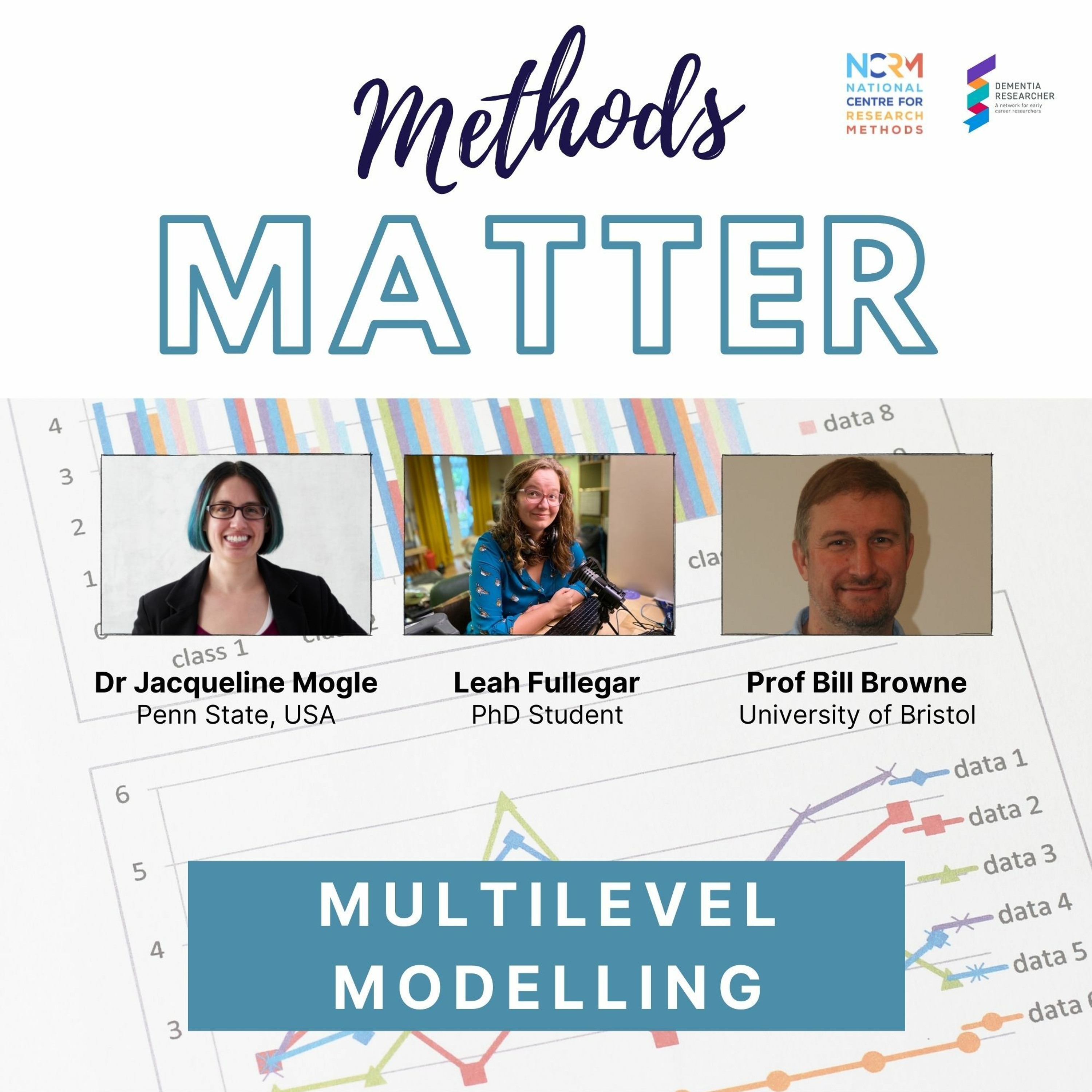
Methods Matter - Multilevel Modelling
The Methods Matter Podcast - from Dementia Researcher & the National Centre for Research Methods. A podcast for people who don't know much about methods...those who do, and those who just want to find news and clever ways to use them in their research. In this first series PhD Student Leah Fullegar from the University of Southampton brings together leading experts in research methodology, and dementia researchers that use them, to provide a fun introduction to five qualitive research methods in a safe space where there are no such things as dumb questions! Episode Four - Multilevel Modelling To go with the podcast we had a great artist called Jack Brougham provide an amazing visual guide to this method - Download our free visual how-to guide poster here - https://bit.ly/3b6Cf4o In expert corner - Bill Browne. Bill is a Professor of Statistics who works across many disciplines including Education and Animal Welfare and Behaviour, his research spans the area of statistical modelling, from the development of statistical methods to fit realistically complex statistical models to describe real-life problems, and the implementation of those models in statistical software. In researcher ranch – Dr Jacqueline Mogle. Jacqueline is co-director of ReMind Lab, which focuses on promoting health and well-being in older adults and identifying early indicators of changes in psychological and cognitive health. Jacqueline’s current projects examine psychological and behavioural risk factors associated with the development of early cognitive decline. These projects are designed to uncover early intervention targets for older adults prior to precipitous declines in everyday cognitive functioning. Further reading referenced in the show: ReMind Lab - https://remindlab.psu.edu/ LEMMA Training Course - https://bit.ly/3C1qesD Multilevel modelling software - https://bit.ly/3lWKTsg Multilevel Analysis Book By Tom Snijders - https://amzn.to/3aWsy8o Multilevel Analysis Book By Roel Bosker - https://amzn.to/3vs39Nk Multilevel Statistical Models By Harvey Goldstein - https://bit.ly/3jjoHqM Read more about our guests and listen to more great podcasts at: https://www.dementiaresearcher.nihr.ac.uk The National Centre for Research Methods (NCRM) provides a service to learners, trainers and partner organisations in the research methods community - methodological training and resources on core and advanced quantitive, qualitive, digital, creative, visual, mixed and multimodal methods. https://www.ncrm.ac.uk/ NCRM is delighted to bring you the 2021 Research Methods e-Festival in collaboration with methods@manchester. Held on 25-29 October 2021, the event will be a celebration of research methods with an interdisciplinary social science flavour.

Methods Matter - Qualitative Longitudinal
The Methods Matter Podcast - from Dementia Researcher & the National Centre for Research Methods. A podcast for people who don't know much about methods...those who do, and those who just want to find news and clever ways to use them in their research. In this first series PhD Student Leah Fullegar from the University of Southampton brings together leading experts in research methodology, and dementia researchers that use them, to provide a fun introduction to five qualitive research methods in a safe space where there are no such things as dumb questions! Episode Three - Qualitative Longitudinal To go with the podcast we had a great artist called Jack Brougham provide an amazing visual guide to this method - Download our free visual how-to guide poster here - https://bit.ly/3m5j418 In expert corner - Dr Kahryn Hughes, from University of Leeds. Director of the Timescapes Archive, Editor in Chief of Sociological Research Online, Convenor of the MA Qualitative Research Methods and a Senior Fellow for the NCRM. In researcher ranch – Professor Andrew Clark, from the University of Salford. Andrew has completed research on a wide range of topics, though he is particularly interested in three areas: neighbourhoods & communities; dementia; and innovation & creativity in social science research methods. Further reading referenced in the show: The Time Scapes Archive https://timescapes-archive.leeds.ac.uk/ Professor Bren Neale Books / Papers - https://bit.ly/3DUXtP2 The Neighbourhoods & Dementia Study - https://bit.ly/2Zaf1ba Professor Nick Emmel Books / Papers - https://bit.ly/3ne7D6q Professor Janet Holland Books / Papers - https://bit.ly/3nddrgC Professor Rachel Thomson Books / Papers - https://bit.ly/3aZ6b24 Dr Sheila Henderson Papers - https://bit.ly/3jksPXl Big data, qualitative style: a breadth-and-depth method for working with large amounts of secondary qualitative data - https://bit.ly/3E2bUAZ Read more about our guests and listen to more great podcasts at: https://www.dementiaresearcher.nihr.ac.uk The National Centre for Research Methods (NCRM) provides a service to learners, trainers and partner organisations in the research methods community - methodological training and resources on core and advanced quantitive, qualitive, digital, creative, visual, mixed and multimodal methods. https://www.ncrm.ac.uk/ NCRM is delighted to bring you the 2021 Research Methods e-Festival in collaboration with methods@manchester. Held on 25-29 October 2021, the event will be a celebration of research methods with an interdisciplinary social science flavour.

Methods Matter - Social Network Analysis
The Methods Matter Podcast - from Dementia Researcher & the National Centre for Research Methods. A podcast for people who don't know much about methods...those who do, and those who just want to find news and clever ways to use them in their research. In this first series PhD Student Leah Fullegar from the University of Southampton brings together leading experts in research methodology, and dementia researchers that use them, to provide a fun introduction to five qualitive research methods in a safe space where there are no such things as dumb questions! Episode Three - Social Network Analysis To go with the podcast we had a great artist called Jack Brougham provide an amazing visual guide to this method - Download our free visual how-to guide poster here - https://bit.ly/2ZenYA3 In expert corner - Dr David Griffiths from the University of Stirling. His research focuses on social connections and social advantage. And what tool does he rely on to get to the heart of the issues? You guessed it social network analysis, and social survey methods. In researcher ranch – Dr Anne-Nicole Casey, Qualitative Research Associate from the University of New South Wales within the Dementia Collaborative Research Centre (DCRC) and Centre for Healthy Brain Ageing (CHeBA). Further reading referenced in the show: Social Network Analysis By John Scott - https://amzn.to/3n9Lp5R Doing Social Network Analysis By Gary Robins - https://amzn.to/3n80Jjb Read more about our guests and listen to more great podcasts at: https://www.dementiaresearcher.nihr.ac.uk The National Centre for Research Methods (NCRM) provides a service to learners, trainers and partner organisations in the research methods community - methodological training and resources on core and advanced quantitive, qualitive, digital, creative, visual, mixed and multimodal methods. https://www.ncrm.ac.uk/ NCRM is delighted to bring you the 2021 Research Methods e-Festival in collaboration with methods@manchester. Held on 25-29 October 2021, the event will be a celebration of research methods with an interdisciplinary social science flavour.
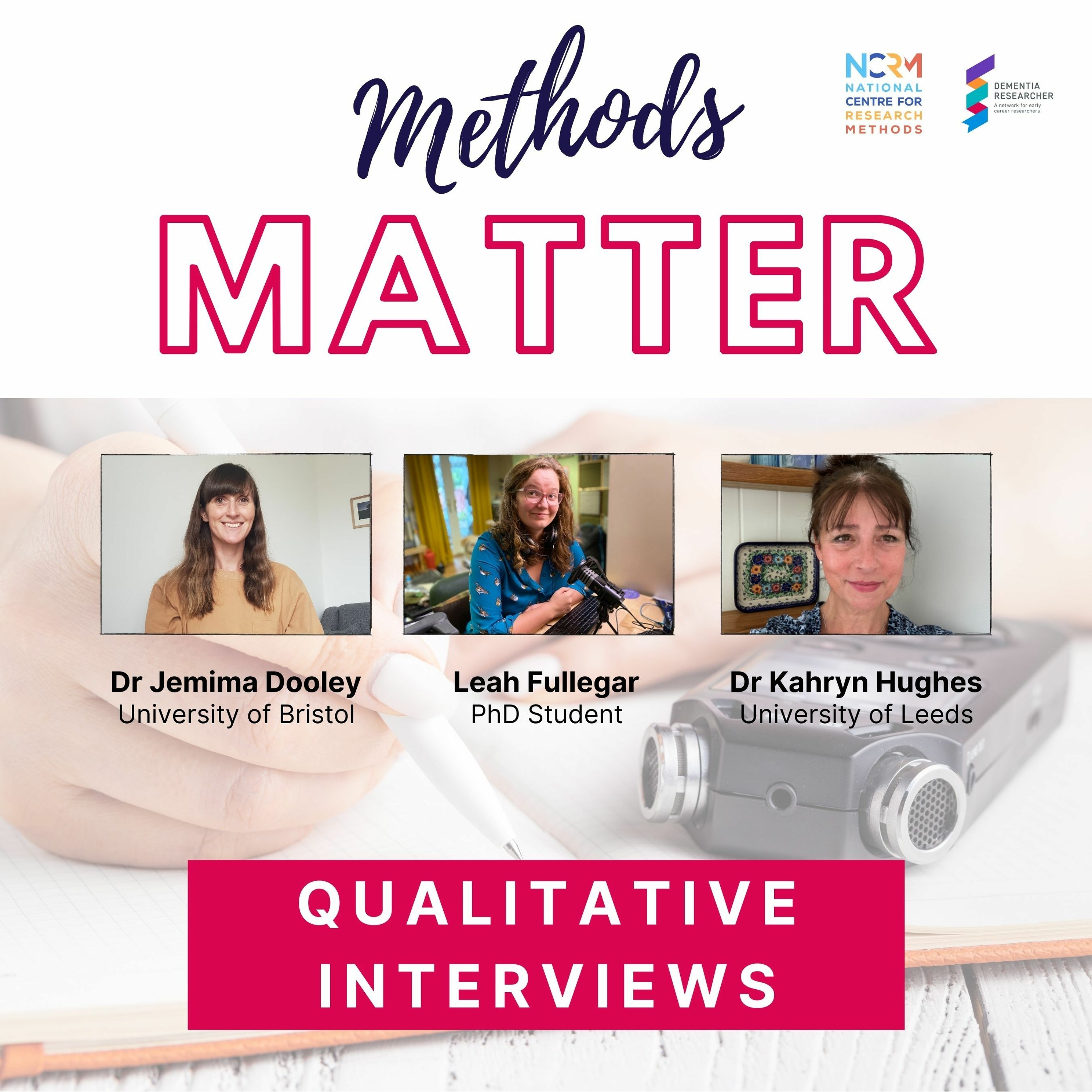
Methods Matter - Qualitative Interviews
The Methods Matter Podcast - from Dementia Researcher & the National Centre for Research Methods. A podcast for people who don't know much about methods...those who do, and those who just want to find news and clever ways to use them in their research. In this first series PhD Student Leah Fullegar from the University of Southampton brings together leading experts in research methodology, and dementia researchers that use them, to provide a fun introduction to five qualitive research methods in a safe space where there are no such things as dumb questions! Episode One - Qualitative Interviews To go with the podcast we had a great artist called Jack Brougham provide an amazing visual guide to this method - Download our free visual how-to guide poster here - https://bit.ly/3DYtBRG In expert corner - Dr Kahryn Hughes, from University of Leeds. Director of the Timescapes Archive, Editor in Chief of Sociological Research Online, Convenor of the MA Qualitative Research Methods and a Senior Fellow for the NCRM. In researcher ranch - Dr Jemima Dooley, conversation analyst, qualitative researcher and NIHR School for Primary Care Research Fellow, from University of Bristol. Further reading referenced in the show: The Timescapes Archive https://timescapes-archive.leeds.ac.uk/ Professor Ann Oakley Website https://www.annoakley.co.uk/ Professor Jennifer Mason Books / Papers https://bit.ly/3kGpWBa Professor Joanna Bornat Books https://bit.ly/3u9PzO0 Dr Kritika Samsi and Professor Jill Manthorpe - https://bit.ly/3EOPKmK Read more about our guests and listen to more great podcasts at: https://www.dementiaresearcher.nihr.ac.uk The National Centre for Research Methods (NCRM) provides a service to learners, trainers and partner organisations in the research methods community - methodological training and resources on core and advanced quantitive, qualitive, digital, creative, visual, mixed and multimodal methods. https://www.ncrm.ac.uk/ NCRM is delighted to bring you the 2021 Research Methods e-Festival in collaboration with methods@manchester. Held on 25-29 October 2021, the event will be a celebration of research methods with an interdisciplinary social science flavour. -- *Minor clarification - Although Jennifer Mason drew on the idea of interviews as 'conversations with a purpose', this language was originally formulated in the work of Robert Burgess. For those of you keen to learn more, check out: Burgess, Robert G. (l988).Conversations with a purpose: the ethnographic interview in educational research, in: Robert G. Burgess, (Ed)Studies in Qualitative Methodology vo!. 1: Conducting Qualitative Research. Greenwich Connecticut: JAIPress.

Trailer for next weeks Methods Matter mini-series
If you follow us on social media you probably already know that we've been recording a special research methods mini-series, with support from the National Centre for Research Methods. The Methods Matter Podcast - for people who don't know much about methods...those who do, and those who just want to find news and clever ways to use them in their research. In this first series PhD Student Leah Fullegar from the University of Southampton brings together leading experts in research methodology, and dementia researchers that use them, to provide a fun introduction to five qualitive research methods in a safe space where there are no such things as dumb questions! So join us every day next week and download from 7am.

The Brain Health and Dementia Research Strategy for Scotland
In this podcast Adam Smith interviews Craig Ritchie, Professor Psychiatry of Ageing from The University of Edinburgh and Jim Pearson, Director of Policy & Practice at Alzheimer Scotland. They discuss the recently launched Scottish Brain Health & Dementia Research Strategy. Prepared by Alzheimer Scotland, The Scottish Dementia Research Consortium and Brain Health Scotland, and endorsed by a broad range of national organisations, the strategy sets the direction of travel for research in Scotland by defining key areas with strategic actions. They explore how the policy was developed, what it hopes to achieve and how support for Early Career Researchers is a key feature of the policy. Review the policy at: https://www.sdrc.scot/wp-content/uploads/2021/07/Scottish-Brain-Health-Dementia-Research-Strategy-2021-min-1-1.pdf For more information on the organisations behind the policy: https://www.brainhealth.scot/ https://www.alzscot.org/ https://www.sdrc.scot/ Professor Ritchie is a Professor of the Psychiatry of Ageing at the University of Edinburgh having moved from his role as Senior Lecturer in the Centre for Mental Health at Imperial College London in October 2014. Craig is a leading authority on Clinical Trials in Dementia and has been senior investigator on over 30 drug trials of both disease modifying and symptomatic agents for that condition. Craig has published extensively on the topics of dementia and delirium. He is also one of the leading editors in the Cochrane Collaboration’s Dementia Group. Additionally Craig leads the Alzheimer Society-funded PREVENT project; a major initiative nationally which will identify mid-life risks for later life dementia and characterise early changes of neurodegenerative disease, this is in addition to multiple other projects, including leading on Brain Health Scotland. Jim is Alzheimer Scotland's Director of Policy & Practice and is responsible for Alzheimer Scotland's public policy engagement. He has a background in welfare rights and a particular interest in promoting as well as protecting the rights of people living with dementia. He played a significant role in developing Scotland's Charter of Rights for people with dementia and their carers, which puts human and other legal rights at the heart of each commitment of Scotland's first and second dementia strategies. Jim also sit on the Board of Alzheimer Europe. You can find out more about our guests, and access a full transcript of this podcast on our website at: https://www.dementiaresearcher.nihr.ac.uk/podcast ________________________ Finally, please review, like, and share our podcast - and don't forget to subscribe to ensure you never miss an episode. Register on our website to receive your weekly bulletin, and to access more great content – blogs, science, career support + much more https://www.dementiaresearcher.nihr.ac.uk This podcast is brought to you in association with Alzheimer's Research UK and Alzheimer's Society, who we thank for their ongoing support.
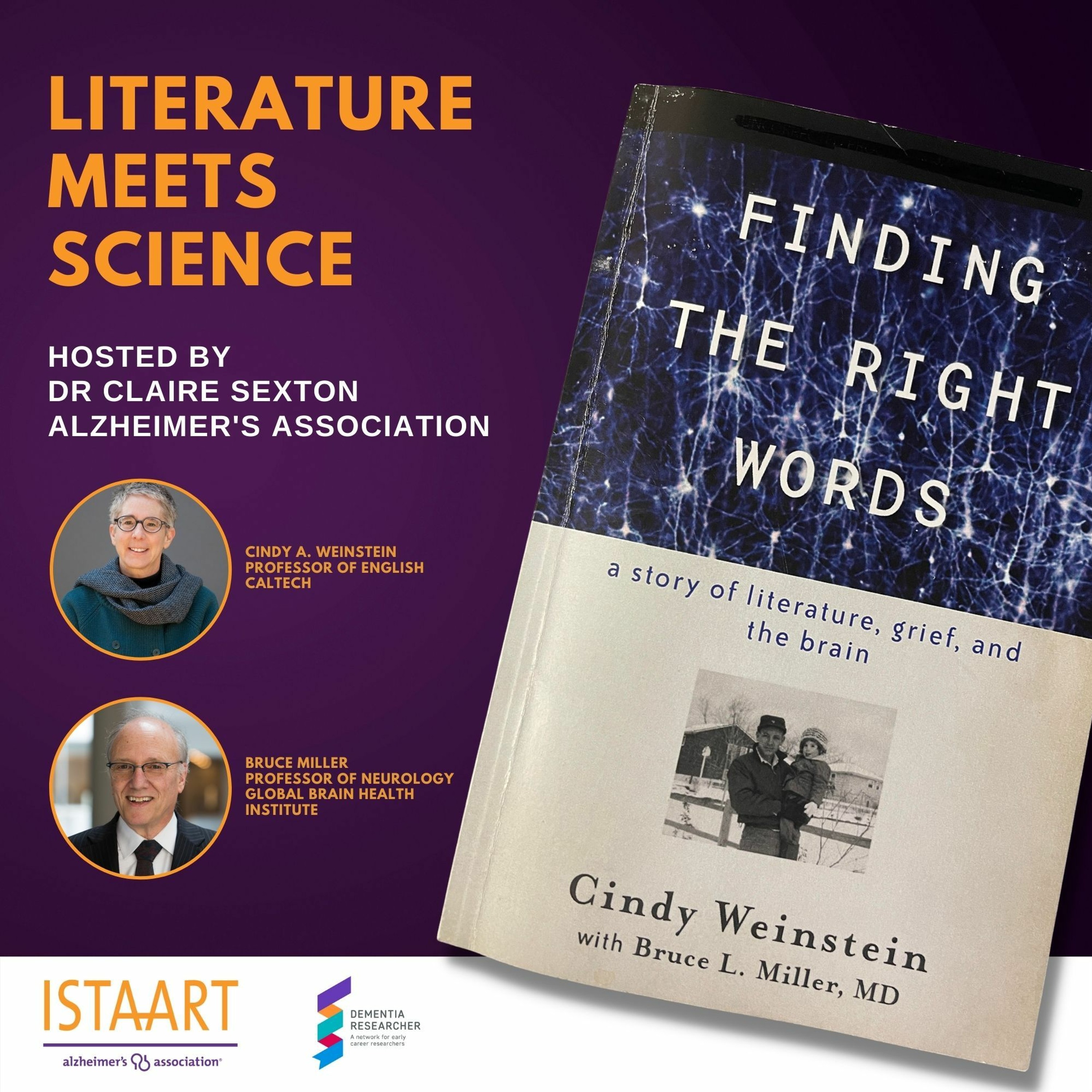
Literature meets science - ISTAART Research Perspectives
In this podcast Dr Claire Sexton, Director of Scientific Programs & Outreach at the Alzheimer’s Association interviews Professor Cindy Weinstein and Professor Bruce L. Miller. Discussing their collaboration on a new book ‘Finding the Right Words – a story of literature, grief, and the brain’. This podcast was originally recorded as an ISTAART webinar in August 2021. This is the moving story of an English professor studying neurology in order to understand and come to terms with her father's death from Alzheimer's. Finding the Right Words follows Cindy’s decades-long journey to come to terms with her father's dementia as both a daughter and an English professor. Although her lifelong love of language and literature gave her a way to talk about her grief, she realized that she also needed to learn more about the science of dementia to make sense of her father's death. To write her story, she collaborated with Professor Bruce L. Miller, neurologist and director of the Memory and Aging Center at the University of California, and Co-Director of the Global Brain Health Institute. It combines a personal memoir, literature, and the science and history of brain health into a unique, educational, and meditative work. Cindy articulates dealing with a life-changing diagnosis, describing the shock of her father's diagnosis and his loss of language and identity. Writing in response Bruce describes the neurological processes responsible for the symptoms displayed by her father. He also reflects upon his own personal and professional experiences. Their two perspectives give readers a fuller understanding of Alzheimer's than any one voice could. Find out more about the authors on their website and order the book with the links below: https://www.weinsteinandmiller.com/ Amazon - https://amzn.to/3icHpj0 Book Store - https://bit.ly/3i9HZyk You can find out more about our guests, and access a full transcript of this podcast on our website at: www.dementiaresearcher.nihr.ac.uk/podcast _________________________ Finally, please review, like, and share our podcast - and don't forget to subscribe to ensure you never miss an episode. Register on our website to receive your weekly bulletin, and to access more great content – blogs, science, career support + much more www.dementiaresearcher.nihr.ac.uk This podcast is brought to you in association with Alzheimer's Research UK and Alzheimer's Society, who we thank for their ongoing support.

Meet the new Race Against Dementia ARUK Fellows
It's World Alzheimer's Day - a day when we discuss the disease, work to raise awareness and call for action. Today’s podcast is a special edition to announce a very important action from Race Against Dementia (RAD) supported by Alzheimer’s Research UK, the appointment of four new Research Fellows. In the show we talk to new Chief Executive Bridget Barker, who introduces their newly appointed Fellows. They share their research plans, what they’re most looking forward to about the programme and provide a few top tips for those applying for similar positions. Meet the new RAD Fellows: Dr Maura Malpetti, from University of Cambridge. Maura uses multimodal imaging techniques (multi-tracer PET and MRI) integrated with fluid markers, post-mortem validation, and prognostic modelling approaches in frontotemporal lobar degeneration. Dr Aitana Sogorb Esteve, from the UK Dementia Research Institute at University College London. Maura is looking for fluid biomarkers of synaptic dysfunction in genetic FTD and aiming to develop a technique for measuring these synaptic markers in blood. Dr Emily Hill, from University of Warwick. Emily uses detailed electrophysiological approaches to understand the mechanisms underlying tau pathology in neurodegeneration. This work aims to highlight new targets for the treatment of tauopathies like Alzheimer’s disease. Dr Wioleta Zelek, from Cardiff University. Wioleta is an Immunologist focussing on the complement system, its biology, roles in disease and in manipulating the system for therapy. Of particular interest is in the terminal pathway of the complement system that generates the highly pro-inflammatory molecules C5a and the membrane attack complex (MAC). The RAD Fellowship has been discussed on the show before, it is unique in providing five years of funding, with research costs, only open to people who have completed their PhD within the past three years, and provided with a whole programme of additional support – from performance coaching, mentoring through to connections to cutting edge industries and Formula One Teams. The charity started Formula One legend Sir Jackie Steward, aims to instil Formula One attitude into scientific research, to accelerating pace discovery, and with these latest appointments they now fund 10 Fellows based in the UK, USA and Australia. In the UK the programme is supported by Alzheimer’s Research UK, and the James Dyson Foundation. Find out more about RAD and its Fellows, and how you could provide your own support for their work: https://www.raceagainstdementia.com/ You can find out more about our guests, and access a full transcript of this podcast on our website at: https://www.dementiaresearcher.nihr.ac.uk/podcast This podcast also sits on YouTube with English Language Subtitles. _________________________ Finally, please review, like, and share our podcast - and don't forget to subscribe to ensure you never miss an episode. Register on our website to receive your weekly bulletin, and to access more great content – blogs, science, career support + much more https://www.dementiaresearcher.nihr.ac.uk This podcast is brought to you in association with Alzheimer's Research UK and Alzheimer's Society, who we thank for their ongoing support. ______________ Complete the UCL ISTAART #ECRPIA Survey at https://www.dementiaresearcher.nihr.ac.uk/survey
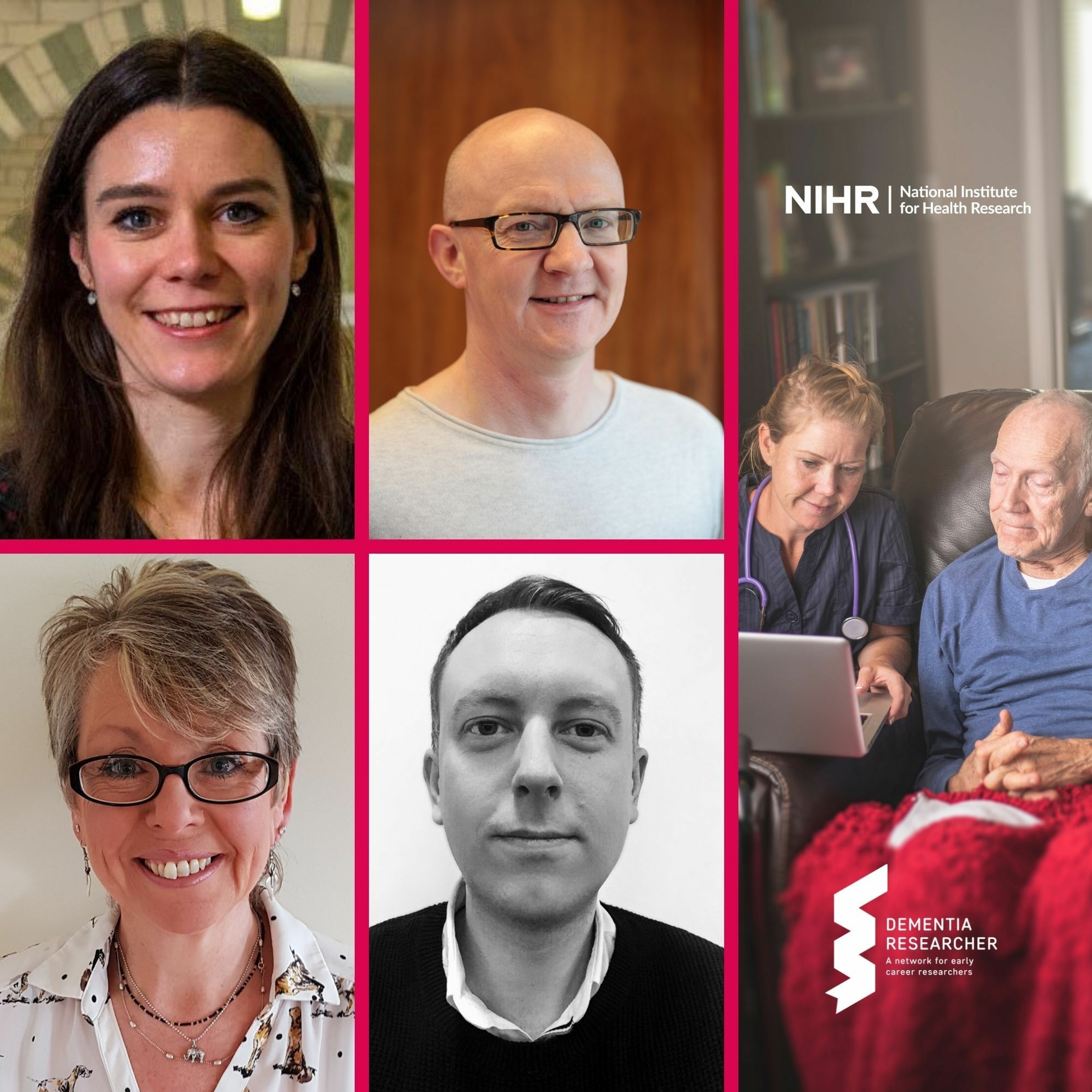
Supporting Social Care Research And Building Capacity
This week we’re discussing Social Care Research, why it is important, and what is being done to try and ensure there is more of it. Social care is a term that generally describes all forms of personal care and other practical assistance for children, young people, adults and older adults who need extra support. However, as you would expect, we’re looking at its connection to dementia and how it supports older adults. We welcome back Senior Research Fellow and regular blogger Dr Clarissa Giebel from University of Liverpool as host, and first time guests Teresa Atkinson from University of Worcester, Dr Michael Clark from the NIHR School for Social Care Research and Tom Redfearn Public Affairs Manager at the Alzheimer’s Society. This podcast was recorded on the 25th June, and a few things have changed since then (which we should probably mention), the UK Government has announced its new plan for health and social care, and the All Party Parliamentary Group for Dementia published its report Fuelling the Moonshot which includes recommendations for improving investment in Dementia Care and Social Care Research: Here are some links that were referenced in the show: NIHR School for Social Care Research - https://bit.ly/3l68y7W What is social care and how does it work - https://bit.ly/2XdixAC UK Government Our Plan for Health and Social Care - https://bit.ly/3txP5kk You can find out more about our guests, and access a full transcript of this podcast on our website at: https://www.dementiaresearcher.nihr.ac.uk/podcast This podcast also sits on YouTube with English Language Subtitles. _________________________ Finally, please review, like, and share our podcast - and don't forget to subscribe to ensure you never miss an episode. Register on our website to receive your weekly bulletin, and to access more great content – blogs, science, career support + much more https://www.dementiaresearcher.nihr.ac.uk This podcast is brought to you in association with Alzheimer's Research UK and Alzheimer's Society, who we thank for their ongoing support. ______________ Complete the UCL ISTAART #ECRPIA Survey at https://www.dementiaresearcher.nihr.ac.uk/survey
Fuelling the Moonshot - Recommendations from the UK APPG on Dementia
Today marks the release of the UK All-Party Parliamentary Group (APPG) on Dementia’s report on their recent inquiry about the state of dementia research. In this episode, Alzheimer’s Society’s Dr Clare Jonas, Jordan Clark and Dr Rich Oakley and the University of Manchester’s Dr Sarah Ryan discuss how an APPG inquiry works, the policy recommendations that the report makes, and how the dementia community can use this report to affect future research policy. For more information and to download the report visit: https://www.alzheimers.org.uk/about-us/policy-and-influencing/all-party-parliamentary-group-dementia You can find out more about our guests, and access a full transcript of this podcast on our website at: www.dementiaresearcher.nihr.ac.uk/podcast This podcast also sits on YouTube with English Language Subtitles. _________________________ Finally, please review, like, and share our podcast - and don't forget to subscribe to ensure you never miss an episode. Register on our website to receive your weekly bulletin, and to access more great content – blogs, science, career support + much more https://www.dementiaresearcher.nihr.ac.uk This podcast is brought to you in association with Alzheimer's Research UK and Alzheimer's Society, who we thank for their ongoing support. ______________ Complete the UCL ISTAART #ECRPIA Survey at www.dementiaresearcher.nihr.ac.uk/survey

Supporting Early Career Researchers - ISTAART & UCL Survey Launch
Early career researchers face many challenges – from difficulties finding, funding, publishing and career progression to problems with research culture and individual forms of prejudice. University College London and the Alzheimer’s Association International Society to Advance Alzheimer’s Research and Treatment (ISTAART) Professional Interest Area to Elevate Early Career Researchers (PEERS) is working to better understand the challenges and what helps. In this podcast Dr Anna Volkmer talks with five members of the ISTAART PIA to Elevate Early Career Researchers. Discussing their work, and their newly launched survey. This weeks guests are Dr Beth Shaaban, Dr Sara Bartels, Wagner Brum, Dr Lindsay Welikovitch. Please note a Chinese and Portuguese translation of this podcast is available as a caption on the version uploaded to youTube - https://youtu.be/uhlxW9BCAUQ The survey discussed is aimed at early career dementia researchers, or those who have previously been an early career dementia researcher but have left the field. We hope you can take a time to help! Complete the Survey - by 31st October 2021 https://www.dementiaresearcher.nihr.ac.uk/survey Share with your followers on Twitter - https://ctt.ac/eN8Y4 It asks questions about you and your research, how you are supported in your field, for your perceptions on how opportunities and support could be improved, and about the research culture that you work within (Please note please note this does include some sensitive questions relating to gender / ethnicity, and asks some questions which may be upsetting e.g. Your experiences of certain types of bullying or prejudice etc.). The results of this survey will be published to help institutions and research funders, to understand the thoughts of early career dementia researchers. The results will also be used to guide the development of future ISTAART programs and resources, and be shared with the World Dementia Council. _____________ Please note this survey has been approved by the University College London Research Ethics Committee. If you have any questions please contact Adam Smith, Programme Director – [email protected]. ______________ You can find out more about our guest, and access a full transcript of this podcast on our website at: www.dementiaresearcher.nihr.ac.uk/podcast _________________________ Finally, please review, like, and share our podcast - and don't forget to subscribe to ensure you never miss an episode. Register on our website to receive your weekly bulletin, and to access more great content – blogs, science, career support + much more https://www.dementiaresearcher.nihr.ac.uk This podcast is brought to you in association with Alzheimer's Research UK and Alzheimer's Society, who we thank for their ongoing support.

Food For Thought - Eating for brain health with Dr Neal Barnard
This week Dr Sam Moxon interviews Dr Neal Barnard, American author, clinical researcher, Leading TED Talk speaker and founding president of the Physicians Committee for Responsible Medicine (PCRM). They discuss the affected of diet on the brain, and the importance of what you eat on brain and overall health. Dr. Barnard has led numerous research studies investigating the effects of diet on diabetes, body weight, the brain and chronic pain, including a ground-breaking study of dietary interventions in type 2 diabetes - paving the way for viewing type 2 diabetes as a potentially reversible condition. He has authored more than 100 scientific publications and 20 books (including some of the best ever selling Vegan health books) for medical and lay readers, and is the editor in chief of the Nutrition Guide for Clinicians, a textbook made available to all U.S. medical students. As president of the Physicians Committee, Dr Barnard also leads programs advocating for preventive medicine, good nutrition, and higher ethical standards in research. His research contributed to the acceptance of plant-based diets in the Dietary Guidelines for Americans, and in 2015, he was named a Fellow of the American College of Cardiology. In 2016, he founded the Barnard Medical Center in Washington, D.C., as a model for making nutrition a routine part of all medical care. Working with the Medical Society of the District of Columbia and the American Medical Association, Dr. Barnard has authored key resolutions, now part of AMA policy, calling for a new focus on prevention and nutrition in federal policies and in medical practice. In 2018, he received the Medical Society of the District of Columbia’s Distinguished Service Award. He has hosted four PBS television programs on nutrition and health. Originally from Fargo, North Dakota, Dr. Barnard received his MD degree at the George Washington University School of Medicine and completed his residency at the same institution. He practiced at St. Vincent’s Hospital in New York before returning to Washington to found the Physicians Committee. Find out more about the Physicians Committee for Responsible Medicine: https://www.pcrm.org/ Latest publication - Study Shows Diet Causes 84% Drop in Troublesome Menopausal Symptoms—without Drugs: https://www.pcrm.org/news/news-releases/study-shows-diet-causes-84-drop-troublesome-menopausal-symptoms-without-drugs YouTube TED Talk: https://youtu.be/v_ONFix_e4k You can find out more about our guest, and access a full transcript of this podcast on our website at: www.dementiaresearcher.nihr.ac.uk/podcast -- Finally, please review, like, and share our podcast - and don't forget to subscribe to ensure you never miss an episode. Register on our website to receive your weekly bulletin, and to access more great content – blogs, science, career support + much more https://www.dementiaresearcher.nihr.ac.uk This podcast is brought to you in association with Alzheimer's Research UK and Alzheimer's Society, who we thank for their ongoing support. -- The views and opinions expressed by guests in this podcast represent those of the guests and do not necessarily reflect those of Dementia Researcher, or our funders, the show does not endorse one particular diet over another and strongly recommends you consult your healthcare professional before making any changes to your diet or lifestyle.
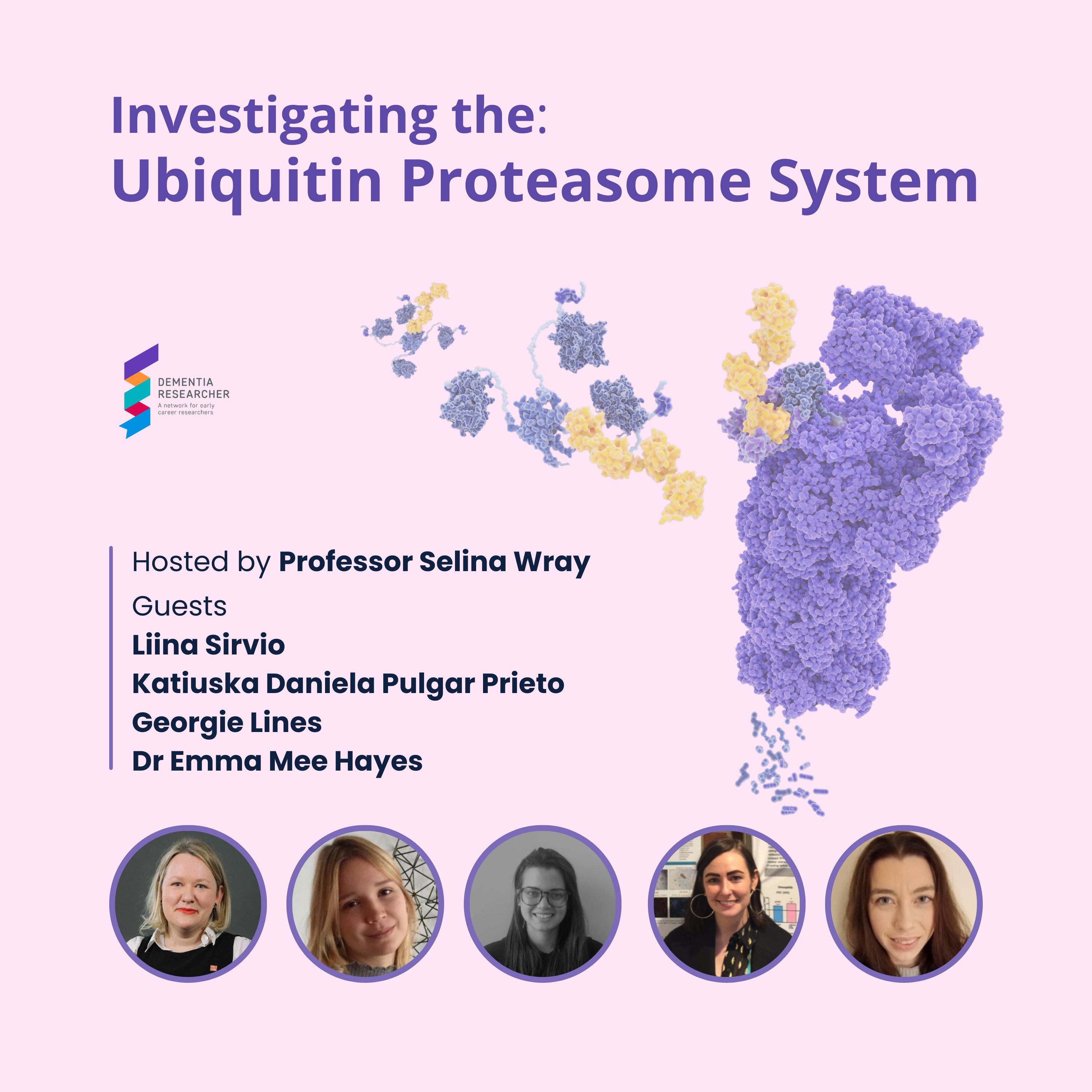
Investigating the ubiquitin proteasome system
In today’s podcast Professor Selina Wray from University College London, meets four early career researchers, who know a great deal about the brain, human iPSC derived cells and the ubiquitin-proteasome pathway (not that isn’t a new type of electric car).We’ll be discussing their research, discovering more about super resolution microscopy, and how they’re researching the ubiquitin proteasome system, and its connection to dementia.We’re delighted to welcome our guests:PhD Students Liina Sirvio, Katiuska Daniela Pulgar Prieto from the UK Dementia Research Institute at Imperial College London. Georgie Lines, PhD Student from University College London and Dr Emma Mee Hayes a Postdoctoral Research Associate also from the UK Dementia Research Institute at Imperial College London.What is the purpose of ubiquitin proteasome system?In eukaryotic cells, proteasomes perform crucial roles in many cellular pathways by degrading proteins to enforce quality control and regulate many cellular processes such as cell cycle progression, signal transduction, cell death, immune responses, metabolism, protein-quality control, and development.A transcript of this show, links and show notes and profile on all our guests are available on our website at https://www.dementiaresearcher.nihr.ac.uk.If you prefer to watch rather than listen, you will find a video version of this podcast on YouTube, on our website, and in selected podcast platforms.Follow us on social media:https://www.instagram.com/dementia_researcher/ https://www.facebook.com/Dementia.Researcher/https://www.twitter.com/demrescommunityhttps://www.linkedin.com/company/dementia-researcher https://bsky.app/profile/dementiaresearcher.bsky.socialDownload and Register with our Community App:https://www.onelink.to/dementiaresearcherWe gratefully acknowledge the support of our funders: Alzheimer’s Association, Race Against Dementia, Alzheimer’s Research UK, Alzheimer’s Society, and the National Institute for Health and Care Research.The views and opinions expressed by guests in this podcast are their own and do not necessarily reflect those of the producers, funders, or sponsors.Subscribe to our sister show 'Dementia Researcher The Blogs':https://podfollow.com/dementia-researcher-blogs

AAIC 2021 Round-up - Live Plenary
In this episode we share a recording of the AAIC Highlights live plenary session, organised and delivered as part of the conference on 30th July. Session chairs Dr Rebecca Edelmayer & Dr Percy Griffin from Alzheimer's Association speak with panellists Wagner Brum, Karen Dorsman, Alexander Ehrenberg, Dr Maureen Okafor and Dr Anna Volkmer To see the live recording of this session, and more from the conference visit https://www.alz.org/aaic Details on the guest from this recording, and a full transcription can be found on our website - https://www.dementiaresearcher.nihr.ac.uk/podcasts Thank you to Alzheimer's Association for giving us permission to share this recording - please note that this audio should not be copied or duplicated, and the views and opinions expressed by guests in this podcast represent those of the guests and do not necessarily reflect those of the Alzheimer's Association. _________________________ Finally, please review, like, and share our podcast - and don't forget to subscribe to ensure you never miss an episode. Register on our website to receive your weekly bulletin, and to access more great content – blogs, science, career support + much more https://www.dementiaresearcher.nihr.ac.uk This podcast is brought to you in association with Alzheimer's Research UK and Alzheimer's Society, who we thank for their ongoing support.
AAIC 2021 Round-up - Narrated Blog
Usually at this time of year you would be expecting our daily Alzheimer's Association International Conference Round-up Podcasts - where we bring together ECRs and people attending to share their highlights. Unfortunately, this year, due time-zones and guest availability, it didn't work out. So instead, we asked Adam Smith to write and narrate a blog to share the main highlights and his own favourite sessions from the week. If you missed the conference, don't worry, it isn't too late to register and the content will be available for the next 30 days (to end August 2021) To book your place visit - https://www.alz.org/aaic Join ISTAART to get a free online ticket - https://www.alz.org/istaart using the code AAIC2021 to get 50% discount on membership. The text from this blog is available here https://www.dementiaresearcher.nihr.ac.uk/podcast-aaic-2021-highlights You will find a bio on Adam Smith and a link to his twitter feed, for more AAIC highlights here: https://www.dementiaresearcher.nihr.ac.uk/podcast-profile-adam-smith/ https://twitter.com/BetterResearch _________________________ Finally, please review, like, and share our podcast - and don't forget to subscribe to ensure you never miss an episode. Register on our website to receive your weekly bulletin, and to access more great content – blogs, science, career support + much more https://www.dementiaresearcher.nihr.ac.uk This podcast is brought to you in association with Alzheimer's Research UK and Alzheimer's Society, who we thank for their ongoing support.
ISTAART Relay Podcast - Lewy body dementia PIA
The Dementia Researcher, ISTAART PIA Relay Podcast is back for a second, 5-part series. Where the interviewee becomes the interviewer. With five leading researchers discussing their research, their field, and the work of the Alzheimer’s Association ISTAART Professional Interest Area they represent. Part Five – Dr Claudio Babiloni interviews Dr Joe Kane Dr Claudio Babiloni is an Associate Professor of Physiology at Sapienza University of Rome. Claudio is investigating the brain rhythms underlying the regulation of vigilance and cognitive functions in aging, with a particular interest in the main progressive neurodegenerative diseases leading to dementia such as Alzheimer's, Lewy body, and Parkinson's diseases. The primary methods of this research are EEG and neuroimaging techniques. Claudio is representing the Electrophysiology PIA. Dr Joe Kane is a Clinical Academic Lecturer working at Queen’s University Belfast. Joe splits his time between research and clinical work as an old age psychiatrist. Having got his taste for academia during his PhD studies working in of Lewy body dementia on the DIAMOND-Lewy programme of studies. Joe is representing the Lewy body dementia PIA. You can find out more about our panellists, and their work on our website: https://www.dementiaresearcher.nihr.ac.uk A transcript of this podcast is also available here https://www.dementiaresearcher.nihr.ac.uk/podcast-relay-one-season-2 ___________________________ The Alzheimer's Association International Society to Advance Alzheimer's Research and Treatment (ISTAART) convenes the global Alzheimer's and dementia science community. Members share knowledge, fuel collaboration and advance research to find more effective ways to detect, treat and prevent Alzheimer's and other dementias. Professional Interest Areas (PIA) are an assembly of ISTAART members with common subspecialties or interests. There are currently 27 PIA covering a wide range of interests and fields, from the PIA to Elevate Early Career Researchers to Biofluid Based Biomarkers and everything in between. To sign-up to ISTAART and a PIA visit www.alz.org/istaart/ _________________________ Finally, please review, like, and share our podcast - and don't forget to subscribe to ensure you never miss an episode. Register on our website to receive your weekly bulletin, and to access more great content – blogs, science, career support + much more. This podcast is brought to you in association with Alzheimer's Research UK and Alzheimer's Society, who we thank for their ongoing support. Finally, the views and opinions expressed by guests in this podcast represent those of the guests and do not necessarily reflect those of NIHR Dementia Researchers, PIA membership, ISTAART or the Alzheimer's Association.
ISTAART Relay Podcast - Electrophysiology PIA
The Dementia Researcher, ISTAART PIA Relay Podcast is back for a second, 5-part series. Where the interviewee becomes the interviewer. With five leading researchers discussing their research, their field, and the work of the Alzheimer’s Association ISTAART Professional Interest Area they represent. Part Four – Dr Betty Tijms interviews Dr Claudio Babiloni Dr Betty Tijms is an Associate Professor at the Alzheimer center, department of Neurology, Amsterdam UMC in the Netherlands. Jennifer’s research focusses on better understanding interindividual differences in the early stages of Alzheimer’s disease that are related to developing dementia, through MR imaging and CSF proteomic analyses. She has recently, started work on cerebrospinal fluid proteomics as one of the most comprehensive measures to get more insight into interindividual differences in underlying pathophysiological processes. Betty is representing the Neuroimaging PIA. Dr Claudio Babiloni is an Associate Professor of Physiology at Sapienza University of Rome. Claudio is investigating the brain rhythms underlying the regulation of vigilance and cognitive functions in aging, with a particular interest in the main progressive neurodegenerative diseases leading to dementia such as Alzheimer's, Lewy body, and Parkinson's diseases. The primary methods of this research are EEG and neuroimaging techniques. Claudio is representing the Electrophysiology PIA. You can find out more about our panellists, and their work on our website: https://www.dementiaresearcher.nihr.ac.uk A transcript of this podcast is also available here https://www.dementiaresearcher.nihr.ac.uk/podcast-relay-one-season-2 ___________________________ The Alzheimer's Association International Society to Advance Alzheimer's Research and Treatment (ISTAART) convenes the global Alzheimer's and dementia science community. Members share knowledge, fuel collaboration and advance research to find more effective ways to detect, treat and prevent Alzheimer's and other dementias. Professional Interest Areas (PIA) are an assembly of ISTAART members with common subspecialties or interests. There are currently 27 PIA covering a wide range of interests and fields, from the PIA to Elevate Early Career Researchers to Biofluid Based Biomarkers and everything in between. To sign-up to ISTAART and a PIA visit www.alz.org/istaart/ _________________________ Finally, please review, like, and share our podcast - and don't forget to subscribe to ensure you never miss an episode. Register on our website to receive your weekly bulletin, and to access more great content – blogs, science, career support + much more. This podcast is brought to you in association with Alzheimer's Research UK and Alzheimer's Society, who we thank for their ongoing support. Finally, the views and opinions expressed by guests in this podcast represent those of the guests and do not necessarily reflect those of NIHR Dementia Researchers, PIA membership, ISTAART or the Alzheimer's Association.
ISTAART Relay Podcast - Neuroimaging PIA
The Dementia Researcher, ISTAART PIA Relay Podcast is back for a second, 5-part series. Where the interviewee becomes the interviewer. With five leading researchers discussing their research, their field, and the work of the Alzheimer’s Association ISTAART Professional Interest Area they represent. Part Three – Professor Jennifer Whitwell interviews Dr Betty Tijms Jennifer Whitwell is a Professor of Radiology at the May Clinic, Rochester having originally grown up and trained in the UK. Jennifer’s research focuses on the investigation of neuroimaging biomarkers, including MRI and PET, in different neurodegenerative disorders, including Alzheimer’s disease and frontotemporal lobar degeneration. She is particularly focused on using neuroimaging to better understand disease mechanisms and progression in patients with atypical clinical presentations of Alzheimer’s disease, highlighting the phenotypic heterogeneity present in this disease. Jennifer is representing the Atypical Alzheimer’s Disease PIA. Dr Betty Tijms is an Associate Professor at the Alzheimer center, department of Neurology, Amsterdam UMC in the Netherlands. Jennifer’s research focusses on better understanding interindividual differences in the early stages of Alzheimer’s disease that are related to developing dementia, through MR imaging and CSF proteomic analyses. She has recently, started work on cerebrospinal fluid proteomics as one of the most comprehensive measures to get more insight into interindividual differences in underlying pathophysiological processes. Betty is representing the Neuroimaging PIA. You can find out more about our panellists, and their work on our website: https://www.dementiaresearcher.nihr.ac.uk A transcript of this podcast is also available here https://www.dementiaresearcher.nihr.ac.uk/podcast-relay-one-season-2 ___________________________ Like what you hear? Then we have a favour to ask... Dementia Researcher is nominated in the 2021 Peoples Choice Podcast Awards - to get through round one, we need your votes - please head over to https://www.podcastawards.com/app/signup - complete the short registration form, and then select Dementia Researcher in the Medicine & Science and Peoples Choice categories (don't worry, you don't have to do any of the others) - hit submit, and verify - JOB DONE Winning this award would be a great way to thank and recognise the contribution of all our hosts and guests who give up their time freely, to share their science and career tips, and to support ECRs to succeed and to raise the profile of Dementia Research. _________________________ Finally, please review, like, and share our podcast - and don't forget to subscribe to ensure you never miss an episode. Register on our website to receive your weekly bulletin, and to access more great content – blogs, science, career support + much more This podcast is brought to you in association with Alzheimer's Research UK and Alzheimer's Society, who we thank for their ongoing support. Finally, the views and opinions expressed by guests in this podcast represent those of the guests and do not necessarily reflect those of NIHR Dementia Researchers, PIA membership, ISTAART or the Alzheimer's Association.
ISTAART PIA Podcast - Atypical Alzheimer’s Disease PIA
The Dementia Researcher, ISTAART PIA Relay Podcast is back for a second, 5-part series. Where the interviewee becomes the interviewer. With five leading researchers discussing their research, their field, and the work of the Alzheimer’s Association ISTAART Professional Interest Area they represent. Part Two – Professor Zahinoor Ismail interviews Professor Jennifer Whitwell Zahinoor Ismail is a Neuropsychiatrist; Professor of Psychiatry, Neurology, Epidemiology, and Pathology at the Hotchkiss Brain Institute and O’Brien Institute for Public Health; Cumming School of Medicine; University of Calgary. Zahinoor works on Dementia prognostication and early dementia detection using non-cognitive markers, treatment of neuropsychiatric syndromes across the cognitive spectrum, pharmacoepidemiology. Zahinoor is representing the Neuropsychiatric Syndromes PIA. Jennifer Whitwell is a Professor of Radiology at the May Clinic, Rochester having originally grown up and trained in the UK. Jennifer’s research focuses on the investigation of neuroimaging biomarkers, including MRI and PET, in different neurodegenerative disorders, including Alzheimer’s disease and frontotemporal lobar degeneration. She is particularly focused on using neuroimaging to better understand disease mechanisms and progression in patients with atypical clinical presentations of Alzheimer’s disease, highlighting the phenotypic heterogeneity present in this disease. Jennifer is representing the Atypical Alzheimer’s Disease PIA. You can find out more about our panellists, and their work on our website: https://www.dementiaresearcher.nihr.ac.uk A transcript of this podcast is also available here https://www.dementiaresearcher.nihr.ac.uk/podcast-relay-one-season-2 ___________________________ The Alzheimer's Association International Society to Advance Alzheimer's Research and Treatment (ISTAART) convenes the global Alzheimer's and dementia science community. Members share knowledge, fuel collaboration and advance research to find more effective ways to detect, treat and prevent Alzheimer's and other dementias. Professional Interest Areas (PIA) are an assembly of ISTAART members with common subspecialties or interests. There are currently 27 PIA covering a wide range of interests and fields, from the PIA to Elevate Early Career Researchers to Biofluid Based Biomarkers and everything in between. To sign-up to ISTAART and a PIA visit www.alz.org/istaart/ _________________________ Finally, please review, like, and share our podcast - and don't forget to subscribe to ensure you never miss an episode. Register on our website to receive your weekly bulletin, and to access more great content – blogs, science, career support + much more This podcast is brought to you in association with Alzheimer's Research UK and Alzheimer's Society, who we thank for their ongoing support. Finally, the views and opinions expressed by guests in this podcast represent those of the guests and do not necessarily reflect those of NIHR Dementia Researchers, PIA membership, ISTAART or the Alzheimer's Association.

ISTAART Relay Podcast - Neuropsychiatric Syndromes PIA
The Dementia Researcher, ISTAART PIA Relay Podcast is back for a second, 5-part series. Where the interviewee becomes the interviewer. With five leading researchers discussing their research, their field, and the work of the Alzheimer’s Association ISTAART Professional Interest Area they represent. Part One – Dr Joe Kane interviews Professor Zahinoor Ismail Dr Joe Kane is a Clinical Academic Lecturer working at Queen’s University Belfast. Joe splits his time between research and clinical work as an old age psychiatrist. Having got his taste for academia during his PhD studies working in of Lewy body dementia on the DIAMOND-Lewy programme of studies. Joe is representing the Lewy body dementia PIA. Professor Zahinoor Ismail is a Neuropsychiatrist; Professor of Psychiatry, Neurology, Epidemiology, and Pathology at the Hotchkiss Brain Institute and O’Brien Institute for Public Health; Cumming School of Medicine; University of Calgary. Zahinoor works on Dementia prognostication and early dementia detection using non-cognitive markers, treatment of neuropsychiatric syndromes across the cognitive spectrum, pharmacoepidemiology. Zahinoor is representing the Neuropsychiatric Syndromes PIA. You can find out more about our panellists, and their work on our website: https://www.dementiaresearcher.nihr.ac.uk A transcript of this podcast is also available here https://www.dementiaresearcher.nihr.ac.uk/podcast-relay-one-season-2 ___________________________ The Alzheimer's Association International Society to Advance Alzheimer's Research and Treatment (ISTAART) convenes the global Alzheimer's and dementia science community. Members share knowledge, fuel collaboration and advance research to find more effective ways to detect, treat and prevent Alzheimer's and other dementias. Professional Interest Areas (PIA) are an assembly of ISTAART members with common subspecialties or interests. There are currently 27 PIA covering a wide range of interests and fields, from the PIA to Elevate Early Career Researchers to Biofluid Based Biomarkers and everything in between. To sign-up to ISTAART and a PIA visit www.alz.org/istaart/ _________________________ Like what you hear? Then we have a favour to ask... Dementia Researcher is nominated in the 2021 Peoples Choice Podcast Awards - to get through round one, we need your votes - please head over to https://www.podcastawards.com/app/signup - complete the short registration form, and then select Dementia Researcher in the Medicine & Science and Peoples Choice categories (don't worry, you don't have to do any of the others) - hit submit, and verify - JOB DONE Winning this award would be a great way to thank and recognise the contribution of all our hosts and guests who give up their time freely, to share their science and career tips, and to support ECRs to succeed and to raise the profile of Dementia Research. _________________________ Finally, please review, like, and share our podcast - and don't forget to subscribe to ensure you never miss an episode. Register on our website to receive your weekly bulletin, and to access more great content – blogs, science, career support + much more This podcast is brought to you in association with Alzheimer's Research UK and Alzheimer's Society, who we thank for their ongoing support. Finally, the views and opinions expressed by guests in this podcast represent those of the guests and do not necessarily reflect those of NIHR Dementia Researchers, PIA membership, ISTAART or the Alzheimer's Association.

AAIC 2021 Preview
In this weeks podcast, Adam Smith speaks with Alzheimer’s Association Director, Scientific Programs and Outreach, Dr Claire Sexton. Discussing this years Alzheimer’s Association International Conference (AAIC) 16-30 July 2021. Taking place in-person in Denver, Colorado, USA and online - the world’s leading basic scientists, clinical researchers, early career investigators, clinicians and the care research community will share breaking research discoveries that will lead to methods of prevention and treatment and improvements in diagnosis for Alzheimer’s disease. Hear how the conference has adapted to ensure that vital science continues to be shared. How the new hybrid conference will work, get information on the themes and plenary speakers and how to get tickets. To book your place visit - https://www.alz.org/aaic Join ISTAART to get a free online ticket - https://www.alz.org/istaart A transcript of this podcast is also available here https://www.dementiaresearcher.nihr.ac.uk/podcast-aaic-2021-preview Dr Claire Sexton Bio https://www.dementiaresearcher.nihr.ac.uk/profile-dr-claire-sexton/ Adam Smith Bio https://www.dementiaresearcher.nihr.ac.uk/podcast-profile-adam-smith/ _________________________ Finally, please review, like, and share our podcast - and don't forget to subscribe to ensure you never miss an episode. Register on our website to receive your weekly bulletin, and to access more great content – blogs, science, career support + much more https://www.dementiaresearcher.nihr.ac.uk This podcast is brought to you in association with Alzheimer's Research UK and Alzheimer's Society, who we thank for their ongoing support.

Diagnosing Dementia - Now and in the Future
Whilst everyone may experience dementia and its symptoms differently, the pathway to diagnosis is very similar for most people, but could all that be about to change?This week Adam Smith, speaks to a Psychiatrist, a Neurologist and a Scientist. They discuss the current diagnosis pathway, the tests involved, and how that could change as with the development of blood based biomarkers. Exploring the science behind the new tests, their development, and how these new tests could be used in frontline services to improve accuracy, support clinical trials and to improve care – and is the NHS ready?This week’s guests are:Dr Elizabeth Coulthard, Consultant Neurologist and Associate Professor at University of Bristol and North Bristol NHS Trust.Dr Josie Jenkinson, Consultant Psychiatrist for Older People and Clinical Academic at Surrey and Borders Partnership NHS Trust.Dr Amanda Heslegrave, Senior Research Fellow focussed on Biomarkers in Neurodegeneration at the UK Dementia Research Institute at University College London.Emerging blood-based biomarkers for Alzheimer disease are an exciting new development. They could provide an accessible, easy to delivery and inexpensive screening tool. Looking to the future, when disease-modifying or prevention treatments will be available, investigators are focused on how to detect the earliest biological signals of Alzheimer disease, perhaps even years or decades before clinical symptoms appear – and that’s when these tests could really become essential. However, how could they be used now? Could they improve accuracy of diagnosis? Replace the need for other more expensive tests? Ensure we no longer have to send people home, telling them they have Mild Cognitive Impairment? Reduce misdiagnosis?Patients and their families want to know, Is this Alzheimer disease, or something that can be reversed? Can we answer that question now? And Could this new biomarker help? All will be discussed in this weeks show.A transcript of this show, links and show notes and profile on all our guests are available on our website at https://www.dementiaresearcher.nihr.ac.uk.If you prefer to watch rather than listen, you will find a video version of this podcast on YouTube, on our website, and in selected podcast platforms.Follow us on social media:https://www.instagram.com/dementia_researcher/ https://www.facebook.com/Dementia.Researcher/https://www.twitter.com/demrescommunityhttps://www.linkedin.com/company/dementia-researcher https://bsky.app/profile/dementiaresearcher.bsky.socialDownload and Register with our Community App:https://www.onelink.to/dementiaresearcherWe gratefully acknowledge the support of our funders: Alzheimer’s Association, Race Against Dementia, Alzheimer’s Research UK, Alzheimer’s Society, and the National Institute for Health and Care Research.The views and opinions expressed by guests in this podcast are their own and do not necessarily reflect those of the producers, funders, or sponsors.Subscribe to our sister show 'Dementia Researcher The Blogs':https://podfollow.com/dementia-researcher-blogs

Social Isolation and Loneliness - ISTAART Research Perspectives
This week is #LonelinessAwarenessWeek – to raise awareness of the challenges of social isolation, and how this can lead to loneliness, and the connection to Dementia, we worked with The Alzheimer's Association International Society to Advance Alzheimer's Research and Treatment (ISTAART), and the Global Brain Health Institute (GHBI) to record this special podcast. The impacts of SI/L (social isolation/loneliness) on the health and longevity of older adults is substantial. Researchers have found that social isolation or loneliness in older adults is associated with a 50% increased risk of developing dementia. With 5-25% of people over the age of 65% saying they experience SI/L, prior to the pandemic, it is now surprise that the situation has only worsened in the last 18 months. Journalist, Writer and GHBI Fellow, Fernando Aguzzoli Peres discovers different perspectives of the challenges that come from SI/L, and the Research that is working to understand the issue and help. To get a first-hand of the difficulties and how one person is overcoming them, Fernando talks with Laureen Waters, Alzheimer’s Association National Early Stage Advisory Board Member who is herself living with a diagnosis of Early Onset Alzheimer’s Disease, living in Clover, South Carolina. To understand more about the research, how SI/L affects people and the impact we hear from Brian Lawlor, who is a Professor of Old Age Psychiatry at Trinity College Dublin, and Deputy Executive Director of the GBHI. Brian is a psychiatrist with an interest in dementia, late-life depression, loneliness and brain health. Brian has worked for over 30 years on developing services and delivering care to people with dementia. His research interests range from early detection and prevention to evaluating new treatments for dementia. You can find out more about our panellists, and their work on our website: www.dementiaresearcher.nihr.ac.uk For more information on this sensitive and important issue visit: In the USA - https://bit.ly/2RNF7Ny In the UK - https://bit.ly/35cCvf6 #LoneLinessAwarenessWeek - https://bit.ly/35duvKM For information on ISTAART Visit - http://www.alz.org/istaart _________________________ This podcast is brought to you in association with Alzheimer's Research UK and Alzheimer's Society, who we thank for their ongoing support.

Cochrane Dementia and Cognitive Improvement Group
This week regular guest host Dr Anna Volkmer talks with the joint co-ordinating editors of the Cochrane Dementia Group. Listen to hear about the work of Cochrane, how they support evidence-informed decision making in healthcare, their work on undertaking systematic reviews and how you could become involved. This weeks guests are: Dr Terry Quinn, Clinical Senior Lecturer, Honorary Consultant and Joint co-ordinating editor of Cochrane Dementia Group. Terry is a clinician working in stroke and older adult services in Glasgow is also the national lead for ageing research in Scotland. Dr Jenny McCleery, Consultant Psychiatrist & Joint co-ordinating editor of Cochrane who describes herself as first, and foremost a Clinician. In her day-job she works as part of a community team for Older Adults at Oxfordshire Health NHS Foundation Trust. Cochrane Dementia and Cognitive Improvement Group, is part of Cochrane’s Mental Health and Neuroscience Network. They aim is to provide the highest quality evidence about the care and medical treatment of people with dementia, delirium and other cognitive disorders, and about the diagnosis and prevention of these disorders. This is done through undertaking systematic reviews addressing questions which are important to patients, their families, and healthcare professionals from all disciplines. _________________________ You can read more about the scope of Cochrane Dementia and their work here: https://dementia.cochrane.org/our-work A transcript of this podcast is also available here https://www.dementiaresearcher.nihr.ac.uk/podcast-cochrane-dementia-and-cognitive-improvement-group Dr Terry Quinn Bio https://www.dementiaresearcher.nihr.ac.uk/profile-dr-terry-quinn/ Dr Jenny McCleery Bio https://www.dementiaresearcher.nihr.ac.uk/profile-dr-jenny-mccleery/ _________________________ Register on our website to receive your weekly bulletin, and to access more great content – blogs, science, career support + much more https://www.dementiaresearcher.nihr.ac.uk This podcast is brought to you in association with Alzheimer's Research UK and Alzheimer's Society, who we thank for their ongoing support.

Building Computers from Human Brain Cells
Resident blogger, Dr Sam Moxon, Biomaterials scientist at The University of Manchester talks with Dr Eric Hill, Senior Lecturer in Stem cell biology and Bioethics from Aston University and Dr Paul Roach, Senior Lecturer in Biomaterials and Interface Science from Loughborough University, about their £3m Neu-ChiP Project. The Revolutionary Neu-ChiP project will see an international collaboration of scientists layer networks of stem cells resembling the human cortex onto microchips. They will then stimulate the cells by firing changing patterns of light beams at them. Sophisticated 3D computer modelling will allow them to observe any changes the cells undergo, to see how adaptable they are. This imitates the ‘plasticity’ of the human brain, which can rapidly adapt to new information - providing huge insights into the development of human neuronal networks. The applications of this work are have far reaching potential. _________________________ Dr Paul Roach Bio https://www.dementiaresearcher.nihr.ac.uk/profile-dr-paul-roach/ Dr Eric Hill Bio https://www.dementiaresearcher.nihr.ac.uk/profile-dr-eric-hill/ Information on the Neu-ChiP Project https://bit.ly/3vpyb7C A transcript of this podcast is also available here www.dementiaresearcher.nihr.ac.uk/podcast-building-computers-from-human-brain-cells _________________________ Register on our website to receive your weekly bulletin, and to access more great content – blogs, science, career support + much more http://www.dementiaresearcher.nihr.ac.uk This podcast is brought to you in association with Alzheimer's Research UK and Alzheimer's Society, who we thank for their ongoing support.

COVID-19 Care Home Research
This week regular Dementia Researcher blogger, Dr Clarissa Giebel, from University of Liverpool, leads a discussion on COVID-19 and Care Home research. The guests this week are: Adam Gordon, Professor of the Care of Older People at University of Nottingham. Adam is an NHS doctor, and his research focuses on Care of Older People, with a focus on care homes. Dr Ramona Backhaus, Postdoctoral Research in the Living Lab in Ageing and Long-Term Care at Maastricht University. Ramona’s research looks at staffing and people in long-term care. Paul Marlow, Carer and Research Champion. Paul cares for his mother who is living with dementia; and recently had first-hand experience of residential care. The Covid-19 pandemic has been a challenging time for everyone, but especially for people living in care homes, their families and the staff. Self-isolation and social distancing are essential tools in reducing the risk of infection, and research is important. Researchers have been working to understand the impact of the pandemic on dementia and residential care, how services can improve and learn lessons, how to deliver changes to safely and effectively and the impact on staff, carers and residents (to name just a few areas of focus). _________________________ You can find out more about our panellists, and their work on our website: https://www.dementiaresearcher.nihr.ac.uk A transcript of this podcast is also available here https://www.dementiaresearcher.nihr.ac.uk/podcast-nihr-evidence-dementia-collection _________________________ Like what you hear? Please review, like, and share our podcast - and don't forget to subscribe to ensure you never miss an episode. This podcast is brought to you in association with Alzheimer's Research UK and Alzheimer's Society, who we thank for their ongoing support.
Introducing the Dementia Researcher Podcast
Welcome to the Dementia Researcher podcast, the fortnightly show for early career researchers, working in all areas of discovery.A transcript of this show, links and show notes and profile on all our guests are available on our website at https://www.dementiaresearcher.nihr.ac.uk.If you prefer to watch rather than listen, you will find a video version of this podcast on YouTube, on our website, and in selected podcast platforms.Follow us on social media:https://www.instagram.com/dementia_researcher/ https://www.facebook.com/Dementia.Researcher/https://www.twitter.com/demrescommunityhttps://www.linkedin.com/company/dementia-researcher https://bsky.app/profile/dementiaresearcher.bsky.socialDownload and Register with our Community App:https://www.onelink.to/dementiaresearcherWe gratefully acknowledge the support of our funders: Alzheimer’s Association, Race Against Dementia, Alzheimer’s Research UK, Alzheimer’s Society, and the National Institute for Health and Care Research.The views and opinions expressed by guests in this podcast are their own and do not necessarily reflect those of the producers, funders, or sponsors.Subscribe to our sister show 'Dementia Researcher The Blogs':https://podfollow.com/dementia-researcher-blogs
BNA Festival 2021 Roundup
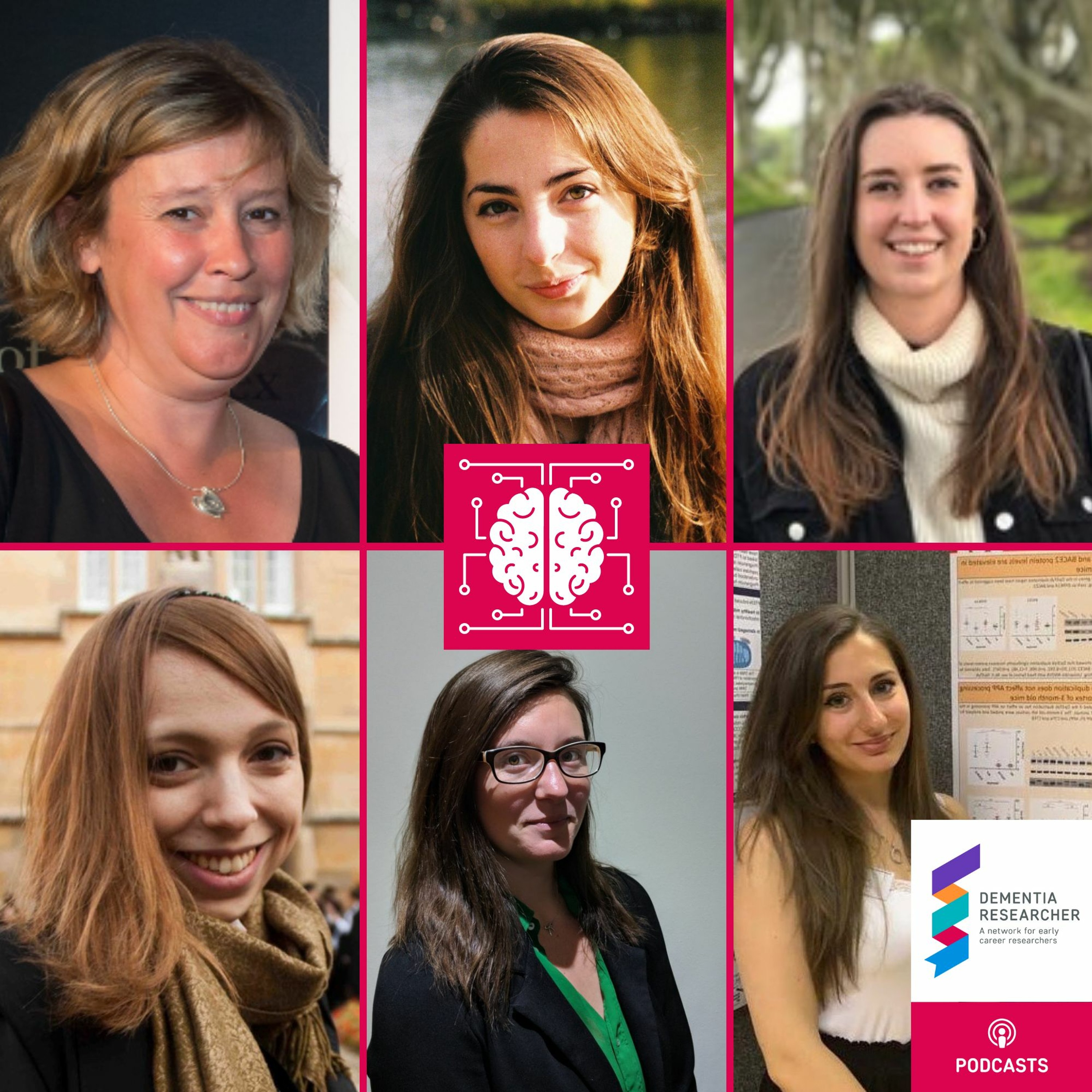
This week Professor Louise Serpell from University of Sussex talks to a great panel of early career researchers, discussing and sharing their highlights from this month’s British Neuroscience Association (BNA) Festival. With our largest ever panel of scientists, with backgrounds are as varied as the topics they discuss. Everything from misfolding proteins, the latest thoughts on amyloid, thought processing and much more. Our guests this week are: Dr Lilya Andrianova, Postdoctoral Research Associate from the University of Glasgow. Lilya is researching neural circuits in health and disease. Emily Beswick, PhD Student from The University of Edinburgh. Emily works in Clinical Trials in MND, wearable devices and extra-motor outcome measures. Sarah Gregory, PhD Student from The University of Edinburgh. Sarah is studying the HPA axis in midlife and it’s association with dementia. Silvia Anderle, PhD Student at University of Sussex. Silvia uses photon microscopy to investigate how different APOE alleles affect neurovascular coupling in targeted replacement APOE mice. Dr Annika Boldt, Postdoctoral Fellow at University College London. Annika studies metacognition, such as confidence and error detection; cognitive offloading; (perceptual) decision making. _________________________ You can find out more about our panellists, and their work on our website: https://www.dementiaresearcher.nihr.ac.uk A transcript of this podcast is also available here https://www.dementiaresearcher.nihr.ac.uk/podcast-bna-festival-roundup _________________________ Like what you hear? Please review, like, and share our podcast - and don't forget to subscribe to ensure you never miss an episode. This podcast is brought to you in association with Alzheimer's Research UK and Alzheimer's Society, who we thank for their ongoing support.
NIHR Evidence - Dementia Collection
Health research must be informative, accessible and relevant to the public, patients, clinicians, health professionals, researchers, policy makers and health service managers. NIHR Evidence presents high quality summaries of findings so that health and care research can be used by all members of society. In this podcast we discuss the new NIHR Evidence Dementia Collection. A collection of NIHR funded research summaries created in close collaboration with those who might use them, including clinicians, commissioners, patients and the public. In the host chair is Dr Emily Oliver, Lead Dementia Nurse for Portsmouth Hospitals NHS Trust and former NIHR Clinical Academic Fellow. Emily talks with one of the researchers whose work is included in the collection, Christina Victor, Professor of Gerontology and Public Health from Brunel University. They are joined by Ann Pascoe a dementia carer and founder / chair of Dementia Friendly Communities. The final guest comes from NIHR Evidence. Nick Spirit is Stakeholder Engagement Manager for the NIHR Centre for Engagement and Dissemination, his work involved ensuring that the thoughts and views of health and care professionals, patients, carers and the public are incorporated in to every aspect of NIHR funded research dissemination, knowledge mobilisation and public involvement. _________________________ You can find out more about our panellists, and their work on our website: https://www.dementiaresearcher.nihr.ac.uk A transcript of this podcast is also available here https://www.dementiaresearcher.nihr.ac.uk/podcast-nihr-evidence-dementia-collection Access the NIHR Evidence Dementia Collection here https://evidence.nihr.ac.uk/collection/dementia/ The National Institute for Health Research is the UKs largest funder of health and care research and it provides the people, facilities and technology that enables research to thrive. NIHR Evidence is managed by NIHR with a funding contribution from Health and Care Research Wales, Welsh Government. _________________________ Like what you hear? Please review, like, and share our podcast - and don't forget to subscribe to ensure you never miss an episode. This podcast is brought to you in association with Alzheimer's Research UK and Alzheimer's Society, who we thank for their ongoing support.

ARUK Conference Roundup 2021
This week we have a two-part special discussing last weeks Alzheimer's Research UK Conference - this is part two. In this show we focus on sharing the research and highlights from the four main days of the conference, 23rd to 26th March. Dr Yvonne Couch, ARUK Research Fellow from University of Oxford takes the chair and she is joined by four great guests: Beth Eyre, PhD Student from The University of Sheffield Dr Lucy Russell, Research Fellow, University College London Dr Aitana Sogorb Esteve, Research Fellow, University College London Michelle Naessens, Research Assistant, University of Cambridge _________________________ You can find out more about our panellists, and their work on our website: https://www.dementiaresearcher.nihr.ac.uk A transcript of this podcast is also available here https://www.dementiaresearcher.nihr.ac.uk/podcast-aruk-conference-roundup For more information on ARUK visit: https://www.alzheimersresearchuk.org/research/ _________________________ Like what you hear? Please review, like, and share our podcast - and don't forget to subscribe to ensure you never miss an episode. This podcast is brought to you in association with Alzheimer's Research UK and Alzheimer's Society, who we thank for their ongoing support.

ARUK Conference ECR Day Roundup
This week we have a two-part special discussing last weeks Alzheimer's Research UK Conference - this is part one. In this show we focus on sharing highlights from the ECR Day, held on Monday 22nd March. Dr Fiona Calvert, Science Communications Officer from Alzheimer's Research UK is joined by Dr Yvonne Couch, ARUK Research Fellow from University of Oxford, and PhD Students Mica Clarke from UCL and Katy Hole from University of Bath. _________________________ You can find out more about our panellists, and their work on our website: https://www.dementiaresearcher.nihr.ac.uk A transcript of this podcast is also available here https://www.dementiaresearcher.nihr.ac.uk/podcast-aruk-conference-2021-ecr-day/ For more information on ARUK visit: https://www.alzheimersresearchuk.org/research/ _________________________ Like what you hear? Please review, like, and share our podcast - and don't forget to subscribe to ensure you never miss an episode. This podcast is brought to you in association with Alzheimer's Research UK and Alzheimer's Society, who we thank for their ongoing support.
Logopenic Progressive Aphasia and its characterisation
In this week’s show Dr Anna Volkmer takes the chair to talk with Shalom Henderson and Dr Siddharth Ramanan from the MRC Cognition and Brain Sciences Unit (CBU) at the University of Cambridge, discussing their research on Understanding Logopenic Variant Primary Progressive Aphasia (lvPPA).People with lvPPA have increasing trouble thinking of the words they want to say. As time goes on, people with lvPPA have more trouble getting the words out, and they eventually begin to speak slower and slower.The cause of lvPPA is unknown, we do know that in lvPPA there is a large build-up of amyloid and tau within brain cells, like in Alzheimer’s disease. As more and more proteins form in brain, the cells lose their ability to function and eventually die. This causes the affected parts of the brain, most often the left posterior temporal cortex and inferior parietal lobe, to shrink.Most people with lvPPA start to have symptoms in their 50s, although some people have shown signs earlier or later.While speech production skills are spared, people with lvPPA gradually have more trouble finding the words they want to use. For example, they may often pause to find the right word. They may develop problems with working memory, and as a result, they might have increasing difficulty repeating sentences and phrases, or following lengthy instructions. They may also begin to have some trouble naming people and objects. People with lvPPA generally do not lose the ability to understand words, as is the case in the semantic variant.Later in the disease, people with lvPPA may have such difficulty finding words that they might stop speaking completely. Difficulties with memory may develop or get worse, and reading and writing may become harder. Sometimes, later symptoms of lvPPA include getting lost or having trouble recognising people.lvPPA is a disease that changes with time. A person with lvPPA can live many years with the disease, although this can vary from person to person.Whilst there are no drug treatments to speak of, Speech and Language Therapists such as our guests today are working on ways to better understand this disease, and to find ways to support people living with it, and their carers and family members to support them.A transcript of this show, links and show notes and profile on all our guests are available on our website at https://www.dementiaresearcher.nihr.ac.uk.If you prefer to watch rather than listen, you will find a video version of this podcast on YouTube, on our website, and in selected podcast platforms.Follow us on social media:https://www.instagram.com/dementia_researcher/ https://www.facebook.com/Dementia.Researcher/https://www.twitter.com/demrescommunityhttps://www.linkedin.com/company/dementia-researcher https://bsky.app/profile/dementiaresearcher.bsky.socialDownload and Register with our Community App:https://www.onelink.to/dementiaresearcherWe gratefully acknowledge the support of our funders: Alzheimer’s Association, Race Against Dementia, Alzheimer’s Research UK, Alzheimer’s Society, and the National Institute for Health and Care Research.The views and opinions expressed by guests in this podcast are their own and do not necessarily reflect those of the producers, funders, or sponsors.Subscribe to our sister show 'Dementia Researcher The Blogs':https://podfollow.com/dementia-researcher-blogs

Studying for an MSc in Dementia & Neuroscience
In today's show, Dr Prerana Sabnis is joined by three Dementia and Neuroscience MSc Students from University College London. Morgan Daniel, Aiko Robert and Vaiva Zarombaite, discussing what motivated them to this course, what they have been studying and what comes next. Completing an MSc can prepare you for further study at PhD level, or for those not attracted to academia, it can prepare you lots of great roles in the workplace. When thinking about dementia, an MSc is also a great way for someone who perhaps studies in a non-science related subject to acquire advanced subject knowledge and for everyone to try their hand at extended independent research during their dissertation. We hope after listening to this show you are motivated consider an MSc or further education yourself. One our website you will find a brand new directory of courses: https://www.dementiaresearcher.nihr.ac.uk/higher-education-courses/ One of the aims of Dementia Researcher is to encourage people to consider a career in dementia research, both inside and outside academia. This week, we are very excited to be working with Alzheimer’s Society, Alzheimer’s Research UK, Race Against Dementia, Dementias Platform UK and the Dementia Research Institute to deliver our ‘Dementia Research Careers Festival’ as part of National Careers Week. We have a whole range of activities planned for the week, with live webinars, career blogs, q and a sessions and other activities which we hope will allow you to see how there really are opportunities for everyone, and how dementia really needs more people like you to become involved. For more information on our events, today's guests or to get a transcript of this podcast visit: https://www.dementiaresearcher.nihr.ac.uk/careers _____________________________________________________________________ Like what you hear? Please review, like, and share our podcast - and don't forget to subscribe to ensure you never miss an episode. This podcast is brought to you in association with Alzheimer's Research UK and Alzheimer's Society, who we thank for their ongoing support.

PhD Supervisors - The good, the great and the rest
Your Supervisor will play a vital role in your PhD, supporting you from starting out to submission (and beyond). But what does ‘supervision’ actually mean in practice? What sort of support and assistance can you expect your supervisor to provide? In this podcast Adam Smith talks with three researchers about their relationships with their PhD Supervisors. Getting underneath what good looks like and how you can influence this. We also discuss what can go wrong, and what that relationship is broken, and strategies to deal that, and still ensure success. This week’s guests are: Dr Prerana Sabnis, Cognitive Neuropsychologist with an interest in language comprehension. Currently blogging for Dementia Researcher having completed her studies at University of Trento, Italy and Macquarie University, Australia. Dr Claire Lancaster, Research Fellow at University of Sussex working on early detection of Alzheimer’s Disease and lifespan risk reduction, with a particular focus on the ApoE gene. Dr Barbara Ann Bush, Tenure Track Professor from Big Bend Community College in Moses Lake, WA. Barbara doesn’t focus on dementia, but lectures on Nationalism, nostalgia, identity, and memory and her focus is on Communications. _____________________________________________________________________ While this podcast is more likely to be listened to by PhD Students…. We realise that some of you may be Supervisors yourself. If you are, we hope you’re brilliant. Here is the supervisors guide from UCL, which is always worth revisiting: https://bit.ly/3pFYFy2 You can find out more about our panellists, and their work on our website: https://www.dementiaresearcher.nihr.ac.uk A transcript of this podcast is also available here https://www.dementiaresearcher.nihr.ac.uk/podcast-phd-supervisors-the-good-the-great-and-the-rest/ _____________________________________________________________________ Like what you hear? Please review, like, and share our podcast - and don't forget to subscribe to ensure you never miss an episode. This podcast is brought to you in association with Alzheimer's Research UK and Alzheimer's Society, who we thank for their ongoing support.

Researching the impact of COVID-19 on dementia care
This week we welcome Dr Tamlyn Watermeyer, Research Fellow from Edinburgh University into the hosts chair to talk with a research team, who rapidly responded to the COVID-19 pandemic. Exploring how they adapted to research the impact of COVID-19 on dementia care, and what they have uncovered. People living with dementia has been some of the hardest hit by the COVID-19 pandemic. In the UK more than a quarter of those who have died had dementia, and an even larger number have been affected societal changes taken to protect people and to keep them safe. Loneliness and isolation are worsening symptoms and this has prompted a response from care services and researchers, to understand how best to help and deliver interventions. At the beginning of 2020, the NIHR and other research funders were fantastic. Very quickly providing funding to support COVID-19 related research. That funding wasn’t only spent on developing treatments and a vaccination, but also on how the virus and the measures taken to keep people safe, were affecting everyday life, society and care. This week’s guests are: Dr Clarissa Giebel, Research Fellow, University of Liverpool Jacqueline Cannon, Chief Executive of The Lewy Body Society Dr Stephen Mason, R&D Lead, Palliative Care Unit, University of Liverpool Along with the host of our show in her own work, Clarissa, Jacqueline and Stephen quickly adapted their research to discover, uncover what was happening within dementia care. To understand what was being done right, what was being doing wrong and what could be done better in the future. _____________________________________________________________________ View Dr Giebel et al. recent paper - COVID-19-related social support service closures and mental well-being in older adults and those affected by dementia: a UK longitudinal survey https://bmjopen.bmj.com/content/11/1/e045889.full You can find out more about our panellists, and their work on our website: https://www.dementiaresearcher.nihr.ac.uk A transcript of this podcast is also available here https://www.dementiaresearcher.nihr.ac.uk/podcast-researching-the-impact-of-covid-19-on-dementia-care/ _____________________________________________________________________ Like what you hear? Please review, like, and share our podcast - and don't forget to subscribe to ensure you never miss an episode. This podcast is brought to you in association with Alzheimer's Research UK and Alzheimer's Society, who we thank for their ongoing support.

Dementias Platform UK supporting researchers worldwide
Cohorts and the data collected from them through longitudinal research studies have made a significant impact on our understanding of disease. With funding from the Medical Research Council, Dementias Platform UK (DPUK) has been at the forefront of this work for the past 5 years, providing dementia researchers with free access to more than 3 million health records from over 40 cohort studies, and a powerful, secure analytics platform. In our first ever ‘live recording’ we invited the audience into our virtual studio to watch Dr Megan O’Hare host a discussion on DPUK. Listen to discover what DPUK is, how it works, how it is helping researchers and how you can use the service. Guests on the show are Cognitive Neuropsychologist, Dr Sarah Baumeister, Senior Data & Science Manager from DPUK and University of Oxford and multi-disciplinary researcher Dr Danielle Newby, also from the University of Oxford. With a background in epidemiology, pharmacology and machine learning. Danielle is currently using DPUK to explore options for repurposing existing drugs for use in dementia. Adam Smith looks after the audience, and puts their questions to the panel at the end of the show. _____________________________________________________________________ For information on Dementias Platform UK visit: https://www.dementiasplatform.uk/ You can find out more about our panellists, and their work on our website: https://www.dementiaresearcher.nihr.ac.uk A transcript of this podcast is also available here https://www.dementiaresearcher.nihr.ac.uk/podcast-dementias-platform-uk-supporting-researchers-worldwide _____________________________________________________________________ Like what you hear? Please review, like, and share our podcast - and don't forget to subscribe to ensure you never miss an episode. This podcast is brought to you in association with Alzheimer's Research UK and Alzheimer's Society, who we thank for their ongoing support.

Researching Art to help people living with Dementia
In this week’s show, we discuss how arts based methodologies and the knowledge and skills of an artist can be used within the field of health to create new understandings and promote wellbeing in people living with dementia. Our first guest is freelance Artist and Academic, Dr Megan Wyatt. Megan recently completed her PhD at Wrexham Glyndwr University, investigated how people living with dementia engage with and experience painting. We are also joined by Megan’s PhD Supervisor Dr Susan Liggett. Susan is the Associate Dean for the Research Faculty of Art Science and Technology at the University, and her research considers how visual arts can contribute to a better society. Both Megan and Susan are passionate about the benefits of Art in dementia, having both experienced the impact of the disease within close relatives. Together they co-authored a paper on “The Potential of Painting: Unlocking Disenfranchised Grief for People Living With Dementia” and are in the process of writing a chapter for the practical handbook of dementia to be published later this year. Dr Megan O’Hare hosted the show which was recorded in November 2020. The growing prevalence of dementia, combined with an absence of effective pharmacological treatments, highlights the potential of psychosocial interventions to alleviate the effects of dementia and enhance quality of life. Art, Dance, Music, Singing and other interventions have been proven to be effecting as a means to support improved wellbeing and reduce agitation in people living with dementia. Delivering these interventions and measuring their impact can be challenging, we hope this show is useful to anyone working in this field, and would love to hear from others to discuss this field in a blog for the Dementia Researcher website. _____________________________________________________________________ Review the paper discussed here: https://journals.sagepub.com/doi/full/10.1177/1054137318780577 You can find out more about our panellists, and their work on our website: https://www.dementiaresearcher.nihr.ac.uk A transcript of this podcast is also available here https://www.dementiaresearcher.nihr.ac.uk/podcast-researching-art-to-help-people-living-with-dementia _____________________________________________________________________ Like what you hear? Please review, like, and share our podcast - and don't forget to subscribe to ensure you never miss an episode. This podcast is brought to you in association with Alzheimer's Research UK and Alzheimer's Society, who we thank for their ongoing support.
Blogs 2020 - Part 5
Every week we publish blogs written by a fantastic group of regular contributors, and special guests from across the world. Researchers at all stages of their careers, working across all areas of science. Discussing their lives, their research and general careers topics. Their blogs are a fantastic source of information, advice and top-tips and we know from the feedback we receive, that they’re also great at helping you to know you’re not alone in the difficulties you face. Every blog is narrated by the author, so our Programme Director Adam Smith has taken a look back over this year’s blogs and collated a five-part podcast special. Today Adam introduces blogs from Dr Anna Volkmer, Dr Sam Moxon, Dr Emily Oliver, Beth Eyre, Dr Clarissa Giebel and Morgan Daniel. Covering: • Conversation analysis • Job hunting in a pandemic • Clinical Academic roles in nursing, do they exist and where can I find one • Introducing Beth Eyre and discovering science • Planning and hosting a virtual event • Managing your Imposter Syndrome You can find out more about our bloggers, and their work on our website. There you will also find the originals of these blogs, and more much more. Register on our website to receive our Friday bulletin, and never miss a blog in 2021. http://www.dementiaresearcher.nihr.ac.uk _____________________________________________________________________ Like what you hear? Please review, like, and share our podcast - and don't forget to subscribe to ensure you never miss an episode. This podcast is brought to you in association with Alzheimer's Research UK and Alzheimer's Society, who we thank for their ongoing support.
Blogs 2020 - Part 4
Every week we publish blogs written by a fantastic group of regular contributors, and special guests from across the world. Researchers at all stages of their careers, working across all areas of science. Discussing their lives, their research and general careers topics. Their blogs are a fantastic source of information, advice and top-tips and we know from the feedback we receive, that they’re also great at helping you to know you’re not alone in the difficulties you face. Every blog is narrated by the author, so our Programme Director Adam Smith has taken a look back over this year’s blogs and collated a five-part podcast special. Today Adam introduces blogs from special guests and Race Against Dementia Fellows, Dr Claire Durrant. New regular contributor Bethany McLoughlin, Dr Katy Stubs from Alzheimer’s Research UK and Dementia UK Consultant Nurse, Dr Emily Oliver. Covering: • Reflecting on the first year as a Race Against Dementia Fellow • Bethany’s career to date • A few thoughts on peer review • Getting started in public engagement and involvement with research You can find out more about our bloggers, and their work on our website. There you will also find the originals of these blogs, and more much more. Register on our website to receive our Friday bulletin, and never miss a blog in 2021. http://www.dementiaresearcher.nihr.ac.uk _____________________________________________________________________ Like what you hear? Please review, like, and share our podcast - and don't forget to subscribe to ensure you never miss an episode. This podcast is brought to you in association with Alzheimer's Research UK and Alzheimer's Society, who we thank for their ongoing support.

Blogs 2020 - Part 3
Every week we publish blogs written by a fantastic group of regular contributors, and special guests from across the world. Researchers at all stages of their careers, working across all areas of science. Discussing their lives, their research and general careers topics. Their blogs are a fantastic source of information, advice and top-tips and we know from the feedback we receive, that they’re also great at helping you to know you’re not alone in the difficulties you face. Every blog is narrated by the author, so our Programme Director Adam Smith has taken a look back over this year’s blogs and collated a five-part podcast special. Today Adam introduces blogs from himself, Dr Clarissa Giebel, Morgan Daniel and Dr Emily Oliver. Covering: • Should you do a Masters • Taking research outside its bubble • My Master’s degree so far • Ethics committee, an insight into the other side You can find out more about our bloggers, and their work on our website. There you will also find the originals of these blogs, and more much more. Register on our website to receive our Friday bulletin, and never miss a blog in 2021. http://www.dementiaresearcher.nihr.ac.uk _____________________________________________________________________ Like what you hear? Please review, like, and share our podcast - and don't forget to subscribe to ensure you never miss an episode. This podcast is brought to you in association with Alzheimer's Research UK and Alzheimer's Society, who we thank for their ongoing support.
Blogs 2020 - Part 2
Every week we publish blogs written by a fantastic group of regular contributors, and special guests from across the world. Researchers at all stages of their careers, working across all areas of science. Discussing their lives, their research and general careers topics. Their blogs are a fantastic source of information, advice and top-tips and we know from the feedback we receive, that they’re also great at helping you to know you’re not alone in the difficulties you face. Every blog is narrated by the author, so our Programme Director Adam Smith has taken a look back over this year’s blogs and collated a five-part podcast special. Today Adam introduces blogs from Morgan Daniel, Dr Emily Oliver, Dr Clarissa Giebel, Dr Anna Volkmer and one of his own. Covering: • Sharing my MSc Journey • World Alzheimer’s Day • Meet Dr Emily Oliver • London Calling • Using routine data for dementia research • The measure of COVID-19 on loneliness You can find out more about our bloggers, and their work on our website. There you will also find the originals of these blogs, and more much more. Register on our website to receive our Friday bulletin, and never miss a blog in 2021. http://www.dementiaresearcher.nihr.ac.uk _____________________________________________________________________ Like what you hear? Please review, like, and share our podcast - and don't forget to subscribe to ensure you never miss an episode. This podcast is brought to you in association with Alzheimer's Research UK and Alzheimer's Society, who we thank for their ongoing support.
Blogs 2020 - Part 1
Every week we publish blogs written by a fantastic group of regular contributors, and special guests from across the world. Researchers at all stages of their careers, working across all areas of science. Discussing their lives, their research and general careers topics. Their blogs are a fantastic source of information, advice and top-tips and we know from the feedback we receive, that they’re also great at helping you to know you’re not alone in the difficulties you face. Every blog is narrated by the author, so our Programme Director Adam Smith has taken a look back over this year’s blogs and collated a five-part podcast special. Today Adam introduces blogs from Dr Anna Volkmer, Dr Emily Oliver, Dr Clarissa Giebel, Michelle Naessens and one of his own. Covering: • Doing a virtual viva and completing those darned amendments • The ‘insider’ researcher debate in qualitative research • Waving a flag for better social care in dementia • Brexit a nose slowly strangling academic research in the UK • The Post doc puzzle • Ways to avoid rubbish video calls You can find out more about our bloggers, and their work on our website. There you will also find the originals of these blogs, and more much more. Register on our website to receive our Friday bulletin, and never miss a blog in 2021. http://www.dementiaresearcher.nihr.ac.uk _____________________________________________________________________ Like what you hear? Please review, like, and share our podcast - and don't forget to subscribe to ensure you never miss an episode. This podcast is brought to you in association with Alzheimer's Research UK and Alzheimer's Society, who we thank for their ongoing support.

2020 Roundup Christmas Special
As we prepare to welcome 2021 and say good riddance to 2020, we look back on some of the great podcasts we recorded over the last year, in this round-up of some of our favourite moments. A transcript of this podcast is available here on our website - https://www.dementiaresearcher.nihr.ac.uk/podcast-2020-roundup-christmas-special Over the past year we’ve recorded 38 podcasts with 80 dementia researchers and expert panellists. Those podcasts have attracted over 25,000 plays from all over the world, in over 50 countries. The shift to remote recording has meant that that the audio quality isn't always as great as we would like. However, the pandemic has made the world a little smaller, and with video conferencing calls becoming the norm, it has allowed us to have more guests from across the world. We have covered a wide range of topics, from careers advice and support topics to basic science to care research, and the year isn't over yet! From the 28th December to 1st January, we will be releasing a new podcast everyday with a summary of our narrated blogs from across the year (essential listening for your festive recovery walks). We promise to continue in 2021. Remember the podcast is just a small part of what we do to support Dementia Researchers - on our website we regularly host webinars, have blogs and articles every week, and collate all the funding, events and job opportunities. Visit our website and register to receive our Friday bulletins. http://www.dementiaresearcher.nihr.ac.uk Thank you for listening, and to our supporters Alzheimer's Research UK and Alzheimer's Society.

Looking back and learning from the PhD years
In our last show we spoke with four dementia researchers who were at very first stages of their PhD studies. This week, is the sequel, we close the loop with three people who recently completed their PhDs and a guest from last week. We learn what got them through, what they would do differently, and what advise they have for those in their first year of a PhD. Hosted by Adam Smith with guests: Chloe Tulip, from Swansea University, researching sleep and dementia. Dr Anna Volkmer, Speech & Language Therapy Researcher, from University College London Dr Chris Hardy, Senior Research Fellow from University College London Dr James Fletcher, Teaching Fellow from King’s College London _____________________________________________________________________ This show is essential listening for anyone who is about to start a dementia or other science related PhD or for those within the first year. With practical advise and top tips, our guests share what they have learned, and highlight other tools that can help. If you enjoyed this episode, you may enjoyed out ‘PhD Essentials’ Playlist – only on SoundCloud: https://soundcloud.com/dementia-researcher/sets/phd-essentials _____________________________________________________________________ You can find out more about our panellists, and their work on our website: www.dementiaresearcher.nihr.ac.uk A transcript of this podcast is also available here www.dementiaresearcher.nihr.ac.uk/podcast-looking-back-and-learning-from-the-phd-years _____________________________________________________________________ Like what you hear? Please review, like, and share our podcast - and don't forget to subscribe to ensure you never miss an episode. This podcast is brought to you in association with Alzheimer's Research UK and Alzheimer's Society, who we thank for their ongoing support.

Finding your PhD feet
In this week’s show we’re chatting about those very early stages of a PhD. Those first few months, when you have taken the leap from following a Masters / Grad school fairly rigid format, to the new and often uncertain place of PhD Study. Adam Smith hosts the show, and is joined by four PhD Students who are all in their first year. They discuss the excitement of starting, transition to PhD learning, supervisors, pressure and mental health, good work habits and much more. If you’re in the first year, we are sure there will be aspects you recognise from this discussion, and the reassurance that you are not alone – with a few tips along the way. This week’s guests are: Chloe Tulip, from Swansea University, researching sleep and dementia. Tiffeny James, from University College London, investigating equity in service provision for people with dementia and their families Brendan Commane from the Royal College of Art, studying care home environments and art. Felicity Slocombe from Loughborough University studying Identity in dementia _____________________________________________________________________ Doctoral students show high levels of stress in comparison to other students, and ongoing uncertainty in terms of graduate career outcomes can make matters worse. A recent report from The Conversation updated that before the pandemic, one in five research students were expected to disengage from their PhD. Disengagement included taking extended leave, suspending their studies or dropping out entirely. COVID-19 has made those statistics far worse. In a recent study, 45% of PhD students surveyed reported they expected to be disengaged from their research within six months, due to the financial effects of the pandemic. Many factors influence whether students complete their doctorate. They include supervision support (intellectual and pastoral), peer support (colleagues, friends and family), financial stability and good mental health. Our panellists today discuss how they’re ensuring they are in the 55%. _____________________________________________________________________ You can find out more about our panellists, and their work on our website: www.dementiaresearcher.nihr.ac.uk A transcript of this podcast is also available here www.dementiaresearcher.nihr.ac.uk/podcast-finding-your-phd-feet _____________________________________________________________________ Like what you hear? Please review, like, and share our podcast - and don't forget to subscribe to ensure you never miss an episode. This podcast is brought to you in association with Alzheimer's Research UK and Alzheimer's Society, who we thank for their ongoing support.