Dementia Researcher
351 episodes — Page 3 of 8
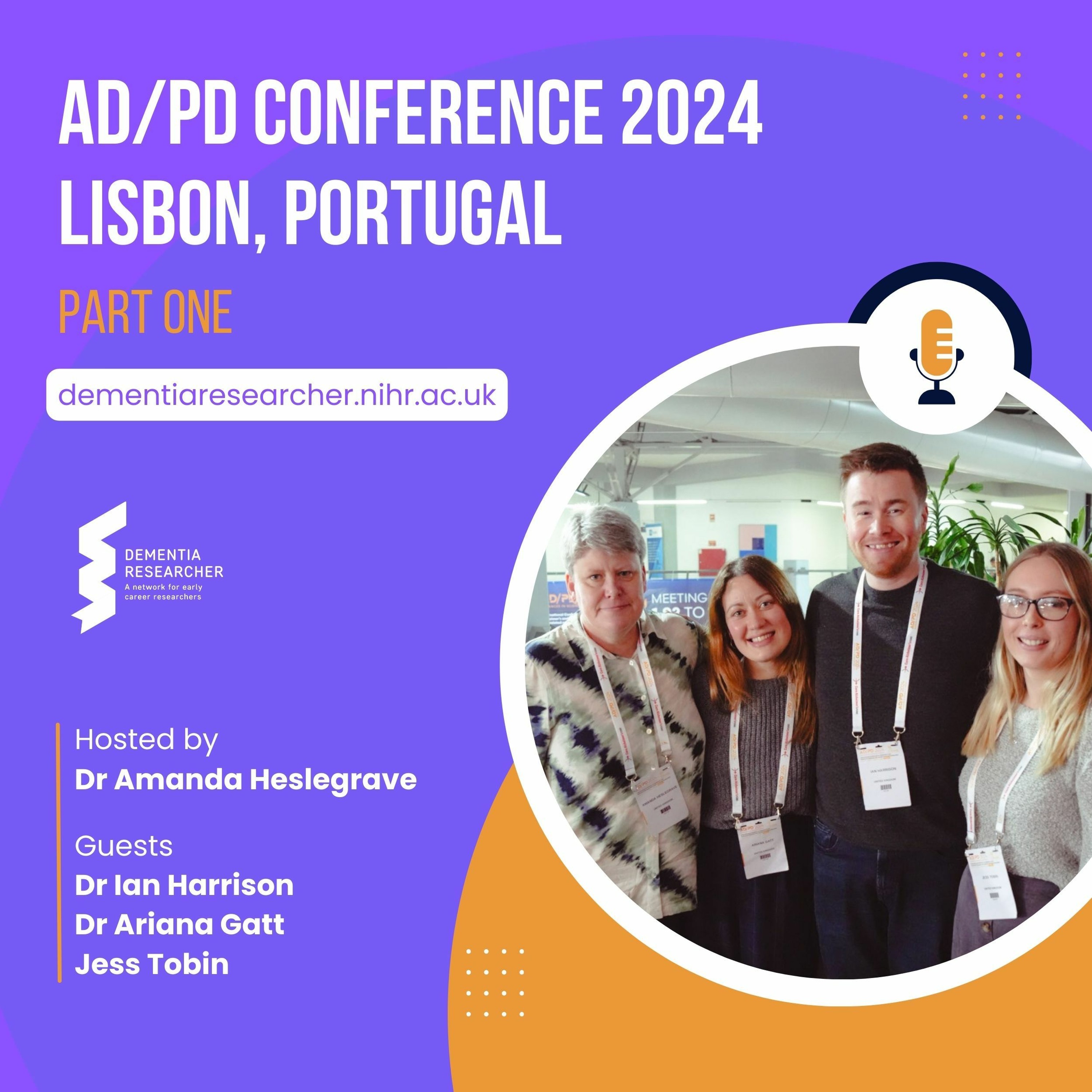
Ep 248ADPD 2024 Conference Highlights - Part 1
This year's AD/PD Conference was held in Lisbon, Portugal from the 5th to 9th March. In this first of a two-part special we bring you highlights from the first three days of the conference.The AD/PD Conference focuses on basic science and translational and clinical research bringing New insights on disease mechanisms and etiologies, the latest findings from clinical trials, innovative outlooks on therapy and prevention and advances in diagnostic markers.In this special on-location recording our guest host Dr Amanda Heslegrave, Senior Research Associate and Co-Lead of fluid biomarker laboratory from the UK Dementia Research Institute at University College London talks with Dr Ian Harrison and Dr Ariana Gatt from University College London and Jess Tobin from Alzheimer's Research UK.A transcript of this show, links and show notes and profile on all our guests are available on our website at https://www.dementiaresearcher.nihr.ac.uk.If you prefer to watch rather than listen, you will find a video version of this podcast on YouTube, on our website, and in selected podcast platforms.Follow us on social media:https://www.instagram.com/dementia_researcher/ https://www.facebook.com/Dementia.Researcher/https://www.twitter.com/demrescommunityhttps://www.linkedin.com/company/dementia-researcher https://bsky.app/profile/dementiaresearcher.bsky.socialDownload and Register with our Community App:https://www.onelink.to/dementiaresearcherWe gratefully acknowledge the support of our funders: Alzheimer’s Association, Race Against Dementia, Alzheimer’s Research UK, Alzheimer’s Society, and the National Institute for Health and Care Research.The views and opinions expressed by guests in this podcast are their own and do not necessarily reflect those of the producers, funders, or sponsors.Subscribe to our sister show 'Dementia Researcher The Blogs':https://podfollow.com/dementia-researcher-blogs
Ep 247Careers & Cradles: Balancing Motherhood & Dementia Research
In this episode of the Dementia Researcher Podcast, host Emily Spencer, a PhD student at University College London, discusses the challenges and triumphs of balancing a demanding career in academia with motherhood.Guests Dr Laura Prato and Dr Aisling McFall share their experiences of working during pregnancy, maternity leave, and returning to work. They discuss the unique challenges of short-term contracts in academia and the societal guilt associated with returning to work after having a child. They also highlight the importance of supportive teams and flexible working arrangements in facilitating a successful return to work.A transcript of this show, links and show notes and profile on all our guests are available on our website at https://www.dementiaresearcher.nihr.ac.uk.If you prefer to watch rather than listen, you will find a video version of this podcast on YouTube, on our website, and in selected podcast platforms.Follow us on social media:https://www.instagram.com/dementia_researcher/ https://www.facebook.com/Dementia.Researcher/https://www.twitter.com/demrescommunityhttps://www.linkedin.com/company/dementia-researcher https://bsky.app/profile/dementiaresearcher.bsky.socialDownload and Register with our Community App:https://www.onelink.to/dementiaresearcherWe gratefully acknowledge the support of our funders: Alzheimer’s Association, Race Against Dementia, Alzheimer’s Research UK, Alzheimer’s Society, and the National Institute for Health and Care Research.The views and opinions expressed by guests in this podcast are their own and do not necessarily reflect those of the producers, funders, or sponsors.Subscribe to our sister show 'Dementia Researcher The Blogs':https://podfollow.com/dementia-researcher-blogs
Ep 246Neuropathology in Focus: Shaping Our Understanding of Dementia
In this podcast we venture into the complex world of neuropathology. Our guests talk about their research, and uncover why neuropathology is so important to understanding dementias.During the discussion they also share a behind scenes glimpse into the workings of a brain bank, explore how brain tissue is used and how it can inform drug trials and personalised care, and provide a shock revelation about the difference between diagnosis in life, and what the brain shows after death.From groundbreaking discoveries to the cutting-edge techniques transforming how we understand and approach brain health, this episode is an essential listen for anyone intrigued by the science of the brain and the fight against dementia.Dr Kamar Ameen-Ali, Senior Lecturer at Teesside University hosts our expert guests, Tammaryn Lashley, Professor of Neuroscience from University College London, Dr Daniel Erskine, Senior Lecturer in Neurodegenerative Pathology and Newcastle University and Dr Laura Palmer, Manager of the South West Dementia Brain Bank at University of Bristol.For more information on our guests work visit:South West Brain Bank –Queen Square Brain BankBrains for Dementia ResearchNewcastle Neuro LabA transcript of this show, links and show notes and profile on all our guests are available on our website at https://www.dementiaresearcher.nihr.ac.uk.If you prefer to watch rather than listen, you will find a video version of this podcast on YouTube, on our website, and in selected podcast platforms.Follow us on social media:https://www.instagram.com/dementia_researcher/ https://www.facebook.com/Dementia.Researcher/https://www.twitter.com/demrescommunityhttps://www.linkedin.com/company/dementia-researcher https://bsky.app/profile/dementiaresearcher.bsky.socialDownload and Register with our Community App:https://www.onelink.to/dementiaresearcherWe gratefully acknowledge the support of our funders: Alzheimer’s Association, Race Against Dementia, Alzheimer’s Research UK, Alzheimer’s Society, and the National Institute for Health and Care Research.The views and opinions expressed by guests in this podcast are their own and do not necessarily reflect those of the producers, funders, or sponsors.Subscribe to our sister show 'Dementia Researcher The Blogs':https://podfollow.com/dementia-researcher-blogs

Ep 245Food For Thought - Diet, Disease & ALS / MND with Amber Sewell-Green
In this episode of the Dementia Researcher Podcast, Dr Sam Moxon and accredited dietitian Amber Sewell-Green discuss the potential of diet and nutrition and it’s role in motor neuron disease (MDN) / Amyotrophic lateral sclerosis (ALS).Amber, a researcher and PhD candidate, shares her insights on the importance of dietary choices for brain health, the role of plant-based nutrition, and the impact of lifestyle changes on neurological diseases. This conversation explores the intricate relationship between diet, genetics, and MND / ALS, offering a hopeful perspective on prevention and quality of life improvements through nutrition.Join us as we uncover the power of food in supporting brain health and fighting neurodegenerative diseases.For more information on Amber’s research into diet, metabolism and MND at The University of Queensland (UQ) Brisbane, Australia visit:University of Queensland ResearchIf you would like to hearing more, get involved or supporting their vital work do get in touch with Amber or her colleagues Associate Professor Derik Steyn.Email: [email protected] / [email protected] and his partner Associate Professor Shyuan Ngo are world experts on the topic of nutrition & metabolism in MND and have been driving this research and the research clinics here in Brisbane the past 8 years. Find out more about them and their work at:https://researchers.uq.edu.au/researcher/2027A transcript of this show, links and show notes and profile on all our guests are available on our website at https://www.dementiaresearcher.nihr.ac.uk.If you prefer to watch rather than listen, you will find a video version of this podcast on YouTube, on our website, and in selected podcast platforms.Follow us on social media:https://www.instagram.com/dementia_researcher/ https://www.facebook.com/Dementia.Researcher/https://www.twitter.com/demrescommunityhttps://www.linkedin.com/company/dementia-researcher https://bsky.app/profile/dementiaresearcher.bsky.socialDownload and Register with our Community App:https://www.onelink.to/dementiaresearcherWe gratefully acknowledge the support of our funders: Alzheimer’s Association, Race Against Dementia, Alzheimer’s Research UK, Alzheimer’s Society, and the National Institute for Health and Care Research.The views and opinions expressed by guests in this podcast are their own and do not necessarily reflect those of the producers, funders, or sponsors.Subscribe to our sister show 'Dementia Researcher The Blogs':https://podfollow.com/dementia-researcher-blogs
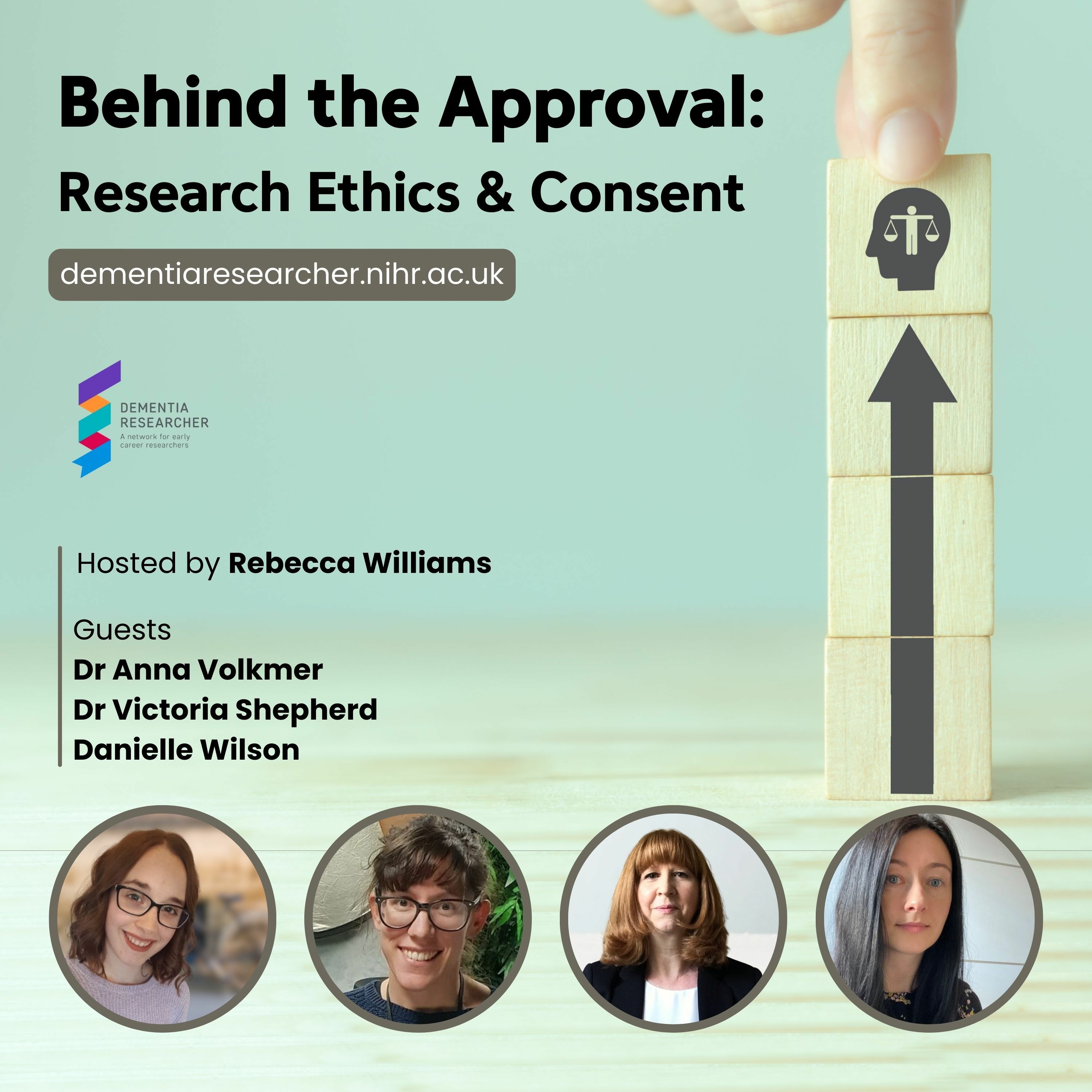
Ep 244Behind the Approval: Research Ethics & Consent
Join PhD Student and Guest Host Rebecca Williams as she explores the often intricate and crucial world of research ethics approvals and participant consent in dementia research.Rebecca is joined by experts: Dr Anna Volkmer, a Senior Research Fellow at University College London, Dr Victoria Shepherd, Senior Fellow from Cardiff University, and Danielle Wilson, Head of Commercialisation and Ethics Chair from the UK Dementia Research Institute at Imperial College London.Our panelists bring a wealth of experience from various backgrounds, including speech and language therapy, nursing, research delivery, capacity evaluation, consent and health research ethics. They offer invaluable insights into the ethical, legal, and practical challenges of involving people with dementia and other conditions in research. The discussion covers a range of topics including the basics of research ethics, how to apply and manage participant consent, with tips for new applicants and goes further to explore the evolving landscape of research ethics in the age of emerging technologies like AI.This episode is a must-listen for anyone researchers involved in health and social care. Whether you’re a seasoned researcher or new to the field, and making your first ethics application this show offers a unique opportunity to hear from experts who have led ethics panels and navigated these challenges themselves.Resources discussed in the show:HRA – Research Ethics Service and Research Ethics CommitteesHRA – What approvals and decisions do I need?NIHR INCLUDE Impaired Capacity to Consent FrameworkA transcript of this show, links and show notes and profile on all our guests are available on our website at https://www.dementiaresearcher.nihr.ac.uk.If you prefer to watch rather than listen, you will find a video version of this podcast on YouTube, on our website, and in selected podcast platforms.Follow us on social media:https://www.instagram.com/dementia_researcher/ https://www.facebook.com/Dementia.Researcher/https://www.twitter.com/demrescommunityhttps://www.linkedin.com/company/dementia-researcher https://bsky.app/profile/dementiaresearcher.bsky.socialDownload and Register with our Community App:https://www.onelink.to/dementiaresearcherWe gratefully acknowledge the support of our funders: Alzheimer’s Association, Race Against Dementia, Alzheimer’s Research UK, Alzheimer’s Society, and the National Institute for Health and Care Research.The views and opinions expressed by guests in this podcast are their own and do not necessarily reflect those of the producers, funders, or sponsors.Subscribe to our sister show 'Dementia Researcher The Blogs':https://podfollow.com/dementia-researcher-blogs

Ep 243Crossing Borders: Exploring the Blood-Brain Barrier
Dr Fiona McLean, ARUK Research Fellow, University of Dundee is joined by fellow experts Dr Kate Harris and Dr Sophie Morse, to explore the intricacies of the blood-brain barrier and its pivotal role in dementia research.They discuss pioneering methods in overcoming the barrier for drug delivery, the significance of endothelial cells in barrier integrity, and novel approaches in treating neurodegenerative diseases. The conversation also touches on the collaborative nature of neuroscience, offering invaluable insights for newcomers to the field. Don’t miss this deep dive into the forefront of dementia research.Meet the guests:Dr Sophie Morse is a Research Fellow & UK DRI Emerging Leader at Imperial College London, within the UK Dementia Research Institute. Sophie is a biomedical engineer who leads a research group exploring the use of Therapeutic Ultrasound for Brain Diseases.Dr Kate Harris is an Academic Track Alzheimer’s Research UK Fellow in Drug Discovery at Newcastle University. Kate is working on finding new drug targets for neurodegenerative disease in neuroinflammation.Links mentioned in the show:Rapid short-pulses of focused ultrasound and microbubbles deliver a range of agent sizes to the brain – https://bit.ly/41PFvuhA transcript of this show, links and show notes and profile on all our guests are available on our website at https://www.dementiaresearcher.nihr.ac.uk.If you prefer to watch rather than listen, you will find a video version of this podcast on YouTube, on our website, and in selected podcast platforms.Follow us on social media:https://www.instagram.com/dementia_researcher/ https://www.facebook.com/Dementia.Researcher/https://www.twitter.com/demrescommunityhttps://www.linkedin.com/company/dementia-researcher https://bsky.app/profile/dementiaresearcher.bsky.socialDownload and Register with our Community App:https://www.onelink.to/dementiaresearcherWe gratefully acknowledge the support of our funders: Alzheimer’s Association, Race Against Dementia, Alzheimer’s Research UK, Alzheimer’s Society, and the National Institute for Health and Care Research.The views and opinions expressed by guests in this podcast are their own and do not necessarily reflect those of the producers, funders, or sponsors.Subscribe to our sister show 'Dementia Researcher The Blogs':https://podfollow.com/dementia-researcher-blogs

Ep 2422023 End of Year Reflections from Dementia Researchers
Happy Holidays to all our listeners. Celebrate the season with the Dementia Researcher Podcast Christmas Special!Hosted by Adam Smith, this episode features regular bloggers from the Dementia Researcher website, Dr Anna Volkmer, Dr Connor Richardson, Dr Clarissa Giebel, Hannah Hussain, Dr Jodi Watt, and Ajantha Abey.Together, they reminisce about their 2023 journeys, discuss groundbreaking developments in their research field and explore what they’re most excited about for the coming year. Laced with humor and camaraderie, the episode includes a fun engaging quiz, making for a delightful mix of reflection, anticipation, and festive fun.A transcript of this show, links and show notes and profile on all our guests are available on our website at https://www.dementiaresearcher.nihr.ac.uk.If you prefer to watch rather than listen, you will find a video version of this podcast on YouTube, on our website, and in selected podcast platforms.Follow us on social media:https://www.instagram.com/dementia_researcher/ https://www.facebook.com/Dementia.Researcher/https://www.twitter.com/demrescommunityhttps://www.linkedin.com/company/dementia-researcher https://bsky.app/profile/dementiaresearcher.bsky.socialDownload and Register with our Community App:https://www.onelink.to/dementiaresearcherWe gratefully acknowledge the support of our funders: Alzheimer’s Association, Race Against Dementia, Alzheimer’s Research UK, Alzheimer’s Society, and the National Institute for Health and Care Research.The views and opinions expressed by guests in this podcast are their own and do not necessarily reflect those of the producers, funders, or sponsors.Subscribe to our sister show 'Dementia Researcher The Blogs':https://podfollow.com/dementia-researcher-blogs

Ep 241International Symposium on ALS / MND Roundup 2023
The 34th International Symposium on ALS / MND organised by the MND Association took place in Basel, Switzerland from the 6-8 December 2023.In this podcast Dr Alys Griffiths from The University of Sheffield hosts a discussion with three researchers to talk about their talks, and highlights from the biggest annual conference dedicated to ALS and MND research. Sharing news from researchers working around the world to better understand amyotrophic lateral sclerosis and motor neurone disease.Sharing their highlights are:Alicia Northall, Postdoctoral Researcher from University of Oxford. Alicia recently moved back to the UK after completing her PhD in Neuroscience at the University of Tubingen / Otto-von-Guericke University Magdeburg in Germany. Alicia’s works in Neuroimaging to characterise microstructural changes to the brain in living patients using 7-Tesla MRI.Dr Philip McGoldrick, Research Associate at University of Toronto. Phil completed his PhD at University College London and is interested in the basic mechanisms that contribute to disease progression and investigate them using a mixture of cell and animal models, alongside post mortem patient tissue.Amber Sewell-Green is a PhD Candidate and Accredited Practicing Dietitian (APD) at University of Queensland, Australia. Amber’s research is focused on improving Nutrition Care Guidelines for MND looking at energy balance and the role of lipids in ALS.Heather Marriott is a PhD Student at King’s College London. Amber undertakes analysis of next-generation sequencing data using bioinformatics and machine learning to advance personalised medicine approaches in ALS/MND.Links mentioned in the show:Event website: https://symposium.mndassociation.org/News from the event as it happened on X: https://bit.ly/alsmndsympA transcript of this show, links and show notes and profile on all our guests are available on our website at https://www.dementiaresearcher.nihr.ac.uk.If you prefer to watch rather than listen, you will find a video version of this podcast on YouTube, on our website, and in selected podcast platforms.Follow us on social media:https://www.instagram.com/dementia_researcher/ https://www.facebook.com/Dementia.Researcher/https://www.twitter.com/demrescommunityhttps://www.linkedin.com/company/dementia-researcher https://bsky.app/profile/dementiaresearcher.bsky.socialDownload and Register with our Community App:https://www.onelink.to/dementiaresearcherWe gratefully acknowledge the support of our funders: Alzheimer’s Association, Race Against Dementia, Alzheimer’s Research UK, Alzheimer’s Society, and the National Institute for Health and Care Research.The views and opinions expressed by guests in this podcast are their own and do not necessarily reflect those of the producers, funders, or sponsors.Subscribe to our sister show 'Dementia Researcher The Blogs':https://podfollow.com/dementia-researcher-blogs

Ep 240Harmonising Minds Dementia Friendly Music & Arts
In this episode of the Dementia Researcher podcast, guest host Dr Robyn Dowlen leads a fascinating exploration of the intersection of music, arts, and inclusivity in the context of dementia.This episode features a trio of remarkable guests who have been instrumental in integrating dementia-friendly initiatives into the arts. Our guests are Holly Marland, Former Churchill Fellow and Music Therapist and dedicated advocate for community music projects; Dr Andy Northcott from the University of West London, who brings an academic perspective on the impact of arts and how to make events more accessible; and Liv McLennan from Sounds Better Community Interest Company, a pioneer in using music as a bridge to memory and joy.The episode explores the inspiring stories behind our guests’ projects, ranging from festivals to operas, highlighting how they’re creating spaces where every note and performance opens doors to accessibility and understanding. Robyn, a researcher at the University of Manchester, also shares insights from her work on capturing the musical experiences of people with dementia. This episode is not just about the arts, but also about how these initiatives foster community, inclusivity, and a deeper understanding of dementia’s impact on lives. Tune in for an enlightening discussion that promises to be as informative as it is inspiring, showcasing the powerful role of arts in enhancing the lives of those living with dementia.Links mentioned in the show:Sounds Better CIC – https://soundsbettercic.org/So Many Beauties – https://somanybeauties.org/The Geller Institute of Ageing and Memory – https://www.uwl.ac.uk/research/research-centres-and-groups/geller-institute-ageing-and-memoryA transcript of this show, links and show notes and profile on all our guests are available on our website at https://www.dementiaresearcher.nihr.ac.uk.If you prefer to watch rather than listen, you will find a video version of this podcast on YouTube, on our website, and in selected podcast platforms.Follow us on social media:https://www.instagram.com/dementia_researcher/ https://www.facebook.com/Dementia.Researcher/https://www.twitter.com/demrescommunityhttps://www.linkedin.com/company/dementia-researcher https://bsky.app/profile/dementiaresearcher.bsky.socialDownload and Register with our Community App:https://www.onelink.to/dementiaresearcherWe gratefully acknowledge the support of our funders: Alzheimer’s Association, Race Against Dementia, Alzheimer’s Research UK, Alzheimer’s Society, and the National Institute for Health and Care Research.The views and opinions expressed by guests in this podcast are their own and do not necessarily reflect those of the producers, funders, or sponsors.Subscribe to our sister show 'Dementia Researcher The Blogs':https://podfollow.com/dementia-researcher-blogs
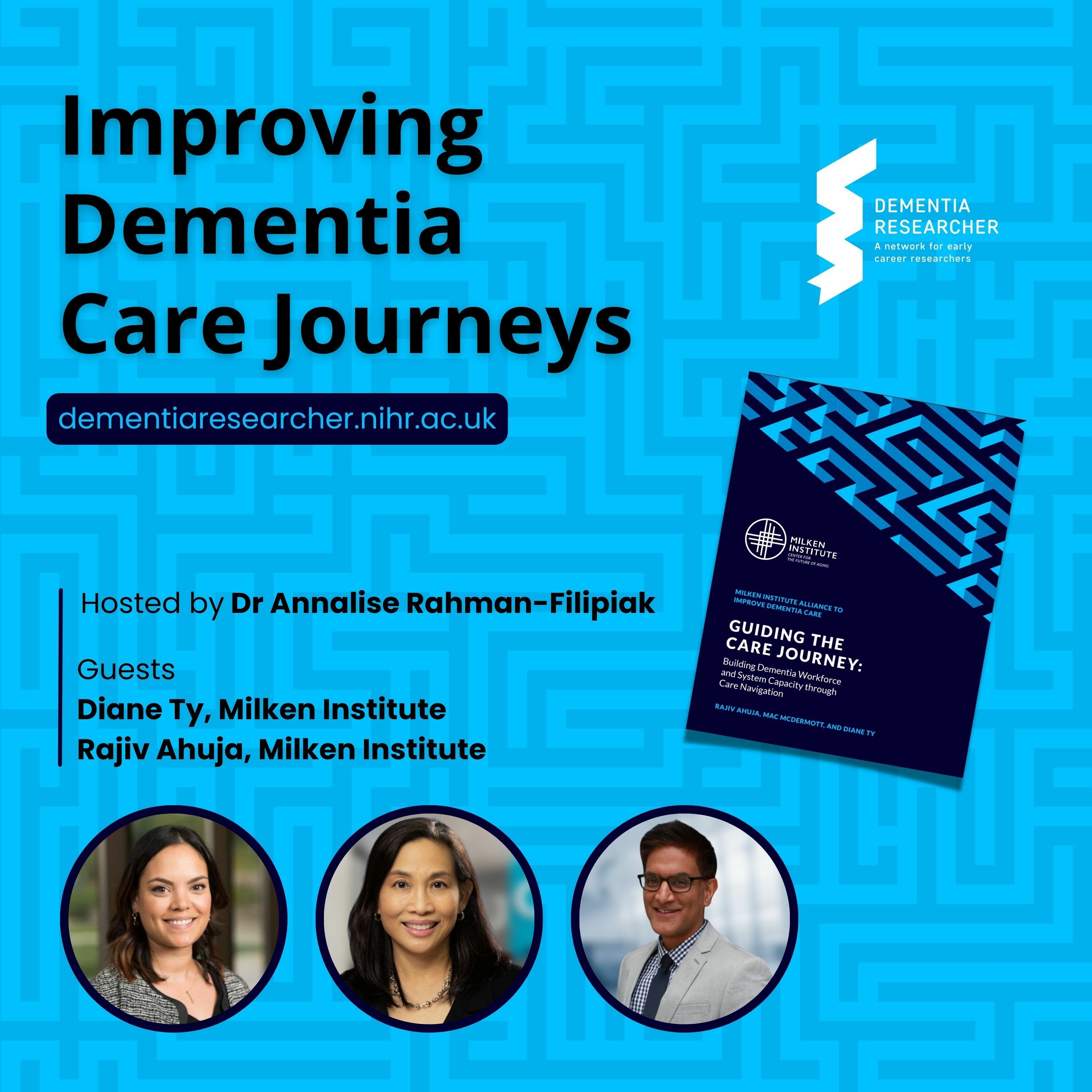
Ep 239Improving Dementia Care Journeys
This episode of the Dementia Researcher Podcast is hosted by Dr Annalise Rahman-Filipiak and features Diane Ty and Rajiv Ahuja, authors of a pivotal report from the Milken Institute – Guiding the Care Journey.In this show we discuss the report, its importance an findings – addressing critical challenges and presenting innovative solutions for dementia care in the United States, with a particular focus on the role of the care navigators.While the report primarily addresses the U.S. context, its recommendations are deemed relevant globally, and the discussion aims to shed light on findings related to improving care for people living with dementia and their families, wherever you are.Download the report: bit.ly/3uEgvtqVisit the Milken website: milkeninstitute.org/About the guests:Diane Ty is the Senior Director of the Milken Institute Future of Aging overseeing its work at the intersection of healthy longevity and financial security. She leads its Alliance to Improve Dementia Care and other multisector programmatic efforts that promote policy, practice, and systems change in a life course approach to aging.Rajiv Ahuja is the Associate Director of the Milken Institute Future Ageing. His work focuses on aging policies and programs that support healthy longevity. Rajiv spearheads efforts to incentivize policy, business, and technology-based approaches that promote brain health, combat stigma, reduce costs, and bridge health and economic disparities.Dr Annalise Rahman-Filipiak is an Assistant Professor, Clinical Neuropsychologist at University of Michigan. Annalise broadly studies racial-ethnic disparities in dementia diagnosis and treatment, as well as non-pharmacologic treatments for Alzheimer’s disease and related dementias. Her recent work has focused on disclosure of imaging and fluid-based biomarkers to diverse audiences, including cognitively healthy older adults and those with impairmentA transcript of this show, links and show notes and profile on all our guests are available on our website at https://www.dementiaresearcher.nihr.ac.uk.If you prefer to watch rather than listen, you will find a video version of this podcast on YouTube, on our website, and in selected podcast platforms.Follow us on social media:https://www.instagram.com/dementia_researcher/ https://www.facebook.com/Dementia.Researcher/https://www.twitter.com/demrescommunityhttps://www.linkedin.com/company/dementia-researcher https://bsky.app/profile/dementiaresearcher.bsky.socialDownload and Register with our Community App:https://www.onelink.to/dementiaresearcherWe gratefully acknowledge the support of our funders: Alzheimer’s Association, Race Against Dementia, Alzheimer’s Research UK, Alzheimer’s Society, and the National Institute for Health and Care Research.The views and opinions expressed by guests in this podcast are their own and do not necessarily reflect those of the producers, funders, or sponsors.Subscribe to our sister show 'Dementia Researcher The Blogs':https://podfollow.com/dementia-researcher-blogs

Ep 238A Closer Look At Lecanemab Donanemab And Amyloid
In this podcast Dr Anna Volkmer, convenes a panel of world-renowned experts from University College London. They discuss the discovery of amyloid and its role in Alzheimer’s Disease and take an in-depth look into the latest developments surrounding Lecanemab and Donanemab, monoclonal antibodies (mAbs) as a treatment and Gene Silencing.This week’s guests are Professor Sir John Hardy, Geneticist and trailblazer in neurodegenerative disease research, Professor Nick Fox, Neurologist, and eminent figure in the fields of neuroimaging and clinical neuroscience, and Dr Cath Mummery, Neurologist and leading light in cognitive disorders and clinical trials.Listeners can expect:Discussion on new dementia drugs Lecanemab and Donanemab.Insights on the science behind these treatments, the story behind the discovery of amyloid and familial Alzheimer’s - with Carol Jennings.Clarification of misconceptions about dementia therapies.Information on the impact of these drugs on patients and clinical practice.A look at the future of dementia research, including gene-silencing therapies.-- Alzheimer's Association Info on Research & RisksAlzheimer's Society Information on Lebanemab: Alzheimer's Society Information on Donanemab:NIA statement on donanemab results: More Alzheimer’s research progress:NIA statement on report of lecanemab reducing cognitive decline in Alzheimer’s clinical trial:--A transcript of this show, links and show notes and profile on all our guests are available on our website at https://www.dementiaresearcher.nihr.ac.uk.If you prefer to watch rather than listen, you will find a video version of this podcast on YouTube, on our website, and in selected podcast platforms.Follow us on social media:https://www.instagram.com/dementia_researcher/ https://www.facebook.com/Dementia.Researcher/https://www.twitter.com/demrescommunityhttps://www.linkedin.com/company/dementia-researcher https://bsky.app/profile/dementiaresearcher.bsky.socialDownload and Register with our Community App:https://www.onelink.to/dementiaresearcherWe gratefully acknowledge the support of our funders: Alzheimer’s Association, Race Against Dementia, Alzheimer’s Research UK, Alzheimer’s Society, and the National Institute for Health and Care Research.The views and opinions expressed by guests in this podcast are their own and do not necessarily reflect those of the producers, funders, or sponsors.Subscribe to our sister show 'Dementia Researcher The Blogs':https://podfollow.com/dementia-researcher-blogs
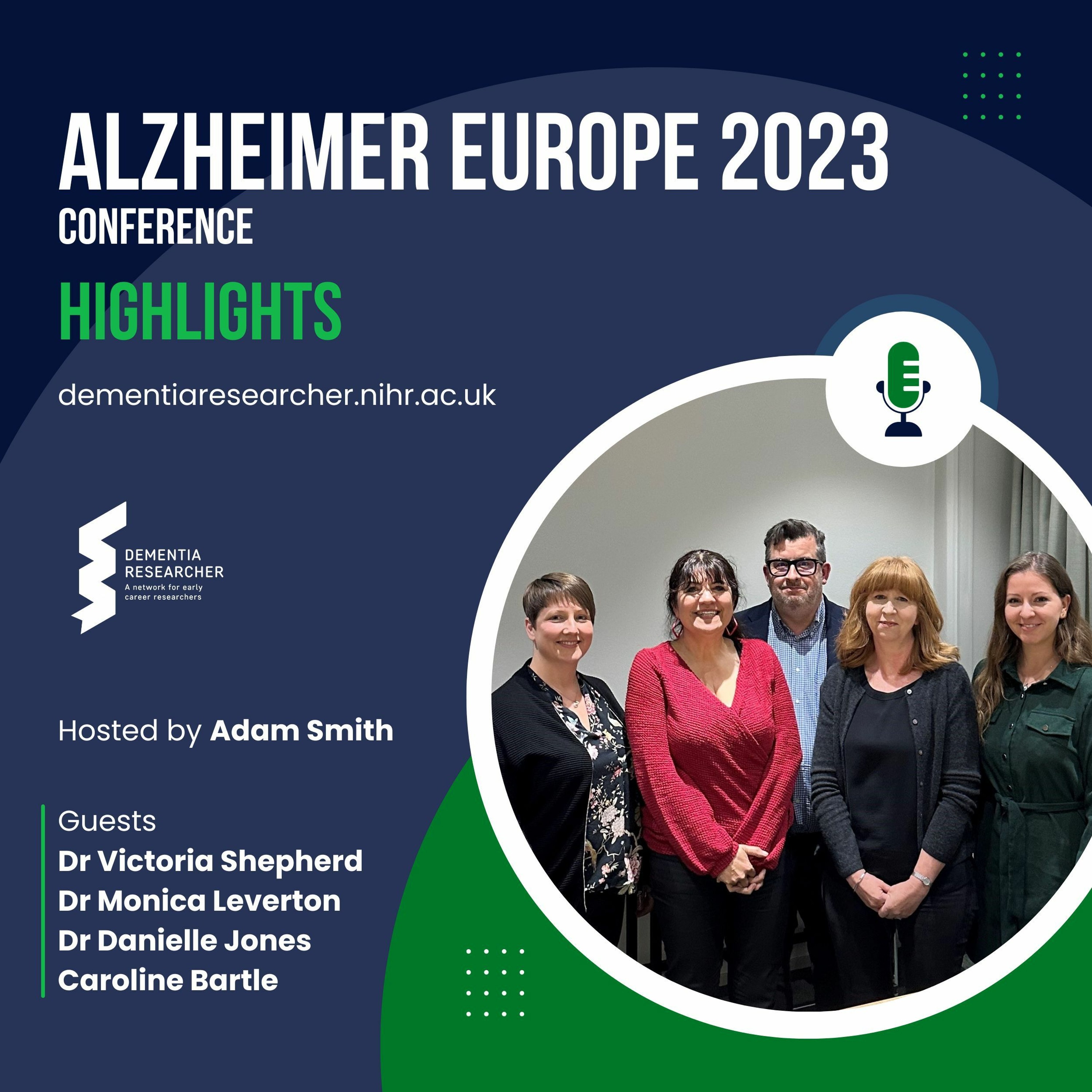
Ep 237Alzheimer Europe Conference Roundup 2023
Last week Adam Smith attended the 33rd Alzheimer Europe Conference in Helsinki, Finland. In this podcast Adam and his guests bring you highlights from event, sharing news and their best bits from the hundreds of posters and talks delivered.This week’s guests are:Dr Victoria Shepherd, Senior Research Fellow and Nurse from Cardiff University. Victoria has a special interest in research involving under-served populations with a particular focus on people with cognitive impairment. She leads a programme of methodological research exploring the ethical, legal and practical issues around research involving adults who lack capacity consent.Dr Monica Leverton, Postdoctoral Researcher at King’s College London. Monica is based within the NIHR policy institute in health and social care workforce. Her areas of interest include care for people living with dementia and the social care workforce who support them. She currently leads a project developing the role of dementia champions in homecare.Dr Danielle Jones, Associate Professor in Dementia Studies at University of Bradford. Danielle is a medical sociologist with expertise in Conversation Analysis. She has applied this method to medical communication to investigate how dementia is assessed within memory clinics in the UK. Her current project explores how dementia risk is communicated in medical interaction within both primary and secondary care.Caroline Bartle, Dementia Project Specialist at Ryman Health Care in New Zealand. Caroline has 30 years in dementia care – carer to social worker to CEO – leading workforce development in dementia care. Founder of 3 Spirit Training Consultancy who has trained over 100,000 carers and developed over 500 different health and social care programmes.This year’s conference was held under the motto “New opportunities in dementia care, policy and research”. As in previous years, this conference is one of the few in the diary that has a ‘family feel; providing great networking opportunities and bringing together people living with dementia, carers, volunteers and staff of European Alzheimer associations, policy makers, health and social care professionals, researchers and academics. This year had a record turn-out of 1,000 in-person attendees, enjoying a programme covering a broad range of topics, from fundamental science to care, diagnosis, policies, interventions, treatments and more (and for the first-time sessions led and decided by their European Working Group of People with Dementia (EWGPWD) and European Dementia Carers Working Group (EDCWG)).Links discussed in the show:Conference Website – https://bit.ly/3seI5g4Conference hashtag – https://bit.ly/45R0RYXEU-Fingers – https://eufingers.com/INTERDEM – https://interdem.org/A transcript of this show, links and show notes and profile on all our guests are available on our website at https://www.dementiaresearcher.nihr.ac.uk.If you prefer to watch rather than listen, you will find a video version of this podcast on YouTube, on our website, and in selected podcast platforms.Follow us on social media:https://www.instagram.com/dementia_researcher/ https://www.facebook.com/Dementia.Researcher/https://www.twitter.com/demrescommunityhttps://www.linkedin.com/company/dementia-researcher https://bsky.app/profile/dementiaresearcher.bsky.socialDownload and Register with our Community App:https://www.onelink.to/dementiaresearcherWe gratefully acknowledge the support of our funders: Alzheimer’s Association, Race Against Dementia, Alzheimer’s Research UK, Alzheimer’s Society, and the National Institute for Health and Care Research.The views and opinions expressed by guests in this podcast are their own and do not necessarily reflect those of the producers, funders, or sponsors.Subscribe to our sister show 'Dementia Researcher The Blogs':https://podfollow.com/dementia-researcher-blogs
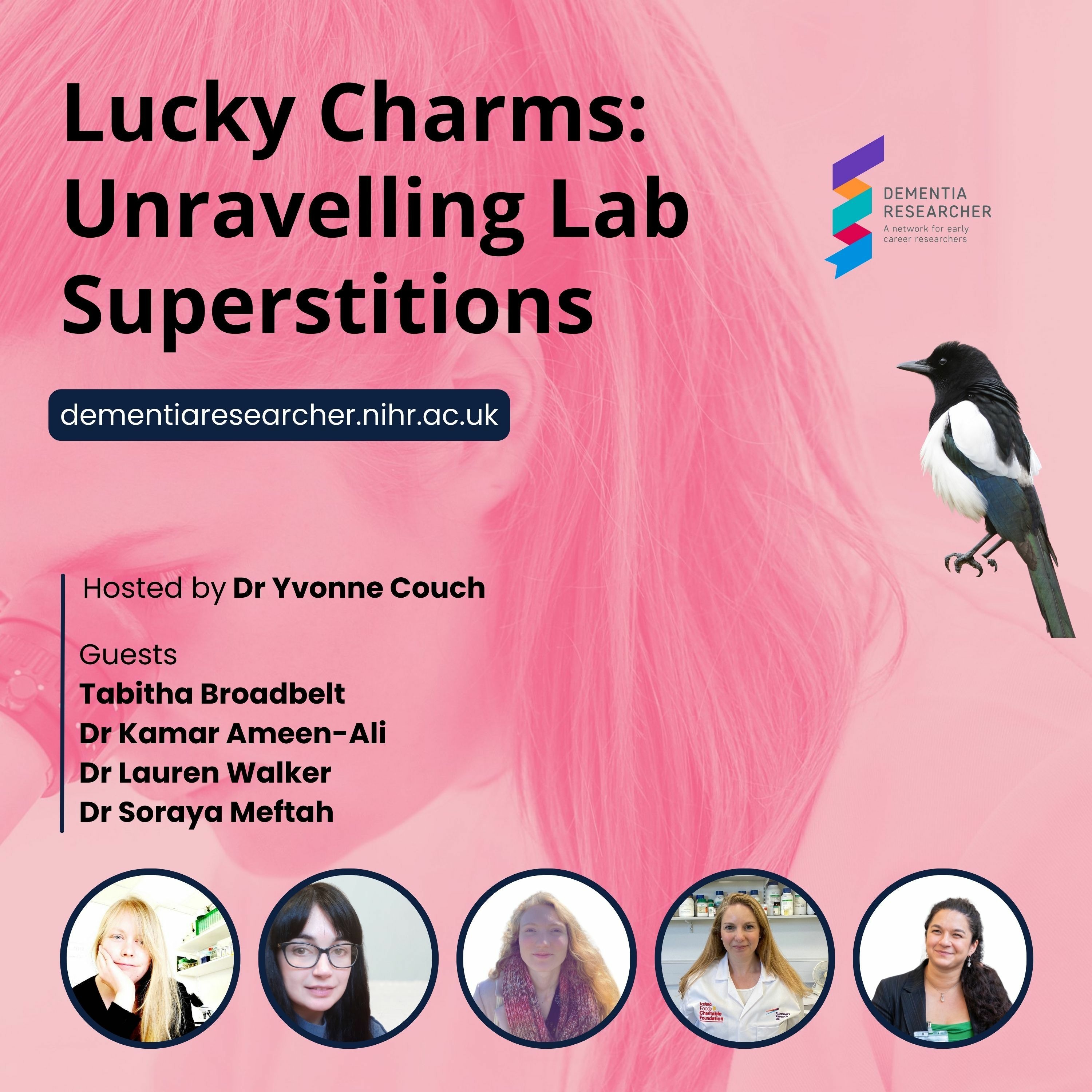
Ep 236Lucky Charms: Unravelling Lab Superstitions
Science is all about rigorous testing, empirical evidence, and painstaking documentation, right? But even in the most state-of-the-art labs, you’ll find researchers who hold on to quirky rituals, lucky charms, or, dare we say it, superstitions.In this podcast, Dr Yvonne Couch, Associate Professor at University of Oxford hosts a discussion that romps through the lighter side of scientific research by exploring the wonderful world of lab superstitions. From lucky pipettes to forbidden phrases, we’re about to uncover the unofficial ‘do’s and don’ts’ that researchers swear by, or at least, swear make for good anecdotes.This shows guests are:Dr Kamar Ameen-Ali, Lecturer in Biomedical Science at Teeside University. In addition to teaching, Kam is interested in How neuroinflammation following traumatic brain injury contributes to the progression of neurodegenerative diseases (such as Alzheimer’s disease) that lead to dementia.Dr Soraya Meftah, Postdoctoral Research Fellow in the UK Dementia Research Institute at The University of Edinburgh. Soraya works in the space of Neurophysiology of dementia (synaptic, neuronal, network dysfunction).Tabitha Broadbelt just completed her PhD at The University of Edinburgh and is now a Postdoctoral Researcher at the MRC Brain Network Dynamics Unity at University of Oxford. In the Dupret Group, Tabitha uses optogenetics and large-scale single-unit recordings combined to study memory-guided behaviour.Dr Lauren Walker is an Alzheimer’s Research UK Fellow at Newcastle University. Lauren complete her undergrad degree in Physiological Sciences, and worked in a technical role for 7 years before being inspired to return to study a PhD. Lauren now works in Neuropathology of Lewy body dementia and Alzheimer’s disease.A transcript of this show, links and show notes and profile on all our guests are available on our website at https://www.dementiaresearcher.nihr.ac.uk.If you prefer to watch rather than listen, you will find a video version of this podcast on YouTube, on our website, and in selected podcast platforms.Follow us on social media:https://www.instagram.com/dementia_researcher/ https://www.facebook.com/Dementia.Researcher/https://www.twitter.com/demrescommunityhttps://www.linkedin.com/company/dementia-researcher https://bsky.app/profile/dementiaresearcher.bsky.socialDownload and Register with our Community App:https://www.onelink.to/dementiaresearcherWe gratefully acknowledge the support of our funders: Alzheimer’s Association, Race Against Dementia, Alzheimer’s Research UK, Alzheimer’s Society, and the National Institute for Health and Care Research.The views and opinions expressed by guests in this podcast are their own and do not necessarily reflect those of the producers, funders, or sponsors.Subscribe to our sister show 'Dementia Researcher The Blogs':https://podfollow.com/dementia-researcher-blogs

Ep 235The Study Recruitment Puzzle
In this podcast we explore the intricacies of dementia research study recruitment. Our host Adam Smith and his three expert guests talk about why study recruitment is hard, the challenges they have faced in their own work, and unlock the secrets they have learned to crack the problem, and recruit on-time and on-target.This weeks guests are:Dr Anna Volkmer, Senior Research Fellow, University College London. Anna is a Speech and Language Therapy clinician, researching Speech and language therapy interventions in language led dementia.Ellice Parkinson, PhD Student and former Trial Co-ordinator, University of East Anglia. With a background in clinical psychology and working in Huntington’s disease now focussed on Hydration care of older people, and people living with dementia.Dr Megan Rose Readman, Demm Comm Research Fellow, The University of Liverpool. Megan’s current research, working alongside Dr Clarissa Giebel, Dr Dalia Tsimpida and Professor Chris Plack, focuses on the relationship between hearing loss and atypical types of dementia, specifically Parkinson’s Disease Dementia and Lewy Body Dementia.What to Expect:Gain insights into why recruitment is difficult.Learn effective strategies to overcome communication challenges between researchers and participants.Uncover novel approaches to streamline the recruitment process and reduce attrition rates.Discover top-tips to help you find the participants you need.Websites mentioned in this show:www.joindementiaresearch.nihr.ac.ukwww.alz.org/alzheimers-dementia…l-trials/trialmatchwww.stepupfordementiaresearch.org.au/www.scie.org.uk/dementia/after-di…/conversation.aspwww.rcslt.org/wp-content/uploads…ntia-factsheet.pdfA transcript of this show, links and show notes and profile on all our guests are available on our website at https://www.dementiaresearcher.nihr.ac.uk.If you prefer to watch rather than listen, you will find a video version of this podcast on YouTube, on our website, and in selected podcast platforms.Follow us on social media:https://www.instagram.com/dementia_researcher/ https://www.facebook.com/Dementia.Researcher/https://www.twitter.com/demrescommunityhttps://www.linkedin.com/company/dementia-researcher https://bsky.app/profile/dementiaresearcher.bsky.socialDownload and Register with our Community App:https://www.onelink.to/dementiaresearcherWe gratefully acknowledge the support of our funders: Alzheimer’s Association, Race Against Dementia, Alzheimer’s Research UK, Alzheimer’s Society, and the National Institute for Health and Care Research.The views and opinions expressed by guests in this podcast are their own and do not necessarily reflect those of the producers, funders, or sponsors.Subscribe to our sister show 'Dementia Researcher The Blogs':https://podfollow.com/dementia-researcher-blogs

Ep 234Food For Thought - Ketogenic Diets: A Path to Brain Health? with Dr Helena Popovic
Dr Sam Moxon is back for another show in his ‘Food for Thought’ series. In these shows Sam invites leading experts to talk about their work and the connections between diet, brain health, cognition, Alzheimer’s disease, and dementia. In this show he welcomes Dr Helena Popovic to explore the much-debated ketogenic diet and its potential benefits for cognitive function.Helena is a best-selling author and leading authority on neuroplasticity and improving brain function. She is also a popular media commentator and regularly appears on TV and radio and was a Sydney TEDx Fast Ideas finalist. Helena graduated from the University of Sydney, Australia and her mission is to educate rather than to medicate.The ketogenic diet, traditionally known for its effectiveness in weight management and treating epilepsy, is making waves in the realm of neuroscience. Dr Popovic sheds light on her research, exploring how this high-fat, low-carbohydrate diet may offer new avenues for cognitive enhancement and brain health.Listeners can expect to gain:Insight into the mechanisms through which the ketogenic diet affects the brain.A comprehensive understanding of the latest research linking keto to cognitive improvements.Expert opinions on the safety and practicality of adopting a ketogenic lifestyle for long-term brain health.This episode provides a deep dive into the research surrounding the ketogenic diet and brain health. Whether you’re a healthcare professional, a caregiver, or someone interested in enhancing cognitive performance, this episode is a must-listen.For more information on Dr Helena Popovic and her work visit:https://drhelenapopovic.com/A transcript of this show, links and show notes and profile on all our guests are available on our website at https://www.dementiaresearcher.nihr.ac.uk.If you prefer to watch rather than listen, you will find a video version of this podcast on YouTube, on our website, and in selected podcast platforms.Follow us on social media:https://www.instagram.com/dementia_researcher/ https://www.facebook.com/Dementia.Researcher/https://www.twitter.com/demrescommunityhttps://www.linkedin.com/company/dementia-researcher https://bsky.app/profile/dementiaresearcher.bsky.socialDownload and Register with our Community App:https://www.onelink.to/dementiaresearcherWe gratefully acknowledge the support of our funders: Alzheimer’s Association, Race Against Dementia, Alzheimer’s Research UK, Alzheimer’s Society, and the National Institute for Health and Care Research.The views and opinions expressed by guests in this podcast are their own and do not necessarily reflect those of the producers, funders, or sponsors.Subscribe to our sister show 'Dementia Researcher The Blogs':https://podfollow.com/dementia-researcher-blogs
Ep 233The Hidden Support System: Dementia Researchers' Partners
In this show we’re not focusing on the scientists or their discoveries, but instead we talk to some of the unsung heroes, the pillars of support behind the scenes who play an integral role in the lives of dementia researchers? We focus on the husbands, partners, and significant others of dementia researchers – who generously share their insights.Getting a glimpse into the lives of those who stand shoulder to shoulder with researchers, offering unwavering encouragement, love, and understanding. For our special family and careers week, we discuss how they support the researchers in their lives, and have a fun quiz to see just how well they know them.Adam Smith, Programme Director for Dementia Researcher hosts this discussion with:Andrew Lashley, self-employed Architect, father of three, and husband to Tammaryn Lashley, Professor of Neuroscience at University College London.Michael O’Reilly, Scenic Artist at the Royal Opera House, father of one, and husband to Dr Zanna Voysey, Neurologist and PhD Student, University of Cambridge.João Moreira, Staff Software Engineer and husband to Dr Isabel Castanho, Postdoctoral Research Fellow at the Beth Israel Deaconess Medical Center (BIDMC), Harvard Medical School.Hear from Professor Lashley sharing more about life as a working academic, mother, and wife in this one-to-one interview and as a guest on our managing family life and a research career podcast.A transcript of this show, links and show notes and profile on all our guests are available on our website at https://www.dementiaresearcher.nihr.ac.uk.If you prefer to watch rather than listen, you will find a video version of this podcast on YouTube, on our website, and in selected podcast platforms.Follow us on social media:https://www.instagram.com/dementia_researcher/ https://www.facebook.com/Dementia.Researcher/https://www.twitter.com/demrescommunityhttps://www.linkedin.com/company/dementia-researcher https://bsky.app/profile/dementiaresearcher.bsky.socialDownload and Register with our Community App:https://www.onelink.to/dementiaresearcherWe gratefully acknowledge the support of our funders: Alzheimer’s Association, Race Against Dementia, Alzheimer’s Research UK, Alzheimer’s Society, and the National Institute for Health and Care Research.The views and opinions expressed by guests in this podcast are their own and do not necessarily reflect those of the producers, funders, or sponsors.Subscribe to our sister show 'Dementia Researcher The Blogs':https://podfollow.com/dementia-researcher-blogs

Ep 232Managing Family Life & A Research Career - Reunion
In this special episode of the Dementia Researcher Podcast, delivered as part of our managing family life and research week, we bring you a reunion that promises insightful reflections and inspiring progress. Join host Professor Heather Mortiboys as they sit down with four exceptional researchers who graced our show five years ago.Back then, they shared their perspectives on the intricate dance between a demanding research career and the joys and challenges of family life. Now, five years later, we’ve invited them back to revisit those conversations and explore how their journeys have evolved.Listen in as they openly discuss the strategies they’ve employed, the hurdles they’ve overcome, and the changes they’ve embraced. Gain fresh insights into how they’ve managed to thrive in both their academic pursuits and family responsibilities.This week’s guests are:Dr Gemma Lace, is Associate Dean Academic (Student Experience) & Lead of the Molecular Biology Dementia Group at the University of Salford.Dr Jo Barnes, is Associate Professor / Faculty Grade Tutor (Research) at University College London. Working on addressing the relationship of imaging markers of presumed cerebrovascular disease and more classical markers of dementia.Professor Tammaryn Lashley, is Professor of Neuroscience and Director of Research in the Queen Square Brain Bank at University College London.Dr Angelique Mavrodaris, is a Clinical Research Fellow & Consultant in Public Health Medicine exploring Ageing, dementia, and infectious diseases from a global public health perspective.A transcript of this show, links and show notes and profile on all our guests are available on our website at https://www.dementiaresearcher.nihr.ac.uk.If you prefer to watch rather than listen, you will find a video version of this podcast on YouTube, on our website, and in selected podcast platforms.Follow us on social media:https://www.instagram.com/dementia_researcher/ https://www.facebook.com/Dementia.Researcher/https://www.twitter.com/demrescommunityhttps://www.linkedin.com/company/dementia-researcher https://bsky.app/profile/dementiaresearcher.bsky.socialDownload and Register with our Community App:https://www.onelink.to/dementiaresearcherWe gratefully acknowledge the support of our funders: Alzheimer’s Association, Race Against Dementia, Alzheimer’s Research UK, Alzheimer’s Society, and the National Institute for Health and Care Research.The views and opinions expressed by guests in this podcast are their own and do not necessarily reflect those of the producers, funders, or sponsors.Subscribe to our sister show 'Dementia Researcher The Blogs':https://podfollow.com/dementia-researcher-blogs

Ep 231Thirst for Knowledge: Hydration & Dementia
In this podcast Dr Anna Volkmer engages in a captivating discussion with a panel of researchers and experts from the University of East Anglia and Age UK. The focus? Hydration – a seemingly simple yet profoundly impactful aspect of well-being, especially for older individuals and those living with dementia.Sharing their research, learning and efforts to deliver practical changes are:Ellice Parkinson, PhD Student. With a background in clinical psychology and working in Huntington’s disease but having now worked in dementia research for almost 10 years, and now focussed on Hydration care of older people, and people living with dementia (and quickly approaching the final year of her PhD at UEA).Dan Skipper, CEO of Age UK Norwich. Dan is an active part of a range of forums focusing on improving the quality of later life in the city and county, including Norwich Older People’s Forum, Norfolk Older People’s Strategic Partnership, and the Norwich Institute of Healthy Ageing.Amy Zile, PhD Student whose work is focussed on Hydration in older adults who live in the community. Mental health and wellbeing of students and academic staff.Dr Florence Jimoh, Senior Knowledge Exchange Associate passionate about hydration in older adults who are at increased risk of dehydration due to physiological and cognitive changes. Her research has involved working with stakeholders to develop a Drinks Diary that some care home residents can use to monitor their fluid intake.As we age, maintaining proper hydration becomes more crucial than ever, with far-reaching effects on physical health, cognitive function, and overall quality of life. When it comes to individuals grappling with dementia, the significance of hydration takes on an even more intricate dimension. Join us as we dive into the intricate tapestry of hydration science and its intersection with aging and dementia – and most importantly, exploring the research undertaken by this group to understand and address the challenges.Resources discussed:Improving drinking for people living with dementia in care homes – Access to the FREE dehydration awareness posters for public and clinical areas – https://bit.ly/44kIudYUEA Hydrate Group – Access to the FREE DrinkIt resources and information about the UEA Hydrate Group – https://bit.ly/3shiJ0VA transcript of this show, links and show notes and profile on all our guests are available on our website at https://www.dementiaresearcher.nihr.ac.uk.If you prefer to watch rather than listen, you will find a video version of this podcast on YouTube, on our website, and in selected podcast platforms.Follow us on social media:https://www.instagram.com/dementia_researcher/ https://www.facebook.com/Dementia.Researcher/https://www.twitter.com/demrescommunityhttps://www.linkedin.com/company/dementia-researcher https://bsky.app/profile/dementiaresearcher.bsky.socialDownload and Register with our Community App:https://www.onelink.to/dementiaresearcherWe gratefully acknowledge the support of our funders: Alzheimer’s Association, Race Against Dementia, Alzheimer’s Research UK, Alzheimer’s Society, and the National Institute for Health and Care Research.The views and opinions expressed by guests in this podcast are their own and do not necessarily reflect those of the producers, funders, or sponsors.Subscribe to our sister show 'Dementia Researcher The Blogs':https://podfollow.com/dementia-researcher-blogs
Ep 230Reshaping Misfolding Enzymes
Dr Sam Moxon has been working on a new grant and exploring how to create a spin out innovation biotech company. This work led him to meet Matthias Alder, who we just had to get on the podcast.In this show we hear from Gain Therapeutics CEO Matthias Alder. He is leading a biotech company engaged in the development of a potentially disease-modifying therapy for the treatment of neurodegenerative diseases. Hoping to unlock new treatments for difficult to treat disorders with their SEE-Tx™ supercomputer-driven, drug discovery platform targeting allosteric binding sites.There is a lot of work underway to explore modifying enzymes that have misfolded, losing their functional structure. Misfolding can lead to various diseases, including neurodegenerative disorders like Alzheimer’s and Parkinson’s. Researchers in this field seek, and Gain Therapeutics study the mechanisms behind enzyme misfolding, explore the consequences of misfolding on cellular functions, and develop strategies to correct or reshape these misfolded enzymes. By gaining insights into this process, scientists hope to discover potential therapeutic interventions for treating diseases associated with misfolded enzymes.For more information on Gain Therapeutics visit:https://www.gaintherapeutics.com/A transcript of this show, links and show notes and profile on all our guests are available on our website at https://www.dementiaresearcher.nihr.ac.uk.If you prefer to watch rather than listen, you will find a video version of this podcast on YouTube, on our website, and in selected podcast platforms.Follow us on social media:https://www.instagram.com/dementia_researcher/ https://www.facebook.com/Dementia.Researcher/https://www.twitter.com/demrescommunityhttps://www.linkedin.com/company/dementia-researcher https://bsky.app/profile/dementiaresearcher.bsky.socialDownload and Register with our Community App:https://www.onelink.to/dementiaresearcherWe gratefully acknowledge the support of our funders: Alzheimer’s Association, Race Against Dementia, Alzheimer’s Research UK, Alzheimer’s Society, and the National Institute for Health and Care Research.The views and opinions expressed by guests in this podcast are their own and do not necessarily reflect those of the producers, funders, or sponsors.Subscribe to our sister show 'Dementia Researcher The Blogs':https://podfollow.com/dementia-researcher-blogs
Ep 229AAIC 2023 - Day Four
In this podcast we share a few selected highlights from the fourth day of the Alzheimer’s Association International Conference (AAIC) taking place in Amsterdam and Online, 16th – 20th July.Adam Smith hosts the show with special guests Vyshnavy Balendra from Saint James School of Medicine, Chicago. Dr Helena Popovi, Family physician, educator and author of three books from the Gold Coast in Australia and Dr Iain Hartnell, Research Communications Officer from Alzheimer’s Society.The AAIC brings together distinguished basic scientists, clinical researchers, early career investigators, clinicians and the care research community at the largest and most influential international conference on dementia science. They share theories and breakthroughs while exploring opportunities to accelerate work and elevate careers.For more information visit:aaic.alz.orgA transcript of this show, links and show notes and profile on all our guests are available on our website at https://www.dementiaresearcher.nihr.ac.uk.If you prefer to watch rather than listen, you will find a video version of this podcast on YouTube, on our website, and in selected podcast platforms.Follow us on social media:https://www.instagram.com/dementia_researcher/ https://www.facebook.com/Dementia.Researcher/https://www.twitter.com/demrescommunityhttps://www.linkedin.com/company/dementia-researcher https://bsky.app/profile/dementiaresearcher.bsky.socialDownload and Register with our Community App:https://www.onelink.to/dementiaresearcherWe gratefully acknowledge the support of our funders: Alzheimer’s Association, Race Against Dementia, Alzheimer’s Research UK, Alzheimer’s Society, and the National Institute for Health and Care Research.The views and opinions expressed by guests in this podcast are their own and do not necessarily reflect those of the producers, funders, or sponsors.Subscribe to our sister show 'Dementia Researcher The Blogs':https://podfollow.com/dementia-researcher-blogs
Ep 228AAIC 2023 - Day Three
In this podcast we share a few selected highlights from the third day of the Alzheimer’s Association International Conference (AAIC) taking place in Amsterdam and Online, 16th – 20th July.Adam Smith hosts the show with special guests Dr Jayashree Dasgupta from GBHI Trinity College Dublin, Samita Kirve from Oxford Brookes University and Sarah Gregory from The University of Edinburgh.The AAIC brings together distinguished basic scientists, clinical researchers, early career investigators, clinicians and the care research community at the largest and most influential international conference on dementia science. They share theories and breakthroughs while exploring opportunities to accelerate work and elevate careers.For more information visit:aaic.alz.orgA transcript of this show, links and show notes and profile on all our guests are available on our website at https://www.dementiaresearcher.nihr.ac.uk.If you prefer to watch rather than listen, you will find a video version of this podcast on YouTube, on our website, and in selected podcast platforms.Follow us on social media:https://www.instagram.com/dementia_researcher/ https://www.facebook.com/Dementia.Researcher/https://www.twitter.com/demrescommunityhttps://www.linkedin.com/company/dementia-researcher https://bsky.app/profile/dementiaresearcher.bsky.socialDownload and Register with our Community App:https://www.onelink.to/dementiaresearcherWe gratefully acknowledge the support of our funders: Alzheimer’s Association, Race Against Dementia, Alzheimer’s Research UK, Alzheimer’s Society, and the National Institute for Health and Care Research.The views and opinions expressed by guests in this podcast are their own and do not necessarily reflect those of the producers, funders, or sponsors.Subscribe to our sister show 'Dementia Researcher The Blogs':https://podfollow.com/dementia-researcher-blogs

Ep 227AAIC 2023 - Day Two
In this podcast we share a few selected highlights from the second day of the Alzheimer’s Association International Conference (AAIC) taking place in Amsterdam and Online, 16th – 20th July.Adam Smith hosts the show with special guests Sára Zsadányi from Universitat Autònoma de Barcelona, Dr Sonata Mačiulskytė from Klaipeda University and Dr Aoife Cosgrave from Alzheimer’s Research UK.The AAIC brings together distinguished basic scientists, clinical researchers, early career investigators, clinicians and the care research community at the largest and most influential international conference on dementia science. They share theories and breakthroughs while exploring opportunities to accelerate work and elevate careers.For more information visit:aaic.alz.orgA transcript of this show, links and show notes and profile on all our guests are available on our website at https://www.dementiaresearcher.nihr.ac.uk.If you prefer to watch rather than listen, you will find a video version of this podcast on YouTube, on our website, and in selected podcast platforms.Follow us on social media:https://www.instagram.com/dementia_researcher/ https://www.facebook.com/Dementia.Researcher/https://www.twitter.com/demrescommunityhttps://www.linkedin.com/company/dementia-researcher https://bsky.app/profile/dementiaresearcher.bsky.socialDownload and Register with our Community App:https://www.onelink.to/dementiaresearcherWe gratefully acknowledge the support of our funders: Alzheimer’s Association, Race Against Dementia, Alzheimer’s Research UK, Alzheimer’s Society, and the National Institute for Health and Care Research.The views and opinions expressed by guests in this podcast are their own and do not necessarily reflect those of the producers, funders, or sponsors.Subscribe to our sister show 'Dementia Researcher The Blogs':https://podfollow.com/dementia-researcher-blogs
Ep 226AAIC 2023 - Day One
In this podcast we share a few selected highlights from the first day of the Alzheimer’s Association International Conference (AAIC) taking place in Amsterdam and Online, 16th – 20th July.Adam Smith hosts the show with special guests Dr Mizuki Morisaki from University of Bristol, Sam Keat, PhD Student in the UK Dementia Research Institute at Cardiff University and Dr Arunima Sikdar a Postdoc Research Associate from University of North Carolina.The AAIC brings together distinguished basic scientists, clinical researchers, early career investigators, clinicians and the care research community at the largest and most influential international conference on dementia science. They share theories and breakthroughs while exploring opportunities to accelerate work and elevate careers.For more information visit:aaic.alz.orgA transcript of this show, links and show notes and profile on all our guests are available on our website at https://www.dementiaresearcher.nihr.ac.uk.If you prefer to watch rather than listen, you will find a video version of this podcast on YouTube, on our website, and in selected podcast platforms.Follow us on social media:https://www.instagram.com/dementia_researcher/ https://www.facebook.com/Dementia.Researcher/https://www.twitter.com/demrescommunityhttps://www.linkedin.com/company/dementia-researcher https://bsky.app/profile/dementiaresearcher.bsky.socialDownload and Register with our Community App:https://www.onelink.to/dementiaresearcherWe gratefully acknowledge the support of our funders: Alzheimer’s Association, Race Against Dementia, Alzheimer’s Research UK, Alzheimer’s Society, and the National Institute for Health and Care Research.The views and opinions expressed by guests in this podcast are their own and do not necessarily reflect those of the producers, funders, or sponsors.Subscribe to our sister show 'Dementia Researcher The Blogs':https://podfollow.com/dementia-researcher-blogs
Ep 225ISTAART Relay Podcast - The Eye As A BiomarkerFor AD PIA
The Dementia Researcher, ISTAART Relay Podcast is back for a fourth series. Five leading researchers discussing their research, their field, and the work of the Alzheimer’s Association ISTAART Professional Interest Area they represent.EP5 – Dr Shana D Stites interviews Dr Imre Lengyel representing The Eye as a Biomarker for AD PIA.Shana Stites is an Assistant Professor at University of Pennsylvania. As a clinical psychologist and researcher with the Penn Project on Precision Medicine for the Brain (P3MB), Shana’s research focuses on advancing diagnosis and treatment of Alzheimer’s. The goal is to understand ways to promote quality of life and psychological wellbeing. This includes understanding the impacts of the disease on individuals who may be directly affected by pathology as well as their family members. As part of this work, Shana has a special focus on better understanding how aspects of identity, such as age, gender, and race, operate as determinants in the disease experience. Shana is representing the ISTAART Diversity & Disparities PIA.Imre Lengyel is a Reader (Associate professor) at Queen’s University Belfast. Imre is researching how we could use the eye as a less expensive, better tolerated, and faster marker to monitor the progression of neurodegeneration. He undertakes clinical eye imaging and use postmortem tissues to generate molecular and high-resolution anatomical confirmation for the changes we see in eye images. Imre is representing the ISTAART The Eye as a Biomarker for AD PIA.The Alzheimer’s Association International Society to Advance Alzheimer’s Research and Treatment (ISTAART) convenes the global Alzheimer’s and dementia science community. Members share knowledge, fuel collaboration and advance research to find more effective ways to detect, treat and prevent Alzheimer’s and other dementias. Professional Interest Areas (PIA) are an assembly of ISTAART members with common subspecialties or interests.There are currently 29 PIAs covering a wide range of interests and fields, from the PIA to Elevate Early Career Researchers to Biofluid Based Biomarkers and everything in between.To sign-up to ISTAART and a PIA visit:https://istaart.alz.orgNote: ISTAART Membership is free for students worldwide, and for researchers of all levels based in Low- and Middle-Income Countries.https://aaic.alz.orgA transcript of this show, links and show notes and profile on all our guests are available on our website at https://www.dementiaresearcher.nihr.ac.uk.If you prefer to watch rather than listen, you will find a video version of this podcast on YouTube, on our website, and in selected podcast platforms.Follow us on social media:https://www.instagram.com/dementia_researcher/ https://www.facebook.com/Dementia.Researcher/https://www.twitter.com/demrescommunityhttps://www.linkedin.com/company/dementia-researcher https://bsky.app/profile/dementiaresearcher.bsky.socialDownload and Register with our Community App:https://www.onelink.to/dementiaresearcherWe gratefully acknowledge the support of our funders: Alzheimer’s Association, Race Against Dementia, Alzheimer’s Research UK, Alzheimer’s Society, and the National Institute for Health and Care Research.The views and opinions expressed by guests in this podcast are their own and do not necessarily reflect those of the producers, funders, or sponsors.Subscribe to our sister show 'Dementia Researcher The Blogs':https://podfollow.com/dementia-researcher-blogs
Ep 224ISTAART Relay Podcast - Diversity And Disparities PIA
The Dementia Researcher, ISTAART Relay Podcast is back for a fourth series. Five leading researchers discussing their research, their field, and the work of the Alzheimer’s Association ISTAART Professional Interest Area they represent.EP4 – Dr David Cash interviews Dr Shana D Stites representing the Diversity & Disparities PIA.Dave Cash is a Principal Research Fellow at University College London. Dave is a biomedical engineer that has worked predominantly in imaging (never let him near your wet lab if you like your glassware). His PhD involved image guided liver surgery at Vanderbilt University, and in 2005, he picked up and moved from the southern United States to London to do a post-doc. That led him to an opportunity to get involved in Alzheimer’s disease trials. Dave is representing the ISTAART Neuroimaging PIA.Shana Stites is an Assistant Professor at University of Pennsylvania. As a clinical psychologist and researcher with the Penn Project on Precision Medicine for the Brain (P3MB), Shana’s research focuses on advancing diagnosis and treatment of Alzheimer’s. The goal is to understand ways to promote quality of life and psychological wellbeing. This includes understanding the impacts of the disease on individuals who may be directly affected by pathology as well as their family members. As part of this work, Shana has a special focus on better understanding how aspects of identity, such as age, gender, and race, operate as determinants in the disease experience. Shana is representing the ISTAART Diversity & Disparities PIA.The Alzheimer’s Association International Society to Advance Alzheimer’s Research and Treatment (ISTAART) convenes the global Alzheimer’s and dementia science community. Members share knowledge, fuel collaboration and advance research to find more effective ways to detect, treat and prevent Alzheimer’s and other dementias. Professional Interest Areas (PIA) are an assembly of ISTAART members with common subspecialties or interests.There are currently 29 PIAs covering a wide range of interests and fields, from the PIA to Elevate Early Career Researchers to Biofluid Based Biomarkers and everything in between.To sign-up to ISTAART and a PIA visit:https://istaart.alz.orgNote: ISTAART Membership is free for students worldwide, and for researchers of all levels based in Low- and Middle-Income Countries.A transcript of this show, links and show notes and profile on all our guests are available on our website at https://www.dementiaresearcher.nihr.ac.uk.If you prefer to watch rather than listen, you will find a video version of this podcast on YouTube, on our website, and in selected podcast platforms.Follow us on social media:https://www.instagram.com/dementia_researcher/ https://www.facebook.com/Dementia.Researcher/https://www.twitter.com/demrescommunityhttps://www.linkedin.com/company/dementia-researcher https://bsky.app/profile/dementiaresearcher.bsky.socialDownload and Register with our Community App:https://www.onelink.to/dementiaresearcherWe gratefully acknowledge the support of our funders: Alzheimer’s Association, Race Against Dementia, Alzheimer’s Research UK, Alzheimer’s Society, and the National Institute for Health and Care Research.The views and opinions expressed by guests in this podcast are their own and do not necessarily reflect those of the producers, funders, or sponsors.Subscribe to our sister show 'Dementia Researcher The Blogs':https://podfollow.com/dementia-researcher-blogs
Ep 223ISTAART Relay Podcast - Neuroimaging PIA
The Dementia Researcher, ISTAART Relay Podcast is back for a fourth series. Five leading researchers discussing their research, their field, and the work of the Alzheimer’s Association ISTAART Professional Interest Area they represent.EP3 – Beth Eyre interviews Dr David Cash representing the Neuroimaging PIA. Beth Eyre is a PhD Student (although she recently submitted her thesis and will be defending very soon) at The University of Sheffield. Beth is investigating cognitive and neurovascular function in pre-clinical models of Alzheimer’s disease and in a mixed model of Alzheimer’s and atherosclerosis. Beth is representing the ISTAART Vascular Cognitive Disorders PIA.Dave Cash is a Principal Research Fellow at University College London. Dave is a biomedical engineer that has worked predominantly in imaging (never let him near your wet lab if you like your glassware). His PhD involved image guided liver surgery at Vanderbilt University, and in 2005, he picked up and moved from the southern United States to London to do a post-doc. That led him to an opportunity to get involved in Alzheimer’s disease trials. Dave is representing the ISTAART Neuroimaging PIA.The Alzheimer’s Association International Society to Advance Alzheimer’s Research and Treatment (ISTAART) convenes the global Alzheimer’s and dementia science community. Members share knowledge, fuel collaboration and advance research to find more effective ways to detect, treat and prevent Alzheimer’s and other dementias. Professional Interest Areas (PIA) are an assembly of ISTAART members with common subspecialties or interests.There are currently 29 PIAs covering a wide range of interests and fields, from the PIA to Elevate Early Career Researchers to Biofluid Based Biomarkers and everything in between.To sign-up to ISTAART and a PIA visit:https://istaart.alz.orgNote: ISTAART Membership is free for students worldwide, and for researchers of all levels based in Low- and Middle-Income Countries.A transcript of this show, links and show notes and profile on all our guests are available on our website at https://www.dementiaresearcher.nihr.ac.uk.If you prefer to watch rather than listen, you will find a video version of this podcast on YouTube, on our website, and in selected podcast platforms.Follow us on social media:https://www.instagram.com/dementia_researcher/ https://www.facebook.com/Dementia.Researcher/https://www.twitter.com/demrescommunityhttps://www.linkedin.com/company/dementia-researcher https://bsky.app/profile/dementiaresearcher.bsky.socialDownload and Register with our Community App:https://www.onelink.to/dementiaresearcherWe gratefully acknowledge the support of our funders: Alzheimer’s Association, Race Against Dementia, Alzheimer’s Research UK, Alzheimer’s Society, and the National Institute for Health and Care Research.The views and opinions expressed by guests in this podcast are their own and do not necessarily reflect those of the producers, funders, or sponsors.Subscribe to our sister show 'Dementia Researcher The Blogs':https://podfollow.com/dementia-researcher-blogs

Ep 222ISTAART Relay Podcast - Vascular Cognitive Disorders PIA
The Dementia Researcher, ISTAART Relay Podcast is back for a fourth series. Five leading researchers discussing their research, their field, and the work of the Alzheimer’s Association ISTAART Professional Interest Area they represent.EP2 – Dr Maura Malpetti interviews Beth Eyre, representing the Vascular Cognitive Disorders PIA. Maura Malpetti is a Race Against Dementia Fellow at University of Cambridge. Maura focusses on multimodal imaging techniques (multi-tracer PET and MRI) integrated with fluid markers, post-mortem validation, and prognostic modelling approaches in frontotemporal lobar degeneration. Maura is representing the ISTAART Frontotemporal Dementia PIA.Beth Eyre is a PhD Student (although she recently submitted her thesis and will be defending very soon) at The University of Sheffield. Beth is investigating cognitive and neurovascular function in pre-clinical models of Alzheimer’s disease and in a mixed model of Alzheimer’s and atherosclerosis. Beth is representing the ISTAART Vascular Cognitive Disorders PIA.The Alzheimer’s Association International Society to Advance Alzheimer’s Research and Treatment (ISTAART) convenes the global Alzheimer’s and dementia science community. Members share knowledge, fuel collaboration and advance research to find more effective ways to detect, treat and prevent Alzheimer’s and other dementias. Professional Interest Areas (PIA) are an assembly of ISTAART members with common subspecialties or interests.There are currently 29 PIAs covering a wide range of interests and fields, from the PIA to Elevate Early Career Researchers to Biofluid Based Biomarkers and everything in between.To sign-up to ISTAART and a PIA visit:https://istaart.alz.orgNote: ISTAART Membership is free for students worldwide, and for researchers of all levels based in Low- and Middle-Income Countries.A transcript of this show, links and show notes and profile on all our guests are available on our website at https://www.dementiaresearcher.nihr.ac.uk.If you prefer to watch rather than listen, you will find a video version of this podcast on YouTube, on our website, and in selected podcast platforms.Follow us on social media:https://www.instagram.com/dementia_researcher/ https://www.facebook.com/Dementia.Researcher/https://www.twitter.com/demrescommunityhttps://www.linkedin.com/company/dementia-researcher https://bsky.app/profile/dementiaresearcher.bsky.socialDownload and Register with our Community App:https://www.onelink.to/dementiaresearcherWe gratefully acknowledge the support of our funders: Alzheimer’s Association, Race Against Dementia, Alzheimer’s Research UK, Alzheimer’s Society, and the National Institute for Health and Care Research.The views and opinions expressed by guests in this podcast are their own and do not necessarily reflect those of the producers, funders, or sponsors.Subscribe to our sister show 'Dementia Researcher The Blogs':https://podfollow.com/dementia-researcher-blogs

Ep 221ISTAART Relay Podcast - Frontotemporal Dementia PIA
The Dementia Researcher, ISTAART Relay Podcast is back for a fourth series. Five leading researchers discussing their research, their field, and the work of the Alzheimer’s Association ISTAART Professional Interest Area they represent.EP1 – Dr Imre Lengyel interviews Dr Maura Malpetti, representing the Frontotemporal Dementia PIA. Imre Lengyel is a Reader (Associate professor) at Queen’s University Belfast. Imre is researching how we could use the eye as a less expensive, better tolerated, and faster marker to monitor the progression of neurodegeneration. He undertakes clinical eye imaging and use postmortem tissues to generate molecular and high-resolution anatomical confirmation for the changes we see in eye images. Imre is representing the ISTAART The Eye as a Biomarker for AD PIA.Maura Malpetti is a Race Against Dementia Fellow at University of Cambridge. Maura focusses on multimodal imaging techniques (multi-tracer PET and MRI) integrated with fluid markers, post-mortem validation, and prognostic modelling approaches in frontotemporal lobar degeneration. Maura is representing the ISTAART Frontotemporal Dementia PIA.The Alzheimer’s Association International Society to Advance Alzheimer’s Research and Treatment (ISTAART) convenes the global Alzheimer’s and dementia science community. Members share knowledge, fuel collaboration and advance research to find more effective ways to detect, treat and prevent Alzheimer’s and other dementias. Professional Interest Areas (PIA) are an assembly of ISTAART members with common subspecialties or interests.There are currently 29 PIAs covering a wide range of interests and fields, from the PIA to Elevate Early Career Researchers to Biofluid Based Biomarkers and everything in between.To sign-up to ISTAART and a PIA visit:https://istaart.alz.orgNote: ISTAART Membership is free for students worldwide, and for researchers of all levels based in Low- and Middle-Income Countries.A transcript of this show, links and show notes and profile on all our guests are available on our website at https://www.dementiaresearcher.nihr.ac.uk.If you prefer to watch rather than listen, you will find a video version of this podcast on YouTube, on our website, and in selected podcast platforms.Follow us on social media:https://www.instagram.com/dementia_researcher/ https://www.facebook.com/Dementia.Researcher/https://www.twitter.com/demrescommunityhttps://www.linkedin.com/company/dementia-researcher https://bsky.app/profile/dementiaresearcher.bsky.socialDownload and Register with our Community App:https://www.onelink.to/dementiaresearcherWe gratefully acknowledge the support of our funders: Alzheimer’s Association, Race Against Dementia, Alzheimer’s Research UK, Alzheimer’s Society, and the National Institute for Health and Care Research.The views and opinions expressed by guests in this podcast are their own and do not necessarily reflect those of the producers, funders, or sponsors.Subscribe to our sister show 'Dementia Researcher The Blogs':https://podfollow.com/dementia-researcher-blogs
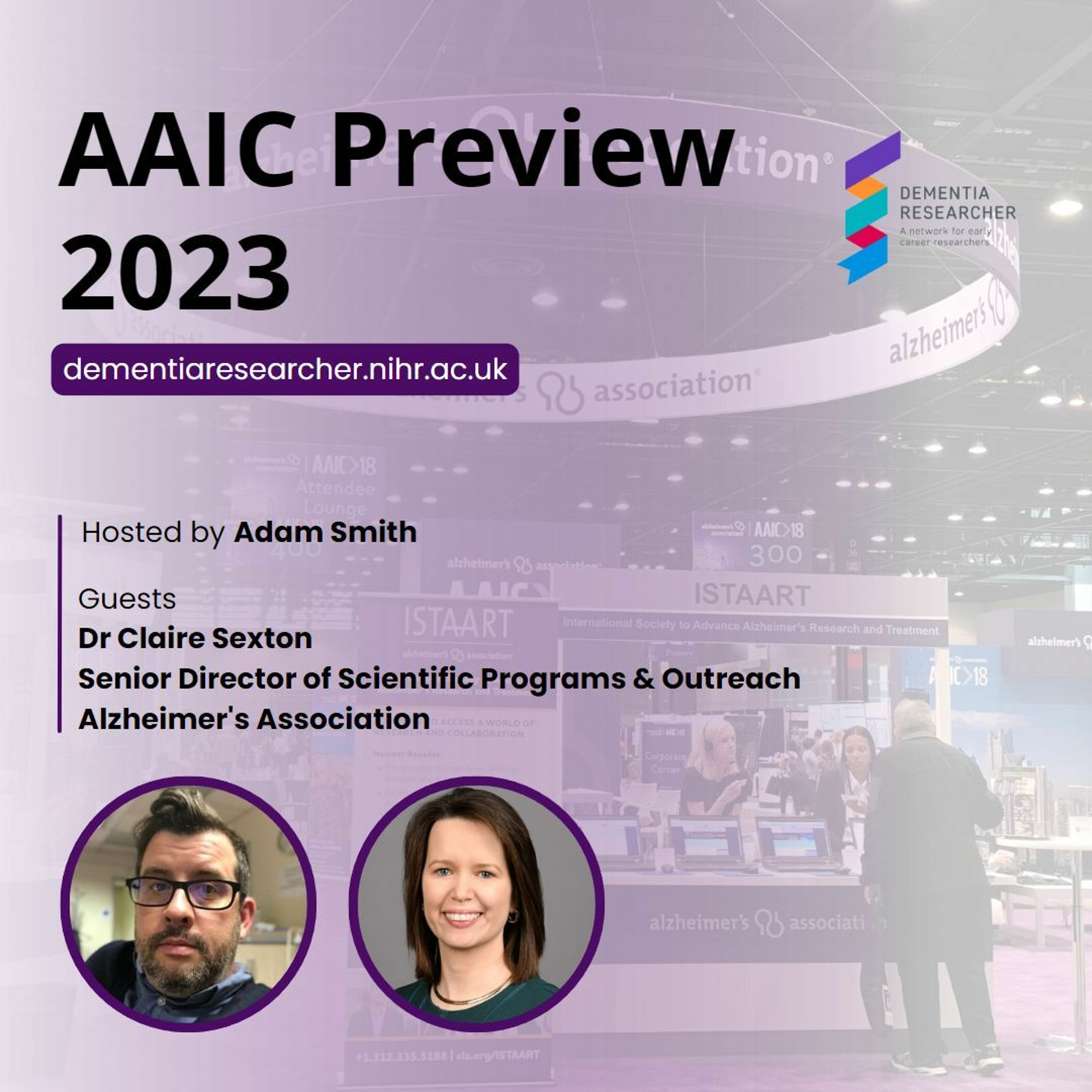
Ep 220AAIC Preview 2023
Adam Smith chats with Dr Claire Sexton, Senior Director, Scientific Programs and Outreach from the Alzheimer’s Association. Discussing this year’s Alzheimer’s Association International Conference (AAIC) 16 – 20 July.Taking place in-person in Amsterdam and online – the world’s leading basic scientists, clinical researchers, early career investigators, clinicians and the care research community will share breaking research discoveries that will lead to methods of prevention and treatment and improvements in diagnosis for Alzheimer’s disease.In this exciting edition, we will be giving you an exclusive sneak peek into one of the most highly anticipated events in dementia research conference calendar.Join us as we delve into how you can attend, the scientific programme, extra events and just what the AAIC will deliver this year. With leading experts, visionary thinkers, and research pioneers gathering under one roof, this conference promises to not only showcase groundbreaking discoveries, but also be a place where you will get careers support, and unrivalled networking opportunities.To book your place visit – https://aaic.alz.orgJoin ISTAART to get a free online ticket – https://istaart.alz.orgNote:Students worldwide and researchers from Low- and Middle-Income Countries are now eligible for free ISTAART Membership (and ISTAART members can attend the AAIC Online for Free) – Become a member, then register for the conference if you can’t make it in-person.Full biographies on all our guests and a transcript can be found on our website www.dementiaresearcher.nihr.ac.ukA transcript of this show, links and show notes and profile on all our guests are available on our website at https://www.dementiaresearcher.nihr.ac.uk.If you prefer to watch rather than listen, you will find a video version of this podcast on YouTube, on our website, and in selected podcast platforms.Follow us on social media:https://www.instagram.com/dementia_researcher/ https://www.facebook.com/Dementia.Researcher/https://www.twitter.com/demrescommunityhttps://www.linkedin.com/company/dementia-researcher https://bsky.app/profile/dementiaresearcher.bsky.socialDownload and Register with our Community App:https://www.onelink.to/dementiaresearcherWe gratefully acknowledge the support of our funders: Alzheimer’s Association, Race Against Dementia, Alzheimer’s Research UK, Alzheimer’s Society, and the National Institute for Health and Care Research.The views and opinions expressed by guests in this podcast are their own and do not necessarily reflect those of the producers, funders, or sponsors.Subscribe to our sister show 'Dementia Researcher The Blogs':https://podfollow.com/dementia-researcher-blogs
Ep 219Livestream Catch-up - Unlocking The Future Of MND A Journey Of Discovery And Hope
Dementia Researcher hosted a YouTube / Twitter Livestream on the 23rd June 2023 exploring Motor Neurone Disease (MND) and the remarkable advancements in research, in partnership with MND Scotland.We enjoyed the session so much, that we decided to release it as a bonus 'extra' podcast - so please ignore any references to links on the screen. Listen to learn more about the disease, the latest advancements in MND research, and specifically about the groundbreaking MND Smart Trial. This unique trial has garnered attention for its innovative approach and has shown promising potential in accelerating the discovery of effective treatments for MND.Furthermore, the event will delve into the impact of new investments in MND research, exploring how these resources are driving progress and propelling the quest for a cure. Resources mentioned during the recording:MND-SMART Website - https://mnd-smart.org/MND Scotland Website - https://mndscotland.org.uk/Jane Blog - https://www.dementiaresearcher.nihr.ac.uk/guest-blog-uk-motor-neuron-disease-research-institute/*We can now confirm that the MND-SMART Study does sit on the NIHR Portfolio CPMS ID 44601 for any interested NHS sites.Adam Smith hosted the session, and was joined by: Dr Jane Haley, representing MND Scotland, brings her extensive expertise and compassionate approach to the discussion. As the Director of Research at MND Scotland, Dr. Haley has been instrumental in bringing the thoughts and priorities of people affected by MND into research and driving forward research initiatives and partnerships. Suvankar Pal is a Professor of Neurodegenerative Disorders and Clinical Trials at the University of Edinburgh. He is co-lead investigator of the innovative MND-SMART trial, the largest ever Phase 3 trial for people living with MND in the UK. Stevie Morris was diagnosed with MND in February 2021. He will bring insights to life, sharing the realities of living with the disease, highlighting the challenges faced by individuals living with MND and the importance of research in improving their quality of life.A transcript of this show, links and show notes and profile on all our guests are available on our website at https://www.dementiaresearcher.nihr.ac.uk.If you prefer to watch rather than listen, you will find a video version of this podcast on YouTube, on our website, and in selected podcast platforms.Follow us on social media:https://www.instagram.com/dementia_researcher/ https://www.facebook.com/Dementia.Researcher/https://www.twitter.com/demrescommunityhttps://www.linkedin.com/company/dementia-researcher https://bsky.app/profile/dementiaresearcher.bsky.socialDownload and Register with our Community App:https://www.onelink.to/dementiaresearcherWe gratefully acknowledge the support of our funders: Alzheimer’s Association, Race Against Dementia, Alzheimer’s Research UK, Alzheimer’s Society, and the National Institute for Health and Care Research.The views and opinions expressed by guests in this podcast are their own and do not necessarily reflect those of the producers, funders, or sponsors.Subscribe to our sister show 'Dementia Researcher The Blogs':https://podfollow.com/dementia-researcher-blogs

Ep 218WHO Supporting Dementia Research Knowledge Exchange
This week, regular guest host and Dementia Researcher blogger Dr Anna Volkmer talks with representatives from the World Health Organisation, to learn about the brilliant new Global Dementia Observatory (GDO) Knowledge Exchange Platform. Listen to hear how researchers can contribute, and how the service is already making a difference.This week’s guests are the courageous Jim Mann and the incredible Laura Garcia Diaz.Jim lives in British Columbia, he is a Researcher, Author, and Volunteer Living with Alzheimer’s. Has an honorary Doctor of Laws degree in recognition of his effort on “countering negative stereotypes and promoting an inclusive society in which persons with dementia can make an active and meaningful contribution.” Jim was diagnosed in 2007 at the age of 58, and he has contributed to the project in a variety of ways.Laura supports management of the Knowledge Exchange Platform. She has five years of experience in knowledge translation and mobilisation in the area of dementia, having previously worked for the Alzheimer Society of Canada supporting the developing and dissemination of dementia resources. In addition to consulting for the WHO Laura is in the fourth year of a dual degree program at McMaster University, Canada, in which she is completing a Master of Science Occupational Therapy and a PhD in Rehabilitation Sciences degrees in concurrently. Her research focuses on the evaluation of a Canadian dementia-inclusive community initiative.The Global Dementia Observatory (GDO) Knowledge Exchange Platform, also known as the GDO KE Platform, is a resource hub that facilitates the implementation of the Global action plan on the public health response to dementia 2017-2025. It offers various resources, such as policies, guidelines, case studies, and examples of good practices, which are freely available for stakeholders to share and learn from. Users can submit resources, which are then filtered based on strategic action areas, country-specific information, and resource types. A rigorous review process, involving peer reviewers, a Focus Group of individuals with lived experience of dementia, and the World Health Organization (WHO) Secretariat, ensures the quality and adherence to good practice criteria. Users can leave comments and ratings to foster discussion and improvement. The GDO KE Platform works alongside the GDO data portal, which gathers and disseminates data from Member States on 35 key dementia indicators, aiding evidence-based service planning and policy strengthening. The GDO serves as the monitoring and accountability mechanism for the Global action plan and supports the data portal. Access to the GDO KE Platform and the GDO data portal is available for interested individuals.Essential Links:GDO KEP – https://www.globaldementia.orgA blueprint for dementia research – https://bit.ly/43wbtfqGDO KE peer reviewer application – https://bit.ly/3XfDKVjGDO resource submission form – https://bit.ly/42yK0IvGlobal action plan on the public health response to dementia 2017 – 2025 – https://bit.ly/3MZiRZtA transcript of this show, links and show notes and profile on all our guests are available on our website at https://www.dementiaresearcher.nihr.ac.uk.If you prefer to watch rather than listen, you will find a video version of this podcast on YouTube, on our website, and in selected podcast platforms.Follow us on social media:https://www.instagram.com/dementia_researcher/ https://www.facebook.com/Dementia.Researcher/https://www.twitter.com/demrescommunityhttps://www.linkedin.com/company/dementia-researcher https://bsky.app/profile/dementiaresearcher.bsky.socialDownload and Register with our Community App:https://www.onelink.to/dementiaresearcherWe gratefully acknowledge the support of our funders: Alzheimer’s Association, Race Against Dementia, Alzheimer’s Research UK, Alzheimer’s Society, and the National Institute for Health and Care Research.The views and opinions expressed by guests in this podcast are their own and do not necessarily reflect those of the producers, funders, or sponsors.Subscribe to our sister show 'Dementia Researcher The Blogs':https://podfollow.com/dementia-researcher-blogs

Ep 217AAIC Satellite Symposium 2023 Highlights
In today’s episode, Dr Chi Udeh-Momoh, Research Programme and Biomarker Lead at Imperial College London and GHBI Fellow at University California, San Francisco talks to a line-up of captivating guests as we dive into sharing insights from the AAIC Satellite Symposium 2023 – focussing on the latest research from Latin America.This week’s guests are all currently GBHI Fellows, and highly respected researchers at their home institutions:Dr Adolfo M. García, Director, Cognitive Neuroscience Center, Universidad de San Andres / Senior Atlantic Fellow, Global Brain Health Institute, University of California, San Francisco / Associate Researcher, Universidad de Santiago de Chile. Adolfo specializes in language in neurodegenerative diseases.Dr Alison Canty, Associate Professor, & Atlantic Fellow for Equity in Brain Health at Global Brain Health Institute, Trinity College Dublin / Wicking Dementia Research and Education Centre, University of Tasmania. Alison is researching Neuroplasticity in ageing and neurodegenerative disease.Dr Jayashree Dasgupta, is a GBHI Fellow and Clinical Psychologist working on translating evidence based practices to develop services for mental well-being, active aging and dementia care in India. She is also an ethics researcher and my work involves highlighting perspectives from under-represented settings into clinical research.Michelle Moses-Eisenstein, Atlantic Fellow for Equity in Brain Health and Performing Artist at Global Brain Health Institute, University of California, San Francisco. Michelle is committed to improving the lives of people with dementia and their care partners through innovation across arts programs, grants, communications, and policy. She is a creative and empathetic problem solver motivated to achieve public health solutions and health equity through relationship building, advocacy, education, stakeholder engagement, and strategic partnerships.Dr Chi Udeh-Momoh, Research Programme and Biomarker Lead and currently GHBI Fellow. Chi was I was born in Nigeria and relocated to the UK as a teenager. She has always been fascinated by the brain – how we think, learn and remember; and how these processes can be affected in disease/ alleviated therapeutically. Chi studied Neuroscience all the way through undergrad to PhD, then did my post-doc in neuroepidemiology, her focus is now on Dementia Prevention and biomarkers.For more information on the event visit:www.alz.org/satellite-symposium/overview.aspFor more information on GBHI visit:www.gbhi.org/events/gbhi-annual-conference-2023A transcript of this show, links and show notes and profile on all our guests are available on our website at https://www.dementiaresearcher.nihr.ac.uk.If you prefer to watch rather than listen, you will find a video version of this podcast on YouTube, on our website, and in selected podcast platforms.Follow us on social media:https://www.instagram.com/dementia_researcher/ https://www.facebook.com/Dementia.Researcher/https://www.twitter.com/demrescommunityhttps://www.linkedin.com/company/dementia-researcher https://bsky.app/profile/dementiaresearcher.bsky.socialDownload and Register with our Community App:https://www.onelink.to/dementiaresearcherWe gratefully acknowledge the support of our funders: Alzheimer’s Association, Race Against Dementia, Alzheimer’s Research UK, Alzheimer’s Society, and the National Institute for Health and Care Research.The views and opinions expressed by guests in this podcast are their own and do not necessarily reflect those of the producers, funders, or sponsors.Subscribe to our sister show 'Dementia Researcher The Blogs':https://podfollow.com/dementia-researcher-blogs
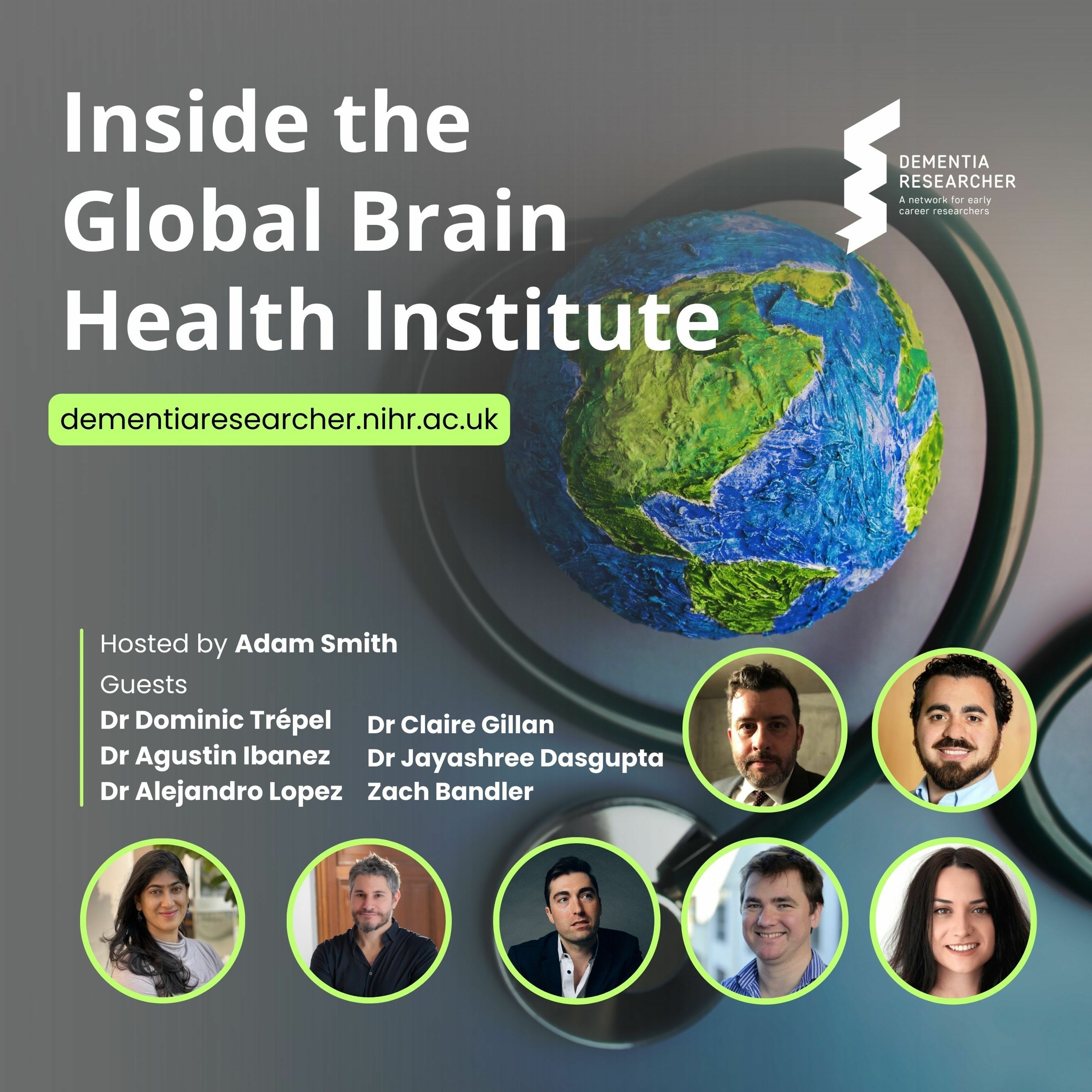
Ep 216Inside the Global Brain Health Institute
In this podcast we explore the world of brain health and the Atlantic Fellows for Equity in Brain Health program of the Global Brain Health Institute (GBHI), from Trinity College Dublin and University of California San Francisco.Join us as we speak with world-class faculty members and fellows about their experiences in this cutting-edge program that’s changing the face of brain health leadership and creating new attitudes. From neuroscience to psychology, public health to neurology, and even the arts and communications we’ll take you on a journey through the amazing work being done by the Global Brain Health Institute. Tune in and be inspired by the transformative work being done to improve brain health around the world.Hosted by Adam Smith, Dementia Researcher Programme Director and recorded at Trinity College Dublin, he talks with faculty members Dr Dominic Trepel, Dr Claire Gillan, Dr Alejandro Lopez Valdes & Dr Agustin Ibanez. We also get perspectives on the programme from existing fellows Dr Jayashree Dasgupta & Zach Bandler.Applications for the 2023 Atlantic Fellows for Equity in Brain Health program open very soon. For more information visit:www.gbhi.org/applyA transcript of this show, links and show notes and profile on all our guests are available on our website at https://www.dementiaresearcher.nihr.ac.uk.If you prefer to watch rather than listen, you will find a video version of this podcast on YouTube, on our website, and in selected podcast platforms.Follow us on social media:https://www.instagram.com/dementia_researcher/ https://www.facebook.com/Dementia.Researcher/https://www.twitter.com/demrescommunityhttps://www.linkedin.com/company/dementia-researcher https://bsky.app/profile/dementiaresearcher.bsky.socialDownload and Register with our Community App:https://www.onelink.to/dementiaresearcherWe gratefully acknowledge the support of our funders: Alzheimer’s Association, Race Against Dementia, Alzheimer’s Research UK, Alzheimer’s Society, and the National Institute for Health and Care Research.The views and opinions expressed by guests in this podcast are their own and do not necessarily reflect those of the producers, funders, or sponsors.Subscribe to our sister show 'Dementia Researcher The Blogs':https://podfollow.com/dementia-researcher-blogs
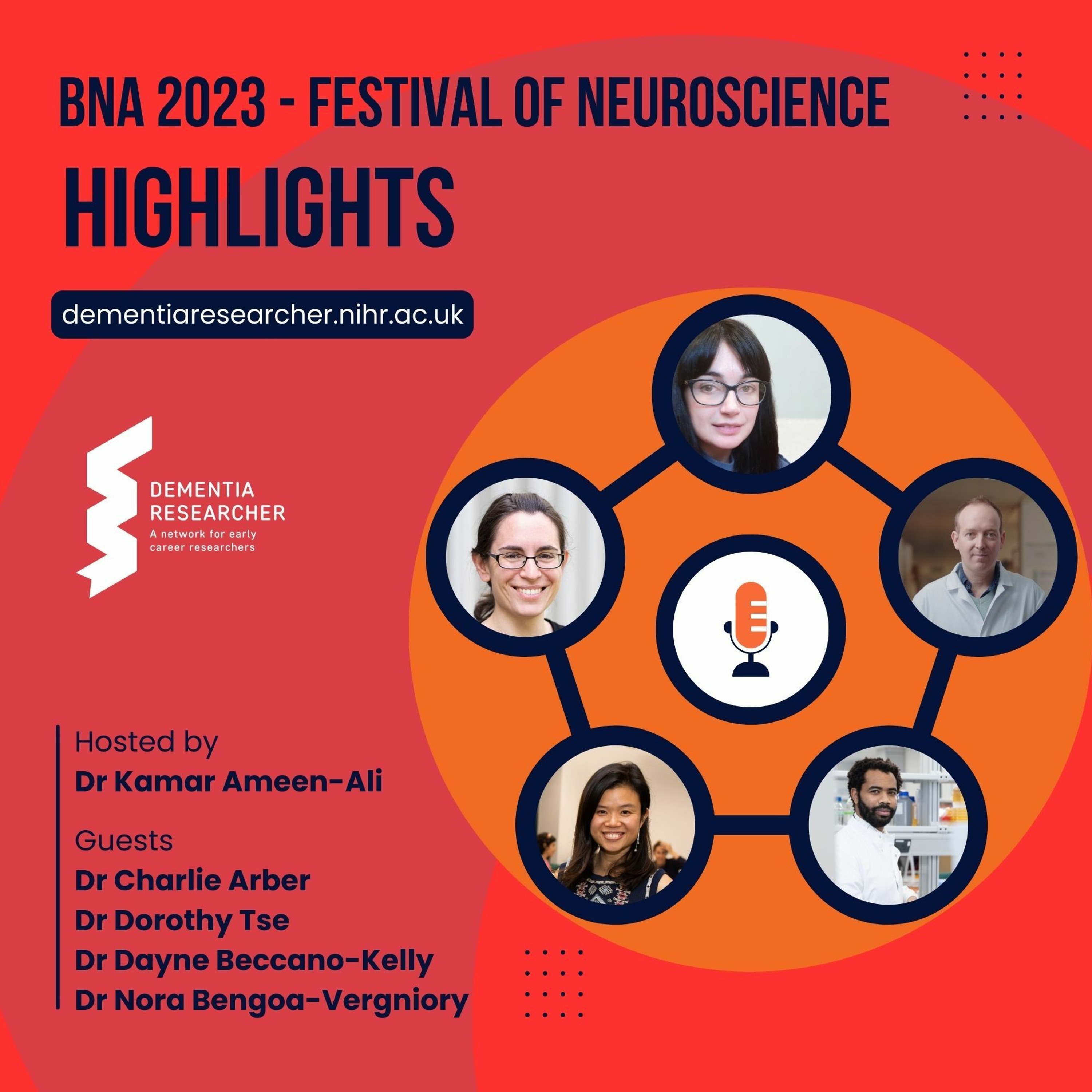
Ep 215BNA 2023 - Festival of Neuroscience Highlights
Welcome to another captivating episode of Dementia Researcher, the podcast that delves into the fascinating world of dementia research. In this special edition, we bring you highlights from the renowned BNA 2023 – Festival of Neuroscience, as we sit down with five brilliant researchers to hear their personal experiences and insights.Our guest host this week is Dr Kamar Ameen-Ali, she is joined by Dr Charlie Arber from UCL, Dr Dorothy Tse from Edge Hill University, Dr Nora Bengoa-Vergniory from Anchucarro, Basque Center for Neuroscience and Dr Dayne Beccano-Kelly from the UK Dementia Research Institute at Cardiff University.Join us as we embark on a riveting journey through the festival, where our guests share their best moments, favourite research presentations, and the exciting events that explored academic and research careers.Our guests, as experts in their respective fields, paint a vivid picture of the festival, offering glimpses into the cutting-edge research that caught their attention and ignited their curiosity. They share their thoughts on the emerging trends, innovative methodologies, and potential breakthroughs that could revolutionize our understanding and treatment of dementia.But it’s not just about the science. Our guests also shine a light on the various events that focused on academic and research careers. From panels and workshops to networking sessions, they discuss the invaluable opportunities the festival provided to connect with fellow researchers, forge collaborations, and learn from the brightest minds in the field.Whether you’re an aspiring researcher, a healthcare professional, or someone affected by dementia, this episode offers a treasure trove of knowledge and inspiration. So, join us as we dive into the enriching world of the BNA 2023 – Festival of Neuroscience through the eyes of these remarkable researchers. Get ready to be inspired, informed, and captivated by the incredible discoveries and the unwavering dedication that fuels the fight against dementia.For more information on the event visit:meetings.bna.org.uk/bna2023/A transcript of this show, links and show notes and profile on all our guests are available on our website at https://www.dementiaresearcher.nihr.ac.uk.If you prefer to watch rather than listen, you will find a video version of this podcast on YouTube, on our website, and in selected podcast platforms.Follow us on social media:https://www.instagram.com/dementia_researcher/ https://www.facebook.com/Dementia.Researcher/https://www.twitter.com/demrescommunityhttps://www.linkedin.com/company/dementia-researcher https://bsky.app/profile/dementiaresearcher.bsky.socialDownload and Register with our Community App:https://www.onelink.to/dementiaresearcherWe gratefully acknowledge the support of our funders: Alzheimer’s Association, Race Against Dementia, Alzheimer’s Research UK, Alzheimer’s Society, and the National Institute for Health and Care Research.The views and opinions expressed by guests in this podcast are their own and do not necessarily reflect those of the producers, funders, or sponsors.Subscribe to our sister show 'Dementia Researcher The Blogs':https://podfollow.com/dementia-researcher-blogs
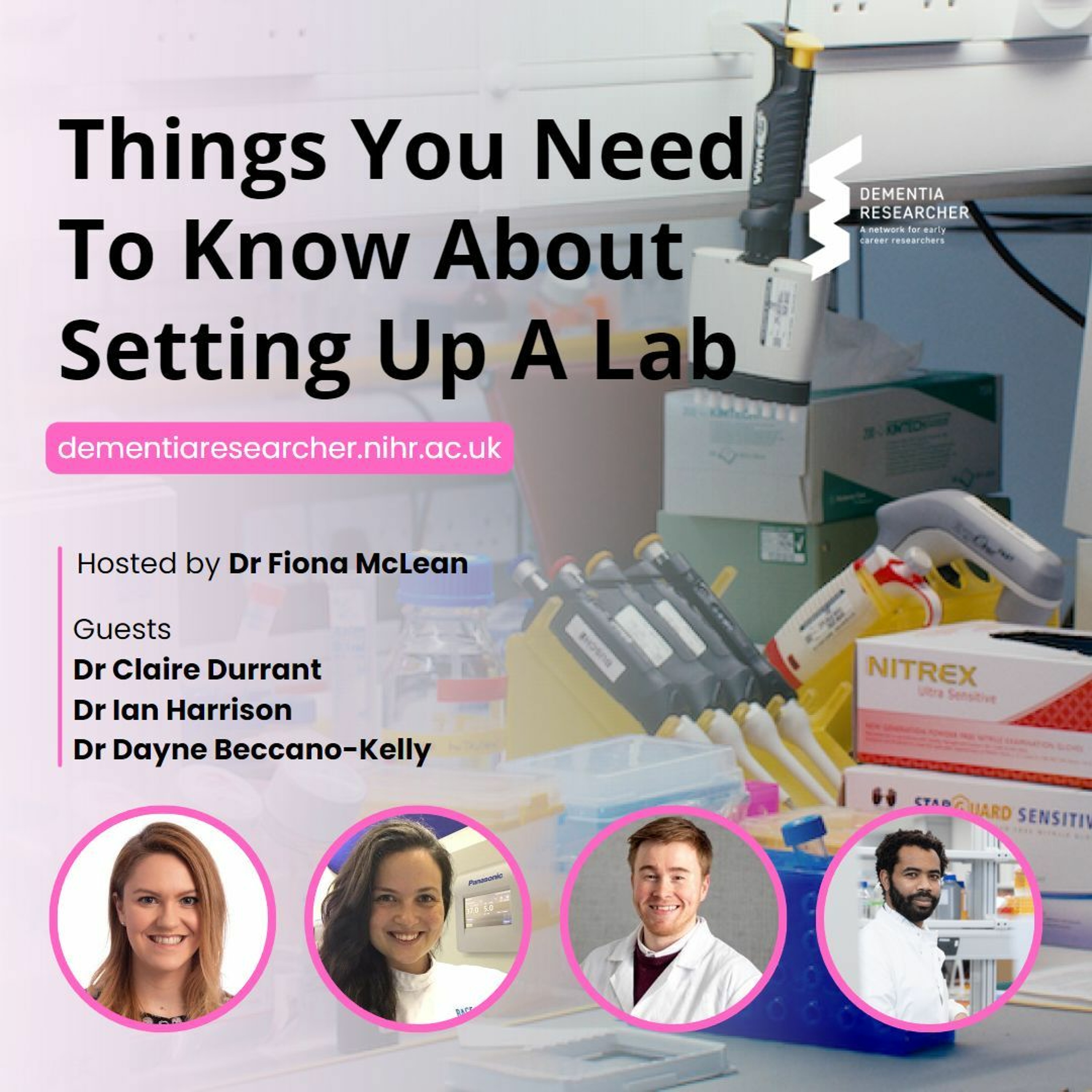
Ep 214Things You Need To Know About Setting Up A Lab
Consider this podcast as a ‘Lab Setup 101”, we’ve brought together three newly minted principle investigators to talk about the highs, lows and practical things you need to consider when setting up a new lab – learning from their first-hand experience.Dr Fiona McLean, ARUK Fellow from University of Dundee talks with Dr Claire Durrant, RAD Fellow from The University of Edinburgh, Dr Ian Harrison, Senior Research Fellow from University College London and Dr Dayne Beccano-Kelly, Group Leader in the UK Dementia Research Institute at Cardiff University.Together our guests will guide you through the important things you need to know before embarking on this journey. Everything from locations and space to purchasing equipment, and hiring staff, we’ll cover everything you need to get started. Our expert guests will also share their experiences and provide valuable insights to help you avoid common pitfalls and ensure a successful lab setup. So, join us as we explore the essentials of setting up your own lab.Meet the guests:Dr Fiona McLean is an Alzheimer’s Research UK Fellow at University of Dundee. She is fascinated by the brain and has always been curious about how it works and what keeps it healthy. Her research focuses on the links between obesity, diabetes and neurodegenerative diseases.Dr Claire Durrant is a Race Aganinst Dementia / Dyson Foundation Fellow in the UK Dementia Research Institute at The University of Edinburgh. Her work focuses on understanding the causes and consequences of synapse loss in dementia causing disease such as Alzheimer’s disease. She is currently developing living human brain slices as a translational research tool.Dr Ian Harrison is a Senior Research Fellow at University College London. His work looks at the function of the glymphatic system in the brain, responsible for the clearance of protein solutes from the brain parenchyma.Dr Dayne Beccano-Kelly is UKRI Future Leader Fellow and UK Dementia Research Institute Group Leader at Cardiff University. He is working on neurodegeneration focussing on Parkinson’s disease and looking at both the temporality of the disorder as well as the role synaptic dysfunction plays.A transcript of this show, links and show notes and profile on all our guests are available on our website at https://www.dementiaresearcher.nihr.ac.uk.If you prefer to watch rather than listen, you will find a video version of this podcast on YouTube, on our website, and in selected podcast platforms.Follow us on social media:https://www.instagram.com/dementia_researcher/ https://www.facebook.com/Dementia.Researcher/https://www.twitter.com/demrescommunityhttps://www.linkedin.com/company/dementia-researcher https://bsky.app/profile/dementiaresearcher.bsky.socialDownload and Register with our Community App:https://www.onelink.to/dementiaresearcherWe gratefully acknowledge the support of our funders: Alzheimer’s Association, Race Against Dementia, Alzheimer’s Research UK, Alzheimer’s Society, and the National Institute for Health and Care Research.The views and opinions expressed by guests in this podcast are their own and do not necessarily reflect those of the producers, funders, or sponsors.Subscribe to our sister show 'Dementia Researcher The Blogs':https://podfollow.com/dementia-researcher-blogs
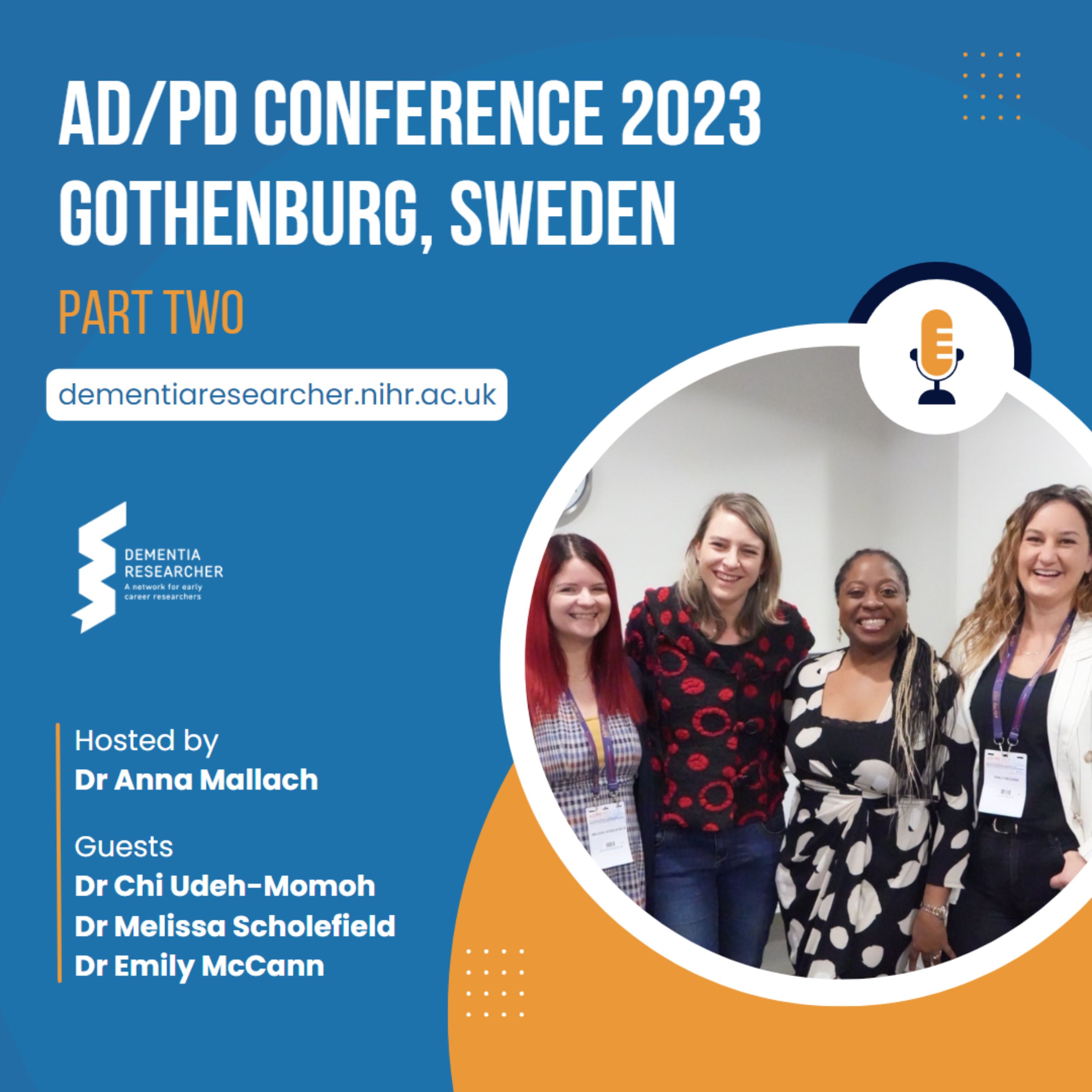
Ep 213ADPD 2023 Conference Highlights - Part 2
This year’s AD/PD Conference was held in Gothenburg, Sweden from the 28th March to 1st April. In this first of a two-part special we bring you highlights from the first three days of the conference.The AD/PD Conference focuses on basic science and translational and clinical research bringing New insights on disease mechanisms and etiologies, the latest findings from clinical trials, innovative outlooks on therapy and prevention and advances in diagnostic markers.In this special on-location recording our guest host Dr Anna Mallach, Research Fellow from the UK Dementia Research Institute at University College London talks with:Dr Melissa Scholefield, Postdoctoral Research Associate at University of Manchester. Melissa focusses on undertaking Multi-omic analysis of Lewy body dementias.Dr Chi Udeh-Momoh, Research Programme and Biomarker Lead at Imperial College London. Chi has always been fascinated by the brain, how we think, learn and remember; and how these processes can be affected in disease/ alleviated therapeutically.Emily McCann, PhD Student at Queensland Brain Institute, University of Queensland. Emily’s research is in cognitive test development for neurodegenerative diseases. She aims to align functional neural changes with the patient cognitive profile, and has developed a series of tests to measure visuoperceptual impairments in patients with Alzheimer’s and Lewy Body pathology.A transcript of this show, links and show notes and profile on all our guests are available on our website at https://www.dementiaresearcher.nihr.ac.uk.If you prefer to watch rather than listen, you will find a video version of this podcast on YouTube, on our website, and in selected podcast platforms.Follow us on social media:https://www.instagram.com/dementia_researcher/ https://www.facebook.com/Dementia.Researcher/https://www.twitter.com/demrescommunityhttps://www.linkedin.com/company/dementia-researcher https://bsky.app/profile/dementiaresearcher.bsky.socialDownload and Register with our Community App:https://www.onelink.to/dementiaresearcherWe gratefully acknowledge the support of our funders: Alzheimer’s Association, Race Against Dementia, Alzheimer’s Research UK, Alzheimer’s Society, and the National Institute for Health and Care Research.The views and opinions expressed by guests in this podcast are their own and do not necessarily reflect those of the producers, funders, or sponsors.Subscribe to our sister show 'Dementia Researcher The Blogs':https://podfollow.com/dementia-researcher-blogs
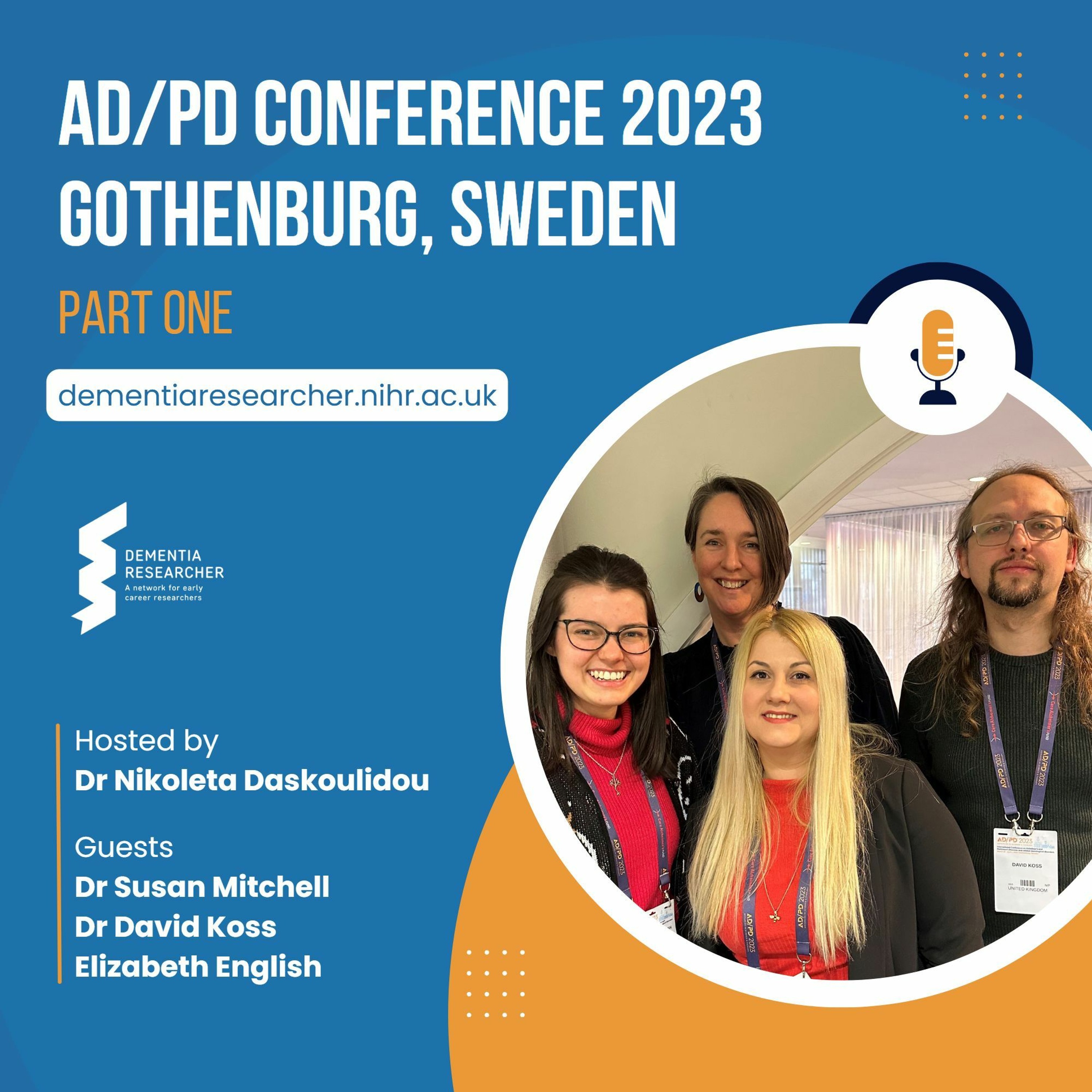
Ep 212ADPD 2023 Conference Highlights - Part 1
This year’s AD/PD Conference was held in Gothenburg, Sweden from the 28th March to 1st April. In this first of a two-part special we bring you highlights from the first three days of the conference.The AD/PD Conference focuses on basic science and translational and clinical research bringing New insights on disease mechanisms and etiologies, the latest findings from clinical trials, innovative outlooks on therapy and prevention and advances in diagnostic markers.In this special on-location recording our guest host Dr Nikoleta Daskoulidou, Research Associate from the UK Dementia Research Institute at Cardiff University talks with:Dr David J. Koss, Research Associate from Newcastle University. David is working to understand the molecular pathology which underpins a range of neurodegenerative dementias.Dr Susan Mitchell, Head of Policy at Alzheimer’s Research UK. Susan is part of the ARUK policy and public affairs team, with responsibility for developing evidence-based policy to ensure people affected by dementia benefit from the progress in research.Elizabeth English, PhD Student at University of Cambridge. Lizzie, is utilising biophysical methods to characterise protein aggregates and their toxicity mechanisms in neurodegenerative disease.A transcript of this show, links and show notes and profile on all our guests are available on our website at https://www.dementiaresearcher.nihr.ac.uk.If you prefer to watch rather than listen, you will find a video version of this podcast on YouTube, on our website, and in selected podcast platforms.Follow us on social media:https://www.instagram.com/dementia_researcher/ https://www.facebook.com/Dementia.Researcher/https://www.twitter.com/demrescommunityhttps://www.linkedin.com/company/dementia-researcher https://bsky.app/profile/dementiaresearcher.bsky.socialDownload and Register with our Community App:https://www.onelink.to/dementiaresearcherWe gratefully acknowledge the support of our funders: Alzheimer’s Association, Race Against Dementia, Alzheimer’s Research UK, Alzheimer’s Society, and the National Institute for Health and Care Research.The views and opinions expressed by guests in this podcast are their own and do not necessarily reflect those of the producers, funders, or sponsors.Subscribe to our sister show 'Dementia Researcher The Blogs':https://podfollow.com/dementia-researcher-blogs

Ep 211Rebooting the Brain: Life & Research after a Stroke
Welcome to this episode of our podcast co-hosted by researchers Dr Gaia Brezzo and Mila Redzic, they our special guests sharing their inspiring story of resilience and hope.Today, we are joined by Denis and his daughter Maise, they became connected to Gaia and Mila after Denis experienced a life-altering event – a stroke.Together they share their personal journey of what it was like to have a stroke, the impact on the family, the challenges they faced during their recovery, and how they adapted to their new normal. They will also be sharing their journey of becoming involved in stroke research, the importance of research in stroke recovery, and how it has impacted their life.Through their story, we hope to shed light on the impact of stroke and the importance of research in advancing stroke care, its connections to dementia and the importance of improving the quality of life for stroke survivors. Please join us in welcoming our guest as they share their unique and inspiring journey.If you’re interested in participating in a research study, and based in the UK, Join Dementia Research supports people of all ages, both with an without dementia to be matched with appropriate studies. Registration is free, and you can even register on behalf of someone who is unable to do so themselves. Visit https://www.joindementiaresearch.nihr.ac.uk if you live outside the UK, there may be a similar service in your region e.g. Trial Match in the USA, and Stepup For Dementia Research in Australia.Our hosts this week are:Dr Gaia Brezzo, Research Fellow in Cerebral Vascular Disease and Dementia at the UK Dementia Research Institute at The University of Edinburgh. Gaia’s research focuses on understanding how immune alterations triggered by stroke shape chronic maladaptive neuroimmune responses that lead to post-stroke cognitive decline and vascular dementia.Mila Redzic, PhD Student at The University of Edinburgh. Mila is interested in understanding how microglial responses may shape changes occurring in the neurovascular unit in this context, and whether we can manipulate microglia to promote brain resilience and reduce cognitive impairment.Stroke is a serious medical condition that occurs when blood flow to the brain is interrupted, which can lead to brain damage. This damage can result in a range of cognitive problems, including dementia.Studies have shown that people who have had a stroke are at a higher risk of developing various forms of dementia, such as vascular dementia and Alzheimer’s disease. The risk of dementia is particularly high in individuals who have had a stroke that affects a large part of the brain or who have had multiple strokes.In addition, many of the risk factors that increase the likelihood of having a stroke, such as high blood pressure, diabetes, and heart disease, also increase the risk of developing dementia.It’s important to note that not everyone who has a stroke will develop dementia, and there are steps you can take to reduce your risk. Managing risk factors for stroke, such as maintaining a healthy diet and exercise routine, quitting smoking, and controlling blood pressure and cholesterol levels, can also help reduce the risk of dementia.A transcript of this show, links and show notes and profile on all our guests are available on our website at https://www.dementiaresearcher.nihr.ac.uk.If you prefer to watch rather than listen, you will find a video version of this podcast on YouTube, on our website, and in selected podcast platforms.Follow us on social media:https://www.instagram.com/dementia_researcher/ https://www.facebook.com/Dementia.Researcher/https://www.twitter.com/demrescommunityhttps://www.linkedin.com/company/dementia-researcher https://bsky.app/profile/dementiaresearcher.bsky.socialDownload and Register with our Community App:https://www.onelink.to/dementiaresearcherWe gratefully acknowledge the support of our funders: Alzheimer’s Association, Race Against Dementia, Alzheimer’s Research UK, Alzheimer’s Society, and the National Institute for Health and Care Research.The views and opinions expressed by guests in this podcast are their own and do not necessarily reflect those of the producers, funders, or sponsors.Subscribe to our sister show 'Dementia Researcher The Blogs':https://podfollow.com/dementia-researcher-blogs
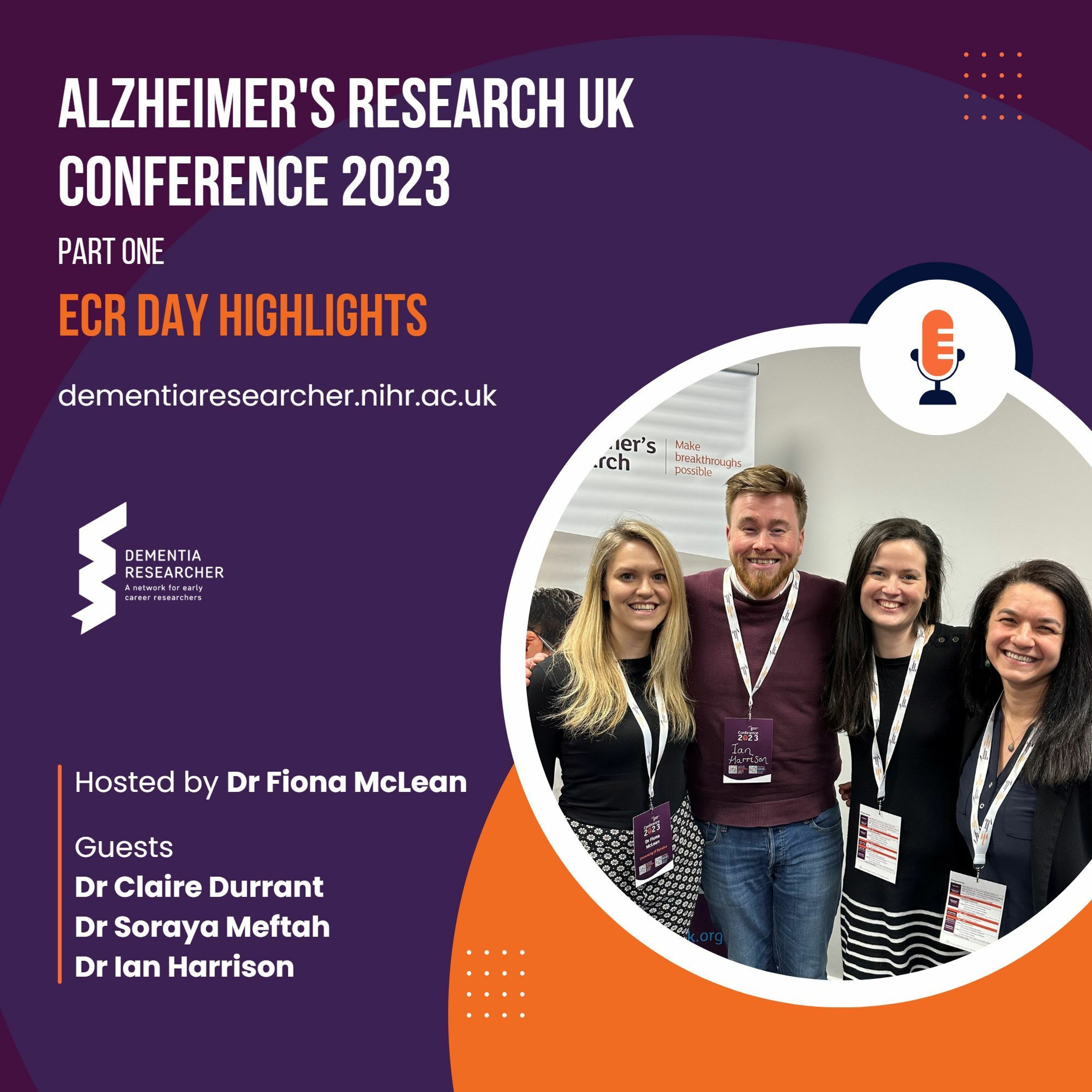
Ep 209ARUK Conference Roundup 2023 - Part One
Last week we were in Aberdeen for the Alzheimer’s Research UK Conference 2023 to hear the latest findings in dementia research.In the first of our two-part special we focus on sharing highlights from the ECR day. Guest host Dr Fiona McLean from University of Dundee talks with Dr Claire Durrant and Dr Soraya Meftah from The University of Edinburgh, Dr Ian Harrison from University College London.For more information on ARUK and their ECR support work, take a look at the ARUK ECR Portal.A transcript of this show, links and show notes and profile on all our guests are available on our website at https://www.dementiaresearcher.nihr.ac.uk.If you prefer to watch rather than listen, you will find a video version of this podcast on YouTube, on our website, and in selected podcast platforms.Follow us on social media:https://www.instagram.com/dementia_researcher/ https://www.facebook.com/Dementia.Researcher/https://www.twitter.com/demrescommunityhttps://www.linkedin.com/company/dementia-researcher https://bsky.app/profile/dementiaresearcher.bsky.socialDownload and Register with our Community App:https://www.onelink.to/dementiaresearcherWe gratefully acknowledge the support of our funders: Alzheimer’s Association, Race Against Dementia, Alzheimer’s Research UK, Alzheimer’s Society, and the National Institute for Health and Care Research.The views and opinions expressed by guests in this podcast are their own and do not necessarily reflect those of the producers, funders, or sponsors.Subscribe to our sister show 'Dementia Researcher The Blogs':https://podfollow.com/dementia-researcher-blogs

Ep 210ARUK Conference Roundup 2023 - Part Two
Last week we were in Aberdeen for the Alzheimer’s Research UK Conference 2023 to hear the latest findings in dementia research.In the second of our two-part special we focus on sharing highlights from the main conference, which featured two days of brilliant scientific programming. Guest host Dr Zara Franklin from University of Aberdeen talks with Dr Natalie Connor-Robson from the UK Dementia Research Institute at Cardiff University, Dr Szu-Han Wang from The University of Edinburgh and Dr Steven Quinn from University of York.For more information on ARUK and their ECR support work, take a look at the ARUK ECR Portal.A transcript of this show, links and show notes and profile on all our guests are available on our website at https://www.dementiaresearcher.nihr.ac.uk.If you prefer to watch rather than listen, you will find a video version of this podcast on YouTube, on our website, and in selected podcast platforms.Follow us on social media:https://www.instagram.com/dementia_researcher/ https://www.facebook.com/Dementia.Researcher/https://www.twitter.com/demrescommunityhttps://www.linkedin.com/company/dementia-researcher https://bsky.app/profile/dementiaresearcher.bsky.socialDownload and Register with our Community App:https://www.onelink.to/dementiaresearcherWe gratefully acknowledge the support of our funders: Alzheimer’s Association, Race Against Dementia, Alzheimer’s Research UK, Alzheimer’s Society, and the National Institute for Health and Care Research.The views and opinions expressed by guests in this podcast are their own and do not necessarily reflect those of the producers, funders, or sponsors.Subscribe to our sister show 'Dementia Researcher The Blogs':https://podfollow.com/dementia-researcher-blogs
Ep 208Introducing a new Podcast - Ask Your Mentor
First two episiodes are OUT NOW! We're dropping into the podcast feed to let you know that we launched a brand new Video First Limited Podcast Series - Ask Your Mentor in association with Alzheimer's Research UK.Watch the video version on YouTube or Spotify or have a listen in your favourite podcast app:https://www.youtube.com/playlist?list=PLeUI1GHB4EvR4ATmCIG2hatT78POJQRxChttps://podfollow.com/ask-your-mentorA transcript of this show, links and show notes and profile on all our guests are available on our website at https://www.dementiaresearcher.nihr.ac.uk.If you prefer to watch rather than listen, you will find a video version of this podcast on YouTube, on our website, and in selected podcast platforms.Follow us on social media:https://www.instagram.com/dementia_researcher/ https://www.facebook.com/Dementia.Researcher/https://www.twitter.com/demrescommunityhttps://www.linkedin.com/company/dementia-researcher https://bsky.app/profile/dementiaresearcher.bsky.socialDownload and Register with our Community App:https://www.onelink.to/dementiaresearcherWe gratefully acknowledge the support of our funders: Alzheimer’s Association, Race Against Dementia, Alzheimer’s Research UK, Alzheimer’s Society, and the National Institute for Health and Care Research.The views and opinions expressed by guests in this podcast are their own and do not necessarily reflect those of the producers, funders, or sponsors.Subscribe to our sister show 'Dementia Researcher The Blogs':https://podfollow.com/dementia-researcher-blogs
Ep 207Smart New Ways To Diagnose Dementia
Great progress has been made over the past decade in the development of blood based bio-markers to diagnose Alzheimer’s disease and other forms of dementia. However, other areas have been quietly working away, and have also made significant progress.In this podcast we explore two of the newest and most innovative technologies being applied to detect biomarkers for dementia – looking at the retina and brainwaves.Dr Amanda Heslegrave, Senior Research Fellow at the UK Dementia Research Institute, University College London and one of the people behind the progress being made in blood-based biomarker field is out guest host.This weeks guests are:Dr Catherine Bornbaum, Head of Clinical Operations and Partnerships at Retispec. Catherine, uses innovative imaging technology combined with robust machine learning and artificial intelligence (AI) to detect biomarkers of neurodegenerative disease throughout the eye. The eye provides a simple and non-invasive way to measure the central nervous system; it is also the only organ where both neurons and blood vessels can be directly visualized at micron-level resolution.Dr George Stothart, Senior Lecturer at University of Bath. George is a cognitive neuroscientist who translates the findings of cognitive neuroscience into useful tools for clinicians and the wider world. His primary research focus is the development of a new EEG technique, known as Fastball, for the assessment of cognitive deficits in dementia. Fastball EEG is a completely passive test which measures brain waves the patient looks at a series of images on a computer screen over two minutes – a completely new assessment technique.For more information go to:https://www.retispec.com/https://www.bath.ac.uk/projects/fastball-mci/A transcript of this show, links and show notes and profile on all our guests are available on our website at https://www.dementiaresearcher.nihr.ac.uk.If you prefer to watch rather than listen, you will find a video version of this podcast on YouTube, on our website, and in selected podcast platforms.Follow us on social media:https://www.instagram.com/dementia_researcher/ https://www.facebook.com/Dementia.Researcher/https://www.twitter.com/demrescommunityhttps://www.linkedin.com/company/dementia-researcher https://bsky.app/profile/dementiaresearcher.bsky.socialDownload and Register with our Community App:https://www.onelink.to/dementiaresearcherWe gratefully acknowledge the support of our funders: Alzheimer’s Association, Race Against Dementia, Alzheimer’s Research UK, Alzheimer’s Society, and the National Institute for Health and Care Research.The views and opinions expressed by guests in this podcast are their own and do not necessarily reflect those of the producers, funders, or sponsors.Subscribe to our sister show 'Dementia Researcher The Blogs':https://podfollow.com/dementia-researcher-blogs

Ep 206Clinical Academics in Clinical Practice
In this podcast Speech and Language Therapist Dr Anna Volkmer talks with a Nurse and an Occupational Therapist discussing their career pathways from the NHS into academia, and then back to put their training to use on the front-line in the NHS.This week’s guests are:Dr Emily Jones, Senior Matron & Lead Dementia Nurse at Portsmouth Hospitals University NHS Trust. Her research focussed on the care of people with dementia in acute hospital settings and how the work system influences nursing staff capacity for high quality relationship centred dementia care.Dr Naomi Gallant, Occupational Therapist Team Lead at King’s College Hospital NHS Foundation Trust. Naomi’s PhD focussed on mealtimes and enabling independence and quality of life for people with dementia.With a number of clinical academic training funding calls open this month (NIHR, Alzheimer’s Society, Alzheimer’s Association, Wellcome Trust etc), we shine a spotlight on the potential for healthcare professionals to take time away and pursue further training, undertaking a MSc, PhD and clinical academic position. Highlighting that the doors this can open to enable you to return to clinical practice or continue as a clinical academic.A clinical academic is a qualified healthcare professional who also works in academia, typically in research, teaching, or both. They balance their time between treating patients, conducting research that contributes to the scientific understanding of their field, and training the next generation of clinicians. Every clinical academic post is different, depending on the specialism, experience, and interests of the individual.Most clinical academics will work for two entities – the NHS and a university – and split their time variably between the two. Many find that their dual role gives them greater career flexibility, and an exciting and varied workload. There is a huge array of clinical academic careers on offer across a diverse range of specialties, making every clinical academic post truly unique.However…. Even if academia isn’t your passion, you can put your academic training to great use in the NHS, as our brilliant host and guests demonstrate.UK Clinical Academic Training Career HubNIHR Clinical Academic TrainingNIH Clinical Training and EducationA transcript of this show, links and show notes and profile on all our guests are available on our website at https://www.dementiaresearcher.nihr.ac.uk.If you prefer to watch rather than listen, you will find a video version of this podcast on YouTube, on our website, and in selected podcast platforms.Follow us on social media:https://www.instagram.com/dementia_researcher/ https://www.facebook.com/Dementia.Researcher/https://www.twitter.com/demrescommunityhttps://www.linkedin.com/company/dementia-researcher https://bsky.app/profile/dementiaresearcher.bsky.socialDownload and Register with our Community App:https://www.onelink.to/dementiaresearcherWe gratefully acknowledge the support of our funders: Alzheimer’s Association, Race Against Dementia, Alzheimer’s Research UK, Alzheimer’s Society, and the National Institute for Health and Care Research.The views and opinions expressed by guests in this podcast are their own and do not necessarily reflect those of the producers, funders, or sponsors.Subscribe to our sister show 'Dementia Researcher The Blogs':https://podfollow.com/dementia-researcher-blogs
Ep 205Researching Inequalities in Dementia Care
Adam Smith speaks with four researchers from The University of Liverpool, dedicated to better understanding (and then addressing) Inequalities in Dementia Care.This weeks guests are Dr Clarissa Giebel, Senior Research Fellow, PhD students James Watson and Thais Caprioli and Research Associate Laura Prato all from University of Liverpool.When we think of inequalities, we most focus on disparities in access, quality, and treatment. However, this is a complex topic inequality in this podcast we discuss the work of our four guests and what they have discovered working in the UK, covering:Diagnosis: People from ethnic minorities, lower socioeconomic backgrounds and those living in rural areas may be less likely to receive a timely and accurate diagnosis of dementia.Access to care: People with dementia and their caregivers may face challenges in accessing appropriate support and services, including specialist services, community support and respite care.Quality of care: The quality of care received by people with dementia may vary depending on where they live and their personal circumstances, such as their financial resources and social support. It may also be affected by the care pathway of the individual organisation treating them.Caregiver burden: Caregivers of people with dementia often experience high levels of stress, financial strain, and social isolation, particularly if they have limited support – and issue that worsened during the pandemic.Addressing these inequalities in dementia care requires a multi-faceted approach that considers social, economic, cultural, and systemic factors – which is the next step and challenge in turning research into action.A transcript of this show, links and show notes and profile on all our guests are available on our website at https://www.dementiaresearcher.nihr.ac.uk.If you prefer to watch rather than listen, you will find a video version of this podcast on YouTube, on our website, and in selected podcast platforms.Follow us on social media:https://www.instagram.com/dementia_researcher/ https://www.facebook.com/Dementia.Researcher/https://www.twitter.com/demrescommunityhttps://www.linkedin.com/company/dementia-researcher https://bsky.app/profile/dementiaresearcher.bsky.socialDownload and Register with our Community App:https://www.onelink.to/dementiaresearcherWe gratefully acknowledge the support of our funders: Alzheimer’s Association, Race Against Dementia, Alzheimer’s Research UK, Alzheimer’s Society, and the National Institute for Health and Care Research.The views and opinions expressed by guests in this podcast are their own and do not necessarily reflect those of the producers, funders, or sponsors.Subscribe to our sister show 'Dementia Researcher The Blogs':https://podfollow.com/dementia-researcher-blogs
Ep 204Blood Based Biomarkers for Dementias
Over the past decade, blood-based biomarkers for dementia have been increasingly studied as way to diagnose and track the progress of Alzheimer’s and other neurodegenerative diseases.In this podcast three leading blood-based biomarker pioneers come together to discuss the field, their research and motivations, current challenges and future directions of this field of research (they also reveal a little about themselves as people away from the lab too – find out which if them wants to drive refuse trucks…).In the host chair is Dr Nicholas Ashton, Associate Professor of Neurochemistry from University of Gothenburg and King’s College London. Nicks has more than a decade of experience in biofluid analysis and assay development for Alzheimer’s disease, which ranges from discovery mass spectrometry methods to ultra-sensitive immunoassays. Recently this has produced ultra-sensitive single molecular array (Simoa) assays for phosphorylated tau in blood, which are now widely used in research settings, therapeutics trials and being validated for clinical use.Nick’s guests are:Oskar Hansson, Professor of Neurology & Senior Consultant in Neurology at Lund University in Sweden. Oskar explores fluid and imaging biomarkers for neurodegenerative disorders. His inspiration came at medical school when diagnosing dementias. It became clear to him that we needed to be able to identify these diseases before widespread neurodegeneration and disabling symptoms have already developed. At these early disease stages, we are more likely to substantially slow down or even stop the disease progression by different types of interventions.Henrik Zetterberg, Professor of Neurochemistry, Senior Consultant in Clinical Chemistry, Head of Department at UK Dementia Research Institute at University College London and University of Gothenburg. With a background in molecular biology and medicine, Henrik has have spent the last 15 years developing biomarkers for Alzheimer’s disease and other brain disorders – becoming a world expert in the process. He has published more than 1100 scientific articles and has received numerous awards.If you’re listening to this podcast, you probably already know that Biomarkers are proteins, molecules, or other measurable substances that can provide valuable insight into diagnosing and measuring the progression of a medical condition or disease. For a many years researchers have been exploring the potential of what can discover from blood, to help diagnose Alzheimer’s and other Neurodegenerative diseases.A transcript of this show, links and show notes and profile on all our guests are available on our website at https://www.dementiaresearcher.nihr.ac.uk.If you prefer to watch rather than listen, you will find a video version of this podcast on YouTube, on our website, and in selected podcast platforms.Follow us on social media:https://www.instagram.com/dementia_researcher/ https://www.facebook.com/Dementia.Researcher/https://www.twitter.com/demrescommunityhttps://www.linkedin.com/company/dementia-researcher https://bsky.app/profile/dementiaresearcher.bsky.socialDownload and Register with our Community App:https://www.onelink.to/dementiaresearcherWe gratefully acknowledge the support of our funders: Alzheimer’s Association, Race Against Dementia, Alzheimer’s Research UK, Alzheimer’s Society, and the National Institute for Health and Care Research.The views and opinions expressed by guests in this podcast are their own and do not necessarily reflect those of the producers, funders, or sponsors.Subscribe to our sister show 'Dementia Researcher The Blogs':https://podfollow.com/dementia-researcher-blogs

Ep 203Investigating Parkinson's Disease
Dr Fiona McLean from University of Dundee guest hosts this podcast discussing some of the latest research into Parkinson’s disease with two group leaders from the UK Dementia Research Institute – Dr Dayne Beccano-Kelly, from Cardiff University and Dr Sarah Marzi from Imperial College London.For those who don’t know (but we’re sure you do) Parkinson’s disease (PD) is a progressive neurological disorder characterized by tremor, rigidity, bradykinesia, and postural instability. It is the second most common neurodegenerative disorder after Alzheimer’s disease. Despite advancements in the understanding of the pathology and its treatment, the cause of PD remains unknown (although our guests have some thoughts on this). Research into the disease has focused on identifying the underlying mechanisms that lead to its development, as well as potential therapeutic strategies – both of these topics are discussed today.Recent research has implicated genetic and environmental factors in the development of PD, as well as changes in the dopaminergic system – this also happens to be the expert area of our brilliant guest Dr Marzi. A number of genes associated with PD have been identified, including those that encode for α-synuclein and parkin, two proteins that are associated with the development of PD. Additionally, environmental factors, such as exposure to certain neurotoxins and head trauma, have been linked to PD – an area that the awesome Dr Beccano-Kelly know much about. Studying the role of the dopaminergic system in PD, is an area also being investigated. This system is responsible for the production and release of dopamine, a neurotransmitter that plays a key role in motor control. In PD, there is an imbalance between the dopaminergic neurons and the other neurotransmitters, resulting in impaired motor control.But that’s enough from us… listen to the show to hear from Sarah and Dayne to hear about their work in the field and the latest research into Parkinson’s disease.A transcript of this show, links and show notes and profile on all our guests are available on our website at https://www.dementiaresearcher.nihr.ac.uk.If you prefer to watch rather than listen, you will find a video version of this podcast on YouTube, on our website, and in selected podcast platforms.Follow us on social media:https://www.instagram.com/dementia_researcher/ https://www.facebook.com/Dementia.Researcher/https://www.twitter.com/demrescommunityhttps://www.linkedin.com/company/dementia-researcher https://bsky.app/profile/dementiaresearcher.bsky.socialDownload and Register with our Community App:https://www.onelink.to/dementiaresearcherWe gratefully acknowledge the support of our funders: Alzheimer’s Association, Race Against Dementia, Alzheimer’s Research UK, Alzheimer’s Society, and the National Institute for Health and Care Research.The views and opinions expressed by guests in this podcast are their own and do not necessarily reflect those of the producers, funders, or sponsors.Subscribe to our sister show 'Dementia Researcher The Blogs':https://podfollow.com/dementia-researcher-blogs
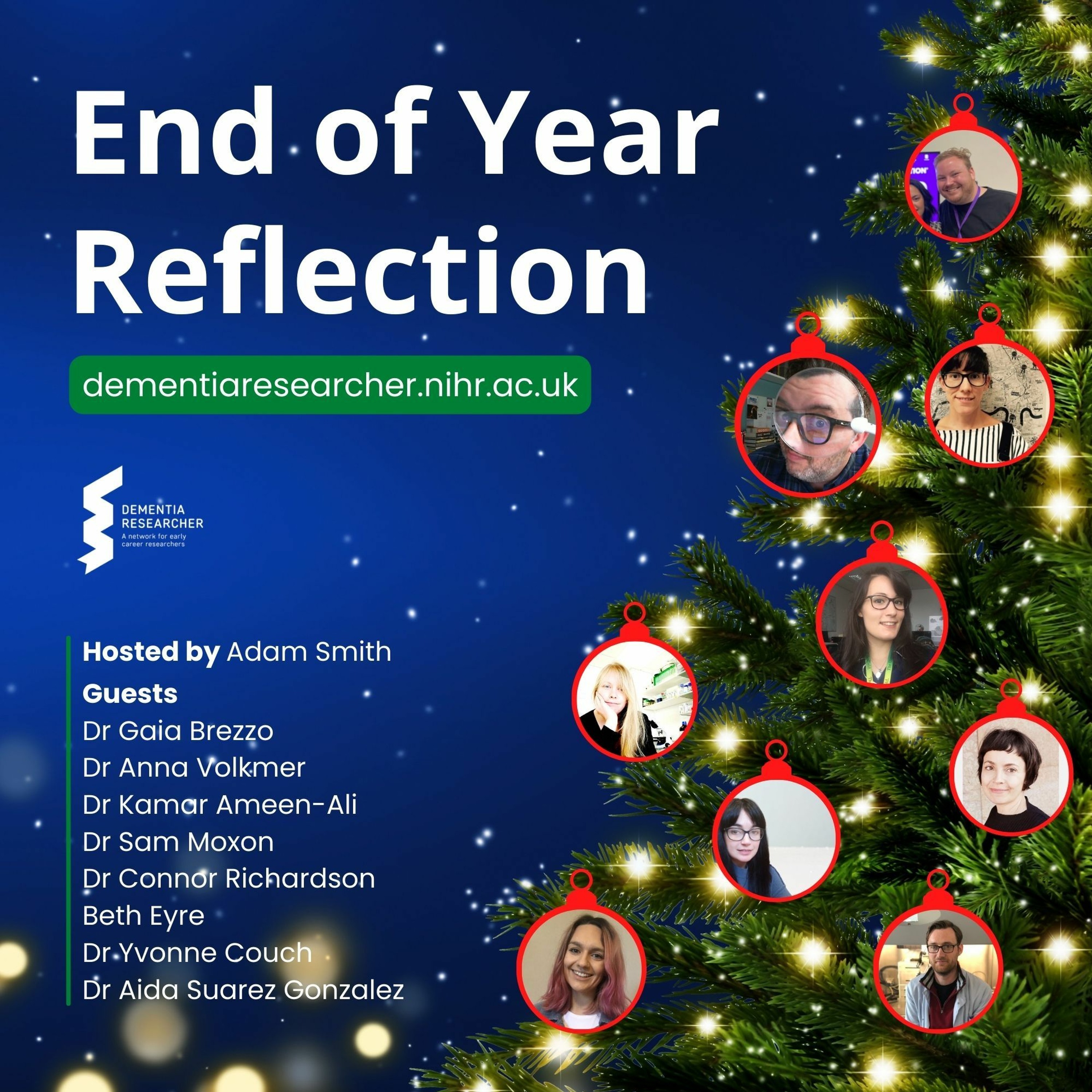
Ep 2022022 End of Year Reflections from Dementia Researchers
It’s our last podcast of 2022. We’re breaking from our usual tradition of bringing you old clips and instead we brought together eight of our brilliant researcher bloggers for a chat. In this show hosted by Adam Smith, they talk about their personal highlights from the year, share what they’re most looking forward to in 2023 and give us a glimpse into what they like away from work.We’re delighted to welcome Dr Yvonne Couch from University of Oxford, Dr Aida Suarez Gonzalez & Dr Anna Volkmer from University College London, Dr Kamar Ameen-Ali from Teesside University, Beth Eyre from University of Sheffield, Dr Gaia Brezzo from the UKDRI at The University of Sheffield, Dr Sam Moxon from The University of Manchester and new blogger Dr Connor Richardson from Newcastle University.Read or listen to all of our researchers blogs at:www.dementiaresearcher.nihr.ac.uk/blogsA transcript of this show, links and show notes and profile on all our guests are available on our website at https://www.dementiaresearcher.nihr.ac.uk.If you prefer to watch rather than listen, you will find a video version of this podcast on YouTube, on our website, and in selected podcast platforms.Follow us on social media:https://www.instagram.com/dementia_researcher/ https://www.facebook.com/Dementia.Researcher/https://www.twitter.com/demrescommunityhttps://www.linkedin.com/company/dementia-researcher https://bsky.app/profile/dementiaresearcher.bsky.socialDownload and Register with our Community App:https://www.onelink.to/dementiaresearcherWe gratefully acknowledge the support of our funders: Alzheimer’s Association, Race Against Dementia, Alzheimer’s Research UK, Alzheimer’s Society, and the National Institute for Health and Care Research.The views and opinions expressed by guests in this podcast are their own and do not necessarily reflect those of the producers, funders, or sponsors.Subscribe to our sister show 'Dementia Researcher The Blogs':https://podfollow.com/dementia-researcher-blogs

Ep 201Update from the Dementia Research Charity Chatathon
Adam Smith is back to let you know that the Dementia Research Charity Chatathon was a great success.Over 2,500 people joined the livestream of have watched back since, and almost £1100 has been raised. You can find links to all the recordings at:https://www.chatathon.ukIf you prefer to listen... all the sessions have been converted to audio and put in their own dedicated podcast.

Ep 200Food for Thought - Brain-Healthy Foods with Dr Michael Greger
Dr Sam Moxon, Research Associate from the University of Manchester brings us another podcast in his ‘Food for Thought’ series – exploring the connections between what we eat and nutrition, dementia, cognition, and brain health. In this show he interviews world leading expert and best-selling author Dr Michael Greger MD.A founding member and Fellow of the American College of Lifestyle Medicine, Michael Greger, M.D., is a physician and internationally recognized speaker on nutrition. His science-based non-profit website, NutritionFacts.org, offers a free online portal hosting more than 2,000 videos and articles on myriad health topics. Dr Greger is a sought-after lecturer and has presented at the Conference on World Affairs and the World Bank, testified before Congress, and was invited as an expert witness in Oprah Winfrey’s defence in the infamous “meat defamation” trial. A graduate of Cornell University School of Agriculture and Tufts University School of Medicine. Dr Greger is also an acclaimed author. How Not to Die, The How Not to Die Cookbook, and How Not to Diet became instant New York Times Best Sellers. More than a million copies of How Not to Die have been sold. All proceeds he receives from the sales of his books and speaking honoraria are donated directly to charity.For more information on Michael and his brilliant work visit:nutritionfacts.orgA transcript of this show, links and show notes and profile on all our guests are available on our website at https://www.dementiaresearcher.nihr.ac.uk.If you prefer to watch rather than listen, you will find a video version of this podcast on YouTube, on our website, and in selected podcast platforms.Follow us on social media:https://www.instagram.com/dementia_researcher/ https://www.facebook.com/Dementia.Researcher/https://www.twitter.com/demrescommunityhttps://www.linkedin.com/company/dementia-researcher https://bsky.app/profile/dementiaresearcher.bsky.socialDownload and Register with our Community App:https://www.onelink.to/dementiaresearcherWe gratefully acknowledge the support of our funders: Alzheimer’s Association, Race Against Dementia, Alzheimer’s Research UK, Alzheimer’s Society, and the National Institute for Health and Care Research.The views and opinions expressed by guests in this podcast are their own and do not necessarily reflect those of the producers, funders, or sponsors.Subscribe to our sister show 'Dementia Researcher The Blogs':https://podfollow.com/dementia-researcher-blogs
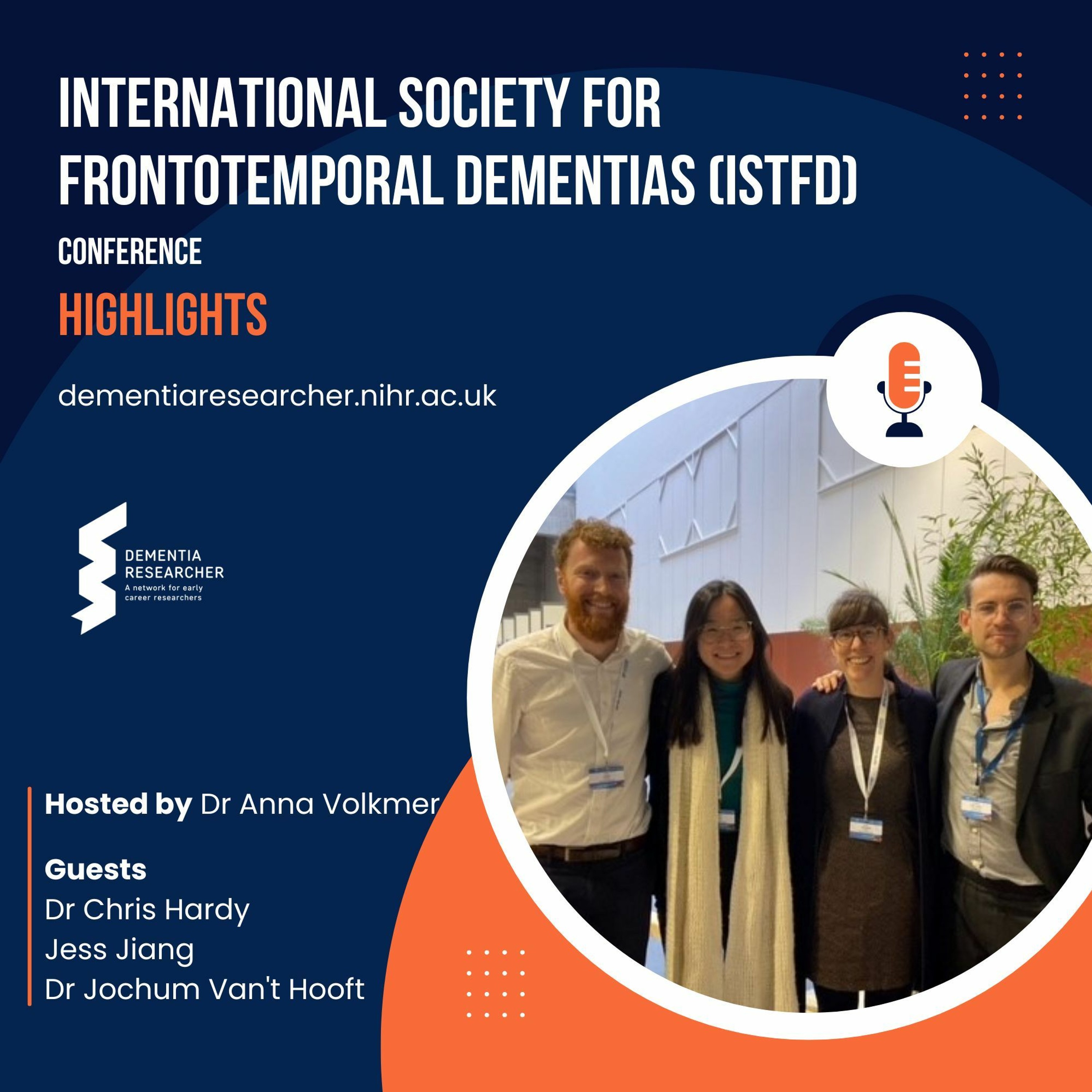
Ep 199ISFTD Conference 2022 Highlights
In this podcast we bring you highlights from the International Society for Frontotemporal Dementias (ISFD) Conference, which was held in Lille, France from the 2nd – 5th November 2022.Regular Guest Host Dr Anna Volkmer talks with Dr Chris Hardy, Jess Jiang and Dr Jochum Van’t Hooft all from University College London discussing their work, and what they’re taking away from this year’s conference.The International Society for Frontotemporal Dementias is a non-profit scientific society focused on frontotemporal dementias. Members include the leaders in FTD research around the world, and the society is associated with a large, international biannual meeting presenting the latest findings.For more information visit:isftd.orgA transcript of this show, links and show notes and profile on all our guests are available on our website at https://www.dementiaresearcher.nihr.ac.uk.If you prefer to watch rather than listen, you will find a video version of this podcast on YouTube, on our website, and in selected podcast platforms.Follow us on social media:https://www.instagram.com/dementia_researcher/ https://www.facebook.com/Dementia.Researcher/https://www.twitter.com/demrescommunityhttps://www.linkedin.com/company/dementia-researcher https://bsky.app/profile/dementiaresearcher.bsky.socialDownload and Register with our Community App:https://www.onelink.to/dementiaresearcherWe gratefully acknowledge the support of our funders: Alzheimer’s Association, Race Against Dementia, Alzheimer’s Research UK, Alzheimer’s Society, and the National Institute for Health and Care Research.The views and opinions expressed by guests in this podcast are their own and do not necessarily reflect those of the producers, funders, or sponsors.Subscribe to our sister show 'Dementia Researcher The Blogs':https://podfollow.com/dementia-researcher-blogs