Dementia Researcher
351 episodes — Page 2 of 8

Ep 298Minds In Motion: Dr Pippa Collins - Frailty, Dementia, and End-of-life Care
The Minds in Motion Podcast from Dementia Researcher in association with the NIHR Applied Research Collaborations and Alzheimer’s Society, brings together NIHR Dem Comm Research Fellows, to talk about their research and careers.In this second series, we hear from five of the Dem Comm Fellows each taking a turn as co-host and guest. Alongside the researchers we have the incredible Trevor Salomon, Alzheimer’s Society Volunteer & Chair of the European Dementia Carers Working Group as our permanent co-host and anchor.In show Trevor is joined by Dr Katie Breheny from Bristol University and NIHR Applied Research Collaboration (ARC) West to interview Dr Pippa Collins.Pippa Collins is an Advanced Clinical Practitioner and NIHR / Alzheimer’s Society Dem Comm Fellow based at the University of Southampton and NIHR ARC Wessex. Her research primarily addresses the critical aspects of end-of-life care, frailty, and dementia. In this discussion, we explore her work aimed at enhancing the recognition and management of the end-of-life period for people living with dementia. Pippa highlights the importance of shifting from traditional medicalised models of palliative care towards a holistic and personalised "palliative approach," focusing on recognising individual trajectories and vulnerabilities. Her goal is to foster improvements in dementia care practices by better educating healthcare professionals, supporting families, and integrating patient-centred care pathways that respect each individual's emotional, social, and cognitive needs.Dem Comm is a 2 year programme funded by the National Institute of Health and Care Research and the Alzheimer's Society. It supports a new generation of dementia research leaders, bringing together researchers from different multidisciplinary backgrounds to encourage cross-cutting and community-orientated dementia research projects that can address key gaps in the evidence around dementia care and support, delivering transformative translational research.A transcript of this show, links and show notes and profile on all our guests are available on our website at https://www.dementiaresearcher.nihr.ac.uk.If you prefer to watch rather than listen, you will find a video version of this podcast on YouTube, on our website, and in selected podcast platforms.Follow us on social media:https://www.instagram.com/dementia_researcher/ https://www.facebook.com/Dementia.Researcher/https://www.twitter.com/demrescommunityhttps://www.linkedin.com/company/dementia-researcher https://bsky.app/profile/dementiaresearcher.bsky.socialDownload and Register with our Community App:https://www.onelink.to/dementiaresearcherWe gratefully acknowledge the support of our funders: Alzheimer’s Association, Race Against Dementia, Alzheimer’s Research UK, Alzheimer’s Society, and the National Institute for Health and Care Research.The views and opinions expressed by guests in this podcast are their own and do not necessarily reflect those of the producers, funders, or sponsors.Subscribe to our sister show 'Dementia Researcher The Blogs':https://podfollow.com/dementia-researcher-blogs

Ep 297Make Your Mark: Elevating Your Academic Visibility - BNA2025 Festival of Neuroscience
Recorded live at the BNA 2025 Festival of Neuroscience, this special episode of the Dementia Researcher Podcast explores how researchers can build visibility in authentic and meaningful ways.Host Dr Emma Yhnell from Cardiff University is joined by Dr Ian Harrison from University College London, Dr Ekta Patel from the Medicines Discovery Catapult and Professor Fiona Ducotterd from the ARUK Drug Discovery Institute at UCL. They provide practical and personal discussion on raising your academic profile — both online and in real life.Together, they reflect on the challenges and benefits of self-promotion, share strategies to overcome imposter syndrome, and offer advice on making the most of networking opportunities. They also talk about the power of storytelling, volunteering, and showing up as your real self in academic spaces.Whether you're just getting started or trying to take the next step in your career, this episode offers relatable insights and actionable tips.Top Takeaways:Start small — writing blog posts, joining a committee, or talking to someone new at a conference all count.Reframe self-promotion as sharing your work with purpose and generosity.Visibility builds confidence, not the other way around — and it’s something you can practise over time.Your perspective matters — you don’t need to be the loudest voice, just an authentic one.The people behind the science are just as important as the science itself.A transcript of this show, links and show notes and profile on all our guests are available on our website at https://www.dementiaresearcher.nihr.ac.uk.If you prefer to watch rather than listen, you will find a video version of this podcast on YouTube, on our website, and in selected podcast platforms.Follow us on social media:https://www.instagram.com/dementia_researcher/ https://www.facebook.com/Dementia.Researcher/https://www.twitter.com/demrescommunityhttps://www.linkedin.com/company/dementia-researcher https://bsky.app/profile/dementiaresearcher.bsky.socialDownload and Register with our Community App:https://www.onelink.to/dementiaresearcherWe gratefully acknowledge the support of our funders: Alzheimer’s Association, Race Against Dementia, Alzheimer’s Research UK, Alzheimer’s Society, and the National Institute for Health and Care Research.The views and opinions expressed by guests in this podcast are their own and do not necessarily reflect those of the producers, funders, or sponsors.Subscribe to our sister show 'Dementia Researcher The Blogs':https://podfollow.com/dementia-researcher-blogs

Ep 296Building Insights Brick by Brick: Lego Serious Play
In this podcast, host Dr Anna Volkmer explores the use of Lego Serious Play as a research tool / methodology in dementia and neurodegenerative disease studies.Traditionally used in therapy and organisational development, Lego Serious Play is now finding its way into the research world—helping researchers, participants, and stakeholders express complex ideas, foster collaboration, and build deeper insights (literally and metaphorically).Anna is joined by a panel of expert guests Dr Warren Donnellan, University of Liverpool – a trained facilitator of Lego Serious Play who applies it to resilience and carer research. Dr Alys Griffiths, University of Sheffield – who has integrated the method into dementia studies and her work in Motor Neuron Disease. Dr Joe Langley, Sheffield Hallam University – known for combining design thinking and participatory research methods, including Lego Serious Play, in health and care settings.Together, they explore the origins, applications, and benefits of this playful method, share case studies, and reflect on how building with Lego can break down communication barriers and empower participants—particularly those with dementia.Topics covered:What is Lego Serious Play and how does it work in research?Insights into resilience and the carer experienceUsing play to unlock communication in dementia researchHow design thinking intersects with health researchA transcript of this show, links and show notes and profile on all our guests are available on our website at https://www.dementiaresearcher.nihr.ac.uk.If you prefer to watch rather than listen, you will find a video version of this podcast on YouTube, on our website, and in selected podcast platforms.Follow us on social media:https://www.instagram.com/dementia_researcher/ https://www.facebook.com/Dementia.Researcher/https://www.twitter.com/demrescommunityhttps://www.linkedin.com/company/dementia-researcher https://bsky.app/profile/dementiaresearcher.bsky.socialDownload and Register with our Community App:https://www.onelink.to/dementiaresearcherWe gratefully acknowledge the support of our funders: Alzheimer’s Association, Race Against Dementia, Alzheimer’s Research UK, Alzheimer’s Society, and the National Institute for Health and Care Research.The views and opinions expressed by guests in this podcast are their own and do not necessarily reflect those of the producers, funders, or sponsors.Subscribe to our sister show 'Dementia Researcher The Blogs':https://podfollow.com/dementia-researcher-blogs

Ep 295ADPD 2025 Conference Highlights - Part One
This year's AD/PD Conference was held in Vienna, Austria from the 1st to 5th April. In this first of a two-part special we bring you highlights from the first three days of the conference.The AD/PD Conference focuses on basic science and translational and clinical research bringing New insights on disease mechanisms and etiologies, the latest findings from clinical trials, innovative outlooks on therapy and prevention and advances in diagnostic markers.In this special on-location recording our guest host Dr Amanda Heslegrave from UK Dementia Research Institute at University College London talks with Dr Loukia Katsouri from the UCL Gatsby Foundation, Dr Anna Mallach from the UK Dementia Research Institute at Imperial College London and Dr Imogen Swift, Research Scientist at Vesper Bio.Here are just a few highlights from the discussion:Can AI spot cognitive decline in mice before humans can? Discover how machine learning is transforming mouse model analysis to predict impairment – and the surprising gender and breeding effects researchers uncovered.Drug repurposing breakthroughs: affordable hope on the horizon? Find out why microglial activity, mitochondrial senescence, and asthma meds could be the future of dementia drug discovery – without starting from scratch.Parkinson’s redefined – biologically, not clinically. A bold proposal to ditch clinical diagnosis in Parkinson’s research in favour of biomarker-based subtyping. Could it revolutionise how trials are run?Astrocytes take centre stage – and they might be phagocytosing synapses. New data shows waves of astroglial activity and potential astro-microglial crosstalk in Parkinson’s disease – with serious implications for how we model disease.Could a finger prick diagnose dementia? From dried blood spot kits to large-scale remote testing, hear how researchers are racing to make brain biomarker screening as simple as a home test.A transcript of this show, links and show notes and profile on all our guests are available on our website at https://www.dementiaresearcher.nihr.ac.uk.If you prefer to watch rather than listen, you will find a video version of this podcast on YouTube, on our website, and in selected podcast platforms.Follow us on social media:https://www.instagram.com/dementia_researcher/ https://www.facebook.com/Dementia.Researcher/https://www.twitter.com/demrescommunityhttps://www.linkedin.com/company/dementia-researcher https://bsky.app/profile/dementiaresearcher.bsky.socialDownload and Register with our Community App:https://www.onelink.to/dementiaresearcherWe gratefully acknowledge the support of our funders: Alzheimer’s Association, Race Against Dementia, Alzheimer’s Research UK, Alzheimer’s Society, and the National Institute for Health and Care Research.The views and opinions expressed by guests in this podcast are their own and do not necessarily reflect those of the producers, funders, or sponsors.Subscribe to our sister show 'Dementia Researcher The Blogs':https://podfollow.com/dementia-researcher-blogs

Ep 294ADPD 2025 Conference Highlights - Part Two
This year's AD/PD Conference was held in Vienna, Austria from the 1st to 5th April. In this second of a two-part special we bring you highlights from the last three days of the conference.The AD/PD Conference focuses on basic science and translational and clinical research bringing New insights on disease mechanisms and etiologies, the latest findings from clinical trials, innovative outlooks on therapy and prevention and advances in diagnostic markers.In this special on-location recording our guest host Dr Isabel Castanho from Harvard Medical School talks with Dr Emma Garland from The University of Sheffield, Susan Rohde from UMC Amsterdam and Dr Martyna Matuszyk from the Alzheimer's Society.Here are just a few highlights from the discussion:"This is why we do the science." A powerful and emotional talk from Trevor Salamon, sharing his wife's journey with young onset dementia, reminded the audience what it's all really about.Can your gut give you Parkinson’s? Discover new research showing how toxic proteins may travel from the gut to the brain — and how mini organoids are helping researchers prove it.Microglia, mice, and human brains… all pointing to the same gene? Explore how two researchers independently found SPP1 upregulated in Alzheimer’s immunotherapy studies — in both mice and humans.PhD students are stealing the show. From organoid development to cutting-edge methylation studies, early-career researchers are producing some of the most exciting work on display."I saw your name on the poster and had to say hello". Hear how chance meetings, shared lab lines, and QR code posters are turning scientific conferences into hubs of unexpected connection.A transcript of this show, links and show notes and profile on all our guests are available on our website at https://www.dementiaresearcher.nihr.ac.uk.If you prefer to watch rather than listen, you will find a video version of this podcast on YouTube, on our website, and in selected podcast platforms.Follow us on social media:https://www.instagram.com/dementia_researcher/ https://www.facebook.com/Dementia.Researcher/https://www.twitter.com/demrescommunityhttps://www.linkedin.com/company/dementia-researcher https://bsky.app/profile/dementiaresearcher.bsky.socialDownload and Register with our Community App:https://www.onelink.to/dementiaresearcherWe gratefully acknowledge the support of our funders: Alzheimer’s Association, Race Against Dementia, Alzheimer’s Research UK, Alzheimer’s Society, and the National Institute for Health and Care Research.The views and opinions expressed by guests in this podcast are their own and do not necessarily reflect those of the producers, funders, or sponsors.Subscribe to our sister show 'Dementia Researcher The Blogs':https://podfollow.com/dementia-researcher-blogs
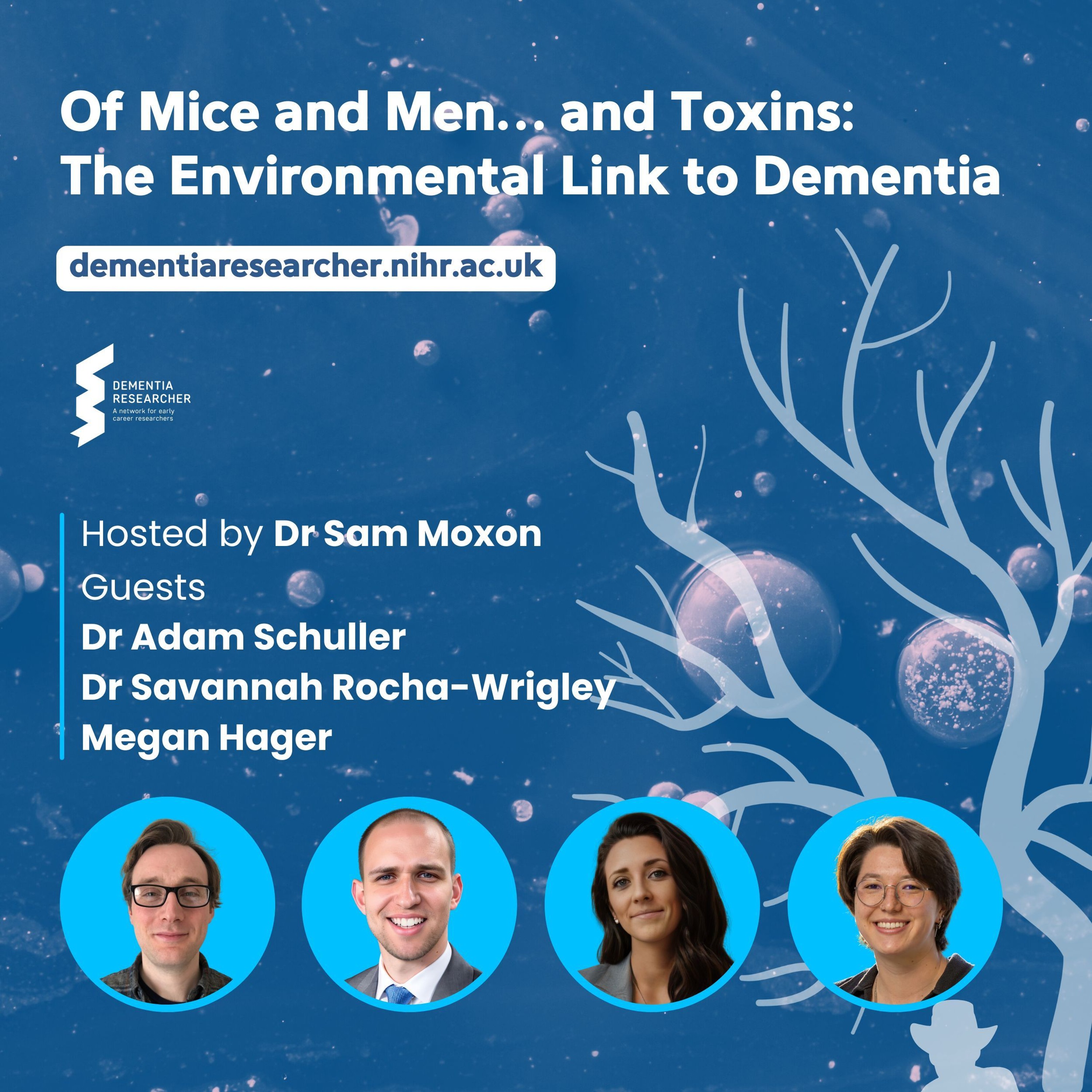
Ep 293Of Mice and Men… and Toxins: The Environmental Link to Dementia
In this episode of the Dementia Researcher Podcast, guest host Dr Sam Moxon is joined by Dr Adam Schuller, Dr Savannah Rocha-Wrigley, and Megan Hager from Colorado State University's Tjalkens Lab to explore the significant yet often overlooked impact of environmental toxins on dementia and neurodegenerative diseases.This fascinating discussion sheds light on how substances such as pesticides, heavy metals, wildfire smoke, and air pollution can trigger changes in glial cells, such as astrocytes and microglia, which may lead to dementia. The experts share insights into groundbreaking experimental models, imaging technologies, and the importance of early intervention and prevention strategies to reduce toxin-related risks.Key Topics:Defining environmental toxins and their relevance to dementiaRole of astrocytes and microglia in neurodegenerationTranslational neurotoxicology modelsAdvanced AI imaging and analysis techniquesPreventative strategies to mitigate environmental risksA transcript of this show, links and show notes and profile on all our guests are available on our website at https://www.dementiaresearcher.nihr.ac.uk.If you prefer to watch rather than listen, you will find a video version of this podcast on YouTube, on our website, and in selected podcast platforms.Follow us on social media:https://www.instagram.com/dementia_researcher/ https://www.facebook.com/Dementia.Researcher/https://www.twitter.com/demrescommunityhttps://www.linkedin.com/company/dementia-researcher https://bsky.app/profile/dementiaresearcher.bsky.socialDownload and Register with our Community App:https://www.onelink.to/dementiaresearcherWe gratefully acknowledge the support of our funders: Alzheimer’s Association, Race Against Dementia, Alzheimer’s Research UK, Alzheimer’s Society, and the National Institute for Health and Care Research.The views and opinions expressed by guests in this podcast are their own and do not necessarily reflect those of the producers, funders, or sponsors.Subscribe to our sister show 'Dementia Researcher The Blogs':https://podfollow.com/dementia-researcher-blogs

Ep 292Minds in Motion: Dr Katie Breheny - Health Economics in Dementia Care
The Minds in Motion Podcast from Dementia Researcher in association with the NIHR Applied Research Collaborations and Alzheimer’s Society, brings together NIHR Dem Comm Research Fellows, to talk about their research and careers.In this second series, we hear from five of the Dem Comm Fellows each taking a turn as co-host and guest. Alongside the researchers we have the incredible Trevor Salomon, Alzheimer’s Society Volunteer & Chair of the European Dementia Carers Working Group as our permanent co-host and anchor.In show Trevor is joined by the guest from our previous show Dr Lis Grey from University of Bristol and the NIHR Applied Research Collaboration (ARC) West to interview Dr Katie Breheny.Katy works in the NIHR ARC West and University of Bristol. Katie is a health economist focused on improving the way we assess and value healthcare interventions for people living with dementia. Her research explores how traditional health economic methods can be adapted to better capture wellbeing and quality of life in dementia care. With a background in psychology, Katie’s work spans health economics, patient-reported outcomes, and methodological research, ensuring that economic evaluations reflect the real-world needs of individuals, carers, and service providers. She is particularly interested in making assessments more inclusive and meaningful, while also working on innovative projects such as adapting wellbeing questionnaires and developing personalised digital tools to support dementia care.Dem Comm is a 2 year programme funded by the National Institute of Health and Care Research and the Alzheimer's Society. It supports a new generation of dementia research leaders, bringing together researchers from different multidisciplinary backgrounds to encourage cross-cutting and community-orientated dementia research projects that can address key gaps in the evidence around dementia care and support, delivering transformative translational research.A transcript of this show, links and show notes and profile on all our guests are available on our website at https://www.dementiaresearcher.nihr.ac.uk.If you prefer to watch rather than listen, you will find a video version of this podcast on YouTube, on our website, and in selected podcast platforms.Follow us on social media:https://www.instagram.com/dementia_researcher/ https://www.facebook.com/Dementia.Researcher/https://www.twitter.com/demrescommunityhttps://www.linkedin.com/company/dementia-researcher https://bsky.app/profile/dementiaresearcher.bsky.socialDownload and Register with our Community App:https://www.onelink.to/dementiaresearcherWe gratefully acknowledge the support of our funders: Alzheimer’s Association, Race Against Dementia, Alzheimer’s Research UK, Alzheimer’s Society, and the National Institute for Health and Care Research.The views and opinions expressed by guests in this podcast are their own and do not necessarily reflect those of the producers, funders, or sponsors.Subscribe to our sister show 'Dementia Researcher The Blogs':https://podfollow.com/dementia-researcher-blogs

Ep 291Alzheimer's Research UK Conference Highlights 2025
Last week we were in Birmingham for this years Alzheimer’s Research UK Conference. Hearing from researchers talking about their work and to learn about the latest discoveries in dementia research.In the show guest host and regular blogger Rebecca Williams talks with Dr Beth Williams, from the UK Dementia Research Institute at The University of Edinburgh, Gargi Roy from Bristol Medical School and Donatella Di Rienzo from the Alzheimer's Research UK Oxford Drug Discovery Institute.Here are 10 key highlights:The 100+ Study: Discover why some people over 100 remain cognitively healthy and what genetic and lifestyle factors might be protecting them.A Revolutionary Drug Delivery Method: Learn about cutting-edge non-invasive ultrasound technology that could help deliver drugs directly to the brain without damaging the blood-brain barrier.The Great Amyloid Debate: Is targeting amyloid the way to cure Alzheimer's, or just a way? Hear experts discuss the latest treatments and their real-world impact.The Power of Early Career Researchers: Insightful presentations from young scientists, including work on novel biomarkers for pericyte injury and synaptic compensation in Alzheimer’s disease.Networking Tips: Top advice on making the most of conferences, overcoming imposter syndrome, and building career-changing connections.A Game-Changer in Diagnosis? The latest on blood-based biomarkers for Alzheimer's, which could allow for early, accessible, and more accurate diagnoses.Women in Neuroscience UK: A look at this inspiring community, supporting women in dementia research – and their amazing science-themed stickers!Brain-Shuttle Technology: A fascinating session on how Roche's new technology is enabling antibody therapies to cross the blood-brain barrier more effectively.The Role of Patient and Public Involvement: How listening to the voices of those affected by dementia is shaping future research and clinical trials.The Most Memorable Advice: The ECR panel shares their top career lessons, from persistence in grant applications to embracing new research challenges.A transcript of this show, links and show notes and profile on all our guests are available on our website at https://www.dementiaresearcher.nihr.ac.uk.If you prefer to watch rather than listen, you will find a video version of this podcast on YouTube, on our website, and in selected podcast platforms.Follow us on social media:https://www.instagram.com/dementia_researcher/ https://www.facebook.com/Dementia.Researcher/https://www.twitter.com/demrescommunityhttps://www.linkedin.com/company/dementia-researcher https://bsky.app/profile/dementiaresearcher.bsky.socialDownload and Register with our Community App:https://www.onelink.to/dementiaresearcherWe gratefully acknowledge the support of our funders: Alzheimer’s Association, Race Against Dementia, Alzheimer’s Research UK, Alzheimer’s Society, and the National Institute for Health and Care Research.The views and opinions expressed by guests in this podcast are their own and do not necessarily reflect those of the producers, funders, or sponsors.Subscribe to our sister show 'Dementia Researcher The Blogs':https://podfollow.com/dementia-researcher-blogs
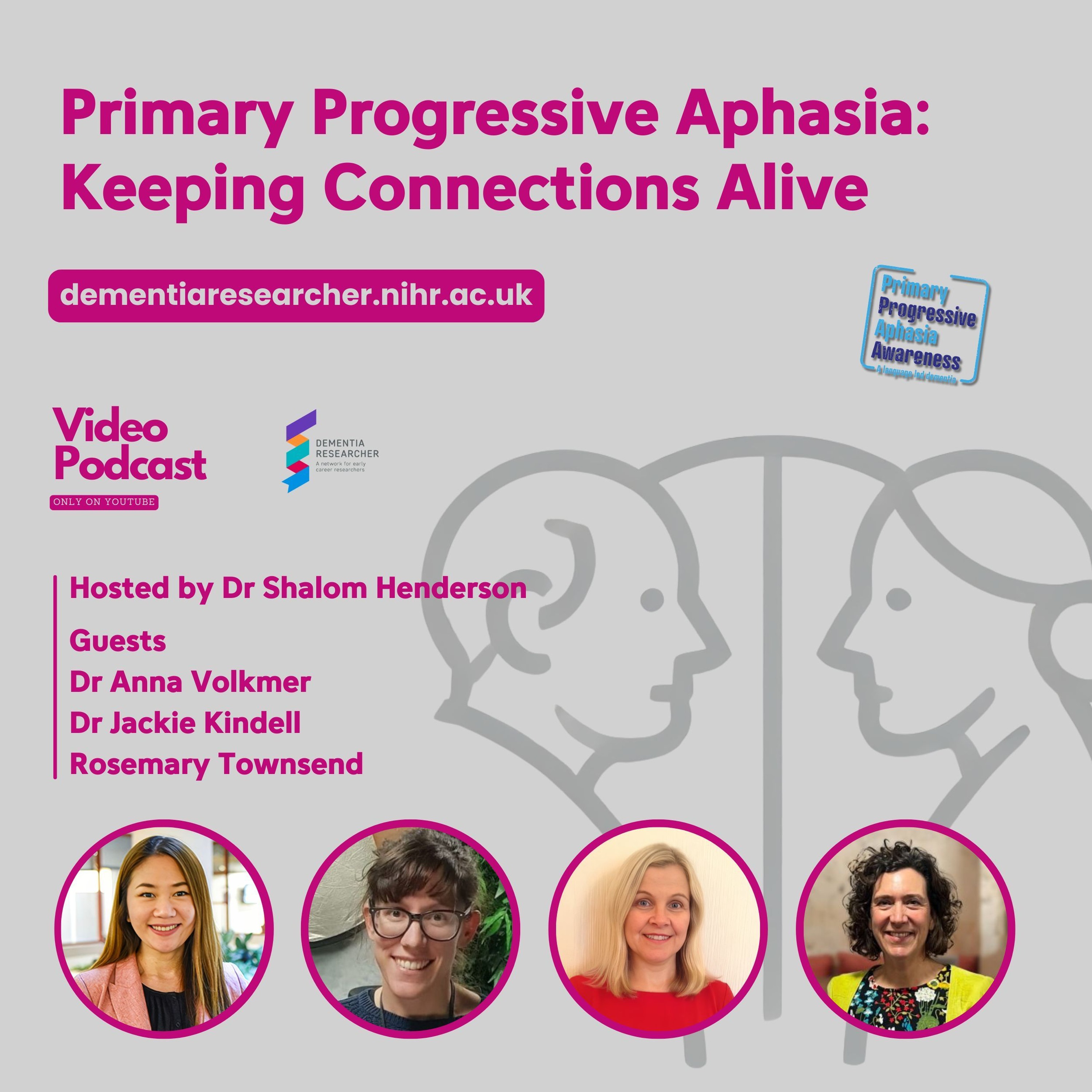
Ep 290Primary Progressive Aphasia: Keeping Connections Alive
In recognition of the first Primary Progressive Aphasia (PPA) Awareness Day, this podcast explores how speech and language therapists are working to support people with PPA to maintain communication and preserve connections with their loved ones.Dr Shalom Henderson is joined by three leading experts in speech and language therapy—Dr Anna Volkmer, Dr Jackie Kindell, and Rosemary Townsend—who are pioneering innovative interventions to help people living with PPA navigate the challenges of language loss. Together, they discuss the impact of this progressive condition on communication and relationships, and the critical role that speech therapy plays in maintaining meaningful conversations.Key Topics Discussed:Understanding PPA – What is primary progressive aphasia, how does it affect speech and language, and how does it differ from other forms of dementia?The Impact on Relationships – How communication difficulties affect personal relationships and contribute to social isolation.The Role of Speech & Language Therapy – Exploring tailored interventions, communication partner training, and strategies that help families stay connected.Barriers to Accessing Therapy – The challenges people face in getting speech and language therapy, and why more awareness is needed.PPA Awareness Day (4th April 2025) – The first international awareness day dedicated to PPA, aiming to improve recognition, research, and support for those affected.This episode highlights the power of speech therapy in transforming lives, offering practical advice and real-world insights from clinical experts and researchers.A transcript of this show, links and show notes and profile on all our guests are available on our website at https://www.dementiaresearcher.nihr.ac.uk.If you prefer to watch rather than listen, you will find a video version of this podcast on YouTube, on our website, and in selected podcast platforms.Follow us on social media:https://www.instagram.com/dementia_researcher/ https://www.facebook.com/Dementia.Researcher/https://www.twitter.com/demrescommunityhttps://www.linkedin.com/company/dementia-researcher https://bsky.app/profile/dementiaresearcher.bsky.socialDownload and Register with our Community App:https://www.onelink.to/dementiaresearcherWe gratefully acknowledge the support of our funders: Alzheimer’s Association, Race Against Dementia, Alzheimer’s Research UK, Alzheimer’s Society, and the National Institute for Health and Care Research.The views and opinions expressed by guests in this podcast are their own and do not necessarily reflect those of the producers, funders, or sponsors.Subscribe to our sister show 'Dementia Researcher The Blogs':https://podfollow.com/dementia-researcher-blogs

Ep 288ILBD Conference Highlights 2025 - Part Two
We're back with Part Two of our special highlights podcasts from the International Lewy Body Dementia Conference in Amsterdam!This time, host Dr Sterre de Boer from Alzheimer’s Centre Amsterdam leads the discussion with our panellists Salomón Salazar-Londoño a Medical Student at Xavierian University, Colombia & ISTAART Ambassador, Dr Lauren Walker, Alzheimer’s Research UK Fellow at Newcastle University and Dr Felipe Botero Rodriguez a Psychiatrist & Researcher at Stavanger University Hospital, Norway.In this episode, we explore some of the latest breakthroughs and pressing challenges in Lewy body dementia research, including:The state of DLB research in Latin America, highlighting gaps and opportunitiesNeuropathology & biomarker advances – What can pathology teach us about clinical symptoms?The "Body-First vs. Brain-First" debate – What comes first, and how does it impact diagnosis?The role of co-pathologies like Alzheimer’s disease and TDP-43 in DLBHow international collaboration is shaping the future of dementia researchA transcript of this show, links and show notes and profile on all our guests are available on our website at https://www.dementiaresearcher.nihr.ac.uk.If you prefer to watch rather than listen, you will find a video version of this podcast on YouTube, on our website, and in selected podcast platforms.Follow us on social media:https://www.instagram.com/dementia_researcher/ https://www.facebook.com/Dementia.Researcher/https://www.twitter.com/demrescommunityhttps://www.linkedin.com/company/dementia-researcher https://bsky.app/profile/dementiaresearcher.bsky.socialDownload and Register with our Community App:https://www.onelink.to/dementiaresearcherWe gratefully acknowledge the support of our funders: Alzheimer’s Association, Race Against Dementia, Alzheimer’s Research UK, Alzheimer’s Society, and the National Institute for Health and Care Research.The views and opinions expressed by guests in this podcast are their own and do not necessarily reflect those of the producers, funders, or sponsors.Subscribe to our sister show 'Dementia Researcher The Blogs':https://podfollow.com/dementia-researcher-blogs

Ep 289ILBD Conference Highlights 2025 - Part One
Join us for the first of our two-part special podcast shows, recorded live at the International Lewy Body Dementia Conference in Amsterdam!In this episode postdoc researcher Dr Josh Harvey (University of Exeter) is joined by three expert guests - Athina Grigoriou a PhD Student, University of Dundee, Dr David Koss, Principal Investigator, University of Dundee and Dr Joe Kane a Geriatric Psychiatrist, Queen’s University Belfast. Together, they discuss key highlights from the conference, including cutting-edge research on Lewy body dementia (LBD), Parkinson’s disease dementia (PDD), and synucleinopathies.Topics include:The role of DNA damage in LBD and its links to neurodegenerationA new Lewy Body Dementia Domain Rating Scale and its impact on clinical trialsAdvances in biomarkers and imaging for early diagnosisThe latest insights on alpha-synuclein strains and their role in disease progressionCarer perspectives and the importance of peer support networksA transcript of this show, links and show notes and profile on all our guests are available on our website at https://www.dementiaresearcher.nihr.ac.uk.If you prefer to watch rather than listen, you will find a video version of this podcast on YouTube, on our website, and in selected podcast platforms.Follow us on social media:https://www.instagram.com/dementia_researcher/ https://www.facebook.com/Dementia.Researcher/https://www.twitter.com/demrescommunityhttps://www.linkedin.com/company/dementia-researcher https://bsky.app/profile/dementiaresearcher.bsky.socialDownload and Register with our Community App:https://www.onelink.to/dementiaresearcherWe gratefully acknowledge the support of our funders: Alzheimer’s Association, Race Against Dementia, Alzheimer’s Research UK, Alzheimer’s Society, and the National Institute for Health and Care Research.The views and opinions expressed by guests in this podcast are their own and do not necessarily reflect those of the producers, funders, or sponsors.Subscribe to our sister show 'Dementia Researcher The Blogs':https://podfollow.com/dementia-researcher-blogs

Ep 287Viva La Success: Acing Your PhD Thesis Defence
In this episode of the Dementia Researcher Podcast, Dr Leah Fullegar discusses the PhD viva experience with three recent graduates who share their insights into the preparation and execution of their defences.Join us to learn from the experiences of Dr Hannah Hussain, Dr Aisling Flynn, and Shalom Henderson, who bring diverse perspectives from their respective fields. Each guest shares valuable insights into the preparation techniques that aided them, as well as reflections on their personal experiences of the viva.For anyone approaching their PhD defence or interested in understanding more about this crucial academic challenge, this podcast provides a comprehensive overview and practical advice.Highlights:Expert Advice: Hear firsthand from those who've recently navigated their vivas, providing invaluable insights and tips tailored to succeeding in this critical academic challenge.Preparation Strategies: Learn effective strategies and practical steps for preparing for your viva, helping to boost your confidence and readiness.Real Experiences: Gain perspective from a diverse panel of recent PhD graduates who share their personal experiences, challenges faced, and how they overcame them.Empowerment: The episode offers encouragement and motivation, showing that success is achievable and that you can handle your viva with assurance.Community Support: Discover resources and support available through the Dementia Researcher community, enhancing your preparation journey and connecting you with a network of peers and experts.A transcript of this show, links and show notes and profile on all our guests are available on our website at https://www.dementiaresearcher.nihr.ac.uk.If you prefer to watch rather than listen, you will find a video version of this podcast on YouTube, on our website, and in selected podcast platforms.Follow us on social media:https://www.instagram.com/dementia_researcher/ https://www.facebook.com/Dementia.Researcher/https://www.twitter.com/demrescommunityhttps://www.linkedin.com/company/dementia-researcher https://bsky.app/profile/dementiaresearcher.bsky.socialDownload and Register with our Community App:https://www.onelink.to/dementiaresearcherWe gratefully acknowledge the support of our funders: Alzheimer’s Association, Race Against Dementia, Alzheimer’s Research UK, Alzheimer’s Society, and the National Institute for Health and Care Research.The views and opinions expressed by guests in this podcast are their own and do not necessarily reflect those of the producers, funders, or sponsors.Subscribe to our sister show 'Dementia Researcher The Blogs':https://podfollow.com/dementia-researcher-blogs

Ep 286Minds In Motion: Dr Lis Grey - Dementia Service Evaluation & Intervention Development
The Minds in Motion Podcast from Dementia Researcher in association with the NIHR Applied Research Collaborations and Alzheimer’s Society, brings together NIHR Dem Comm Research Fellows, to talk about their research and careers.Over the next few months, we will be releasing the second series, hearing from five of the Dem Comm Fellows each taking e a turn as co-host and guest. Alongside the researchers we have the incredible Trevor Salomon, Alzheimer’s Society Volunteer & Chair of the European Dementia Carers Working Group as our permanent co-host and anchor.In show Trevor is joined by the guest from our previous show Dr Olivia Luijnenburg from King’s College London and the NIHR Applied Research Collaboration (ARC) South London to interview Dr Elisabeth (Lis) Grey.Lis works in the NIHR ARC West and University of Bristol. Lis is interested in how people with neurodegenerative disorders experience health and care services and is working on developing ways to improve services and support people to live well with these conditions. Lis has had a varied research career – from health services quality and delivery, through public health interventions and social care, and now more secondary and community care. The common threads to this work are health communication – be that between professionals, patient and professional, or to the public – and intervention development and evaluation. Lis mainly uses qualitative methods, particularly interviewing, and she is always excited to hear people’s thoughts and experiences through her work.Dem Comm is a 2 year programme funded by the National Institute of Health and Care Research and the Alzheimer's Society. It supports a new generation of dementia research leaders, bringing together researchers from different multidisciplinary backgrounds to encourage cross-cutting and community-orientated dementia research projects that can address key gaps in the evidence around dementia care and support, delivering transformative translational research.A transcript of this show, links and show notes and profile on all our guests are available on our website at https://www.dementiaresearcher.nihr.ac.uk.If you prefer to watch rather than listen, you will find a video version of this podcast on YouTube, on our website, and in selected podcast platforms.Follow us on social media:https://www.instagram.com/dementia_researcher/ https://www.facebook.com/Dementia.Researcher/https://www.twitter.com/demrescommunityhttps://www.linkedin.com/company/dementia-researcher https://bsky.app/profile/dementiaresearcher.bsky.socialDownload and Register with our Community App:https://www.onelink.to/dementiaresearcherWe gratefully acknowledge the support of our funders: Alzheimer’s Association, Race Against Dementia, Alzheimer’s Research UK, Alzheimer’s Society, and the National Institute for Health and Care Research.The views and opinions expressed by guests in this podcast are their own and do not necessarily reflect those of the producers, funders, or sponsors.Subscribe to our sister show 'Dementia Researcher The Blogs':https://podfollow.com/dementia-researcher-blogs

Ep 2852024 End of Year Reflections from Dementia Researchers
Join us for the festive edition of the Dementia Researcher Podcast, where familiar faces and voices from our blogs gather to reflect on the past year and look ahead to 2025.Hosted by Adam Smith, this unscripted episode features engaging conversations with regular bloggers and researchers Dr Jodi Watt, Dr Sam Moxon, Dr Cliona Farrell, Dr Anna Volkmer and Dr Connor Richardson. From discussions on drug repurposing in dementia to the challenges of running a spinout company, the podcast blends professional insights with light-hearted festive banter, including debates on vegan Christmas dinners and the quintessential question of whether Yorkshire puddings belong on a Christmas plate.Top five take-aways:New Horizons in Dementia Research: As the field evolves, researchers are not just sticking to the status quo. They're boldly venturing into entrepreneurial roles and innovative projects that could shake up how we approach dementia care.Culinary Controversies: The great debate on what makes a proper holiday meal adds a dash of humor. Whether it's defending the place of Yorkshire puddings or exploring vegan alternatives, it's clear that food is as much a part of science culture as the latest research!From Lab to Lifestyle: Discussions about the impact of diet on dementia bring home the point that what we eat does more than just fill our stomachs—it might also help our brains. It's food for thought that could change lives!Holiday Hilarity: The researchers share their quirkiest holiday traditions and favorite festive foods, reminding us that scientists are just as ready to embrace the spirit of the season with gusto and a touch of whimsy.Anticipating Adventures in 2025: As the new year approaches, the community buzzes with anticipation for the discoveries that lie ahead. It's a mix of excitement and mystery that keeps the field dynamic and engaging.A transcript of this show, links and show notes and profile on all our guests are available on our website at https://www.dementiaresearcher.nihr.ac.uk.If you prefer to watch rather than listen, you will find a video version of this podcast on YouTube, on our website, and in selected podcast platforms.Follow us on social media:https://www.instagram.com/dementia_researcher/ https://www.facebook.com/Dementia.Researcher/https://www.twitter.com/demrescommunityhttps://www.linkedin.com/company/dementia-researcher https://bsky.app/profile/dementiaresearcher.bsky.socialDownload and Register with our Community App:https://www.onelink.to/dementiaresearcherWe gratefully acknowledge the support of our funders: Alzheimer’s Association, Race Against Dementia, Alzheimer’s Research UK, Alzheimer’s Society, and the National Institute for Health and Care Research.The views and opinions expressed by guests in this podcast are their own and do not necessarily reflect those of the producers, funders, or sponsors.Subscribe to our sister show 'Dementia Researcher The Blogs':https://podfollow.com/dementia-researcher-blogs
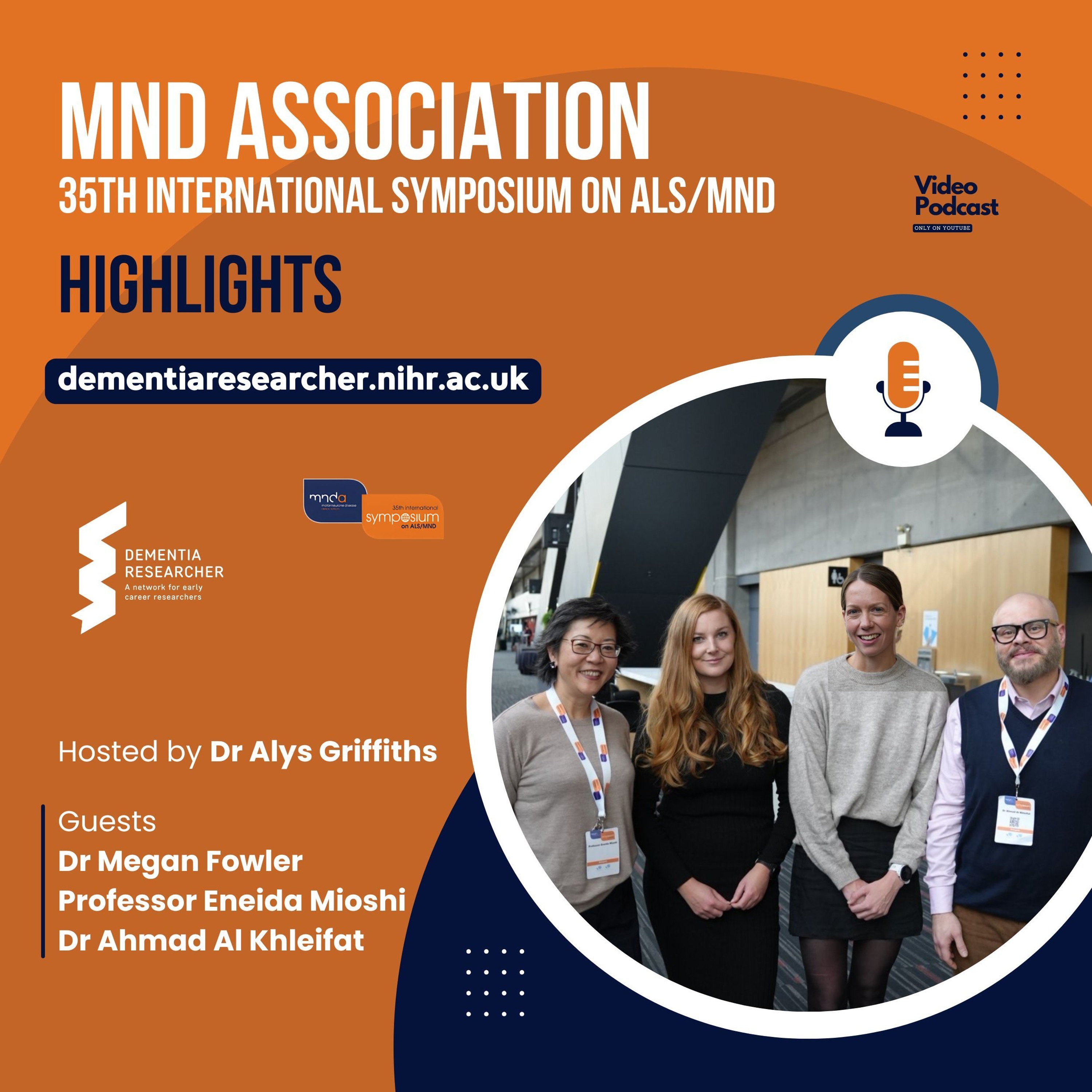
Ep 284International Symposium on ALS / MND Roundup 2024
In this special episode, recorded in Montreal, Canada, we bring you highlights from the International Symposium on ALS/MND 2024 organised by the MND Association. Host Dr Alys Griffiths, Senior Research Fellow at the University of Sheffield, is joined by three expert guests to discuss the latest research and breakthroughs in Amyotrophic lateral sclerosis (ALS) and motor neuron disease (MND).Dr Megan Fowler, a postdoctoral researcher from Flinders University, shares insights into her work on endogenous retroviruses and their role in ALS. Professor Eneida Mioshi, from the University of East Anglia, explores cognitive and behavioural changes in ALS and FTD and their impact on care. Dr Ahmad Al Khleifat, a group leader at King’s College London, highlights advancements in genomic research and efforts to diversify ALS studies globally.Key topics include promising therapies like antisense oligonucleotides, the integration of patient voices in research, and the power of collaboration to accelerate progress.Here are 10 key takeaways:Collaboration Is Key: The symposium emphasised the importance of global collaboration in advancing ALS/MND research, with researchers and patient fellows working together to address diverse challenges.Emerging Focus Areas: A shift was noted from traditional focus areas like TDP-43 to more diverse and specific ALS subtypes, reflecting the complexity of the disease.Diversity in Research: Efforts to diversify genomic research and clinical trials were highlighted, with initiatives to include underrepresented populations from different ethnic backgrounds.Patient-Centred Approaches: Talks stressed the need to align clinical and research priorities with patient and family perspectives, especially in decision-making around therapies.Open Science Initiatives: New tools, like spatial transcriptomics applications, aim to foster collaboration by allowing researchers to plug in data and generate comparative insights.Interdisciplinary Care: Presentations highlighted the role of multidisciplinary teams in supporting decision-making, such as regarding gastrostomy, while considering patients’ and families' preferences.Longitude Prize Launch: A major highlight was the introduction of a large-scale, collaborative initiative aimed at accelerating drug discovery using open datasets and innovative AI methodologies.Antisense Therapies: A dedicated session focused on the promising role of antisense oligonucleotides in ALS treatment, with updates on their continued success in clinical trials.Patient Fellows' Impact: Contributions from patient fellows provided unique insights and ensured that research remains grounded in lived experiences, fostering meaningful dialogue between stakeholders.Continuity in Research: The event reinforced the importance of long-term monitoring and continuity in both research findings and patient updates, creating a more holistic understanding of disease progression.A transcript of this show, links and show notes and profile on all our guests are available on our website at https://www.dementiaresearcher.nihr.ac.uk.If you prefer to watch rather than listen, you will find a video version of this podcast on YouTube, on our website, and in selected podcast platforms.Follow us on social media:https://www.instagram.com/dementia_researcher/ https://www.facebook.com/Dementia.Researcher/https://www.twitter.com/demrescommunityhttps://www.linkedin.com/company/dementia-researcher https://bsky.app/profile/dementiaresearcher.bsky.socialDownload and Register with our Community App:https://www.onelink.to/dementiaresearcherWe gratefully acknowledge the support of our funders: Alzheimer’s Association, Race Against Dementia, Alzheimer’s Research UK, Alzheimer’s Society, and the National Institute for Health and Care Research.The views and opinions expressed by guests in this podcast are their own and do not necessarily reflect those of the producers, funders, or sponsors.Subscribe to our sister show 'Dementia Researcher The Blogs':https://podfollow.com/dementia-researcher-blogs
Ep 283Grant Writing - Tips from Grant Awardees & Grant Reviewers
In this panel discussion / question and answer session, Katherine Gray, Alzheimer's Society Head of Research chairs a discussion with Professor Heather Mortiboys, Professor Nathan Davies, Dr Jeffrey Davies, Professor Andrey Abramov and John Major.Panellists provide tips and insights into the grant application process, providing their perspectives as grant reviewers and funding board members. They also provide advice on how to approach grant application writing. The panellists, who are leading researchers and volunteers on grant advisory boards, discuss the key components of a successful grant application, common mistakes, and how to demonstrate the potential impact of research. They also provide advice on resubmitting applications after initial rejection and how to effectively manage career breaks. Together they emphasise the importance of clear hypotheses, realistic expectations, proper costing, and team science. They also highlight the need for perseverance and flexibility in the application process.Top Tips from the session:Craft a Clear Hypothesis and Plan: Ensure your hypothesis and aims are clearly defined and that your research plan directly addresses the question you're proposing to answer. A focused and well-structured approach is essential.Engage Lay Audiences Effectively: Take the lay summary seriously; it’s not just for lay reviewers but all panel members. Avoid leaving it to the last minute, and ensure it communicates the significance and impact of your research clearly and concisely.Be Realistic and Honest: Avoid overestimating what you can achieve within the timeframe and resources of the grant. Underestimating costs or overpromising outputs can hurt your chances. Realistic, feasible objectives are more compelling.Build Collaborative Teams: Funders appreciate team science. If you lack expertise in a specific area, involve collaborators to strengthen your application. Highlighting teamwork demonstrates a comprehensive and feasible approach to your research.Learn from Rejections: If you’re resubmitting, carefully address feedback and demonstrate how your revised proposal aligns with reviewers’ suggestions. If feedback indicates the project doesn’t fit the funder’s priorities, consider adapting it for a better-suited funding body.Recorded at the Alzheimer's Society ECR Retreat on the 19th June 2024.A transcript of this show, links and show notes and profile on all our guests are available on our website at https://www.dementiaresearcher.nihr.ac.uk.If you prefer to watch rather than listen, you will find a video version of this podcast on YouTube, on our website, and in selected podcast platforms.Follow us on social media:https://www.instagram.com/dementia_researcher/ https://www.facebook.com/Dementia.Researcher/https://www.twitter.com/demrescommunityhttps://www.linkedin.com/company/dementia-researcher https://bsky.app/profile/dementiaresearcher.bsky.socialDownload and Register with our Community App:https://www.onelink.to/dementiaresearcherWe gratefully acknowledge the support of our funders: Alzheimer’s Association, Race Against Dementia, Alzheimer’s Research UK, Alzheimer’s Society, and the National Institute for Health and Care Research.The views and opinions expressed by guests in this podcast are their own and do not necessarily reflect those of the producers, funders, or sponsors.Subscribe to our sister show 'Dementia Researcher The Blogs':https://podfollow.com/dementia-researcher-blogs

Ep 282Minds In Motion: Dr Olivia Luijnenburg - Spirituality in Dementia Care
The Minds in Motion Podcast from Dementia Researcher in association with the NIHR Applied Research Collaborations and Alzheimer’s Society, brings together NIHR Dem Comm Research Fellows, to talk about their research and careers.Over the next few months, we will be releasing the second series, hearing from five of the Dem Comm Fellows each taking e a turn as co-host and guest. Alongside the researchers we have the incredible Trevor Salomon, Alzheimer’s Society Volunteer & Chair of the European Dementia Carers Working Group as our permanent co-host and anchor.In show Trevor is joined by Dr Sarah Kate Smith from The University of Manchester and NIHR Applied Research Collaboration (ARC) Greater Manchester to interview Dr Olivia Luijnenburg.Olivia works in the NIHR Health and Social Care Workforce Research Unit at King’s College London. She works on various projects around social care workforce and care homes, however the focus in this show is on her research into spirituality in dementia care. We explore her focus on co-developing reflective tools to address the spiritual needs of care home residents living with dementia, as well as their families and care staff. Working to understand how spirituality, is broadly defined to define individuals meaning and purpose, and how accommodating this can enhance care practices in diverse settings.Dem Comm is a 2 year programme funded by the National Institute of Health and Care Research and the Alzheimer's Society. It supports a new generation of dementia research leaders, bringing together researchers from different multidisciplinary backgrounds to encourage cross-cutting and community-orientated dementia research projects that can address key gaps in the evidence around dementia care and support, delivering transformative translational research.A transcript of this show, links and show notes and profile on all our guests are available on our website at https://www.dementiaresearcher.nihr.ac.uk.If you prefer to watch rather than listen, you will find a video version of this podcast on YouTube, on our website, and in selected podcast platforms.Follow us on social media:https://www.instagram.com/dementia_researcher/ https://www.facebook.com/Dementia.Researcher/https://www.twitter.com/demrescommunityhttps://www.linkedin.com/company/dementia-researcher https://bsky.app/profile/dementiaresearcher.bsky.socialDownload and Register with our Community App:https://www.onelink.to/dementiaresearcherWe gratefully acknowledge the support of our funders: Alzheimer’s Association, Race Against Dementia, Alzheimer’s Research UK, Alzheimer’s Society, and the National Institute for Health and Care Research.The views and opinions expressed by guests in this podcast are their own and do not necessarily reflect those of the producers, funders, or sponsors.Subscribe to our sister show 'Dementia Researcher The Blogs':https://podfollow.com/dementia-researcher-blogs

Ep 281Stronger Together: Peer Support and Community
In this episode of the Dementia Researcher Podcast, guest host Dr Megan Rose Readman from the University of Liverpool discusses the role of peer support and community in research careers.This session explores the importance of support networks at all career stages, from early career to senior roles. Megan is joined by three guests, each with experience in building and sustaining research communities specifically to support researchers working in all areas of Alzheimer's disease and all other forms of dementia, and neurodegeneration:Adam Smith from Dementia Researcher, who discusses their global community, including the recent launch of a new app designed to connect researchers.Dr Oz Ismail from Alzheimer's Association and ISTAART, who provides insights into their professional society’s efforts to support Alzheimer’s research globally.Josh Wright from Alzheimer’s Research UK, who explains the structure and benefits of their UK-wide network, especially for early-career researchers.Listeners will gain an understanding of how these communities function and the different forms of support available, from mentoring to practical resources. The episode also touches on how the pandemic has shifted peer support needs, with virtual communities becoming essential for many researchers.Five Top Tips from the show:Seek Out Professional Networks: Engaging with professional societies, like ISTAART or Dementia Researcher, can provide access to a broad community of peers and experts, which is especially valuable if you're working in isolation or in a niche area.Leverage Online Communities: Virtual communities offer a space to connect with others in your field, share resources, and find support—important for building connections, particularly when geographic location or funding constraints make in-person networking challenging.Participate in Mentorship Opportunities: Many research networks offer mentorship programmes, often through dedicated platforms or apps, where you can find mentors or become one yourself, helping to navigate career stages or specific research challenges.Engage in Journal Clubs and Special Interest Groups: Virtual journal clubs or topic-specific groups, as seen in Dementia Researcher’s app, allow researchers to discuss recent studies, share insights, and collaborate within specific research interests.Use Peer Support to Improve Wellbeing: Peer support networks provide a safe space for discussing challenges and successes beyond research—such as mental health or career setbacks—offering a layer of personal support often needed in academic careers.A transcript of this show, links and show notes and profile on all our guests are available on our website at https://www.dementiaresearcher.nihr.ac.uk.If you prefer to watch rather than listen, you will find a video version of this podcast on YouTube, on our website, and in selected podcast platforms.Follow us on social media:https://www.instagram.com/dementia_researcher/ https://www.facebook.com/Dementia.Researcher/https://www.twitter.com/demrescommunityhttps://www.linkedin.com/company/dementia-researcher https://bsky.app/profile/dementiaresearcher.bsky.socialDownload and Register with our Community App:https://www.onelink.to/dementiaresearcherWe gratefully acknowledge the support of our funders: Alzheimer’s Association, Race Against Dementia, Alzheimer’s Research UK, Alzheimer’s Society, and the National Institute for Health and Care Research.The views and opinions expressed by guests in this podcast are their own and do not necessarily reflect those of the producers, funders, or sponsors.Subscribe to our sister show 'Dementia Researcher The Blogs':https://podfollow.com/dementia-researcher-blogs
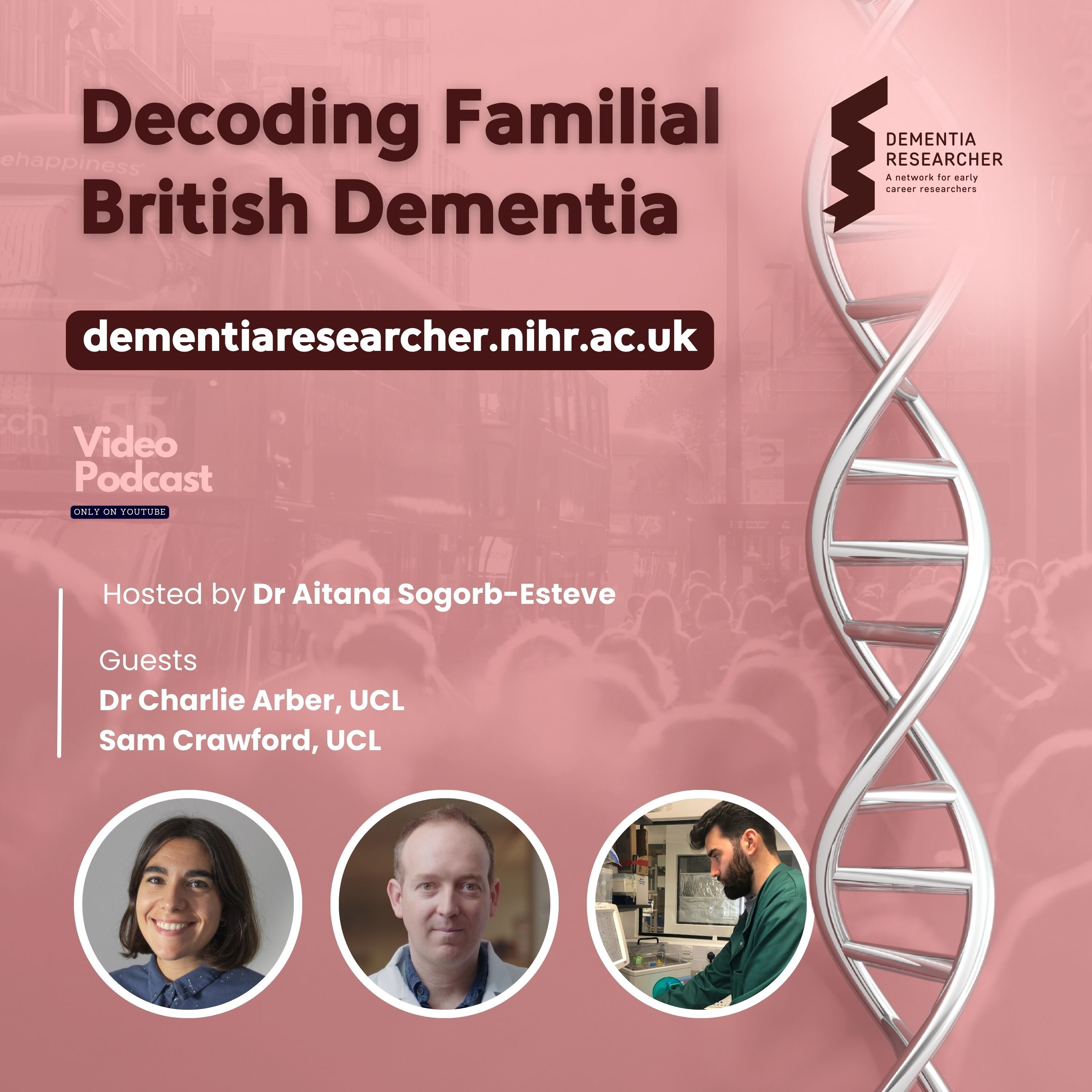
Ep 280Decoding Familial British Dementia
In this Dementia Researcher Podcast episode, Dr Aitana Sogorb Esteve hosts a discussion with Dr Charlie Arber and Sam Crawford from University College London, discussing their work on familial British dementia (FBD)FBD is a rare form of dementia affecting only a handful of families. The discussion explores the latest findings from human stem cell models that are helping researchers understand FBD’s unique genetic and pathological features, and how that can inform a wider understanding of familial Alzheimer’s Disease.Topics covered include:Genetic causes and symptoms of familial British dementiaUse of stem cell models, particularly induced pluripotent stem cells (iPSCs), to study FBD in the labPotential biomarkers and implications for therapeutic researchHow funding from the Race Against Dementia Ignition Fund is supporting advancements in rare dementia researchA transcript of this show, links and show notes and profile on all our guests are available on our website at https://www.dementiaresearcher.nihr.ac.uk.If you prefer to watch rather than listen, you will find a video version of this podcast on YouTube, on our website, and in selected podcast platforms.Follow us on social media:https://www.instagram.com/dementia_researcher/ https://www.facebook.com/Dementia.Researcher/https://www.twitter.com/demrescommunityhttps://www.linkedin.com/company/dementia-researcher https://bsky.app/profile/dementiaresearcher.bsky.socialDownload and Register with our Community App:https://www.onelink.to/dementiaresearcherWe gratefully acknowledge the support of our funders: Alzheimer’s Association, Race Against Dementia, Alzheimer’s Research UK, Alzheimer’s Society, and the National Institute for Health and Care Research.The views and opinions expressed by guests in this podcast are their own and do not necessarily reflect those of the producers, funders, or sponsors.Subscribe to our sister show 'Dementia Researcher The Blogs':https://podfollow.com/dementia-researcher-blogs
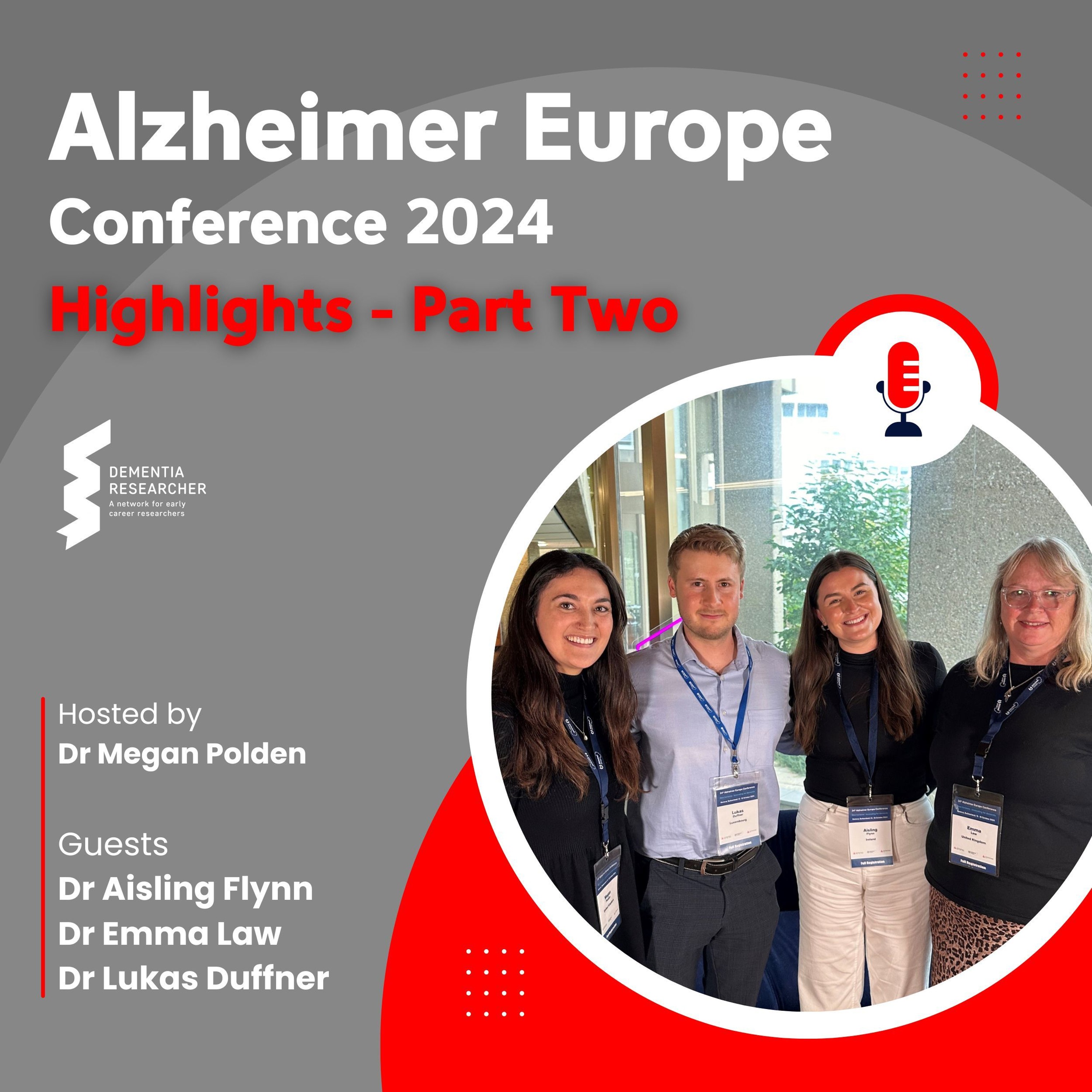
Ep 279Alzheimer Europe 2024 Conference Highlights - Part Two
Last week Dementia Researcher attended the 34th Alzheimer Europe Conference in Geneva, Switzerland. In this podcast Dr Megan Polden her guests bring you highlights from event, sharing news and their best bits from the hundreds of posters and talks delivered.Dr Megan Polden talks with Dr Aisling Flynn from Bournemouth University, Dr Emma Law from the Scottish Neuroprogressive and Dementia Network and Dr Lukas Duffner from Alzheimer Europe.Key topics include the use of artificial intelligence in dementia research, the importance of social health and intersectionality, and the need for greater inclusivity and diversity in research. Our guests emphasise the value of involving people with dementia and their caregivers in research and policy-making, and highlight the emotional impact of hearing personal stories from those affected by dementia. The episode underscores the significance of community engagement, meaningful awareness campaigns, and the benefits of face-to-face interactions at conferences - we hope to see you at the conference next year to share tyour work and build valuable connections.This year’s Alzheimer Europe Conference, titled 'New Horizons – Innovating for Dementia,' gathered a broad spectrum of attendees, including individuals living with dementia, carers, volunteers, staff from Alzheimer associations, policymakers, healthcare professionals, researchers, and academics. The conference continues to serve as a distinctive forum for sharing and discussing the latest developments in scientific research, care strategies, policy-making, and public engagement in dementia.A transcript of this show, links and show notes and profile on all our guests are available on our website at https://www.dementiaresearcher.nihr.ac.uk.If you prefer to watch rather than listen, you will find a video version of this podcast on YouTube, on our website, and in selected podcast platforms.Follow us on social media:https://www.instagram.com/dementia_researcher/ https://www.facebook.com/Dementia.Researcher/https://www.twitter.com/demrescommunityhttps://www.linkedin.com/company/dementia-researcher https://bsky.app/profile/dementiaresearcher.bsky.socialDownload and Register with our Community App:https://www.onelink.to/dementiaresearcherWe gratefully acknowledge the support of our funders: Alzheimer’s Association, Race Against Dementia, Alzheimer’s Research UK, Alzheimer’s Society, and the National Institute for Health and Care Research.The views and opinions expressed by guests in this podcast are their own and do not necessarily reflect those of the producers, funders, or sponsors.Subscribe to our sister show 'Dementia Researcher The Blogs':https://podfollow.com/dementia-researcher-blogs

Ep 278Alzheimer Europe 2024 Conference Highlights - Part One
Last week Dementia Researcher attended the 34th Alzheimer Europe Conference in Geneva, Switzerland. In this podcast Dr Megan Rose Readman and her guests bring you highlights from event, sharing news and their best bits from the hundreds of posters and talks delivered.Dr Megan Rose Readman talks with Dr Fiona Carragher from Alzheimer’s Society and Dr Andy Northcott from the Geller Institute of Ageing and Memory, University of West London and Dr Sébastien Libert from Alzheimer Europe.This year’s Alzheimer Europe Conference, themed 'New Horizons – Innovating for Dementia,' brought together a diverse group of participants, including people living with dementia, carers, volunteers, Alzheimer association staff, policymakers, health and social care professionals, researchers, and academics. It remains a unique platform where the latest advances in fundamental science, care, policy, and public engagement are shared and discussed.Here are a few highlights of note:Progress in Alzheimer's treatment: New drugs that slow disease progression mark a significant breakthrough in 2024.Progress in Care and Support: There was a strong focus on improving care and support with lots of new ideas and improvements in how to provide the best care, some of which involves technological advancements are playing a growing role in improving care and enhancing quality of life and understanding of disease and prevention.Challenges in healthcare: The need for systemic changes to prepare for new treatments is a pressing issue.Powerful stories: The conference featured multiple testimonies from people living with dementi and carers that resonated with attendees.Public and patient involvement: Engaging those with lived experience in research and policy is crucial.Promising future for research: Early career researchers are contributing significantly, offering hope for the future of dementia research.A transcript of this show, links and show notes and profile on all our guests are available on our website at https://www.dementiaresearcher.nihr.ac.uk.If you prefer to watch rather than listen, you will find a video version of this podcast on YouTube, on our website, and in selected podcast platforms.Follow us on social media:https://www.instagram.com/dementia_researcher/ https://www.facebook.com/Dementia.Researcher/https://www.twitter.com/demrescommunityhttps://www.linkedin.com/company/dementia-researcher https://bsky.app/profile/dementiaresearcher.bsky.socialDownload and Register with our Community App:https://www.onelink.to/dementiaresearcherWe gratefully acknowledge the support of our funders: Alzheimer’s Association, Race Against Dementia, Alzheimer’s Research UK, Alzheimer’s Society, and the National Institute for Health and Care Research.The views and opinions expressed by guests in this podcast are their own and do not necessarily reflect those of the producers, funders, or sponsors.Subscribe to our sister show 'Dementia Researcher The Blogs':https://podfollow.com/dementia-researcher-blogs
Ep 277ISFTD 2024 Conference Highlights
In this podcast we bring you highlights from the International Society for Frontotemporal Dementias (ISFD) Conference, which was held in Amsterdam from the 19th to 22nd September 2024.Dr Anna Volkmer talks with Dr Martyna Matuszyk from Alzheimer’s Society and Dr Aitana Sogorb Esteve from University College London discussing their highlights and recapping on the event and what they’re taking away from this year’s talks.Advancements in FTD Research: Key research on the genetic and molecular mechanisms of frontotemporal dementia, particularly focusing on biomarkers for early diagnosis.Novel Therapeutic Approaches: Promising developments in treatments targeting FTD-specific pathology, with potential to improve patient outcomes.Challenges in Translating Research to Practice: The complexity of moving lab discoveries into clinical applications, and the need for more streamlined processes.Importance of Collaboration: Emphasis on interdisciplinary cooperation to address the multifaceted nature of dementia research.Breakthroughs in Neuroimaging: Advances in neuroimaging techniques that could enhance understanding of disease progression and improve diagnostic accuracy.Public and Patient Involvement: The vital role of involving patients and the public in shaping research agendas, ensuring that studies address real-world needs.Effective Science Communication: The need to translate complex scientific information into accessible language for both the public and other stakeholders.Annual ISFTD Conference: Excitement around the announcement that the conference will be held annually starting in 2026, fostering more frequent collaboration and knowledge sharing.The International Society for Frontotemporal Dementias is a non-profit scientific society focused on frontotemporal dementias. Members include the leaders in FTD research around the world, and the society is associated with a large, international biannual meeting (soon to be annual) presenting the latest findings.For more information visit: www.isftd.orgA transcript of this show, links and show notes and profile on all our guests are available on our website at https://www.dementiaresearcher.nihr.ac.uk.If you prefer to watch rather than listen, you will find a video version of this podcast on YouTube, on our website, and in selected podcast platforms.Follow us on social media:https://www.instagram.com/dementia_researcher/ https://www.facebook.com/Dementia.Researcher/https://www.twitter.com/demrescommunityhttps://www.linkedin.com/company/dementia-researcher https://bsky.app/profile/dementiaresearcher.bsky.socialDownload and Register with our Community App:https://www.onelink.to/dementiaresearcherWe gratefully acknowledge the support of our funders: Alzheimer’s Association, Race Against Dementia, Alzheimer’s Research UK, Alzheimer’s Society, and the National Institute for Health and Care Research.The views and opinions expressed by guests in this podcast are their own and do not necessarily reflect those of the producers, funders, or sponsors.Subscribe to our sister show 'Dementia Researcher The Blogs':https://podfollow.com/dementia-researcher-blogs

Ep 276The Epigenetic Equation
In this episode of the Dementia Researcher Podcast, guest host Dr Fiona McLean is joined by Dr Josh Harvey (University of Exeter), Dr Sarah Marzi (King’s College London - UK Dementia Research institute), Dr Alexi Nott (Imperial College London - UK Dementia Research institute), and Dr Sam Washer (Wellcome Trust Sanger Institute) to discuss the role of epigenetics in Alzheimer’s and dementia research.The episode offers a broad exploration of epigenetics in neurodegenerative diseases, highlighting how gene regulation beyond DNA sequences is advancing our understanding of Alzheimer’s and related conditions. It covers the impact of environmental and lifestyle factors on disease development, as well as emerging research techniques and technologies that could inform future diagnostic and therapeutic approaches.Key Topics:The fundamentals of epigenetics and its distinction from traditional genetics.How epigenetic research is shaping our understanding of Alzheimer's disease.The role of environmental factors in influencing epigenetic changes.New technologies and their application in epigenetic studies.The potential for epigenetics in developing future diagnostics and therapies for neurodegenerative diseases.A transcript of this show, links and show notes and profile on all our guests are available on our website at https://www.dementiaresearcher.nihr.ac.uk.If you prefer to watch rather than listen, you will find a video version of this podcast on YouTube, on our website, and in selected podcast platforms.Follow us on social media:https://www.instagram.com/dementia_researcher/ https://www.facebook.com/Dementia.Researcher/https://www.twitter.com/demrescommunityhttps://www.linkedin.com/company/dementia-researcher https://bsky.app/profile/dementiaresearcher.bsky.socialDownload and Register with our Community App:https://www.onelink.to/dementiaresearcherWe gratefully acknowledge the support of our funders: Alzheimer’s Association, Race Against Dementia, Alzheimer’s Research UK, Alzheimer’s Society, and the National Institute for Health and Care Research.The views and opinions expressed by guests in this podcast are their own and do not necessarily reflect those of the producers, funders, or sponsors.Subscribe to our sister show 'Dementia Researcher The Blogs':https://podfollow.com/dementia-researcher-blogs
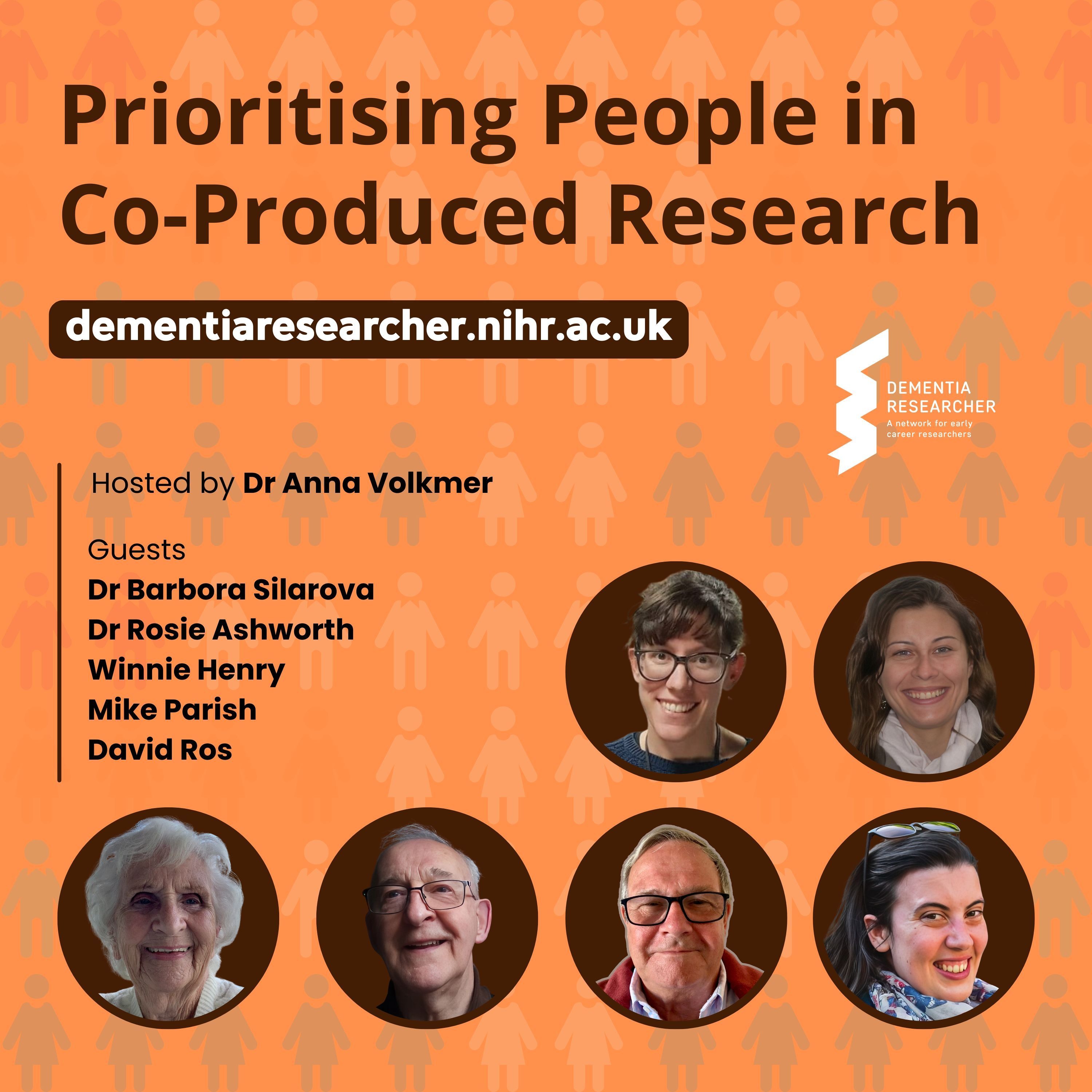
Ep 275Prioritising People in Co-Produced Research
In this episode of the Dementia Researcher podcast, Dr Anna Volkmer leads a discussion on the importance of co-production in dementia research.This episode explores what it truly means to involve people with lived experience, with tips on how to go about it, and our guests own experience in working together. They also discuss the research process and how this approach can lead to more relevant and impactful outcomes.Guests:Dr Barbora Silarova: An NIHR / Alzheimer’s Society Dem Comm Fellow at the University of Kent. Barbora brings her expertise in supporting people living with dementia and their carers. She shares insights on the significance of equal partnerships in co-produced research and the challenges and rewards of this collaborative approach.Dr Rosie Ashworth: A researcher who leads patient and public involvement for the NRS Neuroprogressive and Dementia Network in Scotland. Rosie discusses the importance of involving those with lived experience in research to enrich the quality and relevance of scientific findings.Winnie Henry: A retired psychotherapist who cared for her husband with vascular dementia. Winnie provides a personal perspective on the value of co-production, emphasising empathy and the importance of ensuring that carers' voices are heard in research.Mike Parish: A retired firefighter who became a carer for his husband, who had progressive supranuclear palsy. Mike highlights the importance of representing diverse experiences and backgrounds in dementia research to ensure all voices are considered.David Ross: A retired engineer who cared for his wife with frontotemporal dementia. David speaks about his journey into co-production, driven by a desire to understand more about dementia and contribute to meaningful research that reflects the realities faced by carers.Together, these guests provide valuable insights into the process and benefits of co-produced research, offering practical tips for researchers looking to adopt this approach.Three key take-aways from the podcast:The Value of Co-Production in Research: Co-production in dementia research ensures that the perspectives of those with lived experiences, such as unpaid carers and people directly affected by dementia, are central to the research process. This approach not only enhances the relevance and impact of the findings but also addresses the real needs of the community involved.Challenges and Rewards of Co-Produced Research: While co-produced research can be more time-consuming and challenging, particularly due to the need for ongoing communication and managing diverse viewpoints, it is ultimately more rewarding. The involvement of people with lived experience leads to more comprehensive and empathetic research outcomes, fostering a deeper connection and mutual respect between researchers and participants.Practical Tips for Researchers: Effective co-production requires empathy, flexibility, and open communication. Researchers are encouraged to build strong relationships with participants, be willing to adapt to different needs, and ensure that everyone involved feels valued and heard. This collaborative approach can transform the research process, making it more inclusive and impactful.A transcript of this show, links and show notes and profile on all our guests are available on our website at https://www.dementiaresearcher.nihr.ac.uk.If you prefer to watch rather than listen, you will find a video version of this podcast on YouTube, on our website, and in selected podcast platforms.Follow us on social media:https://www.instagram.com/dementia_researcher/ https://www.facebook.com/Dementia.Researcher/https://www.twitter.com/demrescommunityhttps://www.linkedin.com/company/dementia-researcher https://bsky.app/profile/dementiaresearcher.bsky.socialDownload and Register with our Community App:https://www.onelink.to/dementiaresearcherWe gratefully acknowledge the support of our funders: Alzheimer’s Association, Race Against Dementia, Alzheimer’s Research UK, Alzheimer’s Society, and the National Institute for Health and Care Research.The views and opinions expressed by guests in this podcast are their own and do not necessarily reflect those of the producers, funders, or sponsors.Subscribe to our sister show 'Dementia Researcher The Blogs':https://podfollow.com/dementia-researcher-blogs
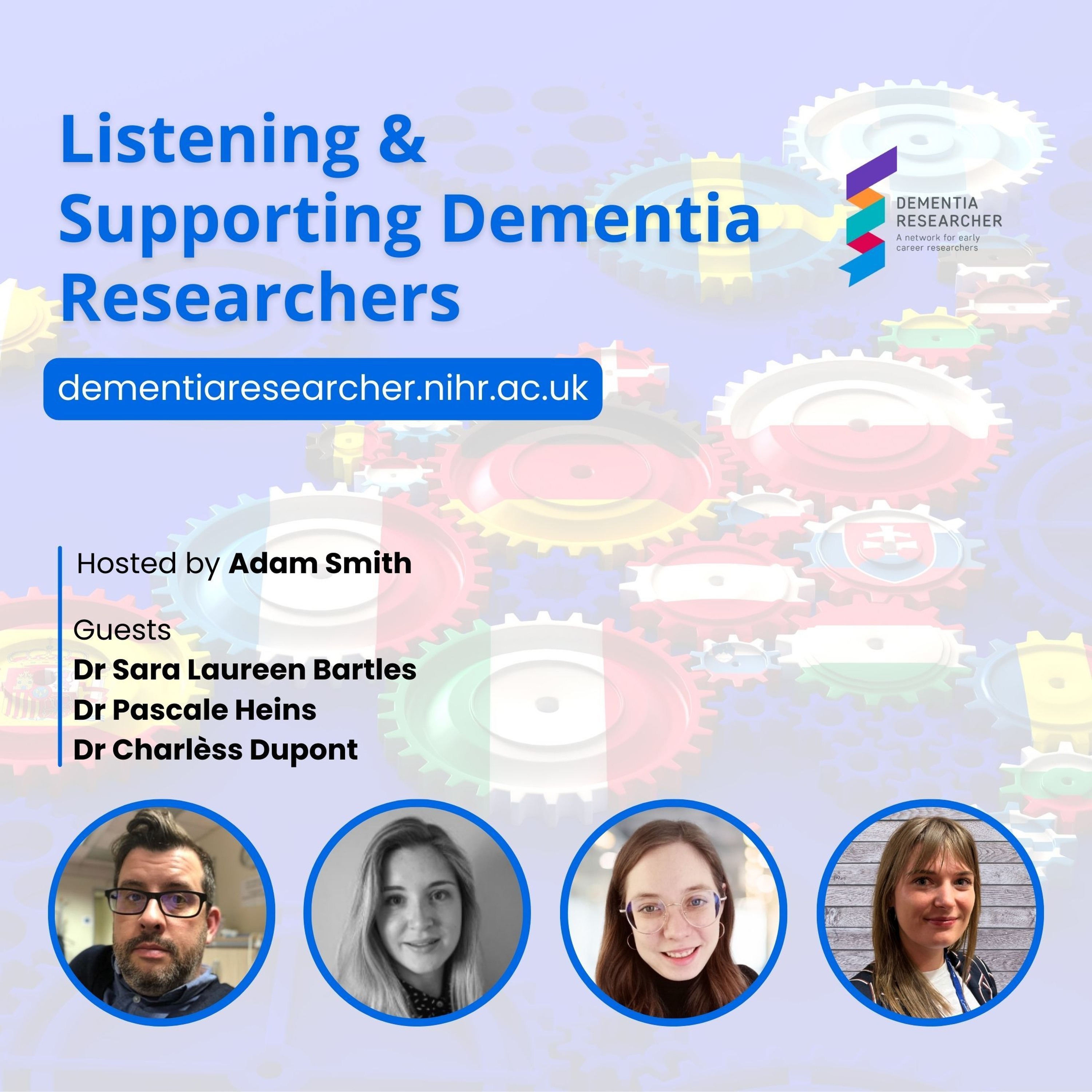
Ep 274Listening & Supporting Dementia Researchers
In this episode of the Dementia Researcher Podcast, we discuss the challenges and support needs of early career dementia researchers (ECRs) across Europe.Our discussion centres on a recent study titled Supporting Early Career Dementia Researchers: Identifying Support Needs and Ways Forward via a European Study. The study sheds light on the unique difficulties faced by ECRs and offers practical recommendations to enhance professional journeys.Speakers:Adam Smith: Programme Director for Dementia Researcher and today's guest host.Dr Charlèss Dupont: A postdoctoral researcher at Freie University in Brussels with a background in nursing and communication. Charlès's work primarily focuses on communication and palliative care in dementia.Dr Pascale Heins: With a background in occupational therapy, Dr. Heins works at Maastricht University, where her research explores ways to support social life in people with dementia (Watch Pascale defend her PhD thesis)Dr Sara Laureen Bartles: A postdoctoral researcher at Karolinska Institutet in Stockholm and Maastricht University, Sarah's research spans chronic conditions management, including dementia.Key Takeaways:Funding and Career Support: The study identifies a significant need for better financial support mechanisms, particularly in the transition from PhD to postdoctoral roles.Work-Life Balance: The pressures of academia often lead to an unhealthy work-life balance, with expectations set by supervisors. The study calls for more proactive support from institutions.Mentoring and Training: The importance of mentoring and training, both within academia and for careers outside of it, is emphasised as a way to better prepare researchers for diverse career paths.Dissemination: There is a need for improved dissemination strategies, ensuring that research findings reach a broader audience, including those directly affected by dementia.A transcript of this show, links and show notes and profile on all our guests are available on our website at https://www.dementiaresearcher.nihr.ac.uk.If you prefer to watch rather than listen, you will find a video version of this podcast on YouTube, on our website, and in selected podcast platforms.Follow us on social media:https://www.instagram.com/dementia_researcher/ https://www.facebook.com/Dementia.Researcher/https://www.twitter.com/demrescommunityhttps://www.linkedin.com/company/dementia-researcher https://bsky.app/profile/dementiaresearcher.bsky.socialDownload and Register with our Community App:https://www.onelink.to/dementiaresearcherWe gratefully acknowledge the support of our funders: Alzheimer’s Association, Race Against Dementia, Alzheimer’s Research UK, Alzheimer’s Society, and the National Institute for Health and Care Research.The views and opinions expressed by guests in this podcast are their own and do not necessarily reflect those of the producers, funders, or sponsors.Subscribe to our sister show 'Dementia Researcher The Blogs':https://podfollow.com/dementia-researcher-blogs
Ep 273AAIC Day Four 2024
In this podcast we share a few selected highlights from the last day of the Alzheimer’s Association International Conference (AAIC) taking place in Philadelphia and Online, 28th July to 1st August.Quang Tran, Science Communications Officer for Alzheimer's Research UK, guest hosts the show with expert panelists:Dr Shea Andrews, Assistant Professor at University of California San Francisco working on Genetic Epidemiology of Alzheimer’s diseaseDr Joe Butler, NIHR ARC Research Fellow at University of Sunderland, interested in using techniques and paradigms from experimental psychology to learn about brain health.Roberto A. Guzmán Hernández, ISTAART Ambassador, Graduate Research Assistant and PhD Student at Temple University working on the effects of aggregated tau on endothelial and cerebrovascular dysfunctionThe AAIC brings together distinguished basic scientists, clinical researchers, early career investigators, clinicians and the care research community at the largest and most influential international conference on dementia science. They share theories and breakthroughs while exploring opportunities to accelerate work and elevate careers.A transcript of this show, links and show notes and profile on all our guests are available on our website at https://www.dementiaresearcher.nihr.ac.uk.If you prefer to watch rather than listen, you will find a video version of this podcast on YouTube, on our website, and in selected podcast platforms.Follow us on social media:https://www.instagram.com/dementia_researcher/ https://www.facebook.com/Dementia.Researcher/https://www.twitter.com/demrescommunityhttps://www.linkedin.com/company/dementia-researcher https://bsky.app/profile/dementiaresearcher.bsky.socialDownload and Register with our Community App:https://www.onelink.to/dementiaresearcherWe gratefully acknowledge the support of our funders: Alzheimer’s Association, Race Against Dementia, Alzheimer’s Research UK, Alzheimer’s Society, and the National Institute for Health and Care Research.The views and opinions expressed by guests in this podcast are their own and do not necessarily reflect those of the producers, funders, or sponsors.Subscribe to our sister show 'Dementia Researcher The Blogs':https://podfollow.com/dementia-researcher-blogs
Ep 272AAIC Day Three 2024
In this podcast we share a few selected highlights from the fourth day of the Alzheimer’s Association International Conference (AAIC) taking place in Philadelphia and Online, 28th July to 1st August.Dr Amanda Heslegrave, Principle Research Fellow at University College London, hosts the show with special guests:Dr Darina Petrovsky, Assistant Professor at Duke UniversityDr Emily Ho, Assistant Professor at Northwestern UniversityMeenakshi Menon, ISTAART Ambassador and incoming PhD student in Cognitive Sciences at Georgia State UniversityThe AAIC brings together distinguished basic scientists, clinical researchers, early career investigators, clinicians and the care research community at the largest and most influential international conference on dementia science. They share theories and breakthroughs while exploring opportunities to accelerate work and elevate careers.Main plenary talks from the day included Tara Spires-Jones presenting on 'Synaptic Oligomeric Tau In Alzheimer’s Disease — A Potential Culprit In The Spread Of Tau Pathology Through The Brain ', Ricardo F. Allegri on 'Dementia Research In Low- And Middle-Income Countries: Initiatives That Seize Opportunities, Overcome Challenges And Build Capacity'.A transcript of this show, links and show notes and profile on all our guests are available on our website at https://www.dementiaresearcher.nihr.ac.uk.If you prefer to watch rather than listen, you will find a video version of this podcast on YouTube, on our website, and in selected podcast platforms.Follow us on social media:https://www.instagram.com/dementia_researcher/ https://www.facebook.com/Dementia.Researcher/https://www.twitter.com/demrescommunityhttps://www.linkedin.com/company/dementia-researcher https://bsky.app/profile/dementiaresearcher.bsky.socialDownload and Register with our Community App:https://www.onelink.to/dementiaresearcherWe gratefully acknowledge the support of our funders: Alzheimer’s Association, Race Against Dementia, Alzheimer’s Research UK, Alzheimer’s Society, and the National Institute for Health and Care Research.The views and opinions expressed by guests in this podcast are their own and do not necessarily reflect those of the producers, funders, or sponsors.Subscribe to our sister show 'Dementia Researcher The Blogs':https://podfollow.com/dementia-researcher-blogs
Ep 271AAIC Day Two 2024
In this podcast we share a few selected highlights from the third day of the Alzheimer’s Association International Conference (AAIC) taking place in Philadelphia and Online, 28th July to 1st August.Caitlyn Fastenau, PhD Candidate at University of Texas Health San Antonio, hosts the show with special guests:Balogun Wasiu, Postdoctoral Associate at University of PittsburghJessica Caldwell, Director, Women’s Alzheimer’s Movement Prevention and Research Center, Cleveland ClinicSophia Krix, PhD Student at University of Bonn, working on the ADIS ProjectThe AAIC brings together distinguished basic scientists, clinical researchers, early career investigators, clinicians and the care research community at the largest and most influential international conference on dementia science. They share theories and breakthroughs while exploring opportunities to accelerate work and elevate careers.Main plenary talks from the day included Suvarna Alladi 'Bilingualism And Dementia: Implications For Brain Health And Policy Development', Clive Ballard on 'Psychosis In Alzheimer’s Disease'.A transcript of this show, links and show notes and profile on all our guests are available on our website at https://www.dementiaresearcher.nihr.ac.uk.If you prefer to watch rather than listen, you will find a video version of this podcast on YouTube, on our website, and in selected podcast platforms.Follow us on social media:https://www.instagram.com/dementia_researcher/ https://www.facebook.com/Dementia.Researcher/https://www.twitter.com/demrescommunityhttps://www.linkedin.com/company/dementia-researcher https://bsky.app/profile/dementiaresearcher.bsky.socialDownload and Register with our Community App:https://www.onelink.to/dementiaresearcherWe gratefully acknowledge the support of our funders: Alzheimer’s Association, Race Against Dementia, Alzheimer’s Research UK, Alzheimer’s Society, and the National Institute for Health and Care Research.The views and opinions expressed by guests in this podcast are their own and do not necessarily reflect those of the producers, funders, or sponsors.Subscribe to our sister show 'Dementia Researcher The Blogs':https://podfollow.com/dementia-researcher-blogs

Ep 270AAIC Day One 2024
In this podcast we share a few selected highlights from the first two days of the Alzheimer’s Association International Conference (AAIC) taking place in Philadelphia and Online, 28th July to 1st August.Dr Francesca Farina hosts the show with special guests:Dr Annalise Rahman-Filipiak, Assistant Professor, Clinical Neuropsychologist at University of MichiganDr Tamlyn Watermeyer, NIHR / Alzheimer’s Society Dem Comm Fellow at Northumbria University and University of Edinburgh working on cognition and brain health.Dr Merci Best, Research Fellow at the University of Michigan's Paulson Lab, studying the molecular mechanisms of tau-mediated neurodegenerationThe AAIC brings together distinguished basic scientists, clinical researchers, early career investigators, clinicians and the care research community at the largest and most influential international conference on dementia science. They share theories and breakthroughs while exploring opportunities to accelerate work and elevate careers.Main plenary talks from the day included Edward B. Lee presenting 'Neuropathology In A Multidisciplinary Age', Timothy Miller on 'Antisense Oligonucleotide Therapeutics For Neurodegenerative Diseases', Henne Holstege delivering a talk titled 'From Longevity To Vulnerability: Genomic Pathways Underlying Cognitive Health In Centenarians And Neurodegenerative Disease'.A transcript of this show, links and show notes and profile on all our guests are available on our website at https://www.dementiaresearcher.nihr.ac.uk.If you prefer to watch rather than listen, you will find a video version of this podcast on YouTube, on our website, and in selected podcast platforms.Follow us on social media:https://www.instagram.com/dementia_researcher/ https://www.facebook.com/Dementia.Researcher/https://www.twitter.com/demrescommunityhttps://www.linkedin.com/company/dementia-researcher https://bsky.app/profile/dementiaresearcher.bsky.socialDownload and Register with our Community App:https://www.onelink.to/dementiaresearcherWe gratefully acknowledge the support of our funders: Alzheimer’s Association, Race Against Dementia, Alzheimer’s Research UK, Alzheimer’s Society, and the National Institute for Health and Care Research.The views and opinions expressed by guests in this podcast are their own and do not necessarily reflect those of the producers, funders, or sponsors.Subscribe to our sister show 'Dementia Researcher The Blogs':https://podfollow.com/dementia-researcher-blogs
Ep 269ISTAART Relay Podcast - Nonpharmacological Interventions PIA
Welcome to the last show in this season of the ISTAART PIA Relay Podcast, presented by Dementia Researcher. In our final episode, we come full circle with Dr Keir Yong, Senior Research Fellow at UCL's Dementia Research Centre, speaking with Professor Arlene Astell, Chair of the Non-Pharmacological Interventions PIA.Professor Astell discusses her role as a Professor of Cyber Psychology at Northumbria University and Director of the Dementia Ageing Technology Engagement Lab at the University of Toronto. She offers a comprehensive look into her journey into dementia research, sparked by early interactions with individuals living with dementia, and her commitment to understanding and mitigating the cognitive and behavioural challenges they face.Gain insights into the innovative projects led by Professor Astell, including the development of touchscreen computer systems designed to support conversation for people with dementia. How the significance of lifestyle interventions, such as nutrition and physical activity, and the emerging potential of neuromodulation can play a role in reducing dementia risk.The conversation also highlights the broader implications of non-pharmacological interventions, the challenges in implementing these approaches within health systems, and the importance of influencing public health policy to ensure wider adoption – and the role that the Non-Pharmacological Interventions PIA can play in fostering collaboration.A transcript of this show, links and show notes and profile on all our guests are available on our website at https://www.dementiaresearcher.nihr.ac.uk.If you prefer to watch rather than listen, you will find a video version of this podcast on YouTube, on our website, and in selected podcast platforms.Follow us on social media:https://www.instagram.com/dementia_researcher/ https://www.facebook.com/Dementia.Researcher/https://www.twitter.com/demrescommunityhttps://www.linkedin.com/company/dementia-researcher https://bsky.app/profile/dementiaresearcher.bsky.socialDownload and Register with our Community App:https://www.onelink.to/dementiaresearcherWe gratefully acknowledge the support of our funders: Alzheimer’s Association, Race Against Dementia, Alzheimer’s Research UK, Alzheimer’s Society, and the National Institute for Health and Care Research.The views and opinions expressed by guests in this podcast are their own and do not necessarily reflect those of the producers, funders, or sponsors.Subscribe to our sister show 'Dementia Researcher The Blogs':https://podfollow.com/dementia-researcher-blogs
Ep 268ISTAART Relay Podcast - Atypical Alzheimer's Disease PIA
Join us for another episode of the ISTAART Relay Podcast brought to you by Dementia Researcher. We’re releasing one of these shows each week in the build up to the AAIC, which this year starts on the 28th July.In this episode, Dr Diana Karamacoska takes over the hot seat to interview Dr Keir Yong, a Senior Research Fellow at University College London, about the intricacies of Atypical Alzheimer's Disease, and the work of the Atypical Alzheimer's Disease PIA.Discover how posterior cortical atrophy (PCA), a less common variant of Alzheimer’s, impacts patients' lives and the innovative research aiming to improve diagnosis and treatment. Get insights into the diagnostic challenges, the role of biomarkers, and the essential interdisciplinary collaborations driving advancements in this field.Don't miss this deep dive into Keir’s work, hot topics in the field, and how their PIA is making a difference.A transcript of this show, links and show notes and profile on all our guests are available on our website at https://www.dementiaresearcher.nihr.ac.uk.If you prefer to watch rather than listen, you will find a video version of this podcast on YouTube, on our website, and in selected podcast platforms.Follow us on social media:https://www.instagram.com/dementia_researcher/ https://www.facebook.com/Dementia.Researcher/https://www.twitter.com/demrescommunityhttps://www.linkedin.com/company/dementia-researcher https://bsky.app/profile/dementiaresearcher.bsky.socialDownload and Register with our Community App:https://www.onelink.to/dementiaresearcherWe gratefully acknowledge the support of our funders: Alzheimer’s Association, Race Against Dementia, Alzheimer’s Research UK, Alzheimer’s Society, and the National Institute for Health and Care Research.The views and opinions expressed by guests in this podcast are their own and do not necessarily reflect those of the producers, funders, or sponsors.Subscribe to our sister show 'Dementia Researcher The Blogs':https://podfollow.com/dementia-researcher-blogs

Ep 267ISTAART Relay Podcast - Partnering with Research Participants PIA
Join us for another episode of the ISTAART Relay Podcast from Dementia Research. This time Dr Ece Bayram moves from interviewee to interviewer and chats with Dr Diana Karamacoska, the vice chair of the Partnering with Research Participants PIA.This episode explores the challenges and breakthroughs in dementia research, with a special focus on engaging underserved communities, and public involvement. Dr Karamacoska shares her personal journey inspired by her grandparents' experiences with dementia, highlighting the gaps in services and the importance of culturally appropriate care.Discover how the ISTAART PIAs are transforming dementia research through meaningful partnerships and inclusive practices. Learn about the global shift towards collaboration with research participants and the innovative approaches being used to address disparities in dementia care. Diana also discusses the significance of maintaining well-being while working closely with affected communities and the role of the PIA in supporting researchers.Tune in to explore the latest trends, including the exciting initiatives planned for the upcoming Alzheimer's Association International Conference (AAIC) in Philadelphia, and understand why the Partnering with Research Participants PIA is unique in its dedication to patient and public involvement.A transcript of this show, links and show notes and profile on all our guests are available on our website at https://www.dementiaresearcher.nihr.ac.uk.If you prefer to watch rather than listen, you will find a video version of this podcast on YouTube, on our website, and in selected podcast platforms.Follow us on social media:https://www.instagram.com/dementia_researcher/ https://www.facebook.com/Dementia.Researcher/https://www.twitter.com/demrescommunityhttps://www.linkedin.com/company/dementia-researcher https://bsky.app/profile/dementiaresearcher.bsky.socialDownload and Register with our Community App:https://www.onelink.to/dementiaresearcherWe gratefully acknowledge the support of our funders: Alzheimer’s Association, Race Against Dementia, Alzheimer’s Research UK, Alzheimer’s Society, and the National Institute for Health and Care Research.The views and opinions expressed by guests in this podcast are their own and do not necessarily reflect those of the producers, funders, or sponsors.Subscribe to our sister show 'Dementia Researcher The Blogs':https://podfollow.com/dementia-researcher-blogs

Ep 266ISTAART Relay Podcast - Lewy Body Dementias PIA
In this episode of the ISTAART Relay Podcast, Dr Jessica Caldwell, a neuropsychologist and director at the Cleveland Clinic, interviews Dr Ece Bayram, the newly appointed assistant professor and incoming communications chair for the ISTAART Lewy Body Dementias PIA.They explore Ece’s research on sex differences in genetics and environmental risk factors for Lewy body dementia. Ece shares insights into her innovative projects, the work of their PIA, plans for the upcoming AAIC and the significance of understanding sex and gender differences in neurodegenerative diseases, and the importance of designing research with community involvement. They also discuss the challenges of conducting studies in diverse populations and the need for global collaboration.Tune in to hear about the exciting developments in Lewy body dementia research and the impact of community-driven studies on advancing the field.A transcript of this show, links and show notes and profile on all our guests are available on our website at https://www.dementiaresearcher.nihr.ac.uk.If you prefer to watch rather than listen, you will find a video version of this podcast on YouTube, on our website, and in selected podcast platforms.Follow us on social media:https://www.instagram.com/dementia_researcher/ https://www.facebook.com/Dementia.Researcher/https://www.twitter.com/demrescommunityhttps://www.linkedin.com/company/dementia-researcher https://bsky.app/profile/dementiaresearcher.bsky.socialDownload and Register with our Community App:https://www.onelink.to/dementiaresearcherWe gratefully acknowledge the support of our funders: Alzheimer’s Association, Race Against Dementia, Alzheimer’s Research UK, Alzheimer’s Society, and the National Institute for Health and Care Research.The views and opinions expressed by guests in this podcast are their own and do not necessarily reflect those of the producers, funders, or sponsors.Subscribe to our sister show 'Dementia Researcher The Blogs':https://podfollow.com/dementia-researcher-blogs

Ep 265ISTAART Relay Podcast - Sex and Gender Differences in Alzheimer's Disease PIA
Welcome to the fifth season of the ISTAART PIA Relay Podcast, brought to you by Dementia Researcher. In this six-part series, members of ISTAART professional interest areas (PIAs) take turns interviewing their colleagues about the latest research in Alzheimer's disease and other dementias. This episode features a Caitlyn Fastenau, a PhD candidate from the University of Texas Health Science Centre interviewing Dr Jessica Caldwell, a neuropsychologist and director of the Women’s Alzheimer’s Movement Prevention and Research Centre at Cleveland Clinic.Dr Caldwell discusses her pioneering work at the world's only clinic designed specifically for women to reduce their Alzheimer's risk, focusing on sex and gender differences in the disease. She highlights the critical role of menopause, stress, and hormonal changes in Alzheimer's risk and shares insights into the importance of diverse research populations and the unique challenges faced by women caregivers.Tune-in as explore hot topics of sex and gender differences in Alzheimer's research, including the impact of menopause, the need for gender-diverse studies, and the initiatives of the ISTAART Sex and Gender Differences in Alzheimer's Disease PIA and what they have planned for AAIC. Whether you're a researcher, clinician, or someone affected by Alzheimer's, this episode offers valuable perspectives on the intersections of gender, health, and dementia.A transcript of this show, links and show notes and profile on all our guests are available on our website at https://www.dementiaresearcher.nihr.ac.uk.If you prefer to watch rather than listen, you will find a video version of this podcast on YouTube, on our website, and in selected podcast platforms.Follow us on social media:https://www.instagram.com/dementia_researcher/ https://www.facebook.com/Dementia.Researcher/https://www.twitter.com/demrescommunityhttps://www.linkedin.com/company/dementia-researcher https://bsky.app/profile/dementiaresearcher.bsky.socialDownload and Register with our Community App:https://www.onelink.to/dementiaresearcherWe gratefully acknowledge the support of our funders: Alzheimer’s Association, Race Against Dementia, Alzheimer’s Research UK, Alzheimer’s Society, and the National Institute for Health and Care Research.The views and opinions expressed by guests in this podcast are their own and do not necessarily reflect those of the producers, funders, or sponsors.Subscribe to our sister show 'Dementia Researcher The Blogs':https://podfollow.com/dementia-researcher-blogs
Ep 264ISTAART Relay Podcast - Immunity and Neurodegeneration PIA
Welcome to the fifth season of the ISTAART PIA Relay Podcast, brought to you by Dementia Researcher. This series features members of ISTAART, engaging in insightful interviews about groundbreaking dementia research, and the work of the ISTAART Professional Interest Areas (PIA) they represent.As we build up to the Alzheimer’s Association International Conference in Philadelphia, join us for daily episodes that showcase the remarkable work being done in various research fields.In this episode, Professor Arlene Astell interviews Caitlyn Fastenau, a PhD candidate in Integrated Biomedical Sciences focusing on the Biology of Ageing. Caitlyn shares her journey into dementia research, driven by personal experiences and a passion for understanding neurodegenerative diseases. Her research explores the role of immune cells, particularly microglia, in Alzheimer’s disease, using advanced techniques like single-cell RNA sequencing.Caitlyn discusses the her work, the importance of diversity in research, highlighting efforts to include underrepresented communities in dementia studies. She also talks about the significance of translational research and the potential non-pharmacological interventions that could reduce the risk of neurodegenerative diseases.Tune in to learn more about the Immunity and Neurodegeneration PIA, what they have planned for AAIC and the latest hot topics in the field, and the collaborative environment that ISTAART provides for researchers at all levels.PS. Don't miss Caitlyn's presentation at the AAIC and her insights on leveraging student engagement in scientific societies.A transcript of this show, links and show notes and profile on all our guests are available on our website at https://www.dementiaresearcher.nihr.ac.uk.If you prefer to watch rather than listen, you will find a video version of this podcast on YouTube, on our website, and in selected podcast platforms.Follow us on social media:https://www.instagram.com/dementia_researcher/ https://www.facebook.com/Dementia.Researcher/https://www.twitter.com/demrescommunityhttps://www.linkedin.com/company/dementia-researcher https://bsky.app/profile/dementiaresearcher.bsky.socialDownload and Register with our Community App:https://www.onelink.to/dementiaresearcherWe gratefully acknowledge the support of our funders: Alzheimer’s Association, Race Against Dementia, Alzheimer’s Research UK, Alzheimer’s Society, and the National Institute for Health and Care Research.The views and opinions expressed by guests in this podcast are their own and do not necessarily reflect those of the producers, funders, or sponsors.Subscribe to our sister show 'Dementia Researcher The Blogs':https://podfollow.com/dementia-researcher-blogs
Ep 263AAIC Preview 2024
Adam Smith chats with Dr Claire Sexton, Senior Director, Scientific Programs and Outreach from the Alzheimer’s Association. Discussing this year’s Alzheimer’s Association International Conference (AAIC) 28th July to 1st August (+preconference on the 25th – 27th).Taking place in-person in Philadelphia and online - the world’s leading basic scientists, clinical researchers, early career investigators, clinicians and the care research community will share breaking research discoveries that will lead to methods of prevention and treatment and improvements in diagnosis for Alzheimer’s disease.In this exciting edition, we will be giving you an exclusive sneak peek into one of the most highly anticipated events in dementia research conference calendar (also a world first exclusive on the location for 2025).Join us as we explore into how you can attend, the scientific programme, extra events and just what the AAIC will deliver this year. With leading experts, visionary thinkers, and research pioneers gathering under one roof, this conference promises to not only showcase groundbreaking discoveries, but also be a place where you will get careers support, and unrivalled networking opportunities.A transcript of this show, links and show notes and profile on all our guests are available on our website at https://www.dementiaresearcher.nihr.ac.uk.If you prefer to watch rather than listen, you will find a video version of this podcast on YouTube, on our website, and in selected podcast platforms.Follow us on social media:https://www.instagram.com/dementia_researcher/ https://www.facebook.com/Dementia.Researcher/https://www.twitter.com/demrescommunityhttps://www.linkedin.com/company/dementia-researcher https://bsky.app/profile/dementiaresearcher.bsky.socialDownload and Register with our Community App:https://www.onelink.to/dementiaresearcherWe gratefully acknowledge the support of our funders: Alzheimer’s Association, Race Against Dementia, Alzheimer’s Research UK, Alzheimer’s Society, and the National Institute for Health and Care Research.The views and opinions expressed by guests in this podcast are their own and do not necessarily reflect those of the producers, funders, or sponsors.Subscribe to our sister show 'Dementia Researcher The Blogs':https://podfollow.com/dementia-researcher-blogs
Ep 262At Breaking Point: Burnout in Academia
In this episode, Dr Fiona McLean, an Alzheimer's Research UK fellow at the University of Dundee, discusses the issue of academic burnout with three fellow researchers.The guests, Dr Sarah Marzi, Dr Ian Harrison, and Dr Kate Harris, share their personal experiences with burnout, its impact on their work and personal lives, and strategies for managing and preventing it. They highlight the importance of setting boundaries, seeking mentorship, maintaining a work-life balance, and practising self-kindness. They also emphasise the need for a supportive and sustainable research culture.Five Top Tips from the Show:Set Boundaries: Establish clear boundaries in your work to manage expectations and workload effectively. Communicate these boundaries with your colleagues and superiors to ensure a sustainable work environment.Seek Mentorship: Engage with mentors both within and outside your institution. Mentors can provide valuable guidance, support, and perspective, helping you navigate the challenges of academic life.Maintain Work-Life Balance: Dedicate time to activities outside of work that bring you joy and relaxation, such as hobbies or exercise. This helps in preventing burnout and maintaining mental and physical health.Build a Supportive Network: Surround yourself with peers who understand your struggles and can offer support. Peer networks and friendtors (friendly mentors) can provide emotional and professional support, making you feel less isolated.Be Kind to Yourself: Practice self-compassion by acknowledging your achievements, setting realistic goals, and allowing yourself to rest. Recognise that it's okay not to be perfect and that your well-being is crucial for long-term success.A transcript of this show, links and show notes and profile on all our guests are available on our website at https://www.dementiaresearcher.nihr.ac.uk.If you prefer to watch rather than listen, you will find a video version of this podcast on YouTube, on our website, and in selected podcast platforms.Follow us on social media:https://www.instagram.com/dementia_researcher/ https://www.facebook.com/Dementia.Researcher/https://www.twitter.com/demrescommunityhttps://www.linkedin.com/company/dementia-researcher https://bsky.app/profile/dementiaresearcher.bsky.socialDownload and Register with our Community App:https://www.onelink.to/dementiaresearcherWe gratefully acknowledge the support of our funders: Alzheimer’s Association, Race Against Dementia, Alzheimer’s Research UK, Alzheimer’s Society, and the National Institute for Health and Care Research.The views and opinions expressed by guests in this podcast are their own and do not necessarily reflect those of the producers, funders, or sponsors.Subscribe to our sister show 'Dementia Researcher The Blogs':https://podfollow.com/dementia-researcher-blogs
Ep 261Happiness As Medicine: Well-being in Dementia Care
Join Dr Sam Moxon and guests, Dr Emily Willroth, Dr Kyrsten Hill, and Karysa Britton, from Washington University in St. Louis three of the people behind the World Happiness Report.Together they discuss their research showing that higher levels of well-being can act as protective factors against dementia and improve the quality of life for those living with the condition. They highlighted the importance of mental health and well-being in dementia prevention and care, and the potential for public health policies and community programs to incorporate these findings. In the show our guests also emphasise the value of interdisciplinary collaboration in tackling dementia prevention.In the 2024 issue of the World Happiness Report, the authors focus on the happiness of people at different stages of life. In the seven ages of man in Shakespeare’s As You Like It, the later stages of life are portrayed as deeply depressing. But happiness research shows a more nuanced picture, and one that is changing over time. In this show we focus on 'Chapter 4 - Supporting the Well-being of an Aging Global Population: Associations between Well-being and Dementia'. However, we encourage you to explore all of the 2024 report for the latest findings on the happiness of the world’s young, the old – and everyone in between.Listen to the postcast, read the report and check where the place you live, sits in the global happiness rankings.Resources mentioned in the show:The World Happiness Report 2024Where does your country sit in the rankings?Well-being for dementia risk reductionA transcript of this show, links and show notes and profile on all our guests are available on our website at https://www.dementiaresearcher.nihr.ac.uk.If you prefer to watch rather than listen, you will find a video version of this podcast on YouTube, on our website, and in selected podcast platforms.Follow us on social media:https://www.instagram.com/dementia_researcher/ https://www.facebook.com/Dementia.Researcher/https://www.twitter.com/demrescommunityhttps://www.linkedin.com/company/dementia-researcher https://bsky.app/profile/dementiaresearcher.bsky.socialDownload and Register with our Community App:https://www.onelink.to/dementiaresearcherWe gratefully acknowledge the support of our funders: Alzheimer’s Association, Race Against Dementia, Alzheimer’s Research UK, Alzheimer’s Society, and the National Institute for Health and Care Research.The views and opinions expressed by guests in this podcast are their own and do not necessarily reflect those of the producers, funders, or sponsors.Subscribe to our sister show 'Dementia Researcher The Blogs':https://podfollow.com/dementia-researcher-blogs

Ep 260Food For Thought - Health through Nutrition with Dr Michael Klaper
In this episode of the Dementia Researcher podcast, Dr Sam Moxon interviews Dr Michael Klaper discussing the impact of diet and nutrition on brain health and dementia.They explore the importance of a plant-based diet, rich in antioxidants and phytonutrients, for maintaining brain health. They also discuss the negative effects of ultra processed foods and animal-based diets on brain health. Dr. Klaper emphasises the importance of sleep, exercise, and stress management for overall brain health. He also suggests practical tips for transitioning to a plant-based diet, such as incorporating more vegetables and legumes into meals and exploring international cuisines.A transcript of this show, links and show notes and profile on all our guests are available on our website at https://www.dementiaresearcher.nihr.ac.uk.If you prefer to watch rather than listen, you will find a video version of this podcast on YouTube, on our website, and in selected podcast platforms.Follow us on social media:https://www.instagram.com/dementia_researcher/ https://www.facebook.com/Dementia.Researcher/https://www.twitter.com/demrescommunityhttps://www.linkedin.com/company/dementia-researcher https://bsky.app/profile/dementiaresearcher.bsky.socialDownload and Register with our Community App:https://www.onelink.to/dementiaresearcherWe gratefully acknowledge the support of our funders: Alzheimer’s Association, Race Against Dementia, Alzheimer’s Research UK, Alzheimer’s Society, and the National Institute for Health and Care Research.The views and opinions expressed by guests in this podcast are their own and do not necessarily reflect those of the producers, funders, or sponsors.Subscribe to our sister show 'Dementia Researcher The Blogs':https://podfollow.com/dementia-researcher-blogs
Ep 259DSAD - ADAD Conference Highlights
This week the Dementia Researcher Podcast shines a spotlight on last months DSAD-ADAD Conference, which focused on Down Syndrome Associated Alzheimer's disease (DSAD) and Autosomal Dominant Alzheimer's Disease (ADAD). The conference, held in Barcelona, brought together over 160 researchers from 16 countries to discuss groundbreaking research in the fight against Alzheimer's disease.The podcast hosted Sára Erzsebet Zsadányi features three guests, Natalie Edwards, Dr Lisi Flores Aguilar, and Professor Jason Hassenstab. Together they share news from the conference and discuss various topics from genetic predispositions to treatment strategies. The conference highlighted the importance of collaboration and the overlap between DSAD and ADAD research. The podcast also touches on the potential of using retinal imaging as a biomarker for Alzheimer's disease, the importance of considering sex and APOE4 homozygotes in research, and the need for more patient perspectives in clinical trials.A transcript of this show, links and show notes and profile on all our guests are available on our website at https://www.dementiaresearcher.nihr.ac.uk.If you prefer to watch rather than listen, you will find a video version of this podcast on YouTube, on our website, and in selected podcast platforms.Follow us on social media:https://www.instagram.com/dementia_researcher/ https://www.facebook.com/Dementia.Researcher/https://www.twitter.com/demrescommunityhttps://www.linkedin.com/company/dementia-researcher https://bsky.app/profile/dementiaresearcher.bsky.socialDownload and Register with our Community App:https://www.onelink.to/dementiaresearcherWe gratefully acknowledge the support of our funders: Alzheimer’s Association, Race Against Dementia, Alzheimer’s Research UK, Alzheimer’s Society, and the National Institute for Health and Care Research.The views and opinions expressed by guests in this podcast are their own and do not necessarily reflect those of the producers, funders, or sponsors.Subscribe to our sister show 'Dementia Researcher The Blogs':https://podfollow.com/dementia-researcher-blogs
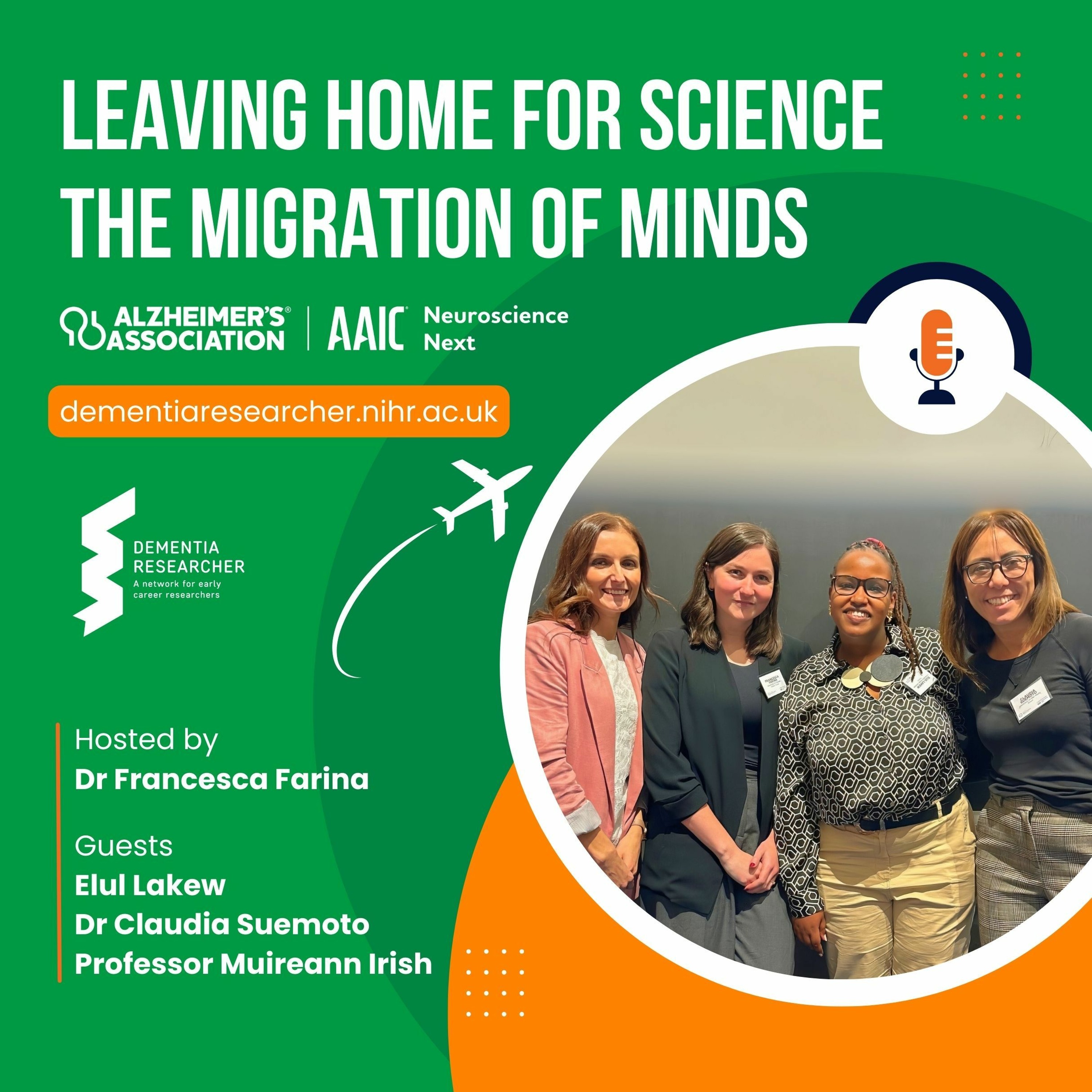
Ep 258Leaving Home for Science: The Migration of Minds - LIVE from #AAICNeuro
This special episode of the Dementia Researcher Podcast was recorded live in front of an audience at the AAIC Neuroscience Next Conference at Trinity College Dublin.Dr Francesca Farina, a Senior Fellow at University of Chicago and the Global Brain Health Institute at Trinity College in Dublin, hosts a discussion on the topic of ‘leaving home for science’. The guests are Elul Lakew, a clinical psychologist and mental health advocate from Ethiopia, Dr Claudia Suemoto, an Associate Professor of Geriatrics at the University of Sao Paulo Medical School in Brazil, and Muireann Irish, a Professor of Cognitive Neuroscience at the University of Sydney.They discuss the challenges and benefits of moving for work, what motivated them, the importance of mentorship and collaboration, and the impact of cultural differences on their experiences. They also touch on the issue of "academic brain drain" and the potential future of international mobility in research.A transcript of this show, links and show notes and profile on all our guests are available on our website at https://www.dementiaresearcher.nihr.ac.uk.If you prefer to watch rather than listen, you will find a video version of this podcast on YouTube, on our website, and in selected podcast platforms.Follow us on social media:https://www.instagram.com/dementia_researcher/ https://www.facebook.com/Dementia.Researcher/https://www.twitter.com/demrescommunityhttps://www.linkedin.com/company/dementia-researcher https://bsky.app/profile/dementiaresearcher.bsky.socialDownload and Register with our Community App:https://www.onelink.to/dementiaresearcherWe gratefully acknowledge the support of our funders: Alzheimer’s Association, Race Against Dementia, Alzheimer’s Research UK, Alzheimer’s Society, and the National Institute for Health and Care Research.The views and opinions expressed by guests in this podcast are their own and do not necessarily reflect those of the producers, funders, or sponsors.Subscribe to our sister show 'Dementia Researcher The Blogs':https://podfollow.com/dementia-researcher-blogs

Ep 257Exploring Equity, Diversity & Inclusion
In this podcast, Dr Jodi Watt, a postdoc at the University of Glasgow, discusses the importance of Equity, Diversity, and Inclusion (EDI) in research and academia with Dr Hamied Haroon and Dr Nikou Damestani.They explore the challenges faced by individuals from diverse backgrounds in academia, the importance of allyship, and the need for more representation in research. They also highlight the impact of EDI on patients and the importance of considering diverse populations in research studies.A key feature… the need for kindness and empathy in the scientific community and the importance of creating safe spaces for open discussions about EDI.A transcript of this show, links and show notes and profile on all our guests are available on our website at https://www.dementiaresearcher.nihr.ac.uk.If you prefer to watch rather than listen, you will find a video version of this podcast on YouTube, on our website, and in selected podcast platforms.Follow us on social media:https://www.instagram.com/dementia_researcher/ https://www.facebook.com/Dementia.Researcher/https://www.twitter.com/demrescommunityhttps://www.linkedin.com/company/dementia-researcher https://bsky.app/profile/dementiaresearcher.bsky.socialDownload and Register with our Community App:https://www.onelink.to/dementiaresearcherWe gratefully acknowledge the support of our funders: Alzheimer’s Association, Race Against Dementia, Alzheimer’s Research UK, Alzheimer’s Society, and the National Institute for Health and Care Research.The views and opinions expressed by guests in this podcast are their own and do not necessarily reflect those of the producers, funders, or sponsors.Subscribe to our sister show 'Dementia Researcher The Blogs':https://podfollow.com/dementia-researcher-blogs
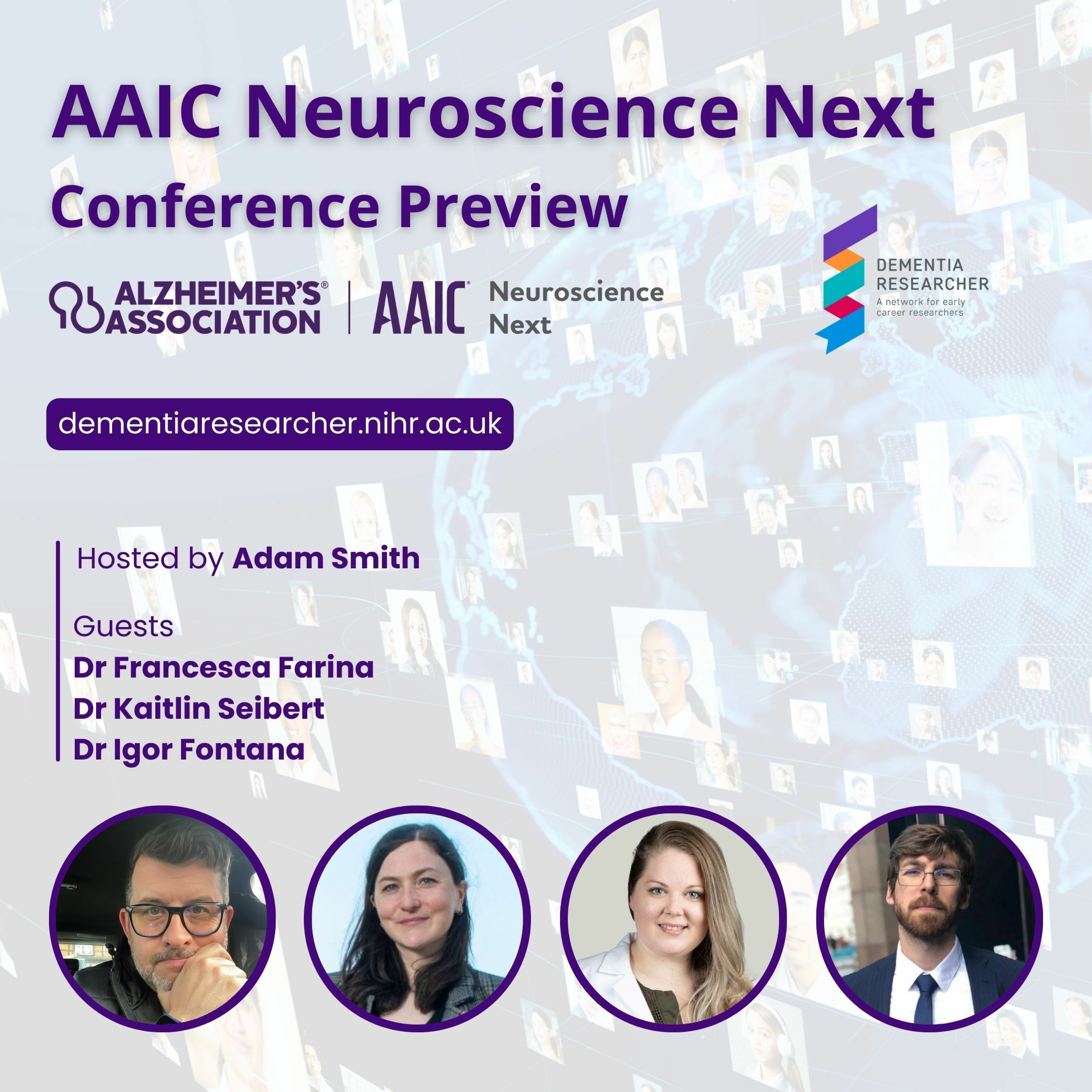
Ep 256AAIC Neuroscience Next Conference Preview
In this podcast we learn what to expect from the upcoming AAIC Neuroscience Next Conference, a global, no-cost event that aims to support and showcase the next generation of Alzheimer’s and dementia researchers and clinicians.Adam Smith, Dementia Researcher Programme Director is join by some of the people behind making it all happen.Dr Igor Fontana, Alzheimer’s Association Director, Scientific Conference Programming. Dr Francesca Farina, Assistant Professor at the University of Chicago and Global Brain Health Institute at Trinity College Dublin, and Dr Kaitlin Seibert, Assistant Professor of Neurology also at University of Chicago.This unique conference works on an innovative "hybrid hub" format that connects both global and local communities. With elements being in-person and online, and full in-person from hubs in the USA, Ireland, India, Ethiopia, Brazil and Serbia.A transcript of this show, links and show notes and profile on all our guests are available on our website at https://www.dementiaresearcher.nihr.ac.uk.If you prefer to watch rather than listen, you will find a video version of this podcast on YouTube, on our website, and in selected podcast platforms.Follow us on social media:https://www.instagram.com/dementia_researcher/ https://www.facebook.com/Dementia.Researcher/https://www.twitter.com/demrescommunityhttps://www.linkedin.com/company/dementia-researcher https://bsky.app/profile/dementiaresearcher.bsky.socialDownload and Register with our Community App:https://www.onelink.to/dementiaresearcherWe gratefully acknowledge the support of our funders: Alzheimer’s Association, Race Against Dementia, Alzheimer’s Research UK, Alzheimer’s Society, and the National Institute for Health and Care Research.The views and opinions expressed by guests in this podcast are their own and do not necessarily reflect those of the producers, funders, or sponsors.Subscribe to our sister show 'Dementia Researcher The Blogs':https://podfollow.com/dementia-researcher-blogs
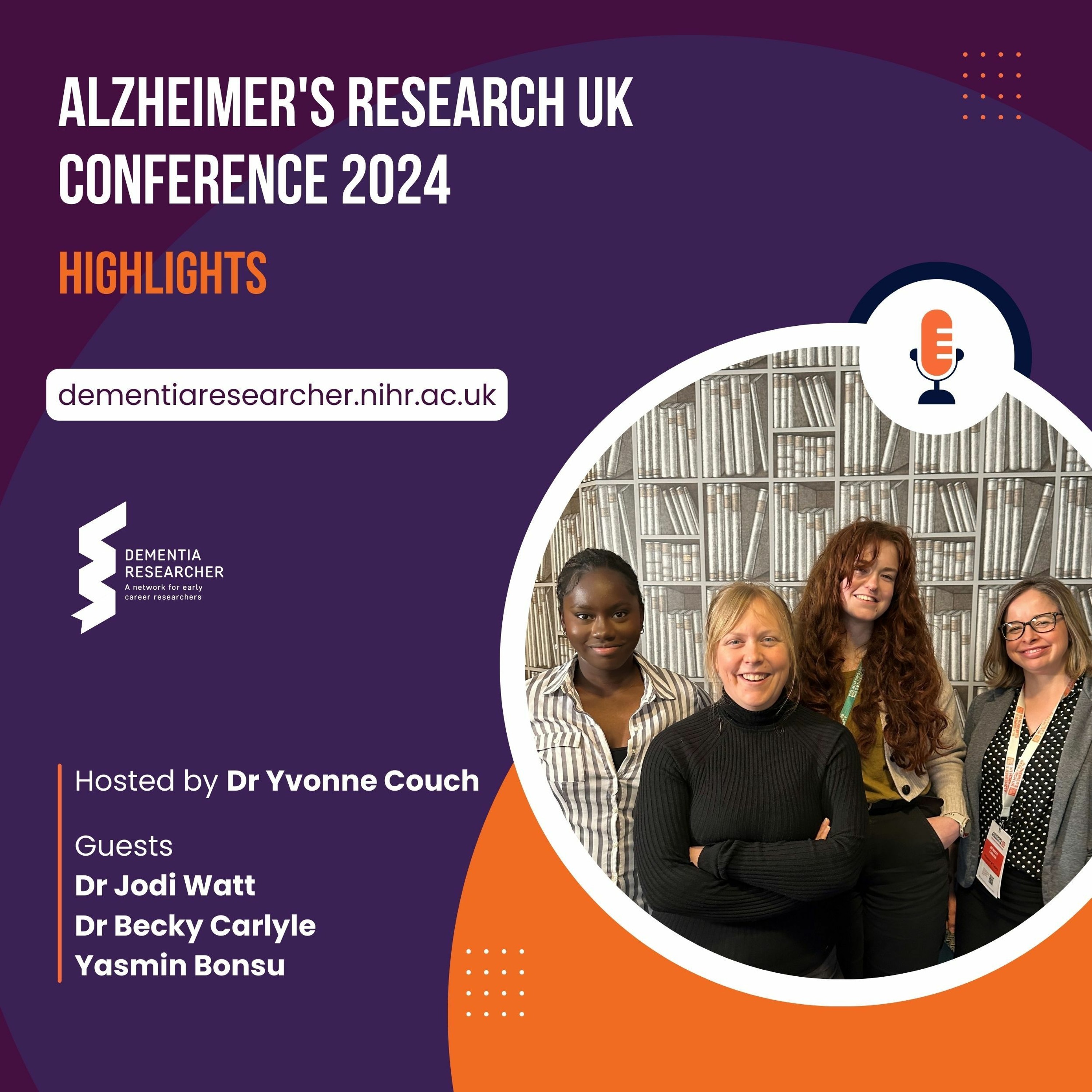
Ep 255Alzheimer's Research UK Conference Roundup 2024
Last week we were in Liverpool for this years Alzheimer’s Research UK Conference. Hearing from researchers talking about their work and to learn about the latest discoveries in dementia research.In the show guest host Dr Yvonne Couch the University of Oxford talks with Dr Becky Carlyle, Alzheimer’s Research UK Senior Research Fellow & Yasmin Bonsu, Undergraduate placement Student both from the University of Oxford and Dr Jodi Watt, Postdoctoral Research Analyst from University of Glasgow.A transcript of this show, links and show notes and profile on all our guests are available on our website at https://www.dementiaresearcher.nihr.ac.uk.If you prefer to watch rather than listen, you will find a video version of this podcast on YouTube, on our website, and in selected podcast platforms.Follow us on social media:https://www.instagram.com/dementia_researcher/ https://www.facebook.com/Dementia.Researcher/https://www.twitter.com/demrescommunityhttps://www.linkedin.com/company/dementia-researcher https://bsky.app/profile/dementiaresearcher.bsky.socialDownload and Register with our Community App:https://www.onelink.to/dementiaresearcherWe gratefully acknowledge the support of our funders: Alzheimer’s Association, Race Against Dementia, Alzheimer’s Research UK, Alzheimer’s Society, and the National Institute for Health and Care Research.The views and opinions expressed by guests in this podcast are their own and do not necessarily reflect those of the producers, funders, or sponsors.Subscribe to our sister show 'Dementia Researcher The Blogs':https://podfollow.com/dementia-researcher-blogs
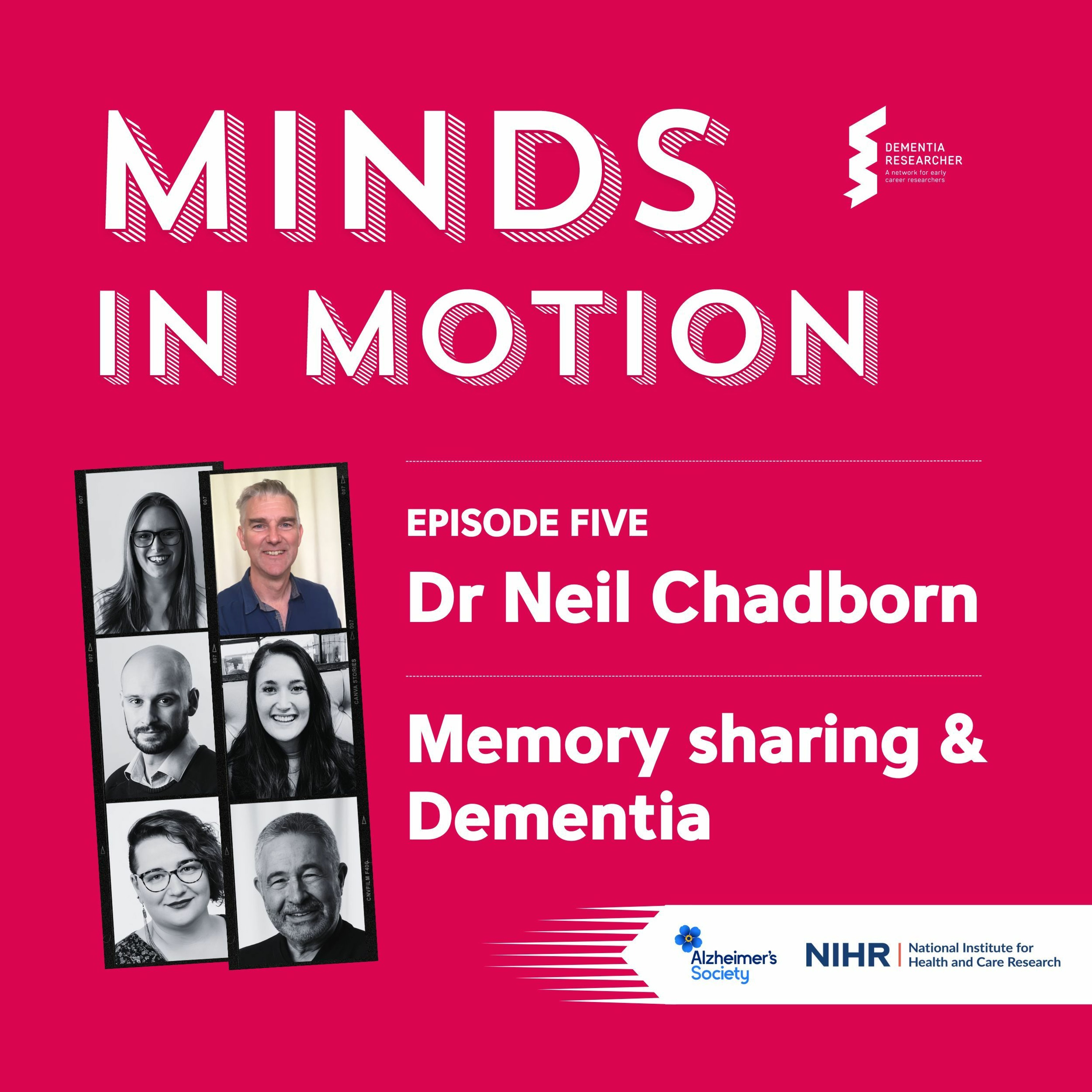
Ep 254Minds In Motion: Dr Neil Chadborn - Memory Sharing & Dementia
The Minds in Motion Podcast from Dementia Researcher in association with the NIHR Applied Research Collaborations and Alzheimer’s Society, brings together NIHR Dem Comm Research Fellows, to talk about their research and careers.In this first series, five of the Dem Comm Fellows each take a turn as co-host and guest. Alongside the researchers we have the incredible Trevor Salomon, Alzheimer’s Society Volunteer & Vice-Chairperson of the European Dementia Carers Working Group as our permanent co-host and anchor.In this last show of the season Trevor is joined by Dr Megan Polden from the University of Liverpool and NIHR Applied Research Collaboration (ARC) North West Coast to interview Dr Neil Chadborn.Neil (who you will remember from episode one) works at the University of Nottingham and NIHR ARC East Midlands. He is leading work to explore the benefits of intergenerational story telling as a way to connect people living with dementia, with a particular focus on those from minority ethnic backgrounds and the South Asian Community.A transcript of this show, links and show notes and profile on all our guests are available on our website at https://www.dementiaresearcher.nihr.ac.uk.If you prefer to watch rather than listen, you will find a video version of this podcast on YouTube, on our website, and in selected podcast platforms.Follow us on social media:https://www.instagram.com/dementia_researcher/ https://www.facebook.com/Dementia.Researcher/https://www.twitter.com/demrescommunityhttps://www.linkedin.com/company/dementia-researcher https://bsky.app/profile/dementiaresearcher.bsky.socialDownload and Register with our Community App:https://www.onelink.to/dementiaresearcherWe gratefully acknowledge the support of our funders: Alzheimer’s Association, Race Against Dementia, Alzheimer’s Research UK, Alzheimer’s Society, and the National Institute for Health and Care Research.The views and opinions expressed by guests in this podcast are their own and do not necessarily reflect those of the producers, funders, or sponsors.Subscribe to our sister show 'Dementia Researcher The Blogs':https://podfollow.com/dementia-researcher-blogs
Ep 253Minds In Motion: Dr Megan Polden - Singing & Dancing Dementia Interventions
The Minds in Motion Podcast from Dementia Researcher in association with the NIHR Applied Research Collaborations and Alzheimer’s Society, brings together NIHR Dem Comm Research Fellows, to talk about their research and careers.In this first series, five of the Dem Comm Fellows each take a turn as co-host and guest. Alongside the researchers we have the incredible Trevor Salomon, Alzheimer’s Society Volunteer & Vice-Chairperson of the European Dementia Carers Working Group as our permanent co-host and anchor.In this show Trevor is joined by Dr Chris Poyner from the University of Birmingham and NIHR Applied Research Collaboration (ARC) West Midlands to interview Dr Megan Polden.Megan works at the University of Liverpool and NIHR ARC North West Coast. She is leading work to understand the benefits of singing and dancing interventions in dementia, and to understand how best these can be delivered in different settings and with people from different backgrounds.Dem Comm is a 3 year programme funded by the National Institute of Health and Care Research and the Alzheimer's Society. It supports a new generation of dementia research leaders, bringing together researchers from different multidisciplinary backgrounds to encourage cross-cutting and community-orientated dementia research projects that can address key gaps in the evidence around dementia care and support, delivering transformative translational research.A transcript of this show, links and show notes and profile on all our guests are available on our website at https://www.dementiaresearcher.nihr.ac.uk.If you prefer to watch rather than listen, you will find a video version of this podcast on YouTube, on our website, and in selected podcast platforms.Follow us on social media:https://www.instagram.com/dementia_researcher/ https://www.facebook.com/Dementia.Researcher/https://www.twitter.com/demrescommunityhttps://www.linkedin.com/company/dementia-researcher https://bsky.app/profile/dementiaresearcher.bsky.socialDownload and Register with our Community App:https://www.onelink.to/dementiaresearcherWe gratefully acknowledge the support of our funders: Alzheimer’s Association, Race Against Dementia, Alzheimer’s Research UK, Alzheimer’s Society, and the National Institute for Health and Care Research.The views and opinions expressed by guests in this podcast are their own and do not necessarily reflect those of the producers, funders, or sponsors.Subscribe to our sister show 'Dementia Researcher The Blogs':https://podfollow.com/dementia-researcher-blogs
Ep 252Minds In Motion: Dr Chris Poyner - Dementia Support in Rural Communities
The Minds in Motion Podcast from Dementia Researcher in association with the NIHR Applied Research Collaborations and Alzheimer’s Society, brings together NIHR Dem Comm Research Fellows, to talk about their research and careers.In this first series, five of the Dem Comm Fellows each take a turn as co-host and guest. Alongside the researchers we have the incredible Trevor Salomon, Alzheimer’s Society Volunteer & Vice-Chairperson of the European Dementia Carers Working Group as our permanent co-host and anchor.In this show Trevor is joined by Dr Rasa Mikelytė from University of Kent and NIHR ARC Kent, Surrey & Sussex to interview Dr Chris Poyner.Chris works at the University of Birmingham and NIHR ARC West Midlands. He is leading on a project exploring life in rural areas of the West Midlands with dementia. Exploring how people living in these communities access healthcare and get a diagnosis, and how they are supported following diagnosis, and what could be done better, and how this differs from those living in urban areas.Dem Comm is a 3 year programme funded by the National Institute of Health and Care Research and the Alzheimer's Society. It supports a new generation of dementia research leaders, bringing together researchers from different multidisciplinary backgrounds to encourage cross-cutting and community-orientated dementia research projects that can address key gaps in the evidence around dementia care and support, delivering transformative translational research.A transcript of this show, links and show notes and profile on all our guests are available on our website at https://www.dementiaresearcher.nihr.ac.uk.If you prefer to watch rather than listen, you will find a video version of this podcast on YouTube, on our website, and in selected podcast platforms.Follow us on social media:https://www.instagram.com/dementia_researcher/ https://www.facebook.com/Dementia.Researcher/https://www.twitter.com/demrescommunityhttps://www.linkedin.com/company/dementia-researcher https://bsky.app/profile/dementiaresearcher.bsky.socialDownload and Register with our Community App:https://www.onelink.to/dementiaresearcherWe gratefully acknowledge the support of our funders: Alzheimer’s Association, Race Against Dementia, Alzheimer’s Research UK, Alzheimer’s Society, and the National Institute for Health and Care Research.The views and opinions expressed by guests in this podcast are their own and do not necessarily reflect those of the producers, funders, or sponsors.Subscribe to our sister show 'Dementia Researcher The Blogs':https://podfollow.com/dementia-researcher-blogs
Ep 251Minds in Motion: Dr Rasa Mikelyte - Integrated Dementia Care
The Minds in Motion Podcast from Dementia Researcher in association with the NIHR Applied Research Collaborations and Alzheimer’s Society, brings together NIHR Dem Comm Research Fellows, to talk about their research and careers.In this first series, five of the Dem Comm Fellows each take a turn as co-host and guest. Alongside the researchers we have the incredible Trevor Salomon, Alzheimer’s Society Volunteer & Vice-Chairperson of the European Dementia Carers Working Group as our permanent co-host and anchor.In this show Trevor is joined by Dr Megan Rose Readman from The University of Liverpool and NIHR Applied Research Collaboration (ARC) North West Coast to interview Dr Rasa Mikelytė.Rasa works at the University of Kent and NIHR ARC Kent, Surrey & Sussex. Having previously specialised in end-of-life and social care, her research now focusses exploring integrated care pathways for people living with dementia. Joining up care leads to better outcomes for people. When local partners – the NHS, councils, voluntary sector, care homes and others – work together as integrated care, and we hear about this work.A transcript of this show, links and show notes and profile on all our guests are available on our website at https://www.dementiaresearcher.nihr.ac.uk.If you prefer to watch rather than listen, you will find a video version of this podcast on YouTube, on our website, and in selected podcast platforms.Follow us on social media:https://www.instagram.com/dementia_researcher/ https://www.facebook.com/Dementia.Researcher/https://www.twitter.com/demrescommunityhttps://www.linkedin.com/company/dementia-researcher https://bsky.app/profile/dementiaresearcher.bsky.socialDownload and Register with our Community App:https://www.onelink.to/dementiaresearcherWe gratefully acknowledge the support of our funders: Alzheimer’s Association, Race Against Dementia, Alzheimer’s Research UK, Alzheimer’s Society, and the National Institute for Health and Care Research.The views and opinions expressed by guests in this podcast are their own and do not necessarily reflect those of the producers, funders, or sponsors.Subscribe to our sister show 'Dementia Researcher The Blogs':https://podfollow.com/dementia-researcher-blogs

Ep 250Minds In Motion: Dr Megan Readman - Hearing Loss & Dementia
The Minds in Motion Podcast from Dementia Researcher in association with the NIHR Applied Research Collaborations and Alzheimer’s Society, brings together NIHR Dem Comm Research Fellows, to talk about their research and careers.In this first series, five of the Dem Comm Fellows each take a turn as co-host and guest. Alongside the researchers we have the incredible Trevor Salomon, Alzheimer’s Society Volunteer & Vice-Chairperson of the European Dementia Carers Working Group as our permanent co-host and anchor.In this show Trevor is joined by Dr Neil Chadborn from University of Nottingham and NIHR Applied Research Collaboration (ARC) East Midlands to interview Dr Megan Rose Readman.Megan works at the University of Liverpool and NIHR ARC North West Coast. She discusses her research to understand the connections between hearing loss and atypical types of dementia, specifically Parkinson’s Disease Dementia and Lewy Body Dementia. We also get her career tips, and explore how people living with dementia’s lives are affected by hearing and what can be improved.Dem Comm is a 2 year programme funded by the National Institute of Health and Care Research and the Alzheimer's Society. It supports a new generation of dementia research leaders, bringing together researchers from different multidisciplinary backgrounds to encourage cross-cutting and community-orientated dementia research projects that can address key gaps in the evidence around dementia care and support, delivering transformative translational research.A transcript of this show, links and show notes and profile on all our guests are available on our website at https://www.dementiaresearcher.nihr.ac.uk.If you prefer to watch rather than listen, you will find a video version of this podcast on YouTube, on our website, and in selected podcast platforms.Follow us on social media:https://www.instagram.com/dementia_researcher/ https://www.facebook.com/Dementia.Researcher/https://www.twitter.com/demrescommunityhttps://www.linkedin.com/company/dementia-researcher https://bsky.app/profile/dementiaresearcher.bsky.socialDownload and Register with our Community App:https://www.onelink.to/dementiaresearcherWe gratefully acknowledge the support of our funders: Alzheimer’s Association, Race Against Dementia, Alzheimer’s Research UK, Alzheimer’s Society, and the National Institute for Health and Care Research.The views and opinions expressed by guests in this podcast are their own and do not necessarily reflect those of the producers, funders, or sponsors.Subscribe to our sister show 'Dementia Researcher The Blogs':https://podfollow.com/dementia-researcher-blogs
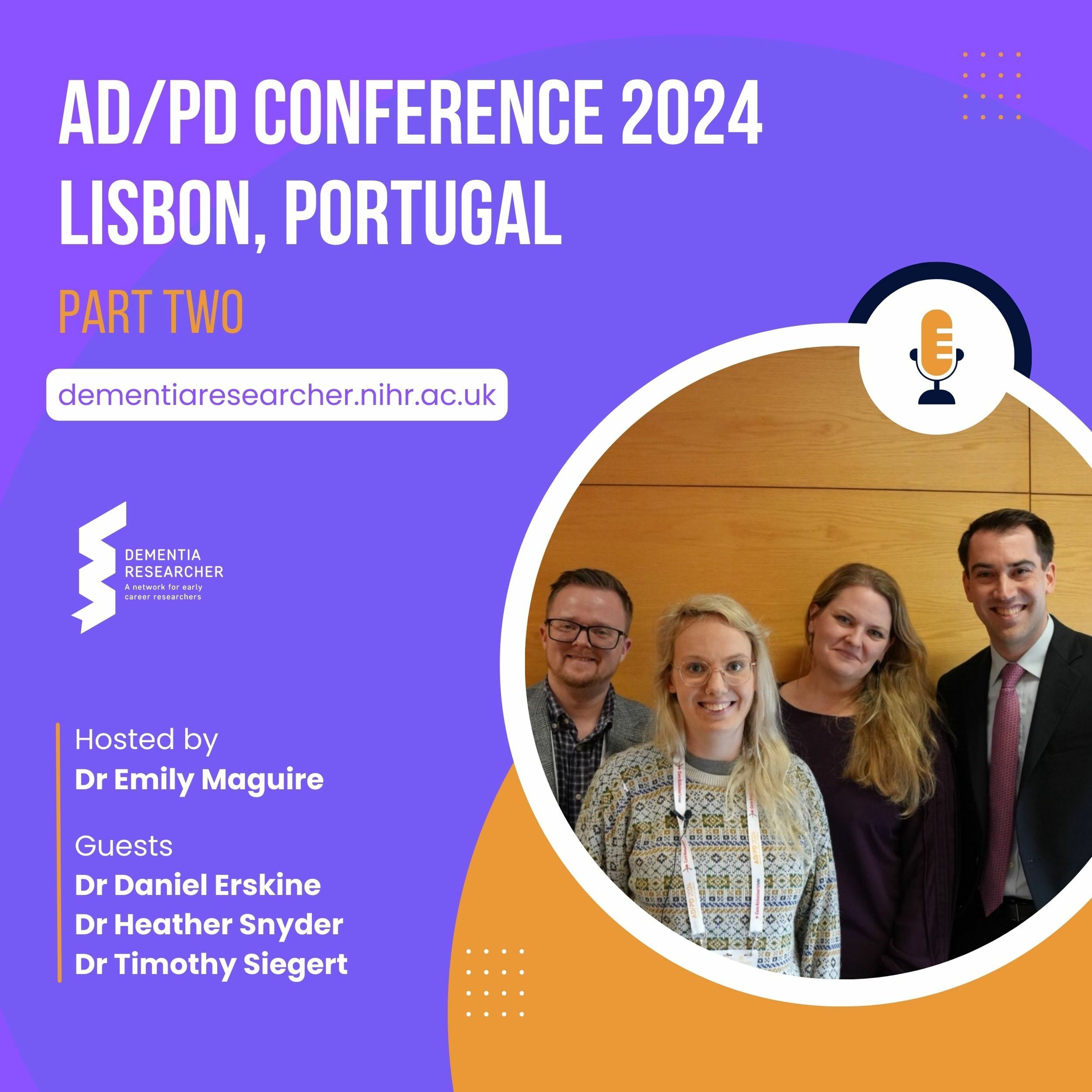
Ep 249ADPD 2024 Conference Highlights - Part 2
This year's AD/PD Conference was held in Lisbon, Portugal from the 5th to 9th March. In this second of a two-part special we bring you highlights from the last few days of the conference.The AD/PD Conference focuses on basic science and translational and clinical research bringing New insights on disease mechanisms and etiologies, the latest findings from clinical trials, innovative outlooks on therapy and prevention and advances in diagnostic markers.In this special on-location recording our guest host Dr Emily Maguire, Senior Research Associate from the UK Dementia Research Institute at Cardiff University talks with:Dr Daniel Erskine, Senior Lecturer at Newcastle University. Dr Heather Snyder, Alzheimer's Association Vice President, Medical & Scientific Relations & Dr Timothy Siegert, Co-Founder, President & COO of Allyx Therapeutics.A transcript of this show, links and show notes and profile on all our guests are available on our website at https://www.dementiaresearcher.nihr.ac.uk.If you prefer to watch rather than listen, you will find a video version of this podcast on YouTube, on our website, and in selected podcast platforms.Follow us on social media:https://www.instagram.com/dementia_researcher/ https://www.facebook.com/Dementia.Researcher/https://www.twitter.com/demrescommunityhttps://www.linkedin.com/company/dementia-researcher https://bsky.app/profile/dementiaresearcher.bsky.socialDownload and Register with our Community App:https://www.onelink.to/dementiaresearcherWe gratefully acknowledge the support of our funders: Alzheimer’s Association, Race Against Dementia, Alzheimer’s Research UK, Alzheimer’s Society, and the National Institute for Health and Care Research.The views and opinions expressed by guests in this podcast are their own and do not necessarily reflect those of the producers, funders, or sponsors.Subscribe to our sister show 'Dementia Researcher The Blogs':https://podfollow.com/dementia-researcher-blogs