Dementia Researcher
354 episodes — Page 4 of 8

Ep 201Update from the Dementia Research Charity Chatathon
Adam Smith is back to let you know that the Dementia Research Charity Chatathon was a great success.Over 2,500 people joined the livestream of have watched back since, and almost £1100 has been raised. You can find links to all the recordings at:https://www.chatathon.ukIf you prefer to listen... all the sessions have been converted to audio and put in their own dedicated podcast.

Ep 200Food for Thought - Brain-Healthy Foods with Dr Michael Greger
Dr Sam Moxon, Research Associate from the University of Manchester brings us another podcast in his ‘Food for Thought’ series – exploring the connections between what we eat and nutrition, dementia, cognition, and brain health. In this show he interviews world leading expert and best-selling author Dr Michael Greger MD.A founding member and Fellow of the American College of Lifestyle Medicine, Michael Greger, M.D., is a physician and internationally recognized speaker on nutrition. His science-based non-profit website, NutritionFacts.org, offers a free online portal hosting more than 2,000 videos and articles on myriad health topics. Dr Greger is a sought-after lecturer and has presented at the Conference on World Affairs and the World Bank, testified before Congress, and was invited as an expert witness in Oprah Winfrey’s defence in the infamous “meat defamation” trial. A graduate of Cornell University School of Agriculture and Tufts University School of Medicine. Dr Greger is also an acclaimed author. How Not to Die, The How Not to Die Cookbook, and How Not to Diet became instant New York Times Best Sellers. More than a million copies of How Not to Die have been sold. All proceeds he receives from the sales of his books and speaking honoraria are donated directly to charity.For more information on Michael and his brilliant work visit:nutritionfacts.orgA transcript of this show, links and show notes and profile on all our guests are available on our website at https://www.dementiaresearcher.nihr.ac.uk.If you prefer to watch rather than listen, you will find a video version of this podcast on YouTube, on our website, and in selected podcast platforms.Follow us on social media:https://www.instagram.com/dementia_researcher/ https://www.facebook.com/Dementia.Researcher/https://www.twitter.com/demrescommunityhttps://www.linkedin.com/company/dementia-researcher https://bsky.app/profile/dementiaresearcher.bsky.socialDownload and Register with our Community App:https://www.onelink.to/dementiaresearcherWe gratefully acknowledge the support of our funders: Alzheimer’s Association, Race Against Dementia, Alzheimer’s Research UK, Alzheimer’s Society, and the National Institute for Health and Care Research.The views and opinions expressed by guests in this podcast are their own and do not necessarily reflect those of the producers, funders, or sponsors.Subscribe to our sister show 'Dementia Researcher The Blogs':https://podfollow.com/dementia-researcher-blogs
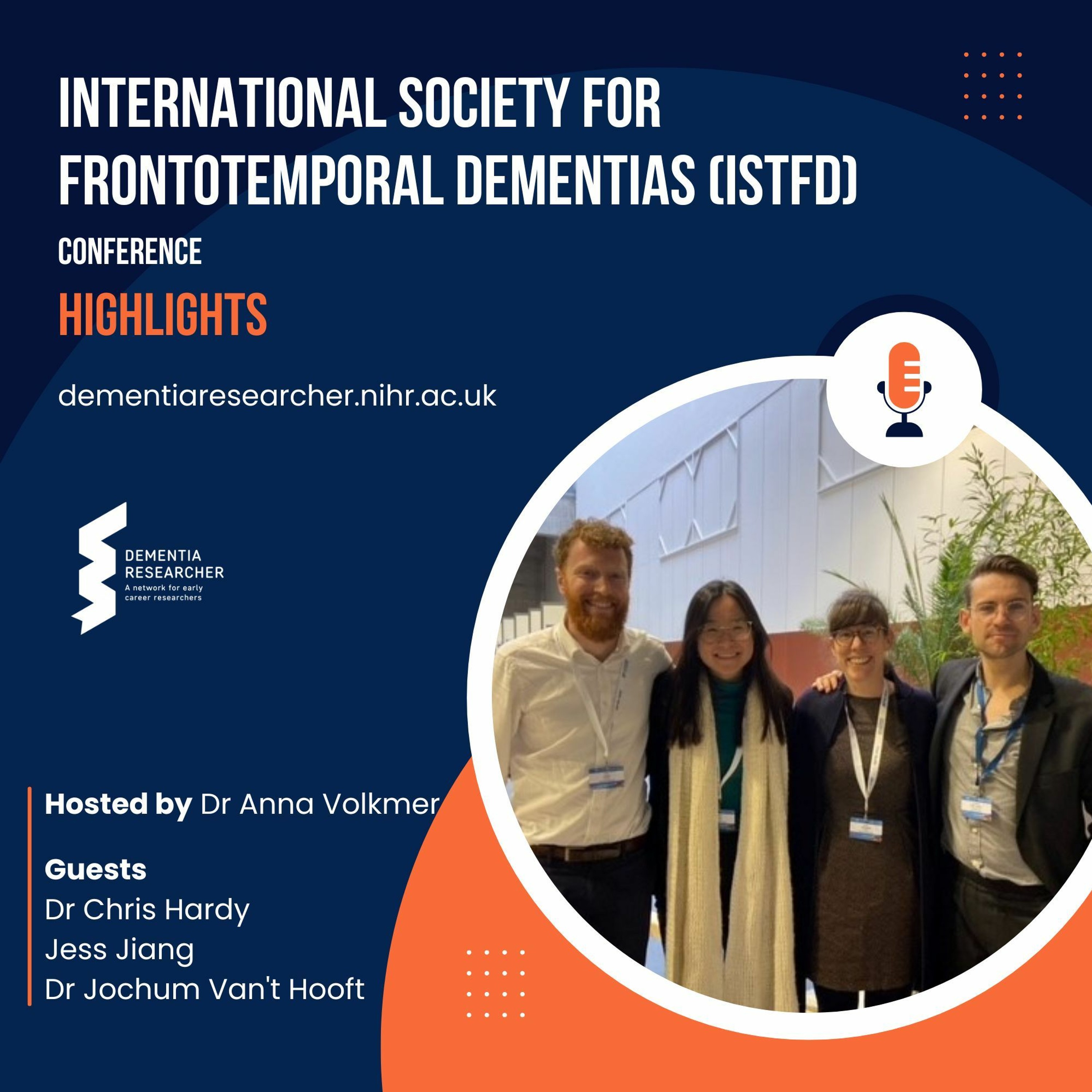
Ep 199ISFTD Conference 2022 Highlights
In this podcast we bring you highlights from the International Society for Frontotemporal Dementias (ISFD) Conference, which was held in Lille, France from the 2nd – 5th November 2022.Regular Guest Host Dr Anna Volkmer talks with Dr Chris Hardy, Jess Jiang and Dr Jochum Van’t Hooft all from University College London discussing their work, and what they’re taking away from this year’s conference.The International Society for Frontotemporal Dementias is a non-profit scientific society focused on frontotemporal dementias. Members include the leaders in FTD research around the world, and the society is associated with a large, international biannual meeting presenting the latest findings.For more information visit:isftd.orgA transcript of this show, links and show notes and profile on all our guests are available on our website at https://www.dementiaresearcher.nihr.ac.uk.If you prefer to watch rather than listen, you will find a video version of this podcast on YouTube, on our website, and in selected podcast platforms.Follow us on social media:https://www.instagram.com/dementia_researcher/ https://www.facebook.com/Dementia.Researcher/https://www.twitter.com/demrescommunityhttps://www.linkedin.com/company/dementia-researcher https://bsky.app/profile/dementiaresearcher.bsky.socialDownload and Register with our Community App:https://www.onelink.to/dementiaresearcherWe gratefully acknowledge the support of our funders: Alzheimer’s Association, Race Against Dementia, Alzheimer’s Research UK, Alzheimer’s Society, and the National Institute for Health and Care Research.The views and opinions expressed by guests in this podcast are their own and do not necessarily reflect those of the producers, funders, or sponsors.Subscribe to our sister show 'Dementia Researcher The Blogs':https://podfollow.com/dementia-researcher-blogs

Ep 198Dementia Research Charity #Chatathon - 2nd December
Adam Smith asked us to interupt our usual schedule to bring you some special news... The 2022 Dementia Research Charity Chatathon LIVE will take place on Friday 2nd December.Adam will host 12+ hours non-stop chat with over 60 researchers and special guests working accross all areas of discovery to beat Alzheimer's disease and all forms of dementia. Raising money for Alzheimer's Research UK, Alzheimer's Society, Race Against Dementia and The Lewy Body Society and providing insights into the latest research taking place across the UK and Worldwide.A transcript of this show, links and show notes and profile on all our guests are available on our website at https://www.dementiaresearcher.nihr.ac.uk.If you prefer to watch rather than listen, you will find a video version of this podcast on YouTube, on our website, and in selected podcast platforms.Follow us on social media:https://www.instagram.com/dementia_researcher/ https://www.facebook.com/Dementia.Researcher/https://www.twitter.com/demrescommunityhttps://www.linkedin.com/company/dementia-researcher https://bsky.app/profile/dementiaresearcher.bsky.socialDownload and Register with our Community App:https://www.onelink.to/dementiaresearcherWe gratefully acknowledge the support of our funders: Alzheimer’s Association, Race Against Dementia, Alzheimer’s Research UK, Alzheimer’s Society, and the National Institute for Health and Care Research.The views and opinions expressed by guests in this podcast are their own and do not necessarily reflect those of the producers, funders, or sponsors.Subscribe to our sister show 'Dementia Researcher The Blogs':https://podfollow.com/dementia-researcher-blogs
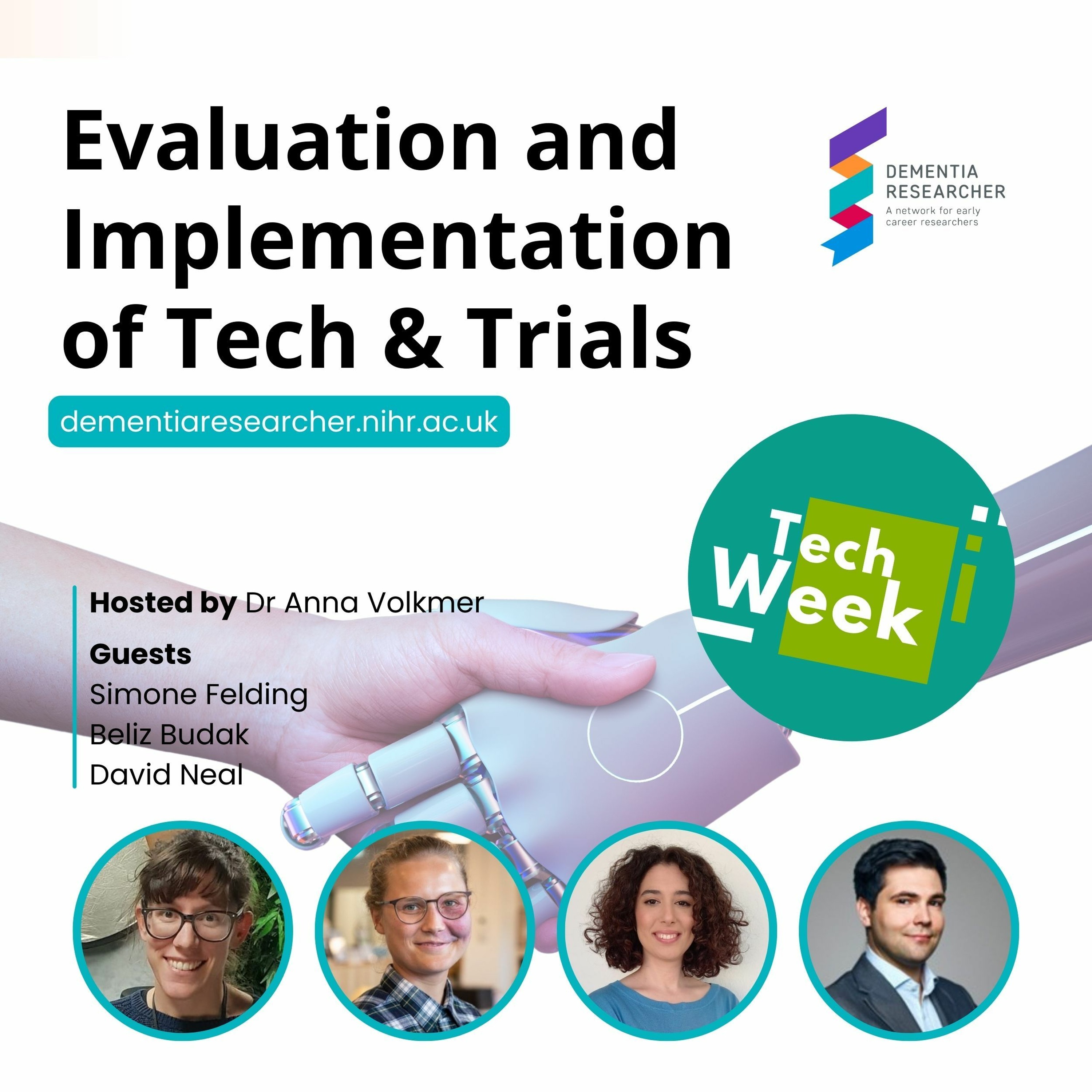
Ep 197Evaluation and Implementation of Tech & Trials
Technology & Dementia Week Special – Episode Three – Evaluation & Implementation of Tech & Trials. So, you have done the research, found a tech intervention that could help people… what next?This week we turn the spotlight on tech and dementia research, we have three special podcasts (released on Monday, Wednesday, and Friday), numerous blogs from people researching and using the latest technologies, and updates on the wider field.Our podcasts have all been recorded with early career researchers working across Europe, undertaking research projects aiming to improve the lives of people with dementia and their carers through technology and from the DISTINCT Programme (Dementia: Intersectorial Strategy for Training and Innovation Network for Current Technology).In this show guest host Dr Anna Volkmer talks to Simone Felding and Kübra Beliz Budak from the German Centre for Neurodegenerative Diseases (DZNE), and Dr David Neal from Amsterdam University Medical Centre.In addition to exploring evaluation and delivery, each guest shares information on their own projects:Simone is interested in the anthropology of health her work focusses on observing how a social robot interacts with people with dementia living in nursing homes, which is linked to how social robots are implemented in long-term care.Kubra is a Psychologist by training. She is interested in the implementation processes of Active Assistive Living (AAL) technology to enhance psychosocial well-being of people with dementia.David originally worked as an NHS doctor, and is founder of health tech start-up Vesalian. David is carrying out a randomized controlled trial of the FindMyApps intervention (FMA). FMA is designed to support people with mild cognitive impairment and dementia to use tablet computers, with the aim of increasing social participation and self-efficacy.For more information on DISTINCT and guests projects visit: https://www.dementiadistinct.com/A transcript of this show, links and show notes and profile on all our guests are available on our website at https://www.dementiaresearcher.nihr.ac.uk.If you prefer to watch rather than listen, you will find a video version of this podcast on YouTube, on our website, and in selected podcast platforms.Follow us on social media:https://www.instagram.com/dementia_researcher/ https://www.facebook.com/Dementia.Researcher/https://www.twitter.com/demrescommunityhttps://www.linkedin.com/company/dementia-researcher https://bsky.app/profile/dementiaresearcher.bsky.socialDownload and Register with our Community App:https://www.onelink.to/dementiaresearcherWe gratefully acknowledge the support of our funders: Alzheimer’s Association, Race Against Dementia, Alzheimer’s Research UK, Alzheimer’s Society, and the National Institute for Health and Care Research.The views and opinions expressed by guests in this podcast are their own and do not necessarily reflect those of the producers, funders, or sponsors.Subscribe to our sister show 'Dementia Researcher The Blogs':https://podfollow.com/dementia-researcher-blogs
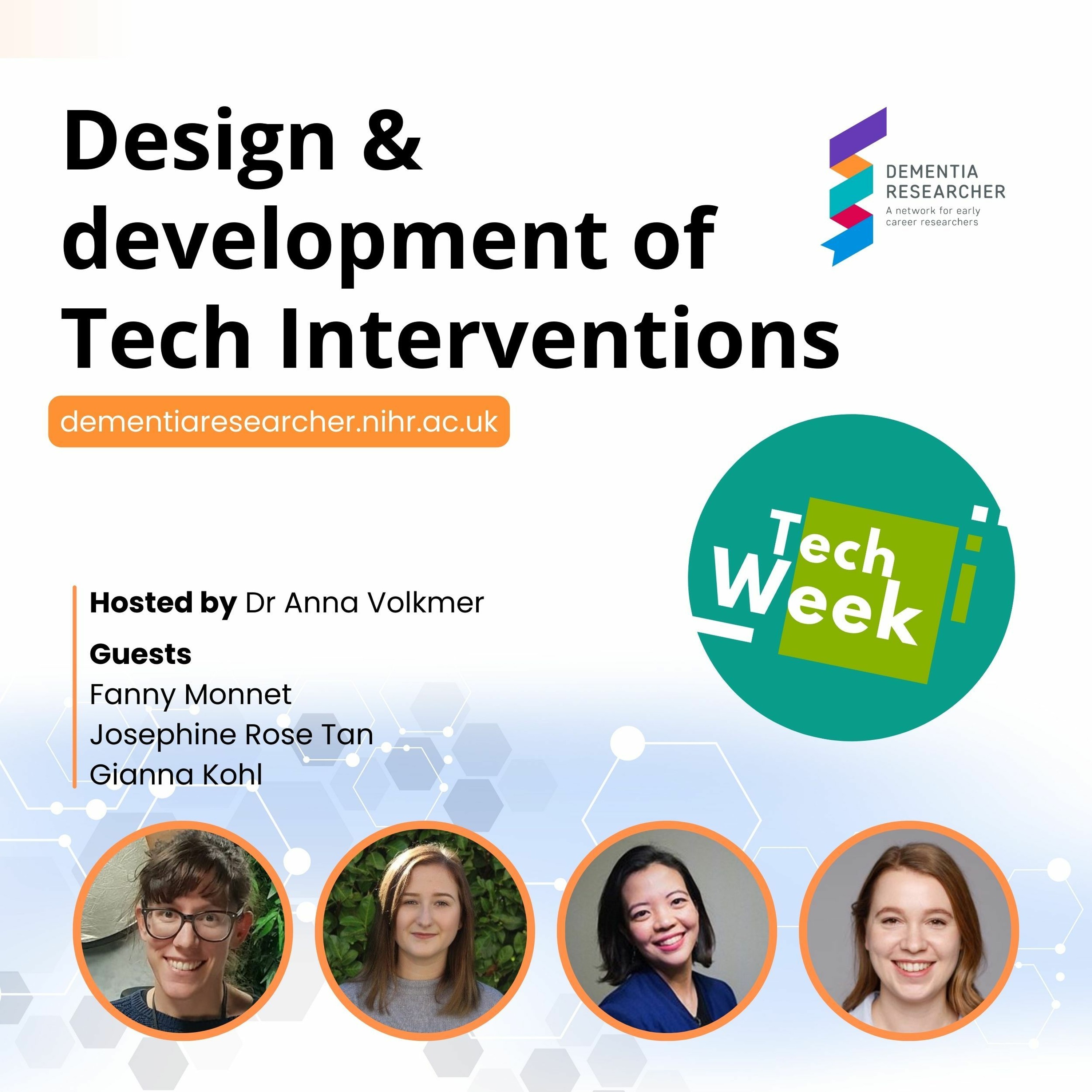
Ep 196Design & development of Tech Interventions
Technology & Dementia Week Special – Episode Two – Learning about the Design & development of Tech Interventions. Exploring the challenges and practicalities of how to set-up and deliver a tech and dementia intervention trial.This week we turn the spotlight on tech and dementia research, we have three special podcasts (released on Monday, Wednesday, and Friday), numerous blogs from people researching and using the latest technologies, and updates on the wider field.Our podcasts have all been recorded with early career researchers working across Europe, undertaking research projects aiming to improve the lives of people with dementia and their carers through technology and from the DISTINCT Programme (Dementia: Intersectorial Strategy for Training and Innovation Network for Current Technology).In this show guest host Dr Anna Volkmer talks to Fanny Monnet from Vrije Universiteit Brussel, Josephine Rose Tan from Amsterdam University Medical Centre and Gianna Kohl from University College London.In addition to the overview, each guest shares information on their own projects:Fanny is researching an interactive website for advance care planning (ACP) for people with dementia and their family.Josephine is a health psychologist evaluating the effectiveness of a person-centred touch-screen based photo-activity for people with advanced dementia.Gianna is researching the use of technology in disclosure of dementia by the diagnosed individual to their social networks.For more information on DISTINCT and guests projects visit: https://www.dementiadistinct.com/A transcript of this show, links and show notes and profile on all our guests are available on our website at https://www.dementiaresearcher.nihr.ac.uk.If you prefer to watch rather than listen, you will find a video version of this podcast on YouTube, on our website, and in selected podcast platforms.Follow us on social media:https://www.instagram.com/dementia_researcher/ https://www.facebook.com/Dementia.Researcher/https://www.twitter.com/demrescommunityhttps://www.linkedin.com/company/dementia-researcher https://bsky.app/profile/dementiaresearcher.bsky.socialDownload and Register with our Community App:https://www.onelink.to/dementiaresearcherWe gratefully acknowledge the support of our funders: Alzheimer’s Association, Race Against Dementia, Alzheimer’s Research UK, Alzheimer’s Society, and the National Institute for Health and Care Research.The views and opinions expressed by guests in this podcast are their own and do not necessarily reflect those of the producers, funders, or sponsors.Subscribe to our sister show 'Dementia Researcher The Blogs':https://podfollow.com/dementia-researcher-blogs
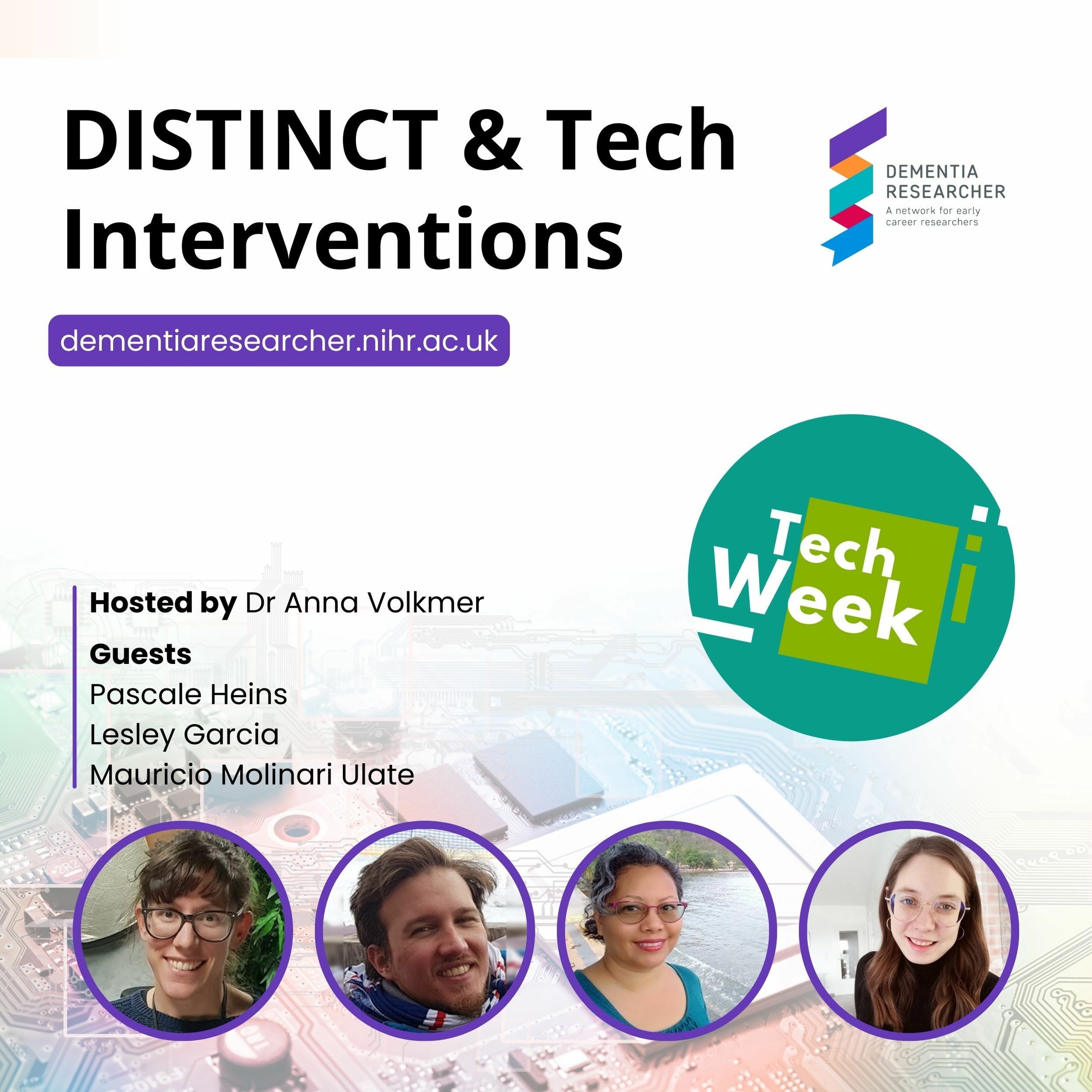
Ep 195DISTINCT & Tech Interventions
Technology & Dementia Week Special – Episode One – Learning about the DISTINCT Programme and tech in dementia research.This week we turn the spotlight on tech and dementia research, we have three special podcasts (released on Monday, Wednesday, and Friday), numerous blogs from people researching and using the latest technologies, and updates on the wider field.Our podcasts have all been recorded with early career researchers working across Europe, undertaking research projects aiming to improve the lives of people with dementia and their carers through technology and from the DISTINCT Programme (Dementia: Intersectorial Strategy for Training and Innovation Network for Current Technology).In this show guest host Dr Anna Volkmer talks to Pascale Heins from Maastricht University, Lesley Garcia from University of Nottingham and Mauricio Molinari Ulate from University of Salamanca.In addition to the overview, each guest shares information on their own projects:Pascale is working on improving social participation in dementia with the Geographic Information system-based intervention ‘Viamigo’.Mauricio is exploring psychosocial applications of technology for health and wellness, with coaching of older adults with dementia and mild cognitive impairment and their carers in rural areas.Lesley is an Occupational Therapist adapting recovery-oriented approaches and technology use in dementia.For more information on DISTINCT and guests projects visit: https://www.dementiadistinct.com/A transcript of this show, links and show notes and profile on all our guests are available on our website at https://www.dementiaresearcher.nihr.ac.uk.If you prefer to watch rather than listen, you will find a video version of this podcast on YouTube, on our website, and in selected podcast platforms.Follow us on social media:https://www.instagram.com/dementia_researcher/ https://www.facebook.com/Dementia.Researcher/https://www.twitter.com/demrescommunityhttps://www.linkedin.com/company/dementia-researcher https://bsky.app/profile/dementiaresearcher.bsky.socialDownload and Register with our Community App:https://www.onelink.to/dementiaresearcherWe gratefully acknowledge the support of our funders: Alzheimer’s Association, Race Against Dementia, Alzheimer’s Research UK, Alzheimer’s Society, and the National Institute for Health and Care Research.The views and opinions expressed by guests in this podcast are their own and do not necessarily reflect those of the producers, funders, or sponsors.Subscribe to our sister show 'Dementia Researcher The Blogs':https://podfollow.com/dementia-researcher-blogs
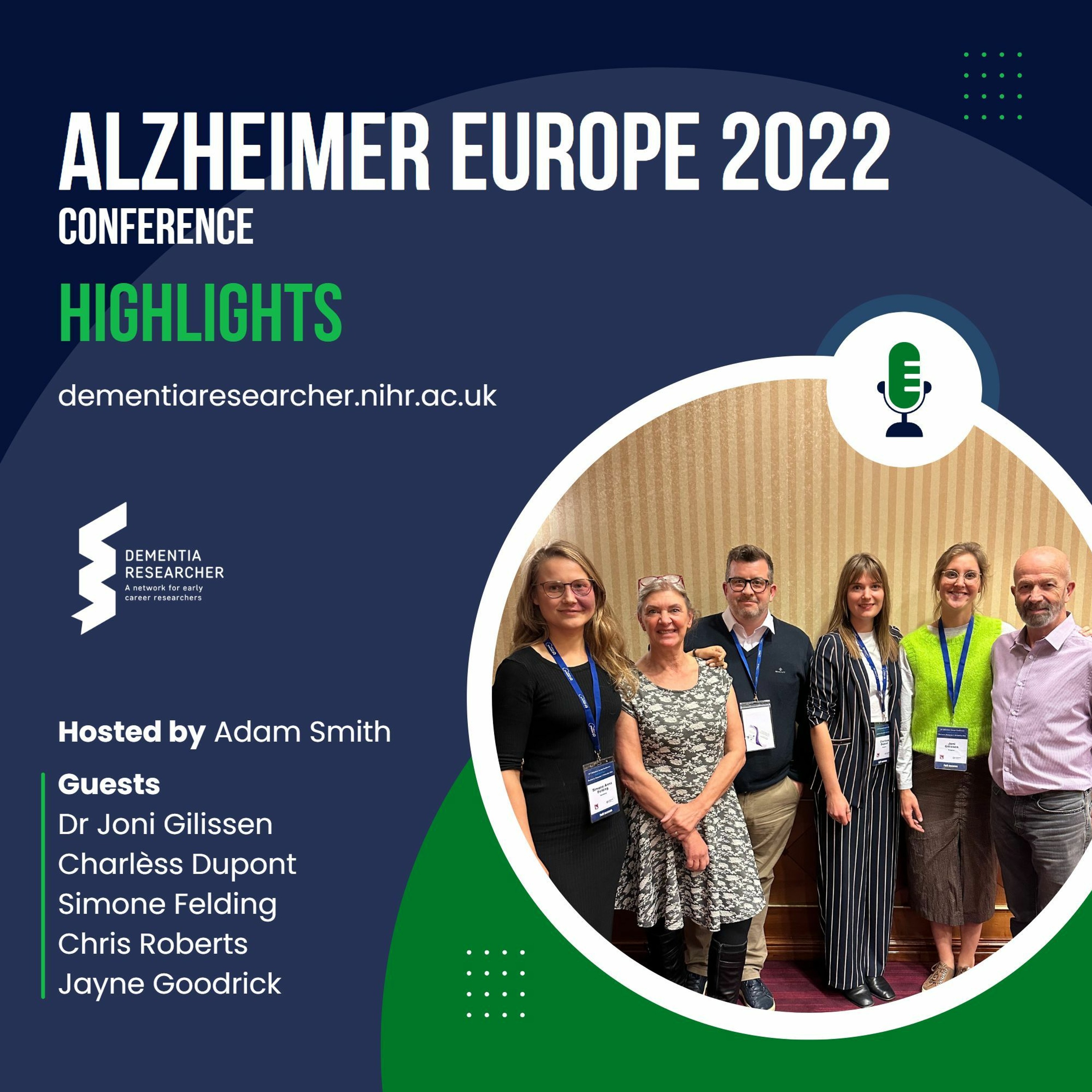
Ep 194Alzheimer Europe Conference Roundup 2022
Last week Adam Smith attended the 32nd Alzheimer Europe Conference in Bucharest, Romania. In this podcast Adam and his guests bring you highlights from the discussion and an informal chat around some of the issues being explored on the agenda.This week’s guests are husband and wife team – Chris Roberts, Chair of the European Working Group of People with Dementia, Jayne Goodrick, Dementia Carers Count Advisory Member. We also have three fantastic early career researchers, Dr Joni Gilissen & Charlèss Dupont from Vrije Universiteit Brussel and Simone Felding from DZNE, German Center for Neurodegenerative Diseases.In this great show we not only get the highlights from our researchers, but we have the privilege of getting first-hand commentary from Chris and Jane, whose personal experience of living with dementia and its impact on their lives, provides a unique, thought provoking, often moving, and essential perspective.This year’s conference was held under the motto “Building bridges”. As in previous years, this conference is one of the few in the diary that provides a great networking opportunity which brings together people with dementia, their carers, volunteers and staff of Alzheimer associations, policy makers, health and social care professionals, researchers, academics and industry representatives from all over Europe and beyond. It received over 300 abstracts for oral and poster presentations covering a broad range of topics, from fundamental science to care, diagnosis, policies, interventions, treatments and more.Links discussed in the show:Conference Website – bit.ly/3gm4eToConference hashtag – bit.ly/3Sn4ezTAlzheimer Europe Reports – bit.ly/3Srxo0VINTERDEM World Café 5th December 2022 – bit.ly/3Ttj9dkA transcript of this show, links and show notes and profile on all our guests are available on our website at https://www.dementiaresearcher.nihr.ac.uk.If you prefer to watch rather than listen, you will find a video version of this podcast on YouTube, on our website, and in selected podcast platforms.Follow us on social media:https://www.instagram.com/dementia_researcher/ https://www.facebook.com/Dementia.Researcher/https://www.twitter.com/demrescommunityhttps://www.linkedin.com/company/dementia-researcher https://bsky.app/profile/dementiaresearcher.bsky.socialDownload and Register with our Community App:https://www.onelink.to/dementiaresearcherWe gratefully acknowledge the support of our funders: Alzheimer’s Association, Race Against Dementia, Alzheimer’s Research UK, Alzheimer’s Society, and the National Institute for Health and Care Research.The views and opinions expressed by guests in this podcast are their own and do not necessarily reflect those of the producers, funders, or sponsors.Subscribe to our sister show 'Dementia Researcher The Blogs':https://podfollow.com/dementia-researcher-blogs
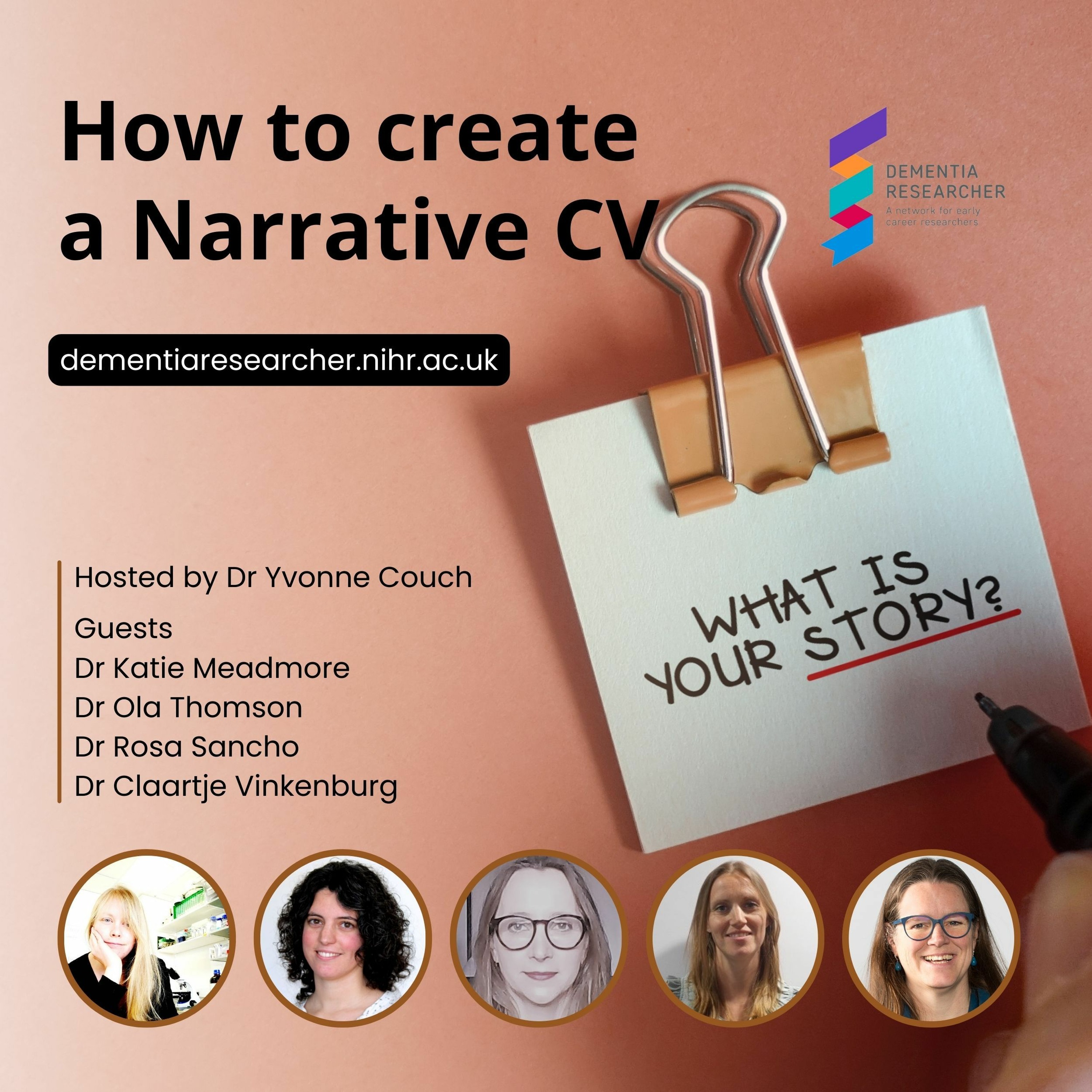
Ep 193How to create a Narrative CV
In this podcast Dr Yvonne Couch, Associate Professor of Neuroimmunology and ARUK Research Fellow at University of Oxford is joined by four experts to discuss Narrative CV’s, why they’re being introduced, and how to build one. Prefer to watch rather than listen? Find the video version of this podcast exclusively on YouTube.This weeks guests are:Dr Katie Meadmore, Senior Research Fellow, National Institute for Health and Care Research (NIHR) Evaluation, Trials and Studies Coordinating Centre (NETSCC), University of Southampton.Dr Ola Thomson, Research Associate in Equality, Diversity and Inclusion at University of Bristol, the Elizabeth Blackwell Institute for Health Research.Dr Rosa Sancho, Head of Research at Alzheimer’s Research UK.Dr Claartje Vinkenburg an Independent Expert Consultant in careers and diversity working with Universities, European Commission and Research Funders.BackgroundIn October 2019 The Royal Society published “Résumé for Researchers”, and since then many UK and European research funders have adopted the requirement for grant applicants to use a Narrative CV, including UK Research & Innovation, Alzheimer’s Research UK, Dutch Research Council and Science Foundation Ireland.A Narrative CV is a content-rich alternative to the traditional CV. It enables applicants to showcase a broader range of contributions to research e.g., Science Communications, teaching, mentoring etc. Through the use if this new format, funders hope address concerns that they is an over focus on success measures such as publications in high impact journals and big grant funding (although of course these still help).ResourcesUK Research & Innovation R4RI GuidanceARUK Narrative CV GuidanceRoyal Society Résumé for ResearchersDr Katie Meadmore, Thematic Framework for use of Narrative CVDORA Guidance on progressing adoptionHows and Whys from University of BristolA transcript of this show, links and show notes and profile on all our guests are available on our website at https://www.dementiaresearcher.nihr.ac.uk.If you prefer to watch rather than listen, you will find a video version of this podcast on YouTube, on our website, and in selected podcast platforms.Follow us on social media:https://www.instagram.com/dementia_researcher/ https://www.facebook.com/Dementia.Researcher/https://www.twitter.com/demrescommunityhttps://www.linkedin.com/company/dementia-researcher https://bsky.app/profile/dementiaresearcher.bsky.socialDownload and Register with our Community App:https://www.onelink.to/dementiaresearcherWe gratefully acknowledge the support of our funders: Alzheimer’s Association, Race Against Dementia, Alzheimer’s Research UK, Alzheimer’s Society, and the National Institute for Health and Care Research.The views and opinions expressed by guests in this podcast are their own and do not necessarily reflect those of the producers, funders, or sponsors.Subscribe to our sister show 'Dementia Researcher The Blogs':https://podfollow.com/dementia-researcher-blogs
Why, how and what it's like to work in hospital research
Recorded LIVE on Twitter Spaces on Wednesday 28th September 2022. Primarily aimed at Clinicians and Healthcare Professionals, through this discussion we hope to share some insights as to the different ways to become involved in clinical research, why you might want to do that, and what that might look like. Adam Smith, Dementia Researcher Programme Director hosts this informal discussion with five people working within the NHS and in research to share their experience. Guests are Dr Ross Paterson and Dr Alex Tsui all from University College London Hospitals NHS Foundation Trust, Dr Brady McFarlane from Southern Health NHS Foundation Trust, Dr Antoinette O’Connor from Tallaght University Hospital, Ireland, and Dr Emma Broome from Nottingham Biomedical Research Centre. -- Below are links to some of the resources mentioned during the chat: Careers Webinar - https://bit.ly/3CsOCq4 Trials information - https://bit.ly/3UNIbVs Dr Anna Volkmer Blogs - https://bit.ly/3Eb80ZU NIHR Clinical Careers Funding - https://bit.ly/3y8hpxr Alz Forum Grants - https://bit.ly/3RuQBy7 Dementia Research Careers Festival – https://bit.ly/3LWDIMl Dementia Researcher Meet the Researchers - https://bit.ly/3LWDIMl Association of British Neurologists - https://www.theabn.org/# Royal College of Nursing Research Careers - https://bit.ly/3E6KvRC -- Guest mini bios Dr Emma Broom Bio - https://bit.ly/3SREL2q Dr Alex Tsui Bio - https://bit.ly/3CsTpYx Dr Brady McFarlane Bio - https://bit.ly/3CaOhbe Dr Ross Patterson Bio - https://bit.ly/3CaOhbe Dr Antoinette O’Connor Bio - https://bit.ly/3LYxjQx -- Like what you hear? Please review, like, and share our podcast - and don't forget to subscribe to ensure you never miss an episode. This podcast is brought to you in association with Alzheimer's Research UK and Alzheimer's Society, who we thank for their ongoing support. -- A full transcript of the podcast can be found on our website at https://www.dementiaresearcher.nihr.ac.uk/podcast or find a video version on our YouTube Channel with closed captions at https://www.youtube.com/dementiaresearcher

How to be a GREAT Peer Reviewer
In this podcast we share top tips on how to avoid being Reviewer #2. Our guests talk through the importance (and flaws) of the peer review process, how they approach it, how you can write papers to help avoid a bad review, and the benefits of getting involved. Adam Smith, Dementia Researcher Programme Director talks with Dr Yvonne Couch, ARUK Research Fellow and Associate Professor at University of Oxford, Dr Isabel Castanho, Postdoctoral Research Fellow at Harvard Medical School and Dr Martina Bocchetta, Senior Research Fellow at University College London. -- Peer review is essential in assisting editors in selecting high quality, novel research papers, and to ensure errors are corrected. Though the peer review process still has some flaws, a more suitable screening method for scientific papers has not yet been developed (UK Research & Innovation has announced a review of the peer review system). So… for now we’re stuck with it (although our recent survey has identified some ways that the process could be improved e.g. blinding, compensating reviewers etc.). -- Peer review training courses: Nature Masterclass: https://bit.ly/3C3tDd7 Wiley Training: https://bit.ly/3r6FYGU Elsevier Academy: https://bit.ly/3BEFf4X RC Psych Training: https://bit.ly/3LCqfZO Fundamentals of peer review: https://bit.ly/3g4WPaT -- You can find out more about our panellists, and their work on our website. There you will also find a full transcript: https://www.dementiaresearcher.nihr.ac.uk Perfect to watch rather than listen? A video version of this podcast is available on our YouTube Channel: https://youtu.be/qSvndN_nO5k -- Like what you hear? Please review, like, and share our podcast - and don't forget to subscribe to ensure you never miss an episode. This podcast is brought to you in association with Alzheimer's Research UK and Alzheimer's Society, who we thank for their ongoing support.

Methods Matter - Visual & Creative Methods
The Methods Matter Podcast - from Dementia Researcher & the National Centre for Research Methods. A podcast for people who don't know much about methods...those who do, and those who just want to find news and clever ways to use them in their research. In this second series Clinical Research Fellow, Dr Donncha Mullin from The University of Edinburgh brings together leading experts in research methodology, and the dementia researchers that use them, to provide a fun introduction to five qualitive research methods in a safe space where there are no such things as dumb questions! Episode Three – Visual and Creative Methods In expert corner - Dr Kahryn Hughes, from University of Leeds. Director of the Timescapes Archive, Editor in Chief of Sociological Research Online, Convenor of the MA Qualitative Research Methods and a Senior Fellow for the NCRM. In researcher ranch – Dr Sarah Campbell, Senior Lecturer at Manchester Metropolitan University. Sarah has worked on various projects funded through a range of different funders. The underlying theme being to explore ways to understand the lived experiences of dementia and ageing, and explore ways to improve social care and their lives. Further reading referenced in the show: Details of Professor Helen Lomaz - https://bit.ly/3AYeoQH Sage Visual Methods Collection by J Hughes - https://bit.ly/3D0ZUSP Sage Handbook of Visual Research Methods by Pauwels & Mannay - https://bit.ly/3TRtWyk Professor Sarah Pink - https://bit.ly/3qgw45d Approaches to democratising qualitative research methods - https://bit.ly/3D4XVNi Sociological Research Online - https://www.socresonline.org.uk Dementia and Place Book - https://bit.ly/3TN7WF0 -- Read more about our guests and listen to more great podcasts at: https://www.dementiaresearcher.nihr.ac.uk The National Centre for Research Methods (NCRM) provides a service to learners, trainers and partner organisations in the research methods community - methodological training and resources on core and advanced quantitative, qualitive, digital, creative, visual, mixed and multimodal methods. https://www.ncrm.ac.uk -- This podcast is brought to you in association with Alzheimer's Research UK and Alzheimer's Society, who we thank for their ongoing support.
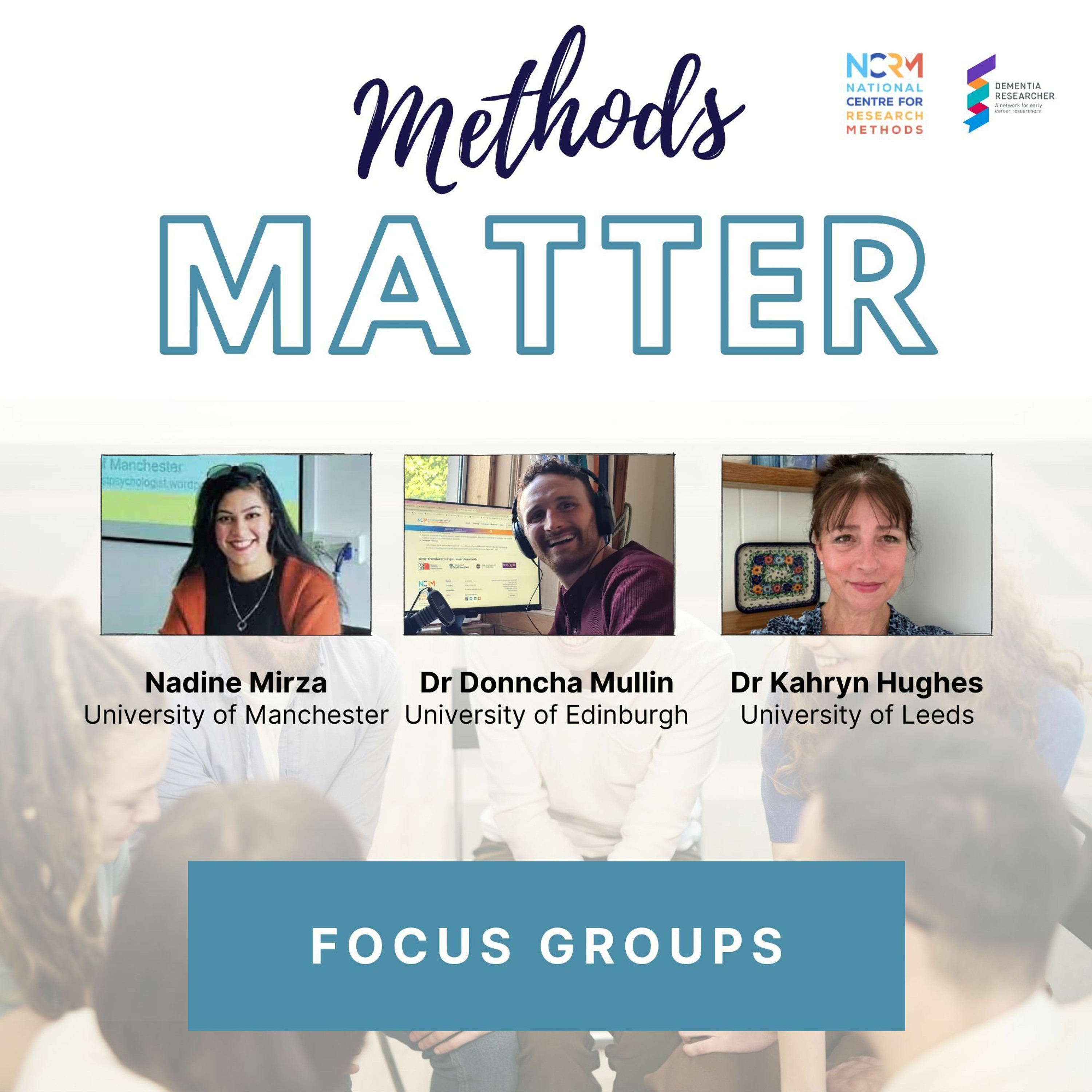
Methods Matter - Focus Groups
The Methods Matter Podcast - from Dementia Researcher & the National Centre for Research Methods. A podcast for people who don't know much about methods...those who do, and those who just want to find news and clever ways to use them in their research. In this second series Clinical Research Fellow, Dr Donncha Mullin from The University of Edinburgh brings together leading experts in research methodology, and the dementia researchers that use them, to provide a fun introduction to five qualitive research methods in a safe space where there are no such things as dumb questions! Episode Four – Focus Groups In expert corner - Dr Kahryn Hughes, from University of Leeds. Director of the Timescapes Archive, Editor in Chief of Sociological Research Online, Convenor of the MA Qualitative Research Methods and a Senior Fellow for the NCRM. In researcher ranch – Nadine Mirza is a PhD Student and Research Assistant in the Centre for Primary Care and Health Services Research at the University of Manchester. Nadine’s research explores cognitive testing in ethnic minorities and the experience of dementia diagnosis and access to dementia services in British South Asians. Further reading referenced in the show: Jenny Kitzinger, The Methodology of Focus Groups - https://bit.ly/3ey6YMR Rosaline Barbour, Doing Focus Groups - https://bit.ly/3TNxzWe Rosaline Barbour, YouTube - https://youtu.be/5xPYGXJ_hM4 Focus Group Methodology: Principles and Practice - https://bit.ly/3x31OPk NCRM Focus Group Resources - https://bit.ly/3TP38Pr -- Read more about our guests and listen to more great podcasts at: https://www.dementiaresearcher.nihr.ac.uk The National Centre for Research Methods (NCRM) provides a service to learners, trainers and partner organisations in the research methods community - methodological training and resources on core and advanced quantitative, qualitive, digital, creative, visual, mixed and multimodal methods. https://www.ncrm.ac.uk -- This podcast is brought to you in association with Alzheimer's Research UK and Alzheimer's Society, who we thank for their ongoing support.
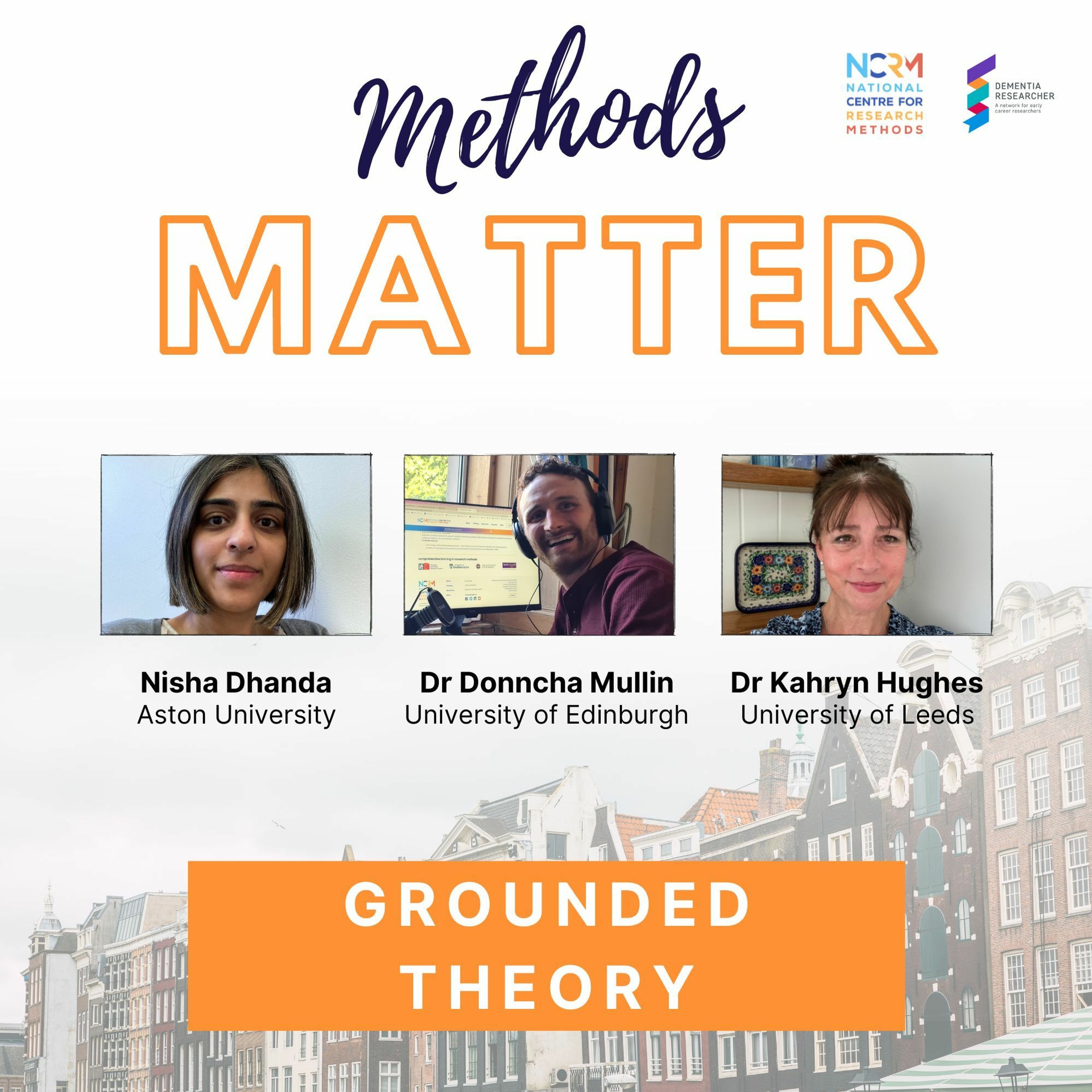
Methods Matter - Grounded Theory
The Methods Matter Podcast - from Dementia Researcher & the National Centre for Research Methods. A podcast for people who don't know much about methods...those who do, and those who just want to find news and clever ways to use them in their research. In this second series Clinical Research Fellow, Dr Donncha Mullin from The University of Edinburgh brings together leading experts in research methodology, and the dementia researchers that use them, to provide a fun introduction to five qualitive research methods in a safe space where there are no such things as dumb questions! Episode Two – Grounded Theory In expert corner - Dr Kahryn Hughes, from University of Leeds. Director of the Timescapes Archive, Editor in Chief of Sociological Research Online, Convenor of the MA Qualitative Research Methods and a Senior Fellow for the NCRM. In researcher ranch – Nisha Dhanda, Audiologist, Teaching Fellow, and PhD Candidate from Aston University. Nisha has always had an interest in the way people communicate and how this is affected with unmanaged hearing loss and associated comorbidities like cognitive impairment and dementia, an interest that has inspired her teaching and her PhD. Further reading referenced in the show: Barney G Glaser / Anselm L Strauss Book - https://bit.ly/3BhznQ3 Anselm L Strauss / Juliet Corbin Book - https://www.socresonline.org.uk/4/2/strauss.html Kathy Charmaz career and books - https://en.wikipedia.org/wiki/Kathy_Charmaz Discussion with Kathy Charmaz - https://www.youtube.com/watch?v=D5AHmHQS6WQ Virginia Braun and Victoria Clark website - https://www.thematicanalysis.net -- Read more about our guests and listen to more great podcasts at: https://www.dementiaresearcher.nihr.ac.uk The National Centre for Research Methods (NCRM) provides a service to learners, trainers and partner organisations in the research methods community - methodological training and resources on core and advanced quantitative, qualitive, digital, creative, visual, mixed and multimodal methods. https://www.ncrm.ac.uk -- This podcast is brought to you in association with Alzheimer's Research UK and Alzheimer's Society, who we thank for their ongoing support.
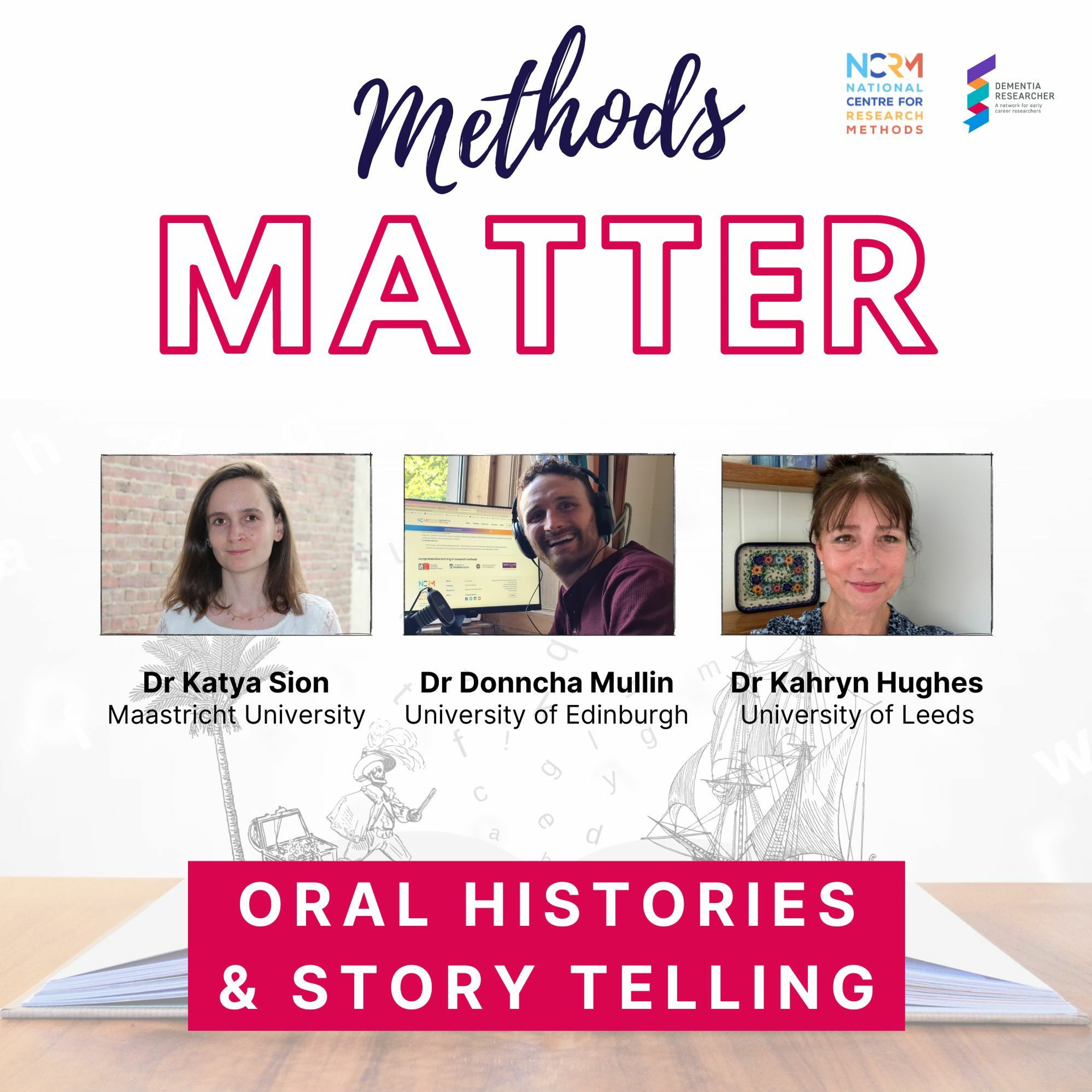
Methods Matter - Oral Histories & Story Telling
The Methods Matter Podcast - from Dementia Researcher & the National Centre for Research Methods. A podcast for people who don't know much about methods...those who do, and those who just want to find news and clever ways to use them in their research. In this second series Clinical Research Fellow, Dr Donncha Mullin from The University of Edinburgh brings together leading experts in research methodology, and the dementia researchers that use them, to provide a fun introduction to five qualitive research methods in a safe space where there are no such things as dumb questions! Episode One – Oral Histories & Story Telling In expert corner - Dr Kahryn Hughes, from University of Leeds. Director of the Timescapes Archive, Editor in Chief of Sociological Research Online, Convenor of the MA Qualitative Research Methods and a Senior Fellow for the NCRM. In researcher ranch - Dr Katya Sion, Postdoctoral Researcher in Living-Lab in Ageing and Long-Term Care at Maastricht University. Katya’s research is focused on quality of residential elderly care from the resident’s perspective and how to assess this. Her current postdoc position is aimed at the national valorisation of the narrative method ‘Connecting Conversations’, which was developed during her PhD. Further reading referenced in the show: The Oral History Society - https://www.ohs.org.uk Books by Joanna Bornat - https://bit.ly/3RIJ9Qx Rachel Thompson Website - https://rachelintheoc.com Ken Plummer Documents of Life - https://kenplummer.com -- Read more about our guests and listen to more great podcasts at: https://www.dementiaresearcher.nihr.ac.uk The National Centre for Research Methods (NCRM) provides a service to learners, trainers and partner organisations in the research methods community - methodological training and resources on core and advanced quantitative, qualitive, digital, creative, visual, mixed and multimodal methods. https://www.ncrm.ac.uk -- This podcast is brought to you in association with Alzheimer's Research UK and Alzheimer's Society, who we thank for their ongoing support.
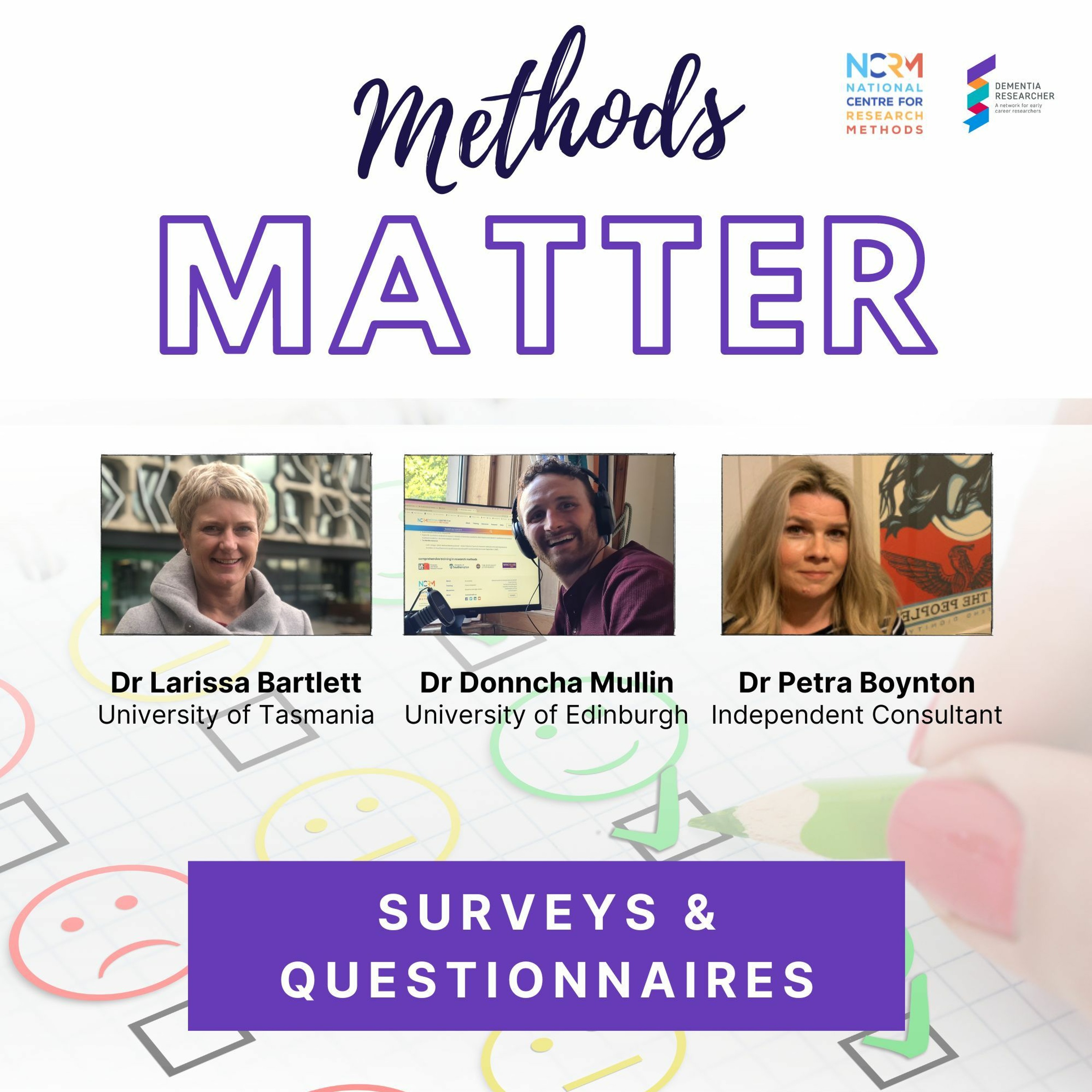
Methods Matter - Surveys & Questionnaires
The Methods Matter Podcast - from Dementia Researcher & the National Centre for Research Methods. A podcast for people who don't know much about methods...those who do, and those who just want to find news and clever ways to use them in their research. In this second series Clinical Research Fellow, Dr Donncha Mullin from The University of Edinburgh brings together leading experts in research methodology, and the dementia researchers that use them, to provide a fun introduction to five qualitive research methods in a safe space where there are no such things as dumb questions! Episode Four – Surveys and Questionnaires In expert corner - Dr Petra Boynton. Petra is a Social Psychologist, specialising in International Health Research from a critical perspective. Over the past 20 years she has taught, supervised, and undertaken research across the social and health sciences and development within university and community settings as well as writing extensively Academic life, including publishing a book called ‘Being Well in Academia’, and being an Agony Aunt. In researcher ranch – Dr Larissa Bartlett, who is an ISLAND Research Fellow at the Wicking Dementia Research & Education Centre at the University of Tasmania. Larissa’s PhD focussed on the promises and challenges of workplace-delivered mindfulness interventions for employee health and performance. Now Larissa leads the ISLAND Study, a large, 10-year prospective public health cohort study with nested interventions targeting modifiable dementia risk factors at population-level in adults aged 50+. Further reading referenced in the show: Sage Video Tutorials - https://methods.sagepub.com/Search/Results Scribbr Guide - https://www.scribbr.co.uk/research-methods/surveys/ NCRM Survey Guidance - https://www.ncrm.ac.uk/search/?q=surveys Julie Ponto, Understanding and Evaluating Survey Research - https://bit.ly/3RHZRzp BMJ Hands On Guide to Questionnaires - https://www.bmj.com/content/328/7452/1372 Write a Questionnaire, a Little Quick Fix - https://bit.ly/3cSBroj -- Read more about our guests and listen to more great podcasts at: https://www.dementiaresearcher.nihr.ac.uk The National Centre for Research Methods (NCRM) provides a service to learners, trainers and partner organisations in the research methods community - methodological training and resources on core and advanced quantitative, qualitive, digital, creative, visual, mixed and multimodal methods. https://www.ncrm.ac.uk -- This podcast is brought to you in association with Alzheimer's Research UK and Alzheimer's Society, who we thank for their ongoing support.

Diet & Alzheimer's Disease - ISTAART Research Perspectives
The best way to reduce your risk of dementia is to adapt various aspects of your lifestyle, including eating certain foods, taking regular exercise, not smoking, and maintaining normal blood pressure and cholesterol levels. Evidence shows that a diet rich in fruit, vegetables, and cereals, and low in red meat and sugar could help reduce dementia risks. However, nutrition and dietary components are challenging to research with controversies still raging around the role of many micronutrients and health outcomes in dementia, which is why what to eat, what not to eat, how often and how much is constantly in the news. In this ISTAART Research Perspectives Special, Fernando Peres and Dr Clara Domínguez Vivero get two perspectives on diet and nutrition and its connections to cognition and dementia, from the researcher and the person who lives with the disease. This time we are joined by Dr Claire McEvoy, Senior Lecturer in Nutrition and Ageing Research at Queens University Belfast. Claire is a Dietitian and Senior Atlantic Fellow at the Global Brain Health Institute. Her research investigates the role of nutrition (particularly plant-based diets) and other lifestyle behaviours in age-related disease, with a special interest in cognitive decline. Her focus is on epidemiologic investigation of diet and dementia risk across the life-course, and the design and evaluation of interventions targeting behaviour change to improve cognitive health and well-being. Our second perspective comes from Dr Daniel Gibbs, Retired Neurologist from Oregon Health & Science University, Portland, USA. Daniel retired in 2013 due to developing Mild Cognitive Impairment due to Alzheimer’s disease. Since then, he has been studying and writing about his own brain and disease for a book titled ‘A Tattoo on my Brain: A Neurologist’s Personal Battle against Alzheimer’s Disease’. He has also continued to work on several journal papers and has a blog https://www.tattooonmybrain.com Find out more about our hosts and guests and review a full transcript of this podcast on our website at: https://www.dementiaresearcher.nihr.ac.uk/podcast-diet-and-alzheimers-disease-istaart-research-perspectives/ For information on ISTAART visit: http://www.alz.org/istaart -- This podcast is brought to you in association with Alzheimer's Association, Alzheimer's Research UK and Alzheimer's Society, who we thank for their ongoing support.

Royal Society Pairing Scheme - Insights from Westminster
Each year 30 research scientists are paired with UK parliamentarians and civil servants. They learn about each other’s work by spending time together in Westminster and the researcher’s institutions. Those taking part gain an insight into how research findings can help inform policy making, and come away with a better understanding of how they can get involved. In this podcast we hear from three researchers who were part of the 2022 cohort - learning about their experience. Dr Fiona McLean from University of Dundee talks with Dr Dayne Beccano-Kelly from Cardiff University and Dr Sarah Marzi from Imperial College London, both group leaders within the UK Dementia Research Institute. For more information on the Royal Society Pairing Scheme visit: https://royalsociety.org/grants-schemes-awards/pairing-scheme/ You can find out more about our panellists, and their work on our website. There you will also find a full transcript: https://www.dementiaresearcher.nihr.ac.uk/podcast-royal-society-pairing-scheme-insights-from-westminster/ -- Like what you hear? Please review, like, and share our podcast - and don't forget to subscribe to ensure you never miss an episode. This podcast is brought to you in association with Alzheimer's Research UK and Alzheimer's Society, who we thank for their ongoing support.
AAIC 2022 - Day Four
Coverage from the Alzheimer’s Association International Conference (AAIC) bringing together early career researchers to share their conference highlights. In the last of this weeks special shows, Dr Natasha Clarke from Centre de recherche de l’Institut universitaire de gériatrie de Montréal chairs the discussion with Dr Richard Lofthouse from University of Aberdeen, Dr Diana Karamacoska from Western Sydney University and Anqesha Murray, at Rensselaer Polytechnic Institute, New York. Sharing highlights from the third day of the world’s largest dementia conference. Follow the conference live at #AAIC22 You can find out more about our panellists, and their work on our website. There you will also find a full transcript: https://www.dementiaresearcher.nihr.ac.uk/podcast-aaic-2022-day-four/ -- Like what you hear? Please review, like, and share our podcast - and don't forget to subscribe to ensure you never miss an episode. This podcast is brought to you in association with Alzheimer's Research UK and Alzheimer's Society, who we thank for their ongoing support.
AAIC 2022 - Day Three
Coverage from the Alzheimer’s Association International Conference (AAIC) bringing together early career researchers to share their conference highlights. In today’s show, Dr Sarah Bauermeister from University of Oxford hosts, with guests Dr Claire Lancaster from University of Sussex, Esther Hui from University College London and and Dr Darina Petrovsky, Rutgers University Sharing highlights from the third day of the world’s largest dementia conference. Follow the conference live at #AAIC22 You can find out more about our panellists, and their work on our website. There you will also find a full transcript: https://www.dementiaresearcher.nihr.ac.uk/podcast-aaic-2022-day-three/ -- Like what you hear? Please review, like, and share our podcast - and don't forget to subscribe to ensure you never miss an episode. This podcast is brought to you in association with Alzheimer's Research UK and Alzheimer's Society, who we thank for their ongoing support.
AAIC 2022 - Day Two
Coverage from the Alzheimer’s Association International Conference (AAIC) bringing together four attendees to chat over coffee, and share their highlights. In todays show, we welcome back Dr Isabel Castanho to take her first turn in the hosts chair, with special guests and show newcomers Dr Annalise Rahman-Filipiak from University of Michigan, Dr Connor Richardson from Newcastle University and Dr Bhargav Teja Nallapu from Albert Einstein College of Medicine. Sharing highlights from the second day of the worlds largest dementia conference. Follow the conference live at #AAIC22 You can find out more about our panellists, and their work on our website. There you will also find a full transcript: https://www.dementiaresearcher.nihr.ac.uk/podcast-aaic-2022-day-two/ -- Like what you hear? Please review, like, and share our podcast - and don't forget to subscribe to ensure you never miss an episode. This podcast is brought to you in association with Alzheimer's Research UK and Alzheimer's Society, who we thank for their ongoing support.
AAIC 2022 - Day One
For the first time since 2019, we’re back at the Alzheimer’s Association International Conference (AAIC) in-person – which means we can bring together attendees to chat over coffee, and share their highlights. In todays show, long-time listener and contributor, Sarah Gregory from the University of Edinburgh is our guest host, talking with Dr Ríona McArdle, from Newcastle University, Dr Lillian Hung from University of British Columbia and Dr Sarah-Naomi James from University College London. Sharing highlights from the Tech and Dementia Preconference session and the first day, with a focus on equality, diversity and inclusion, and co-production. Follow the conference live at #AAIC22 You can find out more about our panellists, and their work on our website. There you will also find a full transcript: https://www.dementiaresearcher.nihr.ac.uk/podcast-aaic-2022-day-one/ -- Like what you hear? Please review, like, and share our podcast - and don't forget to subscribe to ensure you never miss an episode. This podcast is brought to you in association with Alzheimer's Research UK and Alzheimer's Society, who we thank for their ongoing support.
ISTAART Relay Podcast - Biofluid Based Biomarkers PIA
The Dementia Researcher, ISTAART Relay Podcast is back for a third, 5-part series. Where the interviewee becomes the interviewer. With five leading researchers discussing their research, their field, and the work of the Alzheimer’s Association ISTAART Professional Interest Area they represent. Part Five – Erica Dove interviews Professor Charlotte Teunissen, representing the Biofluid Based Biomarkers PIA. Erica Dove is a third year PhD Student, studying at University of Toronto. Her research aims to co-develop an exercise video game designed to reduce falls risk among people with dementia. Inspired to work in dementia through personal experience, when not at work, she can be found obsessing over floral patterns (Yes really). Erica is representing the ISTAART Technology and Dementia PIA. Charlotte Teunissen is a Professor in Neurochemistry at Amsterdam UMC. Charlotte explores Biomarkers in body fluids, such as cerebrospinal fluid and blood, to understand the disease and improve care for neurological diseases, especially dementias and Multiple Sclerosis. She is representing the ISTAART Biofluid Based Biomarkers PIA. The Alzheimer’s Association International Society to Advance Alzheimer’s Research and Treatment (ISTAART) convenes the global Alzheimer’s and dementia science community. Members share knowledge, fuel collaboration and advance research to find more effective ways to detect, treat and prevent Alzheimer’s and other dementias. Professional Interest Areas (PIA) are an assembly of ISTAART members with common subspecialties or interests. There are currently 29 PIAs covering a wide range of interests and fields, from the PIA to Elevate Early Career Researchers to Biofluid Based Biomarkers and everything in between. To sign-up to ISTAART (free for students worldwide, and for people of all grades in Low and Middle Income Countries) and a PIA visit: http://www.alz.org/istaart To book your place at this years AAIC Confernence visit: https://aaic.alz.org/ Visit our YouTube Channel to watch the video version of this podcast: https://youtu.be/WvCGBmnVElE Find more information on our guests, and a full transcript of this podcast on our website at: https://www.dementiaresearcher.nihr.ac.uk/istaart-relay-podcast-biofluid-based-biomarkers-pia/ -- Like what you hear? Please review, like, and share our podcast - and don't forget to subscribe to ensure you never miss an episode. This podcast is brought to you in association with Alzheimer's Association, Alzheimer's Research UK and Alzheimer's Society, who we thank for their ongoing support.
ISTAART Relay Podcast - Technology and Dementia PIA
The Dementia Researcher, ISTAART Relay Podcast is back for a third, 5-part series. Where the interviewee becomes the interviewer. With five leading researchers discussing their research, their field, and the work of the Alzheimer’s Association ISTAART Professional Interest Area they represent. Part Four – Dr Louise Ince interviews Erica Dove representing the Technology and Dementia PIA. Dr Louise Ince is a Postdoctoral Research Associate at the University of Texas at Austin. Louise's work focuses on circadian (daily, ~24 h) rhythms in immune function: why our body’s inflammatory response varies depending upon the time-of-day. She is particularly interested in how the dynamics of neuroimmune responses change with aging and in dementia (she is also an expert in pyrotechnics, and hails from Blackpool in the north of England). Louise is representing the ISTAART Immunity and Neurodegeneration PIA. Erica Dove is a third year PhD Student, studying at University of Toronto. Her research aims to co-develop an exercise video game designed to reduce falls risk among people with dementia. Inspired to work in dementia through personal experience, when not at work, she can be found obsessing over floral patterns (Yes really). Erica is representing the ISTAART Technology and Dementia PIA. The Alzheimer’s Association International Society to Advance Alzheimer’s Research and Treatment (ISTAART) convenes the global Alzheimer’s and dementia science community. Members share knowledge, fuel collaboration and advance research to find more effective ways to detect, treat and prevent Alzheimer’s and other dementias. Professional Interest Areas (PIA) are an assembly of ISTAART members with common subspecialties or interests. There are currently 29 PIAs covering a wide range of interests and fields, from the PIA to Elevate Early Career Researchers to Biofluid Based Biomarkers and everything in between. To sign-up to ISTAART (free for students worldwide, and for people of all grades in Low and Middle Income Countries) and a PIA visit: http://www.alz.org/istaart To book your place at this years AAIC Confernence visit: https://aaic.alz.org/ Visit our YouTube Channel to watch the video version of this podcast: http://www.youtube.com/dementiaresearcher Find more information on our guests, and a full transcript of this podcast on our website at: https://www.dementiaresearcher.nihr.ac.uk/istaart-relay-podcast-technology-and-dementia-pia/ -- Like what you hear? Please review, like, and share our podcast - and don't forget to subscribe to ensure you never miss an episode. This podcast is brought to you in association with Alzheimer's Association, Alzheimer's Research UK and Alzheimer's Society, who we thank for their ongoing support.
ISTAART Relay Podcast - Immunity and Neurodegeneration PIA
The Dementia Researcher, ISTAART Relay Podcast is back for a third, 5-part series. Where the interviewee becomes the interviewer. With five leading researchers discussing their research, their field, and the work of the Alzheimer’s Association ISTAART Professional Interest Area they represent. Part Three – Dr Hamid Sohrabi, interviews Dr Louise Ince representing the Immunity and Neurodegeneration PIA Dr Hamid Sohrabi is Director of the Centre for Healthy Ageing - Associate Professor of Psychology and Clinical Neurosciences at Murdoch University, Australia. His research is focussed on screening and clinical diagnostic measures as well as identifying dementia risk factors and resilience and resisting factors including cognitive reserve. Outside work he loves DIY (but never ask him to fit a gate in your garden). Hamid is representing the ISTAART Reserve, Resilience and Protective Factors PIA. Dr Louise Ince is a Postdoctoral Research Associate at the University of Texas at Austin. Louise's work focuses on circadian (daily, ~24 h) rhythms in immune function: why our body’s inflammatory response varies depending upon the time-of-day. She is particularly interested in how the dynamics of neuroimmune responses change with aging and in dementia (she is also an expert in pyrotechnics, and hails from Blackpool in the north of England). Louise is representing the Immunity and Neurodegeneration PIA. The Alzheimer’s Association International Society to Advance Alzheimer’s Research and Treatment (ISTAART) convenes the global Alzheimer’s and dementia science community. Members share knowledge, fuel collaboration and advance research to find more effective ways to detect, treat and prevent Alzheimer’s and other dementias. Professional Interest Areas (PIA) are an assembly of ISTAART members with common subspecialties or interests. There are currently 29 PIAs covering a wide range of interests and fields, from the PIA to Elevate Early Career Researchers to Biofluid Based Biomarkers and everything in between. To sign-up to ISTAART (free for students worldwide, and for people of all grades in Low and Middle Income Countries) and a PIA visit: http://www.alz.org/istaart To book your place at this years AAIC Confernence visit: https://aaic.alz.org/ Visit our YouTube Channel to watch the video version of this podcast: http://www.youtube.com/dementiaresearcher Find more information on our guests, and a full transcript of this podcast on our website at: https://www.dementiaresearcher.nihr.ac.uk/istaart-relay-podcast-immunity-and-neurodegeneration-pia/ -- Like what you hear? Please review, like, and share our podcast - and don't forget to subscribe to ensure you never miss an episode. This podcast is brought to you in association with Alzheimer's Association, Alzheimer's Research UK and Alzheimer's Society, who we thank for their ongoing support.

ISTAART Relay Podcast - Reserve, Resilience and Protective Factors PIA
The Dementia Researcher, ISTAART Relay Podcast is back for a third, 5-part series. Where the interviewee becomes the interviewer. With five leading researchers discussing their research, their field, and the work of the Alzheimer’s Association ISTAART Professional Interest Area they represent. Part Two – Dr Rik Ossenkoppele, interviews Dr Hamid Sohrabi representing the Resilience and Protective Factors PIA Dr Rik Ossenkoppele is an Associate Professor of Translational Neuroscience at Amsterdam UMC and Lund University. His area of research is Alzheimer’s disease and other neurodegenerative disorders, brain imaging, biomarkers, cognition. Rik also happens to be a qualifiied PE Teacher, and he is representing the ISTAART Atypical Alzheimer's Disease PIA. Dr Hamid Sohrabi is Director of the Centre for Healthy Ageing - Associate Professor of Psychology and Clinical Neurosciences at Murdoch University, Australia. His research is focussed on screening and clinical diagnostic measures as well as identifying dementia risk factors and resilience and resisting factors including cognitive reserve. Outside work he loves DIY (but never ask him to fit a gate in your garden). Hamid is representing the ISTAART Reserve, Resilience and Protective Factors PIA. The Alzheimer’s Association International Society to Advance Alzheimer’s Research and Treatment (ISTAART) convenes the global Alzheimer’s and dementia science community. Members share knowledge, fuel collaboration and advance research to find more effective ways to detect, treat and prevent Alzheimer’s and other dementias. Professional Interest Areas (PIA) are an assembly of ISTAART members with common subspecialties or interests. There are currently 29 PIAs covering a wide range of interests and fields, from the PIA to Elevate Early Career Researchers to Biofluid Based Biomarkers and everything in between. To sign-up to ISTAART (free for students worldwide, and for people of all grades in Low and Middle Income Countries) and a PIA visit: http://www.alz.org/istaart To book your place at this years AAIC Confernence visit: https://aaic.alz.org/ Visit our YouTube Channel to watch the video version of this podcast: https://youtu.be/iWBLNot4M6E Find more information on our guests, and a full transcript of this podcast on our website at: https://www.dementiaresearcher.nihr.ac.uk/istaart-relay-podcast-immunity-and-neurodegeneration-pia/ -- Like what you hear? Please review, like, and share our podcast - and don't forget to subscribe to ensure you never miss an episode. This podcast is brought to you in association with Alzheimer's Association, Alzheimer's Research UK and Alzheimer's Society, who we thank for their ongoing support.
ISTAART Relay Podcast - Atypical Alzheimer's Disease PIA
The Dementia Researcher, ISTAART Relay Podcast is back for a third, 5-part series. Where the interviewee becomes the interviewer. With five leading researchers discussing their research, their field, and the work of the Alzheimer’s Association ISTAART Professional Interest Area they represent. Part One – Professor Charlotte Teunissen, interviews Dr Rik Ossenkoppele representing the Atypical Alzheimer's Disease PIA Charlotte Teunissen is a Professor in Neurochemistry at Amsterdam UMC. Charlotte explores Biomarkers in body fluids, such as cerebrospinal fluid and blood, to understand the disease and improve care for neurological diseases, especially dementias and Multiple Sclerosis. She is representing the ISTAART Biofluid Based Biomarkers PIA. Dr Rik Ossenkoppele is an Associate Professor of Translational Neuroscience at Amsterdam UMC and Lund University. His area of research is Alzheimer’s disease and other neurodegenerative disorders, brain imaging, biomarkers, cognition. Rik also happens to be a qualifiied PE Teacher, and he is representing the ISTAART Atypical Alzheimer's Disease PIA. The Alzheimer’s Association International Society to Advance Alzheimer’s Research and Treatment (ISTAART) convenes the global Alzheimer’s and dementia science community. Members share knowledge, fuel collaboration and advance research to find more effective ways to detect, treat and prevent Alzheimer’s and other dementias. Professional Interest Areas (PIA) are an assembly of ISTAART members with common subspecialties or interests. There are currently 29 PIAs covering a wide range of interests and fields, from the PIA to Elevate Early Career Researchers to Biofluid Based Biomarkers and everything in between. To sign-up to ISTAART (free for students worldwide, and for people of all grades in Low and Middle Income Countries) and a PIA visit: http://www.alz.org/istaart To book your place at this years AAIC Confernence visit: https://aaic.alz.org/ Visit our YouTube Channel to watch the video version of this podcast: https://youtu.be/3CO3_W_0qtw Find more information on our guests, and a full transcript of this podcast on our website at: https://www.dementiaresearcher.nihr.ac.uk/istaart-relay-podcast-immunity-and-neurodegeneration-pia/ -- Like what you hear? Please review, like, and share our podcast - and don't forget to subscribe to ensure you never miss an episode. This podcast is brought to you in association with Alzheimer's Association, Alzheimer's Research UK and Alzheimer's Society, who we thank for their ongoing support.
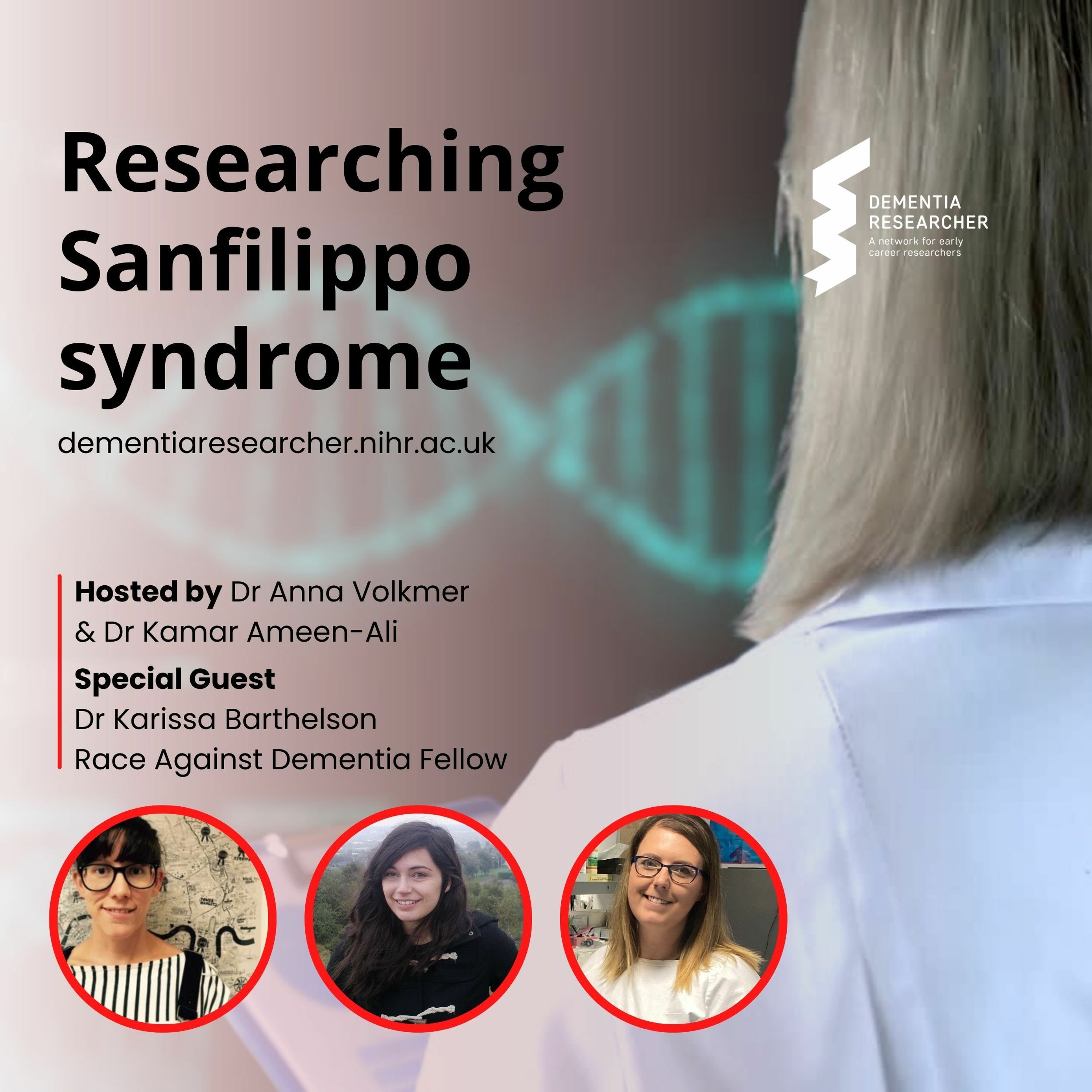
Researching Sanfilippo syndrome
In this weeks Dementia Researcher Podcast, we hear from Dr Karissa Barthelson, one of the latest Race Against Dementia Research Fellows from Flinders University – discussing her research, and specifically an introduction to Sanfilippo syndrome, a rare form of childhood dementia, and her research on this disease. Regular Dementia Researcher Bloggers Dr Anna Volkmer & Dr Kamar Ameen-Ali lead the interview, helping us to understand Karissa’s work and exploring the science. All types of neurodegenerative diseases share common molecular mechanisms responsible for disease etiology and progression. Karissa, is interested in understanding these shared mechanisms, as targeting the common problems could lead to new therapeutics to benefit more individuals who live with these diseases. To understand the shared molecular mechanisms, Karissa utilises zebra fish, as a model organism. Introducing mutations into zebrafish, equivalent to those which cause neurodegenerative diseases in humans (e.g., Alzheimer's disease, Sanfilippo syndrome childhood dementia), then analysing their brains with very high molecular detail. For more information about Sanfilippo syndrome visit: https://en.wikipedia.org/wiki/Sanfilippo_syndrome For more information on Race Against Dementia visit: https://www.raceagainstdementia.com You can find out more about our panellists, and their work on our website. There you will also find a full transcript: https://www.dementiaresearcher.nihr.ac.uk/podcast-researching-sanfilippo-syndrome/ -- Like what you hear? Please review, like, and share our podcast - and don't forget to subscribe to ensure you never miss an episode. This podcast is brought to you in association with Alzheimer's Research UK and Alzheimer's Society, who we thank for their ongoing support.

AAIC Preview 2022
In this week’s podcast, Adam Smith speaks with Alzheimer’s Association Director, Scientific Programs and Outreach, Dr Claire Sexton. Discussing this year’s Alzheimer’s Association International Conference (AAIC) July 31 - August 4, 2022. Taking place in-person in San Diego, USA and online - the world’s leading basic scientists, clinical researchers, early career investigators, clinicians and the care research community will share breaking research discoveries that will lead to methods of prevention and treatment and improvements in diagnosis for Alzheimer’s disease. Learn what the organisers have planned for this year’s event, new features and about some of the amazing sessions planned for those attending in-person and online. Students worldwide and researchers from Low- and Middle-Income Countries are now eligible for free ISTAART Membership (and ISTAART members can attend the AAIC Online for Free) - Become a member, then register for the conference if you can't make it in-person. To book your place visit - https://aaic.alz.org/ Join ISTAART to get a free online ticket - www.alz.org/istaart A transcript of this podcast is also available here https://www.dementiaresearcher.nihr.ac.uk/podcast-aaic-2022-preview/ Dr Claire Sexton Bio https://www.dementiaresearcher.nihr.ac.uk/profile-dr-claire-sexton/ Adam Smith Bio https://www.dementiaresearcher.nihr.ac.uk/podcast-profile-adam-smith/ _________________________ Finally, please review, like, and share our podcast - and don't forget to subscribe to ensure you never miss an episode. Register on our website to receive your weekly bulletin, and to access more great content – blogs, science, career support + much more www.dementiaresearcher.nihr.ac.uk This podcast is brought to you in association with Alzheimer's Research UK and Alzheimer's Society, who we thank for their ongoing support.
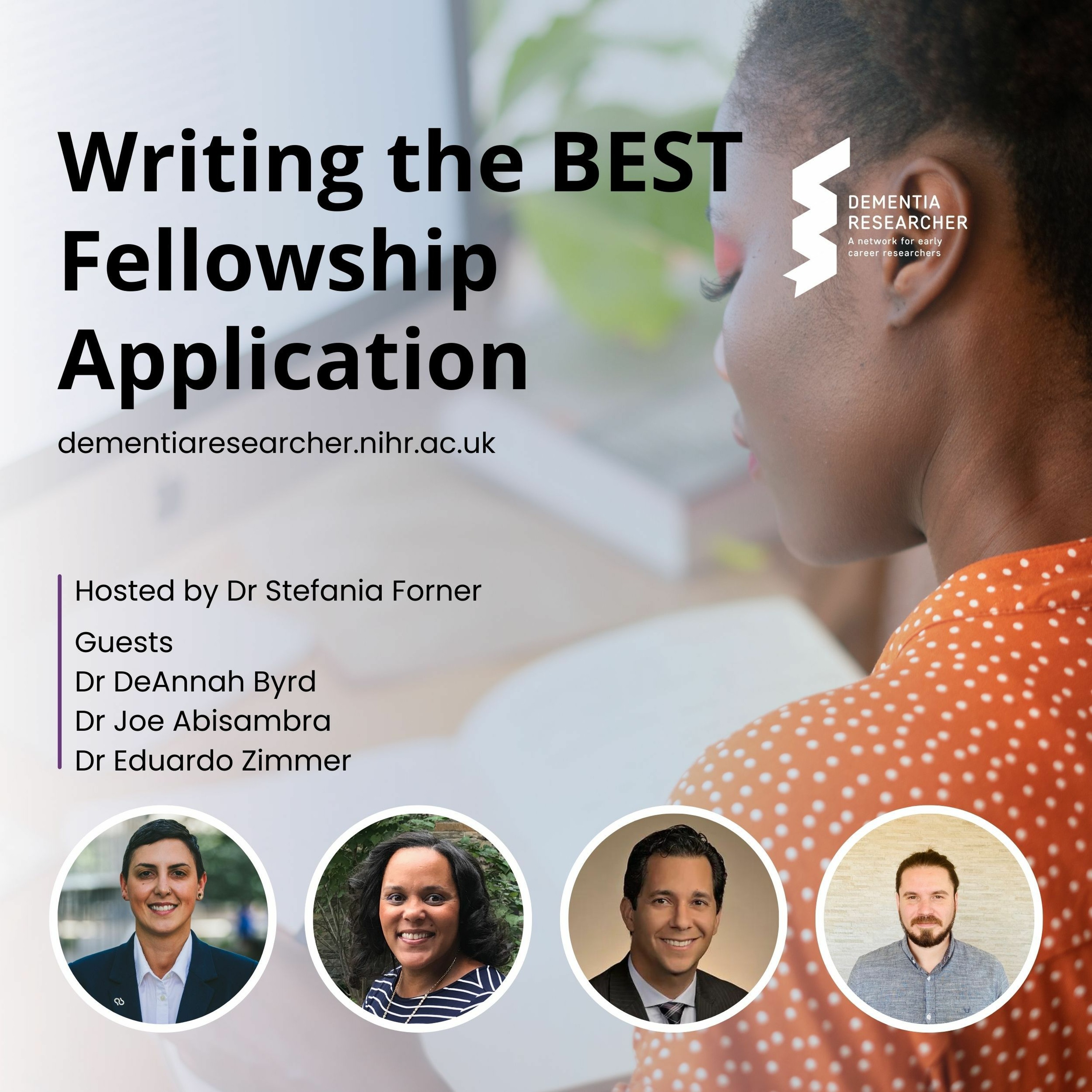
Writing the BEST Fellowship Application
In this podcast, Dr Stefania Forner, Director of Medical & Scientific Relations at Alzheimer's Association guest hosts a discussion with current and past awardees of the Association's Fellowships and international grant programs. They recap on the take-aways from a recent grant writing master glass and explore how grants are evaluated, what makes a successful application. Visit our YouTube Channel to watch the video version of this podcast - just look for dementia researcher. Meet our guests: Dr DeAnnah R. Byrd, Assistant Professor at Arizona State University. Studying the effects of chronic conditions & stressors in older Blacks and reducing dementia among minority populations. Dr Joe Abisambra, Associate Professor of Neuroscience and Associate Dean of Diversity and Health Equity at University of Florida. Focussing on tau biology in the context of Alzheimer’s and traumatic brain injury. Dr Eduardo R. Zimmer, Assistant Professor at Universidade Federal do Rio Grande do Sul. Researching Glial Cells, neuroimaging and neurodegeneration at Universidade Federal do Rio Grande do Sul. The next Alzheimer’s Association International funding round will open later this summer, keep an eye on the Dementia Researcher and Alzheimer’s Association websites: https://www.dementiaresearcher.nihr.ac.uk/funding-calls https://www.alz.org/research/for_researchers/grants/types-of-grants -- You can find out more about our panellists, and their work on our website. There you will also find a full transcript: https://www.dementiaresearcher.nihr.ac.uk -- Like what you hear? Please review, like, and share our podcast - and don't forget to subscribe to ensure you never miss an episode. This podcast is brought to you in association with Alzheimer's Association, Alzheimer's Research UK and Alzheimer's Society, who we thank for their ongoing support.
What's New With Alzheimer's Society Grants - LIVE
Recorded LIVE on Twitter Spaced on Wednesday 15th June 2022. Adam Smith, chats to the Alzheimer's Society research grants team, discussing their newly launched 2022 funding call, getting details on their all new PhD, Fellowship, Careers and Project Grants. Sophie Roberts, Dr Jennie Gabriel and Katherine Gray - share details on how the Society's funding programmes have been transformed and updated to better support ECRs, with improvements in the applicatio process, contract lenghts and stipends, and all new programmes. They also discuss eligabilty, and how to apply. For details on all the calls visit: https://www.dementiaresearcher.nihr.ac.uk/alzheimers-society-launch-new-funding-schemes/ https://www.alzheimers.org.uk/research/researchers/our-application-process To keep up to date with news from Alzheimer's Society Research Team you can now follow them on twitter @AlzSocResearch - there you will also find details of an upcoming webinar for applicants.

Race Against Dementia Discovery Hub
Back in February the charity Race Against Dementia started by former Formula 1 World Champion Sir Jackie Stewart announced funding of its first Discovery Hub, and funding to transform and quickly delivery drug discovery to clinical trials in partnership with University of Edinburgh and the Alzheimer Center, Amsterdam. In this podcast Dr Sam Moxon talks with three of the people behind this exciting new project – RAD CEO Bridget Barker, and Neurologists Professor Philip Scheltens of the Alzheimer Center, Amsterdam and Professor Siddharthan Chandran from University of Edinburgh. Listen to hear how this project came about, what they’ll be doing differently and hope to achieve, and why drug discovery and drug repurposing could be key in finding a new treatment for Alzheimer’s Disease and other forms of dementia. You can find out more about our panellists, and their work on our website. There you will also find a full transcript: www.dementiaresearcher.nihr.ac.uk/podcast-rad-discovery-hub -- Like what you hear? Please review, like, and share our podcast - and don't forget to subscribe to ensure you never miss an episode. This podcast is brought to you in association with Alzheimer's Research UK and Alzheimer's Society, who we thank for their ongoing support. You will also find video versions of some of our podcasts on YouTube – check out our channel.
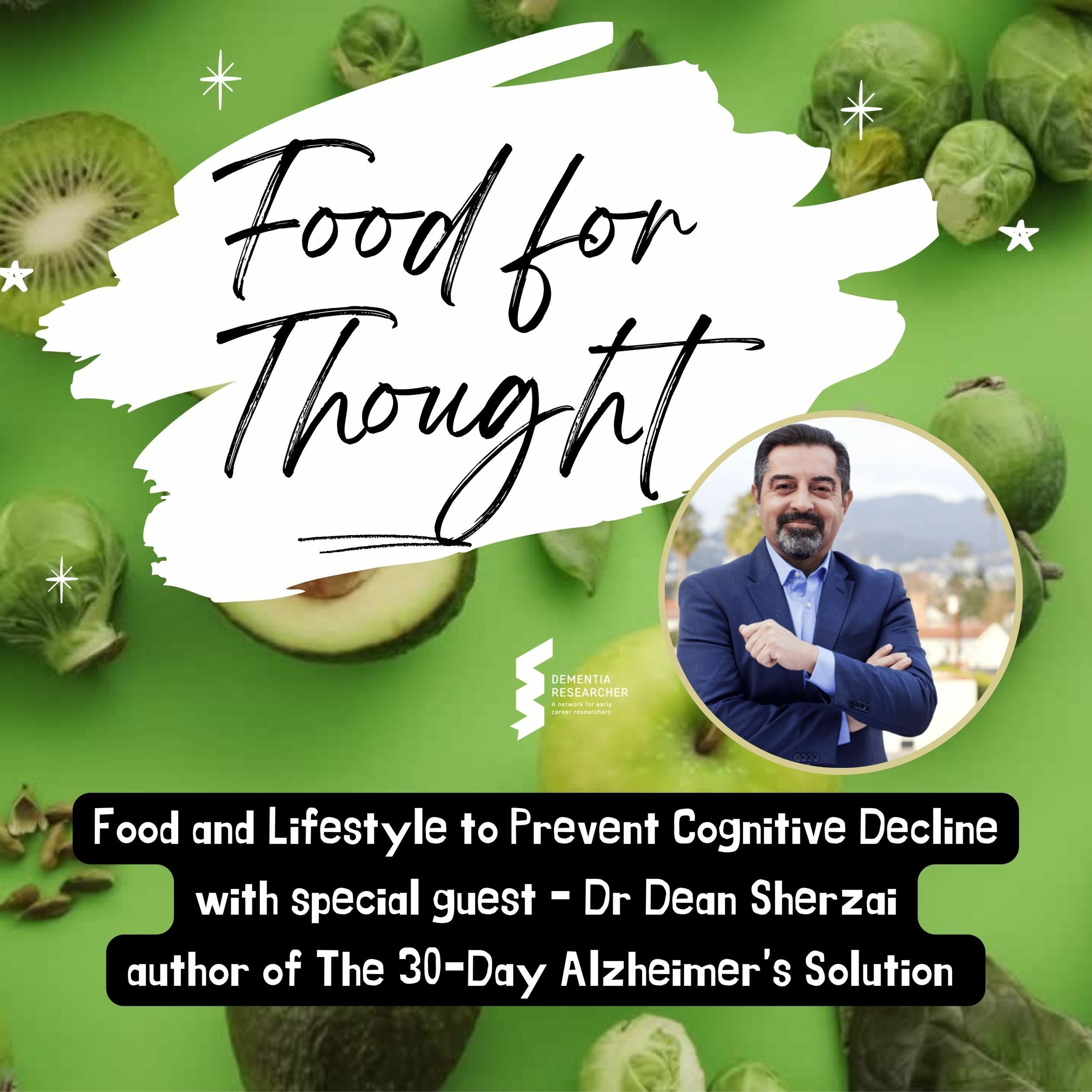
Food for Thought - Food and Lifestyle to Prevent Cognitive Decline with Dr Dean Sherzai
In this podcast Dr Sam Moxon speaks with behavioral neurologist and neuroscientist Dr Dean Sherzia. They discuss diet and lifestyle and how they effect the brain, and how big and small changes can have an effect on cognition both before and after a diagnosis of Alzheimer's disease and other dementias. For those who don't know Dr. Dean Sherzai is dedicated to behavioral change models at the community and population level. Dean and his wife Dr Ayesha Sherzia, are authors of the book 'The 30-Days ALzheimer's Solution: The Definitive Food and Lifestyle Guide to Preventing Cognitive Decline'. Ocean Robbins, CEO of the Food Revolution Network said of the book "This simple, step-by-step guide is your road map to a life of clear mind, strong memory, and lasting wellness. You won’t believe how easy (and how delicious!) it can be to transform your life." Buy the book here: https://www.amazon.co.uk/dp/0062996959/ref=cm_sw_em_r_mt_dp_GTX1Q4K6B685MKKT0YNQ Dean finished his medical and neurology residencies at Georgetown University with a subsequent fellowship in neurodegenerative diseases at the National Institutes of Health, followed by a second fellowship in Dementia and Geriatrics at the University of California, San Diego. He also holds two master’s Degrees; in advanced sciences at UCSD and in lifestyle epidemiology from Loma Linda University. He has received a PhD in Healthcare leadership focused on community empowerment from Loma Linda/Andrews University. Finally, he completed the executive leadership program at Harvard Business School. His vision has always been to revolutionize healthcare by empowering communities to take control of their own health. You will also find this video podcast in your favourite podcast app and on our website at https://www.dementiaresearcher.nihr.ac.uk/podcast You can also find a video version of this podcast on our YouTube Channel at: https://youtu.be/DOyNHL8uIwM To find out more about the guests, and access a transcription of this podcast visit: https://www.dementiaresearcher.nihr.ac.uk/podcast-food-for-thought-food-and-lifestyle-to-preventing-cognitive-decline-with-dr-dean-sherzai/ -- Like what you hear? Please review, like, and share our podcast - and don't forget to subscribe to ensure you never miss an episode. This podcast is brought to you in association with Alzheimer's Research UK and Alzheimer's Society, who we thank for their ongoing support. -- The views and opinions expressed by guests in this podcast represent those of the guests and do not necessarily reflect those of Dementia Researcher, or our funders, the show does not endorse one particular diet over another and strongly recommends you consult your healthcare professional before making any changes to your diet or lifestyle.
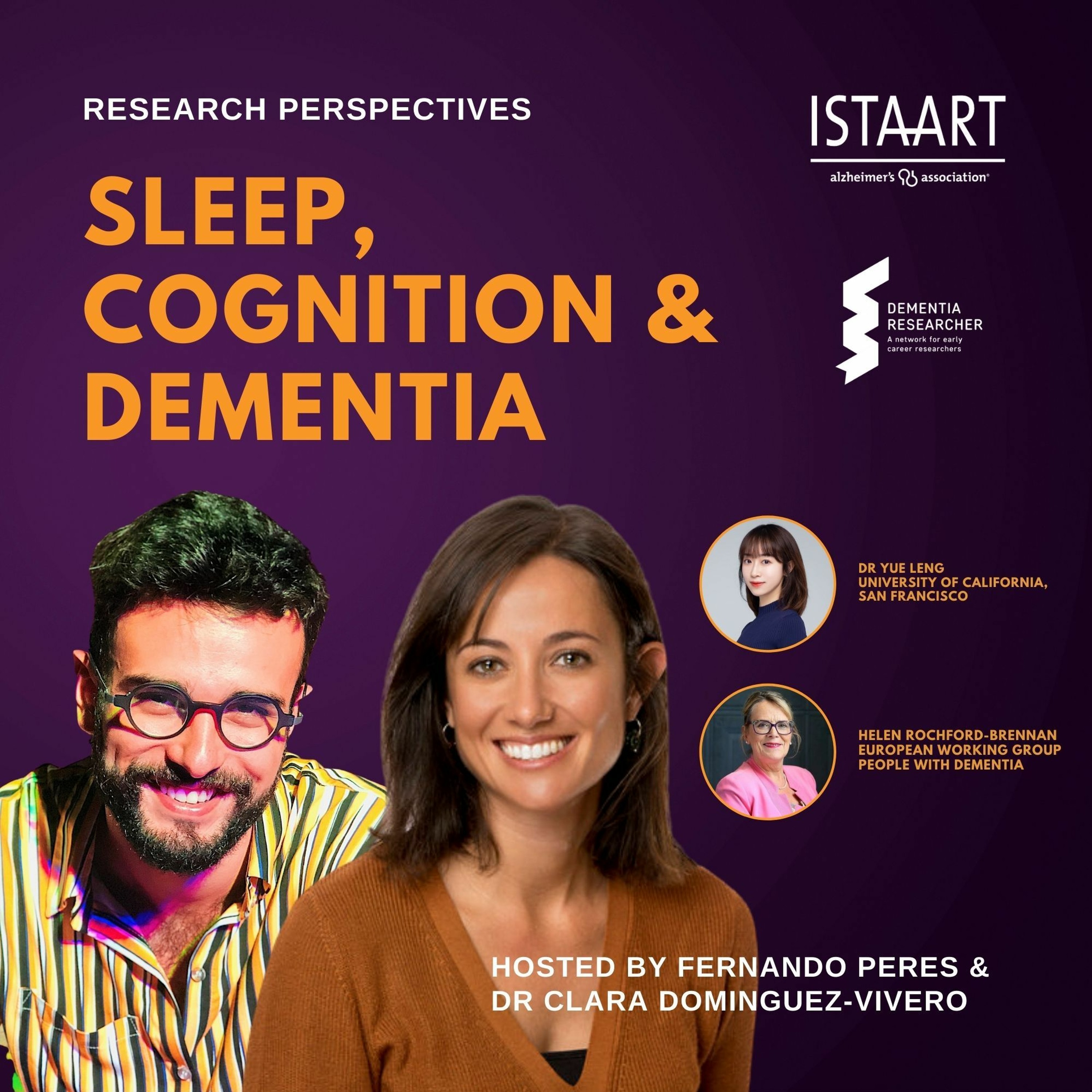
Sleep, Cognition & Dementia - ISTAART Research Perspectives
Is there a connection between sleep, memory, and dementia? Well, it’s complicated. Different types of dementia are associated with different sleep problems, and it is a hot topic for researchers. Whether poor sleep causes or exacerbates dementia, is being looked at and then the separate but related issue of dementia contributing to poor sleep. It is clear that more research is needed to understand this relationship; in particular research that observes large groups of affected people for very long periods of time. In this ISTAART Research Perspectives Special, Fernando Peres and Dr Clara Domínguez Vivero get two perspectives on a research topic, from the researcher and the person who lives with the disease. This time we are joined by Epidemiologist and Sleep Research expert Dr Yue Leng from University of California, San Francisco and Helen Rochford-Brennan, who has been living with dementia for a number of years and transformed her live into campaigning for improved awareness and human rights through charities and the European Working Group for People Living with Dementia. Find out more about our hosts and guests and review a full transcript of this podcast on our website at: https://www.dementiaresearcher.nihr.ac.uk/podcast For information on ISTAART Visit – https://www.alz.org/istaart -- This podcast is brought to you in association with Alzheimer's Association, Alzheimer's Research UK and Alzheimer's Society, who we thank for their ongoing support.

Listening to Early Career Researchers - ISTAART & UCL Survey Results
To investigate researchers’ experiences of their workplaces, fields, careers and support, University College London and The Alzheimer's Association International Society to Advance Alzheimer's Research and Treatment (ISTAART) Professional Interest Area to Elevate Early Career Researchers (PEERS) surveyed ECRs working in the field of dementia or those who had recently left the field. In this podcast the study lead Adam Smith hosts a discussion with three of his ISTAART collaborators Dr Beth Shaaban, from University of Pittsburgh, Dr Lindsay Welikovitch from Harvard Medical School and Massachusetts General Hospital and Wagner Brum from University of Gothenburg and Federal University of Rio Grande do Sul. Behind every discovery are researchers, with the majority falling into the category of being at the early career stage. Early Career Researchers (ECRs) significantly contribute to the field, but from within, there are concerns about how supported individuals feel to thrive and remain within research. There are also questions around what actions research institutions, funders and policy makers are taking to address research careers issues. This report provides the results of the survey conducted between the 1st September to 31st October 2021. Further details and the full data can be freely accessed at https://www.dementiaresearcher.nihr.ac.uk/survey -- You can find out more about our panellists, and their work on our website. There you will also find a full transcript: www.dementiaresearcher.nihr.ac.uk/podcast-listening-to-early-career-researchers -- Like what you hear? Please review, like, and share our podcast - and don't forget to subscribe to ensure you never miss an episode. This podcast is brought to you in association with Alzheimer's Research UK and Alzheimer's Society, who we thank for their ongoing support.
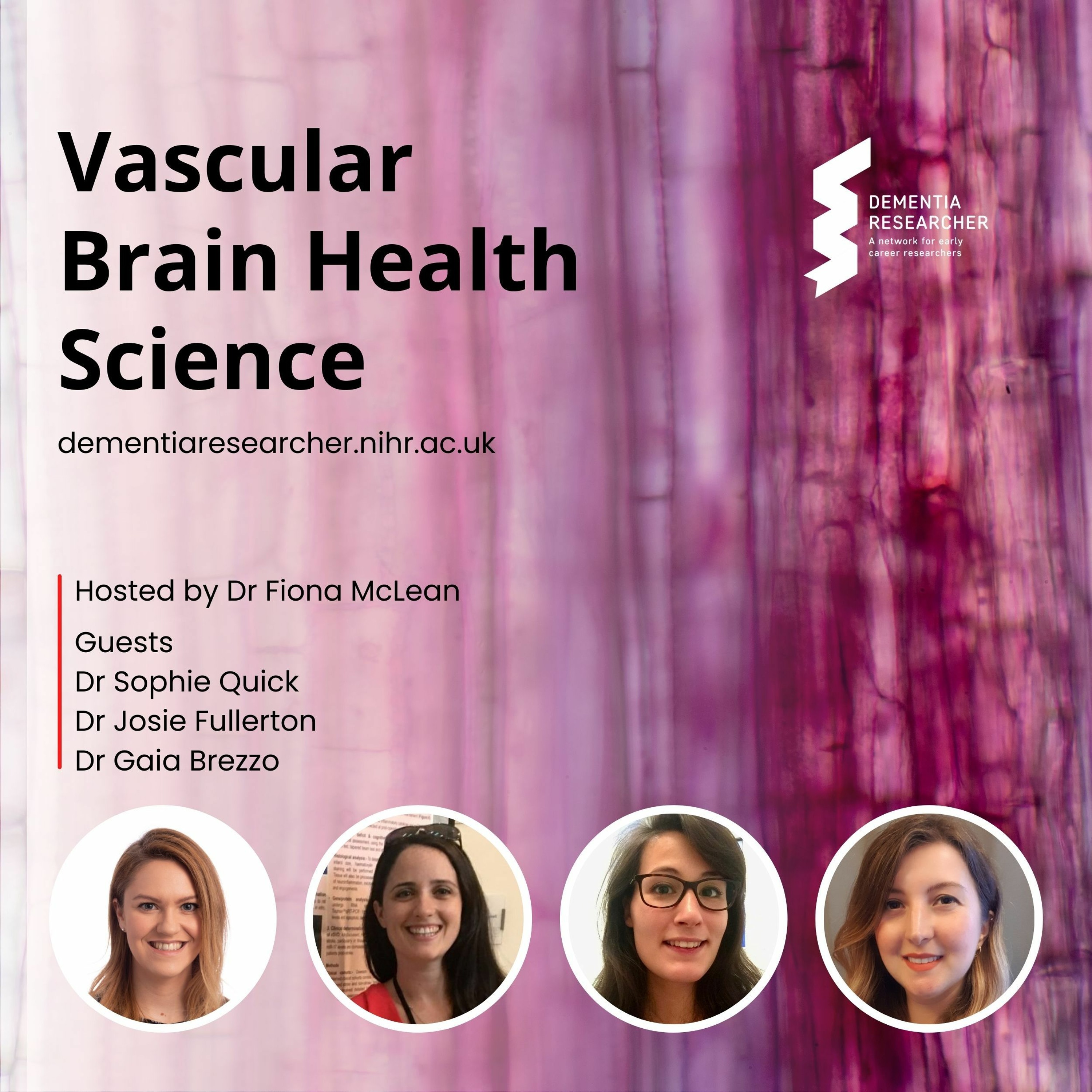
Vascular Brain Health Science
This week Dr Fiona McLean from University of Dundee is with three colleagues all at the cutting edges of their fields to discuss their research, and the science behind vascular brain health, and what brain cells you’d really enjoy hanging out with on a night out in Glasgow! List to find out more… Maintaining a healthy brain is essential to having a healthy and long life. Brain health is increasingly talked about, but what does that really mean, and how does the vascular system play a role in that? Well, did you know that the health of your brain and your heart are connected? By keeping your heart and vascular system healthy, you also lower your risk for brain problems such as stroke and dementia… controlling blood pressure, eating health foods, and limiting alcohol, managing your risk of diabetes, not smoking and staying active and rested are important… this week our guests explore the science so don’t worry if you don’t know your extravascular cells from your endothelial cells, our great guests will explain (and if you do know, then you need to listen to discover our guests favourite cells, and which cells are which on a night out). This week’s guests are: Dr Josie Fullerton, Postdoctoral Researcher at University of Glasgow studying extracellular vesicles, hypertension, stroke, heart & vascular disease & neuropathology. Dr Gaia Brezzo, Research Fellow in Cerebral Vascular Disease and Dementia at the UK Dementia Research Institute at The University of Edinburgh. Dr Sophie Quick, Post-doctoral researcher in the Centre for Regenerative Medicine, The University of Edinburgh researching neuroscience, specifically Cerebral Small Vessel Disease. -- You can find out more about our panellists, and their work on our website. There you will also find a full transcript: https://www.dementiaresearcher.nihr.ac.uk/podcast-vascular-brain-health-science/ -- Like what you hear? Please review, like, and share our podcast - and don't forget to subscribe to ensure you never miss an episode. This podcast is brought to you in association with Alzheimer's Research UK and Alzheimer's Society, who we thank for their ongoing support.
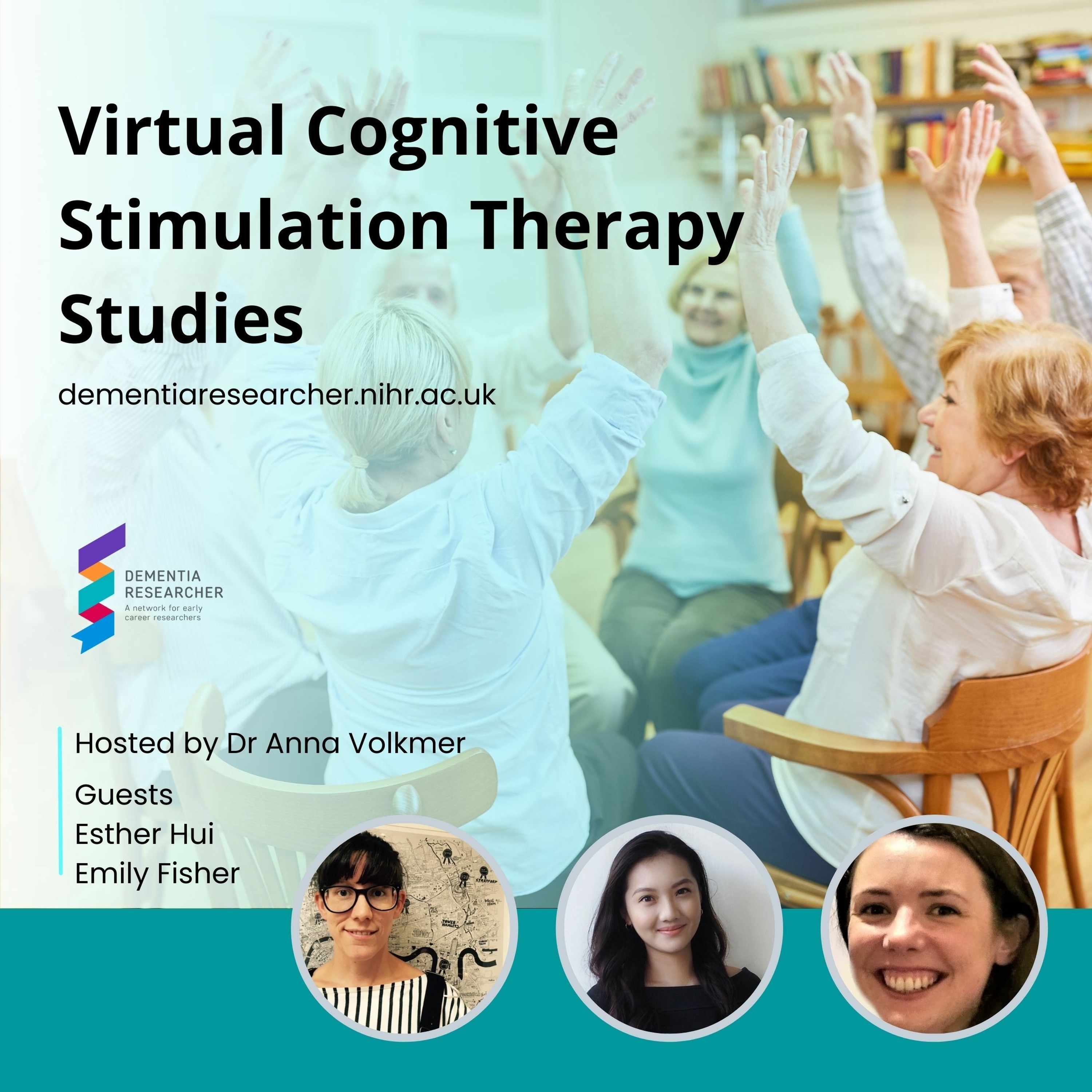
Virtual Cognitive Stimulation Therapy Studies
This week Dr Anna Volkmer is back in the hosts chair, interviewing PhD Students, Esther Hui and Emily Fisher. Esther and Emily both study in the International Cognitive Stimulation Therapy Centre at University College London. Cognitive Stimulation Therapy (CST) is an evidence-based therapy for people with dementia. It is the only non-medical therapy endorsed by UK government guidelines for the cognitive symptoms of dementia. Group CST treatment involves 14 or more sessions of themed activities, which typically run twice weekly. The aims of sessions are to actively stimulate and engage people with dementia, whilst providing an optimal learning environment and the social benefits of a group. CST is widely used across the UK as well as globally, with work ongoing in at least 35 countries. The International CST Centre was set up to co-ordinate this work and is directed by Professor Aimee Spector. In this podcast Esther and Emily discuss the programme, their studies and how they’re adapting CST to work in different cultures and settings. For more information visit: https://www.ucl.ac.uk/international-cognitive-stimulation-therapy/ http://www.cstdementia.com/ -- You can find out more about our panellists, and their work on our website. There you will also find a full transcript: https://www.dementiaresearcher.nihr.ac.uk/podcast-virtual-cognititive-stimulation-therapy-studies/ -- Like what you hear? Please review, like, and share our podcast - and don't forget to subscribe to ensure you never miss an episode. This podcast is brought to you in association with Alzheimer's Research UK and Alzheimer's Society, who we thank for their ongoing support.

ADPD Conference Highlights 2022
A special podcast recorded during last weeks AD/PD™ 2022, Alzheimer's & Parkinson's Diseases Conference in Barcelona (isn't it great to be back meeting face to face). Katy Hole, PhD Student from University of Bath guest hosts talking with four early researchers sharing their reflections on the week, and conference and science highlights. Guests are: Dr Amanda Heslegrave, Senior Research Fellow in the UK Dementia Research Institute at University College London. Dr Percy Griffin, Director of Scientific Engagement at Alzheimer's Association Wagner Brum, MD-PhD student from University of Gothenburg Anna Wernick, PhD Student at University College London _________________________ You can find out more about our panellists, and their work on our website. There you will also find a full transcript: https://www.dementiaresearcher.nihr.ac.uk/podcast-adpd-conference-highlights-2022 _________________________ Like what you hear? Please review, like, and share our podcast - and don't forget to subscribe to ensure you never miss an episode. This podcast is brought to you in association with Alzheimer's Research UK and Alzheimer's Society, who we thank for their ongoing support.
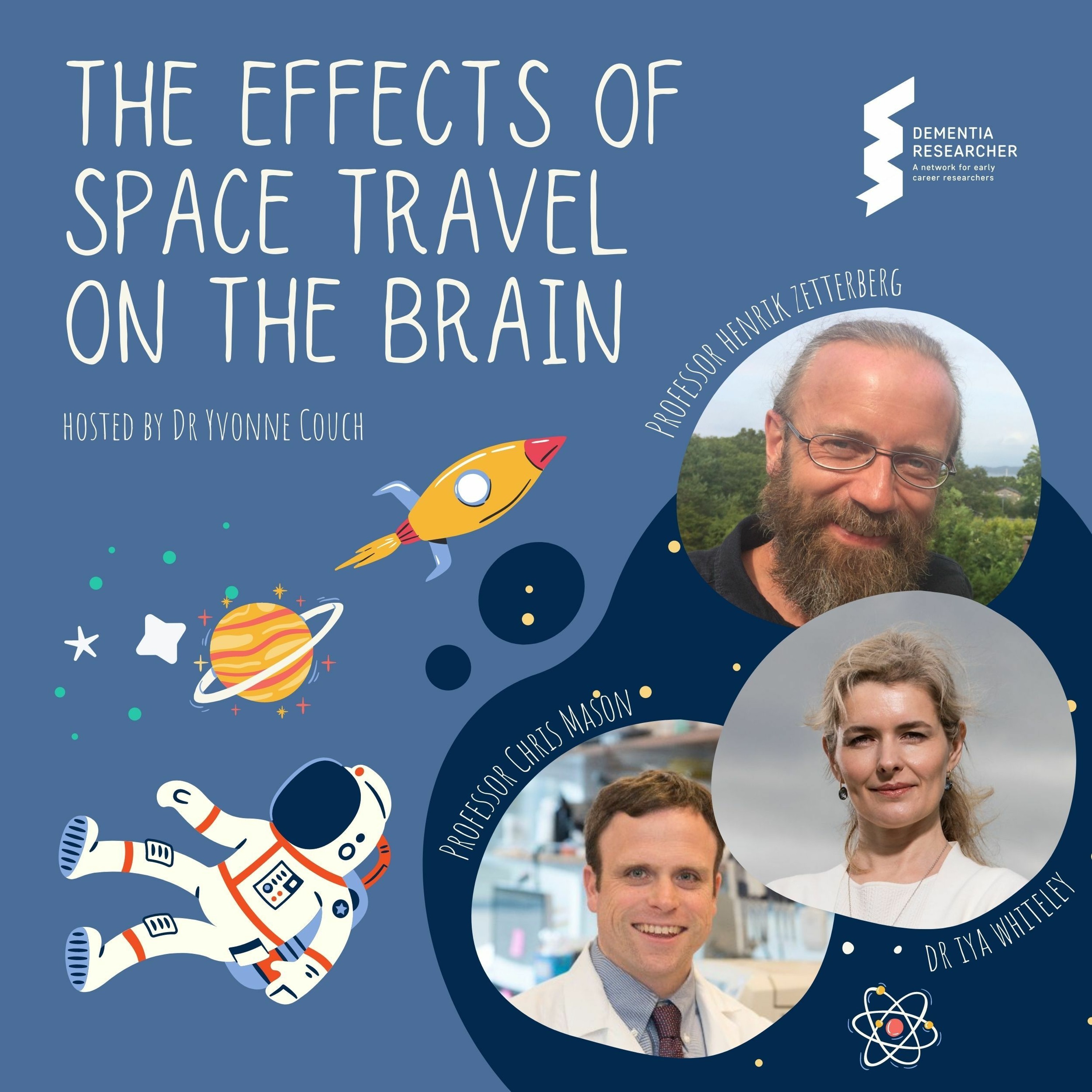
The Effects Of Space Travel On The Brain
Today is the UK Space Agency Mars Day, it celebrates the 6th anniversary of the launch of the first ExoMars mission, and a year since NASA’s Perseverance rover started exploring Mars. In just three years’ time NASA aims to return humans to the Moon as part of the Artemis Mission, and in just a decade it’s onward to the surface of Mars – the tech and engineering may be ready, but are we?Being in space has well-documented negative effects on the body. But the effect of being in space on the brain has been studied less. In this podcast Dr Yvonne Couch, ARUK Research Fellow at University of Oxford hosts a discussion with three world leading experts to explore the effects of space travel on the brain.We’re joined by Chris Mason, Professor of Genomics, Physiology, and Biophysics at Weill Cornell Medicine, USA. Chris is one of the people behind the landmark Twins Study that followed identical twins Scott and Mark Kelly, while one spent a year on earth and the other spent a year in space – he works with NASA, runs multiple labs, and utilises computational and experimental methodologies to identify and characterise the essential genetic elements that guide the function of the human genome, with a particular emphasis on the elements that orchestrate the development of the human brain. Chris has also written a fantastic book ‘The Next 500 Years’ about our future in space.Next we have Dr Iya Whiteley, Space Psychologist and Director of the Centre for Space Medicine at Mullard Space Science Laboratory, at University College London. Dr Whiteley works with the European Space Agency is a trained Astronaut Instructor and has published several papers about fatigue in astronauts. She helps develop tools to support crew autonomous operations in complex human spacecraft and works at the cutting edge of psychological support of astronauts going to the moon and mars. Iya is also the author of a new book titled “Toolkit for a Space Psychologist - to support astronauts in exploration missions to the Moon and Mars”Last by far from least we have the unstoppable Henrik Zetterberg, Professor of Neurochemistry and neurodegenerative disease expert at University College London and the University of Gothenburg. Henrik is a leading expert in fluid based biomarkers in dementia, and in 2020 he discovered a new method to detect the disease about two decades before significant symptoms are present. In this show he does an amazing job of keeping the show on track as we explore radiation, gravity, psychology, food, sleep and everything that makes astronauts ‘Super Human’, or are they?The Next 500 Years – Book by Professor Chris MasonToolkit for a Space Psychologist – Book by Dr Iya WhiteleyNASA Twins Study ReportMore on Mars Day WebsiteA transcript of this show, links and show notes and profile on all our guests are available on our website at https://www.dementiaresearcher.nihr.ac.uk.If you prefer to watch rather than listen, you will find a video version of this podcast on YouTube, on our website, and in selected podcast platforms.Follow us on social media:https://www.instagram.com/dementia_researcher/ https://www.facebook.com/Dementia.Researcher/https://www.twitter.com/demrescommunityhttps://www.linkedin.com/company/dementia-researcher https://bsky.app/profile/dementiaresearcher.bsky.socialDownload and Register with our Community App:https://www.onelink.to/dementiaresearcherWe gratefully acknowledge the support of our funders: Alzheimer’s Association, Race Against Dementia, Alzheimer’s Research UK, Alzheimer’s Society, and the National Institute for Health and Care Research.The views and opinions expressed by guests in this podcast are their own and do not necessarily reflect those of the producers, funders, or sponsors.Subscribe to our sister show 'Dementia Researcher The Blogs':https://podfollow.com/dementia-researcher-blogs
ARUK Conference Roundup 2022
This week we have a we have a special podcast recorded during last weeks Alzheimer's Research UK Conference in Brighton. In this show Dr Katy Bray, ARUK Public Engagement Manager guests hosts talking with four early career researchers sharing the research and their conference highlights. Our guests are Beth Eyre, PhD Student from The University of Sheffield Sophie Sanford, University of Cambridge Dr Mike Daniels, UK DRI at The University of Edinburgh Josh Harvey, University of Exeter _________________________ You can find out more about our panellists, and their work on our website. There you will also find a full transcript: https://www.dementiaresearcher.nihr.ac.uk/podcast-aruk-conference-roundup-2022/ For more information on ARUK visit: https://www.alzheimersresearchuk.org/research/ _________________________ Like what you hear? Please review, like, and share our podcast - and don't forget to subscribe to ensure you never miss an episode. This podcast is brought to you in association with Alzheimer's Research UK and Alzheimer's Society, who we thank for their ongoing support.
Neuronal Activity
In this podcast Dr Mike Daniels, Postdoctoral Research Fellow in the UK Dementia Research Institute at The University of Edinburgh guests hosts a discussion with three researchers who know a great deal about Neurons – they discuss their research, lab life and mice challenges, the amyloid hypothesis, and the reproducibility. The healthy human brain contains tens of billions of neurons—specialized cells that process and transmit information via electrical and chemical signals. They send messages between different parts of the brain, and from the brain to the muscles and organs of the body. Alzheimer’s disease disrupts this communication among neurons, resulting in loss of function and cell death. This weeks guests are: Dr Soraya Meftah, Postdoctoral Research Fellow in the UK Dementia Research Institute at The University of Edinburgh. Sorya explores the Neurophysiology of dementia (synaptic, neuronal, network dysfunction). Tabitha Broadbelt, PhD Student at The University of Edinburgh. Tabitha works in the field of Behavioural Neuroscience, Learning and Memory. Specifically looking at mechanisms of learning modulation in a mouse model of amyloid pathology. Jack Bray, PhD Student at University of Aberdeen. Jack is investigating EEG and behavioural abnormalities in preclinical mouse models of dementia (he also knows how to drive a ferry). You can find out more about our guests, and access a full transcript of this podcast on our website at: https://www.dementiaresearcher.nihr.ac.uk/podcast Register on our website to receive your weekly bulletin, and to access more great content – blogs, science, career support + much more https://www.dementiaresearcher.nihr.ac.uk This podcast is brought to you in association with Alzheimer's Research UK and Alzheimer's Society, who we thank for their ongoing support.
Support Networks for Minoritised Scientists
In this week’s podcast Dr Oz Ismail talks with three dementia researchers who have made in their business to build supportive communities that celebrate and empower Black and minoritised scientists and dementia researchers. In the UK, around 7 per cent of undergraduate students are black, matching the percentage of black people aged 18 to 24. But the number plummets when you look at PhD students. For the past five years, the proportion of black PhD students at Russell Group universities – seen as the UK’s most prestigious – has stagnated at around 2 per cent. The story is similar in the US, where African Americans make up nearly 13 per cent of the population, but win only 6.5 per cent of doctorates earned. Our guests discuss, what needs to be done, and what inspired them to act both personally and professional to support others from similar backgrounds – to follow their paths into science, and support them to remain. They go on to discuss just a few of the amazing resources and services are out there to support Black and minoritised researchers and scientists working in dementia and other diseases. Meet the guests... Dr Oz Ismail is a Postdoctoral Scholar in the Mishra Lab, Oregon Health & Science University, USA. He studies the links between small stroke events and the onset of Alzheimer’s pathology later in life. He also occasionally performs stand-up comedy, drawing upon his experiences as a millennial, immigrant, and scientist. Dr Yolanda Ohene, is a Biophysicist and Postdoctoral Research Associate at The University of Manchester. Yolanda is developing new MRI techniques to measure blood-brain barrier dysfunction in Alzheimer’s Disease. Her top tips for ECRs? Remember to write down as many details as possible in your lab book! She is also passionate about encouraging others from diverse cultural backgrounds to work in science. Victor Ekuta is a linQ Catalyst Fellow and MD Candidate at Massachusetts Institute of Technology. He is researching Alzheimer’s Disease Biomarkers (he is also an awesome dancer: Hip hop, popping, and shuffling). In his spare time, he has led multiple outreach programs and neuroscience courses for underrepresented students – he is also a member of Black in Neuro. Caitlin Corona-Long is a PhD Student at Johns Hopkins University, researching structural, functional, and fluid biomarkers of amnestic mild cognitive impairment. As a first generation PhD student born to a Sierra Leonean father and an American mother, Caitlin has been involved in a number of programmes to support black scientists and to support and encourage improved diversity – she also happens to be related to two Presidents. You can find out more about our guests, and access a full transcript of this podcast on our website at: www.dementiaresearcher.nihr.ac.uk/podcast Register on our website to receive your weekly bulletin, and to access more great content – blogs, science, career support + much more www.dementiaresearcher.nihr.ac.uk This podcast is brought to you in association with Alzheimer's Research UK and Alzheimer's Society, who we thank for their ongoing support.
Exploring the New Alzheimer's Research UK ECR Programme
This week Adam Smith talks with three of the people behind the new Alzheimer’s Research UK (ARUK) Early Career Researcher Programme. For those who don’t know ARUK are one of the amazing charities that support Dementia Researcher and this podcast. We share common goals of furthering dementia research, and ensuring that ECRs are attracted to the field, and supported to remain – so it was a pleasure to hear about their brilliant new programme. This weeks guests are Dr Rosa Sancho, Head of Research for ARUK and two people who advised them in devising the new programme, Dr Jill Fowler, Research Fellow from The University of Edinburgh and Michael Coleman, Professor of Neuroscience at University of Cambridge. Here are some essential links for you to follow-up on the topics discussed in the show: Key elements of the new programme include: - A new funding scheme to help retain talented researchers. - Leadership and management training. - An ARUK Network-wide mentorship scheme. - A career development group. News Item - https://bit.ly/3o2riYh ARUK ECR Portal - https://bit.ly/3Gbefu8 --You can find out more about our guests, and access a full transcript of this podcast on our website at: https://www.dementiaresearcher.nihr.ac.uk/podcast --Register on our website to receive your weekly bulletin, and to access more great content – blogs, science, career support + much. --Dementia Researcher is brought to you by University College London, Queen Square Biomedical Research Centre, and is funded by the National Institute for Health Research, Alzheimer's Research UK and Alzheimer's Society.
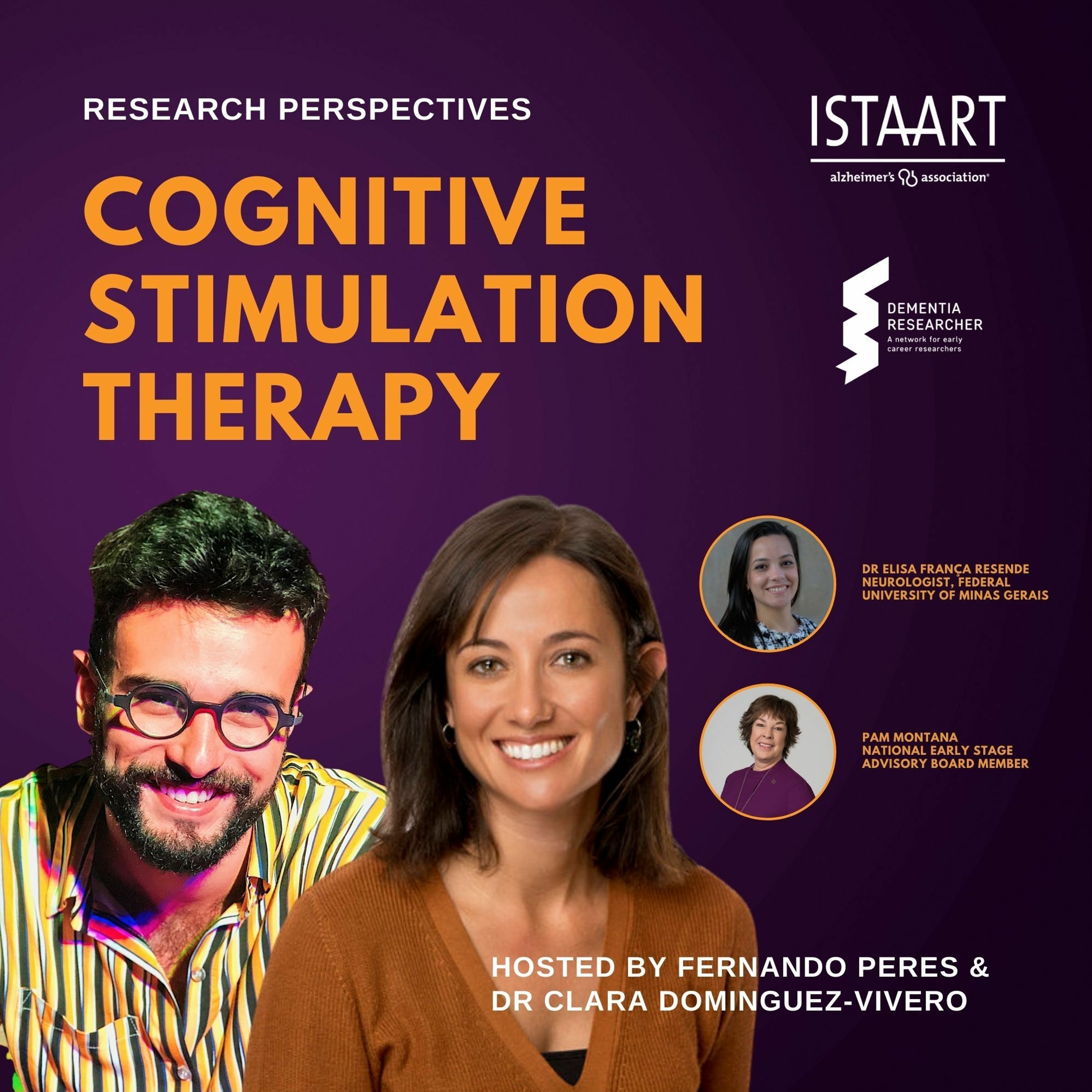
Cognitive Stimulation Therapy - ISTAART Research Perspectives
There are a number of interventions that can help people living with dementia improve their memory and thinking skills and to enable them to cope better, or even slightly delay the loss of memory. In this podcast we discuss Cognitive Stimulation Therapy (CST) – an intervention which has been significantly researched and supported by a large amount of evidence. In this ISTAART Research Perspectives Special, Global Brain Health Institute (GBHI) Fellows Fernando Peres and Dr Clara Domínguez Vivero talk with CST expert and researcher Dr Elisa França Resende and Alzheimer’s Association Volunteer and person living with dementia Pam Montana. Our two guests give two perspectives from each side of the treatment, researcher and provider and recipient and user. Exploring the research and how CST has helped to support Pam to live with the progressive symptoms of dementia. -- Fernando Perez is a Journalist, Writer and GHBI Fellow based in Brazil. -- Dr Clara Dominguez Vivero is a Neurologist, PhD holder, Neuroinflammation Researcher and GHBI Fellow based at Hospital Clínico Universitario de Santiago de Compostela. -- Dr Elisa de Paula França Resende is a Neurologist and GBHI Fellow, researching Cognitive Reserve and dementia in people with low education at Federal University of Minas Gerais (UFMG), Brazil. -- Pam Montana was diagnosed with young-onset Alzheimer’s disease in 2016 at the age of 61. A former Intel executive, Pam managed and led sales teams until her early retirement in 2017. Pam is a champion for dementia research and a former member of the Alzheimer’s Association National Early-Stage Advisory Group. Find out more about our hosts and guests and review a full transcript of this podcast on our website at https://www.dementiaresearcher.nihr.ac.uk/podcast Further Reading: CST to Maintain Memory - https://bit.ly/3quKXC5 CST Toolkit - https://bit.ly/33xjBSD GBHI - https://www.gbhi.org/ For information on ISTAART Visit – https://www.alz.org/istaart -- This podcast is brought to you in association with Alzheimer's Association, Alzheimer's Research UK and Alzheimer's Society, who we thank for their ongoing support.
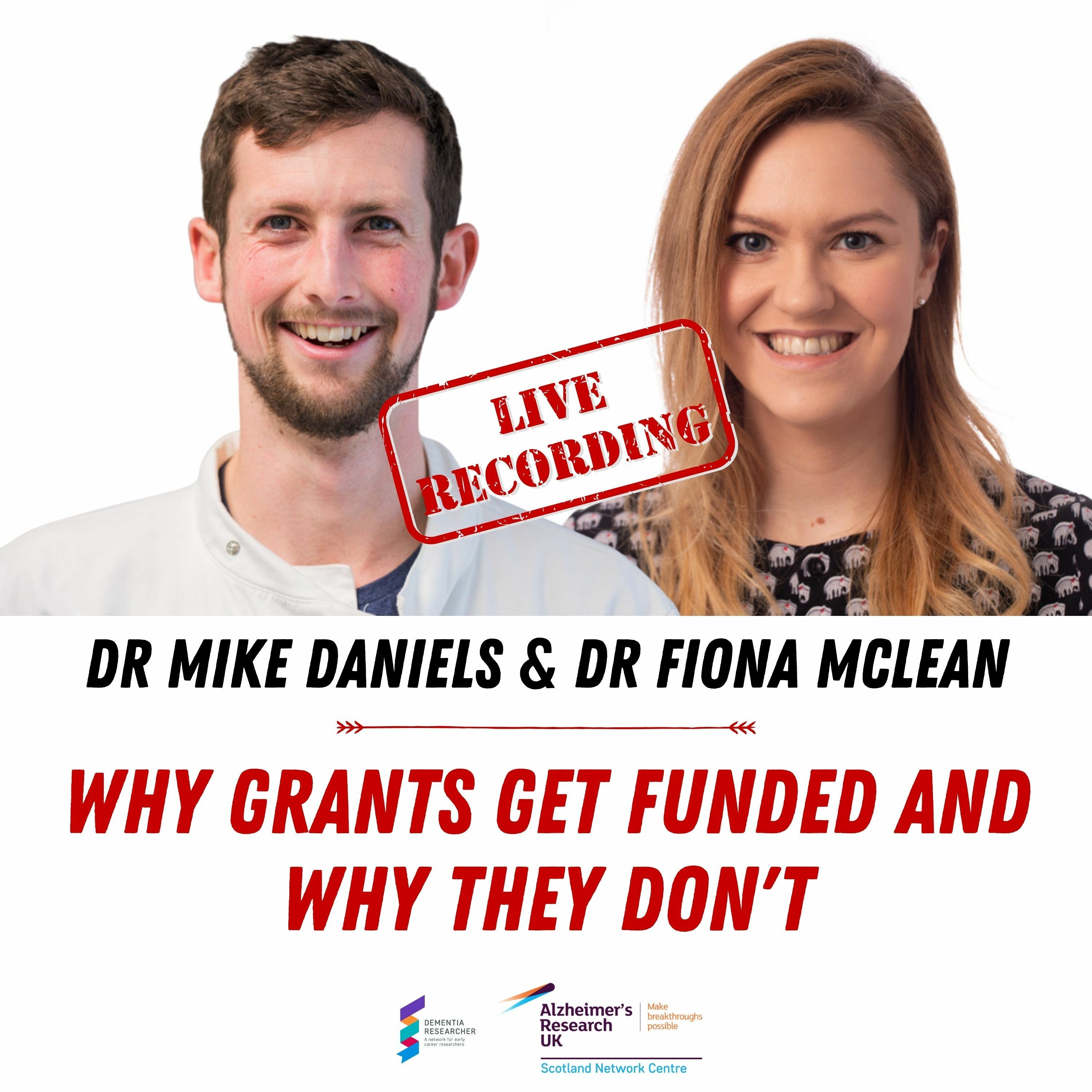
Why grants get funded and why they don't
Postdoc Scientist at the UK Dementia Research Institute at The University of Edinburgh, Dr Mike Daniels presents what he learned from attending the Alzheimer’s Research UK grant review board. Sharing tips on why grants get funded and why they don’t. --Hosted by Dr Fiona McLean and recorded live in front of an audience at the ARUK Scotland Network Meeting on the 3rd December 2021. --You can find out more about our guests, and access a full transcript of this podcast on our website at: https://www.dementiaresearcher.nihr.ac.uk/podcast --Register on our website to receive your weekly bulletin, and to access more great content – blogs, science, career support + much. --Dementia Researcher is brought to you by University College London, Queen Square Biomedical Research Centre, and is funded by the National Institute for Health Research, Alzheimer's Research UK and Alzheimer's Society.
Blogs 2021 - Thriving Not Just Surviving
We’re finishing the year with 5 special themed podcasts sharing some of the narrated blogs we’ve published throughout the year, introduced by Adam Smith. Our last compilation of the week has been titled Thriving not just Surviving – we had a lot of blogs early in the year sharing life during lockdown, the importance of mental health, and how, as researchers you need to have an extra level of resilience to cope with the extra challenges that come with failed applications and rejection – and how to bounce back. So today, we’re sharing a few blogs on surviving lockdown and coping with the stressors of academia. Adam Smith narrates his own blog blog titled "How to Build Resilience and Bounce Back". Beth Eyre, PhD Student at The University of Sheffield shared her tips in a blog called "Looking after your wellbeing as a PhD Student... During a Pandemic". Dr Sam Moxon, Research Associate from The University of Manchester shares his advice on "Keeping Sane in Lockdown". Morgan Daniel, now an Assistant Psychologist at UCLH shared her year as an MSc Student, this blog was one of her last during the journey "Tips for Taking Care of yourself during Gradschool". If you enjoyed these blogs, remember that we have a dedicated blogs podcast channel, where we publish several new posts every week - subscribe in your podcast app, or read them all on our website. Dedicated Blogs Podcast - apple.co/3BMzhxu Read more blogs, and find out about our contributors at: www.dementiaresearcher.nihr.ac.uk This podcast is brought to you in association with Alzheimer's Research UK and Alzheimer's Society, who we thank for their ongoing support.
Blogs 2021 - The Importance Of Care
We’re finishing the year with 5 special themed podcasts sharing some of the narrated blogs we’ve published throughout the year, introduced by Adam Smith. If you’re just catching up, earlier this week we covered some science, we had tips for new researchers, the importance of involving people in research and today, we have four more blogs on the topic of care and psychosocial interventions. It is so important that care research be undertaken alongside the basic science, helping to ensure we can look after those who live with the disease today, whilst also working to understand and prevent the disease. Dr Anna Volkmer, Senior Researcher and Speech and Language Therapist from University College London narrates her blog titled "Dementia Care over the Past 25 Years - from there is nothing we can do, to a range of interventions". Dr Alys Griffiths, Psychologist, Lecturer and Research Tutor at The University of Liverpool narrates her blog titled "Relational Councelling As a Psychosocial Intervention in Dementia". Nathan Stephens, PhD Student from University of Worcester reads his blog discussing "Rebalancing Gender in Care". Dr Prerana Sabnis, reads her blog discussing the research published by Dr Aida Suarez-Gonzalez How the COVID-19 Lockdown Impacted People with Dementia and their Carers". If you enjoyed these blogs, remember that we have a dedicated blogs podcast channel, where we publish several new posts every week - subscribe in your podcast app, or read them all on our website. Dedicated Blogs Podcast - apple.co/3BMzhxu Read more blogs, and find out about our contributors at: www.dementiaresearcher.nihr.ac.uk This podcast is brought to you in association with Alzheimer's Research UK and Alzheimer's Society, who we thank for their ongoing support.

Blogs 2021 - Involving People In Research
We’re finishing the year with 5 special themed podcasts sharing some of the narrated blogs we’ve published throughout the year, introduced by Adam Smith. So far this week we’ve absorbed some science, shared tips for new researchers, but today it’s all about people living with dementia, who should be at the heart of all our research endeavours. We’re going to hear about the importance of patient and public involvement, and hear how researcher adapted to ensure they can keep research going even when qualitative research moves online. Bethany McLoughlin, PhD Student from University of Warwick shares experiences from taking her research online is a blog titled "Conducting Qualitative Interviews Online During COVID-19". Dr Clarissa Giebel, Research Fellow from University of Liverpool narrates her blog titled "Taking Research Out of it's Bubble". Dr Anna Volkmer, Senior Research Fellow and Speech & Language Therapist from UCL talks about "Including the Voices of People Living with Dementia in Research" Dr Sarah Giffiths & Dr Hannah Wheat, Qualitative Researcher from University College London & University of Plymouth provides some valuable guidance in her blog "Interviewing People with Dementia and Carers Remotley". If you enjoyed these blogs, remember that we have a dedicated blogs podcast channel, where we publish several new posts every week - subscribe in your podcast app, or read them all on our website. Dedicated Blogs Podcast - apple.co/3BMzhxu Read more blogs, and find out about our contributors at: www.dementiaresearcher.nihr.ac.uk This podcast is brought to you in association with Alzheimer's Research UK and Alzheimer's Society, who we thank for their ongoing support.

Blogs 2021 - Reading In To The Science
We’re finishing the year with 5 special themed podcasts sharing some of the narrated blogs we’ve published throughout the year, introduced by Adam Smith. This week we’ll be covering some amazing science and care and psychosocial research, exploring public engagement and with the rise of omicron we’ll go back to earlier in the year to learn some lessons from previous lockdowns and think about wellbeing and resilience. Today, we’ve selected four blogs which share some of the amazing knowledge held in the heads of our bloggers who are based in the lab, exploring some science and biology. Dr Christina Toomey, Researcher from University College London narrates her blog titled "How does the Brain Bank Work". Dr Sam Moxon, Research Associate at The University of Manchester narrates his blog titled "Tissue Stiffness an Overlooked Aspect of Dementia". Dr Yvonne Couch, Associate Professor and ARUK Fellow at University of Oxford, invites you to join her in a blog titled "The Hunt for Tiny Messengers" Dr Kamar Ameen-Ali, Research Associate at University of Glasgow discussed her research in this blog "Why does Brain Injury Increase the Risk of Dementia" If you enjoyed these blogs, remember that we have a dedicated blogs podcast channel, where we publish several new posts every week - subscribe in your podcast app, or read them all on our website. Dedicated Blogs Podcast - apple.co/3BMzhxu Read more blogs, and find out about our contributors at: www.dementiaresearcher.nihr.ac.uk This podcast is brought to you in association with Alzheimer's Research UK and Alzheimer's Society, who we thank for their ongoing support.

Blogs 2021 - Essentials For New Researchers
We’re finishing the year with 5 special themed podcasts sharing some of the narrated blogs we’ve published throughout the year, introduced by Adam Smith. This week we’ll be covering some amazing science and care and psychosocial research, exploring public engagement and with the rise of omicron we’ll go back to earlier in the year to learn some lessons from previous lockdowns and think about wellbeing and resilience. Today, we’ve selected four blogs which are perfect for new Researchers, PhD & Masters Students, anyone thinking of coming to work in the field. Dr Anna Volkmer, Senior Researcher & Speech and Language Therapist at University Collect London narrates her blog titled "Why Dementia Research is the most exciting place to be working". Beth Eyre, PhD Student at The University of Sheffield covers "What I wish I’d known before starting my PhD" Dr Emily Oliver, Lead Dementia Nurse and Clinical Researcher shares her tips on "What should I research and how do I formulate a research question?" Nadine Mirza, Postgraduate Researcher and Research Assistant at the University of Manchester shares a personal story "A Product of Failure – How I fell into dementia research. If you enjoyed these blogs, remember that we have a dedicated blogs podcast channel, where we publish several new posts every week - subscribe in your podcast app, or read them all on our website. Dedicated Blogs Podcast - https://apple.co/3BMzhxu Read more blogs, and find out about our contributors at: https://www.dementiaresearcher.nihr.ac.uk This podcast is brought to you in association with Alzheimer's Research UK and Alzheimer's Society, who we thank for their ongoing support.