Dementia Researcher
351 episodes — Page 6 of 8

AAIC Neuroscience Next Conference Round-up
In this week show, Adam Smith is joined by an extended panel of early career dementia researchers, to discuss their highlights from the AAIC Neuroscience Next Conference. AAIC Neuroscience Next organised by the Alzheimer’s Association was a global, no-cost virtual conference taking place on the 9-10th November 2020. It showcased the work of students and early career investigators in cognitive, computational, behavioural, and other areas of neuroscience research. In addition to the scientific presentations, attendees were given access to information on funding and career workshops and provided with networking opportunities. The panellists for this show are (for the first time) all from outside the UK. We were delighted to be joined by: Lindsay Welikovitch a PhD Student from McGill University, Canada (soon to be Dr having recently successfully defended her thesis). Courtney Kloske, PhD Student from the University of Kentucky, USA. Vee Balendra a Medical Student from St James School of Medicine, USA. Dr Wade Self a Postdoctoral Fellow at The University of Chicago, USA. João Pedro Ferrari Souza a MD and PhD Student from Federal University of Rio Grande do Sul, Brazil. _____________________________________________________________________ You can find out more about our panellists, and their work on our website: www.dementiaresearcher.nihr.ac.uk A transcript of this podcast is also available here https://www.dementiaresearcher.nihr.ac.uk/podcast-aaic-neuroscience-next-conference-roundup _____________________________________________________________________ If you missed the live conference, don’t worry – ISTAART members receive extended access to all content through 10th December 2020 (30 days for non-members who have already registered). For details on ISTAART and the new PIA to Elevate Early Career Researchers visit: www.alz.org/istaart _____________________________________________________________________ Like what you hear? Please review, like, and share our podcast - and don't forget to subscribe to ensure you never miss an episode. This podcast is brought to you in association with Alzheimer's Research UK and Alzheimer's Society, who we thank for their ongoing support.
Celebrating 100 Episodes
This is episode 100! We started the podcast in February 2018, and today we’re celebrating! Regular hosts Adam Smith & Megan O’Hare have a short informal chat about the show. Sharing a few insights, and thanking you all for making the show such a great success. With over 370 contributors and almost 50,000 plays, this unique podcast brings together early career researchers to talk about their work and careers topics which are important to them, and hopefully to everyone listening. _____________________________________________________________________ To celebrate we’re holding another prize-giveaway. To be in with a chance to win a Sonos One SL Smart Speaker: 1. Register as a user on our website www.dementiaresearcher.nihr.ac.uk 2. Tweet us using the #ECRDementia and tell us why you enjoy the show We will draw the winners name from the hat on the 30th November. _____________________________________________________________________ You can find out more about our panellists, and their work on our website: www.dementiaresearcher.nihr.ac.uk A transcript of this podcast is also available here: https://www.dementiaresearcher.nihr.ac.uk/podcast-celebrating-one-hundred-episodes _____________________________________________________________________ This podcast is brought to you in association with Alzheimer's Research UK and Alzheimer's Society, who we thank for their ongoing support. Thank you for listening – looking forward to the next 100!
ISTAART PIA to Elevate Early Career Researchers (PEERS)
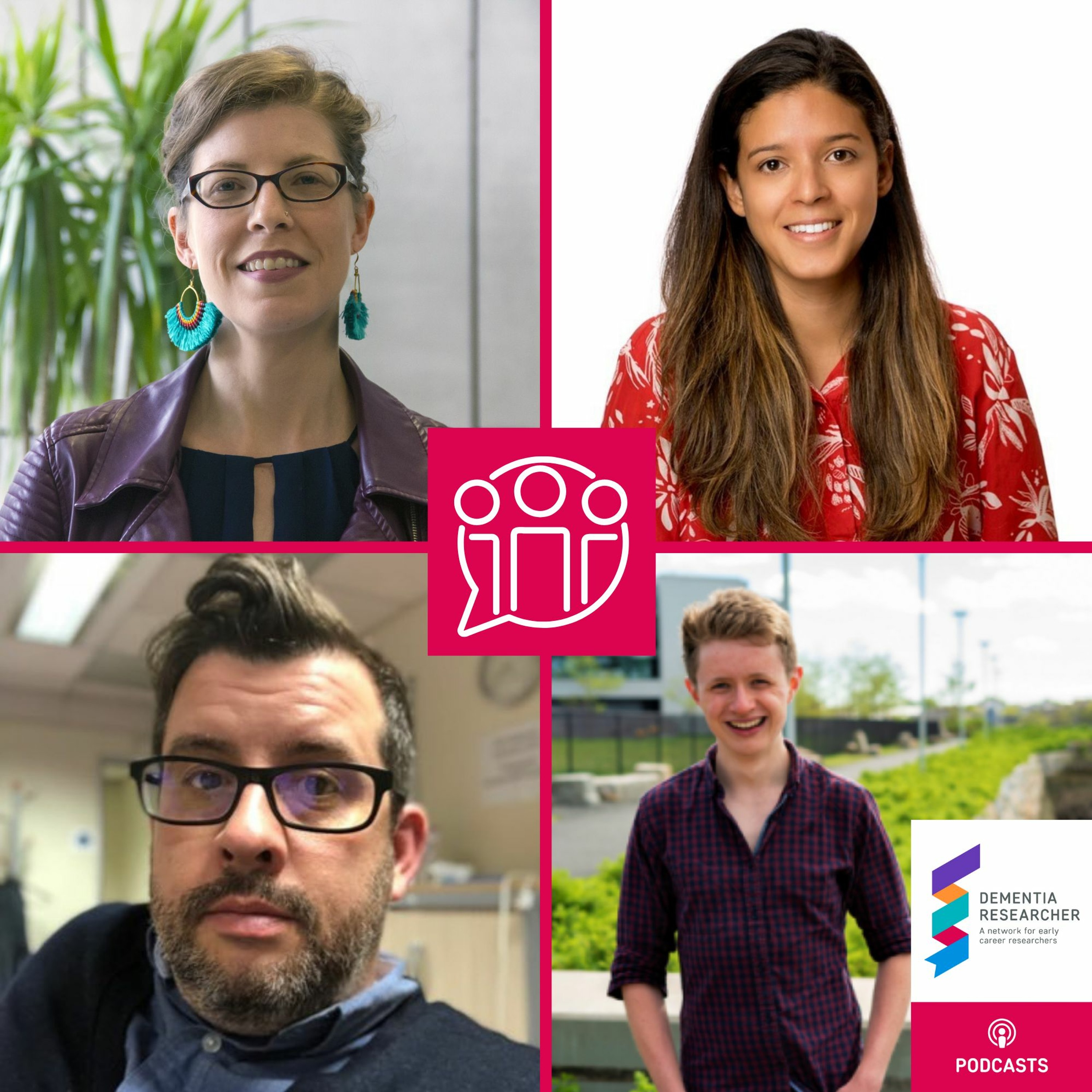
In this bonus episode, Dr Anna Volkmer talks with four people who are heading up a new Alzheimer’s Association ISTAART PIA to Elevate Early Career Researchers (PEERS). Adam Smith, from University College London, changes chairs from host of the show to panellist, as Chair of the new PIA. Alongside Adam we have his co-applicants and Executive Committee Members - Dr Beth Shaaban, Postdoctoral Fellow at University of Pittsburgh (PIA Vice Chair), Dr James Quinn, Research Fellow from Massachusetts General Hospital Department of Neurology (PIA Programs Chair) and Dr Naiara Demnitz, Postdoctoral researcher at the Danish Research Centre for Magnetic Resonance (PIA Communications Chair). This new PIA aims to: • Encourage young people and undergraduates to consider a career in dementia research, and act to inspire and support them to remain in the field. Working to challenge funders and institutions to deliver improvements and improve ECR careers. • Establish and maintain a supportive ECR network to share ideas and collaborate, discuss and troubleshoot career challenges, and gain leadership experience through officer and committee roles. • Develop multi-media online content to support the personal and career development of ECRs. To find out more visit the ISTAART website: https://www.alz.org/istaart Early Career Researcher listeners are encouraged join the new PIA. Login to your ISTAART account and update your registrations. Over the next few weeks as the Executive Committee information is finalised, there will be various opportunities to become involved in the PIAs leadership and work. AAIC Neuroscience Next registrants are invited to join ISTAART at a special 50% off rate. Use coupon code AAICNN50 at checkout (Coupon valid for AAIC Neuroscience Next registrants and new members only. Discounts reflected upon checkout.) You can find out more about our panellists, and their work on our website: www.dementiaresearcher.nihr.ac.uk A transcript of this podcast is also available here: https://www.dementiaresearcher.nihr.ac.uk/podcast-istaart-pia-to-elevate-early-career-researchers Like what you hear? Please review, like, and share our podcast - and don't forget to subscribe to ensure you never miss an episode. _____________________________________________________________________ This podcast is brought to you in association with Alzheimer's Research UK and Alzheimer's Society, who we thank for their ongoing support.

Alzheimer's Society keeping research going during a pandemic
In this podcast Hannah Churchill, Research Communications Officer for Alzheimer’s Society takes the chair to talk with three Alzheimer’s Society funded researchers to discuss how they adapted in response to the pandemic. People with dementia have been worst hit by the COVID-19 pandemic – with over a quarter of people who died of COVID-19 between March and June 2020 having had dementia. Many dementia researchers have refocussed their work to study how the virus has impacted people living with dementia and their carers, to discover the likely long-term effects and to understand how care and support can be better provided in the future – ensuring lessons are learnt. Basic scientists turned their attention to COVID-19 testing, or took the time to learn new coding skills, write papers and to play the next stages of the research. While clinical researchers mostly returned to be entirely focussed on front line care within the NHS. The show is pleased to welcome: Dr Nuriye Kupeli, Senior Research Fellow from University College London. Nuriye, is works on understanding how compassion is experienced by family carers and developing interventions to support carers in their role. Dr Claire Pentecost, IDEAL Programme Manager from University of Exeter. IDEAL is the largest study of living well with dementia in the UK. The evidence will enable the development of new policy, interventions and initiatives to transform the lives of people with dementia and their carers. Remco Tuijt, PhD Student, University College London. Remco, is researching Post-diagnostic dementia care using interviews to explore healthcare experiences for people with dementia, their carers and their healthcare professionals. You can find out more about our panellists, and their work on our website: www.dementiaresearcher.nihr.ac.uk A transcript of this podcast is also available here https://www.dementiaresearcher.nihr.ac.uk/podcast-alzheimers-society-keeping-research-going-during-a-pandemic/ Like what you hear? Please review, like, and share our podcast - and don't forget to subscribe to ensure you never miss an episode. _____________________________________________________________________ The Alzheimer’s Society “Worst hit: Dementia during coronavirus” report can be found here: https://www.alzheimers.org.uk/sites/default/files/2020-09/Worst-hit-Dementia-during-coronavirus-report.pdf Information on Alzheimer’s Society research grants can be found here: https://www.alzheimers.org.uk/research/researchers/grants For information on the IDEAL Study visit: http://www.idealproject.org.uk/ _____________________________________________________________________ This podcast is brought to you in association with Alzheimer's Research UK and Alzheimer's Society, who we thank for their ongoing support.
Race Against Dementia Fellowships
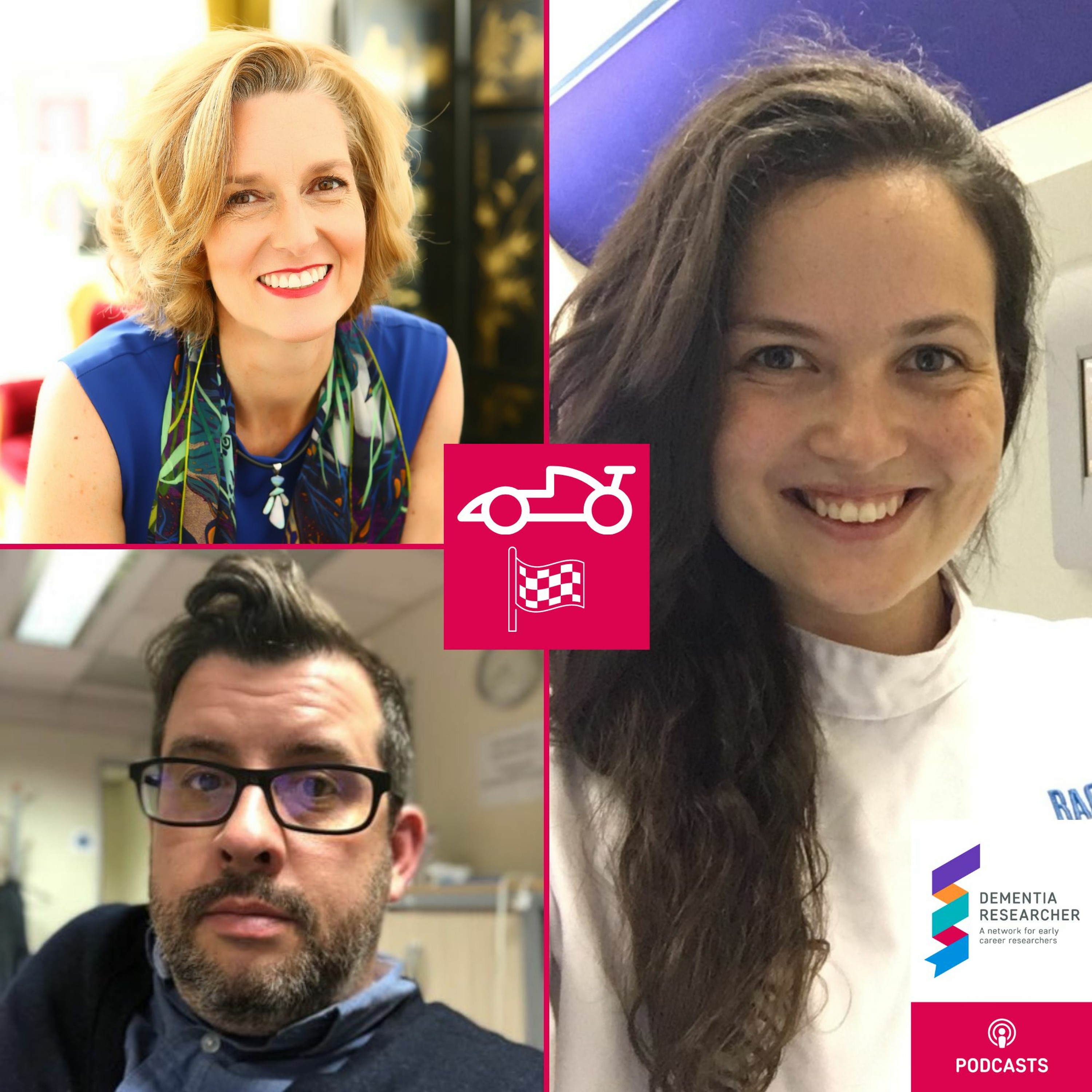
Founded by Formula 1 racing legend Sir Jackie Stewart, Race Against Dementia is a global charity, founded by Sir Jackie Stewart, to fund pioneering research into the prevention and cure of dementia. Adam Smith is in the driving seat, talking with Race Against Dementia CEO, Dr Penny Moyle, and Race Against Dementia Research Fellow, Dr Claire Durrant from The University of Edinburgh. In this week’s show we learn about the charity, its mission, the unique Fellowship programme and provide advise for anyone thinking of applying for the current funding call (deadline 20th January 2021). The Race Against Dementia Fellowship Programme draws from the most promising scientific talent around the world; to catalyse their research work by driving a shift in culture that learns from innovation in high technology engineering research and implementation, such as in Formula 1; and to drive collaboration across disciplines and institutions to help fast-track their progress to become leaders in the field. You can find out more about our panellists, and read a transcript of this podcast on our website: https://www.dementiaresearcher.nihr.ac.uk/podcast-race-against-dementia-fellowships/ _____________________________________________________________________ For more information on Race Against Dementia visit: https://www.raceagainstdementia.com/ For information, and details on how to apply for the Race Against Dementia Fellowship (Deadline 20th January 2021), administered by Alzheimer’s Research UK visit: https://www.alzheimersresearchuk.org/grants/race-dementia-fellowship/ A webinar has been scheduled for 18:00 GMT on the 16th November. This is a a chance for potential applicants to hear from the existing Fellows, receive tips on the application process and to ask questions from the ARUK Team. To register for the webinar visit: https://ucl.zoom.us/webinar/register/9716038273385/WN_tOY98S8LQrGLJg_04E7Snw _____________________________________________________________________ Like what you hear? Please review, like, and share our podcast - and don't forget to subscribe to ensure you never miss an episode. Register on our website to access information on all the latest research funding calls, to find events, blogs and to join our online early career dementia research community. This podcast is brought to you in association with Alzheimer's Research UK and Alzheimer's Society, who we thank for their ongoing support.

Using Artificial Intelligence & data to fight dementia
Dr Megan O’Hare interviews Professor Bart De Strooper and Professor David Llewellyn, discussing the new UK Dementia Research Institute and DEMON Network partnership to unlock the potential of Artificial Intelligence (AI). Professor Bart De Strooper is National Director and Group Leader at the UK Dementia Research Institute and Group Leader in his own research he looks at the cellular and molecular mechanisms underlying Alzheimer’s disease and other neurodegenerative disorders. Professor David Llewellyn is the DEMON Network Director and an Associate Professor at the University of Exeter Medical School and a Fellow at the Alan Turing Institute. His research aims to enhance the timely detection of dementia, with a focus on developing strategies for primary and secondary prevention using machine learning. The Deep Dementia Phenotyping (DEMON) Network brings together academics, clinicians and other partners from across the world, and now it has joined forced with the UK Dementia Research Institute. The aim of this new collaboration is to rapidly speed up the transformation of data into clinical and biologically relevant knowledge in neurodegeneration research, to strengthen links with clinical researchers and industry, and to drive forward experimental dementia research using data science and artificial intelligence. There is no universally agreed definition of AI. The term broadly refers to computing technologies that resemble processes associated with human intelligence, such as reasoning, learning and adaptation, sensory understanding, and interaction. An important feature of contemporary AI technologies is that they are increasingly able to make sense of varied and unstructured kinds of data – so what could happen when you combine AI with large amounts of health and societal data? The potential is amazing, and could be the key to unlocking improved dementia risk analysis, diagnosis and treatments. You can find out more about our panellists, and their work on our website www.dementiaresearcher.nihr.ac.uk. A transcript of this podcast is also available here https://www.dementiaresearcher.nihr.ac.uk/podcast-gate-and-dementia Like what you hear? Please review, like, and share our podcast - and don't forget to subscribe to ensure you never miss an episode. _____________________________________________________________________ For more information on the collaboration visit: https://ukdri.ac.uk/news-and-events/new-partnership-with-the-demon-network-will-drive-forward-experimental-dementia-research To join the DEMON Network visit: http://demondementia.com/ _____________________________________________________________________ This podcast is brought to you in association with Alzheimer's Research UK and Alzheimer's Society, who we thank for their ongoing support.

Gait and Dementia
This week Dr Anna Volkmer hosts a discussion with three researchers who use Gait Analysis as a key element of their research. We are pleased to welcome Dr Riona McArdle, Research Associate at Newcastle University; Dr Keir Yong, Senior Research Fellow at University College London and Dr Silvia Del Din, Senior Research Associate at Newcastle University Gait is a person’s pattern of walking. Walking involves balance and coordination of muscles so that the body is propelled forward in a rhythm. There are numerous possibilities that may cause an abnormal gait, many of which are neurological, which is why Gait and Dementia are considered in research. You can find out more about our panellists, and their work on our website www.dementiaresearcher.nihr.ac.uk. A transcript of this podcast is also available here https://www.dementiaresearcher.nihr.ac.uk/podcast-gate-and-dementia Like what you hear? Please review, like, and share our podcast - and don't forget to subscribe to ensure you never miss an episode. _____________________________________________________________________ On the 7th September 2020 our regular host Adam Smith hosted a 12 hour Dementia Research Live Chatathon - talking with 56 researchers + special guests, to raise much needed funding for Alzheimer's Research UK. You can catch-up on these fascinating sessions, and donate at http://www.chatathon.uk _____________________________________________________________________ This podcast is brought to you in association with Alzheimer's Research UK and Alzheimer's Society, who we thank for their ongoing support.

Introducing Morgan Daniel, kick-starting a 12 month MSc Journey
Over the next 12 months, NIHR Dementia Researcher is following Morgan Daniel as she studies for her Dementia MSc at University College London. Morgan will be blogging, podcasting and occasionally taking over our twitter feed to share news from her studies and life, documenting the hi's and lows', with tips for others who are considering post-graduate studies. In this podcast Adam Smith chats to Morgan, discussing about her background, the move the London, what motivates her, and what her first few weeks at UCL have been like. _____________________________________________________________________ In 2017 there were approximately 26,300 cancer researchers in the UK, compared to 6,100 working in dementia (link to statistics from Alzheimer's Research UK website) - further funding is required, but also the people to make use of funding. One of the core aims of NIHR Dementia Researcher is to inspire people to consider working in dementia research, we hope that through this partnership, we can support others to know that they are not alone, inspire students to complete their studies and encourage young people to consider dementia research as their career. _____________________________________________________________________ You can find out more about our Morgan, and read her first blog on our website www.dementiaresearcher.nihr.ac.uk. A transcript of this podcast is also available here https://www.dementiaresearcher.nihr.ac.uk/podcast-introducing-morgan-daniel-kick-starting-a-12-month-msc-journey Like what you hear? Please review, like, and share our podcast - and don't forget to subscribe to ensure you never miss an episode. This podcast is brought to you in association with Alzheimer's Research UK and Alzheimer's Society, who we thank for their ongoing support.
Music and Dementia
Music is powerful! Whether it's 60s psychedelic rock, soul, opera, classical or songs from West End the shows, music can be calming, uplifting and bring to conger up long-forgotten memories. For a number of years researchers have been exploring the the power of music and singing and how it can help people living with dementia. This week Megan O'Hare is joined by three special guests who are researching and exploring ways to help people through music. Grace Meadows, musician, music therapist, and Programme Director for the Music for Dementia 2020 campaign. Dr Robyn Dowlen, Postdoctoral Research Associate at The Centre for Cultural Value, University of Leeds. Robyn is working to understand the difference arts and culture make to people’s lives and society, by making research more accessible and by supporting the cultural sector to capture and evaluate the value it produces. Emilie Brotherhood, Research Fellow / part-time PhD student at University College London. Emilie is investigating physiological responses to music in people living with Posterior Cortical Atrophy (PCA) and Alzheimer’s disease. You can find out more about our panellists, and their work on our website www.dementiaresearcher.nihr.ac.uk. A transcript of this podcast is also available here https://www.dementiaresearcher.nihr.ac.uk/podcast-music-and-dementia Like what you hear? Please review, like, and share our podcast - and don't forget to subscribe to ensure you never miss an episode. Regular host Adam Smith is hosting a 12 hour Dementia Research Live Chatathon - 7th September, 12 hours, over 56 researchers + special guests, to raise much needed funding for Alzheimer's Research UK. To find out more visit http://www.chatathon.uk This podcast is brought to you in association with Alzheimer's Research UK and Alzheimer's Society, who we thank for their ongoing support.
What is normal? Using language and big data to inform diagnosis of dementia
Detection and treatment of dementia benefits greatly from understanding the full scope of "typical" behaviour, which can increasingly be captured using big data methodology. Dr Anna Volkmer and Dr Vitor Zimmerer from the Department of Language and Cognition at University College London have a chat about the importance of understanding diversity in a population for dementia research, mostly using language and communication, which are their subjects of study, as examples. You can find out more about our panellists, and their work on our website www.dementiaresearcher.nihr.ac.uk. A transcript of this podcast is also available here https://www.dementiaresearcher.nihr.ac.uk/podcast-what-is-normal-using-language-and-big-data-to-inform-diagnosis-of-dementia/ Like what you hear? Please review, like, and share our podcast - and don't forget to subscribe to ensure you never miss an episode. Regular host Adam Smith is hosting a 12 hour Dementia Research Live Chatathon - 7th September, 12 hours, over 56 researchers + special guests, to raise much needed funding for Alzheimer's Research UK. To find out more visit http://www.chatathon.uk This podcast is brought to you in association with Alzheimer's Research UK and Alzheimer's Society, who we thank for their ongoing support.
Neuroinflammation in mouse models
Dr Megan O'Hare is joined by three researchers based at the UK Dementia Research Institute in Cardiff - Dr Sarah Carpanini, Dr Tom Phillips and Dr Megan Torvell to discuss neuroinflammation in neurodegeneration this time using mouse models to examine underlying pathophysiology during brain development and beyond. Join them to hear about physiological synapse loss that occurs during normal, healthy development of the brain contrasting to pathological synapse loss that occurs in disease states such as Alzheimer's Disease. Hear more about the role of microglia and the role of the complement cascade as well as the virtues of using mouse models in general for studying an ageing disease. You can find out more about our panellists, and their work on our website www.dementiaresearcher.nihr.ac.uk. A transcript of this podcast is also available here https://www.dementiaresearcher.nihr.ac.uk/podcast-neuroinflammation-in-mouse-models/ Like what you hear? Please review, like, and share our podcast - and don't forget to subscribe to ensure you never miss an episode. Regular host Adam Smith is hosting a 12 hour Dementia Research Live Chatathon - 7th September, 12 hours, over 55 researchers to raise much needed funding for Alzheimer's Research UK. To find out more visit http://www.chatathon.uk This podcast is brought to you in association with Alzheimer's Research UK and Alzheimer's Society, who we thank for their ongoing support.

AAIC 2020 - Day Four
This week we are recording a daily podcast, sharing all the news and highlights from this year’s Alzheimer's Association International ‘Virtual’ Conference. Day Four “Public Health; Dementia Care and Psychosocial Factors; Dementia Care Practice” – Adam Smith is joined by Dr Riona McArdle, Research Associate from Newcastle University, Dr Byron Creese, Senior Research Fellow from Newcastle University and Dementia Care Consultant Esther Wiskerke. This is the last of our AAIC 2020 podcasts. All the content from this conference will be available for 30 days for those who are registered by the 31st July (60 days for ISTAART Members)visit: https://www.alz.org/aaic/registration.asp Checkout the twitter feed with #AAIC20 to find more news from the world largest dementia conference. ______________________________________________ This podcast series is brought to you by Dementia Researcher. You can find out more about our panellists, and their work on our website www.dementiaresearcher.nihr.ac.uk. A transcript of this podcast is also available here https://www.dementiaresearcher.nihr.ac.uk/podcasts ______________________________________________ You can now find our podcasts on your preferred smart home speaker – just ask it for the “Dementia Researcher Podcast”

AAIC 2020 - Day Three
This week we are recording a daily podcast, sharing all the news and highlights from this year’s Alzheimer's Association International ‘Virtual’ Conference. Day Three “Clinical Manifestations; Drug Development” – Adam Smith is joined by Dr Anna Volmer, Speech & Language Therapist and academic at University College London, Danielle Wilson, Commercialisation Lead at the UK Dementia Research Institute at Imperial College London and Dr Leonidas Chouliaras, Psychiatrist and NIHR Clinical Lecturer at University of Cambridge and Cambridgeshire and Peterborough NHS Foundation Trust.. Check back at this time tomorrow for news from day four, and checkout the twitter feed with #AAIC20 to find more. All the content from the AAIC Conference will be available for free for 30 days after the conference (60 days for ISTAART Members), register now at https://www.alz.org/aaic/overview.asp ______________________________________________ This podcast series is brought to you by Dementia Researcher. You can find out more about our panellists, and their work on our website www.dementiaresearcher.nihr.ac.uk. A transcript of this podcast is also available here https://www.dementiaresearcher.nihr.ac.uk/podcasts ______________________________________________ You can now find our podcasts on your preferred smart home speaker – just ask it for the “Dementia Researcher Podcast” This podcast is brought to you in association with Alzheimer's Research UK and Alzheimer's Society, who we thank for their ongoing support.
AAIC 2020 - Day Two
This week we are recording a daily podcast, sharing all the news and highlights from this year’s Alzheimer's Association International ‘Virtual’ Conference. Day Two “Biomarkers” – Adam Smith is joined by Dr James Quinn, Research Fellow, from Massachusetts General Hospital, Rory Boyle, PhD Candidate from Trinity College Dublin and Courtney Kloske, Doctoral Candidate at the University of Kentucky. Check back at this time tomorrow for news from day three, and checkout the twitter feed with #AAIC20 to find more. ______________________________________________ This podcast series is brought to you by Dementia Researcher. You can find out more about our panellists, and their work on our website www.dementiaresearcher.nihr.ac.uk. A transcript of this podcast is also available here https://www.dementiaresearcher.nihr.ac.uk/podcasts ______________________________________________ You can now find our podcasts on your preferred smart home speaker – just ask it for the “Dementia Researcher Podcast” This podcast is brought to you in association with Alzheimer's Research UK and Alzheimer's Society, who we thank for their ongoing support.
AAIC 2020 - Day One
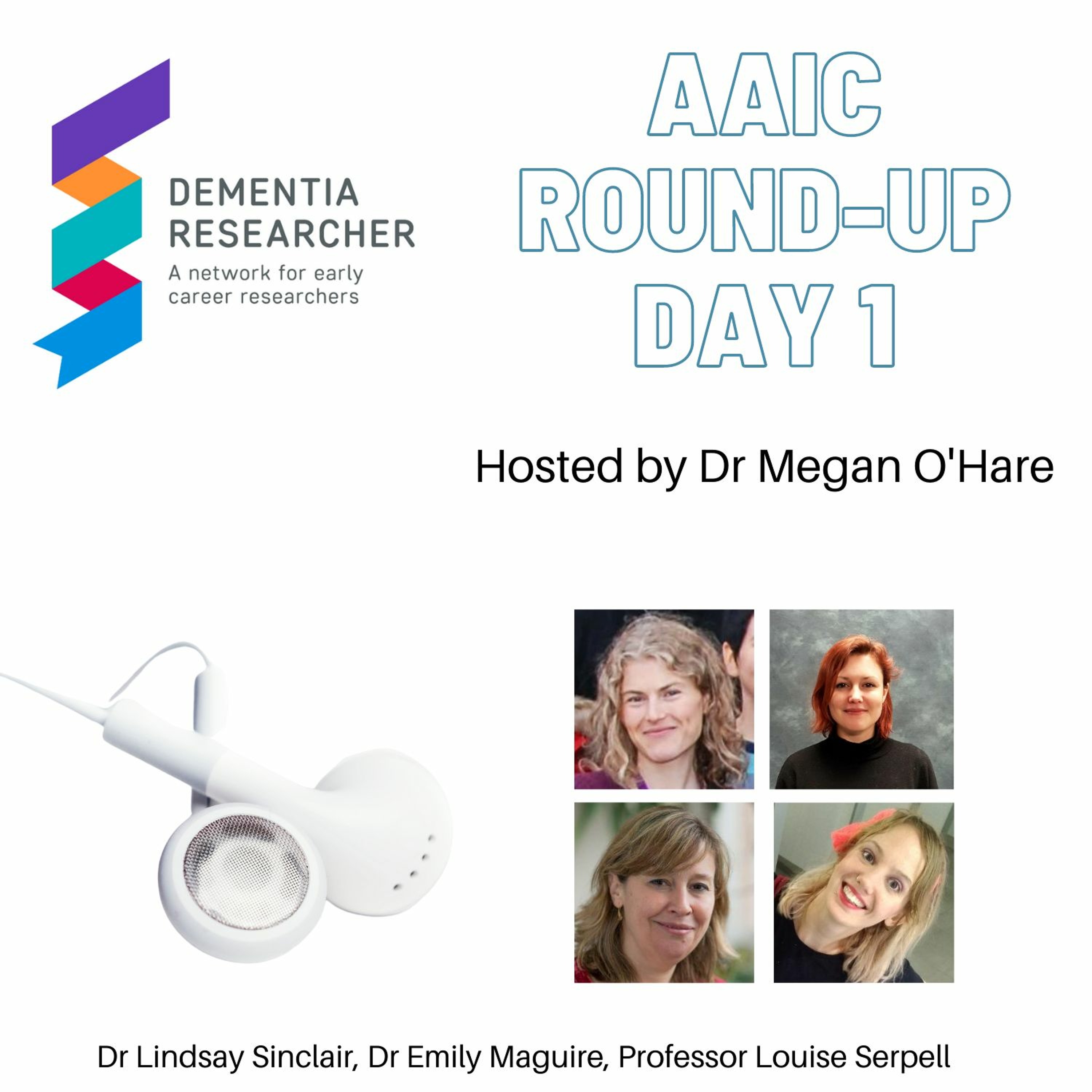
This week we are recording a daily podcast, sharing all the news and highlights from this year’s Alzheimer's Association International ‘Virtual’ Conference. Day One “Basic Science and Pathogenesis” – Dr Megan O’Hare is joined by Professor Louise Serpell, from the University of Sussex, Dr Emily Maguire from the UK Dementia Research Institute at Cardiff University and Dr Lindsay Sinclair from University of Bristol. Check back at this time tomorrow for news from day two, and checkout the twitter feed with #AAIC20 to find more. ______________________________________________ This podcast series is brought to you by Dementia Researcher. You can find out more about our panellists, and their work on our website www.dementiaresearcher.nihr.ac.uk. A transcript of this podcast is also available here https://www.dementiaresearcher.nihr.ac.uk/podcasts ______________________________________________ You can now find our podcasts on your preferred smart home speaker – just ask it for the “Dementia Researcher Podcast” This podcast is brought to you in association with Alzheimer's Research UK and Alzheimer's Society, who we thank for their ongoing support.
ISTAART Relay Podcast - Perioperative Cognition and Delirium PIA
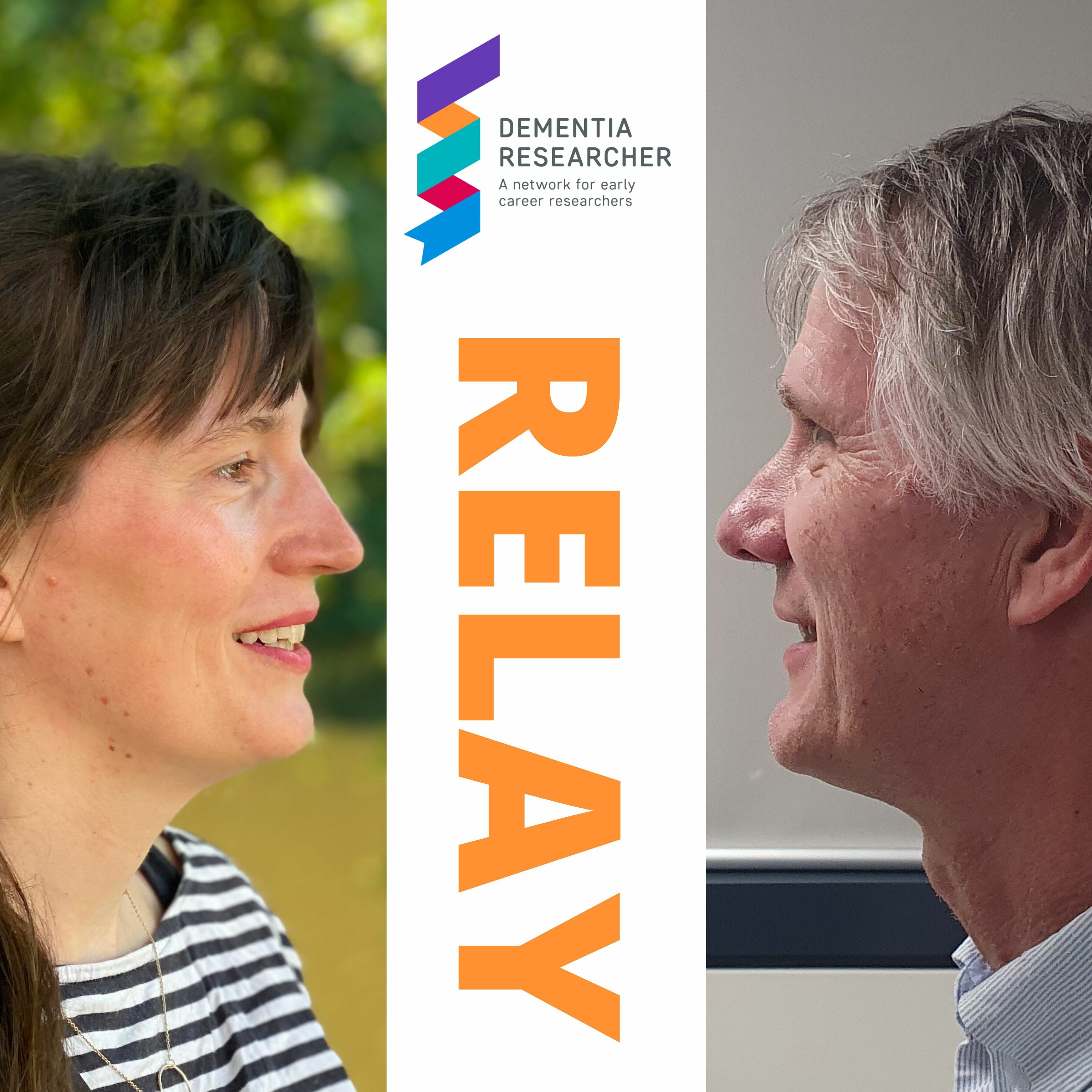
A five-part special relay podcast series, where the interviewee becomes the interviewer. With five leading researchers discussing their research, their field, and the work of the Alzheimer’s Association ISTAART Professional Interest Area they represent. Part Five - Dr Sietske Sikkes interviews Professor David Scott Dr Sietske Sikkes is a Clinical Neuropsychologist and Epidemiologist and Assistant professor at the Alzheimer Centre Amsterdam at Amsterdam University Medical Centre & VU University, Netherlands. Sietske’s is researching Neuropsychology, cognition, instrument development, psychometrics and non-pharmacological interventions. She is representing the Non-pharmacological Interventions PIA and Subjective Cognitive Decline PIA. David Scott is Director of the Department of Anaesthesia and Acute Pain Medicine, St. Vincent’s Hospital Melbourne and Professor, School of Medicine, University of Melbourne, Australia. David is researches Perioperative Neurocognitive Disorders – in particular, delirium and cognitive decline associated with anaesthesia and surgery. He is representing the Perioperative Cognition and Delirium PIA. ______________________________________________ This podcast series is brought to you by Dementia Researcher. You can find out more about our panellists, and their work on our website www.dementiaresearcher.nihr.ac.uk. A transcript of this podcast is also available here https://www.dementiaresearcher.nihr.ac.uk/podcasts ______________________________________________ The Alzheimer's Association International Society to Advance Alzheimer's Research and Treatment (ISTAART) convenes the global Alzheimer's and dementia science community. Members share knowledge, fuel collaboration and advance research to find more effective ways to detect, treat and prevent Alzheimer's and other dementias. Professional Interest Areas (PIA) are an assembly of ISTAART members with common subspecialties or interests. There are currently 25 PIA covering a wide range of interests and fields, from the Alliance of Women Alzheimer's Researchers (AWARE) PIA to Biofluid Based Biomarkers and everything in between. To sign-up to ISTAART and a PIA visit www.alz.org/istaart/ ______________________________________________ Throughout July 2020, Dementia Researcher is giving you a chance to win a pair of Beats Studio Headphones. To be in with a chance to win, complete three east steps: 1. Leave us a review on iTunes 2. Register and attend one of our webinars 3. Register on our website. Winner will be chosen at random on the 1st August, and announced via Twitter follow-us @Dem_Researcher For more information visit www.dementiaresearcher.nihr.ac.uk ______________________________________________ Finally, the views and opinions expressed by guests in this podcast represent those of the guests and do not necessarily reflect those of NIHR Dementia Researchers, PIA membership, ISTAART or the Alzheimer's Association.

ISTAART Relay Podcast - Subjective Cognitive Decline PIA
A five-part special relay podcast series, where the interviewee becomes the interviewer. With five leading researchers discussing their research, their field, and the work of the Alzheimer’s Association ISTAART Professional Interest Area they represent. Part Four - Dr Cécilia Samieri interviews Dr Sietske Sikkes Dr Cécilia Samieri is an Epidemiologist and Senior researcher at INSERM (French National Institute for Health), in Bordeaux, France. Cécilia’s research looks at Nutritional epidemiology, lifestyle risk factors, exposome. She is representing the Nutrition and Metabolic Disorders PIA. Dr Sietske Sikkes is a Clinical Neuropsychologist and Epidemiologist and Assistant professor at the Alzheimer Centre Amsterdam at Amsterdam University Medical Centre & VU University, Netherlands. Sietske’s is researching Neuropsychology, cognition, instrument development, psychometrics and non-pharmacological interventions. She is representing the Non-pharmacological Interventions PIA and Subjective Cognitive Decline PIA. ______________________________________________ This podcast series is brought to you by Dementia Researcher. You can find out more about our panellists, and their work on our website www.dementiaresearcher.nihr.ac.uk. A transcript of this podcast is also available here https://www.dementiaresearcher.nihr.ac.uk/podcasts ______________________________________________ The Alzheimer's Association International Society to Advance Alzheimer's Research and Treatment (ISTAART) convenes the global Alzheimer's and dementia science community. Members share knowledge, fuel collaboration and advance research to find more effective ways to detect, treat and prevent Alzheimer's and other dementias. Professional Interest Areas (PIA) are an assembly of ISTAART members with common subspecialties or interests. There are currently 25 PIA covering a wide range of interests and fields, from the Alliance of Women Alzheimer's Researchers (AWARE) PIA to Biofluid Based Biomarkers and everything in between. To sign-up to ISTAART and a PIA visit www.alz.org/istaart/ ______________________________________________ Throughout July 2020, Dementia Researcher is giving you a chance to win a pair of Beats Studio Headphones. To be in with a chance to win, complete three east steps: 1. Leave us a review on iTunes 2. Register and attend one of our webinars 3. Register on our website. Winner will be chosen at random on the 1st August, and announced via Twitter follow-us @Dem_Researcher For more information visit www.dementiaresearcher.nihr.ac.uk ______________________________________________ Finally, the views and opinions expressed by guests in this podcast represent those of the guests and do not necessarily reflect those of NIHR Dementia Researchers, PIA membership, ISTAART or the Alzheimer's Association.
ISTAART Relay Podcast - Nutrition and Metabolic Disorders PIA
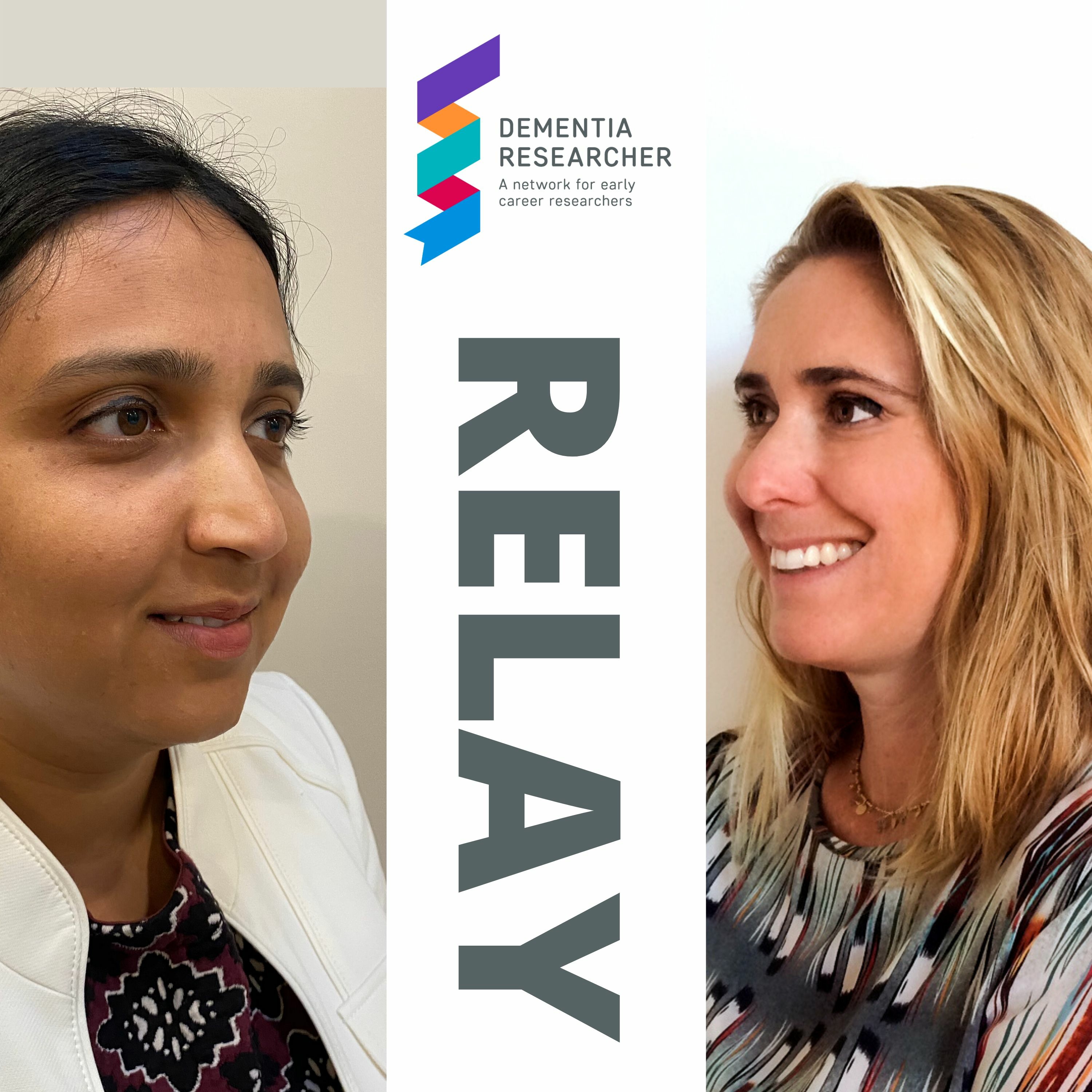
A five-part special relay podcast series, where the interviewee becomes the interviewer. With five leading researchers discussing their research, their field, and the work of the Alzheimer’s Association ISTAART Professional Interest Area they represent. Part Three - Dr Prashanthi Vemuri interviews Dr Cécilia Samieri Dr Prashanthi Vemuri is Associate Professor of Radiology at The Mayo Clinic College of Medicine and Science, Rochester, USA. Prashanthi’s research is focused on imaging biomarkers of Neurodegenerative and Cerebrovascular Disease. She is representing the Reserve, Resilience, and Protective Factors PIA. Dr Cécilia Samieri is an Epidemiologist and Senior researcher at INSERM (French National Institute for Health), in Bordeaux, France. Cécilia’s research looks at Nutritional epidemiology, lifestyle risk factors, exposome. She is representing the Nutrition and Metabolic Disorders PIA. ______________________________________________ This podcast series is brought to you by Dementia Researcher. You can find out more about our panellists, and their work on our website www.dementiaresearcher.nihr.ac.uk. A transcript of this podcast is also available here https://www.dementiaresearcher.nihr.ac.uk/podcasts ______________________________________________ The Alzheimer's Association International Society to Advance Alzheimer's Research and Treatment (ISTAART) convenes the global Alzheimer's and dementia science community. Members share knowledge, fuel collaboration and advance research to find more effective ways to detect, treat and prevent Alzheimer's and other dementias. Professional Interest Areas (PIA) are an assembly of ISTAART members with common subspecialties or interests. There are currently 25 PIA covering a wide range of interests and fields, from the Alliance of Women Alzheimer's Researchers (AWARE) PIA to Biofluid Based Biomarkers and everything in between. To sign-up to ISTAART and a PIA visit www.alz.org/istaart/ ______________________________________________ Throughout July 2020, Dementia Researcher is giving you a chance to win a pair of Beats Studio Headphones. To be in with a chance to win, complete three east steps: 1. Leave us a review on iTunes 2. Register and attend one of our webinars 3. Register on our website. Winner will be chosen at random on the 1st August, and announced via Twitter follow-us @Dem_Researcher For more information visit www.dementiaresearcher.nihr.ac.uk ______________________________________________ Finally, the views and opinions expressed by guests in this podcast represent those of the guests and do not necessarily reflect those of NIHR Dementia Researchers, PIA membership, ISTAART or the Alzheimer's Association.

ISTAART Relay Podcast - Reserve, Resilience, and Protective Factors PIA
A five-part special relay podcast series, where the interviewee becomes the interviewer. With five leading researchers discussing their research, their field, and the work of the Alzheimer’s Association ISTAART Professional Interest Area they represent. Part Two - Professor Henrik Zetterberg interviews Dr Prashanthi Vemuri Henrik Zetterberg is Professor of Neurochemistry, Senior Consultant in Clinical Chemistry and Head of Department at The Sahlgrenska Academy within the University of Gothenburg, Sweden, and University College London, UK. Henrik’s work is focused on Fluid biomarkers for neurodegenerative dementias. He is representing the Biofluid-based biomarkers PIA. Dr Prashanthi Vemuri is Associate Professor of Radiology at The Mayo Clinic College of Medicine and Science, Rochester, USA. Prashanthi’s research is focused on imaging biomarkers of Neurodegenerative and Cerebrovascular Disease. She is representing the Reserve, Resilience, and Protective Factors PIA. ______________________________________________ This podcast series is brought to you by Dementia Researcher. You can find out more about our panellists, and their work on our website www.dementiaresearcher.nihr.ac.uk. A transcript of this podcast is also available here https://www.dementiaresearcher.nihr.ac.uk/podcasts ______________________________________________ The Alzheimer's Association International Society to Advance Alzheimer's Research and Treatment (ISTAART) convenes the global Alzheimer's and dementia science community. Members share knowledge, fuel collaboration and advance research to find more effective ways to detect, treat and prevent Alzheimer's and other dementias. Professional Interest Areas (PIA) are an assembly of ISTAART members with common subspecialties or interests. There are currently 25 PIA covering a wide range of interests and fields, from the Alliance of Women Alzheimer's Researchers (AWARE) PIA to Biofluid Based Biomarkers and everything in between. To sign-up to ISTAART and a PIA visit www.alz.org/istaart/ ______________________________________________ Throughout July 2020, Dementia Researcher is giving you a chance to win a pair of Beats Studio Headphones. To be in with a chance to win, complete three east steps: 1. Leave us a review on iTunes 2. Register and attend one of our webinars 3. Register on our website. Winner will be chosen at random on the 1st August, and announced via Twitter follow-us @Dem_Researcher For more information visit www.dementiaresearcher.nihr.ac.uk ______________________________________________ Finally, the views and opinions expressed by guests in this podcast represent those of the guests and do not necessarily reflect those of NIHR Dementia Researchers, PIA membership, ISTAART or the Alzheimer's Association.

ISTAART Relay Podcast - Biofluid Based Biomarkers PIA
A five-part special relay podcast series, where the interviewee becomes the interviewer. With five leading researchers discussing their research, their field, and the work of the Alzheimer’s Association ISTAART Professional Interest Area they represent. Part One - Professor David Scott interviews Professor Henrik Zetterberg David Scott is Director of the Department of Anaesthesia and Acute Pain Medicine, St. Vincent’s Hospital Melbourne and Professor, School of Medicine, University of Melbourne, Australia. David is researches Perioperative Neurocognitive Disorders – in particular, delirium and cognitive decline associated with anaesthesia and surgery. He is representing the Perioperative Cognition and Delirium PIA. Henrik Zetterberg is Professor of Neurochemistry, Senior Consultant in Clinical Chemistry and Head of Department at The Sahlgrenska Academy within the University of Gothenburg, Sweden, and University College London, UK. Henrik’s work is focused on Fluid biomarkers for neurodegenerative dementias. He is representing the Biofluid Based Biomarkers PIA. ______________________________________________ This podcast series is brought to you by Dementia Researcher. You can find out more about our panellists, and their work on our website www.dementiaresearcher.nihr.ac.uk. A transcript of this podcast is also available here https://www.dementiaresearcher.nihr.ac.uk/podcasts ______________________________________________ The Alzheimer's Association International Society to Advance Alzheimer's Research and Treatment (ISTAART) convenes the global Alzheimer's and dementia science community. Members share knowledge, fuel collaboration and advance research to find more effective ways to detect, treat and prevent Alzheimer's and other dementias. Professional Interest Areas (PIA) are an assembly of ISTAART members with common subspecialties or interests. There are currently 25 PIA covering a wide range of interests and fields, from the Alliance of Women Alzheimer's Researchers (AWARE) PIA to Biofluid Based Biomarkers and everything in between. To sign-up to ISTAART and a PIA visit www.alz.org/istaart/ ______________________________________________ Throughout July 2020, Dementia Researcher is giving you a chance to win a pair of Beats Studio Headphones. To be in with a chance to win, complete three east steps: 1. Leave us a review on iTunes 2. Register and attend one of our webinars 3. Register on our website. Winner will be chosen at random on the 1st August, and announced via Twitter follow-us @Dem_Researcher For more information visit www.dementiaresearcher.nihr.ac.uk ______________________________________________ Finally, the views and opinions expressed by guests in this podcast represent those of the guests and do not necessarily reflect those of NIHR Dementia Researchers, PIA membership, ISTAART or the Alzheimer's Association.
Neuroinflammation drug discovery in stem cell-derived microglia
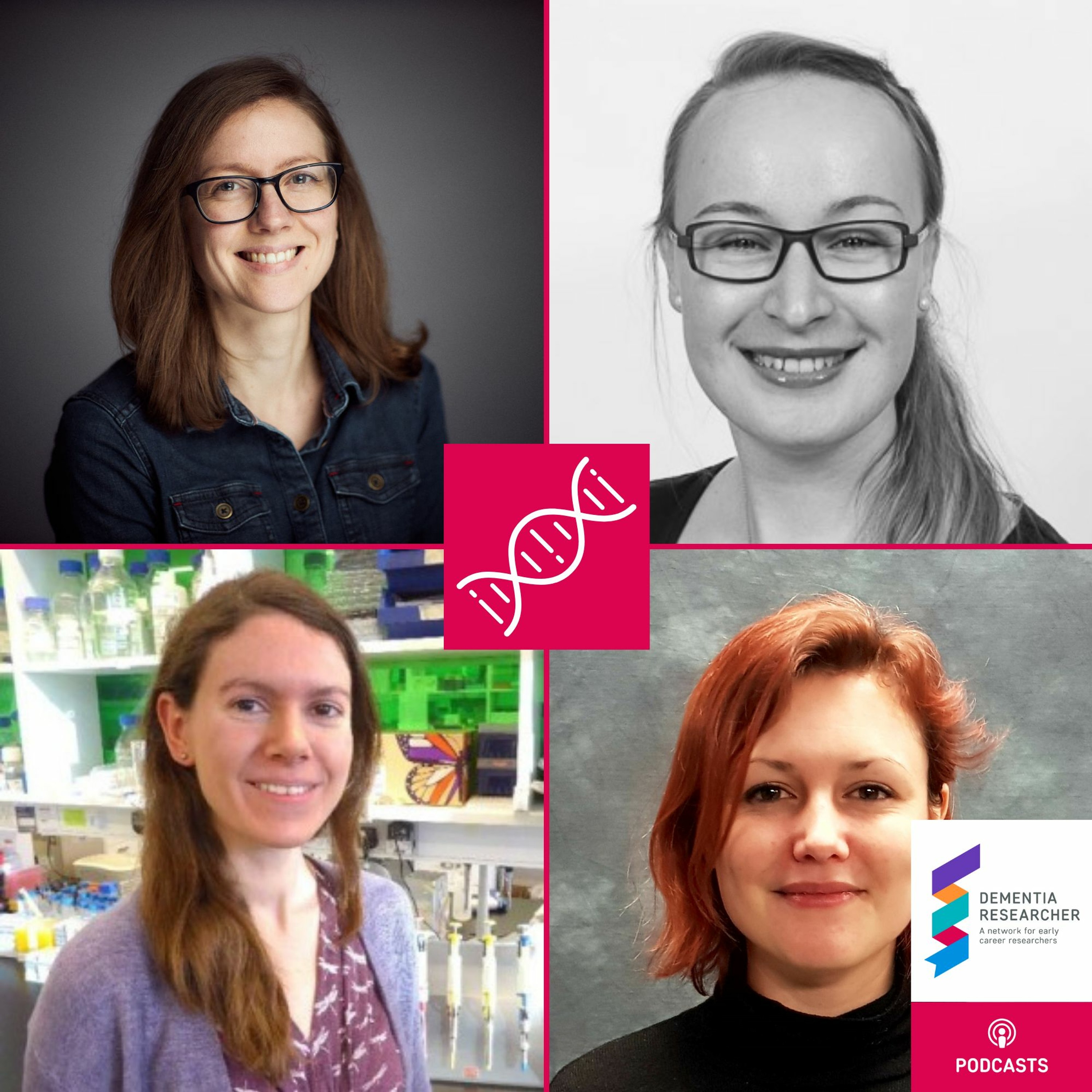
In this week’s podcast we explore why Microglia are awesome, why our panellists use induced pluripotent stem cell models and how they feed Genome wide association studies hits and basic science into drug discovery with phenotypic screening. Meet our panellists: Dr Hazel Hall-Roberts, who is a black belt in Wado-Ryu karate and Postdoctoral Research Scientist at the Sir William Dunn School of Pathology & ARUK Oxford Drug Discovery Institute. Dr Emma Mead a Senior Neurobiologist, allotment holder, kitchen creative and Team Leader at the ARUK Oxford Drug Discovery Institute. Maria Kreger Karabova a DPhil student also at Sir William Dunn School of Pathology, University of Oxford. Maria’s claim to fame is that she once overhead-squatted her postdoc supervisor (I am sure a few of us would like to do that). Megan Calvert-O’Hare is hosting the discussion which was recorded over Zoom (so apologies if the sounds quality isn’t up to our usual high standards). You can find out more about our panellists, and their work on our website www.dementiaresearcher.nihr.ac.uk. A transcript of this podcast is also available here https://www.dementiaresearcher.nihr.ac.uk/podcast-neuroinflammation-drug-discovery-in-stem-cell-derived-microglia _____________________________________________________________________ This podcast is brought to you in association with Alzheimer's Research UK and Alzheimer's Society, who we thank for their ongoing support.

If you can’t love yourself, then how the hell you gonna love your science - Part 1
This week Adam Smith is joined by three early career dementia researchers to discuss mental health struggles and self-care in academia. Are these problems that everyone goes through? Are there strategies that you can employ to help? We had so much to talk about… that we broke it down into two parts and this is part one. Those researchers are: Dr Katie Askew, a Postdoctoral Research Fellow at the University of Edinburgh and owner of two house bunnies called Lola and Floki. Dr Isabel Castanho, a Postdoctoral Researcher at the University of Exeter, and a practitioner of aerial yoga and a front line soldier in the battle against the Omnics (which in layman’s terms means she spends a lot of time playing video games) Last but not least we have Makis Tzioras who is a PhD student also from the University of Edinburgh. Panellists choose the title of each podcast and today is “If you can’t love yourself, then how the hell you gonna love your science?”: A semi-serious chat about self-care in academia” – thanks to Katie for the title. You can find out more about our panellists, and their work on our website www.dementiaresearcher.nihr.ac.uk. A transcript of this podcast is also available here https://www.dementiaresearcher.nihr.ac.uk/podcast-if-you-cant-love-yourself-then-how-the-hell-you-gonna-love-your-science-part-1 Like what you hear? Please review, like, and share our podcast - and don't forget to subscribe to ensure you never miss an episode. Enjoy our content? We are pleased to announce that we are now running a Midday Lecture Webinars - find recordings of previous lectures and details on how to register for future events at www.dementiaresearcher.nihr.ac.uk/webinars Please note this podcast was recorded online as a result the sound quality may not be up to our usual high standard. This podcast is brought to you in association with Alzheimer's Research UK and Alzheimer's Society, who we thank for their ongoing support.
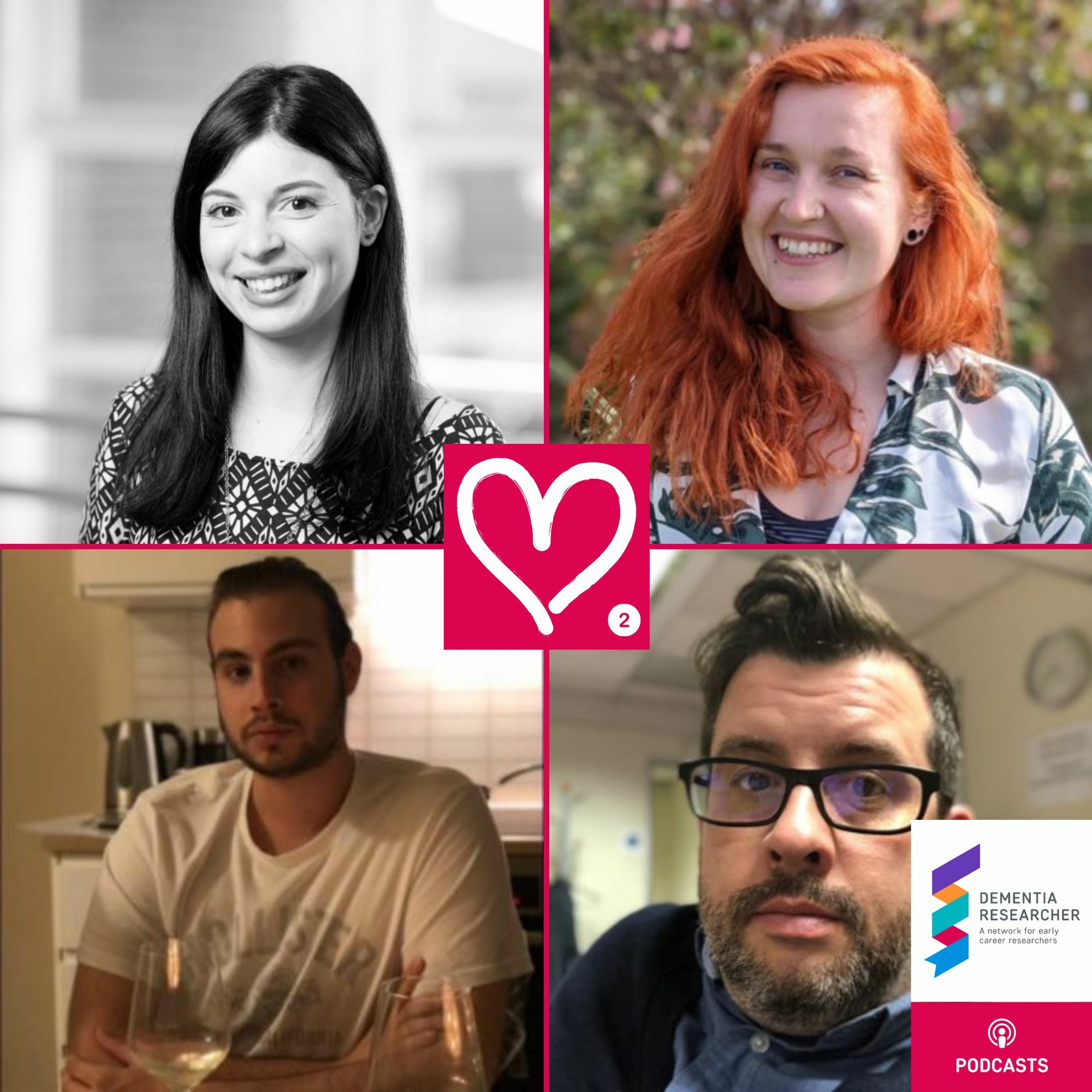
If you can’t love yourself, then how the hell you gonna love your science - Part 2
This week Adam Smith is joined by three early career dementia researchers to discuss mental health struggles and self-care in academia. Are these problems that everyone goes through? Are there strategies that you can employ to help? We had so much to talk about… that we broke it down into two parts and this is part two. Those researchers are: Dr Katie Askew, a Postdoctoral Research Fellow at the University of Edinburgh and owner of two house bunnies called Lola and Floki. Dr Isabel Castanho, a Postdoctoral Researcher at the University of Exeter, and a practitioner of aerial yoga and a front line soldier in the battle against the Omnics (which in layman’s terms means she spends a lot of time playing video games) Last but not least we have Makis Tzioras who is a PhD student also from the University of Edinburgh. Panellists choose the title of each podcast and today is “If you can’t love yourself, then how the hell you gonna love your science?”: A semi-serious chat about self-care in academia” – thanks to Katie for the title. You can find out more about our panellists, and their work on our website www.dementiaresearcher.nihr.ac.uk. A transcript of this podcast is also available here https://www.dementiaresearcher.nihr.ac.uk/??? Like what you hear? Please review, like, and share our podcast - and don't forget to subscribe to ensure you never miss an episode. Enjoy our content? We are pleased to announce that we are now running a Midday Lecture Webinars - find recordings of previous lectures and details on how to register for future events at www.dementiaresearcher.nihr.ac.uk/webinars Please note this podcast was recorded online as a result the sound quality may not be up to our usual high standard. This podcast is brought to you in association with Alzheimer's Research UK and Alzheimer's Society, who we thank for their ongoing support.
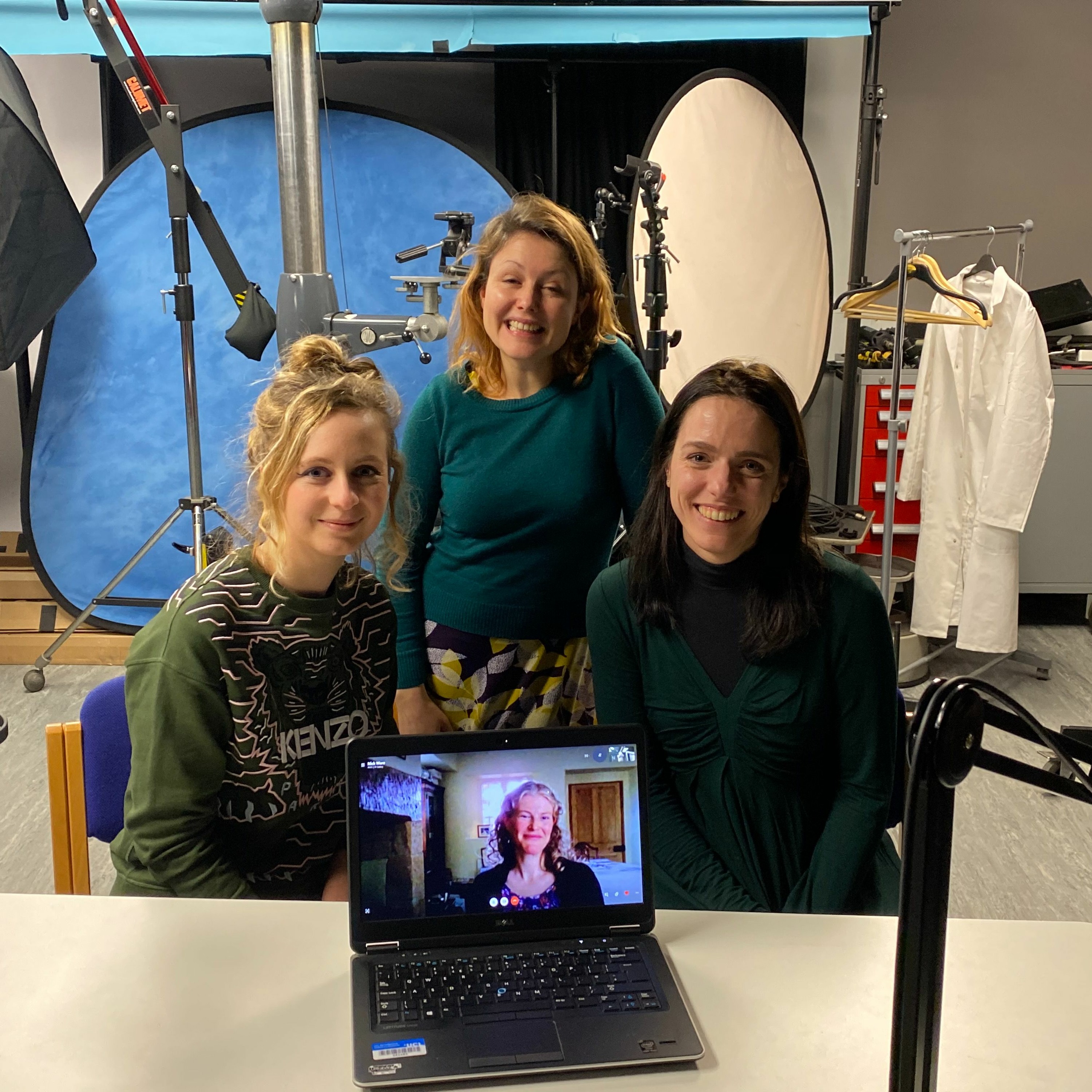
Patient and Public Involvement in Biomedical Research
Join Megan O’Hare interviewing the panel for an insightful discussion on PPI in biomedical research. On previous podcasts, we have discussed the importance of Patient and Public Involvement (PPI) – and the value it can add to research project development and also to researchers themselves, people living with dementia and their carers. Today’s podcast looks at PPI in biomedical research as there is a growing trend toward involving patients and public in lab-based projects. The panel – Dr Lindsey Sinclair, from Bristol University, Dr Claire Lancaster from Oxford University and Dr Martina Bocchetta from University College London, discuss how they have used PPI when developing their research projects and applying for funding and share tips on best places to seek out PPI help and involvement and what they have learned along the way. You can find out more about our panellists, and their work on our website www.dementiaresearcher.nihr.ac.uk. A transcript of this podcast is also available here https://www.dementiaresearcher.nihr.ac.uk/podcast-patient-and-public-involvement-in-biomedical-research/ Like what you hear? Please review, like, and share our podcast - and don't forget to subscribe to ensure you never miss an episode. Enjoy our content? We are pleased to announce that we are now running a Midday Lecture Webinars - find recordings of previous lectures and details on how to register for future events at www.dementiaresearcher.nihr.ac.uk/webinars This podcast is brought to you in association with Alzheimer's Research UK and Alzheimer's Society, who we thank for their ongoing support.
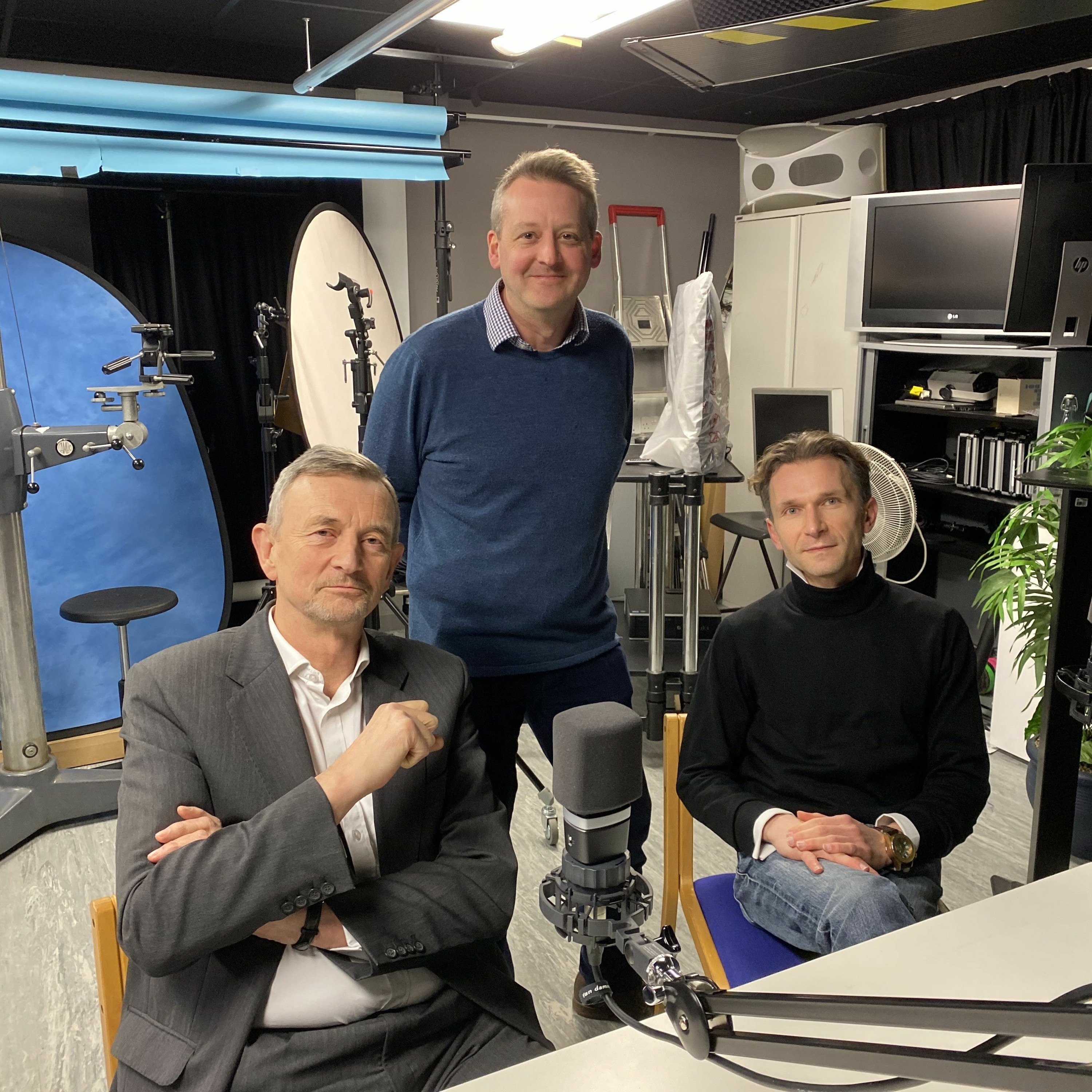
The concept of a Cognitive Footprint
In 2015 Professor Rossor from University College London and Professor Martin Knapp from The London School of Economics published a paper in the Lancet entitled ‘Can we model a cognitive footprint of interventions and policies to help to meet the global challenge of dementia?’ In this podcast Piers Kotting talks to Professor Rossor and Professor Parashkev Nachev exploring the concept of a ‘Cognitive Footprint’ and getting behind the follow-up research has already undertaken in this field, and plans for the new work recently funded by the Health Foundation. You can contact the Cognitive Footprint team via email at [email protected] or find them on twitter @cog_footprint For more information on the Health Foundation Funded study visit:: https://www.health.org.uk/funding-and-partnerships/programmes/novel-methods-to-explore-the-value-of-cognitive-health-in-a- For the Lancet article visit: https://www.thelancet.com/journals/lancet/article/PIIS0140-6736(15)60248-3/fulltext You can find out more about our panellists, and their work on our website www.dementiaresearcher.nihr.ac.uk. A transcript of this podcast is also available here https://www.dementiaresearcher.nihr.ac.uk/podcast-the-concept-of-a-cognitive-footprint Like what you hear? Please review, like, and share our podcast - and don't forget to subscribe to ensure you never miss an episode. Enjoy our content? We are pleased to announce that we are now running a Midday Lecture Webinars - find recordings of previous lectures and details on how to register for future events at www.dementiaresearcher.nihr.ac.uk/webinars This podcast is brought to you in association with Alzheimer's Research UK and Alzheimer's Society, who we thank for their ongoing support.
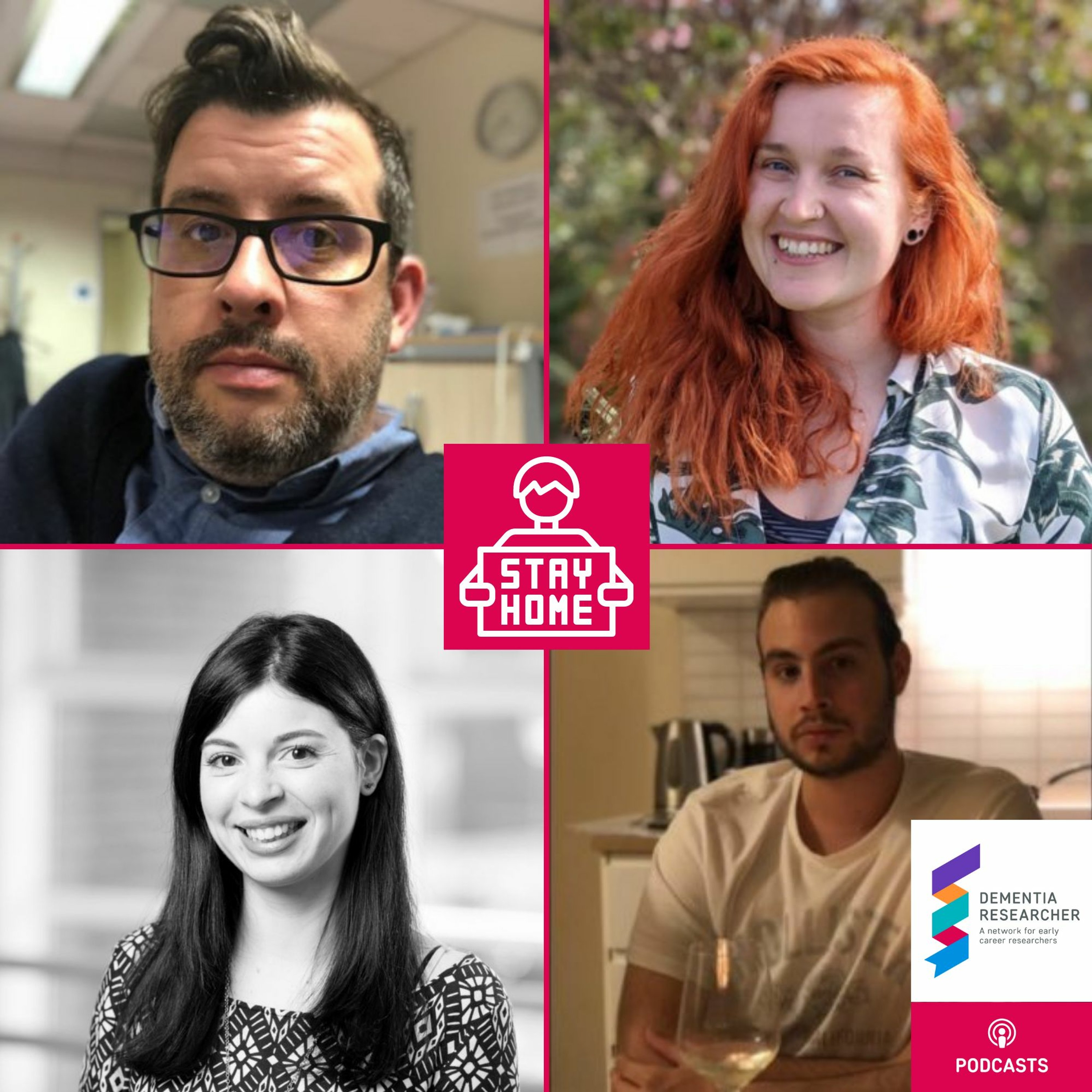
Staying Well & Staying Home
This week Adam Smith hosts this informal discussion with three lab-based researchers. Recorded remotely and discussing how they’re all managing to physically and mentally well, and how life has changed since the 23rd March. Dr Katy Askew, Postdoctoral Research Fellow and PhD student Makis Tzioras both from The University of Edinburgh and Dr Isabel Castanho a postdoc researcher at University of Exeter joined the podcast remotely to discuss and share. These three will be back again in a few weeks’ time to discuss in greater details, how they manage the pressures of academia with a focus on mental health and wellness. You can find out more about our panellists, and their work on our website www.dementiaresearcher.nihr.ac.uk. A transcript of this podcast is also available here https://www.dementiaresearcher.nihr.ac.uk/podcast-staying-well-and-staying-home Like what you hear? Please review, like, and share our podcast - and don't forget to subscribe to ensure you never miss an episode. We are also run a Midday Lecture Webinar series - find recordings of previous lectures and details on how to register for future events at www.dementiaresearcher.nihr.ac.uk/webinars This podcast is brought to you in association with Alzheimer's Research UK and Alzheimer's Society, who we thank for their ongoing support.
Maintaining your clinical identity & skills as an academic
Adam Smith talks with Dr Aida Gonzalez, Dr Daniel Jimenez both from University College London and Julieta Camino the University of East Anglia. Three panellists who all come from a clinical background and now find themselves working as academics. This week we explore how they maintain their clinical skills and identify, while working in academia. Academics with a clinical background and Clinical Academics may research similar things, however how they study and work can be very different. For one, being a clinician remain part of their day job, for others the clinical work may be left behind, but still be at the core of their research. Typically, a Clinical Academic will be part funded to enable them to split their time between their clinical work and research. But what about those who have broken away to study full time, but who need to maintain their clinical skills or even just remain in that space to support the research they’re doing? How do they maintain their skills and identity as clinicians? Particularly if they intend to return to practice. This weeks panel share their experiences on why clinical work remains important to their research, and how they avoid losing those skills which were learnt from years of training. You can find out more about our panellists, and their work on our website www.dementiaresearcher.nihr.ac.uk. A transcript of this podcast is also available here www.dementiaresearcher.nihr.ac.uk/podcast-maintaining-your-clinical-identity-skills-as-an-academic Like what you hear? Please review, like, and share our podcast - and don't forget to subscribe to ensure you never miss an episode. Enjoy our content? We are pleased to announce that we are now running Midday Lecture Webinars - find recordings of previous lectures and details on how to register for future events at www.dementiaresearcher.nihr.ac.uk/webinars This podcast is brought to you in association with Alzheimer's Research UK and Alzheimer's Society, who we thank for their ongoing support.

Relationships & Intimacy in Long-term Care
This week Anna Volkmer chairs a far reaching discussion exploring sexuality, relationships and intimacy in long-term and dementia care. There is there is limited research on what family members and front-line care home staff consider to be the best responses to the sexual expression of a person with dementia, whilst at the same time respecting relatives’ feelings, managing their possible distress and conflict. This week out panel share some insights on their work to address this challenging topic. This weeks panellist are Professor Jill Manthorpe, from King's College London who works on practice, policy and social work. Creating evidence and ideas about ways to improve systems of support. Next is Dr Dawne Garrett, Professional Lead for Older People and Dementia Care at the Royal College of Nursing. Her own research looks at experiences of sexual intimacy in older people in the context of partnership relationships. Finally, we have Esther Wiskerke, speaker, trainer, writer and dementia day care manager. Esther manages a day centre that specialises in managing Behavioural Psychological Symptoms of Dementia (BPSD) via a non-pharmaceutical approach. You can find out more about our panellists, and their work on our website www.dementiaresearcher.nihr.ac.uk. A transcript of this podcast is also available here https://www.dementiaresearcher.nihr.ac.uk/podcast-relationships-and-intimacy-in-long-term-care Like what you hear? Please review, like, and share our podcast - and don't forget to subscribe to ensure you never miss an episode. Enjoy our content? We are pleased to announce that we are now running a Midday Lecture Webinars - find recordings of previous lectures and details on how to register for future events at www.dementiaresearcher.nihr.ac.uk/webinars This podcast is brought to you in association with Alzheimer's Research UK and Alzheimer's Society, who we thank for their ongoing support.
Neuropsychiatric Symptoms in Dementia
In the UK there are 850,000 people living with dementia, and approximately 90% of people with dementia are affected by neuropsychiatric symptoms at some stage. This term generally refers to things like agitation, hallucinations, delusions, and depression that occur as a result of neurodegenerative disease. Megan O'Hare interviews three researchers who work in and around the field of psychiatry and dementia. Talking specifically about apathy, depression and treatments for the various symptoms. We also delve into the impact of the severe side effects that drug treatments can cause and how safer drugs can be developed. Dr Byron Creese, Senior Research Fellow at University of Exeter covers the range of symptoms and how transcriptomics may hold the key to developing good drugs. Miguel Vasconcelos Da Silva and Isabel Foote discuss their nursing backgrounds and the overlaps and differences between depression and apathy and how a clinical definition for apathy is needed. You can find out more about our panellists, and their work on our website www.dementiaresearcher.nihr.ac.uk. A transcript of this podcast is also available here https://www.dementiaresearcher.nihr.ac.uk/podcast-neuropsychiatric-symptoms-in-dementia Like what you hear? Please review, like, and share our podcast - and don't forget to subscribe to ensure you never miss an episode. This podcast is brought to you in association with Alzheimer's Research UK and Alzheimer's Society, who we thank for their ongoing support.
Spanish Voices In Dementia Research
Our first ever Spanish Language Special! English & Spanish Transcripts for this podcast can be found on our website http://www.dementiaresearcher.nihr.ac.uk/podcast-spanish-voices-in-dementia-research ___________________________________________________________________ La investigación en el campo del deterioro cognitivo está llena de talento multicultural y de diversidad. Hoy queremos celebrar este hecho y resaltar la contribución científica de la comunidad hispanohablante. En este podcast, la doctora Aida Suarez Gonzalez entrevista a tres investigadores que se formaron en Latinoamérica y en Europa, y están ahora desarrollando sus carreras científicas aquí en el Reino Unido. Los tres vienen de profesiones muy diferentes y están en la actualidad trabajando en instituciones británicas de renombre internacional: Ivanna Pavisic, Julieta Camino y el Dr. Daniel Jiménez. Puedes encontrar más información sobre nuestros panelistas y sus líneas de investigación en nuestra web www.dementiaresearcher.nihr.ac.uk. La transcripción integra del podcast está disponible en www.dementiaresearcher.nihr.ac.uk/podcast=spanish-voices-in-dementia-research. ¿Has disfrutado de este podcast? Si es así déjanos una crítica, un “me gusta” o compártelo con tus amigos y en redes sociales y recuerda subscribirte para no perderte futuras grabaciones. Por ultimo, abrimos foros de discusión por WhatsApp cada 2 semanas (la semana siguiente a la publicación de cada podcast) en los que participan los panelistas de dicho podcast. Para poder participar en estos foros, poder hablar con los panelistas, hacerles preguntas y charlar sobre el podcast, únete a nuestro grupo de WhatsApp usando el siguiente enlace: chat.whatsapp.com/BqxaDYhdjsML7doT6Qmbyd ____________________________________________________________________ Research in the field of cognitive degeneration is full of diversity and multicultural talent. In today’s podcast we celebrate this fact and also to highlight the Spanish speaking community’s contribution to science. Dr Aida Suarez-Gonzalez welcomes three researchers who trained in Latin America and Europe and are now developing their scientific careers in the UK. They come from very different professional backgrounds and are currently working in internationally renowned British institutions, Ivanna Pavisic, Julieta Camino and Dr Daniel Jiménez. You can find out more about our panellists, and their work on our website www.dementiaresearcher.nihr.ac.uk. There you will also find a Spanish and English transcript of this podcast Like what you hear? Please review, like, and share our podcast - and don't forget to subscribe to ensure you never miss an episode. Finally, we are now hosting a bi-weekly WhatsApp discussion (the week after each new podcast is released) which includes the panellists from this podcast. To talk to the panellists. ask questions and to chat about the topic with the rest of our community join our WhatsApp group using this link: chat.whatsapp.com/BqxaDYhdjsML7doT6Qmbyd This podcast is brought to you in association with Alzheimer's Research UK and Alzheimer's Society, who we thank for their ongoing support.
Being a research active clinician
This week our panel of NHS clinicians are in the studio to discuss their stories of becoming 'research active'. With advise for others and details on how they are now working to support and encourage others on the front line of NHS care. As the NIHR in the UK, and research bodies in other countries work to encourage more clinical staff to become research active. This podcast provides information for clinicians from all professions and backgrounds, hoping to inspire the next generation of Principle Investigators. Piers Kotting is back in the hot seat with Dr Sylvie Halsey and Dr Zoe Clough from the Wessex Deanery and Dr Leonidas Chouliaras from the University of Cambridge and Cambridgeshire & Peterborough NHS Foundation Trust. You can find out more about our panellists, and their work on our website www.dementiaresearcher.nihr.ac.uk. A transcript of this podcast is also available here https://www.dementiaresearcher.nihr.ac.uk/podcast-being-a-research-active-clinician Like what you hear? Please review, like, and share our podcast - and don't forget to subscribe to ensure you never miss an episode. We encourage all of our listeners to visit our website, it doesn’t matter if you are in the UK or elsewhere in the world as there is something there for everyone. We add new content every day, from blogs discussing peoples research and their careers, a full dementia and research events planner, details of all upcoming funding opportunities + lots more. Register today, and you’ll receive a short weekly news round-up email each Friday, to ensure you don't miss a think. Finally, we are now hosting a bi-weekly WhatsApp discussion (the week after each new podcast is released) which includes the panellists from this podcast. To talk to the panellists. ask questions and to chat about the 'DEMON Network' with the rest of our community join our WhatsApp group using this link: chat.whatsapp.com/BqxaDYhdjsML7doT6Qmbyd This podcast is brought to you in association with Alzheimer's Research UK and Alzheimer's Society, who we thank for their ongoing support.
UK Dementia Care Research Summit 2020
In this podcast we reflect on the recent UK Dementia Care Research Summit 2020 hosted by Alzheimer’s Society, National Institute for Health Research and Economic & Social Research Council. Discussing the highlights, outcomes and next step (which we think are probably applicable in many countries). The dementia research community is driven by a desire to make positive change for people affected by dementia. Great progress has been made so far but change is still needed. Our host Adam Smith talks with Hannah Churchill from Alzheimer’s Society, Dr Tamara Backhouse from the University of East Anglia and Dr Keir Yong from University College London. Footage from the summit can be viewed on YouTube: https://www.youtube.com/user/AlzheimersSociety/videos For details of all the speakers and the programme visit: https://www.alzheimers.org.uk/sites/default/files/2020-01/Programme_A5_ONLINE.pdf Adam Smith the chair of this podcast has also written a blog with his top 10 suggestions for next steps, and what he thought were the main lessons learned and take-aways form the day: https://www.dementiaresearcher.nihr.ac.uk/guest-blog-reflecting-on-the-first-uk-dementia-care-research-summit/ You can find out more about our panellists, and their work on our website www.dementiaresearcher.nihr.ac.uk. A transcript of this podcast is also available here https://www.dementiaresearcher.nihr.ac.uk/podcast-uk-dementia-care-research-summit-2020/ Like what you hear? Please review, like, and share our podcast - and don't forget to subscribe to ensure you never miss an episode. Finally, we are now hosting a bi-weekly WhatsApp discussion (the week after each new podcast is released) which includes the panellists from this podcast. To talk to the panellists. ask questions and to chat about the 'DEMON Network' with the rest of our community join our WhatsApp group using this link: https://chat.whatsapp.com/BqxaDYhdjsML7doT6Qmbyd _________________________ If you would like to share your own experiences or discuss your research in a blog or on a podcast, drop us a line to [email protected] or find us on twitter @dem_researcher
The ARUK DEMON Network
Today's topic is the new Alzheimer's Research UK DEMON Network (don't worry you don't have to be an evil spirit or tormentor to join), DEMON being an acronym for Deep Dementia Phenotyping (DEMON) Network. Led by the University of Exeter and supported by Alzheimer's Research UK, the Alan Turing Institute and Dementias Platform UK. It aims to unite experts from a wide range of fields to find new solutions to research in dementia. In this podcast, first time host Piers Kotting is with Professor David Llewellyn from the University of Exeter and Dr Carol Routledge, Director of Research from Alzheimer’s Research UK. To discuss what the they hope to achieve through the network and how Early Career Researchers from across all fields and countries, and not only in dementia, can become involved. To join the ARUK DEMON Network visit - https://www.decodedementia.com/research/demon/ You can find out more about our panellists, and their work on our website www.dementiaresearcher.nihr.ac.uk. A transcript of this podcast is also available here https://www.dementiaresearcher.nihr.ac.uk/podcast-alzheimers-research-uk-demon-network/ Like what you hear? Please review, like, and share our podcast - and don't forget to subscribe to ensure you never miss an episode. We encourage all of our listeners to visit our website, it doesn’t matter if you are in the UK or elsewhere in the world as there is something there for everyone. We add new content every day, from blogs discussing peoples research and their careers, a full dementia and research events planner, details of all upcoming funding opportunities + lots more. Register today, and you’ll receive a short weekly news round-up email each Friday, to ensure you don't miss a thing. Finally, we are now hosting a bi-weekly WhatsApp discussion (the week after each new podcast is released) which includes the panellists from this podcast. To talk to the panellists. ask questions and to chat about the 'DEMON Network' with the rest of our community join our WhatsApp group using this link: https://chat.whatsapp.com/BqxaDYhdjsML7doT6Qmbyd _________________________ If you would like to share your own experiences or discuss your research in a blog or on a podcast, drop us a line to [email protected] or find us on twitter @dem_researcher This podcast is brought to you in association with Alzheimer's Research UK and Alzheimer's Society, who we thank for their ongoing support.

Illness perceptions & service use in dementia
Join Dr Megan O'Hare on the road at Surrey and Borders Partnership Foundation NHS Trust interviewing R&D Manager and PhD Student Jane Gregg and former guest Dr Josie Jenkinson. They discuss Jane's PhD understanding how people perceive themselves and their future once they receive a diagnosis of dementia and how that links with service use in the NHS. This far reaching discussion gives pause for thought and considers how research embedded within the NHS and healthcare can make a real difference. You can find out more about our panellists, and their work on our website www.dementiaresearcher.nihr.ac.uk. A transcript of this podcast is also available on our website at https://www.dementiaresearcher.nihr.ac.uk/podcast-illness-perceptions-service-use-in-dementia/ Special thanks to Surrey & Borders Partnership NHS Foundation Trust for allowing us to record this podcast. Like what you hear? Please review, like, and share our podcast - and don't forget to subscribe to ensure you never miss an episode. _________________________ If you would like to share your own experiences or discuss your research in a blog or on a podcast, drop us a line to [email protected] or find us on twitter @dem_researcher _________________________ This podcast is brought to you in association with Alzheimer's Research UK and Alzheimer's Society, who we thank for their ongoing support.
Molecular Basis of Alzheimer's Disease
Listen to this week's podcast to hear Professor Louise Serpell and Dr Karen Marshall from the University of Sussex talk Biochemistry and drug development. Learn about what amyloid fibrils actually are, their structure, other diseases that are caused by them and ultimately what we can do with this knowledge. You can find out more about our panellists, and their work on our website www.dementiaresearcher.nihr.ac.uk. A transcript of this podcast is also available on here https://www.dementiaresearcher.nihr.ac.uk/podcast-molecular-basis-of-alzheimers-disease Like what you hear? Please review, like, and share our podcast - and don't forget to subscribe to ensure you never miss an episode. We encourage all of our listeners to visit our website, it doesn’t matter if you are in the UK or elsewhere in the world as there is something there for everyone. We add new content every day, from blogs discussing peoples research and their careers, a full dementia and research events planner, details of all upcoming funding opportunities + lots more. Register today, and you’ll receive a short weekly news round-up email each Friday, to ensure you don't miss a think. _________________________ If you would like to share your own experiences or discuss your research in a blog or on a podcast, drop us a line to [email protected] This podcast is brought to you in association with Alzheimer's Research UK and Alzheimer's Society, who we thank for their ongoing support.

Consenting Research Participants
This week's podcast is hosted by Anna Volkmer discussing a topic that she is particularly passionate about; consenting participants into dementia research. She is joined by Dr Clarissa Giebel, Dr James Fletcher and Dr Aida Suarez-Gonzalez all who have first-hand experience of consenting adults into dementia research trials and studies and share their experiences and tips. Listen to hear how each of the panellists find navigating the 'grey area' of capacity, hear a remarkable story of bravery from one person who took part in dementia research and hear the panel discuss how we could all benefit from taking the time to produce inclusive documents that are not too long and jargon-filled. The panel discuss their experiences within the context of adhering to the English and Welsh mental capacity act of 2005: http://www.legislation.gov.uk/ukpga/2005/9/contents The useful website Dr Aida Suarez-Gonzalez mentions can be found here: https://www.changepeople.org/ The resources developed by Jill Pearl and Speakability can be found in their new home on the Collaboration of Aphasia Trialists (CAT). You can find out more about our panellists, and their work on our website www.dementiaresearcher.nihr.ac.uk. A transcript of this podcast is also available on our website. Like what you hear? Please review, like, and share our podcast - and don't forget to subscribe to ensure you never miss an episode. _________________________ If you would like to share your own experiences or discuss your research in a blog or on a podcast, drop us a line to [email protected] or find us on twitter @dem_researcher This podcast is brought to you in association with Alzheimer's Research UK and Alzheimer's Society, who we thank for their ongoing support.

2019 Roundup Christmas Special
As we prepare to welcome 2020 and a new year, we look back on some of the great podcasts we recorded during 2019 in this round-up of some of our favourite moments. A transcript of this podcast is available here on our website - https://www.dementiaresearcher.nihr.ac.uk/podcast-2019-roundup-christmas-special/ Over the past year we’ve recorded 36 podcast with more than 70 dementia researchers and expert panellists. Those podcasts have attracted over 19,000 plays from all over the world, in over 50 countries (biggest increasing coming from the USA) and this hit a high for us in October when we started to trend at over 2,500 plays each month (3,245 in November and December is set to beat that record). We have covered a wide range of topics, from life in the lab, microglia and drug discover through to improving public engagement, care in hospitals and finishing the PhD and we promise to continue in 2020. Revisiting some topics, bringing you more researchers discussing their work, and new features including talking to senior researchers to understand what makes them successful. Remember the podcast is just a small part of what we do to support Dementia Research and Early Career Researchers. Our website www.dementiaresearcher.nihr.ac.uk is packed with great content, from blogs discussing researchers work and careers, articles on coping with academic life, and useful summaries of all the funding opportunities, jobs and events that we can find. We also have a WhatsApp support group just for ECRs. Thank you to everyone of you for listening, we will be back on the 6th January with a podcast discussing study volunteer consent.

Prediction And Prevention In Neurodegenerative Diseases
In this podcast we talk we talk to three panellists, to reflect on what they discovered at the ‘Prediction and Prevention in Neurodegenerative Disease Symposium’ held on the 29th November and organised by the Preventative Neurology Unit (PNU) at Queen Mary University London. Recorded on location from QMU - Dr Megan O’Hare is join by PhD students Phazha Bothongo and Isabelle Foote from Queen Mary University and Dr Harri Sivasathiaseelan from University College London. The Symposium focused on the fascinating issues around early detection and prevention of neurodegenerative diseases, and included a star studded lined-up of speakers, including Anette Schrag, Rimona Weil and Jonathan Schott from UCL. Dennis Chan, Carol Brayne and Richard Milne from the University of Cambridge and others from QMUL, Oxford and Maastricht. The PNU is a new group set up as part of the School of Medicine & Dentistry at Queen Mary University, London. Funded by Bart's Charity to try to prevent diseases that affect the nervous system, like dementia, Parkinson’s disease and multiple sclerosis. Researching people's risk of getting these diseases, and how we can spot them before there are any obvious signs. This will help us to come up with ways to try to slow down or even stop the progress of these conditions, and keep people's brains healthy for longer. You can find out more about our panellists, and their work on our website www.dementiaresearcher.nihr.ac.uk. A transcript of this podcast is also available on our website at https://www.dementiaresearcher.nihr.ac.uk/podcast-prediction-and-prevention-in-neurodegenerative-diseases Special thanks to Charles Marshal @charl_marshall for allowing us to record this podcast. Like what you hear? Please review, like, and share our podcast - and don't forget to subscribe to ensure you never miss an episode. _________________________ If you would like to share your own experiences or discuss your research in a blog or on a podcast, drop us a line to [email protected] or find us on twitter @dem_researcher _________________________

Neighbourhoods, dementia & co-creation to put research into action
This week Adam Smith is at the University of Manchester to talk with a research team who over the last 5-years has been working collaboratively with people living with dementia and family carers on a study focusing on Neighbourhoods and Dementia. This weeks panel has Dr Sarah Campbell a Research Associate at the Manchester University, Professor Andrew Clark from the University of Salford and expert through experience Maria Walsh as Co-researcher and Study Adviser. In this podcast we discuss how researchers and study participants worked together to find innovative and meaningful ways to disseminate the findings from their research. Ensuring that what they learnt really was put into practice and shared with those who would benefit, and how co-production took them down the path of zines. PS you can find the zines mentioned in the podcast here: https://sites.manchester.ac.uk/neighbourhoods-and-dementia/work-programme-4/ The designer who produced the amazing graphics for this study has also written a blog for us, which you will find on our website. There you will also find profiled on all of our panellists and a transcript of this audio recording. www.dementiaresearcher.nihr.ac.uk _________________________________ About the study: The Neighbourhoods and Dementia study was funded in the UK under the first Prime Minister’s Challenge on Dementia in 2012. The eight work programmes were framed around people, spaces and places and had the following overarching aims: 1. To address the meanings, experiences, and structure of neighbourhoods for people living with dementia, their care partners and other in-contact-groups and individuals. 2. To learn from the process and praxis of making people living with dementia and their care partners core to the research agenda. 3. To encourage innovative technological advances in dementia studies and in the development of a neighbourhood model of dementia. 4. To build capacity within the research community and the networks of people living with dementia and their care partners. 5. To develop the evidence base, methods and measures for understanding the significance of neighbourhoods for people living with dementia and their care partners. 6. To create, test and evaluate interventions that are pertinent to a neighbourhood model of dementia. You can find out about this study and all the outcomes on their website at: https://sites.manchester.ac.uk/neighbourhoods-and-dementia/?ID=3314
Alzheimer's Research UK Drug Discovery
In this podcast we welcome academics and industry to discuss the Dementia Consortium and drug discovery, from the basics of target validation to the question you always wanted to ask big pharma - what is their motivation for investing! The panel is made up of Dr Declan Jones and Dr John Isaac both from Johnson & Johnson, one of the seven industry partners of the Dementia Consortium, Professor Paul Whiting, the CSO at the Drug Discovery Institute at UCL and James Connell the Research Manager at Alzheimer's Research UK who coordinates the Dementia Consortium. The Dementia Consortium is a private-charity partnership between Alzheimer’s Research UK, Evotec and the pharmaceutical companies Abbvie, Astex Pharmaceuticals, Eisai, Johnson & Johnson, Lilly and MSD. The Consortium provides drug discovery resources, project management, industry expertise and tools as well as full funding support for projects. It can support small molecule or antibody-based strategies and aims to generate tools to achieve preclinical target validation. The ultimate goal is to progress successful projects from laboratories towards the clinic. You can find out more about the Dementia Consortium here, including details of their funding programmes throughout the year: https://www.dementiaconsortium.org/ You can find out more about our panellists, and their work on our website www.dementiaresearcher.nihr.ac.uk. A transcript of this podcast is also available on our website at https://www.dementiaresearcher.nihr.ac.uk/podcast-alzheimers-research-uk-drug-discovery Like what you hear? Please review, like, and share our podcast - and don't forget to subscribe to ensure you never miss an episode. _________________________ If you would like to share your own experiences or discuss your research in a blog or on a podcast, drop us a line to [email protected] or find us on twitter @dem_researcher _________________________ Join Dementia Research a topic of a previous podcast has been selected as a Top 100 innovation created by University College London. The overall winner will be decided by a public vote. It would be great if you could show your support by voting for them by hitting the thumbs up on this page - https://www.ucl.ac.uk/made-at-ucl/stories/join-dementia-research-getting-public-involved Thank you

Quality of Life After a Dementia Diagnosis
This week's podcast was recorded at the Centre for Dementia Studies at the University of Sussex. Megan O'Hare is joined by Dr Ben Hicks and Dr Laura Hughes to discuss broadly the themes of inequalities in dementia care and quality of life and specifically look at the DeterMIND programme. Evidence has emerged of major inequalities in care for dementia, driven by factors including ethnicity, whether your care is self-funded or paid for by local authorities and whether you are diagnosed earlier or later. DeterMIND is designed to address critical, fundamental and as yet unanswered questions about inequalities, outcomes and costs following diagnosis with dementia. These answers are needed to improve the quality of care and therefore the quality of life. Join the podcast to hear an interesting discussion on the benefits and perceived downsides of an early diagnosis, results from Ben's PhD work on how different populations manage a clinical diagnosis and the way care homes can enhance the quality of life for people with dementia. You can find out more about our panellists, and their work on our website www.dementiaresearcher.nihr.ac.uk. A transcript of this podcast is also available on our website at https://www.dementiaresearcher.nihr.ac.uk/podcast-quality-of-life-after-a-dementia-diagnosis/ Like what you hear? Please review, like, and share our podcast - and don't forget to subscribe to ensure you never miss an episode. _________________________ If you would like to share your own experiences or discuss your research in a blog or on a podcast, drop us a line to [email protected] or find us on twitter @dem_researcher _________________________ Join Dementia Research a topic of a previous podcast has been selected as a Top 100 innovation created by University College London. The overall winner will be decided by a public vote. It would be great if you could show your support by voting for them by hitting the thumbs up on this page - https://www.ucl.ac.uk/made-at-ucl/stories/join-dementia-research-getting-public-involved Thank you
What's new in Alzheimer's Society fellowships
Alzheimer's Society have recently made some changes to the focus of their funding programmes; tune in to hear Faye Boswell and Katherine Gray from Alzheimer's Society discuss the focus for future funding programmes, tips on writing your applications and an in-depth discussion about the 4 I's: Implementation, Impact, Inclusion and Involvement. With insider experience from Antoinette O'Connor, an Alzheimer Society-funded Clinical Research Fellow. This is one not to be missed if you are thinking of applying to any of the Alzheimer Society programmes in the coming year (next round opens just before Christmas 2019, deadline 27th March 2020). Find out more about when they are receiving applications and also about including PPI in the planning stage of your application here: https://www.alzheimers.org.uk/research/researchers/our-funding-schemes You can find out more about our panellists, and their work on our website www.dementiaresearcher.nihr.ac.uk. A transcript of this podcast is also available on our website at https://www.dementiaresearcher.nihr.ac.uk/podcast-whats-new-in-alzheimers-society-fellowships Like what you hear? Please review, like, and share our podcast - and don't forget to subscribe to ensure you never miss an episode. _________________________ If you would like to share your own experiences or discuss your research in a blog or on a podcast, drop us a line to [email protected] or find us on twitter @dem_researcher _________________________ Join Dementia Research a topic of a previous podcast has been selected as a Top 100 innovation created by University College London. The overall winner will be decided by a public vote. It would be great if you could show your support by voting for them by hitting the thumbs up on this page - https://www.ucl.ac.uk/made-at-ucl/stories/join-dementia-research-getting-public-involved Thank you

Rare Dementia Support Impact study
This week Megan O'Hare interviews Emma Harding and Emilie Brotherhood, PhD students working on the Rare Dementia Support Impact study - a £3.5 million, five-year, multi-site collaboration research study into the value of multicomponent support groups for people living with or supporting someone with a rare form of dementia. They will discuss the 5 work packages involved but also the translation of all their work into other forms of dementia and the potential impact this could have on policy, particularly around financial support. More information on Rare Dementias and support can be found at http://www.raredementiasupport.org/ You can find out more about our panellists, and their work on our website www.dementiaresearcher.nihr.ac.uk. A transcript of this podcast is also available on our website at https://www.dementiaresearcher.nihr.ac.uk/podcast-rare-dementia-support-impact-study/ Like what you hear? Please review, like, and share our podcast - and don't forget to subscribe to ensure you never miss an episode. _________________________ If you would like to share your own experiences or discuss your research in a blog or on a podcast, drop us a line to [email protected] or find us on twitter @dem_researcher _________________________ Join Dementia Research a topic of a previous podcast has been selected as a Top 100 innovation created by University College London. The overall winner will be decided by a public vote. It would be great if you could show your support by voting for them by hitting the thumbs up on this page - https://www.ucl.ac.uk/made-at-ucl/stories/join-dementia-research-getting-public-involved Thank you

Collaborations and Qualitative Research in Dementia
What's possible when a group of creative, motivated, self-driven qualitative researchers find each other? Only time will tell, but if the first meeting of this group is anything to go by, you can expect some quality outputs, which add real value to helping people living with dementia. Dr Jemima Dooley (University of Bristol), Dr Sarah Griffiths, (University of Plymouth) and Anna Volkmer (University College London) work in the field of language and communications, an area which can be particularly challenging for people living with dementia. After becoming aware of each others work through social media, conferences and publications; they decided to come together to collaborate and invited others to join. Adam Smith joined the group's inaugural meeting, and in this podcast he talks with Jemima and Sarah to understand how the meeting came about, what they hope to achieve and what comes next. We hope that by sharing this story, we can encourage others across the UK and the rest of the world to come together to and make a breakthroughs possible (to quote great the ARUK strapline). A blog written by Anna Volkmer, sharing her take on the meeting is available here: https://www.dementiaresearcher.nihr.ac.uk/guest-blog-meeting-of-minds-qualitative-research-in-dementia/ A transcript of this podcast is also available on our website at https://www.dementiaresearcher.nihr.ac.uk/podcast-collaborations-and-qualitative-research-in-dementia/ _________________________ If you would like to share your own experiences or discuss your research in a blog or on a podcast, drop us a line to [email protected] or find us on twitter @dem_researcher _________________________ Join Dementia Research a topic of a previous podcast has been selected as a Top 100 innovation created by University College London. The overall winner will be decided by a public vote. It would be great if you could show your support by voting for them by hitting the thumbs up on this page - https://www.ucl.ac.uk/made-at-ucl/stories/join-dementia-research-getting-public-involved Thank you
Preparing for your Viva
Sitting your viva is the culmination of years of work, to say it is a big moment is an understatement. If you are about to walk into your viva or you are at the beginning of the PhD journey, we have a panel of viva survivors to discuss tips, anecdotes and things they would do differently. Regular contributor Anna Volkmer is joined Dr Sarah Aldous, a Post-doctoral research associate at UCL, Dr James Fletcher, a Teaching Fellow at King’s College London and Dr Robyn Dowlen, Research Associate at the University of Manchester. To see profiles on all of our panellists, and to find more blogs and articles on taking your viva visit our website www.dementiaresearcher.nihr.ac.uk A transcript of this podcast is available via our website, at https://www.dementiaresearcher.nihr.ac.uk/podcast-preparing-for-your-viva/ If you would like to share your own experiences or discuss your research in a blog or on a podcast, drop us a line to [email protected] or find us on twitter @dem_researcher ____________ Join Dementia Research a topic of a previous podcast has been selected as a Top 100 innovation created by University College London. The overall winner will be decided by a public vote. It would be great if you could show your support by voting for them by hitting the thumbs up on this page - https://www.ucl.ac.uk/made-at-ucl/stories/join-dementia-research-getting-public-involved

Writing Your Thesis
Our panel today are talking about 'Thesis Writing', and by the end of the discussion we hope listeners will be inspired, perhaps realise they are not alone, have a few new ideas on approach and most importantly will be itching to get back to writing as opposed to finding every chore under the sun to do as a way of getting out of it (that includes looking at Facebook, cat videos, pairing socks and staring out of the window). Adam Smith (who is unable to ever keep recordings down to 30 minutes) talks with Dr Marianne Coleman, a research Orthopist from the University of Surrey, Dr Josie Jenkinson a Consultant Psychiatrist from Surrey and Maxine Mackintosh, a PhD student from UCL. To see profiles on all of our panellists, and to find more blogs and articles on writing visit our website www.dementiaresearcher.nihr.ac.uk If you would like to share your own experiences or discuss your research in a blog or on a podcast, drop us a line to [email protected] or find us on twitter @dem_researcher PS did you know the word Thesis comes from the Greek for "something put forth”.
Life In The Lab
Welcome to this week's podcast, hosted by Oz Ismail. Oz is joined by Dr David Steadman, Yolanda Ohene and Christina Toomey who are all based in labs at University College London. The lab can be a home from home given the amount of time you can end up spending there - a place where late nights and early mornings are dictated by your experiments. A place filled with incredible highs (when your experiments work) and horrendous lows (when the experiment you have toiled on for months for some reason doesn’t work). Today's panel are discussing life in the lab, what works for them, and how they transitions from classroom to lab. We might even touch on the superstitions our panellists have for ensuring lab success! To see profiles on all of our panellists, and to find more blogs and articles on lab work, and even lab jobs visit our website www.dementiaresearcher.nihr.ac.uk If you would like to share your own experiences or discuss your research in a blog or on a podcast, drop us a line to [email protected] or find us on twitter @dem_researcher

A longitudinal research study of familial Alzheimer’s disease
Megan O'Hare talks to Ivanna Pavisic and Antoinette O’Connor about their different projects relating to ‘Longitudinal research study of familial Alzheimer’s disease' and the changes that occur at this clinically silent stage. Ivanna and Antoinette both work at the University College London, Dementia Research Centre which has had a longstanding research programme in autosomal dominantly inherited familial Alzheimer’s disease (FAD) led by Professor Nick Fox. In this podcast they talk about how the study provides a unique opportunity to explore the presymptomatic period of AD as pathogenic mutations are effectively 100% penetrant and the age at onset is relatively consistent within families and they also talk about the use and need for reliable biomarkers and cognitive tests. You can find out more about our panellists, and their work on our website www.dementiaresearcher.nihr.ac.uk Please take a moment to review, like and share our podcast - and don't forget to subscribe to ensure you never miss an episode.
Integrating Dementia Research into Teaching
In many of our podcasts we discuss research studies and the work of PhD students. Today we are looking at what for many is one step earlier in the path to academia and focusing on MSc programmes. MSc programmes can act as a tool for existing and new health and social care professionals who want to gain a specific qualification in working with people who have dementia, for others who work with people with dementia, and for anyone looking for a path into academia. Megan O'Hare talks to Catherine Quinn and Dr Ana Barbosa from the University of Bradford. Discussing their new MSc in Advanced Dementia Studies programme, and explain more generally what these programmes are about, who they are for, and what people will get out of them.

AAIC 2019 - Day Four
This week we are recording a daily podcast, sharing all the news and highlights from this years Alzheimer's Association International Conference in Los Angeles. Day Four (Final Day) - Adam Smith is joined by Dr James Pickett from Alzheimer's Society, Dr Claire Lancaster from the University of Oxford and Dr Emily Maguire from the UK Dementia Research Institute at Cardiff University. Thank you to everyone who has contributed to these podcasts and for listening. We hope they have been useful and interesting. The AAIC is a great event for Early Career Researchers, so we hope to see you there next year in Amsterdam. To get more news on the conference, visit their twitter feed with #AAIC19.