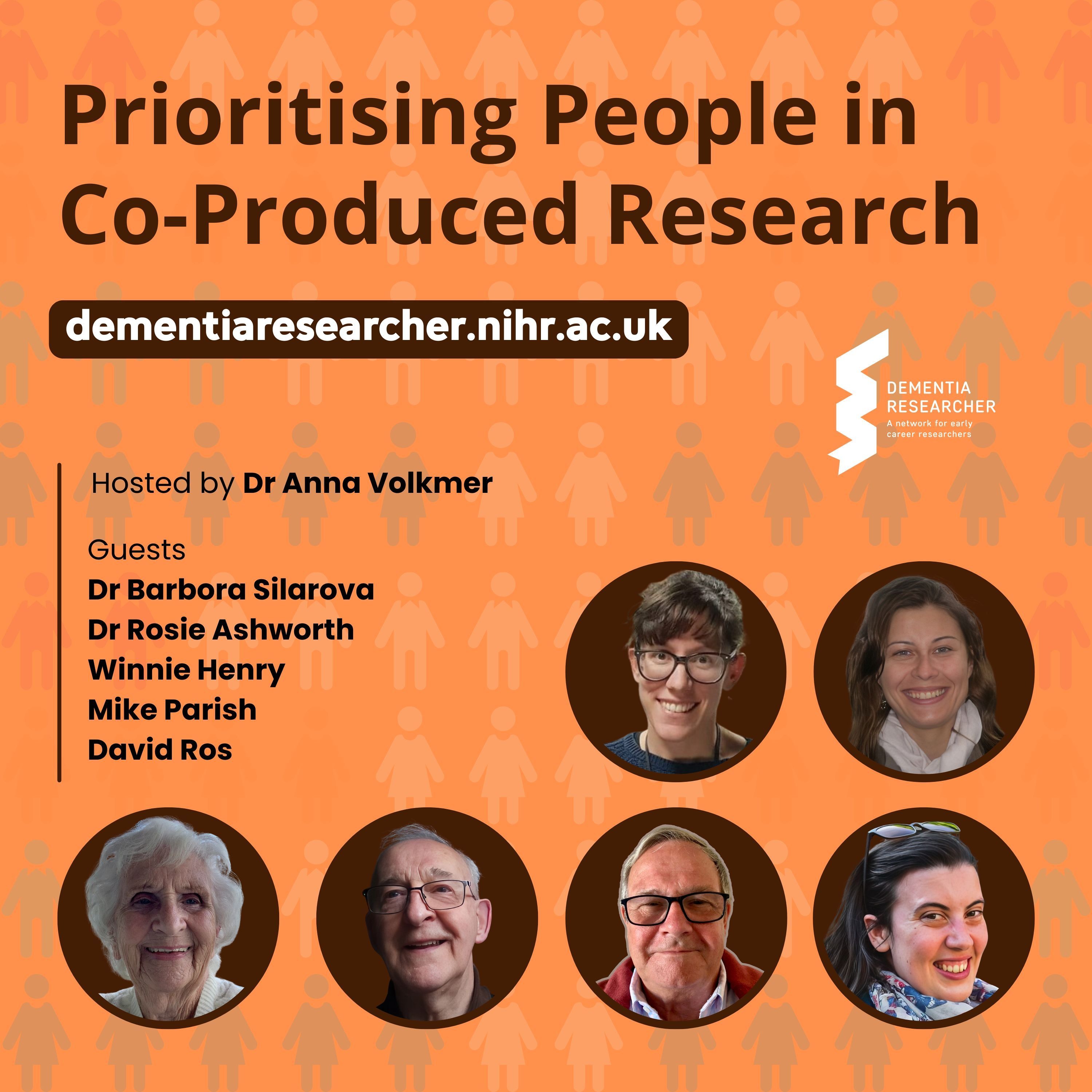
Prioritising People in Co-Produced Research
Dementia Researcher · Dementia Researcher
Audio is streamed directly from the publisher (episodes.captivate.fm) as published in their RSS feed. Play Podcasts does not host this file. Rights-holders can request removal through the copyright & takedown page.
Show Notes
In this episode of the Dementia Researcher podcast, Dr Anna Volkmer leads a discussion on the importance of co-production in dementia research.
This episode explores what it truly means to involve people with lived experience, with tips on how to go about it, and our guests own experience in working together. They also discuss the research process and how this approach can lead to more relevant and impactful outcomes.
Guests:
- Dr Barbora Silarova: An NIHR / Alzheimer’s Society Dem Comm Fellow at the University of Kent. Barbora brings her expertise in supporting people living with dementia and their carers. She shares insights on the significance of equal partnerships in co-produced research and the challenges and rewards of this collaborative approach.
- Dr Rosie Ashworth: A researcher who leads patient and public involvement for the NRS Neuroprogressive and Dementia Network in Scotland. Rosie discusses the importance of involving those with lived experience in research to enrich the quality and relevance of scientific findings.
- Winnie Henry: A retired psychotherapist who cared for her husband with vascular dementia. Winnie provides a personal perspective on the value of co-production, emphasising empathy and the importance of ensuring that carers' voices are heard in research.
- Mike Parish: A retired firefighter who became a carer for his husband, who had progressive supranuclear palsy. Mike highlights the importance of representing diverse experiences and backgrounds in dementia research to ensure all voices are considered.
- David Ross: A retired engineer who cared for his wife with frontotemporal dementia. David speaks about his journey into co-production, driven by a desire to understand more about dementia and contribute to meaningful research that reflects the realities faced by carers.
Together, these guests provide valuable insights into the process and benefits of co-produced research, offering practical tips for researchers looking to adopt this approach.
Three key take-aways from the podcast:
- The Value of Co-Production in Research: Co-production in dementia research ensures that the perspectives of those with lived experiences, such as unpaid carers and people directly affected by dementia, are central to the research process. This approach not only enhances the relevance and impact of the findings but also addresses the real needs of the community involved.
- Challenges and Rewards of Co-Produced Research: While co-produced research can be more time-consuming and challenging, particularly due to the need for ongoing communication and managing diverse viewpoints, it is ultimately more rewarding. The involvement of people with lived experience leads to more comprehensive and empathetic research outcomes, fostering a deeper connection and mutual respect between researchers and participants.
- Practical Tips for Researchers: Effective co-production requires empathy, flexibility, and open communication. Researchers are encouraged to build strong relationships with participants, be willing to adapt to different needs, and ensure that everyone involved feels valued and heard. This collaborative approach can transform the research process, making it more inclusive and impactful.
A transcript of this show, links and show notes and profile on all our guests are available on our website at https://www.dementiaresearcher.nihr.ac.uk.
If you prefer to watch rather than listen, you will find a video version of this podcast on YouTube, on our website, and in selected podcast platforms.
Follow us on social media:
- https://www.instagram.com/dementia_researcher/
- https://www.facebook.com/Dementia.Researcher/
- https://www.twitter.com/demrescommunity
- https://www.linkedin.com/company/dementia-researcher
- https://bsky.app/profile/dementiaresearcher.bsky.social
Download and Register with our Community App:
https://www.onelink.to/dementiaresearcher
We gratefully acknowledge the support of our funders: Alzheimer’s Association, Race Against Dementia, Alzheimer’s Research UK, Alzheimer’s Society, and the National Institute for Health and Care Research.
The views and opinions expressed by guests in this podcast are their own and do not necessarily reflect those of the producers, funders, or sponsors.
Subscribe to our sister show 'Dementia Researcher The Blogs':