conscient podcast
244 episodes — Page 4 of 5

S4 Ep 107e107 harm - what do you not know?
(bell and breath)Today's episode does not have any sound other than my voice and a series of silences. And I think you’ll understand why in a minute.(Silence)Writer and broadcaster Jesse Wente, author of Unreconciled, became the first indigenous person to chair the Canada Council for the Arts during the summer of 2020, a few weeks before I retired from the Council. (Silence)In an August 6, 2020 interview with the Toronto Star, I was deeply moved by what Jesse said. The way I view work now within colonial structures and institutions is harm reduction. Ultimately, the goal for me is to reduce the harm the Canada Council causes, not just to my community but to any community that suffers under colonialism, which is really all of us on some level, and to make it somewhat easier to exist, work, live and participate.(Silence)I invite you to think about this statement. In fact, I invite you to explore your feelings about this statement. (Silence)Jesse goes on in that same Toronto Star interview to say :What does the new world look like? How do we support that? How will we be nimble enough to be comfortable not knowing and yet developing policy around not knowing? With artists and the cultural sector, even though we’ll be among the last to restart, I think we have a fairly significant role to play in helping to define what recovery and restoration look like.(Silence)Now I could not find a sound in our modern world to respectfully accompany Jesse’s words and his questions. (Silence)The only sound, or absence of sound, so to speak, that made sense to me was silence. (Silence)Jesse asks us to think about what the role of the arts sector in helping to define what recovery and restoration look like, and if I may add, what it might sound like. (Silence)Jesse also invites us to imagine what a new world might look, or sound like.(Silence)My question for you is ‘What do you not know?’*I would like to thank Jesse Wente for his kind permission to use his quotations from this interview in this context. Thanks also to the article authors Karen Fricker and Carly Maga and the Toronto Star and the Canada Council for the Arts.I am grateful and accountable to the earth and the human labour that provided me with the privilege of producing this episode. (including all the toxic materials and extractive processes behind the computers, recorders, transportation and infrastructure that make this podcast possible).My gesture of reciprocity for this episode is a donation to the Anishnawbe Health Foundation. *END NOTES FOR ALL EPISODESNote : I'm currently 'pressing pause' and am not producing new content until further notice. Hey conscient listeners, I’ve been producing the conscient podcast as a learning and unlearning journey since May 2020. It’s my way to give back.This Indigenous Land Acknowledgement statement was developed by members of the Algonquin community for my former employer the Canada Council for the Arts. I have adapted slightly to make it my own.I acknowledge that my studio, located in Ottawa, is on the unceded, unsurrendered Territory of the Anishinaabe Algonquin Nation whose presence here reaches back to time immemorial.I recognize the Algonquins as the customary keepers and defenders of the Ottawa River Watershed and its tributaries. I honour their long history of welcoming many Nations to this beautiful territory and uphold and uplift the voice and values of our Host Nation.Further, I offer my respect and affirm the inherent and Treaty Rights of all Indigenous Peoples across this land and honour commitments to self-determination and sovereignty that have been made to Indigenous Nations and Peoples.I acknowledge the historical oppression of lands, cultures and the original Peoples in what we now know as Canada and fervently believe the Arts contribute to the healing and decolonizing journey we all share togetherIn parallel with the production of the conscient podcast and its francophone counterpart, balado conscient, I I publish a free ‘a calm presence' monthly Substack see https://acalmpresence.substack.com. Your feedback is always welcome at claude [at] conscient [dot] ca and/or on social media: Facebook, Instagram, Linkedin, Threads, BlueSky, Mastodon, Tik Tok, YouTube and Substack.Share what you like, etcI am grateful and accountable to the earth and the human labour that provided me with the privilege of producing this podcast, including the toxic materials and extractive processes behind the computers, recorders, transportation systems and infrastructure that made this production possible. Thanks for listening. Claude SchryerLatest update on March 21, 2026

S4 Ep 106e106 fire - what can we do about our collective indifference?
(bell and breath)(sound of campfire)I invite you to slow down, or maybe stop, what you’re doing and listen to a campfire storyWe’re sitting in the snow, by the Preston River in Duhamel, Québec. The snow absorbs the sound here but it is also slightly amplified by the cottage and frozen trees. It's raining so you also hear drops of water, snow and ice falling in between the fire crackles. Sometimes, when I get discouraged about the ecological crisis, I build a campfire like this to lift my spirits and re-energize.Campfires are also a great place to tell and listen to stories that engage your emotions. Today’s story is an excerpt from my conversation with climate photographer Joan Sullivan from e96 – the liminal space between what was and what’s next.The story begins with Joan taking photos in the winter by the St-Lawrence River near Rimouski :If you've ever stood on the shores of a winter river that has no ice, it's kind of, you know, gray, right? That particular day, it wasn't gray, but in general, a winter river is just sort of meandering through a gray-ish landscape. It's banal. It's not visually dramatic. And it occurred to me that very day that the worst possible thing is that it becomes normal to see a river without ice. It's becoming normal and it is not normal. So I didn't know what to do. I'm all alone, you know? I just take my camera and I tried to take a photo of this orange, you know, metaphorically on Fire River, but my hands were shaking, you know, it was like, click, click, click. And, and, you know, each image was blurred. And, and I just deleted them all. So I started again. I tried to hold the camera, you know, close to my chest, to like, steady it, and my hands were shaking, and it was the strangest thing. It's never happened to me in 30 years of photography that I couldn't stop my hands. And it's suddenly dawned on me that I, my hands, weren’t shaking up because of the cold, but because of an anger, you know, this deep, profound anger about our collective indifference in the face of climate breakdown. Wait, we're just carrying on with our lives as if you know, la la la and nothing, nothing's bad's happening. So there was this sense of rage. I mean, like, honestly, it's surprising how strong it'd be in a violent rage just sort of coming outta me. I wanted to scream, and I just, you know, took my camera and just moved it violently, right? Left up, down the, and almost, I suppose, it was almost like I was like drowning in the water. You know, my arms are just doing everything. And I was holding down the shutter the whole time, you know, 20, 30, 40 photos at a time. And I did it over. And oh, I was just, I was just, I was just beside myself. And you know, you at some point, you just stop and you're staring out at the river. And I just felt helpless. I just didn't know what to do…(River sound continues in background)Thank you, Joan, for this story and your work as an artist. You can listen to the whole 8 minute story on the conscious podcast e96. The question for this episode is drawn from Joan’s story : What can we do about our collective indifference? *The campfire for this episode was recorded on December 30th, 2022 at our cottage in Duhamel, Québec. The story is an excerpt from my conversation with climate photographer Joan Sullivan from e96 – the liminal space between what was and what’s next. You can hear the entire story here :-) The YouTube video version of this episode includes footage from our cottage and from Joan’s Je suis fleuve photo series.For more information on her work see https://www.joansullivanphotography.comI am grateful and accountable to the earth and the human labour that provided me with the privilege of producing this episode. (including all the toxic materials and extractive processes behind the computers, recorders, transportation and infrastructure that make this podcast possible). *END NOTES FOR ALL EPISODESNote : I'm currently 'pressing pause' and am not producing new content until further notice. Hey conscient listeners, I’ve been producing the conscient podcast as a learning and unlearning journey since May 2020. It’s my way to give back.This Indigenous Land Acknowledgement statement was developed by members of the Algonquin community for my former employer the Canada Council for the Arts. I have adapted slightly to make it my own.I acknowledge that my studio, located in Ottawa, is on the unceded, unsurrendered Territory of the Anishinaabe Algonquin Nation whose presence here reaches back to time immemorial.I recognize the Algonquins as the customary keepers and defenders of the Ottawa River Watershed and its tributaries. I honour their long history of welcoming many Nations to this beautiful territory and uphold and uplift the voice and values of our Host Nation.Further, I offer my respect and affirm the inherent and Treaty Rights of all Indigenous Peoples across this land and honour commitments to self-determination and sovereignty that have been ma

S4 Ep 105e105 rope - how did this episode make you feel?
This recording is a rope holding a boat to the dock at Toronto Harbour on November 26th, 2022. Sketches by Sabrina Mathews. *END NOTES FOR ALL EPISODESNote : I'm currently 'pressing pause' and am not producing new content until further notice. Hey conscient listeners, I’ve been producing the conscient podcast as a learning and unlearning journey since May 2020. It’s my way to give back.This Indigenous Land Acknowledgement statement was developed by members of the Algonquin community for my former employer the Canada Council for the Arts. I have adapted slightly to make it my own.I acknowledge that my studio, located in Ottawa, is on the unceded, unsurrendered Territory of the Anishinaabe Algonquin Nation whose presence here reaches back to time immemorial.I recognize the Algonquins as the customary keepers and defenders of the Ottawa River Watershed and its tributaries. I honour their long history of welcoming many Nations to this beautiful territory and uphold and uplift the voice and values of our Host Nation.Further, I offer my respect and affirm the inherent and Treaty Rights of all Indigenous Peoples across this land and honour commitments to self-determination and sovereignty that have been made to Indigenous Nations and Peoples.I acknowledge the historical oppression of lands, cultures and the original Peoples in what we now know as Canada and fervently believe the Arts contribute to the healing and decolonizing journey we all share togetherIn parallel with the production of the conscient podcast and its francophone counterpart, balado conscient, I I publish a free ‘a calm presence' monthly Substack see https://acalmpresence.substack.com. Your feedback is always welcome at claude [at] conscient [dot] ca and/or on social media: Facebook, Instagram, Linkedin, Threads, BlueSky, Mastodon, Tik Tok, YouTube and Substack.Share what you like, etcI am grateful and accountable to the earth and the human labour that provided me with the privilege of producing this podcast, including the toxic materials and extractive processes behind the computers, recorders, transportation systems and infrastructure that made this production possible. Thanks for listening. Claude SchryerLatest update on March 21, 2026

S4 Ep 104e104 time - what does a very small moment in a much larger space sound like?
(bell and breath)(loud sound of train passing at close distance)(once the train has passed, cross fade between quiet city and very quiet mountain forest)(indigenous artist and curator France Trepanier from conscient podcast é55 trépanier - a very small moment in a much larger space, in French):I think that with this cycle of colonialism, and what it has brought, that we are coming to the end of this cycleand with hindsight, we will realize that it was a very small moment in a much larger space, and that we are returning to very deep knowledge. What does it mean to live here on this planet? What does it mean to have the possibility, but also the responsibility to maintain harmonious relationships? What does a very small moment in a much larger space sound like? *This quote is from indigenous artist and curator France Trepanier from conscient podcast é55 trépanier - un petit instant dans un espace beaucoup plus vaste (a very small moment in a much larger space) recorded on June 7, 2021. When I recorded this train I felt great relief once the train had passed, but also a feeling of accountability for the life forms that were masked by the violent rumble of the train. Thanks to France Trepanier for her permission to use her quote for this episode. This passing train on Adanac street in Vancouver was recorded on a Zoom H4n Pro audio recorder on October 14th, 2022 at 10am.I am grateful and accountable to the earth and the human labour that provided me with the privilege of producing this episode. (including all the toxic materials and extractive processes behind the computers, recorders, transportation and infrastructure that make this podcast possible). *END NOTES FOR ALL EPISODESNote : I'm currently 'pressing pause' and am not producing new content until further notice. Hey conscient listeners, I’ve been producing the conscient podcast as a learning and unlearning journey since May 2020. It’s my way to give back.This Indigenous Land Acknowledgement statement was developed by members of the Algonquin community for my former employer the Canada Council for the Arts. I have adapted slightly to make it my own.I acknowledge that my studio, located in Ottawa, is on the unceded, unsurrendered Territory of the Anishinaabe Algonquin Nation whose presence here reaches back to time immemorial.I recognize the Algonquins as the customary keepers and defenders of the Ottawa River Watershed and its tributaries. I honour their long history of welcoming many Nations to this beautiful territory and uphold and uplift the voice and values of our Host Nation.Further, I offer my respect and affirm the inherent and Treaty Rights of all Indigenous Peoples across this land and honour commitments to self-determination and sovereignty that have been made to Indigenous Nations and Peoples.I acknowledge the historical oppression of lands, cultures and the original Peoples in what we now know as Canada and fervently believe the Arts contribute to the healing and decolonizing journey we all share togetherIn parallel with the production of the conscient podcast and its francophone counterpart, balado conscient, I I publish a free ‘a calm presence' monthly Substack see https://acalmpresence.substack.com. Your feedback is always welcome at claude [at] conscient [dot] ca and/or on social media: Facebook, Instagram, Linkedin, Threads, BlueSky, Mastodon, Tik Tok, YouTube and Substack.Share what you like, etcI am grateful and accountable to the earth and the human labour that provided me with the privilege of producing this podcast, including the toxic materials and extractive processes behind the computers, recorders, transportation systems and infrastructure that made this production possible. Thanks for listening. Claude SchryerLatest update on March 21, 2026
S4 Ep 103e103 heat - what does decarbonization sound like to you?
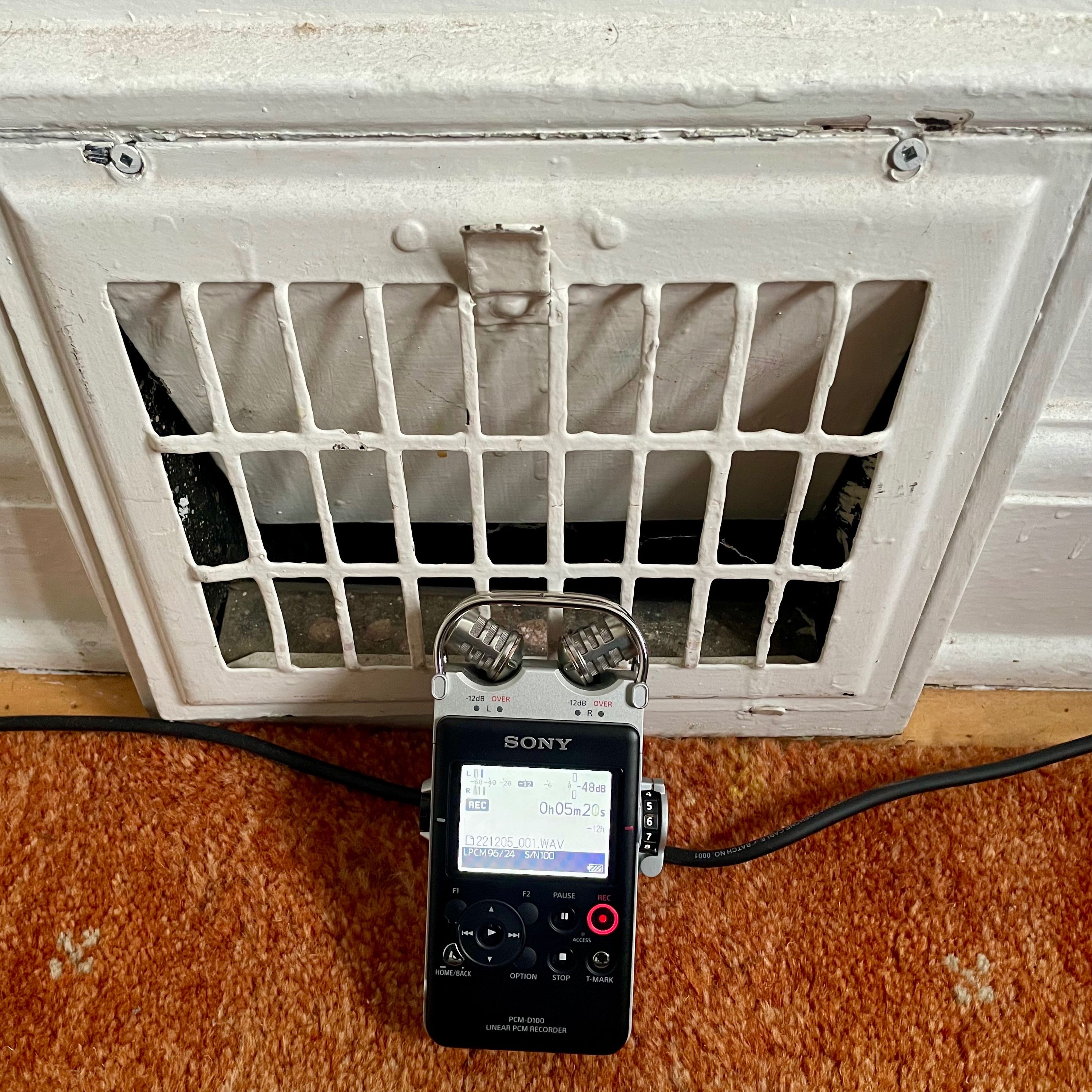
(sound of bell and breath)On December 5th 2022 we had a heat pump installed in our house in order to reduce our carbon footprint. What is a heat pump, you ask? Well, basically, It heats and cools a space by transferring thermal energy from the outside using a refrigeration cycle powered by electricity. It’s a more environmentally friendly source of heating than say methane gas but it still generates carbon through manufacturing and in the production of electricity to run it. It also does not address the fact that the highest carbon polluters in the world are multinational corporations and nation-states. So what power does one individual household have? Quite a bit actually? The least we can do is change what is within our control, in our own homes and living spaces. That does get us off the hook by any means in terms of our accountabilities but it does move us in the right direction and it feels good to take action . .Now, let’s get back to my story. Our house was heatless on this day and I was working right here in my second floor studio, when I heard a mysterious tapping sound coming from the basement through the air duct. (fade in sound of distant tapping)I stopped working and turned on my audio recorder.As I listened I felt myself being transformed by the sounds of the heat pump, which, of course, are made of materials from the earth, just like we are. (fade in indoors heat pump drone)(fade in external heat pump fan). (heat pump installation technician from Ottawa Home Services):This thing is smart. Everything talks to each other. I would just leave it on auto and let it choose what it wants to do.What does decarbonization sound like to you? *This episode was recorded at our home in Ottawa. Thanks to Kevin Taylor and technicians from Ottawa Home Services for their collaboration and to Azul Carolina Duque for her guidance. While this episode is not directly about art, it has implications in terms of how we listen to the sound of energy around us and how they affect us. In this case, the heat pump is a lesser evil on our environment than a gas furnace but remains an issue. Perhaps our homes are too large to heat and cool for the energy sources available? Maybe we should rethink …. Everything?My point here is that we need to think about how we heat and cool ourselves but also feel these materials in our bodies and listen to them…I am grateful and accountable to the earth and the human labour that provided me with the privilege of producing this episode. (including all the toxic materials and extractive processes behind the computers, recorders, transportation and infrastructure that make this podcast possible). *END NOTES FOR ALL EPISODESNote : I'm currently 'pressing pause' and am not producing new content until further notice. Hey conscient listeners, I’ve been producing the conscient podcast as a learning and unlearning journey since May 2020. It’s my way to give back.This Indigenous Land Acknowledgement statement was developed by members of the Algonquin community for my former employer the Canada Council for the Arts. I have adapted slightly to make it my own.I acknowledge that my studio, located in Ottawa, is on the unceded, unsurrendered Territory of the Anishinaabe Algonquin Nation whose presence here reaches back to time immemorial.I recognize the Algonquins as the customary keepers and defenders of the Ottawa River Watershed and its tributaries. I honour their long history of welcoming many Nations to this beautiful territory and uphold and uplift the voice and values of our Host Nation.Further, I offer my respect and affirm the inherent and Treaty Rights of all Indigenous Peoples across this land and honour commitments to self-determination and sovereignty that have been made to Indigenous Nations and Peoples.I acknowledge the historical oppression of lands, cultures and the original Peoples in what we now know as Canada and fervently believe the Arts contribute to the healing and decolonizing journey we all share togetherIn parallel with the production of the conscient podcast and its francophone counterpart, balado conscient, I I publish a free ‘a calm presence' monthly Substack see https://acalmpresence.substack.com. Your feedback is always welcome at claude [at] conscient [dot] ca and/or on social media: Facebook, Instagram, Linkedin, Threads, BlueSky, Mastodon, Tik Tok, YouTube and Substack.Share what you like, etcI am grateful and accountable to the earth and the human labour that provided me with the privilege of producing this podcast, including the toxic materials and extractive processes behind the computers, recorders, transportation systems and infrastructure that made this production possible. Thanks for listening. Claude SchryerLatest update on March 21, 2026

S4 Ep 102e102 aesthetics - how can we 'de-modernize' art?
(ocean shoreline)The problem with beauty is that it can distract us from reality.Sit with me, please, take a moment. Sit and listen… Over there, about 56 kilometers to the northeast, is the traditional territory of the Musqueam, Squamish and Tsleil-Waututh nations, also known as Vancouver.Listen to the ocean flowing, like the blood and liquids in your body. We are water.Listen to the ravens passing by and croaking. They are poetry in motion.Listen to the city rumbling at a distance, but it's hard to hear, isn’t it? Let me help by filtering out high frequencies… (cutting out of high frequencies) Ah, there is the drone of the city. It’s both beautiful and bewildering, isn’t it?A plane is coming. I’ll bring back the high frequencies.(bring back high frequencies) The sky is littered with aircraft around here - seaplanes, jets, helicopters - but they can have a strong aesthetic effect as they inch their way across the sky, merging with the rumble of the city.(Fading to silence)One of the problems with modern aesthetic experiences is that we tend to choose the ones that reinforce our own world view and deny the shit around us. Dr. Vanessa Andreotti suggests that we learn to ‘hold space for the good, the bad, the ugly and the messed up, within and around’How can we ‘de-modernize’ art?*This episode is dedicated to my colleague Hildegard Westerkamp whose voice, from her Kits Beach Soundwalk (1989) composition, was in my head when I wrote the narrative for this episode. I respectfully borrowed her technique of filtering a soundscape as part of a narrative. The recording was made on a Zoom H4n Pro in one take on Saturday, October 1, 2022 at 8am at the Boat Pass at Winter Cove National Park, Saturna Island, BC. I thank Dr. Vanessa Andreotti for the use of her words. I am grateful and accountable to the earth and the human labour that provided me with the privilege of producing this episode. (including all the toxic materials and extractive processes behind the computers, recorders, transportation and infrastructure that make this podcast possible). *END NOTES FOR ALL EPISODESNote : I'm currently 'pressing pause' and am not producing new content until further notice. Hey conscient listeners, I’ve been producing the conscient podcast as a learning and unlearning journey since May 2020. It’s my way to give back.This Indigenous Land Acknowledgement statement was developed by members of the Algonquin community for my former employer the Canada Council for the Arts. I have adapted slightly to make it my own.I acknowledge that my studio, located in Ottawa, is on the unceded, unsurrendered Territory of the Anishinaabe Algonquin Nation whose presence here reaches back to time immemorial.I recognize the Algonquins as the customary keepers and defenders of the Ottawa River Watershed and its tributaries. I honour their long history of welcoming many Nations to this beautiful territory and uphold and uplift the voice and values of our Host Nation.Further, I offer my respect and affirm the inherent and Treaty Rights of all Indigenous Peoples across this land and honour commitments to self-determination and sovereignty that have been made to Indigenous Nations and Peoples.I acknowledge the historical oppression of lands, cultures and the original Peoples in what we now know as Canada and fervently believe the Arts contribute to the healing and decolonizing journey we all share togetherIn parallel with the production of the conscient podcast and its francophone counterpart, balado conscient, I I publish a free ‘a calm presence' monthly Substack see https://acalmpresence.substack.com. Your feedback is always welcome at claude [at] conscient [dot] ca and/or on social media: Facebook, Instagram, Linkedin, Threads, BlueSky, Mastodon, Tik Tok, YouTube and Substack.Share what you like, etcI am grateful and accountable to the earth and the human labour that provided me with the privilege of producing this podcast, including the toxic materials and extractive processes behind the computers, recorders, transportation systems and infrastructure that made this production possible. Thanks for listening. Claude SchryerLatest update on March 21, 2026

S4 Ep 101e101 tension - how do you feel now?
(Deep breath)TensionI was thinking about the tensions in our lives and the art of finding a balance point… So I went for a sound walk in Vancouver and came upon a piece of fishing line. I brought it home, strung it up and recorded myself plucking it (sound of fishing line being plucked by hand) I held the fishing line with my left hand while I gradually reduced the tension with my right hand. Later that day I went for another soundwalk and came upon a white metal fence. I started to gently tap one of the rods with my middle finger tip, like a heartbeat... (sound of metal fence rod being tapped) Finally, as I continued my search for sounds of tension, I came upon another metal fence, this one by the ocean and struck it with a wooden stick while slowly decreasing my walking pace. (sound of metal fence tapped by a piece of wood)I invite you to sit with me for a moment and feel these sounds. Try not to think, just feel. (sound of decreased tension by filtering and slowing down) How do you feel now ?(further decrease of tension by filtering and slowing down to silence) What about now? (silence)How do you feel now? (Deep breath)*This episode was recorded on a Zoom H4n Pro audio recorder in Vancouver in September, 2022. I composed it as a pilot episode with the intention of exploring somatic and embodied listening. It’s basically a sketch but I thought it would be a good way to start this 4th season of the conscient podcast because it asks an open ended question that will come back again and again throughout this project : how do you feel now?I am grateful and accountable to the earth and the human labour that provided me with the privilege of producing this episode. (including all the toxic materials and extractive processes behind the computers, recorders, transportation and infrastructure that make this podcast possible). *END NOTES FOR ALL EPISODESNote : I'm currently 'pressing pause' and am not producing new content until further notice. Hey conscient listeners, I’ve been producing the conscient podcast as a learning and unlearning journey since May 2020. It’s my way to give back.This Indigenous Land Acknowledgement statement was developed by members of the Algonquin community for my former employer the Canada Council for the Arts. I have adapted slightly to make it my own.I acknowledge that my studio, located in Ottawa, is on the unceded, unsurrendered Territory of the Anishinaabe Algonquin Nation whose presence here reaches back to time immemorial.I recognize the Algonquins as the customary keepers and defenders of the Ottawa River Watershed and its tributaries. I honour their long history of welcoming many Nations to this beautiful territory and uphold and uplift the voice and values of our Host Nation.Further, I offer my respect and affirm the inherent and Treaty Rights of all Indigenous Peoples across this land and honour commitments to self-determination and sovereignty that have been made to Indigenous Nations and Peoples.I acknowledge the historical oppression of lands, cultures and the original Peoples in what we now know as Canada and fervently believe the Arts contribute to the healing and decolonizing journey we all share togetherIn parallel with the production of the conscient podcast and its francophone counterpart, balado conscient, I I publish a free ‘a calm presence' monthly Substack see https://acalmpresence.substack.com. Your feedback is always welcome at claude [at] conscient [dot] ca and/or on social media: Facebook, Instagram, Linkedin, Threads, BlueSky, Mastodon, Tik Tok, YouTube and Substack.Share what you like, etcI am grateful and accountable to the earth and the human labour that provided me with the privilege of producing this podcast, including the toxic materials and extractive processes behind the computers, recorders, transportation systems and infrastructure that made this production possible. Thanks for listening. Claude SchryerLatest update on March 21, 2026

e00 what is sounding modernity?
trailerWelcome to episode 0 of season four of the conscient podcast, Sounding Modernity, five-minute sound meditations, published every Sunday from January 1 through December 31, 2023. My name is Claude Schryer and I'm happy to be back podcasting about art and the ecological crisis after a 10 month break.I'm talking to you today from the unceded traditional territory of the Anishinaabe Algonquin Nation, also known as Ottawa, where my family and I are grateful to live. Veuillez prendre note qu’une version en français de cet épisode et de toute la saison 4 est disponible sur le canal balado conscient et sur Youtube. So, what is Sounding Modernity? In a nutshell, every sunday in 2023 I’m going to publish a 5 minute sound art work comprised pof field recording, soundscapes compositions, narration and silence, lots of silence, en francais and in english, that explores how we listen modernity, topics such acceptance, aesthetics, appropriation, collapse, complicity, despair, entanglement, exploitation, failure, fiction, hope (maybe also hopelessness) humour, kindness, unlistening, reciprocity, resilience, separability, validation, violence, worlding and many more I haven’t thought of yet. Every week will be a new opportunity to create a dialogue for shared learning and unlearning, learning and unlearning, learning, unlearning.Overall the idea is to ‘stay with the trouble’ as Dr. Donna J. Haraway suggests.At the end of each episode you’ll be asked to ponder a question - to think about a complex issue - and if you feel comfortable, you can respond on conscient.ca to the question, in any way you wish : with words, images, sounds, video, etc. I will respond to all submissions. My hope is that we find a way, together, to navigate our way out of modernity’s trappings and to create, step by step, the conditions for other worlds to emerge.Let me give you an example of an episode. This is the trailer for episode 1, of season 4, which is actually episode 101 of the entire podcast series. It’s called tension and what you’ll hear is the question that i mentioned earlier. Now I won’t get into some of the references and theoretical underpinnings of this project however I invite you to read a blog I wrote about the project on conscient.ca. In terms of promotion I’ll be using social media etc which you are welcome to share but I think the best way to promote this kind of project is through word of mouth so If you like what you hear, please tell your friends and colleagues. You’ll find links to subscribe to the weekly conscient newsletter, conscient podcast in English, au balado conscient en francais, to the conscient YouTube channel and to the conscient podcast Facebook and instagram pages at subscribe.I want to end this intro by warmly thanking my collaborators and also the Canada Council, Strategic Innovation Fund Seed grant for their support of this project.You can reach me at [email protected] Thanks for listening and I hope to hear from you during the season. *END NOTES FOR ALL EPISODESNote : I'm currently 'pressing pause' and am not producing new content until further notice. Hey conscient listeners, I’ve been producing the conscient podcast as a learning and unlearning journey since May 2020. It’s my way to give back.This Indigenous Land Acknowledgement statement was developed by members of the Algonquin community for my former employer the Canada Council for the Arts. I have adapted slightly to make it my own.I acknowledge that my studio, located in Ottawa, is on the unceded, unsurrendered Territory of the Anishinaabe Algonquin Nation whose presence here reaches back to time immemorial.I recognize the Algonquins as the customary keepers and defenders of the Ottawa River Watershed and its tributaries. I honour their long history of welcoming many Nations to this beautiful territory and uphold and uplift the voice and values of our Host Nation.Further, I offer my respect and affirm the inherent and Treaty Rights of all Indigenous Peoples across this land and honour commitments to self-determination and sovereignty that have been made to Indigenous Nations and Peoples.I acknowledge the historical oppression of lands, cultures and the original Peoples in what we now know as Canada and fervently believe the Arts contribute to the healing and decolonizing journey we all share togetherIn parallel with the production of the conscient podcast and its francophone counterpart, balado conscient, I I publish a free ‘a calm presence' monthly Substack see https://acalmpresence.substack.com. Your feedback is always welcome at claude [at] conscient [dot] ca and/or on social media: Facebook, Instagram, Linkedin, Threads, BlueSky, Mastodon, Tik Tok, YouTube and Substack.Share what you like, etcI am grateful and accountable to the earth and the human labour that provided me with the privilege of producing this podcast, including the toxic materials and extractive processes behind the computers, recorders, transportation

e99 (b) winter soundscape revisited – homage to r. murray schafer (composition only)
bonus'What would the Prairies be without wind? It’s the keynote sound here, the one against which everything else is registered. But to record it? Impossible.'R. Murray Schafer, winter diary, 1997See episode 99 for details on winter diary revisited - homage to r. murray schafer and to listen to the version with a 25' introduction and 3' of credits.Note: an article for the Institute for Music in Canada about this composition is available here : Winter Diary Revisited *END NOTES FOR ALL EPISODESNote : I'm currently 'pressing pause' and am not producing new content until further notice. Hey conscient listeners, I’ve been producing the conscient podcast as a learning and unlearning journey since May 2020. It’s my way to give back.This Indigenous Land Acknowledgement statement was developed by members of the Algonquin community for my former employer the Canada Council for the Arts. I have adapted slightly to make it my own.I acknowledge that my studio, located in Ottawa, is on the unceded, unsurrendered Territory of the Anishinaabe Algonquin Nation whose presence here reaches back to time immemorial.I recognize the Algonquins as the customary keepers and defenders of the Ottawa River Watershed and its tributaries. I honour their long history of welcoming many Nations to this beautiful territory and uphold and uplift the voice and values of our Host Nation.Further, I offer my respect and affirm the inherent and Treaty Rights of all Indigenous Peoples across this land and honour commitments to self-determination and sovereignty that have been made to Indigenous Nations and Peoples.I acknowledge the historical oppression of lands, cultures and the original Peoples in what we now know as Canada and fervently believe the Arts contribute to the healing and decolonizing journey we all share togetherIn parallel with the production of the conscient podcast and its francophone counterpart, balado conscient, I I publish a free ‘a calm presence' monthly Substack see https://acalmpresence.substack.com. Your feedback is always welcome at claude [at] conscient [dot] ca and/or on social media: Facebook, Instagram, Linkedin, Threads, BlueSky, Mastodon, Tik Tok, YouTube and Substack.Share what you like, etcI am grateful and accountable to the earth and the human labour that provided me with the privilege of producing this podcast, including the toxic materials and extractive processes behind the computers, recorders, transportation systems and infrastructure that made this production possible. Thanks for listening. Claude SchryerLatest update on March 21, 2026

S3 Ep 99e99 winter diary revisited – homage to r. murray schafer (25′ introduction + 40′ composition + 3′ credits)
Episode NotesBarn on the farm of R. Murray Schafer and Eleanor James, Indian River, Ontario, January 19, 2022 (photo by me)Note: the text below is a transcription of the narration in the episode (sounds are described, with their source where possible)Welcome to episode 99 of the conscient podcast, the last episode of season 3, which you might recall was on the theme of radical listening. (fade in of sound of barn)I invite you to guess what is this space. There are some sonic clues. It’s clearly an indoor space and yet there is a hollowing wind with a deep, rich texture... You can hear the gentle crackling of wood… the occasional slap of a rope… a squirrel. (fade out sound of barn)This soundscape was recorded on January 19th, 2022, in a barn, on a farm that belonged to composer R. Murray Schafer and is now the home of his wife, the singer Eleanor James. The farm is located near Indian River, Ontario, about 20k east of Peterborough which is the traditional territory of the Anishinaabe Mississauga people adjacent to Haudenosaunee Territory and in the territory covered by the Williams Treaty. I went to the farm to record winter soundscapes for this episode, Winter Diary Revisited, which is a soundscape composition dedicated to the memory of composer, writer, music educator, and environmentalist, R. Murray Schafer.1st floor of barn of R. Murray Schafer and Elanor James, near Indian River, ON, January 19, 2022Eleanor James, January 19, 2022, Indian River, Ontario (photo by me)While visiting the farm, I had a conversation with Eleanor James about Murray and his relationship to winter. Here is an excerpt:Claude: I'm with Eleanor James and I just spent some time in your barn. Thank you so much. I recorded a bunch of sounds, and I went into the forest and captured sounds of wind and some of the things that Murray and I did when we did the Winter Diary, which is to do this kind of yelling out, to enliven the space and get a feeling of it. (sound of snowshoeing and distant 'Hey' at the farm on January 19, 2022)Claude: There are so many things that you could talk about Murray. Any thoughts about soundscapes but also around recording and winter sounds? Eleanor: There's a couple of things come to mind, which are in his creative output and one of them is Music in the Cold. It's a lovely little manifesto done in an artistic style about how it's better to be in the North than in the South and that music in the cold is tougher and hardier and more austere and (laughs) so he goes into a diatribe about that kind of thing. He really is a Northern personality. So, you have to forgive him for going on a rant about it, but, of course, it was an artistic creation, so it was intended to be hyperbolic. I think it's quite delightful. It's got a midnight blue cover and then the title Music in the Cold.Speaking of which, he has written a wonderful string quartet called Winter Birds which the Molinari quartet of Montreal have recorded, in which his own voice occurs in the very last movement where he describes the winter of 2005 looking out his studio window at the birds feeding. We used to fill the feeders with seeds, and we'd have all kinds of little birds coming and fluttering and going and making little soft sounds. In the string quartet, he describes a whole event of birds, just fluttering and coming and going and the total silence surrounding them, not only acoustically, but visually as well. Nothing but the snow, just like it is today, with snow heaped everywhere and just these little birds making tiny fluttering sounds with their wings.There's also the piece that he wrote for choir called Snowforms which is actually quite popular, and he wrote it as a graphic score and it's written on a sort of pale turquoise green paper, and the choir reads the shapes of snow and again, those shapes were something that he observed looking out his studio window and drew graphically and then composed it so that pitches were associated with these tones. It's just a marvelous description of winter and so for Murray, all of the soundscape work that he was so interested in fed into his artistic abilities and his artistic gifts as a composer.Note: See String Quartet no. 10 - Winter Birds (extrait) / R. Murray Schafer for an excerpt of Winter Birds performed by the Molinari Quartet. See Snowforms for a performance of Snowforms by the Vancouver Chamber Choir.I re-read Murray’s Music in the Cold book when I got back home to Ottawa, which he wrote in 1977, when I was 17. It’s interesting to look back at this piece of artistic reflection and provocation. Here are the last 11 lines of the book: Saplings are beginning to sprout again in the moist earth.Beneath it animals can be heard digging their burrows.Soon the thrush will return.The old technology of waste is gone.What then remains?The old virtues: harmony; the universal soul; hard work.I will live supersensitized, the antennae of a new race.I will create a new mythology.It will take time.It will take time.

S3 Ep 98e98 epilogue – perspectives on season 3
'I came to realize that in season three that I continue to be very deeply moved by the layering of words and soundscapes. There's something about it, when new contexts for listening are created, that I find it very stimulating. It's like the spirits of the sounds are actually speaking directly to me and that I can hear and feel their presence. Now I've always felt this, but I rarely talk about it, because it sounds so, you know, strange or is hard to explain, but there it is. It's something that I just love doing and I'm interested to know if you have any similar experiences, so please write or reach out to me and let me know.'This episode is a reading of my January 2022 conscient podcast blog about some of the high and lows of season 3 of this podcast and my interest in layering words and soundscapes that create new contexts for listening, with excerpts from episodes 65, 69, 81, 86, 96 and a preview of e99 Winter Diary Revisited.scriptconscient podcast, episode 98. This episode is a reading of my conscient podcast blog for the month of January 2022.Some might recall that I started the 3rd season of this podcast with a fictional case study:(Teacher) Today, we’re going to do a case study today of the second season of the conscient podcast, which ran from March to August 2021. It was produced by an Ottawa based sound artist, Claude Schryer, who is passed away now, but I was very fortunate that his children, Riel and Clara, kindly helped me do some of the research for this class. I want to check if you have all had a chance to listen to the course materials, which were… conscient podcast episodes… 19 reality and 62 compilation. Were you…(Male student, interrupting) Excuse me, but can you tell us why did you choose this podcast? Historically speaking, you know, there were other podcasts in Canada in 2021 that also explored issues of art and environment. Why this one?(Teacher) That’s a very good question. I chose the second season of this podcast because Schryer was exploring the themes of reality and ecological grief, which were timely in 2021 and still are today. Also, because it gives us a snapshot of what artists and cultural workers were thinking about in relation to the ecological crisis.I had fun doing that episode with my family. I presented it to a couple of university classes in the fall of 2021 and got some good feedback. For example, I appreciated this question from a student in an arts policy, equity and activism class at centennial college: My question is more towards the arts industry in terms of activism. I feel like there's a really high risk for burnout and for a lack of reward in terms of the work that you do. I think a lot of the time it falls on deaf ears and so I was wondering in your experience, what support systems have been put in place to support arts activists in their journey?You can hear my answer and more conversation about art activism in episode 86.I will conclude season 3 with episode 99, a soundscape composition called Winter Diary Revisited, my homage to composer R. Murray Schafer, who passed away in August of 2021. The piece features excerpts from an unpublished essay that Schafer wrote after a 10-day field recording trip that we undertook in rural Manitoba in February 1997 to record a radio program about winter soundscapes for the west German radio. L’épisode 100 du balado conscient sera la version française de cette composition de paysages sonores : Journal d'hiver revisité.After publishing episode 100, I will take a break from podcast production and think about next steps. During this time, I invite you to get caught up on topics of interest in season 3, which started with episode 65, recorded while floating on a kayak at the cottage:… There's a duck... you hear.... di-di-di... the wings are so beautiful … - and share the process of failure and attempts to change that didn't work, in a very straightforward kind of way, because that's life: where we make mistakes and stumble and learn and get excited and then look back and we observe that. So that's what season three will begin like as like. Actually, I can't predict what it will end like, because, well, I'm just starting ….I did make mistakes, stumble, learn and get excited in season 3. For example, my promise to do short episodes, of doing everything in a ‘single take’ or asking all guests about radical listening. I learned and adjusted my ways as season 3 unfolded and I got better at listening, sometimes quite radically, to my guests during conversations. I was able to do most of my conversations live in Vancouver, Toronto or Montreal, which improved the sound quality of the show. However, some episodes did not work out as I had hoped. For example, here is the beginning of e69 soundwalk in the dark. Good morning. It’s 4.56am on Wednesday September 29th and I’m about to go for soundwalk in the dark. I wanted to share with you this experience and see what happens. At the time it seemed like a good idea to share my experienc

S3 Ep 97e97 chantal chagnon, kevin jesuino, melanie kloetzel – climate art web
'We are missing so many voices that could be the change. Art gives us that opportunity to amplify those voices and I think it's important that now, more than ever, that we amplify those marginalized voices, those racialized voices, those voices that are being directly affected with what's happening around mother earth (CHANTAL CHAGNON). An online map that showcases all the ideas, artists, institutions, projects and programs that are around this idea of climate and art intersecting with each other, and we would launch this resource at the online sharing that would happen in spring of 2022 (KEVIN JESUINO) I think part of the question what it is that art can do in this moment of time in terms of the climate emergency. (MELANIE KLOETZEL). I always say traditional indigenous knowledge, we were the prime example of what sustainability should be. (CHANTAL CHAGNON)' My #conscientpodcast conversation with indigenous artist Chantal Chagnon, multidisciplinary artist Kevin Jesuino and performance maker & educator Dr. Melanie Kloetzel of the climate art web project about decolonization, networking, mapping and growing the climate arts movement. *END NOTES FOR ALL EPISODESNote : I'm currently 'pressing pause' and am not producing new content until further notice. Hey conscient listeners, I’ve been producing the conscient podcast as a learning and unlearning journey since May 2020. It’s my way to give back.This Indigenous Land Acknowledgement statement was developed by members of the Algonquin community for my former employer the Canada Council for the Arts. I have adapted slightly to make it my own.I acknowledge that my studio, located in Ottawa, is on the unceded, unsurrendered Territory of the Anishinaabe Algonquin Nation whose presence here reaches back to time immemorial.I recognize the Algonquins as the customary keepers and defenders of the Ottawa River Watershed and its tributaries. I honour their long history of welcoming many Nations to this beautiful territory and uphold and uplift the voice and values of our Host Nation.Further, I offer my respect and affirm the inherent and Treaty Rights of all Indigenous Peoples across this land and honour commitments to self-determination and sovereignty that have been made to Indigenous Nations and Peoples.I acknowledge the historical oppression of lands, cultures and the original Peoples in what we now know as Canada and fervently believe the Arts contribute to the healing and decolonizing journey we all share togetherIn parallel with the production of the conscient podcast and its francophone counterpart, balado conscient, I I publish a free ‘a calm presence' monthly Substack see https://acalmpresence.substack.com. Your feedback is always welcome at claude [at] conscient [dot] ca and/or on social media: Facebook, Instagram, Linkedin, Threads, BlueSky, Mastodon, Tik Tok, YouTube and Substack.Share what you like, etcI am grateful and accountable to the earth and the human labour that provided me with the privilege of producing this podcast, including the toxic materials and extractive processes behind the computers, recorders, transportation systems and infrastructure that made this production possible. Thanks for listening. Claude SchryerLatest update on March 21, 2026

S3 Ep 96e96 joan sullivan – the liminal space between what was and what’s next
'We find ourselves in a liminal space right now and liminal space means it's that time between what was and what's next. That's where we are. It's a place of not knowing and unless all of us humans, and not just artists, recognize that we are already in a transition - not just an energy transition - but a cultural, a democratic, a social transition. There is an end. We will come out of this. No one knows how, but we will pass through. It's inevitable and what waits on the other side is up to us to design.'I’ve been wanting to have Joan on the conscient podcast since season 1 but she is a very busy artist and writer, plus we wanted to record our conversation in situ on her farm near Rimouski, Québec however COVID-19 did not allow that, so we settled for a warm remote recording on December 20, 2021, which was a lot of fun. I consider Joan a kindred spirit in our respective journey into the climate emergency through art. We both believe in the power of art and are both equally terrified by what we are doing to ourselves as a species mixed with stubborn belief that ‘we will pass through this’ and that ‘what waits on the other side is up to us to design’. Joan is an accomplished bilingual photographer and writer who uses both documentary and abstract methodologies in her work. She also writes a monthly column about the intersection of art, artists and the energy transition for the international blog Artists and Climate Change.On her web site https://www.joansullivanphotography.com/, she describes her life (so far) in 3 acts as per below: Act One Joan Sullivan spent her first 50 years studying/working to stop the spread of HIV/AIDS, mostly in Africa. With a master’s in public health from Harvard, she criss-crossed the continent at the height of the HIV epidemic, working for a variety of international organizations to fund community-based HIV prevention programs targeting the most vulnerable populations: women, migrants, orphans. She recognizes that it was a privilege, a gift in fact, to have been able to spend so much of her adult life in Africa. It was in Africa that Sullivan's photography matured, thanks in part to Mike Hutchings at Reuters (Johannesburg office) who gave her her first gig as a stringer based in Botswana. Sullivan also moonlighted for the Bill & Melinda Gates Foundation as a photographer.Act Two Upon returning to Canada, Joan Sullivan turned her cameras to an even greater cause: climate change. Since 2009, she has documented the construction of some of North America's largest wind and solar farms. But the more the climate crisis worsens, the more Sullivan's photography evolves from documentary to abstraction. Joan Sullivan is currently experimenting with intentional camera movement (ICM) as a new language to express her eco-anxiety and solastalgia about the planetary crisis and all that we have already lost. It was during the "Study of Artistic Practice", a two-year program at the University of Quebec in Rimouski (UQAR) led by Danielle Boutet, that Joan Sullivan started working on her new series of abstract photographs entitled "Je suis fleuve" (English translation: "I am river"). Through this ongoing project, Sullivan embodies the chaos of the disappearing winter ice on the Saint Lawrence River. Since 2020, these "beautiful images filled with dread" (according to a review by Danielle Legentil, 2020) have been exhibited extensively in Quebec's Lower Saint Lawrence region, including the Jardins de Métis, the Centre d'art de Kamouraska, and most recently the Centre d'artistes Caravansérail in Rimouski. Act Three The next chapter in Joan Sullivan's evolving artistic practice is audio. She is currently experimenting with underwater recordings of melting ice, which for Sullivan evoke the cry of the belugas. Her next project will be a marriage of moving images and audio recordings in order to create a series of sensory and embodied multidisciplinary installations. Her first installation is planned for early 2023. But first, she has been invited to a winter residency along the banks of the Saint Lawrence River, at the famous Jardins de Métis in eastern Quebec. *END NOTES FOR ALL EPISODESNote : I'm currently 'pressing pause' and am not producing new content until further notice. Hey conscient listeners, I’ve been producing the conscient podcast as a learning and unlearning journey since May 2020. It’s my way to give back.This Indigenous Land Acknowledgement statement was developed by members of the Algonquin community for my former employer the Canada Council for the Arts. I have adapted slightly to make it my own.I acknowledge that my studio, located in Ottawa, is on the unceded, unsurrendered Territory of the Anishinaabe Algonquin Nation whose presence here reaches back to time immemorial.I recognize the Algonquins as the customary keepers and defenders of the Ottawa River Watershed and its tributaries. I honour their long history of welcoming many Nations to this beautiful territory and uph

S3 Ep 95e95 charles c. smith & kevin a. ormsby – IBPOC arts in planetary renewal
'Yes, we agree that anti-racism is important. Yes we agree that anti oppression is important. Yes, we agree that equity is important. Yes, we agree that sovereignty is important for indigenous peoples in particular and that decolonization is really important but to us, these are tools to get toward a new society, to transform the world in which we live. If I can refer to the panel that we had the other day that led off this conference, to get out of the social historical economic trap that we're currently in, that forces us to compete with each other, that forces us, as Peru ?? was saying, to ignore the land and what the land is trying to say to us, that forces us to treat certain arts as better than others, without truly understanding the artistic standards that some arts products are created to turn. To turn over the Massey Commission and say, you know what, that is the trap that we're also in. These historical institutions that have come out since the 1950s that basically are struggling with relevance this day and age.' (Charles C. Smith)'We hear conversations around this idea of back to normal and I beg to question: was it ever normal before? What's the better? Was it best before? We wanted to have a conversation around the state of how artists and arts organizations emerging out of a pandemic and also what it means in a time of planetary renewal, given also the racial reckoning about renewal that was going on, we felt it that there were assumptions being made about how we would begin again and so we wanted to make sure that we had our different panels and focus around this idea of starting back, but also addressing what was happening to artists and to organizations prior to the pandemic that led to some of the further marginalization of IBPOC artists and the further under sourcing of IBPOC artists so how do we begin to address that so that can be shifted or changed emerging out of the pandemic.' (Kevin A. Ormsby)My conversation with Cultural Pluralism in the Arts Movement Ontario (CPAMO) Executive Director Charles C. Smith and Program Manager Kevin A. Ormsby on Dec 10, 2021 about the Gathering Divergence Multi-Arts Festival & Conference Fall 2021 | Art in the Time of Healing: The Importance of IBPOC Arts in Planetary Renewal. 1 of 6 episodes recorded at this event. I was honoured when Cultural Pluralism in the Arts Movement Ontario (CPAMO) Program Manager Kevin A. Ormsby asked me to moderate a panel on National Cultural Policy and arts in Response to Climate Change at the Gathering Divergence Multi-Arts Festival & Conference Fall 2021 | Art in the Time of Healing: The Importance of IBPOC Arts in Planetary Renewal in Toronto on December 10, 2021. Later on that day, I caught up with CPAMO Executive Director Charles C. Smith and Kevin to talk about their aspirations for the gathering and the state of IBPOC arts communities. This episode also includes excerpts from their keynote presentation earlier that day about the Living in the Skin I am In: Experiential Learnings, Approaches and Considerations Towards Anti-Black Racism in the Arts publication. Program Manager of Cultural Pluralism in the Arts Movement Ontario (CPAMO), Kevin A. Ormsby is also the Artistic Director of KasheDance, movement coach and Arts Marketing Consultant. The Ontario Arts Council’s Chalmers Fellowship recipient (2017), KM Hunter Dance Award Nominee (2016), Toronto Arts Council’s Cultural Leaders Lab Fellow (2015) and The Canada Council for the Arts’ Victor Martyn Lynch – Staunton Award 2014 recipient for outstanding achievement by a mid-career artist, he has many interests in the creative practice and administration in dance. He has honed his passion for dance, advocacy, writing and education while performing with various companies and projects in Canada, the Caribbean and the United States.charles c. smith is a poet, playwright and essayist who has written and edited twelve books. He studied poetry and drama with William Packard, editor of the New York Quarterly Magazine, at New York University and Herbert Berghof Studios. He also studied drama at the Frank Silvera’s Writers’ Workshop in Harlem. He won second prize for his play Last Days for the Desperate from Black Theatre Canada, has edited three collections of poetry (including the works of Dionne Brand, Marlene Nourbese Phillips, Claire Harris, Cyril Dabydeen, Lillian Allen, George Elliot Clarke, Clifton Joseph), has four published books of poetry and his poetry has appeared in numerous journals and magazines, including Poetry Canada Review, the Quille and Quire, Descant, Dandelion, Fiddlehead, Anti-Racism in Education: Missing in Action (Canadian Centre for Policy Alternatives), the Amethyst Review, Bywords, Canadian Ethnic Studies and others.This is one of 6 episodes recorded during the Gathering Divergence Multi-Arts Festival & Conference Fall 2021 | Art in the Time of Healing: The Importance of IBPOC Arts in Planetary Renewalevent from December 8 to 10, 2021 in Toronto.The o

S3 Ep 94e94 devon hardy – data is a powerful thing
'We have a national data set that's about to emerge and that's a really powerful thing. If we can gather data from across the country from arts and culture organizations across the country and build a data set over time, then we'll actually be able to understand what kind of programming we need for environmental sustainability in the arts and culture sector. We can actually do that based on the demonstrated needs of the community.'I first met Devon when she was working freelance doing environmental assessment for theatre companies in Montreal. I was impressed by her commitment to both the arts and the sciences. Since then, we have had many conversations with Devon about her work with Creative Green tools adaptation project and the importance of measurement tools for the arts sector in the climate emergency. I wanted to share this knowledge with listeners, so I went for a walk with Devon in December 16th 2021 and combined this conversation with her presentation at the CPAMO National Cultural Policy and arts in Response to Climate Change panel on December 10. At the very end of the episode, you hear my phone ring. It was my daughter telling me about a Covid outbreak of the Omicron variant in her university. A sign of the times… Devon’s educational background includes a bachelor’s degree in Environmental Sciences and a master’s degree in Integrated Water Resources Management (IWRM). For the last several years, she has been working to combine her technical knowledge of environmental sciences and impact measurement with her involvement in the arts community by collaborating on various sustainability initiatives in partnership with Ecosceno, the St-Ambroise Montreal FRINGE Festival, the Quebec Drama Federation, the Centre for Sustainable Practice in the Arts and Climatable, among others. She is currently manager of the Creative Green project. This is one of 6 episodes recorded during the Gathering Divergence Multi-Arts Festival & Conference Fall 2021 | Art in the Time of Healing: The Importance of IBPOC Arts in Planetary Renewalevent from December 8 to 10, 2021 in Toronto.The others are:episode 90, my conversation with dance artist, choreographer, director and embodiment facilitator Shannon Litzenberger and reading her State of Emergence: Why We Need Artists Right Now essayepisode 91, my conversation with Keith Barker, artistic director of Native Earth Performing Arts, including a reading of his new 5 minute Climate Change Theatre Action play, Apology, My at the end of this episodeepisode 92, a presentation (including audience questions) by Santee Smith, artistic director of Kaha:wi Dance Theatre from the National Cultural Policy and arts in Response to Climate Change panelepisode 93, a presentation (including audience questions) by Anthony Garoufalis-Auger from the National Cultural Policy and arts in Response to Climate Change panelepisode 95, my conversation with CPAMO Executive Director Charles Smithand artistic programmer Kevin Ormsby from a keynote address including excerpts from their conversation about the Living in the Skin I am In: Experiential Learnings, Approaches and Considerations Towards Anti-Black Racism in the Arts publicationSantee Smith, me (from laptop and room camera), Anthony Garoufalis-Auger and Devon Hardy *END NOTES FOR ALL EPISODESNote : I'm currently 'pressing pause' and am not producing new content until further notice. Hey conscient listeners, I’ve been producing the conscient podcast as a learning and unlearning journey since May 2020. It’s my way to give back.This Indigenous Land Acknowledgement statement was developed by members of the Algonquin community for my former employer the Canada Council for the Arts. I have adapted slightly to make it my own.I acknowledge that my studio, located in Ottawa, is on the unceded, unsurrendered Territory of the Anishinaabe Algonquin Nation whose presence here reaches back to time immemorial.I recognize the Algonquins as the customary keepers and defenders of the Ottawa River Watershed and its tributaries. I honour their long history of welcoming many Nations to this beautiful territory and uphold and uplift the voice and values of our Host Nation.Further, I offer my respect and affirm the inherent and Treaty Rights of all Indigenous Peoples across this land and honour commitments to self-determination and sovereignty that have been made to Indigenous Nations and Peoples.I acknowledge the historical oppression of lands, cultures and the original Peoples in what we now know as Canada and fervently believe the Arts contribute to the healing and decolonizing journey we all share togetherIn parallel with the production of the conscient podcast and its francophone counterpart, balado conscient, I I publish a free ‘a calm presence' monthly Substack see https://acalmpresence.substack.com. Your feedback is always welcome at claude [at] conscient [dot] ca and/or on social media: Facebook, Instagram, Linkedin, Threads, BlueSky, M

S3 Ep 93e93 anthony garoufalis-auger – national cultural climate policy
'The economic models and the way that policy is guided in Canada and around the world at the moment assumes that culture will not change. It assumes that we're self interested individuals, which science is now showing us that that is not the case. We're actually very collaborative and that are ancient cultures and traditional cultures around the world already knew this but we're assuming we're continuing to plan the economy under these old assumptions, that are just no longer useful and no longer actually accurate. What needs to happen now is a massive culture change and what's interesting in from the lessons world war II is that we know that this has been done in the past and very rapidly. While we sometimes fall into cynicism and think that things can't change, in the face of this particular issue, these lessons, I think are very important to learn from and I think can be applied to national cultural policy.'I first met Anthony in my work with the Sectoral Climate Arts Leadership for the Emergency (SCALE) coordinating circle in April 2021. Since then, we have had many conversations about climate activism and art. Anthony is a Montreal-based climate emergency organizer and public affairs strategist. His work focuses on shifting the climate discourse in Canada from incrementalism to emergency-mode action. I had the honour of moderating the CPAMONational Cultural Policy and arts in Response to Climate Change panel with Anthony as one of the presenters on December 10, 2021 (along with Santee Smith, see episode 92 and Devon Hardy, see episode 94). Anthony shared his deep knowledge of cultural and climate policy and his passion for rapid and transformative change, notably lessons from Seth Klein’s A Good War. I’m with you in that, Anthony! This Anthony’s second conscient podcast episode. Our first conversation was in French, see https://www.conscient.ca/podcast/e56-garoufalis-auger-surmonter-les-injustices/ where we talked about sacrifice, injustices, strategies, activism, youth, art, culture, climate emergency and disaster. This is one of 6 episodes recorded during the Gathering Divergence Multi-Arts Festival & Conference Fall 2021 | Art in the Time of Healing: The Importance of IBPOC Arts in Planetary Renewalevent from December 8 to 10, 2021 in Toronto.The others are:episode 90, my conversation with dance artist, choreographer, director and embodiment facilitator Shannon Litzenberger and reading her State of Emergence: Why We Need Artists Right Now essayepisode 91, my conversation with Keith Barker, artistic director of Native Earth Performing Arts, including a reading of his new 5 minute Climate Change Theatre Action play, Apology, My at the end of this episodeepisode 92, a presentation (including audience questions) by Santee Smith, artistic director of Kaha:wi Dance Theatre from the National Cultural Policy and arts in Response to Climate Change panelepisode 94, a presentation (including audience questions) by Devon Hardy from the National Cultural Policy and arts in Response to Climate Change panelepisode 95, my conversation with CPAMO Executive Director Charles Smith and artistic programmer Kevin Ormsby from a keynote address including excerpts from their conversation about the Living in the Skin I am In: Experiential Learnings, Approaches and Considerations Towards Anti-Black Racism in the Arts publicationSantee Smith (see episode 92), me (from my laptop and the room), Anthony and Devon Hardy (see episode 94) at CPAMO National Cultural Policy and arts in Response to Climate Change panel, December 10, 2021 *END NOTES FOR ALL EPISODESNote : I'm currently 'pressing pause' and am not producing new content until further notice. Hey conscient listeners, I’ve been producing the conscient podcast as a learning and unlearning journey since May 2020. It’s my way to give back.This Indigenous Land Acknowledgement statement was developed by members of the Algonquin community for my former employer the Canada Council for the Arts. I have adapted slightly to make it my own.I acknowledge that my studio, located in Ottawa, is on the unceded, unsurrendered Territory of the Anishinaabe Algonquin Nation whose presence here reaches back to time immemorial.I recognize the Algonquins as the customary keepers and defenders of the Ottawa River Watershed and its tributaries. I honour their long history of welcoming many Nations to this beautiful territory and uphold and uplift the voice and values of our Host Nation.Further, I offer my respect and affirm the inherent and Treaty Rights of all Indigenous Peoples across this land and honour commitments to self-determination and sovereignty that have been made to Indigenous Nations and Peoples.I acknowledge the historical oppression of lands, cultures and the original Peoples in what we now know as Canada and fervently believe the Arts contribute to the healing and decolonizing journey we all share togetherIn parallel with the production of the conscient podcast and its fr

S3 Ep 92e92 santee smith – about SKéN:NEN and interconnectedness
'The environment and sustainability is an integral, if not the founding process, of how we view the world: interconnectedness, responsibility as human beings, to be caretakers of the earth, to be forward thinkers about what we do now will affect seven generations later and that has always been our understanding since we can remember. It's written into our wampum belt designs and our pottery shards and all of those things that are encoded knowledge, is what I am using today and what my family has used to understand our responsibility.'Santee Smith (Tekaronhiáhkhwa/Picking Up The Sky) is a multidisciplinary artist from the Kahnyen’kehàka Nation, Turtle Clan, Six Nations of the Grand River. Transformation, energetic exchange and creating mind-heart connections through performance is her lifelong work. Santee trained at Canada’s National Ballet School; holds Physical Education and Psychology degrees from McMaster University and a M.A. in Dance from York University. Premiering her first production Kaha:wi – a family creation story in 2004, one year later she founded Kaha:wi Dance Theatre which has grown into an internationally renowned company. Santee approaches her life and work in a sacred manner and the importance of sharing our gifts with others. Through her Onkwehonwe’neha creative process, Santee’s work speaks to identity and humanity, role and responsibility of artists in community. She is a sought-after teacher and speaker on the performing arts, Indigenous performance and culture. Smith is the 19th Chancellor of McMaster University.I’ve known Santee over the years as a great dance artist, an exceptional leader and tireless advocate for indigenous arts and culture. I had the honour of moderating the CPAMO National Cultural Policy and arts in Response to Climate Change panel on December 10, 2021 (along with Anthony Garoufalis-Auger, episode 93 and Devon Hardy, episode 94).Santee spoke of her creative work in and around environmental issues, notably her new post-apocalyptic work in progress, SKéN:NEN and answered questions from the audience, including her use of ecological calendars and interest in permaculture. I would have liked to have a follow up conversation with Santee to enrich this episode, but this not possible at this time and will be for another day. For now, I invite you to listen in to this insightful presentation by Santee. Unfortunately, the audio quality is not optimal (recorded on a laptop via Zoom). Please note that there is a short passage at 8 minutes where Santee introduces herself that has some distortion that is resolved at 8 minutes 35 seconds. Please see the bio above for this missing information. This is one of 6 episodes recorded during the Gathering Divergence Multi-Arts Festival & Conference Fall 2021 | Art in the Time of Healing: The Importance of IBPOC Arts in Planetary Renewal event from December 8 to 10, 2021 in Toronto.The others are:episode 90, a conversation with dance artist, choreographer, director and embodiment facilitator Shannon Litzenberger and reading her State of Emergence: Why We Need Artists Right Now essayepisode 91, my conversation with Keith Barker, artistic director of Native Earth Performing Arts, including a reading of his new 5 minute Climate Change Theatre Action play, Apology, My at the end of this episodeepisode 93, a presentation (including audience questions) by Anthony Garoufalis-Auger from the National Cultural Policy and arts in Response to Climate Change panelepisode 94, a presentation (including audience questions) by Devon Hardy from the National Cultural Policy and arts in Response to Climate Change panelepisode 95, my conversation with CPAMO Executive Director Charles Smithand artistic programmer Kevin Ormsby from a keynote address including excerpts from their conversation about the Living in the Skin I am In: Experiential Learnings, Approaches and Considerations Towards Anti-Black Racism in the Arts publicationLinks mentioned in this episode:Roxanne Swentzell, Flowering Tree Permaculture InstituteFlowering Tree Permaculture Institute - Patterns (video)Inviting the land to shape us, by kahawidance (video)Santee Smith. Claude Schryer, Anthony Garoufalis-Auger-Auger and Devon Hardy at CPAMO National Cultural Policy and arts in Response to Climate Change panel, December 10, 2021, Toronto *END NOTES FOR ALL EPISODESNote : I'm currently 'pressing pause' and am not producing new content until further notice. Hey conscient listeners, I’ve been producing the conscient podcast as a learning and unlearning journey since May 2020. It’s my way to give back.This Indigenous Land Acknowledgement statement was developed by members of the Algonquin community for my former employer the Canada Council for the Arts. I have adapted slightly to make it my own.I acknowledge that my studio, located in Ottawa, is on the unceded, unsurrendered Territory of the Anishinaabe Algonquin Nation whose presence here reaches back to time immemorial.I recognize the

S3 Ep 91e91 keith barker – telling a really good story
'I look for stories that are not there just to educate people. If I tell a really good story and it happens to be about the global crisis, about global warming and about the effects on community, if I get your heart, then you're gonna go forward and look at other things, you're gonna start doing some research. It's like, I wanna look at and so to me, I always tell people, tell a really good story and get them on your side, and then they'll go and do their own work. As opposed to like, these are the seven things that are happening in the world right now, due to global warming. When people feel that they, they immediately start going to their shopping list or the things that they're gonna do, or if they feel they're being lectured but if you tell them a really good story, they're gonna be engaged in the story they're gonna, their heart's gonna be in, they'll have a nice little cry or they'll get angry and they'll, they'll walk outta that theatre and they will feel empowered to do something or maybe empowered to read something or to reach out to an MP and say, I gotta do something.'eith Barker is from the Métis Nation of Ontario and is artistic director of Native Earth Performing Arts in Tkaronto. He is the winner of the Dora Mavor Moore Award and the Playwrights Guild’s Carol Bolt Award for best new play. He received a Saskatchewan and Area Theatre Award for Excellence in Playwriting for his play, The Hours That Remain, as well as a Yukon Arts Award for Best Art for Social Change.He’s a kind, generous and thoughtful person. I met Keith while we were both working at the Canada Council in the mid 2010’s. We reconnected at the National Arts Centre’s 2019 Summit on Theatre and Climate Change presented at The Banff Centre. Our conversation touched upon indigenous theatre, the impact of telling a good story and the impact of placing artists in spaces with community members, telling their stories and talking about the crisis ands includes excerpts from e92 santee smith - about SKéN:NEN and interconnectedness and e44 bilodeau - the arts are good at changing culture. There were many memorable moments in our conversation. This quote in particular resonated with me: To me, artists being right in on the conversation, being present and actually pushing the agenda is absolutely the thing we need to be. That's where we need to be. Too many politicians and policy and all that stuff. You're watching that stuff fail right now and to put artists in spaces with community members, telling their stories and talking about the crisis… that's happening and engaging people, that's the power of theatre and that's the power of art. That, to me, is the thing that's gonna push people to make changes or to start talking or to enter into dialogue. Because right now we have a left and a right that isn't gonna speak. They don't like each other. They don't like their politics, but you get them in a room together and they actually break bread and start having food. They realize that both their kids go to the same school. They both drive the same car. They both love hockey. You know, if we start finding those connections through art, then they they're gonna engage. And it doesn't matter if it's an indigenous artist telling that story or you know, another, IBPOC person or anybody else. If you're telling a good story, people are gonna be engaged and, and it'll compel you to wanna do something.I also have a special treat for you in the last 5 minutes of this episode. You’ll hear near the end of my conversation with Keith that I accepted to produce a radio version of his APOLOGY, MY play which was commissioned by the 2021 Climate Change Theatre Action (CCTA) project. You’ll hear my son Riel playing a political advisor and my wife Sabrina Mathews playing the Prime Minister of Canada. Big thanks to Riel and Sabrina for this powerful reading of the play and big thanks to Keith and Climate Change Theatre Action for permission to produce this amazing play that anticipates a future we can still avoid.Note: Here is the APOLOGY, MY play by Keith Barker, performed by Riel Schryer and Sabrina Mathews as a stand alone audio file:This is one of 6 episodes recorded during the Gathering Divergence Multi-Arts Festival & Conference Fall 2021 | Art in the Time of Healing: The Importance of IBPOC Arts in Planetary Renewal event from December 8 to 10, 2021 in Toronto.The others are:episode 90 is a conversation with dance artist, choreographer, director and embodiment facilitator Shannon Litzenberger and reading her State of Emergence: Why We Need Artists Right Now essayepisode 92 is a presentation (including audience questions) by Santee Smith from the National Cultural Policy and arts in Response to Climate Change panelepisode 93 is a presentation (including audience questions) by Anthony Garoufalis-Auger from the National Cultural Policy and arts in Response to Climate Change panelepisode 94 is a presentation (including audience questions) by Devon Hardy from the Na
S3 Ep 90e90 shannon litzenberger – state of emergence : why we need artists right now
'I would first and foremost love to see artists really lean into experimentation with their creative practices and to share what comes out of those practices - the learning and experimentation - with each other. I think that's something that even as a community of art makers we can get better at, but what that then also does is it starts to socialize learning about what art as a system of knowledge production is and this is how we start to disentangle ourselves from the ways that we're trying to solve this challenge, or the ways that we're even thinking about what is happening right now as a problem to fix, is maybe part of the dilemma to begin with and that art, as a way of knowing, is so critical.'In her State of Emergence: Why We Need Artists Right Now essay Shannon Litzenberger shares her thoughts about the state of the arts and the state of artists where she hopes her perspective as an artist on the current crisis might resonate for other artists who still need to give voice to their experiences in this time of great disruption. You’ll hear Shannon read the entire 17-page essay, which is four parts: The Alienated State of the Artist: An Emergency and a Revolution-in-the-MakingFrom Culture as a Colonial Project to Culture as a Lever for ChangeArtists as World-MakersFrom Emergency to Emergence: Detaching from the Current System to Build the Next OneOur conversation touched upon the origins of the essay, it's intended audience, my thoughts on why it is a timely and provocative essay, precarity, empathy and Shannon’s embodiment work. This is the first of 6 episodes recorded at the Gathering Divergence event from December 8 to 10, 2021:episode 91 is my conversation with Keith Barker, artistic director of Native Earth Performing Arts, including a reading of his new 5 minute Climate Change Theatre Action play, Apology, My at the end of this episodeepisode 92 is a presentation (including audience questions) by Santee Smith from the recording of a panel I moderated called National Cultural Policy and arts in Response to Climate Changeepisode 93 is a presentation (including audience questions) by Anthony Garoufalis-Auger from the National Cultural Policy and arts in Response to Climate Change panelepisode 94 is a presentation (including audience questions) by Devon Hardy from the National Cultural Policy and arts in Response to Climate Change panelepisode 95 is my conversation with CPAMO Executive Director Charles Smith and artistic programmer Kevin Ormsby including excerpts from their talk about the Living in the Skin I am In: Experiential Learnings, Approaches and Considerations Towards Anti-Black Racism in the Arts publicationShannon’s essay is available on Medium. For more information about Shannon's work see http://www.shannonlitzenberger.com/. *END NOTES FOR ALL EPISODESNote : I'm currently 'pressing pause' and am not producing new content until further notice. Hey conscient listeners, I’ve been producing the conscient podcast as a learning and unlearning journey since May 2020. It’s my way to give back.This Indigenous Land Acknowledgement statement was developed by members of the Algonquin community for my former employer the Canada Council for the Arts. I have adapted slightly to make it my own.I acknowledge that my studio, located in Ottawa, is on the unceded, unsurrendered Territory of the Anishinaabe Algonquin Nation whose presence here reaches back to time immemorial.I recognize the Algonquins as the customary keepers and defenders of the Ottawa River Watershed and its tributaries. I honour their long history of welcoming many Nations to this beautiful territory and uphold and uplift the voice and values of our Host Nation.Further, I offer my respect and affirm the inherent and Treaty Rights of all Indigenous Peoples across this land and honour commitments to self-determination and sovereignty that have been made to Indigenous Nations and Peoples.I acknowledge the historical oppression of lands, cultures and the original Peoples in what we now know as Canada and fervently believe the Arts contribute to the healing and decolonizing journey we all share togetherIn parallel with the production of the conscient podcast and its francophone counterpart, balado conscient, I I publish a free ‘a calm presence' monthly Substack see https://acalmpresence.substack.com. Your feedback is always welcome at claude [at] conscient [dot] ca and/or on social media: Facebook, Instagram, Linkedin, Threads, BlueSky, Mastodon, Tik Tok, YouTube and Substack.Share what you like, etcI am grateful and accountable to the earth and the human labour that provided me with the privilege of producing this podcast, including the toxic materials and extractive processes behind the computers, recorders, transportation systems and infrastructure that made this production possible. Thanks for listening. Claude SchryerLatest update on March 21, 2026

S3 Ep 89e89 excerpts from ben okri’s ‘artists must confront the climate crisis’
‘Here we are on the edges of the biggest crisis that has ever faced us. We need a new philosophy for these times, for this near-terminal moment in the history of the human. It is out of this I want to propose an existential creativity.’ Ben Okri, The Guardian newspaper, November 12, 2021I’m back in Ottawa and I’m going to record this monologue in one take, as I have been doing since the beginning of season 3 of this podcast. So here we go. Today’s episode features quotes from Artists must confront the climate crisis – we must write as if these are the last daysby Nigerian novelist and poet Ben Okri from the November 12, 2021 edition of The Guardian newspaper.Here is the first quote from Ben Okri’s article: Here we are on the edges of the biggest crisis that has ever faced us. We need a new philosophy for these times, for this near-terminal moment in the history of the human. It is out of this I want to propose an existential creativity. How do I define it? It is the creativity wherein nothing should be wasted. As a writer, it means everything I write should be directed to the immediate end of drawing attention to the dire position we are in as a species. It means that the writing must have no frills. It should speak only truth. In it, the truth must be also beauty. It calls for the highest economy. It means that everything I do must have a singular purpose. It also means that I must write now as if these are the last things I will write, that any of us will write. If you knew you were at the last days of the human story, what would you write? How would you write? What would your aesthetics be? Would you use more words than necessary? What form would poetry truly take? And what would happen to humour? Would we be able to laugh, with the sense of the last days on us?Words like this provide clarity and insight, don’t they?I think they help contextualize complexity and they help us cut through destructive fantasies like endless growth.They literally lay out the truth so that we can see, and hear, the world in which we live, as it really is and it reminds me what a zen teacher once told me: ‘Zen practice shows us how to take care and take responsibility with, and as each moment, by opening attention to reality and responding to what actually needs to be done.’It being December, Okri’s words are all the more poignant as we enter this crazy period of hyper consumerism that we call the holiday season. This is how Okri concludes his article and I encourage you to read the entire thing: This is the best and most natural home we are ever going to have. And we need to become a new people to deserve it. We are going to have to be new artists to redream it. This is why I propose existential creativity, to serve the unavoidable truth of our times, and a visionary existentialism, to serve the future that we must bring about from the brink of our environmental catastrophe. We can only make a future from the depth of the truth we face now.I’m intrigued by this notion of existential creativity, and I wonder what it might sound like?(Sound of a piece of paper ripping)Maybe it sounds like a piece of paper being torn. Once torn, the paper cannot be put back together again, like Humpty-Dumpty, and one is left holding the pieces. More on the sound of some of these concepts in a future episode. I’ll end with an excerpt from episode 87, where theatre artist Kendra Fanconi comments upon Ben Okri’s article: We are all artists of the Anthropocene. We inherently are because this is the world that we’re living in right now. There’s no other world. We were down earlier at Robert’s Creek (BC) and it’s a salmon bearing stream. I think of it like we’re artists in the Anthropocene, like fish would be in the ocean: the water is all around us and the Anthropocene is all around us. I think it may be what Ben Okri is tasking us with is: can you describe the water? It’s all we know, but we need to be able to look from this moment now into the future and maybe that’s the job of artists. We’re the visionaries, we can see the future and we can envision it in different ways. I think he speaks to that too at the end of the article about saying part of why we need to talk about the times we’re in now is in relationship to a future, whatever that future looks like. And I do spend a lot of time trying to negotiate my belief in the future.I wish you peace, peace of mind as you negotiate your own belief in the future. I want to thank Ben Okri and The Guardian newspaper for sharing these words and Kendra for her reflections upon them. And I thank you, for listening. The act of listening, to me, and maybe I should say the art of listening, true listening, sincere and radical listening, through to the depth of the truth, is at the heart of this moment. *END NOTES FOR ALL EPISODESNote : I'm currently 'pressing pause' and am not producing new content until further notice. Hey conscient listeners, I’ve been producing the conscient podcast as a learning

S3 Ep 88e88 robin mathews – on radical listening & political poetry
'I don't know how many people in Canada who would immediately understand what radical listening is, because it would occur to me that the listener would have to be sensitized beforehand in order to listen radically, so that the radical listening is a secondary function of becoming radicalized in a political matter or political level. Radical listening is at one level, isn't it, one listens in repose. One listens in usually undefended state of mind and so radical listening would be post action listening or preparatory to action.'Robin Mathews, Vancouver, 2021This is a special edition of the conscient podcast. You’ll hear two recordings that I did with my father in the law, the poet and educator Robin Mathews. I did not narrate his extensive biography however there are some links in the episode notes below for you to learn more about his distinguished career as a writer and activist. The first recording is from just a few days in Vancouver, where I ask him to help me understand the origins of the term radical and also the notion of radical listening, which is the theme of this 3rd season. The second recording is from 17 years ago, in 2004 which was a series of conversation I had with Robin about political poetry and the role of the artist in society. I thought I would bring these two conversations together in this episode.You’ll also hear him read three of his poems. The first is at the Café Lenin from his Think Freedom book of poetry published in 2004 by Northland Publications. The second is The Lady From Iraq, written in 1991. The third is from this year, called Unmarked Graves. In particular I like this quote from our 2004 conversation about the role of the artists in society:It doesn't do to dictate about the artist, because artists are as various as it is possible to be. A great many artists can only have their being in withdrawal and insularity, retreat and silence and so to call upon them to be social activists would be wounding and maybe destructive but in the large picture of the artist in the society, even the artists that I have described, must in himself or herself, recognize that to be artists is a special function and a special blessing and in response to it, the artist must take responsibility for the nature of the society in which he or she lives. And that's asking a great deal, but I don't think it's asking too much.I want thank Robin for sharing his deep knowledge of arts and culture and his passion for poetry and literature. I also thank him for being a generous and supportive father-in-law to me and a loving grandfather to our children. Though she does not appear in this episode, I also recognize the work and wisdom of Esther Mathews as an activist and cultural worker.Poems narrated in this episodeat the Café Lenin (2004)We'll meet at the Café Lenin. when the midnight hour has toiled.We'll drink to the hopes, the past held dearon a planet grown tragically old We'll mourn the loss of the ozone, the oceans depleted of fish; we’ll remember the songs that were sung by the frogs,we’ll remember and wonder and wish We'll sit in the Café Lenin with its decor of scarlet and black mourning the million's gone down to their graveso the markets can stay ‘on track’. We'll drink to the men and the women who fight for the Good and the Justand are torn from hope and human love by Imperial greed and lust. We'll praise all revolutions – no matter how poor or small – where the weak and the tortured fight to break free of Capital's murdering thrall. We'll meet at the Café Lenin in the darkness and dead of our night. We'll remember, dream - and then plan a freshfor a New Day filled with Light.The Lady from IraqThe lady in the High-Class Store, backs the madmen on the Hill. She blesses them and thinks it right, that they should kill and kill, because the world, she says, is bad and good. Our leaders stand up for the right. The bad must feel our heavy wrath falling on them in the night.The lady in the High-Class Store Doesn't wish her neighbour ill, Doesn't have a racist hate, Doesn't rifle from the till.Like you and me she starts her day with coffee by her lawn side view, Sews for her daughter, loves her son, Fears the different and the new.She talks about our U.S. friends. She says they need to go to war. As friends we ought to follow them. We can't do less, she thinks, or more.She's built herself a fortress mind. She wanders in a burning wood where admen tell her what is True, The TV tells her what is Good.She doesn't know her choice has been. Packaged somewhere far away. When she sees there's throwing stones, She wants to throw some of her own.Her leaders know that. They depend that she'll continue being she. They build their banal madness on her firm predictability.Unmarked Graves (2021)Hearing voices rising from unmarked graves seeing forms as though of bodiesbound in ill-fitting cerementsmoving away from habitationsmoving silently through unbroken forestas if along worn trailsHearing voices murmuring unint
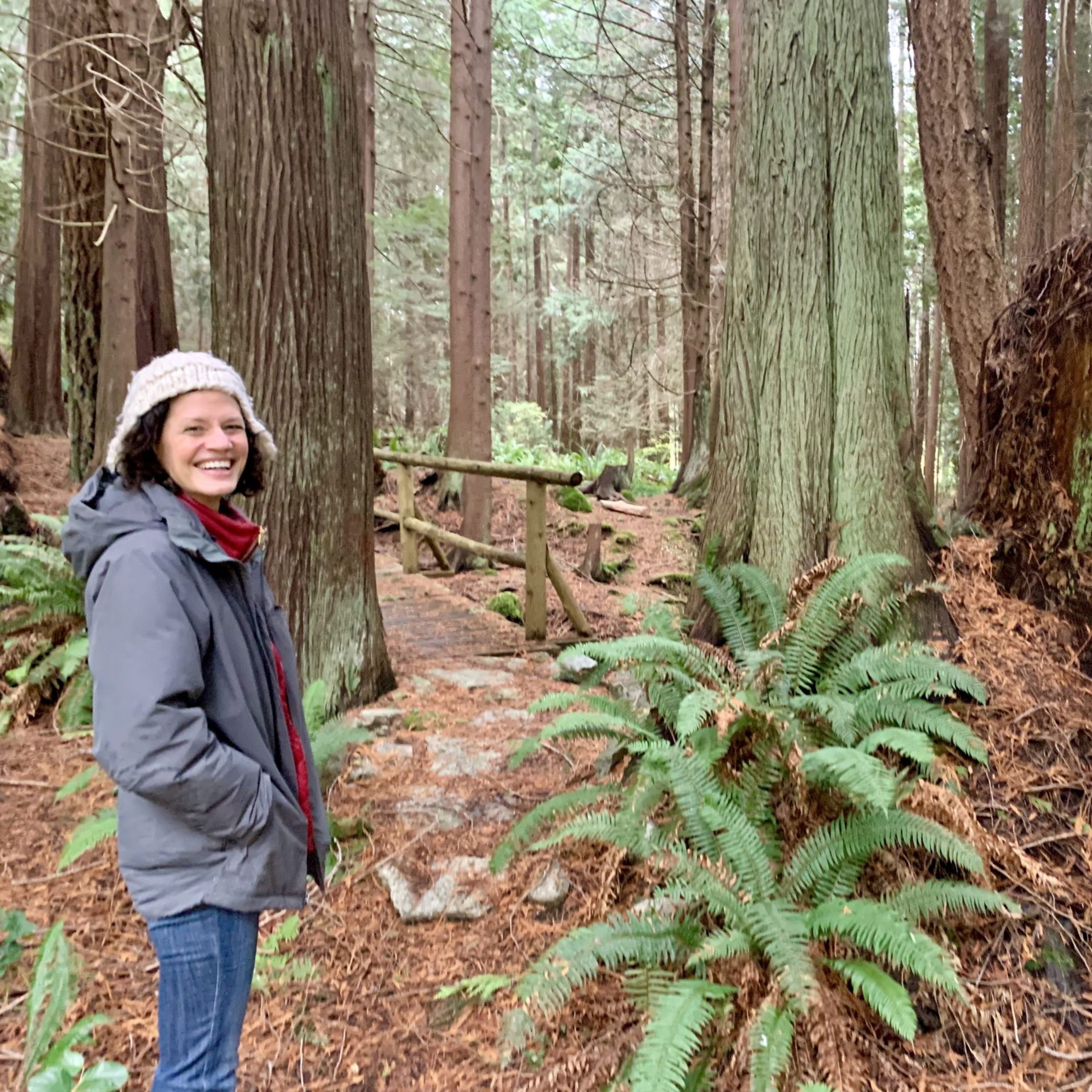
S3 Ep 87e87 kendra fanconi – on the artist brigade, ben okri, eco-restoration, eco-grief & reauthoring the world
'We are all artists of the Anthropocene. We inherently are because this is the world that we're living in right now. There's no other world. We were down earlier at Robert's Creek (BC) and it's a salmon bearing stream. I think of it like we're artists in the Anthropocene, like fish would be in the ocean: the water is all around us and the Anthropocene is all around us. I think it may be what Ben Okri is tasking us with is: can you describe the water? It's all we know, but we need to be able to look from this moment now into the future and maybe that's the job of artists. We're the visionaries, we can see the future and we can envision it in different ways. I think he speaks to that too at the end of the article about saying part of why we need to talk about the times we're in now is in relationship to a future, whatever that future looks like. And I do spend a lot of time trying to negotiate my belief in the future.'Kendra Fanconi, Robert's Creek, BC 2021My 2nd conversation with theatre artist and art + climate activist Kendra Fanconi in Robert’s Creek, BC about the ‘Artist Brigade’, Ben Okri, eco-restoration, eco-grief & reauthoring the world, with excerpts from e43 haley, e30 maggs & é37 lebeau. Robert’s Creek is on the ancient and unceded territory of the shishalh Nation. The shishalh people call Robert’s Creek xwesam. I’ve known Kendra for many years, first through her work with Radix Theatre then as an arts and environment advocate in the community, notably through The Only Animal company, which she co-founded with Eric Rhys Miller in 2005 and which has created over 30 shows that ‘take theatre places it has never gone before’. I’ve always admired Kendra’s vision, her calm demeanour, her strategic mind, and deep commitment to environment issues, as you’ll hear on our conversation, which recorded in her kitchen in Robert’s Creek, BC. My goal with this series of second conversations is to go deeper into issues from our initial conversation, to hear updates on their work as well as their vision for the future. Kendra gave me an update on the ‘Artists Brigade’ project, her perspectives Nigerian novelist and poet Ben Okri’s call to action Artists must confront the climate crisis – we must write as if these are the last days article, ecological restoration, the work of death doula and climate grief advisor Corey Mathews (Hardeman), the impact of eco-anxiety and about reauthoring the world, including excerpts from e43 haley, e30 maggs & é37 lebeau.Links mentioned during our conversation :Jason DeCaires Taylor (coral reef work)Alana MitchellGreenhouse (two-day climate intensive for Artist Brigade)David Suzuki FoundationI was also moved by this quote from my conversation with Kendra:I think the climate movement is full of love and care. Those are the people who get involved. Even though we have this sort of vision of the angry activists. I think at the heart of it, it's about care and love. And so, I found that definition of climate grief and the link of love and loss to be very reassuring and to know that grieving in community, which may be is, I mentioned to you earlier, this sort of love that I have for this climate brethren, artists who care about climate, that I've found on how nourishing that is for me. Maybe we all do it together? We're locked in this love and loss and we're doing it as a community and versus doing it alone, which I feel like I did do for many years before I got involved in this way. It's just so much better.Excerpt from previous conscient episodes used in e87: David Haley (e43 haley):What I have learned to do, and this is my practice, is to focus on making space. This became clear to me when I read, Lila : An inquiry into morals by Robert Pirsig. Towards the end of the book, he suggests that the most moral act of all, is to create the space for life to move onwards and it was one of those sentences that just rang true with me, and I've held onto that ever since and pursued the making of space, not the filling of it.David Maggs (e30 maggs):Complexity is the world built of relationships and it's a very different thing to engage what is true or real in a complexity framework than it is to engage in it, in what is a modernist Western enlightenment ambition, to identify the absolute objective properties that are intrinsic in any given thing. Everyone is grappling with the fact that the world is exhibiting itself so much in these entanglements of relationships. The arts are completely at home in that world. And so, we've been sort of under the thumb of the old world. We've always been a kind of second-class citizen in an enlightenment rationalist society. But once we move out of that world and we move into a complexity framework, suddenly the arts are entirely at home, and we have capacity in that world that a lot of other sectors don't have. What I've been trying to do with this report (Art and the World After This) is articulate the way in which these different disruptions are putting us

S3 Ep 86e86 arts policy, equity and activism class at centennial college
'I'm interested in what we can do to both mitigate the climate emergency and adapt to it but there's another level which is revisioning the world and maybe that's the one that's most interesting, because unfortunately it's going to be rough for the foreseeable future on earth, but life will go on, with or without humans. I think humans have a place in it, but then we have to figure out how we're going to live with much, much less resources and all the damage that's been done and have a positive view of that. So rethinking and reauthoring the world. David Maggs wrote a really interesting paper about that. There was a paper recently by a Nigerian writer, Ben Okri. I'll put the link in the chat. He talked about how artists must confront the climate crisis and that we must write as if these are our last days. That's where I'm at.'Claude Schryer, November 2021Robin Sokoloski and Janis Monture teach a class in Art Policy, Equity and Activism at Centennial College in Toronto and asked me to be guest speaker on the issue of art and activism on November 23, 2021. The class kindly agreed to have the class recorded as episode 86 of this podcast. I’ve known Robin from many years in her role with Mass Culture and more recently as a co-founder of the Sectoral Climate Arts Leadership for the Emergency (SCALE) network. Robin was also my guest on episode 61 of this podcast. I met Janis many years ago back when I ran the Inter-Arts Office at Canada Council for the Arts in her role with the Woodland Cultural Centre.Before the class Robin suggested I read this article : Assessing the Impact of Artistic Activism, which I recommend to anyone interested in art and activism. The conversation took place in ‘interview’ style. Robin asked me four questions: What is the arts role in activism when it comes to positive social good?Can art affect policy? Is there an example you can think of?What role can arts funders play when it comes to art and activism?Share your current interest in art activism. What possibilities do you see within the arts or general public that encourage you to continue this work?My answers, as well as my interaction with students, are in the recording. This episode also includes excerpts from e40 frasz, e82 washable paint, e05 carruthers, e73 judith marcuse – finding the energy to keep moving and e85 tracey friesen – narratives of resilience for a post carbon world.Links referred to in this episode:Artists must confront the climate crisis – we must write as if these are the last days’Canada Council 21-26 Strategic PlanClimate Art WebSCALE-LeSAUTThe times are urgent; let us slow downSome of the arts policy, equity and activism class at centennial college on november 23, 2021 *END NOTES FOR ALL EPISODESNote : I'm currently 'pressing pause' and am not producing new content until further notice. Hey conscient listeners, I’ve been producing the conscient podcast as a learning and unlearning journey since May 2020. It’s my way to give back.This Indigenous Land Acknowledgement statement was developed by members of the Algonquin community for my former employer the Canada Council for the Arts. I have adapted slightly to make it my own.I acknowledge that my studio, located in Ottawa, is on the unceded, unsurrendered Territory of the Anishinaabe Algonquin Nation whose presence here reaches back to time immemorial.I recognize the Algonquins as the customary keepers and defenders of the Ottawa River Watershed and its tributaries. I honour their long history of welcoming many Nations to this beautiful territory and uphold and uplift the voice and values of our Host Nation.Further, I offer my respect and affirm the inherent and Treaty Rights of all Indigenous Peoples across this land and honour commitments to self-determination and sovereignty that have been made to Indigenous Nations and Peoples.I acknowledge the historical oppression of lands, cultures and the original Peoples in what we now know as Canada and fervently believe the Arts contribute to the healing and decolonizing journey we all share togetherIn parallel with the production of the conscient podcast and its francophone counterpart, balado conscient, I I publish a free ‘a calm presence' monthly Substack see https://acalmpresence.substack.com. Your feedback is always welcome at claude [at] conscient [dot] ca and/or on social media: Facebook, Instagram, Linkedin, Threads, BlueSky, Mastodon, Tik Tok, YouTube and Substack.Share what you like, etcI am grateful and accountable to the earth and the human labour that provided me with the privilege of producing this podcast, including the toxic materials and extractive processes behind the computers, recorders, transportation systems and infrastructure that made this production possible. Thanks for listening. Claude SchryerLatest update on March 21, 2026

S3 Ep 85e85 tracey friesen – narratives of resilience for a post carbon world
'What's starting to interest me is stories of resilience for a post carbon world. What are we going to need for our emotional well-being? It's going to be a different world not long from now. If we do this, and we must do this, this transition has to happen and there's going to be a sense of loss and sacrifice and challenge, not just with what's happening externally from a climate point of view, but in how we're going to have to make changes to our lives and reorient our energies in terms of our advocacy. I feel like there's an opportunity for artists - I'm more connected to the film and television sector and the documentary community - throughout the system, to be able to provide realistic and yet reassuring narratives about what the upside of all this might be.'I first met Tracey on September 21, 2021 at a Processing the federal election during a climate emergency Zoom event organized by the Climate Emergency Unit. Since then, we have kept in touch through our participation in SCALE (the Sectoral Climate Arts Leadership for the Emergency network). Our 30-minute conversation covered a lot of ground, however, we only touched the surface of Tracey’s vast experience and network of collaborators in the cultural industries, so I hope that another conversation is in order down the road!Tracey has over 30 years’ experience in Canada’s cultural sector. She spent more than a decade at the National Film Board in Vancouver, where she earned producer or executive credits on dozens of documentary film, animation and digital projects. She’s also held contracts with organizations like Inspirit Foundation, Mindset Foundation, DOC, Roundhouse Radio, and the David Suzuki Foundation. Tracey is author and founder of Story Money Impact, the charitable society that brought us Good Pitch Vancouver and Story to Action, plus other initiatives to advance education around media impact. In 2013 she was named ‘Woman of the Year’ by Women in Film & TV Vancouver. She is currently Managing Vice-President, BC Branch, at the Canadian Media Producers Association, where she passionately represents and supports BC-based independent film and television producers. I was touched by this quote from Tracey near the end of the conversation:I'm mindful that with the climate emergency, it's so existential that it's captured my attention perhaps most strongly because I really hope that in the kind of complicated dynamic of the wonderful, wild world that we're in right now, that it's one thing that will impact all of us. Not the same way, certainly, there are those of us living in different parts of the world that will be affected in different ways, but it's such a global community, it has to come together in all the ways that they can. So, we do need the scientists and we do need all of the work being done across all of the important social issues that are happening right now. And we really do need the storytellers to validate that their story driven, narrative driven, emotionally driven pieces of work will help to touch people now to change their behaviour or will help to soothe or reassure or be with them in the world post transition.Tracey mentioned the following links during our conversation:Being CaribouCanadian Media Producers Association (CMPA)Climate Emergency UnitGood Pitch VancouverReel GreenShamelessStory Money Impact *END NOTES FOR ALL EPISODESNote : I'm currently 'pressing pause' and am not producing new content until further notice. Hey conscient listeners, I’ve been producing the conscient podcast as a learning and unlearning journey since May 2020. It’s my way to give back.This Indigenous Land Acknowledgement statement was developed by members of the Algonquin community for my former employer the Canada Council for the Arts. I have adapted slightly to make it my own.I acknowledge that my studio, located in Ottawa, is on the unceded, unsurrendered Territory of the Anishinaabe Algonquin Nation whose presence here reaches back to time immemorial.I recognize the Algonquins as the customary keepers and defenders of the Ottawa River Watershed and its tributaries. I honour their long history of welcoming many Nations to this beautiful territory and uphold and uplift the voice and values of our Host Nation.Further, I offer my respect and affirm the inherent and Treaty Rights of all Indigenous Peoples across this land and honour commitments to self-determination and sovereignty that have been made to Indigenous Nations and Peoples.I acknowledge the historical oppression of lands, cultures and the original Peoples in what we now know as Canada and fervently believe the Arts contribute to the healing and decolonizing journey we all share togetherIn parallel with the production of the conscient podcast and its francophone counterpart, balado conscient, I I publish a free ‘a calm presence' monthly Substack see https://acalmpresence.substack.com. Your feedback is always welcome at claude [at] conscient [dot] ca and/or on social

S3 Ep 84e84 viviane gosselin + mauro vescera of the museum of vancouver
Museums have been very good at normalizing social values and so when you have this shift and the government is seeing it, we have to change behavior, the museum can create that space where people can rethink some of their conventional thinking about consuming, for example and there's all kinds of ways, like we were saying earlier, of integrating this kind of knowledge, not in a lecturing way. I think that's the key word, is we can be cheeky. This is a social activity. Nobody is forcing anyone to come to the museum and so when people come, they want to be intrigued, surprised and they love it. If you look at exit surveys, they love to come out thinking it's like: I had no idea that I can make this kind of change and have this kind of impact.Viviane Gosselin, Director of Collections & Exhibitions, Museum of Vancouver, November 2021I worked with Mauro in 2006 on the Art in Ecology – A Think Tank on Arts and Sustainability and was happy to reconnect and learn about his leadership of this institution. I met Viviane through SCALE, the Sectoral Climate Arts Leadership for the Emergency, notably on the Education working group and was impressed by her passion for the environment and institutional engagement on the climate emergency.This conversation was recorded in 3 spaces: office, collections and exhibitions. I learned about the MOV’s 4 engagement priorities (redress and decolonization, immigration and diversity, environment and sustainability and urban and contemporary issues) and how they are greening their operations and addressing climate change and climate justice through their exhibitions. Viviane also spoke about her work with the Coalition of Museums for Climate Justice. Mauro and Viviane in the MOV collection, November 15, 2021Exhibition at MOV, November 15, 2021Exhibition at MOV, November 15, 2021Entrance of MOV, November 15, 2021 *END NOTES FOR ALL EPISODESNote : I'm currently 'pressing pause' and am not producing new content until further notice. Hey conscient listeners, I’ve been producing the conscient podcast as a learning and unlearning journey since May 2020. It’s my way to give back.This Indigenous Land Acknowledgement statement was developed by members of the Algonquin community for my former employer the Canada Council for the Arts. I have adapted slightly to make it my own.I acknowledge that my studio, located in Ottawa, is on the unceded, unsurrendered Territory of the Anishinaabe Algonquin Nation whose presence here reaches back to time immemorial.I recognize the Algonquins as the customary keepers and defenders of the Ottawa River Watershed and its tributaries. I honour their long history of welcoming many Nations to this beautiful territory and uphold and uplift the voice and values of our Host Nation.Further, I offer my respect and affirm the inherent and Treaty Rights of all Indigenous Peoples across this land and honour commitments to self-determination and sovereignty that have been made to Indigenous Nations and Peoples.I acknowledge the historical oppression of lands, cultures and the original Peoples in what we now know as Canada and fervently believe the Arts contribute to the healing and decolonizing journey we all share togetherIn parallel with the production of the conscient podcast and its francophone counterpart, balado conscient, I I publish a free ‘a calm presence' monthly Substack see https://acalmpresence.substack.com. Your feedback is always welcome at claude [at] conscient [dot] ca and/or on social media: Facebook, Instagram, Linkedin, Threads, BlueSky, Mastodon, Tik Tok, YouTube and Substack.Share what you like, etcI am grateful and accountable to the earth and the human labour that provided me with the privilege of producing this podcast, including the toxic materials and extractive processes behind the computers, recorders, transportation systems and infrastructure that made this production possible. Thanks for listening. Claude SchryerLatest update on March 21, 2026

S3 Ep 83e83 the greatest mass movement in history
‘This episode lasts 59 seconds. I want to share a November 13th, 2021, tweet by British writer and climate activist George Monbiot: 'Now we have no choice but to raise the scale of civil disobedience until we have built the greatest mass movement in history. We do not consent to the destruction of our life support systems’.’George Monbiot, November 13th, 2021, tweet This episode lasts 59 seconds. I want to share a November 13th, 2021, tweet by British writer and climate activist George Monbiot: ‘Now we have no choice but to raise the scale of civil disobedience until we have built the greatest mass movement in history. We do not consent to the destruction of our life support systems’.I agree with George and thank him. I find that his statement is both devastating and heartening. Here it is again: ‘Now we have no choice but to raise the scale of civil disobedience until we have built the greatest mass movement in history. We do not consent to the destruction of our life support systems’.Climate action rally in Vancouver, November 12, 2021 see https://www.conscient.ca/podcast/e82-washable-paint/) *END NOTES FOR ALL EPISODESNote : I'm currently 'pressing pause' and am not producing new content until further notice. Hey conscient listeners, I’ve been producing the conscient podcast as a learning and unlearning journey since May 2020. It’s my way to give back.This Indigenous Land Acknowledgement statement was developed by members of the Algonquin community for my former employer the Canada Council for the Arts. I have adapted slightly to make it my own.I acknowledge that my studio, located in Ottawa, is on the unceded, unsurrendered Territory of the Anishinaabe Algonquin Nation whose presence here reaches back to time immemorial.I recognize the Algonquins as the customary keepers and defenders of the Ottawa River Watershed and its tributaries. I honour their long history of welcoming many Nations to this beautiful territory and uphold and uplift the voice and values of our Host Nation.Further, I offer my respect and affirm the inherent and Treaty Rights of all Indigenous Peoples across this land and honour commitments to self-determination and sovereignty that have been made to Indigenous Nations and Peoples.I acknowledge the historical oppression of lands, cultures and the original Peoples in what we now know as Canada and fervently believe the Arts contribute to the healing and decolonizing journey we all share togetherIn parallel with the production of the conscient podcast and its francophone counterpart, balado conscient, I I publish a free ‘a calm presence' monthly Substack see https://acalmpresence.substack.com. Your feedback is always welcome at claude [at] conscient [dot] ca and/or on social media: Facebook, Instagram, Linkedin, Threads, BlueSky, Mastodon, Tik Tok, YouTube and Substack.Share what you like, etcI am grateful and accountable to the earth and the human labour that provided me with the privilege of producing this podcast, including the toxic materials and extractive processes behind the computers, recorders, transportation systems and infrastructure that made this production possible. Thanks for listening. Claude SchryerLatest update on March 21, 2026

S3 Ep 82e82 washable paint
My goal with this episode was to record the soundscape of a public protest : the singing, chanting, speeches, random chatter and marching as well as the ambiance of the city, however what I witnessed and heard at this event was the response of the protesters to Vancouver Police around the arrest of group of young people who were doing a ceremony with washable red paint onto the windows of the federal Ministry of the Environment and Climate Change building on Burrard street (see photos), at which point the protest leaders requested the release the arrested persons and decided to remain in solidarity with them instead of continuing with the march towards the banking sector of downtown Vancouver and CBC Vancouver. The recording starts with a song and an indigenous person explaining what the intention was were with the ceremony. You then hear a ‘let them go’ chant followed by the police taking the arrested persons away in a van and the protesters’ reaction (‘they only used washable paint’). The march was then redirected onto Cordova Street towards the courthouse where detained persons were likely being held. You hear the protesters doing climate emergency chants followed by a song at which point I stopped the recording because my hands were shaking with cold.In the end, 3 persons were arrested for public mischief as noted in this CTV news video posting and online.I thought about whether it was ethical for me to publish this recording, given the delicate nature of the event, keeping in mind what Dr. Milena Droumeva told to me in episode 78 (at 31 minutes 50 seconds):‘I feel very torn about doing field recordings. I think there are ethics that we need to think about. I try to convey that so that it is not extractive’.I decided this recording was worth sharing given that it was a public event and of public interest to listen to these voices. It captures a dilemma for our society of balancing the urgent need for peaceful climate emergency protests, indigenous rights and the rule of law.I want to thank those who were inadvertently recorded and hope their messages about the urgency of the climate emergency and the principle of ‘leaving no one behind’ carry wide and far. Protesters at November 12, 2021 climate action rally in VancouverSpeaker at November 12, 2021 climate action rally in VancouverProtest sign at November 12, 2021 climate action rally in Vancouver *END NOTES FOR ALL EPISODESNote : I'm currently 'pressing pause' and am not producing new content until further notice. Hey conscient listeners, I’ve been producing the conscient podcast as a learning and unlearning journey since May 2020. It’s my way to give back.This Indigenous Land Acknowledgement statement was developed by members of the Algonquin community for my former employer the Canada Council for the Arts. I have adapted slightly to make it my own.I acknowledge that my studio, located in Ottawa, is on the unceded, unsurrendered Territory of the Anishinaabe Algonquin Nation whose presence here reaches back to time immemorial.I recognize the Algonquins as the customary keepers and defenders of the Ottawa River Watershed and its tributaries. I honour their long history of welcoming many Nations to this beautiful territory and uphold and uplift the voice and values of our Host Nation.Further, I offer my respect and affirm the inherent and Treaty Rights of all Indigenous Peoples across this land and honour commitments to self-determination and sovereignty that have been made to Indigenous Nations and Peoples.I acknowledge the historical oppression of lands, cultures and the original Peoples in what we now know as Canada and fervently believe the Arts contribute to the healing and decolonizing journey we all share togetherIn parallel with the production of the conscient podcast and its francophone counterpart, balado conscient, I I publish a free ‘a calm presence' monthly Substack see https://acalmpresence.substack.com. Your feedback is always welcome at claude [at] conscient [dot] ca and/or on social media: Facebook, Instagram, Linkedin, Threads, BlueSky, Mastodon, Tik Tok, YouTube and Substack.Share what you like, etcI am grateful and accountable to the earth and the human labour that provided me with the privilege of producing this podcast, including the toxic materials and extractive processes behind the computers, recorders, transportation systems and infrastructure that made this production possible. Thanks for listening. Claude SchryerLatest update on March 21, 2026

S3 Ep 81e81 – inspiration
'Art is a practice of expanding consciousness, which gives us a tremendous opportunity to explore and to embody possibility and to engage with the earth as it continues to change and with each other.Rebecca Mwase, excerpt from e10 mwase – expanding consciousness (from an interview at Creative Climate Leadership USA, March, 2020)*e81 inspiration are excerpts from all my conversations up to today, November 10th, 2021. I chose short excerpts where the tone and emotion in the voice of each person inspires and uplifts me every time I listen to it and I hope they will inspire and uplift you too (because we need it). Thanks to all those recorded for this fragmented reading of our conversations.In order of appearance (bolded episodes are in French and have an ‘é’)Note: I am aware that the time indication numbers below do not align up well but chose not to correct it as I enjoy the uneven flow...e10 mwase, Rebecca Mwase 00:00e29 loy, David Loy 00:21e03 tickell, Alison Tickell 00:35é37 lebeau, Anne-Catherine Lebeau 00:5612 liverman, Diana Liverman 01:1617 piro, Em Piro 01:37e50 newton, Teika Newton 02:00é32 tsou, Shuni Tsou 02:2613 freiband, Andrew Freiband 02:46e58 huddart, Stephen Huddart 03:03é27 prévost, Hélène Prévost 03:30e47 keeptwo, Suzanne Keeptwo 04:0008 johnston, Sholeh Johnston 04:25e33 toscano, Peterson Toscano 04:51é60 boutet, Dr. Danielle Boutet 05 :20e51 hiser, Dr. Krista Hiser 05:42e53 kalmanovitch, Dr. Tanya Kalmanovitch 06:01e21 dufresne, Dr. Todd Dufresne 06:22é55 trépanier, France Trépanier 06:42e24 weaving, jil p. weaving 07:00e25 shaw, Michael Shaw 07:38e39 engle Dr. Jayne Engle 08:01é56 garoufalis-auger, Anthony Garoufalis-Auger 08 :19e54 garrett, Ian Garrett 08:4606 lim, Milton Lim 09:48e22 westerkamp, Hildegard Westerkamp 09:25é57 roy, Annie Roy 09:50e73 marcuse,,Judith Marcuse 10:19e26 klein, Seth Klein 10:58e36 fanconi, Kendra Fanconi 11 :26é28 ung, Jimmy Ung 11:47e40 frasz Alexis Frasz 12:10e41 rae, Jen Rae 12:27e42 rosen, Mark Rosen 12:52é48 danis, Daniel Danis 13:17e43 haley, David Haley 13:57e44 bilodeau, Chantal Bilodeau 14:32e45 abbott, Jennifer Abbott 15:13é60 boutet, Dr. Danielle Boutet 16 :03e49 windatt, Clayton Windatt 16:33e50 newton, Teika Newton 16:53e51 hiser, Dr. Krista Hiser 17:3007 kasisi, Robert Kasisi 17:52e52 mahtani, Dr. Annie Mahtani 18 :23e53 kalmanovitch, Dr. Tanya Kalmanovitch 18:49e68 davies, Andrew Davies 19:20é34 ramade, Bénédicte Ramade 19:47 e61sokoloski, Robin Sokoloski 20:12e46 badham, Dr Marnie Badham 20:39e43 haley, David Haley 21:01é55 trépanier, France Trépanier 21:16e38 zenith, Shante’ Sojourn Zenith 21:37e30 maggs, David Maggs 22:22e23 appadurai, Anjali Appadurai 22:56é48 danis, Daniel Danis 22:14e21 dufresne, Dr. Todd Dufresne 24 :57e35 salas, Carmen Salas 25:46e31 morrow, Charlie Morrow 26:27é57 roy, Annie Roy 26:53e59 pearl, Judi Pearl 27:29e71 green sessions debrief, Emma Stenning 27:49e78 droumeva, Milena Droumeva 29:1104 fel, Loic Fel 29:5405 carruthers, Beth Carruthers 30:15e77 klein, Seth Klein 30:45e15 chasansky, Matthew Chassansky 31:15é55 trépanier, France Trépanier 32:00e71 green sessions debrief, Sandy Crawley 32:22e11 dunlap, Eliana Dunlap 33;11e71 green sessions debrief, Liisa Repo-Martell 33:34e63 a case study (part 1), Clara Schryer 34:1109 macmahon, Ellen MacMahon 34:24e76 richards, Kim Richards 34:50e16 delaparra, Lauren De la Parra 35:28é37 lebeau, Anne-Catherine Lebeau 36:0714 kirn, Marda Kirn 36:30e63 a case study (part 1), Clara Schryer, Riel Schryer 37:38e71 green sessions debrief, Robyn Stevan 38:18e64 a case study (2), Clara Schyrer, Sabrina Mathews 38:50 *END NOTES FOR ALL EPISODESNote : I'm currently 'pressing pause' and am not producing new content until further notice. Hey conscient listeners, I’ve been producing the conscient podcast as a learning and unlearning journey since May 2020. It’s my way to give back.This Indigenous Land Acknowledgement statement was developed by members of the Algonquin community for my former employer the Canada Council for the Arts. I have adapted slightly to make it my own.I acknowledge that my studio, located in Ottawa, is on the unceded, unsurrendered Territory of the Anishinaabe Algonquin Nation whose presence here reaches back to time immemorial.I recognize the Algonquins as the customary keepers and defenders of the Ottawa River Watershed and its tributaries. I honour their long history of welcoming many Nations to this beautiful territory and uphold and uplift the voice and values of our Host Nation.Further, I offer my respect and affirm the inherent and Treaty Rights of all Indigenous Peoples across this land and honour commitments to self-determination and sovereignty that have been made to Indigenous Nations and Peoples.I acknowledge the historical oppression of lands, cultures and the original Peoples in what we now know as Canada and fervently believe the Arts contribute to the healing and decolonizing journey we all share togetherIn parallel with the production of the c

S3 Ep 79e79 manifesto – accelerating climate action through the power of arts, culture and heritage
'We, the undersigned, declare that people, their cultures, and the natural and cultural heritage of the earth are profoundly at risk from human-caused climate change and the climate inaction that is deepening the unfolding climate crisis even while we reaffirm the immense power of arts, culture, and heritage to inspire climate action and enable a just transition to low carbon, climate resilient futures.'Accelerating Climate Action through the Power of Arts, Culture and Heritage manifesto, 2021My reading of the ‘Accelerating Climate Action through the Power of Arts, Culture and Heritage’ manifesto developed by the Climate Heritage Network to summarize key cultural messages for COP26 and activate the arts, culture and heritage sector. You can find more information on the origins and the co-authors of the manifesto at cultureatcop.com.It’s Monday, November 8, 2021. I’m on a beach in Stanley Park, in Vancouver and this is an episode where I will read to you a manifesto. A very good one and a very timely one.Here’s the story… I first met archeologist and museums champion Dr. Robert R. Janes through the Sectoral Arts Climate leadership for the Emergency (SCALE) where he spoke about some of his climate projects, including the Coalition of Museums for Climate Justice. We’ve kept in touch. A few weeks ago, Bob sent me a link to a manifesto called ‘Accelerating Climate Action through the Power of Arts, Culture and Heritage’ developed by the Climate Heritage Network . I had not heard about it and maybe you have not as well. So I wanted to read it to you. I was deeply moved by the clarity and power of these words. So I asked for, and was granted, permission by the co-authors to record the manifesto for this podcast in both English and in the next episode 80, je vais le lire en francais. One of the reason for a recorded version of this manifesto is that you might be like me and tend to retain information more when I listen rather than when I read and so I wanted to share an audio version of this manifesto available to the listeners of this podcast during COP26. I will read out the manifesto’s introduction followed by the manifesto in its entirety. In keeping with how I have been doing the podcast this season this will be in one take with no editing so please forgive any mistakes.You can find more information on the origins and the co-authors of the manifesto at cultureatcop.com. I would to thank Bob and the other co- authors of the manifesto for this gift and for this invigorating wake up call. Here is the introduction that you’ll find on the website.‘This Manifesto provides key messages on culture and climate change aimed at the 2021 United Nations Climate Conference (COP26) and beyond. It seeks to activate those involved in arts, culture, and heritage to take climate action through communication and engagement, inspiring and assisting their constituents, members and audiences to increase ambition; to change their own behaviours; and to engage with climate change policy development at local and national government and intergovernmental level. Simultaneously, in order to meet the urgency of the climate emergency, it strives to inspire and encourage greater synergistic collaboration on climate action with other sectors and partners that have not traditionally engaged with cultural actors. We invite civil society, government at all levels, Indigenous Peoples’ organisations, cultural organizations and institutions, businesses, universities and research organisations and other stakeholders to join us in signing on to this Manifesto, signalling our shared ambition to create just, thriving, and resilient communities today and into the future.’Now here is the manifesto:Accelerating Climate Action through the Power of Arts, Culture and HeritageA Manifesto on Keeping 1.5° AliveCOP26We, the undersigned, declare that people, their cultures, and the natural and cultural heritage of the earth are profoundly at risk from human-caused climate change and the climate inaction that is deepening the unfolding climate crisis even while we reaffirm the immense power of arts, culture, and heritage to inspire climate action and enable a just transition to low carbon, climate resilient futures.Climate change is already impacting people and planet, with long-lasting and irreversible effects. Avoiding the worst of these requires limiting global temperature increase to 1.5 degrees above pre-industrial levels. Yet the world is failing to meet even the Paris Agreement’s 2 degrees temperature goal, with current Green House Gas (GHG) concentrations now the highest ever recorded.The present COVID-19 pandemic, and the suffering it has caused, have made the response to climate change even more difficult while also revealing essential lessons, including the imperative of heeding science, the consequences of the separation between humans and nature, the importance of centering the needs of the most vulnerable, and the fact that rapid and far-reaching soci

S3 Ep 78e78 milena droumeva – art needs to get on the street
'I think art needs to get on the street, because raising awareness in a gallery is really speaking to the choir. I'll leave raising awareness, because we both agree that the time for that has passed, but I think art needs to revert back to artisan and crafts, in the sense that imagination can lead to crafting things that we will actually need for survival. I think that - and again, this is my radical rant - I think that one of the reasons why we're seeing these unprecedented amounts of anxiety and even this new term 'climate anxiety' that we have, which is almost probably about to be defined as a kind of mental health condition, is because we are so profoundly disconnected from our own means of existence.'Dr. Milena Droumeva, November 3, 2021, VancouverMy conversation with acoustic ecology colleague Dr. Milena Droumeva on November 3, 2021 in Vancouver about multiple points of ‘listening’, thoughts about radicality, that imagination can lead to crafting things that we will actually need for survival and how to address profound disconnections. Note: There is a slight flame rumble in the background but the voice is clear :-) Milena Droumeva is an Associate Professor and Glenfraser Endowed Professor in Sound Studies at Simon Fraser University specializing in mobile media, sound studies, gender, and sensory ethnography. They have worked extensively in educational research on game-based learning and computational literacy, formerly as a post-doctoral fellow at the Institute for Research on Digital Learning at York University. Milena has a background in acoustic ecology and works across the fields of urban soundscape research, sonification for public engagement, as well as gender and sound in video games. Current research projects include sound ethnographies of the city (livable soundscapes), mobile curation, critical soundmapping, and sensory ethnography. Check out Milena's Story Map, "Soundscapes of Productivity" about coffee shop soundscapes as the office ambience of the creative economy freelance workers and the Livable Soundscapes project. Fireplace where we recorded this episode on November 3, 2021 in Vancouver *END NOTES FOR ALL EPISODESNote : I'm currently 'pressing pause' and am not producing new content until further notice. Hey conscient listeners, I’ve been producing the conscient podcast as a learning and unlearning journey since May 2020. It’s my way to give back.This Indigenous Land Acknowledgement statement was developed by members of the Algonquin community for my former employer the Canada Council for the Arts. I have adapted slightly to make it my own.I acknowledge that my studio, located in Ottawa, is on the unceded, unsurrendered Territory of the Anishinaabe Algonquin Nation whose presence here reaches back to time immemorial.I recognize the Algonquins as the customary keepers and defenders of the Ottawa River Watershed and its tributaries. I honour their long history of welcoming many Nations to this beautiful territory and uphold and uplift the voice and values of our Host Nation.Further, I offer my respect and affirm the inherent and Treaty Rights of all Indigenous Peoples across this land and honour commitments to self-determination and sovereignty that have been made to Indigenous Nations and Peoples.I acknowledge the historical oppression of lands, cultures and the original Peoples in what we now know as Canada and fervently believe the Arts contribute to the healing and decolonizing journey we all share togetherIn parallel with the production of the conscient podcast and its francophone counterpart, balado conscient, I I publish a free ‘a calm presence' monthly Substack see https://acalmpresence.substack.com. Your feedback is always welcome at claude [at] conscient [dot] ca and/or on social media: Facebook, Instagram, Linkedin, Threads, BlueSky, Mastodon, Tik Tok, YouTube and Substack.Share what you like, etcI am grateful and accountable to the earth and the human labour that provided me with the privilege of producing this podcast, including the toxic materials and extractive processes behind the computers, recorders, transportation systems and infrastructure that made this production possible. Thanks for listening. Claude SchryerLatest update on March 21, 2026

S3 Ep 77e77 seth klein – identifying a shared vision and a set of actions
'I think the same model (climate emergency coalitions) could and should be used by SCALE to have these arts and culture groups come together, identify a shared vision and a shared set of actions that together constitute a true climate emergency agenda for the arts and culture sector. That's step one and then agreement to jointly campaign all with your individual constituencies on that declaration on that list of actions so that if you are the federal minister of culture or provincial minister of culture, you keep hearing over and over again from all of these different groups that are part of your portfolio. This is what we want.'Seth Klein, October 2021, VancouverMy first conversation with seth klein was on april 16, 2021 (see e26 klein – rallying through art). This follow-up conversation on November 2, 2021 (again once again at Trout Lake Park, Vancouver) looks at what has happened with the Climate Emergency Unit since then and includes a suggestion on how the arts and culture sector can identify a shared vision and a shared set of actions that constitute a true climate emergency agenda and how to create a joint campaign. We also talked about radical listening, the 85th anniversary of the CBC (founded 2 november 1936) and life as a climate emergency worker. This episode includes an excerpt from e41 rae, from Jen Rae, in response to e26 klein.While I chose the ‘identifying a shared vision and a set of actions’ as an excerpt to promote this episode I also want to quote this passage from later on in our conversation, which touched me deeply. Thanks for this and all the work you do, Seth. ClaudeThe theme of this season is radical listening. It's something I've been trying to do because I think radicality is necessary now, but also listening very carefully to the people around us and to knowledge that we might not have really understood in the past. I'm thinking about indigenous knowledge, but other types of knowledge. So that's, to me a bit of a contradiction, because if you're in an emergency mode, how can you slow down and listen? You can actually walk and talk at the same time. That's what we're doing right now. SethYou're right to name the tension and I actually I speak to that tension in the chapter on Indigenous Leadership in the book (A Good War) : the tension between trying to move at the speed of trust, which is often not very speeding, particularly when doing coalition work, and yet feeling the panic and the urgency of this moment. I remember Khelsilem in the book, a local indigenous leader from Squamish nation. When I asked him about that tension, he just said, just start. You know, and it has to be okay to make mistakes.Seth Klein is a public policy researcher and writer based in Vancouver who served for 22 years as the founding director of the British Columbia office of the Canadian Centre for Policy Alternatives (CCPA), Canada’s foremost social justice think tank. He is now a freelance policy consultant, speaker, researcher and writer, and author of A Good War: Mobilizing Canada for the Climate Emergency. Seth is also an adjunct professor with Simon Fraser University’s Urban Studies program and remains a research associate with the CCPA’s BC Office. For more information on Seth work, see https://www.sethklein.ca/ Note: there is a section on this web page about ‘Art and Music’ and http://www.climatechangetheatreaction.com/marcus-youssef-with-seth-klein that I recommend. *END NOTES FOR ALL EPISODESNote : I'm currently 'pressing pause' and am not producing new content until further notice. Hey conscient listeners, I’ve been producing the conscient podcast as a learning and unlearning journey since May 2020. It’s my way to give back.This Indigenous Land Acknowledgement statement was developed by members of the Algonquin community for my former employer the Canada Council for the Arts. I have adapted slightly to make it my own.I acknowledge that my studio, located in Ottawa, is on the unceded, unsurrendered Territory of the Anishinaabe Algonquin Nation whose presence here reaches back to time immemorial.I recognize the Algonquins as the customary keepers and defenders of the Ottawa River Watershed and its tributaries. I honour their long history of welcoming many Nations to this beautiful territory and uphold and uplift the voice and values of our Host Nation.Further, I offer my respect and affirm the inherent and Treaty Rights of all Indigenous Peoples across this land and honour commitments to self-determination and sovereignty that have been made to Indigenous Nations and Peoples.I acknowledge the historical oppression of lands, cultures and the original Peoples in what we now know as Canada and fervently believe the Arts contribute to the healing and decolonizing journey we all share togetherIn parallel with the production of the conscient podcast and its francophone counterpart, balado conscient, I I publish a free ‘a calm presence' monthly Substack see https://acalmpresence.substack.co

S3 Ep 76e76 kim richards – seeding a green new theatre in canada
'I wrote an article called Seeding a Green New Theatre in Canada that is drawing on a lot of principles of conversations happening around a green new deal in the United States and elsewhere, as well as other kinds of social justice movements happening on both sides of the border and thinking through what's the kind of theatre and what are the plays that already existed in Canadian theatre history and what are more of the kinds of stories that we need to be telling and sharing and how to think about the transition that we're facing socially from a justice perspective that really advances and brings forward the impact of the existing system by racialized communities, low income communities, the people who work within the energy or extractive development sector. There are a number of really quite remarkable pieces of work, many of which hadn't been produced a whole lot of times that addressed those issues.'Dr. Kim Richards, Vancouver, November 1, 2021e76 kim richards – seeding a green new theatre in canada is my conversation with Dr. Kim Richards about the role of theatre in the climate emergency. With excerpts from e44 bilodeau, e59 pearl and e36 fanconi. Dr. Richards is currently a post-doctoral fellow in public energy humanities at the University of Alberta and is building an open-access video archive of performance-based strategies to promote a just energy transition. Kim recently co-edited an issue of Canadian Theatre Review on “Extractivism and Performance” (April 2020). This conversation took place during a soundwalk around Trout Lake Park in Vancouver on Monday, November 1, 2021. Note: to access Dr. Richards’ writings contact her at: [email protected] and for information on her work see https://ualberta.academia.edu/KimberlySkyeRichardsCanadian Theatre Review on “Extractivism and Performance” (April 2020).Excerpt:I wrote an article called Seeding a Green New Theatre in Canada that is drawing on a lot of principles of conversations happening around a green new deal in the United States and elsewhere, as well as other kinds of social justice movements happening on both sides of the border and thinking through what's the kind of theatre and what are the plays that already existed in Canadian theatre history and what are more of the kinds of stories that we need to be telling and sharing and how to think about the transition that we're facing socially from a justice perspective that really advances and brings forward the impact of the existing system by racialized communities, low income communities, the people who work within the energy or extractive development sector. There are a number of really quite remarkable pieces of work, many of which hadn't been produced a whole lot of times that addressed those issues.Tree in Trout Lake Park, Vancouver,. that we listened to while on our soundwalk *END NOTES FOR ALL EPISODESNote : I'm currently 'pressing pause' and am not producing new content until further notice. Hey conscient listeners, I’ve been producing the conscient podcast as a learning and unlearning journey since May 2020. It’s my way to give back.This Indigenous Land Acknowledgement statement was developed by members of the Algonquin community for my former employer the Canada Council for the Arts. I have adapted slightly to make it my own.I acknowledge that my studio, located in Ottawa, is on the unceded, unsurrendered Territory of the Anishinaabe Algonquin Nation whose presence here reaches back to time immemorial.I recognize the Algonquins as the customary keepers and defenders of the Ottawa River Watershed and its tributaries. I honour their long history of welcoming many Nations to this beautiful territory and uphold and uplift the voice and values of our Host Nation.Further, I offer my respect and affirm the inherent and Treaty Rights of all Indigenous Peoples across this land and honour commitments to self-determination and sovereignty that have been made to Indigenous Nations and Peoples.I acknowledge the historical oppression of lands, cultures and the original Peoples in what we now know as Canada and fervently believe the Arts contribute to the healing and decolonizing journey we all share togetherIn parallel with the production of the conscient podcast and its francophone counterpart, balado conscient, I I publish a free ‘a calm presence' monthly Substack see https://acalmpresence.substack.com. Your feedback is always welcome at claude [at] conscient [dot] ca and/or on social media: Facebook, Instagram, Linkedin, Threads, BlueSky, Mastodon, Tik Tok, YouTube and Substack.Share what you like, etcI am grateful and accountable to the earth and the human labour that provided me with the privilege of producing this podcast, including the toxic materials and extractive processes behind the computers, recorders, transportation systems and infrastructure that made this production possible. Thanks for listening. Claude SchryerLatest update on March 21, 2026
S3 Ep 75e75 radical listening as climate action
'To me, radical listening is about stepping out of our comfort zone when we listen. Radical listening about thinking beyond what we think we know when we listen. Radical listening is about recognizing our biases, both conscious and unconscious. It’s about listening actively and sincerely. Ultimately, it’s about getting to the truth and facing reality.'Claude Schryer, FKL’s Unheard Landscapes Symposium, October 29, 2021 e75 radical listening as climate action is my presentation and Q&A period at the FKL’s Unheard Landscapes Symposiumon October 29, 2021 about ‘music as acoustic ecology’ and ‘radicality’ in the context of listening and the climate emergency, with excerpts from e54 mahtani, é55 trépanier and e22 westerkamp ScriptNote: audio on podcast is slightly different due to improvised elements during the presentation. The question-and-answer period below was transcribed using TEMI and slightly edited for concision.Good morning, Bonjour Welcome to radical listening as climate action.It’s 7.35am here in Vancouver on Friday, October 29th, 2021. The sun is just rising here on the west coast of Turtle Island. I know you’ve already had a long day of presentations and deliberations where you all are in Blois, France so I’ll try and be brief in my presentation and get to questions as soon as possible. Je vais parler en anglais mais il me fera plaisir de répondre à vos questions en français aussi. But before I start my presentation, I want to let you know that I’m recording this talk as episode 75 of my conscient podcast, which is a podcast, sometimes in English, des fois en français, that explores art and the ecological crisis. The third season of this podcast is on the theme of radical listening, so I thought it would make sense to include this presentation as an episode. Please let me know if you do not want to be recorded when we get to the question period, ok? I understand that the Symposium is also doing a podcast of this presentation, which is great so there will be 2 versions, I’ll be publishing this recording later today. Let me begin by saying that I’m speaking to you from the unceded territory of the Coast Salish Peoples, including the territories of the xʷməθkwəy̓əm (Musqueam), Skwxwú7mesh (Squamish), and Səl̓ílwətaʔ/Selilwitulh (Tsleil-Waututh) Nations. I would like to acknowledge these nations as the traditional keepers of these lands and reiterate my commitment to indigenous people as an ally. Some of you might know that I’m a composer by training and worked in acoustic ecology for most of the 1990s, with the World Forum for Acoustic Ecology and other similar organizations - before joining the Canada Council for the Arts for 21 years. I retired from the Council in 2020 in order to focus my work on art and the climate emergency through my podcast and a new organization in Canada called SCALE, the Sectoral Climate Arts Leadership for the Emergency: which is an example of a collective action that the Symposium has suggested we undertake. I can talk about that more later if you wish. I was very pleased to see that the Unheard Landscapes Symposium is exploring climate emergency issues, such as changing soundscape of our endangered planet today and, importantly, future soundscapes and thefuture of listeningitself as the climate emergency deepens. And the crisis will unfortunately get much worse as emissions are currently actually rising worldwide in spite of efforts at COP26, which starts in a few days just north of you in Scotland. So big thanks and Graci to Stefano Zorzanello and the FKL Symposium on Soundscapes team for this timely event and for having me here today. I also want to thank you in the audience for taking the time to be here today – I wish I was there with you - and for sharing your thoughts today, and online afterwards if you wish. I’d want to start my presentation with a short story. Now I’m not a storyteller but I like the format as a way to bring information to life. I once upon a time, a composer gave a workshop called Reality, Extinction, Grief and Art at a festivalsomewhere in Europe. The audience was most professors, composers and music students from around the world. The theme of the festival was soundscapes during a pandemic. The composer talked about the issues that kept him up at night, including the deepening climate crisis, the real possibility of civilization collapse, the lack of understanding about ecological grieving and the role of arts and culture in all of this. Now the question-and-answer period was quite intense: one participant asked how to deal with the rise of fascism and war as the climate crisis worsened and resources become scarcer. This person had seen conflict before in her home country. Another asked how can we address the debilitating sense of sadness that comes from environmental loss? Someone else kindly suggested that we should stop using printed programs for our concerts, which was recognized as a good idea but not nearly enough of a change. Finally, on

S3 Ep 74e74 letting go
'I’ve come to realize that the main barrier to my re-education, and I might not be the only one in this situation, is… ‘me’. My personality, my baggage and that the solution, simply, is to let it go. To release it.'Claude Schryer, October 26, 2021, Vancouvere74 letting go – laisser aller was recorded on Tuesday, October 26, 2021, at 6.40am. It’s a bilingual monologue about how I’ve come to realize that the main barrier to my re-education is… ‘me’, and that the solution, simply, is to let it go. To release it. A soundwalk around the neighbourhood follows. Transcription of monologue (in English below but bilingual in the podcast)conscient podcast (note: recorded robot voice says ‘you are trespassing’). I’m actually not trespassing. I’m just leaving the house here in East Vancouver. Good morning. It’s episode 74 of the conscient podcast on Tuesday, October 26, 2021. It’s 6.40am. This episode is called letting go. You might recall that I launched the conscient podcast in 2020 as a learning journey to explore the relationship between art and the ecological crisis, but a secondary goal of the project was also to learn how to unlearn and how to re-educate myself. My main objective with the conscious podcast is both to learn more about the issues of the ecological transition, and the role of art, but also to learn to relearn and unlearn.So, the learning part has gone very well – and I need to thank my brilliant guests for that - but my re-education - that unlearning - have been an uphill battle. In fact, I’m walking up a hill as I speak right now, so metaphorically, it’s a bit like that. I’m a bit out of breath. I’ve come to realize that the main barrier to my re-education, and I might not be the only one in this situation, is… ‘me’. My personality, my baggage, and, that the solution, simply, is to let it go. To release it. So I have managed to learn a lot from my interactions with my brilliant guests, but I have not really managed to unlearn. I realize that the main obstacle to my re-education is... 'myself'... that is, my personality and my baggage, and that the solution to this dilemma is to let it go. That is, to let go of all the baggage, including my 'personality'.So, I’m lightening things up, this morning and future forward. Letting go, bit by bit, of that baggage. I feel a little lighter already. And when I need a little reminder and encouragement, I'm going to listen to this recording again and remind myself that it's all possible, one step at a time, to let go one element at a time. So, I feel a bit lighter already. Maybe you do as well, I don’t know. My plan is to listen to this recording again and again when I need a reminder, or maybe a bit of encouragement, that these things can be done, little by little. So, if you have time, I invite you to join me on a morning sound walk now. It’s 6.45 am. If you don’t have the time, it’s fine. We’ll catch up later, but for those who want to stay, I’m going to walk around the neighbourhood now and listen.I feel a little lighter already. And when I need a little reminder and encouragement, I'm going to listen to this recording again and remind myself that it's all possible, one step at a time, to let go one element at a time. Thanks for listening. Here we go. East Pender Street. Vancouver, at 6.45am October 26, 2021 *END NOTES FOR ALL EPISODESNote : I'm currently 'pressing pause' and am not producing new content until further notice. Hey conscient listeners, I’ve been producing the conscient podcast as a learning and unlearning journey since May 2020. It’s my way to give back.This Indigenous Land Acknowledgement statement was developed by members of the Algonquin community for my former employer the Canada Council for the Arts. I have adapted slightly to make it my own.I acknowledge that my studio, located in Ottawa, is on the unceded, unsurrendered Territory of the Anishinaabe Algonquin Nation whose presence here reaches back to time immemorial.I recognize the Algonquins as the customary keepers and defenders of the Ottawa River Watershed and its tributaries. I honour their long history of welcoming many Nations to this beautiful territory and uphold and uplift the voice and values of our Host Nation.Further, I offer my respect and affirm the inherent and Treaty Rights of all Indigenous Peoples across this land and honour commitments to self-determination and sovereignty that have been made to Indigenous Nations and Peoples.I acknowledge the historical oppression of lands, cultures and the original Peoples in what we now know as Canada and fervently believe the Arts contribute to the healing and decolonizing journey we all share togetherIn parallel with the production of the conscient podcast and its francophone counterpart, balado conscient, I I publish a free ‘a calm presence' monthly Substack see https://acalmpresence.substack.com. Your feedback is always welcome at claude [at] conscient [dot] ca and/or on social media: Facebook, Instag

S3 Ep 73e73 judith marcuse – finding the energy to keep moving
'I feel really at the base of myself that creating anything, art, sofas, whatever it is, allows us to give of ourselves to something that may not be lasting but in the moment, that act of creation can engender hope, can engender a sense of autonomy, a sense of possibility and we can't despair right now, we're at a tipping point, as everyone is saying and the question for me is how do we find the energy alone and collectively to keep moving in this urgency that we're all feeling without drowning in despair. I think art has an essential role to play in that agenda.'Judith Marcuse, October 24, 2021, BCNotesTranscript of excerpt from 22 westerkamp at 19m22s of e73:That awareness of how we form relationships through sound or how we can block them, I think, is just as important and it extends right into the ecological issues and into climate change. What are we putting out there when we listen to our cities humming away: that's energy, that's the voice of energy being overused, right? And can we just relate through our ears to what's happening out there? We can hear it. It's all there…Judith and I on a walk by the beach in West Vancouver *END NOTES FOR ALL EPISODESNote : I'm currently 'pressing pause' and am not producing new content until further notice. Hey conscient listeners, I’ve been producing the conscient podcast as a learning and unlearning journey since May 2020. It’s my way to give back.This Indigenous Land Acknowledgement statement was developed by members of the Algonquin community for my former employer the Canada Council for the Arts. I have adapted slightly to make it my own.I acknowledge that my studio, located in Ottawa, is on the unceded, unsurrendered Territory of the Anishinaabe Algonquin Nation whose presence here reaches back to time immemorial.I recognize the Algonquins as the customary keepers and defenders of the Ottawa River Watershed and its tributaries. I honour their long history of welcoming many Nations to this beautiful territory and uphold and uplift the voice and values of our Host Nation.Further, I offer my respect and affirm the inherent and Treaty Rights of all Indigenous Peoples across this land and honour commitments to self-determination and sovereignty that have been made to Indigenous Nations and Peoples.I acknowledge the historical oppression of lands, cultures and the original Peoples in what we now know as Canada and fervently believe the Arts contribute to the healing and decolonizing journey we all share togetherIn parallel with the production of the conscient podcast and its francophone counterpart, balado conscient, I I publish a free ‘a calm presence' monthly Substack see https://acalmpresence.substack.com. Your feedback is always welcome at claude [at] conscient [dot] ca and/or on social media: Facebook, Instagram, Linkedin, Threads, BlueSky, Mastodon, Tik Tok, YouTube and Substack.Share what you like, etcI am grateful and accountable to the earth and the human labour that provided me with the privilege of producing this podcast, including the toxic materials and extractive processes behind the computers, recorders, transportation systems and infrastructure that made this production possible. Thanks for listening. Claude SchryerLatest update on March 21, 2026

S3 Ep 72e72 richard wagamese’s what comes from spirit
'It’s 2.29am on Sunday October 17th, 2021. I can hear the rumble of the city in the background, but the rain has stopped for a few minutes. Yesterday, I walked by the People’s Coop Bookstore on Commercial Avenue in Vancouver and thought I saw a new book by Richard Wagamese in the corner of my eye. How could this be? The title was What Comes From Spirit. My heart was pounding. Could this be a new book from my favorite author, who tragically passed away in 2017?'Claude Schryer, October 17th, 2021. VancouverIt’s 2.29am on Sunday October 17th, 2021. I can hear the rumble of the city in the background, but the rain has stopped for a few minutes. Yesterday, I walked by the People’s Coop Bookstore on Commercial Avenue in Vancouver and thought I saw a new book by Richard Wagamese in the corner of my eye. How could this be? The title was What Comes From Spirit. My heart was pounding. Could this be a new book from my favorite author, who tragically passed away in 2017? Yes, it was, and it was their last copy. I told my wife Sabrina that this was a gift and a signal for me to deepen my journey of ‘radical listening’ in season 3 of this podcast. I picked up the book and held it in my hand like a precious stone, feeling it’s weight, admiring the design and flipping through the pages…The store clerk told me they had already ordered more copies. I was happy to hear that. Thank to People’s Coop bookstore. So here I am, it’s now 2.33am and I’m having trouble sleeping due to jet lag from our trip from Ottawa a couple of days ago but also because I am excited to read this book. It starts with Drew Hayden Taylor’s introduction who said :the literary gods indeed must be feeling benevolent.Hayden Taylor articulates what I have always felt about Wagamese’s writing: Richard’s magical tales, in whatever form, had that power to change the world. And they did. They certainly did for me. I agree, Drew, that we can feel Wagamese’s pain and joy, his confusion and understanding in his writing and that we do indeed come away better from it. For example, this excerpt from page 180 of Wagamese’s unfinished novel Starlight: She focused on that tiny point of light and pushed her hearing out through it. I love that sentence. Drew ends his introduction by saying that:if you are holding this book, you are obviously a devotee.Well, yes, I am. He suggests that we ‘don’t read the book too fast’. I won’t. He suggests that we ‘soak it in.’ That I will but now I need to get to bed. Thank you Drew, for your insightful introductory note and thanks to publishers Douglas and McIntyre for this precious book, as the world ponders climate emergency at COP 26 in just a few days, I am grateful that we have one more Richard Wagamese book to anchor us in hope, hope, in its truest sense hope, which is offer a positive vision for our world and how to live each moment in an interconnected way. I want to thank Richard Wagamese. I hope you can hear me, for being a spiritual guide to many, including me. I feel your presence in my life, whispering in my ear at just the right time and in the right way.I won’t read any excerpts from the book tonight. Rather, I invite you to discover any of Wagamese’s writings. Many are accessible through your local public library. I think this conscient podcast episode will be my shortest ever. My goal here was to share my excitement about discovering What Comes From Spirit today but also to tell you about the deep feeling of calm that this book brings me. We should never underestimate the power of art to transform our lives… I’ll end by quoting Wagamese from episode 19 of the conscient podcast. This is from his novel For Joshua, which regular listeners of this podcast might have heard a few times before, but I think is timely to share here and now. Thanks for listening. We may not relight the fires that used to burn in our villages, but we carry the embers from those fires in our hearts and learn to light new fires in a new world. We can recreate the spirit of community we had, of kinship, of relationship to all things, of union with the land, harmony with the universe, balance in living, humility, honesty, truth, and wisdom in all of our dealings with each other. *END NOTES FOR ALL EPISODESNote : I'm currently 'pressing pause' and am not producing new content until further notice. Hey conscient listeners, I’ve been producing the conscient podcast as a learning and unlearning journey since May 2020. It’s my way to give back.This Indigenous Land Acknowledgement statement was developed by members of the Algonquin community for my former employer the Canada Council for the Arts. I have adapted slightly to make it my own.I acknowledge that my studio, located in Ottawa, is on the unceded, unsurrendered Territory of the Anishinaabe Algonquin Nation whose presence here reaches back to time immemorial.I recognize the Algonquins as the customary keepers and defenders of the Ottawa River Watershed and its tributaries. I honour their lon

S3 Ep 71e71 green sessions debrief
'The Green Sessions was invented because this small group of people got together and decided we wanted to do something that created impact. I'm really interested in new and more opportunities for us to collaborate as a sector and putting people into focus and a place of knowledge on this agenda'Emma Stenning, former Executive Director, SoulPepper theatre companyComplete excerptThe Green Sessions was invented because this small group of people got together and decided we wanted to do something that created impact and we put really a fairly modest amount of money behind it, and a huge amount of hours of time and passion. I'm so, so proud of the impact. For me, there's a big lesson, which is, you know, small group of committed people can really make a difference. I think on this agenda that is really, really encouraging for all of us and that has been very, very inspiring for me. On the, on the flip side, I think what I sent at the green sessions is actually the power that we hold as a community and actually the feeling that our sector is in dialogue about this most, most urgent issue is very, very uplifting and very powerful. I'm just really interested in new and more opportunities for us to collaborate as a sector and putting people into focus and a place of knowledge on this agenda, because that really was a starting hypothesis, which is that our sector needs literacy and confidence in order to step forward with impact and that was our mission. We have scratched the surface of that but I'm very proud of the contribution that we've made and I've very encouraged to do more.Emma Stenning, e71 green sessions debrief, october 1, 2021 *END NOTES FOR ALL EPISODESNote : I'm currently 'pressing pause' and am not producing new content until further notice. Hey conscient listeners, I’ve been producing the conscient podcast as a learning and unlearning journey since May 2020. It’s my way to give back.This Indigenous Land Acknowledgement statement was developed by members of the Algonquin community for my former employer the Canada Council for the Arts. I have adapted slightly to make it my own.I acknowledge that my studio, located in Ottawa, is on the unceded, unsurrendered Territory of the Anishinaabe Algonquin Nation whose presence here reaches back to time immemorial.I recognize the Algonquins as the customary keepers and defenders of the Ottawa River Watershed and its tributaries. I honour their long history of welcoming many Nations to this beautiful territory and uphold and uplift the voice and values of our Host Nation.Further, I offer my respect and affirm the inherent and Treaty Rights of all Indigenous Peoples across this land and honour commitments to self-determination and sovereignty that have been made to Indigenous Nations and Peoples.I acknowledge the historical oppression of lands, cultures and the original Peoples in what we now know as Canada and fervently believe the Arts contribute to the healing and decolonizing journey we all share togetherIn parallel with the production of the conscient podcast and its francophone counterpart, balado conscient, I I publish a free ‘a calm presence' monthly Substack see https://acalmpresence.substack.com. Your feedback is always welcome at claude [at] conscient [dot] ca and/or on social media: Facebook, Instagram, Linkedin, Threads, BlueSky, Mastodon, Tik Tok, YouTube and Substack.Share what you like, etcI am grateful and accountable to the earth and the human labour that provided me with the privilege of producing this podcast, including the toxic materials and extractive processes behind the computers, recorders, transportation systems and infrastructure that made this production possible. Thanks for listening. Claude SchryerLatest update on March 21, 2026

S3 Ep 70e70 one step at a time
'We make choices by not making choices And we live with unbearable consequences We hear alarm bells, but do not respond We cling to uncertainty like a sad song We act as if unaware and innocent We are cognitively dissonant' Claude Schryer, September 28, 2021, Duhamel, QCone step at a time(September 28, 2021)We make choices by not making choices And we live with unbearable consequences We hear alarm bells, but do not respondWe cling to uncertainty like a sad song We act as if unaware and innocent We are cognitively dissonantWe write feeble poems, like this one, to lessen our pain We accept our fate and wait for the last day We know that exploitation is the causeAnd we know that we are it’s childrenWe try to change our ways but the draw is too strong We are so comfortable, so selfish and so tragically wrong We know that one day soon we will have to tell our kidsThat we knew far too much and did far too littleWe think that art can change the world if only we listened But we know that listening is an inconvenient truthWe made a choice by not choosing And now we live with the consequences And yet, we know that it’s never too late to start a newWe know, deep inside, that this, is true One step at a time One step at a timeStop, listenOne step at a time One more step at a timeStop, listen more deeply One step at a time One step. Stop. Listen.Me recording a monologue while I walking in the forest... *END NOTES FOR ALL EPISODESNote : I'm currently 'pressing pause' and am not producing new content until further notice. Hey conscient listeners, I’ve been producing the conscient podcast as a learning and unlearning journey since May 2020. It’s my way to give back.This Indigenous Land Acknowledgement statement was developed by members of the Algonquin community for my former employer the Canada Council for the Arts. I have adapted slightly to make it my own.I acknowledge that my studio, located in Ottawa, is on the unceded, unsurrendered Territory of the Anishinaabe Algonquin Nation whose presence here reaches back to time immemorial.I recognize the Algonquins as the customary keepers and defenders of the Ottawa River Watershed and its tributaries. I honour their long history of welcoming many Nations to this beautiful territory and uphold and uplift the voice and values of our Host Nation.Further, I offer my respect and affirm the inherent and Treaty Rights of all Indigenous Peoples across this land and honour commitments to self-determination and sovereignty that have been made to Indigenous Nations and Peoples.I acknowledge the historical oppression of lands, cultures and the original Peoples in what we now know as Canada and fervently believe the Arts contribute to the healing and decolonizing journey we all share togetherIn parallel with the production of the conscient podcast and its francophone counterpart, balado conscient, I I publish a free ‘a calm presence' monthly Substack see https://acalmpresence.substack.com. Your feedback is always welcome at claude [at] conscient [dot] ca and/or on social media: Facebook, Instagram, Linkedin, Threads, BlueSky, Mastodon, Tik Tok, YouTube and Substack.Share what you like, etcI am grateful and accountable to the earth and the human labour that provided me with the privilege of producing this podcast, including the toxic materials and extractive processes behind the computers, recorders, transportation systems and infrastructure that made this production possible. Thanks for listening. Claude SchryerLatest update on March 21, 2026

S3 Ep 69e69 soundwalk in the dark
'It's 4 56 am on Tuesday, rather than Wednesday, September 29th. I'm about to do something I've never done before, a soundwalk in the dark. I wanted to share with you this experience of walking in the dark and see what happens.'Claude Schryer, September 29, 2021, Duhamel QCYou’ll hear two excerpts from season 2 of the conscient podcast in this episode:e22 westerkamp(Claude Schryer)I'm interested to know, for instance, around sound walking, you've recorded them, and you use them as stimulants or as proposals to people. What, what does that bring the person experiencing it? What is your intention when you create a soundwalk piece, or an electroacoustic composition with soundscapes? What are you hoping will happen in the experience of the listener?(Hildegard Westerkamp)I think I would like them to experience what I did. The microphone, when you first experienced listening to what the microphone hears, it's very different to what the ear hears and when you hear that over your headphones into your own ears, there is a wake-up call there and it's inspirational. And, when I first began the sound walking radio program here in Vancouver, which is now a long time ago in 79, I was very interested in letting the microphone guide me through the environment and my own listening to what the microphone was picking up was then leading me through the city that and it was, yes, I had lived in it for 10 years already, but I was still somewhere in immigrant. It empowered me actually to walk into places that I wouldn't have walked into with just my ears, just a person. So, the technology, and maybe because I am a woman, the technology gave me a sense of empowerment. I would walk into all sorts of spaces and sometimes I was asked what I was doing, and I had to get permission perhaps or not, but, for me, it was a way into the wilderness too. I think I've always felt that this wonder at what you hear when you really listen and the surprises that you're met with, or the surprises that you get from what you're recording. And because we in daily life, we often preoccupied, and we don't always listen. The microphone gives you the opportunity to just specialize in listening and sound works without microphones can do the same thing. You have to just have the intent of that. Listening. Having always been a very busy and restless person, the microphone kind of allowed me to settle into that listening. And eventually I really didn't want the microphone that much anymore because I felt a separation between that very private listening inside the soundscape but see where at the same time cut off from your social environment by doing that. After a while, I wanted to get rid of the microphones and then just really engaged in that listening as if my ears were a microphone…do not listen to this episode : a special edition episode (published but not identified) This is a special edition of the conscient podcast called ‘don’t listen to this episode’. The idea came to me while biking. I thought, what if I stated, over and over, that people need to wake up to the reality of the climate emergency. you know, with my slow conscient podcast voice: ‘people. need. to wake up. to the reality. of the climate emergency.’ But it would be pointless because people already know that they need to wake up to the reality of the climate emergency. Repeating it, over and over, is actually counterproductive, and boring. People would probably tune out and all that would be left are these words that have no value whatever. But then I thought, on the other hand, what was it that John Cage once said If something is boring after two minutes, try it for four. If still boring, then eight. Then sixteen. Then thirty-two. Eventually one discovers that it is not boring at all. *END NOTES FOR ALL EPISODESNote : I'm currently 'pressing pause' and am not producing new content until further notice. Hey conscient listeners, I’ve been producing the conscient podcast as a learning and unlearning journey since May 2020. It’s my way to give back.This Indigenous Land Acknowledgement statement was developed by members of the Algonquin community for my former employer the Canada Council for the Arts. I have adapted slightly to make it my own.I acknowledge that my studio, located in Ottawa, is on the unceded, unsurrendered Territory of the Anishinaabe Algonquin Nation whose presence here reaches back to time immemorial.I recognize the Algonquins as the customary keepers and defenders of the Ottawa River Watershed and its tributaries. I honour their long history of welcoming many Nations to this beautiful territory and uphold and uplift the voice and values of our Host Nation.Further, I offer my respect and affirm the inherent and Treaty Rights of all Indigenous Peoples across this land and honour commitments to self-determination and sovereignty that have been made to Indigenous Nations and Peoples.I acknowledge the historical oppression of lands, cultures and the original Peoples in

S3 Ep 68e68 andrew davies and no. 9 gardens
'I think the transformation of knowledge is really important. What we can do from our generation to the next is try and help prepare them for the impacts of climate change, but it doesn't have to be all doom and gloom…'Andrew Davies, September 26, 2021e68 andrews davies and no. 9 gardens is a conversation that I recorded on September 26th 2021, in one take, while in a yurt with Andrew Davies, Director of No 9 Gardens, near Kingston, Ontario. We talked about the art and environment, reconciliation, yurts, education, passing on knowledge and the joys of farming and art making. *END NOTES FOR ALL EPISODESNote : I'm currently 'pressing pause' and am not producing new content until further notice. Hey conscient listeners, I’ve been producing the conscient podcast as a learning and unlearning journey since May 2020. It’s my way to give back.This Indigenous Land Acknowledgement statement was developed by members of the Algonquin community for my former employer the Canada Council for the Arts. I have adapted slightly to make it my own.I acknowledge that my studio, located in Ottawa, is on the unceded, unsurrendered Territory of the Anishinaabe Algonquin Nation whose presence here reaches back to time immemorial.I recognize the Algonquins as the customary keepers and defenders of the Ottawa River Watershed and its tributaries. I honour their long history of welcoming many Nations to this beautiful territory and uphold and uplift the voice and values of our Host Nation.Further, I offer my respect and affirm the inherent and Treaty Rights of all Indigenous Peoples across this land and honour commitments to self-determination and sovereignty that have been made to Indigenous Nations and Peoples.I acknowledge the historical oppression of lands, cultures and the original Peoples in what we now know as Canada and fervently believe the Arts contribute to the healing and decolonizing journey we all share togetherIn parallel with the production of the conscient podcast and its francophone counterpart, balado conscient, I I publish a free ‘a calm presence' monthly Substack see https://acalmpresence.substack.com. Your feedback is always welcome at claude [at] conscient [dot] ca and/or on social media: Facebook, Instagram, Linkedin, Threads, BlueSky, Mastodon, Tik Tok, YouTube and Substack.Share what you like, etcI am grateful and accountable to the earth and the human labour that provided me with the privilege of producing this podcast, including the toxic materials and extractive processes behind the computers, recorders, transportation systems and infrastructure that made this production possible. Thanks for listening. Claude SchryerLatest update on March 21, 2026

S3 Ep 67e67 wanna be an ally
'I've been thinking about decolonization and reconciliation and other issues in our relations with indigenous communities. I was reading the 'wanna be an ally' poem the other day that really affected me positively but also emotionally and I wanted to read it to you.'Claude Schryer, Duhamel QCTranscription of monologue conscient podcast, episode 67, ‘wanna be an ally’ I've been thinking about decolonization and reconciliation and other issues in our relations with indigenous communities. I was reading a text the other day that really affected me positively but also emotionally and I wanted to read it to you. If you remember last episode, I talked about the idea of radical listening. Well, this is a type of radical listening in the sense that each of these words are, I think very meaningful and important for us all to consider. It's from a document called Towards Braiding by Elwood Jimmy and Vanessa. Andreotti written in collaboration with Sharon Stein and it's published by the Musagetes Foundation. I'd like to start by thanking them all for this a very important document that essentially talks about how to and proposes how to engage indigenous and non-indigenous relations in an institutional setting and, principles and methods, to consider. It's very well-written and I recommend a strongly as something to read and something to do, but for now, I'll just read this poem, on page 39 of the document and, and leave it at that for today because, it's already a lot to consider and as we listen more radically, that means just sitting back and listening with our full attention and openness of mind. So here it is.don’t do it for charity, for feeling good, for looking good, or for showing others that you are doing good don’t do it in exchange for redemption from guilt, for increasing your virtue, for appeasing your shame, for a vanity award don’t put it on your CV, or on Facebook, or in your thesis, don’t make it part of your brand, don’t use it for self-promotion don’t do it as an excuse to keep your privileges, to justify your position, to do everything except what would be actually needed to change the terms of our relationship do it only if you feel that our pasts, presents and futures are intertwined, and our bodies and spirits entangled do it only if you sense that we are one metabolism that is sick, and what happens to me also happens to you do it recognizing that you have the luxury of choice to participate or not, to stand or not, to give up your weekend or not, whereas others don’t get to decide don’t try to “mould” me, or to “help” me, or to make me say and do what is convenient for you don’t weaponize me (“I couldn’t possibly be racist”) don’t instrumentalize me (“my marginalized friend says”) don’t speak for me (“I know what you really mean”)don’t infantilize me (“I am doing this for you”) don’t make your actions contingent on me confiding in you, telling you my traumas, recounting my traditions, practicing your idea of “right” politics, or performing the role of a victim to be saved by you or a revolutionary that can save you and expect it to be, at times, incoherent, messy, uncomfortable, difficult, deceptive, paradoxical, repetitive, frustrating, incomprehensible, infuriating, boring and painful — and prepare for your heart to break and be stretched do you still want to do it? then share the burdens placed on my back, the unique medicines you bring, and the benefits you have earned from this violent and lethal disease co-create the space where I am able to do the work that only I can and need to do for all of us take a step back from the centre, the frontline from visibility relinquish the authority of your interpretations, your choice, your entitlements, surrender that which you are most praised and rewarded for don’t try to teach, to lead, to organize, to mentor, to control, to theorize, or to determine where we should go, how to get there and why offer your energy to peel potatoes, to wash the dishes, to scrub the toilets, to drive the truck, to care for the babies, to separate the trash, to do the laundry, to feed the elders, to clean the mess, to buy the food, to fill the tank, to write the grant proposal, to pay the tab and the bail to do and support things you can’t and won’t understand,and do what is needed, instead of what you want to do, without judgment, or sense of martyrdom or expectation for gratitude, or for any kind of recognition then you will be ready to sit with me through the storm with the anger, the pain, the frustration, the losses, the fears, and the longing for better times with each other and you will be able to cry with me, to mourn with me, to laugh with me, to “heart” with me, as we face our shadows, and find other joys, in earthing, breathing, braiding, growing, cooking and eating, sharing, healing, and thriving side by side so that we might learn to be ourselves, but also something else, something that is also you and me, and you in me, and neither you nor me *END NOTES FO

S3 Ep 66e66 stillness
'I’m interested in doing episodes that are in the moment, unedited moments of thinking out loud and not thinking too much because the rest of my body is working at soaking in this space.'Claude Schryer, Duhamel QCe66 stillness is a monologue that I recorded on September 14th, 2021, in one take, while sitting still in a kayak in a shallow bay on the Preston River, in Duhamel Québec where I talk about stillness, not-thinking and what I am hearing and feeling at that moment. This recording includes quotes from an unpublished episode of simplesoundscapes from 2016 and #conscientpodcast e19 reality. *END NOTES FOR ALL EPISODESNote : I'm currently 'pressing pause' and am not producing new content until further notice. Hey conscient listeners, I’ve been producing the conscient podcast as a learning and unlearning journey since May 2020. It’s my way to give back.This Indigenous Land Acknowledgement statement was developed by members of the Algonquin community for my former employer the Canada Council for the Arts. I have adapted slightly to make it my own.I acknowledge that my studio, located in Ottawa, is on the unceded, unsurrendered Territory of the Anishinaabe Algonquin Nation whose presence here reaches back to time immemorial.I recognize the Algonquins as the customary keepers and defenders of the Ottawa River Watershed and its tributaries. I honour their long history of welcoming many Nations to this beautiful territory and uphold and uplift the voice and values of our Host Nation.Further, I offer my respect and affirm the inherent and Treaty Rights of all Indigenous Peoples across this land and honour commitments to self-determination and sovereignty that have been made to Indigenous Nations and Peoples.I acknowledge the historical oppression of lands, cultures and the original Peoples in what we now know as Canada and fervently believe the Arts contribute to the healing and decolonizing journey we all share togetherIn parallel with the production of the conscient podcast and its francophone counterpart, balado conscient, I I publish a free ‘a calm presence' monthly Substack see https://acalmpresence.substack.com. Your feedback is always welcome at claude [at] conscient [dot] ca and/or on social media: Facebook, Instagram, Linkedin, Threads, BlueSky, Mastodon, Tik Tok, YouTube and Substack.Share what you like, etcI am grateful and accountable to the earth and the human labour that provided me with the privilege of producing this podcast, including the toxic materials and extractive processes behind the computers, recorders, transportation systems and infrastructure that made this production possible. Thanks for listening. Claude SchryerLatest update on March 21, 2026

S3 Ep 65e65 drifting into season 3
'What I'm looking for, ultimately, is an anchoring point: where are we at and what can we do to ensure the continuation of life?'Claude Schryer, Duhamel QC(transcript)This is Claude Schryer, conscient podcast, the first episode of season 3. I took me a while to figure out what I wanted to do in season 3, because there are so many things that podcasts can do : interviews, or you can do, monologues, but after season 2, which was pretty darn intense – BTW I'm on a kayak right now, so you can hear that - pretty darn intense : 41 interviews in French, in English, almost 30 hours of content, so I thought I'd take a break from that and just think out loud, but also do it in the moment, like I'm doing now. I think there's a lot of fleshing out of the issues that I discovered in season 2 that can be set out over time, with a bit of time with each issue, so I'll do that and maybe quote a little bit some of the people in season 2. I might also interview people once in a while if I'm feeling out of my depth, but there's something about using this forum for those who were interested, as a way to not only continue my re-education, which is, will never end in a way, but to actually share the learnings and the process - there's a duck... you hear.... di-di-di... the wings are so beautiful … - and share the process of a failure and attempts to change that didn't work, in a very straightforward kind of way, because that's life: where we make mistakes and stumble and learn and get excited and then look back and we observe that. So that's what season three will begin like as like actually can't predict what it will end, like, because, well, I'm just starting but this is the episode, what is it? I don't even know anymore because, I will have published ‘a case study’ piece. I can't remember what episode that is, but it doesn't matter, somewhere in the sixties, like me and my age… So, I'm going to continue down the river here. I wanted to thank the listeners who have hung in there with me who have listened to the conscient podcast and the first two seasons. I appreciate the time and I hope that it's useful but what I'm going to do now is, in a way, go back to what I started way back in the simplesoundscapes project, the very first season in 2016, which is not erased (I have a copy), but it's no longer publicly available. I did a series of soundscape, um, observations. I would start, each episode with a comment on the soundscape, describing it or, or talking about it, and then we'd listened to it and they'd be a 10 minute episodes and I kind of want to come back to that spontaneity and like no second takes, no preparation in the sense of scripting, just, when it feels right to speak in not too long, but long enough to say something useful and authentic and possibly provocative because I'd be provoking myself trying to push myself ever so gently into new areas of thoughts and more or less what I consider to be the truth, although, you know, in season 2, I explored reality, right, and that was, that was quite a journey and its ongoing, like, what is reality? … One thing I do know though, but about all of this is that I know what my motivation is and, some might be surprised that it keeps coming back to me very clearly that what I'm looking for, ultimately, is an anchoring point, where are we at and what can we do to ensure the continuation of life? That sounds very broad, but what I mean is I want to know what - there's a book called, All We Can Save- I want to know not only what we can save, but where we can put energy, that's going to make a difference and contribute with as much impact as possible, to life continuing, all forms of life, including human life, but not only. So, for example, the idea of short-term objectives, of trying to do projects to raise awareness.... I think we're past the point of trying to get people to wake up to the climate emergency and their ecological crisis. It's still really important work, but, in fact, we are going to crash It will be gradual and it will be worse in some places than others. In fact, I'll play an excerpt of Dr. Todd Dufresne (e21). It's one of my favorite quotes from season two, who talks about that:Dr. Todd Dufresne (e21): There are a couple things around capitalism that are very important. People often will talk about how part of the cause of the crisis that we're facing is the way we live our lives and a major feature of the way we live our lives is for example, consumer capitalism, or they'll call it neo-liberalism. I think sometimes it's just important to call it what it is, is its various forms of capitalism. And to get comfortable with the idea that maybe capitalism has caused this problem, as it combines, with the history of ideas, which also support the role of capitalism place and the think that we need to find a way forward that isn't based on perpetual growth and the production, the endless production of stuff, we don't need, to maintain civilization. How do we maintain c

S3 Ep 64e64 a case study (part 2)
'Welcome back to the History of 2021 in Canada seminar. We’re going to conclude our case study today of the 2nd season of the conscient podcast.'Claude Schryerou can listen to part one here. This is the conclusion!The setting is an undergraduate university history seminar course called ‘History of 2021 in Canada’. I want to thank my son Riel for the idea. It is set in the distant future, where a professor is presenting a ‘case study’ based on the second season of the conscient podcast as part of a class on art in 2021. There are four people in the class: the teacher played by myself, a young male student is played by my son Riel Schryer, a young female student, who is online, is played by my daughter Clara Schryer and a female adult student is played by my wife Sabrina Mathews. I want to thank the cast. A reminder that most of the narration is in English, but there are elements and excerpts of the interviews that are in French and some of the narrations as well. Episode 64 features excerpt from the following episodes in season 2 (in order of appearance):e19 reality (1m05s) (Claude Schryer reading Catherine Ingram)e43 haley (2m29s)e58 huddart (3m55s)e19 reality (5m27s) (Claude Schryer reading Britt Wray)e33 toscano (8m13s)e19 reality (9m53s) (Claude Schryer reading Richard Wagamese)e30m maggs (11m09s)e36 fanconi (13m07s)é37 lebeau (15m08s)e43 haley (16m36s) (second excerpt)e59 pearl (20m00s)e19 reality (21m51s) (Claude Schryer reading Todd Dufresne)e52 mahtani (23m05s)e22 westerkamp (23m58s)e54 garrett (25m19s)e41 rae (27m03s)e67 wanna be an ally (29m47)Screen grab of Reaper software edit of e64Recording cast : Sabrina Mathews (adult student), Claude Schryer (professor) and Riel Schryer (male student): September 2021, OttawaRecording cast : Clara Schryer (female student): September 2021, OttawaScriptNote: Some of the script has been slightly modified during the recording through improvisation and is not captured in this text.(Sounds of students chatting, arriving in class and sitting down)Teacher: Hello students. Let’s start the class. Welcome back to the History of 2021 in Canada seminar. Last time we had to disrupt the class because of the air pollution alarm but now the air quality is acceptable, and we can breathe again so hopefully the alarm won’t go off again. Let’s pick it up where we left off last week. I see we have the same group as last week. a few students in class and one online. Je vous rappelle que c’est une classe bilingue. A quick reminder that we’re going to conclude our case study today of the second season of the conscient podcast, which produced by an Ottawa based sound artist, Claude Schryer and at the end the last class he was reading a quote from a dharma teacher Catherine Ingram. I think we’ll start by playing that again so that you remember what that was about. Despite our having caused so much destruction, it is important to also consider the wide spectrum of possibilities that make up a human life. Yes, on one end of that spectrum is greed, cruelty, and ignorance; on the other end is kindness, compassion, and wisdom. We are imbued with great creativity, brilliant communication, and extraordinary appreciation of and talent for music and other forms of art. … There is no other known creature whose spectrum of consciousness is as wide and varied as our own.Teacher: Alright. Let’s talk about art. One of the key moments in the 2020s was when society started to understand that climate change was a cultural issue and that the role of art was not so much to provide solutions, even though they are important, but to ask hard questions and to help people overcome barriers to action. Here is excerpt that I really like a lot from British ecological artist David Haley. It’s fromepisode 43:Climate change is actually a cultural issue, not a scientific issue. Science has been extremely good at identifying the symptoms and looking at the way in which it has manifest itself, but it hasn't really addressed any of the issues in terms of the causes. It has tried to use what you might call techno fix solution focused problem-based approaches to the situation, rather than actually asking deep questions and listening.Adult student: The 2020s sure were a strange time. I heard that some said it was the most exciting time to be alive, but I think it would have been terrifying to live back then and … Teacher (interrupting): You’re right and that they were tough times, but they were also a time of possibilities, and some people saw how the arts could step up to the plate and play a much larger role. One of these was Stephen Huddart who was the CEO of a foundation called the JW McConnell Family Foundation based in Montreal. Let’s listen to him in episode 58 talk about the crisis and the role of the arts. This is now an existential crisis, and we have in a way, a conceptual crisis, but just understanding we are and what this is, this moment, all of history is behind us: every book you've ever read, every battle,

S3 Ep 63e63 a case study (part 1)
'Welcome to the History of 2021 in Canada seminar. We’re going to do a case study today of the second season of the conscient podcast.'Claude SchryerThe setting is an undergraduate university history seminar course called ‘History of 2021 in Canada’. I want to thank my son Riel, student of history, for the idea. It is set in the distant future, where a professor is presenting a ‘case study’ based on the second season of the conscient podcast as part of a class on art in 2021. The episode is in two parts, episode 63 is part 1 and episode 64 is part 2. You’ll see that they are separated by an event, that you’ll hear.There are four people in the classroom: the teacher played by myself, Claude Schryer, a young male student is played by my son Riel Schryer, a young female student, who is online, is played by my daughter Clara Schryer and a female adult student is played by my wife Sabrina Mathews. I want to thank the cast.A reminder that most of the narration is in English, but there are elements and excerpts of the interviews that are in French and some of the narrations as well.Thanks for listening. Here are the excerpts from season 2 in this episode (in order of appearance):e54 garrett (2m50s) (with Claude Schryer speaking)é55 trépanier (4m57)e47 keeptwo (7m27s)e21 dufresne (8m38s)e23 appadurai (11m 26s)e26 klein (11h42s)é60 boutet (17m24s)e40 frasz (19m17s)e42 rosen (20m35s)e45 abbott (22m51s)e53 kalmanovitch (25m42s)e51 hiser (27m08s)e25 shaw (28m45s)e63 in Reaper editing softwareThe cast : Sabrina Mathews as 'adult student', Claude Schryer as 'professor' and Riel Schryer as 'male student', September 2021, Ottawa*The cast: Clara Schryer as 'female student', September 2021, OttawaScript (note: the recording has additional elements that were improvised during the recording)(Sounds of students chatting, arriving in class and sitting down)Teacher: Hello students. Let’s start OK. Welcome to the History of 2021 in Canada seminar. How is everyone doing? OK? I see that we have 2 students in class and one online. So, today’s topic is the arts and the ecological crisis in 2021… comme vous le savez, le cours Histoire de 2021 au Canada est une classe bilingue, alors sentez-vous à l’aise de parler dans la langue de votre choix. Please feel free to speak in the language of your choice in this class or in writing of any of your assignments. Alright, where shall we begin here? We’re going to do a case study today of the second season of the conscient podcast, which ran from March to August 2021. It was produced by an Ottawa based sound artist, Claude Schryer, who is passed away now, but I was very fortunate that his children, Riel and Clara, kindly helped me do some of the research for this class. I want to check if you have all had a chance to listen to the course materials, which were… conscient podcast episodes… 19 reality and 62 compilation. Were you…Male student (interrupting): Excuse me, but can you tell us why did you choose this podcast? Historically speaking, you know, there were other podcasts in Canada in 2021 that also explored issues of art and environment. Why this one?Teacher: That’s a very good question. I chose the second season of this podcast because Schryer was exploring the themes of reality and ecological grief, which were timely in 2021 and still are today. Also because it gives us a snapshot of what artists and cultural workers were thinking about in relation to the ecological crisis at that time. It was an interesting year, 2021. This is when the Sixth IPCC report was released, it’s when much of western Canada was on fire, which unfortunately become the norm across Canada, it’s also when SCALE, the Sectoral Climate Arts Leadership for the Emergency, which an arts and climate emergency organization, was created and so many other things, It was a pivotal year. I’ll start by playing a recording of Schryer himself explaining what season 2 is about in conversation with Ian Garrett in episode 54. Let’s give that a listen.Why did I ask that question? The reason is because I was living it myself. I was feeling that accepting reality was necessary for me to move on into a more active, engaged... I had to kind of deal with that. The fact that it's so bad, that if I don't actually accept it - especially the baked in things that we can't change - I can't function and just today, May 25th, I had a really bad dark day. I was crying inside my head about how bad things are and just losing hope and then I read this beautiful piece by Rebecca Solnit, who was saying, that there's some hope out there because the combination of all these efforts. You have been made doing a lot, but when you combine that with so many like millions and millions of people around the world who are making a difference, it will come together and there will be a tipping point towards some kind of... not just an awakening, but action... collective action. That's where we need to go and that's where we are going.Female student (interrupting)OK,

S2 Ep 62e62 compilation – season / saison 2
'I think capitalism is over, but the problem is we have nothing to replace it with. Here's when we need artists, and others, to tell us what kind of vision they have for a future that is different than that: a future of play and meaningful work would be one future that I think is not just utopic, but very possible. 'dr. todd dufresne, e21 conscient podcastVideo version:Transcriptione21 dufresne : capitalism is over, my conversation with philosopher Dr. Todd Dufresne about reality, grief, art and the climate crisis.Democracy of SufferingI think capitalism is over, but the problem is we have nothing to replace it with. Here's when we need artists, and others, to tell us what kind of vision they have for a future that is different than that: a future of play and meaningful work would be one future that I think is not just utopic, but very possible. So there's a possible future moving forward that could be much better than it is right now, but we're not going to get there without democracy of suffering as we're experiencing it now and will at least over the next 20, 30, 40 years until we figure this out, but we need to figure it out quickly.e22 westerkamp : slowing down through listening, my conversation with composer and listener Hildegard Westerkamp about acoustic ecology and the climate crisis.Some HopeWe need toallow for time to pass without any action, without any solutions and to just experience it. I think that a slowdown is an absolute - if there is any chance to survive - that kind of slowing down through listening and meditation and through not doing so much. I think there's some hope in that.e23 appadurai: what does a just transition look like?,my ‘soundwalk’ conversation with climate activist Anjali Appadurai about the just transition and the role of the arts in the climate emergency.The deeper diseaseThe climate crisis and the broader ecological crisis is a symptom of the deeper disease, which is that rift from nature, that seed of domination, of accumulation, of greed and of the urge to dominate others through colonialism, through slavery, through othering – the root is actually othering – and that is something that artists can touch. That is what has to be healed, and when we heal that, what does the world on the other side of a just transition look like? I really don’t want to believe that it looks like exactly this, but with solar. The first language that colonisation sought to suppress, which was that of indigenous people, is where a lot of answers are held.e24 weaving : the good, possible and beautiful, my conversation with artist jil p. weaving about community-engaged arts, public art, the importance of the local, etc.The roles that artists can playThe recognition, and finding ways to assist people, in an awareness of all the good, the possible and the beautiful and where those things can lead, is one of the roles that artists can specifically play. e25 shaw : a sense of purpose, my conversation with Australian climate activist Michael Shaw about support structures for ecogrief and the role of art.Listen to what the call is in youIt's a real blessing to feel a sense of purpose that in these times. It's a real blessing to be able to take the feelings of fear and grief and actually channel them somewhere into running a group or to making a film or doing your podcasts. I think it's important that people really tune in to find out what they're given to do at this time, to really listen to what the call is in you and follow it. I think there's something that's very generative and supportive about feeling a sense of purpose in a time of collapse.e26 klein : rallying through art, my conversation with climate emergency activist Seth Klein about his book A Good War : Mobilizing Canada for the Climate Emergency, the newly formed Climate Emergency Unit and his challenge to artists to help rally us to this causeMy challenge to artists todayHere would be my challenge to artists today. We're beginning to see artists across many artistic domains producing climate and climate emergency art, which is important and good to see. What's striking to me is that most of it, in the main, is dystopian, about how horrific the world will be if we fail to rise to this moment. To a certain extent, that makes sense because it is scary and horrific, but here's what intrigued me about what artists were producing in the war is that in the main, it was not dystopian, even though the war was horrific. It was rallying us: the tone was rallying us. I found myself listening to this music as I was doing the research and thinking, World War II had a popular soundtrack, the anti-Vietnam war had a popular soundtrack. When I was a kid in the peace and disarmament movement, there was a popular soundtrack. This doesn't have a popular soundtrack, yet.é27 prévost : l’énergie créatrice consciente (in French), my conversation with sound artist, musician and radio producer Hélène Prévost about the state of the world and the role of artists

S2 Ep 61e61 sokoloski – from research to action
I think that there needs to be greater capacity within the art sector for research to action. When I say that the art sector itself needs to be driving policy. We need to have the tools, the understanding, the training, the connections to truly impact policy and one thing that Mass Culture is really focused on at the moment is how do we first engage the sector in what are the research priorities and what needs to be investigated together and what that process looks like, but then how do you then take that research create it so that it drives change.robin sokoloski, conscient podcast, june 29, 2021, torontoRobin Sokoloski (she/her) is very active in the Canadian arts and culture sector. Currently, she is the Director of Organizational Development of Mass Culture – Mobilisation culturelle, Robin is working with academics, funders and arts practitioners to support a thriving arts community by mobilizing the creation, amplification and community informed analysis of research. For 10+ years, Robin was the Executive Director of Playwrights Guild of Canada (PGC). During her time there she launched the Canadian Play Outlet (a bookstore dedicated entirely to Canadian Plays), fostered a growing national awards program for playwrights, the Tom Hendry Awards, and led major changes within the organization. Robin remains committed to Canada’s arts and culture scene by volunteering for various arts organizations as a way of staying connected to the local arts community and ensuring public access to artistic experiences. I first met Robin Sokoloski at a national arts service organization meeting in Ottawa and as a representative of Mass Culture. As of April 2021, we worked together on the coordinating committee of the Sectoral Climate Arts Leadership for the Emergency (SCALE). Two quotes caught my attention during our conversation: Creative Solution MakingI'm very curious to see what the arts can do to convene us as a society around particular areas of challenges and interests that we're all feeling and needing to face. I think it's about bringing the art into a frame where we could potentially provide a greater sense of creative solution making instead of how we are sometimes viewed, which is art on walls or on stages. I think there's much more potential than that to engage the arts in society.Organizational StructuresWe do have the power as human beings to change human systems and so I think I'm very curious of working with people who are like-minded and who want to operate differently. I often use the organizational structure as an example of that because it is, as we all know is not a perfect model. We complain about it often and yet we always default to it. How can we come together, organize and, and bring ideas to life in different ways by changing that current system, make it more equitable, make it more inclusive, find ways of bringing people in and not necessarily having them commit, but have them come touch and go when they need to and I feel as though there'll be a more range of ideas brought to the table and just a more enriching experience and being able to bring solutions into reality by thinking of how our structures are set up and how we could do those things differently.As I have done in all episodes in season 2 so far, I have integrated excerpts from soundscape compositions and quotations drawn from e19 reality, as well as moments of silence and new soundscape recordings, in this episode.I would like to thank Robin for taking the time to speak with me, for sharing her deep knowledge of cultural policy, her passion for research, her spirit of generosity and her ability to walk her talk on organizational change. For more information on Robin’s work, see https://www.linkedin.com/in/robinsokoloski/ and Mass Culture. *END NOTES FOR ALL EPISODESNote : I'm currently 'pressing pause' and am not producing new content until further notice. Hey conscient listeners, I’ve been producing the conscient podcast as a learning and unlearning journey since May 2020. It’s my way to give back.This Indigenous Land Acknowledgement statement was developed by members of the Algonquin community for my former employer the Canada Council for the Arts. I have adapted slightly to make it my own.I acknowledge that my studio, located in Ottawa, is on the unceded, unsurrendered Territory of the Anishinaabe Algonquin Nation whose presence here reaches back to time immemorial.I recognize the Algonquins as the customary keepers and defenders of the Ottawa River Watershed and its tributaries. I honour their long history of welcoming many Nations to this beautiful territory and uphold and uplift the voice and values of our Host Nation.Further, I offer my respect and affirm the inherent and Treaty Rights of all Indigenous Peoples across this land and honour commitments to self-determination and sovereignty that have been made to Indigenous Nations and Peoples.I acknowledge the historical oppression of lands, cultures and the original

S2 Ep 59e59 pearl – positive tipping points
'SCALE (Sectoral Climate Arts Leadership for the Emergency) is a national round table for the arts and culture sector to mobilize around the climate emergency. A few months ago, you and I, and a few others were all having the same realization that while there was a lot of important work and projects happening at the intersection of arts and sustainability in Canada, there lacked some kind of structure to bring this work together, to align activities, to develop a national strategy, and to deeply, deeply question the role of arts and culture in the climate emergency and activate the leadership of the sector in terms of the mobilization that needs to happen in wider society. SCALE is really trying to become that gathering place that will engender that high level collaboration, which hopefully will create those positive tipping points.'Judi Pearl, e59 conscient podcast, OttawaJudi Pearl is currently Associate Producer, Artistic Projects for English Theatre at the National Arts Centre and a board member for The Only Animal. Previously, she served for ten years on the board of the Professional Association of Canadian Theatres. A passionate environmental activist since her teen years, she is honoured to be a part of the inaugural Coordinating Circle for Sectoral Climate Arts Leadership for the Emergency (SCALE), an emergent national hub dedicated to developing strategy, aligning activities and activating the leadership of Canada's arts and culture sector in the climate emergency. She is grateful to live and work on unceded Algonquin Anishinaabe territory, nestled between the Rideau Canal and the Rideau River.I first met Judi while I was working on greening activities for the Canada Council for the Arts. Judi was doing similar work at the National Arts Centre and we collaborated on a number of projects. I then had the privilege of working with Judi to set up SCALE, where we both put our organizational skills to use and enjoy taking the climate emergency bull by the horns. Judi’s positive and ‘can do’ spirit is remarkable and contagious. I was uplifted by our walk by the Rideau River in Ottawa and think you will be as well. I would like to thank Judi for taking the time to speak with me, for sharing her passion for theatre and the environment, her deep commitment to climate justice and her exceptional skills as an organizer and eco arts leader. For more information on some of Judi’s work, see https://nac-cna.ca/en/englishtheatreLinksMichael E. Mann, The New Climate WarOutrage & Optimism PodcastDavid Maggs' Art and the World After This *END NOTES FOR ALL EPISODESNote : I'm currently 'pressing pause' and am not producing new content until further notice. Hey conscient listeners, I’ve been producing the conscient podcast as a learning and unlearning journey since May 2020. It’s my way to give back.This Indigenous Land Acknowledgement statement was developed by members of the Algonquin community for my former employer the Canada Council for the Arts. I have adapted slightly to make it my own.I acknowledge that my studio, located in Ottawa, is on the unceded, unsurrendered Territory of the Anishinaabe Algonquin Nation whose presence here reaches back to time immemorial.I recognize the Algonquins as the customary keepers and defenders of the Ottawa River Watershed and its tributaries. I honour their long history of welcoming many Nations to this beautiful territory and uphold and uplift the voice and values of our Host Nation.Further, I offer my respect and affirm the inherent and Treaty Rights of all Indigenous Peoples across this land and honour commitments to self-determination and sovereignty that have been made to Indigenous Nations and Peoples.I acknowledge the historical oppression of lands, cultures and the original Peoples in what we now know as Canada and fervently believe the Arts contribute to the healing and decolonizing journey we all share togetherIn parallel with the production of the conscient podcast and its francophone counterpart, balado conscient, I I publish a free ‘a calm presence' monthly Substack see https://acalmpresence.substack.com. Your feedback is always welcome at claude [at] conscient [dot] ca and/or on social media: Facebook, Instagram, Linkedin, Threads, BlueSky, Mastodon, Tik Tok, YouTube and Substack.Share what you like, etcI am grateful and accountable to the earth and the human labour that provided me with the privilege of producing this podcast, including the toxic materials and extractive processes behind the computers, recorders, transportation systems and infrastructure that made this production possible. Thanks for listening. Claude SchryerLatest update on March 21, 2026

S2 Ep 58e58 huddart – the arts show us what is possible
This is now an existential crisis, and we have in a way, a conceptual crisis, but just understanding we are and what this is, this moment, all of history is behind us: every book you've ever read, every battle, every empire, all of that is just there, right, just right behind us. And now we, we are in this position of emerging awareness that in order to have this civilization, in some form, continue we have to move quickly, and the arts can help us do that by giving us a shared sense of this moment and its gravity, but also what's possible and how quickly that tipping point could be reached.stephen huddart, conscient podcast, june 17, 2021, montrealStephen Huddart’s career spans several fields and includes leadership positions in the private, public and non-profit sectors. He recently retired as president and CEO of the J.W. McConnell Family Foundation, a national private foundation whose head office is in Montreal. Prior to that he worked as an educator and program developer specializing in human/animal issues – including a humane food certification and labeling program, animal-assisted therapy, and humane education in schools. His private sector experience includes co-founding the Alma Street Café - a community-based natural foods restaurant and jazz venue in Vancouver and running a triple-bottom-line music and publishing company in association with children's folksinger Raffi. I’ve known Stephen for many years and have had the pleasure of working with him on various projects and strategic gatherings including the (Re) Conciliation Initiative. His ideas have influenced me deeply and his presence as mentor and collaborator has been greatly appreciated. Though he is recently retired, he continues to be a leading voice, and dare I say, an activist, for social innovation and fiscal reform. We went for a 90-minute sound walk along the Lachine Canal near his home in St-Henry, Montreal on June 18, 2021. In order to respect my 55-minute episode limit I had to cut out some great stories about Gabriel Roy, the impact of the ArtSmarts program on indigenous learners and his early days as a socially engaged filmmaker but there is more than enough for you to sink your teeth into : Huddart is a force of nature. There are many quotes from this conversation that resonated with me, including: On DematerializationI think we have to more broadly, dematerialize and move from a more material culture to some more spiritual culture, a culture that is able to enjoy being here, that experiences an evolutionary shift towards connection with nature, with all of that it entails with the human beings and the enjoyment and celebration of culture and so I think those two perspectives that the arts have an essential and so important and yet difficult challenge before them.On Gabrielle Roy and the artsLet's just say that on the previous $20 bill, there's a quote from Gabrielle Roy. It's in micro-type, but it's basically says : 'how could we have the slightest chance of knowing each other without the arts'. That struck me when I read that and thought about the distances, that have grown up between us, the polarization, the prejudices, all of those things, and how the arts create this bridge between peoples, between lonely people, between dreamers and all people and that the arts have that ability to link us together in a very personal and profound and important ways. On Capital A lot of my time is really now on how do we influence capital flows? How do we integrate the granting economy with all that it has and all of its limits with the rest of the economy: pension funds, institutional investors of various kinds, family offices and so on, because we need all of these resources to be lining up and integrated in a way that can enable grassroots activity to be seen, supported, nurtured, linked to the broader systems change that we urgently need, and that takes the big capital moving so that's a space that I'm currently exploring and I'm looking for ways to have that conversation.I would like to thank Stephen for taking the time to speak with me, for sharing his deep knowledge of social innovation systems, his ‘big picture’ view, his inspiring optimism, his strategic thinking about the arts and his ongoing commitment to systems change and sustainability. For more information on Stephen’s work, see https://www.linkedin.com/in/stephen-huddart-0b516119/ *END NOTES FOR ALL EPISODESNote : I'm currently 'pressing pause' and am not producing new content until further notice. Hey conscient listeners, I’ve been producing the conscient podcast as a learning and unlearning journey since May 2020. It’s my way to give back.This Indigenous Land Acknowledgement statement was developed by members of the Algonquin community for my former employer the Canada Council for the Arts. I have adapted slightly to make it my own.I acknowledge that my studio, located in Ottawa, is on the unceded, unsurrendered Territory of the Anishinaabe Algonquin Nation whos

S2 Ep 54e54 garrett – empowering artists
I don't want to confuse the end of an ecologically unsustainable, untenable way of civilization working in this moment with a complete guarantee of extinction. There is a future. It may look very different and sometimes I think the inability to see exactly what that future is – and our plan for it - can be confused for there not being one. I'm sort of okay with that uncertainty, and in the meantime, all one can really do is the work to try and make whatever it ends up being more positive. There's a sense of biophilia about it.Ian Garrett, conscient podcast, may 25, 2021, torontoIan Garrett is an artist, designer, producer, educator, and researcher in the field of sustainability in arts and culture. Ian is Associate Professor of Ecological Design for Performance at York University in Toronto, is the co-founder and director of the Centre for Sustainable Practice in the Arts (CSPA), and Producer at ToasterLab. Ian maintains a practice focused on the integration of sustainability, design, and technology in performance and performing environments. He has spoken and consulted on the arts and the environment around the world. Originally from Los Angeles, Ian has also called Houston and now Toronto home, where he lives with wife Justine and their two dual citizens, Miles and Henrietta.I’ve known Ian for many years as a leading thinker and activist in arts and sustainability. He is a hard worker, a visionary and generous person. Our conscient conversation covered many topics including one that I had not touched upon yet this season, including arts and sustainability in the digital world.We also talked about measurement of impact, such as the Creative Green project, which is at the heart of our ability to move forward as an arts sector in the climate emergency. Some notable quotes from our conversation include: The extreme thought experiment that I like to use in a performance context is: if you had a play in which the audience left with their minds changed about all of their activities, you could say that that is positive. But, if the set that it took place on was a pile of burning tires – which is an objectively bad thing to do for the environment – there is a conversation by framing it as an arts practice as to is there value in having that impact, because of the greater impact. And those sorts of complexities have sort of defined the fusion and different approaches in which to take; it’s not just around metrics.The intent of it [the Julie's Bicycle Creative Green Tools] is not like LEED in which you are getting certified because you have come up with a precise carbon footprint. It’s a tool for, essentially, decision-making in that artistic context, that if you know this information, then you have a better way to consider critically the way that you are making and what you’re making and how you are representing your values and those aspects, regardless of whether or not it is explicitly part of the work. And so there’s lots of tools in which I’ve had the opportunity to have a relationship with which that are really about empowering artists, arts makers, arts collectives to be able to make those decisions so that their individual values towards sustainability – regardless of what they’re actually making – can also be represented and that they can make choices that best represent those regardless of whether or not they’re explicitly creating something for ‘earth day’.The separation of the artist from the person and articulating as a profession is a unique thing, whereas an alternative to that could just be that we are expressive and artistic beings that seeks to create and have different talents but turning that into a profession is something that we've done to ourselves and so while we do that, we exist within systems, our cultural organizations exist within systems, that have impacts much farther outside of it so that a systems analysis approach is really important.As I have done in all episodes in season 2 so far, I have integrated excerpts from soundscape compositions and quotations drawn from e19 reality, as well as moments of silence, in this episode.I would like to thank Ian for taking the time to speak with me and for sharing his deep knowledge of arts and sustainability, his passion for education, his leadership on tool development and his keen sense of ‘what’s next’ on the horizon. For more information on Ian’s work, see https://www.ianpgarrett.comAdditional LinkNAC Climate Change cycle, part 2: Green Rooms 2020 The Earth is Watching… Let’s Act *END NOTES FOR ALL EPISODESNote : I'm currently 'pressing pause' and am not producing new content until further notice. Hey conscient listeners, I’ve been producing the conscient podcast as a learning and unlearning journey since May 2020. It’s my way to give back.This Indigenous Land Acknowledgement statement was developed by members of the Algonquin community for my former employer the Canada Council for the Arts. I have adapted slightly to make it my ow