conscient podcast
Claude Schryer
Show overview
conscient podcast has been publishing since 2020, and across the 6 years since has built a catalogue of 244 episodes, alongside 15 trailers or bonus episodes. That works out to roughly 130 hours of audio in total. Releases follow a fortnightly cadence, with the show now in its 6th season.
Episodes typically run twenty to thirty-five minutes — most land between 11 min and 45 min — with run-times ranging widely across the catalogue. None of the episodes are flagged explicit by the publisher. It is catalogued as a EN-CA-language Arts show.
There hasn’t been a new episode in the last ninety days; the most recent episode landed 5 months ago. The busiest year was 2021, with 62 episodes published. Published by Claude Schryer.
From the publisher
e243 was the last episode of season 6. I’m now on a break from hosting and producing conscient podcast and balado conscient episodes until further notice, except for narration of ‘a calm presence’ Substack posting and occasional ENCORE episodes. Comments and questions are always welcome: claude [at] conscient [dot] ca
Latest Episodes
View all 244 episodesin memoriam - chantal dumas – a certain gentleness
a calm presence - pressing pause
bonuspressing pauseAn extended break from the production of conscient podcast, balado conscient, a calm presence and related social mediaWhy do this? One reason is that I noticed that I sleep better when I don’t produce podcasts or essays about the end of the world as we know it.Imagine that.But it’s also because my learning and unlearning journey, which I began back in 2020, some 5 years ago, has come full circle. It feels like the end of a chapter.I sometimes think of it as a five-year mission to explore strange new art, to seek out solutions to the ecological crisis and to boldly talk about things that have never been talked about before. Maybe they have, but it’s worth repeating.You know, it was a trek, with many mistakes and a few discoveries. And, of course, there are many, many more stories yet to be told that can inspire us to action, or at the very least comfort us in troubled times.There are many more examples of transformative artworks that I hope we will know about and eventually experience.There are many more questions, good questions, to be asked by artists.Also, artists can play a role in providing us with a few moments of respite and escape from the doom and gloom around us. I see the value in this kind of media and storytelling work and support whoever is doing it, as best I can. But for me, it’s time to press pause. There’s a quote that I want to read to you that’s my northern star. It’s by the great Vietnamese zen master Thich Nhat Hanh:What we most need to do is to hear within us the sound of the Earth crying. I’m going to think about this and have it at the heart of my daily life and think about what it means to listen deeply to the sounds of the earth crying, which is essentially ourselves. How can this insight lead to healing? We’ll see where my spirit takes me. I really have no idea where it’s going to go. Before ending this last Substack posting I wanted to remind you that I’ve recently published four new podcast episodes of conscient podcast, 2 in English et 2 en Français. On conscient podcast: An ENCORE presentation of e41 – emergency preparedness from 2021 with Jen Rae, a Melbourne, Australia based artist, researcher, facilitator and educator of Canadian Red River Métis and Scottish descent who talks about the intersection between art, emergency preparedness, disaster risk-reduction and resilience, which seems very timely in 2026 as these issues are amplified. There is some very good ideas and positive energy coming out of Jen’s work. e244 roundtable - death as transformation, recorded on December 2, 2025 and originally broadcast on December 13, 2025 as an episode of the Making Waves radio program, where I moderated a panel of sound artists and previous guests of conscient podcast, Azul Carolina Duque, Kenneth Newby, andWendelin Bartley about our understanding of ‘death as a natural transformation of energy and consciousness, not an end’ and how our practices as sound artists relate to this transition.Sur le balado conscient :un episode ENCORE l’épisode 27 - l’énergie créatrice libreavec l’artiste sonore, musicienne, réalisatrice radio, sculpteure et une bonne amie de longue date, Hélène Prévost qui nous parle de sa tristesse pour l’état du monde et comment l’art, s’il est libre, peut devenir un puissant levier de changement et de ralliement social. Un bon rappel pour 2026. é171 - villeray acoustique avec deux artistes sonores, Magali Babin et Chantal Dumas, le collectif dB, un entretien enregistré pour un article dans la Revue Circuit, qui parle du projet de recherche-création Villeray acoustiqueune exploration de l’écoute de ce quartier de Montréal comme expérience sensorielle. Vous allez entendre notre conversation et aussi une prise de son du parc Jarry à Montréal par Magali Babin. There you go.Thank you so much for reading and listening over these many years. It’s been my privilege to be able to express myself and receive your feedback. Thanks to my guests and collaborators on all these platforms.I’m now going to go silent for a long time, possibly forever, depending on the outcomes of my reflections. Take care. See you down the road… *END NOTES FOR ALL EPISODESNote : I'm currently 'pressing pause' and am not producing new content until further notice. Hey conscient listeners, I’ve been producing the conscient podcast as a learning and unlearning journey since May 2020. It’s my way to give back.This Indigenous Land Acknowledgement statement was developed by members of the Algonquin community for my former employer the Canada Council for the Arts. I have adapted slightly to make it my own.I acknowledge that my studio, located in Ottawa, is on the unceded, unsurrendered Territory of the Anishinaabe Algonquin Nation whose presence here reaches back to time immemorial.I recognize the Algonquins as the customary keepers and defenders of the Ottawa River Watershed and its tributaries. I honour their long history of welcoming many Nations to this beautiful territory and uphold
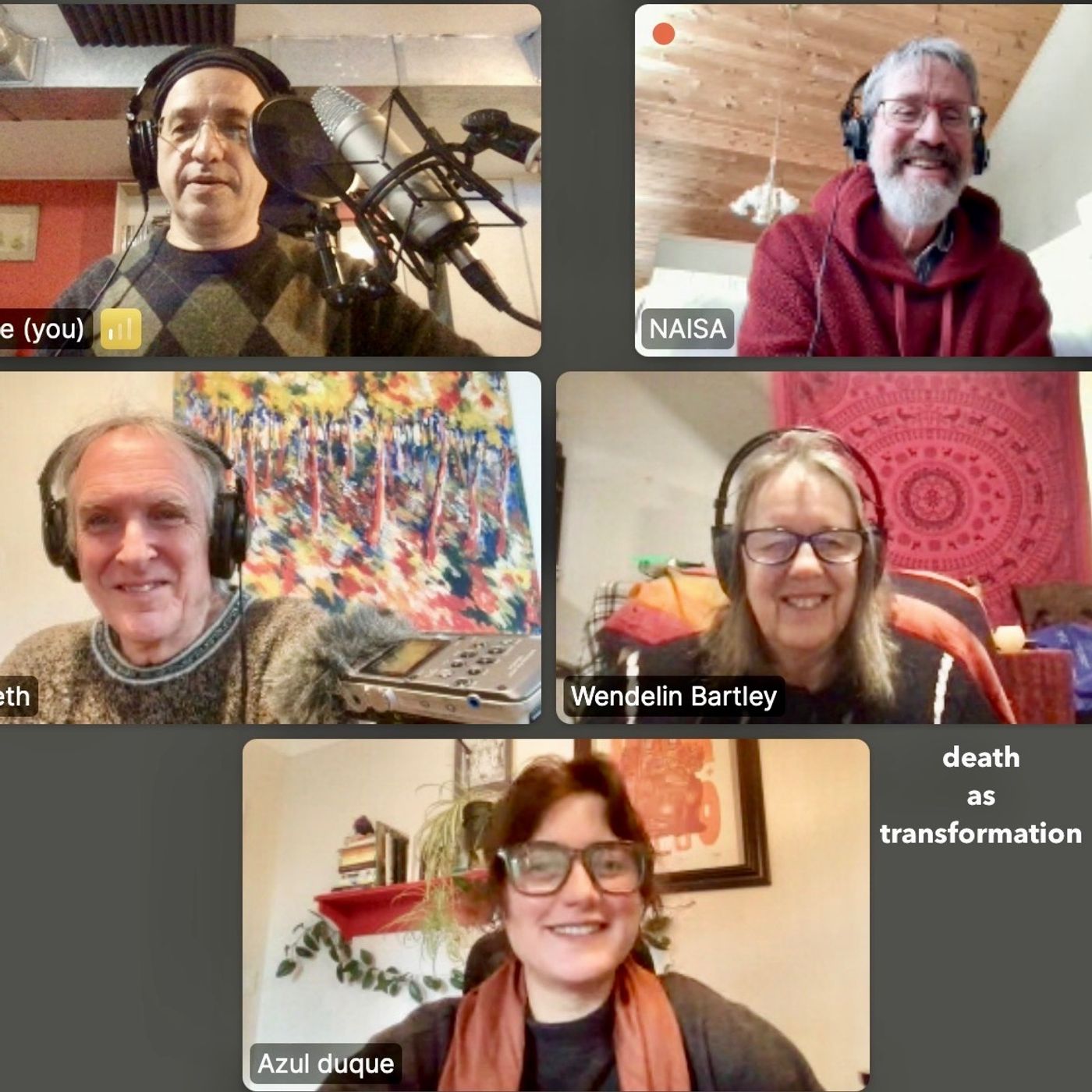
S6 Ep 244e244 roundtable – death as transformation
Death might be one of the most relational acts possible. I think death is that threshold moment where that illusion is dissolved. Our death is a moment of redistribution of nutrients, of memory, of rhythm, of vibration into the wider field, from the illusion of a single self into the remembering of an entangled self. I love to think about death as a teacher of surrender and a trust in the intelligence of regeneration. - Azul Carolina Duque(Below is the script that you can hear me narrate in this episode.)Its January 20, 2026. I was going to publish this roundtable called death as transformation later this year to inaugurate the 7th season of the conscient podcast but I changed my mind – imagine that - and have added it to season 6 because I’ve decided to take a long break from producing both of my podcasts and my Substack in order to do some thinking and meditation and self-care but I wanted to get this very special episode out to you now in case I decide not to continue with the podcast after my break.It's one of those pivotal moments. Here’s back story on this episode. In November 2025, Artistic Director of New Adventures in Sound Art, Darren Copeland, asked me if I would like to participate in an episode of his monthly Making Waves radio program, which is broadcast on WGXC 90.7 FM in New York's Upper Hudson Valley and also available as a podcast. Darren wanted to talk about one of my favorite topics, climate change and asked me what would I like to talk about specifically? And to my surprise I immediately answered: death. I went on to explain that I meant death in the sense of how our spirit and consciousness continues when our body goes back to the earth, and what might this spirit and consciousness sound like? I was also interested in how this heightened awareness might help us relate to complex issues like climate change and societal disruption. So I helped Darren select an expert panel of sound artists and on December 2, 2025, I moderated a 55 minute recording for the December 13, 2025 edition of Making Waves that featured three former guests of my conscientpodcast : Azul Carolina Duque, who you can hear on e211 art as medicine, Kenneth Newby who you can hear on e207 living with grace and Wendelin Bartley who you can hear on e222 restoring our connection with nature.So what you’re about to hear is a rebroadcast of this conversation.This conversation is quite magical because we were able to share some very intimidate stories about our own vulnerabilities, our relationship to death and how our practices as sound artists relates to this transition. You’ll hear that I ask each of my guests to respond to this 12-word sentence by a friend of mine, Tim Brodhead: Death as a natural transformation of energy and consciousness, not an end.And won’t worry the episode is actually a lot of fun and quite enlightening. It’s really more about transition than an end. I’m so pleased that it concludes this chapter of the conscient podcast and in a way begins whatever might come next. Thanks so much for listening. Thank you Darren, Azul, Kenneth and Wendelin.See you next time. *END NOTES FOR ALL EPISODESNote : I'm currently 'pressing pause' and am not producing new content until further notice. Hey conscient listeners, I’ve been producing the conscient podcast as a learning and unlearning journey since May 2020. It’s my way to give back.This Indigenous Land Acknowledgement statement was developed by members of the Algonquin community for my former employer the Canada Council for the Arts. I have adapted slightly to make it my own.I acknowledge that my studio, located in Ottawa, is on the unceded, unsurrendered Territory of the Anishinaabe Algonquin Nation whose presence here reaches back to time immemorial.I recognize the Algonquins as the customary keepers and defenders of the Ottawa River Watershed and its tributaries. I honour their long history of welcoming many Nations to this beautiful territory and uphold and uplift the voice and values of our Host Nation.Further, I offer my respect and affirm the inherent and Treaty Rights of all Indigenous Peoples across this land and honour commitments to self-determination and sovereignty that have been made to Indigenous Nations and Peoples.I acknowledge the historical oppression of lands, cultures and the original Peoples in what we now know as Canada and fervently believe the Arts contribute to the healing and decolonizing journey we all share togetherIn parallel with the production of the conscient podcast and its francophone counterpart, balado conscient, I I publish a free ‘a calm presence' monthly Substack see https://acalmpresence.substack.com. Your feedback is always welcome at claude [at] conscient [dot] ca and/or on social media: Facebook, Instagram, Linkedin, Threads, BlueSky, Mastodon, Tik Tok, YouTube and Substack.Share what you like, etcI am grateful and accountable to the earth and the human labour that provided me with the privilege o
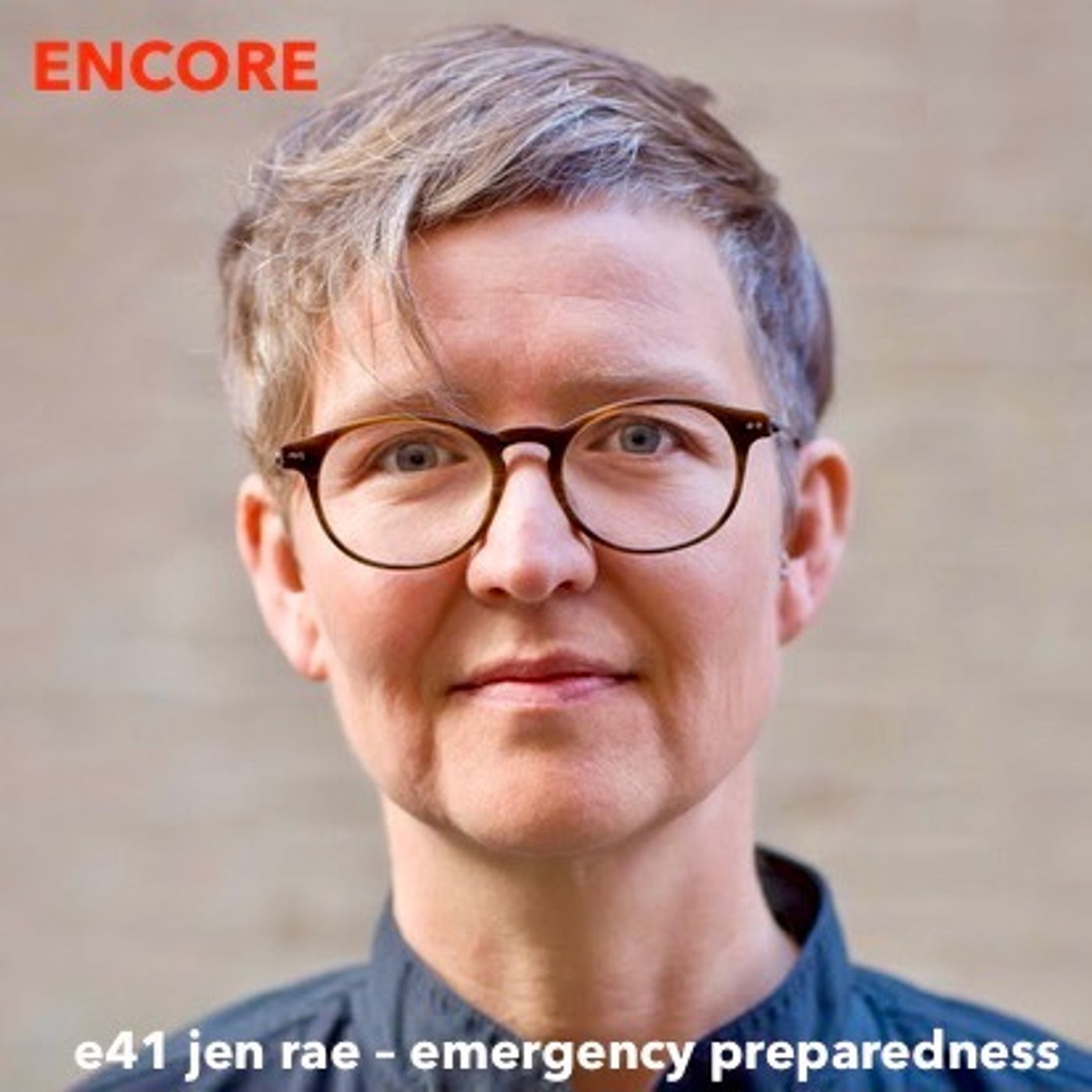
ENCORE e41 jen rae – emergency preparedness
bonusThe thing about a preparedness mindset is that you are thinking into the future and so if one of those scenarios happens, you've already mentally prepared in some sort of way for it, so you're not dealing with the shock. That's a place as an artist that I feel has a lot of potential for engagement and for communication and bringing audiences along. When you're talking about realities, accepting that reality, has the potential to push us to do other things. Welcome to another ENCORE episode of conscient podcast. I do this because if you missed an episode the first time it was published you can hear it again. However this is the last ENCORE episode for a while because I’m taking break from the production of this podcast, of its sister French language version, balado conscient as well as my a calm presence Substack for what looks like undetermined period of time. I wrote about this in my last Substack posting called pressing pause. My plan is to meditate on my next steps in this ongoing learning and unlearning journey and do a bit of self-care as I learned to do during the Zen and the Art of Saving the Planet course last fall.But before pressing pause, so to speak, I wanted to publish this ENCORE episode because it’s about an issue that we will be talking about increasingly in the months and years to come: which is, how do we, as artists and cultural workers, respond more effectively to emergency situations and to ongoing societal disruption. And who better that Jen Rae, a Melbourne, Australia based artist, researcher, facilitator and educator of Canadian Red River Métis and Scottish descent.And before going any further I want to acknowledge that Jen Rae lives, creates and works on the unceded traditional lands of the Wurundjeri, Boon Wurrung, Woi Wurrung, and Wathaurong people of the Kulin Nation and offers deep respect to their elders - past, present and emerging. So, this 47-minute conversation was recorded, remotely, on May 10, 2021. Jen and I talked about a wide range of issues including the intersection between art, emergency preparedness, disaster risk-reduction and resilience. Here are some of the questions that were raised: How do we embrace an emergency preparedness mindset? What do we increase our focus on community resilience?How can we challenge Western-centric narratives? How can we further value inclusivity? How can art and speculative fiction in particular, help free our minds and inspire action?You’ll find some answers, also more questions, at the The Centre for Reworlding in Australia, where Jen is the creative research lead. I’m also publishing this ENCORE episode to listen back to conversations recorded during the COVID pandemic. For artists, in particular, it was a tough time. For a few of us it created opportunities for new forms of digital engagement but for most artists it was a nightmare of lost income, isolation and disconnection. COVID, difficult as it was, can be thought of as a kind of test run for larger scale emergencies that will come as the climate crisis and related disasters unfold. So I’m grateful that artists like Jen Rae and The Centre for Reworlding are proactively are working, and this is a quote from their web site, to ‘advocate for the mainstream integration of culture & the arts in climate action and disaster management discourses, policy frameworks and all-years education’.So let’s go back to 2021. And, as I did with all of my episodes at that time, you’ll hear excerpts from previous episodes that try to connect the thinking of my guests with some previous guests and that’s a lot of fun. It was a lot or work but then I had a lot of time on my hands. So without further ado, episode 41 ENCORE. Warm thanks to Jen for this 2021 conversation and hopefully we’ll talk again if and when I come back to producing this podcast. For more information on Jen’s work, see https://www.jenraeis.com, http://www.fairsharefare.com/ and The Centre for Reworlding.Links to a selection of Jen’s work mentioned in this episode:REFUGIUM: film premiering 27 April 2021 (online and in real life - in collaboration with Claire G. Coleman)Who needs artists in a climate crisis?: Raising the Bar, 13 November 2019Refuge Talk Series: Preparing for a pandemic (21 May - 1:01:35-1:08:08), Living in a pandemic (27 May) and Recovering from a pandemic (4 June) *END NOTES FOR ALL EPISODESNote : I'm currently 'pressing pause' and am not producing new content until further notice. Hey conscient listeners, I’ve been producing the conscient podcast as a learning and unlearning journey since May 2020. It’s my way to give back.This Indigenous Land Acknowledgement statement was developed by members of the Algonquin community for my former employer the Canada Council for the Arts. I have adapted slightly to make it my own.I acknowledge that my studio, located in Ottawa, is on the unceded, unsurrendered Territory of the Anishinaabe Algonquin Nation whose presence here reaches back to time immemorial.I recogniz
a calm presence - uplift
bonusuplifthere are some uplifting words for the new year drawn from 9 episodes of conscient podcast et 3 extraits du balado conscientThis posting of a calm presence was designed as an audio listening experience though it also exists in written form, here.Ceci est un episode bilingue. Afin de faciliter la compréhension des extraits en anglais, j’ai ajouté une transcription de l’épisode en français dans les notes d’épisode. J’ai aussi ajouté un petit sommaire oral en français à la fin de chacun des épisodes en anglais. Personnellement, je trouve intéressant d'écouter quelqu'un parler dans une autre langue, car je peux me concentrer sur le ton et l'intonation de la voix. This is a bilingual episode. For those who do not understand French I have added a transcript in English in the episode notes. I also created a short English language oral summary for each of the French language episodes. Personally, I find it interesting to listen to someone speak in another language because I can focus on the tone and inflection of the voice.Please note that the pace of my narration is rather slow with the occasional short silence.This is how I like to listen to narrations, with lots of space to ponder what is being said but also to consider what might lie in between the words and in the timbre of the voice. I’m also recording this reading in one take, flubs and all, similar to a late night radio monologue where it’s ok to be imperfect and where time is suspended. Finally, a reminder that I now publish a calm presence postings one at a time, for a few weeks and then replace it with a new one and so on. In other words, what you’re listening to now, recorded on January 1, 2026 at 8.51 am it will be erased sometime in February 2026, never to be published again but I hope it might be retained in memory for those who need it, which is why I created this Substack in the first place, for those in need of a calm presence. *END NOTES FOR ALL EPISODESNote : I'm currently 'pressing pause' and am not producing new content until further notice. Hey conscient listeners, I’ve been producing the conscient podcast as a learning and unlearning journey since May 2020. It’s my way to give back.This Indigenous Land Acknowledgement statement was developed by members of the Algonquin community for my former employer the Canada Council for the Arts. I have adapted slightly to make it my own.I acknowledge that my studio, located in Ottawa, is on the unceded, unsurrendered Territory of the Anishinaabe Algonquin Nation whose presence here reaches back to time immemorial.I recognize the Algonquins as the customary keepers and defenders of the Ottawa River Watershed and its tributaries. I honour their long history of welcoming many Nations to this beautiful territory and uphold and uplift the voice and values of our Host Nation.Further, I offer my respect and affirm the inherent and Treaty Rights of all Indigenous Peoples across this land and honour commitments to self-determination and sovereignty that have been made to Indigenous Nations and Peoples.I acknowledge the historical oppression of lands, cultures and the original Peoples in what we now know as Canada and fervently believe the Arts contribute to the healing and decolonizing journey we all share togetherIn parallel with the production of the conscient podcast and its francophone counterpart, balado conscient, I I publish a free ‘a calm presence' monthly Substack see https://acalmpresence.substack.com. Your feedback is always welcome at claude [at] conscient [dot] ca and/or on social media: Facebook, Instagram, Linkedin, Threads, BlueSky, Mastodon, Tik Tok, YouTube and Substack.Share what you like, etcI am grateful and accountable to the earth and the human labour that provided me with the privilege of producing this podcast, including the toxic materials and extractive processes behind the computers, recorders, transportation systems and infrastructure that made this production possible. Thanks for listening. Claude SchryerLatest update on March 21, 2026
S6 Ep 243e243 francisco rodriguez – amazon awareness
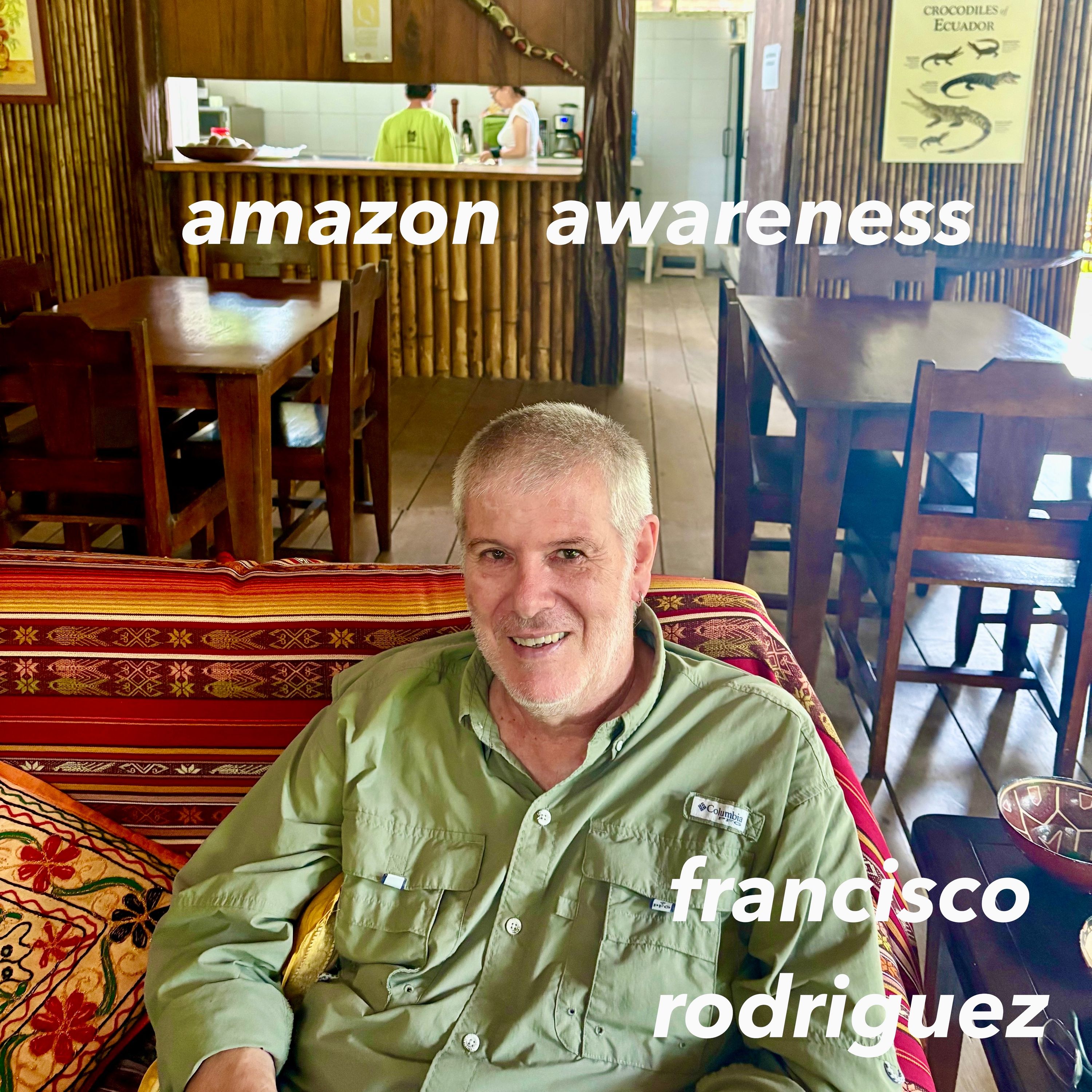
Take care of the earth. We have grandsons and great-great-grandsons, and we have to, we, our generation, has to teach the young people what we lived, the beauty of the world that we lived, not the disaster we have today.Hello conscient podcast listeners,Many of us do international travel, probably a bit too much. When I travel, I consider it a privilege that comes with responsibilities. For example, whenever we can we try to give back by donating to local charities in the region where I’m visiting or maybe making sure that we tip appropriately and that the people we am with get a fare wage. We also try to by buy credible carbon offsets. That kind of thing. You might recall e235 lallan – art from the soil, which I recorded while in the Tirthan Valley in Northern India :My advice to artists would be drop every garb that you have, drop every piece of knowledge that you think you have. Head to the jungles, head to the rural places. We are living in a time of crisis.You might also recall e236 keiko torigoe – the power of listening, which was recorded in Tokyo, Japan: The environmental issues currently at hand, including global warming, are related, but I believe that at their root lies the decline of our listening ability and the power of listening as humanity.Both episodes were recorded quite spontaneously on my iphone. I hadn’t planned to record these interviews, but as I listened to some of the stories around me and I thought it could be a gesture of reciprocity to make these voices available on this podcast to help raise awareness about activities in that country but also to point out commonalities between us all in the world. So, what you’re about to hear is my third conversation in this series, this time with Francisco Rodriguez, a Chilean born banker, who with his wife Sylvia, manage the Anaconda Lodge on the shores of the Napo River near Tena, in Ecuador, where my wife Sabrina and daughter Clara were doing some eco-tourism. So we had the pleasure of staying there and meeting Francisco and others from the region. I sat down with Francisco – you’ll hear some birds and insects in the background - about his relationship with the Amazon forest as a living entity as well as their collaborations with the Kichwa indigenous people who are the traditional custodians of these lands and waters. You’ll hear some beautiful sounds and good stories about the Amazon, which I found uplifting but you’ll also hear about some of the very serious challenges that they currently face, which call upon increased solidarity from the rest of the world, given that the Amazon is the lung of the earth. You’ll notice this episode is a bit more than 15 minutes. I added some soundscapes that makes it a bit longer than usual, which I hope you’ll enjoy.Warm thanks Francisco, Sylvia, all the guides and staff at Anaconda Lodge for their kindness and hospitality. Episodes notes generated by Whisper Transcribe AIKey Takeaways:Support Indigenous communities by living alongside them and understanding their challenges, rather than offering temporary aid.Learn about the Amazon’s diverse cultures and ecological fragility through reading and authentic resources.Reduce your carbon footprint by making small, conscious changes in daily habits to support global environmental efforts.Recognize the Amazon as a single, interconnected entity, not divided by national borders, but by Indigenous territories.Understand the impact of Western influences, such as processed food and consumer goods, on uncontacted tribes and their traditional way of life.Story PreviewDiscover the journey of Francisco Rodriguez, who left the banking world to dedicate his life to protecting the Amazon and working its Indigenous peoples. Hear how he and his wife Sylvia created Anaconda Lodge as a bridge between cultures, fostering understanding and solidarity for the ‘lung of Mother Earth.’ Chapter Summary00:00 Introduction to Amazon and Indigenous Voices02:44 From Banker to Amazon Advocate05:50 Living with Indigenous Communities09:58 Ecotourism and Amazonian Consciousness14:25 Understanding the Amazon from Afar20:00 Sustainable Living and Jungle CommunicationFeatured QuotesWe always hope that when they go back home, they use less fossil fuel.You have to think one thing, these people have been beating up by our, by we Western people for over 500 years.Our main goal is to make our guests to understand where they are.Behind the StoryClaude shares his third recording from international travel, this time from the Anaconda Lodge near Tena, in Ecuador. He, his wife Sabrina, and daughter Clara experienced ecotourism firsthand which led to this conversation with Francisco Rodriguez. The episode highlights the value of reciprocity when traveling and making voices from different regions accessible to a global audience. *END NOTES FOR ALL EPISODESNote : I'm currently 'pressing pause' and am not producing new content until further notice. Hey conscient listeners, I’ve been producing the
S6 Ep 242e242 roundtable - dissolving boundaries
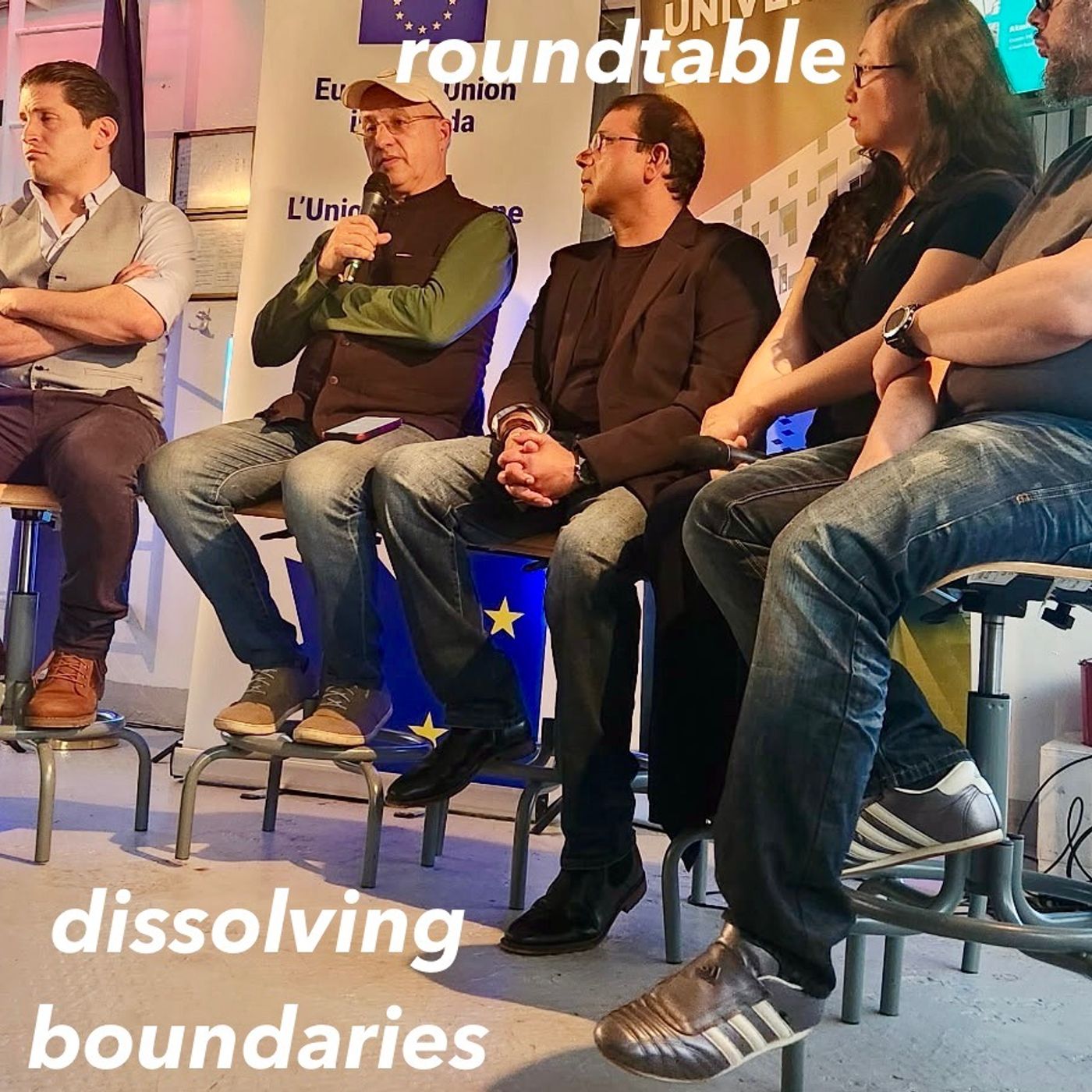
In an era where pressures on climate and environments grow even stronger, we should not underestimate the transformative power of art. (Ambassador of the European Union to Canada Geneviève Tuts)When you do the trigger, the emotional part, you can go down hope and fear both. Both lead to action but ultimately, we need to transform being passive into really active contributors to solving this and what a better way than art? (Akash Rastogi, Chief Capital Strategy Officer at Canada’s Ocean Supercluster) We want to activate the creativity of communities through the arts to create the cities of the future, basically, right, the cities we want to live in (Juan Eraso, leader of international programs at Culturans)‘Change happens. There's always going to be ways to adapt. That's not to say that the initial change might not be catastrophic but there was always going to be something left and you have to work with that’. (e208 clara schryer - science as story). Now it breaks my heart to hear that because for a young person to say that means that they don't anticipate there won't be a lot left and yet… (Claude Schryer)We know that when we work with green spaces, we work with life, we work with art, we can rebuild, we can regenerate, but we have to do it differently. (Claude Schryer)Yes, to doing things differently. Yes, to more evocative, emotionally resonant art.Yes, to dissolving boundaries.(Background sound from Jubilee Queen Cruise Ship in podcast)When I got an invitation from Jana Macalik, Director of the Global Centre for Climate Action at OCAD University to participate on a panel about art and climate - one of my passions - I was excited and honoured to accept. This panel was part of an event called Dissolving Boundaries that took place on October 4, 2025, as part of Nuit Blanche Toronto, which of course went on all night. It featured the premiere of a large scale, beautiful large-scale art projection by Alessandro Gisendi and Marco Noviello of the OOOPStudio in Italy. Their work was projected onto the massive Canada Malting Silos on the shores of Lake Ontario in Tkaronto. Dissolving Boundaries was co-presented by the Global Centre for Climate Action at OCAD University and the European Union (EU), through its Delegation to Canada. I want to thank them for their hospitality and congratulate them their vision in collaborating, partnering and bringing this work and this conversation to us. The timing was good for me. I was wrapping up season 6 of my conscient podcast / balado conscient after some 350 episodes since I started it in 2020 and I was about to take a break, but then I got a call to talk about how arts and culture can help move audiences from awareness to action and I could not refuse that. I felt good about speaking freely and really listening to the different points of view. We were on a ship called the Jubilee Queen Cruise Ship so it quite moving, literally, to be on a boat looking out onto the projection and talking about art, culture and climate. Here’s Ana Serrano, OCAD University’s President and Vice-Chancellor explaining what the event was about: But we can't stop, really. We don't really have much of a choice. So, convening like this, trying to figure out ways to create evocative, emotionally resonant works that will catalyze people into thinking about their relationship with the land, with water, with climate and their daily actions is what tonight is all about.First you’ll hear Ana Serrano shares some inspiring opening remarks, followed by an engaging speech by the Ambassador of the EU to Canada, Geneviève Tuts. You’ll then hear panelists, with Ana as facilitator, speak one by one. First Alessandro Gisendi, Akash Rastogi (Chief Capital Strategy Officer at Canada’s Ocean Supercluster) myself, Juan Erazo (Culturans) and Alice Xu (Director of Policy, Planning and Program Enablement; Environment, Climate and Forestry Division at the City of Toronto). At the end of the recording you’ll hear a question from an audience member, who happens to be a friend of mine, Coman Poon (e202 coman poon - what are you doing with your life ?) ask about ‘extraction for the sake of economic autonomy’, which we all commented upon. The conversation continued until it was time to view the art projection!I want to express my warmest thanks to the organizers, fellow panelists, audience members and in particular to OCAD sound technician Omar Qureshi, who recorded this session for me.Enjoy. It’s good to talk about these things with creative energy. May the conversations continue.*Episodes notes generated by Whisper Transcribe AIKey Takeaways:Activate community creativity through art to design future cities and foster positive change.Bridge the gap between rational climate data and emotional engagement to motivate action.Reassess economic models to prioritize natural assets and foster international cooperation for scalable solutions.Integrate nature-based solutions into urban planning and daily life, celebrating local initiat
S6 Ep 241e241 roundtable – everyday habits for transforming systems
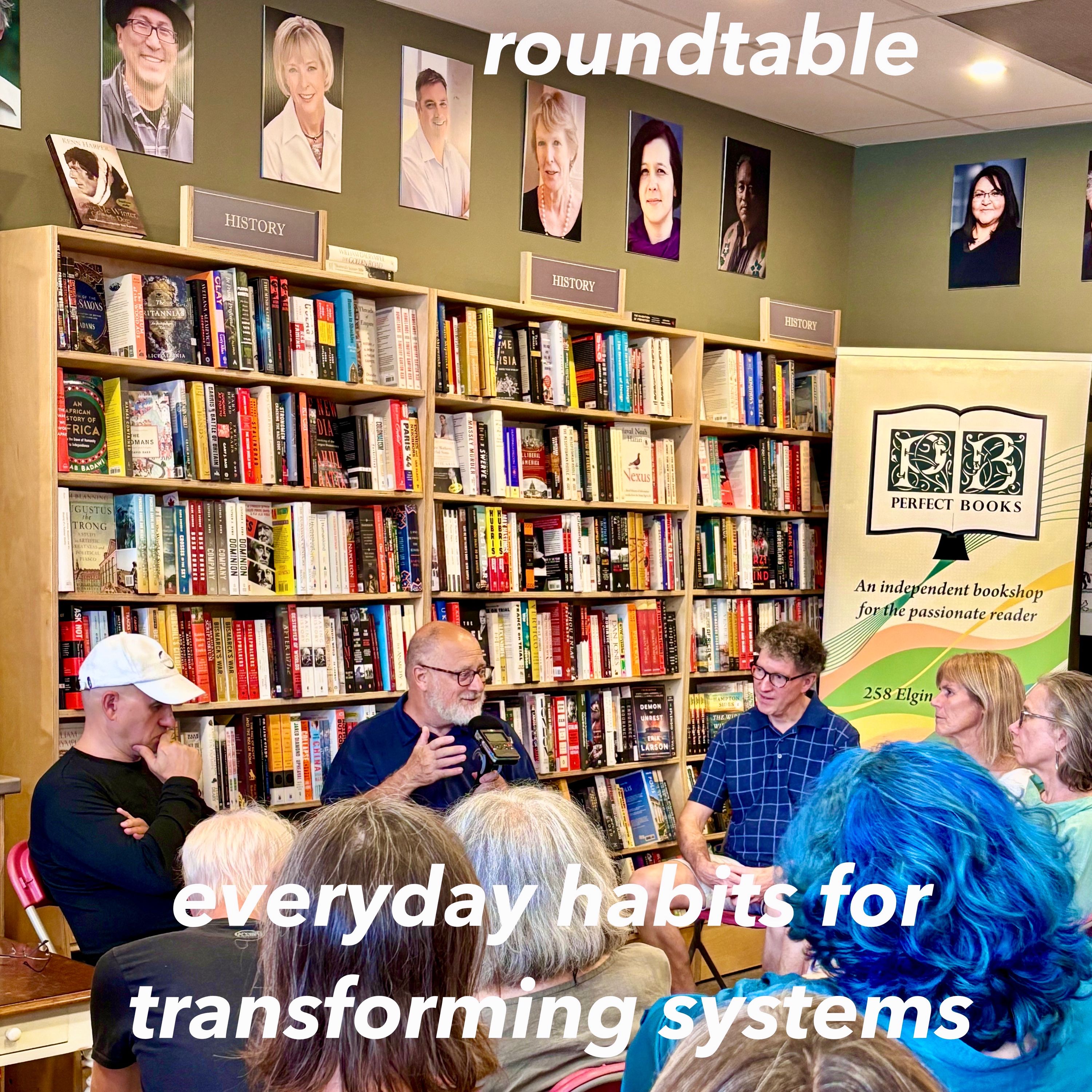
The question the book asks is obviously transforming the system is not an individual task, it's a collective activity. But it still begs the question, if we're trying to contribute to that, what do we need to do? Not every four years when we vote, not every year when we go to a strategy workshop, but what do we do every day? And so the title is very straightforward: Everyday Habits for Transforming Systems. And that's the question the book is offering an answer to.My second conversation with writer, facilitator and consultant Adam Kahane (the first was episode e219) and with the audience at the Ottawa launch of Everyday Habits for Transforming Systems, the Catalytic Power of Radical Engagement at Perfect Books on July 2, 2025. This episode is part of my roundtable series, open-ended conversations about what a group of citizens are passionate about. And passionate they were! I started by asking Adam why he wrote the book and why does he think it’s relevant today, in particular here in the nation’s capital at a time when there are great tensions with our neighbours to the south and when Canadians are talking to each other more than ever about our shared values, and the challenges that we face such as the ecological crisis and climate emergency, which sadly seems to have temporarily fallen off our collective radar. Show notes generated by Whisper Transcribe AIAction pointsEmbrace radical engagement: Lean into understanding diverse perspectives and actively seek common ground.Recognize the power of everyday habits: Focus on daily actions to create lasting systemic change.Navigate complexity: Balance working towards a larger goal with acknowledging individual interests and power dynamics.Collaborate across differences: Seek opportunities to work with those who hold different views to achieve meaningful progress.Act responsibly: Consider the broader impact of your actions on all living beings.Story PreviewWhat if the key to changing the world lies not in grand gestures, but in the small, often overlooked habits of our daily lives? Adam Kahane shares his journey from facilitating transformative dialogues in South Africa to uncovering the power of radical engagement, inviting us to rethink how we contribute to a better future. Chapter Summary00:00 The Collective Task of Transformation01:19 Introducing Adam Kahane04:01 Setting the Stage for Discussion09:40 The Motivation Behind the Book15:42 Everyday Habits for Transformation22:39 Exploring the Seven Habits29:12 The Slippery Slope of Disagreement and The Challenge of Acting Responsibly35:20 Power Dynamics in Collaboration39:40 Trust and Collaboration44:00 Balancing Urgency and Everyday Habits54:25 Art, Culture, and Collaboration56:13 Radical Engagement in Action01:00:05 Navigating Power Dynamics and The Importance of Agency01:12:51 Redefining Power and Responsibility01:17:04 Risks and Realities of Engagement01:23:13 The Complexity of Multiple SystemsFeatured QuotesTransforming the system is not an individual task. It’s a collective activity.Radical engagement is the opposite of standing back with your arms crossed saying, take it or leave it.Ring the bells you still can ring. Forget your perfect offering. There is a crack in everything, that’s how the light gets in. (quoting Leonard Cohen)Behind the StoryAdam Kahane’s latest book, ‘Everyday Habits for Transforming Systems,’ stems from a moment of confusion during an interview with South African leader Trevor Manuel. This experience led Kahane to explore what it means to contribute to systemic change, focusing on the everyday actions that shape our world. This episode explores themes of power, collaboration, and social responsibility and how the arts weave their way through all of this. Credit: cover photo by Conyer Clayton *END NOTES FOR ALL EPISODESNote : I'm currently 'pressing pause' and am not producing new content until further notice. Hey conscient listeners, I’ve been producing the conscient podcast as a learning and unlearning journey since May 2020. It’s my way to give back.This Indigenous Land Acknowledgement statement was developed by members of the Algonquin community for my former employer the Canada Council for the Arts. I have adapted slightly to make it my own.I acknowledge that my studio, located in Ottawa, is on the unceded, unsurrendered Territory of the Anishinaabe Algonquin Nation whose presence here reaches back to time immemorial.I recognize the Algonquins as the customary keepers and defenders of the Ottawa River Watershed and its tributaries. I honour their long history of welcoming many Nations to this beautiful territory and uphold and uplift the voice and values of our Host Nation.Further, I offer my respect and affirm the inherent and Treaty Rights of all Indigenous Peoples across this land and honour commitments to self-determination and sovereignty that have been made to Indigenous Nations and Peoples.I acknowledge the historical oppression of lands, cultures and the original
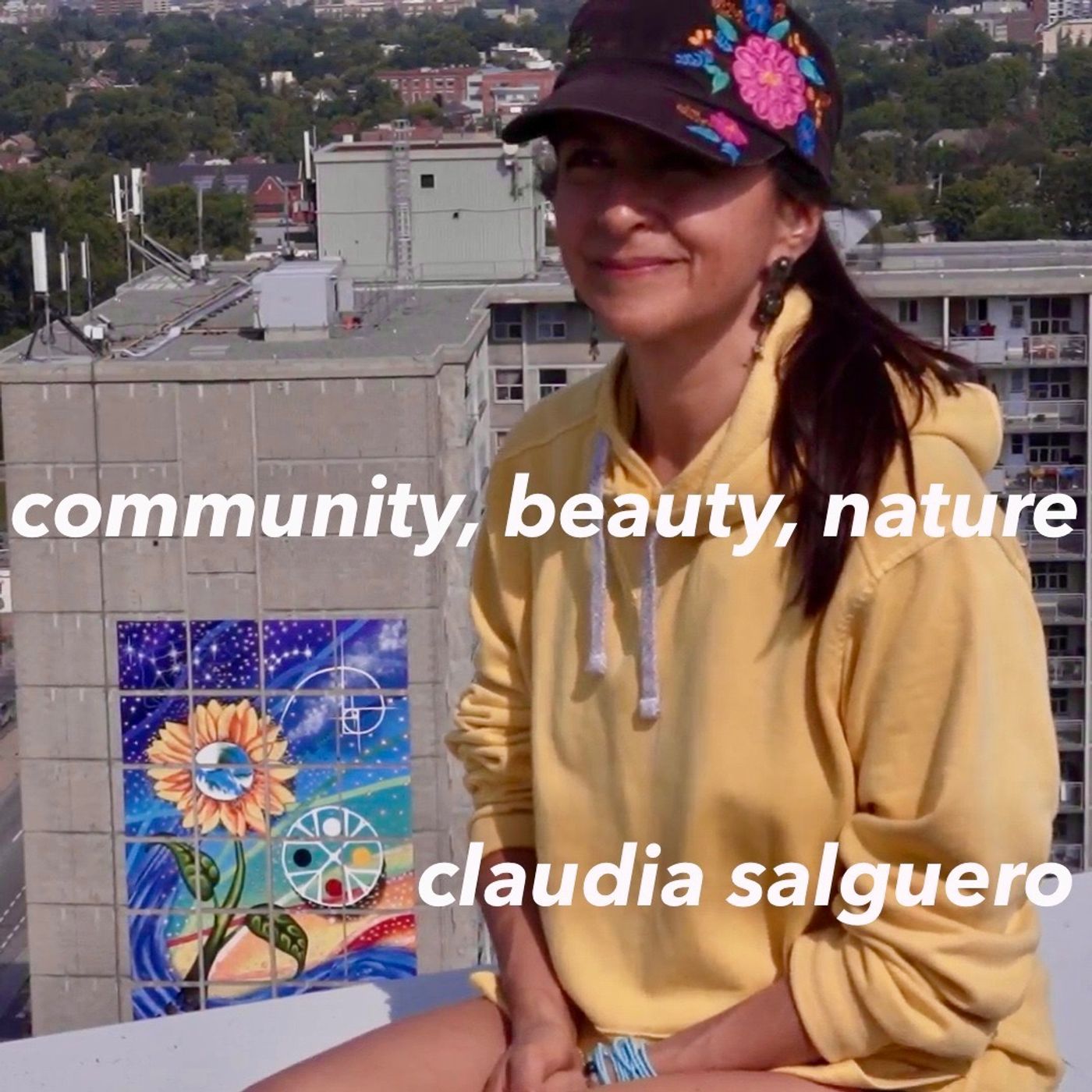
S6 Ep 240e240 claudia salguero – community, beauty, nature
To me, there's three key things and it's community, beauty and nature. I think if we connect with nature and if we produce beauty, that is something that we as humans I think is our biggest gift. And I'm not just talking about creating art : speaking beauty, listening to beauty, creating beauty, opening our hearts to beauty in community. Because if we don't have a sense of the other in ourselves, then we're lost, we cannot do it alone. And this has been proved forever. But I think if we have these three things, to me, as the kind of person I am, we have it all. We're connected with nature, understanding that we are nature, we are part, we are one with nature and we are interacting with other human beings. And we create beauty and we inspire by beauty. It would be a completely different world. And that to me is like the mission of the arts.My conversation with Claudia Salguero, a Colombian Canadian community engaged artist based in Ottawa, where I live on the unceded lands of the Algonquin-Anishinaabe people. Claudia is well known for her vibrant and expressive murals. They are literally all over Ottawa and explore themes of identity, culture and social justice. You'll hear the color and the energy in her voice. I asked Claudia to give an example of one of her projects. She spoke about The Wisdom Mural, which is inspired by the teachings of Ottawa based knowledge keepers. I love the way Claudia identifies three key elements of… community, beauty, nature. Show notes generated by Whisper Transcribe AIAction pointsRecognize the vital role of community, beauty, and nature in art creation and appreciation.Explore the Wisdom Mural project and its inspiration from diverse knowledge keepers.Understand how art can facilitate healing and connection, especially in times of crisis.Value the importance of listening and understanding different perspectives to foster communication.Support community-engaged art as a means of giving voice to marginalized communities.Story PreviewDiscover the story behind Ottawa’s vibrant murals and the artist who uses art to connect communities and heal hearts. From a vision inspired by nature to a powerful encounter with a grieving stranger, explore the transformative power of community-engaged art.Chapter Summary00:00 The Essence of Community, Beauty, and Nature00:56 Meet Claudia Salguero01:37 The Wisdom Mural: A Dream Project03:51 Engaging with Knowledge Keepers05:30 Symbolism and Meaning in the Mural08:02 Community Engagement Through Art11:54 Art as a Healing ToolFeatured QuotesTo me, there’s three key things and it’s community, beauty and nature.The important part of this community mural creations is not the mural itself. It’s all that happens around it or before or behind the mural.We need to learn to listen, to understand why somebody think the way they think. Because it’s not for free. You have reasons to be who you are and to act in the way you act.Behind the StoryClaudia Salguero shares the inspiration behind her Wisdom Mural, a project that brought together ten knowledge keepers from around the world to explore the unifying power of nature. The mural, a towering piece of public art in Ottawa, has become a symbol of connection and healing, especially poignant during the pandemic and the discovery of unmarked graves at indigenous residential schools. One moving story highlights how the mural helped a grieving man find solace after years of pain. *END NOTES FOR ALL EPISODESNote : I'm currently 'pressing pause' and am not producing new content until further notice. Hey conscient listeners, I’ve been producing the conscient podcast as a learning and unlearning journey since May 2020. It’s my way to give back.This Indigenous Land Acknowledgement statement was developed by members of the Algonquin community for my former employer the Canada Council for the Arts. I have adapted slightly to make it my own.I acknowledge that my studio, located in Ottawa, is on the unceded, unsurrendered Territory of the Anishinaabe Algonquin Nation whose presence here reaches back to time immemorial.I recognize the Algonquins as the customary keepers and defenders of the Ottawa River Watershed and its tributaries. I honour their long history of welcoming many Nations to this beautiful territory and uphold and uplift the voice and values of our Host Nation.Further, I offer my respect and affirm the inherent and Treaty Rights of all Indigenous Peoples across this land and honour commitments to self-determination and sovereignty that have been made to Indigenous Nations and Peoples.I acknowledge the historical oppression of lands, cultures and the original Peoples in what we now know as Canada and fervently believe the Arts contribute to the healing and decolonizing journey we all share togetherIn parallel with the production of the conscient podcast and its francophone counterpart, balado conscient, I I publish a free ‘a calm presence' monthly Substack see https://acalmpresence.substack.com. &n
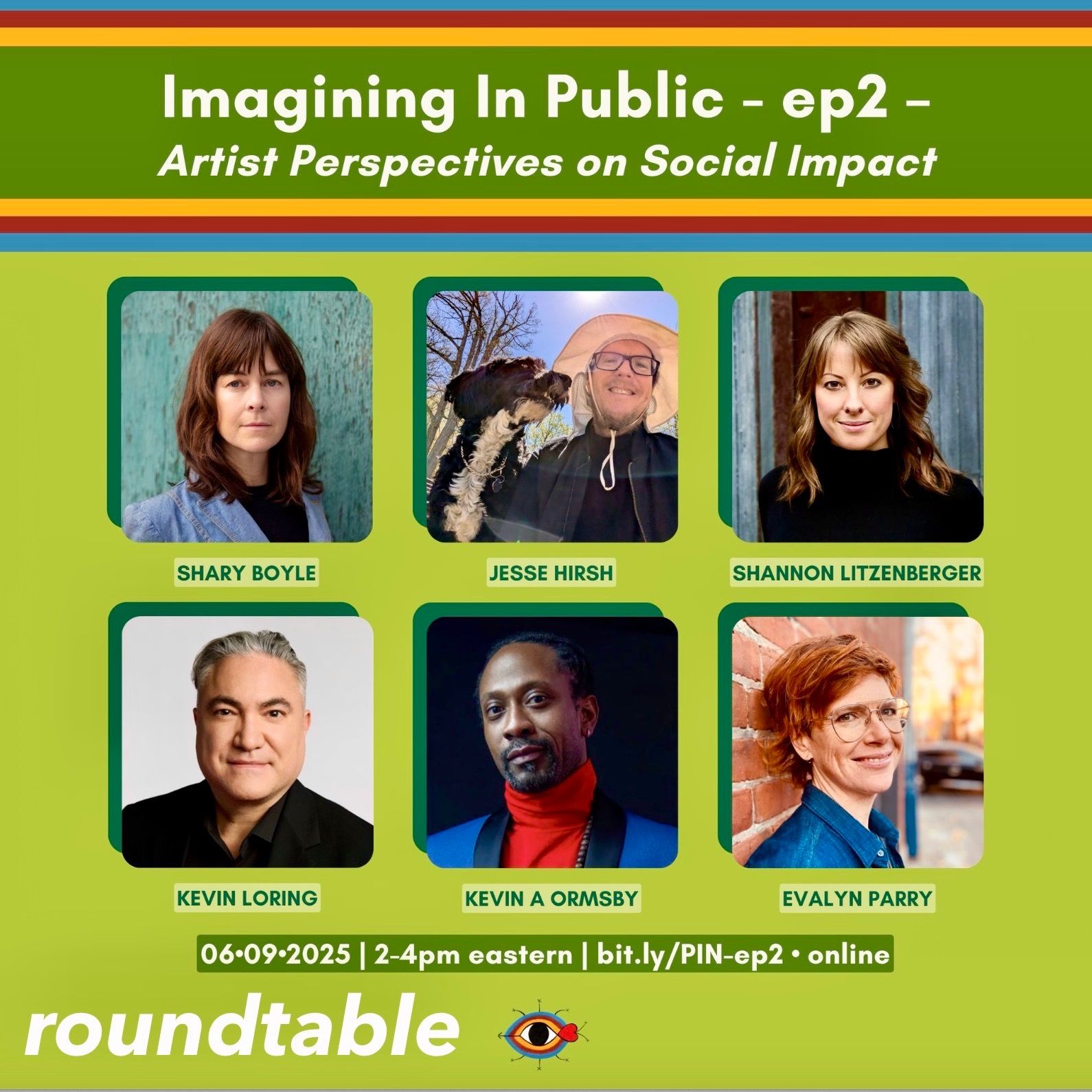
S6 Ep 239e239 roundtable – imagining in public e2 - artist perspectives on social impact
I love policy because it allows for surrealism, it allows for creativity, it allows for dancing, it allows for all the skills and disciplines and interests and tools that as artists we have gravitated towards. We need to enter it with both the courage and the fear that all bets are off, that the house is on fire, that the dominant narratives of - whether it's the Canadian provincial governments, the Canadian Federal Governments, the US Federal Governments - they are all bankrupt. They're all meaningless. Their stories don't appeal to people. They may still be in denial of that, but I think we are able to come up with better stories, better frames, better concepts of how to support arts and how to support culture.If I was the head of an arts-funding organization, one that had resources and gave them out, I would be doing events like this every week: because the appetite to have these conversations, the appetite for this kind of sense-making, is tremendous, and there isn't really any institution that's trying to meet that or create opportunities that come from that.Futurist Jesse Hirsh, June 9, 2025This is a special edition of a conscient podcast roundtable - my long form episode series - presented by the Public Imagination Network in collaboration with Mass Culture – Mobilisation culturelle. June 9th, 2025 was a lot of fun. I recorded two roundtables that day, e238 with the sonic research group on low technology and the one you’re about to hear, which is the second in a series of conversations by the Public Imagination Network called Imagining in Public (the first one was e183 imagining in public - cultural leadership in a changing world). This second iteration is called imagining in public e2 - artist perspectives on social impact, in other words, how artists shape social change beyond traditional definitions of impact but also how the evaluation of artistic contributions can shape public life. You’ll hear a panel formed of Public Imagination Network Fellows: Shary Boyle, Kevin Loring, Shannon Litzenberger, Kevin Ormsby and Evalyn Parry as well special guest, futurist Jesse Hirsh (you can read more about his work on his Substack, Metaviews: Future of Authority).To help guide your listening here are the framing questions that the organisers developed for the event: What does social impact truly mean in the context of artistic practice?If artists are catalysts for new imaginaries and drivers of transformation, how can their impacts be amplified outside of the arts and culture sectors?What systems and practices are necessary to sustain and amplify the relational work of artists?The recording is in 5 parts (each section separated by a musical drone):a quote from Jesse Hirsh and my introductionopening thoughts by the panelbreakout group on storiesbreakout group on structuresclosing thoughts by the panelTo see an image created by Robin Sokoloski of participants responses to the question : 'What does "arts impact" mean to you?' please see this link. Warm thanks to the Public Imagination Network and their special guest Jesse Hirsh as well as Robin Sokoloski at Mass Culture as well as all participants for allowing their voices to be shared in this way. À la prochaine.Note: a link to this gatherings’ chat storms (audience responses to a question) and a resource list (mentioned during the episode) will be provided at a later time. *END NOTES FOR ALL EPISODESNote : I'm currently 'pressing pause' and am not producing new content until further notice. Hey conscient listeners, I’ve been producing the conscient podcast as a learning and unlearning journey since May 2020. It’s my way to give back.This Indigenous Land Acknowledgement statement was developed by members of the Algonquin community for my former employer the Canada Council for the Arts. I have adapted slightly to make it my own.I acknowledge that my studio, located in Ottawa, is on the unceded, unsurrendered Territory of the Anishinaabe Algonquin Nation whose presence here reaches back to time immemorial.I recognize the Algonquins as the customary keepers and defenders of the Ottawa River Watershed and its tributaries. I honour their long history of welcoming many Nations to this beautiful territory and uphold and uplift the voice and values of our Host Nation.Further, I offer my respect and affirm the inherent and Treaty Rights of all Indigenous Peoples across this land and honour commitments to self-determination and sovereignty that have been made to Indigenous Nations and Peoples.I acknowledge the historical oppression of lands, cultures and the original Peoples in what we now know as Canada and fervently believe the Arts contribute to the healing and decolonizing journey we all share togetherIn parallel with the production of the conscient podcast and its francophone counterpart, balado conscient, I I publish a free ‘a calm presence' monthly Substack see https://acalmpresence.substack.com. Your feedback is always welcome at claude [at]
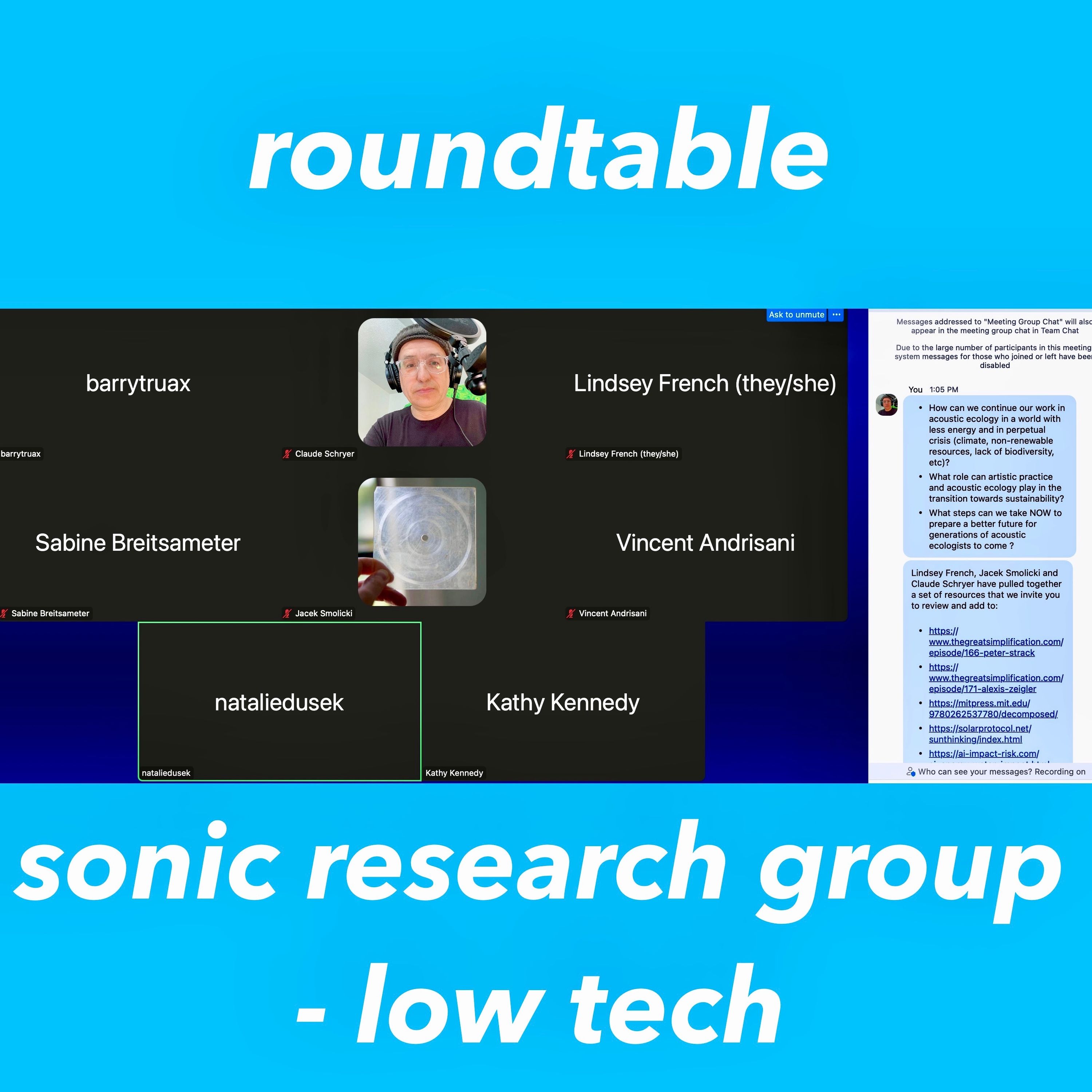
S6 Ep 238e238 roundtable – sonic research group - low tech
This is a special edition of conscient roundtable featuring Aaron Lui-Rosenbaum, Barry Truax, Jacek Smolicki (for more on Jacek’s work also see conscient e113 part 1 and e133 part 2) Kathy Kennedy, Lindsey French, Natalie Dusek, Sabine Breitsameter (all see conscient e175) Vincent Andrisani and myself. We are part of the Sonic Research Group out of Simon Fraser University (for more from this group see episodes 157 and 170). This time our topic was ‘low technology’ or low tech in the sense of what do we do when we have less energy and technology, which is coming and how does it relate to our field of acoustic ecology. Being a research group, we pondered 3 questions : How can we continue our work in acoustic ecology in a world with less energy and in perpetual crisis, including the climate emergency, the depletion of non-renewable resources, loss of biodiversity and so on ?What role can artistic practice in acoustic ecology play in the transition towards sustainability? What steps can we take now to prepare a better future for generations of acoustic ecologists to come? The group shared some convincing answers and some new questions. You’ll find a set of resource links in the episode now (below). Resource ListAI's impact on energy and water usageAlexis Zeigler – Living Without Fossil Fuels: How Living Energy Farm Created a Comfortable Off-Grid Lifestyleclimate amnesia : canada’s cultural moment and the climate emergency are one and the sameDecomposed : The Political Ecology of MusicHow to Build a Low-tech InternetMusic, Soundscape and Acoustic SustainabilityPeter Strack – 2000-Watt Society: The Realities of Living a Lower Energy LifestyleRegenerative Energy CommunitiesSun ThinkingTrapped by Industrialism: Civilization's Daily Resource Demands *END NOTES FOR ALL EPISODESNote : I'm currently 'pressing pause' and am not producing new content until further notice. Hey conscient listeners, I’ve been producing the conscient podcast as a learning and unlearning journey since May 2020. It’s my way to give back.This Indigenous Land Acknowledgement statement was developed by members of the Algonquin community for my former employer the Canada Council for the Arts. I have adapted slightly to make it my own.I acknowledge that my studio, located in Ottawa, is on the unceded, unsurrendered Territory of the Anishinaabe Algonquin Nation whose presence here reaches back to time immemorial.I recognize the Algonquins as the customary keepers and defenders of the Ottawa River Watershed and its tributaries. I honour their long history of welcoming many Nations to this beautiful territory and uphold and uplift the voice and values of our Host Nation.Further, I offer my respect and affirm the inherent and Treaty Rights of all Indigenous Peoples across this land and honour commitments to self-determination and sovereignty that have been made to Indigenous Nations and Peoples.I acknowledge the historical oppression of lands, cultures and the original Peoples in what we now know as Canada and fervently believe the Arts contribute to the healing and decolonizing journey we all share togetherIn parallel with the production of the conscient podcast and its francophone counterpart, balado conscient, I I publish a free ‘a calm presence' monthly Substack see https://acalmpresence.substack.com. Your feedback is always welcome at claude [at] conscient [dot] ca and/or on social media: Facebook, Instagram, Linkedin, Threads, BlueSky, Mastodon, Tik Tok, YouTube and Substack.Share what you like, etcI am grateful and accountable to the earth and the human labour that provided me with the privilege of producing this podcast, including the toxic materials and extractive processes behind the computers, recorders, transportation systems and infrastructure that made this production possible. Thanks for listening. Claude SchryerLatest update on March 21, 2026
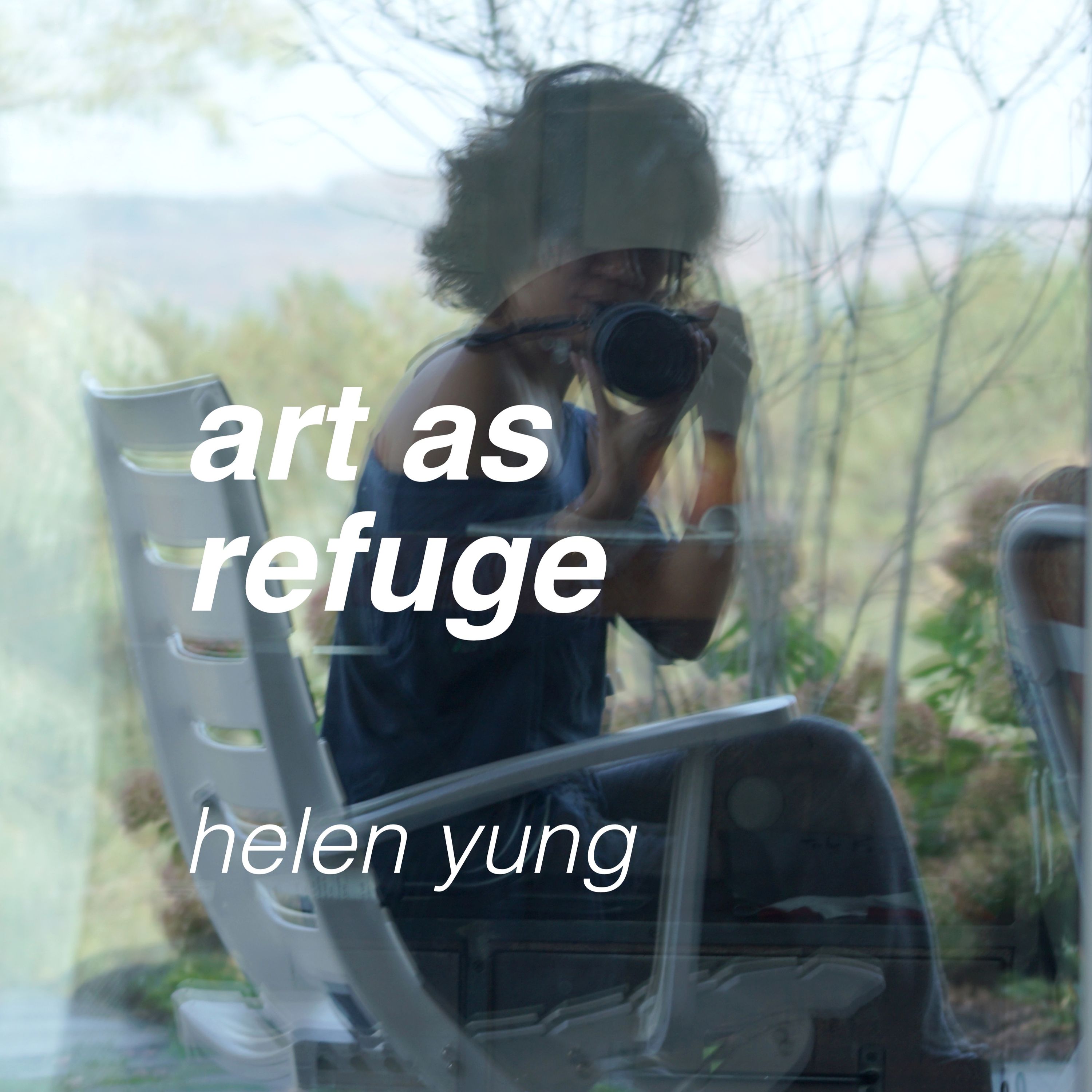
S6 Ep 237e237 helen yung – art as refuge
Artistic practice, cultural traditions, cultural practice, folk traditions… These are all places where we have where wisdoms that might otherwise have been lost have been protected, sheltered or found refuge. And like, artists have this like hoarding tendency sometimes, right? Like maybe not all artists, but a lot of us, you know, we look for, for these neglected things, the things that people don't care about so much. We make special or we keep special. And then it's through the artists right now, through the peoples who've kept the stories, kept the cultures, kept the artifacts or the practices that we can reconnect and collapse time. We can close some of that distance between who I am, where I am today, and ancestors from way before through those practices.My conversation with interdisciplinary artist, researcher and consultant Helen Yung who leads the Laboratory for Artistic Intelligence, an artist-driven transdisciplinary research group that specializes in reimagining how things work in the world. Led by artists, this Lab collaborates with people in community, culture, astronomy, physics, psychology, medicine, immigration, mental health, information sciences, education, and more. Helen is a sparkplug of creativity and innovation. I had the pleasure of attending a presentation by Helen about her work at the Worldmaking as Creative Practice gathering in Tkaronto on May 29 and 30, 2025 which was hosted by the Creative Communities Commons at University of Toronto's School of Cities and led by Artist-Researcher-in-Residence Shannon Litzenberger. You’ll hear Helen and I refer to this Worldmaking gathering throughout our conversation, for example, when I ask Helen about art as refuge. At the end of the episode Helen invite listeners to join the to the Forum for Artistic Intelligence (ART/INForum). A note of thanks to EM Luka, a good friend and collaborator of Helen's, who participated in the conversation but was not included in the final edit due to time constraints. Show notes generated by Whisper Transcribe AIAction pointsRecognize art as a refuge for spirituality, soulfulness, and cultural preservation in times of conflict.Explore your roots and kinship to tap into reservoirs of knowledge and wisdom.Understand the continuum between art for art’s sake and applied arts, and how they intertwine.Embrace the concept of pluriversalism to appreciate diverse perspectives and imaginations.Join the Forum for Artistic Intelligence to connect with like-minded individuals.Story PreviewImagine a world where art safeguards culture, bridges divides, and sparks imagination. Helen Yung shares her vision of art as a sanctuary and a catalyst for understanding our pluriversal world, challenging us to reconsider the role of creativity in society.Chapter Summary00:00 The Value of Cultural Practices01:24 Introducing Helen Yung03:42 Pluriversalism and Artistic Practice07:05 Art as a Refuge11:14 Roots and Artistic IdentityFeatured QuotesArtists have this like hoarding tendency sometimes… we look for, for these neglected things, the things that people don’t care about so much. We make special or we keep special.Art has been a sort of holding space or a placeholder for many other things that humanity craves and needs.I believe very much in the role of the artist is to do our best to exhibit in our subjectivity in society… So to bring our artistic practice and our artistic being in relation to the rest of the world, to whatever extent you’re able to…Behind the StoryHelen Yung discusses her work with the Laboratory for Artistic Intelligence, emphasizing the importance of bringing artistic methods into various societal sectors. The episode touches on the Worldmaking as Creative Practice gathering, where ideas of art as refuge were explored. Helen advocates for pluriversalism, highlighting the need to appreciate and integrate diverse perspectives in a global context. *END NOTES FOR ALL EPISODESNote : I'm currently 'pressing pause' and am not producing new content until further notice. Hey conscient listeners, I’ve been producing the conscient podcast as a learning and unlearning journey since May 2020. It’s my way to give back.This Indigenous Land Acknowledgement statement was developed by members of the Algonquin community for my former employer the Canada Council for the Arts. I have adapted slightly to make it my own.I acknowledge that my studio, located in Ottawa, is on the unceded, unsurrendered Territory of the Anishinaabe Algonquin Nation whose presence here reaches back to time immemorial.I recognize the Algonquins as the customary keepers and defenders of the Ottawa River Watershed and its tributaries. I honour their long history of welcoming many Nations to this beautiful territory and uphold and uplift the voice and values of our Host Nation.Further, I offer my respect and affirm the inherent and Treaty Rights of all Indigenous Peoples across this land and honour commitments to self-determination and sovereignty that
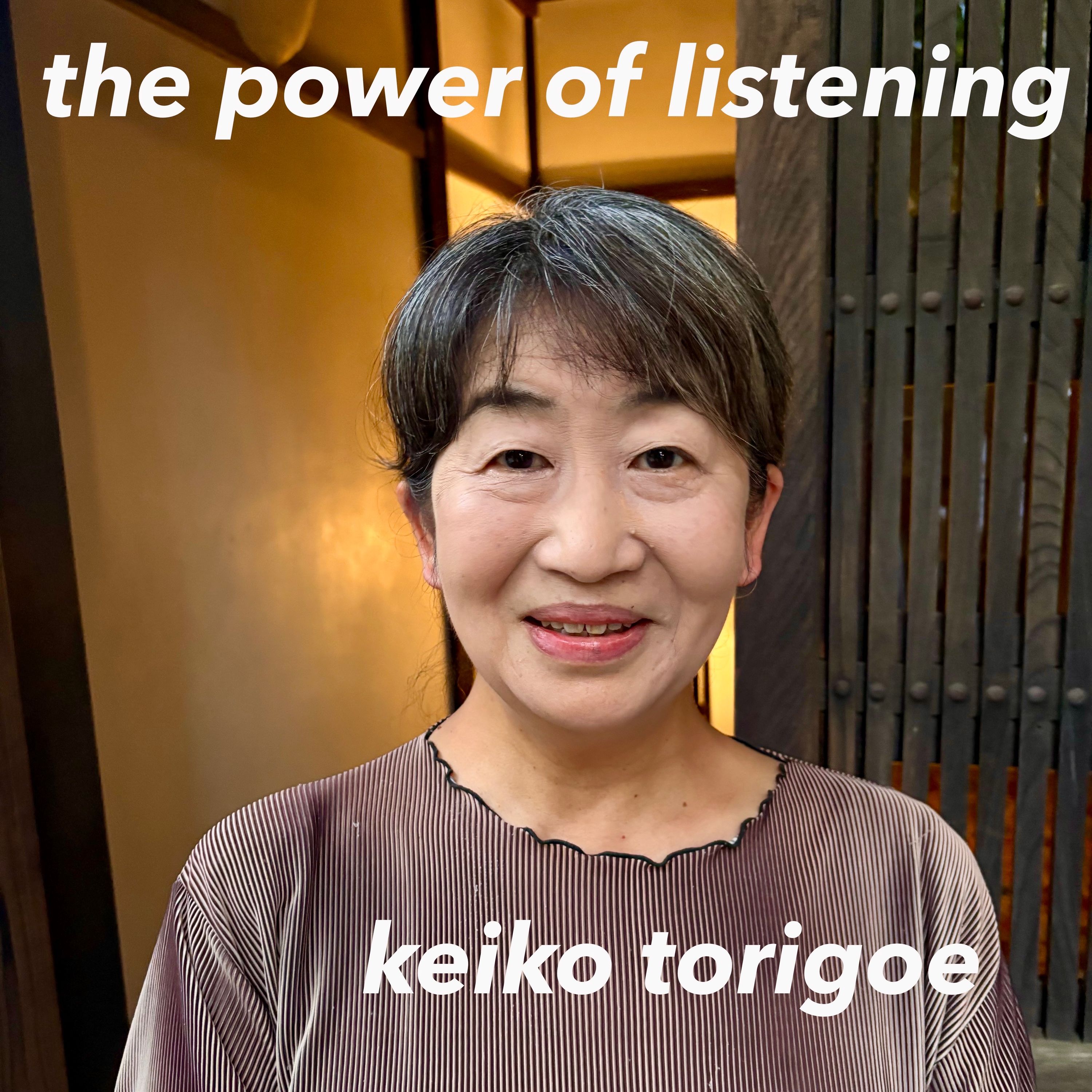
S6 Ep 236e236 keiko torigoe – the power of listening
The environmental issues currently at hand, including global warming, are related, but I believe that at their root lies the decline of our listening ability and the power of listening as humanity. This decline is not merely a matter of our listening ability weakening as we age, but rather it encompasses what we choose to listen to, how we perceive it, and all the various subjects of listening and methods of comprehension. I believe this decline is a collective issue for humanity, particularly in modern Western contexts where we have been taught that this is how to listen, especially in relation to music and everyday listening practices, and how we have become confined to these methods. We must have once believed in more locally rooted ways of listening, but we are losing that I think that is fundamentally connected to the current environmental issues. My conversation with Japanese musicologist and soundscape researcher Keiko Torigoe at her home in Tokyo on May 21, 2025. Keiko is retired from her position as professor at Aoyama Gakuin University in Tokyo and is currently President of the Soundscape Association of Japan. Keiko is a long-time friend and colleague in the international acoustic ecology community who has done important research on soundscapes in Canada and Japan. Keiko answered the two following questions in Japanese: first, ‘what is role of arts and culture is in times of crisis, collapse and renewal’ followed by ‘what about your current activities as a researcher and producer of community arts projects and what action points do you recommend’). I loved how her answers included the more-than-human world and locally rooted ways of listening. You can also listen to the original Japanese version of our conversation here. この対談のオリジナル日本語版はこちらでも聴くことができる。Show notes generated by Whisper Transcribe AIAction pointsRecognize the decline of listening ability in modern society and its connection to environmental issues.Broaden the concept of music to include communication with the natural realm.Deepen your connection with the land and local communities through artistic activities.Engage in collaborative projects that promote understanding and respect for diverse perspectives.Consider the impact of your actions on those around you, fostering intergenerational connections.Story PreviewImagine strolling around a tranquil pond in Japan, guided by a soundscape researcher who unveils the hidden stories of the land through music and conversation. This episode explores the power of listening, the interconnectedness of humans and nature, and the transformative potential of community art. Chapter SummaryThe Decline of ListeningIntroducing Keiko TorigoeArts and Culture in CrisisThe Narrowing Concept of MusicPersonal Journey and Artistic ExplorationTransformative Power of ArtFeatured QuotesI believe that at their root lies the decline of our listening ability, the power of listening as humanity.We have forgotten the other aspect of music, which is the concept of music that connects not just humans, but also the more than human world, allowing us to communicate with the entire natural realm.Art and such activities transform me, and having done it for many years, it gradually affects those around me as well.Behind the StoryClaude Schryer travels to Tokyo to meet with Keiko Torigoe, a renowned musicologist and soundscape researcher. Keiko shares her passion for reconnecting with the natural world through listening and artistic projects. Her insights are rooted in her research in both Canada and Japan and her personal experiences in her hometown. *END NOTES FOR ALL EPISODESNote : I'm currently 'pressing pause' and am not producing new content until further notice. Hey conscient listeners, I’ve been producing the conscient podcast as a learning and unlearning journey since May 2020. It’s my way to give back.This Indigenous Land Acknowledgement statement was developed by members of the Algonquin community for my former employer the Canada Council for the Arts. I have adapted slightly to make it my own.I acknowledge that my studio, located in Ottawa, is on the unceded, unsurrendered Territory of the Anishinaabe Algonquin Nation whose presence here reaches back to time immemorial.I recognize the Algonquins as the customary keepers and defenders of the Ottawa River Watershed and its tributaries. I honour their long history of welcoming many Nations to this beautiful territory and uphold and uplift the voice and values of our Host Nation.Further, I offer my respect and affirm the inherent and Treaty Rights of all Indigenous Peoples across this land and honour commitments to self-determination and sovereignty that have been made to Indigenous Nations and Peoples.I acknowledge the historical oppression of lands, cultures and the original Peoples in what we now know as Canada and fervently believe the Arts contribute to the healing and decolonizing journey we all share togetherIn parallel with the production of the conscie
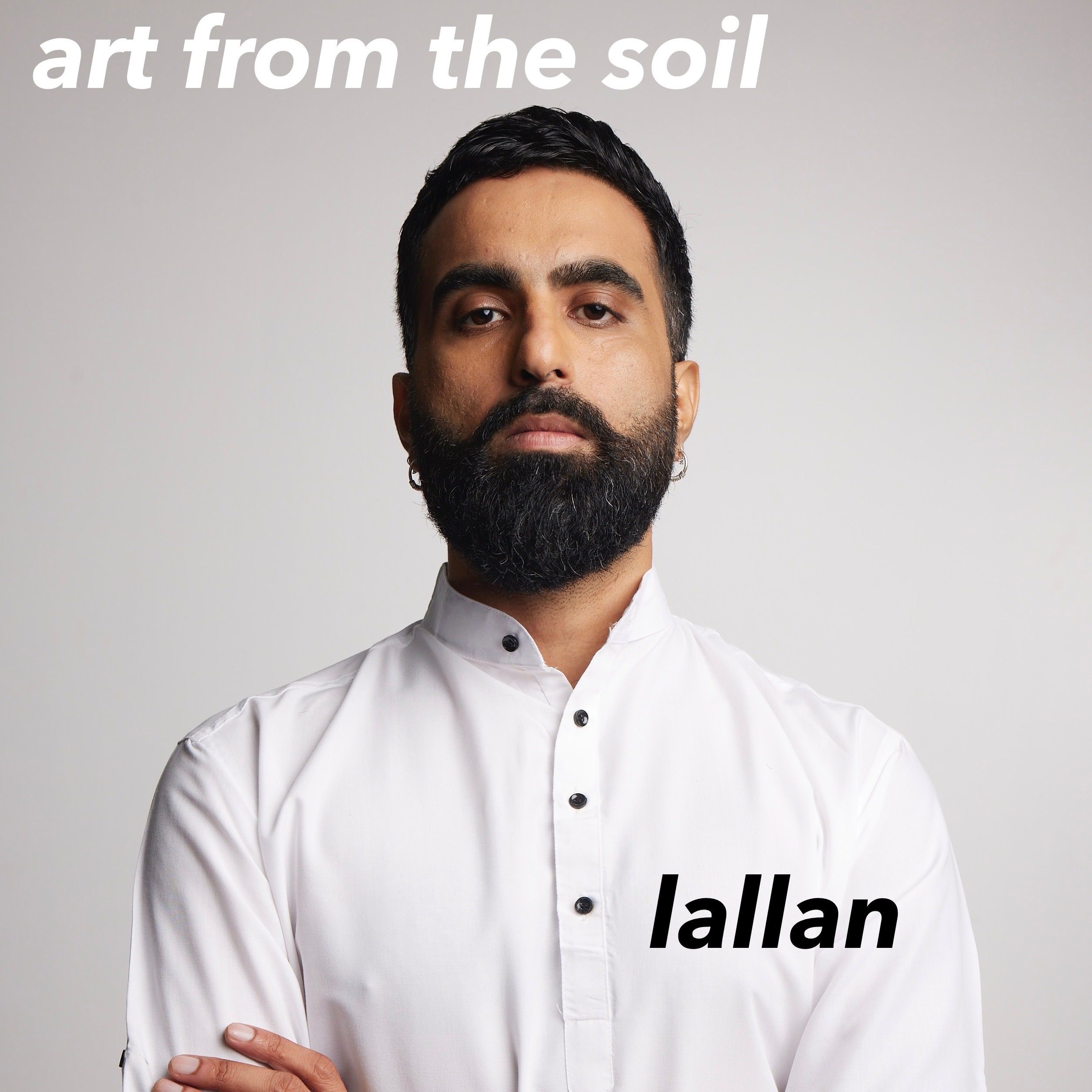
S6 Ep 235e235 lallan – art from the soil
My advice to artists would be drop every garb that you have, drop every piece of knowledge that you think you have. Head to the jungles, head to the rural places. We are living in a time of crisis. We need artists more than the scientists. We need artists more than the healers. We need artists more than anything because arts connect everybody. We need songs, we need stories, we need pictures, we need circles, we need Ubuntu to prosper. Traditional Western ways of, colonized ways of working will not save us as a species. They're not going to help us. They're only going to destroy. And the traditionally arts ecosystem exists like that everywhere in the world. Now we know that it's been going on for hundreds of years. We need to destroy that as artists and we need to head to where our roots are, which is in the soil. And our arts come from there.I met Lallan (Anirudh Lallan Choudhry) at the Sunshine Himalayan Cottage facility in the Tirthan Valley, Himachal Pradesh, India. The managing host of this facility, Panki Sood, introduced us. Lallan, is a multi-disciplinary artist and socially engaged artist who practice is ‘rooted deep in working with the earthen, on a severe lookout for the conditions which enable genuine co-authors within communities, forming narratives through extra-human design and enquiry’. He is the founder of Baadii, a rural art-house in Himachal Pradesh where he currently lives and is also working on community arts projects at Sunshine Himalayan Cottage with Panki and his team, which you’ll hear about in a few minutes. I want to thank Panki for introducing us and Lallan for this first conversation. Note: You can hear his latest musical production, Kyun, here). Below is a rough translation of the lyrics :Why is the world caught up in making excuses stillWhy are the machines continuously pumping smoke in the airBy whose permission did we dump all the garbage in the sea And who are the idiots building these dams trying to tie free rivers What is all this and why is this evenWhat is this world that humans are desiring? If everything is one day bound to be left here on the groundThen what is the use of constant fighting, over and over again?And why is it that we fill bombs and continue to drop them on our very own children? We are intoxicated by the notions of borders and religionAnd continue to revel in the blashpemy of it all So why is this evenThat destruction and more destruction is the only thing we want? Those who can be quiet and just listen, where are they?Why are my torchbearers full of greed who want to sell the world?Those who divide the we into you and meWhy has everyone chosen them to lead?Those who dry down the rivers and erase forests Whar are they doing in everyone's share of the earthWhy are the deprived, still deprivedWhat kind of progress is this? Wherever you see, its filled of smokeWhat kind of a fire of hatred have they fueled Douse it, douse it, douse itLet us breathe, of whatever breath is left Whatever little is left of life Might also die, if you do not stop!Show notes generated by Whisper Transcribe AI:Action pointsEmbrace traditional wisdom by learning from rural communities and their sustainable practices.Create art that addresses socio-political issues and promotes cultural movements.Build community art spaces that foster collaboration between artists, naturalists, and local populations.Highlight the cultural importance of ecological regions through art and storytelling.Negate purely aesthetic work in favor of art that drives social and ecological change.Story PreviewImagine an artist who champions rural wisdom, bridging ancient traditions with contemporary art to spark cultural and ecological movements. Discover how Lalan is building vibrant arts ecosystems in the Himalayas, proving that art can be a powerful catalyst for change.Chapter Summary00:00 The Call for Artists01:29 Setting Up an Arts Ecosystem03:25 Learning from Rural Communities06:30 Art as a Medium of Connection08:06 The Journey of a Self-Taught Artist10:01 Creating Impact Through Community Art12:28 Current Projects and Future AspirationsFeatured QuotesWe need artists more than the scientists. We need artists more than the healers… because arts connect everybody.The traditionally arts ecosystem exists like that everywhere in the world…We need to destroy that as artists and we need to head to where our roots are, which is in the soil.How can you as an artist live and create work in a rural so called remote setting where nobody even expects a doctor or an engineer to even work. So how can you make art there? Behind the StoryLallan’s journey from documentary filmmaker to socially engaged artist is rooted in a deep connection to rural communities and a desire to address pressing ecological and cultural issues. His work challenges the dominance of Western artistic models, advocating for a return to traditional wisdom and collaborative art practices that empower local voices. *END NOTES FOR ALL EPISODESNote : I
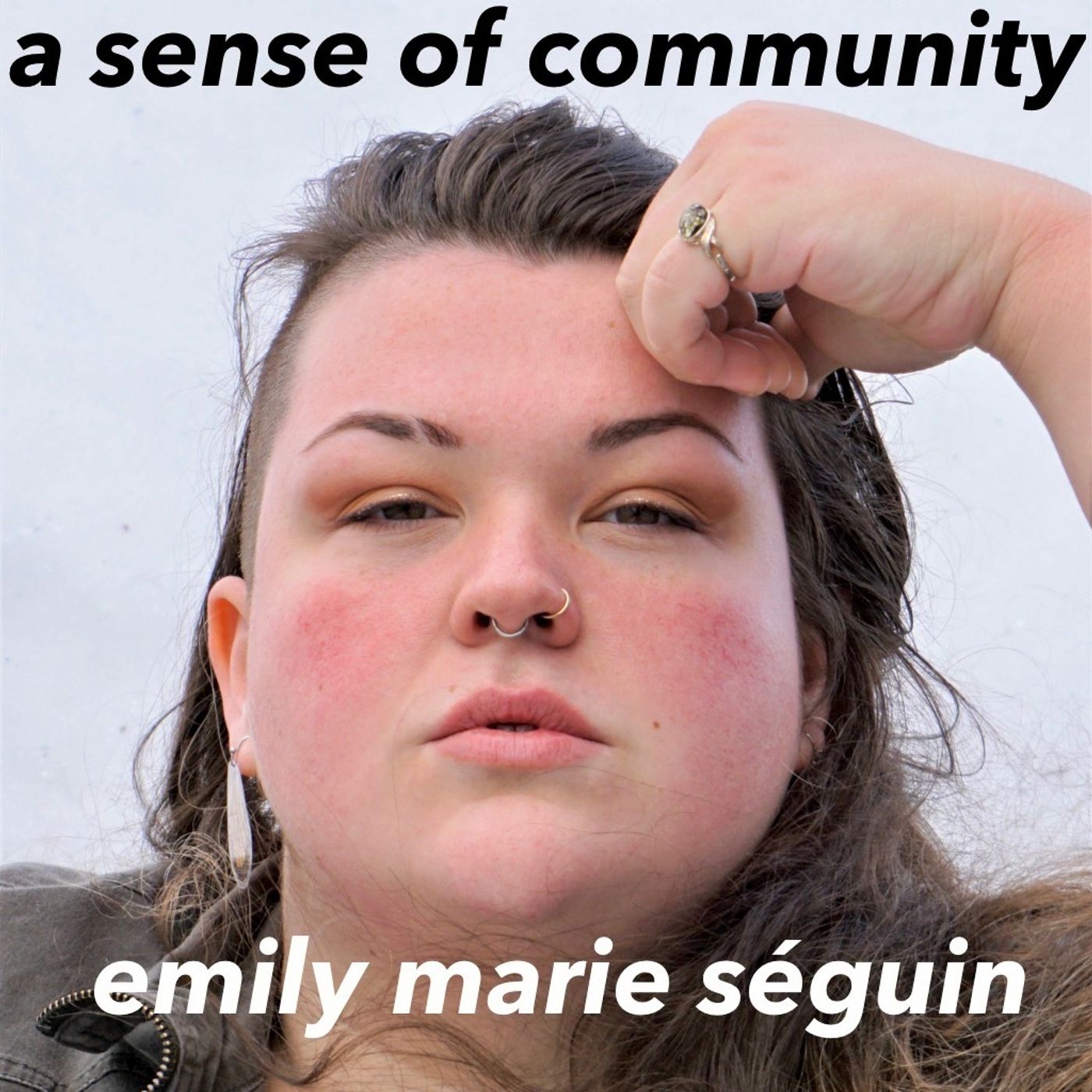
S6 Ep 234e234 emily marie séguin – a sense of community
Alongside the responsibility of holding people accountable and calling out what they see as unjust, I think that there's also an element of hope with artists, even when we're maybe a little bit melancholic, or even when we're in heavier periods in our lives, the act of creating denotes hope, because why would you create something if you didn't believe that it was going to lead to something? Why would you put energy into something if you didn't hope that it would nurture either a change or a feeling of belonging or something that'll bring people together and that will create a sense of community?My conversation with Emily Marie Séguin, a Franco-Ontarian 2-spirited performer, musician, theatre creator and visual artist of settlers and Anishinabe descent who creates work to recognize those who walked before her, and to support those who will after her. I wanted to speak to Emily because she is member of Éclore, a collective that builds bridges between artistic, environmental and activist communities, bringing people together and building hope for a fairer, more sustainable future. I had already spoken with Léa Vandycke, about Éclore, in episode 164 of balado conscient, and so Emily is about to tell us, in English, the story of Éclore from her point but she will also talk about her own work and vision as an indigenous artist, such as her G’zaagiin maleńki – I promise you a forestproject. I also had a French language conversation with Emily, see balado conscient épisode 168.Show notes generated by Whisper Transcribe AIAction pointsDiscover the mission of Éclore and how it fosters collaboration between artists, scientists, and activists.Explore the role of art in advocating for social causes, environmental protection, and Indigenous sovereignty.Learn about Emily’s project, G’zaagiin maleńki – je te promets une forêt and its goal of connecting young people with the sounds and importance of nature.Understand the significance of Indigenous voices in land-based solutions for a just and sustainable world.Gain actionable steps for artists and cultural workers to engage in advocacy and support grassroots movements.Story PreviewImagine a world where art, environmentalism, and activism intertwine, creating a tapestry of hope for a sustainable future. Emily Marie Séguin, a passionate Two-Spirit artist, shares her journey of bridging these worlds through her work with Éclore and her dedication to honouring the land.Chapter Summary00:00 The Duality of Art: Accountability and Hope01:23 Introducing Emily Marie Seguin03:44 The Birth of Éclore: A Collective for Change07:15 Art as a Reflection of Nature11:43 Taking Action: Empowering Artists and Cultural WorkersFeatured QuotesThe act of creating denotes hope, because why would you create something if you didn’t believe that it was going to lead to something?I think that the fight towards a more just and sustainable world, especially in a land-based context, needs to include Indigenous voices.Without hope, we wouldn’t do anything, we wouldn’t act, we wouldn’t continue to fight.Behind the StoryEmily’s involvement with Éclore stems from a deep-seated passion for plants, nature, and advocating for social justice. Inspired by the vision of Éclore's founders, she joined the collective to help build a community that serves as a resource for artists and fosters conversations across diverse disciplines, all united by a common goal of protecting the land and promoting sovereignty. *END NOTES FOR ALL EPISODESNote : I'm currently 'pressing pause' and am not producing new content until further notice. Hey conscient listeners, I’ve been producing the conscient podcast as a learning and unlearning journey since May 2020. It’s my way to give back.This Indigenous Land Acknowledgement statement was developed by members of the Algonquin community for my former employer the Canada Council for the Arts. I have adapted slightly to make it my own.I acknowledge that my studio, located in Ottawa, is on the unceded, unsurrendered Territory of the Anishinaabe Algonquin Nation whose presence here reaches back to time immemorial.I recognize the Algonquins as the customary keepers and defenders of the Ottawa River Watershed and its tributaries. I honour their long history of welcoming many Nations to this beautiful territory and uphold and uplift the voice and values of our Host Nation.Further, I offer my respect and affirm the inherent and Treaty Rights of all Indigenous Peoples across this land and honour commitments to self-determination and sovereignty that have been made to Indigenous Nations and Peoples.I acknowledge the historical oppression of lands, cultures and the original Peoples in what we now know as Canada and fervently believe the Arts contribute to the healing and decolonizing journey we all share togetherIn parallel with the production of the conscient podcast and its francophone counterpart, balado conscient, I I publish a free ‘a calm presence' monthly Substack see https://acalmp
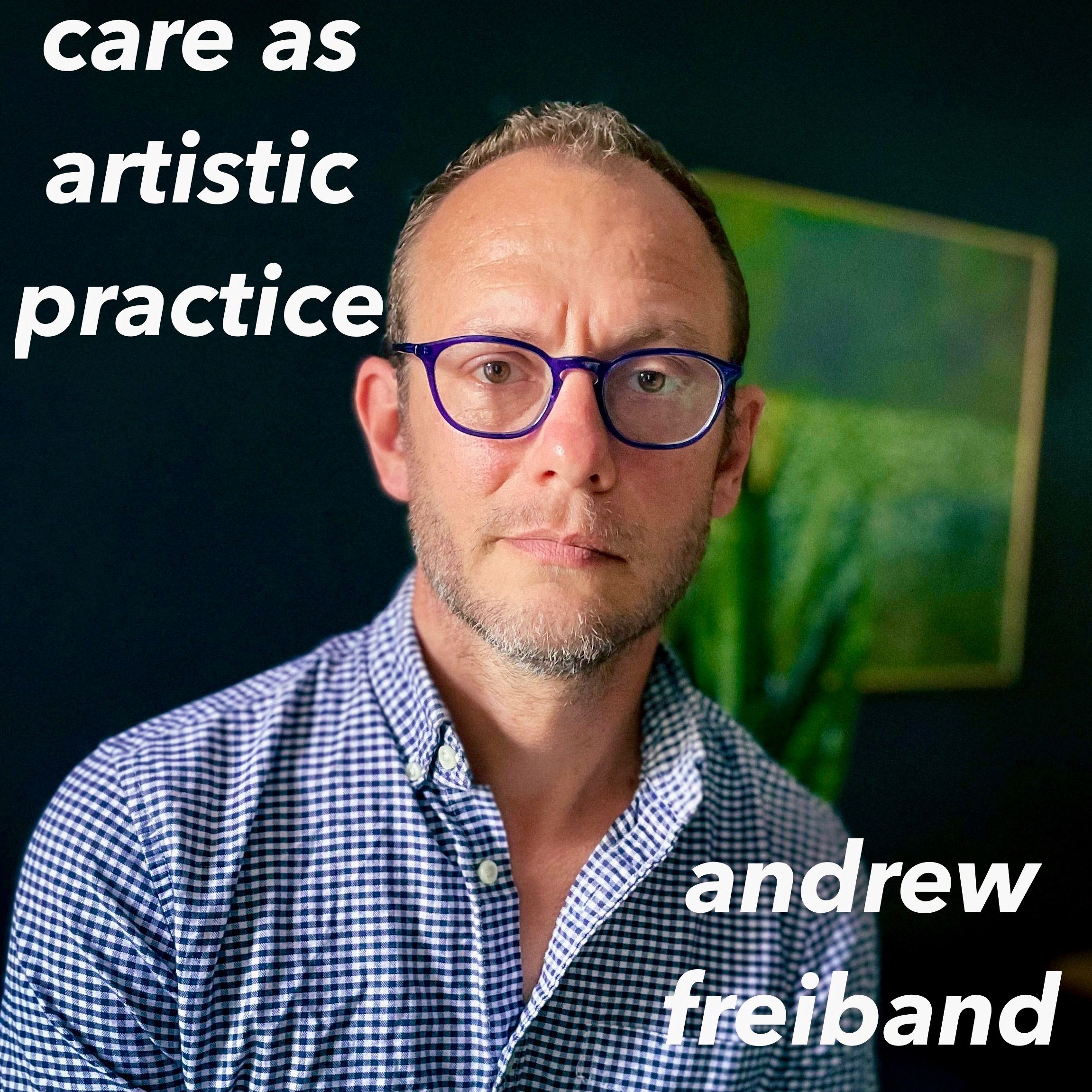
S6 Ep 233e233 andrew freiband – care as artistic practice
If we start to pay attention to what we pay attention to then we start to naturally slow down. We disconnect from the urgency, the crisis, and we start to realize that care, and I don't just mean care for one another, although that's a piece of it, but care also for our surroundings, care for our time, care for those nearest to us. That is where it begins. That is valuable work that is not recognized. I think that is what we can do on a day-to-day basis. That over a long term becomes artistic practice and becomes culture.My conversation withknowledge producer, artist, facilitator and director of the Artists’ Literacies Institute, Andrew Freiband. Our conversation was recorded, via Zoom, on April 18, 2025. My previous conversation with Andrew was on conscient podcast e13 in 2020 called weaving art into action, when we both participants in the Creative Climate Leadership course USA. Five years later, I was happy to discover that Andrew, informed by the work of British artists and writer Alana Jelinek, continues to weave art into action, notably with through his Systems Thinking for Socially Engaged Artists project, a seminar and dialogic discussion activity that introduces artists to basic concepts of systems science so we fleshed this out and Andrew and also talked about how the arts can be more useful to the near term and long-term future of our species. Show notes generated by Whisper Transcribe AIAction pointsRecognize the value of artists’ unique knowledge and perspectives beyond just their art.Understand artists as systems thinkers who can connect various systems, including economic and power systems.Challenge the notion that art should not be useful and embrace its potential for practical application.Pay attention to what you pay attention to, cultivating care for surroundings, time, and relationships.Consider the long-term cultural impact of artistic practices, which can outlast political and social structures.Story PreviewImagine a world grappling with mass grief during a pandemic, where traditional rituals are impossible. Discover how artists stepped up to create new ways to mourn and connect, revealing the profound value of art beyond aesthetics.Chapter Summary00:00 The Power of Attention01:01 Revisiting Conversations02:50 Art in Crisis: The COVID-19 Response05:15 Creating the Artist’s Grief Deck07:16 Rethinking the Role of Artists10:07 Navigating Systems and Agency12:21 The Intersection of Art and Activism13:50 The Slow Work of CultureFeatured QuotesIf we start to pay attention to what we pay attention to, we start to naturally slow down.Artists are valuable not for the art, but valuable for what they know and how they know it.Artists attention is enormously valuable…maybe the key currency of being an artist that we pay attention.Behind the StoryDuring the height of the COVID-19 pandemic, disaster relief agencies faced a challenge they weren’t equipped for: mass grief in isolation. Recognizing artists’ historical role in creating rituals, they sought help in developing new tools for mourning. This led to the creation of the Artist’s Grief Deck, a project highlighting the practical and connective power of art. *END NOTES FOR ALL EPISODESNote : I'm currently 'pressing pause' and am not producing new content until further notice. Hey conscient listeners, I’ve been producing the conscient podcast as a learning and unlearning journey since May 2020. It’s my way to give back.This Indigenous Land Acknowledgement statement was developed by members of the Algonquin community for my former employer the Canada Council for the Arts. I have adapted slightly to make it my own.I acknowledge that my studio, located in Ottawa, is on the unceded, unsurrendered Territory of the Anishinaabe Algonquin Nation whose presence here reaches back to time immemorial.I recognize the Algonquins as the customary keepers and defenders of the Ottawa River Watershed and its tributaries. I honour their long history of welcoming many Nations to this beautiful territory and uphold and uplift the voice and values of our Host Nation.Further, I offer my respect and affirm the inherent and Treaty Rights of all Indigenous Peoples across this land and honour commitments to self-determination and sovereignty that have been made to Indigenous Nations and Peoples.I acknowledge the historical oppression of lands, cultures and the original Peoples in what we now know as Canada and fervently believe the Arts contribute to the healing and decolonizing journey we all share togetherIn parallel with the production of the conscient podcast and its francophone counterpart, balado conscient, I I publish a free ‘a calm presence' monthly Substack see https://acalmpresence.substack.com. Your feedback is always welcome at claude [at] conscient [dot] ca and/or on social media: Facebook, Instagram, Linkedin, Threads, BlueSky, Mastodon, Tik Tok, YouTube and Substack.Share what you like, etcI am grateful and accountable to the earth a
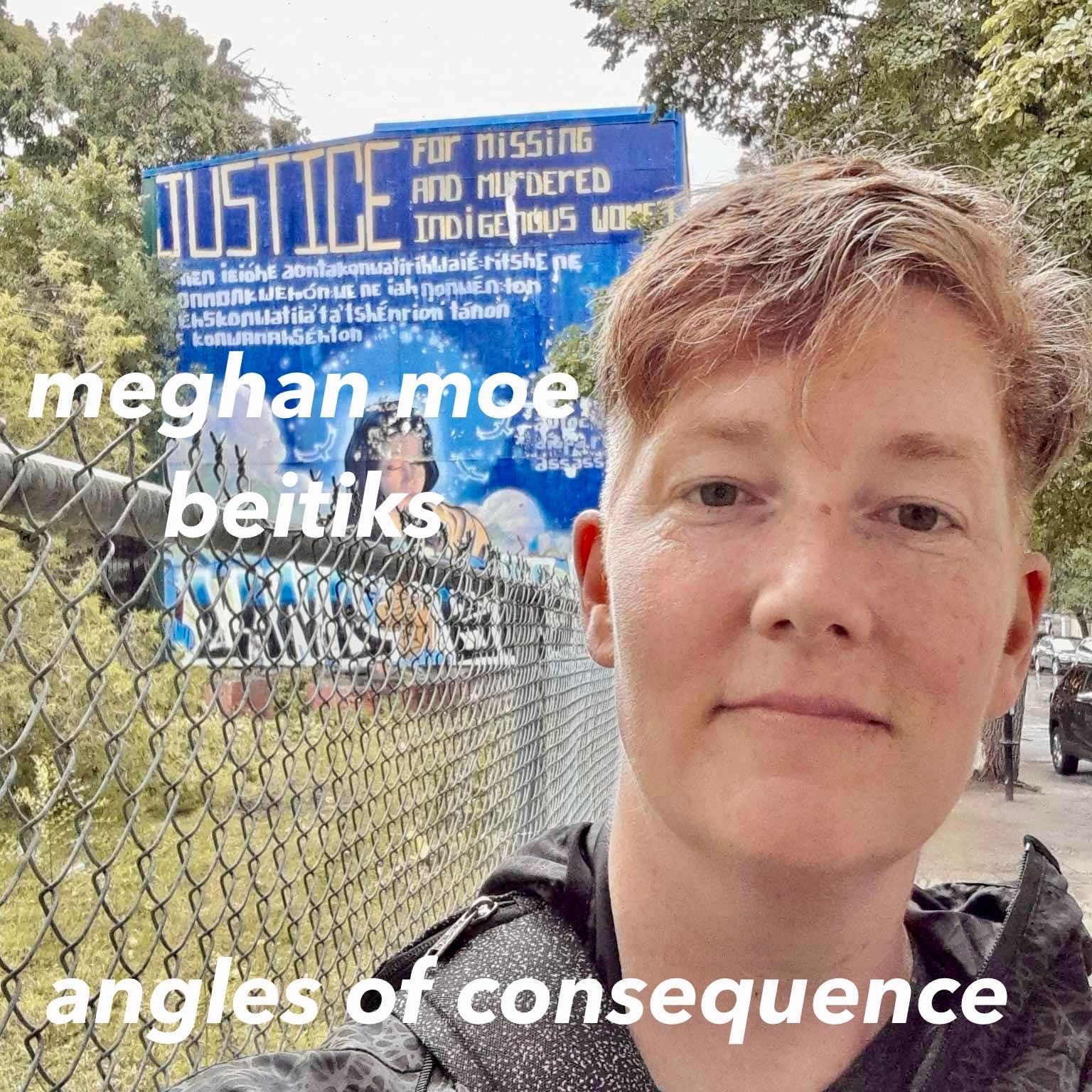
S6 Ep 232e232 meghan moe beitiks - angles of consequence
Even being confronted with something that is weird or uncomfortable: it’s character growth. You have to ask the question: why is this person doing this weird thing? It's a good exercise in empathy, to be perfectly honest. Why is this person doing this thing? Why does that make me uncomfortable? What, what is it about my perception that has shaped this experience for me? I feel like those are really essential questions for us to be constantly asking ourselves, especially in an age where there's a lot of discord, a lot of dissent and a lot of disagreement. And the better we understand ourselves, the better we're able to engage with humans who are different than us.My conversation with Meghan Moe Beitiks, assistant professor in theatre at Concordia University in Montreal. Meghan Moe is an artist and designer working with associations and disassociations of culture, nature and structure. Our mutual friend Ian Garrett thought we might get along. We did. Our conversation focused on Meghan Moe’s Angles of Consequence project, a season of site-specific performances with Canadian performers to create work with reflected sunlight in key sites of climate advocacy and destruction in Québec. Meghan Moe and I had tea in Montreal. It was a very, enlightening, conversation. Show notes generated by Whisper Transcribe AI:Action pointsRecognize art’s crucial role in processing emotions and spreading information during crises.Explore the use of reflected sunlight in art to highlight climate change issues.Support Indigenous resistance against fossil fuel expansion as an effective climate action.Consider the impact of positionality (literal and cultural) on our perspectives.Utilize resources like Canada Green Tools to calculate and reduce the carbon footprint of events.Story PreviewImagine art that dances with the sun, revealing hidden truths about our planet’s climate crisis. Megan Moe’s ‘Angles of Consequence’ uses reflected sunlight in powerful performances, sparking dialogue and demanding action.Chapter Summary00:00 The Power of Empathy01:05 Introducing Megan Moe01:31 Angles of Consequence03:08 Art as a Tool for Understanding04:35 Reflected Sunlight and Climate Change07:09 Indigenous Resistance and Environmental Impact09:49 Collaborating with NatureFeatured QuotesWe also need moments of digestion…to absorb and understand what we’ve experienced and what we’ve learned.The sun is not going to show up on your time. It doesn’t care whether you’re giving a performance.Being able to witness that up close and consider what that human is doing in relationship to your own humanness, I feel like makes us all clearer, more grounded and better.Behind the StoryMegan Moe’s project, ‘Angles of Consequence’, emerged from pandemic isolation and a fascination with reflected sunlight. It evolved into a series of site-specific performances addressing climate change in Québec, highlighting both the destructive forces of fossil fuels and the powerful resistance of Indigenous communities. The project aims to create an open-access guide, encouraging global engagement with sunlight performance art. *END NOTES FOR ALL EPISODESNote : I'm currently 'pressing pause' and am not producing new content until further notice. Hey conscient listeners, I’ve been producing the conscient podcast as a learning and unlearning journey since May 2020. It’s my way to give back.This Indigenous Land Acknowledgement statement was developed by members of the Algonquin community for my former employer the Canada Council for the Arts. I have adapted slightly to make it my own.I acknowledge that my studio, located in Ottawa, is on the unceded, unsurrendered Territory of the Anishinaabe Algonquin Nation whose presence here reaches back to time immemorial.I recognize the Algonquins as the customary keepers and defenders of the Ottawa River Watershed and its tributaries. I honour their long history of welcoming many Nations to this beautiful territory and uphold and uplift the voice and values of our Host Nation.Further, I offer my respect and affirm the inherent and Treaty Rights of all Indigenous Peoples across this land and honour commitments to self-determination and sovereignty that have been made to Indigenous Nations and Peoples.I acknowledge the historical oppression of lands, cultures and the original Peoples in what we now know as Canada and fervently believe the Arts contribute to the healing and decolonizing journey we all share togetherIn parallel with the production of the conscient podcast and its francophone counterpart, balado conscient, I I publish a free ‘a calm presence' monthly Substack see https://acalmpresence.substack.com. Your feedback is always welcome at claude [at] conscient [dot] ca and/or on social media: Facebook, Instagram, Linkedin, Threads, BlueSky, Mastodon, Tik Tok, YouTube and Substack.Share what you like, etcI am grateful and accountable to the earth and the human labour that provided me with the privilege of produc
S6 Ep 231e231 kelly wilhelm – what can we contribute?
Part of the answer to that question lies in the arts and culture understanding the role it can have in a time of collapse or crisis, and to understand that itself is not in crisis. I think that's a big point because we hear a lot right now around the crisis that is happening in cultural institutions and in the arts. And in fact, the crisis that is happening is in our world, right? It's an ecological crisis, it's a world order crisis, it's a humanitarian crisis. The arts themselves have a lot to contribute to these moments in terms of meaning, belonging, helping us to process those crises. But the arts themselves are not in a crisis. What we can do, though, is place ourselves within those larger crises and ask the question, what can we contribute that's of meaning and value to people as they experience these other things that are really significant in the world that we're living in right now.My conversation with consultant and strategist in public policy, arts, culture and creative industries, Kelly Wilhelm, who currently leads the Cultural Policy Hub at OCAD University in Tkaronto. Kelly is a long-time friend and colleague with whom I have had many passionate conversations about art, culture, leadership, life and how to have fun through it all. This conversation was no exception. We talked a lot about precarity in the arts sector but also its resilience. You’ll hear me refer to Kelly’s A New Project on Precarity and Sustainability article in the recording. I love the way Kelly always finds a way to ask good and timely questions.Episode notes generated by Whisper Transcribe AIAction pointsChallenge traditional leadership models in arts organizations to foster inclusivity and relevance.Advocate for the arts and culture in broader public policy discussions, including areas like AI.Examine the financial conditions and precarity affecting individual artists and creators.Re-evaluate the not-for-profit model in the arts to identify sustainable governance structures.Promote collaboration between arts organizations and other sectors to contribute to democratic processes and public good.Story PreviewWhat if the arts aren’t in crisis, but are actually a crucial part of the solution to global challenges? Kelly Wilhelm challenges conventional thinking and inspires us to reimagine the role of cultural institutions in today’s world. This episode dives into leadership, equity, and the resilience of the arts sector. Chapter Summary00:00 The Role of Arts in Crisis01:16 A Conversation with Kelly Wilhelm02:25 Connecting Cultural Institutions to Communities04:53 The Changing Role of Cultural Institutions06:08 Rethinking Leadership in the Arts08:51 The Cultural Policy Hub at OCAD University10:51 Addressing Precarity in the Arts SectorFeatured QuotesThe arts themselves have a lot to contribute to these moments in terms of meaning, belonging, helping us to process those crises.We need to be much more flexible in how we think about structure and how we think about how we deliver that meaning.How do we ensure that these institutions are led, that they… are reflective and meaningful to the people that they are there to serve.Behind the StoryKelly Wilhelm’s journey began with a concern about the disconnect between cultural institutions and the communities they serve. Beginning her career in Toronto in the late 1990s, Kelly saw the contrast between the work show and stories told in public art galleries and museums, and the diverse communities outside their doors. She became determined to bridge this gap. Her work at the Cultural Policy Hub at OCAD University is an example of her commitment to equity, relevance, and the power of the arts to create meaningful change. *END NOTES FOR ALL EPISODESNote : I'm currently 'pressing pause' and am not producing new content until further notice. Hey conscient listeners, I’ve been producing the conscient podcast as a learning and unlearning journey since May 2020. It’s my way to give back.This Indigenous Land Acknowledgement statement was developed by members of the Algonquin community for my former employer the Canada Council for the Arts. I have adapted slightly to make it my own.I acknowledge that my studio, located in Ottawa, is on the unceded, unsurrendered Territory of the Anishinaabe Algonquin Nation whose presence here reaches back to time immemorial.I recognize the Algonquins as the customary keepers and defenders of the Ottawa River Watershed and its tributaries. I honour their long history of welcoming many Nations to this beautiful territory and uphold and uplift the voice and values of our Host Nation.Further, I offer my respect and affirm the inherent and Treaty Rights of all Indigenous Peoples across this land and honour commitments to self-determination and sovereignty that have been made to Indigenous Nations and Peoples.I acknowledge the historical oppression of lands, cultures and the original Peoples in what we now know as Canada and fervently believe the Arts contribut
S6 Ep 230e230 sarah peebles – how can we reciprocate?
How can we reciprocate since the world keeps us alive on the one hand, and on the other hand, all these things, birds and you name it, right? Fish and moose and beaver, these are things we love. So, if this is the world we love, we're going to have feelings about how we might want to do positive things to keep this world we love as nurtured as possible. And we also hopefully want to ask, how do we keep our own ability to be alive and thrive here as humans?Sarah Peebles is a Toronto-based installation artist, composer and music improvisor. Much of her work explores digitally manipulated found sound and unconventional methods of amplification. She has also collaborated with artists, technicians and bee biologists on a series of projects addressing pollination ecology and biodiversity, entitled ‘Resonating Bodies’ since 2008. I loved her ideas on reciprocity, which, indirectly, is what this podcast tries to do by sharing the work of ecological artists like Sarah and their vision of a world where we can peacefully cohabitate with the more-than-human world. Show notes generated by Whisper Transcribe AIAction pointsObserve the natural world closely to understand its intricate feedback loops.Support native bee populations by considering land management practices and avoiding harmful pesticides.Explore art as a medium for understanding and engaging with ecological issues.Question conventional agricultural practices and advocate for sustainable alternatives.Recognize the impact of individual choices on the broader ecosystem and strive for reciprocity.Story PreviewImagine stepping into a world where the secret lives of native, wild bees are amplified, revealing a symphony of tiny movements and vital connections. Sarah Peebles’ art invites us to observe and listen closely to nature’s diverse, essential players and reconsider our role in its delicate dance. Chapter Summary00:00 The Concept of Reciprocity01:00 Meet Sarah Peebles02:24 Engaging with Biodiversity05:24 Art as a Medium for Science10:14 The Role of Art in HealingFeatured QuotesHow can we reciprocate since the world keeps us alive?They (bees) don’t care about me at all. They’re doing what they do. I’m helping to provide places in which they can forage and nest which we can visually and sonically access.It’s a little bit easier to just allow people to have a sense of wonder and go from there.Behind the StorySarah Peebles’ journey exploring art and biodiversity began with a concern: despite years of recording natural sounds, she saw no real change in environmental awareness. This led her to collaborate with wild bee biologist Professor Lawrence Packer, sparking a passion for native bees and a desire to make biodiversity tangible through art. Her ‘Deluxe Log’ and other "Resonating Bodies" installations are a testament to this dedication, offering a unique window into the hidden world of these essential pollinators and the habitat that supports them. *END NOTES FOR ALL EPISODESNote : I'm currently 'pressing pause' and am not producing new content until further notice. Hey conscient listeners, I’ve been producing the conscient podcast as a learning and unlearning journey since May 2020. It’s my way to give back.This Indigenous Land Acknowledgement statement was developed by members of the Algonquin community for my former employer the Canada Council for the Arts. I have adapted slightly to make it my own.I acknowledge that my studio, located in Ottawa, is on the unceded, unsurrendered Territory of the Anishinaabe Algonquin Nation whose presence here reaches back to time immemorial.I recognize the Algonquins as the customary keepers and defenders of the Ottawa River Watershed and its tributaries. I honour their long history of welcoming many Nations to this beautiful territory and uphold and uplift the voice and values of our Host Nation.Further, I offer my respect and affirm the inherent and Treaty Rights of all Indigenous Peoples across this land and honour commitments to self-determination and sovereignty that have been made to Indigenous Nations and Peoples.I acknowledge the historical oppression of lands, cultures and the original Peoples in what we now know as Canada and fervently believe the Arts contribute to the healing and decolonizing journey we all share togetherIn parallel with the production of the conscient podcast and its francophone counterpart, balado conscient, I I publish a free ‘a calm presence' monthly Substack see https://acalmpresence.substack.com. Your feedback is always welcome at claude [at] conscient [dot] ca and/or on social media: Facebook, Instagram, Linkedin, Threads, BlueSky, Mastodon, Tik Tok, YouTube and Substack.Share what you like, etcI am grateful and accountable to the earth and the human labour that provided me with the privilege of producing this podcast, including the toxic materials and extractive processes behind the computers, recorders, transportation systems and infrastructure that made this pr
S6 Ep 229e229 don hill – amplifying voices
There are a lot of people that don't have the kind of talent that you do, Claude, or for that matter, I do and they have voices, but you can't hear them. So our job in the art world, I would say, is to amplify those voices in a way that's comprehensive and understandable by the folks who should be paying attention to what's going on around them and not talking at people. So my complaint these days at the art world is we're just talking at people, we're not listening to them. And if we did listen to them, you'll find that the world is actually quite a hopeful place. And then, in many respects, what Trump 2.0 is doing – is what Hazel Henderson was suggesting - is the soft path to change is collapse. He's exacerbating a situation that we've been hanging onto for perhaps far too long in even in the art world.Don Hill is a sound designer, immersive & multimedia artist, science journalist, broadcaster & public speaker. Don and I were both raised in Northern Ontario and are both sound based artists with a keen interest in technology and spirituality. I’ve have had long series of email exchanges over the years with Don about this podcast and my a calm presence Substack about some my doomist tendencies where Don often helped me considered more balanced points of view. We don’t always agree on all the issues but that’s part of the fun of art and listening. Show notes generated by Whisper Transcribe AIAction pointsAmplify marginalized voices within the art world and beyond to foster inclusivity and understanding.Challenge the commodification of fear and cortisol in media by promoting empathy and collective experiences.Embrace a slower, more contemplative approach to art and technology to counteract the accelerating nature of modern life.Recognize the limitations of hyper-individualized art and strive for collective, grounded emotional connections.Consider the future of humanity in the context of space exploration, incorporating elements of spirituality and acknowledging physiological limitations.Story PreviewCan art save us from our hyper-accelerated, fear-driven world? Journey with Don Hill as he explores how slowing down, listening deeply, and amplifying unheard voices can create collective empathy and a hopeful vision for the future.Chapter Summary00:00 Amplifying Voices in the Art World01:06 The Shift in Artistic Values03:06 Navigating Personal and Collective Grief05:01 Commodifying Fear in Art and Media07:19 The Evolution of Story Trees09:30 Slowing Down in a Fast-Paced World12:47 Future Visions and the Role of ArtFeatured QuotesWe’re just talking at people, we’re not listening to them.The art world as I understand it, is more about real estate, you know, perceived value and hoarding.We’ve commodified fear, we’ve commodified cortisol, and that seems to be the ingredient that makes social media so attractive.Behind the StoryThe episode delves into the state of the modern art world, critiquing its focus on real estate, perceived value, and the commodification of fear. It contrasts this with a call for art that fosters collective empathy and addresses societal challenges. The discussion highlights the importance of slowing down in a technologically accelerated world, drawing on personal anecdotes and experiences to illustrate the transformative power of mindful engagement with art. *END NOTES FOR ALL EPISODESNote : I'm currently 'pressing pause' and am not producing new content until further notice. Hey conscient listeners, I’ve been producing the conscient podcast as a learning and unlearning journey since May 2020. It’s my way to give back.This Indigenous Land Acknowledgement statement was developed by members of the Algonquin community for my former employer the Canada Council for the Arts. I have adapted slightly to make it my own.I acknowledge that my studio, located in Ottawa, is on the unceded, unsurrendered Territory of the Anishinaabe Algonquin Nation whose presence here reaches back to time immemorial.I recognize the Algonquins as the customary keepers and defenders of the Ottawa River Watershed and its tributaries. I honour their long history of welcoming many Nations to this beautiful territory and uphold and uplift the voice and values of our Host Nation.Further, I offer my respect and affirm the inherent and Treaty Rights of all Indigenous Peoples across this land and honour commitments to self-determination and sovereignty that have been made to Indigenous Nations and Peoples.I acknowledge the historical oppression of lands, cultures and the original Peoples in what we now know as Canada and fervently believe the Arts contribute to the healing and decolonizing journey we all share togetherIn parallel with the production of the conscient podcast and its francophone counterpart, balado conscient, I I publish a free ‘a calm presence' monthly Substack see https://acalmpresence.substack.com. Your feedback is always welcome at claude [at] conscient [dot] ca and/or on social media: Faceb