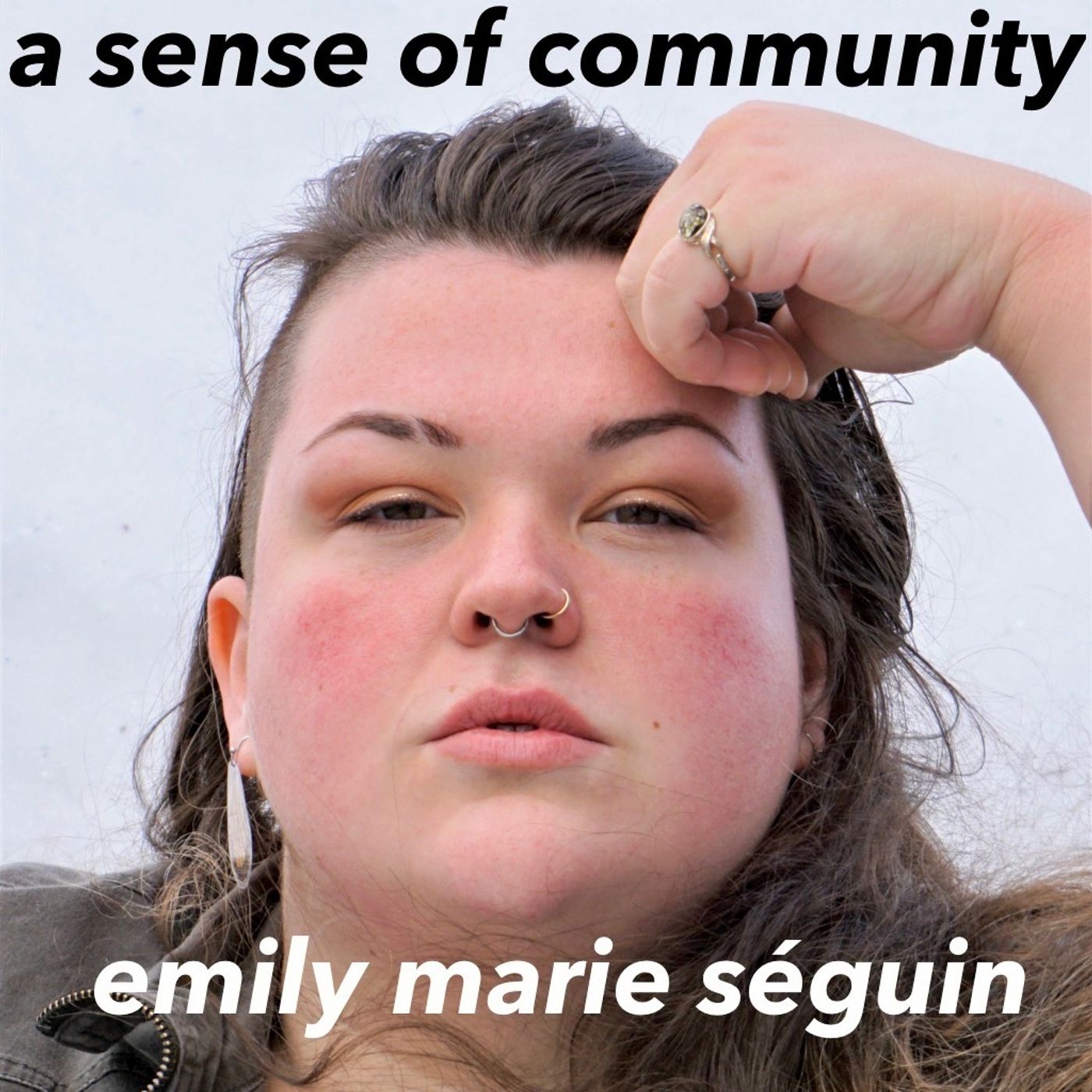
e234 emily marie séguin – a sense of community
conscient podcast · Emily Marie Séguin, Claude Schryer
Audio is streamed directly from the publisher (cdn.simplecast.com) as published in their RSS feed. Play Podcasts does not host this file. Rights-holders can request removal through the copyright & takedown page.
Show Notes
- Alongside the responsibility of holding people accountable and calling out what they see as unjust, I think that there's also an element of hope with artists, even when we're maybe a little bit melancholic, or even when we're in heavier periods in our lives, the act of creating denotes hope, because why would you create something if you didn't believe that it was going to lead to something? Why would you put energy into something if you didn't hope that it would nurture either a change or a feeling of belonging or something that'll bring people together and that will create a sense of community?
My conversation with Emily Marie Séguin, a Franco-Ontarian 2-spirited performer, musician, theatre creator and visual artist of settlers and Anishinabe descent who creates work to recognize those who walked before her, and to support those who will after her. I wanted to speak to Emily because she is member of Éclore, a collective that builds bridges between artistic, environmental and activist communities, bringing people together and building hope for a fairer, more sustainable future. I had already spoken with Léa Vandycke, about Éclore, in episode 164 of balado conscient, and so Emily is about to tell us, in English, the story of Éclore from her point but she will also talk about her own work and vision as an indigenous artist, such as her G’zaagiin maleńki – I promise you a forestproject. I also had a French language conversation with Emily, see balado conscient épisode 168.
Show notes generated by Whisper Transcribe AI
Action points
- Discover the mission of Éclore and how it fosters collaboration between artists, scientists, and activists.
- Explore the role of art in advocating for social causes, environmental protection, and Indigenous sovereignty.
- Learn about Emily’s project, G’zaagiin maleńki – je te promets une forêt and its goal of connecting young people with the sounds and importance of nature.
- Understand the significance of Indigenous voices in land-based solutions for a just and sustainable world.
- Gain actionable steps for artists and cultural workers to engage in advocacy and support grassroots movements.
Story Preview
Imagine a world where art, environmentalism, and activism intertwine, creating a tapestry of hope for a sustainable future. Emily Marie Séguin, a passionate Two-Spirit artist, shares her journey of bridging these worlds through her work with Éclore and her dedication to honouring the land.
Chapter Summary
00:00 The Duality of Art: Accountability and Hope
01:23 Introducing Emily Marie Seguin
03:44 The Birth of Éclore: A Collective for Change
07:15 Art as a Reflection of Nature
11:43 Taking Action: Empowering Artists and Cultural Workers
Featured Quotes
- The act of creating denotes hope, because why would you create something if you didn’t believe that it was going to lead to something?
- I think that the fight towards a more just and sustainable world, especially in a land-based context, needs to include Indigenous voices.
- Without hope, we wouldn’t do anything, we wouldn’t act, we wouldn’t continue to fight.
Behind the Story
Emily’s involvement with Éclore stems from a deep-seated passion for plants, nature, and advocating for social justice. Inspired by the vision of Éclore's founders, she joined the collective to help build a community that serves as a resource for artists and fosters conversations across diverse disciplines, all united by a common goal of protecting the land and promoting sovereignty.
*
END NOTES FOR ALL EPISODES
Note : I'm currently 'pressing pause' and am not producing new content until further notice.
Hey conscient listeners,
I’ve been producing the conscient podcast as a learning and unlearning journey since May 2020. It’s my way to give back.
This Indigenous Land Acknowledgement statement was developed by members of the Algonquin community for my former employer the Canada Council for the Arts. I have adapted slightly to make it my own.
- I acknowledge that my studio, located in Ottawa, is on the unceded, unsurrendered Territory of the Anishinaabe Algonquin Nation whose presence here reaches back to time immemorial.
- I recognize the Algonquins as the customary keepers and defenders of the Ottawa River Watershed and its tributaries. I honour their long history of welcoming many Nations to this beautiful territory and uphold and uplift the voice and values of our Host Nation.
- Further, I offer my respect and affirm the inherent and Treaty Rights of all Indigenous Peoples across this land and honour commitments to self-determination and sovereignty that have been made to Indigenous Nations and Peoples.
- I acknowledge the historical oppression of lands, cultures and the original Peoples in what we now know as Canada and fervently believe the Arts contribute to the healing and decolonizing journey we all share together
In parallel with the production of the conscient podcast and its francophone counterpart, balado conscient, I I publish a free ‘a calm presence' monthly Substack see https://acalmpresence.substack.com.
Your feedback is always welcome at claude [at] conscient [dot] ca and/or on social media: Facebook, Instagram, Linkedin, Threads, BlueSky, Mastodon, Tik Tok, YouTube and Substack.
Share what you like, etc
I am grateful and accountable to the earth and the human labour that provided me with the privilege of producing this podcast, including the toxic materials and extractive processes behind the computers, recorders, transportation systems and infrastructure that made this production possible.
Thanks for listening.
Claude Schryer
Latest update on March 21, 2026