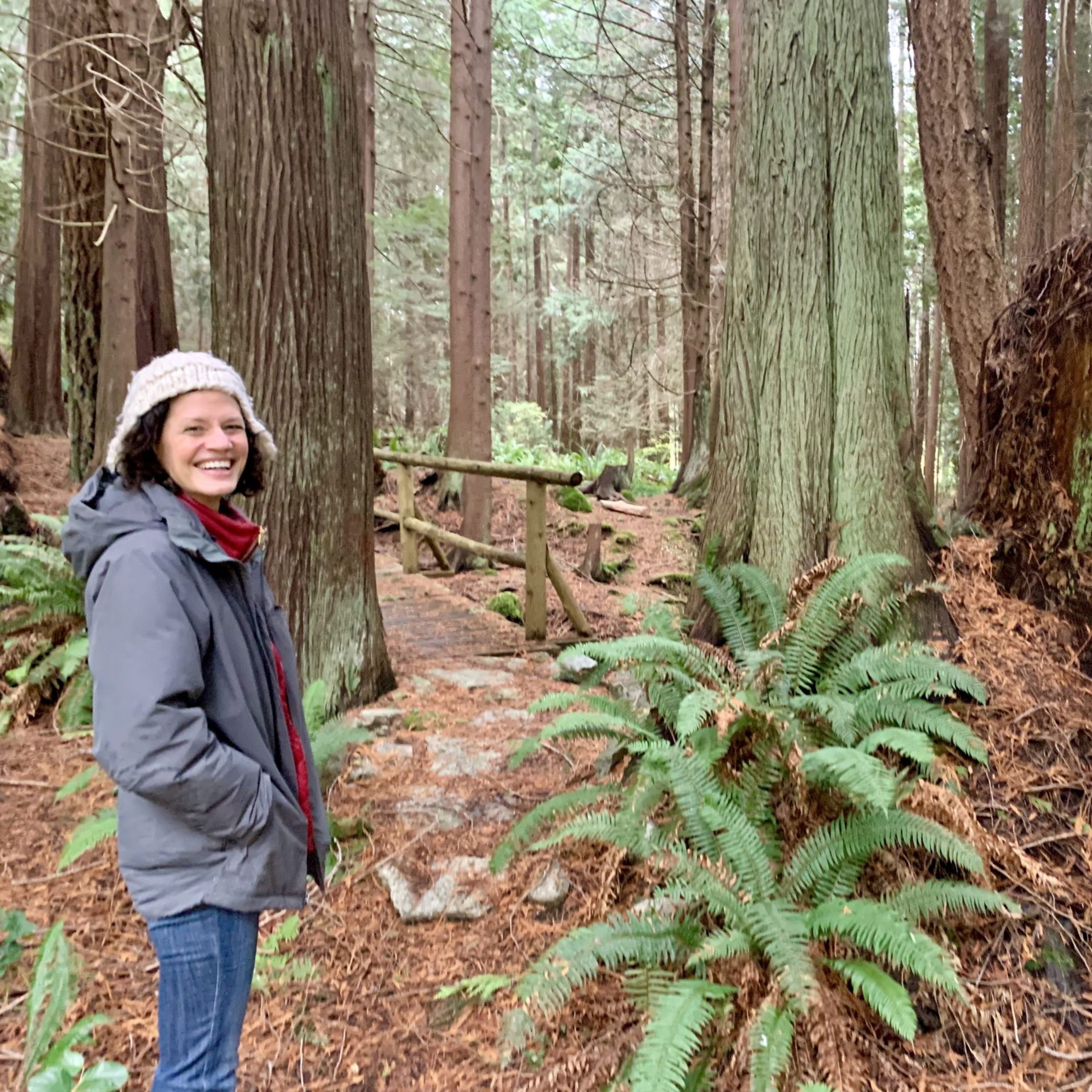
e87 kendra fanconi – on the artist brigade, ben okri, eco-restoration, eco-grief & reauthoring the world
My 2nd conversation with theatre artist and art + climate activist Kendra Fanconi in Robert’s Creek, BC about the ‘Artists Brigade’, Ben Okri, eco-restoration, eco-grief, eco-anxiety & reauthoring the world, with excerpts from e43 haley, e30 maggs & é37 lebeau.
conscient podcast · Claude Schryer, Kendra Fanconi
Audio is streamed directly from the publisher (cdn.simplecast.com) as published in their RSS feed. Play Podcasts does not host this file. Rights-holders can request removal through the copyright & takedown page.
Show Notes
- 'We are all artists of the Anthropocene. We inherently are because this is the world that we're living in right now. There's no other world. We were down earlier at Robert's Creek (BC) and it's a salmon bearing stream. I think of it like we're artists in the Anthropocene, like fish would be in the ocean: the water is all around us and the Anthropocene is all around us. I think it may be what Ben Okri is tasking us with is: can you describe the water? It's all we know, but we need to be able to look from this moment now into the future and maybe that's the job of artists. We're the visionaries, we can see the future and we can envision it in different ways. I think he speaks to that too at the end of the article about saying part of why we need to talk about the times we're in now is in relationship to a future, whatever that future looks like. And I do spend a lot of time trying to negotiate my belief in the future.'
Kendra Fanconi, Robert's Creek, BC 2021
My 2nd conversation with theatre artist and art + climate activist Kendra Fanconi in Robert’s Creek, BC about the ‘Artist Brigade’, Ben Okri, eco-restoration, eco-grief & reauthoring the world, with excerpts from e43 haley, e30 maggs & é37 lebeau.
Robert’s Creek is on the ancient and unceded territory of the shishalh Nation. The shishalh people call Robert’s Creek xwesam.
I’ve known Kendra for many years, first through her work with Radix Theatre then as an arts and environment advocate in the community, notably through The Only Animal company, which she co-founded with Eric Rhys Miller in 2005 and which has created over 30 shows that ‘take theatre places it has never gone before’. I’ve always admired Kendra’s vision, her calm demeanour, her strategic mind, and deep commitment to environment issues, as you’ll hear on our conversation, which recorded in her kitchen in Robert’s Creek, BC.
My goal with this series of second conversations is to go deeper into issues from our initial conversation, to hear updates on their work as well as their vision for the future.
Kendra gave me an update on the ‘Artists Brigade’ project, her perspectives Nigerian novelist and poet Ben Okri’s call to action Artists must confront the climate crisis – we must write as if these are the last days article, ecological restoration, the work of death doula and climate grief advisor Corey Mathews (Hardeman), the impact of eco-anxiety and about reauthoring the world, including excerpts from e43 haley, e30 maggs & é37 lebeau.
Links mentioned during our conversation :
- Jason DeCaires Taylor (coral reef work)
- Alana Mitchell
- Greenhouse (two-day climate intensive for Artist Brigade)
- David Suzuki Foundation
I was also moved by this quote from my conversation with Kendra:
I think the climate movement is full of love and care. Those are the people who get involved. Even though we have this sort of vision of the angry activists. I think at the heart of it, it's about care and love. And so, I found that definition of climate grief and the link of love and loss to be very reassuring and to know that grieving in community, which may be is, I mentioned to you earlier, this sort of love that I have for this climate brethren, artists who care about climate, that I've found on how nourishing that is for me. Maybe we all do it together? We're locked in this love and loss and we're doing it as a community and versus doing it alone, which I feel like I did do for many years before I got involved in this way. It's just so much better.
Excerpt from previous conscient episodes used in e87:
David Haley (e43 haley):
What I have learned to do, and this is my practice, is to focus on making space. This became clear to me when I read, Lila : An inquiry into morals by Robert Pirsig. Towards the end of the book, he suggests that the most moral act of all, is to create the space for life to move onwards and it was one of those sentences that just rang true with me, and I've held onto that ever since and pursued the making of space, not the filling of it.
David Maggs (e30 maggs):
Complexity is the world built of relationships and it's a very different thing to engage what is true or real in a complexity framework than it is to engage in it, in what is a modernist Western enlightenment ambition, to identify the absolute objective properties that are intrinsic in any given thing. Everyone is grappling with the fact that the world is exhibiting itself so much in these entanglements of relationships. The arts are completely at home in that world. And so, we've been sort of under the thumb of the old world. We've always been a kind of second-class citizen in an enlightenment rationalist society. But once we move out of that world and we move into a complexity framework, suddenly the arts are entirely at home, and we have capacity in that world that a lot of other sectors don't have. What I've been trying to do with this report (Art and the World After This) is articulate the way in which these different disruptions are putting us in a very different reality and it's a reality in which we go from being a kind of secondary entertaining class to, maybe, having a capacity to sit at the heart of a lot of really critical problem-solving challenges.
Anne-Catherine Lebeau (é37 lebeau.):
Note: translation from the French
For me, it is certain that we need more collaboration. That's what's interesting. Moving from a 'Take Make Waste' model to 'Care Dare Share'. To me, that says a lot. I think we need to look at everything we have in the arts as a common good that we need to collectively take care of. Often, at the beginning, we talked in terms of doing as little harm as possible to the environment, not harming it, that's often how sustainable development was presented, then by doing research, and by being inspired, among other things, by what is done at the Ellen MacArthur Foundation in England, around circular economies, I realized that they talk about how to nourish a new reality. How do you create art that is regenerative? Art that feeds something.

Ocean view at Robert's Creek, November 24, 2021

Kendra Fanconi, eyes closed, in her Kitchen, Robert's Creek, BC. November 24, 2021

Kendra (and cat) at bridge over the creek at her house, Robert's Creek, BC November 24, 2021
*
END NOTES FOR ALL EPISODES
Note : I'm currently 'pressing pause' and am not producing new content until further notice.
Hey conscient listeners,
I’ve been producing the conscient podcast as a learning and unlearning journey since May 2020. It’s my way to give back.
This Indigenous Land Acknowledgement statement was developed by members of the Algonquin community for my former employer the Canada Council for the Arts. I have adapted slightly to make it my own.
- I acknowledge that my studio, located in Ottawa, is on the unceded, unsurrendered Territory of the Anishinaabe Algonquin Nation whose presence here reaches back to time immemorial.
- I recognize the Algonquins as the customary keepers and defenders of the Ottawa River Watershed and its tributaries. I honour their long history of welcoming many Nations to this beautiful territory and uphold and uplift the voice and values of our Host Nation.
- Further, I offer my respect and affirm the inherent and Treaty Rights of all Indigenous Peoples across this land and honour commitments to self-determination and sovereignty that have been made to Indigenous Nations and Peoples.
- I acknowledge the historical oppression of lands, cultures and the original Peoples in what we now know as Canada and fervently believe the Arts contribute to the healing and decolonizing journey we all share together
In parallel with the production of the conscient podcast and its francophone counterpart, balado conscient, I I publish a free ‘a calm presence' monthly Substack see https://acalmpresence.substack.com.
Your feedback is always welcome at claude [at] conscient [dot] ca and/or on social media: Facebook, Instagram, Linkedin, Threads, BlueSky, Mastodon, Tik Tok, YouTube and Substack.
Share what you like, etc
I am grateful and accountable to the earth and the human labour that provided me with the privilege of producing this podcast, including the toxic materials and extractive processes behind the computers, recorders, transportation systems and infrastructure that made this production possible.
Thanks for listening.
Claude Schryer
Latest update on March 21, 2026