conscient podcast
244 episodes — Page 2 of 5

S5 Ep 200e200 maggie chang - the power of art
I really think art is one of the most important things to help tackle issues and create social change. There's that quote from Maya Angelou that goes something like ‘people will forget what you say or do, but they'll never forget how you make them feel’. The power of art is to evoke feelings that stick with people and that's often what inspires people as well.Maggie Chang is a poet, writer, and artist whose environmental journey started in first grade when she learned about deforestation of the Amazon in school. Since then, Maggie has led campus secondhand clothing sales for sustainable fashion, organized a UN Sustainable Development Goal training, and helped establish EcoSchools Canada’s Youth Advisory Council, leading her to be named one of the first WWF Canada Living Planet Leaders and a Top 25 Under 25 Environmentalist in Canada. With a Bachelor of Environmental Studies, Maggie served on the Natural Resources Canada Youth Council and practiced international solidarity with fairtrade, organic coffee communities with Café Femenino, Peru. Currently she works on building an intersectional environmental movement through art and activism and as co-chair of the City of Toronto Climate Advisory Group. I first met Maggie at the Trajectories for a Just Economy event organized by Foundation for Leadership, Imagination and Place (FLIP) where she was presenting her an exhibit of portraits of her peer BIPOC environmentalists, building on the work she did at the University of Waterloo on her undergraduate thesis, where her focus was on better racial inclusivity in the environmental field. I was impressed by her vitality and by that series of striking photographs of fellow IBPOC environmentalists and so wanted to know more about her views on art and science and life as a Gen Z eco-art activist:In terms of what this generation is feeling around environmental stuff, I heard from a sustainability intersectional environmentalism influencer who kind of coined the term, ‘green girl Leah’ on Instagram, she said that studies have have shown that like millennials feel sort of a climate pessimism, but Gen Z feels climate doomism so that's definitely a really big challenge.Our conversation took place in a media studio of the Toronto Public Library, which Maggie kindly set up for us. It was good to be in a shared publicly accessible media studio while we spoke about the role of art and its relationship with environmental studies and other cross-sections. We also spoke about managing eco-grief: In the last maybe year or two, I had some very interesting reflections and experiences where I realized that I had a lot of grief within myself around that rupture of connection to land due to migration. When we think about it, everybody has a rupture in connection to land. So for me, it was because of migration, but for indigenous folks, it was because of the genocidal things that the Canadian government did.I was uplifted and energized by our conversation.Maggie is very hard working and a gifted environmentalist and artist. The world needs more art and science bridge builders like Maggie. I liked the way she weaves networks and considers them as a form of biodiversity. This type of resilience and vision is critical to our collective future, which is in the hands of Maggie and her peers:It's just like biodiversity. When you have a more biodiverse ecosystem, you have more redundancy that's built into it and so even when certain aspects of it are not as strong, you have these networks that can still fill into those spaces and it's just like with our community, when we strengthen our community and we create more connections between us, even when certain parts of the community maybe have a bad season or they have to slow down for a little bit, we can still create wonderful things because we have enough connections to fill in those gaps. Just like biodiversity, right?With thanks to the Toronto Public Library for use of the studio and to Maggie for her time. Maggies recommends the following publications and accounts:Green Dreamer (podcast) Green Girl Leah (Instagram)On Canada (Instagram)Art House TO (Instagram)Climate Justice TO (Instagram) *END NOTES FOR ALL EPISODESNote : I'm currently 'pressing pause' and am not producing new content until further notice. Hey conscient listeners, I’ve been producing the conscient podcast as a learning and unlearning journey since May 2020. It’s my way to give back.This Indigenous Land Acknowledgement statement was developed by members of the Algonquin community for my former employer the Canada Council for the Arts. I have adapted slightly to make it my own.I acknowledge that my studio, located in Ottawa, is on the unceded, unsurrendered Territory of the Anishinaabe Algonquin Nation whose presence here reaches back to time immemorial.I recognize the Algonquins as the customary keepers and defenders of the Ottawa River Watershed and its tributaries. I honour their long history of welcoming many Nation

S5 Ep 199e199 judi pearl - an ineffable shift
The role of the artist in the climate crisis is not simply to communicate scientific information in a sort of dressed up kind of way, but really to engage the imagination to do that thing that only art can do, which is getting at these almost imperceptible shifts in identity, in purpose and meaning, and the way that we as humans think about our relationship with the natural world and our place in it. It’s ineffable, that kind of shift. If that’s not the role of art, I don't know what is. Judi Pearl has been a passionate environmentalist since her early teens here in Ottawa, unceded Algonquin-Anishinaabe lands. In addition to her long-standing role with the English Theatre Department at the National Arts Centre, Judi formerly served on the boards of The Only Animal theatre company and the Professional Association of Canadian Theatres also known as PACT.Judi is also a co-founder, along with myself, Anjali Appadurai, Robin Sokoloski, David Maggs, Kendra Fanconi and Anthony Garoufalis-Auger of SCALE (Sectoral Climate Arts Leadership for the Emergency), a non-profit network of artists, cultural practitioners, and arts organisations committed to addressing the climate emergency. This organization was founded in 2021, where Judi was also the Operations Lead until 2023. You can learn about SCALE by listening to its current leader of SCALE, Annette Hegel, in e176 art as a tactic.At the NAC, Judi has produced large-scale projects such as Grand Acts of Theatre, Stages of Transformation, the NAC Hip Hop Theatre Festival, the annual ceremony for the Siminovitch Prize (2016-2020) as well as Family Day (2011-2015), among many others. She was also the recipient of the CEO’s Award of Excellence in 2020. Well deserved, I’m sure. My first conversation with Judi (e59 pearl – positive tipping points) took place during a walk in the park here in Ottawa where we talked about theatre, the climate emergency, collaboration, arts leadership, the intersection of arts and sustainability and elusive positive tipping points. I invite you to listen back to that episode:SCALE is really trying to become that gathering place that will engender that high level collaboration, which hopefully will create those positive tipping points.Fast forward 3 years later and Judi has a new title at NAC English Theatre ‘Associate Producer, Artistic Programming and Environmental Projects’, which points to her long standing leadership role on environmental issues at the NAC and in the arts sector in general. Judi’s work these days has an increased focus on artistic programming such as the Irresistible Neighbourhoods, a multi-year play development project centered on themes of climate and sustainability, which nurtures both emerging and established playwrights to imagine alternative visions for the neighbourhoods they call home and I invite you to go all the way back to the second episode of this season, e155, where you can hear Sanita Fejzić talk about her Irresistible Neighbourhoods radio play Machines and Moss. When I first Sanita’s play I was blown away. I loved it. Irresistible NeighbourhoodsIt was good to reconnect with Judi, the theatre producer and climate activist. I’ve always appreciated Judi’s insights on art and climate emergency policy as well as her moral clarity, for example : What we hear is extremism on both sides, even though those extremist views are often, I think, a minority, and yet those are the voices we hear the most that get the most attention and then because of the way social media works or the media in general works, that extremism tends to beget more extremism, hence polarization just gets worse and worse. I really hope that the arts and artists can be a force to counter that trend.Judi also observes that the arts are well placed to address these wounds :I think it's vitally important that artists hone, cultivate and maintain an ability to dialogue and listen and reach people who think differently.And I think we should be grateful to Judi and her peers for working so hard to help set up SCALE and similar organizations that place the arts at the centre of the complex challenges that we face and thereby increasing their relevance. Judi’s recommended readings are : Not the End of the World : How We Can Be the First Generation to Build a Sustainable Planet by Hannah RitchieFix the News by Angus HerveyNote: This document was referred to during this conversation : Walking Gently on the Land (National Arts Centre Environmental Sustainability Action Plan 2023-2026)*Sections of the episode (generated by AI and reviewed by Claude Schryer)Reconnecting with Judi PearlJudi Pearl returns to the conscient podcast, reminiscing about past conversations and her journey in the arts. The discussion sets the stage for exploring her current role at the National Arts Centre and her commitment to environmental issues.Judi’s Journey in the ArtsJudi shares her background as a theatre artist, highlighting her evolution from stage manager to associate produ

S5 Ep 198e198 tim brodhead - later is too late
If we're going to see change happen, it's going to be because people change and that doesn't occur when you preach to them or you evangelize or anything else. It comes because people, in whatever way is appropriate for them, as individuals, begin to reevaluate the way they live, the way their friends live, and make different choices and say to the government, more has to be done. Because what we're losing and what the next generation, our children and grandchildren will lose is immeasurable and we have to act now. Later is too late. So Climate Legacy essentially is trying to identify what are the ways in which you have that conversation with people.In this episode, former CEO, climate activist and social innovator Tim Brodhead takes us on a reflective journey through his extensive experience in philanthropy and international development. He shares his evolving perspectives, from initially believing in the capacity of developed countries to aid ‘undeveloped’ nations, to recognizing the often exploitative dynamics at play between wealthy and poorer countries. This shift has led him to focus on the importance of educating Canadians about the unsustainability of their lifestyles and the need for mutual enlightenment over traditional aid approaches.When I arrived at Tim home in Metcalfe Ontario, south of Ottawa, I was greeted by a warm, gentle smile and the sweet sound of an antique grandmother clock, whose ticking and bells became a leitmotif throughout our conversation(Sound of clock)Tim Brodhead is as accomplished as he is humble. He was president and chief executive officer of the J.W. McConnell Family Foundation from 1995 to 2011. From 2013 to 2014, he served as interim president and chief executive officer of the Pierre Elliott Trudeau Foundation.Prior to joining McConnell, Tim spent 25 years working in international development, mainly in West Africa, South Sudan, India, and Bangladesh. He was the founding executive director of ACORD, based in London, U.K., and in 1975, he co-founded the Canadian development agency Inter Pares which is based here in Ottawa just down the street from my home. Before our conversation Tim sent me an email with some initial responses to my question about the ‘end of the world as we know it and how to create conditions for new worlds to emerge?’.He started with a historical perspective : Over stretch of a millennium a relatively small community in N-E Europe embarked on some pretty big social experiments: enclosing common lands and the emergence of private ownership as the prime creator of wealth; a splitting of spiritual and material worlds (“Cogito ergo sum”), the conception of private property backed up by State power as the source of personal security, the patriarchal and hierarchical nature of authority, the faith in science and technology as the main drivers of ‘progress’, etc. The experiment unfolded brilliantly for several centuries and material well-being grew by leaps and bounds - along with wars of dispossession, despoiling of the natural environment, yawning inequality in all the markers of human well-being, etc.He goes on to note some of the failings of modernity : But then it emerges that the experiments are failing - the costs outweigh the benefits, the fruits are too unequally divided, the ecosystem is pushed beyond its capacity to assure the essentials of life. The civilization that embodies these experiments begins to undergo a catastrophic failure. This has happened before; civilizations rise and fall. The problem this time is that the process of colonization has produced a global mono-culture. The values, beliefs and institutions that emerged in NE Europe have spread all over the globe; they are called ‘modernity’ and ‘progress’ and those who don’t yet have them aspire to acquire them as fast as possible. The alternative beliefs and understandings - the famous ‘other ways of seeing, knowing and being’ have been stamped out or suppressed. Yes, islands of resistance remain, mostly in Indigenous communities, but they have the status of folklore.Tim concludes his pre-interview email with this insight about one of the sources of our problems : The world-as-we-know-it may be ending but it has some pretty fierce defenders - all those whose wealth and privilege are at risk, plus those who cannot conceive of alternatives, and those who firmly believe that technology still has the power to solve our problems. The media, knowledge and education systems, cultural industries, commercial and advertising are all controlled by those with wealth and power and they all reinforce the fundamental message: This is the way the world works; if you can’t see that, YOU are the problem! I agree. So what do you suggest we do, Tim? We need to rethink and reform and invest in new approaches and we're by and large unwilling to do it. So the need for social innovation is as strong now as it has ever been, but the facile use of language, like everyone is a changemaker, just ignores the fac

S5 Ep 197e197 zan chandler - other ways of responding to the world
That's the thing about the future's work and foresight work is you need a very broad range of thinkers. You need people from different perspectives who speak different languages and who recognize different worldviews. I think that's always why artists will be important in that process, because they are not necessarily coming from sort of mainstream culture. They may be immersed, raised in mainstream culture, but they're often trying to say, hey, there are other ways of seeing the world, and there are other ways of responding to the world that we're in right now.I first met Zan Chandler in 1999 when we were both starting work at the Canada Council for the Arts running arts programs. I’ve kept in touch with Zan over the years and have followed her career as an arts educator and expert in foresight. I’ve always been fascinated with various forms of futuring so I was happy when Zan clarified, for example, the difference between forecasting and foresight. We also talked about foresight into the future of the arts and how the arts can help us anticipate better futures. Zan’s journey in the arts and foresight fields began with her background in linguistics, shifting to arts through photography and film, leading to work at the Department of Canadian Heritage on arts and film policy and now at Policy Horizons Canada. During our conversation Zan notes that artists are good at sensing societal shifts and addressing various forms of injustices. Our conversation explored the potential of art and artists in foresight work, such as storytelling and emotional connections. Zan suggests that the inclusion of artists in foresight work can help challenge our assumptions and introduce new and valuable perspectives.We also talked about the impact of COVID: While I might have been a little doom and gloom about what happened during COVID and how devastating some of the impacts were on the arts community, I think one thing that came through strongly for me was how the innate need to create together, regardless of what the context was, remained. And we have so many examples of the creative sector coming together to raise spirits and to create in ways, in new ways.My takeaway, if not my prognosis, is that we need to be prepared for multiple outcomes while remaining open and actively working on new possibilities. Zan reminds us that:That's the idea around foresight. If you imagine that it's possible, you've at least started to think about : what do I have to do if this happens and how do I recognize that it might be beginning to happen.If you are interested in exploring ways of being and perceiving that likely different to what you were exposed to in school and at work, Zan recommends the following books as a good start:Braiding Sweetgrass: Indigenous Wisdom, Scientific Knowledge and the Teachings of Plants by Robin Wall KimmererSand Talk: How Indigenous Thinking Can Save the World by Tyson YunkaportaThe work of Gabor Mate and Bessel van der Kolk*Sections (generated by AI and reviewed by Claude Schryer)Introduction to the PodcastThe podcast kicks off with a warm welcome to Zan, highlighting her long-standing connection and the intent to explore the intersection of arts and foresight.Zan’s Journey into Arts and ForesightZan shares their unique background, detailing their unexpected journey from linguistics to the arts and eventually into the foresight field, shaped by their experiences in Canada and abroad.Understanding Foresight vs. ForecastingThe conversation delves into the distinctions between forecasting and foresight, emphasizing the importance of recognizing multiple possible futures rather than predicting a singular outcome.The Arts as a Form of ForesightZan discusses the role of the arts in anticipating future social and technological changes, citing Marshall McLuhan’s insights on how art acts as an early warning system for societal shifts.Balancing Hope and RealityThe discussion shifts to the challenges posed by climate change and societal trends, exploring how to maintain a positive outlook amidst overwhelming negative information.The Role of Technology and SpiritualityZan reflects on the intersection of technology and spirituality in addressing future challenges, considering how a broader interpretation of technology can influence our survival.Ancestral Knowledge and Connection to the PlanetThe conversation highlights the importance of ancestral knowledge and the need to reconnect with our roots and the planet, emphasizing how this connection can inform foresight practices.The Interconnectedness of History and FutureZan and Claude discuss how understanding history is crucial for anticipating future changes, noting that many current issues are rooted in long-standing historical processes.Empowering Artists Through ForesightIn this chapter, the discussion revolves around how everyday artists can leverage foresight methodologies to enhance their creative practices and navigate post-COVID challenges. The importance of understan

S5 Ep 196e196 alice irene whittaker (part 2) - homing, a book review
I think a lot of people right now are feeling terror or feeling deep grief - worry about climate - and might mention it in a joking way over dinner, like ‘oh, well, we'll see if we're all around in 20 years’ and there's so much truth to that, to the pain people are feeling in the worry. And so in the end, I think and hope that it's helpful to share my personal emotional experience of this, even though it's very vulnerable to do so.As promised during our first conversation on June 10th, 2024, in e187 alice irene whittaker - caring for the planet I love, I’ve now read Homing: A Quest to Care for Myself and the Earth book that came out on Tuesday, September 3, 2024. Here is my review of the book. Please keep in mind that this is my first try at being a literary critic. Luckily, it was easy, because I loved the book and highly recommend it to everyone. I loved the flow of the book, like gently canoeing down a river with occasional sudden rapids but with some portaging. And I notice that you often refer to rivers in the book. We’ll come back to that. At times the mix of practical and poetic did not work for me but then I’m not your average reader either, because my life story is actually much like yours, except that that I was a perfectionist and overachieving musician instead of a dancer - and I didn’t break my arm, not yet anyway. I think we were brought up equally enamoured with nature and worried sick about the implication of modernity and our complicity in it, though we would not have used that language back then…So on the practical side I enjoyed learning more, for example, about eco-responsible local living : the buy nothing movement, the unbuilding movement, the permaculture movement and so on. I also loved hearing about that magical 37th degree isotherm and other stories of life on earth that warms the spirit. Here are some my highlights: You talk about ‘Fashion as an ecosystem of justice, climate, soil, labour, gender, creativity, expression and culture, made up of people each with their own offerings and niche, intricate in its diversity and interconnections.’ in the context of sustainable fashion You remind us that ‘it’s time for a whole-of-self-transformation, one that is messy and imperfect and wholehearted’, which does not sound perfectionist but rather grounded in realityI love your thinking around economic issues, for example, you wrote that ‘For the circular economy, or any alternative model to be meaningful, it has to recognize Indigenous worldviews and pay reparations to the people who have been exploited, traumatized, and marginalized in the centuries-long project of the linear, patriarchal, colonial and capitalist economy.’And this last one, more on the poetic side, made me nostalgic for winter:Snow is water holding its breath, a calm pause after a deep inhale, waiting for that great exhale of spring when, instead of air, water rushes forth with relief.Beautiful, engaging writing. And of course your Homing book made me think about my own domestic life and my own idea of home.An excerpt from episode 185 of this podcast with indigenous artist Sandra Laronde came to mind: I really believe that we carry the spirit of the land wherever we go. In the Western canon, they say that once you leave home, you can never return, but in the Indigenous canon, home never leaves you. I can see affinities between Sandra’s statement about home never leaves you and the purpose of your book which is about : … care, motherhood, healing, faltering, and searching for ways to live during breakdown and about finding home, when our planetary home is eroding, and questioning how - and whether - to have hope.What then is hope? What is home? What is life? What is love? You ask a lot of questions.One of things that caught my attention in Homing was the idea of ‘breakdown’ (some might call it ecological and societal collapse) but systemic breaking down in one way or another, which is a necessary step in nature’s regeneration process but is also necessary for us to live through as we exit the modern world and btw the word through is very important in your book. We’ll come back to that.So, I would say that Homing is a hoot - a funny and moving book - but it’s also a sobering book that is connected to reality.What your book shows us, Alice Irene, is how to batten down the hatches and to get ready for a storm that is already here, as you’ve experienced this week with the floodings in Chelsea, Québec and the disappearance of your gardens and some of your beloved natural spaces but it’s also about unblocking creative energies and working through that dynamic. Working through… I like the way you put it on page 171:Believing in myself as beneficial rather than harmful provided a deep and unfamiliar freedom. Overall, I would say that Homing is a valuable addition to ecological and climate crisis literature. It’s so deeply personal that we can literally feel your pains and joys but it’s also a universal story that can appeal to anyo

S5 Ep 195e195 emma bugg - art, scholarship and environment
It’s really important to have some sort of horizon to grasp onto and work towards and for me that is thinking about what possible worlds might exist and how can I spend my time contributing to making those worlds possible. Of course that is a huge question and it changes a lot day to day. I have been thinking a lot lately about how art and scholarship around the environment can teach and inform one another in terms of practice and action.I know Emma Bugg from two art and environment research activities in Canada : Sustainability and the Arts (SATA), a SSHRC funded project led by Dr. Tarah Wright, professor at the Department of Earth & Environmental Sciences, at Dalhousie University that identifies Canadian and global scholars, artists and practitioners working in sustainability, including myself as one of their advisors. The other project is the Living Climate-Impact Framework for the Arts project, a qualitative arts framework, designed as part of the Research in Residence: Arts Civic Impact Initiative by Mass Culture, led by Robin Sokoloski, produced in collaboration with CreativePEI, that provides indicators to measure arts impact in environmental sustainability and fosters transformation towards climate action and adaptation by using forward-thinking to create a useful arts impact assessment framework.Some interesting research here on how the arts can make a difference and the role of the arts in the ecological crisis. In other words, Emma Bugg, who is currently an interdisciplinary PhD student at the Faculty of Graduate Studies at Dalhousie University in Halifax, Nova Scotia is an arts and climate hero. Hard working and with an endless curiosity. Before her studies at Dalhousie, worked at the Ottawa based non-profit Evidence for Democracy as the Communications and Campaigns Manager.Our conversation explored the dilemma of the environmental crisis as a cultural crisis, and how if we want a sustainable future - and we do need that - we need to culturally transform our entire society.Scholars like Emma are doing their part and increasingly contributing to the emerging field of sustainability and the arts; however, this growing body of scholarship and knowledge has not yet effectively tackled the specific role of arts organizations and their potentialities for impact and this is one of Emma’s passions. I got caught up myself in Emma’s enthusiasm for data, research and impact measurement during our conversation, when committed, quite impulsively, to apply the Living Climate-Impact Framework for the Arts on this podcast as a test case which I will share when I’m done on my ‘a calm presence’ Substack. Kudos to Emma and Robin and their colleagues for this tool. I invite others to try the framework. It’s a lot of fun to go through the Who, How, What format.Emma recommends the following reading materials:Emergent Strategy, Shaping Change, Changing Worlds by adrienne maree brownLillian’s Place by Alexis Bulman (cedar shed in Stratford PEI)Note: also of interest to this episode is this paper by Emma Bugg, Tarah Wright and Melanie Zurba: Creativity in climate adaptation: Conceptualizing the role of arts organizations and https://cgscholar.com/bookstore/works/understanding-impact-in-sustainability-and-the-arts *END NOTES FOR ALL EPISODESNote : I'm currently 'pressing pause' and am not producing new content until further notice. Hey conscient listeners, I’ve been producing the conscient podcast as a learning and unlearning journey since May 2020. It’s my way to give back.This Indigenous Land Acknowledgement statement was developed by members of the Algonquin community for my former employer the Canada Council for the Arts. I have adapted slightly to make it my own.I acknowledge that my studio, located in Ottawa, is on the unceded, unsurrendered Territory of the Anishinaabe Algonquin Nation whose presence here reaches back to time immemorial.I recognize the Algonquins as the customary keepers and defenders of the Ottawa River Watershed and its tributaries. I honour their long history of welcoming many Nations to this beautiful territory and uphold and uplift the voice and values of our Host Nation.Further, I offer my respect and affirm the inherent and Treaty Rights of all Indigenous Peoples across this land and honour commitments to self-determination and sovereignty that have been made to Indigenous Nations and Peoples.I acknowledge the historical oppression of lands, cultures and the original Peoples in what we now know as Canada and fervently believe the Arts contribute to the healing and decolonizing journey we all share togetherIn parallel with the production of the conscient podcast and its francophone counterpart, balado conscient, I I publish a free ‘a calm presence' monthly Substack see https://acalmpresence.substack.com. Your feedback is always welcome at claude [at] conscient [dot] ca and/or on social media: Facebook, Instagram, Linkedin, Threads, BlueSky, Mastodon, Tik Tok, YouTub

S5 Ep 194e194 owais lightwala and sgs - manifesting for now
The majority of individuals who work in this sector are deeply concerned about climate change and deeply motivated and often doing a lot about it in their personal lives but as a sector, we don't really have a vision of what our relationship is to it. So the kinds of responses range from a kind of silence on it and trying not to look at it directly in the eye to a superficial level of conversation, saying things like touring requires flying : flying bad, therefore, we should stop touring. (Owais Lightwala)When we're living in moments of deep confusion and cultural fragmentation, to be able to offer something that has a simplicity to it or something that allows an audience to just breathe together, I think is the greatest gift that artists can offer audiences. And then when the world becomes less fractured, less fragmented, then the work needs to become more complex because the audience will start demanding, like, help me understand what we need to do differently or how we can live more cohesively or whatever but in this moment, in this country, and certainly I'd say in this city, Calgary, where I'm sitting right now, to be able to offer experiences where people can breathe and feel held and feel respected, even admired for their human experiences, seems to me the primary role of the performing arts (SGS)When I first read the header for the Manifesto for Now project I was immediately drawn in because it said: We are concerned. We should be. It’s a crisis. Here are some ideas for how we got here. And where we go next.I'm concerned too. The Manifesto also questions:In this moment of multiple seismic shifts: ecological, technological and social, maybe the performing arts can serve as facilitators for the transformation of humanity. How? One could argue that all the arts need to undertake this seismic shift and transformation and how is a good question. So I contacted the manifesto’s co-authors Owais Lightwala and Sarah Garton Stanley (also known as SGS) and we chatted on July 11th, 2024 about the origins of this rather radical project and its impact so far. Owais is Assistant Professor in the Creative School at Toronto Metropolitan University, he’s a producer and entrepreneur in the arts and culture worlds who likes to think about big ideas, solve interesting problems, and build better ways of doing things. Among other things he is the founding Director of Chrysalis at the Creative School, a new multidisciplinary performance hub at TMU.SGS self-defines as someone who is into Culture, what it means, how we do it and why we need it. SGS is currently VP of Programming at Arts Commons in Calgary, Alberta, a member of the National Advisory Committee National Creation Fund (NAC), a Board Member Theatre Alberta, a co-steward at Birchdale and among many things in the past SGS was Creator and lead The Cycle(s) in collaboration with Chantal BIlodeau, about theatre and climate change at the NAC in 2019, which I had the pleasure of working on while I was at Canada Council. You’ll hear in our conversation about why the original manifesto was created in April 2023 on the Canvas platform and that they have published 6 of 10 essays so far.The essays are provocative and at times funny. For example, in the first essay, Art is for audiences first, artists second they observe that :People are worried about the climate, groceries, housing, loved ones getting sick, their future… they are NOT asking for more art… They ARE asking for relief. For fresh air. For peace and quiet. For connection. For love. For direction. We need less of what we ARE offering and more of what we are NOT. What if the arts gave people what they need right now? What would change?I love this quote and the opening quotes of this episode that reflect this kind of courageous questioning of the role of art and what kind of art do people need at this time. Their second essay ‘We are not as important as we think we are (or The Shoe Shiners Dilemma), is equally as sharp:We need to make a much better case for what we do. Because we ARE more important than people think we are. Counter-intuitively, we think producing less will create more opportunities for a wider diversity of people to engage with what artists do. Less becomes more. We are all creative, yes, but we need to work together to make a case for our collective brilliance by betting big on individual brilliance.Oh no. Not that trope again about the singularity of the ‘brilliant suffering artist’ again, blah blah blah! I disagree or at least I don’t understand. So you’ll hear that we did not agree on all points but that’s part of the fun of a manifesto isn’t it, to make us think more deeply, break through some barriers, question some of our rhetoric and assumptions and to take a stand. Who are we as a community and where are we going and, well … who cares? So I was pleased to see that the last of the 10 essays, not yet written, is called ‘Start here. Your turn’, which I think is an invitation for the arts and cu

S5 Ep 193e193 yin paradies - interweaving everything with everything else
In primal cultures, there's a tendency to interweave everything with everything else, including art. People are very creative and expressive in everyday life, through ceremony and ritual, dance and art and carving and weaving and various aspects of life that are just considered quite normal for primal peoples. Part of primal cultures is a strong engagement with and resonance with eccentricity and uniqueness so people do things, even hunting, is an art form that people do in different ways.Yin Paradies is a Wakaya anarchist radical scholar spreading decolonial love from, and as part of, unceded Wurundjeri land. Yin is also a climate and ecological activist committed to understanding and interrupting the devastating impacts of modern societies who seeks meaningful mutuality of becoming and embodied kinship with all life through transformed ways of knowing, being, and doing that are grounded in wisdom, humility, respect, and generosity.I first heard Yin Paradies speak at the QuillWood Academy on April 23, 2024 where he gave a paper called ‘How did humans live before modern societies?’, which you can view on Yin’s YouTube channel. During our conversation I asked Yin what he thought might be most useful for artists and cultural workers to know about ‘how humans lived before modern societies’?His responses took my breath away and literally slowed me down as our conversation unfolded, I was mesmerized, as if the silences were a third guest in the Zoom recording space. I felt like I was embodying Yin’s thoughts in real time.In a nutshell, Yin’s research contrasts primal societies, which were egalitarian and kinship-based, with modern societies that emerged 10,000 to 12,000 years ago, bringing mostly patriarchy and hierarchy.His thesis that modernity, despite its technological advancements, is linked to trauma and self-destructive behaviors whereas primal cultures, which view time cyclically and integrate art into daily life, enhance community ties and creativity. I agree.I also asked Yin about deep listening:Deep listening is more about having that humility that we have everything to learn or something to learn from any aspect of the cosmos that we are in relationship with or entangled with. That sense of slowing down is about cultivating a different way of being aware. Near the end of our exchange we spoke about the role of art in times of crisis and how art has the potential to awaken new perspectives and foster community engagement, which is the theme of my next season of this podcast, starting in 2025, so I am thankful for his insights: I think art can very much lead the way in terms of giving us those capacities to compost our own shit and to reimagine ourselves and our world. And importantly, probably most importantly, to re-enchant and reconsecrate our world because to be enchanted by the world is to grow in kinship and care and reverence and reciprocity with the world. Yin invites us to reimagine ourselves and reconsecrate our world through kinship, reciprocity and care. You can also see this conversation on the conscient podcast YouTube channel : e193 yin paradies - interweaving everything with everything else.Yin recommended reading is Darren Allen’s works on primal and modern cultures. *END NOTES FOR ALL EPISODESNote : I'm currently 'pressing pause' and am not producing new content until further notice. Hey conscient listeners, I’ve been producing the conscient podcast as a learning and unlearning journey since May 2020. It’s my way to give back.This Indigenous Land Acknowledgement statement was developed by members of the Algonquin community for my former employer the Canada Council for the Arts. I have adapted slightly to make it my own.I acknowledge that my studio, located in Ottawa, is on the unceded, unsurrendered Territory of the Anishinaabe Algonquin Nation whose presence here reaches back to time immemorial.I recognize the Algonquins as the customary keepers and defenders of the Ottawa River Watershed and its tributaries. I honour their long history of welcoming many Nations to this beautiful territory and uphold and uplift the voice and values of our Host Nation.Further, I offer my respect and affirm the inherent and Treaty Rights of all Indigenous Peoples across this land and honour commitments to self-determination and sovereignty that have been made to Indigenous Nations and Peoples.I acknowledge the historical oppression of lands, cultures and the original Peoples in what we now know as Canada and fervently believe the Arts contribute to the healing and decolonizing journey we all share togetherIn parallel with the production of the conscient podcast and its francophone counterpart, balado conscient, I I publish a free ‘a calm presence' monthly Substack see https://acalmpresence.substack.com. Your feedback is always welcome at claude [at] conscient [dot] ca and/or on social media: Facebook, Instagram, Linkedin, Threads, BlueSky, Mastodon, Tik Tok, YouTube and Substa

S5 Ep 192e192 julia matamoros - cultural transformation & art
Definitely we need a cultural transformation, and no one’s better positioned to contribute to that than the arts and culture. I think part of the task that we have ahead, as artists and culture makers, is to really question how we got here in the first place, what brought us here and and what are the stories we are being told.Holà. I decided to begin my conversation with the brilliant Mexican-Canadian cultural worker and climate communicator Julia Matamoros in Spanish so that she could introduce herself in her first language : ‘Bienvenida Julia al podcast consciente. Mi español no es muy bueno pero quiero empezar nuestra conversación en este idioma. Antes de pasar al inglés, ¿por qué no empiezas con una introducción en español y luego un breve resumen de tus antecedentes en inglés y luego hablaremos sobre el arte y la crisis ecológica? ¿VALE?It worked. Gracias Julia. I first met Julia in 2022 while I was chair of the board of SCALE and she was the communications lead. I was impressed by her strategies and insights on how to further engage artists in the climate emergency for example : I think it's very difficult to build new worlds if we first don't understand what's wrong with the values we abide to right now and that on the one hand, and the second is to start imagining new worlds. That is very hard for a lot of us, when you only know one way of existing and relating to other forms of life. It's very difficult to think there could be other ways. I think arts and culture are perfectly positioned to lead the way for that. Art naturally is a space where we can break the rules, create new ones, question, and resignify. I think we need to resignify a lot and art needs to lead the way there, for sure.As you can hear, Julia integrates her diverse background in arts, culture, social work, and community development with a focus on diversity, equity, inclusion, and complex and urgent issues like the climate emergency. Julia believes these areas are interconnected and essential for societal transformation and she talks about her work with a passion and a type of serenity that is contagious, in a good way. Our conversation explores a range of environmental challenges such as water scarcity in her native Mexico and highlights innovative climate solutions like rainwater harvesting, the permaculture movement, Mexico’s recent ban on GMO corn, and 'Energising Artivism', a new project that Julia is involved in that elevates the role of arts in social and environmental activism.Julia also underscores the need for building networks to increase resilience in addressing climate issues, noting that many initiatives lack adequate community-building infrastructure and she explains this gap and how to address it throughout our exchange. Among other issues, Julia observes a disconnect between climate change understanding and action in the arts and culture sector, particularly among cultural leadership, and she does not hold her punches in her observations of the status quo:The arts and culture sector cares. People care. There's a lot of things happening. Where I see the gap is not necessarily in artists, cultural professionals or even organizations. I see it at the leadership level. This has been very shocking to me. Why is that? I think one of the reasons could be perhaps that Canada has started experiencing the impacts of climate change more drastically in recent years. Whereas other parts of the world have been experiencing that for a while. So what has been going on for the last few years, fires, floods, will change the perception around it as a real emergency. There's a reluctance to speak about it as a priority, to talk about it as an emergency, and to devote resources to it.This section of our conversation brought me back to episode 183 about cultural leadership where we heard how the arts sector is exploring many of the root causes of the ecological crisis however, ironically, the arts sector is not yet in climate emergency mode.This is a complex dilemma but I like the way Julia suggests ways for us to move forward. I want to thank Julia for her cultural leadership and vision for the role of the arts. Julia wrote this note to me after our conversation which I think summarizes her concerns and aspirations: Art is always in the business of culture and of cultural transformation. My wish would be for this transformation to become intentional, grounded in understanding of what no longer works, and in our shared yearning for new possibilities. I think it's already happening but not as a common project.I agree. Let’s make it a common project, everyone, together. Hagamos que sea un proyecto común, todos juntos. Julia recommends the following publication Spring Creek PodcastSensing Earth : compilation of essays, interviews, poetry, manifestos, choreographic prompts, speculative fiction and case studies at the intersection of art and environmental activism, culture and nature.Projects mentioned in the episode: SCALE-LeSAUT23 Climate
S5 Ep 191e191 luc lalande - community arts during times of crisis
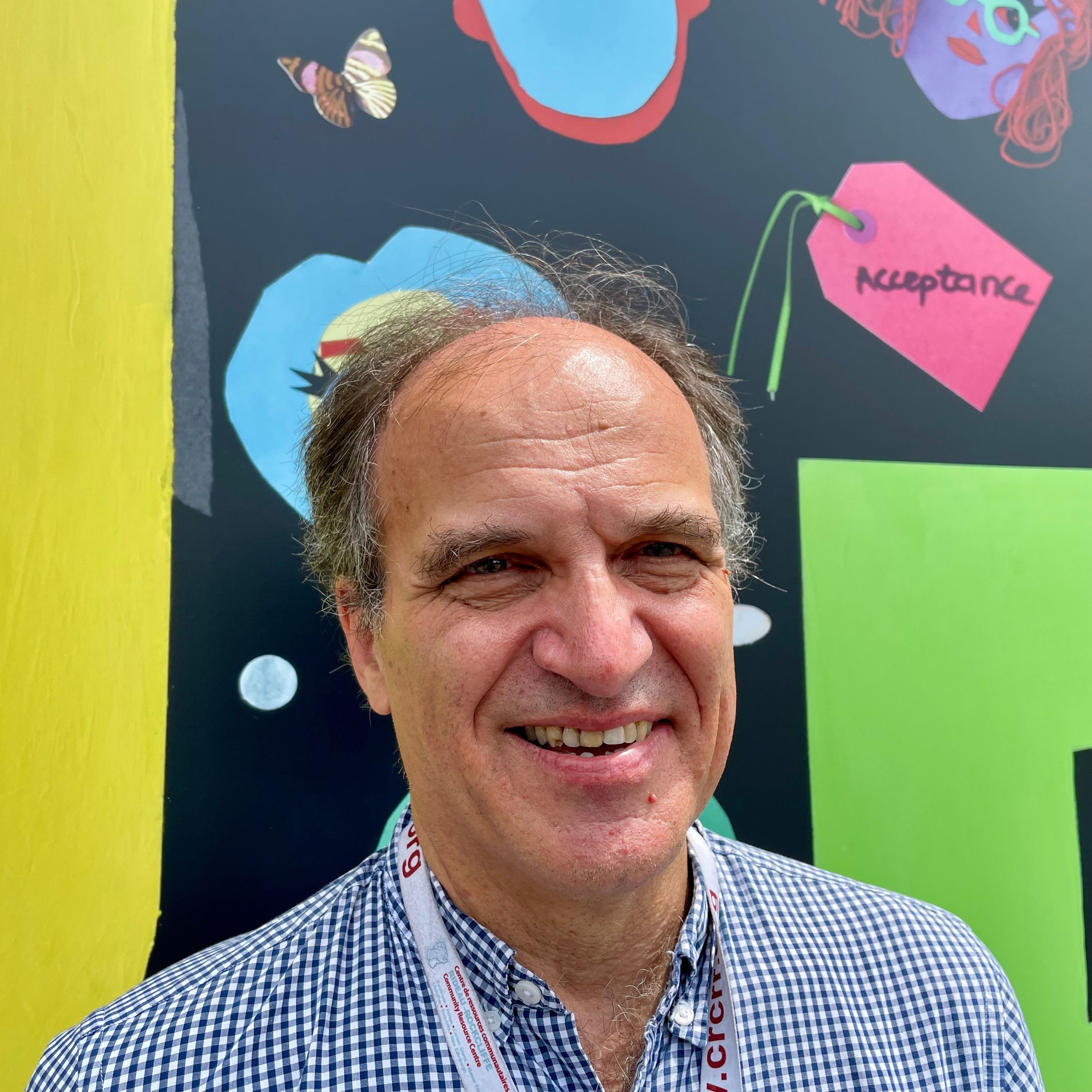
We have folks who would never define themselves as artists, but are nonetheless creative and have ideas and are imaginative. How can we get them to feel that they can do arts and express their creativity? With community engaged arts anyone can participate or contribute in any way. I think that strength and social bond makes the community strong and also it helps during times of crises that you know that there's a community there with you.Luc Lalande is an educator, mentor, innovation practitioner and civic entrepreneur with extensive experience in academic-industry-government sectors. He specializes in the design of programs that build innovation capacity for communities in both rural and urban regions.He has served as a volunteer and advisor on numerous not-for-profit boards engaged in fields as diverse as addiction recovery for youth, regional economic development, women empowerment, arts /culture and education. He is also an active advocate for the growth of the maker movement, makerspaces and maker education locally and globally.Luc Lalande is currently Innovator-in-Residence at the Rideau-Rockcliffe Community Resource Centre and the Carlington Community Health Centre in Ottawa. I first met Luc Lalande at an ‘Ideas, Welcome’ session about social infrastructure and third places at the Rideau Community Hub, in Ottawa, a 1950’s era high school that has been converted into an extremely diverse and dynamic community hub.I was impressed by Luc’s spirit and his savoir-faire. With my doomist hat on, I wanted to talk to him about how the Rideau Community Hub came about and how it might be a useful model for people to coexist and cooperate as the climate crisis worsens. But I also wanted to talk about community-engaged arts and his vision of the role of the arts.. In our french language conversation, balado conscient é162 luc lalande - curiosité, créativité et imagination, Luc noted that:Innovation and art have an interesting relationship. What comes before innovation and before ideas is curiosity, creativity and imagination. This is where I see the importance of art: inspiration for ideas.Luc’s passion and vision for this kind of third space is palpable, for example: A space like this can happen anywhere. Any community can look at their assets, whether it's a decommissioned school or a decommissioned church and through imagination, adaptation and reuse, rather than build something new that uses up a lot of material and energy. Many of these assets can be reimagined and repurposed for civic purposes which any community can do. And he thinks the arts (especially community-engaged arts) should play a central role in these spaces. Luc and I began our conversation in the massive auditorium at the Rideau Hub after which we then went for a bilingual soundwalk into the facility to listen to the space and hear its stories.And one of these stories involves a surprise appearance by Shirley Whitford, one of the participants in a play conceptualized and scripted by local seniors. The play entitled ‘A Circle of Care’ was performed in the school’s former drama room. You never know who you’ll meet in the hallways of a community hub. *END NOTES FOR ALL EPISODESNote : I'm currently 'pressing pause' and am not producing new content until further notice. Hey conscient listeners, I’ve been producing the conscient podcast as a learning and unlearning journey since May 2020. It’s my way to give back.This Indigenous Land Acknowledgement statement was developed by members of the Algonquin community for my former employer the Canada Council for the Arts. I have adapted slightly to make it my own.I acknowledge that my studio, located in Ottawa, is on the unceded, unsurrendered Territory of the Anishinaabe Algonquin Nation whose presence here reaches back to time immemorial.I recognize the Algonquins as the customary keepers and defenders of the Ottawa River Watershed and its tributaries. I honour their long history of welcoming many Nations to this beautiful territory and uphold and uplift the voice and values of our Host Nation.Further, I offer my respect and affirm the inherent and Treaty Rights of all Indigenous Peoples across this land and honour commitments to self-determination and sovereignty that have been made to Indigenous Nations and Peoples.I acknowledge the historical oppression of lands, cultures and the original Peoples in what we now know as Canada and fervently believe the Arts contribute to the healing and decolonizing journey we all share togetherIn parallel with the production of the conscient podcast and its francophone counterpart, balado conscient, I I publish a free ‘a calm presence' monthly Substack see https://acalmpresence.substack.com. Your feedback is always welcome at claude [at] conscient [dot] ca and/or on social media: Facebook, Instagram, Linkedin, Threads, BlueSky, Mastodon, Tik Tok, YouTube and Substack.Share what you like, etcI am grateful and accountable to the earth and the

S5 Ep 190e190 kim fry - appealing to hearts and souls
In Canada and many other parts of the world, we've relied on policymakers and scientists to be the ones communicating around climate, and they failed because they've only appealed to people's heads and haven't appealed to their hearts and souls. I think the big conversation coming out of COP 28 - and that you but I'm sure people at SCALE and others, we've known this for a long time, but it's kind of being recognized now - is that we need culture at the table. We need art and artists. We need to be connecting to all parts of people and not just showing numbers because that hasn't worked, and it's not working. And so I actually feel hopeful that art and culture being at the table will help with that whole overhaul and systems level transformation.Note: I’m using Whisper Transcribe, an artificial intelligence podcasting tool, for the first time with this episode. It helped me generate quotes, create chapters (see below), generate transcriptions (see Transcripts section), produce social media postings (notice the new tone and hashtags) and write up the episode notes (notice more fluid language), however I’m a little skeptical about AI’s ability to get it all right (verification required) but it’s pretty good and saves me time and delivers a better product. However I will continue to write and record my very human introduction at the top of each episode like this… Sometimes you just have to be in the right place at the right time. I had just completed my conversation with Tanya Kalmanovitch (see e189 tanya kalmanovitch - mobilizing the power of the arts) at No. 9 gardens near Kingston, Ontario (see e68 for more on no. 9 gardens) when I sat down at a picnic table with a group of arts and climate activists at a meeting of the Centre for Sustainable Practices the Art (CSPA) and right in front of me was Kim Fry. The same Kim Fry who co-founded and runs Music Declares Emergency Canada and is a hero of mine. I know Kim by reputation, but we had not yet met in person, so, on the spot, I asked Kim to record a conscient conversation with me about her life’s work in music and environmental awareness. Kim now lives by the Atlantic ocean which is in Kjipuktuk, Mi'kma'ki territory, also known as Halifax, Nova Scotia. Before her recent move Eastward, she lived in Tkaronto for 27 years where she was an elementary school teacher, union activist, climate justice activist, environmental campaigner, storyteller and music manager. With the family move to K’jipuktuk, Kim decided to return to the world of environmental activism and music where she organized, among other things, the first ever Canadian Music Climate Summit. You’ll hear that Kim talk about the power of music in the climate emergency :We need systems change, and so we need the whole way that the music industry operates to really rethink itself and sometimes some people might say that's greenwashing, because we're still talking about these big, huge multinational corporations when it comes to the music industry but I think there are folks who navigate that space and do it incredibly well. You’ll also hear about Kim’s efforts to highlight the importance of creating safe spaces for emotional engagement through music and community such as the sustainability committee at the Juno Awards, which is dedicated to reducing the industry’s environmental footprint by promoting eco-friendly practices like public transit and plant-based catering.A particularly inspiring anecdote for me was about Kim’s daughter Brighid Fry known under her artist name Housewife former Moscow Apartment) Bridghid ensured that a climate clause was included in her record deal. This type of action exemplifies the shift from incremental changes to systemic reform, advocating for the integration of culture and art into climate conversations and the shift from appealing from one’s heads to one’s hearts and souls.Oh, and when she has free time, Kim is working on a novel about the climate emergency. I look forward to that and I think you’ll enjoy our unscheduled but long overdue conversation. Kim recommended the following publications and events:Birchbark House series by Louise ErdrichHadestown by Anais Mitchell : a musical about climate changeNeil Young’s Love Earth tourNote: I have inserted 5 seconds of silence here and there during our conversation as interludes.*Episode Chapters (AI generated)IntroductionIn this section, Kim Fry introduces herself and shares her background as a climate activist, highlighting her journey from organizing student walkouts in the early '90s to her current work in music and climate activism.The Role of Music in Climate ActivismKim discusses the significant role that music and the arts play in climate activism, emphasizing how they can unite people and inspire political change through emotional connection.Launching Music Declares EmergencyThe conversation shifts to the founding of the Canadian chapter of Music Declares Emergency, detailing the collaborative efforts that led to its

S5 Ep 189e189 tanya kalmanovitch - mobilizing the power of the arts
What happens is that you have arts and environment initiatives popping up all over the place, but everyone's pitted against one another in competing for the same grants, right? So it makes it extraordinarily difficult to organize, to strategize, and to act with a collective insight about where it is that we need to go and how we can really mobilize the power of the arts.This episode is a lot of fun. When I arrived at No 9 Gardens near Kingston, Tanya Kalmanovitch and her dog Finn were ready to go for a soundwalk on a sunny June 26th 2024 at 7.15am. My previous conscient conversation with Tanya was recorded remotely in June of 2011 (see e53 kalmanovitch – nurturing imagination) where we talked about music, ethnomusicology, arts education, the climate emergency, arts policy and how artistic practice can nurture imagination.Our second conversation, equally as engaged and dynamic (but this time in person, and outdoors), picked up on some of these themes with a focus on the impact of Tar Sands Songbook, a documentary theatre play that tells the stories of people whose lives have been shaped by living in close proximity to oil development and its effects. I had the pleasure of seeing Tanya perform the Tar Sands Songbook at Carleton University (with thanks to Ellen Waterman) in Ottawa and wanted to ask Tanya how it went, and in particular, what it’s like to tour a show about climate change through art, in Alberta. Tanya wears many hats: she is a violist, an ethnomusicologist, and author known for her breadth of inquiry and restless sense of adventure, including an interest in improvisation, social entrepreneurship, and social action, such as being the mission circle lead of the Sectoral Climate Arts Leadership for the Emergency organization or SCALE which by now, regular listener will know : a network of artists, cultural practitioners, and arts organisations committed to addressing the climate emergency and environmental injustice.As we walked in the wet fields of No9 gardens I love how Tanya doesn’t hold her punches: ‘The end of the world as we know it’ is also a biased perspective, when you say that phrase, right? I'm pretty sure that the earth will keep going and it'll just sort of shake us off like some fleas; the dog scratches the fleas off and it will regenerate.The field where we walked was mushy so you’ll hear of that rich dampness in the recording and our boots and running around of Finn the dog. You’ll also hear, near the end of our conversations children’s entertainer Mr. Rogers, where Tanya sings : It's you I like, not the things you wear, not the way you wear your hair. It's you I like. The way you are right now. The things down deep inside you. It's not the ear inside you. It's not your toys, they’re just beside you…I like you just the way you are, Tanya. Thanks for the full circle walk. We had a lot of fun and so did Finnigan.Note: I inserted 5 second silences throughout the recording to give some space to the soundwalk. *END NOTES FOR ALL EPISODESNote : I'm currently 'pressing pause' and am not producing new content until further notice. Hey conscient listeners, I’ve been producing the conscient podcast as a learning and unlearning journey since May 2020. It’s my way to give back.This Indigenous Land Acknowledgement statement was developed by members of the Algonquin community for my former employer the Canada Council for the Arts. I have adapted slightly to make it my own.I acknowledge that my studio, located in Ottawa, is on the unceded, unsurrendered Territory of the Anishinaabe Algonquin Nation whose presence here reaches back to time immemorial.I recognize the Algonquins as the customary keepers and defenders of the Ottawa River Watershed and its tributaries. I honour their long history of welcoming many Nations to this beautiful territory and uphold and uplift the voice and values of our Host Nation.Further, I offer my respect and affirm the inherent and Treaty Rights of all Indigenous Peoples across this land and honour commitments to self-determination and sovereignty that have been made to Indigenous Nations and Peoples.I acknowledge the historical oppression of lands, cultures and the original Peoples in what we now know as Canada and fervently believe the Arts contribute to the healing and decolonizing journey we all share togetherIn parallel with the production of the conscient podcast and its francophone counterpart, balado conscient, I I publish a free ‘a calm presence' monthly Substack see https://acalmpresence.substack.com. Your feedback is always welcome at claude [at] conscient [dot] ca and/or on social media: Facebook, Instagram, Linkedin, Threads, BlueSky, Mastodon, Tik Tok, YouTube and Substack.Share what you like, etcI am grateful and accountable to the earth and the human labour that provided me with the privilege of producing this podcast, including the toxic materials and extractive processes behind the computers, recorders, transportation systems

S5 Ep 188e188 dawit seto - talking about climate through art
Having a conversation about the artworks and important issues such as climate change is everywhere in the globe. It's important for us also in the Horn of Africa region to talk about it through art, not politics necessarily. I feel like it opens a little bit of a door, a little bit more than the politics.Dawit Seto is an Ethiopian performing artist specializing in contemporary dance and choreography who is currently based in Switzerland and whose artistic work intricately weaves together the stories of migrant histories from East Africa and engages in vigorous advocacy for climate justice in all of his artistic pursuits. And you’ll hear him talk with passion about the role of art in his life and for his communities. Through his dedication to storytelling via movement, Dawit transcends physical borders, amalgamating diverse influences and social consciousness into his creations, rendering them both captivating and socially impactful. And I experienced this when I saw his videos. Immersing in the intricate exploration of movement language within Ethiopia's vibrant traditional dance heritage, Dawit infuses his artistic works with an authentic cultural richness that resonates with global audiences. It certainly resonated with me when I first heard Dawit at a creative climate leadership alumni meeting on February 18th, 2024 where he spoke about the impact of climate change in eastern Africa.I spoke with Dawit on June 12th, 2024 by Zoom. Here’s an excerpt from our conversation that positions why he participates in meeting like the creative climate network: I have witnessed the disaster of what climate change can do. I see it in my age and it was also in my grandfather's age. For me, whenever international seminars or meetings are happening to talk about a future, it just makes me scared. And because I saw it in my age. It was not for future for me, climate. Climate was about yesterday. It was about today. Because of that I want to be a part of any conversation as much as I can handle because of resources. We are working on mobilizing and having a conversation and witnessing the disaster that we face.Our conversation helped me understand the impact of the climate crisis in the Horn of Africa and how artists, such as Dawit, are engaging with these issues through artistic creation and cultural leadership. *END NOTES FOR ALL EPISODESNote : I'm currently 'pressing pause' and am not producing new content until further notice. Hey conscient listeners, I’ve been producing the conscient podcast as a learning and unlearning journey since May 2020. It’s my way to give back.This Indigenous Land Acknowledgement statement was developed by members of the Algonquin community for my former employer the Canada Council for the Arts. I have adapted slightly to make it my own.I acknowledge that my studio, located in Ottawa, is on the unceded, unsurrendered Territory of the Anishinaabe Algonquin Nation whose presence here reaches back to time immemorial.I recognize the Algonquins as the customary keepers and defenders of the Ottawa River Watershed and its tributaries. I honour their long history of welcoming many Nations to this beautiful territory and uphold and uplift the voice and values of our Host Nation.Further, I offer my respect and affirm the inherent and Treaty Rights of all Indigenous Peoples across this land and honour commitments to self-determination and sovereignty that have been made to Indigenous Nations and Peoples.I acknowledge the historical oppression of lands, cultures and the original Peoples in what we now know as Canada and fervently believe the Arts contribute to the healing and decolonizing journey we all share togetherIn parallel with the production of the conscient podcast and its francophone counterpart, balado conscient, I I publish a free ‘a calm presence' monthly Substack see https://acalmpresence.substack.com. Your feedback is always welcome at claude [at] conscient [dot] ca and/or on social media: Facebook, Instagram, Linkedin, Threads, BlueSky, Mastodon, Tik Tok, YouTube and Substack.Share what you like, etcI am grateful and accountable to the earth and the human labour that provided me with the privilege of producing this podcast, including the toxic materials and extractive processes behind the computers, recorders, transportation systems and infrastructure that made this production possible. Thanks for listening. Claude SchryerLatest update on March 21, 2026

S5 Ep 187e187 alice irene whittaker - caring for the planet I love
About collapse acceptance : I've been in that space and it is really liberating. How I frame it for myself is : I don't know how it all turns out and it's really out of my control and to not worry about it (not that I never worry about it) but what's really in my control is : do I show up as a human being and feel my humanity and care for the people I love and the places I love and this planet I love ? That is what I can do.I first heard about Alice Irene Whittaker’s work from a colleague who said ‘you have to listen to the Reseed podcast’. I did. It’s a brilliant podcast about repairing our relationship with nature - and each other. Alice Irene has spent over a decade in leadership and executive roles in nonprofit organizations, think tanks, and charities, with a focus on gender equity and environmental issues. She co-founded, and was Executive Director of Mother Nature Partnership, a charity focussed on reusable, environmentally sustainable menstrual supplies for marginalized women and girls. Alice Irene is a member of Nature Canada’s Women for Nature, a group of women of influence who drive change for nature, and sits on the Board of Directors of Régénération Canada. In a previous life, Alice Irene was a professional dancer and contemporary dance choreographer, which she will talk about during our conversation. A heads up that this episode is going to be a 2 part conversation because her new book Homing: A Quest to Care for Myself and the Earth, from Freehand Books, is coming out on September 3, 2024 and I want to have a follow up conversation with Alice Irene specifically about the book later this summer though she does talk about it a bit in this conversation. The book is about care, motherhood, healing, faltering, and searching for ways to live during breakdown and about finding home, when our planetary home is eroding, and questioning how - and whether - to have hope. My feeling is that Alice Irene is ultimately an optimist but I’ll need to read Homing to find out how. We also talked about the role of art in the ecological crisis. Alice Irene notes that:Something I've learned about myself over and over again, is that I am an artist and I have an artist's soul, and that there are also other people like that out there. … I think the role of art is vital and that it's been so underused and under-respected.We also talked about the influence of sitcoms on changing cultural perspectives : I think TV and movies, which are art, are changing opinions around gay marriage, for example, like sitcoms, and having it more embedded into pop culture is something that will be powerful. After conversation on Monday June 10, 2024 we went for a soundwalk to gather further sound material for this episode where she shares stories about her relationship to the land, including how she spent time during COVID with her three young children by the stream. We’ll start the soundwalk in her husband’s workshop. Alice Irene recommended the following books: Mary Oliver's poetry (notably Wild Geese)JOY IS THE JUSTICE WE GIVE OURSELVES by J. Drew LanhamWILDING: HOW TO BRING WILDLIFE BACK - AN ILLUSTRATED GUIDE by Isabela TreeON ANOTHER PANEL ABOUT CLIMATE, THEY ASK ME TO SELL THE FUTURE AND ALL I’VE GOT IS A LOVE POEM by Ayisha Siddiqa from the On Being podcastthe bibliography of Alice Irene’s book HomingNote: Homing: A Quest to Care for Myself and the Earth available for pre-order on this website or at places like Indigo-Chapters or your local bookstore.Photo of Alice Irene by Brittany-Gawley *END NOTES FOR ALL EPISODESNote : I'm currently 'pressing pause' and am not producing new content until further notice. Hey conscient listeners, I’ve been producing the conscient podcast as a learning and unlearning journey since May 2020. It’s my way to give back.This Indigenous Land Acknowledgement statement was developed by members of the Algonquin community for my former employer the Canada Council for the Arts. I have adapted slightly to make it my own.I acknowledge that my studio, located in Ottawa, is on the unceded, unsurrendered Territory of the Anishinaabe Algonquin Nation whose presence here reaches back to time immemorial.I recognize the Algonquins as the customary keepers and defenders of the Ottawa River Watershed and its tributaries. I honour their long history of welcoming many Nations to this beautiful territory and uphold and uplift the voice and values of our Host Nation.Further, I offer my respect and affirm the inherent and Treaty Rights of all Indigenous Peoples across this land and honour commitments to self-determination and sovereignty that have been made to Indigenous Nations and Peoples.I acknowledge the historical oppression of lands, cultures and the original Peoples in what we now know as Canada and fervently believe the Arts contribute to the healing and decolonizing journey we all share togetherIn parallel with the production of the conscient podcast and its francophone counterpart, balado conscient, I I

S5 Ep 186e186 yahya aka semzyiri - collective liberation as planetary right
We have become a bit disconnected after COVID but at the same time we are emerging more consciously while we were more complacent before. I hold hope about an inherent belief that collective liberation is a planetary right. I think we should all be always learning to reach that goal.semzyiri is a multimedia storyteller who blends surrealism, existentialism, cosmic wonder, and inner worlds with the lived reality of a neuroqueer cultural nomad. Navigating the crossroads of a world in poly-crisis and of nature divorced from human experience, semzyiri's work captures the intricate dance between the internal and external, offering a unique lens on our interconnected existence.I first met semzyiri at an ‘Ideas, Welcome’ Session hosted by the Rideau-Rockcliffe Community Resource Centre meeting about social infrastructure and third places, organised by Luc Lalande and colleagues (see an upcoming episode about him) at the Rideau Community Hub, in Ottawa.We met again by chance at a local eco fair on June 1 2024 where we talked about our common interest in community engaged arts, art and ecology and in social collapse awareness and acceptance. One of the topics that struck me in my conversation was the notion of ‘numbness’, which is coming back again and again this 5th season of the podcast, notably in e171 kimberly skye richards - dept of utopian arts & letters (‘one of the roles that artists play within the poly crisis is supporting us through processes of unnumbing’). semzyiri reminds us that : Art is something that really bypasses our walls, our numbness and our overstimulation.After our conversation semzyiri told me more about a new organization of which they are a co-founder called Collaborative Movements, a multimedia amplifier that centres community initiatives through a documentary series, a podcast, a website hub, and community events and that this initiative highlights and supports a network of third spaces, community centres, social enterprises, non-profit organizations, social innovation labs, and more. The idea is to address a diverse range of themes including local arts, sciences, sustainability, community mental health, social housing, food insecurity, IBPOC, 2SLGBTQIA+, and immigrant stories.This is a welcome development in the Ottawa arts and media community, and I hope other communities are creating their own collaborative movements.semzyiri recommends the following publications:Modern Monetary Theory by John Verdon (not yet in print)Shock Doctrine by Naomi KleinOther Minds: The Octopus, the Sea, and the Deep Origins of Consciousness by Peter Godfrey-SmithThe One by Heinrich PäsWhen Animals Dream by David Peña-GuzmánNote: Link to semzyiri's Substack. *END NOTES FOR ALL EPISODESNote : I'm currently 'pressing pause' and am not producing new content until further notice. Hey conscient listeners, I’ve been producing the conscient podcast as a learning and unlearning journey since May 2020. It’s my way to give back.This Indigenous Land Acknowledgement statement was developed by members of the Algonquin community for my former employer the Canada Council for the Arts. I have adapted slightly to make it my own.I acknowledge that my studio, located in Ottawa, is on the unceded, unsurrendered Territory of the Anishinaabe Algonquin Nation whose presence here reaches back to time immemorial.I recognize the Algonquins as the customary keepers and defenders of the Ottawa River Watershed and its tributaries. I honour their long history of welcoming many Nations to this beautiful territory and uphold and uplift the voice and values of our Host Nation.Further, I offer my respect and affirm the inherent and Treaty Rights of all Indigenous Peoples across this land and honour commitments to self-determination and sovereignty that have been made to Indigenous Nations and Peoples.I acknowledge the historical oppression of lands, cultures and the original Peoples in what we now know as Canada and fervently believe the Arts contribute to the healing and decolonizing journey we all share togetherIn parallel with the production of the conscient podcast and its francophone counterpart, balado conscient, I I publish a free ‘a calm presence' monthly Substack see https://acalmpresence.substack.com. Your feedback is always welcome at claude [at] conscient [dot] ca and/or on social media: Facebook, Instagram, Linkedin, Threads, BlueSky, Mastodon, Tik Tok, YouTube and Substack.Share what you like, etcI am grateful and accountable to the earth and the human labour that provided me with the privilege of producing this podcast, including the toxic materials and extractive processes behind the computers, recorders, transportation systems and infrastructure that made this production possible. Thanks for listening. Claude SchryerLatest update on March 21, 2026

S5 Ep 185e185 sandra laronde - home never leaves you
I really believe that we carry the spirit of the land wherever we go. In the Western canon, they say that once you leave home, you can never return, but in the Indigenous canon, home never leaves you. I remember Sandra Laronde contacting me when I was running the Inter-Arts Office at Canada Council in early 2000 asking me where Red Sky Performance fits in the Council’s suite of programs and silos. Claude, you know, I combine indigenous dance, theatre, music, media and more but rarely the same way. The Council and Red Sky figured things out. I’ve always been amazed by Sandra’s imagination, spirit, entrepreneurship and her skills as a connector.We’ve crossed paths many times of the years, on assessment committees, at festivals and at Indigenous arts gatherings. For example, I have fond memories of having been invited by a group of Indigenous women arts administrators and leaders, including Sandra, to gatherings where we sang, danced, held talking circles and listened to each other's needs and offerings and listened to the world around us. Our conversation on June 18, 2024 in her backyard in Tkaronto focused on her debut novel, ‘She Holds Up the Stars’, which was published by Annick Press in August 2022. I wanted to know more about this story of a young Indigenous girl searching for a sense of home who finds strength and courage in her gifts, her deepening connection to the land, and her own cultural awakening. Sandra admitted to me that it is mostly based on her own life and talks about the origins of this book during the episode this way:I wanted something that had humor and saw the world as a positive reflection of who we are as Indigenous people and as a sensitive kid. My world wasn't just focused on humans, it was really more spirit-centric. It was really about everything that is alive in the world, whether that be rivers and trees, or the wind or the lake, or a bird. All of these beings are alive and well. We also spoke about the launch of Aki Creators the night before our conversation, which is a portal of stories rooted in Indigenous wisdom, arts, and a shared love of the land.I asked her, as I always do, about the role of art in the ecological crisis : I think art helps us to connect or reconnect spiritually, emotionally and even intellectually to the environment and world around us and each other. Artists have a kind of an antenna to them where they're often foreseeing what's going to happen next. … Artists are the antenna of the world. Some of these movies that are sci-fi movies or books have elements of truth in them and there’s warnings.We also spoke about the use of artificial intelligence by indigenous artists ;The big concern in the AI space and in the digital space is that in the hands of very few people. Very few are prompt engineering. There’s a lot of big companies and the dominant voice in the digital sphere is still a white privileged male voice. Only 14% of women are in AI. As an Indigenous person, my mind wonders if this could potentially be another robust form of colonization if we don't get in there and sway, change and transform the narrative. You know, if we just leave it, I think this is a great peril and not only to us, but to the world.There are many examples of artistic use of AI on Aki Creators. As we sipped a bit of rose wine in her backyard in Tkaronto, planes and helicopters passed by but we also heard and were present with the whisper of trees and birdsong as we talked about how we humans are a part of nature and how art helps us look up at the stars and wonder what was and could be. *END NOTES FOR ALL EPISODESNote : I'm currently 'pressing pause' and am not producing new content until further notice. Hey conscient listeners, I’ve been producing the conscient podcast as a learning and unlearning journey since May 2020. It’s my way to give back.This Indigenous Land Acknowledgement statement was developed by members of the Algonquin community for my former employer the Canada Council for the Arts. I have adapted slightly to make it my own.I acknowledge that my studio, located in Ottawa, is on the unceded, unsurrendered Territory of the Anishinaabe Algonquin Nation whose presence here reaches back to time immemorial.I recognize the Algonquins as the customary keepers and defenders of the Ottawa River Watershed and its tributaries. I honour their long history of welcoming many Nations to this beautiful territory and uphold and uplift the voice and values of our Host Nation.Further, I offer my respect and affirm the inherent and Treaty Rights of all Indigenous Peoples across this land and honour commitments to self-determination and sovereignty that have been made to Indigenous Nations and Peoples.I acknowledge the historical oppression of lands, cultures and the original Peoples in what we now know as Canada and fervently believe the Arts contribute to the healing and decolonizing journey we all share togetherIn parallel with the production of the conscient podcast an

S5 Ep 184e184 cpamo ai panel - from precarity to stability
My dream with AI started with curiosity about how technology can extend to the boundaries of artistic expression. I was fascinated by the possibility of emerging traditional art and forms of traditional artistry to create something entirely new and engage my passion for innovation and to explore AI as tools to enhance my creative visions and bring artistic ideas to life in ways I could only dream or imagine. (Sean Caesar)This is a special episode of the conscient podcast featuring a panel at The Gathering Divergence Multi-Arts Festival & Conference Spring 2024 presented by Cultural Pluralism in the Arts Movement of Ontario (CPAMO) in collaboration with the Nia Centre for the Arts on on June 6, 2024 in Tkaronto,This episode will begin with a talk by Alica Hall, Executive Director of the Nia Centre for the Arts, who spoke about the history of the building where the Nia Centre is situated in Tkaronto and of the history of the black arts community in Tkaronto and in Canada. After this, you'll hear presentations by artificial intelligence arts expert Sean Caesar (aka Tungz Twisted) and technology consultant Alex Hocevar, however because of the poor quality of the recording in a reverberant space, you’ll also find a summary of their presentations in the Transcript section of this episode.For example, Sean observed that:We need to get on board to the table to discuss the implications of the diversity of representation and equitable inclusion. We're at a crossroads where it could be very detrimental to us, future forward. And Alex noted at the end of this presentation that :This should all be taken with a grain of salt until the technology in society gets to the point to say, what is real? What is realistic? How am I using this and am I getting the answers that will help me make a good positive decision?Note: After Alica’s presentation and words of welcome by CPAMO curator of programming Kevin Ormsby I have re-recorded my introduction in order to have better audio quality.*Welcome to the 'Impact of Technology on the Practice of the Arts’ panel as part of Cultural Pluralism in the Arts Movement of Ontario (CPAMO) The Gathering Divergence Multi-Arts Festival & Conference Spring 2024.A warm welcome to our audience here at the Nia Centre for the Arts in Tkaronto and also to those joining us online from across Canada and those listening offline on conscient podcast, episode 184.My name is Claude Schryer. I’m a composer by training and I worked for 21 years at the Canada Council for the Arts where I ran the Inter-Arts Office and was an advisor. I recall, around 2008, when the NIA Centre For The Arts was created, how it was a challenge for the Council to find a home for this kind of multipurpose multidisciplinary arts organization, which I think has since been resolved, however I’m aware that many artists and arts organizations continue to struggle with finding the right category in our arts funding systems.For example, is artificial intelligence an art form, is it a method, is a tool? All of the above, none of the above? What criteria do we use to assess artificial art making? And it’s a bit ironic that the word artifice comes from artificium, which is Latin for "artistry, craftmanship, craft, craftiness, and cunning." That root also gave us the English word artificial. Artificium, in turn, developed from ars, the Latin root underlying the word art. I’m now retired from the public service and have become an art and climate activist. For example, I was co-founder of the Sectoral Climate Arts Leadership for the Emergency or SCALE. I also produce the conscient podcast about art and the ecological crisis, ainsi que sa version française, le balado conscient. I also invite you to consider the implications of art and technology in the context of the climate emergency and the ecological crisis, which a topic we explored at the 2021 fall edition of Gathering Divergence on the theme of ‘IBPOC arts in planetary renewal’ which you can listen to those conversations on conscient podcast episodes 92, 93 and 95.So the theme of this year’s Gathering is Visioning Canada’s IBPOC Artistic Transformation: Navigating Beyond Precarity Towards Stability and this is the lens through which we will be exploring the impact of technology on the practice of art. Some of the questions our panelists will consider include· Does working with Artificial Intelligence in the arts lead to innovation, emergent practices and artistic transformation or does AI jeopardize creativity and lead to further precarity for artists? We might not know, yet…· In what ways are these new technologies, and in particular AI impacting the creation, dissemination and preservation of art? · What relationships do artists need to create about and with AI and digital technology?· Who has access to the infrastructure and how it is being programmed and are all worldviews being included?· Are there integrative ways in which artists and arts organizations can continue to use digital te

world listening day 2024 - listening to the weave of time
bonusWorld Listening Day takes place every year on July 18, which is also Canadian composer R. Murray Schafer’s birthday. The day is organized by the World Listening Project and is dedicated to understanding the world and its natural environment, societies, and cultures through the practice of listening.I have brought excerpts from 7 episodes from the 5th season of my conscient podcast that relate to the theme of the 2024 edition: ‘listening to the weave of time’. e157 sonic research group (part 1)Hildegard WesterkampThe most interesting part to me is to discover what we're not listening to and why we are not doing that. I think it's wonderful that I've had the chance to learn this listening from so early on where you're trained to listen to the environment and at that time it was more about listening to the sounds of the environment and critiquing them, analyzing them, trying to understand them. To me that subject has widened hugely and really has to do about listening in general and trying to understand why we are listening to things and why we're not listening to things. And so it becomes a political, social, cultural question on every level and when a society has a crisis, it's often really good to observe what we really don't want to listen to and who we are listening to and how we combine that. And I feel we are in a stage of real crisis right now. And that's why this subject matter has taken on great significance now. e162 terri hron - an ecological lensI think as musicians we have particular concerns that perhaps looking at those through an ecological lens can be helpful. One of them is to think about the structures of funding which allow us to operate and to maybe reconsider them because they might change. And to be open to that change and to find solutions. And those solutions might be that we need to advocate for other kinds of support, if we still want to advocate for support, or to engage in other types of activities to make a living. Maybe that sounds a little bit defeatist, but I am trying to think in a very pragmatic way about what might be helpful and useful to create a greater sense of security and happiness in the future.I think the only thing that I can do is to try and live with as much integrity as I can and, and avoid participating in the things that I consider to be the least aligned with my values.e170 sonic research group (part 2)Milena DroumevaSoundwalking is always like magic. It is a magical experience. It is so simple, Hildi, as you said, and it’s as much about listening to sounds or listening to absences of sound. It's not very typical in our lives. We don't live the kinds of lives that require this kind of presence. And so it’s restorative for me and calms my spirit. But also it's such a reminder each and every time I do a soundwalk of the power of just simply listening and opening up that register with all of its span from appreciation to analytics, to criticality and to spirituality. Jacek SmolickiWhat differentiates us from machines is historical consciousness. Algorithms are operating using biased and skewed data without considering the context within which this data has emerged. Our role as educators is to be reminders of historical context that this whole machinery is digesting and using it to produce futures comes from.Barry Truax I'm still cautiously optimistic that we could still use those same techniques that we've used in the past to create a more creative, analytical and critical listener.Hildegard WesterkampA group can become a community even though we don't know each other, which creates an atmosphere of willingness to be open and grounded inside ourselves. We can get to that energetic place because we've slowed down.Freya ZinonieffA music teacher at Columbia University was teaching John Cage’s 4’.33’’ and made a big fuss about how they couldn't teach that class because there was a loud protest outside the classroom and all she could hear was ‘from the river to the sea’. She said, okay, this just means we can't teach this now because it’s ruining 4’.33’’. We have to continue reminding ourselves and others that listening is a project and we need to learn together how to listen to what is actually there.e174 julie andreyev - more-than-human creativityAs an artist and educator, I see that this moment calls for a way of working through decolonization and forging a path of care. I like to think of this through multispecies communities so that, as humans, we're surrounded by more than human life, even in our urban environments. This path of care for our multi-species, communities that make up the neighborhood, the community, and ultimately the earth is where I see my call for research and practice. e175 sabine breitsameter - an aesthetic of careListening can teach us to appreciate our environment in a critical sense, but also in a kind of admiration for it. If we admire something because we think it has a depth or it has a beauty or some interesting aspects, we want to kee

S5 Ep 183e183 imagining in public - cultural leadership in a changing world
I've been thinking a lot about the importance of connecting the value of the arts to everyday citizens and their own connection to creativity, whatever that might be. I think it's something we should be talking about now, not only within our communities and within the arts sector, but outside of as well : talking about the value of the arts to feelings of belonging and connection and the ability to build bridges that the arts uniquely have. - kelly langgard, june 5, 2024 imagining in public - cultural leadership in a changing world panelI agree with Kelly Langgard that the arts have the capacity to build bridges and deepen feelings of belonging and the arts also have a lot of influence, and responsibility, in our changing world, as you are about to hear. So welcome to a special episode of the conscient podcast, brought to you by the Public Imagination Network in collaboration with Mass Culture - Mobilisation culturelle.You’re about to hear a 90 minute conversation on the theme of ‘cultural leadership in a changing world’ that took place on June 5th 2024 on Zoom with about 100 participants from across Canada. But first, who is who. The conversationalists were Public Imagination Network Fellows Devyani Saltzman, Evalyn Parry and Shannon Litzenberger alongside Kelly Langgard, Director and CEO of the Toronto Arts Council and Michael Murray, CEO of the Ontario Arts Council | Conseil des arts de l'Ontario.Now you might know that the Public Imagination Network is a group of leading artists and thinkers who are passionate about creative responses to issues of public governance and social justice and you can hear more about the origins of the Public Imagination Network, also known as PIN, in my March 28th, 2024 conversation with Shannon Litzenberger, e160 shannon litzenberger - a culture of collective thriving, of this podcast. This panel was co-hosted with Mass Culture - Mobilisation culturelle, which is an arts support organization that strives to harness the power of research to learn and generate new insights, enabling the arts community to be strategic, focused and adaptive. Mass Culture is led by Robin Sokoloski who was my guest on this podcast in episode 61 from 2021 and also will be my guest for a second conversation this summer so stay tuned for that. I suspect we will talk about… leadership, climate change, more than human beings and more.So what is cultural leadership? Shannon Litzenberger offered this definition during the conversation:I think about leadership as our ability to respond generatively to what a moment is asking of us in service of collective thriving. So it's got a lot of layers to it… It's about our ability to respond. What are we responding to? How are we attuning to a moment? Are we just seeing what we're conditioned to see? Are we attuned to what's in the foreground : the arrangements in the background that are producing the condition that we're inside of? And are our decisions, are our responses, are they in service of collective thriving? To me, this is the big moment of relational turn that leadership needs to understand. And I think this is a good point of departure with an emphasis on whether we are 'in tune' with this moment.To the organizers credit, this event was not a one-way conversation. The audience was invited to participate through a series of zoom chat storms. I had never done this before but it’s basically when comments and questions are sent at once at the end of a series of presentations.It was quite overwhelming but a lot of fun to read such a rich array of options and responses all at once and you’ll hear during the episode quotes from comments and responses from the conversationalists.You can also read the rich array of participant ‘chat’ comments at the end of the episode notes below. To make this recording easier to access, I’ve divided it into 6 parts, each divided by a soundscape composition from 1998 of mine called Au dernier vivant les biens.00:00 conscient podcast introduction and context8:49 Evalyn Parry, Shannon Litzenberger and Devyani Saltzman introduction19:28 What do we need to hold onto and leave behind?28:54 Practices of leadership : what new leadership capacities will support a transition away from a corporate, hyper-industrialized system?45:10 Flux, turmoil and the role of institutions : how do we stay in an ethical relationship to a world in distress?54:55 Questions and comments from the audienceTo be honest my only critique of this conversation is that they did not speak directly about the climate emergency or the ecological crisis, which are the main areas of concern of this podcast however Evalyn Parry did note at the end of the session that we should have a separate session on this topic and interweave it into other conversations, which I believe is in the works. And I think it’s good to have multiple and contrasting conversations about these complex issues - be it leadership, capacity, social justice, societal collapse and so on - because they

S5 Ep 182e182 ian garrett - modelling what we want on the other side
Whether or not we get to a complete and total collapse or we're looking at collapses of very specific systems for it… Right now I'm concerned with modeling what we want on the other side as best as possible so that whether or not it's a person or a machine learning algorithm as artificial intelligence, when it's looking back on the things that is basing its future decisions on, that it’s not just the dominant systems that got us into this mess.Ian Garrett is Producer for Mixed Reality Performance collective Toasterlab; and director of the Centre for Sustainable Practice in the Arts, a think tank on sustainability in arts and culture, as well as Associate Professor of Ecological Design for Performance at York University. He maintains a design practice focused on the integration of ecology, technology and scenography.My first conversation with Ian was during e54 called empowering artists and took place by zoom on May 25, 2021. At the time we were both serving on the Mission Circle of SCALE but had been exchanging about art and sustainability for years. This time we met in person on Monday June 18, 2024 at Ian’s home in Toronto where he lives with wife Justine and their two dual citizens, Miles and Henrietta as their dog Maggie whom you’ll hear in the background once in a while. We talked about the many interconnections between his work as designer, producer, educator, and researcher in the field of sustainability in arts and culture as well as spoke of the challenges facing the art and climate movement in Canada.It was especially interesting for me to revisit our 2021 conversation in part because of this statement by Ian that has stayed with me since that time, sometimes inspiring me, sometimes haunting me:I don't want to confuse the end of an ecologically unsustainable, untenable way of civilization working in this moment with a complete guarantee of extinction. There is a future. It may look very different and sometimes I think the inability to see exactly what that future is – and our plan for it - can be confused for there not being one. I'm sort of okay with that uncertainty, and in the meantime, all one can really do is the work to try and make whatever it ends up being more positive. There's a sense of biophilia about it.There is clearly more uncertainty now than ever but as you’ll hear Ian does a lot of positive work for the benefit of the arts community and that we are best served to be both aware of our pain and grief while being fully engaged in action for a future we cannot yet see but is unfolding.Ian recommends Groundworks (2022) documentary about ‘restorying’ land in California (contact Ian to view)Antarctica by Kim Stanley RobinsonDrilled podcast by Amy Westervelt (oil industry in Guyana)Outside In (new hampshire public radio) about social infrastructure, notably the 'Powerline' seriesIn Too Deep by Rachel Kimbro *END NOTES FOR ALL EPISODESNote : I'm currently 'pressing pause' and am not producing new content until further notice. Hey conscient listeners, I’ve been producing the conscient podcast as a learning and unlearning journey since May 2020. It’s my way to give back.This Indigenous Land Acknowledgement statement was developed by members of the Algonquin community for my former employer the Canada Council for the Arts. I have adapted slightly to make it my own.I acknowledge that my studio, located in Ottawa, is on the unceded, unsurrendered Territory of the Anishinaabe Algonquin Nation whose presence here reaches back to time immemorial.I recognize the Algonquins as the customary keepers and defenders of the Ottawa River Watershed and its tributaries. I honour their long history of welcoming many Nations to this beautiful territory and uphold and uplift the voice and values of our Host Nation.Further, I offer my respect and affirm the inherent and Treaty Rights of all Indigenous Peoples across this land and honour commitments to self-determination and sovereignty that have been made to Indigenous Nations and Peoples.I acknowledge the historical oppression of lands, cultures and the original Peoples in what we now know as Canada and fervently believe the Arts contribute to the healing and decolonizing journey we all share togetherIn parallel with the production of the conscient podcast and its francophone counterpart, balado conscient, I I publish a free ‘a calm presence' monthly Substack see https://acalmpresence.substack.com. Your feedback is always welcome at claude [at] conscient [dot] ca and/or on social media: Facebook, Instagram, Linkedin, Threads, BlueSky, Mastodon, Tik Tok, YouTube and Substack.Share what you like, etcI am grateful and accountable to the earth and the human labour that provided me with the privilege of producing this podcast, including the toxic materials and extractive processes behind the computers, recorders, transportation systems and infrastructure that made this production possible. Thanks for listening. Claude SchryerLat

S5 Ep 181e181 dawn dale - reconnecting with nature through art
To go to a farm and take a carrot out that’s covered in dirt and wipe it off on your pants and eat it on the spot. It's something that most people don't have access to anymore. So that loss of contact with the natural world is having a radical impact on how people view it, how they value it, and how they seem to be willing to let it go. Not realizing that we depend on the natural world. We are part of the natural world, and if we screw it up, we're gone.I had the pleasure of spending an evening with Dawn Dale, along with a group of artists at an art and ecology potluck at our home in Ottawa on April 7, 2024. Dawn spoke about her artwork and in particular her alfar sculptures whose distinguishing feature are animal ears, perfect for listening to Nature and how they ground her to the Earth by creating a calming yet energising presence. I was intrigued to know more about these alfars (check out her web site to see what they look like) and about her art practice in general and so we spoke over a cup of dandelion tea at a relaxed pace in her kitchen in Gatineau, Québec on May 29, 2024.Dale's primary focus is eco-feminist art realized in large-scale outdoor, site-specific works, ephemeral organic installations in gallery spaces as well as experimental drawings. The alfar came about much later after she was in a bus accident which curtailed her ability to realize those large scale works. You’ll hear her speak about her elemental paper clayworks that come out of 3D demonstrations in wax and clay wax throughout the years of teaching at The Ottawa School of Art. These intuitive portraits of the elementals or alfars that populate her imagination and surroundings of her home occupy a lighter side of her environmental concerns as she continues in the historical precedent of bonding the world of humans to the realm of nature through anthropomorphized creations. Dale’s love of nature and art is contagious as you’ll hear, also her concern for them. For example, I appreciated this insight about the role of art:Art is a reflection of the things that we value.Let’s start with a soundscape recording in her backyard, which I think sets the tone nicely for our conversation. We’ll also conclude there.. Dale suggested the following booksBraiding Sweetgrass - Indigenous Wisdom, Scientific Knowledge and the teaching of plants by Robin Wall KimmererCreative Act : A Way of Being by Rick RubenHomoAestheticus: Where Art Comes From and Why by Ellen DissanayakeReweaving The World: The Emergence of Ecofeminism edited by IIrene Diamond and Gloria OrensteinThe Death of Nature: Women, Ecology and the Scientific Revolution by Carolyn MerchantThe Reenchantment of Art (1992) by Suzy GablikThe Sacred Balance: Rediscovering Our Place in Nature by David Suzuki *END NOTES FOR ALL EPISODESNote : I'm currently 'pressing pause' and am not producing new content until further notice. Hey conscient listeners, I’ve been producing the conscient podcast as a learning and unlearning journey since May 2020. It’s my way to give back.This Indigenous Land Acknowledgement statement was developed by members of the Algonquin community for my former employer the Canada Council for the Arts. I have adapted slightly to make it my own.I acknowledge that my studio, located in Ottawa, is on the unceded, unsurrendered Territory of the Anishinaabe Algonquin Nation whose presence here reaches back to time immemorial.I recognize the Algonquins as the customary keepers and defenders of the Ottawa River Watershed and its tributaries. I honour their long history of welcoming many Nations to this beautiful territory and uphold and uplift the voice and values of our Host Nation.Further, I offer my respect and affirm the inherent and Treaty Rights of all Indigenous Peoples across this land and honour commitments to self-determination and sovereignty that have been made to Indigenous Nations and Peoples.I acknowledge the historical oppression of lands, cultures and the original Peoples in what we now know as Canada and fervently believe the Arts contribute to the healing and decolonizing journey we all share togetherIn parallel with the production of the conscient podcast and its francophone counterpart, balado conscient, I I publish a free ‘a calm presence' monthly Substack see https://acalmpresence.substack.com. Your feedback is always welcome at claude [at] conscient [dot] ca and/or on social media: Facebook, Instagram, Linkedin, Threads, BlueSky, Mastodon, Tik Tok, YouTube and Substack.Share what you like, etcI am grateful and accountable to the earth and the human labour that provided me with the privilege of producing this podcast, including the toxic materials and extractive processes behind the computers, recorders, transportation systems and infrastructure that made this production possible. Thanks for listening. Claude SchryerLatest update on March 21, 2026

S5 Ep 180e180 mary edwards - capturing the beauty and terror of reality
We're all going to be affected by the same outcome. When I went up to Svalbard (Norway), I went with the intention of also capturing the beauty and the terror of the reality of these changes and how they can be at once fascinating to listen to, but also devastating to the environment.You’ve just heard an excerpt from composer and environmental sound artist Mary Edwards’ Everywhere We Are is the Farthest Place composition, an ode to the transforming Arctic landscape, climate vulnerability, elemental sensuality and Terrestrial Space Analogues. Mary kindly shared a compilation mix from this soundscape composition with me to provide an example of her work that you’ll hear throughout this episode. Mary holds an Interdisciplinary Master of Fine Arts in Sound and Architecture from Goddard College, and has been awarded residencies and commissions around the world. I met Mary for the first time at the World Forum for Acoustic Ecology’s Listening Pasts/Listening Futures Conference in Florida in March 2023 and was immediately struck by the originality of her art and her positive energy, generosity and curiosity. We spoke by Zoom on May 24th, 2024 when we were both recovering from an unseasonable cold snap. We talked about her interdisciplinary arts and listening practices that encompass notions of temporality, impermanence, nostalgia and the natural world. For example:Listening is an inherent part of what I do. It’s not just creating sound and music, but raising awareness. If we listen more intently to our environment, we can understand the health of our environment.Welcome to the wonderful and engaging sonic world of Mary Edwards. Mary recommended the follow :Silent Spring and other writing on the environment and Sea Trilogy by Rachel CarsonSilence: A Social History of One of the Least Understood Elements of Our Lives by Jane Brox (note: during our conversation Mary accidentally called her Suzanne Knox)The work of composer Sven Libaek see https://theroundtable.bandcamp.com/album/the-music-of-sven-libaek *END NOTES FOR ALL EPISODESNote : I'm currently 'pressing pause' and am not producing new content until further notice. Hey conscient listeners, I’ve been producing the conscient podcast as a learning and unlearning journey since May 2020. It’s my way to give back.This Indigenous Land Acknowledgement statement was developed by members of the Algonquin community for my former employer the Canada Council for the Arts. I have adapted slightly to make it my own.I acknowledge that my studio, located in Ottawa, is on the unceded, unsurrendered Territory of the Anishinaabe Algonquin Nation whose presence here reaches back to time immemorial.I recognize the Algonquins as the customary keepers and defenders of the Ottawa River Watershed and its tributaries. I honour their long history of welcoming many Nations to this beautiful territory and uphold and uplift the voice and values of our Host Nation.Further, I offer my respect and affirm the inherent and Treaty Rights of all Indigenous Peoples across this land and honour commitments to self-determination and sovereignty that have been made to Indigenous Nations and Peoples.I acknowledge the historical oppression of lands, cultures and the original Peoples in what we now know as Canada and fervently believe the Arts contribute to the healing and decolonizing journey we all share togetherIn parallel with the production of the conscient podcast and its francophone counterpart, balado conscient, I I publish a free ‘a calm presence' monthly Substack see https://acalmpresence.substack.com. Your feedback is always welcome at claude [at] conscient [dot] ca and/or on social media: Facebook, Instagram, Linkedin, Threads, BlueSky, Mastodon, Tik Tok, YouTube and Substack.Share what you like, etcI am grateful and accountable to the earth and the human labour that provided me with the privilege of producing this podcast, including the toxic materials and extractive processes behind the computers, recorders, transportation systems and infrastructure that made this production possible. Thanks for listening. Claude SchryerLatest update on March 21, 2026

S5 Ep 179e179 katrine claassens and sébastian méric de bellefon - art, science and climate leadership
I luckily managed to move from a space of ‘I have to save the planet or else’ (and we talk about that word ‘save’) to ‘I choose to commit my life to climate change in the best way I can’ because everything that matters to me in this world stands to be lost in a climate crisis, especially one that would play out in a very severe and apocalyptic way. (Katrine)Having this I would say a calm perspective from artists, helping us get in touch with our feelings, simply, I found it to be a stabilizing force. (Sébastian)This is a special episode of the conscient podcast featuring two guests, one from the arts and another from science over a glass of wine or two.Katrine Claassens is an artist, writer and environmental communications specialist. She has a Master's degree in Climate Change from the University of Cape Town in South Africa and an Honours degree in Visual Art from Stellenbosch University. Katrine’s work reflects her interests in climate change, deep ecology, urban ecology, and internet memes. As an artist she has led workshops, given public lectures and curated exhibitions all over the world from the Arctic to Antarctica. As a climate communications specialist Katrine works with governments, think-tanks, academia and NGOs to navigate complex and shifting landscapes but first and foremost I would say that Katrine is an artist, an activist and a climate leader.Sébastian Méric de Bellefon is an engineer with a background in software development. He has a Master’s degree in Electrical Engineering from Institut Supérieur d’Électronique de Paris, and a Master’s degree in biochemistry and genetics from Université de Montréal. After working in other industries as a software developer and consultant - banking, online radio, healthcare - and so he met Katrine and became a nerd about all things related to climate science and decarbonization pathways. Three years ago, he started a new career path writing software for clean energy companies, first at General Power Systems to create Virtual Power Plants and now at Power Factors to streamline the operations of wind and solar farms. I first met Katrine at an online Creative Climate Leadership alumni meeting, a course I took in March 2020, organized by Julie’s Bicycle in the UK, where Katrine mentioned that she had immigrated to Canada from South Africa and like myself, as was an art and climate activist and so we decided to meet in Montreal, where I met her husband Sebastian and after a delicious vegan meal I asked if the two of them would be willing to record a conscient episode. They agreed and we talked for an hour while finishing off a bottle of homemade dandelion wine. I love Katrine’s current work on social media’s representation of nature, for example:My practice is looking a lot at the internet and memes and how nature is consumed or understood or contextualized through TikTok videos and YouTube videos and memes on Instagram. Near the end I mentioned that our conversation reminded me of the CBC Radio show Brave New Waves in the 1980s in Montreal that took place over night and where guests from various backgrounds had long winding conversations…During the conversation the following links were mentioned The success and failure of Picasso by John Berger Mountain Lion by D.H. Lawrence : ‘And I think in this empty world there was room for me and a mountain lion. And I think in the world beyond, how easily we might spare a million or two humans. And never miss them. Yet what a gap in the world, the missing white-frost face of that slim yellow mountain lion!’Circle Songs by Bobby McFerrin Last Hours of Ancient Sunlight by Thom HartmannKatrine mentioned the following books during the conversations:Picture book of cave paintings (such as the Earth Children series)Nature is not Metal (instagram account)Sébastian recommended the following books about ‘S-Curve’ (technological transitions)Note: after the conversation Sébastian offered this further information about s-curves.‘Here's an introduction to adoption of S-curves and Wright’s law in the context of clean energy. S-curves refers to the pace of adoption, and Wright's law refers to the diminishing manufacturing costs due to cumulative learning."Empirically grounded technology forecasts and the energy transition" - Oxford 2021 https://www.cell.com/joule/fulltext/S2542-4351(22)00410-XThis paper shows how core low-carbon technologies fit a common and predictable adoption/learning pattern, and how this pattern differs from fossil fuels. Then they estimate the cost of a full transition to renewable energy, and compare it to other possible pathways.Technologies include solar PV, wind turbines, batteries and hydrogen electrolyzers. The latter can be useful for electricity storage, but I find it even more interesting for fuels (e.g e-methanol for cargo shipping), fertilizers and chemical feedstocks (often derived from natural gas). So the conclusions of this paper can be somewhat extended beyond the energy system.’ *END NOTES FOR

S5 Ep 178e178 podium 2024 - what more can we sing and do?
It is taking far too long for us to acknowledge the damage we have done to the world's water and to indigenous people and to take action : truth, reconciliation, change. Scientists have discovered that some whale songs actually evolve over time. It is my hope that the choirs who perform this work with me and all those who hear it will refuse to let what the whales are saying be lost in the ocean and will join their song in calling for respect and reciprocity. (Deantha Edmunds, May 19, 2024, Podium 2024)Stay humble, keep listening and keep learning. That is how we will use choral music as a way to advocate and change the environmental crisis that we're facing (Elise Naccarato, May 19, 2024, Podium 2024)Note: a transcript of this show and a translation of episode é157 podium 2024 - que pouvons-nous chanter et faire de plus ? can be found in the 'Transcript' tab.Welcome to a special episode of the conscient podcast featuring a bilingual panel that I facilitate called ‘Voicing the ecological crisis: what more can we sing and do? It recorded on Sunday, May 19, 2024, as part of Podium 2024, the Open Voices, Open Minds choral conference and festival organized by Choral Canada and l’Alliance chorale du Québec in Tiohtià:ke on the unceded traditional territory of the Kanien'keha:kaé (Montreal).I had the honor of selecting the panelists and moderating this important conversation. You will hear the presentations of Deantha Edmunds and Elise Naccarato in English in this episode. I invite you to listen to é157 of balado conscient to hear the French language presentations from this panel by Megan Chartrand and Sarah Fioravanti. You’ll find a transcription of their presentations in the ‘transcript’ section of this episode. I have to admit that the subject of our conversation that Sunday afternoon was extremely serious, complex and I'd even say existential, but I reminded the assembly that I had promised in the program that we would ‘leave the conversation with a practical reality check while humming with hope’.But how does one ‘hum with hope’ when we are facing imminent societal collapse due to ? I asked the group and I asked myself how choral music or collective singing can help?I also reminded delegates that the ecological crisis, be it climate change, loss of biodiversity, the ravages of extractive capitalism, etc is deepening at a frightening pace, leaving many, including artists, feeling disempowered, demoralized and sometimes in denial.So when Meghan Hila, the Executive Director of Choral Canada, asked me to help out with this panel, I was very pleased to facilitate conversations about climate change specifically and how commissioning new works on ecological themes, strategies to decrease the carbon footprint of choral music activities and how to engage in increased collective political action as a community of artists and singers. I admire the leadership of Choral Canada and learned a lot from listening to their artistic work and innovative strategies. The congress itself was quite fabulous and it was good to remember that the Canadian choral community has a long history of engagement and foresight with environmental issues.For example, during Podium 2024, Nicholas Fairbank talked about Environmental Topics in Canadian Choral Music and the long list of choral music that are already in circulation on environmental themes.I also attended a session by composer Katerina Gimon, poet Lauren Peat and conductor Elise Naccarato about their Unsung: If the Earth Could Sing project, an environmentally-inspired choral cycle and so on over 3 days.I also heard about choral activities that explore some of the root causes of the ecological crisis such as colonisation and disconnection from nature. The Friday night, May 17th I attended a groundbreaking concert called Ahskennon’nia : songs of peace where one of our panelists, Deantha Edmunds, was a soloist. She talks about it during her presentation. Deantha was also a soloist on May 18th with her Song of the Whale composition performed with the Holy Heart Chamber Choir of Newfoundland. I was deeply moved by this gorgeous soundscape composition that ends with the words ‘carry the song on, evolve’. Those 5 words stayed with me : ‘Carry the song on, evolve…’I also heard some engaging discourse about the intersection of indigenous and non-indigenous musical collaborations, about moving from the colonial notion of choirs towards collective and group singing, about how choirs are often a microcosm of the diversity of our society with all its complexities, how the canon of choral music is being challenged and rethought, how listening itself is evolving and so on. However, what I do not hear at this congress, and to be honest, I don’t hear it much elsewhere in the arts sector, is a recognition and a sense of urgency that we are in an existential climate and nature emergency.This was troubling to me. For example, as we spoke on May 19th, wildfires were ravaging across western Canada and our
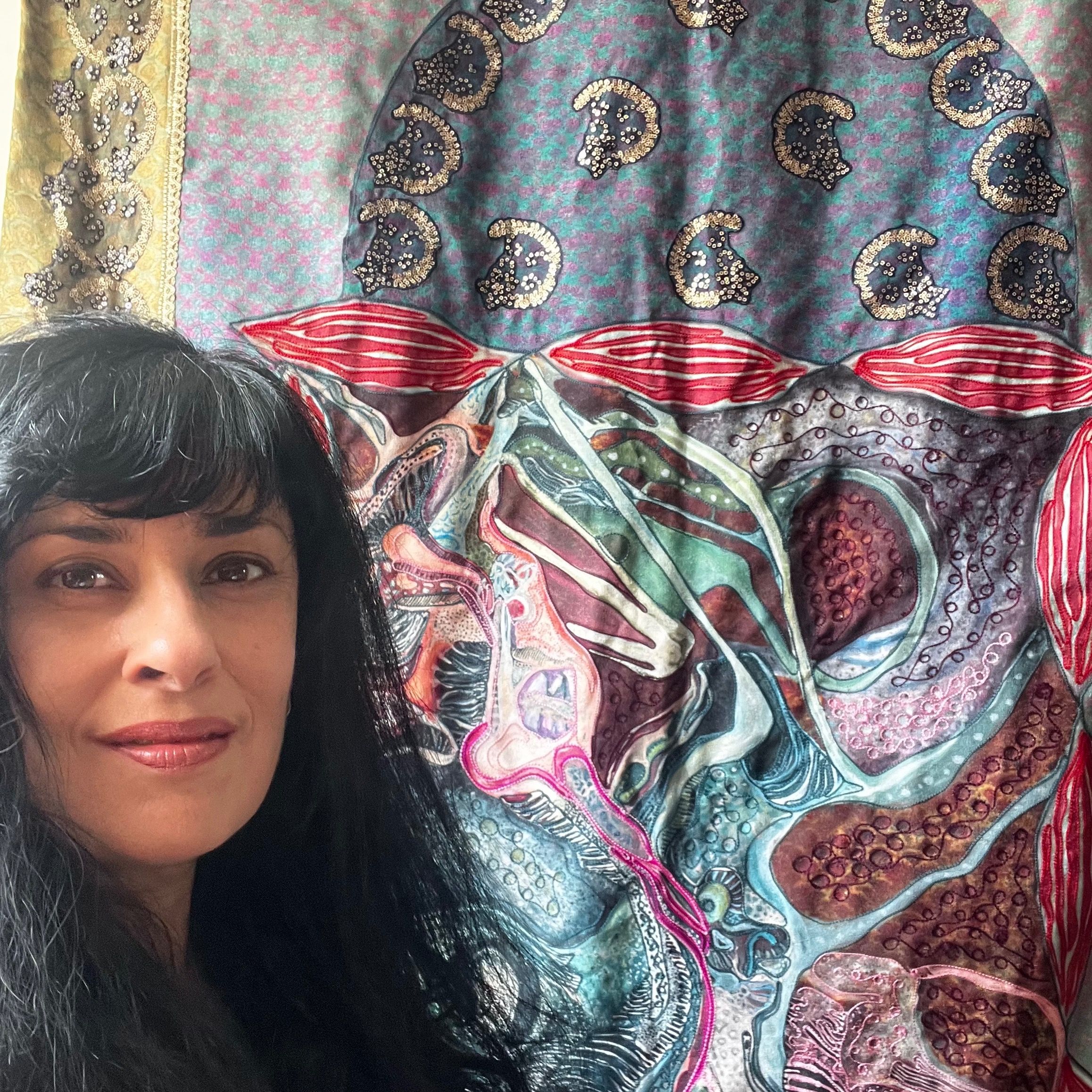
S5 Ep 177e177 asma khan - unknownness as a playground for artists
We essentially know two percent of all different disciplines and that kind of unknownness creates a very free playground for an artist to dance in or to draw in because we know we're going through a massive crisis. The world is ending. We see chaos. We see all of that but my personal hope as an artist remains in how little we know and how little we understand about our own selves, forget the dying large world and huge cosmos outside of our world that we know so little about. So I feel like my work has always celebrated unknownness. Just because we don't know it doesn't mean it's not there.I first met Asma Khan online, when she was an artist in residence and teacher at The Imaginarium a workshop run by the Wolf Willow Institute, which is a practice space for building our complexity muscles and aimed to bring what is known and unknown into a new inquiry, which is what much of Asma’s work is about.I was mesmerized by Asma’s work at this workshop. It literally brought me into another world. Asma is, among other things, a multidisciplinary artist working with painting, drawing, watercolors, collage, pen and ink, and digital drawing. Her practice explores complex natural systems, aiming to find spiritual symbology and feminine sensibility in phenomena like gravity, time-space, black holes, coral ecosystems, mycelium, and neural structures. Motivated by the mysteries of the natural world, Asma combines rigorous research with intuitive drawing to reveal connections between micro and macro systems. Living between Montreal and Karachi, Asma is committed to cross-cultural and interdisciplinary engagement. For example, her recent project, ‘Micro-frequencies for Prayer’, supported by the Canada Council for the Arts and the Conseil des arts et des lettres du Québec, created a series of prayer rugs using microscopy data to represent overlooked objects in domestic environments, highlighting their unseen complexity.During our conversation in her studio in Montreal, I asked Asma to describe some of her prayer rugs for me which I think you’ll enjoy. You can see one in the episode photo.I also think you’ll enjoy the way she talks about time. It really stretched my mind.There is large time, which is the time of God, the time of black holes, the time of the cosmos, and there is the time of man, which is a very limited time. If we look at our own history, our earth has gone through many extinction events. When we go through, and it's not even a matter of if, but when we go through an extinction. I feel like it's a good thing once again for us to check our egos. The dinosaurs went through it and we're going to have to go through it too and many other life forms have gone through extinction. I don't personally see it as a sad event. I see it as a necessary event because it's small time. I feel like art is a vehicle that helps us get from small time to large time.I also appreciated her comment about art in crisis, which is a topic I will explore in season 6 of this podcast:If we want to truly be informed from our safe spaces, we really have to focus on the art and science that's coming from places of great discomfort and shifts because they're seeing it before we're seeing it.For further insight into her work, follow Khan's artistic journey on Instagram @asma.ahsan.khan.Asma recommended the following book and film: The Most Unknown filmCarlo Rovelli’s work, notably White Holes *END NOTES FOR ALL EPISODESNote : I'm currently 'pressing pause' and am not producing new content until further notice. Hey conscient listeners, I’ve been producing the conscient podcast as a learning and unlearning journey since May 2020. It’s my way to give back.This Indigenous Land Acknowledgement statement was developed by members of the Algonquin community for my former employer the Canada Council for the Arts. I have adapted slightly to make it my own.I acknowledge that my studio, located in Ottawa, is on the unceded, unsurrendered Territory of the Anishinaabe Algonquin Nation whose presence here reaches back to time immemorial.I recognize the Algonquins as the customary keepers and defenders of the Ottawa River Watershed and its tributaries. I honour their long history of welcoming many Nations to this beautiful territory and uphold and uplift the voice and values of our Host Nation.Further, I offer my respect and affirm the inherent and Treaty Rights of all Indigenous Peoples across this land and honour commitments to self-determination and sovereignty that have been made to Indigenous Nations and Peoples.I acknowledge the historical oppression of lands, cultures and the original Peoples in what we now know as Canada and fervently believe the Arts contribute to the healing and decolonizing journey we all share togetherIn parallel with the production of the conscient podcast and its francophone counterpart, balado conscient, I I publish a free ‘a calm presence' monthly Substack see https://acalmpresence.substack.com. Your feedback i

S5 Ep 176e176 annette hegel - art is a tactic
We need culture to shift behaviour, because everything is culture but the mentality is that art is an adornment and not actually a tactic. I think art is a tactic.I first met Annette while I was chair of the Sectoral Climate Arts Leadership for the Emergency or SCALE in 2022 and have since then gotten to know her as an artist here in Ottawa on the traditional unceded and unsurrendered territory of the Anishinaabe Algonquin Nation.Annette’s multi-disciplinary work emphasizes social-critical art culture with political themes at its centre, addressing both local and meta-national conditions. Overall her work raises issues within a civil society to challenge the “isms” and all their inhumane expressions.Art climatism anyone? Annette defines herself as a builder of capacity of the arts and culture sector to respond in the climate emergency and she is well placed to do this as Organizational Development and Network Lead of SCALE, so we talked about SCALE and the challenges of mobilising an arts sector that already has many challenges to face and yet the climate emergency is unique…I mentioned that co-founders and mission circle members of SCALE have also been featured on this podcast, including judi pearl (e59), david maggs (e30 and e166 ), kendra fanconi (e36 and e87), tanya kalmanovitch (e53), ian garrett (e54), kimberlye skye richards (e76 and e171), Sanita Fejzić (e155 et é154), anthony garoufalis-auger (e93 et é56), tracey friesen (e85), viviane gosselin (e84), robin sokoloski (e61) and anjali appadurai (e23). A cohort of art and climate activist. I appreciated Annette response to all of my question but in particular about the role of art in previous periods of crisis: In any time when there's a cultural upheaval there has been the power of art, not only to illustrate the situation that we're in, but also to imagine a place where people could go. Dada did that after the first World War : dismantling the beast that brought this devastation and then coming in with a sense of imagination and joy to move forward and show people around them that there are other ways of being. … Look at Afrofuturism or indigenous futurism: there's a real beautiful way of imagining futures that are not utopian. They're looking at how the world could come out of the mess that we're in. … There's real power in that.Annette recommended the following books and podcasts:Playing for Time by Lucy NealRaw Materials podcast by San Francisco MomaDark Matter Labs and their pilot on Universal Nutrition *END NOTES FOR ALL EPISODESNote : I'm currently 'pressing pause' and am not producing new content until further notice. Hey conscient listeners, I’ve been producing the conscient podcast as a learning and unlearning journey since May 2020. It’s my way to give back.This Indigenous Land Acknowledgement statement was developed by members of the Algonquin community for my former employer the Canada Council for the Arts. I have adapted slightly to make it my own.I acknowledge that my studio, located in Ottawa, is on the unceded, unsurrendered Territory of the Anishinaabe Algonquin Nation whose presence here reaches back to time immemorial.I recognize the Algonquins as the customary keepers and defenders of the Ottawa River Watershed and its tributaries. I honour their long history of welcoming many Nations to this beautiful territory and uphold and uplift the voice and values of our Host Nation.Further, I offer my respect and affirm the inherent and Treaty Rights of all Indigenous Peoples across this land and honour commitments to self-determination and sovereignty that have been made to Indigenous Nations and Peoples.I acknowledge the historical oppression of lands, cultures and the original Peoples in what we now know as Canada and fervently believe the Arts contribute to the healing and decolonizing journey we all share togetherIn parallel with the production of the conscient podcast and its francophone counterpart, balado conscient, I I publish a free ‘a calm presence' monthly Substack see https://acalmpresence.substack.com. Your feedback is always welcome at claude [at] conscient [dot] ca and/or on social media: Facebook, Instagram, Linkedin, Threads, BlueSky, Mastodon, Tik Tok, YouTube and Substack.Share what you like, etcI am grateful and accountable to the earth and the human labour that provided me with the privilege of producing this podcast, including the toxic materials and extractive processes behind the computers, recorders, transportation systems and infrastructure that made this production possible. Thanks for listening. Claude SchryerLatest update on March 21, 2026

S5 Ep 175e175 sabine breitsameter - an aesthetic of care
Listening can teach us to appreciate our environment in a critical sense, but also in a kind of admiration for it. If we admire something because we think it has a depth or it has a beauty or some interesting aspects, we want to keep it, we want to foster it.I first met Sabine at the Tuning of the World Conference in Banff, Alberta in 1993.Sabine's work focuses on media art, listening culture, cultures of perception, experimental audiomedia, media history, media ecology, acoustic ecology as well trans- and intercultural studies. She has worked as an experimental audio media maker, working as director, author, curator and dramaturg for the cultural departments of the German public radio and was co-founder of the Master‘s program Sound Studies at the University of the Arts in Berlin and worked there as a professor for Experimental Audiomedia from 2004-2008.Since 2006 Sabine teaches and researches as a professor for Sound and Media Culture at the Darmstadt University of Applied Sciences in Germany where she is director of the Soundscape & Environmental Media Lab and 3D Audio Lab.As a scientific and artistic director she has curated numerous art projects, symposia and festivals. I was a guest speaker at one of these events in 2018, The Global Composition in Dieburg, Germany where I spoke about the origins of the World Forum for Acoustic Ecology in 1993.While on a trip to Canada in May 2024 Sabine stopped by my home in Ottawa to talk about her work and share her thoughts on art and the ecological crisis with a focus on listening and sound. I was struck by Sabine’s observation about how artists are always careful with what they do, which Sabine defines as :a consciously shaped relationship with the world in a mindful attitude and with high appreciation for the phenomena of this world and its values.I was impressed by the parallel she draws between the poly-crisis of today and Frederich Schiller’s On the Aesthetic Education of Man, written in 1795, which addresses the dehumanization and alienation of industrial labour through aesthetic education and the arts.I was also interested in this quote because my father’s relatives emigrated from Germany to North America right around that period in the early 1800’s. At the end of our conversation Sabine gave me a copy of the 2nd edition of Die Ordnung der Klänge (The Ordering of Sounds), her German translation of R. Murray Schafer’s The Tuning of the World.Sabine suggested books were:On the Aesthetic Education of Man by Frederich SchillerAesthetics of Care: Practice in Everyday Life by Yuriko Saito *END NOTES FOR ALL EPISODESNote : I'm currently 'pressing pause' and am not producing new content until further notice. Hey conscient listeners, I’ve been producing the conscient podcast as a learning and unlearning journey since May 2020. It’s my way to give back.This Indigenous Land Acknowledgement statement was developed by members of the Algonquin community for my former employer the Canada Council for the Arts. I have adapted slightly to make it my own.I acknowledge that my studio, located in Ottawa, is on the unceded, unsurrendered Territory of the Anishinaabe Algonquin Nation whose presence here reaches back to time immemorial.I recognize the Algonquins as the customary keepers and defenders of the Ottawa River Watershed and its tributaries. I honour their long history of welcoming many Nations to this beautiful territory and uphold and uplift the voice and values of our Host Nation.Further, I offer my respect and affirm the inherent and Treaty Rights of all Indigenous Peoples across this land and honour commitments to self-determination and sovereignty that have been made to Indigenous Nations and Peoples.I acknowledge the historical oppression of lands, cultures and the original Peoples in what we now know as Canada and fervently believe the Arts contribute to the healing and decolonizing journey we all share togetherIn parallel with the production of the conscient podcast and its francophone counterpart, balado conscient, I I publish a free ‘a calm presence' monthly Substack see https://acalmpresence.substack.com. Your feedback is always welcome at claude [at] conscient [dot] ca and/or on social media: Facebook, Instagram, Linkedin, Threads, BlueSky, Mastodon, Tik Tok, YouTube and Substack.Share what you like, etcI am grateful and accountable to the earth and the human labour that provided me with the privilege of producing this podcast, including the toxic materials and extractive processes behind the computers, recorders, transportation systems and infrastructure that made this production possible. Thanks for listening. Claude SchryerLatest update on March 21, 2026
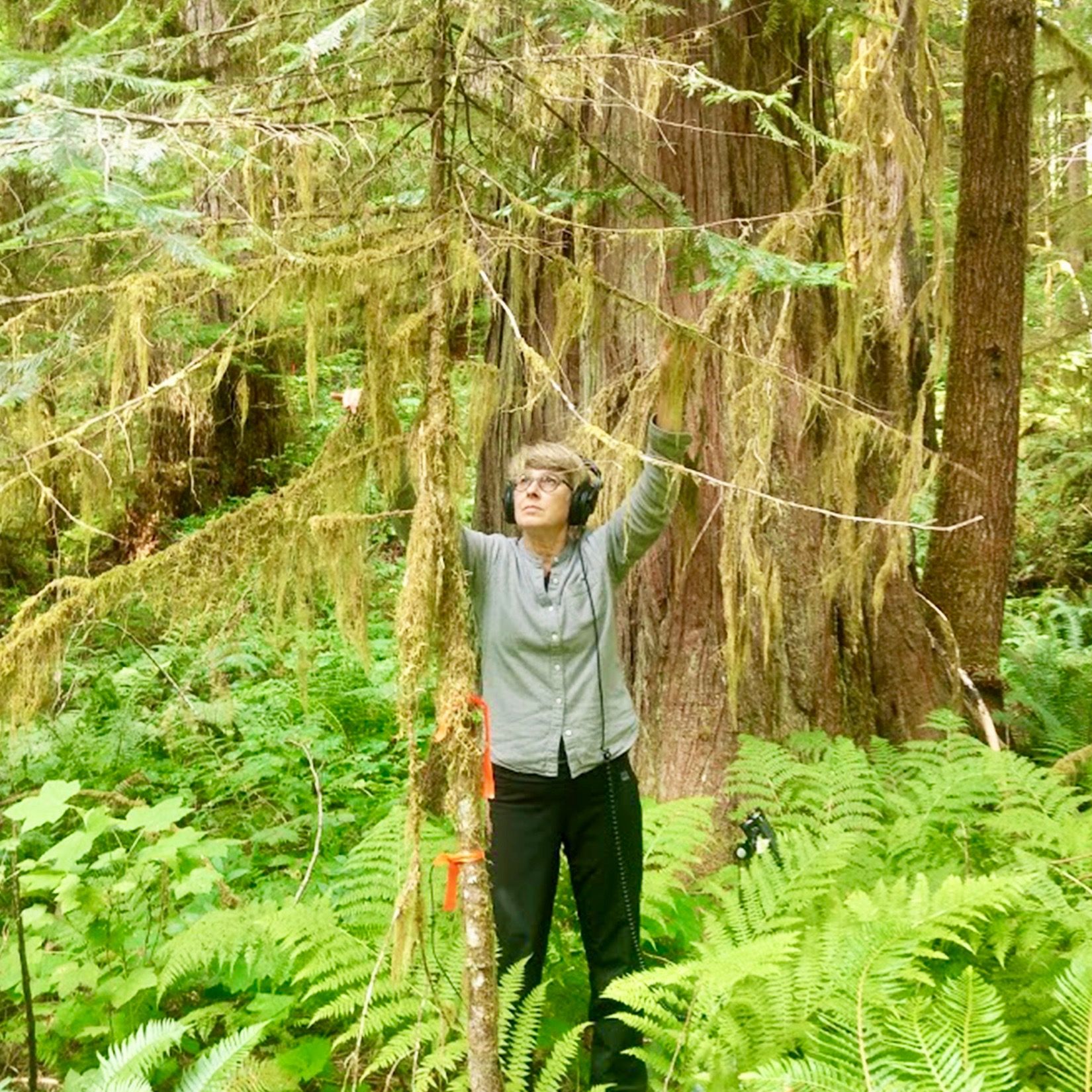
S5 Ep 174e174 julie andreyev - more-than-human creativity
As an artist and educator, I see that this moment calls for a way of working through decolonization and forging a path of care. I like to think of this through multispecies communities so that, as humans, we're surrounded by more than human life, even in our urban environments. This path of care for our multi-species, communities that make up the neighborhood, the community, and ultimately the earth is where I see my call for research and practice. I know Julie Andreyev from my time on the board of the Canadian Association for Sound Ecology and from the acoustic ecology in Vancouver where she is an Associate Professor in the Audain Faculty of Art, Emily Carr University of Art + Design where she teaches New Media + Sound Arts and Critical Studies.Julie is located on the unceded, traditional and ancestral territories of the Coast Salish people, including the xʷməθkʷəy̓əm (Musqueam), Sḵwx̱wú7mesh Úxwumixw (Squamish), and səl̓ilw̓ətaʔɬ (Tsleil-Waututh) First Nations, as well as the unceded traditional territories of more-than-human animals and plant life including bears, deers, raccoons, eagles, ravens, crows, hummingbirds, cedars, firs, salals and others.It’s the first time I see a land acknowledgement that includes more-than-human life and Julie is a good person to lead the way. Her multispecies art practice explores more-than-human creativity and our relations. You’ll hear talk about some current projects including Bird Park Survival Station, a long term reciprocity project with local birds, and Branching Songs a sound art project that draws attention to wondrous gifts provided by trees and forest ecosystems.During our conversation Julie mentioned her book : Lessons from a Multispecies Studio : Uncovering Ecological Understanding and Biophilia through Creative ReciprocityNear the end Julie tells a fascinating story about crow friends of hers, so stay tuned. Julie’s recommended listening are:Tree Museum Talking Territory Podcast : interviews that explore the aesthetics and politics of trees, animals and relations to the land. When We Talk About Animals podcastQuantum Listening by Pauline Oliveros One Drum by Richard WagameseThe Light Eaters by Zoë SchlangerEntangled Life by Merlin Sheldrake *END NOTES FOR ALL EPISODESNote : I'm currently 'pressing pause' and am not producing new content until further notice. Hey conscient listeners, I’ve been producing the conscient podcast as a learning and unlearning journey since May 2020. It’s my way to give back.This Indigenous Land Acknowledgement statement was developed by members of the Algonquin community for my former employer the Canada Council for the Arts. I have adapted slightly to make it my own.I acknowledge that my studio, located in Ottawa, is on the unceded, unsurrendered Territory of the Anishinaabe Algonquin Nation whose presence here reaches back to time immemorial.I recognize the Algonquins as the customary keepers and defenders of the Ottawa River Watershed and its tributaries. I honour their long history of welcoming many Nations to this beautiful territory and uphold and uplift the voice and values of our Host Nation.Further, I offer my respect and affirm the inherent and Treaty Rights of all Indigenous Peoples across this land and honour commitments to self-determination and sovereignty that have been made to Indigenous Nations and Peoples.I acknowledge the historical oppression of lands, cultures and the original Peoples in what we now know as Canada and fervently believe the Arts contribute to the healing and decolonizing journey we all share togetherIn parallel with the production of the conscient podcast and its francophone counterpart, balado conscient, I I publish a free ‘a calm presence' monthly Substack see https://acalmpresence.substack.com. Your feedback is always welcome at claude [at] conscient [dot] ca and/or on social media: Facebook, Instagram, Linkedin, Threads, BlueSky, Mastodon, Tik Tok, YouTube and Substack.Share what you like, etcI am grateful and accountable to the earth and the human labour that provided me with the privilege of producing this podcast, including the toxic materials and extractive processes behind the computers, recorders, transportation systems and infrastructure that made this production possible. Thanks for listening. Claude SchryerLatest update on March 21, 2026

S5 Ep 173e173 kelly mcinnes - late stage remedy
I think there's a lot of focus on systems change and we need all of that, but what we really need is to change ourselves so that we can actually embody the world that we want to be in, so that has a big piece of healing and how art can be a part of that. I heard about Kelly McInnes’ (she/they) work from Kim Richards (see e76 and e171) and had a very interesting conversation with Kelly in her kitchen on May 10, 2024 in Vancouver.Kelly is a queer dance artist concerned with embodying care and creating as a way of remembering connection to Earth. Her craniosacral therapy practice and her passion for collective healing powerfully inspires her artistry, and inspired me as well. For example, Kelly’s description of her creative process :The part that excites me about community engagement is that creative practice feels like a way into a life process. Not just sharing the product with folks, but actually inviting them into it, like a birthing. I was struck by the simplicity and depth of her latest project : Late Stage Remedy, which she describes as a ‘collective dance meditation practice happening twice a month on Saturdays from May to September 2024 at public parks in so-called Vancouver where through an improvised score, a group of dancers offer grounding presence, attention and care to the lands they dance on together. It’s an invitation to remember ourselves as a part of Earth and honor this vital, potent connection.’We also talked about the connections between her art practice and her healing practices: I think that a practice of life is so important in these times where there's so much to be heartbroken about and there's so much devastation going on with health responses like trauma and numbing. These practices of resourcing ourselves and of finding beauty and resonance are important and essential to imagine and create the worlds we want to move towards. This is the second in my ‘community arts’ series in season 5 (the first was e168 felicia young - together through art).Her recommended books and podcasts were:Yintah, a film directed and produced by Jennifer Wickham, Brenda Michell and Michael ToledanoThe point of relation (podcast) by Thomas HüblHealing Collective Trauma by Thomas HüblWe Are the Middle of Forever - Indigenous Voices from Turtle Island on the Changing Earth edited by Dahr Jamail and Stan RushworthPhoto of Kelly McInnes by Yvonne Chew *END NOTES FOR ALL EPISODESNote : I'm currently 'pressing pause' and am not producing new content until further notice. Hey conscient listeners, I’ve been producing the conscient podcast as a learning and unlearning journey since May 2020. It’s my way to give back.This Indigenous Land Acknowledgement statement was developed by members of the Algonquin community for my former employer the Canada Council for the Arts. I have adapted slightly to make it my own.I acknowledge that my studio, located in Ottawa, is on the unceded, unsurrendered Territory of the Anishinaabe Algonquin Nation whose presence here reaches back to time immemorial.I recognize the Algonquins as the customary keepers and defenders of the Ottawa River Watershed and its tributaries. I honour their long history of welcoming many Nations to this beautiful territory and uphold and uplift the voice and values of our Host Nation.Further, I offer my respect and affirm the inherent and Treaty Rights of all Indigenous Peoples across this land and honour commitments to self-determination and sovereignty that have been made to Indigenous Nations and Peoples.I acknowledge the historical oppression of lands, cultures and the original Peoples in what we now know as Canada and fervently believe the Arts contribute to the healing and decolonizing journey we all share togetherIn parallel with the production of the conscient podcast and its francophone counterpart, balado conscient, I I publish a free ‘a calm presence' monthly Substack see https://acalmpresence.substack.com. Your feedback is always welcome at claude [at] conscient [dot] ca and/or on social media: Facebook, Instagram, Linkedin, Threads, BlueSky, Mastodon, Tik Tok, YouTube and Substack.Share what you like, etcI am grateful and accountable to the earth and the human labour that provided me with the privilege of producing this podcast, including the toxic materials and extractive processes behind the computers, recorders, transportation systems and infrastructure that made this production possible. Thanks for listening. Claude SchryerLatest update on March 21, 2026

S5 Ep 172e172 beth carruthers - a living sentient place
What would change things is love. … We ask people to act, to change, to make sacrifices, or what may be perceived as sacrifices, which in the end can turn out to be incredible things as we open up a world we didn't consider possible for ourselves; it was always love that got people to take those steps and those decisions.Born and raised in the occupied unceded sovereign territories of the Sḵwx̱wú7mesh (Squamish), xʷməθkʷəy̓əm (Musqueam), and səlil̓wətaʔɬ (Tsleil-Waututh) peoples on the wild West coast of colonial Canada Beth Carruthers is an artist and researcher whose work and practice focuses on how aesthetic engagements, and especially arts and design based praxis, can seed and nurture transformative change in socio-cultural systems leading toward a sustainably flourishing future for all life.My first conversation with Beth was in October 2019, e05 carruthers – art that informs, forms and transforms so I wanted to reconnect with Beth some 5 years later to get an update on what this amazing creative mind is up to.She told me many new things, for example, about her origins:I come from a family of Highland Scots who were driven off their land and shipped to Canada to be placeholders for the empire about five or six generations ago. For some reason the Scots, Irish and Celtic peoples have managed, despite the church and all kinds of other occupations, to hang on to a kind of animist understanding of being in the world and an understanding of the world as a living sentient place. That's not what school tells you and that's not the narrative of modernism in the West. At one point Beth referred to this poem, A Walk, by Rainer Maria Rilke, from his Uncollected Poems, which opens Beth’s book chapter, Response: Deep Aesthetics and the Heart of the World, in Aesth/Ethics in Environmetal Change (2013). Beth asked that it be mentioned in the episode notes:‘Already my gaze is on the hill, that sunlit one,up ahead on the path I’ve scarcely started.In the same way, what we couldn’t grasp grasps us:blazingly visible, there in the distance –and changes us, even if we don’t reach it,into what we, scarcely sensing it, already are;a gesture signals, answering our gesture…But we feel only the opposing wind.’Beth recommended the following reading and viewing materials: At Work in the Ruins: Finding Our Place in the Time of Science, Climate Change, Pandemics and All the Other Emergencies by Dougald HineThe world is not a problem: a conversation between Dougald Hine and Iain McGilchrist *END NOTES FOR ALL EPISODESNote : I'm currently 'pressing pause' and am not producing new content until further notice. Hey conscient listeners, I’ve been producing the conscient podcast as a learning and unlearning journey since May 2020. It’s my way to give back.This Indigenous Land Acknowledgement statement was developed by members of the Algonquin community for my former employer the Canada Council for the Arts. I have adapted slightly to make it my own.I acknowledge that my studio, located in Ottawa, is on the unceded, unsurrendered Territory of the Anishinaabe Algonquin Nation whose presence here reaches back to time immemorial.I recognize the Algonquins as the customary keepers and defenders of the Ottawa River Watershed and its tributaries. I honour their long history of welcoming many Nations to this beautiful territory and uphold and uplift the voice and values of our Host Nation.Further, I offer my respect and affirm the inherent and Treaty Rights of all Indigenous Peoples across this land and honour commitments to self-determination and sovereignty that have been made to Indigenous Nations and Peoples.I acknowledge the historical oppression of lands, cultures and the original Peoples in what we now know as Canada and fervently believe the Arts contribute to the healing and decolonizing journey we all share togetherIn parallel with the production of the conscient podcast and its francophone counterpart, balado conscient, I I publish a free ‘a calm presence' monthly Substack see https://acalmpresence.substack.com. Your feedback is always welcome at claude [at] conscient [dot] ca and/or on social media: Facebook, Instagram, Linkedin, Threads, BlueSky, Mastodon, Tik Tok, YouTube and Substack.Share what you like, etcI am grateful and accountable to the earth and the human labour that provided me with the privilege of producing this podcast, including the toxic materials and extractive processes behind the computers, recorders, transportation systems and infrastructure that made this production possible. Thanks for listening. Claude SchryerLatest update on March 21, 2026
S5 Ep 171e171 kimberly skye richards - dept of utopian arts & letters
One of the roles that artists play within the poly crisis is supporting us through processes of unnumbing. Sometimes we might describe it like a re-tuning of our senses through listening. All of that is about undermining the ways that we are taught to master ourselves, to not show emotions, to disconnect our heads from our bodies so that we work more efficiently within the capitalist paradigm. I first met Kimberly Skye Richards, also known as Kim Richards, while doing a conscient podcast soundwalk on November 1, 2021 in Trout Lake Park in Vancouver.I invite you to listen to e76 kim richards – seeding a green new theatre in canada, where we talk about the role of theatre in the climate emergency and in particular ‘what kind of plays that already exist in Canadian theatre history about environmental issues’. This intrigued me then, and still does today. We tend to have short memories and yet art has a very. long. tail. I got to know and appreciate Kim when we were both members of the Mission Circle of SCALE, the Sectoral Climate Arts Leadership for the Emergency. We also have regular exchanges about education and learning such as the Facing Human Wrongs course which we took together as a cohort of artists in 2022.One of the many important teachings within Gesturing Towards Decolonial Futures’ (GTDF) work is learning from what is currently dying and applying them so that we don't just continuously repeat these mistakes. … Being open and talking about what isn't working or what traps we're falling into is so instructive. We can also learn a lot from listening to our friends and colleagues tell us their stories.During our second conscient conversation we focused on climate arts education and the recent launching of the Department of Utopian Arts and Letters, of which Kim is the librarian. It's a series of free courses and lots of fun. We also talked about the importance of self care for activist and artists and how the arts contribute to healing and resilience:One of the most important roles for the arts in climate work for me right now is creating the time to develop, maintain or begin somatic, movement, sound or writing practices. At the end of the episode I practiced saying ‘thank you to my guest’ with a gentle up-tone of emotional gratitude, like New York Times journalists do on The Daily podcast:Well, Kim, thank you very much.I’m still working on it… Kim’s reading suggestions are worlds ending and engaging multispecies experiences:Flightways : life and loss at the edge of extinction by Tom Van DoorenUndrowned : black feminist lessons from marine mammals by Alexis Pauline GumbsI want a better catastrophe by Andrew Boyd *END NOTES FOR ALL EPISODESNote : I'm currently 'pressing pause' and am not producing new content until further notice. Hey conscient listeners, I’ve been producing the conscient podcast as a learning and unlearning journey since May 2020. It’s my way to give back.This Indigenous Land Acknowledgement statement was developed by members of the Algonquin community for my former employer the Canada Council for the Arts. I have adapted slightly to make it my own.I acknowledge that my studio, located in Ottawa, is on the unceded, unsurrendered Territory of the Anishinaabe Algonquin Nation whose presence here reaches back to time immemorial.I recognize the Algonquins as the customary keepers and defenders of the Ottawa River Watershed and its tributaries. I honour their long history of welcoming many Nations to this beautiful territory and uphold and uplift the voice and values of our Host Nation.Further, I offer my respect and affirm the inherent and Treaty Rights of all Indigenous Peoples across this land and honour commitments to self-determination and sovereignty that have been made to Indigenous Nations and Peoples.I acknowledge the historical oppression of lands, cultures and the original Peoples in what we now know as Canada and fervently believe the Arts contribute to the healing and decolonizing journey we all share togetherIn parallel with the production of the conscient podcast and its francophone counterpart, balado conscient, I I publish a free ‘a calm presence' monthly Substack see https://acalmpresence.substack.com. Your feedback is always welcome at claude [at] conscient [dot] ca and/or on social media: Facebook, Instagram, Linkedin, Threads, BlueSky, Mastodon, Tik Tok, YouTube and Substack.Share what you like, etcI am grateful and accountable to the earth and the human labour that provided me with the privilege of producing this podcast, including the toxic materials and extractive processes behind the computers, recorders, transportation systems and infrastructure that made this production possible. Thanks for listening. Claude SchryerLatest update on March 21, 2026

S5 Ep 170e170 sonic research group (part 2)
(Note: some quotes below have been edited for concision)Soundwalking is always like magic. It is a magical experience. It is so simple, Hildi, as you said, and it’s as much about listening to sounds or listening to absences of sound. It's not very typical in our lives. We don't live the kinds of lives that require this kind of presence. And so it’s restorative for me and calms my spirit. But also it's such a reminder each and every time I do a soundwalk of the power of just simply listening and opening up that register with all of its span from appreciation to analytics, to criticality and to spirituality. (Milena Droumeva)This is part 2 of a conversation with colleagues and friends from the Sonic Research Group at Simon Fraser University in Burnaby, British Columbia. This time with Milena Droumeva, Hildegard Westerkamp, Barry Truax, Jacek Smolicki, Freya Zinovieff and myself. If you might have heard in part 1, e157, the Sonic Research Group is a bi-monthly zoom gathering of acoustic ecology researchers, activists and artists from around the world about sound studies and our shared passion for listening. This second conversation was on recorded on April 30, 2024 and flows freely on a range of issues, for example, Milena Droumeva talked about stages of life: I think stage of life is really important. If you're a young person who has to find a place in the world, or if you're a parent of young children or you're aging or entering a kind of middle age, you have to think about the futures of kids but there's work to do at every stage. We also talked about sound and artificial intelligence and I'm sure we’ll revisit this one. In fact, how do you even know that I’m human? This could easily be a synthetic voice, right? Jacek, help us...What differentiates us from machines is historical consciousness. Algorithms are operating using biased and skewed data without considering the context within which this data has emerged. Our role as educators is to be reminders of historical context that this whole machinery is digesting and using it to produce futures comes from.. Education in sound and listening was a throughline in our conversation as Barry Truax observed:I'm still cautiously optimistic that we could still use those same techniques that we've used in the past to create a more creative, analytical and critical listener.We shared our common interest and passion for soundwalking. Hildegard Westerkamp noted that :A group can become a community even though we don't know each other, which creates an atmosphere of willingness to be open and grounded inside ourselves. We can get to that energetic place because we've slowed down.You can hear more about soundwalking in e22 westerkamp – slowing down through listening, e78 milena droumeva – art needs to get on the street and e113 soundwalk (part 1) - what is my position in listening ? and e113 soundwalk (part 2) - how can we deepen our listening?We also talked about current affairs such as the encampment at the University of British Columbia that day about the war in Gaza and calls for disinvestment. Freya Zinonieff told us a fascinating story (which you’ll hear at the end of the story made me laugh) A music teacher at Columbia University was teaching John Cage’s 4’.33’’ and made a big fuss about how they couldn't teach that class because there was a loud protest outside the classroom and all she could hear was ‘from the river to the sea’. She said, okay, this just means we can't teach this now because it’s ruining 4’.33’’. We have to continue reminding ourselves and others that listening is a project and we need to learn together how to listen to what is actually there.We also discussed the sound of air conditioning systems in urban spaces as a symptom of climate change, the media practices of Neo-Nazi groups and more. Enjoy. *END NOTES FOR ALL EPISODESNote : I'm currently 'pressing pause' and am not producing new content until further notice. Hey conscient listeners, I’ve been producing the conscient podcast as a learning and unlearning journey since May 2020. It’s my way to give back.This Indigenous Land Acknowledgement statement was developed by members of the Algonquin community for my former employer the Canada Council for the Arts. I have adapted slightly to make it my own.I acknowledge that my studio, located in Ottawa, is on the unceded, unsurrendered Territory of the Anishinaabe Algonquin Nation whose presence here reaches back to time immemorial.I recognize the Algonquins as the customary keepers and defenders of the Ottawa River Watershed and its tributaries. I honour their long history of welcoming many Nations to this beautiful territory and uphold and uplift the voice and values of our Host Nation.Further, I offer my respect and affirm the inherent and Treaty Rights of all Indigenous Peoples across this land and honour commitments to self-determination and sovereignty that have been made to Indigenous Nations and Peoples.I acknowledge the historical

S5 Ep 169e169 louise adongo - we’re all artists
How can we remind ourselves that we're all creative and we're all artists? I think that we need all parts of ourselves to be able to navigate this transition that we're in as a species and as a part of the world.I first met Louise Adongo at the Transition Innovation Group (see e163). We spoke on Monday April 22, 2024, earth day.Louise is a bold and grounded leader in systems change, policy and evaluation who is a founder of Caprivian Strip Inc (CSI) and a co-steward with the Transition Bridges Project.Louise's work brings care and intention to uncovering the roots of tangled problems; enabling shifts to greater resilience, sustainability and impact. I’ve heard her talk about it many times and noticed that there is often an arts component in her work. For example:There are artists in communities and creativity is really important in a context where you're trying to inspire imagination and do strength-based and asset-based work in contexts that maybe people do not naturally see and think of things that way. I've always understood that creatives and artists have a way of drawing out of us more than what we even understand about ourselves on a surface level.Louise believes that co-creating more nimble, transparent and creative institutional spaces is key to the reinvention that we all need.I agree. A key part of this is knowing how to slow down. I appreciate Louise’s take on this: My perspective on what slowing down means is that we really need to think more deeply before we take the actions, which is different than let's slow down and not take any actions at all. And so the system mediation feeds my action orientation because it's willing to actually step in and say the hard thing to people that need to understand their readiness to hear the hard thing. So it's not waiting to say the hard thing until people are ready to hear it. It's almost saying the hard thing to determine how ready people are. We also discussed how to invite people to get further involved.It’s less about wanting to convert or convince people to respond to the reality of our state than figuring out how to create invitations for people to come to it for themselves.Consider yourself invited. Louise recommended Soil: The Story of a Black Mother’s Garden by poet and scholar Camille T. Dungy, The Creator film and suggested that we spend time outside. Links that Louise mentioned in the episode include:Berkana LoopPanarchy LoopWe Will Dance with Mountains, notably the work of Cara Judea Alhadeff *END NOTES FOR ALL EPISODESNote : I'm currently 'pressing pause' and am not producing new content until further notice. Hey conscient listeners, I’ve been producing the conscient podcast as a learning and unlearning journey since May 2020. It’s my way to give back.This Indigenous Land Acknowledgement statement was developed by members of the Algonquin community for my former employer the Canada Council for the Arts. I have adapted slightly to make it my own.I acknowledge that my studio, located in Ottawa, is on the unceded, unsurrendered Territory of the Anishinaabe Algonquin Nation whose presence here reaches back to time immemorial.I recognize the Algonquins as the customary keepers and defenders of the Ottawa River Watershed and its tributaries. I honour their long history of welcoming many Nations to this beautiful territory and uphold and uplift the voice and values of our Host Nation.Further, I offer my respect and affirm the inherent and Treaty Rights of all Indigenous Peoples across this land and honour commitments to self-determination and sovereignty that have been made to Indigenous Nations and Peoples.I acknowledge the historical oppression of lands, cultures and the original Peoples in what we now know as Canada and fervently believe the Arts contribute to the healing and decolonizing journey we all share togetherIn parallel with the production of the conscient podcast and its francophone counterpart, balado conscient, I I publish a free ‘a calm presence' monthly Substack see https://acalmpresence.substack.com. Your feedback is always welcome at claude [at] conscient [dot] ca and/or on social media: Facebook, Instagram, Linkedin, Threads, BlueSky, Mastodon, Tik Tok, YouTube and Substack.Share what you like, etcI am grateful and accountable to the earth and the human labour that provided me with the privilege of producing this podcast, including the toxic materials and extractive processes behind the computers, recorders, transportation systems and infrastructure that made this production possible. Thanks for listening. Claude SchryerLatest update on March 21, 2026

S5 Ep 168e168 felicia young - together through art
Community arts became my initial quest in the 1980’s as a reaction against the commercial art world. How can art participate in a functional way to connect not just art educated people, but our overall communities on issues affecting them that have meaning and purpose. Can we just speak about these issues or can we actually have it be transformative in some way to actually lead to some kind of social or policy change within the community by bringing people together and getting them working together.Felicia Young is the founder and executive director of Earth Celebrations, a non-profit organization engaging communities to effect ecological and social change through the arts. Felicia has developed a methodology utilizing the arts and the theatrical pageant art form, along with civic engagement and activism. She’s a 3rd generation New Yorker, with deep roots in the City of New York, as well as much inspiration from the festivals, ceremonies, and mythic dramas from her mother’s native land of India.I’ve never met Felicia in person but I know about her work through social media such as the YouTube video Celebrations Director Felicia Young - 30 Years of Cultural Organizing for Ecological Change. In particular I was moved by Felicia’s response to a question I ask all of my guests about how to prepare for the end of the world as we know it : I don't just see it as doom and gloom because I have been directly involved in 30 years of local people who've just moved forward with implementing these solutions without waiting for the government … My involvement has always been at the grassroots level. And on that, I'm encouraged, but where I'm afraid is the overall political system where we see our elected officials owned by the industries that are doing all of the polluting and controlling the bigger picture, but are we just going to be paralyzed because they're doing the wrong thing and not go ahead with what we know is right? This is the first in a series of conversations about community engaged arts, their contribution to society. My second all be e173 with Kelly McInnes. Felicia suggested the following reading and listening materials : Center for Artistic Activism resourcesWilliam Cleveland’s podcast on community engagement and the artseco art space publicationsArtists and Climate Change facebook page *END NOTES FOR ALL EPISODESNote : I'm currently 'pressing pause' and am not producing new content until further notice. Hey conscient listeners, I’ve been producing the conscient podcast as a learning and unlearning journey since May 2020. It’s my way to give back.This Indigenous Land Acknowledgement statement was developed by members of the Algonquin community for my former employer the Canada Council for the Arts. I have adapted slightly to make it my own.I acknowledge that my studio, located in Ottawa, is on the unceded, unsurrendered Territory of the Anishinaabe Algonquin Nation whose presence here reaches back to time immemorial.I recognize the Algonquins as the customary keepers and defenders of the Ottawa River Watershed and its tributaries. I honour their long history of welcoming many Nations to this beautiful territory and uphold and uplift the voice and values of our Host Nation.Further, I offer my respect and affirm the inherent and Treaty Rights of all Indigenous Peoples across this land and honour commitments to self-determination and sovereignty that have been made to Indigenous Nations and Peoples.I acknowledge the historical oppression of lands, cultures and the original Peoples in what we now know as Canada and fervently believe the Arts contribute to the healing and decolonizing journey we all share togetherIn parallel with the production of the conscient podcast and its francophone counterpart, balado conscient, I I publish a free ‘a calm presence' monthly Substack see https://acalmpresence.substack.com. Your feedback is always welcome at claude [at] conscient [dot] ca and/or on social media: Facebook, Instagram, Linkedin, Threads, BlueSky, Mastodon, Tik Tok, YouTube and Substack.Share what you like, etcI am grateful and accountable to the earth and the human labour that provided me with the privilege of producing this podcast, including the toxic materials and extractive processes behind the computers, recorders, transportation systems and infrastructure that made this production possible. Thanks for listening. Claude SchryerLatest update on March 21, 2026
S5 Ep 167e167 barbara cuerden - tending the garden of art
The garden doesn't have to be something that's instrumental. It can be just a place where you sit, where you're thinking of growing something, you know, where the sun shines and where photosynthesis takes place and everything is sort of manifested through the sunlight and the water. It's a fantastic thing on its own without actually having to produce a lot of stuff.Replace 'garden' with 'art'.Barbara Cuerden is a neighbour in the Sandy Hill neighbourhood of Ottawa, a colleague in ecological art and a family friend. Barbara completed a Masters degree in ecoliteracy and place-based education in 2010 and is also a professional back-of-the-book indexer among other things. Overall, her artworks and her way of life, I think, reflect local particularities of place and timeWhen I asked Barbara to be a guest on the conscient podcast she wrote to me with this thought, that I think you’ll appreciate:The solution is nature, which is still out there, in the world outside of our heads. We belong to it. A feeling of connection with the air, the light, the green, the animals, that feeling of connection most of us felt naturally as children... That connection can be found again (and again) and like you say, it can be accessible if we allow for it to take hold of us.We talked about many connections and points of contact during our conversation, concluding, not surprisingly, that we would all be well served to pay more attention to local particularities of place and time.There were some very poignant moments during our exchange, which you’ll hear. For example, when Barbara told me a story aboutA little seminar where John K. Grande was speaking. I considered myself an eco-artist until I heard him speak about the meaninglessness of spectacle. Reading his stuff changed my life and thus I became a non-entity.I was struck by this idea of being a non-entity. Barbara’s story reminded me of conscient episode e74 letting go where I talk about ‘the main barrier to my re-education is… ‘me’, and that the solution, simply, is to let it go…’. So this episode explores the dichotomy between connection and letting go and the tightrope between being present and being a non-entity. Barbara’s recommended reading is Jenny Odell’s Reading the Rocks in Emergence magazine. *Note: Links mentioned during the conversation:Regeneration Hoodoo (click on ‘installation’)Stephen Lewis (Canadian politician)e161 alchemize - a conversation with kamea chayne (special episode about a 40 part course)What can an individual do? (claude’s newsletter posting where Barbara commented about Bill McKibben’s question)Exact wording of quotes in the episode:Instead of the dying light of Western civilization, why not a swinging hoodoo cloud? - Ishamel ReedDuring the Vietnam War... every respectable artist in this country was against the war. It was like a laser beam. We were all aimed in the same direction. The power of this weapon turns out to be that of a custard pie dropped from a stepladder six feet high. - Kurt VonnegutThe effects of modern-day media have led us to generalize and simplify nature, as we do all things. We read experience in an informational way. - John K. Grande *END NOTES FOR ALL EPISODESNote : I'm currently 'pressing pause' and am not producing new content until further notice. Hey conscient listeners, I’ve been producing the conscient podcast as a learning and unlearning journey since May 2020. It’s my way to give back.This Indigenous Land Acknowledgement statement was developed by members of the Algonquin community for my former employer the Canada Council for the Arts. I have adapted slightly to make it my own.I acknowledge that my studio, located in Ottawa, is on the unceded, unsurrendered Territory of the Anishinaabe Algonquin Nation whose presence here reaches back to time immemorial.I recognize the Algonquins as the customary keepers and defenders of the Ottawa River Watershed and its tributaries. I honour their long history of welcoming many Nations to this beautiful territory and uphold and uplift the voice and values of our Host Nation.Further, I offer my respect and affirm the inherent and Treaty Rights of all Indigenous Peoples across this land and honour commitments to self-determination and sovereignty that have been made to Indigenous Nations and Peoples.I acknowledge the historical oppression of lands, cultures and the original Peoples in what we now know as Canada and fervently believe the Arts contribute to the healing and decolonizing journey we all share togetherIn parallel with the production of the conscient podcast and its francophone counterpart, balado conscient, I I publish a free ‘a calm presence' monthly Substack see https://acalmpresence.substack.com. Your feedback is always welcome at claude [at] conscient [dot] ca and/or on social media: Facebook, Instagram, Linkedin, Threads, BlueSky, Mastodon, Tik Tok, YouTube and Substack.Share what you like, etcI am grateful and accountable to the earth and th

S5 Ep 166e166 david maggs - the art of being
What you do as an artist is crucial. Do not abandon that for a desire to serve a kind of utilitarian purpose of ‘I'm gonna make sure people know more’. The faith in knowing more is the siren song of our society that constantly sees us leaping off of the vessel that can carry us through this, with this belief that we can suddenly transform society because we can provide information. Decorating climate policy with the arts is not transformative. What you know how to do as an artist is so fundamentally important.David Maggs defines his work as an attempt to integrate the core capacities of the arts with larger social challenges, sustainability, health, social justice, community development, etc. David grew up in Corner Brook, Newfoundland and spent much of his developmental years as a classical pianist. In 2002, he founded Gros Morne Summer Music (now Camber Arts) and continues to be active in cultural production and cultural theory. My first conversation with David was e30 maggs – art and the world after this recorded during an outdoors COVID era walk on March 25, 2021 in Vancouver. We talked about artistic capacity, sustainability, value propositions, disruption and recovery, including his Art and the World After This paper for Metcalf Foundation.Since then David has become Metcalf Fellow on Arts and Society, where he nurtures and supports the desire in Canada’s arts sector to both move with, and shape ongoing patterns of transformative societal change. David and I were co-founders of SCALE along with Anjali Appadurai. Anthony Garoufalis-Auger, Kendra Fanconi, Judi Pearl and Robin Sokoloski in 2021 and have been corresponding ever since, including my March 16, 2024 posting on a calm presence david maggs’ art and the climate crisis.Our second conversation focused on being and transformation. For example :My argument is that we are intuiting the ability of art to work at the level of being, to engage with transformative change. But what happens is we live in a culture that is so structured around problem solving at the level of information and knowledge that as soon as we think, OK, yes. course art has something really important to do with this, then, immediately, instead of allowing the arts to pull climate discourse into the realm of being, climate discourse pulls art into the realm of knowing. And it becomes a tool for knowing rather than something that allows us to start to engage with ourselves at the level of being.David also talks about the cultural gap in the climate crisis which he defines as ‘the difference between the imperative of transformation at the level of being and a particular society's capacity to do so. Ours is really low.’David’s recommended reading is the work of Richard Powers and Don McKay’s Vis à vis. *END NOTES FOR ALL EPISODESNote : I'm currently 'pressing pause' and am not producing new content until further notice. Hey conscient listeners, I’ve been producing the conscient podcast as a learning and unlearning journey since May 2020. It’s my way to give back.This Indigenous Land Acknowledgement statement was developed by members of the Algonquin community for my former employer the Canada Council for the Arts. I have adapted slightly to make it my own.I acknowledge that my studio, located in Ottawa, is on the unceded, unsurrendered Territory of the Anishinaabe Algonquin Nation whose presence here reaches back to time immemorial.I recognize the Algonquins as the customary keepers and defenders of the Ottawa River Watershed and its tributaries. I honour their long history of welcoming many Nations to this beautiful territory and uphold and uplift the voice and values of our Host Nation.Further, I offer my respect and affirm the inherent and Treaty Rights of all Indigenous Peoples across this land and honour commitments to self-determination and sovereignty that have been made to Indigenous Nations and Peoples.I acknowledge the historical oppression of lands, cultures and the original Peoples in what we now know as Canada and fervently believe the Arts contribute to the healing and decolonizing journey we all share togetherIn parallel with the production of the conscient podcast and its francophone counterpart, balado conscient, I I publish a free ‘a calm presence' monthly Substack see https://acalmpresence.substack.com. Your feedback is always welcome at claude [at] conscient [dot] ca and/or on social media: Facebook, Instagram, Linkedin, Threads, BlueSky, Mastodon, Tik Tok, YouTube and Substack.Share what you like, etcI am grateful and accountable to the earth and the human labour that provided me with the privilege of producing this podcast, including the toxic materials and extractive processes behind the computers, recorders, transportation systems and infrastructure that made this production possible. Thanks for listening. Claude SchryerLatest update on March 21, 2026

S5 Ep 165e165 bill crandall - art can change us
Being an artist, or making art, in the context of climate is more about being a kind of light in the darkness, making us believe in ourselves and believe in the future so that we want to endeavor to save the thing that we have, our habitat. Some people like to say art can't change the world, but art can change us. Then we can change the world more effectively.I first heard about Bill Crandall from his Viaduct Arts project, a newsletter that brings together various ways artists can help carry us up and over the climate crisis. Bill is from Washington DC though he currently lives with his family in Nairobi, Kenya.As a longtime photographer, his personal long-term projects focus on the human dimension of sweeping historical changes, and take nuanced, poetic, and empathetic looks at topics from gentrification to cultural identity.I appreciate his one person efforts to empower artists in the climate emergency through Viaduct Arts and so I called Bill up on Zoom and we talked about his climate art activism including his observation that ‘art can help us stay centered in ourselves, be resilient, and have some spiritual grounding that's going help us no matter what comes’. Bill's recommended book is Tales from Moominvalley by Tove Jansson. *END NOTES FOR ALL EPISODESNote : I'm currently 'pressing pause' and am not producing new content until further notice. Hey conscient listeners, I’ve been producing the conscient podcast as a learning and unlearning journey since May 2020. It’s my way to give back.This Indigenous Land Acknowledgement statement was developed by members of the Algonquin community for my former employer the Canada Council for the Arts. I have adapted slightly to make it my own.I acknowledge that my studio, located in Ottawa, is on the unceded, unsurrendered Territory of the Anishinaabe Algonquin Nation whose presence here reaches back to time immemorial.I recognize the Algonquins as the customary keepers and defenders of the Ottawa River Watershed and its tributaries. I honour their long history of welcoming many Nations to this beautiful territory and uphold and uplift the voice and values of our Host Nation.Further, I offer my respect and affirm the inherent and Treaty Rights of all Indigenous Peoples across this land and honour commitments to self-determination and sovereignty that have been made to Indigenous Nations and Peoples.I acknowledge the historical oppression of lands, cultures and the original Peoples in what we now know as Canada and fervently believe the Arts contribute to the healing and decolonizing journey we all share togetherIn parallel with the production of the conscient podcast and its francophone counterpart, balado conscient, I I publish a free ‘a calm presence' monthly Substack see https://acalmpresence.substack.com. Your feedback is always welcome at claude [at] conscient [dot] ca and/or on social media: Facebook, Instagram, Linkedin, Threads, BlueSky, Mastodon, Tik Tok, YouTube and Substack.Share what you like, etcI am grateful and accountable to the earth and the human labour that provided me with the privilege of producing this podcast, including the toxic materials and extractive processes behind the computers, recorders, transportation systems and infrastructure that made this production possible. Thanks for listening. Claude SchryerLatest update on March 21, 2026

S5 Ep 164e164 jimmy ung - proximity proportionate responsibility
Proximity proportionate responsibility: if we were to do an inventory of where all the things we own were made, that would give us a very interesting map of where our responsibility, our attention and our donations ought to go because our pressures on the global systems can be revealed. That's a much more reasonable way to interact with different crises than to simply read about it on the news and interact with the whole of it without the context of our footprint. Jimmy Ung was born in Montreal to a family of refugees from the Cambodian war. He has traveled to over 50 countries and worked for Collège Reine-Marie, the Canadian Commission for UNESCO, the Parliament of Canada, and the charity WE (Free the Children). He is currently working on a book about Privilege, Power and Social Responsibility.I first met Jimmy at the Canadian Commission for UNESCO while I was working at Canada Council for the Arts. Jimmy impressed me with his brilliant mind, boundless curiosity and his kind heart. We kept in touch over the years, including my fascination with his motorcycle crossing of the Americas in 2014-15 covering more than 30,000 kilometers. I interviewed Jimmy in French for balado conscient on April 17, 2021 (see é28 ung - résilience et vulnérabilité) where we talked about resilience and vulnerability. I was struck by Jimmy’s observation that ‘resilience is the capacity to be vulnerable’ which at the time seemed like a contradiction but now makes sense to me.During this 2nd conversation, this time in English, some 3 years later, our focus was on privilege, in relation to his upcoming book, including the role that privilege plays in the arts and in relation to both the ecological and humanitarian crisis. At the end of our conversation, Jimmy quoted Bayo Akomolafe saying ‘our times are urgent, so let us slow down’ and recommended this video: Climate Crisis, Fragmentation and Collective Trauma, with Bayo Akomolafe, Eriel Tchekwie Deranger, Angaangaq Angakkorsuaq & Dr. Gabor Maté as part of The Wisdom of Trauma - Talks on Trauma Series.I mentioned this link from my ‘a calm presence’ newsletter during the conversation : l'orchestre de paris à montréal. *END NOTES FOR ALL EPISODESNote : I'm currently 'pressing pause' and am not producing new content until further notice. Hey conscient listeners, I’ve been producing the conscient podcast as a learning and unlearning journey since May 2020. It’s my way to give back.This Indigenous Land Acknowledgement statement was developed by members of the Algonquin community for my former employer the Canada Council for the Arts. I have adapted slightly to make it my own.I acknowledge that my studio, located in Ottawa, is on the unceded, unsurrendered Territory of the Anishinaabe Algonquin Nation whose presence here reaches back to time immemorial.I recognize the Algonquins as the customary keepers and defenders of the Ottawa River Watershed and its tributaries. I honour their long history of welcoming many Nations to this beautiful territory and uphold and uplift the voice and values of our Host Nation.Further, I offer my respect and affirm the inherent and Treaty Rights of all Indigenous Peoples across this land and honour commitments to self-determination and sovereignty that have been made to Indigenous Nations and Peoples.I acknowledge the historical oppression of lands, cultures and the original Peoples in what we now know as Canada and fervently believe the Arts contribute to the healing and decolonizing journey we all share togetherIn parallel with the production of the conscient podcast and its francophone counterpart, balado conscient, I I publish a free ‘a calm presence' monthly Substack see https://acalmpresence.substack.com. Your feedback is always welcome at claude [at] conscient [dot] ca and/or on social media: Facebook, Instagram, Linkedin, Threads, BlueSky, Mastodon, Tik Tok, YouTube and Substack.Share what you like, etcI am grateful and accountable to the earth and the human labour that provided me with the privilege of producing this podcast, including the toxic materials and extractive processes behind the computers, recorders, transportation systems and infrastructure that made this production possible. Thanks for listening. Claude SchryerLatest update on March 21, 2026

S5 Ep 163e163 transition innovation group - art and defeatism
I’m wanting something from art, which I think is much deeper, is a re-imagination of what it means to be human. I feel like we've instrumentalized and trivialized art and actually lost its capacity to expand our thesis of how we imagine ourselves and the world around us. I asked that question because the economy that we've created around art may have actually distorted its capacity to disturb us and to challenge our imagination of selves, which I think is probably at the root of the crisis that we face, a much deeper structural challenge of pretty much how we imagine ourselves and how we imagine our relationship with the world and every route. - Indy Johar, March 20, 2024, conscient podcast e163On March 20, 2024 I had the privilege and pleasure of hosting a conversation on ‘how art can help defeat defeatism’ with colleagues from the Transition Innovation Group, an inclusive and generative space for active consideration of societal transition, co-hosted by Michelle Baldwin and Taryn Lucas with the transformation team at Community Foundation of Canada.This group of social innovators meets every two weeks on Zoom and is dedicated to collectively reimagining an equitable and integrated view of the infrastructures needed for long-term societal transition for future generations. In other words, making the world a better place.I’ve been part of the group since its early days and we often speak about the transformative power of art and culture : art as a form of social innovation. So what you’re about to hear is a 50 minute conversation between 20 or so participants from this group. You might know some of them. Present at this session were (and I hope I've not forgotten anyone) : Abdul Walid Azizi, Arlene Macdonald, Barbara Leckie, Carly Goodman, Cheryll Case, Emily Mercy, Graham Singh, Ian Prinsloo, Indy Johar, Jo Reynolds, Joanne Kviring, Laura Cozzi, Lesley Southwick-Trask, Louise Adongo, Malobi Elueme, Michelle Baldwin, Nishan Chelvachandran, Shannon Litzenberger, Stephen Huddart, Taryn Lucas and myself as facilitator (along with Michelle Baldwin who gave a hand when my computer stopped working for a few moments and I continued on my iphone).You’ll hear responses to four questions : Is writer Rebecca Solnit right in saying that ‘fighting defeatism is also climate work’?How can art and culture help those who are ‘frightened by the ecological crisis’?How has art helped you personally overcome difficult moments in your social innovation work and what artworks do you recommend to your peers?How can social innovation projects and institutions better integrate artists and cultural workers in their work?Note: Abdul Walid Azizi's response was inaudible in the recording therefore he wrote a similar statement that I have added as a voiceover in this recording. Thanks to Walid for doing this. I appreciate his point about 'viewing art as both a language of representation and a collective memory of society underlines its importance in strengthening the relationship between the individual and society. However, in our society, which is increasingly dominated by material and monetary values, art seems to be on the verge of being sidelined. Nevertheless, one way to keep the arts alive is by incorporating them into different societal initiatives.'As you’ll hear many interesting and unresolved issues were raised at this session such as : The notion of permanency with art and how that relates to defeatism and our sense of time constructs and legacy.How do we rebuild the permission space for deeply philosophical art that challenges the core of our being ? Will we recognize art when it shows up that reframes mindsets and how do we measure success ? Life is art. It changes without breaking and allows us to break open and break in and break through without breaking us.What is it that we expect an artist or artists to do? What is the result of their work? And if they do that, are we willing to pay them?I think there's something really important in this conversation where we move beyond the idea of transaction based payment for art. I don't think art is a transaction and it operates across and beyond transactions to an economy of care and entanglements.I suspect that we’ll have another session on art and social innovation again soon. As usual, I invite comments on any conscient podcast social media or to me [email protected] of the links shared in the chat during the episode include :Ben Von Wong (artist referred to in this conversation)Bolder, faster, together: Perspectives on societal transition (co-ordinated by the Transition Innovation Group)Catalyst Community Finance (explainer on social finance)e160 shannon litzenberger - a culture of collective thriving (podcast interview)Indigenous Data Sovereignty & Indigenous Futures (featuring Jonathan Dewar, Sofia Locklear, and Jason Lewis Hosted by: Joanna Redden)Mysteries, Yes (a poem by Mary Oliver that was read during the session)REDISTRIBUTE WEALTH, DEMOCRATIZE POWER & SHIFT ECON

S5 Ep 162e162 terri hron - an ecological lens
I think as musicians we have particular concerns that perhaps looking at those through an ecological lens can be helpful. One of them is to think about the structures of funding which allow us to operate and to maybe reconsider them because they might change. And to be open to that change and to find solutions. And those solutions might be that we need to advocate for other kinds of support, if we still want to advocate for support, or to engage in other types of activities to make a living. Maybe that sounds a little bit defeatist, but I am trying to think in a very pragmatic way about what might be helpful and useful to create a greater sense of security and happiness in the future.Terri Hron’s work explores historical instrumental performance practice and repertoire, field recording, ceramics, movement, video, among other things. Besides composing and performing works for and with others, Terri, who lives in Montreal, produces performances, gatherings and events.For example, when she was Executive Director the Canadian New Music Network (CNMN) she implemented a series of groundbreaking programs focusing on equity, pluralism, sustainability and accessibility including a more inclusive understanding of what new music could be. This was always an issue for me when I studied music in Montreal with ‘la musique contemporaine’, which was exciting but I found to be quite restrictive but now the field is opening up and Terri has played an important role in that widening of scope.As you’ll hear in our conversation that Terri is passionate about the interconnections between music, social, ecological and labour justice and thankfully, is also able to remain calm in the eye of the storm, as she notes during our conversation :I think the only thing that I can do is to try and live with as much integrity as I can and, and avoid participating in the things that I consider to be the least aligned with my values.At the end of our exchanges you’ll hear Terri recommend some of her favorite publications and artistsThe Master and his Emissary by Iain McGilchristThe Age of Insecurity by Astra TaylorThe Flowering Wand by Sophie StrandBrain Forest Quipu by Cecelia VicuñaPhoto credit of cover photo of Terri Hron: Justine Latour *END NOTES FOR ALL EPISODESNote : I'm currently 'pressing pause' and am not producing new content until further notice. Hey conscient listeners, I’ve been producing the conscient podcast as a learning and unlearning journey since May 2020. It’s my way to give back.This Indigenous Land Acknowledgement statement was developed by members of the Algonquin community for my former employer the Canada Council for the Arts. I have adapted slightly to make it my own.I acknowledge that my studio, located in Ottawa, is on the unceded, unsurrendered Territory of the Anishinaabe Algonquin Nation whose presence here reaches back to time immemorial.I recognize the Algonquins as the customary keepers and defenders of the Ottawa River Watershed and its tributaries. I honour their long history of welcoming many Nations to this beautiful territory and uphold and uplift the voice and values of our Host Nation.Further, I offer my respect and affirm the inherent and Treaty Rights of all Indigenous Peoples across this land and honour commitments to self-determination and sovereignty that have been made to Indigenous Nations and Peoples.I acknowledge the historical oppression of lands, cultures and the original Peoples in what we now know as Canada and fervently believe the Arts contribute to the healing and decolonizing journey we all share togetherIn parallel with the production of the conscient podcast and its francophone counterpart, balado conscient, I I publish a free ‘a calm presence' monthly Substack see https://acalmpresence.substack.com. Your feedback is always welcome at claude [at] conscient [dot] ca and/or on social media: Facebook, Instagram, Linkedin, Threads, BlueSky, Mastodon, Tik Tok, YouTube and Substack.Share what you like, etcI am grateful and accountable to the earth and the human labour that provided me with the privilege of producing this podcast, including the toxic materials and extractive processes behind the computers, recorders, transportation systems and infrastructure that made this production possible. Thanks for listening. Claude SchryerLatest update on March 21, 2026
bonus episode - solar eclipse 2024
bonusThis is a special bilingual episode of the conscient podcast recorded on April 8, 2024 during the solar eclipse in Ottawa. The same recording can be found on both the conscious podcast and the conscious podcast. Here is a transcript of what I said. This is a bonus episode of the conscient podcast.It's 3.15pm Eastern Standard Time. I'm in Ottawa near the path of totality of the solar eclipse that's going to hit its peak in about 10 minutes. Un épisode spécial du balado conscient le lundi 8 avril 20024. On est à la veille d'arriver au point culminant de l'éclipse solaire ici à Ottawa, et j'ai pensé l'enregistrer pour vous. It's April 8th 2024. I am going to record the transition towards the peak at 3.25 pm and beyond to observe acoustically what changes. I would say the light is definitely decreasing and has been doing that for the last 20 minutes or so. But the soundscape, I don't know... Let's listen, I'll stop talking. Let's listen to the sound of the 2024 total solar eclipse in Ottawa, Ontario, Canada. Bonne écoute.This is the peak. Voici le moment. (note: at 11 minutes in the recording)Well that’s it. It’s sonically interesting because right around the peak, the birds started becoming much more active and it was very quiet before then so maybe the lesser amounts of light triggered something in their behavior. That's possible or it could also be random.Donc il ne s'est pas passé grand-chose. Sauf que la vie était à la fois tranquille comme d'habitude, mais aussi animée avec les oiseaux qui, je ne sais pas trop pourquoi, se sont mis à chanter au moment clé à 3 h 25 de l'après midi lorsque le soleil était caché par la lune. Et de toute façon, c'est un bel exercice de méditation et d'écoute. Ce qui nous entoure, le ronflement, le chant des oiseaux, les sons des voisins. J'ai entendu une ou deux voix dire ‘it’s 2 minutes to’. Mais c’est tranquille et c'est bien parce que c'est un moment de.. Comment dire? It's a moment of great significance in the planetary cosmology, if you want and it's a moment where we, that we can all share depending on where you live in the world, but we can all be aware of other earth's and its cycles, and there's good things that can come from that. So this is the end of this episode. I will let it run for another couple of minutes. I thank you for listening and for sharing this soundscape recording of the 2024 solar eclipse from Ottawa on the unceded territory of Algonquin Anishinaabe peoples. Merci de votre écoute. *END NOTES FOR ALL EPISODESNote : I'm currently 'pressing pause' and am not producing new content until further notice. Hey conscient listeners, I’ve been producing the conscient podcast as a learning and unlearning journey since May 2020. It’s my way to give back.This Indigenous Land Acknowledgement statement was developed by members of the Algonquin community for my former employer the Canada Council for the Arts. I have adapted slightly to make it my own.I acknowledge that my studio, located in Ottawa, is on the unceded, unsurrendered Territory of the Anishinaabe Algonquin Nation whose presence here reaches back to time immemorial.I recognize the Algonquins as the customary keepers and defenders of the Ottawa River Watershed and its tributaries. I honour their long history of welcoming many Nations to this beautiful territory and uphold and uplift the voice and values of our Host Nation.Further, I offer my respect and affirm the inherent and Treaty Rights of all Indigenous Peoples across this land and honour commitments to self-determination and sovereignty that have been made to Indigenous Nations and Peoples.I acknowledge the historical oppression of lands, cultures and the original Peoples in what we now know as Canada and fervently believe the Arts contribute to the healing and decolonizing journey we all share togetherIn parallel with the production of the conscient podcast and its francophone counterpart, balado conscient, I I publish a free ‘a calm presence' monthly Substack see https://acalmpresence.substack.com. Your feedback is always welcome at claude [at] conscient [dot] ca and/or on social media: Facebook, Instagram, Linkedin, Threads, BlueSky, Mastodon, Tik Tok, YouTube and Substack.Share what you like, etcI am grateful and accountable to the earth and the human labour that provided me with the privilege of producing this podcast, including the toxic materials and extractive processes behind the computers, recorders, transportation systems and infrastructure that made this production possible. Thanks for listening. Claude SchryerLatest update on March 21, 2026
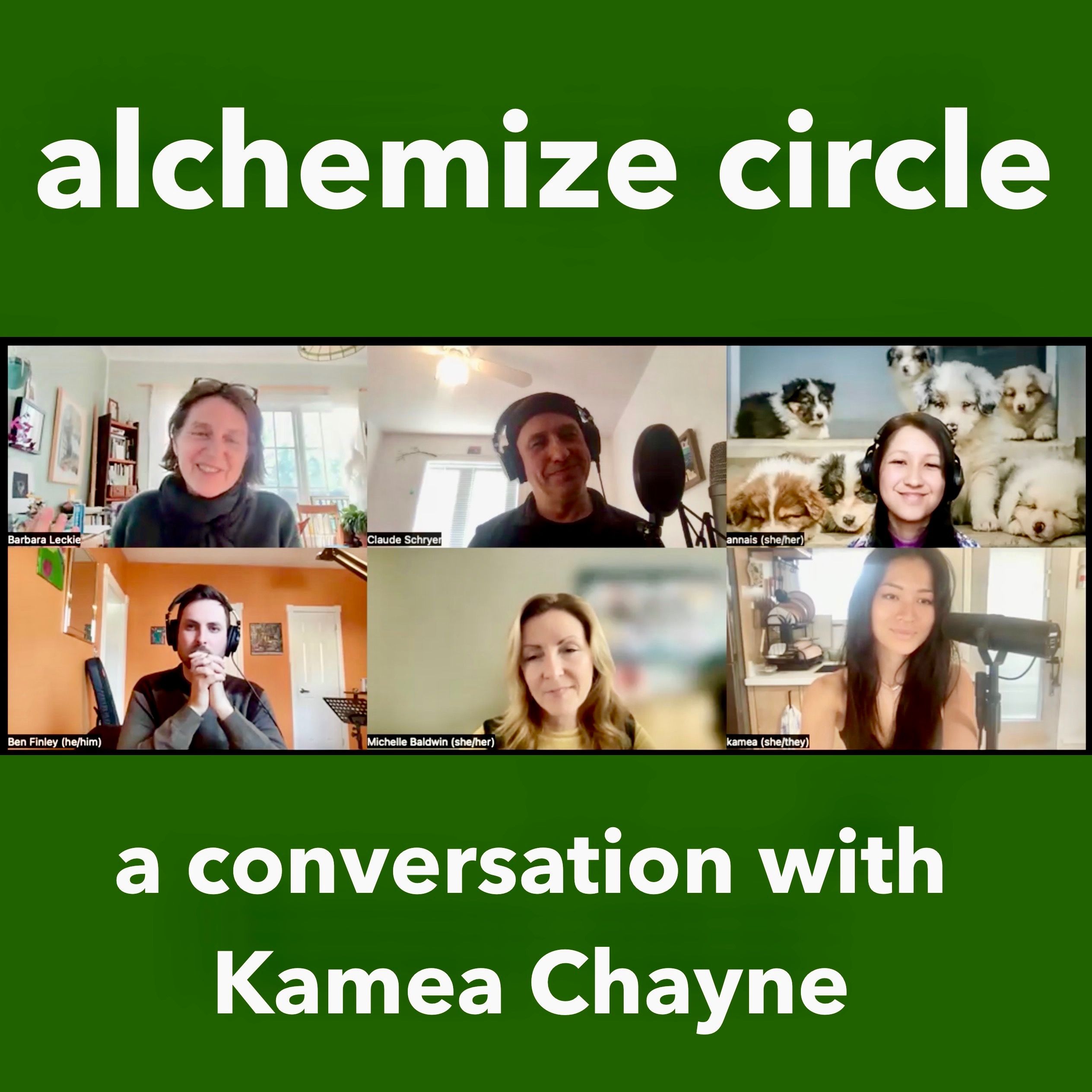
S5 Ep 161e161 alchemize circle - a conversation with kamea chayne
'It's kind of like sacred medicine or sacred plant medicine in a way where it meets you where you are, based on your intentions, on your setting, your relationships and everything. Where that space in between is the most powerful piece and it’s us holding the container and guiding people in certain directions. But then, here's the silence: go run with it and see what comes up for you'. - Kamea Chayne, host of the alchemize program and the Green Dreamer podcast, March 28, 2024, conscient podcast e161This is a special episode of the conscient podcast about Green Dreamer’s alchemize program, which is a ‘10-week audio-based program of daily creative prompts and imagination practices’. This episode features 4 of my fellow course participants: singer and music researcher annais linares, bass player and music researcher Ben Finley, climate educator Barbara Leckie, social innovator and educator Michelle Baldwin and myself in conversation with Kamea Chayne, host of the alchemize program and of the Green Dreamer podcast. I also want to mention that a 6th member of our alchemize circle, educator Dorina Husain, was not able to attend this recording on March 28th, 2024.Our group of 6 alchemize participants met every Saturday morning during the course to discuss what we were experiencing and check in with each other. What you’re about to hear is our exchange with Kamea about our experience with alchemize and how it is, literally, transforming our lives.Now, admittedly, the alchemize program is not specifically about art and the ecological crisis, as per the mandate of this podcast, however, this series of 40 creative exercises integrates all kinds of artistic and cultural practices - storytelling, drawing, soundscape composition, poetry, and much more - and I consider alchemize as a whole, to be a work of art. A work of art that you can come in and out of. A process that invites the participant, the learner, to both grow, and let go. This 55 minute exchange concludes the way we did at every Saturday alchemize circle meeting, with a moment of gratitude and an example of what brought us joy on that day. Please see https://www.greendreamer.com/alchemize for more information on the program. Big thanks to my alchemize circle colleagues, annais, Ben, Barbara, Michelle and Dorina and also warm thanks to Kamea and her team at Green Dreamer for their brilliant, generous and spirited work.Spoiler alert: if you plan to take the alchemize program and prefer not to hear about some of the exercises then please listen to this episode AFTER you do alchemize. If, however, you want to know more about our experience with the course in order to better understand how it works, then listen to it before doing the program,.. *END NOTES FOR ALL EPISODESNote : I'm currently 'pressing pause' and am not producing new content until further notice. Hey conscient listeners, I’ve been producing the conscient podcast as a learning and unlearning journey since May 2020. It’s my way to give back.This Indigenous Land Acknowledgement statement was developed by members of the Algonquin community for my former employer the Canada Council for the Arts. I have adapted slightly to make it my own.I acknowledge that my studio, located in Ottawa, is on the unceded, unsurrendered Territory of the Anishinaabe Algonquin Nation whose presence here reaches back to time immemorial.I recognize the Algonquins as the customary keepers and defenders of the Ottawa River Watershed and its tributaries. I honour their long history of welcoming many Nations to this beautiful territory and uphold and uplift the voice and values of our Host Nation.Further, I offer my respect and affirm the inherent and Treaty Rights of all Indigenous Peoples across this land and honour commitments to self-determination and sovereignty that have been made to Indigenous Nations and Peoples.I acknowledge the historical oppression of lands, cultures and the original Peoples in what we now know as Canada and fervently believe the Arts contribute to the healing and decolonizing journey we all share togetherIn parallel with the production of the conscient podcast and its francophone counterpart, balado conscient, I I publish a free ‘a calm presence' monthly Substack see https://acalmpresence.substack.com. Your feedback is always welcome at claude [at] conscient [dot] ca and/or on social media: Facebook, Instagram, Linkedin, Threads, BlueSky, Mastodon, Tik Tok, YouTube and Substack.Share what you like, etcI am grateful and accountable to the earth and the human labour that provided me with the privilege of producing this podcast, including the toxic materials and extractive processes behind the computers, recorders, transportation systems and infrastructure that made this production possible. Thanks for listening. Claude SchryerLatest update on March 21, 2026

S5 Ep 160e160 shannon litzenberger - a culture of collective thriving
We are in a very unstable environment right now. We don't have to be change makers. Change is happening. It is happening quickly and the pace of change is accelerating. So this ‘plan and execute’ way of engaging with the world is less and less relevant. Building this capacity to play and improvise and allow for emergent possibilities to arise is a kind of new leadership capacity that makes more sense in the context of the world as it is in this moment. This is a follow up conversation with Shannon picking up on our exchange on December 8, 2021 in Tkarón:to, e90 shannon litzenberger – state of emergence : why we need artists right now.Now let’s fast forward 2 and half years for a second conversation with Shannon this time about the impact of the state of emergency essay and an update on Shannon's latest projects. You’ll hear that Shannon’s perspectives are decidedly feminist, philosophical and socially conscious and are informed by her roots in Canada’s rural prairies which inspire her connection to land, environment, belonging, identity and place. When I sat down with Shannon in her home in Tkarón:to we talked about a new essay she is working on, which I’m excited about, on the theme of leadership at the end of the world but the conversation was not all gloom and doom, in spite of it being the end of the world as we know it. Quite au contraire, Shannon is working on developing a concept called ‘culture of collective thriving’ and she’s walking her talk. I know because I took a workshop with her and she’s integrating art practice in everything she does and so her belief in art is inspiring and I think very effective. I ask my guests for reading recommendations. Shannon suggested Embodied Activism : Engaging the Body to Cultivate Liberation, Justice, and Authentic Connection--A Practical Guide for Transformative Social Change by Rae Johnson and Rest is Resistance : a Manifesto by Tricia Hersey. Note: I mentioned Shannon’s conversation with Turn Out Radio host Nicole Inica Hamilton during our conversation. Here is the link : http://turnoutradio.com/. *END NOTES FOR ALL EPISODESNote : I'm currently 'pressing pause' and am not producing new content until further notice. Hey conscient listeners, I’ve been producing the conscient podcast as a learning and unlearning journey since May 2020. It’s my way to give back.This Indigenous Land Acknowledgement statement was developed by members of the Algonquin community for my former employer the Canada Council for the Arts. I have adapted slightly to make it my own.I acknowledge that my studio, located in Ottawa, is on the unceded, unsurrendered Territory of the Anishinaabe Algonquin Nation whose presence here reaches back to time immemorial.I recognize the Algonquins as the customary keepers and defenders of the Ottawa River Watershed and its tributaries. I honour their long history of welcoming many Nations to this beautiful territory and uphold and uplift the voice and values of our Host Nation.Further, I offer my respect and affirm the inherent and Treaty Rights of all Indigenous Peoples across this land and honour commitments to self-determination and sovereignty that have been made to Indigenous Nations and Peoples.I acknowledge the historical oppression of lands, cultures and the original Peoples in what we now know as Canada and fervently believe the Arts contribute to the healing and decolonizing journey we all share togetherIn parallel with the production of the conscient podcast and its francophone counterpart, balado conscient, I I publish a free ‘a calm presence' monthly Substack see https://acalmpresence.substack.com. Your feedback is always welcome at claude [at] conscient [dot] ca and/or on social media: Facebook, Instagram, Linkedin, Threads, BlueSky, Mastodon, Tik Tok, YouTube and Substack.Share what you like, etcI am grateful and accountable to the earth and the human labour that provided me with the privilege of producing this podcast, including the toxic materials and extractive processes behind the computers, recorders, transportation systems and infrastructure that made this production possible. Thanks for listening. Claude SchryerLatest update on March 21, 2026

S5 Ep 159e159 jane marsland - it’s all about balance
It's all about balance and moving away from perpetual growth mode. It's about understanding that if you're a tightrope walker, you can't stand still, because the minute you stand still, you fall off. So you have to move forwards, or backwards. There’s no qualitative judgment about whether it's better to move forward or backward. It doesn't matter. You can grow or you can shrink : it's all about balance. If you stay balanced, you'll survive.A colleague recommended that I invite arts administrator and consultant Jane Marsland to a conscient podcast conversation.I went to Jane’s website and read about her interest in developing ‘new approaches and methods of working to emphasize agile and adaptive organizational responses that are informed by knowledge of constant environmental changes’. Art and constant environmental changes sounded just right for this podcast.Janes utilizes a process of working with arts organizations that she has learned through eighteen years of being affiliated with Arts Action Research in New York. Jane believes that each organization has a unique vision, point of view and way of working. The challenge is to learn how to discover, understand and reveal these unique qualities and processes.I asked Jane about art and ecology and how she advises arts organizations on adaptation to complex issues like climate change. I also asked her about the end of the world (as we know it). I think you’ll be enchanted by her responses. When I asked what she reading or seeing these days she recommended 6 items:Climate Change and Other Small Talk, a series of short videos by Sunny DrakeCombining by Nora BatemanDancing at the Edge:Competence, Culture and Organization in the 21st Century by Maureen O’Hara and Graham LeicesterThree Horizons: The Patterning of Hope - 2nd Ed by Bill SharpeTransformative Innovation: A Guide to Practice and Policy for System Transition by Graham LeicesterWho Do We Choose To Be? Facing Reality | Claiming Leadership | Restoring Sanity by Margaret WheatleyTen Things to do in a Conceptual Emergency by Maureen O’Hara and Graham Leicester *END NOTES FOR ALL EPISODESNote : I'm currently 'pressing pause' and am not producing new content until further notice. Hey conscient listeners, I’ve been producing the conscient podcast as a learning and unlearning journey since May 2020. It’s my way to give back.This Indigenous Land Acknowledgement statement was developed by members of the Algonquin community for my former employer the Canada Council for the Arts. I have adapted slightly to make it my own.I acknowledge that my studio, located in Ottawa, is on the unceded, unsurrendered Territory of the Anishinaabe Algonquin Nation whose presence here reaches back to time immemorial.I recognize the Algonquins as the customary keepers and defenders of the Ottawa River Watershed and its tributaries. I honour their long history of welcoming many Nations to this beautiful territory and uphold and uplift the voice and values of our Host Nation.Further, I offer my respect and affirm the inherent and Treaty Rights of all Indigenous Peoples across this land and honour commitments to self-determination and sovereignty that have been made to Indigenous Nations and Peoples.I acknowledge the historical oppression of lands, cultures and the original Peoples in what we now know as Canada and fervently believe the Arts contribute to the healing and decolonizing journey we all share togetherIn parallel with the production of the conscient podcast and its francophone counterpart, balado conscient, I I publish a free ‘a calm presence' monthly Substack see https://acalmpresence.substack.com. Your feedback is always welcome at claude [at] conscient [dot] ca and/or on social media: Facebook, Instagram, Linkedin, Threads, BlueSky, Mastodon, Tik Tok, YouTube and Substack.Share what you like, etcI am grateful and accountable to the earth and the human labour that provided me with the privilege of producing this podcast, including the toxic materials and extractive processes behind the computers, recorders, transportation systems and infrastructure that made this production possible. Thanks for listening. Claude SchryerLatest update on March 21, 2026

S5 Ep 158e158 bob sirman - engaging with the artistic experience
We're not just talking about saving the environment. What we're first and foremost trying to get people to do is care for the environment and you can't care for the environment unless you feel part of it, unless you feel attached to it, unless you can see outside the building and understand we're not living in bubbles. What I mean by bubbles, especially, is that we're not living in an individual bubble, that we have social responsibility, that we make connectivity with other people, building blocks for community, for betterment of, of various kinds.Robert (Bob) Sirman served as director and CEO of the Canada Council for the Arts for 8 of my 21 years there. He had a distinguished career in the arts with the Canada Council, Canada’s National Ballet School, the Ontario Arts Council and Ontario’s first Ministry of Culture, among many other contributions. I wanted to speak with Bob because he has had a notable influence in my life in terms of engaging with art, ways of being in space (architecture, design), systems thinking and long term planning.So we sat down at his home in Toronto and talked about art and ecology, aesthetics, the role of art in social change, his legacy as an arts leader and what kind of art inspires him (he mentioned photographer Edward Burtinski).You’ll hear a story about a meeting between our staff green committee and Bob about the Council carbon footprint in 2007. Bob listened carefully and noted that the Council’s largest carbon footprint at the time was its energy inefficient building on Albert street. I was pleased to see that before he left as Director in 2014 that the Council had moved into, and remains, in a Gold, Class A LEED-certified building on Elgin St. in Ottawa.I want to thank Bob for his many contributions to the arts in Canada and to the arts community. Many seeds were planted during his tenure that have blossomed, or might yet. There were many highlights for me, including Bob's very last statement about how ‘having the conversation again makes us focus and makes us think and pay attention to the things that we really care about.’.I appreciate his statement about ‘how it's critical to empower artists to be able to choose freely the passions that they wish to pursue and to develop the skills and have the resources to actually connect with other people.’ *END NOTES FOR ALL EPISODESNote : I'm currently 'pressing pause' and am not producing new content until further notice. Hey conscient listeners, I’ve been producing the conscient podcast as a learning and unlearning journey since May 2020. It’s my way to give back.This Indigenous Land Acknowledgement statement was developed by members of the Algonquin community for my former employer the Canada Council for the Arts. I have adapted slightly to make it my own.I acknowledge that my studio, located in Ottawa, is on the unceded, unsurrendered Territory of the Anishinaabe Algonquin Nation whose presence here reaches back to time immemorial.I recognize the Algonquins as the customary keepers and defenders of the Ottawa River Watershed and its tributaries. I honour their long history of welcoming many Nations to this beautiful territory and uphold and uplift the voice and values of our Host Nation.Further, I offer my respect and affirm the inherent and Treaty Rights of all Indigenous Peoples across this land and honour commitments to self-determination and sovereignty that have been made to Indigenous Nations and Peoples.I acknowledge the historical oppression of lands, cultures and the original Peoples in what we now know as Canada and fervently believe the Arts contribute to the healing and decolonizing journey we all share togetherIn parallel with the production of the conscient podcast and its francophone counterpart, balado conscient, I I publish a free ‘a calm presence' monthly Substack see https://acalmpresence.substack.com. Your feedback is always welcome at claude [at] conscient [dot] ca and/or on social media: Facebook, Instagram, Linkedin, Threads, BlueSky, Mastodon, Tik Tok, YouTube and Substack.Share what you like, etcI am grateful and accountable to the earth and the human labour that provided me with the privilege of producing this podcast, including the toxic materials and extractive processes behind the computers, recorders, transportation systems and infrastructure that made this production possible. Thanks for listening. Claude SchryerLatest update on March 21, 2026

S5 Ep 157e157 sonic research group (part 1)
The most interesting part to me is to discover what we're not listening to and why we are not doing that. I think it's wonderful that I've had the chance to learn this listening from so early on where you're trained to listen to the environment and at that time it was more about listening to the sounds of the environment and critiquing them, analyzing them, trying to understand them. To me that subject has widened hugely and really has to do about listening in general and trying to understand why we are listening to things and why we're not listening to things. And so it becomes a political, social, cultural question on every level and when a society has a crisis, it's often really good to observe what we really don't want to listen to and who we are listening to and how we combine that. And I feel we are in a stage of real crisis right now. And that's why this subject matter has taken on great significance now. - Hildegard Westerkamp, March 5, 2024 conscient podcast e157This is a special episode of the conscient podcast with 6 colleagues and friends from the Sonic Research Group at Simon Fraser University in Vancouver (this time with Milena Droumeva, Hildegard Westerkamp, Barry Truax, Julie Andreyev, Aaron Liu-Rosenbaum and myself). It's a group of 20 or so acoustic ecology researchers, activists and artists who get together every two weeks to talk about our practices and sound studies, and the things that interest us in and around the field of acoustic ecology and soundscape studies. I had the privilege of having five of my colleagues join me on a conversation about the theme of this year's podcast season: preparing for the end of the world as we know it (and the ‘as we know it’ part is really important) and creating the conditions for other worlds to emerge. That's the challenge that I've given myself and my guests this season.I asked the group to think about the following set of questions: How does ‘preparing for the end of the work (as we know it)’ apply in the context of acoustic ecology? How can our listening practices help us become more resilient in the face of the ecological crisis?How does ‘creating conditions for new worlds’ apply in acoustic ecology? How can listening and sound studies contribute to creating these conditions? What are some of the barriers for acoustic ecology to step up?How do any projects you are working on relate to this theme and how can this work be amplified?Recommended reading and viewing in this episode include Jonathan Glazer's Zone of Interest film and Vanessa Andreotti’s Hopicing Modernity book. *END NOTES FOR ALL EPISODESNote : I'm currently 'pressing pause' and am not producing new content until further notice. Hey conscient listeners, I’ve been producing the conscient podcast as a learning and unlearning journey since May 2020. It’s my way to give back.This Indigenous Land Acknowledgement statement was developed by members of the Algonquin community for my former employer the Canada Council for the Arts. I have adapted slightly to make it my own.I acknowledge that my studio, located in Ottawa, is on the unceded, unsurrendered Territory of the Anishinaabe Algonquin Nation whose presence here reaches back to time immemorial.I recognize the Algonquins as the customary keepers and defenders of the Ottawa River Watershed and its tributaries. I honour their long history of welcoming many Nations to this beautiful territory and uphold and uplift the voice and values of our Host Nation.Further, I offer my respect and affirm the inherent and Treaty Rights of all Indigenous Peoples across this land and honour commitments to self-determination and sovereignty that have been made to Indigenous Nations and Peoples.I acknowledge the historical oppression of lands, cultures and the original Peoples in what we now know as Canada and fervently believe the Arts contribute to the healing and decolonizing journey we all share togetherIn parallel with the production of the conscient podcast and its francophone counterpart, balado conscient, I I publish a free ‘a calm presence' monthly Substack see https://acalmpresence.substack.com. Your feedback is always welcome at claude [at] conscient [dot] ca and/or on social media: Facebook, Instagram, Linkedin, Threads, BlueSky, Mastodon, Tik Tok, YouTube and Substack.Share what you like, etcI am grateful and accountable to the earth and the human labour that provided me with the privilege of producing this podcast, including the toxic materials and extractive processes behind the computers, recorders, transportation systems and infrastructure that made this production possible. Thanks for listening. Claude SchryerLatest update on March 21, 2026

S5 Ep 156e156 siobhan angus - camera geologica
I think that's what the arts contribute to these discussions. There's the possibility of that kind of emotional or embodied connection to things that, as I think these questions of climate and environment, come closer and closer to people's lives, right? We can think of the wildfire smoke here last summer, people experiencing flooding, hurricanes, wildfires, drought in real time... Through storytelling or sound or visual media, we can really feel that on an embodied level and that is a really powerful starting point.I first heard about Siobhan Angus through a Carleton University Climate Commons Noon for Now event on January 18, 2024 called Shifting Perceptions: Arts-based Approaches to Climate Justice, that I was unfortunately not able to attend. I was intrigued by the questions that this session was exploring, including ‘how do the arts contribute to climate justice’ and ‘how can art and artists reshape our perception of the world, helping us to collectively undertake the necessary actions to create a world worth living in?’Ah… A world worth living in seems like a reasonable goal, doesn’t it. How can something as ephemeral as art help with that? So… I contacted Siobhan and she kindly agreed to speak with me about her work and some of the issues raised at this session.Dr. Angus lives here in the unceded territory of the Anishinaabe and Algonquin nations, also known as Ottawa, and is an assistant professor of Media Studies at Carleton University, where she teaches courses in visual culture studies and the environmental humanities, with a focus on collections-based research and experiential learning. Siobhan comes from a family of social activists and specializes in the history of photography and the environmental humanities. Her current research explores the visual culture of resource extraction with a focus on materiality, labor, and environmental justice. Her new book, Camera Geologica: An Elemental History of Photography, published by Duke University Press, will be available during the spring of 2024.Here is my conversation with Siobhan, starting with her background and ending with a book recommendation : Max Liboiron’s Pollution Is Colonialism. *END NOTES FOR ALL EPISODESNote : I'm currently 'pressing pause' and am not producing new content until further notice. Hey conscient listeners, I’ve been producing the conscient podcast as a learning and unlearning journey since May 2020. It’s my way to give back.This Indigenous Land Acknowledgement statement was developed by members of the Algonquin community for my former employer the Canada Council for the Arts. I have adapted slightly to make it my own.I acknowledge that my studio, located in Ottawa, is on the unceded, unsurrendered Territory of the Anishinaabe Algonquin Nation whose presence here reaches back to time immemorial.I recognize the Algonquins as the customary keepers and defenders of the Ottawa River Watershed and its tributaries. I honour their long history of welcoming many Nations to this beautiful territory and uphold and uplift the voice and values of our Host Nation.Further, I offer my respect and affirm the inherent and Treaty Rights of all Indigenous Peoples across this land and honour commitments to self-determination and sovereignty that have been made to Indigenous Nations and Peoples.I acknowledge the historical oppression of lands, cultures and the original Peoples in what we now know as Canada and fervently believe the Arts contribute to the healing and decolonizing journey we all share togetherIn parallel with the production of the conscient podcast and its francophone counterpart, balado conscient, I I publish a free ‘a calm presence' monthly Substack see https://acalmpresence.substack.com. Your feedback is always welcome at claude [at] conscient [dot] ca and/or on social media: Facebook, Instagram, Linkedin, Threads, BlueSky, Mastodon, Tik Tok, YouTube and Substack.Share what you like, etcI am grateful and accountable to the earth and the human labour that provided me with the privilege of producing this podcast, including the toxic materials and extractive processes behind the computers, recorders, transportation systems and infrastructure that made this production possible. Thanks for listening. Claude SchryerLatest update on March 21, 2026

S5 Ep 155e155 sanita fejzic - peasant futurisms
I think artists can challenge us by showing our blind spots, in a way, educating us, but also inspiring us about what's possible, right? I think in SCALE we talk about re-authoring the world. That's what artists do. We re-author the world. We create alternative ways of even just thinking about what's desirable in the first place.I first met novelist, playwright, poet, and essayist Sanita Fejzić in 2021 while we were both on the Mission Circle of SCALE, the Sectoral Climate Arts Leadership for the Emergency, where we had great debates about climate justice and the role of art in the climate emergency and you’ll hear more about this episode.I also had the pleasure of doing sound design in 2023 for a series of short plays called Why Worry About Their Futures that Sanita produced for the Undercurrents festival here on unceded land of the Anishinaabe Algonquin nation, also known as Ottawa.Sanita holds a PhD in Cultural Studies from Queen’s University where she articulated an artistic and political movement called ‘Peasant Futurisms’ and I think you’ll enjoy learning more about this. I love the way Sanita’s work simultaneously explores the future, past, and present by grounding peasant ways of knowing, relating, and being in the world. Maybe we’re all peasants, or have that potential?You’ll also hear Sanita talk about a new radio play for the National Arts Centre as part of its Irresistible Neighbourhoods project.Our conversations begin with her long journey from Sarajevo to Ottawa and concludes with a book recommendation: Rita Wong’s Forage and Undercurrent. *END NOTES FOR ALL EPISODESNote : I'm currently 'pressing pause' and am not producing new content until further notice. Hey conscient listeners, I’ve been producing the conscient podcast as a learning and unlearning journey since May 2020. It’s my way to give back.This Indigenous Land Acknowledgement statement was developed by members of the Algonquin community for my former employer the Canada Council for the Arts. I have adapted slightly to make it my own.I acknowledge that my studio, located in Ottawa, is on the unceded, unsurrendered Territory of the Anishinaabe Algonquin Nation whose presence here reaches back to time immemorial.I recognize the Algonquins as the customary keepers and defenders of the Ottawa River Watershed and its tributaries. I honour their long history of welcoming many Nations to this beautiful territory and uphold and uplift the voice and values of our Host Nation.Further, I offer my respect and affirm the inherent and Treaty Rights of all Indigenous Peoples across this land and honour commitments to self-determination and sovereignty that have been made to Indigenous Nations and Peoples.I acknowledge the historical oppression of lands, cultures and the original Peoples in what we now know as Canada and fervently believe the Arts contribute to the healing and decolonizing journey we all share togetherIn parallel with the production of the conscient podcast and its francophone counterpart, balado conscient, I I publish a free ‘a calm presence' monthly Substack see https://acalmpresence.substack.com. Your feedback is always welcome at claude [at] conscient [dot] ca and/or on social media: Facebook, Instagram, Linkedin, Threads, BlueSky, Mastodon, Tik Tok, YouTube and Substack.Share what you like, etcI am grateful and accountable to the earth and the human labour that provided me with the privilege of producing this podcast, including the toxic materials and extractive processes behind the computers, recorders, transportation systems and infrastructure that made this production possible. Thanks for listening. Claude SchryerLatest update on March 21, 2026

S5 Ep 154e154 riel schryer - the art of history and gaming
There's a sort of pulling back and forth between these two ideas. Out of the idea of fundamental inferiority comes slavery. And out of the idea of cultural inferiority come things like residential schools, right? The logics that fuel those two things are different, but they both obviously have negative results. And I think in the modern world sometimes we still fall into that trap of thinking that moving away from just beliefs of fundamental inferiority is enough. When, you know, beliefs of cultural inferiority can be similarly damaging.Riel Schryer is a student of history, a gamer and … my 26-year-old son. In December 2023 we spoke about how history informs the present, ethical issues in science, gaming as a form of ecological awareness and his feelings about the theme of this 5th season of the conscient podcast 'preparing for the end of the world as we know it and creating the conditions for other possible worlds to emerge'. You’ll also hear excerpts from a winter soundwalk we took around the block of our home here on the unceded traditional territory of the Anishinaabe Algonquin nation, in the city of Ottawa. It’s especially interesting for me to start this 5th season with the thoughts from a young adult (such as this one):I don't think there's going to be any serious response to the climate crisis until real catastrophes start happening. That tends to be how it works. And once you start seeing that, then you'll start seeing very serious action being put in place. Although, we'll see at that point, if it's too late or not. *END NOTES FOR ALL EPISODESNote : I'm currently 'pressing pause' and am not producing new content until further notice. Hey conscient listeners, I’ve been producing the conscient podcast as a learning and unlearning journey since May 2020. It’s my way to give back.This Indigenous Land Acknowledgement statement was developed by members of the Algonquin community for my former employer the Canada Council for the Arts. I have adapted slightly to make it my own.I acknowledge that my studio, located in Ottawa, is on the unceded, unsurrendered Territory of the Anishinaabe Algonquin Nation whose presence here reaches back to time immemorial.I recognize the Algonquins as the customary keepers and defenders of the Ottawa River Watershed and its tributaries. I honour their long history of welcoming many Nations to this beautiful territory and uphold and uplift the voice and values of our Host Nation.Further, I offer my respect and affirm the inherent and Treaty Rights of all Indigenous Peoples across this land and honour commitments to self-determination and sovereignty that have been made to Indigenous Nations and Peoples.I acknowledge the historical oppression of lands, cultures and the original Peoples in what we now know as Canada and fervently believe the Arts contribute to the healing and decolonizing journey we all share togetherIn parallel with the production of the conscient podcast and its francophone counterpart, balado conscient, I I publish a free ‘a calm presence' monthly Substack see https://acalmpresence.substack.com. Your feedback is always welcome at claude [at] conscient [dot] ca and/or on social media: Facebook, Instagram, Linkedin, Threads, BlueSky, Mastodon, Tik Tok, YouTube and Substack.Share what you like, etcI am grateful and accountable to the earth and the human labour that provided me with the privilege of producing this podcast, including the toxic materials and extractive processes behind the computers, recorders, transportation systems and infrastructure that made this production possible. Thanks for listening. Claude SchryerLatest update on March 21, 2026

S4 Ep 153e153 full circle - how can we support those who are frightened by the ecological crisis and in need of a calm presence?
The final episode of season 4 and my conclusion from my sounding modernity learning and unlearning journey featuring an exchange with Catherine Ingram about 'a calm presence'.See the web version of this site on a laptop or desktop computer for a complete transcription of this episode.* *END NOTES FOR ALL EPISODESNote : I'm currently 'pressing pause' and am not producing new content until further notice. Hey conscient listeners, I’ve been producing the conscient podcast as a learning and unlearning journey since May 2020. It’s my way to give back.This Indigenous Land Acknowledgement statement was developed by members of the Algonquin community for my former employer the Canada Council for the Arts. I have adapted slightly to make it my own.I acknowledge that my studio, located in Ottawa, is on the unceded, unsurrendered Territory of the Anishinaabe Algonquin Nation whose presence here reaches back to time immemorial.I recognize the Algonquins as the customary keepers and defenders of the Ottawa River Watershed and its tributaries. I honour their long history of welcoming many Nations to this beautiful territory and uphold and uplift the voice and values of our Host Nation.Further, I offer my respect and affirm the inherent and Treaty Rights of all Indigenous Peoples across this land and honour commitments to self-determination and sovereignty that have been made to Indigenous Nations and Peoples.I acknowledge the historical oppression of lands, cultures and the original Peoples in what we now know as Canada and fervently believe the Arts contribute to the healing and decolonizing journey we all share togetherIn parallel with the production of the conscient podcast and its francophone counterpart, balado conscient, I I publish a free ‘a calm presence' monthly Substack see https://acalmpresence.substack.com. Your feedback is always welcome at claude [at] conscient [dot] ca and/or on social media: Facebook, Instagram, Linkedin, Threads, BlueSky, Mastodon, Tik Tok, YouTube and Substack.Share what you like, etcI am grateful and accountable to the earth and the human labour that provided me with the privilege of producing this podcast, including the toxic materials and extractive processes behind the computers, recorders, transportation systems and infrastructure that made this production possible. Thanks for listening. Claude SchryerLatest update on March 21, 2026