conscient podcast
244 episodes — Page 5 of 5

S2 Ep 53e53 kalmanovitch – nurturing imagination
One of the larger crises we face right now is actually a crisis of failure of imagination and one of the biggest things we can do in artistic practice is to nurture imagination. It is what we do. It’s our job. We know how to do that. We know how to trade in uncertainty and complexity. We understand the content inside a silence, it's unlocking and speaking to ways of knowing and being and doing that when you start to try to talk about them in words, it is really challenging because it ends up sounding like bumper stickers, like ‘Music Builds Bridges’. I have a big problem with universalizing discourses in the arts, as concealing structures of imperialism and colonialism.dr. tanya kalmanovitch, conscient podcast, june 3, 2021, new york cityDr. Tanya Kalmanovitch is a Canadian violist, ethnomusicologist, and author known for her breadth of inquiry and restless sense of adventure (our conversation confirms this!) who lives in Brooklyn, NY. Tanya’s uncommonly diverse interests converge, among others, in the fields of improvisation, social entrepreneurship, and social action with projects that explore the provocative cultural geography of locations around the world. Tanya’s career has become a broad platform for artistry and many forms of advocacy. For example, she was drawn to ethnomusicology as a way to explore the ways in which music can speak to the world’s biggest problems and earned her doctorate at the University of Alberta. She is currently developing and touring the Tar Sands Songbook, a documentary theatre play that tells the stories of people whose lives been shaped by living near oil development and its effects.I first heard about Tanya’s work through Teika Newton (see https://www.conscient.ca/podcast/e50-newton/) and heard her speak at Experience the Power of Art to Inspire Climate Action. I was impressed by her convictions about the Tar Sands project but also by her insights as a performer, educator and ethnomusicologist on the role of music in the climate emergency, Here are some quotes from our conversation that caught my attention: On griefNormal life in North America does not leave us room for grief. We do not know how to handle grief. We don't know what to do with it. We push it away. We channel it, we contain it, we compartmentalize it. We ignore it. We believe that it's something that has an end, that it's linear or there are stages. We believe it's something we can get through. Whereas I've come to think a lot about the idea of living with loss, living with indeterminacy, living with uncertainty, as a way of awakening to the radical sort of care and love for ourselves, for our fellow living creatures for the life on the planet. I think about how to transform a performance space or a classroom or any other environment into a community of care. How can I create the conditions by which people can bear to be present to what they have lost, to name and to know what we have lost and from there to grieve, to heal and to act in the fullest awareness of loss? Seeing love and loss as intimately intertwined.On storytellingMy idea is that there's a performance, which is sort of my offering, but then there's also a series of participatory workshops where community members can sound their own stories about where we've come from, how they're living today and the future in which they wish to live, what their needs are, what their griefs are. So here, I'm thinking about using oral history and storytelling as a practice that promotes ways of knowing, doing and healing … with storytelling as a sort of a participatory and circulatory mechanism that promotes healing. I have so much to learn from indigenous storytelling practices. On nature as musicWe are all every one of us musicians. When you choose what song you wake up to on your alarm or use music to set a mood. You sing a catchy phrase to yourself or you sing a child asleep: you’re making musical acts. Then extend that a little bit beyond that anthropocentric lens and hear a bird as a musician, a creek as a musician and that puts us into that intimate relationship with the environment again.On AlbertaI guess this is plea for people to not think about oil sands issues as being Alberta issues, but as those being everyone everywhere issues, and not just because of the ecological ethical consequences of the contamination of the aquifer, what might happen if 1.4 trillion liters of toxic process water, if the ponds holding those rupture, what might happen next…That the story will still be there, that land and the people, the animals and the plants, all those relationships will still be imperilled, right? So to remember, first of all, that it's not just an Alberta thing and that the story doesn't end just because Teck pulled it’s Frontier mining proposal in February, 2020. The story always goes on. I want to honour the particular and the power of place and at the same time I want to uplift the idea that we all belong to that place.As I have done in all episodes in

S2 Ep 52e52 mahtani – listening and connecting
If we can find ways to encourage people to listen, that can help them to build a connection, even if it's to a small plot of land near them. By helping them to have a new relationship with that, which will then expand and help hopefully savour a deeper and more meaningful relationship with our natural world, and small steps like that, even if it's only a couple of people at a time, that could spread. I think that nobody, no one person, is going to be able to change the world, but that doesn't mean we should give up. dr. annie mahtani, conscient podcast, june 11, 2021, united kingdomNote: This episode is dedicated to World Listening Day on July 18 2021 on the theme of The Unquiet Earth. It was published on that day, which is also the birthday of Canadian composer R. Murray Schafer. For more information see https://www.worldlisteningproject.org/Dr. Annie Mahtani is an electroacoustic composer, sound artist and performer working and living in Birmingham (UK). She studied with Jonty Harrison at master’s and doctoral level at the University of Birmingham, completing her PhD in 2008. Annie’s output encompasses electronic music composition from acousmatic music to free improvisation. As a collaborator, Annie Mahtani has worked extensively with dance and theatre, and on site-specific installations. With a strong interest in field recording, her work often explores the inherent sonic nature and identity of environmental sound, amplifying sonic characteristics that are not normally audible to the naked ear. Annie is a Lecturer in Music at the University of Birmingham and is co-director of SOUNDkitchen, a Birmingham-based collective of curators, producers and performers of live electronic music and sound art. I first met Annie at The Global Composition gathering in Dieburg, Germany (with thanks to organizer Sabine Breitsameter) where she presented some of her audio work and ideas on soundwalking and technology. 2 years later I had the pleasure of presenting a workshop on Reality, Extinction, Grief and Artat the BEAST FeAST 2021: Recalibration on April 23, 2021 in Birmingham (via Zoom), which explored greater appreciation of the environment, reconnection with the environment and deeper awareness of human effects on the environment. This workshop with 30 or so audio artists from around the world had a profound affect me. It helped me understand some of the issues my community of audio artists were facing and reminded me of the burden placed on young people as they inherit this troubled world. I also appreciated their guarded optimism and resilience. One participant suggested that, given the climate emergency, maybe all music should be acoustic ecology (the study of the acoustic environment as a whole as opposed to only the art of music) from now on. Maybe… This quote from the episode summarizes Annie’s thinking on the role of the festival:For the (BEAST) festival we wanted to look at what COVID has done to alter and adjust people's practice, the way that composers and practitioners have responded to the pandemic musically or through listening and also addressing the wider issues: what does it mean going forwards after this year, the year of uncertainty, the year of opportunity for many? What does it mean going forward to our soundscape, to our environmental practice and listening? We presented that goal for words, as a series of questions, you know, not expecting necessarily any answers, but a way in a way to address it and a way to explore and that's what the, the weekend of concerts and talks and workshops was this kind of exploration of our soundscapes, thinking about change and thinking about our future.I would like to thank Annie for taking the time to speak with me about our shared interest in electroacoustic music, for her excellence as a composer and curator, for her commitment to social justice and her passion for listening. For more information on Annie’s work, see http://www.anniemahtani.co.uk/travail d'Annie, voir http://www.anniemahtani.co.uk/ *END NOTES FOR ALL EPISODESNote : I'm currently 'pressing pause' and am not producing new content until further notice. Hey conscient listeners, I’ve been producing the conscient podcast as a learning and unlearning journey since May 2020. It’s my way to give back.This Indigenous Land Acknowledgement statement was developed by members of the Algonquin community for my former employer the Canada Council for the Arts. I have adapted slightly to make it my own.I acknowledge that my studio, located in Ottawa, is on the unceded, unsurrendered Territory of the Anishinaabe Algonquin Nation whose presence here reaches back to time immemorial.I recognize the Algonquins as the customary keepers and defenders of the Ottawa River Watershed and its tributaries. I honour their long history of welcoming many Nations to this beautiful territory and uphold and uplift the voice and values of our Host Nation.Further, I offer my respect and affirm the inherent and Treaty Rights
S2 Ep 51e51 hiser – the emotional wheel of climate
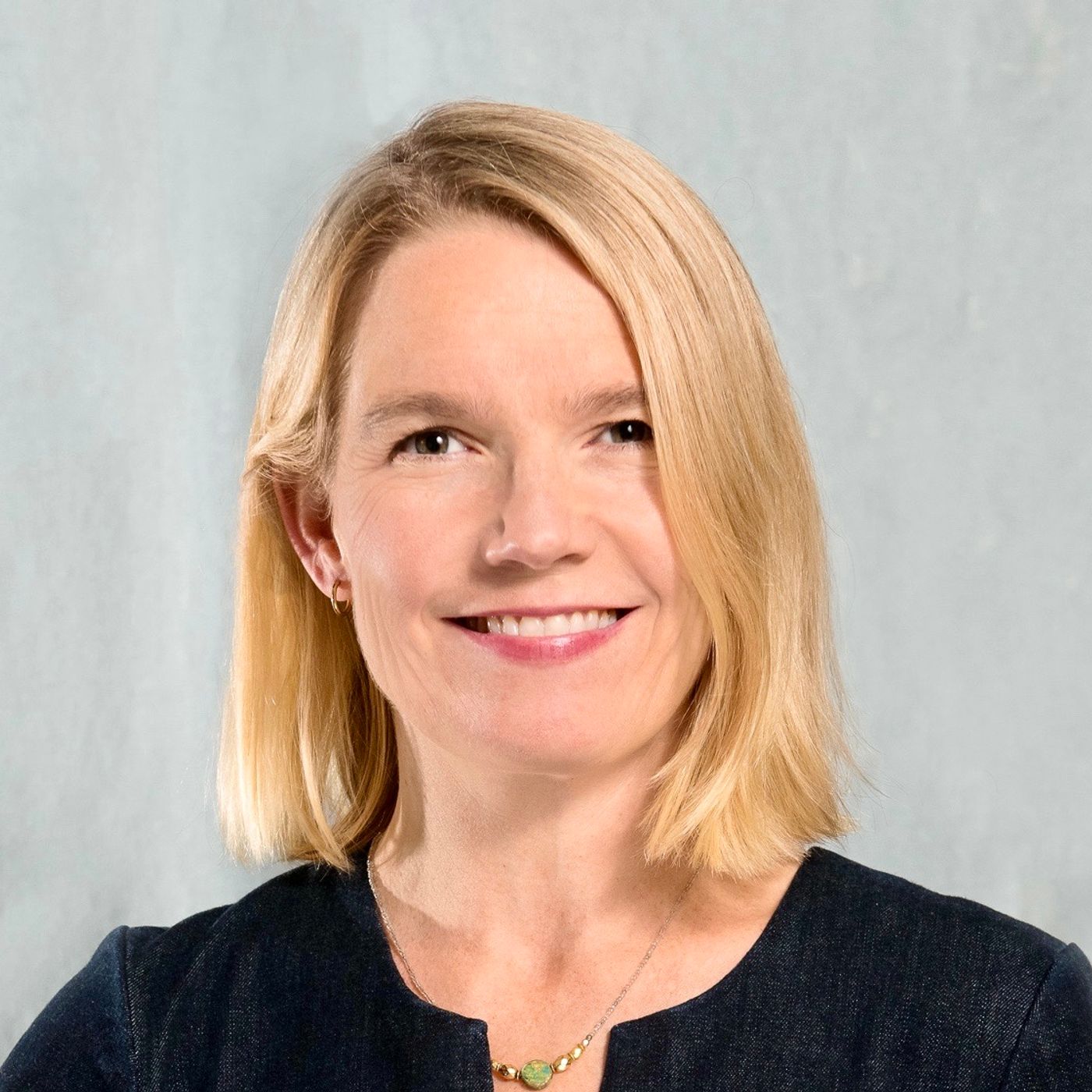
What motivates me is talking to students in a way that they're not going to come back to me in 10 years with this look on their face, you know, Dr. Hiser, why didn't you tell me this? Why didn't you tell me? I want to be sure that they're going to leave the interaction that we get to have that they're going to leave with at least an idea that someone tried to help them see that reality.dr krista hiser, conscient podcast, may 19, 2021, hawai‘iKrista is a longtime Professor at Kapiʻolani Community College in Hawai‘i where she teaches composition, climate communication, and climate fiction. Her PhD in Educational Administration focused on students as stakeholders in sustainability curriculum. She has published on service-learning, community engagement, organizational change, and post-apocalyptic and cli-fi literature. She is currently serving as director of the University of Hawai‘i System Center for Sustainability Across Curriculum where Krista's work is to facilitate change management, coordinate sustainability across the curriculum, and facilitate interdisciplinary dialogue and professional development opportunities for faculty interested in teaching sustainability, climate change, and resilience. Krista is motivated by a quote from David Orr who said, “students deserve an education relevant to the future they will inherit.”I first heard about Krista work at a meeting of a group of climate educators, organized by Jennifer Atkinson and Sarah Raquette Ray, where Krista spoke about some of her research. I also heard her in conversation with my fellow art and climate podcaster Peterson Toscano on Citizens’ Climate Radio Ep. 51: Art & identity in a time of climate change.I enjoyed my lively conversation with Krista, notably about how our brains try to protect us for the reality of the climate emergency and how to understand the levels of grief that we can experience and how to overcome it. I was also impressed by her thoughts on ungrading (which I shared with my two children, both University students). Some of my favourite quotes from our conversation include: The art space is maybe the last open space where that boxiness and that rigidity isn't as present.The shift is that faculty are really no longer just experts. They are knowledge brokers or knowledge intermediaries. There's so much information out there. It's so overwhelming. There are so many different realities that faculty need to interact with this information and create experiences that translate information for students so that students can manage their own information.There’s a whole range of emotions around climate emergency, and not getting stuck in the grief. Not getting stuck in anger. A lot of what we see of youth activists and in youth activism is that they get kind of burned out in anger and it’s not a sustainable emotion. But none of them are emotions that you want to get stuck in. When you get stuck in climate grief, it is hard to get unstuck, so moving through all the different emotions — including anger and including hope — and that idea of an anthem and working together, those are all part of the emotion wheel that exists around climate change.As I have done in all episodes in season 2 so far, I have integrated excerpts from soundscape compositions and quotations drawn from e19 reality, as well as new field recordings and moments of silence, in this episode.I would like to thank Krista for taking the time to speak with me, for sharing her deep knowledge of climate education, her passion for literature and music and her courage to speak the truth to power through her work. For more information on Krista’s work, see https://www.hawaii.edu/sustainability/staff-item/krista-hiser-phd/ and https://www.gcseglobal.org/bio/krista-hiserLinksPublic Letter on Addressing Collapse RiskWorry and Hope: What College Students Know, Think, Feel, and Do about Climate ChangeLove in the times of coral reefs (Ruth Mundy)Existential Tool Kit for Climate Justice EducatorsThe Ultimate Cli-Fi Book Club for Sustainability in Higher Education *END NOTES FOR ALL EPISODESNote : I'm currently 'pressing pause' and am not producing new content until further notice. Hey conscient listeners, I’ve been producing the conscient podcast as a learning and unlearning journey since May 2020. It’s my way to give back.This Indigenous Land Acknowledgement statement was developed by members of the Algonquin community for my former employer the Canada Council for the Arts. I have adapted slightly to make it my own.I acknowledge that my studio, located in Ottawa, is on the unceded, unsurrendered Territory of the Anishinaabe Algonquin Nation whose presence here reaches back to time immemorial.I recognize the Algonquins as the customary keepers and defenders of the Ottawa River Watershed and its tributaries. I honour their long history of welcoming many Nations to this beautiful territory and uphold and uplift the voice and values of our Host Nation.Further, I offer my respect a
S2 Ep 50e50 newton – imagining the future we want
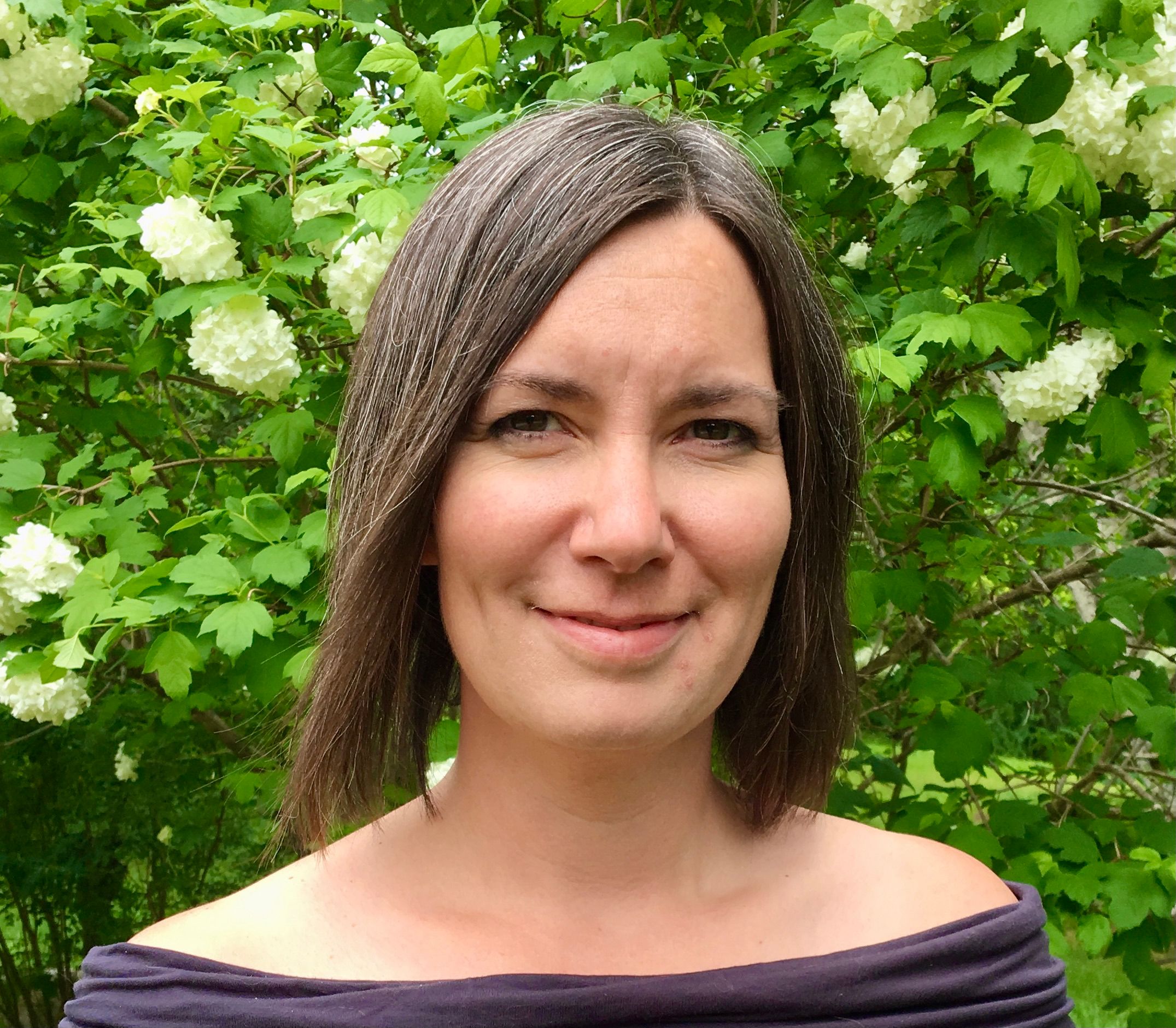
There are so many amazing people across this country who are helping to make change and are holding such a powerful vision for what the future can be. We get trapped in thinking about the paradigm limit in which we currently live, we put bounds on what feels like reality and what feels possible. There are no limits, and the arts helps us to push against that limited set of beliefs and helps us to remember that the way that we know things to be right now is not fixed. We can imagine anything. We can imagine the future we want.teika newton, conscient podcast, may 19, 2021, kenora, OntarioA lifelong, insatiable curiosity for understanding people and places, and the interrelationships of all things, and a passion for humanitarianism and justice has directed Teika to a career in environmental and climate justice advocacy. Teika’s academic training was in evolutionary biology, but she also has a strong interest in the arts, notably in hearing people’s stories of how we relate to our natural world. She is currently the Membership and Domestic Policy Manager, at Climate Action Network Canada.I first met Teika in February 2020 at TP3, a strategic gathering in Waterloo, ON convened by the McConnell Foundation and Tamarack Institute to create a coalition of organizations to address the climate crisis, (including through the arts). Teika and I been exchanging about community-engaged arts and climate action ever since.There were many moments during my conversation with Teika that resonated with me, such as this thought our disconnection with nature: I see that there are a lot of ways in which people in my community use the landscape in a disrespectful way. Not considering that that's someone's home and that a wild place is not just a recreational playground for humans. It's not necessarily a source of wealth generation. It's actually a living, breathing entity and a home to other things and a home to us as well. I find that all really troubling that there is that disconnection and it sometimes does make me despair about the future course that we're on. You know, if we can't take care of the place that sustains us, if we can't live with respect for not just our human neighbours, but our wilderness neighbors, I don't know how well we're going to fare in the future. We need to love the things around us in order to care for them.And this thought about the role of the arts:Having the ability to come together as a community and participate in the collective act of creating and expressing through various media, whether that's song, the written word, poetry, painting, mosaic or mural making, so many different ways of expressing, I think are really, really valuable for keeping people whole grounded, mentally healthy and to feel connected to others. It's the interconnection among people that will help us to survive in a time of crisis. The deeper and more complex the web of connections, the better your chances of resilience.As I have done in all episodes in season 2 so far, I have integrated excerpts from soundscape compositions and quotations drawn from e19 reality and other episodes, as well as moments of silence, in this episode.I would like to thank Teika for taking the time to speak with me, for sharing her deep scientific knowledge, her expertise in strategic climate action and her love of the arts and nature. *END NOTES FOR ALL EPISODESNote : I'm currently 'pressing pause' and am not producing new content until further notice. Hey conscient listeners, I’ve been producing the conscient podcast as a learning and unlearning journey since May 2020. It’s my way to give back.This Indigenous Land Acknowledgement statement was developed by members of the Algonquin community for my former employer the Canada Council for the Arts. I have adapted slightly to make it my own.I acknowledge that my studio, located in Ottawa, is on the unceded, unsurrendered Territory of the Anishinaabe Algonquin Nation whose presence here reaches back to time immemorial.I recognize the Algonquins as the customary keepers and defenders of the Ottawa River Watershed and its tributaries. I honour their long history of welcoming many Nations to this beautiful territory and uphold and uplift the voice and values of our Host Nation.Further, I offer my respect and affirm the inherent and Treaty Rights of all Indigenous Peoples across this land and honour commitments to self-determination and sovereignty that have been made to Indigenous Nations and Peoples.I acknowledge the historical oppression of lands, cultures and the original Peoples in what we now know as Canada and fervently believe the Arts contribute to the healing and decolonizing journey we all share togetherIn parallel with the production of the conscient podcast and its francophone counterpart, balado conscient, I I publish a free ‘a calm presence' monthly Substack see https://acalmpresence.substack.com. Your feedback is always welcome at claude [at] conscient [dot] ca and/or o

S2 Ep 49e49 windatt – hoslitic messages
What if you tasked the arts sector with how to make messages, not about the crisis, but on the shifts in behavior that are necessary on a more meaningful basis. When the pandemic began and certain products weren't on the shelves at grocery stores, but there was still lots of stuff. There were shortages, but there wasn't that much shortage. How much would my life really change if half the products in the store were just not here, right and half of them didn't come from all over in the world? Like they were just: whatever made sense to have it available here and just having less choice. How terrible would that be: kind of not. How can we change behavior on a more holistic level, and have it stick, because that's what we need to do right now, and I think the arts would be a great vehicle to see those messages hit everybody and make a change.clayton windatt, conscient podcast, may 13, 2021, sturgeon falls, ontarioClayton Windatt is a curator, multi-arts performer and filmmaker living and working in Ontario who is current Executive Director of the Artist-Run Centres and Collectives Conference. Clayton has an extensive history working in Artist-Run Culture and Community Arts and works in/with community, design, communications, curation, performance, theatre, technology, and consulting, and is a very active artist.I first met Clayton Windatt at a national arts service organization meeting in Ottawa while I worked at the Canada Council for the Arts. Clayton always impressed me with his clarity of thought and vision. The slogan of his web site is ‘make things happen’. This has been my experience with him. As I have done in all episodes in season 2 so far, I have integrated excerpts from soundscape compositions and quotations drawn from e19 reality, as well as moments of silence, in this episode.I would like to thank Clayton for taking the time to speak with me, for sharing his deep knowledge of art practice and rights, his values, his wicked sense of humour, his generosity and his sharp strategic mind. For more information on Clayton’s work, see https://claytonwindatt.com/cv/ *END NOTES FOR ALL EPISODESNote : I'm currently 'pressing pause' and am not producing new content until further notice. Hey conscient listeners, I’ve been producing the conscient podcast as a learning and unlearning journey since May 2020. It’s my way to give back.This Indigenous Land Acknowledgement statement was developed by members of the Algonquin community for my former employer the Canada Council for the Arts. I have adapted slightly to make it my own.I acknowledge that my studio, located in Ottawa, is on the unceded, unsurrendered Territory of the Anishinaabe Algonquin Nation whose presence here reaches back to time immemorial.I recognize the Algonquins as the customary keepers and defenders of the Ottawa River Watershed and its tributaries. I honour their long history of welcoming many Nations to this beautiful territory and uphold and uplift the voice and values of our Host Nation.Further, I offer my respect and affirm the inherent and Treaty Rights of all Indigenous Peoples across this land and honour commitments to self-determination and sovereignty that have been made to Indigenous Nations and Peoples.I acknowledge the historical oppression of lands, cultures and the original Peoples in what we now know as Canada and fervently believe the Arts contribute to the healing and decolonizing journey we all share togetherIn parallel with the production of the conscient podcast and its francophone counterpart, balado conscient, I I publish a free ‘a calm presence' monthly Substack see https://acalmpresence.substack.com. Your feedback is always welcome at claude [at] conscient [dot] ca and/or on social media: Facebook, Instagram, Linkedin, Threads, BlueSky, Mastodon, Tik Tok, YouTube and Substack.Share what you like, etcI am grateful and accountable to the earth and the human labour that provided me with the privilege of producing this podcast, including the toxic materials and extractive processes behind the computers, recorders, transportation systems and infrastructure that made this production possible. Thanks for listening. Claude SchryerLatest update on March 21, 2026
S2 Ep 47e47 keeptwo – reconciliation to heal the earth
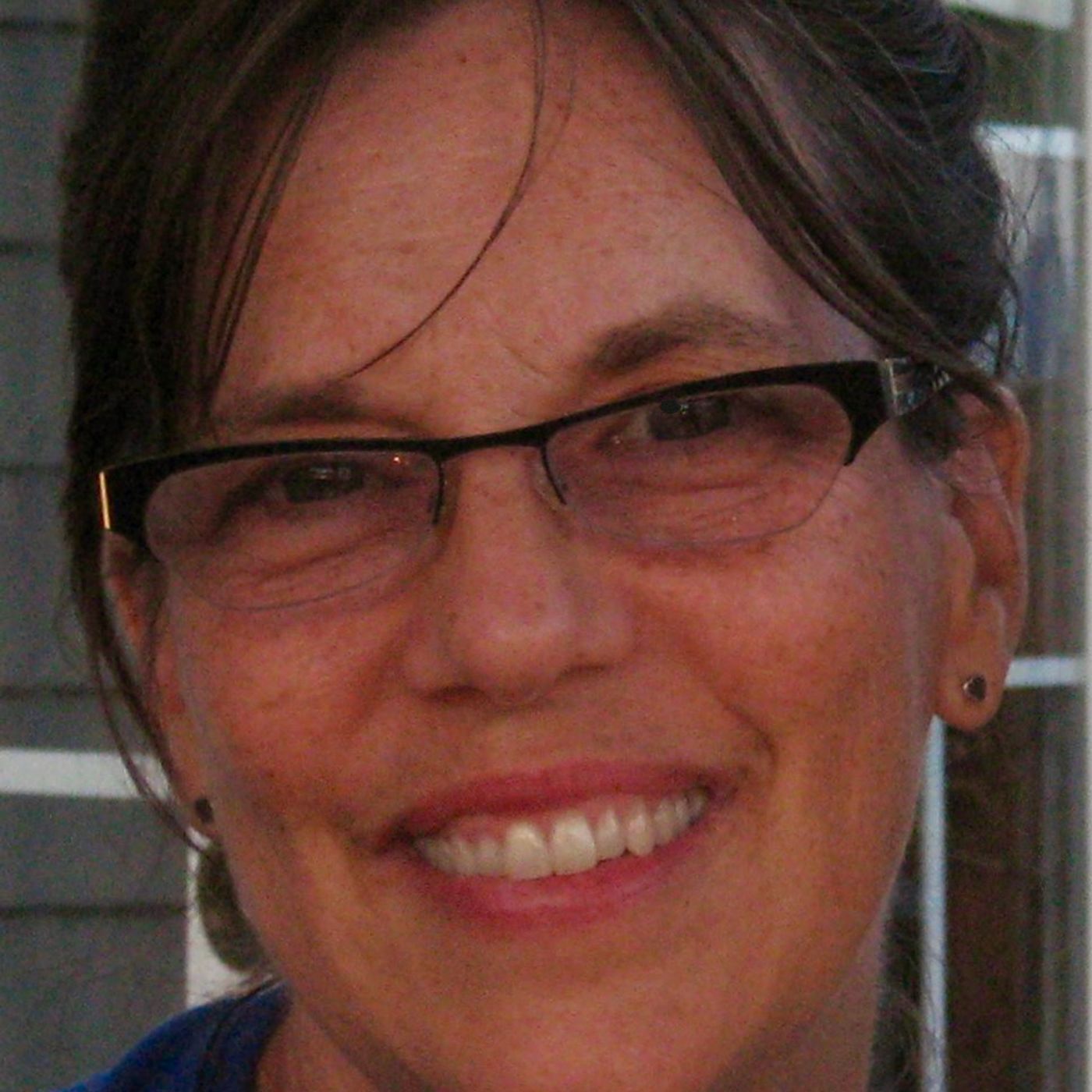
In the work that I do and the book that I've just had published called, We All Go Back to the Land, it's really an exploration of that Original Agreement and what it means today. So I want to remind Indigenous readers of our Original Agreement to nurture and protect and honor and respect the Earth Mother and all of the gifts that she has for us and then to introduce that Original Agreement to non-indigenous Canadians or others of the world that so that we can together, as a human species, work toward what I call the ultimate act of reconciliation to help heal the earth.suzanne keeptwo, conscient podcast, may 14, 2021, gatineau, québecSuzanne Keeptwo, Métis from Québec, is a multi-faceted creative artist of Algonkin (Kitchesipirini)/French & Irish descent. She is a writer, editor, teacher, and experienced journalist who is a passionate advocate for Indigenous rights and cultural awareness. Her area of expertise is in bridging gaps of understanding between Indigenous and non - Indigenous Canadians - a role that brings her across the nation as a professional facilitator. The author of We All Go Back To The Land: The Who, Why, and How of Land Acknowledgments(2021), Suzanne promotes traditional peoples' Original Agreement to respect and protect the Earth Mother. She adheres to traditional Values of Old and promotes the Indigenization of contemporary-world constructs. Suzanne and I were colleagues at the Canada Council for the Arts where I benefitted from her deep knowledge of Indigenous arts and culture and her passion for education. We’re both retired from the Council now and so I biked over to her home in Gatineau on the Ottawa river and recorded this conversation. As I have done in all episodes in season 2 so far, I have integrated excerpts from soundscape compositions and quotations drawn from e19 reality, as well as moments of silence, in this episode.I would like to thank Suzanne for taking the time to speak with me, for sharing her insights about Indigenous rights, land acknowledgements and arts education for climate awareness. For more information on Suzanne work, see https://www.suzannekeeptwo.com/Location for recording of e47 keeptwo on Ottawa River, Gatineau *END NOTES FOR ALL EPISODESNote : I'm currently 'pressing pause' and am not producing new content until further notice. Hey conscient listeners, I’ve been producing the conscient podcast as a learning and unlearning journey since May 2020. It’s my way to give back.This Indigenous Land Acknowledgement statement was developed by members of the Algonquin community for my former employer the Canada Council for the Arts. I have adapted slightly to make it my own.I acknowledge that my studio, located in Ottawa, is on the unceded, unsurrendered Territory of the Anishinaabe Algonquin Nation whose presence here reaches back to time immemorial.I recognize the Algonquins as the customary keepers and defenders of the Ottawa River Watershed and its tributaries. I honour their long history of welcoming many Nations to this beautiful territory and uphold and uplift the voice and values of our Host Nation.Further, I offer my respect and affirm the inherent and Treaty Rights of all Indigenous Peoples across this land and honour commitments to self-determination and sovereignty that have been made to Indigenous Nations and Peoples.I acknowledge the historical oppression of lands, cultures and the original Peoples in what we now know as Canada and fervently believe the Arts contribute to the healing and decolonizing journey we all share togetherIn parallel with the production of the conscient podcast and its francophone counterpart, balado conscient, I I publish a free ‘a calm presence' monthly Substack see https://acalmpresence.substack.com. Your feedback is always welcome at claude [at] conscient [dot] ca and/or on social media: Facebook, Instagram, Linkedin, Threads, BlueSky, Mastodon, Tik Tok, YouTube and Substack.Share what you like, etcI am grateful and accountable to the earth and the human labour that provided me with the privilege of producing this podcast, including the toxic materials and extractive processes behind the computers, recorders, transportation systems and infrastructure that made this production possible. Thanks for listening. Claude SchryerLatest update on March 21, 2026

S2 Ep 46e46 badham – creating artistic space to think
I think going forward, there's a lot that the arts can do. Philosophically art is one of the only places that we can still ask these questions, play out politics and negotiate ideas. Further, art isn't about communicating climate disaster, art is about creating space for people to think through some of these issues.dr. marnie badham, conscient podcast, may 13, 2021, australiaWith a twenty-five-year history of art and social justice in Australia and Canada, Dr. Marnie Badham's research sits at the intersection of socially-engaged art practice, participatory methodologies and the politics of cultural measurement. Through aesthetic forms of encounter and exchange, her work brings together disparate groups of people in dialogue to examine and affect local issues. Her current focus includes a series of creative cartographies registering emotions in public space; expanded curation projects on the aesthetics and politics of food; and a book project The Social Life of Artist Residencies: connecting with people and place not your own. Marnie is Senior Research Fellow at the School of Art and co-leader for CAST (contemporary art and social transformation) research group and CVIN Cultural Value Impact Network at RMIT University in Naarm (Melbourne), Australia. I first met Marnie when she was General Manager of Common Weal Community Arts in Regina. She was passionate articulate about community-engaged arts then and still is today. I have often turned to Marnie for advice on arts policy issues and was honoured when she accepted my invitation for a conscient conversation. As I have done in all episodes in season 2 so far, I have integrated excerpts from soundscape compositions and quotations drawn from e19 reality, as well as moments of silence, in this episode.I would like to thank Marnie for taking the time to speak with me, for sharing her deep knowledge of community arts, her innumerable research projects and her insights about art as a collective space to think through complex issue. For more information on Marnie work, see https://www.marrniebadham.com *END NOTES FOR ALL EPISODESNote : I'm currently 'pressing pause' and am not producing new content until further notice. Hey conscient listeners, I’ve been producing the conscient podcast as a learning and unlearning journey since May 2020. It’s my way to give back.This Indigenous Land Acknowledgement statement was developed by members of the Algonquin community for my former employer the Canada Council for the Arts. I have adapted slightly to make it my own.I acknowledge that my studio, located in Ottawa, is on the unceded, unsurrendered Territory of the Anishinaabe Algonquin Nation whose presence here reaches back to time immemorial.I recognize the Algonquins as the customary keepers and defenders of the Ottawa River Watershed and its tributaries. I honour their long history of welcoming many Nations to this beautiful territory and uphold and uplift the voice and values of our Host Nation.Further, I offer my respect and affirm the inherent and Treaty Rights of all Indigenous Peoples across this land and honour commitments to self-determination and sovereignty that have been made to Indigenous Nations and Peoples.I acknowledge the historical oppression of lands, cultures and the original Peoples in what we now know as Canada and fervently believe the Arts contribute to the healing and decolonizing journey we all share togetherIn parallel with the production of the conscient podcast and its francophone counterpart, balado conscient, I I publish a free ‘a calm presence' monthly Substack see https://acalmpresence.substack.com. Your feedback is always welcome at claude [at] conscient [dot] ca and/or on social media: Facebook, Instagram, Linkedin, Threads, BlueSky, Mastodon, Tik Tok, YouTube and Substack.Share what you like, etcI am grateful and accountable to the earth and the human labour that provided me with the privilege of producing this podcast, including the toxic materials and extractive processes behind the computers, recorders, transportation systems and infrastructure that made this production possible. Thanks for listening. Claude SchryerLatest update on March 21, 2026

S2 Ep 45e45 abbott – a compassionate, just and sustainable world
The notion of reality and the way we grasp reality as humans is so deeply subjective, but it's also socially constructed, and so, as a filmmaker - and this is relevant because I'm also a Zen Buddhist - from both those perspectives, I try to explore what we perceive as reality to untangle and figure out in what ways are we being deluded? And in what ways do we have clear vision? And obviously the more clear vision we can have, the better actions we take to ensure a more compassionate, just and sustainable livable world. I'm all for untangling the delusion while admitting wholeheartedly that to untangle it fully is impossible.jennifer abbott, conscient podcast, may 6, 2021, british columbiaJennifer Abbott is a Sundance and Genie award-winning film director, writer, editor, producer and sound designer who specializes in social justice and environmental documentaries. Born in Montreal, Abbott studied political science with a particular interest in radical political thought, women's studies and deep ecology at McGill University and now live in British Columbia. She is the co-director (with Mark Achbar) and editor of The Corporation (2003), the top grossing and most awarded documentary in Canadian history and also the director, writer, editor, sound designer and co-producer of The Magnitude of all Things (2020) and the Co-Director (with Joel Bakan) and Supervising Editor of The New Corporation: The Unfortunately Necessary Sequel (2020), both of which I strongly recommend. The Magnitude of all Things is a unique and powerful film. It’s a cinematic exploration of the emotional and psychological dimensions of climatechangethat exploresJennifer loss of her sister to cancer and the profound gravity of climate breakdown and draws intimate parallels between the experiences of grief—both personal and planetary. This film brought me to tears and resonated deeply. I reached out to Jennifer to talk about this important film as well as her other work.There were many poignant moments in our conversation, including this thought about grief and compassion: In terms of why people are so often unable to accept the reality of climate change, I think it's very understandable, because the scale and the violence of it is just so vast, it's difficult to comprehend. It's also so depressing and enraging if one knows the politics behind it and overwhelming. I don't think we, as a species, deal with things that have those qualities very well and we tend to look away. I have a lot of compassion, including for myself, in terms of how difficult it is to come to terms with the climate catastrophe. It is the end of the world as we know it. We don't know what exactly the new world is going to look like, but we do know we're headed for some catastrophe. As I have done in all episodes in season 2 so far, I have integrated excerpts from soundscape compositions and quotations drawn from e19 reality, as well as moments of silence, in this episode.I would like to thank Jennifer for taking the time to speak with me, for sharing her passion for social justice and for her outstanding contributions to environmental activism.For more information on Jennifer’s work, see https://en.wikipedia.org/wiki/Jennifer_AbbottLinksThe Great Derangement by Amitav GhoshJennifer Abbott during the filming of The Magnitude of All Things with DOP Vince ArvidsonJennifer Abbott pendant le tournage de The Magnitude of All Things avec le directeur de la photographie Vince Arvidson. *END NOTES FOR ALL EPISODESNote : I'm currently 'pressing pause' and am not producing new content until further notice. Hey conscient listeners, I’ve been producing the conscient podcast as a learning and unlearning journey since May 2020. It’s my way to give back.This Indigenous Land Acknowledgement statement was developed by members of the Algonquin community for my former employer the Canada Council for the Arts. I have adapted slightly to make it my own.I acknowledge that my studio, located in Ottawa, is on the unceded, unsurrendered Territory of the Anishinaabe Algonquin Nation whose presence here reaches back to time immemorial.I recognize the Algonquins as the customary keepers and defenders of the Ottawa River Watershed and its tributaries. I honour their long history of welcoming many Nations to this beautiful territory and uphold and uplift the voice and values of our Host Nation.Further, I offer my respect and affirm the inherent and Treaty Rights of all Indigenous Peoples across this land and honour commitments to self-determination and sovereignty that have been made to Indigenous Nations and Peoples.I acknowledge the historical oppression of lands, cultures and the original Peoples in what we now know as Canada and fervently believe the Arts contribute to the healing and decolonizing journey we all share togetherIn parallel with the production of the conscient podcast and its francophone counterpart, balado conscient, I I publish a free ‘a calm presence' monthly Substack see h
S2 Ep 44e44 bilodeau – the arts are good at changing culture
I think of the arts as planting a seed and activism as being the quickest way you can get from A to B. So activism is like, this is what we're going to do. We have to do it now. This is a solution. This is what we're working towards and there's all kinds of different solutions, but it's about action. The arts are not about pushing any one solution or telling people, this is what you need to do. It is about saying here's a problem. Let's think about it together. Let’s explore avenues we could take. Let’s think about what it means and what it means, not just, should I drive a car or not, but what it means, as in, who are we on this earth and what is our role? How do we fit in the bigger ecosystem of the entire planet? I think the arts are something very good to do that and they are good at changing a culture.chantal bilodeau, conscient podcast, may 11, 2021, new yorkChantal Bilodeau is a playwright and translator originally from Tiohtiá:ke/Montreal, but now based in New York City, the traditional land of the Lenape People. In her capacity as artistic director of The Arctic Cycle, she has been instrumental in getting the theatre and academic communities, as well as audiences in the U.S. and abroad, to engage in climate action through programming that includes live events, talks, publications, workshops, national and international convenings, and http://www.climatechangetheatreaction.com/, a worldwide distributed theatre festival.I first heard about Chantal’s work while I worked at the Canada Council. Whenever someone spoke of theatre and climate change, Chantal’s name would come up as a leader and source of inspiration. I admire her work as a playwright, activist and educator, notably her work as co-curator, with Sarah Garton Stanley, of The 2019-20 Final Cycle: Climate Change and as an editor at Artists and Climate Change.As I did with all episodes this season, I have integrated excerpts from previous episodes in this case, from e19 reality in this episode, including moments of silence. I would like to thank Chantal for taking the time to speak with me, for sharing her deep knowledge of theatre, her perspectives on the role of art in the climate emergency and a climate activist work ethic that is second to none.For more information on Chantal’s work, see https://www.cbilodeau.com/ and https://www.thearcticcycle.org/. *END NOTES FOR ALL EPISODESNote : I'm currently 'pressing pause' and am not producing new content until further notice. Hey conscient listeners, I’ve been producing the conscient podcast as a learning and unlearning journey since May 2020. It’s my way to give back.This Indigenous Land Acknowledgement statement was developed by members of the Algonquin community for my former employer the Canada Council for the Arts. I have adapted slightly to make it my own.I acknowledge that my studio, located in Ottawa, is on the unceded, unsurrendered Territory of the Anishinaabe Algonquin Nation whose presence here reaches back to time immemorial.I recognize the Algonquins as the customary keepers and defenders of the Ottawa River Watershed and its tributaries. I honour their long history of welcoming many Nations to this beautiful territory and uphold and uplift the voice and values of our Host Nation.Further, I offer my respect and affirm the inherent and Treaty Rights of all Indigenous Peoples across this land and honour commitments to self-determination and sovereignty that have been made to Indigenous Nations and Peoples.I acknowledge the historical oppression of lands, cultures and the original Peoples in what we now know as Canada and fervently believe the Arts contribute to the healing and decolonizing journey we all share togetherIn parallel with the production of the conscient podcast and its francophone counterpart, balado conscient, I I publish a free ‘a calm presence' monthly Substack see https://acalmpresence.substack.com. Your feedback is always welcome at claude [at] conscient [dot] ca and/or on social media: Facebook, Instagram, Linkedin, Threads, BlueSky, Mastodon, Tik Tok, YouTube and Substack.Share what you like, etcI am grateful and accountable to the earth and the human labour that provided me with the privilege of producing this podcast, including the toxic materials and extractive processes behind the computers, recorders, transportation systems and infrastructure that made this production possible. Thanks for listening. Claude SchryerLatest update on March 21, 2026
S2 Ep 43e43 haley – climate as a cultural issue
Climate change is actually a cultural issue, not a scientific issue. Science has been extremely good at identifying the symptoms and looking at the way in which it has manifest itself, but it hasn't really addressed any of the issues in terms of the causes. It has tried to use what you might call techno fix solution focused problem-based approaches to the situation, rather than actually asking deep questions and listening.david haley, conscient podcast, may 6, 2021, united kingdomI first came across David Haley’s work as an eco artist and eco educator through the Eco Art Network, notably his Going beyond Earthly essay, from which I drew this quote in e19 reality:We now need aesthetics to sensitize us to other ways of life and we need artists to sensitize us to the shape of things to come.I was hooked on his thinking and was enchanted when we had a conversation on May 6, 2021. For example:Going back to reality, one of the issues that we are not tackling is that we're taking a dystopian view upon individual activities that creates guilt, syndromes, and neuroses which of course means that the systems of power are working and in terms of actually addressing the power - of speaking truth to power - we need to name the names, we need to name Standard Oil, IG Farben who now call themselves ESSO, Chevron, Mobil, DuPont, BP, Bayer, Monsanto BASF, Pfizer and so on. These are the people that control the governments that we think we're voting for and the pretense of democracy that follows them. Until those organizations actually rescind their power to a regenerative way of doing and thinking, we're stuffed, to put pretty bluntly.I was also touched by his idea of ‘space as habitat for new ways of thinking’ (which made me think of the adage ‘do no harm’):What I have learned to do, and this is my practice, is to focus on making space. This became clear to me when I read, Lila : An inquiry into morals by Robert Pirsig. Towards the end of the book, he suggests that the most moral act of all, is to create the space for life to move onwards and it was one of those sentences that just rang true with me, and I've held onto that ever since and pursued the making of space, not the filling of it. When I say I work with ecology, I try to work with whole systems, ecosystems. The things within an ecosystem are the elements with which I try to work. I try not to introduce anything other than what is already there. In other words, making the space as habitat for new ways of thinking, habitat for biodiversity to enrich itself, habitat for other ways of approaching things. I mean, there's an old scientific adage about nature abhors a vacuum, and that vacuum is the space as I see it.As I did with all episodes this season, I have integrated excerpts from previous episodes in this case, from e19 reality in this episode, including moments of silence.I would like to thank David for taking the time to speak with me, for sharing his deep knowledge of ecological art practices, his insights as an eco educator and for his vision of a path forward that ‘creates space’.For more information on David’s work, see www.Davidhaley.ukLinksDavid Haley, Going beyond EarthlyThe Clock of the Long Now : The Ideas Behind the World’s Slowest Computer by Stewart BrandLila : An inquiry into morals by Robert PirsigGreenhouse Britain, by Helen Mayer Harrison and Newton Harrison and the Harrison Studio & Associates Britain *END NOTES FOR ALL EPISODESNote : I'm currently 'pressing pause' and am not producing new content until further notice. Hey conscient listeners, I’ve been producing the conscient podcast as a learning and unlearning journey since May 2020. It’s my way to give back.This Indigenous Land Acknowledgement statement was developed by members of the Algonquin community for my former employer the Canada Council for the Arts. I have adapted slightly to make it my own.I acknowledge that my studio, located in Ottawa, is on the unceded, unsurrendered Territory of the Anishinaabe Algonquin Nation whose presence here reaches back to time immemorial.I recognize the Algonquins as the customary keepers and defenders of the Ottawa River Watershed and its tributaries. I honour their long history of welcoming many Nations to this beautiful territory and uphold and uplift the voice and values of our Host Nation.Further, I offer my respect and affirm the inherent and Treaty Rights of all Indigenous Peoples across this land and honour commitments to self-determination and sovereignty that have been made to Indigenous Nations and Peoples.I acknowledge the historical oppression of lands, cultures and the original Peoples in what we now know as Canada and fervently believe the Arts contribute to the healing and decolonizing journey we all share togetherIn parallel with the production of the conscient podcast and its francophone counterpart, balado conscient, I I publish a free ‘a calm presence' monthly Substack see https://acalmpresence.substack.com. Your
S2 Ep 42e42 rosen – when the climate threat becomes real
The idea of enough is very interesting to me. The idea that the planet doesn't have enough for us on our current trajectory is at the heart of that. The question of whether the planet has enough for everyone on the planet, if we change the way we do things is an interesting way. Can we sustain seven, eight, nine billion people on the planet if everyone's idea of enough was balanced with that equation? I don't know, but I think it's possible. I think that if we've shown nothing else as a species, as humans, it's adaptability and resiliency and when forced to, we can do surprisingly monumental things and changes when the threat becomes real to us.mark rosen, conscient podcast, may 2, 2021, ottawaI’ve known Mark Rosen, as well as his brother Brian and sister Melanie all my life. I saw them being dutifully raised by their parents, Robert and Debbie, while I lived and worked in Banff, Alberta in the 1980s. I’ve seen Mark become an outstanding architect and national a leader in green building practices. One of the reasons I thought of Mark for a conscient conversation was when he mentioned that his generation was a ‘lost ‘or transitional generation because of deferred ecological debt. This idea struck me as tragic, but true. I was pleased when he accepted my invitation for conversation to explore a range of issues in and around architecture and design, including his understanding of ‘hope’ and the emergence of a new set of values from his generation. I enjoyed our conversation, including this excerpt: One of the things that I find very interesting in my design process as an architect is that if you were to show me two possible building sites, one that is a green field wide open, with nothing really influencing the site flat, easy to build, and then you show me a second site that is a steep rock face with an easement that you can't build across. Inevitably, it seems to be that the site with more constraints results in a more interesting solution and the idea that constraints can actually be of benefit to the creative process is one that I think you can apply things that, on the surface, appear to be barriers instead of constraints. Capitalism, arguably, is one of those, if we say we can't do it because it costs too much, we're treating it as a barrier, as opposed to us saying the solution needs to be affordable, then it becomes a constraint and we can push against constraints and in doing so we can come up with creative solutions and so, one way forward, is to try and identify these things that we feel are preventing us from doing what we know we need to do and bringing them into our process as constraints, that influence where we go rather than prevent us from going where we need to go.This conversation was recorded on May 2, 2021, on a long walk from Mark’s home in Ottawa along bike paths and into the Ottawa Arboretum. As I did with all previous episodes this season, I have integrated excerpts from e19 reality in this episode. I would like to thank Mark for taking the time to speak with me, for sharing his deep knowledge of green architecture, for being frank about the challenges we face and for his vision on how to move forward. For more information on Mark’s work, see https://www.linkedin.com/in/marktrosen/ and https://www.webuildahome.ca/LinksTony Seba : YouTube.Climate Capitalism by Tom Rand : https://www.tomrand.net/ *END NOTES FOR ALL EPISODESNote : I'm currently 'pressing pause' and am not producing new content until further notice. Hey conscient listeners, I’ve been producing the conscient podcast as a learning and unlearning journey since May 2020. It’s my way to give back.This Indigenous Land Acknowledgement statement was developed by members of the Algonquin community for my former employer the Canada Council for the Arts. I have adapted slightly to make it my own.I acknowledge that my studio, located in Ottawa, is on the unceded, unsurrendered Territory of the Anishinaabe Algonquin Nation whose presence here reaches back to time immemorial.I recognize the Algonquins as the customary keepers and defenders of the Ottawa River Watershed and its tributaries. I honour their long history of welcoming many Nations to this beautiful territory and uphold and uplift the voice and values of our Host Nation.Further, I offer my respect and affirm the inherent and Treaty Rights of all Indigenous Peoples across this land and honour commitments to self-determination and sovereignty that have been made to Indigenous Nations and Peoples.I acknowledge the historical oppression of lands, cultures and the original Peoples in what we now know as Canada and fervently believe the Arts contribute to the healing and decolonizing journey we all share togetherIn parallel with the production of the conscient podcast and its francophone counterpart, balado conscient, I I publish a free ‘a calm presence' monthly Substack see https://acalmpresence.substack.com. Your feedback is always welcome at claude [at] con
S2 Ep 41e41 rae – a preparedness mindset
The thing about a preparedness mindset is that you are thinking into the future and so if one of those scenarios happens, you've already mentally prepared in some sort of way for it, so you're not dealing with the shock. That's a place as an artist that I feel has a lot of potential for engagement and for communication and bringing audiences along. When you're talking about realities, accepting that reality, has the potential to push us to do other things. It's great to hear about Canada Council changing different ways around enabling the arts and building capacity in the arts in the context of the climate emergency. It'll be interesting to see how artists step up.jen rae, conscient podcast, may 10, 2021, australiaDr Jen Rae is a Narrm (Melbourne)-based artist-researcher, facilitator and educator of Canadian Red River Métis-Scottish descent from Treaty 6 Territory. Her practice-led research expertise is in the discursive field of contemporary environmental art and environmental communication. It is centred around cultural responses to climate change/everything change - specifically the role of artists and creative inquiry. During her PhD, she worked for the Australian Collaboration synthesising IPCC reports and later the Climate Action Network, further noting the absence of creatives in the fields of climate change communication and advocacy. In 2015, Jen shifted focus to the climate emergency specifically on discourses around food futures [through Fair Share Fare], disaster preparedness and speculative futures predominantly articulated through multi-platform creative projects, research, facilitation, and community alliances. I first came across Jen Rae’s work through this lecture she gave at Concordia University: The role of artists in the climate emergency. I then started reading and viewing her extensive body of work on art and climate and invited her to share her knowledge and insights. As I did with all episodes this season, I have integrated excerpts from previous episodes in this case, from e19 reality in this episode. I would like to thank Jen for taking the time to speak with me and for sharing her deep knowledge of community art practices and experience in the emerging field of art and emergency preparedness.Jen Rae lives, creates and works on the unceded traditional lands of the Wurundjeri, Boon Wurrung, Woi Wurrung, and Wathaurong people of the Kulin Nation and offer her deepest respect to their elders - past, present and emerging. For more information on Jen’s work, see https://www.jenraeis.com and http://www.fairsharefare.com/. Links to a selection of Jen’s work:REFUGIUM:film premiering 27 April 2021 (online and in real life - in collaboration with Claire G. Coleman)Who needs artists in a climate crisis?: Raising the Bar, 13 November 2019Refuge Talk Series: Preparing for a pandemic (21 May - 1:01:35-1:08:08), Living in a pandemic (27 May) and Recovering from a pandemic (4 June)Resilience Lab Vancouver *END NOTES FOR ALL EPISODESNote : I'm currently 'pressing pause' and am not producing new content until further notice. Hey conscient listeners, I’ve been producing the conscient podcast as a learning and unlearning journey since May 2020. It’s my way to give back.This Indigenous Land Acknowledgement statement was developed by members of the Algonquin community for my former employer the Canada Council for the Arts. I have adapted slightly to make it my own.I acknowledge that my studio, located in Ottawa, is on the unceded, unsurrendered Territory of the Anishinaabe Algonquin Nation whose presence here reaches back to time immemorial.I recognize the Algonquins as the customary keepers and defenders of the Ottawa River Watershed and its tributaries. I honour their long history of welcoming many Nations to this beautiful territory and uphold and uplift the voice and values of our Host Nation.Further, I offer my respect and affirm the inherent and Treaty Rights of all Indigenous Peoples across this land and honour commitments to self-determination and sovereignty that have been made to Indigenous Nations and Peoples.I acknowledge the historical oppression of lands, cultures and the original Peoples in what we now know as Canada and fervently believe the Arts contribute to the healing and decolonizing journey we all share togetherIn parallel with the production of the conscient podcast and its francophone counterpart, balado conscient, I I publish a free ‘a calm presence' monthly Substack see https://acalmpresence.substack.com. Your feedback is always welcome at claude [at] conscient [dot] ca and/or on social media: Facebook, Instagram, Linkedin, Threads, BlueSky, Mastodon, Tik Tok, YouTube and Substack.Share what you like, etcI am grateful and accountable to the earth and the human labour that provided me with the privilege of producing this podcast, including the toxic materials and extractive processes behind the computers, recorders, transportation systems and infrastruc
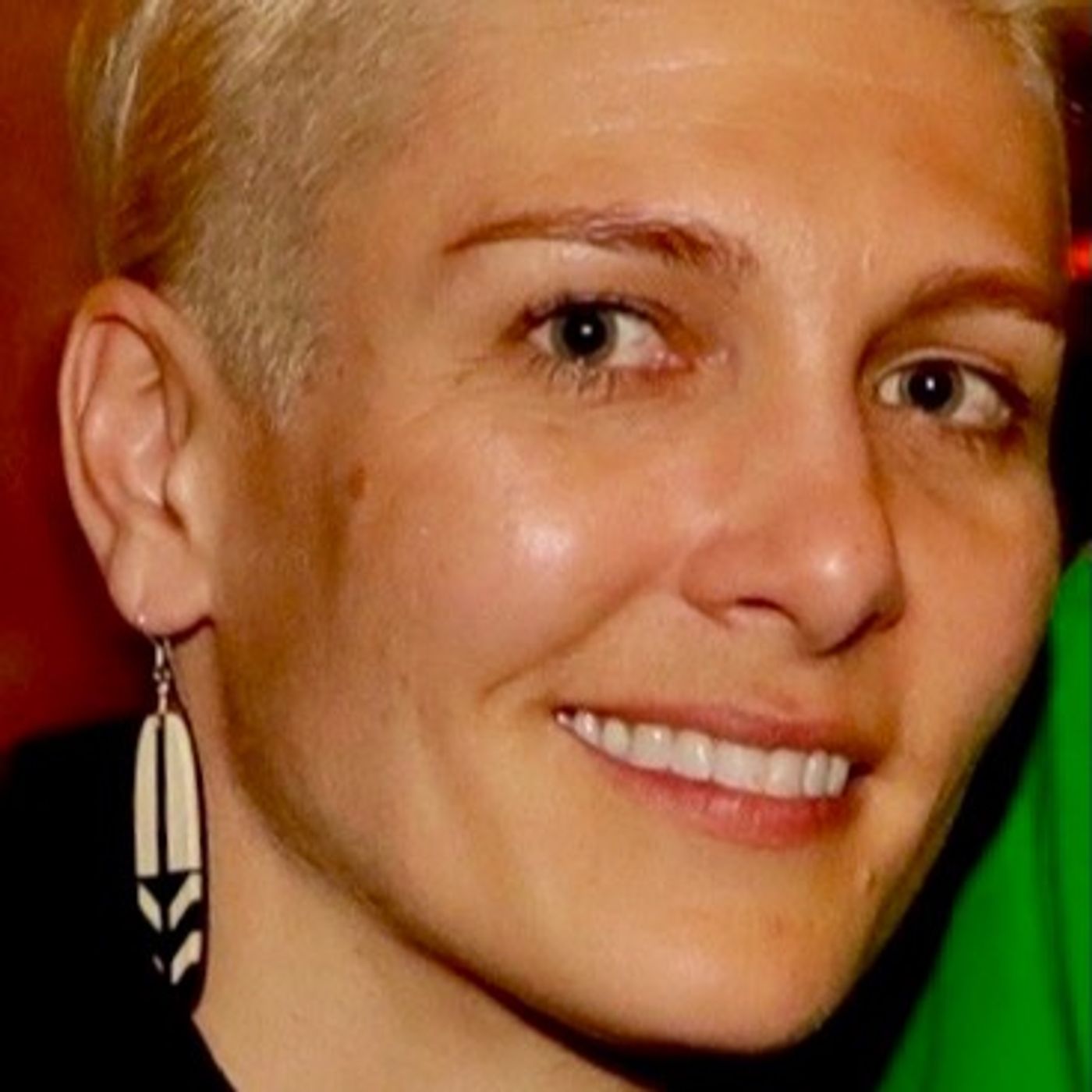
S2 Ep 40e40 frasz – integrating awakeness in daily life
There is a lot of awareness and interest in making change and yet change still isn't really happening, at least not at the pace or scale that we need. It feels to me increasingly like there's not a lack of awareness, nor a lack of concern, or even a lack of willingness, but actually a lack of agency. I've been thinking a lot about the role of arts, and culture and creative practice in helping people not just wake up to the need for change, but actually undergo the entire transformational process from that moment of waking up (which you and I share a language around Buddhist practice). There's that idea that you can wake up in an instant but integrating the awakeness into your daily life is actually a process. It's an ongoing thing.alexis frasz, conscient podcast, May 6, 2021, OaklandAlexis Frasz is a researcher, writer, strategic thinker, program designer, and advisor to partners in culture, philanthropy, and the environmental sector working for transformative change and a just transition. Alexis believes in the need to build solidarity between artists and culture and broader movements working for racial, ecological, and economic justice. She is co-director of Helicon Collab, an Oakland based consultancy, where her focus is on the intersection of culture and the environment. Her perspectives on systems change draws on her artistic practices and diverse background in anthropology, Chinese Medicine, permaculture, and Buddhism. I first met Alexis at Creative Climate Leadership USA, a learning and leadership exchange focused on developing creative responses for a new climate future, that took place in March 2020. Alexis was a faculty member and advisor. Since then, we have been exchanging by email about community-engaged arts, Buddhism, leadership and more. I was honoured that Alexis accepted my invitation for a conscient conversation, which was recorded on May 6, 2021, remotely between my home in Ottawa and Alexis’ home in Oakland, California, As I did with all episodes this season, I have integrated excerpts from previous episodes in this case, from e19 reality in this episode. I would like to thank Alexis for taking the time to speak with me, for sharing her deep knowledge of socially engaged arts, leadership, education and strategic thought.For more information on Alexis’ work, see https://www.linkedin.com/in/alexis-frasz-59183a1/ *END NOTES FOR ALL EPISODESNote : I'm currently 'pressing pause' and am not producing new content until further notice. Hey conscient listeners, I’ve been producing the conscient podcast as a learning and unlearning journey since May 2020. It’s my way to give back.This Indigenous Land Acknowledgement statement was developed by members of the Algonquin community for my former employer the Canada Council for the Arts. I have adapted slightly to make it my own.I acknowledge that my studio, located in Ottawa, is on the unceded, unsurrendered Territory of the Anishinaabe Algonquin Nation whose presence here reaches back to time immemorial.I recognize the Algonquins as the customary keepers and defenders of the Ottawa River Watershed and its tributaries. I honour their long history of welcoming many Nations to this beautiful territory and uphold and uplift the voice and values of our Host Nation.Further, I offer my respect and affirm the inherent and Treaty Rights of all Indigenous Peoples across this land and honour commitments to self-determination and sovereignty that have been made to Indigenous Nations and Peoples.I acknowledge the historical oppression of lands, cultures and the original Peoples in what we now know as Canada and fervently believe the Arts contribute to the healing and decolonizing journey we all share togetherIn parallel with the production of the conscient podcast and its francophone counterpart, balado conscient, I I publish a free ‘a calm presence' monthly Substack see https://acalmpresence.substack.com. Your feedback is always welcome at claude [at] conscient [dot] ca and/or on social media: Facebook, Instagram, Linkedin, Threads, BlueSky, Mastodon, Tik Tok, YouTube and Substack.Share what you like, etcI am grateful and accountable to the earth and the human labour that provided me with the privilege of producing this podcast, including the toxic materials and extractive processes behind the computers, recorders, transportation systems and infrastructure that made this production possible. Thanks for listening. Claude SchryerLatest update on March 21, 2026

S2 Ep 39e39 engle – the integral role of the arts in societal change
The role of artists and culture is fundamental and so necessary, and we need so much more of it and not only on the side. The role of arts and culture in societal and civilizational change right now needs to be much more integral into, yes, artworks and imagination - helping us to culturally co-produce how we live and work together into the future and that means art works - but it also means artists' perspectives into much more mainstream institutions, ideas, and thoughts about how change occurs.jayne engle, conscient podcast, april 17, 2021, montréalDr. Jayne Engle is Director of Cities & Places at the McConnell Foundation and Adjunct Professor at McGill University. She’s worked in participatory city planning, urban revitalization, and economic and real estate development in North America and Europe. She is passionate about bridging innovative local action on the ground with policy and systems change. Among her many activities include : Civic-Indigenous 7.0, RegX and Legitimacities, Participatory Cities Canada, Civic.Capital, Future Cities Canada, and the EmergencERoom.I first met Jayne in February 2020 at TP3, a strategic gathering in Waterloo, ON convened by the McConnell Foundation and Tamarack Institute to create a coalition of organizations to address the climate crisis, (including through the arts). Jayne and I been exchanging about arts, cities and spiritual practices ever since. On Saturday, April 17, 2021, we went for a walk up Mont Royal in Montréal and recorded this conversation while doing a ‘soundwalk’. As I did with all episodes this season, I have integrated content from e19 reality in this episode. I would like to thank Jayne for taking the time to speak with me, for sharing her deep knowledge of urban issues, her spiritual beliefs and her insights on the role that arts and culture can play in societal and civilizational transformation. For more information on Jayne’s work, see https://www.linkedin.com/in/jayneengle/ *END NOTES FOR ALL EPISODESNote : I'm currently 'pressing pause' and am not producing new content until further notice. Hey conscient listeners, I’ve been producing the conscient podcast as a learning and unlearning journey since May 2020. It’s my way to give back.This Indigenous Land Acknowledgement statement was developed by members of the Algonquin community for my former employer the Canada Council for the Arts. I have adapted slightly to make it my own.I acknowledge that my studio, located in Ottawa, is on the unceded, unsurrendered Territory of the Anishinaabe Algonquin Nation whose presence here reaches back to time immemorial.I recognize the Algonquins as the customary keepers and defenders of the Ottawa River Watershed and its tributaries. I honour their long history of welcoming many Nations to this beautiful territory and uphold and uplift the voice and values of our Host Nation.Further, I offer my respect and affirm the inherent and Treaty Rights of all Indigenous Peoples across this land and honour commitments to self-determination and sovereignty that have been made to Indigenous Nations and Peoples.I acknowledge the historical oppression of lands, cultures and the original Peoples in what we now know as Canada and fervently believe the Arts contribute to the healing and decolonizing journey we all share togetherIn parallel with the production of the conscient podcast and its francophone counterpart, balado conscient, I I publish a free ‘a calm presence' monthly Substack see https://acalmpresence.substack.com. Your feedback is always welcome at claude [at] conscient [dot] ca and/or on social media: Facebook, Instagram, Linkedin, Threads, BlueSky, Mastodon, Tik Tok, YouTube and Substack.Share what you like, etcI am grateful and accountable to the earth and the human labour that provided me with the privilege of producing this podcast, including the toxic materials and extractive processes behind the computers, recorders, transportation systems and infrastructure that made this production possible. Thanks for listening. Claude SchryerLatest update on March 21, 2026

S2 Ep 38e38 zenith – art as medicine to metabolize charge
Art is the medicine that actually allows us to metabolize charge. It allows us to metabolize trauma. It takes the intensity that's left in the system, and this goes all the way back to ritual. Art, for me, is a sort of a tributary coming off from ritual that is still sort of consensually allowed in this reality when the direct communication with nature through ritual was silenced.shante sojourn zenith, conscient podcast, May 4, 2021, MinnesotaShante’ Sojourn Zenith is an animist somatic practitioner creating Edge Rituals to tend the wounds of her kin’s unmetabolized ancestral trauma and developmental dissociation from embodiment by re-enlivening relationship to elemental earth consciousness and initiatory process. She works both one-on-one and in group spaces to create emergent explorations informed by nervous system state shifting, metaphor-based symbolic modeling, constellations, intuitive voice and movement, grief tending, and earth-rooted ritual. Shante’ is currently germinating an art project called Long Body Prayers, a podcast, oracle deck, and pedagogical process for re-membering the relational root system of support each being is embedded in. Shante’ has asked to name that in this podcast she is speaking from an entangled root system of animist somatics that will have aspects of her teachers and collaborators voices in her own words. What she speaks is a transmutation of many voices, including Kris Nourse, Azul Valerie Thome, Francis Weller, Annemiek van Helsdingen, Susan Raffo, Liz Koch, Tada Hozumi, Dare Sohei, Larissa Kaul, Deb Dana, and Sarah Peyton. Specifically in this podcast, her understanding of the way the Peak Valley Recovery Pattern relates to cultural bodies is credited to Tada Hozumi’s essay What comes next? The dawn of a new era of cultural somatic activism (https://tadahozumi.com/what-comes-next-the-dawn-of-a-new-era-of-cultural-somatic-activism/). Other influential beings in Shante's unfolding have been the moon, a birch tree in Vermont, an oak tree in California, and the turtles of Bass Lake marsh on Dakota land in Mni Sota Makoce.I first heard about Shante’s work through her Fruiting Bodies: Collapse as Medicine, Liminal Portals, Mycelial Entanglements essay in Dark Matter magazine. This sentence in particular caught my attention and stuck with me:… we fear experiences of disintegration, breakdown, and collapse. But what if the collapse is also a part of the medicine? There are openings and cracks in these times of breakdown, windows into other worlds.Her writing made sense to me, but I did not really understand how to relate he work to the climate emergency, so I asked her and was enriched by our conversation. It’s the kind of recording that is worth listening to twice to further retain nuance. As I did with all episodes this season, I have integrated excerpts from previous episodes in this case, from e19 reality in this episode. I would like to thank Shante’ for taking the time to speak with me, for sharing her world view, her practices, including the idea that ‘art is the medicine that actually allows us to metabolize charge’.For more information on Shante’s work, see www.earthpoetedgeweaver.com. *END NOTES FOR ALL EPISODESNote : I'm currently 'pressing pause' and am not producing new content until further notice. Hey conscient listeners, I’ve been producing the conscient podcast as a learning and unlearning journey since May 2020. It’s my way to give back.This Indigenous Land Acknowledgement statement was developed by members of the Algonquin community for my former employer the Canada Council for the Arts. I have adapted slightly to make it my own.I acknowledge that my studio, located in Ottawa, is on the unceded, unsurrendered Territory of the Anishinaabe Algonquin Nation whose presence here reaches back to time immemorial.I recognize the Algonquins as the customary keepers and defenders of the Ottawa River Watershed and its tributaries. I honour their long history of welcoming many Nations to this beautiful territory and uphold and uplift the voice and values of our Host Nation.Further, I offer my respect and affirm the inherent and Treaty Rights of all Indigenous Peoples across this land and honour commitments to self-determination and sovereignty that have been made to Indigenous Nations and Peoples.I acknowledge the historical oppression of lands, cultures and the original Peoples in what we now know as Canada and fervently believe the Arts contribute to the healing and decolonizing journey we all share togetherIn parallel with the production of the conscient podcast and its francophone counterpart, balado conscient, I I publish a free ‘a calm presence' monthly Substack see https://acalmpresence.substack.com. Your feedback is always welcome at claude [at] conscient [dot] ca and/or on social media: Facebook, Instagram, Linkedin, Threads, BlueSky, Mastodon, Tik Tok, YouTube and Substack.Share what you like, etcI am grateful and accountable to the

S2 Ep 36e36 fanconi – towards carbon positive work
Ben Twist at Creative Carbon Scotland talks about the transformation from a Culture of Consumerism to a Culture of Stewardship, and we are the culture makers, so isn’t that our job right now to make a new culture? And it will take all of us as artists together to do that… It’s not enough to do carbon neutral work. We want to do carbon positive work. We want our artwork to be involved with ecological restoration. What does that mean? I’ve been thinking a lot about that. What is theatre practice that actually gives back, that makes something more sustainable? That is carbon positive? I guess that’s a conversation that I’m hoping to have in the future with other theatre makers who have that vision.kendra fanconi, conscient podcast, April 19, 2021, British ColumbiaI’ve known Kendra for many years, first through her work with Radix Theatre then as an arts and environment advocate in the community, notably through The Only Animal, which she co-founded in 2005 and which has created over 30 shows that ‘take theatre places it has never gone before’. I’ve always admired Kendra’s vision, her calm demeanour, her strategic mind, and deep commitment to environment issues, as you’ll hear on our conversation, which recorded remotely between Ottawa and her home on the Sunshine Coast. As I did with all episodes this season, I have integrated excerpts from previous episodes in this case, from e19 reality in this episode. I would like to thank Kendra for taking the time to speak with me, for sharing her deep knowledge of arts and environment practices, her generosity of spirit and her passion for the mobilization of artists in climate emergency. For more information on Kendra’s work, see https://www.theonlyanimal.com/Kendra in the field... *END NOTES FOR ALL EPISODESNote : I'm currently 'pressing pause' and am not producing new content until further notice. Hey conscient listeners, I’ve been producing the conscient podcast as a learning and unlearning journey since May 2020. It’s my way to give back.This Indigenous Land Acknowledgement statement was developed by members of the Algonquin community for my former employer the Canada Council for the Arts. I have adapted slightly to make it my own.I acknowledge that my studio, located in Ottawa, is on the unceded, unsurrendered Territory of the Anishinaabe Algonquin Nation whose presence here reaches back to time immemorial.I recognize the Algonquins as the customary keepers and defenders of the Ottawa River Watershed and its tributaries. I honour their long history of welcoming many Nations to this beautiful territory and uphold and uplift the voice and values of our Host Nation.Further, I offer my respect and affirm the inherent and Treaty Rights of all Indigenous Peoples across this land and honour commitments to self-determination and sovereignty that have been made to Indigenous Nations and Peoples.I acknowledge the historical oppression of lands, cultures and the original Peoples in what we now know as Canada and fervently believe the Arts contribute to the healing and decolonizing journey we all share togetherIn parallel with the production of the conscient podcast and its francophone counterpart, balado conscient, I I publish a free ‘a calm presence' monthly Substack see https://acalmpresence.substack.com. Your feedback is always welcome at claude [at] conscient [dot] ca and/or on social media: Facebook, Instagram, Linkedin, Threads, BlueSky, Mastodon, Tik Tok, YouTube and Substack.Share what you like, etcI am grateful and accountable to the earth and the human labour that provided me with the privilege of producing this podcast, including the toxic materials and extractive processes behind the computers, recorders, transportation systems and infrastructure that made this production possible. Thanks for listening. Claude SchryerLatest update on March 21, 2026
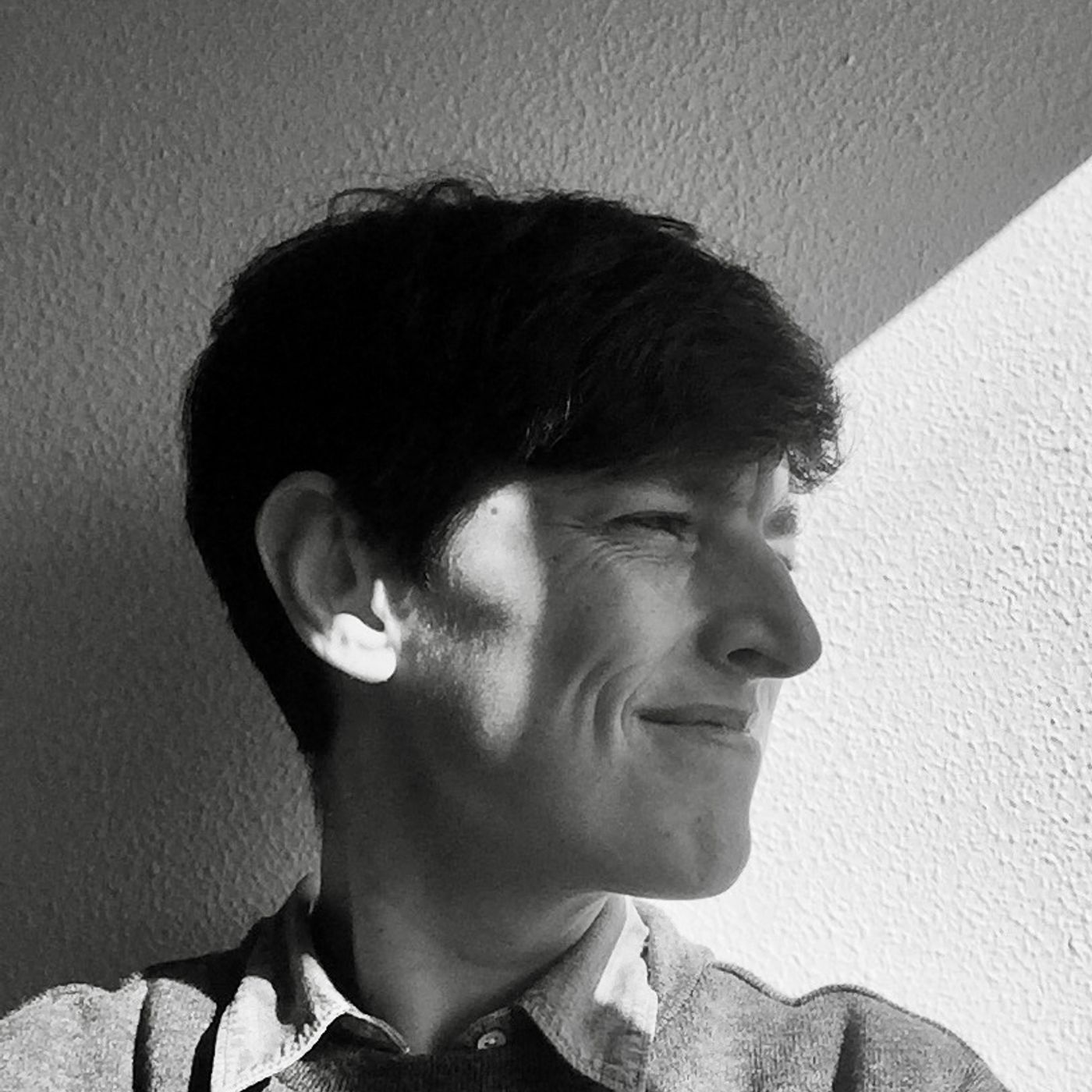
S2 Ep 35e35 salas – adapting to reality
I find that more and more artists are interested in understanding how to change their practice and how to adapt it to current circumstances. I really believe artists need help in this process. Like we all do. I'm not an environmental expert nor a climate expert, I'm just a very sensitive human being who is worried about what we are leaving behind for future generations. I'm doing what I can to really be more ethical with my work, but I'm finding more and more artists who are also struggling to understand what they can do. I think when in a conversation between curators or producers like myself and people like you - thinkers and funders - that we need to come together and to understand the current situation, to accept reality, then we can strategize about how we can put things into place and how we can provide more funding for different types of projects.carmen salas, conscient podcast, april 30, 2021, SpainI first learned about Carmen Salas’ work through her article What should we expect from art in the next few years/decades? And what is art, anyway?. It was the spring of 2020, and I thought her ideas were fresh and connected to our troubling times. She was raising many of the same issues that I will was thinking about, notably the evolving role of the artist and the value of community engaged arts. I read more of Carmen’s work on her website, https://carmensp.com/ and followed her curatorial work with the Connecting the Dots forum in Mexico. I was pleased when Carmen accepted to speak with me for a conscient conversation, which took place on April 30, 2021, remotely between Ottawa and Spain. Carmen asked me to include this quotation from neuroscientist Dan Burnett in the episode notes for context in relation to reality: The human brain, powerful as it is, can still be overwhelmed by the complex world we inhabit, so when it comes to creating mental models of how the world works, it operates a general “stick to what you know” policy. As such, things that are different or unfamiliar, especially if they’re confusing and uncertain or introduce an element of perceived threat or danger, are met with suspicion, doubt, dismissal and so on. All are defence mechanisms, in a way; it’s the brain saying 'this is NOT how the world is meant to work, so I must dismiss this challenging new information.'Carmen also suggested a link to this article : https://www.theguardian.com/science/brain-flapping/2018/may/15/mental-health-awareness-is-great-but-action-is-essential. Also, during our conscient conversation Carmen mentioned Gilberto Esparza's Nomadic Plants project and her Shifting Paradigms article.As I did with all episodes this season, I have integrated excerpts from e19 reality.I would like to thank Carmen for taking the time to speak with me, for sharing her deep knowledge of curation and the arts and her insights on how the arts can reinvent themselves. Gracias. For more information on Carmen’s work, see https://carmensp.com/ *END NOTES FOR ALL EPISODESNote : I'm currently 'pressing pause' and am not producing new content until further notice. Hey conscient listeners, I’ve been producing the conscient podcast as a learning and unlearning journey since May 2020. It’s my way to give back.This Indigenous Land Acknowledgement statement was developed by members of the Algonquin community for my former employer the Canada Council for the Arts. I have adapted slightly to make it my own.I acknowledge that my studio, located in Ottawa, is on the unceded, unsurrendered Territory of the Anishinaabe Algonquin Nation whose presence here reaches back to time immemorial.I recognize the Algonquins as the customary keepers and defenders of the Ottawa River Watershed and its tributaries. I honour their long history of welcoming many Nations to this beautiful territory and uphold and uplift the voice and values of our Host Nation.Further, I offer my respect and affirm the inherent and Treaty Rights of all Indigenous Peoples across this land and honour commitments to self-determination and sovereignty that have been made to Indigenous Nations and Peoples.I acknowledge the historical oppression of lands, cultures and the original Peoples in what we now know as Canada and fervently believe the Arts contribute to the healing and decolonizing journey we all share togetherIn parallel with the production of the conscient podcast and its francophone counterpart, balado conscient, I I publish a free ‘a calm presence' monthly Substack see https://acalmpresence.substack.com. Your feedback is always welcome at claude [at] conscient [dot] ca and/or on social media: Facebook, Instagram, Linkedin, Threads, BlueSky, Mastodon, Tik Tok, YouTube and Substack.Share what you like, etcI am grateful and accountable to the earth and the human labour that provided me with the privilege of producing this podcast, including the toxic materials and extractive processes behind the computers, recorders, transportation systems and infrastruc

S2 Ep 33e33 toscano – what we’re fighting for
It's artists who not only can craft a good story, but also we can tell the story that's the hardest to tell and that is the story about the impacts of climate solutions. So it's really not too hard to talk about the impacts of climate change, and I see people when they speak. They go through the laundry list of all the horrors that are upon us and they don't realize it, but they're actually closing people's minds, closing people down because they're getting overwhelmed. It's not that we shouldn't talk about the impacts, but it's so helpful to talk about a single impact, maybe how it affects people locally, but then talk about how the world will be different when we enact these changes. And how do you tell a story that gets to that? Because that gets people engaged and excited because you're then telling this story about what we're fighting for, not what we're fighting against. And that is where the energy is in a story.peterson toscano, conscient podcast, april 13, 2021, south africaPeterson Toscano describes himself as a quirky queer quaker performance artist and scholar. I know him as an excellent communicator about art and climate change through his https://citizensclimatelobby.org/category/citizens-climate-radio/ podcasts (including the insightful ArtHousesegment – keep an ear out for an episode featuring me during summer of 2021), which I listen to regularly. His work humorously explores a wide range of serious topics including LGBTQ+ issues, sexism, racism, privilege, gender, and climate change. Peterson is also a recognized scholar who has highlighted gender variance in the Bible among others. Interesting, Peterson does not consider himself to be an environmentalist, rather he states that is concerned about climate change as a human rights issue. I think he’s a gifted communicator who has a lot to say. As I am doing with all episodes in season 2, I integrated excerpts from e19 reality into this episode as interludes.I would like to thank Peterson for his deep commitment to intelligent and sensitive art and climate change advocacy, his wicked sense of humour and generosity of spirit. For more information on Peterson’s work, see https://petersontoscano.com/ and YouTube videos. *END NOTES FOR ALL EPISODESNote : I'm currently 'pressing pause' and am not producing new content until further notice. Hey conscient listeners, I’ve been producing the conscient podcast as a learning and unlearning journey since May 2020. It’s my way to give back.This Indigenous Land Acknowledgement statement was developed by members of the Algonquin community for my former employer the Canada Council for the Arts. I have adapted slightly to make it my own.I acknowledge that my studio, located in Ottawa, is on the unceded, unsurrendered Territory of the Anishinaabe Algonquin Nation whose presence here reaches back to time immemorial.I recognize the Algonquins as the customary keepers and defenders of the Ottawa River Watershed and its tributaries. I honour their long history of welcoming many Nations to this beautiful territory and uphold and uplift the voice and values of our Host Nation.Further, I offer my respect and affirm the inherent and Treaty Rights of all Indigenous Peoples across this land and honour commitments to self-determination and sovereignty that have been made to Indigenous Nations and Peoples.I acknowledge the historical oppression of lands, cultures and the original Peoples in what we now know as Canada and fervently believe the Arts contribute to the healing and decolonizing journey we all share togetherIn parallel with the production of the conscient podcast and its francophone counterpart, balado conscient, I I publish a free ‘a calm presence' monthly Substack see https://acalmpresence.substack.com. Your feedback is always welcome at claude [at] conscient [dot] ca and/or on social media: Facebook, Instagram, Linkedin, Threads, BlueSky, Mastodon, Tik Tok, YouTube and Substack.Share what you like, etcI am grateful and accountable to the earth and the human labour that provided me with the privilege of producing this podcast, including the toxic materials and extractive processes behind the computers, recorders, transportation systems and infrastructure that made this production possible. Thanks for listening. Claude SchryerLatest update on March 21, 2026
S2 Ep 31e31 morrow – artists as reporters
I think that artists are for the most part in tune with what's going on in the world. We're all reporters, somehow journalists, who translate our message into our art, as art is in my mind, a readout, a digested or raw readout of what it is that we're experiencing. Our wish to be an artist is in fact, in order to be able to spend our lives doing that process.charlie morrow, conscient podcast, April 16, 2021Charlie Morrow is a composer, sound artist, performer, and innovator whose goal over the past four decades has been to bring experimental sound and music to a wider audience. Morrow calls himself a ‘framemaker’, a creator and producer of context. His life’s work – 50 years as a hybrid, with one foot each in the classical and commercial music worlds. Born to a family of doctors and inventors, Morrow uses his creativity to make tools to share with others—not only musicians and sound artists, but teachers, architects, and engineers – ‘so that they might create positive spaces for work, education, and healing.’My first point of contact with Charlie (who I did not know before then) was an email I received on April 10, 2021 where Charlie said: ‘I am a fellow lifer in the sound trade. Thought it would be fun to have a recorded conversation. I am completing production for Immerse! book and podcast with over 45 chats with collaborators on immersive projects. I am curious about what you have gathered from your conversations and happy to spontaneously share my experiences. … Hope you like the idea.’This conversation took place on April 16, 2021 which I recorded at Charlie’s request. About halfway through the exchange I said:‘I regret not setting this up as a conscient podcast interview because you're saying so many interesting things. I probably could use some of it. I don't know how you'd feel about that.’Charlie responded:‘Feel free to use it any way you like. I'm finding the conversation very stimulating. We've been through so many of the same patterns, you know, and we feel that we're doing the work we do totally out of conscience and interest moved by the people who want to make life on earth better. Having noticed acoustic ecology, that's my work right now, I talk about sonic health. ‘Charlie and I exchanged on a wide range of issues including the origins of the conscient podcast, music, acoustic ecology, art and climate, health, hope, artists as journalists, etc. As I am doing with all episodes in season 2, I integrated excerpts from e19 reality and e01 terrified into this episode as interludes.I would like to thank Charlie for inviting me to speak and allowing it to become a serendipitous episode of conscient, for sharing his deep knowledge of music, sound and climate. For more information on Charlie’s work, see https://www.charliemorrow.com/ *END NOTES FOR ALL EPISODESNote : I'm currently 'pressing pause' and am not producing new content until further notice. Hey conscient listeners, I’ve been producing the conscient podcast as a learning and unlearning journey since May 2020. It’s my way to give back.This Indigenous Land Acknowledgement statement was developed by members of the Algonquin community for my former employer the Canada Council for the Arts. I have adapted slightly to make it my own.I acknowledge that my studio, located in Ottawa, is on the unceded, unsurrendered Territory of the Anishinaabe Algonquin Nation whose presence here reaches back to time immemorial.I recognize the Algonquins as the customary keepers and defenders of the Ottawa River Watershed and its tributaries. I honour their long history of welcoming many Nations to this beautiful territory and uphold and uplift the voice and values of our Host Nation.Further, I offer my respect and affirm the inherent and Treaty Rights of all Indigenous Peoples across this land and honour commitments to self-determination and sovereignty that have been made to Indigenous Nations and Peoples.I acknowledge the historical oppression of lands, cultures and the original Peoples in what we now know as Canada and fervently believe the Arts contribute to the healing and decolonizing journey we all share togetherIn parallel with the production of the conscient podcast and its francophone counterpart, balado conscient, I I publish a free ‘a calm presence' monthly Substack see https://acalmpresence.substack.com. Your feedback is always welcome at claude [at] conscient [dot] ca and/or on social media: Facebook, Instagram, Linkedin, Threads, BlueSky, Mastodon, Tik Tok, YouTube and Substack.Share what you like, etcI am grateful and accountable to the earth and the human labour that provided me with the privilege of producing this podcast, including the toxic materials and extractive processes behind the computers, recorders, transportation systems and infrastructure that made this production possible. Thanks for listening. Claude SchryerLatest update on March 21, 2026

S2 Ep 30e30 maggs – art and the world after this
Complexity is the world built of relationships and it's a very different thing to engage what is true or real in a complexity framework than it is to engage in it, in what is a modernist Western enlightenment ambition, to identify the absolute objective properties that are intrinsic in any given thing. Everyone is grappling with the fact that the world is exhibiting itself so much in these entanglements of relationships. The arts are completely at home in that world. And so, we've been sort of under the thumb of the old world. We've always been a kind of second-class citizen in an enlightenment rationalist society. But once we move out of that world and we move into a complexity framework, suddenly the arts are entirely at home and we have capacity in that world that a lot of other sectors don't have. What I've been trying to do with this report (Art and the World After This) is articulate the way in which these different disruptions are putting us in a very different reality and it's a reality in which we go from being a kind of secondary entertaining class to, maybe, having a capacity to sit at the heart of a lot of really critical problem-solving challenges.david maggs, conscient podcast, march 25, 2021, vancouverDavid Maggs grew up in Corner Brook, Newfoundland and spent much of his developmental years as a classical pianist. In 2002, David founded Gros Morne Summer Music, a music festival that has grown into a year-round interdisciplinary arts festival. As an academic, Maggs addresses issues of culture and sustainability. His paper, Art and the World After This, was published by the Metcalf Foundation on June 15, 2021 which I encourage everyone to read and circulate. Also of interest is his Metcalf Innovation Fellow David Maggs writes about arts and COVID for new collaboration with The Philanthropist.e30 maggs was recorded in Quichena Park, Vancouver on March 25, 2021. It was my first recording of season 2 so you might hear some nervousness and excitement in my voice (David was very calm, thankfully). David and I exchanged on a wide range of issues including connections between artistic capacity and sustainability issues, ‘reality’, how the arts sector can rethink its unique value proposition, disruption, indigenous knowledge, the recovery of the arts sector after the covid crisis, etc. As I did in all episode in season 2, I integrated excerpts from e19 reality into this episode as interludes. I would like to thank David for taking the time to speak with me, for sharing his deep knowledge of cultural and sustainability policy and for his vision of a much larger role for the arts sector in the climate emergency. For more information on David’s work, see https://greattransition.org/contributor/david-maggs *END NOTES FOR ALL EPISODESNote : I'm currently 'pressing pause' and am not producing new content until further notice. Hey conscient listeners, I’ve been producing the conscient podcast as a learning and unlearning journey since May 2020. It’s my way to give back.This Indigenous Land Acknowledgement statement was developed by members of the Algonquin community for my former employer the Canada Council for the Arts. I have adapted slightly to make it my own.I acknowledge that my studio, located in Ottawa, is on the unceded, unsurrendered Territory of the Anishinaabe Algonquin Nation whose presence here reaches back to time immemorial.I recognize the Algonquins as the customary keepers and defenders of the Ottawa River Watershed and its tributaries. I honour their long history of welcoming many Nations to this beautiful territory and uphold and uplift the voice and values of our Host Nation.Further, I offer my respect and affirm the inherent and Treaty Rights of all Indigenous Peoples across this land and honour commitments to self-determination and sovereignty that have been made to Indigenous Nations and Peoples.I acknowledge the historical oppression of lands, cultures and the original Peoples in what we now know as Canada and fervently believe the Arts contribute to the healing and decolonizing journey we all share togetherIn parallel with the production of the conscient podcast and its francophone counterpart, balado conscient, I I publish a free ‘a calm presence' monthly Substack see https://acalmpresence.substack.com. Your feedback is always welcome at claude [at] conscient [dot] ca and/or on social media: Facebook, Instagram, Linkedin, Threads, BlueSky, Mastodon, Tik Tok, YouTube and Substack.Share what you like, etcI am grateful and accountable to the earth and the human labour that provided me with the privilege of producing this podcast, including the toxic materials and extractive processes behind the computers, recorders, transportation systems and infrastructure that made this production possible. Thanks for listening. Claude SchryerLatest update on March 21, 2026
S2 Ep 29e29 loy – the bodhisattva path
Some people would say, OK, we have a climate crisis, so we’ve got to shift as quickly as possible as we can from fossil fuels to renewable sources of energy, which is right. But somehow the idea that by doing that we can just sort of carry on in the way that we have been otherwise is a misunderstanding. We have a much greater crisis here and what it fundamentally goes back to is this sense of separation from the earth, that we feel our wellbeing, therefore, is separate from the wellbeing of the earth and that therefore we can kind of exploit it and use it in any way we want. I think we can understand the ecological crisis as a kind of the karma built into that way of relating and exploiting the earth. The other really important thing, which I end up talking about more often, is I think Buddhism has this idea of the bodhisattva path, the idea that it’s not simply that we want to become awakened simply for our own benefit, but much more so that we want to awaken in order to be a service to everyone. david loy, conscient podcast, april 15, 2021David Loy is a professor, writer and Zen teacher in the Sanbo Zen tradition of Japanese Zen Buddhism. He finished the formal koan curriculum in 1988 and was given the dharma name Tetsu’un “Wisdom cloud.” He is a prolific author, whose essays and books have been translated into many languages. His articles appear regularly in the pages of major journals such as Tikkun and Buddhist magazines including Tricycle, Lion’s Roar, and Buddhadharma, as well as in a variety of scholarly journals. Many of his writings, as well as audio and video talks and interviews, are available on his web site. David lectures nationally and internationally on various topics, focusing primarily on the encounter between Buddhism and modernity: what each can learn from the other. He is especially concerned about social and ecological issues. David is a founding member of the Rocky Mountain Ecodharma Retreat Center, near Boulder, Colarado. My first point of contact with David’s work was his 2019 book Ecodharma: Buddhist Teachings for the Ecological Crisis. This publication affected me deeply and opened me to me to new perceptive on the climate emergency and on my own zen practice. I was honoured when David kindly accepted to speak with me on April 15, 2021 from his home in Colorado. David and I exchanged on a wide range of issues including the bodhisattva path, the role of storytelling, nonduality, interdependence and the notion of ‘hope’ through a Buddhist lens.As I am doing with all episodes in season 2, I integrated excerpts from e19 reality into this episode as interludes.I would like to thank David for taking the time to speak with me, for sharing his deep knowledge of Buddhism and for his vision of how the bodhisattva path can play a larger role in the climate emergency. For more information on David’s work, see https://www.davidloy.org/. *END NOTES FOR ALL EPISODESNote : I'm currently 'pressing pause' and am not producing new content until further notice. Hey conscient listeners, I’ve been producing the conscient podcast as a learning and unlearning journey since May 2020. It’s my way to give back.This Indigenous Land Acknowledgement statement was developed by members of the Algonquin community for my former employer the Canada Council for the Arts. I have adapted slightly to make it my own.I acknowledge that my studio, located in Ottawa, is on the unceded, unsurrendered Territory of the Anishinaabe Algonquin Nation whose presence here reaches back to time immemorial.I recognize the Algonquins as the customary keepers and defenders of the Ottawa River Watershed and its tributaries. I honour their long history of welcoming many Nations to this beautiful territory and uphold and uplift the voice and values of our Host Nation.Further, I offer my respect and affirm the inherent and Treaty Rights of all Indigenous Peoples across this land and honour commitments to self-determination and sovereignty that have been made to Indigenous Nations and Peoples.I acknowledge the historical oppression of lands, cultures and the original Peoples in what we now know as Canada and fervently believe the Arts contribute to the healing and decolonizing journey we all share togetherIn parallel with the production of the conscient podcast and its francophone counterpart, balado conscient, I I publish a free ‘a calm presence' monthly Substack see https://acalmpresence.substack.com. Your feedback is always welcome at claude [at] conscient [dot] ca and/or on social media: Facebook, Instagram, Linkedin, Threads, BlueSky, Mastodon, Tik Tok, YouTube and Substack.Share what you like, etcI am grateful and accountable to the earth and the human labour that provided me with the privilege of producing this podcast, including the toxic materials and extractive processes behind the computers, recorders, transportation systems and infrastructure that made this production possible. Thanks for listenin

don’t listen to this episode – something Cage said
bonusThe idea came to me while biking. I thought... what if I stated, over and over, that people need to wake up to the reality of the climate emergency. you know, with my slow conscient podcast voice: ‘people. need. to wake up. to the reality. of the climate emergency.’ But it would be pointless because people already know that they need to wake up to the reality of the climate emergency. Repeating it, over and over, is actually counterproductive, and boring. People would probably tune out and all that would be left are these words that have no value whatever. But then I thought, on the other hand, what was it that John Cage once said : 'If something is boring after two minutes, try it for four. If still boring, then eight. Then sixteen. Then thirty-two. Eventually one discovers that it is not boring at all.'Claude Schryer, April 30, 2021, around 9pm *END NOTES FOR ALL EPISODESNote : I'm currently 'pressing pause' and am not producing new content until further notice. Hey conscient listeners, I’ve been producing the conscient podcast as a learning and unlearning journey since May 2020. It’s my way to give back.This Indigenous Land Acknowledgement statement was developed by members of the Algonquin community for my former employer the Canada Council for the Arts. I have adapted slightly to make it my own.I acknowledge that my studio, located in Ottawa, is on the unceded, unsurrendered Territory of the Anishinaabe Algonquin Nation whose presence here reaches back to time immemorial.I recognize the Algonquins as the customary keepers and defenders of the Ottawa River Watershed and its tributaries. I honour their long history of welcoming many Nations to this beautiful territory and uphold and uplift the voice and values of our Host Nation.Further, I offer my respect and affirm the inherent and Treaty Rights of all Indigenous Peoples across this land and honour commitments to self-determination and sovereignty that have been made to Indigenous Nations and Peoples.I acknowledge the historical oppression of lands, cultures and the original Peoples in what we now know as Canada and fervently believe the Arts contribute to the healing and decolonizing journey we all share togetherIn parallel with the production of the conscient podcast and its francophone counterpart, balado conscient, I I publish a free ‘a calm presence' monthly Substack see https://acalmpresence.substack.com. Your feedback is always welcome at claude [at] conscient [dot] ca and/or on social media: Facebook, Instagram, Linkedin, Threads, BlueSky, Mastodon, Tik Tok, YouTube and Substack.Share what you like, etcI am grateful and accountable to the earth and the human labour that provided me with the privilege of producing this podcast, including the toxic materials and extractive processes behind the computers, recorders, transportation systems and infrastructure that made this production possible. Thanks for listening. Claude SchryerLatest update on March 21, 2026

S2 Ep 25e26 klein – rallying through art
Here would be my challenge to artists today. We're beginning to see artists across many artistic domains producing climate and climate emergency art, which is important and good to see. What's striking to me is that most of it, in the main, is dystopian, about how horrific the world will be if we fail to rise to this moment. To a certain extent, that makes sense because it is scary and horrific, but here's what intrigued me about what artists were producing in the war is that in the main, it was not dystopian, even though the war was horrific. It was rallying us: the tone was rallying us. I found myself listening to this music as I was doing the research and thinking, world war II had a popular soundtrack, the anti-Vietnam war had a popular soundtrack. When I was a kid in the peace and disarmament movement, there was a popular soundtrack. This doesn't have a popular soundtrack, yet.seth klein, conscient podcast, april 16, 2021, vancouverSeth Klein is a public policy researcher and writer based in Vancouver who served for 22 years as the founding director of the British Columbia office of the Canadian Centre for Policy Alternatives (CCPA), Canada’s foremost social justice think tank. He is now a freelance policy consultant, speaker, researcher and writer, and author of A Good War: Mobilizing Canada for the Climate Emergency. Seth is also an adjunct professor with Simon Fraser University’s Urban Studies program and remains a research associate with the CCPA’s BC Office.I first heard about A Good War from Stephen Huddart, then CEO of the McConnell Foundation. Stephen suggested that I ‘read this book’. I did not get around to it until March 2021 when Anjali Appadurai (see e23 appadurai) contacted me on Seth’s behalf to see if I would join their Climate Emergency Unit arts campaign. Needless to say, I joined the campaign, and you’ll hear in the conversation that I also read the book, completing it the morning of our conversation on April 16. Seth and I exchanged on a wide range of issues including the dichotomy between reality and denial, his rationale for the book, the book’s four pillars: (1. spend what it takes. 2. create new institutions 3. move from voluntary to mandatory 4. tell the truth). We also talked about the role of artists and cultural workers, to whom he launched a challenge. As I did in previous episodes, I have integrated excerpts from e19 reality in this episode. I would like to thank Seth for taking the time to speak with me, for sharing his vision for our shared future in A Good War and for putting us on high alert about the climate emergency. For more information on Seth work, see https://www.sethklein.ca/ and https://www.climateemergencyunit.ca *END NOTES FOR ALL EPISODESNote : I'm currently 'pressing pause' and am not producing new content until further notice. Hey conscient listeners, I’ve been producing the conscient podcast as a learning and unlearning journey since May 2020. It’s my way to give back.This Indigenous Land Acknowledgement statement was developed by members of the Algonquin community for my former employer the Canada Council for the Arts. I have adapted slightly to make it my own.I acknowledge that my studio, located in Ottawa, is on the unceded, unsurrendered Territory of the Anishinaabe Algonquin Nation whose presence here reaches back to time immemorial.I recognize the Algonquins as the customary keepers and defenders of the Ottawa River Watershed and its tributaries. I honour their long history of welcoming many Nations to this beautiful territory and uphold and uplift the voice and values of our Host Nation.Further, I offer my respect and affirm the inherent and Treaty Rights of all Indigenous Peoples across this land and honour commitments to self-determination and sovereignty that have been made to Indigenous Nations and Peoples.I acknowledge the historical oppression of lands, cultures and the original Peoples in what we now know as Canada and fervently believe the Arts contribute to the healing and decolonizing journey we all share togetherIn parallel with the production of the conscient podcast and its francophone counterpart, balado conscient, I I publish a free ‘a calm presence' monthly Substack see https://acalmpresence.substack.com. Your feedback is always welcome at claude [at] conscient [dot] ca and/or on social media: Facebook, Instagram, Linkedin, Threads, BlueSky, Mastodon, Tik Tok, YouTube and Substack.Share what you like, etcI am grateful and accountable to the earth and the human labour that provided me with the privilege of producing this podcast, including the toxic materials and extractive processes behind the computers, recorders, transportation systems and infrastructure that made this production possible. Thanks for listening. Claude SchryerLatest update on March 21, 2026
S2 Ep 24e25 shaw – a sense of purpose
It's a real blessing to feel a sense of purpose that in these times. It's a real blessing to be able to take the feelings of fear and grief and actually channel them somewhere into running a group or to making a film or doing your podcasts. I think it's important that people really tune in to find out what they're given to do at this time, to really listen to what the call is in you and follow it. I think there's something that's very generative and supportive about feeling a sense of purpose in a time of collapse.michael shaw, conscient podcast, april 12, 2021, australiaMichael Shaw is a teacher and therapist by training. I learned about Michael’s work by viewing his first film, produced in collaboration with Michelle Walter, called Living in the Time of Dying, which he describes as:The recognition of the stark reality of the climate crisis we are facing, and what it would mean to me in my lifetime, or what’s left of it. When I first began to see it clearly, I felt a sense of shock and fear, as well as a profound sense of sadness. I was unable to pretend I didn’t see what I did and felt internally undone for a considerable amount of time. Eventually I felt a powerful call to action from that place.Living in the Time of Dying websiteWithlittle funds, no experience in the field and knowing that his message might well also be unpopular (I know the feeling!), Michael now makes media projects to engage the public about climate anxiety and grief. It is through his film that I learned about the engaging work of dharma teacher Catherine Ingram and her powerful extended essay, Facing Extinction as well as the writings of Dhar Jamail, author of The End of Ice: Bearing Witness and Finding Meaning in the Path of Climate Disruption, both of whom I quote in e19 reality. Similar to my humble aspirations with this podcast, Michael and Michelle’s work seeks to face the global changes and explore how to best live in this 'time of dying' (as they say). This episode was recorded between my home in Ottawa and Michael’s home in Australia on April 13, 2021. Michael and I exchanged on a wide range of issues including the role of media to address the climate emergency, support structures for ecogrief, the role of the arts and the concept of hope. As I have done in all episodes in season 2 so far, I have integrated excerpts from soundscape compositions and quotations drawn from e19 reality in this episode.I would like to thank Michael for taking the time to speak with me, for sharing his insights as a fellow producer of climate emergency media projects and for providing a support structure for those struggling with eco anxiety and eco grief. For more information on Micheal and Michelle’s work, see https://www.livinginthetimeofdying.com/ *END NOTES FOR ALL EPISODESNote : I'm currently 'pressing pause' and am not producing new content until further notice. Hey conscient listeners, I’ve been producing the conscient podcast as a learning and unlearning journey since May 2020. It’s my way to give back.This Indigenous Land Acknowledgement statement was developed by members of the Algonquin community for my former employer the Canada Council for the Arts. I have adapted slightly to make it my own.I acknowledge that my studio, located in Ottawa, is on the unceded, unsurrendered Territory of the Anishinaabe Algonquin Nation whose presence here reaches back to time immemorial.I recognize the Algonquins as the customary keepers and defenders of the Ottawa River Watershed and its tributaries. I honour their long history of welcoming many Nations to this beautiful territory and uphold and uplift the voice and values of our Host Nation.Further, I offer my respect and affirm the inherent and Treaty Rights of all Indigenous Peoples across this land and honour commitments to self-determination and sovereignty that have been made to Indigenous Nations and Peoples.I acknowledge the historical oppression of lands, cultures and the original Peoples in what we now know as Canada and fervently believe the Arts contribute to the healing and decolonizing journey we all share togetherIn parallel with the production of the conscient podcast and its francophone counterpart, balado conscient, I I publish a free ‘a calm presence' monthly Substack see https://acalmpresence.substack.com. Your feedback is always welcome at claude [at] conscient [dot] ca and/or on social media: Facebook, Instagram, Linkedin, Threads, BlueSky, Mastodon, Tik Tok, YouTube and Substack.Share what you like, etcI am grateful and accountable to the earth and the human labour that provided me with the privilege of producing this podcast, including the toxic materials and extractive processes behind the computers, recorders, transportation systems and infrastructure that made this production possible. Thanks for listening. Claude SchryerLatest update on March 21, 2026

S2 Ep 23e24 weaving – the good, possible and beautiful
The recognition, and finding ways to assist people, in an awareness of all the good, the possible and the beautiful and where those things can lead, is one of the roles that artists can specifically play. jil p. weaving, conscient podcast, March 31, 2021, Vancouverjil p. weaving is a site-specific artist who has created works for presentation in both galleries and unconventional spaces. She was Coordinator of Arts and Culture for the Vancouver Board of Parks and Recreation where she developed and managed a number of projects, such as the Arts, Health and Seniors Project. I had the pleasure of working with jil while I was at the Canada Council for the Arts on various initiatives to support artists working with communities. She is as a passionate advocate for the arts and well grounded.I appreciated that jil began our conversation with a land acknowledgment from her base in Vancouver on the unceded traditional territories of the Musqueam (xʷməθkʷəy̓əm), the Squamish (Sḵwx̱wú7mesh) and the Tsleil-Waututh (Səl̓ílwətaʔ/Selilwitulh) peoples.This episode was recorded on jil’s back deck in Vancouver on March 31, 2021. You’ll hear her son’s dog Dexter once in a while, who enriched our soundscape.jil and I exchanged on a wide range of issues including relations with indigenous communities, the role of the arts, definitions and appreciation of different art practices, the work of EartHand Gleaners Society, the importance of speculative fiction, etc. As I did in e22 westerkamp and e23 appadurai, I integrated excerpts from previous episodes in this case, from e19 reality and e05 carruthers this episode. I would like to thank jil for taking the time to speak with me, for sharing her deep knowledge of the arts and her insights on how to chart a path forward (on my goals in season 2 of the conscient podcast).For more information on jil’s work, see https://artists-speak.ca/?p=46 *END NOTES FOR ALL EPISODESNote : I'm currently 'pressing pause' and am not producing new content until further notice. Hey conscient listeners, I’ve been producing the conscient podcast as a learning and unlearning journey since May 2020. It’s my way to give back.This Indigenous Land Acknowledgement statement was developed by members of the Algonquin community for my former employer the Canada Council for the Arts. I have adapted slightly to make it my own.I acknowledge that my studio, located in Ottawa, is on the unceded, unsurrendered Territory of the Anishinaabe Algonquin Nation whose presence here reaches back to time immemorial.I recognize the Algonquins as the customary keepers and defenders of the Ottawa River Watershed and its tributaries. I honour their long history of welcoming many Nations to this beautiful territory and uphold and uplift the voice and values of our Host Nation.Further, I offer my respect and affirm the inherent and Treaty Rights of all Indigenous Peoples across this land and honour commitments to self-determination and sovereignty that have been made to Indigenous Nations and Peoples.I acknowledge the historical oppression of lands, cultures and the original Peoples in what we now know as Canada and fervently believe the Arts contribute to the healing and decolonizing journey we all share togetherIn parallel with the production of the conscient podcast and its francophone counterpart, balado conscient, I I publish a free ‘a calm presence' monthly Substack see https://acalmpresence.substack.com. Your feedback is always welcome at claude [at] conscient [dot] ca and/or on social media: Facebook, Instagram, Linkedin, Threads, BlueSky, Mastodon, Tik Tok, YouTube and Substack.Share what you like, etcI am grateful and accountable to the earth and the human labour that provided me with the privilege of producing this podcast, including the toxic materials and extractive processes behind the computers, recorders, transportation systems and infrastructure that made this production possible. Thanks for listening. Claude SchryerLatest update on March 21, 2026

S2 Ep 22e23 appadurai – what does a just transition look like?
The climate crisis and the broader ecological crisis is a symptom of the deeper disease, which is that rift from nature, that seed of domination, of accumulation, of greed and of the urge to dominate others through colonialism, through slavery, through othering – the root is actually othering – and that is something that artists can touch. That is what has to be healed, and when we heal that, what does the world on the other side of a just transition look like? I really don’t want to believe that it it looks like exactly this, but with solar. The first language that colonisation sought to suppress, which was that of indigenous people, is where a lot of answers are held.anjali appadurai, conscient podcast, April 2, 2021, VancouverAnjali Appadurai is a climate justice advocate, communicator and consultant who works to strengthen climate change messaging and discourse in Canada by centering the stories of those on the frontlines of the climate crisis. She currently works at Sierra Club BC.Anjali contacted me while I was in Vancouver in March 2021 to help with her and Seth Klein, author of A Good War : Mobilizing Canada for the Climate Emergency (who will be a guest on a future episode) to mobilize the arts and cultural sector as part of their Climate Emergency Unit. I was honoured to accept their offer.This episode was recorded at Trout Lake Park in Vancouver on April 2, 2021. Anjali kindly accepted to go on a ‘soundwalk’ with me (see e22 westerkamp for more on soundwalking). Anjali and I exchanged on a wide range of issues that I do not know enough about, including: Who is the ‘we’ and issues of privilegeDistribution of the remaining carbon budgetAtmospheric space as a human rightThe long history of human extinctionAs I did in e22 westerkamp, I integrated excerpts from e19 reality into this episode. I would like to thank Anjali for taking the time to speak with me, for sharing her deep knowledge about the climate emergency and her passion for the arts.For more information on Anjali’s work, see https://sierraclub.bc.ca/anjali-appadurai/ *END NOTES FOR ALL EPISODESNote : I'm currently 'pressing pause' and am not producing new content until further notice. Hey conscient listeners, I’ve been producing the conscient podcast as a learning and unlearning journey since May 2020. It’s my way to give back.This Indigenous Land Acknowledgement statement was developed by members of the Algonquin community for my former employer the Canada Council for the Arts. I have adapted slightly to make it my own.I acknowledge that my studio, located in Ottawa, is on the unceded, unsurrendered Territory of the Anishinaabe Algonquin Nation whose presence here reaches back to time immemorial.I recognize the Algonquins as the customary keepers and defenders of the Ottawa River Watershed and its tributaries. I honour their long history of welcoming many Nations to this beautiful territory and uphold and uplift the voice and values of our Host Nation.Further, I offer my respect and affirm the inherent and Treaty Rights of all Indigenous Peoples across this land and honour commitments to self-determination and sovereignty that have been made to Indigenous Nations and Peoples.I acknowledge the historical oppression of lands, cultures and the original Peoples in what we now know as Canada and fervently believe the Arts contribute to the healing and decolonizing journey we all share togetherIn parallel with the production of the conscient podcast and its francophone counterpart, balado conscient, I I publish a free ‘a calm presence' monthly Substack see https://acalmpresence.substack.com. Your feedback is always welcome at claude [at] conscient [dot] ca and/or on social media: Facebook, Instagram, Linkedin, Threads, BlueSky, Mastodon, Tik Tok, YouTube and Substack.Share what you like, etcI am grateful and accountable to the earth and the human labour that provided me with the privilege of producing this podcast, including the toxic materials and extractive processes behind the computers, recorders, transportation systems and infrastructure that made this production possible. Thanks for listening. Claude SchryerLatest update on March 21, 2026

S2 Ep 21e22 westerkamp – slowing down through listening
We need toallow for time to pass without any action, without any solutions and to just experience it. I think that a slowdown is an absolute - if there is any chance to survive - that kind of slowing down through listening and meditation and through not doing so much. I think there's some hope in that.Hildegard Westerkamp, conscient podcast conversation with Claude Schryer, March 31, 2021, VancouverHildegard Westerkamp emigrated to Canada in 1968 from Germany and lives in Vancouver on the ancestral lands of the Coast Salish peoples - the Squamish (Sḵwx̱wú7mesh), Tsleil-Waututh (Stó:lō and Səl̓ílwətaʔ/Selilwitulh), and Musqueam (xʷməθkʷəy̓əm) Nations.Like myself, after completing formal music studies, Hildi was drawn beyond music to the acoustic environment as a broader cultural context and a space for deep listening. Hildi and I have collaborated on many projects over the years, most notably, we were founding members of the World Forum for Acoustic Ecology in 1993 at the Banff Centre. Our conversation covered a lot of ground, including the art of soundwalking and how we can we better understand the climate emergency through listening. With Hildi's permission, I have added a few field recordings and soundscapes from my collection, as a well as some excerpts from e19 reality, to accompany our exchange. Launched on Hildi's 75th birthday (April 8, 2021) - happy birthday Hildi - I would like to warmly thank Hildi for taking the time to speak with me and for sharing her knowledge. For more information on Hildi's work, see https://www.hildegardwesterkamp.ca/ *END NOTES FOR ALL EPISODESNote : I'm currently 'pressing pause' and am not producing new content until further notice. Hey conscient listeners, I’ve been producing the conscient podcast as a learning and unlearning journey since May 2020. It’s my way to give back.This Indigenous Land Acknowledgement statement was developed by members of the Algonquin community for my former employer the Canada Council for the Arts. I have adapted slightly to make it my own.I acknowledge that my studio, located in Ottawa, is on the unceded, unsurrendered Territory of the Anishinaabe Algonquin Nation whose presence here reaches back to time immemorial.I recognize the Algonquins as the customary keepers and defenders of the Ottawa River Watershed and its tributaries. I honour their long history of welcoming many Nations to this beautiful territory and uphold and uplift the voice and values of our Host Nation.Further, I offer my respect and affirm the inherent and Treaty Rights of all Indigenous Peoples across this land and honour commitments to self-determination and sovereignty that have been made to Indigenous Nations and Peoples.I acknowledge the historical oppression of lands, cultures and the original Peoples in what we now know as Canada and fervently believe the Arts contribute to the healing and decolonizing journey we all share togetherIn parallel with the production of the conscient podcast and its francophone counterpart, balado conscient, I I publish a free ‘a calm presence' monthly Substack see https://acalmpresence.substack.com. Your feedback is always welcome at claude [at] conscient [dot] ca and/or on social media: Facebook, Instagram, Linkedin, Threads, BlueSky, Mastodon, Tik Tok, YouTube and Substack.Share what you like, etcI am grateful and accountable to the earth and the human labour that provided me with the privilege of producing this podcast, including the toxic materials and extractive processes behind the computers, recorders, transportation systems and infrastructure that made this production possible. Thanks for listening. Claude SchryerLatest update on March 21, 2026

S2 Ep 20e21 dufresne – capitalism is over
I think capitalism is over, but the problem is we have nothing to replace it with. Here's when we need artists, and others, to tell us what kind of vision they have for a future that is different than that: a future of play and meaningful work would be one future that I think is not just utopic, but very possible. So there's a possible future moving forward that could be much better than it is right now, but we're not going to get there without democracy of suffering as we're experiencing it now and will at least over the next 20, 30, 40 years until we figure this out, but we need to figure it out quickly.Dr. Todd Dufresne, conscient podcast, April 1, 2021,Dr. Todd Dufresne is Professor of Philosophy at Lakehead University who specializes in Critical Freud Studies and is author or editor of 12 books. I first heard about Dr Dufresne’s most recent book, The Democracy of Suffering, on CBC Radio Ideas during the fall of 2020. I was impressed, upset and energized by the book. I used the following quote by Dr. Dufresne in e19 reality :We’re all being “radicalized by reality.” It’s just that for some people it takes a personal experience of fire, landslide, or hurricane to get their attention. I’m afraid it takes mass death and extinction.Whoever survives these experiences will have a renewed appreciation for nature, for the external world, and for the necessity of collectivism in the face of mass extinction. There’s hope in this — although I admit it’s wrapped in ugliness.Dr. Todd Dufresne, For the Love of Wisdom: Climate Change and the Revenge of HistoryOur conversation covered a range of issues in and around reality and grief, from the philosophical to the pragmatic, including the unique role of arts and culture. For more information on Todd Dufresne see: https://todddufresne.com/about-todd/ *END NOTES FOR ALL EPISODESNote : I'm currently 'pressing pause' and am not producing new content until further notice. Hey conscient listeners, I’ve been producing the conscient podcast as a learning and unlearning journey since May 2020. It’s my way to give back.This Indigenous Land Acknowledgement statement was developed by members of the Algonquin community for my former employer the Canada Council for the Arts. I have adapted slightly to make it my own.I acknowledge that my studio, located in Ottawa, is on the unceded, unsurrendered Territory of the Anishinaabe Algonquin Nation whose presence here reaches back to time immemorial.I recognize the Algonquins as the customary keepers and defenders of the Ottawa River Watershed and its tributaries. I honour their long history of welcoming many Nations to this beautiful territory and uphold and uplift the voice and values of our Host Nation.Further, I offer my respect and affirm the inherent and Treaty Rights of all Indigenous Peoples across this land and honour commitments to self-determination and sovereignty that have been made to Indigenous Nations and Peoples.I acknowledge the historical oppression of lands, cultures and the original Peoples in what we now know as Canada and fervently believe the Arts contribute to the healing and decolonizing journey we all share togetherIn parallel with the production of the conscient podcast and its francophone counterpart, balado conscient, I I publish a free ‘a calm presence' monthly Substack see https://acalmpresence.substack.com. Your feedback is always welcome at claude [at] conscient [dot] ca and/or on social media: Facebook, Instagram, Linkedin, Threads, BlueSky, Mastodon, Tik Tok, YouTube and Substack.Share what you like, etcI am grateful and accountable to the earth and the human labour that provided me with the privilege of producing this podcast, including the toxic materials and extractive processes behind the computers, recorders, transportation systems and infrastructure that made this production possible. Thanks for listening. Claude SchryerLatest update on March 21, 2026

S2 Ep 19e19 reality – quotes and composition
(episode script)[frogs 2017 05 22, Preston River, QC]Welcome to the conscient podcast. My name is Claude Schryer. Season 1 was about exploring how the arts contribute to environmental awareness and action. I produced 3 episodes in French, 15 in English as well as a series of bilingual blogs and videos. You can see and hear them at https://www.conscient.ca/. Season 2 is about accepting reality, working through ecological grief and charting a path forward. Today you’ll hear episode 1, called reality. It touches upon our perception of reality, the possibility of human extinction, eco anxiety and eco grief, hope, arts, storytelling and the wisdom of indigenous cultures. The episode mixes quotations from 28 authors with field recordings from my simplesoundscapescollection and from my soundscape composition, Au dernier vivant les biens. This poetic layering of ideas and sound is how I make sense of life and the world around me.A complete transcript of this episode, including weblinks to the source each of quotation and field recording, can be found in the episode notes. The rest of season 2 will feature interviews with thought leaders, in English ou en francais, about their responses and reactions to episode 1. This is where I will be fleshing out some of the questions I raise in the episode with experts and thought leaders. Please stay tuned. Veuillez noter que cette émission est également disponible en français. [e11 Arrival 2017 09 19, Dash-8, Ottawa Airport, ON]*Journalist Jack Miles, If a tree falls in a forest, and no one is around to hear it, does it make a sound?Reality, as defined by the Oxford Dictionary, is “the state of things as they actually exist, as opposed to an idealistic or notional idea of them.” Instead of being the method through which we observe a thing, reality is the nature or truth of this thing. [e55 crôute, 2018 01 28, Duhamel QC]Definition of Reality in Buddhism,WikipediaBuddhism seeks to address any disparity between a person’s view of reality and the actual state of things.[e97 raven 2018 07 24 Saturna Island, BC]Writer Sherri Mitchell, Sacred Instructions: Indigenous Wisdom for Living Spirit-Based ChangeWe must tune in to our ability to see beyond the physical reality that surrounds us and awaken to the vast unseen world that exists. [e169 chorus 2018 05 26 Duhamel, QC]Cultural theorist Thomas Berry, The Dream of the EarthOur challenge is to create a new language, even a new sense of what it is to be human. It is to transcend not only national limitations, but even our species isolation, to enter into the larger community of living species. This brings about a completely new sense of reality and value. Historian Paul Krause (also known as Hesiod),Francis Bacon’s Philosophy of Scientific ConquestFor Francis Bacon, man is superior to nature. But man is also alienated from nature. Nature is harsh and unforgiving and something that needs to be conquered. Rather than seeing man as part of the web of nature, Bacon sees man as existing in a natural empire.[chainsaw, 2016 12 04, Duhamel QC] [ice falling, 1990 North Bay, ON]Political science professor Thomas Homer-Dixon, Commanding HopeToday’s globe-spanning crises all stem from common sources: beliefs and values that are too self-centered, political systems that are too hidebound, economies that are too rapacious, and technologies that are too dirty for a small, crowded planet with dwindling resources and fraying natural systems.[birdsong, 2020 03 14, Biosphere2, AZ]Activist Naomi Klein, This Changes Everything: Capitalism vs. The ClimateWhat the climate needs to avoid collapse, is a contraction in humanity’s use of resources and what our economic model demands, to avoid collapse, is unfettered expansion. Only one of these sets of rules can be changed, and it’s not the laws of nature. Philosophy professor Todd Dufresne, For the Love of Wisdom: Climate Change and the Revenge of HistoryWe’re all being “radicalized by reality.” It’s just that for some people it takes a personal experience of fire, landslide, or hurricane to get their attention. I’m afraid it takes mass death and extinction.Whoever survives these experiences will have a renewed appreciation for nature, for the external world, and for the necessity of collectivism in the face of mass extinction. There’s hope in this — although I admit it’s wrapped in ugliness.[2 appel, Au dernier vivant les biens, 1996 Montréal QC]Environmental humanitiesprofessor Jennifer Atkinson, Facing It Eco-anxiety and climate grief are sometimes framed as “disorders” but in fact these feelings typically arise from an accurate perception of our ecological crisis. It may be more appropriate to identify eco-anxiety as a “moral emotion” – a sign of compassion, attachment to life, and desire for justice. Our future remains unwritten, and by embracing the unknown we are better able to reframe our thinking in empowering ways. Writer Rebecca Solnit, Hope is an embrace of the unknown: Rebecca Solnit on living i
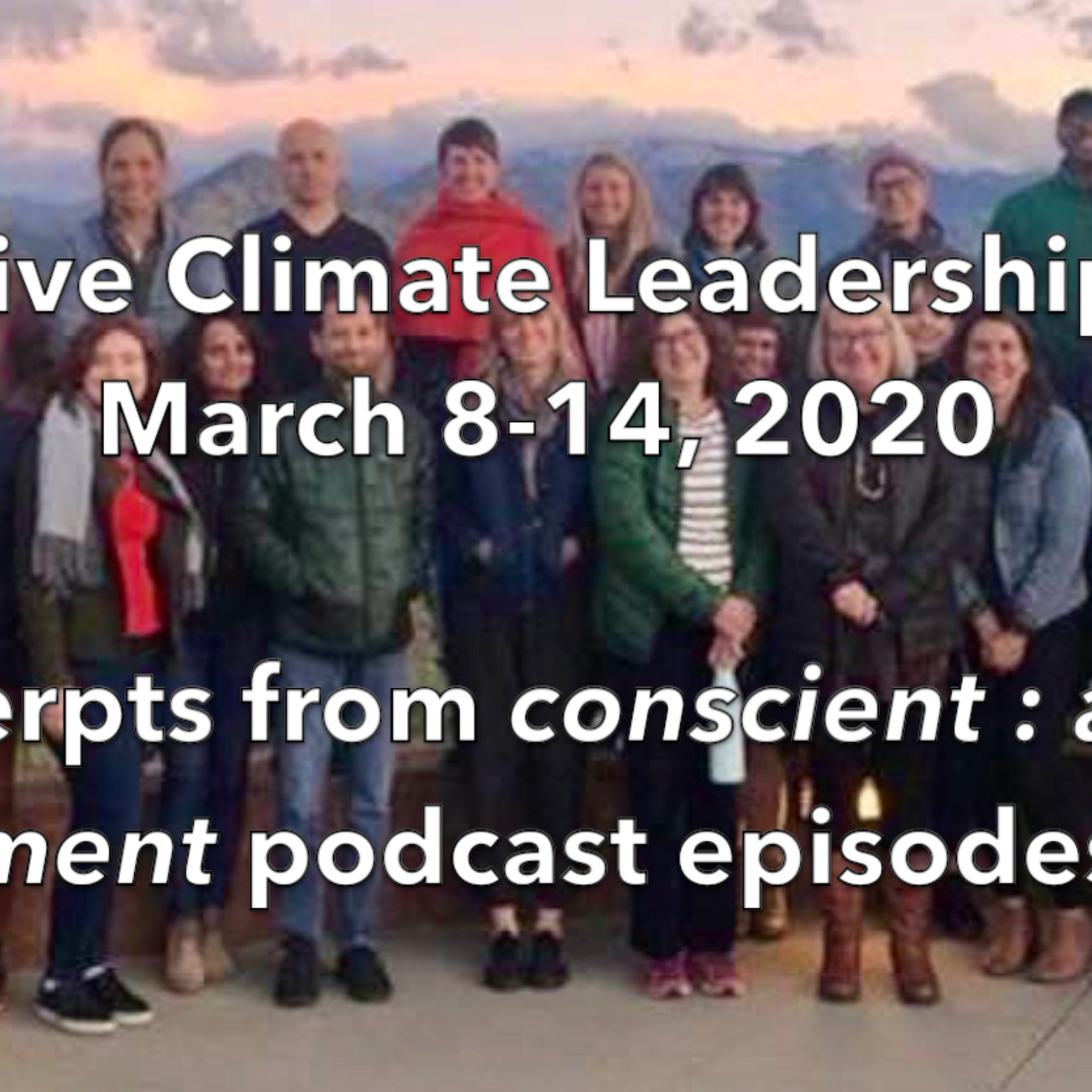
S1 Ep 17e18 ccl usa – a compilation of 10 episodes
I think the arts and culture more widely has a huge role to play in shaping our belief systems and values that determine the way that we relate to the environment.Sholeh Johnston, e08, conscient podcastCreative Climate Leadership USA (ccl usa) was developed by Julie’s Bicycle, an international leader in arts, culture and climate change based in London (led by Alison Tickell) and brought together 25 arts and culture leaders from the US and Canada to Biosphere 2 in Oracle, Arizona from March 8-14, 2020 thanks to a collaboration of EcoArts Connections, the University of Arizona and the Colorado European Union Center of Excellence (CEUCE) based at the University of Colorado-Boulder.e18 excerpts from e08-17 brings together 10 excerpts from conscient podcast episodes 8 to 17 drawn from the Creative Climate Leadership USA series. To hear the complete interviews, go to :e08 johnstone09 mcmahone10 mwasee11 dunlape12 livermane13 freibande14 kirne15 chasanskye16 delaparrae17 piroAudio introduction for this series, Saturday, March 14th, 20 + complete excerptsNote: below is transcription of an audio introduction for this series of episodes that I recorded on Saturday, March 14th, 2020.I'm at the biosphere in Oracle, Arizona. I just ended my participation in the creative climate leadership course, and I recorded a number of episodes for the conscient podcast during this week. I decided to present them as a series because they are a set of conversations with participants and they all have interconnections in terms of discussions about leadership, climate change, cross sectoral collaboration between art and environment and other things: storytelling, circus arts, aesthetic, technical, methodological… There's lots of very interesting content that I was able to capture here and so I present them as a set of podcast episodes that have connections between them and that I encourage listeners to explore, because they all, in one way or another, touch upon the theme of leadership in and around the climate crisis. What happened this week was also very troubling for all of us because the COVID-19 virus started hitting very strong this week and many governments around the world started imposing restrictions and self-imposed isolation, for people like me, for instance, coming back from the US to Ottawa. What was really interesting was how this group of leaders discussed and developed language about the role of the arts in times of crisis. (note: see Crisis: Principles for Just and Creative Responses)I was part of that group and it was certainly a highlight for me, having had the privilege to be here and having spent time thinking through not only the role of art, in and around change, but specifically in situations of crisis, which, of course, the climate, is, in crisis. We had the opportunity to think as a group about what we want to move forward as a proposal in terms of the increased role of arts and culture in and around climate change. I hope you enjoy the series and explore the work of these artists and cultural workers.I thank them from the bottom of my heart for sharing the knowledge, their tools and resources so generously and I wish you the listener lots of good encounters about how the arts can better contribute to environmental awareness and action.Note: below is a transcription of excerpts of interviews recorded the week of March 8-14 2020 at the Creative Climate Leadership USA course. See https://www.conscient.ca/series/conscient-english/ to hear the individual podcast episodes from this course (e-08 to e17)Creative strategist, coach and facilitator Sholeh JohnstonI think the arts and culture more widely has a huge role to play in shaping our belief systems and values that determine the way that we relate to the environment.The leadership challenges is one both of being conscious that how we make and what we make in the cultural sector influences the consciousness of our society and therefore the cultural paradigm that people are living in and living out their lives through, so that means that the concepts that we present and work with, but also the ways that we behave, the ways that we make work with what materials, in what spaces, really tells the story of who we are. I really think cultural leadership connects in the climate crisis, connects everything from greening, the spaces that we work in, to become beacons of what's possible, the possible and emerging future and also using the creative skills that we have to really facilitate, empowerment and change.Artist and Professor in the School of Art and Associate Dean for Research in the College of Fine Arts at the University of Arizona in Tucson Ellen McMahonIn the broadest sense, it's like this critter, this virus, this nature, has moved in to this realm of culture and we're watching things drop away that we created : music events, art, everything... school, all the things that basically we use to define ourselves to ourselves as human, versus animal, this little viru

S1 Ep 17e17 piro – creative facilitators in the age of climate change
What does it mean to be creative facilitators in the age of climate change in the midst of a disaster? Some learnings: self-care is community care, good solutions scale up and the need to work with those who have been disproportionately targeted.Em Piro, Creative Climate Leadership USA, March, 2020(episode 10 of 10 in Creative Climate Leadership USA Series)Creative Climate Leadership USA was developed by Julie’s Bicycle, an international leader in arts, culture and climate change based in London (led by Alison Tickell) and brought together 25 arts and culture leaders from the US and Canada to Biosphere 2 in Oracle, Arizona from March 8-14, 2020 thanks to a collaboration of EcoArts Connections, the University of Arizona and the Colorado European Union Center of Excellence (CEUCE) based at the University of Colorado-Boulder. Em Piro has been called a change agent, disruptor, artist, counselor, sparkplug, + community architect.Her practice is in performance, urbanism, futurism, + environmental economics.She is currently rooted in Seattle + St Louis, with tendrils in Toronto, Denver, and on the road.She’s ‘arted’ + ideated across Turtle Island (US/Canada), South America, Europe/Scandanavia, UK + in the expansive virtual landscape.Her work’s been highlighted in NYTimes, CNN, Riverfront Times, a history textbook, + the Kickass Awards. *END NOTES FOR ALL EPISODESNote : I'm currently 'pressing pause' and am not producing new content until further notice. Hey conscient listeners, I’ve been producing the conscient podcast as a learning and unlearning journey since May 2020. It’s my way to give back.This Indigenous Land Acknowledgement statement was developed by members of the Algonquin community for my former employer the Canada Council for the Arts. I have adapted slightly to make it my own.I acknowledge that my studio, located in Ottawa, is on the unceded, unsurrendered Territory of the Anishinaabe Algonquin Nation whose presence here reaches back to time immemorial.I recognize the Algonquins as the customary keepers and defenders of the Ottawa River Watershed and its tributaries. I honour their long history of welcoming many Nations to this beautiful territory and uphold and uplift the voice and values of our Host Nation.Further, I offer my respect and affirm the inherent and Treaty Rights of all Indigenous Peoples across this land and honour commitments to self-determination and sovereignty that have been made to Indigenous Nations and Peoples.I acknowledge the historical oppression of lands, cultures and the original Peoples in what we now know as Canada and fervently believe the Arts contribute to the healing and decolonizing journey we all share togetherIn parallel with the production of the conscient podcast and its francophone counterpart, balado conscient, I I publish a free ‘a calm presence' monthly Substack see https://acalmpresence.substack.com. Your feedback is always welcome at claude [at] conscient [dot] ca and/or on social media: Facebook, Instagram, Linkedin, Threads, BlueSky, Mastodon, Tik Tok, YouTube and Substack.Share what you like, etcI am grateful and accountable to the earth and the human labour that provided me with the privilege of producing this podcast, including the toxic materials and extractive processes behind the computers, recorders, transportation systems and infrastructure that made this production possible. Thanks for listening. Claude SchryerLatest update on March 21, 2026

S1 Ep 16e16 delaparra – start somewhere and be curious
It’s about asking where do I start? Maybe you don't know exactly where you want to end up yet, but if you start somewhere and are curious, try things and get feedback, and you keep iterating, ultimately, meaningful things will emerge.Lauren de la Parra, Creative Climate Leadership USA, March, 2020(episode 9 of 10 in Creative Climate Leadership USA Series)Creative Climate Leadership USA was developed by Julie’s Bicycle, an international leader in arts, culture and climate change based in London (led by Alison Tickell) and brought together 25 arts and culture leaders from the US and Canada to Biosphere 2 in Oracle, Arizona from March 8-14, 2020 thanks to a collaboration of EcoArts Connections, the University of Arizona and the Colorado European Union Center of Excellence (CEUCE) based at the University of Colorado-Boulder.Lauren de la Parra is a creative climate action planning consultant working with non-profits, educational institutions, municipalities and individual artists to drive cultural engagement and action on climate change.With a background in literary publishing focused on sustainability, combined with extensive experience in municipal climate change planning, she founded a consulting practice in 2019 to leverage the power of the arts and culture to imagine possibility, visualize hope, and inspire resistance. *END NOTES FOR ALL EPISODESNote : I'm currently 'pressing pause' and am not producing new content until further notice. Hey conscient listeners, I’ve been producing the conscient podcast as a learning and unlearning journey since May 2020. It’s my way to give back.This Indigenous Land Acknowledgement statement was developed by members of the Algonquin community for my former employer the Canada Council for the Arts. I have adapted slightly to make it my own.I acknowledge that my studio, located in Ottawa, is on the unceded, unsurrendered Territory of the Anishinaabe Algonquin Nation whose presence here reaches back to time immemorial.I recognize the Algonquins as the customary keepers and defenders of the Ottawa River Watershed and its tributaries. I honour their long history of welcoming many Nations to this beautiful territory and uphold and uplift the voice and values of our Host Nation.Further, I offer my respect and affirm the inherent and Treaty Rights of all Indigenous Peoples across this land and honour commitments to self-determination and sovereignty that have been made to Indigenous Nations and Peoples.I acknowledge the historical oppression of lands, cultures and the original Peoples in what we now know as Canada and fervently believe the Arts contribute to the healing and decolonizing journey we all share togetherIn parallel with the production of the conscient podcast and its francophone counterpart, balado conscient, I I publish a free ‘a calm presence' monthly Substack see https://acalmpresence.substack.com. Your feedback is always welcome at claude [at] conscient [dot] ca and/or on social media: Facebook, Instagram, Linkedin, Threads, BlueSky, Mastodon, Tik Tok, YouTube and Substack.Share what you like, etcI am grateful and accountable to the earth and the human labour that provided me with the privilege of producing this podcast, including the toxic materials and extractive processes behind the computers, recorders, transportation systems and infrastructure that made this production possible. Thanks for listening. Claude SchryerLatest update on March 21, 2026

S1 Ep 15e15 chasansky – make climate a part of strategic planning
The way to make artists and arts organizations thrive is to make sure that climate change is a part of their thoughts, business plans and strategic plans because the timeline is short and severe climate change effects are within a strategic planning time horizon. Matthew Chasansky, Creative Climate Leadership USA, March, 2020(episode 8 of 10 in Creative Climate Leadership USA Series)Creative Climate Leadership USA was developed by Julie’s Bicycle, an international leader in arts, culture and climate change based in London (led by Alison Tickell) and brought together 25 arts and culture leaders from the US and Canada to Biosphere 2 in Oracle, Arizona from March 8-14, 2020 thanks to a collaboration of EcoArts Connections, the University of Arizona and the Colorado European Union Center of Excellence (CEUCE) based at the University of Colorado-Boulder.For 7 years Matthew Chasansky has been with the city of Boulder, Colorado.He has worked on important projects such as public art, research, a new arts district, and community funding.He is chair the regional meetings of local arts agency directors, consulted with a political campaign, served on boards, attended the Local Arts Agency Fellowship, and is regularly asked to speak at events.He has previously worked for cultural affairs in Denver and Aurora, Colorado.His early career was in museum education and curation. *END NOTES FOR ALL EPISODESNote : I'm currently 'pressing pause' and am not producing new content until further notice. Hey conscient listeners, I’ve been producing the conscient podcast as a learning and unlearning journey since May 2020. It’s my way to give back.This Indigenous Land Acknowledgement statement was developed by members of the Algonquin community for my former employer the Canada Council for the Arts. I have adapted slightly to make it my own.I acknowledge that my studio, located in Ottawa, is on the unceded, unsurrendered Territory of the Anishinaabe Algonquin Nation whose presence here reaches back to time immemorial.I recognize the Algonquins as the customary keepers and defenders of the Ottawa River Watershed and its tributaries. I honour their long history of welcoming many Nations to this beautiful territory and uphold and uplift the voice and values of our Host Nation.Further, I offer my respect and affirm the inherent and Treaty Rights of all Indigenous Peoples across this land and honour commitments to self-determination and sovereignty that have been made to Indigenous Nations and Peoples.I acknowledge the historical oppression of lands, cultures and the original Peoples in what we now know as Canada and fervently believe the Arts contribute to the healing and decolonizing journey we all share togetherIn parallel with the production of the conscient podcast and its francophone counterpart, balado conscient, I I publish a free ‘a calm presence' monthly Substack see https://acalmpresence.substack.com. Your feedback is always welcome at claude [at] conscient [dot] ca and/or on social media: Facebook, Instagram, Linkedin, Threads, BlueSky, Mastodon, Tik Tok, YouTube and Substack.Share what you like, etcI am grateful and accountable to the earth and the human labour that provided me with the privilege of producing this podcast, including the toxic materials and extractive processes behind the computers, recorders, transportation systems and infrastructure that made this production possible. Thanks for listening. Claude SchryerLatest update on March 21, 2026

S1 Ep 14e14 kirn – scientists, artists and sustainablists
Scientists tell us the what (observable evidence of what's happening or what's coming). Artists can provide the so what (why is it important? what does it mean? why should we care?). Sustainablists provide the now what (what do we do and how do we move forward?)Marda Kirn, Creative Climate Leadership USA, March, 2020(episode 7 of 10 in Creative Climate Leadership USA Series)Creative Climate Leadership USA was developed by Julie’s Bicycle, an international leader in arts, culture and climate change based in London (led by Alison Tickell) and brought together 25 arts and culture leaders from the US and Canada to Biosphere 2 in Oracle, Arizona from March 8-14, 2020 thanks to a collaboration of EcoArts Connections, the University of Arizona and the Colorado European Union Center of Excellence (CEUCE) based at the University of Colorado-Boulder.Marda Kirnis the founding director of EcoArts Connections (EAC), which works transdisciplinarily to inspire people of all ages to live more sustainably – environmentally, economically, socially/culturally, and personally.Previous to EAC, Kirn was the founding director of the Colorado Dance Festival, a month-long event considered one of the top three dance festivals in the US during her 14-year tenure bringing artists to Colorado from across the country and the world.Kirn has written for numerous publications and has been a speaker, panelist, and/or consultant for organizations in five continents. *END NOTES FOR ALL EPISODESNote : I'm currently 'pressing pause' and am not producing new content until further notice. Hey conscient listeners, I’ve been producing the conscient podcast as a learning and unlearning journey since May 2020. It’s my way to give back.This Indigenous Land Acknowledgement statement was developed by members of the Algonquin community for my former employer the Canada Council for the Arts. I have adapted slightly to make it my own.I acknowledge that my studio, located in Ottawa, is on the unceded, unsurrendered Territory of the Anishinaabe Algonquin Nation whose presence here reaches back to time immemorial.I recognize the Algonquins as the customary keepers and defenders of the Ottawa River Watershed and its tributaries. I honour their long history of welcoming many Nations to this beautiful territory and uphold and uplift the voice and values of our Host Nation.Further, I offer my respect and affirm the inherent and Treaty Rights of all Indigenous Peoples across this land and honour commitments to self-determination and sovereignty that have been made to Indigenous Nations and Peoples.I acknowledge the historical oppression of lands, cultures and the original Peoples in what we now know as Canada and fervently believe the Arts contribute to the healing and decolonizing journey we all share togetherIn parallel with the production of the conscient podcast and its francophone counterpart, balado conscient, I I publish a free ‘a calm presence' monthly Substack see https://acalmpresence.substack.com. Your feedback is always welcome at claude [at] conscient [dot] ca and/or on social media: Facebook, Instagram, Linkedin, Threads, BlueSky, Mastodon, Tik Tok, YouTube and Substack.Share what you like, etcI am grateful and accountable to the earth and the human labour that provided me with the privilege of producing this podcast, including the toxic materials and extractive processes behind the computers, recorders, transportation systems and infrastructure that made this production possible. Thanks for listening. Claude SchryerLatest update on March 21, 2026

S1 Ep 13e13 freiband – weaving art into action
There's a textile metaphor of culture where our actions just weave into the weft that's already there and change the pattern and shift and alter things… Andrew Freiband, Creative Climate Leadership USA, March, 2020(episode 6 of 10 in CCL USA Series)Creative Climate Leadership USA was developed by Julie’s Bicycle, an international leader in arts, culture and climate change based in London (led by Alison Tickell) and brought together 25 arts and culture leaders from the US and Canada to Biosphere 2 in Oracle, Arizona from March 8-14, 2020 thanks to a collaboration of EcoArts Connections, the University of Arizona and the Colorado European Union Center of Excellence (CEUCE) based at the University of Colorado-Boulder.Andrew Freiband is an artist, filmmaker, and teacher.He is the founder and director of the Artists’ Literacies Institute, an experiment in arts education that helps artists reframe their artistic practice as research, and then connects them to new possibilities for artists’ engagement in social, ecological, political, and economic systems. *END NOTES FOR ALL EPISODESNote : I'm currently 'pressing pause' and am not producing new content until further notice. Hey conscient listeners, I’ve been producing the conscient podcast as a learning and unlearning journey since May 2020. It’s my way to give back.This Indigenous Land Acknowledgement statement was developed by members of the Algonquin community for my former employer the Canada Council for the Arts. I have adapted slightly to make it my own.I acknowledge that my studio, located in Ottawa, is on the unceded, unsurrendered Territory of the Anishinaabe Algonquin Nation whose presence here reaches back to time immemorial.I recognize the Algonquins as the customary keepers and defenders of the Ottawa River Watershed and its tributaries. I honour their long history of welcoming many Nations to this beautiful territory and uphold and uplift the voice and values of our Host Nation.Further, I offer my respect and affirm the inherent and Treaty Rights of all Indigenous Peoples across this land and honour commitments to self-determination and sovereignty that have been made to Indigenous Nations and Peoples.I acknowledge the historical oppression of lands, cultures and the original Peoples in what we now know as Canada and fervently believe the Arts contribute to the healing and decolonizing journey we all share togetherIn parallel with the production of the conscient podcast and its francophone counterpart, balado conscient, I I publish a free ‘a calm presence' monthly Substack see https://acalmpresence.substack.com. Your feedback is always welcome at claude [at] conscient [dot] ca and/or on social media: Facebook, Instagram, Linkedin, Threads, BlueSky, Mastodon, Tik Tok, YouTube and Substack.Share what you like, etcI am grateful and accountable to the earth and the human labour that provided me with the privilege of producing this podcast, including the toxic materials and extractive processes behind the computers, recorders, transportation systems and infrastructure that made this production possible. Thanks for listening. Claude SchryerLatest update on March 21, 2026

S1 Ep 12e12 liverman – looking for some hope
I look for artists and the cultural sector to help us envisage a future that's positive. We've tended to spend our whole time talking to each other about how bad it is and I'm looking for some hope.Diana Liverman, Creative Climate Leadership USA, March, 2020(episode 5 of 10 in CCL USA Series)Creative Climate Leadership USA was developed by Julie’s Bicycle, an international leader in arts, culture and climate change based in London (led by Alison Tickell) and brought together 25 arts and culture leaders from the US and Canada to Biosphere 2 in Oracle, Arizona from March 8-14, 2020 thanks to a collaboration of EcoArts Connections, the University of Arizona and the Colorado European Union Center of Excellence (CEUCE) based at the University of Colorado-Boulder.Diana Liverman is Regents Professor and Director of the School of Geography and Development at the University of Arizona.Her work addresses the causes, consequences, and responses to climate change, especially climate vulnerability and climate justice, adaptation, governance, the role of the arts, and the links between environment, sustainable development, and food security.She was a lead author for the recent Intergovernmental Panel on Climate Change (IPCC) Special Report on 1.5° and is a member of the board of Julie’s Bicycle. *END NOTES FOR ALL EPISODESNote : I'm currently 'pressing pause' and am not producing new content until further notice. Hey conscient listeners, I’ve been producing the conscient podcast as a learning and unlearning journey since May 2020. It’s my way to give back.This Indigenous Land Acknowledgement statement was developed by members of the Algonquin community for my former employer the Canada Council for the Arts. I have adapted slightly to make it my own.I acknowledge that my studio, located in Ottawa, is on the unceded, unsurrendered Territory of the Anishinaabe Algonquin Nation whose presence here reaches back to time immemorial.I recognize the Algonquins as the customary keepers and defenders of the Ottawa River Watershed and its tributaries. I honour their long history of welcoming many Nations to this beautiful territory and uphold and uplift the voice and values of our Host Nation.Further, I offer my respect and affirm the inherent and Treaty Rights of all Indigenous Peoples across this land and honour commitments to self-determination and sovereignty that have been made to Indigenous Nations and Peoples.I acknowledge the historical oppression of lands, cultures and the original Peoples in what we now know as Canada and fervently believe the Arts contribute to the healing and decolonizing journey we all share togetherIn parallel with the production of the conscient podcast and its francophone counterpart, balado conscient, I I publish a free ‘a calm presence' monthly Substack see https://acalmpresence.substack.com. Your feedback is always welcome at claude [at] conscient [dot] ca and/or on social media: Facebook, Instagram, Linkedin, Threads, BlueSky, Mastodon, Tik Tok, YouTube and Substack.Share what you like, etcI am grateful and accountable to the earth and the human labour that provided me with the privilege of producing this podcast, including the toxic materials and extractive processes behind the computers, recorders, transportation systems and infrastructure that made this production possible. Thanks for listening. Claude SchryerLatest update on March 21, 2026

S1 Ep 11e11 dunlap – perpetuating the values that you want to see
Ask yourself: what are you? What do you, as an artist, want to perpetuate in the world? Is what you're doing perpetuating the values and the culture that you want to see? Eliana Dunlap, Creative Climate Leadership USA, March, 2020(episode 4 of 10 in Creative Climate Leadership USA Series)Creative Climate Leadership USA was developed by Julie’s Bicycle, an international leader in arts, culture and climate change based in London (led by Alison Tickell) and brought together 25 arts and culture leaders from the US and Canada to Biosphere 2 in Oracle, Arizona from March 8-14, 2020 thanks to a collaboration of EcoArts Connections, the University of Arizona and the Colorado European Union Center of Excellence (CEUCE) based at the University of Colorado-Boulder.Eliana Dunlap has been an artist all her life.She studied at the New England Center for Circus Arts and l’École de Cirque de Québec.She's worked professionally as a circus artist since 2016.She is currently working towards a BA in Anthropology and Environmental Sustainability, minoring in communications and creative writing, through Southern New Hampshire University.In her work she hopes to reimagine our cultural narratives about how we relate to our environment and find cultural solutions to the climate crisis. *END NOTES FOR ALL EPISODESNote : I'm currently 'pressing pause' and am not producing new content until further notice. Hey conscient listeners, I’ve been producing the conscient podcast as a learning and unlearning journey since May 2020. It’s my way to give back.This Indigenous Land Acknowledgement statement was developed by members of the Algonquin community for my former employer the Canada Council for the Arts. I have adapted slightly to make it my own.I acknowledge that my studio, located in Ottawa, is on the unceded, unsurrendered Territory of the Anishinaabe Algonquin Nation whose presence here reaches back to time immemorial.I recognize the Algonquins as the customary keepers and defenders of the Ottawa River Watershed and its tributaries. I honour their long history of welcoming many Nations to this beautiful territory and uphold and uplift the voice and values of our Host Nation.Further, I offer my respect and affirm the inherent and Treaty Rights of all Indigenous Peoples across this land and honour commitments to self-determination and sovereignty that have been made to Indigenous Nations and Peoples.I acknowledge the historical oppression of lands, cultures and the original Peoples in what we now know as Canada and fervently believe the Arts contribute to the healing and decolonizing journey we all share togetherIn parallel with the production of the conscient podcast and its francophone counterpart, balado conscient, I I publish a free ‘a calm presence' monthly Substack see https://acalmpresence.substack.com. Your feedback is always welcome at claude [at] conscient [dot] ca and/or on social media: Facebook, Instagram, Linkedin, Threads, BlueSky, Mastodon, Tik Tok, YouTube and Substack.Share what you like, etcI am grateful and accountable to the earth and the human labour that provided me with the privilege of producing this podcast, including the toxic materials and extractive processes behind the computers, recorders, transportation systems and infrastructure that made this production possible. Thanks for listening. Claude SchryerLatest update on March 21, 2026

S1 Ep 10e10 mwase – expanding consciousness
Art is a practice of expanding consciousness, which gives us a tremendous opportunity to explore and to embody possibility and to engage with the earth as it continues to change and with each other.Rebecca Mwase, excerpt from an interview at Creative Climate Leadership USA, March, 2020(episode 3 of 10 in Creative Climate Leadership USA Series)Creative Climate Leadership USA was developed by Julie’s Bicycle, an international leader in arts, culture and climate change based in London (led by Alison Tickell) and brought together 25 arts and culture leaders from the US and Canada to Biosphere 2 in Oracle, Arizona from March 8-14, 2020 thanks to a collaboration of EcoArts Connections, the University of Arizona and the Colorado European Union Center of Excellence (CEUCE) based at the University of Colorado-Boulder.Rebecca Mwase (they/she) is a Zimbabwean-American theater and performance artist, consultant, and cultural organizer working at the intersection of art and social justice.They craft performance, processes, workshops and curriculum that investigate the possibilities for embodied revolution.Her work creates spaces to reckon with and release the impacts of oppression while deepening a sense of connection and belonging. Photo of Rebecca Mwase by Melisa Cardona. *END NOTES FOR ALL EPISODESNote : I'm currently 'pressing pause' and am not producing new content until further notice. Hey conscient listeners, I’ve been producing the conscient podcast as a learning and unlearning journey since May 2020. It’s my way to give back.This Indigenous Land Acknowledgement statement was developed by members of the Algonquin community for my former employer the Canada Council for the Arts. I have adapted slightly to make it my own.I acknowledge that my studio, located in Ottawa, is on the unceded, unsurrendered Territory of the Anishinaabe Algonquin Nation whose presence here reaches back to time immemorial.I recognize the Algonquins as the customary keepers and defenders of the Ottawa River Watershed and its tributaries. I honour their long history of welcoming many Nations to this beautiful territory and uphold and uplift the voice and values of our Host Nation.Further, I offer my respect and affirm the inherent and Treaty Rights of all Indigenous Peoples across this land and honour commitments to self-determination and sovereignty that have been made to Indigenous Nations and Peoples.I acknowledge the historical oppression of lands, cultures and the original Peoples in what we now know as Canada and fervently believe the Arts contribute to the healing and decolonizing journey we all share togetherIn parallel with the production of the conscient podcast and its francophone counterpart, balado conscient, I I publish a free ‘a calm presence' monthly Substack see https://acalmpresence.substack.com. Your feedback is always welcome at claude [at] conscient [dot] ca and/or on social media: Facebook, Instagram, Linkedin, Threads, BlueSky, Mastodon, Tik Tok, YouTube and Substack.Share what you like, etcI am grateful and accountable to the earth and the human labour that provided me with the privilege of producing this podcast, including the toxic materials and extractive processes behind the computers, recorders, transportation systems and infrastructure that made this production possible. Thanks for listening. Claude SchryerLatest update on March 21, 2026

S1 Ep 9e09 mcmahon – watching things drop away
It’s like this critter, this virus, this nature, has moved in to this realm of culture and we're watching things drop away that we created and use to define ourselves as human, versus animal: this little virus is just going Bing, Bing, Bing, Bing these aren't real.Ellen McMahon, CCL USA, March, 2020(episode 2 of 10 in Creative Climate Leadership USA Series)Creative Climate Leadership USA was developed by Julie’s Bicycle, an international leader in arts, culture and climate change based in London (led by Alison Tickell) and brought together 25 arts and culture leaders from the US and Canada to Biosphere 2 in Oracle, Arizona from March 8-14, 2020 thanks to a collaboration of EcoArts Connections, the University of Arizona and the Colorado European Union Center of Excellence (CEUCE) based at the University of Colorado-Boulder.Ellen McMahon is a Professor in the School of Art and Associate Dean for Research in the College of Fine Arts at the University of Arizona in Tucson.Throughout her career she has utilized a range of media to investigate the relationship between visual art, daily life, and social and environmental issues.Fueled by her conviction that art and design are foundational in effecting positive change, a majority of her projects are interdisciplinary, collaborative, and socially engaged. *END NOTES FOR ALL EPISODESNote : I'm currently 'pressing pause' and am not producing new content until further notice. Hey conscient listeners, I’ve been producing the conscient podcast as a learning and unlearning journey since May 2020. It’s my way to give back.This Indigenous Land Acknowledgement statement was developed by members of the Algonquin community for my former employer the Canada Council for the Arts. I have adapted slightly to make it my own.I acknowledge that my studio, located in Ottawa, is on the unceded, unsurrendered Territory of the Anishinaabe Algonquin Nation whose presence here reaches back to time immemorial.I recognize the Algonquins as the customary keepers and defenders of the Ottawa River Watershed and its tributaries. I honour their long history of welcoming many Nations to this beautiful territory and uphold and uplift the voice and values of our Host Nation.Further, I offer my respect and affirm the inherent and Treaty Rights of all Indigenous Peoples across this land and honour commitments to self-determination and sovereignty that have been made to Indigenous Nations and Peoples.I acknowledge the historical oppression of lands, cultures and the original Peoples in what we now know as Canada and fervently believe the Arts contribute to the healing and decolonizing journey we all share togetherIn parallel with the production of the conscient podcast and its francophone counterpart, balado conscient, I I publish a free ‘a calm presence' monthly Substack see https://acalmpresence.substack.com. Your feedback is always welcome at claude [at] conscient [dot] ca and/or on social media: Facebook, Instagram, Linkedin, Threads, BlueSky, Mastodon, Tik Tok, YouTube and Substack.Share what you like, etcI am grateful and accountable to the earth and the human labour that provided me with the privilege of producing this podcast, including the toxic materials and extractive processes behind the computers, recorders, transportation systems and infrastructure that made this production possible. Thanks for listening. Claude SchryerLatest update on March 21, 2026

S1 Ep 8e08 johnston – the arts shape our belief systems
I think the arts, and culture more widely, has a huge role to play in shaping our belief systems and values that determine the way that we relate to the environment.Sholeh Johnston, CCL USA, March, 2020(episode 1 of 10 in Creative Climate Leadership USA Series)Creative Climate Leadership USA was developed by Julie’s Bicycle, an international leader in arts, culture and climate change based in London (led by Alison Tickell) and brought together 25 arts and culture leaders from the US and Canada to Biosphere 2 in Oracle, Arizona from March 8-14, 2020 thanks to a collaboration of EcoArts Connections, the University of Arizona and the Colorado European Union Center of Excellence (CEUCE) based at the University of Colorado-BoulderSholeh Johnston is an Associate of Julie’s Bicycle, where she was previously Head of Creative Programmes.She has worked with hundreds of organizations across the creative and cultural community to encourage climate action, develop sustainable ways of working and engage with environmental issues creatively in the UK and internationally.With Julie’s Bicycle she has designed and delivered training and events, collaborative projects, research, resources and mentoring for cultural managers and artists across a variety of topics and art forms.Sholeh has co-designed and facilitated Creative Climate Leadership since its inception in 2017. Sholeh is a coach and a Fellow of the Clore Leadership Programme.Previously she worked with Visiting Arts providing professional development training and collaborative labs to foster intercultural dialogue and understanding between artists in the Middle East and the UK. *END NOTES FOR ALL EPISODESNote : I'm currently 'pressing pause' and am not producing new content until further notice. Hey conscient listeners, I’ve been producing the conscient podcast as a learning and unlearning journey since May 2020. It’s my way to give back.This Indigenous Land Acknowledgement statement was developed by members of the Algonquin community for my former employer the Canada Council for the Arts. I have adapted slightly to make it my own.I acknowledge that my studio, located in Ottawa, is on the unceded, unsurrendered Territory of the Anishinaabe Algonquin Nation whose presence here reaches back to time immemorial.I recognize the Algonquins as the customary keepers and defenders of the Ottawa River Watershed and its tributaries. I honour their long history of welcoming many Nations to this beautiful territory and uphold and uplift the voice and values of our Host Nation.Further, I offer my respect and affirm the inherent and Treaty Rights of all Indigenous Peoples across this land and honour commitments to self-determination and sovereignty that have been made to Indigenous Nations and Peoples.I acknowledge the historical oppression of lands, cultures and the original Peoples in what we now know as Canada and fervently believe the Arts contribute to the healing and decolonizing journey we all share togetherIn parallel with the production of the conscient podcast and its francophone counterpart, balado conscient, I I publish a free ‘a calm presence' monthly Substack see https://acalmpresence.substack.com. Your feedback is always welcome at claude [at] conscient [dot] ca and/or on social media: Facebook, Instagram, Linkedin, Threads, BlueSky, Mastodon, Tik Tok, YouTube and Substack.Share what you like, etcI am grateful and accountable to the earth and the human labour that provided me with the privilege of producing this podcast, including the toxic materials and extractive processes behind the computers, recorders, transportation systems and infrastructure that made this production possible. Thanks for listening. Claude SchryerLatest update on March 21, 2026

S1 Ep 6e06 lim – making necessary concessions
Are we willing to divest from our arts practices, or to change radically our performance practices, in order to make necessary changes and concessions?milton lim, conscient podcast, january 2020, ottawaMilton Lim is a media artist and performance creator based in Vancouver.Lim holds a BFA (Hons.) in theatre performance and psychology from Simon Fraser University.His current work utilizes publicly available data and game structures to articulate new expressions of value and labour within our systems of power and politics.He is a Co-Artistic Director of Hong Kong Exile, an Artistic Associate with Theatre Conspiracy, a key archivist with videocan, a Digital Interaction Designer with The Cultch, and one of the co-creators behind culturecapital: the performing arts economy trading card game.This conversation took place in January of 2020. *END NOTES FOR ALL EPISODESNote : I'm currently 'pressing pause' and am not producing new content until further notice. Hey conscient listeners, I’ve been producing the conscient podcast as a learning and unlearning journey since May 2020. It’s my way to give back.This Indigenous Land Acknowledgement statement was developed by members of the Algonquin community for my former employer the Canada Council for the Arts. I have adapted slightly to make it my own.I acknowledge that my studio, located in Ottawa, is on the unceded, unsurrendered Territory of the Anishinaabe Algonquin Nation whose presence here reaches back to time immemorial.I recognize the Algonquins as the customary keepers and defenders of the Ottawa River Watershed and its tributaries. I honour their long history of welcoming many Nations to this beautiful territory and uphold and uplift the voice and values of our Host Nation.Further, I offer my respect and affirm the inherent and Treaty Rights of all Indigenous Peoples across this land and honour commitments to self-determination and sovereignty that have been made to Indigenous Nations and Peoples.I acknowledge the historical oppression of lands, cultures and the original Peoples in what we now know as Canada and fervently believe the Arts contribute to the healing and decolonizing journey we all share togetherIn parallel with the production of the conscient podcast and its francophone counterpart, balado conscient, I I publish a free ‘a calm presence' monthly Substack see https://acalmpresence.substack.com. Your feedback is always welcome at claude [at] conscient [dot] ca and/or on social media: Facebook, Instagram, Linkedin, Threads, BlueSky, Mastodon, Tik Tok, YouTube and Substack.Share what you like, etcI am grateful and accountable to the earth and the human labour that provided me with the privilege of producing this podcast, including the toxic materials and extractive processes behind the computers, recorders, transportation systems and infrastructure that made this production possible. Thanks for listening. Claude SchryerLatest update on March 21, 2026

S1 Ep 5e05 carruthers – art that informs, forms and transforms
I really believe that what we call arts in this culture now, its role is to inform, form and transform the nature of cultures in relation with the world. I think that's what we're talking about when we're talking about work that addresses the climate crisis.beth carruthers, conscient podcast, October 2019, ottawaBeth Carruthers is an artist and researcher whose work focuses on studying the impact of the arts across sectors to see how they can become more engaged with sustainable futures. Beth Carruthers’ work is immersed in questions of how cultural practices and sensuous, embodied human-environment and interspecies interactions might lead to more ethically sensitive and ecologically just human-world and interspecies relations.Beth is known for her work investigating the role and impact of the arts in transforming "cultures of unsustainability" to cultures of sustainability.Beth wishes to acknowledge her good colleague Sacha Kagan for the term, “culture(s) of unsustainability” and for his excellent discussion of François Julien’s “silent transformations” in the context of ecological art. I spoke with Beth in October 2019 in Ottawa. *END NOTES FOR ALL EPISODESNote : I'm currently 'pressing pause' and am not producing new content until further notice. Hey conscient listeners, I’ve been producing the conscient podcast as a learning and unlearning journey since May 2020. It’s my way to give back.This Indigenous Land Acknowledgement statement was developed by members of the Algonquin community for my former employer the Canada Council for the Arts. I have adapted slightly to make it my own.I acknowledge that my studio, located in Ottawa, is on the unceded, unsurrendered Territory of the Anishinaabe Algonquin Nation whose presence here reaches back to time immemorial.I recognize the Algonquins as the customary keepers and defenders of the Ottawa River Watershed and its tributaries. I honour their long history of welcoming many Nations to this beautiful territory and uphold and uplift the voice and values of our Host Nation.Further, I offer my respect and affirm the inherent and Treaty Rights of all Indigenous Peoples across this land and honour commitments to self-determination and sovereignty that have been made to Indigenous Nations and Peoples.I acknowledge the historical oppression of lands, cultures and the original Peoples in what we now know as Canada and fervently believe the Arts contribute to the healing and decolonizing journey we all share togetherIn parallel with the production of the conscient podcast and its francophone counterpart, balado conscient, I I publish a free ‘a calm presence' monthly Substack see https://acalmpresence.substack.com. Your feedback is always welcome at claude [at] conscient [dot] ca and/or on social media: Facebook, Instagram, Linkedin, Threads, BlueSky, Mastodon, Tik Tok, YouTube and Substack.Share what you like, etcI am grateful and accountable to the earth and the human labour that provided me with the privilege of producing this podcast, including the toxic materials and extractive processes behind the computers, recorders, transportation systems and infrastructure that made this production possible. Thanks for listening. Claude SchryerLatest update on March 21, 2026

S1 Ep 3e03 tickell – creative cultural allegiances
Art can speak to people in meaningful ways that really does call on us to respond to this differently. So wherever you are, anywhere in the world, you will almost certainly have some kind of creative cultural allegiance and how do we use that in a purposeful way is a critical question for us all…alison tickell, conscient podcast, october 2019, ottawaMeet UK musician and climate change activist and CEO of Julie’s Bicycle Alison Tickell.Alison is a colleague and friend who I first met at the National Arts Centre’s Summit on Theatre and Climate Change in April 2019. She is CEO of Julie’s Bicycle, a UK based charity that supports the creative community to act on climate change and environmental sustainability. Julie’s Bicycle believes that the creative community is uniquely placed to transform the conversation around climate change and translate it into action.I had the pleasure of going for a walking interview with Alison on parliament hill in Ottawa on October 26, 2019. I asked Alison how the arts contribute to environmental awareness, about the relationship between art and the public and the work of Julie’s Bicycle. We then got into a philosophical conversation about art, life, Buddhism and many other things as we descended the stairway from Parliament Hill to the shore of the Ottawa river... *END NOTES FOR ALL EPISODESNote : I'm currently 'pressing pause' and am not producing new content until further notice. Hey conscient listeners, I’ve been producing the conscient podcast as a learning and unlearning journey since May 2020. It’s my way to give back.This Indigenous Land Acknowledgement statement was developed by members of the Algonquin community for my former employer the Canada Council for the Arts. I have adapted slightly to make it my own.I acknowledge that my studio, located in Ottawa, is on the unceded, unsurrendered Territory of the Anishinaabe Algonquin Nation whose presence here reaches back to time immemorial.I recognize the Algonquins as the customary keepers and defenders of the Ottawa River Watershed and its tributaries. I honour their long history of welcoming many Nations to this beautiful territory and uphold and uplift the voice and values of our Host Nation.Further, I offer my respect and affirm the inherent and Treaty Rights of all Indigenous Peoples across this land and honour commitments to self-determination and sovereignty that have been made to Indigenous Nations and Peoples.I acknowledge the historical oppression of lands, cultures and the original Peoples in what we now know as Canada and fervently believe the Arts contribute to the healing and decolonizing journey we all share togetherIn parallel with the production of the conscient podcast and its francophone counterpart, balado conscient, I I publish a free ‘a calm presence' monthly Substack see https://acalmpresence.substack.com. Your feedback is always welcome at claude [at] conscient [dot] ca and/or on social media: Facebook, Instagram, Linkedin, Threads, BlueSky, Mastodon, Tik Tok, YouTube and Substack.Share what you like, etcI am grateful and accountable to the earth and the human labour that provided me with the privilege of producing this podcast, including the toxic materials and extractive processes behind the computers, recorders, transportation systems and infrastructure that made this production possible. Thanks for listening. Claude SchryerLatest update on March 21, 2026

S1 Ep 1e01 terrified – triggering my climate denial bubble to burst
What triggered my climate denial bubble to burst? I feel compelled to share this personal experience, in the hope that it might help others who are also struggling with the current sustainability crisis and searching for a path forward…In this first episode of the conscient podcast I narrate my 'terrified' essay, about his climate change anxiety and the role of arts and culture in raising environmental awareness.This episode is an audio version of my May 2019 blog, terrified (see original blog in the transcript of this episode).terrified is the touchstone of conscient, where I share my anxiety about the climate crisis and my belief that arts and culture can play a critical role in raising public awareness about environmental issues and to move from awareness to action. terrified centers around our 17-year-old daughter’s choice of university and her generation’s struggle with the consequences of the climate emergency. I quote 7 writers in this blog and I want to acknowledge them: Mayer Hillman, Paola Antonelli, Greta Thunberg, Emily Johnston, George Marshall, Joan Sullivan and Richard Wagamese. Future episodes of conscient will feature audio essays, such as this one, or interviews with arts, culture and environmental leaders from around the world. Une version française de cette émission est également disponible, voir l’épisode 2 du balado conscient.I would like to thank podcast consultant Ayesha Barmania, artist and climate change writer Joan Sullivan, my wife Sabrina Mathews, my daughter Clara and my son Riel for their support.Thanks also to Danielle Boutet, who did the French translation of terrified.Thank you for listening. Claude SchryerThanks to all the authors who have been quoted in this blog and to Sabrina Mathews and Joan Sullivan for their invaluable support in editing. *END NOTES FOR ALL EPISODESNote : I'm currently 'pressing pause' and am not producing new content until further notice. Hey conscient listeners, I’ve been producing the conscient podcast as a learning and unlearning journey since May 2020. It’s my way to give back.This Indigenous Land Acknowledgement statement was developed by members of the Algonquin community for my former employer the Canada Council for the Arts. I have adapted slightly to make it my own.I acknowledge that my studio, located in Ottawa, is on the unceded, unsurrendered Territory of the Anishinaabe Algonquin Nation whose presence here reaches back to time immemorial.I recognize the Algonquins as the customary keepers and defenders of the Ottawa River Watershed and its tributaries. I honour their long history of welcoming many Nations to this beautiful territory and uphold and uplift the voice and values of our Host Nation.Further, I offer my respect and affirm the inherent and Treaty Rights of all Indigenous Peoples across this land and honour commitments to self-determination and sovereignty that have been made to Indigenous Nations and Peoples.I acknowledge the historical oppression of lands, cultures and the original Peoples in what we now know as Canada and fervently believe the Arts contribute to the healing and decolonizing journey we all share togetherIn parallel with the production of the conscient podcast and its francophone counterpart, balado conscient, I I publish a free ‘a calm presence' monthly Substack see https://acalmpresence.substack.com. Your feedback is always welcome at claude [at] conscient [dot] ca and/or on social media: Facebook, Instagram, Linkedin, Threads, BlueSky, Mastodon, Tik Tok, YouTube and Substack.Share what you like, etcI am grateful and accountable to the earth and the human labour that provided me with the privilege of producing this podcast, including the toxic materials and extractive processes behind the computers, recorders, transportation systems and infrastructure that made this production possible. Thanks for listening. Claude SchryerLatest update on March 21, 2026