
Climate One
918 episodes — Page 4 of 19
Talk Isn’t Cheap: The Power of Conversation
As heat waves, storms, droughts and wildfires continue to worsen, talking can seem like a seriously insufficient climate solution. It’s fair to ask: Are we just engaged in blah, blah, blah? Too often, talking is one sided – more of a lecture aimed at conveying information or solely stating one's own point of view. And yet, when done right, real conversations and true listening can help us find common ground, which can then lead to collective action and change. So how do we make those conversations really count? In this week’s episode, we delve into some of our most insightful interviews, looking for the answer. Guests: Katharine Hayhoe, Chief Scientist, The Nature Conservancy Meera Subramanian, Journalist Faith Kearns, Scientist, California Institute for Water Resources; Author, “Getting to the Heart of Science Communications” Anand Giridharadas, Author, “The Persuaders” Chloe Maxmin, Co-Executive Director, Dirt Road Organizing John Cook, Senior Research Fellow, Melbourne Centre for Behaviour Change For show notes and related links, visit our website. 📞 Have you moved within the United States for climate-related reasons? Tell us about it! For the chance to have your climate migration story shared on Climate One, give us a call at 650 382-3869. Please keep your voicemail under two minutes and include your name and contact information so we know how to reach you if we decide to feature your story. Support Climate One by going ad-free! By joining Climate One on Patreon, you’ll receive exclusive access to all future episodes free of ads, opportunities to connect with fellow Climate One listeners, and even periodic engagements with Climate One staff. Join today for just $5/month. Learn more about your ad choices. Visit megaphone.fm/adchoices
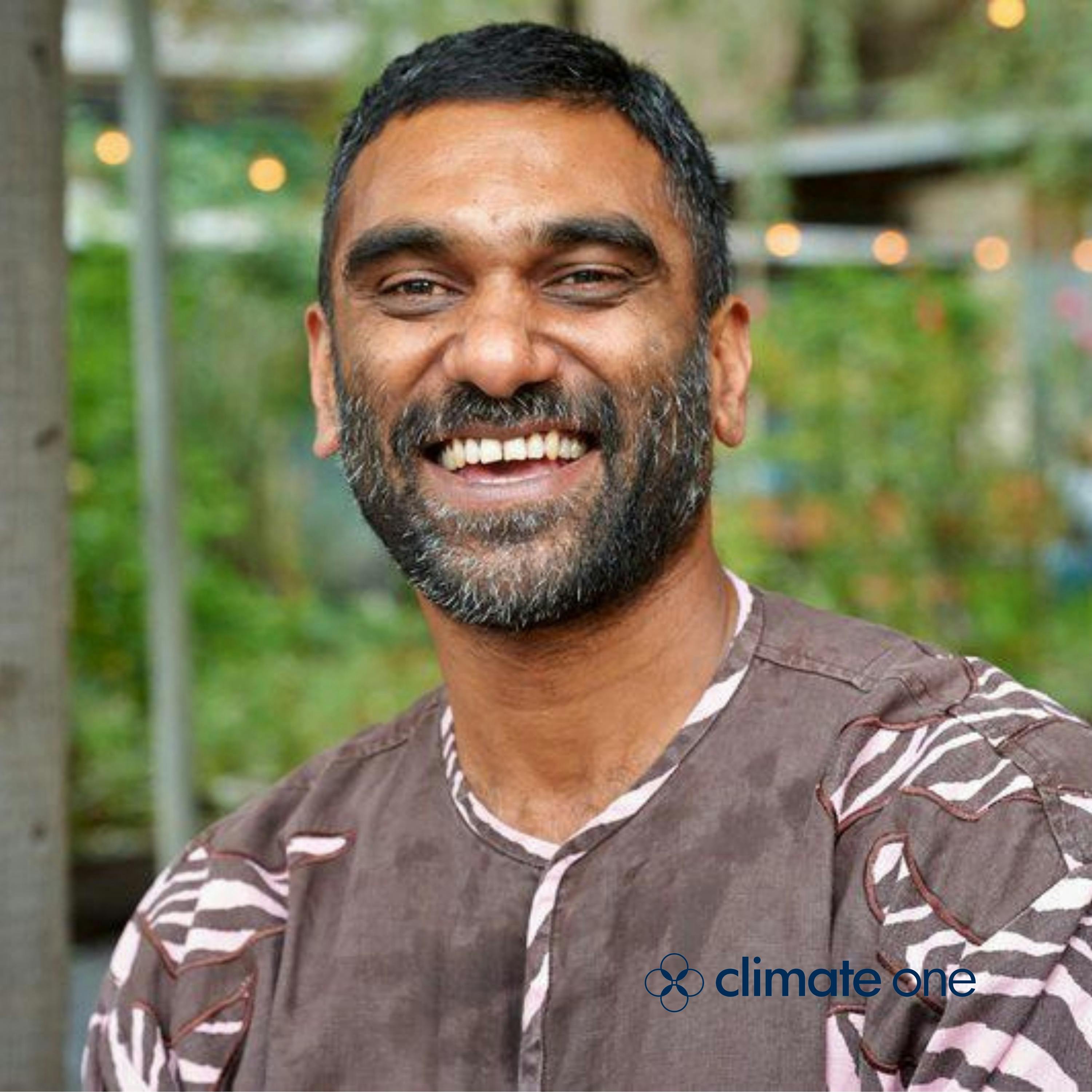
How Activism Can Win Bigger and Faster with Kumi Naidoo
Kumi Naidoo is a world renowned activist and climate leader. Before going on to lead Greenpeace International then Amnesty International, Naidoo was a 15 year old anti-apartheid activist in South Africa. The boycotts he organized led to him being a target of the Security Police. He fled South Africa and lived in exile in the UK. As a climate activist, Naidoo has been arrested for scaling oil rigs, has negotiated with heads of state, and rubbed shoulders with the most powerful people at the World Economic Forum in Davos. Now he’s a visiting scholar at Stanford’s Center on Democracy, Development and the Rule of Law, where he’s focusing on how activism can win bigger and faster. Guests: Kumi Naidoo, Human Rights and Environmental Justice Activist Alex Ajose Nixon, Spoken Word Poet Mystic, Hip Hop Artist and Educator Dana R. Fisher, Professor of Sociology, University of Maryland Tamara Toles O’Laughlin, President and CEO, Environmental Grantmakers Association 📞 Have you moved within the United States for climate-related reasons? Tell us about it! For the chance to have your climate migration story shared on Climate One, give us a call at 650 382-3869. Please keep your voicemail under two minutes and include your name and contact information so we know how to reach you if we decide to feature your story. Support Climate One by going ad-free! By joining Climate One on Patreon, you’ll receive exclusive access to all future episodes free of ads, opportunities to connect with fellow Climate One listeners, and even periodic engagements with Climate One staff. Join today for just $5/month. For show notes and related links, visit our website. Learn more about your ad choices. Visit megaphone.fm/adchoices
What More Can I Do?
If you’re a climate-conscious person, you likely already know some of the main ways you can reduce your contribution to greenhouse gasses: buy less, eat less meat, ride your bike. But there are other, less obvious methods we don’t always think of: voting, having climate conversations, engaging with your local government, changing where your money is invested. And while our role as individuals does matter, we’re more powerful when we work together in collective action. Guests: Jon Foley, Executive Director, Project Drawdown Eliza Nemser, Executive Director, Climate Changemakers This episode also features excerpts from Cory Booker, Anna Lappé, Frances Moore Lappé, Saul Griffith, Monique Figueiredo, Jonathan Chapman, Jennifer Anderson, Tanya Gulliver Garcia, Vernon Walker, Abrar Anwar, Slater Jewell-Kemker, Kyle Gracey and Alec Loorz. For show notes and related links, visit our website. Learn more about your ad choices. Visit megaphone.fm/adchoices
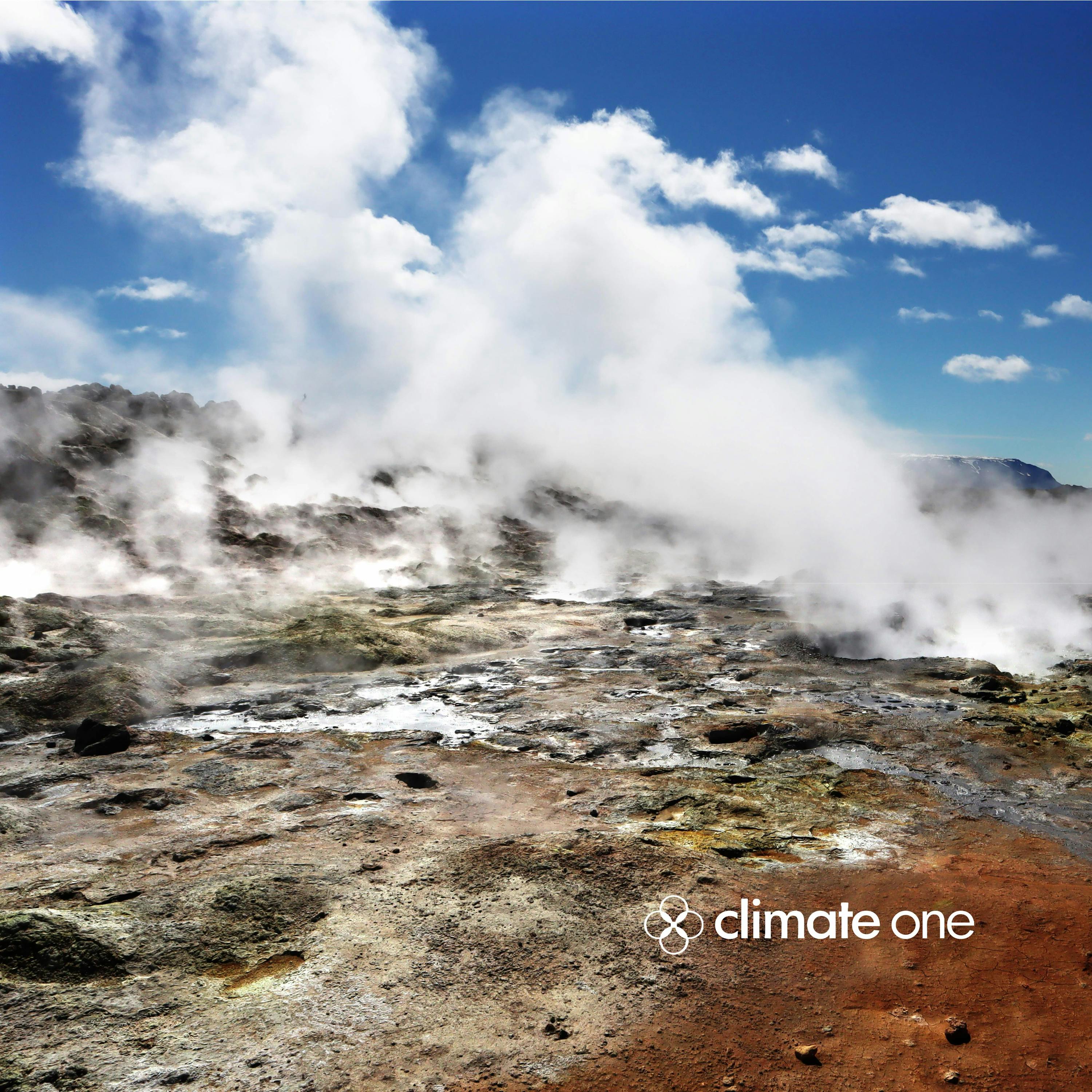
Geothermal: So Hot Right Now
When most people hear the phrase renewable energy, they imagine fields full of solar panels or giant spinning wind turbines. But another source may be heating up: geothermal. Twenty years ago it was thought that geothermal could provide at most 10% of any given area’s electricity, and only in very limited regions. There were also environmental concerns about depleting groundwater. But new technological advances may have unlocked the potential for scalable geothermal energy just about anywhere. And in a bit of irony, those technological advances came from the oil and gas industry. Guests: Amanda Kolker, Laboratory Program Manager for Geoscience and Geothermal Technologies, NREL Jamie Beard, founder of Project InnerSpace Lauren McLean, Mayor of Boise Contributing Producer: David Condos For show notes and related links, visit our website. Learn more about your ad choices. Visit megaphone.fm/adchoices
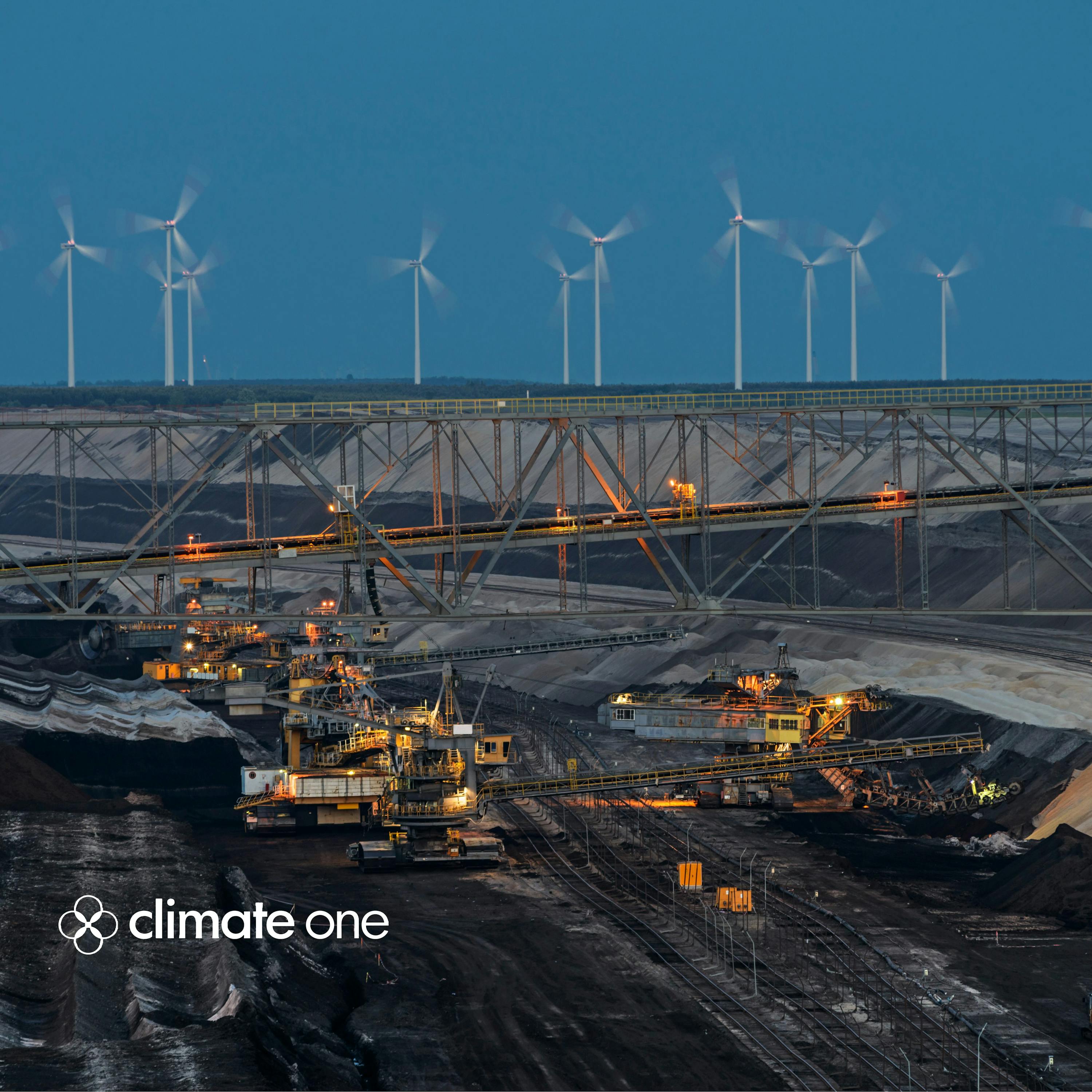
Let’s Talk Dirty to Clean Energy
As fossil fuels are phased out, shuttered coal plants, contaminated landfills, and abandoned mine lands across the U.S. are finding new life as renewable energy projects. More than 23 states have 100% clean energy goals, and in order to reach those goals, some states are starting to convert what was once considered “dirty” into “clean” energy generation. But what happens to the infrastructure, workers, and community after a coal plant shuts down? And as billions are dispersed through policies like the Inflation Reduction Act, what is being done to ensure that the same communities who have been historically left behind are included in the energy transition? Guests: Mary Anne Hitt, Senior Director, Climate Imperative Thomas Ramey, Commercial Home Evaluator, Solar Holler Nick Mullins, Energy Systems Technology Instructor, Tri-County Technical Center and Former Coal Miner Delmar Gillus, COO, Elevate This episode also features a reported piece by Jordan Gass-Pooré from the "Hazard NJ" podcast, an investigative podcast and multimedia project from NJ Spotlight News. Support Climate One by going ad-free! By joining Climate One on Patreon, you’ll receive exclusive access to all future episodes free of ads, opportunities to connect with fellow Climate One listeners, and even periodic engagements with Climate One staff. Join today for just $5/month. For show notes and related links, visit our website. Learn more about your ad choices. Visit megaphone.fm/adchoices
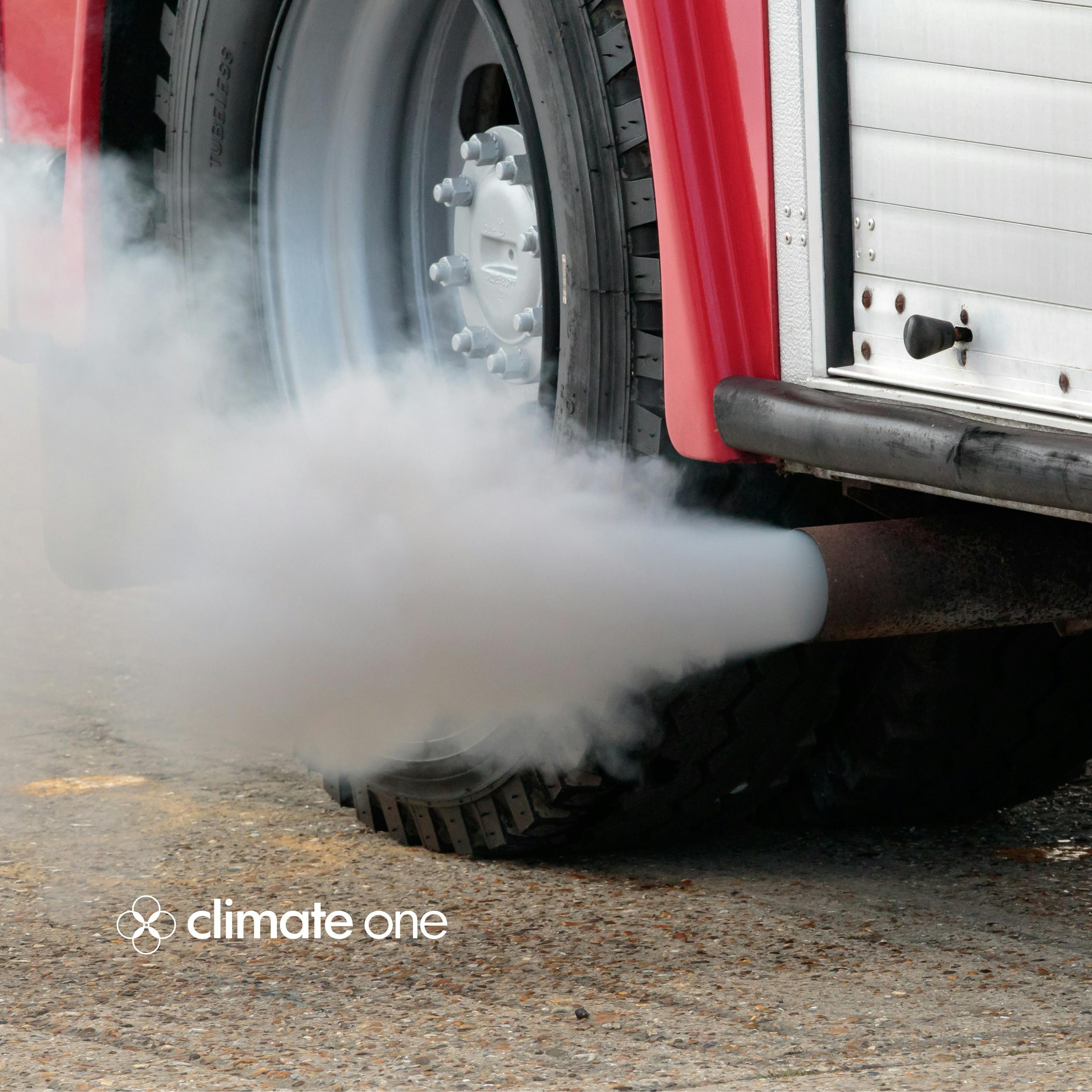
Busted: The Newest Emission Cheaters
A settlement for the largest civil penalty resulting from the Clean Air Act has just been reached. The EPA, DOJ and the State of California have agreed to a $1.7 billion fine for engine maker Cummins Inc. The fine is the result of Cummins being caught using “defeat devices” to fool emissions testers into thinking the engines pollute less than they really do. Does that sound familiar? It’s exactly what Volkswagen was caught doing nearly 10 years ago. VW and Cummins aren’t the only ones; it’s an industry wide problem. So how do we stop the deception? What have we learned since the infamous VW “Dieselgate” scandal? Guests: Rachel Muncrief, Acting Executive Director, ICCT Hector De La Torre, Member, California Air Resources Board Margo Oge, Former Director, Office of Transportation and Air Quality, U.S. EPA Alberto Ayala, Executive Director, Sacramento Metropolitan Air Quality Management District Support Climate One by going ad-free! By joining Climate One on Patreon, you’ll receive exclusive access to all future episodes free of ads, opportunities to connect with fellow Climate One listeners, and even periodic engagements with Climate One staff. Join today for just $5/month. For show notes and related links, visit our website. Learn more about your ad choices. Visit megaphone.fm/adchoices
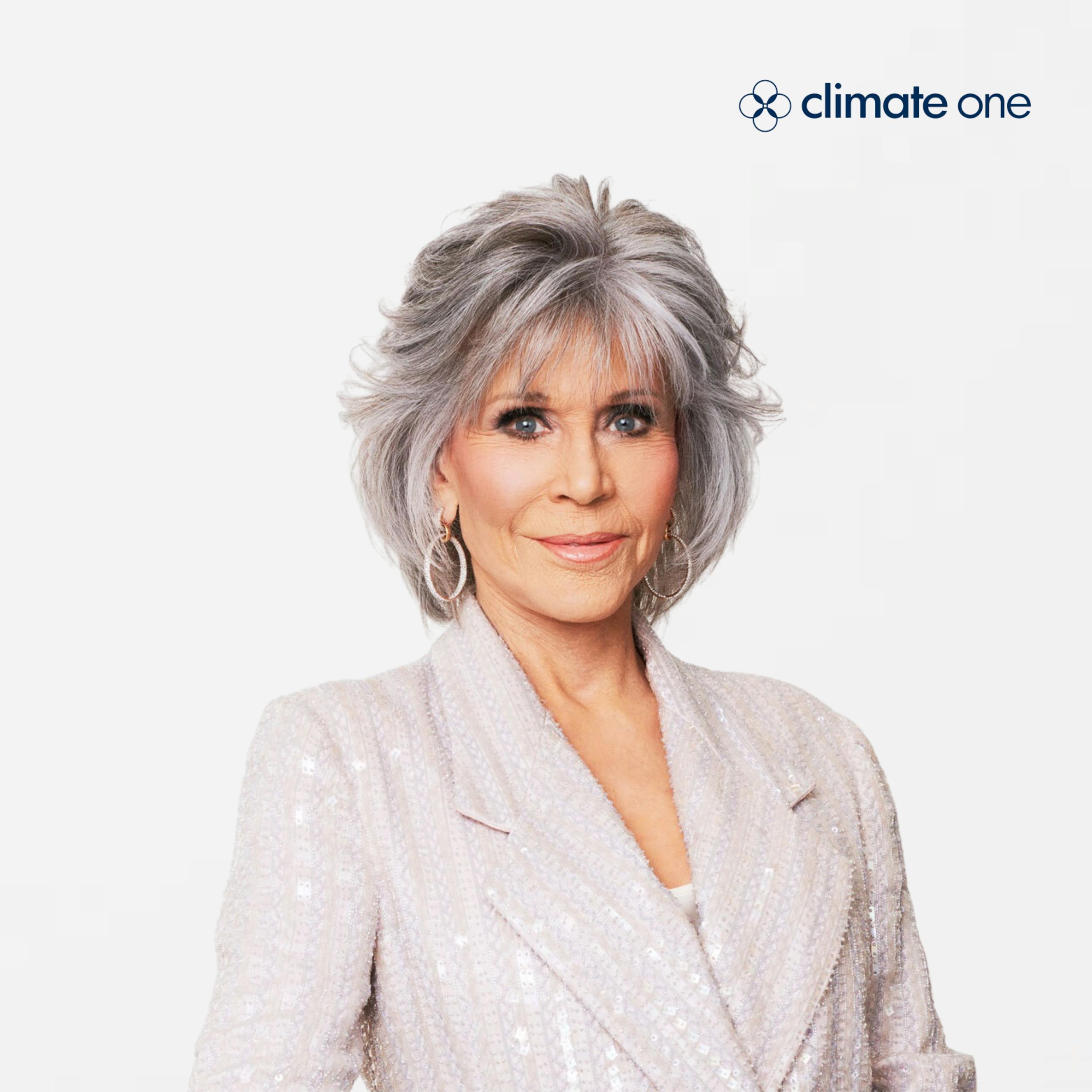
REWIND: Jane Fonda: A Lifetime of Activism
Jane Fonda has spent the last several decades fighting for Indigenous peoples' rights, economic justice, LGBTQ rights, peace, gender equality and more. Now, she is devoting herself to the climate emergency, beginning with Fire Drill Fridays, the national movement to protest government inaction on climate change she started in October 2019. Through the Jane Fonda Climate PAC, she is focused on defeating political allies of the fossil fuel industry. At 85, Fonda continues to fight for the most vulnerable among us, consistently pointing out the intersection between the myriad of causes. What keeps the iconic Jane Fonda going strong? Revisit our discussion with this activist icon today. Guest: Jane Fonda, actor, activist Support Climate One by going ad-free! Subscribe to our Patreon for just $5/month to get all future episodes free of ads, as well as opportunities to engage with Climate One staff and fellow listeners for episode discussions and live event streams. For show notes and related links, visit our website. Learn more about your ad choices. Visit megaphone.fm/adchoices

Indigenous Perspectives: What Makes a Just Transition?
We often talk about a “just transition” from dirty to clean energy as if the term means the same thing to everyone. Indigenous people have seen their resources extracted and exploited to further the wealth of others for centuries. Now renewable energy is looking to expand to Indigenous land. How can renewable energy help Tribes leapfrog the twentieth century technologies that put them at the end of the line for corporate-controlled electricity? How can we, as Chéri Smith, Founder of the Alliance for Tribal Clean Energy, says, “make sure that Tribes are not only having a seat at the table, but they're building the table and inviting everyone else to it?” Guests: Chéri Smith, President & CEO, Founder at Alliance for Tribal Clean Energy Steven Wadsworth, Vice Chairman, Pyramid Lake Paiute Tribe Raylene Whitford, Founder, Canative Energy Maui Solomon, Executive Chairman, Moriaori Imi Settlement Trust For show notes and related links, visit our website. This episode was produced in collaboration with On Shifting Ground with Ray Suarez, featuring Suarez as a guest host. Additionally, Sarah Howard provides field reporting. Learn more about your ad choices. Visit megaphone.fm/adchoices
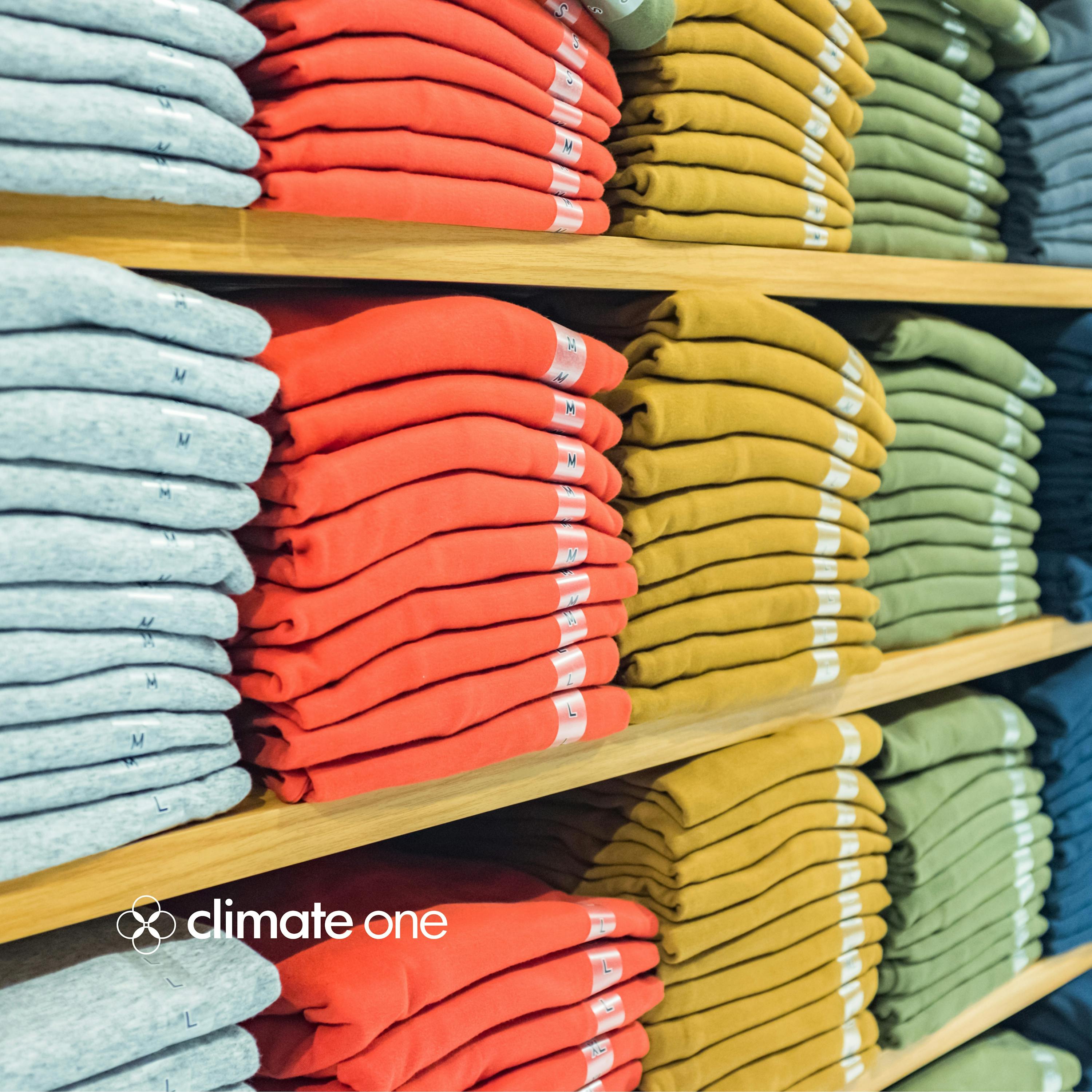
Wardrobe Malfunction: The Climate Impact of Clothing
What we wear defines us in so many ways. But in recent decades we’ve moved away from long-lasting, quality pieces in favor of disposable fast fashion, with major consequences for our climate and environment. From mechanized farming and pesticides to grow fiber crops, to energy for manufacturing and transportation, fossil fuels are embedded in the clothing industry at every step of the process. Companies large and small are working against this trend, with some setting lofty goals for reducing carbon emissions and water use. But achieving those goals is hard. So what are the solutions? Buy less? Design new fibers and materials? Thrifting and repurposing existing clothing? New business models? How can we make low-impact clothing? This episode was supported by BMO. Guests: Aja Barber, Author, “Consumed: The Need for Collective Change: Colonialism, Climate Change and Consumerism” Jason Kibbey, President and Founder, Worldly Molly Morse, CEO, Mango Materials Jonathan Chapman, Professor, Carnegie Mellon University School of Design For show notes and related links, visit our website. Learn more about your ad choices. Visit megaphone.fm/adchoices
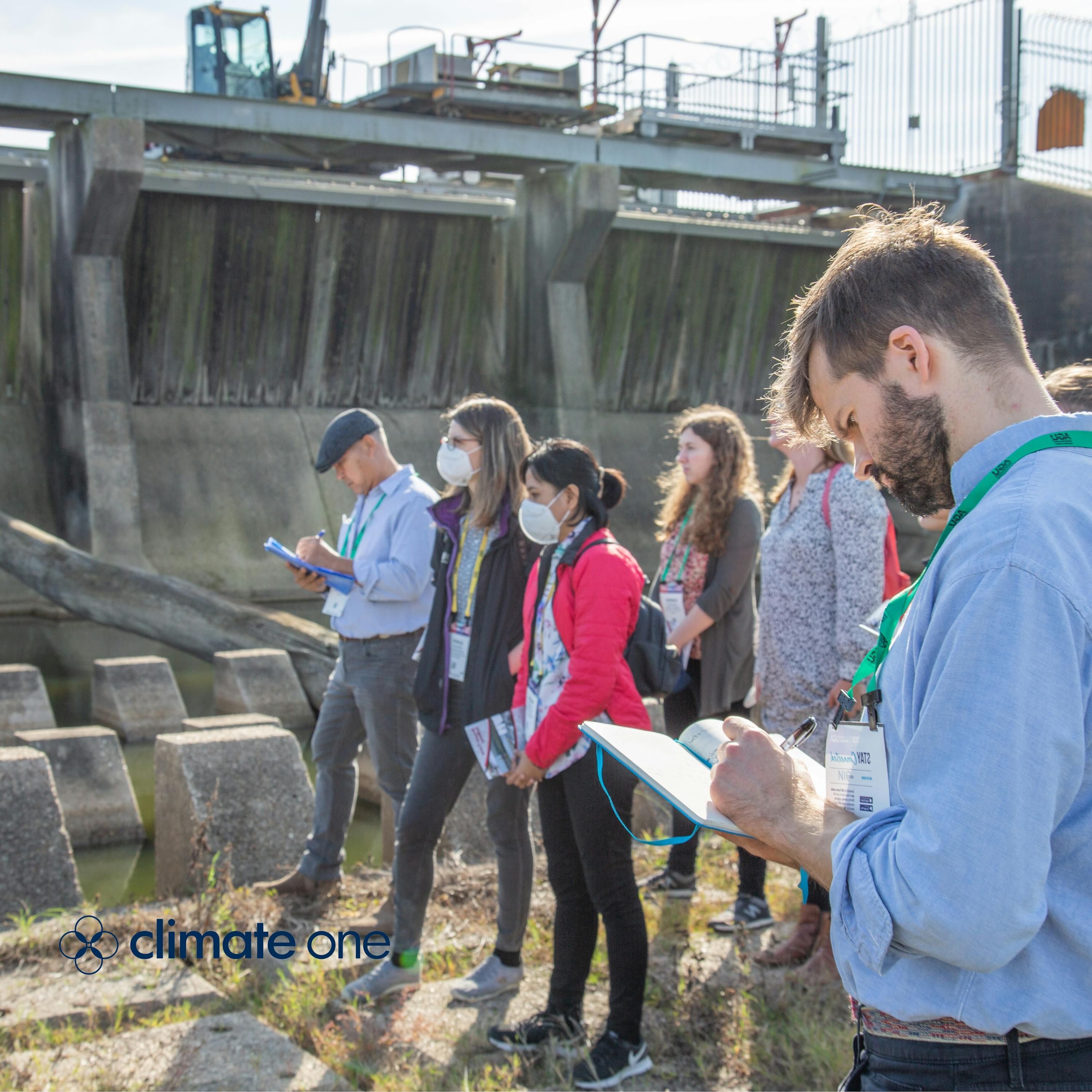
Pairing Scientists with Community Advocates
The climate crisis can feel distant — like it’s someone else’s problem — until your town is flooded, your home is damaged by storms, or you're struggling to pay electricity bills as the summers get hotter. Figuring out the specifics of how a region is vulnerable to climate impacts can be the difference between adaptation or disaster, especially for communities that don’t have a lot of climate or environmental expertise among their members. Community science — defined as communities and scientists working together to address climate and environmental threats — can protect local communities before disaster strikes. Guests: Natasha Udu-gama, Director, Thriving Earth Exchange Daniel Wildcat, Professor, Haskell Indian Nations University; Rising Voices Steering Committee Angela M. Chalk, Executive Director, Healthy Community Services For show notes and related links, visit our website. This episode was produced in collaboration with the American Geophysical Union (AGU) and features a segment from Contributing Producer Graycen Wheeler. Learn more about your ad choices. Visit megaphone.fm/adchoices
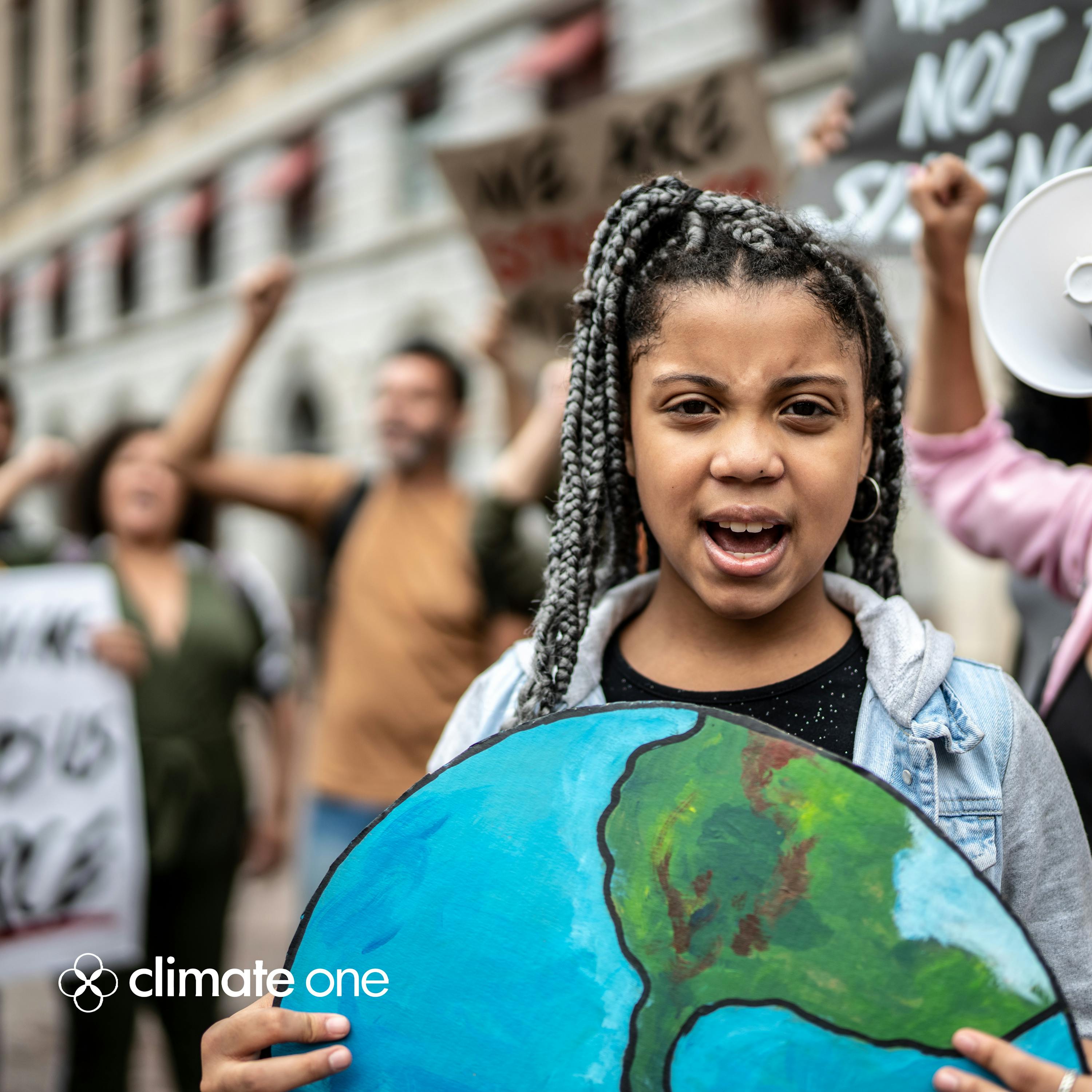
REWIND: Youth Activists 15 Years Later
From the climate movement’s earliest days, young people have been at the forefront of activism. But the first major international climate conferences took place 30 years ago. The first cohort of youth activists are now adults, some with children of their own. The emotional cost of seeing so little payoff for years spent fighting can be agonizing at any age, but perhaps more so for young people who put so much of themselves into the effort. Many youth activists burned out along the way, frustrated by participating in actions that rarely led to meaningful and lasting change. How do former youth activists now view the work of their younger selves? And what advice do they have for the next generation? Guests: Alec Loorz, Writer, Photographer, former youth climate activist Slater Jewell-Kemker, Director, “Youth Unstoppable;” former youth climate activist Victoria Loorz, Founder, Center for Wild Spirituality; Author, “Church of the Wild: How Nature Invites Us into the Sacred” Abrar Anwar, Chief Technology Officer, Rebel Force Tech Solutions; former youth climate activist Kyle Gracey, Strategy Consultant, Future Matters; former youth climate activist For show notes and related links, visit our website. Learn more about your ad choices. Visit megaphone.fm/adchoices
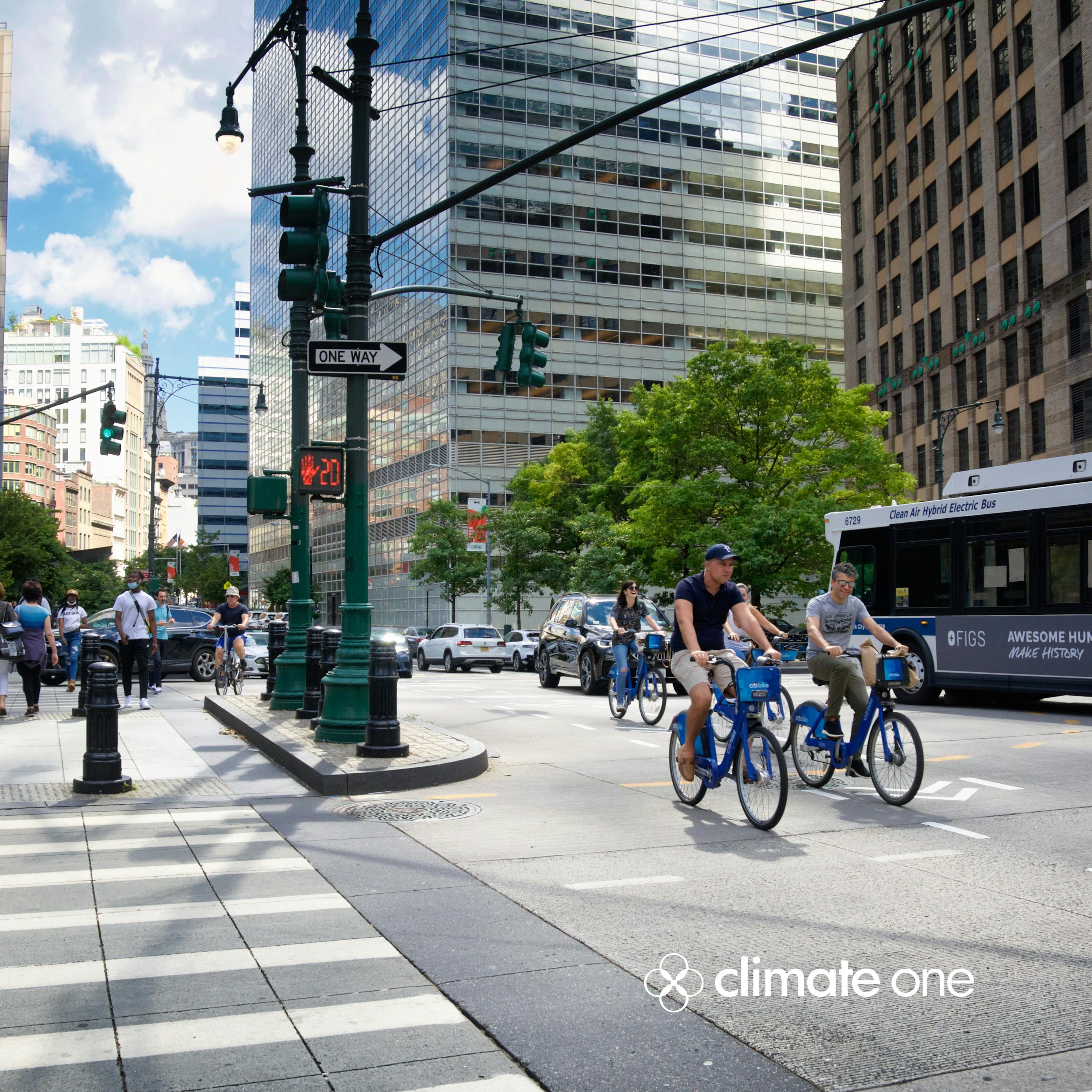
REWIND: Just a Walk or Bike Ride Away: The 15-Minute City
Can you imagine if everything you needed in your everyday life was just a walk or bike ride away? That’s the goal of the 15-minute city, a new name for an old idea. Reducing the need for cars cuts emissions and gets autos off of the roads, which is a boon for safety, air quality and the climate. But, as is often the case, good ideas become a lot more difficult when you have to implement them in real places, with real people, who don’t always share the enthusiasm for the idea. What will it take to make compact, walkable cities a reality in the U.S., where the car is king? Guests: Beth Osborne, Director, Transportation for America David Miller, Former Mayor of Toronto Justin Bibb, Mayor of Cleveland Henry Grabar, Author of Paved Paradise: How Parking Explains the World. For show notes and related links, visit our website. 📞 Call us at (650) 382-3869 to share your clothing story for a chance to be featured on an upcoming episode! Learn more about your ad choices. Visit megaphone.fm/adchoices
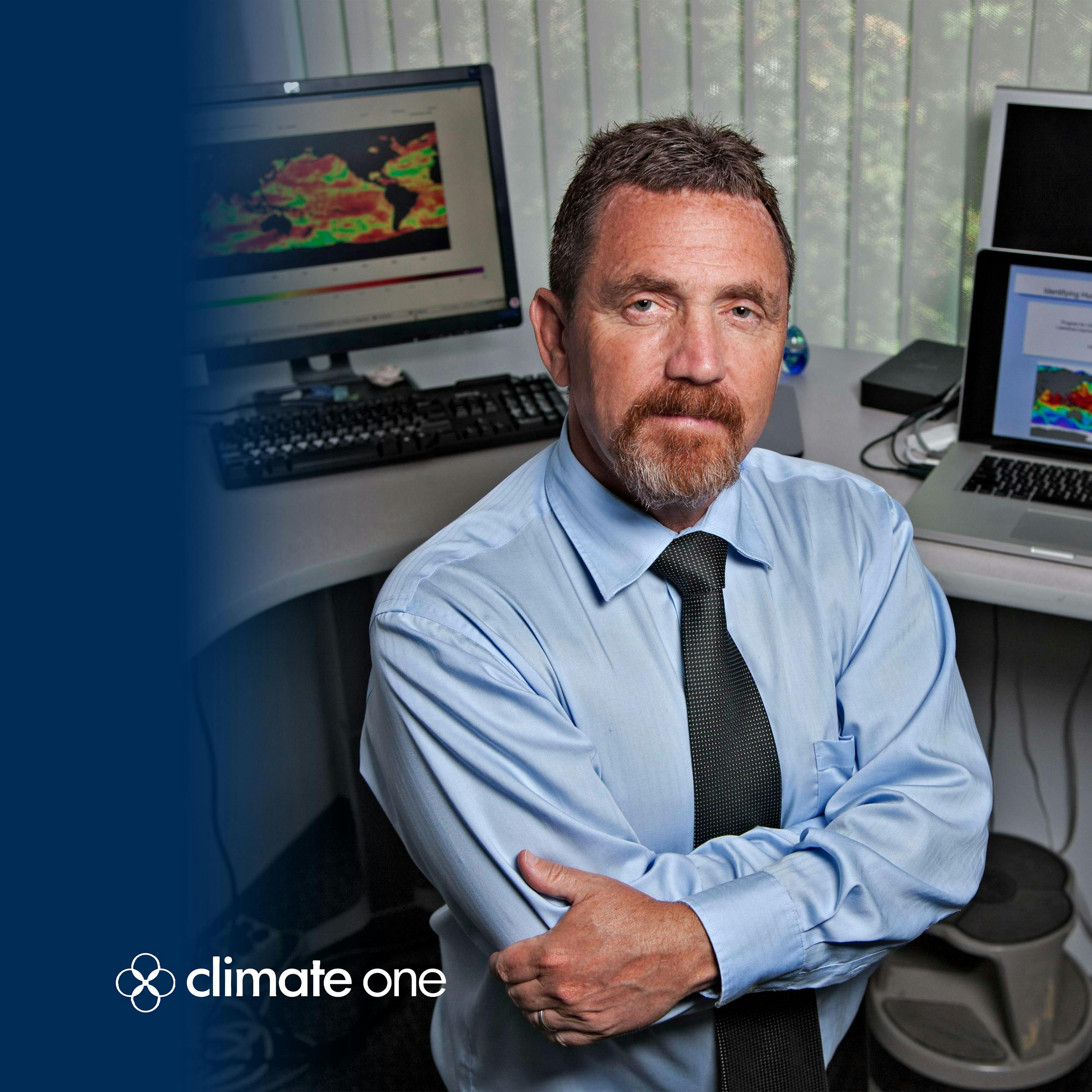
Ben Santer: 2023 Schneider Award Winner
Ben Santer has spent decades researching and identifying the human fingerprints on the climate system changes we’re now all seeing. He was lead author on the historic 1995 conclusion of the Intergovernmental Panel on Climate Change, which proclaimed that “the balance of evidence suggests a discernible human influence on global climate.” That was the first time the IPCC authoritatively stated humans are causing climate change. At the time, Stephen Schneider told Ben Santer that the sentence he wrote would change the world. Santer’s foundational work also laid the groundwork for the expanding field of attribution science, which enables activists and lawyers to ascribe proportionate blame to specific polluters in lawsuits demanding damages for climate-disrupting emissions. Climate One is delighted to present the 2023 Stephen H. Schneider Award for Outstanding Climate Science Communication to atmospheric scientist Ben Santer. Guests: Ben Santer, Fowler Distinguished Scholar in Residence, Woods Hole; Visiting Researcher, UCLA Kassie Siegel, Director, Climate Law Institute, Center for Biological Diversity For show notes and related links, visit our website. 📞 Call us at (650) 382-3869 to share your clothing story for a chance to be featured on an upcoming episode! Learn more about your ad choices. Visit megaphone.fm/adchoices
This Year in Climate: 2023
It’s been a year of weather extremes — again. But there’s also been cause for renewed hope about our climate future. On the heels of this year’s international climate conference held in the oil-rich Middle East, Climate One hosts Greg Dalton and Ariana Brocious review major climate stories of the year, both lows and highs. This special episode features excerpts from some of Climate One’s most surprising, moving and compelling interviews of 2023, including conversations with luminaries Rev. Lennox Yearwood and Rebecca Solnit, White House Climate Advisor Ali Zaidi, climate activist Nalleli Cobo and U.S. Sen. Cory Booker. A previous version of this episode incorrectly stated that the COP28 agreement includes a transition from fossil fuels this decade. While the deal calls for the transition to happen in “a just, orderly and equitable manner,” it does not include a timeframe. We regret the error. Guests: Rev. Lennox Yearwood, Jr., CEO, Hip Hop Caucus Kathy Baughman-McLeod, Director, Adrienne Arsht-Rockefeller Foundation Resilience Center; Senior VP, Atlantic Council Ali Zaidi, White House Climate Advisor Jane Fonda, Activist, Actor Nalleli Cobo, Cofounder, People Not Pozos Ralph Chami, Assistant Director, Western Hemisphere Division, Institute for Capacity Development, IMF Bernie Krause, Soundscape Ecologist Paolo Bacigalupi, author John Curtis, U.S. Representative (R-UT) Cory Booker, United States Senator, New Jersey Rebecca Solnit, Writer, Historian, Activist For show notes and related links, visit our website. 📞 Call us at (650) 382-3869 to share your clothing story for a chance to be featured on an upcoming episode! Learn more about your ad choices. Visit megaphone.fm/adchoices
Reporting from COP28: The People at the Heart of It All
This week, we’re reporting from Dubai, where the 28th UN climate change conference (COP28) is now underway. Ever since the Paris Agreement was signed at COP21, the central issue has remained the same: How do the nations of the world keep global heating to 1.5 degrees Celsius above pre-industrial levels? This year marks the first “global stocktake,” where the data on how well we’re collectively doing on meeting the Paris targets are front and center. Across the board, countries are failing. How much will this harsh dose of reality affect the negotiations? Perhaps more importantly, how does what happens at these international summits affect the people most at risk for flooding and extreme heat? Guests: Claire Stockwell, Senior Climate Policy Analyst, Climate Analytics Nisreen Elsaim, Sudanese Climate Activist; Former Chair, UN Secretary General’s Youth Advisory Group Abigael Kima, Host and Producer, Hali Hewa Podcast Chautuileo Tranamil, Co-Founder, Indigenous Liberation and Aralez Myrna Cunningham, Chair, Guiding Committee, Pawanka Fund For show notes and related links, visit our website. 📞 Call us at (650) 382-3869 to share your clothing story for a chance to be featured on an upcoming episode! Learn more about your ad choices. Visit megaphone.fm/adchoices
On the Ground at COP28: What’s at Stake with the Global Stocktake?
The 28th annual Conference of the Parties, COP28, opens this week in Dubai. For the 28th time, the nations of the world have gathered to see what progress they can make on addressing the increasingly global climate crisis. It’s fair to wonder why, after three decades, we still haven’t taken the collective action necessary. And it’s equally fair to wonder why diplomats continue to bother with what Greta Thunberg famously called “blah, blah, blah.” This year’s COP marks the first “Global Stocktake,” an assessment of how the nations of the world are doing compared to the emissions-cutting commitments they made in Paris. The answer? Not well. And with COP28 being hosted by a major oil and gas producing nation and led by an industry executive, what hope is there for progress? Guests: Daniel Esty, Professor of Environmental Law & Policy, Yale Law School Ben Stockton, Investigative Reporter Aisha Khan, Chief Executive, Civil Society Coalition for Climate Change This episode features a segment from Contributing Reporter Rabiya Jaffrey. For show notes and related links, visit our website. 📞 Call us at (650) 382-3869 to share your clothing story for a chance to be featured on an upcoming episode! Learn more about your ad choices. Visit megaphone.fm/adchoices
REFRESH: Another Look at Bridging the Great American Divide
Most Americans support climate action, but you wouldn’t know it from Congress or the courts – or from most of the media. People on both the left and the right experience the same devastating floods, the same life-threatening heatwaves and the same catastrophic wildfires. Yet individuals tend to socialize within insulated political tribes, operate in completely different information bubbles and see the problems and solutions through different lenses. How can we learn to bridge ideological divides, develop trust, and find the common ground needed to rebuild respectful civil discourse? 📞 Call us at (650) 382-3869 to share your clothing story for a chance to be featured on an upcoming episode! Guests: John Curtis, U.S. Rep., Utah (R) Joan Blades, Co-founder, LivingRoomConversations.org John Gable, Co-founder, AllSides.com For show notes and related links, visit our website. Learn more about your ad choices. Visit megaphone.fm/adchoices

The Coolest Show: The Referendum — Stop Cop City with Rev. Keyanna Jones
bonusFrom The Coolest Show: The City of Atlanta has leased 381-acres of Weelaunee Forest, stolen Muscogee land, to the Atlanta Police Foundation for a police military facility funded by corporations. This would be the largest police training facility in the US in a primarily Black community who overwhelmingly oppose the project. Despite over fifteen hours of public comments against the project, the City Council has approved $67 million in public funding for Cop City. The plans include military-grade training facilities, a mock city to practice urban warfare, dozens of shooting ranges, and a Black Hawk helicopter landing pad. Residents have petitioned the municipal court of Atlanta to gather signatures for a binding referendum. With enough signatures, this would put whether or not Cop City gets built up for a vote on November’s ballot box. In this 2 part episode of The Coolest Show, Rev Yearwood speaks with community organizer Rev. Keyanna Jones, economist Dr. Gloria Bromell Tinubu, and community advocate Shar Bates. They discuss the history of the area surrounding the Weelaunee forest, the legacy of environmental racism, the community’s work to get signatures, and “the Atlanta Way.” Support the Stop Cop City movement: https://www.copcityvote.com/ For more from The Coolest Show: https://thecoolestshow.com/ This episode was originally produced by The Coolest Show, a Hip Hop Caucus Think 100% production, and was used by Climate One with permission. Learn more about your ad choices. Visit megaphone.fm/adchoices
Six People Who’ve Changed Jobs for Climate
One of the most common questions people ask about climate is: what can I do? Since time is one of our most valuable resources – and we spend so much of our time at work – changing jobs may be the most effective individual climate action a person can take. Those changes could be big or small: Leaving the oil and gas industry for geothermal, or helping to bring down the emissions where you already work. The truth is, almost any job can be a climate job. But how do people actually make the transition from dirty jobs to clean? What do climate positive job transitions really entail? Guests: Caroline Dennett, Director, CLOUT Ltd Arvind Ravikumar, Co-Director, Energy Emissions Modeling and Data Lab, University of Texas, Austin Jennifer Anderson, Carbon Removal Geologist, Charm Industrial Emma McConville, Development Geoscience Lead at Fervo Energy Nathanael Johnson, Electrician For show notes and related links, visit our website. Learn more about your ad choices. Visit megaphone.fm/adchoices
Putting It All on the Line with Rev. Lennox Yearwood, Jr. and Jacqueline Patterson
Climate affects everyone, but not equally. Those affected first and worst are often the same communities that suffer from housing and income inequality, and climate and societal injustice. Rev. Lennox Yearwood, Jr. has made striving for social, economic, and climate justice his lifelong pursuit. Rising to prominence in the Hip Hop community, Yearwood brought like-minded artists and creatives together to advocate for justice with the Hip Hop Caucus by harnessing the power of film, podcasts and comedy. We discuss the role of his faith, his partnership with billionaire Michael Bloomberg, and the underlying belief in our human ability to keep improving that drives his activism. Guests: Rev. Lennox Yearwood, Jr., CEO, Hip Hop Caucus Jacqueline Patterson, Executive Director, Chisholm Legacy Project For show notes and related links, visit our website. Learn more about your ad choices. Visit megaphone.fm/adchoices
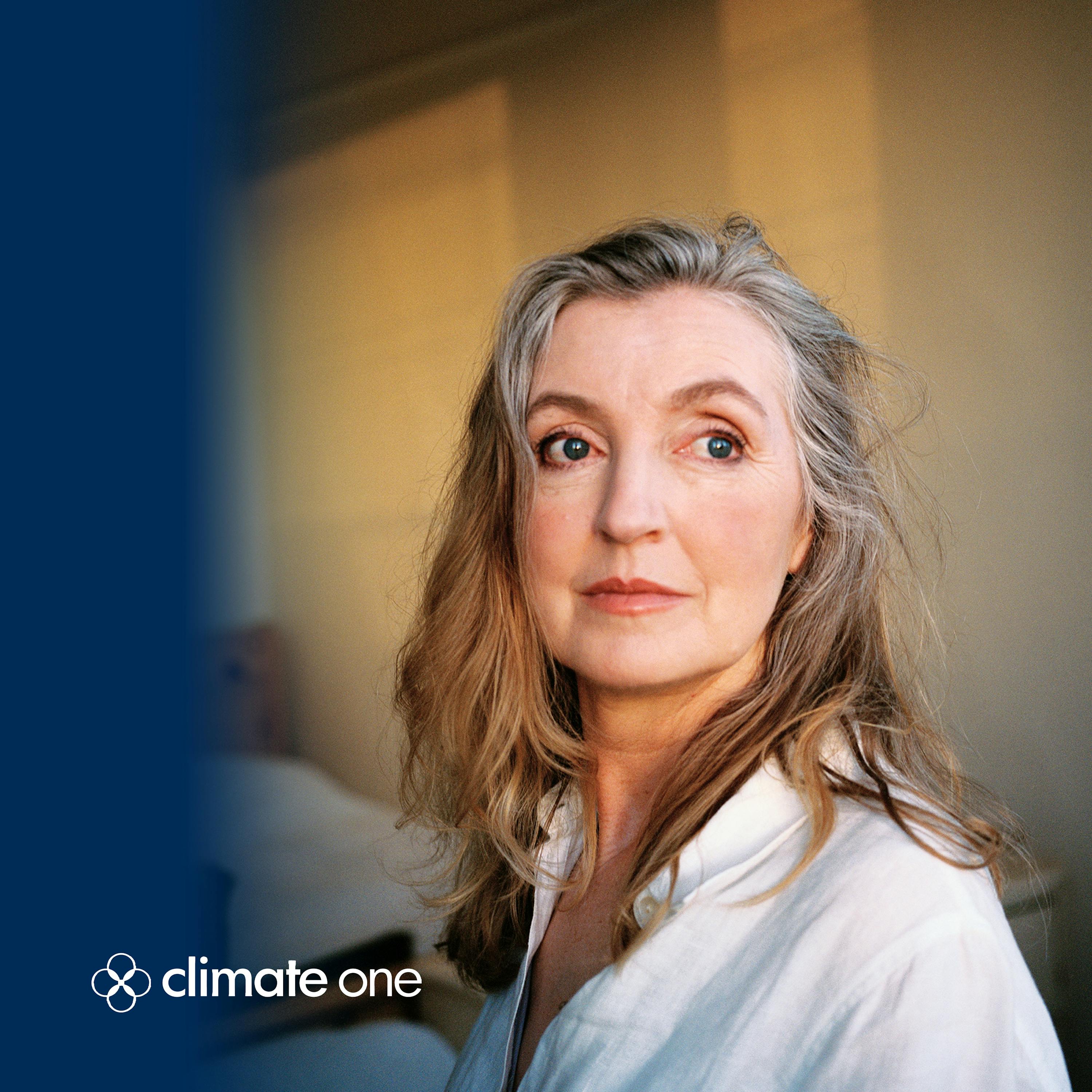
Rebecca Solnit on Why It’s Not Too Late
Writer, historian, and activist Rebecca Solnit has been examining hope and the unpredictability of change for over 20 years. In 2023 she co-edited an anthology called, “It’s Not Too Late,” which serves as a guidebook for changing the climate narrative from despair to possibility. How can we find hope on a warming planet? Guests: Rebecca Solnit, Writer, Historian, Activist For show notes and related links, visit our website. Learn more about your ad choices. Visit megaphone.fm/adchoices

Is This a Joke? Comedy and Climate Communication
Laughter can be good medicine, but when is it okay to laugh at something as deadly serious as the climate crisis? Jokes help us remember information that otherwise might not be retained. A snappy punchline can be a powerful way to get a message through to an audience. Comedy can also be a way for performers and audiences alike to cope with a shared societal problem, like climate or social justice. Humor has a way of slipping through our perceived biases and giving us a new way of looking at challenges. How can we all learn to use humor both as a coping tool and a tool for change? Guests: Rollie Williams, Comedian, Host, Climate Town Caty Borum, Provost Assoc. Professor, American University For show notes and related links, visit our website. Learn more about your ad choices. Visit megaphone.fm/adchoices
Community Resilience: Knowing Your Neighbor Could Save Your Life
Disasters caused by burning fossil fuels are becoming more frequent, and in the aftermath of hurricanes, floods and wildfires, federal and state responses are often slow or insufficient. There is a growing body of research showing that neighborhood ties can be the difference between life and death: Socially connected neighbors are less likely to die from excessive heat or other extreme weather events. Community-based action, like mutual aid, can bring resources to people overlooked by overburdened governments. What tools can a community use to prepare for fossil fueled disasters? Guests: Tanya Gulliver Garcia, Director of learning and partnerships, Center for Disaster Philanthropy Chenier “Klie” Kliebert, Executive Director, Imagine Water Works Amee Raval, Research and Policy Director, Asian Pacific Environmental Network (APEN) Justin Hollander, Professor, Urban and Environmental Policy Planning, Tufts University Reverend Vernon K. Walker, Climate Justice Program Director, Clean Water Action For show notes and related links, visit our website. Learn more about your ad choices. Visit megaphone.fm/adchoices
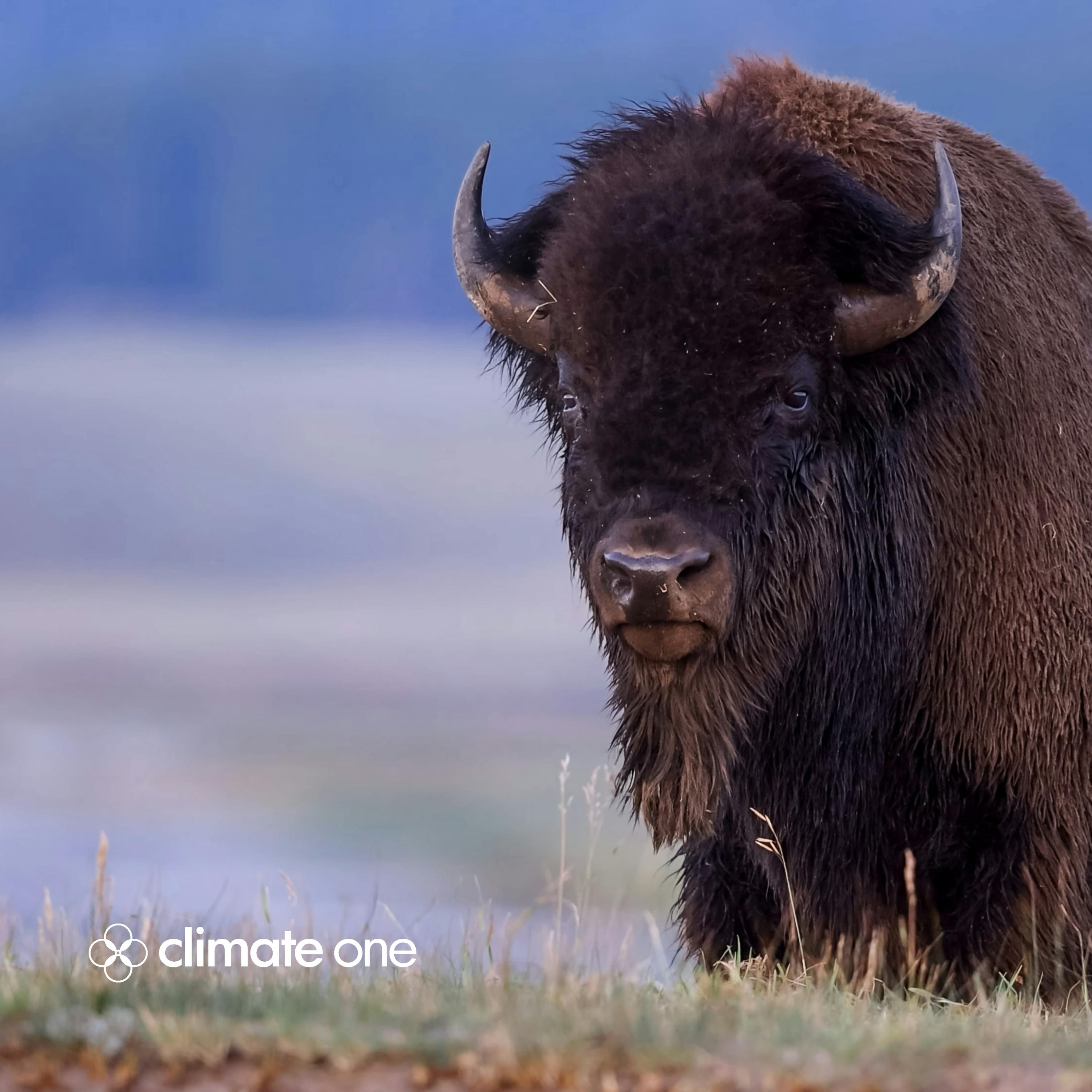
Ken Burns, Rosalyn LaPier and The American Buffalo
For thousands of years, the American buffalo evolved alongside Indigenous people who relied on them for food and shelter, and, in exchange for killing them, revered the animal. For millennia, this totemic animal lived in symbiotic relationship with grasslands throughout North America, then – in less than 100 years – new settlers and hunters brought their numbers from 30 million to the mere hundreds, while in the same era glorifying them as our iconic national animal. It’s a classic and cautionary tale of our ability to destroy the natural world – and potentially, to bring it back. Guests: Ken Burns, Director, The American Buffalo Rosalyn LaPier, Indigenous environmental historian and ethnobotanist For show notes and related links, visit our website. Learn more about your ad choices. Visit megaphone.fm/adchoices
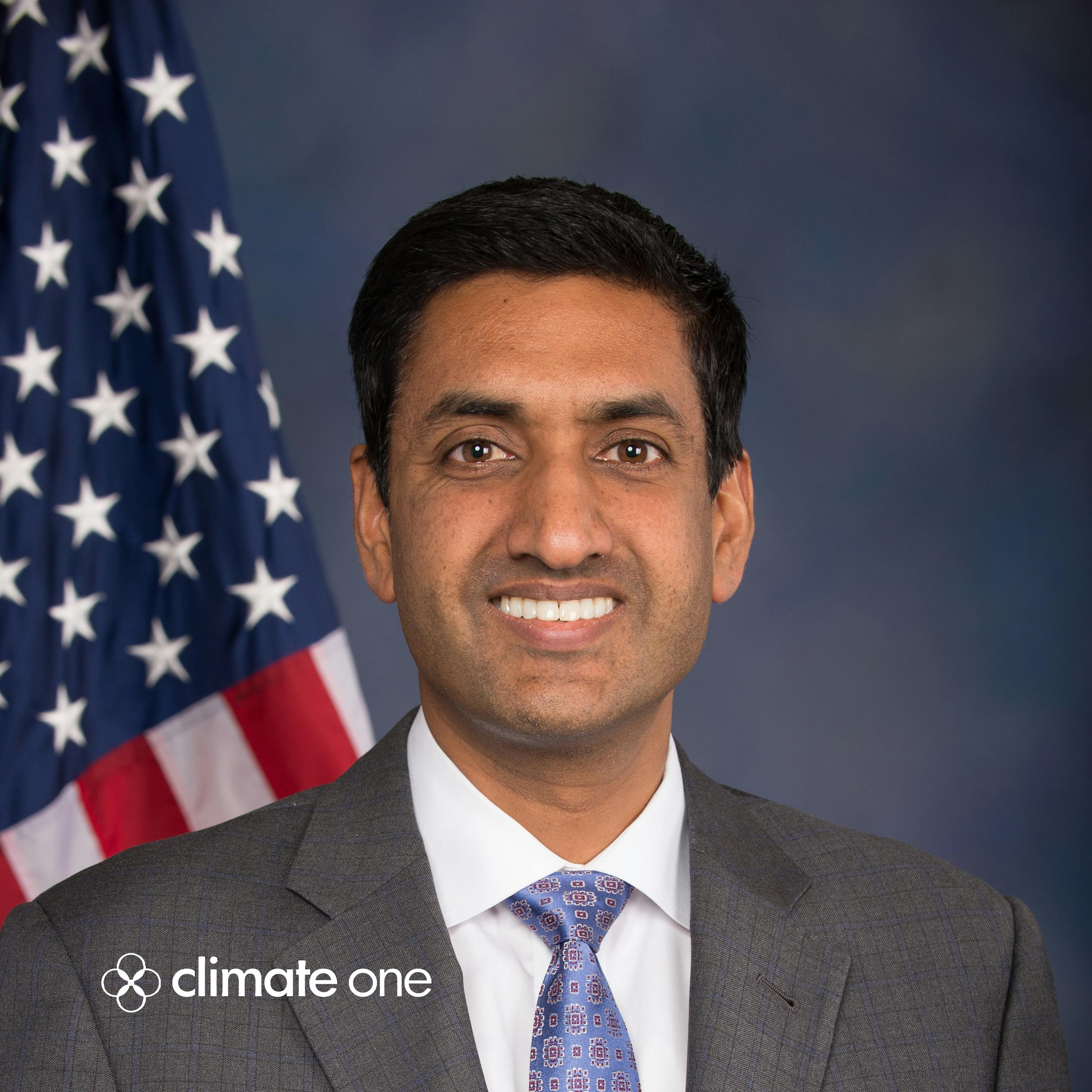
Rep. Ro Khanna on AI, Misinformation and Holding Big Oil Accountable
Congressman Ro Khanna has made a name for himself as a pragmatic progressive and critic of Big Oil. He grilled oil company CEOs under oath and helped negotiate with Senator Joe Manchin to keep climate policy in the Inflation Reduction Act, the biggest piece of climate legislation ever passed in the United States. Despite being one of the more progressive voters in Congress, Khanna has a reputation for coalition building; he got more bills passed than any other Democrat during the previous administration. Now that Republicans control the House of Representatives and are looking to claw back climate provisions of the IRA, what levers can he still pull to address the climate crisis? Guest: Ro Khanna, U.S. Congressman For show notes and related links, visit our website. Learn more about your ad choices. Visit megaphone.fm/adchoices
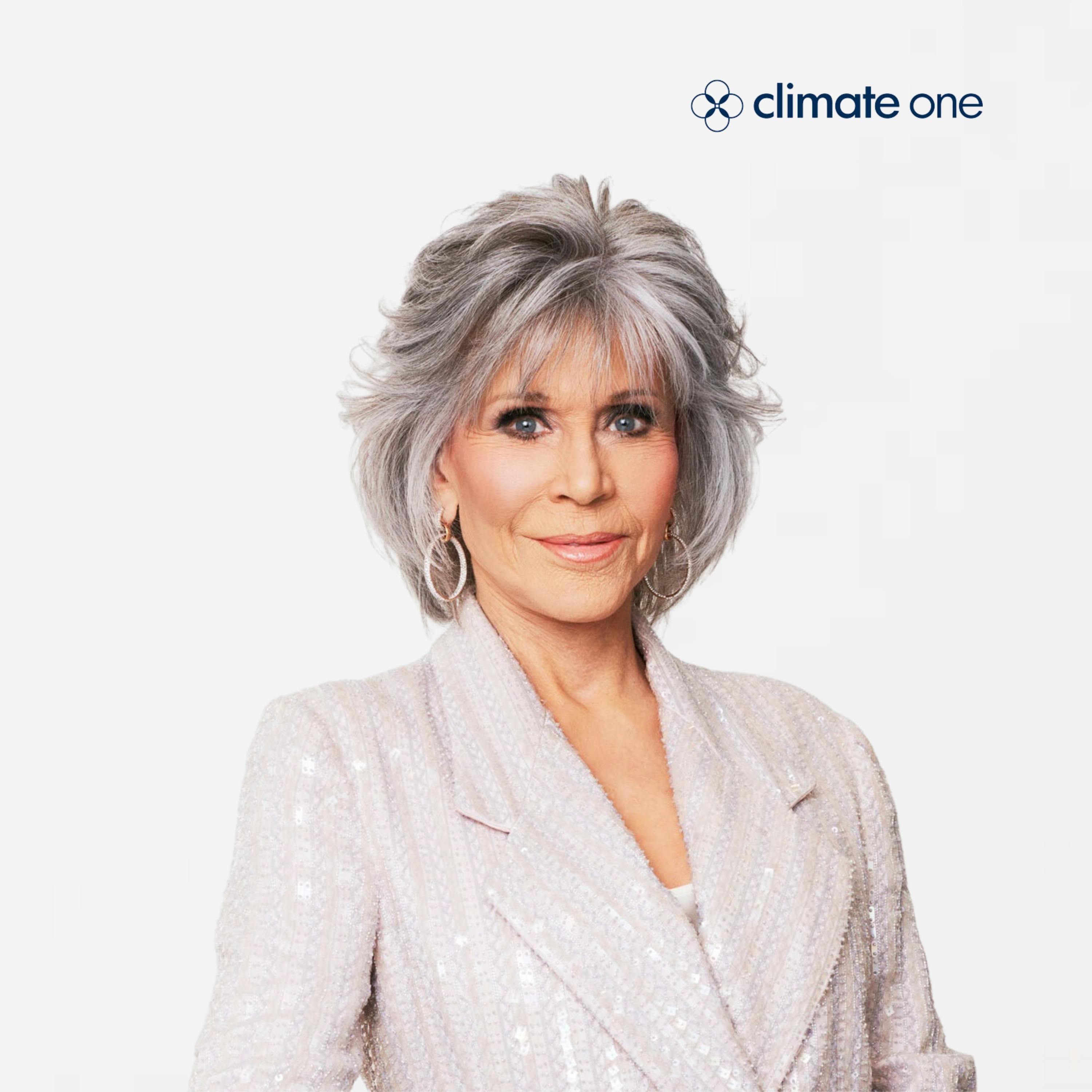
Jane Fonda: A Lifetime of Activism
Jane Fonda has spent the last several decades fighting for Indigenous peoples' rights, economic justice, LGBTQ rights, peace, gender equality and more. Now, she is devoting herself to the climate emergency, beginning with Fire Drill Fridays, the national movement to protest government inaction on climate change she started in October 2019. Now, through the Jane Fonda Climate PAC, she is focused on defeating political allies of the fossil fuel industry. At 85, Fonda continues to fight for the most vulnerable among us, consistently pointing out the intersection between the myriad of causes. What keeps the iconic Jane Fonda going strong? Guest: Jane Fonda, actor, activist For show notes and related links, visit https://www.climateone.org/audio/jane-fonda-lifetime-activism Learn more about your ad choices. Visit megaphone.fm/adchoices
Naomi Klein and Carolyn Beeler: Covering Big Ideas and Personal Stories
The climate crisis can be difficult to cover in a way that most people can relate to. The mechanism of harm goes from a person's gas car or stove to the Earth's atmosphere and back again in the form of floods and fires. That's why true stories of individuals and families experiencing the fallout of the climate crisis can be so impactful. They help us relate to each other on a more direct level, the way humans naturally do: person to person. Covering Climate Now Journalism Award winners Naomi Klein and Carolyn Beeler bring those stories to light. This episode was produced in collaboration with Covering Climate Now. Guests: Carolyn Beeler, Environment Reporter, Editor, The World Naomi Klein, author, social activist For show notes and related links, visit https://www.climateone.org/audio/naomi-klein-and-carolyn-beeler-covering-big-ideas-and-personal-stories Learn more about your ad choices. Visit megaphone.fm/adchoices
Official Trailer: 2023
trailerWe’re living through a climate emergency; addressing this crisis begins by talking about it. Join us. Learn more about your ad choices. Visit megaphone.fm/adchoices
The Nuclear Option
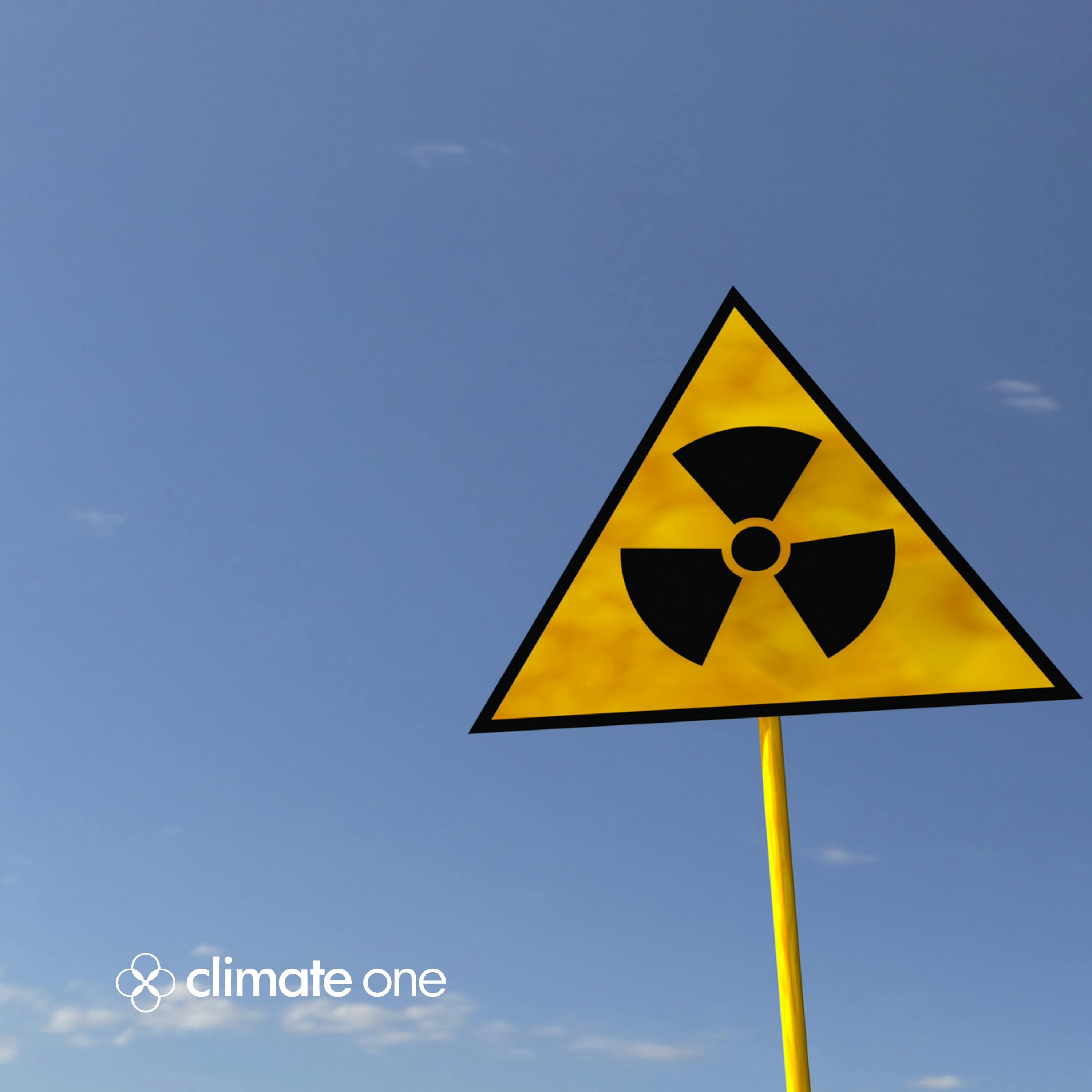
Fourteen years after receiving its permit, the nation’s first new nuclear reactors in decades just fired up in Georgia. Massive, traditional nuclear reactors like this have faced so many cost overruns and construction delays that the investment market for them all but vanished. Despite a handful of recent technical breakthroughs in fusion power, its promise of virtually limitless power remains just a promise. But could a new wave of small, modular fission reactors bring new carbon-free power onto the market faster and cheaper (and safer?) than traditional nuclear plants in time to help the world decarbonize? Guests: Melissa Lott, Senior Research Scholar and the Senior Director of Research at the Center on Global Energy Policy, Columbia University Jacopo Buongiorno, TEPCO Professor of Nuclear Science and Engineering, MIT Allison MacFarlane, Director of the School of Public Policy and Global Affairs, University of British Columbia; Former Chair, Nuclear Regulatory Commission For show notes and related links, visit https://www.climateone.org/audio/nuclear-option Learn more about your ad choices. Visit megaphone.fm/adchoices
Rethinking Economic Growth, Wealth, and Health
Since the industrial revolution, the global north has seen massive economic growth. Yet that growth has been linked to increasing greenhouse gas emissions. We also live on a planet with finite resources, so it's hard to believe that we can continue to consume resources and release emissions and not sail right past our collective climate goals. That’s why some people are starting to rethink perpetual economic growth as the best measure of a healthy economy. But what would an economy focused on metrics other than growth look like? Guests: Anuna De Wever, Climate and Social Justice activist Leigh Phillips, journalist and author of Austerity Ecology & The Collapse-Porn Addicts Marieke van Doorninck, Director, Kennisland, former Deputy Mayor, Amsterdam For show notes and related links, visit https://www.climateone.org/audio/rethinking-economic-growth-wealth-and-health Learn more about your ad choices. Visit megaphone.fm/adchoices

Fairytales and Fear: Stories Of Our Future
Stories are the way we remember, the way we share knowledge, the way we play out possible outcomes. Climate fiction imagines dark or bright futures depending on how we address the climate crisis. And there’s a healthy debate about what kind of stories move more people to act: dark tales of a scary climate future or positive versions of a greener, more just world. “I think that if you want to create change in a democratic society, people have to believe that there is actually a threat,” says author Paolo Bacigalupi. Telling inclusive fictional stories of climate realities can also help us process the disruptions our world is experiencing, explore avenues for solutions, and become inspired to take our own form of action. Guests: Paolo Bacigalupi, author, “The Water Knife” Denise Baden, Green Stories Project; Professor of Sustainable Business at the University of Southampton; author, “Habitat Man” Tory Stephens, Climate Fiction Creative Manager, Grist This episode also features an excerpt of the audio recording of “The Cloud Weaver’s Song,” written by Saul Tanpepper and recorded by Curio. For show notes and related links, visit https://www.climateone.org/audio/fairytales-and-fear-stories-our-future Learn more about your ad choices. Visit megaphone.fm/adchoices
The Road to Zero Emission Trucking
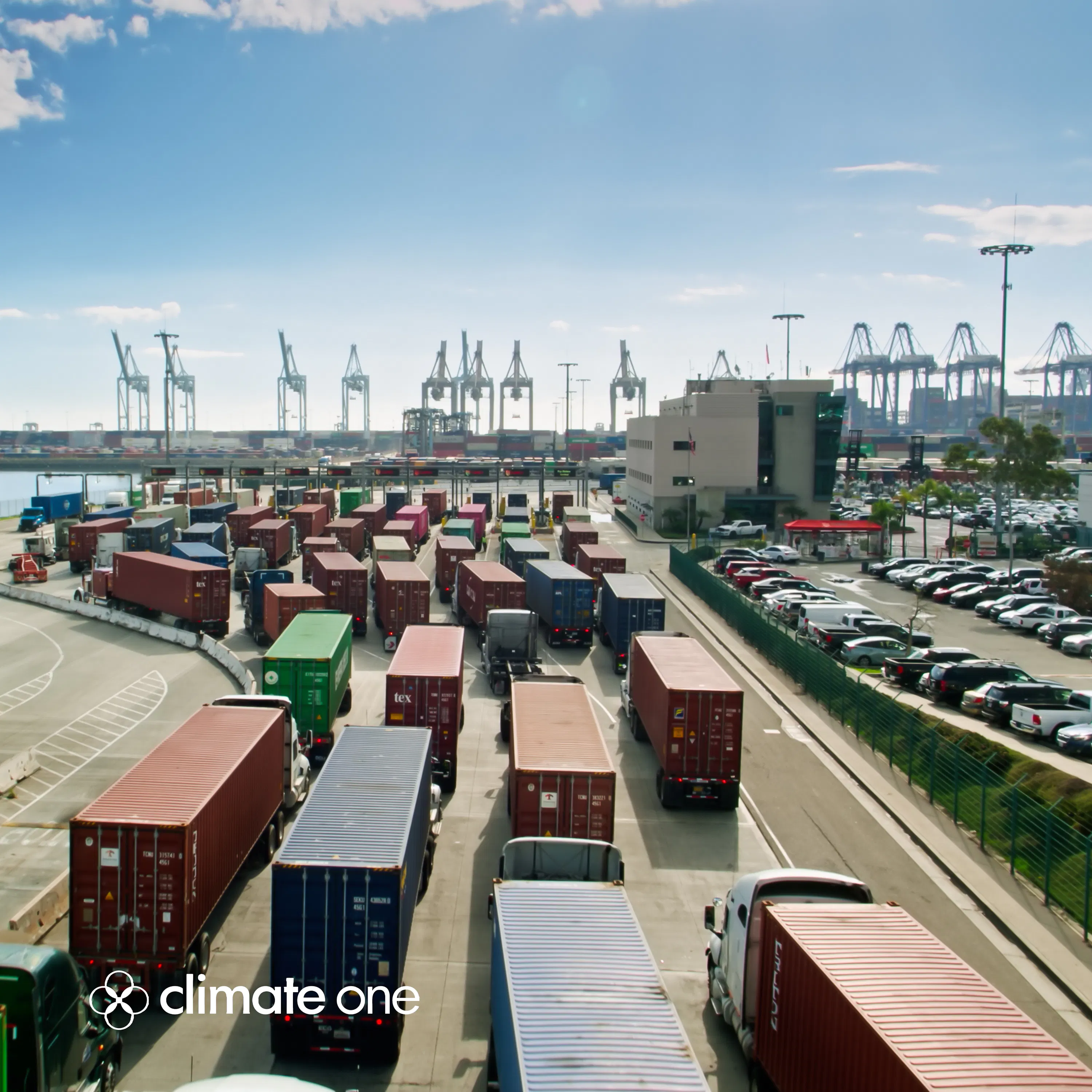
As the build out of infrastructure for electric passenger vehicles gets underway, another segment of transportation is just starting down the road to electrification: heavy duty trucks. It’s one of the hard-to-decarbonize parts of our economy. Right now, nearly all long-haul trucks run on fossil fuels. And if we continue with business as usual, freight will become the highest-emitting part of the transportation sector by 2050. That’s why seven states, led by California, have mandated that an increasing number of zero-emission trucks be sold between now and 2035. What does the road to zero emissions trucking look like? Guests: Ray Minjares, Heavy-Duty Vehicles Program Director, International Council on Clean Transportation Mike Roeth, Executive Director, North American Council for Freight Efficiency Chris Shimoda, Senior Vice President, California Trucking Association Adam Browning, Executive VP, Forum Mobility Rudy Diaz, CEO, Hight Logistics This episode features a freelance piece from Emily Cohen in Wyoming on trucker views on EVs For show notes and related links, visit https://www.climateone.org/audio/road-zero-emissions-trucking Learn more about your ad choices. Visit megaphone.fm/adchoices
Navigating Science and Feelings on a Destabilized Planet
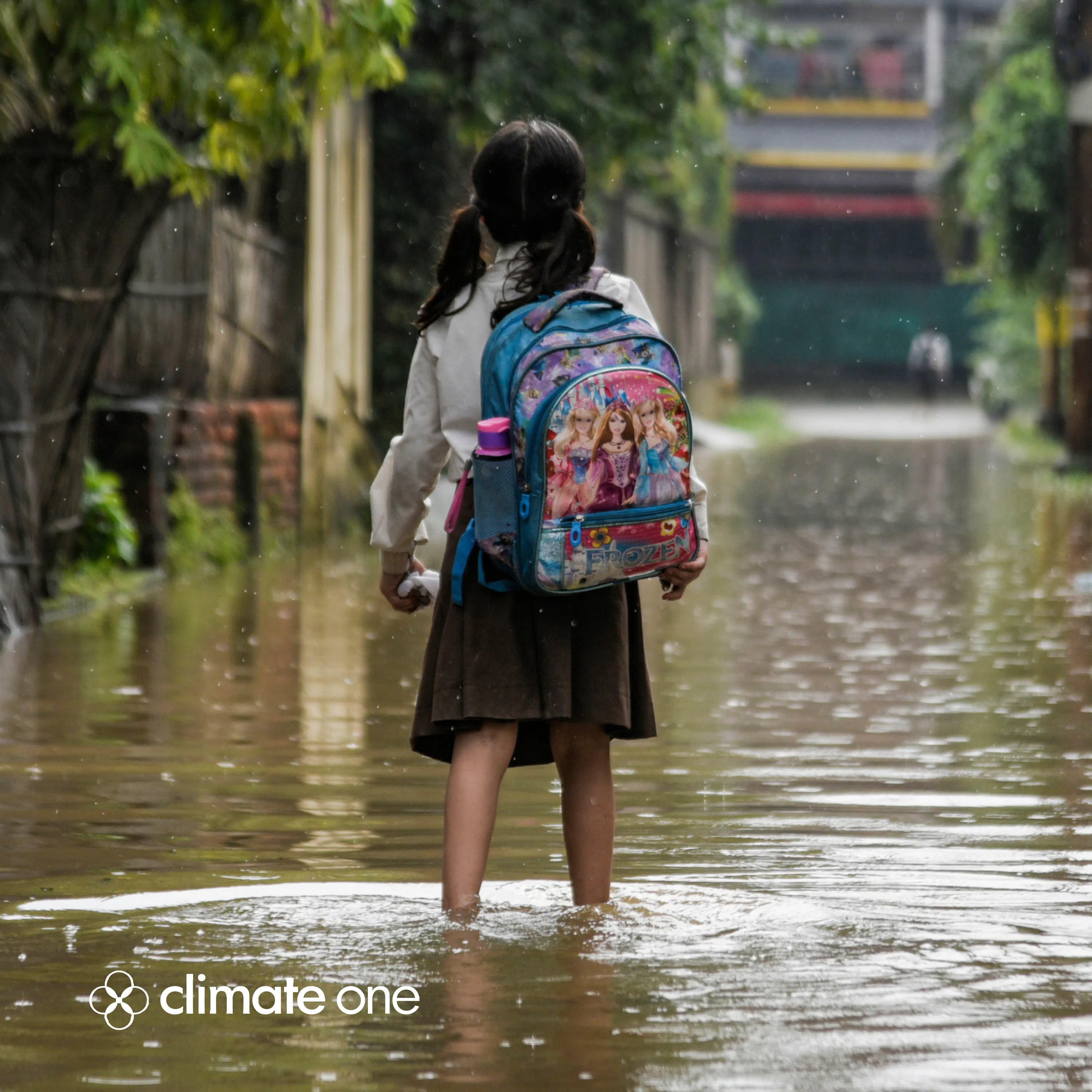
This year is shaping up to be the hottest year in 125,000 years. It may also be the coolest year a child born today will ever see. In “The Quickening,” science writer Elizabeth Rush documents her journey to Antarctica's infamous “doomsday” glacier as she contemplates what it would mean for her to have a child at this time of radical change. In “Humanity’s Moment,” IPCC climate scientist Joëlle Gergis wrestles with their own questions of how we can all find enough hope to restore our relationships with ourselves, each other and the environment. Guests: Elizabeth Rush, Author, “The Quickening: Creation and Community at the Ends of the Earth” Joëlle Gergis, IPCC Climate Scientist, author, “Humanity’s Moment: A Climate Scientist’s Case for Hope” For show notes and related links, visit https://www.climateone.org/audio/navigating-science-and-feelings-destabilized-planet Learn more about your ad choices. Visit megaphone.fm/adchoices
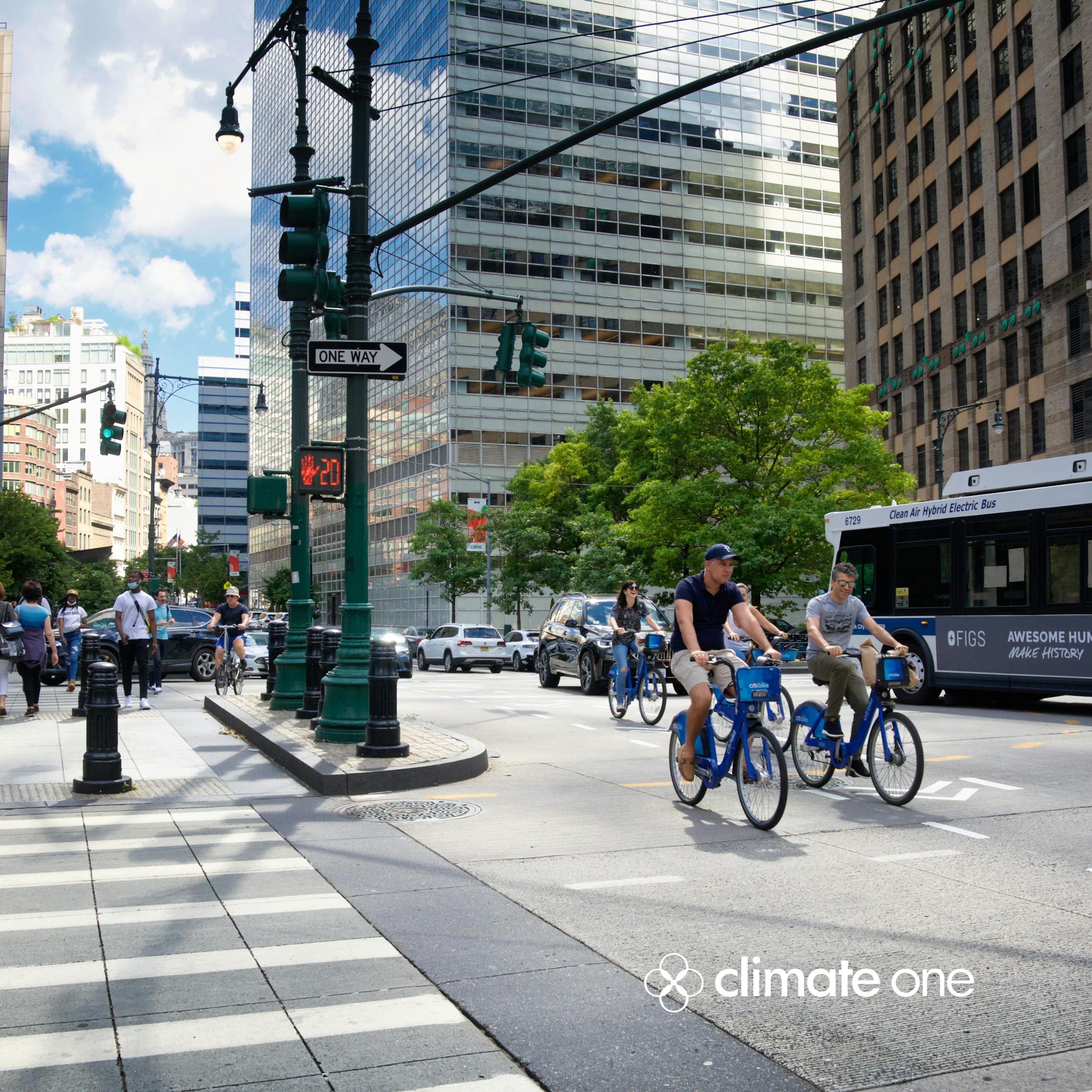
Just a Walk or Bike Ride Away: The 15-Minute City
Can you imagine if everything you needed in your everyday life was just a walk or bike ride away? That’s the goal of the 15-minute City, a new name for an old idea. Reducing the need for cars cuts emissions and gets autos off of the roads, which is a boon for safety, air quality and the climate. But, as is often the case, good ideas become a lot more difficult when you have to implement them in real places, with real people, who don’t always share the enthusiasm for the idea. What will it take to make compact, walkable cities a reality in the U.S., where the car is king? Guests: Beth Osborne, Director, Transportation for America David Miller, Former Mayor of Toronto Justin Bibb, Mayor of Cleveland Henry Grabar, Author of Paved Paradise: How Parking Explains the World. For show notes and related links, visit ClimateOne.org Learn more about your ad choices. Visit megaphone.fm/adchoices
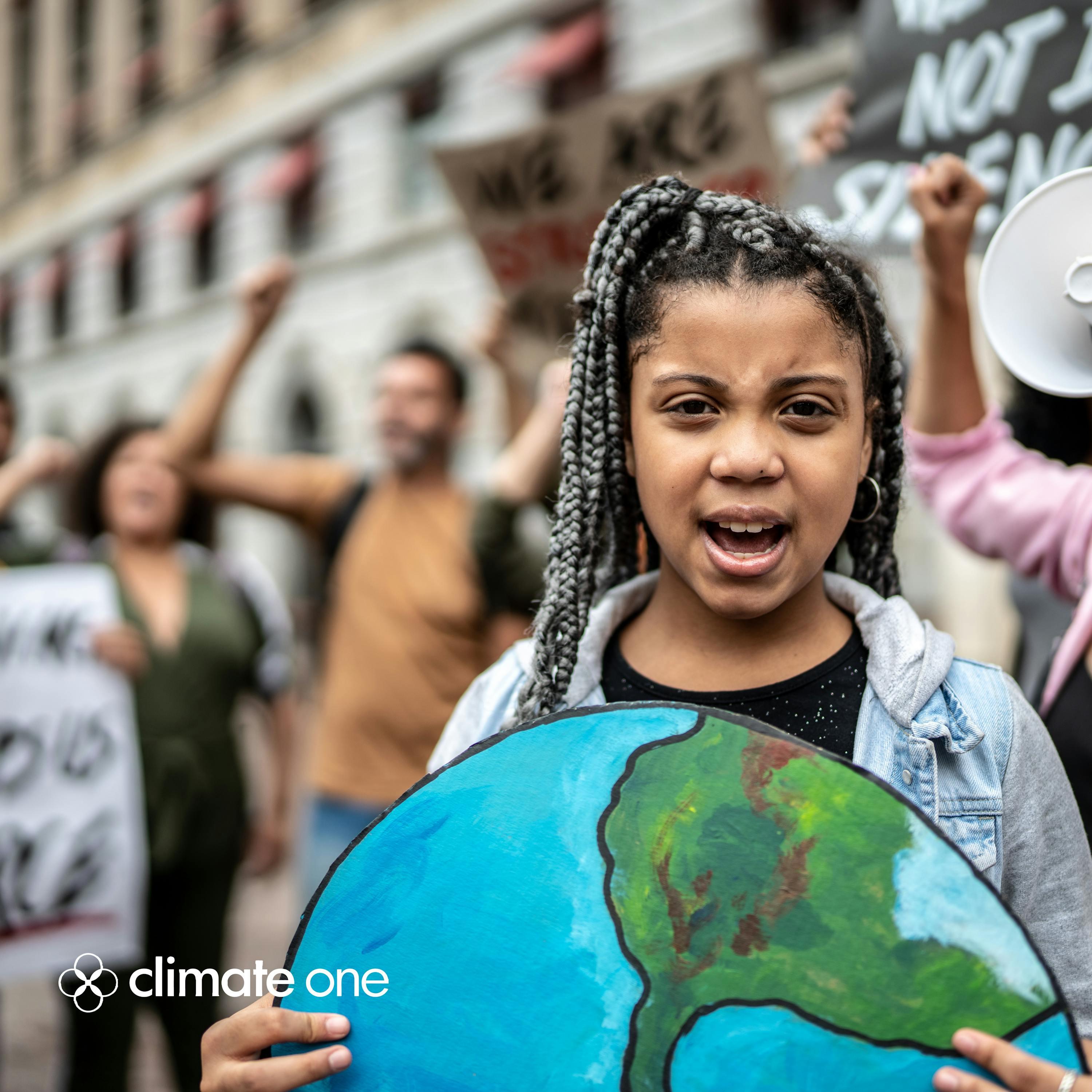
Youth Activists 15 Years Later
From the climate movement’s earliest days, young people have been at the forefront of activism. But the first major international climate conferences took place 30 years ago. The first cohort of youth activists are now adults, some with children of their own. The emotional cost of seeing so little payoff for years spent fighting can be agonizing at any age, but perhaps more so for young people who put so much of themselves into the effort. Many youth activists burned out along the way, frustrated by participating in actions that rarely led to meaningful and lasting change. How do former youth activists now view the work of their younger selves? And what advice do they have for the next generation? Guests: Alec Loorz, Writer, Photographer, former youth climate activist Slater Jewell-Kemker, Director, “Youth Unstoppable;” former youth climate activist Victoria Loorz, Founder, Center for Wild Spirituality; Author, “Church of the Wild: How Nature Invites Us into the Sacred” Abrar Anwar, Chief Technology Officer, Rebel Force Tech Solutions; former youth climate activist Kyle Gracey, Strategy Consultant, Future Matters; former youth climate activist For show notes and related links, visit https://www.climateone.org/watch-and-listen/podcasts Learn more about your ad choices. Visit megaphone.fm/adchoices
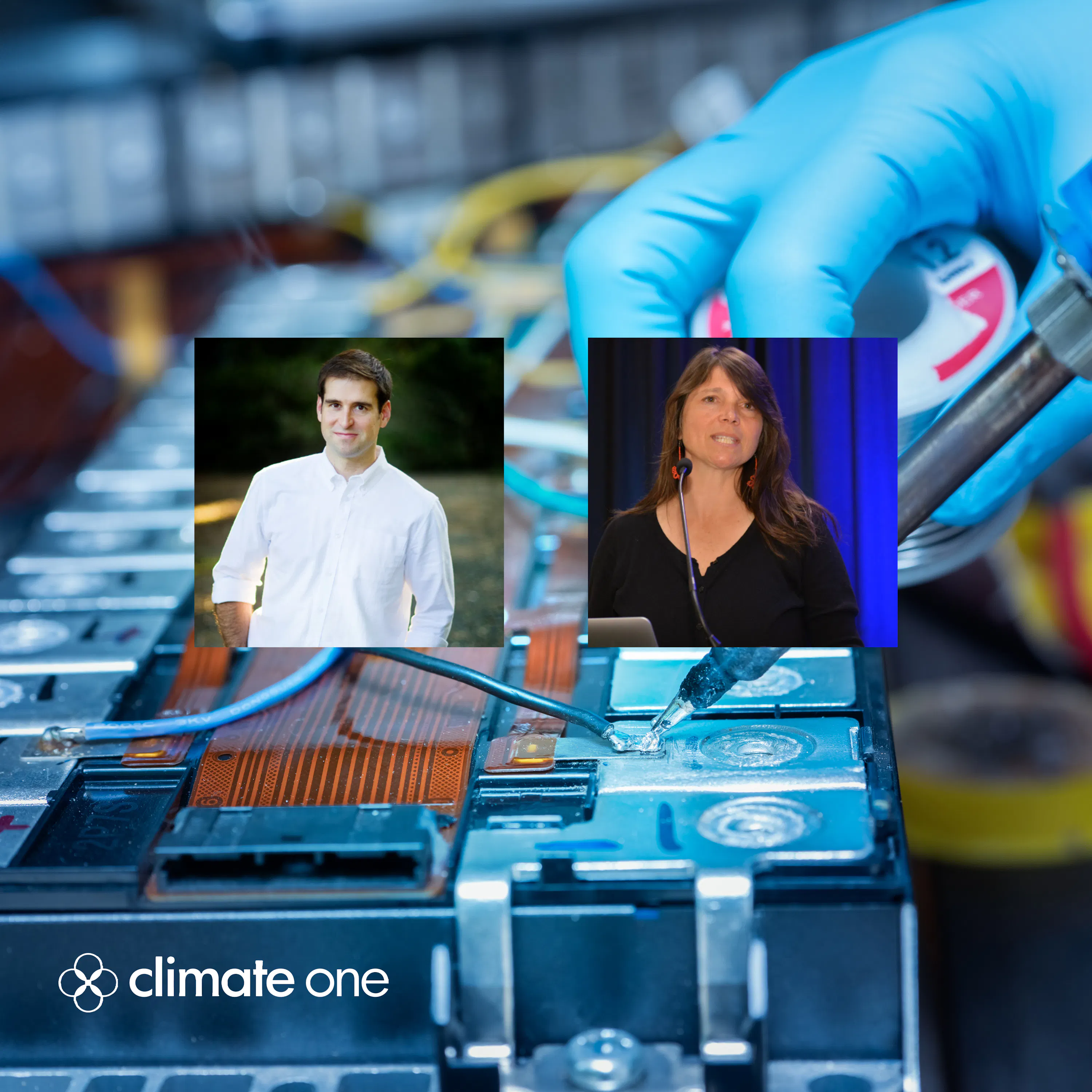
Building a Better Battery Supply Chain with JB Straubel and Aimee Boulanger
Batteries are a critical part of the transition away from fossil fuels. From electric vehicles to grid scale storage for wind and solar, demand for batteries is expected to grow 500% by 2030. In order to meet that demand, we’re going to need a lot more batteries. And while companies like JB Straubel’s Redwood Materials are building capacity for recycling, for now that means a lot more mining. How do we build a battery supply chain that meets demand and reduces harm? This episode is underwritten by ClimateWorks. Learn more about your ad choices. Visit megaphone.fm/adchoices
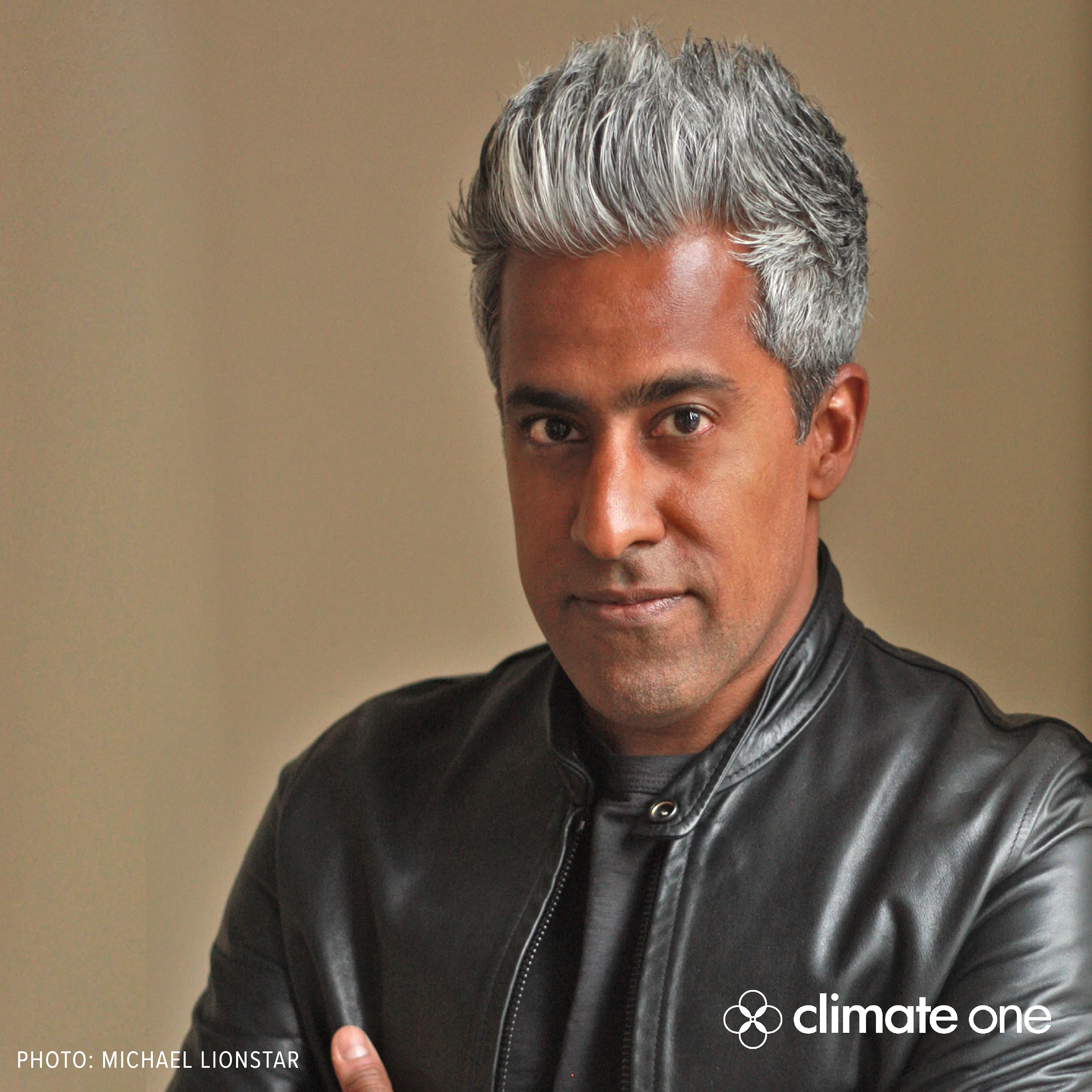
REWIND: Anand Giridharadas: Persuaders in a Hot and Polarized World
In a democracy, meaningful change often requires adapting views and building coalitions. Some believe finding common ground and building rapport is the best way to change minds. Others believe activism and protests are key to raising awareness. Increasingly, however, the acts of listening and persuasion are left out, as each side is convinced that the other is unmovable. Anand Giridharadas is a journalist, columnist, on-air political analyst, and author. His latest book, “The Persuaders: At the Front Lines of the Fight for Hearts, Minds, and Democracy,” explores how the tactics of persuasion can help strengthen democracy and foster positive societal change. Guests: Anand Giridharadas, Journalist, Author, “The Persuaders: At the Front Lines of the Fight for Hearts, Minds, and Democracy” For show notes and related links, visit https://www.climateone.org/watch-and-listen/podcasts Learn more about your ad choices. Visit megaphone.fm/adchoices
Green Energy / Red States
Billions of dollars from the Inflation Reduction Act have started flowing into renewable energy projects and manufacturing. That’s bringing jobs and revenue back to the country and to some areas abandoned by the oil, coal and gas industries. Despite the massive investments in their districts, some Republican politicians aren’t fans of the green energy companies moving into their backyards and are doing everything they can to repeal the Inflation Reduction Act – putting them at odds with their constituents. How do we advance the clean energy transition when it’s seen as a partisan issue? Guests: Emma Dumain, Reporter, E&E News Heather Reams, President, Citizens for Responsible Energy Solutions Terry Weickum, Mayor, Rawlins WY Learn more about your ad choices. Visit megaphone.fm/adchoices
Law and Oil: Taking Climate Offenders to Court
The last several years have seen a big increase in the number of lawsuits focused on the climate crisis. Some lawsuits challenge governments for their support for fossil fuels and for their failure to take climate action, while other cases target the fossil fuel companies themselves for knowingly misleading the world about the climate disrupting impacts of burning their products. Some of these cases seek monetary damages, others seek to hold governments accountable to their emissions reduction pledges. As more of these cases get their time in court, how powerful can litigation be in forcing action around the climate emergency? Guests: Delta Merner, Lead Scientist, Science Hub for Climate Litigation, Union of Concerned Scientists Korey Silverman-Roati, Senior Fellow, Sabin Center for Climate Change Law, Columbia Law School Lucy Maxwell, Co-Director, Climate Litigation Network, Urgenda Foundation For show notes and related links, visit https://www.climateone.org/watch-and-listen/podcasts Learn more about your ad choices. Visit megaphone.fm/adchoices
Peter Gleick on Water Poverty, Conflict, and a Hope for the Future
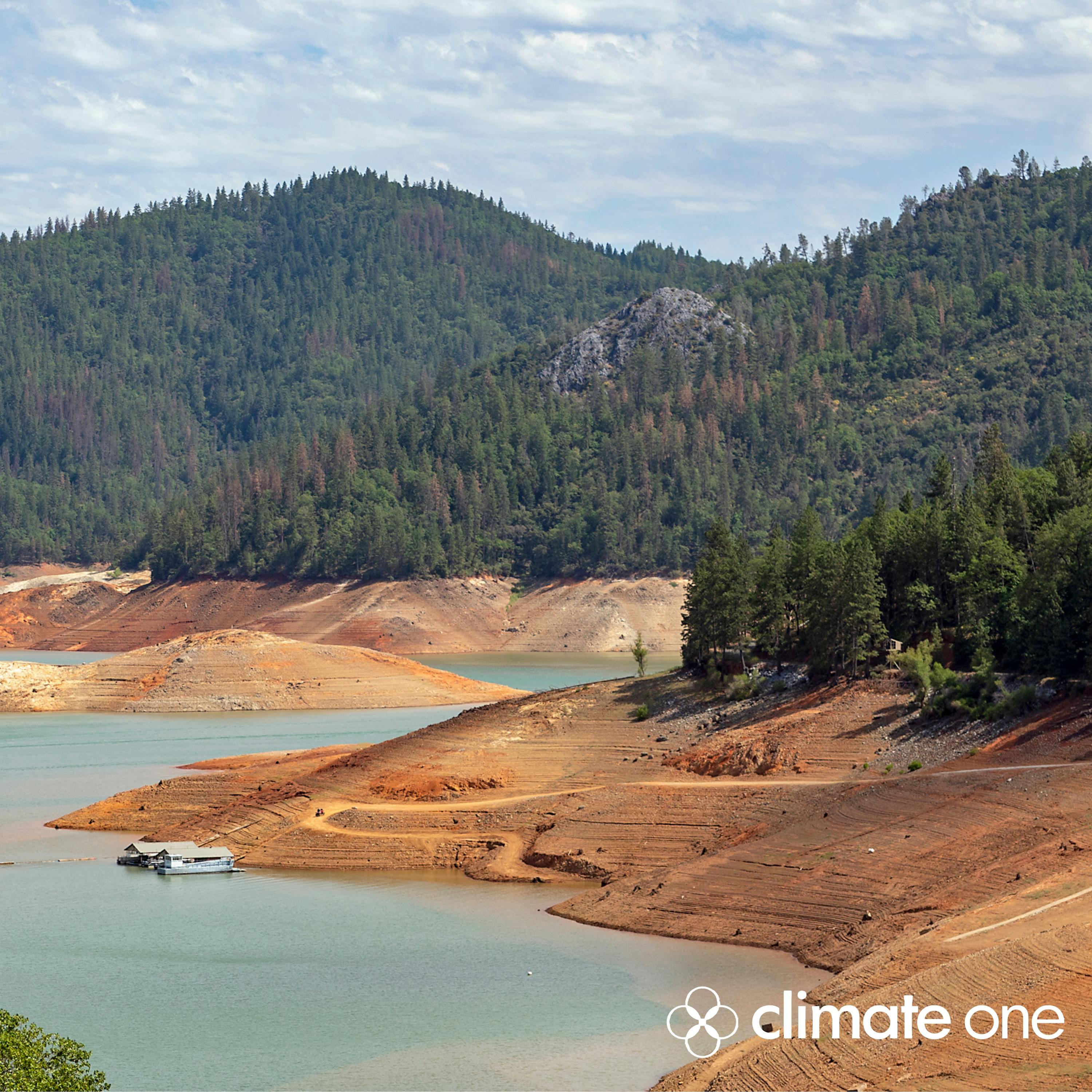
No elemental force has done more to shape life on this planet than water, from originating the earliest forms of life, to sculpting our landscapes, to determining patterns of human civilization. Humans have tried to control water for thousands of years, and access to this precious resource has caused conflict and also unlikely partnerships. In an era defined by climate disruption, the control, access, and quality of water will continue to determine our ability to survive and thrive. How can we ensure a future where clean water exists for all who need it – including the ecosystems we depend on – and navigate the challenges of too little or too much? Guests: Peter Gleick, co-founder, The Pacific Institute; author, “The Three Ages of Water” Contributor: Luke Runyon, Managing Editor & Reporter, Colorado River Basin, KUNC Radio For show notes and related links, visit https://www.climateone.org/watch-and-listen/podcasts Learn more about your ad choices. Visit megaphone.fm/adchoices
Cory Booker: Taking on Big Ag & Going Big on Climate
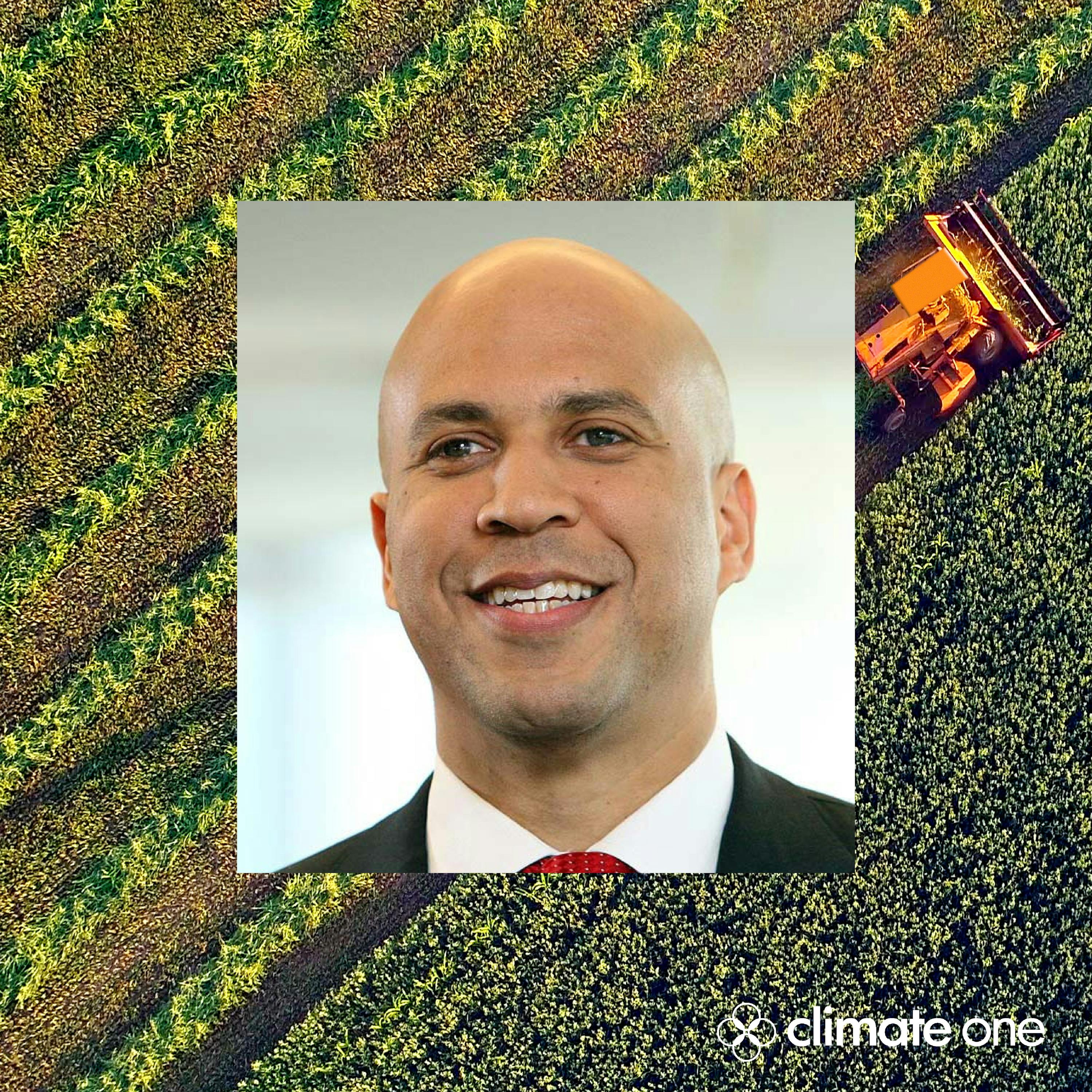
Our food and agricultural systems are helping fuel the climate emergency. But climate isn’t the only harm; these systems also impact local economies, human dignity, and animal welfare. The upcoming Farm Bill presents an opportunity to infuse more climate-smart practices in American agriculture, which accounts for about 10% of U.S. greenhouse gas emissions. But doing so involves confronting industrial practices that focus on short-term gains and commodity subsidies that have deep support in both parties. Senator Cory Booker has a plan to address our broken food system. He introduced legislation that would challenge large industrial beef and pork packagers and tilt the balance of power in our industrial agriculture system, giving family farmers, ranchers, and workers a better deal. But what chance do these elements have of passage? And what other options are there for decreasing the concentration of power in Big Ag? Guest: Cory Booker United States Senator, New Jersey Contributor: Elizabeth Rembert For show notes and related links, visit our website. Learn more about your ad choices. Visit megaphone.fm/adchoices
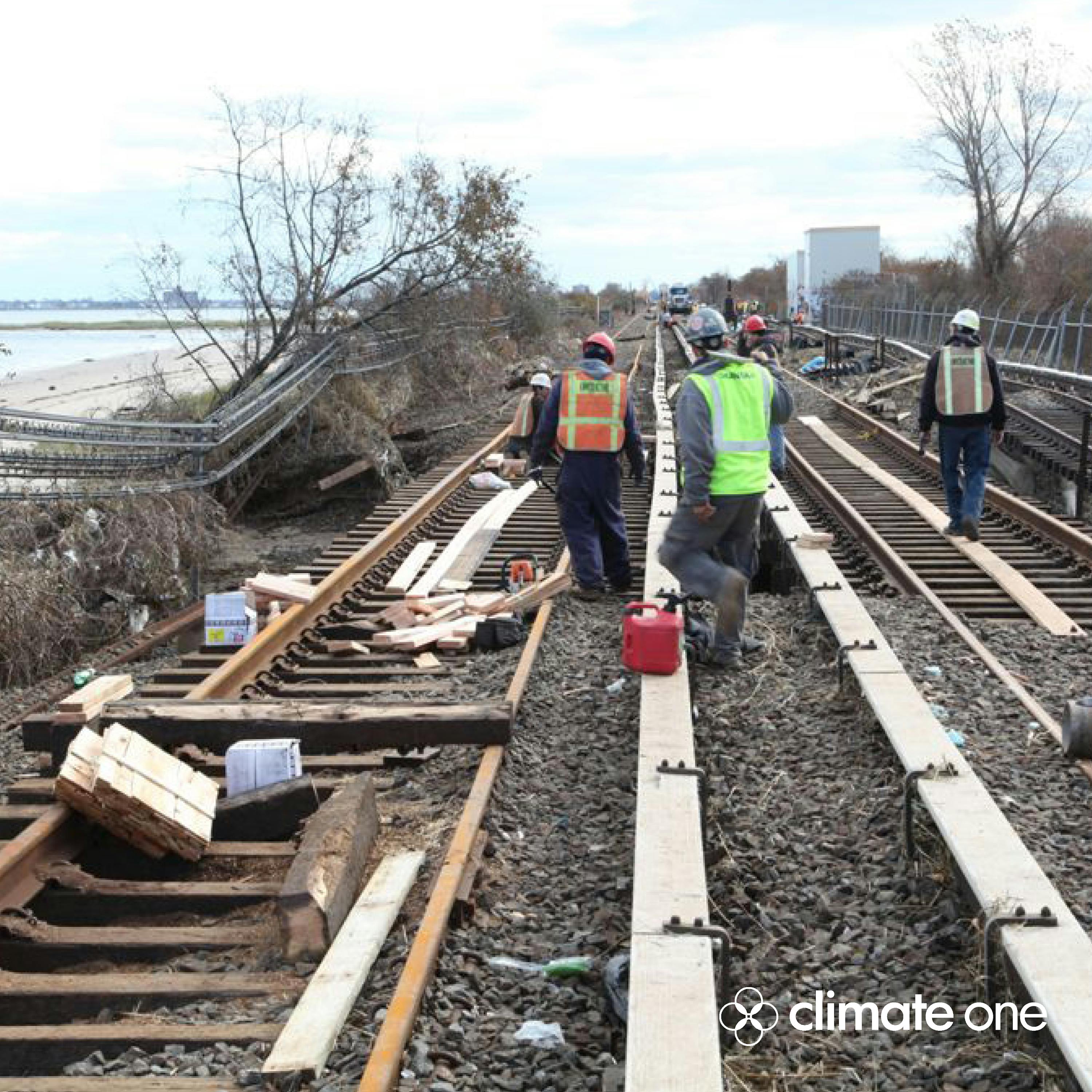
REWIND: Saket Soni on the People Who Make Disaster Recovery Possible
Who cleans up and rebuilds our communities after floods, fires, and hurricanes? COVID redefined America's definition of “essential workers,” but many who help communities recover from climate disasters remain underpaid and overlooked. In 2006, labor organizer Saket Soni got an anonymous call from an Indian migrant worker in Mississippi who had scraped together $20,000 to apply for the “opportunity” to rebuild oil rigs after Hurricane Katrina. The caller was only one of hundreds lured into Gulf Coast labor camps, surrounded by barbed wire, and watched by armed guards. Since then, the frequency and intensity of climate-related disasters has only increased – and disaster recovery has become big business. How are the lives of people displaced by disasters intertwined with those helping to rebuild? Guests: Saket Soni, Founder and Director, Resilience Force Daniel Castellanos, Director Of Workforce Engagement, Resilience Force For show notes and related links, visit https://www.climateone.org/watch-and-listen/podcasts Learn more about your ad choices. Visit megaphone.fm/adchoices
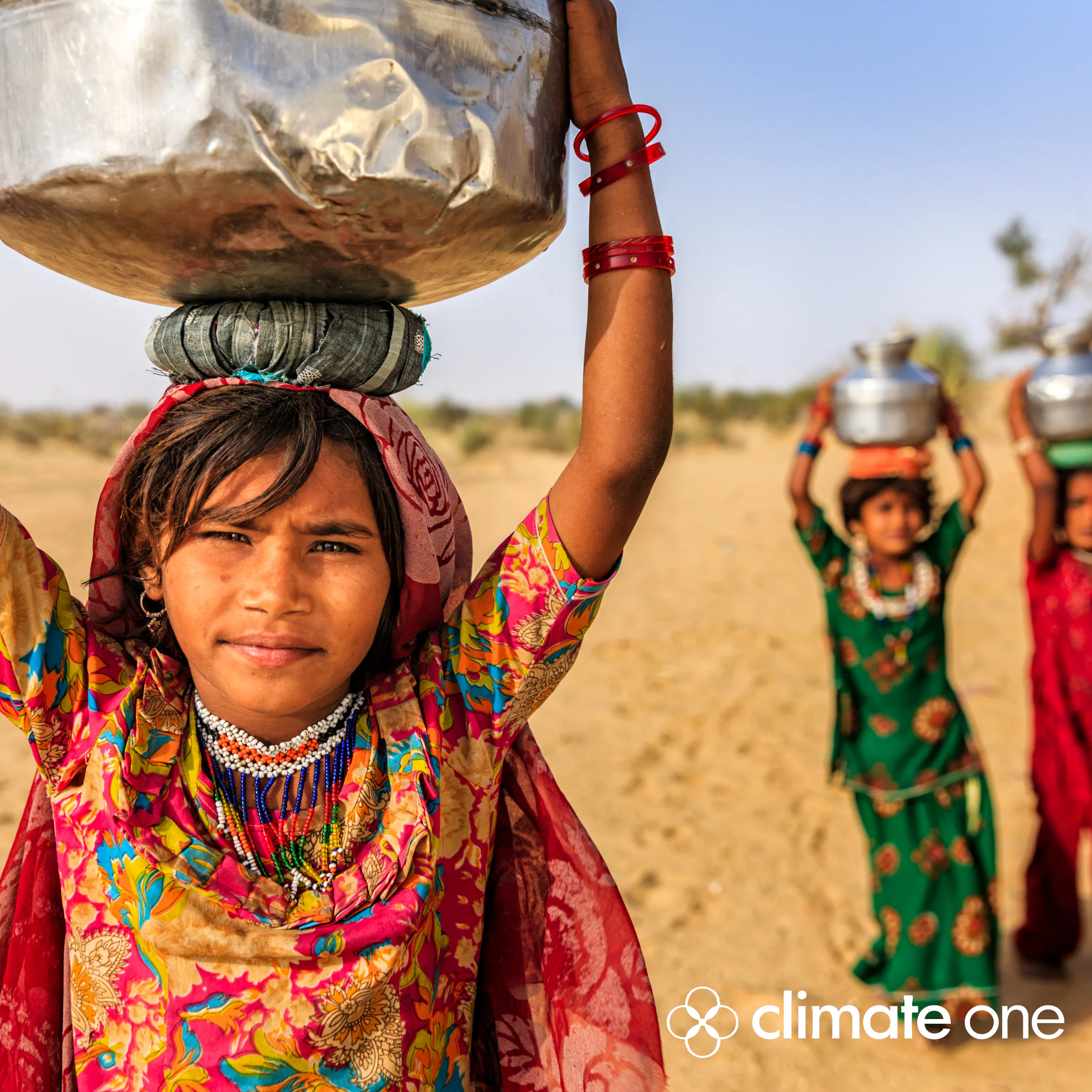
Killer Heat: Confronting Disproportionate Impacts on Women and Girls
Extreme heat kills more people per year than any other climate disaster. It preys on the poor, exacerbates racial inequalities, and there is a growing body of evidence that shows women and girls are increasingly susceptible to heat-health effects. Globally, women and girls represent 80% of climate refugees. They are more likely to be displaced, suffer violence and die in natural disasters. As temperatures rise, children’s test scores decrease, gender violence increases, and miscarriage rates go up. But preventing heat deaths is possible. From Europe to Africa, Chief Heat Officers throughout the world are implementing projects to make cities more climate-adaptive. Guests: Kathy Baughman McLeod, Director, Adrienne Arsht-Rockefeller Foundation Resilience Center; Senior VP, Atlantic Council Eleni Myrivili, Global Chief Heat Officer, UN Habitat Eugenia Kargbo, Chief Heat Officer, Freetown, Sierra Leone Freelance piece from Hellen Kabahukya on mud wattle construction in Uganda For show notes and related links, visit our website. Learn more about your ad choices. Visit megaphone.fm/adchoices

Bringing Biodiversity Back from the Breaking Point
Land use, pollution and the climate crisis are driving what may be the largest mass extinction event since the dinosaurs. The World Wildlife Fund estimates that the planet has seen an average 68% drop in mammal, bird, fish, reptile and amphibian populations since 1970. In order to help address species collapse, over 190 countries – signatories to the United Nations Framework Convention on Biodiversity – recently agreed to an ambitious new plan, called 30x30, which aims to conserve 30% of the world’s land and waters by 2030. Will the framework be enough to bring biodiversity back from the breaking point? This episode is supported in part by Resources Legacy Fund. Guests: Tanya Sanerib, International Legal Director, Center for Biological Diversity Ian Urbina, Director and Founder, The Outlaw Ocean Project Jennifer Tauli Corpuz, Managing Director of Policy, Nia Tero For show notes and related links, visit ClimateOne.org. Learn more about your ad choices. Visit megaphone.fm/adchoices
Naomi Oreskes, David Gelles and The Myth of Free Markets
Many on the left say that the growing climate crisis is the inevitable result of unbridled capitalism – industries seeking profits above all else. In “The Big Myth,” Naomi Oreskes (who brought us “Merchants of Doubt”) points to a concerted effort from American business groups to propagate the myth that only markets free of government regulation can generate prosperity and protect political freedom. “If we actually had appropriate regulations, appropriate rules of the road, we wouldn't be in this position of having to beg corporate leaders not to destroy the planet,” Oreskes says. This myth has grown so pervasive that American citizens now put more faith in CEOs than in religious leaders, according to David Gelles, author of “The Man Who Broke Capitalism.” What should be done to change the narrative? Guests: Naomi Oreskes, Professor of the History of Science, Harvard David Gelles, Reporter, The New York Times Kate Khatib, Co-Director, Seed Commons For show notes and related links, visit https://www.climateone.org/watch-and-listen/podcasts Learn more about your ad choices. Visit megaphone.fm/adchoices
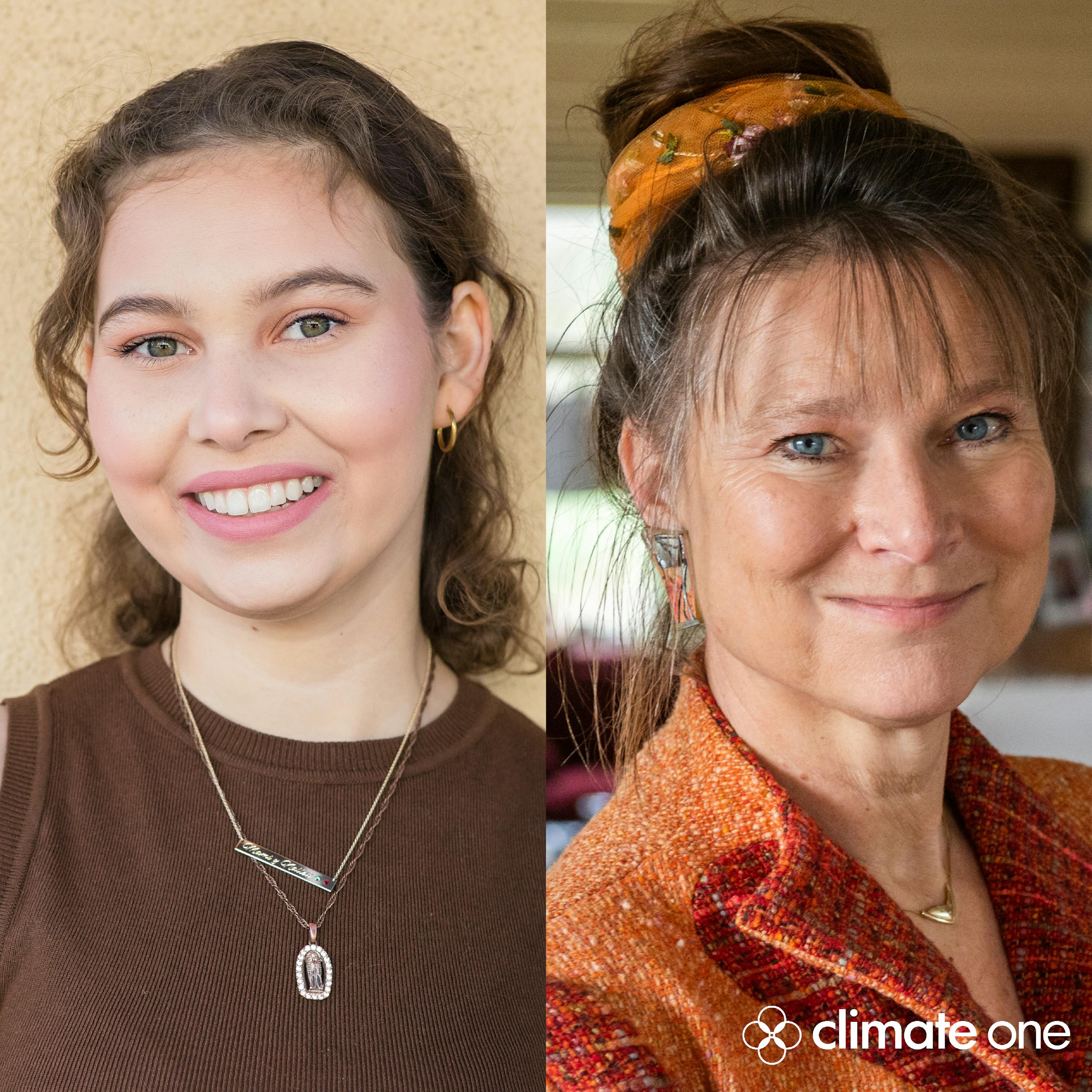
Two Heroes Challenging the Powerful
Making the necessary changes to address climate disruption will take massive collective action. But sometimes, a single individual can make an extraordinary difference. At age nine, Nalleli Cobo, suffering headaches, heart palpitations, nosebleeds, and body spasms, became an activist, driven to fighting to shut down the local oil well responsible for her ailments. Separately, Marjan Minnesma brought a historic lawsuit holding the Dutch government accountable for its failure to protect its citizens from climate change. For these activists, addressing climate disruption isn’t just about preventing future harm, it’s about instigating change now. Guests: Nalleli Cobo, Cofounder, People Not Pozos Marjan Minnesma, Founder, Urgenda Foundation For show notes and related links, visit ClimateOne.org. Learn more about your ad choices. Visit megaphone.fm/adchoices
Amy Westervelt on Drilling, Denial and Disinformation
Amy Westervelt has made a career out of exploring the underbelly of the oil industry through complex and compelling storytelling. Through her investigative series Drilled, including her latest season Light Sweet Crude, focused on the new wave of oil colonialism, Westervelt dives deep into the true crimes of the fossil fuel industry’s biggest players, including their misinformation and PR campaigns about the climate emergency, their unfair dealing and record of environmental disasters. Her narrative podcasts shine a light on stories oil companies would rather keep in the dark, and on those individuals who try to hold them accountable. Guest: Amy Westervelt, Investigative Journalist; Executive Producer, Critical Frequency Podcast Network For show notes and related links, visit https://www.climateone.org/watch-and-listen/podcasts Learn more about your ad choices. Visit megaphone.fm/adchoices
Get Up, Stand Up: What Actions Move the Needle?
From the Boston Tea Party to the Civil Rights Movement to Black Lives Matter, activists have long sought to bring pressing issues into the public consciousness. Climate activism is no different. This past Earth Day spawned a new ripple of climate activism. Activists protested at the headquarters of BlackRock in New York City, smeared paint on the casing around an Edgar Degas statue and even tried to block the entrance of the White House Correspondents dinner in DC. But that’s not the only style of activism that’s happening. Some are working from within big institutions to effect change. So what actions really move the needle? Guests: Dana Fisher, Professor of Sociology, University of Maryland Rose Abramoff, Earth Scientist and Climate Activist Ilana Cohen, Lead Organizer, Fossil Fuel Divest Harvard For show notes and related links, visit ClimateOne.org. Learn more about your ad choices. Visit megaphone.fm/adchoices
Lights, Camera, Inaction: Where is Climate’s Starring Role?
Hollywood has been slow to include climate in its stories. Executives fear it won’t sell – that it’s too overwhelming or depressing. Apple TV+ has just released the series Extrapolations, which revolves entirely around the climate crisis. But it’s an outlier. We ask writer, producer and director Scott Z. Burns – who also worked on the films Contagion and Al Gore’s An Inconvenient Truth – and Anna Jane Joyner of the climate story consultancy Good Energy about why climate doesn’t play a more prominent role in scripted entertainment. Guests: Scott Z. Burns, Writer, Director, Producer Anna Jane Joyner, Founder and CEO, Good Energy For show notes and related links, visit https://www.climateone.org/watch-and-listen/podcasts Learn more about your ad choices. Visit megaphone.fm/adchoices
Missed Connections: Modernizing Our Multiple Grids
Thousands of renewable energy projects are ready to be built and start producing fossil-free power, but they’re stuck in a long limbo for one essential piece of the puzzle: getting connected to the grid. A slow and inefficient federal permitting process and insufficient transmission capability are prohibiting renewable energy projects from going online. To make matters even more difficult, the U.S. lacks a centralized grid. That means adding layers of complexity to an already slow process. The Biden administration is focused on streamlining the permitting process, boosting funding and helping navigate this new energy future. What will it take to modernize our multiple grids? Guests: Pat Wood III, CEO, Hunt Energy Network Jennifer Gardner, Vice Chair, Western Energy Imbalance Market José Zayas, Executive Vice President of Policy and Programs, American Council on Renewable Energy L. Michelle Moore, CEO, Groundswell For show notes and related links, visit https://www.climateone.org/watch-and-listen/podcasts Learn more about your ad choices. Visit megaphone.fm/adchoices