
Books & Writers • The Creative Process: Novelists, Screenwriters, Playwrights, Poets, Non-fiction Writers & Journalists Talk Writing, Life & Creativity
309 episodes — Page 4 of 7

Democracy at a Crossroads: Exploring Modern Political Challenges w/ Philosopher ARASH ABIZADEH
How is economic inequality undermining our democratic systems? In what ways is social media reshaping political landscapes and democracy? Can we design political institutions that adapt to rapid social and technological changes while remaining stable? How is journalism critical for the health of our democracies?Arash Abizadeh is the R.B. Angus Professor of Political Science at McGill University. His research has focused on democratic theory, including topics such as immigration and border control. Abizadeh also specializes in 17th and 18th century philosophy and has recently published the book Hobbes and the Two Faces of Ethics. He is currently working on a book about social and political power and is the Associate Editor of Free & Equal: a Journal of Ethics and Public Affairs.“There is a tremendous tension between healthy democracy and deep economic inequalities. I don't think that, in the long run, democracies can survive in a healthy way unless we address the problem of economic inequalities. If we have individuals who are living day to day, on the one hand, and we have other individuals who are billionaires in our societies, on the other hand, it will be very difficult for us to have a genuine democracy.”https://abizadeh.wixsite.com/arashwww.cambridge.org/core/books/hobbes-and-the-two-faces-of-ethics/B565348CE9B53945F4F962784A5842C2https://freeandequaljournal.orgwww.creativeprocess.infowww.oneplanetpodcast.orgIG www.instagram.com/creativeprocesspodcast
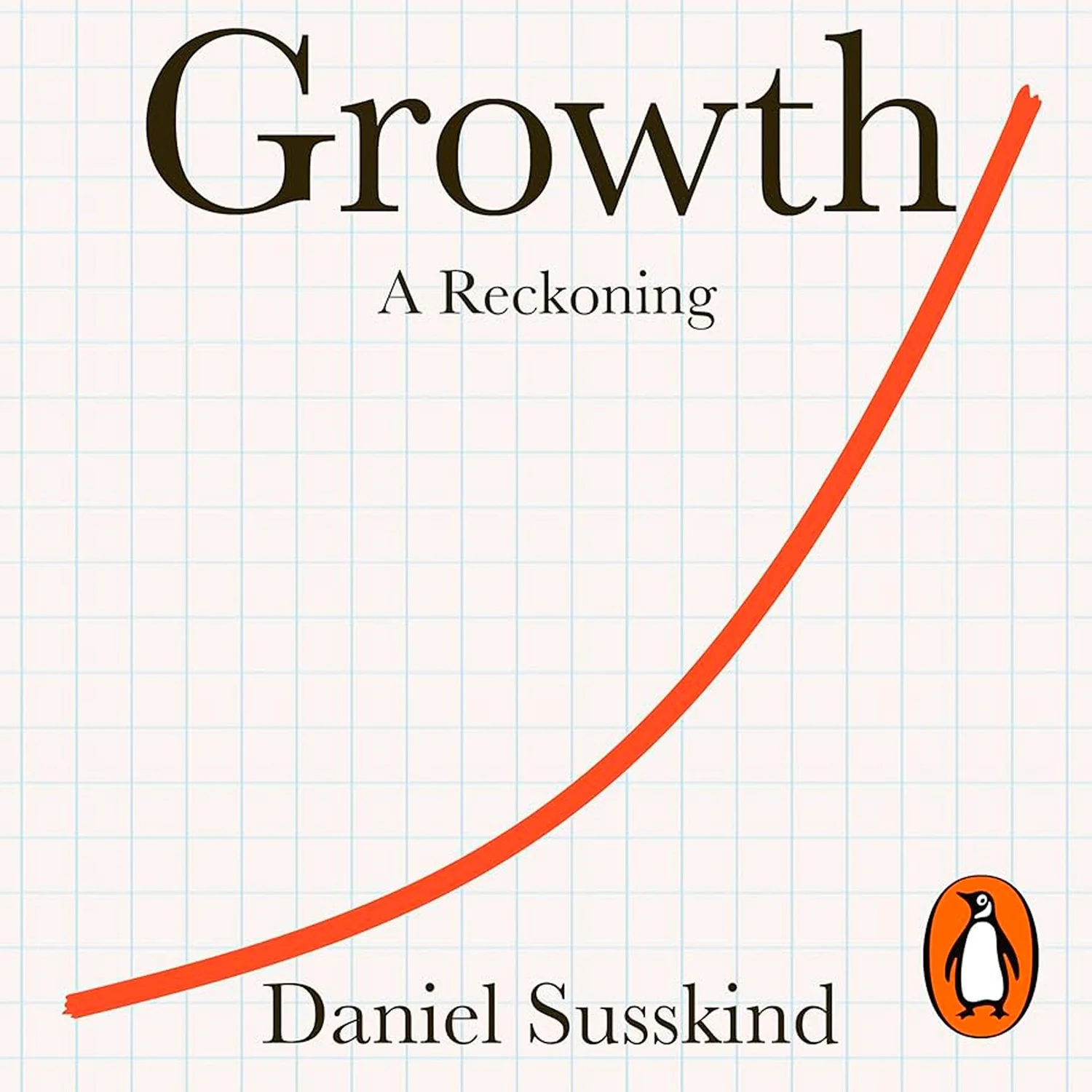
The Growth Dilemma: Balancing Progress & Sustainability w/ Economist DANIEL SUSSKIND - Highlights
“We have a choice to change the nature of growth. How we can have growth that is more respectful of place, doesn’t cause as much damage to the environment, doesn't lead to as large inequalities in society, doesn’t disrupt politics, doesn't undermine the availability of good work? We ought to pursue this morally enriched GDP measure which better reflects what we really value and care about as a society.”Daniel Susskind is a Research Professor in Economics at King's College London and a Senior Research Associate at the Institute for Ethics in AI at Oxford University. He is the author of A World without Work and co-author of the bestselling The Future of the Professions. Previously, he worked in various roles in the British Government - in the Prime Minister’s Strategy Unit, in the Policy Unit in 10 Downing Street, and in the Cabinet Office. His latest book is Growth: A Reckoning.www.danielsusskind.comwww.penguin.co.uk/books/446381/growth-by-susskind-daniel/9780241542309www.creativeprocess.infowww.oneplanetpodcast.orgIG www.instagram.com/creativeprocesspodcast
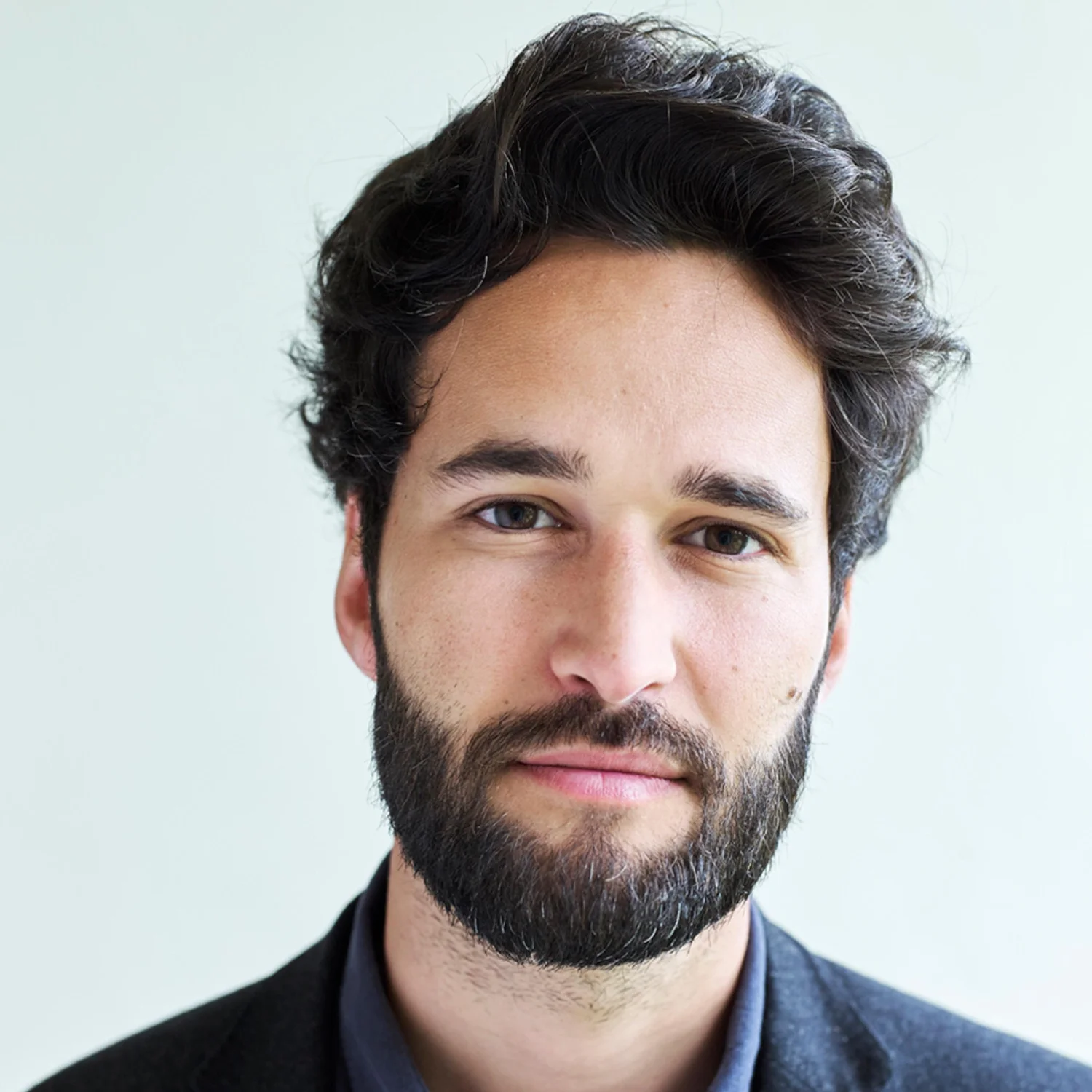
Growth: A Reckoning with Economist DANIEL SUSSKIND
How can we look beyond GDP and develop new metrics that balance growth with human flourishing and environmental well-being? How can we be more engaged global citizens? In this age of AI, what does it really mean to be human? And how are our technologies transforming us?Daniel Susskind is a Research Professor in Economics at King's College London and a Senior Research Associate at the Institute for Ethics in AI at Oxford University. He is the author of A World without Work and co-author of the bestselling The Future of the Professions. Previously, he worked in various roles in the British Government - in the Prime Minister’s Strategy Unit, in the Policy Unit in 10 Downing Street, and in the Cabinet Office. His latest book is Growth: A Reckoning.“We have a choice to change the nature of growth. How we can have growth that is more respectful of place, doesn’t cause as much damage to the environment, doesn't lead to as large inequalities in society, doesn’t disrupt politics, doesn't undermine the availability of good work? We ought to pursue this morally enriched GDP measure which better reflects what we really value and care about as a society.”www.danielsusskind.comwww.penguin.co.uk/books/446381/growth-by-susskind-daniel/9780241542309www.creativeprocess.infowww.oneplanetpodcast.orgIG www.instagram.com/creativeprocesspodcast

Assembling Tomorrow: A Guide to Designing a Thriving Future - SCOTT DOORLEY & CARISSA CARTER - Highlights
“Today, someone is putting the finishing touches on a machine- learning algorithm that will change the way you relate to your family. Someone is trying to design a way to communicate with animals in their own language. Someone is designing a gene that alters bacteria to turn your poop bright blue when it’s time to see the doctor. Someone is cleaning up the mess someone else left behind seventy years ago yesterday. Today, someone just had an idea that will end up saving one thing while it harms another…To be a maker in this moment— to be a human today— is to collaborate with the world. It is to create and be created, to work and be worked on, to make and be made. To be human is to tinker, create, fix, care, and bring new things into the world. It is to design. You— yes, you!— might design products or policy, services or sermons, production lines or preschool programs. You might run a business, make art, or participate in passing out meals to the poor. You may write code or pour concrete, lobby for endangered species legislation or craft cocktails. Wherever you fit in, you are part of shaping the world. This is design work.”– Assembling TomorrowA Guide to Designing a Thriving FutureScott Doorley is the Creative Director at Stanford's d. school and co author of Make Space. He teaches design communication and his work has been featured in museums and architecture and urbanism and the New York Times. Carissa Carteris the Academic Director at Stanford's d. schooland author of The Secret Language of Maps. She teaches courses on emerging technologies and data visualization and received Fast Company and Core 77 awards for her work on designing with machine learning and blockchain. Together, they co authored Assembling Tomorrow: A Guide to Designing a Thriving Future.www.scottdoorley.comwww.snowflyzone.comhttps://dschool.stanford.edu/www.penguinrandomhouse.com/books/623529/assembling-tomorrow-by-scott-doorley-carissa-carter-and-stanford-dschool-illustrations-by-armando-veve/www.creativeprocess.infowww.oneplanetpodcast.orgIG www.instagram.com/creativeprocesspodcast

Can Design Save the World? - SCOTT DOORLEY & CARISSA CARTER - Co-authors of Assembling Tomorrow - Directors of Stanford’s d.School
How can we design and adapt for the uncertainties of the 21st century? How do emotions shape our decisions and the way we design the world around us?Scott Doorley is the Creative Director at Stanford's d. school and co author of Make Space. He teaches design communication and his work has been featured in museums and architecture and urbanism and the New York Times. Carissa Carter is the Academic Director at Stanford's d. school and author of The Secret Language of Maps. She teaches courses on emerging technologies and data visualization and received Fast Company and Core 77 awards for her work on designing with machine learning and blockchain. Together, they co authored Assembling Tomorrow: A Guide to Designing a Thriving Future.“Today, someone is putting the finishing touches on a machine- learning algorithm that will change the way you relate to your family. Someone is trying to design a way to communicate with animals in their own language. Someone is designing a gene that alters bacteria to turn your poop bright blue when it’s time to see the doctor. Someone is cleaning up the mess someone else left behind seventy years ago yesterday. Today, someone just had an idea that will end up saving one thing while it harms another…To be a maker in this moment— to be a human today— is to collaborate with the world. It is to create and be created, to work and be worked on, to make and be made. To be human is to tinker, create, fix, care, and bring new things into the world. It is to design. You— yes, you!— might design products or policy, services or sermons, production lines or preschool programs. You might run a business, make art, or participate in passing out meals to the poor. You may write code or pour concrete, lobby for endangered species legislation or craft cocktails. Wherever you fit in, you are part of shaping the world. This is design work.”– Assembling TomorrowA Guide to Designing a Thriving Futurewww.scottdoorley.comwww.snowflyzone.comhttps://dschool.stanford.edu/www.penguinrandomhouse.com/books/623529/assembling-tomorrow-by-scott-doorley-carissa-carter-and-stanford-dschool-illustrations-by-armando-veve/www.creativeprocess.infowww.oneplanetpodcast.orgIG www.instagram.com/creativeprocesspodcastImage credit: Patrick Beaudouin

Tell Me Lies w/ Creator, Writer, Exec. Producer MEAGHAN OPPENHEIMER
What is love? How do the friendships and relationships we have early in our lives affect us for years to come?Meaghan Oppenheimer is a screenwriter, executive producer, and showrunner who tells stories driven by flawed, deeply human characters and the relationships between them. She’s behind Hulu’s drama series Tell Me Lies, starring Grace Van Patten and Jackson White and adapted from Carola Lovering’s novel of the same name. Her earlier projects include the 2015 film We Are Your Friends, starring Zac Efron as a passionate young DJ, and the 2018 drama series Queen America, set in Oppenheimer’s hometown of Tulsa, Oklahoma and starring Catherine Zeta-Jones. Season 2 of Tell Me Lies will premiere September 4th on Hulu. Oppenheimer is also currently developing the upcoming Hulu show Second Wife, to star Tom Ellis and Emma Roberts.“Often when people write or make movies about romances with young adults, I think they are very flippant about it and don't take it seriously. But I think that those friendships and romantic relationships are some of the most important ones because they really set the stage for the rest of our lives. If your first relationship is incredibly toxic and damaging, it can take you years to figure out that that's not normal, and that that's not actually how relationships are meant to be.”www.creativeprocess.infowww.oneplanetpodcast.orgIG www.instagram.com/creativeprocesspodcast

Was Stanford Firing 23 Lecturers in Creative Writing Really Necessary?
Recently, twenty-three lecturers in the highly successful Creative Writing program at Stanford were summoned to a Zoom meeting where they were first praised, and then summarily fired. One of the most surprising aspects of this purge is the fact that it was carried out not by top-tier university administrators, but by tenure-track faculty in the program. It was they who decided to brutally terminate their colleagues. On this episode of the Speaking Out of Place podcast Professor David Palumbo-Liu speaks with two of the lecturers who have been told they will leave Stanford in nine months, and one of their students, a published novelist. They explain the devastating nature of this act and share statistics and histories that show this was not at all necessary. Expediency for senior faculty trumped the survival of a carefully developed and nurtured community of creative writers.Here is the link to a petition we urge our listeners to sign and share as widely as possible to support this program, and these talented and devoted teachers.Sarah Frisch is a former Wallace Stegner Fellow and current Lecturer in Stanford's Creative Writing Program. Her work has been published in The Paris Review, the VQR, and The New England Review. She’s won a Pushcart Prize and an Elizabeth George Foundation Grant for fiction and has been a finalist for the National Magazine Award. She holds an MFA in Fiction from Washington University in St. Louis.Malavika Kannan is a queer fiction writer who graduated from Stanford University in 2024 with a minor in Creative Writing, where she served as the Creative Writing peer advisor. Her work appears in Washington Post, Teen Vogue, and elsewhere and her YA novel was published by Little & Brown in 2023. From the Chappell-Lougee and Major Grants to the IDA fellowship and the Honors in the Arts program, Malavika feels thankful for the many opportunities at Stanford to nurture her craft and all the people who supported her. Malavika feels very grateful to her mentor Nina Schloesser Tarano, a Jones Lecturer, for all her support.Nina Schloesser Tárano was born and grew up in Guatemala City. She received her MFA from Columbia University. Her work has appeared in Fence and The New Inquiry Magazine. She was a Wallace Stegner Fellow in Fiction 2010-2012, and has been a lecturer in the Stanford Creative Writing Program since 2012.www.palumbo-liu.comhttps://speakingoutofplace.comhttps://twitter.com/palumboliu?s=20www.instagram.com/speaking_out_of_place

How Toxic Relationships Shape Us - MEAGHAN OPPENHEIMER - Highlights
“Often when people write or make movies about romances with young adults, I think they are very flippant about it and don't take it seriously. But I think that those friendships and romantic relationships are some of the most important ones because they really set the stage for the rest of our lives. If your first relationship is incredibly toxic and damaging, it can take you years to figure out that that's not normal, and that that's not actually how relationships are meant to be.”Meaghan Oppenheimer is a screenwriter, executive producer, and showrunner who tells stories driven by flawed, deeply human characters and the relationships between them. She’s behind Hulu’s drama series Tell Me Lies, starring Grace Van Patten and Jackson White and adapted from Carola Lovering’s novel of the same name. Her earlier projects include the 2015 film We Are Your Friends, starring Zac Efron as a passionate young DJ, and the 2018 drama series Queen America, set in Oppenheimer’s hometown of Tulsa, Oklahoma and starring Catherine Zeta-Jones. Season 2 of Tell Me Lies will premiere September 4th on Hulu. Oppenheimer is also currently developing the upcoming Hulu show Second Wife, to star Tom Ellis and Emma Roberts.www.creativeprocess.infowww.oneplanetpodcast.orgIG www.instagram.com/creativeprocesspodcast
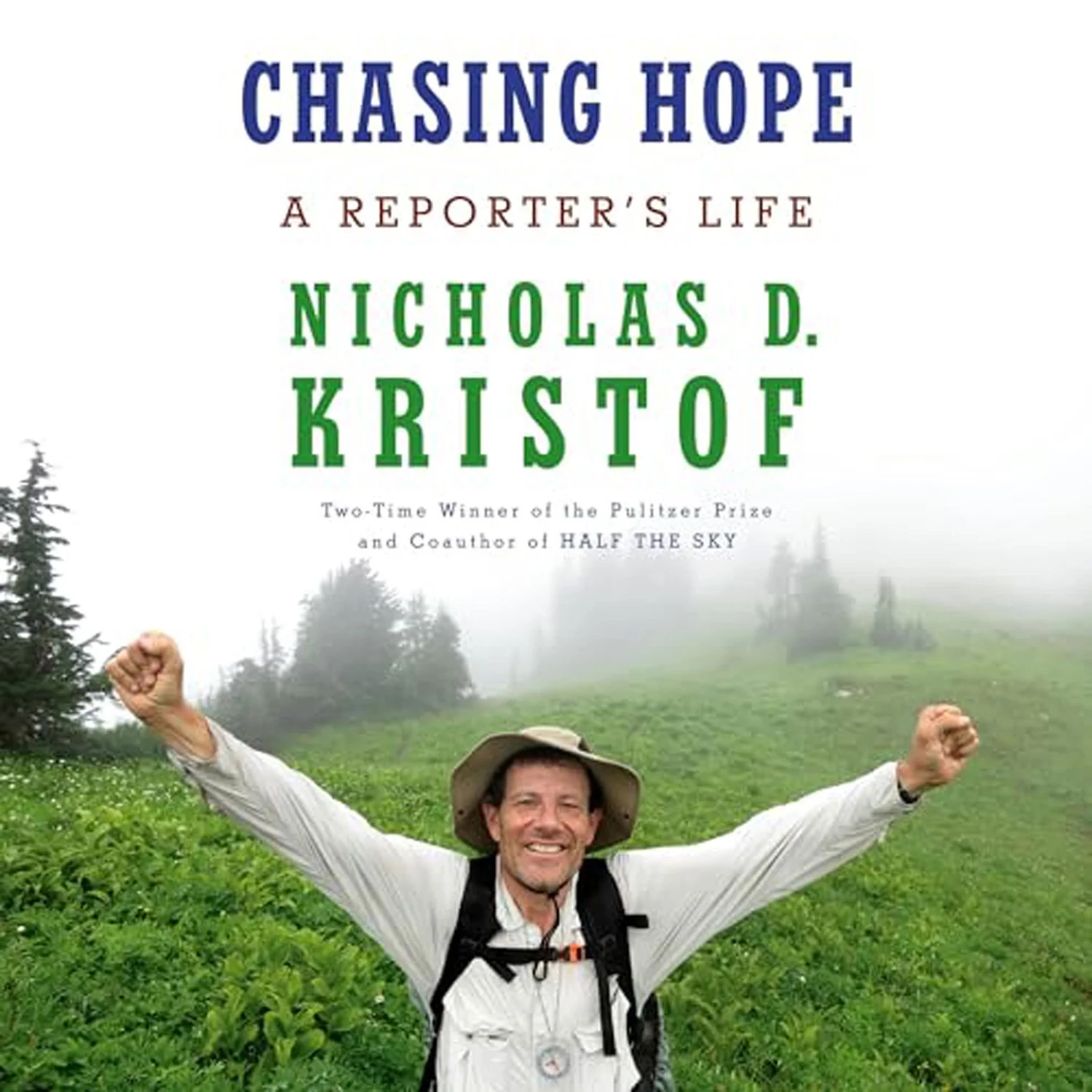
How can journalism make people care about crises & create solutions? - Highlights - NICHOLAS KRISTOF
"I'm trying to get people to care about a crisis in ways that may bring solutions to it. And that's also how I deal with the terror and the fear to find a sense of purpose in what I do. It's incredibly heartbreaking to see some of the things and hear some of the stories, but at the end of the day, it feels like–inconsistently here and there–you can shine a light on problems, and by shining that light, you actually make a difference."Nicholas D. Kristof is a two-time Pulitzer-winning journalist and Op-ed columnist for The New York Times, where he was previously bureau chief in Hong Kong, Beijing, and Tokyo. Kristof is a regular CNN contributor and has covered, among many other events and crises, the Tiananmen Square protests, the Darfur genocide, the Yemeni civil war, and the U.S. opioid crisis. He is the author of the memoir Chasing Hope, A Reporter's Life, and coauthor, with his wife, Sheryl WuDunn, of five previous books: Tightrope, A Path Appears, Half the Sky, Thunder from the East, and China Wakes.www.nytimes.com/column/nicholas-kristofwww.penguinrandomhouse.com/books/720814/chasing-hope-by-nicholas-d-kristofFamily vineyard & apple orchard in Yamhill, Oregon: www.kristoffarms.comwww.creativeprocess.infowww.oneplanetpodcast.orgIG www.instagram.com/creativeprocesspodcast
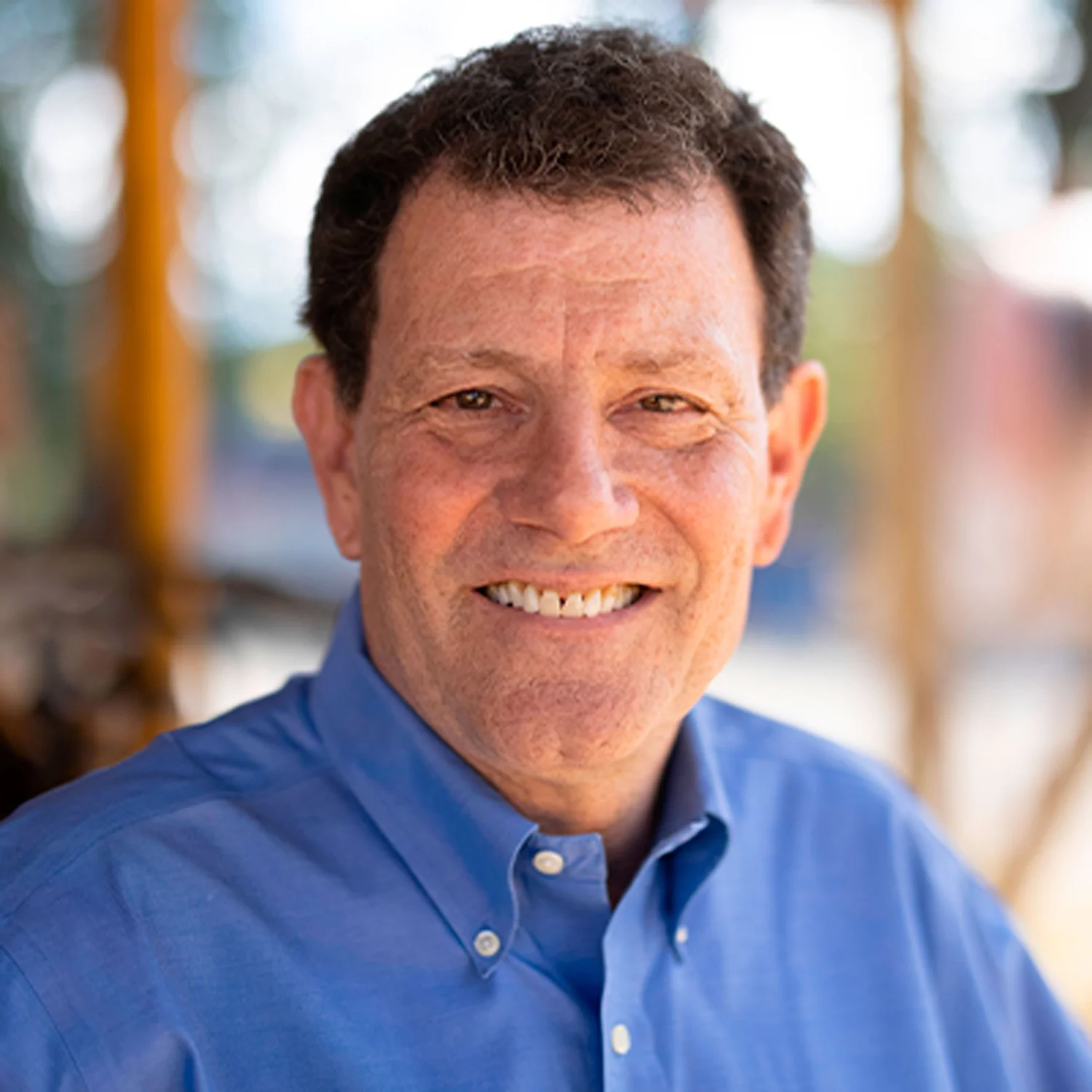
Chasing Hope: A Reporter's Life w/ Pulitzer Prize-winning Journalist NICHOLAS KRISTOF
How can journalism make people care and bring about solutions? What role does storytelling play in shining a light on injustice and crises and creating a catalyst for change?Nicholas D. Kristof is a two-time Pulitzer-winning journalist and Op-ed columnist for The New York Times, where he was previously bureau chief in Hong Kong, Beijing, and Tokyo. Kristof is a regular CNN contributor and has covered, among many other events and crises, the Tiananmen Square protests, the Darfur genocide, the Yemeni civil war, and the U.S. opioid crisis. He is the author of the memoir Chasing Hope, A Reporter's Life, and coauthor, with his wife, Sheryl WuDunn, of five previous books: Tightrope, A Path Appears, Half the Sky, Thunder from the East, and China Wakes."I'm trying to get people to care about a crisis in ways that may bring solutions to it. And that's also how I deal with the terror and the fear to find a sense of purpose in what I do. It's incredibly heartbreaking to see some of the things and hear some of the stories, but at the end of the day, it feels like–inconsistently here and there–you can shine a light on problems, and by shining that light, you actually make a difference."www.nytimes.com/column/nicholas-kristofwww.penguinrandomhouse.com/books/720814/chasing-hope-by-nicholas-d-kristofFamily vineyard & apple orchard in Yamhill, Oregon: www.kristoffarms.comwww.creativeprocess.infowww.oneplanetpodcast.orgIG www.instagram.com/creativeprocesspodcastPhoto credit: David Hume Kennerly

Leaving Eden: To Protect and Manage the Earth w/ Earth Systems Scientist & Author EUAN NISBET
Have we entered what Earth scientists call a “termination event,” and what can we do to avoid the worst outcomes? How can a spiritual connection to nature guide us toward better environmental stewardship? What can ancient wisdom teach us about living harmoniously with the Earth? How have wetlands become both crucial carbon sinks and colossal methane emitters in a warming world?Euan Nisbet is an Emeritus Professor of Earth Sciences at the Royal Holloway University of London. Specializing in methane and its impact on climate change, his research spans Arctic and Tropical Atmospheric Methane budgets. Nisbet led the MOYA project, focusing on global methane emissions using aircraft and ground-based field campaigns in Africa and South America. Born in Germany and raised in Africa, his field work has taken him around the world. He is the author of The Young Earth and Leaving Eden: To Protect and Manage the Earth.“I am a Christian and I have strong Muslim and Jewish friends as well as great respect for Hindu beliefs. I grew up in Southern Africa and I am well aware of the depth of some Indigenous beliefs. I think that having belief systems does give you a very different perspective sometimes. Now, in Christianity, the concept of the shepherd, human beings are here and this is our garden, our garden of Eden, but we have a responsibility. And if we choose to kick ourselves out of the garden, there are consequences. And that's precisely what we are doing. The garden is there, it's lovely, and we can manage it, and it's our job to manage it. We can manage it properly. We can respect it. It's for all creation, and it's very explicit that it involves all Creation. And that's a very fundamental biblical law that you have to respect all Creation. And if you don't do that, then the consequences—you’re basically throwing yourself out of the garden of Eden."https://pure.royalholloway.ac.uk/en/persons/euan-nisbetwww.creativeprocess.infowww.oneplanetpodcast.orgIG www.instagram.com/creativeprocesspodcast

Natural Magic: Emily Dickinson, Charles Darwin, and the Dawn of Modern Science with RENÉE BERGLAND
How do the works of Emily Dickinson and Charles Darwin continue to influence our understanding of nature, ecological interdependence, and the human experience? How does understanding history help us address current social and environmental issues. How can dialogues between the arts and sciences foster holistic, sustainable solutions to global crises?Renée Bergland is a literary critic, historian of science, and educator. As a storyteller, Bergland connects the lives of historical figures to the problems of the present day. As an educator, she emphasizes the interdisciplinary connections between the sciences and humanities. A longtime professor at Simmons University, where she is the Program director of Literature and writing, Bergland has also researched and taught at institutions such as Dartmouth College, Harvard University, and MIT. Bergland’s past published titles include Maria Mitchell and the Sexing of Science: An Astronomer Among the American Romantics and The National Uncanny: Indian Ghosts and American Subjects. Her most recent book, Natural Magic: Emily Dickinson, Charles Darwin, and the Dawn of Modern Science, was published in April of 2024. It explores Dickinson and Darwin’s shared enchanted view of the natural world in a time when poetry and natural philosophy, once freely intertwined, began to grow apart.“One of the poems of Dickinson's that I think explains Darwin the best starts out, ‘There is a flower that bees prefer / and butterflies desire.’ She's talking about the clover, and in that poem she describes the clover and the grass as kinsmen. They're related to each other, but they're contending, she says, for sod and sun. They are competing to see who can get the most soil, the most nutrients, but she calls them ‘sweet litigants for life.’ And that interpretation of Darwinism, where they're sweet and they're struggling, but they're both actually litigants for life, they're both arguing for the biosphere and advocates—that takes us back to the first lines of the poem. ‘There's a flower that bees prefer / and butterflies desire.' The way that the clover and the grass compete is by trying to see who can be more beautiful, who can be more brightly colored, who can smell better, who can lure more pollinators, more insects and birds and collaborate better with them, and have a better chance of surviving. That is certainly a version of survival of the fittest, but it's not a dog eat dog violent version. It's a version where the way you get a generational advantage, and perhaps have more little clovers following in your footsteps, is by collaborating better, by making yourself more beautiful, more alluring, and more inviting, inviting pollinators to work with you. That's straight from Darwin. Darwin's very clear in On the Origin of Species that when he talks about the struggle for life, he's primarily talking about co-adaptation and collaboration between species that can learn to work together. He's the one who actually, as he explains the struggle for life, says it's nothing like two dogs fighting over a bone. That's not what it is. But unfortunately, a lot of that co-adaptation language got lost in the popular imagination. And that's one of the reasons that turning to Dickinson can help us understand—because she so beautifully depicts a Darwinian world where, yes, there's death, but there's more than anything, there's life.”www.reneebergland.comhttps://press.princeton.edu/books/hardcover/9780691235288/natural-magicwww.creativeprocess.infowww.oneplanetpodcast.orgIG www.instagram.com/creativeprocesspodcast

Germany's Postwar Legacy: Lessons for Today's Crises - Highlights - FRANK TRENTMANN
“The bridge between Out of the Darkness and my previous work, which looked at the transformation of consumer culture in the world, is morality. One thing that became clear in writing Empire of Things was that there's virtually no time or place in history where consumption isn't heavily moralized. Our lifestyle is treated as a mirror of our virtue and sins. And in the course of modern history, there's been a remarkable moral shift in the way that consumption used to be seen as something that led you astray or undermined authority, status, gender roles, and wasted money, to a source of growth, a source of self, fashioning the way we create our own identity. In the last few years, the environmental crisis has led to new questions about whether consumption is good or bad. And in 2015, during the refugee crisis when Germany took in almost a million refugees, morality became a very powerful way in which Germans talked about themselves as humanitarian world champions, as one politician called it. I realized that there's many other topics from family, work, to saving the environment, and of course, with regard to the German responsibility for the Holocaust and the war of extermination where German public discourse is heavily moralistic, so I became interested in charting that historical process."What can we learn from Germany's postwar transformation to help us address today's environmental and humanitarian crises? With the rise of populism, authoritarianism, and digital propaganda, how can history provide insights into the challenges of modern democracy?Frank Trentmann is a Professor of History at Birkbeck, University of London, and at the University of Helsinki. He is a prize-winning historian, having received awards such as the Whitfield Prize, Austrian Wissenschaftsbuch/Science Book Prize, Humboldt Prize for Research, and the 2023 Bochum Historians' Award. He has also been named a Moore Scholar at Caltech. He is the author of Empire of Things and Free Trade Nation. His latest book is Out of the Darkness: The Germans 1942 to 2022, which explores Germany's transformation after the Second World War.www.bbk.ac.uk/our-staff/profile/8009279/frank-trentmannwww.penguin.co.uk/authors/32274/frank-trentmann?tab=penguin-bookswww.creativeprocess.infowww.oneplanetpodcast.orgIG www.instagram.com/creativeprocesspodcast

Out of the Darkness: The Germans 1942 to 2022 with FRANK TRENTMANN
What can we learn from Germany's postwar transformation to help us address today's environmental and humanitarian crises? With the rise of populism, authoritarianism, and digital propaganda, how can history provide insights into the challenges of modern democracy?Frank Trentmann is a Professor of History at Birkbeck, University of London, and at the University of Helsinki. He is a prize-winning historian, having received awards such as the Whitfield Prize, Austrian Wissenschaftsbuch/Science Book Prize, Humboldt Prize for Research, and the 2023 Bochum Historians' Award. He has also been named a Moore Scholar at Caltech. He is the author of Empire of Things and Free Trade Nation. His latest book is Out of the Darkness: The Germans 1942 to 2022, which explores Germany's transformation after the Second World War.“The bridge between Out of the Darkness and my previous work, which looked at the transformation of consumer culture in the world, is morality. One thing that became clear in writing Empire of Things was that there's virtually no time or place in history where consumption isn't heavily moralized. Our lifestyle is treated as a mirror of our virtue and sins. And in the course of modern history, there's been a remarkable moral shift in the way that consumption used to be seen as something that led you astray or undermined authority, status, gender roles, and wasted money, to a source of growth, a source of self, fashioning the way we create our own identity. In the last few years, the environmental crisis has led to new questions about whether consumption is good or bad. And in 2015, during the refugee crisis when Germany took in almost a million refugees, morality became a very powerful way in which Germans talked about themselves as humanitarian world champions, as one politician called it. I realized that there's many other topics from family, work, to saving the environment, and of course, with regard to the German responsibility for the Holocaust and the war of extermination where German public discourse is heavily moralistic, so I became interested in charting that historical process."www.bbk.ac.uk/our-staff/profile/8009279/frank-trentmannwww.penguin.co.uk/authors/32274/frank-trentmann?tab=penguin-bookswww.creativeprocess.infowww.oneplanetpodcast.orgIG www.instagram.com/creativeprocesspodcastPhoto credit: Jon Wilson

How Do Utopian Visions Shape Our Reality & Future? - Highlights - S. D. CHROSTOWSA
“I like to think of utopianism as “effective social daydreaming” because utopia is associated with consciously imagining societies. Our imagination is always involved in creating reality. The opposition between the two, reality and the imaginary, is not a stark one; they're porous.”S. D. Chrostowska is professor of humanities at York University, Canada. She is the author of several books, among them Permission, The Eyelid, A Cage for Every Child, and, most recently, Utopia in the Age of Survival: Between Myth and Politics. Her essays have appeared in such venues as Public Culture, Telos, Boundary 2, and The Hedgehog Review. She also coedits the French surrealist review Alcheringa and is curator of the 19th International Exhibition of Surrealism, Marvellous Utopia, which runs from July to September 2024 in Saint-Cirq-Lapopie, France.https://profiles.laps.yorku.ca/profiles/sylwiac/www.sup.org/books/title/?id=33445https://chbooks.com/Books/T/The-Eyelidhttps://ciscm.fr/en/merveilleuse-utopiewww.creativeprocess.infowww.oneplanetpodcast.orgIG www.instagram.com/creativeprocesspodcast

Utopia in the Age of Survival with S. D. CHROSTOWSKA
As Surrealism turns 100, what can it teach us about the importance of dreaming and creating a better society? Will we wake up from the consumerist dream sold to us by capitalism and how would that change our ideas of utopia?S. D. Chrostowska is professor of humanities at York University, Canada. She is the author of several books, among them Permission, The Eyelid, A Cage for Every Child, and, most recently, Utopia in the Age of Survival: Between Myth and Politics. Her essays have appeared in such venues as Public Culture, Telos, Boundary 2, and The Hedgehog Review. She also coedits the French surrealist review Alcheringa and is curator of the 19th International Exhibition of Surrealism, Marvellous Utopia, which runs from July to September 2024 in Saint-Cirq-Lapopie, France.“I like to think of utopianism as “effective social daydreaming” because utopia is associated with consciously imagining societies. Our imagination is always involved in creating reality. The opposition between the two, reality and the imaginary, is not a stark one; they're porous.”https://profiles.laps.yorku.ca/profiles/sylwiac/www.sup.org/books/title/?id=33445https://chbooks.com/Books/T/The-Eyelidhttps://ciscm.fr/en/merveilleuse-utopiewww.creativeprocess.infowww.oneplanetpodcast.orgIG www.instagram.com/creativeprocesspodcast

How can music disrupt oppression & bring about social change? - Highlights - JAKE FERGUSON, ANTHONY JOSEPH & JERMAIN JACKMAN
“I think as humans, we forget. We are often limited by our own stereotypes, and we don't see that in everyone there's the potential for beauty and love and all these things. And I think The Architecture of Oppression, both parts one and two, are really a reflection of all the community and civil rights work that I've been doing for the same amount of time, really - 25 years. And I wanted to try and mix my day job and my music side, so bringing those two sides of my life together. I wanted to create a platform for black artists, black singers, and poets who I really admire. Jermain is somebody I've worked with for probably about six, seven years now. He's also in the trenches of the black civil rights struggle. We worked together on a number of projects, but it was very interesting to then work with Jemain in a purely artistic capacity. And it was a no-brainer to give Anthony a call for this second album because I know of his pedigree, and he's much more able to put ideas and thoughts on paper than I would be able to.”Jake Ferguson is an award-winning musician known for his work with The Heliocentrics and as a solo artist under the name The Brkn Record. Alongside legendary drummer Malcolm Catto, Ferguson has composed two film scores and over 10 albums, collaborating with icons like Archie Shepp, Mulatu Astatke, and Melvin Van Peebles. His latest album is The Architecture of Oppression Part 2. The album also features singer and political activist Jermain Jackman, a former winner of The Voice (2014) and the T.S. Eliot Prize winning poet and musician, Anthony Joseph.www.creativeprocess.infowww.oneplanetpodcast.orgIG www.instagram.com/creativeprocesspodcast

The Architecture of Oppression with JAKE FERGUSON, ANTHONY JOSEPH & JERMAIN JACKMAN
How can music challenge systemic oppression and bring about social change? How can we envision alternative paths while avoiding the pitfalls of past paradigms?Jake Fergusonis an award-winning musician known for his work with The Heliocentrics and as a solo artist under the name The Brkn Record. Alongside legendary drummer Malcolm Catto, Ferguson has composed two film scores and over 10 albums, collaborating with icons like Archie Shepp, Mulatu Astatke, and Melvin Van Peebles. His latest album is The Architecture of Oppression Part 2. The album also features singer and political activist Jermain Jackman, a former winner of The Voice (2014) and the T.S. Eliot Prize winning poet and musician, Anthony Joseph.“I think as humans, we forget. We are often limited by our own stereotypes, and we don't see that in everyone there's the potential for beauty and love and all these things. And I think The Architecture of Oppression, both parts one and two, are really a reflection of all the community and civil rights work that I've been doing for the same amount of time, really - 25 years. And I wanted to try and mix my day job and my music side, so bringing those two sides of my life together. I wanted to create a platform for black artists, black singers, and poets who I really admire. Jermain is somebody I've worked with for probably about six, seven years now. He's also in the trenches of the black civil rights struggle. We worked together on a number of projects, but it was very interesting to then work with Jemain in a purely artistic capacity. And it was a no-brainer to give Anthony a call for this second album because I know of his pedigree, and he's much more able to put ideas and thoughts on paper than I would be able to.”www.creativeprocess.infowww.oneplanetpodcast.orgIG www.instagram.com/creativeprocesspodcast

Climate Change, Mental Health & Fighting for a Better Future - Highlights - CHARLIE HERTZOG YOUNG
“I've been a climate activist since I was about 12 years old. It began with a deep passion for wildlife. I started taking up litter and telling off my schoolmates, eventually I set up a green council when I was about 13 or 14. As I learned more and more about the climate crisis and how sprawling and interconnected it was, not just with nature, but with the oppression that exists within human society, I started getting more involved and impassioned, getting involved in protests, marches. When I was about 15 years old, I helped shut down an airport for a night. I eventually started going to the UN climate talks. I went to Davos and it started to become my everything. I felt like I was doing something meaningful about the crisis, but also felt a sense of deep despair and loss, both from the perspective of the impending collapse of the biosphere and also a deep dislocation from the dominant culture and the consensus reality. I felt like no one else was feeling the sense of urgency and emergency that I felt. I started to get incredibly anxious. In 2019, when I was 27, I jumped off a six storey building. My memory has blacked it out, but I spent a month in a coma and woke up having lost both of my legs. The five years since have been one of not just physical and mental recovery, but also trying to untangle the messy web of causality as to how and why it was that I lost my mind in the way I did. I try to find some of the gifts in that madness, what it was pointing towards in terms of the unbalance of the ecosphere and how human civilization has begun to operate completely out of step with the ecosphere.”Charlie Hertzog Young is a researcher, writer and award-winning activist. He identifies as a “proudly mad bipolar double amputee” and has worked for the New Economics Foundation, the Royal Society of Arts, the Good Law Project, the Four Day Week Campaign and the Centre for Progressive Change, as well as the UK Labour Party under three consecutive leaders. Charlie has spoken at the LSE, the UN and the World Economic Forum. He studied at Harvard, SOAS and Schumacher College and has written for The Ecologist, The Independent, Novara Media, Open Democracy and The Guardian. He is the author of Spinning Out: Climate Change, Mental Health and Fighting for a Better Future.https://charliehertzogyoung.mehttps://footnotepress.com/books/spinning-out/www.creativeprocess.infowww.oneplanetpodcast.orgIG www.instagram.com/creativeprocesspodcast

The Mind, Climate Change & Community Resilience with CHARLIE HERTZOG YOUNG
The planet’s well-being unites us all, from ecosystems to societies, global systems to individual health. How is planetary health linked to mental health?Charlie Hertzog Young is a researcher, writer and award-winning activist. He identifies as a “proudly mad bipolar double amputee” and has worked for the New Economics Foundation, the Royal Society of Arts, the Good Law Project, the Four Day Week Campaign and the Centre for Progressive Change, as well as the UK Labour Party under three consecutive leaders. Charlie has spoken at the LSE, the UN and the World Economic Forum. He studied at Harvard, SOAS and Schumacher College and has written for The Ecologist, The Independent, Novara Media, Open Democracy and The Guardian. He is the author of Spinning Out: Climate Change, Mental Health and Fighting for a Better Future.“I've been a climate activist since I was about 12 years old. It began with a deep passion for wildlife. I started taking up litter and telling off my schoolmates, eventually I set up a green council when I was about 13 or 14. As I learned more and more about the climate crisis and how sprawling and interconnected it was, not just with nature, but with the oppression that exists within human society, I started getting more involved and impassioned, getting involved in protests, marches. When I was about 15 years old, I helped shut down an airport for a night. I eventually started going to the UN climate talks. I went to Davos and it started to become my everything. I felt like I was doing something meaningful about the crisis, but also felt a sense of deep despair and loss, both from the perspective of the impending collapse of the biosphere and also a deep dislocation from the dominant culture and the consensus reality. I felt like no one else was feeling the sense of urgency and emergency that I felt. I started to get incredibly anxious. In 2019, when I was 27, I jumped off a six storey building. My memory has blacked it out, but I spent a month in a coma and woke up having lost both of my legs. The five years since have been one of not just physical and mental recovery, but also trying to untangle the messy web of causality as to how and why it was that I lost my mind in the way I did. I try to find some of the gifts in that madness, what it was pointing towards in terms of the unbalance of the ecosphere and how human civilization has begun to operate completely out of step with the ecosphere.”https://charliehertzogyoung.mehttps://footnotepress.com/books/spinning-out/www.creativeprocess.infowww.oneplanetpodcast.orgIG www.instagram.com/creativeprocesspodcast
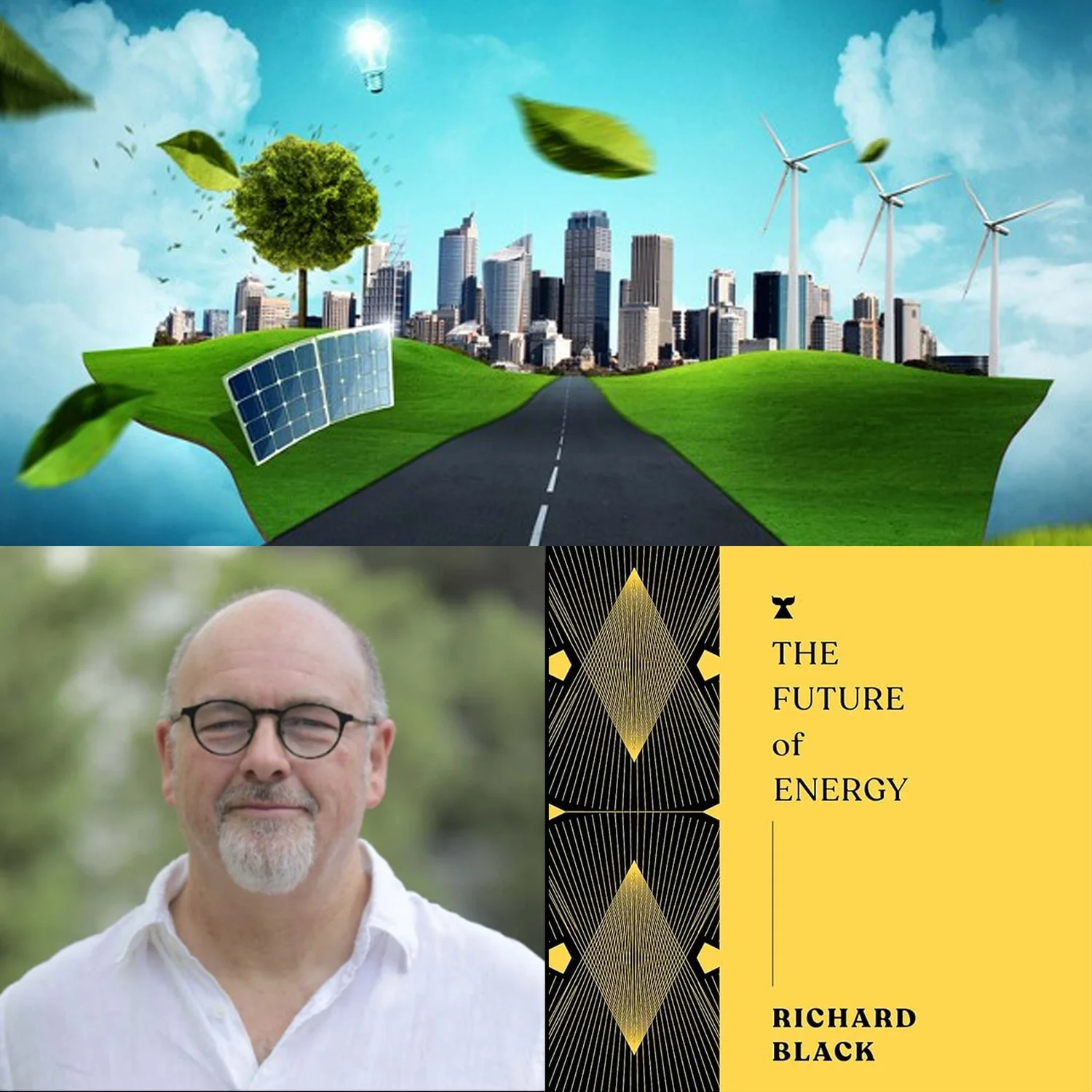
How and when will we transition to a clean energy future? - Highlights - RICHARD BLACK
Richard Black spent 15 years as a science and environment correspondent for the BBC World Service and BBC News, before setting up the Energy & Climate Intelligence Unit. He now lives in Berlin and is the Director of Policy and Strategy at the global clean energy think tank Ember, which aims to accelerate the clean energy transition with data and policy. He is the author of The Future of Energy; Denied:The Rise and Fall of Climate Contrarianism, and is an Honorary Research Fellow at Imperial College London.https://mhpbooks.com/books/the-future-of-energyhttps://ember-climate.org/about/people/richard-blackhttps://ember-climate.orgwww.therealpress.co.uk/?s=Richard+blackwww.creativeprocess.infowww.oneplanetpodcast.orgIG www.instagram.com/creativeprocesspodcast

The Future of Energy - RICHARD BLACK - Director, Policy & Strategy, Ember - Fmr. BBC Environment Correspondent
How and when will we transition to a clean energy future? How will the transition empower individuals and transform global power dynamics? How did China become the world’s first electrostate, leading the drive for renewable energy, and what can we learn from this?Richard Black spent 15 years as a science and environment correspondent for the BBC World Service and BBC News, before setting up the Energy & Climate Intelligence Unit. He now lives in Berlin and is the Director of Policy and Strategy at the global clean energy think tank Ember, which aims to accelerate the clean energy transition with data and policy.He is the author of The Future of Energy; Denied:The Rise and Fall of Climate Contrarianism, and is an Honorary Research Fellow at Imperial College London.https://mhpbooks.com/books/the-future-of-energyhttps://ember-climate.org/about/people/richard-blackhttps://ember-climate.orgwww.therealpress.co.uk/?s=Richard+blackwww.creativeprocess.infowww.oneplanetpodcast.orgIG www.instagram.com/creativeprocesspodcast

Resisting Fascism & Ecological Collapse with Writer-Organizer-Activist CHRIS CARLSSON
In this episode of the Speaking Out of Place podcast Professor David Palumbo-Liu talks with acclaimed author and activist, and San Francisco legend, Chris Carlsson about his new novel, When Shells Crumble. It begins in December 2024, when the US Supreme Court nullifies the popular vote in the Presidential election and awards the presidency to an authoritarian Republican, who proceeds to demolish democracy and install a fascistic state that hastens ecological havoc. The novel is much more than your usual dystopian tale—it focuses on how to resist political cynicism and defeatism, and rebuild on planetary wreckage. It is a world-building project filled with wisdom, sadness, and joy. We specifically put this fictional text in conservation with his brilliant non-fiction work, Nowtopia, which offers a radical redefinition of “work” that restores dignity and value to their proper places.Chris Carlsson, co-director of the “history from below” project Shaping San Francisco, is a writer, publisher, editor, photographer, public speaker, and occasional professor. He was one of the founders in 1981 of the seminal and infamous underground San Francisco magazine Processed World. In 1992 Carlsson co-founded Critical Mass in San Francisco, which both led to a local bicycling boom and helped to incubate transformative urban movements in hundreds of cities, large and small, worldwide. In 1995 work began on “Shaping San Francisco;” since then the project has morphed into an incomparable archive of San Francisco history at Foundsf.org, award-winning bicycle and walking tours, and almost two decades of Public Talks covering history, politics, ecology, art, and more (see shapingsf.org). Beginning in Spring 2020, Carlsson has hosted Bay Cruises along the San Francisco shoreline.His latest novel, When Shells Crumble was published by Spuyten Duyvil in Brooklyn, NY at the end of 2023. At the dawn of the pandemic, he published a detailed historical guidebook of the city, Hidden San Francisco: A Guide to Lost Landscapes, Unsung Heroes, and Radical Histories (Pluto Press: 2020). His full-length nonfiction work Nowtopia(AK Press: 2008), offers a groundbreaking look at class and work while uniquely examining how hard and pleasantly we work when we’re not at our official jobs. He published his first novel, After The Deluge, in 2004, a story of post-economic utopian San Francisco in the year 2157. He has edited six books, including three “Reclaiming San Francisco” collections with the venerable City Lights Books. He redesigned and co-authored an expanded Vanished Waters: A History of San Francisco’s Mission Bay after which he joined the board of the Mission Creek Conservancy. He has given hundreds of public presentations based on Shaping San Francisco, Critical Mass, Nowtopia, Vanished Waters, and his “Reclaiming San Francisco” history anthologies since the late 1990s, and has appeared dozens of times in radio, television and on the internet.www.palumbo-liu.comhttps://speakingoutofplace.comhttps://twitter.com/palumboliu?s=20www.instagram.com/speaking_out_of_place
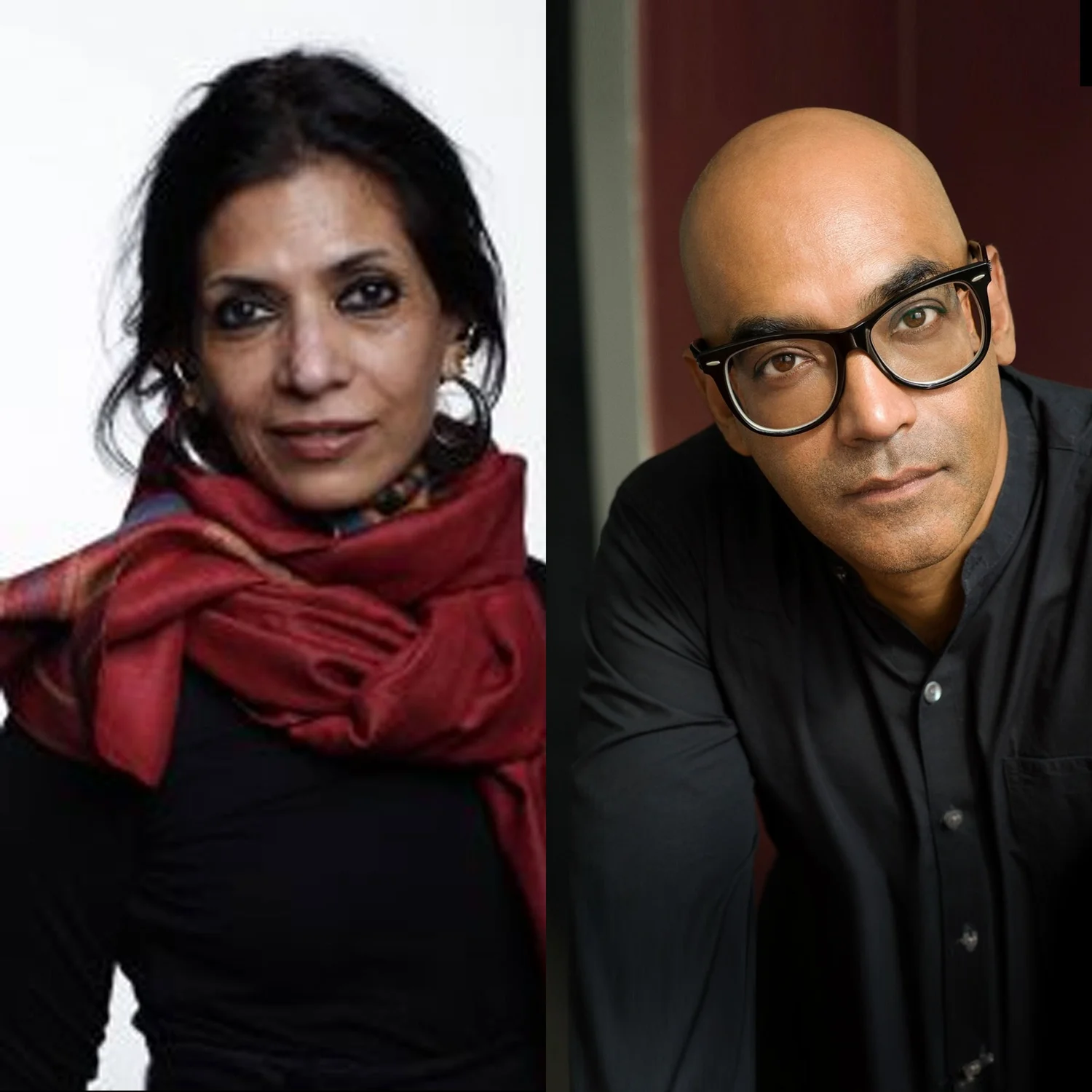
What Do the June 2024 Elections in India Mean? with Angana Chatterji & Siddhartha Deb
In this episode on Speaking Out of Place podcast Professor David Palumbo-Liu and Azeezah Kanji talk with scholar Angana Chatterji and journalist Siddhartha Deb. For decades, they have exposed the violence and fascism lying behind the mythology of India as the world’s largest democracy. In the wake of India’s most recent elections, in which the far right Hindutva BJP was surprisingly reduced from its former majority to a ruling minority government.Siddhartha and Angana join us to discuss the election results, the deep roots of fascism, the enduring structures of colonialism, and possible futures of resistance.Angana P. Chatterji is Founding Chair, Initiative on Political Conflict, Gender and People’s Rights at the Center for Race and Gender, University of California, Berkeley. A cultural anthropologist and interdisciplinary scholar of South Asia, Dr. Chatterji’s work since 1989 has been rooted in local knowledge, witness to post/colonial, decolonial conditions of grief, dispossession, agency, and affective solidarity. Her investigations with colleagues in Indian-administered Kashmir includes inquiry into unknown, unmarked and mass graves. Chatterji’s recent scholarship focuses on political conflict and coloniality in Kashmir; prejudicial citizenship in India; and violence (as a category of analysis) as agentized by Hindu nationalism, addressing religion in the public sphere, Islamomisia, state power, gender, caste, and racialization, and accountability. Her research also engages questions of memory, belonging, and legacies of conflict across South Asia. Chatterji has served on human rights commissions and offered expert testimony at the United Nations, European Parliament, United Kingdom Parliament, and United States Congress, and has been variously awarded for her work. Her sole and co-authored publications include: Breaking Worlds: Religion, Law, and Nationalism in Majoritarian India; Majoritarian State: How Hindu Nationalism is Changing India; Conflicted Democracies and Gendered Violence: The Right to Heal; Contesting Nation: Gendered Violence in South Asia; Notes on the Postcolonial Present; Kashmir: The Case for Freedom; Violent Gods: Hindu Nationalism in India’s Present; Narratives from Orissa; and reports: Access to Justice for Women: India’s Response to Sexual Violence in Conflict and Social Upheaval; BURIED EVIDENCE: Unknown, Unmarked and Mass Graves in Kashmir.Born in Shillong, north-eastern India, Siddhartha Deb lives in New York. His fiction and nonfiction have been longlisted for the International Dublin Literary Award, shortlisted for the Orwell Prize, and been awarded the Pen Open prize and the 2024 Anthony Veasna So Fiction prize. His journalism and essays have appeared in The New York Times, The Guardian, The New Republic, Dissent, The Baffler, N+1, and Caravan. His latest books include the novel, The Light at the End of the World (Soho Press 2023) and Twilight Prisoners: The Rise of the Hindu Right and the Fall of India (Haymarket Books, 2024).https://crg.berkeley.edu/research/research-initiatives/political-conflict-gender-and-people’s-rights-initiative/angana-phttps://siddharthadeb.comwww.palumbo-liu.comhttps://speakingoutofplace.comhttps://twitter.com/palumboliu?s=20www.instagram.com/speaking_out_of_place

PETA Founder INGRID NEWKIRK turns 75: A Lifetime of Animal Advocacy - Author of Animalkind
How can we show more kindness, respect, and love to the animals we share this planet with? What lessons can we learn from non-human animals about living in greater harmony with nature?Ingrid Newkirk is the Founder and President of PETA, actively leading the organization and advocating for animal rights. PETA is the largest animal rights organization in the world with more than 9 million members and supporters globally. Under her leadership, PETA has achieved significant victories, such as ending car-crash tests on animals, pushing major fashion brands to go fur-free, influencing Ringling Bros. to become an animal-free circus, and helping pass a law that allows the U.S. Food and Drug Administration to approve new medications without conducting cruel tests on animals. Ingrid has written 14 books and has been featured in major publications like The New Yorker and The Guardian, and was the subject of HBO's documentary I Am an Animal and was named one of Forbes’ “100 Most Powerful Women.” She joined One Planet Podcast to reflect on her 75 years as animal rights advocate.“They’re not human traits. They’re all shared traits because, of course, we all love. We all love our families, or not. We all grieve if somebody we love disappears or dies. A family dog, perhaps. A grandfather. We all feel loneliness, we all feel joy. We all really value our freedom. And so I think, if anything, looking into the eyes of the animal, even online, you see a person in there. There’s a someone in whatever the shape or the physical properties of that individual are. And that lesson is that I am you. You are me, only different. We are all the same in all the ways that count…Any living being teaches you– Look into my eyes. And there you are, the reflection of yourself. So we need to learn from the animals how to live more gently and consume less and be more thoughtful and look out for each other in this great circle of life.I think things do change because of agitation. So agitation is vital. I mean, nobody who is in a cause should be there to win a popularity contest, whether you're working for children or the elderly or working for peace animals, it's all against nonviolence, aggression, domination, and needless cruelty and suffering. It's all for respect. So you have to be vigorous. You have to use your voice. You can use it politely, but if people don't listen, at PETA, we escalate. So we always start off with a polite letter, a polite entreaty. We always try to, as I say, do the homework. So we have the options that we put out on the table to say, look, instead of doing this, you could do that, and we will help you transition to that.”www.peta.orgwww.ingridnewkirk.comwww.creativeprocess.infowww.oneplanetpodcast.orgIG www.instagram.com/creativeprocesspodcast

How to Fight for Truth & Protect Democracy in A Post-Truth World? - Highlights - LEE McINTYRE
“One thing people don't realize is that the goal of disinformation is not simply to get you to believe a falsehood. It's to demoralize you into giving up on the idea of truth, to polarize us around factual issues, to get us to distrust people who don't believe the same lie. And even if somebody doesn't believe the lie, it can still make them cynical. I mean, we've all had friends who don't even watch the news anymore. There's a chilling quotation from Holocaust historian Hannah Arendt about how when you always lie to someone, the consequence is not necessarily that they believe the lie, but that they begin to lose their critical faculties, that they begin to give up on the idea of truth, and so they can't judge for themselves what's true and what's false anymore. That's the scary part, the nexus between post-truth and autocracy. That's what the authoritarian wants. Not necessarily to get you to believe the lie. But to give up on truth, because when you give up on truth, then there's no blame, no accountability, and they can just assert their power. There's a connection between disinformation and denial.”Lee McIntyre is a Research Fellow at the Center for Philosophy and History of Science at Boston University and a Senior Advisor for Public Trust in Science at the Aspen Institute. He holds a B.A. from Wesleyan University and a Ph.D. in Philosophy from the University of Michigan. He has taught philosophy at Colgate University, Boston University, Tufts Experimental College, Simmons College, and Harvard Extension School (where he received the Dean’s Letter of Commendation for Distinguished Teaching). Formerly Executive Director of the Institute for Quantitative Social Science at Harvard University, he has also served as a policy advisor to the Executive Dean of the Faculty of Arts and Sciences at Harvard and as Associate Editor in the Research Department of the Federal Reserve Bank of Boston. His books include On Disinformation and How to Talk to a Science Denier and the novels The Art of Good and Evil and The Sin Eater.https://leemcintyrebooks.comwww.penguinrandomhouse.com/books/730833/on-disinformation-by-lee-mcintyrehttps://mitpress.mit.edu/9780262545051/https://leemcintyrebooks.com/books/the-art-of-good-and-evil/https://leemcintyrebooks.com/books/the-sin-eater/www.creativeprocess.infowww.oneplanetpodcast.orgIG www.instagram.com/creativeprocesspodcast

On Disinformation: How to Fight for Truth & Protect Democracy with LEE McINTYRE
How do we fight for truth and protect democracy in a post-truth world? How does bias affect our understanding of facts?Lee McIntyre is a Research Fellow at the Center for Philosophy and History of Science at Boston University and a Senior Advisor for Public Trust in Science at the Aspen Institute. He holds a B.A. from Wesleyan University and a Ph.D. in Philosophy from the University of Michigan. He has taught philosophy at Colgate University, Boston University, Tufts Experimental College, Simmons College, and Harvard Extension School (where he received the Dean’s Letter of Commendation for Distinguished Teaching). Formerly Executive Director of the Institute for Quantitative Social Science at Harvard University, he has also served as a policy advisor to the Executive Dean of the Faculty of Arts and Sciences at Harvard and as Associate Editor in the Research Department of the Federal Reserve Bank of Boston. His books include On Disinformation and How to Talk to a Science Denier and the novels The Art of Good and Evil and The Sin Eater.“One thing people don't realize is that the goal of disinformation is not simply to get you to believe a falsehood. It's to demoralize you into giving up on the idea of truth, to polarize us around factual issues, to get us to distrust people who don't believe the same lie. And even if somebody doesn't believe the lie, it can still make them cynical. I mean, we've all had friends who don't even watch the news anymore. There's a chilling quotation from Holocaust historian Hannah Arendt about how when you always lie to someone, the consequence is not necessarily that they believe the lie, but that they begin to lose their critical faculties, that they begin to give up on the idea of truth, and so they can't judge for themselves what's true and what's false anymore. That's the scary part, the nexus between post-truth and autocracy. That's what the authoritarian wants. Not necessarily to get you to believe the lie. But to give up on truth, because when you give up on truth, then there's no blame, no accountability, and they can just assert their power. There's a connection between disinformation and denial.”https://leemcintyrebooks.comwww.penguinrandomhouse.com/books/730833/on-disinformation-by-lee-mcintyrehttps://mitpress.mit.edu/9780262545051/https://leemcintyrebooks.com/books/the-art-of-good-and-evil/https://leemcintyrebooks.com/books/the-sin-eater/www.creativeprocess.infowww.oneplanetpodcast.orgIG www.instagram.com/creativeprocesspodcast

How will AI Affect Education, the Arts & Society? - Highlights - STEPHEN WOLFRAM
“I think as there is more automation, there is more kind of emphasis on this question of our choice. The story of the development of things tends to be what do humans decide that they care about? In what direction do they want to go? What kind of art do they want to make? What kinds of things do they want to think about? There is in the computational universe of all possibilities, there is sort of infinite creativity. There's an infinite collection of possibilities, but it's something that's a matter of human choice, which of these infinite things do we actually choose to pursue? There's all these different possibilities out there. But our kind of challenge is to decide in which direction we want to go and then to let our automated systems pursue those particular directions.”Stephen Wolfram is a computer scientist, mathematician, and theoretical physicist. He is the founder and CEO of Wolfram Research, the creator of Mathematica, Wolfram|Alpha, and the Wolfram Language. He received his PhD in theoretical physics at Caltech by the age of 20 and in 1981, became the youngest recipient of a MacArthur Fellowship. Wolfram authored A New Kind of Science and launched the Wolfram Physics Project. He has pioneered computational thinking and has been responsible for many discoveries, inventions and innovations in science, technology and business.www.stephenwolfram.comwww.wolfram.comwww.wolframalpha.comwww.wolframscience.com/nks/www.amazon.com/dp/1579550088/ref=nosim?tag=turingmachi08-20www.wolframphysics.orgwww.wolfram-media.com/products/what-is-chatgpt-doing-and-why-does-it-work/www.creativeprocess.infowww.oneplanetpodcast.orgIG www.instagram.com/creativeprocesspodcast

What Role Do AI & Computational Language Play in Solving Real-World Problems?
How can computational language help decode the mysteries of nature and the universe? What is ChatGPT doing and why does it work? How will AI affect education, the arts and society?Stephen Wolfram is a computer scientist, mathematician, and theoretical physicist. He is the founder and CEO of Wolfram Research, the creator of Mathematica, Wolfram|Alpha, and the Wolfram Language. He received his PhD in theoretical physics at Caltech by the age of 20 and in 1981, became the youngest recipient of a MacArthur Fellowship. Wolfram authored A New Kind of Science and launched the Wolfram Physics Project. He has pioneered computational thinking and has been responsible for many discoveries, inventions and innovations in science, technology and business.“I think as there is more automation, there is more kind of emphasis on this question of our choice. The story of the development of things tends to be what do humans decide that they care about? In what direction do they want to go? What kind of art do they want to make? What kinds of things do they want to think about? There is in the computational universe of all possibilities, there is sort of infinite creativity. There's an infinite collection of possibilities, but it's something that's a matter of human choice, which of these infinite things do we actually choose to pursue? There's all these different possibilities out there. But our kind of challenge is to decide in which direction we want to go and then to let our automated systems pursue those particular directions.”www.stephenwolfram.comwww.wolfram.comwww.wolframalpha.comwww.wolframscience.com/nks/www.amazon.com/dp/1579550088/ref=nosim?tag=turingmachi08-20www.wolframphysics.orgwww.wolfram-media.com/products/what-is-chatgpt-doing-and-why-does-it-work/www.creativeprocess.infowww.oneplanetpodcast.orgIG www.instagram.com/creativeprocesspodcast

Can we have real conversations with AI? How do illusions help us make sense of the world? - Highlights - KEITH FRANKISH
“There is magic everywhere. There's wonder everywhere. There's wondrous complexity that is so complex, so difficult to conceptualize, to grasp, to articulate that it might as well be magic for all intents and purposes, but we can gradually start to unpick how the tricks are done, how nature learned to do these wonderful tricks. And that's the wonder of science, gradually learning what's happening behind the scenes and how these marvelous effects are produced.I'm probably best known for my work on consciousness. My view about this is often caricatured, I think, as a kind of heartless, materialist one, because I'm resistant to all forms of dualism about the mind. I think that's a very unhelpful way of thinking.Some people think that I do that because I have a sort of crass materialist attitude to the world, that there's only things you can measure and weigh and bump into and everything else is just nonsense and fancy and different. What I like about the sort of view I have is that it represents us as fully part of the world, fully part of the same world. We're not sealed off into little private mental bubbles, Cartesian theaters, where all the real action is happening in here, not out there. No, I think we're much more engaged with the world… Another one of my heroes is Daniel Dennett's great friend, Nicholas Humphrey, who has a wonderfully rich range of experience. He's been described as a scientific humanist. What he does is he knows his science, including cognitive neuroscience and psychology, but he's also steeped in literature, art, music, and painting, and he brings all this together in his wonderful book on consciousness Soul Dust, published in 2011, suggests the idea that the soul is actually made of dust, which is a fantastic concept.”Keith Frankish is an Honorary Professor of Philosophy at the University of Sheffield, a Visiting Research Fellow with The Open University, and an Adjunct Professor with the Brain and Mind Programme in Neurosciences at the University of Crete. Frankish mainly works in the philosophy of mind and has published widely about topics such as human consciousness and cognition. Profoundly inspired by Daniel Dennett, Frankish is best known for defending an “illusionist” view of consciousness. He is also editor of Illusionism as a Theory of Consciousness and co-edits, in addition to others, The Cambridge Handbook of Cognitive Science.www.keithfrankish.comwww.cambridge.org/core/books/cambridge-handbook-of-cognitive-science/F9996E61AF5E8C0B096EBFED57596B42www.imprint.co.uk/product/illusionismwww.creativeprocess.infowww.oneplanetpodcast.orgIG www.instagram.com/creativeprocesspodcast

Is Consciousness an Illusion? with Philosopher KEITH FRANKISH
Is consciousness an illusion? Is it just a complex set of cognitive processes without a central, subjective experience? How can we better integrate philosophy with everyday life and the arts?Keith Frankish is an Honorary Professor of Philosophy at the University of Sheffield, a Visiting Research Fellow with The Open University, and an Adjunct Professor with the Brain and Mind Programme in Neurosciences at the University of Crete. Frankish mainly works in the philosophy of mind and has published widely about topics such as human consciousness and cognition. Profoundly inspired by Daniel Dennett, Frankish is best known for defending an “illusionist” view of consciousness. He is also editor of Illusionism as a Theory of Consciousness and co-edits, in addition to others, The Cambridge Handbook of Cognitive Science.“There is magic everywhere. There's wonder everywhere. There's wondrous complexity that is so complex, so difficult to conceptualize, to grasp, to articulate that it might as well be magic for all intents and purposes, but we can gradually start to unpick how the tricks are done, how nature learned to do these wonderful tricks. And that's the wonder of science, gradually learning what's happening behind the scenes and how these marvelous effects are produced.I'm probably best known for my work on consciousness. My view about this is often caricatured, I think, as a kind of heartless, materialist one, because I'm resistant to all forms of dualism about the mind. I think that's a very unhelpful way of thinking.Some people think that I do that because I have a sort of crass materialist attitude to the world, that there's only things you can measure and weigh and bump into and everything else is just nonsense and fancy and different. What I like about the sort of view I have is that it represents us as fully part of the world, fully part of the same world. We're not sealed off into little private mental bubbles, Cartesian theaters, where all the real action is happening in here, not out there. No, I think we're much more engaged with the world… Another one of my heroes is Daniel Dennett's great friend, Nicholas Humphrey, who has a wonderfully rich range of experience. He's been described as a scientific humanist. What he does is he knows his science, including cognitive neuroscience and psychology, but he's also steeped in literature, art, music, and painting, and he brings all this together in his wonderful book on consciousness Soul Dust, published in 2011, suggests the idea that the soul is actually made of dust, which is a fantastic concept.”www.keithfrankish.comwww.cambridge.org/core/books/cambridge-handbook-of-cognitive-science/F9996E61AF5E8C0B096EBFED57596B42www.imprint.co.uk/product/illusionismwww.creativeprocess.infowww.oneplanetpodcast.orgIG www.instagram.com/creativeprocesspodcast

How Can We End the Climate Crisis in One Generation? - Highlights - PAUL HAWKEN
“We and all living beings thrive by being actors in the planet’s regeneration, a civilizational goal that should commence and never cease. We practiced degeneration as a species and it brought us to the threshold of an unimaginable crisis. To reverse global warming, we need to reverse global degeneration.”Can we really end the climate crisis in one generation? What kind of bold collective action, technologies, and nature-based solutions would it take to do it?Paul Hawken is a renowned environmentalist, entrepreneur, author, and activist committed to sustainability and transforming the business-environment relationship. A leading voice in the environmental movement, he has founded successful eco-friendly businesses, authored influential works on commerce and ecology, and advised global leaders on economic and environmental policies. As the founder of Project Regeneration and Project Drawdown, Paul leads efforts to identify and model solutions to reverse global warming, showcasing actionable strategies. His pioneering work in corporate ecological reform continues to shape a sustainable future. He is the author of eight books, including Regeneration: Ending the Climate Crisis in One Generation.https://regeneration.orghttps://paulhawken.comhttps://drawdown.orghttps://regeneration.org/nexuswww.creativeprocess.infowww.oneplanetpodcast.orgIG www.instagram.com/creativeprocesspodcast

Regeneration: Ending the Climate Crisis in One Generation with PAUL HAWKEN
Can we really end the climate crisis in one generation? What kind of bold collective action, technologies, and nature-based solutions would it take to do it?Paul Hawken is a renowned environmentalist, entrepreneur, author, and activist committed to sustainability and transforming the business-environment relationship. A leading voice in the environmental movement, he has founded successful eco-friendly businesses, authored influential works on commerce and ecology, and advised global leaders on economic and environmental policies. As the founder of Project Regeneration and Project Drawdown, Paul leads efforts to identify and model solutions to reverse global warming, showcasing actionable strategies. His pioneering work in corporate ecological reform continues to shape a sustainable future. He is the author of eight books, including Regeneration: Ending the Climate Crisis in One Generation.“We and all living beings thrive by being actors in the planet’s regeneration, a civilizational goal that should commence and never cease. We practiced degeneration as a species and it brought us to the threshold of an unimaginable crisis. To reverse global warming, we need to reverse global degeneration.”https://regeneration.orghttps://paulhawken.comhttps://drawdown.orghttps://regeneration.org/nexuswww.creativeprocess.infowww.oneplanetpodcast.orgIG www.instagram.com/creativeprocesspodcast
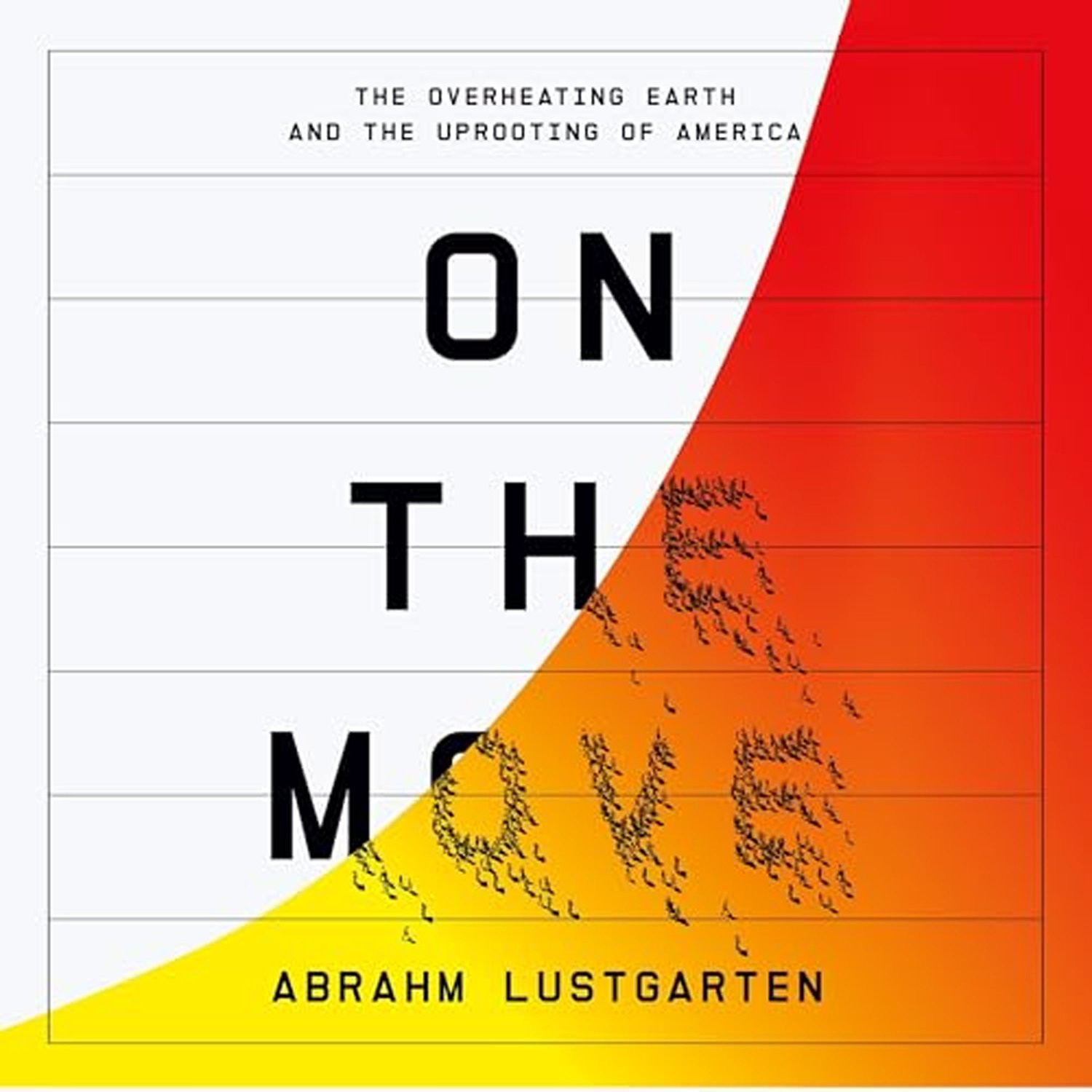
How Will Our Cities, Communities & Country Cope with Climate Migration - Highlights - ABRAHM LUSTGARTEN
“Living in California, I've just come to accept the unsettledness of this era we're moving into. And I think that's really how I see the future. You know, we're living in an era of disruption, and there are others I talk to and write about in the book who also muse about the possibility of a more nomadic future. That maybe home isn't a permanent place with deep roots but is a transient place with shallow roots or two places that you alternate between. In addition to a lot of other dramatic changes that the book is about, a change in our sense of home and our sense of place is a part of this story.”Abrahm Lustgarten is an investigative reporter, author, and filmmaker whose work focuses on human adaptation to climate change. His 2010 Frontline documentary The Spill, which investigated BP’s company culture, was nominated for an Emmy. His 2015 longform series Killing the Colorado, about the draining of the Colorado river, was nominated for a Pulitzer Prize. Lustgarten is a senior reporter at ProPublica, and contributes to publications like The New York Times Magazine and The Atlantic. His research on climate migration influenced President Biden’s creation of a climate migration study group. This is also the topic of his newly published book, On The Move: The Overheating Earth and the Uprooting of America in which he explores how climate change is uprooting American lives.https://abrahm.comhttps://us.macmillan.com/books/9780374171735/onthemovewww.creativeprocess.infowww.oneplanetpodcast.orgIG www.instagram.com/creativeprocesspodcast
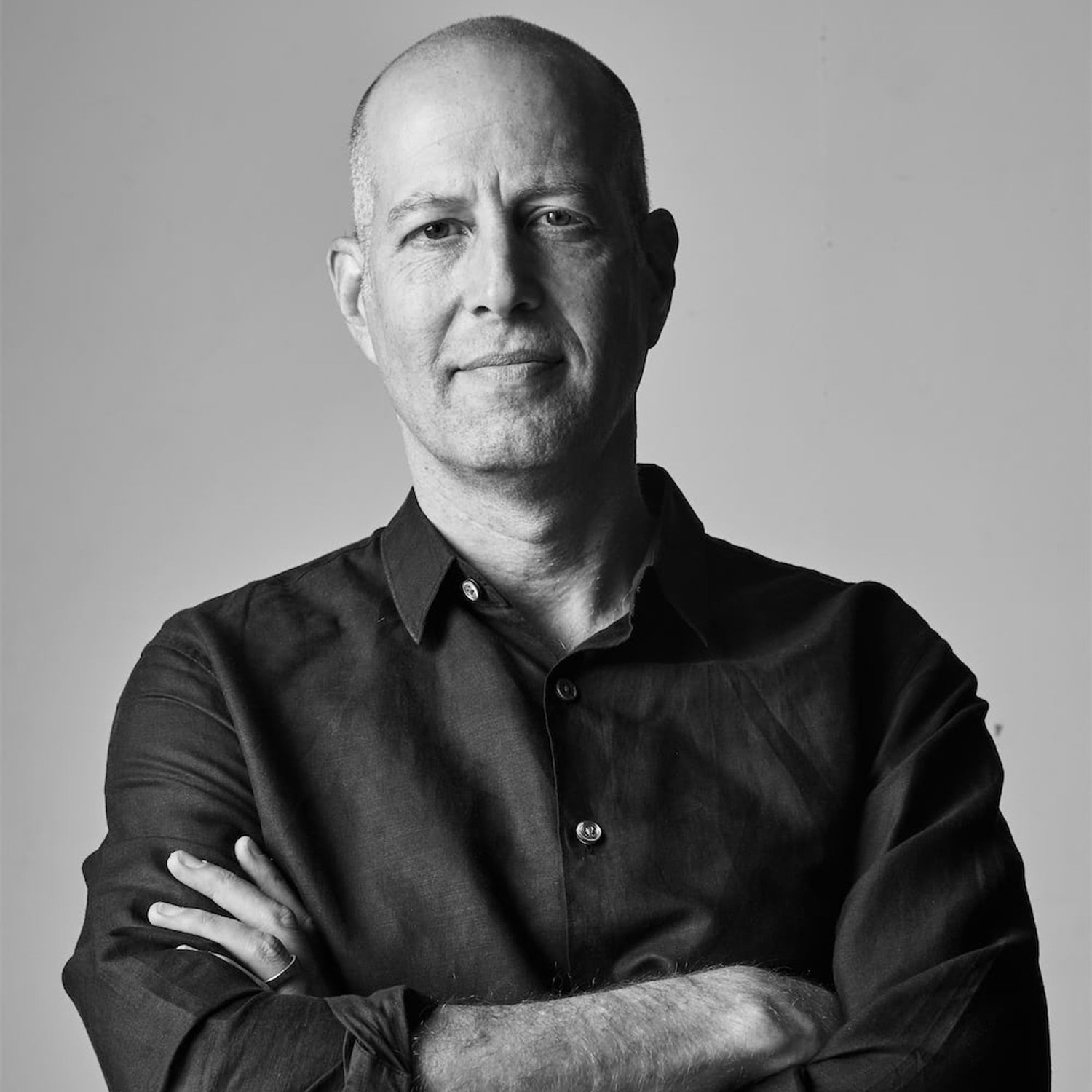
On The Move: The Overheating Earth & the Uprooting of America with ABRAHM LUSTGARTEN
An estimated one in two people will experience degrading environmental conditions this century and will be faced with the difficult question of whether to leave their homes. Will you be among those who migrate in response to climate change? If so, where will you go?Abrahm Lustgarten is an investigative reporter, author, and filmmaker whose work focuses on human adaptation to climate change. His 2010 Frontline documentary The Spill, which investigated BP’s company culture, was nominated for an Emmy. His 2015 longform series Killing the Colorado, about the draining of the Colorado river, was nominated for a Pulitzer Prize. Lustgarten is a senior reporter at ProPublica, and contributes to publications like The New York Times Magazine and The Atlantic. His research on climate migration influenced President Biden’s creation of a climate migration study group. This is also the topic of his newly published book, On The Move: The Overheating Earth and the Uprooting of America in which he explores how climate change is uprooting American lives.“Living in California, I've just come to accept the unsettledness of this era we're moving into. And I think that's really how I see the future. You know, we're living in an era of disruption, and there are others I talk to and write about in the book who also muse about the possibility of a more nomadic future. That maybe home isn't a permanent place with deep roots but is a transient place with shallow roots or two places that you alternate between. In addition to a lot of other dramatic changes that the book is about, a change in our sense of home and our sense of place is a part of this story.”https://abrahm.comhttps://us.macmillan.com/books/9780374171735/onthemovewww.creativeprocess.infowww.oneplanetpodcast.orgIG www.instagram.com/creativeprocesspodcast
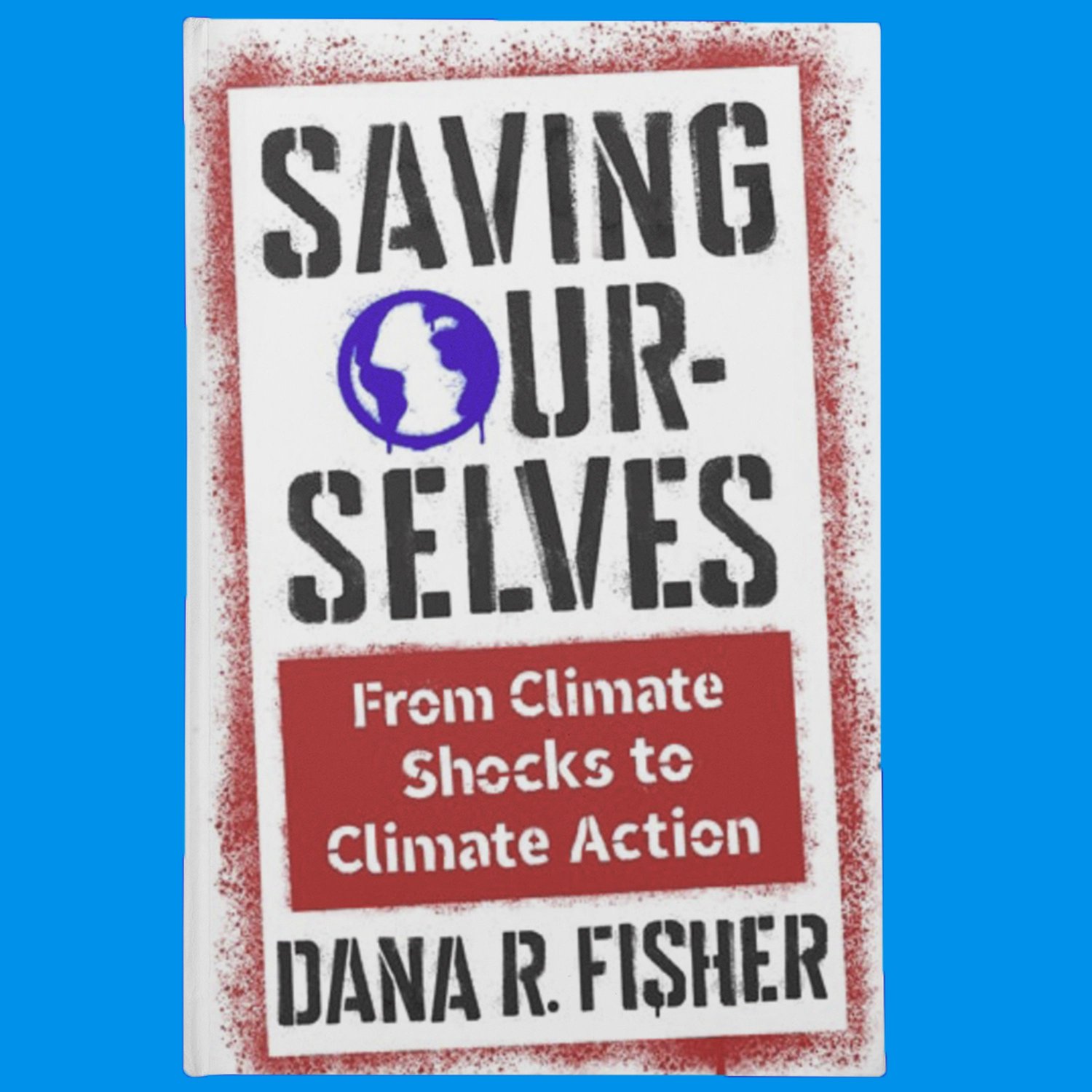
Apocalyptic Optimism: How We Can We Save Ourselves from the Climate Crisis? - Highlights - DANA FISHER
“I call myself an apocalyptic optimist. In other words, I do believe there is hope to save ourselves from the climate crisis that we have caused. However, I also believe that saving ourselves will only be possible with a mass mobilization that is driven by the pain and suffering of climate shocks around the world. A generalized sense of extreme risk can lead to peaceful and less-peaceful mass mobilizations at the levels needed to stimulate an AnthroShift. Only a global risk event (or numerous smaller events that are seen as threatening social and economic centers of power) will motivate the kind of massive social change that is needed. In other words, without a risk pivot—be it driven by social or environmental change—an AnthroShift that is large enough to respond adequately to the climate crisis and open a large enough window of opportunity postshock is improbable. At this point, it is impossible to predict if such a shock will come from ecological disaster, war, pandemic, or another unforeseen risk. What is certain, though, is that without such a shock that motivates an AnthroShift large enough to reorient all the sectors of society to respond meaningfully to the climate crisis, it is hard to envision the world achieving the levels of climate action needed. Instead, the best we can hope for is incremental change that does not disrupt the dominant nodes of political and economic power; such incremental change has the potential to reduce the gravity of the crisis, but it will not stop the coming climate crisis.”– Saving Ourselves: From Climate Shocks to Climate ActionDana R. Fisher is the Director of the Center for Environment, Community, & Equity and Professor in the School of International Service at American University. Fisher’s research focuses on questions related to democracy, civic engagement, activism, and climate politics. Current projects include studying political elites’ responses to climate change, and the ways federal service corps programs in the US are integrating climate into their work. She is a self-described climate-apocalyptic optimist and co-developed the framework of AnthroShift to explain how social actors are reconfigured in the aftermath of widespread perceptions and experiences of risk. Her seventh book is Saving Ourselves: From Climate Shocks to Climate Action.https://danarfisher.comhttps://cece.american.eduwww.acc.govwww.creativeprocess.infowww.oneplanetpodcast.orgIG www.instagram.com/creativeprocesspodcast
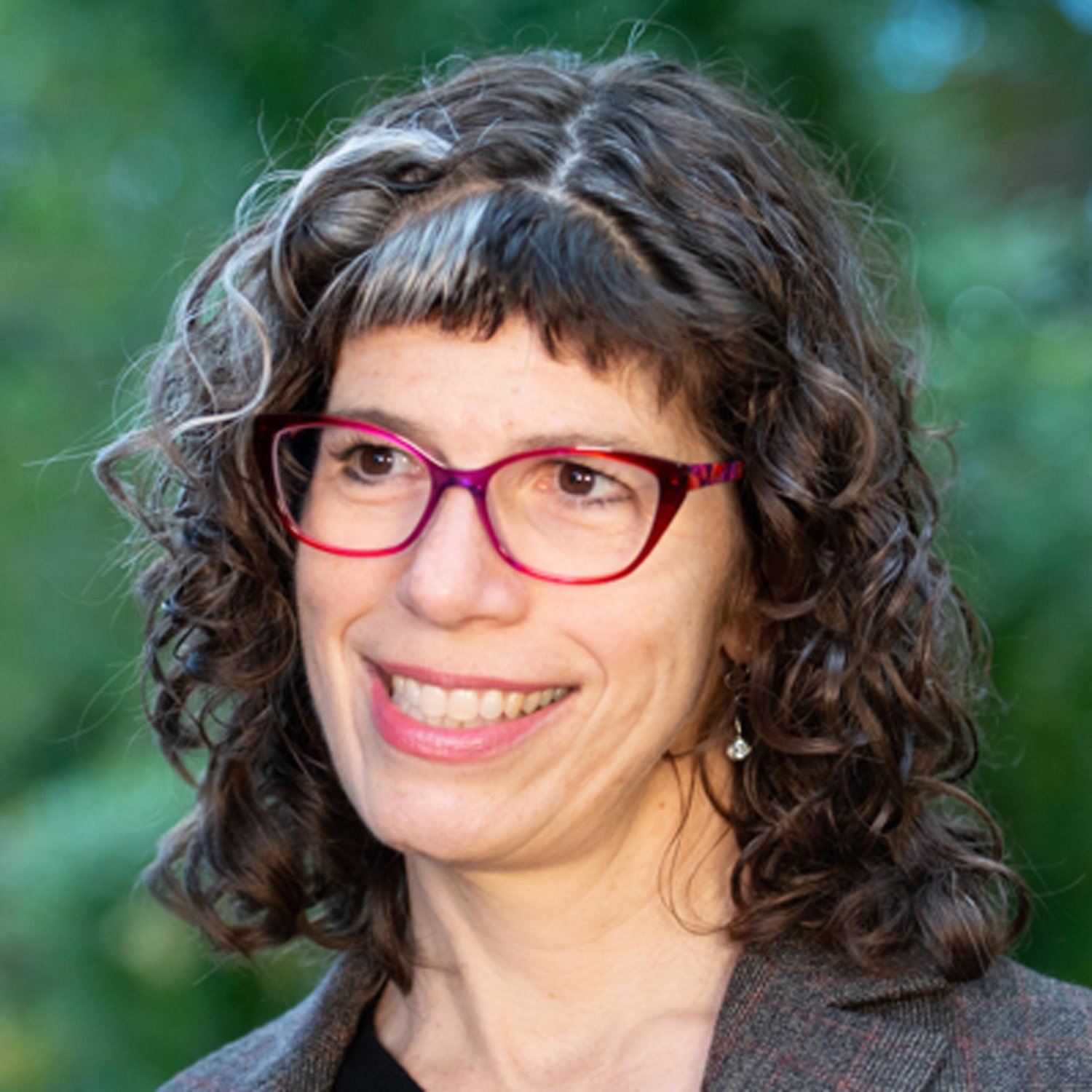
Saving Ourselves: From Climate Shocks to Climate Action - DANA FISHER
How can we make the radical social changes needed to address the climate crisis? What kind of large ecological disaster or mass mobilization in the streets needs to take place before we take meaningful climate action?Dana R. Fisher is the Director of the Center for Environment, Community, & Equity and Professor in the School of International Service at American University. Fisher’s research focuses on questions related to democracy, civic engagement, activism, and climate politics. Current projects include studying political elites’ responses to climate change, and the ways federal service corps programs in the US are integrating climate into their work. She is a self-described climate-apocalyptic optimist and co-developed the framework of AnthroShift to explain how social actors are reconfigured in the aftermath of widespread perceptions and experiences of risk. Her seventh book is Saving Ourselves: From Climate Shocks to Climate Action.“I call myself an apocalyptic optimist. In other words, I do believe there is hope to save ourselves from the climate crisis that we have caused. However, I also believe that saving ourselves will only be possible with a mass mobilization that is driven by the pain and suffering of climate shocks around the world. A generalized sense of extreme risk can lead to peaceful and less-peaceful mass mobilizations at the levels needed to stimulate an AnthroShift. Only a global risk event (or numerous smaller events that are seen as threatening social and economic centers of power) will motivate the kind of massive social change that is needed. In other words, without a risk pivot—be it driven by social or environmental change—an AnthroShift that is large enough to respond adequately to the climate crisis and open a large enough window of opportunity postshock is improbable. At this point, it is impossible to predict if such a shock will come from ecological disaster, war, pandemic, or another unforeseen risk. What is certain, though, is that without such a shock that motivates an AnthroShift large enough to reorient all the sectors of society to respond meaningfully to the climate crisis, it is hard to envision the world achieving the levels of climate action needed. Instead, the best we can hope for is incremental change that does not disrupt the dominant nodes of political and economic power; such incremental change has the potential to reduce the gravity of the crisis, but it will not stop the coming climate crisis.”– Saving Ourselves: From Climate Shocks to Climate Actionhttps://danarfisher.comhttps://cece.american.eduwww.acc.govwww.creativeprocess.infowww.oneplanetpodcast.orgIG www.instagram.com/creativeprocesspodcastCredit Sarah Fillman from FillmanFoto, 2023

Working to Restore: Harnessing the Power of Business to Heal the Earth - Highlights - ESHA CHHABRA
“There’s a lot of greenwashing that's going on these days. It is great marketing. And that was really the reason why I wrote this book. I had started to see the patterns. You can start to tell them the companies that are genuinely doing it versus the companies that are just talking about it. So that was one indicator, you know, a company that would send out a press release about their goals and what they anticipated to do in the next 5 to 10 years was very different from companies who had said, you know what, this is what we've achieved. Regenerative started coming into the lexicon, the term in 2017, 2018. And regenerative means to regenerate, means to bring life into something. To sustain means to keep the status quo. And regenerative looks at things from a very holistic lens. You know, it's like if you're going to run a regenerative farm, it's all the different components of the farm and the ecosystem ideally come within the ecosystem.”Esha Chhabra has written for national and international publications over the last 15 years, focusing on global development, the environment, and the intersection of business and impact. Her work has been featured in The New York Times, The Economist, The Guardian, and other publications. She is the author of Working to Restore: Harnessing the Power of Business to Heal the Earth.www.eshachhabra.comwww.beacon.org/Working-to-Restore-P2081.aspxwww.creativeprocess.infowww.oneplanetpodcast.orgIG www.instagram.com/creativeprocesspodcast

How can Regenerative Business Help Heal the Earth? - ESHA CHHABRA
What is regenerative business? How can we create a business mindset that addresses social, economic and environmental issues?Esha Chhabra has written for national and international publications over the last 15 years, focusing on global development, the environment, and the intersection of business and impact. Her work has been featured in The New York Times, The Economist, The Guardian, and other publications. She is the author of Working to Restore: Harnessing the Power of Business to Heal the Earth.“There’s a lot of greenwashing that's going on these days. It is great marketing. And that was really the reason why I wrote this book. I had started to see the patterns. You can start to tell them the companies that are genuinely doing it versus the companies that are just talking about it. So that was one indicator, you know, a company that would send out a press release about their goals and what they anticipated to do in the next 5 to 10 years was very different from companies who had said, you know what, this is what we've achieved. Regenerative started coming into the lexicon, the term in 2017, 2018. And regenerative means to regenerate, means to bring life into something. To sustain means to keep the status quo. And regenerative looks at things from a very holistic lens. You know, it's like if you're going to run a regenerative farm, it's all the different components of the farm and the ecosystem ideally come within the ecosystem.”www.eshachhabra.comwww.beacon.org/Working-to-Restore-P2081.aspxwww.creativeprocess.infowww.oneplanetpodcast.orgIG www.instagram.com/creativeprocesspodcast
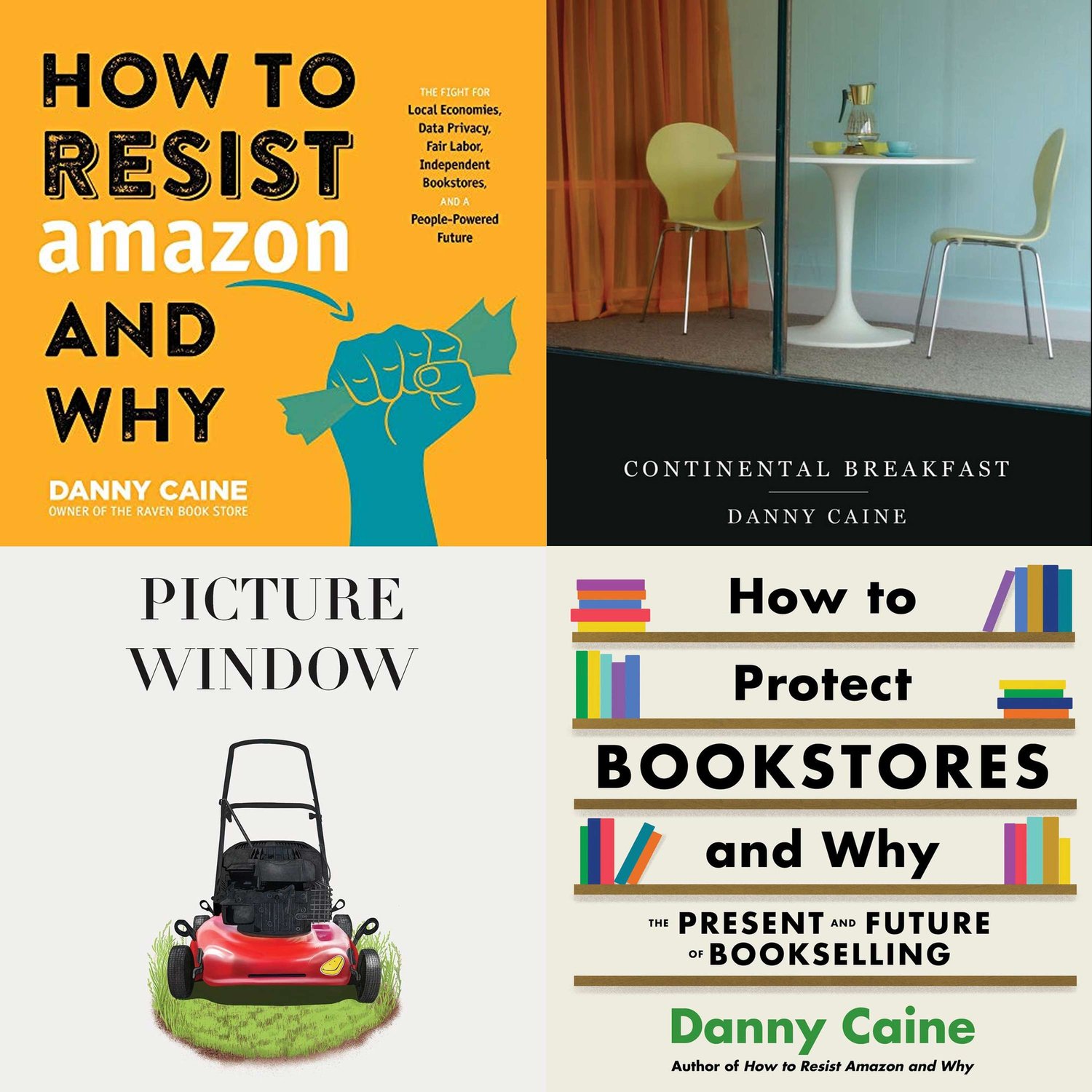
How to Protect Bookstores and Why - Highlights - DANNY CAINE, Bookseller, Poet
“Bookselling captured my imagination and my heart as soon as I started working at the bookstore because I could see the potential for this great, amazing community-oriented work. Of course, it's a thrill to be around books, to meet authors, to read all this stuff, and to spend all day with people who love books, but what I think I really fell in love with was the sense of community, the people behind it, and the way a bookstore can really be an engine for positive social change within its community and in a broader sense as well. My whole nonfiction book project started with a tweet thread. It was about how every bookseller has to be prepared to have this discussion: a customer comes in, and they're like, this book is 50 percent off on Amazon. Why should I buy it here? So, I don't think about it quite as withholding from Amazon as much as contributing to these local community-oriented businesses. The thing that unites my poetry and the nonfiction writing is my main obsession as a writer. It's the question of, how do you live meaningfully in late capitalism? As corporations and global capitalist forces take over the world, what does it mean to try to have a meaningful human life? I think the proliferation of objects might reflect that. A lot of what we do in this world is collect objects, and regardless of whether it's good or bad, you build a nest. I think that in Picture Window in particular, I wanted to write about the domestic in a way that I hadn't written in so far. And then the pandemic happened, so I was forced into this weird, uneasy, claustrophobic domesticity. When your attention is so focused within your own home and within your own family, every object in your house takes on a new resonance. So, when a tennis ball that you've never seen somehow shows up in your house, that's weird. It's poetic. It feels dreamlike.”Danny Caine is the author of the poetry collections Continental Breakfast, El Dorado Freddy's, Flavortown, and Picture Window, as well as the books How to Protect Bookstores and Why and How to Resist Amazon and Why. His poetry has appeared in The Slowdown, Lit Hub, Diagram, HAD, and Barrelhouse. He's a co-owner of The Raven Bookstore, Publisher's Weekly's 2022 Bookstore of the Year. www.dannycaine.com www.ravenbookstore.comwww.creativeprocess.infowww.oneplanetpodcast.orgIG www.instagram.com/creativeprocesspodcast
What Lies Ahead for Bookstores in the Age of Generative AI? - DANNY CAINE, Bookseller, Poet
What is the future of literature in the age of generative AI? How can bookstores build community and be engines for positive social change? What does it mean to try to have a meaningful human life?Danny Caine is the author of the poetry collections Continental Breakfast, El Dorado Freddy's, Flavortown, and Picture Window, as well as the books How to Protect Bookstores and Why and How to Resist Amazon and Why. His poetry has appeared in The Slowdown, Lit Hub, Diagram, HAD, and Barrelhouse. He's a co-owner of The Raven Bookstore, Publisher's Weekly's 2022 Bookstore of the Year. “Bookselling captured my imagination and my heart as soon as I started working at the bookstore because I could see the potential for this great, amazing community-oriented work. Of course, it's a thrill to be around books, to meet authors, to read all this stuff, and to spend all day with people who love books, but what I think I really fell in love with was the sense of community, the people behind it, and the way a bookstore can really be an engine for positive social change within its community and in a broader sense as well. My whole nonfiction book project started with a tweet thread. It was about how every bookseller has to be prepared to have this discussion: a customer comes in, and they're like, this book is 50 percent off on Amazon. Why should I buy it here? So, I don't think about it quite as withholding from Amazon as much as contributing to these local community-oriented businesses. The thing that unites my poetry and the nonfiction writing is my main obsession as a writer. It's the question of, how do you live meaningfully in late capitalism? As corporations and global capitalist forces take over the world, what does it mean to try to have a meaningful human life? I think the proliferation of objects might reflect that. A lot of what we do in this world is collect objects, and regardless of whether it's good or bad, you build a nest. I think that in Picture Window in particular, I wanted to write about the domestic in a way that I hadn't written in so far. And then the pandemic happened, so I was forced into this weird, uneasy, claustrophobic domesticity. When your attention is so focused within your own home and within your own family, every object in your house takes on a new resonance. So, when a tennis ball that you've never seen somehow shows up in your house, that's weird. It's poetic. It feels dreamlike.”www.dannycaine.com www.ravenbookstore.comwww.creativeprocess.info www.oneplanetpodcast.org IG www.instagram.com/creativeprocesspodcast
Is understanding AI a bigger question than understanding the origin of the universe? - Highlights, NEIL JOHNSON, Author of Simply Complexity: A Clear Guide to Complexity Theory
“It gets back to this core question. I just wish I was a young scientist going into this because that's the question to answer: Why AI comes out with what it does. That's the burning question. It's like it's bigger than the origin of the universe to me as a scientist, and here's the reason why. The origin of the universe, it happened. That's why we're here. It's almost like a historical question asking why it happened. The AI future is not a historical question. It's a now and future question.I'm a huge optimist for AI, actually. I see it as part of that process of climbing its own mountain. It could do wonders for so many areas of science, medicine. When the car came out, the car initially is a disaster. But you fast forward, and it was the key to so many advances in society. I think it's exactly the same as AI. The big challenge is to understand why it works. AI existed for years, but it was useless. Nothing useful, nothing useful, nothing useful. And then maybe last year or something, now it's really useful. There seemed to be some kind of jump in its ability, almost like a shock wave. We're trying to develop an understanding of how AI operates in terms of these shockwave jumps. Revealing how AI works will help society understand what it can and can't do and therefore remove some of this dark fear of being taken over. If you don't understand how AI works, how can you govern it? To get effective governance, you need to understand how AI works because otherwise you don't know what you're going to regulate.”How can physics help solve messy, real world problems? How can we embrace the possibilities of AI while limiting existential risk and abuse by bad actors?Neil Johnson is a physics professor at George Washington University. His new initiative in Complexity and Data Science at the Dynamic Online Networks Lab combines cross-disciplinary fundamental research with data science to attack complex real-world problems. His research interests lie in the broad area of Complex Systems and ‘many-body’ out-of-equilibrium systems of collections of objects, ranging from crowds of particles to crowds of people and from environments as distinct as quantum information processing in nanostructures to the online world of collective behavior on social media. He is the author of Simply Complexity: A Clear Guide to Complexity Theory and co-author of Financial Market Complexity: What Physics Can Tell Us About Market Behavior.https://physics.columbian.gwu.edu/neil-johnson https://donlab.columbian.gwu.eduwww.creativeprocess.infowww.oneplanetpodcast.org IG www.instagram.com/creativeprocesspodcast
How can physics help solve real world problems? - NEIL JOHNSON, Head of Dynamic Online Networks Lab
How can physics help solve messy, real world problems? How can we embrace the possibilities of AI while limiting existential risk and abuse by bad actors?Neil Johnson is a physics professor at George Washington University. His new initiative in Complexity and Data Science at the Dynamic Online Networks Lab combines cross-disciplinary fundamental research with data science to attack complex real-world problems. His research interests lie in the broad area of Complex Systems and ‘many-body’ out-of-equilibrium systems of collections of objects, ranging from crowds of particles to crowds of people and from environments as distinct as quantum information processing in nanostructures to the online world of collective behavior on social media. He is the author of Simply Complexity: A Clear Guide to Complexity Theory and co-author of Financial Market Complexity: What Physics Can Tell Us About Market Behavior.“It gets back to this core question. I just wish I was a young scientist going into this because that's the question to answer: Why AI comes out with what it does. That's the burning question. It's like it's bigger than the origin of the universe to me as a scientist, and here's the reason why. The origin of the universe, it happened. That's why we're here. It's almost like a historical question asking why it happened. The AI future is not a historical question. It's a now and future question.I'm a huge optimist for AI, actually. I see it as part of that process of climbing its own mountain. It could do wonders for so many areas of science, medicine. When the car came out, the car initially is a disaster. But you fast forward, and it was the key to so many advances in society. I think it's exactly the same as AI. The big challenge is to understand why it works. AI existed for years, but it was useless. Nothing useful, nothing useful, nothing useful. And then maybe last year or something, now it's really useful. There seemed to be some kind of jump in its ability, almost like a shock wave. We're trying to develop an understanding of how AI operates in terms of these shockwave jumps. Revealing how AI works will help society understand what it can and can't do and therefore remove some of this dark fear of being taken over. If you don't understand how AI works, how can you govern it? To get effective governance, you need to understand how AI works because otherwise you don't know what you're going to regulate.”https://physics.columbian.gwu.edu/neil-johnsonhttps://donlab.columbian.gwu.eduwww.creativeprocess.infowww.oneplanetpodcast.org IG www.instagram.com/creativeprocesspodcast
Humanity's Deadly Shadow: The Toll on Birds and Wildlife - Highlights - BEN GOLDFARB
“The creation of roads is this process that's sort of innate to all beings. You know, we're all sort of inclined to create and follow trails. We just do it at a much vaster and more permanent and destructive scale. I think we need to reconceive how we think about roads in some ways, right? I mean, we think about roads, certainly here in the U. S., as these symbols of movement and mobility and freedom, right? There's so much about the romance of the open road and so much of our popular culture going back to the mid-20th century when the interstate highway systems were built and writers like Jack Kerouac were singing the praises of the open highway. And certainly, roads play that role. I like driving. The iconic Western American road trip is kind of this wonderful experience, but you know, I think the purpose of this book is to say: Yes, roads are a source of human mobility and freedom, but they're doing precisely the opposite for basically all other forms of life, right? They're curtailing animal movement and mobility and freedom, both by killing them directly in the form of roadkill, but also by creating these kinds of impenetrable walls of traffic that prevent animals from moving around the landscape and accessing big swaths of their habitat. Right? So, that's kind of the mental reconfiguration we have to go through, which is to recognize that, hey, roads aren't just forms of mobility and freedom for us. They're also preventing that mobility in basically all other life forms.”Ben Goldfarb is a conservation journalist. He is the author of Crossings: How Road Ecology Is Shaping The Future of Our Planet, named one of the best books of 2023 by the New York Times, and Eager: The Surprising, Secret Life of Beavers and Why They Matter, winner of the 2019 PEN/E.O. Wilson Literary Science Writing Award.www.bengoldfarb.comhttps://wwnorton.com/books/9781324005896www.chelseagreen.com/product/eager-paperbackwww.creativeprocess.infowww.oneplanetpodcast.orgIG www.instagram.com/creativeprocesspodcast
How Road Ecology is Shaping the Future of Our Planet with BEN GOLDFARB
Every year, humanity's footprint casts a deadly shadow over our skies and landscapes, claiming the lives of billions of birds and other wildlife. What is road ecology? How are our roads driving certain species towards extinction? And what can we do about it?Ben Goldfarb is a conservation journalist. He is the author of Crossings: How Road Ecology Is Shaping The Future of Our Planet, named one of the best books of 2023 by the New York Times, and Eager: The Surprising, Secret Life of Beavers and Why They Matter, winner of the 2019 PEN/E.O. Wilson Literary Science Writing Award.“The creation of roads is this process that's sort of innate to all beings. You know, we're all sort of inclined to create and follow trails. We just do it at a much vaster and more permanent and destructive scale. I think we need to reconceive how we think about roads in some ways, right? I mean, we think about roads, certainly here in the U. S., as these symbols of movement and mobility and freedom, right? There's so much about the romance of the open road and so much of our popular culture going back to the mid-20th century when the interstate highway systems were built and writers like Jack Kerouac were singing the praises of the open highway. And certainly, roads play that role. I like driving. The iconic Western American road trip is kind of this wonderful experience, but you know, I think the purpose of this book is to say: Yes, roads are a source of human mobility and freedom, but they're doing precisely the opposite for basically all other forms of life, right? They're curtailing animal movement and mobility and freedom, both by killing them directly in the form of roadkill, but also by creating these kinds of impenetrable walls of traffic that prevent animals from moving around the landscape and accessing big swaths of their habitat. Right? So, that's kind of the mental reconfiguration we have to go through, which is to recognize that, hey, roads aren't just forms of mobility and freedom for us. They're also preventing that mobility in basically all other life forms.”www.bengoldfarb.comhttps://wwnorton.com/books/9781324005896www.chelseagreen.com/product/eager-paperbackwww.creativeprocess.infowww.oneplanetpodcast.orgIG www.instagram.com/creativeprocesspodcast

Crisis, Philosophy & the Search for Meaning - ROBERT PIPPIN - Highlights
“The Greek Enlightenment introduced the idea of centrality and the priority of rationality in understanding ourselves and our relation to the world. Heidegger wants to move us away from what he thinks has culminated in a kind of dead end. We appear in this world without any instruction manual, we have these finite, corporeal lives that begin in ways- we have no control over and end in ways we often have no control over. The classical conception was that the cosmos was good, because it was open to human interrogation. It allowed itself to be interrogated, so the thing that mattered most of all was knowing, because knowing was the way in which we became at home in the world. Heidegger thought we had prioritized the question of knowledge to such a degree as the primordial relationship to all of reality. He connected this to the kind of predatory stance of contemporary technology, which is essentially destroying the world because it considers the world as just material stuff, which we can understand and manipulate for our own ends. He thinks there's a huge influence in the original understanding of being as intelligibility that eventually has cut us off from all sources of meaning in a possible life other than this successful control of the environment for our own satisfaction.”What is the importance of philosophy in the 21st century as we enter a post-truth world? How can we reintroduce meaning and uphold moral principles in our world shaken by crises? And what does philosophy teach us about living in harmony with the natural world?Robert Pippin is the Evelyn Stefansson Nef Distinguished Service Professor at the University of Chicago where he teaches in the College, Committee on Social Thought, and Department of Philosophy. Pippin is widely acclaimed for his scholarship in German idealism as well as later German philosophy, including publications such as Modernism as a Philosophical Problem, and Hegel’s Idealism. In keeping with his interdisciplinary interests, Pippin’s book Henry James and Modern Moral Life explores the intersections between philosophy and literature. Pippin’s most recent published book is The Culmination: Heidegger, German Idealism, and the Fate of Philosophy.https://socialsciences.uchicago.edu/directory/Robert-Pippinhttps://press.uchicago.edu/ucp/books/book/chicago/C/bo208042246.htmlwww.creativeprocess.infowww.oneplanetpodcast.orgIG www.instagram.com/creativeprocesspodcast
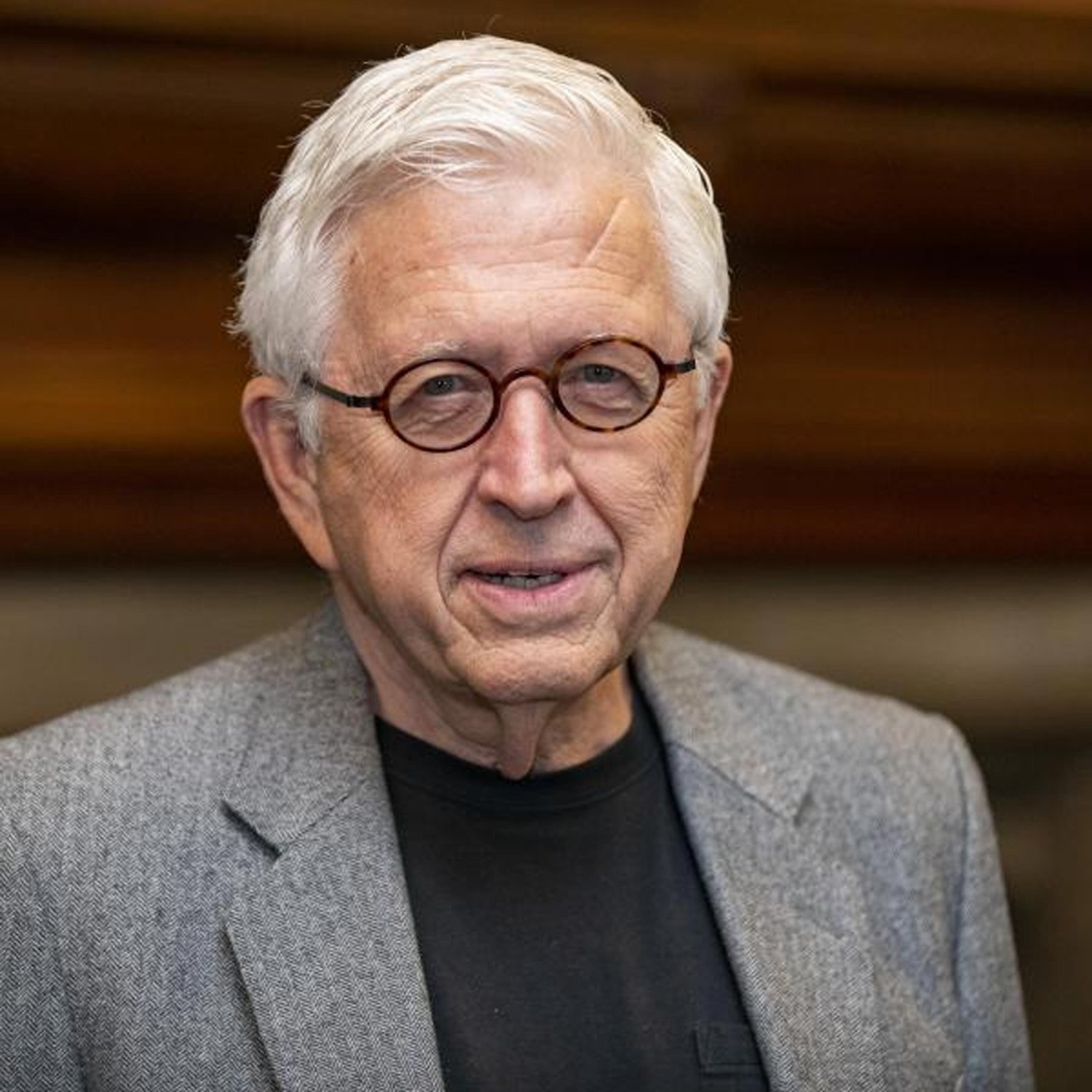
Reflections on Philosophy, Art & Crisis in the 21st Century with ROBERT PIPPIN
What is the importance of philosophy in the 21st century as we enter a post-truth world? How can we reintroduce meaning and uphold moral principles in our world shaken by crises? And what does philosophy teach us about living in harmony with the natural world?Robert Pippin is the Evelyn Stefansson Nef Distinguished Service Professor at the University of Chicago where he teaches in the College, Committee on Social Thought, and Department of Philosophy. Pippin is widely acclaimed for his scholarship in German idealism as well as later German philosophy, including publications such as Modernism as a Philosophical Problem, and Hegel’s Idealism. In keeping with his interdisciplinary interests, Pippin’s book Henry James and Modern Moral Life explores the intersections between philosophy and literature. Pippin’s most recent published book is The Culmination: Heidegger, German Idealism, and the Fate of Philosophy.“The Greek Enlightenment introduced the idea of centrality and the priority of rationality in understanding ourselves and our relation to the world. Heidegger wants to move us away from what he thinks has culminated in a kind of dead end. We appear in this world without any instruction manual, we have these finite, corporeal lives that begin in ways- we have no control over and end in ways we often have no control over. The classical conception was that the cosmos was good, because it was open to human interrogation. It allowed itself to be interrogated, so the thing that mattered most of all was knowing, because knowing was the way in which we became at home in the world. Heidegger thought we had prioritized the question of knowledge to such a degree as the primordial relationship to all of reality. He connected this to the kind of predatory stance of contemporary technology, which is essentially destroying the world because it considers the world as just material stuff, which we can understand and manipulate for our own ends. He thinks there's a huge influence in the original understanding of being as intelligibility that eventually has cut us off from all sources of meaning in a possible life other than this successful control of the environment for our own satisfaction.”https://socialsciences.uchicago.edu/directory/Robert-Pippinhttps://press.uchicago.edu/ucp/books/book/chicago/C/bo208042246.htmlwww.creativeprocess.infowww.oneplanetpodcast.orgIG www.instagram.com/creativeprocesspodcast
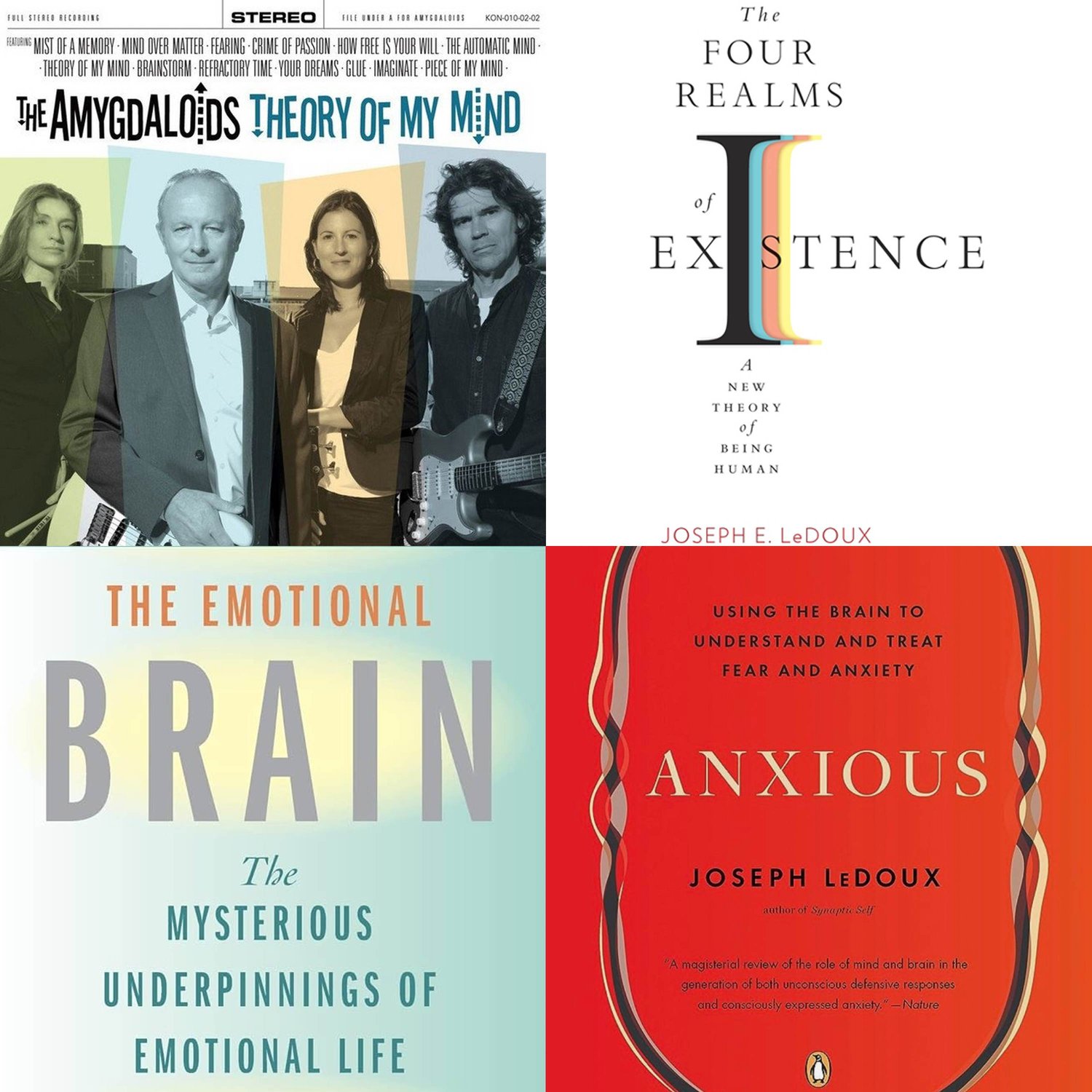
The Emotional Brain, Music, Consciousness & Memory with JOSEPH LEDOUX - Highlights
“We've got four billion years of biological accidents that created all of the intricate aspects of everything about life, including consciousness. And it's about what's going on in each of those cells at the time that allows it to be connected to everything else and for the information to be understood as it's being exchanged between those things with their multifaceted, deep, complex processing.”Joseph LeDoux is a Professor of Neural Science at New York University at NYU and was Director of the Emotional Brain Institute. His research primarily focuses on survival circuits, including their impacts on emotions, such as fear and anxiety. He has written a number of books in this field, including The Four Realms of Existence: A New Theory of Being Human, The Emotional Brain, Synaptic Self, Anxious, and The Deep History of Ourselves. LeDoux is also the lead singer and songwriter of the band The Amygdaloids. www.joseph-ledoux.comwww.cns.nyu.edu/ebihttps://amygdaloids.netwww.hup.harvard.edu/books/9780674261259www.creativeprocess.infowww.oneplanetpodcast.orgIG www.instagram.com/creativeprocesspodcast
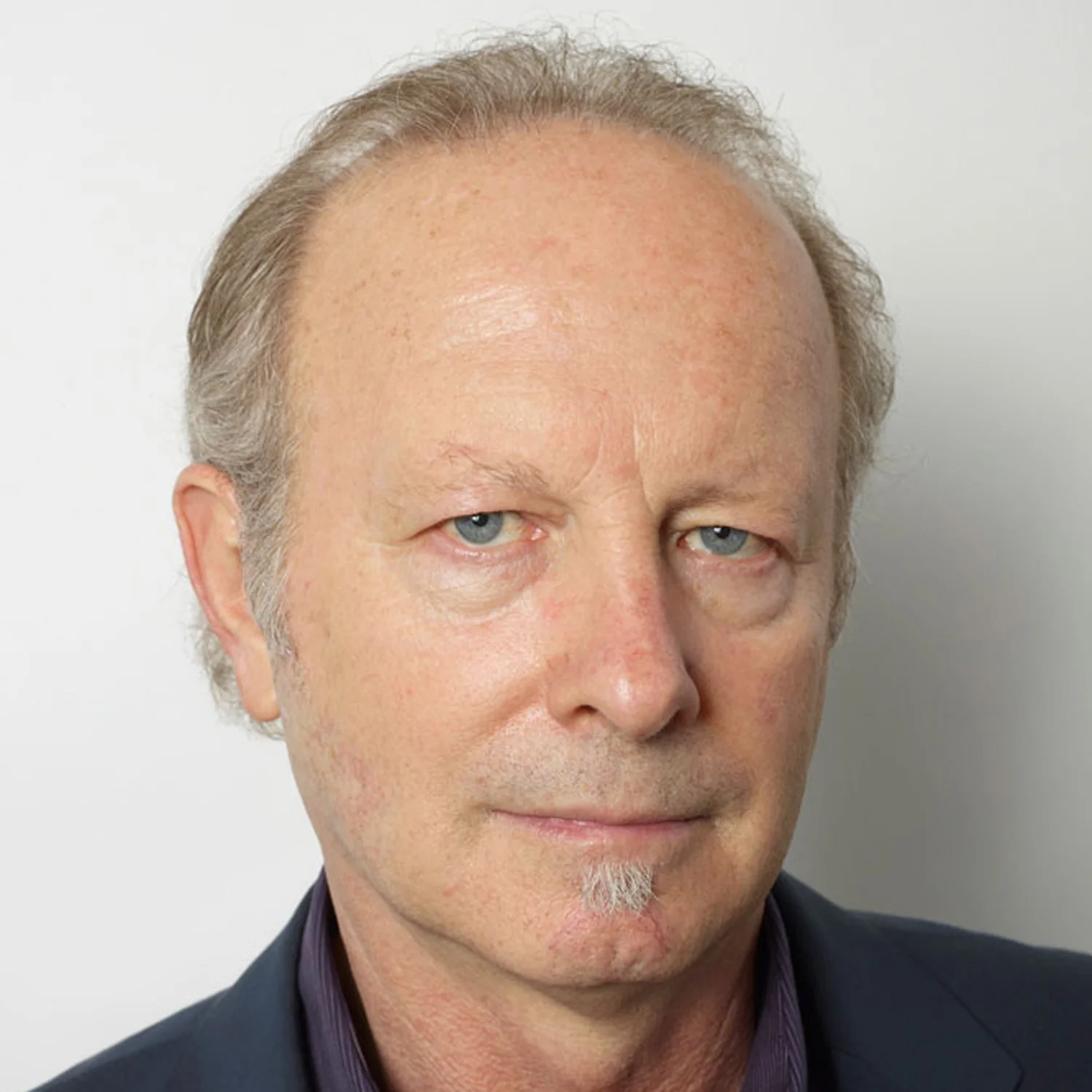
How does the brain process emotions and music? JOSEPH LEDOUX - Neuroscientist, Author, Musician
How does the brain process emotions? How are emotional memories formed and stored in the brain, and how do they influence behavior, perception, and decision-making? How does music help us understand our emotions, memories, and the nature of consciousness?Joseph LeDoux is a Professor of Neural Science at New York University at NYU and was Director of the Emotional Brain Institute. His research primarily focuses on survival circuits, including their impacts on emotions, such as fear and anxiety. He has written a number of books in this field, including The Four Realms of Existence: A New Theory of Being Human, The Emotional Brain, Synaptic Self, Anxious, and The Deep History of Ourselves. LeDoux is also the lead singer and songwriter of the band The Amygdaloids. “We've got four billion years of biological accidents that created all of the intricate aspects of everything about life, including consciousness. And it's about what's going on in each of those cells at the time that allows it to be connected to everything else and for the information to be understood as it's being exchanged between those things with their multifaceted, deep, complex processing.”www.joseph-ledoux.comwww.cns.nyu.edu/ebihttps://amygdaloids.netwww.hup.harvard.edu/books/9780674261259www.creativeprocess.infowww.oneplanetpodcast.orgIG www.instagram.com/creativeprocesspodcastMusic courtesy of Joseph LeDoux
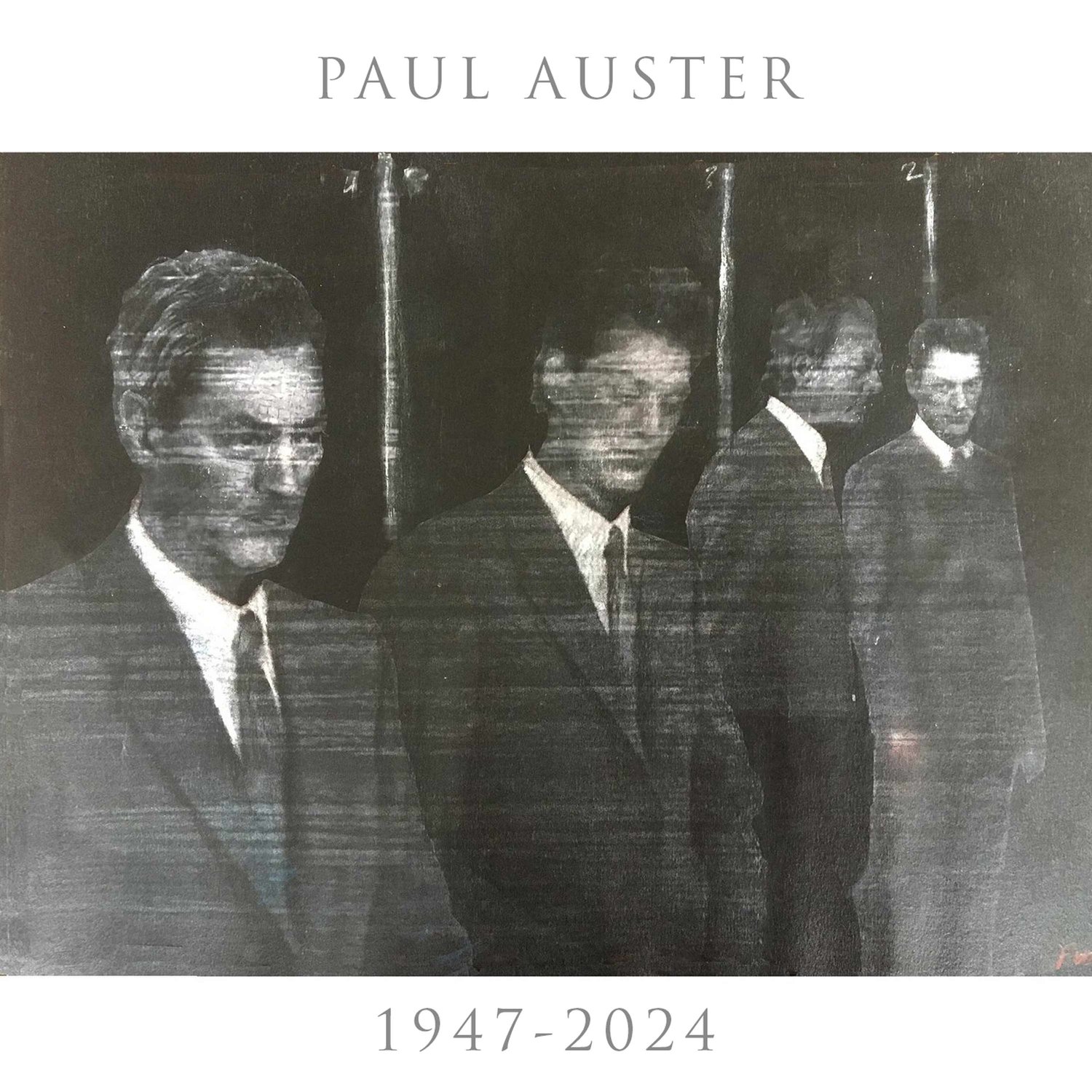
Remembering PAUL AUSTER - Writer, Director (1947-2024)
It is said that people never die until the last person says their name. In memory of the writer and director Paul Auster, who passed away this week, we're sharing this conversation we had back in 2017 after the publication of his novel 4 3 2 1. Auster reflects on his body of work, life, and creative process.Paul Auster was the bestselling author of Winter Journal, Sunset Park, Invisible, The Book of Illusions, and The New York Trilogy, among many other works. He has been awarded the Prince of Asturias Award for Literature, the Prix Médicis étranger, an Independent Spirit Award, and the Premio Napoli. He is a member of the American Academy of Arts and Letters, the American Academy of Arts and Sciences, and is a Commandeur de l'Ordre des Arts et des Lettres. He has also penned several screenplays for films such as Smoke (1995), as well as Lulu on the Bridge (1998) and The Inner Life of Martin Frost (2007), which he also directed.“But what happens is a space is created. And maybe it’s the only space of its kind in the world in which two absolute strangers can meet each other on terms of absolute intimacy. I think this is what is at the heart of the experience and why once you become a reader that you want to repeat that experience, that very deep total communication with that invisible stranger who has written the book that you’re holding in your hands. And that’s why I think, in spite of everything, novels are not going to stop being written, no matter what the circumstances. We need stories. We’re all human beings, and it’s stories from the moment we’re able to talk.”We apologize for the quality of the recording since it was not originally meant to be aired as a podcast. Portrait of Paul Auster by Mia Funk, inspired by his novel 4 3 2 1.www.penguinrandomhouse.com/authors/1045/paul-austerwww.creativeprocess.infowww.oneplanetpodcast.orgIG www.instagram.com/creativeprocesspodcast