
Books & Writers • The Creative Process: Novelists, Screenwriters, Playwrights, Poets, Non-fiction Writers & Journalists Talk Writing, Life & Creativity
309 episodes — Page 6 of 7

Highlights - How do we navigate ambiguity, uncertainty & move beyond linear thinking? - RUPERT SHELDRAKE
"The idea that the laws of nature are fixed is taken for granted by almost all scientists and within physics, within cosmology, it leads to an enormous realm of speculation, which I think is totally unnecessary. We're assuming the laws of nature are fixed. Most of science assumes this, but is it really so in an evolving universe? Why shouldn't the laws evolve? And if we think about that, then we realize that actually, the whole idea of a law of nature is a metaphor. It's based on human laws. I mean, after all, dogs and cats don't obey laws. And in tribes, they don't even have laws. They have customs. So it's only in civilized societies that you have laws. And then if we think through that metaphor, then actually the laws do change.All artists are influenced by other artists and by things in the collective culture, and I think that morphic resonance as collective memory would say that all of us draw unconsciously as well as consciously on a collective memory and all animals draw on a collective memory of their kind as well. We don't know where it comes from, but there's true creativity involved in evolution, both human and natural."How do we navigate ambiguity and uncertainty? Moving beyond linear thinking into instinct and intuition, we might discover other sources within ourselves that lie beyond the boundaries of science and reason.Rupert Sheldrake is a biologist and author best known for his hypothesis of morphic resonance. His many books include The Science Delusion, The Presence of the Past, and Ways to Go Beyond and Why They Work. At Cambridge University, Dr. Sheldrake worked in developmental biology as a fellow of Clare College. From 2005 to 2010, he was director of the Perrott Warrick Project for research on unexplained human and animal abilities, funded by Trinity College Cambridge. He was among the top 100 global thought leaders for 2013, as ranked by the Duttweiler Institute.www.sheldrake.orgwww.amazon.com/Science-Delusion/dp/1529393221/?tag=sheldrake-20www.amazon.com/Science-Set-Free-Paths-Discovery/dp/0770436722/?tag=sheldrake-20

RUPERT SHELDRAKE - Biologist & Author of The Science Delusion, The Presence of the Past
How do we navigate ambiguity and uncertainty? Moving beyond linear thinking into instinct and intuition, we might discover other sources within ourselves that lie beyond the boundaries of science and reason.Rupert Sheldrake is a biologist and author best known for his hypothesis of morphic resonance. His many books include The Science Delusion, The Presence of the Past, and Ways to Go Beyond and Why They Work. At Cambridge University, Dr. Sheldrake worked in developmental biology as a fellow of Clare College. From 2005 to 2010, he was director of the Perrott Warrick Project for research on unexplained human and animal abilities, funded by Trinity College Cambridge. He was among the top 100 global thought leaders for 2013, as ranked by the Duttweiler Institute."The idea that the laws of nature are fixed is taken for granted by almost all scientists and within physics, within cosmology, it leads to an enormous realm of speculation, which I think is totally unnecessary. We're assuming the laws of nature are fixed. Most of science assumes this, but is it really so in an evolving universe? Why shouldn't the laws evolve? And if we think about that, then we realize that actually, the whole idea of a law of nature is a metaphor. It's based on human laws. I mean, after all, dogs and cats don't obey laws. And in tribes, they don't even have laws. They have customs. So it's only in civilized societies that you have laws. And then if we think through that metaphor, then actually the laws do change.All artists are influenced by other artists and by things in the collective culture, and I think that morphic resonance as collective memory would say that all of us draw unconsciously as well as consciously on a collective memory and all animals draw on a collective memory of their kind as well. We don't know where it comes from, but there's true creativity involved in evolution, both human and natural."www.sheldrake.orgwww.amazon.com/Science-Delusion/dp/1529393221/?tag=sheldrake-20www.amazon.com/Science-Set-Free-Paths-Discovery/dp/0770436722/?tag=sheldrake-20
Are we living in a Simulated Universe? - Highlights - MELVIN VOPSON
"These ideas go as far back as Ancient Greece, which basically gave birth to two lines of thinking, two ideologies, materialism and idealism. And the idealist thinkers like Plato regarded reality as a projection of our minds, as something that is not real. And the only thing that is real is our consciousness and our minds and everything else around us is just constructs of our proception and projections. And that was a philosophy that was opposed to materialism, which regards the world as in a materialistic way, made up of atoms and matter and our minds are a product of these chemical reactions and the matter is coming together and forming our minds and consciousness. And everything in the world exists regardless of our consciousness or our minds and the universe is there and it's a materialistic view of the world. So these are two competing ideologies, and this is actually how we see the world today in a materialistic way.What the simulated universe philosophical idea belongs to is this idealistic view of the world. And the idealism philosophy morphs into something else in this simulation hypothesis where not only everything is a simulated construct, but our minds and our consciousness are part of it.So for example, Plato saw our minds and, if you want, our spirit as a fundamental central piece and the only real thing, and everything emerged from this. The simulated hypothesis assumes that everything, including our minds and consciousness, is part of a simulation. So it's a bit of a modern iteration of idealism which has been triggered by these recent developments in advancing technologies and computing science that began in the 1940s with the development of silicon technologies, early microchips, and digital computers creating digital memories.This highly accelerated rate of development, in terms of our technological progress, in less than a hundred years going from analog technologies means we are entering a new era of quantum computers, like generative AI, and artificial intelligence, and all these VRs are a reality today. So this development has helped in some ways to lead to the emergence of this simulated universe concept because we are now reaching a new technological level where we see that we are beginning to simulate virtual realities and they are becoming more and more immersive and sophisticated."Dr. Melvin M. Vopson is Associate Professor of Physics at the University of Portsmouth, Fellow of the Higher Education Academy, Chartered Physicist and Fellow of the Institute of Physics. He is the co-founder and CEO of the Information Physics Institute, editor-in-chief of the IPI Letters and Emerging Minds Journal for Student Research. He is the author of Reality Reloaded: The Scientific Case for a Simulated Universe. Dr. Vopson has a wide-ranging scientific expertise in experimental, applied and theoretical physics that is internationally recognized. He has published over 100 research articles, achieving over 2500 citations.https://www.port.ac.uk/about-us/structure-and-governance/our-people/our-staff/melvin-vopsonhttps://ipipublishing.org/index.php/ipil/RRwww.creativeprocess.info www.oneplanetpodcast.orgIG www.instagram.com/creativeprocesspodcast
MELVIN VOPSON - Physicist - Author of Reality Reloaded: The Scientific Case for a Simulated Universe
Are we living in a Simulated Universe? How will AI impact the future of work, society & education?Dr. Melvin M. Vopson is Associate Professor of Physics at the University of Portsmouth, Fellow of the Higher Education Academy, Chartered Physicist and Fellow of the Institute of Physics. He is the co-founder and CEO of the Information Physics Institute, editor-in-chief of the IPI Letters and Emerging Minds Journal for Student Research. He is the author of Reality Reloaded: The Scientific Case for a Simulated Universe. Dr. Vopson has a wide-ranging scientific expertise in experimental, applied and theoretical physics that is internationally recognized. He has published over 100 research articles, achieving over 2500 citations."These ideas go as far back as Ancient Greece, which basically gave birth to two lines of thinking, two ideologies, materialism and idealism. And the idealist thinkers like Plato regarded reality as a projection of our minds, as something that is not real. And the only thing that is real is our consciousness and our minds and everything else around us is just constructs of our proception and projections. And that was a philosophy that was opposed to materialism, which regards the world as in a materialistic way, made up of atoms and matter and our minds are a product of these chemical reactions and the matter is coming together and forming our minds and consciousness. And everything in the world exists regardless of our consciousness or our minds and the universe is there and it's a materialistic view of the world. So these are two competing ideologies, and this is actually how we see the world today in a materialistic way.What the simulated universe philosophical idea belongs to is this idealistic view of the world. And the idealism philosophy morphs into something else in this simulation hypothesis where not only everything is a simulated construct, but our minds and our consciousness are part of it.So for example, Plato saw our minds and, if you want, our spirit as a fundamental central piece and the only real thing, and everything emerged from this. The simulated hypothesis assumes that everything, including our minds and consciousness, is part of a simulation. So it's a bit of a modern iteration of idealism which has been triggered by these recent developments in advancing technologies and computing science that began in the 1940s with the development of silicon technologies, early microchips, and digital computers creating digital memories.This highly accelerated rate of development, in terms of our technological progress, in less than a hundred years going from analog technologies means we are entering a new era of quantum computers, like generative AI, and artificial intelligence, and all these VRs are a reality today. So this development has helped in some ways to lead to the emergence of this simulated universe concept because we are now reaching a new technological level where we see that we are beginning to simulate virtual realities and they are becoming more and more immersive and sophisticated."https://www.port.ac.uk/about-us/structure-and-governance/our-people/our-staff/melvin-vopsonhttps://ipipublishing.org/index.php/ipil/RRwww.creativeprocess.info www.oneplanetpodcast.orgIG www.instagram.com/creativeprocesspodcast

What makes a good life? - Highlights - ROBERT WALDINGER, Psychiatrist, Author, Zen Priest
"One of the big differences I've noticed talking with people from more communally oriented cultures is that American culture has a strong emphasis on the individual on individual happiness, individual achievement on individual self-expression. And there are other cultures where the community, the family, and the neighborhood where they live and the well-being of others are paramount and are the first thing they think about. The most exemplary instance of that is in Bhutan, where they can't even propose a law for the legislature to consider unless they have a full section describing the effect on the community of any given law, the effect on the well-being of the whole population. So nothing is about the individual. It's all about the collective."What makes a good life? How important are relationships in helping us lead happy and meaningful lives?Dr. Robert Waldinger is a professor of psychiatry at Harvard Medical School, director of the Harvard Study of Adult Development at Massachusetts General Hospital, and cofounder of the Lifespan Research Foundation. Dr. Waldinger received his AB from Harvard College and his MD from Harvard Medical School. He is a practicing psychiatrist and psychoanalyst, and he directs a psychotherapy teaching program for Harvard psychiatry residents. He is also a Zen master (Roshi) and teaches meditation in New England and around the world. His TED Talk about the Harvard study “What makes a good life?” has been viewed more than 42 million times and is one of the 10 most watched TED Talks ever. He is co-author of The Good Life: Lessons from the World's Longest Scientific Study of Happiness.https://www.robertwaldinger.com/https://www.simonandschuster.com/books/The-Good-Life/Robert-Waldinger/9781982166694https://www.adultdevelopmentstudy.org/ https://www.lifespanresearch.orgwww.creativeprocess.info www.oneplanetpodcast.org IG www.instagram.com/creativeprocesspodcast

ROBERT WALDINGER - Co-Author of The Good Life: Lessons from the World's Longest Scientific Study of Happiness
What makes a good life? How important are relationships in helping us lead happy and meaningful lives?Dr. Robert Waldinger is a professor of psychiatry at Harvard Medical School, director of the Harvard Study of Adult Development at Massachusetts General Hospital, and cofounder of the Lifespan Research Foundation. Dr. Waldinger received his AB from Harvard College and his MD from Harvard Medical School. He is a practicing psychiatrist and psychoanalyst, and he directs a psychotherapy teaching program for Harvard psychiatry residents. He is also a Zen master (Roshi) and teaches meditation in New England and around the world. His TED Talk about the Harvard study “What makes a good life?” has been viewed more than 42 million times and is one of the 10 most watched TED Talks ever. He is co-author of The Good Life: Lessons from the World's Longest Scientific Study of Happiness."One of the big differences I've noticed talking with people from more communally oriented cultures is that American culture has a strong emphasis on the individual on individual happiness, individual achievement on individual self-expression. And there are other cultures where the community, the family, and the neighborhood where they live and the well-being of others are paramount and are the first thing they think about. The most exemplary instance of that is in Bhutan, where they can't even propose a law for the legislature to consider unless they have a full section describing the effect on the community of any given law, the effect on the well-being of the whole population. So nothing is about the individual. It's all about the collective."https://www.robertwaldinger.com/https://www.simonandschuster.com/books/The-Good-Life/Robert-Waldinger/9781982166694https://www.adultdevelopmentstudy.org/ https://www.lifespanresearch.orgwww.creativeprocess.info www.oneplanetpodcast.org IG www.instagram.com/creativeprocesspodcast

How has jazz been interpreted around the world? Highlights - BERNARDO MOREIRA
“I had so many people around me when I was young– famous poets like Ary dos Santos, one of Portugal’s greatest poets of the 20th century. Sometimes he would be there talking with my mother, and I had this information that was getting in, but I wasn’t aware of it. And then in the early days, when I had just started playing, I was really into modern jazz, which was very instrumental, so I didn’t really pay attention to lyrics. It took me a while to get interested in Portuguese music, and in that mixture between jazz, Fado music and Portuguese popular music. For a while I was into the importance of a good poem. Now what moves me most of the time is that mixture of cultures— trying to do something that you cannot find in other countries. If you are into a lot of American jazz, for instance, you can play great music, but you are always playing music that started elsewhere, you know? And for a European like me, it’s challenging to try and find what makes you different in such a big market. What sound can you try to create that you wouldn’t hear in France or in Japan or in New York? So that's a very difficult challenge, actually, because you try to get really into your heart and your emotion. And I think Portugal has a lot of good emotions in its popular music that you don't find elsewhere. The music I make always has a kind of nostalgic ambience. It's not always sadness. It's a melancholic approach that is very hard to put into words– you just need to feel it.”Bernardo Moreira is one of the most active Portuguese double bassists. He has performed as a guest soloist with Gulbenkian, Metropolitan de Lisboa, and Nacional do Porto orchestras, and gained prominence for his collaborations with international artists, including the legendary Benny Colson, Freddie Hubbard, Wayne Shorter, Art Farmer, and Kenny Wheeler. He is a regular collaborator with many jazz musicians in Portugal, participating in formations such as the Maria João/Mário Laginha quartet, the Mário Laginha trio, and singer Cristina Branco. In 2021, he released Enter Paredes, and in 2022, he led Cantina’s de Main and SUL.www.clavenamao.orghttps://open.spotify.com/artist/0Yse2njeXg2XDiQmmxhAc5www.creativeprocess.info www.oneplanetpodcast.org IG www.instagram.com/creativeprocesspodcastMusic on this episode:António Marinheiro, Bernardo Moreira Sextet, from the album Entre Paredes PROMESSAS MIX V3 ULT from SULCourtesy of Bernardo Moreira

BERNARDO MOREIRA - Portuguese Jazz Musician
Bernardo Moreira is one of the most active Portuguese double bassists. He has performed as a guest soloist with Gulbenkian, Metropolitan de Lisboa, and Nacional do Porto orchestras, and gained prominence for his collaborations with international artists, including the legendary Benny Colson, Freddie Hubbard, Wayne Shorter, Art Farmer, and Kenny Wheeler. He is a regular collaborator with many jazz musicians in Portugal, participating in formations such as the Maria João/Mário Laginha quartet, the Mário Laginha trio, and singer Cristina Branco. In 2021, he released Enter Paredes, and in 2022, he led Cantina’s de Main and SUL.“I had so many people around me when I was young– famous poets like Ary dos Santos, one of Portugal’s greatest poets of the 20th century. Sometimes he would be there talking with my mother, and I had this information that was getting in, but I wasn’t aware of it. And then in the early days, when I had just started playing, I was really into modern jazz, which was very instrumental, so I didn’t really pay attention to lyrics. It took me a while to get interested in Portuguese music, and in that mixture between jazz, Fado music and Portuguese popular music. For a while I was into the importance of a good poem. Now what moves me most of the time is that mixture of cultures— trying to do something that you cannot find in other countries. If you are into a lot of American jazz, for instance, you can play great music, but you are always playing music that started elsewhere, you know? And for a European like me, it’s challenging to try and find what makes you different in such a big market. What sound can you try to create that you wouldn’t hear in France or in Japan or in New York? So that's a very difficult challenge, actually, because you try to get really into your heart and your emotion. And I think Portugal has a lot of good emotions in its popular music that you don't find elsewhere. The music I make always has a kind of nostalgic ambience. It's not always sadness. It's a melancholic approach that is very hard to put into words– you just need to feel it.”www.clavenamao.orghttps://open.spotify.com/artist/0Yse2njeXg2XDiQmmxhAc5www.creativeprocess.info www.oneplanetpodcast.org IG www.instagram.com/creativeprocesspodcastMusic on this episode:António Marinheiro, Bernardo Moreira Sextet, from the album Entre Paredes PROMESSAS MIX V3 ULT from SULCourtesy of Bernardo Moreira

Does privacy exist anymore? Or are humans just sets of data to be traded and sold? - Highlights - WENDY WONG
"One of the things that we need to remember is that we are data stakeholders and not data subjects. We're often called data subjects if you look at the way legislation is written and tech companies talk about the users of their technology as data subjects.Being a subject casts this sort of 'you can't help but have this happen to you' effect. But we're actually data stakeholders for the reason that data cannot be created without us. If companies were incentivized to follow data minimization for example, where they only collect the data they need, that would change the way we interact with digital technologies."Does privacy exist anymore? Or are humans just sets of data to be traded and sold?Wendy H. Wong is Professor of Political Science and Principal's Research Chair at the University of British Columbia, Okanagan. She is the author of two award-winning books: Internal Affairs: How the Structure of NGOs Transforms Human Rights and (with Sarah S. Stroup) The Authority Trap: Strategic Choices of International NGOs. Her latest book is We, the Data: Human Rights in the Digital Age.www.wendyhwong.comhttps://mitpress.mit.edu/author/wendy-h-wong-38397www.creativeprocess.info www.oneplanetpodcast.org IG www.instagram.com/creativeprocesspodcast

WENDY WONG - Author of We, the Data: Human Rights in the Digital Age
Does privacy exist anymore? Or are humans just sets of data to be traded and sold?Wendy H. Wong is Professor of Political Science and Principal's Research Chair at the University of British Columbia, Okanagan. She is the author of two award-winning books: Internal Affairs: How the Structure of NGOs Transforms Human Rights and (with Sarah S. Stroup) The Authority Trap: Strategic Choices of International NGOs. Her latest book is We, the Data: Human Rights in the Digital Age."One of the things that we need to remember is that we are data stakeholders and not data subjects. We're often called data subjects if you look at the way legislation is written and tech companies talk about the users of their technology as data subjects.Being a subject casts this sort of 'you can't help but have this happen to you' effect. But we're actually data stakeholders for the reason that data cannot be created without us. If companies were incentivized to follow data minimization for example, where they only collect the data they need, that would change the way we interact with digital technologies."www.wendyhwong.comhttps://mitpress.mit.edu/author/wendy-h-wong-38397www.creativeprocess.info www.oneplanetpodcast.org IG www.instagram.com/creativeprocesspodcast

MAX BENNETT - Author of A Brief History of Intelligence: Evolution, AI, and the Five Breakthroughs That Made Our Brains - CEO of Alby
The more the science of intelligence (both human and artificial) advances, the more it holds the potential for great benefits and dangers to society.Max Bennett is the cofounder and CEO of Alby, a start-up that helps companies integrate large language models into their websites to create guided shopping and search experiences. Previously, Bennett was the cofounder and chief product officer of Bluecore, one of the fastest growing companies in the U.S., providing AI technologies to some of the largest companies in the world. Bluecore has been featured in the annual Inc. 500 fastest growing companies, as well as Glassdoor’s 50 best places to work in the U.S. Bluecore was recently valued at over $1 billion. Bennett holds several patents for AI technologies and has published numerous scientific papers in peer-reviewed journals on the topics of evolutionary neuroscience and the neocortex. He has been featured on the Forbes 30 Under 30 list as well as the Built In NYC’s 30 Tech Leaders Under 30. He is the author of A Brief History of Intelligence: Evolution, AI, and the Five Breakthroughs That Made Our Brains."When I read some speculative fiction that moves me, for example, part of the reason it moves me is because it came from a human mind who experienced something they were trying to share with a fellow human mind. And it moves me because I can tell in the writing that another human felt something and wanted to share what they experienced, the pain or the joy they felt, or the story they built in their heads. And what I think is interesting about the stories created by ChatGPT is none of them have been any good yet. To me, the only distinction I can draw is when humans do it, there is a message imbued in the art because I am experiencing something as a feeling, thinking human, and I am channeling that into the thing that I'm creating as a little message gift and human solidarity to others who might experience it themselves. And I think that is something missing from AI that does that. And I think it might not be that they're not quote-unquote creative, but that the creativeness is almost vacuous because it lacks that message from another thinking sentient being that's trying to communicate with us. And that's why when we look at it, we see something feels missing. That's hard to articulate. So it begs an interesting question: Do you need to feel and suffer a little bit and to get the trials and triumphs of the human experience to write art that is compelling or to create art that is compelling and meaningful to a fellow human?"www.abriefhistoryofintelligence.com/ www.alby.com www.bluecore.com www.creativeprocess.info www.oneplanetpodcast.org IG www.instagram.com/creativeprocesspodcast

Highlights - JULIAN LENNON - Singer-songwriter, Author, Founder of The White Feather Foundation, Doc Filmmaker
"We're polluting the air that we breathe. We're polluting the seas and the waters. We're polluting the soil. We're polluting every aspect of our lives. So there's no getting away from it. That's absolutely sure. And yes, there is absolutely a way forward to make change. And yes, it is a question of relearning so much, without question. I mean, part of the reason that not only did I start the White Feather Foundation with indigenous tribes in mind back then. And then, one of the key ways forward for me was education, of course. I think that's been part of our problem worldwide. People just haven't known how serious or taken it seriously enough before. And there's so much propaganda that's misinformation that's pushed out into the world. You see in the film as well how the truth gets pushed away and shoved aside by money and greed and corporations. And that's a really difficult one to get over, but, you know, writing the children's books was a way to get in the same theme. Again, not shoving it down their throats, but presenting the situation as is and getting children to say...Reading and asking and reminding their parents, and relearning as well. Why is there plastic in the water? Why don't they have any water over there? Why, do you know, why? And there are answers for all of this, and the parents need to pick up on that too.But this should be made, you know, these two films and many more should be mandatory. I mean, you want to talk about Clockwork Orange...I don't mean pinning their eyes back, you know, forcing them to watch the film, but certainly, this really should become part of the curriculum in many ways.I hate to use the word logic all the time, but if you're not ignorant and you have an understanding about the world around you, then you know how you can help it. You can know how to make changes and how to move forward. And this is exactly what these films do.So, may that Josh and Rebecca and everybody who supports them continue moving forward and making more films because until things change, which they are changing, thankfully. I think it's a real credit to Josh and Rebecca, how many lives they've changed and how many eyes and ears they've opened through the course of their filmmaking."How can the arts inspire us to lead lives of greater meaning and connection? What kind of world are we leaving for future generations?Julian Lennon is a Grammy-nominated singer-songwriter, photographer, documentary filmmaker, and NYTimes bestselling author of children's books. Executive Producer of Common Ground and its predecessor Kiss the Ground, which reached over 1 billion people and inspired the US Department of Agriculture (USDA) to put $20 billion toward soil health. The natural world and indigenous people are also the focus of Lennon’s other documentaries Whaledreamers, and Women of the White Buffalo. In 2007, Julian founded the global environmental and humanitarian organization The White Feather Foundation, whose key initiatives are education, health, conservation, and the protection of indigenous culture, causes he also advances through his photography, exhibited across the US and Europe. His latest album Jude spans a body of work created over the last 30 years. Julian was named a Peace Laureate by UNESCO in 2020.https://julianlennon.com https://commongroundfilm.org https://kissthegroundmovie.com https://whitefeatherfoundation.com https://julianlennon.lnk.to/JudeWE https://julianlennon-photography.comwww.creativeprocess.info www.oneplanetpodcast.org IG www.instagram.com/creativeprocesspodcast
JULIAN LENNON - Singer-songwriter, Author, Doc Filmmaker, Exec. Producer of Common Ground
How can the arts inspire us to lead lives of greater meaning and connection? What kind of world are we leaving for future generations?Julian Lennon is a Grammy-nominated singer-songwriter, photographer, documentary filmmaker, and NYTimes bestselling author of children's books. Executive Producer of Common Ground and its predecessor Kiss the Ground, which reached over 1 billion people and inspired the US Department of Agriculture (USDA) to put $20 billion toward soil health. The natural world and indigenous people are also the focus of Lennon’s other documentaries Whaledreamers, and Women of the White Buffalo. In 2007, Julian founded the global environmental and humanitarian organization The White Feather Foundation, whose key initiatives are education, health, conservation, and the protection of indigenous culture, causes he also advances through his photography, exhibited across the US and Europe. His latest album Jude spans a body of work created over the last 30 years. Julian was named a Peace Laureate by UNESCO in 2020."We're polluting the air that we breathe. We're polluting the seas and the waters. We're polluting the soil. We're polluting every aspect of our lives. So there's no getting away from it. That's absolutely sure. And yes, there is absolutely a way forward to make change. And yes, it is a question of relearning so much, without question. I mean, part of the reason that not only did I start the White Feather Foundation with indigenous tribes in mind back then. And then, one of the key ways forward for me was education, of course. I think that's been part of our problem worldwide. People just haven't known how serious or taken it seriously enough before. And there's so much propaganda that's misinformation that's pushed out into the world. You see in the film as well how the truth gets pushed away and shoved aside by money and greed and corporations. And that's a really difficult one to get over, but, you know, writing the children's books was a way to get in the same theme. Again, not shoving it down their throats, but presenting the situation as is and getting children to say...Reading and asking and reminding their parents, and relearning as well. Why is there plastic in the water? Why don't they have any water over there? Why, do you know, why? And there are answers for all of this, and the parents need to pick up on that too.But this should be made, you know, these two films and many more should be mandatory. I mean, you want to talk about Clockwork Orange...I don't mean pinning their eyes back, you know, forcing them to watch the film, but certainly, this really should become part of the curriculum in many ways.I hate to use the word logic all the time, but if you're not ignorant and you have an understanding about the world around you, then you know how you can help it. You can know how to make changes and how to move forward. And this is exactly what these films do.So, may that Josh and Rebecca and everybody who supports them continue moving forward and making more films because until things change, which they are changing, thankfully. I think it's a real credit to Josh and Rebecca, how many lives they've changed and how many eyes and ears they've opened through the course of their filmmaking."https://julianlennon.com https://commongroundfilm.org https://kissthegroundmovie.com https://whitefeatherfoundation.com https://julianlennon.lnk.to/JudeWE https://julianlennon-photography.comwww.creativeprocess.info www.oneplanetpodcast.org IG www.instagram.com/creativeprocesspodcast
DUANE L. CADY - Philosopher, Author of Moral Vision: How Everyday Life Shapes Ethical Thinking & From Warism to Pacifism
How can we resolve conflicts without compromising our ethics and moral vision? Each year, wars are being fought in our name or with our support that citizens never get an opportunity to vote on. How can we make our voices heard?“Warism, taking war for granted as morally acceptable, even morally required, is the primary obstacle to peace.” Duane L. Cady is a philosopher and Professor Emeritus at Hamline University. He was nominated for the 1991 Grawemeyer World Order Award, was named Outstanding Educator of the Year by the United Methodist Foundation for Higher Education, and a festschiff in his honor was published in 2012. Cady is best known for his works on pacifism, including Moral Vision: How Everyday Life Shapes Ethical Thinking, and From Warism to Pacifism: A Moral Continuum."So when I think about the importance of the liberal arts and the humanities, they literally are the skills that free us. I think our freedom depends on the liberal arts, learning about music, learning about mathematics, learning about history, reading books, the kinds of things that we need that are not going to turn into a market job, at least not immediately. But employers understand they need people who can think, and who are articulate when it comes to speaking and writing. And I also think the humanities generally are well-named because they in fact humanize us. Once we see the rich literature, artwork, theater, and so on, of previous generations, it gives us a much deeper perspective on who we might be, and how we might put our freedom and lives to good use."https://duanelcady.comwww.creativeprocess.infowww.oneplanetpodcast.orgIG www.instagram.com/creativeprocesspodcast
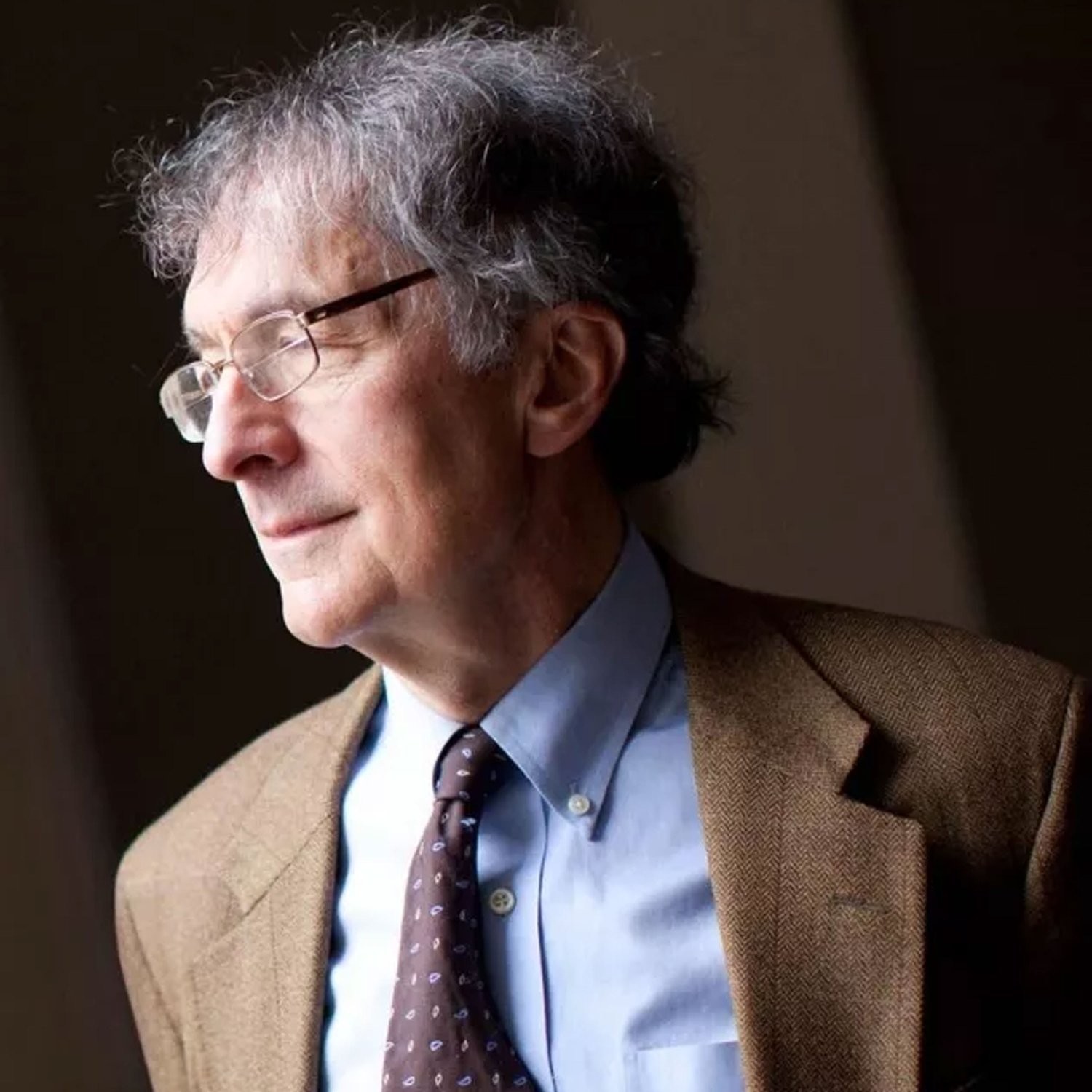
HOWARD GARDNER - Author of A Synthesizing Mind & Frames of Mind: The Theory of Multiple Intelligences - Co-director of The Good Project
How do we define intelligence? What is the point of creativity and intelligence if we are not creating good in the world? In this age of AI, what is the importance of a synthesizing mind?Howard Gardner, Research Professor of Cognition and Education at the Harvard Graduate School of Education, an author of over 30 books, translated into 32 languages, and several hundred articles, is best known for his theory of multiple intelligences, a critique of the notion that there exists but a single human intelligence that can be assessed by standard psychometric instruments. He has twice been selected by Foreign Policy and Prospect magazines as one of the 100 most influential public intellectuals in the world. In the last few years, Gardner has been studying the nature of human synthesizing, a topic introduced in his 2020 memoir, A Synthesizing Mind.For 28 years, with David Perkins, he was Co-Director of Harvard Project Zero, and in more recent years has served in a variety of leadership positions. Since the middle 1990s, Gardner has directed The Good Project, a group of initiatives, founded in collaboration with psychologists Mihaly Csikszentmihalyi and William Damon. The project promotes excellence, engagement, and ethics in education, preparing students to become good workers and good citizens who contribute to the overall well-being of society. Through research-based concepts, frameworks, and resources, The Good Project seeks to help students reflect upon the ethical dilemmas that arise in everyday life and give them the tools to make thoughtful decisions."And I became interested in synthesis and I wrote the memoir quite a while ago, but now with the advent of large language instruments or ChatGPT, the pressure to figure out what synthesis is, what these computing systems can or can't do that human beings are still the privileged cohort in carrying out those tasks, that's made the interest in synthesis more important than ever. If we're trying to decide what policy to cover, whether it's an economic policy about interest rates, or whether - we're talking now during the beginning of the war in the Middle East - what policies to follow militarily, economically, and ethically. For that matter, do we entrust that to some kind of a computational system, or is this something that human judgment needs to be brought to bear? And if so, how and at what point? And these are quintessential synthesizing questions. You can't just look up and say, 'Well, what should we do with the Gaza Strip? Or what should we do in Japan, which has had low interest rates, but the rest of the world has got very high inflation.' These are not things where we just want to press a button and get the answer. These are things we want to discuss and debate and review and maybe even pit one large language instrument against another and see do they come up with the same answers. They might well not."www.howardgardner.comhttp://thegoodproject.orghttps://mitpress.mit.edu/9780262542838/a-synthesizing-mindwww.creativeprocess.infowww.oneplanetpodcast.orgIG www.instagram.com/creativeprocesspodcast
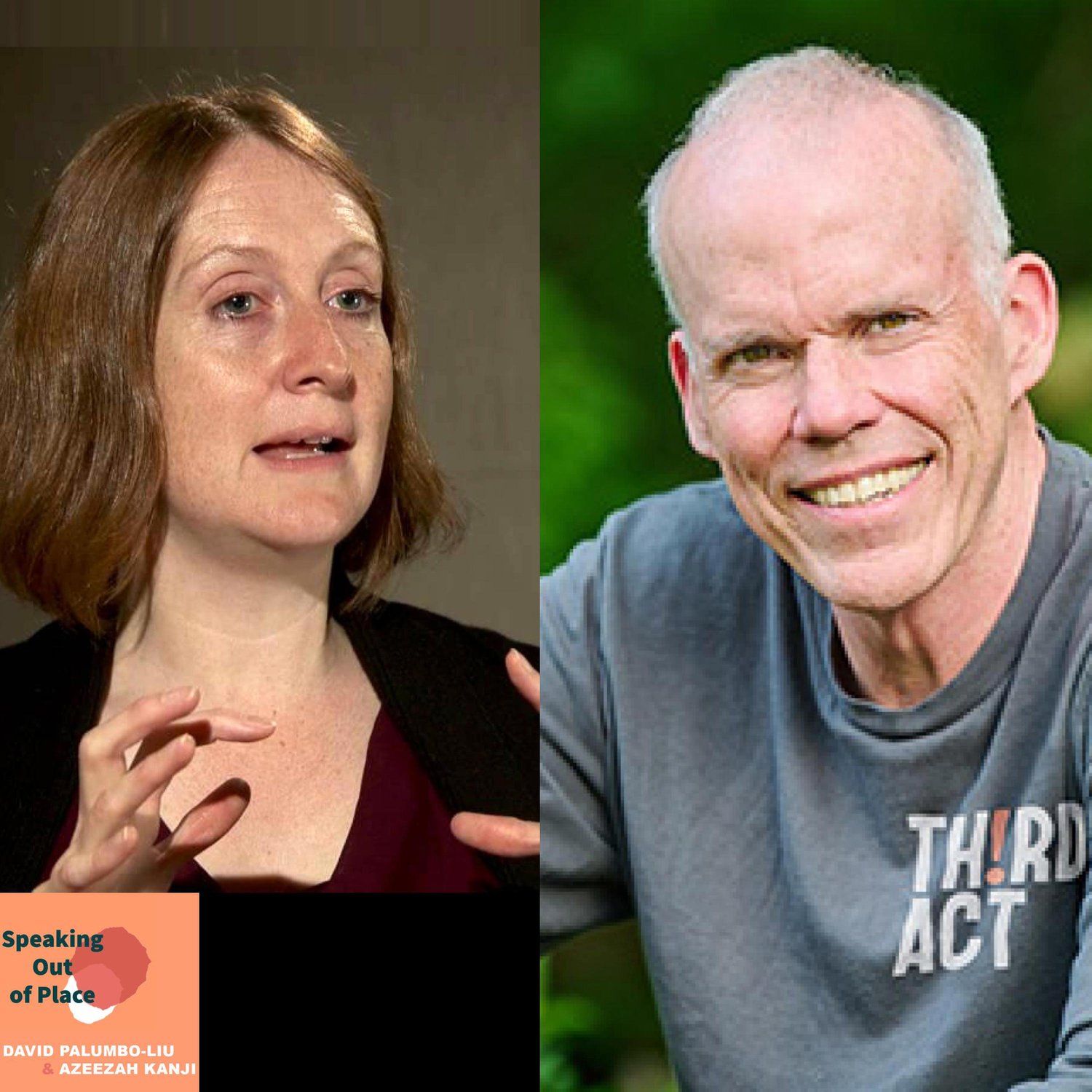
Speaking Out of Place: BILL McKIBBEN, Co-Founder of 350.org, Founder Third Act & CAROLINE LEVINE, Author of The Activist Humanist
In this episode of the Speaking Out of Place podcast, Professor David Palumbo-Liu talks with legendary climate activist Bill McKibben and scholar Caroline Levine. McKibben relates his long struggle to get companies to divest from fossil fuels and for the world in general to act immediately to seriously and substantially address this existential crisis. Levine tells of her efforts to get the giant pension fund, TIAA-CREF, to divest. She also talks about her new book, The Activist Humanist, and its relation to both her teaching and her activism.Bill McKibben is founder of Third Act, which organizes people over the age of 60 for action on climate and justice. His 1989 book The End of Nature is regarded as the first book for a general audience about climate change, and has appeared in 24 languages. He’s gone on to write 20 books, and his work appears regularly in periodicals from the New Yorker to Rolling Stone. He serves as the Schumann Distinguished Scholar in Environmental Studies at Middlebury College, as a fellow of the American Academy of Arts and Sciences, and he has won the Gandhi Peace Prize as well as honorary degrees from 20 colleges and universities. He was awarded the Right Livelihood Award, sometimes called the alternative Nobel, in the Swedish Parliament. Foreign Policy named him to its inaugural list of the world’s 100 most important global thinkers.McKibben helped found 350.org, the first global grassroots climate campaign, which has organized protests on every continent, including Antarctica, for climate action. He played a leading role in launching the opposition to big oil pipeline projects like Keystone XL, and the fossil fuel divestment campaign, which has become the biggest anti-corporate campaign in history, with endowments worth more than $40 trillion stepping back from oil, gas and coal. He stepped down as board chair of 350 in 2015, and left the board and stepped down from his volunteer role as senior adviser in 2020, accepting emeritus status. He lives in the mountains above Lake Champlain with his wife, the writer Sue Halpern, where he spends as much time as possible outdoors. In 2014, biologists credited his career by naming a new species of woodland gnat—Megophthalmidia mckibbeni–in his honor.Caroline Levine has spent her career asking how and why the humanities and the arts matter, especially in democratic societies. She argues for an understanding of forms and structures as essential both to understanding links between art and society and to the challenge of taking meaningful political action. She is the author of four books. The most recent, The Activist Humanist: Form and Method in the Climate Crisis (Princeton University Press 2023), grows out of the theoretical work of Forms: Whole, Rhythm, Hierarchy, Network (2015, winner of the James Russell Lowell Prize from the MLA, and named one of Flavorwire’s “10 Must-Read Academic Books of 2015”). Levine has also published The Serious Pleasures of Suspense: Victorian Realism and Narrative Doubt (2003, winner of the Perkins Prize for the best book in narrative studies) and Provoking Democracy: Why We Need the Arts (2007)."Viewed one way, we live in a very hopeful moment. Thanks to in large part the work of university scientists and engineers, we now live on a planet where the cheapest way to produce power is to point a sheet of glass at the sun. That is to say, we could run our Earth on energy from heaven instead of hell, and we could do it fast. The fast is the hard part here. The only difference between all the examples of the long victories of social justice activism that we're in now is that this one is a time-limited problem. If we don't solve it fast, then no one's got a plan for how you refreeze the Arctic once you've melted it. And so we have to move very quickly. Our systems are not designed to move quickly. It's the easiest thing in the world to slow down and delay change, which is all that the fossil fuel industry at this point is trying to do, and that means that it's time for maximum effort from all of us. The story to tell is that the planet is outside its comfort zone, so we need to be outside ours."https://billmckibben.comhttps://350.orghttps://thirdact.orghttps://english.cornell.edu/caroline-levinehttps://press.princeton.edu/books/paperback/9780691250588/the-activist-humanisthttps://tiaa-divest.orgwww.palumbo-liu.com https://speakingoutofplace.comhttps://twitter.com/palumboliu?s=20

GLADYS KALEMA-ZIKUSOKA - Founder/CEO, Conservation Through Public Health - UN Champion of the Earth for Science & Innovation
How do some people face incredible tragedies and find within these experiences inspiration to improve the lives of others? Our guest today lost her grandfather, who was the assassinated Prime Minister of the Buganda Kingdom, and her father, who was disappeared by Idi Amin, and yet she went on to become a leading conservationist.Dr. Gladys Kalema-Zikusoka is Uganda's first full-time wildlife veterinarian and the Founder and CEO of Conservation Through Public Health. Interested in animals from a young age, she pursued her studies at the Royal Veterinary College at the University of London before returning to Uganda. In the time since, she's worked tirelessly to preserve the animals of Uganda, being awarded the Whitley Gold Award, Sierra Club Earth Care Award, Edinburgh Medal, National Geographic Explorer, and most recently an appointment to become a United Nations Champion of the Earth for Science and Innovation. She is author of Walking with Gorillas: The Journey of an African Wildlife Vet."I have always wanted to be around animals and growing up, I cannot remember a time when there were no pets at home. My elder brother Apollo Katerega, who was 10 years older than me, also liked animals, especially dogs and was always bringing stray dogs and cats home. I was the last born of six children. My sister, Veronica Nakibule, who I followed, was five years older than me so were just outside each other's age bracket for playing. Thus the pets at home became my main companions, and we developed a strong bond.Along the way, I eventually fulfilled my lifelong dream to not only become a veterinarian, but a wildlife veterinarian. In 1996, I began to take care of the critically endangered mountain gorillas of Uganda. Since then, they've increased in number from six hundred and fifty to 1,063 individuals in Uganda, Rwanda, and the Democratic Republic of Congo(DRC). There are no mountain gorillas surviving in zoos outside their range countries, and their only hope is to keep the population thriving where they are naturally found.The gorillas have shaped my life's calling since I first studied them as a student at the Royal Veterinary College, University of London. I've treated them as the first full-time wildlife veterinarian in Uganda and supported them as Founder and Chief Executive Officer of a grassroots NGO and nonprofit, Conservation Through Public Health, more commonly known as 'CTPH,' that promotes biodiversity conservation through not only improving the health of gorillas and other wildlife, but also the health and wellbeing of the people and livestock with whom they share their fragile habitats."www.ctph.orghttps://www.skyhorsepublishing.com/9781950994267/walking-with-gorillas/www.creativeprocess.infowww.oneplanetpodcast.orgIG www.instagram.com/creativeprocesspodcast

MARY HAYASHI - Healthcare Advocate, Former Assemblymember - Author of Women in Politics
A recent UN report shows that women are underrepresented at all levels of decision-making worldwide. They say that women in executive government positions and gender equality in the highest positions of power will not be reached for another 130 years. How can we close the gender gap and achieve true representation?With a distinguished career in public service, Mary Hayashi has spearheaded substantial reforms in mental health services, championed gender equality, and forged powerful, unprecedented partnerships for social causes that previously had no financial or public backing. Recognized as “Legislator of the Year” by the American Red Cross and the California Medical Association, Mary has also been featured on Redbook’s “Mothers and Shakers” list and Ladies’ Home Journal ’s “Women to Watch.” Mary remains a steadfast proponent of social justice expansion and the rights of underrepresented communities. She is author of Far From Home: Shattering the Myth of the Model Minority, and Women in Politics: Breaking Down the Barriers to Achieve True Representation."My parents expected me to go to college just enough that I could find somebody, marry, and have kids. Because over 21, you're like an old maid and nobody's going to want to marry you. That was really their mentality. I'd only been in the country for seven years at that time and just kind of feeling lost and didn't know what I wanted to do with my life. And one day I signed up for this Women's Studies class. And I thought it was more about how I could be a better woman to my husband and my kids, that type of home economics class. And that's when I was introduced to feminist literature. And I started reading about the women's movement and how Gloria Steinem went from being a Playboy model to becoming a feminist and how that transpired. And when I started reading about these women who did what they did, a light bulb went on my head that I actually could have a career and do something with my life. And so, I'm not a professional writer. I'm a politician. I do government affairs work but publishing a book is a way to help other women realize their path because that's what feminist literature did for me."www.maryhayashi.comhttps://womeninpoliticsbook.orgwww.creativeprocess.infowww.oneplanetpodcast.orgIG www.instagram.com/creativeprocesspodcast

Highlights - LEAH THOMAS - Author of The Intersectional Environmentalist: How to Dismantle Systems of Oppression to Protect People + Planet
"Intersectional Environmentalism to me means prioritizing social justice in environmental movements and really thinking about what communities are most impacted by different environmental injustices. So, for example, in the United States, a lot of communities of color, Black, Indigenous communities, and also lower-income communities struggle with things like unclean air and unclean water, and those are environmental injustices. So I thought it was important to have an intersectional approach to environmental advocacy that doesn't ignore these things and these intersections of identity, but explores them to make sure that every community, especially those most impacted by environmental injustices, no longer are. And I wanted to write a really accessible introduction that was targeted at school kids or anyone who wants to learn more."Leah Thomas is an intersectional environmental activist and eco-communicator based in Southern California. She’s passionate about advocating for and exploring the relationship between social justice and environmentalism and was the first to define the term “Intersectional Environmentalism.” She is the founder of @greengirlleah and The Intersectional Environmentalist platform. Her articles on this topic have appeared in Vogue, Elle, The Good Trade, and Youth to the People and she has been featured in Harper’s Bazaar, W Magazine, Domino, GOOP, Fashionista, BuzzFeed, and numerous podcasts. She has a B.S. in Environmental Science and Policy from Chapman University and worked for the National Park Service and Patagonia headquarters before pursuing activism full time. She lives in Carpinteria, California. She is the author of The Intersectional Environmentalist: How to Dismantle Systems of Oppression to Protect People + Planet, and Winner of the Creative Force Foundation Award 2023.www.intersectionalenvironmentalist.com www.instagram.com/greengirlleah www.hachettebookgroup.com/titles/leah-thomas/the-intersectional-environmentalist/9780316281935/?lens=voraciousSeason 2 of Business & Society focuses on CEOs , Sustainability & Environmental Solutions Business & Society is a limited series co-hosted by Bruce Piasecki & Mia Funkwww.oneplanetpodcast.org

LEAH THOMAS - Author of The Intersectional Environmentalist - Founder of IE Platform & @GreenGirlLeah
Leah Thomas is an intersectional environmental activist and eco-communicator based in Southern California. She’s passionate about advocating for and exploring the relationship between social justice and environmentalism and was the first to define the term “Intersectional Environmentalism.” She is the founder of @greengirlleah and The Intersectional Environmentalist platform. Her articles on this topic have appeared in Vogue, Elle, The Good Trade, and Youth to the People and she has been featured in Harper’s Bazaar, W Magazine, Domino, GOOP, Fashionista, BuzzFeed, and numerous podcasts. She has a B.S. in Environmental Science and Policy from Chapman University and worked for the National Park Service and Patagonia headquarters before pursuing activism full time. She lives in Carpinteria, California. She is the author of The Intersectional Environmentalist: How to Dismantle Systems of Oppression to Protect People + Planet, and Winner of the Creative Force Foundation Award 2023."Intersectional Environmentalism to me means prioritizing social justice in environmental movements and really thinking about what communities are most impacted by different environmental injustices. So, for example, in the United States, a lot of communities of color, Black, Indigenous communities, and also lower-income communities struggle with things like unclean air and unclean water, and those are environmental injustices. So I thought it was important to have an intersectional approach to environmental advocacy that doesn't ignore these things and these intersections of identity, but explores them to make sure that every community, especially those most impacted by environmental injustices, no longer are. And I wanted to write a really accessible introduction that was targeted at school kids or anyone who wants to learn more."www.intersectionalenvironmentalist.com www.instagram.com/greengirlleah www.hachettebookgroup.com/titles/leah-thomas/the-intersectional-environmentalist/9780316281935/?lens=voraciousSeason 2 of Business & Society focuses on CEOs , Sustainability & Environmental Solutions Business & Society is a limited series co-hosted by Bruce Piasecki & Mia Funkwww.oneplanetpodcast.org

Highlights - ANDREW KLAVAN - Journalist, Podcast Host, Author of True Crime - The House of Love and Death - Don’t Say a Word
"Resolved questions don't actually make for good drama, and they don't actually help people on their own journeys. If you just tell people that you have all the answers, which I don't, then you're, first of all, lying to them. And second of all, you're boring. And it's just a lecture and propaganda that you're giving people.A story can be interpreted, but a great story can be interpreted different ways because you're looking at it from different angles. And there might be wrong interpretations, but there might be many correct interpretations. And so I'm not looking for...I'm not telling allegories. I'm trying to communicate a vision of life. I'm trying to communicate what I've seen of life to you. That, to me, is what art is. It is the communication of the internal experience of being human.But when you look at your life, where does the joy come from? It comes from growing. It comes from changing. It comes from finding out something, having something happen to you that never happened before. And I think that it's very encouraging to me that if you are growing towards something infinite, there's no end to that journey. You can always become better and more and life can become more abundant."What makes a good drama? What advantages do human storytellers have over their AI counterparts? Where do ideas come from? And what do spiritual beliefs share with artists' faith in the creative process?Andrew Klavan is the author of such internationally bestselling crime novels as True Crime, filmed by Clint Eastwood, Don’t Say A Word, filmed starring Michael Douglas, Empire of Lies and When Christmas Comes. He has been nominated for the Mystery Writers of America’s Edgar Award five times and has won twice. He wrote the screenplays to A Shock to The System starring Michael Caine, One Missed Call starring Edward Burns, and Gosnell: The Trial of America’s Biggest Serial Killer starring Dean Cain. His essays have appeared in the Wall Street Journal, The New York Times, and the Los Angeles Times, his political satire videos have been viewed by tens of millions of people, and he hosts a popular podcast The Andrew Klavan Show at the Daily Wire. He is also the author of a memoir about his religious journey The Great Good Thing: A Secular Jew Comes to Faith in Christ and the USA Today bestseller The Truth and Beauty: How the Lives and Works of England's Greatest Poets Point the Way to a Deeper Understanding of the Words of Jesus. His latest crime novel is The House of Love and Death, the third book in the Cameron Winter series.www.andrewklavan.comwww.amazon.com/House-Death-Cameron-Winter-Mysteries/dp/1613164467www.creativeprocess.infowww.oneplanetpodcast.orgIG www.instagram.com/creativeprocesspodcast
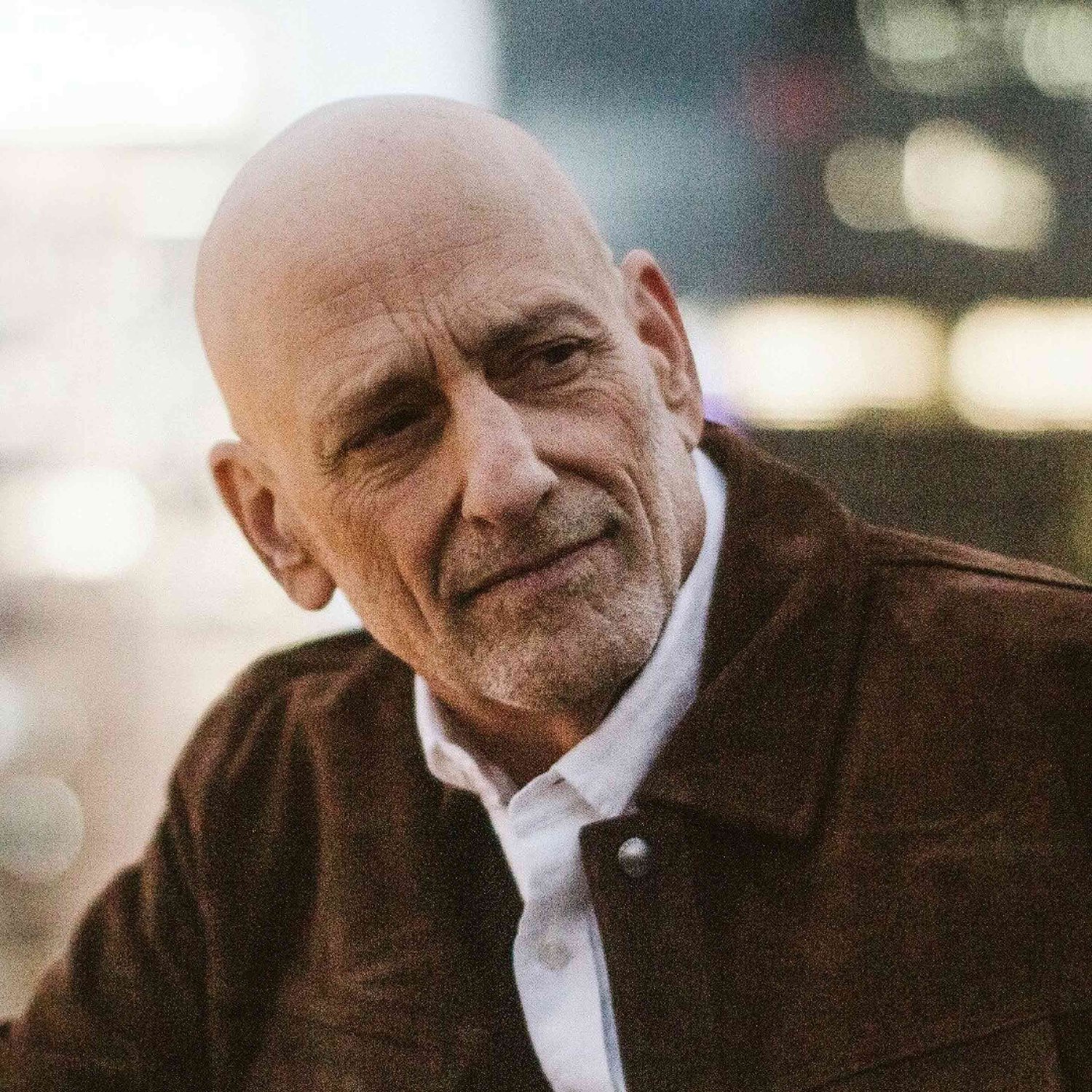
ANDREW KLAVAN - Edgar Award-winning Author of The House of Love and Death - True Crime - Don’t Say a Word
What makes a good drama? What advantages do human storytellers have over their AI counterparts? Where do ideas come from? And what do spiritual beliefs share with artists' faith in the creative process?Andrew Klavan is the author of such internationally bestselling crime novels as True Crime, filmed by Clint Eastwood, Don’t Say A Word, filmed starring Michael Douglas, Empire of Lies and When Christmas Comes. He has been nominated for the Mystery Writers of America’s Edgar Award five times and has won twice. He wrote the screenplays to A Shock to The System starring Michael Caine, One Missed Call starring Edward Burns, and Gosnell: The Trial of America’s Biggest Serial Killer starring Dean Cain. His essays have appeared in the Wall Street Journal, The New York Times, and the Los Angeles Times, his political satire videos have been viewed by tens of millions of people, and he hosts a popular podcast The Andrew Klavan Show at the Daily Wire. He is also the author of a memoir about his religious journey The Great Good Thing: A Secular Jew Comes to Faith in Christ and the USA Today bestseller The Truth and Beauty: How the Lives and Works of England's Greatest Poets Point the Way to a Deeper Understanding of the Words of Jesus. His latest crime novel is The House of Love and Death, the third book in the Cameron Winter series."Resolved questions don't actually make for good drama, and they don't actually help people on their own journeys. If you just tell people that you have all the answers, which I don't, then you're, first of all, lying to them. And second of all, you're boring. And it's just a lecture and propaganda that you're giving people.A story can be interpreted, but a great story can be interpreted different ways because you're looking at it from different angles. And there might be wrong interpretations, but there might be many correct interpretations. And so I'm not looking for...I'm not telling allegories. I'm trying to communicate a vision of life. I'm trying to communicate what I've seen of life to you. That, to me, is what art is. It is the communication of the internal experience of being human.But when you look at your life, where does the joy come from? It comes from growing. It comes from changing. It comes from finding out something, having something happen to you that never happened before. And I think that it's very encouraging to me that if you are growing towards something infinite, there's no end to that journey. You can always become better and more and life can become more abundant."www.andrewklavan.comwww.amazon.com/House-Death-Cameron-Winter-Mysteries/dp/1613164467www.creativeprocess.infowww.oneplanetpodcast.orgIG www.instagram.com/creativeprocesspodcast
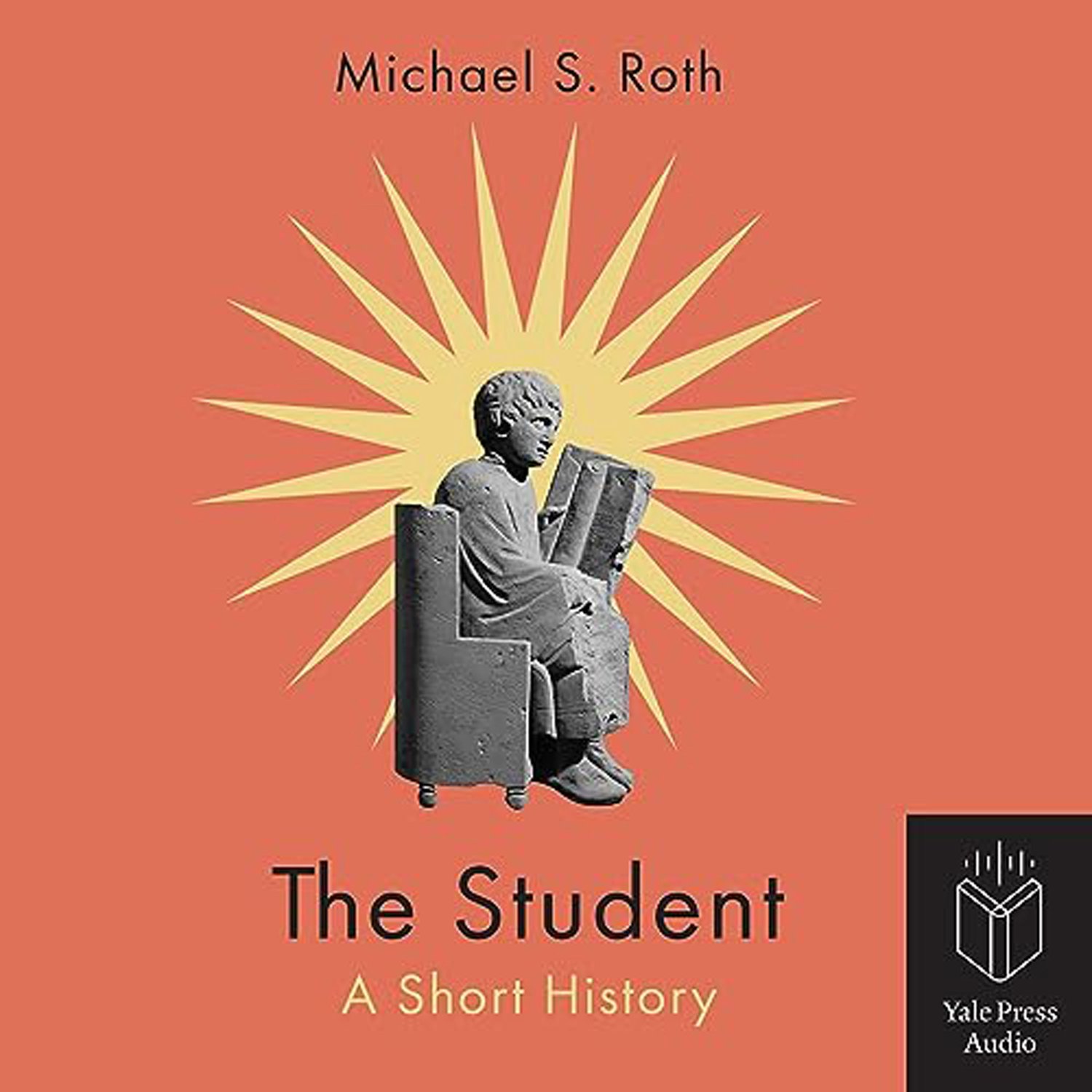
Highlights - MICHAEL S. ROTH - President of Wesleyan University - Author of The Student: A Short History
“So I wrote this book and it was a lot of fun because I had to learn so much. The book examines three iconic teachers: Confucius, Socrates, and Jesus. And I look at how each of those teachers encourage a certain kind of student. The student as follower, someone who will take on the path that you've developed. In the case of Socrates, the student as critical interlocutor or critical conversation partner, someone who will, in dialogue with you, learn what they don't know, how to take things apart. And in the case of Jesus and the apostles, I look at trying to imitate a way of life to transform themselves to strive towards being the kind of person that Jesus incarnated. And so that's the beginning of the book, these models of studenthood, if I could use that word, and being a teacher. And then I look at the way in which these ideas reverberate in the West across a long period of time. So I'm interested in the idea of the student before there were schools. What did we expect young people to learn even when they weren't going to school?”What is the purpose of education? How are we educating students for the future? What is the importance of the humanities in this age of AI and the rapidly changing workplace?Michael S. Roth is President of Wesleyan University. His books include Beyond the University: Why Liberal Education Matters and Safe Enough Spaces: A Pragmatist’s Approach to Inclusion, Free Speech, and Political Correctness on College Campuses. He's been a Professor of History and the Humanities since 1983, was the Founding Director of the Scripps College Humanities Institute, and was the Associate Director of the Getty Research Institute. His scholarly interests center on how people make sense of the past, and he has authored eight books around this topic, including his latest, The Student: A Short History.https://www.wesleyan.edu/academics/faculty/mroth/profile.htmlhttps://yalebooks.yale.edu/book/9780300250039/the-student/www.wesleyan.eduhttps://twitter.com/mroth78www.creativeprocess.infowww.oneplanetpodcast.orgIG www.instagram.com/creativeprocesspodcast

MICHAEL S. ROTH - Author of The Student: A Short History - President of Wesleyan University
What is the purpose of education? How are we educating students for the future? What is the importance of the humanities in this age of AI and the rapidly changing workplace?Michael S. Roth is President of Wesleyan University. His books include Beyond the University: Why Liberal Education Matters and Safe Enough Spaces: A Pragmatist’s Approach to Inclusion, Free Speech, and Political Correctness on College Campuses. He's been a Professor of History and the Humanities since 1983, was the Founding Director of the Scripps College Humanities Institute, and was the Associate Director of the Getty Research Institute. His scholarly interests center on how people make sense of the past, and he has authored eight books around this topic, including his latest, The Student: A Short History.“So I wrote this book and it was a lot of fun because I had to learn so much. The book examines three iconic teachers: Confucius, Socrates, and Jesus. And I look at how each of those teachers encourage a certain kind of student. The student as follower, someone who will take on the path that you've developed. In the case of Socrates, the student as critical interlocutor or critical conversation partner, someone who will, in dialogue with you, learn what they don't know, how to take things apart. And in the case of Jesus and the apostles, I look at trying to imitate a way of life to transform themselves to strive towards being the kind of person that Jesus incarnated. And so that's the beginning of the book, these models of studenthood, if I could use that word, and being a teacher. And then I look at the way in which these ideas reverberate in the West across a long period of time. So I'm interested in the idea of the student before there were schools. What did we expect young people to learn even when they weren't going to school?”https://www.wesleyan.edu/academics/faculty/mroth/profile.htmlhttps://yalebooks.yale.edu/book/9780300250039/the-student/www.wesleyan.eduhttps://twitter.com/mroth78www.creativeprocess.infowww.oneplanetpodcast.orgIG www.instagram.com/creativeprocesspodcast

Highlights - BRIAN DAVID JOHNSON - Director of the ASU Threatcasting Lab - Author of The Future You
"I think, oftentimes, what'll happen as a trap when we talk about technology. People say, 'Well, what do you think is the future of artificial intelligence? Or what is the future of neural interfaces? Or what is the future of this?' And I always pause them and say, 'Wait a minute. If you're just talking about the technology, you're having the wrong conversation because it's not about the technology.'So when people talk about what's the future of AI? I say, I don't know. What do we want the future of AI to be? And I think that's a shift that sounds quite subtle to some people, but it's really important because if you look at any piece of news or anything like that, they talk about AI as if it was a thing that was fully formed, that sprang out of the Earth and is now walking around doing things. And what will AI do in the future and how will it affect our jobs? It's not AI that's doing it. These are people. These are companies. These are organizations that are doing it. And that's where we need to keep our focus. What are those organizations doing. And also what do we want from it as humans?"Brian David Johnson is Futurist in Residence at Arizona State University’s Center for Science and the Imagination, a professor in the School for the Future of Innovation in Society, and the Director of the ASU Threatcasting Lab. He is Author of The Future You: How to Create the Life You Always Wanted, Science Fiction Prototyping: Designing the Future with Science Fiction, 21st Century Robot: The Dr. Simon Egerton Stories, Humanity in the Machine: What Comes After Greed?, Screen Future: The Future of Entertainment, Computing, and the Devices We Love.https://csi.asu.edu/people/brian-david-johnson/www.creativeprocess.infowww.oneplanetpodcast.orgIG www.instagram.com/creativeprocesspodcast

BRIAN DAVID JOHNSON - Author of The Future You: How to Create the Life You Always Wanted - Futurist in Residence, ASU’s Center for Science & the Imagination
Brian David Johnson is Futurist in Residence at Arizona State University’s Center for Science and the Imagination, a professor in the School for the Future of Innovation in Society, and the Director of the ASU Threatcasting Lab. He is Author of The Future You: How to Create the Life You Always Wanted, Science Fiction Prototyping: Designing the Future with Science Fiction, 21st Century Robot: The Dr. Simon Egerton Stories, Humanity in the Machine: What Comes After Greed?, Screen Future: The Future of Entertainment, Computing, and the Devices We Love."Let's talk about technology and the role of humanity and the role of being human and what it means to be present in that. We need to keep humans at the center of everything that we do, that everything that we do in our life is about humans. It begins with humans and ends with humans. There might be technologies and businesses and all these things in between, but we should measure the effect on humans.When I talk to people about artificial intelligence or technology, I'm generally asking them two questions. What are you optimizing for? What's the effect that you're trying to get? Developing technology for technology's sake, although it can be kind of interesting...then is why you're doing it because you think it's interesting? But then ultimately, if you're doing it beyond your own gratification, why are you doing it?So much of what I do in that is talking to governments and militaries and large organizations to say we always have to keep humans in the loop. You have to keep humans in the center because it's about us. That really is incredibly important. And that's one of the central ideas in the future. The future should be about humans, and where are humans going. And what do we want as humans? And how are we using technology to make us more human, or healthier, or happier, or more productive?"https://csi.asu.edu/people/brian-david-johnson/www.creativeprocess.infowww.oneplanetpodcast.orgIG www.instagram.com/creativeprocesspodcast
Highlights - SUSAN SCHNEIDER - Author of Artificial You: AI and the Future of Your Mind, Fmr. Distinguished Scholar, US Library of Congress
“So it's hard to tell exactly what the dangers are, but that's certainly one thing that we need to track that beings that are vastly intellectually superior to other beings may not respect the weaker beings, given our own past. It's really hard to tell exactly what will happen. The first concern I have is with surveillance capitalism in this country. The constant surveillance of us because the US is a surveillance capitalist economy, and it's the same elsewhere in the world, right? With Facebook and all these social media companies, things have just been going deeply wrong. And so it leads me to worry about how the future is going to play out. These tech companies aren't going to be doing the right thing for humanity. And this gets to my second worry, which is how's all this going to work for humans exactly? It's not clear where humans will even be needed in the future.”Will AI become conscious? President Biden has just unveiled a new executive order on AI — the U.S. government’s first action of its kind — requiring new safety assessments, equity and civil rights guidance, and research on AI’s impact on the labor market. With this governance in place, can tech companies be counted on to do the right thing for humanity? Susan Schneider is a philosopher, artificial intelligence expert, and founding director of the Center for the Future Mind at Florida Atlantic University. She is author of Artificial You: AI and the Future of Your Mind, Science Fiction and Philosophy: From Time Travel to Superintelligence, and The Blackwell Companion to Consciousness. She held the NASA Chair with NASA and the Distinguished Scholar Chair at the Library of Congress. She is now working on projects related to advancements in AI policy and technology, drawing from neuroscience research and philosophical developments and writing a new book on the shape of intelligent systems.www.fau.edu/artsandletters/philosophy/susan-schneider/index www.fau.edu/future-mind/www.creativeprocess.infowww.oneplanetpodcast.orgIG www.instagram.com/creativeprocesspodcast

SUSAN SCHNEIDER - Director, Center for the Future Mind, FAU, Fmr. NASA Chair at NASA
Will AI become conscious? President Biden has just unveiled a new executive order on AI — the U.S. government’s first action of its kind — requiring new safety assessments, equity and civil rights guidance, and research on AI’s impact on the labor market. With this governance in place, can tech companies be counted on to do the right thing for humanity? Susan Schneider is a philosopher, artificial intelligence expert, and founding director of the Center for the Future Mind at Florida Atlantic University. She is author of Artificial You: AI and the Future of Your Mind, Science Fiction and Philosophy: From Time Travel to Superintelligence, and The Blackwell Companion to Consciousness. She held the NASA Chair with NASA and the Distinguished Scholar Chair at the Library of Congress. She is now working on projects related to advancements in AI policy and technology, drawing from neuroscience research and philosophical developments and writing a new book on the shape of intelligent systems."It's been surprising to me how quiet things have been in the humanities. Maybe we're all just taking it in, but I also think that - and this really makes me sad - the tech leaders have been looked at by the media and probably by the politicians themselves as being the important voices at the table for the implications of technology. And there's been a lot of confusion about scientific development versus speculation. So you're seeing everybody wanting to interview the CEOs at the big tech companies or the big AI researchers. And then all of a sudden the idea that they somehow have a monopoly on ideas about conscious machines, for example, or merging with AI. Elon Musk never stops with philosophical claims, and a lot of times you have to wonder what they're supposed to be doing for his stock values as opposed to whether they're true or not. But people just take this, sadly, as what the scientists or AI companies say. You know, well, 'they know the science, so it's got to be true.' But that is not the case. That's where the humanities should be more involved. And it's been a slow plotting situation to see people really step up. I've just been sort of taking it all in, and I've been doing a lot of advising in Washington. So maybe we're all waiting to see where this all goes, right? But I think at this point, I finally achieved a sort of confidence about how I think it's going to play out."www.fau.edu/artsandletters/philosophy/susan-schneider/index www.fau.edu/future-mind/www.creativeprocess.infowww.oneplanetpodcast.orgIG www.instagram.com/creativeprocesspodcast
AI & THE FUTURE OF HUMANITY
What will the future look like? What are the risks and opportunities of AI? What role can we play in designing the future we want to live in?Voices of philosophers, futurists, AI experts, science fiction authors, activists, and lawyers reflecting on AI, technology, and the Future of Humanity. All voices in this episode are from our interviews for The Creative Process & One Planet Podcast.Voices on this episode are:DR. SUSAN SCHNEIDER American philosopher and artificial intelligence expert. She is the founding director of the Center for the Future Mind at Florida Atlantic University. Author of Artificial You: AI and the Future of Your Mind, Science Fiction and Philosophy: From Time Travel to Superintelligence, and The Blackwell Companion to Consciousness. www.fau.edu/artsandletters/philosophy/susan-schneider/indexNICK BOSTROM Founder and Director of the Future of Humanity Institute, University of Oxford, Philosopher, Author of NYTimes Bestseller Superintelligence: Paths, Dangers, Strategies. Bostrom’s academic work has been translated into more than 30 languages. He is a repeat main TED speaker and has been on Foreign Policy’s Top 100 Global Thinkers list twice and was included in Prospect’s World Thinkers list, the youngest person in the top 15. https://nickbostrom.com https://www.fhi.ox.ac.ukBRIAN DAVID JOHNSONFuturist in residence at Arizona State University’s Center for Science and the Imagination, a professor in the School for the Future of Innovation in Society and the Director of the ASU Threatcasting Lab. He is Author of The Future You: How to Create the Life You Always Wanted, Science Fiction Prototyping: Designing the Future with Science Fiction, 21st Century Robot: The Dr. Simon Egerton Stories, Humanity in the Machine: What Comes After Greed?, Screen Future: The Future of Entertainment, Computing, and the Devices We Love.https://csi.asu.edu/people/brian-david-johnsonDEAN SPADE Professor at SeattleU’s School of Law, Author of Mutual Aid, Building Solidarity During This Crisis (and the Next), and Normal Life: Administrative Violence, Critical Trans Politics, and the Limits of Law.www.deanspade.netALLEN STEELEScience Fiction Author. He has been awarded a number of Hugos, Asimov's Readers, and Locus Awards. of the Coyote Trilogy, Arkwright, and other books. His books include Coyote Trilogy and Arkwright. He is a former member of the Board of Directors and Board of Advisors for the Science Fiction and Fantasy Writers of America. He has also served as an advisor for the Space Frontier Foundation. In 2001, he testified before the Subcommittee on Space and Aeronautics of the U.S. House of Representatives in hearings regarding space exploration in the 21st century.www.allensteele.comwww.creativeprocess.infowww.oneplanetpodcast.orgIG www.instagram.com/creativeprocesspodcast
Highlights - HALA ALYAN - Dayton Literary Peace Prize Winner - Palestinian-American Poet, Novelist & Clinical Psychologist
Originally aired 2021“We become the stories we tell ourselves…I started writing around the time I learned English because we moved to the States soon after my fourth birthday, and so I was here for kindergarten into elementary school. I grasped this new language just as I was learning how to also put things onto the page. Those two things really happened at the same time for me. I entered this world where I felt very different and very other, for all intents and purposes I was set to be raised in Kuwait. And then that of course got turned upside down after the invasion by Saddam. I think that so much of my trying to make sense of the world had to do with the displacement, exile and these experiences that my parents had experienced but then that I had as well as we were fleeing the war. It’s hard to know because I think that language was being formed in my brain at the same time that these things were happening.”Hala Alyan is the author of the novel Salt Houses, winner of the Dayton Literary Peace Prize and the Arab American Book Award and a finalist for the Chautauqua Prize, as well as the forthcoming novel The Arsonists’ City, and four award-winning collections of poetry, most recently The Twenty-Ninth Year. Her work has been published by the New Yorker, the Academy of American Poets, Lit Hub, The New York Times Book Review, and Guernica. She lives in Brooklyn with her husband, where she works as a clinical psychologist.· halaalyan.com · www.creativeprocess.info

HALA ALYAN - Palestinian-American Poet, Novelist & Clinical Psychologist - Dayton Literary Peace Prize Winner
Originally aired 2021Hala Alyan is the author of the novel Salt Houses, winner of the Dayton Literary Peace Prize and the Arab American Book Award and a finalist for the Chautauqua Prize, as well as the forthcoming novel The Arsonists’ City, and four award-winning collections of poetry, most recently The Twenty-Ninth Year. Her work has been published by the New Yorker, the Academy of American Poets, Lit Hub, The New York Times Book Review, and Guernica. She lives in Brooklyn with her husband, where she works as a clinical psychologist.halaalyan.comwww.creativeprocess.info

THE ART OF WRITING: NEIL GAIMAN, JERICHO BROWN, ADA LIMÓN, MARGE PIERCY, E.J. KOH & MAX STOSSEL
Novelists, poets, activists, translators discuss the Art of Writing and The Creative Process. This episode features:NEIL GAIMAN - Writer, Producer, Showrunner - The Sandman, American Gods, Good Omens, CoralineJERICHO BROWN - Pulitzer Prize-winning Poet: The TraditionEditor of How We Do It: Black Writers on Craft, Practice, and SkillADA LIMÓN, U.S. Poet Laureate - The Hurting Kind, The CarryingMARGE PIERCY - Award-winning Novelist, Poet & Activist E.J. KOH - Award-Winning Memoirist & Poet - The Magical Language of Others, A Lesser LoveMAX STOSSEL - Award-winning Poet, Filmmaker, SpeakerCreator of Words That Movewww.creativeprocess.infowww.oneplanetpodcast.orgIG www.instagram.com/creativeprocesspodcast

Highlights - LINDSEY ANDERSON BEER - Writer, Director - Pet Sematary: Bloodlines - Sleepy Hollow
"For me, I don't start a project unless I have a really clear understanding of who the main characters are and why this is a journey that's necessary for them to take. And why are these both the best and the worst people to be in this series? That's the question I ask myself all the time because you need to know: What are their strengths? What are their weaknesses? What are the dramatic tension points going to be where these specific people can really succeed or really fail in this scenario?I love people who are passionate, and Quentin Tarantino is just so passionate. And I've never been in a writer's room or even really in any kind of development experience where a director was just so passionate and so full of kind of energetic ideas. And that was really inspiring. Somebody who just completely knows their own point of view and gets excited by their own ideas is just fun to watch.I was about to shoot Pet Sematary: Bloodlines. I was finishing up my work on Star Trek 4, which I had to leave to do Pet Sematary, so I had been working with J. J. Abrams closely for a while on the script, and so I just asked if he had any advice, in terms of just practical stuff on set. And I mean, I've been on so many sets, but still, he's a director who's done so many projects. So he did give me some great advice just about, you know, making it through such long days and taking time for yourself and just kind of keeping your sanity that was kind of the focus of the advice. And he was just very generous and sweet about that.”Lindsey Anderson Beer wrote and executive produced the hit Netflix original dramedy Sierra Burgess is a Loser before making the jump to direct the horror genre with Pet Sematary: Bloodlines, starring Jackson White and Natalie Alyn Lind. The story is based on an untold chapter of Stephen King's self-proclaimed, scariest property of all time. Up next, she will helm Paramount’s Sleepy Hollow reboot as the writer, director, and producer. She also has several projects in various phases of development and production, including Disney's live action remake of Bambi, New Line's Hello Kitty, and Universal's Fast and Furious spinoff, which she wrote with Geneva Robertson-Dworet. Under her production banner Lab Brew, Lord of the Flies will be directed by Luca Guadagnino and written by Patrick Ness for Warner Bros.www.imdb.com/name/nm5170222/www.creativeprocess.infowww.oneplanetpodcast.orgIG www.instagram.com/creativeprocesspodcast
LINDSEY ANDERSON BEER - Writer, Director, Producer - Pet Sematary: Bloodlines - Sleepy Hollow - Bambi
Lindsey Anderson Beer wrote and executive produced the hit Netflix original dramedy Sierra Burgess is a Loser before making the jump to direct the horror genre with Pet Sematary: Bloodlines, starring Jackson White and Natalie Alyn Lind. The story is based on an untold chapter of Stephen King's self-proclaimed, scariest property of all time. Up next, she will helm Paramount’s Sleepy Hollow reboot as the writer, director, and producer. She also has several projects in various phases of development and production, including Disney's live action remake of Bambi, New Line's Hello Kitty, and Universal's Fast and Furious spinoff, which she wrote with Geneva Robertson-Dworet. Under her production banner Lab Brew, Lord of the Flies will be directed by Luca Guadagnino and written by Patrick Ness for Warner Bros."For me, I don't start a project unless I have a really clear understanding of who the main characters are and why this is a journey that's necessary for them to take. And why are these both the best and the worst people to be in this series? That's the question I ask myself all the time because you need to know: What are their strengths? What are their weaknesses? What are the dramatic tension points going to be where these specific people can really succeed or really fail in this scenario?I love people who are passionate, and Quentin Tarantino is just so passionate. And I've never been in a writer's room or even really in any kind of development experience where a director was just so passionate and so full of kind of energetic ideas. And that was really inspiring. Somebody who just completely knows their own point of view and gets excited by their own ideas is just fun to watch.I was about to shoot Pet Sematary: Bloodlines. I was finishing up my work on Star Trek 4, which I had to leave to do Pet Sematary, so I had been working with J. J. Abrams closely for a while on the script, and so I just asked if he had any advice, in terms of just practical stuff on set. And I mean, I've been on so many sets, but still, he's a director who's done so many projects. So he did give me some great advice just about, you know, making it through such long days and taking time for yourself and just kind of keeping your sanity that was kind of the focus of the advice. And he was just very generous and sweet about that.”www.imdb.com/name/nm5170222/www.creativeprocess.infowww.oneplanetpodcast.orgIG www.instagram.com/creativeprocesspodcast
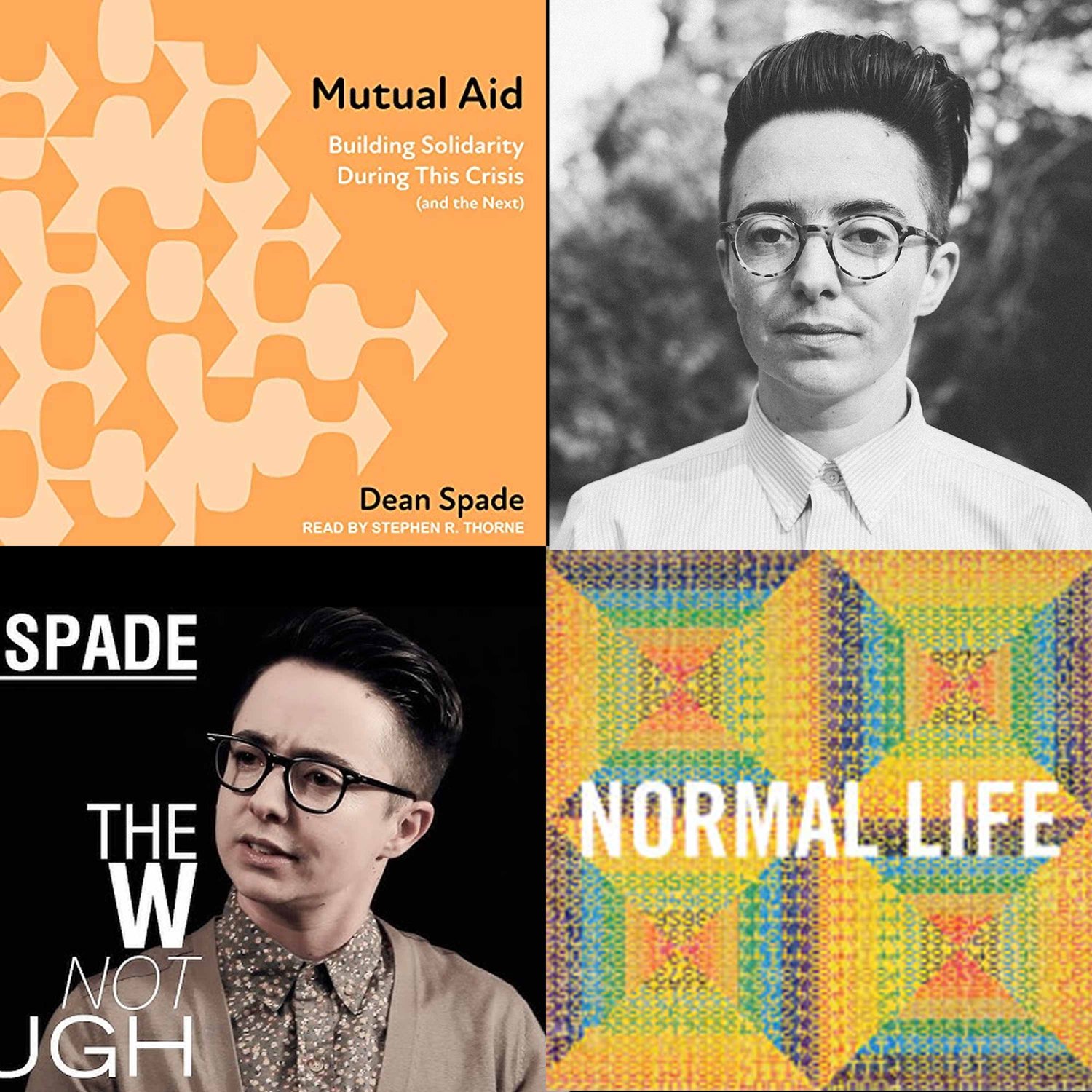
Highlights - DEAN SPADE - Professor at SeattleU’s School of Law - Author of Mutual Aid, Building Solidarity During This Crisis (and the Next)
“I want to see movements that embolden our tactics. Like people blocking oil pipelines all over the world. That's what's required now. Asking endlessly from the dominant system to treat us fairly doesn't work. And this frustrating kind of endless appeal and hoping maybe we can get it to work this time doesn't work. And the clock is ticking, especially on ecological collapse. We need to save each other's lives and act.” Dean Spade is an organizer, speaker, author, and professor at Seattle University's School of Law, where he teaches courses on policing, imprisonment, gender, race, and social movements. Spade has been organizing racial and economic movements for queer and trans liberation for the past 20 years. Spade's books include Normal Life: Administrative Violence, Critical Trans Politics, and the Limits of Law and Mutual Aid, Building Solidarity During This Crisis (and the Next). In 2002, Dean founded the Sylvia Rivera Law Project, a non-profit law collective that provides free legal services to transgender, intersex and gender non-conforming people who are low-income and/or people of color, and which operates on a collective governance model. His writing has appeared in The Chronicle of Higher Education, Out, In These Times, Social Text, and Signs.www.deanspade.net www.southendpress.org/2010/items/87965www.deanspade.net/mutual-aid-building-solidarity-during-this-crisis-and-the-next/https://srlp.orgwww.creativeprocess.infowww.oneplanetpodcast.orgIG www.instagram.com/creativeprocesspodcast

DEAN SPADE - Author of Normal Life: Administrative Violence, Critical Trans Politics, and the Limits of Law
Dean Spade is an organizer, speaker, author, and professor at Seattle University's School of Law, where he teaches courses on policing, imprisonment, gender, race, and social movements. Spade has been organizing racial and economic movements for queer and trans liberation for the past 20 years. Spade's books include Normal Life: Administrative Violence, Critical Trans Politics, and the Limits of Law and Mutual Aid, Building Solidarity During This Crisis (and the Next). In 2002, Dean founded the Sylvia Rivera Law Project, a non-profit law collective that provides free legal services to transgender, intersex and gender non-conforming people who are low-income and/or people of color, and which operates on a collective governance model. His writing has appeared in The Chronicle of Higher Education, Out, In These Times, Social Text, and Signs.“I want to see movements that embolden our tactics. Like people blocking oil pipelines all over the world. That's what's required now. Asking endlessly from the dominant system to treat us fairly doesn't work. And this frustrating kind of endless appeal and hoping maybe we can get it to work this time doesn't work. And the clock is ticking, especially on ecological collapse. We need to save each other's lives and act.”www.deanspade.net www.southendpress.org/2010/items/87965www.deanspade.net/mutual-aid-building-solidarity-during-this-crisis-and-the-next/https://srlp.orgwww.creativeprocess.infowww.oneplanetpodcast.orgIG www.instagram.com/creativeprocesspodcast
Highlights - ALLEN STEELE - Hugo Award-winning Science Fiction Author of the Coyote Trilogy, Arkwright
"I'm really very glad. I was happy to see that within my lifetime that the prospects of not just Mars, but in fact interstellar space is being taken seriously. I've been at two conferences where we were talking about building the first starship within this century. One of my later books, Arkwright, is about such a project. I saw that Elon Musk is building Starship One, I wish him all the best. And I envy anybody who goes.I wish I were a younger person and in better health. Somebody asked me some time ago, would you go to Mars? And I said, 'I can't do it now. I've got a bum pancreas, and I'm 65 years old, and I'm not exactly the prime prospect for doing this. If you asked me 40 years ago would I go, I would have said: in a heartbeat!' I would gladly leave behind almost everything. I don't think I'd be glad about leaving my wife and family behind, but I'd be glad to go live on another planet, perhaps for the rest of my life, just for the chance to explore a new world, to be one of the settlers in a new world.And I think this is something that's being taken seriously. It is very possible. We've got to be careful about how we do this. And we've got to be careful, particularly about the rationale of the people who are doing this. It bothers me that Elon Musk has lately taken a shift to the Far Right. I don't know why that is. But I'd love to be able to sit down and talk with him about these things and try to understand why he has done such a right thing, but for what seems to be wrong reasons."What does the future of space exploration look like? How can we unlock the opportunities of outer space without repeating the mistakes of colonization and exploitation committed on Earth? How can we ensure AI and new technologies reflect our values and the world we want to live in? Allen Steele is a science fiction author and journalist. He has written novels, short stories, and essays and been awarded a number of Hugos, Asimov's Readers, and Locus Awards. He’s known for his Coyote Trilogy and Arkwright. He is a former member of the Board of Directors and Board of Advisors for the Science Fiction and Fantasy Writers of America. He has also served as an advisor for the Space Frontier Foundation. In 2001, he testified before the Subcommittee on Space and Aeronautics of the U.S. House of Representatives in hearings regarding space exploration in the 21st century.www.allensteele.comwww.creativeprocess.infowww.oneplanetpodcast.orgIG www.instagram.com/creativeprocesspodcastPhoto from a field trip to Pease Air Force Base in Portsmouth NH, now closed. Photo credit: Chuck Peterson

ALLEN STEELE - Hugo Award-winning Science Fiction Author of the Coyote Trilogy, Arkwright
What does the future of space exploration look like? How can we unlock the opportunities of outer space without repeating the mistakes of colonization and exploitation committed on Earth? How can we ensure AI and new technologies reflect our values and the world we want to live in? Allen Steele is a science fiction author and journalist. He has written novels, short stories, and essays and been awarded a number of Hugos, Asimov's Readers, and Locus Awards. He’s known for his Coyote Trilogy and Arkwright. He is a former member of the Board of Directors and Board of Advisors for the Science Fiction and Fantasy Writers of America. He has also served as an advisor for the Space Frontier Foundation. In 2001, he testified before the Subcommittee on Space and Aeronautics of the U.S. House of Representatives in hearings regarding space exploration in the 21st century."I'm really very glad. I was happy to see that within my lifetime that the prospects of not just Mars, but in fact interstellar space is being taken seriously. I've been at two conferences where we were talking about building the first starship within this century. One of my later books, Arkwright, is about such a project. I saw that Elon Musk is building Starship One, I wish him all the best. And I envy anybody who goes.I wish I were a younger person and in better health. Somebody asked me some time ago, would you go to Mars? And I said, 'I can't do it now. I've got a bum pancreas, and I'm 65 years old, and I'm not exactly the prime prospect for doing this. If you asked me 40 years ago would I go, I would have said: in a heartbeat!' I would gladly leave behind almost everything. I don't think I'd be glad about leaving my wife and family behind, but I'd be glad to go live on another planet, perhaps for the rest of my life, just for the chance to explore a new world, to be one of the settlers in a new world.And I think this is something that's being taken seriously. It is very possible. We've got to be careful about how we do this. And we've got to be careful, particularly about the rationale of the people who are doing this. It bothers me that Elon Musk has lately taken a shift to the Far Right. I don't know why that is. But I'd love to be able to sit down and talk with him about these things and try to understand why he has done such a right thing, but for what seems to be wrong reasons."www.allensteele.comwww.creativeprocess.infowww.oneplanetpodcast.orgIG www.instagram.com/creativeprocesspodcast
Highlights - RALPH GIBSON - Photographer - Author of Self Exposure, The Somnambulist, Sacred Land: Israel before and after Time
"I've never wanted to be invisible. I'm voyeuristic, but in a purely intellectual way. I would suspect the reason for functioning in a vertical format is because the horizontal rectangle is the proportion of all narration, all visual narrative in all society now. In my case, the content is when I get my vision sufficiently stimulated to where I can perceive the corner of this desk with sufficient clarity to render it in some sort of monumental way. I want to make pictures of absolutely nothing purely based on the force of my perception and the power of photography."How does the mind influence the mind? The mind cannot function without memory. And memory is just the mind aware of itself. So how do images tell us how we see and who we are?Ralph Gibson is one of the most interesting American photographers of our time. His international renown is based on his work, which is shown and collected by some of the world’s leading museums, including the Museum of Modern Art in New York, the J.P. Getty Museum in Los Angeles, the John Simon Guggenheim Memorial Foundation, the Creative Center for Photography in Tucson, the Museum of Fine Arts in Houston, the Maison Européenne de la Photographie in Paris, the Bibliothèque Nationale de France in Paris, and the Fotomuseum Winterthur in Switzerland.Gibson’s works reveal a meticulous aesthetic and visual territory edging on the surreal. His recent books include his memoir Self Exposure, Sacred Land: Israel before and after Time, and Secret of Light, which accompanied his exhibition at the Deichtorhallen House of Photography in Hamburg. He is a Leica Hall of Fame Inductee and has been awarded the French Legion of Honor. In 2022, The Gibson | Goeun Museum of Photography devoted to his work opened in Busan, South Korea.www.ralphgibson.comwww.deichtorhallen.de/en/ausstellung/ralph-gibsonwww.gibsongoeunmuseum.comwww.creativeprocess.infowww.oneplanetpodcast.orgIG www.instagram.com/creativeprocesspodcast
RALPH GIBSON - Photographer - Author of Self Exposure, The Somnambulist, Sacred Land: Israel before and after Time
How does the mind influence the mind? The mind cannot function without memory. And memory is just the mind aware of itself. So how do images tell us how we see and who we are?Ralph Gibson is one of the most interesting American photographers of our time. His international renown is based on his work, which is shown and collected by some of the world’s leading museums, including the Museum of Modern Art in New York, the J.P. Getty Museum in Los Angeles, the John Simon Guggenheim Memorial Foundation, the Creative Center for Photography in Tucson, the Museum of Fine Arts in Houston, the Maison Européenne de la Photographie in Paris, the Bibliothèque Nationale de France in Paris, and the Fotomuseum Winterthur in Switzerland.Gibson’s works reveal a meticulous aesthetic and visual territory edging on the surreal. His recent books include his memoir Self Exposure, Sacred Land: Israel before and after Time, and Secret of Light, which accompanied his exhibition at the Deichtorhallen House of Photography in Hamburg. He is a Leica Hall of Fame Inductee and has been awarded the French Legion of Honor. In 2022, The Gibson | Goeun Museum of Photography devoted to his work opened in Busan, South Korea."I've never wanted to be invisible. I'm voyeuristic, but in a purely intellectual way. I would suspect the reason for functioning in a vertical format is because the horizontal rectangle is the proportion of all narration, all visual narrative in all society now. In my case, the content is when I get my vision sufficiently stimulated to where I can perceive the corner of this desk with sufficient clarity to render it in some sort of monumental way. I want to make pictures of absolutely nothing purely based on the force of my perception and the power of photography."www.ralphgibson.comwww.deichtorhallen.de/en/ausstellung/ralph-gibsonwww.gibsongoeunmuseum.comwww.creativeprocess.infowww.oneplanetpodcast.orgIG www.instagram.com/creativeprocesspodcast
Highlights - IAN ROBERTSON - Author of How Confidence Works - Co-Director, Global Brain Health Institute
“The book probes the science and neuroscience behind the idea that confidence can be learned, or whether it is something you inherit. Optimism, hope, and self-esteem are all concepts that are easily confused with confidence. But, as I show, they differ in one fundamental way - confidence empowers action. You can be an optimist who is hopeful that things will work out okay in the end without ever believing that you can play a part in that outcome, or indeed have any realistic grounds for that optimism. And you can have high self-esteem and feel good about yourself without feeling confident that you can achieve a particular goal.”How important is confidence? Psychologists say confidence is a series of mental, physical, and emotional habits that can be learned. What makes some people overconfident while others are realistic about their abilities and why are both outlooks important to succeed in life?Ian Robertson is Co-Director of the Global Brain Health Institute (Trinity College Dublin and University of California at San Francisco) and Co-Leader of The BrainHealth Project at University of Texas at Dallas. A trained clinical psychologist as well as a neuroscientist, he is internationally renowned for his research on neuropsychology. He has written five books and numerous newspaper and magazine articles and comment pieces in the Guardian, Times, Telegraph, Irish Times, Time magazine and New York magazine, amongst others. He has appeared on BBC Radio and featured in several major television documentaries. He is a regular speaker at major futurology and business conferences in Europe, the USA and Asia.https://ianrobertson.orgwww.gbhi.orgwww.penguin.co.uk/books/441931/how-confidence-works-by-robertson-ian/9781787633728https://centerforbrainhealth.org/projectwww.creativeprocess.infowww.oneplanetpodcast.orgIG www.instagram.com/creativeprocesspodcast

IAN ROBERTSON - Author of How Confidence Works: The New Science of Self-belief - Co-Director of the Global Brain Health Institute
How important is confidence? Psychologists say confidence is a series of mental, physical, and emotional habits that can be learned. What makes some people overconfident while others are realistic about their abilities and why are both outlooks important to succeed in life?Ian Robertson is Co-Director of the Global Brain Health Institute (Trinity College Dublin and University of California at San Francisco) and Co-Leader of The BrainHealth Project at University of Texas at Dallas. A trained clinical psychologist as well as a neuroscientist, he is internationally renowned for his research on neuropsychology. He has written five books and numerous newspaper and magazine articles and comment pieces in the Guardian, Times, Telegraph, Irish Times, Time magazine and New York magazine, amongst others. He has appeared on BBC Radio and featured in several major television documentaries. He is a regular speaker at major futurology and business conferences in Europe, the USA and Asia.“The book probes the science and neuroscience behind the idea that confidence can be learned, or whether it is something you inherit. Optimism, hope, and self-esteem are all concepts that are easily confused with confidence. But, as I show, they differ in one fundamental way - confidence empowers action. You can be an optimist who is hopeful that things will work out okay in the end without ever believing that you can play a part in that outcome, or indeed have any realistic grounds for that optimism. And you can have high self-esteem and feel good about yourself without feeling confident that you can achieve a particular goal.”https://ianrobertson.orgwww.gbhi.orgwww.penguin.co.uk/books/441931/how-confidence-works-by-robertson-ian/9781787633728https://centerforbrainhealth.org/projectwww.creativeprocess.infowww.oneplanetpodcast.orgIG www.instagram.com/creativeprocesspodcast
Highlights - RICK BASS - Author & Environmentalist - “Why I Came West”, “For a Little While”
"Be specific. Show, don't tell. And it comes back to the five senses. If it's something we can touch, taste, scent, see, hear, then we're going to engage more deeply in the dream. And if it's an abstraction like beautiful or terrible, that's a kind of shorthand, and we lose a little bit of our connection with the reader every time we use an abstraction because beautiful is going to mean something slightly different to every different reader. And then you put another abstraction on that, terrible say, that's going to mean something different. Abstraction by abstraction, a degree at a time, two or three degrees at a time, finally you're 180 degrees away from the reader. Whereas if it's something specific, a yellow-handled phillips screwdriver with a bit of oil and the handles worn smooth from where the protagonist's father had done kitchen repair in their home 75 years before, falling off a ladder at the age of nine and breaking his neck...The specificity allows us to believe in the dream of the story. And that's what we as writers want the reader to be. We want to believe in the dream of the story. When we're not being specific as writers, it's because we are groping and grasping for the story. I think the best writing is the most specific writing, and there's this phenomenon as a writer when your story sags and you can't quite figure out what's gone wrong. You go back and look at it and wherever your best writing is, that's where the secret heart of the story is. That's where the story was trying to come up from below. And when you subconsciously were most engaged with it, you could see it, you could taste it, you could smell it, you could feel it, you could hear it.William Carlos Williams said, 'No ideas, but in things.' He said in five words what I just spent five minutes blathering about. No ideas, but in things. Don't tell me what something is. Show it to me. The meaning and the idea is in the image or in the sound, or in the taste."Rick Bass, a National Book Critics Circle Award finalist for his memoir Why I Came West, was born and raised in Texas, worked as a petroleum geologist in Mississippi, and has lived in Montana's Yaak Valley for almost three decades. His short fiction, which has appeared in The New Yorker, The Atlantic, Esquire, and The Paris Review, as well as numerous times in Best American Short Stories, has earned him The Story Prize, multiple O. Henry Awards and Pushcart Prizes in addition to NEA and Guggenheim fellowships.He’s an organizer and speaker at Climate Aid: The Voice of the Forest, a fundraiser event to benefit the grassroots environmental movement of Protect Ancient Forests & The Montana Project. Featuring Maggie Rogers and more great performers and speakers. The evening will advance the efforts to protect the Black Ram forest by designating the region as the nation’s first Climate Refuge. Portland, Maine, on Sunday, Oct. 15 at 7 p.m. ET, at the Merrill Auditorium. Tickets available at the Merrill’s box office and online at PortTIX.com. www.rickbass.netwww.protectancientforests.orgwww.montanaproject.orgwww.PortTIX.comwww.creativeprocess.infowww.oneplanetpodcast.orgIG www.instagram.com/creativeprocesspodcast

RICK BASS - Environmentalist & Story Prize Award-winning Author of “Why I Came West”, “For a Little While”
Rick Bass, a National Book Critics Circle Award finalist for his memoir Why I Came West, was born and raised in Texas, worked as a petroleum geologist in Mississippi, and has lived in Montana's Yaak Valley for almost three decades. His short fiction, which has appeared in The New Yorker, The Atlantic, Esquire, and The Paris Review, as well as numerous times in Best American Short Stories, has earned him The Story Prize, multiple O. Henry Awards and Pushcart Prizes in addition to NEA and Guggenheim fellowships.He’s an organizer and speaker at Climate Aid: The Voice of the Forest, a fundraiser event to benefit the grassroots environmental movement of Protect Ancient Forests & The Montana Project. Featuring Maggie Rogers and more great performers and speakers. The evening will advance the efforts to protect the Black Ram forest by designating the region as the nation’s first Climate Refuge. Portland, Maine, on Sunday, Oct. 15 at 7 p.m. ET, at the Merrill Auditorium. Tickets available at the Merrill’s box office and online at PortTIX.com. "Be specific. Show, don't tell. And it comes back to the five senses. If it's something we can touch, taste, scent, see, hear, then we're going to engage more deeply in the dream. And if it's an abstraction like beautiful or terrible, that's a kind of shorthand, and we lose a little bit of our connection with the reader every time we use an abstraction because beautiful is going to mean something slightly different to every different reader. And then you put another abstraction on that, terrible say, that's going to mean something different. Abstraction by abstraction, a degree at a time, two or three degrees at a time, finally you're 180 degrees away from the reader. Whereas if it's something specific, a yellow-handled phillips screwdriver with a bit of oil and the handles worn smooth from where the protagonist's father had done kitchen repair in their home 75 years before, falling off a ladder at the age of nine and breaking his neck...The specificity allows us to believe in the dream of the story. And that's what we as writers want the reader to be. We want to believe in the dream of the story. When we're not being specific as writers, it's because we are groping and grasping for the story. I think the best writing is the most specific writing, and there's this phenomenon as a writer when your story sags and you can't quite figure out what's gone wrong. You go back and look at it and wherever your best writing is, that's where the secret heart of the story is. That's where the story was trying to come up from below. And when you subconsciously were most engaged with it, you could see it, you could taste it, you could smell it, you could feel it, you could hear it.William Carlos Williams said, 'No ideas, but in things.' He said in five words what I just spent five minutes blathering about. No ideas, but in things. Don't tell me what something is. Show it to me. The meaning and the idea is in the image or in the sound, or in the taste."www.rickbass.netwww.protectancientforests.orgwww.montanaproject.orgwww.PortTIX.comwww.creativeprocess.infowww.oneplanetpodcast.orgIG www.instagram.com/creativeprocesspodcast

Speaking Out of Place: LIZA FEATHERSTONE on Build Public Renewables Act (BPRA)
In this episode of the Speaking Out of Place podcast, Professor David Palumbo-Liu interviews Liza Featherstone about Build Public Renewables Act. It’s a huge victory for ecosocialists, and for everybody in New York, that came with the passage of a bold piece of legislation, the Build Public Renewables Act, or BPRA. Featherstone explains the genesis of the bill, and the specific wrk that activists put into its passage. What obstacles did they confront, how did they work together to overcome those obstacles, and what can other environmental activists learn from this historic moment?Liza Featherstone is the author of Divining Desire: Focus Groups and the Culture of Consultation, published by O/R Books in 2018, as well as Selling Women Short: the Landmark Battle for Workers’ Rights at Walmart (Basic Books, 2004). She co-authored Students Against Sweatshops (Verso, 2002) and is editor of False Choices: the Faux Feminism of Hillary Rodham Clinton (Verso, 2016). She's currently editing a collection of Alexandra Kollontai 's work for O/R Books and International Publishers and writing the introduction to that volume.Featherstone's work has been published in Lux, TV Guide, The New York Times, The Washington Post, Ms., the American Prospect, Columbia Journalism Review, Glamour, Teen Vogue, Dissent, the Guardian, In These Times, and many other publications. Liza teaches at NYU's Literary Reportage Program as well as at Columbia University School for International and Public Affairs. She is proud to be an active member of the New York City Democratic Socialists of America and of UAW local 7902."We have passed the Build Public Renewables Act which mandates and requires the state's power authority the New York State Power Authority to build its own publicly funded renewables: renewable energy, wind, and solar. And this was a long, long hard hard-fought victory. And to say how it happened, we need to think back to the early Bernie days just after the Bernie Sanders' 2016 presidential campaign. Obviously, people were very disappointed that Bernie Sanders didn't win, but a lot of people were also very politicized by that campaign and by that moment. And so a lot of people were joining DSA (Democratic Socialists of America). At the same time, a lot of young people were becoming very aware and very anxious, disturbed, and deeply depressed by the climate crisis."https://publicpowerny.org/legislationwww.orbooks.com/catalog/divining-desire-liza-featherstonehttps://twitter.com/lfeatherzwww.palumbo-liu.com https://speakingoutofplace.comhttps://twitter.com/palumboliu?s=20
Highlights - JIM SHEPARD - Award-winning Author of The Book of Aron, Project X, The World to Come, Like You’d Understand, Anyway
"In terms of what I'm writing, I'm always trying to make myself a more interesting human being. And so that means I'm coming across these human dilemmas where I'm like what would it have been like to be in that position? And that snags my emotional imagination. I do think that literature is all about extending the empathetic imagination. And so I'm always looking to educate myself in emotional terms, too. Because I'm very interested in the way we respond in those situations where it feels like we both have responsibility, and we don't have responsibility."How can literature help us extend our empathic imaginations? How can writing and reading expand our curiosity and compassion for people in situations distant from our own?Jim Shepard is the author of seven previous novels, most recently The Book of Aron (winner of the 2016 PEN New England Award, the Sophie Brody medal for achievement in Jewish literature, the Ribalow Prize for Jewish literature, the Clark Fiction Prize, and a finalist for the National Jewish Book Award) and five story collections, including Like You’d Understand, Anyway, which was a finalist for the National Book Award and won The Story Prize. His short fiction has appeared in, among other magazines, The New Yorker, Harper’s Magazine, McSweeney’s, The Paris Review, The Atlantic, Esquire, Tin House, Granta, Zoetrope, Electric Literature, and Vice, and has often been selected for The Best American Short Stories and The PEN/O. Henry Prize Stories. He lives in Williamstown, Massachusetts, with his wife, three children, and three beagles, and he teaches film and creative writing at Williams College. His story “The World to Come” was adapted into a feature film starring Casey Affleck, Vanessa Kirby, and Katherine Waterston.https://jimshepard.wordpress.comwww.creativeprocess.infowww.oneplanetpodcast.orgIG www.instagram.com/creativeprocesspodcast
JIM SHEPARD - Author of The Book of Aron, Project X, The World to Come starring Casey Affleck, Vanessa Kirby, Katherine Waterston
How can literature help us extend our empathic imaginations? How can writing and reading expand our curiosity and compassion for people in situations distant from our own?Jim Shepard is the author of seven previous novels, most recently The Book of Aron (winner of the 2016 PEN New England Award, the Sophie Brody medal for achievement in Jewish literature, the Ribalow Prize for Jewish literature, the Clark Fiction Prize, and a finalist for the National Jewish Book Award) and five story collections, including Like You’d Understand, Anyway, which was a finalist for the National Book Award and won The Story Prize. His short fiction has appeared in, among other magazines, The New Yorker, Harper’s Magazine, McSweeney’s, The Paris Review, The Atlantic, Esquire, Tin House, Granta, Zoetrope, Electric Literature, and Vice, and has often been selected for The Best American Short Stories and The PEN/O. Henry Prize Stories. He lives in Williamstown, Massachusetts, with his wife, three children, and three beagles, and he teaches film and creative writing at Williams College. His story “The World to Come” was adapted into a feature film starring Casey Affleck, Vanessa Kirby, and Katherine Waterston."In terms of what I'm writing, I'm always trying to make myself a more interesting human being. And so that means I'm coming across these human dilemmas where I'm like what would it have been like to be in that position? And that snags my emotional imagination.I do think that literature is all about extending the empathetic imagination. And so I'm always looking to educate myself in emotional terms, too. Because I'm very interested in the way we respond in those situations where it feels like we both have responsibility, and we don't have responsibility."https://jimshepard.wordpress.comwww.creativeprocess.infowww.oneplanetpodcast.orgIG www.instagram.com/creativeprocesspodcast
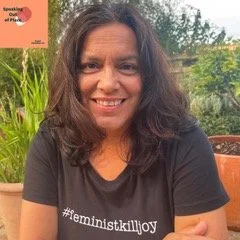
Speaking Out of Place: SARA AHMED discusses The Feminist Killjoy Handbook
In this episode of the Speaking Out of Place podcast, Professor David Palumbo-Liu and Azeezah Kanji talk with Sara Ahmed about her new book, The Feminist Killjoy Handbook. How and why is it that complaining about sexism, misogyny, homophobia, transphobia, and other forms of bigotry, is considered impolite? How is civility uncivil, and the mandate to be “happy” a tool for silencing grievances? Sara Ahmed tackles all those questions, and gives us strength and courage to keep on killingjoy and speaking truth.Sara Ahmed is an independent queer feminist scholar of colour. Her work is concerned with how power is experienced and challenged in everyday life and institutional cultures. Her first trade book, The Feminist Killjoy Handbook is coming out with Seal Press next month. Previous books (all published by Duke University Press) include Complaint! (2021), What's The Use? On the Uses of Use (2019), Living a Feminist Life (2017), Willful Subjects (2014), On Being Included: Racism and Diversity in Institutional Life (2012), The Promise of Happiness (2010) and Queer Phenomenology: Objects, Orientations, Others (2006). She is currently writing A Complainer’s Handbook: A Guide to Building Less Hostile Institutions and has begun a new project on common sense. She blogs at feministkilljoy.com."She often said I was the daughter she didn't have. And I was the daughter she had, in fact, because I'll say that to you. And I got a lot from her. She was very much willing always to speak her mind. And I would watch her tell my father off. It would be just like, yeah, this is possible! And she was outspoken, but also very loving. She's no longer with us. I never came out to her in the sense of saying 'I am a lesbian' or whatever, but I think she kind of knew. We had conversations, and I think she would have been okay with it. And because she was just a very, very curious and creative person and an enormous influence in my life."https://www.penguin.co.uk/books/454793/the-feminist-killjoy-handbook-by-ahmed-sara/9780241619537www.palumbo-liu.com https://speakingoutofplace.comhttps://twitter.com/palumboliu?s=20Photo credit: Sarah Franklin

ROB VERCHICK - Leading Climate Change Scholar - Author of The Octopus in the Parking Garage
Rob Verchick is one of the nation’s leading scholars in disaster and climate change law and a former EPA official in the Obama administration. He holds the Gauthier-St. Martin Eminent Scholar Chair in Environmental Law at Loyola University New Orleans. Professor Verchick is also a Senior Fellow in Disaster Resilience at Tulane University and the President of the Center for Progressive Reform, a research and advocacy organization that advocates for solutions to our most pressing societal challenges. He is the author of numerous articles and books, including The Octopus in the Parking Garage. A Call for Climate Resilience.“I was an English major in college. But here's the thing. I believe that the strongest machine we have, the strongest empathy machine that we have is literature. The best way to get people to feel what someone else is feeling is through literature and stories. And I also think that feeling and emotion are an important part of reasoning and governing too. It's not the only part, but I think you have to understand how people see the world and how they feel about the world. So in my classes, I teach law classes. I teach policy classes. I often assign novels. We read in one of my classes Their Eyes Were Watching God, the case about a hypothetical hurricane in Florida written by Zora Neale Hurston. We read Oryx and Crake by Margaret Atwood, which is a kind of dystopian novel that involves climate change. We've read The Handmaid's Tale in my classes. But I think what these books do is they, number one, certain books that are speculative, like Margaret Atwood's work, Joyce Carol Oates has written some things like this too. What's interesting about them is that they make us, they open up our imaginations and say, Oh, I never thought something like that could happen. We hope it doesn't, but it could, right? And so how do we change the way we look at the future? And it also changes, I think, the way that we understand people's lives.So even in a book like Their Eyes Were Watching God, which takes place in the early 20th century, and obviously involves race issues and a whole lot of other things. It leads us to think and see the world through a young black woman's perspective in the early 20th century. And there's something about that exercise of being able to some extent put yourself in the shoes of somebody else that I think is really important for governance. I think it's really important for policy. I think it's really important for advocates of any kind because listening and trying to understand what another person is perceiving...You can never do it completely, obviously, but I think it is really one of the most important parts of collective action of working with other people.”https://robverchick.comhttps://works.bepress.com/robert_verchickwww.progressivereform.org/Twitter/X/Instagram/Facebook: @robverchick @robsoctopusbookwww.creativeprocess.infowww.oneplanetpodcast.orgIG www.instagram.com/creativeprocesspodcast

Highlights - JAMES BROWNING - Author of The Fracking King - Founder of F Minus Research & Advocacy Group
"The lobbyists that represent the fossil fuel companies like ExxonMobil, Koch companies, and the American Petroleum Institute, they knew for years that the climate crisis would happen, and they've been telling us that it wouldn't. And right now in every state capital, the lobbyists are doing everything they can to slow the transition from fossil fuel to renewables. The sad fact is, these oil and gas lobbyists will never wake up one morning and say: I am worried about the climate crisis. I'm worried about my children. I am going to cut off ties with these oil and gas companies and stop taking their money. That will never happen. And I'm sad to say this, but it's been a long, long road to try to change their behavior with facts or reason."Why are fossil fuel lobbyists also allowed to work for communities, schools, businesses, and nonprofit organizations being harmed by the climate crisis without declaring their conflict of interest? Why divestment from fossil fuels should include divesting from lobbyists which play for both sides.James Browning is the founder of F Minus, a research and advocacy group that tracks the extent to which fossil fuel lobbyists also represent victims of the climate crisis. He is also a writer and game designer, and his novel The Fracking King was named one of the best 100 books of 2014 by Amazon.https://fminus.orgwww.creativeprocess.infowww.oneplanetpodcast.orgIG www.instagram.com/creativeprocesspodcast