
Books & Writers • The Creative Process: Novelists, Screenwriters, Playwrights, Poets, Non-fiction Writers & Journalists Talk Writing, Life & Creativity
309 episodes — Page 3 of 7

S14 Ep 1104The Imagination Emporium with Fmr. VP of Innovation & Creativity at Disney DUNCAN WARDLE
How can we free our minds to cultivate curiosity, innovation, and creativity in our daily lives? In this age of AI, where creative tasks are increasingly being performed for us, what is intelligence? And what is the future of education?Duncan Wardle was Vice President of Innovation and Creativity at Disney and has helped organizations like Apple, the NBA, Coca-Cola, and Spotify to innovate. The Imagination Emporium: Creative Recipes for Innovation is a toolkit with easy-to-use recipes to make innovation and creativity accessible and fun.Episode Websitewww.creativeprocess.info/podInstagram:@creativeprocesspodcast

S14 Ep 1104Teach Truth: The Struggle for Antiracist Education with JESSE HAGOPIAN
EIn this episode on Speaking Out of Place podcast Professor David Palumbo-Liu talks with activist and educator Jesse Hagopian about his new book, Teach Truth: The Struggle for Antiracist Education. They talk about the assault on public education that takes the form of criminalizing the truth itself. They note both the powerful corporate forces behind this movement and what they are afraid of, and also discuss the many instances of people fighting back to name, amplify, and mobilize the truth together.Jesse Hagopian’s African ancestors survived the middle passage and enslavement on plantations in Mississippi and Louisiana. Jesse is a Seattle educator and author of the new book, Teach Truth: The Attack on Critical Race Theory and the Struggle for Antiracist Education. He is editor for Rethinking Schools magazine, a founding steering committee member of Black Lives Matter at School, and is the Director the Teaching for Black Lives Campaign of the Zinn Education Project. Jesse is the editor of of the book, More Than a Score: The New Uprising Against High Stakes Testing, and the co-editor of the books, Teaching Palestine, Teaching for Black Lives, Black Lives Matter at School, and Teachers Unions and Social Justice.Jesse’s writing has appeared in The Seattle Times, The Nation, The Progressive, Truthout, and The Washington Post. You can connect with Jesse on IG (@jessehagopian), Bluesky (@jessehagopian.bsky.social) or his website, www.IAmAnEductor.com.www.palumbo-liu.comhttps://speakingoutofplace.comBluesky @palumboliu.bsky.socialInstagram @speaking_out_of_place
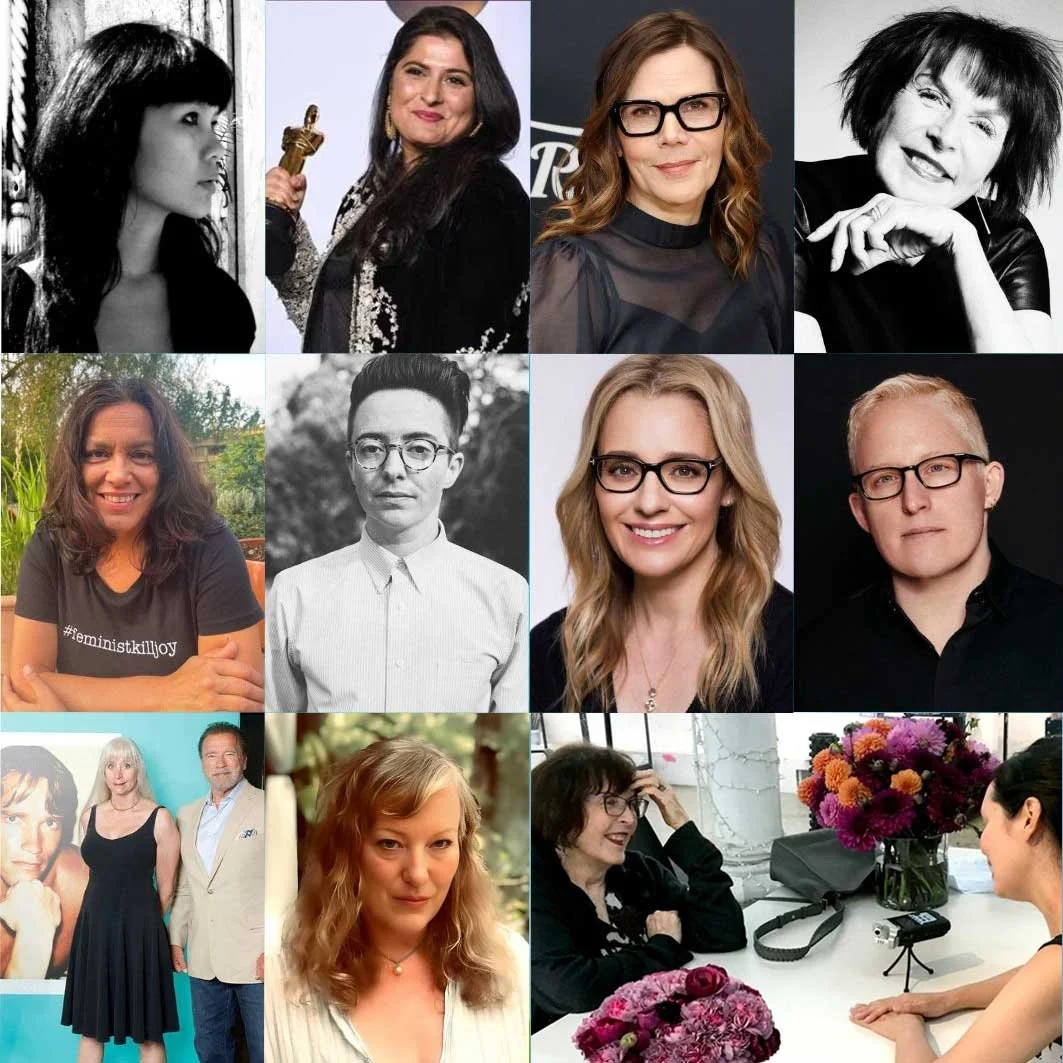
S14 Ep 1103Feminism in the 21st Century
How has feminism changed in light of the way we live now?DEAN SPADE (Author of Love in a F*cked Up World: How to Build Relationships, Hook Up & Raise Hell Together) on recognizing political conditions in personal relationships.MARILYN MINTER (Artist, Feminist) on sexual agency, beauty & her creative process.TEY MEADOW (Author of Trans Kids: Being Gendered in the Twenty-First Century) on the necessity of creating an inclusive environment & argues that diverse storytelling is crucial for healthy development.ELLEN RAPOPORT (Creator, Exec. Producer of Minx) on the evolution of feminism, the divides that emerged in the 70s over pornography & sex work.LAURA EASON (Emmy-nominated Producer, Screenwriter · Three Women, House of Cards) on the significance of representing ordinary women’s experiences.SHARMEEN OBAID-CHINOY (Oscar & Emmy-winning Director of Diane von Furstenberg: Woman in Charge · Forthcoming Star Wars film) on the legacy of von Furstenberg.SARA AHMED (Author, The Feminist Killjoy Handbook) reclaims the stereotypes, calling for solidarity among feminists.INTAN PARAMADITHA (Author, The Wandering) reflects on the importance of intergenerational knowledge among women.DIAN HANSON (Editor) on participating in the sex-positive movements of the 1960s to creating niche fetish magazines.KATE MUETH (Neo-Political Cowgirls Founder) on the importance of finding meaning in creative work, community & storytelling in human experience.Listen to full interviewsEpisode Websitewww.creativeprocess.info/podIG:@creativeprocesspodcast

S14 Ep 1102The Hidden Humans Behind Artificial Intelligence & the Sociopathology of Elon Musk
In this episode on Speaking Out of Place podcast Professor David Palumbo-Liu talks with Sarah T. Roberts about the hidden humans behind Artificial Intelligence, which is reliant on executives and business managers to direct AI to promote their brand and low-level, out-sourced, and poorly paid content managers to slog through masses of images, words, and data before they get fed into the machine. They talk about the cultural, sociological, financial, and political aspects of AI. They end by taking on Elon Musk and the DOGE project, as an emblem of how Silicon Valley executives have embraced a brand of tech rapture that disdains and destroys democracy and attacks the idea that people can take care of each other, independent of sociopathic libertarianism.Sarah T. Roberts, Ph.D., is a full professor at UCLA (Gender Studies, Information Studies, Labor Studies), specializing in Internet and social media policy, infrastructure, politics and culture, and the intersection of media, technology, and society. She is the faculty director and co-founder of the UCLA Center for Critical Internet Inquiry (C2i2), co-director of the Minderoo Initiative on Technology & Power, and a research associate of the Oxford Internet Institute. Informed by feminist Science and Technology Studies perspectives, Roberts is keenly interested in the way power, geopolitics, and economics play out on and via the internet, reproducing, reifying, and exacerbating global inequities and social injustice.www.palumbo-liu.comhttps://speakingoutofplace.comBluesky @palumboliu.bsky.socialInstagram @speaking_out_of_placePhoto of Elon Musk: Debbie RoweCreative Commons Attribution-Share Alike 3.0 Unported

S14 Ep 1100"Carbon is really a flow that animates everything we love, everything that's alive on this planet." - PAUL HAWKEN - Highlights
“We've lost over 70 percent, 73 percent, I think the latest data indicates, of wildlife and mammals in the last 50 years. That’s just shocking when you get that data, but then you ask, what can I do? What can I do? I wanted to move away from any guilt or compulsion because it doesn't work to talk to people that way. After 50 years of climate being in the news, in science, and in our schools, less than a fraction of 1 percent of people in the world do anything about it on a daily basis. How could that be? This is a civilizational crisis. For less than 1 percent to be engaged and do something means that our communication is flawed. I’m not saying the people are wrong, or the science is wrong, or the facts are wrong, but the narrative as a whole is not one that truly entices people or draws them in with a shared understanding of what we face and what to do about it. “Paul Hawken is a renowned environmentalist, entrepreneur, author, and activist committed to sustainability and transforming the business-environment relationship. He starts ecological businesses, writes about nature and commerce, and consults with heads of state and CEOs on climactic economic and ecological regeneration. He has appeared on the Today Show, Talk of the Nation, Real Time with Bill Maher, CBS This Morning, and his work has been profiled or featured in hundreds of articles, including The Wall Street Journal, New York Times, Newsweek, Washington Post, Forbes, and Businessweek. He has written nine books, including six national and New York Times bestsellers. He's published in 30 languages, and his books are available in over 90 countries. He is the founder of Project Drawdown and Project Regeneration, which is creating the world's largest, most complete listing and network of solutions to the climate crisis. His latest book is Carbon: The Book of Life.Episode Websitewww.creativeprocess.info/podInstagram:@creativeprocesspodcast

S14 Ep 1099CARBON: The Book of Life with PAUL HAWKEN
“We have 1.2 trillion carbon molecules in every cell. We have around 30 trillion cells, and that’s us. So carbon is really a flow that animates everything we love, enjoy, eat, and all plant life, all sea life—everything that's alive on this planet—is animated by the flow of carbon. “Paul Hawken is a renowned environmentalist, entrepreneur, author, and activist committed to sustainability and transforming the business-environment relationship. He starts ecological businesses, writes about nature and commerce, and consults with heads of state and CEOs on climactic economic and ecological regeneration. He has appeared on the Today Show, Talk of the Nation, Real Time with Bill Maher, CBS This Morning, and his work has been profiled or featured in hundreds of articles, including The Wall Street Journal, New York Times, Newsweek, Washington Post, Forbes, and Businessweek. He has written nine books, including six national and New York Times bestsellers. He's published in 30 languages, and his books are available in over 90 countries. He is the founder of Project Drawdown and Project Regeneration, which is creating the world's largest, most complete listing and network of solutions to the climate crisis. His latest book is Carbon: The Book of Life.“We want to see the situation we're in as that, as a flow. Where are the flows coming from, and why are we interfering with them? Why are we crushing them? Why are we killing them? For sure. But also, we need to see the wonder, the awe, the astonishment of life itself and to have that sensibility as the overriding narrative of how we act in the world, how we live, and how we talk to each other. Unless we change the conversation about climate into something that's a conversation about more life—better conditions for people in terms of social justice, restoring so much of what we've lost—then we won’t get anywhere.”Episode Websitewww.creativeprocess.info/podInstagram:@creativeprocesspodcast

On the Significance of the Recent Elections in Germany: ADRIAN DAUB on Rushing to the Right
In this episode on Speaking Out of Place podcast Professor David Palumbo-Liut talks with Professor Adrian Daub about the recent elections in Germany, where we saw a surge in votes for the Far Right AfD party, which is now the second most powerful party in the country. They discuss the significance of this rise in popularity and the ways the elections reveal a number of shifts in German politics as the various parties stake out positions that align with not just a center-right orientation but, more dangerously, a far-right one. They speak of the parallels to the recent election of Donald Trump to the US presidency, and what it says about the entrenchment of both neoliberalism and a faux populism based on xenophobia and not serving the actual material interests of everyday people.Adrian Daub teaches German and Comparative Literature at Stanford, where he directs the Clayman Institute for Gender Research. He is the author most recently of The Cancel Culture Panic (2024), and co-hosts the podcast In Bed With the Right.www.palumbo-liu.comhttps://speakingoutofplace.comBluesky @palumboliu.bsky.socialInstagram @speaking_out_of_place

S14 Ep 1098Inside the Mind of PETER WELLER, Actor, Art Historian, Director, Musician, Author - Highlights
Peter Weller is a renowned theater and Hollywood actor. His performances in films such as RoboCop and Naked Lunch garnered him much critical and commercial success over the years. His television acting and directing credits include Sons of Anarchy, Dexter, and 24. Unbeknownst to most, Weller has spent decades honing his appreciation for the visual and musical arts through his studies of the Renaissance era. Earning a Master's in Roman architecture from Syracuse University before moving on to a PhD in Renaissance Art from UCLA. Dr. Weller has just written a book, Leon Battista Alberti in Exile: Tracing the Path to the First Modern Book on Painting.“Art transcends time and culture—the beauty of it. People worry about the world now. I remind them to go live in 1968, a time of preparing to go to the moon while people died for their beliefs. This is a difficult time in a republic that’s supposed to be free, but music was leading the way. It’s actually harmonious, transcending culture and time. That might be the greatest gift of our transcendence.”Episode Websitewww.creativeprocess.info/podInstagram:@creativeprocesspodcast

S14 Ep 1097From RoboCop to the Renaissance w/ Actor, Art Historian, Director, Musician, Author PETER WELLER
“I met Miles backstage at the Hollywood Bowl—the last gig he ever played. Miles asked, “Who’s that white boy?” I introduced him to Bob Thiele Jr., whose father produced Coltrane. When Miles discovered this, he said, “Well, you can hang,” following this friendly gesture with me walking Miles to his car. I did not know he was dying. I kissed him on both cheeks. And 18 days later, he was gone.”Peter Weller is a renowned theater and Hollywood actor. His performances in films such as RoboCop and Naked Lunch garnered him much critical and commercial success over the years. His television acting and directing credits include Sons of Anarchy, Dexter, and 24. Unbeknownst to most, Weller has spent decades honing his appreciation for the visual and musical arts through his studies of the Renaissance era. Earning a Master's in Roman architecture from Syracuse University before moving on to a PhD in Renaissance Art from UCLA. Dr. Weller has just written a book, Leon Battista Alberti in Exile: Tracing the Path to the First Modern Book on Painting.Weller has also contributed an essay remembering his friend Miles Davis for Jazz and Literature. The book, co-edited by Mia Funk, features many of her interviews and artworks, as well as poetry, art, and essays by our contributors.Episode Websitewww.creativeprocess.info/podInstagram:@creativeprocesspodcast

S9 Ep 1096A Life in Climbing: ALAIN ROBERT Climbs with No Fear, No Ropes, No Safety Net - Highlights
How can we overcome our fears? How can we challenge ourselves, pushing our physical boundaries to achieve the impossible?Alain Robert is a renowned rock climber and urban climber. Known as "the French Spider-Man” or "the Human Spider," Robert is famous for his free solo climbing, scaling skyscrapers using no climbing equipment except for a small bag of chalk and a pair of climbing shoes. Some of his most notable ascents include the Burj Khalifa, the Eiffel Tower, and the Sydney Opera House, and over 200 of the world's tallest skyscrapers. He is also a motivational speaker and the author of The Spider-man: Free and Unattached, and With Bare Hands: The True Story of Alain Robert, the Real-life Spiderman.“You are fighting to stay alive. You are fully in the present moment. You don't have time to think about being afraid. You are focused on what you are doing. You struggle to pass another window. You don't have time to think about your problems. The only thing you are concerned about deep down in the back of your mind is that you need to stay alive, and for that, you need to remain calm and focused.”www.instagram.com/alainrobertofficial/?hl=frEpisode Websitewww.creativeprocess.infowww.oneplanetpodcast.orgInstagram @creativeprocesspodcastImages courtesy of alainrobert.com

S14 Ep 1095Overcoming Your Fears to Achieve the Impossible w/ Free Solo Climber ALAIN ROBERT on Climbing 200+ World’s Tallest Skyscrapers
“You are fighting to stay alive. You are fully in the present moment. You don't have time to think about being afraid. You are focused on what you are doing. You struggle to pass another window. You don't have time to think about your problems. The only thing you are concerned about deep down in the back of your mind is that you need to stay alive, and for that, you need to remain calm and focused.”How can we overcome our fears? How can we challenge ourselves, pushing our physical boundaries to achieve the impossible?Alain Robert is a renowned rock climber and urban climber. Known as "the French Spider-Man” or "the Human Spider," Robert is famous for his free solo climbing, scaling skyscrapers using no climbing equipment except for a small bag of chalk and a pair of climbing shoes. Some of his most notable ascents include the Burj Khalifa, the Eiffel Tower, and the Sydney Opera House, and over 200 of the world's tallest skyscrapers. He is also a motivational speaker and the author of The Spider-man: Free and Unattached, and With Bare Hands: The True Story of Alain Robert, the Real-life Spiderman.www.instagram.com/alainrobertofficial/?hl=frwww.creativeprocess.infowww.oneplanetpodcast.orgInstagram @creativeprocesspodcastImage courtesy of alainrobert.com

TAO LEIGH GOFFE on Poetics, Poesis & Un-making the Climate Crisis
In this episode on the Speaking Out of Place podcast, Professor David Palumbo-Liutalks with Tao Leigh Goffe about her new, magisterial Dark Laboratory: On Columbus, the Caribbean, and the Origins of the Climate Crisis. Spanning many fields and disciplines in the natural sciences, social sciences, the humanities, and the arts, Professor Goffe weaves together a historically rich and geographically complex picture of how capitalism and racism undergird the climate crisis in ways made invisible or benign via the work of the west’s “dark laboratory.” Writing back through accounts of indigenous bird watching and Black provisional grounds, we talk about things as seemingly different as the massive guano industry built on Chinese and Indian labor in the 19th century to Malcolm X’s boyhood vegetable garden in Michigan. We talk in particular about one of the key passages of Dark Laboratory, where Tao writes:“Still, we manage to create a poetics out of that which wishes to destroy us and the planet. How else will we be able to live in ‘the after’? We must reassess what a problem is. Living is not a problem, as Audrey Lorde reminds us. I would add that dying is not a problem either. Decomposing is essential to the natural order and cycle of life. Living at the expense of others is a problem.”Tao Leigh Goffe is a writer, theorist, and interdisciplinary artist who grew up between the UK and New York City. For the past fifteen years she has specialized in colonial histories of race, geology, climate, and media technologies. Dr. Goffe lives and works in Manhattan where she is an Associate Professor at CUNY in Black Studies. She teaches classes on literary theory and cultural history. Dr. Goffe’s book on how the climate crisis is a racial crisis is called DARK LABORATORY (Doubleday and Hamish Hamilton (Penguin UK, 2025). Her second book BLACK CAPITAL, CHINESE DEBT, under contract with Duke University Press, presents a long history of racialization, modern finance, and indebtedness. It brings together subjects of the Atlantic and Pacific markets from 1806 to the present under European colonialism. Dr. Goffe is a fellow at the Harvard University Kennedy School in racial justice. Her research explores Black diasporic intellectual histories, political, and ecological life. She studied English literature at Princeton University before earning her PhD at Yale University. Dr. Goffe’s research and curatorial work is rooted in literatures and theories of labor that center Black feminist engagements with Indigeneity and Asian diasporic racial formations. Committed to building intellectual communities beyond institutions, she is the founder of the Dark Laboratory, an engine for the study of race, technology, and ecology through digital storytelling. Dr. Goffe is also the Executive Director of the Afro-Asia Group, an organization that centers the intersections of African and Asian diasporas, futurity, and radical coalition towards sovereignty. www.palumbo-liu.comhttps://speakingoutofplace.comBluesky @palumboliu.bsky.socialInstagram @speaking_out_of_place
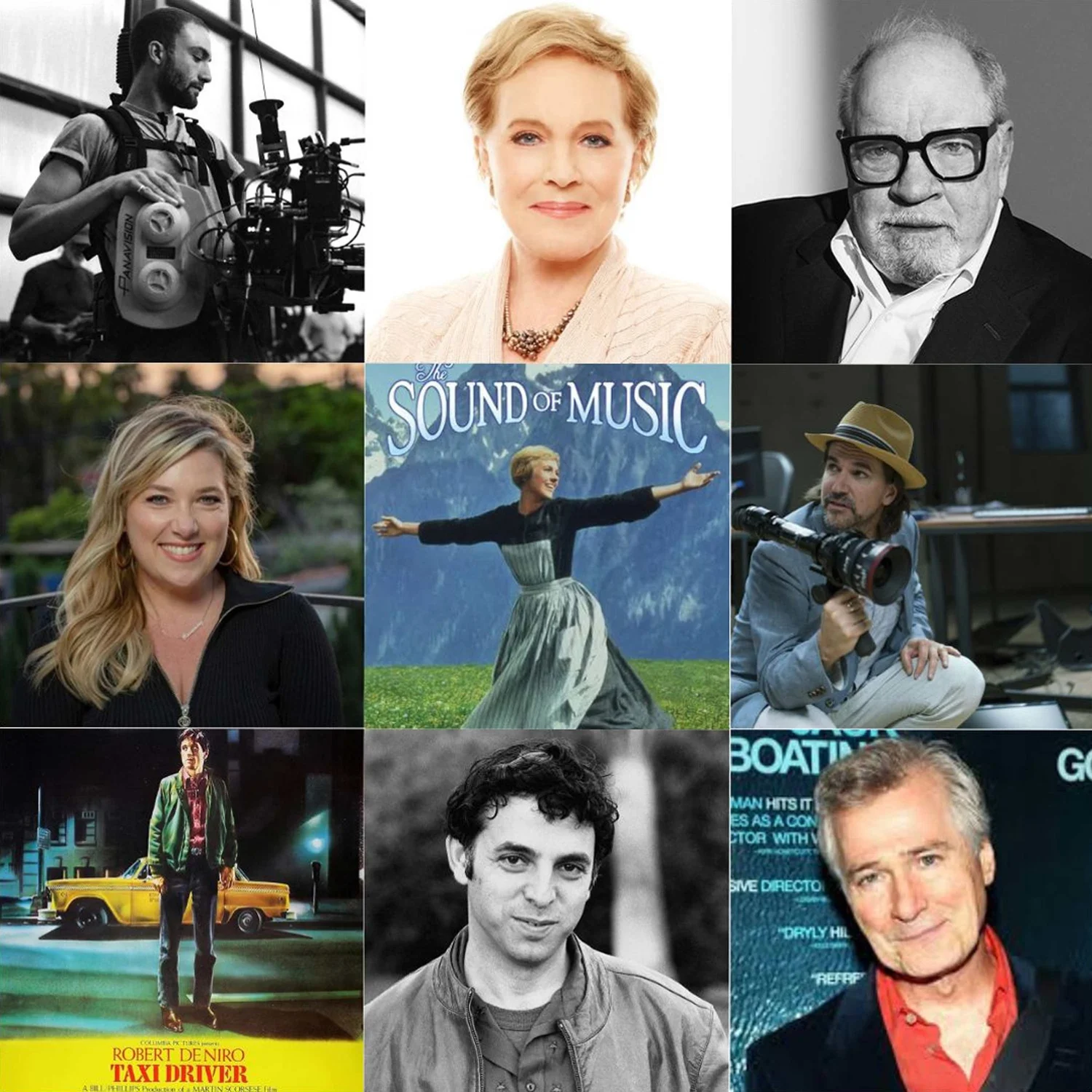
S14 Ep 1094The Creative Process w/ JULIE ANDREWS, PAUL SCHRADER, JOHN PATRICK SHANLEY, ETGAR KERET, JOY GORMAN WETTELS, CHAYSE IRVIN, MANUEL BILLETER
JULIE ANDREWS (Oscar, Tony & Pulitzer Prize-winning Actress & Singer · The Sound of Music, Mary Poppins) Andrews shares her experience working on Mary Poppins, revealing behind-the-scenes secrets about the character. She reminisces about her collaboration with Walt Disney and Tony Walton.ETGAR KERET (Cannes Film Festival Award-winning Director & Author) Keret discusses the profound impact of his parents' survival stories from the Holocaust on his work. He explores how extreme human experiences can lead to extraordinary resilience and creativity,JOHN PATRICK SHANLEY (Oscar, Tony & Pulitzer Prize-winning Writer/Director · Doubt, Moonstruck, Joe Versus the Volcano) Shanley highlights the invaluable lessons and life experiences gained from his time in the Marine Corps. He emphasizes the significance of diverse interactions and communal living, underscoring how these experiences shape both his artistic vision and societal views.JOY GORMAN WETTELS (Exec. Producer of 13 Reasons Why, UnPrisoned · Founder of Joy Coalition) Joy Gorman Wettels reflects on her theatrical upbringing and the influence of her mother’s passion for Sondheim and Neil Simon. She shares touching memories of the LGBTQ+ community in her life and how these early experiences cultivated her love for storytelling and community theater.PAUL SCHRADER (Screenwriter/Director · Taxi Driver, Raging Bull, First Reformed) Schrader analyzes the lasting impact of Taxi Driver on his work. He details his technique of immersing the audience into the protagonist’s perspective and psychology.CHAYSE IRVIN (Award-winning Cinematographer · Blonde starring Ana de Armas · Beyonce: Lemonade · Spike Lee’s BlacKkKlansman) Irvin discusses using mise-en-scène to represent characters’ psychological states.MANUEL BILLETER (Cinematographer · The Gilded Age · Inventing Anna · Jessica Jones · Luke Cage) Billeter recounts his early inspirations from masters like Fellini and Antonioni and his invaluable learning experiences while working alongside Alfonso Cuarón.To hear more from each guest, listen to their full interviews.Episode Websitewww.creativeprocess.info/podInsta:@creativeprocesspodcast
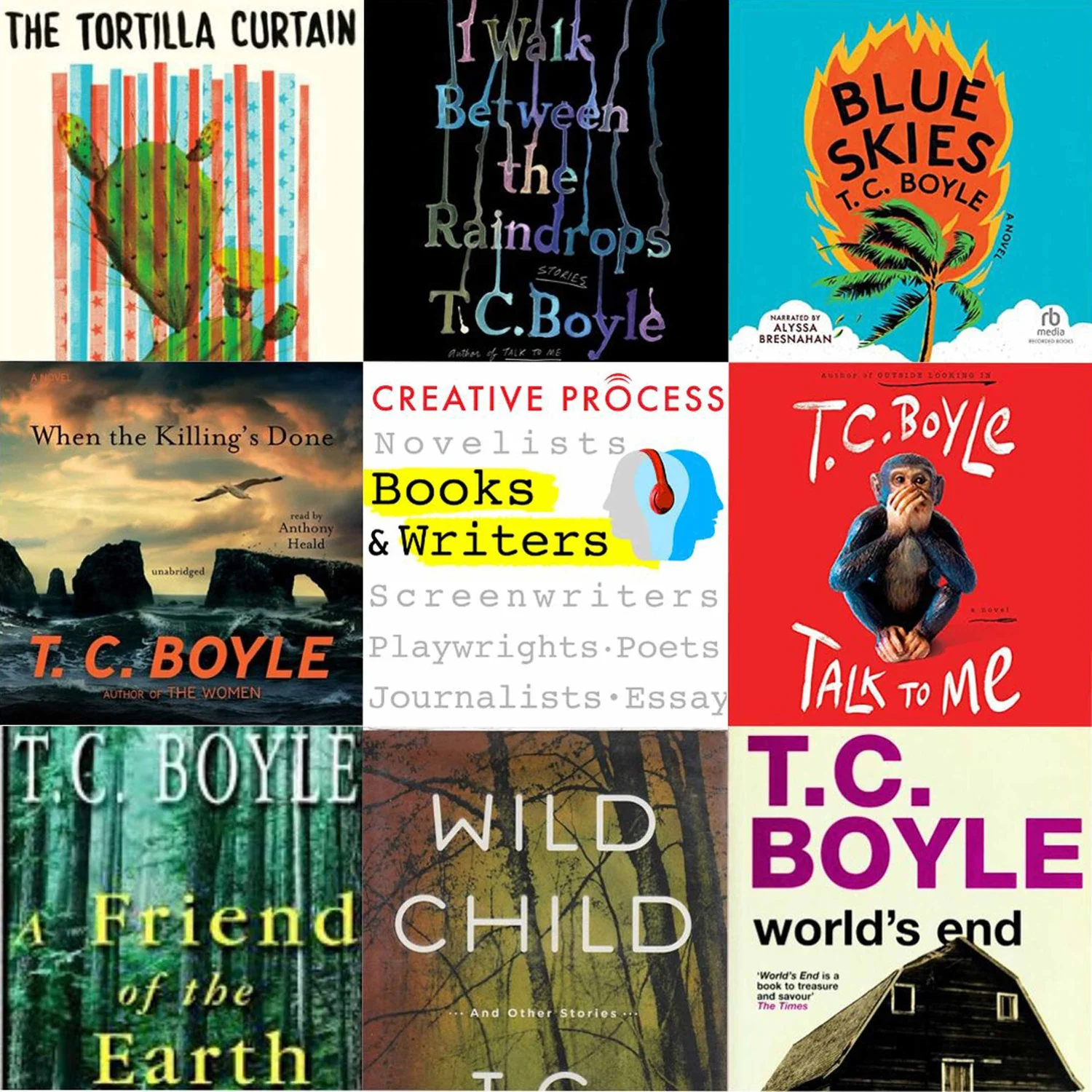
S14 Ep 1093The Art of Fiction with Author, Musician, Satirist T.C. BOYLE - Highlights
“What I have done in my career is just try to assess who we are, what we are, why we are here, and how come we, as animals, are able to walk around and wear pants and dresses and talk on the internet, while the other animals are not. It's been my obsession since I was young. I think if I hadn't become a novelist, I might have been happy to be a naturalist or a field biologist.There is some kind of magic in the creative process. I am reaching for things in my unconscious that surprise me. I don't know what it's going to be. I'd like to do many, many things. It's all my life's work. I don't want to just write the same book over and over again as some other authors do. I don't want to become formulaic.”T.C. Boyle is a novelist and short story writer based out of Santa Barbara, California. He has published 19 novels, such as The Road to Wellville and more than 150 short stories for publications like The New Yorker, as well as his many short story collections. His latest novel Blue Skies is a companion piece to A Friend of the Earth. His writing has earned numerous awards, including winning the PEN/Faulkner Award for Best Novel of the Year for World's End.Episode Websitewww.creativeprocess.info/podInstagram:@creativeprocesspodcast

S14 Ep 1092A Life in Writing with T.C. BOYLE
Why are we filled with so many contradictions? How does writing help us make sense of the absurdity and of the absurdity and chaos of the world? T.C. Boyle is a novelist and short story writer based out of Santa Barbara, California. He has published 19 novels, such as The Road to Wellville and more than 150 short stories for publications like The New Yorker, as well as his many short story collections. His latest novel Blue Skies is a companion piece to A Friend of the Earth. His writing has earned numerous awards, including winning the PEN/Faulkner Award for Best Novel of the Year for World's End. “What I have done in my career is just try to assess who we are, what we are, why we are here, and how come we, as animals, are able to walk around and wear pants and dresses and talk on the internet, while the other animals are not. It's been my obsession since I was young. I think if I hadn't become a novelist, I might have been happy to be a naturalist or a field biologist.There is some kind of magic in the creative process. I am reaching for things in my unconscious that surprise me. I don't know what it's going to be. I'd like to do many, many things. It's all my life's work. I don't want to just write the same book over and over again as some other authors do. I don't want to become formulaic.”Episode Websitewww.creativeprocess.info/podInstagram:@creativeprocesspodcastPhoto credit: Spencer Boyle in Santa Barbara, CA

S14 Ep 1091Language, Music, Memory with Writer, Philosopher PATRICK HEALY - Highlights
“You have all the different languages interplaying with each other. Little scraps of Irish languages and idioms have stories that have been told, but how Ireland actually comes about as an idea, as to where the Irish come from. A lot of these kinds of debates are just placed, you know, in day-to-day conversation, and then they trail off. People start something; they trail off and might come back to it later. That phenomenon of speaking over each other, tales that are known and not known, I always found very interesting. It was literally like a radio that was kept on all day in the kitchen.You would come in and out, and you would hear certain things, and you'd have to work out the context and the conversation and the speakers. In some way, one of the big personalities in the book is just a radio that’s playing, and some of these conversations are not actually taking place between characters in real-time. They're just snippets that have been overheard on radios.”Patrick Healy was born in Dublin in 1955. He studied philosophy and Semitic languages at St. Columbans Dalgan Park, Pontifical University Maynooth, and University College Dublin. He has published over 20 books on topics around artists, aesthetic theory, philosophy of science, architecture, art criticism and innumerable essays. He has been a Professor of Interdisciplinary Research at Free International University Amsterdam, 1997-present, and was a Senior Research Fellow at the Faculty of Architecture from 2020-2022. He is currently completing a new work of fiction entitled Fatal Fragments, a loose follow-up to his novel Beyond the Pale.Episode Websitewww.creativeprocess.info/podInstagram:@creativeprocesspodcast
S14 Ep 1090Beyond the Pale with Writer, Philosopher PATRCK HEALY
Patrick Healy’s novel Beyond the Pale explores memory, time, childhood, and how language shapes our world. Set in rural Ireland, starting in the 1950s, the book follows a young boy’s early memories through a series of expressionistic soundscapes. The expression from which the book takes its name has come to mean beyond what is considered acceptable behavior, but the origins of the phrase referred to land within Ireland that was “beyond the control of the English government.” Healy’s book examines social class, stigma, village, family life, identity, and the nature of consciousness. Rooted in the oral tradition, the book is a celebration of place, the Irish idiom, music, and memory.Patrick Healy was born in Dublin in 1955. He studied philosophy and Semitic languages at St. Columbans Dalgan Park, Pontifical University Maynooth, and University College Dublin. He has published over 20 books on topics around artists, aesthetic theory, philosophy of science, architecture, art criticism and innumerable essays. He has been a Professor of Interdisciplinary Research at Free International University Amsterdam, 1997-present, and was a Senior Research Fellow at the Faculty of Architecture from 2020-2022. He is currently completing a new work of fiction entitled Fatal Fragments, a loose follow-up to his novel Beyond the Pale.“You have all the different languages interplaying with each other. Little scraps of Irish languages and idioms have stories that have been told, but how Ireland actually comes about as an idea, as to where the Irish come from. A lot of these kinds of debates are just placed, you know, in day-to-day conversation, and then they trail off. People start something; they trail off and might come back to it later. That phenomenon of speaking over each other, tales that are known and not known, I always found very interesting. It was literally like a radio that was kept on all day in the kitchen.You would come in and out, and you would hear certain things, and you'd have to work out the context and the conversation and the speakers. In some way, one of the big personalities in the book is just a radio that’s playing, and some of these conversations are not actually taking place between characters in real-time. They're just snippets that have been overheard on radios.”Episode Websitewww.creativeprocess.info/podInstagram:@creativeprocesspodcastPhoto credit: Marc Damri

S14 Ep 1106We Grow the World Together: Parenting Toward Abolition with MAYA SCHENWAR & KIM WILSON
In this episode of Speaking Out of Place podcast Professor David Palumbo-Liu talks with Maya Schenwar and Kim Wilson on their new book, We Grow the World Together: Parenting Toward Abolition. They talk about what inspired them to commission a wide range of amazing activists, artists, scholars, and organizers to write whatever came to their minds about the topic of parenting and abolition. The result is a rich mosaic of unique insights expressed in diverse forms, but each one touching deeply on the interdependency of living beings and the importance of caregiving in all its forms. It is this commitment that leads us always to imagine an abolitionist future for ourselves, and all children.Maya Schenwar is Truthout's editor-in-chief, author of Locked Down, Locked Out: Why Prison Doesn’t Work and How We Can Do Better, and co-editor of Who Do You Serve, Who Do you Protect? Police Violence and Resistance in the United States. Kim Wilson is an artist, educator, writer, and organizer. She is the co-founder, cohost, and producer of Beyond Prisons, a podcast on incarceration and prison abolition. A social scientist by training, Dr. Wilson has a PhD in Urban Affairs and Public Policy, and her work focuses on examining the interconnected functioning of systems, including poverty, racism, ableism, and heteropatriarchy, within a carceral structure. Her work delves into the extension and expansion of these systems beyond their physical manifestations of cages and fences, to reveal how carcerality is imbued in policy and practice. She explores how these systems synergize to exacerbate the challenges faced by under-resourced communities, revealing a deliberate intention to undermine and further marginalize vulnerable populations.www.palumbo-liu.comhttps://speakingoutofplace.comBluesky @palumboliu.bsky.socialInstagram @speaking_out_of_place

S14 Ep 1087Relationships, Writing, Dyselxia & The Creative Process w/ Director SOPHIE BROOKS
“In reality, we're all complex people with feelings and our own sets of baggage. I do think we are very good at self-sabotage, all of us. It's a very easy road to go down. It's safe because it's comfortable, and we know it. When you can find the ways you self-sabotage and try to stop that, it will hopefully lead to a happier life and things that are meaningful. When I was in my late twenties, I got out of a serious relationship and kind of reentered the dating scene. I was shocked by the simplification of a lot of complicated feelings around dating and how women are so easily labeled crazy, and men are so easily labeled assholes.”Sophie Brooks is a London-born, Brooklyn-based writer and director. Her sophomore feature Oh, Hi! premiered at the 2025 Sundance Film Festival. Her debut film, The Boy Downstairs, was acquired by Film Rise and HBO at the Tribeca Film Festival. It was produced by David Brooks, Paul Brooks, and Dan Clifton and stars Zosia Mamet, Matthew Shear, and Diana Irvine.Episode Websitewww.creativeprocess.info/podInstagram:@creativeprocesspodcast

S14 Ep 1086Modern Love - Writer, Director SOPHIE BROOKS on her new film OH, HI!
What is love? How do the relationships we have early in our lives affect us for years to come? How can we break free from cycles of damage to form relationships of mutual understanding, respect, and love?Sophie Brooks is a London-born, Brooklyn-based writer and director. Her sophomore feature Oh, Hi! premiered at the 2025 Sundance Film Festival. Her debut film, The Boy Downstairs, was acquired by Film Rise and HBO at the Tribeca Film Festival. It was produced by David Brooks, Paul Brooks, and Dan Clifton and stars Zosia Mamet, Matthew Shear, and Diana Irvine.“In reality, we're all complex people with feelings and our own sets of baggage. I do think we are very good at self-sabotage, all of us. It's a very easy road to go down. It's safe because it's comfortable, and we know it. When you can find the ways you self-sabotage and try to stop that, it will hopefully lead to a happier life and things that are meaningful. When I was in my late twenties, I got out of a serious relationship and kind of reentered the dating scene. I was shocked by the simplification of a lot of complicated feelings around dating and how women are so easily labeled crazy, and men are so easily labeled assholes.”Episode Websitewww.creativeprocess.info/podInstagram:@creativeprocesspodcast

S14 Ep 1085From Spy Thrillers to Police Dramas w/ Writer, Creator, Showrunner ALEXI HAWLEY
“There used to be a time when leading men were okay with falling down as a character. Harrison Ford in Indiana Jones is a prime example of that. Even going back to the fifties, they understood that failure and falling down, but getting back up, is an endearing quality. It's a universal human quality. We have gotten to a point in the last 10 or 15 years, or maybe longer, where leading men often want to win every fight. It’s in their contract: "I have to win every fight" or "I can't fail" or "I can't fall down." It's just such a mistake because the audience roots for you more if they see you fail and then get back up again. Noah is totally comfortable playing that character who's just trying to figure it out on the fly. Sometimes, he gets it wrong, but he's never going to give up. You can really feel that coming off the screen.”Alexi Hawley is the creator of ABC’s The Rookie, starring Nathan Fillion, and Netflix's The Recruit, an espionage drama starring Noah Centineo that, in season two, explores the legal defense tactic 'graymail'. The Rookie, now in its seventh season, takes a look at aspects of policing often overlooked by TV procedurals. Hawley discusses the positive role police can play in communities and how he found his own autodidactic path to becoming a television showrunner. He was previously the executive producer and co-showrunner of Castle and The Following, and recently created the upcoming Hulu drama The Envoy which is inspired by journalist and producer Adam Ciralsky’s June 2024 Vanity Fair story about Roger Carstens and his team at the State Department who have brought home 70 American hostages during the past four years.Episode Websitewww.creativeprocess.info/podInstagram:@creativeprocesspodcast

S14 Ep 1084Behind the Scenes of The Rookie & The Recruit w/ Showrunner ALEXI HAWLEY
How can we improve the way we train and recruit police officers? Can TV dramas serve as positive models for policing and help foster community?Alexi Hawley is the creator of ABC’s The Rookie, starring Nathan Fillion, and Netflix's The Recruit, an espionage drama starring Noah Centineo that, in season two, explores the legal defense tactic 'graymail'. The Rookie, now in its seventh season, takes a look at aspects of policing often overlooked by TV procedurals. Hawley discusses the positive role police can play in communities and how he found his own autodidactic path to becoming a television showrunner. He was previously the executive producer and co-showrunner of Castle and The Following, and recently created the upcoming Hulu drama The Envoy which is inspired by journalist and producer Adam Ciralsky’s June 2024 Vanity Fair story about Roger Carstens and his team at the State Department who have brought home 70 American hostages during the past four years.“There used to be a time when leading men were okay with falling down as a character. Harrison Ford in Indiana Jones is a prime example of that. Even going back to the fifties, they understood that failure and falling down, but getting back up, is an endearing quality. It's a universal human quality. We have gotten to a point in the last 10 or 15 years, or maybe longer, where leading men often want to win every fight. It’s in their contract: "I have to win every fight" or "I can't fail" or "I can't fall down." It's just such a mistake because the audience roots for you more if they see you fail and then get back up again. Noah is totally comfortable playing that character who's just trying to figure it out on the fly. Sometimes, he gets it wrong, but he's never going to give up. You can really feel that coming off the screen.”Episode Websitewww.creativeprocess.info/podInstagram:@creativeprocesspodcastPhoto credit: Jesse Grant/Getty for Netflix

S14 Ep 1083Are We Witnessing the Decline of the American Empire? RICHARD D. WOLFF - Highlights
“The position of the United States in the world, economically and politically, is the weakest it has been in my lifetime. I was born in the middle of the 20th century, so I have watched the rise of the American empire and the success of American capitalism in the second half of the 20th century. However, over the last 20 years, I have watched that turn into its opposite—a decline. The decline is visible everywhere. Unless you live in the United States and consume mainstream media, there is a level of denial that will be recorded historically as one of the great examples, not just of a declining empire, which typically has people who cannot face it and who refuse to see it. You can go to Great Britain today and find quite a few people who think we still have the British Empire, even though everyone who isn't crazy knows that is silly. But we are earlier in the decline phase than the British are; they have had to endure it for a century while we have just had to do it for a couple of decades. It is fresh.”Richard D. Wolff is the co-founder of Democracy at Work and host of their nationally syndicated show Economic Update. He was formerly professor of economics at the University of Massachusetts Amherst, Yale University, the City College of the City University of New York, and the University of Paris Sorbonne. Currently, Wolfe is a visiting professor in the Graduate Program in International Affairs of the New School University in New York City.Episode Websitewww.creativeprocess.info/podInstagram:@creativeprocesspodcast
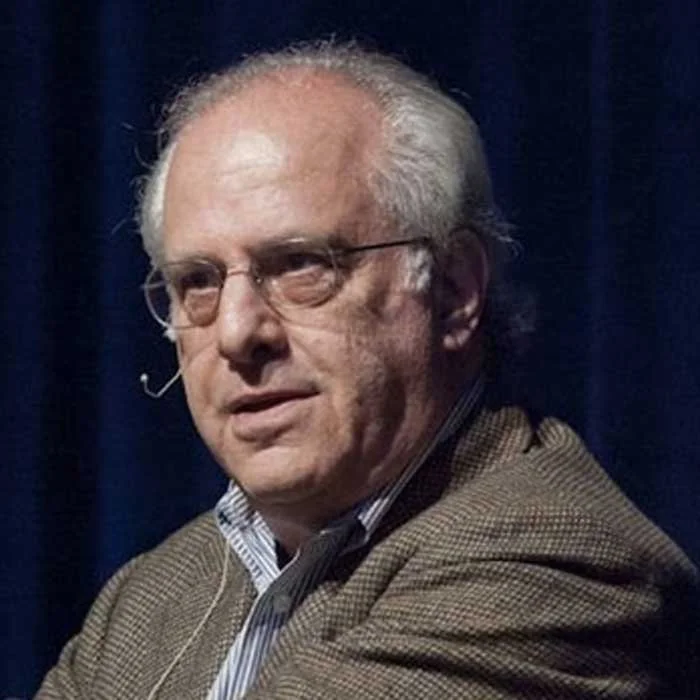
S14 Ep 1082Understanding Capitalism with RICHARD D. WOLFF - Co-founder of Democracy at Work
When capitalism stops serving the needs of the people, what can we do to create a fairer more equitable society? What can we learn from China's success and economic growth? Are we witnessing the decline of the American Empire and what comes next?Richard D. Wolff is the co-founder of Democracy at Work and host of their nationally syndicated show Economic Update. He was formerly professor of economics at the University of Massachusetts Amherst, Yale University, the City College of the City University of New York, and the University of Paris Sorbonne. Currently, Wolfe is a visiting professor in the Graduate Program in International Affairs of the New School University in New York City.“The position of the United States in the world, economically and politically, is the weakest it has been in my lifetime. I was born in the middle of the 20th century, so I have watched the rise of the American empire and the success of American capitalism in the second half of the 20th century. However, over the last 20 years, I have watched that turn into its opposite—a decline. The decline is visible everywhere. Unless you live in the United States and consume mainstream media, there is a level of denial that will be recorded historically as one of the great examples, not just of a declining empire, which typically has people who cannot face it and who refuse to see it. You can go to Great Britain today and find quite a few people who think we still have the British Empire, even though everyone who isn't crazy knows that is silly. But we are earlier in the decline phase than the British are; they have had to endure it for a century while we have just had to do it for a couple of decades. It is fresh.”Episode Websitewww.creativeprocess.info/podInstagram:@creativeprocesspodcast

S14 Ep 1081How Art Helps Us Understand the World - Filmmakers, Writers & Artists Share their Stories
How do our personal lives influence the art we make?JIM SHEPARD (Author of The Book of Aron, Project X, & The World to Come starring Casey Affleck, Vanessa Kirby, Katherine Waterston · Winner of the PEN New England Award, The Story Prize) explores historical human dilemmas, the emotional imagination and literature's role in extending empathetic understanding. He discusses the importance of self-education and curiosity.LAURA EASON (Emmy-nominated Producer, Screenwriter, Playwright · Three Women · House of Cards · The Loudest Voice) on how we can live multiple lives through the arts. She highlights the significant role the arts have played in her upbringing and daily life, emphasizing the value of listening to others. As a showrunner, Laura discusses how her work in the theater, where she often adapted literary classics, prepared her for working in the writers’ room of House of Cards, adapting the creator’s vision.BENOIT DELHOMME (Award-winning Cinematographer · Artist · Director · At Eternity’s Gate · The Theory of Everything ·The Scent of Green Papaya) talks about the intrinsic pleasure found in art and cinematography. He likens operating a handheld camera to playing an instrument and emphasizes the importance of personalizing one's craft to imbue it with soul and freedom.JOHN PATRICK SHANLEY (Academy Award, Tony & Pulitzer Prize-winning Writer/Director · Doubt · Moonstruck · Danny and the Deep Blue Sea · Joe Versus the Volcano) recounts his personal journey from The Bronx to becoming a writer. He emphasizes the importance of embracing one's life experiences, even the seemingly ordinary ones, as gold for storytelling. Shanley reflects on his collaborations with actors Philip Seymour Hoffman and Meryl Streep and their dedication to their craft.MARK GOTTLIEB (Vice President & Literary Agent at Trident Media Group) explores storytelling as a timeless art form, comparing books to the oil paintings of new media. He comments on the transformative power of stories, which he believes can manifest in various forms—from books to movies and TV shows.ANTHONY WHITE (Artist) reflects on the role of visual arts in democracy and civil disobedience. Historical events like the Eureka Stockade, with its spirit of rebellion, have inspired his art.MICHAEL BEGLER (Showrunner · Writer & Executive Producer of Perry Mason and The Knick) discusses the importance of storytelling in understanding our history and emotions. He stresses that the arts, drawing from personal experiences, help us connect on a deeper level beyond hard news.To hear more from each guest, listen to their full interviews.Episode Websitewww.creativeprocess.info/podInstagram:@creativeprocesspodcast

S14 Ep 1076How to Build Relationships, Hook Up & Raise Hell Together: Conversation w/ DEAN SPADE - Highlights
“This book has a lot of the wisdom of things that feminists and queers have learned in the community about sexuality, but the book is really for anybody who is political, even those just starting out and beginning to realize that there is something wrong with the systems they live under. I want to be in movements. Our movements are made of relationships. So, if you're just getting into our movements, or if you've been here for years and have been watching the ways we hurt each other and fall apart relationally, this book is about identifying these common patterns.”Dean Spade is an organizer, speaker, author, and professor at Seattle University's School of Law, where he teaches courses on policing, imprisonment, gender, race, and social movements. He is the author of Mutual Aid: Building Solidarity During this Crisis (and the next) and Normal Life: Administrative Violence, Critical Trans Politics and the Limits of Law. His latest book is Love in a F*cked-Up World: How to Build Relationships, Hook Up, and Raise Hell Together.Episode Websitewww.creativeprocess.info/podInstagram:@creativeprocesspodcast

S14 Ep 1075LOVE in a F*cked-Up World: DEAN SPADE on How to Build Relationships, Hook Up & Raise Hell Together
Why is it that we find the courage to boldly confront mainstream societal norms and structures, yet are so often unable to treat romantic partners with care and generosity? Why do we lose our principles when we become insecure, disappointed, or jealous? Why do we act our worst in sexual and romantic relationships? And why do we prioritize romantic connection above other types of relationships, like friendship?Dean Spade is an organizer, speaker, author, and professor at Seattle University's School of Law, where he teaches courses on policing, imprisonment, gender, race, and social movements. He is the author of Mutual Aid: Building Solidarity During this Crisis (and the next) and Normal Life: Administrative Violence, Critical Trans Politics and the Limits of Law. His latest book is Love in a F*cked-Up World: How to Build Relationships, Hook Up, and Raise Hell Together.“This book has a lot of the wisdom of things that feminists and queers have learned in the community about sexuality, but the book is really for anybody who is political, even those just starting out and beginning to realize that there is something wrong with the systems they live under. I want to be in movements. Our movements are made of relationships. So, if you're just getting into our movements, or if you've been here for years and have been watching the ways we hurt each other and fall apart relationally, this book is about identifying these common patterns.”Episode Websitewww.creativeprocess.info/podInstagram:@creativeprocesspodcast

S14 Ep 1074THREE WOMEN starring Shailene Woodley, DeWanda Wise, Betty Gilpin: Conversation w/ LAURA EASON - Highlights
“I think the show conveys to the women watching that their lives matter. They don't have to be some gorgeous aspirational person, although Sloane absolutely fits that mold. But for others living in the Midwest, struggling and feeling unseen, hopefully, the mirrors of Lina and Maggie will help them not feel so alone and remind them that their stories are important and matter.”Laura Eason is an Emmy-nominated producer, screenwriter, and playwright. Currently, she is the executive producer and showrunner of the Starz drama series Three Women. Based on a book by Lisa Taddeo, the series stars Shailene Woodley, DeWanda Wise, Betty Gilpin and Gabrielle Creevy. Laura’s writing and producing credits for television include The Loudest Voice and four seasons of House of Cards. Laura's many plays include the critically acclaimed Sex with Strangers. She has also adapted many classic novels for the stage, including a highly successful version of Around the World in 80 Days. She has served as Artistic Director of Lookingglass Theatre Company in Chicago, where she also acted, directed, and produced in upwards of 20 shows.Episode Websitewww.creativeprocess.info/podInstagram:@creativeprocesspodcast

S14 Ep 1073Female Desire, Sex & Intimacy: Emmy-nominated Producer, Writer, Playwright LAURA EASON on THREE WOMEN
What is love? How do the narratives we internalize shape our understanding of relationships, intimacy, and family?Laura Eason is an Emmy-nominated producer, screenwriter, and playwright. Currently, she is the executive producer and showrunner of the Starz drama series Three Women. Based on a book by Lisa Taddeo, the series stars Shailene Woodley, DeWanda Wise, Betty Gilpin and Gabrielle Creevy. Laura’s writing and producing credits for television include The Loudest Voice and four seasons of House of Cards. Laura's many plays include the critically acclaimed Sex with Strangers. She has also adapted many classic novels for the stage, including a highly successful version of Around the World in 80 Days. She has served as Artistic Director of Lookingglass Theatre Company in Chicago, where she also acted, directed, and produced in upwards of 20 shows.“I think the show conveys to the women watching that their lives matter. They don't have to be some gorgeous aspirational person, although Sloane absolutely fits that mold. But for others living in the Midwest, struggling and feeling unseen, hopefully, the mirrors of Lina and Maggie will help them not feel so alone and remind them that their stories are important and matter.”Episode Websitewww.creativeprocess.info/podInstagram:@creativeprocesspodcast

Building Worlds Beyond Modernity’s Double Fracture: A Discussion with Azucena Castro & Malcom Ferdinand
In this episode on Speaking Out of Place podcast Professor David Palumbo-Liu is delighted and privileged to be in conversation with Azucena Castro and Malcom Ferdinand. They start with a discussion of what Ferdinand calls the “double fracture”—the environmental division of humans from their connection to the biosphere, and the colonial division instantiated by white supremacism and patriarchy. He insists that we not see these two phenomena as separate, rather as intimately connected. This double fracture makes any attempts to solve either environmental violence or colonial violence ineffective. In her foreword to Ferdinand’s Decolonial Ecologies, Angela Y. Davis writes that as she read the book, she “recognized how perfectly his conceptualizations illuminate the frameworks we need for both philosophical and popular understandings of our planetary conditions today.” The conversation covers how art, film, and poetry can manifest some of those frameworks, and Azucena takes us into a deep discussion of this and reads two poems in Spanish and then in English translation and has Malcom gloss them for us.Azucena Castro is assistant professor at Rice University in Houston. Currently, she is a Swedish Research Council Postdoctoral Researcher at the Stockholm Resilience Center, Faculty of Science, Stockholm University. She held positions as a Postdoctoral Researcher in Latin American and Caribbean cultures at Stanford University and cultural geography at the Institute of Geography, University of Buenos Aires. Her scholarly work focuses on 20th and 21st-century Latin American cultural products through the lens of climate and energy justice, multispecies resistance, and anti-extractivist critique in the artivist scenes of South America, particularly, Southern Cone and Brazil. Azucena is the author of the book Poetic Postnatures. Ecological Thinking and Politics of Strangeness in Contemporary Latin American Poetry, Series SubAtlantic at De Gruyter (2025). She has edited the volume Futuros multiespecie. Prácticas vinculantes para un planeta en emergencia (Bartlebooth. Critical Spaces, 2023), and co-edited the Essay Cluster “GeoSemantics: Earthly Memories and Inhuman Becomings in the Global South” at ASAP/Journal. As part of her engagement with community-based research and collaborative filmmaking, she has co-developed the energy justice project “No aire, no te vendas” (Penn Environmental Humanities, University of Pennsylvania) focusing on winds in ancient cosmologies and human communities in the Afro-Wayúu territories of La Guajira, Colombia in the intersection of old and green extractivism.Malcom Ferdinand is an environmental engineer from University College London and doctor in political philosophy from Université Paris Diderot. He is now a researcher at the CNRS (IRISSO/University Paris Dauphine). At the crossroad of political philosophy, postcolonial theory and political ecology, his research focuses on the Black Atlantic and particularly the Caribbean. He explores the relations between current ecological crises and the colonial history of modernity. He published a book based on his PhD dissertation entitled Decolonial Ecology: Thinking of Ecology from the Caribbean World.( Polity 2021) that challenges classical environmental thoughts. He recently published an in-depth study of the pesticide contamination of martinique and Guadeloupe entitled S'aimer la Terre: défaire l'habiter colonial ( Seuil 2024).www.palumbo-liu.comhttps://speakingoutofplace.comBluesky @palumboliu.bsky.socialInstagram @speaking_out_of_place

S14 Ep 1072How Does Art Shape Our Lives? Musicians, Writers, Filmmakers & Actors Share Their Stories
How do the arts help us find purpose and meaning? What role do stories play in helping us preserve memories, connect us to each other, and answer life’s big questions?MAX RICHTER(Award-winning Composer & Pianist · His album Sleep is the most streamed classical album of all time) reflects on the importance of creativity and how literature, music, and visual art offer windows into other people’s perceptions and experiences, fostering understanding and connection.ETGAR KERET (Cannes Film Festival Award-winning Director · Author of Fly Already · Suddenly a Knock on the Door · The Seven Good Years) shares insights from his upbringing and how his mother's storytelling shaped his perception of creativity and authenticity.ANTHONY JOSEPH (T.S. Eliot Prize-winning Poet, Novelist & Singer-songwriter · Author of Sonnets for Albert) discusses the fragmented documentation of Caribbean life and how his poetry attempts to piece together these fragments.CLAUDIA FORESTIERI (Emmy Award-winning Writer · Creator of HBOMax’s Gordita Chronicles) talks about the crucial role of immigrants in building and revitalizing America, portraying them as "Born Again Americans."BRIGITTE MUNOZ-LIEBOWITZ (Showrunner Gordita Chronicles · One Day at a Time) highlights the inevitability of adversity in life and its role in fostering growth. She underscores the importance of a positive outlook in overcoming the challenges of immigration.JOHNJOE McFADDEN (Author of Life is Simple: How Occam’s Razor Set Science Free and Shapes the Universe · Professor of Molecular Genetics at University of Surrey) explores the communicative power of art, detailing how complex ideas and feelings can be conveyed holistically.SHEHAN KARUNATILAKA (Booker Prize-winning Author of The Seven Moons of Maali Almeida) discusses his choice of writing in the second person to explore the spiritual dimension.CATHERINE CURTIN (Actress · Stranger Things · Orange Is the New Black · Homeland) reflects on creative freedom, experimental theater and her work in film and television.KATE MUETH (Founder/Artistic Director of the award-winning dance theater company The Neo-Political Cowgirls) emphasizes the importance of connecting stories to meaning and how her creative process prioritizes authenticity and personal fulfillment over industry expectations.To hear more from each guest, listen to their full interviews.Episode Websitewww.creativeprocess.info/podInstagram:@creativeprocesspodcast

S13 Ep 1071Can We Redefine Our Relationship with Nature? Scientists, Writers & Activists Share Solutions
What can we learn from whales, the ways they communicate, and how their life cycle affects whole ecosystems, absorbing carbon and helping cool the planet? How have we contributed to the ecological degradation of the environment? How does language influence perception and our relationship to the more than human world?NAN HAUSER (Whale Researcher; President, Center for Cetacean Research & Conservation; Director, Cook Islands Whale Research) describes how a whale protected her from a tiger shark during an underwater filming session and reflects on their emotional connection.DAVID FARRIER (Author of Footprints: In Search of Future Fossils · Professor of the University of Edinburgh) explores the long-term impacts humans have on the environment, emphasizing the material legacies we leave behind for future generations.DANA FISHER (Director of the Center for Environment, Community, & Equity; Author of Saving Ourselves: From Climate Shocks to Climate Action) discusses her "apocalyptic optimism," arguing that significant social and environmental change is likely to occur in response to extreme risk events, which will drive mass mobilization.SIR GEOFF MULGAN Author of Another World is Possible: How to Reignite Social & Political Imagination; Professor of Collective Intelligence, Public Policy & Social Innovation at University College London) on the evolution and potential of the circular economy. He elaborates on how adopting practices that promote reusing and recycling can drastically reduce waste and resource consumption.LEAH THOMAS (Author of The Intersectional Environmentalist: How to Dismantle Systems of Oppression to Protect People + Planet; Founder of @greengirlleah & The Intersectional Environmentalist platform) advocates for an inclusive approach that addresses the specific environmental injustices faced by marginalized communities and encourages incorporating social justice into environmental advocacy.MAYA VAN ROSSUM (Founder of Green Amendments For The Generations; Leader of Delaware Riverkeeper Network; Author of The Green Amendment: The People's Fight for a Clean, Safe, and Healthy Environment) underscores the profound impact of pollution and environmental degradation on human lives and stresses the significance of storytelling that address these deep-rooted issues.MICHAEL CRONIN (Author of Eco-Travel: Journeying in the Age of the Anthropocene; Senior Researcher at the Trinity Centre for Literary & Cultural Translation) argues for horizontal relationships with the environment, moving away from hierarchical views, and emphasizes the need to recognize the non-human world.To hear more from each guest, listen to their full interviews.Episode Websitewww.creativeprocess.info/podInstagram:@creativeprocesspodcast

S13 Ep 1070How Do We Protect Democracy? Writers, Philosophers & Thought Leaders Speak Out
How can we be more engaged global citizens? How do we fight for truth and protect democracy in a post-truth world? What influence do billionaires have on politics, journalism, and the technology that shapes our lives?Lee McIntyre (Philosopher · Author of On Disinformation: How To Fight For Truth and Protect Democracy) examines democracy, and science denial. He delves into how continuous disinformation campaigns not only promote falsehoods but ultimately aim to demoralize the public by making them doubtful about the existence of truth.Darryl Cunningham (Cartoonist · Author of Elon Musk: Investigation into a New Master of the World) on the problematic nature of extreme wealth concentration among billionaires and the political power they wield.Debora Cahn (Television creator, writer, and Emmy-nominated showrunner of Netflix’s The Diplomat) on how being a child of Holocaust survivors sparked her interest in moral questions and complex characters.Julian Lennon (Singer-songwriter and documentary filmmaker, founder of The White Feather Foundation) on the need for supporting education and safety for girls in Kenya.Arash Abizadeh (Philosopher · Assoc. Editor of Free & Equal) on wealth inequality and how economic disparities create social unrest and political manipulation, suggesting that tackling inequality is essential for the healthy functioning of democratic societies.Daniel Susskind (Economist · Author of Growth: A Reckoning) explores how involving ordinary citizens in deliberation processes in mini-publics and citizen assemblies can help resolve complex political issues like nuclear policy and climate change.Carlos Moreno (Originator of the 15-Minute City concept) emphasizes the importance of proximity and social interaction in urban design, highlighting how it counteracts social isolation, reduces radicalization, and helps foster more inclusive, tolerant communities.To hear more from each guest, listen to their full interviews.Episode Websitewww.creativeprocess.info/podInstagram:@creativeprocesspodcast

S13 Ep 1107Palestinian Poetry Reveals the Truth Institutions Silence w/ HUDA FAKHREDDINE & ANTHONY ALESSANDRINI
In this episode on Speaking Out of Place podcast Professor David Palumbo-Liu talks with Huda Fakhreddine and Anthony Alessandrini about the unique manners in which literature can disclose the human significance of the historical and ongoing genocide in Palestine. Such revelation has to fight at least two things—the sheer brutality and inhumanity of this violence, and the active silencing of Palestinian voices by institutions that, ironically, profess to champion the humanities. Here, once again, we find a pernicious instantiation of the Palestine Exception. Despite these efforts to censor and silence, Huda and Tony delve deeply into the power of Palestinian poetry through translations and readings of some of the most remarkable literature in the world.Anthony Alessandrini teaches English at Kingsborough Community College in Brooklyn and Middle Eastern Studies at the CUNY Graduate Center, where he is also a member of the Committee on Globalization and Social Change. He is the author of Decolonize Multiculturalism and of Frantz Fanon and the Future of Cultural Politics; the editor of Frantz Fanon: Critical Perspectives; and the co-editor of “Resistance Everywhere”: The Gezi Protests and Dissident Visions of Turkey. He has also published a poetry chapbook, Children Imitating Cormorants. He is a Co-Editor of Jadaliyya, is on the Board of Directors of the Middle East Studies Association, is on the faculty of the Brooklyn Institute for Social Research, is a co-convener of the International Solidarity Action Research Network, serves as chair of his union’s Academic Freedom Committee, and is a proud member of CUNY Faculty and Staff for Justice in Palestine. Huda J. Fakhreddine is a writer, translator, and Associate Professor of Arabic Literature at the University of Pennsylvania. She is the author of Metapoesis in the Arabic Tradition (Brill, 2015) and The Arabic Prose Poem: Poetic Theory and Practice (Edinburgh University Press, 2021), as well as the co-editor of The Routledge Handbook of Arabic Poetry (Routledge, 2023). Her creative writings include a work of creative nonfiction, Zaman Ṣaghīr Taḥt Shams Thāniya (A Brief Time Under a Different Sun), published by Dar al-Nahda, Beirut, in 2019, and a forthcoming collection Wa Min Thammata al-‘Ālam… (And Then, the World…), to be published by Manshurat Marfa’, Beirut, in 2025. She serves as co-editor of Middle Eastern Literatures and as an editor for the Library of Arabic Literature.www.palumbo-liu.comhttps://speakingoutofplace.comBluesky @palumboliu.bsky.socialInstagram @speaking_out_of_place

S13 Ep 1069Voices for the Planet: Scientists, Activists, Farmers & Filmmakers Speak Out
How can we learn to speak the language of the Earth and cultivate our intuitive intelligence? What lessons can we learn from non-human animals about living in greater harmony with nature? How have we contributed to making our planet a more dangerous place, and how can we work to save it?COLIN STEEN (CEO of Legacy Agripartners) reflects on his upbringing on a farm in Weldon, Saskatchewan. He highlights the rewarding yet challenging nature of farm life, emphasizing the importance of agriculture and its impact on shaping one's responsibilities and successes in life.JILL HEINERTH (Canadian cave diver, underwater explorer, writer, photographer, and filmmaker) discusses her experiences exploring underwater caves. She talks about the collaborative nature of her work and her reflections on our connected planet.NOAH WILSON-RICH (Co-Founder and CEO of The Best Bees Company, Author of The Bee: A Natural History) explores his fascination with bees and their significance to human society. He shares the broader lessons humans can learn from these pollinators.INGRID NEWKIRK (Founder and President of PETA) discusses the fascinating world of animal communication. She explores the ways animals interact and communicate with each other, the complexity of animal languages and their significance in the animal kingdom.NEIL GRIMMER (Brand President of SOURCE Global, innovator of the SOURCE Hydropanel) highlights the critical issue of water insecurity and scarcity facing the global population. He underscores the urgent need for innovation and technology deployment to address the increasing water stress and ensure sustainable water resources.CARL SAFINA (Ecologist, Founding President of Safina Center) offers a critical perspective on human impact on the environment. He emphasizes that while humans are technologically advanced, we are often reckless in our use of these capabilities, leading to severe planetary problems that we struggle to solve.RICHARD VEVERS (Founder and CEO of The Ocean Agency) stresses the importance of coral reefs as foundational species that support diverse marine ecosystems. He warns of the dire consequences of coral reef destruction and advocates for the protection and conservation of these essential habitats.WALTER STAHEL (Founding Father of the Circular Economy, Founder-Director of the Product-Life Institute) discusses the necessity of adopting a circular economy to tackle environmental challenges. He argues that creating a low-waste, low-carbon, and low-anthropogenic mass society is essential for preserving natural resources and reducing environmental impacts.JOELLE GERGIS (IPCC Lead Author, Award-winning climate scientist and writer, Author of Humanity’s Moment: A Climate Scientist’s Case for Hope) shares insights on coping with the emotional burden of climate change. She highlights the importance of maintaining hope, connecting with like-minded individuals, and finding meaning amidst the ongoing environmental crisis.JAMES BROWNING (Founder of advocacy group F Minus) explains the insidious nature of fossil fuel lobbying. He reveals how lobbyists representing both harmful industries and beneficial causes can complicate efforts to raise awareness and address the climate crisis effectively.PAULA PINHO (Director of the European Commission’s DG for Energy) encourages active participation in nurturing values such as peace, democracy, and sustainability. She advocates for using social media and other means to speak out and engage in meaningful discussions to promote these values.To hear more from each guest, listen to their full interviews.Episode Websitewww.creativeprocess.info/podInstagram:@creativeprocesspodcast

Elon Musk, Putin's Russia, Murdoch's Fox News: How Billionaires Shape Our World with DARRYL CUNNINGHAM
What influence do billionaires have on politics, journalism, and the technology that shapes our lives? What drives people to seek absolute power, and how can we hold them accountable?Darryl Cunningham is a cartoonist and author of Science Tales, Psychiatric Tales, The Age of Selfishness, and Billionaires: The Lives of the Rich and Powerful. Cunningham is also well-known for his comic strips, which have been featured on the websites Forbidden Planet and Act-i-vate collective, among others. others. His more recent work includes a graphic novel on Elon Musk, titled Elon Musk: Investigation into a New Master of the World.“For me, it was art and the creative process of writing and drawing that brought me out of darkness and created a community I could plug into. It's an example of how creativity can make you feel better. I used my talent to help pull myself out of the pit of darkness I had fallen into. That's quite a good image.”Episode Website with Feature Articlewww.creativeprocess.info/podInstagram:@creativeprocesspodcast

Art, Creativity & Intuition - Filmmakers, Musicians & Artists discuss their Creative Process
Where does our intuition come from? How are lifelong creative partnerships formed and what role do friendship and personal connection play? How do our personal lives influence the art we make?Erland Cooper (Scottish composer, producer, and multi-instrumentalist) explores the emotional and transformative effects of music and visual arts. He underscores how music can transport individuals to different places and evoke emotional responses and relates his personal experiences of homesickness for his native Orkney.Debora Cahn (television creator, writer, and Emmy-nominated showrunner and executive producer of Netflix’s The Diplomat) discusses the craft of long-form storytelling in television. She highlights the process of building immersive worlds and the challenge of integrating ideas into narratives that resonate with audiences on a universal level.Julian Lennon (singer-songwriter and documentary filmmaker, founder of The White Feather Foundation, and photographer/author of Life’s Fragile Moments) reflects on the influence of his heroes and teachers and remembers the thing his mother taught him. He speaks about the importance of empathy, respect, and positivity, and how these values shape his creative and humanitarian efforts.Ed Zwick (Academy-Award-winning writer, director, and producer, and author of Hits, Flops, and Other Illusions) analyzes the elusive nature of talent and the magical moments in casting where undeniable potential shines through. Zwick shares insights into the subtle and unspoken aspects of directing that elevate a performance and bring a story to life.Chris Blackwell (Founder of Island Records and inductee of the Rock & Roll Hall of Fame) highlights the importance of instinct in recognizing and nurturing talent. He recounts his initial hesitation before signing Cat Stevens to Island Records. He shares how artistic partnerships grow out of personal connections and friendship.Joy Gorman Wettels (Executive producer of UnPrisoned and the founder of Joy Coalition) highlights stigmatized social issues through her storytelling. She emphasizes that humanizing these issues by creating relatable, empathetic characters can lead to real-world change and understanding.Rick Carnes (Songwriter and President of the Songwriters Guild of America) discusses the fundamental elements of songwriting and how music marks significant moments in people’s lives. He elaborates on his creative process and the importance of mindfulness and emotional awareness in writing meaningful songs.To hear more from each guest, listen to their full interviews.Episode Websitewww.creativeprocess.info/podInstagram:@creativeprocesspodcast

S13 Ep 1065Art & Empathy: Filmmakers, Writers & Artists on Connecting through Creativity
How does art change the way we see and experience the world? Art has the power to offer transformative experiences, but what about the lives of artists who give so much of themselves? How can we balance creativity and personal well-being while still making work that is true and meaningful?David Rubin (President of the Academy of Motion Picture Arts & Sciences 2019-2022 · Casting Director) discusses the importance of fostering an international presence for the Motion Picture Academy. He highlights how inviting filmmakers from around the world has enriched the community and emphasizes the power of collaboration in the filmmaking industry.Later, he reflects on his journey in casting, the challenges younger people face in finding their niche, and the importance of patience and open-mindedness in discovering one's career path. Rubin highlights how negative experiences can also be valuable learning points.Jericho Brown (Pulitzer Prize-winning Poet: The Tradition · Editor of How We Do It: Black Writers on Craft, Practice, and Skill) shares his process of writing poetry, emphasizing the element of discovery and the unexpected directions a poem can take. He shares his advice to young poets, how they should aim to create original works that could become lasting cultural touchstones.Julian Lennon (Singer-songwriter · Documentary Filmmaker · Founder of The White Feather Foundation · Photographer/Author of Life’s Fragile Moments) reflects on the emotional highs and lows experienced by creatives. He discusses the significance of finding balance and happiness through artistic and charitable expression.Sam Levy (Award-winning Cinematographer of Lady Bird · Frances Ha · While We’re Young) explores the art of cinematography. Levy underscores the importance of intention in every scene, whether it’s to highlight a character’s emotions or to convey the unspoken elements of the story.Julia F. Christensen (Neuroscientist - Author of The Pathway To Flow: The New Science of Harnessing Creativity to Heal and Unwind the Body & Mind) discusses transformative experiences through art and literature. She explains how aesthetic emotions can lead to profound changes in perception and understanding, drawing from both personal and scientific insights.To hear more from each guest, listen to their full interviews.Episode Websitewww.creativeprocess.info/podInstagram:@creativeprocesspodcast
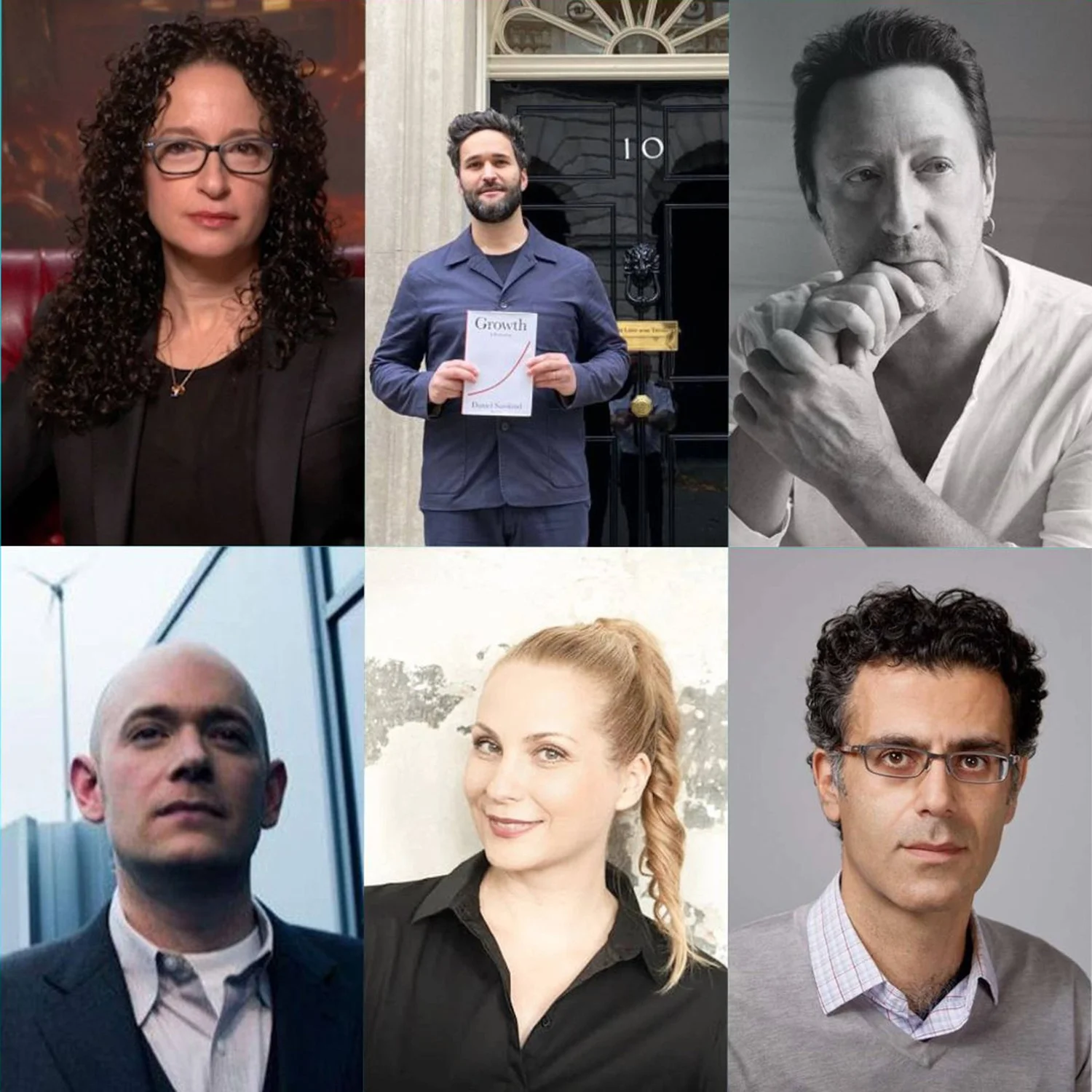
S13 Ep 1066Technology, AI, Art & Culture - Artists, Philosophers, Economists & Scientists discuss the Future
How can we shape technology’s impact on society? How do social media algorithms influence our democratic processes and personal well-being? Can AI truly emulate human creativity? And how will its pursuit of perfection change the art we create?Daniel Susskind (Economist · Oxford & King’s College London · Author of Growth: A Reckoning · A World Without Work) shares insights on the nature of growth driven by technological progress. He contends that while technology can accelerate growth, its impacts can be consciously directed to reduce environmental damage and social inequalities. According to Susskind, the current trajectory of technological progress needs reevaluation to mitigate potential adverse effects on future working lives.Arash Abizadeh (Professor of Political Science · McGill University Author of Hobbes and the Two Faces of Ethics · Associate Editor · Free & Equal) explores the ethical tensions between democratic needs and commercial imperatives of social media platforms. He highlights how algorithms designed to maximize engagement often foster outrage and fear, contrasting these commercial objectives with the requirements for a healthy democratic public sphere.Debora Cahn (Creator & Executive Producer of Netflix’s The Diplomat starring Keri Russell & Rufus Sewell · Exec. Producer Homeland · Grey’s Anatomy · Vinyl · Co-Producer The West Wing) toggles between apprehension and optimism about emerging technologies like AI. She reflects on her father's experience with nuclear technology and ponders the unpredictable impacts of AI, drawing parallels with the unforeseen transformation of the internet.Julia F. Christensen (Neuroscientist - Author of The Pathway To Flow: The New Science of Harnessing Creativity to Heal and Unwind the Body & Mind) examines the rise of AI and its influence on aesthetics in the arts. She argues that technology drives creators towards superficial beauty conforming to popular standards, thereby cluttering the mind and fostering an obsession with perfection fueled by dopamine signals.Julian Lennon (Singer-songwriter · Documentary Filmmaker · Founder of The White Feather Foundation Photographer/Author of Life’s Fragile Moments) discusses AI's potential in the medical field, highlighting recent advancements that are paving the way for novel treatments and cures. While acknowledging the importance of copyright issues, he remains optimistic about AI’s positive impact on healthcare.Brian David Johnson (Author of The Future You: How to Create the Life You Always Wanted · Director of the Arizona State University’s Threatcasting Lab Futurist in Residence · ASU’s Center for Science & the Imagination) emphasizes the importance of maintaining a human-centric approach to technology. He questions the purpose behind technological advancements, urging developers to always consider the human impact and clarify their objectives.To hear more from each guest, listen to their full interviews.Episode Websitewww.creativeprocess.info/podInstagram:@creativeprocesspodcast

S13 Ep 1064The Art of Writing w/ Neil Gaiman, Ada Limón, Jericho Brown, E.J. Koh, Marge Piercy & Max Stossel
trailerThis episode explores the enduring power of storytelling to shape our world and illuminate the human experience. Writers Neil Gaiman, Ada Limón, Jericho Brown, E.J. Koh, Marge Piercy, and Max Stossel discuss creativity, resilience, and the power of words to heal and bring people together.Neil Gaiman (Writer, Producer, Showrunner · The Sandman, American Gods, Good Omens, Coraline) explores the secret lives of writers, reflecting on the masks they wear in the pursuit of truth and beauty.Jericho Brown (Pulitzer Prize-winning Poet: The Tradition · Editor of How We Do It: Black Writers on Craft, Practice, and Skill) shares “Foreday in the Morning”, highlighting the hard work and resilience in Black America. He examines the vernacular of his poetry and how it intertwines themes of race, nationality, and familial love.Ada Limón (U.S. Poet Laureate · The Hurting Kind, The Carrying) presents an "apocalyptic love poem" that questions the intersection of despair and hope in today's changing world. She reflects deeply on the personal and universal struggles of finding beauty amidst environmental and existential crises.Marge Piercy (Award-winning Novelist, Poet & Activist) delves into the emotional weight of words and memories, the terror of child separation, and the impending doom facing our world due to environmental destruction and political negligence.E.J. Koh (Award-Winning Memoirist & Poet · The Magical Language of Others · A Lesser Love) recounts a haunting family history from Jeju Island in Korea, emphasizing the lasting impacts of trauma and the collective memory of ancestral sufferings.Max Stossel (Award-winning Poet, Filmmaker, Speaker, Creator of Words That Move) uses the metaphor of a boxing ring to discuss the complexities of human conflict and connection, encouraging a shift from adversarial relationships to collaborative problem-solving.To hear more from each guest, listen to their full interviews.Episode Websitewww.creativeprocess.info/podInstagram:@creativeprocesspodcast

THE DIPLOMAT with DEBORA CAHN - Emmy-winning Showrunner, Exec. Producer - The West Wing, Homeland
What are the unseen challenges faced by diplomats, and what role do they play in maintaining global order? How do TV shows influence our understanding of real-world politics? How do women navigate power, and what does it take for them to lead in politics?Debora Cahn is the Emmy-nominated showrunner and executive producer ofNetflix’s The Diplomat, a political thriller series starring Keri Russell and Rufus Sewell. She’s worked with television’s leading showrunners, including Shonda Rhymes, Terence Winter, Steven Levinson, and Howard Gordon. Her career began working on Aaron Sorkin’s The West Wing which has led to projects such as the hit Showtime series Homeland, ABC’s long-running medical drama Grey’s Anatomy, and HBO’s Vinyl, which was co-created by Martin Scorsese. She’s the winner of two Writers Guild of America Awards for The West Wing and FX’s limited series Fosse/Verdon and the 2023 Quincy Award for Responsible Statecraft.“The question of who's good and who's bad is always front of mind for me because my basic goal is to get to the place where no one is good or bad; everybody is in an unspeakably complicated situation. From the very beginning of the series, this event happens. We believe that it was perpetrated by Iran. Fairly quickly, we learn through the relationships that have been built over time between our heroes, Kate and Hal, and people in other countries that they’ve negotiated with that the assumptions we're making are completely incorrect. In fact, the people we assume have some sort of malintent toward us are being falsely accused. Someone else is playing on the stereotypes we have of those people in order to send us off in the wrong direction.I feel very fortunate that the medium I’m in is television, which is a very long form of storytelling. You're not telling a single story; you're telling a world. You're inviting people into a world and asking them to live there with you and these characters for a period of time. The best I can do is build a world where people grapple with these important questions and try their best. All I can expect from people and from myself is that we're trying to do something larger than ourselves.”www.creativeprocess.infoIG www.instagram.com/creativeprocesspodcastimage credit: Netflix

Women, Politics & The Art of Diplomacy w/ DEBORA CAHN - Creator of Netflix’s THE DIPLOMAT starring Keri Russell
“The question of who's good and who's bad is always front of mind for me because my basic goal is to get to the place where no one is good or bad; everybody is in an unspeakably complicated situation. From the very beginning of the series, this event happens. We believe that it was perpetrated by Iran. Fairly quickly, we learn through the relationships that have been built over time between our heroes, Kate and Hal, and people in other countries that they’ve negotiated with that the assumptions we're making are completely incorrect. In fact, the people we assume have some sort of malintent toward us are being falsely accused. Someone else is playing on the stereotypes we have of those people in order to send us off in the wrong direction.I feel very fortunate that the medium I’m in is television, which is a very long form of storytelling. You're not telling a single story; you're telling a world. You're inviting people into a world and asking them to live there with you and these characters for a period of time. The best I can do is build a world where people grapple with these important questions and try their best. All I can expect from people and from myself is that we're trying to do something larger than ourselves.”Debora Cahn is the Emmy-nominated showrunner and executive producer ofNetflix’s The Diplomat, a political thriller series starring Keri Russell and Rufus Sewell. She’s worked with television’s leading showrunners, including Shonda Rhymes, Terence Winter, Steven Levinson, and Howard Gordon. Her career began working on Aaron Sorkin’s The West Wing which has led to projects such as the hit Showtime series Homeland, ABC’s long-running medical drama Grey’s Anatomy, and HBO’s Vinyl, which was co-created by Martin Scorsese. She’s the winner of two Writers Guild of America Awards for The West Wing and FX’s limited series Fosse/Verdon and the 2023 Quincy Award for Responsible Statecraft.www.creativeprocess.infoIG www.instagram.com/creativeprocesspodcastimage credit: Alex Bailey / Netflix

JULIAN LENNON on Art, Empathy & Creativity - Highlights
“I think a lot of joy comes from helping others. One of the things that I've been really focusing on is finding that balance in life, what’s real and what’s true and what makes you happy. How can you help other people feel the same and have a happier life? I think whatever that takes. So if that's charity, if that's photography, if that's documentary, if that's music, and I can do it, then I'm going to do it.From traveling, especially in Ethiopia, Kenya, and even South America, we just see these scenarios and situations where they don't have enough support or finances. Anything I’m involved in, a good percentage goes to The White Feather Foundation. From what I witnessed, I just wanted to be able to help. My best teacher ever was Mum because I watched her live through life with dignity, grace, respect, and empathy. To me, those are some of the key things that are most important in living life. I think you have to love everybody and yourself. Respect is a real key issue, not only for people but for this world that we live in, Mother Earth. It's of key importance that we honor and respect this beautiful little blue ball that we live on.”Julian Lennon is a Grammy-nominated singer-songwriter, photographer, documentary filmmaker, and NYTimes bestselling author of the Touch the Earth children’s book trilogy. This autumn, Whispers – A Julian Lennon Retrospective is being presented at Le Stanze della Fotografia, culminating in the publication of Life’s Fragile Moments, his first photography book. It features a compilation of images that span over two decades of Lennon's unique life, career, adventures, and philanthropy. He founded The White Feather Foundation in 2007, whose key initiatives are education, health, conservation, and the protection of indigenous cultures. He was the executive producer of Kiss the Ground and other environmental documentaries and was named a Peace Laureate by UNESCO in 2020.www.creativeprocess.infowww.oneplanetpodcast.orgIG www.instagram.com/creativeprocesspodcastPhoto credit: © 2024, Julian Lennon. All rights reserved.Life’s Fragile Moments, published by teNeues, www.teneues.com, August 2024. 27,5 x 34 cm |10 5/6 x 13 3/8 in., 240 pages, Hardcover, approx. 200 color photographs, texts English & German ISBN: 978-3-96171-614-2
Life’s Fragile Moments with JULIAN LENNON - Photographer, Musician, Documentary Filmmaker
What is the power of photography? How do images and songs bookmark our lives, reminding us of what we care about, who we love, and what it means to be alive?Julian Lennon is a Grammy-nominated singer-songwriter, photographer, documentary filmmaker, and NYTimes bestselling author of the Touch the Earth children’s book trilogy. This autumn, Whispers – A Julian Lennon Retrospective is being presented at Le Stanze della Fotografia, culminating in the publication of Life’s Fragile Moments, his first photography book. It features a compilation of images that span over two decades of Lennon's unique life, career, adventures, and philanthropy. He founded The White Feather Foundation in 2007, whose key initiatives are education, health, conservation, and the protection of indigenous cultures. He was the executive producer of Kiss the Ground and other environmental documentaries and was named a Peace Laureate by UNESCO in 2020.“I think a lot of joy comes from helping others. One of the things that I've been really focusing on is finding that balance in life, what’s real and what’s true and what makes you happy. How can you help other people feel the same and have a happier life? I think whatever that takes. So if that's charity, if that's photography, if that's documentary, if that's music, and I can do it, then I'm going to do it.From traveling, especially in Ethiopia, Kenya, and even South America, we just see these scenarios and situations where they don't have enough support or finances. Anything I’m involved in, a good percentage goes to The White Feather Foundation. From what I witnessed, I just wanted to be able to help. My best teacher ever was Mum because I watched her live through life with dignity, grace, respect, and empathy. To me, those are some of the key things that are most important in living life. I think you have to love everybody and yourself. Respect is a real key issue, not only for people but for this world that we live in, Mother Earth. It's of key importance that we honor and respect this beautiful little blue ball that we live on.”www.creativeprocess.infowww.oneplanetpodcast.orgIG www.instagram.com/creativeprocesspodcastPhoto credit: © 2021 Marilyn Clark

Connecting with the Earth: Changemakers, Scientists, Writers & Educators on Regenerating Earth’s Ecosystems
How and when will we transition to a clean energy future? How have wetlands become both crucial carbon sinks and colossal methane emitters in a warming world? What lessons can we learn from non-human animals about living in greater harmony with nature?Richard Black (Author of The Future of Energy · Fmr. BBC Environment Correspondent · Director of Policy & Strategy · Global Clean Energy Thinktank · Ember) addresses the substantial economic impact of fossil fuel subsidies, noting that the actual costs, when including climate change damages, reach up to six or seven trillion dollars annually, overshadowing the relatively small climate finance provided by Western governments.Euan Nisbet (Earth Systems Scientist · Royal Holloway University of London) explores the role of methane in the atmosphere, its historical importance in maintaining the planet’s temperature, and its current contribution to global warming. He explains the sources of methane, including natural processes and human activities, and discusses recent trends and challenges tied to rising methane levels.Julie Pierce (Vice President of Strategy & Planning · Minnesota Power) highlights her company's significant strides in sustainability. She outlines Minnesota Power's decade-long journey towards decarbonization, noting that they have transitioned from a 95% fossil-based portfolio to sourcing 50-60% of their energy from clean sources, including wind, solar, and hydropower.Arash Abizadeh (Professor of Political Science · McGill University Author ofHobbes and the Two Faces of Ethics · Associate Editor · Free & Equal) reflects on the future we are leaving for the next generations. He underscores the social and political challenges of ensuring that the technologies and resources needed to adapt to climate change are distributed equitably across all societies.Daniel Susskind(Economist · Oxford & King’s College London · Author of Growth: A Reckoning · A World Without Work) discusses the critical role of technological progress in driving economic growth. He advocates for a shift toward technologies that not only enhance prosperity but also protect the environment and promote social equity.Ian Robertson(Author of How Confidence Works: The New Science of Self-belief · Co-Director of the Global Brain Health Institute · Co-Leader of The BrainHealth Project) calls for young people to connect with nature and develop mastery over their minds. He envisions a future where individuals can access the joy of being conscious, embodied beings in a healthy, natural world.Ingrid Newkirk(Founder & President of PETA · People for the Ethical Treatment of Animals) emphasizes the shared traits between humans and other animals, advocating for a compassionate approach to all living beings. She urges listeners to recognize the personhood in animals and to treat them with respect and empathy.This episode brings together diverse voices discussing critical environmental and ethical issues. From the economic burden of fossil fuel subsidies to the equitable distribution of climate adaptation resources, the importance of technological progress, and the need for the ethical treatment of animals.To hear more from each guest, listen to their full interviews.www.creativeprocess.infowww.oneplanetpodcast.orgIG www.instagram.com/creativeprocesspodcast

Harnessing Creativity to Heal & Unwind the Body & Mind w/ DR. JULIA CHRISTENSEN - Highlights
"The state of being in flow and seeking out that state, sort of disappearing from the here and now... it must have been something that has been part of human cultures for many millennia. We know that, for example, dancing can bring you into these states. And we know from many anthropological works that people dance themselves into trance, a type of flow. So, there is that flow in this scientific sense of a state of well-being. And we will speak about what that does to our brain and our broader wellbeing, but also the flow in what cues enter into our senses. So that would be a scientific field that looks at brain synchrony, physiology synchrony, these waves that we see that sort of connect with us.”Dr. Julia F. Christensen is a Danish neuroscientist and former dancer currently working as a senior scientist at the Max Planck Institute for Empirical Aesthetics in Germany. She studied psychology, human evolution, and neuroscience in France, Spain and the UK. For her postdoctoral training, she worked in international, interdisciplinary research labs at University College London, City, University London and the Warburg Institute, London and was awarded a postdoctoral Newton International Fellowship by the British Academy. Her new book The Pathway to Flow is about the science of flow, why our brain needs it and how to create the right habits in our brain to get it.https://www.linkedin.com/in/dr-julia-f-christensen-36539a144https://www.instagram.com/dr.julia.f.christensen?igsh=cHZkODgxczJqZmxlwww.creativeprocess.infowww.oneplanetpodcast.orgIG www.instagram.com/creativeprocesspodcast

The Pathway to Flow with Neuroscientist, Fmr. Dancer DR. JULIA CHRISTENSEN
How can we unlock a state of flow in our daily lives? How does connecting with nature influence our mental and physical well-being? How do movement, dance and play help us feel more creative, connected, and content?Dr. Julia F. Christensen is a Danish neuroscientist and former dancer currently working as a senior scientist at the Max Planck Institute for Empirical Aesthetics in Germany. She studied psychology, human evolution, and neuroscience in France, Spain and the UK. For her postdoctoral training, she worked in international, interdisciplinary research labs at University College London, City, University London and the Warburg Institute, London and was awarded a postdoctoral Newton International Fellowship by the British Academy. Her new book The Pathway to Flow is about the science of flow, why our brain needs it and how to create the right habits in our brain to get it."The state of being in flow and seeking out that state, sort of disappearing from the here and now... it must have been something that has been part of human cultures for many millennia. We know that, for example, dancing can bring you into these states. And we know from many anthropological works that people dance themselves into trance, a type of flow. So, there is that flow in this scientific sense of a state of well-being. And we will speak about what that does to our brain and our broader wellbeing, but also the flow in what cues enter into our senses. So that would be a scientific field that looks at brain synchrony, physiology synchrony, these waves that we see that sort of connect with us.”https://www.linkedin.com/in/dr-julia-f-christensen-36539a144https://www.instagram.com/dr.julia.f.christensen?igsh=cHZkODgxczJqZmxlwww.creativeprocess.infowww.oneplanetpodcast.orgIG www.instagram.com/creativeprocesspodcastPhoto credit: Hans Scherhaufer
What Does It Mean to Live a Good Life? Artists, Writers, Visionaries & Educators Share their Stories
What does it mean to live a good life? How can the arts help us learn to speak the language of the Earth and cultivate our intuitive intelligence? What is the power of mentorship for forging character and creative vision? How can we hold onto our cultural heritage and traditions, while preparing students for the needs of the 21st century?Alan Poul (Emmy & Golden Globe-winning Executive Producer · Director · Six Feet Under · Tales of the City · Tokyo Vice · My So-Called Life) shares his personal journey and the importance of mentorship in shaping one's creative path. He discusses his experiences with influential figures such as Stephen Sondheim, Paul Schrader, and Robert Wilson, emphasizing the value of learning from those you admire.Rupert Sheldrake (Biologist · Author of The Science Delusion · The Presence of the Past · Ways to Go Beyond and Why They Work) explores the significance of cultural and religious traditions in education. He argues that knowing the open questions in science, integrating arts, and learning by heart are crucial for a well-rounded education.Jericho Brown (Pulitzer Prize-winning Poet · Director of Creative Writing Program at Emory University · Author of The Tradition · The New Testament) emphasizes the power and agency that young writers have to create change. He encourages persistence and the importance of trying, despite the fear of failure.Sy Montgomery (Naturalist · Author of The Soul of an Octopus · The Hawk’s Way · Of Time and Turtles: Mending the World, Shell by Shattered Shell) reflects on how animals have been her mentors and teachers. From her Scottish Terrier, Molly, to wild emus in Australia, she shares how her interactions with animals have guided her career and life choices.Manuela Lucá-Dazio (Exec. Director of the Pritzker Architecture Prize · Fmr. Exec. Director of Venice Biennale · Dept. of Visual Arts & Architecture) discusses the necessity of reconnecting with cultural heritage and expanding educational tools. She advocates for a more imaginative approach to integrating different fields of knowledge and teaching methods.Jeffrey D. Sachs (Economist · President of UN Sustainable Development Solutions Network · Director of Center for Sustainable Development · Columbia University) highlights the global consensus on Sustainable Development Goals (SDGs) and the critical importance of education. He specifically advocates for SDG 4, which focuses on inclusive and equitable quality education for all.Todd B. Kashdan (Psychologist · APA Award-winning Author of The Art of Insubordination: How to Dissent and Defy Effectively · Curious? · The Upside of Your Dark Side · Leading Authority on Well-being, Curiosity, Courage & Resilience) analyzes the shortcomings of the current education system. He stresses the need to teach critical thinking and develop superior information-gathering strategies.Tiokasin Ghosthorse (Founder · Host · Exec. Director of First Voices Radio · Founder of Akantu Intelligence · Master Musician of the Ancient Lakota Flute) offers a unique perspective on our connection to the Earth. He delves into Indigenous wisdom about living in harmony with nature, our ancestors, and recognizing the timeless energy around us.Erland Cooper (Songwriter · Producer · Multi-instrumentalist · Composer of Folded Landscapes) reminisces about his upbringing surrounded by nature and traditional folk music. He shares how these elements have influenced his work and creative process.Peter Singer (Philosopher · Author of Animal Liberation · Founder of The Life You Can Save) examines the core philosophical questions about living a good life. He discusses the principles of Effective Altruism and the importance of using our resources wisely to make the world a better place.To hear more from each guest, listen to their full interviews.www.creativeprocess.infowww.oneplanetpodcast.orgIG www.instagram.com/creativeprocesspodcast
Navigating Our Environmental Future From Climate Crisis to Urban Revolution
Have we entered what Earth scientists call a “termination event,” and what can we do to avoid the worst outcomes? How can we look beyond GDP and develop new metrics that balance growth with human flourishing and environmental well-being? How can the 15-minute city model revolutionize urban living, enhance health, and reduce our carbon footprint?Euan Nisbet (Earth Systems Scientist - Royal Holloway University of London) analyzes historical patterns that point to a potential termination event and emphasizes the urgency of addressing abrupt climate changes.Daniel Susskind (Economist - Oxford & King’s College London - Author of Growth: A Reckoning - A World Without Work) discusses the economic trade-offs involved in pursuing net-zero emissions and the growing public discontent with the costs.Carlos Moreno (Originator of the 15-Minute City concept - Author of The 15-Minute City: A Solution to Saving Our Time & Our Planet) explores how the 15-minute city model can enhance urban living, promote local commerce, and reduce our carbon footprint.Richard Black (Author of The Future of Energy - Former BBC Environment Correspondent - Director of Policy & Strategy - Global Clean Energy Thinktank - Ember) explains the future energy landscape, critiques the contributions of oil and gas companies to the clean energy transition, and emphasizes the need for a realistic clean energy transition.Carissa Carter (Academic Director at Stanford's d.school - Co-author of Assembling Tomorrow: A Guide to Designing a Thriving Future) highlights the importance of people critically interpreting climate data and understanding its emotional impact.Gordon Lambert (World Economic Forum Global Council - Energy and Sustainability - Former Member of Alberta’s Climate Change Advisory Panel) shares his personal reflections on the harmony of nature and the necessity of aligning business strategies with renewable energy goals.Dr. Ben Shofty (Functional Neurosurgeon - Professor - University of Utah) discusses the health benefits of exposure to nature and its positive impact on well-being and creativity.Julia F. Christensen (Neuroscientist - Author of The Pathway To Flow: The New Science of Harnessing Creativity to Heal and Unwind the Body & Mind) explores the neuroscience behind human interaction with nature and its restorative effects on the brain.The episode examines critical issues surrounding climate change, economic growth, and urban development. Euan Nisbet highlighted the urgency of addressing abrupt climate changes, while Daniel Susskind shed light on the economic complexities of achieving net-zero emissions. Carlos Moreno presented the revolutionary concept of the 15-minute city, and Richard Black emphasized the need for a realistic clean energy transition. Carissa Carter underscored the importance of understanding and visualizing climate data, while Gordon Lambert, Dr. Julia F. Christensen, and Dr. Ben Shofty provided personal and scientific insights into the benefits of integrating nature into our lives. These conversations give us a deeper look into the challenges and potential solutions for creating a sustainable future.To hear more from each guest, listen to their full interviews.www.creativeprocess.infowww.oneplanetpodcast.orgIG www.instagram.com/creativeprocesspodcast

Democracy & Economic Inequality w/ Philosopher ARASH ABIZADEH - Highlights
“There is a tremendous tension between healthy democracy and deep economic inequalities. I don't think that, in the long run, democracies can survive in a healthy way unless we address the problem of economic inequalities. If we have individuals who are living day to day, on the one hand, and we have other individuals who are billionaires in our societies, on the other hand, it will be very difficult for us to have a genuine democracy.”Arash Abizadeh is the R.B. Angus Professor of Political Science at McGill University. His research has focused on democratic theory, including topics such as immigration and border control. Abizadeh also specializes in 17th and 18th century philosophy and has recently published the book Hobbes and the Two Faces of Ethics. He is currently working on a book about social and political power and is the Associate Editor of Free & Equal: a Journal of Ethics and Public Affairs.https://abizadeh.wixsite.com/arashwww.cambridge.org/core/books/hobbes-and-the-two-faces-of-ethics/B565348CE9B53945F4F962784A5842C2https://freeandequaljournal.orgwww.creativeprocess.infowww.oneplanetpodcast.orgIG www.instagram.com/creativeprocesspodcast