
Books & Writers • The Creative Process: Novelists, Screenwriters, Playwrights, Poets, Non-fiction Writers & Journalists Talk Writing, Life & Creativity
321 episodes — Page 2 of 7

S15 Ep 1173Finding Humanity Through Storytelling with Author & Filmmaker ETGAR KERET
“When I write my stories, I don't want to solve things in life. I just want to persuade myself that there is a way out. Maybe I am in a cell, maybe I'm trapped. Maybe I won't make it, but if I can imagine a plan for escape, then I'll be less trapped because at least in my mind, there is a way. I think that my parents are survivors. They always talked about this idea of humanity. My parents always said to me, when you look at people, don't look at their political views; that's not important. Look at the way that they look at you. If they see you, if they listen to you, if they can understand your intention, even if it's a failing one, they're your people. And if they can't, it doesn't matter.I think that when I came with my mother and father, they thought there are people, there are human beings, and there are people who want to be human beings but are still struggling. And you go with humanity; you go with the person who can go against his ideology if his heart tells him something.”Etgar Keret is one of the most inventive and celebrated short story writers of his generation, a voice that captures the absurdities and profound loneliness of modern life with a deceptive, almost casual wit. His work, translated into dozens of languages, uses fantastical premises—from alien visitations to parallel universes—to illuminate the most human of truths. His new collection, Autocorrect, explores a world grappling with technology, loss, and the aftershocks of a global pandemic and, more recently, war. His awards include the Cannes Film Festival’s Caméra d’Or (2007), the Charles Bronfman Prize (2016), and the prestigious Sapir Prize (2018). Over a hundred short films and several feature films have been based on his stories. Keret teaches creative writing at Ben-Gurion University of the Negev. He now has a weekly newsletter on Substack called Alphabet Soup. He's also the new MFA Director of the Jewish Theological Seminary, where he's pioneering a new approach to storytelling. Joining me today from Tel Aviv is the great Israeli writer and filmmaker Etgar Keret.Episode Websitewww.creativeprocess.info/podInstagram:@creativeprocesspodcast

S15 Ep 1172Arabic Literature, Palestine & The Art of Translation with HUDA FAKHREDDINE
“I'm Lebanese. I grew up in Lebanon during the Civil War, and I came to the United States as a graduate student with the intention of going back. I never wanted to stay here. I really thought that my life would happen in Beirut, in a city that I loved and hated in the healthiest of ways. My investments, both literary and intellectual, were rooted there. I came here as a graduate student and joined the PhD program, and then the events continued to unfold there, making life more and more of a risk, building a life in a place like Lebanon. The most important counterpoint in my life was meeting my partner, Ahmad Almallah, who is Palestinian. So immediately, my life became the life of a Palestinian by association.Of course, the past two years—almost two years—have been surreal. I sometimes don't believe that we're going through what we're going through because, as security concerns have become something we think about at home, when we walk from home to campus or my office, I'm constantly anxious to open my mail because often there are things that will require a lot of energy, time, emotion, and are emotionally taxing. There’s a lot of rage now in many aspects of my life, but all that aside, my personal experience—both professional and personal, and at home, familial—are not exceptional. Many other people are experiencing intimidation, silencing, and feeling cornered, censored, and oppressed just because they took a stand—a very decent, normal, basic human stand against genocide.”In this episode on Speaking Out of Place podcast Professor David Palumbo-Liu talks with Huda Fakhreddine, writer, translator, and scholar of Arabic literature. Among the many topics they touch upon are the challenges of teaching Arabic literature, especially Palestinian literature, in a time of genocide, when universities, professional organizations, and political groups militate against any honest discussion of these topics, and punish those who do. They talk about the notion of belonging and the importance of being able to choose what to belong to, and what not to. Huda speaks of the freedom found in living in Arabic, and explains what that means to her. She also reads in Arabic and English Nima Hasan’s stunning and wrenchingly beautiful poem, “Old Song.”Huda J. Fakhreddine is a writer, translator, and Associate Professor of Arabic Literature at the University of Pennsylvania. She is the author of Metapoesis in the Arabic Tradition (Brill, 2015) and The Arabic Prose Poem: Poetic Theory and Practice (Edinburgh University Press, 2021), and the co-editor of The Routledge Handbook of Arabic Poetry (Routledge, 2023). Among her translations are The Sky That Denied Me: Selections from Jawdat Fakhreddine (University of Texas Press, 2020), The Universe, All at Once: Selections from Salim Barakat (Seagull Books, 2024), and Palestinian: Four Poems by Ibrahim Nasrallah (World Poetry Books, 2024). Her creative work includes a book of creative non-fiction titled Zaman saghīr taḥt shams thāniya (A Brief Time under a Different Sun), Dar al-Nahda, Beirut, 2019 and the forthcoming Wa min thamma al-ālam (And then the World), Manshūrāt Marfa’, Beirut, 2025. Her translations of Arabic poems have appeared in Protean, Lithub, Words Without Borders, Nimrod, ArabLit Quarterly, Asymptote, and Middle Eastern Literatures, among many others. She is co-editor of Middle Eastern Literatures and section editor of the Encyclopedia of Islam.www.palumbo-liu.comhttps://speakingoutofplace.comBluesky @palumboliu.bsky.socialInstagram @speaking_out_of_place

What's Left: Three Paths Through the Planetary Crisis with MALCOLM HARRIS
“One day, I woke up with this concept of oil being tied up in our lives in ways that we don't talk about. It’s sort of a value-theoretical approach to climate change and the climate crisis. Something that's impersonal and goes to the root of our entire social metabolic structure.”In this episode of the Speaking Out of Place podcast, Professor David Palumbo-Liuwelcomes Malcolm Harris back to the show. Previously, he talked with us about his mammoth study, Palo Alto: A History of California, Capitalism, and the World. This time, we are looking not at a history of Capitalism and the World, but our possible futures under the threat of catastrophic climate change. We talk about not only failed policies, but failed perspectives on society, politics, and culture, and focus on a deadly form of Value that has led us to the abyss precisely because it has emanated from a basic rift between humans and the world. It is a rift that Capital has always both fed and exploited, but will end up exhausting a finite resource—the Planet. We talk about what is needed to heal this, what we are up against, and his latest book, What's Left: Three Paths Through the Planetary Crisis.Malcolm Harris is the author of the national bestseller Palo Alto: A History of California, Capitalism, and the World, a finalist for the Los Angeles Times Book Prize; Kids These Days: The Making of Millennials; and Shit is Fucked Up and Bullshit: History Since the End of History. He was born in Santa Cruz, CA and graduated from the University of Maryland.www.palumbo-liu.comhttps://speakingoutofplace.comBluesky @palumboliu.bsky.socialInstagram @speaking_out_of_place

S15 Ep 1170The Poetics & Pedagogy of Toni Cade Bambara, June Jordan, Audre Lorde &Adrienne Rich in the Era of Free College w/ DANICA SAVONICK
“As I was reading Hooks and Freire, a colleague recommended Adrian Rich's essay "Teaching Language in Open Admissions." It was in that essay that I first read about her experiences teaching at CUNY during open admissions, learning that she taught alongside June Jordan, Audre Lorde, and Toni Cade Bambara. Eventually, that essay led me to their archival teaching materials. I was really excited because I found in those materials concrete teaching methods, things they were doing in their own classrooms that I then started trying in my classrooms as well. I also really liked their educational philosophies, thinking about what it means for college to be free and the fact that they were teaching during this revolutionary era. What would that look like today? What would it mean? What could free college bring to our society? What does free college make possible? All of those things coming together led me to the project.”In this episode of the Speaking Out of Place podcast, Professor David Palumbo-Liu talks with Danica Savonick about her marvelous book entitled Open Admissions: The Poetics and Pedagogy of Toni Cade Bambara, June Jordan, Audre Lorde, and Adrienne Rich in the Era of Free College. This is a riveting and deeply inspiring story of how each of these luminaries in the fields of literature and feminism found their way into the City University of New York in the 1960s, when community activists had forced open what was called the Harvard for the proletariat to admit new classes of Black, brown, and other people of color. Savonick shows through copious archival research how Bambara, Jordan, Lorde, and Rich each came to find radical teaching methods in collaboration with these new students, and how their experiences with this new pedagogy affected their creative and other writing in profound and lasting ways. This is a critical history we can and must learn from today, when federal and state governments have added to the damage and violence done by the neoliberal university. We find exactly the tools and models we need to create spaces for education for liberation both within, but also outside, the Academy.Danica Savonick is an Associate Professor of English at SUNY Cortland. Her current project focuses on the radical writers and artists who taught at the experimental Livingston College (part of Rutgers University) in the 1970s. Her research has appeared in MELUS, American Literature, Modern Fiction Studies, Radical Teacher, Keywords for Digital Pedagogy in the Humanities, Public Books, and The Chronicle of Higher Ed.https://speakingoutofplace.comBluesky @palumboliu.bsky.socialInstagram @speaking_out_of_place

Hayek’s Bastards: Race, Gold, IQ & the Capitalism of the Far Right with QUINN SLOBODIAN
“The origin was really trying to make sense of that 2016-2017 moment and to ask whether the alt-right was, as we were being told, a return to the 1930s, a kind of awakening of the sleeping beast of white supremacy armed in the streets in the United States. There are many explanations, but I decided to take this kind of curious route in with the distorted readings and reinterpretations of the works of people like Ludwig von Mises and Friedrich Hayek. As a scholar of comparative literature, I wanted to write a revision based on Crack-Up Capitalism.”In this episode of the Speaking Out of Place podcast, Professor David Palumbo-Liu talks with Quinn Slobodian about his new book, Hayek’s Bastards: Race, Gold, IQ, and the Capitalism of the Far Right. He takes a deep dive into the genesis of a weird and powerful merging of two seemingly different groups the Far Right and neoliberals. Slobodian writes, “as repellent as their politics may be these radical thinkers are not barbarians the gates of neoliberalism but the bastard offspring of that line of thought itself.” They talk about how this meshing is driven by a primitive desire to ward off egalitarianism, difference, democracy, and government that services the common good. The wide-ranging talk ends with addressing DOGE, Trump's tariffs, and yes, the Jeffrey Epstein case.Quinn Slobodian is a professor of international history at the Frederick S. Pardee School of Global Studies at Boston University. His books, which have been translated into ten languages, include Globalists: The End of Empire and the Birth of Neoliberalism, Crack-Up Capitalism: Market Radicals and the Dream of a World without Democracy, and Hayek’s Bastards: Race, Gold, IQ and the Capitalism of the Far Right . A Guggenheim Fellow for 2025-6, he has been an associate fellow at Chatham House and held residential fellowships at Harvard University and Free University Berlin. Project Syndicate put him on a list of 30 Forward Thinkers and Prospect UK named him one of the World’s 25 Top Thinkers.https://speakingoutofplace.comBluesky @palumboliu.bsky.socialInstagram @speaking_out_of_place
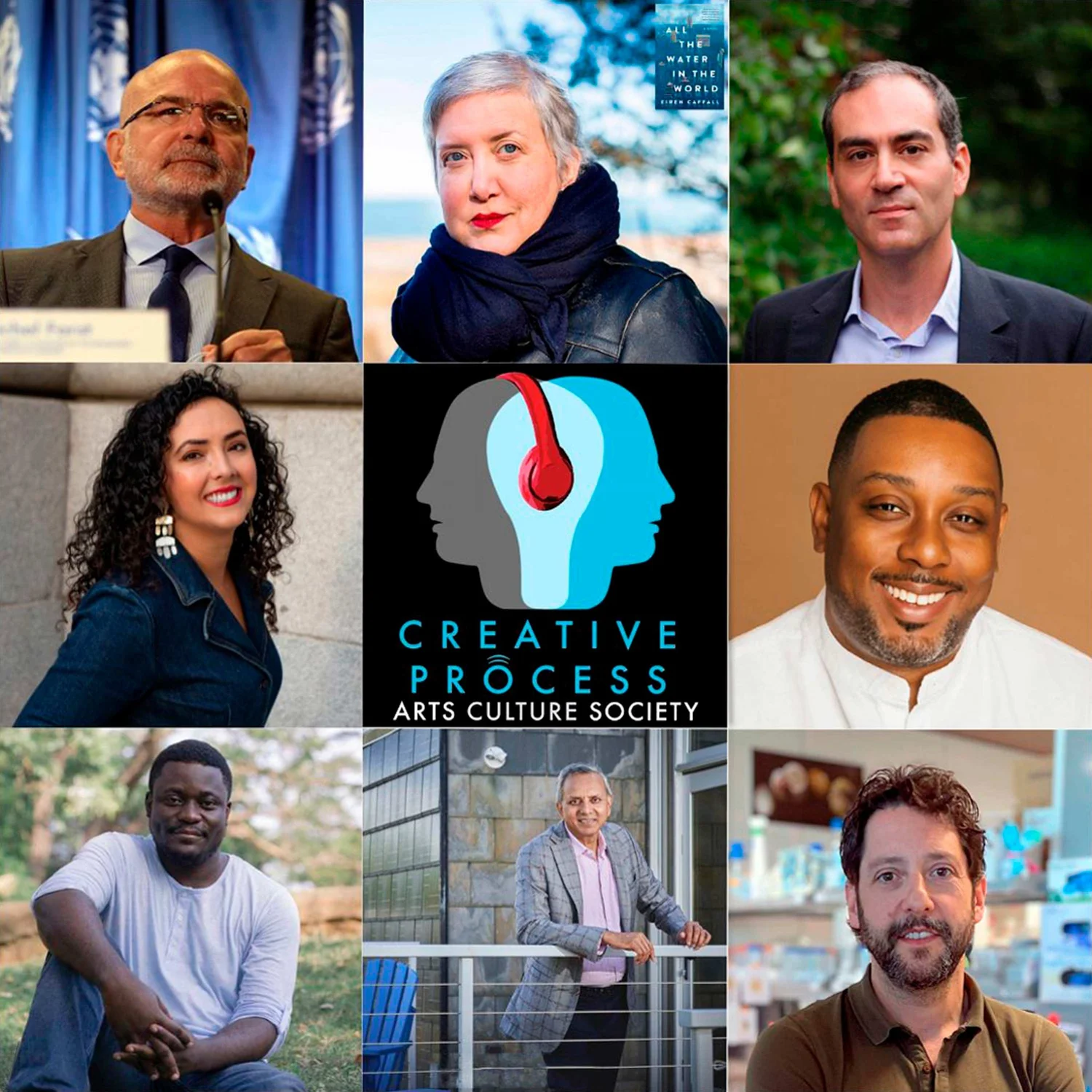
S15 Ep 1168What Do We Do with the One Life We’re Given? - Scientists, Writers, Philosophers & Changemakers Share their Stories
In this time of rapid technological change, how do we hold onto our humanity? How do stories, traditions, and community help us find meaning in loss and face an uncertain future? How can science, art, and spirituality open new pathways to understanding ourselves and the human experience?PAUL SHRIVASTAVA (Co-President of The Club of Rome) discusses the need for a holistic, eco-civilizational future, emphasizing that science, technology, and economics are important but not the whole picture. He urges us to design our own lives and livelihoods to meet diverse ecological futures, and later highlights the importance of embodied, emotional, and spiritual learning as essential to evolving human consciousness in a technologically dominated world.BAYO AKOMOLAFE (Philosopher, Psychologist, Writer & Founder of the Emergence Network) shares a deeply personal story about the loss of his father, describing how it forced him to mature quickly and become the breadwinner for his family. He reflects on the lessons learned from his children, especially his autistic son, who teaches him about grace, possibility, and futurity.MICHEL FORST (Human Rights Advocate & the UN Special Rapporteur on Environmental Defenders) explores how theology and meditation serve as ongoing sources of inspiration, shaping his values and career choices in human rights advocacy.DR. GUY LESCHZINER(Neurologist & Author of The Nocturnal Brain, The Man Who Tasted Words & other books; Consultant Neurologist & Professor at King's College London) analyzes the concept of free will, suggesting that much of what we do is influenced by factors beyond our control. He also discusses the importance of striving to make the world better, the role of sleep and dreams in memory and emotional processing, and the changing nature of mentorship and education.EIREN CAFFALL (Musician & Author of All the Water in the World) highlights the importance of preserving knowledge and human history, imagining how future generations might rebuild society after catastrophe by holding onto stories, traditions, and the hope of repair.DR. FERNANDO GARCÍA-MORENO (Neuroscientist, Ikerbasque Research Associate at the Achucarro Basque Centre for Neuroscience) explains that while our brains have not changed biologically for thousands of years, cultural evolution has accelerated. He emphasizes the unique human roles of generating and transmitting knowledge across generations.NATASHA HAKIMI ZAPATA (Journalist, Author of Another World Is Possible: Lessons for America From Around the Globe) shares her inspiration from the generosity and hope she encounters in others, and describes how connecting with nature—especially bodies of water—reinforces the importance of conservation policies that integrate human communities into ecosystems.IRVIN WEATHERSBY JR. (Author of In Open Contempt) reflects on the influence of his church upbringing and family, especially his grandmother, on his writing and creative expression. He discusses the impact of music, particularly hip hop, and the importance of lyricism and cultural heritage in shaping his literary voice.To hear more from each guest, listen to their full interviews.Episode Websitewww.creativeprocess.info/podInstagram:@creativeprocesspodcast

S15 Ep 1166Every Monument Will Fall - DAN HICKS Explores Remembering & Forgetting
“I work in between archeology and anthropology in this field called either historical archeology or contemporary archeology. At the heart of that is the relationship between objects and humans. How do we write about the past or the present in terms of listening to human voices or evidence from things where maybe human voices have been erased or haven't left as much of a mark on the written records as others? Wrapped up with that, though, is always the risk of dehumanization, of the treatment of human lives as if the boundary between a subject and an object is one that is permeable, not in a sort of positive way, but in a more sinister way. There is a long history of people being treated as things.”In this episode of Speaking Out of Place podcast Professor David Palumbo-Liu talks with Dan Hicks about the present’s responsibility to itself. How do not only monuments, but also the very idea of monumentality, serve to mystify and perpetuate beliefs that maintain social orders that deserve to be strenuously re-evaluated? Archaeologist and anthropologist Dan Hicks traces the development of a particularly virulent strain of monument-worship, that which emerges out of what he calls “militarist realism,” which harnesses technologies of war, particularly colonial, white supremacist war, to build institutions, disciplines, museums in its image in order to permanently maintain a border between those deemed human subjects and the object-worlds of the non-human—which includes racial others. Rather than grant the past immunity, Hicks argues that we need to decide for ourselves what we chose to remember, and what deserves to be forgotten.Dan Hicks is Professor of Contemporary Archaeology at Oxford University, Curator at the Pitt Rivers Museum, and a Fellow of St Cross College. He has written widely on art, heritage, museums, colonialism, and the material culture of the recent past and the near-present. Dan's books include The Brutish Museums: the Benin Bronzes, colonial violence and cultural restitution (Pluto 2020) and Every Monument Will Fall: a story of remembering and forgetting (Hutchinson Heinemann 2025). Bluesky/Insta: @ProfDanHicks www.palumbo-liu.comhttps://speakingoutofplace.comBluesky @palumboliu.bsky.socialInstagram @speaking_out_of_place
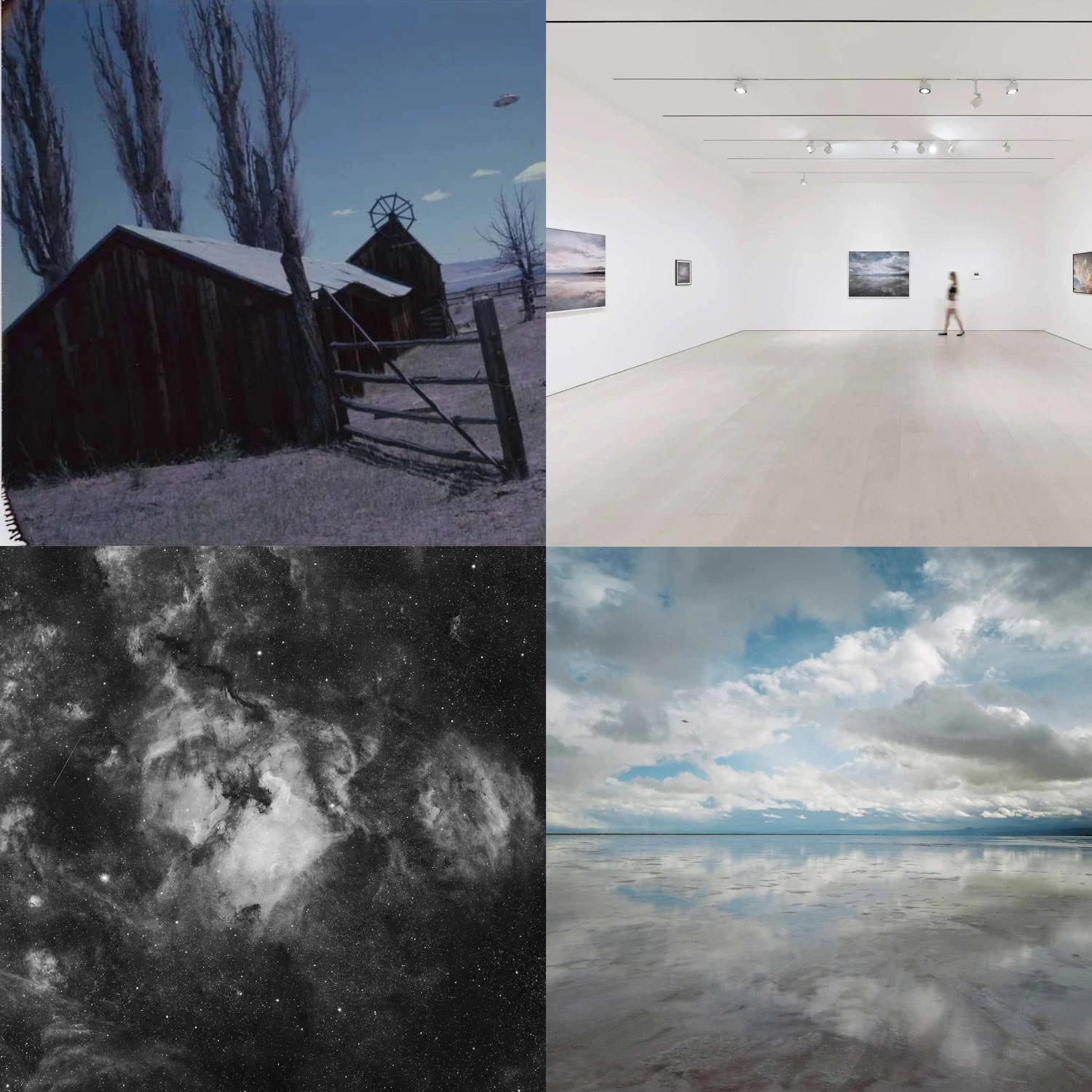
S15 Ep 1163AI, UFOs, Perception & Reality with Artist, Geographer, Author TREVOR PAGLEN - Highlights
“If we look at the entire history of the human experience, if you saw some text or you heard some spoken language, you could 100 percent reliably infer that there was a human who created that. Our experience of having that text or that image generated for us is very akin to the experience of a magic trick, and we sort of pre-subconsciously want to attribute some kind of intelligence to what's going on on the other side.At the core of the work is that sense of curiosity, that sense of joy, that sense of beauty, and that sense of learning. I've been fortunate to have all kinds of strange and interesting experiences, whether that's seeing weird things in the sky over secret military bases in the middle of the Nevada desert, going scuba diving and finding internet cables on the bottom of the ocean, or tracking spy satellites in the sky and being able to predict when they'll appear in a flash against the backdrop of stars. The world around us is extraordinary and embodied, right? It is not on screens, and I’m very privileged to have that be so much a part of my process.”Trevor Paglen is an artist whose work makes the invisible visible, whether he's photographing secret government sites from miles away or revealing the hidden infrastructures of mass surveillance. He's a geographer by training, and he combines investigative journalism with his art practice to explore the hidden power structures of our time, including military technology and artificial intelligence. His work has been exhibited in major museums around the world, and he's also an award-winning author. His exhibitions, like 'The Black Sites' and 'Limit Tele-photography,’ have earned him critical acclaim, including a MacArthur Fellowship. He's recently opened a new exhibition at Pace Gallery in New York called Cardinals (Jun 26–Aug 15) which delves into the intriguing connections between UFO sightings, AI, and the spread of disinformation.Episode Websitewww.creativeprocess.info/podInstagram:@creativeprocesspodcast

S15 Ep 1162How AI is Shaping Perception w/ Artist TREVOR PAGLEN, Author of Trevor Paglen: Adversarially Evolved Hallucinations
“There's a word for this brain rot, right? I think that's very real. There are studies coming out now that are showing that the more and more of our cognitive labor we offload to AI systems, the less creative we become, the less critical we become, and the less of our human faculties for reason we use. There's something sad about that, but there’s also something dangerous about it because that leaves us very open to being manipulated. The surveillance capitalism kind of economy of extracting data from every possible moment of everyday life in order to extract value. The sensor systems that we're surrounded with are not simply passive devices that are recording us; they are increasingly becoming active sculptors of our experience of reality. Playing dirty.If we look at the entire history of the human experience, if you saw some text or you heard some spoken language, you could 100 percent reliably infer that there was a human who created that. Our experience of having that text or that image generated for us is very akin to the experience of a magic trick, and we sort of pre-subconsciously want to attribute some kind of intelligence to what's going on on the other side.I’m trying to think about these other media strategies, whether that's UFO photography, psychological operations, magic, or neuroscience, and take them seriously as contributing factors to the changing visual culture. With the collection at Pace Gallery, (New York, Jun 26–Aug 15) it was really just to put those images together and show them. They’re all photographed on film. A lot of them are photographed on instant film. They’re not images that are made with AI; they're not images that are photoshopped. What I really wanted to get at was thinking about the ways in which what we see in an image is very often what we're predisposed to see. I am playing with these mechanics of perception and proposing that as a way of thinking about images now.At the core of the work is that sense of curiosity, that sense of joy, that sense of beauty, and that sense of learning. I've been fortunate to have all kinds of strange and interesting experiences, whether that's seeing weird things in the sky over secret military bases in the middle of the Nevada desert, going scuba diving and finding internet cables on the bottom of the ocean, or tracking spy satellites in the sky and being able to predict when they'll appear in a flash against the backdrop of stars. The world around us is extraordinary and embodied, right? It is not on screens, and I’m very privileged to have that be so much a part of my process.”Trevor Paglen is an artist whose work makes the invisible visible, whether he's photographing secret government sites from miles away or revealing the hidden infrastructures of mass surveillance. He's a geographer by training, and he combines investigative journalism with his art practice to explore the hidden power structures of our time, including military technology and artificial intelligence. His work has been exhibited in major museums around the world, and he's also an award-winning author. His exhibitions, like 'The Black Sites' and 'Limit Tele-photography,’ have earned him critical acclaim, including a MacArthur Fellowship. He's recently opened a new exhibition at Pace Gallery in New York called Cardinals, which delves into the intriguing connections between UFO sightings, AI, and the spread of disinformation.Episode Websitewww.creativeprocess.info/podInstagram:@creativeprocesspodcast

S15 Ep 1161Art, Empathy & Resilience with CADY McCLAIN, Actor, Director, Writer, Artist, Musician - Highlights
“I had to become the father of my family very young because my parents divorced when I was 12. My situation was a little bit unusual in that my father kind of disappeared, and I had been making a fair amount of money as a kid, doing commercials and television and film. We needed money, and I kind of became the breadwinner. But I had this amazing world that I had access to, which was the world of the entertainment industry. My mom was supportive of my taking over and saying, "This is, I think, what we need to do." She liked the idea of moving to New York, so we moved to New York when I was 17 with a play that I had gotten. Then she got cancer and became really sick, so I had to take care of her full time. That lasted for about eight years, and then she died when I was 25. That was a rough go. At the same time, I had an amazing other world, and my other world was the world of make-believe and pretend, which I got to participate in on the soaps, with happy families and Christmases, Easters, miracles, love, weddings, and children. The pretend world that I spent a large amount of time in became a great way to balance what was sort of tragic in my real life.”Our guest today is Cady McClain. You probably know her from her long and celebrated career in daytime television. She is a three-time Emmy® Award-winning actress. She plays Pamela Curtis on CBS’ Beyond the Gates, and is the Artistic Director of Axial Theatre, and her directorial work includes the documentary, Seeing is Believing: Women Direct, a fascinating look at the challenges and triumphs of women behind the camera. Her memoir, Murdering My Youth, is an honest and sometimes difficult book about growing up as a child actor in the spotlight. Her work across all these different art forms—acting, directing, writing, art, and music—all seems to be connected by a commitment to telling true stories, no matter how complicated. www.creativeprocess.info/podInstagram:@creativeprocesspodcast
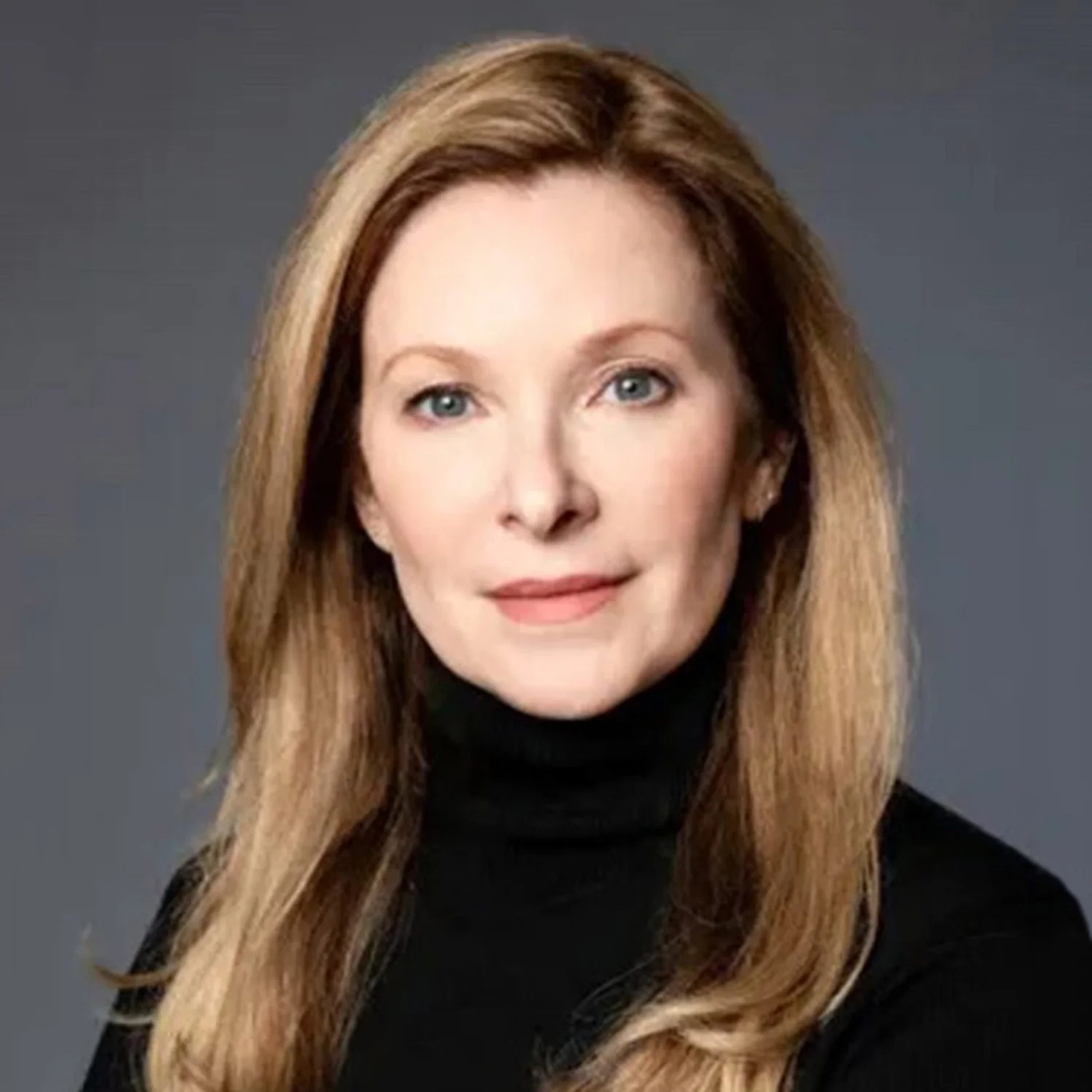
S15 Ep 1160A Life in Acting with Emmy Award-winning Actor, Director, Writer CADY McCLAIN
“I won my first Emmy when I was 21, which was the result of absolutely devoting myself day and night for two years to doing all the scene work. I attended classes simultaneously and did plays until my mother died. I studied with Michael Howard for eight years. Even when I was so tired I couldn't get up to do a scene, he would say, "Get up and do a poem." It helped me enormously; it saved me.The way I was trained and how I train others is that you know when you’re in the zone. Oh God, it feels so good. It feels like flying. And that's what you want. You want to be so unselfaware that you're on liftoff?I had to become the father of my family very young because my parents divorced when I was 12. My situation was a little bit unusual in that my father kind of disappeared, and I had been making a fair amount of money as a kid, doing commercials and television and film. We needed money, and I kind of became the breadwinner. But I had this amazing world that I had access to, which was the world of the entertainment industry. My mom was supportive of my taking over and saying, "This is, I think, what we need to do." She liked the idea of moving to New York, so we moved to New York when I was 17 with a play that I had gotten. Then she got cancer and became really sick, so I had to take care of her full time. That lasted for about eight years, and then she died when I was 25. That was a rough go. At the same time, I had an amazing other world, and my other world was the world of make-believe and pretend, which I got to participate in on the soaps, with happy families and Christmases, Easters, miracles, love, weddings, and children. The pretend world that I spent a large amount of time in became a great way to balance what was sort of tragic in my real life.”Our guest today is Cady McClain. You probably know her from her long and celebrated career in daytime television. She is a three-time Emmy® Award-winning actress. She plays Pamela Curtis on CBS’ Beyond the Gates, and is the Artistic Director of Axial Theatre, and her directorial work includes the documentary, Seeing is Believing: Women Direct, a fascinating look at the challenges and triumphs of women behind the camera. Her memoir, Murdering My Youth, is an honest and sometimes difficult book about growing up as a child actor in the spotlight. Her work across all these different art forms—acting, directing, writing, art, and music—all seems to be connected by a commitment to telling true stories, no matter how complicated. Episode Websitewww.creativeprocess.info/podInstagram:@creativeprocesspodcast
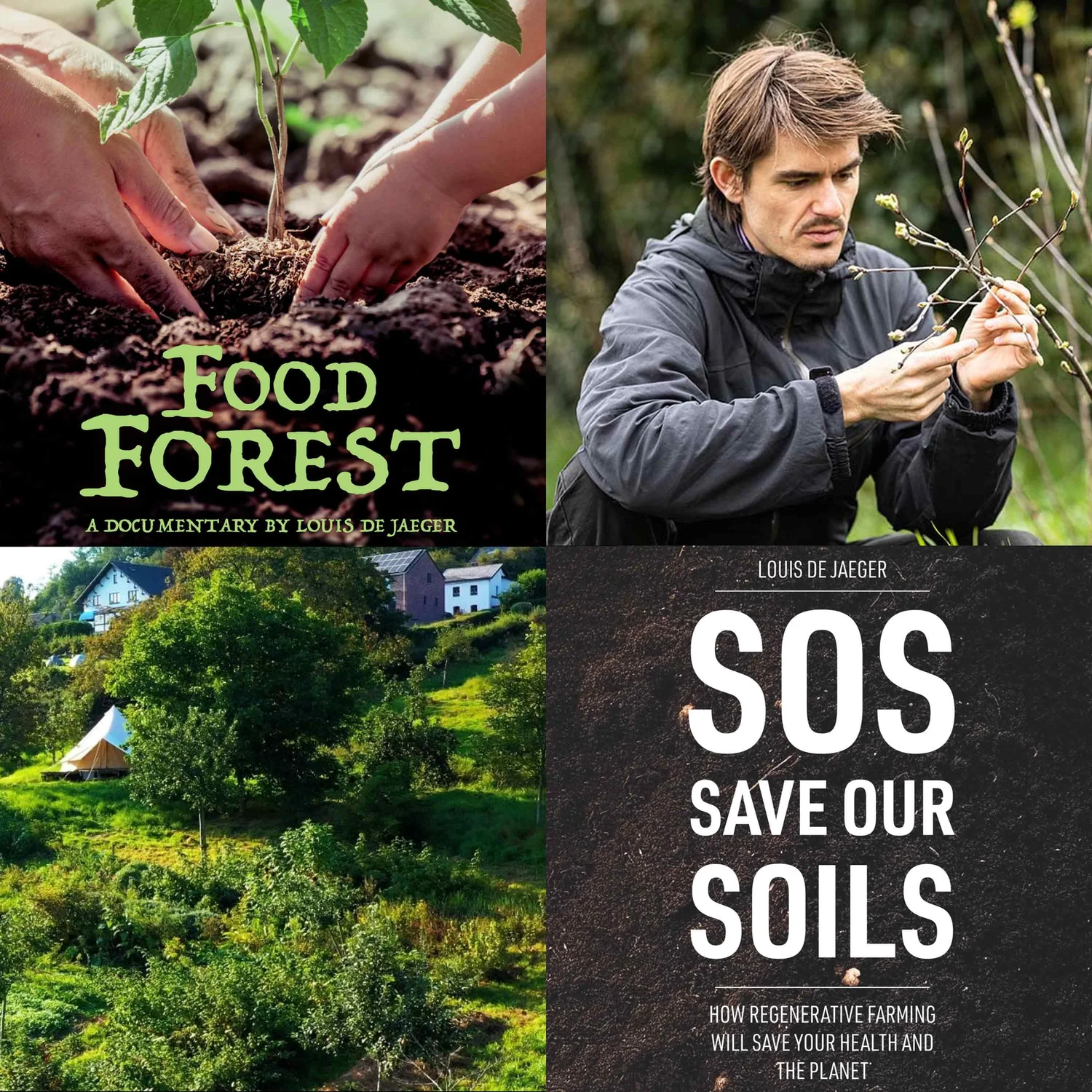
S15 Ep 1157Exploring Organic, Biodynamic & Regenerative Agriculture with LOUIS DE JAEGER - Highlights
“We as humans can destroy things in a couple of years that have taken thousands or even millions of years to form. So in the snap of a finger, we can destroy so much work. That's an observation I’ve seen in all biomes, and it's pretty scary. On the other hand, nature regenerates pretty fast. It heals itself. If humans help this healing process, it can go even faster.”Louis De Jaeger has spent years traveling the world, witnessing firsthand the decline of nature. He is an eco-entrepreneur, a landscape designer, co-founder of the Food Forest Institute, and a leading voice in the regenerative agriculture and food forest movements. He’s founded numerous ventures aimed at creating positive impact and has created over 100 food forest sites around the world. His new book, SOS: Save Our Soils: How regenerative food and farming will save your health and the planet, asks us to consider every meal as a vote for either destruction or regeneration.Episode Websitewww.creativeprocess.info/podInstagram:@creativeprocesspodcast

S15 Ep 1156SOS: Save Our Soils: How regenerative food & farming will save your health & the planet w/ LOUIS DE JAEGER
“The Earth started as one big rock, and soil did not exist. Without soil, you can't really grow trees or any crops whatsoever. We are depleting soils super fast, and it is predicted that in less than 25 years, 90% of our soils will be degraded. We as humans, we can destroy things in a couple of years that have taken thousands or even millions of years to form. On the other hand, nature regenerates pretty fast. It heals itself. If humans help this healing process, it can go even faster.”Louis De Jaeger has spent years traveling the world, witnessing firsthand the decline of nature. He is an eco-entrepreneur, a landscape designer, co-founder of the Food Forest Institute, and a leading voice in the regenerative agriculture and food forest movements. He’s founded numerous ventures aimed at creating positive impact and has created over 100 food forest sites around the world. His new book, SOS: Save Our Soils: How regenerative food and farming will save your health and the planet, asks us to consider every meal as a vote for either destruction or regeneration.Episode Websitewww.creativeprocess.info/podInstagram:@creativeprocesspodcast

S15 Ep 1155Abolish Silicon Valley—How to Liberate Technology from Capitalism
“Abolishing Silicon Valley means freeing the development of technology from a system that will always relegate it to a subordinate role, that of entrenching existing power relations. It means designing a new system that isn't deluged in the logic of the bucket. It means liberating our worlds from the illegitimate ring of capital. Perhaps this sounds unfair to capital. Perhaps I sound like I'm not grateful enough for everything that capital has given us, but we don't owe capital anything; the things we attribute to capital were built by workers.People can labor and sometimes die in a process. Their contributions are unrecognized in death as in life. So don't thank capital. It doesn't deserve our gratitude, and it doesn't need it. Thank the people who created everything that capital always takes credit for. Capital is a means of accounting for wealth ownership, not its creation. And that means it's perpetually shrouded in a fundamental untruth; we can leap the swamp of capital behind and start over with something new. “In this episode on Speaking Out of Place podcast Professor David Palumbo-Liu talks with Wendy Liu. Ever since its publication, Abolish Silicon Valley—How to Liberate Technology from Capitalism has proven to be more urgent and insightful. Today, he talks with author Wendy Liu about how developments like AI and LLM, further erosions of intellectual property, and increased invasions of privacy make the case for abolishing Silicon Valley even more important. They talk about how abolition is critical at a time when more and more the private sector has come to eviscerate the public good. Turning to the genocide in Gaza, they discuss the ways Capital has enlisted technology in deadly and horrific manners. They end with a meditation on the commons and how one can live with fewer commodities and find value in common projects to make life more valuable and worthwhile outside of the logic of the market.Wendy Liu is the author of Abolish Silicon Valley: How to Liberate Technology From Capitalism, a memoir/manifesto about the tech industry from the perspective of a former believer. She lives in San Francisco and is working on a novel.www.palumbo-liu.comhttps://speakingoutofplace.comBluesky @palumboliu.bsky.socialInstagram @speaking_out_of_place

Ten Cases of Hope for Our Future w/ MONICA FERIA-TINTA - Highlights
“I guess the book was about giving hope because I realized how much we could do together. I believe that ordinary people are the ones bringing changes here. I believe that the communities gathering together – for example, I am seeing that in this country around the protection of rivers – are the ones that will mark the change. It's not going to come from above; it's going to come from below, up. We all have a role. Working for the protection of what we love the most will make you happy. So get into a positive mindset. Learn all you can. Be part of things that make you feel positive. You will see how you will find your way, and there is no place for feeling disempowered. This is the moment where you should feel very powerful because it is us who are going to make the future of this Earth.”Monica Feria-Tinta is a British-Peruvian barrister specialising in Public International Law. She has been called one of ‘the most daring, innovative and creative lawyers’ in the United Kingdom, and was shortlisted for “Barrister of the Year” at The Lawyers’ Awards 2020 and at Chambers and Partners UK Bar Awards 2023 for her work in addressing climate change and environmental degradation. In 2020, she acted before the Constitutional Court of Ecuador in Los Cedros case, the first ‘Rights of Nature’ case in the world. In September 2022 her work as Counsel secured a win in the Torres Strait Islanders case, a landmark moment in which the UN Human Rights Committee found a Sovereign state responsible, for the first time in history, for lack of action in addressing climate change. She is the author of A Barrister for the Earth: Ten Cases of Hope for Our Future.Episode Websitewww.creativeprocess.info/podInstagram:@creativeprocesspodcast

S15 Ep 1151The Theory of Water with LEANNE BETASAMOSAKE SIMPSON
“So I think that part of colonialism for Indigenous peoples has been this idea that Indigenous peoples aren't thinking peoples and that we don't have thought on a kind of systemic level. One of the things that I was interested in doing is intervening in that because I think Indigenous people have a lot of beautiful, very intellectual, theoretical contributions to make to the world. A lot of our theory is encoded in story, but a lot of our theory is also encoded in land-based practice. You can't learn about it from reading books or from going to lectures. You have to really be out on the land with elders for long periods of time.”In this episode on Speaking Out of Place podcast Professor David Palumbo-Liu talks with Leanne Betasamosake Simpson about her new book,Theory of Water. Theory of Water is a rich, complex, and deeply personal reflection on world-making and life-giving processes best captured in the fluidity of water as it circulates through all our bodies and the planet. It is a largely collective project that enlists our listening and love, and helps us face the violence of all forms of dominance, enclosure, and containment. We are especially gifted to have the chance to listen to one of the songs from Leanne’s album, Theory of Ice, and have her comment on it and the relation of her music to her writing. This is a particularly special episode of Speaking Out of Place.Leanne Betasamosake Simpson is a Michi Saagiig Nishnaabeg scholar, writer, and musician. She is the author of eight previous books, including the novel Noopiming: A Cure for White Ladies, which was short listed for the Dublin Literary prize and the Governor General’s award for fiction. Leanne’s album, Theory of Ice, released by You’ve Changed Records in 2021 and short-listed for the Polaris Prize and she was the 2021 winner of the Prism Prize’s Willie Dunn Award. Her latest project Theory of Water was published by Knopf Canada/Haymarket books in the spring of 2025. Leanne is a member of Alderville First Nation.https://speakingoutofplace.comBluesky @palumboliu.bsky.socialInstagram @speaking_out_of_place

Bombs Will Never Liberate Iran: PERSIS KARIM & MANIJEH MORADIAN in Conversation
“I think one must frame what happened in Iran recently in the context of what is happening in the larger Middle East, which is that Israel and the United States principally are orchestrating a kind of regional shift in their power that can only be seen in light of what happened, and it continues to happen in Gaza and the wider Palestinian Territories, which is that Israel is, by virtue of signaling an aggressive move towards Iran, suggesting that it will continue unabated to exercise its will throughout the region, and that it also is interested in destroying Iranian support for Palestinian rights in the region.”Today on Speaking Out of Place with David Palumbo-Liu, we have a special episode on Israeli attacks on Iran that resulted in 12 days of bombings and culminated with the US dropping bunker bombs on Iran's nuclear facilities. Scholars and activists Persis Karim and Manijeh Moradian discuss both the Iranian national issues involved as well as the regional context, connecting this war with the genocide in Gaza and Israel’s extensive wars elsewhere. At stake is both Iranian sovereignty and the calls for so-called “regime change.” We question the use of that term, delve into how the struggle for liberation in Iran rejects both the repressive Islamic state and the US/Israeli war machine. Our discussion draws the frightening parallels between Iran’s stifling of dissent and imprisonment of political enemies and others with our own government’s. Finally, we recall the Woman, Life, Freedom movement and build hope for international solidarity with groups working for liberation in Iran, Palestine, and elsewhere, and insist liberation will never be achieved by dropping bombs.Persis Karim is the director emeritus of the Center for Iranian Diaspora Studies and a professor in the Department of Humanities and Comparative and World Literature at San Francisco State University. Since 1999, she has been actively working to expand the field of Iranian Diaspora Studies, beginning with the first anthology of Iranian writing she co-edited, A World Between: Poems, Short Stories and Essays by Iranian-Americans. She is the editor of two other anthologies of Iranian diaspora literature: Let Me Tell You Where I’ve Been: New Writing by Women of the Iranian Diaspora, and Tremors: New Fiction by Iranian-American Writers.Manijeh Moradian is assistant professor of Women’s, Gender and Sexuality Studies at Barnard College, Columbia University. Her book, This Flame Within: Iranian Revolutionaries in the United States, was published by Duke University Press in December 2022.www.palumbo-liu.comhttps://speakingoutofplace.comBluesky @palumboliu.bsky.socialInstagram @speaking_out_of_place
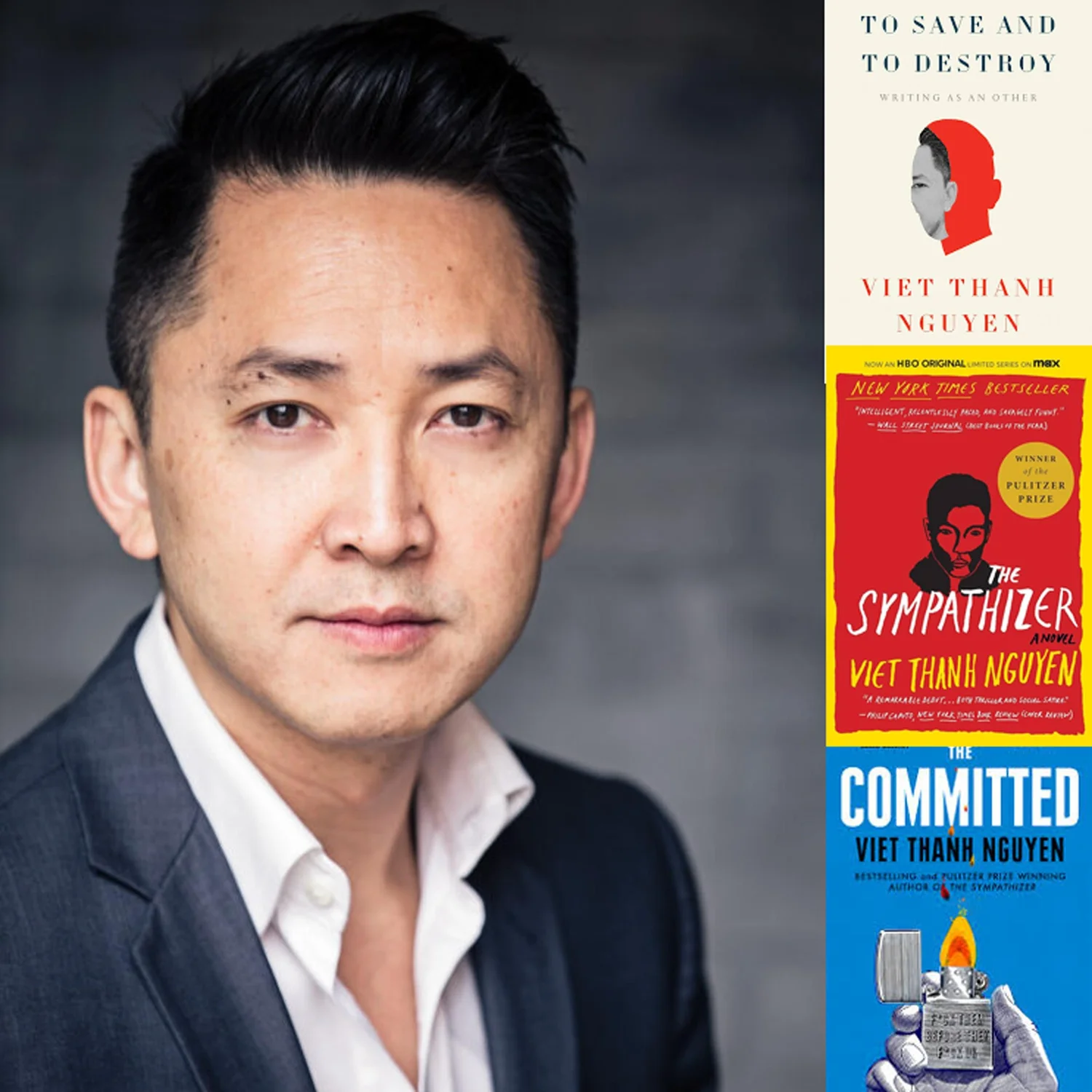
S15 Ep 1150On Writing, America's Forever Wars & Challenging Power with Author VIET THANH NGUYEN
“What I've discovered as a writer is that fear is a good indicator that there is a truth. To speak the truth in a society is oftentimes an act that requires some courage. Those processes of being an other for me in the United States were obviously very fundamental to shaping who I am as a person and as a writer. It was very difficult to undergo, but to become a writer who could talk about those issues was also a lot of fun. Writing The Sympathizer was a lot of fun, and I hope that the novel was enjoyable and humorous to read as well, despite its very serious politics. When I wrote The Committed, I also had a lot of fun as an outsider to France. In writing the novel itself, The Committed, there was a lot of humor, satire, and these kinds of tools to confront the tragedy of othering. This is very important to me as literary and political devices. I think I could do that in both The Sympathizer and The Committed because I had a lot of distance from the time periods that those novels described. My challenge right now is to try to find my sense of humor in describing what the United States is undergoing and doing to other countries, its own immigrants, and its own people of color, and minorities in the present. That's proving to be a little more challenging at this moment.The whole power of the state is geared towards dividing and conquering, whether it's domestically within a state or whether it's exercising power overseas, including things like colonization, which is all about dividing and conquering. In the face of that, to engage in expansive solidarity and capacious grief is to work against the mechanisms of colonialism, militarism, and the state. It's enormously difficult, which is why it has to be rebuilt from every generation, as every generation is subject to the power of the state and its ideologies and mythologies. I think the lessons that I've extracted from this book, To Save and to Destroy, where I talk about expansive solidarity and capacious grief, are lessons that have been learned by other people before me, but lessons that I had to learn for myself and to put into my own words how I came to those lessons.”Viet Thanh Nguyen has spent much of his life exploring the stories we tell—and the stories we erase—about war, migration, and memory. His 2015 debut novel The Sympathizer, about a communist double agent in the aftermath of the Vietnam War, won the Pulitzer Prize and a long list of other major literary awards. In 2024, The Sympathizer was adapted into a critically acclaimed HBO series directed by Park Chan-wook. He followed it with The Committed, and his latest work, To Save and to Destroy: Writing as an Other, a meditation on writing, power, and the politics of representation.Nguyen is also the author of Nothing Ever Dies, a finalist for the National Book Award in nonfiction, and the short story collection The Refugees. He’s edited collections like The Displaced: Refugee Writers on Refugee Lives, and most recently the Library of America volume for Maxine Hong Kingston, who was once his teacher.He was born in Vietnam, came to the U.S. as a refugee, and is now a professor at the University of Southern California. He’s received Guggenheim and MacArthur fellowships, honorary doctorates, and has been named a Chevalier by the French Ministry of Culture. Today, we’ll talk about his books, America’s forever wars, and how the act of writing—across fiction, memoir, and scholarship—can become both a form of resistance and a way of making sense of being, as he puts it in his memoir “A Man of Two Faces.”Episode Websitewww.creativeprocess.info/podInstagram:@creativeprocesspodcast

S15 Ep 1149On Borges, Gore Vidal, Robert Frost & The Writing Life with Author & Filmmaker JAY PARINI
“Poetry is the prince of the literary arts to me. It's at the very top because it's language refined to its apex of memorability. I am interested in poetry as memorability and poetry as something you live by. These are the words you live by. These words stay in your brain and guide your life. That's what I am interested in. My memoir slash autofiction is called Borges and Me, and as you know, it's a story of my time in 1970 when my best friend Billy was drafted for the Vietnam War, and so was I. He went to Vietnam, and I went to Scotland to hide out and do my graduate work. I spent nearly seven years in Scotland, but I certainly spent the next five years definitely in Scotland. I was there before as an undergraduate for a bit, too. During that time, Billy was killed in Vietnam, and I was a nervous wreck. My memoir talks about my depression, my anxieties, and then, through my friend Alastair Reid, I met Borges, the great Argentine writer. We went on a little road trip through the Highlands, and this conversation with Borges really restored me back to myself and what was important in life. I felt that I owed a huge amount to that contact with Borges… I was lucky that suddenly, out of nowhere, came a wonderful director-producer named Mark Turtletaub. He had read my book and loved it, and he approached me. We had a conversation, and he said, ‘Look, I want to make this movie.’ So off we went.”It’s a real pleasure today to welcome a writer whose voice has been a guiding force in American letters for decades. Jay Pariniis the author of acclaimed biographies of literary giants like John Steinbeck, Robert Frost, William Faulkner, and Gore Vidal—as well as an illuminating portrait of Jesus in The Human Face of God. He’s also a celebrated poet, novelist, essayist, and teacher whose work reflects a lifelong devotion to the arts, the humanities, and the power of language to tell the truth, gently. From his poetry to his prose, Jay's writing brings rare insight and deep compassion to the page. He doesn’t just study his subjects—he inhabits them, helps us hear their voices, and see the world through their eyes. And of course, he’s one of the few people who can say they've gotten into the heads of both Jesus and Gore Vidal...and lived to tell the tale.Episode Websitewww.creativeprocess.info/podInstagram:@creativeprocesspodcast

S15 Ep 1149Everything for Everyone: An Oral History of the New York Commune, 2052-2072
In this episode on Speaking Out of Place podcast Professor David Palumbo-Liu talks with M. E. O’Brien and Eman Abdelhadi about their dazzling and challenging book, Everything for Everyone: An Oral History of the New York Commune, 2052 to 2072. They imagine a world haunted by genocide, ecocide, disease, fascism, and viral capitalism, but rather than writing a dystopian novel, O’Brien and Abdelhadi create a complex mosaic of oral histories, in which they each play the part of interviewer. The result is a story that far exceeds New York, and the twenty years noted in the title. The histories cover generations across the globe, and reach into the deep sources of trauma, and the kinds of mutual care we will need to not only survive, but also to thrive in these frightening times.Eman Abdelhadiis an academic, organizer and writer based in Chicago. She is co-author of "Everything for Everyone: An Oral History of the New York Commune, 2052-2072," a revolutionary sci-fi novel published in 2022 with Common Notions Press. She is an assistant professor and sociologist at the University of Chicago, where she researches American Muslim communities, and she is a columnist at In These Times magazine where she writes on the Palestine Liberation movement and American politics. Eman organizes with the Salon Kawakib collective, Faculty and Staff for Justice in Palestine at the University of Chicago, Scholars for Social Justice, and other formations.M. E. O’Brien writes and speaks on gender freedom and capitalism. She has written two books: Family Abolition: Capitalism and the Communizing of Care (Pluto Press, 2023) and a co-authored speculative novel, Everything for Everyone: An Oral History of the New York Commune, 2052–2072 (Common Notions, 2022). She is a member of the editorial collective of Pinko, a magazine of gay communism. Her work on family abolition has been translated into Chinese, German, Greek, French, Spanish, Catalan, and Turkish. Previously, she coordinated the New York City Trans Oral History Project, and worked in HIV and AIDS activism and services. She completed a PhD at NYU, where she wrote on how capitalism shaped New York City LGBTQ social movements. She currently works a psychotherapist in private practice and is a psychoanalyst in formation.www.palumbo-liu.comhttps://speakingoutofplace.comBluesky @palumboliu.bsky.socialInstagram @speaking_out_of_place

S15 Ep 1147A Barrister for the Earth: Ten Cases of Hope for Our Future w/ MONICA FERIA-TINTA
“I like young people to know that they're extremely powerful. So I'm one person, but I think I always had this positive idea about my role. You cannot let anyone tell you what limitations are there, so you shouldn't feel limited by anyone telling you this is as far as you can go, or this is what you can do. I think only you know about that, and I think you start step by step. When I did the first case, I learned some things. Then was the next case. When the time to learn comes, learn with all your might because that's gold. It's a moment in life when you have the time to actually do that. Get informed. People who are into Googling everything should open up their searches, go out there, and learn in a different way. Don't hold back.I guess the book was about giving hope because I realized how much we could do together. If a person can manage to argue and make a major impact in the way we are understanding treaties in human rights or other things, imagine what could be if every single person is in their own place in some field, with that alertness and synced in the same way. I believe that ordinary people are the ones bringing changes here. I believe that the communities gathering together – for example, I am seeing that in this country around the protection of rivers – are the ones that will mark the change. It's not going to come from above; it's going to come from below, up. And that means all of us. We all have a role.To the young people, I would say you have the right to joy, and you have the right to be happy. Working for the protection of what we love the most will make you happy. So get into a positive mindset. Learn all you can. Be part of things that make you feel positive. You will see how you will find your way, and there is no place for feeling disempowered. This is the moment where you should feel very powerful because it is us who are going to make the future of this Earth.”Monica Feria-Tinta is a British-Peruvian barrister specialising in Public International Law. She has been called one of ‘the most daring, innovative and creative lawyers’ in the United Kingdom, and was shortlisted for “Barrister of the Year” at The Lawyers’ Awards 2020 and at Chambers and Partners UK Bar Awards 2023 for her work in addressing climate change and environmental degradation. In 2020, she acted before the Constitutional Court of Ecuador in Los Cedros case, the first ‘Rights of Nature’ case in the world. In September 2022 her work as Counsel secured a win in the Torres Strait Islanders case, a landmark moment in which the UN Human Rights Committee found a Sovereign state responsible, for the first time in history, for lack of action in addressing climate change. She is the author of A Barrister for the Earth: Ten Cases of Hope for Our Future.Episode Websitewww.creativeprocess.info/podInstagram:@creativeprocesspodcast

S15 Ep 1146Constitutional Collapse & the Possibilities of a New Democracy w/ AZIZ RANA
In this episode on Speaking Out of Place podcast Professor David Palumbo-Liu talks with Aziz Rana about his brilliant and bracing article recently published in New Left Review, “Constitutional Collapse.” They talk about how the Trump administration and its enablers are shredding a liberal “compact” which was established in in the 1930s through the Sixties and extending an imperial presidency abroad to an authoritarian one domestically. They discuss the current constitutional crisis, but also the need for, and manifestations of, a politics which is at once a genuine membership organization and social community. As Aziz Rana powerfully argues, “its aim should be to transform the world people organically experience.” This is exactly the analysis and message so many of us need in these dark times.“In the US, we have this idea that exists as a kind of popular cultural sense. The country has basically had the same constitution—a document ratified in the 1780s, and it has really been in effect since then. However, one of the things that's distinctive about the US Constitution is that it is perhaps the hardest in the world to formally amend. It is incredibly difficult to change the actual terms of the text, even during times when we've had pretty profound changes to the language. Here, we can think about the Reconstruction period with the passage of the 13th, 14th, and 15th amendments.”www.palumbo-liu.comhttps://speakingoutofplace.comBluesky @palumboliu.bsky.socialInstagram @speaking_out_of_place

S15 Ep 1145Another World Is Possible: Lessons for America From Around the Globe w/ NATASHA HAKIMI ZAPATA
“ It's a really dangerous time we're living through, and I do think that when we talk about these progressive policies, a huge problem in the US is that we still have a lot of stigma left over from the Cold War that keeps us from really great ideas because they're branded as socialist or communist. And I’ve seen, in the time I've been a journalist for the past 15 years, how that stigma has slowly faded. And you see that younger people are more and more interested in these ideas, whether or not they're considered socialist.”Natasha Hakimi Zapata is an award-winning journalist, translator, and university lecturer based in Europe. She is the author of Another World Is Possible: Lessons for America From Around the Globe. Her articles appear regularly in The Nation, In These Times, and the Los Angeles Review of Books. She is the former foreign editor of Truthdig and has received several Southern California Journalism and National Arts & Entertainment Journalism awards, most recently in 2024 for her work as a foreign correspondent.Episode Websitewww.creativeprocess.info/podInstagram:@creativeprocesspodcast

S15 Ep 1144AI, Universities & Student Surveillance in the Digital Age - LINDSAY WEINBERG & ROBERT OVETZ
In this episode of the Speaking Out of Place podcast, Professor David Palumbo-Liu talks with Lindsay Weinberg and Robert Ovetz about the use of Artificial Intelligence in higher education. Under the guise of “personalizing” education and increasing efficiency, universities are increasingly sold on AI as a cure to their financial ills as public funds dry up and college applications drop. Rather than maintain that education is an essential public good that needs broad support, universities are looking to technology in ways that are changing the nature of education in dangerous and destructive ways. As Lindsay writes in the book, Smart University: “Higher education is becoming increasingly synonymous with digital surveillance in the United States. Advanced network infrastructure, internet- connected devices and sensors, radio frequency identification (RFID), data analytics, and artificial intelligence (AI) are being celebrated as a means of ushering in the age of “smart universities,” one where institutions canrun their services more efficiently and strengthen the quality of higher education using digital tools. However, as this book demonstrates, these tools have a darker side. They allow public universities to respond to and perpetuate corporate logics of austerity, use student data to reduce risk of financial investment in the face of dwindling public resources, and track student behavior to encourage compliance with institutional metrics of success. Surveillance of student behavior forms the foundation of the smart university, often in ways that prove harmful to students— particularly those who are already marginalized within the academy.They talk about these issues and attach them to critical issues of labor—everything from the outsourcing of the most dangerous work to laborers in the Global South, to the way university workers at all levels are subordinated to the logic that drives AI. They end with a discussion of what we can and should do about it.Dr. Lindsay Weinberg is a clinical associate professor in the Honors College at Purdue University, and the Director of the Tech Justice Lab. Her research and teaching are at the intersection of science and technology studies, media studies, and feminist studies, with an emphasis on the social and ethical impacts of digital technology. She is interested in the constitutive role that history and unequal power relations play in shaping the design,Robert Ovetz, Ph.D. is a Senior Lecturer in Political Science and teaches non-profit management and labor relations in the Master of Public Administration program at San José State University. He is the author and editor of four books, including We the Elites (Pluto, 2022), and the forthcoming Rebels for the System: NGOs and Capitalism (2025 Haymarket Press).www.palumbo-liu.comhttps://speakingoutofplace.comBluesky @palumboliu.bsky.socialInsta @speaking_out_of_place

S15 Ep 1143THE DREAM HOTEL with LAILA LALAMI
What happens when the state, with the pretext of protecting public safety, can detain indefinitely certain individuals whose dreams seem to indicate they may be capable of committing a crime? Set in a precarious world where sleep-enhancing devices and algorithms provide the tools and formulae for making one’s unconscious a witness to one’s possible waking life, this novel touches on a myriad of political, philosophical, and moral concerns as they particularly connect to issues of gender, race, ethnicity, privacy, and the security state.In this episode of Speaking Out of Place podcast Professor David Palumbo-Liu talks with award-winning novelist Laila Lalami about her new novel, The Dream Hotel. Laila Lalami is the author of five books, including The Moor’s Account, which won the American Book Award, the Arab-American Book Award, and the Hurston / Wright Legacy Award. It was on the longlist for the Booker Prize and was a finalist for the Pulitzer Prize in Fiction. Her novel The Other Americanswas a national bestseller, won the Joyce Carol Oates Prize, and was a finalist for the National Book Award in Fiction. Her books have been translated into twenty languages. Her essays have appeared in the Los Angeles Times, the Washington Post, The Nation, Harper’s, the Guardian, and the New York Times. She has been awarded fellowships from the British Council, the Fulbright Program, the Guggenheim Foundation, and the Radcliffe Institute at Harvard University. She lives in Los Angeles.www.palumbo-liu.comhttps://speakingoutofplace.comBluesky @palumboliu.bsky.socialInstagram @speaking_out_of_placeEpisode WebsitePhoto credit: Beowulf Sheehan

S15 Ep 1142Examining Monuments, Memory & The History of White Supremacy IRVIN WEATHERSBY JR. - Highlights
“I'm hopeful for revolution. I'm optimistic. I want radical change. I think there's such a disinterest in education in America that it is sickening. I think we are repeating history. We are going through a cycle of fascism and greed, and I think we're going to see a lot of states collapse. As a result of that, I think people are going to be forced back to their primal needs and concerns, but I think they're going to be forced to think about what makes us human. How do we become more human? Because we've lost that. We've given it up to technology. How can we figure out what makes us a really powerful species again?”Irvin Weathersby Jr. is a Brooklyn-based writer and professor from New Orleans. He is the author of In Open Contempt: Confronting White Supremacy in Art and Public Space. His writing has been featured in LitHub, Guernica, Esquire, The Atlantic, EBONY, and elsewhere. He has earned an MFA from The New School, an MA from Morgan State University, and a BA from Morehouse College. He has received fellowships and awards from the Voices of Our Nations Arts Foundation, the Research Foundation of CUNY, the Bread Loaf Writers' Conference, the American Council of Learned Societies, and the Mellon Foundation.Episode Websitewww.creativeprocess.info/podInstagram:@creativeprocesspodcast

S15 Ep 1140In Open Contempt: Confronting White Supremacy in Art & Public Space with IRVIN WEATHERSBY JR.
“One of the biggest symbols of America is Mount Rushmore. This monument, right? But I think most people fail to realize where it's located and why it's located there. Even more importantly, who did it? It's on a sacred Native American mountain, a place that was central to their creation stories. But then you think about who did it, and it was a Klansman. The guy who sculpted Mount Rushmore was a Klansman. People were like, "Wait, really?" Like, how is that a thing? But it seeps into our understanding and our embrace of white supremacy. This whole notion of us using Mount Rushmore as a metric of excellence is really sad. We are honoring slave owners and people who viciously killed natives, and those who pillage other lands in the name of capitalism. That's what America is, I guess.I think there's such a disinterest in education in America that it is sickening. We can't even agree on facts. It's up to states' rights to decide. Really? States can say that this is true in one state, but it's not true in another? Although these states are united, it's very bizarre. I'm hopeful for revolution. I'm optimistic. I want radical change. I think we are repeating history. We are going through a cycle of fascism and greed, and I think we're going to see a lot of states collapse. As a result of that, I think people are going to be forced back to their primal needs and concerns, but I think they're going to be forced to think about what makes us human. How do we become more human? Because we've lost that. We've given it up to technology. How can we figure out what makes us a really powerful species again?”Irvin Weathersby Jr. is a Brooklyn-based writer and professor from New Orleans. He is the author of In Open Contempt: Confronting White Supremacy in Art and Public Space. His writing has been featured in LitHub, Guernica, Esquire, The Atlantic, EBONY, and elsewhere. He has earned an MFA from The New School, an MA from Morgan State University, and a BA from Morehouse College. He has received fellowships and awards from the Voices of Our Nations Arts Foundation, the Research Foundation of CUNY, the Bread Loaf Writers' Conference, the American Council of Learned Societies, and the Mellon Foundation.Episode Websitewww.creativeprocess.info/podInstagram:@creativeprocesspodcast

S15 Ep 1139An Actor Prepares - SHARON LAWRENCE on Crafting Complex Characters - Highlights
“I would encourage you, as I do if you're an actor, to know your own equipment, know your own psychology, and use the great teachers that are synthesized in my favorite teacher's book, Moss, who I studied with later. There is a book called Intent to Live that distills down Uta Hagen, Stella Adler, Bobby Lewis, and Stanislavski. The great teachers at the Group Theatre believed that the method needed to be altered to be constructive rather than destructive to artists.David Milch's mind is so singular because he uses language in a way that defines character. That's what all good writers do: use language to get to the heart of something. He would use malapropisms to make up words, and Milch loved playing with that. As someone who played the love interest of such a unique character as Andy Sipowicz, I found it fascinating.Through Sylvia and David Milch's understanding, his wife humanized him. Sipowicz was portrayed as an addict, a very flawed human who had many addictions. David Milch is now suffering from Alzheimer's, so we won't get his words again. However, the words that he has to offer are timeless because he studied Robert Penn Warren and had many mentors throughout his vast literary education. That is key. I love speaking Noël Coward’s words. As a bon vivant, he wrote musically, to charm us and amuse us. So going and reading Noël Coward is important for actors to learn those cadences and the musicality of a certain era. Of course, Shakespeare comes to mind. I also think of the female playwrights who delight me now, whether it's Caryl Churchill. She has that singular mind and plays with gender so well, challenging gender norms. Seeing ‘Cloud Nine’ when I was in college blew my mind open because men were playing women and women were playing men. Of course, Shakespeare was doing it too, but her work felt more intimate; it was in a small theater. That’s another thing I encourage actors and audiences to do: go see things in small theaters. See it up close because that will excite you and help you learn the craft.”Sharon Lawrence is an acclaimed actress best known for her Emmy-nominated, SAG Award-winning role as ADA Sylvia Costas on NYPD Blue. She has delivered memorable performances in Desperate Housewives, Monk, Law & Order: SVU, Criminal Minds, Shameless, and Queen Sugar. On stage, she’s earned praise for roles in The Shot (a one-woman play about the owner/publisher of the Washington Post, Katharine Graham), Orson’s Shadow, and A Song at Twilight. Shestarred in Broadway revivals of Cabaret, Chicago, and Fiddler on the Roof. Her recent work includes the neo-Western series Joe Pickett, opposite Michael Dorman, and the films Solace with Anthony Hopkins and The Bridge Partner. Lawrence is also a dedicated advocate, serving on the boards of the SAG-AFTRA Foundation, WeForShe, and Heal the Bay, and is a former Chair of the Women In Film Foundation.Episode Websitewww.creativeprocess.info/podInstagram@sharonelawrence@creativeprocesspodcast

S15 Ep 1138SHARON LAWRENCE on Acting, Activism & The Art of Transformation
E“That transformation was key to my next step as an artist, to knowing that's what acting is. It isn't just posing; it isn't just being a version of yourself in a way that was free. Performing wasn't just performing; it was transforming. I think that artists find that in many different ways, and as actors, there are many ways into that.I would encourage you, as I do if you're an actor, to know your own equipment, know your own psychology, and use the great teachers that are synthesized in my favorite teacher's book, Moss, who I studied with later. There is a book called Intent to Live that distills down Uta Hagen, Stella Adler, Bobby Lewis, and Stanislavski. The great teachers at the Group Theatre believed that the method needed to be altered to be constructive rather than destructive to artists.David Milch's mind is so singular because he uses language in a way that defines character. That's what all good writers do: use language to get to the heart of something. He would use malapropisms to make up words, and Milch loved playing with that. As someone who played the love interest of such a unique character as Andy Sipowicz, I found it fascinating.Through Sylvia and David Milch's understanding, his wife humanized him. Sipowicz was portrayed as an addict, a very flawed human who had many addictions. David Milch is now suffering from Alzheimer's, so we won't get his words again. However, the words that he has to offer are timeless because he studied Robert Penn Warren and had many mentors throughout his vast literary education. That is key. I love speaking Noël Coward’s words. As a bon vivant, he wrote musically, to charm us and amuse us. So going and reading Noël Coward is important for actors to learn those cadences and the musicality of a certain era. Of course, Shakespeare comes to mind. I also think of the female playwrights who delight me now, whether it's Caryl Churchill. She has that singular mind and plays with gender so well, challenging gender norms. Seeing ‘Cloud Nine’ when I was in college blew my mind open because men were playing women and women were playing men. Of course, Shakespeare was doing it too, but her work felt more intimate; it was in a small theater. That’s another thing I encourage actors and audiences to do: go see things in small theaters. See it up close because that will excite you and help you learn the craft.”Sharon Lawrence is an acclaimed actress best known for her Emmy-nominated, SAG Award-winning role as ADA Sylvia Costas on NYPD Blue. She has delivered memorable performances in Desperate Housewives, Monk, Law & Order: SVU, Criminal Minds, Shameless, and Queen Sugar. On stage, she’s earned praise for roles in The Shot (a one-woman play about the owner/publisher of the Washington Post, Katharine Graham), Orson’s Shadow, and A Song at Twilight. Shestarred in Broadway revivals of Cabaret, Chicago, and Fiddler on the Roof. Her recent work includes the neo-Western series Joe Pickett, opposite Michael Dorman, and the films Solace with Anthony Hopkins and The Bridge Partner. Lawrence is also a dedicated advocate, serving on the boards of the SAG-AFTRA Foundation, WeForShe, and Heal the Bay, and is a former Chair of the Women In Film Foundation.Episode Websitewww.creativeprocess.info/podInstagram@sharonelawrence@creativeprocesspodcast

S14 Ep 1137Childhood, Creativity & the Stories that Define Who We Are with MEGAN ABBOTT - Highlights
“I think that it all goes back to childhood. I’ve always really been writing about family. I suppose we always are. I do think that it is the original wound, and it's where we are kind of wired and built from those early years. So I think every other relationship just replicates that. It's very natural for me to go there, I suppose because the feelings are most intense there. We just keep recycling these relationships and dynamics over and over again—until maybe someday we can catch ourselves and try to break the bad patterns. It feels the most visceral and real to me, always. You're always looking for that in writing. You want everything to be at this peak intensity, or at least I do. That seems the most natural place to start.I've thought about that a lot while writing the book. We really are in the age of the grifter, as they keep saying. In some ways, it's the most deeply American type, the hustler of American aspiration. And money, I think that was hovering in my head when I wrote the book. How women persuade and convince one another of things feels particularly complex to me. I think there are so many layers to female relationships. That was really interesting to me to pursue because, in some ways, it's much more veiled and complex. So I tend to write about groups of women a lot, regardless of the field, but particularly the way they communicate or don't communicate, or communicate without words to one another, is an ongoing fascination of mine.”Megan Abbott is the Edgar award-winning author of twelve crime novels, including Beware the Woman, You Will Know Me, Give Me Your Hand, and the New York Times bestseller The Turnout, the winner of the Los Angeles Times Book Prize. She received her Ph.D. in English and American literature from New York University, and her writing has appeared in the New York Times, the Guardian, the Paris Review and the Wall Street Journal. Dare Me, the series she adapted from her own novel, now streaming on Netflix. Her latest novel, El Dorado Drive, is available June 24, 2025.Episode Websitewww.creativeprocess.info/podInstagram:@creativeprocesspodcast

S14 Ep 1136Exploring Family Dynamics & Fierce Female Friendships with Novelist MEGAN ABBOTT
“I always say to young writers, you need to put your heart on the page. Don't worry about being like anyone else. I would say that foremost, in any of the arts, it is self-expression at its core. I don't buy rules or a set criteria or a static criteria. I don't believe in any of that. I think the most exciting talents are kind of inexplicable. You can't really understand why that art works. It just does, and that feels like it comes from a very pure place.I think that it all goes back to childhood. I’ve always really been writing about family. I suppose we always are. I do think that it is the original wound, and it's where we are kind of wired and built from those early years. So I think every other relationship just replicates that. It's very natural for me to go there, I suppose because the feelings are most intense there. We just keep recycling these relationships and dynamics over and over again—until maybe someday we can catch ourselves and try to break the bad patterns. It feels the most visceral and real to me, always. You're always looking for that in writing. You want everything to be at this peak intensity, or at least I do. That seems the most natural place to start.”Megan Abbott is the Edgar award-winning author of twelve crime novels, including Beware the Woman, You Will Know Me, Give Me Your Hand, and the New York Times bestseller The Turnout, the winner of the Los Angeles Times Book Prize. She received her Ph.D. in English and American literature from New York University, and her writing has appeared in the New York Times, the Guardian, the Paris Review and the Wall Street Journal. Dare Me, the series she adapted from her own novel, now streaming on Netflix. Her latest novel, El Dorado Drive, is available June 24, 2025.Episode Websitewww.creativeprocess.info/podInstagram:@creativeprocesspodcast

S14 Ep 1135"We're connected to the lives of every creature on the planet" EIREN CAFFALL - Highlights
“The more that you have that evolving relationship with the natural world, that's dynamic and alive to the moment you're in, and that's not afraid of the feelings of fear, hopelessness, grief, or pain that attend paying close attention to the world as it is evolving around you, the better we are able to be flexible in the relationship we need to form with fixing what we can and holding onto what we have. The more we rely on that black-and-white thinking of either being in grief or being out of it, where we have a loss and we have to move on, or we don't and we're fine. The more that happens, the more difficult it is to flow into what we really need in terms of emotional flexibility to get through the staggering changes that are starting to happen regarding climate issues.”Eiren Caffall is a writer and musician. Her work on loss, oceans, and extinction has appeared in Orion,Guernica, The LA Review of Books, Al Jazeera, and the anthology Elementals. She has received a 2023 Whiting Creative Nonfiction Grant, a Social Justice News Nexus fellowship, and a 3Arts Make a Wave grant. Her work includes her memoir The Mourner’s Bestiary, the short film Becoming Oceanthatshe made with Scott Foley, and her novel All the Water in the World.Episode Websitewww.creativeprocess.info/podInstagram:@creativeprocesspodcast

S14 Ep 1134All the Water in the World with Writer & Musician EIREN CAFFALL
“We are in a complex and delicately balanced relationship of connection to everything else on the planet. We begin to recognize, write into, and speak into the complex interdependence and interconnection of every gesture that we make on the planet. Most storytelling that I really respond to, whether it's from my own culture or from previous civilizations, acknowledges that we are in this complex relationship where every gesture we make is connected to the lives of every other creature on the planet. The more narratives we allow to be complex in that way and interconnected, the more we begin to change our brain chemistry around how we protect ourselves and everything that is in relation to us. The more that you have that evolving relationship with it, that's dynamic and alive to the moment you're in, and that's not afraid of the feelings of fear, hopelessness, grief, or pain that attend paying close attention to the world as it is evolving around you, the better we are able to be flexible in the relationship we need to form with fixing what we can and holding onto what we have.”Eiren Caffall is a writer and musician. Her work on loss, oceans, and extinction has appeared in Orion, Guernica, The LA Review of Books, Al Jazeera, and the anthology Elementals. She has received a 2023 Whiting Creative Nonfiction Grant, a Social Justice News Nexus fellowship, and a 3Arts Make a Wave grant. Her work includes her memoir The Mourner’s Bestiary, the short film Becoming Ocean that she made with Scott Foley, and her novel All the Water in the World.Episode Websitewww.creativeprocess.info/podInstagram:@creativeprocesspodcast

On Motherhood & Memory, Trauma & Survival with Author HALA ALYAN - Highlights
“I think that it's almost like in some ways the specificity of Palestine also becomes kind of a universality, where you can stay in this specific example because there is something about this experience that makes it specific, right? It's happening because it's been sanctioned to happen in this way. Right? Because you can't slaughter tens of thousands of people without consequence unless you have made those people less than people. Unless there has been a very effective project of dehumanization that's been carried out against the people that are being killed.I think, in some ways, this memoir was a project of sifting through and excavating the darkest hours, both for me and for the lineage and ancestry that I came from. I think the darkest hours were experienced by so many people I come from who have had to leave places they didn't want to leave. I live in exile and have been forced to leave behind houses, land, cities, and people. Oftentimes, this has happened more than once in a lifetime, so they have carried that trauma. Of course, it plays out intergenerationally in many different ways.”Hala Alyan is the author of the memoir I'll Tell You When I'm Home, the novels Salt Houses—winner of the Dayton Literary Peace Prize and the Arab American Book Award, and a finalist for the Chautauqua Prize—and The Arsonists’ City, a finalist for the Aspen Words Literary Prize. She is also the author of five highly acclaimed collections of poetry, including The Twenty-Ninth Year and The Moon That Turns You Back. Her work has been published by The New Yorker, The Academy of American Poets, The New York Times, The Guardian, and Guernica. She lives in Brooklyn with her family, where she works as a clinical psychologist and professor at New York University.Episode Websitewww.creativeprocess.info/podInstagram:@creativeprocesspodcast

S14 Ep 1132I’ll Tell You When I’m Home - Author HALA ALYAN on Motherhood & Memory, Trauma & Survival
“I want to live a life of consequence, and I want to live a life that has stakes in it because that means that things matter to you. I think, in some ways, this memoir was a project of sifting through and excavating the darkest hours, both for me and for the lineage and ancestry that I came from. I think the darkest hours were experienced by so many people I come from who have had to leave places they didn't want to leave. I live in exile and have been forced to leave behind houses, land, cities, and people. Oftentimes, this has happened more than once in a lifetime, so they have carried that trauma. Of course, it plays out intergenerationally in many different ways.I think it's a time of fear. I don't think I'm alone in that. I am scared for people that I love. I am scared for people who are quite vulnerable. I worry for my students. I am concerned for the places that I feel are engaging in complicity because that will be such a heavy legacy to endure later on, how people, places, and entities comport themselves in moments like this. They will be remembered. There will always be people who remember it.”Hala Alyan is the author of the memoir I'll Tell You When I'm Home, the novels Salt Houses—winner of the Dayton Literary Peace Prize and the Arab American Book Award, and a finalist for the Chautauqua Prize—and The Arsonists’ City, a finalist for the Aspen Words Literary Prize. She is also the author of five highly acclaimed collections of poetry, including The Twenty-Ninth Year and The Moon That Turns You Back. Her work has been published by The New Yorker, The Academy of American Poets, The New York Times, The Guardian, and Guernica. She lives in Brooklyn with her family, where she works as a clinical psychologist and professor at New York University.Episode Websitewww.creativeprocess.info/podInstagram:@creativeprocesspodcast

S14 Ep 1130Happy World Bee Day w/ The Best Bees Company Co-Founder NOAH WILSON-RICH - Highlights
“I was originally drawn to bees because they're social creatures. And as humans, I always wanted to know about ourselves and how we can be our healthiest selves and our healthiest society. Bees and wasps, and all of these organisms have been around for so long. Bees especially have been around for 100 million years.”Noah Wilson-Rich, Ph.D. is co-founder and CEO of The Best Bees Company, the largest beekeeping service in the US. He is a 20-time published author and 3-time TEDx speaker. He’s on a mission to improve pollinator health worldwide as a means to support our global food system and support the transformation of urban areas from gray to green. He is the author of The Bee: A Natural History.Happy World Bee Day! Let’s give thanks for these tiny hardworking pollinators who play a huge role in our ecosystem. They are vital to our food supply and biodiversity. Bees can sense electric fields and navigate using the sun, and have to visit millions of flowers to produce just a pound of honey. Remarkably intelligent, they have excellent memories, they perform a waggle dance to guide each other to nectar, and can even recognize human faces. Yet they are increasingly threatened by climate change. Rising temperatures, shifting blooming seasons, and extreme weather events disrupt their life cycles and food sources, putting both wild and managed bee populations at risk. Without bees, many of the fruits, vegetables, and nuts we rely on would disappear. As we face a changing climate, it's more important than ever to protect them. By planting pollinator-friendly gardens, reducing pesticide use, and taking action to reduce greenhouse gas emissions, we can help bees thrive and ensure a healthier planet for all.Episode WebsiteTheir blog offers many resources: https://bestbees.com/blog/www.pollinator.orgGreen roof company Columbia Green Technologies columbia-green.comwww.creativeprocess.info/podInstagram: @creativeprocesspodcast

S14 Ep 1129Bees on the Brink: How Climate Change, Habitat Loss & Our Choices Shape the Future of Pollinators
Happy World Bee Day! Let’s give thanks for these tiny hardworking pollinators who play a huge role in our ecosystem. They are vital to our food supply and biodiversity. Bees can sense electric fields and navigate using the sun, and have to visit millions of flowers to produce just a pound of honey. Remarkably intelligent, they have excellent memories, they perform a waggle dance to guide each other to nectar, and can even recognize human faces. Yet they are increasingly threatened by climate change. Rising temperatures, shifting blooming seasons, and extreme weather events disrupt their life cycles and food sources, putting both wild and managed bee populations at risk. Without bees, many of the fruits, vegetables, and nuts we rely on would disappear. As we face a changing climate, it's more important than ever to protect them. By planting pollinator-friendly gardens, reducing pesticide use, and taking action to reduce greenhouse gas emissions, we can help bees thrive and ensure a healthier planet for all.Noah Wilson-Rich, Ph.D. is co-founder and CEO of The Best Bees Company, the largest beekeeping service in the US. He is a 20-time published author and 3-time TEDx speaker. He’s on a mission to improve pollinator health worldwide as a means to support our global food system and support the transformation of urban areas from gray to green. He is the author of The Bee: A Natural History.“I was originally drawn to bees because they're social creatures. And as humans, I always wanted to know about ourselves and how we can be our healthiest selves and our healthiest society. Bees and wasps, and all of these organisms have been around for so long. Bees especially have been around for 100 million years.”Episode WebsiteTheir blog offers many resources:https://bestbees.com/blog/www.pollinator.orgGreen roof companyColumbia Green Technologies columbia-green.comNoah-Wilson Rich’s website:https://www.noahwilsonrich.comwww.creativeprocess.info/podInstagram: @creativeprocesspodcastPhoto by Aaron Burden on Unsplash

S14 Ep 1128Building Bridges, Breaking Cycles: Personal Stories of Healing, Social Justice & Activism
How do our personal relationships affect political movements and activism? What can we learn from Native American tradition to restore ecological balance? How can transforming capitalism help address global inequality and the environmental crisis?DEAN SPADE (Author of Love in a F*cked-Up World: How to Build Relationships, Hook Up, and Raise Hell Together) shares his reflections on the importance of understanding common relational patterns within activist movements. He emphasizes the need for solidarity and collective action in response to global crises like the conflict in Gaza and ecological disasters. Spade argues for resilience and mutual support within activist communities as essential for sustained efforts toward systemic change.TIOKASIN GHOSTHORSE (Founder · Host · Exec. Director of First Voices Radio · Founder of Akantu Intelligence · Master Musician of the Ancient Lakota Flute) discusses the often-overlooked Native history and the Western historical domination that has shaped contemporary educational perspectives. He highlights the need for reconnection to Native perspectives and calls for an acknowledgment of the spiritual and cultural richness lost through historical and ongoing colonial practices.ALEXI HAWLEY (Showrunner · Writer · Creator of The Rookie · The Recruit) explores the complexities and challenges of depicting policing on television. Reflecting on the creation of his show "The Rookie" in the aftermath of Philando Castile's murder, Hawley discusses the show's evolution in addressing injustice in the justice system and the effort to portray an aspirational version of policing that acknowledges real-world issues.JERICHO BROWN (Pulitzer Prize-winning Poet · Director of Creative Writing Program · Emory University · Editor of How We Do It: Black Writers on Craft, Practice, and Skill) delves into the complexities of being a Black writer, emphasizing the importance of embracing one's identity rather than trying to transcend it. He discusses how blackness enriches his craft and argues that the power of writing comes from its capacity to create new ways of seeing and understanding the world.PAUL SHRIVASTAVA (Co-President of THE CLUB OF ROME) analyzes the need for collaborative efforts across various sectors—businesses, governments, and individuals—to address global inequalities and environmental challenges. He underscores the imperative to reshape capitalist principles to reduce extreme inequalities and to foster a sustainable and equitable global system.To hear more from each guest, listen to their full interviews.Episode Websitewww.creativeprocess.info/podInstagram: @creativeprocesspodcast

S14 Ep 1127What would it be like to live 100 milion years? Life in the Deep Subsurface Biosphere - Highlights
“I want to draw the similarities with alien life, and we have these questions. They're the same questions that we would be asking if we could get a sample from Europa or if we could get a sample from Mars. I think the parallels are partly in how we study them. They're teaching us how to look for strange life, but then they're also teaching us about what’s possible with life, and they're so close to the edge of what is and isn't life that it really helps us to sort of — I don’t know. I don’t know where to draw that line personally, but they at least show us that that line is maybe closer to non-life than we would have thought, than I would have thought.”Karen G. Lloyd is the Wrigley Chair in Environmental Studies and Professor of Earth Sciences at the University of Southern California. Her work has appeared in leading publications such as Nature and Science. She is the author of Intraterrestrials: Discovering the Strangest Life on Earth.Episode Websitewww.creativeprocess.info/podInstagram:@creativeprocesspodcast

S14 Ep 1126INTRATERRESTRIALS: Discovering the Strangest Life on Earth with KAREN G. LLOYD
“It's really changed my view of what life is. So many of the things that we attribute to the trappings of life look like requirements, like oxygen and sunlight. All the things that humans would absolutely die without — they’re not really necessary for life. Studying these things sort of breaks down what is necessary; what are the things that life has to have?”Karen G. Lloyd is the Wrigley Chair in Environmental Studies and Professor of Earth Sciences at the University of Southern California. Her work has appeared in leading publications such as Nature and Science. She is the author of Intraterrestrials: Discovering the Strangest Life on Earth.Episode Websitewww.creativeprocess.info/podInstagram:@creativeprocesspodcast

S14 Ep 1125Exploring Trauma, Healing & the Creative Process with Author LIZ MOORE - Highlights
“I think income inequality really greatly contributes to the rage that people might feel, even as some Americans won't. What don't recognize that a more communal society might benefit them. What they see instead is, why don't I have what that person has? Something's getting in my way. And it's not a lack of, of community, it's: somebody else is keeping me down, you know? And that's, I think that's a theme that emerges in The God of the Woods.I think there's a certain thread in American history of, like, individualism at all costs. The Van Laars named their house Self-reliance, which is a testament to the idea that they, I think, falsely believe themselves to have, have created their own power, their own capital, their own wealth, and ignore the fact that it's really the labor of the working class community around them- that, and of the people of Albany who've invested their money in the Van Laars Bank - that that really contributed to the acquisition of this enormous wealth that they now have and this enormous power that they now have.”Liz Moore is the author of the New York Times bestselling novel Long Bright River, which was one of Barack Obama’s favorite books of the year, and has been made into a Peacock series starring Amanda Seyfried. Set against the opioid crisis and a string of mysterious murders, it’s a love story between two very different sisters and their path to recovery. Moore is winner of the 2014-2015 Rome Prize in Literature. Her other books include The God of the Woods, Heft, and The Unseen World.Episode Websitewww.creativeprocess.info/podInstagram:@creativeprocesspodcast
S14 Ep 1124Family, Addiction & Overcoming Trauma - LIZ MOORE on Long Bright River starring AMANDA SEYFRIED
“ I've lived in Philadelphia for about 16 years. The book itself was inspired by my time spent in the Kensington neighborhood of Philadelphia interviewing a lot of the people that I met there, both longtime residents of the neighborhood and also people who were transient, a lot of people struggling with addiction and a lot of women doing sex work to fund their physical addiction to opioids. You find out about their past, their road into addiction, their aspirations, their fears. I began to lead free writing workshops at an organization named St. Francis Inn, which is a longstanding food service organization in the community. They had a women's day shelter where I taught. I was really able to connect with people within the community on a quite personal level and loved my experiences in Kensington. And I still go, I'm still quite close with a number of the community workers, people who run free healthcare clinics. All of it ultimately informed the writing of Long Bright River.”Liz Moore is the author of the New York Times bestselling novel Long Bright River, which was one of Barack Obama’s favorite books of the year, and has been made into a Peacock series starring Amanda Seyfried. Set against the opioid crisis and a string of mysterious murders, it’s a love story between two very different sisters and their path to recovery. Moore is winner of the 2014-2015 Rome Prize in Literature. Her other books include The God of the Woods, Heft, and The Unseen World.Episode Websitewww.creativeprocess.info/podInstagram:@creativeprocesspodcast

S14 Ep 1123PAUL LYNCH discusses Prophet Song, Beyond the Sea & his Creative Process - Highlights
"The country spoke Irish largely before it spoke English. Grammatically, the structure of Irish is different from English. As Ireland adopted the English language, this sort of hybridization started to occur, where the English language was placed on top of Irish grammatical constructions. You get this slipperiness, this ability to move sentences, to place words in interesting places, and to use constructions that you just wouldn't find in England, for example. The thing about being an Irish writer is there isn't a reverence. There’s a sort of implicit freedom to use the language however we like. So long as you have mastery and command of the language, you can push it to the edges."Paul Lynch is the author of five novels. His most recent novel, Prophet Song, won the 2023 Booker Prize and the Dayton Literary Peace Peace Prize for Fiction, and other prizes. Prophet Song presents a dystopian vision of Ireland and a mother’s determination to protect her family as her country slides towards totalitarianism. The Booker Prize Jury said, “It’s a remarkable accomplishment for a novelist to capture the social and political anxieties of our moment so compellingly.“ In 2024, Lynch was elected to Aosdána, the Irish academy for the arts, honoring distinguished artists. He was the chief film critic of Ireland’s Sunday Tribune newspaper. His novels have been translated into 35 languages.Episode Websitewww.creativeprocess.info/podInstagram:@creativeprocesspodcastPaul Lynch is the author of five novels. His most recent novel, Prophet Song, won the 2023 Booker Prize and the Dayton Literary Peace Peace Prize for Fiction, and other prizes. Prophet Song presents a dystopian vision of Ireland and a mother’s determination to protect her family as her country slides towards totalitarianism. The Booker Prize Jury said, “It’s a remarkable accomplishment for a novelist to capture the social and political anxieties of our moment so compellingly.“ In 2024, Lynch was elected to Aosdána, the Irish academy for the arts, honoring distinguished artists. He was the chief film critic of Ireland’s Sunday Tribune newspaper. His novels have been translated into 35 languages.Episode Websitewww.creativeprocess.info/podInstagram:@creativeprocesspodcast

S14 Ep 1122On Storytelling & The Human Condition with Booker Prize Winner PAUL LYNCH
“We narrate the story of our lives to ourselves. We narrate it in linear fashion. And I know many writers have played with time in all sorts of amazing ways, but we're storytellers. This is what we do. And if you give the brain a story, a prepackaged story, you're giving a cheesecake. That's what it wants. That's why it loves stories. That's why our society is just built on stories. Politics is nothing but stories. Everything you do in the evenings – we sit down, we're watching Netflix – just stories. We consume them all the time. We are just machines for belief.”Paul Lynch is the author of five novels. His most recent novel, Prophet Song, won the 2023 Booker Prize and the Dayton Literary Peace Peace Prize for Fiction, and other prizes. Prophet Song presents a dystopian vision of Ireland and a mother’s determination to protect her family as her country slides towards totalitarianism. The Booker Prize Jury said, “It’s a remarkable accomplishment for a novelist to capture the social and political anxieties of our moment so compellingly.“ In 2024, Lynch was elected to Aosdána, the Irish academy for the arts, honoring distinguished artists. He was the chief film critic of Ireland’s Sunday Tribune newspaper. His novels have been translated into 35 languages.Episode Websitewww.creativeprocess.info/podInstagram:@creativeprocesspodcast

S14 Ep 1121OUR PLANET, OUR FUTURE - Environmentalists, Artists, Scientists & Earth Defenders Share their Stories
We are privileged to present the voices of individuals dedicated to effecting change and mitigating the harm inflicted upon our precious planet. These are individuals deeply committed to the core values that drive positive transformation. Thank you for tuning in to our episodes and for your ongoing dedication to stewarding our planet, not just on Earth Day but throughout the year. We can’t save the planet overnight, but by acting mindfully, we can create a better future. Let’s make Every Day, Earth Day!Composer MAX RICHTER on Nature's Sonic LandscapeFounder of PETA INGRID NEWKIRK on the Shared Traits between Humans and AnimalsJULIAN LENNON (Musician and Founder of White Feather Foundation) on Balancing Our Relationship with Mother Earth BERTRAND PICCARD (Explorer, Aviator of 1st Round-the-World Solar-Powered Flight) discusses his adventures and how climate change will change our quality of lifeCARL SAFINA (Author and environmentalist) on the Miracle of Life on Earth NAN HAUSER (Whale Researcher, President, Center for Cetacean Research & Conservation) on How a Whale Saved her LifeU.S. Poet Laureate ADA LIMÓN on Embracing Hope Amid Environmental UncertaintyEnvironmental Writer DAVID FARRIER on Evaluating Our Environmental LegacyGrammy & Emmy Award-winning Sound Engineer CYNTHIA DANIELS on The Role of Art and Compassion in Transforming SocietyEconomist ODED GALOR on Education's Role in Addressing Climate Change President of EarthDay.ORG KATHLEEN ROGERS on Advocating for Global Environmental Education Lead Author of IPCC 6th Assessment Report JOELLE GERGIS on Learning from Historical Climate DataFmr. Prime Minister’s Strategy Unit Director SIR GEOFF MULGAN on Imagining a Circular Future for SocietyFree Solo Climber of 200+ of the World’s Tallest Skyscrapers ALAIN ROBERT on The Consequences of Overproduction on the PlanetDirector of Climate Hazards Center, UC Santa Barbara CHRIS FUNK on Adapting to a Two-Degree WorldEnvironmental Writer DAVID FARRIER Stretching Time and Empathy for Future GenerationsAuthor of Finding the Mother Tree DR. SUZANNE SIMARD on Trees: Advanced Communicators of the Natural World“Most Influential Living Philosopher” PETER SINGER on the Ethical Imperative to Respect Animal LifeFmr. Exec. Director, Greenpeace Int'l, Special Envoy for Int'l Climate Action, German Foreign Ministry JENNIFER MORGAN on the Importance of Resilience in AdvocacyTo hear more from each guest, listen to their full interviews.Episode Websitewww.creativeprocess.info/podInstagram:@creativeprocesspodcast

S14 Ep 1120Performance, Politics, Art & Society w/ Sociologist RICHARD SENNETT - Highlights
“I'm really interested in the relation between performance and ritual. Where do those two separate?”Richard Sennett grew up in the Cabrini Green housing project in Chicago, attended the Juilliard School in New York, and then studied social relations at Harvard. Over the last five decades, he has written about social life in cities, changes in labour, and social theory. His books include The Performer: Art, Life, Politics, The Hidden Injuries of Class, The Fall of Public Man, The Corrosion of Character, The Culture of the New Capitalism, The Craftsman, and Building and Dwelling. Sennett has advised the United Nations on urban issues for the past thirty years and currently serves as member of the UN Committee on Urban Initiatives. He is the Centennial Professor of Sociology at the London School of Economics and former University Professor of the Humanities at New York University.“I want to show what is kind of the basic DNA that people use for good or for ill. What are the tools they use, if you like, of expression that they use in the creative process?”Episode Websitewww.creativeprocess.info/podInstagram:@creativeprocesspodcast
S14 Ep 1119The Performer: Art, Life, Politics with RICHARD SENNETT, Sociologist & Author
“We look at creative work as though the very creative process itself is something good. These are tools of expression, and like any tool, you can use them to damage something or to make something. They can be turned to very malign purposes, for instance, in the operas of Wagner. So I wanted to do this set of books, I want to show what is kind of the basic DNA that people use for good or for ill. What are the tools they use, if you like, of expression that they use in the creative process?”Richard Sennett grew up in the Cabrini Green housing project in Chicago, attended the Juilliard School in New York, and then studied social relations at Harvard. Over the last five decades, he has written about social life in cities, changes in labour, and social theory. His books include The Performer: Art, Life, Politics, The Hidden Injuries of Class, The Fall of Public Man, The Corrosion of Character, The Culture of the New Capitalism, The Craftsman, and Building and Dwelling. Sennett has advised the United Nations on urban issues for the past thirty years and currently serves as member of the UN Committee on Urban Initiatives. He is the Centennial Professor of Sociology at the London School of Economics and former University Professor of the Humanities at New York University.Episode Websitewww.creativeprocess.info/podInstagram:@creativeprocesspodcast
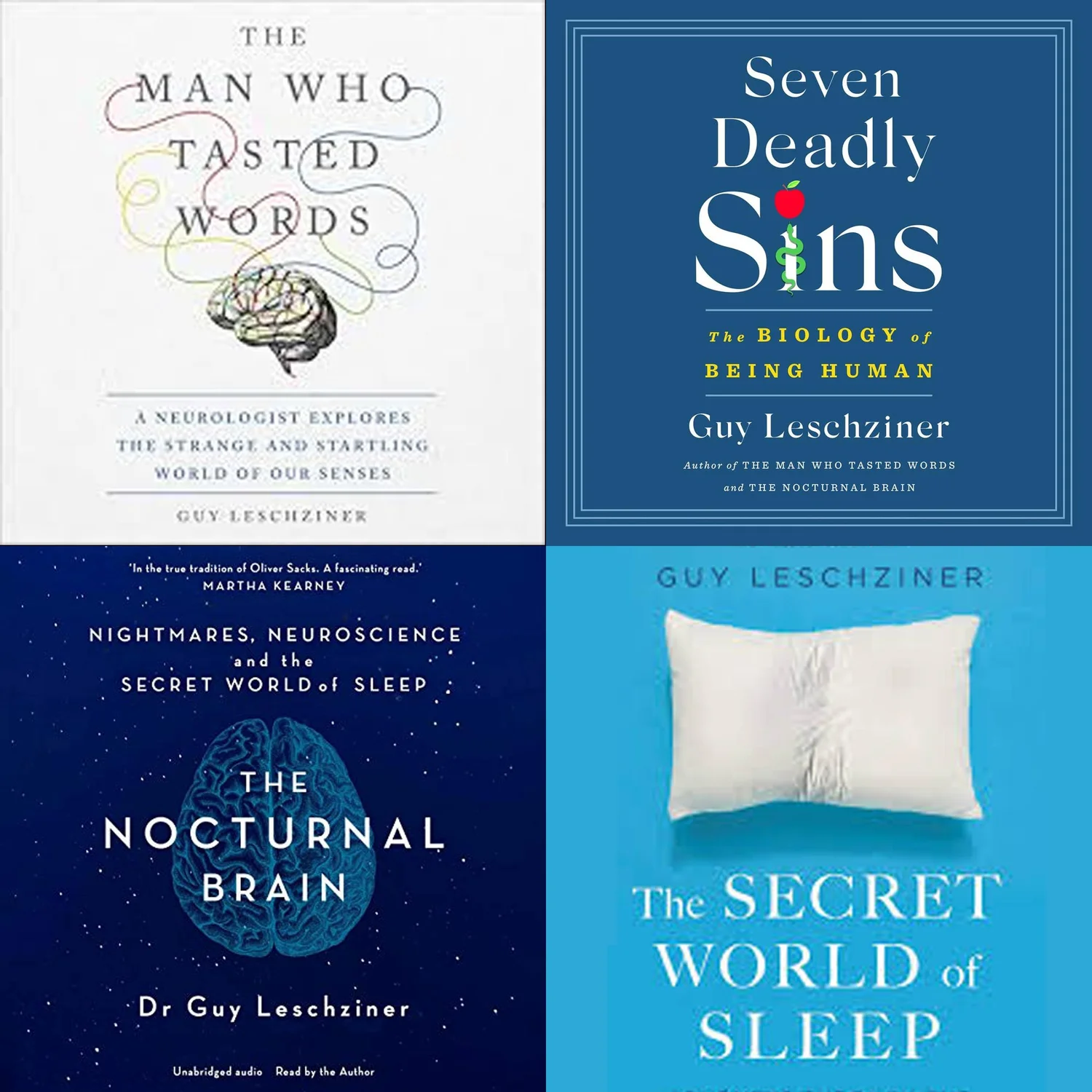
S14 Ep 1118Exploring the Extremes of the Human Experience with Neurologist DR. GUY LESCHZINER - Highlights
“One of the things that hopefully my books illustrate is that everybody's mind is different. And one of the amazing things about the human experience–and indeed that manifests in terms of art and creativity–is that when we have such different minds, that is why all this creativity, all this art is possible.”Dr. Guy Leschziner is the author of The Nocturnal Brain, The Man Who Tasted Words, and other books. He is a consultant neurologist and a Professor of Neurology and Sleep Medicine at the Institute of Psychiatry, Psychology and Neuroscience, King's College London. He sees patients with a range of neurological and sleep disorders, and is actively involved in research and teaching. He has presented series on sleep and neurology for BBC World Service and Radio 4. His latest book is Seven Deadly Sins: The Biology of Being Human.Episode Websitewww.creativeprocess.info/podInstagram:@creativeprocesspodcast

S14 Ep 1117Sleep, The Nocturnal Brain & The Biology of Being Human w/ DR. GUY LESCHZINER, Neurologist
“ I'm fascinated by the extremes of the human experience, partly because it is so far removed from our own experience of life. In another way, when you look at people who have neurological disorders or diseases, these are really nature's experiments. They are ways of trying to understand how the brain works for all of us. By extrapolation from looking at these extremes, we can learn about the workings of our own brains. That's very much the case across all the areas of my work, whether it be sleep disorders, neurology, or epilepsy—how we regulate our emotions, how we move, how we experience the world.I never intended to be a storyteller; I intended to be a story listener, which is what we do daily in our clinics. Telling these stories generates empathy, creates understanding, and hopefully inspires the next generation to pursue careers as doctors, psychologists, and healthcare professionals, fostering a fascination with the brain similar to what Oliver Sacks did for me.”Dr. Guy Leschziner is the author of The Nocturnal Brain, The Man Who Tasted Words, and other books. He is a consultant neurologist and a Professor of Neurology and Sleep Medicine at the Institute of Psychiatry, Psychology and Neuroscience, King's College London. He sees patients with a range of neurological and sleep disorders, and is actively involved in research and teaching. He has presented series on sleep and neurology for BBC World Service and Radio 4. His latest book is Seven Deadly Sins: The Biology of Being Human.Episode Websitewww.creativeprocess.info/podInstagram:@creativeprocesspodcast