Big Picture Science
697 episodes — Page 6 of 14

Testing Your Metal
Catalytic converters are disappearing. If you’ve had yours stolen, you know that rare earth metals are valuable. But these metals are in great demand for things other than converters, such as batteries for electric cars, wind farms and solar panels. We need rare earth metals to combat climate change, but where to get them? Could we find substitutes? One activity that could be in our future: Deep sea mining. But it’s controversial. Can one company’s plan to mitigate environmental harm help? Guests: Paul Dauenhauer - Professor of chemical engineering and material science at the University of Minnesota and a 2020 MacArthur Fellow Chris Leighton - Distinguished University Teaching Professor, Editor, Physical Review Materials, Dept. of Chemical Engineering and Materials Science, University of Minnesota Renee Grogan - Co-founder and Chief Sustainability Officer, Impossible Mining company Featuring music by Dewey Dellay. Big Picture Science is part of the Airwave Media podcast network. Please contact [email protected] to inquire about advertising on Big Picture Science. You can get early access to ad-free versions of every episode by joining us on Patreon. Thanks for your support! Learn more about your ad choices. Visit megaphone.fm/adchoices

Into the Deep (rebroadcast)
Have you ever heard worms arguing? Deep-sea scientists use hydrophones to eavesdrop on “mouth-fighting worms.” It’s one of the many ways scientists are trying to catalog the diversity of the deep oceans — estimated to be comparable to a rainforest. But the clock is ticking. While vast expanses of the deep sea are still unexplored, mining companies are ready with dredging vehicles to strip mine the seafloor, potentially destroying rare and vulnerable ecosystems. Are we willing to eradicate an alien landscape that we haven’t yet visited? Guests: Craig McClain - deep-sea and evolutionary biologist and ecologist, Executive Director of the Louisiana Universities Marine Consortium. Steve Haddock - senior scientist at the Monetary Bay Aquarium Research Institute, and co-author of a New York Times op-ed about the dangers of mining. Emily Hall - marine chemist at the Mote Marine Laboratory, Sarasota, Florida Chong Chen - deep sea biologist with the Japan Agency for Marine-Earth Science and Technology (JAMSTEC) Originally aired November 23, 2020 Big Picture Science is part of the Airwave Media podcast network. Please contact [email protected] to inquire about advertising on Big Picture Science. You can get early access to ad-free versions of every episode by joining us on Patreon. Thanks for your support! Learn more about your ad choices. Visit megaphone.fm/adchoices

What's a Few Degrees?
Brace yourself for heatwave “Lucifer.” Dangerous deadly heatwaves may soon be so common that we give them names, just like hurricanes. This is one of the dramatic consequences of just a few degrees rise in average temperatures. Also coming: Massive heat “blobs” that form in the oceans and damage marine life, and powerful windstorms called “derechos” pummeling the Midwest. Plus, are fungal pathogens adapting to hotter temperatures and breaching the 98.6 F thermal barrier that keeps them from infecting us? Guests: Kathy Baughman McLeod – director and senior vice president of the Adrienne Arsht-Rockefeller Foundation Resilience Center at The Atlantic Council Pippa Moore – Marine ecologist at Newcastle University in the U.K. Ted Derouin – Michigan farmer Jeff Dukes – Ecologist and director of Purdue Climate Change Research Center at Purdue University. Arturo Casadevall – Molecular microbiologist and immunologist at the Johns Hopkins School of Medicine Originally aired October 19, 2020 Big Picture Science is part of the Airwave Media podcast network. Please contact [email protected] to inquire about advertising on Big Picture Science. You can get early access to ad-free versions of every episode by joining us on Patreon. Thanks for your support! Learn more about your ad choices. Visit megaphone.fm/adchoices

Mycology Education (rebroadcast)
Beneath our feet is a living network just as complex and extensive as the root systems in a forest. Fungi, which evolved in the oceans, were among the first to colonize the barren continents more than a half-billion years ago. They paved the way for land plants, animals, and (eventually) you. Think beyond penicillin and pizza, and take a moment to consider these amazing organisms. Able to survive every major extinction, essential as Nature’s decomposers, and the basis of both ale and antibiotics, fungi are essential to life. And their behavior is so complex you’ll be wondering if we shouldn’t call them intelligent! Guest: Merlin Sheldrake – Biologist and the author of Entangled Life: How Fungi Make our Worlds, Change our Minds and Shape our Futures. Big Picture Science is part of the Airwave Media podcast network. Please contact [email protected] to inquire about advertising on Big Picture Science. You can get early access to ad-free versions of every episode by joining us on Patreon. Thanks for your support! Learn more about your ad choices. Visit megaphone.fm/adchoices
Attack of the Mutants
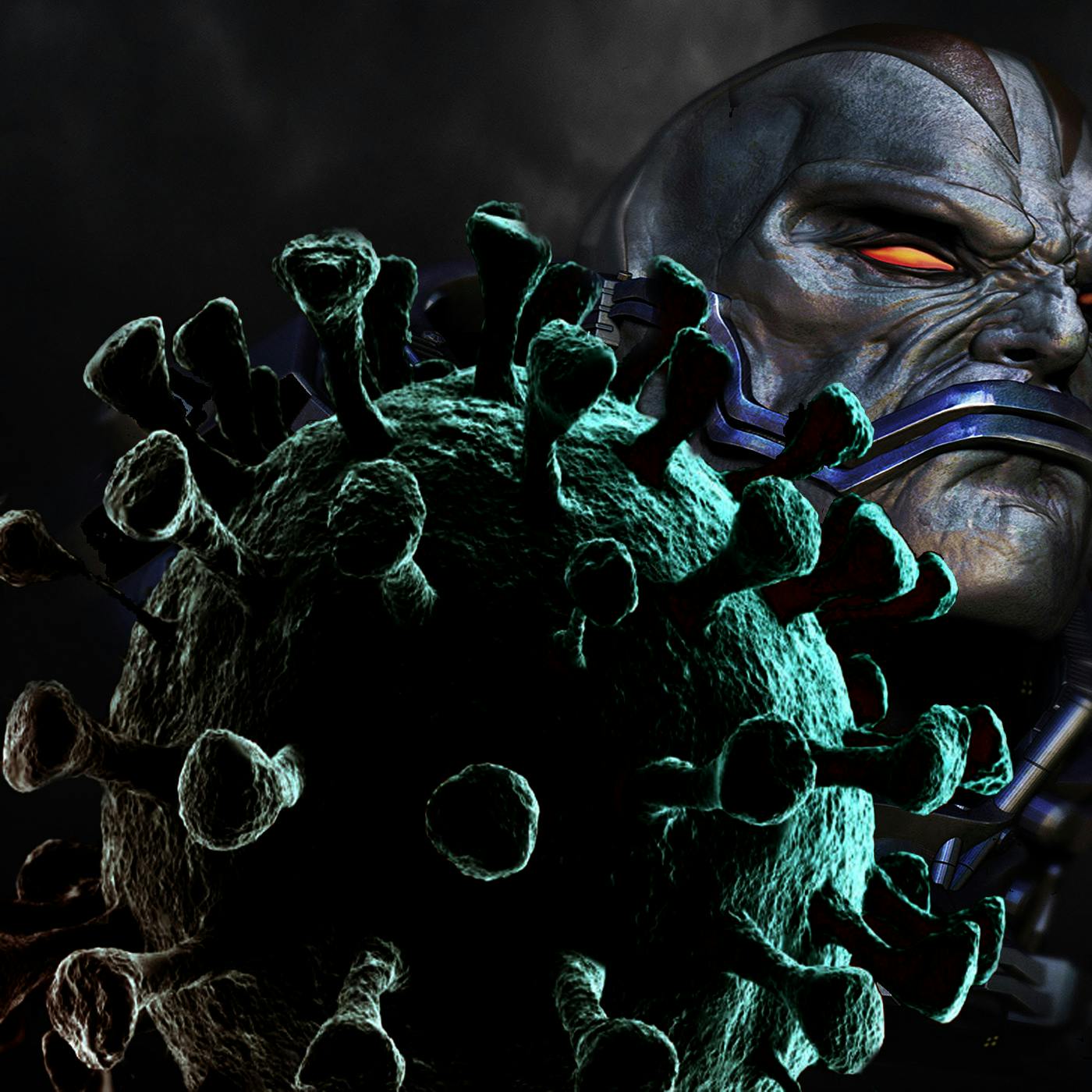
The omicron variant is surging. More contagious than delta, omicron demonstrates how viruses use mutations to quickly adapt. Mutations drive evolution, although most don’t do much. But occasionally a mutation improves an organism. Omicron, the latest in a string of variants, is bad for us, but good for the virus. How mutation of viruses ensures their own survival while threatening ours, and the prospect of a universal vaccine that would protect us against all a viruses’ variants. Guests: Robert Garry – Professor of microbiology and virologist in the Tulane University School of Medicine Kevin Saunders – Professor in the Duke University School of Medicine’s Human Vaccine Institute and professor of surgery Featuring music by Dewey Dellay. Big Picture Science is part of the Airwave Media podcast network. Please contact [email protected] to inquire about advertising on Big Picture Science. You can get early access to ad-free versions of every episode by joining us on Patreon. Thanks for your support! Learn more about your ad choices. Visit megaphone.fm/adchoices

Hubble and Beyond (rebroadcast)
The universe is not just expanding; it’s accelerating. Supermassive black holes are hunkered down at the center of our galaxy and just about every other galaxy, too. We talk about these and other big discoveries of the Hubble Space Telescope, now in orbit for over 30 years. But two new next-generation telescopes will soon be joining Hubble: the Nancy Grace Roman Space Telescope and the James Webb Space Telescope. Hear what cosmic puzzles they’ll address. Plus, life in a clean room while wearing a coverall “bunny suit”; what it takes to assemble a telescope. Guests: Meg Urry – Professor of physics and astronomy, Director of the Yale Center for Astronomy and Astrophysics, Yale University John Grunsfeld – Former NASA Associate Administrator, and astronaut Kenneth Harris – Senior Project Engineer, Aerospace Corporation Originally aired September 21, 2020 Big Picture Science is part of the Airwave Media podcast network. Please contact [email protected] to inquire about advertising on Big Picture Science. You can get early access to ad-free versions of every episode by joining us on Patreon. Thanks for your support! Learn more about your ad choices. Visit megaphone.fm/adchoices

Skeptic Check: Identifying UAPs
The Pentagon’s report on UAPs (Unidentified Aerial Phenomena) said nothing about the possibility that some might be alien spacecraft. Nonetheless, the report has generated heightened interest in figuring out what these UAPs are, and that interest extends to some scientists. We talk to two researchers who want an open and strictly scientific investigation of these phenomena. What should they do and what do they expect to find? And finally, will the possibility of alien visitors ever be resolved? Guests: Jacob Haqq-Misra – Senior Research Investigator at the Blue Marble Space Institute of Science Ravi Kopparapu – Planetary scientist, NASA Goddard Space Flight Center Big Picture Science is part of the Airwave Media podcast network. Please contact [email protected] to inquire about advertising on Big Picture Science. You can get early access to ad-free versions of every episode by joining us on Patreon. Thanks for your support! Learn more about your ad choices. Visit megaphone.fm/adchoices

Talk the Walk (rebroadcast)
Birds and bees do it … and so do fish. In a discovery that highlights the adaptive benefits of walking, scientists have discovered fish that can walk on land. Not fin-flap their bodies, mind you, but ambulate like reptiles. And speaking of which, new research shows that T Rex, the biggest reptile of them all, wasn’t a sprinter, but could be an efficient hunter by outwalking its prey. Find out the advantage of legging it, and how human bipedalism stacks up. Not only is walking good for our bodies and brains, but not walking can change your personality and adversely affect your health. Guests: Hans Larsson – Paleontologist and biologist, and Director of the Redpath Museum at McGill University in Montréal. Shane O’Mara – Neuroscientist and professor of experimental brain research at Trinity College Dublin. He is the author of “In Praise of Walking.” Brooke Flammang – Biologist at the New Jersey Institute of Technology. Big Picture Science is part of the Airwave Media podcast network. Please contact [email protected] to inquire about advertising on Big Picture Science. You can get early access to ad-free versions of every episode by joining us on Patreon. Thanks for your support! originally aired October 5, 2020 Learn more about your ad choices. Visit megaphone.fm/adchoices

Skeptic Check: Shroom With a View (rebroadcast)
Magic mushrooms – or psilocybin - may be associated with tripping hippies and Woodstock, but they are now being studied as new treatments for depression and neurodegenerative diseases like Alzheimer’s. Is this Age of Aquarius medicine or something that could really work? Plus, the centuries-long use of psychedelics by indigenous peoples, and a discovery in California’s Pinwheel Cave offers new clues about the relationship between hallucinogens and cave art. Guests: Merlin Sheldrake - Biologist and the author of Entangled Life: How Fungi Make our Worlds, Change our Minds and Shape our Futures. Albert Garcia-Romeu - Assistant professor in the Department of Psychiatry and Behavioral Sciences, Johns Hopkins University School of Medicine David Wayne Robinson - Archeologist in the School of Forensic and Applied Sciences, University of Central Lancashire, U.K. Sandra Hernandez - Tejon Indian Tribe spokesperson Originally aired December 7, 2020 Big Picture Science is part of the Airwave Media podcast network. Please contact [email protected] to inquire about advertising on Big Picture Science. Learn more about your ad choices. Visit megaphone.fm/adchoices

Suitable For Life?
Life nearby? We’ve not yet found any on our favorite planet, Mars. But even if Mars is sterile, could we ever change that by terraforming it? Or seeding it with life from Earth? The Red Planet is not the only game in town: A new NASA mission to a Jovian moon may give clues to biology on a world where, unlike Mars, liquid water still exists. Also, the promise of the James Webb Space Telescope and why the solar system’s largest active volcano offers clues to the habitability of other worlds. Guests: Kate Craft – Planetary scientist at the Johns Hopkins Applied Physics Laboratory, where she studies icy moons such as Europa. Julie Rathbun – Senior scientist at the Planetary Science Institute Courtney Dressing – Professor of Astronomy, University of California, Berkeley Chris McKay – Research scientist, NASA Ames Research Center Learn more about your ad choices. Visit megaphone.fm/adchoices
Your Inner Tree
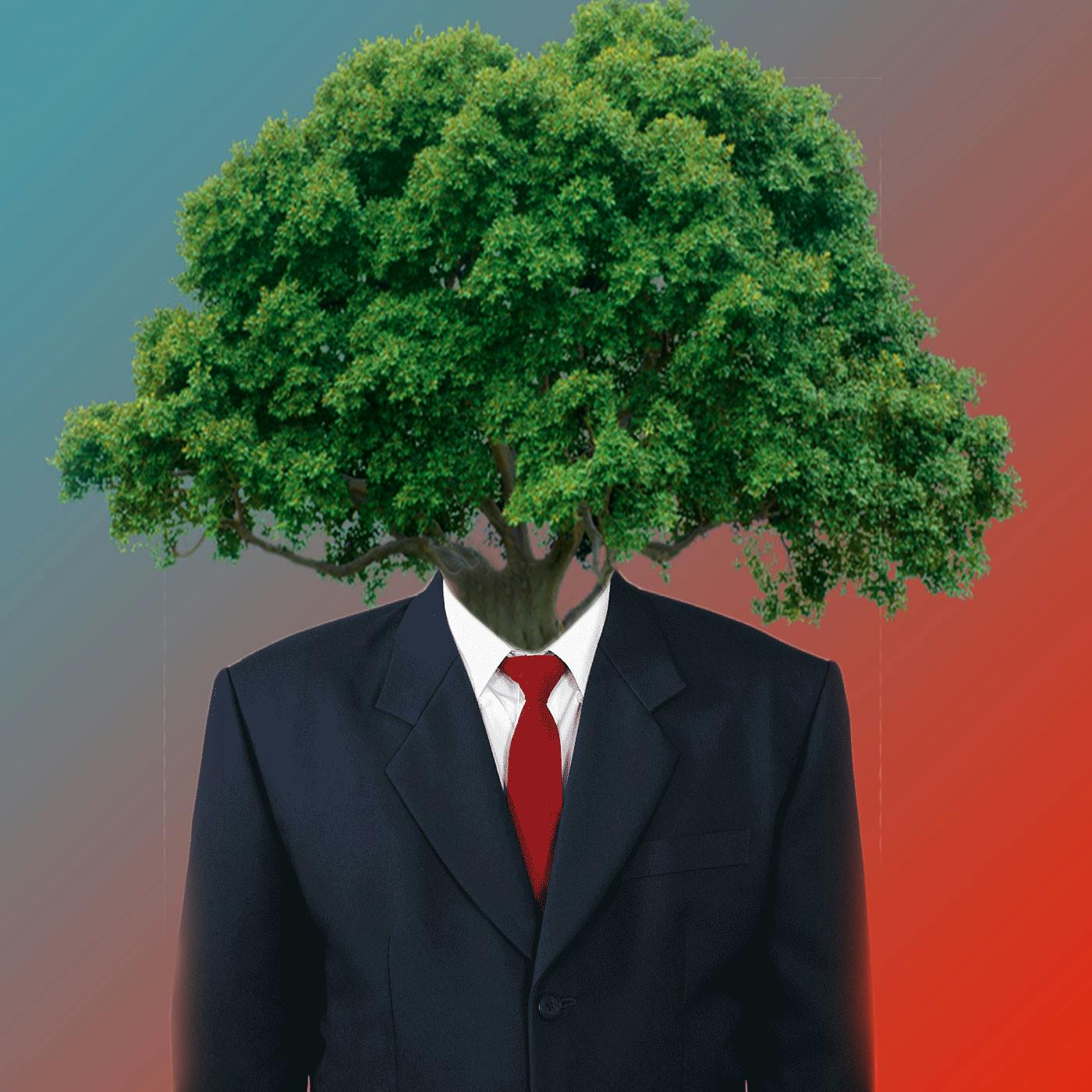
Declining biodiversity is a problem as fraught as climate change. Loss of habitat, monoculture crops, and the damming of waterways all lead to massive species extinction. They tear at life’s delicate web, and threaten a balance established by four billion years of evolution. Can we reassess our relationship to Nature? We consider logging efforts that make elephants part of the work force, and how to leverage the cooperative behavior of trees. Becoming Nature’s ally, rather than its enemy. Guests: Suzanne Simard – Professor of Forest Ecology at the University of British Columbia and author of “Finding the Mother Tree: Discovering the Wisdom of the Forest.” Carl Safina – Professor of Nature and Humanity at Stony Brook University and founder of the Safina Center, and author of “Becoming Wild: How Animal Cultures Raise Families, Create Beauty, and Achieve Peace.” Jacob Shell – Professor of Geography and Urban Studies at Temple University, and author of “Giants of the Monsson Forest: Living and Working with Elephants.” Learn more about your ad choices. Visit megaphone.fm/adchoices
Dimming the Sun
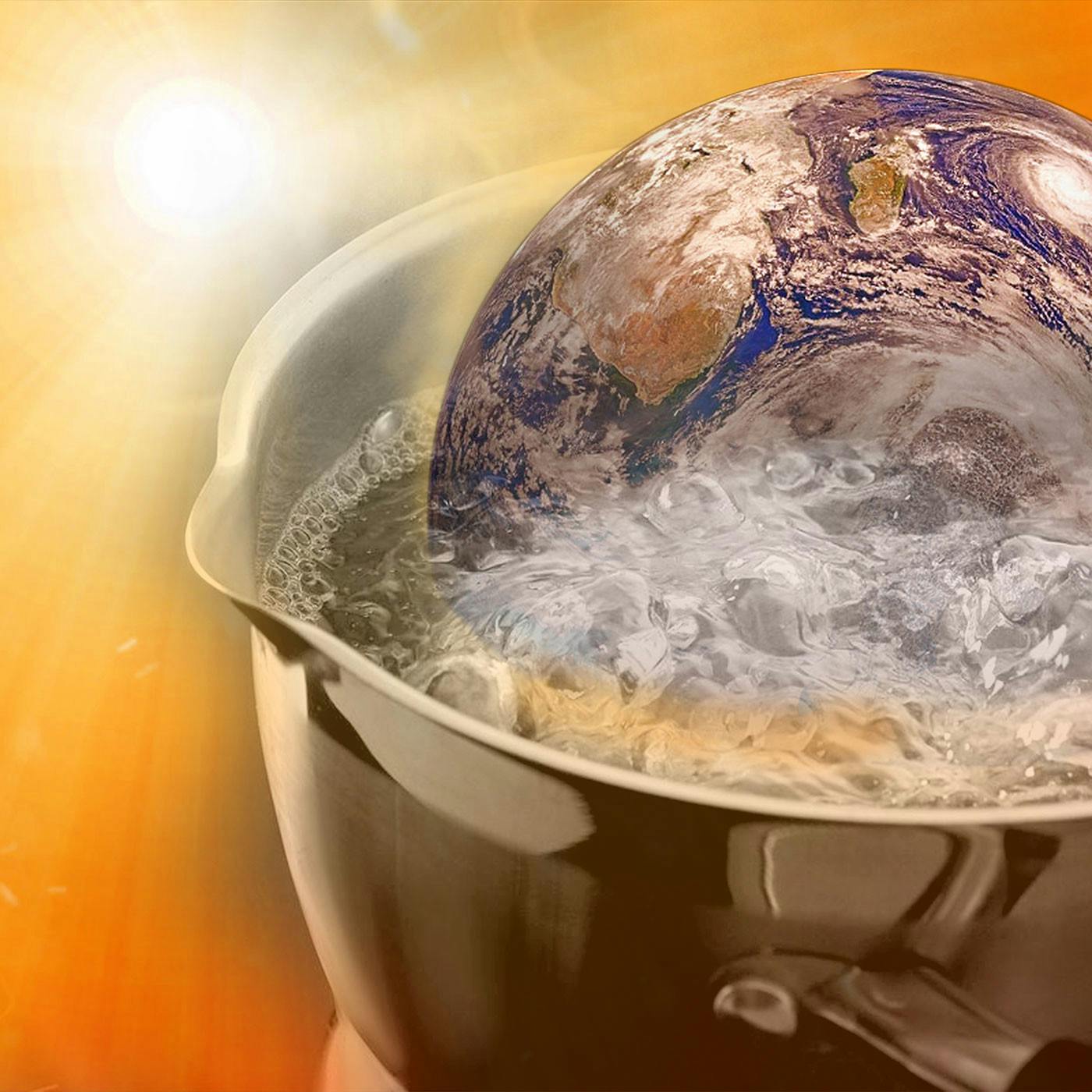
Does geoengineering offer a Plan B if nations at the U.N. climate meeting can't reduce carbon emissions? The Glasgow meeting has been called “the last best chance” to take measures to slow down global heating. But we're nowhere near to achieving the emission reductions necessary to stave off a hothouse planet. We consider both the promise and the perils of geoengineering, and ask who decides about experimenting with Earth’s climate. Guests: · Elizabeth Kolbert – Staff Writer at The New Yorker, Pulitzer Prize-winning author of “The Sixth Extinction,” and, most recently, of “Under a White Sky: The Nature of the Future.” · David Keith – Professor of public policy and applied physics at Harvard University who also participates in the Stratospheric Controlled Perturbation Experiment (SCoPex) geoengineering project. · Kim Cobb – Professor of earth and atmospheric sciences at Georgia Tech, and the director of its Global Change Program. Learn more about your ad choices. Visit megaphone.fm/adchoices

Skeptic Check: Brain Gain (rebroadcast)
Looking to boost your brainpower? Luckily, there are products promising to help. Smart drugs, neurofeedback exercises, and brain-training video games all promise to improve your gray matter’s performance. But it’s uncertain whether these products really work. Regulatory agencies have come down hard on some popular brain training companies for false advertising. But other brain games have shown benefits in clinical trials. And could we skip the brain workout altogether and pop a genius pill instead? In our regular look at critical thinking, we separate the pseudo from the science of commercial cognitive enhancement techniques. Guests: · Caroline Williams – Science journalist and author of “My Plastic Brain: One Woman’s Yearlong Journey to Discover If Science Can Improve Her Mind” · Adam Gazzaley – Neuroscientist, University of California, San Francisco, and the executive director of Neuroscape. His book is “The Distracted Mind: Ancient Brains in a High Tech World.” · Amy Arnsten – Professor of neuroscience and psychology at Yale Medical School · Kevin Roose – Journalist for the New York Times. · Leonard Mlodinow – Physicist and author of “Elastic: Flexible Thinking in a Time of Change” Originally aired August 6, 2018 Learn more about your ad choices. Visit megaphone.fm/adchoices

Radical Cosmology (rebroadcast)
400 years ago, some ideas about the cosmos were too scandalous to mention. When the Dominican friar Giordano Bruno suggested that planets existed outside our Solar System, the Catholic Inquisition had him arrested, jailed, and burned at the stake for heresy. Today, we have evidence of thousands of planets orbiting other stars. Our discovery of extrasolar planets has dramatically changed ideas about the possibility for life elsewhere in the universe. Modern theories about the existence of the ghostly particles called neutrinos or of collapsed stars with unfathomable gravity (black holes), while similarly incendiary, didn’t prompt arrest, of course. Neutrinos and black holes were arresting ideas because they came decades before we had the means to prove their existence. Hear about scientific ideas that came before their time and why extrasolar planets, neutrinos, and black holes are now found on the frontiers of astronomical research. Guests: Alberto Martínez – Professor of history, University of Texas, Austin, and author of Burned Alive: Giordano Bruno, Galileo & the Inquisition Anne Schukraft – Associate scientist, Fermilab National Accelerator Laboratory Ephraim Fischbach – Professor of physics and astronomy, Perdue University Chris Impey – Professor of astronomy, University of Arizona, and author of Einstein’s Monsters: The Life and Times of Black Holes Originally aired February 18, 2019 Learn more about your ad choices. Visit megaphone.fm/adchoices

Fuhgeddaboudit
A thousand years ago, most people didn’t own a single book. The only way to access knowledge was to consult their memory. But technology – from paper to hard drives – has permitted us to free our brains from remembering countless facts. Alphabetization and the simple filing cabinet have helped to systematize and save information we might need someday. But now that we can Google just about any subject, have we lost the ability to memorize information? Does this make our brains better or worse? Guests: Judith Flanders – Historian and author, most recently of A Place for Everything: The Curious History of Alphabetical Order Craig Robertson – Professor of Media Studies, Northeastern University and author of The Filing Cabinet: A Vertical History of Information David Eagleman – Neuroscientist and author, Stanford University Learn more about your ad choices. Visit megaphone.fm/adchoices

Home Invasions (rebroadcast)
As we struggle to control a viral invader that moves silently across the globe and into its victims, we are also besieged by other invasions. Murder hornets have descended upon the Pacific Northwest, threatening the region’s honeybees. In Africa, locust swarms darken the sky. In this episode, we draw on a classic science fiction tale to examine the nature of invasions, and what prompts biology to go on the move. Guests: Peter Ksander – Associate professor at Reed College in the Department of Theater. Producer of the spring 2020 production of War of the Worlds Eva Licht – A senior at Reed College, and producer and director of War of the Worlds Chris Looney – Entomologist with the Washington State Department of Agriculture, where he manages its general entomology laboratory Nipun Basrur – Neurobiologist at The Rockefeller University Amy Maxmen – Reporter at the journal Nature, in which her story about pandemic war games appeared. Originally aired August 31, 2020 Learn more about your ad choices. Visit megaphone.fm/adchoices

AI: Where Does It End? (rebroadcast)
The benefits of artificial intelligence are manifest and manifold, but can we recognize the drawbacks … and avoid them in time? In this episode, recorded before a live audience at the Seattle meeting of the American Association for the Advancement of Science, we discuss who is making the ethical decisions about how we use this powerful technology, and a proposal to create a Hippocratic Oath for AI researchers. Guests: Oren Etzioni - CEO of The Allen Institute for Artificial Intelligence Mark Hill - Professor of computer sciences at the University of Wisconsin, Madison, and chair of the Computing Community Consortium Originally aired February 24, 2020 Learn more about your ad choices. Visit megaphone.fm/adchoices

Skeptic Check: Science Denial [rebroadcast]
Climate change isn’t happening. Vaccines make you sick. When it comes to threats to public or environmental health, a surprisingly large fraction of the population still denies the consensus of scientific evidence. But it’s not the first time – many people long resisted the evidentiary link between HIV and AIDS and smoking with lung cancer. There’s a sense that science denialism is on the rise. It prompted a gathering of scientists and historians in New York City to discuss the problem, which included a debate on the usefulness of the word “denial” itself. Big Picture Science was there. We report from the Science Denial symposium held jointly by the New York Academy of Sciences and Rutgers Global Health Institute. Find out why so many people dig in their heels and distrust scientific findings. Plus, the techniques wielded by special interest groups to dispute some inconvenient truths. We also hear how simply stating more facts may be the wrong approach to combating scientific resistance. Guests: Melanie Brickman Borchard - Director of Life Sciences Conferences at New York Academy of Sciences Nancy Tomes - professor of history at Stony Brook University Allan Brandt - professor of history of science and medicine at Harvard University. Author of “The Cigarette Century: The Rise, Fall, and Deadly Persistence of the Product that Defined America” Sheila Jasanoff - Director of Program on Science, Technology and Society and professor of environment, science and technology at Kennedy School of Government at Harvard University Michael Dahlstrom - Associate Director of Greenlee School of Journalism and Communication, and associate professor at Iowa State University Matthew Nisbet - professor of communication and public policy at Northeastern University Arthur (Art) Caplan - professor and founding head of medical ethics at NYU School of Medicine Learn more about your ad choices. Visit megaphone.fm/adchoices

Animals Being Jerks
They’re cute and cuddly. But they can also be obnoxious. Science writer Mary Roach has numerous tales about how our animal friends don’t always bow to their human overlords and behave the way we’d want. The resulting encounters, such as when gulls disrupt the Vatican’s Easter mass, make for amusing stories. But others, such as wolves threatening farmers’ livestock, can be tragic. We hear what happens at the messy crossroads of human and wildlife encounters. Guest: Mary Roach – Author of bestselling nonfiction books, most recently “Fuzz: When Nature Breaks the Law.” Learn more about your ad choices. Visit megaphone.fm/adchoices

De-Permafrosting
Above the Arctic Circle, much of the land is underlaid by permafrost. But climate change is causing it to thaw. This is not good news for the planet. As the carbon rich ground warms, microbes start to feast… releasing greenhouse gases that will warm the Earth even more. Another possible downside was envisioned by a science-fiction author. Could ancient pathogens–released from the permafrost’s icy grip–cause new pandemics? We investigate what happens when the far north defrosts. Guests: Jacquelyn Gill – Associate professor of paleoecology at the University of Maine. Jim Shepard – Novelist and short story writer, and teacher of English at Williams College, and author of “Phase Six.” Scott Saleska – Global change ecologist, professor of Ecology and Evolutionary Biology at the University of Arizona, and co-founder of IsoGenie. Learn more about your ad choices. Visit megaphone.fm/adchoices

True Grit (rebroadcast)
Without sand, engineering would be stuck in the Middle Ages. Wooden houses would line mud-packed streets, and Silicon Valley would be, well, just a valley. Sand is the building material of modern cities, and we use more of this resource than any other except water and air. Now we’re running out of it. Hear why the Roman recipe for making concrete was lost until the 19th century, and about the super-secret mine in North Carolina that makes your smartphone possible. Plus, engineered sand turns stormwater into drinking water, and why you might think twice about running barefoot on some tropical beaches once you learn about their biological source. And, a special report from the coast of Louisiana where livelihoods and ecosystems depend on the successful release of Mississippi sand from levees into sediment-starved wetlands. Guests: Vince Beiser – Journalist and author of “The World in a Grain: The Story of Sand and How it Transformed Civilization” Joe Charbonnet – Science and policy associate at the Green Science Policy Institute in Berkeley, California Pupa Gilbert – Biophysicist and geobiologist, University of Wisconsin, Madison Rudy Simoneaux – Engineer manager, Coastal Protection and Restoration Authority, Baton Rouge, Louisiana Elizabeth Chamberlain – Post-doctoral researcher in Earth and Environmental Sciences, Vanderbilt University Originally aired January 14, 2019 Learn more about your ad choices. Visit megaphone.fm/adchoices

You've Got Whale (rebroadcast)
SMS isn’t the original instant messaging system. Plants can send chemical warnings through their leaves in a fraction of a second. And while we love being in the messaging loop – frenetically refreshing our browsers – we miss out on important conversations that no Twitter feed or inbox can capture. That’s because eavesdropping on the communications of non-human species requires the ability to decode their non-written signals. Dive into Arctic waters where scientists make first-ever recordings of the socializing clicks and squeals of narwhals, and find out how climate shifts may pollute their acoustic landscape. Also, why the chemical defense system of plants has prompted one biologist to give greenery an “11 on the scale of awesomeness.” And, you can’t see them, but they sure can sense one another: how communicating microbes plan their attack. Guests: Susanna Blackwell – Bio-acoustician with Greeneridge Sciences. Hear her recordings of narwhals here. Simon Gilroy – Professor of botany, University of Wisconsin, Madison. His video of glowing green caterpillar-munched plants can be viewed here. Peter Greenberg – Professor of microbiology, University of Washington, Seattle Originally aired October 29, 2018 Learn more about your ad choices. Visit megaphone.fm/adchoices

Phreaky Physics
It was a radical idea a century ago, when Einstein said space and time can be bent, and gravity was really geometry. We hear how his theories inspire young minds even today. At small scales, different rules apply: quantum mechanics and the Standard Model for particles. New experiments suggest that muons – cousins of the electron – may be telling us that the Standard Model is wrong. Also, where the physics of both the large and small apply, and why black holes have no hair. Guests: Hakeem Oluseyi – Astrophysicist, affiliated professor at George Mason University, and author of “A Quantum Life: My Unlikely Journey from the Street to the Stars” Janna Levin – Professor of physics and astronomy, Barnard College at Columbia University Mark Lancaster – Professor of particle physics, University of Manchester Learn more about your ad choices. Visit megaphone.fm/adchoices

Skeptic Check: Anti-Vax
They were developed in a matter of months, and they’re 90 percent effective at stopping infection. They protect against serious illness or death. And yet, roughly one-third of Americans refuse to get the Covid vaccine. How can this be? How could something that our ancestors would have considered a miracle be refused by so many? The reasons are many, and not all are because of an anti-vax attitude. We talk to health professionals to learn what’s stopping the public from stopping the pandemic. Guests: Paul Offit – Pediatrician and Director of the Vaccine Education Center at Children’s Hospital of Philadelphia Tanagne Haile-Mariam – Professor of Emergency Medicine, George Washington University School of Medicine Nsikan Akpan – Former Health and Science Editor for New York Public Radio Learn more about your ad choices. Visit megaphone.fm/adchoices

Platypus Crazy
They look like a cross between a beaver and a duck, and they all live Down Under. The platypus may lay eggs, but is actually a distant mammalian cousin, one that we last saw, in an evolutionary sense, about 166 million years ago. Genetic sequencing is being used to trace that history, while scientists intensify their investigation of the habits and habitats of these appealing Frankencreatures; beginning by taking a census to see just how many are out there, and if their survival is under threat. Guests: Josh Griffiths – Senior Wildlife Ecologist at Cesaar Australia. Jane Fenelon – Research fellow, University of Melbourne Paula Anich – Professor of Natural Resources, Northland College Wes Warren – Professor of Genomics, University of Missouri Phoebe Meagher – Conservation Officer, Taronga Conservation Society, Australia Learn more about your ad choices. Visit megaphone.fm/adchoices

A Twist of Slime (rebroadcast)
Your daily mucus output is most impressive. Teaspoons or measuring cups can’t capture its entire volume. Find out how much your body churns out and why you can’t live without the viscous stuff. But slime in general is remarkable. Whether coating the bellies of slithery creatures, sleeking the surface of aquatic plants, or dripping from your nose, its protective qualities make it one of the great inventions of biology. Join us as we venture to the land of ooze! Guests: Christopher Viney - Professor of materials science and engineering at the University of California, Merced Katharina Ribbeck - Bioengineer at MIT Anna Rose Hopkins – Chef and partner at Hank and Bean in Los Angeles Ruth Kassinger - author of “Slime: How Algae Created Us, Plague Us, and Just Might Save Us” Originally aired January 27, 2020 Learn more about your ad choices. Visit megaphone.fm/adchoices

New Water Worlds (rebroadcast)
The seas are rising. It’s no longer a rarity to see kayakers paddling through downtown Miami. By century’s end, the oceans could be anywhere from 2 to 6 feet higher, threatening millions of people and property. But humans once knew how to adapt to rising waters. As high water threatens to drown our cities, can we learn do it again. Hear stories of threatened land: submerged Florida suburbs, the original sunken city (Venice), and the U.S. East Coast, where anthropologists rush to catalogue thousands of low-lying historical and cultural sites in harm’s way, including Jamestown, Virginia and ancient Native American sites. But also, stories of ancient adaptability: from the First American tribes of the Colusa in South Florida to the ice age inhabitants of Doggerland. And, modern approaches to staying dry: stilt houses, seawalls, and floating cities. Guests: · Jeff Goodell – Journalist and author of “The Water Will Come: Rising Seas, Sinking Cities, and the Remaking of the Civilized World” · Brian Fagan – Archaeologist and Emeritus Professor of Anthropology, University of California Santa Barbara, and author of many books including “The Attacking Ocean: the Past, Present, and Future of Rising Sea Levels” · David Anderson – Professor of Anthropology, University of Tennessee. His team’s PLOS ONE paper is “Sea-level rise and archaeological site destruction.” His DINAA site can be used to generate maps of where people were living in the past, up to ca. 15,000 years ago. Originally aired August 27, 2018 Learn more about your ad choices. Visit megaphone.fm/adchoices

Cicadas and Zombie Seeds
Rip van Winkle snoozed for 20 years, and Sleeping Beauty for 100. But seeds in an underground bottle have easily beaten both these records, germinating long after the scientist who buried them a few feet underground had died. We investigate biology’s long haulers–from seeds to small creatures–who are able to wake up and restart their lives, even after tens of thousands of years. Also, what are those buried 17-year cicadas doing as they wait to come back topside? Guests: Chris Simon – Professor of Ecology and Evolutionary Biology, University of Connecticut Sarah Dwyer – Chocolatier, Chouquette Chocolates Frank Telewski – Director of the W. J. Beal Botanical Garden at Michigan State University, and professor in its department of plant biology Rocco Mancinelli – Microbial ecologist, Bay Area Environmental Research Institute Featuring music by Dewey Dellay Learn more about your ad choices. Visit megaphone.fm/adchoices

Skeptic Check: Pentagon UFO Report
When the government announced it would release a report about strange aerial phenomena, public excitement and media coverage took off like a Saturn V rocket. But what’s really in the report? Do we finally have the long-awaited evidence of alien visitation? We discuss the report’s content and implications with both a former U.S. Air Force pilot and a skeptical investigator. And if it hasn’t proven alien presence, what happens next with those who nonetheless think Earth is being visited? Guests: James McGaha - Retired USAF pilot, astronomer, and director of the Grasslands Observatory. Founder and chairman of the Tucson Skeptics and a Scientific Consultant to the Committee for Skeptical Inquiry. Mick West - Science writer, skeptical debunker, former video game programmer. Author of “Escaping the Rabbit Hole.” Learn more about your ad choices. Visit megaphone.fm/adchoices

Skeptic Check: Science Breaking Bad (rebroadcast)
The scientific method is tried and true. It has led us to a reliable understanding of things from basic physics to biomedicine. So yes, we can rely on the scientific method. The fallible humans behind the research, not so much. And politicians? Don’t get us started. Remember when one brought a snowball to the Senate floor to “prove” that global warming was a hoax? Oy vey. We talk to authors about new books that seem to cast a skeptical eye on the scientific method… but that are really throwing shade on the ambitious labcoat-draped humans who heat the beakers and publish the papers … as well as the pinstriped politicians who twist science to win votes. Find out why the hyper-competitive pursuit of results that are “amazing” and “incredible” is undermining medical science… how a scientific breakthrough can turn into a societal scourge (heroin as miracle cure)… and what happens when civil servants play the role of citizen scientists on CSPAN. Guests: Richard Harris - NPR science correspondent, author of Rigor Mortis: How Sloppy Science Creates Worthless Cures, Crushes Hope, and Wastes Billions. Paul Offit - Professor of pediatrics, attending physician, Division of Infectious Diseases, Children’s Hospital of Philadelphia, author of Pandora’s Lab: Seven Stories of Science Gone Wrong. Dave Levitan - Science journalist, author of Not a Scientist; How Politicians Mistake, Misrepresent and Utterly Mangle Science. Originally aired May 22, 2017 Learn more about your ad choices. Visit megaphone.fm/adchoices

After The Plague
Everyone is familiar with the immediate consequences of a pandemic – sickness and death. But the long-term ramifications can be just as dramatic: a breakdown of the family and society, shifts in political power, and widespread appeals to magical thinking. Plagues are societal disrupters. Their effects can linger long after the pathogens have gone. Also, hear how art responded to a pandemic and how the Louisiana Purchase was made possible by an outbreak of fever in the Caribbean. Guest: Frank Snowden – Professor of History and the History of Medicine at Yale University, and author of Epidemics and Society. Learn more about your ad choices. Visit megaphone.fm/adchoices

Flush With Excitement
The toilet: A ubiquitous appliance that dates to the time of Shakespeare. But billions of people around the world still lack modern sanitation infrastructure. And the incentive to modernize includes the possibility that recycling human waste could help with conservation efforts, energy generation, and even medicine. Also, a sixth-grader puts lipstick on cats’ bottoms to map places their tush has touched, and in Michigan, why peeing on the peonies can be a good thing. Guests: Kaeden Henry – Sixth grade student in Tennessee. Kerry Griffin – Mother of Kaeden Henry; holds a doctorate in animal behavior. Yvette Johnson-Walker – Clinical Instructor in Veterinary Clinical Medicine, University of Illinois at Urbana-Champaign. Chelsea Wald – Science and environmental journalist, and author of Pipe Dreams: The Urgent Global Quest to Transform the Toilet. Nancy Love – Professor of Civil and Environmental Engineering, University of Michigan Learn more about your ad choices. Visit megaphone.fm/adchoices

The Ears Have It (rebroadcast)
What’s the difference between a bird call and the sound of a pile driver? Not much, when you’re close to the loudest bird ever. Find out when it pays to be noisy and when noise can worsen your health. Just about everyone eventually suffers some hearing loss, but that’s not merely aging. It’s an ailment we inflict on ourselves. Hear how a team in New York City has put sensors throughout the city to catalog noise sources, hoping to tame the tumult. And can underwater speakers blasting the sounds of a healthy reef bring life back to dead patches of the Great Barrier Reef? Guests: Mark Cartwright – Research Assistant Professor at New York University’s Department of Computer Science and Engineering Charles Mydlarz – Research Assistant Professor at New York University’s Center for Urban Science and Progress (CUSP) and the Music and Audio Research Lab (MARL) David Owen – Staff writer at The New Yorker, and author of Volume Control: Hearing in a Deafening World Jeff Podos – Professor in the Department of Biology, University of Massachusetts, Amherst Steve Simpson – Professor of Marine Biology and Global Change, Exeter University, U.K. Originally aired January 20, 2020 Learn more about your ad choices. Visit megaphone.fm/adchoices

Air Apparent (rebroadcast)
Whether you yawn, gasp, sniff, snore, or sigh, you’re availing yourself of our very special atmosphere. It’s easy to take this invisible chemical cocktail for granted, but it’s not only essential to your existence: it unites you and every other life form on the planet, dead or alive. The next breath you take likely includes molecules exhaled by Julius Caesar or Eleanor Roosevelt. And for some animals, air is an information superhighway. Dogs navigate with their noses. Their sniffing snouts help them to identify their owners, detect trace amounts of drugs, and even sense some diseases. Find out what a dog’s nose knows, and why no amount of bathing and dousing in perfume can mask your personal smelliness. Plus, why your own schnoz is key to not only enjoying a fine Bordeaux, but to survival of our species. Guests: Sam Kean – Science writer, author of “Caesar’s Last Breath: Decoding the Secrets of the Air Around Us” Ken Givich – Microbiologist, Guittard Chocolate company Alexandra Horowitz – Dog cognition researcher, Barnard College, author of “Being A Dog: Following the Dog Into a World of Smell” Rachel Herz – Cognitive neuroscientist, Brown University, author of “Why You Eat What You Eat,” and “The Scent of Desire: Discovering Our Enigmatic Sense of Smell” Originally aired December 4, 2017 Learn more about your ad choices. Visit megaphone.fm/adchoices

Feet Don't Fail Me
Standing on your own two feet isn’t easy. While many animals can momentarily balance on their hind legs, we’re the only critters, besides birds, for whom bipedalism is completely normal. Find out why, even though other animals are faster, we’re champions at getting around. Could it be that our upright stance made us human? Plus, why arches help stiffen feet, the argument for bare-footin’, and 12,000-year old footprints that tell a story about an Ice Age mother, her child, and a sloth. Guests: Daniel Lieberman – Professor of human evolutionary biology at Harvard University. Jeremy DeSilva – Professor in the departments of anthropology and biological sciences, Dartmouth College, and author of “First Steps: How Upright Walking Made Us Human.” Madhusudhan Venkadesan – Professor of mechanical engineering and materials science, Yale University School of Engineering. David Bustos – Chief of Resources at White Sands, National Park, New Mexico. Sally Reynolds – Paleontologist at Bournemouth University, U.K. Featuring music by Dewey Dellay Learn more about your ad choices. Visit megaphone.fm/adchoices

Skeptic Check: Rational Lampoon (rebroadcast)
Two heads may be better than one. But what about three or more? A new study shows that chimpanzees excel at complex tasks when they work in groups, and their accumulated knowledge can even be passed from one generation to the next. But group-think also can be maladaptive. When humans rely on knowledge that they assume other people possess, they can become less than rational. Find out why one cognitive scientist says that individual thinking is a myth. Most of your decisions are made in groups, and most derive from emotion, not rationality. Also, why we know far less than we think we do. For example, most people will say they understand how an everyday object like a zipper works, but draw a blank when asked to explain it. Plus, why we have a biological drive to categorize people as “us” or “them,” and how we can override it. Guests: Laurance Doyle - Scientist at the SETI Institute Steven Sloman - Professor of cognitive linguistics and psychological sciences at Brown University and editor-in-chief of the journal, Cognition Robert Sapolsky - Professor of neuroscience at Stanford University and author of Behave: The Biology of Humans at Our Best and Worst Originally aired July 3, 2017 Learn more about your ad choices. Visit megaphone.fm/adchoices

For the Birds
Birds have it going on. Many of these winged dinosaurs delight us with their song and brilliant plumage. Migratory birds travel thousands of miles in a display of endurance that would make an Olympic athlete gasp. We inquire about these daunting migrations and how birds can fly for days without rest. And what can we do to save disappearing species? Will digital tracking technology help? Plus, how 19th century bird-lovers, appalled by feathered hats, started the modern conservation movement. Guests: Scott Weidensaul – Ornithologist and naturalist and author of “A World on the Wing: the Global Odyssey of Migratory Birds.” Kassandra Ford – Doctoral candidate in evolutionary biology at the University of Louisiana at Lafayette. Michelle Nijhuis – Science journalist and author of “Beloved Beasts: Fighting for Life in an Age of Extinction.” Learn more about your ad choices. Visit megaphone.fm/adchoices

End of Eternity
Birds have it going on. Many of these winged dinosaurs delight us with their song and brilliant plumage. Migratory birds travel thousands of miles in a display of endurance that would make an Olympic athlete gasp. We inquire about these daunting migrations and how birds can fly for days without rest. And what can we do to save disappearing species? Will digital tracking technology help? Plus, how 19th century bird-lovers, appalled by feathered hats, started the modern conservation movement. Guests: Scott Weidensaul – Ornithologist and naturalist and author of “A World on the Wing: the Global Odyssey of Migratory Birds.” Kassandra Ford – Doctoral candidate in evolutionary biology at the University of Louisiana at Lafayette. Michelle Nijhuis – Science journalist and author of “Beloved Beasts: Fighting for Life in an Age of Extinction.” Learn more about your ad choices. Visit megaphone.fm/adchoices

Skeptic Check: Flat Earth (rebroadcast)
The Earth is not round. Technically, it’s an oblate spheroid. But for some people, the first statement is not even approximately correct. Flat Earthers believe that our planet resembles – not a slightly squashed grapefruit – but a thick pancake. A journalist who covered a Flat Earth convention describes the rationale behind this ever-more popular belief. So how do you establish science truth? We look at the difference between a truly scientific examination of extraordinary claims and approaches that feel and look science-y but aren’t. Find out how one man will use telescopes and balloons in the desert to demonstrate that the Earth is a globe, while a biologist runs a test on the waters of Loch Ness to see if it contains prehistoric reptile DNA. And what happens when amateur investigators chase ghosts, UFOs, and Bigfoot with science instruments, but without an understanding of the scientific method. Guests: · James Underdown – Executive Director of the Center for Inquiry in Los Angeles and of the Independent Investigations Group. The results of his experiment are available here. · Alex Moshakis – Journalist who writes for the Observer, the Guardian, and Esquire. His article on the U.K.’s first Flat Earth convention appeared in May, 2018 in the Guardian. · Harry Dyer – Lecturer in education at the University of East Anglia. His article about the flat earth convention is titled "I Watched an Entire Flat Earth Convention for my Research, Here is What I Learned." · Neil Gemmell – Professor in the Department of Anatomy, University of Otago, New Zealand · Sharon Hill – Geologist, science writer, speaker, and author of "Scientifical Americans: The Culture of Amateur Paranormal Researchers." Originally aired June 11, 2018 Learn more about your ad choices. Visit megaphone.fm/adchoices

Waste Not (rebroadcast)
Why create more landfill? Perhaps you should resist the urge to toss those old sneakers, the broken ceiling fan, or last year’s smart phone. Instead, repurpose them! Global junk entrepreneurs are leading the way in turning trash to treasure, while right-to-repair advocates fight for legislation that would give you a decent shot at fixing your own electronic devices. And, if you toss food scraps down the drain as you cook, are you contributing to a “fatberg” horror in the sewer? Guests: John Love – Synthetic biologist at the University of Exeter Adam Minter – Author of Secondhand: Travels in the New Global Garage Sale Amanda Preske – Chemist and the owner of Circuit Breaker Labs Nathan Proctor – National campaign director for U.S. Public Interest Research Group – (PIRGS) Right to Repair campaign Kyle Wiens – CEO of I-Fixit, an Internet repair community Originally aired December 16, 2019 Learn more about your ad choices. Visit megaphone.fm/adchoices

Venom Diagram (rebroadcast)
We all get defensive sometimes. For some animals, evolution has provided a highly effective mechanism for saying “back off!”. A puncture by a pair of venom-filled fangs gets the point across nicely. But one animal’s poison may be another’s cure. Some dangerous critters churn out compounds that can be synthesized into life-saving drugs. Meet the spiny, fanged, and oozing creatures who could help defend us against such illnesses as hypertension and kidney disease. Plus, the King of Pain - a scientist who has been stung by more than 80 species of insects in his pursuit of a better understanding of venom’s biochemistry. Find out which winged stinger scored the highest on his pain index. And, why the drug we need most may come from the quietest members of the biosphere: turning to plants for a new generation of antibiotics. Guests: Owen Maercks – Co-owner, East Bay Vivarium, Berkeley, California Justin Schmidt – Entomologist, University of Arizona, author of “The Sting of the Wild: The Story of the Man Who Got Stung for Science” Christie Wilcox – author of “Venomous: How Earth’s Deadliest Creatures Mastered Biochemistry” Cassandra Quave – Ethnobotanist, assistant professor of dermatology, herbarium curator, Emory University Originally aired October 3, 2016 Learn more about your ad choices. Visit megaphone.fm/adchoices

Volcanic Mind Melt
The Earth’s surface is dappled with more than a thousand volcanoes. They mark the edges of tectonic plates, spewing hot gas and ash, and boiling over with lava. We can detect the warning signs of an eruption, but why is it still so hard to predict? Meet a few currently active hot heads: Mauna Loa, Nyiragongo, Fagradalsfjall, and Soufrière – and find out what gives them individual personalities. Plus, what a newly excavated snack bar in Pompeii, buried and preserved when Vesuvius erupted in 79 AD, can teach us about eruptions. Guests: Christopher Jackson – Chair of Sustainable Geosciences at the University of Manchester Thorvaldur Thordarson – Professor in Volcanology and Petrology at the University of Iceland Maite Maguregui – Professor, Department of Analytical Chemistry at the University of the Basque Country, Spain Silvia Perez-Diez – Researcher in the Department of Analytical Chemistry at the University of the Basque Country, Spain Alia Wallace – Archaeologist with the Bureau of Land Management in Colorado with a PhD from University College London Jazmin Scarlett – Teaching fellow in physical geology, Newcastle University Learn more about your ad choices. Visit megaphone.fm/adchoices

Skeptic Check: Useful Delusions
Can self-deception be useful? During the pandemic, it has been fashionable to say that we’re “following the science,” and that our behavior is determined by verifiable facts. We are, after all, self-declared rational beings, and that’s clearly useful in guiding our reaction to a pandemic. It’s true that fear and suspicion have caused some to make contrary choices such as declining vaccines, but that behavior is considered irrational. But are there situations when delusional thinking can help you thrive? Why are we not as rational as we think? Guests: Steven Novella – Neurologist and professor at Yale University School of Medicine. Host of the Skeptics Guide to the Universe podcast. Shankar Vedantam – Host of the Hidden Brain podcast and radio show, and co-author of “Useful Delusions: The Power & Paradox of the Self-Deceiving Brain.” Learn more about your ad choices. Visit megaphone.fm/adchoices

Neanderthal in the Family
Back off, you Neanderthal! It sounds as if you’ve just been dissed, but maybe you should take it as a compliment. Contrary to common cliches, our Pleistocene relatives were clever, curious, and technologically inventive. Find out how our assessment of Neanderthals has undergone a radical rethinking, and hear about the influence they have as they live on in our DNA. For example, some of their genes have a strong association with severe Covid 19 infection. Plus, how Neanderthal mini-brains grown in a lab will teach us about the evolution of Homo sapiens. Guests: Svante Pääbo – Evolutionary geneticist and Director of the Max Planck Institute for Evolutionary Anthropology. Doyle Stevick – Associate professor of educational leadership and policies at the University of South Carolina. Beverly Brown – Professor emerita of anthropology, Rockland Community College, New York. Rebecca Wragg Sykes – Paleolithic anthropologist, author of “Kindred: Neanderthal Life, Love, Death and Art.” Alysson Muotri – Neuroscientist and professor of pediatrics, cellular and molecular medicine at the University of California San Diego School of Medicine Learn more about your ad choices. Visit megaphone.fm/adchoices

DecodeHer (rebroadcast)
They were pioneers in their fields, yet their names are scarcely known – because they didn’t have a Y chromosome. We examine the accomplishments of two women who pioneered code breaking and astronomy during the early years of the twentieth century and did so in the face of social opprobrium and a frequently hostile work environment. Henrietta Leavitt measured the brightnesses of thousands of stars and discovered a way to gauge the distances to galaxies, a development that soon led to the concept of the Big Bang. Elizabeth Friedman, originally hired to test whether William Shakespeare really wrote his plays, was soon establishing the science of code breaking, essential to success in the two world wars. Also, the tech industry is overwhelmingly male. Girls Who Code is an initiative to redress the balance by introducing girls to computer programming, and encouraging them to follow careers in tech. Guests: Jason Fagone – Author of “The Woman Who Smashed Codes: A True Story of Love, Spies, and the Unlikely Heroine Who Outwitted America’s Enemies” Lauren Gunderson – Playwright of Silent Sky, which is being performed all over the world, form the First Folio Theatre to the Repertory Philippines Reshma Saujani – Founder and CEO of Girls Who Code, and the author of "Brave, Not Perfect: Fear Less, Fail More, and Live Bolder” Originally aired April 1, 2019 Learn more about your ad choices. Visit megaphone.fm/adchoices

In Living Color
The world is a colorful place, and human eyes have evolved to take it in – from vermillion red to bright tangerine to cobalt blue. But when we do, are you and I seeing the same thing? Find out why color perception is a trick of the brain, and why you and I may not see the same shade of green. Or blue. Or red. Also, platypuses and the growing club of fluorescent mammals, and the first new blue pigment in more than two centuries. Guests: Paula Anich – Associate Professor of Natural Resources, Northland College Michaela Carlson – Assistant Professor of Chemistry, Northland College Rob DeSalle – Curator at the American Museum of Natural History, and co-author of “A Natural History of Color: the Science Behind What We See and How We See It” Mas Subramanian – Professor of Materials Science at Oregon State University Learn more about your ad choices. Visit megaphone.fm/adchoices

Eclectic Company
We present a grab bag of our favorite recent science stories – from how to stop aging to the mechanics of cooking pasta. Also, in accord with our eclectic theme – the growing problem of space junk. Guests: Anthony Wyss-Coray – Professor of neuroscience at Stanford University Oliver O’Reilly – Professor of mechanical engineering, University of California Berkeley. Moriba Jah – Professor of aerospace and engineering mechanics, University of Texas Learn more about your ad choices. Visit megaphone.fm/adchoices

Creature Discomforts (rebroadcast)
Okay you animals, line up: stoned sloths, playful pandas, baleful bovines, and vile vultures. We’ve got you guys pegged, thanks to central casting. Or do we? Our often simplistic view of animals ignores their remarkable adaptive abilities. Stumbly sloths are in fact remarkably agile and a vulture’s tricks for thermoregulation can’t be found in an outdoors store. Our ignorance about some animals can even lead to their suffering and to seemingly intractable problems. The South American nutria was brought to Louisiana to supply the fur market. But the species got loose and tens of millions of these rodents are destroying the environment. It literally has a bounty on its tail. Hear about research that corrects a menagerie of misunderstandings about our fellow furry, feathered, and scaly animals, and how getting over ourselves to know them better can have practical benefits. Will you still recoil from termites if you learn that they are relevant to the future of robots, global warming, and smart design? Guests: Lucy Cooke – Zoologist, broadcaster and author of “The Truth About Animals: Stoned Sloths, Lovelorn Hippos, and Other Tales from the Wild Side of Wildlife” Chris Metzler – Co-director and producer of the film Rodents of Unusual Size Lisa Margonelli – Journalist and author of "Underbug: An Obsessive Tale of Termites and Technology" Originally aired October 8, 2018 Learn more about your ad choices. Visit megaphone.fm/adchoices

Granting Immunity (rebroadcast)
“Diversity or die” could be your new health mantra. Don’t boost your immune system, cultivate it! Like a garden, your body’s defenses benefit from species diversity. Find out why multiple strains of microbes, engaged in a delicate ballet with your T-cells, join internal fungi in combatting disease. Plus, global ecosystems also depend on the diversity of its tiniest members; so what happens when the world’s insects bug out? Guests: Matt Richtel – Author, most recently, of “An Elegant Defense: The Extraordinary New Science of The Immune System” Rob Dunn – Biologist and professor in the Department of Biological Sciences at North Carolina State University. Author of “Never Home Alone” David Underhill – Professor of medicine, Cedars-Sinai Hospital, Los Angeles, California Anne Sverdrup-Thygeson – Professor in conservation biology at the Institute for Ecology and Nature Management at the Norwegian University of Life Sciences. Author of “Buzz, Sting, Bite: Why We Need Insects” Originally aired August 12, 2019 Learn more about your ad choices. Visit megaphone.fm/adchoices

Mars Attracts
Earth invades Mars in February. In a historic trifecta for space exploration, spacecraft of three countries will arrive at Mars, and for two of those it will be their first time at the Red Planet. We talk to the science lead for the Emirates Mars Mission, a NASA engineer piloting the first helicopter on Mars, and a British space expert – all to learn how these spacecraft may bring greater understanding of this rusty world – including whether Mars ever supported life. Guests: Sarah Cruddas - Space journalist, broadcaster, and author of “Look Up: Our Story with the Stars” Sarah Al Amiri - United Arab Emirates Minister of State for Advanced Sciences as well as science lead for the Emirates Mars Mission Håvard Grip - Chief Pilot and Flight Control Lead for Ingenuity Mars Helicopter at NASA Jet Propulsion Laboratory Learn more about your ad choices. Visit megaphone.fm/adchoices