
Big Picture Science
697 episodes — Page 9 of 14

We Are VR
(repeat) Will virtual reality make you a better person? It’s been touted as the “ultimate empathy machine,” and one that will connect people who are otherwise emotionally and physically isolated. The promise of the technology has come a long way since BiPiSci last took a VR tour. Find out why researchers say virtual reality is no longer an exclusive club for gamers, but a powerful tool to build community. Seth puts on a VR headset for an immersive experience of a man who’s evicted from his apartment. Find out why researchers say the experience creates empathy and sparks activism to address homelessness. Also, why our spouses will love our avatars as much as they do us, the dark side of VR as a space for unchecked harassment, and consider: what if you’re already living a simulation created by your brain? Guests: Peter Rubin – Editor for Wired, author of “Future Presence: How Virtual reality is Changing Human Connection, Intimacy, and the Limits of Ordinary Life” Jeremy Bailenson – Professor of Communication at Stanford University, founding director of the Virtual Human Interaction Lab, and author of “Experience on Demand: What Virtual Reality Is, How It Works, and What It Can Do” Carolina Cruz-Neira – Director of the Emerging Analytics Center at the University of Arkansas, Little Rock Thomas Metzinger – Philosopher of Mind and Cognitive Science, at Johannes Gutenberg University of Mainz, Germany Learn more about your ad choices. Visit megaphone.fm/adchoices

Skeptic Check: Astrology Ascending
The fault is in our stars. And according to astrology, so is our destiny, our moods, and our character. Mars may be in retrograde, but interest in the ancient practice of astrology is rising. The fact that it is not science is irrelevant to those who claim “it works.” Find out why “what’s your sign” is replacing “what do you do?” as an icebreaker, the historical roots of astrology and whether its truth-value matters today, and what conclusions we can draw from the many studies examining the full moon’s influence on human behavior. It’s our monthly look at critical thinking, but don’t take our word for it! Guests: Banu Guler – CEO and co-founder of Co-Star Astrology Andrew Fraknoi – Astronomy professor at the Fromm Institute at the University of San Francisco and The Osher Lifelong Learning Institute at San Francisco State University. Eric Chudler – Research associate professor, department of bioengineering, University of Washington, Seattle, and curator of a collection of studies about the moon and behavior. Learn more about your ad choices. Visit megaphone.fm/adchoices

Meet Your Robot Barista
(repeat) Move over Roomba. Café robots are the latest in adorable automation. And they may be more than a fad. As robots and artificial intelligence enter the workforce, they could serve up more than machine-made macchiato. Digital workers are in training to do a wide variety jobs. Will humans be handed the mother of all pink slips? We sip lattes in a robot café and contemplate the future of work. Some say the workplace will have more machines than people, while others maintain that A.I. will augment, not replace, human workers. Meanwhile, future intelligent automation may not come from Silicon Valley. Why China wants to become the global center for A.I. Plus, NASA’s first bipedal humanoid robot - Valkyrie, a prototype of a construction worker for use on Mars - teaches us that moving like a human is not as easy as it looks. Guests: Martin Ford – Futurist who writes about the impact of robots and artificial intelligence on society; author of “The Rise of the Robots: Technology and the Threat of a Jobless Future” Peter Norvig – Director of research, Google Owen Churchill – Journalist; his article “China’s AI dreams” appeared in Nature, January 18, 2018 Kimberly Hambuchen – Aeronautics engineer; the principal technologist of robotics at NASA’s Johnson Space Center Learn more about your ad choices. Visit megaphone.fm/adchoices

The X-Flies
(repeat) Insect populations are declining. But before you say “good riddance,” consider that insects are the cornerstone of many ecosystems. They are dinner for numerous animal species and are essential pollinators. Mammals are loved, but they are not indispensable. Insects are. Meanwhile, marvel at the extraordinary capabilities of some insects. The zany aerial maneuvers of the fly are studied by pilots. And, contrary to the bad press, cockroaches are very clean creatures. Also, take a listen as we host some Madagascar hissing cockroaches in our studio (yes, they audibly hiss). Plus, how insects first evolved … and the challenges in controlling lethal ones. Are genetically-engineering mosquitoes the best way to combat malaria? Guests: Erica McAlister – Entomologist, Senior Curator of diptera in the Department of Entomology, Natural History Museum in London, author of “The Secret Life of Flies” Jessica Ware – Evolutionary biologist and entomologist at Rutgers University Anthony James – Vector biologist, University of California, Irvine Lauren Esposito – Arachnologist, California Academy of Sciences, San Francisco Learn more about your ad choices. Visit megaphone.fm/adchoices

Space: Why Go There?
(repeat) It takes a lot of energy and technology to leave terra firma. But why rocket into space when there’s so much to be done on Earth? From the practical usefulness of satellites to the thrill of exploring other worlds, let us count the ways. The launch of a NOAA weather satellite to join its twin provides unparalleled observation of storms, wildfires, and even lightning. Find out what it’s like to watch hurricanes form from space. Meanwhile, more than a dozen countries want their own satellites to help solve real-world problems, including tracking disease. Learn how one woman is helping make space accessible to everyone. Plus, now that we’ve completed our grand tour of the Solar System, which bodies are targets for return missions and which for human exploration? Guests: Sarah Cruddas – Space journalist, broadcaster, and author based in the U.K. Jamese Sims – GOES-R Project Manager at NOAA Danielle Wood – Assistant professor, MIT Media Lab, Director of the Space Enabled Research Group Jim Green – NASA Planetary Science Division Director Learn more about your ad choices. Visit megaphone.fm/adchoices

Skeptic Check: Science Breaking Bad
(repeat) The scientific method is tried and true. It has led us to a reliable understanding of things from basic physics to biomedicine. So yes, we can rely on the scientific method. The fallible humans behind the research, not so much. And politicians? Don’t get us started. Remember when one brought a snowball to the Senate floor to “prove” that global warming was a hoax? Oy vey. We talk to authors about new books that seem to cast a skeptical eye on the scientific method… but that are really throwing shade on the ambitious labcoat-draped humans who heat the beakers and publish the papers … as well as the pinstriped politicians who twist science to win votes. Find out why the hyper-competitive pursuit of results that are “amazing” and “incredible” is undermining medical science … how a scientific breakthrough can turn into a societal scourge (heroin as miracle cure) … and what happens when civil servants play the role of citizen scientists on CSPAN. Guests: Richard Harris - NPR science correspondent, author of Rigor Mortis: How Sloppy Science Creates Worthless Cures, Crushes Hope, and Wastes Billions. Paul Offit - Professor of pediatrics, attending physician, Division of Infectious Diseases, Children’s Hospital of Philadelphia, author of Pandora’s Lab: Seven Stories of Science Gone Wrong. Dave Levitan - Science journalist, author of Not a Scientist; How Politicians Mistake, Misrepresent and Utterly Mangle Science. Learn more about your ad choices. Visit megaphone.fm/adchoices

Creative Brains
Your cat is smart, but its ability to choreograph a ballet or write computer code isn’t great. A lot of animals are industrious and clever, but humans are the only animal that is uniquely ingenious and creative. Neuroscientist David Eagleman and composer Anthony Brandt discuss how human creativity has reshaped the world. Find out what is going on in your brain when you write a novel, paint a watercolor, or build a whatchamacallit in your garage. But is Homo sapiens’ claim on creativity destined to be short-lived? Why both Eagleman and Brandt are prepared to step aside when artificial intelligence can do their jobs. Guests: Anthony Brandt – Professor of Composition and Theory, Rice University, and co-author of “The Runaway Species: How Human Creativity Remakes the World” David Eagleman – Neuroscientist, Stanford University, and co-author, “The Runaway Species: How Human Creativity Remakes the World” Learn more about your ad choices. Visit megaphone.fm/adchoices

Bacteria to the Future
(Repeat) Why did the chicken take antibiotics? To fatten it up and prevent bacterial infection. As a result, industrial farms have become superbug factories, threatening our life-saving antibiotics. Find out how our wonder drugs became bird feed, and how antibiotic resistant bugs bred on the farm end up on your dinner plate. A journalist tells the story of the 1950s fad of “acronizing” poultry; the act of dipping it in an antibiotic bath so it can sit longer on a refrigerator shelf. Plus, some ways we can avoid a post-antibiotic era. The steps one farm took to make their chickens antibiotic free… and resurrecting an old therapy: enlisting viruses to target and destroy multi-drug resistant bacteria. Set your “phages” to stun. Guests: Maryn McKenna - Investigative journalist who specializes in public health and food policy. Author of “Big Chicken: The Incredible Story of How Antibiotics Created Modern Agriculture and Changed the Way the World Eats.” Ryland Young - Biochemist, head of the Center for Phage Technology at Texas A&M University. Learn more about your ad choices. Visit megaphone.fm/adchoices

Space Rocks!
It’s not a bird or a plane, and probably not an alien spaceship, although the jury’s still deliberating that one. Some astronomers have proposed that an oddly-shaped object that recently passed through our Solar System could be an alien artifact. We consider the E.T. explanation for ‘Oumuamua, but also other reasons asteroids are invigorating our imagination. Are these orbiting rocks key to our future as a spacefaring species? Find out why traditional incentives for human exploration of space – such as political rivalry –aren’t igniting our rockets the way they once did, but why the potentially trillions of dollars to be made mining asteroids might. These small bodies may also hold the key to our ancient past: the New Horizons flyby of Thule in early 2019 will provide an historic look at a distant Kuiper belt object, and provide clues about the formation of the Solar System. Guests: Roger Launius – Former associate director of the National Air and Space Museum at the Smithsonian and chief historian for NASA J. L.Galache – Asteroid astronomer and co-founder and CTO of Aten Engineering Mark Showalter – Planetary scientist and Senior Research Scientist at the SETI Institute and a member of the New Horizons team Avi Loeb – Professor of Science at Harvard and chair of the Department of Astronomy Learn more about your ad choices. Visit megaphone.fm/adchoices

Skeptic Check: Science Denial
Climate change isn’t happening. Vaccines make you sick. When it comes to threats to public or environmental health, a surprisingly large fraction of the population still denies the consensus of scientific evidence. But it’s not the first time – many people long resisted the evidentiary link between HIV and AIDS and smoking with lung cancer. There’s a sense that science denialism is on the rise. It prompted a gathering of scientists and historians in New York City to discuss the problem, which included a debate on the usefulness of the word “denial” itself. Big Picture Science was there. We report from the Science Denial symposium held jointly by the New York Academy of Sciences and Rutgers Global Health Institute. Find out why so many people dig in their heels and distrust scientific findings. Plus, the techniques wielded by special interest groups to dispute some inconvenient truths. We also hear how simply stating more facts may be the wrong approach to combating scientific resistance. Guests: Melanie Brickman Borchard - Director of Life Sciences Conferences at New York Academy of Sciences Nancy Tomes - professor of history at Stony Brook University Allan Brandt - professor of history of science and medicine at Harvard University. Author of “The Cigarette Century: The Rise, Fall, and Deadly Persistence of the Product that Defined America” Sheila Jasanoff - Director of Program on Science, Technology and Society and professor of environment, science and technology at Kennedy School of Government at Harvard University Michael Dahlstrom - Associate Director of Greenlee School of Journalism and Communication, and associate professor at Iowa State University Matthew Nisbet - professor of communication and public policy at Northeastern University Arthur (Art) Caplan - professor and founding head of medical ethics at NYU School of Medicine Learn more about your ad choices. Visit megaphone.fm/adchoices

Rerouting... Rerouting
(Repeat) Lost your sense of direction? Blame your GPS. Scientists say that our reliance on dashboard devices is eroding our ability to create cognitive maps and is messing with our minds in general. We don’t even look at landmarks or the landscape anymore. We’ve become no more than interfaces between our GPS and our steering wheels. But in other ways, GPS can spark a new appreciation of the physical world. A real-time flyover app reveals the stunning geological features otherwise invisible from our window seat. And sensitive electronic sensors let us see where the wild things are and where they go. Learn how scientists put belts on jellyfish and produce maps that reveal the surprising routes taken by various species – from a single wolf, a group of phytoplankton, or a float of crocodiles. Plus, one man is not ready to say goodbye to the traditional map. Find out why this cartographer insists on paper maps, not digital apps. Guests: Julia Frankenstein– Cognitive scientist, Darmstadt Technical University, Germany Greg Milner– Journalist, author of “Pinpoint: How GPS is Changing Technology, Culture, and our Minds” Amy Myrbo– Earth scientist, University of Minnesota Oliver Uberti– Graphic artist and former senior design editor at National Geographic James Cheshire– Geographer, University College London. Co-author, along with Oliver Uberti, of “Where The Animals Go: Tracking Wildlife with Technology in 50 Maps and Graphics.” Tom Hedberg– Mapmaker and publisher at Hedberg Maps in Minneapolis, Minnesota Learn more about your ad choices. Visit megaphone.fm/adchoices

Air Apparent
(Repeat) Whether you yawn, gasp, sniff, snore, or sigh, you’re availing yourself of our very special atmosphere. It’s easy to take this invisible chemical cocktail for granted, but it’s not only essential to your existence: it unites you and every other life form on the planet, dead or alive. The next breath you take likely includes molecules exhaled by Julius Caesar or Eleanor Roosevelt. And for some animals, air is an information superhighway. Dogs navigate with their noses. Their sniffing snouts help them to identify their owners, detect trace amounts of drugs, and even sense some diseases. Find out what a dog’s nose knows, and why no amount of bathing and dousing in perfume can mask your personal smelliness. Plus, why your own schnoz is key to not only enjoying a fine Bordeaux, but to survival of our species. Guests: Sam Kean – Science writer, author of “Caesar’s Last Breath: Decoding the Secrets of the Air Around Us” Alexandra Horowitz – Dog cognition researcher, Barnard College, author of “Being A Dog: Following the Dog Into a World of Smell” Rachel Herz – Cognitive neuroscientist, Brown University, author of “Why You Eat What You Eat,” and “The Scent of Desire: Discovering Our Enigmatic Sense of Smell” Ken Givich – Microbiologist, Guittard Chocolate company Learn more about your ad choices. Visit megaphone.fm/adchoices

Wonder Women
(Repeat) We’re hearing about harassment of, and barriers to, women seeking careers in politics and entertainment. But what about science? Science is supposed to be uniquely merit-based and objective. And yet the data say otherwise. A new study reveals widespread harassment of women of color in space science. We look at the role that a hostile work environment plays in keeping women from pursuing scientific careers. While more women than ever are holding jobs in science, the percentage in tech and computer science has flattened out or even dropped. A memo from a software engineer at an Internet giant claims it’s because female brains aren’t suited for tech. Find out what the science says. Plus, women staring down discrimination. One woman’s reaction to her guidance counselor’s suggestion that she skip calculus and have babies. And SACNAS, the organization changing the face of science for Latina and Native American women. Guests: Jill Tarter - Astronomer, founding member of the SETI Institute, and member of the SETI Institute Board of Trustees. She is the subject of a biography by writer Sarah Scoles: “Making Contact: Jill Tarter and the Search for Extraterrestrial Intelligence.” Angela Saini – Journalist and author of “Inferior: How Science Got Women Wrong” Kathryn Clancy – Associate professor of anthropology, University of Illinois Antonia Franco – Executive director, Society for the Advancement of Chicanos/Hispanics and Native Americans in Science (SACNAS) Learn more about your ad choices. Visit megaphone.fm/adchoices

Skeptic Check: Heal Thyself
Do we still need doctors? There are umpteen alternative sources of medical advice, including endless and heartfelt health tips from people without medical degrees. Frankly, self-diagnosis with a health app is easier and cheaper than a trip to a clinic. Since we’re urged to be our own health advocate and seek second opinions, why not ask Alexa or consult with a celebrity about what ails us? Find out if you can trust these alternative medical advice platforms. Plus, lessons from an AIDS fighter about ignoring the findings of medical science. And, if AI can diagnose better than an MD, will we stop listening to doctors altogether? It’s our monthly look at critical thinking … but don’t take our word for it! Guests: Katherine Foley – Science and health reporter at Quartz, and author of the article “Alexa is a Terrible Doctor” Paul Offit – Professor of pediatrics at the Children’s Hospital of Philadelphia and the Perlman School of Medicine at the University of Pennsylvania, and author of “Bad Advice: Or Why Celebrities, Politicians, and Activists Aren’t Your Best Source of Health Information” Richard Marlink – Director Rutgers Global Health Institute. Shinjini Kundu – Research Fellow, University of Pittsburgh Medical Center Stuart Schlisserman – Internist, Palo Alto, California Learn more about your ad choices. Visit megaphone.fm/adchoices
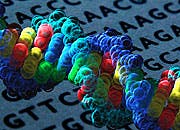
DNA: Nature's Hard Drive
(Repeat) The biotech tool CRISPR lets us do more than shuffle genes. Researchers have embedded an animated GIF into a living organism’s DNA, proving that the molecule is a great repository for information. This has encouraged speculation that DNA could be used by aliens to send messages. Meanwhile, nature has seized on this powerful storage system in surprising ways. Scientists have learned that the 98% of our genome – once dismissed as “junk” – contains valuable genetic treasure. Find out what project ENCODE is learning about the “dark genome.” Plus, how viruses became the original stealth coders, inserting their DNA into ancient bacteria and eventually leading to the development of CRISPR technology. Discover the potential of this powerful tool, from curing disease to making pig organs transplant-friendly, and the possible dark side of quick-and-easy gene editing. Guests: Paul Davies- Director of the Beyond Center for Fundamental Concepts in Science at Arizona State University Yin Shen- Assistant professor, Department of Neurology, Institute for Human Genetics, University of California – San Francisco, member of ENCODE team Sam Sternberg- Assistant professor, Department of Biochemistry and Molecular Biophysics, Columbia University, and co-author of “A Crack in Creation: Gene Editing and the Unthinkable Power to Control Evolution” Hank Greely- Director, Center for Law and the Biosciences; Chair of the Steering Committee of the Center for Biomedical Ethics; and Director, Stanford Program in Neuroscience and Society Learn more about your ad choices. Visit megaphone.fm/adchoices

Angles of a Hack
(repeat) Changed your computer password recently? We all try to stay one step ahead of the hackers, but the fear factor is increasing. The risks can range from stolen social security numbers to sabotaging a national power grid. Sixty years ago, when hacking meant nosing around the telephone network, it seemed innocent enough. And not all modern hacking has criminal intent. Today, there are biohackers who experiment with implanted electronic devices to improve themselves, and geoengineers who propose to hack the climate. But in our efforts to cool an overheated planet, might we be going down a dangerous path? In this second of two episodes on hacking, the modern variations of “hacking,” and their consequences. Plus: when does hacking a system improve it? Learn more about your ad choices. Visit megaphone.fm/adchoices

Plan of a Hack
(repeat) Long before cyber criminals were stealing ATM passwords, phone phreaks were tapping into the telephone system. Their motivation was not monetary, but the thrill of defeating a complex, invisible network. Today “hacking” can apply to cyberwarfare, biological tinkering, or even geoengineering. Often it has negative connotations, but the original definition of “hacking” was something else. In this first of two episodes on hacking, we look at the original practitioners – the teenagers and mavericks who hacked Ma Bell for thrills - and the difference between hacking for fun and for profit. Guests: Phil Lapsley- Author of “Exploding the Phone: The Untold Story of the Teenagers and Outlaws Who Hacked Ma Bell” Learn more about your ad choices. Visit megaphone.fm/adchoices

Too Big To Prove
(Repeat) Celebrations are in order for the physicists who won the 2017 Nobel Prize, for the detection of gravitational waves. But the road to Stockholm was not easy. Unfolding over a century, it went from doubtful theory to daring experiments and even disrepute. 100 years is a major lag between a theory and its confirmation, and new ideas in physics may take even longer to prove. Why it may be your great, great grandchildren who witness the confirmation of string theory. Plus, the exciting insights that gravitational waves provide into the phenomena of our universe, beginning with black holes. And, physics has evolved - shouldn’t its rewards? A case for why the Nobel committee should honor collaborative groups rather than individuals, and the scientific breakthroughs it’s missed. Guests: Janna Levin- Physicist and astronomer at Barnard College at Columbia University, and the author of the story of LIGO, “Black Hole Blues and Other Songs from Outer Space.” Roland Pease- BBC reporter, producer, and host of “Science in Action.” David Gross- Theoretical physicist, string theorist, University of California, Santa Barbara, Kavli Institute for Theoretical Physics, winner, 2004 Nobel Prize in Physics. Learn more about your ad choices. Visit megaphone.fm/adchoices

It's In Material
(Repeat) Astronauts are made of the “right stuff,” but what about their spacesuits? NASA’s pressurized and helmeted onesies are remarkable, but they need updating if we’re to boldly go into deep space. Suiting up on Mars requires more manual flexibility, for example. Find out what innovative materials might be used to reboot the suit. Meanwhile, strange new materials are in the pipeline for use on terra firma: spider silk is kicking off the development of biological materials that are inspiring ultra-strong, economical, and entirely new fabrics. And, while flesh-eating bacteria may seem like an unlikely ally in materials science, your doctor might reach for them one day. The bacterium’s proteins are the inspiration for a medical molecular superglue. Plus, an overview of more innovative materials to come, from those that are 3D printed to self-healing concrete. Guests: Nicole Stott– Retired NASA astronaut, artist Dava Newman– Professor of Astronautics and Engineering Systems, Massachusetts Institute of Technology Andrew Dent– Vice President of Library and Materials Research, Material ConneXion Mark Howarth– Biochemist, Oxford University Mark Miodownik– Materials scientist, University College London, author of “Stuff Matters; Exploring the Marvelous Materials that Shape Our Man-Made World” Learn more about your ad choices. Visit megaphone.fm/adchoices

On Thin Ice
ENCORE Water is essential for life – that we know. But the honeycomb lattice that forms when you chill it to zero degrees Celsius is also inexorably intertwined with life. Ice is more than a repository for water that would otherwise raise sea levels. It’s part of Earth’s cooling system, a barrier preventing decaying organic matter from releasing methane gas, and a vault entombing ancient bacteria and other microbes. From the Arctic to the Antarctic, global ice is disappearing. Find out what’s at stake as atmospheric CO2 threatens frozen H2O. Guests: Peter Wadhams- Emeritus Professor of Ocean Physics at Cambridge University in the U.K. and the author of A Farewell to Ice: A Report from the Arctic Eric Rignot- Earth systems scientist, University of California, Irvine, senior research scientist, NASA Jet Propulsion Laboratory Åsmund Asdal- Biologist, Nordic Genetic Resource Center, coordinator for operations and management of the Svalbard Global Seed Vault, Svalbard, Norway John Priscu- Polar biologist, Montana State University Learn more about your ad choices. Visit megaphone.fm/adchoices

What Goes Around
ENCORE It’s not just tin cans and newspapers. One man says that, from a technical standpoint, everything can be recycled – cigarette butts, yoga mats, dirty diapers. Even radioactive waste. You name it, we can recycle it. But we choose not to. Find out why we don’t, and how we could do more. Plus, a solar-powered device that pulls water from the air – even desert air. And, something upon which life depends that seems dirt cheap, but can’t be replenished: soil. What happens when we pave over this living resource? Learn more about your ad choices. Visit megaphone.fm/adchoices

Frogs' Pants
ENCORE It’s one of the most bizarre biological experiments ever. In the 18th century, a scientist fitted a pair of tailor-made briefs on a male frog to determine the animal’s contribution to reproduction. The process of gestation was a mystery and scientists had some odd-ball theories. Today, a 5th grader can tell you how babies are made, but we still don’t know exactly what life is. In our quest to understand, we’re still at the frogs’ pants stage. Find out why conception took centuries to figure out. Also, why the 1970s Viking experiments, specifically designed to detect life on Mars, couldn’t give us a definitive answer. Plus, can knowing where life isn’t help define what it is? Take a tour of the world’s barren places. Guests: Jay Gallentine - Author of books about space and space history. Edward Dolnick - Author and former science writer at the Boston Globe. His book is The Seeds of Life: From Aristotle to Da Vinci, from Shark’s Teeth to Frogs’ Pants. Chris McKay - Planetary scientist, NASA Ames Research Center. Learn more about your ad choices. Visit megaphone.fm/adchoices

Perpetual Emotion Machine
ENCORE Get ready for compassionate computers that feel your pain, share your joy, and generally get where you’re coming from. Computers that can tell by your voice whether you’re pumped up or feeling down, or sense changes in heart rate, skin, or muscle tension to determine your mood. Empathetic electronics that you can relate to. But wait a minute – we don’t always relate to other humans. Our behavior can be impulsive and even self-sabotaging – our emotions are often conflicted and irrational. We cry when we’re happy. Frown when we’re pensive. A suite of factors, much of them out of our control, govern how we behave, from genes to hormones to childhood experience. One study says that all it takes for a defendant to receive a harsher sentence is a reduction in the presiding judge’s blood sugar. So grab a cookie, and find out how the heck we can build computers that understand us anyway. Guests: Rosalind Picard – Professor at the MIT Media Lab and co-founder of the companies Affectiva and Empatica. Robert Sapolsky – Professor of neuroscience at Stanford University, and author of Behave: The Biology of Humans at Our Best and Worst. Learn more about your ad choices. Visit megaphone.fm/adchoices
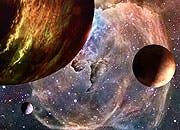
Imagining Planets
Pluto, we hardly knew ye. Well, not anymore! Until recently, Pluto and Mars were respectively the least-known and best-known planet-sized bodies in our Solar System. Thanks to the New Horizons spacecraft, our picture of Pluto has changed from a featureless dot to a place where we can name the geologic features. And with rovers and orbiters surveying the red planet, we now know much more about Mars than our parents ever did. Examining our planetary backyard has provided insight into the trillion other planets in our galaxy. Dive into a mountain lake and trek though the driest desert on Earth with a scientist who’s had not one but two near-fatal incidents in these extreme environments. Find out what questions compel her to keep returning. And scientists on the New Horizons mission remember why the nail-biting Pluto flyby almost failed at the last minute. Find out what surprises Pluto offered and what the mission might uncover as it heads to its next, outer solar-system target. Also, from Earth-like planets to super Earths and water worlds: a tour of some of Kepler’s most intriguing extrasolar planets. Guests: Nathalie Cabrol- Planetary scientist at the SETI Institute. Alan Stern- Principal Investigator for NASA’s New Horizon mission, and co-author with David Grinspoon of “Chasing New Horizons: Inside the Epic First Mission to Pluto.” David Grinspoon- Senior scientist at the Planetary Science Institute, and co-author with Alan Stern of “Chasing New Horizons: Inside the Epic First Mission to Pluto.” Jack Lissauer- Space scientist at the NASA Ames Research Center. Learn more about your ad choices. Visit megaphone.fm/adchoices

Time on Your Side
ENCORE Time passes like an arrow, but what if it flew like a boomerang? Scientists are learning how to reverse time’s most relentless march: aging. But before we rewind time, let’s try to define it, because there’s plenty of debate about just what time is – a fundamental component of the universe or a construct of our consciousness? Find out why, even though pondering the future may cause heartburn, mental time travel has an evolutionary survival advantage. Plus, your brain as a clock; why “brain age” may be more accurate than chronological age in determining lifespan. And while a million-dollar monetary prize hopes to inspire researchers to crack the aging code, one group claims they already have. By reprogramming special genes, they’ve reversed the biological clocks in mice. Find out when human trials begin. Guests: Dean Buonomano– Neurobiologist and psychologist at UCLA and author of “Your Brain is a Time Machine” James Cole– Postdoc studying neuroanatomy, Imperial College London Joon Yun– Radiologist, head of Palo Alto Investors and creator and sponsor of the Palo Alto Longevity prize Pradeep Reddy– Research Scientist at the Salk Institute in La Jolla, California Learn more about your ad choices. Visit megaphone.fm/adchoices

Your Brain's Reins
ENCORE You are your brain. But what happens when your brain changes for the worse – either by physical injury or experience? Are you still responsible for your actions? We hear how the case of a New York man charged with murder was one of the first to introduce neuroscience as evidence in court. Plus, how technology hooks us – a young man so addicted to video games, he lacked social skills, or even a desire to eat. Find out how technology designers conspire against his digital detox. Also, even if your brain is intact and your only task is choosing a sock color, are you really in control? How your unconscious directs even mundane behavior … and how you can outwit it. Guests: Kevin Davis – Author of The Brain Defense: Murder in Manhattan and the Dawn of Neuroscience in America’s Courtrooms Hilarie Cash – Co-founder and chief clinical officer of reSTART, an internet addiction recovery program Adam Alter – Assistant professor of marketing and psychology at New York University, Stern School of Business, and author of Irresistible: the Rise of Addictive Technology and the Business of Keeping Us Hooked Peter Vishton – Psychologist at the College of William and Mary in Williamsburg, Virginia Learn more about your ad choices. Visit megaphone.fm/adchoices

What Have You Got To Move
ENCORE Whether they swim, slither, jump, or fly, animal locomotion is more than just an urge to roam: it’s necessary for survival. Evolution has come up with ingenious schemes to get from here to there. Hear how backbones evolved as a consequence of fish needing to wag their fins, and why no animals have wheels. Motion is more than locomotion. Test the physics of movement in your kitchen and find out what popping corn has in common with the first steam engine. And while physics insists that atoms are always moving, find how what happens to these basic building blocks when placed in the coldest spot in the universe. The Cold Atom Laboratory chills material to nearly absolute zero, creating some weird superfluid effects as atoms slow down. Guests: Matt Wilkinson– Zoologist, science writer, University of Cambridge, author of Restless Creatures: The Story of Life in Ten Movements. Technology. Helen Czerski–physicist, University College London, author of Storm in a Teacup: The Physics of Everyday Life. Anita Sengupta– Aerospace Engineer and project manager of the Cold Atom Laboratory at NASA’S Jet Propulsion Lab. Learn more about your ad choices. Visit megaphone.fm/adchoices

Brain Dust
ENCORE Know your brain? Think again. Driven by a hidden agenda, powered by an indecipherable web of neurons, and influenced by other brains, your grey matter is a black box. To "know thyself" may be a challenge, and free will nonexistent, but maybe more technology can shed light on the goings on in your noggin, and the rest of your body. Find out how tiny implanted sensors called “brain dust” may reveal what really going on. Plus, the day when your brain is uploaded into a computer as ones and zeros. Will you still be you? Guests: David Eagleman – Neuroscientist, Stanford University, author of The Brain: the Story of You. Michel Maharbiz – Electrical engineer, University of California, Berkeley. Learn more about your ad choices. Visit megaphone.fm/adchoices

Skeptic Check: Your Inner Lab Coat
ENCORE Sherlock Holmes doesn’t have a science degree, yet he thinks rationally – like a scientist. You can too! Learn the secrets of being irritatingly logical from the most famous sleuth on Baker Street. Plus, discover why animal trackers 100,000 years ago may have been the first scientists, and what we can learn from about deductive reasoning from today’s African trackers. Also, the author of a book on teaching physics to your dog provides tips for unleashing your inner scientist, even if you hated science in school. And newly-minted scientists imagine classes they wish were available to them as grad students, such as “You Can’t Save the World 101.” Guests: Louis Liebenberg - Co-founder and Executive Director of Cybertracker Conservation, associate of human evolutionary biology, Harvard University Maria Konnikova - Psychologist, journalist and author of Mastermind: How to Think Like Sherlock Holmes. Her weekly blog on psychology is at com. Chad Orzel - Physicist and astronomer at Union College, and author of How to Teach Physics to Your Dog and Eureka: Discovering Your Inner Scientist And newly-minted scientists Michael Kemp, Toni Lyn Morelli, Ilona Kotlewska, and Yonatan Lipsitz First released February 9, 2015. Learn more about your ad choices. Visit megaphone.fm/adchoices

Quantum: Why We Want 'Em
ENCORE Einstein thought that quantum mechanics might be the end of physics, and most scientists felt sure it would never be useful. Today, everything from cell phones to LED lighting is completely dependent on the weird behavior described by quantum mechanics. But the story continues. Quantum computers may be millions of times faster than your laptop, and applying them to big data could be transformational for biology and health. Quantum entanglement – “spooky” action at a distance – may not allow faster-than-light communication, but could be important in other ways. And there’s even the suggestion that quantum mechanics defines the difference between life and death. Quantum physics. It’s weird and exotic. But it’s how the universe works. Guests: Seth Lloyd – Professor of Mechanical Engineering and Physics at the Massachusetts Institute of Technology Johnjoe McFadden – Lecturer at the University of Surrey, and co-author of Life on the Edge: The Coming of Age of Quantum Biology Michael Raymer – Professor of physics at the University of Oregon, and author of Quantum Physics: What Everyone Needs to Know. Learn more about your ad choices. Visit megaphone.fm/adchoices
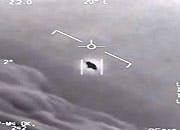
Skeptic Check: New UFO Evidence
It was a shocker of a story, splashed across the New York Times front page: The existence of a five-year long, hidden Pentagon investigation of UFOs. With one-third of the American public convinced that aliens are visiting Earth, could this study finally provide the proof? We consider how this story came to light and what the $22 million program has produced. Does the existence of a secret study mean there’s now decent proof of extraterrestrial craft in our skies? We take a look at the evidence made public so far. And why, six years after the study ended, are we learning about it now? Guests: James Oberg - Space journalist, historian and former NASA employee James McGaha - Retired Air Force pilot, astronomer and director of the Grasslands Observatory Ben Radford - Deputy editor of Skeptical Inquirer magazine and a Research Fellow with the Committee for Skeptical Inquiry Learn more about your ad choices. Visit megaphone.fm/adchoices

DIY Spaceflight
ENCORE For a half-century, space has been the playground of large, government agencies. While everyone could dream of becoming an astronaut, few could actually do so. Things have changed. We hear how a geeky son of immigrant parents incentivized the ground-breaking launch of SpaceShipOne, and spawned the commercial rocket industry. And while you’re waiting for a ticket to ride, why not build your own satellite to keep tabs on the kids or just check out the back forty? A CubeSat could be your next basement project. And the hitherto untold story of how black women mathematicians a half-century ago helped get a man into orbit, and astronauts to the moon. Guests: Margot Lee Shetterly – Author of Hidden Figures: The American Dream and the Untold Story of the Black Women Mathematicians Who Helped Win the Space Race. Simon “Pete” Worden – Chairman of the Breakthrough Prize Foundation and former Center Director of NASA Ames Research Center Julian Guthrie – Journalist and author of How to Make a Spaceship: A Band of Renegades, an Epic Race, and the Birth of Private Spaceflight Eddie Allison – Head of Aviation Services, Orbital Access Sean League – Cofounder and Spacecraft Engineering Director, SpaceFab.US John Gruener – Planetary Scientist, NASA Johnson Space Center, Houston Takanori Shibata – Chief Senior Research Scientist and Professor, National Institute for Advanced Industrial Science and Technology Learn more about your ad choices. Visit megaphone.fm/adchoices

Geology is Destiny
ENCORE The record of the rocks is not just the history of Earth; it’s your history too. Geologists can learn about events going back billions of years that influenced – and even made possible – our present-day existence and shaped our society. If the last Ice Age had been a bit warmer, the rivers and lakes of the Midwest would have been much farther north and the U.S. might still be a small country of 13 states. If some Mediterranean islands hadn’t twisted a bit, no roads would have led to Rome. Geology is big history, and the story is on-going. Human activity is changing the planet too, and has introduced its own geologic era, the Anthropocene. Will Earthlings of a hundred million years from now dig up our plastic refuse and study it the way we study dinosaur bones? Plus, the dodo had the bad luck to inhabit a small island and couldn’t adapt to human predators. But guess what? It wasn’t as dumb as you think. Guests: Walter Alvarez – Professor of Geology, University of California, Berkeley, and author of A Most Improbable Journey: A Big History of Our Planet and Ourselves David Grinspoon – Senior scientist at the Planetary Science Institute, and author of Earth in Human Hands: Shaping Our Planet’s Future Eugenia Gold – Instructor, Department of Anatomical Sciences, Stony Brook University Learn more about your ad choices. Visit megaphone.fm/adchoices

Are Animals Really That Smart?
ENCORE You own a cat, or is it vice versa? Family friendly felines have trained their owners to do their bidding. Thanks to a successful evolutionary adaptation, they rule your house. Find out how your cat has you wrapped around its paw. And it’s not the only animal to outwit us. Primatologist Frans de Waal shares the surprising intellectual capabilities of chimps, elephants, and bats. In fact, could it be that we’re simply not smart enough to see how smart animals are? Plus, the discovery of a fossilized dinosaur brain. Were those lumbering lizards more clever than we thought? Guests: Alex Liu – Paleontologist, University of Cambridge, U.K. Abigail Tucker – Author of The Lion in the Living Room: How Housecats Tamed Us and Took Over the World Frans de Waal – Primatologist, psychologist, Emory University, and author of Are We Smart Enough to Know How Smart Animals Are? Learn more about your ad choices. Visit megaphone.fm/adchoices

Weather Vain
ENCORE Everyone talks about the weather but no one does anything about it. Not that they haven’t tried. History is replete with attempts to control the weather, but we’d settle for an accurate seven-day forecast. Find out how sophisticated technology might improve accuracy, including predicting the behavior of severe storms. Plus, the age when “weather forecast” was a laughable idea, but why 19th century rebel scientists pursued it anyway. Also, a meteorologist who was falsely claimed to have “solved” the mystery of the Bermuda Triangle, and a climate scientist recounts the history of trying to control the weather, and the potential future of geoengineering. Guests: Cliff Mass – Professor of atmospheric sciences at the University of Washington. Peter Moore – Author of “The Weather Experiment: The Pioneers Who Sought to See the Future.” Steven Miller – Meteorologist, Colorado State University Cooperative Institute for Research in the Atmosphere. Alan Robock – Meteorologist and climatologist, Department of Environmental Sciences at Rutgers University, IPCC lead author. Learn more about your ad choices. Visit megaphone.fm/adchoices

DIY Diagnosis
ENCORE Got aches and pains? Critters in the Cretaceous would have been sympathetic. A new study reveals that painful arthritis plagued a duck-billed dinosaur. Scientists impressively diagnosed the animal’s condition without a house call by examining its 70 million-year old bones. The technology we use for health diagnoses are becoming so sophisticated, some people are prompted to bypass doctors and do it themselves. Meet a man who had his genome sequenced and then had all 70 gigabytes delivered directly to him so that he could gauge his genetic health. Also, practitioners who are trying to improve cognitive function using a battery and a few wires. Find out the possible risks and benefits of DIY brain stimulation. Guests: Jennifer Anne - Recent graduate, University of Manchester, studies injuries and diseases in dinosaurs. Carl Zimmer - Science writer, author. National correspondent for STAT, an online magazine that reports on the frontiers of science and medicine. His weekly column “Matter,” appears in the New York Times. Peter Simpson-Young - A graduate student at the University of Sydney studying neuroscience. Anna Wexler - Neuroethicist and PhD candidate in the History, Anthropology, Science, Technology and Society program at MIT. Learn more about your ad choices. Visit megaphone.fm/adchoices
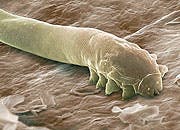
With All Our Mites
ENCORE You are not alone. You can’t see ‘em, but your face is a festival of face mites. They’ve evolved with us for millennia. And a new study finds that hundreds of different tiny spiders, beetles, and – our favorite - book lice make your home theirs. But before you go bonkers with the disinfectant, consider: eradicating these critters may do more harm than good. Some are such close evolutionary partners with humans that they keep us healthy and can even reveal something about our ancestry. But then there are bed bugs. Pests without redemption. However, their newly-sequenced genome may help us end their nightly nuisances. And of course some microscopic critters are deadly. So when it comes to bugs: when do we accommodate and when do we attack? Guests: Michelle Trautwein – Curator of entomology, California Academy of Sciences Matt Bertone – Entomologist, North Carolina State University Joshua Benoit -- Insect molecular biologist, University of Cincinnati Thomas McDade – Biological anthropologist, Northwestern University Learn more about your ad choices. Visit megaphone.fm/adchoices

Time Travel Agents
Hey, let’s meet last week for coffee. Okay, we can’t meet in the past … yet. But could it be only a matter of time before we can? In an attempt to defy the grandfather paradox, scientists try sending a photon back in time to destroy itself. Also, find out how teleportation allows particles to instantaneously skip through space-time and why sending humans wouldn’t violate the laws of physics. But before you pack your bags for that instantaneous trip to Paris, we need to understand the nature of time. A physicist offers a testable theory and ponders how it bears on free will. Plus, feel as if time comes to a standstill when you’re standing in line? Tricks for altering your perception of time while you wait. Some businesses already use them on you. Guests: Richard Muller – Physicist, University of California Berkeley, author of “Now: The Physics of Time” Seth Lloyd – Professor of quantum mechanical engineering, M.I.T. Emma Bentley – contributor David Andrews – Author of, “Why Does the Other Line Always Move Faster?” Learn more about your ad choices. Visit megaphone.fm/adchoices

Skeptic Check: Nibiru! (Again!)
Will your calendar entry for November 19th be your last? Some people say yes, predicting a catastrophic collision between Earth and planet Nibiru on that date and the end of the world. But it won’t happen, because this hypothesized rogue world doesn’t exist. Nibiru’s malevolent disruptions have been foretold many times, most dramatically in 2012 and three times so far in 2017. But this year NASA issued a rare public assurance that doomsday was not in the offing. Find out why the agency decided to speak out. Meanwhile, hoaxes and alarmist stories from the 19th century demonstrate that we have a long history of being susceptible to hooey. Also, an astronomer who doesn’t believe that Nibiru is hiding in the outer Solar System, but that Planet X is. Guests: David Morrison – Astronomer and space scientist, NASA Ames Research Center Robert E. Bartholomew – Medical sociologist at Botany College, Auckland, New Zealand, and author of “A Colorful History of Popular Delusions” Michael Brown – Astronomer at the California Institute of Technology Learn more about your ad choices. Visit megaphone.fm/adchoices

Venom Diagram
We all get defensive sometimes. For some animals, evolution has provided a highly effective mechanism for saying “back off!”. A puncture by a pair of venom-filled fangs gets the point across nicely. But one animal’s poison may be another’s cure. Some dangerous critters churn out compounds that can be synthesized into life-saving drugs. Meet the spiny, fanged, and oozing creatures who could help defend us against such illnesses as hypertension and kidney disease. Plus, the King of Pain - a scientist who has been stung by more than 80 species of insects in his pursuit of a better understanding of venom’s biochemistry. Find out which winged stinger scored the highest on his pain index. And, why the drug we need most may come from the quietest members of the biosphere: turning to plants for a new generation of antibiotics. Guests: Owen Maercks – Co-owner, East Bay Vivarium, Berkeley, California Justin Schmidt – Entomologist, University of Arizona, author of “The Sting of the Wild: The Story of the Man Who Got Stung for Science” Christie Wilcox – author of “Venomous: How Earth’s Deadliest Creatures Mastered Biochemistry” Cassandra Quave – Ethnobotanist, assistant professor of dermatology, herbarium curator, Emory University Learn more about your ad choices. Visit megaphone.fm/adchoices

Sex Post Facto
Birds do it, bees do it, but humans may not do it for much longer. At least not for having children. Relying on sex to reproduce could be supplanted by making babies in the lab, where parents-to-be can select genomes that will ensure ideal physical and behavioral traits. Men hoping to be fathers should act sooner rather than later. These same advancements in biotechnology could allow women to fertilize their own eggs, making the need for male sperm obsolete. Meanwhile, some animals already reproduce asexually. Find out how female African bees can opt to shut out male bees intent on expanding the hive. Will engineering our offspring have a down side? Sex creates vital genetic diversity, as demonstrated by evolution of wild animals in urban areas. Find out how birds, rodents and insects use sex in the city to adapt and thrive. Guests: Menno Schilthuizen – Biologist and ecologist, at the Naturalis Biodiversity Center and Leiden University in The Netherlands. His New York Times op-ed, “Evolution is Happening Faster Than We Thought,” is here. Matthew Webster – Evolutionary biologist, Uppsala University, Sweden Hank Greely – Law professor and ethicist, Stanford University, who specializes in the ethical, legal and social implications of biomedical technologies. His book is “The End of Sex and The Future of Reproduction.” Learn more about your ad choices. Visit megaphone.fm/adchoices

On Defense
The military is a dangerous calling. But technology can help out, so researchers are constantly trying to make soldiers safer. Writer Mary Roach investigates how scientists studying so-called human factors are protecting troops from such aggressive foes as heat, noise, and fatigue. She also learns how bad odors were once considered a secret weapon. And while soldiers have long used camouflage to help them blend in, insects may be the original masters of disguise. A discovery in fossilized amber shows that a variety of bugs employed D.I.Y. camouflaging tricks 100 million years ago. But where is the defense race headed? The top-secret branch of the Pentagon whose job is to make tomorrow happen today has some ideas. A reporter shares DARPA’s plan for augmented super-soldiers. Plus, do we always need a technological boost to stay safe? Find out how your innate chemical defense system protects you. It’s an adrenaline rush! Guests: Mary Roach - Science reporter, author of “Grunt: The Curious Science of Humans at War” Michael Engel – Entomologist, invertebrate paleontologist, University of Kansas, and senior curator of its Natural History Museum Annie Jacobsen – Journalist, author of The Pentagon’s Brain: An Uncensored History of DARPA, America’s Top-Secret Military Research Agency Brian Hoffman – Professor of medicine, Harvard Medical School, author of Adrenaline Learn more about your ad choices. Visit megaphone.fm/adchoices

Skeptic Check: Aliens - The Evidence
Once again the aliens have landed … in theaters. It’s no spoiler to say that the latest cinematic sci-fi, Arrival, involves extraterrestrials visiting Earth. But for some folks, the film’s premise is hardly shocking. They’re convinced that the aliens have already come. But is there any proof that aliens are here now or that they landed long ago to, for example, help build the Egyptian pyramids? Meanwhile, SETI scientists are deploying their big antennas in an effort to establish that extraterrestrials exist far beyond Earth. Find out why – even if E.T. is out there – one scientist says making contact is a long shot, while another pioneering scientist involved in SETI remains hopeful … and could aliens be responsible for the peculiar behavior of two star systems now making the news? Guests: Ben Radford– Research Fellow with the Committee for Skeptical Inquiry and managing editor of “Skeptical Inquirer Science Magazine” Paul Davies– Physicist, Director of the Beyond Center at Arizona State University, and author of The Eerie Silence: Renewing Our Search for Alien Intelligence Jill Tarter– Scientist, Board member, and Bernard M. Oliver Chair for SETI, SETI Institute Learn more about your ad choices. Visit megaphone.fm/adchoices

Born Legacy
We know how the stars shine, but how do you make a star? We take an all-night ride on a high-flying jet – an airborne observatory called SOFIA – to watch astronomers investigate how a star is born. As for how the universe was born, we know about the Big Bang but modern physics suggests that similar cosmic explosions may be happening all the time, and even hint that we could – in principle – create a new universe in a laboratory. What does this mean, and how could we do it? From stars to universes, how it all came to be. Guests: Zeeya Merali– Journalist and editor for the Foundational Questions Institute, author of A Big Bang in a Little Room: The Quest to Create New Universes Nick Veronico– Manager of SOFIA Communications for NASA Ames Research Center and Universities Space Research Association Felix Reimann– Freelance photographer Huub Rottgering– Director of Leiden Observatory, The Netherlands Dietmar Lilienthal– Manager, DLR SOFIA Institute, Germany Cornelia Pabst– Astronomer, Leiden Observatory, The Netherlands Charlie Kaminski– Engineering and Maintenance Manager, SOFIA David McAllister– Deputy Program Manager for Operations, SOFIA, NASA Armstrong Flight Research Center Learn more about your ad choices. Visit megaphone.fm/adchoices

Elements Never Forget
It’s elementary, Watson. Things are in flux – from the elements in the air you breathe to party balloons. We investigate the massive, historic loss of nitrogen from the atmosphere and meet the culprits behind a modern-day helium shortage. But it’s not all a disappearing act: be thankful that oxygen showed up in our atmosphere a few billion years ago. Meanwhile, atom smashers have recently produced some new elements. Their appearance was brief, but long enough to fill out the periodic table. And perhaps the tastiest use of an element – one that gives Seth a chilly reception. Guests: Inna Vishik – Postdoctoral fellow in physics at MIT Roland Pease – Science reporter in the U.K. Mark Stoyer – Nuclear chemist, Lawrence Livermore National Laboratory Learn more about your ad choices. Visit megaphone.fm/adchoices

Musical Universe
In space, no one can hear you scream, but, using the right instruments, scientists can pick up all types of cosmic vibrations – the sort we can turn into sound. After a decade of listening, LIGO, a billion-dollar physics experiment, has detected gravitational waves caused by the collision of massive black holes, a brief shaking of spacetime that can be translated into a short squeal. We listen to the chirp of black holes crashing into each other and wonder: could the universe contain more than individual sounds, but have actual musical structure? A theoretical physicist and jazz saxophonist updates the ancient philosophical concept of the Music of the Spheres to probe the most vexing questions confronting modern cosmology. Find out how the evolution of the universe resembles an improvisational jazz piece, and the musical inspiration John Coltrane drew from Albert Einstein. Guests: Janna Levin – Physicist, astronomer, Barnard College at Columbia University, author of “Black Hole Blues and Other Songs from Outer Space” Stephon Alexander - Professor of physics, Brown University, author of “The Jazz of Physics: The Secret Link Between Music and the Structure of the Universe” Learn more about your ad choices. Visit megaphone.fm/adchoices
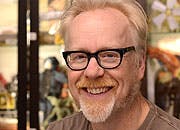
Skeptic Check: Busting Myths with Adam Savage
Can an opera singer’s voice really shatter glass? Can you give your car a rocket-assisted boost and survive the test drive? How do you protect yourself from a shark attack? Those are among the many intriguing questions and urban legends tested by the MythBusters team in front of the camera. Now that the series has ended after a 16 year run, co-host Adam Savage tells us how it all began, how he and Jamie Hyneman walked the line between science and entertainment, and why he considers himself a scientist but not a “skeptic.” Also, he reveals the location of the episode, “Duct Tape Island.” Guests: Adam Savage - Former co-host and executive producer of MythBusters Learn more about your ad choices. Visit megaphone.fm/adchoices

Caught in a Traps
"Locked and loaded” is how one scientist recently described the San Andreas fault. Find out when this famous west-coast rift might cause “the big one;” also, the state of early earthquake warning systems. Plus, another sign of our planet’s unceasing turmoil: volcanos! Could the eruption that produced the Deccan Traps, and not a rock from space, have been the nail in the coffin for the dinosaurs? One seismologist shares new evidence about some suspicious timing. And, the man who was the first to take the temperature of lava, established the Hawaiian Volcano Observatory, and essentially pioneered the field of volcanology a century ago is nearly lost to history. A scientist rescues fellow volcanologist Thomas Jagger from obscurity. Guests: Tom Jordan – Seismologist, director, Southern California Earthquake Center, University of Southern California Mark Richards – Professor of earth and planetary science, University of California, Berkeley John Dvorak - Volcanologist who worked with the United States Geological Survey for 16 years, author, “The Last Volcano: A Man, A Romance, and the Quest to Understand Nature’s Most Magnificent Fury” Learn more about your ad choices. Visit megaphone.fm/adchoices

Eclipsing All Other Shows
They say that the experience of watching a total eclipse is so profound, you’re not the same afterward. If life-changing events are your thing and you’re in the lower 48 states on August 21st, let us help you make the most of viewing the Great American Solar Eclipse. Learn the basics of where to be and what to bring, even on short notice. No eclipse glasses? Find out why a kitchen colander is an excellent Plan B. Also, the strange behavior of animals and private jet pilots during an eclipse. The latter is making the FAA sweat. Plus, how 1878 eclipse fever inspired Thomas Edison and astronomer Maria Mitchell, and what was at stake for them scientifically. And today, with astronauts able to view the Sun from space, what new science can we still learn by eclipse expeditions on Earth? And, NASA turns up the heat on solar studies with a probe to within a hair’s breadth of the Sun. Guests: David Baron - Author of “American Eclipse: A Nation’s Epic Race to Catch the Shadow of the Moon and Win the Glory of the World.” Andrew Fraknoi - Chair of the Astronomy Department, Foothill College. His latest book, for children: “When the Sun Goes Dark.” Jay Pasachoff - Professor of Astronomy, Williams College, chair of the International Astronomical Union Working Group on Solar Eclipses. Madhulika Guhathakurta - Astrophysicist, NASA Heliophysics Science Division and Program Scientist for the Solar Probe Plus mission. Learn more about your ad choices. Visit megaphone.fm/adchoices
Skeptic Check: How Low Can You Go?
Baby, it’s cold outside… but you still might want to be there. Some people claim that chilly temperatures are good for your health, and proponents of cryotherapy suggest you have a blast – of sub-zero air – to stave off wrinkles and perhaps halt aging altogether. Meanwhile the field of cryonics offers the ultimate benefit by suggesting that you put future plans – and your body – on ice when you die. That way you might be revived when the technology to do so is developed. So, will a chill wind blow you some good? Possibly, as scientists are discovering that the body can endure colder temperatures than previously thought. We examine the science of extreme cold and claims of its salubrious benefits. It’s our monthly look at critical thinking, Skeptic Check … but don’t take our word for it! Guests: Seth Abramovitch - Senior writer at the Hollywood Reporter Gordon Giesbrecht - Professor of thermal physiology, University of Manitoba, Winnipeg, Canada Grant Shoffstall - Sociologist, Williams College Learn more about your ad choices. Visit megaphone.fm/adchoices