Big Picture Science
697 episodes — Page 7 of 14

Iron, Coal, Wood
Maybe you don’t remember the days of the earliest coal-fired stoves. They changed domestic life, and that changed society. We take you back to that era, and to millennia prior when iron was first smelt, and even earlier, when axe-handles were first fashioned from wood, as we explore how three essential materials profoundly transformed society. We were once excited about coal’s promise to provide cheap energy, and how iron would lead to indestructible bridges, ships, and buildings. But they also caused some unintended problems: destruction of forests, greenhouse gases and corrosion. Did we foresee where the use of wood, coal, and iron would lead? What lessons do they offer for our future? Guests: Jonathan Waldman – Author of Rust: The Longest War. Ruth Goodman – Historian of British social customs, presenter of a number of BBC television series, including Tudor Monastery Farm, and the author of The Domestic Revolution: How the Introduction of Coal into Victorian Homes Changed Everything. Roland Ennos – Professor of biological sciences at the University of Hull and author of The Age of Wood: Our Most Useful Material and the Construction of Civilization. Learn more about your ad choices. Visit megaphone.fm/adchoices

Skeptic Check: Shared Reality
One of the many shocking aspects of the Capitol attack was that it revealed how thoroughly the nation had cleaved into alternate realities. How did we get to this point? How did misinformation come to create beliefs embraced by millions? In this episode, experts in social media, cults, and the history of science join us for a discussion about how these alternative realities formed, why people are drawn to them, and the benefits of a shared reality. Guests: Joan Donovan – Research Director of the Shorenstein Center on Media, Politics and Public Policy in the John F. Kennedy School of Government at Harvard University, and leader of the Technology and Social Change Project. Lee McIntyre – Research fellow at the Center for Philosophy and History of Science at Boston University, Instructor in Ethics at Harvard Extension School, and author of “Post – Truth.” Steven Hassan – Mental health counselor who has written on the subject of mind control. Former member of the Unification Church, and author of “The Cult of Trump.” Learn more about your ad choices. Visit megaphone.fm/adchoices

Supercomputer Showdown (rebroadcast)
Do you have a hard-to-answer question? The Summit, Sierra, Trinity, Frontier, and Aurora supercomputers are built to tackle it. Summit tops the petaflop heap – at least for now. But Frontier and Aurora are catching up as they take aim at a new performance benchmark called exascale. So why do we need all this processing power? From climate modeling to personalized medicine, find out why the super-est computers are necessary to answer our biggest questions. But is the dark horse candidate, quantum computing, destined to leave classical computing in the dust? Guests: Katherine Riley - Director of Science, Argonne National Laboratory Jack Wells - Director of Science, Oak Ridge National Laboratory National Center for Computational Sciences Katie Bethea - Communications Team Lead, Oak Ridge Leadership Computing Facility, Oak Ridge National Laboratory Jeffrey Hawkins - Technologist and neuroscientist. Co-founder of Palm, Handspring and Numenta Eleanor Rieffel - Mathematician, NASA Ames Research Center, and co-author of “Quantum Supremacy Using a Programmable Superconducting Processor,” published in Nature magazine Originally aired November 4, 2019 Learn more about your ad choices. Visit megaphone.fm/adchoices

Skeptic Check: Betting on Pseudoscience (rebroadcast)
Psychics may not be able to predict the future or sense your thoughts. Nonetheless, they rake in hundreds of millions of dollars every year. But the harm from pseudoscience can go far beyond your wallet – especially when it promotes unscientific treatments for serious disease. Find out what alarming discovery led one naturopath to quit her practice and why scientific ignorance is not bliss. It’s our regular look at critical thinking, but don’t take our word for it. Guests: Robert Palmer – Member of the Guerilla Skeptics on the Wikipedia editing team and columnist for the Skeptical Inquirer on-line magazine Lee McIntyre – Research fellow at the Center for Philosophy and History of Science at Boston University and lecturer on ethics at Harvard Extension School Britt Marie Hermes – Former naturopath doctor; now doctoral student in evolutionary genetics at the University of Kiel, Germany Originally aired November 25, 2019 Learn more about your ad choices. Visit megaphone.fm/adchoices

Headed for Trouble (rebroadcast)
The stone heads on Easter Island are an enduring mystery: why were they built and why were they abandoned and destroyed? The old ideas about cultural collapse are yielding to new ones based on careful investigation on the ground - but also from above. What surprising explanations have we found and are we off base to think that ancient societies such as the Easter Islanders or the classical Egyptians were, in the end, failures? Can what we learn from these histories help predict which societies will survive? Guests: James Grant Peterkin – Tour guide, resident, and British Honorary Consul on Easter Island Sarah Parcak – Archaeologist, Egyptologist, remote sensing expert, professor at the University of Alabama at Birmingham, and author of Archaeology from Space: How the Future Shapes Our Past Carl Lipo – Anthropologist and professor at Binghamton University, State University of New York Originally aired September 30, 2019 Learn more about your ad choices. Visit megaphone.fm/adchoices

For Good Measure (rebroadcast)
The reign of Le Grand K has come to an end. After 130 years, this hunk of metal sitting in a Parisian vault will no longer define the kilogram. The new kilogram mass will be defined by Planck’s constant, joining three other units for redefinition by fundamental constants. But as we measure with increasing precision – from cesium atomic clocks to gravity waves 1000th the width of a proton – is something fundamental lost along the way? Meanwhile, the BiPiSci team accepts the banana-measurement challenge. Guests: Jon Pratt – Mechanical engineer and engineer and Chief of the Quantum Measurement Division of the Physical Measurement Laboratory (PML) at the National Institute of Standards and Technology Wolfgang Ketterle – Physicist at MIT, Nobel Laureate Simon Winchester – Author of “The Perfectionists: How Precision Engineers Created the Modern World” Originally aired September 9, 2019 Learn more about your ad choices. Visit megaphone.fm/adchoices

Handling the Holidays (rebroadcast)
The stress of the holidays can make you want to hide under the covers with a warm cup of cocoa. From gift buying to family gatherings, the holidays can feel like being inside a pressure cooker. But don’t despair! Science can help make the holidays a little brighter, from some gift-giving tips from our animal friends to embracing pessimism before a challenging social event to stopping that annoying merry melody on repeat in your head. Guests: Adam South – Research assistant professor at the Cummings School of Veterinary Medicine at Tufts University Mitch Ratcliffe – CEO and publisher of Earth911 Julie Norem – Psychology professor at Wellesley College and author of “The Positive Power of Negative Thinking” Elizabeth Margulis – Music professor at Princeton University and author of “On Repeat: How Music Plays the Mind” Steve Ilardi – Clinical psychology associate professor at the University of Kansas. Read his paper on the effects of sugar here. Learn more about your ad choices. Visit megaphone.fm/adchoices

Fire Clouds and Ice-teroids
Small bodies will hit the big time next year; a sample return from asteroid Bennu and the launch of both the DART and Lucy missions could unravel puzzles about the formation of the solar system, as well teach us how to deflect any asteroids headed our way. Meanwhile, the Juno mission to Jupiter has shown us its hard-to-study poles, where swirling gas and magnetic fields rule. On Earth, warmer temperatures threaten peat bog biodiversity and the structure of the Arctic. And massive wildfires have sent soot circling the globe. They’re all highlights from the fall meeting of the American Geophysical Union. Guests: Steve Levin – Project Scientist for NASA’s Juno mission Christopher Fernandez – Research associate, Department of Forestry, Michigan State University Mike Fromm – Meteorologist, U.S. Naval Research Laboratory Nancy Chabot – Nancy Chabot is a planetary scientist at the Johns Hopkins Applied Physics Laboratory and DART mission coordination lead Tom Statler – Program scientist on the Lucy mission in the planetary science division and planetary defense coordination office at NASA headquarters in Washington, D.C. Learn more about your ad choices. Visit megaphone.fm/adchoices

Skeptic Check: Shroom with a View
Magic mushrooms – or psilocybin - may be associated with tripping hippies and Woodstock, but they are now being studied as new treatments for depression and neurodegenerative diseases like Alzheimer’s. Is this Age of Aquarius medicine or something that could really work? Plus, the centuries-long use of psychedelics by indigenous peoples, and a discovery in California’s Pinwheel Cave offers new clues about the relationship between hallucinogens and cave art. Guests: Merlin Sheldrake - Biologist and the author of Entangled Life: How Fungi Make our Worlds, Change our Minds and Shape our Futures. Albert Garcia-Romeu - Assistant professor in the Department of Psychiatry and Behavioral Sciences, Johns Hopkins University School of Medicine David Wayne Robinson - Archeologist in the School of Forensic and Applied Sciences, University of Central Lancashire, U.K. Sandra Hernandez - Tejon Indian Tribe spokesperson Learn more about your ad choices. Visit megaphone.fm/adchoices

Bare Bones
You may not feel that your skeleton does very much. But without it you’d be a limp bag of protoplasm, unable to move. And while you may regard bones as rigid and inert, they are living tissue. Bones are also time capsules, preserving much of your personal history. Find out how evolutionary biologists, forensic anthropologists, and even radiation scientists read them. And why won’t your dog stop gnawing on that bone? Guests: Brian Switek – Pen name of Riley Black, Author of “Skeleton Keys: the Secret Life of Bone.” Ann Ross – Forensic anthropologist at North Carolina State University. Her lab is the North Carolina Office of the Chief Medical Examiner for the North Carolina Department of Health and Human Services. Stanley Coren – Professor emeritus of psychology at the University of British Columbia, and author of many books about canine behavior including, “Why Does My Dog Act That Way?” Doug Brugge – Professor and chair of the Department of Public Health Sciences at the University of Connecticut School of Medicine Learn more about your ad choices. Visit megaphone.fm/adchoices

Into the Deep
Have you ever heard worms arguing? Deep-sea scientists use hydrophones to eavesdrop on “mouth-fighting worms.” It’s one of the many ways scientists are trying to catalog the diversity of the deep oceans — estimated to be comparable to a rainforest. But the clock is ticking. While vast expanses of the deep sea are still unexplored, mining companies are ready with dredging vehicles to strip mine the seafloor, potentially destroying rare and vulnerable ecosystems. Are we willing to eradicate an alien landscape that we haven’t yet visited? Guests: Craig McClain - deep-sea and evolutionary biologist and ecologist, Executive Director of the Louisiana Universities Marine Consortium. Steve Haddock - senior scientist at the Monetary Bay Aquarium Research Institute, and co-author of a New York Times op-ed about the dangers of mining. Emily Hall - marine chemist at the Mote Marine Laboratory, Sarasota, Florida Chong Chen - deep sea biologist with the Japan Agency for Marine-Earth Science and Technology (JAMSTEC) Learn more about your ad choices. Visit megaphone.fm/adchoices

Sex Post Facto (rebroadcast)
Birds do it, bees do it, but humans may not do it for much longer. At least not for having children. Relying on sex to reproduce could be supplanted by making babies in the lab, where parents-to-be can select genomes that will ensure ideal physical and behavioral traits. Men hoping to be fathers should act sooner rather than later. These same advancements in biotechnology could allow women to fertilize their own eggs, making the need for male sperm obsolete. Meanwhile, some animals already reproduce asexually. Find out how female African bees can opt to shut out male bees intent on expanding the hive. Will engineering our offspring have a down side? Sex creates vital genetic diversity, as demonstrated by evolution of wild animals in urban areas. Find out how birds, rodents and insects use sex in the city to adapt and thrive. Guests: Menno Schilthuizen – Biologist and ecologist, at the Naturalis Biodiversity Center and Leiden University in The Netherlands. His New York Times op-ed, “Evolution is Happening Faster Than We Thought,” is here. Matthew Webster – Evolutionary biologist, Uppsala University, Sweden Hank Greely – Law professor and ethicist, Stanford University, who specializes in the ethical, legal and social implications of biomedical technologies. His book is “The End of Sex and The Future of Reproduction.” Originally aired September 19, 2016 Learn more about your ad choices. Visit megaphone.fm/adchoices

Time Travel Agents (rebroadcast)
Hey, let’s meet last week for coffee. Okay, we can’t meet in the past… yet. But could it be only a matter of time before we can? In an attempt to defy the grandfather paradox, scientists try sending a photon back in time to destroy itself. Also, find out how teleportation allows particles to instantaneously skip through space-time and why sending humans wouldn’t violate the laws of physics. But before you pack your bags for that instantaneous trip to Paris, we need to understand the nature of time. A physicist offers a testable theory and ponders how it bears on free will. Plus, feel as if time comes to a standstill when you’re standing in line? Tricks for altering your perception of time while you wait. Some businesses already use them on you. Guests: Richard Muller – Physicist, University of California Berkeley, author of “Now: The Physics of Time” Seth Lloyd – Professor of quantum mechanical engineering, M.I.T. Emma Bentley – contributor David Andrews – Author of, “Why Does the Other Line Always Move Faster?” Originally aired October 17, 2016 Learn more about your ad choices. Visit megaphone.fm/adchoices

The Other Living World (rebroadcast)
Reason for hope is just one thing that ecologist Carl Safina can offer. He understands why many of us turn to nature to find solace during this stressful time. Safina studies the challenges facing the ultimate survival of many species, but also gives a portrait of animals from their point of view. He describes how diverse animals such as sperm whales, bear cubs, macaws, and chickens deal with uncertainty, and assert their quirky individuality while learning to become part of a community. So is it possible for us to reconnect not just with humanity, but also with the other living world? Guest: Carl Safina – An ecologist and McArthur Fellow who writes extensively about the human relationship with the natural world. He is the founding president of the Safina Center, a professor at Stony Brook University, and author of many books – most recently, “Becoming Wild: How Animal Cultures Raise Families, Create Beauty, and Achieve Peace” originally aired April 13, 2020 Learn more about your ad choices. Visit megaphone.fm/adchoices

Skeptic Check: Stay Skeptical
EWhether you call it hooey, codswallop, or malarky, misinformation is not what it used to be. It’s harder to spot now. New-school BS is often cloaked in the trappings of math, science, and statistics. Can you identify which tweets about a new COVID study are fraudulent? Plus, deceptive on-line advertisements that relentlessly beg for our attention. All in all, it’s a jungle out there. We have tips for getting through it. Guests: Carl Bergstrom – Evolutionary biologist at the University of Washington and author of “Calling Bullshit: The Art of Skepticism in a Data-Driven World.” Franziska Roesner – Associate Professor, Paul G. Allen School of Computer Science and Engineering, University of Washington Eric Zeng – Graduate student in the Paul G. Allen School of Computer Science and Engineering, University of Washington Learn more about your ad choices. Visit megaphone.fm/adchoices

What's a Few Degrees?
Brace yourself for heatwave “Lucifer.” Dangerous deadly heatwaves may soon be so common that we give them names, just like hurricanes. This is one of the dramatic consequences of just a few degrees rise in average temperatures. Also coming: Massive heat “blobs” that form in the oceans and damage marine life, and powerful windstorms called “derechos” pummeling the Midwest. Plus, are fungal pathogens adapting to hotter temperatures and breaching the 98.6 F thermal barrier that keeps them from infecting us? Guests: Kathy Baughman McLeod – director and senior vice president of the Adrienne Arsht-Rockefeller Foundation Resilience Center at The Atlantic Council Pippa Moore – Marine ecologist at Newcastle University in the U.K. Ted Derouin – Michigan farmer Jeff Dukes – Ecologist and director of Purdue Climate Change Research Center at Purdue University. Arturo Casadevall – Molecular microbiologist and immunologist at the Johns Hopkins School of Medicine Learn more about your ad choices. Visit megaphone.fm/adchoices

Geology is Destiny (rebroadcast)
The record of the rocks is not just the history of Earth; it’s your history too. Geologists can learn about events going back billions of years that influenced – and even made possible – our present-day existence and shaped our society. If the last Ice Age had been a bit warmer, the rivers and lakes of the Midwest would have been much farther north and the U.S. might still be a small country of 13 states. If some Mediterranean islands hadn’t twisted a bit, no roads would have led to Rome. Geology is big history, and the story is on-going. Human activity is changing the planet too, and has introduced its own geologic era, the Anthropocene. Will Earthlings of a hundred million years from now dig up our plastic refuse and study it the way we study dinosaur bones? Plus, the dodo had the bad luck to inhabit a small island and couldn’t adapt to human predators. But guess what? It wasn’t as dumb as you think. Guests: Walter Alvarez – Professor of Geology, University of California, Berkeley, and author of A Most Improbable Journey: A Big History of Our Planet and Ourselves Eugenia Gold – Instructor, Department of Anatomical Sciences, Stony Brook University David Grinspoon – Senior scientist at the Planetary Science Institute, and author of Earth in Human Hands: Shaping Our Planet’s Future Originally aired January 16, 2017 Learn more about your ad choices. Visit megaphone.fm/adchoices

Talk the Walk
Birds and bees do it … and so do fish. In a discovery that highlights the adaptive benefits of walking, scientists have discovered fish that can walk on land. Not fin-flap their bodies, mind you, but ambulate like reptiles. And speaking of which, new research shows that T Rex, the biggest reptile of them all, wasn’t a sprinter, but could be an efficient hunter by outwalking its prey. Find out the advantage of legging it, and how human bipedalism stacks up. Not only is walking good for our bodies and brains, but not walking can change your personality and adversely affect your health. Guests: Hans Larsson – Paleontologist and biologist, and Director of the Redpath Museum at McGill University in Montréal. Shane O’Mara – Neuroscientist and professor of experimental brain research at Trinity College Dublin. He is the author of “In Praise of Walking.” Brooke Flammang – Biologist at the New Jersey Institute of Technology. Learn more about your ad choices. Visit megaphone.fm/adchoices

Mycology Education
Beneath our feet is a living network just as complex and extensive as the root systems in a forest. Fungi, which evolved in the oceans, were among the first to colonize the barren continents more than a half-billion years ago. They paved the way for land plants, animals, and (eventually) you. Think beyond penicillin and pizza, and take a moment to consider these amazing organisms. Able to survive every major extinction, essential as Nature’s decomposers, and the basis of both ale and antibiotics, fungi are essential to life. And their behavior is so complex you’ll be wondering if we shouldn’t call them intelligent! Guest: Merlin Sheldrake – Biologist and the author of Entangled Life: How Fungi Make our Worlds, Change our Minds and Shape our Futures. Learn more about your ad choices. Visit megaphone.fm/adchoices

Hubble and Beyond
The universe is not just expanding; it’s accelerating. Supermassive black holes are hunkered down at the center of our galaxy and just about every other galaxy, too. We talk about these and other big discoveries of the Hubble Space Telescope, now in orbit for 30 years. But two new next-generation telescopes will soon be joining Hubble: the Nancy Grace Roman Space Telescope and the James Webb Space Telescope. Hear what cosmic puzzles they’ll address. Plus, life in a clean room while wearing a coverall “bunny suit”; what it takes to assemble a telescope. Guests: Meg Urry – Professor of physics and astronomy, Director of the Yale Center for Astronomy and Astrophysics, Yale University John Grunsfeld – Former NASA Associate Administrator, and astronaut Kenneth Harris – Senior Project Engineer, Aerospace Corporation Learn more about your ad choices. Visit megaphone.fm/adchoices

Life on Venus?
Have scientists found evidence of life on Venus? Known for its scorching temperatures and acidic atmosphere, Earth’s twin hardly seems a promising place for living things. But could a discovery of phosphine by researchers at MIT point to a high-altitude biosphere on this nearby world? Guests: Clara Sousa–Silva - Research scientist in MIT's Department of Earth, Atmospheric and Planetary Sciences. She and Sara Seager co-authored a paper in January 2020 titled, “Phosphine as a Biosignature Gas in Exoplanet Atmospheres” Sara Seager - Professor of physics and planetary science, Massachusetts Institute of Technology and author of “The Smallest Lights in the Universe” Nathalie Cabrol - Planetary Scientist and Director of the Cal Sagan Center at the SETI Institute David Grinspoon - Senior Scientist at the Planetary Science Institute, author of “Earth in Human Hands” Learn more about your ad choices. Visit megaphone.fm/adchoices
Space: Why Go There? (rebroadcast)
It takes a lot of energy and technology to leave terra firma. But why rocket into space when there’s so much to be done on Earth? From the practical usefulness of satellites to the thrill of exploring other worlds, let us count the ways. The launch of a NOAA weather satellite to join its twin provides unparalleled observation of storms, wildfires, and even lightning. Find out what it’s like to watch hurricanes form from space. Meanwhile, more than a dozen countries want their own satellites to help solve real-world problems, including tracking disease. Learn how one woman is helping make space accessible to everyone. Plus, now that we’ve completed our grand tour of the Solar System, which bodies are targets for return missions and which for human exploration? Guests: Sarah Cruddas – Space journalist, broadcaster, and author based in the U.K. Jamese Sims – GOES-R Project Manager at NOAA Danielle Wood – Assistant professor, MIT Media Lab, Director of the Space Enabled Research Group Jim Green – NASA Planetary Science Division Director Originally aired March 5, 2018 Learn more about your ad choices. Visit megaphone.fm/adchoices

Home Invasions
As we struggle to control a viral invader that moves silently across the globe and into its victims, we are also besieged by other invasions. Murder hornets have descended upon the Pacific Northwest, threatening the region’s honeybees. In Africa, locust swarms darken the sky. In this episode, we draw on a classic science fiction tale to examine the nature of invasions, and what prompts biology to go on the move. Guests: Peter Ksander – Associate professor at Reed College in the Department of Theater. Producer of the spring 2020 production of War of the Worlds Eva Licht – A senior at Reed College, and producer and director of War of the Worlds Chris Looney – Entomologist with the Washington State Department of Agriculture, where he manages its general entomology laboratory Nipun Basrur – Neurobiologist at The Rockefeller University Amy Maxmen – Reporter at the journal Nature, in which her story about pandemic war games appeared. Learn more about your ad choices. Visit megaphone.fm/adchoices

The X-Flies (rebroadcast)
Insect populations are declining. But before you say “good riddance,” consider that insects are the cornerstone of many ecosystems. They are dinner for numerous animal species and are essential pollinators. Mammals are loved, but they are not indispensable. Insects are. Meanwhile, marvel at the extraordinary capabilities of some insects. The zany aerial maneuvers of the fly are studied by pilots. And, contrary to the bad press, cockroaches are very clean creatures. Also, take a listen as we host some Madagascar hissing cockroaches in our studio (yes, they audibly hiss). Plus, how insects first evolved … and the challenges in controlling lethal ones. Are genetically-engineering mosquitoes the best way to combat malaria? Guests: Erica McAlister – Entomologist, Senior Curator of diptera in the Department of Entomology, Natural History Museum in London, author of “The Secret Life of Flies” Jessica Ware – Evolutionary biologist and entomologist at Rutgers University Anthony James – Vector biologist, University of California, Irvine Lauren Esposito – Arachnologist, California Academy of Sciences, San Francisco Originally aired March 19, 2018 Learn more about your ad choices. Visit megaphone.fm/adchoices

Skeptic Check: Worrier Mentality (rebroadcast)
Poisonous snakes, lightning strikes, a rogue rock from space. There are plenty of scary things to fret about, but are we burning adrenaline on the right ones? Stepping into the bathtub is more dangerous than flying from a statistical point of view, but no one signs up for “fear of showering” classes. Find out why we get tripped up by statistics, worry about the wrong things, and how the “intelligence trap” not only leads smart people to make dumb mistakes, but actually causes them to make more. Guests: Eric Chudler – Research associate professor, department of bioengineering, University of Washington, Seattle and co-author of “Worried: Science Investigates Some of Life’s Common Concerns” Lise Johnson – Director of the Basic Science Curriculum, Rocky Vista University, and co-author of “Worried: Science Investigates Some of Life’s Common Concerns” Willie Turner – Vice President of Operations at the Hiller Aviation Museum in San Carlos, CA Charles Wheelan – Senior Lecturer and Policy Fellow, Dartmouth College, and author of “Naked Statistics” David Robson – Commissioning Editor for the BBC and author of “The Intelligence Trap: Why Smart People Make Dumb Mistakes” Originally aired May 27, 2019 Learn more about your ad choices. Visit megaphone.fm/adchoices

Math's Paths (rebroadcast)
If you bake, you can appreciate math’s transformative properties. Admiring the stackable potato chip is to admire a hyperbolic sheet. Find out why there’s no need to fear math - you just need to think outside the cuboid. Also, how nature’s geometric shapes inspire the next generation of squishy robots and an argument for radically overhauling math class. The end point of these common factors is acute show that’s as fun as eating Pi. Guests: Eugenia Cheng – Scientist in Residence at the School of the Art Institute in Chicago, tenured at the School of Mathematics and Statistics at the University of Sheffield, and author of “How to Bake Pi” Shankar Venkataramani – Professor of math at the University of Arizona Steven Strogatz – Professor of applied mathematics at Cornell University and author of “Infinite Powers: How Calculus Reveals the Secrets of the Universe” Daniel Finkel – Mathematician and founder and director of operations at “Math for Love” Learn more about your ad choices. Visit megaphone.fm/adchoices

On Thin Ice (rebroadcast)
Water is essential for life – that we know. But the honeycomb lattice that forms when you chill it to zero degrees Celsius is also inexorably intertwined with life. Ice is more than a repository for water that would otherwise raise sea levels. It’s part of Earth’s cooling system, a barrier preventing decaying organic matter from releasing methane gas, and a vault entombing ancient bacteria and other microbes. From the Arctic to the Antarctic, global ice is disappearing. Find out what’s at stake as atmospheric CO2 threatens frozen H2O. Guests: Peter Wadhams- Emeritus Professor of Ocean Physics at Cambridge University in the U.K. and the author of A Farewell to Ice: A Report from the Arctic Eric Rignot- Earth systems scientist, University of California, Irving, senior research scientist, NASA Jet Propulsion Laboratory Åsmund Asdal- Biologist, Nordic Genetic Resource Center, coordinator for operations and management of the Svalbard Global Seed Vault, Svalbard, Norway John Priscu- Polar biologist, Montana State University Originally aired August 14, 2017 Learn more about your ad choices. Visit megaphone.fm/adchoices

Skeptic Check: Know-It-Alls
Think you’re some kind of expert? Join the club. It’s one thing to question authority; another to offer up your untrained self as its replacement. Rebellion may be a cherished expression of American individualism, but, from sidelining Dr. Fauci to hiding public health data, find out what we lose when we silence health experts and “go with our gut” during a pandemic. Plus, from ancestors to algorithms: how we’ve replaced credentialed experts with sketchy web sites and social media posts. Guests: Charles Piller – Investigative reporter for Science magazine Alison Galvani – Epidemiologist and Director of the Center for Infectious Disease Modeling and Analysis, at Yale University Tom Nichols – Professor, international affairs, U.S. Naval War College, and author of “The Death of Expertise: The Campaign Against Established Knowledge and Why it Matters” Alex Bentley – Anthropologist, University of Tennessee and author of “The Acceleration of Cultural Change: From Ancestors to Algorithms” Learn more about your ad choices. Visit megaphone.fm/adchoices

Something in the Air
Inhale. Now exhale. Notice anything different? Our response to the virus is changing the air in unexpected ways. A pandemic-driven pause on travel has produced clear skies and a world-wide air quality experiment. And a new study reveals that hundreds of tons of microplastics are raining down on us each day. But we can improve the quality of the breaths we do take; engineers have devised a high-tech mask that may kill coronavirus on contact. Plus, although you do it 25,000 times a day, you may not be breathing properly. Nose-breathing vs mouth breathing: getting the ins-and-outs of respiration. Guests: Janice Brahney - Environmental biogeochemist at Utah State University Sally Ng - Atmospheric scientist, chemical engineer at Georgia Tech. Chandan Sen - Professor, department of surgery, Indiana University School of Medicine. James Nestor - Author of “Breath: The New Science of a Lost Art.” Learn more about your ad choices. Visit megaphone.fm/adchoices

COVID Curiosities
COVID Curiosities Some dogs and cats have become sick with COVID. But it’s not just domestic critters that are vulnerable: zoo animals have fallen ill too. There’s more strange news about the pandemic, for example scientists who track the coronavirus in our sewage, and computer models that show that flushing the toilet can launch persistent, pathogenic plumes into the room. And scientists have warned the WHO that infectious virus remains airborne. Also, how a shortage of glass vials could delay the deployment of a vaccine. Guests: Yvette Johnson-Walker - Epidemiologist at the University of Illinois College of Veterinary Medicine, and affiliate faculty with the University of Chicago Illinois School of Public Health. Rolf Halden - Professor and Director of the Biodesign Center for Environmental Health Engineering at Arizona State University. Bryan Bzdek - Chemist, School of Chemistry, University of Bristol, U.K. Megan Molteni - Staff writer, “Wired.” Learn more about your ad choices. Visit megaphone.fm/adchoices

Creative Brains (Rebroadcast)
Your cat is smart, but its ability to choreograph a ballet or write computer code isn’t great. A lot of animals are industrious and clever, but humans are the only animal that is uniquely ingenious and creative. Neuroscientist David Eagleman and composer Anthony Brandt discuss how human creativity has reshaped the world. Find out what is going on in your brain when you write a novel, paint a watercolor, or build a whatchamacallit in your garage. But is Homo sapiens’ claim on creativity destined to be short-lived? Why both Eagleman and Brandt are prepared to step aside when artificial intelligence can do their jobs. Guests: Anthony Brandt – Professor of Composition and Theory, Rice University, and co-author of “The Runaway Species: How Human Creativity Remakes the World” David Eagleman – Neuroscientist, Stanford University, and co-author, “The Runaway Species: How Human Creativity Remakes the World” Originally aired February 5, 2018 Learn more about your ad choices. Visit megaphone.fm/adchoices

Animals Like Us (rebroadcast)
Laughing rats, sorrowful elephants, joyful chimpanzees. The more carefully we observe, and the more we learn about animals, the closer their emotional lives appear to resemble our own. Most would agree that we should minimize the physical suffering of animals, but should we give equal consideration to their emotional stress? Bioethicist Peter Singer weighs in. Meanwhile, captivity that may be ethical: How human-elephant teamwork in Asia may help protect an endangered species. Guests: Frans de Waal - Primatologist and biologist at Emory University; author of “Mama’s Last Hug: Animal Emotions and What They Tell Us About Ourselves.” Watch the video of Mama and Jan Van Hooff. Peter Singer – Philosopher, professor of bioethics at Princeton University. Jacob Shell - Professor of geography at Temple University, and author of “Giants of the Monsoon Forest: Living and Working with Elephants.” Kevin Schneider - Executive director of the Nonhuman Rights Project Originally aired June 24, 2019 Learn more about your ad choices. Visit megaphone.fm/adchoices

Let's Stick Together (rebroadcast)
Crowded subway driving you crazy? Sick of the marathon-length grocery store line? Wish you had a hovercraft to float over traffic? If you are itching to hightail it to an isolated cabin in the woods, remember, we evolved to be together. Humans are not only social, we’re driven to care for one another, even those outside our immediate family. We look at some of the reasons why this is so – from the increase in valuable communication within social groups to the power of the hormone oxytocin. Plus, how our willingness to tolerate anonymity, a condition which allows societies to grow, has a parallel in ant supercolonies. Guests: Adam Rutherford – Geneticist and author of “Humanimal: How Homo sapiensBecame Nature’s Most Paradoxical Creature – a New Evolutionary History” Patricia Churchland – Neurophilosopher, professor of philosophy emerita at the University of California San Diego, and author most recently of “Conscience: The Origins of Moral Intuition” Mark Moffett – Tropical biologist, Smithsonian Institution researcher, and author of “The Human Swarm: How Our Societies Arise, Thrive and Fall” originally aired July 22, 2019 Learn more about your ad choices. Visit megaphone.fm/adchoices

Skeptic Check: Data Bias (rebroadcast)
Sexist snow plowing? Data that guide everything from snow removal schedules to heart research often fail to consider gender. In these cases, “reference man” stands in for “average human.” Human bias also infects artificial intelligence, with speech recognition triggered only by male voices and facial recognition that can’t see black faces. We question the assumptions baked into these numbers and algorithms. Guests: Caroline Criado-Perez - Journalist and author of “Invisible Women: Data Bias in a World Designed for Men” Kade Crockford - Director of the Technology for Liberty Program at the ACLU of Massachusetts Amy Webb - Futurist, founder and CEO of the Future Today Institute, and author of “The Big Nine: How the Tech Titans and There Thinking Machines Could Warp Humanity Learn more about your ad choices. Visit megaphone.fm/adchoices

Race and COVID
While citizens take to the streets to protest racist violence, the pandemic has its own brutal inequities. Black, Latino, and Native American people are bearing the brunt of COVID illness and death. We look at the multitude of factors that contribute to this disparity, most of which existed long before the pandemic. Also, how the Cheyenne River Sioux tribe maintained their coronavirus safeguards in defiance of the South Dakota governor. And, the biological reasons why we categorize one another by skin color. Guests: Marcella Nunez Smith – Associate Professor of Medicine and of Epidemiology, Yale School of Medicine, Director, Equity Research and Innovation Center Utibe Essien – Assistant Professor of Medicine, University of Pittsburgh School of Medicine, and a Core Investigator, Center for Health Equity Research and Promotion, VA Pittsburgh Healthcare System Nina Jablonski – Anthropologist, paleobiologist at Pennsylvania State University and author of, “Skin: A Natural History,” and “Living Color: the Biological and Social Meaning of Skin Color.” Robert Sapolsky – Professor of neuroscience at Stanford University, and author of “Behave: The Biology of Humans at Our Best and Worst.” Harold Frazier – Chairman of the Cheyenne River Sioux tribe, South Dakota. The Cheyenne River Sioux Reservation COVID checkpoint on Highway 212 is featured in an article on Indianz.com. Learn more about your ad choices. Visit megaphone.fm/adchoices

Soap, Skin, Sleep
Some safeguards against COVID-19 don’t require a medical breakthrough. Catching sufficient Z’s makes for a healthy immune system. And, while you wash your hands for the umpteenth time, we'll explain how soap sends viruses down the drain. Plus, your body’s largest organ – skin – is your first line of defense against the pandemic and is also neglected because of it. Find out why we're suffering from "skin hunger" during this crisis. Guests: Cody Cassidy – Author, “Who Ate the First Oyster: The Extraordinary People Behind the Greatest Firsts in History.” Nina Jablonski – Anthropologist, paleobiologist at Pennsylvania State University and author of “Skin: A Natural History.” Eti Ben Simon – Neuroscientist and sleep researcher, Center for Human Sleep Science, University of California, Berkeley Learn more about your ad choices. Visit megaphone.fm/adchoices

Gained in Translation (rebroadcast)
Your virtual assistant is not without a sense of humor. Its repertoire includes the classic story involving a chicken and a road. But will Alexa laugh at your jokes? Will she groan at your puns? Telling jokes is one thing. Teaching a computer to recognize humor is another, because a clear definition of humor is lacking. But doing so is a step toward making more natural interactions with A.I. Find out what’s involved in tickling A.I.’s funny bone. Also, an interstellar communication challenge: Despite debate about the wisdom of transmitting messages to space, one group sends radio signals to E.T. anyway. Find out how they crafted a non-verbal message and what it contained. Plus, why using nuanced language to connive and scheme ultimately turned us into a more peaceful species. And yes, it’s all gouda: why melted cheese may be the cosmic message of peace we need. Guests: Julia Rayz – Computer scientist and associate professor at Purdue University’s Department of Computer and Information Technology Steve Adler – Mayor of Austin, Texas Doug Vakoch – Psychologist and president of the non-profit organization METI International Richard Wrangham – Biological anthropologist at Harvard University and author of “The Goodness Paradox: The Strange Relationship Between Virtue and Violence in Human Evolution” Originally aired April 22, 2019 Learn more about your ad choices. Visit megaphone.fm/adchoices

Vaccine, When?
It will be the shot heard ‘round the world, once it comes. But exactly when can we expect a COVID vaccine? We discuss timelines, how it would work, who’s involved, and the role of human challenge trials. Also, although he doesn’t consider himself brave, we do. Meet a Seattle volunteer enrolled in the first coronavirus vaccine trial. And, while we mount an elaborate defense against a formidable foe, scientists ask a surprising question: is a virus even alive? Guests: Nigel Brown – Emeritus Professor of Molecular Microbiology at the University of Edinburgh Ian Haydon – Public information specialist at the University of Washington, Seattle Bonnie Maldonado – Professor of Pediatrics and Infectious Diseases at the Stanford University School of Medicine Paul Offit – Head of the Vaccine Education Center, and chief of the Division of Infectious Diseases, at Children’s Hospital of Philadelphia Learn more about your ad choices. Visit megaphone.fm/adchoices

To the Bat Cave
To fight a pandemic, you need to first understand where a virus comes from. That quest takes disease ecologist Jon Epstein to gloomy caverns where bats hang out. There he checks up on hundreds of the animals as his team from the EcoHealth Alliance trace the origins of disease-causing viruses. But their important work is facing its own threat; the Trump administration recently terminated funding to the Alliance because of its collaboration with Chinese scientists. Hear how Dr. Epstein finds the viruses, what kind of human activity triggers outbreaks, and how science counters the unsubstantiated claim that the virus escaped from a lab. Guests: Jon Epstein – Veterinary epidemiologist with the nonprofit EcoHealth Alliance Meredith Wadman – Staff writer for the journal Science. Read her article about the cancellation of the NIH bat coronavirus grant. Learn more about your ad choices. Visit megaphone.fm/adchoices

Is Life Inevitable? (Rebroadcast)
A new theory about life’s origins updates Darwin’s warm little pond. Scientists say they’ve created the building blocks of biology in steaming hot springs. Meanwhile, we visit a NASA lab where scientists simulate deep-sea vent chemistry to produce the type of environment that might spawn life. Which site is best suited for producing biology from chemistry? Find out how the conditions of the early Earth were different from today, how meteors seeded Earth with organics, and a provocative idea that life arose as an inevitable consequence of matter shape-shifting to dissipate heat. Could physics be the driving force behind life’s emergence? Guests: Caleb Scharf – Director of Astrobiology at Columbia University, New York Laurie Barge – Research scientist in astrobiology at NASA’s Jet Propulsion Laboratory Bruce Damer – Research scientist in biomolecular engineering, University of California, Jeremy England – Physicist, Massachusetts Institute of Technology Learn more about your ad choices. Visit megaphone.fm/adchoices

Skeptic Check: Covid Conspiracy
Nature abhors a vacuum, but conspiracy theorists love one. While we wait for scientists to nail down the how and why of the coronavirus, opportunists have jumped into the void, peddling DIY testing kits and fake COVID cures like colloidal silver. They’ve even cooked up full-blown conspiracy theories about a lab-grown virus. Find out why this crisis has dished up more than the usual share of misinformation and hucksterism, and how these interfere with our ability to navigate it safely. Guests: Whitney Phillips - Professor of communication and rhetorical studies at Syracuse University, and author of three books, most recently You Are Here: A Field Guide for Navigating Polluted Information Joan Donovan - Research director at Harvard’s Shorenstein Center on Media, Politics and Public Policy Learn more about your ad choices. Visit megaphone.fm/adchoices

Treating the Virus
Treating the Virus It’s not like waiting for Godot, because he never arrived. A coronavirus vaccine will come. But it is still months away. Meanwhile, scientists are adding other weapons to our growing arsenal against this virus. The development of antibody tests, antibody cures, and antivirals offer hope that we can soon have the tools to battle those who’ve been sickened by the COVID-19 virus while we wait for the inoculation that will prevent it. Guests: Deepta Bhattacharya – Immunologist at the University of Arizona whose lab is making a coronavirus antibody test. Mark Denison – Professor of pathology, microbiology, and immunology, Vanderbilt University School of Medicine Learn more about your ad choices. Visit megaphone.fm/adchoices

The Other Living World
Reason for hope is just one thing that ecologist Carl Safina can offer. He understands why many of us turn to nature to find solace during this stressful time. Safina studies the challenges facing the ultimate survival of many species, but also gives a portrait of animals from their point of view. He describes how diverse animals such as sperm whales, bear cubs, macaws, and chickens deal with uncertainty, and assert their quirky individuality while learning to become part of a community. So is it possible for us to reconnect not just with humanity, but also with the other living world? Guest: Carl Safina – An ecologist and McArthur Fellow who writes extensively about the human relationship with the natural world. He is the founding president of the Safina Center, a professor at Stony Brook University, and author of many books – most recently, “Becoming Wild: How Animal Cultures Raise Families, Create Beauty, and Achieve Peace” Learn more about your ad choices. Visit megaphone.fm/adchoices

Zombies, Bigfoot, and Max Brooks
What do a zombie attack and a viral pandemic have in common? They are both frightening, mindless, and relentless in their assault. And both require preparedness. That’s why the author of “World War Z” – a story about a battle against zombies – lectures at West Point. Max Brooks has also recorded a public service announcement with his celebrated father, Mel Brooks, touting the importance of social distancing during the coronavirus pandemic. His newest novel portrays a different assailant: Bigfoot. Whether our enemy is the undead, a hirsute forest dweller, or an invisible virus, panic won’t help us survive. Find out what will. Guest: Max Brooks – Lecturer at West Point’s Modern War Institute. Author of “Zombie Survival Guide,” “World War Z,” and the forthcoming “Devolution.” Learn more about your ad choices. Visit megaphone.fm/adchoices
Let's Take a Paws
Humans aren’t the only animals stressed-out by social distancing. Narwhals send out echolocation clicks to locate their buddies and ease their loneliness. And a plant about to be chomped by a caterpillar knows that the world can be a scary place. In this episode, from dogs to narwhals to plants, we put aside human-centric stories to find out how other living creatures map their world, deal with stress, and communicate. Guests: Alexandra Horowitz – Dog cognition researcher, Barnard College, and author of "Being A Dog: Following the Dog Into a World of Smell.” Susanna Blackwell – Bio-acoustician with Greeneridge Sciences Simon Gilroy – Professor of botany, University of Wisconsin, Madison Learn more about your ad choices. Visit megaphone.fm/adchoices

How Bad Does It Have to Get?
“Climate change at warp speed” is the way one scientist described the coronavirus outbreak. In a show recorded before a live audience at the Seattle AAAS meeting, and co-presented with the BBC World Service, we discuss out how politics and psychology lead people to tune out inconvenient scientific findings even when the stakes are high – as well as what we can do about it. Guests: Roland Pease – BBC reporter, presenter of “Science in Action.” Lee McIntyre – Philosopher and Research Fellow at the Center for Philosophy and History of Science at Boston University and author of “The Scientific Attitude” and “Post-Truth” Reyhaneh Maktoufi – Civic Science Fellow with NOVA PBS at station WGBH, with a focus on science communication Learn more about your ad choices. Visit megaphone.fm/adchoices
It's In Material [rebroadcast]
Astronauts are made of the “right stuff,” but what about their spacesuits? NASA’s pressurized and helmeted onesies are remarkable, but they need updating if we’re to boldly go into deep space. Suiting up on Mars requires more manual flexibility, for example. Find out what innovative materials might be used to reboot the suit. Meanwhile, strange new materials are in the pipeline for use on terra firma: spider silk is kicking off the development of biological materials that are inspiring ultra-strong, economical, and entirely new fabrics. And, while flesh-eating bacteria may seem like an unlikely ally in materials science, your doctor might reach for them one day. The bacterium’s proteins are the inspiration for a medical molecular superglue. Plus, an overview of more innovative materials to come, from those that are 3D printed to self-healing concrete. Guests: Nicole Stott– Retired NASA astronaut, artist Dava Newman– Professor of Astronautics and Engineering Systems, Massachusetts Institute of Technology Andrew Dent– Vice President of Library and Materials Research, Material ConneXion Mark Howarth– Biochemist, Oxford University Mark Miodownik– Materials scientist, University College London, author of “Stuff Matters; Exploring the Marvelous Materials that Shape Our Man-Made World” Originally aired October 2, 2017 Learn more about your ad choices. Visit megaphone.fm/adchoices
Skeptic Check: Pandemic Fear
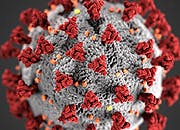
Contagion aside, coronavirus is a powerful little virus. It has prompted a global experiment in behavior modification: elbow bumps instead of handshakes, hand sanitizer and mask shortages, a gyrating stock market. Pragmatism motivates our behavior toward the spread of this virus, but so do fear and panic. In 1918, amplified fear made the Spanish Flu pandemic more deadly. Can we identify when we’re acting sensibly in the face of COVID-19, or when fear has hijacked our ability to think rationally and protect ourselves? Guests: Peter Hall - Professor of public health and health systems at the University of Waterloo David DeSteno - Social psychologist and professor of psychology at Northeastern University David Smith - Virologist and Head of the Division of Infectious Diseases and Global Public Health, University of California, San Diego John Barry - writer, adjunct faculty at the Tulane School of Tropical Medicine and author of The Great Influenza; The Story of the Deadliest Pandemic in History Learn more about your ad choices. Visit megaphone.fm/adchoices

DecodeHer [rebroadcast]
They were pioneers in their fields, yet their names are scarcely known – because they didn’t have a Y chromosome. We examine the accomplishments of two women who pioneered code breaking and astronomy during the early years of the twentieth century and did so in the face of social opprobrium and a frequently hostile work environment. Henrietta Leavitt measured the brightnesses of thousands of stars and discovered a way to gauge the distances to galaxies, a development that soon led to the concept of the Big Bang. Elizabeth Friedman, originally hired to test whether William Shakespeare really wrote his plays, was soon establishing the science of code breaking, essential to success in the two world wars. Also, the tech industry is overwhelmingly male. Girls Who Code is an initiative to redress the balance by introducing girls to computer programming, and encouraging them to follow careers in tech. Guests: Jason Fagone – Author of “The Woman Who Smashed Codes: A True Story of Love, Spies, and the Unlikely Heroine Who Outwitted America’s Enemies” Lauren Gunderson – Playwright of Silent Sky, which is being performed all over the world, form the First Folio Theatre to the Repertory Philippines Reshma Saujani – Founder and CEO of Girls Who Code, and the author of "Brave, Not Perfect: Fear Less, Fail More, and Live Bolder” Learn more about your ad choices. Visit megaphone.fm/adchoices

AI: Where Does it End?
The benefits of artificial intelligence are manifest and manifold, but can we recognize the drawbacks … and avoid them in time? In this episode, recorded before a live audience at the Seattle meeting of the American Association for the Advancement of Science, we discuss who is making the ethical decisions about how we use this powerful technology, and a proposal to create a Hippocratic Oath for AI researchers. Guests: Oren Etzioni - CEO of The Allen Institute for Artificial Intelligence Mark Hill - Professor of computer sciences at the University of Wisconsin, Madison, and chair of the Computing Community Consortium Learn more about your ad choices. Visit megaphone.fm/adchoices