Big Picture Science
697 episodes — Page 5 of 14

Melting Down (rebroadcast)
Climate change isn’t waiting for us to act. We’ve missed several deadlines to mitigate the dangers of this existential threat, which suggests we prefer to avert our gaze rather than deal with the problem. It’s similar to the way society reacts to an incoming comet in the movie “Don’t Look Up!” As a major Antarctic ice sheet shows signs of collapse, it’s no wonder we feel some “climate anxiety.” Can we leverage this emotion to spur action? That, and where hope lies, in this episode. Guests: Joellen Russell – Oceanographer and climate scientist at the University of Arizona Katie Mack – Professor of Theoretical Physics at North Carolina State University, and author of “The End of Everything (Astrophysically Speaking)” Jessica Tierney – Professor of Paleoclimatology at the University of Arizona Susan Clayton – Professor of Psychology and Environmental Studies, College of Wooster Originally aired February 21, 2022 Big Picture Science is part of the Airwave Media podcast network. Please contact [email protected] to inquire about advertising on Big Picture Science. You can get early access to ad-free versions of every episode by joining us on Patreon. Thanks for your support! Learn more about your ad choices. Visit megaphone.fm/adchoices

Coming to Our Animal Senses (rebroadcast)
Animals experience the world differently. There are insects that can see ultraviolet light, while some snakes can hunt in the dark thanks to their ability to sense infrared. Such differences are not restricted to vision: Elephants can hear subsonic sounds, birds navigate by magnetism, and your dog lives in a world marked by odors. In this episode, we speak to science journalist Ed Yong about how other creatures sense the world. Could we ever understand what it’s like to have the hearing of a bat or the sight of a hawk? Guest: Ed Yong – Science writer for The Atlantic whose coverage of the COVID-19 pandemic earned him a Pulitzer Prize in explanatory journalism. He is the author of, “An Immense World: How Animal Senses Reveal the Hidden Realms Around Us.” Originally aired September 5, 2022 Featuring music by Dewey Dellay and Jun Miyake Big Picture Science is part of the Airwave Media podcast network. Please contact [email protected] to inquire about advertising on Big Picture Science. Learn more about your ad choices. Visit megaphone.fm/adchoices

Webb Feat (rebroadcast)
The James Webb Space Telescope has turned its golden eye on the cosmos. The largest, most sensitive telescope put in space since the Hubble Space Telescope is already producing new photos of far-off galaxies and other cosmic phenomena. In this episode: astronomers share their reactions to these stunning images, the project scientist on JWST describes how infrared cameras capture phenomena that are invisible to shorter wavelengths, and a plan to investigate the very stardust that created everything, including you and me. Guests: Néstor Espinoza – Assistant astronomer, Space Telescope Science Institute, principal investigator for exoplanet atmospheric physics, James Webb Space Telescope Alyssa Pagan – Science Visuals Developer at the Space Telescope Science Institute John Mather – Nobel Prize-winning NASA astronomer and Senior Project Scientist for the James Webb Space Telescope Alex Filippenko – Professor of Astronomy at the University of California, Berkeley Originally aired August 8, 2022 Featuring music by Dewey Dellay and Jun Miyake Big Picture Science is part of the Airwave Media podcast network. Please contact [email protected] to inquire about advertising on Big Picture Science. You can get early access to ad-free versions of every episode by joining us on Patreon. Thanks for your support! Learn more about your ad choices. Visit megaphone.fm/adchoices

Skeptic Check: 5G (rebroadcast)
5G, the latest mobile network standard, is coming. As new cell towers sprout around the world, do we know enough to confidently claim that this new technology is safe? After all, older networking standards relied on microwaves, radiation which has wavelengths of inches to a foot or so. 5G operates at much higher frequencies, with millimeter wavelengths. Some are worried that being subjected to millimeter radiation could cause cancers. But what does science say? 5G: the promise and the perils. Guests: Jon Samet – Pulmonary physician, epidemiologist, and dean of the Colorado School of Public Health. Claire Parkinson – Scientist, NASA’s Goddard Space Flight Center Bob Berman – Astronomer, regular contributor to Astronomy Magazine, and author of “Zapped: From Infrared to X-Rays, the Curious History of Invisible Light” David Ropeik – Retired Harvard instructor and author of several books about the psychology of risk perception. Originally aired February 28, 2022 Featuring music by Dewey Dellay and Jun Miyake Big Picture Science is part of the Airwave Media podcast network. Please contact [email protected] to inquire about advertising on Big Picture Science. You can get early access to ad-free versions of every episode by joining us on Patreon. Thanks for your support! Learn more about your ad choices. Visit megaphone.fm/adchoices

Tomb with a View
A century ago, British archaeologist Howard Carter opened the only surviving intact tomb from ancient Egypt. Inside was the mummy of the boy king Tutankhamun, together with “wonderful things” including a solid gold mask. Treasure from King Tut’s crypt has been viewed both in person and virtually by many people since. We ask what about Egyptian civilization so captivates us, thousands of years later. Also, how new technology from modern physics allows researchers to “X-Ray” the pyramids to find hidden chambers. Guests: Emma Bentley – Postgraduate student in Archeology and Ancient Worlds at the University of Edinburgh in the U.K. Sarah Parcak – Archaeologist and Egyptologist, University of Alabama, and author of “Archaeology From Space: How the Future Shapes Our Past.” Richard Kouzes – Physicist at the Department of Energy’s Pacific Northwest National Laboratory. Salima Ikram – Professor of Egyptology at The American University in Cairo and head of the Animal Mummy Project at the Egyptian Museum in Cairo. Featuring music by Dewey Dellay and Jun Miyake Big Picture Science is part of the Airwave Media podcast network. Please contact [email protected] to inquire about advertising on Big Picture Science. You can get early access to ad-free versions of every episode by joining us on Patreon. Thanks for your support! Learn more about your ad choices. Visit megaphone.fm/adchoices

Keeping Humans in the Loop (rebroadcast)
Modern technology is great, but could we be losing control? As our world becomes more crowded and demands for resources are greater, some people worry about humanity’s uncertain prospects. An eminent cosmologist considers globe-altering developments such as climate change and artificial intelligence. Will we be able to stave off serious threats to our future? There’s also another possible source of danger: our trendy digital aids. We seem all-too-willing to let algorithms classify and define our wants, our needs, and our behavior. Instead of using technology, are we being used by it – to inadvertently become social media’s product? And while we may be skittish about the increased data our technology collects, one sci-fi writer imagines a future in which information is a pervasive and freely available commodity. Guests: Martin Rees – Cosmologist, astrophysicist, and Great Britain’s Astronomer Royal. Author of On the Future: Prospects for Humanity. Douglas Rushkoff – Media theorist and professor of media theory and digital economics, City University of New York. Author of Team Human. Malka Older – Author and humanitarian worker, author of The Centenal Cycle. Originally aired February 11, 2019 Big Picture Science is part of the Airwave Media podcast network. Please contact [email protected] to inquire about advertising on Big Picture Science. You can get early access to ad-free versions of every episode by joining us on Patreon. Thanks for your support! Learn more about your ad choices. Visit megaphone.fm/adchoices

Is Life Inevitable [rebroadcast]
A new theory about life’s origins updates Darwin’s warm little pond. Scientists say they’ve created the building blocks of biology in steaming hot springs. Meanwhile, we visit a NASA lab where scientists simulate deep-sea vent chemistry to produce the type of environment that might spawn life. Which site is best suited for producing biology from chemistry? Find out how the conditions of the early Earth were different from today, how meteors seeded Earth with organics, and a provocative idea that life arose as an inevitable consequence of matter shape-shifting to dissipate heat. Could physics be the driving force behind life’s emergence? Guests: Caleb Scharf – Director of Astrobiology at Columbia University, New York Laurie Barge – Research scientist in astrobiology at NASA’s Jet Propulsion Laboratory Bruce Damer – Research scientist in biomolecular engineering, University of California, Jeremy England – Physicist, Massachusetts Institute of Technology Originally aired May 13, 2019 Big Picture Science is part of the Airwave Media podcast network. Please contact [email protected] to inquire about advertising on Big Picture Science. You can get early access to ad-free versions of every episode by joining us on Patreon. Thanks for your support! Learn more about your ad choices. Visit megaphone.fm/adchoices

Vaccine Inequity
A radical plan could solve a historic global health inequity. Countries in the global south who waited for more than a year for ample supplies of Covid vaccines have banded together to make mRNA vaccines locally. If successful, they could end a dangerous dependency on wealthy nations and help stop pandemics before they start. In a special episode, supported by the Pulitzer Center, journalist Amy Maxmen shares her reporting from southern Africa about the inspiring project led by the WHO that’s made fast progress. But it could fail, and a global imbalance will remain, if Big Pharma has its way. Find out what’s at stake. Guests: Amy Maxmen - Award-winning science journalist, Edward R. Murrow press fellow at the Council on Foreign Relations and author of the Nature article, "The Radical Plan for Vaccine Equity" Petro Terblanche - Managing Director, Afrigen Biologics and Vaccines in Cape Town, South Africa Kondwani Charles Jambo - Senior Lecturer and immunologist at the Malawi-Liverpool-Wellcome Clinical Research Programme in Blantyre, Malawi Barney Graham - Former deputy director at the Vaccine Research Center at NIH and professor of medicine and microbiology immunology biochemistry at Morehouse School of Medicine Emile Hendricks - Research technologist at Afrigen Biologics and Vaccines in Cape Town, South Africa Achal Prabhala - Fellow at the Shuttleworth Foundation, Coordinator at AccessIBSA, a medicines-access initiative in Bengaluru, India Patrick Tippoo - Head of Science and Innovation at Biovac in Cape Town, South Africa, founding member of the African Vaccine Manufacturing Initiative (AVMI) Harrison Chauluka - chief of the Mkunda village in Malawi Agnes Joni - farmer in Chiradzulu, Malawi Prophet Dauda - translator and writer in Blantyre, Malawi Thanks to the Pulitzer Center for help supporting this episode of Big Picture Science Featuring music by Dewey Dellay and Jun Miyake Big Picture Science is part of the Airwave Media podcast network. Please contact [email protected] to inquire about advertising on Big Picture Science. You can get early access to ad-free versions of every episode by joining us on Patreon. Thanks for your support! Learn more about your ad choices. Visit megaphone.fm/adchoices

Your Inner Tree (rebroadcast)
Declining biodiversity is a problem as fraught as climate change. Loss of habitat, monoculture crops, and the damming of waterways all lead to massive species extinction. They tear at life’s delicate web, and threaten a balance established by four billion years of evolution. Can we reassess our relationship to Nature? We consider logging efforts that make elephants part of the work force, and how to leverage the cooperative behavior of trees. Becoming Nature’s ally, rather than its enemy. Guests: Suzanne Simard – Professor of Forest Ecology at the University of British Columbia and author of “Finding the Mother Tree: Discovering the Wisdom of the Forest.” Carl Safina – Professor of Nature and Humanity at Stony Brook University and founder of the Safina Center, and author of “Becoming Wild: How Animal Cultures Raise Families, Create Beauty, and Achieve Peace.” Jacob Shell – Professor of Geography and Urban Studies at Temple University, and author of “Giants of the Monsson Forest: Living and Working with Elephants.” Originally aired November 8, 2021 Featuring music by Dewey Dellay and Jun Miyake Big Picture Science is part of the Airwave Media podcast network. Please contact [email protected] to inquire about advertising on Big Picture Science. You can get early access to ad-free versions of every episode by joining us on Patreon. Thanks for your support! Learn more about your ad choices. Visit megaphone.fm/adchoices

Fuhgeddaboudit (rebroadcast)
A thousand years ago, most people didn’t own a single book. The only way to access knowledge was to consult their memory. But technology – from paper to hard drives – has permitted us to free our brains from remembering countless facts. Alphabetization and the simple filing cabinet have helped to systematize and save information we might need someday. But now that we can Google just about any subject, have we lost the ability to memorize information? Does this make our brains better or worse? Guests: Judith Flanders – Historian and author, most recently of A Place for Everything: The Curious History of Alphabetical Order Craig Robertson – Professor of Media Studies, Northeastern University and author of The Filing Cabinet: A Vertical History of Information David Eagleman – Neuroscientist and author, Stanford University Originally aired October 11, 2021 Featuring music by Dewey Dellay and Jun Miyake Big Picture Science is part of the Airwave Media podcast network. Please contact [email protected] to inquire about advertising on Big Picture Science. You can get early access to ad-free versions of every episode by joining us on Patreon. Thanks for your support! Learn more about your ad choices. Visit megaphone.fm/adchoices

Lady Parts
The Supreme Court’s ruling on Roe has ignited fierce debate about bodily autonomy. But it’s remarkable how little we know about female physiology. Find out what studies have been overlooked by science, and what has been recently learned. Plus, why studying women’s bodies means being able to say words like “vagina” without shame ... a researcher who is recreating a uterus in her lab to study endometriosis … and an overdue recognition of medical pioneer Dr. Rebecca Lee Crumpler. Guests: Melody T. McCloud - Obstetrician Gynecologist and Founder and Medical Director of Atlanta Women's Health Care; co-author of “Black Women's Wellness: Your ‘I've Got This!’ Guide to Health, Sex, and Phenomenal Living” Victoria Gall - Volunteer with the Friends of the Hyde Park Library and the Hyde Park Historical Society Rachel E. Gross - Science journalist and author of “Vagina Obscura: An Anatomical Voyage” Linda Griffith - Professor of Biological and Mechanical Engineering at M.I.T., Director of the Center for Gynepathology Research, and author of the Boston Globe article, “‘FemTech’ and a moonshot for menstruation science” Roshni Babal - Pediatric Asthma and Chronic Disease Program Coordinator at Boston Medical Center Perri Klass - Professor of Journalism and Pediatrics at New York University and Author of “The Best Medicine: How Science and Public Health Gave Children a Future” Featuring music by Dewey Dellay and Jun Miyake Big Picture Science is part of the Airwave Media podcast network. Please contact [email protected] to inquire about advertising on Big Picture Science. You can get early access to ad-free versions of every episode by joining us on Patreon. Thanks for your support! Learn more about your ad choices. Visit megaphone.fm/adchoices

Skeptic Check: AI Comes Alive
When a Google software engineer claimed that a piece of chatbot software was sentient, it was a major story. Just like your dog is sentient, could it be that some computer code – a chatbot system called LaMDA – has feelings? But was it truly sentient, or was it pulling algorithmic wool over our eyes? Were we simply being fooled by high-tech mimicry? In this, our regular look at critical thinking: Skeptic Check, we ask what is the evidence that this system is sentient. Also, even A.I. that’s not sentient can still be powerful – and that has serious implications. Guests: Blake Lemoine – Software engineer and artificial intelligence researcher Oren Etzioni – Emeritus Professor at the University of Washington, and former CEO at the Allen Institute for AI in Seattle Mark Coeckelbergh – Professor of Philosophy of Media and Technology, University of Vienna, and author of “Robot Ethics“ Featuring music by Dewey Dellay and Jun Miyake *Free 1-Year NordVPN Subscription* Click the link and enter the code to activate your free account! https://nordvpn.com/order/activate/ CODE: nord12mm5eytjnaAL2GJZSgL Big Picture Science is part of the Airwave Media podcast network. Please contact [email protected] to inquire about advertising on Big Picture Science. You can get early access to ad-free versions of every episode by joining us on Patreon. Thanks for your support! Learn more about your ad choices. Visit megaphone.fm/adchoices

The T-Rex Files
T-Rex is having an identity crisis. Rocking the world of paleontology is the claim that Rex was not one species, but actually three. It’s not the first time that this particular dino has forced us to revise our understanding of the past. The discovery of the first T-Rex fossil in the 19th century taught humanity a scary lesson: species eventually go extinct. If it happened to this seemingly invincible apex predator, it could happen to us too. Hear how the amateur fossil hunter Barnum Brown’s discovery of T-Rex changed our understanding of ourselves, and the epilogue to the dinosaur era: how our mammalian relatives survived the potential extinction bottleneck of an asteroid impact. Guests: Thomas Carr - Vertebrate paleontologist and Professor of Biology, Carthage College Peter Makovicky - Vertebrate paleontologist and Professor of paleontology in the Department of Earth and Environmental Sciences at the University of Minnesota David Randall - Author of “The Monster’s Bones: The Discovery of T Rex and How It Shook Our World” Steve Brusatte - Personal Chair of Paleontology and Evolution, University of Edinburgh. Author of “The Rise and Fall of the Dinosaurs” and, most recently, “The Rise and Reign of The Mammals” Featuring music by Dewey Dellay and Jun Miyake Big Picture Science is part of the Airwave Media podcast network. Please contact [email protected] to inquire about advertising on Big Picture Science. You can get early access to ad-free versions of every episode by joining us on Patreon. Thanks for your support! Learn more about your ad choices. Visit megaphone.fm/adchoices

Animals Being Jerks (rebroadcast)
They’re cute and cuddly. But they can also be obnoxious. Science writer Mary Roach has numerous tales about how our animal friends don’t always bow to their human overlords and behave the way we’d want. The resulting encounters, such as when gulls disrupt the Vatican’s Easter mass, make for amusing stories. But others, such as wolves threatening farmers’ livestock, can be tragic. We hear what happens at the messy crossroads of human and wildlife encounters. Guest: Mary Roach – Author of bestselling nonfiction books, most recently “Fuzz: When Nature Breaks the Law.” Originally aired September 13, 2021 Featuring music by Dewey Dellay and Jun Miyake Big Picture Science is part of the Airwave Media podcast network. Please contact [email protected] to inquire about advertising on Big Picture Science. You can get early access to ad-free versions of every episode by joining us on Patreon. Thanks for your support! Learn more about your ad choices. Visit megaphone.fm/adchoices

Phreaky Physics (rebroadcast)
It was a radical idea a century ago, when Einstein said space and time can be bent, and gravity was really geometry. We hear how his theories inspire young minds even today. At small scales, different rules apply: quantum mechanics and the Standard Model for particles. New experiments suggest that muons – cousins of the electron – may be telling us that the Standard Model is wrong. Also, where the physics of both the large and small apply, and why black holes have no hair. Guests: Hakeem Oluseyi – Astrophysicist, affiliated professor at George Mason University, and author of “A Quantum Life: My Unlikely Journey from the Street to the Stars” Janna Levin – Professor of physics and astronomy, Barnard College at Columbia University Mark Lancaster – Professor of particle physics, University of Manchester Originally aired August 16, 2021 Featuring music by Dewey Dellay and Jun Miyake Big Picture Science is part of the Airwave Media podcast network. Please contact [email protected] to inquire about advertising on Big Picture Science. You can get early access to ad-free versions of every episode by joining us on Patreon. Thanks for your support! Learn more about your ad choices. Visit megaphone.fm/adchoices

Skeptic Check: Data Bias (rebroadcast)
Sexist snow plowing? Data that guide everything from snow removal schedules to heart research often fail to consider gender. In these cases, “reference man” stands in for “average human.” Human bias also infects artificial intelligence, with speech recognition triggered only by male voices and facial recognition that can’t see black faces. We question the assumptions baked into these numbers and algorithms. Guests: Caroline Criado-Perez - Journalist and author of “Invisible Women: Data Bias in a World Designed for Men” Kade Crockford - Director of the Technology for Liberty Program at the ACLU of Massachusetts Amy Webb - Futurist, founder and CEO of the Future Today Institute, and author of “The Big Nine: How the Tech Titans and There Thinking Machines Could Warp Humanity” Originally aired September 2, 2019 Featuring opening theme by Jun Miyake Big Picture Science is part of the Airwave Media podcast network. Please contact [email protected] to inquire about advertising on Big Picture Science. Learn more about your ad choices. Visit megaphone.fm/adchoices
De-Permafrosting
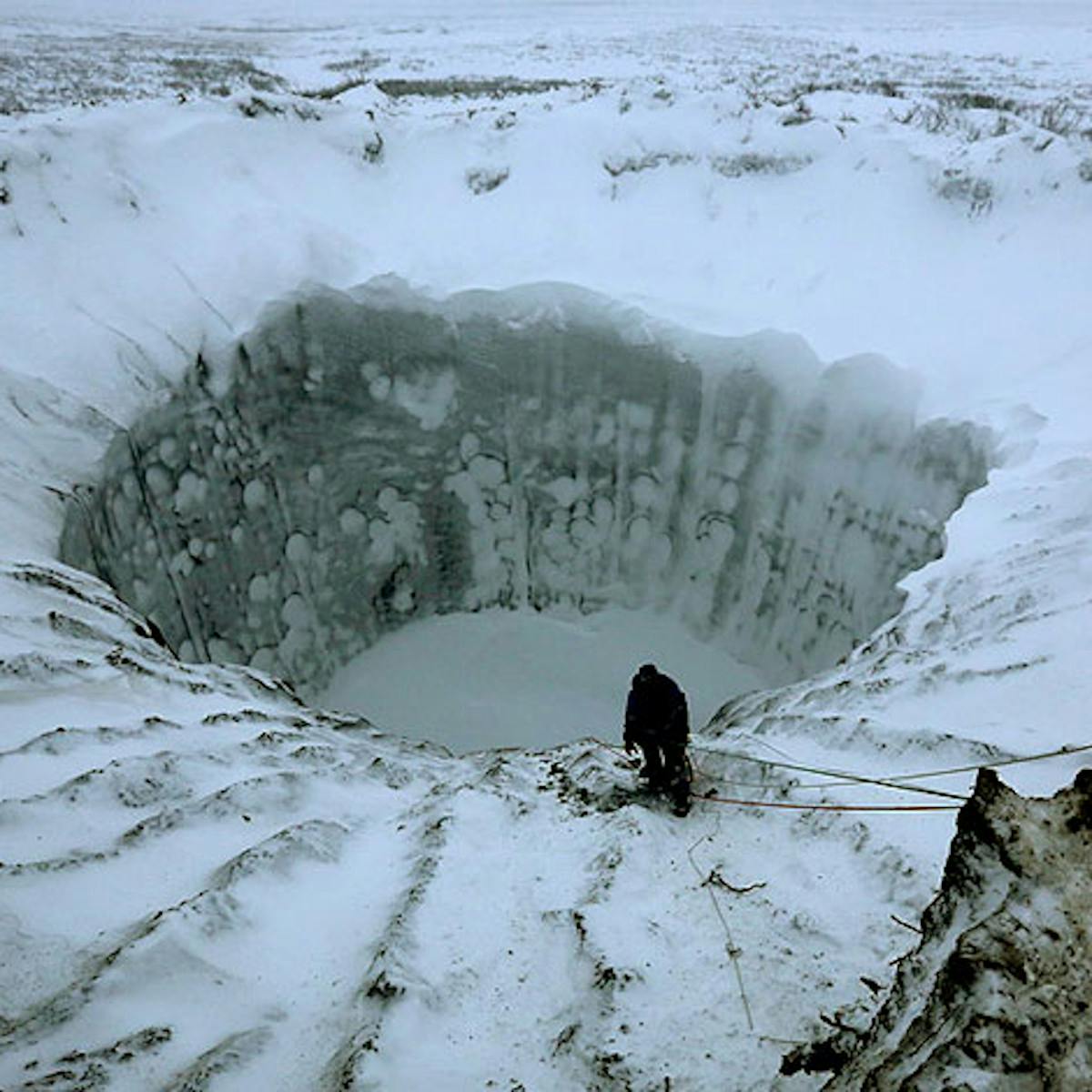
Above the Arctic Circle, much of the land is underlaid by permafrost. But climate change is causing it to thaw. This is not good news for the planet. As the carbon rich ground warms, microbes start to feast… releasing greenhouse gases that will warm the Earth even more. Another possible downside was envisioned by a science-fiction author. Could ancient pathogens–released from the permafrost’s icy grip–cause new pandemics? We investigate what happens when the far north defrosts. Guests: Jacquelyn Gill – Associate professor of paleoecology at the University of Maine. Jim Shepard – Novelist and short story writer, and teacher of English at Williams College, and author of “Phase Six.” Scott Saleska – Global change ecologist, professor of Ecology and Evolutionary Biology at the University of Arizona, and co-founder of IsoGenie. Originally aired September 6, 2021 Featuring music by Dewey Dellay and Jun Miyake Big Picture Science is part of the Airwave Media podcast network. Please contact [email protected] to inquire about advertising on Big Picture Science. You can get early access to ad-free versions of every episode by joining us on Patreon. Thanks for your support! Learn more about your ad choices. Visit megaphone.fm/adchoices

Like Lightning
Every second, lightning strikes 50 to 100 times somewhere. It can wreak havoc by starting wildfires and sometimes killing people. But lightning also produces a form of nitrogen that’s essential to vegetation. In this episode, we talk about the nature of these dramatic sparks. Ben Franklin established their electric origin, so what do we still not know? Also, why the frequency of lightning strikes is increasing in some parts of the world. And, what to do if you find someone hit by lightning. Guests: Thomas Yeadaker – Resident of Oakland, California Chris Davis – Medical doctor and Assistant Professor of Emergency Medicine at Wake Forest University and Medical Director for the National Center for Outdoor Adventure Education Jonathan Martin – Professor of Atmospheric and Oceanic Sciences, University of Wisconsin, Madison Steve Ackerman – Professor of Atmospheric and Oceanic Sciences, University of Wisconsin, Madison Peter Bieniek – Professor of Atmospheric and Space Science, University of Alaska, Fairbanks Featuring music by Dewey Dellay and Jun Miyake Big Picture Science is part of the Airwave Media podcast network. Please contact [email protected] to inquire about advertising on Big Picture Science. Learn more about your ad choices. Visit megaphone.fm/adchoices

Coming to Our Animal Senses
Animals experience the world differently. There are insects that can see ultraviolet light, while some snakes can hunt in the dark thanks to their ability to sense infrared. Such differences are not restricted to vision: Elephants can hear subsonic sounds, birds navigate by magnetism, and your dog lives in a world marked by odors. In this episode, we speak to science journalist Ed Yong about how other creatures sense the world. Could we ever understand what it’s like to have the hearing of a bat or the sight of a hawk? Guest: Ed Yong – Science writer for The Atlantic whose coverage of the COVID-19 pandemic earned him a Pulitzer Prize in explanatory journalism. He is the author of, “An Immense World: How Animal Senses Reveal the Hidden Realms Around Us.” Featuring music by Dewey Dellay and Jun Miyake Big Picture Science is part of the Airwave Media podcast network. Please contact [email protected] to inquire about advertising on Big Picture Science. Learn more about your ad choices. Visit megaphone.fm/adchoices

Skeptic Check: Heal Thyself (rebroadcast)
Do we still need doctors? There are umpteen alternative sources of medical advice, including endless and heartfelt health tips from people without medical degrees. Frankly, self-diagnosis with a health app is easier and cheaper than a trip to a clinic. Since we’re urged to be our own health advocate and seek second opinions, why not ask Alexa or consult with a celebrity about what ails us? Find out if you can trust these alternative medical advice platforms. Plus, lessons from an AIDS fighter about ignoring the findings of medical science. And, if AI can diagnose better than an MD, will we stop listening to doctors altogether? It’s our monthly look at critical thinking … but don’t take our word for it! Guests: Katherine Foley – Science and health reporter at Quartz, and author of the article “Alexa is a Terrible Doctor” Paul Offit – Professor of pediatrics at the Children’s Hospital of Philadelphia and the Perlman School of Medicine at the University of Pennsylvania, and author of “Bad Advice: Or Why Celebrities, Politicians, and Activists Aren’t Your Best Source of Health Information” Richard Marlink – Director Rutgers Global Health Institute. Shinjini Kundu – Research Fellow, University of Pittsburgh Medical Center Stuart Schlisserman – Internist, Palo Alto, California originally aired September 24, 2018 A special offer to Big Picture Science listeners: Receive 60% off the first month of a MEL Physics, MEL Chemistry or MEL STEM subscription. Just go to MELscience.com and use the promo code BPS or follow this link: https://melscience.com/sBI3/. Big Picture Science is part of the Airwave Media podcast network. Please contact [email protected] to inquire about advertising on Big Picture Science. You can get early access to ad-free versions of every episode by joining us on Patreon. Thanks for your support! Learn more about your ad choices. Visit megaphone.fm/adchoices
Platypus Crazy (rebroadcast)
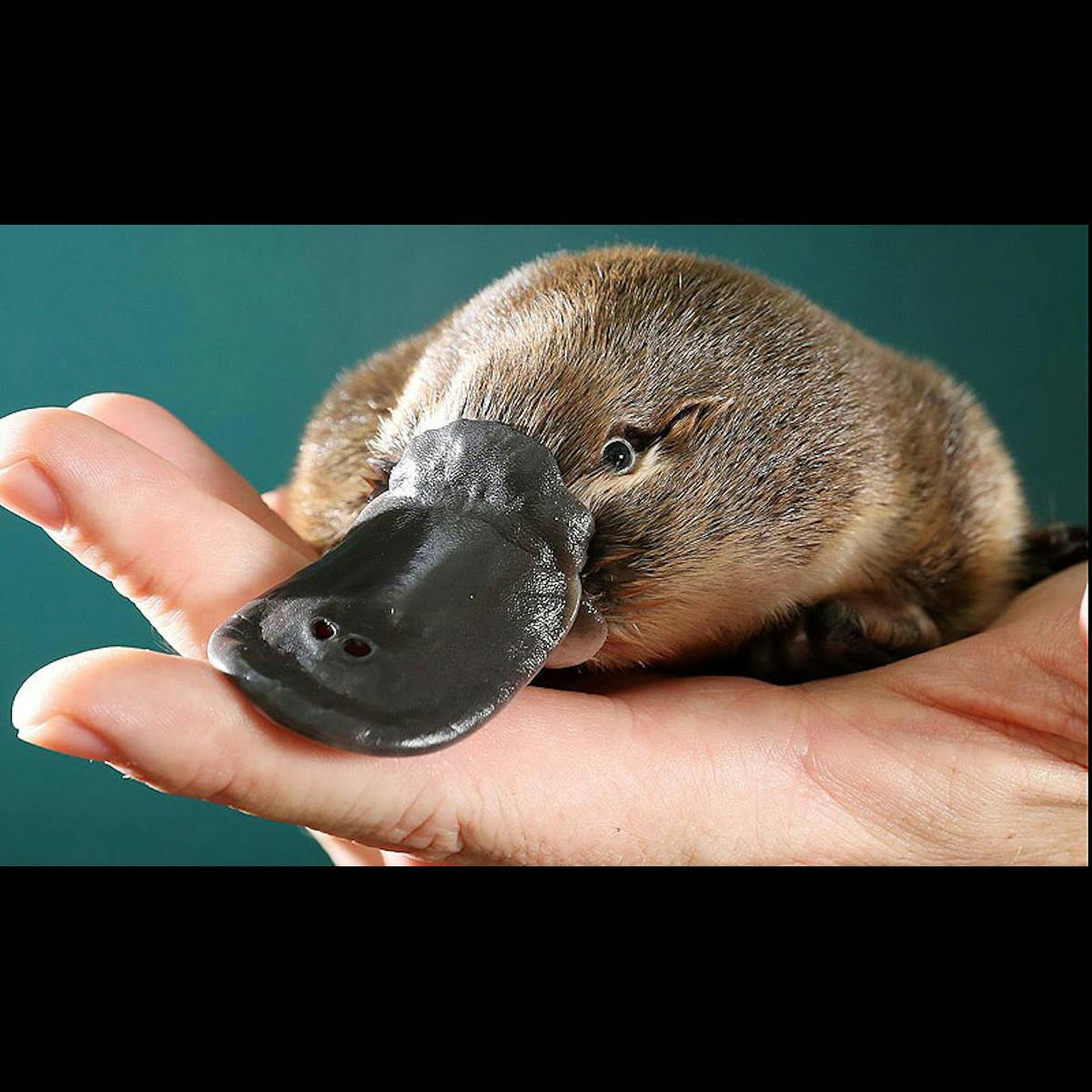
They look like a cross between a beaver and a duck, and they all live Down Under. The platypus may lay eggs, but is actually a distant mammalian cousin, one that we last saw, in an evolutionary sense, about 166 million years ago. Genetic sequencing is being used to trace that history, while scientists intensify their investigation of the habits and habitats of these appealing Frankencreatures; beginning by taking a census to see just how many are out there, and if their survival is under threat. Guests: Josh Griffiths – Senior Wildlife Ecologist at Cesaar Australia. Jane Fenelon – Research fellow, University of Melbourne Paula Anich – Professor of Natural Resources, Northland College Wes Warren – Professor of Genomics, University of Missouri Phoebe Meagher – Conservation Officer, Taronga Conservation Society, Australia Originally aired August 2, 2021 Featuring music by Dewey Dellay and Jun Miyake A special offer to Big Picture Science listeners: Receive 60% off the first month of a MEL Physics, MEL Chemistry or MEL STEM subscription. Just go to MELscience.com and use the promo code BPS or follow this link: https://melscience.com/sBI3/. You like science, that’s why you listen to Big Picture Science. So why not check out MEL science for your kids? Big Picture Science is part of the Airwave Media podcast network. Please contact [email protected] to inquire about advertising on Big Picture Science. You can get early access to ad-free versions of every episode by joining us on Patreon. Thanks for your support! Learn more about your ad choices. Visit megaphone.fm/adchoices

Rip Van Winkle Worm (rebroadcast)
Your shower pipes are alive. So are your sinks, books, and floorboards. New studies of our homes are revealing just what species live there – in the thousands, from bacteria to flies to millipedes. Meanwhile, life keeps surprising us by popping up in other unexpected places: the deep biosphere houses the majority of the world’s bacteria and the Arctic tundra has kept worms frozen, but alive, for 40,000 years. We embrace the multitude of life living on us, in us, and – as it turns out – in every possible ecological niche. Most of it is harmless, some is beneficial, and it’s all testament to the amazing diversity and adaptability of life. In addition, the hardiest organisms suggest where we might find life beyond Earth. Guests: Rob Dunn – Professor of applied ecology at North Carolina State University and at the Natural History Museum at the University of Copenhagen. Author of “Never Home Alone: From Microbes to Millipedes, Camel Crickets, and Honeybees, the Natural History of Where We Live.” Lynn Rothschild – Astrobiologist and synthetic biologist at the NASA Ames Research Center. Karen Lloyd – Environmental microbiologist and associate professor at the University of Tennessee. Originally aired January 21, 2019 Featuring music by Dewey Dellay and Jun Miyake A special offer to Big Picture Science listeners: Receive 60% off the first month of a MEL Physics, MEL Chemistry or MEL STEM subscription. Just go to MELscience.com and use the promo code BPS or follow this link: https://melscience.com/sBI3/. You like science, that’s why you listen to Big Picture Science. So why not check out MEL science for your kids? Big Picture Science is part of the Airwave Media podcast network. Please contact [email protected] to inquire about advertising on Big Picture Science. You can get early access to ad-free versions of every episode by joining us on Patreon. Thanks for your support! Learn more about your ad choices. Visit megaphone.fm/adchoices

Webb Feat
The James Webb Space Telescope has turned its golden eye on the cosmos. The largest, most sensitive telescope put in space since the Hubble Space Telescope is already producing new photos of far-off galaxies and other cosmic phenomena. In this episode: astronomers share their reactions to these stunning images, the project scientist on JWST describes how infrared cameras capture phenomena that are invisible to shorter wavelengths, and a plan to investigate the very stardust that created everything, including you and me. Guests: Néstor Espinoza – Assistant astronomer, Space Telescope Science Institute, principal investigator for exoplanet atmospheric physics, James Webb Space Telescope Alyssa Pagan – Science Visuals Developer at the Space Telescope Science Institute John Mather – Nobel Prize-winning NASA astronomer and Senior Project Scientist for the James Webb Space Telescope Alex Filippenko – Professor of Astronomy at the University of California, Berkeley Featuring music by Dewey Dellay and Jun Miyake A special offer to Big Picture Science listeners: Receive 60% off the first month of a MEL Physics, MEL Chemistry or MEL STEM subscription. Just go to MELscience.com and use the promo code BPS or follow this link: https://melscience.com/sBI3/. You like science, that’s why you listen to Big Picture Science. So why not check out MEL science for your kids? Big Picture Science is part of the Airwave Media podcast network. Please contact [email protected] to inquire about advertising on Big Picture Science. You can get early access to ad-free versions of every episode by joining us on Patreon. Thanks for your support! Learn more about your ad choices. Visit megaphone.fm/adchoices

Building a Space Colony
Ready to become a space emigre? For half a century, visionaries have been talking about our future off-Earth – a speculative scenario in which many of us live in space colonies. So why haven’t we built them? Will the plans of billionaire space entrepreneurs to build settlements on Mars, or orbiting habitats that would be only minutes away from Earth, revive our long-held spacefaring dreams? And is having millions of people living off-Earth a solution to our problems… or an escape from them? Guests: Marianne Dyson – Author and former NASA flight controller Emily St. John Mandel – Author, most recently of “Sea of Tranquility” John Adams – Deputy Director, Biosphere 2, University of Arizona Featuring music by Dewey Dellay and Jun Miyake Big Picture Science is part of the Airwave Media podcast network. Please contact [email protected] to inquire about advertising on Big Picture Science. You can get early access to ad-free versions of every episode by joining us on Patreon. Thanks for your support! Learn more about your ad choices. Visit megaphone.fm/adchoices

Skeptic Check: Shared Reality (rebroadcast)
One of the many shocking aspects of the Capitol attack was that it revealed how thoroughly the nation had cleaved into alternate realities. How did we get to this point? How did misinformation come to create beliefs embraced by millions? In this episode, experts in social media, cults, and the history of science join us for a discussion about how these alternative realities formed, why people are drawn to them, and the benefits of a shared reality. Guests: Joan Donovan – Research Director of the Shorenstein Center on Media, Politics and Public Policy in the John F. Kennedy School of Government at Harvard University, and leader of the Technology and Social Change Project. Lee McIntyre – Research fellow at the Center for Philosophy and History of Science at Boston University, Instructor in Ethics at Harvard Extension School, and author of “Post – Truth.” Steven Hassan – Mental health counselor who has written on the subject of mind control. Former member of the Unification Church, and author of “The Cult of Trump.” Originally aired January 25, 2021 Featuring music by Dewey Dellay and Jun Miyake Big Picture Science is part of the Airwave Media podcast network. Please contact [email protected] to inquire about advertising on Big Picture Science. You can get early access to ad-free versions of every episode by joining us on Patreon. Thanks for your support! Learn more about your ad choices. Visit megaphone.fm/adchoices

Sci-Fi From the Future (rebroadcast)
Are you ready to defer all your personal decision-making to machines? Polls show that most Americans are uneasy about the unchecked growth of artificial intelligence. The possible misuse of genetic engineering also makes us anxious. We all have a stake in the responsible development of science and technology, but fortunately, science fiction films can help. The movies Ex Machina and Jurassic Park suggest where A.I. and unfettered gene-tinkering could lead. But even less popular sci-fi movies can help us imagine unsettling scenarios regarding over-population, smart drugs, and human cloning. And not all tales are grim. The 1951 film, The Man in the White Suit, weaves a humorous story of materials science run amok. So, grab a bowl of popcorn and join us in contemplating the future of humanity as Hollywood sees it! Guest: Andrew Maynard – Physicist and professor at the School for the Future of Innovation in Society at Arizona State University, and author of Films from the Future: The Technology and Morality of Sci-Fi Movies. Featuring music by Dewey Dellay and Jun Miyake Big Picture Science is part of the Airwave Media podcast network. Please contact [email protected] to inquire about advertising on Big Picture Science. You can get early access to ad-free versions of every episode by joining us on Patreon. Thanks for your support! Learn more about your ad choices. Visit megaphone.fm/adchoices

Flush with Excitement (rebroadcast)
The toilet: A ubiquitous appliance that dates to the time of Shakespeare. But billions of people around the world still lack modern sanitation infrastructure. And the incentive to modernize includes the possibility that recycling human waste could help with conservation efforts, energy generation, and even medicine. Also, a sixth-grader puts lipstick on cats’ bottoms to map places their tush has touched, and in Michigan, why peeing on the peonies can be a good thing. Guests: Kaeden Henry – Sixth grade student in Tennessee. Kerry Griffin – Mother of Kaeden Henry; holds a doctorate in animal behavior. Yvette Johnson-Walker – Clinical Instructor in Veterinary Clinical Medicine, University of Illinois at Urbana-Champaign. Chelsea Wald – Science and environmental journalist, and author of Pipe Dreams: The Urgent Global Quest to Transform the Toilet. Nancy Love – Professor of Civil and Environmental Engineering, University of Michigan Originally aired Featuring music by Dewey Dellay and Jun Miyake Big Picture Science is part of the Airwave Media podcast network. Please contact [email protected] to inquire about advertising on Big Picture Science. You can get early access to ad-free versions of every episode by joining us on Patreon. Thanks for your support! Learn more about your ad choices. Visit megaphone.fm/adchoices

Feet Don't Fail Me (rebroadcast)
Standing on your own two feet isn’t easy. While many animals can momentarily balance on their hind legs, we’re the only critters, besides birds, for whom bipedalism is completely normal. Find out why, even though other animals are faster, we’re champions at getting around. Could it be that our upright stance made us human? Plus, why arches help stiffen feet, the argument for bare-footin’, and 12,000-year old footprints that tell a story about an Ice Age mother, her child, and a sloth. Guests: Daniel Lieberman – Professor of human evolutionary biology at Harvard University. Jeremy DeSilva – Professor in the departments of anthropology and biological sciences, Dartmouth College, and author of “First Steps: How Upright Walking Made Us Human.” Madhusudhan Venkadesan – Professor of mechanical engineering and materials science, Yale University School of Engineering. David Bustos – Chief of Resources at White Sands, National Park, New Mexico. Sally Reynolds – Paleontologist at Bournemouth University, U.K. Originally aired May 24, 2021 Featuring music by Dewey Dellay and Jun Miyake Big Picture Science is part of the Airwave Media podcast network. Please contact [email protected] to inquire about advertising on Big Picture Science. You can get early access to ad-free versions of every episode by joining us on Patreon. Thanks for your support! Learn more about your ad choices. Visit megaphone.fm/adchoices

Skeptic Check: Hypnosis
You are getting sleeeepy and open to suggestion. But is that how hypnotism works? And does it really open up a portal to the unconscious mind? Hypnotism can be an effective therapeutic tool, and some scientists suggest replacing opioids with hypnosis for pain relief. And yet, the performance aspect of hypnotism often seems at odds with the idea of it being an effective treatment. In our regular look at critical thinking, Skeptic Check, we ask what part of hypnotism is real and what is an illusion. Plus, we discuss how the swinging watch became hypnotism’s irksome trademark. Guests: David Spiegel – Professor of Psychiatry and Behavioral Sciences at the Stanford University School of Medicine Devin Terhune – Reader in the Department of Psychology, Goldsmiths University of London Featuring music by Dewey Dellay and Jun Miyake Graphic by Shannon Rose Geary Big Picture Science is part of the Airwave Media podcast network. Please contact [email protected] to inquire about advertising on Big Picture Science. You can get early access to ad-free versions of every episode by joining us on Patreon. Thanks for your support! Learn more about your ad choices. Visit megaphone.fm/adchoices

Fantastic-er Voyage
Thinking small can sometimes achieve big things. A new generation of diminutive robots can enter our bodies and deal with medical problems such as intestinal blockages. But do we really want them swimming inside us, even if they’re promising to help? You might change your mind when you hear what else is cruising through our bloodstream: microplastics! We take a trip into the human body, beginning with the story of those who first dared to open it up for medical purposes. But were the first surgeons really cavemen? Guests: Ira Rutkow – Surgeon and writer, and author of “Empire of the Scalpel: The History of Surgery” Dick Vethaak – Emeritus professor of ecotoxicology, water quality and health at the Vrije Universiteit Amsterdam (Free University, Amsterdam) in The Netherlands Li Zhang – Professor in the Department of Mechanical and Automation Engineering, The Chinese University of Hong Kong Michael LaBarbera – Professor in organismal biology, anatomy and geophysical sciences, University of Chicago Featuring music by Dewey Dellay and Jun Miyake This episode brought to you in part by DRAGON BALL Z: KAKAROT. Big Picture Science is part of the Airwave Media podcast network. Please contact [email protected] to inquire about advertising on Big Picture Science. You can get early access to ad-free versions of every episode by joining us on Patreon. Thanks for your support! Learn more about your ad choices. Visit megaphone.fm/adchoices

Dinosaurs' Last Gasp
Do we have physical evidence of the last day of the dinosaurs? We consider fossilized fish in South Dakota that may chronicle the dramatic events that took place when, 66 million years ago, a large asteroid slammed into the Gulf of Mexico and caused three-quarters of all species to disappear. Also, what new discoveries have paleontologists made about these charismatic animals, and the director of Jurassic World: Dominion talks about how his film hews to the latest science. Hint: feathers! It’s deep history, as we look at what happened as terrestrial life experienced its worst day ever. Guests: Colin Trevorrow – Director of Jurassic World: Dominion Riley Black – Science writer and author of “The Last Days of the Dinosaurs” Anusuya Chinsamy-Turan – Paleontologist at the University of Cape Town, South Africa This episode brought to you in part by DRAGON BALL Z: KAKAROT and Hero Wars. Learn more about Hero Wars at hero-wars.com Big Picture Science is part of the Airwave Media podcast network. Please contact [email protected] to inquire about advertising on Big Picture Science. You can get early access to ad-free versions of every episode by joining us on Patreon. Thanks for your support! Learn more about your ad choices. Visit megaphone.fm/adchoices

DNA is Not Destiny (rebroadcast)
Heredity was once thought to be straightforward. Genes were passed in an immutable path from parents to you, and you were stuck – or blessed – with what you got. DNA didn’t change. But now we know that’s not true. Epigenetic factors, such as your environment and your lifestyle, control how your genes are expressed. Meanwhile, the powerful tool CRISPR allows us to tinker with the genes themselves. DNA is no longer destiny. Hear the results from the NASA twin study and what happened to astronaut Scott Kelly’s DNA after a year on the International Space Station. Plus, whether there’s evidence that epigenetic changes can be passed down. And, if we can wipe out deadly malaria by engineering the mosquito genome for sterility, should we do it? Guests: Scott Kelly – Former military test pilot and astronaut and author of “Infinite Wonder” Carl Zimmer – Columnist for The New York Times, author of “She Has Her Mother’s Laugh: The Powers, Perversions, and Potential of Heredity" Christopher Mason – Associate professor of genetics and computational biology at Weill Cornell Medicine Michael Snyder – Chair of the genetics department and director of the Center for Genomics and Precision Medicine at Stanford University Nicole Gladish – PhD candidate, department of medical genetics, University of British Columbia Originally aired October 15, 2018 This episode brought to you in part by Hero Wars. Learn more about Hero Wars at hero-wars.com Featuring music by Dewey Dellay and Jun Miyake Big Picture Science is part of the Airwave Media podcast network. Please contact [email protected] to inquire about advertising on Big Picture Science. You can get early access to ad-free versions of every episode by joining us on Patreon. Thanks for your support! Learn more about your ad choices. Visit megaphone.fm/adchoices

For the Birds (rebroadcast)
Birds have it going on. Many of these winged dinosaurs delight us with their song and brilliant plumage. Migratory birds travel thousands of miles in a display of endurance that would make an Olympic athlete gasp. We inquire about these daunting migrations and how birds can fly for days without rest. And what can we do to save disappearing species? Will digital tracking technology help? Plus, how 19th century bird-lovers, appalled by feathered hats, started the modern conservation movement. Guests: Scott Weidensaul – Ornithologist and naturalist and author of “A World on the Wing: the Global Odyssey of Migratory Birds.” Kassandra Ford – Doctoral candidate in evolutionary biology at the University of Louisiana at Lafayette. Michelle Nijhuis – Science journalist and author of “Beloved Beasts: Fighting for Life in an Age of Extinction.” Originally aired May 10, 2021 Featuring music by Dewey Dellay and Jun Miyake Big Picture Science is part of the Airwave Media podcast network. Please contact [email protected] to inquire about advertising on Big Picture Science. You can get early access to ad-free versions of every episode by joining us on Patreon. Thanks for your support! Learn more about your ad choices. Visit megaphone.fm/adchoices

End of Eternity (rebroadcast)
Nothing lasts forever. Even the universe has several possible endings. Will there be a dramatic Big Rip or a Big Chill–also known as the heat death of the universe–in trillions of years? Or will vacuum decay, which could theoretically happen at any moment, do us in? Perhaps the death of a tiny particle – the proton – will bring about the end. We contemplate big picture endings in this episode, and whether one could be brought about by our own machine creations. Guests: Anders Sandberg – Researcher at the Future of Humanity Institute at the University of Oxford Katie Mack – Assistant professor of physics at North Carolina State University, and the author of “The End of Everything, Astrophysically Speaking.” Brian Greene – Brian Greene, professor of physics and mathematics at Columbia, and author of “Until the End of Time: Mind, Matter, and Our Search for Meaning in an Evolving Universe” Originally aired May 3, 2021 Featuring music by Dewey Dellay and Jun Miyake Big Picture Science is part of the Airwave Media podcast network. Please contact [email protected] to inquire about advertising on Big Picture Science. You can get early access to ad-free versions of every episode by joining us on Patreon. Thanks for your support! Learn more about your ad choices. Visit megaphone.fm/adchoices

Neanderthal in the Family (rebroadcast)
Back off, you Neanderthal! It sounds as if you’ve just been dissed, but maybe you should take it as a compliment. Contrary to common cliches, our Pleistocene relatives were clever, curious, and technologically inventive. Find out how our assessment of Neanderthals has undergone a radical rethinking, and hear about the influence they have as they live on in our DNA. For example, some of their genes have a strong association with severe Covid 19 infection. Plus, how Neanderthal mini-brains grown in a lab will teach us about the evolution of Homo sapiens. Guests: Svante Pääbo – Evolutionary geneticist and Director of the Max Planck Institute for Evolutionary Anthropology. Doyle Stevick – Associate professor of educational leadership and policies at the University of South Carolina. Beverly Brown – Professor emerita of anthropology, Rockland Community College, New York. Rebecca Wragg Sykes – Paleolithic anthropologist, author of “Kindred: Neanderthal Life, Love, Death and Art.” Alysson Muotri – Neuroscientist and professor of pediatrics, cellular and molecular medicine at the University of California San Diego School of Medicine Featuring music by Dewey Dellay and Jun Miyake Big Picture Science is part of the Airwave Media podcast network. Please contact [email protected] to inquire about advertising on Big Picture Science. You can get early access to ad-free versions of every episode by joining us on Patreon. Thanks for your support! Learn more about your ad choices. Visit megaphone.fm/adchoices

Catching Fire
We have too much “bad fire.” Not only destructive wildfires, but the combustion that powers our automobiles and provides our electricity has generated a worrying rise in atmospheric carbon dioxide. And that is driving climate change which is adding to the frequency of megafires. Now we’re seeing those effects in “fire-clouds,” pyrocumulonimbus events. But there’s such a thing as “good fire.” Indigenous peoples managed the land with controlled fires, reaped the benefits of doing so, and they’re bringing them back. So after millions of years of controlling fire, is it time for us to revisit our attitudes and policies, not just with regard to combustion, but how we manage our wildfires? Guests: David Peterson - Meteorologist, U.S. Naval Research Laboratory Stephen Pyne - Emeritus professor at Arizona State University, fire historian, urban farmer, author of “The Pyrocene: How We Created an Age of Fire, and What Happens Next” Richard Wrangham - Ruth B. Moore Research Professor of Biological Anthropology at Harvard University and author of "Catching Fire: How Coooking Made Us Human" Margo Robbins - Co-founder and president of the Cultural Fire Management Council (CFMC), organizer of the Cultural Burn Training Exchange (TREX) that takes place on the Yurok Reservation twice a year, and an enrolled member of the Yurok Tribe Featuring music by Dewey Dellay and Jun Miyake Big Picture Science is part of the Airwave Media podcast network. Please contact [email protected] to inquire about advertising on Big Picture Science. You can get early access to ad-free versions of every episode by joining us on Patreon. Thanks for your support! Learn more about your ad choices. Visit megaphone.fm/adchoices

Skeptic Check: Dr. Oz
Dr. Oz’s personable and folky approach when talking about difficult health subjects has made him a trusted source for medical information. But some of the claims offered on The Doctor Oz Show are clearly questionable, such as the existence of miracle diet pills. Now the show is on hiatus so that “America’s Doctor” can run for the U.S. Senate. In our regular look at critical thinking, Skeptic Check, we evaluate Mehmet Oz’s record on presenting evidence-based health and medical information in light of his running for Congress, where he would be empowered to influence health policy. Guests: James McCormack – Professor in the faculty of pharmaceutical sciences at the University of British Columbia. His team’s study evaluating evidence presented on medical television shows was published in the BMJ (formerly British Medical Journal) Ian Ward – Contributing Editor at POLITICO Magazine, author of the article, “When Dr. Oz Went to the Senate” Timothy Caulfield – Canada Research Chair in Health Law and Policy at the University of Alberta Featuring music by Dewey Dellay and Jun Miyake This episode brought to you in part by Private Internet Access - America's #1 virtual private network. Try out the best VPN on the planet, completely risk free at privateinternetaccess.com/BPS. Big Picture Science is part of the Airwave Media podcast network. Please contact [email protected] to inquire about advertising on Big Picture Science. You can get early access to ad-free versions of every episode by joining us on Patreon. Thanks for your support! Learn more about your ad choices. Visit megaphone.fm/adchoices

Eclectic Company (rebroadcast)
We present a grab bag of our favorite recent science stories – from how to stop aging to the mechanics of cooking pasta. Also, in accord with our eclectic theme – the growing problem of space junk. Guests: Anthony Wyss-Coray – Professor of neuroscience at Stanford University Oliver O’Reilly – Professor of mechanical engineering, University of California Berkeley. Moriba Jah – Professor of aerospace and engineering mechanics, University of Texas Originally aired March 1, 2021 Featuring music by Dewey Dellay and Jun Miyake Big Picture Science is part of the Airwave Media podcast network. Please contact [email protected] to inquire about advertising on Big Picture Science. You can get early access to ad-free versions of every episode by joining us on Patreon. Thanks for your support! Learn more about your ad choices. Visit megaphone.fm/adchoices

Finding Endurance
In 1915, Endurance, the ship that took Ernest Shackleton to the Antarctic, was slowly crushed and sank. Shackleton, and the 28 men he brought with him, were camped on the ice near the ship, and watched helplessly as their transport went to a watery grave, two miles down. But a recent expedition has found the Endurance, taking the world back to the last hurrah of the heroic age of polar expedition. How was it found, and what will be done with it? Also, while feats of exploration inspire TV shows and magazine articles, do they have other functions in society? Is modern exploration more than just a nice thing to do? We go to the bottom of the world on “Finding Endurance.” Guests: Michael Smith – Author and journalist. His book: “Shackleton: By Endurance We Conquer” Christian Katlein – Sea ice physicist Tim Jarvis – Adventurer and environmental scientist Featuring music by Dewey Dellay and Jun Miyake Big Picture Science is part of the Airwave Media podcast network. Please contact [email protected] to inquire about advertising on Big Picture Science. You can get early access to ad-free versions of every episode by joining us on Patreon. Thanks for your support! Learn more about your ad choices. Visit megaphone.fm/adchoices

Go With the Flow (rebroadcast)
Solid materials get all the production credit. Don’t get us wrong, we depend on their strength and firmness for bridges, bones, and bento boxes. But liquids do us a solid, too. Their free-flowing properties drive the Earth’s magnetic field, inspire a new generation of smart electronics, and make biology possible. But the weird thing is, they elude clear definition. Is tar a liquid or a solid? What about peanut butter? In this episode: A romp through a cascade of liquids with a materials scientist who is both admiring and confounded by their properties; how Earth’s molten iron core is making the magnetic north pole high-tail it to Siberia; blood as your body’s information superhighway; and how a spittlebug can convert 200 times its body weight in urine into a cozy, bubble fortress. Guests: Mark Miodownik – Professor of Materials and Society, University College, London, and author of “Liquid rules: The Delightful and Dangerous Substances that Flow Through Our Lives” Arnaud Chulliat – Geophysicist, University of Colorado and Institut de physique du globe du Paris Philip Matthews – Comparative physiologist at the University of British Columbia Rose George – Journalist and author of “Nine Pints: A Journey Through the Money, Medicine, and Mysteries of Blood” originally aired April 8, 2019 Big Picture Science is part of the Airwave Media podcast network. Please contact [email protected] to inquire about advertising on Big Picture Science. You can get early access to ad-free versions of every episode by joining us on Patreon. Thanks for your support! Learn more about your ad choices. Visit megaphone.fm/adchoices
The Latest Buzz
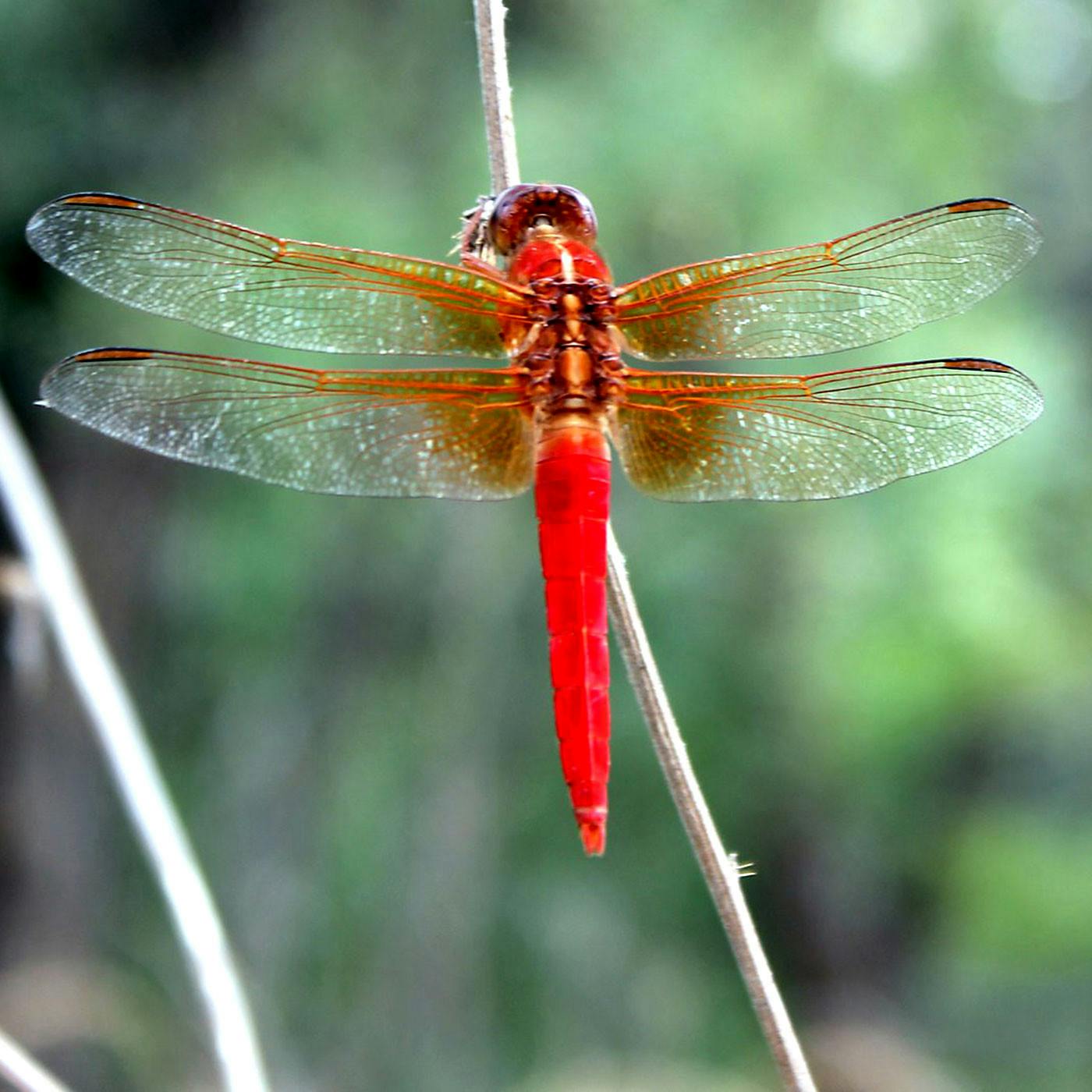
Is your windshield accumulating less bug splatter? Insects, the most numerous animals on Earth, are becoming scarcer, and that’s not good news. They’re essential, and not just for their service as pollinators. We ask what’s causing the decrease in insect populations, and how can it be reversed. Also, the story of how California’s early citrus crops came under attack – a problem that was solved by turning Nature on itself. And how chimpanzee “doctors” use insects to treat wounds. We investigate the small and the many on “The Latest Buzz.” Guests: Martin Kernan – Historian and journalist. His article, “The Bug That Saved California,” appeared in the January-February 2022 issue of the Smithsonian Alessandra Mascaro – Evolutionary Biologist, currently working at the Ozouga Chimpanzee Project, co-author of the Current Biology paper, “Application of insects to wounds of self and others by chimpanzees in the wild” Lara Southern – Doctoral student at the University of Osnabruck, co-author of the Current Biology paper, “Application of insects to wounds of self and others by chimpanzees in the wild” Oliver Milman – Environment correspondent for The Guardian in the U.S. and author of “The Insect Crisis: The Fall of the Tiny Empires that Run the World” Featuring music by Dewey Dellay and Jun Miyake Big Picture Science is part of the Airwave Media podcast network. Please contact [email protected] to inquire about advertising on Big Picture Science. You can get early access to ad-free versions of every episode by joining us on Patreon. Thanks for your support! Learn more about your ad choices. Visit megaphone.fm/adchoices

Nuclear Worries
The nuclear threat is back, and the Doomsday Clock is almost at midnight. How did we end up here again? In the 1930s, German physicists learned that splitting the nuclei of heavy atoms could release tremendous amounts of energy. Such theoretical ideas became relevant when WW II began. Today, we try to eliminate nuclear weaponry while exploiting the atom for peaceful uses, such as energy generation. But as the invasion of Ukraine shows, power plants can also be military targets. We lay out some of the questions that scientists and strategists are grappling with considering recent events. Guests: John Mecklin – Physicist, and Editor-in-Chief of the Bulletin of Atomic Scientists. Robert Rosner – Physicist at the University of Chicago and a former chair of the Bulletin of Atomic Scientist’s Science and Security Board. Eric Schlosser – Journalist, author of “Command and Control: Nuclear Weapons, the Damascus Accident, and the Illusion of Safety.” Featuring music by Dewey Dellay and Jun Miyake Big Picture Science is part of the Airwave Media podcast network. Please contact [email protected] to inquire about advertising on Big Picture Science. You can get early access to ad-free versions of every episode by joining us on Patreon. Thanks for your support! Learn more about your ad choices. Visit megaphone.fm/adchoices

Identity Crisis (rebroadcast)
DNA is the gold standard of identification. Except when it’s not. In rare cases when a person has two complete sets of DNA, that person’s identity may be up in the air. Meanwhile, DNA ancestry tests are proving frustratingly vague: dishing up generalities about where you came from rather than anything specific. And decoding a genome is still relatively expensive and time-consuming. So, while we refine our ability to work with DNA, the search is on for a quick and easy biomarker test to tell us who we are. In this hour: the story of chimeras – people who have two sets of DNA; a reporter whose ancestry tests revealed she is related to Napoleon and Marie Antoinette; and the eyes have it in Somaliland, the first nation to use iris scans in an election. Find out why your irises may be what ultimately distinguishes you from the crowd. Guests: Tina Hesman Saey – Senior writer covering molecular biology for Science News, including a series on genetic testing. Carl Zimmer – Columnist for The New York Times, author of, “She Has Her Mother’s Laugh: The Powers, Perversions, and Potential of Heredity.” Kevin Bowyer – Professor of computer science and engineering, University of Notre Dame. Originally aired July 23, 2018 Learn more about your ad choices. Visit megaphone.fm/adchoices

You Are Exposed (rebroadcast)
There’s no place like “ome.” Your microbiome is highly influential in determining your health. But it’s not the only “ome” doing so. Your exposome – environmental exposure over a lifetime – also plays a role. Hear how scientists hope to calculate your entire exposome, from food to air pollution to water contamination. Plus, new research on the role that microbes play in the development of neurological diseases such as Parkinson’s, and the hot debate about when microbes first colonize the body. Could a fetus have its own microbiome? Also, choose your friends wisely: studies of microbe-swapping gazelles reveal the benefits – and the downsides – of being social. And, why sensors on future toilets will let you do microbiome analysis with every flush. Guests: Rob Knight – Professor of Pediatrics, Computer Science and Engineering, and Director of the Center for Microbiome Innovation at the University of California, San Diego Vanessa Ezenwa – Ecologist at the University of Georgia Indira Mysorekar – Microbiologist, formerly at Washington University in St. Louis, Missouri, now at Baylor Gary Miller – Professor of public health at the Rollins School of Public Health and director of the HERCULES Exposome Research Center at Emory University. After August 2018, his lab will be at Columbia University. Originally aired May 14, 2018 Learn more about your ad choices. Visit megaphone.fm/adchoices

Skeptic Check: 5G
5G, the latest mobile network standard, is coming. As new cell towers sprout around the world, do we know enough to confidently claim that this new technology is safe? After all, older networking standards relied on microwaves, radiation which has wavelengths of inches to a foot or so. 5G operates at much higher frequencies, with millimeter wavelengths. Some are worried that being subjected to millimeter radiation could cause cancers. But what does science say? 5G: the promise and the perils. Guests: Jon Samet – Pulmonary physician, epidemiologist, and dean of the Colorado School of Public Health. Claire Parkinson – Scientist, NASA’s Goddard Space Flight Center Bob Berman – Astronomer, regular contributor to Astronomy Magazine, and author of “Zapped: From Infrared to X-Rays, the Curious History of Invisible Light” David Ropeik – Retired Harvard instructor and author of several books about the psychology of risk perception. Featuring music by Dewey Dellay and Jun Miyake Big Picture Science is part of the Airwave Media podcast network. Please contact [email protected] to inquire about advertising on Big Picture Science. You can get early access to ad-free versions of every episode by joining us on Patreon. Thanks for your support! Learn more about your ad choices. Visit megaphone.fm/adchoices

Melting Down
Climate change isn’t waiting for us to act. We’ve missed several deadlines to mitigate the dangers of this existential threat, which suggests we prefer to avert our gaze rather than deal with the problem. It’s similar to the way society reacts to an incoming comet in the movie “Don’t Look Up!” As a major Antarctic ice sheet shows signs of collapse, it’s no wonder we feel some “climate anxiety.” Can we leverage this emotion to spur action? That, and where hope lies, in this episode. Guests: Joellen Russell – Oceanographer and climate scientist at the University of Arizona Katie Mack – Professor of Theoretical Physics at North Carolina State University, and author of “The End of Everything (Astrophysically Speaking)” Jessica Tierney – Professor of Paleoclimatology at the University of Arizona Susan Clayton – Professor of Psychology and Environmental Studies, College of Wooster Big Picture Science is part of the Airwave Media podcast network. Please contact [email protected] to inquire about advertising on Big Picture Science. You can get early access to ad-free versions of every episode by joining us on Patreon. Thanks for your support! Learn more about your ad choices. Visit megaphone.fm/adchoices

Iron, Coal, Wood
Maybe you don’t remember the days of the earliest coal-fired stoves. They changed domestic life, and that changed society. We take you back to that era, and to millennia prior when iron was first smelt, and even earlier, when axe-handles were first fashioned from wood, as we explore how three essential materials profoundly transformed society. We were once excited about coal’s promise to provide cheap energy, and how iron would lead to indestructible bridges, ships, and buildings. But they also caused some unintended problems: destruction of forests, greenhouse gases and corrosion. Did we foresee where the use of wood, coal, and iron would lead? What lessons do they offer for our future? Guests: Jonathan Waldman – Author of Rust: The Longest War. Ruth Goodman – Historian of British social customs, presenter of a number of BBC television series, including Tudor Monastery Farm, and the author of The Domestic Revolution: How the Introduction of Coal into Victorian Homes Changed Everything. Roland Ennos – Professor of biological sciences at the University of Hull and author of The Age of Wood: Our Most Useful Material and the Construction of Civilization. originally aired February 1, 2021 Learn more about your ad choices. Visit megaphone.fm/adchoices

Skeptic Check: Do Your Own Research
Scientists are increasingly finding their expertise questioned by non-experts who claim they’ve done their own “research.” Whether advocating Ivermectin to treat Covid, insisting that climate change is a hoax, or asserting that the Earth is flat, doubters are now dismissed by being told to “do your own research!” But is a Wiki page evidence? What about a YouTube video? What happens to our quest for truth along the way? Plus, a science historian goes to a Flat Earth convention to talk reason. Guests: Yvette Johnson-Walker – epidemiologist at the University of Illinois College of Veterinary Medicine, and affiliate faculty with the University of Illinois Chicago School of Public Health. Nathan Ballantyne – Professor of Philosophy at Fordham University, in New York. David Dunning – Social psychologist and Professor of Psychology at the University of Michigan. Lee McIntyre – Research fellow at the Center for Philosophy and History at Boston University, author of “Post-Truth,” and “How to Talk to a Science Denier: Conversations with Flat Earthers, Climate Deniers, and Others Who Defy Reason.” Learn more about your ad choices. Visit megaphone.fm/adchoices

Bare Bones (rebroadcast)
You may not feel that your skeleton does very much. But without it you’d be a limp bag of protoplasm, unable to move. And while you may regard bones as rigid and inert, they are living tissue. Bones are also time capsules, preserving much of your personal history. Find out how evolutionary biologists, forensic anthropologists, and even radiation scientists read them. And why won’t your dog stop gnawing on that bone? Guests: Brian Switek – Pen name of Riley Black, Author of “Skeleton Keys: the Secret Life of Bone.” Ann Ross – Forensic anthropologist at North Carolina State University. Her lab is the North Carolina Office of the Chief Medical Examiner for the North Carolina Department of Health and Human Services. Stanley Coren – Professor emeritus of psychology at the University of British Columbia, and author of many books about canine behavior including, “Why Does My Dog Act That Way?” Doug Brugge – Professor and chair of the Department of Public Health Sciences at the University of Connecticut School of Medicine Originally aired November 30, 2020 Big Picture Science is part of the Airwave Media podcast network. Please contact [email protected] to inquire about advertising on Big Picture Science. You can get early access to ad-free versions of every episode by joining us on Patreon. Thanks for your support! Learn more about your ad choices. Visit megaphone.fm/adchoices

Make Space for Animals
Long before Yuri Gagarin became the first human to go into space, Laika, a stray dog, crossed the final frontier. Find out what other surprising species were drafted into the astronaut corps. They may be our best friends, but we still balk at giving other creatures moral standing. And why are humans so reluctant to accept the fact that we too are animals? Guests: Jo Wimpenny - Zoologist and writer. Author of “Aesop’s Animals” Taylor Maggiacomo - Associate Graphic Editor at National Geographic Society Alexander Stegmaier - Freelance Graphic Editor at National Geographic Melanie Challenger - An author who writes on nature, environment and human history. Her latest book: “How to be Animal: A New History of What it Means to be Human” Featuring music by Dewey Dellay and Jun Miyake. Big Picture Science is part of the Airwave Media podcast network. Please contact [email protected] to inquire about advertising on Big Picture Science. You can get early access to ad-free versions of every episode by joining us on Patreon. Thanks for your support! Learn more about your ad choices. Visit megaphone.fm/adchoices