Big Picture Science
697 episodes — Page 4 of 14
The Ocean's Genome
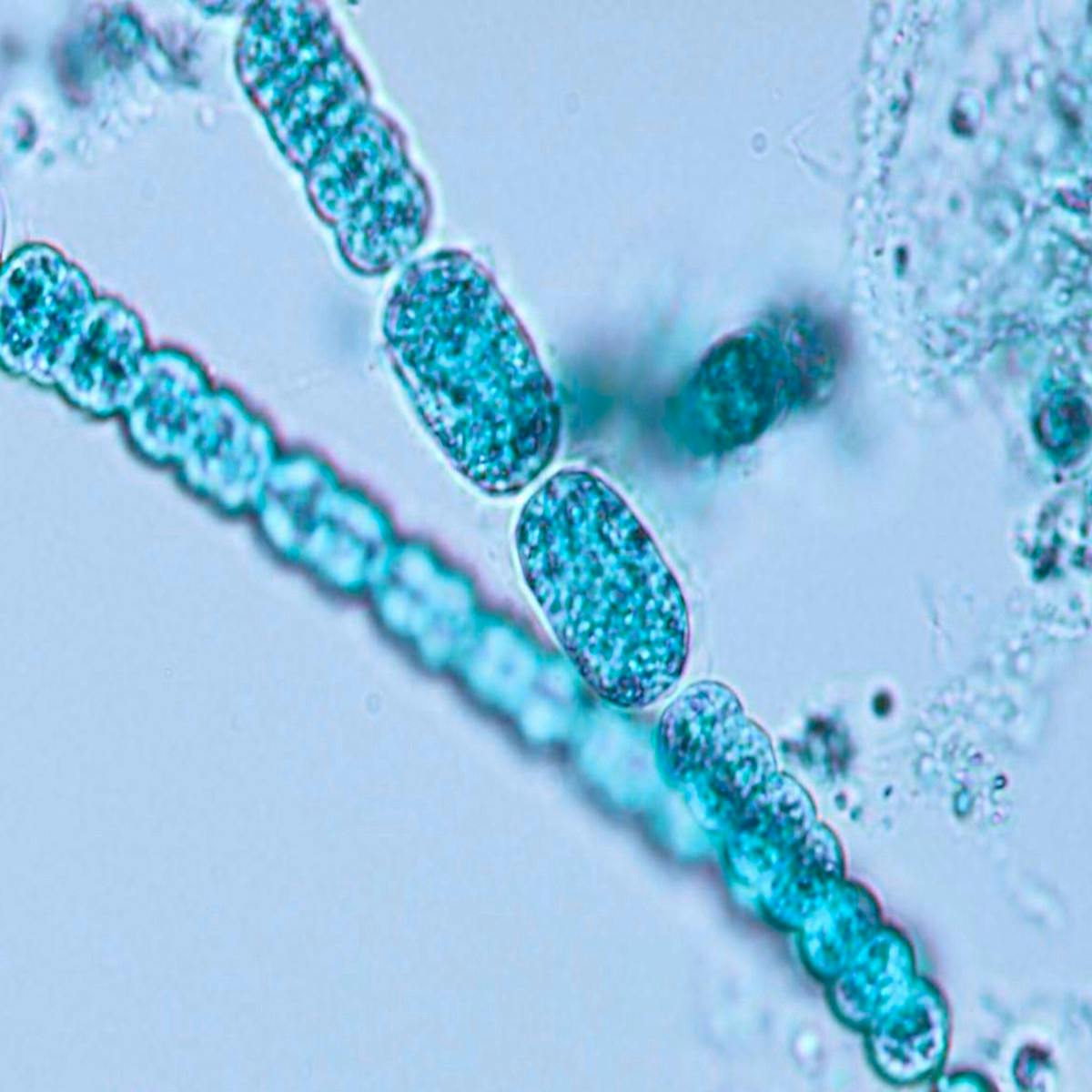
After helping to sequence the human genome more than twenty years ago, biochemist Craig Venter seemed to recede from the public eye. But he hadn’t retired. He had gone to sea and taken his revolutionary sequencing tools with him. We chatted with him about his multi-year voyage aboard the research vessel Sorcerer II, its parallels to Darwin’s voyage, and the surprising discoveries his team made about the sheer number and diversity of marine microbes and their roles in ocean ecosystems. Guests: Craig Venter - Genomicist, biochemist, founder of the J. Craig Venter Institute, and co-author of “The Voyage of Sorcerer II: The Expedition that Unlocked the Secrets of the Ocean’s Microbiome.” Jeff Hoffman - Lab manager at the J. Craig Venter Institute and expedition scientist on the Sorcerer II expedition. Featuring music by Dewey Dellay and Jun Miyake Big Picture Science is part of the Airwave Media podcast network. Please contact [email protected] to inquire about advertising on Big Picture Science. You can get early access to ad-free versions of every episode by joining us on Patreon. Thanks for your support! Learn more about your ad choices. Visit megaphone.fm/adchoices
Skeptic Check: Naomi Klein
Our information age is increasingly the disinformation age. The spread of lies and conspiracy theories has created competing experiences of reality. Facts are often useless for changing minds or even making compelling arguments. In this episode, author Naomi Klein and science philosopher Lee McIntyre discuss why the goal – not simply the byproduct - of spreading disinformation is to polarize society. They also offer ideas about how we might find our way back to a shared objective truth. Guests: Naomi Klein - Associate professor of Geography at the University of British Columbia and a co-director at the Center for Climate Justice. Author of Doppelganger: A Trip Into the Mirror World Lee McIntyre - Philosopher of science and a research fellow at the Center for Philosophy and the History of Science at Boston University, and author of Post-Truth and On Disinformation. Featuring music by Dewey Dellay and Jun Miyake Big Picture Science is part of the Airwave Media podcastnetwork. Please contact [email protected] to inquire about advertising on Big Picture Science. You can get early access to ad-free versions of every episode by joining us on Patreon. Thanks for your support! Learn more about your ad choices. Visit megaphone.fm/adchoices
End of Eternity**
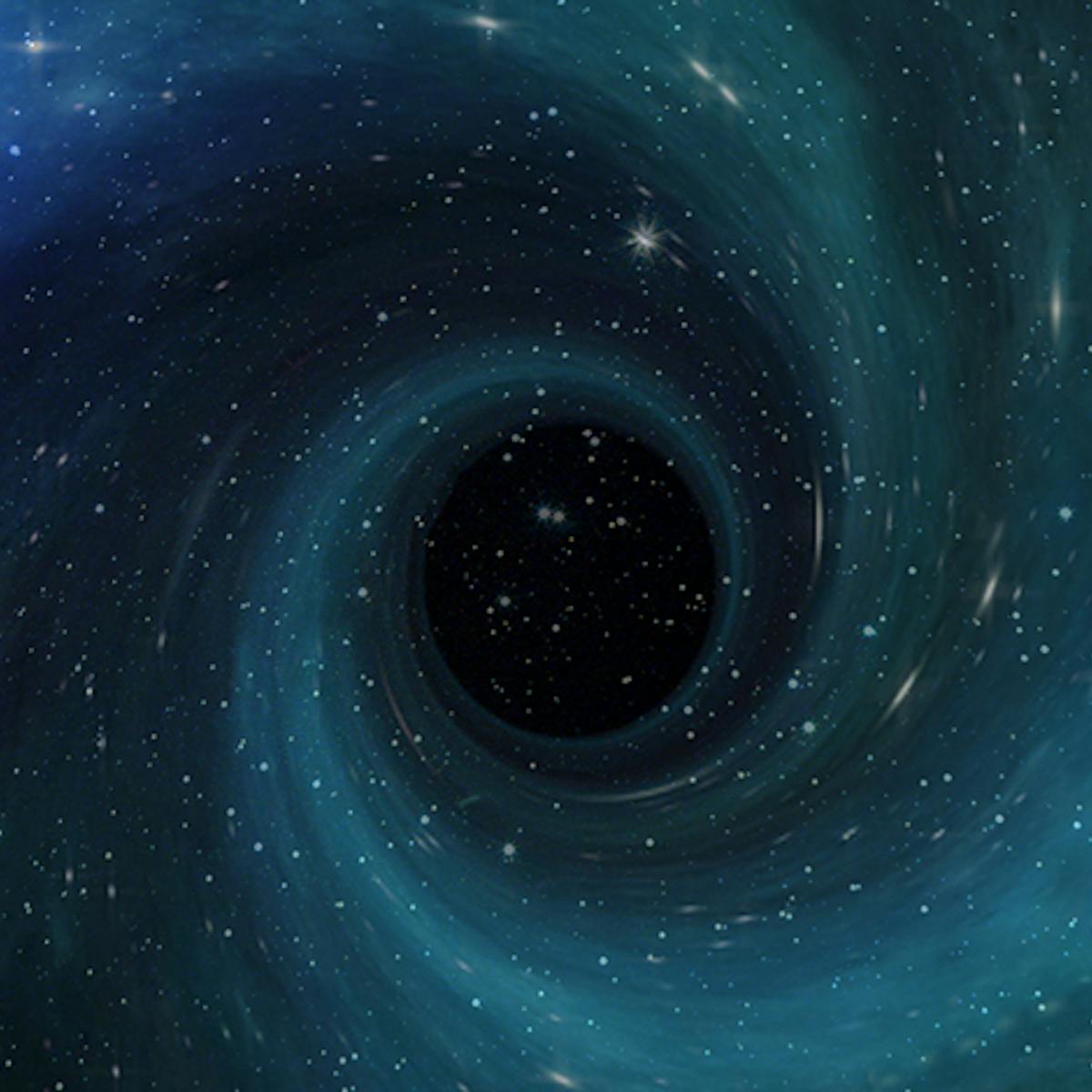
Nothing lasts forever. Even the universe has several possible endings. Will there be a dramatic Big Rip or a Big Chill–also known as the heat death of the universe–in trillions of years? Or will vacuum decay, which could theoretically happen at any moment, do us in? Perhaps the death of a tiny particle – the proton – will bring about the end. We contemplate big picture endings in this episode, and whether one could be brought about by our own machine creations. Guests: Anders Sandberg – Researcher at the Future of Humanity Institute at the University of Oxford Katie Mack – Assistant professor of physics at North Carolina State University, and the author of “The End of Everything, Astrophysically Speaking.” Brian Greene – Brian Greene, professor of physics and mathematics at Columbia, and author of “Until the End of Time: Mind, Matter, and Our Search for Meaning in an Evolving Universe” Originally aired May 3, 2021 Featuring music by Dewey Dellay and Jun Miyake Big Picture Science is part of the Airwave Media podcast network. Please contact [email protected] to inquire about advertising on Big Picture Science. You can get early access to ad-free versions of every episode by joining us on Patreon. Thanks for your support! Learn more about your ad choices. Visit megaphone.fm/adchoices

In Living Color
The world is a colorful place, and human eyes have evolved to take it in – from vermillion red to bright tangerine to cobalt blue. But when we do, are you and I seeing the same thing? Find out why color perception is a trick of the brain, and why you and I may not see the same shade of green. Or blue. Or red. Also, platypuses and the growing club of fluorescent mammals, and the first new blue pigment in more than two centuries. Guests: Paula Anich – Associate Professor of Natural Resources, Northland College Michaela Carlson – Assistant Professor of Chemistry, Northland College Rob DeSalle – Curator at the American Museum of Natural History, and co-author of “A Natural History of Color: the Science Behind What We See and How We See It” Mas Subramanian – Professor of Materials Science at Oregon State University originally aired March 8, 2021 Featuring music by Dewey Dellay and Jun Miyake Big Picture Science is part of the Airwave Media podcast network. Please contact [email protected] to inquire about advertising on Big Picture Science. You can get early access to ad-free versions of every episode by joining us on Patreon. Thanks for your support! Learn more about your ad choices. Visit megaphone.fm/adchoices

The T-Rex Files
T-Rex is having an identity crisis. Rocking the world of paleontology is the claim that Rex was not one species, but actually three. It’s not the first time that this particular dino has forced us to revise our understanding of the past. The discovery of the first T-Rex fossil in the 19th century taught humanity a scary lesson: species eventually go extinct. If it happened to this seemingly invincible apex predator, it could happen to us too. Hear how the amateur fossil hunter Barnum Brown’s discovery of T-Rex changed our understanding of ourselves, and the epilogue to the dinosaur era: how our mammalian relatives survived the potential extinction bottleneck of an asteroid impact. Guests: Thomas Carr - Vertebrate paleontologist and Professor of Biology, Carthage College Peter Makovicky - Vertebrate paleontologist and Professor of paleontology in the Department of Earth and Environmental Sciences at the University of Minnesota David Randall - Author of “The Monster’s Bones: The Discovery of T Rex and How It Shook Our World” Steve Brusatte - Personal Chair of Paleontology and Evolution, University of Edinburgh. Author of “The Rise and Fall of the Dinosaurs” and, most recently, “The Rise and Reign of The Mammals” Originally aired October 17, 2022 Featuring music by Dewey Dellay and Jun Miyake Big Picture Science is part of the Airwave Media podcast network. Please contact [email protected] to inquire about advertising on Big Picture Science. You can get early access to ad-free versions of every episode by joining us on Patreon. Thanks for your support! Learn more about your ad choices. Visit megaphone.fm/adchoices

Neanderthal in the Family**
Back off, you Neanderthal! It sounds as if you’ve just been dissed, but maybe you should take it as a compliment. Contrary to common cliches, our Pleistocene relatives were clever, curious, and technologically inventive. Find out how our assessment of Neanderthals has undergone a radical rethinking, and hear about the influence they have as they live on in our DNA. For example, some of their genes have a strong association with severe Covid 19 infection. Plus, how Neanderthal mini-brains grown in a lab will teach us about the evolution of Homo sapiens. Guests: Svante Pääbo – Evolutionary geneticist and Director of the Max Planck Institute for Evolutionary Anthropology. Doyle Stevick – Associate professor of educational leadership and policies at the University of South Carolina. Beverly Brown – Professor emerita of anthropology, Rockland Community College, New York. Rebecca Wragg Sykes – Paleolithic anthropologist, author of “Kindred: Neanderthal Life, Love, Death and Art.” Alysson Muotri – Neuroscientist and professor of pediatrics, cellular and molecular medicine at the University of California San Diego School of Medicine Originally aired March 22, 2021 Featuring music by Dewey Dellay and Jun Miyake Big Picture Science is part of the Airwave Media podcast network. Please contact [email protected] to inquire about advertising on Big Picture Science. You can get early access to ad-free versions of every episode by joining us on Patreon. Thanks for your support! Learn more about your ad choices. Visit megaphone.fm/adchoices

Night Flight
Owls are both the most accessible and elusive of birds. Every child can recognize one, but you’ll be lucky to spot an owl in a tree, even if you’re looking straight at it. Besides their camouflage and silent flight, these mostly nocturnal birds, with their amazing vision and hearing, are most at home in the dead of night, a time humans find alien and scary. Ecologist Carl Safina got to know an injured baby screech owl well. Their relationship saved the owl’s life and gave Safina insider’s wisdom about these aerial hunters of the night. Guests: Carl Safina – ecologist at Stony Brook University, head of the non-profit Safina Center, and author of “Alfie & Me: What Owls Know, What Humans Believe” Tom Damiami – natural resources interpreter, singer on Long Island, NY and leader of the Shelter Island Owl Prowl Gordy Slack – science writer, former senior editor of California Wild, the science and natural history magazine published by the California Academy of Sciences Featuring music by Dewey Dellay and Jun Miyake Big Picture Science is part of the Airwave Media podcast network. Please contact [email protected] to inquire about advertising on Big Picture Science. You can get early access to ad-free versions of every episode by joining us on Patreon. Thanks for your support! Learn more about your ad choices. Visit megaphone.fm/adchoices

Extraordinary Ordinary Objects
“To live is to count and to count is to calculate.” But before we plugged in the computer to express this ethos, we pulled out the pocket calculator. It became a monarch of mathematics that sparked a computing revolution. But it’s not the only deceptively modest innovation that changed how we work and live. Find out how sewing a scrap of fabric into clothing helped define private life and how adding lines to paper helped build an Empire. Plus, does every invention entail irrevocable cultural loss? Guests: Keith Houston – author of “Empire of the Sum: The Rise and Reign of the Pocket Calculator.” Hannah Carlson – teaches dress history and material culture at the Rhode Island School of Design, author of “Pockets: An Intimate History of How We Keep Things Close.” Dominic Riley – bookbinder in the U.K. Featuring music by Dewey Dellay and Jun Miyake Big Picture Science is part of the Airwave Media podcast network. Please contact [email protected] to inquire about advertising on Big Picture Science. You can get early access to ad-free versions of every episode by joining us on Patreon. Thanks for your support! Learn more about your ad choices. Visit megaphone.fm/adchoices
Like Lightning*
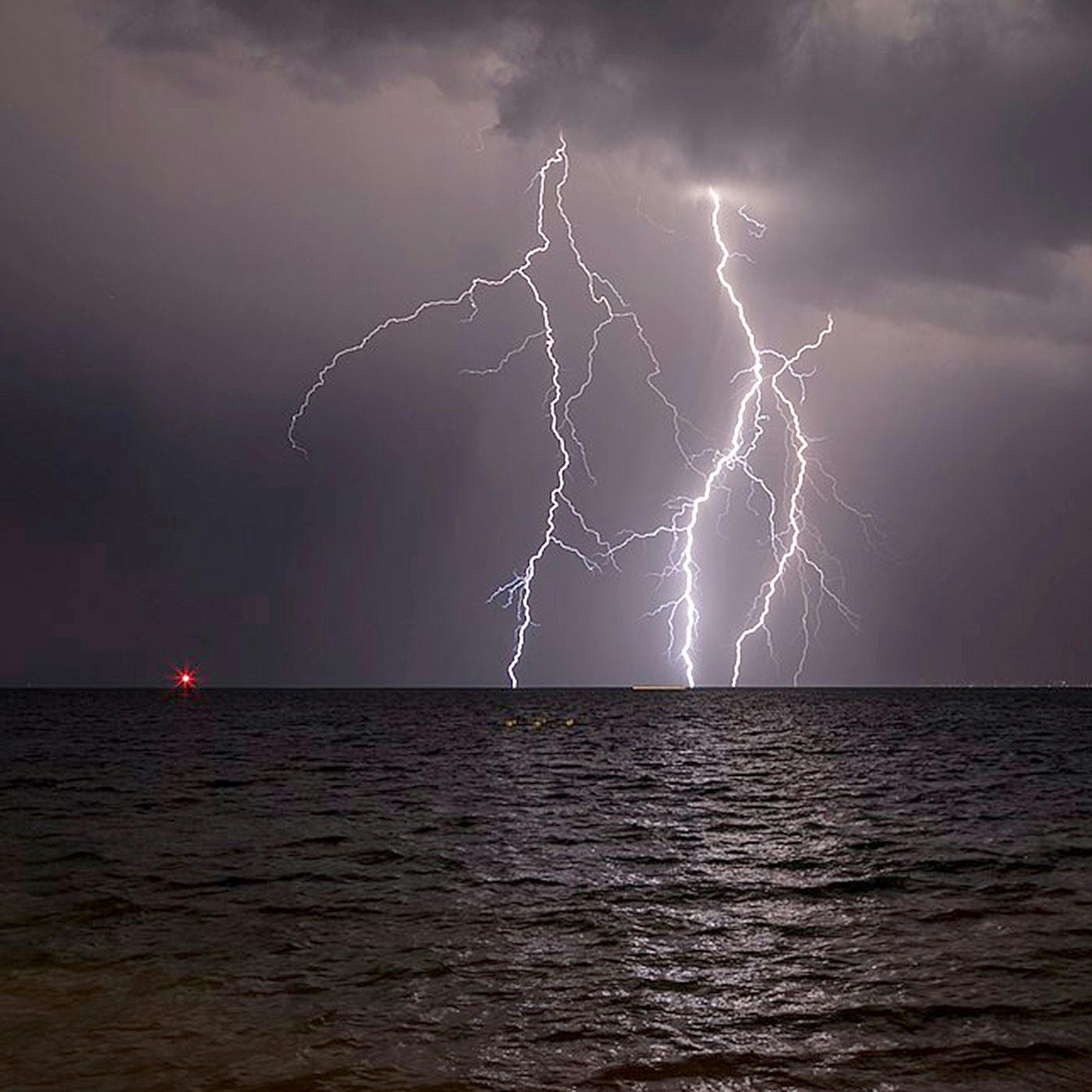
Every second, lightning strikes 50 to 100 times somewhere. It can wreak havoc by starting wildfires and sometimes killing people. But lightning also produces a form of nitrogen that’s essential to vegetation. In this episode, we talk about the nature of these dramatic sparks. Ben Franklin established their electric origin, so what do we still not know? Also, why the frequency of lightning strikes is increasing in some parts of the world. And, what to do if you find someone hit by lightning. Guests: Thomas Yeadaker – Resident of Oakland, California Chris Davis – Medical doctor and Assistant Professor of Emergency Medicine at Wake Forest University and Medical Director for the National Center for Outdoor Adventure Education Jonathan Martin – Professor of Atmospheric and Oceanic Sciences, University of Wisconsin, Madison Steve Ackerman – Professor of Atmospheric and Oceanic Sciences, University of Wisconsin, Madison Peter Bieniek – Professor of Atmospheric and Space Science, University of Alaska, Fairbanks *Originally aired September 12, 2022 Featuring music by Dewey Dellay and Jun Miyake Big Picture Science is part of the Airwave Media podcast network. Please contact [email protected] to inquire about advertising on Big Picture Science. You can get early access to ad-free versions of every episode by joining us on Patreon. Thanks for your support! Learn more about your ad choices. Visit megaphone.fm/adchoices

Skeptic Check: Worrier Mentality*
Poisonous snakes, lightning strikes, a rogue rock from space. There are plenty of scary things to fret about, but are we burning adrenaline on the right ones? Stepping into the bathtub is more dangerous than flying from a statistical point of view, but no one signs up for “fear of showering” classes. Find out why we get tripped up by statistics, worry about the wrong things, and how the “intelligence trap” not only leads smart people to make dumb mistakes, but actually causes them to make more. Guests: Eric Chudler – Research associate professor, department of bioengineering, University of Washington, Seattle and co-author of “Worried: Science Investigates Some of Life’s Common Concerns” Lise Johnson – Director of the Basic Science Curriculum, Rocky Vista University, and co-author of “Worried: Science Investigates Some of Life’s Common Concerns” Willie Turner – Vice President of Operations at the Hiller Aviation Museum in San Carlos, CA Charles Wheelan – Senior Lecturer and Policy Fellow, Dartmouth College, and author of “Naked Statistics” David Robson – Commissioning Editor for the BBC and author of “The Intelligence Trap: Why Smart People Make Dumb Mistakes” *Originally aired May 27, 2019 Big Picture Science is part of the Airwave Media podcast network. Please contact [email protected] to inquire about advertising on Big Picture Science. You can get early access to ad-free versions of every episode by joining us on Patreon. Thanks for your support! Learn more about your ad choices. Visit megaphone.fm/adchoices
Going Multicellular
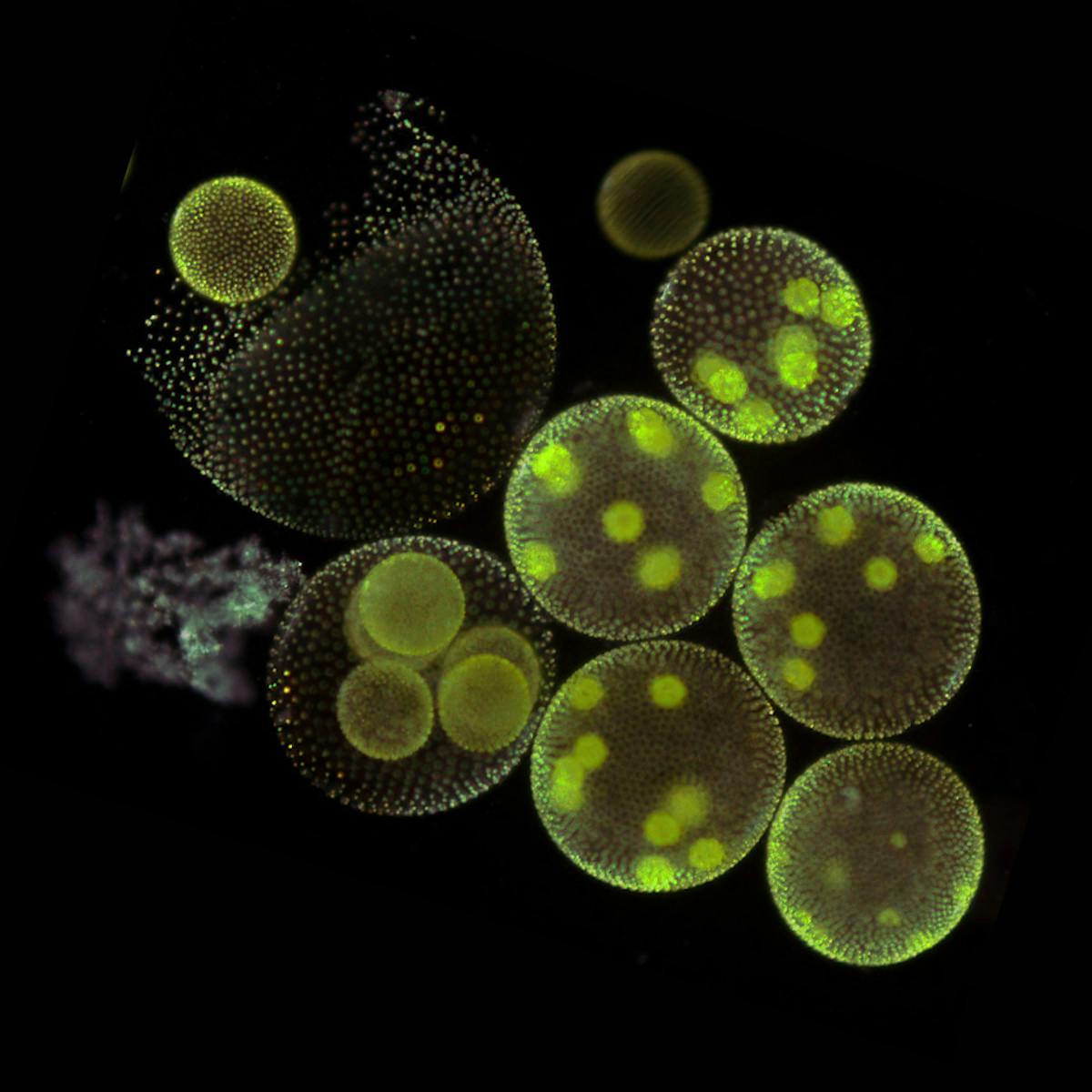
Imagine life without animals, trees, and fungi. The world would look very different. But while the first life was surely single-celled, we don’t know just how it evolved to multicellular organisms. Two long-term experiments hope to find out, and one has been running for more than 35 years. Hear about the moment scientists watched evolution take off in the lab, and how directed evolution was used to create a multicellular organism. Also, how single embryonic cells become humans, and what all of this says about the possibility of life on other worlds. Guests: Jeff Barrick – molecular scientist at the University of Texas at Austin where his lab oversees the Long-Term Evolution Experiment that’s been running since 1988. Will Ratcliff - an evolutionary biologist at Georgia Institute of Technology Ben Stanger - cancer researcher, professor of medicine and developmental biology at the University of Pennsylvania and author of “From One Cell: A Journey into Life’s Origins and the Future of Medicine.” Joseph L. Graves - evolutionary biologist and geneticist at North Carolina Agricultural and Technical State University and author of “A Voice in the Wilderness: A Pioneering Biologist Explains How Evolution Can Help Us Solve Our Biggest Problems.” Featuring music by Dewey Dellay and Jun Miyake Big Picture Science is part of the Airwave Media podcast network. Please contact [email protected] to inquire about advertising on Big Picture Science. You can get early access to ad-free versions of every episode by joining us on Patreon. Thanks for your support! Learn more about your ad choices. Visit megaphone.fm/adchoices

How Hot is Too Hot?
Extreme heat is taking its toll on the natural world. We use words like “heat domes” and “freakish” to describe our everyday existence. These high temperatures aren’t only uncomfortable - they are lethal to humans, animals, and crops. In search of an answer to our episode’s question, we discuss the dilemma of an ever-hotter world with an author who has covered climate change for more than twenty years. Guest: Jeff Goodell – author of “The Heat Will Kill You First: Life and Death on a Scorched Planet.” Featuring music by Dewey Dellay and Jun Miyake Big Picture Science is part of the Airwave Media podcast network. Please contact [email protected] to inquire about advertising on Big Picture Science. You can get early access to ad-free versions of every episode by joining us on Patreon. Thanks for your support! Learn more about your ad choices. Visit megaphone.fm/adchoices

Skeptic Check: Near Death Experiences
Near death experiences can be profound and even life changing. People describe seeing bright lights, staring into the abyss, or meeting dead relatives. Many believe these experiences to be proof of an afterlife. But now, scientists are studying these strange events and gaining insights into the brain and consciousness itself. Will we uncover the scientific underpinning of these near-death events? Guests: Steve Paulson - executive producer of To the Best of Our Knowledge for Wisconsin Public Radio Sebastian Junger - journalist, filmmaker and author of “The Perfect Storm: A True Story of Men Against the Sea” Christoph Koch - neuroscientist at the Allen Institute in Seattle and chief scientist of the Tiny Blue Dot Foundation in Santa Monica California Daniel Kondziella - neuroscientist in the Department of Clinical Medicine at the University of Copenhagen Featuring music by Dewey Dellay and Jun Miyake Big Picture Science is part of the Airwave Media podcast network. Please contact [email protected] to inquire about advertising on Big Picture Science. You can get early access to ad-free versions of every episode by joining us on Patreon. Thanks for your support! Learn more about your ad choices. Visit megaphone.fm/adchoices

Into the Deep*
Have you ever heard worms arguing? Deep-sea scientists use hydrophones to eavesdrop on “mouth-fighting worms.” It’s one of the many ways scientists are trying to catalog the diversity of the deep oceans — estimated to be comparable to a rainforest. But the clock is ticking. While vast expanses of the deep sea are still unexplored, mining companies are ready with dredging vehicles to strip mine the seafloor, potentially destroying rare and vulnerable ecosystems. Are we willing to eradicate an alien landscape that we haven’t yet visited? Guests: Craig McClain - deep-sea and evolutionary biologist and ecologist, Executive Director of the Louisiana Universities Marine Consortium. Steve Haddock - senior scientist at the Monetary Bay Aquarium Research Institute, and co-author of a New York Times op-ed about the dangers of mining. Emily Hall - marine chemist at the Mote Marine Laboratory, Sarasota, Florida Chong Chen - deep sea biologist with the Japan Agency for Marine-Earth Science and Technology (JAMSTEC) *Originally aired November 23, 2020 Big Picture Science is part of the Airwave Media podcast network. Please contact [email protected] to inquire about advertising on Big Picture Science. You can get early access to ad-free versions of every episode by joining us on Patreon. Thanks for your support! Learn more about your ad choices. Visit megaphone.fm/adchoices

What's a Few Degrees?
Brace yourself for heatwave “Lucifer.” Dangerous deadly heatwaves may soon be so common that we give them names, just like hurricanes. This is one of the dramatic consequences of just a few degrees rise in average temperatures. Also coming: Massive heat “blobs” that form in the oceans and damage marine life, and powerful windstorms called “derechos” pummeling the Midwest. Plus, are fungal pathogens adapting to hotter temperatures and breaching the 98.6 F thermal barrier that keeps them from infecting us? Guests: Kathy Baughman McLeod – director and senior vice president of the Adrienne Arsht-Rockefeller Foundation Resilience Center at The Atlantic Council Pippa Moore – Marine ecologist at Newcastle University in the U.K. Ted Derouin – Michigan farmer Jeff Dukes – Ecologist and director of Purdue Climate Change Research Center at Purdue University. Arturo Casadevall – Molecular microbiologist and immunologist at the Johns Hopkins School of Medicine Originally aired October 19, 2020 Big Picture Science is part of the Airwave Media podcast network. Please contact [email protected] to inquire about advertising on Big Picture Science. You can get early access to ad-free versions of every episode by joining us on Patreon. Thanks for your support! Learn more about your ad choices. Visit megaphone.fm/adchoices

Building a Space Colony*
Ready to become a space emigre? For half a century, visionaries have been talking about our future off-Earth – a speculative scenario in which many of us live in space colonies. So why haven’t we built them? Will the plans of billionaire space entrepreneurs to build settlements on Mars, or orbiting habitats that would be only minutes away from Earth, revive our long-held spacefaring dreams? And is having millions of people living off-Earth a solution to our problems… or an escape from them? Guests: Marianne Dyson – Author and former NASA flight controller Emily St. John Mandel – Author, most recently of “Sea of Tranquility” John Adams – Deputy Director, Biosphere 2, University of Arizona Featuring music by Dewey Dellay and Jun Miyake *Originally aired July 25, 2022 Big Picture Science is part of the Airwave Media podcast network. Please contact [email protected] to inquire about advertising on Big Picture Science. You can get early access to ad-free versions of every episode by joining us on Patreon. Thanks for your support! Learn more about your ad choices. Visit megaphone.fm/adchoices

Talk the Walk*
Birds and bees do it … and so do fish. In a discovery that highlights the adaptive benefits of walking, scientists have discovered fish that can walk on land. Not fin-flap their bodies, mind you, but ambulate like reptiles. And speaking of which, new research shows that T Rex, the biggest reptile of them all, wasn’t a sprinter, but could be an efficient hunter by outwalking its prey. Find out the advantage of legging it, and how human bipedalism stacks up. Not only is walking good for our bodies and brains, but not walking can change your personality and adversely affect your health. Guests: Hans Larsson – Paleontologist and biologist, and Director of the Redpath Museum at McGill University in Montréal. Shane O’Mara – Neuroscientist and professor of experimental brain research at Trinity College Dublin. He is the author of “In Praise of Walking.” Brooke Flammang – Biologist at the New Jersey Institute of Technology. Originally aired October 5, 2020 Big Picture Science is part of the Airwave Media podcast network. Please contact [email protected] to inquire about advertising on Big Picture Science. You can get early access to ad-free versions of every episode by joining us on Patreon. Thanks for your support! Learn more about your ad choices. Visit megaphone.fm/adchoices

A Twist of Slime*
Your daily mucus output is most impressive. Teaspoons or measuring cups can’t capture its entire volume. Find out how much your body churns out and why you can’t live without the viscous stuff. But slime in general is remarkable. Whether coating the bellies of slithery creatures, sleeking the surface of aquatic plants, or dripping from your nose, its protective qualities make it one of the great inventions of biology. Join us as we venture to the land of ooze! Guests: Christopher Viney - Professor of materials science and engineering at the University of California, Merced Katharina Ribbeck - Bioengineer at MIT Anna Rose Hopkins - Chef and partner at Hank and Bean in Los Angeles Ruth Kassinger - author of “Slime: How Algae Created Us, Plague Us, and Just Might Save Us” *Originally aired January 27, 2020 Big Picture Science is part of the Airwave Media podcast network. Please contact [email protected] to inquire about advertising on Big Picture Science. You can get early access to ad-free versions of every episode by joining us on Patreon. Thanks for your support! Learn more about your ad choices. Visit megaphone.fm/adchoices

Granting Immunity*
“Diversity or die” could be your new health mantra. Don’t boost your immune system, cultivate it! Like a garden, your body’s defenses benefit from species diversity. Find out why multiple strains of microbes, engaged in a delicate ballet with your T-cells, join internal fungi in combatting disease. Plus, global ecosystems also depend on the diversity of its tiniest members; so what happens when the world’s insects bug out? Guests: Matt Richtel – Author, most recently, of “An Elegant Defense: The Extraordinary New Science of The Immune System” Rob Dunn – Biologist and professor in the Department of Biological Sciences at North Carolina State University. Author of “Never Home Alone” David Underhill – Professor of medicine, Cedars-Sinai Hospital, Los Angeles, California Anne Sverdrup-Thygeson – Professor in conservation biology at the Institute for Ecology and Nature Management at the Norwegian University of Life Sciences. Author of “Buzz, Sting, Bite: Why We Need Insects” Originally aired August 12, 2019 Big Picture Science is part of the Airwave Media podcast network. Please contact [email protected] to inquire about advertising on Big Picture Science. You can get early access to ad-free versions of every episode by joining us on Patreon. Thanks for your support! Learn more about your ad choices. Visit megaphone.fm/adchoices

Skeptic Check: UFO Conspiracy
UFOs are back. This time they’ve landed on Capitol Hill in the form of a public, congressional hearing. We watched the hearing with great interest, but felt dissatisfied when it came to evidence. Claims that the government has alien technology are obviously tantalizing. So tantalizing, in fact, that it’s easy to overlook logical fallacies in how these claims are presented. We identify a few of the missteps. But what would convince you that the government is aware of alien visitation? Is the word of an authority figure all we need to accept that “they’re here?” Guests: Benjamin Radford - Research fellow with the Committee for Skeptical Inquiry Nadia Drake - Science journalist and member of NASA’s UAP group James McGaha - Retired military pilot and astronomer he's a longtime investigator of UFO reports and claims and he's a scientific consultant to the Committee for Skeptical Inquiry Mick West - A skeptical investigator who looks at claims of UFOs Featuring music by Dewey Dellay and Jun Miyake Big Picture Science is part of the Airwave Media podcast network. Please contact [email protected] to inquire about advertising on Big Picture Science. You can get early access to ad-free versions of every episode by joining us on Patreon. Thanks for your support! Learn more about your ad choices. Visit megaphone.fm/adchoices

We'll Always Have Parasites
Imagine tapeworms longer than the height of an adult human. Or microbes that turn their hosts into zombies. If the revulsion they induce doesn’t do it, the sheer number of parasites force us to pay attention. They are the most abundant form of animal life on Earth. Parasites can cause untold human suffering, like those that cause African River Blindness or Lyme disease, but their presence is also a sign of a health ecosystem. A parasitologist whose lab contains the largest parasite collection in the world gives us the ultimate inside story about these organisms. Guest: Scott Gardner - curator of parasites in the H.W. Manter Laboratory of Parasitology at the University of Nebraska State Museum, one of the largest collections of parasites in the world, and professor of biological sciences at University of Nebraska. Co-author of Parasites: The Inside Story. Featuring music by Dewey Dellay and Jun Miyake Big Picture Science is part of the Airwave Media podcast network. Please contact [email protected] to inquire about advertising on Big Picture Science. You can get early access to ad-free versions of every episode by joining us on Patreon. Thanks for your support! Learn more about your ad choices. Visit megaphone.fm/adchoices

Measure For Measure
Whether in miles or pounds, meters or kilograms, we take daily measure out our lives. But how did these units ever come to be, and why do we want to change them? From light-years to leap seconds, we look at the history of efforts to quantify our lives and why there’s always room for greater precision. Plus, we debate the virtues of staying imperial measurements vs. going metric. Guest: James Vincent - Author of Beyond Measure, the Hidden History of Measurement Featuring music by Dewey Dellay and Jun Miyake Big Picture Science is part of the Airwave Media podcast network. Please contact [email protected] to inquire about advertising on Big Picture Science. You can get early access to ad-free versions of every episode by joining us on Patreon. Thanks for your support! Learn more about your ad choices. Visit megaphone.fm/adchoices

Fantastic-er Voyage*
Thinking small can sometimes achieve big things. A new generation of diminutive robots can enter our bodies and deal with medical problems such as intestinal blockages. But do we really want them swimming inside us, even if they’re promising to help? You might change your mind when you hear what else is cruising through our bloodstream: microplastics! We take a trip into the human body, beginning with the story of those who first dared to open it up for medical purposes. But were the first surgeons really cavemen? Guests: Ira Rutkow – Surgeon and writer, and author of “Empire of the Scalpel: The History of Surgery” Dick Vethaak – Emeritus professor of ecotoxicology, water quality and health at the Vrije Universiteit Amsterdam (Free University, Amsterdam) in The Netherlands Li Zhang – Professor in the Department of Mechanical and Automation Engineering, The Chinese University of Hong Kong Michael LaBarbera – Professor in organismal biology, anatomy and geophysical sciences, University of Chicago Originally aired June 20, 2022 Featuring music by Dewey Dellay and Jun Miyake Big Picture Science is part of the Airwave Media podcast network. Please contact [email protected] to inquire about advertising on Big Picture Science. You can get early access to ad-free versions of every episode by joining us on Patreon. Thanks for your support! Learn more about your ad choices. Visit megaphone.fm/adchoices

Dinosaurs' Last Gasp*
Do we have physical evidence of the last day of the dinosaurs? We consider fossilized fish in South Dakota that may chronicle the dramatic events that took place when, 66 million years ago, a large asteroid slammed into the Gulf of Mexico and caused three-quarters of all species to disappear. Also, what new discoveries have paleontologists made about these charismatic animals, and the director of Jurassic World: Dominion talks about how his film hews to the latest science. Hint: feathers! It’s deep history, as we look at what happened as terrestrial life experienced its worst day ever. Guests: Colin Trevorrow – Director of Jurassic World: Dominion Riley Black – Science writer and author of “The Last Days of the Dinosaurs” Anusuya Chinsamy-Turan – Paleontologist at the University of Cape Town, South Africa *Originally aired June 13, 2022 Featuring music by Dewey Dellay and Jun Miyake Big Picture Science is part of the Airwave Media podcast network. Please contact [email protected] to inquire about advertising on Big Picture Science. You can get early access to ad-free versions of every episode by joining us on Patreon. Thanks for your support! Learn more about your ad choices. Visit megaphone.fm/adchoices
Allergy Reason
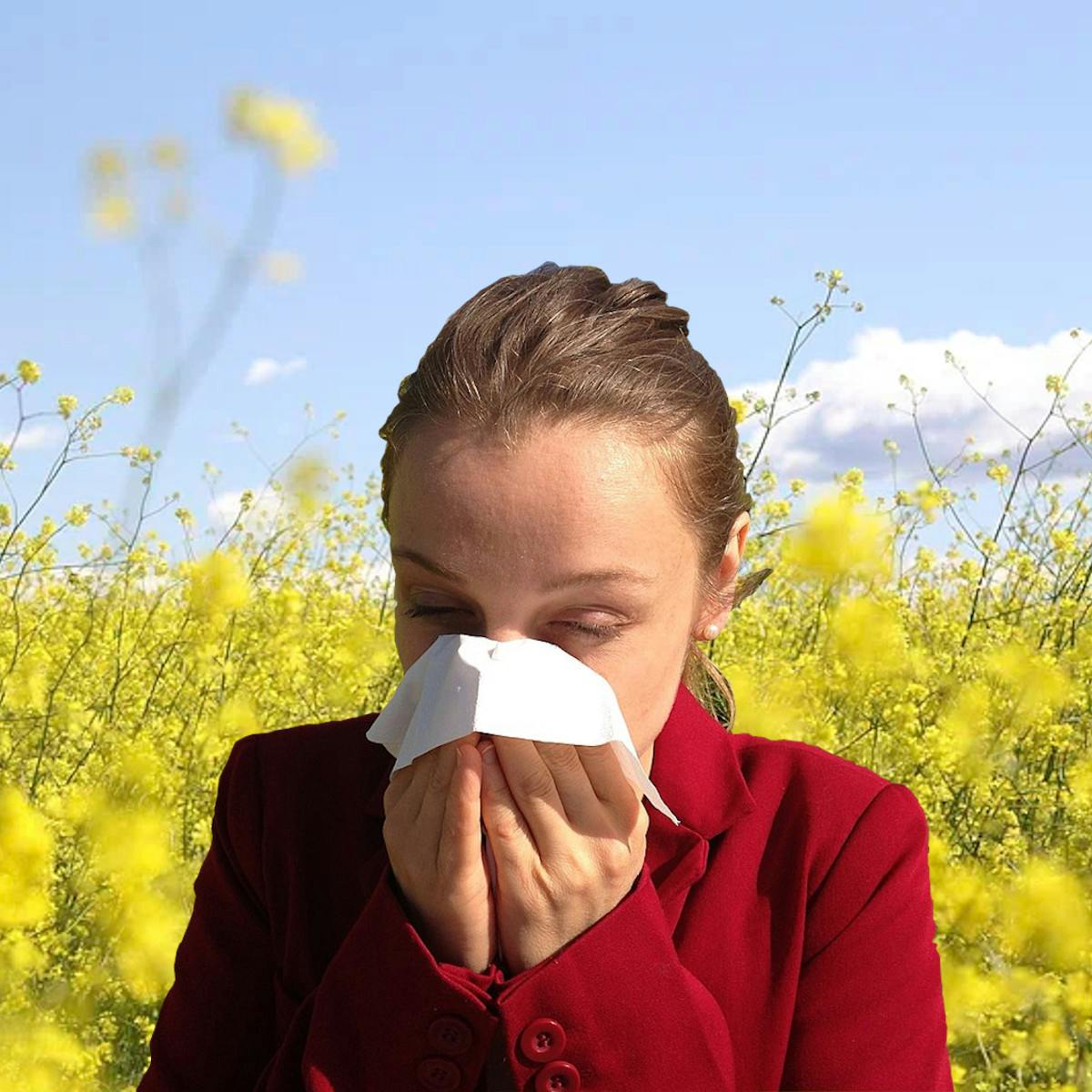
Runny nose. Itchy, watery eyes. Sneezing. If you don’t have allergies, you probably know someone who does. The number of people with allergies, including food allergies and eczema, is increasing. What is going on? A medical anthropologist describes how our hygiene habits, our diets, and our polluted environment are irritating our bodies. Also, the case for skipping your shower. Is skin healthier when we stop lathering? Guests: James Hamblin – Preventive medicine physician and a lecturer in public health at Yale and author of Clean: the New Science of Skin Theresa MacPhail – medical anthropologist, professor of science and technology studies at Stevens Institute of Technology and author of Allergic: Our Irritated Bodies in a Changing World. Featuring music by Dewey Dellay and Jun Miyake Big Picture Science is part of the Airwave Media podcast network. Please contact [email protected] to inquire about advertising on Big Picture Science. You can get early access to ad-free versions of every episode by joining us on Patreon. Thanks for your support! Learn more about your ad choices. Visit megaphone.fm/adchoices
Made for Mars
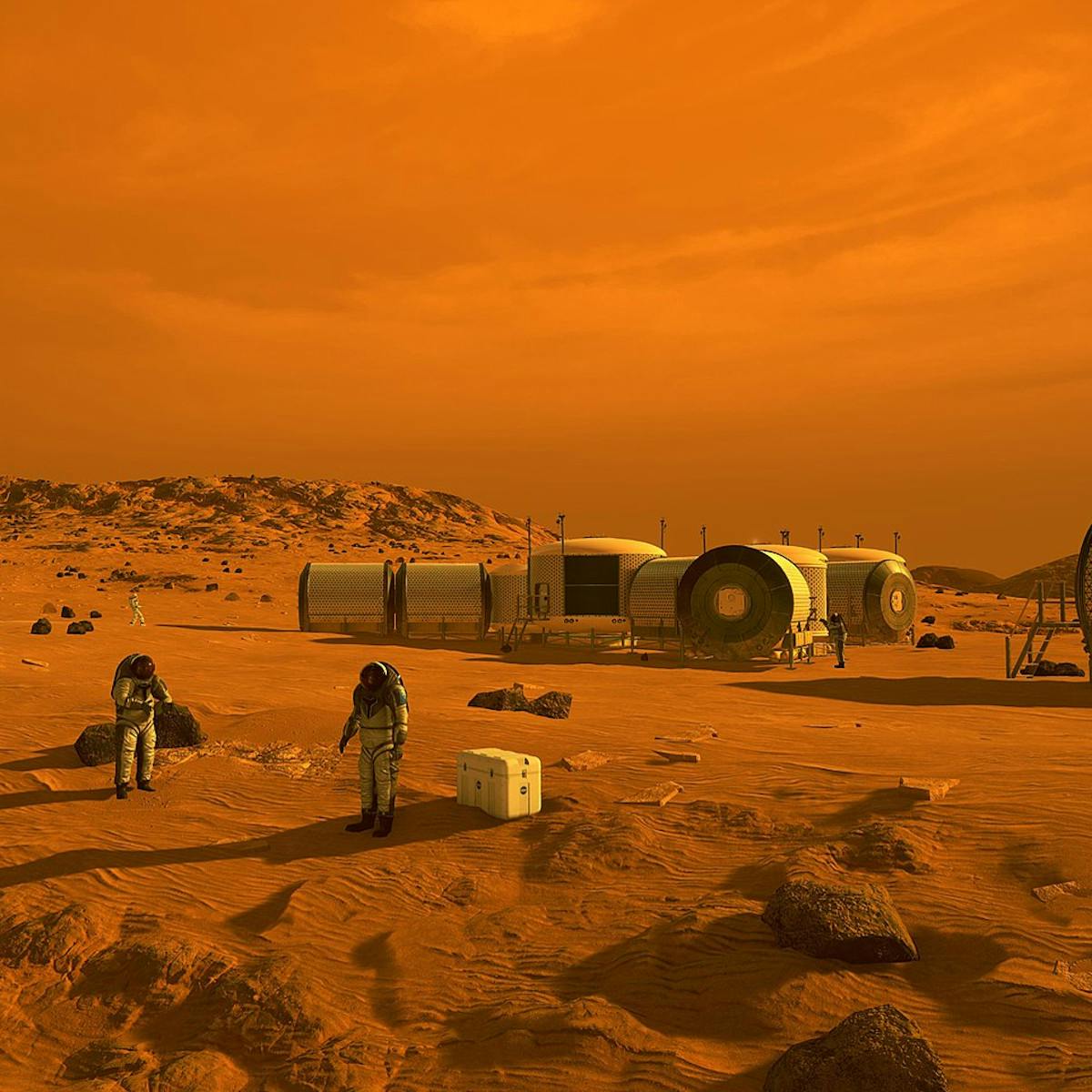
Do you have what it takes to survive on Mars? Beginning this month, four people will spend a year in a prototype Martian habitat meant to simulate living on the Red Planet. It’s part of NASA’s efforts to prepare us for real human missions to Mars. Find out how well we can replicate that world on Earth and what we might learn from doing so. Also, a new robotic mission aims to be the first to bring back a piece of the Red Planet, and why Mars has enchanted us for centuries. Guests: Scott Smith – Lead for the nutritional biochemistry lab at the NASA Johnson Space Center in Houston, and member of the CHAPEA team. Matthew Shindell – Historian of science and Curator of Planetary Science and Exploration at the National Air and Space Museum. Author of For the Love of Mars; a Human History of the Red Planet. Pascal Lee – Planetary scientist at the SETI Institute, principal investigator of the Haughton-Mars Project, and co-founder of The Mars Institute Michela Muñoz Fernández – Program Executive for NASA’s Mars Sample Return Mission Featuring music by Dewey Dellay and Jun Miyake Big Picture Science is part of the Airwave Media podcast network. Please contact [email protected] to inquire about advertising on Big Picture Science. You can get early access to ad-free versions of every episode by joining us on Patreon. Thanks for your support! Learn more about your ad choices. Visit megaphone.fm/adchoices

Skeptic Check: NASA UFO Study
NASA is studying more than 800 sightings of unidentified objects in our sky as part of its investigation into the UFO phenomenon. We get an update on the agency’s study in a conversation with a member of the NASA UAP panel. We also hear why the belief that aliens exist has broad consensus, but that’s not the same as saying they routinely visit Earth. Plus, a UFO investigator analyzes the startling claim that the military is hiding evidence of alien technology. Guests: Nadia Drake – Science journalist and member of NASA’s UAP group Mick West – Science writer, skeptical debunker, former video game programmer. Author of “Escaping the Rabbit Hole” Featuring music by Dewey Dellay and Jun Miyake Big Picture Science is part of the Airwave Media podcast network. Please contact [email protected] to inquire about advertising on Big Picture Science. You can get early access to ad-free versions of every episode by joining us on Patreon. Thanks for your support! Learn more about your ad choices. Visit megaphone.fm/adchoices

The Ears Have It*
What’s the difference between a bird call and the sound of a pile driver? Not much, when you’re close to the loudest bird ever. Find out when it pays to be noisy and when noise can worsen your health. Just about everyone eventually suffers some hearing loss, but that’s not merely aging. It’s an ailment we inflict on ourselves. Hear how a team in New York City has put sensors throughout the city to catalog noise sources, hoping to tame the tumult. And can underwater speakers blasting the sounds of a healthy reef bring life back to dead patches of the Great Barrier Reef? Guests: Mark Cartwright – Research Assistant Professor at New York University’s Department of Computer Science and Engineering Charles Mydlarz – Research Assistant Professor at New York University’s Center for Urban Science and Progress (CUSP) and the Music and Audio Research Lab (MARL) David Owen – Staff writer at The New Yorker, and author of Volume Control: Hearing in a Deafening World Jeff Podos – Professor in the Department of Biology, University of Massachusetts, Amherst Steve Simpson – Professor of Marine Biology and Global Change, Exeter University, U.K. Originally aired January 20, 2020 Featuring music by Dewey Dellay and Jun Miyake Big Picture Science is part of the Airwave Media podcast network. Please contact [email protected] to inquire about advertising on Big Picture Science. You can get early access to ad-free versions of every episode by joining us on Patreon. Thanks for your support! Learn more about your ad choices. Visit megaphone.fm/adchoices

Skeptic Check: The Body Electric
Electricity plays an important role in our everyday lives, including allowing our bodies to communicate internally. But some research claims electricity may be used to diagnose and treat disease? Could electric pulses one day replace medications? We speak with experts about the growing field of bioelectric medicine and the evidence for electricity’s healing abilities. Their comments may shock you. Guests: Sally Adee – Science journalist, author of “We Are Electric: Inside the 200-Year Hunt for Our Body’s Bioelectric Code, and What the Future Holds" Samantha Payne – Assistant Professor of Biomedical Sciences at University of Guelph Kevin Tracey – Neurosurgeon and President of the Feinstein Institute at Northwell Health Featuring music by Dewey Dellay and Jun Miyake Big Picture Science is part of the Airwave Media podcast network. Please contact [email protected] to inquire about advertising on Big Picture Science. You can get early access to ad-free versions of every episode by joining us on Patreon. Thanks for your support! Learn more about your ad choices. Visit megaphone.fm/adchoices

Life in the Solar System
Spewing lava and belching noxious fumes, volcanoes seem hostile to biology. But the search for life off-Earth includes the hunt for these hotheads on other moons and planets, and we tour some of the most imposing volcanoes in the Solar System. Plus, a look at how tectonic forces reshape bodies from the moon to Venus to Earth. And a journey to the center of our planet reveals a surprising layer of material at the core-mantle boundary. Find out where this layer was at the time of the dinosaurs and what powerful forces drove it deep below. Guests: Samantha Hansen – Geologist at the University of Alabama Paul Byrne – Associate professor of Earth and Planetary Sciences at Washington University in St. Louis Robin George Andrews – Science journalist and author of “Super Volcanoes: What They Reveal about Earth and the Worlds Beyond” Featuring music by Dewey Dellay and Jun Miyake Big Picture Science is part of the Airwave Media podcast network. Please contact [email protected] to inquire about advertising on Big Picture Science. You can get early access to ad-free versions of every episode by joining us on Patreon. Thanks for your support! Learn more about your ad choices. Visit megaphone.fm/adchoices

Let's Stick Together*
Crowded subway driving you crazy? Sick of the marathon-length grocery store line? Wish you had a hovercraft to float over traffic? If you are itching to hightail it to an isolated cabin in the woods, remember, we evolved to be together. Humans are not only social, we’re driven to care for one another, even those outside our immediate family. We look at some of the reasons why this is so – from the increase in valuable communication within social groups to the power of the hormone oxytocin. Plus, how our willingness to tolerate anonymity, a condition which allows societies to grow, has a parallel in ant supercolonies. Guests: Adam Rutherford – Geneticist and author of “Humanimal: How Homo sapiens Became Nature’s Most Paradoxical Creature – a New Evolutionary History” Patricia Churchland – Neurophilosopher, professor of philosophy emerita at the University of California San Diego, and author most recently of “Conscience: The Origins of Moral Intuition” Mark Moffett – Tropical biologist, Smithsonian Institution researcher, and author of “The Human Swarm: How Our Societies Arise, Thrive and Fall” *Originally aired July 22, 2019 Featuring music by Dewey Dellay and Jun Miyake Big Picture Science is part of the Airwave Media podcast network. Please contact [email protected] to inquire about advertising on Big Picture Science. You can get early access to ad-free versions of every episode by joining us on Patreon. Thanks for your support! Learn more about your ad choices. Visit megaphone.fm/adchoices

Skeptic Check: Shroom With a View*
Magic mushrooms – or psilocybin – may be associated with tripping hippies and Woodstock, but they are now being studied as new treatments for depression and neurodegenerative diseases like Alzheimer’s. Is this Age of Aquarius medicine or something that could really work? Plus, the centuries-long use of psychedelics by indigenous peoples, and a discovery in California’s Pinwheel Cave offers new clues about the relationship between hallucinogens and cave art. Guests: Merlin Sheldrake - Biologist and the author of Entangled Life: How Fungi Make our Worlds, Change our Minds and Shape our Futures. Albert Garcia-Romeu - Assistant professor in the Department of Psychiatry and Behavioral Sciences, Johns Hopkins University School of Medicine David Wayne Robinson - Archeologist in the School of Forensic and Applied Sciences, University of Central Lancashire, U.K. Sandra Hernandez - Tejon Indian Tribe spokesperson Originally aired December 7, 2020 Featuring music by Dewey Dellay and Jun Miyake Big Picture Science is part of the Airwave Media podcast network. Please contact [email protected] to inquire about advertising on Big Picture Science. You can get early access to ad-free versions of every episode by joining us on Patreon. Thanks for your support! Learn more about your ad choices. Visit megaphone.fm/adchoices

Catching Fire*
We have too much “bad fire.” Not only destructive wildfires, but the combustion that powers our automobiles and provides our electricity has generated a worrying rise in atmospheric carbon dioxide. And that is driving climate change which is adding to the frequency of megafires. Now we’re seeing those effects in “fire-clouds,” pyrocumulonimbus events. But there’s such a thing as “good fire.” Indigenous peoples managed the land with controlled fires, reaped the benefits of doing so, and they’re bringing them back. So after millions of years of controlling fire, is it time for us to revisit our attitudes and policies, not just with regard to combustion, but how we manage our wildfires? Guests: David Peterson - Meteorologist, U.S. Naval Research Laboratory Stephen Pyne - Emeritus professor at Arizona State University, fire historian, urban farmer, author of “The Pyrocene: How We Created an Age of Fire, and What Happens Next” Richard Wrangham - Ruth B. Moore Research Professor of Biological Anthropology at Harvard University and author of "Catching Fire: How Coooking Made Us Human" Margo Robbins - Co-founder and president of the Cultural Fire Management Council (CFMC), organizer of the Cultural Burn Training Exchange (TREX) that takes place on the Yurok Reservation twice a year, and an enrolled member of the Yurok Tribe *Originally aired May 9, 2022 Featuring music by Dewey Dellay and Jun Miyake Big Picture Science is part of the Airwave Media podcast network. Please contact [email protected] to inquire about advertising on Big Picture Science. You can get early access to ad-free versions of every episode by joining us on Patreon. Thanks for your support! Learn more about your ad choices. Visit megaphone.fm/adchoices

Finding Endurance*
In 1915, Endurance, the ship that took Ernest Shackleton to the Antarctic, was slowly crushed and sank. Shackleton, and the 28 men he brought with him, were camped on the ice near the ship, and watched helplessly as their transport went to a watery grave, two miles down. But a recent expedition has found the Endurance, taking the world back to the last hurrah of the heroic age of polar expedition. How was it found, and what will be done with it? Also, while feats of exploration inspire TV shows and magazine articles, do they have other functions in society? Is modern exploration more than just a nice thing to do? We go to the bottom of the world on “Finding Endurance.” Guests: Michael Smith – Author and journalist. His book: “Shackleton: By Endurance We Conquer” Christian Katlein – Sea ice physicist Tim Jarvis – Adventurer and environmental scientist Featuring music by Dewey Dellay and Jun Miyake *Originally aired April 8, 2022 Big Picture Science is part of the Airwave Media podcast network. Please contact [email protected] to inquire about advertising on Big Picture Science. You can get early access to ad-free versions of every episode by joining us on Patreon. Thanks for your support! Learn more about your ad choices. Visit megaphone.fm/adchoices

The Latest Buzz*
Is your windshield accumulating less bug splatter? Insects, the most numerous animals on Earth, are becoming scarcer, and that’s not good news. They’re essential, and not just for their service as pollinators. We ask what’s causing the decrease in insect populations, and how can it be reversed. Also, the story of how California’s early citrus crops came under attack – a problem that was solved by turning Nature on itself. And how chimpanzee “doctors” use insects to treat wounds. We investigate the small and the many on “The Latest Buzz.” Guests: Martin Kernan – Historian and journalist. His article, “The Bug That Saved California,” appeared in the January-February 2022 issue of the Smithsonian Alessandra Mascaro – Evolutionary Biologist, currently working at the Ozouga Chimpanzee Project, co-author of the Current Biology paper, “Application of insects to wounds of self and others by chimpanzees in the wild” Lara Southern – Doctoral student at the University of Osnabruck, co-author of the Current Biology paper, “Application of insects to wounds of self and others by chimpanzees in the wild” Oliver Milman – Environment correspondent for The Guardian in the U.S. and author of “The Insect Crisis: The Fall of the Tiny Empires that Run the World” Featuring music by Dewey Dellay and Jun Miyake *Originally aired March 28, 2022 Big Picture Science is part of the Airwave Media podcast network. Please contact [email protected] to inquire about advertising on Big Picture Science. You can get early access to ad-free versions of every episode by joining us on Patreon. Thanks for your support! Please take our listener survey! Help us get to know you and enter to win a $500 Amazon gift card! Learn more about your ad choices. Visit megaphone.fm/adchoices

CRISPR Mosquitoes
The editing tool CRISPR is already being tested on animal and plant cells. It has even been used on humans. How might this revolutionary tool change our lives? On the one hand, it could cure inherited diseases and rid the world of malaria-spreading mosquitoes. On the other hand, scientists using it are accelerating evolution and introducing novel genetic combinations that could transform our biological landscape in unforeseen ways. We explore the ramifications of this revolutionary technology. Guests: Nathan Rose – Molecular biologist and head of malaria programs at U.K. based biotech company, Oxitec. Hank Greely – Law professor and director of the Center for Law in the Biosciences at Stanford University and author of “CRISPR People: The Science and Ethics of Editing Humans.” Antonio Regalado – Senior Editor for Biomedicine, MIT Technology Review. Featuring music by Dewey Dellay and Jun Miyake We've been nominated for a Webby! Our episode "Vaccine Inequity" is in the top 5 of the Technology category. Vote for Big Picture Science before April 20, 2023! Big Picture Science is part of the Airwave Media podcast network. Please contact [email protected] to inquire about advertising on Big Picture Science. You can get early access to ad-free versions of every episode by joining us on Patreon. Thanks for your support! Please take our listener survey! Help us get to know you and enter to win a $500 Amazon gift card! Learn more about your ad choices. Visit megaphone.fm/adchoices

Skeptic Check: Feeling Risky
It’s not just facts that inform our decisions. They’re also guided by how those facts feel. From deciding whether to buckle our seat belts to addressing climate change, how we regard risk is subjective. In this extended conversation with an expert on the psychology of risk, find out about our exaggerated fears, as well as risks we don’t take seriously enough. Meanwhile, while experts warn society about the dangers of self-aware AI – are those warnings being heeded? Guest: David Ropeik – Professor emeritus Harvard University, and expert on the psychology of risk Featuring music by Dewey Dellay and Jun Miyake We've been nominated for a Webby! Our episode "Vaccine Inequity" is in the top 5 of the Technology category. Vote for Big Picture Science! Big Picture Science is part of the Airwave Media podcast network. Please contact [email protected] to inquire about advertising on Big Picture Science. You can get early access to ad-free versions of every episode by joining us on Patreon. Thanks for your support! Please take our listener survey! Help us get to know you and enter to win a $500 Amazon gift card! Learn more about your ad choices. Visit megaphone.fm/adchoices

Calling All Aliens
Are we alone in the universe? Is there other intelligence out there? COSMIC, the most ambitious SETI search yet, hopes to answer that. We hear updates on this novel signal detection project being conducted on the Very Large Array in the desert of New Mexico. Also, we chat with award-winning science fiction writer Ted Chiang about how he envisions making contact with aliens in his stories, including the one that was the basis for the movie Arrival. And find out why some scientists don’t want only to listen for signals, they want to deliberately transmit messages to aliens. Is that wise and, if we did it, what would we say? Guests: Chenoa Tremblay – Postdoc researcher in radio astronomy for the SETI Institute and member of COSMIC science team Ted Chiang – Nebula and Hugo award-winning science fiction writer, best known for his collections, Stories of Your Life and Others and Exhalation Douglas Vakoch – Founder and president of METI International, a nonprofit research and educational organization devoted to transmitting intentional signals to extraterrestrial civilizations Featuring music by Dewey Dellay and Jun Miyake Big Picture Science is part of the Airwave Media podcast network. Please contact [email protected] to inquire about advertising on Big Picture Science. You can get early access to ad-free versions of every episode by joining us on Patreon. Thanks for your support! Please take our listener survey! Help us get to know you and enter to win a $500 Amazon gift card! Learn more about your ad choices. Visit megaphone.fm/adchoices

Make Space for Animals*
Long before Yuri Gagarin became the first human to go into space, Laika, a stray dog, crossed the final frontier. Find out what other surprising species were drafted into the astronaut corps. They may be our best friends, but we still balk at giving other creatures moral standing. And why are humans so reluctant to accept the fact that we too are animals? Guests: Jo Wimpenny - Zoologist and writer. Author of “Aesop’s Animals” Taylor Maggiacomo - Associate Graphic Editor at National Geographic Alexander Stegmaier - Freelance Graphic Editor at National Geographic Melanie Challenger - An author who writes on nature, environment and human history. Her latest book: “How to be Animal: A New History of What it Means to be Human” Featuring music by Dewey Dellay and Jun Miyake *Originally aired January 24, 2022 Big Picture Science is part of the Airwave Media podcast network. Please contact [email protected] to inquire about advertising on Big Picture Science. You can get early access to ad-free versions of every episode by joining us on Patreon. Thanks for your support! Please take our listener survey! Help us get to know you and enter to win a $500 Amazon gift card! Learn more about your ad choices. Visit megaphone.fm/adchoices

Skeptic Check: Do Your Own Research*
Scientists are increasingly finding their expertise questioned by non-experts who claim they’ve done their own “research.” Whether advocating Ivermectin to treat Covid, insisting that climate change is a hoax, or asserting that the Earth is flat, doubters are now dismissed by being told to “do your own research!” But is a Wiki page evidence? What about a YouTube video? What happens to our quest for truth along the way? Plus, a science historian goes to a Flat Earth convention to talk reason. Guests: Yvette Johnson-Walker – epidemiologist at the University of Illinois College of Veterinary Medicine, and affiliate faculty with the University of Illinois Chicago School of Public Health. Nathan Ballantyne – Professor of Philosophy at Fordham University, in New York. David Dunning – Social psychologist and Professor of Psychology at the University of Michigan. Lee McIntyre – Research fellow at the Center for Philosophy and History at Boston University, author of “Post-Truth,” and “How to Talk to a Science Denier: Conversations with Flat Earthers, Climate Deniers, and Others Who Defy Reason.” *Originally aired February 7, 2022 Featuring music by Dewey Dellay and Jun Miyake Big Picture Science is part of the Airwave Media podcast network. Please contact [email protected] to inquire about advertising on Big Picture Science. You can get early access to ad-free versions of every episode by joining us on Patreon. Thanks for your support! Please take our listener survey! Help us get to know you and enter to win a $500 Amazon gift card! Learn more about your ad choices. Visit megaphone.fm/adchoices

Flower Power
Before everything could come up roses, there had to be a primordial flower – the mother, and father, of all flowers. Now scientists are on the hunt for it. The eFlower project aims to explain the sudden appearance of flowering plants in the fossil record, what Darwin called an “abominable mystery.” Meanwhile, ancient flowers encased in amber or preserved in tar are providing clues about how ecosystems might respond to changing climates. And, although it was honed by evolution for billions of years, can we make photosynthesis more efficient and help forestall a global food crisis? Guests: Eva-Maria Sadowski - Post doctoral paleobotanist at the Museum für Naturkunde, Berlin Regan Dunn - Paleobotanist and assistant Curator at the La Brea Tar Pits and Museum Royal Krieger - Rosarian and volunteer at the Morcom Rose Garden, Oakland, California Ruby Stephens - Plant ecology PhD candidate at Macquarie University in Australia, and member of the eFlower Project Stephen Long - Professor of Plant Science, University of Illinois Featuring music by Dewey Dellay and Jun Miyake Big Picture Science is part of the Airwave Media podcast network. Please contact [email protected] to inquire about advertising on Big Picture Science. You can get early access to ad-free versions of every episode by joining us on Patreon. Thanks for your support! Please take our listener survey! Help us get to know you and enter to win a $500 Amazon gift card! Learn more about your ad choices. Visit megaphone.fm/adchoices

Lady Parts*
The Supreme Court’s ruling on Roe has ignited fierce debate about bodily autonomy. But it’s remarkable how little we know about female physiology. Find out what studies have been overlooked by science, and what has been recently learned. Plus, why studying women’s bodies means being able to say words like “vagina” without shame ... a researcher who is recreating a uterus in her lab to study endometriosis … and an overdue recognition of medical pioneer Dr. Rebecca Lee Crumpler. Guests: Melody T. McCloud - Obstetrician Gynecologist and Founder and Medical Director of Atlanta Women's Health Care; co-author of “Black Women's Wellness: Your ‘I've Got This!’ Guide to Health, Sex, and Phenomenal Living” Victoria Gall - Volunteer with the Friends of the Hyde Park Library and the Hyde Park Historical Society Rachel E. Gross - Science journalist and author of “Vagina Obscura: An Anatomical Voyage” Linda Griffith - Professor of Biological and Mechanical Engineering at M.I.T., Director of the Center for Gynepathology Research, and author of the Boston Globe article, “‘FemTech’ and a moonshot for menstruation science” Roshni Babal - Pediatric Asthma and Chronic Disease Program Coordinator at Boston Medical Center Perri Klass - Professor of Journalism and Pediatrics at New York University and Author of “The Best Medicine: How Science and Public Health Gave Children a Future” Featuring music by Dewey Dellay and Jun Miyake *Originally aired October 31, 2022 Big Picture Science is part of the Airwave Media podcast network. Please contact [email protected] to inquire about advertising on Big Picture Science. You can get early access to ad-free versions of every episode by joining us on Patreon. Thanks for your support! Please take our listener survey! Help us get to know you and enter to win a $500 Amazon gift card! Learn more about your ad choices. Visit megaphone.fm/adchoices

Waste Not [rebroadcast]
Why create more landfill? Perhaps you should resist the urge to toss those old sneakers, the broken ceiling fan, or last year’s smart phone. Instead, repurpose them! Global junk entrepreneurs are leading the way in turning trash to treasure, while right-to-repair advocates fight for legislation that would give you a decent shot at fixing your own electronic devices. And, if you toss food scraps down the drain as you cook, are you contributing to a “fatberg” horror in the sewer? Guests: John Love – Synthetic biologist at the University of Exeter Adam Minter – Author of Secondhand: Travels in the New Global Garage Sale Amanda Preske – Chemist and the owner of Circuit Breaker Labs Nathan Proctor – National campaign director for U.S. Public Interest Research Group – (PIRGS) Right to Repair campaign Kyle Wiens – CEO of I-Fixit, an Internet repair community Originally aired December 16, 2019 Big Picture Science is part of the Airwave Media podcast network. Please contact [email protected] to inquire about advertising on Big Picture Science. You can get early access to ad-free versions of every episode by joining us on Patreon. Thanks for your support! Please take our listener survey! Help us get to know you, and enter to win a $500 Amazon gift card! Learn more about your ad choices. Visit megaphone.fm/adchoices

Post Social Media
Before you check your social media feeds today. And post. And post again. And get into an argument on Twitter, lose track of time and wonder where the morning went, consider that social media was never a natural way to socialize. A cultural anthropologist weighs in on the evolutionary reasons humans can’t thrive on social media. And we hear about the signs that social media is on its way out. If that’s the case, what’s next? Guests: Max Fisher – Reporter for The New York Times, author of “The Chaos Machine: The Inside Story of How Social Media Rewired Our Minds and Our World” Douglas Rushkoff – Professor of media theory and digital economics at City University of New York, and author of “Survival of the Richest: Escape Fantasies of the Tech Billionaires” Ian Bogost – Professor of Media Studies and computer science at Washington University in St. Louis and a contributing writer at The Atlantic. Alex Mesoudi – Professor of Cultural Evolution at the University of Exeter, U.K. Featuring music by Dewey Dellay and Jun Miyake Big Picture Science is part of the Airwave Media podcast network. Please contact [email protected] to inquire about advertising on Big Picture Science. You can get early access to ad-free versions of every episode by joining us on Patreon. Thanks for your support! Learn more about your ad choices. Visit megaphone.fm/adchoices

Fungi Fear
The zombie eco-thriller “The Last of Us” has alerted us to the threats posed by fungi. But the show is not entirely science fiction. Our vulnerability to pathogenic fungi is more real than many people imagine. Find out what human activity drives global fungal threats, including their menace to food crops and many other species. Our high body temperature has long kept lethal fungi in check; but will climate change cause fungi to adapt to warmer temperatures and threaten our health? Plus, a radically new way to think about these organisms, how they make all life possible, and how we might find balance again. Guests: Emily Monosson – Toxicologist who writes about changes in the natural world. A member of the Ronin Institute and an adjunct faculty at the University of Massachusetts, Amherst, she is the author of “Blight: Fungi and the Coming Pandemic.” Arturo Casadevall – Microbiologist, immunologist, professor of medicine at Johns Hopkins School of Medicine. Michael Hathaway – Anthropologist, director of the Asian Studies Center at Simon Fraser University in Vancouver, Canada, and author of “What a Mushroom Lives For.” Featuring music by Dewey Dellay and Jun Miyake Big Picture Science is part of the Airwave Media podcast network. Please contact [email protected] to inquire about advertising on Big Picture Science. You can get early access to ad-free versions of every episode by joining us on Patreon. Thanks for your support! Learn more about your ad choices. Visit megaphone.fm/adchoices

Math's Paths [rebroadcast]
If you bake, you can appreciate math’s transformative properties. Admiring the stackable potato chip is to admire a hyperbolic sheet. Find out why there’s no need to fear math - you just need to think outside the cuboid. Also, how nature’s geometric shapes inspire the next generation of squishy robots and an argument for radically overhauling math class. The end point of these common factors is acute show that’s as fun as eating Pi. Guests: Eugenia Cheng – Scientist in Residence at the School of the Art Institute in Chicago, tenured at the School of Mathematics and Statistics at the University of Sheffield, and author of “How to Bake Pi” Shankar Venkataramani – Professor of math at the University of Arizona Steven Strogatz – Professor of applied mathematics at Cornell University and author of “Infinite Powers: How Calculus Reveals the Secrets of the Universe” Daniel Finkel – Mathematician and founder and director of operations at “Math for Love” Originally aired July 15, 2019 Featuring music by Dewey Dellay and Jun Miyake Big Picture Science is part of the Airwave Media podcast network. Please contact [email protected] to inquire about advertising on Big Picture Science. You can get early access to ad-free versions of every episode by joining us on Patreon. Thanks for your support! Learn more about your ad choices. Visit megaphone.fm/adchoices
Wondery Presents: Frozen Head
Hosted by Ash Kelley and Alaina Urquhart from the hit show Morbid. When 90-year-old Laurence Pilgeram drops dead on the sidewalk outside his condo, you might think that’s the end of his story. But, really, it’s just the beginning. Because Laurence and others like him have signed up to be frozen and brought back to life in the future. And that belief will pull multiple generations of the Pilgeram family into a cryonics soap opera filled with dead pets, gold coins, grenades, fist fights, mysterious packages, family feuds, Hall of Fame baseball legends, and frozen heads — lots of frozen heads. From Wondery, comes a story about life, death, and what comes next. Follow Frozen Head on Amazon Music or wherever you get your podcasts. Binge early and ad-free by subscribing to Wondery+ in Apple Podcasts or the Wondery App. Listen to Frozen Head: Wondery.fm/FH_BPS Learn more about your ad choices. Visit megaphone.fm/adchoices

Skeptic Check: Understanding UAPs
The newest Pentagon report on UAPs – or Unidentified Aerial Phenomenon – reflects long standing public interest about what’s in our skies. Now, NASA is investigating for themselves. Should we assume that what we can’t identify is alien visitation? In our regular look at critical thinking, we look at the history of UFO sightings, visit Roswell on the 75th anniversary of the crash, and ask how our desire to believe influences our interpretation of evidence. Guests: Paul Hynek - Teacher at Pepperdine University and son of the late astronomer J. Allen Hynek Roger Launius - Former chief historian for NASA and former Chair of the Division of Space History at the Smithsonian National Air and Space Museum Featuring music by Dewey Dellay and Jun Miyake Big Picture Science is part of the Airwave Media podcast network. Please contact [email protected] to inquire about advertising on Big Picture Science. You can get early access to ad-free versions of every episode by joining us on Patreon. Thanks for your support! Learn more about your ad choices. Visit megaphone.fm/adchoices

Vaccine Inequity
A radical plan could solve a historic global health inequity. Countries in the global south who waited for more than a year for ample supplies of Covid vaccines have banded together to make mRNA vaccines locally. If successful, they could end a dangerous dependency on wealthy nations and help stop pandemics before they start. In a special episode, supported by the Pulitzer Center, journalist Amy Maxmen shares her reporting from southern Africa about the inspiring project led by the WHO that’s made fast progress. But it could fail, and a global imbalance will remain, if Big Pharma has its way. Find out what’s at stake. Guests: Amy Maxmen - Award-winning science journalist, Edward R. Murrow press fellow at the Council on Foreign Relations and author of the Nature article, "The Radical Plan for Vaccine Equity" Petro Terblanche - Managing Director, Afrigen Biologics and Vaccines in Cape Town, South Africa Kondwani Charles Jambo - Senior Lecturer and immunologist at the Malawi-Liverpool-Wellcome Clinical Research Programme in Blantyre, Malawi Barney Graham - Former deputy director at the Vaccine Research Center at NIH and professor of medicine and microbiology immunology biochemistry at Morehouse School of Medicine Emile Hendricks - Research technologist at Afrigen Biologics and Vaccines in Cape Town, South Africa Achal Prabhala - Fellow at the Shuttleworth Foundation, Coordinator at AccessIBSA, a medicines-access initiative in Bengaluru, India Patrick Tippoo - Head of Science and Innovation at Biovac in Cape Town, South Africa, founding member of the African Vaccine Manufacturing Initiative (AVMI) Harrison Chauluka - chief of the Mkunda village in Malawi Agnes Joni - farmer in Chiradzulu, Malawi Prophet Dauda - translator and writer in Blantyre, Malawi Originally aired November 21, 2022 Thanks to the Pulitzer Center for help supporting this episode of Big Picture Science Featuring music by Dewey Dellay and Jun Miyake Big Picture Science is part of the Airwave Media podcast network. Please contact [email protected] to inquire about advertising on Big Picture Science. You can get early access to ad-free versions of every episode by joining us on Patreon. Thanks for your support! Learn more about your ad choices. Visit megaphone.fm/adchoices

Testing Your Metal (rebroadcast)
Catalytic converters are disappearing. If you’ve had yours stolen, you know that precious and rare earth metals are valuable. But these metals are in great demand for things other than converters, such as batteries for electric cars, wind farms and solar panels. We need rare earth metals to combat climate change, but where to get them? Could we find substitutes? One activity that could be in our future: Deep sea mining. But it’s controversial. Can one company’s plan to mitigate environmental harm help? Guests: Paul Dauenhauer - Professor of chemical engineering and material science at the University of Minnesota and a 2020 MacArthur Fellow Chris Leighton - Distinguished University Teaching Professor, Editor, Physical Review Materials, Dept. of Chemical Engineering and Materials Science, University of Minnesota Renee Grogan - Co-founder and Chief Sustainability Officer, Impossible Mining company Originally aired January 17, 2022 Featuring music by Dewey Dellay. Big Picture Science is part of the Airwave Media podcast network. Please contact [email protected] to inquire about advertising on Big Picture Science. You can get early access to ad-free versions of every episode by joining us on Patreon. Thanks for your support! Learn more about your ad choices. Visit megaphone.fm/adchoices