AuDHD Flourishing
194 episodes — Page 2 of 4
117 PDA + AuDHD
EPDA is the Persistent Drive for Autonomy (community term), or pathological demand avoidance (clinical & pathologizing term). What happens when PDA, ADHD, and autism all overlap? Well... stress and relationship challenges!Thankfully, everything that helped me feel more safe has also made my PDA more manageable. There are many approaches to build that safety.This episode is a follow-up to the interview on PDA last weekMentioned in episode: Book Low-Demand Parenting by Amanda Diekman (affiliate link)Last week's interview on PDA, and the podcast PDA: Resistance and ResilienceMattia's bday (or whenever) wish listAuDHD Flourishing resources:Transcript Doc (often a few weeks behind, but we do catch up!)Mattia's NewsletterLike Your Brain community space (Patreon/Discord) Hosted on Acast. See acast.com/privacy for more information.
Creative Resistance: Mattia on PDA: Resistance and Resilience
EIt's been a running joke (that wasn't initially a joke) that I'm totally going to do a PDA episode very soon... since the very first episode of AuDHD Flourishing.Now we have one, thanks to Chris Wells and Marni Kammersell for interviewing me on PDA: Resistance and Resilience, and letting me cross-post the episode here!Mentioned in episode:Full show notesAuDHD Flourishing Episode 87: Giftedness & the Sparkly Mind with Sheldon GayAuDHD Flourishing Episode 88: Gifted Development & Positive Disintegration with Chris WellsAuDHD Flourishing Episode 108: Using Intuition PracticallyRobert Chapman’s book Empire of NormalityConnect with Chris, Marni, PDA pod:Wandering Brightly with Marni KammersellPositive Disintegration and cosmic cheer squad with Chris WellsPDA: Resistance and Resilience on SubstackFollow us on InstagramAuDHD Flourishing resources:Transcript DocMattia's NewsletterLike Your Brain community space (Patreon/Discord) Hosted on Acast. See acast.com/privacy for more information.
116 Stimulants: a 2-year review
EAbout two years ago, I started ADHD stimulant medication as a regular (most days) thing. I've mentioned it here and there on the podcast. This is my most concentrated "review" of the main things I've noticed over the past two years. To be clear, when I mention a factor that might make stimulant meds more of a burnout risk, I'm not saying those folks shouldn't try it! Just to be very careful not to push through the body's capacity. Mentioned in episode: Mattia interviewed on Chris Wells' & Marni Kammersell's new podcast, PDA: Resistance and Resilience. Ep 7: Creative Resistance (I'll be posting this episode in the feed next week)AuDHD Flourishing resources:Transcript DocMattia's NewsletterLike Your Brain community space (Patreon/Discord) Hosted on Acast. See acast.com/privacy for more information.
115 That Advice is Backwards
EOne reason most advice doesn't work for us is that it's backwards. It's telling us to do/have the end result, rather than showing us how to get there.In the case of safety or shame, it's pretty clear that we can't just leap to the end of the process (if there even is one with a traumatized body).Mentioned in episode: Toxic Shame: What it is and How to Heal From it (YouTube, Heidi Priebe. Her take is overall better/more accessible than the book she's referencing, which is shockingly triggering all over the place)AuDHD Flourishing resources:Transcript DocMattia's NewsletterLike Your Brain community space (Patreon/Discord) Hosted on Acast. See acast.com/privacy for more information.
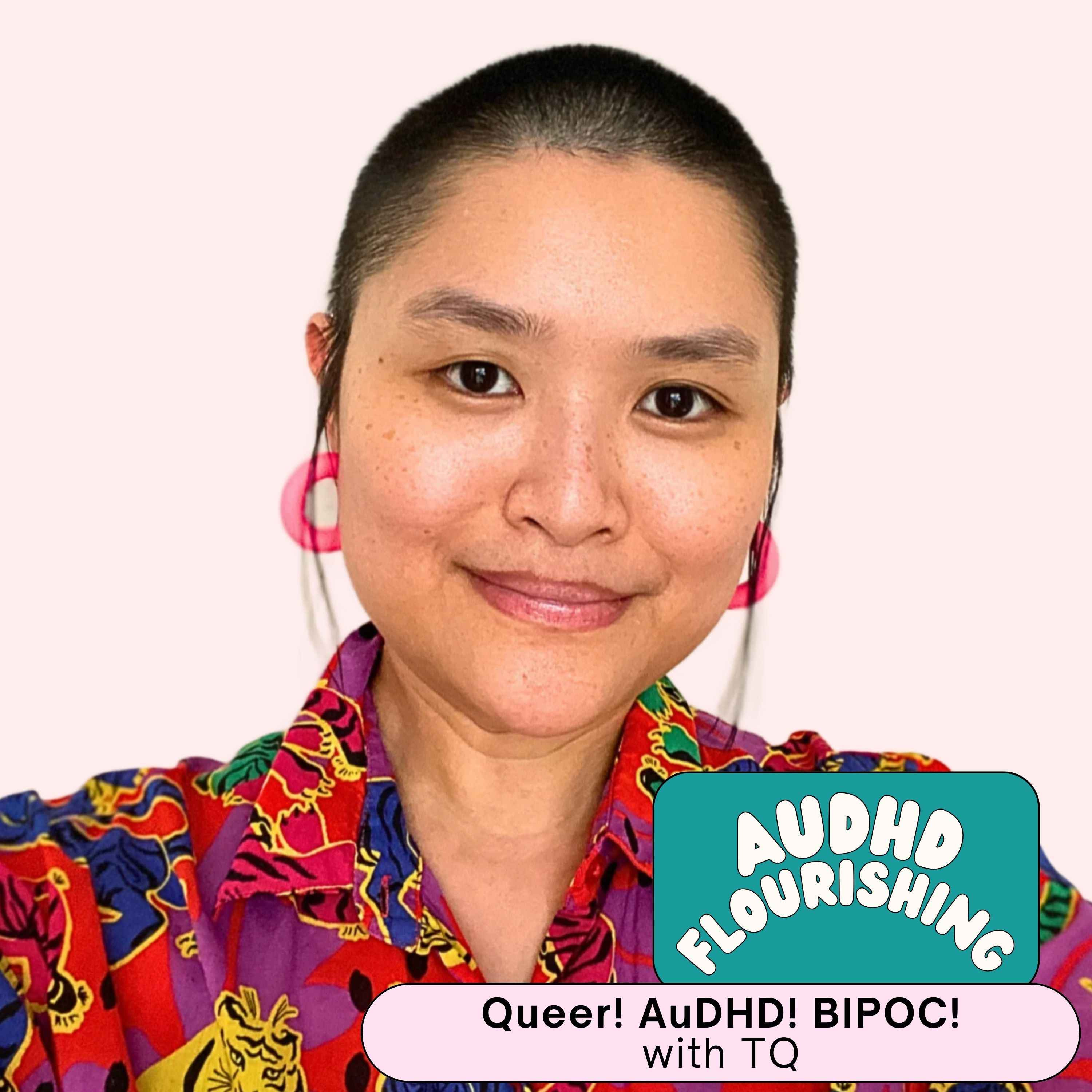
114 Queer! AuDHD! BIPOC! with TQ
ETQ (they/them) is a queer, trans, physically disabled, AuDHD Chinese-Singaporean artist, author/host of the upcoming book/podcast Queer! AuDHD! BIPOC!, and community facilitator for other queer neurodivergent BIPOC.In true ND fashion, we range over many topics, including the importance of community and hearing your own stories as a person with multiple intersecting identities. You can pre-order a copy of their upcoming book for behind-the-scenes/early access to the interviews and writing! TQ's links & mentioned in episode:Support the Queer! AuDHD! BIPOC! book and podcastAll the incredible neurodivergent, Autistic, and AuDHD creators of color TQ learns fromLovette Jallow on the history/use of the term "intersectionality" The Autastic CommunityAuDHD Flourishing resources:Transcript DocMattia's NewsletterLike Your Brain community space (Patreon/Discord) Hosted on Acast. See acast.com/privacy for more information.
113 The Urge for Minimalism & Visual Cues
EAlso on YouTube for some visualsMy urge for minimalism is partly to provide myself with the visual cues I desperately need, without overwhelming myself with visual clutter. And, there has been a specifically classist push for minimalism that sometimes causes me to get rid of too much.Here's an excellent thread about minimalism, class, and why you're probably not a hoarderI especially loved the idea that you may just need better organization, because I really love lining things up. Now I'm focusing on organizing based on my interests, rather than what I think is the most practical or obvious!Mentioned in episode: Mastodon thread about minimalismThe exact iPad cover I showed that looks like a Composition notebook (still going strong almost four years in), affiliate linkAuDHD Flourishing resources:Transcript DocMattia's NewsletterLike Your Brain community space (Patreon/Discord) Hosted on Acast. See acast.com/privacy for more information.
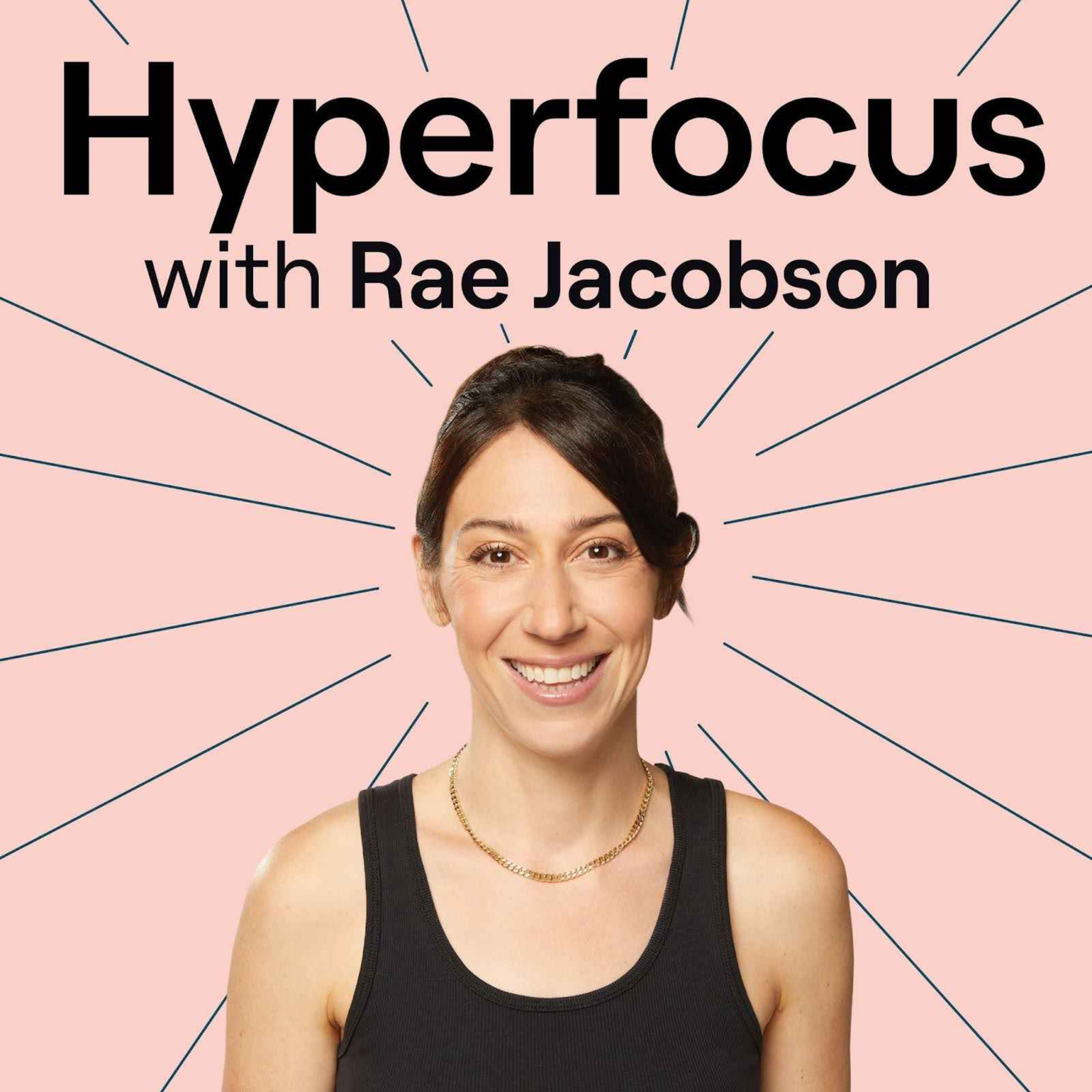
112 ADHD in Women and Girls
Thanks to Hyperfocus with Rae Jacobson for letting me cross-post this important discussion about one of the first longitudinal studies of ADHD in women and girls!Full show notes, timestamps, and Transcript available on Hyperfocus' site(Ep 5, The “devastating” findings of a decades-long ADHD study, Dec 5, 2024 has the full version; it was reposted Aug 28 2025 with more brief notes)Show notes:Dr. Stephen Hinshaw is one of the leading voices when it comes to ADHD in women and girls. That’s in large part due to his work on The Berkeley Girls Study. (Its full name is The Berkeley Girls with ADHD Longitudinal Study, but most people know it by that shorthand or acronym: The BGALs Study.)Under Steve’s leadership, researchers began studying 140 girls with ADHD and a control group of nearly 90 girls without it. They’ve been following these girls into their adulthood, producing a reams of information that has helped shape current understanding of ADHD in women and girls. That said, Rae Jacobson had plenty of questions for Steve:Why did you want to study ADHD in girls at a time when it was typically seen as a boys’ disorder?Why is it that one type of ADHD seems to lead to such negative outcomes?What do we do about the stigma that still surrounds the disorder?note: This episode includes discussion of suicide and self-harm. Please take care when listening and skip this one if you need to.Listen to more episodes of Hyperfocus here Hosted on Acast. See acast.com/privacy for more information.
111 Shame Wrecks Identity
EChronic shame makes us feel all kinds of terrible things that often are the triggers that send people to therapy.It's caused in part by relational rupture without repair, especially as an infant and child.While there's no quick fix, recognizing the signs and beginning to gently work with it does help over time.This is episode 10 of a series of 10 that started with 102 AuDHD Therapy That Works with Joe Sosta I'm working on some more materials to pull all these episodes together in a useful way and will add that here when they're done! Crisis Resources:USA-based anonymous crisis chatInternational crisis linesVarious types of crisis resources in about 10 countriesMy Medium article, "Please Stay, We Need You"Mentioned in episode: Book Understanding and Treating Chronic Shame: Healing Right Brain Relational Trauma (I recommend this 2nd edition, affiliate link)Whack-a-Mole Workshop slides/notes and recordings (latter is free & requires free login; a downloadable PDF is also available there on Patreon)AuDHD Flourishing resources:Transcript DocMattia's NewsletterLike Your Brain community space (Patreon/Discord) Hosted on Acast. See acast.com/privacy for more information.
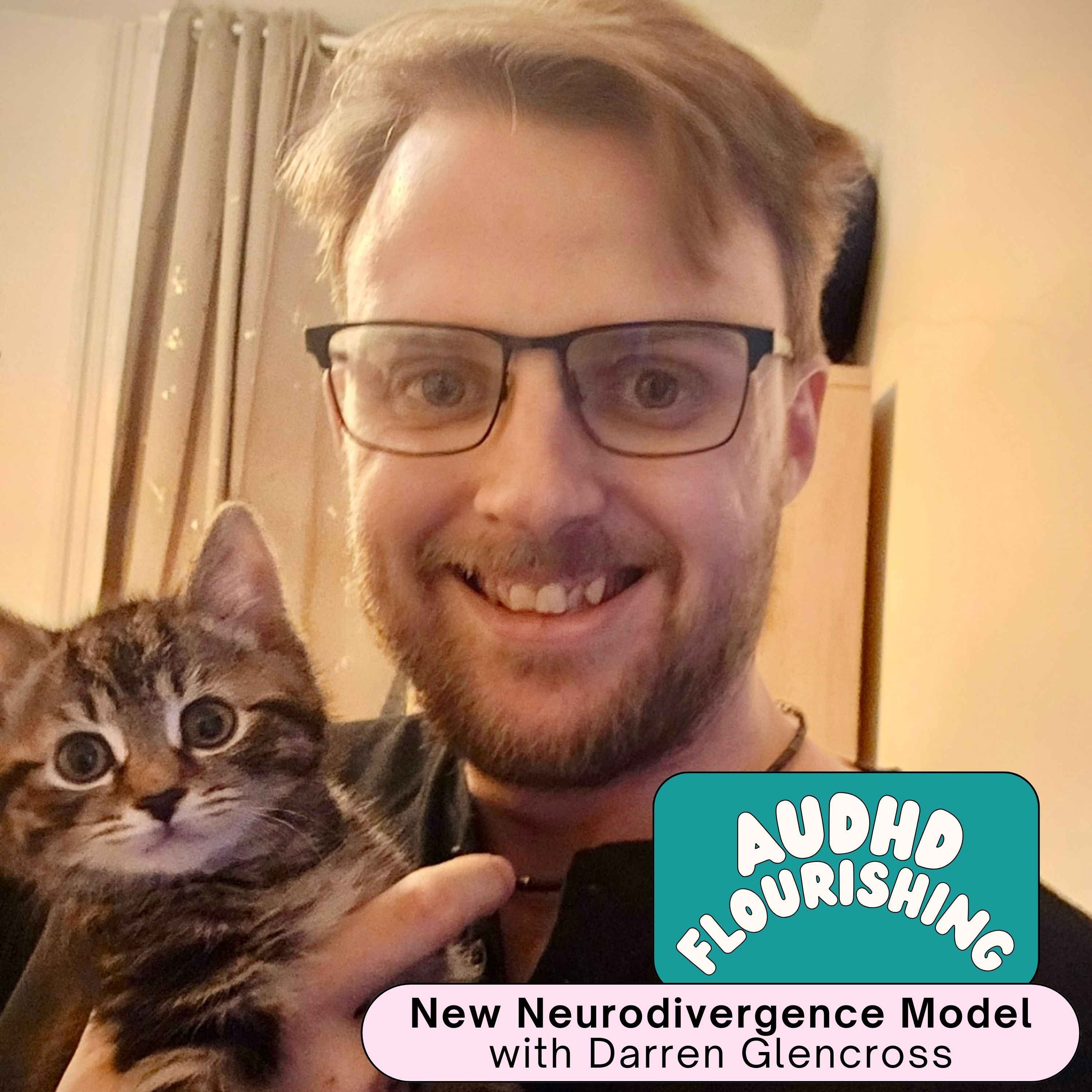
110 New Neurodivergence Model with Darren Glencross
EDarren Glencross was diagnosed near the beginning of 2025, and since then has written multiple books and come up with a new framework for people to explore outside of the medical model.It includes: Pattern Language, Inner Orbit with 12 satellites (and Their Orbit), and the Carry KitIt's exciting to explore community-led models!Connect with Darren: Darren's writings & Inner Orbit bookMessage on Instagram @beaconwithinDarren Glencross on LinkedInMentioned in episode:Love Your Brain course (& Sep-Oct live round details)Free workshops already concluded, and will be available most likely in the Patreon soon (I'll update this when they're somewhere!)You may also email questions about Love Your Brain to [email protected]:Transcript DocMattia's NewsletterLike Your Brain community space (Patreon/Discord) Hosted on Acast. See acast.com/privacy for more information.
How to Make Projects Happen - Repost
bonusEAuDHD brains face many challenges when it comes to projects. It's something I've put a great deal of time and learning into, both personally and professionally. This episode covers many ideas and approaches that tend to work for us.Key Takeaways:We usually learn to use what I call the Adrenaline-Anxiety Approach. While effective short-term, it can lead to burnout and other issues.A monotropic approach is more sustainable and individualized... and it can feel slow at first.Experimentation as a core toolCreating just enough structure and safety to get going, without getting bogged down (loose planning)Working with the brain states you haveManaging interruptions, inputs, and daily lifeFinding the balance that works for youThe episode also walks through the Love Your Brain course, designed to help AuDHDers understand their mind-body system, work with brain states, and navigate project challenges. The course emphasizes self-compassion, experimentation, and building processes tailored to individual needs.Repost - originally posted July 12th 2024Note: not strictly in the current 10-episode series, but still relevant!Links mentioned:Devon Price's Laziness Does Not Exist article, and a PDF if you're not on MediumThe transcript may be especially useful for this episode! (It'll take a few seconds for the link to fully load to this episode)Love Your Brain course (and the Sep/Oct 2025 live round info) Hosted on Acast. See acast.com/privacy for more information.
109 Use More Lube
EThis ep also available on YouTube"use more lube:" do what you need to do to make life easier, more comfortable, and more pleasurable for you in the moment.This goes beyond sensory needs, though that's often where we start.You may not be sure what you want on the grand scale (or it feels impossible to get there). But being kind to yourself, and meeting your needs moment-to-moment, helps create a communication feedback loop with the body.Better communication and care for the body makes everything easier.ep. 8 in an interconnected 10-episode seriesMentioned in episode:Free Workshops registration linkLove Your Brain course (& Sep-Oct live round details)Resources:Transcript DocMattia's NewsletterLike Your Brain community space (Patreon/Discord) Hosted on Acast. See acast.com/privacy for more information.
108 Using Intuition Practically
EIntuition has been a way to interface with my body, even when the relationship with my body was contentious.While I won't share the trauma stories that led to the subtitle (Intuition Saved My Life), I have a variety of examples of how unconscious information can surface in a useful way.ep. 7 in an interconnected 10-episode seriesMentioned in episode:Free Workshops registration linkLove Your Brain course (& Sep-Oct live round details)Resources:Transcript DocMattia's NewsletterLike Your Brain community space (Patreon/Discord) Hosted on Acast. See acast.com/privacy for more information.
107 Whack-a-Mole is Killing Us
EIt often feels easiest to do what's right in front of us. And that's lovely, a lot of the time, and uses our strengths!And... it starts to feel bad if we're in whack-a-mole mode almost all of the time, and don't have spacious time to comprehend the whole of our experience.This ties into our sensory needs and leans more into the psychological side of these needs.Mentioned in episode:Free Workshops registration linkLove Your Brain course (& Sep-Oct live round details)Resources:Transcript DocMattia's NewsletterLike Your Brain community space (Patreon/Discord) Hosted on Acast. See acast.com/privacy for more information.
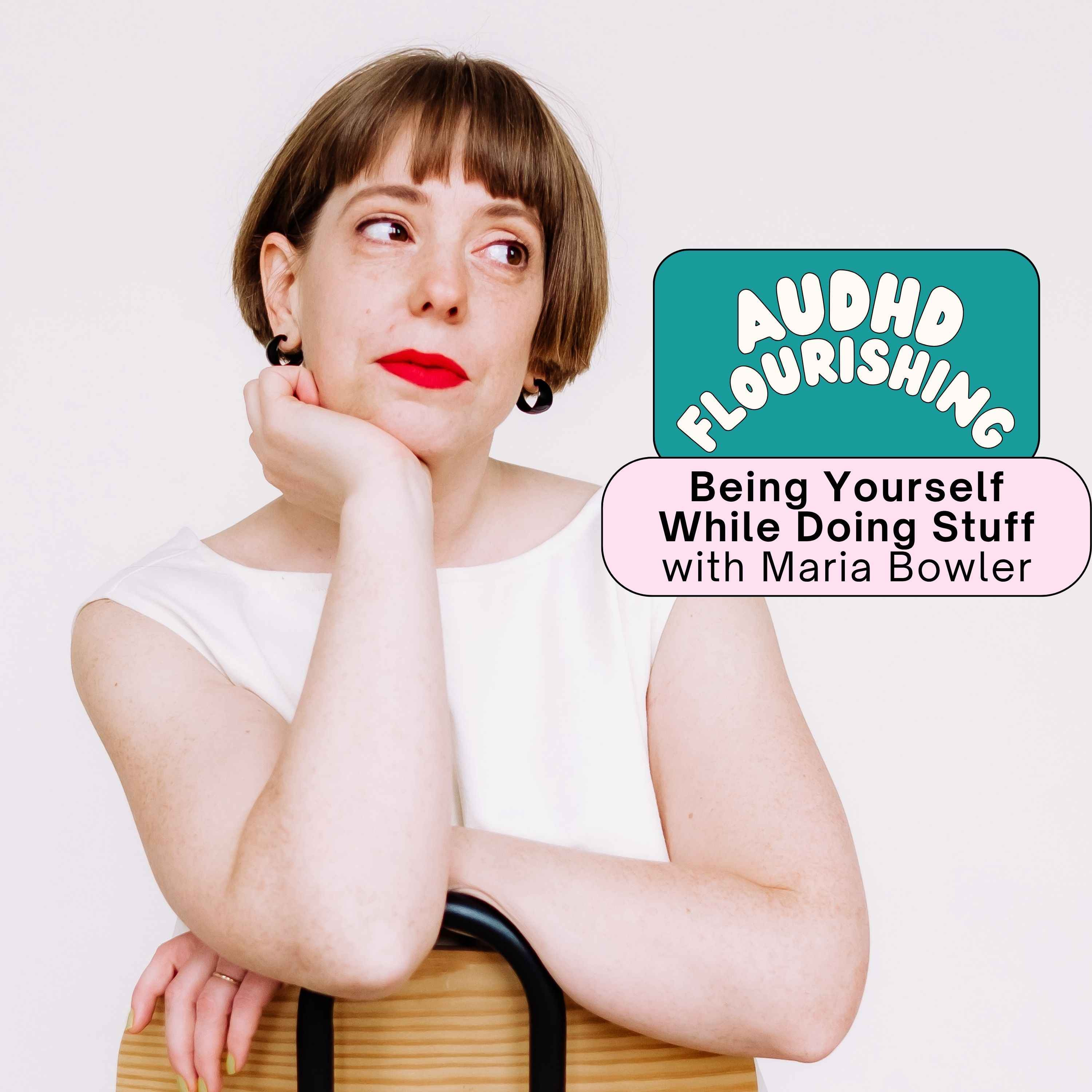
106 Being Yourself While Doing Stuff with Maria Bowler
EMaria Bowler recently published the book Making Time: A New Vision for Crafting a Life beyond Productivity. It's a relaxing take on doing what you want to do, and feeling okay while doing it.One of the main themes is being present, and being true to yourself even if you're doing boring stuff you don't want to do. Finding those moments of resonance that turn the entire activity into building self-trust.If you already read the book and found it resonant even though it doesn't mention AuDHD... that's because Maria is AuDHD and snuck all that good neurodivergent content in!Connect with Maria: Maria's website, MariaBowler.comMaria's Substackthe book Making Time (affiliate link)Resources:Transcript DocMattia's NewsletterLike Your Brain community space (Patreon/Discord) Hosted on Acast. See acast.com/privacy for more information.
105 Emotions Are Hard For a Reason
EThe Autistic community has taken many approaches to reframing what the diagnostic criteria calls "Persistent deficits in social communication and social interaction across multiple contexts." There's the double-empathy problem, for example, in which Autistic people have an easier time understanding each other where allistics struggle and vice versa. Childhood Emotional Neglect, while a relatively new idea from 2012, aligns remarkably with autistic social "deficits." While I'm by no means trying to draw a single causal line, I also wonder in this episode if maybe some of our social difficulties are actually signs of CEN. Even if our parents were quite well-meaning, we were more likely to experience CEN via a lack of appropriate mirroring of our internal responses, especially if our internal world was especially intense or complex. This episode covers the effects of CEN primarily. To learn more about examples of how it can develop, or how to address it, you can read the books below, or search for articles about them. Books mentioned: Running On Empty Running On Empty No MoreBoth are affiliate linksResources:Transcript DocEmail Newsletter: Nothing Wrong With UsLike Your Brain community space (Patreon/Discord) Hosted on Acast. See acast.com/privacy for more information.
104 Why Your Day Sucks
EThis episode is also on YouTubeIf our sensory needs are not met, even an otherwise okay day will still feel... off somehow. And then that gap between how we feel and how we think we "should" feel can make it even worse (that one's not a topic in this episode, just a thing that happens).If our sensory needs ARE met, sometimes even tough circumstances can feel not that bad.To be clear, this is not about avoiding bad days, which are bound to happen sometimes!But meeting both our comfort and mental sensory needs makes everything easier. It's a big part of feeling better first.Resources:Transcript DocEmail Newsletter: Nothing Wrong With UsLike Your Brain community space (Patreon/Discord)How Can I Help (request coaching support) Hosted on Acast. See acast.com/privacy for more information.
103 How I'd Therapy Now (20 years in)
ELessons learned from ~17 years of therapy over the last 20 years. How I'd approach therapy now based on that.What to look for in therapists, goal-setting in therapy, and reasons to quit your current therapist. Also connects back to last week's interview with Joe about AuDHD therapy.Links mentioned:Book Decolonizing Therapy (also mentioned last week, affiliate link)Blog post on finding a neurodivergent-affirming therapist (with links)More resources suggested by a community member:Dueling Minds, AuDHD SupportAutistic Girls Network in-person support groups for adultsADHD Support Groups in Canada (CADDAC)ADDA Virtual Support for ADHDResources:Transcript DocEmail Newsletter: Nothing Wrong With UsLike Your Brain community space (Patreon/Discord) Hosted on Acast. See acast.com/privacy for more information.
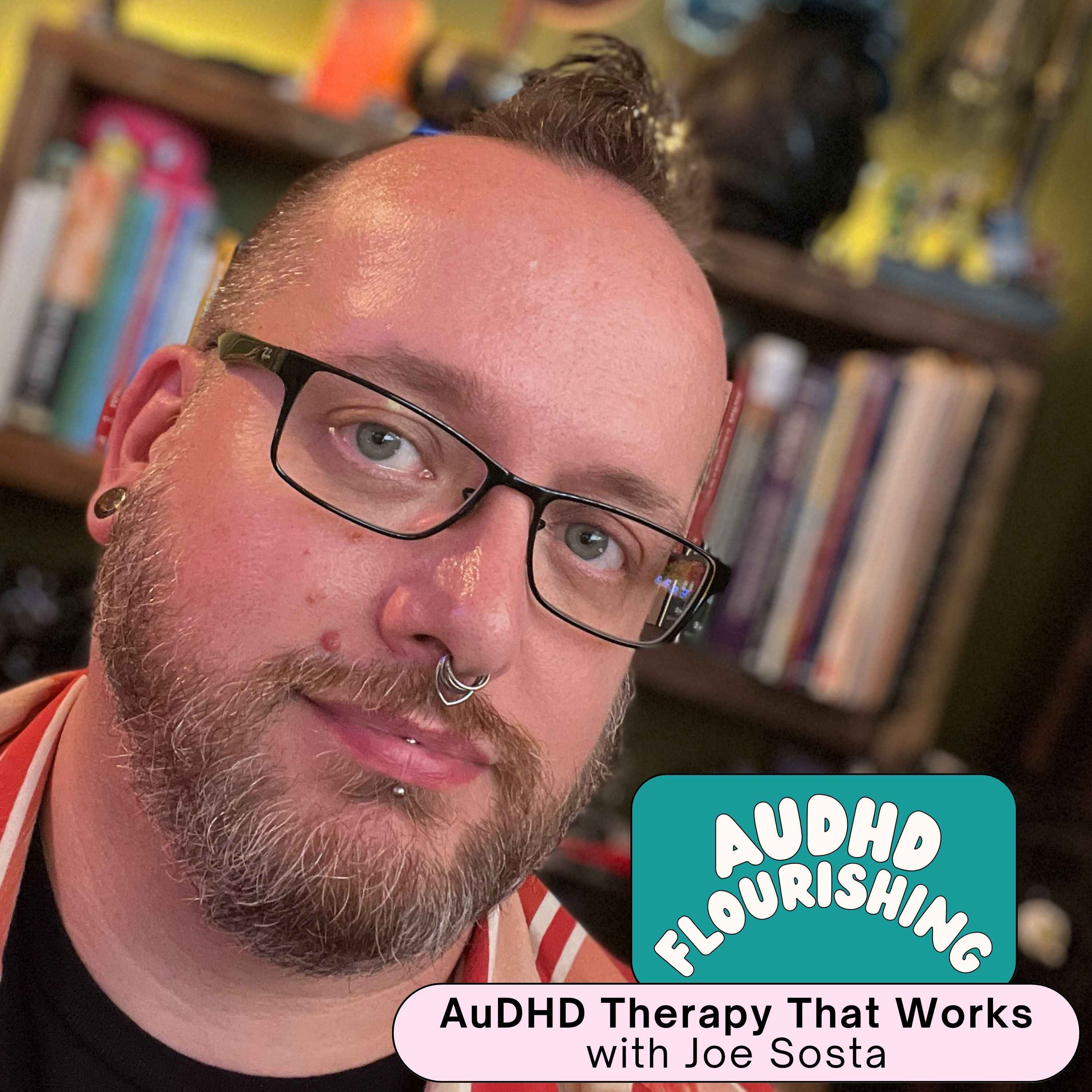
102 AuDHD Therapy That Works with Joe Sosta
EJoe Sosta is a Licensed Marriage and Family Therapist and late-realized AuDHDer. He shares some of our questions about therapy as an AuDHD adult, and we talk about the ups and downs of therapy and modalities. Note: "The Discord" mentioned is part of the Like Your Brain (Patreon) community spaceThis is the first of 7 interconnected episodes Connect with Joe:https://www.therapywithjoe.comhttps://barnliferecovery.comResources:Transcript DocEmail Newsletter: Nothing Wrong With UsLike Your Brain community space (Patreon/Discord) Hosted on Acast. See acast.com/privacy for more information.
Healing Relational Trauma with Pasha Marlowe - Repost
EReposting popular episodes June 2025. Back atcha in July with some spicy takes!Original show notes: Pasha Marlowe speaks brilliantly about how to navigate trauma, triggers, and sensory needs in relationships as an AuDHD person.Making it concrete, we both talk about a recent meltdown with our respective partners, and how we navigated those during and after.This is a deeply un-shaming episode—we still struggle with relational trauma despite all the "work" we've done. It's okay to have a lot of needs in relationships. And we talk about how hard it can be to figure out what those are and communicate them effectively.If your neurodivergent relationship needs extra support, Pasha is one of the rare practitioners who's ND, trained in family therapy, and works with couples!Resources mentioned:Pasha's websiteNeuroqueering podcast and Mattia's guest episode@neuroqueercoach on TikTok@neuroqueercoach on InstagramNeuroqueer Heresies bookFull Transcript hereAuDHD Flourishing Newsletter signup Hosted on Acast. See acast.com/privacy for more information.
Autistic Meltdowns & Shutdowns - Repost
In June I'm re-posting the most popular episodes from the show while I take a step back to look at the big picture. Update: the re-thinking has happened and retooling is in process :DOriginal show notes:Meltdowns and shutdowns appear to be a natural release valve for an overwhelmed autistic brain. They feel out of control and can be quite distressing.While there are ways to push them off, I experience a "point of no return" after which I need some big release or I'm going to feel terrible for days.Learning your triggers, as well as planning ahead for a safer experience if you do have a meltdown or shutdown can lessen our overall stress and shame.(One thing I forgot to record in the episode is that for me, shutdowns are almost always low-verbal or I can't speak at all.)Links:1. Meltdowns & Shutdowns* https://embrace-autism.com/meltdowns-and-shutdowns/2. How it feels to have an autistic meltdown and how you can help* https://www.bbc.co.uk/programmes/articles/38f5MsC2mB5fnmCr5v77zDn/how-it-feels-to-have-an-autistic-meltdown-and-how-you-can-help3. All About ‘Autism Meltdowns’: Why They Happen and How to Cope https://psychcentral.com/autism/autism-meltdowns4. Autism Shutdown Vs Meltdown: What's the Difference? https://www.andnextcomesl.com/2022/06/autism-shutdown-vs-meltdown.htmlResources:Email listEpisode Transcript*autistic writer Hosted on Acast. See acast.com/privacy for more information.
What AuDHDers Need - Repost
EIn June I'm re-posting the most popular episodes from the show while I take a step back to look at the big picture (because my monotropic brain has trouble doing that while also pumping out new content).Original show notes:What do AuDHDers need (beyond the obvious needs all humans have)? And why do those needs matter?This episode covers some important ones:Being able to engage with our interests (in a particular way)Executive Function support, without trying to make the hardest things easy or enjoyableAutonomyTrue restThe narrow path of just enough stimulationProcessing timeTo be witnessed in just the right wayRecognition that our needs vary quite a bit day to dayComing to terms with disabilitySpace and time throughout our self-discovery journeySafe enough spaces to explore what it means to be ourselfLinks mentioned:Executive function test post if you want to ask Qs or share your experienceExecutive Skills Questionnaire Revised (ESQ-R)Unmasking Autism book (affiliate link)Experimenting Your Way to an Extraordinary Life (course)Crisis Resources:USA-based anonymous crisis chatInternational crisis linesVarious types of crisis resources in about 10 countriesResources:Like Your Brain community spaceTranscript DocEmail Newsletter Hosted on Acast. See acast.com/privacy for more information.
What is AuDHD (and do you have it?) - Repost
In June I'm reposting the most popular episodes from the show while I take a step back to look at the big picture (because my monotropic brain has trouble doing that while also pumping out new content). Mentioned in outro:Experimenting Your Way to an Extraordinary LifeOriginal show notes:AuDHD = autism + ADHD... and also I experience it as its own neurotype, and not simply two "disorders."Here are the sets of questions I asked in the episode, if you'd like to take time with them on your own:Do you feel like advice almost never works for you? Not only NT advice, but even advice from autistic OR ADHD people? That your brain either instantly knows advice won't work for you, or tries it and feels really disappointed because you did have a lot of things in common with the person who gave it to you but somehow still it felt like your body or brain were just not clicking with it?Are the internal parts of you always fighting? Do you feel like the things your body and brain want are often in complete opposition and that it's literally impossible to get your needs met, because different parts of you want such different things to feel safe, regulated, and cared for?Have you managed to build some modicum of success in an area through anxiety and adrenaline? This could be school, work, a creative pursuit, relationships. Have you received external validation for doing this thing well, all the while being absolutely terrified that it's all going to fall apart and you have no idea how to handle how your life feels and it all feels extremely precarious and painful at the day-to-day level? Do you feel the need to hide how much you're struggling, and/or if you've disclosed your struggles have they not been taken seriously?Is your energy quite cyclical, where when you feel like your brain is working you'll push yourself really really hard, and then be totally exhausted and need time to recover? And without adequate recovery time, Is burnout, or burnout-like depression (they can be similar) a frequent experience for you? Or do you live in fear of it?Thanks to Hanu Dixit for permission to use the song A Sitar Story.Full Transcript here Hosted on Acast. See acast.com/privacy for more information.
101 Time Cannot Be Wasted
Time the body needs to transition, meet needs, rest and recover is NOT wasted time! I don't know that it's even possible to "waste time" outside of ableist capitalist structures. If you still have ableist thoughts, that's okay. We all do! It's worth resting anyway.Resources mentioned: Neuraluxe's post about parentificationCar fundraiser for DV survivor (my sibling)When your abuser threatens suicide articleNote about that paid Substack link:"If you are in an abusive relationship or other crisis and truly cannot afford to pay for a paid membership—not just would prefer to get content for free, but actually cannot pay—I offer no-questions-asked paid access to anyone who emails me. Please email [email protected], and put “Substack scholarship” in the subject line. If you use any other subject line, I may not see your email. You do not need to tell me anything specific—just that you cannot afford to pay! Please note that subscription applications can take several weeks to process."Resources:Transcript DocEmail Newsletter: Nothing Wrong With UsLike Your Brain community space (Patreon) Hosted on Acast. See acast.com/privacy for more information.
100 Creative Time Limitations
If you have multiple interests, realistically you probably don't have enough time to develop all of them to the degree that you'd like. And even with more targeted pursuits, many of us are busy because of real life and capitalism.What this means is that we have to make tough choices. I talk about some of the ways I've worked through this, where I'm at with it currently, and some questions to ask yourself to guide your own process.Also, it's the 100th episode!I'm committed to not running ads on this podcast (for a lot of reasons).If you'd like to support the podcast, the best ways to do so...Support the podcast & creation of free resources: One-time donation on Venmo (email [email protected] for other methods)Wish list itemsPatreon podcast support tierResources:Transcript DocEmail Newsletter: Nothing Wrong With UsLike Your Brain community space (Patreon) Hosted on Acast. See acast.com/privacy for more information.
99 a little more or less
To change something, I've been playing with telling myself I'll do "a little more or less." It is less exciting than a huge plan... but also easier on my nervous system!Love Your Brain course info & live round updateResources:Transcript DocEmail Newsletter: Nothing Wrong With UsLike Your Brain community space (Patreon) Hosted on Acast. See acast.com/privacy for more information.
98 Meeting Intensity Needs
This year I've been trying to meet my intensity needs in more "healthy" ways, while also recognizing that sometimes that doesn't feel possible. And that's okay!Love Your Brain course info & live round updateResources:Transcript DocEmail Newsletter: Nothing Wrong With UsLike Your Brain community space (Patreon) Hosted on Acast. See acast.com/privacy for more information.

97 Handling Daily Life with Vanessa Gorelkin, OT
EVanessa Gorelkin is an Occupational Therapist who often works with ND folks. She shares about compassionate approaches to daily life tasks.The main tool she shared is creating a crisis kit to use when experiencing distress in public, at work, or anywhere that you can't be fully unmasked. List of suggested items below.Crisis kit items suggested in episode:alcohol swabs (to smell for state change)instant ice packsextreme sour candieslemon juice packethot sauce packet (mustard is Mattia's)distress card requesting using the bathroom (or whatever's helpful for you)Connect with Vanessa: Her website, vanessagorelkin.com@otwhisperer on TikTokLove Your Brain course info & live round updateResources:Transcript DocEmail Newsletter: Nothing Wrong With UsLike Your Brain community space (Patreon) Hosted on Acast. See acast.com/privacy for more information.
96 Building Our Own Systems
EReflecting on the interview with Anna, who shared about accommodations for her students and herself. Learning how to build our own systems/structures is often more useful than being handed a system. Because no matter how much dopamine we get initially from a new tool or system, it inevitably becomes stale. Instead of throwing the whole thing out the window every time, I've learned how to pull forward elements that are still working. This continuous process of experimenting and tweaking (with rest/recovery interspersed, of course!) has made my life so much easier. Last 10m of the episode is about why I'm doing the work I'm doing, and the live round of LYB:Love Your Brain course info & live round updateResources:Transcript DocEmail Newsletter: Nothing Wrong With UsLike Your Brain community space (Patreon) Hosted on Acast. See acast.com/privacy for more information.
95 Kind Accommodations for Students & Teachers with Anna Shaver
EAnna is an educator who has developed an incredible approach with accommodations at the core (for the student AND herself!). It makes sense pedagogically, and it's working! With a core of psychological safety, students are able to explore writing and language with their own goals in mind.We've also known each other since I was 15... so we talk a bit about the mysterious backstory of living in a Christian sorority ;)Resources Anna mentioned:Her English 101 Online TextbookWorkshopping: Liz Lerman's Critical Response ProcessAll My Relations podcastLove Your Brain course info & live round updateResources:Transcript DocEmail Newsletter: Nothing Wrong With UsLike Your Brain community space (Patreon) Hosted on Acast. See acast.com/privacy for more information.
94 Coping Mechanisms
ECoping mechanisms can be a pathologizing term. What's the difference between coping mechanisms and intensity or interests?This episode also touches back to the interview on sobriety with Amy in ep. 92. As well as this note on a positive AA experience from a listener.Resources:Transcript DocEmail Newsletter: Nothing Wrong With UsLike Your Brain community space (Patreon) Hosted on Acast. See acast.com/privacy for more information.
93 Tunnel of Focus: Monotropism, Trauma, and Thriving
EThanks Eric Tivers for interviewing me & allowing me to share the full episode here as well. His show notes:In this episode of ADHD reWired, Eric Tivers is joined by Mattia Maurée, an award-winning composer, poet, and host of the AuDHD Flourishing Podcast. Mattia shares their insights into the unique challenges faced by neurodivergent (ND) individuals, particularly those with ADHD and autism, as they navigate trauma, self-expression, and what they describe as “attention tunnels.”Mattia opens up about their personal journey, discussing the impact of complex PTSD, disordered eating, and their late diagnoses of ADHD and autism. They explain how monotropism—having a narrower field of focus—shapes their experience as a ND person. Through the lens of monotropism, Mattia explores how being stuck in an attention tunnel can make transitioning to different tasks or social situations feel overwhelming and distressing.Eric and Mattia dive deep into the intersections of trauma and neurodivergence, examining how ND brains may be more easily traumatized, especially in environments that fail to meet their unique needs. They discuss the profound impact of ND parents raising ND children and the challenges of navigating systems that don’t support their differences.This conversation also highlights the importance of self-expression in healing and flourishing. Mattia explains how self-expression, rather than achievement, has become central to their definition of success, emphasizing the importance of creating work that resonates emotionally, even if it doesn’t fit the traditional metrics of success.Other topics discussed include:The connection between hyperfocus and monotropism in ADHD and autismHow Mattia balances creativity, self-care, and flourishing as a ND individualThe complexity of navigating trauma in ND familiesThe importance of community and support systems for ND creatives and entrepreneursThis episode is a must-listen for anyone interested in understanding the complex interplay of trauma, neurodivergence, and flourishing. Whether you identify as ND or are simply curious about these experiences, this conversation offers valuable insights into the importance of creating space for self-expression, healing, and growth.Resources:Transcript DocEmail Newsletter: Nothing Wrong With UsLike Your Brain community space (Patreon) Hosted on Acast. See acast.com/privacy for more information.
92 Sobriety While AuDHD + Gifted with Amy Knott Parrish
EThank you to guest Amy Knott Parrish for sharing about her unusual journey with sobriety. When she realized what her future was going to look like, she... stopped drinking. Because it wasn't about the drinking, it was about the problem that the drinking was self-medicating.After nine years of continuous sobriety, her therapist insisted that she try AA, but it wasn't the right fit.As with many institutions, it wasn't built for her!The giftedness/intensity piece adds another layer—we talk about how we sometimes just need the psychoeducation on certain topics, not necessarily the emotional excavation approach. (I could talk about that for hours.)Find Amy: https://www.rebelling.me/Sobriety blogA pro-AA AuDHD story (anonymously shared by a listener)Resources:Transcript DocEmail Newsletter: Nothing Wrong With UsLike Your Brain community space (Patreon) Hosted on Acast. See acast.com/privacy for more information.
91 Gifted + AuDHD: Surviving (part 2)
E(Part 2 of 2. Part 1 here)Being AuDHD + gifted is being an outlier of outliers. I'd guess most of us feel like aliens.And even when we start to understand the shape of our experiences, it can feel overwhelming to even begin to order our understanding in a satisfying way. (Autoethnography, anyone?)Our depth and intensity needs can be quite challenging to meet, especially if we have lower physiological capacity due to trauma/CPTSD, and other intersectional identities that are often marginalized/mistreated.Mentioned in episode: 1. Some giftedness models:Rainforest mindRuf's 5 levelsInterGifted & HEPG"Dabrowski’s Theory and Existential Depression in Gifted Children and Adults"2. Living With Intensity book*3. Neurocomplexity & PDA as existential intelligence4. Autism/ADHD/Gifted Venn Diagram5. Overexcitabilities & being "too much"6. Ember Green's quick IQ doesn't exist overview + Aspie Supremacy deep dive (p.s. this video is 2 hrs long and made me cry a LOT bc of historical horrors... still worth it if/when you have the spoons)Resources:Transcript DocEmail Newsletter: Nothing Wrong With UsLike Your Brain community space (Patreon)*affiliate link Hosted on Acast. See acast.com/privacy for more information.
90 Gifted + AuDHD: Why It Matters (part 1)
EBeing AuDHD + gifted is being an outlier of outliers. I'd guess most of us feel like aliens. And even when we start to understand the shape of our experiences, it can feel overwhelming to even begin to order our understanding in a satisfying way. (Autoethnography, anyone?)Our depth and intensity needs can be quite challenging to meet, especially if we have lower physiological capacity due to trauma/CPTSD, and other intersectional identities that are often marginalized/mistreated.This became part one of two!Mentioned in episode: 1. Some giftedness models: Rainforest mindRuf's 5 levelsInterGifted & HEPG2. Neurocomplexity & PDA as existential intelligence3. Autism/ADHD/Gifted Venn Diagram4. Overexcitabilities & being "too much"5. Ember Green's quick IQ doesn't exist overview + Aspie Supremacy deep dive (p.s. this video is 2 hrs long and made me cry a LOT bc of historical horrors... still worth it if/when you have the spoons)Resources:Transcript DocEmail Newsletter: Nothing Wrong With UsLike Your Brain community space (Patreon) Hosted on Acast. See acast.com/privacy for more information.
89 2E & ND-Affirming Education with Emily Kircher-Morris
EEmily Kircher-Morris is the host of the long-running and popular podcast, The Neurodiversity Podcast. (And she interviewed me last year.) She's a compassionate, incisive, and important voice in 2e and neurodivergent-affirming education. Also a delight to talk to!Building on what we talked about, she shared some additional resource links below.Connect with Emily & mentioned in episode:Emily Kircher-Morris, LPCThe Neurodiversity PodcastConnect with Emily on Facebook or LinkedInNeurodiversity UniversityNeurodiversity-Affirming Schools (new book)Neurodiversity-Affirming Schools: Transforming Practices So All Students Feel Accepted and SupportedTeaching Twice-Exceptional Learners in Today’s ClassroomRaising Twice-Exceptional Children: A Handbook for Parents of Neurodivergent Gifted KidsResources:Transcript DocEmail NewsletterLike Your Brain community space (Patreon) Hosted on Acast. See acast.com/privacy for more information.
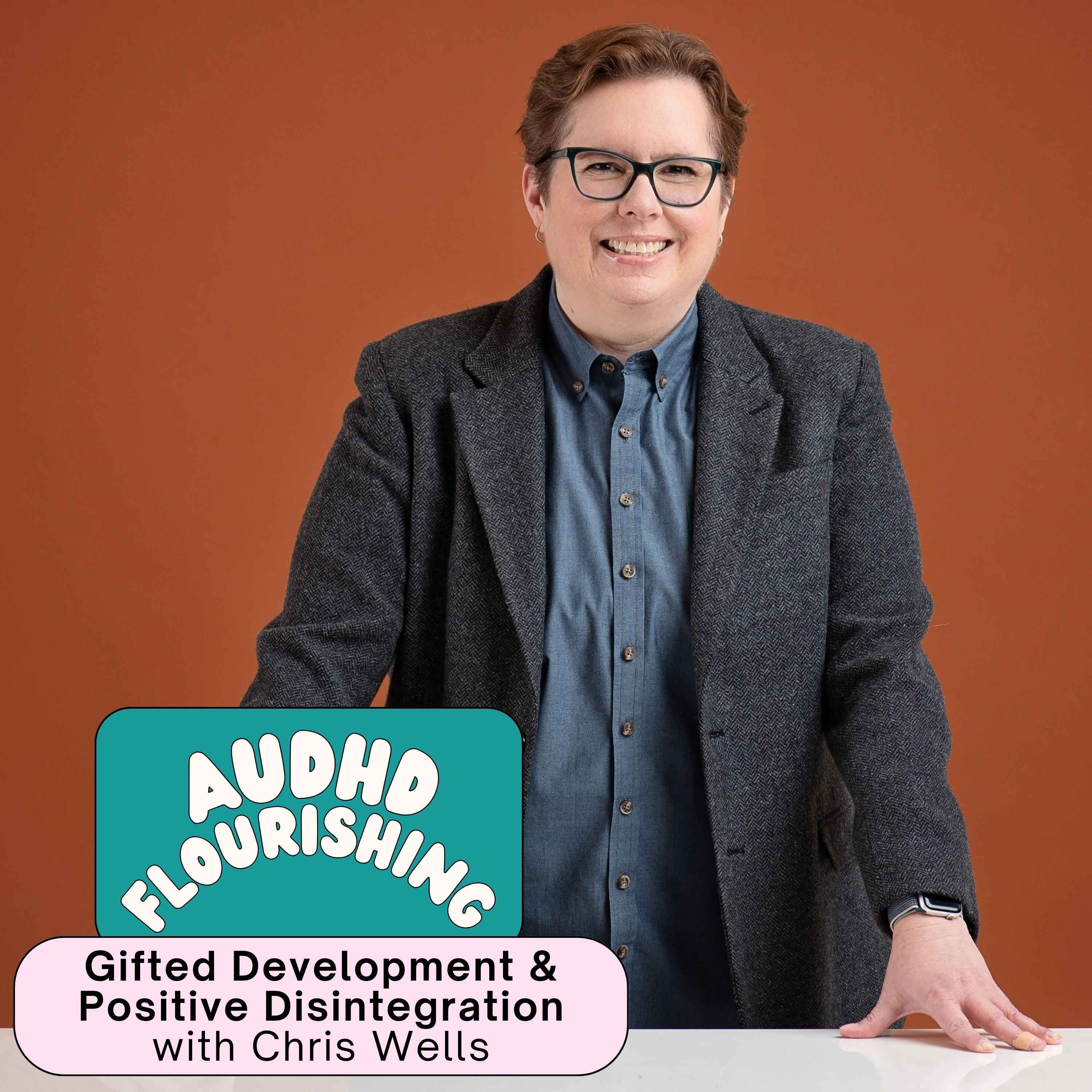
88 Gifted Development & Positive Disintegration with Chris Wells
EDr Chris Wells speaks & teaches about positive disintegration, Dabrowski's theory that (among other things) provides an alternate explanation for some mental illness. While the theory is not entirely about giftedness, it helps many gifted people make sense of their experiences.Dr Wells also talks about their journey, which included being on disability for many years. It's a reminder that while labels can change, they can also hold an enormous amount of power! Learn more about Chris & positive disintegration: Dr Chris Wells InstagramPositive Disintegration.orgThe Dabrowski Center & their InstagramPositive Disintegration Podcast InstagramLiving With Intensity book (affiliate link)Resources:Transcript DocEmail NewsletterLike Your Brain community space (Patreon) Hosted on Acast. See acast.com/privacy for more information.
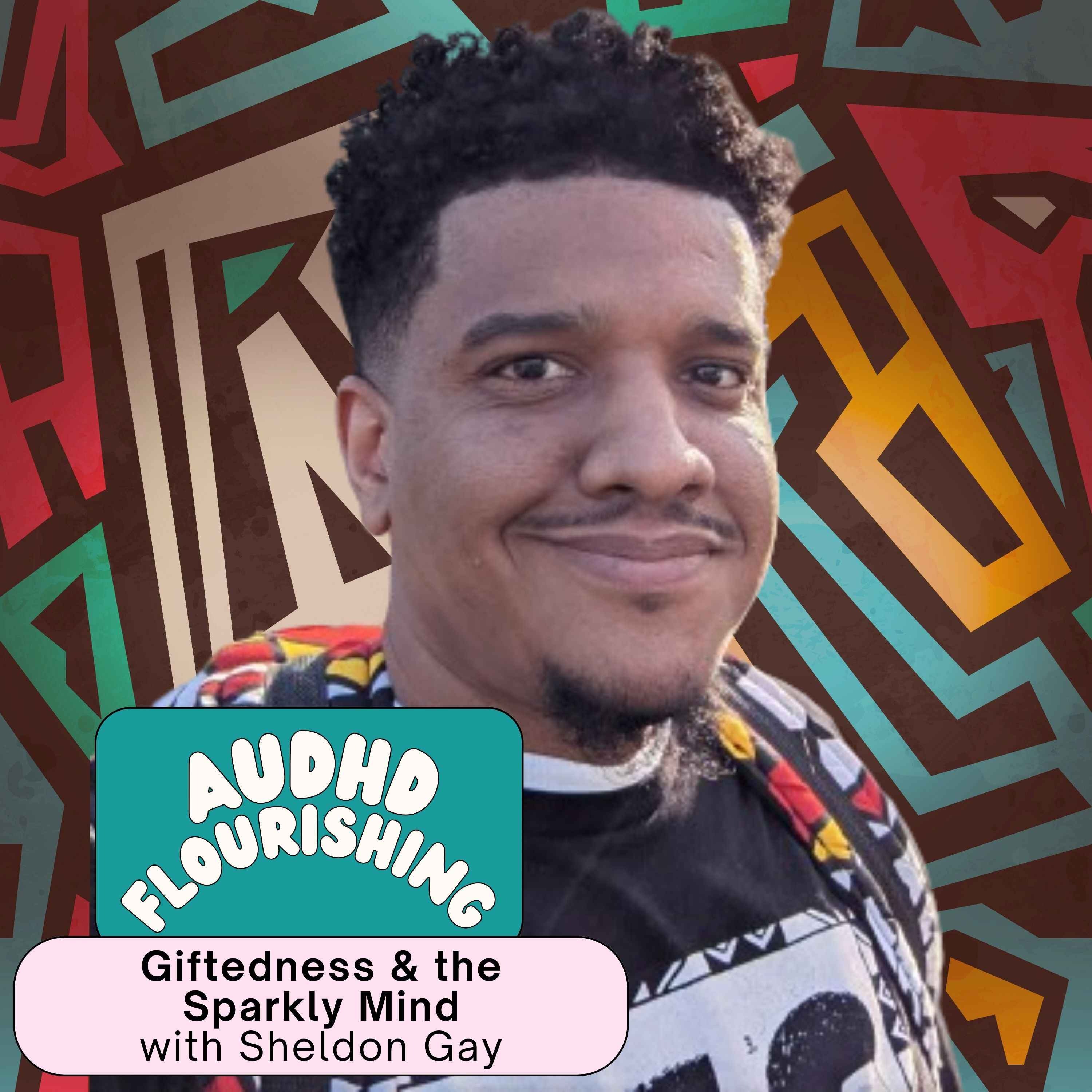
87 Giftedness & the Sparkly Mind with Sheldon Gay
ESheldon Gay shares about giftedness, in particular the intersections of being late-identified as a Black man. He hosts the I Must Be BUG'N podcast (Black, Underrepresented/Unidentified, Gifted and otherwise Neurodivergent).I absolutely love his term of having a sparkly mind! We weave through many topics, including education and melanated & marginalized kids not having their needs met.This is the first of 5-6 upcoming episodes on gifted neurodivergent experiences.p.s. that "or, but anyway" that I didn't finish was that people experience my intensity as seeming like mental illness.Mentioned in episode & connect with Sheldon: Sheldon's websiteI Must Be BUG'N podcastOur Wild Minds (community for Black gifted adults)Dr. Joy Lawson Davis is a friend & mentor whom Sheldon would like to mention & point toward her website for her work with Black/BIPOC gifted advocacy: https://drjoylawsondavis.com/Living With Intensity book (affiliate link)Resources:Transcript DocEmail NewsletterLike Your Brain community space (Patreon) Hosted on Acast. See acast.com/privacy for more information.
86 Apocalypse Survival Guide
E24:23 to skip specific American politicsIn this episode:Mutual aidLocal connectionsSurveillance & privacy considerations for devicesResistance is workingGeneral strike & Mar 15 shutdown (#Shutdown315)Emotional survival: monotropic reset, alpha brain wavesBeing careful whom you listen to (accompanying Emily Science Journalism ep 82)Links mentioned:Surveillance guide for devicesHow to change Meta settings to limit tracking (note there is no way to make Messenger app safe)Ad-blocking guide (note that I haven't vetted all their recommendations, though I do use one of them already)General Strike USAMarch 15 2025 general shutdown in US #Shutdown315The Open-Focus Brain by Les Fehmi is the book I don't automatically recommend bc of offensive disability language, plus I personally didn't find the exercises as helpful as when another ND person led me. That said, the book may still be helpful to you. There are hundreds of open focus exercises on YouTube, and I may try to find one that I like and link it here at some point.Article, "My problems with the Constructed Theory of Emotions," (the critique of How Emotions Are Made) Andrew Huberman is a liar articleNot in episode, but I adore this takedown of Matthew Walker's book Why We SleepDe-GooglingOther links shared on the Discord recently:Article: sabotaging DOGE Simple Sabotage Field Manual from above articleHelping trans people leave the USMI, MN, NY, VE, WA EDL (drivers license for land & sea entry)Actions for protecting disability rightsSmall actions to take nowResources:Transcript DocEmail NewsletterLike Your Brain community space (Patreon) Hosted on Acast. See acast.com/privacy for more information.
Intrusive Thoughts & AuDHD
EMini episode on my experience with intrusive thoughts and how/when they stopped being distressing.Monotropic brains tend toward thought loops and thus can make intrusive thoughts pretty easily.In my case, I think my brain was in part trying to generate interest when my needs were not being met. Dopamine is also a learning chemical that tells the brain to pay attention right now.This is just my experience... Please seek professional help if you're having distressing intrusive thoughts!Crisis Resources:USA-based anonymous crisis chatInternational crisis linesVarious types of crisis resources in about 10 countries Hosted on Acast. See acast.com/privacy for more information.
85 Rising AuDHD Rates (PBS interview)
Last week I was interviewed on WHYY, Philly's PBS/NPR radio station, about the rising diagnosis rates of Autism & ADHD. Here are a few additional thoughts and my favorite moments, and you can find the full interview belowMentioned in episode: YouTube PBS interview (& Patreon post about it)WHYY.org page with the audio only versionPublic Patreon post w YouTube link if you'd prefer to comment there (link coming soon)Readwise/Reader tool (affiliate link gives you 60 days free)Resources:Transcript DocEmail NewsletterLike Your Brain community space (Patreon) Hosted on Acast. See acast.com/privacy for more information.
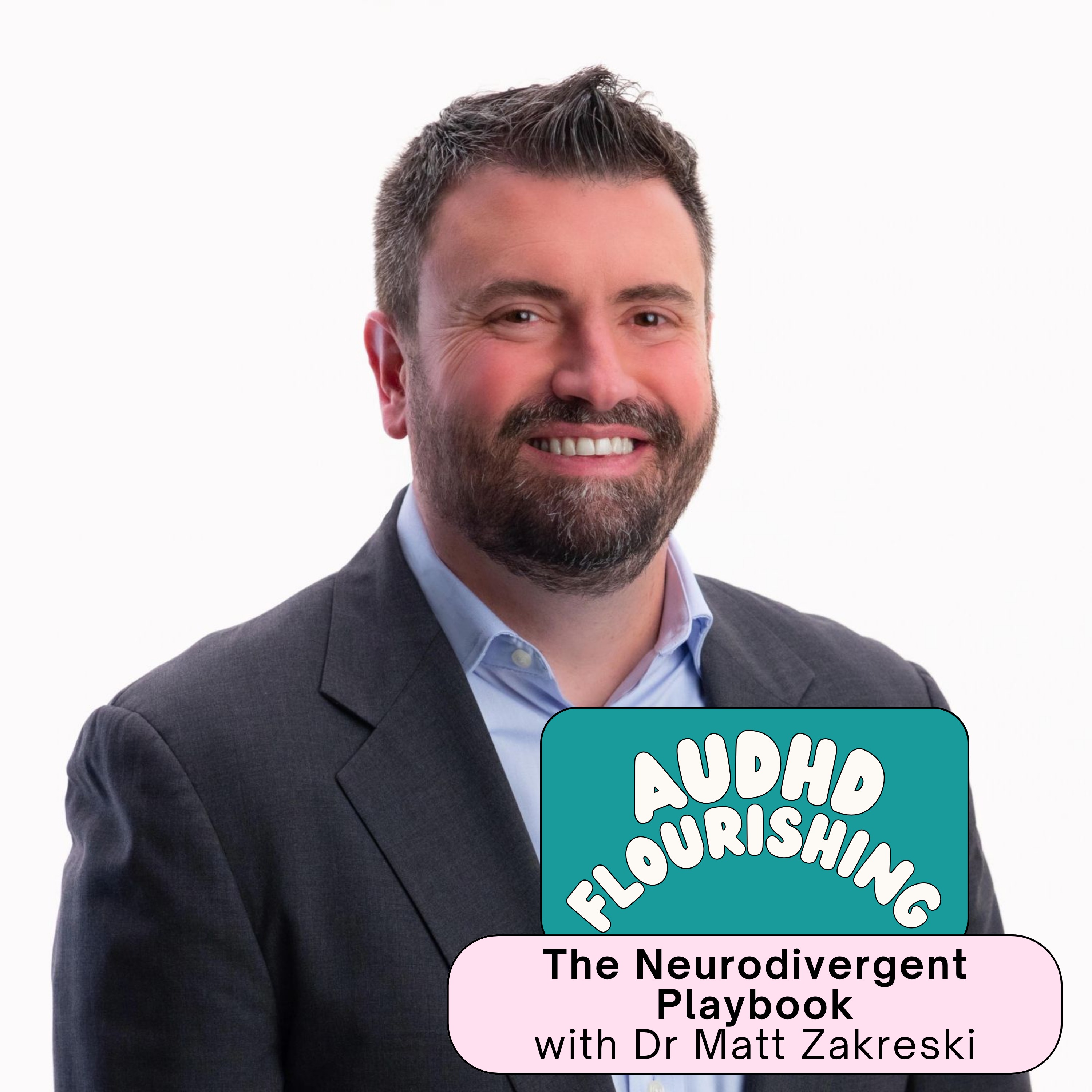
84 The Neurodivergent Playbook with Dr Matt Zakreski
EDr Matt Zakreski is 2e (ADHD & gifted) and also a clinical psychologist supporting neurodivergent folks.His recent book, The Neurodivergent Playbook, aims to meet that social gap in which we often feel we missed the "instruction manual" for how to approach people.Connect with Dr Matt: The Neurodiversity Collective for therapy & assessments Dr Matt's website for speaking engagementsFacebook Instagram @drmattzakreskiResources:Like Your Brain community spaceTranscript DocEmail Newsletter Hosted on Acast. See acast.com/privacy for more information.
Bonus: Overview of my approach by Notebook LM
As I describe at the beginning, this goes along with episode 83 about AI & tech tools.The latter 15m of this episode was an AI "podcast conversation" based on AuDHD Flourishing principles and my overall work and approach.I was impressed by how it was pulled together, as well as pronouncing my name & getting pronouns right!Note: if you have misophonia, you may find the AI vocal artifacts irritating... heads up!If you're curious:The web pages used by Notebook LM: AuDHD Flourishing home pageHow it WorksAbout/bioFAQsProducts & Services (note that I'm going to be updating this soon, so if you're looking at this after Jan 2025 it will be different than what was pulled into the episode)TestimonialsLove Your Brain (course)Resources:Transcript DocEmail NewsletterLike Your Brain community space Hosted on Acast. See acast.com/privacy for more information.
83 Tech and AI Tools for AuDHD Accommodations
EIt's okay to have strong feelings about AI! Yes, we touch on ethics in this episode.It's also okay to use accommodations and tools that work for you, especially in the short term to feel better first.This episode covers a number of AI and tech tools suggested by other AuDHDers.When there's a blog post to go through all of them (plus any others added in the meantime) I'll add that link below as well.AI & Tech mentioned in episode: Notebook LMAutektik AILLMs ChatGPT and ClaudePoised ShortcutList of AI Tools for Designers & MarketersFree course: Using Fandoms + AI to Developing Coping Skills for Neurodivergent KidsReadwise/Reader (affiliate link gives you 60 days free)Goblin Tools & my blog post about itPerplexity Pro (link is to free version)The convo on Patreon, free with loginResources:Transcript DocEmail NewsletterLike Your Brain community space (Patreon) Hosted on Acast. See acast.com/privacy for more information.
82 Science Journalism & Misinformation: Best Practices Being ND Online with Emily Earlenbaugh
EEmily is a science writer, AuDHDer, and ND-affirming coach.They share online about neurodivergence topics and accuracy in science journalism as The Neurodivergent Well.In this episode, we talk about best practices as a consumer of science info online, especially via social media. If you don't have time or capacity to read journal articles, what CAN you do?Emily shares multiple approaches to being a better online citizen when we take in and share information.There's also a lovely bit about the complexity of identity, and whether the labels we use are accurate and useful.p.s. Emily has a doctorate in the Philosophy of Science, and over 10 years professional experience in writing and editingFind Emily online: The Neurodivergent Well websiteMedium writingInstagram @the.neurodivergent.wellTikTok @the.neurodivergent.well (posting this Jan 18th so we'll see...)Mentioned in the episode: The small Case Western study that found a 42% increase in resting info rate in autistic brains (with 19 children)An article about the DSM disorders disappearing in statistical clustering of psych symptomsExperimenting Your Way to an Extraordinary Life (course)Resources:Transcript DocEmail NewsletterLike Your Brain community space Hosted on Acast. See acast.com/privacy for more information.
81 When the Body Simply Cannot
EThis week I pushed my body way too far, even though I was having trouble parsing that in the moment. The story is also a great analogy for how other ND internal needs feel (including PDA).Even with all the info, self-kindness, and support, I still struggle to find that exact line of capacity. It's okay that it's hard to figure out!This is the perfect and slightly ironic follow-up from last week's episode about giving up on NT/ableist expectations ;)Mentioned in episode: wish listExperimenting Your Way to an Extraordinary LifeComparative Grammar of Spanish, Portuguese, Italian and French (affiliate link)Mackareth's Neurocomplexity model (& affiliate link if you want to sign up)Resources:Transcript DocEmail NewsletterLike Your Brain community space Hosted on Acast. See acast.com/privacy for more information.
80 Is This the Year to Give Up?
EIs this the year to give up on neurotypical and ableist nonsense that is causing you harm??I hope so, for all of us. There are so many layers to unraveling internalized ableism. Here's your permission to do that a little more :)p.s. of course you know I never mean to give up on life ;) If you're in crisis, there are crisis links below <3 Links mentioned in episode: Psychology Today article on Relational Trauma: Beyond Adverse Caregiver ExperiencesNeuroLaunch article on Relational Therapy: A Comprehensive Approach to Healing Through Connection7 Signs of Internalized Capitalism by Lindsey Mackereth at Method Creative Referral link to Lindsey Mackareth's Neurocomplexity SubstackCrisis Resources:USA-based anonymous crisis chatInternational crisis linesVarious types of crisis resources in about 10 countriesMy Medium article, "Please Stay, We Need You"Resources:Transcript DocEmail NewsletterLike Your Brain community space Hosted on Acast. See acast.com/privacy for more information.
79 Seasonal Energy & Sleep
EIt's okay if your sleep and energy vary wildly during the seasons! Or at least... it's okay with me ;) Obviously there can be real world effects to having a chronotype outside of the 9-5.But if your body is going to make you rest anyway... may as well enjoy it and get the most out of it, in my opinion!Resources:Transcript DocEmail NewsletterLike Your Brain community space Hosted on Acast. See acast.com/privacy for more information.
78 Healing Relational Trauma
EThis is the follow-up episode to deepen ideas in the interview with Danielle Aubin last week on Autistic Therapy. Especially focused on this idea of relational trauma, and relational healing that addresses it. In my experience, relational healing ends up being woven throughout all other healing. Or, sometimes it's the "boss battle" to put what I've integrated into practice. Because emotional regulation during conflict with someone you care about is a whole new level! While I didn't use the words "community model of healing" or "relational healing" when I was starting the Like Your Brain community over a year ago, they were certainly on my mind. More on that in the episode as well. There are so many layers to relational healing. Wherever you're at with it is totally fine! And there are many ways to approach it. Animals are also a lovely way to experience relational healing. My first cat cured like 60% of my relational trauma <3 Resources:Transcript DocEmail NewsletterLike Your Brain community space Hosted on Acast. See acast.com/privacy for more information.
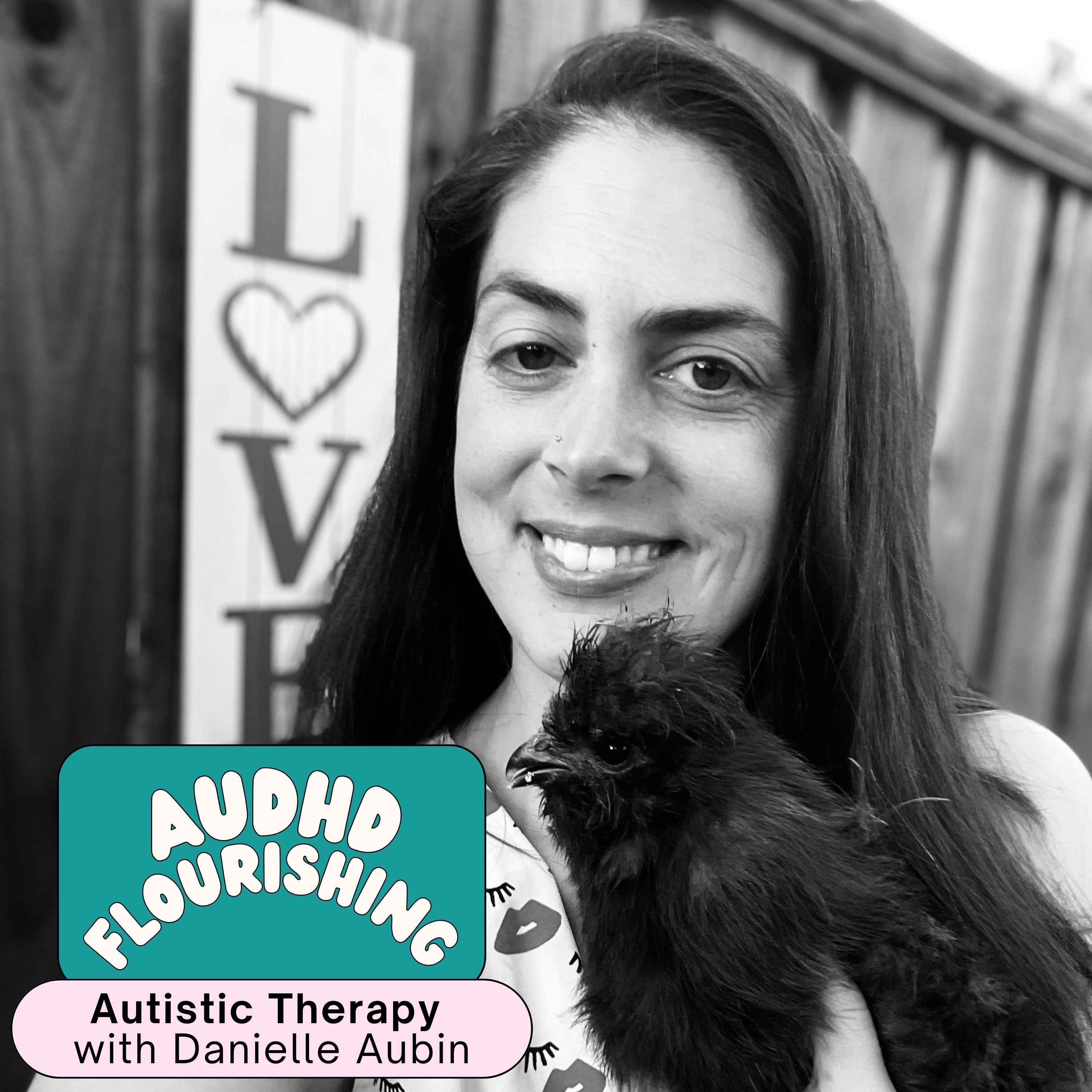
77 Autistic Therapy with Danielle Aubin
EDanielle Aubin is an autistic therapist who works with autistic clients. And also shares about Obsessive Compulsive Personality Disorder (OCPD) and how it's strangely compatible with capitalism because of its orientation toward achievement. Other big topic is community building, and how it can be healing even when it's uncomfortable (in the right way). Relational healing is necessary for relational trauma, whether in the therapeutic relationship, or in a group setting! Connect with Danielle:Website: myautistictherapist.comTikTok @myautistictherapistCommunity: Late-Discovered Autistic Support & Learning Group Resources:Course: Experimenting Your Way to an Extraordinary LifeTranscript DocEmail NewsletterLike Your Brain community space Hosted on Acast. See acast.com/privacy for more information.
76 Gift & Holiday Accommodations
EA few ideas for accommodating your brain & needs around gift-giving and the holidays. Fun fact: Many of us have gone through a big minimalism stage! Please take care of yourself this season, whether that looks like unmasking or grey rocking ;)p.s. I have a public wish list and absolutely love practical gifts! It's a fun way to support the podcast :)Resources:Transcript DocEmail NewsletterLike Your Brain community space Hosted on Acast. See acast.com/privacy for more information.