
Another Life with Joy Marie Clarkson
312 episodes — Page 5 of 7

The PloughRead: Vows in Brief by Phil Christman
Phil Christman explores the courtship of three monogamous animal couples.

The PloughRead: The Adventure of Obedience by Norann Voll
Norann Voll, a Bruderhof member in Australia, took a vow of obedience that included the promise to go anywhere the church needed her.

The PloughRead: Demystifying Chastity by Sr. Carino Hodder, OP
Sister Carino Hodder says the call to chastity applies just as much to spouses and to single people looking for romance as it does to consecrated religious.

The PloughRead: Why I Chose Poverty by Andreas Knapp
Andreas Knapp, a member of the Little Brothers of the Gospel says wealth is not only an unwieldy burden, but is incompatible with love of neighbor.

The PloughRead: A Broken but Faithful Marriage by Dori Moody
Dori Moody relates the story of her grandparents marriage. Even though they separated, they remained faithful to one another.
The PloughRead: A Vow Will Keep You by Randall Gauger
Randall Gauger, a Bruderhof pastor, discusses how lifelong vows make mutual faithfulness possible.

The PloughRead: Victor Hugo’s Masterpiece of Impossibility by Caitrin Keiper
Caitrin Keiper writes of the vows in Victor Hugo’s Les Misérables that brokenness does not erase the hope in any person when the cycle of retribution breaks for grace.
The PloughRead: The Dance of Devotion by Kelsey Osgood
Kelsey Osgood, an Orthodox Jew, writes that we live in an age that glorifies self-care, but any attempt to deny oneself something pleasurable is suspect.
42: Zohar Atkins on Vows in Scripture and the Existentialists, and Listener Questions
Susannah talks with Zohar Atkins, a rabbi and philosopher, about vows in Nietzsche, in other philosophers, and in the Jewish theological tradition. Are vows the origin of private conscience and thus the origin of secularism? Can human vows provide the kind of transcendence and eternity that even existentialists seek? Is it presumptuous to take a vow? Then, Susannah and Peter discuss what they’ve learned from editing the Vows issue of the magazine and doing the Vows season of the podcast. After that, they take listener questions – is it wrong to vow at all? How can we ensure that vows are made in love? And what are the hosts’ favorite cooking spices?
41: The World After Roe
Peter and Susannah have a long conversation with Professor Robert P. George of Princeton University. A veteran of the pro-life movement, Robert P. George reflects on the opportunity that we now have to build just laws that support the wellbeing of mothers and their children, and, echoing Lincoln, of the need to heal the division between pro-life and pro-choice Americans as much as possible, without compromising on what we believe to be right. He discusses his thoughts about the non-libertarian future of pro-life politics, and the need for supporting both private and public aid to mothers and families.
Ep 4040: Hyperpartisanship and Hippocrates
Peter and Susannah talk to Justin Giboney of The AND Campaign about polarization in American political life. They discuss practical matters: How can we seek common ground without wimping out? How can we work across the aisle? They also talk about the role of the Black church. What is the unique contribution that that tradition can make to our ongoing discussions of the proper interaction between faith and politics? Then, Peter and Susannah speak with Lydia S. Dugdale. There are now no doctors in America who are required to take the Hippocratic Oath; generally, if doctors take an oath at all, it is one of their own devising, which changes from year to year. In a medical culture like this, what is lost? What is the purpose of medicine, anyway? Is there a purpose to it beyond treating patients as customers and giving them what they want?
39: On Secular and Religious Disciplines, and the Theology of the Vow
Susannah and Peter speak with Kelsey Osgood about her piece “The Dance of Devotion.” What’s the difference between a figure skater whose sport requires a strict regimen of training and eating, and an observant Jew whose life is also constrained by specific rules? Why is our society more friendly to the one than to the other? Why are we uncomfortable with the concept of a discipline that’s a matter of obedience to God rather than to a trainer or to one’s own choice of lifestyle fad? Then, they talk with King-Ho Leung about his piece “The One Who Promises.” What’s the difference between a vow and an oath? How have vows been seen in Jewish and Christian thought? He examines the teachings of Philo of Alexandria, of St. Thomas Aquinas, and of Martin Luther in his attempt to understand how our ability to make vows is rooted in God’s own faithfulness, in the nature of language, and in His identification with the Logos, the Word.
38: Christian Internationalism with John Milbank, and a Bruderhof Journey
Peter and Susannah speak with John Milbank about his reservations about National Conservatism, and the possibilities of Christian internationalism. Christianity makes universal claims, and all our national loyalties and other lesser loyalties are relativized by our loyalty to the Kingdom of God. In light of that, how can we best live out our local and universal commitments in friendship with each other? Then, they speak with Tom and Sue Quinta, a couple who joined the Bruderhof after a long journey through the counterculture of the 1960s. What did it take for a young hippy couple to make lifetime vows to a Christian community, and in what of the non-Christian spirituality they explored did they see the work of the Holy Spirit? How does a vow shape the experience of a life, and how can we understand the uniqueness of Christ in light of the spiritual hungers of the whole of the non-Christian world?
Ep 3737: Vows, Liberty, and Victor Hugo
Peter and Susannah discuss Peter’s lead editorial, “Word Is Bond.” In a culture where keeping our options open is the categorical imperative, how can we become ourselves? Peter argues that the voluntary self-limitation of vows allows men and women to live their lives thoroughly, rather than skimming along the edge of reality. Monasticism, marriage, and the military are forms of commitment that commonly allow people to dig in to their own lives; all three are on the wane. How can we embrace commitment and push back against the ephemerality and weightlessness of the uncommitted life? Then, they welcome their colleague Caitrin Keiper to discuss vows in Victor Hugo’s novel Les Misérables. Both Valjean and Javert, in their different ways, live their lives according to a vow. How do these different commitments lead to each of their ends? And how does grace shape the outcome of each of their vows?

The PloughRead: Bring Back Hippocrates by Lydia S. Dugdale
Lydia S. Dugdale on the loss of the Hippocratic Oath and the lack of an ethic to explain medicine’s telos.

The PloughRead: Word Is Bond by Peter Mommsen
Peter Mommsen, editor of Plough, writes that in a culture addicted to endless choice, vows offer a higher freedom.

The PloughRead: Tradition and Disruption by David Bentley Hart
David Bentley Hart writes that apocalypse, not dogma or tradition, is what gives Christianity grounds for hope in his book Tradition and Apocalypse.

The PloughRead: The Spiritual Roots of Climate Crisis by Cardinal Peter Turkson
Cardinal Peter Turkson speaks about ecological challenges and how more community may be an answer.

The PloughRead: The Other Side of Revelation by Hanna-Barbara Gerl-Falkovitz
Hanna-Barbara Gerl-Falkovitz writes on John’s Revelation, apocalypse, fear, and why there is still hope.

The PloughRead: The Apocalyptic Visions of Wassily Kandinsky by Shira Telushkin
The artwork of Wassily Kandinsky reveals his apocalyptic visions. Shira Telushkin reviews the Around the Circle exhibit of Kandinsky’s art at the Guggenheim.

The PloughRead: Jesus and the Future of the Earth by Eberhard Arnold
Eberhard Arnold tells how the first Christians viewed the end of the age.

After Liberalism – What?
Susannah Black Roberts, Peter Mommsen, Shadi Hamid and Damir Marusic talk about Yoram Hazony’s National Conservative Statement of Principles, John Milbank’s Open Letter, and what postliberalism means. They talk about what the NatCon statement implies about what state power should be used for, and then find themselves discussing abortion, and the future of the country given the profound differences that exist. They talk about whether slavery and abortion are fundamentally different kinds of questions, about the nature of law, about assisted dying in Canada, whether and how progress happens. The conversation then turns to the nature of religious truth, and on what politics is based on – sociability, justice, or love?

The PloughRead: Everything Will Not Be OK by Brandon McGinley
Brandon Mcginley, a father of young children, shares insights on whether or not to shield kids from tragic news.

The PloughRead: Syria’s Seed Planters by Mindy Belz
Mindy Belz reports on Syrian refugees after the war with ISIS, who returned home to start over.

The PloughRead: The New Malthusians by Lyman Stone
Lyman Stone explores Malthusianism past and present, and why its proponents are wrong.

The PloughRead: The Sermon of the Wolf by Eleanor Parker
Eleanor Parker writes about the sermon of Wulfstan, a bishop at a time when the Anglo-Saxon world was collapsing amid Viking terror and political chaos.
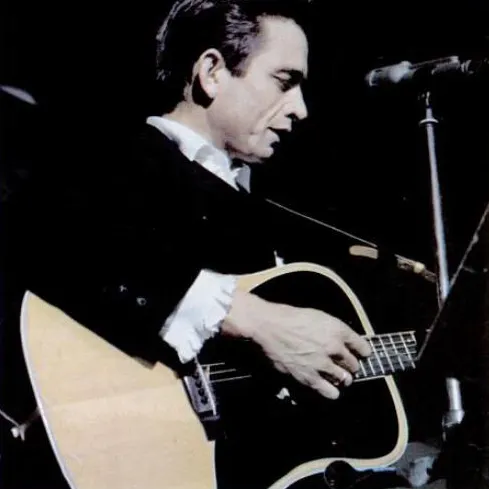
PloughCast Bonus Episode: An Interview with Johnny Cash
Ken Myers of Mars Hill Audio shares an interview from 1972, in which Johnny Cash talks about faith and music – and then breaks into song.

The PloughRead: Radical Hope by Peter J. Leithart
Peter Leithart says our world may be dying, but churches should cultivate radical hope for the birth of a new one.
The PloughRead: Hoping for Doomsday by Peter Mommsen
Peter Mommsen writes on climate change, the meaning of apocalypse, and the reasons we still have hope.
Ep 3636: Technology and Listener Questions
Peter and Susannah discuss with L. M. Sacasas the perils and promise of technology: how it shapes our lives and how it changes how we think about ourselves. Will artificial intelligence become sentient? How will we understand ourselves if we believe they are sentient? What can we do about it, and how can we live in a more human and embodied world? Then, Peter and Susannah take listener questions. How can we go about living in a society which feels as though it’s falling apart?
Ep 3535: War, Peace, and Nuclear Weapons
Peter and Susannah talk with Christopher Tollefsen about his piece on the history and ethics of nuclear deterrence, and the prospect of an antinuclear movement post-Ukraine. They discuss Tollefsen’s conviction that nuclear war is a life issue. Then, they speak with Samuel Moyn about his new book Humane: How the United States Abandoned Peace and Reinvented War. Is making war more “humane” actually removing the urgency of actual pacifism? What if we simply aimed to have fewer wars? Have we given up on that? The gang get into it about Just War Theory, pacifism, the Peace and Truce of God movement, and many other things.
Ep 3434: Classics, Race, and Religious Reconciliation
Peter and Susannah welcome Kim Comer, the editor of Plough’s European edition, and discuss the origins of the new Bruderhof communities in Austria. Welcomed by Cardinal Schönborn as part of the healing of the schisms of the Reformation, these communities are thriving. This leads them to the question of how past wrongs can be healed in general: how can we get past the “sins of the fathers?” Not by denying those fathers and not by wallowing in guilt, but by the deep forgiveness and transformation available in Christ. Then, Peter and Susannah speak with Anika Prather about her year of mourning with her children: many family members and friends died, of Covid, of murder, of suicide, of heart attacks. How can we parent our children through such incredibly trying times? How can we truly teach them to look to the hope of the resurrection of the dead? Then they discuss Dr. Prather’s life project: understanding and using the Classical tradition for racial reconciliation in America. This is another kind of “healing of history,” and Dr. Prather’s work in classical education is an ambitious attempt to tell the untold story of Black classicists and the influence of the great tradition on Black thinkers, writers, and activists.
Ep 3333: The Case for More Babies
Peter and Susannah talk with demographer Lyman Stone about falling birthrates and what humans need to thrive enough to have children. They discuss Thomas Malthus and the origin of the European demographic transition, as well as the origin of overpopulation fears, and about how those fears misunderstand the nature of human ingenuity. They cover the essential racism of so much “overpopulation” discourse, which even now is focused on “the wrong kind of people” having too many children. They discuss the issue of hard limits- surely there must be some point past which human population can’t grow, some actual environmental catastrophe? What then are we aiming for? How long should we plan for? Then they talk about whether the need for limits and the need for ambitious vision in human endeavor are in conflict with each other. Then they discuss what it takes, spiritually and culturally, for a society, for individuals, to believe that the world they are in, the family they are in, is one worth preserving.
32: Vikings, a Bishop, and Apocalyptic Comics
Peter and Susannah speak with Eleanor Parker about Archbishop Wulfstan and his sermon in 1014 calling the English to return to fidelity with God and each other, in the face of the apocalyptic Viking invasions. They also discuss what happened after those invasions succeeded: Wulfstan worked with the new king, Cnut, to draft just laws for this new Viking-Anglo Saxon polity. Then, Peter and Susannah talk with extremely online illustrator and self-described mystical idiot Owen Cyclops about his journey from general weirdness to Christian weirdness. They get into his cartoon for Plough, and his interest in the specific American temper of Christianity, and how universal principles and teachings get refracted by different cultures.
Ep 3131: Hope in Wartime
Susannah and Peter discuss Peter’s lead editorial, “Hoping for Doomsday,” and cover some of the mysteries at the heart of Apocalypse: is it the end of the world? Why is it hopeful? What does it mean? What does it take to allow the supernatural hope of the New Heavens and the New Earth give your life meaning now, and what’s going on with Christians’ addiction to apocalyptic date-setting? Then they have a conversation with Ivan Rusyn, the president of the Ukrainian Evangelical Theological Seminary in Kyiv, whose wartime experience has included sneaking back to his home in occupied Bucha to bring help to his neighbors. He describes the current state of the conflict and calls on Christians to help with pressing needs; he also describes the incredibly powerful experience of Christian and civic unity that the war has led to in Kyiv and across Ukraine.

The PloughRead: In the Aztec Flower Paradise by Joseph Julián González and Monique González
Joseph Julián González and Monique González write that for the ancient Nahua and Aztec poets, the way to the holy runs through beauty. Read the article.

The PloughRead: Music and Morals by Dhananjay Jagannathan
Dhananjay Jagannathan writes on good and bad music, morals, and why the sheer vitality of music can seem to spell danger. Read the article.

The PloughRead: Go Tell It On the Mountain by Stephen Michael Newby
Composer Steven Michael Newby says African American spirituals aren’t just for Black churches. They are for everybody. Read the article.
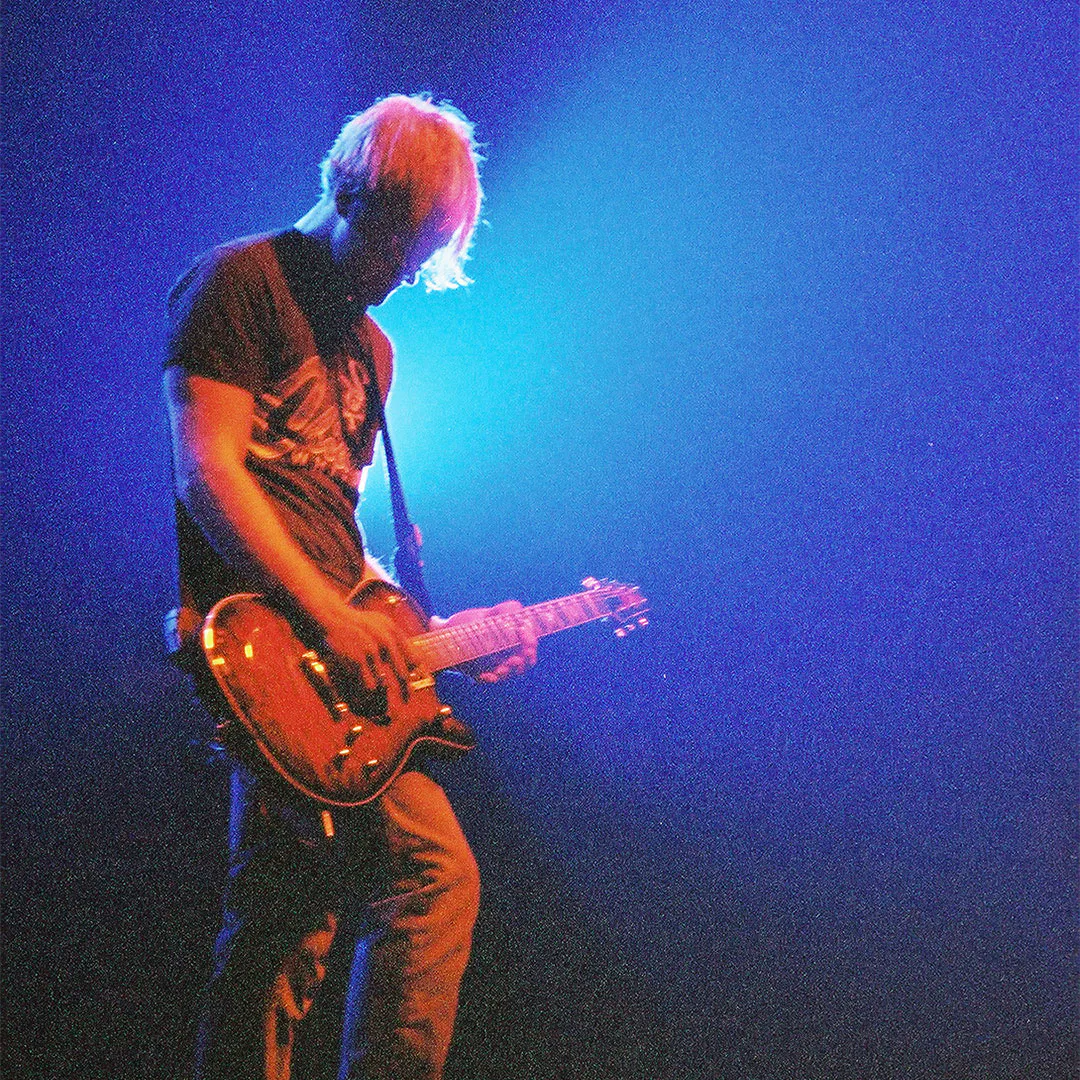
The PloughRead: The Death and Life of Christian Hardcore by Joseph M. Keegin
Joseph M. Keegin explores Christian Hardcore music and its undoing. Read the article.

The PloughRead: The Strange Love of a Strange God by Esther Maria Magnis
In this article drawn from her memoir With or Without Me, Esther Maria Magnis tells how her prayers were not answered when her father got cancer. Or were they? Read the article.

The PloughRead: Is Congregational Singing Dead? by Benjamin Crosby
Benjamin Crosby on how hymn singing can help revive a culture of communal music. Read the article.

The PloughRead: Reading the Comments by Phil Christman
Phil Christman finds community and catharsis in the YouTube comments to Joy Division and other post punk and new wave music. Read the article.

The PloughRead: Why We Make Music by Peter Mommsen
Peter Mommsen on how singing and making (not just listening to) music shapes the soul. Read the article.

The PloughRead: Dolly Parton Is Magnificent by Mary Townsend
Mary Townsend on how the excellence of Dolly Parton helps her students understand Aristotle’s Nicomachean ethics. Read the article.

The PloughRead: In Search of Eternity by Eugene Vodolazkin
In this excerpt from his novel Brisbane, Eugene Vodolazkin’s character Gleb Yanovsky quits music school because “we’re all going to die.” Read the article.
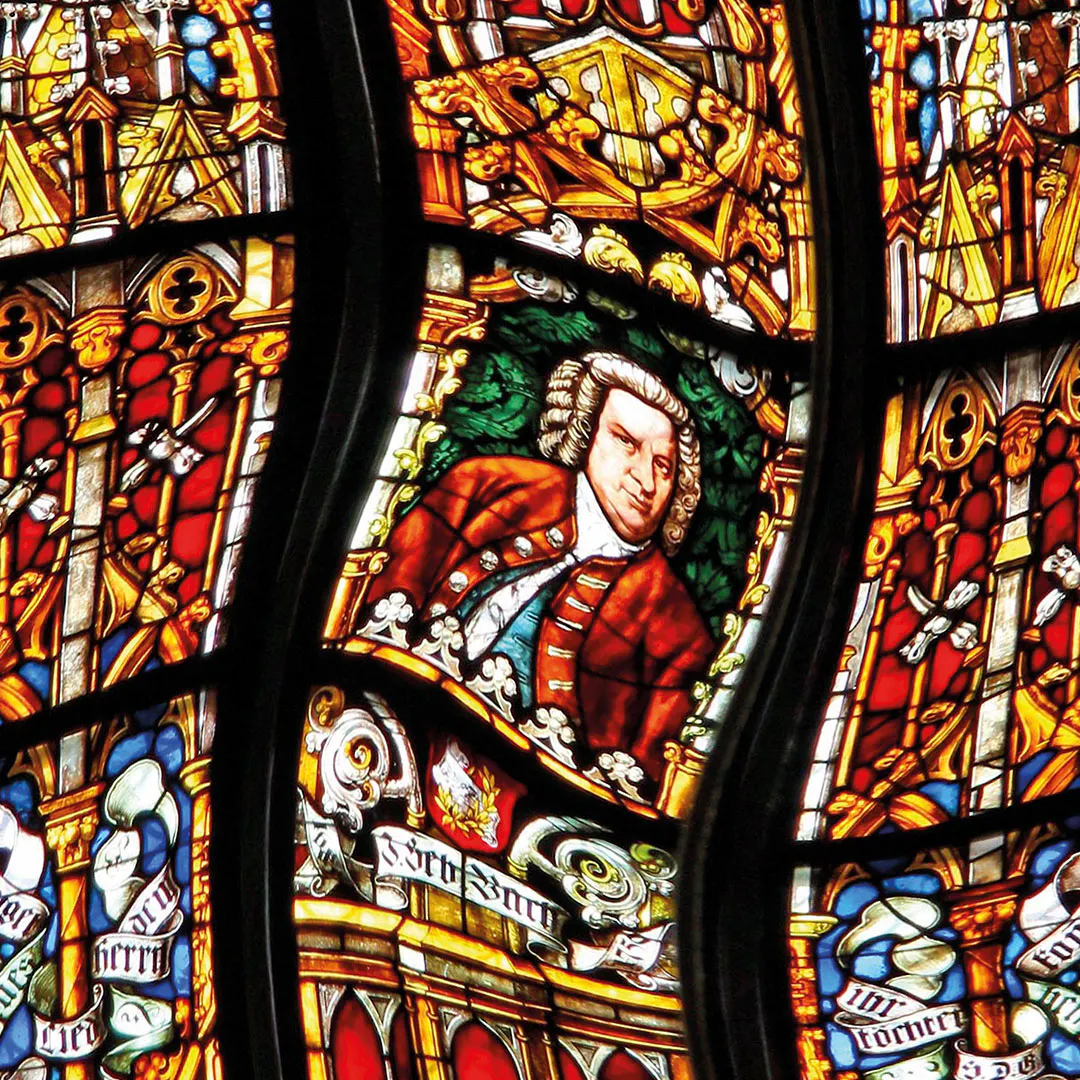
The PloughRead: Doing Bach Badly by Maureen Swinger
When our amateur choir sings Bach’s Saint Matthew Passion, the music’s power overwhelms our mistakes.
Ep 3030: Liberal Arts for Everyone, Plus Q & A
Peter and Susannah talk with friend of the pod Zena Hitz, author of Lost in Thought, about the state of the liberal arts, how those not in academia can continue their humanist education, and the Catherine Project, her new organization dedicated to helping people do this. What is the value of the “great books?” Why these books and not others? How do we read closely, and why is it important to do that in community? Zena, Peter and Susannah address all of these questions. Then Peter and Susannah tackle listener questions, facing #Imaginegate head-on. Other listener questions include the question of bad music: can music make you worse? Also, the importance of silence.
Ep 2929: Finding Joy: Music, Community, Practical Philosophy, and Jane Austen
Peter and Susannah talk with Joey Keegin and Phil Christman about their pieces on Christian hardcore and ’80s, ’90s post-punk respectively. The blend of nostalgia and genuine appreciation makes for a powerful and enthusiastic back and forth between the two guests, with Pete chiming in and Susannah remaining respectfully silent. They discuss what makes derivative Christian music bad, and how some Christian hardcore escaped the fate of imitative mediocrity. They also discuss the way that YouTube comments provide a strange Covid-era community of nostalgia for the children of the ’80s and ’90s. Then, Pete and Susannah talk with Plough’s own Joy Clarkson about her newly-published title Aggressively Happy, a how-to guide to finding joy. Unlike many such guides which focus on one’s internal state, this book encourages readers to find joy in the actual goodness of the world: it is an anti-stoic text. Most controversially, Joy makes the case that Pride and Prejudice’s sycophantic vicar, Mr. Collins, is unfairly maligned and is a model of appropriate ambition, resilience, and contentment.
Ep 2828: Rowan Williams, Shakespeare, and Doing Bach Badly
Peter and Susannah have a long, polyphonic conversation with Rowan Williams about his new collection of plays, Shakeshafte and Other Plays; about a Christianity that can accommodate the whole of the world; about the poet David Jones, the artist Eric Gill, and the destructiveness of aesthetic fundamentalism. Then they turn to a discussion of the war, and of the role of art in a time of war. The archbishop closes in a prayer for peace and justice. Peter and Susannah then speak with their colleague Maureen Swinger about her piece “Doing Bach Badly,” about the history of the Saint Matthew Passion and of its role in the liturgical life of the Bruderhof. They reflect on the way that singing can put you in a position to experience grace, and Maureen recalls a very specific experience of singing as conversion from her teenage years.
Ep 2227: Atheism, Dante, and the Music of the Spheres
Peter and Susannah speak with Esther Maria Magnis about her recent Plough release With or Without Me, a memoir of her father’s death from cancer and her own loss and gain of Christian faith. How can a shattered faith be rebuilt after tragedy? Then, they have a wide-ranging conversation with Sperello di Serego Alighieri, Dante’s descendant, about his book on his ancestor’s cosmology, The Sun and the Other Stars of Dante Alighieri: A Cosmographic Journey through the Divina Commedia. They also discuss the various dramas of Dr. Alighieri’s Dantean year, the 700th anniversary of his ancestor’s death, including a playful relitigation of his ancestor’s banishment trial. Then, they go full galaxy brain: How did Dante’s ideas look forward to contemporary post-Einsteinian concepts about the shape of the universe?