
Another Life with Joy Marie Clarkson
312 episodes — Page 4 of 7

The PloughRead: Hudson Taylor by Maureen Swinger and Susannah Black Roberts
This issue's forerunner profiles Hudson Taylor, an early missionary to China.
Ep 6363: Phil Christman and Leah Libresco Sargeant on Effective Altruism
The Good Samaritan and the effective Altruist meet in the retelling of Luke 10:30–37. The movement that most recently hit the headlines with the downfall of Sam Bankman-Fried deserves a more sympathetic treatment than it had on the last PloughCast we covered it on. What are its tenets, and how does it work as an ethical system? Leah, who considers herself an effective altruist, leads Phil, Susannah, and Pete on a tour of Effective Altruism and its affiliated movements, including extreme long-termism and the mysterious world of the “postrats.”
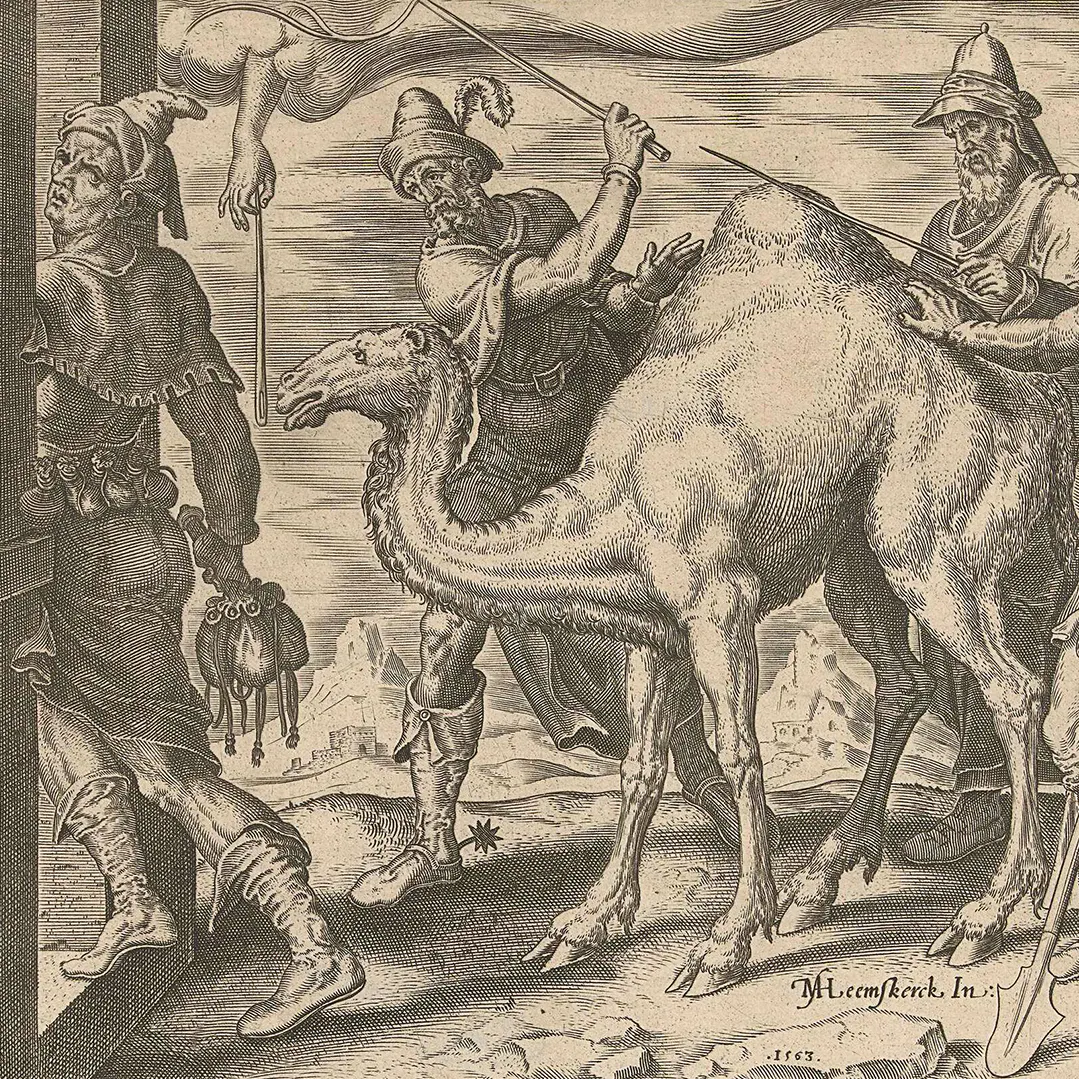
The PloughRead: The Other Side of the Needle’s Eye by Peter Mommsen
Peter Mommsen tells the story of Pinianus and Melania, a wealthy fifth-century couple who gave it all away.

The PloughRead: In Praise of Costly Magnificence by Alastair Roberts
Alastair Roberts discusses the virtue of magnificence, the relationship between money and love, and what we can learn from Mary of Bethany’s gift.
62: Is Money Power?
Eugene McCarraher and Peter Mommsen speak about why Modern capitalism is anything but secular. They discuss Christianity’s compromise with mammon – and the visionaries who have resisted it. Then they talk about the power of mammon, whether it’s enchanted, and the reason we venerate it.
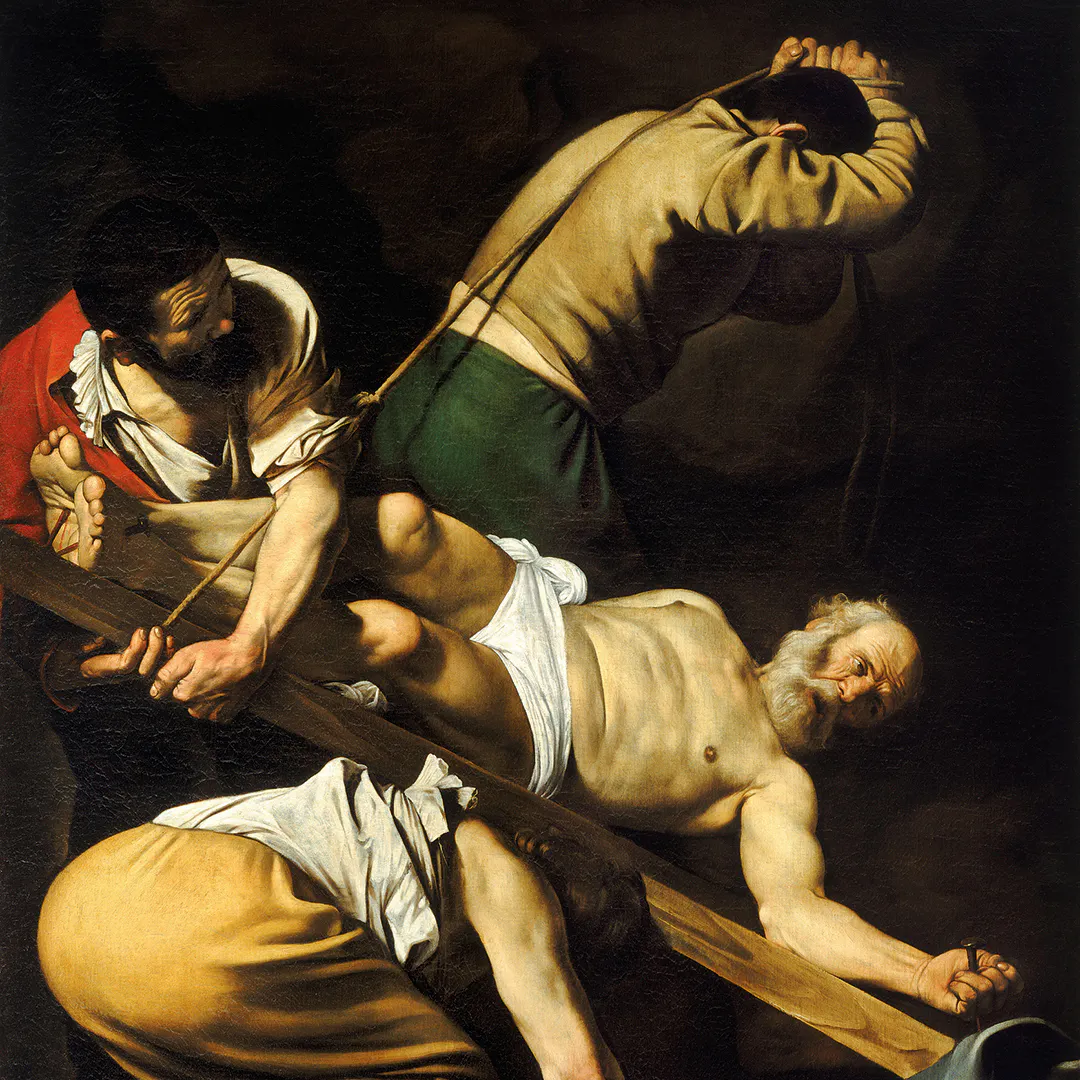
Ep 49The PloughRead: Two Thousand Years of Christian Strangeness by Tom Holland
A new faith proclaimed one man's agonizing death as history's turning point — and utterly changed the meaning of suffering.
Ep 6161: A Tale of Camels and Needles
Why an issue on money? What is money for? Peter and Susannah discuss. They begin with the story of Pinianus and Melania, two married Roman patricians who gave away their enormous fortune in obedience to Christ’s commands. What was the world of the early church that would have made this seem like an appropriate thing to do? And what did Saint Augustine say about it? They discuss his complex role in Christianity’s changing attitude to wealth. That attitude evolved to the point that eventually Max Weber could claim that Protestantism had been a major support in the development of capitalism itself. How can we understand this teaching about wealth, and what is its relationship to our new status as sons and daughters of the King? They tease these ideas and some of the upcoming pieces and episodes.
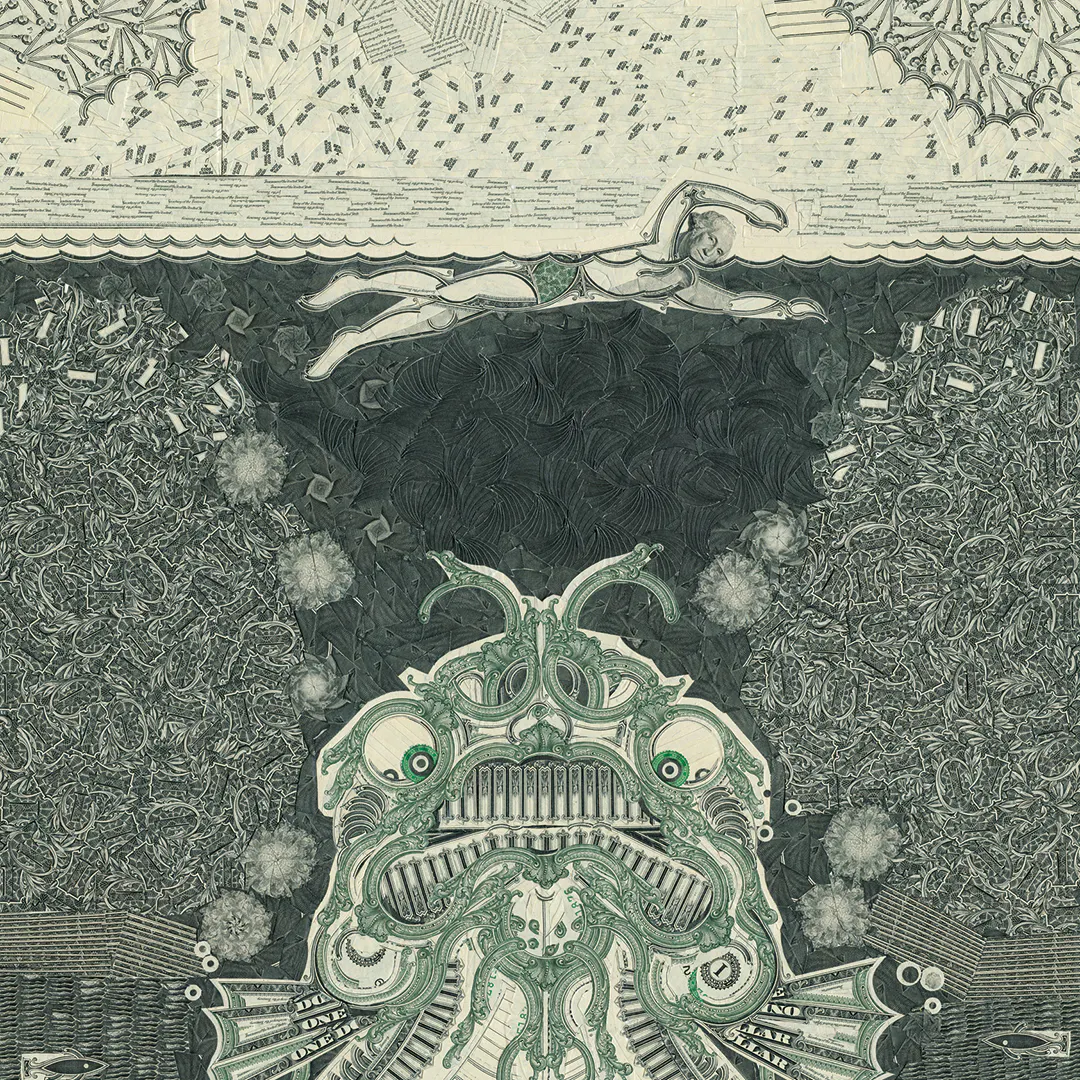
An interview with Eugene McCarraher
In an interview with Plough, Eugene McCarraher discusses Christianity’s compromise with mammon and how to resist modern capitalism.

The PloughRead: The Unutterable Silence of God by Esther Maria Magnis
After her father died, Esther Maria Magnis thought she found freedom from her pain in nihilism. In that emptiness, eventually, God found her.
Ep 6060: That Hideous Strength Is Nonfiction
Marianne Wright discusses C. S. Lewis’ prescient science fiction novel. Peter Mommsen’s sister comes on the pod with Pete and Susannah to discuss That Hideous Strength, the third book in Lewis’s space trilogy, and its eerily accurate critiques of transhumanism. From questions of academic vocation to Arthurian legend to tame bears to head transplantation, this novel is a rich exploration of what it means to be human in the face of a conspiracy against the human. It’s also one of Susannah and Marianne’s favorite novels. The gang examines Lewis’s treatment of these themes, with many spoilers. They also solve, once and for all, the Jane Problem.

The PloughRead: Letters from a Vanishing Friend by Lisabeth Button
Lisabeth Button describes her friendship and shares letters from Ellen, who is suffering from Alzheimer’s.
Ep 5959: Churches against the law
Hannah Nation tells the story of Wang Yi and the Chinese house church movement. How has the ramp-up in persecution of the church in China affected pastors and congregations? Hannah, who is editing the ongoing prison writings of the house church pastor Wang Yi, tells the story of these churches. She focuses in particular on the story of Pastor Wang. A classical liberal human rights lawyer, he converted as an adult in 2005 and eventually became the pastor of one of the largest and most public of China’s illegal protestant churches. Arrested in 2018, he is now serving a nine-year prison sentence. She discusses his intellectual influences, from Luther and Calvin to Kuyper and Van Til, and traces the development of his thought, from an earlier rights-based approach to his current understanding of the church’s role as free by definition, whether or not it has civil freedoms. She also discusses the impact of the Covid lockdowns on the house churches, their scrupulous following of lockdown regulations combined with their absolute refusal to stop meeting for any non-Covid related reason. Finally, she, Susannah and Peter discuss the lessons that such persecution has to offer the Western church.
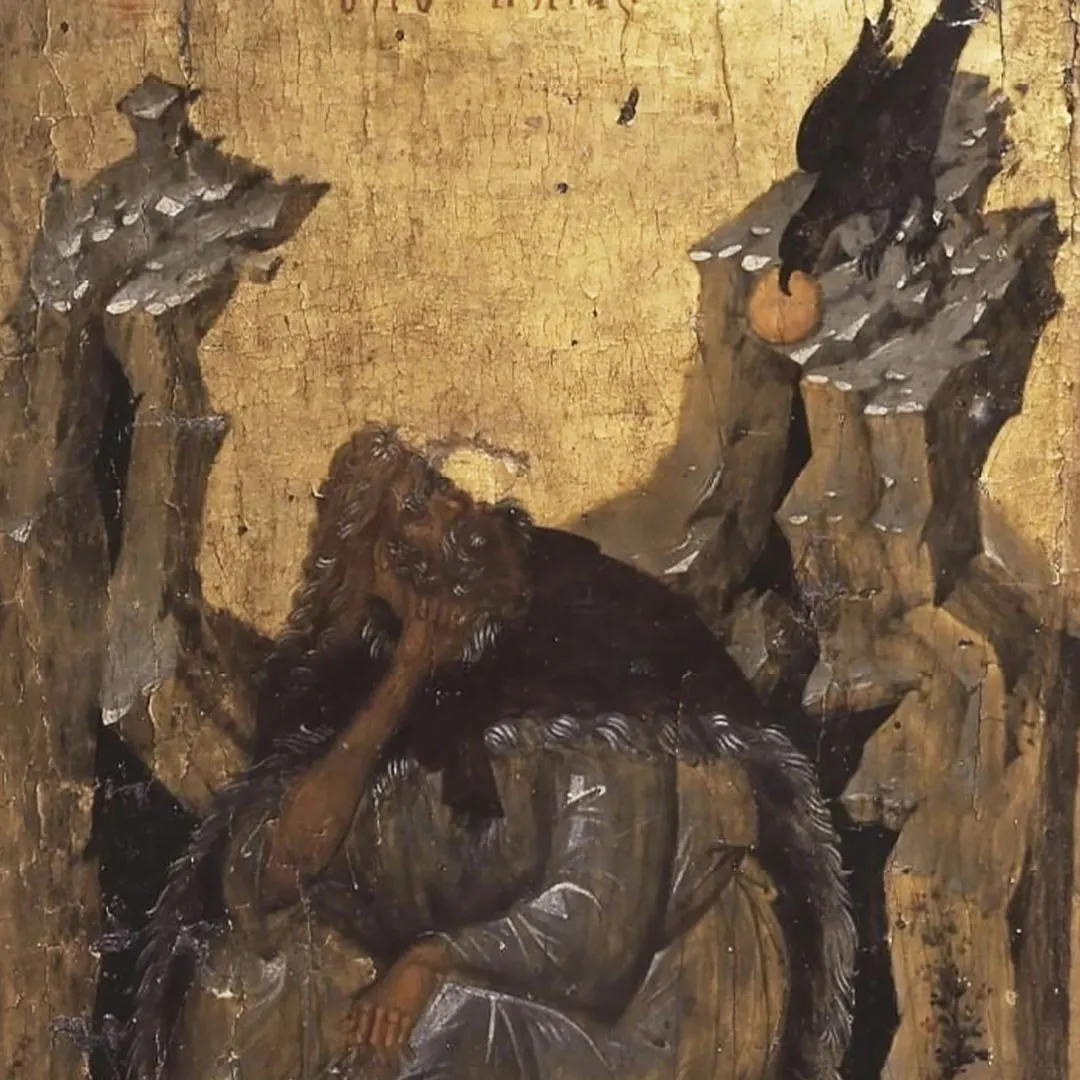
The PloughRead: The Mind in Pain by James Mumford
James Mumford asks why even God seems to fall silent when depression takes hold.
Ep 5858: James Mumford on God, Politics, Depression, Therapy, and Philosophy
A philosopher examines the theological implications of mental illness and its treatment. James Mumford tells his own story of the philosophical inadequacy of much contemporary therapy, and asks: What if some of the philosophical presuppositions of materialist therapy actually end up making depression worse? Could it be that depression can be exacerbated by bad philosophy? And if so, how can we bring moral realism into our therapies in order to address the problem where it lies? Peter, Susannah, and James then discuss recent findings about the effect of politics on mental illness. Recent studies have showed that young liberals have much worse mental health, in general, than young conservatives. They consider Jonathan Haidt’s proposed explanation of this phenomenon: that certain approaches to progressive politics encourage people to adopt disempowering and destructive habits of mind. Finally, they consider the way that a holistic understanding of a person, as body, soul or mind, and spirit, can offer hints towards a better approach to therapy.
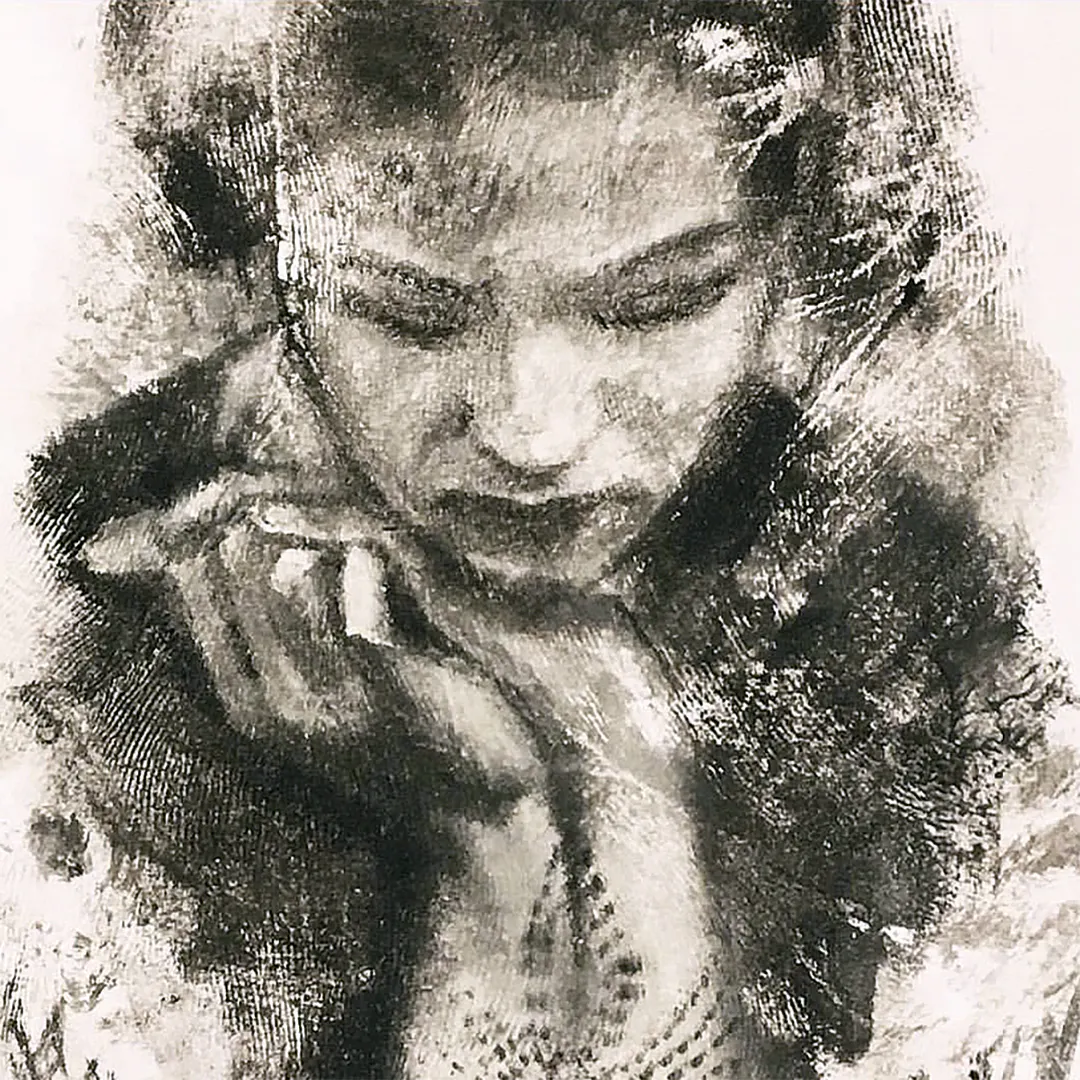
The PloughRead: Saving Friends: What I’ve Learned from Insufferable Patients by Brewer Eberly
Brewer Eberly shows how doctors may receive valuable insights from their most difficult patients.
Ep 5757: A Canadian Priest on Medical Assistance in Dying
Benjamin Crosby discusses the failure of mainline churches to speak clearly on Canada's euthanasia regime. The Canadian government, several years ago, legalized euthanasia, and Canada now is home to the most permissive euthanasia regime in the world. Ben, an Episcopalian priest in Canada, discusses the failure of the Church to talk about this honestly, and instead its capitulation to the idea that suicide is a generally acceptable way to end one’s life. They discuss the prayers that some Canadian churches have written to be said in advance of a death by euthanasia, and talk about the more fundamental failure to see pastoral care as legitimately shepherding and directive, but merely as supportive of whatever choice a person makes. Finally, they read aloud some of the reader responses to Ben’s piece, and Ben responds.

Baptism Means Leaving Home to Find It by Julian Waldner
Julian Waldner, a young Hutterite, considers the legacy of his Anabaptist forebears.
Ep 5656: Felix Manz and the Birth of Anabaptism
Jason Landsel, author of a new graphic novel, Jason Landsel, author of a new graphic novel, talks about the Radical Reformation and its legacy. Peter and Susannah give a brief but lively summary of the story of the life of Felix Manz, one of the original Radical Reformers who was a founder of what would become the Anabaptist movement. His story, bound together with the story of Ulrich Zwingli, the Magisterial Reformer of Zurich, raises questions about the role of state authority in the life of the church, freedom of conscience, and the nature of conversion, which are still passionately debated today. Peter and Susannah speak with Jason about the political-theological issues involved, the role of humanism and the return to sources in the Reformation, and the personal story too: Manz had been Zwingli’s protégé, almost his surrogate son, before he sentenced him to death. They discuss also the historical background to the debates over baptism and tithes and church membership and independence which fueled the drama of Felix’s life, which involved a number of jailbreaks as well as intellectual ferment. The Ottoman armies were advancing, and Catholic Europe and the other Reformed areas were watching as this debate over the future of the Reformation played out in Zurich.

The PloughRead: Where Are the Churches in Canada’s Euthanasia Experiment? by Benjamin Crosby
Benjamin Crosby asks where the voice of the church is in Canada’s MAID and euthanasia experiment.
Ep 5555: L. M. Sacasas on Why We Are Not AIs
A philosopher reflects on human uniqueness. Peter and Susannah speak with L. M. Sacasas, the philosopher behind The Convivial Society newsletter, about artificial intelligence, consciousness, and what it means to be human. What are the new ChatGPT large language models? Is this AI? What’s the relationship between the philosophical questions regarding AI and other philosophical questions about whether human consciousness requires the immateriality of the intellect? What are the dangers of AI? Leaving aside the question of physical danger to humans, what will the increasing ubiquity of AIs do to human civilization and self-conception? Finally, what’s the relationship between AIs and the human tendency towards idolatry?

The PloughRead: The Speaking Tree by Eleanor Parker
Eleanor Parker reflects on the Anglo-Saxon poem, The Dream of the Rood.
Ep 5454: Eleanor Parker on Anglo-Saxon Christianity
An Oxford medievalist discusses the Anglo-Saxon poem The Dream of the Rood. Peter and Susannah bring on Eleanor Parker to discuss this poetic portrayal of the crucifixion from the point of view of the cross. They discuss the medieval vision of the world, linked as it was to the cycles of the seasons, and talk about the way that nineteenth century speculations about the Pagan roots of Easter reveal a misunderstanding of the Anglo-Saxon worldview. The desire to connect to nature that is at the root of the search for putative pagan origins overlooks the way in which Christianity and Judaism themselves are deeply rooted in the natural world. Dr. Parker then gives listeners a brief tour of the Springtime of the Anglo-Saxon year, and tells us what her favorite Spring holiday is.
The PloughRead: God’s Purpose in Your Pain by Rick Warren
Rick Warren, a pastor, reflects on how we should respond to our own suffering and pain and that of others.
Ep 5353: How to Read the Four Passion Stories
It’s the most famous story in history. Alastair Roberts helps us read the Gospels’ accounts of Jesus’ death with fresh eyes. First, he looks at the parallels to the Exodus, and examines what it means for Christ to be the Passover Lamb. Then, he looks at the Passion as apocalypse, as nativity, as romance, as enthronement, and as rebirth. Then, he examines the truly scandalous nature of the Crucifixion, and, in light of Paul’s teaching on it, asks what it means that the lives of Christians should be fundamentally marked out by that scandal. Finally, he gives advice on practices of reading attentively as a way of observing Holy Week.

The PloughRead: The Dust on All the Faces by Navid Kermani
Navid Kermani reports from south Madagascar, where farming families battle to survive a lethal drought caused by climate change.
Ep 5252: Oberammergau and the Art of the Passion
Joy Clarkson and William P. Hyland discuss why the Oberammergau Passion Play disappoints and how artists have imagined Jesus’ crucifixion. The hosts and guests also discuss Joy’s visit to the Oberammergau passion play, its history, and the antisemitism that had marred it. They talk too about the most recent rewrite: the scriptwriter, as he removed the antisemitism, chose also to remove also any supernatural or religious content. They consider the changes in Medieval practices of piety – why was there such an increased emphasis on subjective compassion, emotional participation in the sufferings of Christ, after the turn of the millennium, and what was the origin of the increasing tendency to emphasize his humanity? Then, the guests recommend favorite pieces of art for Holy Week contemplation.
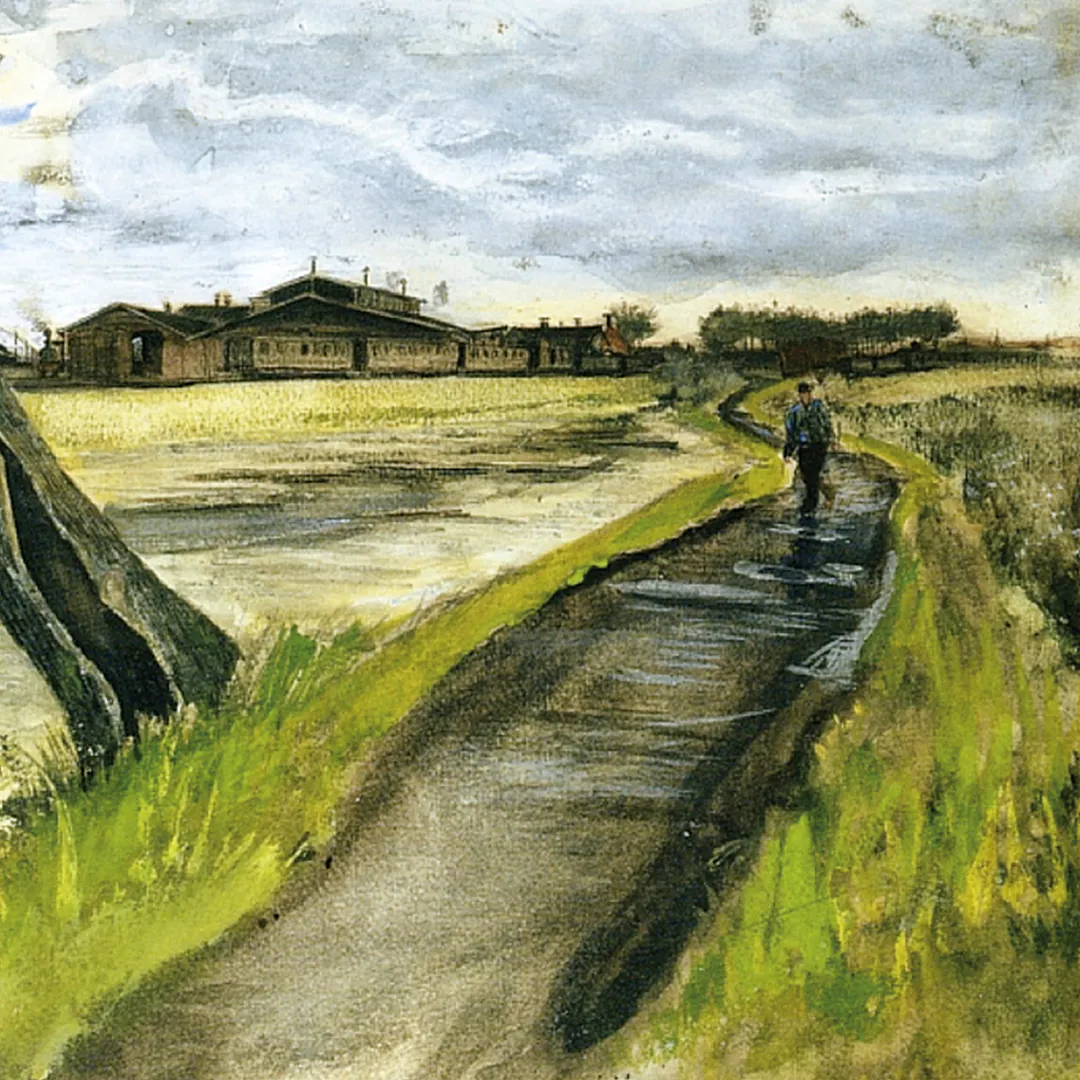
The PloughRead: In Search of Solace by Randall Gauger
Randall Gauger, a pastor at the Bruderhof, lost his son to cancer. He writes about his search for answers to the problem of pain.
Ep 5151: Tom Holland on the Christian History of Pain
How did the crucifixion of Jesus change how humanity thinks about suffering? Peter Mommsen speaks with the well-known historian about the way that Christianity challenged and transformed classical ideas about suffering and the good life. They discuss the contrast between the story of Laocoön and of the crucifixion of Saint Peter, as portrayed in two contrasting artworks in the Vatican. Then they discuss the nature of crucifixion, how pain was seen by the Romans, and the utterly subversive way in which Christianity transformed the understanding of suffering in the West. They talk about why it took so long for it to become common to portray Jesus suffering on the cross in Christian art, and how late medieval understandings of the self and the body contributed to this, and explore the ways that contemporary political movements incorporate Christian ideas outside of the context of Christianity. Finally, they look at the lives of several exemplary Christians, whose lives of redemptive suffering in imitation of Christ make no sense except under the paradigm of the Christian transformation of the meaning of suffering.

The PloughRead: Fear of a Human Planet by Louise Perry
Louise Perry writes that the threat of climate change makes some people hesitant to have children.
Ep 5050: C. S. Lewis and the Problem of Pain
C. S. Lewis is an imaginary guest as the hosts consider the problem of pain. Peter and Susannah take Voltaire as an interlocutor first, considering the nature of the challenge of suffering. Then, they look at Lewis’ first response: The Problem of Pain, which takes an apologetic or intellectual approach. The hosts examine the Christian origin of the problem – why was this not a problem in the Classical world? – and some Christian approaches to the intellectual challenge. Then, they look at Lewis’ second book on the subject, A Grief Observed, a very personal journal of his agony after the death of his wife. They look at A Grief Observed through the eyes of Randall Gauger, a Bruderhof pastor who lost his son to cancer and whose wife suffers from chronic pain. Finally, they give listeners a preview of important pieces in the current issue.

The PloughRead: Somewhere in Chessington by Rhys Laverty
My hometown debunks the idea that family-friendly neighborhoods are a thing of the past.
Ep 4949: Jenn Frey on Liberal Arts
Jenn Frey discusses the value of a liberal arts education. What’s the purpose of this kind of study? For what does it liberate you, and who ought to be engaged in it? She and the hosts talk about the Canon Wars and the debates about what is to be included in the list of texts to be studied, and reflect on the proper skills and methods of having conversations about these works. Then, they discuss the recent controversy about Christopher Rufo’s appointment to the board of a small liberal arts college in Florida. What is lost when liberal arts education is politicized? Finally, they discuss Jenn’s new job: she’s the inaugural dean of a new “Great books” focused honors college at the University of Tulsa.

The PloughRead: Daughter of Forgottonia by Liz Schleicher
In Forgottonia, a left-behind corner of Illinois, Edna Eberlin made her farm a home for a sprawling multigenerational family. It was never easy.

The PloughRead: Uncle Albert by Springs Toledo
Springs Toledo writes about his uncle, Albert Burns, and his family’s story of crime and forgiveness.
Ep 4848: Canada’s Euthanasia Industry
We talk with Alexander Raikin & Leah Libresco Sargeant on MAID, and take your questions. Raikin discloses his recent reporting on Canada’s massive ramp-up in medically assisted death. How can this cultural disaster have happened, and what can we do to prevent this approach to life and death from taking hold in our own families and churches? Then we answer your questions: what are the implications of the fact that marriage is becoming the province of the upper middle and upper classes, while increasingly out of reach for the working class and the poor? Are plunging birthrates such a bad thing? Plus, responses to Matthew Lee Anderson on IVF, and more.
Ep 4747: Technologizing Babies, Forging Nations
The hosts talk with Matthew Lee Anderson about his piece on whether there is a right to have children. How does your relationship to your children change if you regard them as products rather than gifts? Then they discuss the specific ethical issues of in vitro fertilization, and reflect on the technologization of fertility through the lens of C. S. Lewis’s novel That Hideous Strength. Then, Susannah speaks with Pater Edmund Waldstein about the role of monasteries in Christendom, and how their witness to the supernatural life of the church complements the life of the natural family. They go on to discuss questions of political order: since grace perfects but does not destroy nature, how should we think about polity? Is an ethnostate the only “natural” polity? Should we be trying to restore the Holy Roman Empire? Pater and Susannah solve all these problems definitively.
Ep 4646: Spiritual Realism; Jesus and John Wayne
Peter and Susannah speak with Tara Isabella Burton and Tim Shriver about their manifesto calling for a new “spiritual realism.” Should questions of the Good and of human purpose be off the table in serious political discussion, either because they’re subjective and not real, or because they’re too divisive and dangerous? No, argue Burton and Shriver – and the current state of the polity in fact demands that we take these questions seriously. They argue that Enlightenment liberalism has proven insufficient to provide either a metaphysical or a political framework for human life, and call for citizens and leaders to build institutions that will support a more robustly moral realist vision of politics and community. Then, Peter and Susannah talk with Boze Herrington and Hannah Long about Kristin Kobes Du Mez’s book Jesus and John Wayne. Hannah, Boze and Susannah make the case that the genre of the traditional Western is not something which must only be deconstructed and criticized, but which in fact offers occasions to reflect on the deepest questions of human moral and political life: what is the role of force in an unjust world, what is the good of civilization, and what is the code that one ought to live by? Du Mez’s recent book, they argue, does not understand or do justice to the genre.
45: Effective Altruism and a Scholarly Inheritance
Peter Mommsen talks with Phil Christman and Joey Keegin about effective altruism. Then, Peter and Susannah welcome Dhananjay Jagannathan to discuss his piece “What Is Our Scholarly Inheritance?” Both past and future, Dhananjay argues, make us who we are, and in scholarship as in other human cultural pursuits, we step into a world, receiving an inheritance and becoming responsible for enriching and passing on that inheritance. Though this kind of generational relationship is not biological, it is very deeply human, and the chosen and unchosen aspects of non-biological generational obligations are what make up a civilization. His uncle Mark’s scholarship was an inspiration to him, and on his uncle’s death, he felt the obligation to take up aspects of his work. The project of humanism is a multigenerational one, and not one that we do alone.
Ep 4444: Carl Trueman and Alastair Roberts: Freedom, Belonging, and Begetting
Peter and Susannah speak with Carl Trueman about communicating the gospel to the current generation, and the distinct challenges that that can bring. Then, they talk with theologian Alastair Roberts, Susannah’s husband, about the genealogy in Matthew and the way that looking at its details can call up Old Testament parallels and associations that give us clues about what God is doing in the birth of Christ. They discuss the way that God works not just with individuals but with whole families through the generations, and talk about how we can be blessings to both our descendants and parents. They also talk about Alastair’s experience of joining Susannah’s large family through their marriage. There are anecdotes about lobsters.
Ep 4343: The Work of Generations, and the Wisdom of a German Prince
Why have an issue on “Generations?” Peter and Susannah discuss the genesis of the current issue, and then go into the issues covered in Pete’s lead editorial. Why do we feel the need for roots? Is this something that should be purely met within the church? How does God renew our natural ties, and our ability to love intergenerationally? What are the promises and perils of the rooted life? And how can the wisdom of Christ help us avoid deracination on one hand and the worship of blood and soil on the other? Then, they discuss with Prince Michael zu Salm-Salm his piece containing the distilled wisdom of a thousand years of his ancestors living in one spot, working the forests and vineyards of southern Germany. What does that kind of perspective give? They also talk about the Prince’s ecumenical work, in which he aims to mend the rifts of the Wars of Religion, through repentance under the Lordship of Christ. Plus, winemaking!

The PloughRead: Is There a Right to Have Children? by Matthew Lee Anderson
Matthew Lee Anderson writes that the fertility industry pushes childless couples toward IVF as an answer to the pain of childlessness. But at what cost?

The PloughRead: Singing the Law by J. L. Wall
J. L. Wall writes that the ancient skill of chanting the Torah joins past generations to generations yet unborn.

The PloughRead: My Father Left Me Paperclip by Terence Sweeney
Terence Sweeney asks what kind of inheritance an illegitimate son can expect.

The PloughRead: The Sins of the Fathers by Helmuth Eiwen
Helmuth Eiwen writes that our ancestors guilt can carry over onto the present generation. The Hebrew prophets show a way out.

The PloughRead: The Stranger in My House by Wendy Kiyomi
Wendy Kiyomi adopted children with trauma in their past. It didn’t go as she expected.

The PloughRead: Gazapillo by Óscar Esquivias
In this story by Óscar Esquivias the young folk moved away, and it seemed like the Three Kings stopped visiting the empty village in Asturias, Spain. But did they?

The PloughRead: Decoding the Bible’s Begats by Alastair Roberts
Alastair Roberts writes that genealogy and hereditary lines matter a great deal in scripture.

The PloughRead: Yearning for Roots by Peter Mommsen
Peter Mommsen writes that we’re born with a need for connection with our ancestors – both biological and spiritual.

The PloughRead: The Day No One Would Say the Nazis Were Bad by Mary Townsend
Mary Townsend finds that relativism is alive and well on college campuses.

The PloughRead: No Promises by Eve Tushnet
Eve Tushnet writes about AA, alcoholism, and broken promises.