
Another Life with Joy Marie Clarkson
312 episodes — Page 2 of 7

The School that Escaped to the Alps by Marianne Wright
Faced with a Nazi takeover, the first Bruderhof school took refuge in Liechtenstein.

Does Teaching Literature and Writing Have a Future? by Phil Christman
Learning that one’s job might soon be eliminated by the emergence of an overhyped new technology puts one in good company.

Why I Became a Firefighter by Brit Frazier
A priest joins her local volunteer fire department.
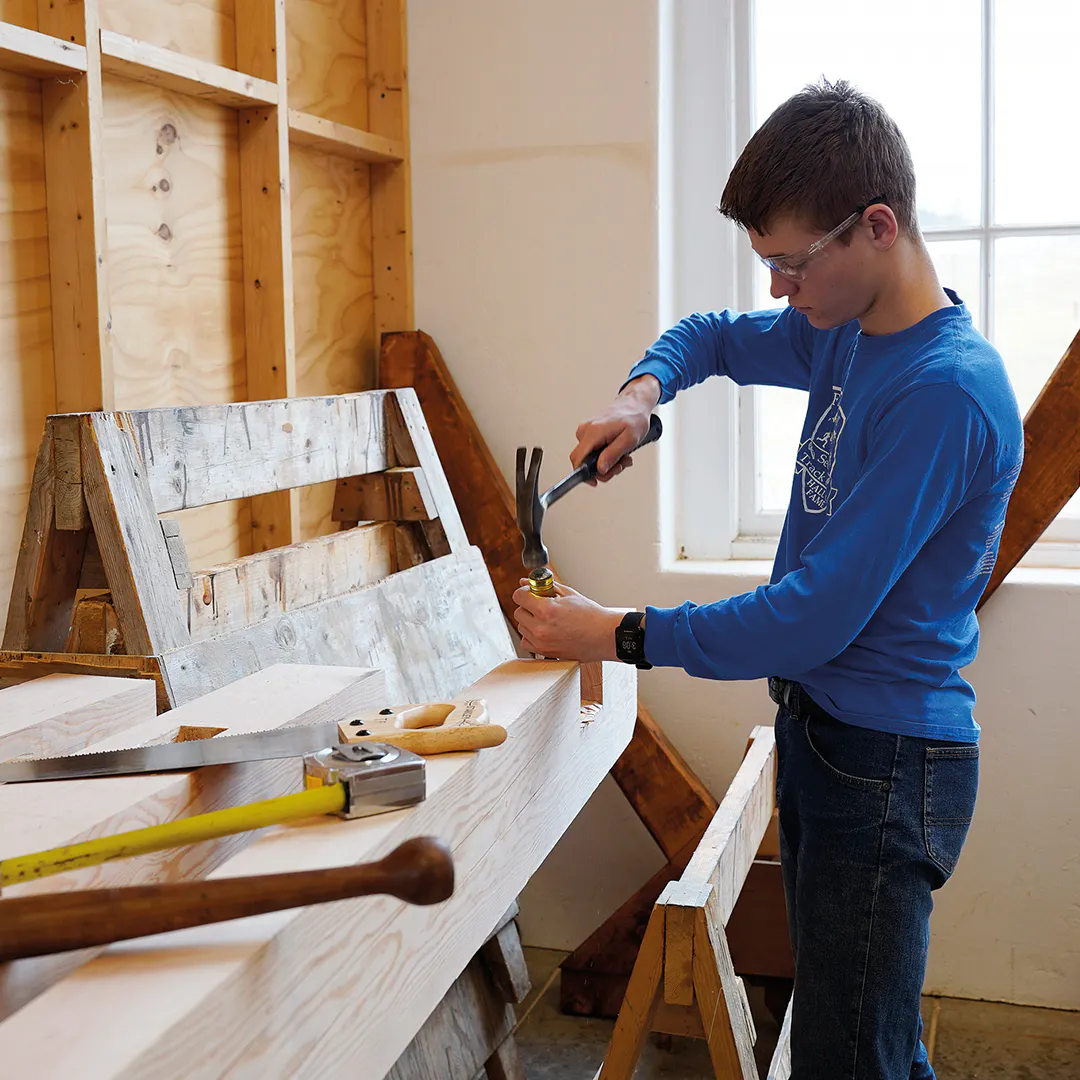
Schools for Philosopher-Carpenters by Alex Sosler
A new crop of innovative schools encourages all students to use their minds and their hands.

Educating for Freedom by Peter Mommsen
Peter Mommsen asks whether our society has lost sight of how to raise young humans.
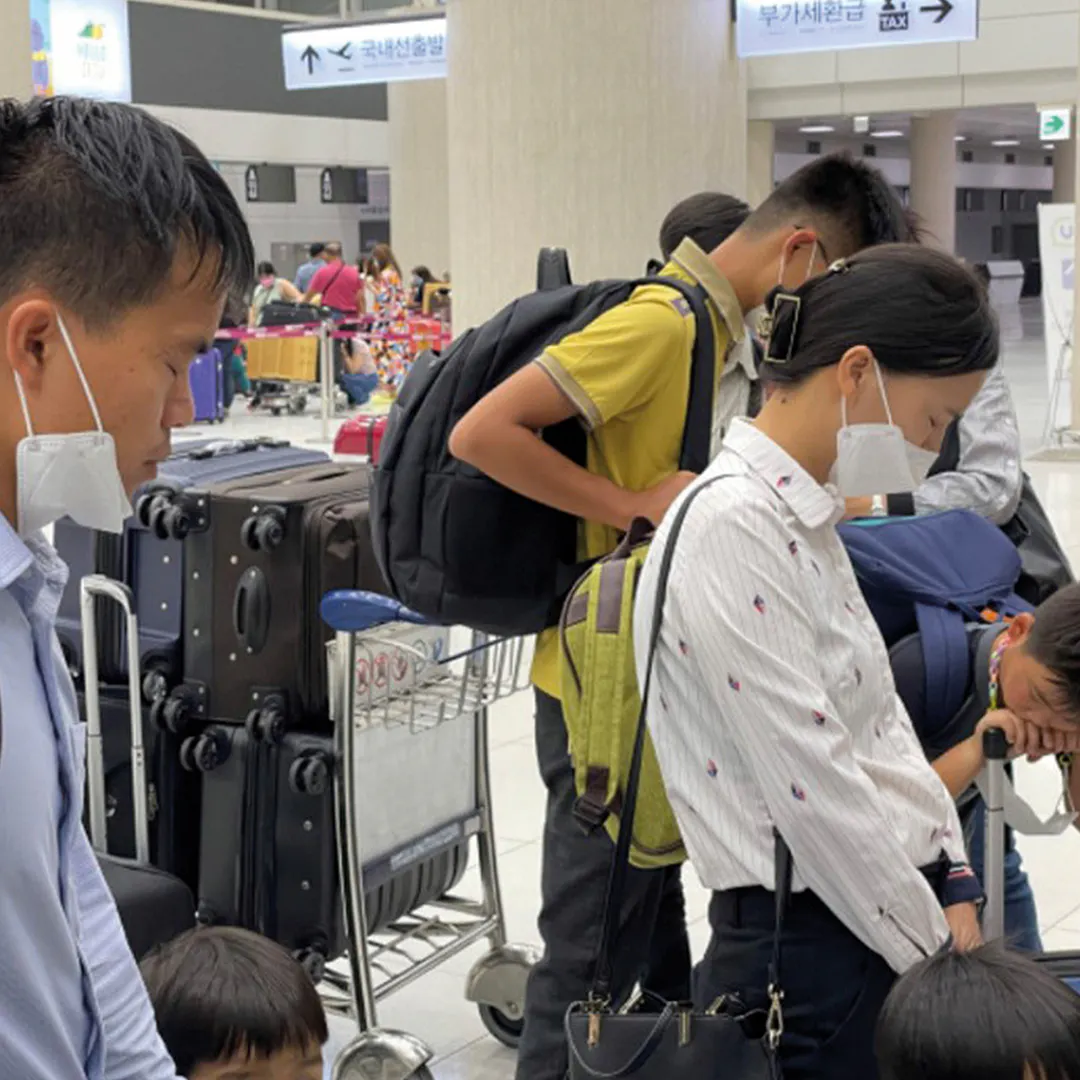
The PloughRead: An Exodus From China by Pan Yongguang
Pan Youngguang describes how his persecuted house church chooses to flee together as a community.
The PloughRead: Paraguayans Don’t Read by Santiago Ramos
Santiago Ramos points out that in a dictatorship, literature nurtures freedom. In a democracy, does it matter?

The PloughRead: The Busted Bean by Maureen Swinger
Maureen Swinger describes an old school bus’s transformation into a space for coffee and camaraderie.

The PloughRead: Christmas Day in the Morning by Pearl S. Buck

The PloughRead: Encounters at the Southern Border by Robert Donnelly
Robert Donnelly meets the migrants seeking asylum in the United States.

The PloughRead: Jakob Hutter, Radical Reformer by Emmy Barth Maendel
Emmy Barth Maendel describes how, in just three short years, a sixteenth-century martyr founded a church that has endured to this day.

The PloughRead: The Bible’s Story of Freedom by Heinrich Arnold
Heinrich Arnold describes how scripture tells an unfinished history of liberation.

The PloughRead: Form and Freedom by Joy Marie Clarkson
Visual artist Hannah Rose Thomas, architect Charles Howell, and poet Malcolm Guite celebrate the freedom of coloring within the lines.

The PloughRead: Taking Lifelong Vows by Dori Moody
Dori Moody describes how poverty, chastity, and obedience bring a different kind of freedom.

The PloughRead: The Body She Had by Rosemarie Garland-Thomson
Rosemarie Garland Thomson asks why parents are not spared the terrible freedom of having to choose whether to have a child with a disability.

The PloughRead: Recovering from Heroin and Fiction by Jordan Castro
Jordan Castro describes how he sought freedom in drugs and novels, but they couldn't save him.

The PloughRead: Become Slaves to One Another by John M. G. Barclay
John M.G. Barclay explores how Paul's letters probe the paradox of freedom through love.

The PloughRead: The Workers and the Church by Sohrab Ahmari
Sohrab Ahmari asks what happened to the Christian tradition of supporting workers' rights?

The PloughRead: A Lion in Phnom Penh by J. Daniel Sims
J. Daniel Sims, an insider, reckons with complicity and compromise in Cambodia’s aid industry.

The PloughRead: The Autonomy Trap by James R. Wood
James Wood tells his conversion story and asks: Is commitment just for suckers?

The PloughRead: In Defiance of All Powers by Peter Mommsen
Peter Mommsen asks what's the point of freedom?

The PloughRead: Tech Cities of the Bible by Alastair Roberts
Alastair Roberts describes how our struggle with technology starts in Genesis.

The PloughRead: Will There Be an AI Apocalypse? by Peter Berkman
Matthew Loftus reminds Western donors not to send junk to his Kenyan hospital while stressing that they do depend on Western excess.

The PloughRead: Toward a Gift Economy by Simon Oliver
Simon Oliver argues that some goods and services have value beyond their market price.

The PloughRead: Computers Can’t Do Math by David Schaengold
David Schaengold argues that computers can’t do math and the human mind is a marvel that no machine has matched.

The PloughRead: Give Me a Place by Brian Miller
Brian Miller, an East Tennessee farmer, praises a simple piece of technology.

The PloughRead: The Artificial Pancreas by Peter Mommsen
Peter Mommsen asks how we can live well with technology?

The PloughRead: ChatGPT Goes to Church by Arlie Coles
Arlie Coles asks if large language models should write sermons and prayers.

The PloughRead: Taming Tech in Community by Andrew Zimmerman
Andrew Zimmerman tells how the Bruderhof community tries to be intentional about personal technology.

The PloughRead: Send Us Your Surplus by Matthew Loftus
Matthew Loftus reminds Western donors not to send junk to his Kenyan hospital while stressing that they do depend on Western excess.

The PloughRead: From Scrolls to Scrolling in Synagogue by J. L. Wall
J. L. Wall describes how the way we read scripture has changed and the way that it has remained the same.

The PloughRead: The Tech of Prison Parenting by Robert Lee Williams
Robert Lee Williams tells how even a little tech in prison can make a big difference.
82: Regenerative Agriculture in the Lake District
James and Helen Rebanks talk about raising sheep and cattle in the Lake District. James describes the landscape where their families have lived for six hundred years, and how they have begun practicing regenerative agriculture as a way of restoring the land that recent conventional agriculture had damaged. He gives details about the sheep and cattle herds and the grazing systems they’ve established. Then Helen describes what led her to write her book on the work of the farmer’s wife, and addresses mothers, who are often the ones making choices about food that are linked to questions of sustainable agriculture. They discuss the concept of rewilding, and how that is not necessarily either possible or desirable – the landscape has not been wild for thousands of years – but that increasing complexity and biodiversity is both possible and necessary.

The PloughRead: Why I Hunt by Tim Maendel
Tim Maendel describes his love of hunting and the connection it gives him to the human species' natural history.

The PloughRead: Breakwater by Rhys Laverty
Rhys Laverty writes about the Alderney Breakwater, a crumbling jetty in the Channel Islands that protects a way of life.

The PloughRead: Lambing Season by Norann Voll
Norann Voll learned some of life’s most important lessons from her father while caring for sheep.

The PloughRead: The Sadness of the Creatures by Peter Mommsen
Peter Mommsen asks if humans should live by the laws of nature.

The PloughRead: Are You a Tree? by Joy Clarkson
In an excerpt from her book, Joy Marie Clarkson explores the natural metaphors that we use. Are you a tree, she asks, or are you a potted plant?

The PloughRead: Meeting the Wolf by Greta Gaffin
Greta Gaffin asks if humans should return to nature, and looks to the lives of two saints who taught us to make peace with it instead.

The PloughRead: The Leper of Abercuawg by David McBride
David McBride introduces his new translation of The Leper of Abercuawg, a thousand-year-old Welsh poem in which an outcast seeks comfort in the wild.
81: Can Metaphors Help Us Live Well?
Joy Clarkson discusses her new book, and the importance of metaphor. Why are metaphors important? How can they help us live well – and how can they go wrong? Why should we not think of ourselves as computers? And what does all this mean for our language about God? In the discussion, Joy and Susannah range widely through topics including apophatic theology, the inevitability of metaphorical language, Owen Barfield, Anthroposophy, Susanna Clarke’s Piranesi, Suzanne Simard’s research on how trees communicate via fungal networks, and much more.

The PloughRead: The Plants Can Talk by William Thomas Okie
William Thomas Okie says plants can talk; but is anyone listening?

The PloughRead: Saving the Soil, Saving the Farm by Colin Boller
Colin Boller explains how regenerative agriculture helps farmers care for the land and pay the bills.

The PloughRead: Dandelions: An Apology by Clare Coffey
Clare Coffey gives a defense of the dandelion, the plant that always comes back.
80: The Technology of Middle-Earth
Matthew Scarince and Sebastian Milbank discuss Tolkien and technology. Susannah chimes in. Is J. R. R. Tolkien anti-technology? What is the relationship between magic and technology in the world of the Lord of the Rings, and in ours? What do the elves have to do with that? What can we tell by looking at the rings, the palantíri, the silmarils? Should the Lord of the Rings be read as a straightforward critique of industrial society? How can the categories of mending and preservation be used to understand how the various heroes and heroines of Middle-earth go about shepherding this world into its next age, and how can those categories help us to do the same in our age?

The PloughRead: Saskatchewan, Promised Land by Daniel J. D. Stulac
Daniel J. D. Stulac, a newcomer to Saskatchewan, searches for the Old Testament promise.

The PloughRead: The Wonder of Moths by Caroline Moore
Caroline Moore has studied moths since she was a child. She writes how they showcase nature’s richness and vulnerability.
79: According to the Scriptures – Resurrection in the Old Testament
Alastair Roberts revisits the resurrection stories of the Old Testament. Jesus expected his followers to know that he was going to have to die and would then be resurrected – but, famously, they didn’t figure it out until it happened. What were Jewish expectations of resurrection, and where is the idea found in the Old Testament or Hebrew Bible? Alastair discusses the hints and implications found throughout the text, from metaphors which point to Israel’s return from exile as a kind of political resurrection, to more literal expectations of life beyond death. He then discusses how we are to understand Christ’s resurrected body itself, and therefore ours: Saint Paul says that “flesh and blood cannot inherit the kingdom of God,” and yet Jesus tells his disciples to notice that he has “flesh and bone.” What is a spiritual body? How did first century Jews think of flesh and spirit? And what can we expect?

The PloughRead: Christian Fellowship Isn’t Just Being Nice by Clarence Jordan
Southern Baptist preacher Clarence Jordan (1912-1969) argued that true Christian fellowship as practiced by the early church demands sharing of material possessions, distribution of those goods, and racial equality.
Ep 7878: Worshiping Nature
Ross Douthat discusses why what is natural is not a guide to what is good. The idea that the natural world is to be worshiped can take many forms. Douthat and Peter Mommsen and Susannah Black Roberts discuss these forms, ranging from Wordsworthian spiritual experiences in a national park, to worshiping ancestral or local gods, to civic religions of left and right, to tarot card reading, to affirming the Darwinian struggle for existence as a source of moral guidance. They discuss varying understandings of natural law, talk about euthanasia, and revisit Fight Club. Then they discuss whether Darwinism is compatible with the traditional idea of the Fall, and whether we should accept the teaching that human beings are made to not just live in harmony with the natural world but to transcend it.