
250 and Counting
660 episodes — Page 8 of 14
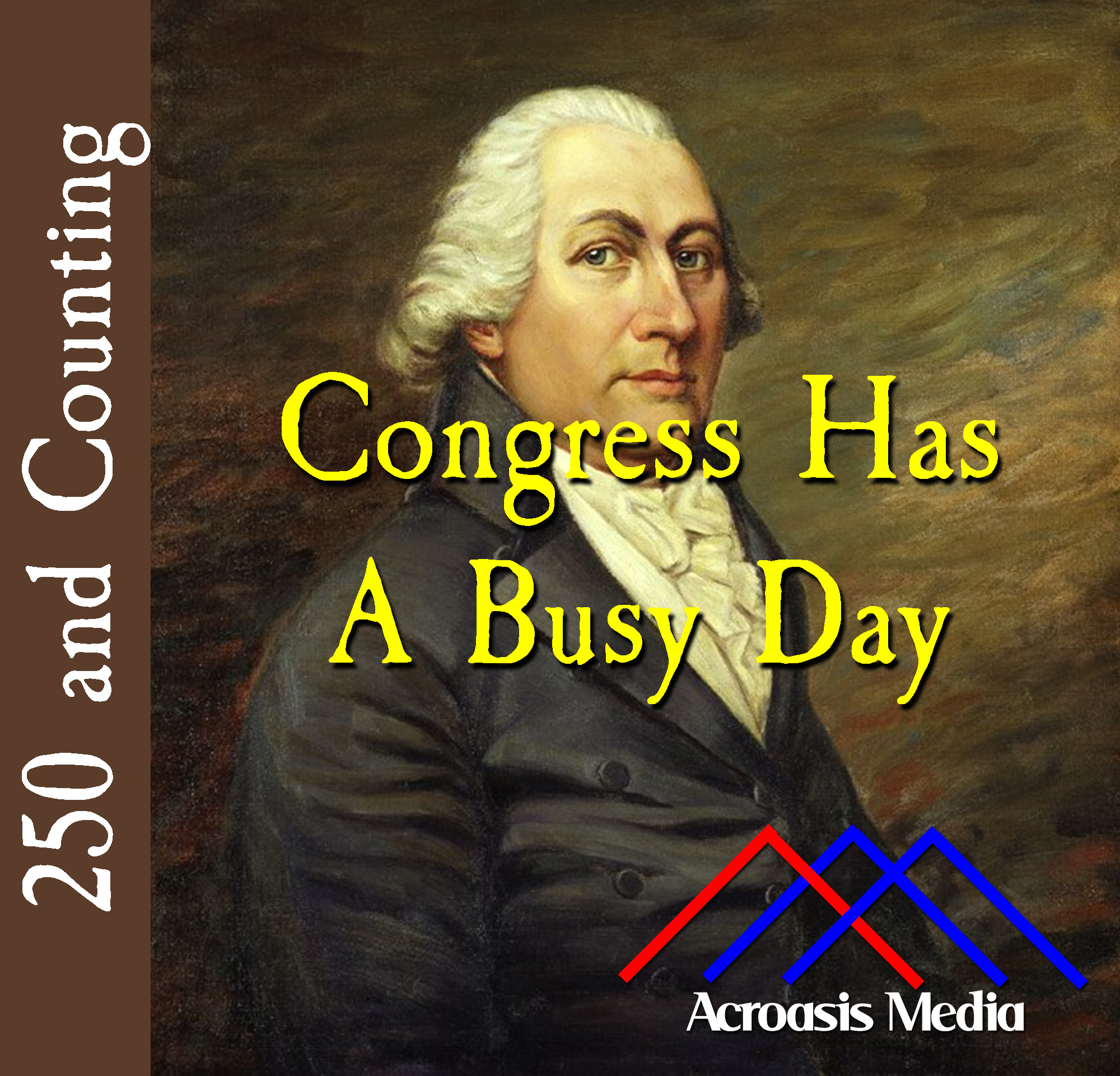
Congress Has A Busy Day–November 6, 1775
There are going to be days when no truly big events happen, but that wasn’t going to stop the Second Continental Congress from getting stuff done. Today we have a bit of an image of that group as a bunch of men who are hard-drinking philosophers, ready—and maybe eager—to burst into fisticuffs, or perhaps the occasional song, depending on where you got your impressions. So for that reason, we do like to remind you that the Continental Congress, for all their weird little squabbles, was a serious group of men. They took their jobs seriously, and put a lot of thought into everything they did. They often put in long hours, working until after darkness fell many days, and they typically worked six days a week. The post Congress Has A Busy Day–November 6, 1775 appeared first on 250 and Counting.
Washington Chides His Men–November 5, 1775
Guy Fawkes Day is one of those holidays, we think, that many people in America know ABOUT, but don’t necessarily know when it takes place, nor do they have any idea who Guy Fawkes was. Fortunately we’re here to give you some of the scoop. Guy Fawkes was one of eleven conspirators involved in a plot to blow up the House of Lords with King James I inside, killing him and setting up an opportunity to install a Catholic king instead. The plot was discovered, and Fawkes eventually confessed. Fawkes was sentenced to be hanged, drawn and quartered. “Hanged” in this sense meant being raised by the rope, rather than dropping and getting one’s neck broken. The person would be hanged almost to the point of death, then emasculated, disembowelled, beheaded, and quartered. The remains were then put on display in a prominent place, to remind people what happens to traitors. (Those were the days!) In Fawkes’ case, however, he accidentally died during the hanging when his neck was broken. Many think he orchestrated his “premature” death. The post Washington Chides His Men–November 5, 1775 appeared first on 250 and Counting.

Reinforcements Arrive Too Late–November 4, 1775
As we told you yesterday, Major Preston was hoping that reinforcements were coming in time to rescue him and his men from Fort St. Jean, so he tried to stall for time with General Montgomery. General Montgomery wasn’t biting, though, and the siege finally ended when Preston’s men surrendered. Today, only a day later, a few hundred men arrive in Quebec from Newfoundland and Prince Edward Island, but it’s too late for the fort. On the other hand, when the Americans try to take out Quebec City, they’ll have a much tougher time than they thought (and they lost anyway). The post Reinforcements Arrive Too Late–November 4, 1775 appeared first on 250 and Counting.

The Siege at Ft. St. Jean Ends–November 3, 1775
If you’re scrutinizing today’s cover art and you’re having trouble reading the plaque, that’s because what you see is mostly in French. The bottom half, only part of which is visible here, is in English. The English part (which is a translation of the French part) reads: FORT SAINT JEAN Constructed in 1743 by M. de Léry under orders from Governor la Galissonnière. This post was for all the military expeditions towards Lake Champlain. In August, 1760, Commandant de Roquemaure had it blown up in accordance with orders from the Governor de Vaudreuil in order to prevent its falling into the hands of the English. Rebuilt by Governor Carleton, in 1773. During the same year, under the command of Major Charles Preston of the 26th Regiment, it withstood a 45 day siege by the American troops commanded by General Montgomery. So…yeah. The FORT withstood the siege, but eventually the soldiers within the fort gave themselves up. The post The Siege at Ft. St. Jean Ends–November 3, 1775 appeared first on 250 and Counting.
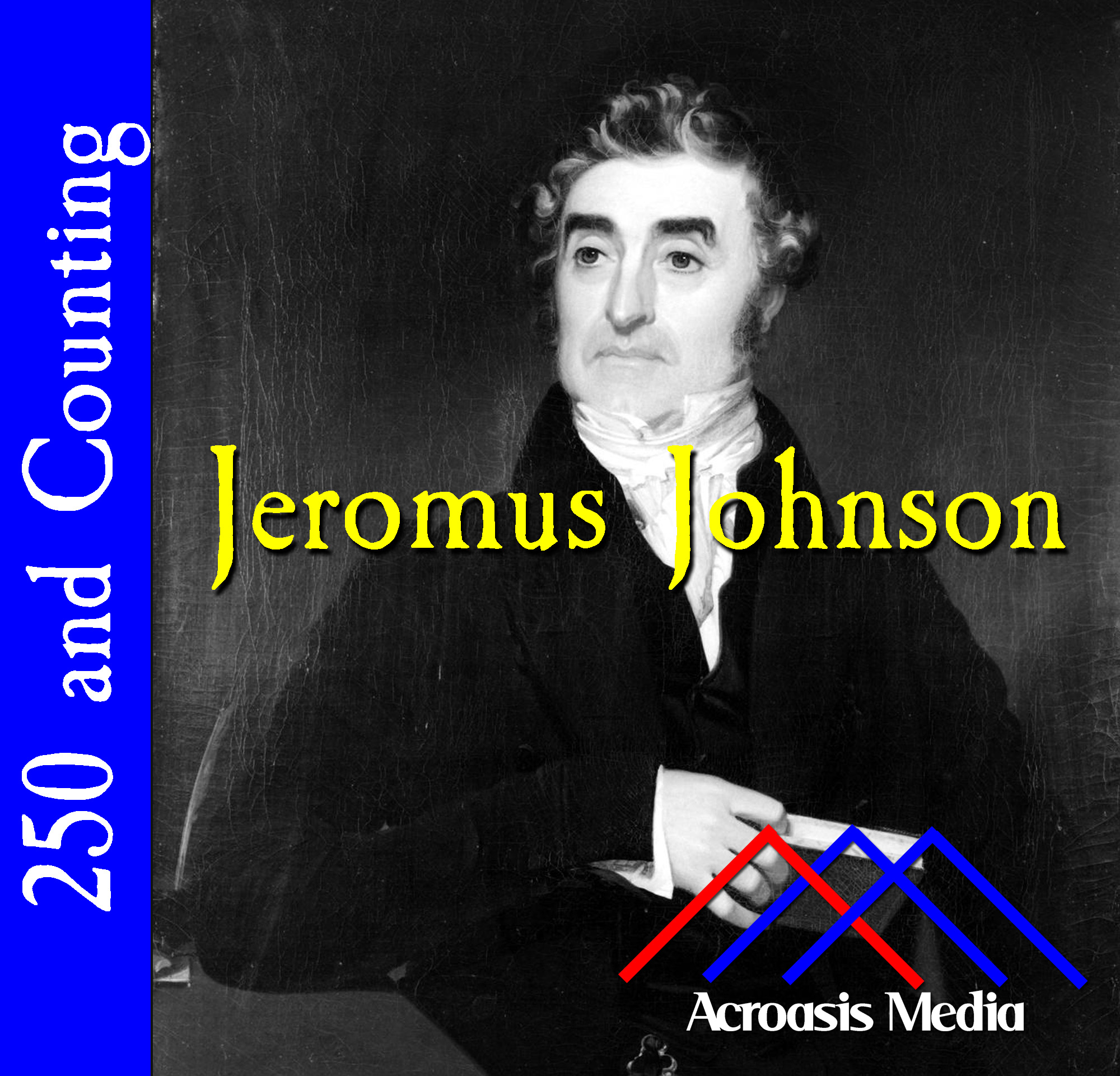
Jeromus Johnson–November 2, 1775
It’s noted that Brooklyn is the place where Jeromus Johnson was born, but to be more specific, Johnson was born in a neighborhood called Wallabout, which still exists but Johnson wouldn’t recognize it today. Wallabout got its name from the adjacent Wallabout Bay, which has been mostly filled in and is now occupied by the Brooklyn Navy Yard. “Wallabout” is a corruption of a French phrase meaning “bend in the harbor”. For all that, you rarely hear the name Wallabout anymore; the village has been largely absorbed by Fort Greene, Bedford-Stuyvesant and Clinton Hill. How do I know all this? I used to work a few blocks from there. Another personal connection: the town to which Johnson retired is Goshen, NY, in Orange County. My oldest daughter used to go to school up that way, and to avoid traffic I’d often visit her by driving a state highway that passed right through Goshen. It’s a lovely, rustic-looking village (at least it was ten years ago), and that area is a nice, relaxing drive. But what about Jeromus Johnson? Go listen to Mike. The post Jeromus Johnson–November 2, 1775 appeared first on 250 and Counting.
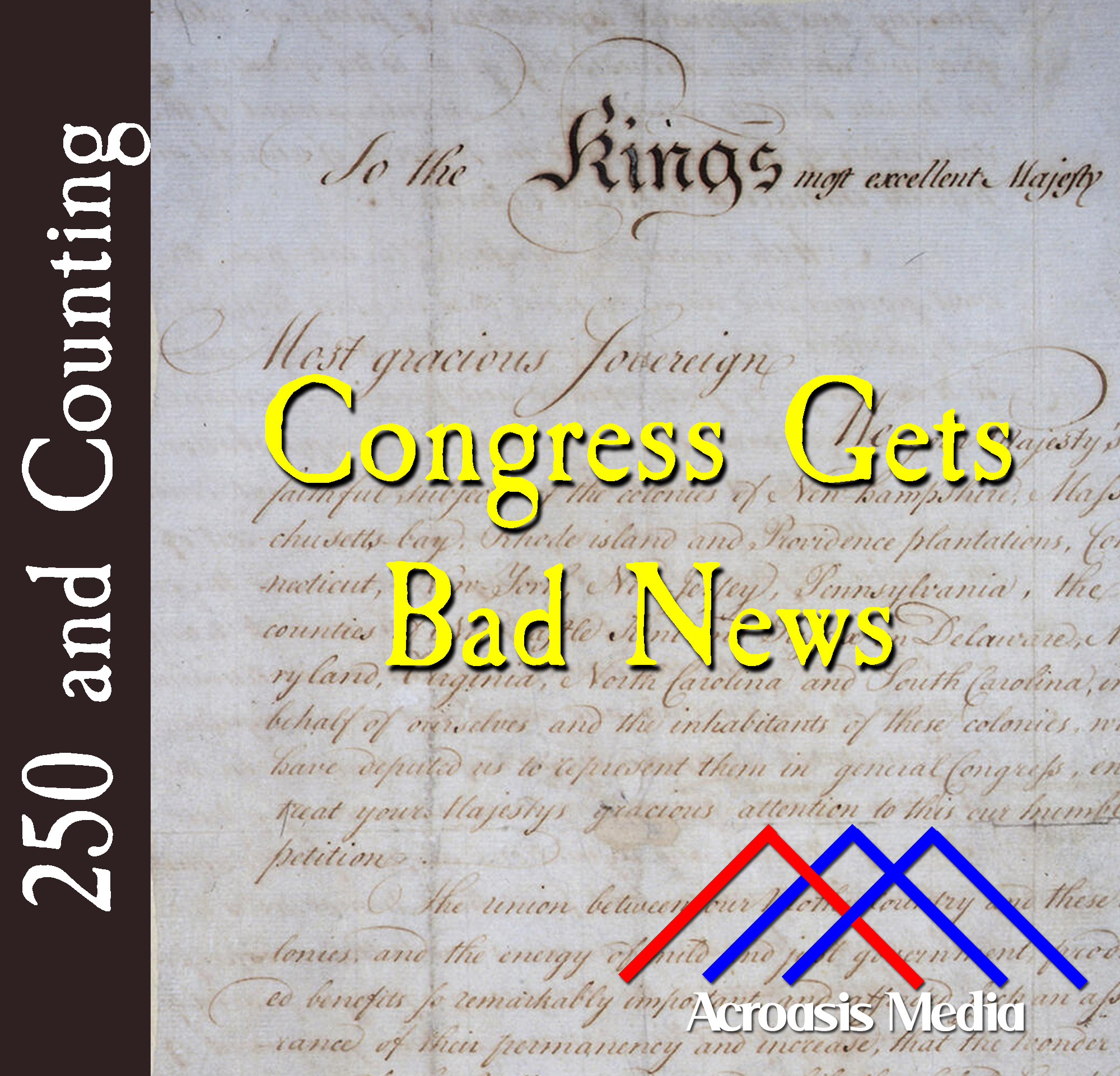
Congress Gets Bad News–November 1, 1775
In July 1775, there were still several delegates to the Second Continental Congress who thought that reconciliation with Britain was a possibility. There were a few others who may not have necessarily been of that opinion, but were willing to take a chance. Some of these men, led by John Dickinson, formed a committee to draft what’s come to be known as the Olive Branch Petition. The intent was to continue pledging loyalty to the King, but to simultaneously ask for some equitability in trade and tax regulations. The document asked for a firm settlement to the Colonies’ grievances, and identified all of the colonies as signatories except Georgia. The only reason Georgia wasn’t named is because they only had one delegate at the time, and he wasn’t comfortable with speaking for the entire colony. Consequently, he abstained from many votes. It was on this day that Congress learned what King George III had to say back in August regarding the Olive Branch Petition. The post Congress Gets Bad News–November 1, 1775 appeared first on 250 and Counting.

Sam Adams on Armies–October 31, 1775
Sam Adams was a patriot in his own right, oftentimes supporting his second cousin John. The two of them were often able to work together closely. What’s more, they were an efficient team, with Sam Adams being the fiery agitator and organizer, and John Adams acting in the more measured and sophisticated role, playing the political diplomat. But Sam also had his own ideas about how things should be organized. When he heard that the Massachusetts Assembly was considering putting together military groups, he applauded the idea, but he was also worried that having each colony create an army, then putting them all under the control of a single entity, might be dangerous in the long run. He expressed these fears in a letter to Eldridge Gerry, written on October 29 and delivered to Gerry today. The post Sam Adams on Armies–October 31, 1775 appeared first on 250 and Counting.
Sally Scott Murray–October 30, 1775
Sally Scott Murray was a political wife for the better part of her adult life, given all the different elected offices that her husband Edward Lloyd the 5th held. There were a few years immediately after their marriage when id didn’t hold elected office, and he predeceased her by about twenty years, but in between, Edward’s resume is all over the Maryland State Archives. And, of course, there’s a Lloyd Street in Baltimore. Just around the corner on Lombard Street is one of the best places ever to get a corned beef sandwich; a Jewish deli by the name of Attman’s. Stop in and tell them I said Hi. They won’t know what you’re talking about, but we can use the publicity. The post Sally Scott Murray–October 30, 1775 appeared first on 250 and Counting.

An Intercepted Gift–October 29, 1775
One of the most fascinating things about this event, and we only got to touch on it briefly in the episode itself, is that some important parts of the story are under dispute. What’s not debated is that the order went out to transfer gunpowder and lead to the Cherokees on October 29. What is debated, however, is the date and the place where the materials were confiscated. By some accounts, this incident took place on November 3, 1775 in a place called Mine Creek. This is farther inland (by over 70 miles) than reported by Moses Cotter ON November 3, who said it took place at Congaree on October 31. Other than the date and the place, the two stories are nearly the same, right down to the names of the people involved. And, of course, there are historical marker plaques in both locations. The post An Intercepted Gift–October 29, 1775 appeared first on 250 and Counting.
Dorothy Becomes Mrs. Hancock–October 28, 1775
It’s nice, isn’t it, that not everything we have for your benefit concentrates on people shooting at each other or generally not being kind? Take today, for instance. It’s Wedding Bells for the President of the Continental Congress! John Hancock got married to Dorothy Quincy today! (Okay, never mind that the motivations to get these two together may have been a little corrupt. Let’s just be happy for this couple, hm? ) The post Dorothy Becomes Mrs. Hancock–October 28, 1775 appeared first on 250 and Counting.
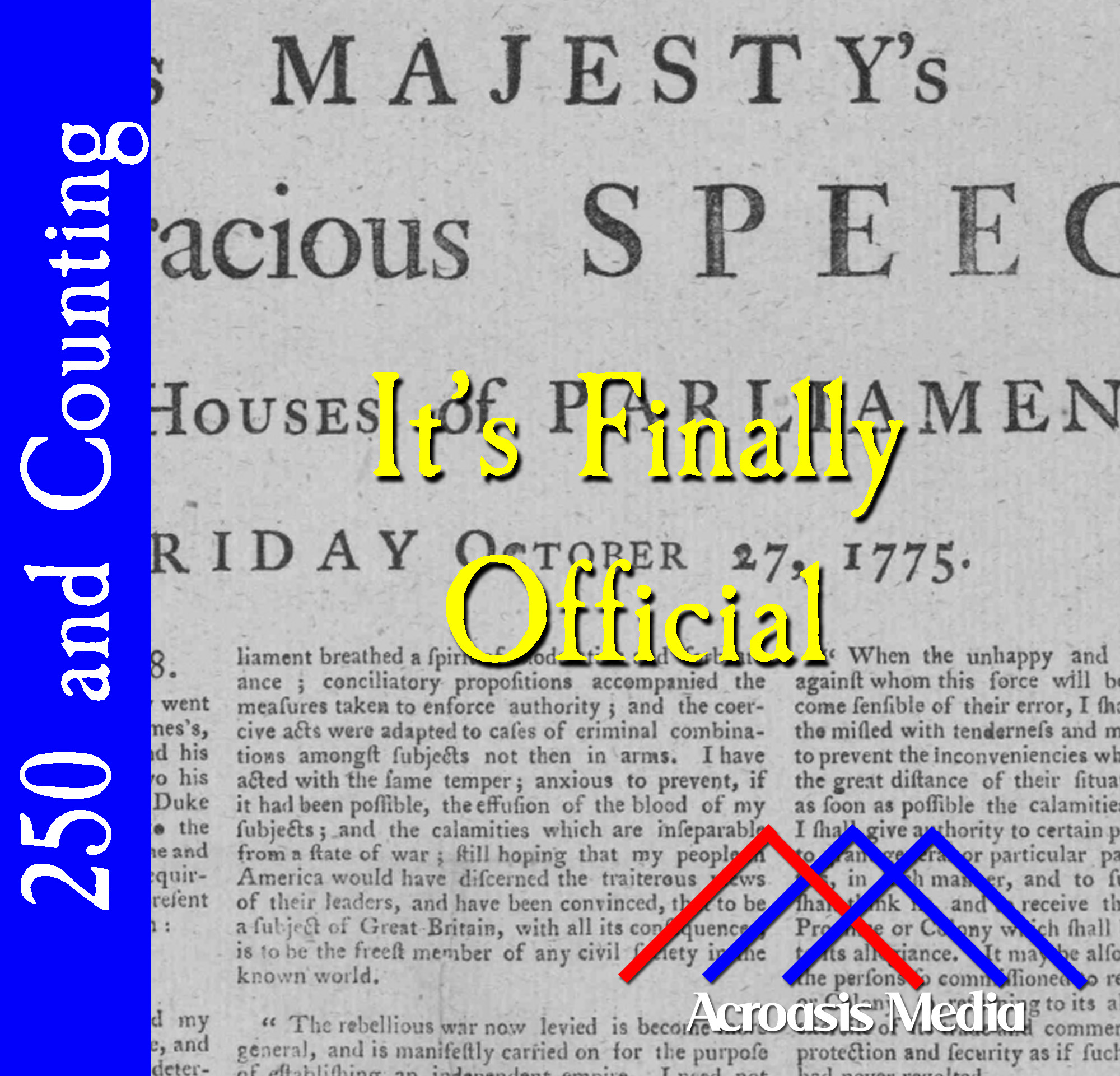
It’s Finally Official–October 27, 1775
We’re 300 days into 1775 and therefore 300 days into this show, and we’ve finally gotten to the point where British troops will be shooting at Americans because the two parties are officially at war. Up until now, all the fighting was about control, because what better way to control people than by shooting at them? But King George III’s declaration of rebellion in August was informal in nature. It wasn’t until he declared the Colonies to be in rebellion before Parliament that genuine attention was paid to it. It was still theoretically possible that the Colonists could back off and let things go to the way they were, but the odds were vanishingly small. The post It’s Finally Official–October 27, 1775 appeared first on 250 and Counting.
A New Facet of War–October 26, 1775
With both Boston and Canada in a state of stalemate, there wasn’t a lot of active fighting going on in the Colonies. Not until, as we said yesterday, General Woodford stumbled into a bunch of British soldiers preparing to attack Hampton, VA. This set off the first major battle of the Revolution in a southern state, and one of our first significant victories. But in the meantime, Congress discovered that a shooting war wasn’t the only tool they had at their disposal: they had economic power as well, and they began to leverage that. We mentioned in the past that the Colonies didn’t have a ton of economic clout, but the cost of war combined with whatever other money-related tactics they could try, added up to a bigger impact than originally postulated. The post A New Facet of War–October 26, 1775 appeared first on 250 and Counting.
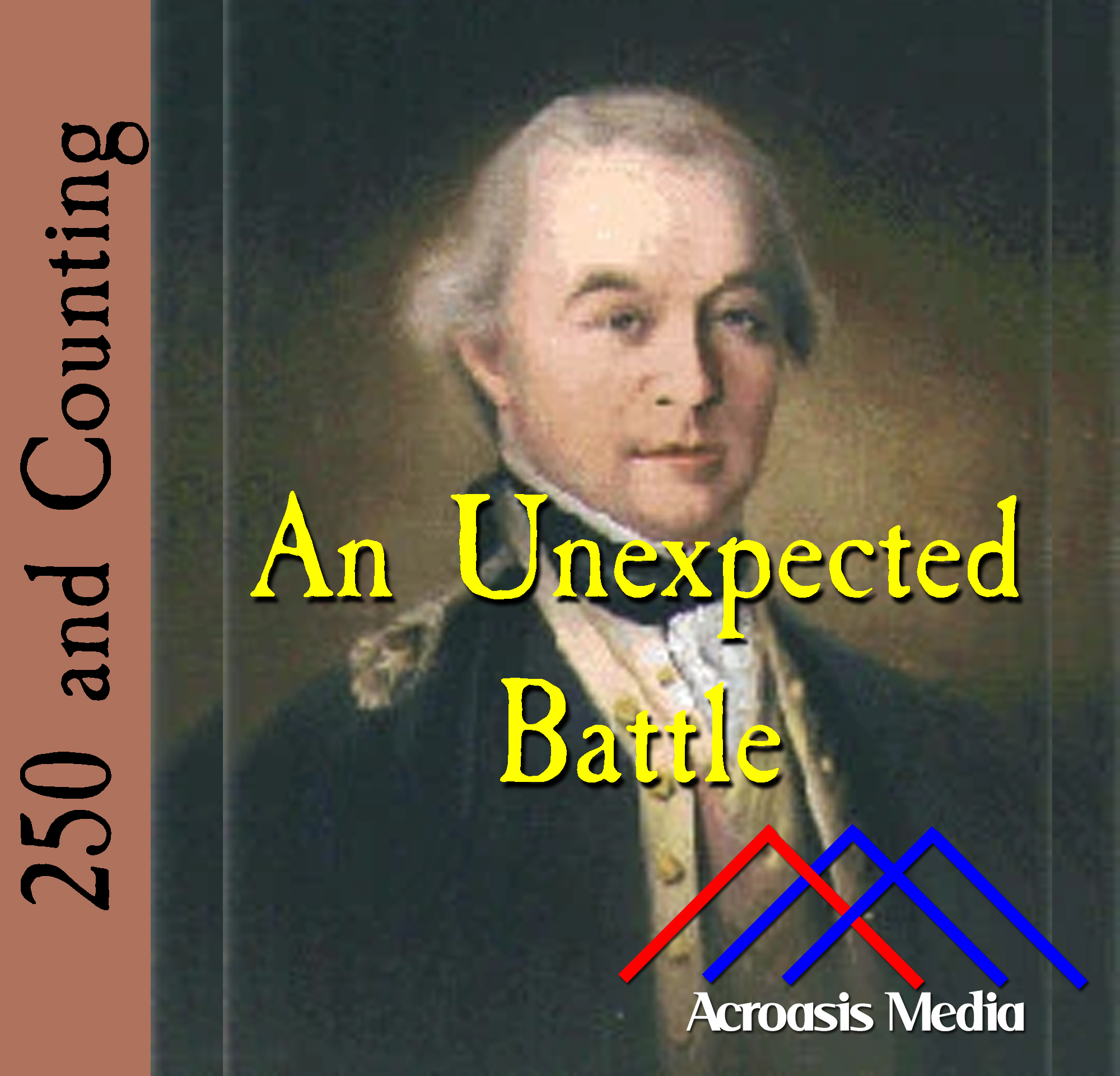
An Unexpected Battle–October 25, 1775
William Woodford was both smart and able to see the bigger picture. He’d already begun training his troops in earnest in anticipation of a British attack. Then the word came in that his men were to protect Norfolk or Portsmouth. When they began the march, they had not idea that they were about to stumble into a British attempt to attack amphibiously. Woodford’s men repelled the attack and created the first important British casualties of the war effort. The post An Unexpected Battle–October 25, 1775 appeared first on 250 and Counting.
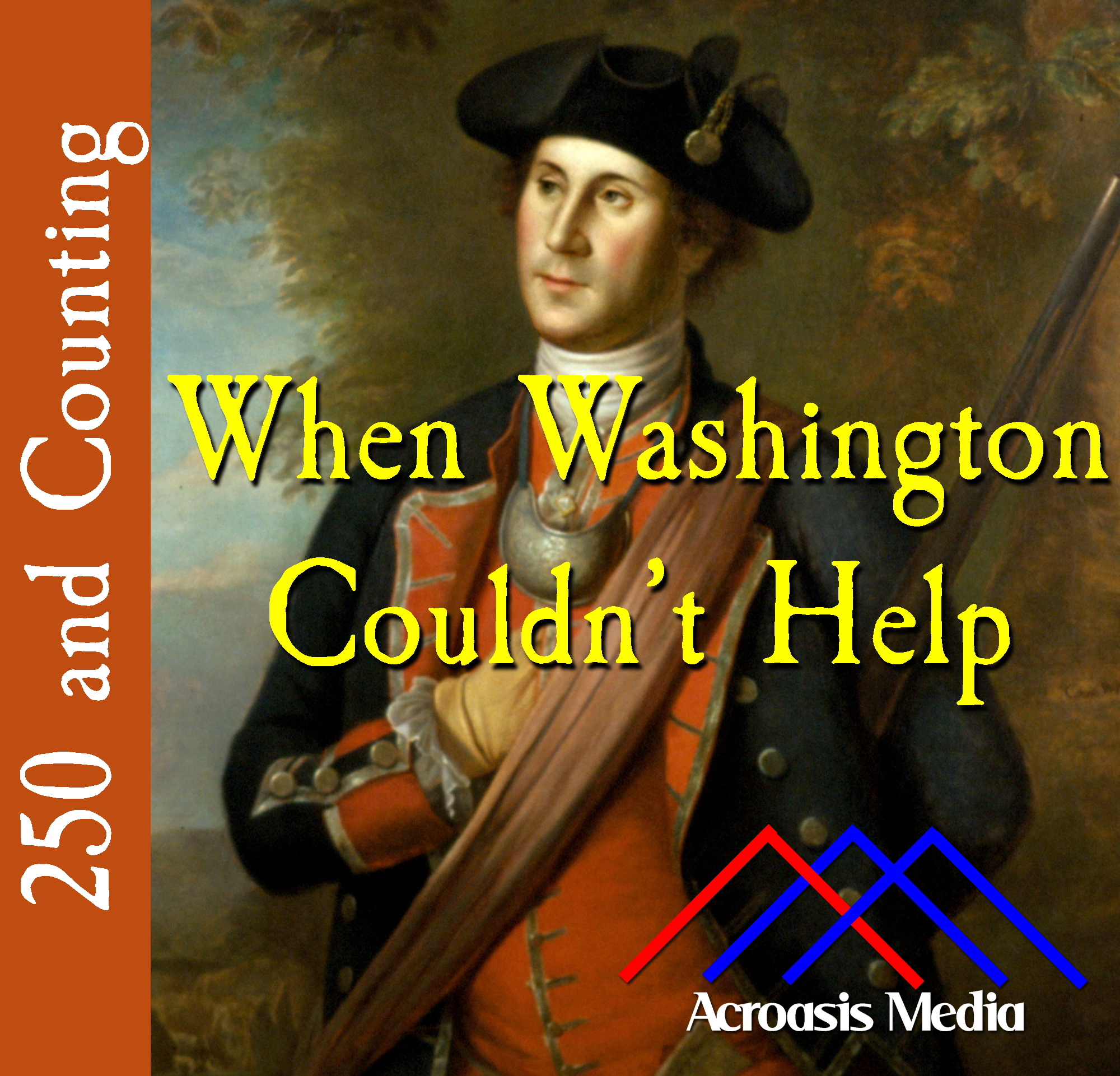
When Washington Couldn’t Help–October 24, 1775
For what it’s worth, the picture I used for George Washington depicts what he looked like during the French and Indian War, which ended roughly twelve years prior to this date. But we wanted to show you that he didn’t always look like the guy on the dollar bill. After the firebombing and destruction of Falmouth, Massachusetts (and which we mention for the first time today, I think, is the same place as Portland, Maine), it was only natural that the locals there felt vulnerable. It’s because it had been demonstrated to them exactly how vulnerable they were. Their Committee of Safety contacted George Washington in Cambridge asking for help in the form of soldiers and/or weapons. Washington conceded that the attack was over the line and wished the victims well, but unfortunately he couldn’t help. Washington cited the need to maintain the siege at Boston, and the possibility that he didn’t have the authority to help, but Washington was a shrewd tactician, as we’ll see in future episodes. It’s entirely possible that he didn’t see the point in defending a city that had already been leveled. The post When Washington Couldn’t Help–October 24, 1775 appeared first on 250 and Counting.

RIP Peyton Randolph–October 23, 1775
Peyton Randolph is another one of those Founding Fathers who goes largely unknown to most people, probably because he died relatively young (age 54) and early in the whole Independence movement. But Randolph was a true Patriot and while he wasn’t around to sign the Declaration of Independence, it’s said that his spirit was at the heart of the document. It’s worth noting that, as the Royal Governors were kicked out one by one, the Continental Congress began to assume governmental duties for the Colonies. This is why some would argue that, as the first President of the Continental Congress, Peyton Randolph should also be considered our first US President, and never mind the fact that he died before the nation was established. It’s not a terrible idea, we guess… Fort Randolph in present-day West Virginia was named after him, as are the Randolph Counties in North Carolina and Indiana, not to mention the town of Randolph, Massachusetts. The post RIP Peyton Randolph–October 23, 1775 appeared first on 250 and Counting.
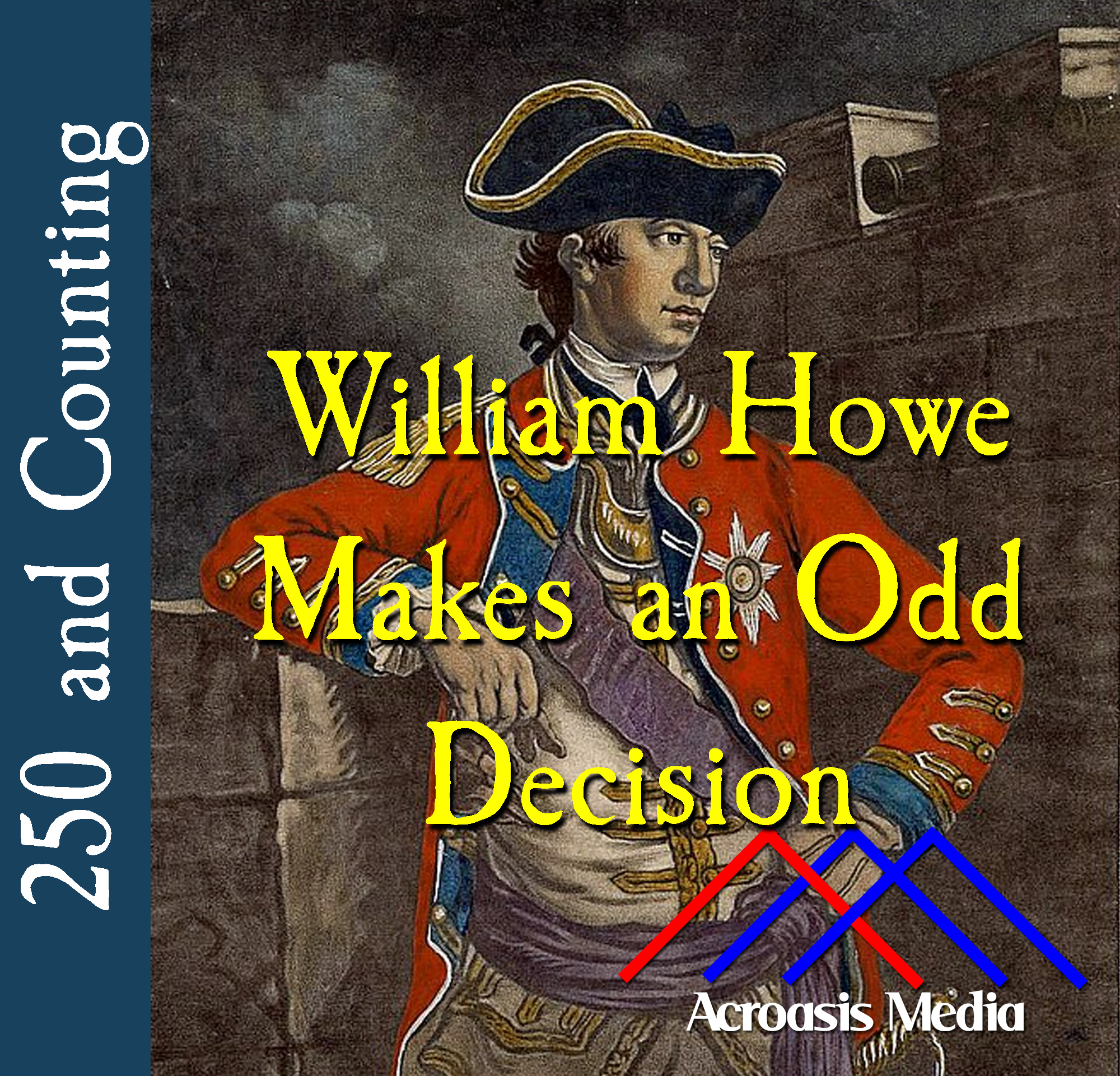
William Howe Makes An Odd Decision–October 22, 1775
After the Pyrrhic victory at Bunker Hill, the fact that General Gage was about to be replaced probably came as a surprise to nobody. That he was replaced by William Howe…well, that also probably wasn’t a surprise. Howe had experienced success in the Seven Years’ War. And while he was known to have shown some sympathy with the Colonies (he’d voted against the Intolerable Acts, for instance), it was thought that he could break the Siege of Boston. So Howe came to America and on October 11 he took over the job from Gage. He stayed in Boston with the besieged soldiers. And he had lots of ideas about breaking the siege, and eventually the Continental Army. What’s more, Lord Dartmouth had some creative ideas as well. But Howe chose something entirely different. The post William Howe Makes An Odd Decision–October 22, 1775 appeared first on 250 and Counting.
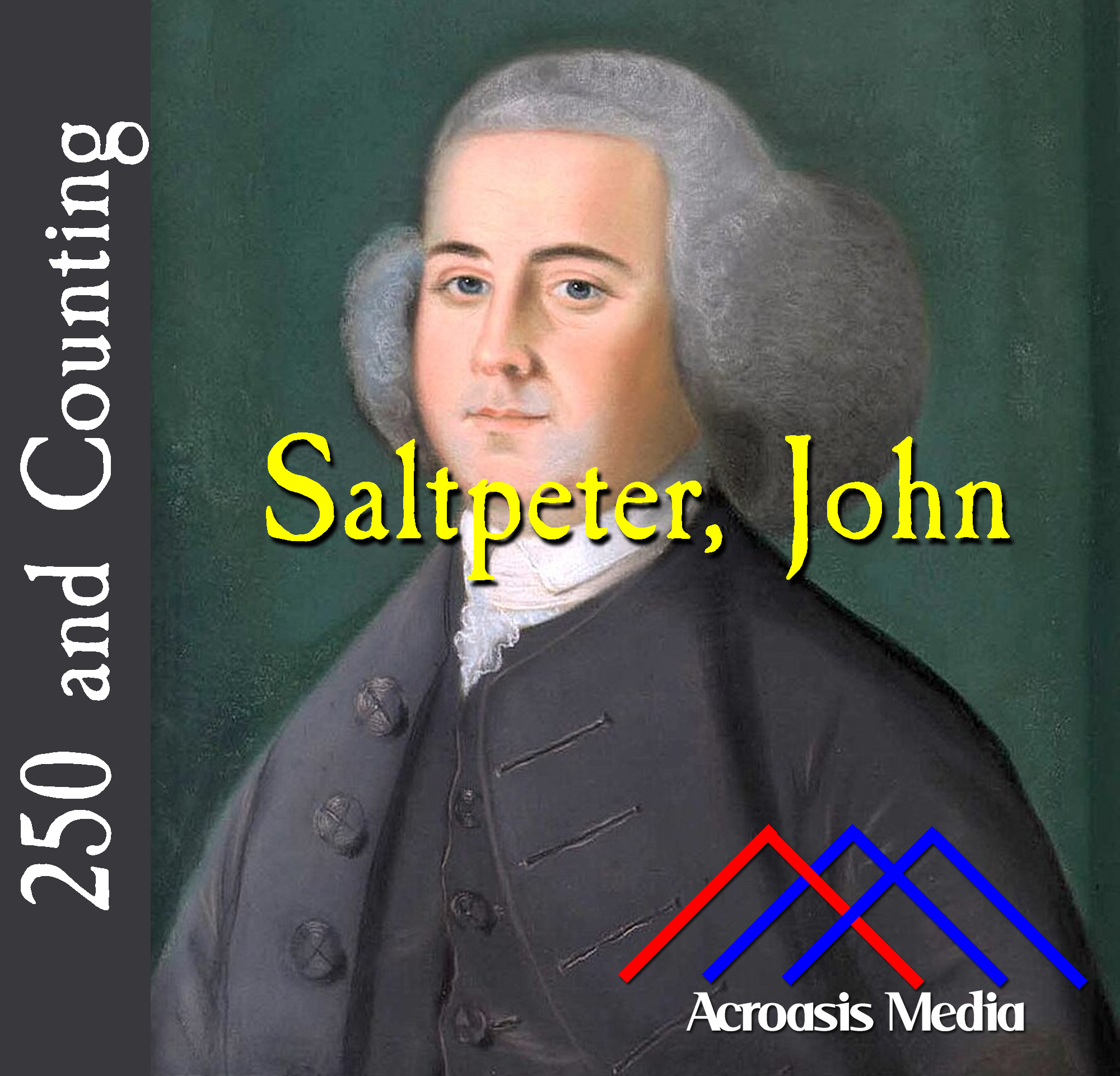
Saltpeter, John–October 21, 1775
The Second Continental Congress was having a busy week, with the worries about the trade embargo going on, and whether ships from other nations could get in/out safely. And John Adams was worried, too–worried that he wouldn’t be able to keep up with the demand for gunpowder for the soldiers. One of the components of gunpowder is saltpeter, and while it isn’t hard to make, it’s certainly easier to let someone else make it and then pay them for their efforts. Fortunately, help arrived in the form of a “recipe” for saltpeter published in a local newspaper. The post Saltpeter, John–October 21, 1775 appeared first on 250 and Counting.

James Warren Likes Privateers–October 20, 1775
In the immediate aftermath of the destruction of Falmouth (then Massachusetts, now Maine), naturally there was a great deal of concern when it came to defending our shores from the British Navy. After all, the Brits had the most powerful navy in the the world, and the Americans…well, they’d barely gotten started putting theirs together. A couple of the colonies had started their own navies, but we had a long way to go. James Warren, in his capacity as a member of the Massachusetts Provincial Congress, wrote a letter to John Adams outlining his concerns, and coming up with solutions until we could get our Navy into good fighting shape. The post James Warren Likes Privateers–October 20, 1775 appeared first on 250 and Counting.
Keeping The British At Bay–October 19, 1775
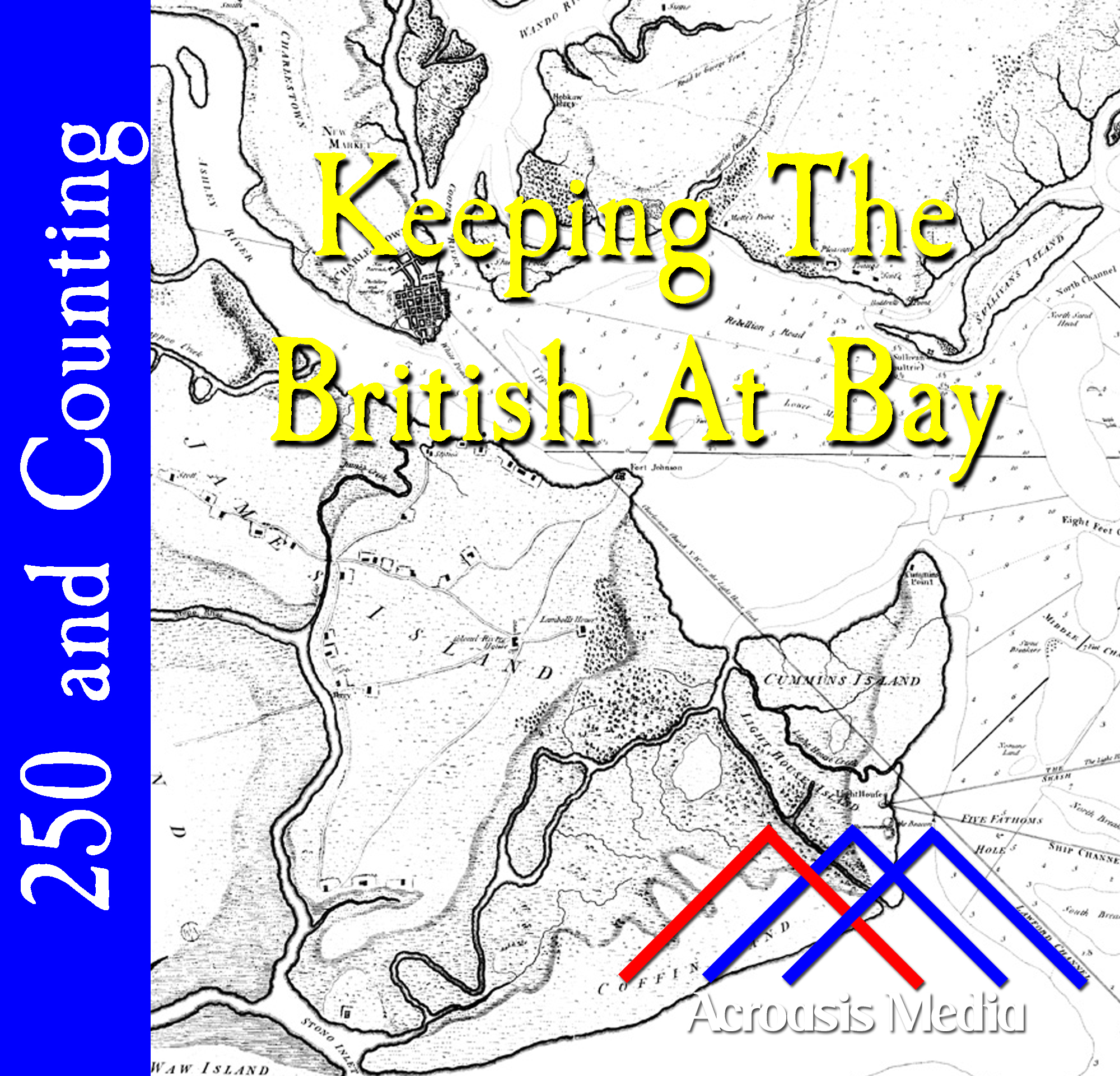
There were two events marked today. One of them involves the continuation of a ban on exports of weapons to America. This was something that had to be formally declared every few months. Meanwhile down in South Carolina, a brief fight between two ships in the Charleston Harbor got local leaders thinking about the best way to keep the harbor protected. Their solution: set it up that the only way you can get in or out of Charleston harbor is by ensuring that you remain within range of Fort Johnson’s guns. The post Keeping The British At Bay–October 19, 1775 appeared first on 250 and Counting.
Washington Gets Some Relief–October 18, 1775
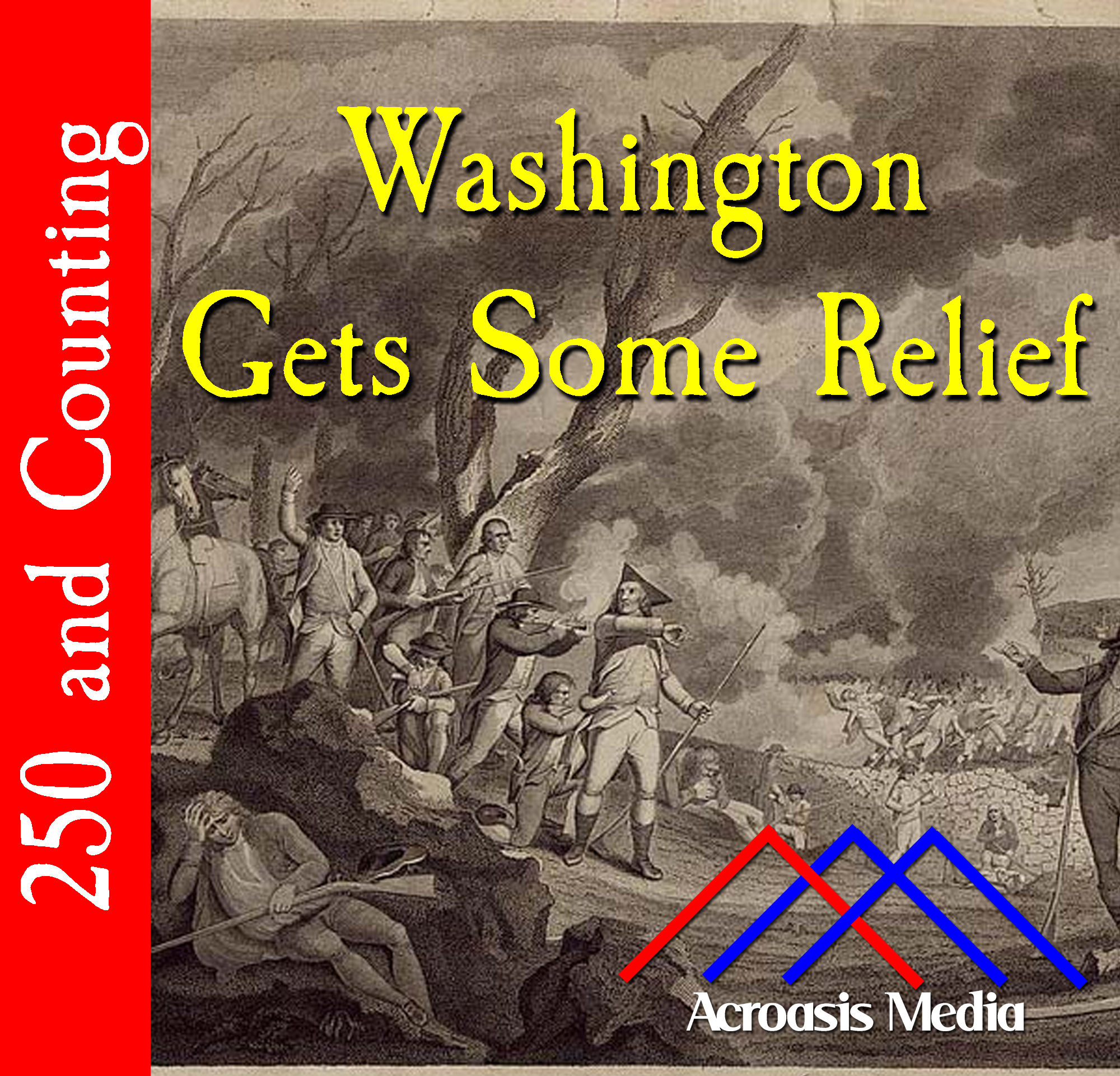
George Washington was a pretty smart guy. He knew exactly what his army needed, in all aspects. He had a handle on discipline, on supplies, on tactics and any number of other things. Washington surrounded himself with people who were smart, too. This went a long way toward ensuring his success. So when his army started to fall apart because some basic needs weren’t getting met, Washington took action. He knew that sending another letter to Congress wasn’t going to help. So instead he met with them directly. And like a dog savaging a toy, Washington grabbed Congress in his (not wooden!) teeth and shook them in a figure-eight. Metaphorically, of course. And while he didn’t get everything he sought, he managed to get the important stuff done and the rest of it…well. The rest of it, at least he knew he’d been heard. And he’d live to fight another day. The post Washington Gets Some Relief–October 18, 1775 appeared first on 250 and Counting.
Manley About The House–October 17, 1775
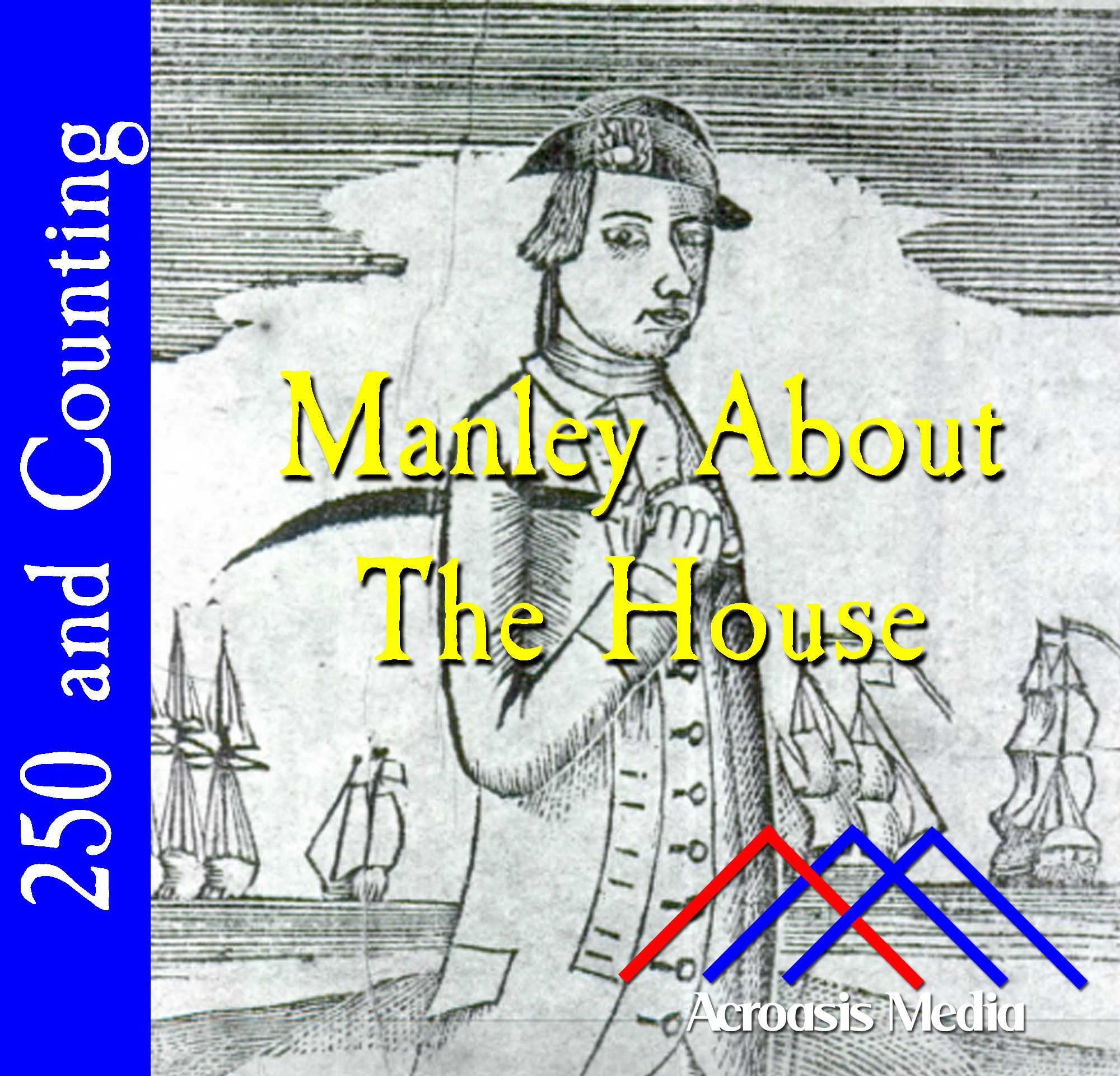
Okay, first off, it’s only appropriate that I apologize for the stupid title. I really shouldn’t write when I’m low on sleep. Manley’s beginnings were murky (e.g. his year of birth is approximate) but he was a quick study and it’s no wonder that George Washington selected him as one of his first captains in the Revolutionary War. Just a few months later he was promoted to Commodore. Manley spent a couple of years harassing and capturing British ships, until he himself was captured. After nearly a year of imprisonment he was released. It was at that time that he became a privateer. A few years after that he re-joined the navy and remained there until his death in 1793. The post Manley About The House–October 17, 1775 appeared first on 250 and Counting.

The Burning of Falmouth–October 16, 1775
To be clear, the actual burning of Falmouth took place on October 18, but the events that led directly to it happened on this day. Captain Henry Mowat had been captured by patriots in Falmouth some time earlier. When he returned, he brought five gunships with him. When he demanded that the locals swear allegiance to King George III, he gave the command that laid waste to the town. The post The Burning of Falmouth–October 16, 1775 appeared first on 250 and Counting.

Reinforcements Arrive in Quebec–October 15, 1775
Fort St. Jean was a relatively soft target compared to Boston. Plus, it wasn’t as well fortified because the British weren’t holed up there. Sooner or later something would come along to break up the stalemate. On this day, a couple of somethings arrived, from Fort Ticonderoga and Crown Point. The big guns that Montgomery had hoped for finally arrived. And not long behind that, Montgomery was able to take Fort Chambly, which wouldn’t have been a huge deal had its commander not forgotten an important detail while he was high-tailing it out of there. The post Reinforcements Arrive in Quebec–October 15, 1775 appeared first on 250 and Counting.
John Dabney Terrell Sr.–October 14, 1775
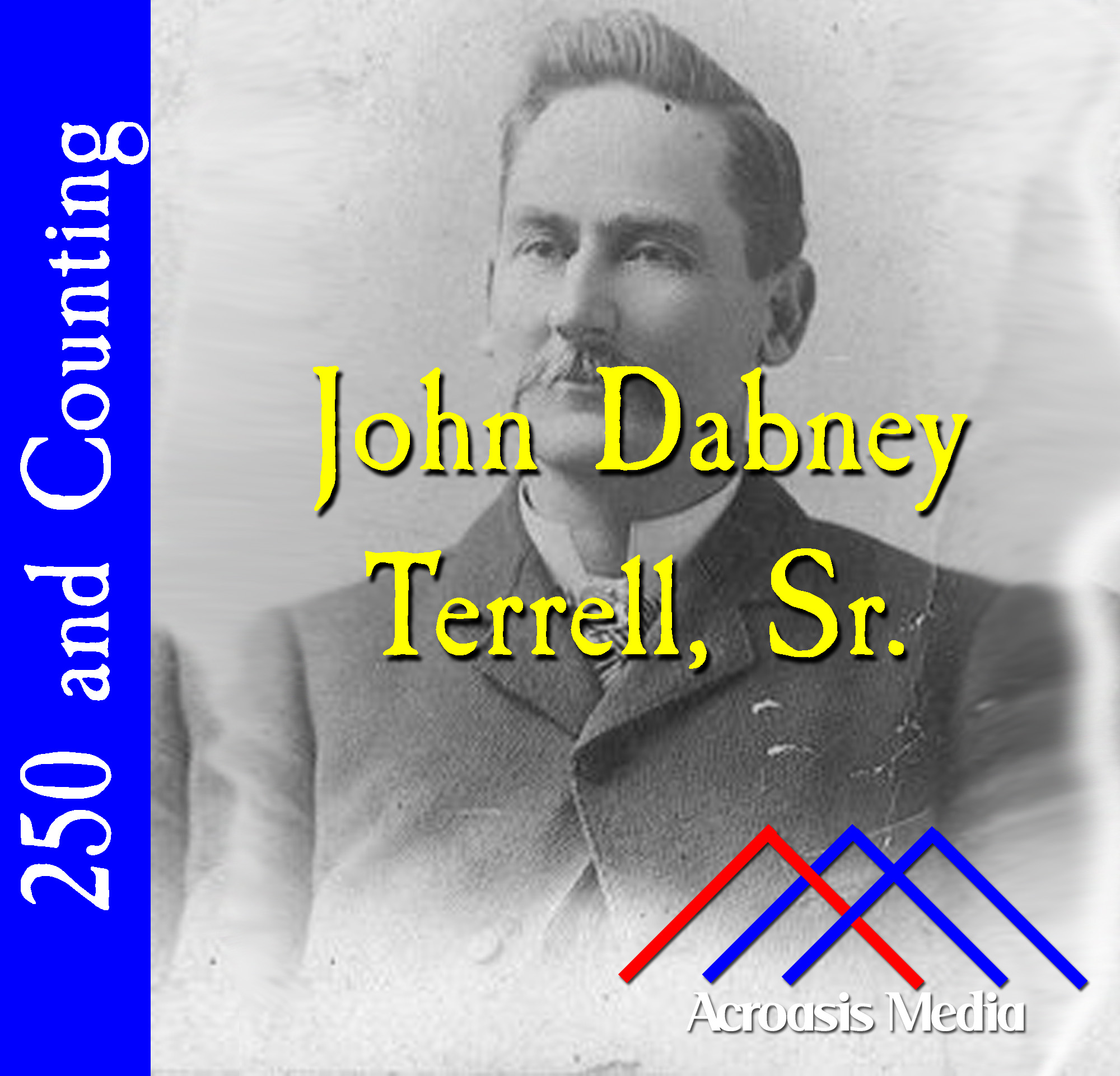
Programming Note: Mike came down with a case of electronic laryngitis, so you’re getting me again for today’s episode. But Mike wrote it, so there’s that. John Dabney Terrell Sr. was…not one of our best and brightest Americans, but the work he did will lead us to a bigger story some time down the road. Much of what he did laid down the foundation for the event that became known for the Trail of Tears. As if that wasn’t bad enough, he was a slave owner who put some of his slave property (ugh, but that was the legal term) in his son’s name to avoid losing them in a pending lawsuit against him. That he did all this and chose to be buried in a very Native American fashion is kind of amazing. The post John Dabney Terrell Sr.–October 14, 1775 appeared first on 250 and Counting.
Happy Birthday to the US Navy!–October 13, 1775
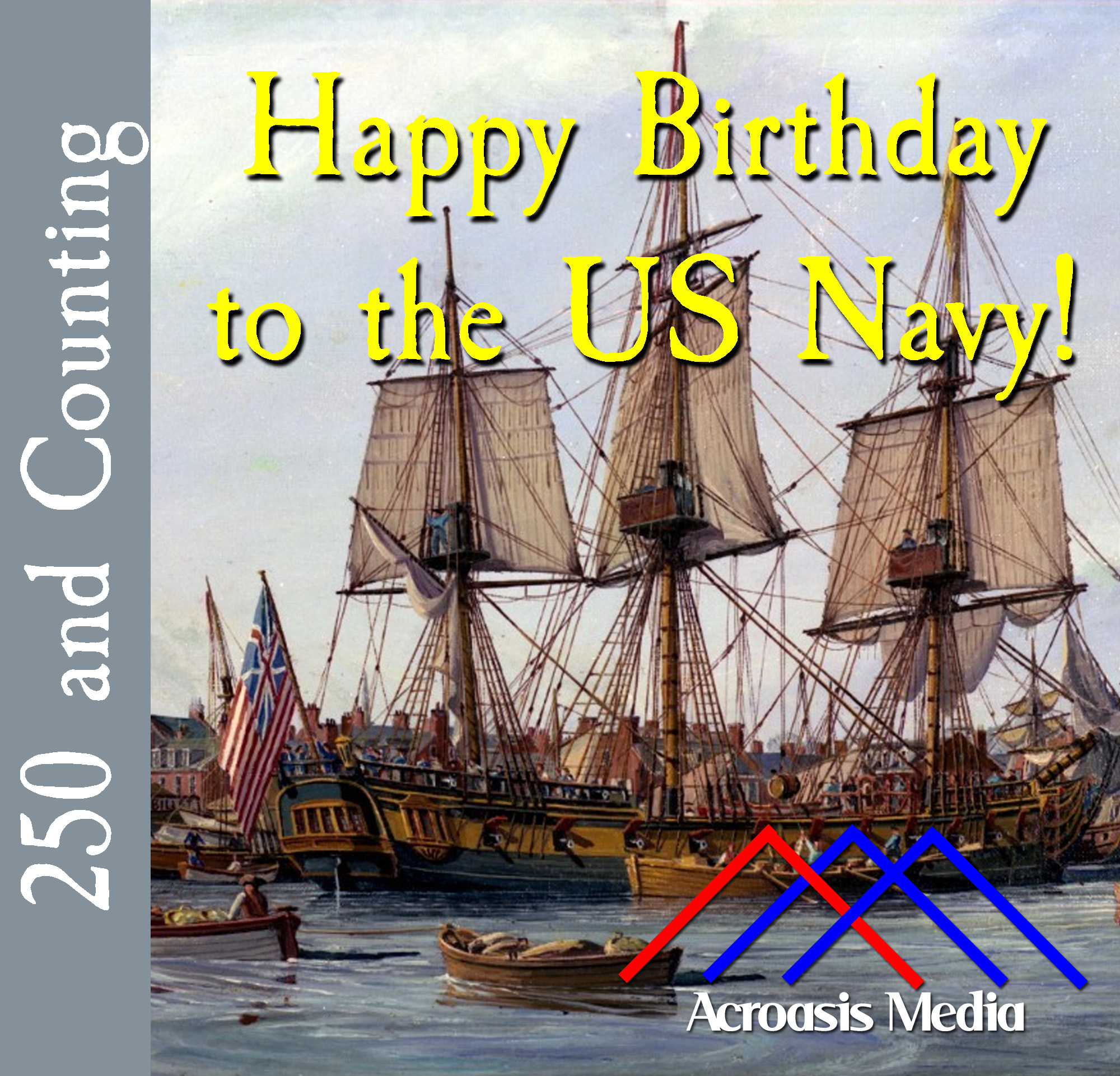
It’s Cake and Candles for the US Navy, born this day in 1775. The Continental Congress initially authorized the purchase and retrofitting of two ships. But before long they saw the wisdom of having a navy, and soon many more ships were purchased, and commissioned into service. The Continental Navy, to be honest, didn’t have a huge impact on the war. Many ships were lost to British attacks, weather, or accidents. What it did have a big impact on, however, was the War of 1812. The seamen who fought in the Revolution were well-seasoned officers by the time that war came along. It’s also worth noting that the Continental Navy was disbanded after the Revolution, but a few years later the US Navy was officially established. However, given the continuity of tradition and the fact that today was the day that Congress authorized the purchase of the vessels, the Navy decided in 1971 that October 13, 1775 was the date of its official establishment. The post Happy Birthday to the US Navy!–October 13, 1775 appeared first on 250 and Counting.
Lyman Beecher–October 12, 1775
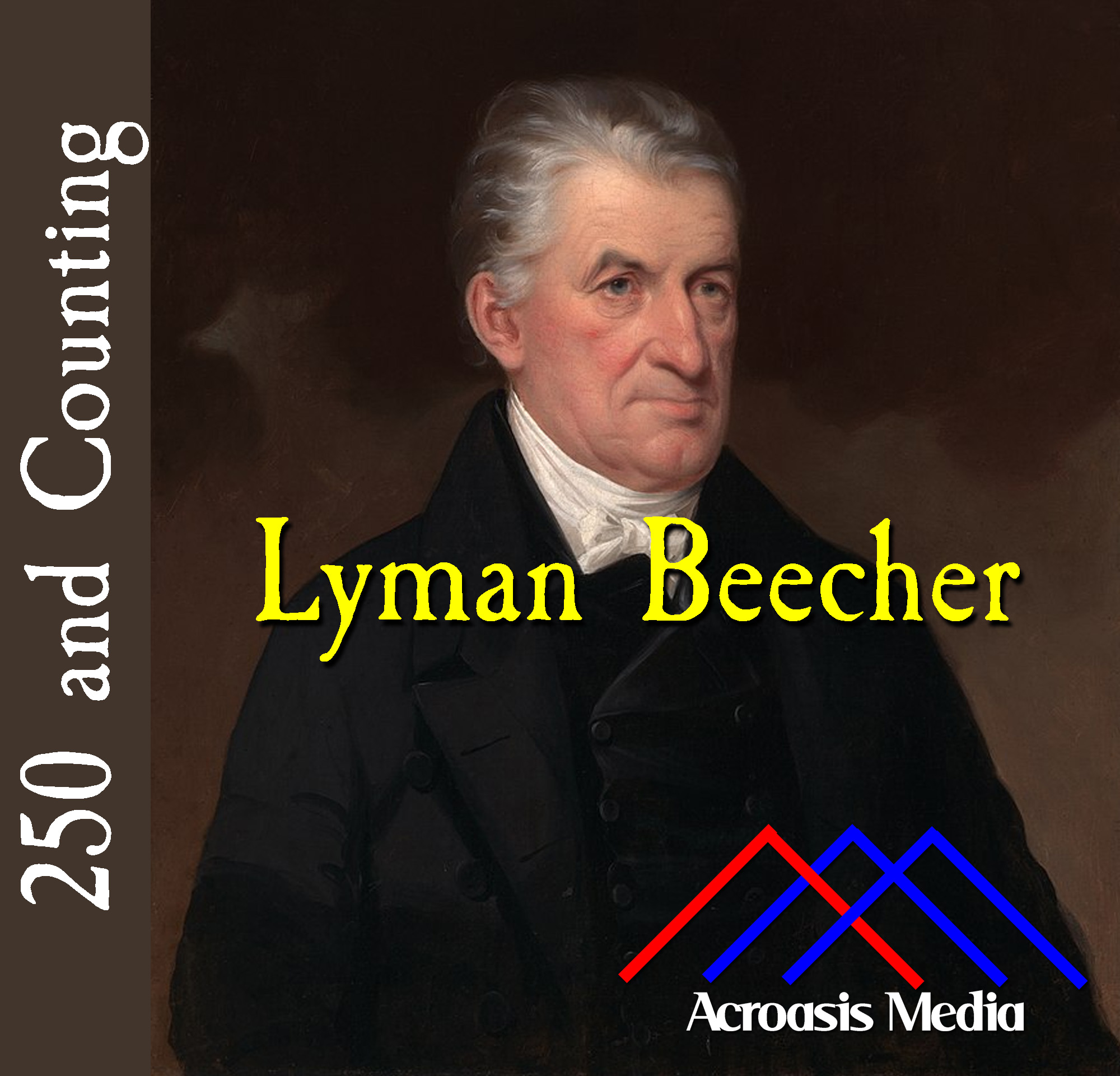
Although Lyman Beecher could be considered famous just for being the father of several prominent writers and ministers, he also had some achievements in his own right. Beecher first became known for a sermon which was published shortly afterward on the evils of duelling. Because it was in the wake of Alexander Hamilton’s death, it proved quite popular. Beecher next turned his eyes to intemperance, which is what intoxication was called at the time. It was a concern throughout America in the mid 1820s, so he delivered and published a half-dozen sermons which sold very well in America and in Europe. Those sales continued well into the 1870s. By the time Beecher arrived at Lane Seminary in the early 1830s, slavery was coming to the fore as an important social topic. While he was an abolitionist at heart, his public stance was with colonization: the freeing of slaves and then moving them to start a colony in West Africa. (This is where Liberia got its start, incidentally.) Unfortunately, a multi-day public debate about colonization morphed into a discussion of abolitionism, and many students left the school altogether in protest. Shortly after that, his views on changes in the church led to accusations of heresy, which he successfully defended. However, the seminary was left gutted and he moved back to New York to live with his son Henry in Brooklyn, where he remained until his death. The post Lyman Beecher–October 12, 1775 appeared first on 250 and Counting.

The Great Carrying Place–October 11, 1775
Benedict Arnold and Company are still on the move toward Quebec. Over a three-week period they’ve moved fewer than 90 miles, with only…300 to go. Today they’ve reached The Great Carrying Place, a 13-mile walk alternating between woods and knee-deep mud, all while carrying everything they’ll need to get to Canada. Back in the Colonies proper, General Gage is being replaced by General Howe. Gage was largely responsible for the Siege of Boston, especially since they weren’t able to break that siege. And then Bunker Hill came along. Sure, the British won but at great cost—a Pyrrhic victory. Once word got back to Britain about that, Lord Dartmouth appointed Howe within a couple of days. Of course, it took several weeks for the news to get back to America, and on September 26 he learned he was being replaced. By this days’ end, Gage was on his way back to Britain. The post The Great Carrying Place–October 11, 1775 appeared first on 250 and Counting.
Congress Takes A Day Off–October 10, ,1775
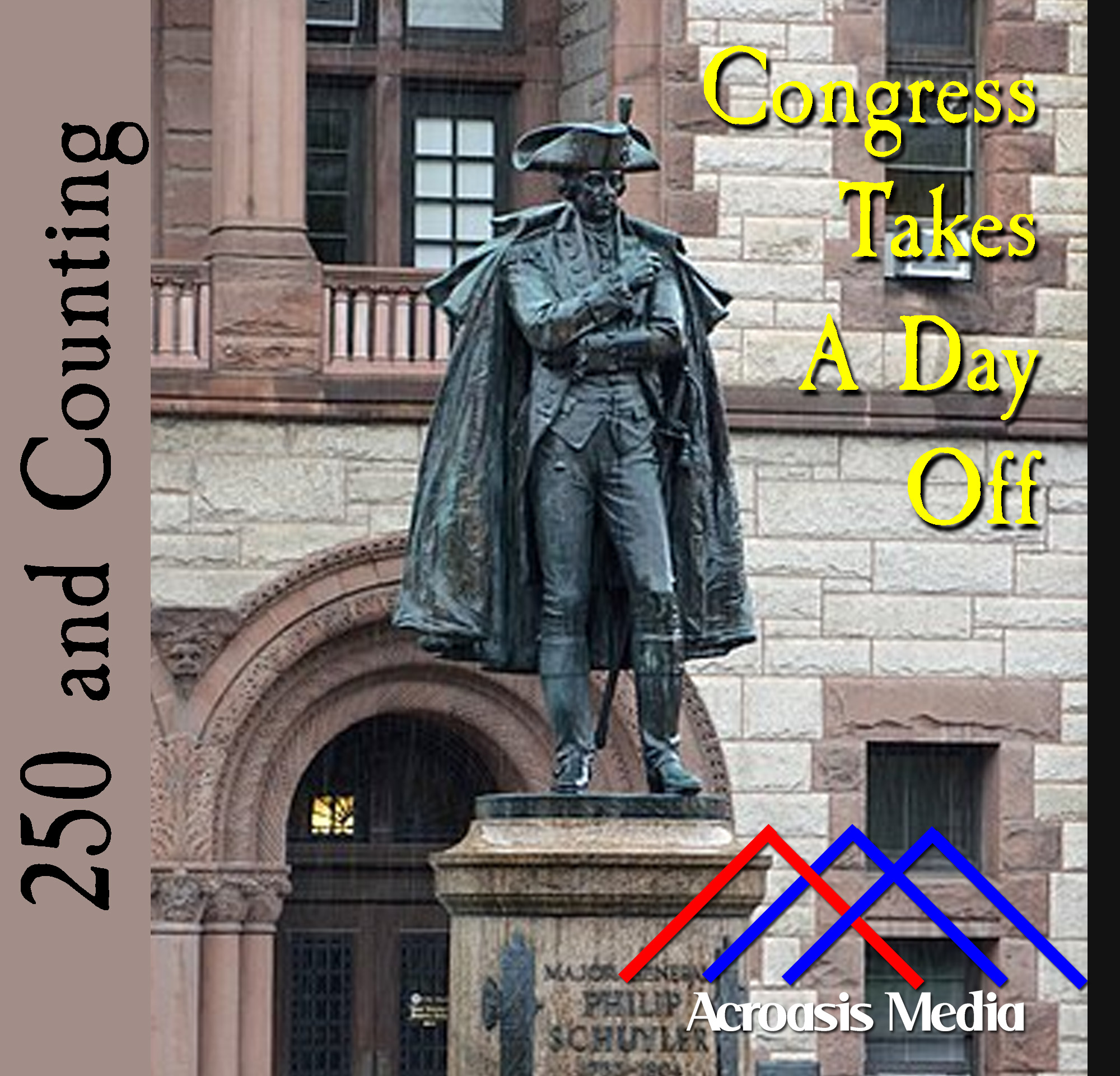
That’s an interesting goof I made with today’s cover art, with the tiny black stripe down the right. It’s a mistake, but it looks like the picture has a shadow, so I’m keepin’ it. The Second Continental Congress was a very serious, thoughtful body of men who did not shirk their duties. They often worked very long hours, six days a week, and might have gone for seven had it not been for, y’know, God stepping in and commanding, “Hey, none of that. That’s My day.” So the fact that Congress chose to knock off early one day—and a Tuesday, besides—suggests that maybe they really needed this one. The post Congress Takes A Day Off–October 10, ,1775 appeared first on 250 and Counting.
The British Have War Plans (October 9, 1775)
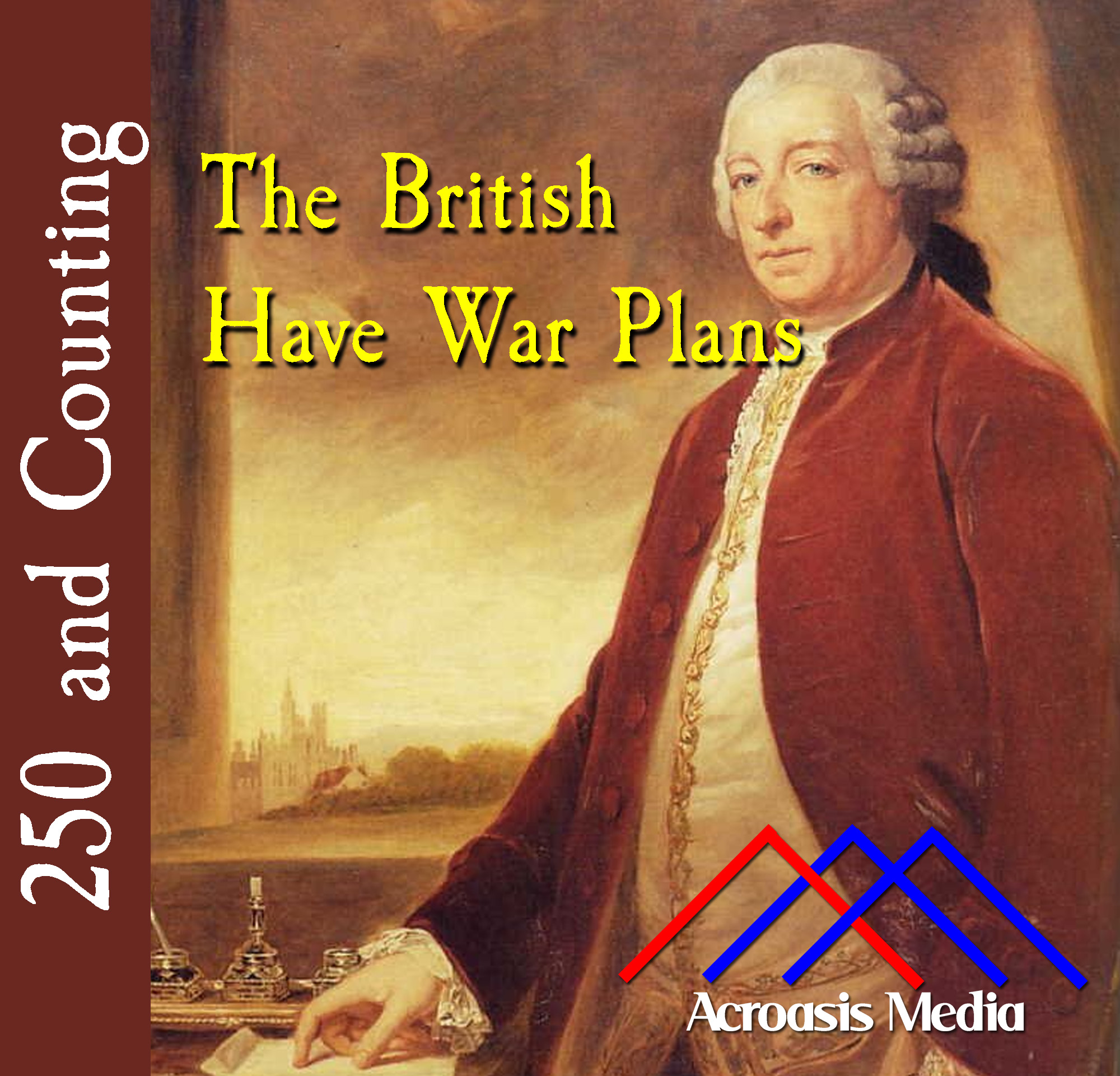
By now the British appear to accepted the fact that the war was going to go on for much longer than they thought. They thought that fighting the colonies would be a cake walk. They discovered that it was quickly becoming a quagmire. Fortunately they recognized it and began to make plans. Lord Dartmouth and General Howe started drawing something up that involved isolating Washington’s army from the rest of the Colonies, but George Germain, who was about to replace Lord Dartmouth, thought more aggressively. He didn’t want to defeat the Colonies; he wanted to punish them, besides. The post The British Have War Plans (October 9, 1775) appeared first on 250 and Counting.
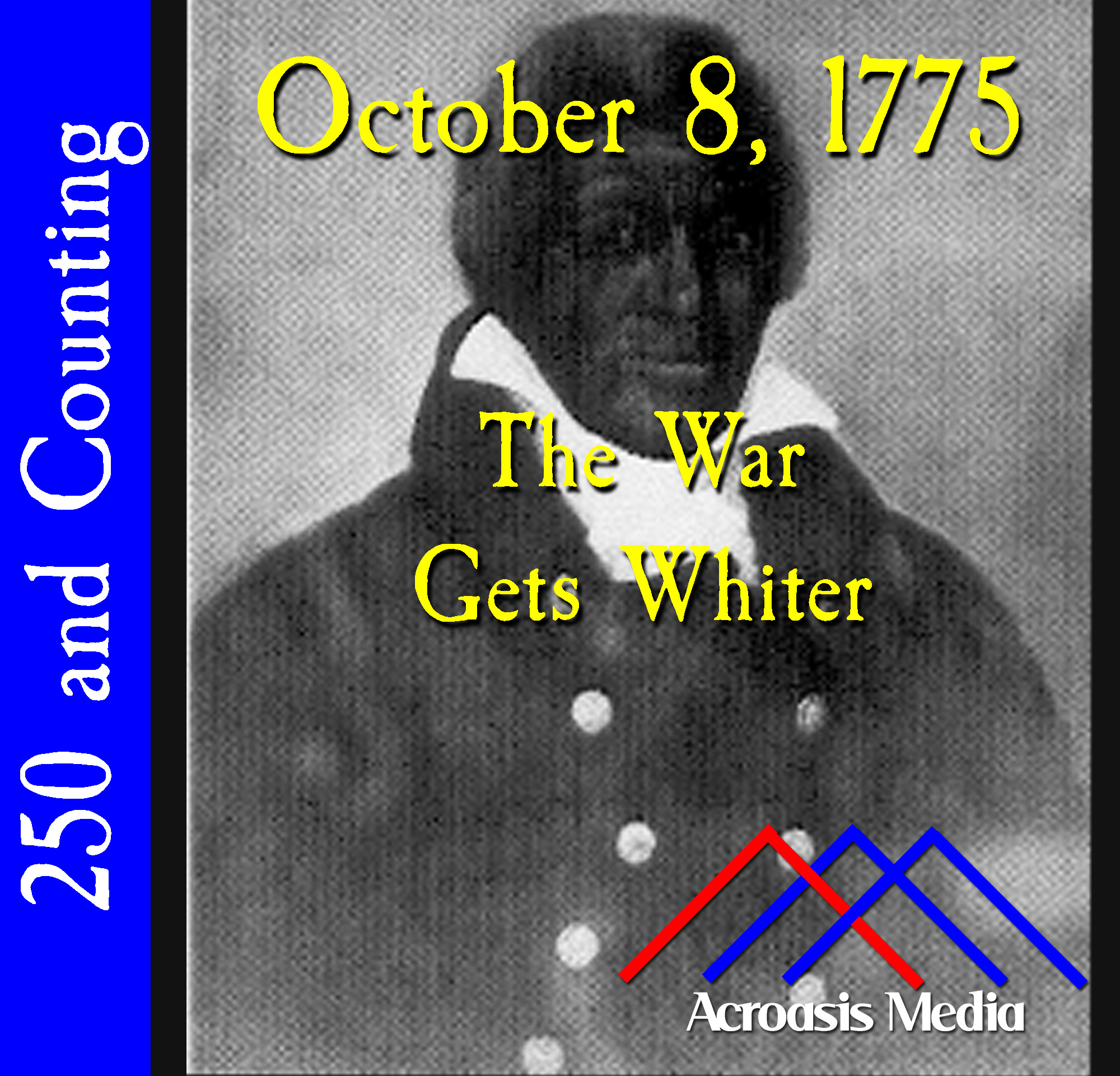
October 8, 1775: The War Gets Whiter
When the war first started, the Continental Army took on all comers, largely because they didn’t have a lot of choice. Frankly, they needed whatever bodies they could get. But it was around this time in 1775 that George Washington and his advisers decided that they could afford to get choosier about their recruits, So they decided not to take on any more Black soldiers. What’s more, soldiers who were already there would not be permitted to re-enlist. Eventually—in a couple of years—they’d reverse their stance, for the same reason they took on the Black soldiers in the first place. They were getting low on manpower, The post October 8, 1775: The War Gets Whiter appeared first on 250 and Counting.
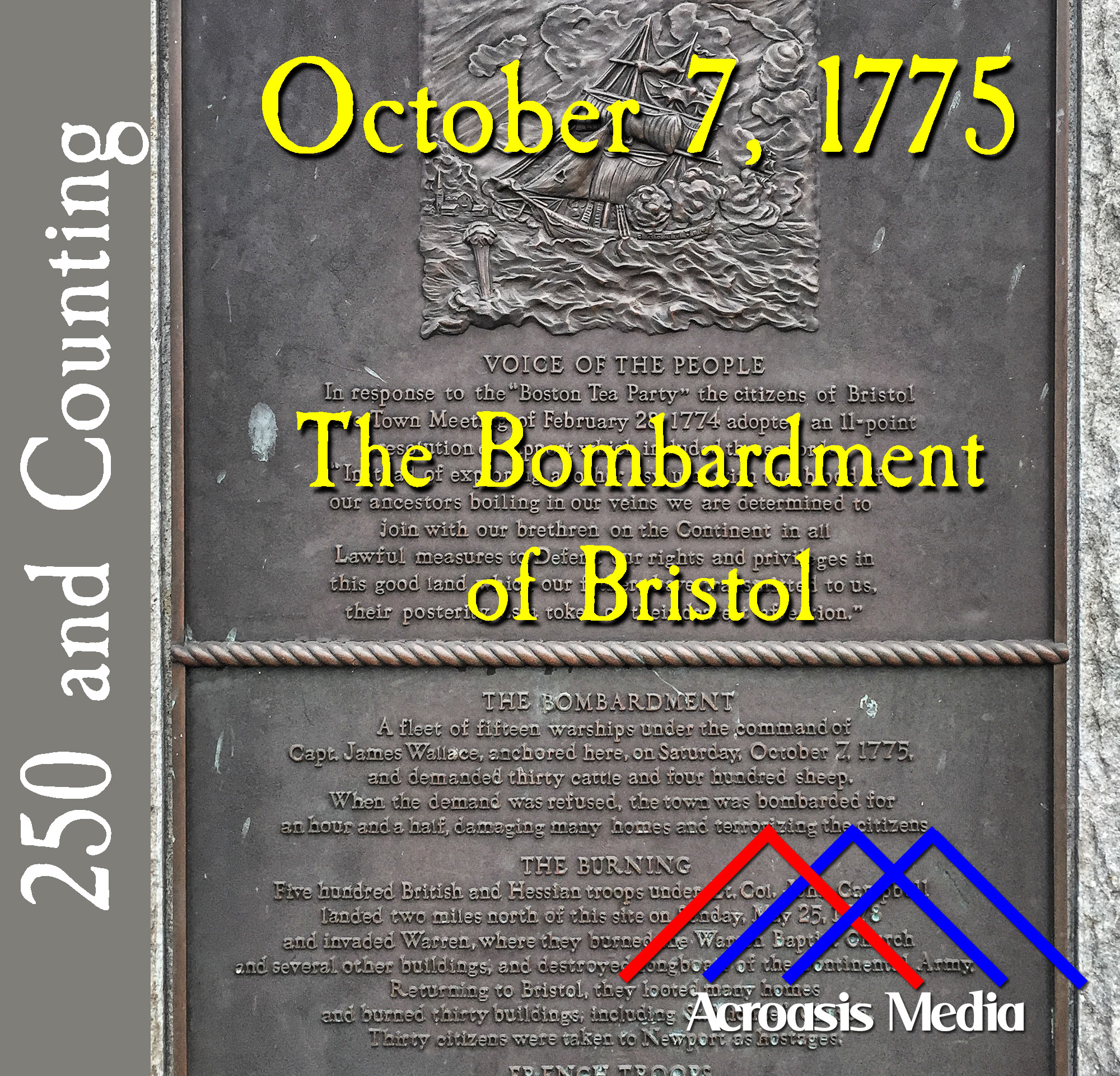
October 7, 1775: The Bombardment of Bristol
While Boston was under siege, the British were having a hard time getting food and other supplies. But they still controlled the water, so British naval vessels went in search. Captain James Wallace was especially good at procuring supplies, largely because he harassed people until they gave in, or he would threaten to shoot up the place. This second tactic was the one he chose for Bristol, Rhode Island, and it’s unclear how much actual damage he did to the town (reports vary wildly). But what is known is that he came in search of 200 sheep and 30 cattle, and came away with 40 sheep after he cut a deal with the town. We’re calling this one a draw. The post October 7, 1775: The Bombardment of Bristol appeared first on 250 and Counting.
October 6, 1775: A Strongly-Worded Letter
We actually touched on this once before, but George Washington was known for being quite the gentleman, but he did have a temper, especially when things weren’t handled in a gentlemanly way. Cross the lines of civility and he was hoisting the Jolly Roger, my friend. In a previous episode we noted that Washington wrote to General Gage about the treatment that captured American soldiers were receiving. In it was a thinly-veiled hint that he had prisoners too. And he’d be more than happy to treat them the way the British were apparently treating American soldiers. It’s not clear whether this had the desired effect. What is clear is that when something didn’t meet his expectations, he was going to make himself heard. And by this date, Washington had a few things that needed to be addressed by the Massachusetts General Court. That sounds like a legal body but it was, in fact, the provincial government at that time. There were some things that the Continental Congress handled for the army, but the General Court took care of much more at that time. Unfortunately for Washington, the General Court was—in his opinion—dragging its feet and needed a nudge in the right direction. And Washington was only too happy to provide that nudge. The post October 6, 1775: A Strongly-Worded Letter appeared first on 250 and Counting.
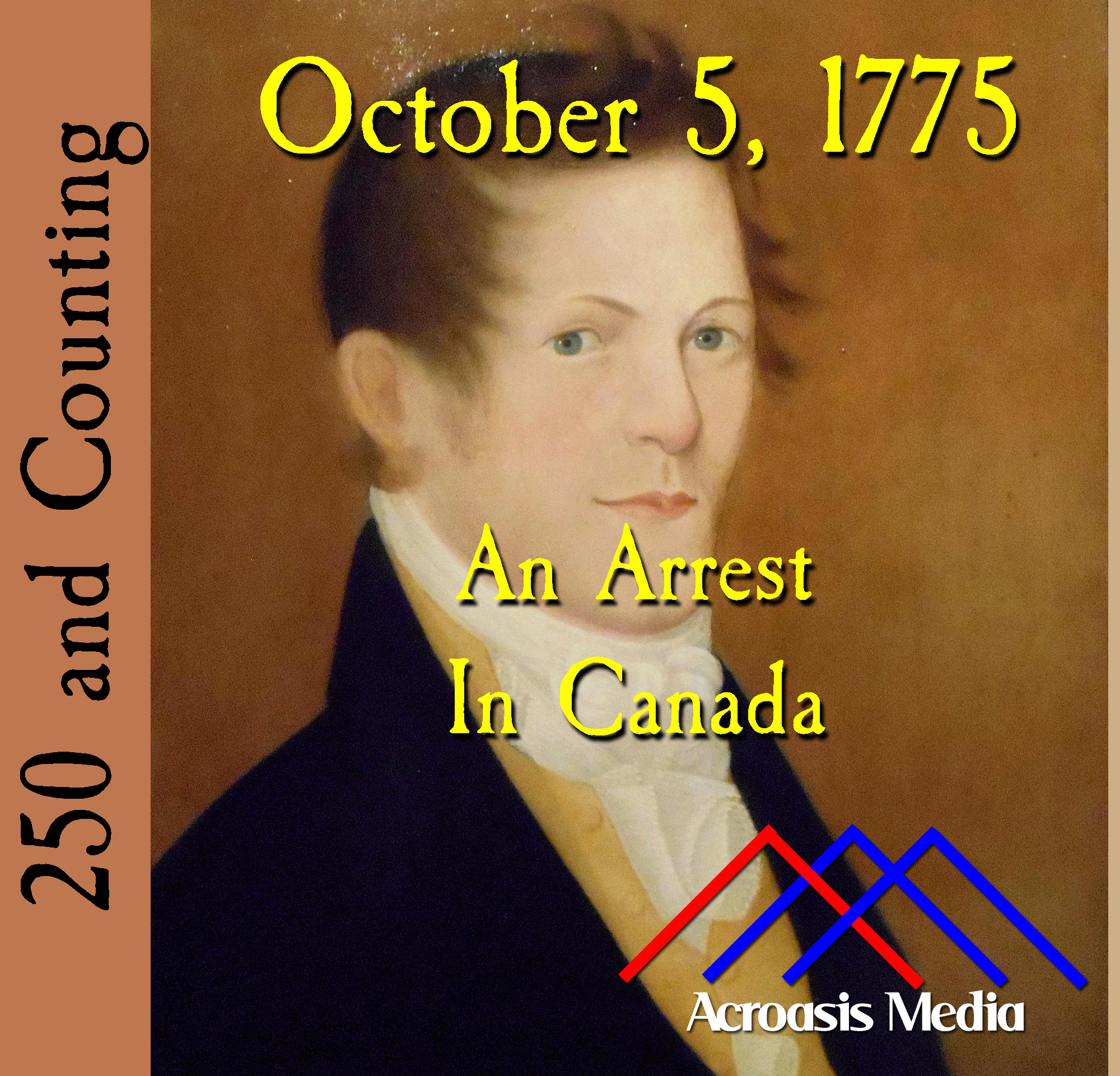
October 5, 1775: An Arrest In Canada
Thomas Walker was born in England and emigrated to Boston in 1752. In 1763 he moved to Montreal and became a merchant. When the war broke out in the Colonies, both Walker and his wife’s sympathies remained with the Americans. So it was that he agreed to assist with the invasion of Montreal. The plan never got to the point where his task came in, but since he was known to be part of it, the word went out for his arrest. Walker didn’t give up quickly but he was caught by the British for his crime. A month later he was put on a ship bound for Quebec, but it was captured by the Americans and he was released. He returned to Montreal(!) but when an American delegation showed up in May 1776, he decided to return to America with them, and he re-established himself in Boston. Unfortunately we don’t know a lot about what happened to him after that except that in 1785 he petitioned Congress for reimbursement for lost income because of the war. The post October 5, 1775: An Arrest In Canada appeared first on 250 and Counting.
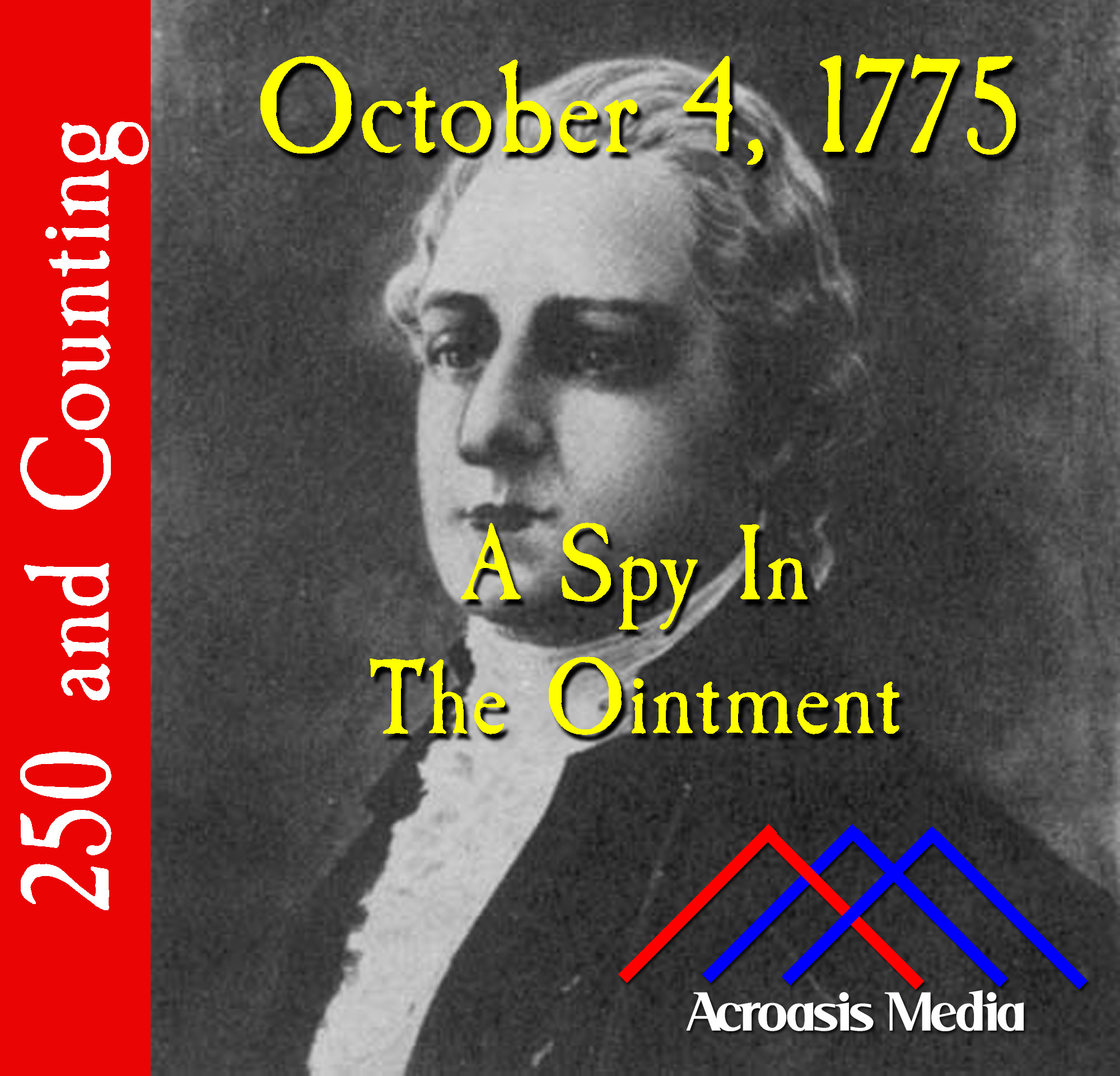
October 4, 1775: A Spy In The Ointment
It’s actually kind of curious that Benedict Arnold gets all the “traitor” press when there were other spies and turncoats doing their thing during the Revolution. Of course there were! There were Loyalists among the Patriots! It was practically a civil war. Dr. Benjamin Church, essentially our first Surgeon General (but that wasn’t a thing yet, so), was a Loyalist in Patriot clothing. Arnold was swayed by his young, pretty, Loyalist wife Peggy Shippen. But we’ll get to that eventually. (There was probably more to it than that, but Peggy was at the heart of it.) Incidentally, we ran out of time to tell you this part, but it’s only presumed that Church died on the way to Martinique because the entire boat simply vanished; it was never heard from again. I guess you could argue that it was claimed by the Bermuda Triangle. Do people still talk about the Bermuda Triangle? That was a big honkin’ deal fifty years ago. The post October 4, 1775: A Spy In The Ointment appeared first on 250 and Counting.
October 3, 1775: Rhode Island Suggests a Navy
It’s often tough to remember that when the fighting first broke out, it wasn’t a bid for independence from Britain. It was an attempt to protect and defend rights that the Colonists thought they had as part of their relationship with Britain. Reconciliation was (amazingly) still on the table, even six months after Lexington. So while many colonies had created their own small navies (with Congress’ encouragement), there were several in Congress who felt that creation of a navy was a step too far. They were okay with an army, but not a navy? I don’t really get it either. When Rhode Island finally put forth a formal proposal for a Continental Navy, it met with almost universal resistance. Why? Tune in and find out. The post October 3, 1775: Rhode Island Suggests a Navy appeared first on 250 and Counting.
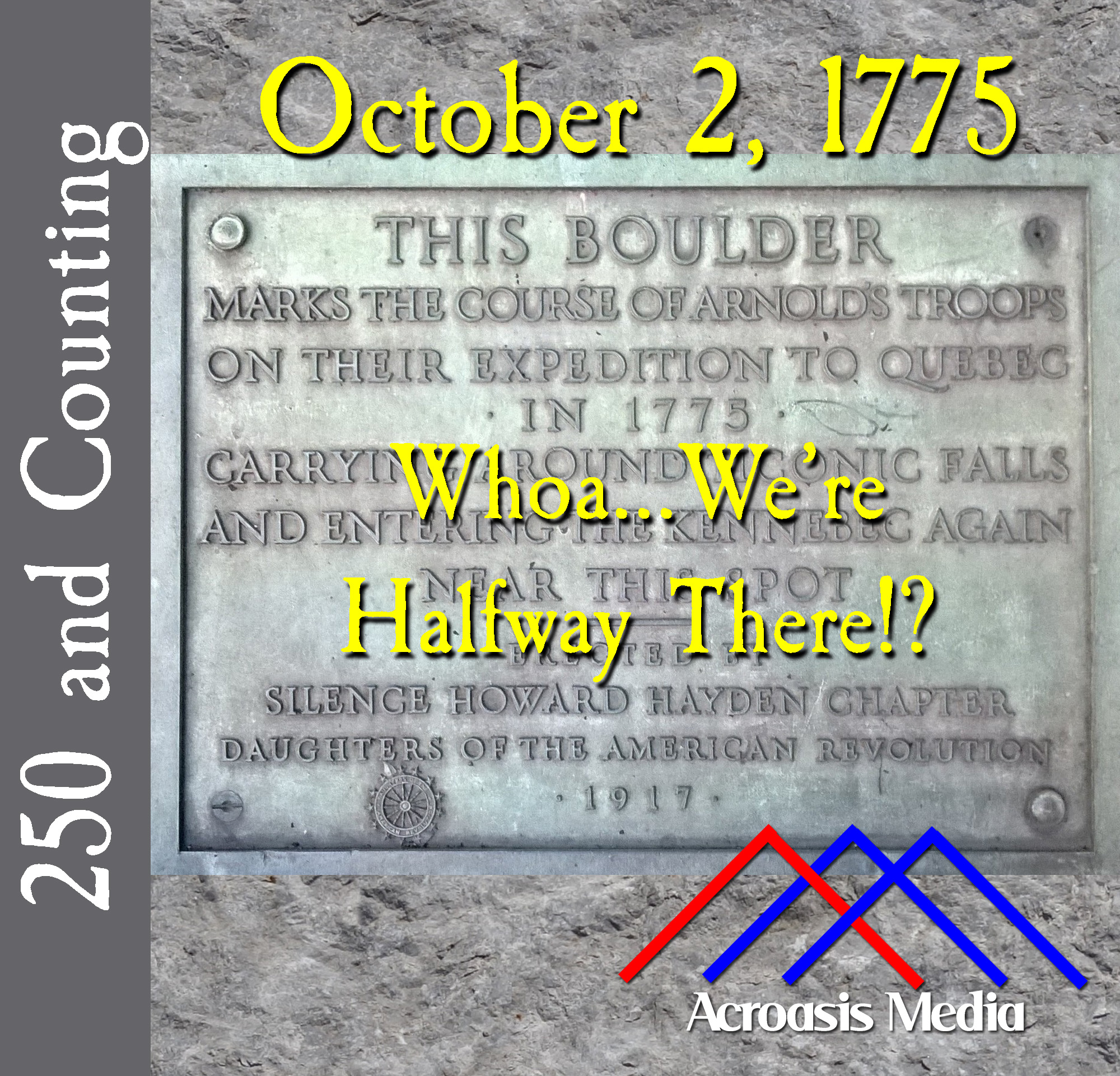
October 2, 1775: Whoa…We’re Halfway There!?
It was not so very long ago that some of us sought directions from Mapquest. Then we printed them out in order to make a trip of some kind. It was only a little bit longer ago that we depended on physical maps to get places. In fact, if you’re a fan of the HBO show The Wire, you may recall a plot point that revolved around printed maps. A secret code led to a point on the map. Back in the 18th Century, maps were very important resources for the overland traveler. And if a map had a mistake on it, you could be hopelessly lost. It’s not as though you could pull into Ye Olde Gas Station and get directions. So the bad news for Benedict Arnold and Company is that the map he used to get to Quebec was terribly inaccurate. The good news is that it was largely incorrect from a distance standpoint. It could have genuinely been much worse. The post October 2, 1775: Whoa…We’re Halfway There!? appeared first on 250 and Counting.
October 1, 1775: The Adams Family Letters
We have two fun events for you today: first up, North Carolina reaches an important deadline it had set back in August. Then, by sheer coincidence, John and Abigail Adams each wrote a letter to the other. Of course, they wrote to one another quite frequently, so this probably happened more often than you’d think. But remember also that any news they received was probably two weeks old by the time the letter landed in their hands. I will close today’s notes with an amusing anecdote that John Adams used to close his letter. He wrote: A few days ago, in Company with Dr. Zubly, somebody said, there was nobody on our side but the Almighty. The Dr. who is a Native of Switzerland, and speaks but broken English, quickly replied “Dat is enough.—Dat is enough,” and turning to me, says he, it puts me in mind of a fellow who once said, The Catholicks have on their side the Pope, and the K[ing] of France and the K. of Spain, and the K. of Sardinia, and the K. of Poland and the Emperor of Germany &c. &c. &c. But as to them poor Devils the Protestants, they have nothing on their side but God Almighty. The post October 1, 1775: The Adams Family Letters appeared first on 250 and Counting.
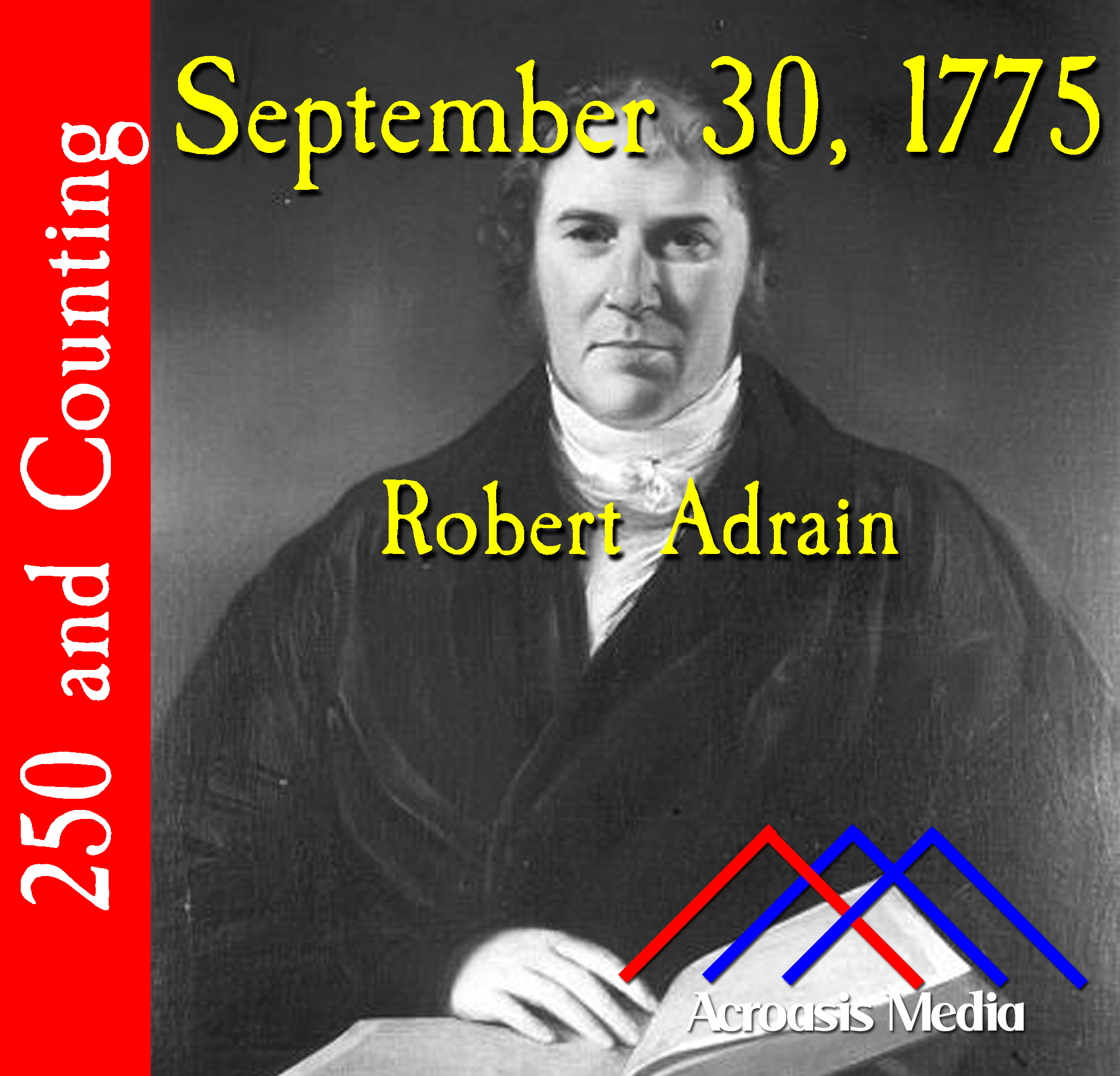
September 30, 1775: Robert Adrain
Robert Adrain is one of those names that most people wouldn’t recognize, but back in the day he was a mathematical scholar in a place where there really weren’t any. At least, none of special note. Adrain made education his entire life, teaching youngsters while still pretty much a child himself, being 15 when he started. After moving to America, he resumed his teaching career and became the publisher of a mathematical journal, which ran for several years. It’s Cake and Candles today for Robert Adrain. The post September 30, 1775: Robert Adrain appeared first on 250 and Counting.
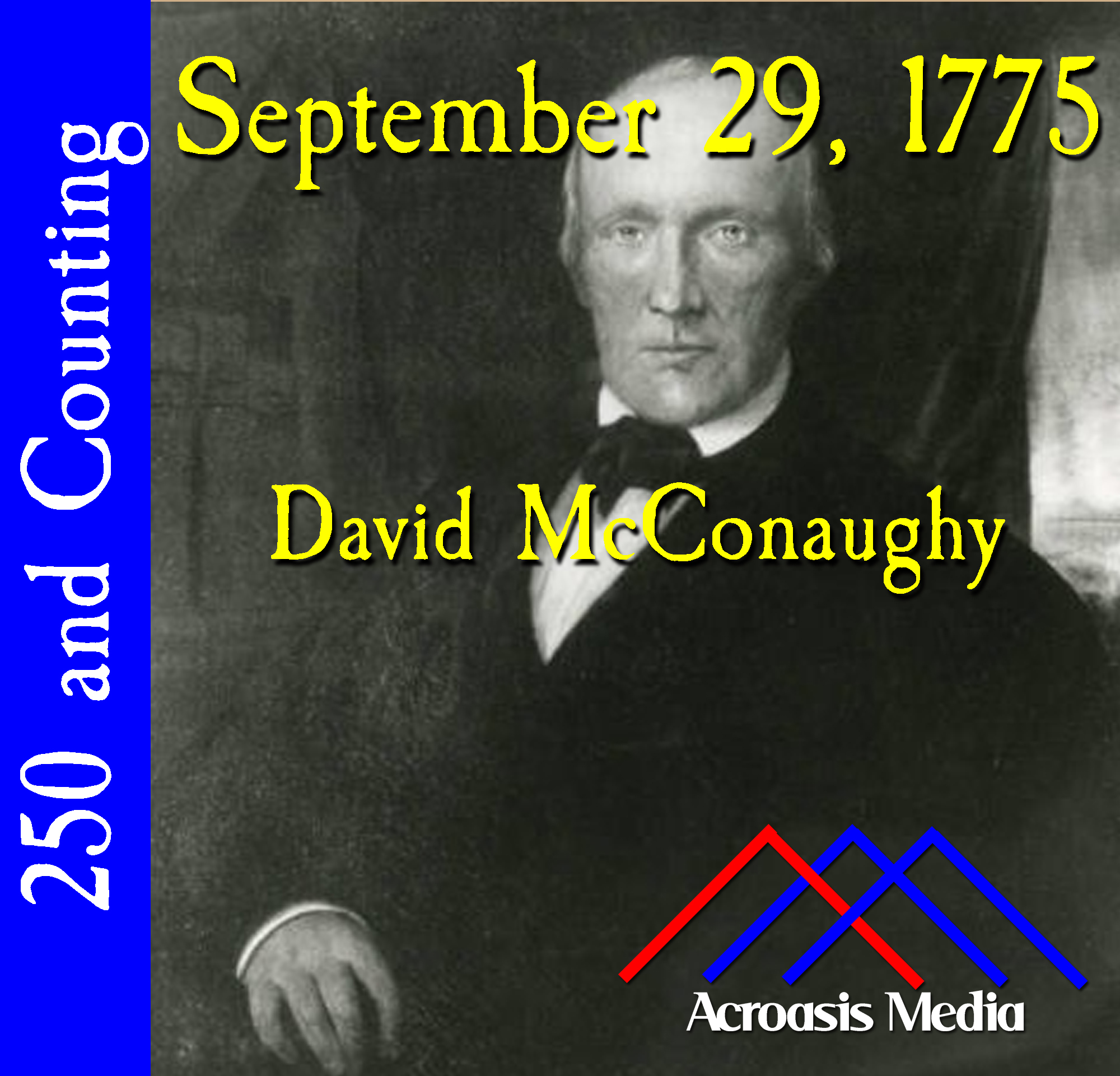
September 29, 1775: David McConaughy
During the episode we noted that not much is known about David McConaughy’s early life. Even his adult life isn’t especially well-documented. We don’t even know who painted the portrait in today’s cover art. But there’s no question that, even if the man himself is a bit of a cypher, his legacy at Washington College is not. Meanwhile, another couple of Washingtons are in communication with each other. Lund Washington, a cousin of George, is taking care of Mount Vernon in George’s absence. Unfortunately, he’s having a rather tough week. The post September 29, 1775: David McConaughy appeared first on 250 and Counting.
September 28, 1775: A Friendly Meeting With The Natives
First off: let me apologize for not tutoring Mike in the correct pronunciation of “Iroquois.” I’d make him record that part again but he’s at a podcasting conference and away from his studio. (It only looks like a French word, Mike; it’s not pronounced like one.) Of course, I grew up in New York so those tribes were kind of beaten into us during Social Studies classes. At any rate, we’ve talked in the past about efforts to get the various tribes in upstate New York to join the war effort, but the problem that the Patriots bumped into was that their “family argument” metaphor was taken too well, and the Native American tribes decided that this was exactly the case, and opted to stay out. All of them, but one in particular. Tune in and find out which. The post September 28, 1775: A Friendly Meeting With The Natives appeared first on 250 and Counting.
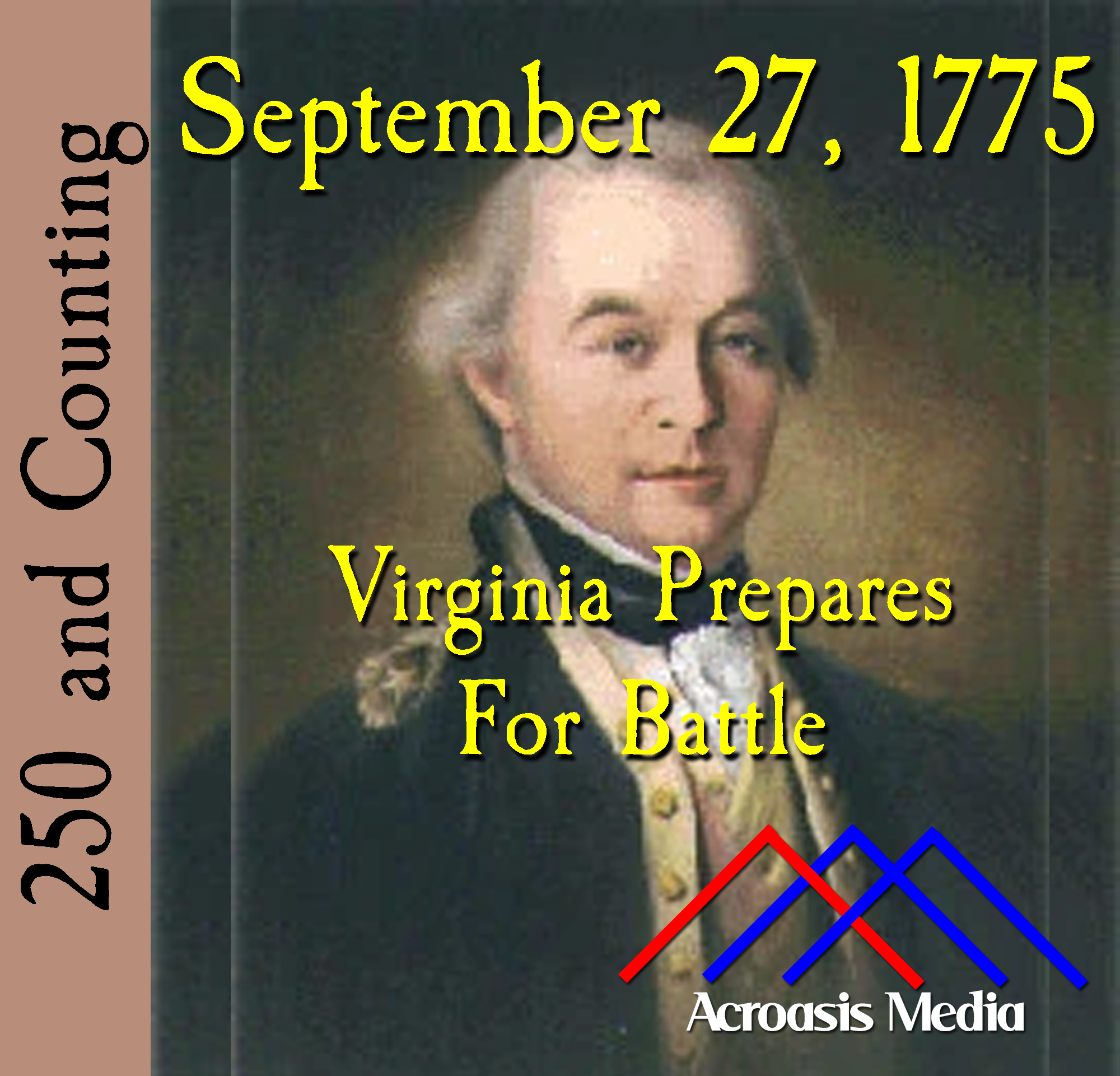
September 27, 1775: Virginia Prepares For Battle
William Woodford got his start in the military when he joined George Washington’s Virginia Regiment, and was promoted to Lieutenant in 1761. When hostilities with Britain began to turn into actual shooting at each other, Woodford became a colonel commanding the 2nd Virginia Regiment. Based on a letter he’d received from his fellow Virginian George Washington, he determined to ensure that his men were well-trained. In early December we’ll learn how that paid off handsomely. The post September 27, 1775: Virginia Prepares For Battle appeared first on 250 and Counting.
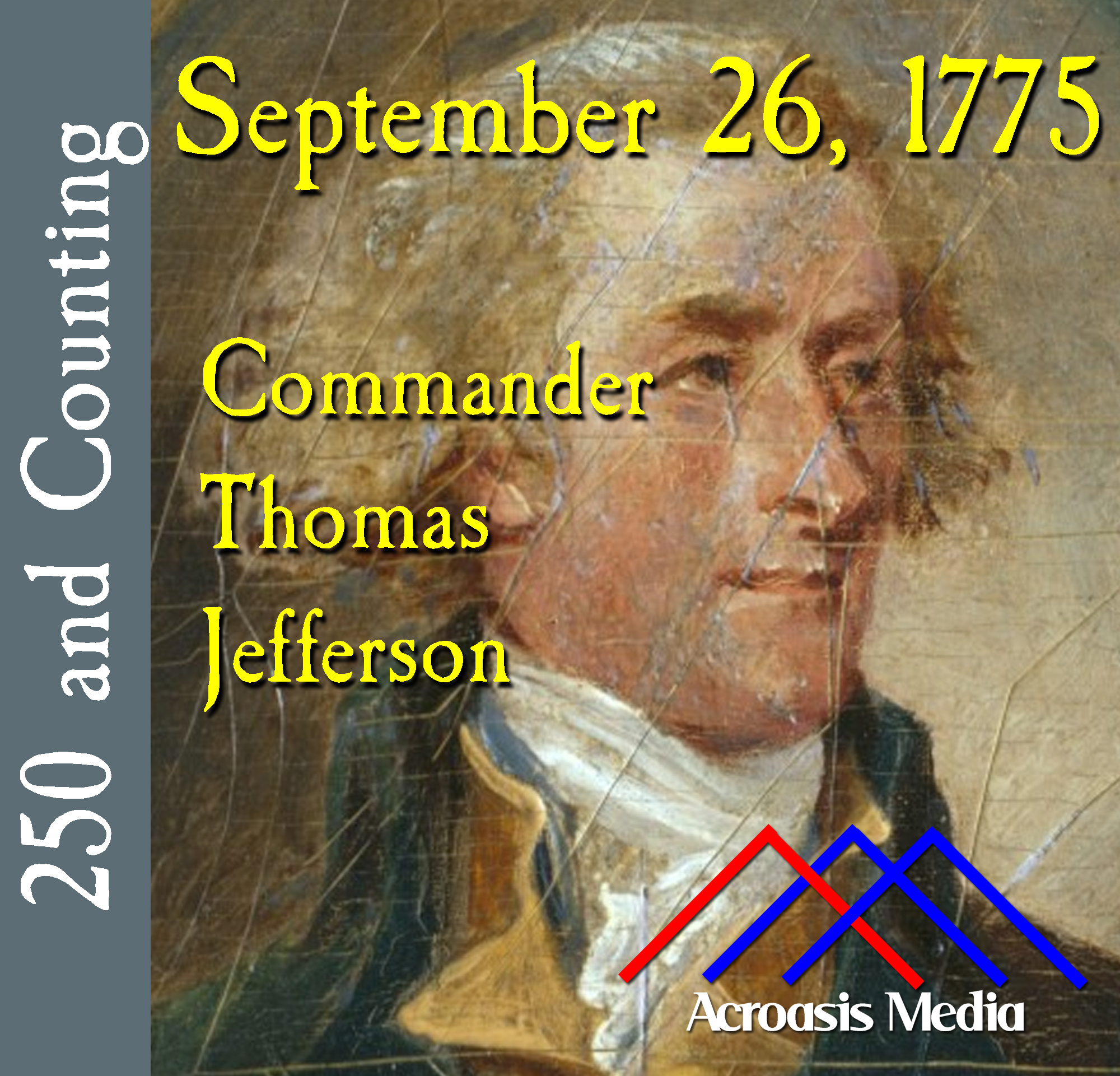
September 26, 1775: Commander Thomas Jefferson
Thomas Jefferson was a writer, an inventor, a lawyer, a philosopher, a statesman, and of course a soldier. Wait, what? Yes, indeed. Thomas Jefferson was named commander of the militia in Albemarle County. It could be argued that the title was little more than ceremonial, but then again…Jefferson saw no combat. It’s entirely possible that his mere presence was a deterrent to the British, who wanted no part of this fierce warrior. It’s not likely, but it’s possible. OK, I’m kind of in a mood today, I admit. Go listen to Mike and his story of Jefferson the Soldier. The post September 26, 1775: Commander Thomas Jefferson appeared first on 250 and Counting.
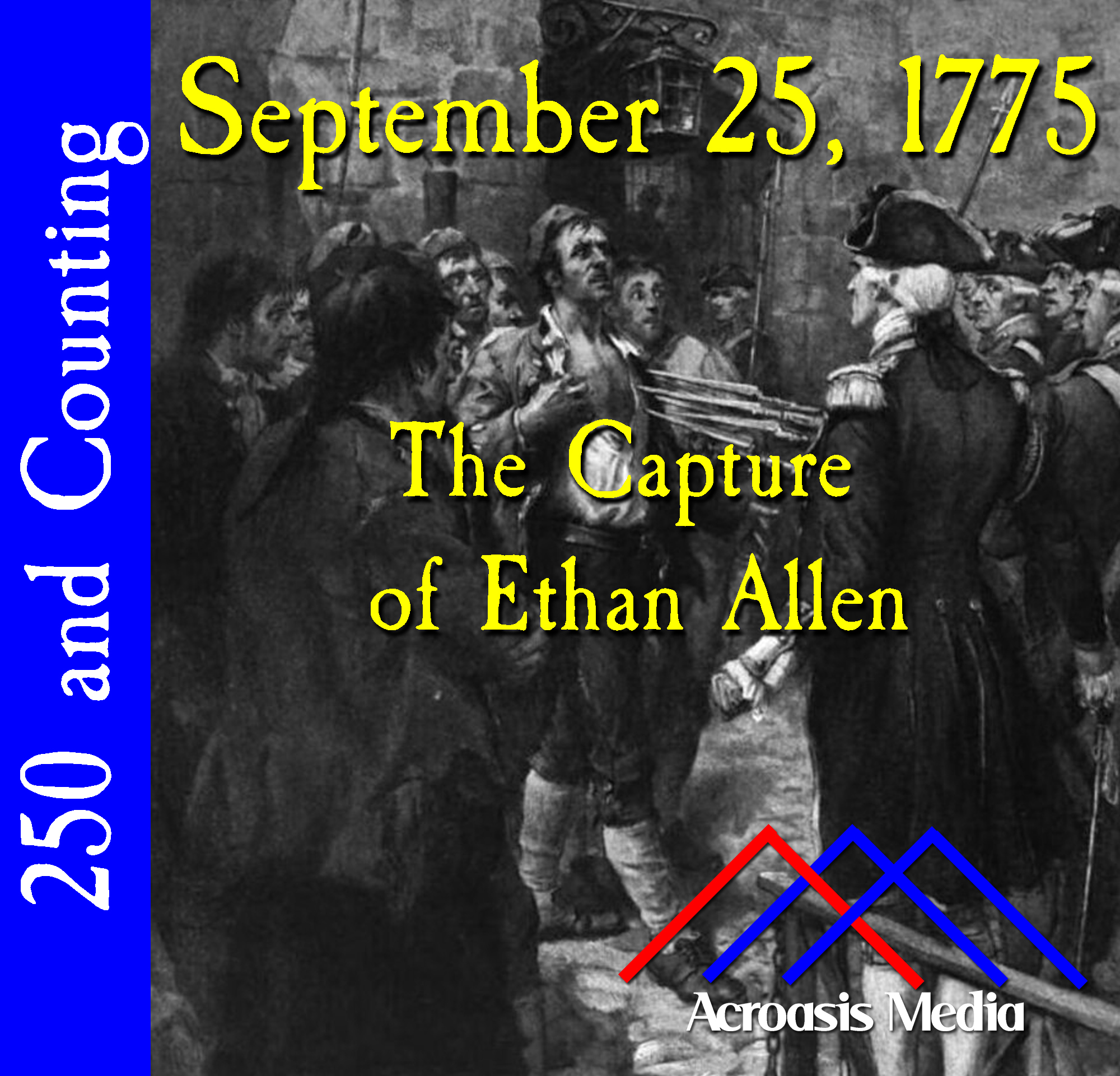
September 25, 1775: The Capture of Ethan Allen
And this, kiddies, is what happens when you don’t push the “publish” button. You get a late episode. At least the radio folks heard it today. BTW: Shout-out to Hillsboro’s News Hound, HBORO.com! Welcome aboard! Ethan Allen was part of the Green Mountain Boys and the whole contingent that went north to invade/convince Canada in the effort to get them to join us in the Independence movement. Allen was young and ambitious, and that may have contributed to his downfall here. Because while a plan to move in on Montreal fell apart and resulted in his capture, subsequent research has revealed that Allen may have acted on his own, and that there was in fact no plan. Also, for what it’s worth and in case you’re curious: there’s no genuine connection between Ethan Allen the man and Ethan Allen the furniture company other than that the company’s founders was making early-American style furniture at the time. Also worth noting that I keep having to backspace when I write “Ethan Allen” because as someone living in Baltimore I keep typing “Allan”. Thanks, Mister Poe. The post September 25, 1775: The Capture of Ethan Allen appeared first on 250 and Counting.
September 24, 1775: Captain Nathan Heald
It could be argued that Captain Heald’s biggest claim to fame is that he was on hand for the disastrous outcome at Fort Dearborn, but at least he doesn’t eat the blame for it; it just happened to be the guy who was there. On the bright side (such as it is), the events at Dearborn were soon overshadowed by President Madison declaring war on the British, thus beginning the War of 1812. Heald and his wife, who were both injured at Fort Dearborn, were released back to the Americans. Heald was promoted shortly thereafter and given a disability discharge in 1814. And isn’t that always the way. The post September 24, 1775: Captain Nathan Heald appeared first on 250 and Counting.
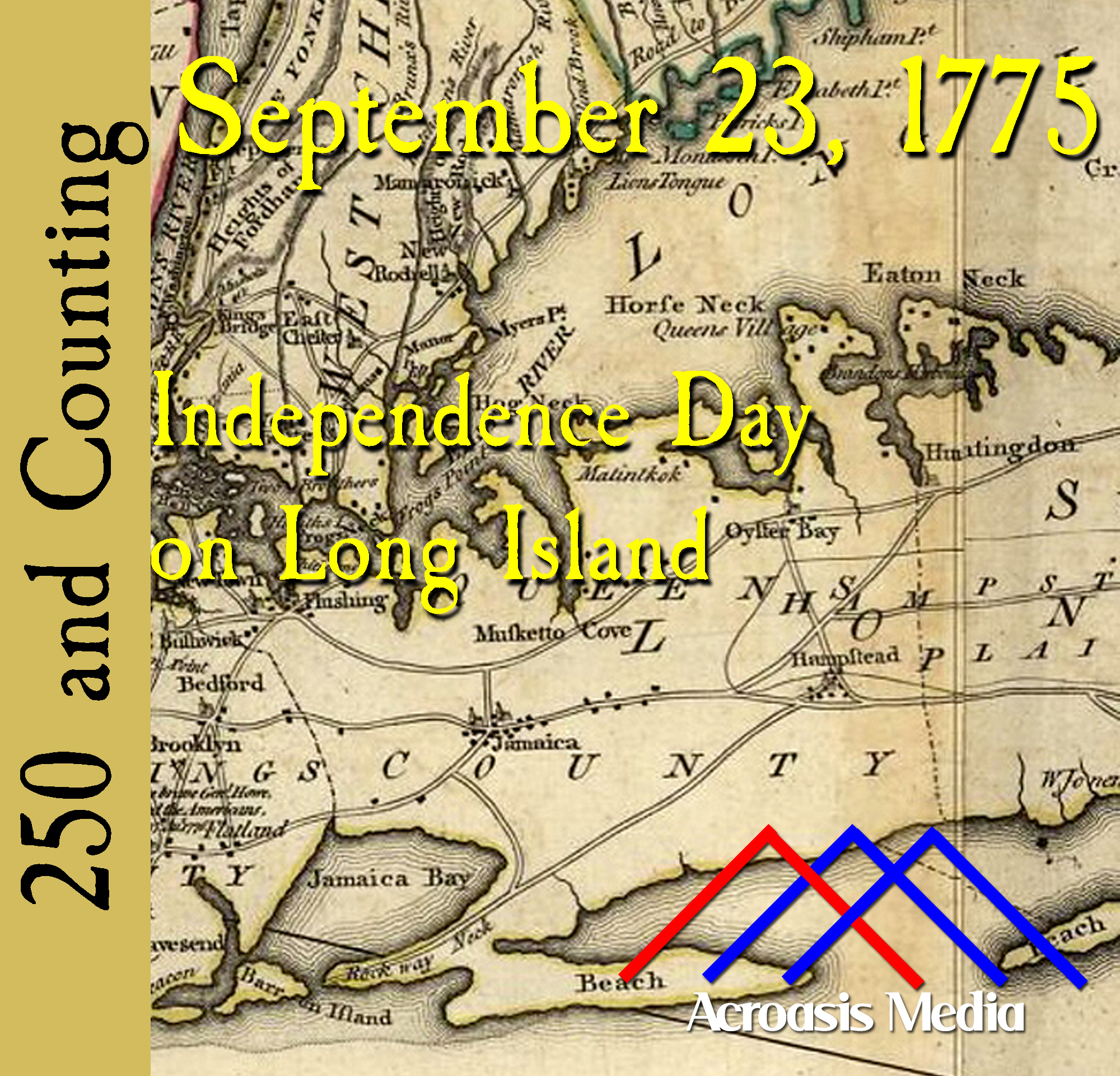
September 23, 1775: Independence Day on Long Island
For those of you new to this podcast (or those who haven’t been paying attention), I grew up on Long Island, and have lived or worked pretty much from one end of the map in today’s cover art to the other at one time or another. For instance, my childhood home is just about where the Long Island portion of the map ends at the top right. I did my undergrad work approximately where the “H” appears just above Hempstead. I got my graduate degree at a school along that road between Oyster Bay and Huntington. So when a story like this pops up, it’s a lot of fun for me to research and record, because I learn so much. One of the names I expected to see in my research didn’t turn up, however. That would be the Denton family, which was located in modern-day New Hyde Park. They were also quite influential in the development of the Hempstead area, but that was in the 1600s. By the 1770s they were a revered name but not especially influential. The Denton home, a mansion for its time, still stands today. It was empty for several years when I was a young adult, then it became a restaurant for a bit. The McDonald’s Corporation purchased the property, intending to knock it down and build a new restaurant there, but a local historical society intervened and got the building historic status. After a couple of years of negotiation, McDonald’s renovated the building so that it retains its colonial-era charm. If you’re ever in the area, check it out. It’s one of the coolest McDonald’s restaurants you’ll ever see, inside and out. The post September 23, 1775: Independence Day on Long Island appeared first on 250 and Counting.
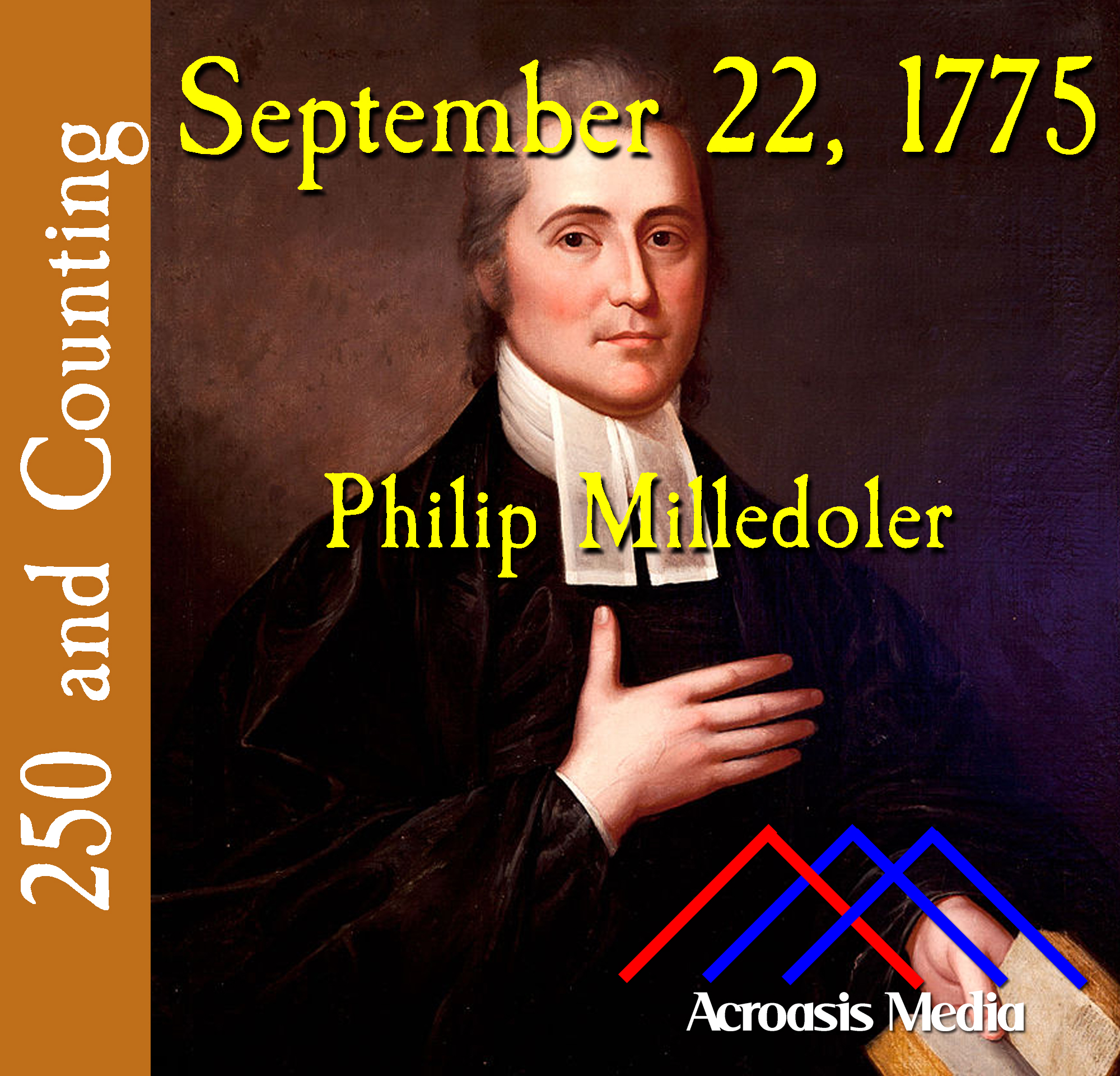
September 22, 1775: Philip Milledoler
Philip Milledoler was a minister and the fifth president of Rutgers University (Rutgers College, then), but it’s a little more complicated than that. Milledoler took a moribund college and transformed it into the intellectual powerhouse it is today. But how it happened is at the heart of our story. The post September 22, 1775: Philip Milledoler appeared first on 250 and Counting.
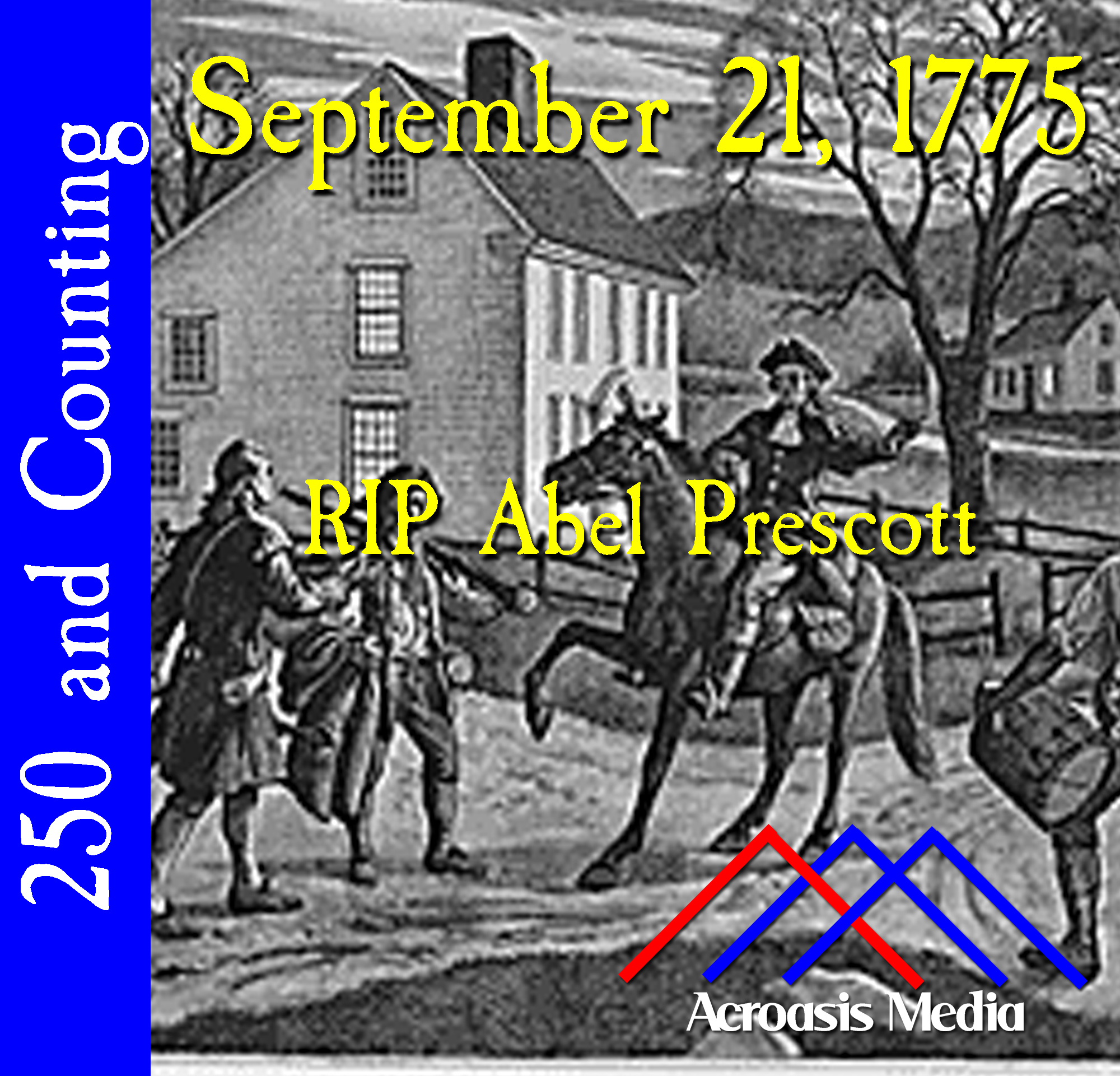
September 21, 1775: RIP Abel Prescott
In the episode itself I took the time to hammer home the point that many of our historical legends aren’t quite what they seem to be. But also important is the forgotten people of our history as well. Not just the faceless folks who fought and died (or didn’t but remained in obscurity), but the people who were an important part of some events, yet go unnoticed today. And Abel Prescott is one of those people. Not a lot is known about him, other than that he was William’s younger brother. And while William Prescott, along with William Dawes and Paul Revere, were intercepted by the British, Abel Prescott did manage to get away, albeit with a bullet in his side. Five months later, that bullet killed him. The post September 21, 1775: RIP Abel Prescott appeared first on 250 and Counting.
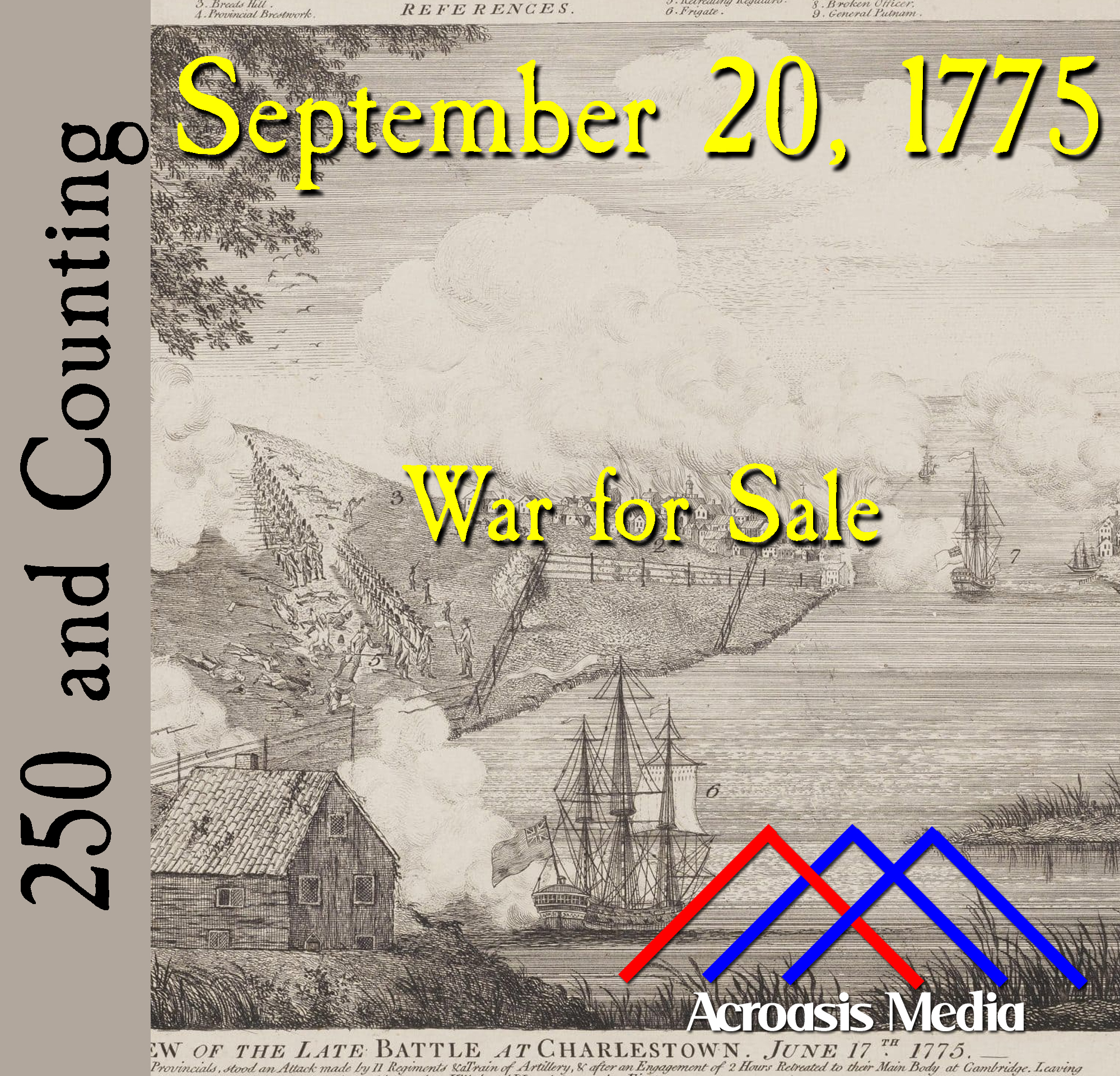
September 20, 1775: War for Sale
Calling Bernard Romans a “Renaissance Man” wouldn’t be far from the truth, given his various talents and the fact that folks from that era were much more like people from the Renaissance than they are from modern times. Romans was a surveyor, a naturalist, an artist and an author. He was also an entrepreneur, which is what put him on our radar for today. And he was a ship’s captain, which meant that he had a front-row seat to the War for Independence. It was his “An Exact View of the Late Battle at Charlestown, June 17th, 1775,” which he sold through a classified ad in a Philadelphia newspaper, that gave him great commercial success. Although many were sold then, few copies exist today and they’re worth nearly $70,000 in good shape. The post September 20, 1775: War for Sale appeared first on 250 and Counting.
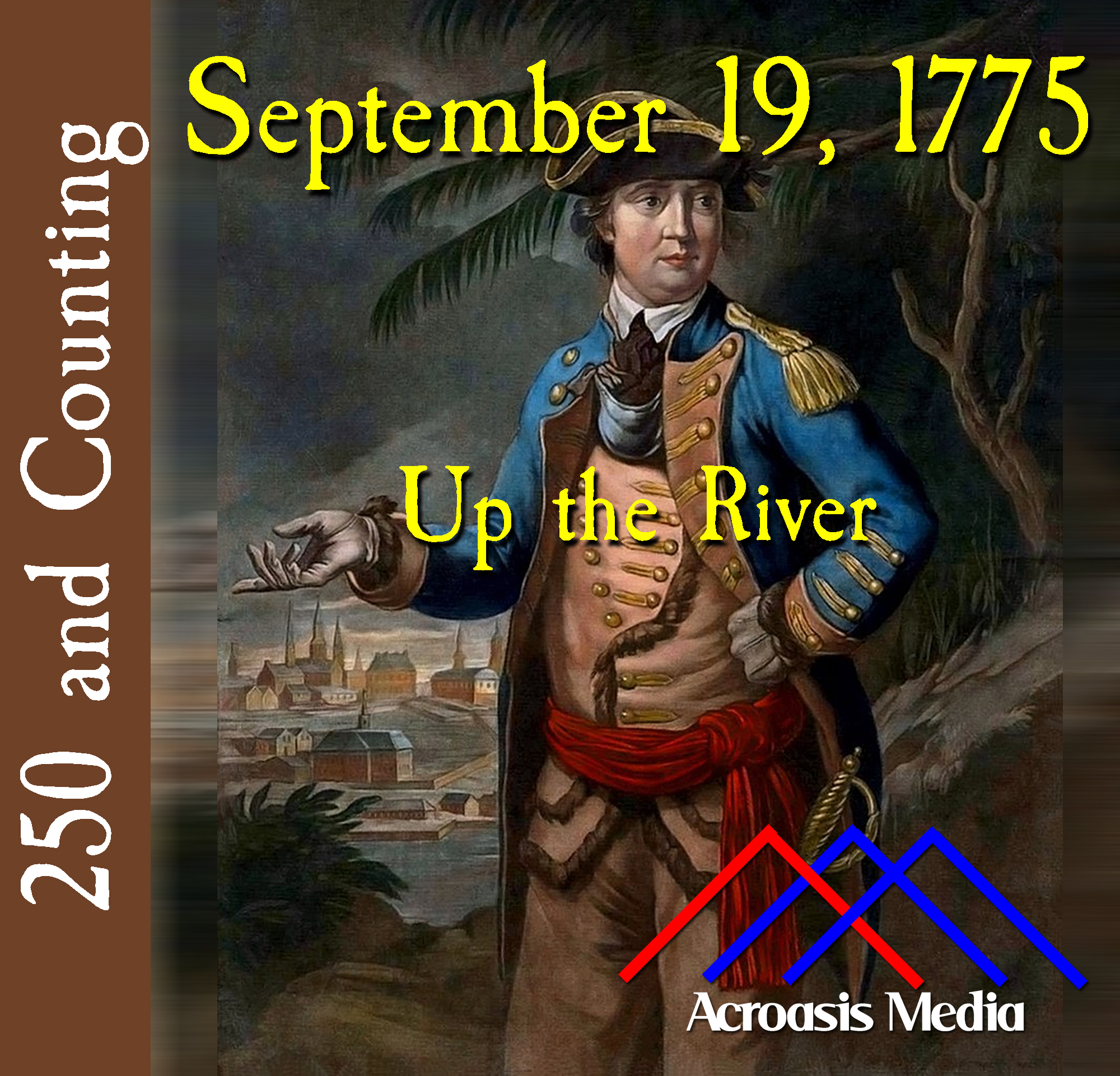
September 19, 1775: Up the River
We think of “Benedict Arnold” and the word “Traitor” comes immediately to mind. The two are essentially synonymous. Say one, and you’ve said the other. But Benedict Arnold was quite loyal to the Independence cause in the early days of the war. In fact, he was often eager to show what he could do. And why he switched sides is quite complicated and can’t really be answered quickly. There were times when he felt that injustices were suffered upon him by other generals and by the Continental Congress. Some of them were real but others, imagined. He had two painful battlefield wounds in a leg that was already plagued with gout. Was it a psychological issue? Was it a midlife crisis, during which his politics shifted? Given that he married a very young, very pretty and very Loyalist woman named Peggy Shippen, maybe he just did it for the nookie. Peggy Shippen is actually the most common explanation. At any rate, in 1775 Arnold was still on our side and embarked on an expedition to Canada that turned out to be far more complicated than anyone suspected it would be. The post September 19, 1775: Up the River appeared first on 250 and Counting.
September 18, 1775: A Secret Committee
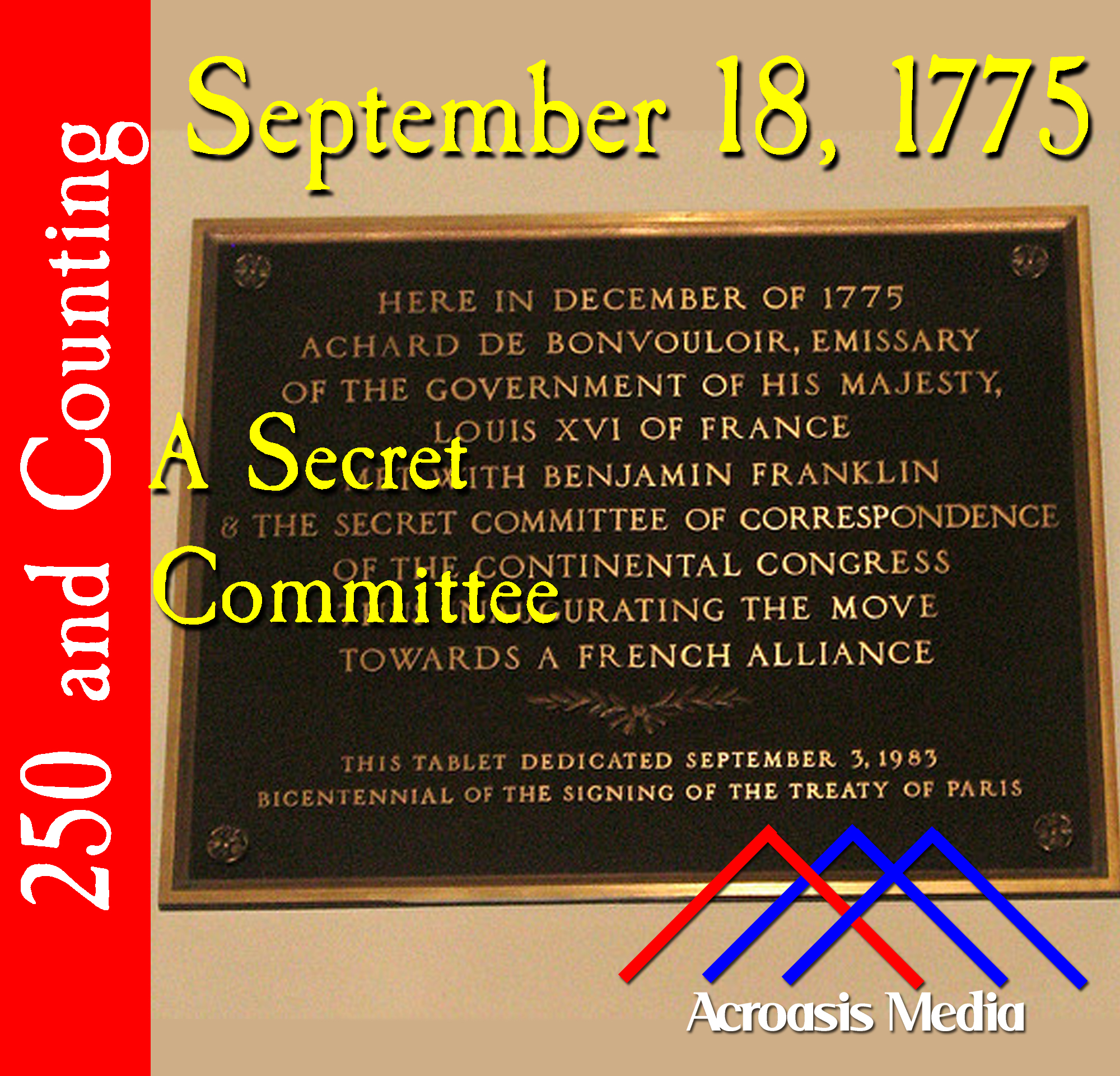
The Committee of Secret Correspondence is one of those names that sounds like they should be on Double Secret Probation or something. However, when you look at their purpose, the name makes sense. The Committee of Secret Correspondence was formed to seek out support from other nations. They reached out to France, Spain, and a few others to get supplies, food, munitions…pretty much anything they could get. Oftentimes they had to use a third party to give everyone plausible deniability. And fortunately, their tactics were mostly successful. The post September 18, 1775: A Secret Committee appeared first on 250 and Counting.